EP3244331B1 - Procédé de lecture d'attributs à partir d'un jeton d'identification - Google Patents
Procédé de lecture d'attributs à partir d'un jeton d'identification Download PDFInfo
- Publication number
- EP3244331B1 EP3244331B1 EP17170136.0A EP17170136A EP3244331B1 EP 3244331 B1 EP3244331 B1 EP 3244331B1 EP 17170136 A EP17170136 A EP 17170136A EP 3244331 B1 EP3244331 B1 EP 3244331B1
- Authority
- EP
- European Patent Office
- Prior art keywords
- computer system
- token
- attribute
- attribute specification
- attributes
- Prior art date
- Legal status (The legal status is an assumption and is not a legal conclusion. Google has not performed a legal analysis and makes no representation as to the accuracy of the status listed.)
- Active
Links
Images

Classifications
-
- G—PHYSICS
- G06—COMPUTING OR CALCULATING; COUNTING
- G06F—ELECTRIC DIGITAL DATA PROCESSING
- G06F21/00—Security arrangements for protecting computers, components thereof, programs or data against unauthorised activity
- G06F21/30—Authentication, i.e. establishing the identity or authorisation of security principals
- G06F21/31—User authentication
Definitions
- the invention relates to a method for reading attributes from an ID token, an ID token and a computer system.
- Microsoft Windows CardSpace is a client-based digital identity system designed to allow Internet users to communicate their digital identity to online services.
- the disadvantage here is, inter alia, that the user can manipulate his digital identity.
- OPENID is a server-based system.
- a so-called identity server stores a database with the digital identities of the registered users.
- One disadvantage of this is, inter alia, inadequate data protection, since the digital identities of the users are stored centrally and the user behavior can be recorded.
- DE 10 2008 000 067 Al For example, there is known a method of reading at least one attribute from an ID token from which the present invention proceeds as the closest prior art. Further developments of this method are in the patent applications DE 10 2008 040 416 . DE 10 2008 042 262 . DE 10 2009 026 953 . DE 10 2009 027 723 . DE 10 2009 027 681 and DE 10 2010 028133 disclosed.
- An "ID token” is understood here in particular as a portable electronic device which has at least one protected electronic data memory for storing the attributes and a communication interface for reading out the attributes.
- the memory area is protected in order to prevent the attribute stored in the memory area from being altered in an unauthorized manner or read out without the required authorization. In other words, the memory area can only be accessed if an access authorization required for this purpose is given.
- the ID token can be a USB stick or a document, in particular a value or security document.
- a "document” is understood to mean paper-based and / or plastic-based documents, such as electronic identity documents, in particular passports, identity cards, visas and driving licenses, vehicle registration documents, vehicle documents, company identity cards, health cards or other ID documents as well as chip cards, means of payment, in particular banknotes , Bank cards and credit cards, bills of lading or other credentials, in which a data memory for storing the at least one attribute is integrated.
- the ID token can be a hardware token or a soft token if it is cryptographically bound to a hardware token, that is, for example, to a so-called secure element.
- ID provider module is understood here to mean a program logic module which is designed to read attributes from the ID token of a user and to write an attribute specification in the ID token.
- the ID provider module can be designed, for example, as a software component but also as a computer system.
- the ID provider module can be designed, for example, as an ID provider computer system which is preferably operated in a so-called trust center in order to create the highest possible level of security.
- the ID provider module and the service computer system belong to the same IT infrastructure, eg, to the same intranet of a company.
- an ID provider module has specific credentials, eg certificates or cryptographic keys or the like, which allow the ID provider module to access certain selected memory areas of an ID token.
- An “attribute provider computer system” or “AP computer system” is here understood to mean a computer system which is designed to provide attributes on applications.
- the provision can be made attribute-class-specific and / or specific for a specific user of an ID token.
- an attribute provider computer system is adapted to read an attribute specification from the ID token of a user and to write attributes in the ID token.
- an "attribute provider directory computer system” or “APV computer system” is understood to mean a computer system that is configured to identify, for particular classes of attributes, one or more attribute provider computer systems that are capable of Fully or at least partially provide attributes of these classes. According to some embodiments, in addition to the identity of the attribute provider computer systems themselves, other information such as e.g. a contact address, performance data, historical availability data relating to the respective attribute provider computer systems are identified and communicated to the requesting system.
- the attribute classes can be (arbitrarily) predefined groups of attributes.
- the classes can be disjoint or overlapping. Examples of different attribute classes are: address data of a user; medical data of a user; Bank details of a user; Information that provides information about the creditworthiness of a user; and other.
- An “attribute” is understood in particular to mean data relating to the user of the ID token or the ID token itself, in particular personalization data, such as personal data of the user, a period of validity or the issuer of the ID token or payment information, such as credit card information or other data for an electronic payment system.
- an "attribute specification” is understood to mean a description of those attributes needed, for example, by a service computer system to provide a service.
- the attributes may be identified by field names of data fields in which the respective attribute values are stored, and / or via a semantic network, i. a convention of how attributes are called across systems.
- a “service computer system” is understood here to mean a computer system which has a network interface for connection to the network, so that an internet browser or another application program can be used to access web pages stored or generated by the service computer system.
- the service computer system may be an internet server for providing an e-commerce or e-government application, in particular an online shop or a government server.
- a "user computer system” is understood here as a computer system to which the user has access. This may be, for example, a personal computer (PC), a tablet PC or a mobile device, in particular a smartphone, with a conventional Internet browser, such as Microsoft Internet Explorer, Safari, Google Chrome, Firefox or any other application for access to act on the service computer system.
- the user computer system has an interface for connection to the network, wherein the network may be a private or public network, in particular the Internet. Depending on the embodiment, this connection can also be made via a mobile network.
- a "reader” is understood here as an electronic device which allows read access and also write access to the ID token, in particular a so-called chip card terminal.
- the reader may form an integral part of the user computer system or be implemented as a separate component, for example as a peripheral device of the user computer system.
- the reader may be a so-called class 1, 2 or 3 chip card reader.
- nonvolatile electronic memory is understood here as a memory for storing data, in particular attributes, which is also referred to as non-volatile memory (NVM).
- NVM non-volatile memory
- this may be an EEPROM, for example a flash EEPROM, referred to as flash for short.
- a "protected memory area” is understood here as meaning an area of an electronic memory to which access, that is to say a read access or a write access, is only made possible by a processor coupled to the memory if a condition required for this purpose is fulfilled. This may be, for example, a cryptographic condition, in particular a successful authentication and / or a successful authorization check.
- a "processor” is here understood to mean a logic circuit which serves to execute program instructions.
- the logic circuit may be implemented on one or more discrete components, in particular on a chip.
- a “certificate” here means a digital certificate, which is also referred to as a public-key certificate.
- a certificate is structured data that serves to associate a public key of an asymmetric cryptosystem with an identity, such as a person or device.
- certificates based on zero-knowledge cryptosystems are also possible.
- the certificate may conform to the standard X.509 or another standard.
- the certificate is a Card Verifiable Certificate (CVC).
- the certificate may specify for which attribute or attributes of the user stored in the protected memory area of the ID token the ID provider module or the attribute provider computer system is authorized to perform the read access. Furthermore, the respective write permissions for attribute specifications or attributes in a certificate can also be defined. Such a certificate is also called an authorization certificate.
- the authorization certificate can be designed as a CVC certificate (card verifiable certificate).
- a “secured”, “protected” or “secure” “transmission channel” is here understood to mean a transmission channel which is cryptographically secured in order to prevent spying and / or manipulation of the transmission, in which case a so-called secure messaging method is used can be.
- the checking of read and write rights can be e.g. attribute class specific.
- Each determined attribute class can e.g. an area, also called “sector", on the protected memory area of the ID token.
- the entitlement certificate may selectively authorize the AP computer system to write attributes of a particular attribute class to a particular attribute class specific sector of the memory area of the ID token, whereas the attributes of another class may be stored in a different sector to which the AP computer system does not can access.
- an AP computer system may not only write attributes to the sector of its attribute class, but may also read an attribute specification stored there and write back a new version of that specification, the new version specifying only those attributes of that class that are not covered by this AP. Computer system could not be deployed.
- a protected transmission channel between an ID token e.g. a chip
- a remote computer e.g., service computer system, attribute provider system
- local computer e.g., user computer system
- Protected connections between computer systems may e.g. using SSL / TLS.
- a "local" transmission channel is here understood to mean a transmission channel which is established between the ID token and the user computer system via the reading device, wherein in particular the connection between the ID token and the reading device can be contact-based or contactless, the latter in particular according to an NFC or RFID standard.
- end-to-end encryption is meant here an encryption of transmitted data across all transmission stations.
- the data to be transmitted is encrypted on the sender side and decrypted again at the receiver. Stations can not decrypt the transmitted content.
- ID tokens such as smartcards
- smartcards are also passive elements that are unable to control communication with several other communication partners.
- no other communication participant should have access to all attributes and attribute specifications, so that the problem arises as to how another communication participant can take control.
- the user computer system for example, has no insight into the transmitted attribute specifications or the attributes transmitted, which makes it difficult to control the communication by, for example, the user computer system.
- the service computer system, the APV computer system, and the user computer system communicate with one another to allow coordinated data flow between a plurality of communication participants without the user computer system gaining insight into the transmitted attribute specifications or attributes.
- the above-presented steps have the advantage that the service computer system is enabled to store the attributes it requires in the form of a first attribute specification on the ID token and then to transfer control to other components, in particular the user computer system, which in turn uses Trigger signals passes the control to the APV computer system, which performed a mutual authentication with the ID token.
- the service computer system is enabled to store the attributes it requires in the form of a first attribute specification on the ID token and then to transfer control to other components, in particular the user computer system, which in turn uses Trigger signals passes the control to the APV computer system, which performed a mutual authentication with the ID token.
- the APV computer system knows one or more AP computer systems that can provide the attributes specified in the first attribute specification.
- the APV computer system itself preferably does not manage attributes.
- the ID token is free from software or hardware-based program logic, which is adapted, depending on the content of the protected memory area, the establishment of new or the activation of existing communication channels to the user computer system, the ID provider module, the Initiate APV computer system and / or the first AP computer system.
- the ID token is a passive ID token that does not have its own power supply and is unable to actively initiate the establishment of one or more communication channels to different computer systems and that is incapable of use coordinate from several such communication channels.
- the ID provider module after successful mutual authentication of ID provider module and ID token, the ID provider module initializes the establishment of a first protected transmission channel between the ID provider module and the ID token.
- the first attribute specification is written over the first protected transmission channel.
- the APV computer system Upon successful mutual authentication of the APV computer system and ID tokens, the APV computer system initializes the establishment of a second protected transmission channel between the APV computer system and the ID token.
- the first attribute specification is read from the protected memory area of the ID token via the second protected transmission channel.
- the first AP computer system Upon successful mutual authentication of the first AP computer system and ID token, the first AP computer system initializes the establishment of a third protected transmission channel between the first AP computer system and the ID token.
- the first attribute set is written to the protected memory area of the ID token via the third protected transmission channel.
- the writing of all further attribute sets, which are each determined by one of the other AP computer systems, into the protected area of the ID token takes place only after successful mutual authentication of the respective further AP computer system and the ID token and only after one another after mutual authentication each constructed further protected transmission channel.
- the transmission of attributes or attribute specifications over protected transmission channels increases data security.
- the APV computer system and the user computer system have no way to access the transmitted attributes or attribute specifications.
- data transmitted over the first, second or third protected transmission channel is protected from access by the user computer system.
- the protection can e.g. based on encryption of the transmitted data, e.g. on an end-to-end encryption.
- the construction of the first protected transmission channel comprises the establishment of a local protected transmission channel between the user computer system and ID tokens; the structure of the local protected transmission channel can e.g. via a Diffie-Hellmann key exchange. Further, the construction of the first protected transmission channel comprises performing the mutual authentication of the user computer system and the ID token, whereby authentication data is transmitted over the local protected transmission channel.
- the local protected data transmission channel thus enables in particular the secure transmission of authentication data of the user, for example a PIN, to the ID token.
- the user computer system in response to the receipt of the termination signal, sends a switchover command "SC [CA] # 1" from the user computer system to the ID token to cause the ID token the first protected transmission channel "SM Enable [CA] # 1 ".
- the switching command can thus be e.g. Specify the channel to switch to.
- the ID provider module reads the written attribute sets from the protected memory area over the activated protected first transmission channel.
- the user computer system exercises control over the data transfer without having to analyze even the attributes transmitted to determine whether all attributes required by the service have already been successfully determined and transferred to the ID token. Rather, this "knowledge" is communicated via the trigger signal.
- the APV computer system sends a switchover command "(SC [PACE])" to the ID token via the first protected communication channel, wherein the switchover command "SC [PACE]” Tokens to enable the local protected transmission channel "SM [PACE]".
- the user computer system sends another switchover command "SC [CA] # 1" to the ID token over the activated local broadcast channel.
- the further switching command "SC [CA] # 1” causes the ID token to activate the first protected transmission channel "SM [CA] # 1".
- the ID provider module then reads out the written attribute sets from the protected memory area via the activated protected first transmission channel "SM [CA] # 1".
- ID tokens only support one active channel. With these ID tokens, activation of one of several communication channels, e.g. in response to a switching signal, the deactivation of all other channels. "Deactivation” here means that a deactivated channel can be reactivated with less computation than, for example, would be required for building this channel de novo.
- the first AP computer system after writing the first set of attributes in the protected memory area, sends a switchover command "SC [PACE]" to the ID token via the third protected communication channel.
- the switchover command "SC [PACE]” causes the ID token to activate the local protected transmission channel "SM [PACE]".
- the ID token can also automatically reactivate the local channel SM [PACE] after each successful write access, that is to say from the inactive to the active state.
- the activated local protected transmission channel between ID token and user computer system and the network between further AP computer system and the user computer system is used to transmit authentication data.
- the individual AP computer systems are also designed to transmit switching signals to the ID token thus enables the rapid and resource-saving (re-) activation of the local communication channel, so that via this sensitive authentication data between the next AP to be used Computer system and the ID token can be exchanged.
- the ID token stores the cryptographic keys used to construct each of the protected channels.
- the ID token is configured to each in response to a switching command "SC [PACE]", “SC [CA] # 1", “SC [CA] # 2", ..., "SC [CA] #n” the once established, protected transmission channels to activate and deactivate.
- Activation of a communication channel involves the reuse of the stored cryptographic key of the transmission channel to be activated.
- the APV computer system analyzes the first attribute specification to determine all classes of attributes to which at least one of the attributes specified in the first attribute specification belongs. Further, the APV computer system determines the first, second, and each of the AP computer systems from a variety of AP computer systems other than those AP computer systems that are configured to provide user-related attributes of one of the determined attribute classes.
- each of the identified first attribute provider computer systems may provide only a portion of the attributes specified in the second attribute specification.
- a bank AP computer system of a first bank can only provide information about the reliable operation of current loans at this first bank while a bank AP computer system of a second bank only provides information about the reliable service of current loans in that second bank Bank can give;
- the attributes of a class may be health data, and a first AP computer system provides patient data acquired by a cardiologist while a second AP computer system provides patient data collected by a general practitioner.
- the APV computer system causes each of one of the identified first AP computer systems in multiple iterations to provide as many of the attributes specified in the second attribute specification as possible and to store them in the ID token and, for the next iteration, a new version of the second attribute specification in to store the ID token, the new version selectively contains only those attributes of the original second attribute specification, which were provided in any of the iterations performed so far.
- This can be advantageous in particular when the attributes of a class are collected from a plurality of different locations (decentralized). The service does not need to worry about where it can get all the needed data from. Not even the APV computer system needs to know for each attribute of a class which of the first AP computer systems can provide a particular attribute.
- the APV computer system knows those AP computer systems that can provide in their entirety the requested attributes, with the respective contribution of each AP occurring dynamically during the processing of the method.
- the process is therefore very flexible and particularly suitable for the integration of multiple data or attribute sources without central data pooling.
- the address of the ID token includes a URL that allows access to the ID token over the network by means of a reader coupled to the user computer system.
- the URL contains the address of the ID token, e.g. an IP address of the user computer system and a port number, via which the reader is connected to the user computer system, so that the ID token in the reader is uniquely identifiable and addressable.
- the first attribute provider computer system may use the URL in the request to agree with the ID token specified in the URL and after successful authentication, write the second set of attributes over the protected third communication channel in the ID token.
- the transmission of the attribute specifications to the respective AP computer systems may e.g. parallel, which increases the speed of the process.
- the storage of the respectively determined attribute sets by the first and second AP computer systems can take place in parallel. This may be particularly advantageous when the second and third attribute specifications specify disjoint attribute sets.
- the transmission of the attribute specifications may also be sequential, for example, for AP computer systems that provide attributes of the same attribute class. This may be particularly advantageous if an AP computer system only provides those attributes that have not already been stored in the ID token by another AP computer system of the same attribute class.
- the first AP computer system transmits a first signature request for generating a digital signature of the second attribute specification to the ID token.
- the ID token generates the digital signature of the second attribute specification and transmits it to the first AP computer system.
- the first AP computer system checks the digital signature with a public signature verification key.
- the first AP computer system determines the first set of attributes according to the second attribute specification only if the check determines that the digital signature is valid. Accordingly, only in this case is the first set of attributes stored in the ID token.
- the ID token creates signatures via attribute specifications only if the user has consented to this signature through a PIN entry.
- the reader or the user computer system requests the user to enter a signature PIN for the activation of a signature function of the ID token for generating a digital signature of the second attribute specification and / or third attribute specification.
- the request for PIN entry (“signature confirmation request") is sent from the first AP computer system to the user computer system, which is coupled to corresponding input means.
- the entered PIN itself is transmitted from the user CS to the AP computer system and from there via the protected transmission channel SM [CA] # 3 to the ID token.
- the second AP computer system may transmit a second request for PIN input to the user computer system.
- a separate private signing key associated with one of the AP computer systems is stored in the protected memory area of the ID token for each of the AP computer systems.
- Each of the AP computer systems has access to a public signature verification key which forms an asymmetric cryptographic key pair with the private signing key associated with the AP computer system.
- the public signature verification key is designed to check the validity of a digital signature generated by the corresponding private signing key.
- the ID token includes a communication interface for communicating with a reader of the user computer system.
- the communication interface of the ID token is adapted for wireless communication and for wireless coupling of energy into the ID token by the reader to supply the ID token with the required for its operation electrical energy.
- the ID token is a passive ID token, eg a passive transponder, ie an ID token that does not have its own internal power supply.
- the ID token includes a volatile electronic memory in which the first attribute specification is stored.
- the ID token or its volatile memory is configured so that the first attribute specification is deleted from the volatile electronic memory when the ID token is removed from the range of the reader. This can increase data security.
- a new protocol flow should be started in this case if the token is removed from the range of the reader before providing all requested attributes. This avoids that the ID token is in an undefined state, for example, if the token is removed from the range of the reader after storing the second attribute specification.
- the first and second and other sets of attributes stored in the ID token based on the write access of the first and second attribute provider computer systems are stored in the nonvolatile electronic memory so that they can be accessed by a subsequent further read access based on another service request ,
- the first and second sets of attributes stored in the ID token due to the write access of the first and second AP computer systems are stored in the nonvolatile electronic memory so that they can be accessed by a subsequent further read access based on another service request.
- the first attribute specification and the first and second sets of attributes are stored in the non-volatile memory.
- the user computer system or the reader requests the user to input a signature PIN for the activation of a signature function of the ID token for the generation of a digital signature of the first, second and / or third attribute specification by the reader or the user computer system on.
- the ID provider module is authenticated to the ID token using an authorization certificate of the ID provider module.
- This permission certificate specifies read permissions of the ID provider module for reading attributes from the ID token.
- the ID token verifies read authorization of the ID provider module by using the authorization certificate before authorizing a read operation of the ID provider module, that is, before the ID-Provider module provides the attributes to the ID-Provider module , Write permission of the ID provider module for writing the first attribute specification in the ID token is further specified in the authorization certificate.
- the ID token performs a write authorization check of the ID provider prior to the authorization of the write operation of the ID provider module, that is, prior to the execution of a write operation of the data provided by the ID provider module by the processor of the ID token Modules using the authorization certificate.
- the authentication of the first AP computer system to the ID token is performed using an authentication certificate of the first AP computer system in which write permissions of the first AP computer system are specified for writing the first set of attributes in the ID token.
- the ID token verifies the write permission of the first AP computer system using the authorization certificate before the ID token authorizes the first AP computer system to write the first set of attributes.
- the entitlement certificate of the first AP computer system does not entitle the first AP computer system to read the first attribute specification nor to read attributes stored in the protected storage area of the ID token.
- the authorization certificate of the first AP computer system additionally additionally entitles the first AP computer system to read only a specific part of the first attribute specification, which selectively specifies only attributes of a specific attribute class.
- the protected memory area of the ID token contains a plurality of subareas. Each of the sub-areas is specifically associated with an attribute class.
- the ID token allows a read and / or write access of the first AP computer system to one of the subregions only if the entitlement certificate of the first AP computer system includes proof of read and / or write permission for that subarea.
- the authorization certificate of the first attribute provider computer system grants the first AP computer system authorization to write the second attribute set and optionally also to read attribute specifications only to those of the subregions to which the attribute class is assigned, for the provision of which the first attribute provider is trained. This ensures that an AP computer system can not read the attributes provided by the other AP computer systems or the corresponding attribute specifications.
- the AP computer system thus contains no insight into personal data that it does not already have, and can also make no conclusions about the nature of the requested service based on the attribute specification.
- the ID token is a value or security document, in particular an identity document, that is to say an ID document, in particular an electronic identity card, passport, driving license, company identity card or a means of payment, such as a banknote, a credit card or any other proof of entitlement, such as an admission ticket, a bill of lading or a visa, in particular a chip card, in particular with an RFID and / or NFC interface.
- an identity document that is to say an ID document, in particular an electronic identity card, passport, driving license, company identity card or a means of payment, such as a banknote, a credit card or any other proof of entitlement, such as an admission ticket, a bill of lading or a visa, in particular a chip card, in particular with an RFID and / or NFC interface.
- the ID token is configured to mutually authenticate each other with a second and one or more other AP computer systems, each configured to provide attributes of a particular attribute class, the ID token being different from the authenticating one Attribute provider computer systems receives an AP computer system-specific authorization certificate and uses this for authentication checking for each write access for writing attribute sets.
- the communication interface of the ID token is designed, for example, for wireless communication and for wireless coupling of energy into the ID token by the reading device in order to supply the ID token with the electrical energy required for its operation.
- the ID token comprises a volatile electronic memory in which the first attribute specification is stored so that the first attribute specification is deleted from the volatile electronic memory when the ID token is removed from the range of the reader, and wherein the write access of the first and second AP computer systems are stored in the ID token stored first and second sets of the attributes in the nonvolatile electronic memory, so that they can be accessed by a subsequent further read access due to another service request.
- the first attribute specification and the first and second sets of attributes are stored in the non-volatile memory.
- the AP computer system transmits a signature request to the ID token to cause the ID token to digitally sign the second attribute specification.
- the ID token signs the second attribute specification.
- the AP computer system receives the signature of the second attribute specification from the ID token and performs a signature check of the signed second attribute specification.
- the AP computer system and the ID token establish a protected communication channel (SM [CA] # 2) and use it around the attribute specification, the attributes, the signature request and the signature over the protected communication channel (SM [CA ] # 3).
- the first set of attributes specified in the read second attribute specification is only determined by the AP computer system and stored in the ID token if the signature check indicates that the signature of the second attribute specification is valid.
- the AP computer system includes an authentication certificate for authentication against the ID token.
- Rights of the AP computer system are specified for writing the first set of attributes in the ID token.
- the entitlement certificate does not allow the AP computer system read access to attributes stored in the ID token.
- the entitlement certificate includes rights of the AP computer system to read and write different versions of the second attribute specification.
- the read and / or write privilege selectively relates only to a subregion of the memory area of the ID token associated with an attribute class that the AP computer system is configured to provide.
- the invention relates to a computer system with an ID token according to one of the embodiments described herein, having at least a first and a second AP computer system according to any of the embodiments described herein, with an APV computer system according to any of the embodiments described herein with a user computer system and an ID provider module according to one of the embodiments described herein.
- the user computer system is coupled via a reader to the ID token and via a network to a service computer system and at least to the APV computer system.
- the ID provider module is part of the service computer system or operatively coupled to the service computer system via a network.
- the identification and inclusion of multiple first and / or second attribute provider computer systems may include several advantages: on the one hand, the reliability is increased if, for example, one of the attribute provider systems is currently unavailable for technical or other reasons, but the attributes can be obtained from another attribute provider computer system. Simultaneously requesting attributes from multiple attribute provider computer systems simultaneously has the advantage that the speed of the attribute determination can be increased, in particular if the respectively requested Attribute sets are disjoint.
- a sequential, iterative request of attributes in multiple attribute provider computer systems until all attributes of a particular class or all of the attributes specified in the first attribute specification are determined and stored in the ID token may be advantageous because by including a plurality attribute provider computer systems can provide a very wide range of attributes. This is also privacy, because it is now possible that individual attribute providers know only a very small section of the attributes of a person.
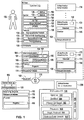
- the user computer system 100 may be a personal computer, a portable computer such as a laptop or palmtop computer, a personal digital assistant, a mobile telecommunications device, in particular a smart phone , or the like act.
- the user computer system 100 has a reader 101 with an interface 104 for communicating with an ID token 106 having a corresponding interface 108.
- the user computer system 100 has at least one processor 110 for executing program instructions 112 and a network interface 114 for Communication over a Network 116.
- the network may be a computer network, such as the Internet.
- the ID token 106 has an electronic memory 118 with protected memory areas 120, 122, and 124.
- the protected memory area 120 serves to store a reference value needed for authenticating the user 102 to the ID token 106.
- This reference value is, for example, an identifier, in particular a so-called personal identification number (PIN), or reference data for a biometric feature of the user 102, which can be used for the authentication of the user against the ID token 106.
- PIN personal identification number
- the protected area 122 serves e.g. for storing a private key and the protected memory area 124 is used e.g. for storing attributes, such as the user 102, such as, for example, their name, place of residence, date of birth, gender, and / or attributes concerning the ID token itself, such as the institution that created the ID token or issued, the validity period of the ID token, an identifier of the ID token, such as a passport number or a credit card number.
- the user's address data 176 may belong to a different attribute class and be provided by a different AP computer system than the attributes specifying the ID token or attributes 179 specifying, for example, health data.
- the electronic memory 118 may further include a memory area 126 for storing a certificate.
- the certificate includes a public key associated with the private key stored in the protected storage area 122.
- the certificate may have been created according to a public key infrastructure (PKI) standard, for example according to the X.509 standard.
- PKI public key infrastructure
- the certificate does not necessarily have to be stored in the electronic memory 118 of the ID token 106.
- the certificate can also be stored in a public directory server.
- the ID token 106 has a processor 128.
- the processor 128 is for executing program instructions 130, 132, and 134.
- the program instructions 130 are for user authentication, i. for authenticating the user 102 to the ID token.
- the user 102 enters his PIN for his authentication, for example in the user computer system 100.
- Execution of the program instructions 130 then accesses the protected memory area 120 in order to assign the entered PIN with the reference value of the PIN stored there to compare. In the event that the entered PIN matches the reference value of the PIN, the user 102 is considered authenticated.
- a biometric feature of the user 102 is captured.
- the ID token 106 has a fingerprint sensor or a fingerprint sensor is connected to the user's computer system 100.
- the biometric data acquired by the user 102 is compared to the biometric reference data stored in the protected memory area 120 by executing the program instructions 130 in this embodiment. If the biometric data acquired by the user 102 sufficiently matches the biometric reference data, the user 102 is considered authenticated.
- the program instructions 134 are used to execute the ID token 106 steps of a cryptographic protocol for authentication of an ID provider module 136 against the ID token 106.
- the cryptographic protocol may be a challenge-response protocol based on a act symmetric key or an asymmetric key pair.
- the cryptographic protocol implements an Extended Access Control method as specified for machine-readable travel documents (MRTD) by the International Aviation Authority (ICAO).
- MRTD machine-readable travel documents
- ICAO International Aviation Authority
- the ID provider module 136 authenticates against the ID token and thereby has its read permission to read the attributes stored in the protected storage area 124 already present on the ID token and / or of one or more several of the AP computer systems 172, 173, 174 to Were provided after.
- the authentication may also be mutually exclusive, ie the ID token 106 must then also authenticate itself to the ID provider module 136 according to the same or another cryptographic protocol.
- the program instructions 132 are used for the end-to-end encryption of data transmitted between the ID token 106 and the ID provider module 136, but at least the attributes read from the protected memory area 124 by the ID provider module 136.
- a symmetric key may be used, which is agreed, for example, during the execution of the cryptographic protocol between the ID token 106 and the ID provider module 136.
- the user computer system 100 with its interface 104 can not communicate directly with the interface 108, but via a reader 104 connected to the interface 104 for the ID token 106. Via this reading device, for example a so-called class 2 chip card Terminal, the PIN can also be entered.
- the ID provider module 136 has a network interface 138 for communication over the network 116.
- the ID provider module 136 further has a memory 140 in which a private key 142 of the ID provider module 136 and the corresponding certificate 144 is stored.
- this certificate may be, for example, a certificate according to a PKI standard, such as X.509.
- the ID provider module 136 further has at least one processor 145 for executing program instructions 146 and 148.
- the steps of the cryptographic protocol concerning the ID provider module 136 are executed.
- the cryptographic protocol is implemented by executing the program instructions 134 by the processor 128 of the ID token 106 and by executing the program instructions 146 by the processor 145 of the ID provider module 136.
- the program instructions 148 are used to implement the end-to-end encryption on the ID provider module 136 side, based, for example on the symmetric key that has been negotiated on the occasion of the execution of the cryptographic protocol between the ID token 106 and the ID provider module 136.
- any method known per se for agreeing the symmetric key for the end-to-end encryption such as, for example, a Diffie-Hellman key exchange, can be used.
- the ID provider module 136 is preferably located in a particularly protected environment, in particular in a so-called trust center, so that the ID provider module 136 in combination with the necessity of authenticating the user 102 with respect to the ID token 106 Trust anchor for the authenticity of the read from the ID token 106 attributes.
- a service computer system 150 may be configured to receive an order or order for a service or product, particularly an online service.
- the user 102 may open an account online with a bank via the network 116, or may use other financial or banking services.
- the service computer system 150 may also be embodied as an online store, such that the user 102 may, for example, purchase a mobile phone or the like online.
- the service computer system 150 can also be designed for the delivery of digital content, for example for the download of music and / or video data or as a government server for an eGovernment application.
- the service computer system 150 has for this purpose a network interface 152 for connection to the network 116. Further, the service computer system 150 has at least one processor 154 for executing program instructions 156. By executing the program instructions 156, for example, dynamic HTML pages are generated the user 102 can enter his order or his order.
- the service computer system 150 must review attributes of the user 102 and / or its ID token 106 based on one or more predetermined criteria. Only if this check is passed will the order or order of the user 102 be accepted and / or executed.
- the user 102 For example, to open a bank account or purchase a mobile phone with a related contract, it is required that the user 102 reveal his identity to the service computer system 150 and that this identity be verified. In the prior art, for example, the user 102 has to present his identity card for this purpose. This process is replaced by the reading of the digital identity of the user 102 from its ID token 106.
- FIG. 1 has shown computer system 172 and 173 and an APV computer system 199.
- the AP computer systems can in principle be of the same structure as the ID provider module or contain such or be operatively coupled to it (for example, with the ID token perform a mutual authentication and build an end-to-end encrypted channel ) and have additional functionality to receive attribute specifications from an APV computer system 199 and to write attributes in the ID tokens.
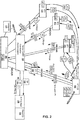
- FIG. 2 shows an embodiment of a distributed system, which substantially already in FIG. 1 described components and computer systems.
- the transmission channels protected by end-to-end encryption between the ID token and the respective communication partners are shown by dashed lines.
- the APV computer system can perform a function as a relay station by protocol translation and initiate the establishment of the individual channels, but it is not the end point in the end-to-end encrypted communication links.
- Steps 222-234 are now repeated for each of the determined AP computer systems 173, 174, ....
- the third attribute specification AR2 is communicated to the second attribute provider computer system AP2 173 via the network, preferably encrypted, a fourth protected data transmission channel SM [CA] # is established after mutual authentication between the AP2 computer system and the ID token. 4, transmitting a second attribute set A2 by the AP2 computer system, writing the second attribute set to the ID token 106 via the fourth protected communication channel, sending a second acknowledgment signal S2 from the AP2 computer system to the APV computer system and reactivating a switch signal of the local communication channel sent to the ID token.
- SM [CA] # is established after mutual authentication between the AP2 computer system and the ID token. 4
- transmitting a second attribute set A2 by the AP2 computer system writing the second attribute set to the ID token 106 via the fourth protected communication channel, sending a second acknowledgment signal S2 from the AP2 computer system to the APV computer system and reactivating
- the fourth attribute specification AR3 is communicated to the third attribute provider computer system AP3 174 via the network, preferably encrypted, after authentication between the AP3 computer system and the ID token a fifth protected data transmission channel SM [CA. ] # 5, a third attribute set A3 is transmitted by the AP3 computer system, the third attribute set is written to the ID token 106 via the fifth protected communication channel, a third acknowledgment signal S3 is sent from the AP3 computer system to the APV computer system, and a switching signal to wake up the local communication channel to the ID token.
- SM protected data transmission channel
- a third attribute set A3 is transmitted by the AP3 computer system
- the third attribute set is written to the ID token 106 via the fifth protected communication channel
- a third acknowledgment signal S3 is sent from the AP3 computer system to the APV computer system
- a switching signal to wake up the local communication channel to the ID token.
- the repetition of steps 222-234 is performed sequentially as in FIG FIG. 3 shown.
- the APV computer system sends the third attribute specification AR2 to the AP2 computer system only after receiving the acknowledgment signal S1 and the fourth attribute specification AR3 to the AP3 computer system only after receiving the acknowledgment signal S2.
- the APV computer system sends the generated partial attribute specifications AR1, AR2, AR3, etc. in parallel to the respective AP computer systems 172, 173, 174 so that parallel determination of the respective attribute sets is possible.
- the ID token reserves its associated protected transmission channel at the reader and the user computer system coupled thereto at least until the protected channel is established to the ID token or has been reactivated, the writing of the attributes has been terminated, and optionally the context of the protected channel (ie, generated cryptographic keys, session keys, etc.) has been stored for quick re-activation of the channel. Thereafter, the AP computer system "releases" the ID token to other AP computer systems.
- the ID token is configured to support quasi-parallel writing via logical channels so that the attributes or attribute sets are written atomically (that is, according to the ASIC model for data transactions).
- the user computer system 100 may prompt the user 102 to authenticate to the ID token 106.
- the user 102 enters his PIN via the reader 101 or a keyboard of the user computer system 100, for example.
- a local secure transmission channel SM [PACE] is set up between the user computer system 100, that is to say its reader 101, and the ID token 106, for example using a Diffie-Hellman key exchange, in particular according to the Federal Office for Security in Information Processing (BSI) specified PACE protocol.
- the ID provider module 136 establishes a secure transmission channel SM [CA] # 1 over the network 116 over which the ID provider module 136 authenticates to the ID token 106, under Use of the certificate 144.
- the ID provider module 136 may first try to read out all the attributes specified in the first attribute specification and already stored in the ID token and transmit to the service computer system and the first attribute specification by a new version which no longer specifies the already read attributes.
- the read attributes are transmitted over the first protected transmission channel SM [CA] # 1.
- a mutual authentication of the IT token 106 and the respective authentication partner is carried out using certificates, that is, there is a so-called CA and TA .
- a session key is also agreed with which the respective established protected transmission channel is constructed with end-to-end encryption between the ID token 106 and the authentication partner via the user computer system 100 and the network 116, wherein the local protected transmission channel SM [PACE] persists in some embodiments in addition to the respectively constructed first, second or third protected data communication channel SM [CA] X.
- the service provider's ID provider module may be an integral component of the service computer system or an external component that is interoperable with the service CS.
- each of the AP computer systems and also the APV computer system also each use an ID provider module (which may be implemented as an internal or external component of the AP or APV computer system) for data exchange with the ID token.
- the service computer system, the AP computer systems and the APV computer system each use their own ID provider modules to ensure the privacy of the exchanged attributes.
- the protected memory of the ID token is subdivided into different sectors, each sector being associated with a particular attribute class and the write permissions for the individual AP computer systems being restricted to individual sectors.
- the AP computer systems selectively generate the attribute sets each of them that are specified in the second AR1, third AR2 and fourth AR3 attribute specification, each in a sector associated with a particular attribute class.
- An AP computer system that provides attributes of a particular attribute class may in this case selectively write attribute sets from its associated sector and, optionally, in some embodiments, also read and / or write access to attribute specifications stored thereon.
- the latter can be particularly advantageous if several AP computer systems 1722, 172, possibly sequentially, are to provide attributes of a certain class, whereby each of these AP computer systems writes an attribute specification in the ID after writing the attributes determined by it to the sector.
- Token stores selectively the attributes specified that could not be determined by the writing AP computer system.
- the communication between the user computer system 100 and the ID token 106 preferably takes place via the local transmission channel SM [PACE].
- the communication between the ID token and the ID provider module 136 is via a first protected transmission channel SM [CA] # 1.
- the communication between the ID token and the APV computer system 199 is via a second protected transmission channel SM [CA] # 2.
- the communication between the ID token and each of the AP computer systems 172, 173, 174 is in each case via a corresponding third SM [CA] # 3, fourth SM [CA] # 4 and fifth SM [CA] # 5 protected transmission channel.
- the APV computer system immediately upon receipt of an acknowledgment signal S1, S2, S3 from each of the AP computer systems, the APV computer system first activates the first protected transmission channel SM [CA] # 1 (FIG. eg by sending a corresponding switchover command) to allow the ID provider module 136 to immediately read out the attributes determined by that one attribute provider computer system for transmission to the service computer system. After a successful readout of a subset A1, A2, A3 of the attributes, the ID provider module in each case sends a read acknowledgment to the APV computer system.
- the APV computer system then sends a switch signal SC [CA] PACE to the ID token to cause it to switch to the local channel and sends one of the partial attribute specifications AR2 and the address of the token 106 # to another 173 of the AP computer systems that has not yet been requested.
- SC [CA] PACE switch signal
- SM [CA] # 3 SM [CA] # 4 SM [CA] # 5 is set up for this AP computer system as described above.
- This protected transmission channel becomes the active channel
- the first secure SM [CA] # 1 to the ID provider module becomes an inactive transmission channel.
- An inactive transmission channel is a channel for which a session and a secure, for example, encrypted connection is maintained, although this channel is not currently used for data transmission.
- An active channel is a channel currently used for data transmission.
- the transmission channel can thus be reactivated very quickly and resource-conserving by a switching command without the need to negotiate new session keys.
- the user computer system activates and deactivates the first secure channel to the ID provider module in response to receipt switching signals from the ID provider module and in response to receipt of acknowledgment signals S1, S2, S3 from the respective attribute provider computer systems. This speeds up the process by eliminating the need to negotiate new session keys to establish the first protected transmission channel between the IT token and the ID provider module, which can be particularly beneficial given the limited processing power of many ID tokens.
- the APV computer system is configured to first make a signature request to the ID over the protected communication channel SM [CA] # 2 for all generated partial attribute specifications (ie, the second AR1, third AR2, fourth AR3, etc. attribute specification) Token sends.
- the signature request may be communicated to the ID token along with the partial attribute specifications.
- the ID token signs (optional: after an explicit confirmation of the signature by the user eg by a PIN entry) each of the partial attribute specifications.
- the APV computer system receives the signed partial attribute specifications AR1 sign , AR2 sign , AR3 sign , ..., or just the respective generated signature from the ID token, and passes the signed partial attribute specifications respectively to that of the AP computer systems which is designed to provide the relevant partial attribute specification.
- Each of the AP computer systems thus receives "its" partial attribute specification from the APV computer system in a form signed by the ID token and, before it determines the attributes specified in it, checks the validity of the signature, for example by means of a public signature verification key ID token is assigned.
- the token may already be configured by the user to automatically automatically sign attribute specifications provided by a particular APV computer system or affecting a particular attribute class.
- This method is advantageous because the individual AP computer systems can check whether the attributes have been legitimately requested (ie with the user's knowledge and will) even before they establish a communication connection with the ID token or provide the corresponding attributes. This reduces the consumption of computing capacity by the AP computer systems and speeds up the process.
- the structure of the channel or the attribute determination can be omitted from the outset in case of signature disability. It is also advantageous for data protection that signature invalidation does not result in read or write access to the protected memory of the ID token.
- each AP computer system itself verifies that the attributes were really requested with the user's knowledge and will.
- an AP computer system eg, AP1
- a corresponding partial attribute specification eg, AR1
- a secure communication channel eg, SM [CA] # 3
- the AP computer system sends the part Attribute specification over the protected channel to the ID token along with a signature request.
- the ID token is signed, optionally after an explicit confirmation of the signature by the user, eg by a PIN entry, the partial attribute specification.
- the AP computer system receives the signed partial attribute specifications AR1 from the ID token over the protected channel (eg, SM [CA] # 3) and performs a signature check the signed partial attribute specification, for example by means of a public signature verification key of the ID token.
- the AP computer system determines the ones in the signed partial attribute specification only if the signature is valid.
- This method has the advantage that each AP computer system can individually determine whether to perform a signature check prior to providing the attributes, so that greater flexibility of data security, e.g. depending on the confidentiality of the attributes to be provided is possible.
- this procedure initially builds the secure channel between the AP computer system and the ID token, regardless of whether the token will sign the attribute specification or not.
- the computer system that creates the signature request (ie, the APV computer system or an AP computer system 172, 173, 174) generates a signature confirmation request and sends this signature confirmation request to the user computer system 100.
- the signature confirmation request is a request to the user 102 the user computer system, which is also assigned to the ID token to approve the signing of an attribute specification by the ID token.
- the signature confirmation request may contain an indication of the attributes requested by the service and specified in an attribute specification that is displayed to the user via the display of the user computer system.
- a signature confirmation request allows the user to explicitly grant the ID token the ability to sign an attribute specification in response to a signature request. The permission may e.g.
- the user computer system prompts the user to enter a PIN to authenticate with this against the ID token as the owner of the ID token. If the user grants the permission to sign an attribute specification, the ID token signs the attribute specification for which the signature confirmation of the user 102 is present.
- the ID token generates the signature by executing program instructions 135 by the processor 128 of the ID token 106, which generates a generator for generating digital signatures, using, for example, the private key 122 of the ID token.
- the signature authorization request can be configured as a request for a signature PIN from the user 102.
- the PIN input may be, for example, via a user interface, such as a keyboard of the user computer system 100 or the reader 101.
- the ID token 106 checks whether the identifier entered by the user 102 matches the reference value for the signature PIN (SPIN) stored in the memory 118 stored in the protected memory area 121.
- SPIN signature PIN
- the ID token 106 sends the signed second attribute specification or only the signature thereof to the AP1 computer system 172.
- the AP1 computer system 172 checks the validity of the signature and determines the attributes specified therein only if the check reveals that the signature is valid .
- the further AP computer systems 173, 174, 1722 can also obtain and check a signature of the respectively read attribute specifications and, if necessary, in the case of the validity of the signature, determine the attributes specified in the respectively obtained attribute specification.
- a corresponding protected communication channel SM [CA] # 3, SM [CA] # 4, SM [CA] # 5 is set up via which the attributes are written into the ID token.
- the respective AP computer system sends an acknowledgment signal S1-Sn to the APV computer system.
- the further steps, including sending a termination signal to the service computer system are eg in the description of Fig. 4 explained.
- the service computer system may retrieve the attributes stored in the memory 118 of the ID token via the ID provider module 136 from the ID token and provide the service requested with the service request 103.
- the service computer system receives the attributes from the ID provider module 136 over a network, such as the Internet, in particular when the module 136 is a self-contained ID provider computer system, in accordance with some embodiments.
- the attributes may also be sent to the service via a system bus of a service computer system or to be associated with the service associated program modules of the service computer system, for example, if the ID provider module is an integral part of the service computer system.
- the AP computer systems 172, 173, 174, 1722 ... may be constructed analogously to the ID provider module 136, that is, they each have a network interface 138, a processor 145 for executing program instructions 146, 148 and a memory 140 in which a certificate and a private key are stored.
- the certificate is preferably an authorization certificate in each of which an authorization for write access to the ID token 106 or individual sectors is specified.
- the APV computer system 199 preferably has only rights to read the first attribute specification from the ID token, but has no right to store an attribute specification itself in the ID token or to read already stored attributes (in particular of other sectors).
- the user computer system 100 also has neither read nor write permissions to the attribute specifications and attributes of the ID token.
- the distributed system also includes other attribute provider computer systems 1722 that are also configured to provide attributes of the same class as that first attribute provider computer system 172.
- the AP computer system 172 if the AP computer system 172 is unable to provide all of the attributes specified in the second attribute specification AR1, the AP computer system 172 generates a new version of the second attribute specification AR1 'which only specify those attributes of the original second attribute specification AR1 that could not be provided by the AP computer system 172.
- the user computer system 100 or the middleware (MW) installed thereupon then coordinates the provision of the still missing attributes of this attribute class by the additional AP computer systems 1722 and, possibly also 1723.
- the current version of the second attribute specification such as it is stored in the ID token 106 by an even more recent one Version that specifies only a subset of the attributes specified in the previous version that could not yet be deployed.
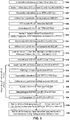
- FIG. 4 shows a schematic representation of a method according to embodiment of the invention.
- the user computer system 100 sends a service request 103 from a user 102 via a network 116 to a service computer system 150 that is coupled to an ID provider module 136.
- a service computer system 150 that is coupled to an ID provider module 136.
- the user enters a URL in an Internet browser of his user computer system in order to set up a so-called Internet session with the service computer system.
- the service computer system may be, for example, an online shop or other e-commerce portal, or a government server providing an e-government application.
- the user's service request may be the transmission of a user's purchase decision, which the user inputs, for example, by clicking on a virtual control on the service computer system's web page, such as "buy” or "buy now” Service request can be transmitted as an http request or https request via the Internet session to the service computer system, for example.
- An eGovernment application may analogously be the service request for the transmission of a request of the user of an official procedure, such as the issuing of a registration certificate, the registration of a motor vehicle or the notification of a change of residence or the like.
- the service computer system requires attributes of the user for the service requested with the service request, and also attributes of the ID token itself, depending on the application. These may be specified by the service computer system in a first attribute specification 105 ("AR").
- AR first attribute specification
- the first attribute specification may include the attributes name, date of birth, address of the user, account number of the user, creditworthiness of the user and validity period of the ID token.
- the attributes according to this first attribute specification thus require the service computer system to provide the service to the user.
- the service computer system 150 In response to receiving the service request, the service computer system 150 at step 304 sends the first attribute specification 105 to the ID provider module 136.
- the first attribute specification specifies those attributes that the service computer system requires to provide the requested service.
- the transmission can take place via the network.
- the ID provider module is an integral part of the service computer system, such that sending the first attribute specification occurs, for example, via an internal data bus or a LAN connection.
- the user 102 authenticates himself to the ID token.
- the user enters a secret identifier, such as the so-called Personal Identification Number (PIN).
- PIN Personal Identification Number
- this can be done directly by input to the ID token, by input to the reader or by input to the user computer system.
- the authentication of the user with respect to the ID token by means of a "remote verification", which here any method is understood in which the identifier to be checked is not entered directly into the ID tokens to compare with the identifier stored there, but in which the check is carried out by means of a protocol involving the reader and the ID token, in which the identifier entered into the reader need not be transferred to the ID token.
- Such protocols are well known in the art, such as Strong Password Only Authentication Key Exchange (SPEKE), Diffie-Hellman Encrypted Key Exchange (DH-EKE), Bellovin-Merritt Protocol or Password Authenticated Connection Establishment (PACE).
- SPEKE Strong Password Only Authentication Key Exchange
- DH-EKE Diffie-Hellman Encrypted Key Exchange
- PACE Password Authenticated Connection Establishment
- SPEKE Strong Password Only Authentication Key Exchange
- DH-EKE Diffie-Hellman Encrypted Key Exchange
- PACE Password Authenticated Connection Establishment
- the PACE protocol is known from Technical Guideline TR-03110 of the Federal Office for Security in Information Technology, which is particularly suitable for elliptic curve cryptography, cf. DE 102007000587 A1 and DE 102013202001 A1 .
- the user computer system preferably also authenticates to the ID token, wherein in step (2) as well a local secured transmission channel SM [PACE], that is a so-called secure messaging channel, between the ID token and the user computer system can be established, for example by a session key according to a Diffie-Hellman protocol between the ID token and the user computer system is agreed.
- the local transmission channel is thus now the active transmission channel.
- the ID provider module and the ID token mutually authenticate each other.
- the ID provider module authenticates over the ID token over the network 116, and preferably also grants its read or write permission by, for example, transmitting its entitlement certificate over the network to the ID token.
- the ID token also authenticates to the ID provider module, that is, both the so-called terminal authentication (TA) of the ID provider module against the ID token in step (3) and the chip authentication (CA ) of the ID token, that is, the chip included in the ID token with the processor, opposite the ID provider module in step (4).
- the TA and the CA can be performed in accordance with BSI TR-03110.
- a first secured transmission channel SM [CA] # 1 can be set up according to a secure messaging method in that a session key is interposed between the ID token and the ID provider at the TA and / or CA. Module for end-to-end encryption, with the local protected transmission channel remaining intact.
- the ID provider module can read-access the ID token to retrieve the attributes required by the service. If the required attributes can not be read, or by default, the ID provider module writes the first attribute specification AR 105 in a protected memory area of the ID token in step 6. When the AR is stored in the non-volatile memory of the ID token, an attribute specification stored from previous protocol sessions can be replaced. The ID provider module then generates a first switchover command. The first switchover command is transferred from the ID provider module to the ID token sent the first protected transmission channel. The switch command causes a switchover from the first protected transmission channel SM [CA] # 1 to the local protected transmission channel SM [PACE] in step (7).
- the service computer system After the service computer system successfully stores the first attribute specification in the ID token via the ID provider module, it generates a "first message" containing the information that a first attribute specification is stored in the ID token, the attributes of which are not could be read from the token and that needs to be edited.
- the first message is transmitted from the service computer system to the user computer system.
- step (8) in response to receiving the first message, the user computer system sends a trigger signal T1 with the address of the token to an APV computer system 199.
- the first trigger signal does not contain any information regarding the attributes requested by the service and thus does not include the first attribute specification still parts of it. Thus, the confidentiality of the requested attributes and also the type of requested service is guaranteed if the trigger signal should be intercepted by unauthorized third parties.
- the trigger signal T1 includes an address # 106 of the ID token 106, for example, a URL in combination with a port number that allows the first attribute provider computer system to contact the ID token and initiate mutual authentication ,
- This causes the APV computer system to perform a TA and a CA with the ID token in steps (9) and (10) as already described and, after successful mutual authentication in step (11), a second protected communication channel SM [CA] # 2 build.
- a second secure transmission channel SM [CA] # 2 can be established with end-to-end encryption between the ID token and the APV computer system, whereby the first protected transmission channel is deactivated.
- the APV computer system reads out the first attribute specification AR from the ID token over the second protected channel, analyzes it, divides it into a plurality of partial attribute specifications AR1, AR2, AR3, and identifies a plurality of AP computer systems 172. 173, 174 capable of providing the attributes specified in the specification AR. For example, address data of AP computer system 172, credit-worth information may be provided by AP computer system 173.
- the APV computer system forwards each of the partial attribute specifications to one of the determined AP computer systems together with an ID tokens 106 # and initiates the ID in advance Token via a switching command SC [CA] PACE to reactivate the local communication channel, so that can be done via this mutual authentication of the ID token and the corresponding AP computer system.
- the ID token and each of these AP computer systems each build a protected channel to each other via which the attributes determined by the AP computer system according to the respectively received partial attribute specification are written into the protected memory area of the ID token (in Fig. 4 : dashed box).
- a secured transmission channel SM [CA] # 3 is established between the two communication partners by means of end-to-end encryption.
- the first protected transmission channel SM [CA] # 1 remains and is inactivated.
- TA terminal authentication
- CA chip authentication
- the first AP computer system determines the attributes specified in the second attribute specification and writes them into a protected memory area of the IT token 106. The written attributes are thereby transferred to the ID token via the third protected transmission channel SM [CA] # 3 and are therewith protected against unauthorized access of third parties and also against the access of the user computer system.
- the APV computer system When the APV computer system has received from all AP1 APn computer systems to which a partial attribute specification has been sent an acknowledgment signal S1-Sn confirming the successful writing of the respective determined attributes in the ID token, the APV computer system sends Termination signal SAPV to the user computer system, which in turn sends a Umschaltkommando to reactivate the first communication channel to the ID token and a "second" message to the service computer system.
- the second message includes that the attributes are now available and can be read from the token.
- the ID token in response to the switching command, the ID token re-activates the first protected communication channel SM [CA] # 1, thereby allowing the ID provider module of the service computer system to retrieve the attributes from the token in step (16) read.
- Switching to the protected first transmission channel SM [CA] # 1 may be e.g. such that the ID token "automatically" falls back to the local secure channel SM [PACE] after the write access of an AP computer system, i.e., after a successful write access, automatically re-enables the local secure channel.
- the user computer system upon receipt of a termination signal SAPV, switches from the channel of the last-write AP computer system (or the local secure communication channel) to the secure first transmission channel SM [CA] # 1 by sending a switchover command UK via the local transmission channel SM [ PACE] to the ID token, thereby causing the ID token to switch to the first secure transmission channel.
- the ID token is therefore passive in the switching operations and configured for automatic switching ("fallback") to the local channel as described above.
- step (17) the service computer system may send another switchover command to the ID token to reactivate the local channel.
- step (18) the service computer system provides the requested service if the read attributes are valid.
Landscapes
- Engineering & Computer Science (AREA)
- Computer Security & Cryptography (AREA)
- Theoretical Computer Science (AREA)
- Computer Hardware Design (AREA)
- Software Systems (AREA)
- Physics & Mathematics (AREA)
- General Engineering & Computer Science (AREA)
- General Physics & Mathematics (AREA)
- Storage Device Security (AREA)
Claims (17)
- Procédé de lecture d'attributs à partir d'un jeton d'identification (106), qui est associé à un utilisateur (102), le jeton d'identification présentant une mémoire (118) électronique non volatile avec une zone de mémoire (124) sécurisée, où un accès à la zone de mémoire sécurisée n'est possible que par le biais d'un processeur (128) du jeton d'identification, avec les étapes suivantes :- l'envoi (302) d'une demande de service (103) d'un utilisateur d'un système informatique d'utilisateur (100) à un système informatique de service (150), lequel est couplé avec un module de fournisseur d'identification (136) ;- en réponse à la réception de la demande de service, l'envoi d'une première spécification d'attributs (105) du système informatique de service au module de fournisseur d'identification, la première spécification d'attributs spécifiant les attributs en question dont le système informatique de service a besoin pour la fourniture du service demandé avec la demande de service, et l'authentification réciproque du module de fournisseur d'identification et du jeton d'identification ;- après l'authentification réciproque réussie du module de fournisseur d'identification et du jeton d'identification, l'écriture de la première spécification d'attributs (105) dans la zone de mémoire sécurisée du jeton d'identification par le module de fournisseur d'identification et l'envoi d'une première information que la première spécification d'attributs a été écrite, par le système informatique de service au système informatique d'utilisateur ;- en réponse à la réception de la première information, l'envoi d'un signal de déclenchement (T1) du système informatique d'utilisateur à un système informatique d'APV, le système informatique d'APV étant un système informatique d'annuaire de fournisseurs d'attributs, où le premier signal de déclenchement est exempt de la première spécification d'attributs (105) et de ses parties et contient une adresse (#106) du jeton d'identification (106) ;- en réponse à la réception du signal de déclenchement, l'authentification réciproque du système informatique d'APV (199) et du jeton d'identification, moyennant l'emploi de l'adresse ;- après l'authentification réciproque réussie du système informatique d'APV et du jeton d'identification, la lecture de la première spécification d'attributs (AR) à partir de la zone de mémoire sécurisée du jeton d'identification et la subdivision de la première spécification d'attributs lue en au moins une deuxième spécification d'attributs (AR1) et une troisième spécification d'attributs (AR2) par le système informatique d'APV ;- l'envoi de la deuxième spécification d'attributs (AR1) et de l'adresse (#106) du système informatique d'APV à un premier système informatique d'AP (172), lequel est prévu pour mettre à disposition les attributs spécifiés dans la deuxième spécification d'attributs, où le premier système informatique d'AP est un premier système informatique de fournisseur d'attributs, et l'envoi de la troisième et de chaque nouvelle spécification d'attributs (AR2, ..., Arn) et de l'adresse (#106) du jeton d'identification du système informatique d'APV chaque fois à un nouveau système informatique d'AP (173, 174), lequel est prévu pour mettre à disposition les attributs spécifiés dans la troisième ou dans les nouvelles spécifications d'attributs ;- en réponse à la réception de la deuxième spécification (AR1) et de l'adresse par le premier système informatique d'AP, la détermination d'une première quantité (A1) d'attributs qui sont spécifiés dans la deuxième spécification d'attributs, et l'initialisation d'une authentification réciproque du premier système informatique d'AP et du jeton d'identification, moyennant l'emploi de l'adresse ;- après l'authentification réciproque du premier système informatique d'AP et du jeton, l'écriture de la première quantité d'attributs (A1) par le premier système informatique d'AP sur la zone de mémoire sécurisée du jeton d'identification et l'envoi d'un signal de confirmation (S1) du premier système informatique de fournisseur d'attributs au système informatique d'annuaire de fournisseurs d'attributs (199) ;- après la réception d'un signal de confirmation (S2, S3, ...., Sn), lequel indique que le système informatique d'AP respectif a pu mettre à disposition la quantité d'attributs déterminée totalement par celui-ci, et a pu l'écrire dans la mémoire sécurisé du jeton d'identification, l'envoi d'un signal de planification (SAPV) du système informatique d'AP au système informatique d'utilisateur ;- en réponse à la réception du signal de planification, l'envoi d'une deuxième information (180) du système informatique d'utilisateur au système informatique de service afin de faire en sorte que le système informatique de service lise les quantités d'attributs (A1, A2, ..., An) écrites à partir de la zone de mémoire sécurisée par le biais du premier module de fournisseur d'identification.
- Procédé selon la revendication 1, dans lequel le jeton d'identification est exempt d'une logique de programme basée sur un logiciel ou un matériel qui est prévue, en fonction du contenu de la zone de mémoire sécurisée, pour initier l'établissement de nouveaux canaux de communication ou l'activation de canaux étant présents vers le système informatique d'utilisateur, vers le module de fournisseur d'identification, vers le système informatique d'APV et/ou vers le premier système informatique d'AP.
- Procédé selon l'une des revendications précédentes, en outre avec :- après l'authentification réciproque réussie du module de fournisseur d'identification et du jeton d'identification, l'initialisation de l'établissement d'un premier canal de transmission sécurisé (SM[CA]#1) entre le module de fournisseur d'identification et le jeton d'identification par le module de fournisseur d'identification, où l'écriture de la première spécification d'attributs (105) a lieu par le biais du premier canal de transmission sécurisé ;- après l'authentification réciproque réussie du module de système informatique d'APV et du jeton d'identification, l'initialisation de l'établissement d'un deuxième canal de transmission sécurisé (SM[CA]#2) entre le système informatique d'APV et le jeton d'identification par le système informatique d'APV, où la lecture de la première spécification d'attributs (105) a lieu à partir de la zone de mémoire sécurisée du jeton d'identification par le biais du deuxième canal de transmission sécurisé ;- après l'authentification réciproque réussie du premier système informatique d'AP et du jeton d'identification, l'initialisation de l'établissement d'un troisième canal de transmission sécurisé (SM[CA]#3) entre le premier système informatique d'AP et le jeton d'identification par le premier système informatique d'AP, où l'écriture de la première quantité d'attributs (A1) s'effectue dans la zone de mémoire sécurisée du jeton d'identification par le biais du troisième canal de transmission sécurisé ;- où l'écriture de toutes les nouvelles quantités d'attributs (A2, ..., An) qui ont été respectivement déterminées par l'un des autres systèmes informatiques d'AP a lieu dans la zone sécurisée du jeton d'identification uniquement après une authentification réciproque réussie de l'autre système informatique d'AP respectif et du jeton d'identification et uniquement par le biais d'un autre canal de transmission sécurisé (SM[CA]#4, SM[CA]#5) établi respectivement après une authentification réciproque,où, en particulier, des données qui sont transmises par le premier, le deuxième ou le troisième canal de transmission sécurisé sont protégées avant l'accès du système informatique d'utilisateur.
- Procédé selon la revendication 3, avec en outre :- en réponse à la réception du signal de planification, l'envoi d'une commande de commutation (SC[CA]#1) du système informatique d'utilisateur vers le jeton d'identification afin de faire en sorte que le jeton d'identification active le premier canal de transmission sécurisé (SM[CA]#1) ;- la lecture des quantités d'attributs (A1, A2, ..., An) écrites à partir de la zone de mémoire sécurisée par le module de fournisseur d'identification par le biais du premier canal de transmission sécurisé activé ; et/ouen outre avec :- après l'écriture réussie de la première spécification d'attributs (AR) dans la zone de mémoire sécurisée, l'envoi d'une commande de commutation (SC[PACE]) du système informatique d'APV vers le jeton d'identification par le biais du premier canal de communication sécurisé, la commande de commutation (SC[PACE]) faisant en sorte que le jeton d'identification active le canal de transmission sécurisé (SM[PACE]) local ; et/ou- en réponse à l'obtention du signal de planification (SAPV) par le système informatique d'utilisateur, l'envoi d'une nouvelle commande de commutation (SC[CA]#1) par le biais du canal de transmission local activé, la nouvelle commande de commutation (SC[CA]#1) faisant en sorte que le jeton d'identification active le premier canal de transmission sécurisé (SM[CA]#1),- la lecture des quantités d'attributs (A1, A2, ..., An) écrites à partir de la zone de mémoire sécurisée par le module de fournisseur d'identification par le biais du premier canal de transmission sécurisé (SM[CA]#1) activé ; et/ouen outre avec :- après l'écriture réussie de la première quantité d'attributs (A1) dans la zone de mémoire sécurisée, l'envoi d'une commande de commutation (SC[PACE]) du premier système informatique d'AP vers le jeton d'identification par le biais du troisième canal de communication sécurisé (SM[CA]#3), la commande de commutation (SC[PACE]) faisant en sorte que le jeton d'identification active le canal de transmission sécurisé (SM[PACE]) local ;- l'utilisation du canal de transmission sécurisé local activé pour la transmission de données d'authentification par le biais du canal de transmission sécurisé local dans le cadre de l'authentification réciproque du système informatique employé ultérieur parmi les autres systèmes informatiques d'AP et du jeton d'identification.
- Procédé selon la revendication 4, avec en outre :- le stockage des clés cryptographiques qui ont été employées pour l'établissement de chacun des canaux sécurisés,- le jeton d'identification étant configuré pour, en fonction d'une commande de commutation (SC[PACE]), SC[Ca]#1, SC[CA]#2), activer et désactiver chacun des canaux de transmission sécurisés, où une activation contient la réutilisation de la clé cryptographique stockée du canal de transmission à activer.
- Procédé selon l'une des revendications précédentes, en outre avec :- une analyse de la première spécification d'attributs par le système informatique d'APV pour la détermination de toutes les classes d'attributs auxquelles appartient au moins un des attributs spécifiés dans la première spécification d'attributs ; et- la détermination des premier, deuxième et de chaque nouveau systèmes informatiques d'AP en tant que systèmes informatiques d'AP qui sont conçus pour fournir des attributs se rapportant à l'utilisateur d'une des classes d'attributs déterminées ; et/ou- le système informatique d'APV étant conçu pour identifier plusieurs premiers systèmes informatiques d'AP (172 ; 1722) qui sont prévus respectivement pour la mise à disposition d'attributs d'une classe d'attributs définie ; et- l'envoi de la deuxième spécification d'attributs (AR1) et de l'adresse (#106) ayant lieu sélectivement vers le premier système informatique d'AP identifié en question, lequel présente une valeur plus élevée en ce qui concerne les critères suivants, par rapport aux autres premiers systèmes informatiques d'AP identifiés :∘ un nombre d'attributs spécifiés dans la deuxième spécification d'attributs qui peuvent être fournis ;∘ un niveau de confiance des attributs fournis octroyé,∘ une quantité de ressources de traitement de données actuellement disponibles ;∘ un degré de confiance observé jusqu'à présent et de disponibilité du premier système informatique de fournisseur d'attributs identifié ;- dans lequel, en particulier, chacun des premiers systèmes informatiques de fournisseurs d'attributs (172, 1722) identifiés peut fournir simplement une partie des attributs spécifiés dans la deuxième spécification d'attributs (AR1) ;- dans lequel, en particulier, le système informatique d'APV, en plusieurs itérations, fait en sorte que respectivement l'un des premiers systèmes informatiques d'AP identifiés mette à disposition si possible de nombreux parmi les attributs spécifiés dans la deuxième spécification d'attributs et les stocke dans le jeton d'identification et fait en sorte de stocker une nouvelle version de la deuxième spécification d'attributs dans le jeton d'identification pour la prochaine itération, la nouvelle version contenant sélectivement uniquement encore les attributs en question de la deuxième spécification d'attributs d'origine qui ont été mis à disposition dans aucune des itérations effectuées jusqu'à présent.
- Procédé selon l'une des revendications précédentes, en outre avec :- la transmission d'une première demande de signature du premier système informatique d'AP (172) au jeton d'identification pour la création d'une signature numérique de la deuxième spécification d'attributs (AR1) ;- la création de la signature numérique de la deuxième spécification d'attributs par le jeton d'identification ;- la transmission de la signature numérique créée au premier système informatique d'AP (172) ;- la vérification de la signature numérique transmise par le premier système informatique d'AP avec une clé de vérification de signature publique, la détermination des attributs de la première quantité selon la deuxième spécification d'attributs par le premier système informatique d'AP et le stockage de la première quantité d'attributs dans le jeton d'identification n'ayant lieu que lorsque la vérification statue que la signature numérique est valide ;où, en particulier, une clé de signature privée propre est stockée dans la zone de mémoire sécurisée du jeton d'identification pour chacun des systèmes informatiques d'AP (172, 1722, 1723, 173, 174), qui est associée à l'un des systèmes informatiques d'AP, où chacun des systèmes informatiques d'AP a accès à une clé de vérification de signature publique, laquelle est associée avec la clé de signature privée qui est associée au système informatique d'AP, formant une paire de clés cryptographiques asymétriques, où la clé de vérification de signature publique est prévue pour vérifier la validité d'une signature numérique générée par la clé de signature privée correspondante.
- Procédé selon l'une des revendications précédentes, dans lequel le jeton d'identification présente une interface de communication (108) pour la communication avec un lecteur (101) du système informatique d'utilisateur (100),- dans lequel l'interface de communication du jeton d'identification est prévue pour la communication sans fil et pour le couplage sans fil d'énergie dans le jeton d'identification par le lecteur afin d'alimenter le jeton d'identification avec l'énergie électrique nécessaire pour son fonctionnement ; et/ou- dans lequel le jeton d'identification présente une mémoire électronique volatile (113) dans laquelle est stockée la première spécification d'attributs de sorte que la première spécification d'attributs est effacée de la mémoire électronique volatile lorsque le jeton d'identification est éloigné de la portée du lecteur, et dans lequel les premières et deuxièmes quantités des attributs stockées dans le jeton d'identification en raison de l'accès en écriture des premier et deuxième systèmes informatiques d'AP (172, 173), de sorte qu'on peut avoir accès à ceux-ci par un nouvel accès en lecture ultérieur en raison d'une nouvelle demande de service ; ou- dans lequel la première spécification d'attributs et les première et deuxième quantités des attributs peuvent être stockées alternativement dans la mémoire non volatile.
- Procédé selon l'une des revendications précédentes,- dans lequel l'authentification du module de fournisseur d'identification vis-à-vis du jeton d'identification a lieu à l'aide d'un certificat d'autorisation (144) du module de fournisseur d'identification en ce que des droits de lecture du module de fournisseur d'identification sont spécifiés pour la lecture d'attributs à partir du jeton d'identification, dans lequel le jeton d'identification exécute une vérification de l'autorisation de lecture pour les accès en lecture du module de fournisseur d'identification à l'aide du certificat d'autorisation ; et- dans lequel des droits d'écriture du module de fournisseur d'identification sont spécifiés dans le certificat d'autorisation pour l'écriture de la première spécification d'attributs dans le jeton d'identification, où le jeton d'identification effectue une vérification de l'habilitation en écriture du module de fournisseur d'identification pour les accès en écriture du module de fournisseur d'identification à l'aide du certificat d'autorisation.
- Procédé selon l'une des revendications précédentes,- dans lequel l'authentification du premier système informatique d'AP (172) vis-à-vis du jeton d'identification a lieu à l'aide d'un certificat d'autorisation du premier système informatique d'AP, dans lequel sont spécifiés des droits d'écriture du premier système informatique d'AP pour l'écriture de la première quantité des attributs (A1) dans le jeton d'identification ; et- dans lequel le jeton d'identification exécute une vérification de l'autorisation en écriture du premier système informatique d'AP à l'aide du certificat d'autorisation avant que le jeton d'identification n'accorde l'écriture de la première quantité d'attributs au premier système informatique d'AP.
- Procédé selon la revendication 10, dans lequel le certificat d'autorisation du premier système d'AP :- n'attribue au premier système informatique d'AP l'autorisation ni pour la lecture de la première spécification d'attributs, ni pour la lecture d'attributs qui sont stockés dans la zone de mémoire sécurisée du jeton d'identification ; ou- attribue au premier système informatique d'AP une autorisation uniquement pour la lecture d'une partie définie de la première spécification d'attributs qui spécifie sélectivement uniquement des attributs d'une classe d'attributs définie ; et/ou- dans lequel la zone de mémoire sécurisée du jeton d'identification contient plusieurs zones secondaires, dans lequel, à chacune des zones secondaires est attribuée une classe d'attributs de manière spécifique,- dans lequel le jeton d'identification ne permet un accès en lecture et/ou en écriture du premier système informatique d'AP sur l'une des zones secondaires que lorsque le certificat d'autorisation du premier système informatique d'AP contient une indication d'une autorisation de lecture et/ou d'écriture pour cette zone secondaire ; et- dans lequel le certificat d'autorisation du premier système informatique de fournisseur d'attributs établit au premier système informatique d'AP une autorisation pour l'écriture de la deuxième quantité d'attributs et éventuellement également une autorisation pour la lecture de spécifications d'attributs uniquement dans les zones secondaires en question auxquelles la classe d'attributs en question est attribuée pour la fourniture de laquelle le premier fournisseur d'attributs est prévu.
- Jeton d'identification qui est associé à un utilisateur (102), où le jeton d'identification présente une mémoire électronique (118) avec une zone de mémoire (124) sécurisée, dans laquelle sont stockés des attributs, où un accès à la zone de mémoire sécurisée n'est possible que par le biais d'un processeur (128) du jeton d'identification, et où le jeton d'identification présente une interface de communication (108) destinée à la communication avec un lecteur d'un système informatique d'utilisateur (100), où le système informatique d'utilisateur est couplé à un module de fournisseur d'identification par le biais d'un réseau, et où le jeton d'identification est configuré pour l'exécution des étapes suivantes :- l'authentification réciproque du module de fournisseur d'identification et du jeton d'identification en interopération avec le module de fournisseur d'identification ;- l'établissement d'un premier canal de transmission (SM[CA]#1) sécurisé avec un cryptage de bout en bout entre le jeton d'identification et le module de fournisseur d'identification par le biais du réseau ;- la réception d'une première spécification d'attributs (105) du module de fournisseur d'identification et le stockage de la première spécification d'attributs reçue dans une zone de mémoire sécurisée du jeton d'identification, la première spécification d'attributs spécifiant les attributs en question dont a besoin le système informatique de service pour la délivrance du service demandé avec la demande de service ;- l'authentification réciproque d'un système informatique d'APV et du jeton d'identification ;- après l'authentification réciproque du système informatique d'APV et du jeton d'identification, la vérification d'un certificat d'autorisation spécifique au système informatique d'APV afin de constater si le système informatique d'APV est autorisé à la lecture de la première spécification d'attributs à partir de la zone de mémoire sécurisée ; dans le cas où le système informatique d'APV est autorisé pour la lecture de la première spécification d'attributs, l'autorisation à l'accès en lecture de la première spécification d'attributs, afin de permettre au système informatique d'APV de subdiviser la première spécification d'attributs lue en au moins une deuxième spécification d'attributs (AR1) et une troisième spécification d'attributs (AR2) ;- l'authentification réciproque d'un premier système informatique d'AP qui est prévu pour la mise à disposition d'attributs, qui sont des attributs spécifiques à la deuxième spécification d'attributs, et du jeton d'identification ;- après l'authentification réciproque du système informatique d'APV et du jeton d'identification, la vérification d'un certificat d'autorisation spécifique au premier système informatique d'AP afin de constater si le système informatique d'AP est autorisé à la lecture de la première spécification d'attributs à partir de la zone de mémoire sécurisée ; dans le cas où le système informatique d'AP est autorisé pour l'écriture d'attributs dans la zone de mémoire sécurisée du jeton d'identification, l'autorisation d'un accès en écriture du premier système informatique d'AP à la zone de mémoire sécurisée pour le stockage d'une première quantité d'attributs (A1) dans le jeton d'identification, la première quantité étant constituée d'attributs qui sont spécifiés dans la deuxième spécification d'attributs et qui ont été déterminés par le premier système informatique de fournisseur d'attributs.
- Jeton d'identification selon la revendication 12, où le jeton d'identification est prévu pour s'authentifier de manière réciproque avec un deuxième et un ou plusieurs nouveaux systèmes informatiques d'AP (172, 1722, 1723, 173, 174) qui sont respectivement prévus pour la mise à disposition d'attributs d'une classe d'attributs définie, où le jeton d'identification reçoit à cette occasion un certificat d'autorisation spécifique à un système informatique d'AP du système informatique de fournisseur d'attributs s'authentifiant et emploie celle-ci pour la vérification d'autorisation pour chaque accès en écriture pour l'écriture de quantités d'attributs, et/ou- dans lequel l'interface de communication du jeton d'identification est prévue pour la communication sans fil et le couplage sans fil d'énergie dans le jeton d'identification par le lecteur afin d'approvisionner le jeton d'identification en énergie électrique nécessaire pour son fonctionnement ; et/ou- dans lequel le jeton d'identification présente une mémoire électronique volatile (113), dans laquelle est stockée la première spécification d'attributs de sorte que la première spécification d'attributs est effacée de la mémoire électronique volatile lorsque le jeton d'identification est éloigné de la portée du lecteur, dans lequel les première et deuxième quantités d'attributs stockées dans le jeton d'identification en raison de l'accès en écriture des premier et deuxième systèmes informatiques d'AP (172, 173) sont stockées dans la mémoire électronique (118) non volatile de sorte qu'on puisse avoir accès à celles-ci par un nouvel accès en lecture ultérieur en raison d'une nouvelle demande de service ; ou- dans lequel la première spécification d'attributs et les première et deuxième quantités d'attributs sont stockées alternativement dans la mémoire non volatile.
- Système informatique d'AP (172, 1722, 173, 174) doté d'une interface de réseau (138) pour l'accès à un jeton d'identification (106) par le biais d'un réseau (116), le système informatique d'AP étant un système informatique de fournisseur d'attributs et étant configuré pour l'exécution des étapes suivantes :- la réception d'une deuxième spécification d'attributs (AR1) qui est une partie de la première spécification d'attributs générée par le système informatique de service à partir d'un système informatique d'APV, le système informatique d'APV étant un système informatique d'annuaire de fournisseurs d'attributs qui est prévu pour la division de la première spécification d'attributs en la deuxième et les autres spécifications d'attributs et pour la réception d'une adresse (#106) du jeton d'identification provenant du système informatique d'APV ;- en réponse à la réception de la deuxième spécification et de l'adresse, la détermination d'une première quantité (A1) d'attributs qui sont spécifiés dans la deuxième spécification d'attributs, et l'initialisation d'une authentification réciproque du système informatique d'AP et du jeton d'identification, moyennant l'emploi de l'adresse ;- après l'authentification réciproque du système informatique d'AP et du jeton d'identification, l'établissement d'un canal de communication sécurisé (SM[CA]#3), l'écriture de la première quantité d'attributs (A1) par le système informatique d'AP sur la zone de mémoire sécurisée du jeton d'identification par le biais du canal de communication sécurisé ; et- l'envoi d'un signal de confirmation (S2, S3, ...., Sn), lequel indique que le système informatique d'AP a pu mettre à disposition la première quantité d'attributs totalement, et a pu l'écrire dans la mémoire sécurisé du jeton d'identification, du système informatique d'AP au système informatique d'APV.
- Système informatique d'AP (172, 1722, 173, 174) selon la revendication 14, où le système informatique d'AP est configuré pour l'exécution des étapes suivantes :- la transmission d'une demande de signature au jeton d'identification pour que le jeton d'identification signe numériquement la deuxième spécification d'attributs,- la réception de la signature de la deuxième spécification d'attributs (AR1) par le système informatique d'AP à partir du jeton d'identification ;- l'exécution d'une vérification de signature de la spécification d'attributs signée ;- où la première quantité d'attributs (A1) spécifiée dans la deuxième spécification d'attributs lue n'est déterminée par le système informatique d'AP et n'est stockée dans le jeton d'identification que si la vérification de signature a pour résultat que la signature de la deuxième spécification d'attributs est valide et où de préférence, la demande de signature et la signature sont transmises entre le jeton d'identification et le système informatique d'AP par le biais du canal de transmission sécurisé (SM[CA]#3) ; et/oudoté d'un certificat d'autorisation pour l'authentification vis-à-vis du jeton d'identification,- où des droits du système informatique d'AP pour l'écriture de la première quantité d'attributs dans le jeton d'identification sont spécifiés dans le certificat d'autorisation,- où le certificat d'autorisation ne permet de préférence au système informatique d'AP aucun accès en lecture d'attributs qui sont stockés dans le jeton d'identification ;- où le certificat d'autorisation contient en option des droits du système informatique d'AP pour la lecture et l'écriture de différentes versions de la deuxième spécification d'attributs ; et/ou- où, de préférence, l'autorisation de lecture et/ou d'écriture ne concerne sélectivement qu'une zone secondaire de la zone de mémoire du jeton d'identification qui est associée à une classe d'attributs pour la fourniture de laquelle le système informatique d'AP est prévu.
- Système informatique d'APV, qui est relié par le biais d'un réseau avec un système informatique d'utilisateur, un premier système informatique d'AP et un deuxième système informatique d'AP, le système informatique d'utilisateur étant couplé par le biais d'un lecteur à un jeton d'identification qui présente une mémoire électronique non volatile (118) dotée d'une zone de mémoire (124) sécurisée, où un accès à la zone de mémoire sécurisée n'est possible que par le biais d'un processeur (128) du jeton d'identification, où le système informatique d'APV est un système informatique d'annuaire de fournisseurs d'attributs et est configuré pour :- la réception d'un signal de déclenchement (T1) du système informatique d'utilisateur, où le premier signal de déclenchement est exempt d'une première spécification d'attributs (105) et de ses parties et contient une adresse (#106) du jeton d'identification (106) ;
où la première spécification d'attributs spécifie des attributs associés à l'utilisateur dont a besoin un service sollicité par un utilisateur du système informatique d'utilisateur pour sa réalisation ;- en réponse à la réception du signal de déclenchement, l'authentification réciproque du système informatique d'APV (199) et du jeton d'identification, moyennant l'emploi de l'adresse ;- après l'authentification réciproque réussie du système informatique d'APV et du jeton d'identification, la lecture de la première spécification d'attributs (AR) à partir de la zone de mémoire sécurisée du jeton d'identification et la subdivision de la première spécification d'attributs lue en au moins une deuxième spécification d'attribut (AR1) et une troisième spécification d'attributs (AR2) par le système informatique d'APV ;- l'envoi de la deuxième spécification d'attributs (AR1) et de l'adresse (#106) du système informatique d'APV à un premier système informatique d'AP (172), lequel est prévu pour mettre à disposition les attributs spécifiés dans la deuxième spécification d'attributs, où le premier système informatique d'AP est un premier système informatique de fournisseur d'attributs, et l'envoi de la troisième spécification d'attributs (AR2) et de l'adresse (#106) du jeton d'identification du système informatique d'APV au deuxième système informatique d'AP (173), lequel est prévu pour mettre à disposition les attributs spécifiés dans la troisième spécification d'attributs ;- en réponse à la réception de signaux de confirmation (S2, S3, ...., Sn), lesquels indiquent que le premier, le deuxième et chaque nouveau système informatique d'AP a reçu une partie de la première spécification d'attributs par le système informatique d'APV, la quantité d'attributs à déterminer respectivement par ce système informatique d'AP a été totalement mise à disposition et a été écrite dans la mémoire sécurisée du jeton d'identification, l'envoi d'un signal de planification (SAPV) au système informatique d'utilisateur. - Système informatique doté- d'un jeton identification selon l'une des revendications précédentes 12 et 13,- doté d'un premier et d'un deuxième système informatique d'AP selon l'une des revendications 14 et 15,- d'un système informatique d'APV selon la revendication 16 ;- d'un système informatique d'utilisateur qui est couplé au jeton d'identification par le biais d'un lecteur et à un système informatique de service par le biais d'un réseau et au moins au système informatique d'APV ; et- d'un module de fournisseur d'identification (136), où le module de fournisseur d'identification fait partie intégrante du système informatique de service (150) ou est couplé fonctionnellement au système informatique de service par le biais d'un réseau (116).
Applications Claiming Priority (1)
| Application Number | Priority Date | Filing Date | Title |
|---|---|---|---|
| DE102016208040.7A DE102016208040A1 (de) | 2016-05-10 | 2016-05-10 | Verfahren zum Lesen von Attributen aus einem ID-Token |
Publications (2)
| Publication Number | Publication Date |
|---|---|
| EP3244331A1 EP3244331A1 (fr) | 2017-11-15 |
| EP3244331B1 true EP3244331B1 (fr) | 2019-03-06 |
Family
ID=58699001
Family Applications (1)
| Application Number | Title | Priority Date | Filing Date |
|---|---|---|---|
| EP17170136.0A Active EP3244331B1 (fr) | 2016-05-10 | 2017-05-09 | Procédé de lecture d'attributs à partir d'un jeton d'identification |
Country Status (2)
| Country | Link |
|---|---|
| EP (1) | EP3244331B1 (fr) |
| DE (1) | DE102016208040A1 (fr) |
Families Citing this family (2)
| Publication number | Priority date | Publication date | Assignee | Title |
|---|---|---|---|---|
| US20190197525A1 (en) * | 2017-12-21 | 2019-06-27 | Entrust Datacard Corporation | Secure end-to-end personalization of smart cards |
| DE102021110142A1 (de) * | 2021-04-21 | 2022-10-27 | Bundesdruckerei Gmbh | Personalisieren eines Sicherheitsapplets auf einem mobilen Endgerät |
Family Cites Families (14)
| Publication number | Priority date | Publication date | Assignee | Title |
|---|---|---|---|---|
| US5241599A (en) | 1991-10-02 | 1993-08-31 | At&T Bell Laboratories | Cryptographic protocol for secure communications |
| US6226383B1 (en) | 1996-04-17 | 2001-05-01 | Integrity Sciences, Inc. | Cryptographic methods for remote authentication |
| CN1249972C (zh) | 2000-06-05 | 2006-04-05 | 凤凰技术有限公司 | 使用多个服务器的远程密码验证的系统和方法 |
| US8904040B2 (en) | 2004-10-29 | 2014-12-02 | Go Daddy Operating Company, LLC | Digital identity validation |
| DE102007000587A1 (de) | 2007-10-29 | 2009-04-30 | Bundesdruckerei Gmbh | Verfahren zum Freischalten einer Chipkartenfunktion mittels Fernüberprüfung |
| DE102008000067C5 (de) | 2008-01-16 | 2012-10-25 | Bundesdruckerei Gmbh | Verfahren zum Lesen von Attributen aus einem ID-Token |
| DE102008040416A1 (de) | 2008-07-15 | 2010-01-21 | Bundesdruckerei Gmbh | Verfahren zum Lesen von Attributen aus einem ID-Token |
| DE102008042262B4 (de) | 2008-09-22 | 2010-05-27 | Bundesdruckerei Gmbh | Verfahren zur Speicherung von Daten, Computerprogrammprodukt, ID-Token und Computersystem |
| DE102009026953A1 (de) | 2009-06-16 | 2010-12-23 | Bundesdruckerei Gmbh | Verfahren zum Einbuchen eines Mobilfunkgeräts in ein Mobilfunknetz |
| DE102009027681A1 (de) | 2009-07-14 | 2011-01-20 | Bundesdruckerei Gmbh | Verfahren und Lesen von Attributen aus einem ID-Token |
| DE102009027723A1 (de) | 2009-07-15 | 2011-01-27 | Bundesdruckerei Gmbh | Verfahren zum Lesen von Attributen aus einem ID-Token |
| DE102010028133A1 (de) | 2010-04-22 | 2011-10-27 | Bundesdruckerei Gmbh | Verfahren zum Lesen eines Attributs aus einem ID-Token |
| DE102011082101B4 (de) | 2011-09-02 | 2018-02-22 | Bundesdruckerei Gmbh | Verfahren zur Erzeugung eines Soft-Tokens, Computerprogrammprodukt und Dienst-Computersystem |
| DE102013202001B4 (de) | 2013-02-07 | 2017-08-10 | Bundesdruckerei Gmbh | Verfahren zum Versehen eines mobilen Endgeräts mit einem Authentisierungszertifikat |
-
2016
- 2016-05-10 DE DE102016208040.7A patent/DE102016208040A1/de not_active Withdrawn
-
2017
- 2017-05-09 EP EP17170136.0A patent/EP3244331B1/fr active Active
Also Published As
| Publication number | Publication date |
|---|---|
| EP3244331A1 (fr) | 2017-11-15 |
| DE102016208040A1 (de) | 2017-11-16 |
Similar Documents
| Publication | Publication Date | Title |
|---|---|---|
| EP2245573B1 (fr) | Procédé pour lire des attributs d'un jeton d'identification | |
| EP2304642B1 (fr) | Procédé pour lire les attributs depuis un jeton id | |
| DE102010028133A1 (de) | Verfahren zum Lesen eines Attributs aus einem ID-Token | |
| DE102009027723A1 (de) | Verfahren zum Lesen von Attributen aus einem ID-Token | |
| EP2338255A2 (fr) | Métode, produit logiciel et système d'authentification d'un utilisateur d'un réseau de télécommunication | |
| EP3245607B1 (fr) | Procédé de lecture d'attributs à partir d'un jeton d'identité | |
| EP3321832B1 (fr) | Distribution de lecture d'attributs à partir d'un jeton d'identification | |
| EP2620892B1 (fr) | Procédé de création d'un pseudonyme à l'aide d'un jeton d'ID | |
| EP2631837B1 (fr) | Procédé de création d'un pseudonyme à l'aide d'un jeton d'ID | |
| EP3271855B1 (fr) | Procédé de génération d'un certificat pour un jeton de sécurité | |
| DE102008042582A1 (de) | Telekommunikationsverfahren, Computerprogrammprodukt und Computersystem | |
| EP3244332B1 (fr) | Procédé de lecture d'attributs à partir d'un jeton d'identification | |
| EP3244331A1 (fr) | Procédé de lecture d'attributs à partir d'un jeton d'identification | |
| EP3298526B1 (fr) | Procédé de lecture d'attributs à partir d'un jeton d'identification | |
| EP3289507B1 (fr) | Jeton id, système et procédé de génération de signature électronique | |
| EP3323072B1 (fr) | Procédé pour lire des attributs dans un jeton id, jeton id, système informatique de fournisseur d'attribut et système informatique | |
| DE102015017060A1 (de) | Verfahren zum Lesen von Attributen aus einem ID-Token | |
| DE102015017061A1 (de) | Verfahren zum Lesen von Attributen aus einem ID-Token |
Legal Events
| Date | Code | Title | Description |
|---|---|---|---|
| PUAI | Public reference made under article 153(3) epc to a published international application that has entered the european phase |
Free format text: ORIGINAL CODE: 0009012 |
|
| STAA | Information on the status of an ep patent application or granted ep patent |
Free format text: STATUS: THE APPLICATION HAS BEEN PUBLISHED |
|
| AK | Designated contracting states |
Kind code of ref document: A1 Designated state(s): AL AT BE BG CH CY CZ DE DK EE ES FI FR GB GR HR HU IE IS IT LI LT LU LV MC MK MT NL NO PL PT RO RS SE SI SK SM TR |
|
| AX | Request for extension of the european patent |
Extension state: BA ME |
|
| STAA | Information on the status of an ep patent application or granted ep patent |
Free format text: STATUS: REQUEST FOR EXAMINATION WAS MADE |
|
| 17P | Request for examination filed |
Effective date: 20180515 |
|
| RBV | Designated contracting states (corrected) |
Designated state(s): AL AT BE BG CH CY CZ DE DK EE ES FI FR GB GR HR HU IE IS IT LI LT LU LV MC MK MT NL NO PL PT RO RS SE SI SK SM TR |
|
| GRAP | Despatch of communication of intention to grant a patent |
Free format text: ORIGINAL CODE: EPIDOSNIGR1 |
|
| STAA | Information on the status of an ep patent application or granted ep patent |
Free format text: STATUS: GRANT OF PATENT IS INTENDED |
|
| GRAJ | Information related to disapproval of communication of intention to grant by the applicant or resumption of examination proceedings by the epo deleted |
Free format text: ORIGINAL CODE: EPIDOSDIGR1 |
|
| STAA | Information on the status of an ep patent application or granted ep patent |
Free format text: STATUS: REQUEST FOR EXAMINATION WAS MADE |
|
| INTG | Intention to grant announced |
Effective date: 20180830 |
|
| GRAP | Despatch of communication of intention to grant a patent |
Free format text: ORIGINAL CODE: EPIDOSNIGR1 |
|
| STAA | Information on the status of an ep patent application or granted ep patent |
Free format text: STATUS: GRANT OF PATENT IS INTENDED |
|
| INTC | Intention to grant announced (deleted) | ||
| INTG | Intention to grant announced |
Effective date: 20181004 |
|
| GRAS | Grant fee paid |
Free format text: ORIGINAL CODE: EPIDOSNIGR3 |
|
| GRAA | (expected) grant |
Free format text: ORIGINAL CODE: 0009210 |
|
| STAA | Information on the status of an ep patent application or granted ep patent |
Free format text: STATUS: THE PATENT HAS BEEN GRANTED |
|
| AK | Designated contracting states |
Kind code of ref document: B1 Designated state(s): AL AT BE BG CH CY CZ DE DK EE ES FI FR GB GR HR HU IE IS IT LI LT LU LV MC MK MT NL NO PL PT RO RS SE SI SK SM TR |
|
| REG | Reference to a national code |
Ref country code: GB Ref legal event code: FG4D Free format text: NOT ENGLISH |
|
| REG | Reference to a national code |
Ref country code: CH Ref legal event code: EP Ref country code: AT Ref legal event code: REF Ref document number: 1105516 Country of ref document: AT Kind code of ref document: T Effective date: 20190315 |
|
| REG | Reference to a national code |
Ref country code: DE Ref legal event code: R096 Ref document number: 502017000865 Country of ref document: DE |
|
| REG | Reference to a national code |
Ref country code: IE Ref legal event code: FG4D Free format text: LANGUAGE OF EP DOCUMENT: GERMAN |
|
| REG | Reference to a national code |
Ref country code: NL Ref legal event code: MP Effective date: 20190306 |
|
| REG | Reference to a national code |
Ref country code: LT Ref legal event code: MG4D |
|
| PG25 | Lapsed in a contracting state [announced via postgrant information from national office to epo] |
Ref country code: LT Free format text: LAPSE BECAUSE OF FAILURE TO SUBMIT A TRANSLATION OF THE DESCRIPTION OR TO PAY THE FEE WITHIN THE PRESCRIBED TIME-LIMIT Effective date: 20190306 Ref country code: SE Free format text: LAPSE BECAUSE OF FAILURE TO SUBMIT A TRANSLATION OF THE DESCRIPTION OR TO PAY THE FEE WITHIN THE PRESCRIBED TIME-LIMIT Effective date: 20190306 Ref country code: NO Free format text: LAPSE BECAUSE OF FAILURE TO SUBMIT A TRANSLATION OF THE DESCRIPTION OR TO PAY THE FEE WITHIN THE PRESCRIBED TIME-LIMIT Effective date: 20190606 Ref country code: FI Free format text: LAPSE BECAUSE OF FAILURE TO SUBMIT A TRANSLATION OF THE DESCRIPTION OR TO PAY THE FEE WITHIN THE PRESCRIBED TIME-LIMIT Effective date: 20190306 |
|
| PG25 | Lapsed in a contracting state [announced via postgrant information from national office to epo] |
Ref country code: NL Free format text: LAPSE BECAUSE OF FAILURE TO SUBMIT A TRANSLATION OF THE DESCRIPTION OR TO PAY THE FEE WITHIN THE PRESCRIBED TIME-LIMIT Effective date: 20190306 Ref country code: RS Free format text: LAPSE BECAUSE OF FAILURE TO SUBMIT A TRANSLATION OF THE DESCRIPTION OR TO PAY THE FEE WITHIN THE PRESCRIBED TIME-LIMIT Effective date: 20190306 Ref country code: BG Free format text: LAPSE BECAUSE OF FAILURE TO SUBMIT A TRANSLATION OF THE DESCRIPTION OR TO PAY THE FEE WITHIN THE PRESCRIBED TIME-LIMIT Effective date: 20190606 Ref country code: LV Free format text: LAPSE BECAUSE OF FAILURE TO SUBMIT A TRANSLATION OF THE DESCRIPTION OR TO PAY THE FEE WITHIN THE PRESCRIBED TIME-LIMIT Effective date: 20190306 Ref country code: GR Free format text: LAPSE BECAUSE OF FAILURE TO SUBMIT A TRANSLATION OF THE DESCRIPTION OR TO PAY THE FEE WITHIN THE PRESCRIBED TIME-LIMIT Effective date: 20190607 Ref country code: HR Free format text: LAPSE BECAUSE OF FAILURE TO SUBMIT A TRANSLATION OF THE DESCRIPTION OR TO PAY THE FEE WITHIN THE PRESCRIBED TIME-LIMIT Effective date: 20190306 |
|
| PG25 | Lapsed in a contracting state [announced via postgrant information from national office to epo] |
Ref country code: EE Free format text: LAPSE BECAUSE OF FAILURE TO SUBMIT A TRANSLATION OF THE DESCRIPTION OR TO PAY THE FEE WITHIN THE PRESCRIBED TIME-LIMIT Effective date: 20190306 Ref country code: IT Free format text: LAPSE BECAUSE OF FAILURE TO SUBMIT A TRANSLATION OF THE DESCRIPTION OR TO PAY THE FEE WITHIN THE PRESCRIBED TIME-LIMIT Effective date: 20190306 Ref country code: PT Free format text: LAPSE BECAUSE OF FAILURE TO SUBMIT A TRANSLATION OF THE DESCRIPTION OR TO PAY THE FEE WITHIN THE PRESCRIBED TIME-LIMIT Effective date: 20190706 Ref country code: SK Free format text: LAPSE BECAUSE OF FAILURE TO SUBMIT A TRANSLATION OF THE DESCRIPTION OR TO PAY THE FEE WITHIN THE PRESCRIBED TIME-LIMIT Effective date: 20190306 Ref country code: AL Free format text: LAPSE BECAUSE OF FAILURE TO SUBMIT A TRANSLATION OF THE DESCRIPTION OR TO PAY THE FEE WITHIN THE PRESCRIBED TIME-LIMIT Effective date: 20190306 Ref country code: ES Free format text: LAPSE BECAUSE OF FAILURE TO SUBMIT A TRANSLATION OF THE DESCRIPTION OR TO PAY THE FEE WITHIN THE PRESCRIBED TIME-LIMIT Effective date: 20190306 Ref country code: CZ Free format text: LAPSE BECAUSE OF FAILURE TO SUBMIT A TRANSLATION OF THE DESCRIPTION OR TO PAY THE FEE WITHIN THE PRESCRIBED TIME-LIMIT Effective date: 20190306 Ref country code: RO Free format text: LAPSE BECAUSE OF FAILURE TO SUBMIT A TRANSLATION OF THE DESCRIPTION OR TO PAY THE FEE WITHIN THE PRESCRIBED TIME-LIMIT Effective date: 20190306 |
|
| PG25 | Lapsed in a contracting state [announced via postgrant information from national office to epo] |
Ref country code: SM Free format text: LAPSE BECAUSE OF FAILURE TO SUBMIT A TRANSLATION OF THE DESCRIPTION OR TO PAY THE FEE WITHIN THE PRESCRIBED TIME-LIMIT Effective date: 20190306 Ref country code: PL Free format text: LAPSE BECAUSE OF FAILURE TO SUBMIT A TRANSLATION OF THE DESCRIPTION OR TO PAY THE FEE WITHIN THE PRESCRIBED TIME-LIMIT Effective date: 20190306 |
|
| REG | Reference to a national code |
Ref country code: DE Ref legal event code: R097 Ref document number: 502017000865 Country of ref document: DE |
|
| PG25 | Lapsed in a contracting state [announced via postgrant information from national office to epo] |
Ref country code: IS Free format text: LAPSE BECAUSE OF FAILURE TO SUBMIT A TRANSLATION OF THE DESCRIPTION OR TO PAY THE FEE WITHIN THE PRESCRIBED TIME-LIMIT Effective date: 20190706 |
|
| PLBE | No opposition filed within time limit |
Free format text: ORIGINAL CODE: 0009261 |
|
| STAA | Information on the status of an ep patent application or granted ep patent |
Free format text: STATUS: NO OPPOSITION FILED WITHIN TIME LIMIT |
|
| PG25 | Lapsed in a contracting state [announced via postgrant information from national office to epo] |
Ref country code: DK Free format text: LAPSE BECAUSE OF FAILURE TO SUBMIT A TRANSLATION OF THE DESCRIPTION OR TO PAY THE FEE WITHIN THE PRESCRIBED TIME-LIMIT Effective date: 20190306 Ref country code: MC Free format text: LAPSE BECAUSE OF FAILURE TO SUBMIT A TRANSLATION OF THE DESCRIPTION OR TO PAY THE FEE WITHIN THE PRESCRIBED TIME-LIMIT Effective date: 20190306 |
|
| REG | Reference to a national code |
Ref country code: BE Ref legal event code: MM Effective date: 20190531 |
|
| 26N | No opposition filed |
Effective date: 20191209 |
|
| PG25 | Lapsed in a contracting state [announced via postgrant information from national office to epo] |
Ref country code: LU Free format text: LAPSE BECAUSE OF NON-PAYMENT OF DUE FEES Effective date: 20190509 Ref country code: SI Free format text: LAPSE BECAUSE OF FAILURE TO SUBMIT A TRANSLATION OF THE DESCRIPTION OR TO PAY THE FEE WITHIN THE PRESCRIBED TIME-LIMIT Effective date: 20190306 |
|
| PG25 | Lapsed in a contracting state [announced via postgrant information from national office to epo] |
Ref country code: TR Free format text: LAPSE BECAUSE OF FAILURE TO SUBMIT A TRANSLATION OF THE DESCRIPTION OR TO PAY THE FEE WITHIN THE PRESCRIBED TIME-LIMIT Effective date: 20190306 |
|
| PG25 | Lapsed in a contracting state [announced via postgrant information from national office to epo] |
Ref country code: IE Free format text: LAPSE BECAUSE OF NON-PAYMENT OF DUE FEES Effective date: 20190509 |
|
| PG25 | Lapsed in a contracting state [announced via postgrant information from national office to epo] |
Ref country code: BE Free format text: LAPSE BECAUSE OF NON-PAYMENT OF DUE FEES Effective date: 20190531 |
|
| PG25 | Lapsed in a contracting state [announced via postgrant information from national office to epo] |
Ref country code: LI Free format text: LAPSE BECAUSE OF NON-PAYMENT OF DUE FEES Effective date: 20200531 Ref country code: CH Free format text: LAPSE BECAUSE OF NON-PAYMENT OF DUE FEES Effective date: 20200531 |
|
| PG25 | Lapsed in a contracting state [announced via postgrant information from national office to epo] |
Ref country code: CY Free format text: LAPSE BECAUSE OF FAILURE TO SUBMIT A TRANSLATION OF THE DESCRIPTION OR TO PAY THE FEE WITHIN THE PRESCRIBED TIME-LIMIT Effective date: 20190306 |
|
| PG25 | Lapsed in a contracting state [announced via postgrant information from national office to epo] |
Ref country code: HU Free format text: LAPSE BECAUSE OF FAILURE TO SUBMIT A TRANSLATION OF THE DESCRIPTION OR TO PAY THE FEE WITHIN THE PRESCRIBED TIME-LIMIT; INVALID AB INITIO Effective date: 20170509 Ref country code: MT Free format text: LAPSE BECAUSE OF FAILURE TO SUBMIT A TRANSLATION OF THE DESCRIPTION OR TO PAY THE FEE WITHIN THE PRESCRIBED TIME-LIMIT Effective date: 20190306 |
|
| PG25 | Lapsed in a contracting state [announced via postgrant information from national office to epo] |
Ref country code: MK Free format text: LAPSE BECAUSE OF FAILURE TO SUBMIT A TRANSLATION OF THE DESCRIPTION OR TO PAY THE FEE WITHIN THE PRESCRIBED TIME-LIMIT Effective date: 20190306 |
|
| P01 | Opt-out of the competence of the unified patent court (upc) registered |
Effective date: 20230526 |
|
| REG | Reference to a national code |
Ref country code: AT Ref legal event code: MM01 Ref document number: 1105516 Country of ref document: AT Kind code of ref document: T Effective date: 20220509 |
|
| PG25 | Lapsed in a contracting state [announced via postgrant information from national office to epo] |
Ref country code: AT Free format text: LAPSE BECAUSE OF NON-PAYMENT OF DUE FEES Effective date: 20220509 |
|
| PGFP | Annual fee paid to national office [announced via postgrant information from national office to epo] |
Ref country code: DE Payment date: 20250519 Year of fee payment: 9 |
|
| PGFP | Annual fee paid to national office [announced via postgrant information from national office to epo] |
Ref country code: FR Payment date: 20250523 Year of fee payment: 9 |
|
| PGFP | Annual fee paid to national office [announced via postgrant information from national office to epo] |
Ref country code: GB Payment date: 20260324 Year of fee payment: 10 |