EP3244552A1 - Procédé de traitement de signal et dispositif associé - Google Patents
Procédé de traitement de signal et dispositif associé Download PDFInfo
- Publication number
- EP3244552A1 EP3244552A1 EP15880722.2A EP15880722A EP3244552A1 EP 3244552 A1 EP3244552 A1 EP 3244552A1 EP 15880722 A EP15880722 A EP 15880722A EP 3244552 A1 EP3244552 A1 EP 3244552A1
- Authority
- EP
- European Patent Office
- Prior art keywords
- received signals
- signal
- signals obtained
- received
- balance processing
- Prior art date
- Legal status (The legal status is an assumption and is not a legal conclusion. Google has not performed a legal analysis and makes no representation as to the accuracy of the status listed.)
- Ceased
Links
- 238000003672 processing method Methods 0.000 title claims abstract description 22
- 238000012545 processing Methods 0.000 claims abstract description 703
- 230000001934 delay Effects 0.000 claims abstract description 163
- 108010076504 Protein Sorting Signals Proteins 0.000 claims description 206
- 238000012549 training Methods 0.000 claims description 142
- 230000005540 biological transmission Effects 0.000 claims description 61
- 238000003780 insertion Methods 0.000 claims description 44
- 230000037431 insertion Effects 0.000 claims description 44
- 238000000034 method Methods 0.000 claims description 40
- 230000008859 change Effects 0.000 claims description 6
- 238000005516 engineering process Methods 0.000 description 17
- 238000010586 diagram Methods 0.000 description 12
- 238000004891 communication Methods 0.000 description 10
- 230000007246 mechanism Effects 0.000 description 10
- 208000000649 small cell carcinoma Diseases 0.000 description 8
- 230000006870 function Effects 0.000 description 7
- 230000000694 effects Effects 0.000 description 6
- 230000008569 process Effects 0.000 description 6
- 230000009471 action Effects 0.000 description 3
- 230000008878 coupling Effects 0.000 description 3
- 238000010168 coupling process Methods 0.000 description 3
- 238000005859 coupling reaction Methods 0.000 description 3
- 230000003631 expected effect Effects 0.000 description 3
- 230000007774 longterm Effects 0.000 description 2
- 238000012986 modification Methods 0.000 description 1
- 230000004048 modification Effects 0.000 description 1
- 230000003287 optical effect Effects 0.000 description 1
- 238000011160 research Methods 0.000 description 1
Images




Classifications
-
- H—ELECTRICITY
- H04—ELECTRIC COMMUNICATION TECHNIQUE
- H04B—TRANSMISSION
- H04B7/00—Radio transmission systems, i.e. using radiation field
- H04B7/02—Diversity systems; Multi-antenna system, i.e. transmission or reception using multiple antennas
- H04B7/04—Diversity systems; Multi-antenna system, i.e. transmission or reception using multiple antennas using two or more spaced independent antennas
- H04B7/0408—Diversity systems; Multi-antenna system, i.e. transmission or reception using multiple antennas using two or more spaced independent antennas using two or more beams, i.e. beam diversity
-
- H—ELECTRICITY
- H04—ELECTRIC COMMUNICATION TECHNIQUE
- H04B—TRANSMISSION
- H04B7/00—Radio transmission systems, i.e. using radiation field
- H04B7/02—Diversity systems; Multi-antenna system, i.e. transmission or reception using multiple antennas
- H04B7/04—Diversity systems; Multi-antenna system, i.e. transmission or reception using multiple antennas using two or more spaced independent antennas
- H04B7/08—Diversity systems; Multi-antenna system, i.e. transmission or reception using multiple antennas using two or more spaced independent antennas at the receiving station
- H04B7/0891—Space-time diversity
- H04B7/0897—Space-time diversity using beamforming per multi-path, e.g. to cope with different directions of arrival [DOA] at different multi-paths
-
- H—ELECTRICITY
- H04—ELECTRIC COMMUNICATION TECHNIQUE
- H04B—TRANSMISSION
- H04B1/00—Details of transmission systems, not covered by a single one of groups H04B3/00 - H04B13/00; Details of transmission systems not characterised by the medium used for transmission
- H04B1/06—Receivers
- H04B1/10—Means associated with receiver for limiting or suppressing noise or interference
- H04B1/1081—Reduction of multipath noise
-
- H—ELECTRICITY
- H04—ELECTRIC COMMUNICATION TECHNIQUE
- H04B—TRANSMISSION
- H04B7/00—Radio transmission systems, i.e. using radiation field
- H04B7/02—Diversity systems; Multi-antenna system, i.e. transmission or reception using multiple antennas
- H04B7/04—Diversity systems; Multi-antenna system, i.e. transmission or reception using multiple antennas using two or more spaced independent antennas
- H04B7/08—Diversity systems; Multi-antenna system, i.e. transmission or reception using multiple antennas using two or more spaced independent antennas at the receiving station
- H04B7/0882—Diversity systems; Multi-antenna system, i.e. transmission or reception using multiple antennas using two or more spaced independent antennas at the receiving station using post-detection diversity
- H04B7/0885—Diversity systems; Multi-antenna system, i.e. transmission or reception using multiple antennas using two or more spaced independent antennas at the receiving station using post-detection diversity with combination
-
- H—ELECTRICITY
- H04—ELECTRIC COMMUNICATION TECHNIQUE
- H04B—TRANSMISSION
- H04B7/00—Radio transmission systems, i.e. using radiation field
- H04B7/24—Radio transmission systems, i.e. using radiation field for communication between two or more posts
- H04B7/26—Radio transmission systems, i.e. using radiation field for communication between two or more posts at least one of which is mobile
-
- H—ELECTRICITY
- H04—ELECTRIC COMMUNICATION TECHNIQUE
- H04W—WIRELESS COMMUNICATION NETWORKS
- H04W56/00—Synchronisation arrangements
- H04W56/004—Synchronisation arrangements compensating for timing error of reception due to propagation delay
- H04W56/005—Synchronisation arrangements compensating for timing error of reception due to propagation delay compensating for timing error by adjustment in the receiver
-
- H—ELECTRICITY
- H04—ELECTRIC COMMUNICATION TECHNIQUE
- H04B—TRANSMISSION
- H04B7/00—Radio transmission systems, i.e. using radiation field
- H04B7/02—Diversity systems; Multi-antenna system, i.e. transmission or reception using multiple antennas
- H04B7/04—Diversity systems; Multi-antenna system, i.e. transmission or reception using multiple antennas using two or more spaced independent antennas
- H04B7/08—Diversity systems; Multi-antenna system, i.e. transmission or reception using multiple antennas using two or more spaced independent antennas at the receiving station
- H04B7/0837—Diversity systems; Multi-antenna system, i.e. transmission or reception using multiple antennas using two or more spaced independent antennas at the receiving station using pre-detection combining
- H04B7/0842—Weighted combining
- H04B7/086—Weighted combining using weights depending on external parameters, e.g. direction of arrival [DOA], predetermined weights or beamforming
Definitions
- the present invention relates to the field of communications technologies, and specifically, to a signal processing method and a related device.
- small cells are densely deployed.
- Wireless backhaul is to be in an accelerated growth trend in the future, and a millimeter-wave backhaul manner may become dominant in the future.
- small cells are densely deployed in densely populated areas, and communication environments such as street environments are usually complex in the densely populated areas. Therefore, different from a conventional millimeter-wave communication environment, a small-cell backhaul communication scenario becomes complex and encounters more non-line-of-sight communication environments.
- the non-line-of-sight communication environment brings challenges to millimeter-wave small-cell backhaul.
- the challenges mainly include increased channel attenuation and very complex multiple paths of channels. In a traditional solution, great attenuation is generally overcome by increasing an antenna gain and by using a space diversity technology.
- the inventor of the present invention finds that in a traditional solution, for a multipath scenario, all multipath signals are generally directly considered as interference and eliminated. This leads to a relatively small signal reception gain in the multipath scenario.
- Embodiments of the present invention provide a signal processing method and a related device, so as to increase a signal reception gain in a multipath scenario.
- a first aspect of the embodiments of the present invention provides a signal processing method, including:
- the determining that there are N directions for received signals corresponding to a same signal source includes: performing omnidirectional scanning by using the antenna, to determine that there are X1 directions for received signals corresponding to the same signal source; and determining, as the N directions for the received signals corresponding to the same signal source, N directions in which received signal powers are higher among the X1 directions, where X1 is an integer, and X1 is greater than or equal to N.
- the configuring beam directions of an antenna as the N directions includes:
- the method before the estimating delays of the N received signals received by using the antenna, the method further includes: performing balance processing on the N received signals received by using the antenna, to obtain N received signals obtained after balance processing; and the estimating delays of the N received signals received by using the antenna, and separately performing, by using the estimated delays of the N received signals, delay compensation on the N received signals to obtain N received signals obtained after delay compensation includes:
- the performing combining processing on the N received signals obtained after delay compensation includes:
- the calculating a combining weight for the N received signals obtained after delay compensation includes: calculating, based on a minimum mean square error criterion, the combining weight for the N received signals obtained after delay compensation; or calculating, based on a least square criterion, the combining weight for the N received signals obtained after delay compensation; or calculating, based on a maximum signal to noise ratio criterion, the combining weight for the N received signals obtained after delay compensation.
- the estimating delays of the N received signals obtained after balance processing includes:
- the estimating delays of the N received signals obtained after balance processing includes:
- the method before the performing combining processing on the N received signals obtained after delay compensation, the method further includes: performing balance processing on the N received signals obtained after delay compensation, to obtain N received signals obtained after balance processing; and the performing combining processing on the N received signals obtained after delay compensation includes: performing combining processing on the N received signals obtained after balance processing.
- the performing combining processing on the N received signals obtained after balance processing includes:
- the calculating a combining weight for the N received signals obtained after balance processing includes: calculating, based on a minimum mean square error criterion, the combining weight for the N received signals obtained after balance processing; or calculating, based on a least square criterion, the combining weight for the N received signals obtained after balance processing; or calculating, based on a maximum signal to noise ratio criterion, the combining weight for the N received signals obtained after balance processing.
- the estimating delays of the N received signals includes:
- the estimating delays of the N received signals includes:
- the method further includes: performing omnidirectional scanning by using the antenna, to determine that there are X2 directions for received signals corresponding to the same signal source; and when a received signal power of a received signal in a direction Xi of the X2 directions is higher than a received signal power of a received signal in a direction Xj, changing a beam direction configuration of the antenna to ensure that beam directions of the antenna that are obtained after the configuration is changed include the direction Xi, where the direction Xi is different from any direction of the N directions, and the direction Xj is any direction of the N directions.
- a second aspect of the embodiments of the present invention provides a signal processing apparatus, including:
- the controller is specifically configured to: perform omnidirectional scanning by using the antenna, to determine that there are X1 directions for received signals corresponding to the same signal source; determine, as the N directions for the received signals corresponding to the same signal source, N directions in which received signal powers are higher among the X1 directions; and configure the beam directions of the antenna as the N directions, where X1 is an integer, and X1 is greater than or equal to N.
- the controller in the aspect of configuring beam directions of an antenna as the N directions, is specifically configured to:
- the signal processing apparatus further includes a balancer, configured to: before the delays of the N received signals received by using the antenna is estimated, perform balance processing on the N received signals received by using the antenna, to obtain N received signals obtained after balance processing, where the delay estimation circuit is specifically configured to estimate delays of the N received signals obtained after balance processing; and the delay compensation circuit is specifically configured to separately perform, by using the estimated delays of the N received signals obtained after balance processing, delay compensation on the N received signals obtained after balance processing to obtain the N received signals obtained after delay compensation.
- a balancer configured to: before the delays of the N received signals received by using the antenna is estimated, perform balance processing on the N received signals received by using the antenna, to obtain N received signals obtained after balance processing, where the delay estimation circuit is specifically configured to estimate delays of the N received signals obtained after balance processing; and the delay compensation circuit is specifically configured to separately perform, by using the estimated delays of the N received signals obtained after balance processing, delay compensation on the N received signals obtained after balance processing to obtain the N received signals obtained after delay compensation.
- the combiner is specifically configured to: calculate a combining weight for the N received signals obtained after delay compensation; perform, by using the calculated combining weight for the N received signals obtained after delay compensation, weighted processing on the N received signals obtained after delay compensation, to obtain N received signals obtained after delay compensation and weighted processing; and combine the N received signals obtained after delay compensation and weighted processing.
- the combiner in the aspect of calculating a combining weight for the N received signals obtained after delay compensation, is specifically configured to: calculate, based on a minimum mean square error criterion, the combining weight for the N received signals obtained after delay compensation; or calculate, based on a least square criterion, the combining weight for the N received signals obtained after delay compensation; or calculate, based on a maximum signal to noise ratio criterion, the combining weight for the N received signals obtained after delay compensation.
- the delay estimation circuit is specifically configured to: calculate cross correlation values between a training sequence and signal sequences, entering a sliding window, of the N received signals obtained after balance processing, where a length of the sliding window is the same as a length of the training sequence; calculate delay time points of the N received signals obtained after balance processing, where a delay time point Ti of the i th received signal obtained after balance processing is a receiving time point of a signal sequence of all signal sequences, entering the sliding window, of the i th received signal obtained after balance processing within a training sequence insertion period, where a cross correlation value between the signal sequence and the training sequence is the greatest, and the i th received signal obtained after balance processing is any one of the N received signals obtained after balance processing; and calculate, based on the calculated delay time points of the N received signals obtained after balance processing, the delays of the N received signals obtained after balance processing.
- the delay estimation circuit is specifically configured to: calculate cross correlation values between a reference sequence and signal sequences, entering a sliding window, of the N received signals obtained after balance processing, where the reference sequence is an L-bit-long signal sequence of the i th received signal of the N received signals obtained after balance processing, and a width of the sliding window is the same as a width of the reference sequence; calculate delay time points of the N received signals obtained after balance processing, where a delay time point Ti of the i th received signal obtained after balance processing is a receiving time point of a signal sequence of all signal sequences, entering the sliding window, of the i th received signal obtained after balance processing within a training sequence insertion period, where a cross correlation value between the signal sequence and the training sequence is the greatest, and the i th received signal obtained after balance processing is any one of the N received signals obtained after balance processing; and calculate,
- the signal processing apparatus further includes a balancer, configured to: before combining processing is performed on the N received signals obtained after delay compensation, perform balance processing on the N received signals obtained after delay compensation, to obtain N received signals obtained after balance processing, where the combiner is specifically configured to perform combining processing on the N received signals obtained after balance processing.
- the combiner is specifically configured to: calculate a combining weight for the N received signals obtained after balance processing; perform, by using the calculated combining weight for the N received signals obtained after balance processing, weighted processing on the N received signals obtained after balance processing, to obtain N received signals obtained after balance processing and weighted processing; and combine the N received signals obtained after balance processing and weighted processing.
- the combiner in the aspect of calculating a combining weight for the N received signals obtained after balance processing, is specifically configured to: calculate, based on a minimum mean square error criterion, the combining weight for the N received signals obtained after balance processing; or calculate, based on a least square criterion, the combining weight for the N received signals obtained after balance processing; or calculate, based on a maximum signal to noise ratio criterion, the combining weight for the N received signals obtained after balance processing.
- the delay estimation circuit is specifically configured to: calculate cross correlation values between a training sequence and signal sequences, entering a sliding window, of the N received signals, where a length of the sliding window is the same as a length of the training sequence; calculate delay time points of the N received signals, where a delay time point Ti of the i th received signal is a receiving time point of a signal sequence of all signal sequences, entering the sliding window, of the i th received signal that is within a training sequence insertion period, where a cross correlation value between the signal sequence and the training sequence is the greatest, and the i th received signal is any one of the N received signals; and calculate the delays of the N received signals based on the calculated delay time points of the N received signals.
- the delay estimation circuit is specifically configured to: calculate cross correlation values between a reference sequence and signal sequences, entering a sliding window, of the N received signals, where the reference sequence is an L-bit-long signal sequence of the i th received signal of the N received signals, and a width of the sliding window is the same as a width of the reference sequence; calculate delay time points of the N received signals, where a delay time point Ti of the i th received signal is a receiving time point of a signal sequence of all signal sequences, entering the sliding window, of the i th received signal that is within a training sequence insertion period, where a cross correlation value between the signal sequence and the training sequence is the greatest, and the i th received signal is any one of the N received signals; and calculate the delays of the N received signals based on the calculated delay time points of the N received signals.
- the controller is further configured to: after combining processing is performed on the N received signals obtained after delay compensation, perform omnidirectional scanning by using the antenna, to determine that there are X2 directions for received signals corresponding to the same signal source; and when a received signal power of a received signal in a direction Xi of the X2 directions is higher than a received signal power of a received signal in a direction Xj, change a beam direction configuration of the antenna to ensure that beam directions of the antenna that are obtained after the configuration is changed include the direction Xi, where the direction Xi is different from any direction of the N directions, and the direction Xj is any direction of the N directions.
- a third aspect of the embodiments of the present invention provides a signal processing apparatus, including:
- the determining that there are N directions for received signals corresponding to a same signal source includes: performing omnidirectional scanning by using the antenna, to determine that there are X1 directions for received signals corresponding to the same signal source; and determining, as the N directions for the received signals corresponding to the same signal source, N directions in which received signal powers are higher among the X1 directions, where X1 is an integer, and X1 is greater than or equal to N.
- the configuring beam directions of an antenna as the N directions includes:
- the processor before the estimating delays of the N received signals received by using the antenna, performs balance processing on the N received signals received by using the antenna, to obtain N received signals obtained after balance processing; and the estimating delays of the N received signals received by using the antenna, and separately performing, by using the estimated delays of the N received signals, delay compensation on the N received signals to obtain N received signals obtained after delay compensation includes:
- the performing combining processing on the N received signals obtained after delay compensation includes:
- the calculating a combining weight for the N received signals obtained after delay compensation includes: calculating, based on a minimum mean square error criterion, the combining weight for the N received signals obtained after delay compensation; or calculating, based on a least square criterion, the combining weight for the N received signals obtained after delay compensation; or calculating, based on a maximum signal to noise ratio criterion, the combining weight for the N received signals obtained after delay compensation.
- the estimating delays of the N received signals obtained after balance processing includes:
- the estimating delays of the N received signals obtained after balance processing includes:
- the processor before the performing combining processing on the N received signals obtained after delay compensation, performs balance processing on the N received signals obtained after delay compensation, to obtain N received signals obtained after balance processing; and the performing combining processing on the N received signals obtained after delay compensation includes: performing combining processing on the N received signals obtained after balance processing.
- the performing combining processing on the N received signals obtained after balance processing includes:
- the calculating a combining weight for the N received signals obtained after balance processing includes: calculating, based on a minimum mean square error criterion, the combining weight for the N received signals obtained after balance processing; or calculating, based on a least square criterion, the combining weight for the N received signals obtained after balance processing; or calculating, based on a maximum signal to noise ratio criterion, the combining weight for the N received signals obtained after balance processing.
- the estimating delays of the N received signals includes:
- the estimating delays of the N received signals includes:
- the processor after the performing combining processing on the N received signals obtained after delay compensation, the processor further performs omnidirectional scanning by using the antenna, to determine that there are X2 directions for received signals corresponding to the same signal source; and when a received signal power of a received signal in a direction Xi of the X2 directions is higher than a received signal power of a received signal in a direction Xj, changes a beam direction configuration of the antenna to ensure that beam directions of the antenna that are obtained after the configuration is changed include the direction Xi, where the direction Xi is different from any direction of the N directions, and the direction Xj is any direction of the N directions.
- a fourth aspect of the embodiments of the present invention provides a wireless transmission device, including an antenna and any signal processing apparatus provided in the embodiments of the present invention.
- a signal reception end in the embodiments of the present invention configures beam directions of an antenna as the N directions; estimates delays of the N received signals received by using the antenna, and separately performs, by using the estimated delays of the N received signals obtained after balance processing, delay compensation on the N received signals to obtain N received signals obtained after delay compensation, where the N received signals are in a one-to-one correspondence with the N directions; and performs combining processing on the N received signals obtained after delay compensation.
- N is an integer greater than 1
- the N received signals corresponding to the N directions include multipath received signals corresponding to the same signal source.
- a problem about delays of the multipath received signals is considered in the foregoing solution.
- delay compensation is performed on N received signals obtained after balance processing, to obtain the N received signals obtained after delay compensation, and combining processing is performed on the N received signals obtained after delay compensation.
- the embodiments of the present invention provide a signal processing method and a related device, so as to increase a signal reception gain in a multipath scenario.
- the signal processing method may include: determining that there are N directions for received signals corresponding to a same signal source; configuring beam directions of an antenna as the N directions; estimating delays of the N received signals received by using the antenna, where the N received signals are in a one-to-one correspondence with the N directions, and N is an integer greater than 1; separately performing, by using the estimated delays of the N received signals, delay compensation on the N received signals to obtain N received signals obtained after delay compensation; and performing combining processing on the N received signals obtained after delay compensation.
- FIG. 1 is a schematic flowchart of a signal processing method according to an embodiment of the present invention. As shown in FIG. 1 , the signal processing method according to this embodiment of the present invention may include the following steps.
- these received signals are generated after a same sent signal sent from the same signal source is transmitted through a wireless channel.
- the same sent signal sent from the same signal source may be reflected (for example, there is an obstacle) or the like. Therefore, received signals that arrive at a receive end may come from multiple directions.
- multiple manners may be used to determine that there are the N directions for the received signals corresponding to the same signal source.
- an antenna may be used to perform omnidirectional scanning, to determine that there are X1 directions for received signals corresponding to the same signal source; and N directions in which received signal powers are higher among the X1 directions are determined as the N directions for the received signals corresponding to the same signal source.
- an antenna may be used to perform omnidirectional scanning, to determine that there are X1 directions for received signals corresponding to the same signal source; and any N directions of the X1 directions are determined as the N directions for the received signals corresponding to the same signal source.
- X1 is greater than or equal to N.
- an antenna may be used to perform omnidirectional scanning, to determine that there are X1 directions for received signals corresponding to the same signal source; and a direction, in which a received signal power is the highest, of the X1 directions and any N-1 directions of X1-1 directions of the X1 directions except the direction in which the received signal power is the highest are determined as the N directions for the received signals corresponding to the same signal source, where X1 is greater than or equal to N.
- the configuring beam directions of an antenna as the N directions may include: configuring beam directions of a multibeam antenna as the N directions; or configuring beam directions of N single-beam antennas as the N directions, where the N single-beam antennas are in a one-to-one correspondence with the N directions.
- another manner may be used to configure the beam directions of the antenna as the N directions.
- the received signals mentioned in each embodiment of the present invention may be, for example, microwave signals (for example, millimeter-wave signals) or signals having another wavelength.
- the N received signals are in a one-to-one correspondence with the N directions.
- the N received signals are in a one-to-one correspondence with the N received signals obtained after delay compensation.
- the estimating delays of the N received signals received by using the antenna is estimating a delay between the N received signals received by using the antenna.
- demodulation processing may be further performed on a combined signal obtained by performing combining processing on the N received signals obtained after delay compensation.
- the solution in this embodiment may be executed by a signal processing apparatus, a wireless transmission device (for example, a relay station, a base station, or a wireless backhaul device such as a small-cell backhaul device), or the like.
- a wireless transmission device for example, a relay station, a base station, or a wireless backhaul device such as a small-cell backhaul device
- a signal reception end in this embodiment of the present invention configures beam directions of an antenna as the N directions; estimates delays of the N received signals received by using the antenna, and separately performs, by using the estimated delays of the N received signals obtained after balance processing, delay compensation on the N received signals to obtain N received signals obtained after delay compensation, where the N received signals are in a one-to-one correspondence with the N directions; and performs combining processing on the N received signals obtained after delay compensation.
- N is an integer greater than 1
- the N received signals corresponding to the N directions include multipath received signals corresponding to the same signal source.
- a problem about delays of the multipath received signals is considered in the foregoing solution.
- delay compensation is performed on N received signals obtained after balance processing, to obtain the N received signals obtained after delay compensation, and combining processing is performed on the N received signals obtained after delay compensation.
- the method may further include: performing balance processing on the N received signals received by using the antenna, to obtain N received signals obtained after balance processing.
- the estimating delays of the N received signals received by using the antenna, and separately performing, by using the estimated delays of the N received signals, delay compensation on the N received signals to obtain N received signals obtained after delay compensation may include, for example: estimating delays of the N received signals obtained after balance processing, and separately performing, by using the estimated delays of the N received signals obtained after balance processing, delay compensation on the N received signals obtained after balance processing to obtain the N received signals obtained after delay compensation.
- the performing combining processing on the N received signals obtained after delay compensation may include: calculating a combining weight for the N received signals obtained after delay compensation; performing, by using the calculated combining weight for the N received signals obtained after delay compensation, weighted processing on the N received signals obtained after delay compensation, to obtain N received signals obtained after delay compensation and weighted processing; and combining the N received signals obtained after delay compensation and weighted processing.
- the calculating a combining weight for the N received signals obtained after delay compensation may include: calculating, based on a minimum mean square error criterion, the combining weight for the N received signals obtained after delay compensation; or calculating, based on a least square criterion, the combining weight for the N received signals obtained after delay compensation; or calculating, based on a maximum signal to noise ratio criterion, the combining weight for the N received signals obtained after delay compensation.
- another mechanism may be used to calculate the combining weight for the N received signals obtained after delay compensation.
- a received signal obtained after delay compensation whose received signal power is higher is corresponding to a greater combining weight, that is, when a received signal power corresponding to the i th received signal obtained after delay compensation is higher than a received signal power corresponding to the j th received signal obtained after delay compensation, a combining weight for the i th received signal obtained after delay compensation is greater than or equal to a combining weight for the j th received signal obtained after delay compensation.
- a received signal obtained after delay compensation whose signal to noise ratio is greater is corresponding to a greater combining weight, that is, when a signal to noise ratio corresponding to the i th received signal obtained after delay compensation is greater than a signal to noise ratio corresponding to the j th received signal obtained after delay compensation, a combining weight for the i th received signal obtained after delay compensation is greater than or equal to a combining weight for the j th received signal obtained after delay compensation.
- this embodiment of the present invention is not limited to the foregoing examples of the manner for calculating the combining weight for the N received signals obtained after delay compensation.
- the combining weight for the N received signals obtained after delay compensation is calculated based on the minimum mean square error criterion, or the combining weight for the N received signals obtained after delay compensation is calculated based on the least square criterion, or the combining weight for the N received signals obtained after delay compensation is calculated based on the maximum signal to noise ratio criterion, because a significance difference of the N received signals obtained after delay compensation is considered to a specific extent, the calculated combining weight for the N received signals obtained after delay compensation better meets an expected effect, thereby further helping increase a signal reception gain in a multipath scenario.
- the estimating delays of the N received signals obtained after balance processing may include: calculating cross correlation values between a training sequence and signal sequences, entering a sliding window, of the N received signals obtained after balance processing, where a length of the sliding window is the same as a length of the training sequence; calculating delay time points of the N received signals obtained after balance processing, where a delay time point Ti of the i th received signal obtained after balance processing is a receiving time point of a signal sequence of all signal sequences, entering the sliding window, of the i th received signal obtained after balance processing within a training sequence insertion period, where a cross correlation value between the signal sequence and the training sequence is the greatest, and the i th received signal obtained after balance processing is any one of the N received signals obtained after balance processing; and calculating, based on the calculated delay time points of the N received signals obtained after balance processing, the delays of the N received signals obtained after balance processing.
- the estimating delays of the N received signals obtained after balance processing includes: calculating cross correlation values between a reference sequence and signal sequences, entering a sliding window, of the N received signals obtained after balance processing, where the reference sequence is an L-bit-long signal sequence of the i th received signal of the N received signals obtained after balance processing, and a width of the sliding window is the same as a width of the reference sequence; calculating delay time points of the N received signals obtained after balance processing, where a delay time point Ti of the i th received signal obtained after balance processing is a receiving time point of a signal sequence of all signal sequences, entering the sliding window, of the i th received signal obtained after balance processing within a training sequence insertion period, where a cross correlation value between the signal sequence and the training sequence is the greatest, and the i th received signal obtained after balance processing is any one of the N received signals obtained after balance processing; and calculating, based on the calculated delay time points of the N received signals obtained after balance processing, the delays of
- the sliding window may be a physical first-in first-out buffer.
- One or more bits may enter/come out of the sliding window each time.
- the method before the performing combining processing on the N received signals obtained after delay compensation, the method further includes: performing balance processing on the N received signals obtained after delay compensation, to obtain N received signals obtained after balance processing.
- the performing combining processing on the N received signals obtained after delay compensation may include: performing combining processing on the N received signals obtained after balance processing.
- the performing combining processing on the N received signals obtained after balance processing may include: calculating a combining weight for the N received signals obtained after balance processing; performing, by using the calculated combining weight for the N received signals obtained after balance processing, weighted processing on the N received signals obtained after balance processing, to obtain N received signals obtained after balance processing and weighted processing; and combining the N received signals obtained after balance processing and weighted processing.
- the calculating a combining weight for the N received signals obtained after balance processing includes: calculating, based on a minimum mean square error criterion, the combining weight for the N received signals obtained after balance processing; or calculating, based on a least square criterion, the combining weight for the N received signals obtained after balance processing; or calculating, based on a maximum signal to noise ratio criterion, the combining weight for the N received signals obtained after balance processing.
- the estimating delays of the N received signals may include: calculating cross correlation values between a training sequence and signal sequences, entering a sliding window, of the N received signals, where a length of the sliding window is the same as a length of the training sequence; and calculating delay time points of the N received signals, where a delay time point Ti of the i th received signal is a receiving time point of a signal sequence of all signal sequences, entering the sliding window, of the i th received signal that is within a training sequence insertion period, where a cross correlation value between the signal sequence and the training sequence is the greatest, and the i th received signal is any one of the N received signals; and calculating the delays of the N received signals based on the calculated delay time points of the N received signals.
- the estimating delays of the N received signals may include: calculating cross correlation values between a reference sequence and signal sequences, entering a sliding window, of the N received signals, where the reference sequence is an L-bit-long signal sequence of the i th received signal of the N received signals, and a width of the sliding window is the same as a width of the reference sequence; and calculating delay time points of the N received signals, where a delay time point Ti of the i th received signal is a receiving time point of a signal sequence of all signal sequences, entering the sliding window, of the i th received signal that is within a training sequence insertion period, where a cross correlation value between the signal sequence and the training sequence is the greatest, and the i th received signal is any one of the N received signals; and calculating the delays of the N received signals based on the calculated delay time points of the N received signals.
- the method may further include: performing omnidirectional scanning by using the antenna, to determine that there are X2 directions for received signals corresponding to the same signal source; and when a received signal power of a received signal in a direction Xi of the X2 directions is higher than a received signal power of a received signal in a direction Xj, changing a beam direction configuration of the antenna to ensure that beam directions of the antenna that are obtained after the configuration is changed include the direction Xi, where the direction Xi is different from any direction of the N directions, and the direction Xj is different from any direction of the N directions.
- An intersection set between a set of the X2 directions and a set of the X1 directions may be an empty set or a non-empty set.
- the beam direction configuration of the antenna may be further adjusted adaptively according to an omnidirectional scanning result. Therefore, this helps achieve a better effect or an optimal effect of configuring the beam directions of the antenna, and further helps increase a signal reception gain in a multipath scenario.
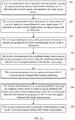
- FIG. 2-a is a schematic flowchart of a signal processing method according to another embodiment of the present invention.
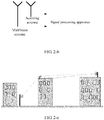
- the signal processing method shown in FIG. 2-a may be, for example, specifically implemented on a wireless transmission device in an architecture shown in FIG. 2-b .
- the wireless transmission device in the architecture shown in FIG. 2-b includes a scanning antenna and a multibeam antenna.
- the signal processing method according to the another embodiment of the present invention may include the following steps.
- a wireless transmission device performs omnidirectional scanning by using a scanning antenna, to determine that there are X1 directions for received signals corresponding to a same signal source.
- X1 is an integer greater than 1.
- X1 is equal to 2, 3, 4, 5, 10, 15, or another value.
- the wireless transmission device in this embodiment may be, for example, a relay station, a base station, or a wireless backhaul device such as a small-cell backhaul device.
- the wireless transmission device determines, as N directions for received signals corresponding to the same signal source, N directions in which received signal powers are higher among the X1 directions.
- N is an integer greater than 1.
- N is equal to 2, 3, 4, 5, 9, 13, 14, or another value.
- the wireless transmission device may determine any N directions of the X1 directions as N directions for received signals corresponding to the same signal source.
- X1 is greater than or equal to N.
- the wireless transmission device may perform omnidirectional scanning by using the antenna, to determine that there are X1 directions for received signals corresponding to the same signal source; and determine a direction, in which a received signal power is the highest, of the X1 directions and any N-1 directions of X1-1 directions of the X1 directions except the direction in which the received signal power is the highest as N directions for received signals corresponding to the same signal source.
- X1 is greater than or equal to N.
- the wireless transmission device configures beam directions of a multibeam antenna of the wireless transmission device as the N directions.
- the wireless transmission device may configure phase shifter circuits or multiplier circuits connected to the multibeam antenna, to configure the beam directions of the multibeam antenna of the wireless transmission device as the N directions.
- the wireless transmission device performs balance processing on the N received signals received by using the multibeam antenna, to obtain N received signals obtained after balance processing.
- the N received signals are in a one-to-one correspondence with the N directions.
- the N received signals are in a one-to-one correspondence with the N received signals obtained after balance processing.
- the wireless transmission device estimates delays of the N received signals obtained after balance processing.
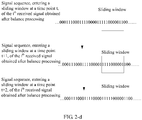
- the estimating delays of the N received signals obtained after balance processing may include, for example: calculating cross correlation values between a training sequence and signal sequences, entering a sliding window, of the N received signals obtained after balance processing, where a length of the sliding window is the same as a length of the training sequence; calculating delay time points of the N received signals obtained after balance processing, where a delay time point Ti of the i th received signal obtained after balance processing is a receiving time point of a signal sequence of all signal sequences, entering the sliding window, of the i th received signal obtained after balance processing within a training sequence insertion period, where a cross correlation value between the signal sequence and the training sequence is the greatest, and the i th received signal obtained after balance processing may be any one of the N received signals obtained after balance processing; and calculating, based on the calculated delay time points of the N received signals obtained after balance processing, the delays of the N received signals obtained after balance processing.
- the training sequence is known to both a signal sending end and a signal reception end.
- the length of the training sequence may be configured according to an actual demand.
- the estimating delays of the N received signals obtained after balance processing includes: calculating cross correlation values between a reference sequence and signal sequences, entering a sliding window, of the N received signals obtained after balance processing, where the reference sequence is an L-bit-long signal sequence of the i th received signal of the N received signals obtained after balance processing, and a width of the sliding window is the same as a width of the reference sequence; calculating delay time points of the N received signals obtained after balance processing, where a delay time point Ti of the i th received signal obtained after balance processing is a receiving time point of a signal sequence of all signal sequences, entering the sliding window, of the i th received signal obtained after balance processing within a training sequence insertion period, where a cross correlation value between the signal sequence and the training sequence is the greatest, and the i th received signal obtained after balance processing is any one of the N received signals obtained after balance processing; and calculating, based on the calculated delay time points of the N received signals obtained after balance processing, the delays of
- time point for example, an average value or a greatest value of the delay time points of the N received signals obtained after balance processing
- another time point for example, an average value or a greatest value of the delay time points of the N received signals obtained after balance processing
- the sliding window may be a physical first-in first-out buffer.
- One or more bits may enter/come out of the sliding window each time.
- FIG. 2-d shows signal sequences, entering the sliding window at several adjacent time points, of the i th received signal obtained after balance processing.
- FIG. 2-d an example in which one bit may enter/come out of the sliding window each time is used.
- the wireless transmission device separately performs, by using the estimated delays of the N received signals obtained after balance processing, delay compensation on the N received signals obtained after balance processing to obtain N received signals obtained after delay compensation.
- the wireless transmission device may perform, by using an estimated delay of the i th received signal obtained after balance processing, delay compensation on the i th received signal obtained after balance processing, to obtain the i th received signal obtained after delay compensation.
- the wireless transmission device performs, by using an estimated delay of the j th received signal obtained after balance processing, delay compensation on the j th received signal obtained after balance processing, to obtain the j th received signal obtained after delay compensation.
- the same manner is used to perform delay compensation on another received signal obtained after balance processing.
- the i th received signal obtained after balance processing is any one of the N received signals obtained after balance processing.
- the wireless transmission device performs combining processing on the N received signals obtained after delay compensation.
- the performing, by the wireless transmission device, combining processing on the N received signals obtained after delay compensation may include, for example: calculating a combining weight for the N received signals obtained after delay compensation; performing, by using the calculated combining weight for the N received signals obtained after delay compensation, weighted processing on the N received signals obtained after delay compensation, to obtain N received signals obtained after delay compensation and weighted processing; and combining the N received signals obtained after delay compensation and weighted processing.
- a calculated combining weight for the i th received signal obtained after delay compensation may be used to perform weighted processing on the i th received signal obtained after delay compensation, to obtain the i th received signal obtained after delay compensation and weighted processing.
- a calculated combining weight for the j th received signal obtained after delay compensation may be used to perform weighted processing on the j th received signal obtained after delay compensation, to obtain the j th received signal obtained after delay compensation and weighted processing.
- the same manner is used to perform weighted processing on another received signal obtained after delay compensation.
- the i th received signal obtained after delay compensation is any one of the N received signals obtained after delay compensation.
- the calculating a combining weight for the N received signals obtained after delay compensation may include: calculating, based on a minimum mean square error criterion, the combining weight for the N received signals obtained after delay compensation; or calculating, based on a least square criterion, the combining weight for the N received signals obtained after delay compensation; or calculating, based on a maximum signal to noise ratio criterion, the combining weight for the N received signals obtained after delay compensation.
- another mechanism may be used to calculate the combining weight for the N received signals obtained after delay compensation.
- a received signal obtained after delay compensation whose received signal power is higher is corresponding to a greater combining weight, that is, when a received signal power corresponding to the i th received signal obtained after delay compensation is higher than a received signal power corresponding to the j th received signal obtained after delay compensation, a combining weight for the i th received signal obtained after delay compensation is greater than or equal to a combining weight for the j th received signal obtained after delay compensation.
- a received signal obtained after delay compensation whose signal to noise ratio is greater is corresponding to a greater combining weight, that is, when a signal to noise ratio corresponding to the i th received signal obtained after delay compensation is greater than a signal to noise ratio corresponding to the j th received signal obtained after delay compensation, a combining weight for the i th received signal obtained after delay compensation is greater than or equal to a combining weight for the j th received signal obtained after delay compensation.
- this embodiment of the present invention is not limited to the foregoing examples of the manner for calculating the combining weight for the N received signals obtained after delay compensation.
- the combining weight for the N received signals obtained after delay compensation is calculated based on the minimum mean square error criterion, or the combining weight for the N received signals obtained after delay compensation is calculated based on the least square criterion, or the combining weight for the N received signals obtained after delay compensation is calculated based on the maximum signal to noise ratio criterion, because a significance difference of the N received signals obtained after delay compensation is considered to a specific extent, the calculated combining weight for the N received signals obtained after delay compensation better meets an expected effect, thereby further helping increase a signal reception gain in a multipath scenario.
- the wireless transmission device may further perform demodulation processing on a combined signal obtained by performing combining processing on the N received signals obtained after delay compensation.
- the wireless transmission device may further perform omnidirectional scanning by using the antenna, to determine that there are X2 directions for received signals corresponding to the same signal source; and when a received signal power of a received signal in a direction Xi of the X2 directions is higher than a received signal power of a received signal in a direction Xj, change a beam direction configuration of the antenna to ensure that beam directions of the antenna that are obtained after the configuration is changed include the direction Xi.
- the direction Xi is different from any direction of the N directions
- the direction Xj is any direction of the N directions.
- An intersection set between a set of the X2 directions and a set of the X1 directions may be an empty set or a non-empty set.
- the wireless transmission device may periodically perform omnidirectional scanning by using the antenna, to determine that there are one or more directions for a received signal or received signals corresponding to the same signal source.
- the beam direction configuration of the antenna may be further adjusted adaptively according to an omnidirectional scanning result. Therefore, this helps achieve a better effect or an optimal effect of configuring the beam directions of the antenna, and further helps increase a signal reception gain in a multipath scenario.
- a wireless transmission device after determining that there are N directions for received signals corresponding to a same signal source, configures beam directions of a multibeam antenna as the N directions; performs balance processing on the N received signals received by using the multibeam antenna, to obtain N received signals obtained after balance processing, where the N received signals are in a one-to-one correspondence with the N directions; estimates delays of the N received signals obtained after balance processing, and separately performs, by using the estimated delays of the N received signals obtained after balance processing, delay compensation on the N received signals obtained after balance processing to obtain N received signals obtained after delay compensation; and performs combining processing on the N received signals obtained after delay compensation.
- the N received signals corresponding to the N directions include multipath received signals corresponding to the same signal source.
- a problem about delays of the multipath received signals is considered in the foregoing solution.
- delay compensation is performed on N received signals obtained after balance processing, to obtain the N received signals obtained after delay compensation, and combining processing is performed on the N received signals obtained after delay compensation.
- the foregoing technical solution abandons a mechanism of eliminating multipath signals corresponding to a same signal source in a traditional technology, and makes full use of the multipath signals corresponding to the same signal source. It is found, by means of practices, that this manner helps increase a signal reception gain in a multipath scenario.
- FIG. 3-a is a schematic flowchart of a signal processing method according to another embodiment of the present invention.
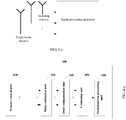
- the signal processing method shown in FIG. 3-a may be, for example, specifically implemented on a wireless transmission device in an architecture shown in FIG. 3-b .
- the wireless transmission device in the architecture shown in FIG. 3-b includes a scanning antenna and N single-beam antennas.
- the signal processing method according to the another embodiment of the present invention may include the following steps.
- a wireless transmission device performs omnidirectional scanning by using a scanning antenna, to determine that there are X1 directions for received signals corresponding to a same signal source.
- X1 is an integer greater than 1.
- X1 is equal to 2, 3, 4, 5, 10, 15, or another value.
- the wireless transmission device in this embodiment may be, for example, a relay station, a base station, or a wireless backhaul device such as a small-cell backhaul device.
- the wireless transmission device determines, as N directions for received signals corresponding to the same signal source, N directions in which received signal powers are higher among the X1 directions.
- N is an integer greater than 1.
- N is equal to 2, 3, 4, 5, 9, 13, 14, or another value.
- the wireless transmission device may determine any N directions of the X1 directions as N directions for received signals corresponding to the same signal source.
- X1 is greater than or equal to N.
- the wireless transmission device may perform omnidirectional scanning by using the antenna, to determine that there are X1 directions for received signals corresponding to the same signal source; and determine a direction, in which a received signal power is the highest, of the X1 directions and any N-1 directions of X1-1 directions of the X1 directions except the direction in which the received signal power is the highest as N directions for received signals corresponding to the same signal source.
- X1 is greater than or equal to N.
- the wireless transmission device configures beam directions of N single-beam antennas of the wireless transmission device as the N directions.
- the N single-beam antennas are in a one-to-one correspondence with the N directions. That is, beam directions of different antennas of the N single-beam antennas are configured as different directions of the N directions.
- the wireless transmission device may configure phase shifter circuits or multiplier circuits that are connected to the N single-beam antennas, to configure the beam directions of the N single-beam antennas of the wireless transmission device as the N directions.
- the wireless transmission device performs balance processing on the N received signals received by using the N single-beam antennas, to obtain N received signals obtained after balance processing.
- the N received signals are in a one-to-one correspondence with the N directions.
- the N received signals are in a one-to-one correspondence with the N received signals obtained after balance processing.
- the wireless transmission device estimates delays of the N received signals obtained after balance processing.
- the estimating delays of the N received signals obtained after balance processing may include, for example: calculating cross correlation values between a training sequence and signal sequences, entering a sliding window, of the N received signals obtained after balance processing, where a length of the sliding window is the same as a length of the training sequence; calculating delay time points of the N received signals obtained after balance processing, where a delay time point Ti of the i th received signal obtained after balance processing is a receiving time point of a signal sequence of all signal sequences, entering the sliding window, of the i th received signal obtained after balance processing within a training sequence insertion period, where a cross correlation value between the signal sequence and the training sequence is the greatest, and the i th received signal obtained after balance processing may be any one of the N received signals obtained after balance processing; and calculating, based on the calculated delay time points of the N received signals obtained after balance processing, the delays of the N received signals obtained after balance processing.
- the training sequence is known to both a signal sending end and a signal reception end.
- the length of the training sequence may be configured according to an actual demand.
- the estimating delays of the N received signals obtained after balance processing includes: calculating cross correlation values between a reference sequence and signal sequences, entering a sliding window, of the N received signals obtained after balance processing, where the reference sequence is an L-bit-long signal sequence of the i th received signal of the N received signals obtained after balance processing, and a width of the sliding window is the same as a width of the reference sequence; calculating delay time points of the N received signals obtained after balance processing, where a delay time point Ti of the i th received signal obtained after balance processing is a receiving time point of a signal sequence of all signal sequences, entering the sliding window, of the i th received signal obtained after balance processing within a training sequence insertion period, where a cross correlation value between the signal sequence and the training sequence is the greatest, and the i th received signal obtained after balance processing is any one of the N received signals obtained after balance processing; and calculating, based on the calculated delay time points of the N received signals obtained after balance processing, the delays of
- time point for example, an average value or a greatest value of the delay time points of the N received signals obtained after balance processing
- another time point for example, an average value or a greatest value of the delay time points of the N received signals obtained after balance processing
- the sliding window may be a physical first-in first-out buffer.
- One or more bits may enter/come out of the sliding window each time.
- FIG. 2-d shows signal sequences, entering the sliding window at several adjacent time points, of the i th received signal obtained after balance processing.
- FIG. 2-d an example in which one bit may enter/come out of the sliding window each time is used.
- the wireless transmission device separately performs, by using the estimated delays of the N received signals obtained after balance processing, delay compensation on the N received signals obtained after balance processing to obtain N received signals obtained after delay compensation.
- the wireless transmission device may perform, by using an estimated delay of the i th received signal obtained after balance processing, delay compensation on the i th received signal obtained after balance processing, to obtain the i th received signal obtained after delay compensation.
- the wireless transmission device performs, by using an estimated delay of the j th received signal obtained after balance processing, delay compensation on the j th received signal obtained after balance processing, to obtain the j th received signal obtained after delay compensation.
- the same manner is used to perform delay compensation on another received signal obtained after balance processing.
- the i th received signal obtained after balance processing is any one of the N received signals obtained after balance processing.
- the wireless transmission device performs combining processing on the N received signals obtained after delay compensation.
- the performing, by the wireless transmission device, combining processing on the N received signals obtained after delay compensation may include, for example: calculating a combining weight for the N received signals obtained after delay compensation; performing, by using the calculated combining weight for the N received signals obtained after delay compensation, weighted processing on the N received signals obtained after delay compensation, to obtain N received signals obtained after delay compensation and weighted processing; and combining the N received signals obtained after delay compensation and weighted processing.
- a calculated combining weight for the i th received signal obtained after delay compensation may be used to perform weighted processing on the i th received signal obtained after delay compensation, to obtain the i th received signal obtained after delay compensation and weighted processing.
- a calculated combining weight for the j th received signal obtained after delay compensation may be used to perform weighted processing on the j th received signal obtained after delay compensation, to obtain the j th received signal obtained after delay compensation and weighted processing.
- the same manner is used to perform weighted processing on another received signal obtained after delay compensation.
- the i th received signal obtained after delay compensation is any one of the N received signals obtained after delay compensation.
- the calculating a combining weight for the N received signals obtained after delay compensation may include: calculating, based on a minimum mean square error criterion, the combining weight for the N received signals obtained after delay compensation; or calculating, based on a least square criterion, the combining weight for the N received signals obtained after delay compensation; or calculating, based on a maximum signal to noise ratio criterion, the combining weight for the N received signals obtained after delay compensation.
- another mechanism may be used to calculate the combining weight for the N received signals obtained after delay compensation.
- a received signal obtained after delay compensation whose received signal power is higher is corresponding to a greater combining weight, that is, when a received signal power corresponding to the i th received signal obtained after delay compensation is higher than a received signal power corresponding to the j th received signal obtained after delay compensation, a combining weight for the i th received signal obtained after delay compensation is greater than or equal to a combining weight for the j th received signal obtained after delay compensation.
- a received signal obtained after delay compensation whose signal to noise ratio is greater is corresponding to a greater combining weight, that is, when a signal to noise ratio corresponding to the i th received signal obtained after delay compensation is greater than a signal to noise ratio corresponding to the j th received signal obtained after delay compensation, a combining weight for the i th received signal obtained after delay compensation is greater than or equal to a combining weight for the j th received signal obtained after delay compensation.
- this embodiment of the present invention is not limited to the foregoing examples of the manner for calculating the combining weight for the N received signals obtained after delay compensation.
- the combining weight for the N received signals obtained after delay compensation is calculated based on the minimum mean square error criterion, or the combining weight for the N received signals obtained after delay compensation is calculated based on the least square criterion, or the combining weight for the N received signals obtained after delay compensation is calculated based on the maximum signal to noise ratio criterion, because a significance difference of the N received signals obtained after delay compensation is considered to a specific extent, the calculated combining weight for the N received signals obtained after delay compensation better meets an expected effect, thereby further helping increase a signal reception gain in a multipath scenario.
- the wireless transmission device may further perform demodulation processing on a combined signal obtained by performing combining processing on the N received signals obtained after delay compensation.
- the wireless transmission device may further perform omnidirectional scanning by using the antenna, to determine that there are X2 directions for received signals corresponding to the same signal source; and when a received signal power of a received signal in a direction Xi of the X2 directions is higher than a received signal power of a received signal in a direction Xj, change a beam direction configuration of the antenna to ensure that beam directions of the antenna that are obtained after the configuration is changed include the direction Xi.
- the direction Xi is different from any direction of the N directions
- the direction Xj is any direction of the N directions.
- An intersection set between a set of the X2 directions and a set of the X1 directions may be an empty set or a non-empty set.
- the wireless transmission device may periodically perform omnidirectional scanning by using the antenna, to determine that there are one or more directions for a received signal or received signals corresponding to the same signal source.
- the beam direction configuration of the antenna may be further adjusted adaptively according to an omnidirectional scanning result. Therefore, this helps achieve a better effect or an optimal effect of configuring the beam directions of the antenna, and further helps increase a signal reception gain in a multipath scenario.
- a wireless transmission device after determining that there are N directions for received signals corresponding to a same signal source, configures beam directions of N single-beam antennas as the N directions; performs balance processing on the N received signals received by using the N single-beam antennas, to obtain N received signals obtained after balance processing, where the N received signals are in a one-to-one correspondence with the N directions; estimates delays of the N received signals obtained after balance processing, and separately performs, by using the estimated delays of the N received signals obtained after balance processing, delay compensation on the N received signals obtained after balance processing to obtain N received signals obtained after delay compensation; and performs combining processing on the N received signals obtained after delay compensation.
- the N received signals corresponding to the N directions include multipath received signals corresponding to the same signal source.
- a problem about delays of the multipath received signals is considered in the foregoing solution.
- delay compensation is performed on N received signals obtained after balance processing, to obtain the N received signals obtained after delay compensation, and combining processing is performed on the N received signals obtained after delay compensation.
- the foregoing technical solution abandons a mechanism of eliminating multipath signals corresponding to a same signal source in a traditional technology, and makes full use of the multipath signals corresponding to the same signal source. It is found, in a practice process, that this manner helps increase a signal reception gain in a multipath scenario.
- balance processing is first performed on a received signal, then delay compensation is performed on an obtained signal, and then combining processing is performed is used in the embodiments corresponding to FIG. 2-a and FIG. 3-a .
- delay compensation may be first performed on a received signal, then balance processing may be performed on an obtained signal, and then combining processing may be performed.
- a specific implementation process may be implemented by analogy.
- an embodiment of the present invention further provides a signal processing apparatus 400.
- the signal processing apparatus 400 may include a primary control unit 410, a delay estimation unit 430, a delay compensation unit 440, and a combining unit 450.
- the primary control unit 410 is configured to: determine that there are N directions for received signals corresponding to a same signal source; and configure beam directions of an antenna as the N directions.
- the delay estimation unit 430 is configured to estimate delays of the N received signals received by using the antenna.
- the delay compensation unit 440 is configured to separately perform, by using the estimated delays of the received signals, delay compensation on the N received signals to obtain N received signals obtained after delay compensation.
- the combining unit 450 is configured to perform combining processing on the N received signals obtained after delay compensation.
- the primary control unit 410 is specifically configured to: perform omnidirectional scanning by using the antenna, to determine that there are X1 directions for received signals corresponding to the same signal source; determine, as the N directions for the received signals corresponding to the same signal source, N directions in which received signal powers are higher among the X1 directions; and configure the beam directions of the antenna as the N directions.
- the primary control unit 410 is specifically configured to:
- the signal processing apparatus 400 may further include a balancing unit 420, configured to perform balance processing on the N received signals received by using the antenna, to obtain N received signals obtained after balance processing, where the N received signals are in a one-to-one correspondence with the N directions.
- a balancing unit 420 configured to perform balance processing on the N received signals received by using the antenna, to obtain N received signals obtained after balance processing, where the N received signals are in a one-to-one correspondence with the N directions.
- the delay estimation unit 430 is specifically configured to estimate delays of the N received signals obtained after balance processing.
- the delay compensation unit 440 is specifically configured to: separately perform, by using the estimated delays of the N received signals obtained after balance processing, delay compensation on the N received signals obtained after balance processing to obtain the N received signals obtained after delay compensation.
- the combining unit 450 is specifically configured to: calculate a combining weight for the N received signals obtained after delay compensation; perform, by using the calculated combining weight for the N received signals obtained after delay compensation, weighted processing on the N received signals obtained after delay compensation, to obtain N received signals obtained after delay compensation and weighted processing; and combine the N received signals obtained after delay compensation and weighted processing.
- the combining unit 450 is specifically configured to: calculate, based on a minimum mean square error criterion, the combining weight for the N received signals obtained after delay compensation; or calculate, based on a least square criterion, the combining weight for the N received signals obtained after delay compensation; or calculate, based on a maximum signal to noise ratio criterion, the combining weight for the N received signals obtained after delay compensation.
- the delay estimation unit 430 is specifically configured to: calculate cross correlation values between a training sequence and signal sequences, entering a sliding window, of the N received signals obtained after balance processing, where a length of the sliding window is the same as a length of the training sequence; calculate delay time points of the N received signals obtained after balance processing, where a delay time point Ti of the i th received signal obtained after balance processing is a receiving time point of a signal sequence of all signal sequences, entering the sliding window, of the i th received signal obtained after balance processing within a training sequence insertion period, where a cross correlation value between the signal sequence and the training sequence is the greatest, and the i th received signal obtained after balance processing is any one of the N received signals obtained after balance processing; and calculate, based on the calculated delay time points of the N received signals obtained after balance processing, the delays of the N received signals obtained after balance processing.
- the delay estimation unit 430 may be specifically configured to: calculate cross correlation values between a reference sequence and signal sequences, entering a sliding window, of the N received signals obtained after balance processing, where the reference sequence is an L-bit-long signal sequence of the i th received signal of the N received signals obtained after balance processing, and a width of the sliding window is the same as a width of the reference sequence; calculate delay time points of the N received signals obtained after balance processing, where a delay time point Ti of the i th received signal obtained after balance processing is a receiving time point of a signal sequence of all signal sequences, entering the sliding window, of the i th received signal obtained after balance processing within a training sequence insertion period, where a cross correlation value between the signal sequence and the training sequence is the greatest, and the i th received signal obtained after balance processing is any one of the N received signals obtained after balance processing; and calculate, based on the calculated delay time points of the N received signals obtained after balance processing, the delays of the N received signals obtained after balance processing
- the signal processing apparatus 400 may further include a balancing unit 420, configured to: before combining processing is performed on the N received signals obtained after delay compensation, perform balance processing on the N received signals obtained after delay compensation, to obtain N received signals obtained after balance processing.
- a balancing unit 420 configured to: before combining processing is performed on the N received signals obtained after delay compensation, perform balance processing on the N received signals obtained after delay compensation, to obtain N received signals obtained after balance processing.
- the combining unit 450 is specifically configured to perform combining processing on the N received signals obtained after balance processing.
- the combining unit 450 is specifically configured to: calculate a combining weight for the N received signals obtained after balance processing; perform, by using the calculated combining weight for the N received signals obtained after balance processing, weighted processing on the N received signals obtained after balance processing, to obtain N received signals obtained after balance processing and weighted processing; and combine the N received signals obtained after balance processing and weighted processing.
- the combining unit 450 is specifically configured to: calculate, based on a minimum mean square error criterion, the combining weight for the N received signals obtained after balance processing; or calculate, based on a least square criterion, the combining weight for the N received signals obtained after balance processing; or calculate, based on a maximum signal to noise ratio criterion, the combining weight for the N received signals obtained after balance processing.
- the delay estimation unit 430 is specifically configured to: calculate cross correlation values between a training sequence and signal sequences, entering a sliding window, of the N received signals, where a length of the sliding window is the same as a length of the training sequence; calculate delay time points of the N received signals, where a delay time point Ti of the i th received signal is a receiving time point of a signal sequence of all signal sequences, entering the sliding window, of the i th received signal that is within a training sequence insertion period, where a cross correlation value between the signal sequence and the training sequence is the greatest, and the i th received signal is any one of the N received signals; and calculate the delays of the N received signals based on the calculated delay time points of the N received signals.
- the delay estimation unit 430 may be specifically configured to: calculate cross correlation values between a reference sequence and signal sequences, entering a sliding window, of the N received signals, where the reference sequence is an L-bit-long signal sequence of the i th received signal of the N received signals, and a width of the sliding window is the same as a width of the reference sequence; calculate delay time points of the N received signals, where a delay time point Ti of the i th received signal is a receiving time point of a signal sequence of all signal sequences, entering the sliding window, of the i th received signal that is within a training sequence insertion period, where a cross correlation value between the signal sequence and the training sequence is the greatest, and the i th received signal is any one of the N received signals; and calculate the delays of the N received signals based on the calculated delay time points of the N received signals.
- the primary control unit 410 is further configured to: after combining processing is performed on the N received signals obtained after delay compensation, perform omnidirectional scanning by using the antenna, to determine that there are X2 directions for received signals corresponding to the same signal source; and when a received signal power of a received signal in a direction Xi of the X2 directions is higher than a received signal power of a received signal in a direction Xj, change a beam direction configuration of the antenna to ensure that beam directions of the antenna that are obtained after the configuration is changed include the direction Xi, where the direction Xi is different from any direction of the N directions, and the direction Xj is any direction of the N directions.
- the signal processing apparatus 400 may further include a demodulation processing unit 460, configured to perform demodulation processing on a combined signal obtained by performing combining processing on the N received signals obtained after delay compensation.
- a demodulation processing unit 460 configured to perform demodulation processing on a combined signal obtained by performing combining processing on the N received signals obtained after delay compensation.
- the signal processing apparatus 400 is a wireless transmission device, or may be deployed in a wireless transmission device (the wireless transmission device may be, for example, a relay station, a base station, or a wireless backhaul device such as a small-cell backhaul device), or the like.
- the wireless transmission device may be, for example, a relay station, a base station, or a wireless backhaul device such as a small-cell backhaul device, or the like.
- function modules of the signal processing apparatus 400 in this embodiment may be specifically implemented according to the methods in the foregoing method embodiments. For a specific implementation process, reference may be made to related descriptions in the foregoing method embodiments, and details are not repeated herein. Some or all function modules of the signal processing apparatus 400 may be implemented by a hardware circuit, or some or all function modules of the signal processing apparatus 400 may be implemented by a processor (for example, a digital signal processor) by executing code or instructions.
- a processor for example, a digital signal processor
- the signal processing apparatus 400 in this embodiment of the present invention configures beam directions of an antenna as the N directions; estimates delays of the N received signals received by using the antenna, and separately performs, by using the estimated delays of the N received signals obtained after balance processing, delay compensation on the N received signals to obtain N received signals obtained after delay compensation, where the N received signals are in a one-to-one correspondence with the N directions; and performs combining processing on the N received signals obtained after delay compensation.
- N is an integer greater than 1
- the N received signals corresponding to the N directions include multipath received signals corresponding to the same signal source.
- a problem about delays of the multipath received signals is considered in the foregoing solution.
- delay compensation is performed on N received signals obtained after balance processing, to obtain the N received signals obtained after delay compensation, and combining processing is performed on the N received signals obtained after delay compensation.
- an embodiment of the present invention further provides a signal processing apparatus 500.
- the signal processing apparatus 500 may include a controller 510, a delay estimation circuit 520, a delay compensation circuit 530, and a combiner 540.
- the controller 510 is configured to: determine that there are N directions for received signals corresponding to a same signal source; and configure beam directions of an antenna as the N directions.
- the delay estimation circuit 520 is configured to estimate delays of the N received signals received by using the antenna, where the N received signals are in a one-to-one correspondence with the N directions, and N is an integer greater than 1.
- the delay compensation circuit 530 is configured to separately perform, by using the estimated delays of the N received signals, delay compensation on the N received signals obtained after balance processing to obtain N received signals obtained after delay compensation.
- the combiner 540 is configured to perform combining processing on the N received signals obtained after delay compensation.
- the controller 510 is specifically configured to: perform omnidirectional scanning by using the antenna, to determine that there are X1 directions for received signals corresponding to the same signal source; determine, as the N directions for the received signals corresponding to the same signal source, N directions in which received signal powers are higher among the X1 directions; and configure the beam directions of the antenna as the N directions, where X1 is an integer, and X1 is greater than or equal to N.
- the controller 510 is specifically configured to:
- the signal processing apparatus 500 further includes a balancer 550, configured to: before the delays of the N received signals received by using the antenna is estimated, perform balance processing on the N received signals received by using the antenna, to obtain N received signals obtained after balance processing.
- a balancer 550 configured to: before the delays of the N received signals received by using the antenna is estimated, perform balance processing on the N received signals received by using the antenna, to obtain N received signals obtained after balance processing.
- the delay estimation circuit 520 is specifically configured to estimate delays of the N received signals obtained after balance processing.
- the delay compensation circuit 530 is specifically configured to separately perform, by using the estimated delays of the N received signals obtained after balance processing, delay compensation on the N received signals obtained after balance processing to obtain the N received signals obtained after delay compensation.
- the combiner 540 is specifically configured to: calculate a combining weight for the N received signals obtained after delay compensation; perform, by using the calculated combining weight for the N received signals obtained after delay compensation, weighted processing on the N received signals obtained after delay compensation, to obtain N received signals obtained after delay compensation and weighted processing; and combine the N received signals obtained after delay compensation and weighted processing.
- the combiner 540 is specifically configured to: calculate, based on a minimum mean square error criterion, the combining weight for the N received signals obtained after delay compensation; or calculate, based on a least square criterion, the combining weight for the N received signals obtained after delay compensation; or calculate, based on a maximum signal to noise ratio criterion, the combining weight for the N received signals obtained after delay compensation.
- the delay estimation circuit 520 is specifically configured to: calculate cross correlation values between a training sequence and signal sequences, entering a sliding window, of the N received signals obtained after balance processing, where a length of the sliding window is the same as a length of the training sequence; calculate delay time points of the N received signals obtained after balance processing, where a delay time point Ti of the i th received signal obtained after balance processing is a receiving time point of a signal sequence of all signal sequences, entering the sliding window, of the i th received signal obtained after balance processing within a training sequence insertion period, where a cross correlation value between the signal sequence and the training sequence is the greatest, and the i th received signal obtained after balance processing is any one of the N received signals obtained after balance processing; and calculate, based on the calculated delay time points of the N received signals obtained after balance processing, the delays of the N received signals obtained after balance processing.
- the delay estimation circuit 520 is specifically configured to: calculate cross correlation values between a reference sequence and signal sequences, entering a sliding window, of the N received signals obtained after balance processing, where the reference sequence is an L-bit-long signal sequence of the i th received signal of the N received signals obtained after balance processing, and a width of the sliding window is the same as a width of the reference sequence; calculate delay time points of the N received signals obtained after balance processing, where a delay time point Ti of the i th received signal obtained after balance processing is a receiving time point of a signal sequence of all signal sequences, entering the sliding window, of the i th received signal obtained after balance processing within a training sequence insertion period, where a cross correlation value between the signal sequence and the training sequence is the greatest, and the i th received signal obtained after balance processing is any one of the N received signals obtained after balance processing; and calculate, based on the calculated delay time points of the N received signals obtained after balance processing, the delays of the N received signals obtained after balance processing, the delays of the N received signals obtained after balance
- the signal processing apparatus 500 further includes a balancer 550, configured to: before combining processing is performed on the N received signals obtained after delay compensation, perform balance processing on the N received signals obtained after delay compensation, to obtain N received signals obtained after balance processing.
- a balancer 550 configured to: before combining processing is performed on the N received signals obtained after delay compensation, perform balance processing on the N received signals obtained after delay compensation, to obtain N received signals obtained after balance processing.
- the combiner 540 is specifically configured to perform combining processing on the N received signals obtained after balance processing.
- the combiner 540 is specifically configured to: calculate a combining weight for the N received signals obtained after balance processing; perform, by using the calculated combining weight for the N received signals obtained after balance processing, weighted processing on the N received signals obtained after balance processing, to obtain N received signals obtained after balance processing and weighted processing; and combine the N received signals obtained after balance processing and weighted processing.
- the combiner 540 is specifically configured to: calculate, based on a minimum mean square error criterion, the combining weight for the N received signals obtained after balance processing; or calculate, based on a least square criterion, the combining weight for the N received signals obtained after balance processing; or calculate, based on a maximum signal to noise ratio criterion, the combining weight for the N received signals obtained after balance processing.
- the delay estimation circuit 520 is specifically configured to: calculate cross correlation values between a training sequence and signal sequences, entering a sliding window, of the N received signals, where a length of the sliding window is the same as a length of the training sequence; calculate delay time points of the N received signals, where a delay time point Ti of the i th received signal is a receiving time point of a signal sequence of all signal sequences, entering the sliding window, of the i th received signal that is within a training sequence insertion period, where a cross correlation value between the signal sequence and the training sequence is the greatest, and the i th received signal is any one of the N received signals; and calculate the delays of the N received signals based on the calculated delay time points of the N received signals.
- the delay estimation circuit 520 is specifically configured to: calculate cross correlation values between a reference sequence and signal sequences, entering a sliding window, of the N received signals, where the reference sequence is an L-bit-long signal sequence of the i th received signal of the N received signals, and a width of the sliding window is the same as a width of the reference sequence; calculate delay time points of the N received signals, where a delay time point Ti of the i th received signal is a receiving time point of a signal sequence of all signal sequences, entering the sliding window, of the i th received signal that is within a training sequence insertion period, where a cross correlation value between the signal sequence and the training sequence is the greatest, and the i th received signal is any one of the N received signals; and calculate the delays of the N received signals based on the calculated delay time points of the N received signals.
- the controller 510 is further configured to: after combining processing is performed on the N received signals obtained after delay compensation, perform omnidirectional scanning by using the antenna, to determine that there are X2 directions for received signals corresponding to the same signal source; and when a received signal power of a received signal in a direction Xi of the X2 directions is higher than a received signal power of a received signal in a direction Xj, change a beam direction configuration of the antenna to ensure that beam directions of the antenna that are obtained after the configuration is changed include the direction Xi, where the direction Xi is different from any direction of the N directions, and the direction Xj is any direction of the N directions.
- the signal processing apparatus 500 may further include a demodulation processor 560, configured to perform demodulation processing on a combined signal obtained by performing combining processing on the N received signals obtained after delay compensation.
- a demodulation processor 560 configured to perform demodulation processing on a combined signal obtained by performing combining processing on the N received signals obtained after delay compensation.
- the signal processing apparatus 500 is a wireless transmission device, or may be deployed in a wireless transmission device (the wireless transmission device may be, for example, a relay station, a base station, or a wireless backhaul device such as a small-cell backhaul device), or the like.
- the wireless transmission device may be, for example, a relay station, a base station, or a wireless backhaul device such as a small-cell backhaul device, or the like.
- the signal processing apparatus 500 in this embodiment of the present invention configures beam directions of an antenna as the N directions; estimates delays of the N received signals received by using the antenna, and separately performs, by using the estimated delays of the N received signals obtained after balance processing, delay compensation on the N received signals to obtain N received signals obtained after delay compensation, where the N received signals are in a one-to-one correspondence with the N directions; and performs combining processing on the N received signals obtained after delay compensation.
- N is an integer greater than 1
- the N received signals corresponding to the N directions include multipath received signals corresponding to the same signal source.
- a problem about delays of the multipath received signals is considered in the foregoing solution.
- delay compensation is performed on N received signals obtained after balance processing, to obtain the N received signals obtained after delay compensation, and combining processing is performed on the N received signals obtained after delay compensation.
- an embodiment of the present invention further provides a signal processing apparatus 600.
- the signal processing apparatus 600 may include:
- the determining that there are N directions for received signals corresponding to a same signal source includes: performing omnidirectional scanning by using the antenna, to determine that there are X1 directions for received signals corresponding to the same signal source; and determining, as the N directions for the received signals corresponding to the same signal source, N directions in which received signal powers are higher among the X1 directions, where X1 is an integer, and X1 is greater than or equal to N.
- the configuring beam directions of an antenna as the N directions includes:
- the processor before the estimating delays of the N received signals received by using the antenna, performs balance processing on the N received signals received by using the antenna, to obtain N received signals obtained after balance processing; and the estimating delays of the N received signals received by using the antenna, and separately performing, by using the estimated delays of the N received signals, delay compensation on the N received signals to obtain N received signals obtained after delay compensation includes:
- the performing combining processing on the N received signals obtained after delay compensation includes:
- the calculating a combining weight for the N received signals obtained after delay compensation includes: calculating, based on a minimum mean square error criterion, the combining weight for the N received signals obtained after delay compensation; or calculating, based on a least square criterion, the combining weight for the N received signals obtained after delay compensation; or calculating, based on a maximum signal to noise ratio criterion, the combining weight for the N received signals obtained after delay compensation.
- the estimating delays of the N received signals obtained after balance processing includes:
- the estimating delays of the N received signals obtained after balance processing includes:
- the processor before the performing combining processing on the N received signals obtained after delay compensation, performs balance processing on the N received signals obtained after delay compensation, to obtain N received signals obtained after balance processing; and the performing combining processing on the N received signals obtained after delay compensation includes: performing combining processing on the N received signals obtained after balance processing.
- the performing combining processing on the N received signals obtained after balance processing includes:
- the calculating a combining weight for the N received signals obtained after balance processing includes: calculating, based on a minimum mean square error criterion, the combining weight for the N received signals obtained after balance processing; or calculating, based on a least square criterion, the combining weight for the N received signals obtained after balance processing; or calculating, based on a maximum signal to noise ratio criterion, the combining weight for the N received signals obtained after balance processing.
- the estimating delays of the N received signals includes: calculating cross correlation values between a training sequence and signal sequences, entering a sliding window, of the N received signals, where a length of the sliding window is the same as a length of the training sequence; and calculating delay time points of the N received signals, where a delay time point Ti of the i th received signal is a receiving time point of a signal sequence of all signal sequences, entering the sliding window, of the i th received signal that is within a training sequence insertion period, where a cross correlation value between the signal sequence and the training sequence is the greatest, and the i th received signal is any one of the N received signals; and calculating the delays of the N received signals based on the calculated delay time points of the N received signals.
- the estimating delays of the N received signals includes: calculating cross correlation values between a reference sequence and signal sequences, entering a sliding window, of the N received signals, where the reference sequence is an L-bit-long signal sequence of the i th received signal of the N received signals, and a width of the sliding window is the same as a width of the reference sequence; and calculating delay time points of the N received signals, where a delay time point Ti of the i th received signal is a receiving time point of a signal sequence of all signal sequences, entering the sliding window, of the i th received signal that is within a training sequence insertion period, where a cross correlation value between the signal sequence and the training sequence is the greatest, and the i th received signal is any one of the N received signals; and calculating the delays of the N received signals based on the calculated delay time points of the N received signals.
- the processor after the performing combining processing on the N received signals obtained after delay compensation, the processor further performs omnidirectional scanning by using the antenna, to determine that there are X2 directions for received signals corresponding to the same signal source; and when a received signal power of a received signal in a direction Xi of the X2 directions is higher than a received signal power of a received signal in a direction Xj, changes a beam direction configuration of the antenna to ensure that beam directions of the antenna that are obtained after the configuration is changed include the direction Xi, where the direction Xi is different from any direction of the N directions, and the direction Xj is any direction of the N directions.
- the signal processing apparatus 600 is a wireless transmission device, or may be deployed in a wireless transmission device (the wireless transmission device may be, for example, a relay station, a base station, or a wireless backhaul device such as a small-cell backhaul device), or the like.
- the wireless transmission device may be, for example, a relay station, a base station, or a wireless backhaul device such as a small-cell backhaul device, or the like.
- the signal processing apparatus 600 in this embodiment of the present invention configures beam directions of an antenna as the N directions; estimates delays of the N received signals received by using the antenna, and separately performs, by using the estimated delays of the N received signals obtained after balance processing, delay compensation on the N received signals to obtain N received signals obtained after delay compensation, where the N received signals are in a one-to-one correspondence with the N directions; and performs combining processing on the N received signals obtained after delay compensation.
- N is an integer greater than 1
- the N received signals corresponding to the N directions include multipath received signals corresponding to the same signal source.
- a problem about delays of the multipath received signals is considered in the foregoing solution.
- delay compensation is performed on N received signals obtained after balance processing, to obtain the N received signals obtained after delay compensation, and combining processing is performed on the N received signals obtained after delay compensation.
- an embodiment of the present invention further provides a wireless transmission device.
- the wireless transmission device may include an antenna 710 and a signal processing apparatus 720.
- the signal processing apparatus 720 may be any signal processing apparatus in the foregoing embodiments.
- An embodiment of the present invention further provides a computer storage medium.
- the computer storage medium may store a program, and when the program is executed, some or all steps of any signal processing method recorded in the foregoing method embodiments may be included.
- the disclosed apparatus may be implemented in other manners.
- the described apparatus embodiment is merely an example.
- the unit division is merely logical function division and may be other division in an actual implementation.
- a plurality of units or components may be combined or integrated into another system, or some features may be ignored or not performed.
- the displayed or discussed mutual couplings or direct couplings or communication connections may be implemented through some interfaces.
- the indirect couplings or communication connections between the apparatuses or units may be implemented in electronic or other forms.
- the units described as separate parts may or may not be physically separate, and parts displayed as units may or may not be physical units, may be located in one position, or may be distributed on a plurality of network units. Some or all of the units may be selected according to actual needs to achieve the objectives of the solutions of the embodiments.
- functional units in the embodiments of the present invention may be integrated into one processing unit, or each of the units may exist alone physically, or two or more units are integrated into one unit.
- the integrated unit may be implemented in a form of hardware, or may be implemented in a form of a software functional unit.
- the integrated unit When the foregoing integrated unit is implemented in the form of a software functional unit and sold or used as an independent product, the integrated unit may be stored in a computer-readable storage medium.
- the software product is stored in a storage medium and includes several instructions for instructing a computer device (which may be a personal computer, a server, a network device, or the like, and may specifically be a processor in a computer device) to perform all or a part of the steps of the foregoing methods described in the embodiments of the present invention.
- the foregoing storage medium may include any medium that can store program code, such as a USB flash drive, a removable hard disk, a magnetic disk, an optical disc, a read-only memory (ROM, Read-Only Memory), or a random access memory (RAM, Random Access Memory).
- program code such as a USB flash drive, a removable hard disk, a magnetic disk, an optical disc, a read-only memory (ROM, Read-Only Memory), or a random access memory (RAM, Random Access Memory).
Landscapes
- Engineering & Computer Science (AREA)
- Computer Networks & Wireless Communication (AREA)
- Signal Processing (AREA)
- Radio Transmission System (AREA)
- Radar Systems Or Details Thereof (AREA)
Applications Claiming Priority (1)
| Application Number | Priority Date | Filing Date | Title |
|---|---|---|---|
| PCT/CN2015/072252 WO2016123766A1 (fr) | 2015-02-04 | 2015-02-04 | Procédé de traitement de signal et dispositif associé |
Publications (2)
| Publication Number | Publication Date |
|---|---|
| EP3244552A1 true EP3244552A1 (fr) | 2017-11-15 |
| EP3244552A4 EP3244552A4 (fr) | 2018-01-24 |
Family
ID=56563314
Family Applications (1)
| Application Number | Title | Priority Date | Filing Date |
|---|---|---|---|
| EP15880722.2A Ceased EP3244552A4 (fr) | 2015-02-04 | 2015-02-04 | Procédé de traitement de signal et dispositif associé |
Country Status (4)
| Country | Link |
|---|---|
| US (1) | US10177824B2 (fr) |
| EP (1) | EP3244552A4 (fr) |
| CN (1) | CN107210809B (fr) |
| WO (1) | WO2016123766A1 (fr) |
Families Citing this family (2)
| Publication number | Priority date | Publication date | Assignee | Title |
|---|---|---|---|---|
| EP4197109B1 (fr) * | 2020-08-13 | 2025-11-12 | Telefonaktiebolaget LM Ericsson (publ) | Gestion de diagramme de faisceaux servant à réguler des niveaux de puissance émise et une priorité spatiale |
| CN119276660B (zh) * | 2024-09-14 | 2026-04-17 | 中国电信股份有限公司技术创新中心 | 信号处理及发送方法、装置、系统、设备、介质和程序产品 |
Family Cites Families (8)
| Publication number | Priority date | Publication date | Assignee | Title |
|---|---|---|---|---|
| US6795424B1 (en) * | 1998-06-30 | 2004-09-21 | Tellabs Operations, Inc. | Method and apparatus for interference suppression in orthogonal frequency division multiplexed (OFDM) wireless communication systems |
| DE19943687C1 (de) * | 1999-09-06 | 2001-07-26 | Hertz Inst Heinrich | Verfahren und Anordnung zur Strahlformung eines Rake-Empfängers für den Ein-Nutzer-Empfang für den Uplink-Kanal in Mobilfunksystemen |
| JP3872953B2 (ja) * | 1999-12-27 | 2007-01-24 | 株式会社東芝 | アダプティブアンテナを用いた無線通信装置 |
| JP2002237766A (ja) * | 2001-02-08 | 2002-08-23 | Nec Corp | 適応アンテナ受信装置 |
| KR100591700B1 (ko) * | 2001-10-06 | 2006-07-03 | 엘지노텔 주식회사 | 배열 안테나 시스템에서 신호 경로 탐색 방법 및 이를위한 장치 |
| US7312750B2 (en) * | 2004-03-19 | 2007-12-25 | Comware, Inc. | Adaptive beam-forming system using hierarchical weight banks for antenna array in wireless communication system |
| US7414580B2 (en) * | 2005-06-09 | 2008-08-19 | Go Networks, Inc. | Method and corresponding device for joint signal detection and direction of arrival estimation |
| KR102029102B1 (ko) * | 2012-11-19 | 2019-11-11 | 삼성전자주식회사 | 빔포밍 시스템에서 빔 방향 선택 방법 및 장치 |
-
2015
- 2015-02-04 WO PCT/CN2015/072252 patent/WO2016123766A1/fr not_active Ceased
- 2015-02-04 EP EP15880722.2A patent/EP3244552A4/fr not_active Ceased
- 2015-02-04 CN CN201580075507.6A patent/CN107210809B/zh active Active
-
2017
- 2017-08-03 US US15/668,602 patent/US10177824B2/en active Active
Also Published As
| Publication number | Publication date |
|---|---|
| CN107210809B (zh) | 2020-01-03 |
| US10177824B2 (en) | 2019-01-08 |
| WO2016123766A1 (fr) | 2016-08-11 |
| US20170338865A1 (en) | 2017-11-23 |
| EP3244552A4 (fr) | 2018-01-24 |
| CN107210809A (zh) | 2017-09-26 |
Similar Documents
| Publication | Publication Date | Title |
|---|---|---|
| US10014918B2 (en) | Systems and methods for beam selection for hybrid beamforming | |
| US9912374B2 (en) | Full-duplex wireless communication method, antenna device and full-duplex wireless communication system | |
| US20240337722A1 (en) | System and method for supporting ris beamforming in wireless networks | |
| JP5427290B2 (ja) | 空間多重無線伝送システム、空間多重無線伝送方法、及びコンピュータプログラム | |
| KR101517424B1 (ko) | 전송 다이버시티 방법, 및 관련 장치 및 시스템 | |
| US9654987B2 (en) | Interference alignment method and apparatus in wireless communication system | |
| CN113225109B (zh) | 一种信号处理系统及相关电子设备 | |
| JP6509242B2 (ja) | Mimo受信機の受信信号処理方法 | |
| Papazafeiropoulos et al. | Linear precoding for downlink massive MIMO with delayed CSIT and channel prediction | |
| CN114978268B (zh) | 去蜂窝导频长度优化方法、装置、电子设备及存储介质 | |
| KR102010506B1 (ko) | 무선 통신 시스템에서 송신 전력을 추정하기 위한 시스템 및 방법 | |
| EP3272143B1 (fr) | Détermination de mesures de canaux radio | |
| Tran et al. | Strategies for optimizing uplink spectrum efficiency in cell-free massive MIMO satellite-UAV network | |
| US8995401B2 (en) | Multiple antenna method and apparatus for reducing inter-cell interference in multi-user wireless systems | |
| WO2017081522A1 (fr) | Mesure simultanée de vswr et étalonnage de coupleurs sur des ports d'antennes multiples | |
| KR20120062552A (ko) | 통신 시스템에서의 협력 통신 방법 및 장치 | |
| EP3117531B1 (fr) | Procédé pour traiter un signal reçu d'un récepteur mimo | |
| EP3244552A1 (fr) | Procédé de traitement de signal et dispositif associé | |
| EP2938008B1 (fr) | Procédé de sélection de faisceau d'ondes et station de base | |
| KR101857670B1 (ko) | Mimo 수신기에서 re 그룹을 형성하여 수신 신호를 처리하는 방법 | |
| EP4420317B1 (fr) | Détermination d'un ordre de modèle autorégressif pour un filtre de prédiction de canal | |
| JP5611897B2 (ja) | 受信機 | |
| EP3526908B1 (fr) | Estimation de canal de liaison montante relative | |
| KR20120078886A (ko) | 다중안테나 시변 간섭채널 환경에서 협력 빔 형성 시스템을 위한 적응적 빔 형성방법 및 파일럿 듀레이션 또는 채널 피드백 듀레이션 선택방법 | |
| KR20160117958A (ko) | 하이브리드 빔형성 어레이를 이용하는 다중 사용자 다중입력 다중출력(mu-mimo) 통신 시스템에서 다중 사용자 빔형성 방법 및 장치 |
Legal Events
| Date | Code | Title | Description |
|---|---|---|---|
| STAA | Information on the status of an ep patent application or granted ep patent |
Free format text: STATUS: THE INTERNATIONAL PUBLICATION HAS BEEN MADE |
|
| PUAI | Public reference made under article 153(3) epc to a published international application that has entered the european phase |
Free format text: ORIGINAL CODE: 0009012 |
|
| STAA | Information on the status of an ep patent application or granted ep patent |
Free format text: STATUS: REQUEST FOR EXAMINATION WAS MADE |
|
| 17P | Request for examination filed |
Effective date: 20170810 |
|
| AK | Designated contracting states |
Kind code of ref document: A1 Designated state(s): AL AT BE BG CH CY CZ DE DK EE ES FI FR GB GR HR HU IE IS IT LI LT LU LV MC MK MT NL NO PL PT RO RS SE SI SK SM TR |
|
| AX | Request for extension of the european patent |
Extension state: BA ME |
|
| A4 | Supplementary search report drawn up and despatched |
Effective date: 20171222 |
|
| RIC1 | Information provided on ipc code assigned before grant |
Ipc: H04B 7/26 20060101AFI20171218BHEP Ipc: H04B 7/08 20060101ALI20171218BHEP Ipc: H04W 56/00 20090101ALI20171218BHEP |
|
| DAX | Request for extension of the european patent (deleted) | ||
| STAA | Information on the status of an ep patent application or granted ep patent |
Free format text: STATUS: EXAMINATION IS IN PROGRESS |
|
| 17Q | First examination report despatched |
Effective date: 20181015 |
|
| REG | Reference to a national code |
Ref country code: DE Ref legal event code: R003 |
|
| STAA | Information on the status of an ep patent application or granted ep patent |
Free format text: STATUS: THE APPLICATION HAS BEEN REFUSED |
|
| 18R | Application refused |
Effective date: 20191217 |