EP3244932B1 - Éradication de l'herpès simplex de type i et d'autres virus de l'herpès associés guidée par arn - Google Patents
Éradication de l'herpès simplex de type i et d'autres virus de l'herpès associés guidée par arn Download PDFInfo
- Publication number
- EP3244932B1 EP3244932B1 EP16737885.0A EP16737885A EP3244932B1 EP 3244932 B1 EP3244932 B1 EP 3244932B1 EP 16737885 A EP16737885 A EP 16737885A EP 3244932 B1 EP3244932 B1 EP 3244932B1
- Authority
- EP
- European Patent Office
- Prior art keywords
- cas9
- cells
- nucleic acid
- sequence
- herpesvirus
- Prior art date
- Legal status (The legal status is an assumption and is not a legal conclusion. Google has not performed a legal analysis and makes no representation as to the accuracy of the status listed.)
- Active
Links
Images




Classifications
-
- C—CHEMISTRY; METALLURGY
- C12—BIOCHEMISTRY; BEER; SPIRITS; WINE; VINEGAR; MICROBIOLOGY; ENZYMOLOGY; MUTATION OR GENETIC ENGINEERING
- C12N—MICROORGANISMS OR ENZYMES; COMPOSITIONS THEREOF; PROPAGATING, PRESERVING, OR MAINTAINING MICROORGANISMS; MUTATION OR GENETIC ENGINEERING; CULTURE MEDIA
- C12N9/00—Enzymes; Proenzymes; Compositions thereof; Processes for preparing, activating, inhibiting, separating or purifying enzymes
- C12N9/14—Hydrolases (3)
- C12N9/16—Hydrolases (3) acting on ester bonds (3.1)
- C12N9/22—Ribonucleases [RNase]; Deoxyribonucleases [DNase]
-
- A—HUMAN NECESSITIES
- A61—MEDICAL OR VETERINARY SCIENCE; HYGIENE
- A61K—PREPARATIONS FOR MEDICAL, DENTAL OR TOILETRY PURPOSES
- A61K48/00—Medicinal preparations containing genetic material which is inserted into cells of the living body to treat genetic diseases; Gene therapy
- A61K48/005—Medicinal preparations containing genetic material which is inserted into cells of the living body to treat genetic diseases; Gene therapy characterised by an aspect of the 'active' part of the composition delivered, i.e. the nucleic acid delivered
- A61K48/0058—Nucleic acids adapted for tissue specific expression, e.g. having tissue specific promoters as part of a contruct
-
- A—HUMAN NECESSITIES
- A61—MEDICAL OR VETERINARY SCIENCE; HYGIENE
- A61K—PREPARATIONS FOR MEDICAL, DENTAL OR TOILETRY PURPOSES
- A61K38/00—Medicinal preparations containing peptides
- A61K38/16—Peptides having more than 20 amino acids; Gastrins; Somatostatins; Melanotropins; Derivatives thereof
- A61K38/164—Peptides having more than 20 amino acids; Gastrins; Somatostatins; Melanotropins; Derivatives thereof from bacteria
-
- A—HUMAN NECESSITIES
- A61—MEDICAL OR VETERINARY SCIENCE; HYGIENE
- A61P—SPECIFIC THERAPEUTIC ACTIVITY OF CHEMICAL COMPOUNDS OR MEDICINAL PREPARATIONS
- A61P31/00—Antiinfectives, i.e. antibiotics, antiseptics, chemotherapeutics
- A61P31/12—Antivirals
- A61P31/20—Antivirals for DNA viruses
- A61P31/22—Antivirals for DNA viruses for herpes viruses
-
- A—HUMAN NECESSITIES
- A61—MEDICAL OR VETERINARY SCIENCE; HYGIENE
- A61P—SPECIFIC THERAPEUTIC ACTIVITY OF CHEMICAL COMPOUNDS OR MEDICINAL PREPARATIONS
- A61P43/00—Drugs for specific purposes, not provided for in groups A61P1/00-A61P41/00
-
- C—CHEMISTRY; METALLURGY
- C07—ORGANIC CHEMISTRY
- C07H—SUGARS; DERIVATIVES THEREOF; NUCLEOSIDES; NUCLEOTIDES; NUCLEIC ACIDS
- C07H21/00—Compounds containing two or more mononucleotide units having separate phosphate or polyphosphate groups linked by saccharide radicals of nucleoside groups, e.g. nucleic acids
- C07H21/02—Compounds containing two or more mononucleotide units having separate phosphate or polyphosphate groups linked by saccharide radicals of nucleoside groups, e.g. nucleic acids with ribosyl as saccharide radical
-
- C—CHEMISTRY; METALLURGY
- C12—BIOCHEMISTRY; BEER; SPIRITS; WINE; VINEGAR; MICROBIOLOGY; ENZYMOLOGY; MUTATION OR GENETIC ENGINEERING
- C12N—MICROORGANISMS OR ENZYMES; COMPOSITIONS THEREOF; PROPAGATING, PRESERVING, OR MAINTAINING MICROORGANISMS; MUTATION OR GENETIC ENGINEERING; CULTURE MEDIA
- C12N15/00—Mutation or genetic engineering; DNA or RNA concerning genetic engineering, vectors, e.g. plasmids, or their isolation, preparation or purification; Use of hosts therefor
- C12N15/09—Recombinant DNA-technology
- C12N15/11—DNA or RNA fragments; Modified forms thereof; Non-coding nucleic acids having a biological activity
- C12N15/113—Non-coding nucleic acids modulating the expression of genes, e.g. antisense oligonucleotides; Antisense DNA or RNA; Triplex- forming oligonucleotides; Catalytic nucleic acids, e.g. ribozymes; Nucleic acids used in co-suppression or gene silencing
- C12N15/1131—Non-coding nucleic acids modulating the expression of genes, e.g. antisense oligonucleotides; Antisense DNA or RNA; Triplex- forming oligonucleotides; Catalytic nucleic acids, e.g. ribozymes; Nucleic acids used in co-suppression or gene silencing against viruses
- C12N15/1133—Non-coding nucleic acids modulating the expression of genes, e.g. antisense oligonucleotides; Antisense DNA or RNA; Triplex- forming oligonucleotides; Catalytic nucleic acids, e.g. ribozymes; Nucleic acids used in co-suppression or gene silencing against viruses against herpetoviridae, e.g. HSV
-
- C—CHEMISTRY; METALLURGY
- C12—BIOCHEMISTRY; BEER; SPIRITS; WINE; VINEGAR; MICROBIOLOGY; ENZYMOLOGY; MUTATION OR GENETIC ENGINEERING
- C12N—MICROORGANISMS OR ENZYMES; COMPOSITIONS THEREOF; PROPAGATING, PRESERVING, OR MAINTAINING MICROORGANISMS; MUTATION OR GENETIC ENGINEERING; CULTURE MEDIA
- C12N15/00—Mutation or genetic engineering; DNA or RNA concerning genetic engineering, vectors, e.g. plasmids, or their isolation, preparation or purification; Use of hosts therefor
- C12N15/09—Recombinant DNA-technology
- C12N15/87—Introduction of foreign genetic material using processes not otherwise provided for, e.g. co-transformation
- C12N15/90—Stable introduction of foreign DNA into chromosome
- C12N15/902—Stable introduction of foreign DNA into chromosome using homologous recombination
- C12N15/907—Stable introduction of foreign DNA into chromosome using homologous recombination in mammalian cells
-
- C—CHEMISTRY; METALLURGY
- C12—BIOCHEMISTRY; BEER; SPIRITS; WINE; VINEGAR; MICROBIOLOGY; ENZYMOLOGY; MUTATION OR GENETIC ENGINEERING
- C12N—MICROORGANISMS OR ENZYMES; COMPOSITIONS THEREOF; PROPAGATING, PRESERVING, OR MAINTAINING MICROORGANISMS; MUTATION OR GENETIC ENGINEERING; CULTURE MEDIA
- C12N7/00—Viruses; Bacteriophages; Compositions thereof; Preparation or purification thereof
-
- C—CHEMISTRY; METALLURGY
- C12—BIOCHEMISTRY; BEER; SPIRITS; WINE; VINEGAR; MICROBIOLOGY; ENZYMOLOGY; MUTATION OR GENETIC ENGINEERING
- C12N—MICROORGANISMS OR ENZYMES; COMPOSITIONS THEREOF; PROPAGATING, PRESERVING, OR MAINTAINING MICROORGANISMS; MUTATION OR GENETIC ENGINEERING; CULTURE MEDIA
- C12N9/00—Enzymes; Proenzymes; Compositions thereof; Processes for preparing, activating, inhibiting, separating or purifying enzymes
- C12N9/14—Hydrolases (3)
- C12N9/16—Hydrolases (3) acting on ester bonds (3.1)
- C12N9/22—Ribonucleases [RNase]; Deoxyribonucleases [DNase]
- C12N9/222—Clustered regularly interspaced short palindromic repeats [CRISPR]-associated [CAS] enzymes
-
- C—CHEMISTRY; METALLURGY
- C12—BIOCHEMISTRY; BEER; SPIRITS; WINE; VINEGAR; MICROBIOLOGY; ENZYMOLOGY; MUTATION OR GENETIC ENGINEERING
- C12N—MICROORGANISMS OR ENZYMES; COMPOSITIONS THEREOF; PROPAGATING, PRESERVING, OR MAINTAINING MICROORGANISMS; MUTATION OR GENETIC ENGINEERING; CULTURE MEDIA
- C12N2310/00—Structure or type of the nucleic acid
- C12N2310/10—Type of nucleic acid
- C12N2310/20—Type of nucleic acid involving clustered regularly interspaced short palindromic repeats [CRISPR]
-
- C—CHEMISTRY; METALLURGY
- C12—BIOCHEMISTRY; BEER; SPIRITS; WINE; VINEGAR; MICROBIOLOGY; ENZYMOLOGY; MUTATION OR GENETIC ENGINEERING
- C12N—MICROORGANISMS OR ENZYMES; COMPOSITIONS THEREOF; PROPAGATING, PRESERVING, OR MAINTAINING MICROORGANISMS; MUTATION OR GENETIC ENGINEERING; CULTURE MEDIA
- C12N2740/00—Reverse transcribing RNA viruses
- C12N2740/00011—Details
- C12N2740/10011—Retroviridae
- C12N2740/15011—Lentivirus, not HIV, e.g. FIV, SIV
- C12N2740/15041—Use of virus, viral particle or viral elements as a vector
- C12N2740/15043—Use of virus, viral particle or viral elements as a vector viral genome or elements thereof as genetic vector
Definitions
- Herpes simplex virus type 1 (HSV-1) is a human neurotropic virus that infects the majority of the human population worldwide ( Whitley and Roizman, 2001, Lancet 357: 1513-1518 ; Xu et al, 2006, JAMA, 296: 964-973 ).
- the HSV-1 genome is present in 85-90% of trigeminal ganglia of individuals at autopsy ( Baringer, 2000, Infectious diseases of the nervous system, Butterworth-Heinemann, Oxford: 139-164 ), and its seroprevalence is 90% in normal asymptomatic individuals ( Kennedy and Chaudhuri, 2002, J Neurol Neurosurg Psychiatry, 73: 237-238 ).
- HSV-1 persists in only a latent stage, without causing obvious symptoms.
- the primary infection causes fever, dysphagia, odynophagia, and painful blisters on the lips and tongue ( Kennedy and Steiner, 2013, J Neurovirol, 19: 346-350 ; Whitley and Roizman, 2001, Lancet 357: 1513-1518 ), and in neonates, primary HSV-1 infection can lead to significant morbidity and mortality ( Westerberg et al, 2008, Int J Pediatr Otorhinolaryngol, 72: 931-937 ; Whitley and Roizman, 2001, Lancet 357: 1513-1518 ).
- HSV-1 Replication of HSV-1 in the nervous system causes encephalitis with symptoms ranging from fever, focal deficits, aphasia and seizures, resulting from the infection and anti-viral inflammatory response within the frontal lobe and the temporal lobe ( Gilden et al, 2007, Nature Clin Practice 3, 82-94 ).
- Current treatments for primary HSV-1 infection and reactivation of diseases are non-selective, do not prevent establishment of latent infection or viral reactivation, and have adverse side effects, pointing to a strong need for improved and specific therapeutic strategies.
- HSV latency initiation and persistence are not fully understood, but evidence points to a role of viral RNA elements (latency-associated transcripts; LATS), which are abundantly expressed during latency ( Izumi et al, 1989, Microb Pathol, 7: 121-134 ; Kang et al, 2003, Virol, 312: 233-244 ; Perng et al, 2000, Science 287: 1500-1503 ; Stevens et al, 1987, Science, 235: 1056-1059 ).
- Environmental factors including UV light stimulation, hyperthermia, social stress and a host of pharmacological agents can trigger reactivation of the latent HSV-1 genome, productive viral replication in neurons, and disease progression.
- HSV-1 reactivation The most common and easily identifiable clinical sign of HSV-1 reactivation is cold sores (herpes labialis), but other conditions including recurrent genital herpes have been linked to HSV reactivation ( Xu et al, 2006, JAMA, 296: 964-973 ).
- nucleoside analogues Pharmacologic treatment with nucleoside analogues is the mainstay of therapy for HSV1 primary infection and viral reactivation events.
- the nucleoside analogues with the best therapeutic index target the viral thymidine kinase (TK), including acyclovir and its derivatives.
- TK viral thymidine kinase
- These agents are monophosphorylated by TK, allowing formation of ACV bi- and triphosphates by cellular enzymatic machinery and ultimately resulting in HSV1 DNA chain termination. While these drugs can effectively limit damage resulting from spread of HSV1 infection to other cells, they have no effect on the establishment of latent HSV1 reactivation or on future HSV1 reactivation events.
- HSV1 strains that are resistant to TK inhibitors, and subsequently require treatment with DNA inhibitors that are less HSV1-specific.
- TK inhibitors are also associated with renal toxicity.
- Other anti-herpetic agents target the viral DNA polymerase UL30, such as foscarnet and cidofovir. These medications can help control the symptoms of primary HSV1 infection and reactivation, accelerate the process of healing of lesions, and decrease pain and duration of viral shedding. Unfortunately, use of these medications does not eradicate latent HSV1 infection. Development of HSV1 strains that are resistant to anti-herpetic medications occurs, particularly in patients with immunodeficiencies. Resistant strains commonly contain TK mutations; however, UL30 mutations also occur. HSV1 TK inhibitors and UL30 active agents are not effective against HSV1 with UL30 mutations.
- compositions and methods for the treatment and prevention of both lytic and latent HSV1 infection are provided.
- the present invention provides a composition for use in treating or preventing a herpesvirus infection.
- the composition comprises
- the Cas peptide is Cas9 or a variant thereof.
- the Cas9 variant comprises one or more point mutations, relative to wildtype Streptococcus pyogenes Cas9 (spCas9), selected from the group consisting of: R780A, K810A, K848A, K855A, H982A, K1003A, R1060A, D1135E, N497A, R661A, Q695A, Q926A, L169A, Y450A, M495A, M694A, and M698A.
- the Cas peptide is Cpf1 or a variant thereof.
- the isolated nucleic acid encoding the Cas peptide is optimized for expression in a human cell.
- the guide nucleic acid is RNA. In one embodiment, the guide nucleic acid comprises crRNA and tracrRNA.
- the herpesvirus is selected from the group consisting of herpes simplex type I (HSV1), herpes simplex virus 2 (HSV2), human herpresvirus-3 (HHV-3; varicella zoster virus (VZV), human herpesvirus-4 (HHV-4; Epstein-Barr virus (EBV)), human herpesvirus-5 (HHV-5; Cytomegalovirus (CMV)), human herpesvirus-6 (HHV-6; roseolovirus), human herpes virus-7 (HHV-7), and human herpesvirus-8 (HHV-8; Karposi's sarcoma-associated herpesvirus (KSHV)).
- HSV1 herpes simplex type I
- HSV2 herpes simplex virus 2
- HHV-3 human herpresvirus-3
- VZV varicella zoster virus
- human herpesvirus-4 HHV-4; Epstein-Barr virus (EBV)
- human herpesvirus-5 HHV-5; Cytomegalo
- the target sequence is selected from the group consisting of SEQ ID NO: 1, SEQ ID NO: 2, SEQ ID NO: 3, SEQ ID NO: 4, SEQ ID NO: 5, SEQ ID NO: 6, SEQ ID NO: 7, and SEQ ID NO: 8.
- the present invention provides a pharmaceutical composition
- a pharmaceutical composition comprising
- the present invention comprises an expression vector encoding a CRISPR-associated (Cas) peptide and one or more isolated nucleic acids, wherein the one or more isolated nucleic acids encode multiple guide nucleic acids, wherein each guide nucleic acid comprises a nucleotide sequence complementary to a different target sequence in the herpesvirus genome, and wherein a guide nucleic acid of the multiple guide nucleic acids comprises a target sequence complementary to a sequence within the ICPO domain of the herpesvirus genome and wherein a second guide nucleic acid of the multiple guide nucleic acids comprises a second target sequence complementary to a sequence within the ICP4 or ICP27 domain of the herpesvirus genome.
- Cas CRISPR-associated
- the invention enables a method of treating or preventing a herpesvirus infection or herpesvirus-associated disorder in a subject.
- the method comprises contacting a cell of the subject with a therapeutically effective amount of a composition defined above.
- the herpesvirus-associated disorder treated is selected from the group consisting of labial herpes, genital herpes, chickenpox, shingles, primary herpes infection with a human alpha-herpesvirus, Bell's palsy, vestibular neuritis, and herpetic neuralgia.
- the present invention relates to compositions for use in the treatment or prevention of a herpesvirus infection in a subject in need thereof.
- the present invention provides a composition that specifically cleaves target sequences in human alpha-herpesviruses, for example, human herpes simplex type 1 (HSV1).
- HSV1 human herpes simplex type 1
- Such compositions which can include a Clustered Regularly Interspaced Short Palindromic Repeats (CRISPR) nucleic acid or polypeptide and specific guide RNA sequences, can be administered to a subject having acute or latent alpha-herpesvirus infections.
- CRISPR Clustered Regularly Interspaced Short Palindromic Repeats
- an element means one element or more than one element.
- abnormal when used in the context of organisms, tissues, cells or components thereof, refers to those organisms, tissues, cells or components thereof that differ in at least one observable or detectable characteristic (e.g., age, treatment, time of day, etc.) from those organisms, tissues, cells or components thereof that display the "normal” (expected) respective characteristic. Characteristics which are normal or expected for one cell or tissue type, might be abnormal for a different cell or tissue type.
- a “disease” is a state of health of an animal wherein the animal cannot maintain homeostasis, and wherein if the disease is not ameliorated then the animal's health continues to deteriorate.
- a disorder in an animal is a state of health in which the animal is able to maintain homeostasis, but in which the animal's state of health is less favorable than it would be in the absence of the disorder. Left untreated, a disorder does not necessarily cause a further decrease in the animal's state of health.
- a disease or disorder is "alleviated” if the severity of a symptom of the disease or disorder, the frequency with which such a symptom is experienced by a patient, or both, is reduced.
- Encoding refers to the inherent property of specific sequences of nucleotides in a polynucleotide, such as a gene, a cDNA, or an mRNA, to serve as templates for synthesis of other polymers and macromolecules in biological processes having either a defined sequence of nucleotides (i.e., rRNA, tRNA and mRNA) or a defined sequence of amino acids and the biological properties resulting therefrom.
- a gene encodes a protein if transcription and translation of mRNA corresponding to that gene produces the protein in a cell or other biological system.
- Both the coding strand the nucleotide sequence of which is identical to the mRNA sequence and is usually provided in sequence listings, and the non-coding strand, used as the template for transcription of a gene or cDNA, can be referred to as encoding the protein or other product of that gene or cDNA.
- an “effective amount” or “therapeutically effective amount” of a compound is that amount of compound which is sufficient to provide a beneficial effect to the subject to which the compound is administered.
- An “effective amount” of a delivery vehicle is that amount sufficient to effectively bind or deliver a compound.
- “Expression vector” refers to a vector comprising a recombinant polynucleotide comprising expression control sequences operatively linked to a nucleotide sequence to be expressed.
- An expression vector comprises sufficient cisacting elements for expression; other elements for expression can be supplied by the host cell or in an in vitro expression system.
- Expression vectors include all those known in the art, such as cosmids, plasmids ( e.g ., naked or contained in liposomes) and viruses ( e.g. , lentiviruses, retroviruses, adenoviruses, and adeno-associated viruses) that incorporate the recombinant polynucleotide.
- “Homologous” refers to the sequence similarity or sequence identity between two polypeptides or between two nucleic acid molecules. When a position in both of the two compared sequences is occupied by the same base or amino acid monomer subunit, e.g., if a position in each of two DNA molecules is occupied by adenine, then the molecules are homologous at that position.
- the percent of homology between two sequences is a function of the number of matching or homologous positions shared by the two sequences divided by the number of positions compared X 100. For example, if 6 of 10 of the positions in two sequences are matched or homologous then the two sequences are 60% homologous.
- the DNA sequences ATTGCC and TATGGC share 50% homology. Generally, a comparison is made when two sequences are aligned to give maximum homology.
- isolated means altered or removed from the natural state.
- a nucleic acid or a peptide naturally present in a living animal is not “isolated,” but the same nucleic acid or peptide partially or completely separated from the coexisting materials of its natural state is “isolated.”
- An isolated nucleic acid or protein can exist in substantially purified form, or can exist in a non-native environment such as, for example, a host cell.
- A refers to adenosine
- C refers to cytosine
- G refers to guanosine
- T refers to thymidine
- U refers to uridine.
- nucleotide sequence encoding an amino acid sequence includes all nucleotide sequences that are degenerate versions of each other and that encode the same amino acid sequence.
- the phrase nucleotide sequence that encodes a protein or an RNA may also include introns to the extent that the nucleotide sequence encoding the protein may in some version contain an intron(s).
- patient refers to any animal, or cells thereof whether in vitro or in situ, amenable to the methods described herein.
- the patient, subject or individual is a human.
- Parenteral administration of a composition includes, e.g ., subcutaneous (s.c.), intravenous (i.v.), intramuscular (i.m.), or intrasternal injection, or infusion techniques.
- nucleotide as used herein is defined as a chain of nucleotides.
- nucleic acids are polymers of nucleotides.
- nucleic acids and polynucleotides as used herein are interchangeable.
- nucleic acids are polynucleotides, which can be hydrolyzed into the monomeric “nucleotides.” The monomeric nucleotides can be hydrolyzed into nucleosides.
- polynucleotides include, but are not limited to, all nucleic acid sequences which are obtained by any means available in the art, including, without limitation, recombinant means, i.e., the cloning of nucleic acid sequences from a recombinant library or a cell genome, using ordinary cloning technology and PCR TM , and the like, and by synthetic means.
- recombinant means i.e., the cloning of nucleic acid sequences from a recombinant library or a cell genome, using ordinary cloning technology and PCR TM , and the like, and by synthetic means.
- nucleotide sequence encoding an amino acid sequence includes all nucleotide sequences that are degenerate versions of each other and that encode the same amino acid sequence.
- the phrase nucleotide sequence that encodes a protein or an RNA may also include introns to the extent that the nucleotide sequence encoding the protein may in some version contain an intron(s).
- peptide As used herein, the terms “peptide,” “polypeptide,” and “protein” are used interchangeably, and refer to a compound comprised of amino acid residues covalently linked by peptide bonds.
- a protein or peptide must contain at least two amino acids, and no limitation is placed on the maximum number of amino acids that can comprise a protein's or peptide's sequence.
- Polypeptides include any peptide or protein comprising two or more amino acids joined to each other by peptide bonds.
- the term refers to both short chains, which also commonly are referred to in the art as peptides, oligopeptides and oligomers, for example, and to longer chains, which generally are referred to in the art as proteins, of which there are many types.
- Polypeptides include, for example, biologically active fragments, substantially homologous polypeptides, oligopeptides, homodimers, heterodimers, variants of polypeptides, modified polypeptides, derivatives, analogs, fusion proteins, among others.
- the polypeptides include natural peptides, recombinant peptides, synthetic peptides, or a combination thereof.
- promoter as used herein is defined as a DNA sequence recognized by the synthetic machinery of the cell, or introduced synthetic machinery, required to initiate the specific transcription of a polynucleotide sequence.
- promoter/regulatory sequence means a nucleic acid sequence which is required for expression of a gene product operably linked to the promoter/regulatory sequence.
- this sequence may be the core promoter sequence and in other instances, this sequence may also include an enhancer sequence and other regulatory elements which are required for expression of the gene product.
- the promoter/regulatory sequence may, for example, be one which expresses the gene product in a tissue specific manner.
- a “constitutive" promoter is a nucleotide sequence which, when operably linked with a polynucleotide which encodes or specifies a gene product, causes the gene product to be produced in a cell under most or all physiological conditions of the cell.
- an “inducible" promoter is a nucleotide sequence which, when operably linked with a polynucleotide which encodes or specifies a gene product, causes the gene product to be produced in a cell substantially only when an inducer which corresponds to the promoter is present in the cell.
- tissue-specific promoter is a nucleotide sequence which, when operably linked with a polynucleotide encodes or specified by a gene, causes the gene product to be produced in a cell substantially only if the cell is a cell of the tissue type corresponding to the promoter.
- a “therapeutic” treatment is a treatment administered to a subject who exhibits signs of pathology, for the purpose of diminishing or eliminating those signs.
- treating a disease or disorder means reducing the frequency with which a symptom of the disease or disorder is experienced by a patient.
- Disease and disorder are used interchangeably herein.
- terapéuticaally effective amount refers to an amount that is sufficient or effective to prevent or treat (delay or prevent the onset of, prevent the progression of, inhibit, decrease or reverse) a disease or condition, including alleviating symptoms of such diseases.
- a disease as the term is used herein, means to reduce the frequency or severity of at least one sign or symptom of a disease or disorder experienced by a subject.
- Variant is a nucleic acid sequence or a peptide sequence that differs in sequence from a reference nucleic acid sequence or peptide sequence respectively, but retains essential properties of the reference molecule. Changes in the sequence of a nucleic acid variant may not alter the amino acid sequence of a peptide encoded by the reference nucleic acid, or may result in amino acid substitutions, additions, deletions, fusions and truncations. Changes in the sequence of peptide variants are typically limited or conservative, so that the sequences of the reference peptide and the variant are closely similar overall and, in many regions, identical.
- a variant and reference peptide can differ in amino acid sequence by one or more substitutions, additions, deletions in any combination.
- a variant of a nucleic acid or peptide can be a naturally occurring such as an allelic variant, or can be a variant that is not known to occur naturally. Non-naturally occurring variants of nucleic acids and peptides may be made by mutagenesis techniques or by direct synthesis.
- a “vector” is a composition of matter which comprises an isolated nucleic acid and which can be used to deliver the isolated nucleic acid to the interior of a cell.
- vectors are known in the art including, but not limited to, linear polynucleotides, polynucleotides associated with ionic or amphiphilic compounds, plasmids, and viruses.
- the term “vector” includes an autonomously replicating plasmid or a virus.
- the term should also be construed to include non-plasmid and non-viral compounds which facilitate transfer of nucleic acid into cells, such as, for example, polylysine compounds, liposomes, and the like.
- viral vectors include, but are not limited to, adenoviral vectors, adeno-associated virus vectors, retroviral vectors, and the like.
- ranges throughout this disclosure, various aspects of the invention can be presented in a range format. It should be understood that the description in range format is merely for convenience and brevity and should not be construed as an inflexible limitation on the scope of the invention. Accordingly, the description of a range should be considered to have specifically disclosed all the possible subranges as well as individual numerical values within that range. For example, description of a range such as from 1 to 6 should be considered to have specifically disclosed subranges such as from 1 to 3, from 1 to 4, from 1 to 5, from 2 to 4, from 2 to 6, from 3 to 6 etc., as well as individual numbers within that range, for example, 1, 2, 2.7, 3, 4, 5, 5.3, and 6. This applies regardless of the breadth of the range.
- the present invention provides compositions for use in treating and preventing a herpesvirus infection in a subject in need thereof.
- the present invention provides a composition that specifically cleaves target sequences in the viral genome of a herpesvirus, thereby preventing or reducing the ability of the virus to replicate and thus inhibiting herpesvirus infectivity.
- the present invention is based, in part, on results obtained using a CRISPR-Cas9 system in single and multiplex configurations specific to the human herpes simplex type I virus (also referred to as HSV1).
- the CRISPR-Cas9 system used in experiments presented elsewhere herein compromised the integrity of the viral DNA sequences corresponding to the first two coding exons of essential HSV1 proteins by introducing insertion/deletion (InDel) mutations. It is demonstrated herein that CRISPR-Cas9 mediated HSV1-specific gene editing results in the inactivation of viral gene expression and slows or stops viral replication in cells.
- the CRISPR-Cas9 molecules described herein have the potential to remove a large segment of the HSV1 genome and cripple the ability of the virus to replicate in infected cells.
- the data presented herein demonstrate that the preexisting presence of HSV1-directed Cas9 in cells immunized them against HSV1 infection.
- the RNA-guided Cas9 presented herein acts as molecular scissors and, by disrupting various regions of the HSV1 genome, abrogates replication of the virus.
- the present invention provides a composition and method that targets the HSV1 genome in infected cells for destruction of the viral genome in acute or latent HSV1 infection as a novel therapeutic and prophylactic strategy.
- the present invention provides a composition for use in the treatment or prevention of a herpesvirus infection in a subject in need thereof.
- the composition comprises at least
- composition thus encompasses isolated nucleic acids encoding one or more elements of the CRISPR-Cas system.
- the composition comprises an isolated nucleic acid encoding at least one of the guide nucleic acid molecule and a CRISPR-associated (Cas) peptide, or functional fragment or derivative thereof.
- the present invention is useful in a method for the treatment or prevention of a herpesvirus infection in a subject in need thereof.
- This method comprises administering to the subject an effective amount of a composition discussed above.
- the method comprises administering a composition comprising an isolated nucleic acid encoding at least one of the guide nucleic acid molecule and a CRISPR-associated (Cas) peptide, or functional fragment or derivative thereof.
- the method can comprise administering a composition described herein to a subject diagnosed with a herpesvirus infection, at risk for developing a herpesvirus infection, a subject with a latent herpesvirus infection, and the like.
- This method is used to treat or prevent a herpesvirus infection, including but not limited to herpes simplex type I (HSV1), herpes simplex virus 2 (HSV2), human herpresvirus-3 (HHV-3; varicella zoster virus (VZV), human herpesvirus-4 (HHV-4; Epstein-Barr virus (EBV)), human herpesvirus-5 (HHV-5; Cytomegalovirus (CMV)), human herpesvirus-6 (HHV-6; roseolovirus), human herpes virus-7 (HHV-7), and human herpesvirus-8 (HHV-8; Karposi's sarcoma-associated herpesvirus (KSHV)).
- HSV1 herpes simplex type I
- HSV2 herpes simplex virus 2
- HHV-3 human herpresvirus-3
- VZV varicella zoster virus
- human herpesvirus-4 HHV-4; Epstein-Barr virus (EBV)
- human herpesvirus-5 HH
- the herpesvirus genus is divided into three genera: alpha-herpesviruses (e.g., HSV1, herpes simplex type 2 which causes genital herpes, and varicella-zoster virus which causes chickenpox and shingles); beta-herpesviruses (e.g. HHV-6 which causes sixth disease, and HHV-7, which causes roseola infantum); and gammaherpesviruses (e.g. Epstein-Barr virus which causes mononucleosis and other disease, and HHV-8 which causes Kaposi's sarcoma).
- alpha-herpesviruses e.g., HSV1, herpes simplex type 2 which causes genital herpes, and varicella-zoster virus which causes chickenpox and shingles
- beta-herpesviruses e.g. HHV-6 which causes sixth disease, and HHV-7, which causes roseola infantum
- Herpes simplex type 1 is an encapsulated, double-stranded 153 kilobase (kB) DNA virus that is a nearly ubiquitous human pathogen. Up to 60% of the U.S. population has been infected with HSV1 by their 40s. Primary infection typically occurs in early childhood and is characterized by fever and lesions of the buccal and gingival mucosa, although subclinical infection frequently occurs. Primary HSV1 infection can also occur through sexual contact, and HSV1 is increasing found to be the cause of genital herpes. While symptoms of the primary infection are typically fairly mild, life-threatening infections can occur, particularly if the infection is incurred in the neonatal period or if HSV1 is contacted by immunodeficient individuals.
- the HSV1 genome can lie dormant in sensory neurons for an extended period of time.
- the HSV1 genome is present within the nucleus of latently infected neurons in a supercoiled, episomal state. In this state, no viral proteins are produced, and only one viral transcript, the latency-associated transcript (LAT) is produced.
- LAT latency-associated transcript
- HSV1 reactivation typically appears on the vermilion border of the mouth following a variety of stimuli, including UV light exposure.
- Reactivation of virus stored in dorsal root ganglion neurons innervating the genitalia takes the form of recurrent genital herpes.
- Orolabial and anogenital manifestations of HSV1 reactivation are marked by an initial prodromal tingling in the area followed by the emergence of painful blisters containing infectious virus that ulcerate and ultimately heal.
- Other, more uncommon manifestations of HSV1 reactivation include Bell's palsy, delayed facial palsy after otologic surgery, and vestibular neuritis.
- HSV1 reactivation can have more devastating manifestations, such as herpes encephalitis and disseminated herpes.
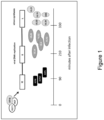
- FIG. 1 During primary infection, a defined sequence of protein expression occurs ( Figure 1 ). Following viral entry into cells during primary infection, the viral capsid is released within the cytoplasm and host protein synthesis is shut down by VHS/ULA41, a tegument protein. A second tegument protein, VP16, forms a complex with host proteins Oct1 and HCF to induce immediate early HSV1 transcription. These immediate early genes induce the expression of HSV1 encoded enzymes required for viral DNA replication, including thymidine kinase (TK) and the viral DNA polymerase (UL30). As viral DNA production progresses, the late viral proteins including capsid proteins, tegument proteins, and glycoproteins necessary for viral entry into cells are produced. Viral particles assemble and viral DNA is packaged into capsids. Ultimately, infectious viral particles are produced, leading to infection of surrounding cells and allowing transmission to other people.
- TK thymidine kinase
- UL30 viral DNA polymerase
- the sequence of initial steps of viral reactivation is thought to be echoed during reactivation of HSV1 in latently infected neurons at later stages of reactivation. Proteins which play key roles in lytic infection, such as VP16, are thought to play similar critical roles in reactivation. As the process of HSV1 reactivation progresses, immediate early gene expression occurs followed by early and then late protein production. Ultimately the production of infectious viral particles occurs, leading to transmission of infection to neighboring cells and uninfected individuals.
- HE homing endonucleases
- ZFN zinc finger nucleases
- TALEN transcription activator-like effector nucleases
- Cas9 most recently clustered regularly interspaced short palindromic repeats
- DSB site-specific double-strand DNA break
- ZFNs and TALENs have revolutionized genome editing.
- the major drawbacks for ZFNs and TALENs are the uncontrollable off-target effects and the tedious and expensive engineering of custom DNA-binding fusion protein for each target site, which limit the universal application and clinical safety.
- RNA-guided Cas9 biotechnology induces genome editing without detectable off-target effects.
- This technique takes advantage of the genome defense mechanisms in bacteria that CRISPR/Cas loci encode RNA-guided adaptive immune systems against mobile genetic elements (viruses, transposable elements and conjugative plasmids).
- CRISPR clusters contain spacers, the sequences complementary to antecedent mobile elements.
- CRISPR clusters are transcribed and processed into mature CRISPR (Clustered Regularly Interspaced Short Palindromic Repeats) RNA (crRNA).
- Cas9 belongs to the type II CRISPR/Cas system and has strong endonuclease activity to cut target DNA.
- Cas9 is guided by a mature crRNA that contains about 20 base pairs (bp) of unique target sequence (called spacer) and a trans-activated small RNA (tracrRNA) that serves as a guide for ribonuclease III-aided processing of pre-crRNA.
- spacer base pairs
- tracrRNA trans-activated small RNA
- the crRNA:tracrRNA duplex directs Cas9 to target DNA via complementary base pairing between the spacer on the crRNA and the complementary sequence (called the protospacer) on the target DNA (tDNA).
- Cas9 recognizes a trinucleotide (NGG) protospacer adjacent motif (PAM) to specify the cut site (the 3 rd nucleotide from PAM).
- NGG trinucleotide
- PAM protospacer adjacent motif
- the crRNA and tracrRNA can be expressed separately or engineered into an artificial fusion small guide RNA (gRNA) via a synthetic stem loop (AGAAAU) to mimic the natural crRNA/tracrRNA duplex.
- gRNA fusion small guide RNA
- AGAAAU synthetic stem loop
- Such gRNA like shRNA, can be synthesized or in vitro transcribed for direct RNA transfection or expressed from a RNA expression vector (e.g., U6 or H1 promoter-driven vectors). Therefore, the Cas9 gRNA technology requires the expression of the Cas9 protein and gRNA, which then form a gene editing complex at the specific target DNA binding site within the target genome and inflict cleavage/mutation of the target DNA.
- the present invention is not limited to the use of Cas9-mediated gene editing. Rather, the present invention encompasses the use of other CRISPR-associated peptides, which can be targeted to a targeted sequence using a gRNA and can edit to target site of interest. For example, in one embodiment, the invention utilizes Cpf1 to edit the target site of interest.
- the present invention employs a genetic strategy using a novel RNA-guided CRISPR technology that targets the HSV1 genome and by editing the specific domain of the HSV1 immediate early gene, infected cell protein 0 (ICPO), abrogates its expression.
- ICPO infected cell protein 0
- the present invention is not limited to the prevention or treatment of HSV1. Rather, the present invention may be used to treat or prevent other herpesviruses. For example, as the HSV2 genome is similar to the HSV1 genome, the strategy described herein would be effective in treating or preventing HSV2.
- the present invention provides a composition for the treatment or prevention of a herpesvirus infection in a subject in need thereof.
- the composition comprises one or more isolated nucleic acids encoding the CRISPR/Cas gene editing.
- the composition comprises nucleic acids encoding at least one guide nucleic acid molecule, or fragment thereof, where the guide nucleic acid molecule comprises a nucleotide sequence that is complementary to one or more target sequences in the herpesvirus genome.
- the guide nucleic acid is a guide RNA (gRNA).
- the gRNA comprises a crRNA:tracrRNA duplex.
- the gRNA comprises a stem-loop that mimics the natural duplex between the crRNA and tracrRNA.
- the stem-loop comprises a nucleotide sequence comprising AGAAAU.
- the composition comprises a synthetic or chimeric guide RNA comprising a crRNA, stem, and tracrRNA.
- the composition comprises an isolated crRNA and/or an isolated tracrRNA which hybridize to form a natural duplex.
- the gRNA comprises a crRNA or crRNA precursor (pre-crRNA) comprising a targeting sequence.
- the gRNA comprises a nucleotide sequence that is complementary to a target sequence in the herpesvirus genome.
- the target sequence in the herpesvirus genome may be any sequence in any coding or non-coding region where CRISPR/Cas-mediated gene editing would result in the mutation of the genome and inhibition of viral infectivity.
- the target sequence, to which the gRNA is complementary is within the ICPO, ICP4, or ICP27 genes.
- the sequence of the gRNA that is complementary to the target is about 10-30 nucleotides in length.
- the gRNA comprises a nucleotide sequence that binds to the target sequence of the HSV genome.
- the gRNA comprises a nucleotide sequence that is complementary to the target sequence, and thus binds to the target sequence.
- exemplary nucleotide sequences which may be used to target the gRNA to the target sequence in the genome is provided in Figure 3 , Figure 7 , Example 1 and Example 2.
- the gRNA is complementary to a target sequence of the HSV genome selected from the group consisting of:
- the target sequence precedes PAM sequence.
- the target sequence precedes a NGG PAM sequence.
- Exemplary target sequences + PAM sequences are as follows:
- the invention encompasses an isolated nucleic acid (e.g., gRNA) having substantial homology to a nucleic acid disclosed herein.
- the isolated nucleic acid has at least 75%, 80%, 85%, 90%, 95%, 96%, 97%, 98%, or 99% sequence homology with a nucleotide sequence of a gRNA described elsewhere herein.
- the guide RNA sequence can be a sense or anti-sense sequence.
- the target DNA typically immediately precedes a 5'-NGG proto-spacer adjacent motif (PAM).
- PAM proto-spacer adjacent motif
- Other Cas9 orthologs may have different PAM specificities.
- Cas9 from S. thermophilus requires 5'-NNAGAA for CRISPR 1 and 5'-NGGNG for CRISPR3) and Neisseria meningiditis requires 5'-NNNNGATT).
- the specific sequence of the guide RNA may vary, but, regardless of the sequence, useful guide RNA sequences will be those that minimize off-target effects while achieving high efficiency mutation of the herpesvirus target sequence(s).
- the specific sequence of the guide RNA may vary, but, regardless of the sequence, useful guide RNA sequences will be those that minimize off-target effects while achieving high efficiency editing of the HSV genome.
- the length of the guide RNA sequence can vary from about 20 to about 60 or more nucleotides, for example about 20, about 21, about 22, about 23, about 24, about 25, about 26, about 27, about 28, about 29, about 30, about 31, about 32, about 33, about 34, about 35, about 36, about 37, about 38, about 39, about 40, about 45, about 50, about 55, about 60 or more nucleotides.
- Useful selection methods identify regions having extremely low homology between the foreign viral genome and host cellular genome, include bioinformatic screening using target sequence+NGG targetselection criteria to exclude off-target human transcriptome or (even rarely) untranslated-genomic sites, and WGS, Sanger sequencing and SURVEYOR assay, to identify and exclude potential off-target effects.
- Algorithms such as CRISPR Design Tool (CRISPR Genome Engineering Resources; Broad Institute) can be used to identify target sequences with or near requisite PAM sequences as defined by the type of Cas peptide (i.e. Cas9, Cas9 variant, Cpf1) used.
- composition comprises nucleic acids encoding multiple different gRNA molecules, each targeted to a different target sequence.
- this multiplexed strategy provides for increased efficacy.
- the RNA molecules may be engineered to comprise one or more modified nucleobases.
- modified nucleobases known modifications of RNA molecules can be found, for example, in Genes VI, Chapter 9 ("Interpreting the Genetic Code"), Lewis, ed. (1997, Oxford University Press, New York ), and Modification and Editing of RNA, Grosjean and Benne, eds. (1998, ASM Press, Washington DC ).
- Modified RNA components include the following: 2'-O-methylcytidine; N 4 -methylcytidine; N 4 -2'-O-dimethylcytidine; N 4 -acetylcytidine; 5-methylcytidine; 5,2'-O-dimethylcytidine; 5-hydroxymethylcytidine; 5-formylcytidine; 2'-O-methyl-5-formaylcytidine; 3-methylcytidine; 2-thiocytidine; lysidine; 2'-O-methyluridine; 2-thiouridine; 2-thio-2'-O-methyluridine; 3,2'-O-dimethyluridine; 3-(3-amino-3-carboxypropyl)uridine; 4-thiouridine; ribosylthymine; 5,2'-O-dimethyluridine; 5-methyl-2-thiouridine; 5-hydroxyuridine; 5-methoxyuridine; uridine 5-oxyacetic acid; uridine 5-oxyacetic
- the isolated nucleic acid molecules of the invention may be produced by standard techniques. For example, polymerase chain reaction (PCR) techniques can be used to obtain an isolated nucleic acid containing a nucleotide sequence described herein, including nucleotide sequences encoding a polypeptide described herein. PCR can be used to amplify specific sequences from DNA as well as RNA, including sequences from total genomic DNA or total cellular RNA. Various PCR methods are described in, for example, PCR Primer: A Laboratory Manual, 2nd edition, Dieffenbach and Dveksler, eds., Cold Spring Harbor Laboratory Press, 2003 .
- sequence information from the ends of the region of interest or beyond is employed to design oligonucleotide primers that are identical or similar in sequence to opposite strands of the template to be amplified.
- Various PCR strategies also are available by which site-specific nucleotide sequence modifications can be introduced into a template nucleic acid.
- isolated nucleic acids also can be chemically synthesized, either as a single nucleic acid molecule ( e.g ., using automated DNA synthesis in the 3' to 5' direction using phosphoramidite technology) or as a series of oligonucleotides.
- Isolated nucleic acids of the invention also can be obtained by mutagenesis of, e.g., a naturally occurring portion crRNA, tracrRNA, RNA-encoding DNA, or of a Cas9 - encoding DNA
- the composition comprises an isolated nucleic acid encoding a CRISPR-associated (Cas) peptide, or functional fragment or derivative thereof.
- the Cas peptide is an endonuclease, including but not limited to the Cas9 nuclease.
- the Cas9 peptide comprises an amino acid sequence identical to the wild type Streptococcus pyogenes Cas9 amino acid sequence.
- the Cas peptide may comprise the amino acid sequence of a Cas protein from other species, for example other Streptococcus species, such as thermophilus; Psuedomonas aeruginosa, Escherichia coli, or other sequenced bacteria genomes and archaea, or other prokaryotic microogranisms.
- Other Cas peptides, useful for the present invention known or can be identified, using methods known in the art (see e.g., Esvelt et al., 2013, Nature Methods, 10: 1116-1121 ).
- the Cas peptide may comprise a modified amino acid sequence, as compared to its natural source.
- the wild type Streptococcus pyogenes Cas9 sequence can be modified.
- the amino acid sequence can be codon optimized for efficient expression in human cells (i.e., "humanized) or in a species of interest.
- a humanized Cas9 nuclease sequence can be for example, the Cas9 nuclease sequence encoded by any of the expression vectors listed in Genbank accession numbers KM099231.1 GL669193757; KM099232.1 GL669193761; or KM099233.1 GL669193765.
- the Cas9 nuclease sequence can be for example, the sequence contained within a commercially available vector such as PX330 or PX260 from Addgene (Cambridge, MA).
- the Cas9 endonuclease can have an amino acid sequence that is a variant or a fragment of any of the Cas9 endonuclease sequences of Genbank accession numbers KM099231.1 GL669193757; KM099232.1 GL669193761 ; or KM099233.1 GL669193765 or Cas9 amino acid sequence of PX330 or PX260 (Addgene, Cambridge, MA).
- the Cas9 nucleotide sequence can be modified to encode biologically active variants of Cas9, and these variants can have or can include, for example, an amino acid sequence that differs from a wild type Cas9 by virtue of containing one or more mutations (e.g. , an addition, deletion, or substitution mutation or a combination of such mutations).
- One or more of the substitution mutations can be a substitution (e.g., a conservative amino acid substitution).
- the Cas peptide is a mutant Cas9, wherein the mutant Cas9 reduces the off-target effects, as compared to wild-type Cas9.
- the mutant Cas9 is a Streptococcus pyogenes Cas9 (SpCas9) variant.
- SpCas9 variants comprise one or more point mutations, including, but not limited to R780A, K810A, K848A, K855A, H982A, K1003A, and R1060A ( Slaymaker et al., 2016, Science, 351(6268): 84-88 ). In one embodiment, SpCas9 variants comprise D1135E point mutation ( Kleinstiver et al., 2015, Nature, 523(7561): 481-485 ).
- SpCas9 variants comprise one or more point mutations, including, but not limited to N497A, R661A, Q695A, Q926A, D1135E, L169A, and Y450A ( Kleinstiver et al., 2016, Nature, doi:10.1038/nature16526 ).
- SpCas9 variants comprise one or more point mutations, including but not limited to M495A, M694A, and M698A.
- Y450 is involved with hydrophobic base pair stacking.
- N497, R661, Q695, Q926 are involved with residue to base hydrogen bonding contributing to off-target effects.
- L169A is involved with hydrophobic base pair stacking.
- M495A, M694A, and H698A are involved with hydrophobic base pair stacking.
- SpCas9 variants comprise one or more point mutations at one or more of the following residues: R780, K810, K848, K855, H982, K1003, R1060, D1135, N497, R661, Q695, Q926, L169, Y450, M495, M694, and M698.
- SpCas9 variants comprise one or more point mutations selected from the group of: R780A, K810A, K848A, K855A, H982A, K1003A, R1060A, D1135E, N497A, R661A, Q695A, Q926A, L169A, Y450A, M495A, M694A, and M698A.
- the SpCas9 variant comprises the point mutations, relative to wildtype SpCas9, of N497A, R661A, Q695A, and Q926A. In one embodiment, the SpCas9 variant comprises the point mutations, relative to wildtype SpCas9, of N497A, R661A, Q695A, Q926A, and D1135E. In one embodiment, the SpCas9 variant comprises the point mutations, relative to wildtype SpCas9, of N497A, R661A, Q695A, Q926A, and L169A.
- the SpCas9 variant comprises the point mutations, relative to wildtype SpCas9, of N497A, R661A, Q695A, Q926A, and Y450A. In one embodiment, the SpCas9 variant comprises the point mutations, relative to wildtype SpCas9, of N497A, R661A, Q695A, Q926A, and M495A. In one embodiment, the SpCas9 variant comprises the point mutations, relative to wildtype SpCas9, of N497A, R661A, Q695A, Q926A, and M694A.
- the SpCas9 variant comprises the point mutations, relative to wildtype SpCas9, of N497A, R661A, Q695A, Q926A, and H698A. In one embodiment, the SpCas9 variant comprises the point mutations, relative to wildtype SpCas9, of N497A, R661A, Q695A, Q926A, D1135E, and L169A. In one embodiment, the SpCas9 variant comprises the point mutations, relative to wildtype SpCas9, of N497A, R661A, Q695A, Q926A, D1135E, and Y450A.
- the SpCas9 variant comprises the point mutations, relative to wildtype SpCas9, of N497A, R661A, Q695A, Q926A, D1135E, and M495A. In one embodiment, the SpCas9 variant comprises the point mutations, relative to wildtype SpCas9, of N497A, R661A, Q695A, Q926A, D1135E, and M694A. In one embodiment, the SpCas9 variant comprises the point mutations, relative to wildtype SpCas9, of N497A, R661A, Q695A, Q926A, D1135E, and M698A.
- the SpCas9 variant comprises the point mutations, relative to wildtype SpCas9, of R661A, Q695A, and Q926A. In one embodiment, the SpCas9 variant comprises the point mutations, relative to wildtype SpCas9, of R661A, Q695A, Q926A, and D1135E. In one embodiment, the SpCas9 variant comprises the point mutations, relative to wildtype SpCas9, of R661A, Q695A, Q926A, and L169A. In one embodiment, the SpCas9 variant comprises the point mutations, relative to wildtype SpCas9, of R661A, Q695A, Q926A, and Y450A.
- the SpCas9 variant comprises the point mutations, relative to wildtype SpCas9, of R661A, Q695A, Q926A, and M495A. In one embodiment, the SpCas9 variant comprises the point mutations, relative to wildtype SpCas9, of R661A, Q695A, Q926A, and M694A. In one embodiment, the SpCas9 variant comprises the point mutations, relative to wildtype SpCas9, of R661A, Q695A, Q926A, and H698A.
- the SpCas9 variant comprises the point mutations, relative to wildtype SpCas9, of R661A, Q695A, Q926A, D1135E, and L169A. In one embodiment, the SpCas9 variant comprises the point mutations, relative to wildtype SpCas9, of R661A, Q695A, Q926A, D1135E, and Y450A. In one embodiment, the SpCas9 variant comprises the point mutations, relative to wildtype SpCas9, of R661A, Q695A, Q926A, D1135E, and M495A.
- the SpCas9 variant comprises the point mutations, relative to wildtype SpCas9, of R661A, Q695A, Q926A, D1135E, and M694A. In one embodiment, the SpCas9 variant comprises the point mutations, relative to wildtype SpCas9, of R661A, Q695A, Q926A, D1135E, and M698A.
- the mutant Cas9 comprises one or more mutations that alter PAM specificity ( Kleinstiver et al., 2015, Nature, 523(7561):481-485 ; Kleinstiver et al., 2015, Nat Biotechnol, 33(12): 1293-1298 ). In one embodiment, the mutant Cas9 comprises one or more mutations that alter the catalytic activity of Cas9, including but not limited to D10A in RuvC and H840A in HNH ( Cong et al., 2013; Science 339 : 919-823 , Gasiubas et al., 2012;PNAS 109:E2579-2586 Jinek et al ; 2012; Science 337: 816-821 ).
- the present invention is not limited to the use of Cas9-mediated gene editing. Rather, the present invention encompasses the use of other CRISPR-associated peptides, which can be targeted to a targeted sequence using a gRNA and can edit to target site of interest.
- the invention utilizes Cpf1 to edit the target site of interest.
- Cpf1 is a single crRNA-guided, class 2 CRISPR effector protein which can effectively edit target DNA sequences in human cells.
- Exemplary Cpf1 includes, but is not limited to, Acidaminococcus sp. Cpf1 (AsCpf1) and Lachnospiraceae bacterium Cpf1 (LbCpf1).
- the invention should also be construed to include any form of a peptide having substantial homology to a Cas peptide (e.g., Cas9) disclosed herein.
- a peptide which is "substantially homologous" is about 50% homologous, more preferably about 70% homologous, even more preferably about 80% homologous, more preferably about 90% homologous, even more preferably, about 95% homologous, and even more preferably about 99% homologous to amino acid sequence of a Cas peptide disclosed herein.
- the peptide may alternatively be made by recombinant means or by cleavage from a longer polypeptide.
- the composition of a peptide may be confirmed by amino acid analysis or sequencing.
- the variants of the peptides may be (i) one in which one or more of the amino acid residues are substituted with a conserved or non-conserved amino acid residue (preferably a conserved amino acid residue) and such substituted amino acid residue may or may not be one encoded by the genetic code, (ii) one in which there are one or more modified amino acid residues, e.g., residues that are modified by the attachment of substituent groups, (iii) one in which the peptide is an alternative splice variant of the peptide of the present invention, (iv) fragments of the peptides and/or (v) one in which the peptide is fused with another peptide, such as a leader or secretory sequence or a sequence which is employed for purification (for example, His-tag) or for detection (for example, Sv5 epitope tag).
- a conserved or non-conserved amino acid residue preferably a conserved amino acid residue
- substituted amino acid residue may or may not
- the fragments include peptides generated via proteolytic cleavage (including multi-site proteolysis) of an original sequence. Variants may be post-translationally, or chemically modified. Such variants are deemed to be within the scope of those skilled in the art from the teaching herein.
- the "similarity" between two peptides is determined by comparing the amino acid sequence and its conserved amino acid substitutes of one polypeptide to a sequence of a second polypeptide.
- Variants are defined to include peptide sequences different from the original sequence, preferably different from the original sequence in less than 40% of residues per segment of interest, more preferably different from the original sequence in less than 25% of residues per segment of interest, more preferably different by less than 10% of residues per segment of interest, most preferably different from the original protein sequence in just a few residues per segment of interest and at the same time sufficiently homologous to the original sequence to preserve the functionality of the original sequence.
- the present invention includes amino acid sequences that are at least 60%, 65%, 70%, 72%, 74%, 76%, 78%, 80%, 90%, or 95% similar or identical to the original amino acid sequence.
- the degree of identity between two peptides is determined using computer algorithms and methods that are widely known for the persons skilled in the art.
- the identity between two amino acid sequences is preferably determined by using the BLASTP algorithm [ BLAST Manual, Altschul, S., et al., NCBI NLM NIH Bethesda, Md. 20894 , Altschul, S., et al., J. Mol. Biol. 215: 403-410 (1990 )].
- the peptides can be post-translationally modified.
- posttranslational modifications that fall within the scope of the present invention include signal peptide cleavage, glycosylation, acetylation, isoprenylation, proteolysis, myristoylation, protein folding and proteolytic processing, etc.
- Some modifications or processing events require introduction of additional biological machinery.
- processing events such as signal peptide cleavage and core glycosylation, are examined by adding canine microsomal membranes or Xenopus egg extracts ( U.S. Pat. No. 6,103,489 ) to a standard translation reaction.
- the peptides may include unnatural amino acids formed by posttranslational modification or by introducing unnatural amino acids during translation.
- a variety of approaches are available for introducing unnatural amino acids during protein translation.
- a peptide or protein encoded by the nucleic acids in the composition for the use of the invention may be conjugated with other molecules, such as proteins, to prepare fusion proteins.
- a peptide or protein may be phosphorylated using conventional methods such as the method described in Reedijk et al. (The EMBO Journal 11(4):1365, 1992 ).
- Cyclic derivatives of the peptides of the invention are also part of the present invention. Cyclization may allow the peptide to assume a more favorable conformation for association with other molecules. Cyclization may be achieved using techniques known in the art. For example, disulfide bonds may be formed between two appropriately spaced components having free sulfhydryl groups, or an amide bond may be formed between an amino group of one component and a carboxyl group of another component. The components that form the bonds may be side chains of amino acids, non-amino acid components or a combination of the two. In an embodiment of the invention, cyclic peptides may comprise a beta-turn in the right position. Beta-turns may be introduced into the peptides of the invention by adding the amino acids Pro-Gly at the right position.
- a more flexible peptide may be prepared by introducing cysteines at the right and left position of the peptide and forming a disulphide bridge between the two cysteines.
- the two cysteines are arranged so as not to deform the beta-sheet and turn.
- the peptide is more flexible as a result of the length of the disulfide linkage and the smaller number of hydrogen bonds in the beta-sheet portion.
- the relative flexibility of a cyclic peptide can be determined by molecular dynamics simulations.
- the invention also envisages peptides comprising a Cas peptide fused to, or integrated into, a target protein, and/or a targeting domain capable of directing the chimeric protein to a desired cellular component or cell type or tissue.
- the chimeric proteins may also contain additional amino acid sequences or domains.
- the chimeric proteins are recombinant in the sense that the various components are from different sources, and as such are not found together in nature (i.e. are heterologous).
- the targeting domain can be a membrane spanning domain, a membrane binding domain, or a sequence directing the protein to associate with for example vesicles or with the nucleus.
- the targeting domain can target a peptide to a particular cell type or tissue.
- the targeting domain can be a cell surface ligand or an antibody against cell surface antigens of a target tissue (e.g. cancerous tissue).
- a targeting domain may target the peptide of the invention to a cellular component.
- the targeting domain targets a tumor-specific antigen or tumor-associated antigen.
- N-terminal or C-terminal fusion proteins comprising a peptide or chimeric protein of the invention conjugated with other molecules may be prepared by fusing, through recombinant techniques, the N-terminal or C-terminal of the peptide or chimeric protein, and the sequence of a selected protein or selectable marker with a desired biological function.
- the resultant fusion proteins contain the Cas peptide or chimeric protein fused to the selected protein or marker protein as described herein.
- proteins which may be used to prepare fusion proteins include immunoglobulins, glutathione-S-transferase (GST), hemagglutinin (HA), and truncated myc.
- composition for the use of the invention comprises an isolated nucleic acid encoding one or more elements of the CRISPR-Cas system described herein.
- the composition comprises an isolated nucleic acid encoding multiple guide nucleic acid molecules (e.g., gRNA) and encoding a Cas peptide, or functional fragment or derivative thereof.
- the composition comprises at least one isolated nucleic acid encoding multiple gRNAs, where the gRNAs are complementary to target sequences of the HSV genome, as described elsewhere herein. In one embodiment, the composition comprises at least one isolated nucleic acid encoding a gRNA, where the gRNA is complementary to a target sequence having at least 75%, 80%, 85%, 90%, 95%, 96%, 97%, 98%, or 99% sequence homology to a target sequence described herein.
- the composition comprises at least one isolated nucleic acid encoding a Cas peptide described elsewhere herein, or a functional fragment or derivative thereof. In one embodiment, the composition comprises at least one isolated nucleic acid encoding a Cas peptide having at least 75%, 80%, 85%, 90%, 95%, 96%, 97%, 98%, or 99% amino acid sequence homology with a Cas peptide described elsewhere herein.
- the isolated nucleic acid may comprise any type of nucleic acid, including, but not limited to DNA and RNA.
- the composition comprises an isolated DNA molecule, including for example, an isolated cDNA molecule, encoding a gRNA or peptide of the invention, or functional fragment thereof.
- the composition comprises an isolated RNA molecule encoding a peptide of the invention, or a functional fragment thereof.
- the isolated nucleic acids may be synthesized using any method known in the art.
- the present invention also includes a vector in which the isolated nucleic acid of the present invention is inserted.
- Vectors include, for example, viral vectors (such as adenoviruses ("Ad"), adeno-associated viruses (AAV), and vesicular stomatitis virus (VSV) and retroviruses), liposomes and other lipid-containing complexes, and other macromolecular complexes capable of mediating delivery of a polynucleotide to a host cell.
- Vectors can also comprise other components or functionalities that further modulate gene delivery and/or gene expression, or that otherwise provide beneficial properties to the targeted cells.
- Such other components include, for example, components that influence binding or targeting to cells (including components that mediate cell-type or tissue-specific binding); components that influence uptake of the vector nucleic acid by the cell; components that influence localization of the polynucleotide within the cell after uptake (such as agents mediating nuclear localization); and components that influence expression of the polynucleotide.
- Such components also might include markers, such as detectable and/or selectable markers that can be used to detect or select for cells that have taken up and are expressing the nucleic acid delivered by the vector.
- Such components can be provided as a natural feature of the vector (such as the use of certain viral vectors which have components or functionalities mediating binding and uptake), or vectors can be modified to provide such functionalities.
- Other vectors include those described by Chen et al; BioTechniques, 34: 167-171 (2003 ). A large variety of such vectors is known in the art and is generally available.
- the expression of natural or synthetic nucleic acids encoding an RNA and/or peptide is typically achieved by operably linking a nucleic acid encoding the RNA and/or peptide or portions thereof to a promoter, and incorporating the construct into an expression vector.
- the vectors to be used are suitable for replication and, optionally, integration in eukaryotic cells. Typical vectors contain transcription and translation terminators, initiation sequences, and promoters useful for regulation of the expression of the desired nucleic acid sequence.
- the vectors of the present invention may also be used for nucleic acid immunization and gene therapy, using standard gene delivery protocols. Methods for gene delivery are known in the art. See, e.g., U.S. Pat. Nos. 5,399,346 , 5,580,859 , 5,589,466 , incorporated by reference herein in their entireties.
- the invention provides a gene therapy vector.
- the isolated nucleic acid of the composition for the use of the invention can be cloned into a number of types of vectors.
- the nucleic acid can be cloned into a vector including, but not limited to a plasmid, a phagemid, a phage derivative, an animal virus, and a cosmid.
- Vectors of particular interest include expression vectors, replication vectors, probe generation vectors, and sequencing vectors.
- the vector may be provided to a cell in the form of a viral vector.
- Viral vector technology is well known in the art and is described, for example, in Sambrook et al. (2001, Molecular Cloning: A Laboratory Manual, Cold Spring Harbor Laboratory, New York ), and in other virology and molecular biology manuals.
- Viruses, which are useful as vectors include, but are not limited to, retroviruses, adenoviruses, adeno- associated viruses, herpes viruses, and lentiviruses.
- a suitable vector contains an origin of replication functional in at least one organism, a promoter sequence, convenient restriction endonuclease sites, and one or more selectable markers, (e.g., WO 01/96584 ; WO 01/29058 ; and U.S. Pat. No. 6,326,193 ).
- retroviruses provide a convenient platform for gene delivery systems.
- a selected gene can be inserted into a vector and packaged in retroviral particles using techniques known in the art.
- the recombinant virus can then be isolated and delivered to cells of the subject either in vivo or ex vivo.
- retroviral systems are known in the art.
- adenovirus vectors are used.
- a number of adenovirus vectors are known in the art.
- lentivirus vectors are used.
- vectors derived from retroviruses such as the lentivirus are suitable tools to achieve long-term gene transfer since they allow long-term, stable integration of a transgene and its propagation in daughter cells.
- Lentiviral vectors have the added advantage over vectors derived from onco-retroviruses such as murine leukemia viruses in that they can transduce non-proliferating cells, such as hepatocytes. They also have the added advantage of low immunogenicity.
- the composition includes a vector derived from an adeno-associated virus (AAV).
- Adeno-associated viral (AAV) vectors have become powerful gene delivery tools for the treatment of various disorders.
- AAV vectors possess a number of features that render them ideally suited for gene therapy, including a lack of pathogenicity, minimal immunogenicity, and the ability to transduce postmitotic cells in a stable and efficient manner. Expression of a particular gene contained within an AAV vector can be specifically targeted to one or more types of cells by choosing the appropriate combination of AAV serotype, promoter, and delivery method.
- Pox viral vectors introduce the gene into the cells cytoplasm.
- Avipox virus vectors result in only a short term expression of the nucleic acid.
- Adenovirus vectors, adeno-associated virus vectors and herpes simplex virus (HSV) vectors may be an indication for some invention embodiments.
- the adenovirus vector results in a shorter term expression (e.g., less than about a month) than adeno-associated virus, in some embodiments, may exhibit much longer expression.
- the particular vector chosen will depend upon the target cell and the condition being treated.
- the vector also includes conventional control elements which are operably linked to the transgene in a manner which permits its transcription, translation and/or expression in a cell transfected with the plasmid vector or infected with the virus produced by the invention.
- "operably linked" sequences include both expression control sequences that are contiguous with the gene of interest and expression control sequences that act in trans or at a distance to control the gene of interest.
- Expression control sequences include appropriate transcription initiation, termination, promoter and enhancer sequences; efficient RNA processing signals such as splicing and polyadenylation (polyA) signals; sequences that stabilize cytoplasmic mRNA; sequences that enhance translation efficiency (i.e., Kozak consensus sequence); sequences that enhance protein stability; and when desired, sequences that enhance secretion of the encoded product.
- polyA polyadenylation
- a great number of expression control sequences, including promoters which are native, constitutive, inducible and/or tissue-specific, are known in the art and may be utilized.
- promoter elements e.g., enhancers
- promoters regulate the frequency of transcriptional initiation.
- these are located in the region 30-110 bp upstream of the start site, although a number of promoters have recently been shown to contain functional elements downstream of the start site as well.
- the spacing between promoter elements frequently is flexible, so that promoter function is preserved when elements are inverted or moved relative to one another.
- tk thymidine kinase
- the spacing between promoter elements can be increased to 50 bp apart before activity begins to decline.
- individual elements can function either cooperatively or independently to activate transcription.
- promoters can readily be accomplished. In certain aspects, one would use a high expression promoter.
- a suitable promoter is the immediate early cytomegalovirus (CMV) promoter sequence. This promoter sequence is a strong constitutive promoter sequence capable of driving high levels of expression of any polynucleotide sequence operatively linked thereto.
- CMV immediate early cytomegalovirus
- RSV Rous sarcoma virus
- MMT may also be used.
- Certain proteins can be expressed using their native promoter.
- Other elements that can enhance expression can also be included such as an enhancer or a system that results in high levels of expression such as a tat gene and tar element.
- This cassette can then be inserted into a vector, e.g., a plasmid vector such as, pUC19, pUC118, pBR322, or other known plasmid vectors, that includes, for example, an E. coli origin of replication.
- a vector e.g., a plasmid vector such as, pUC19, pUC118, pBR322, or other known plasmid vectors, that includes, for example, an E. coli origin of replication.
- Elongation Growth Factor - 1 ⁇ is Elongation Growth Factor - 1 ⁇ (EF-1 ⁇ ).
- EF-1 ⁇ Elongation Growth Factor - 1 ⁇
- other constitutive promoter sequences may also be used, including, but not limited to the simian virus 40 (SV40) early promoter, mouse mammary tumor virus (MMTV), human immunodeficiency virus (HIV) long terminal repeat (LTR) promoter, MoMuLV promoter, an avian leukemia virus promoter, an Epstein-Barr virus immediate early promoter, a Rous sarcoma virus promoter, as well as human gene promoters such as, but not limited to, the actin promoter, the myosin promoter, the hemoglobin promoter, and the creatinine kinase promoter.
- SV40 simian virus 40
- MMTV mouse mammary tumor virus
- HSV human immunodeficiency virus
- LTR long terminal repeat
- MoMuLV promoter an avian le
- inducible promoters are also contemplated as part of the invention.
- the use of an inducible promoter provides a molecular switch capable of turning on expression of the polynucleotide sequence which it is operatively linked when such expression is desired, or turning off the expression when expression is not desired.
- inducible promoters include, but are not limited to a metallothionine promoter, a glucocorticoid promoter, a progesterone promoter, and a tetracycline promoter.
- Enhancer sequences found on a vector also regulates expression of the gene contained therein.
- enhancers are bound with protein factors to enhance the transcription of a gene.
- Enhancers may be located upstream or downstream of the gene it regulates. Enhancers may also be tissue-specific to enhance transcription in a specific cell or tissue type.
- the vector of the present invention comprises one or more enhancers to boost transcription of the gene present within the vector.
- the expression vector to be introduced into a cell can also contain either a selectable marker gene or a reporter gene or both to facilitate identification and selection of expressing cells from the population of cells sought to be transfected or infected through viral vectors.
- the selectable marker may be carried on a separate piece of DNA and used in a co- transfection procedure. Both selectable markers and reporter genes may be flanked with appropriate regulatory sequences to enable expression in the host cells.
- Useful selectable markers include, for example, antibiotic-resistance genes, such as neo and the like.
- Reporter genes are used for identifying potentially transfected cells and for evaluating the functionality of regulatory sequences.
- a reporter gene is a gene that is not present in or expressed by the recipient organism or tissue and that encodes a polypeptide whose expression is manifested by some easily detectable property, e.g., enzymatic activity. Expression of the reporter gene is assayed at a suitable time after the DNA has been introduced into the recipient cells.
- Suitable reporter genes may include genes encoding luciferase, beta-galactosidase, chloramphenicol acetyl transferase, secreted alkaline phosphatase, or the green fluorescent protein gene (e.g., Ui-Tei et al., 2000 FEBS Letters 479: 79-82 ).
- Suitable expression systems are well known and may be prepared using known techniques or obtained commercially.
- the construct with the minimal 5' flanking region showing the highest level of expression of reporter gene is identified as the promoter.
- Such promoter regions may be linked to a reporter gene and used to evaluate agents for the ability to modulate promoter- driven transcription.
- the vector can be readily introduced into a host cell, e.g., mammalian, bacterial, yeast, or insect cell by any method in the art.
- the expression vector can be transferred into a host cell by physical, chemical, or biological means.
- Physical methods for introducing a polynucleotide into a host cell include calcium phosphate precipitation, lipofection, particle bombardment, microinjection, electroporation, and the like. Methods for producing cells comprising vectors and/or exogenous nucleic acids are well-known in the art. See, for example, Sambrook et al. (2012, Molecular Cloning: A Laboratory Manual, Cold Spring Harbor Laboratory, New York ). A preferred method for the introduction of a polynucleotide into a host cell is calcium phosphate transfection.
- Biological methods for introducing a polynucleotide of interest into a host cell include the use of DNA and RNA vectors.
- Viral vectors, and especially retroviral vectors have become the most widely used method for inserting genes into mammalian, e.g., human cells.
- Other viral vectors can be derived from lentivirus, poxviruses, herpes simplex virus I, adenoviruses and adeno-associated viruses, and the like. See, for example, U.S. Pat. Nos. 5,350,674 and 5,585,362 .
- Chemical means for introducing a polynucleotide into a host cell include colloidal dispersion systems, such as macromolecule complexes, nanocapsules, microspheres, beads, and lipid-based systems including oil-in-water emulsions, micelles, mixed micelles, and liposomes.
- colloidal dispersion systems such as macromolecule complexes, nanocapsules, microspheres, beads, and lipid-based systems including oil-in-water emulsions, micelles, mixed micelles, and liposomes.
- An exemplary colloidal system for use as a delivery vehicle in vitro and in vivo is a liposome (e.g., an artificial membrane vesicle).
- an exemplary delivery vehicle is a liposome.
- lipid formulations is contemplated for the introduction of the nucleic acids into a host cell ( in vitro, ex vivo or in vivo ).
- the nucleic acid may be associated with a lipid.
- the nucleic acid associated with a lipid may be encapsulated in the aqueous interior of a liposome, interspersed within the lipid bilayer of a liposome, attached to a liposome via a linking molecule that is associated with both the liposome and the oligonucleotide, entrapped in a liposome, complexed with a liposome, dispersed in a solution containing a lipid, mixed with a lipid, combined with a lipid, contained as a suspension in a lipid, contained or complexed with a micelle, or otherwise associated with a lipid.
- Lipid, lipid/DNA or lipid/expression vector associated compositions are not limited to any particular structure in solution.
- Lipids are fatty substances which may be naturally occurring or synthetic lipids.
- lipids include the fatty droplets that naturally occur in the cytoplasm as well as the class of compounds which contain long-chain aliphatic hydrocarbons and their derivatives, such as fatty acids, alcohols, amines, amino alcohols, and aldehydes.
- Lipids suitable for use can be obtained from commercial sources.
- DMPC dimyristyl phosphatidylcholine
- DCP dicetyl phosphate
- Choi cholesterol
- DMPG dimyristyl phosphatidylglycerol
- Stock solutions of lipids in chloroform or chloroform/methanol can be stored at about -20°C. Chloroform is used as the only solvent since it is more readily evaporated than methanol.
- Liposome is a generic term encompassing a variety of single and multilamellar lipid vehicles formed by the generation of enclosed lipid bilayers or aggregates. Liposomes can be characterized as having vesicular structures with a phospholipid bilayer membrane and an inner aqueous medium. Multilamellar liposomes have multiple lipid layers separated by aqueous medium. They form spontaneously when phospholipids are suspended in an excess of aqueous solution. The lipid components undergo self-rearrangement before the formation of closed structures and entrap water and dissolved solutes between the lipid bilayers ( Ghosh et al., 1991 Glycobiology 5: 505-10 ).
- compositions that have different structures in solution than the normal vesicular structure are also encompassed.
- the lipids may assume a micellar structure or merely exist as nonuniform aggregates of lipid molecules.
- lipofectaminenucleic acid complexes are also contemplated.
- assays include, for example, "molecular biological” assays well known to those of skill in the art, such as Southern and Northern blotting, RT-PCR and PCR; "biochemical” assays, such as detecting the presence or absence of a particular peptide, e.g., by immunological means (ELISAs and Western blots) or by assays described herein to identify agents falling within the scope of the invention.
- molecular biological assays well known to those of skill in the art, such as Southern and Northern blotting, RT-PCR and PCR
- biochemical assays, such as detecting the presence or absence of a particular peptide, e.g., by immunological means (ELISAs and Western blots) or by assays described herein to identify agents falling within the scope of the invention.
- the composition comprises a cell genetically modified to express one or more isolated nucleic acids and/or peptides described herein.
- the cell may be transfected or transformed with one or more vectors comprising an isolated nucleic acid sequence encoding a gRNA and/or a Cas peptide.
- the cell can be the subject's cells or they can be haplotype matched or a cell line.
- the cells can be irradiated to prevent replication.
- the cells are human leukocyte antigen (HLA)-matched, autologous, cell lines, or combinations thereof.
- the cells can be a stem cell.
- an embryonic stem cell or an artificial pluripotent stem cell induced pluripotent stem cell (iPS cell)
- Embryonic stem cells (ES cells) and artificial pluripotent stem cells (induced pluripotent stem cell, iPS cells) have been established from many animal species, including humans. These types of pluripotent stem cells would be the most useful source of cells for regenerative medicine because these cells are capable of differentiation into almost all of the organs by appropriate induction of their differentiation, with retaining their ability of actively dividing while maintaining their pluripotency.
- iPS cells in particular, can be established from self-derived somatic cells, and therefore are not likely to cause ethical and social issues, in comparison with ES cells which are produced by destruction of embryos. Further, iPS cells, which are a self-derived cell, make it possible to avoid rejection reactions, which are the biggest obstacle to regenerative medicine or transplantation therapy.
- compositions described herein are suitable for use in a variety of drug delivery systems described above. Additionally, in order to enhance the in vivo serum half-life of the administered compound, the compositions may be encapsulated, introduced into the lumen of liposomes, prepared as a colloid, or other conventional techniques may be employed which provide an extended serum half-life of the compositions.
- a variety of methods are available for preparing liposomes, as described in, e.g., Szoka, et al., U.S. Pat. Nos. 4,235,871 , 4,501,728 and 4,837,028 each of which is incorporated herein by reference.
- one may administer the drug in a targeted drug delivery system, for example, in a liposome coated with a tissue-specific antibody. The liposomes will be targeted to and taken up selectively by the organ.
- the present invention also provides pharmaceutical compositions comprising one or more of the compositions described herein.
- Formulations may be employed in admixtures with conventional excipients, i.e., pharmaceutically acceptable organic or inorganic carrier substances suitable for administration to the wound or treatment site.
- the pharmaceutical compositions may be sterilized and if desired mixed with auxiliary agents, e.g., lubricants, preservatives, stabilizers, wetting agents, emulsifiers, salts for influencing osmotic pressure buffers, coloring, and/or aromatic substances and the like. They may also be combined where desired with other active agents, e.g., other analgesic agents.
- compositions of this invention may be carried out, for example, by parenteral, by intravenous, intratumoral, subcutaneous, intramuscular, or intraperitoneal injection, or by infusion or by any other acceptable systemic method.
- Formulations for administration of the compositions include those suitable for rectal, nasal, oral, topical (including buccal and sublingual), vaginal or parenteral (including subcutaneous, intramuscular, intravenous and intradermal) administration.
- the formulations may conveniently be presented in unit dosage form, e.g. tablets and sustained release capsules, and may be prepared by any methods well known in the art of pharmacy.
- additional ingredients include, but are not limited to, one or more of the following: excipients; surface active agents; dispersing agents; inert diluents; granulating and disintegrating agents; binding agents; lubricating agents; coloring agents; preservatives; physiologically degradable compositions such as gelatin; aqueous vehicles and solvents; oily vehicles and solvents; suspending agents; dispersing or wetting agents; emulsifying agents, demulcents; buffers; salts; thickening agents; fillers; emulsifying agents; antioxidants; antibiotics; antifungal agents; stabilizing agents; and pharmaceutically acceptable polymeric or hydrophobic materials.
- compositions of the invention are known in the art and described, for example in Genaro, ed. (1985, Remington's Pharmaceutical Sciences, Mack Publishing Co., Easton, PA ), which is incorporated herein by reference.
- the composition of the invention may comprise a preservative from about 0.005% to 2.0% by total weight of the composition.
- the preservative is used to prevent spoilage in the case of exposure to contaminants in the environment.
- a particularly preferred preservative is a combination of about 0.5% to 2.0% benzyl alcohol and 0.05% to 0.5% sorbic acid.
- the composition includes an anti-oxidant and a chelating agent that inhibits the degradation of one or more components of the composition.
- Preferred antioxidants for some compounds are BHT, BHA, alphatocopherol and ascorbic acid in the preferred range of about 0.01% to 0.3% and more preferably BHT in the range of 0.03% to 0.1% by weight by total weight of the composition.
- the chelating agent is present in an amount of from 0.01% to 0.5% by weight by total weight of the composition.
- Particularly preferred chelating agents include edetate salts (e.g.
- disodium edetate and citric acid in the weight range of about 0.01% to 0.20% and more preferably in the range of 0.02% to 0.10% by weight by total weight of the composition.
- the chelating agent is useful for chelating metal ions in the composition that may be detrimental to the shelf life of the formulation. While BHT and disodium edetate are the particularly preferred antioxidant and chelating agent respectively for some compounds, other suitable and equivalent antioxidants and chelating agents may be substituted therefore as would be known to those skilled in the art.
- Liquid suspensions may be prepared using conventional methods to achieve suspension the composition of the invention in an aqueous or oily vehicle.
- Aqueous vehicles include, for example, water, and isotonic saline.
- Oily vehicles include, for example, almond oil, oily esters, ethyl alcohol, vegetable oils such as arachis, olive, sesame, or coconut oil, fractionated vegetable oils, and mineral oils such as liquid paraffin.
- Liquid suspensions may further comprise one or more additional ingredients including, but not limited to, suspending agents, dispersing or wetting agents, emulsifying agents, demulcents, preservatives, buffers, salts, flavorings, coloring agents, and sweetening agents.
- Oily suspensions may further comprise a thickening agent.
- suspending agents include, but are not limited to, sorbitol syrup, hydrogenated edible fats, sodium alginate, polyvinylpyrrolidone, gum tragacanth, gum acacia, and cellulose derivatives such as sodium carboxymethylcellulose, methylcellulose, and hydroxypropylmethylcellulose.
- Known dispersing or wetting agents include, but are not limited to, naturally-occurring phosphatides such as lecithin, condensation products of an alkylene oxide with a fatty acid, with a long chain aliphatic alcohol, with a partial ester derived from a fatty acid and a hexitol, or with a partial ester derived from a fatty acid and a hexitol anhydride (e.g., polyoxyethylene stearate, heptadecaethyleneoxycetanol, polyoxyethylene sorbitol monooleate, and polyoxyethylene sorbitan monooleate, respectively).
- Known emulsifying agents include, but are not limited to, lecithin, and acacia.
- Known preservatives include, but are not limited to, methyl, ethyl, or n-propyl-para- hydroxybenzoates, ascorbic acid, and sorbic acid.
- composition of the present invention are useful in a method of treating or preventing herpesvirus-mediated infection.
- the method comprises administering to a subject in need thereof, an effective amount of a composition comprising at least one of a guide nucleic acid molecule and a Cas peptide, or functional fragment or derivative thereof.
- the method comprises administering a composition comprising an isolated nucleic acid encoding at least one of: the guide nucleic acid molecule and a Cas peptide, or functional fragment or derivative thereof.
- the method comprises administering a composition described herein to a subject diagnosed with a herpesvirus infection, at risk for developing a herpesvirus infection, a subject with a latent herpesvirus infection, and the like.
- the method is used to treat or prevent a herpesvirus infection, including but not limited to herpes simplex type I (HSV1), herpes simplex virus 2 (HSV2), human herpresvirus-3 (HHV-3; varicella zoster virus (VZV), human herpesvirus-4 (HHV-4; Epstein-Barr virus (EBV)), human herpesvirus-5 (HHV-5; Cytomegalovirus (CMV)), human herpesvirus-6 (HHV-6; roseolovirus), human herpes virus-7 (HHV-7), and human herpesvirus-8 (HHV-8; Karposi's sarcoma-associated herpesvirus (KSHV)).
- HSV1 herpes simplex type I
- HSV2 herpes simplex virus 2
- HHV-3 human herpresvirus-3
- VZV varicella zoster virus
- human herpesvirus-4 HHV-4; Epstein-Barr virus (EBV)
- human herpesvirus-5 HH
- the methods of the invention are also employed for treatment or prevention of diseases and disorders associated with herpesvirus infections, including, but not limited to, labial herpes, genital herpes, herpetic encephalitis, chickenpox, shingles, Bell's palsy, vestibular neuritis, and herpetic neuralgia.
- compositions of the invention include, but are not limited to, humans and other primates, mammals including commercially relevant mammals such as non-human primates, cattle, pigs, horses, sheep, cats, and dogs.
- the therapeutic agents may be administered under a metronomic regimen.
- “metronomic” therapy refers to the administration of continuous low-doses of a therapeutic agent.
- compositions can be administered in conjunction with (e.g., before, simultaneously or following) one or more therapies.
- the method comprises administration of a composition of the invention in conjunction with an additional anti-herpetic therapy, including, but not limited to a TK inhibitor, a UL30 inhibitor, acyclovir, foscarnet, cidofovir, and derivatives thereof.
- Dosage, toxicity and therapeutic efficacy of the present compositions can be determined by standard pharmaceutical procedures in cell cultures or experimental animals, e.g., for determining the LD 50 (the dose lethal to 50% of the population) and the ED 50 (the dose therapeutically effective in 50% of the population).
- the dose ratio between toxic and therapeutic effects is the therapeutic index and it can be expressed as the ratio LD 50 /ED 50 .
- the Cas9/gRNA compositions that exhibit high therapeutic indices are preferred. While Cas9/gRNA compositions that exhibit toxic side effects may be used, care should be taken to design a delivery system that targets such compositions to the site of affected tissue in order to minimize potential damage to uninfected cells and, thereby, reduce side effects.
- the data obtained from the cell culture assays and animal studies can be used in formulating a range of dosage for use in humans.
- the dosage of such compositions lies preferably within a range of circulating concentrations that include the ED 50 with little or no toxicity.
- the dosage may vary within this range depending upon the dosage form employed and the route of administration utilized.
- the therapeutically effective dose can be estimated initially from cell culture assays.
- a dose may be formulated in animal models to achieve a circulating plasma concentration range that includes the IC 50 (i.e., the concentration of the test compound which achieves a half-maximal inhibition of symptoms) as determined in cell culture.
- IC 50 i.e., the concentration of the test compound which achieves a half-maximal inhibition of symptoms
- levels in plasma may be measured, for example, by high performance liquid chromatography.
- a therapeutically effective amount of a composition means an amount sufficient to produce a therapeutically (e.g., clinically) desirable result.
- the compositions can be administered from one or more times per day to one or more times per week; including once every other day.
- the skilled artisan will appreciate that certain factors can influence the dosage and timing required to effectively treat a subject, including but not limited to the severity of the disease or disorder, previous treatments, the general health and/or age of the subject, and other diseases present.
- treatment of a subject with a therapeutically effective amount of the compositions of the invention can include a single treatment or a series of treatments.
- the gRNA expression cassette can be delivered to a subject by methods known in the art.
- the Cas may be a fragment wherein the active domains of the Cas molecule are included, thereby cutting down on the size of the molecule.
- the, Cas/gRNA molecules can be used clinically, similar to the approaches taken by current gene therapy.
- the method comprises genetically modifying a cell to express a guide nucleic acid molecule and/or Cas peptide.
- the method comprises contacting a cell with an isolated nucleic acid encoding the guide nucleic acid and/or Cas peptide.
- the cell is genetically modified in vivo in the subject in whom the therapy is intended.
- delivery the nucleic acid is injected directly into the subject.
- the nucleic acid is delivered at the site where the composition is required.
- In vivo nucleic acid transfer techniques include, but is not limited to, transfection with viral vectors such as adenovirus, Herpes simplex I virus, adeno-associated virus), lipid-based systems (useful lipids for lipid-mediated transfer of the gene are DOTMA, DOPE and DC-Chol, for example), naked DNA, and transposon-based expression systems. Exemplary gene therapy protocols see Anderson et al., Science 256:808-813 (1992 ).
- the method comprises administering of RNA, for example mRNA, directly into the subject (see for example, Zangi et al., 2013 Nature Biotechnology, 31: 898-907 ).
- an isolated cell is modified in an ex vivo or in vitro environment.
- the cell is autologous to a subject to whom the therapy is intended.
- the cell can be allogeneic, syngeneic, or xenogeneic with respect to the subject.
- the modified cells may then be administered to the subject directly.
- nucleic acid or vector is complexed to another entity, such as a liposome, aggregated protein or transporter molecule.
- the amount of vector to be added per cell will likely vary with the length and stability of the therapeutic gene inserted in the vector, as well as also the nature of the sequence, and is particularly a parameter which needs to be determined empirically, and can be altered due to factors not inherent to the methods of the present invention (for instance, the cost associated with synthesis).
- One skilled in the art can easily make any necessary adjustments in accordance with the exigencies of the particular situation.
- Genetically modified cells may also contain a suicide gene i.e., a gene which encodes a product that can be used to destroy the cell.
- a suicide gene i.e., a gene which encodes a product that can be used to destroy the cell.
- the therapeutic agent can be linked to a suicide gene, whose expression is not activated in the absence of an activator compound.
- the activator compound is administered to the cell thereby activating expression of the suicide gene and killing the cell.
- suicide gene/prodrug combinations examples include herpes simplex virus-thymidine kinase (HSV-tk) and ganciclovir, acyclovir; oxidoreductase and cycloheximide; cytosine deaminase and 5-fluorocytosine; thymidine kinase thymidilate kinase (Tdk::Tmk) and AZT; and deoxycytidine kinase and cytosine arabinoside.
- HSV-tk herpes simplex virus-thymidine kinase
- ganciclovir acyclovir
- oxidoreductase and cycloheximide examples include cytosine deaminase and 5-fluorocytosine; thymidine kinase thymidilate kinase (Tdk::Tmk) and AZT; and deoxycytidine
- Example 1 Cas9-gRNA is capable of cleaving HSV1 DNA.
- the ICPO gene of the HSV1 genome was selected as an initial target due to its essential role in lower (more natural) MOI lytic infection, its key role in the early steps of reactivation from HSV1 latency, and the multiple assays available for its function.
- Five different gRNAs were initially selected and were tested for conserved targets within exons 1-3 of the ICPO sequence ( Figure 3 ). Oligo pairs corresponding to each gRNA sequence in forward and reverse positions were annealed and then amplified using PCR, cut appropriately and inserted into either the pX458 or pX260 Cas9 vector (Addgene plasmids 48138 & 42229).
- Cas9/ICP0 gRNA constructs cleave ICPO sequences.
- Vero cells stably containing ICPO DNA were cotransfected with the Cas9/anti-ICP0 gRNA constructs ( Figure 3 ).
- Shown in Figure 4 is results of a surveyor assay on the F06 cells stably transfected with Cas9/anti-HSV1 ICPO gRNA 2A (abbreviated Cas9/2A) shows a 180 base pair genomic DNA fragment is generated ( Figure 4 ).
- FIG. 5 inset shows an agarose gel demonstrating the excised 217 base pair fragment of ICPO ( Figure 5 , lower left).
- NHEJ nonhomologous end joining
- Cas9-gRNA targets HSV1 ICP0 function and suppresses HSV1 infection in cells.
- HSV1 can infect the permissive Vero cell line at a relatively low concentration of virus ( Figure 6 , first column on the left side of the graph, marked wt Vero wt). Infection of the same Vero cell line with mutant HSV1 virus lacking the ICPO gene requires at least 100x the amount of mutant virus to infect these cells ( Figure 6 , second column from the left, marked wt Vero ⁇ ICP0).
- Figure 6 second column from the left, marked wt Vero ⁇ ICP0.
- ICPO is supplemented into the cell line (for example, in F06 cells which express ICPO)
- those cells can be infected with ICPO lacking HSV1 at significantly lower concentrations as expected ( Figure 6 , fourth column from the left on graph, marked F06 ⁇ ICP0).
- HSV-1 Herpes simplex virus type 1
- HSV-1 Herpes simplex virus type 1
- ganglia After primary infection, HSV-1 persists in a latent state within nervous system ganglia, where it can sporadically become reactivated, and replicate after axonal transport to skin, causing painful skin or mucosal lesions.
- HSV-1 penetration into cerebral parenchyma and replication within frontal and temporal lobes can cause fatal encephalitis.
- Survivors suffer serious neurological complications permanently, including seizures, motor disorders and mental health deficits. No curative therapy exists for HSV-1 induced illness, and the persistence of reactivatable virus keeps infected individuals at risk for its complications.
- Cas9 The specificity of such cleavage is determined by complementary base pairing between crRNA and sequences on the target DNA ( Gasiunas et al., 2014, Proc Natl Acad Sci USA, 109: 15539-15540 ). Exploiting this, the Cas9 system has recently been modified to permit specific genomic editing in mammalian cells. Upon entering the nuclei of eukaryotic cells and utilizing the guide RNAs (gRNAs), Cas9 introduces insertion/deletion (InDel) mutations into target genes ( Mali et al., 2013, Science, 339: 823-826 ).
- gRNAs guide RNAs
- CRISPR/Cas9 has been used to modify several eukaryotic genes, and several groups have explored its antiviral potential ( Cong et al., 2013, Science, 339: 819-823 ; Ebina et al., 2013, Sci Rep, 3: 2150 ; Hu et al., 2014, Proc Natl Acad Sci USA, 111: 11464-11466 ; Mali et al., 2013, Science, 339: 823-826 ; Wang et al., 2014, Proc Natal Acad Sci USA, 111: 13157-13162 ; Wollebo et al., 2011, J Neuroimmunol, 223: 46-53 ; Yuen et al., 2015, J Gen Virol, 96: 626-636 ).
- ICPO infected cell protein 0
- ICPO contributes more effectively to viral survival and replication during low-dose viral infection.
- ICPO is also important in HSV-1 reactivation and has critical roles in lytic infection, including disruption of PML bodies and avoidance of innate immune responses ( Boutell and Everett, 2013, J Gen Virol, 94: 465-481 ; Samaniego et al, 1997, J Virol, 71: 4614-4625 ; Hagglund and Roizman, 2004, J Virol, 78: 2169-2178 ). Therefore, experiments were conducted by targeting DNA sequences of the ICPO gene and by developing guide RNAs to combine with Cas9, to test their ability to suppress viral gene expression.
- RNA-guided CRISPR/Cas9 gene editing was used to specifically target for deletion DNA sequences of the HSV-1 genome that span the region directing expression of ICPO, a key viral protein that stimulates HSV-1 gene expression and replication. It was found that CRISPR/Cas9 introduced InDel mutations into exon 2 of the ICPO gene, reducing the ability of ICPO to stimulate HSV-1 infectivity in permissive human cell culture models. Further, co-expression of Cas9 and ICPO-targeting guide RNAs protected permissive cells against HSV-1 infection.
- ICPO-complementing cell line L7 ( Samaniego et al, 1997, J Virol, 71: 4614-4625 ) was grown in Dulbecco's Modified Eagle's Medium (DMEM) (Life Technologies, NY) supplemented with 10% fetal bovine serum (FBS), 2 mM glutamine and 400 ⁇ g/ml of Geneticin (Life Technologies, NY). Normal Vero cells were grown in the same medium without Geneticin.
- the human oligodendroglioma cell line TC620 were maintained in DMEM supplemented with 10% FBS as previously described ( Wollebo et al., 2015, PLoS One, 10, e0136046 ).
- cells were transfected with appropriate vectors and selected using the above medium containing 3 ⁇ g of puromycin (Life technologies) for 5 days when they were replated onto 96 cell well plates at 0.5 cell per well in the presence of puromycin.
- this cells were transfected with pX260 or pX260-derived plasmids expressing each of the gRNA that are described elsewhere herein. Selection was done with 3 ⁇ g/ml puromycin and clones isolated by dilution cloning. All transfections were performed using Lipofectamine 2000 (Life technologies) according to the manufacturer protocol.
- Cell viability assay was performed using Live/Death cell viability assay kit (Molecular probes, NY) according to the manufacturer protocol on Vero or L7 cells transfected with different anti-ICPO gRNAs after three days.
- Mouse ⁇ -ICPO (1:1000, Santa Cruz, TX)
- Mouse monoclonal [11E2] ICP8 (1:1000, Abcam)
- Mouse monoclonal [3G9] ⁇ -gC (1:1000, Abcam)
- Mouse anti-Flag M2 (1:1000, Sigma Aldrich)
- anti- ⁇ tubulin clone B512 from (1:5000, Sigma Aldrich )
- Apoptosis assay was performed according to manufacturer's recommendation (Guava Technologies). Briefly, the control and Cas9 stable expressing cells were plated in 6 well plates at density of 200,000 cells/ml for 48 hrs. Before harvesting the cells, the supernatant of each sample is collected in 15 ml falcon tube and the cells were washed with PBS and trypsinized with 0.25% trypsin and then trypsin was inactivated with the supernatant collected above for each sample. The samples were centrifuged for 5 min by 2000 rpm. The supernatant was aspirated and the pellet was washed with PBS once and the cells were resuspended and counted and diluted to density of 100,000 cells/ml in PBS. 100 ⁇ l of room temperature Annexin V-PE staining reagent was mixed with 100 ⁇ l of cell suspension and incubated for 25 min at room temperature in the dark. Samples were analyzed using a Guava Easy Cyte mini flow Cytometer.
- Control and cas9 stably expressing cells were plated at density of 150,000cells/ml for 48 hrs. Cells were collected and harvested by centrifugation. The pellet was washed once with PBS and resuspended in 1 ml PBS and fixed in ice cold ethanol (70% final concentration). The cells were incubated for 24 hours at -20°C. The cells were centrifuged and the pellet was washed once with PBS containing 1% BSA and stained with Propidium iodide (10 ⁇ g/ml) in PBS containing 250 ⁇ g/ml RNase A and incubated at 37°C for 45 min in the dark. Cell cycle analysis was performed with the Guava Easy Cyte mini system using the Guavasoft cell cycle program.
- the control and Cas9 stably expressing cells were plated in triplicate in 96 well plates at a density of 12000 cells/200 ⁇ l for 24 hrs. Two hours before the MTT assay, the old media was removed and replaced with the new one. The cells were treated with 20 ⁇ l of MTT solution (5 mg/ml MTT in PBS) for 2 hours in 37 °C. After 2 hours, the media was removed and replaced with 200 ⁇ l of MTT solvent (4 mM HCl, 0.1% Nondet P-40 (NP40) in isopropanol) and the cells were put on a shaker for 10 min. MTT activity read out was done at channels 590 nm and 620 nm.
- MTT solution 5 mg/ml MTT in PBS
- MTT solvent 4 mM HCl, 0.1% Nondet P-40 (NP40) in isopropanol
- HSV-1 ICPO gRNAs HSV-1 ICPO gRNAs.
- NC_0018061 The genomic sequence of HSV-1 ICP0 (NC_0018061) was obtained from NCBI database and ICP0 exon 2 open reading frame was determined using the published ICPO protein sequence and NCBI database. Three gRNAs were designed and selected using available online tools (http://crispr.mit.edu/). CRISPR Cas9 off target finding tools were used to determine off target sequences.
- a pair of DNA oligos from each target sequence were designed in forward and reverse orientations based on published and recommended flanking sequences for PX458 and PX260 vectors (Addgene plasmids 48138 and 42229, respectively). Each pair were annealed in a thermocycler, using 5 ⁇ l of each oligo at the concentration of 100 nM at 95°C for 7mins and ramped at 3% from 95°C to 25°C in the presence of 2 ⁇ l of T4 DNA ligase buffer and 9 ⁇ l of water in 20 ⁇ l of total reaction. Annealed oligo pairs were then cloned into BbsI linearized PX458 and PX260 vectors. The insertion of the gRNAs were confirmed using sequencing. Plasmid preps were prepared using Plasmid Midi kit (Qiagen).
- Genomic DNA amplifications were performed using Q5 Hot Start High-Fidelity DNA polymerase (NEB, MA) and two primers which were designed from ICP0 sequence to amplify a fragment with 552 bp or 470 bp in size (shown in Table 1) using following conditions; 98°C (30s) then 35 cycles with 98°C (10s), 62°C (30s), 72°C (30s) and then 72°C (5 min).
- the PCR products were analyzed on a 3% agarose gel. The bands of interest were gel-purified and cloned into pCRII T-A vector (Life technologies), and the nucleotide sequence of individual clones was determined by sequencing at Genewiz.
- RT-PCR was performed essentially as described previously ( Shekarabi et al., 2008, J Clin Invest, 118: 2496-2505 ), with the exception of using a PX260 based reverse primer (PX260-crRNA-3', Table 1) as a primer to generate the cDNAs.
- PX260-crRNA-3' PX260-crRNA-3', Table 1
- the cells were plated onto 96 well plates at the density of 0.5 cells/well to increase the probability of one cell per well seeding. The cells were then allowed to grow to 60%-70% confluence when they were cotransfected with EGFP and ICP0 558 -Ds-Red constructs using Lipofectamine 2000. 48 hours post transfection the cells were examined under an inverted fluorescence microscope and wells with no red signals were selected for further analysis. Genomic DNA were prepared and PCR-amplified using P3 and P4 primers spanning a 372 bp fragment consisting of 2A target sequence (Table 1). The amplified fragments were gel purified using Qiaex II gel extraction kit (Qiagen) and sequenced to verify InDel sequence.
- Qiaex II gel extraction kit Qiaex II gel extraction kit
- Alexa Fluor 555 secondary anti-mouse antibody (Molecular Probes; Invitrogen), were used (1: 1,000) to visualize mouse primary antibodies.
- the nuclei were labeled with 0.5 ⁇ g/ml Hoechst 33258 (Sigma, MO) in PBS for 30 min. Imaging was carried out using a Leica TCS SP5 broadband confocal microscope equipped with the AOBS (acousto-optical beam splitter) for optimal beam splitting.
- Membranes were hybridized with mouse ⁇ -ICP0, ⁇ -ICP8, ⁇ -glycoprotein C or ⁇ -FLAG epitope antibody (1 ⁇ g/mL) at 4°C for overnight. Equivalent loading was determined using mouse ⁇ -tubulin antibody (1 ⁇ g/mL: Abcam; Cambridge, MA). Membranes were then hybridized with ⁇ -mouse or ⁇ -rabbit secondary antibodies (both at 1:8000, LI-COR) for 1 hour at room temperature. Membranes were scanned with Odyssey CLX (LI-COR). Images were processed using Image Studio version 2.0 (LI-COR).
- TC620 cells For protein analysis of TC620 cells, whole cell extracts were prepared in TNN buffer containing mammalian protease inhibitor cocktail (sigma Aldrich). 50 ⁇ g of protein was separated by 10% SDS-PAGE, transferred to nitrocellulose. Blots were blocked in 5% milk in 1XPBST and immunoblotted with primary antibodies (1:1000) for 2 hours at room temperature. After washing, the blots were incubated with secondary antibody Goat Anti-Mouse (1:5000) LI-cor dyes and visualized with an Odyssey CLx Imaging system (LI-COR, INC, Lincoln, NE) using LI-COR Odyssey software.
- mammalian protease inhibitor cocktail Sigma Aldrich
- the mock transfected L7 cells or G9 or H5 clones were first infected with one MOI of wild type or ICPO mutant HSV-1 strain (7134, Cai and Schaffer, 1992, J Virol, 66: 2904-2915 ) for two hours at 37°C in MEM medium (Life Technologies). The supernatant containing newly generated viral particles were then collected and titered by infecting normal Vero cells using serial dilutions. After 24 or 48 hours cells were fixed in 10% Trichloroacetic acid (Sigma) for 10 minutes and stained with 0.05% of Crystal violet (Sigma). The plaques were counted and graphed.
- the U6 expression cassette from each of the two pX330 gRNA plasmids that were described above was amplified by PCR using primers (5'-TATGGGCCCACGCGTGAGGGCCTATTTCCCATGATTCC-3' (SEQ ID NO: 32) and 5'-TGTGGATCCTCGAGGCGGGCCATTTACCGTAAGTTATG-3'(SEQ ID NO: 33)).
- PCR products were cut with MluI and BamH1 and then cloned into pKLV-U6gRNA (BbsI)-PGKpuro2ABFP that had been cut with MluI and BamH1.
- the pCR TM 4-TOPO ® TA vector was from Life Technologies, Inc., (Carlsbad, CA).
- each of the two gRNA lentiviral expression plasmid derivatives constructed as described above from pKLV-U6gRNA(BbsI)-PGKpuro2ABFP were transfected into 293T cells by calcium chloride precipitation together with packaging plasmids pCMV-VSV-G, pMDLg/pRRE and pRSV-Rev.
- Lentivirus was harvested from the supernatant after 48h, cleared by centrifugation and passage through a 0.45 ⁇ m filter and added to TC620 cells stably expressing Cas9 in the presence of 6 ⁇ g/ml polybrene followed by selection. After 48 hours the cells were harvested and analyzed for ICPO expression by Western blot and viral titer by plaque assay.
- Bioinformatic screening of the HSV-1 genome identified three specific regions within exon II of the ICPO gene, spanning nucleotide (nt) sequences 1011-1040 (2A), 1127-1156 (2B) and 1136-1375 (2C), for creating guide RNAs (gRNAs) for editing by CRISPR/Cas9 ( Figure 7A ).
- a smaller DNA fragment of 217 bp was also detected in cells expressing both gRNAs 2A and 2C ( Figure 7B ).
- Excision of a 335 bp DNA fragment spanning between the 2A and 2C sites was verified by Sanger sequencing, and amplification of a smaller (217 bp) DNA fragment was verified using a template created by re-joining the remaining DNA of exon II.
- Cas9/gRNA 2A prevented detectable ICPO appearance within the nuclei of infected cells, indicating that the frameshift mutations introduced in exon II of the ICPO completely blocked expression of the protein and its subcellular localization ( Figure 7F , upper panels).
- ICPO red was co-localized in the cytoplasmic areas, suggesting that Cas9/gRNA has also caused InDel mutations in the input HSV-1 DNA, thus eradicating expression of ICPO from the incoming virus.
- Promyelocytic leukemia (PML) nuclear bodies are punctate structures localized within nuclei of many eukaryotic cells that control cell growth and transformation ( Sahin et al., 2014, J Pathol, 234: 289-291 ), and also inhibit infection of cells by many viruses including HSV-1 ( Wang et al., 2012, Protein Cell, 3: 372-382 ). Interaction of ICPO with HSV-1 with PML via its N-terminus apparently suppresses PML-mediated anti-viral activity, by disintegrating PML structure ( Cuchet-Lourenco et al., 2012, J Virol, 86: 11209-11222 ; Everett et al, 2006, J Virol, 80: 7995-8005 ).
- PML-associated nuclear bodies punctate structures were evident by fluorescent microscopy in the nuclei of HSV-1-uninfected L7 cells expressing only Cas9 ( Figure 8 ), but infection of these cells with HSV-1/GFP completely changed the structure of PML punctate structures coincident with HSV-1 localization.
- co-expression of both Cas9 and gRNAs in infected L7 cells restored the pattern of PML-like punctate structures to one very similar to that seen in uninfected cells.
- Low levels of GFP were also detected in the cytoplasm, probably representing expression of GFP encoded by the viral genome in the absence of its productive infection cycle ( Figure 8 ). This observation suggests that Cas9/gRNA-induced mutation of ICPO interferes with its PML body-disrupting antiviral activity.
- Lentivirus-mediated delivery of Cas9 and gRNA suppresses HSV- 1 infection and protects cells from infection
- TC620 cells expressing Cas9 were infected with HSV-1 and 36 hours later, HSV-1 infected cells were transduced with lentivirus (LV) expressing gRNA 2A or 2B in single or duplex configuration. Results showed markedly suppressed expression of ICPO, ICP8, and the late glycoprotein C ( Figure 10A ), indicating that the incoming gRNAs by lentivirus suppressed HSV-1 protein production in Cas9-expressing cells.
- gRNA 2A is slightly more effective than gRNA 2B in editing the ICPO gene and suppressing HSV-1 replication.
- normal TC260 cells were transduced with lentivirus expressing Cas9 (LVCas9), along with lentivirus expressing gRNAs (LVgRNAs) 2A, 2B, or both.
- ICP4 and ICP27 are the two other immediate early (IE) regulatory proteins that are largely responsible for the transition from the IE to the early phase of viral gene transcription, and regulatory viral and cellular mRNA processing events and activation of late genes, respectively ( Knipe et al., 2008, Nature Rev., 6: 211-221 ).
- Table 4 Predicted ICPO gRNAs and their off-target numbers (100% match) gRNA sequence 20 19 18 17 16 15 14 13 12 gRNA 2A 1. TCCCTGCGACCGAGACCTGCCGG (SEQ ID NO: 34) 0 0 0 0 0 0 0 7 19 gRNA 2B 2.
- ACACGGAACTGTTCGAGACGGGG (SEQ ID NO: 35) 0 0 0 0 0 0 0 0 gRNA 2C 3.GCATCCCGTGCATGAAAACCTGG (SEQ ID NO; 36) 0 0 0 0 0 0 0 8 31
- the genomic sequence of HSV-1 ICPO (NC_ 0018061) was used to search for Cas9/gRNA target sites containing a 20-bp guide sequence plus the protospacer adjacent motif sequence (NGG) using a CRISPR/Cas9 finder tool NGG (AGG, TGG, GGG, CGG) was blasted against available human genomic and transcript sequence with 1000 aligned sequences being displayed.
- the Target sequences (1-23 through 9-23 nucleotides) were searched to find the number of genomic targets with 100% match.
- the number of off-targets for each searching was divided by 3 because of repeated genome library.
- the number shown indicates the sum of four search (NGG).
- the bold number indicates the gRNAs target sequences farthest from NGG
- TK viral thymidine kinase
- ICPO CRISPR/Cas9 system to permanently suppress HSV-1 infection by altering the viral genes responsible for the immediate early phage of the infection cycle.
- ICPO was chosen as the target for editing as it controls the balance between HSV-1 latency and replication and plays an important role in blocking several cell-mediated anti-viral activities including PML nuclear bodies ( Chee et al., 2003, J Virol 77: 7101-7105 ).
- ICPO of HSV-1 is highly sensitive to inhibition by interferon ⁇ and ⁇ , and elicits strong immune responses against wild-type HSV-1 ( Halford et al, 2006, Virol J, 3: 44 ).
- abrogating ICPO expression can indirectly interfere with replication of new HSV-1 infection.
- the present findings indicate that targeting the ICPO gene using CRISPR/Cas9, induced multiple InDel mutations in exon II of ICPO, halted disruption of the endogenous antiviral PML assemblies, and completely abrogates the viral life cycle in the infected cells.
- gRNA 2A showed the greatest potency in single configuration to compromise the structure of exon II of the ICPO genome by inducing InDel mutations that led to the generation of frameshift in the ICPO open reading frame. This mutation in exon II also interfered with ICPO interaction with PML and formation of nuclear bodies.
- Cas9/gRNA 2A exerts its antiviral activity by inhibiting expression of multiple HSV-1 genes whose products are required for the infection cycle and halting of host-derived anti-viral events including the assembly of PML bodies. Lentivirus-mediated delivery of Cas9 and gRNAs during viral infection significantly decreased viral loads produced by infected cells.
- gRNA (2A) was 30 nt in length plus NGG. It showed no evidence for InDel mutation in any of a series of five representative off-target host genes identified by bioinformatic screening using shorter (12 nt) seed sequences corresponding to target A of ICPO exon II.
- a combination therapy can be developed that includes a cocktail of gRNAs for targeting important viral proteins involved in the regulation of the immediate early, early and late phases of HSV-1 infection.
- gRNAs for delivering Cas9/gRNAs, there are several virus-based systems available including lentivirus, AAV, modified HSV-1 vectors. Non-viral delivery systems including nanoparticles and extracellular vesicles may also be used.
- expression of Cas9 can be modulated through various inducible expression systems to control its expression and expedite Cas9 turnover, which helps to limit off-target effects.
Landscapes
- Health & Medical Sciences (AREA)
- Life Sciences & Earth Sciences (AREA)
- Chemical & Material Sciences (AREA)
- Engineering & Computer Science (AREA)
- Genetics & Genomics (AREA)
- Organic Chemistry (AREA)
- Molecular Biology (AREA)
- Bioinformatics & Cheminformatics (AREA)
- Wood Science & Technology (AREA)
- Zoology (AREA)
- Biotechnology (AREA)
- Biomedical Technology (AREA)
- General Health & Medical Sciences (AREA)
- Biochemistry (AREA)
- General Engineering & Computer Science (AREA)
- Medicinal Chemistry (AREA)
- Microbiology (AREA)
- Virology (AREA)
- Veterinary Medicine (AREA)
- Public Health (AREA)
- Pharmacology & Pharmacy (AREA)
- Animal Behavior & Ethology (AREA)
- Physics & Mathematics (AREA)
- Biophysics (AREA)
- Plant Pathology (AREA)
- Epidemiology (AREA)
- Immunology (AREA)
- Gastroenterology & Hepatology (AREA)
- Proteomics, Peptides & Aminoacids (AREA)
- Cell Biology (AREA)
- Mycology (AREA)
- Chemical Kinetics & Catalysis (AREA)
- General Chemical & Material Sciences (AREA)
- Nuclear Medicine, Radiotherapy & Molecular Imaging (AREA)
- Communicable Diseases (AREA)
- Oncology (AREA)
- Medicines That Contain Protein Lipid Enzymes And Other Medicines (AREA)
- Micro-Organisms Or Cultivation Processes Thereof (AREA)
- Pharmaceuticals Containing Other Organic And Inorganic Compounds (AREA)
- Enzymes And Modification Thereof (AREA)
Claims (12)
- Composition destinée à être utilisée dans le traitement ou la prévention d'une infection par virus de l'herpès comprenant :(a) un acide nucléique isolé codant pour un peptide (Cas) associé à CRISPR ; et(b) un ou plusieurs acides nucléiques isolés, les un ou plusieurs acides nucléiques isolés codant pour des acides nucléiques guides multiples, chaque acide nucléique guide comprenant une séquence nucléotidique complémentaire à une séquence cible différente dans le génome du virus de l'herpès et un acide nucléique guide des acides nucléiques guides multiples comprenant une séquence cible complémentaire à une séquence dans le domaine ICPO du génome du virus de l'herpès et un second acide nucléique guide des acides nucléiques guides multiples comprenant une séquence cible complémentaire à une séquence dans le domaine ICP4 ou ICP27 du génome du virus de l'herpès.
- Composition destinée à être utilisée selon la revendication 1, dans laquelle le peptide Cas est Cas9 ou un de ses variants.
- Composition destinée à être utilisée selon la revendication 2, dans laquelle le variant de Cas9 comprend une ou plusieurs mutations ponctuelles, par rapport au Cas9 de Streptococcus pyogenes sauvage (spCas9) choisi dans le groupe constitué par : R780A, K810A, K848A, K855A, H982A, K1003A, R1060A, D1 135E, N497A, R661A, Q695A, Q926A, L169A, Y450A, M495A, M694A et M698A.
- Composition destinée à être utilisée selon la revendication 1, dans laquelle le peptide Cas est Cpfl ou un de ses variants.
- Composition destinée à être utilisée selon l'une quelconque des revendications 1 à 4, dans laquelle l'acide nucléique isolé codant pour le peptide Cas est optimisé pour l'expression dans une cellule humaine.
- Composition destinée à être utilisée selon l'une quelconque des revendications 1 à 5, dans laquelle l'acide nucléique guide est un ARN.
- Composition destinée à être utilisée selon l'une quelconque des revendications 1 à 6, dans laquelle l'acide nucléique guide comprend un ARNcr et un ARNtracr.
- Composition destinée à être utilisée selon l'une quelconque des revendications 1 à 7, dans laquelle le virus de l'herpès est choisi dans le groupe constitué par le type I d'herpès simplex (HSV1), le virus herpès simplex 2 (HSV2), le virus de l'herpès 3 humain (HHV-3 ; le virus varicella zoster (VZV)), le virus de l'herpès 4 humain (HHV-4 ; le virus d'Epstein-Barr (EBV)), le virus de l'herpès 5 humain (HHV-5 ; le cytomégalovirus (CMV)), le virus de l'herpès 6 humain (HHV-6 ; roséolovirus) le virus de l'herpès 7 humain (HHV-7) et le virus de l'herpès 8 humain (HHV-8 ; virus de l'herpès associé au sarcome de Kaposi (KSHV)).
- Composition destinée à être utilisée selon l'une quelconque des revendications 1 à 8, dans laquelle la séquence cible est choisie dans le groupe constitué par SEQ ID NO: 1, SEQ ID NO: 2, SEQ ID NO: 3, SEQ ID NO: 4, SEQ ID NO: 5 et SEQ ID NO: 6.
- Composition pharmaceutique comprenant :(a) un acide nucléique isolé codant pour un peptide (Cas) associé à CRISPR ; et(b) un ou plusieurs acides nucléiques isolés, les un ou plusieurs acides nucléiques isolés codant pour des acides nucléiques guides multiples, chaque acide nucléique guide comprenant une séquence nucléotidique complémentaire à une séquence cible différente dans le génome du virus de l'herpès et un acide nucléique guide des acides nucléiques guides multiples comprenant une séquence cible complémentaire à une séquence dans le domaine ICPO du génome du virus de l'herpès et un second acide nucléique guide des acides nucléiques guides multiples comprenant une seconde séquence cible complémentaire à une séquence dans le domaine ICP4 ou ICP27 du génome du virus de l'herpès.
- Vecteur d'expression codant pour un peptide (Cas) associé à CRISPR et un ou plusieurs acides nucléiques isolés, les un ou plusieurs acides nucléiques isolés codant pour des acides nucléiques guides multiples, chaque acide nucléique guide comprenant une séquence nucléotidique complémentaire à une séquence cible différente dans le génome du virus de l'herpès et un acide nucléique guide des acides nucléiques guides multiples comprenant une séquence cible complémentaire à une séquence dans le domaine ICPO du génome du virus de l'herpès et un second acide nucléique guide des acides nucléiques guides multiples comprenant une seconde séquence cible complémentaire à une séquence dans le domaine ICP4 ou ICP27 du génome du virus de l'herpès.
- Cellule hôte comprenant le vecteur d'expression selon la revendication 11.
Applications Claiming Priority (3)
| Application Number | Priority Date | Filing Date | Title |
|---|---|---|---|
| US201562103354P | 2015-01-14 | 2015-01-14 | |
| US201562238288P | 2015-10-07 | 2015-10-07 | |
| PCT/US2016/013423 WO2016115355A1 (fr) | 2015-01-14 | 2016-01-14 | Éradication de l'herpès simplex de type i et d'autres virus de l'herpès associés guidée par arn |
Publications (3)
| Publication Number | Publication Date |
|---|---|
| EP3244932A1 EP3244932A1 (fr) | 2017-11-22 |
| EP3244932A4 EP3244932A4 (fr) | 2018-07-18 |
| EP3244932B1 true EP3244932B1 (fr) | 2025-03-05 |
Family
ID=56406388
Family Applications (1)
| Application Number | Title | Priority Date | Filing Date |
|---|---|---|---|
| EP16737885.0A Active EP3244932B1 (fr) | 2015-01-14 | 2016-01-14 | Éradication de l'herpès simplex de type i et d'autres virus de l'herpès associés guidée par arn |
Country Status (12)
| Country | Link |
|---|---|
| US (2) | US20180000970A1 (fr) |
| EP (1) | EP3244932B1 (fr) |
| JP (2) | JP7305301B2 (fr) |
| CN (1) | CN107580504A (fr) |
| AU (1) | AU2016206692B2 (fr) |
| BR (1) | BR112017014986A2 (fr) |
| CA (1) | CA2973722A1 (fr) |
| HK (1) | HK1249056A1 (fr) |
| MA (1) | MA41349A (fr) |
| MX (1) | MX2017009324A (fr) |
| WO (1) | WO2016115355A1 (fr) |
| ZA (1) | ZA201704840B (fr) |
Families Citing this family (63)
| Publication number | Priority date | Publication date | Assignee | Title |
|---|---|---|---|---|
| JP6261500B2 (ja) | 2011-07-22 | 2018-01-17 | プレジデント アンド フェローズ オブ ハーバード カレッジ | ヌクレアーゼ切断特異性の評価および改善 |
| WO2014204578A1 (fr) | 2013-06-21 | 2014-12-24 | The General Hospital Corporation | Utilisation de nucléases foki à guidage arn (rfn) afin d'augmenter la spécificité pour l'édition de génome par guidage arn |
| US10760064B2 (en) | 2013-03-15 | 2020-09-01 | The General Hospital Corporation | RNA-guided targeting of genetic and epigenomic regulatory proteins to specific genomic loci |
| AU2014227653B2 (en) | 2013-03-15 | 2017-04-20 | The General Hospital Corporation | Using RNA-guided foki nucleases (RFNs) to increase specificity for RNA-guided genome editing |
| US20150044192A1 (en) | 2013-08-09 | 2015-02-12 | President And Fellows Of Harvard College | Methods for identifying a target site of a cas9 nuclease |
| US9359599B2 (en) | 2013-08-22 | 2016-06-07 | President And Fellows Of Harvard College | Engineered transcription activator-like effector (TALE) domains and uses thereof |
| US9388430B2 (en) | 2013-09-06 | 2016-07-12 | President And Fellows Of Harvard College | Cas9-recombinase fusion proteins and uses thereof |
| US9526784B2 (en) | 2013-09-06 | 2016-12-27 | President And Fellows Of Harvard College | Delivery system for functional nucleases |
| US9340799B2 (en) | 2013-09-06 | 2016-05-17 | President And Fellows Of Harvard College | MRNA-sensing switchable gRNAs |
| US20150165054A1 (en) | 2013-12-12 | 2015-06-18 | President And Fellows Of Harvard College | Methods for correcting caspase-9 point mutations |
| WO2016022363A2 (fr) | 2014-07-30 | 2016-02-11 | President And Fellows Of Harvard College | Protéines cas9 comprenant des intéines dépendant de ligands |
| US10117911B2 (en) | 2015-05-29 | 2018-11-06 | Agenovir Corporation | Compositions and methods to treat herpes simplex virus infections |
| EA037359B1 (ru) | 2015-06-01 | 2021-03-17 | Тэмпл Юниверсити - Оф Зе Коммонвэлс Систем Оф Хайе Эдьюкейшн | Способы и композиции для рнк-направляемого лечения инфекции, вызываемой вич |
| US9512446B1 (en) | 2015-08-28 | 2016-12-06 | The General Hospital Corporation | Engineered CRISPR-Cas9 nucleases |
| US9926546B2 (en) | 2015-08-28 | 2018-03-27 | The General Hospital Corporation | Engineered CRISPR-Cas9 nucleases |
| AU2016316845B2 (en) * | 2015-08-28 | 2022-03-10 | The General Hospital Corporation | Engineered CRISPR-Cas9 nucleases |
| JP7109784B2 (ja) | 2015-10-23 | 2022-08-01 | プレジデント アンド フェローズ オブ ハーバード カレッジ | 遺伝子編集のための進化したCas9蛋白質 |
| WO2017075475A1 (fr) * | 2015-10-30 | 2017-05-04 | Editas Medicine, Inc. | Méthodes et compositions liées à crispr/cas pour le traitement du virus de l'herpès simplex |
| WO2017192172A1 (fr) * | 2016-05-05 | 2017-11-09 | Temple University - Of The Commonwealth System Of Higher Education | Éradication, guidée par l'arn, du virus varicelle-zona |
| WO2018022634A1 (fr) | 2016-07-26 | 2018-02-01 | The General Hospital Corporation | Variants de crispr de prevotella et francisella 1 (cpf1) |
| KR102547316B1 (ko) | 2016-08-03 | 2023-06-23 | 프레지던트 앤드 펠로우즈 오브 하바드 칼리지 | 아데노신 핵염기 편집제 및 그의 용도 |
| US11661590B2 (en) | 2016-08-09 | 2023-05-30 | President And Fellows Of Harvard College | Programmable CAS9-recombinase fusion proteins and uses thereof |
| US11542509B2 (en) | 2016-08-24 | 2023-01-03 | President And Fellows Of Harvard College | Incorporation of unnatural amino acids into proteins using base editing |
| AU2017341926B2 (en) * | 2016-10-14 | 2022-06-30 | The General Hospital Corporation | Epigenetically regulated site-specific nucleases |
| EP3526320A1 (fr) | 2016-10-14 | 2019-08-21 | President and Fellows of Harvard College | Administration d'aav d'éditeurs de nucléobases |
| WO2018118586A1 (fr) * | 2016-12-22 | 2018-06-28 | Agenovir Corporation | Polythérapie antivirale/endogène |
| WO2018119359A1 (fr) | 2016-12-23 | 2018-06-28 | President And Fellows Of Harvard College | Édition du gène récepteur ccr5 pour protéger contre l'infection par le vih |
| JP2020510038A (ja) | 2017-03-09 | 2020-04-02 | プレジデント アンド フェローズ オブ ハーバード カレッジ | がんワクチン |
| EP3592853A1 (fr) | 2017-03-09 | 2020-01-15 | President and Fellows of Harvard College | Suppression de la douleur par édition de gène |
| JP2020510439A (ja) | 2017-03-10 | 2020-04-09 | プレジデント アンド フェローズ オブ ハーバード カレッジ | シトシンからグアニンへの塩基編集因子 |
| CA3057192A1 (fr) | 2017-03-23 | 2018-09-27 | President And Fellows Of Harvard College | Editeurs de nucleobase comprenant des proteines de liaison a l'adn programmable par acides nucleiques |
| JP2020515258A (ja) * | 2017-03-31 | 2020-05-28 | アジェノビア コーポレーション | 抗ウイルス治療剤 |
| CN110799205A (zh) | 2017-04-21 | 2020-02-14 | 通用医疗公司 | 利用CRISPR-Cpf1的可诱导、可调和多重的人类基因调节 |
| WO2018195545A2 (fr) | 2017-04-21 | 2018-10-25 | The General Hospital Corporation | Variantes de cpf1 (cas12a) à spécificité pam modifiée |
| WO2018209320A1 (fr) | 2017-05-12 | 2018-11-15 | President And Fellows Of Harvard College | Arn guides incorporés par aptazyme pour une utilisation avec crispr-cas9 dans l'édition du génome et l'activation transcriptionnelle |
| CA3069296A1 (fr) * | 2017-07-07 | 2019-01-10 | Toolgen Incorporated | Mutant crispr specifique a une cible |
| WO2019023680A1 (fr) | 2017-07-28 | 2019-01-31 | President And Fellows Of Harvard College | Procédés et compositions pour l'évolution d'éditeurs de bases à l'aide d'une évolution continue assistée par phage (pace) |
| EP3668980A1 (fr) | 2017-08-15 | 2020-06-24 | Intellia Therapeutics, Inc. | Acides nucléiques stabilisés codant pour de l'acide ribonucléique messager (arnm) |
| CN118530967A (zh) | 2017-08-23 | 2024-08-23 | 通用医疗公司 | 具有改变的PAM特异性的工程化的CRISPR-Cas9核酸酶 |
| EP3676376B1 (fr) | 2017-08-30 | 2025-01-15 | President and Fellows of Harvard College | Éditeurs de bases à haut rendement comprenant une gam |
| US11713452B2 (en) * | 2017-09-08 | 2023-08-01 | University Of North Texas Health Science Center | Engineered CAS9 variants |
| CN107630018B (zh) * | 2017-09-30 | 2018-10-12 | 深圳三智医学科技有限公司 | 一种用于编辑或修复hbb基因的试剂盒 |
| KR20250107288A (ko) | 2017-10-16 | 2025-07-11 | 더 브로드 인스티튜트, 인코퍼레이티드 | 아데노신 염기 편집제의 용도 |
| WO2019118949A1 (fr) | 2017-12-15 | 2019-06-20 | The Broad Institute, Inc. | Systèmes et procédés de prédiction des résultats de la réparation en ingénierie génétique |
| WO2019152868A1 (fr) * | 2018-02-01 | 2019-08-08 | Editas Medicine, Inc. | Méthodes et compositions associées à crispr/cas pour le traitement de la kératite liée au virus de l'herpès simplex |
| WO2019224748A1 (fr) * | 2018-05-22 | 2019-11-28 | Anthrocryptex Inc. | Systèmes et procédés de modulation de la pigmentation de la peau |
| EP3797160A1 (fr) | 2018-05-23 | 2021-03-31 | The Broad Institute Inc. | Éditeurs de bases et leurs utilisations |
| US12522807B2 (en) | 2018-07-09 | 2026-01-13 | The Broad Institute, Inc. | RNA programmable epigenetic RNA modifiers and uses thereof |
| KR20210060541A (ko) * | 2018-09-19 | 2021-05-26 | 더 유니버시티 오브 홍콩 | 개선된 고처리량 조합 유전적 변형 시스템 및 최적화된 Cas9 효소 변이체 |
| WO2020092453A1 (fr) | 2018-10-29 | 2020-05-07 | The Broad Institute, Inc. | Éditeurs de nucléobases comprenant geocas9 et utilisations associées |
| US12351837B2 (en) | 2019-01-23 | 2025-07-08 | The Broad Institute, Inc. | Supernegatively charged proteins and uses thereof |
| WO2020160412A1 (fr) * | 2019-02-01 | 2020-08-06 | Editas Medicine, Inc. | Procédés liés à crispr/cas et compositions ciblant les génomes viraux |
| JP7657726B2 (ja) | 2019-03-19 | 2025-04-07 | ザ ブロード インスティテュート,インコーポレーテッド | 編集ヌクレオチド配列を編集するための方法および組成物 |
| US12473543B2 (en) | 2019-04-17 | 2025-11-18 | The Broad Institute, Inc. | Adenine base editors with reduced off-target effects |
| US12435330B2 (en) | 2019-10-10 | 2025-10-07 | The Broad Institute, Inc. | Methods and compositions for prime editing RNA |
| WO2021151085A2 (fr) | 2020-01-24 | 2021-07-29 | The General Hospital Corporation | Enzymes crispr-cas ayant une activité sur cible améliorée |
| EP4093864A4 (fr) | 2020-01-24 | 2024-04-10 | The General Hospital Corporation | Ciblage de génome non contraint avec des variants de crispr-cas9 génétiquement modifiés presque sans pam |
| DE112021002672T5 (de) | 2020-05-08 | 2023-04-13 | President And Fellows Of Harvard College | Vefahren und zusammensetzungen zum gleichzeitigen editieren beider stränge einer doppelsträngigen nukleotid-zielsequenz |
| WO2022071974A1 (fr) * | 2020-10-02 | 2022-04-07 | Temple University - Of The Commonwealth System Of Higher Education | Éradication de l'herpès simplex de type i et d'autres virus de l'herpès associés guidée par arn |
| US20250027134A1 (en) * | 2021-11-15 | 2025-01-23 | The Trustees Of Princeton University | Screening of cas nucleases for altered nuclease activity |
| CN115927473B (zh) * | 2022-07-15 | 2024-06-18 | 上海本导基因技术有限公司 | 一种用于单纯疱疹病毒感染性疾病的基因治疗药物 |
| CN115458063B (zh) * | 2022-09-22 | 2023-06-16 | 云舟生物科技(广州)股份有限公司 | 载体推荐方法、系统、计算机存储介质及电子设备 |
| WO2024113302A1 (fr) * | 2022-12-01 | 2024-06-06 | 深圳先进技术研究院 | Arng ciblant des gènes essentiels du hsv, système d'édition de gène crispr/cas, système d'administration et utilisation |
Family Cites Families (25)
| Publication number | Priority date | Publication date | Assignee | Title |
|---|---|---|---|---|
| US4235871A (en) | 1978-02-24 | 1980-11-25 | Papahadjopoulos Demetrios P | Method of encapsulating biologically active materials in lipid vesicles |
| US4501728A (en) | 1983-01-06 | 1985-02-26 | Technology Unlimited, Inc. | Masking of liposomes from RES recognition |
| US4837028A (en) | 1986-12-24 | 1989-06-06 | Liposome Technology, Inc. | Liposomes with enhanced circulation time |
| US5703055A (en) | 1989-03-21 | 1997-12-30 | Wisconsin Alumni Research Foundation | Generation of antibodies through lipid mediated DNA delivery |
| US5399346A (en) | 1989-06-14 | 1995-03-21 | The United States Of America As Represented By The Department Of Health And Human Services | Gene therapy |
| US5585362A (en) | 1989-08-22 | 1996-12-17 | The Regents Of The University Of Michigan | Adenovirus vectors for gene therapy |
| EP0646178A1 (fr) | 1992-06-04 | 1995-04-05 | The Regents Of The University Of California | Cassette d'expression avec des regious regulatrices fonctionnelles chez le mammifere hote |
| US5350674A (en) | 1992-09-04 | 1994-09-27 | Becton, Dickinson And Company | Intrinsic factor - horse peroxidase conjugates and a method for increasing the stability thereof |
| US6103489A (en) | 1997-03-21 | 2000-08-15 | University Of Hawaii | Cell-free protein synthesis system with protein translocation and processing |
| CA2386270A1 (fr) | 1999-10-15 | 2001-04-26 | University Of Massachusetts | Genes de voies d'interference d'arn en tant qu'outils d'interference genetique ciblee |
| US6326193B1 (en) | 1999-11-05 | 2001-12-04 | Cambria Biosciences, Llc | Insect control agent |
| AU2001275474A1 (en) | 2000-06-12 | 2001-12-24 | Akkadix Corporation | Materials and methods for the control of nematodes |
| US7795419B2 (en) * | 2004-05-26 | 2010-09-14 | Rosetta Genomics Ltd. | Viral and viral associated miRNAs and uses thereof |
| WO2009024834A2 (fr) * | 2006-12-05 | 2009-02-26 | Rosetta Genomics Ltd | Acides nucléiques impliques dans les infections virales |
| WO2009006618A2 (fr) * | 2007-07-05 | 2009-01-08 | University Of Kansas | Protéine mutante icp0 du virus de l'herpès simplex. |
| US20120171191A1 (en) * | 2009-05-26 | 2012-07-05 | Cellectis | Meganuclease variants cleaving the genome of a pathogenic non-integrating virus and uses thereof |
| EP3241902B1 (fr) * | 2012-05-25 | 2018-02-28 | The Regents of The University of California | Procédés et compositions permettant la modification de l'adn cible dirigée par l'arn et la modulation de la transcription dirigée par l'arn |
| EP3919505B1 (fr) * | 2013-01-16 | 2023-08-30 | Emory University | Utilisations des complexes d'acide nucléique cas9 |
| US11685935B2 (en) * | 2013-05-29 | 2023-06-27 | Cellectis | Compact scaffold of Cas9 in the type II CRISPR system |
| BR112016013207A2 (pt) * | 2013-12-12 | 2017-09-26 | Massachusetts Inst Technology | administração, uso e aplicações terapêuticas dos sistemas crispr-cas e composições para o hbv e distúrbios e doenças virais |
| JP2017506893A (ja) * | 2014-02-18 | 2017-03-16 | デューク ユニバーシティ | ウイルス複製不活化組成物並びにその製造方法及び使用 |
| WO2015153789A1 (fr) * | 2014-04-01 | 2015-10-08 | Editas Medicine, Inc. | Méthodes et compositions liées à crispr/cas pour le traitement du virus de l'herpès simplex type 1 (hsv -1) |
| WO2015153791A1 (fr) * | 2014-04-01 | 2015-10-08 | Editas Medicine, Inc. | Méthodes et compositions relatives à crispr/cas pour traiter le virus de l'herpès simplex de type 2 (vhs-2) |
| WO2015153889A2 (fr) * | 2014-04-02 | 2015-10-08 | University Of Florida Research Foundation, Incorporated | Substances et procédés pour le traitement d'une infection virale latente |
| WO2017075475A1 (fr) * | 2015-10-30 | 2017-05-04 | Editas Medicine, Inc. | Méthodes et compositions liées à crispr/cas pour le traitement du virus de l'herpès simplex |
-
2016
- 2016-01-13 MA MA041349A patent/MA41349A/fr unknown
- 2016-01-14 US US15/543,027 patent/US20180000970A1/en not_active Abandoned
- 2016-01-14 CN CN201680015215.8A patent/CN107580504A/zh active Pending
- 2016-01-14 BR BR112017014986-9A patent/BR112017014986A2/en not_active Application Discontinuation
- 2016-01-14 CA CA2973722A patent/CA2973722A1/fr active Pending
- 2016-01-14 HK HK18108949.5A patent/HK1249056A1/zh unknown
- 2016-01-14 MX MX2017009324A patent/MX2017009324A/es unknown
- 2016-01-14 JP JP2017537507A patent/JP7305301B2/ja active Active
- 2016-01-14 WO PCT/US2016/013423 patent/WO2016115355A1/fr not_active Ceased
- 2016-01-14 EP EP16737885.0A patent/EP3244932B1/fr active Active
- 2016-01-14 AU AU2016206692A patent/AU2016206692B2/en active Active
-
2017
- 2017-07-17 ZA ZA2017/04840A patent/ZA201704840B/en unknown
-
2021
- 2021-10-06 JP JP2021164649A patent/JP7522088B2/ja active Active
-
2025
- 2025-03-17 US US19/081,195 patent/US20260102515A1/en active Pending
Also Published As
| Publication number | Publication date |
|---|---|
| MX2017009324A (es) | 2017-11-16 |
| JP2022023099A (ja) | 2022-02-07 |
| CN107580504A (zh) | 2018-01-12 |
| AU2016206692B2 (en) | 2022-03-17 |
| JP2018507183A (ja) | 2018-03-15 |
| CA2973722A1 (fr) | 2016-07-21 |
| US20260102515A1 (en) | 2026-04-16 |
| JP7522088B2 (ja) | 2024-07-24 |
| ZA201704840B (en) | 2019-08-28 |
| HK1249056A1 (zh) | 2018-10-26 |
| EP3244932A4 (fr) | 2018-07-18 |
| WO2016115355A1 (fr) | 2016-07-21 |
| JP7305301B2 (ja) | 2023-07-10 |
| EP3244932A1 (fr) | 2017-11-22 |
| BR112017014986A2 (en) | 2018-03-20 |
| AU2016206692A1 (en) | 2017-08-10 |
| US20180000970A1 (en) | 2018-01-04 |
| MA41349A (fr) | 2017-11-21 |
Similar Documents
| Publication | Publication Date | Title |
|---|---|---|
| US20260102515A1 (en) | Rna guided eradication of herpes simplex type i and other related herpesviruses | |
| JP7176737B2 (ja) | レトロウイルス核酸配列の切除 | |
| US10117911B2 (en) | Compositions and methods to treat herpes simplex virus infections | |
| US20180073018A1 (en) | Compositions and methods for specific reactivation of hiv latent reservoir | |
| US20160346362A1 (en) | Methods and compositions for treating cytomegalovirus infections | |
| US20180148711A1 (en) | Genome editing vectors | |
| CA3000189A1 (fr) | Compositions et procedes pour traiter des infections virales | |
| US20210260168A1 (en) | Compositions and methods of fas inhibition | |
| WO2018021855A1 (fr) | Composition pharmaceutique pour le traitement de maladies oculaires, contenant une protéine cas9 et un arn guide | |
| JP2025148442A (ja) | Rnaによる単純ヘルペス ウイルスi型およびその他の関連するヒトヘルペス ウイルスの根絶 | |
| US20230220361A1 (en) | Crispr-cas9 mediated disruption of alcam gene inhibits adhesion and trans-endothelial migration of myeloid cells | |
| US20250177573A1 (en) | Materials & Methods for Treatment of Macular Degeneration | |
| US20230279398A1 (en) | Treating human t-cell leukemia virus by gene editing | |
| WO2025015328A2 (fr) | Augmentation de l'activité ou de l'expression de nfe2l1 en tant que thérapie pour des troubles oculaires | |
| Cring | Genetic therapeutic strategies for Bardet-Biedl Syndrome | |
| CN116803428A (zh) | 用于治疗病毒感染的方法和药物组合物 | |
| CA3250548A1 (fr) | Méthodes de traitement de la cardiomyopathie dilatée et compositions pharmaceutiques associées | |
| JPWO2022071974A5 (fr) | ||
| HK40000290A (en) | Excision of retroviral nucleic acid sequences |
Legal Events
| Date | Code | Title | Description |
|---|---|---|---|
| STAA | Information on the status of an ep patent application or granted ep patent |
Free format text: STATUS: THE INTERNATIONAL PUBLICATION HAS BEEN MADE |
|
| PUAI | Public reference made under article 153(3) epc to a published international application that has entered the european phase |
Free format text: ORIGINAL CODE: 0009012 |
|
| STAA | Information on the status of an ep patent application or granted ep patent |
Free format text: STATUS: REQUEST FOR EXAMINATION WAS MADE |
|
| 17P | Request for examination filed |
Effective date: 20170814 |
|
| AK | Designated contracting states |
Kind code of ref document: A1 Designated state(s): AL AT BE BG CH CY CZ DE DK EE ES FI FR GB GR HR HU IE IS IT LI LT LU LV MC MK MT NL NO PL PT RO RS SE SI SK SM TR |
|
| AX | Request for extension of the european patent |
Extension state: BA ME |
|
| A4 | Supplementary search report drawn up and despatched |
Effective date: 20180619 |
|
| RIC1 | Information provided on ipc code assigned before grant |
Ipc: A61K 48/00 20060101AFI20180612BHEP Ipc: A61K 38/00 20060101ALI20180612BHEP Ipc: C12N 15/00 20060101ALI20180612BHEP Ipc: C07H 21/04 20060101ALI20180612BHEP |
|
| STAA | Information on the status of an ep patent application or granted ep patent |
Free format text: STATUS: EXAMINATION IS IN PROGRESS |
|
| 17Q | First examination report despatched |
Effective date: 20190306 |
|
| REG | Reference to a national code |
Ref country code: DE Ref legal event code: R079 Free format text: PREVIOUS MAIN CLASS: A61K0048000000 Ipc: C12N0015113000 Ref country code: DE Ref legal event code: R079 Ref document number: 602016091447 Country of ref document: DE Free format text: PREVIOUS MAIN CLASS: A61K0048000000 Ipc: C12N0015113000 |
|
| GRAP | Despatch of communication of intention to grant a patent |
Free format text: ORIGINAL CODE: EPIDOSNIGR1 |
|
| STAA | Information on the status of an ep patent application or granted ep patent |
Free format text: STATUS: GRANT OF PATENT IS INTENDED |
|
| RIC1 | Information provided on ipc code assigned before grant |
Ipc: A61P 43/00 20060101ALI20240802BHEP Ipc: A61P 31/22 20060101ALI20240802BHEP Ipc: C12N 9/22 20060101ALI20240802BHEP Ipc: A61K 38/16 20060101ALI20240802BHEP Ipc: C12N 15/90 20060101ALI20240802BHEP Ipc: C12N 15/113 20100101AFI20240802BHEP |
|
| INTG | Intention to grant announced |
Effective date: 20240904 |
|
| GRAS | Grant fee paid |
Free format text: ORIGINAL CODE: EPIDOSNIGR3 |
|
| GRAA | (expected) grant |
Free format text: ORIGINAL CODE: 0009210 |
|
| STAA | Information on the status of an ep patent application or granted ep patent |
Free format text: STATUS: THE PATENT HAS BEEN GRANTED |
|
| AK | Designated contracting states |
Kind code of ref document: B1 Designated state(s): AL AT BE BG CH CY CZ DE DK EE ES FI FR GB GR HR HU IE IS IT LI LT LU LV MC MK MT NL NO PL PT RO RS SE SI SK SM TR |
|
| REG | Reference to a national code |
Ref country code: GB Ref legal event code: FG4D |
|
| REG | Reference to a national code |
Ref country code: CH Ref legal event code: EP |
|
| REG | Reference to a national code |
Ref country code: IE Ref legal event code: FG4D |
|
| REG | Reference to a national code |
Ref country code: DE Ref legal event code: R096 Ref document number: 602016091447 Country of ref document: DE |
|
| P01 | Opt-out of the competence of the unified patent court (upc) registered |
Free format text: CASE NUMBER: APP_10439/2025 Effective date: 20250303 |
|
| PG25 | Lapsed in a contracting state [announced via postgrant information from national office to epo] |
Ref country code: RS Free format text: LAPSE BECAUSE OF FAILURE TO SUBMIT A TRANSLATION OF THE DESCRIPTION OR TO PAY THE FEE WITHIN THE PRESCRIBED TIME-LIMIT Effective date: 20250605 |
|
| PG25 | Lapsed in a contracting state [announced via postgrant information from national office to epo] |
Ref country code: FI Free format text: LAPSE BECAUSE OF FAILURE TO SUBMIT A TRANSLATION OF THE DESCRIPTION OR TO PAY THE FEE WITHIN THE PRESCRIBED TIME-LIMIT Effective date: 20250305 |
|
| REG | Reference to a national code |
Ref country code: NL Ref legal event code: MP Effective date: 20250305 |
|
| PG25 | Lapsed in a contracting state [announced via postgrant information from national office to epo] |
Ref country code: ES Free format text: LAPSE BECAUSE OF FAILURE TO SUBMIT A TRANSLATION OF THE DESCRIPTION OR TO PAY THE FEE WITHIN THE PRESCRIBED TIME-LIMIT Effective date: 20250305 |
|
| REG | Reference to a national code |
Ref country code: LT Ref legal event code: MG9D |
|
| PG25 | Lapsed in a contracting state [announced via postgrant information from national office to epo] |
Ref country code: NO Free format text: LAPSE BECAUSE OF FAILURE TO SUBMIT A TRANSLATION OF THE DESCRIPTION OR TO PAY THE FEE WITHIN THE PRESCRIBED TIME-LIMIT Effective date: 20250605 |
|
| PG25 | Lapsed in a contracting state [announced via postgrant information from national office to epo] |
Ref country code: HR Free format text: LAPSE BECAUSE OF FAILURE TO SUBMIT A TRANSLATION OF THE DESCRIPTION OR TO PAY THE FEE WITHIN THE PRESCRIBED TIME-LIMIT Effective date: 20250305 |
|
| PG25 | Lapsed in a contracting state [announced via postgrant information from national office to epo] |
Ref country code: LV Free format text: LAPSE BECAUSE OF FAILURE TO SUBMIT A TRANSLATION OF THE DESCRIPTION OR TO PAY THE FEE WITHIN THE PRESCRIBED TIME-LIMIT Effective date: 20250305 |
|
| PG25 | Lapsed in a contracting state [announced via postgrant information from national office to epo] |
Ref country code: GR Free format text: LAPSE BECAUSE OF FAILURE TO SUBMIT A TRANSLATION OF THE DESCRIPTION OR TO PAY THE FEE WITHIN THE PRESCRIBED TIME-LIMIT Effective date: 20250606 Ref country code: BG Free format text: LAPSE BECAUSE OF FAILURE TO SUBMIT A TRANSLATION OF THE DESCRIPTION OR TO PAY THE FEE WITHIN THE PRESCRIBED TIME-LIMIT Effective date: 20250305 |
|
| REG | Reference to a national code |
Ref country code: AT Ref legal event code: MK05 Ref document number: 1772983 Country of ref document: AT Kind code of ref document: T Effective date: 20250305 |
|
| PG25 | Lapsed in a contracting state [announced via postgrant information from national office to epo] |
Ref country code: NL Free format text: LAPSE BECAUSE OF FAILURE TO SUBMIT A TRANSLATION OF THE DESCRIPTION OR TO PAY THE FEE WITHIN THE PRESCRIBED TIME-LIMIT Effective date: 20250305 |
|
| PG25 | Lapsed in a contracting state [announced via postgrant information from national office to epo] |
Ref country code: SE Free format text: LAPSE BECAUSE OF FAILURE TO SUBMIT A TRANSLATION OF THE DESCRIPTION OR TO PAY THE FEE WITHIN THE PRESCRIBED TIME-LIMIT Effective date: 20250305 |
|
| PG25 | Lapsed in a contracting state [announced via postgrant information from national office to epo] |
Ref country code: SM Free format text: LAPSE BECAUSE OF FAILURE TO SUBMIT A TRANSLATION OF THE DESCRIPTION OR TO PAY THE FEE WITHIN THE PRESCRIBED TIME-LIMIT Effective date: 20250305 |
|
| PG25 | Lapsed in a contracting state [announced via postgrant information from national office to epo] |
Ref country code: PT Free format text: LAPSE BECAUSE OF FAILURE TO SUBMIT A TRANSLATION OF THE DESCRIPTION OR TO PAY THE FEE WITHIN THE PRESCRIBED TIME-LIMIT Effective date: 20250707 |
|
| PG25 | Lapsed in a contracting state [announced via postgrant information from national office to epo] |
Ref country code: IT Free format text: LAPSE BECAUSE OF FAILURE TO SUBMIT A TRANSLATION OF THE DESCRIPTION OR TO PAY THE FEE WITHIN THE PRESCRIBED TIME-LIMIT Effective date: 20250305 Ref country code: PL Free format text: LAPSE BECAUSE OF FAILURE TO SUBMIT A TRANSLATION OF THE DESCRIPTION OR TO PAY THE FEE WITHIN THE PRESCRIBED TIME-LIMIT Effective date: 20250305 |
|
| VS25 | Lapsed in a validation state [announced via postgrant information from nat. office to epo] |
Ref country code: MD Free format text: LAPSE BECAUSE OF FAILURE TO SUBMIT A TRANSLATION OF THE DESCRIPTION OR TO PAY THE FEE WITHIN THE PRESCRIBED TIME-LIMIT Effective date: 20250305 |
|
| PG25 | Lapsed in a contracting state [announced via postgrant information from national office to epo] |
Ref country code: AT Free format text: LAPSE BECAUSE OF FAILURE TO SUBMIT A TRANSLATION OF THE DESCRIPTION OR TO PAY THE FEE WITHIN THE PRESCRIBED TIME-LIMIT Effective date: 20250305 |
|
| PG25 | Lapsed in a contracting state [announced via postgrant information from national office to epo] |
Ref country code: EE Free format text: LAPSE BECAUSE OF FAILURE TO SUBMIT A TRANSLATION OF THE DESCRIPTION OR TO PAY THE FEE WITHIN THE PRESCRIBED TIME-LIMIT Effective date: 20250305 Ref country code: CZ Free format text: LAPSE BECAUSE OF FAILURE TO SUBMIT A TRANSLATION OF THE DESCRIPTION OR TO PAY THE FEE WITHIN THE PRESCRIBED TIME-LIMIT Effective date: 20250305 |
|
| PG25 | Lapsed in a contracting state [announced via postgrant information from national office to epo] |
Ref country code: RO Free format text: LAPSE BECAUSE OF FAILURE TO SUBMIT A TRANSLATION OF THE DESCRIPTION OR TO PAY THE FEE WITHIN THE PRESCRIBED TIME-LIMIT Effective date: 20250305 |
|
| PG25 | Lapsed in a contracting state [announced via postgrant information from national office to epo] |
Ref country code: SK Free format text: LAPSE BECAUSE OF FAILURE TO SUBMIT A TRANSLATION OF THE DESCRIPTION OR TO PAY THE FEE WITHIN THE PRESCRIBED TIME-LIMIT Effective date: 20250305 |
|
| PG25 | Lapsed in a contracting state [announced via postgrant information from national office to epo] |
Ref country code: IS Free format text: LAPSE BECAUSE OF FAILURE TO SUBMIT A TRANSLATION OF THE DESCRIPTION OR TO PAY THE FEE WITHIN THE PRESCRIBED TIME-LIMIT Effective date: 20250705 |
|
| REG | Reference to a national code |
Ref country code: DE Ref legal event code: R097 Ref document number: 602016091447 Country of ref document: DE |
|
| PLBE | No opposition filed within time limit |
Free format text: ORIGINAL CODE: 0009261 |
|
| STAA | Information on the status of an ep patent application or granted ep patent |
Free format text: STATUS: NO OPPOSITION FILED WITHIN TIME LIMIT |
|
| PG25 | Lapsed in a contracting state [announced via postgrant information from national office to epo] |
Ref country code: DK Free format text: LAPSE BECAUSE OF FAILURE TO SUBMIT A TRANSLATION OF THE DESCRIPTION OR TO PAY THE FEE WITHIN THE PRESCRIBED TIME-LIMIT Effective date: 20250305 |
|
| REG | Reference to a national code |
Ref country code: CH Ref legal event code: L10 Free format text: ST27 STATUS EVENT CODE: U-0-0-L10-L00 (AS PROVIDED BY THE NATIONAL OFFICE) Effective date: 20260114 |
|
| 26N | No opposition filed |
Effective date: 20251208 |
|
| VS25 | Lapsed in a validation state [announced via postgrant information from nat. office to epo] |
Ref country code: MA Free format text: LAPSE BECAUSE OF FAILURE TO SUBMIT A TRANSLATION OF THE DESCRIPTION OR TO PAY THE FEE WITHIN THE PRESCRIBED TIME-LIMIT Effective date: 20250305 |