EP3246324B1 - Derive de phenyl-c-glucoside contenant une structure de desoxyglucose, son procede de preparation et ses utilisations - Google Patents
Derive de phenyl-c-glucoside contenant une structure de desoxyglucose, son procede de preparation et ses utilisations Download PDFInfo
- Publication number
- EP3246324B1 EP3246324B1 EP17176326.1A EP17176326A EP3246324B1 EP 3246324 B1 EP3246324 B1 EP 3246324B1 EP 17176326 A EP17176326 A EP 17176326A EP 3246324 B1 EP3246324 B1 EP 3246324B1
- Authority
- EP
- European Patent Office
- Prior art keywords
- compound
- mmol
- stirred
- added
- acid
- Prior art date
- Legal status (The legal status is an assumption and is not a legal conclusion. Google has not performed a legal analysis and makes no representation as to the accuracy of the status listed.)
- Active
Links
- 0 CC(C(*)(*1)*2)C1(C1O)C22C1OC(c1ccccc1)OC2 Chemical compound CC(C(*)(*1)*2)C1(C1O)C22C1OC(c1ccccc1)OC2 0.000 description 23
- YCEUTZKYUQXUCF-UHFFFAOYSA-N CCOc1ccc(Cc2cc(C(C(C3O)O)OC(C)C3O)ccc2Cl)cc1 Chemical compound CCOc1ccc(Cc2cc(C(C(C3O)O)OC(C)C3O)ccc2Cl)cc1 YCEUTZKYUQXUCF-UHFFFAOYSA-N 0.000 description 4
- QHMILJNQOZINGP-UHFFFAOYSA-N CC(C(C(C1O)O)O)OC1c(cc1Cc(cc2)ccc2OC)ccc1Cl Chemical compound CC(C(C(C1O)O)O)OC1c(cc1Cc(cc2)ccc2OC)ccc1Cl QHMILJNQOZINGP-UHFFFAOYSA-N 0.000 description 1
- QXEGSYRJUVPPHA-UHFFFAOYSA-N CC(C(C(C1O)O)O)OC1c(cc1Cc2ccc(C)cc2)ccc1Cl Chemical compound CC(C(C(C1O)O)O)OC1c(cc1Cc2ccc(C)cc2)ccc1Cl QXEGSYRJUVPPHA-UHFFFAOYSA-N 0.000 description 1
- DAKAMQZYIMLVFN-MKLRDJDYSA-N CC(C(CC1)O)OC1c(cc1Cc(cc2)ccc2O[C@@H]2COCC2)ccc1Cl Chemical compound CC(C(CC1)O)OC1c(cc1Cc(cc2)ccc2O[C@@H]2COCC2)ccc1Cl DAKAMQZYIMLVFN-MKLRDJDYSA-N 0.000 description 1
- QYMGLRBDMKBBBU-UHFFFAOYSA-N CC(C(CC1)O)OC1c1ccc(C)c(Cc2ccc(-c(cc3)ccc3F)[s]2)c1 Chemical compound CC(C(CC1)O)OC1c1ccc(C)c(Cc2ccc(-c(cc3)ccc3F)[s]2)c1 QYMGLRBDMKBBBU-UHFFFAOYSA-N 0.000 description 1
- IHBWDNCJVFVVHA-UHFFFAOYSA-N CC(C1O)OC2(c(cc3Cc4cc5ccccc5[s]4)ccc3F)OC2C1O Chemical compound CC(C1O)OC2(c(cc3Cc4cc5ccccc5[s]4)ccc3F)OC2C1O IHBWDNCJVFVVHA-UHFFFAOYSA-N 0.000 description 1
- LDMYUOFXMZVWED-UHFFFAOYSA-N CC(CC(C1)O)OC1c1ccc(C)c(Cc2ccc(-c(cc3)ccc3F)[s]2)c1 Chemical compound CC(CC(C1)O)OC1c1ccc(C)c(Cc2ccc(-c(cc3)ccc3F)[s]2)c1 LDMYUOFXMZVWED-UHFFFAOYSA-N 0.000 description 1
- PICLTMFSYGIBON-JCVMYPOKSA-N CC(CCC1)OC1c(cc1Cc(cc2)ccc2O[C@@H]2C=[O]CC2)ccc1Cl Chemical compound CC(CCC1)OC1c(cc1Cc(cc2)ccc2O[C@@H]2C=[O]CC2)ccc1Cl PICLTMFSYGIBON-JCVMYPOKSA-N 0.000 description 1
- MOOFHLIVASIPTQ-UHFFFAOYSA-N CCOC1=CCC(C)(CC(CC(C)(C(CC2O)OC(C)C2O)C=C2)=C2Cl)C=C1 Chemical compound CCOC1=CCC(C)(CC(CC(C)(C(CC2O)OC(C)C2O)C=C2)=C2Cl)C=C1 MOOFHLIVASIPTQ-UHFFFAOYSA-N 0.000 description 1
- IDEJZZUTRJHEDV-UHFFFAOYSA-N CCOc1ccc(CC(C)C=C)cc1 Chemical compound CCOc1ccc(CC(C)C=C)cc1 IDEJZZUTRJHEDV-UHFFFAOYSA-N 0.000 description 1
- AIOKHEVMRBOMND-UHFFFAOYSA-N CCOc1ccc(Cc(c(C)c2)cc(C(C3O)SC(C)CC3O)c2OC)cc1 Chemical compound CCOc1ccc(Cc(c(C)c2)cc(C(C3O)SC(C)CC3O)c2OC)cc1 AIOKHEVMRBOMND-UHFFFAOYSA-N 0.000 description 1
- BIAWHIVWWVHZJI-UHFFFAOYSA-N CCOc1ccc(Cc2cc(C(C(C3)O)OC(CO)C3O)ccc2Cl)cc1 Chemical compound CCOc1ccc(Cc2cc(C(C(C3)O)OC(CO)C3O)ccc2Cl)cc1 BIAWHIVWWVHZJI-UHFFFAOYSA-N 0.000 description 1
- JVHXJTBJCFBINQ-UHFFFAOYSA-N CCOc1ccc(Cc2cc(C(C(C3O)O)OC(CO)C3O)ccc2Cl)cc1 Chemical compound CCOc1ccc(Cc2cc(C(C(C3O)O)OC(CO)C3O)ccc2Cl)cc1 JVHXJTBJCFBINQ-UHFFFAOYSA-N 0.000 description 1
- WLLFJERTFBKFJC-UHFFFAOYSA-N CCOc1ccc(Cc2cc(C(C(C3OCc4ccccc4)OCc4ccccc4)OC(C)C3O)ccc2Cl)cc1 Chemical compound CCOc1ccc(Cc2cc(C(C(C3OCc4ccccc4)OCc4ccccc4)OC(C)C3O)ccc2Cl)cc1 WLLFJERTFBKFJC-UHFFFAOYSA-N 0.000 description 1
- LYUSTRZPVKZBCB-UHFFFAOYSA-N CCOc1ccc(Cc2cc(C3OC(CO)CCC3)ccc2Cl)cc1 Chemical compound CCOc1ccc(Cc2cc(C3OC(CO)CCC3)ccc2Cl)cc1 LYUSTRZPVKZBCB-UHFFFAOYSA-N 0.000 description 1
- UYWHWOYPBZAZKM-PJEZACDQSA-N CCOc1ccc(Cc2cc([C@]([C@@H]3O)(OC4)OC4(CO)C[C@@H]3O)ccc2Cl)cc1 Chemical compound CCOc1ccc(Cc2cc([C@]([C@@H]3O)(OC4)OC4(CO)C[C@@H]3O)ccc2Cl)cc1 UYWHWOYPBZAZKM-PJEZACDQSA-N 0.000 description 1
- UYHMZBFGHCYIOL-UHFFFAOYSA-N CC[O](C)(C)c1ccc(CCC=C)cc1 Chemical compound CC[O](C)(C)c1ccc(CCC=C)cc1 UYHMZBFGHCYIOL-UHFFFAOYSA-N 0.000 description 1
- GJETVQHYUMASAS-UHFFFAOYSA-N CC[O](C)c1ccc(Cc(cc(C2OC(C)CCC2)cc2)c2Cl)cc1 Chemical compound CC[O](C)c1ccc(Cc(cc(C2OC(C)CCC2)cc2)c2Cl)cc1 GJETVQHYUMASAS-UHFFFAOYSA-N 0.000 description 1
- CUMHYBLOIHWFEQ-UHFFFAOYSA-N CC[O](C)c1ccc(Cc2cc(C(C(C3I)I)OC(CI)C3I)ccc2Cl)cc1 Chemical compound CC[O](C)c1ccc(Cc2cc(C(C(C3I)I)OC(CI)C3I)ccc2Cl)cc1 CUMHYBLOIHWFEQ-UHFFFAOYSA-N 0.000 description 1
- MMLIBDHKWWHWCB-UHFFFAOYSA-N CC[O](C)c1ccc(Cc2cc(C(C(C3O)O)OC(CO)C3O)ccc2Cl)cc1 Chemical compound CC[O](C)c1ccc(Cc2cc(C(C(C3O)O)OC(CO)C3O)ccc2Cl)cc1 MMLIBDHKWWHWCB-UHFFFAOYSA-N 0.000 description 1
- WYBOOCIUOGXZHO-UHFFFAOYSA-N CCc1ccc(Cc(c(COC2(C3O)OC(CO)CC3O)c2cc2)c2Cl)cc1 Chemical compound CCc1ccc(Cc(c(COC2(C3O)OC(CO)CC3O)c2cc2)c2Cl)cc1 WYBOOCIUOGXZHO-UHFFFAOYSA-N 0.000 description 1
- BXYYFMUSQHQGQO-UHFFFAOYSA-N CCc1ccc(Cc(c(COC2(CC3O)OC(CO)C3O)c2cc2)c2Cl)cc1 Chemical compound CCc1ccc(Cc(c(COC2(CC3O)OC(CO)C3O)c2cc2)c2Cl)cc1 BXYYFMUSQHQGQO-UHFFFAOYSA-N 0.000 description 1
- CQOWAUPZAAGCIQ-UHFFFAOYSA-N COC(CCCC1)(C1(O)OC)O Chemical compound COC(CCCC1)(C1(O)OC)O CQOWAUPZAAGCIQ-UHFFFAOYSA-N 0.000 description 1
- PYWBCBRILVQGMG-UHFFFAOYSA-N Cc1ccc(Cc2cc(C(C3O)OC(CO)CC3O)ccc2OC)cc1 Chemical compound Cc1ccc(Cc2cc(C(C3O)OC(CO)CC3O)ccc2OC)cc1 PYWBCBRILVQGMG-UHFFFAOYSA-N 0.000 description 1
- JVRZZYGDHHXQMI-UHFFFAOYSA-N OCC(C(C(C1)O)O)OC1c(cc1Cc2cc3ccccc3[s]2)ccc1F Chemical compound OCC(C(C(C1)O)O)OC1c(cc1Cc2cc3ccccc3[s]2)ccc1F JVRZZYGDHHXQMI-UHFFFAOYSA-N 0.000 description 1
- NIHQOQIKCRMNKX-BNYIKMMFSA-N OCC(CC(C1O)O)OC1c(cc1Cc(cc2)ccc2O[C@@H]2COCC2)ccc1Cl Chemical compound OCC(CC(C1O)O)OC1c(cc1Cc(cc2)ccc2O[C@@H]2COCC2)ccc1Cl NIHQOQIKCRMNKX-BNYIKMMFSA-N 0.000 description 1
- CKHGLFZGGDKONL-CJLMEKCWSA-N OCC(CCC1O)OC1c(cc1Cc(cc2)ccc2O[C@@H]2COCC2)ccc1Cl Chemical compound OCC(CCC1O)OC1c(cc1Cc(cc2)ccc2O[C@@H]2COCC2)ccc1Cl CKHGLFZGGDKONL-CJLMEKCWSA-N 0.000 description 1
Images


Classifications
-
- C—CHEMISTRY; METALLURGY
- C07—ORGANIC CHEMISTRY
- C07H—SUGARS; DERIVATIVES THEREOF; NUCLEOSIDES; NUCLEOTIDES; NUCLEIC ACIDS
- C07H19/00—Compounds containing a hetero ring sharing one ring hetero atom with a saccharide radical; Nucleosides; Mononucleotides; Anhydro-derivatives thereof
- C07H19/01—Compounds containing a hetero ring sharing one ring hetero atom with a saccharide radical; Nucleosides; Mononucleotides; Anhydro-derivatives thereof sharing oxygen
-
- A—HUMAN NECESSITIES
- A61—MEDICAL OR VETERINARY SCIENCE; HYGIENE
- A61K—PREPARATIONS FOR MEDICAL, DENTAL OR TOILETRY PURPOSES
- A61K47/00—Medicinal preparations characterised by the non-active ingredients used, e.g. carriers or inert additives; Targeting or modifying agents chemically bound to the active ingredient
- A61K47/06—Organic compounds, e.g. natural or synthetic hydrocarbons, polyolefins, mineral oil, petrolatum or ozokerite
- A61K47/22—Heterocyclic compounds, e.g. ascorbic acid, tocopherol or pyrrolidones
-
- A—HUMAN NECESSITIES
- A61—MEDICAL OR VETERINARY SCIENCE; HYGIENE
- A61P—SPECIFIC THERAPEUTIC ACTIVITY OF CHEMICAL COMPOUNDS OR MEDICINAL PREPARATIONS
- A61P3/00—Drugs for disorders of the metabolism
- A61P3/08—Drugs for disorders of the metabolism for glucose homeostasis
-
- A—HUMAN NECESSITIES
- A61—MEDICAL OR VETERINARY SCIENCE; HYGIENE
- A61P—SPECIFIC THERAPEUTIC ACTIVITY OF CHEMICAL COMPOUNDS OR MEDICINAL PREPARATIONS
- A61P3/00—Drugs for disorders of the metabolism
- A61P3/08—Drugs for disorders of the metabolism for glucose homeostasis
- A61P3/10—Drugs for disorders of the metabolism for glucose homeostasis for hyperglycaemia, e.g. antidiabetics
-
- A—HUMAN NECESSITIES
- A61—MEDICAL OR VETERINARY SCIENCE; HYGIENE
- A61P—SPECIFIC THERAPEUTIC ACTIVITY OF CHEMICAL COMPOUNDS OR MEDICINAL PREPARATIONS
- A61P43/00—Drugs for specific purposes, not provided for in groups A61P1/00-A61P41/00
-
- C—CHEMISTRY; METALLURGY
- C07—ORGANIC CHEMISTRY
- C07D—HETEROCYCLIC COMPOUNDS
- C07D309/00—Heterocyclic compounds containing six-membered rings having one oxygen atom as the only ring hetero atom, not condensed with other rings
- C07D309/02—Heterocyclic compounds containing six-membered rings having one oxygen atom as the only ring hetero atom, not condensed with other rings having no double bonds between ring members or between ring members and non-ring members
- C07D309/04—Heterocyclic compounds containing six-membered rings having one oxygen atom as the only ring hetero atom, not condensed with other rings having no double bonds between ring members or between ring members and non-ring members with only hydrogen atoms, hydrocarbon or substituted hydrocarbon radicals, directly attached to ring carbon atoms
- C07D309/06—Radicals substituted by oxygen atoms
-
- C—CHEMISTRY; METALLURGY
- C07—ORGANIC CHEMISTRY
- C07D—HETEROCYCLIC COMPOUNDS
- C07D309/00—Heterocyclic compounds containing six-membered rings having one oxygen atom as the only ring hetero atom, not condensed with other rings
- C07D309/02—Heterocyclic compounds containing six-membered rings having one oxygen atom as the only ring hetero atom, not condensed with other rings having no double bonds between ring members or between ring members and non-ring members
- C07D309/08—Heterocyclic compounds containing six-membered rings having one oxygen atom as the only ring hetero atom, not condensed with other rings having no double bonds between ring members or between ring members and non-ring members with hetero atoms or with carbon atoms having three bonds to hetero atoms with at the most one bond to halogen, e.g. ester or nitrile radicals, directly attached to ring carbon atoms
- C07D309/10—Oxygen atoms
-
- C—CHEMISTRY; METALLURGY
- C07—ORGANIC CHEMISTRY
- C07D—HETEROCYCLIC COMPOUNDS
- C07D335/00—Heterocyclic compounds containing six-membered rings having one sulfur atom as the only ring hetero atom
- C07D335/02—Heterocyclic compounds containing six-membered rings having one sulfur atom as the only ring hetero atom not condensed with other rings
-
- C—CHEMISTRY; METALLURGY
- C07—ORGANIC CHEMISTRY
- C07D—HETEROCYCLIC COMPOUNDS
- C07D407/00—Heterocyclic compounds containing two or more hetero rings, at least one ring having oxygen atoms as the only ring hetero atoms, not provided for by group C07D405/00
- C07D407/02—Heterocyclic compounds containing two or more hetero rings, at least one ring having oxygen atoms as the only ring hetero atoms, not provided for by group C07D405/00 containing two hetero rings
- C07D407/12—Heterocyclic compounds containing two or more hetero rings, at least one ring having oxygen atoms as the only ring hetero atoms, not provided for by group C07D405/00 containing two hetero rings linked by a chain containing hetero atoms as chain links
-
- C—CHEMISTRY; METALLURGY
- C07—ORGANIC CHEMISTRY
- C07D—HETEROCYCLIC COMPOUNDS
- C07D409/00—Heterocyclic compounds containing two or more hetero rings, at least one ring having sulfur atoms as the only ring hetero atoms
- C07D409/02—Heterocyclic compounds containing two or more hetero rings, at least one ring having sulfur atoms as the only ring hetero atoms containing two hetero rings
- C07D409/10—Heterocyclic compounds containing two or more hetero rings, at least one ring having sulfur atoms as the only ring hetero atoms containing two hetero rings linked by a carbon chain containing aromatic rings
-
- C—CHEMISTRY; METALLURGY
- C07—ORGANIC CHEMISTRY
- C07D—HETEROCYCLIC COMPOUNDS
- C07D493/00—Heterocyclic compounds containing oxygen atoms as the only ring hetero atoms in the condensed system
- C07D493/02—Heterocyclic compounds containing oxygen atoms as the only ring hetero atoms in the condensed system in which the condensed system contains two hetero rings
- C07D493/08—Bridged systems
-
- C—CHEMISTRY; METALLURGY
- C07—ORGANIC CHEMISTRY
- C07D—HETEROCYCLIC COMPOUNDS
- C07D493/00—Heterocyclic compounds containing oxygen atoms as the only ring hetero atoms in the condensed system
- C07D493/02—Heterocyclic compounds containing oxygen atoms as the only ring hetero atoms in the condensed system in which the condensed system contains two hetero rings
- C07D493/10—Spiro-condensed systems
Definitions
- the present invention relates to pharmaceutical field associated with diabetes. Specifically, the present invention relates to sodium glucose cotransporter 2 (SGLT2) inhibitors of phenyl C-glucoside derivative containing a deoxyglucose structure which have a therapeutic effect on diabetes, and a preparation method thereof, as well as a pharmaceutical composition comprising the same.
- SGLT2 sodium glucose cotransporter 2
- SGLT2 Sodium glucose cotransporter 2
- SGLT2 Sodium glucose cotransporter 2
- SGLT2 inhibitors are not involved in the glucose metabolism, this kind of blood glucose lowering drugs are believed to have good safety.
- the Chinese patent CN200480006761.2 disclosed a compound with the following structure as a SGLT2 inhibitor: wherein X is a covalent bond or a lower alkylidene group.
- the present invention disclosed a class of phenyl C-glucoside derivatives containing deoxyglucose structures as novel SGLT2 inhibitors, and these inhibitors can be used to prepare drugs for treating diabetes, particularly non-insulin dependent diabetes.
- one object of the present invention is to provide a compound of general formula I which has good activity.
- Another object of the present invention is to provide a method for preparing a compound of general formula I.
- Yet another object of the present invention is to provide a pharmaceutical composition
- a pharmaceutical composition comprising a compound of general formula I as an active ingredient, and one or more pharmaceutically acceptable carriers, excipients or diluents, as well as its use in the treatment of diabetes.
- the present invention provides a compound having a structure of general formula I as defined in claim 1.
- the present invention further provides a method for preparing a compound of general formula I, the method comprises using an un-deoxidized phenyl C-glucoside having the same structure as that of the target product as raw matierials.
- the method comprises: converting all the hydroxyl groups on the sugar ring into iodine with an iodizating reagent, and then removing the iodine on the sugar ring via reduction, so as to obtain the target product.
- the method comprises the steps as follows:
- the preparation method provided in the present invention only involves conversion of hydroxyls on the sugar ring or derivitave thereof, and does not involve in the conversions of the other portions except for hydroxyls in the raw material molecules.
- the symbol "/" between compounds means "and".
- the un-deoxidized phenyl C-glucoside refers to the case that all of R 1 , R 2 , R 3 and R 4 in the compound of general formula I are OH.
- the iodizating reagent may be I 2 /triphenylphosphine/imidazole reagent (i.e., the combination of I 2 , triphenylphosphine and imidazole).
- Method of removing the iodines on the sugar ring via reduction may be palladium-catalyzed hydrogenation or reducing with n-Bu 3 SnH/AIBN reagent (wherein AIBN is azodiisobutyronitrile).
- the hydroxyl-protecting reagent may select from one or more of acetic anhydride, acetyl chloride, tert-butyldimethylsilyl chloride (TBDMSCl), tert-butyldiphenylsilyl chloride (TBDPSCl), benzoyl chloride, p-methyl benzoyl chloride, pivaloyl chloride, (dimethoxymethyl)benzene (PhCH(OMe) 2 ), benzoic acid, 1,1,2,2-tetramethoxy cyclohexane/trimethyl orthoformate, chloroacetyl chloride and bromoacetyl chloride.
- acetic anhydride acetyl chloride
- TBDMSCl tert-butyldimethylsilyl chloride
- TBDPSCl tert-butyldiphenylsilyl chloride
- benzoyl chloride p-methyl benzoyl chloride, pivaloyl
- hydroxyls at different positions have different reactivity, different hydroxyl-protecting reagents and different protection processes can be used depending on the positions on which the hydroxyls will be retained.
- some ancillary steps are sometimes needed to add beyond the basic steps described in steps (1)-(3), e.g. multiple protection-deprotection strategy are sometimes needed to selectively protect the hydroxyls to be retained, and the purpose of performing such multiple protection-deprotection strategy is to distinguish hydroxyls to be retained from hydroxyls to be removed.
- the present invention discloses some typical examples below to illustrate the techniques of protection-deprotection described above (see the description of the synthetic schemes of 1-D-6 to 1-D-2,3,4,6 below, and the more detailed description of 1-D1-6 to 1-D1-2,3,4,6 in the Examples).
- deprotection reagent when acetic anhydride, acetyl chloride, benzoyl chloride are used for hydroxyl protection, deprotection reagent may be MeONa/MeOH, NaOH/MeOH/H 2 O, KOH/MeOH/H 2 O, NaOH/EtOH/H 2 O or KOH/EtOH/H 2 O; when TBDMSCl or TBDPSCl is used for hydroxyl protection, deprotection reagent may be tetra-n-butylammonium fluoride or acetic acid; when PhCH(OMe) 2 is used for hydroxyl protection under acid condition, the acid may be any one of hydrochloric acid, sulfuric acid, methanesulfonic acid, camphorsulfonic acid, tri
- Synthesizing the representative compounds of general formula I from raw materials may have several cases as follows:
- the reagent is I 2 /PPh 3 /imidazole; successively treating G74 under two different reducing conditions and ultimately getting I-D-2,3,4,6,
- the reducing condition 1 is selected from palladium-catalyzed hydrogenation or n -Bu 3 SnH/AIBN, wherein AIBN is azodiisobutyronitrile
- the reducing condition 2 is selected from any one of a) H 2 , Pd/C, b) H 2 , Pd(OH) 2 /C, c) HCO 2 NH 4 , Pd/C; wherein X is selected from O or S, Z 1 -Z 3 are defined as above, I-D-2,3,4,6 is one of the compounds having general formula I described in the present invention.
- the present invention also provides a pharmaceutical composition
- a pharmaceutical composition comprising a compound having general formula I of the present invention, and one or more pharmaceutically acceptable carriers, excipients or diluents.
- the compound of formula I of the present invention can be formulatedinto a pharmaceutical composition by combining with one or more pharmaceutically acceptable carriers, excipients or diluents.
- the pharmaceutical composition can be formulated into solid oral preparations, liquid oral preparations, or injections.
- the solid and liquid oral preparations include: tablets, dispersible tablets, sugar-coated tablets, granules, dry powders, capsules, and solutions.
- the injections include small volume injections, large infusions, or lyophilized powder injections.
- composition of the present invention wherein the pharmaceutically or bromatologically acceptable adjuvants are selected from the group consisting of fillers, disintegrants, lubricants, flow aids, effervescing agents, flavoring agents, preservatives, coating materials or the other excipients.
- the pharmaceutical composition of the present invention the pharmaceutically or bromatologically acceptable adjuvants.
- the fillers comprise one or more of lactose, sucrose, dextrin, starch, pregelatinized starch, mannitol, sorbitol, calcium hydrophosphate, calcium sulfate, calcium carbonate, microcrystalline cellulose and combinations thereof;
- the adhesives comprise one or more of sucrose, starch, povidone, sodium carboxymethylcellulose, hydroxypropylmethyl cellulose, hydroxypropyl cellulose, methyl cellulose, polyglycol, ethanol for medical use, water and combinations thereof;
- the disintegrants comprise one or more of starch, crosslinked povidone, crosslinked sodium carboxymethyl cellulose, low substituted hydroxypropyl cellulose, sodium carboxymethyl cellulose, effervescent disintegrant and combinations thereof.
- the present invention also provides use of a compound of general formula I in the preparation of drugs for inhibiting SGLT2 enzyme.
- the present invention also provides use of a compound of general formula I in the preparation of drugs for treating diabetes.
- the compound of general formula I of the present invention have inhibitory effect on SGLT2 enzyme, and can be used as an active ingredient for preparing drugs for treating diabetes.
- the activity of the compound of general formula I of the present invention is verified by a model for urine glucose excretion.
- the compounds of the present invention can be used for treating diabetes, the method comprises administering the compound having general formula I of the present invention to a patient in need of treatment.
- the compound of general formula I of the present invention is effective in a broad range of dosage.
- the daily dosage is in a range of about 1mg-500mg/person, either in a single dose or multiple doses.
- the actual administered dosage of the compound of the general formula I of the present invention can be determined by doctors according to the related conditions. Such conditions include the physical status of the subjects being treated, the administration routes, ages, weights, personal reaction to the drugs, the severity of the symptoms.
- Example Structure ESI-MS Preparation method 16 429 ([M+H] + ) Example 1 17 429 ([M+H] + ) Example 2 18 429 ([M+H] + ) Example 3 19 429 ([M+H] + ) Example 4 21 413 ([M+H] + ) Example 5 22 413 ([M+H] + ) Example 6 23 413 ([M+H] + ) Example 7 24 413 ([M+H] + ) Example 8 25 413 ([M+H] + ) Example 9 26 413 ([M+H] + ) Example 10 27 397 ([M+H] + ) Example 11 28 397 ([M+H] + ) Example 12 29 397 ([M+H] + ) Example 13 30 397 ([M+H] + ) Example 14 31 381 ([M+H] + ) Example 15 32 389 ([M+H] + ) Example 1 33 389 ([M+M+
- Example 1 20 mg microcrystalline cellulose 80 mg pregelatinized starch 70 mg polyvinyl pyrrolidone 6 mg sodium carboxymethyl starch 5 mg magnesium stearate 2 mg talc powders 2 mg
- the active ingredient, pregelatinized starch and microcrystalline cellulose are sieved and mixed sufficiently, and then polyvinyl pyrrolidone solution is added and mixed to make soft materials.
- the soft materials are sieved to make wet granules, which are dried at 50-60°C.
- Sodium carboxymethyl starch, magnesium stearate and talc powders are pre-sieved, and then added to granules discribed above for tabletting.
- Example 2 20 mg microcrystalline cellulose 80 mg pregelatinized starch 70 mg polyvinyl pyrrolidone 6 mg sodium carboxymethyl starch 5 mg magnesium stearate 2 mg talc powders 2 mg
- the active ingredient, pregelatinized starch and microcrystalline cellulose are sieved and mixed sufficiently, and then polyvinyl pyrrolidone solution is added and mixed to make soft materials.
- the soft materials are sieved to make wet granules, which are dried at 50-60°C.
- Sodium carboxymethyl starch, magnesium stearate and talc powders are pre-sieved, and then added to granules discribed above for tabletting.
- Example 3 20 mg microcrystalline cellulose 30 mg pregelatinized starch 20 mg polyvinyl pyrrolidone 3 mg magnesium stearate 2 mg talc powders 1 mg
- the active ingredient, pregelatinized starch and microcrystalline cellulose are sieved and mixed sufficiently, and then polyvinyl pyrrolidone solution is added and mixed to make soft materials.
- the soft materials are sieved to make wet granules, which are dried at 50-60°C.
- Magnesium stearate and talc powders are pre-sieved, and then added to granules discribed above for capsulizing to obtain the final product.
- Example 4 20 mg microcrystalline cellulose 30 mg pregelatinized starch 20 mg polyvinyl pyrrolidone 3 mg magnesium stearate 2 mg talc powders 1 mg
- the active ingredient, pregelatinized starch and microcrystalline cellulose are sieved and mixed sufficiently, and then polyvinyl pyrrolidone solution is added and mixed to make soft materials.
- the soft materials are sieved to make wet granules, which are dried at 50-60°C.
- Magnesium stearate and talc powders are pre-sieved, and then added to granules discribed above for capsulizing to obtain the final product.
- Example 5 20 mg citric acid 100mg NaOH q.s. (to adjust pH to 4.0-5.0) distilled water 50mL
- the distilled water and citric acid are firstly added into the distilled water. After stirring to dissolve, the sample is then added, and heated slightly for dissolving. pH value is adjusted to 4.0-5.0, and 0.2g of the active carbon is added, stirred for 20 minutes at room temperature and then filtered. The filtrate, whose concentration is determined in a central-controlled manner, is batched into 5 mL per ampoule and sterilized for 30 minutes at high temperature to obtain the injection.
- Example 6 20 mg citric acid 100 mg NaOH q.s. (to adjust pH to 4.0-5.0) distilled water 50 mL
- the distilled water and citric acid are firstly added into the distilled water. After stirring to dissolve, the sample is then added, and heated slightly for dissolving. pH value is adjusted to 4.0-5.0, and 0.2g of the active carbon is added in, stirred for 20 minutes at room temperature and then filtered. The filtrate, whose concentration is determined in a central-controlled manner, is batched into 5 mL per ampoule and sterilized for 30 minutes at high temperature to obtain the injection.
- Example 7 3.0 g Poloxamer 1.0 g sodium hydroxide 0.2 g citric acid QS mannitol 26.0 g lactose 23.0 g water for injection 100 mL
- Preparation process To 80 mL of water for injection, the active ingredient, mannitol, lactose, Poloxamer are added, and stirred to dissolve, 1 mol/L of citric acid is added to adjust pH to 7.0-9.0, and then water is complemented to 100mL. 0.5g of active carbon is added and stirred for 20 minutes at the temperature of 30°C. The active carbon is removed, and filtered for sterilization by using microporous filtrating film. The filtrate is batched at 1 ml per piece. After pre-freezing for 2 hours, the samples are lyophilized for 12 hours under the reduced pressure. After the temperature of the samples reaches room temperature, they are dried for 5 hours again to make white loose bulks. After sealing, the final products are obtained.
- Example 8 30.0g lactose 55.0g mannitol 14.0g aspartame 0.05g essence 0.05g 2% hydroxypropylmethyl cellulose QS (formulated with pure water)
- Preparation process the active ingredient and adjuvants are sieved at 100 mesh respectively, and mixed sufficiently. Then, the prescribed amount of adjuvants and the active ingredient are weighted and mixed sufficiently.
- the adhesive is added to make the soft materials, sieved at 14 mesh to form granules, and dried at 55°C. The granules are sieved at 12 mesh, and then the bags are weighted for packaging.
- the health SD rats are injected intraperitoneally with multiple low doses of streptozotocin for modeling (type 2 diabetes model) after feeding with high-fat and high-sucrose diet, and the content of blood glucose is measured before and after modeling.
- the rats for modeling are randomly divided (8 rats/group) into one blank group (administering the same volume of 0.5% CMC sodium solution) and several groups for compounds to be tested (6 mg/kg) according to the content of 24-hour urine glucose and the body weight. Rats in each group are fasted for 16 hours before experiment.
- the experimental rats are administered intragastrically with glucose (2 g/kg) at 0.5h after intragastrical administration with compounds to be tested.
- the urine is collected at the time- period of 0-12 h after administration, and the urine glucose values are measured at each time-period by glucose-oxidase method.
- Table 1 Urine glucose values measured by glucose-oxidase method at each time period Compound Urine glucose excretion (mg/200g body weight of the rat) Compound Urine glucose excretion (mg/200g body weight of the rat) 743 655 621 643 587 625 455 470 609 736 457 410 644 721 622 700 688 712 523 539 671 833 613 439 310 288 328 213 230 378 198 412 235 426 880 828 811 723 801 772 698 656 749 689 721 716 611 457 748 723 744 634 712 755 677 766 717 728 786 698 665 565 751 711 765 701 656 721 677 730
- mice (18-20g) with equal numbers of male and female are divided into groups (10 mice/group), after normal feeding for 3 days, fasted for 12 hours, and then administered intragastrically with a single dose of 750 mg/kg compound respectively. The mice are observed for the behaviors and deaths within one week after administration with compounds to be tested. The observed results are shown in Table 2 below.
- IC 50 values of inhibition of some compounds described in the present invention and related compounds on SGLT2 and SGLT1 are determined according to the method similar to that recorded in the document ( Meng, W. et al, J. Med. Chem., 2008, 51, 1145-1149 ). The results are shown in Table 3 below. Table 3 IC 50 values of some compounds against SGLT1 and SGLT2 Compound IC 50 (hSGLT2, nM) IC 50 (hSGLT1, nM) Seletivity IC 50 (hSGLT1)/ IC 50 (hSGLT2) 3.3 86 26 0.67 250.8 374 7.8 187.3 24
- the Pd/C catalyst is removed by suction filtration, the resulting filtrate is evaporated to dryness on the rotary evaporator, the resulting residue is dissolved with dichloromethane, and then washed with 0.1 mol/l of aqueous NaCl solution, and dried with anhydrous sodium sulfate. After that, the dichloromethane is removed on the rotary evaporator, and the resulting residue is purified by column chromatography to obtain the pure product M-2.
- the organic phases are combined, washed with 0.1 mol/l aqueous NaCl solution, and dried with anhydrous sodium sulfate, evaporated on the rotary evaporator to remove the solvent, and the resulting residue is purified by column chromatography to obtain the pure product M-2.
- M-2 is a colourless oil
- the 1 H NMR spectra is the same as that of Example 118.
- Example 119 The raw materials and operations are essentially the same as Example 119, except that the formic acid in Example 119 is replaced by ammonium formate and cyclohexene respectively, and the pure products M-2 are prepared respectively, the 1 H NMR spectra of which are the same as Example 118, and thus the convertion from M-1 to M-2 are achieved.
- M-3 is a white solid, has a melting point of 92-94°C, and is analyzed with 1 H NMR, which is shown as a mixture of ⁇ and ⁇ isomer.
- Example 121 The raw materials and operations are essentially the same as Example 121, except that the hydrochloric acid with a concentration of 6 M in Example 121 is replaced by sulfuric acid with a concentration of 3 M, and the pure product M-3 is prepared, the melting point of which is 92-94°C, and thus the convertion from M-2 to M-3 is achieved.
- DMSO dimethyl sulfoxide
- the organic phases are combined, washed with 0.1 mol/l aqueous NaCl solution, dried with anhydrous sodium sulfate, and evaporated to dryness on the rotary evaporator, the resulting residue is purified by column chromatography to obtain the pure product M-4 .
- 13 C-NMR (100 MHz, CDCl 3 ) of M-4 is as follows: ⁇ 168.99, 137.36, 137.30, 136.77, 128.48, 128.45, 128.43, 128.34, 128.14, 127.99, 127.93, 81.36, 81.15, 77.29, 74.58, 73.48, 73.21, 72.97, 18.27.
- the organic phases are combined, washed with 0.1 mol/l aqueous NaCl solution, and dried with anhydrous sodium sulfate, evaporated to dryness on the rotary evaporator, and the resulting residue is the crude product of M-5.
- ESI-MS electrospray ionization-mass spectrometry
- the flask is cooled with ice water, and to which a solution prepared by dissolving 8.65 g (20 mmol) of M-4 in 40 mL dry THF is added dropwise slowly through a dropping funnel. After the addition, the reaction mixture is stirred for another 1 hour at this temperature.
- the solution prepared by dissolving 4.81 g (50 mmol) of methanesulfonic acid in 20 mL of methanol is added dropwise slowly through a dropping funnel under cooling with ice water, , and is stirred overnight at room temperature after addition.
- the organic phases are combined, washed with 0.1 mol/l aqueous NaCl solution, and dried with anhydrous sodium sulfate, evaporated to dryness on the rotary evaporator, and the resulting residue is the crude product of M-5 .
- ESI-MS electrospray ionization-mass spectrometry
- M-7 13 C-NMR (DMSO-d 6 , 100 MHz), ⁇ 169.55, 169.49, 168.41, 156.91, 138.35, 136.52, 132.82, 130.92, 130.16, 129.50, 129.25, 126.57, 114.27, 77.52, 73.25, 73.01, 72.95, 72.65, 62.85, 37.37, 20.42, 20.26, 19.98, 17.33, 14.60.
- the I-D1-6 as prepared in this Example is analyzed using electrospray ionization-mass spectrometry (HR-ESI-MS) at high resolution, wherein C 21 H 29 ClNO 5 ([M+NH 4 ] + ) is calculated as 410.1734, and measured as 410.1730.
- HR-ESI-MS electrospray ionization-mass spectrometry
- the I-D1-6 as prepared in this Example has a melting point of 145°C, the 1 H-NMR, 13 C-NMR and HR-ESI-MS have the the same data with the corresponding data in Example 128.
- the I-D1-6 as prepared in this Example has a melting point of 145°C, the 1 H-NMR, 13 C-NMR and HR-ESI-MS have the the same data with the corresponding data in Example 128.
- the reaction mixture After the reaction completes, the reaction mixture, after slightly cooling, is dumped into 300 mL of ice water, stirred, and extracted with 50 mL ⁇ 3 of ethyl acetate. The organic phases are combined, washed with 0.1 mol/l aqueous NaCl solution, dried with anhydrous sodium sulfate, and evaporated to dryness on the rotary evaporator. The resulting residue is the crude product of I-D1-6 .
- TMSI iodotrimethylsilane
- the reaction mixture After the reaction completes, the reaction mixture, after slightly cooling, is dumped into 300 mL of ice water, stirred, and extracted with 50 mL ⁇ 3 of ethyl acetate. The organic phases are combined, washed with 0.1 mol/l aqueous NaCl solution, dried with anhydrous sodium sulfate, and evaporated to dryness on the rotary evaporator. The resulting residue is the crude product of I-D1-6 .
- the reaction mixture After the reaction completes, the reaction mixture, after slightly cooling, is dumped into 300 mL of ice water, stirred, and extracted with 50 mL ⁇ 3 of ethyl acetate. The organic phases are combined, washed with 0.1 mol/l NaCl aqueous solution, dried with anhydrous sodium sulfate, and evaporated to dryness on the rotary evaporator. The resulting residue is the crude product of I-D1-6 .
- reaction mixture is dumped into 300 mL of ice water, stirred, and extracted with 50 mL ⁇ 3 of ethyl acetate.
- the organic phases are combined, washed with 100 mL of 5% hydrochloric acid and 0.1 mol/l aqueous NaCl solution respectively, dried with anhydrous sodium sulfate, and evaporated to dryness on the rotary evaporator.
- the resulting residue is purified by column chromatography to obtain the pure product of M-7 .
- the M-7 as prepared in this Example has a melting point of 130-131°C, the 1 H-NMR and 13 C-NMR HR-ESI-MS have the same data with the corresponding data in Example 127.
- the M-7 as prepared in this Example has a melting point of 130-131°C, the 1 H-NMR and 13 C-NMR HR-ESI-MS have the same data with the corresponding data in Example 127.
- Example 137 directly purification of the crude product of I-D1-6 to obtain the pure product I-D1-6
- the purity of the pure product I-D1-6 is analyzed by using high performance liquid chromatography (HPLC), and the purity is above 99.6%, individual impurity ⁇ 0.2%, and determination of the heavy metal is eligible.
- HPLC high performance liquid chromatography
- the determination conditions of the cocrystal are as follows:
- Powder X-ray diffraction (PXRD) condition
- DTA Differential Thermal Analysis
- This Example is used for illustrating a cocrystal of I-D1-6 and L-proline and preparation process thereof.
- I-D1-6 is prepared as the raw material. The following processes can be referenced:
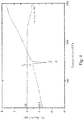
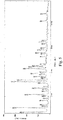
- the DTA spectra and PXRD spectra of L-proline are as shown in Fig. 6 , Fig. 7 respectively.
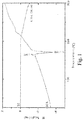
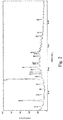
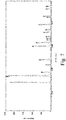
- the Differential Thermal Analysis (DTA) spectra and powder X-ray diffraction (PXRD) spectra of this white solid product (cocrystal) are shown as Fig. 1 and Fig. 2 respectively, the 1 H NMR spectra is shown as Fig. 3 . It can be determined that the white solid prepared in this Example is the cocrystal of I-D1-6 and L-proline of the present invention.
- This Example is used for illustrating a cocrystal of I-D1-6 and L-proline and preparation process thereof.
- Compound I-D1-6 is prepared as the raw material according to the same method as Example 138.
- the white solid is the cocrystal of I-D1-6 and L-proline.
- the DTA spectra has a absorption peak near 170°C.
- Example 138 This Example is used for illustrating the preparation of the tablet containing a cocrystal of I-D1-6 and L-proline.
- Prescription amount/tablet sample prepared in Example 138 7 mg microcrystalline cellulose 80 mg pregelatinized starch 70 mg polyvinyl pyrrolidone 6 mg sodium carboxymethyl starch 5 mg magnesium stearate 2 mg talc powders 2 mg
- sample cocrystal prepared in Example 138, pregelatinized starch and microcrystalline cellulose are sieved and mixed sufficiently in the prescription amount, and then prescription amount of polyvinyl pyrrolidone solution is added and mixed to make soft materials.
- the soft materials are sieved to make wet granules, which are dried at 40-50°C.
- Sodium carboxymethyl starch, magnesium stearate and talc powders are then pre-sieved, and added to granules discribed above in the prescription amount for tabletting, so as to obtain the tablet containing the cocrystal of I-D1-6 and L-proline.
- IC 50 value of the inhibition of the cocrystal of I-D1-6 and L-proline prepared in Example 138 on SGLT2 and SGLT1 is measured according to the method recorded in the literature ( Meng, W. et al, J. Med. Chem., 2008, 51, 1145-1149 ). The results are as shown in Table 4 below: Table 4 IC50 value of the inhibition of the cocrystal of I-D1-6 and L-proline on SGLT2 and SGLT1 IC 50 (hSGLT2, nM) IC 50 (hSGLT1, nM) Selectivity IC 50 (hSGLT1)/ IC 50 (hSGLT2) 0.69 259 375
- the purity of the cocrystal of I-D1-6 and L-proline prepared in Example 138 is measured by HPLC, which is 99.49%, and there are total of 3 small impurity peaks (0.27%, 0.07% and 0.17% respectively).
- the purity of the I-D1-6 raw materials used for preparing the cocrystal is measured as 99.11%, and there are total of 7 small impurity peaks (the impurities corresponding to the cocrystal are 0.32%, 0.08% and 0.19% respectively, there are 4 other extra impurities 0.11%, 0.10%, 0.03% and 0.06%).
- the purity of the cocrystal is improved significantly, and it is more suitable for batch production of medicines.
- the cocrystal of I-D1-6 and L-proline prepared in Example 138 and the I-D1-6 raw materials serving as a contrast are tested for the influencing factors, and placed for two weeks (14 days) under the conditions of light (natural daylight, averages about 80000 Lx), higher temperature (45°C) and higher humidity (30% relative humidity at 30°C).
- the appearance, number of impurity and the amount of impurity are compared with that of day 0.
- the test results are shown in Tables 5-7 respectively.
- the inhibiting activity of the cocrystal of I-D1-6 and L-proline on SGLT2 is measured by the model for rat urine glucose excretion.
- the health SD rats are injected intraperitoneally with multiple low doses of streptozotocin for modeling (type 2 diabetes model) after feeding with high-fat and high-sucrose diet for one month, and the content of blood glucose is measured before and after modeling.
- the rats for modeling are randomly divided (8 rats/group) into one blank group (administering the same volume of 0.5% CMC sodium solution) and groups of tested compound(6 mg/kg) according to the content of 24-hour urine glucose and the body weight. Rats in each group are fasted for 16 hours before experiment.
- the experimental rats are administered intragastrically with the glucose (2 g/kg) at 0.5h after intragastrical administration with the cocrystal of I-D1-6 and L-proline prepared in Example 138.
- the urine is collected at the time- period of 0-12 h after administration, and the urine glucose values are measured at each time-period by glucose-oxidase method.
- the experimental results show that the cocrystal is able to induce the production of 912 mg urine glucose /200 g body weight, indicating that the cocrystal has stronger ability of discharging urine glucose.
Landscapes
- Chemical & Material Sciences (AREA)
- Organic Chemistry (AREA)
- Health & Medical Sciences (AREA)
- Engineering & Computer Science (AREA)
- General Health & Medical Sciences (AREA)
- Life Sciences & Earth Sciences (AREA)
- Diabetes (AREA)
- Chemical Kinetics & Catalysis (AREA)
- Veterinary Medicine (AREA)
- Public Health (AREA)
- Animal Behavior & Ethology (AREA)
- Pharmacology & Pharmacy (AREA)
- Medicinal Chemistry (AREA)
- General Chemical & Material Sciences (AREA)
- Nuclear Medicine, Radiotherapy & Molecular Imaging (AREA)
- Bioinformatics & Cheminformatics (AREA)
- Genetics & Genomics (AREA)
- Molecular Biology (AREA)
- Biotechnology (AREA)
- Biochemistry (AREA)
- Obesity (AREA)
- Hematology (AREA)
- Endocrinology (AREA)
- Emergency Medicine (AREA)
- Epidemiology (AREA)
- Oil, Petroleum & Natural Gas (AREA)
- Pharmaceuticals Containing Other Organic And Inorganic Compounds (AREA)
- Saccharide Compounds (AREA)
- Pyrane Compounds (AREA)
- Plural Heterocyclic Compounds (AREA)
- Heterocyclic Carbon Compounds Containing A Hetero Ring Having Oxygen Or Sulfur (AREA)
- Low-Molecular Organic Synthesis Reactions Using Catalysts (AREA)
- Heterocyclic Compounds Containing Sulfur Atoms (AREA)
Claims (8)
- Composé ayant l'une des structures suivantes :






- Composé ou ester de promédicament pharmaceutiquement acceptable de celui-ci selon la revendication 1, où l'ester de promédicament pharmaceutiquement acceptable inclut un ester formé par un ou plusieurs groupes hydroxyle sur la molécule du composé avec un acétyle, un pivaloyle, un phosphoryle, un carbamoyle et/ou un alcoxycarbonyle.
- Procédé pour la préparation d'un composé ou d'un ester de promédicament pharmaceutiquement acceptable de celui-ci selon la revendication 1 ou 2, le procédé comprenant l'utilisation d'un phényl C-glucoside non désoxydé ayant la même structure que celle du produit cible comme matières premières,
lorsque le produit cible est un - phényl C-glucoside entièrement désoxydé, le procédé comprend la conversion de tous les groupes hydroxyle sur le cycle du sucre en iode avec un réactif d'iodation, puis l'élimination de l'iode sur le cycle du sucre par réduction de manière à obtenir le produit cible ;
lorsque le produit cible est un - phényl C-glucoside partiellement désoxydé, le procédé comprend les étapes suivantes :(1) protection d'hydroxyle : la protection de l'hydroxyle à conserver sur le cycle du sucre avec un réactif de protection d'hydroxyle ;(2) déshydroxylation : la conversion des hydroxyles à éliminer sur le cycle du sucre en iode avec un réactif d'iodation, puis la réduction de l'iode sur le cycle du sucre de manière à éliminer les hydroxyles à éliminer ; et(3) déprotection : l'élimination du groupe de protection d'hydroxyle dans le composé obtenu à l'étape ci-dessus de manière à obtenir le produit cible. - Procédé selon la revendication 3, dans lequel le réactif d'iodation est le réactif I2/triphénylphosphine/imidazole.
- Procédé selon la revendication 3 ou 4, dans lequel le procédé pour la réduction à l'étape (2) est une hydrogénation catalysée par le palladium ou une réduction avec le réactif n-Bu3SnH/AIBN.
- Procédé selon l'une quelconque des revendications 3 à 5, dans lequel le réactif de protection d'hydroxyle est choisi parmi un ou plusieurs des réactifs suivants :
anhydride acétique, chlorure d'acétyle, chlorure de tert-butyldiméthylsilyle (TBDMSCl), chlorure de tert-butyldiphénylsilyle (TBDPSCl), chlorure de benzoyle, chlorure de p-méthylbenzoyle, chlorure de pivaloyle, (diméthoxyméthyl)benzène (PhCH(OMe)2), acide benzoïque, 1,1,2,2-tétraméthoxycyclohexane/orthoformiate de triméthyle, chlorure de chloroacétyle et chlorure de bromoacétyle. - Composition pharmaceutique, comprenant un composé selon la revendication 1 ou 2, et un ou plusieurs supports, excipients ou diluants pharmaceutiquement acceptables.
- Composé selon la revendication 1 ou 2 pour une utilisation comme médicament pour le traitement du diabète.
Applications Claiming Priority (7)
| Application Number | Priority Date | Filing Date | Title |
|---|---|---|---|
| CN201210553525 | 2012-12-17 | ||
| CN201310083945 | 2013-03-15 | ||
| CN201310109527 | 2013-04-01 | ||
| CN201310213608.8A CN103864737B (zh) | 2012-12-17 | 2013-05-31 | 含脱氧葡萄糖结构的苯基c-葡萄糖苷衍生物及其制备方法和用途 |
| CN201310237558.7A CN104045613B (zh) | 2013-03-15 | 2013-06-17 | (1s)-1-[4-氯-3-(4-乙氧基苄基)苯基]-1,6-二脱氧-d-葡萄糖和l-脯氨酸的共结晶i及其制备方法和应用 |
| EP13864482.8A EP2933250B1 (fr) | 2012-12-17 | 2013-12-05 | Dérivé de phényl-c-glucoside contenant une structure de désoxyglucose, procédé de préparation et utilisation de celui-ci |
| PCT/CN2013/088633 WO2014094544A1 (fr) | 2012-12-17 | 2013-12-05 | Dérivé de phényl-c-glucoside contenant une structure de désoxyglucose, procédé de préparation et utilisation de celui-ci |
Related Parent Applications (2)
| Application Number | Title | Priority Date | Filing Date |
|---|---|---|---|
| EP13864482.8A Division EP2933250B1 (fr) | 2012-12-17 | 2013-12-05 | Dérivé de phényl-c-glucoside contenant une structure de désoxyglucose, procédé de préparation et utilisation de celui-ci |
| EP13864482.8A Division-Into EP2933250B1 (fr) | 2012-12-17 | 2013-12-05 | Dérivé de phényl-c-glucoside contenant une structure de désoxyglucose, procédé de préparation et utilisation de celui-ci |
Publications (3)
| Publication Number | Publication Date |
|---|---|
| EP3246324A2 EP3246324A2 (fr) | 2017-11-22 |
| EP3246324A3 EP3246324A3 (fr) | 2018-01-10 |
| EP3246324B1 true EP3246324B1 (fr) | 2021-08-25 |
Family
ID=54072624
Family Applications (2)
| Application Number | Title | Priority Date | Filing Date |
|---|---|---|---|
| EP17176326.1A Active EP3246324B1 (fr) | 2012-12-17 | 2013-12-05 | Derive de phenyl-c-glucoside contenant une structure de desoxyglucose, son procede de preparation et ses utilisations |
| EP13864482.8A Not-in-force EP2933250B1 (fr) | 2012-12-17 | 2013-12-05 | Dérivé de phényl-c-glucoside contenant une structure de désoxyglucose, procédé de préparation et utilisation de celui-ci |
Family Applications After (1)
| Application Number | Title | Priority Date | Filing Date |
|---|---|---|---|
| EP13864482.8A Not-in-force EP2933250B1 (fr) | 2012-12-17 | 2013-12-05 | Dérivé de phényl-c-glucoside contenant une structure de désoxyglucose, procédé de préparation et utilisation de celui-ci |
Country Status (4)
| Country | Link |
|---|---|
| US (2) | US9505734B2 (fr) |
| EP (2) | EP3246324B1 (fr) |
| JP (2) | JP5944593B2 (fr) |
| WO (1) | WO2014094544A1 (fr) |
Families Citing this family (10)
| Publication number | Priority date | Publication date | Assignee | Title |
|---|---|---|---|---|
| JP2596360B2 (ja) | 1993-11-29 | 1997-04-02 | 日本電気株式会社 | ソーナー装置 |
| WO2014164286A1 (fr) * | 2013-03-11 | 2014-10-09 | Janssen Pharmaceutica Nv | Inhibiteurs doubles de sglt1/sglt2 |
| EP2895490B1 (fr) | 2013-09-27 | 2016-10-19 | Sunshine Lake Pharma Co., Ltd. | Dérivés de glucopyranosyl et leurs utilisations en médecine |
| EP3082829B1 (fr) * | 2013-12-17 | 2021-02-17 | Boehringer Ingelheim Vetmedica GmbH | Inhibiteurs de sglt2 pour le traitement de troubles métaboliques chez les félins |
| EP2947077A1 (fr) * | 2014-05-19 | 2015-11-25 | LEK Pharmaceuticals d.d. | Synthèse stéréosélective d'intermédiaires dans la préparation de ß-C-arylglucosides |
| RU2696490C2 (ru) | 2014-05-19 | 2019-08-02 | Пфайзер Инк. | Замещенные-6,8-диоксабицикло[3.2.1.]октан-2,3-диольные соединения в качестве агентов, нацеленных на ASGPR |
| KR20180078762A (ko) * | 2016-12-30 | 2018-07-10 | 한미약품 주식회사 | 다파글리플로진 l-프롤린을 포함하는 당뇨병 질환의 예방 또는 치료용 약제학적 조성물 |
| EP4114365A1 (fr) | 2020-03-05 | 2023-01-11 | KRKA, d.d., Novo mesto | Composition pharmaceutique comprenant un inhibiteur du sglt2 |
| CN115867538A (zh) | 2020-06-05 | 2023-03-28 | 新梅斯托克公司 | 高纯的无定形达格列净的制备 |
| US11560774B2 (en) | 2020-10-16 | 2023-01-24 | Halliburton Energy Services, Inc. | Enhanced scale inhibitor squeeze treatment using a chemical additive |
Family Cites Families (8)
| Publication number | Priority date | Publication date | Assignee | Title |
|---|---|---|---|---|
| ATE510834T1 (de) | 2003-03-14 | 2011-06-15 | Astellas Pharma Inc | C-glykosid-derivate zur behandlung von diabetes |
| CN104109155A (zh) | 2003-08-01 | 2014-10-22 | 田边三菱制药株式会社 | 新颖化合物 |
| US7393836B2 (en) | 2004-07-06 | 2008-07-01 | Boehringer Ingelheim International Gmbh | D-xylopyranosyl-substituted phenyl derivatives, medicaments containing such compounds, their use and process for their manufacture |
| DE102004048388A1 (de) * | 2004-10-01 | 2006-04-06 | Boehringer Ingelheim Pharma Gmbh & Co. Kg | D-Pyranosyl-substituierte Phenyle, diese Verbindungen enthaltende Arzneimittel, deren Verwendung und Verfahren zu ihrer Herstellung |
| TW200637839A (en) * | 2005-01-07 | 2006-11-01 | Taisho Pharmaceutical Co Ltd | 1-thio-d-glucitol derivatives |
| WO2007140191A2 (fr) * | 2006-05-23 | 2007-12-06 | Theracos, Inc. | Inhibiteurs de transport de glucose et procédés d'utilisation |
| ES2380408T3 (es) * | 2008-08-28 | 2012-05-11 | Pfizer Inc. | Derivados de dioxa-biciclo[3.2.1]octano-2,3,4-triol |
| KR20120087950A (ko) * | 2009-10-20 | 2012-08-07 | 노파르티스 아게 | 글리코시드 유도체 및 그의 용도 |
-
2013
- 2013-12-05 WO PCT/CN2013/088633 patent/WO2014094544A1/fr not_active Ceased
- 2013-12-05 EP EP17176326.1A patent/EP3246324B1/fr active Active
- 2013-12-05 JP JP2015546829A patent/JP5944593B2/ja not_active Expired - Fee Related
- 2013-12-05 US US14/652,225 patent/US9505734B2/en active Active
- 2013-12-05 EP EP13864482.8A patent/EP2933250B1/fr not_active Not-in-force
-
2016
- 2016-05-23 JP JP2016102380A patent/JP6309566B2/ja not_active Expired - Fee Related
- 2016-11-11 US US15/349,040 patent/US10294259B2/en active Active
Non-Patent Citations (1)
| Title |
|---|
| None * |
Also Published As
| Publication number | Publication date |
|---|---|
| JP6309566B2 (ja) | 2018-04-11 |
| JP5944593B2 (ja) | 2016-07-05 |
| EP3246324A3 (fr) | 2018-01-10 |
| US10294259B2 (en) | 2019-05-21 |
| US20170057989A1 (en) | 2017-03-02 |
| US20160046595A1 (en) | 2016-02-18 |
| EP3246324A2 (fr) | 2017-11-22 |
| WO2014094544A1 (fr) | 2014-06-26 |
| US9505734B2 (en) | 2016-11-29 |
| EP2933250B1 (fr) | 2017-08-09 |
| EP2933250A1 (fr) | 2015-10-21 |
| EP2933250A4 (fr) | 2016-01-20 |
| JP2016188220A (ja) | 2016-11-04 |
| JP2016508965A (ja) | 2016-03-24 |
Similar Documents
| Publication | Publication Date | Title |
|---|---|---|
| US10294259B2 (en) | Phenyl c-glucoside derivative containing deoxyglucose structure, preparation method and use thereof | |
| CN103864737B (zh) | 含脱氧葡萄糖结构的苯基c-葡萄糖苷衍生物及其制备方法和用途 | |
| EP1888551B1 (fr) | Formes cristallines de 1-chloro-4-(beta-d-glucopyranos-1-yl)-2-[4-((r)-tetrahydrofuran-3-yloxy)-benzyl]-benzene, son procede de preparation et son utilisation dans la preparation de medicaments | |
| KR101249711B1 (ko) | 1-클로로-4-(β-D-글루코피라노스-1-일)-2-[4-((S)-테트라하이드로푸란-3-일옥시)-벤질]-벤젠의 결정형, 이의 제조방법 및 약제 제조를 위한 이의 용도 | |
| US8486897B2 (en) | C-aryl glycoside compounds for the treatment of diabetes and obesity | |
| KR101837488B1 (ko) | 광학적으로 순수한 벤질-4-클로로페닐-c-글루코사이드 유도체 | |
| EP2530079A1 (fr) | Dérivés de phényl-c-glucoside, leurs procédés de préparation et leurs utilisations | |
| WO2012025857A1 (fr) | Dérivés de cycloalkyl méthoxybenzyl phényl pyrane en tant qu'inhibiteurs du cotransporteur de glucose sodium-dépendant (sglt2) | |
| CN101817862A (zh) | 熊果酸-3-O-β-D-吡喃葡萄糖醛酸苷及其衍生物、其制备方法及医药用途 | |
| EP3404033B1 (fr) | Dérivé de c-glucoside contenant un cycle phényle condensé ou son sel pharmaceutiquement acceptable, son procédé de préparation et composition pharmaceutique le comprenant | |
| Singh et al. | An overview on glyco-macrocycles: Potential new lead and their future in medicinal chemistry | |
| CN108285439B (zh) | 一种碳糖苷类钠葡萄糖转运蛋白体2抑制剂 | |
| CN117603286A (zh) | 一种溶酶体靶向的衰老细胞清除前药的制备及应用 | |
| EP2786981B1 (fr) | Composés stilbénoïdes en tant qu'inhibiteurs de carcinome squameux et hépatome et leurs utilisations | |
| EP4163287A1 (fr) | Classe de dérivés arylglucosides, leur procédé de préparation et application associée | |
| CN104761523B (zh) | 含3‑氧代葡萄糖结构的苯基c‑葡萄糖苷衍生物、其制备方法和用途 | |
| CN101200470B (zh) | 并环碳苷类化合物、碳苷中间体化合物以及它们的制备方法与应用 | |
| EP4166547A1 (fr) | Dérivé d'arylglucoside | |
| JPH05163292A (ja) | 3’及び/又は4’位の水酸基を化学修飾したエルサマイシンa誘導体の製造法 | |
| WO2010090234A1 (fr) | Dérivés de 12-désoxyfusicoccine à chaîne de sucre modifiée et leurs utilisations | |
| JPS58216145A (ja) | 擬似アミノ糖のn−置換誘導体およびその製造法 | |
| HK1259905A1 (en) | C-glycoside derivatives having fused phenyl ring or pharmaceutically acceptable salts thereof, method for preparing the same and pharmaceutical composition comprising the same |
Legal Events
| Date | Code | Title | Description |
|---|---|---|---|
| PUAI | Public reference made under article 153(3) epc to a published international application that has entered the european phase |
Free format text: ORIGINAL CODE: 0009012 |
|
| STAA | Information on the status of an ep patent application or granted ep patent |
Free format text: STATUS: THE APPLICATION HAS BEEN PUBLISHED |
|
| AC | Divisional application: reference to earlier application |
Ref document number: 2933250 Country of ref document: EP Kind code of ref document: P |
|
| AK | Designated contracting states |
Kind code of ref document: A2 Designated state(s): AL AT BE BG CH CY CZ DE DK EE ES FI FR GB GR HR HU IE IS IT LI LT LU LV MC MK MT NL NO PL PT RO RS SE SI SK SM TR |
|
| PUAL | Search report despatched |
Free format text: ORIGINAL CODE: 0009013 |
|
| AK | Designated contracting states |
Kind code of ref document: A3 Designated state(s): AL AT BE BG CH CY CZ DE DK EE ES FI FR GB GR HR HU IE IS IT LI LT LU LV MC MK MT NL NO PL PT RO RS SE SI SK SM TR |
|
| RIC1 | Information provided on ipc code assigned before grant |
Ipc: C07H 1/00 20060101ALI20171205BHEP Ipc: C07H 9/04 20060101ALI20171205BHEP Ipc: C07D 407/12 20060101ALI20171205BHEP Ipc: A61K 31/7048 20060101ALI20171205BHEP Ipc: A61P 3/10 20060101ALI20171205BHEP Ipc: C07D 309/10 20060101AFI20171205BHEP Ipc: C07D 493/10 20060101ALI20171205BHEP Ipc: A61K 31/382 20060101ALI20171205BHEP Ipc: C07D 409/10 20060101ALI20171205BHEP Ipc: C07H 19/01 20060101ALI20171205BHEP Ipc: A61K 31/381 20060101ALI20171205BHEP Ipc: C07D 493/08 20060101ALI20171205BHEP Ipc: A61K 31/351 20060101ALI20171205BHEP Ipc: C07D 335/02 20060101ALI20171205BHEP |
|
| STAA | Information on the status of an ep patent application or granted ep patent |
Free format text: STATUS: REQUEST FOR EXAMINATION WAS MADE |
|
| 17P | Request for examination filed |
Effective date: 20180321 |
|
| STAA | Information on the status of an ep patent application or granted ep patent |
Free format text: STATUS: EXAMINATION IS IN PROGRESS |
|
| 17Q | First examination report despatched |
Effective date: 20190806 |
|
| GRAP | Despatch of communication of intention to grant a patent |
Free format text: ORIGINAL CODE: EPIDOSNIGR1 |
|
| STAA | Information on the status of an ep patent application or granted ep patent |
Free format text: STATUS: GRANT OF PATENT IS INTENDED |
|
| INTG | Intention to grant announced |
Effective date: 20210419 |
|
| GRAS | Grant fee paid |
Free format text: ORIGINAL CODE: EPIDOSNIGR3 |
|
| GRAA | (expected) grant |
Free format text: ORIGINAL CODE: 0009210 |
|
| STAA | Information on the status of an ep patent application or granted ep patent |
Free format text: STATUS: THE PATENT HAS BEEN GRANTED |
|
| AC | Divisional application: reference to earlier application |
Ref document number: 2933250 Country of ref document: EP Kind code of ref document: P |
|
| AK | Designated contracting states |
Kind code of ref document: B1 Designated state(s): AL AT BE BG CH CY CZ DE DK EE ES FI FR GB GR HR HU IE IS IT LI LT LU LV MC MK MT NL NO PL PT RO RS SE SI SK SM TR |
|
| RAP3 | Party data changed (applicant data changed or rights of an application transferred) |
Owner name: TIANJIN INSTITUTE OF PHARMACEUTICAL RESEARCH |
|
| REG | Reference to a national code |
Ref country code: CH Ref legal event code: EP |
|
| REG | Reference to a national code |
Ref country code: IE Ref legal event code: FG4D Ref country code: AT Ref legal event code: REF Ref document number: 1423670 Country of ref document: AT Kind code of ref document: T Effective date: 20210915 |
|
| REG | Reference to a national code |
Ref country code: DE Ref legal event code: R096 Ref document number: 602013079016 Country of ref document: DE |
|
| REG | Reference to a national code |
Ref country code: LT Ref legal event code: MG9D |
|
| REG | Reference to a national code |
Ref country code: NL Ref legal event code: MP Effective date: 20210825 |
|
| REG | Reference to a national code |
Ref country code: AT Ref legal event code: MK05 Ref document number: 1423670 Country of ref document: AT Kind code of ref document: T Effective date: 20210825 |
|
| PG25 | Lapsed in a contracting state [announced via postgrant information from national office to epo] |
Ref country code: RS Free format text: LAPSE BECAUSE OF FAILURE TO SUBMIT A TRANSLATION OF THE DESCRIPTION OR TO PAY THE FEE WITHIN THE PRESCRIBED TIME-LIMIT Effective date: 20210825 Ref country code: SE Free format text: LAPSE BECAUSE OF FAILURE TO SUBMIT A TRANSLATION OF THE DESCRIPTION OR TO PAY THE FEE WITHIN THE PRESCRIBED TIME-LIMIT Effective date: 20210825 Ref country code: NO Free format text: LAPSE BECAUSE OF FAILURE TO SUBMIT A TRANSLATION OF THE DESCRIPTION OR TO PAY THE FEE WITHIN THE PRESCRIBED TIME-LIMIT Effective date: 20211125 Ref country code: PT Free format text: LAPSE BECAUSE OF FAILURE TO SUBMIT A TRANSLATION OF THE DESCRIPTION OR TO PAY THE FEE WITHIN THE PRESCRIBED TIME-LIMIT Effective date: 20211227 Ref country code: FI Free format text: LAPSE BECAUSE OF FAILURE TO SUBMIT A TRANSLATION OF THE DESCRIPTION OR TO PAY THE FEE WITHIN THE PRESCRIBED TIME-LIMIT Effective date: 20210825 Ref country code: ES Free format text: LAPSE BECAUSE OF FAILURE TO SUBMIT A TRANSLATION OF THE DESCRIPTION OR TO PAY THE FEE WITHIN THE PRESCRIBED TIME-LIMIT Effective date: 20210825 Ref country code: HR Free format text: LAPSE BECAUSE OF FAILURE TO SUBMIT A TRANSLATION OF THE DESCRIPTION OR TO PAY THE FEE WITHIN THE PRESCRIBED TIME-LIMIT Effective date: 20210825 Ref country code: BG Free format text: LAPSE BECAUSE OF FAILURE TO SUBMIT A TRANSLATION OF THE DESCRIPTION OR TO PAY THE FEE WITHIN THE PRESCRIBED TIME-LIMIT Effective date: 20211125 Ref country code: AT Free format text: LAPSE BECAUSE OF FAILURE TO SUBMIT A TRANSLATION OF THE DESCRIPTION OR TO PAY THE FEE WITHIN THE PRESCRIBED TIME-LIMIT Effective date: 20210825 Ref country code: LT Free format text: LAPSE BECAUSE OF FAILURE TO SUBMIT A TRANSLATION OF THE DESCRIPTION OR TO PAY THE FEE WITHIN THE PRESCRIBED TIME-LIMIT Effective date: 20210825 |
|
| PG25 | Lapsed in a contracting state [announced via postgrant information from national office to epo] |
Ref country code: PL Free format text: LAPSE BECAUSE OF FAILURE TO SUBMIT A TRANSLATION OF THE DESCRIPTION OR TO PAY THE FEE WITHIN THE PRESCRIBED TIME-LIMIT Effective date: 20210825 Ref country code: LV Free format text: LAPSE BECAUSE OF FAILURE TO SUBMIT A TRANSLATION OF THE DESCRIPTION OR TO PAY THE FEE WITHIN THE PRESCRIBED TIME-LIMIT Effective date: 20210825 Ref country code: GR Free format text: LAPSE BECAUSE OF FAILURE TO SUBMIT A TRANSLATION OF THE DESCRIPTION OR TO PAY THE FEE WITHIN THE PRESCRIBED TIME-LIMIT Effective date: 20211126 |
|
| PG25 | Lapsed in a contracting state [announced via postgrant information from national office to epo] |
Ref country code: NL Free format text: LAPSE BECAUSE OF FAILURE TO SUBMIT A TRANSLATION OF THE DESCRIPTION OR TO PAY THE FEE WITHIN THE PRESCRIBED TIME-LIMIT Effective date: 20210825 |
|
| PG25 | Lapsed in a contracting state [announced via postgrant information from national office to epo] |
Ref country code: DK Free format text: LAPSE BECAUSE OF FAILURE TO SUBMIT A TRANSLATION OF THE DESCRIPTION OR TO PAY THE FEE WITHIN THE PRESCRIBED TIME-LIMIT Effective date: 20210825 |
|
| REG | Reference to a national code |
Ref country code: DE Ref legal event code: R097 Ref document number: 602013079016 Country of ref document: DE |
|
| PG25 | Lapsed in a contracting state [announced via postgrant information from national office to epo] |
Ref country code: SM Free format text: LAPSE BECAUSE OF FAILURE TO SUBMIT A TRANSLATION OF THE DESCRIPTION OR TO PAY THE FEE WITHIN THE PRESCRIBED TIME-LIMIT Effective date: 20210825 Ref country code: SK Free format text: LAPSE BECAUSE OF FAILURE TO SUBMIT A TRANSLATION OF THE DESCRIPTION OR TO PAY THE FEE WITHIN THE PRESCRIBED TIME-LIMIT Effective date: 20210825 Ref country code: RO Free format text: LAPSE BECAUSE OF FAILURE TO SUBMIT A TRANSLATION OF THE DESCRIPTION OR TO PAY THE FEE WITHIN THE PRESCRIBED TIME-LIMIT Effective date: 20210825 Ref country code: EE Free format text: LAPSE BECAUSE OF FAILURE TO SUBMIT A TRANSLATION OF THE DESCRIPTION OR TO PAY THE FEE WITHIN THE PRESCRIBED TIME-LIMIT Effective date: 20210825 Ref country code: CZ Free format text: LAPSE BECAUSE OF FAILURE TO SUBMIT A TRANSLATION OF THE DESCRIPTION OR TO PAY THE FEE WITHIN THE PRESCRIBED TIME-LIMIT Effective date: 20210825 Ref country code: AL Free format text: LAPSE BECAUSE OF FAILURE TO SUBMIT A TRANSLATION OF THE DESCRIPTION OR TO PAY THE FEE WITHIN THE PRESCRIBED TIME-LIMIT Effective date: 20210825 |
|
| PLBE | No opposition filed within time limit |
Free format text: ORIGINAL CODE: 0009261 |
|
| REG | Reference to a national code |
Ref country code: DE Ref legal event code: R119 Ref document number: 602013079016 Country of ref document: DE |
|
| STAA | Information on the status of an ep patent application or granted ep patent |
Free format text: STATUS: NO OPPOSITION FILED WITHIN TIME LIMIT |
|
| PG25 | Lapsed in a contracting state [announced via postgrant information from national office to epo] |
Ref country code: MC Free format text: LAPSE BECAUSE OF FAILURE TO SUBMIT A TRANSLATION OF THE DESCRIPTION OR TO PAY THE FEE WITHIN THE PRESCRIBED TIME-LIMIT Effective date: 20210825 Ref country code: IT Free format text: LAPSE BECAUSE OF FAILURE TO SUBMIT A TRANSLATION OF THE DESCRIPTION OR TO PAY THE FEE WITHIN THE PRESCRIBED TIME-LIMIT Effective date: 20210825 |
|
| REG | Reference to a national code |
Ref country code: CH Ref legal event code: PL |
|
| 26N | No opposition filed |
Effective date: 20220527 |
|
| GBPC | Gb: european patent ceased through non-payment of renewal fee |
Effective date: 20211205 |
|
| PG25 | Lapsed in a contracting state [announced via postgrant information from national office to epo] |
Ref country code: SI Free format text: LAPSE BECAUSE OF FAILURE TO SUBMIT A TRANSLATION OF THE DESCRIPTION OR TO PAY THE FEE WITHIN THE PRESCRIBED TIME-LIMIT Effective date: 20210825 |
|
| REG | Reference to a national code |
Ref country code: BE Ref legal event code: MM Effective date: 20211231 |
|
| PG25 | Lapsed in a contracting state [announced via postgrant information from national office to epo] |
Ref country code: LU Free format text: LAPSE BECAUSE OF NON-PAYMENT OF DUE FEES Effective date: 20211205 Ref country code: IE Free format text: LAPSE BECAUSE OF NON-PAYMENT OF DUE FEES Effective date: 20211205 Ref country code: GB Free format text: LAPSE BECAUSE OF NON-PAYMENT OF DUE FEES Effective date: 20211205 Ref country code: DE Free format text: LAPSE BECAUSE OF NON-PAYMENT OF DUE FEES Effective date: 20220701 |
|
| PG25 | Lapsed in a contracting state [announced via postgrant information from national office to epo] |
Ref country code: FR Free format text: LAPSE BECAUSE OF NON-PAYMENT OF DUE FEES Effective date: 20211231 Ref country code: BE Free format text: LAPSE BECAUSE OF NON-PAYMENT OF DUE FEES Effective date: 20211231 |
|
| PG25 | Lapsed in a contracting state [announced via postgrant information from national office to epo] |
Ref country code: LI Free format text: LAPSE BECAUSE OF NON-PAYMENT OF DUE FEES Effective date: 20211231 Ref country code: CH Free format text: LAPSE BECAUSE OF NON-PAYMENT OF DUE FEES Effective date: 20211231 |
|
| PG25 | Lapsed in a contracting state [announced via postgrant information from national office to epo] |
Ref country code: HU Free format text: LAPSE BECAUSE OF FAILURE TO SUBMIT A TRANSLATION OF THE DESCRIPTION OR TO PAY THE FEE WITHIN THE PRESCRIBED TIME-LIMIT; INVALID AB INITIO Effective date: 20131205 |
|
| PG25 | Lapsed in a contracting state [announced via postgrant information from national office to epo] |
Ref country code: CY Free format text: LAPSE BECAUSE OF FAILURE TO SUBMIT A TRANSLATION OF THE DESCRIPTION OR TO PAY THE FEE WITHIN THE PRESCRIBED TIME-LIMIT Effective date: 20210825 |
|
| PG25 | Lapsed in a contracting state [announced via postgrant information from national office to epo] |
Ref country code: MK Free format text: LAPSE BECAUSE OF FAILURE TO SUBMIT A TRANSLATION OF THE DESCRIPTION OR TO PAY THE FEE WITHIN THE PRESCRIBED TIME-LIMIT Effective date: 20210825 |
|
| PG25 | Lapsed in a contracting state [announced via postgrant information from national office to epo] |
Ref country code: MT Free format text: LAPSE BECAUSE OF FAILURE TO SUBMIT A TRANSLATION OF THE DESCRIPTION OR TO PAY THE FEE WITHIN THE PRESCRIBED TIME-LIMIT Effective date: 20210825 |
|
| PG25 | Lapsed in a contracting state [announced via postgrant information from national office to epo] |
Ref country code: TR Free format text: LAPSE BECAUSE OF FAILURE TO SUBMIT A TRANSLATION OF THE DESCRIPTION OR TO PAY THE FEE WITHIN THE PRESCRIBED TIME-LIMIT Effective date: 20210825 |