EP3246865A1 - Procédé et système de transmission de données de transaction par l'intermédiaire d'un réseau de données public - Google Patents
Procédé et système de transmission de données de transaction par l'intermédiaire d'un réseau de données public Download PDFInfo
- Publication number
- EP3246865A1 EP3246865A1 EP16204208.9A EP16204208A EP3246865A1 EP 3246865 A1 EP3246865 A1 EP 3246865A1 EP 16204208 A EP16204208 A EP 16204208A EP 3246865 A1 EP3246865 A1 EP 3246865A1
- Authority
- EP
- European Patent Office
- Prior art keywords
- user terminal
- data
- transaction
- file
- network
- Prior art date
- Legal status (The legal status is an assumption and is not a legal conclusion. Google has not performed a legal analysis and makes no representation as to the accuracy of the status listed.)
- Withdrawn
Links
Images

Classifications
-
- G—PHYSICS
- G06—COMPUTING OR CALCULATING; COUNTING
- G06Q—INFORMATION AND COMMUNICATION TECHNOLOGY [ICT] SPECIALLY ADAPTED FOR ADMINISTRATIVE, COMMERCIAL, FINANCIAL, MANAGERIAL OR SUPERVISORY PURPOSES; SYSTEMS OR METHODS SPECIALLY ADAPTED FOR ADMINISTRATIVE, COMMERCIAL, FINANCIAL, MANAGERIAL OR SUPERVISORY PURPOSES, NOT OTHERWISE PROVIDED FOR
- G06Q20/00—Payment architectures, schemes or protocols
- G06Q20/38—Payment protocols; Details thereof
- G06Q20/40—Authorisation, e.g. identification of payer or payee, verification of customer or shop credentials; Review and approval of payers, e.g. check credit lines or negative lists
- G06Q20/405—Establishing or using transaction specific rules
-
- G—PHYSICS
- G06—COMPUTING OR CALCULATING; COUNTING
- G06Q—INFORMATION AND COMMUNICATION TECHNOLOGY [ICT] SPECIALLY ADAPTED FOR ADMINISTRATIVE, COMMERCIAL, FINANCIAL, MANAGERIAL OR SUPERVISORY PURPOSES; SYSTEMS OR METHODS SPECIALLY ADAPTED FOR ADMINISTRATIVE, COMMERCIAL, FINANCIAL, MANAGERIAL OR SUPERVISORY PURPOSES, NOT OTHERWISE PROVIDED FOR
- G06Q20/00—Payment architectures, schemes or protocols
- G06Q20/30—Payment architectures, schemes or protocols characterised by the use of specific devices or networks
- G06Q20/32—Payment architectures, schemes or protocols characterised by the use of specific devices or networks using wireless devices
- G06Q20/326—Payment applications installed on the mobile devices
-
- G—PHYSICS
- G06—COMPUTING OR CALCULATING; COUNTING
- G06Q—INFORMATION AND COMMUNICATION TECHNOLOGY [ICT] SPECIALLY ADAPTED FOR ADMINISTRATIVE, COMMERCIAL, FINANCIAL, MANAGERIAL OR SUPERVISORY PURPOSES; SYSTEMS OR METHODS SPECIALLY ADAPTED FOR ADMINISTRATIVE, COMMERCIAL, FINANCIAL, MANAGERIAL OR SUPERVISORY PURPOSES, NOT OTHERWISE PROVIDED FOR
- G06Q20/00—Payment architectures, schemes or protocols
- G06Q20/30—Payment architectures, schemes or protocols characterised by the use of specific devices or networks
- G06Q20/32—Payment architectures, schemes or protocols characterised by the use of specific devices or networks using wireless devices
- G06Q20/322—Aspects of commerce using mobile devices [M-devices]
- G06Q20/3226—Use of secure elements separate from M-devices
-
- G—PHYSICS
- G06—COMPUTING OR CALCULATING; COUNTING
- G06Q—INFORMATION AND COMMUNICATION TECHNOLOGY [ICT] SPECIALLY ADAPTED FOR ADMINISTRATIVE, COMMERCIAL, FINANCIAL, MANAGERIAL OR SUPERVISORY PURPOSES; SYSTEMS OR METHODS SPECIALLY ADAPTED FOR ADMINISTRATIVE, COMMERCIAL, FINANCIAL, MANAGERIAL OR SUPERVISORY PURPOSES, NOT OTHERWISE PROVIDED FOR
- G06Q20/00—Payment architectures, schemes or protocols
- G06Q20/30—Payment architectures, schemes or protocols characterised by the use of specific devices or networks
- G06Q20/32—Payment architectures, schemes or protocols characterised by the use of specific devices or networks using wireless devices
- G06Q20/322—Aspects of commerce using mobile devices [M-devices]
- G06Q20/3229—Use of the SIM of a M-device as secure element
-
- G—PHYSICS
- G06—COMPUTING OR CALCULATING; COUNTING
- G06Q—INFORMATION AND COMMUNICATION TECHNOLOGY [ICT] SPECIALLY ADAPTED FOR ADMINISTRATIVE, COMMERCIAL, FINANCIAL, MANAGERIAL OR SUPERVISORY PURPOSES; SYSTEMS OR METHODS SPECIALLY ADAPTED FOR ADMINISTRATIVE, COMMERCIAL, FINANCIAL, MANAGERIAL OR SUPERVISORY PURPOSES, NOT OTHERWISE PROVIDED FOR
- G06Q20/00—Payment architectures, schemes or protocols
- G06Q20/30—Payment architectures, schemes or protocols characterised by the use of specific devices or networks
- G06Q20/32—Payment architectures, schemes or protocols characterised by the use of specific devices or networks using wireless devices
- G06Q20/327—Short range or proximity payments by means of M-devices
- G06Q20/3276—Short range or proximity payments by means of M-devices using a pictured code, e.g. barcode or QR-code, being read by the M-device
-
- G—PHYSICS
- G06—COMPUTING OR CALCULATING; COUNTING
- G06Q—INFORMATION AND COMMUNICATION TECHNOLOGY [ICT] SPECIALLY ADAPTED FOR ADMINISTRATIVE, COMMERCIAL, FINANCIAL, MANAGERIAL OR SUPERVISORY PURPOSES; SYSTEMS OR METHODS SPECIALLY ADAPTED FOR ADMINISTRATIVE, COMMERCIAL, FINANCIAL, MANAGERIAL OR SUPERVISORY PURPOSES, NOT OTHERWISE PROVIDED FOR
- G06Q20/00—Payment architectures, schemes or protocols
- G06Q20/30—Payment architectures, schemes or protocols characterised by the use of specific devices or networks
- G06Q20/32—Payment architectures, schemes or protocols characterised by the use of specific devices or networks using wireless devices
- G06Q20/327—Short range or proximity payments by means of M-devices
- G06Q20/3278—RFID or NFC payments by means of M-devices
-
- G—PHYSICS
- G06—COMPUTING OR CALCULATING; COUNTING
- G06Q—INFORMATION AND COMMUNICATION TECHNOLOGY [ICT] SPECIALLY ADAPTED FOR ADMINISTRATIVE, COMMERCIAL, FINANCIAL, MANAGERIAL OR SUPERVISORY PURPOSES; SYSTEMS OR METHODS SPECIALLY ADAPTED FOR ADMINISTRATIVE, COMMERCIAL, FINANCIAL, MANAGERIAL OR SUPERVISORY PURPOSES, NOT OTHERWISE PROVIDED FOR
- G06Q20/00—Payment architectures, schemes or protocols
- G06Q20/30—Payment architectures, schemes or protocols characterised by the use of specific devices or networks
- G06Q20/34—Payment architectures, schemes or protocols characterised by the use of specific devices or networks using cards, e.g. integrated circuit [IC] cards or magnetic cards
- G06Q20/341—Active cards, i.e. cards including their own processing means, e.g. including an IC or chip
-
- G—PHYSICS
- G06—COMPUTING OR CALCULATING; COUNTING
- G06Q—INFORMATION AND COMMUNICATION TECHNOLOGY [ICT] SPECIALLY ADAPTED FOR ADMINISTRATIVE, COMMERCIAL, FINANCIAL, MANAGERIAL OR SUPERVISORY PURPOSES; SYSTEMS OR METHODS SPECIALLY ADAPTED FOR ADMINISTRATIVE, COMMERCIAL, FINANCIAL, MANAGERIAL OR SUPERVISORY PURPOSES, NOT OTHERWISE PROVIDED FOR
- G06Q20/00—Payment architectures, schemes or protocols
- G06Q20/38—Payment protocols; Details thereof
- G06Q20/40—Authorisation, e.g. identification of payer or payee, verification of customer or shop credentials; Review and approval of payers, e.g. check credit lines or negative lists
- G06Q20/401—Transaction verification
- G06Q20/4012—Verifying personal identification numbers [PIN]
-
- G—PHYSICS
- G06—COMPUTING OR CALCULATING; COUNTING
- G06Q—INFORMATION AND COMMUNICATION TECHNOLOGY [ICT] SPECIALLY ADAPTED FOR ADMINISTRATIVE, COMMERCIAL, FINANCIAL, MANAGERIAL OR SUPERVISORY PURPOSES; SYSTEMS OR METHODS SPECIALLY ADAPTED FOR ADMINISTRATIVE, COMMERCIAL, FINANCIAL, MANAGERIAL OR SUPERVISORY PURPOSES, NOT OTHERWISE PROVIDED FOR
- G06Q2220/00—Business processing using cryptography
- G06Q2220/10—Usage protection of distributed data files
Definitions
- the invention relates to a method and an arrangement for the transmission of transaction data using a public data network. In essence, it concerns a method and system for authorizing online payments.
- the object of the present invention is to provide a simpler and at the same time secure method and system for authorizing online payments for the user.
- the present invention thus provides a secure and user-friendly method and system for authorizing a transaction by means of smart card and smartphone.
- the task is solved by the invention by technical development of the method, the user basically know from paying in the business. With a bank card and entering the appropriate PIN, the user identifies there at a payment terminal and confirms the purchase price to be paid. Based on the purchase of a product in an Internet shop, the function of the payment terminal according to the invention covered by the user's smartphone.
- step 1 further steps in the data network are provided, namely the forwarding of the secondary transaction file from the access server to a transaction server or a server system in the data network, generating a transaction acknowledgment message after processing the secondary transaction file to execute the transaction in the transaction server or server system and fetching the transaction confirmation message by vendor software or actively sending the transaction acknowledgment message from the transaction server or server system to the vendor receiving device.
- the authorization confirmation message provided according to the invention first confirms that the envisaged transaction is authorized by the user and his bank, the actual transaction may take place at a later time and will not be confirmed as an actual transaction in accordance with the above steps. If, for some reason, the transaction is not executed, these steps are taken of course, or they are replaced by messages that communicate the non-execution of the transaction (and, if so, why).
- the method comprises a further step of transmitting the authorization confirmation message via the access server and the access network to the user terminal of the access network and display thereon.
- the valid authorization is optionally displayed to the user (additionally or alternatively to the advertisement also via the website of the provider) on his smartphone or tablet.
- the public data network is an IP network and the display device is a display device of a computer 0 whose display content is loaded from a web page 1, in particular a plug-in software module for carrying out steps a) and l) is installed.
- the transaction data in step a) are displayed optically as a barcode or QR code.
- the access network is a mobile radio network or WLAN and the user terminal is a smartphone or tablet, in which a mobile app for executing in particular the steps c) - e2) and g) is installed.
- the recording of the display presented by means of the display device is, depending on the type of display, in particular a scanning of an optical display by means of a built-in camera of the user terminal or a separate camera; it but may in principle also be a sound recording of a spoken string or other acoustic indication.
- an embodiment is advantageous in which the user terminal and the smart card communicate bidirectionally via the near field communication, NFC, protocol and the EMV standard for chip-based payment cards.
- the authorization data record has a PIN of the credit card or giro card (bank card).
- a record of physiological user data fingerprint, retina image, voice profile, etc.
- the part of the transaction data, called extract file in the claims, to which the smart card (bank card) is transmitted together with the PIN, may be the transaction amount. If the credit limit recorded on the smart card is greater than the transaction amount, the smart card deposits the difference amount as a new credit line. A communication with the server system is omitted in this case. However, the acknowledgment server is notified of the released transaction by means of the transaction record.
- the user terminal is connected to the access server and server system via the nexo protocol (http://www.nexo-standards.org/sites/default/files/nexo%20whitepaper%20-%20final % 20edited% 20version.pdf) communicates.
- nexo protocol http://www.nexo-standards.org/sites/default/files/nexo%20whitepaper%20-%20final % 20edited% 20version.pdf
- the invention While from the current point of view the most important configuration in the invention includes a smart card separate from the user terminal, the invention also includes the option that the user terminal internally has a smart card component or functionality. It is then provided in particular that in step e2) the mobile app checks the authorization data record in comparison with a secure element on a SIM card or comparable components of the user terminal.
- a proprietary input field is generated on the touch screen of the user terminal for outputting the PIN of the credit card or girocard, wherein in particular the position of the input field on the touch screen for each input operation or for individual digit inputs of an input process is specifically specified.
- an embodiment is furthermore preferred in which the steps carried out in the user terminal are carried out in a secure mode by a processor of the user terminal in the context of a trusted execution environment TEE, wherein the switchover to the secure mode by the mobile app is effected.
- provision is made, in particular, for the mobile app to authenticate itself to the processor of the user terminal as a secure mobile app by means of a public key method.
- the method is configured in such a way that steps k) and m) are carried out at least in part via an acknowledgment functionality of the access server independently of the current operating state of the user terminal.
- the authenticity of the mobile app to the user is demonstrated by the plug-in software module warning the user if the plug-in does not receive any feedback from the confirmation server a certain time after the transaction data has been displayed on the web page has that the transaction data was captured by an authentic mobile app.
- the mobile app can prove its authenticity to the confirmation server by, for example, signing data with its private key, which represents the counterpart to a public key known to the acknowledgment server.
- the user starts the Downloading the mobile app according to the invention, preferably from a trustworthy web page into which the web page (for example Google Playstore) from which the mobile app is downloaded is embedded as iframe.
- a trustworthy web page into which the web page (for example Google Playstore) from which the mobile app is downloaded is embedded as iframe.
- the mobile app enters a QR scanning mode and the user is prompted to scan the QR code displayed on the trusted website.
- the QR Code transmits a web session ID to the mobile app that allows the mobile app to build a web session with the trusted website and then authenticate via digital signature.
- the authentication result displayed on the trusted website also called "remote attestation"
- the user can check the authenticity of the downloaded mobile app.
- the user is prompted after installation of the mobile app on the touch screen of the smartphone, e.g. to draw any character or write something with your finger.
- This signature is then always displayed by the mobile app as a background image when the mobile app in Trusted Execution Environment (TEE) mode works, so for example, the payment amount for commissioning displays or queries the card PIN.
- TEE Trusted Execution Environment
- the communication between the mobile app and the confirmation server can also be encrypted.
- the transactional data can be forged from the web site to the mobile app, in that the plug-in software module is essentially just a transaction number on the web page and the mobile app provides the actual transaction data via the acknowledgment server, mapped to the transaction number.
- Device or system aspects The present invention largely results from the method aspects explained above and will not be repeated here. It should be noted that configurations are also included here, in which a smartcard separate from the user terminal or a smartcard component enclosed in the user terminal are used.
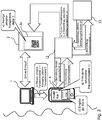
- Fig. 2 illustrates in more detail the communication steps associated with the authorization of the transaction and confirmation of its execution. It is envisaged that the smartphone 4 and the server system 13 encrypt at least a portion of the data in the transaction file 11 and the (primary) acknowledgment message 14 ' digitally signed communicate and the access / confirmation server 12 can still read from this communication, whether the server system 13 confirms the execution of the transaction, and sends this information as a secondary confirmation message 15 to the plug-in software module 2a.
- the process shown differs according to the sequence Fig. 2 also in that after receipt of the primary confirmation message 14 'the access / confirmation server 12 receives an acknowledgment message 16 for reception and generated for display in the smartphone 4 and sends out via the access network directly to this (step m)).
- step b) changes in such a way that the primary transaction data 3 no longer has to be scanned by the smartphone 4, but instead is transferred from the website 2 to a browser located in the smartphone as part of a data communication.
- the mobile commerce variant of the payment method according to the invention can also be integrated into an already established payment system.
- the input website of the established payment system may include a JavaScript that is loaded on the smartphone browser and there detects the user agent string and, if this indicates an Android-based Chrome browser, the browser on a new website redirects Users must confirm the further course with a menu key press. Subsequently, the new website returns a URL designed in this way to the Chrome browser, which causes it either via Android Intent Call to open a mobile app 7 installed on the smartphone, or, if this is not possible, to the input side of the established payment system is forwarded.
- a JavaScript that is loaded on the smartphone browser and there detects the user agent string and, if this indicates an Android-based Chrome browser, the browser on a new website redirects Users must confirm the further course with a menu key press. Subsequently, the new website returns a URL designed in this way to the Chrome browser, which causes it either via Android Intent Call to open a mobile app 7 installed on the smartphone, or, if this is not possible, to the input side of the established payment system is forwarded.
- the established payment method is also used if the JavaScript of the input website concludes, based on the determined user agent string, that the connected browser is not an Android-based Chrome browser.
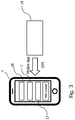
- Fig. 3 schematically illustrates that the mobile app 7 runs on the smartphone in a Trusted Execution Environment 16 and about certain hardware resources 17 secured, such as the keyboard, the display and the NFC Controller of the smartphone, heads.
- the smartphone 4 contains, as part of the hardware resources 17, a device key with which the smartphone is authenticated.
- the device key is a private key in the sense of the Public Key Infrastructure (PKI).
- PKI Public Key Infrastructure
- the mobile app Before executing the method, the mobile app is loaded by an app charging system 18 in the over-the-air method OTA into the trusted execution environment 16 of the smartphone 4 after the smartphone has authenticated against the app charging system 18 by means of its device key.
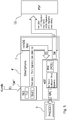
- Fig. 5 shows an implementation of the mobile app on Samsung S6 and S7 smartphones, taking on the reference numbers for the components Fig. 1-3 is accessed and the essential steps of the sequence with S1 ... S7 are designated.
- the Mobile App 7 is divided into three parts, a RichOS Android part, a Trusted App # 1 part (TA # 1) running in the Trusted Execution Environment, and a Trusted App # 2 part (TA # 2) running on the embedded secure element (eSE) is running.
- the main task of TA # 1 is the provision of a secure user interface, via which the correct payment data are displayed and the card PIN is entered in a secure manner.
- the main task of TA # 2 is the secure communication with the peripheral components, the smart card 9 and the confirmation server (PSP) 12 and the server system 13, with cryptographic keys that are downloaded to the eSE as part of the mobile app installation process and from working there from then on.
- PSP confirmation server
- the communication between both Trusted Apps runs on the insecure part of the mobile app, the richOS Android part of the app.
- the card PIN In order to prevent the card PIN from being spied on from TA # 1 to TA # 2, it encrypts TA # 1 with the public key of TA # 2. So that the payment data displayed to the user and confirmed by him can not be subsequently falsified, they are digitally signed in TA # 1 and verified in TA # 2 before communication to the smartcard for integrity.
- the mobile app 7 is preferably restricted to communication with selected smart cards 9 assigned to the user. In this case, the mobile app could not communicate with any other smart card and trigger payments on it.
- the user registers the smart card 9 to the mobile app 7 as an associated with him so that before the first use of the smart card the bank account behind the smart card entered into the mobile app, then read the intended use of an automatically incoming in this account transfer and finally to Authentication must be entered into the mobile app.
- the mobile app can be limited to the use of a certain number of smart cards for their entire lifecycle, by the confirmation server 12 over which the transaction files 11 run the combinations of the IDs of the mobile Monitor app 7 and Surprise9 and a transaction file 11 stops if it was signed by a card 9, which exceeds the allowable contingent on a maximum of one mobile app 7 maps assignable.
- the smartphone which stands in the function of a point-of-sale terminal in the communication chain between the user, the card and the merchant's bank.
- the solution according to the invention must prevent, for example, that the card PIN can be spied on by malicious software on the smartphone and that the smartphone does not instruct a payment other than the displayed amount and the user released amount.
- the invention solves the security requirements for the smartphone, in particular through the use of a so-called Trusted Execution Environments (TEE).
- TEE Trusted Execution Environments
- the smartphone may have a processor whose arithmetic register can operate in a normal and a secure mode.
- operating system functions such as the secure display of the amount and the recipient and input of the PIN, can be executed, which are not available in the normal mode.
- the register is in safe mode by the mobile app according to the invention switched after the mobile app has authenticated itself against the registry as a secure mobile app through a public key procedure.
- Girocard PIN fulfills a central function, such as: to withdraw cash and pay in the business, and corrupt PINs could cause huge damage.
- smartphones offer potential attackers a larger attack surface than functionally limited point-of-sale terminals. Therefore, special security measures are required to protect a PIN entered via the smartphone from spying.
- Malicious software on the smartphone could intercept communication between the smartphone's operating system and the mobile app when the PIN is entered from the default keyboard on the smartphone.
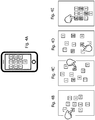
- a specially designed mobile app gives the customer their own PIN input keypad on the touch display, which differs from the standard keypad of the smartphone operating system, as referenced below Fig. 4A to 4E explained.
- the number assignment to the keypad can be mixed as desired. For customers who remember the PIN by means of a graphic input pattern on the display, however, a different number assignment would mean a disadvantage.
Landscapes
- Business, Economics & Management (AREA)
- Engineering & Computer Science (AREA)
- Accounting & Taxation (AREA)
- General Business, Economics & Management (AREA)
- Strategic Management (AREA)
- Physics & Mathematics (AREA)
- General Physics & Mathematics (AREA)
- Theoretical Computer Science (AREA)
- Computer Networks & Wireless Communication (AREA)
- Computer Security & Cryptography (AREA)
- Finance (AREA)
- Development Economics (AREA)
- Economics (AREA)
- Microelectronics & Electronic Packaging (AREA)
- Financial Or Insurance-Related Operations Such As Payment And Settlement (AREA)
Priority Applications (1)
| Application Number | Priority Date | Filing Date | Title |
|---|---|---|---|
| US15/598,500 US20170337553A1 (en) | 2016-05-19 | 2017-05-18 | Method and appartus for transmitting payment data using a public data network |
Applications Claiming Priority (1)
| Application Number | Priority Date | Filing Date | Title |
|---|---|---|---|
| DE102016109209.6A DE102016109209A1 (de) | 2016-05-19 | 2016-05-19 | Verfahren und Anordnung zur Übermittlung von Transaktionsdaten unter Nutzung eines öffentlichen Datennetzes |
Publications (1)
| Publication Number | Publication Date |
|---|---|
| EP3246865A1 true EP3246865A1 (fr) | 2017-11-22 |
Family
ID=57754953
Family Applications (1)
| Application Number | Title | Priority Date | Filing Date |
|---|---|---|---|
| EP16204208.9A Withdrawn EP3246865A1 (fr) | 2016-05-19 | 2016-12-15 | Procédé et système de transmission de données de transaction par l'intermédiaire d'un réseau de données public |
Country Status (3)
| Country | Link |
|---|---|
| US (1) | US20170337553A1 (fr) |
| EP (1) | EP3246865A1 (fr) |
| DE (1) | DE102016109209A1 (fr) |
Cited By (3)
| Publication number | Priority date | Publication date | Assignee | Title |
|---|---|---|---|---|
| DE102017122799A1 (de) | 2017-03-23 | 2018-09-27 | Rubean AG | Verfahren und Anordnung zur Übermittlung von Transaktionsdaten unter Nutzung eines öffentlichen Datennetzes |
| US10764057B2 (en) | 2017-06-12 | 2020-09-01 | Rubean AG | Method and system for authenticating a trusted user interface |
| CN111953649A (zh) * | 2020-06-29 | 2020-11-17 | 广州广哈通信股份有限公司 | 一种终端认证方法、装置、系统及存储介质 |
Families Citing this family (4)
| Publication number | Priority date | Publication date | Assignee | Title |
|---|---|---|---|---|
| CN106940849B (zh) * | 2016-01-05 | 2020-10-30 | 创新先进技术有限公司 | 数据交互方法及装置、离线信用支付方法及装置 |
| CN109801059B (zh) * | 2018-12-28 | 2023-04-18 | 易票联支付有限公司 | 一种移动支付系统和移动支付方法 |
| CN111464498B (zh) * | 2020-03-05 | 2022-09-27 | 武汉和悦数字科技有限公司 | 一体化综合服务云系统及一体化综合服务方法 |
| US12256017B2 (en) | 2022-11-18 | 2025-03-18 | T-Mobile Usa, Inc. | Techniques for correcting anomalous activity caused by smart contracts |
Citations (3)
| Publication number | Priority date | Publication date | Assignee | Title |
|---|---|---|---|---|
| US20130246258A1 (en) * | 2012-03-15 | 2013-09-19 | Firethorn Mobile, Inc. | System and method for managing payment in transactions with a pcd |
| EP2827291A1 (fr) * | 2013-07-19 | 2015-01-21 | Gemalto SA | Procédé de sécurisation d'une étape de validation d'une transaction en ligne |
| US20150118958A1 (en) * | 2013-10-25 | 2015-04-30 | Devicefidelity, Inc. | Switching between near-field communication systems |
-
2016
- 2016-05-19 DE DE102016109209.6A patent/DE102016109209A1/de not_active Withdrawn
- 2016-12-15 EP EP16204208.9A patent/EP3246865A1/fr not_active Withdrawn
-
2017
- 2017-05-18 US US15/598,500 patent/US20170337553A1/en not_active Abandoned
Patent Citations (3)
| Publication number | Priority date | Publication date | Assignee | Title |
|---|---|---|---|---|
| US20130246258A1 (en) * | 2012-03-15 | 2013-09-19 | Firethorn Mobile, Inc. | System and method for managing payment in transactions with a pcd |
| EP2827291A1 (fr) * | 2013-07-19 | 2015-01-21 | Gemalto SA | Procédé de sécurisation d'une étape de validation d'une transaction en ligne |
| US20150118958A1 (en) * | 2013-10-25 | 2015-04-30 | Devicefidelity, Inc. | Switching between near-field communication systems |
Cited By (4)
| Publication number | Priority date | Publication date | Assignee | Title |
|---|---|---|---|---|
| DE102017122799A1 (de) | 2017-03-23 | 2018-09-27 | Rubean AG | Verfahren und Anordnung zur Übermittlung von Transaktionsdaten unter Nutzung eines öffentlichen Datennetzes |
| US10764057B2 (en) | 2017-06-12 | 2020-09-01 | Rubean AG | Method and system for authenticating a trusted user interface |
| CN111953649A (zh) * | 2020-06-29 | 2020-11-17 | 广州广哈通信股份有限公司 | 一种终端认证方法、装置、系统及存储介质 |
| CN111953649B (zh) * | 2020-06-29 | 2022-06-28 | 广州广哈通信股份有限公司 | 一种终端认证方法、装置、系统及存储介质 |
Also Published As
| Publication number | Publication date |
|---|---|
| US20170337553A1 (en) | 2017-11-23 |
| DE102016109209A1 (de) | 2017-11-23 |
Similar Documents
| Publication | Publication Date | Title |
|---|---|---|
| DE102016109209A1 (de) | Verfahren und Anordnung zur Übermittlung von Transaktionsdaten unter Nutzung eines öffentlichen Datennetzes | |
| EP2713345B1 (fr) | Procédé et système de saisie sécurisée de données d'identification pour l'authentification d'une transaction menée au moyen d'un terminal en libre-service | |
| DE102017113529A1 (de) | Verfahren und System zur Echtheitsprüfung einer vertrauenswürdigen Benutzeroberfläche | |
| EP2528045A1 (fr) | Procédé et ordinateur de service ainsi que système d'authentification sans carte | |
| WO2013056783A1 (fr) | Terminal mobile, terminal de transactions et procédé de réalisation d'une transaction à partir d'un terminal de transactions en utilisant un terminal mobile | |
| DE102017122799A1 (de) | Verfahren und Anordnung zur Übermittlung von Transaktionsdaten unter Nutzung eines öffentlichen Datennetzes | |
| DE102013212646B4 (de) | Elektronisches Transaktionsverfahren und Computersystem | |
| WO2010089049A1 (fr) | Procédé et dispositifs de paiement à l'aide d'un terminal mobile | |
| DE102011079317A1 (de) | Mobiles system für finanztransaktionen | |
| WO2013093026A1 (fr) | Procédé pour effectuer des paiements authentifiés | |
| EP2883182B1 (fr) | Ensemble dispositif pour exécuter ou lancer un service électronique et procédé pour la saisie sécurisée de données d'autorisation | |
| EP2916252B1 (fr) | Procédé de transaction électronique et système informatique | |
| EP3035270A1 (fr) | Generation de jetons hors ligne a base de cartes | |
| DE102013022434B3 (de) | Elektronisches Transaktionsverfahren und Computersystem | |
| DE102007024144B3 (de) | Verfahren und Anordnung zur schnellen Kurzanmeldung eines Benutzers an einem Diensleistungsportal mittels einer mobilen Kommunikationseinrichtung | |
| EP3361436B1 (fr) | Procédé d'autorisation d'une transaction | |
| DE102014002602A1 (de) | Verfahren zum Autorisieren einer Transaktion | |
| DE102013022445B3 (de) | Elektronisches Transaktionsverfahren und Computersystem | |
| DE102013022444B4 (de) | Elektronisches Transaktionsverfahren und Computersystem | |
| DE102013022436B3 (de) | Elektronisches Transaktionsverfahren und Computersystem | |
| DE102013022433B3 (de) | Elektronisches Transaktionsverfahren und Computersystem | |
| DE102012005952A1 (de) | Verfahren zur evidenzbasierten Absicherung mobiler Zahlungstransaktionen | |
| DE102013022438B3 (de) | Elektronisches Transaktionsverfahren und Computersystem | |
| DE102015015621A1 (de) | Karten basierte Offline-Token Generierung | |
| DE102017113190A1 (de) | Anordnung und Verfahren zur Nutzerauthentifizierung und Zugriffs-Autorisierung |
Legal Events
| Date | Code | Title | Description |
|---|---|---|---|
| PUAI | Public reference made under article 153(3) epc to a published international application that has entered the european phase |
Free format text: ORIGINAL CODE: 0009012 |
|
| AK | Designated contracting states |
Kind code of ref document: A1 Designated state(s): AL AT BE BG CH CY CZ DE DK EE ES FI FR GB GR HR HU IE IS IT LI LT LU LV MC MK MT NL NO PL PT RO RS SE SI SK SM TR |
|
| AX | Request for extension of the european patent |
Extension state: BA ME |
|
| STAA | Information on the status of an ep patent application or granted ep patent |
Free format text: STATUS: THE APPLICATION IS DEEMED TO BE WITHDRAWN |
|
| 18D | Application deemed to be withdrawn |
Effective date: 20180523 |