EP3247397B1 - Complexes de métalloglycoprotéines et leur utilisation comme composés chimiothérapeutiques - Google Patents
Complexes de métalloglycoprotéines et leur utilisation comme composés chimiothérapeutiques Download PDFInfo
- Publication number
- EP3247397B1 EP3247397B1 EP16739852.8A EP16739852A EP3247397B1 EP 3247397 B1 EP3247397 B1 EP 3247397B1 EP 16739852 A EP16739852 A EP 16739852A EP 3247397 B1 EP3247397 B1 EP 3247397B1
- Authority
- EP
- European Patent Office
- Prior art keywords
- transferrin
- group
- occurrence
- independently selected
- alkyl
- Prior art date
- Legal status (The legal status is an assumption and is not a legal conclusion. Google has not performed a legal analysis and makes no representation as to the accuracy of the status listed.)
- Active
Links
- 0 *c1c(*)c(*)nc(-c2c(*C=C)c(*)c(*)c(*)n2)c1* Chemical compound *c1c(*)c(*)nc(-c2c(*C=C)c(*)c(*)c(*)n2)c1* 0.000 description 21
- SEBIXVUYSFOUEL-UHFFFAOYSA-N Cc(cc1)cc2c1[s]cn2 Chemical compound Cc(cc1)cc2c1[s]cn2 SEBIXVUYSFOUEL-UHFFFAOYSA-N 0.000 description 1
- YPKBCLZFIYBSHK-UHFFFAOYSA-N Cc1ccc2[nH]ccc2c1 Chemical compound Cc1ccc2[nH]ccc2c1 YPKBCLZFIYBSHK-UHFFFAOYSA-N 0.000 description 1
- SUXCJAFDGQIRRR-UHFFFAOYSA-N c1nc2csccc2[nH]1 Chemical compound c1nc2csccc2[nH]1 SUXCJAFDGQIRRR-UHFFFAOYSA-N 0.000 description 1
Images












Classifications
-
- A—HUMAN NECESSITIES
- A61—MEDICAL OR VETERINARY SCIENCE; HYGIENE
- A61K—PREPARATIONS FOR MEDICAL, DENTAL OR TOILETRY PURPOSES
- A61K33/00—Medicinal preparations containing inorganic active ingredients
- A61K33/24—Heavy metals; Compounds thereof
-
- A—HUMAN NECESSITIES
- A61—MEDICAL OR VETERINARY SCIENCE; HYGIENE
- A61K—PREPARATIONS FOR MEDICAL, DENTAL OR TOILETRY PURPOSES
- A61K33/00—Medicinal preparations containing inorganic active ingredients
- A61K33/24—Heavy metals; Compounds thereof
- A61K33/243—Platinum; Compounds thereof
-
- A—HUMAN NECESSITIES
- A61—MEDICAL OR VETERINARY SCIENCE; HYGIENE
- A61K—PREPARATIONS FOR MEDICAL, DENTAL OR TOILETRY PURPOSES
- A61K38/00—Medicinal preparations containing peptides
- A61K38/16—Peptides having more than 20 amino acids; Gastrins; Somatostatins; Melanotropins; Derivatives thereof
- A61K38/17—Peptides having more than 20 amino acids; Gastrins; Somatostatins; Melanotropins; Derivatives thereof from animals; from humans
- A61K38/40—Transferrins, e.g. lactoferrins, ovotransferrins
-
- A—HUMAN NECESSITIES
- A61—MEDICAL OR VETERINARY SCIENCE; HYGIENE
- A61K—PREPARATIONS FOR MEDICAL, DENTAL OR TOILETRY PURPOSES
- A61K41/00—Medicinal preparations obtained by treating materials with wave energy or particle radiation ; Therapies using these preparations
- A61K41/0042—Photocleavage of drugs in vivo, e.g. cleavage of photolabile linkers in vivo by UV radiation for releasing the pharmacologically-active agent from the administered agent; photothrombosis or photoocclusion
-
- A—HUMAN NECESSITIES
- A61—MEDICAL OR VETERINARY SCIENCE; HYGIENE
- A61K—PREPARATIONS FOR MEDICAL, DENTAL OR TOILETRY PURPOSES
- A61K41/00—Medicinal preparations obtained by treating materials with wave energy or particle radiation ; Therapies using these preparations
- A61K41/0057—Photodynamic therapy with a photosensitizer, i.e. agent able to produce reactive oxygen species upon exposure to light or radiation, e.g. UV or visible light; photocleavage of nucleic acids with an agent
-
- A—HUMAN NECESSITIES
- A61—MEDICAL OR VETERINARY SCIENCE; HYGIENE
- A61K—PREPARATIONS FOR MEDICAL, DENTAL OR TOILETRY PURPOSES
- A61K49/00—Preparations for testing in vivo
- A61K49/001—Preparation for luminescence or biological staining
- A61K49/0013—Luminescence
- A61K49/0017—Fluorescence in vivo
- A61K49/0019—Fluorescence in vivo characterised by the fluorescent group, e.g. oligomeric, polymeric or dendritic molecules
- A61K49/0021—Fluorescence in vivo characterised by the fluorescent group, e.g. oligomeric, polymeric or dendritic molecules the fluorescent group being a small organic molecule
-
- A—HUMAN NECESSITIES
- A61—MEDICAL OR VETERINARY SCIENCE; HYGIENE
- A61K—PREPARATIONS FOR MEDICAL, DENTAL OR TOILETRY PURPOSES
- A61K9/00—Medicinal preparations characterised by special physical form
- A61K9/0002—Galenical forms characterised by the drug release technique; Application systems commanded by energy
- A61K9/0009—Galenical forms characterised by the drug release technique; Application systems commanded by energy involving or responsive to electricity, magnetism or acoustic waves; Galenical aspects of sonophoresis, iontophoresis, electroporation or electroosmosis
-
- A—HUMAN NECESSITIES
- A61—MEDICAL OR VETERINARY SCIENCE; HYGIENE
- A61P—SPECIFIC THERAPEUTIC ACTIVITY OF CHEMICAL COMPOUNDS OR MEDICINAL PREPARATIONS
- A61P31/00—Antiinfectives, i.e. antibiotics, antiseptics, chemotherapeutics
-
- A—HUMAN NECESSITIES
- A61—MEDICAL OR VETERINARY SCIENCE; HYGIENE
- A61P—SPECIFIC THERAPEUTIC ACTIVITY OF CHEMICAL COMPOUNDS OR MEDICINAL PREPARATIONS
- A61P35/00—Antineoplastic agents
-
- A—HUMAN NECESSITIES
- A61—MEDICAL OR VETERINARY SCIENCE; HYGIENE
- A61N—ELECTROTHERAPY; MAGNETOTHERAPY; RADIATION THERAPY; ULTRASOUND THERAPY
- A61N5/00—Radiation therapy
- A61N5/06—Radiation therapy using light
- A61N2005/0658—Radiation therapy using light characterised by the wavelength of light used
- A61N2005/0659—Radiation therapy using light characterised by the wavelength of light used infrared
-
- A—HUMAN NECESSITIES
- A61—MEDICAL OR VETERINARY SCIENCE; HYGIENE
- A61N—ELECTROTHERAPY; MAGNETOTHERAPY; RADIATION THERAPY; ULTRASOUND THERAPY
- A61N5/00—Radiation therapy
- A61N5/06—Radiation therapy using light
- A61N5/0613—Apparatus adapted for a specific treatment
- A61N5/062—Photodynamic therapy, i.e. excitation of an agent
Definitions
- This invention relates to metal-based coordination complexes, and more particularly to metal-glycoprotein complexes that are particularly useful as therapeutic and diagnostic agents,
- Photodynamic therapy is currently an active area of research for the treatment of diseases associated with hyperproliferating cells such as cancer and non-malignant lesions.
- the development of new photodynamic compounds (PDCs or photosensitizers, PSs) for photodynamic therapy (PDT) has been increasingly focused on metallosupramolecular complexes derived from metals.
- WO 2013158550 A1 and WO 2014145428 A2 disclose metal-based PDCs useful as in vivo diagnostic agents, as therapeutic agents for treating or preventing diseases that involve unwanted and/or hyperproliferating cell etiology, including cancer, as agents for treating infectious diseases, and as agents for pathogen disinfection and/or sterilization.
- US 6962910 , US 7612057 , US 8445475 and US 8148360 disclose supramolecular metal complexes capable of cleaving DNA when irradiated low energy visible light with or without molecular oxygen.
- US 20120264802 discloses photosensitizer compounds based on functionalized fullerenes useful in targeted PDT, and methods of use thereof.
- WO 2013020204 A1 discloses biodegradable polymeric nanoparticles comprising an inner core formed of a photodynamic agent capable of being activated to generate cytotoxic singlet oxygen. These nanoparticles have anti-cell proliferation activity and are useful in treating both cancerous and non-cancerous conditions including actinic keratosis, psoriasis and acne vulgaris.
- the photodynamic agent is a hypocrellin B derivative while the polymeric nanoparticle comprises polyglycolic acid, polylactic acid or poly(lactide-co-glycolide). Hypocrellin- comprising nanoparticles are demonstrated to be activated by light or hydrogen peroxide.
- Tf Transferrin
- conjugates of the Tf molecules with a therapeutic agent.
- methods of treating cancer wherein the therapeutic agents are chemotherapeutic agents.
- the modified Tf molecules improve the delivery of the conjugated therapeutic agent to a target tissue.
- WO 2002094271 A1 discloses a homogeneous conjugate for targeting and treating diseased cells wherein the conjugate comprises an anti-cancer drug and a targeting protein, wherein said anti-cancer drug is selected from the group consisting of heat sensitizers, photosensitizers and apoptosis inducing compounds, a method for making such a conjugate, and methods for using the conjugate.
- the targeting protein is preferably transferrin.
- US 7001991 discloses a homogeneous conjugate for targeting and treating diseased cells wherein the conjugate comprises an anti-cancer drug and a targeting protein, wherein said anti-cancer drug is selected from the group consisting of heat sensitizers, photosensitizers and apoptosis inducing compounds, a method for making such a conjugate, and methods for using the conjugate.
- the targeting protein is preferably transferrin.
- US 7809428 discloses PDT methods for treatment of vulnerable plaques by selectively targeting and/or eliminating the inflammatory components of vulnerable plaques.
- photosensitizer compositions are coupled to macromolecular carriers that target T cells of vulnerable plaques.
- macromolecular carriers can be targeted to, for example, IL-10, receptor, monocyte inflammatory protein-1 and receptors thereof and transferrin.
- macromolecular carriers can be, for example, antibodies against these biomolecules, ligands binding the same or analogs thereof, including, but not limited to monoclonal antibodies that recognize CD1, CD2, CD3, CD4, CDS, CD6, CD7, CDB, CD25, CD28, CD44, CD71 or transferrin.
- Protein-based delivery systems include systems based on albumin (nanoparticles system), small heat shock protein, viral capsid and apoferritin (protein cage systems) used for doxorubicin delivery, soy protein (film-based system) for methylene blue delivery (MaHam et al., 2009).
- Apoferritin i.e. Ferritin that is not combined with iron, a protein of 450 kDa
- doxorubicin carboplatin
- cisplatin daunorubicin although immune response to apoferritin may be a drawback
- encapsulation of Methylene blue into apoferritin allowed increasing singlet oxygen production and enhancement of cytotoxic effects on cells (Heger et al., 2014, review).
- transferrin with liposomes containing aluminum phthalocyanine tetrasulfonate (LiposomesAlPcS 4 ) is disclosed by Derycke et al., 2014; Gaspar et al., 2012. Guo et al. (Inorg. Chem. 2013, 52, 5328-5338 ) and CN 104072607 A disclose transferrin as a mediator to deliver organometallic ruthenium (II) anticancer complexes into cells.
- Li et al. (Dalton Trans. 2013, 42, 8868 ) disclose the effect of human serum on the minimum inhibitory/bactericidal concentration of some polypyridyl ruthenium (II) complexes.
- a first aspect of the invention comprises a composition comprising:
- the glycoprotein is transferrin and the chemotherapeutic compound has the formula ( I ): including hydrates, solvates, and pharmaceutically acceptable salts thereof, wherein:
- the glycoprotein is transferrin and the chemotherapeutic compound has the formula (II) including hydrates, solvates, and pharmaceutically acceptable salts thereof, wherein:
- a second aspect of the invention comprises a composition as defined above for use in the treatment of a condition associated with hyperproliferating cells, said treatment comprising:
- a third aspect of the invention comprises a method for destroying a microbial cell, said method comprising:
- compositions are described as having, including, or comprising specific components, or where processes are described as having, including, or comprising specific process steps, it is contemplated that compositions of the present teachings also consist essentially of, or consist of, the recited components, and that the processes of the present teachings also consist essentially of, or consist of, the recited processing steps.
- an element or component is said to be included in and/or selected from a list of recited elements or components, it should be understood that the element or component can be any one of the recited elements or components and can be selected from a group consisting of two or more of the recited elements or components.
- composition of matter stand equally well for the inventive compounds described herein, be they photodynamic or not, including all enantiomeric forms, diastereomeric forms, salts, and the like, and the terms “compound,” “analog,” and “composition of matter” are used interchangeably throughout the present specification.
- asymmetric atom also referred as a chiral center
- some of the compounds can contain one or more asymmetric atoms or centers, which can thus give rise to optical isomers (enantiomers) and diastereomers.
- the present teachings and compounds disclosed herein include such enantiomers and diastereomers, as well as the racemic and resolved, enantiomerically pure R and S stereoisomers, as well as other mixtures of the R and S stereoisomers and pharmaceutically acceptable salts thereof.
- Optical isomers can be obtained in pure form by standard procedures known to those skilled in the art, which include, but are not limited to, diastereomeric salt formation, kinetic resolution, and asymmetric synthesis.
- the present teachings also encompass cis and trans isomers of compounds containing alkenyl moieties (e.g., alkenes and imines). It is also understood that the present teachings encompass all possible regioisomers, and mixtures thereof, which can be obtained in pure form by standard separation procedures known to those skilled in the art, and include, but are not limited to, column chromatography, thin-layer chromatography, and high-performance liquid chromatography.
- salts of compounds of the present teachings can be formed using organic and inorganic bases. Both mono and polyanionic salts are contemplated, depending on the number of acidic hydrogens available for deprotonation.
- Suitable salts formed with bases include metal salts, such as alkali metal or alkaline earth metal salts, for example sodium, potassium, or magnesium salts; ammonia salts and organic amine salts, such as those formed with morpholine, thiomorpholine, piperidine, pyrrolidine, a mono-, di- or tri-lower alkylamine (e.g., ethyl-tert-butyl-, diethyl-, diisopropyl-, triethyl-, tributyl- or dimethylpropylamine), or a mono-, di-, or trihydroxy lower alkylamine (e.g., mono-, di- or triethanolamine).
- metal salts such as alkali metal or alkaline earth metal salts, for example
- inorganic bases include NaHCO 3 , Na 2 CO 3 , KHCO 3 , K 2 CO 3 , Cs 2 CO 3 , LiOH, NaOH, KOH, NaH 2 PO 4 , Na 2 HPO 4 , and Na 3 PO 4 .
- Internal salts also can be formed.
- salts can be formed using organic and inorganic acids.
- salts can be formed from the following acids: acetic, propionic, lactic, benzenesulfonic, benzoic, camphorsulfonic, citric, tartaric, succinic, dichloroacetic, ethenesulfonic, formic, fumaric, gluconic, glutamic, hippuric, hydrobromic, hydrochloric, isethionic, lactic, maleic, malic, malonic, mandelic, methanesulfonic, mucic, napthalenesulfonic, nitric, oxalic, pamoic, pantothenic, phosphoric, phthalic, propionic, succinic, sulfuric, tartaric, toluenesulfonic, and camphorsulfonic as well as other known pharmaceutically acceptable acids.
- treat and “treating” and “treatment” as used herein, refer to partially or completely alleviating, inhibiting, ameliorating and/or relieving a condition from which a patient is suspected to suffer.
- terapéuticaally effective and “effective dose” refer to a substance or an amount that elicits a desirable biological activity or effect.
- photodynamic therapy refers to a treatment for destroying cells or modulating immune function, including immune response, of cells and tissue through use of a drug that can be activated by light of a certain wavelength and dose.
- chemotherapeutic compound refers to a chemical compound with prophylactic, ameliorative and/or curative properties with respect to one or more conditions or disesases.
- photodynamic compound refers to a compound that provides photodynamic therapy. Photodynamic compounds are a subset of chemotherapeutic compounds as defined herein.
- the terms “subject” or “patient” are used interchangeably and refer to mammals such as human patients and non-human primates, as well as experimental animals such as rabbits, rats, and mice, and other animals. Accordingly, the term “subject” or “patient” as used herein means any mammalian patient or subject to which the compounds of the invention can be administered.
- accepted screening methods are employed to determine risk factors associated with a targeted or suspected disease or condition or to determine the status of an existing disease or condition in a subject. These screening methods include, for example, conventional work-ups to determine risk factors that may be associated with the targeted or suspected disease or condition. These and other routine methods allow the clinician to select patients in need of therapy using the compounds of the present invention.
- biological target refers to an organ, tissue and/or cell of an organism and/or to the organism itself.
- the invention is based in part on the unexpected discovery that Ru, Rh and Os based PDCs, particularly those disclosed in WO 2013158550 A1 , WO 2014145428 A2 , US 6962910 , US 7612057 , US 8445475 and US 8148360 , are significantly improved in their chemical, physical and biomedical properties when they are administered in combination with metal-binding glycoproteins of the invention.
- Ruthenium and osmium are in the same group of the periodic table of elements as Iron, Group 8, and share many of its characteristics. Rhodium is in neighboring Group 9. As Ruthenium and Osmium are in the same group as Iron, they share many characteristics.
- Ru (II) and OS (II) molecules readily bond with nitrogen and sulphur donor (this mechanisms is also relevant for induction of NO (Chatterjee D, Shome S, Jaiswal N, Banerjee P. Nitrite reduction mediated by the complex Ru III (EDTA). Dalton Trans. 2014 Sep 28;43(36):13596-600 ) and may play a role in switching the Type II to Type I photochemistry) molecules that are abundantly found in many proteins within the body.
- transition metal complexes are able to take advantage of the body's ability to efficiently transport and uptake of iron ( Antonarakis ES, Emadi A. Ruthenium-based chemotherapeutics: are they ready for prime time? Cancer Chemother Pharmacol. 2010 May;66(1):1-9 ).
- the PSs are transported inside cancer cell (mitochondria) by binding to endogenous transferrin (a glycoprotein mainly produced in the liver) via transferrin receptor (TfR); Bergamo A, Sava G. Ruthenium anticancer compounds: myths and realities of the emerging metal-based drugs. Dalton Trans. 2011 Aug 21;40(31):7817-23 .
- the glutathione-mediated reduction is thought to occur by mitochondrial proteins or microsomal single electron transfer proteins, though it may also occur by trans-membrane electron transport systems which reside outside the cell, implying that, due to local administrations of PSs, the PS is still effective even if some quantity of the PS may leak/escape into intracellular space.
- the Ruthenium compounds it is also possible for the Ruthenium compounds to be oxidized back to their inactive form if they leave the cancerous environment and, hence, in addition to a very strong photostability of PSs, this phenomenon may also contribute to additional treatment efficacy and safety.
- DAMPs tumor cell death and antigen presenting cells
- APC antigen presenting cells
- DAMPs danger-associated molecular patterns
- Certain APSs such as dendritic cells and macrophages are stimulated and actively trafficked during PDT-induced "immunologic” cell death (“ICD”) by danger signalling pathways, which are instigated and regulated by a complex interplay between cellular stress signaling, reactive oxygen species (“ROS”) production and certain metabolic/biosynthetic processes (i.e., autophagy, caspase activity and secretory pathway: calreticulin, Adenosine Tri-Phosphate ("ATP”), Heat Shock Proteins, High Mobility Group Box 1, cytokines, etc).
- ROS reactive oxygen species
- Methods disclosed herein comprise the use of metal-binding glycoproteins as delivery vehicles for metal-based PDCs so as to facilitate delivery of the PDCs into a biological target.
- the methods are intended to provide enhanced safety and/or efficacy relative to the delivery of metal-based PDCs without the addition of exogenous metal-binding glycoproteins.
- PDCs delivered via the inventive compositions enjoy enhanced biophysical, biochemical and biomedical properties, such as the efficacy, tolerability, therapeutic efficacy and diagnostic properties of the PDCs in multi-wavelength photodynamic therapy in normoxic and hypoxic conditions.
- one embodiment of the invention comprises combining metal-containing PDCs with metal-binding glycoproteins and administering the combination to an organism to be destroyed.
- the present application further discloses a method for preparing the compounds of the present invention.
- product formation can be monitored by spectroscopic means, such as nuclear magnetic resonance spectroscopy (e.g., 1H or 13C), infrared spectroscopy, spectrophotometry (e.g., UV-visible), mass spectrometry, or by chromatography such as high pressure liquid chromatography (HPLC), gas chromatography (GC), gel-permeation chromatography (GPC), or thin layer chromatography (TLC).
- spectroscopic means such as nuclear magnetic resonance spectroscopy (e.g., 1H or 13C), infrared spectroscopy, spectrophotometry (e.g., UV-visible), mass spectrometry, or by chromatography such as high pressure liquid chromatography (HPLC), gas chromatography (GC), gel-permeation chromatography (GPC), or thin layer chromatography (TLC).
- HPLC high pressure liquid chromatography
- GC gas chromatography
- GPC gel-permeation chromatography
- TLC thin layer chromatography
- Metal-binding glycoproteins suitable for use in the invention are capable of binding transition metals and delivering to a biological target said metals and other materials complexed with said metals.
- the metal-binding glycoproteins are preferably capable of binding Group 8 metals and/or Group 9 metals, and most preferably Ru, Os and Rh. Most preferred are the iron-binding glycoproteins transferrin, lactoferrin, ovotransferrin and melanotransferrin and variants thereof, with transferrin being most preferred.
- the glycoprotein can be purified from natural sources or can be from artificial sources.
- the glycoprotein in certain embodments is a recombinant transferrin, such as Apo-Transferrin or OPTIFERRIN, a recombinant human transferrin available from InVitria, a division of Ventria Bioscience. See US 20120088729 A1 , Zhang et al., "Expression, purification, and characterization of recombinant human transferrin from rice (Oryza sativa L.)." Protein Expr Purif. 2010 Nov;74(1):69-79 .
- OPTIFERRIN is a particularly preferred glycorprotein as it increases the targeting and reduces the photobleaching of the metal-glycoprotein complexes of the invention.
- Biological targets of the invention are organisms, organs, tissues and/or cells amenable to treatment with, and/or detection by, the metal-glycoprotein complexes of the invention.
- the targets are preferably hyperproliferating cells, such as cancer and non-malignant lesions.
- the resulting complex has increased absorbance/molar extinction coefficient at long wavelengths (>600 nm), increased ROS production (generation of hydroxyl radical is potentiated to a much greater extent than that of singlet oxygen suggesting a switch to Type I photoreaction in the presence of transferrin), increased and preferential uptake by cancer cells, increased efficacy of in vitro PDT accompanied by a decrease in dark toxicity and consequently by increased therapeutic ratio, increased and selective uptake by cancer cells and tumor tissues and increased efficacy of in vivo PDT in visible and NIR light.
- increased absorbance/molar extinction coefficient at wavelengths at or below 600 nm are achieved, which embodiments are particularly suitable for excitation with green, blue, UV and X-ray radiation.
- Ruthenium, Ruthenium-Rhodium and Osmium-based photosensitizers bind to transferrin demonstrating characteristic binding signatures.
- Binding to transferrin changes chemical, physical and biomedical characteristics of metal-based molecules and/or formulations, and induces absorption by Ruthenium, Ruthenium-Rhodium and Osmium-based photosensitizers in red and NIR wavelengths where their absorption without transferrin is negligible.
- Irradiation-induced fluorescence of Ruthenium, Ruthenium-Rhodium and Osmium-based photosensitizers is increased in the presence of transferrin, which may play a role in using metal-transferrin complexes in diagnostics.
- Blocking transferrin receptors with specific antibodies will eliminate facilitating effect of transferrin on PDT effect.
- the invention further encompasses the use of metal-glycoprotein complexes of the invention to enhance uptake by cells of metal-based pharmaceutical agents that are not light activated (e.g., RAPTA, NAMI, KP1019, RM-175).
- metal-based pharmaceutical agents e.g., RAPTA, NAMI, KP1019, RM-175).
- compositions of the invention comprise a metal-binding glycoprotein and a chemotherapeutic compound (e.g., a photodynamic compound) containing at least one transition metal, which is preferably a Group 8 or 9 metal and is most preferably at least one of Ru, Rh and Os.
- a chemotherapeutic compound e.g., a photodynamic compound
- the chemotherapeutic compound is preferably at least one such compound disclosed in WO 2013158550 A1 , WO 2014145428 A2 , US 6962910 , US 7612057 , US 8445475 or US 8148360 .
- Other chemotherapeutic compounds suitable for use in the invention include but are not limited to RAPTA, NAMI, KP1019 and analogs thereof.
- compositions of the invention comprise transitional metal-based combinations that are optionally surrounded (directly and/or indirectly binded) by various ligands, such as in coordination compounds.
- ligands such as in coordination compounds.
- bridging ligands are included, which are highly electron donating to the metal(s).
- compositions of the invention are useful for the treatment and diagnosis of disease states, particularly for the destruction of infectious organisms, hyperproliferating cells, and tumor cells.
- the compositions preferably included PDCs which (i) are metal-based coordination complexes, (ii) absorb ultraviolet (UV), visible, and infrared (IR) (particularly, near infrared (NIR)) light and are activated by wavelengths from UV to IR, particularly >800 nm, (iii) kill human cancer cells in culture and in animals, and (iv) destroy bacteria and antibiotic-resistant bacteria.
- PDCs which (i) are metal-based coordination complexes, (ii) absorb ultraviolet (UV), visible, and infrared (IR) (particularly, near infrared (NIR)) light and are activated by wavelengths from UV to IR, particularly >800 nm, (iii) kill human cancer cells in culture and in animals, and (iv) destroy bacteria and antibiotic-resistant bacteria.
- compositions of the invention are also capable of destroying microorganisms, such as Staphylococcus aureus (SA) and methicillin-resistant S . aureus (MRSA), with activation by UV to IR light, particularly red and NIR light.
- SA Staphylococcus aureus
- MRSA methicillin-resistant S . aureus
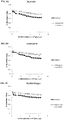
- FIG. 1A shows an increase in absorption by Ruthenium (TLD1433).
- FIG. 1B shows Ruthenium-Rhodium (TLD143310) based PSs and
- FIG. 1C shows Osmium (TLDOsH2dppn) based PSs in the presence of transferrin.
- TLD1433 Ruthenium-Rhodium
- TLD143310 Ruthenium-Rhodium
- TLD143310 Ruthenium-Rhodium
- FIG. 1C shows Osmium (TLDOsH2dppn) based PSs in the presence of transferrin.
- the left plot shows the absolute difference in absorbance with transferrin vs. without transferrin.
- the right plot shows relative increase in absorbance with transferrin vs. without transferrin. Note that a large relative increase in absorbance may be accompanied by a small absolute difference and vice versa.
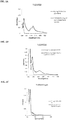
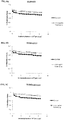
- FIGS. 2A, 2B and 2C show transferrin binding to Ruthenium (TLD1433, FIG. 2A ), Ruthenium-Rhodium (TLD143310, FIG. 2B ) and Osmium (TLDOsH2dppn, FIG. 2C ) based photosensitizers.
- Binding of Ruthenium and Ruthenium-Rhodium-based photosensitizers to transferrin is characterized by a characteristic signature: an increased peak of absorption at 280nm and a new peak in 400-500nm range.
- Osmium-based photosensitizers demonstrate different binding signature: new peaks in 300-400nm and 500-600nm ranges.
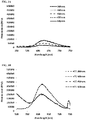
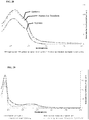
- TLD1433 demonstrates measurable fluorescence that is intensified in the presence of transferrin.
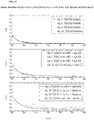
- FIG. 3A maximal fluorescence was evoked at excitation wavelengths 380, 400 and 470 nm (emission maximum 624 nm).
- FIG. 3B fluorescence was strongly increased, especially at 470 nm excitation, with emission maximum slightly shifted towards shorter wavelengths (619 nm).
- Detectable fluorescence of TLD1433 makes it useful for diagnostic purposes (detection of selective uptake of TLD1433, preferably by cancerous tissues).
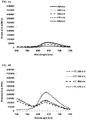
- FIGS. 4A and 4B are identical to FIGS. 4A and 4B.
- TLD143310 demonstrates measurable fluorescence that is intensified in the presence of transferrin. With no transferrin ( FIG. 4A ), maximal fluorescence was evoked at excitation wavelengths 380, 400, 470 nm (emission maximum 650 nm). In the presence of transferrin ( FIG. 4B ), fluorescence was strongly increased, especially at 470 nm excitation, with emission maximum slightly shifted towards shorter wavelengths (637 nm). Detectable fluorescence of TLD143310 makes it useful for diagnostic purposes (detection of selective uptake of TLD143310, preferably by cancerous tissues).
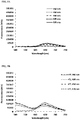
- TLDOsH2dppn demonstrates measurable fluorescence that is intensified in the presence of transferrin.
- FIG. 5A With no transferrin ( FIG. 5A ), maximal fluorescence was evoked at excitation wavelengths 380, 400, 470 nm (emission maximum 660 nm).
- FIG. 5B In the presence of transferrin ( FIG. 5B ), fluorescence was strongly increased, especially at 470 nm excitation, with emission maximum slightly shifted towards shorter wavelengths (650 nm).
- Detectable fluorescence of TLDOsH2dppn makes it useful for diagnostic purposes (detection of selective uptake of TLDOsH2dppn, preferably by cancerous tissues).
- Photobleaching was measured: (a) at wavelength in visible range maximal for each photosensitizer. This allows to estimate dynamics of amount of unbleached photosensitizer during irradiation; and (b) at 530, 635 and 808 nm. This allows estimating dynamics of unbleached photosensitizer available to exert PDT effect at these wavelengths as practically useful for PDT treatments.
- Table 1 shows singlet oxygen production by the Ruthenium (TLD1433), Ruthenium-Rhodium (TLD143310) and Osmium (TLDOsH2dppn)-based PS at 530 nm & 1092 J cm-2 incident energy.
- Table 2 shows hydroxyl radical production by the Ruthenium (TLD1433), Ruthenium-Rhodium (TLD143310) and Osmium (TLDOsH2dppn)-based PS at 530 nm & 1092 J cm-2 incident energy.
- Table 3 shows singlet oxygen production by the Ruthenium (TLD1433), Ruthenium-Rhodium (TLD143310) and Osmium (TLDOsH2dppn)-based PS at 635 nm & 649 J cm-2 incident energy.
- Table 4 shows hydroxyl radical production by the Ruthenium (TLD1433), Ruthenium-Rhodium (TLD143310) and Osmium (TLDOsH2dppn)-based PS at 635 nm & 649 J cm-2 incident energy.
- Table 5 shows singlet oxygen production by the Ruthenium (TLD1433), Ruthenium-Rhodium (TLD143310) and Osmium (TLDOsH2dppn)-based PS at 808 nm & 4000 J cm-2 incident energy.
- Table 6 shows hydroxyl radical production by the Ruthenium (TLD1433), Ruthenium-Rhodium (TLD143310) and Osmium (TLDOsH2dppn)-based PS at 808 nm & 4000 J cm-2 incident energy.
- the irradiation was performed in 96-well plates (100 uL working volume).
- Generation of singlet oxygen was measured by fluorescence signal of SOG indicator, generation of hydroxyl radical by fluorescence signal of HPF indicator.
- the signal presented is a result of subtraction of the signal in the presence of scavengers (NaN 3 for singlet oxygen and DMTU for hydroxyl radical) from the total fluorescence signal.
- TLD1433 Ruthenium (TLD1433), Ruthenium-Rhodium (TLD143310) and Osmium (TLDOsH2dppn) based photosensitizers produce reactive oxygen species (ROS) under 525 nm (0.250 mW cm-2), 650 nm (0.119 mW cm-2) and NIR (808 nm, 747 mW cm-2) irradiation.
- ROS reactive oxygen species
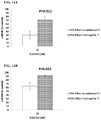
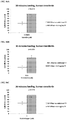
- Cell culture (U87 cells) was exposed to 200uM of the photosensitizer without additional transferrin and in the presence of 0.8 mg/mL transferrin for 4 hours. The incubation mix was washed away and the cells were collected, counted, and lysed. Lysed solution was dissolved in nitric acid and appropriate metals concentration was measured using inductively coupled plasma mass spectrometry. The metals concentration is directly proportional to the concentration of the photosensitizer.
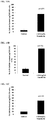
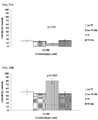
- FIGS. 10A, 10B and 10C show transferrin facilitated uptake of Ruthenium (TLD1433, FIG. 10A ), Ruthenium-Rhodium (TLD143310, FIG. 10B ) and Osmium (TLDOsH2dppn, FIG. 10C ) based photosensitizers into cancer cells.
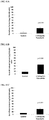
- FIGS. 11A, 11B and 11C show transferrin facilitated uptake of Ruthenium (TLD1433, FIG. 11A ), Ruthenium-Rhodium (TLD143310, FIG. 11B ) and Osmium (TLDOsH2dppn, FIG. 11C ) based photosensitizers into normal cells.
- Cellular accumulation of the photosensitizers was higher in the presence of transferrin.
- the effect of transferrin on the uptake is to a much lesser extent than for cancer cells indicating uptake improvement preferentially in cancer cells.
- the photosensitizer was pre-mixed with 0.4 mg/mL human transferrin and incubated for 1 hour at 37°C.
- control group no additional transferrin
- equivalent volume of no-transferrin medium was added.
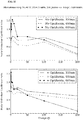
- the cells were subsequently incubated with the pre-mixes for 30 minutes ( FIG. 12A ) or 90 minutes ( FIG. 12B ). After that, the medium was replaced with a fresh one (without photosensitizer and transferrin).
- viability of the cells was measured using Presto Blue viability assay, and percent of cell kill was calculated.
- transferrin decreases dark toxicity (photosensitizer alone) of Ruthenium-based photosensitizers (TLD1433) on AY27 cancer cell line. Transferrin decreases dark toxicity of TLD1433. This contributes to an increased safety of PDT treatment in the presence of transferrin. Together with the evidence of binding of TLD1433 to transferrin, these results suggest facilitated uptake of TLD1433 into cells in the presence of transferrin. Increase in PDT efficacy together with the decrease in dark toxicity suggests an increase in therapeutic ratio of TLD1433 when it is used mixed with transferrin.
- the photosensitizer was pre-mixed with 0.4 mg/mL human transferrin and incubated for 1 hour at 37°C.
- control group no additional transferrin
- equivalent volume of no-transferrin medium was added.
- the cells were subsequently incubated with the pre-mixes for 30 minutes. After that, the medium was replaced with a fresh one (without photosensitizer and transferrin).
- viability of the cells was measured using Presto Blue viability assay, and percent of cell kill was calculated.
- transferrin decreases dark toxicity (photosensitizer alone) of Ruthenium-Rhodium (TLD143310, FIG. 13A ) and Osmium (TLDOsH2dppn, FIG. 13B ) based photosensitizers on AY27 cancer cell line. Transferrin decreases dark toxicity of the photosensitizers. This contributes to an increased safety of PDT treatment in the presence of transferrin.
- the photosensitizer was pre-mixed with 0.4 mg/mL human transferrin and incubated for 1 hour at 37°C.
- control group no additional transferrin
- equivalent volume of no-transferrin medium was added.
- the cells were subsequently incubated with the pre-mixes for 30 minutes ( FIG. 14A ) or 90 minutes ( FIG. 14B ).
- the medium was replaced with a fresh one (without photosensitizer and transferrin) and the cells were irradiated.
- viability of the cells was measured using Presto Blue viability assay, and percent of cell kill was calculated.
- the PDT effect shown is a result of subtraction of "photosensitizer alone" and "light alone” cell kill from the total PDT cell kill.
- transferrin increases PDT effect (635 nm, 90 J cm-2) of Ruthenium-based photosensitizers (TLD1433) on AY27 cancer cell line. Transferrin potentiates PDT effect of the photosensitizer even at short loading time (30 minutes). This allows for safer PDT treatment due to shorter treatment time and the use of lower concentrations of the photosensitizers. Together with the evidence of binding of TLD1433 to transferrin, these results suggest facilitated uptake of TLD1433 into cells in the presence of transferrin.
- the photosensitizer was pre-mixed with 0.4 mg/mL human transferrin and incubated for 1 hour at 37°C.
- control group no additional transferrin
- equivalent volume of no-transferrin medium was added.
- the cells were subsequently incubated with the pre-mixes for 30 minutes. After that, the medium was replaced with a fresh one (without photosensitizer and transferrin) and the cells were irradiated.
- viability of the cells was measured using Presto Blue viability assay, and percent of cell kill was calculated.
- the PDT effect shown is a result of subtraction of "photosensitizer alone" and "light alone” cell kill from the total PDT cell kill.
- transferrin increases PDT effect (635 nm, 90 J cm-2) of Ruthenium-Rhodium (TLD143310, FIG. 15A ) and Osmium (TLDOsH2dppn, FIG. 15B ) based photosensitizers on AY27 cancer cell line.
- Transferrin potentiates PDT effect of the photosensitizers even at short loading time (30 minutes). This allows for safer PDT treatment due to shorter treatment time and the use of lower concentrations of the photosensitizers. Together with the evidence of binding of the photosensitizers to transferrin, these results suggest facilitated uptake of the photosensitizers into cells in the presence of transferrin.
- the photosensitizer was pre-mixed with 0.4 mg/mL human transferrin and incubated for 1 hour at 37°C.
- control group no additional transferrin
- equivalent volume of no-transferrin medium was added.
- the cells were subsequently incubated with the pre-mixes for 30 minutes. After that, the medium was replaced with a fresh one (without photosensitizer and transferrin) and the cells were irradiated.
- viability of the cells was measured using Presto Blue viability assay, and percent of cell kill was calculated.
- the PDT effect shown is a result of subtraction of "photosensitizer alone" and "light alone” cell kill from the total PDT cell kill.
- transferrin increases PDT effect (530 nm, 90 J cm-2) of Ruthenium-Rhodium (TLD143310, Panel A) and Osmium (TLDOsH2dppn, Panel B) based photosensitizers on AY27 cancer cell line.
- Transferrin potentiates PDT effect of the photosensitizers even at short loading time (30 minutes). This allows for safer PDT treatment due to shorter treatment time and the use of lower concentrations of the photosensitizers. Together with the evidence of binding of the photosensitizers to transferrin, these results suggest facilitated uptake of the photosensitizers into cells in the presence of transferrin.
- TLD1433 Ruthenium-Rhodium
- TLD143310 Ruthenium-Rhodium
- TLDOsH2dppn Osmium
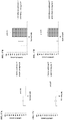
- the cells were incubated for 90 minutes in premix of the photosensitizer and 0.4 mg/mL human transferrin (or without transferrin, as a control group) as described above for in vitro PDT. Dark toxicity and PDT effect of the photosensitizers on AY27 cell line under 635 nm (90 J cm-2) irradiation in the absence and presence of transferrin in normoxic ( FIGS. 17A, 17B ) and hypoxic (0.5-0.1 % O 2 , FIGS. 17C, 17D ) conditions. The cells were incubated with the photosensitizer and transferrin for 90 minutes.
- transferrin ensured PDT effect (635 nm, 90 J cm-2) of Ruthenium (TLD1433) based photosensitizers on AY27 cancer cell line under hypoxic conditions. Transferrin induces PDT activity in hypoxia, which is not observed in the absence of transferrin. The presence of transferrin, therefore, allows for a greater efficacy of the Ruthenium-based photosensitizers during PDT treatment of bulky hypoxic tumors.
- the cells were incubated for 90 minutes in premix of the photosensitizer and 0.4 mg/mL human transferrin (or without transferrin, as a control group) as described above for in vitro PDT. Dark toxicity and PDT effect of the photosensitizers on AY27 cell line under 635 nm (90 J cm-2) irradiation in the absence and presence of transferrin in normoxic ( FIGS. 18A, 18B ) and hypoxic (0.5-0.1 % O 2 , FIGS. 18C, 18D ) conditions. The cells were incubated with the photosensitizer and transferrin for 90 minutes.
- transferrin ensured PDT effect (635 nm, 90 J cm-2) of Ruthenium-Rhodium (TLD143310) based photosensitizers on AY27 cancer cell line under hypoxic conditions. Transferrin induces PDT activity in hypoxia, which is not observed in the absence of transferrin. The presence of transferrin, therefore, allows for a greater efficacy of the Ruthenium-Rhodium-based photosensitizers during PDT treatment of bulky hypoxic tumors.
- the cells were incubated for 90 minutes in premix of the photosensitizer and 0.4 mg/mL human transferrin (or without transferrin, as a control group) as described above for in vitro PDT. Dark toxicity and PDT effect of the photosensitizers on AY27 cell line under 635 nm (90 J cm-2) irradiation in the absence and presence of transferrin in normoxic ( FIGS. 19A, 19B ) and hypoxic (0.5-0.1 % O 2 , FIGS. 19C, 19D ) conditions. The cells were incubated with the photosensitizer and transferrin for 90 minutes.
- transferrin ensured PDT effect (635 nm, 90 J cm-2) of Osmium (TLDOsH2dppn) based photosensitizers on AY27 cancer cell line under hypoxic conditions.
- Transferrin induces PDT activity in hypoxia, which is not observed in the absence of transferrin.
- the presence of transferrin therefore, allows for a greater efficacy of the Osmium-based photosensitizers during PDT treatment of bulky hypoxic tumors.
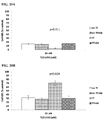
- the cells were incubated with anti-transferrin receptor antibody.
- the photosensitizer was pre-mixed in parallel with 0.4 mg/mL human transferrin and incubated for 1 hour at 37°C.
- control group no additional transferrin
- equivalent volume of no-transferrin medium was added.
- the cells were washed of the excess of antibody (the cells incubated in medium without antibody served as comparison groups) and incubated with the pre-mixes for 30 minutes. After that, the medium was replaced with a fresh one (without photosensitizer and transferrin) and the cells were irradiated.
- viability of the cells was measured using Presto Blue viability assay, and percent of cell kill was calculated.
- the PDT effect shown is a result of subtraction of "photosensitizer alone" and "light alone” cell kill from the total PDT cell kill. Dark toxicity is shown on FIG. 20A , PDT effect is shown on FIG. 20B .
- Blocking of transferrin receptors of AY27 cancer cells prevents decrease in dark toxicity and facilitation of PDT effect (635 nm, 90 J cm-2) of Ruthenium (TLD1433) based photosensitizers.
- the results support the role of transferrin-mediated uptake of Ruthenium-based photosensitizers in decrease of their dark toxicity and facilitation of their PDT effect.
- the cells were incubated with anti-transferrin antibody.
- the photosensitizer was pre-mixed in parallel with 0.4 mg/mL human transferrin and incubated for 1 hour at 37°C.
- control group no additional transferrin
- equivalent volume of no-transferrin medium was added.
- the cells were washed of the excess of antibody (the cells incubated in medium without antibody served as comparison groups) and incubated with the pre-mixes for 30 minutes. After that, the medium was replaced with a fresh one (without photosensitizer and transferrin) and the cells were irradiated.
- viability of the cells was measured using Presto Blue viability assay, and percent of cell kill was calculated.
- the PDT effect shown is a result of subtraction of "photosensitizer alone" and "light alone” cell kill from the total PDT cell kill. Dark toxicity is shown on FIG. 21A , PDT effect is shown on FIG. 21B .
- Blocking of transferrin receptors of AY27 cancer cells prevents decrease in dark toxicity and facilitation of PDT effect (635 nm, 90 J cm-2) of Ruthenium-Rhodium (TLD143310) based photosensitizers.
- the results support the role of transferrin-mediated uptake of Ruthenium-Rhodium based photosensitizers in decrease of their dark toxicity and facilitation of their PDT effect.
- the cells were incubated with anti-transferrin antibody.
- the photosensitizer was pre-mixed in parallel with 0.4 mg/mL human transferrin and incubated for 1 hour at 37°C.
- control group no additional transferrin
- equivalent volume of no-transferrin medium was added.
- the cells were washed of the excess of antibody (the cells incubated in medium without antibody served as comparison groups) and incubated with the pre-mixes for 30 minutes. After that, the medium was replaced with a fresh one (without photosensitizer and transferrin) and the cells were irradiated.
- viability of the cells was measured using Presto Blue viability assay, and percent of cell kill was calculated.
- the PDT effect shown is a result of subtraction of "photosensitizer alone" and "light alone” cell kill from the total PDT cell kill. Dark toxicity is shown in FIG. 22A , PDT effect is shown on FIG. 22B .
- Blocking of transferrin receptors of AY27 cancer cells prevents decrease in dark toxicity and facilitation of PDT effect (635 nm, 90 J cm-2) of Osmium (TLDOsH2dppn) based photosensitizers.
- the results support the role of transferrin-mediated uptake of Osmium-based photosensitizers in decrease of their dark toxicity and facilitation of their PDT effect.
- mice were injected (i.p.) with escalating doses of the photosensitizers with and without transferrin. Mixing of the photosensitizers with transferrin increased MTD which suggests a decrease in toxicity of the photosensitizers. For Ruthenium-based TLD1433, complete mouse survival was observed at 125mg/kg; higher doses are currently being tested.
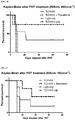
- Subcutaneous tumors were grown in mouse thighs and PDT (808nm, 600Jcm -2 ) was performed when tumor reached 5x5mm in size. Mice were sacrificed if tumor continued to grow after PDT treatment and reached 10x10mm. Controls had a maximum survival of 10 days.
- Transferrin increases mouse survival after PDT treatment with Ruthenium-based photosensitizer (TLD1433).
- the number of tumor free animals greatly increased when transferrin was added to Ruthenium-based TLD1433 before injection (in our data currently 8 days after PDT treatment, previous data has shown tumors will not reappear after this time, 70 days is assumed to remain tumor free).
- Subcutaneous tumors were grown in mouse thighs and PDT (808nm, 600Jcm -2 ) was performed when tumor reached 5x5mm in size. Mice were sacrificed if tumor continued to grow after PDT treatment and reached 10x10mm. Controls had a maximum survival of 10 days.
- Transferrin increases mouse survival after PDT treatment with Ruthenium-Rhodium-based photosensitizer (TLD143310) and Osmium-based (TLDOsH2dppn) photosensitizers.
- the number of tumor free animals greatly increased when transferrin was added to Ruthenium-Rhodium-based photosensitizer (TLD143310) and Osmium-based (TLDOsH2dppn) photosensitizers before injection. See Table 9 below.
- Subcutaneous tumors were grown in mouse thighs and PDT (635nm, 192Jcm -2 ) was performed when tumor reached 5x5mm in size. Mice were sacrificed if tumor continued to grow after PDT treatment and reached 10x10mm. Controls had a maximum survival of 10 days.
- Transferrin increases mouse survival after PDT treatment.
- the number of tumor free animals greatly increased when transferrin was added to TLD1433 before injection (expected results). See FIG. 27 .
- Subcutaneous tumors were grown in mouse thighs and PDT (635nm, 192Jcm -2 ) was performed when tumor reached 5x5mm in size. Mice were sacrificed if tumor continued to grow after PDT treatment and reached 10x10mm. Controls had a maximum survival of 10 days.
- Transferrin increases mouse survival after PDT treatment with Ruthenium-Rhodium-based photosensitizer (TLD143310) and Osmium-based (TLDOsH2dppn) photosensitizers.
- the number of tumor free animals greatly increased when transferrin was added to Ruthenium-Rhodium-based photosensitizer (TLD143310) and Osmium-based (TLDOsH2dppn) photosensitizers before injection. See Table 10.
- Subcutaneous tumors were grown in mouse thighs and PDT (525nm, 90Jcm -2 ) was performed when tumor reached 5x5mm in size. Mice were sacrificed if tumor continued to grow after PDT treatment and reached 10x10mm. Controls had a maximum survival of 10 days.
- Transferrin increases mouse survival after PDT treatment with Ruthenium-Rhodium-based photosensitizer (TLD143310) and Osmium-based (TLDOsH2dppn) photosensitizers.
- the number of tumor free animals greatly increased when transferrin was added to Ruthenium-Rhodium-based photosensitizer (TLD143310) and Osmium-based (TLDOsH2dppn) photosensitizers before injection. See Table 11.
- the optical density of TLD1433 was measured before and after the addition of either OPTIFERRIN (available from InVitria, a division of Ventria Bioscience) or human apo-transferrin (Sigma).
- OPTIFERRIN available from InVitria, a division of Ventria Bioscience
- human apo-transferrin Sigma
- FIG. 28 the TLD1433-OPTIFERRIN complex showed a substantial increase in optical density.
- the complex showed novel absorption in the red (600nm) and near infrared (800nm) wavelengths.
- the optical density of the OPTIFERRIN complex was comparable to that of the human apo-transferrin complex. This finding highlights the potential of using OPTIFERRIN to increase the efficacy of Theralase's TLD1433 photosensitizer.
- the increase in optical density will translate to a higher production of reactive oxygen species during PDT treatment.
- the absorption in red and near infrared light will allow for novel
- the optical density of Optiferrin and human apo-transferrin was measured before and after TLD1433 addition. Transferrin binding to iron is characterized by an increase in absorption at 275nm and 450nm. Much like human apo-transferrin, Optiferrin shows this characteristic optical density increase after TLD1433 addition, showing direct binding of TLD1433 to Optiferrin. See FIG. 29 . Direct binding of Optiferrin to TLD1433 can be utilized in the treatment of transferrin receptor rich tumors, where the Optiferrin+TLD1433 complex can be administered to achieve preferential uptake of TLD1433 in cancer cells.
- Example 42 Optiferrin binding with TLD1433 (14C TH2, GS6-22, and GS6-81G) and TH1 (Sky Blue)
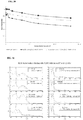
- 10uM TLD1433 GS6-22 was photobleached with 200J of green light (525nm) and its OD was measured at 0, 1, 2, 5, 10, 20, 50, 100, and 200 Joules. See Fig. 32 , which shows the ratio of Molar Extinction Coefficient increase or decrease at 350nm, 400nm, and 600nm between the initial time with 0 Joules, and the final time with 200 Joules.
Landscapes
- Health & Medical Sciences (AREA)
- Life Sciences & Earth Sciences (AREA)
- Animal Behavior & Ethology (AREA)
- Veterinary Medicine (AREA)
- Public Health (AREA)
- General Health & Medical Sciences (AREA)
- Chemical & Material Sciences (AREA)
- Epidemiology (AREA)
- Medicinal Chemistry (AREA)
- Pharmacology & Pharmacy (AREA)
- Engineering & Computer Science (AREA)
- Bioinformatics & Cheminformatics (AREA)
- Inorganic Chemistry (AREA)
- Biomedical Technology (AREA)
- Nuclear Medicine, Radiotherapy & Molecular Imaging (AREA)
- Molecular Biology (AREA)
- Immunology (AREA)
- Biochemistry (AREA)
- Zoology (AREA)
- Gastroenterology & Hepatology (AREA)
- Proteomics, Peptides & Aminoacids (AREA)
- Organic Chemistry (AREA)
- Chemical Kinetics & Catalysis (AREA)
- General Chemical & Material Sciences (AREA)
- Biophysics (AREA)
- Pathology (AREA)
- Radiology & Medical Imaging (AREA)
- Communicable Diseases (AREA)
- Oncology (AREA)
- Pharmaceuticals Containing Other Organic And Inorganic Compounds (AREA)
- Medicines That Contain Protein Lipid Enzymes And Other Medicines (AREA)
Claims (9)
- Composition comprenant :une glycoprotéine se liant à un métal ; etun composé chimiothérapeutique présentant une formule sélectionnée dans le groupe consistant en :a) une formule (I)
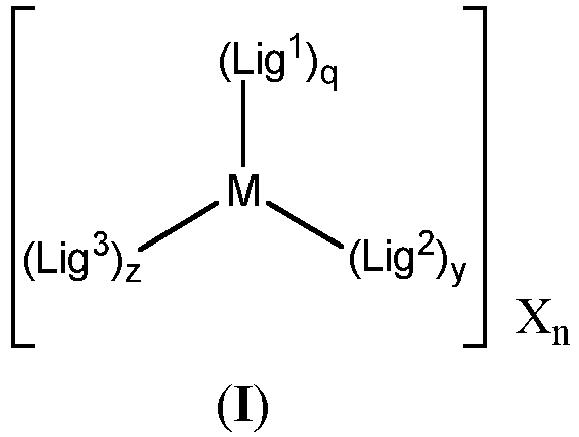 M à chaque occurrence est sélectionné indépendamment dans le groupe consistant en l'osmium, le ruthénium et le rhodium ;X est sélectionné dans le groupe consistant en Cl-, PF6 -, Br-, BF4 -, ClO4 -, CF3SO3 -, et SO4 -2 ;n = 0, 1, 2, 3, 4, ou 5 ;q est indépendamment à chaque occurrence 0, 1, ou 2 ;y est indépendamment à chaque occurrence 0, 1, ou 2 ;z est indépendamment à chaque occurrence 1, 2, ou 3 ;Lig1 est un ligand bidenté qui à chaque occurrence est sélectionné chacun indépendamment dans le groupe consistant en

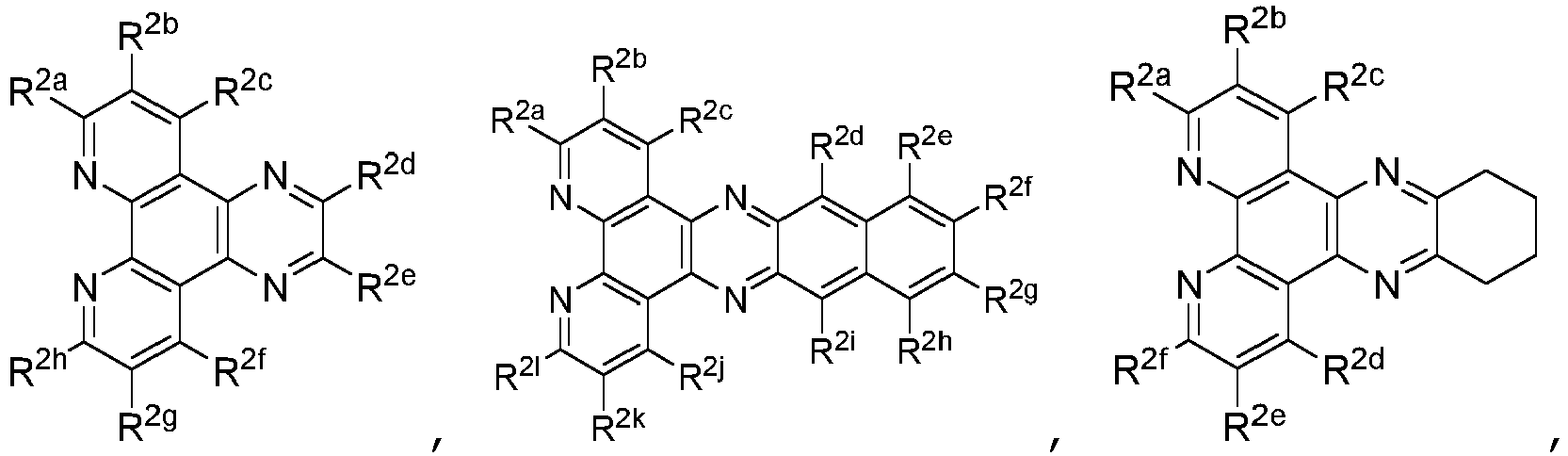

 Lig2 est un ligand bidenté qui à chaque occurrence est sélectionné chacun indépendamment dans le groupe consistant en


 Lig3 est un ligand bidenté qui à chaque occurrence est sélectionné chacun indépendamment dans le groupe consistant en
 R1 est sélectionné dans le groupe consistant en un hydrogène, un phényle, un aryle, un hétéroaryle, un 4-pyridyle, un 3-pyridyle, un 2-thiazole, un 2-pyrolyle, un 2-furanyle,




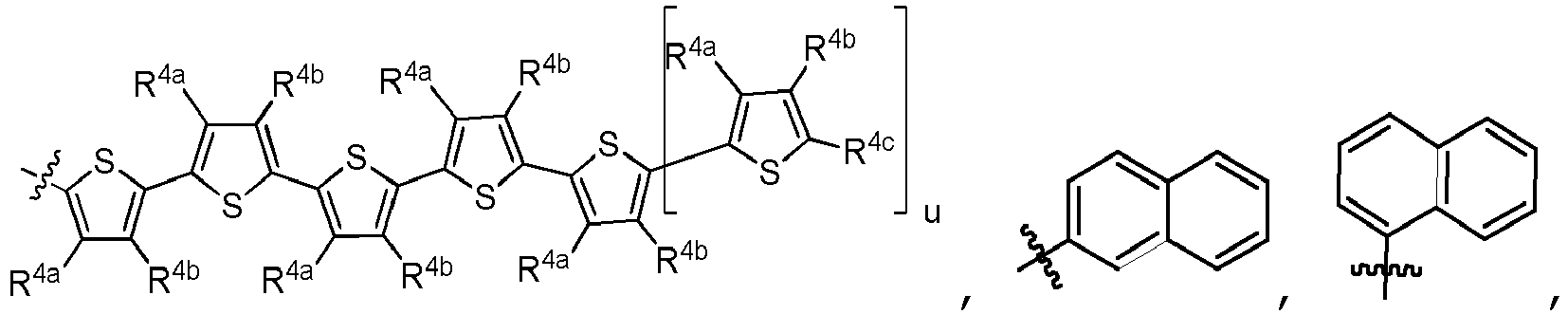
 u est un nombre entier ;R2a, R2b, R2c, R2d, R2e, R2f, R2g, R2h, R2i, R2j, R2k, et R2l à chaque occurrence sont sélectionnés chacun indépendamment dans le groupe consistant en un hydrogène, un alkyle en C1 à C6, un alkyle ramifié en C1 à C6, un cycloalkyle en C3 à C7, un haloalkyle en C1 à C6, un alcoxy en C1 à C6, CO2R5, CONR6 2, NR7 2, SO3H, un sulfate, un sulfonate, un aryle, un aryloxy, un hétéroaryle, et un hétérocycle ;R3a, R3b, R3c, R3d, R3e, R3f, R3g, R3h, R3i, R3j, R3k, et R3l à chaque occurrence sont sélectionnés chacun indépendamment dans le groupe consistant en un hydrogène, un alkyle en C1 à C6, un alkyle ramifié en C1 à C6, un haloalkyle en C1 à C6, un alcoxy en C1 à C6, un phényle, et CO2R8 ;R4a, R4b, et R4c à chaque occurrence sont sélectionnés chacun indépendamment dans le groupe consistant en un hydrogène, un alkyle en C1 à C6, un alkyle ramifié en C1 à C6, un cycloalkyle en C1 à C6, un haloalkyle en C1 à C6, un alcoxy en C1 à C6, CO2R5, CONR6 2, NR7 2, un sulfate, un sulfonate, un aryle, un aryloxy, un hétéroaryle, et un hétérocycle ;R4a et R4b à chaque occurrence sur un cycle thiophène sont pris ensemble avec l'atome auquel ils sont liés pour former un cycle ayant 6 atomes de cycle contenant 2 atomes d'oxygène ;les R5 à chaque occurrence sont sélectionnés chacun indépendamment dans le groupe consistant en un hydrogène et un alkyle ;les R6 à chaque occurrence sont sélectionnés chacun indépendamment dans le groupe consistant en un hydrogène et un alkyle ;les R7 à chaque occurrence sont sélectionnés chacun indépendamment dans le groupe consistant en un hydrogène et un alkyle ; etles R8 à chaque occurrence sont sélectionnés chacun indépendamment dans le groupe consistant en un hydrogène et un alkyle ;b) une formule (II)
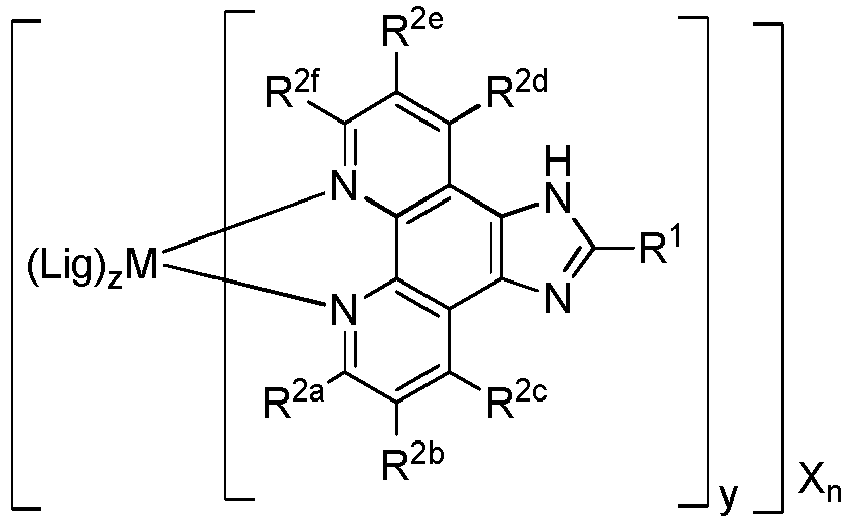 M est sélectionné dans le groupe consistant en le manganèse, le molybdène, le rhénium, le fer, le ruthénium, l'osmium, le cobalt, le rhodium, l'iridium, le nickel, le platine, et le cuivre ;X est sélectionné dans le groupe consistant en Cl-, PF6 -, Br-, BF4 -, ClO4 -, CF3SO3 -, et SO4 -2 ;n = 0, 1, 2, 3, 4, ou 5 ;y = 1, 2, ou 3 ;z = 0, 1, ou 2 ;Lig à chaque occurrence est sélectionné indépendamment dans le groupe consistant en

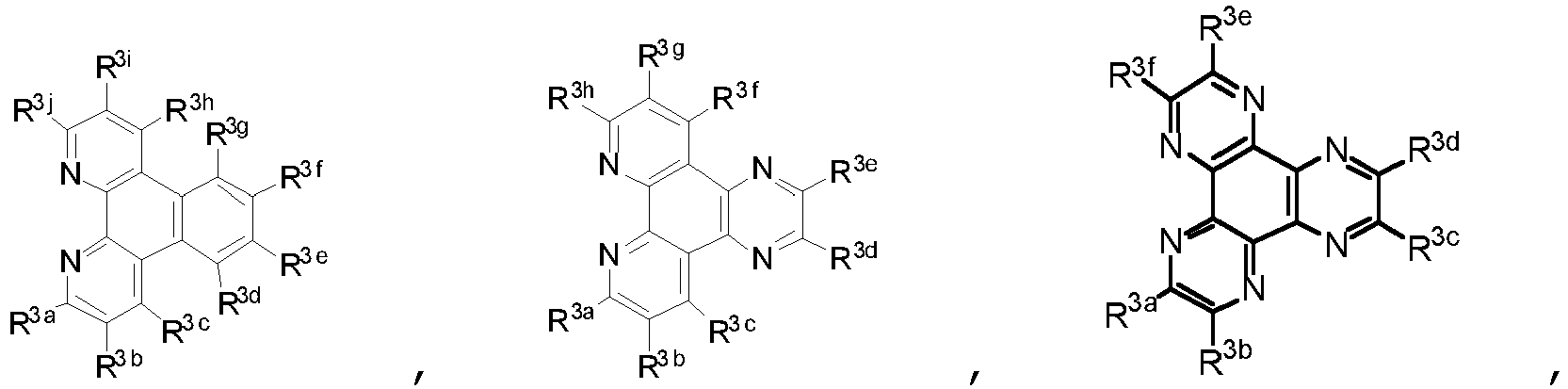

 R1 est sélectionné dans le groupe consistant en


 R2a, R2b, R2c, R2d, R2e, et R2f à chaque occurrence sont sélectionnés chacun indépendamment dans le groupe consistant en un hydrogène, un alkyle en C1 à C6, un alkyle ramifié en C1 à C6, un cycloalkyle en C3 à C7, un haloalkyle en C1 à C6, un alcoxy en C1 à C6, CO2R5, CONR6 2, NR7 2, un sulfate, un sulfonate, un aryle, un aryloxy, un hétéroaryle, et un hétérocycle ;R3a, R3b, R3c, R3d, R3e, R3f, R3g, R3h, R3i, R3j, R3k, R3l, et R3m à chaque occurrence sont sélectionnés chacun indépendamment dans le groupe consistant en un hydrogène, un alkyle en C1 à C6, un alkyle ramifié en C1 à C6, un haloalkyle en C1 à C6, un alcoxy en C1 à C6, et CO2R8 ;R4a, R4b, et R4c à chaque occurrence sont sélectionnés chacun indépendamment dans le groupe consistant en un hydrogène, un alkyle en C1 à C6, un alkyle ramifié en C1 à C6, un cycloalkyle en C1 à C6, un haloalkyle en C1 à C6, un alcoxy en C1 à C6, CO2R5, CONR6 2, NR7 2, un sulfate, un sulfonate, un aryle, un aryloxy, un hétéroaryle, et un hétérocycle ;R4a et R4b à chaque occurrence sur un cycle thiophène sont pris ensemble avec l'atome auquel ils sont liés pour former un cycle ayant 6 atomes de cycle contenant 2 atomes d'oxygène ;R5 à chaque occurrence est sélectionné indépendamment dans le groupe consistant en un hydrogène et un alkyle ;R6 à chaque occurrence est sélectionné indépendamment dans le groupe consistant en un hydrogène et un alkyle ;R7 à chaque occurrence est sélectionné indépendamment dans le groupe consistant en un hydrogène et un alkyle ; etR8 à chaque occurrence est sélectionné indépendamment dans le groupe consistant en un hydrogène et un alkyle,dans laquelle la composition présente au moins l'une des propriétés améliorées suivantes par rapport au composé chimiothérapeutique sans la glycoprotéine : (a) une absorption accrue par les cellules cancéreuses ; (b) une absorption accrue par les tumeurs ; (c) une efficacité accrue aux longueurs d'onde supérieures à 600 nm ; (d) une efficacité accrue aux longueurs d'onde inférieures ou égales à 600 nm ; (e) une absorbance améliorée aux longueurs d'onde supérieures à 600 nm ; (f) une absorbance améliorée aux longueurs d'onde inférieures ou égales à 600 nm ; (g) une production accrue d'espèces réactives de l'oxygène ; (h) une augmentation de l'effet d'une thérapie photodynamique dans des conditions non hypoxiques ; (i) une augmentation de l'effet d'une thérapie photodynamique dans des conditions hypoxiques ; (j) une augmentation de la DL50 ; (k) une augmentation du MTD ; (l) une augmentation de la photostabilité ; et (m) une augmentation de la durée de conservation.
 - Composition selon la revendication 1, dans laquelle la glycoprotéine se liant à un métal est une transferrine et le composé chimiothérapeutique présente la formule (I).
- Composition selon la revendication 1, dans laquelle la glycoprotéine se liant à un métal est une transferrine et le composé chimiothérapeutique présente la formule (II).
- Composition selon la revendication 3, dans laquelle M est membre sélectionné dans le groupe consistant en Ru, Rh et Os.
- Composition selon la revendication 1, dans laquelle la glycoprotéine se liant à un métal est une transferrine humaine recombinante.
- Composition selon la revendication 1 pour une utilisation dans le traitement d'une maladie associée à des cellules hyperprolifératives, ledit traitement comprenant l'administration à un sujet présentant la maladie d'une quantité efficace de la composition selon la revendication 1 pour traiter la maladie.
- Composition selon la revendication 6 pour une utilisation dans le traitement d'une maladie associée à des cellules hyperprolifératives, ledit traitement comprenant :l'administration à un sujet présentant la maladie d'une quantité efficace de la composition selon la revendication 1 ; etl'irradiation du sujet avec une lumière efficace pour activer la composition afin de traiter la maladie.
- Procédé in vitro de destruction d'une cellule microbienne, ledit procédé comprenant la mise en contact de la cellule microbienne avec une quantité efficace de la composition selon la revendication 1 afin de détruire la cellule microbienne.
- Procédé de destruction d'une cellule microbienne selon la revendication 8, ledit procédé comprenant :la mise en contact de la cellule microbienne avec une quantité efficace de la composition selon la revendication 1 ; etl'irradiation de la cellule microbienne avec une lumière efficace pour activer la composition afin de détruire la cellule microbienne.
Applications Claiming Priority (3)
| Application Number | Priority Date | Filing Date | Title |
|---|---|---|---|
| US201562105080P | 2015-01-19 | 2015-01-19 | |
| US201562166120P | 2015-05-25 | 2015-05-25 | |
| PCT/IB2016/050253 WO2016116859A1 (fr) | 2015-01-19 | 2016-01-19 | Complexes de métalloglycoprotéines et leur utilisation comme composés chimiothérapeutiques |
Publications (3)
| Publication Number | Publication Date |
|---|---|
| EP3247397A1 EP3247397A1 (fr) | 2017-11-29 |
| EP3247397A4 EP3247397A4 (fr) | 2018-06-20 |
| EP3247397B1 true EP3247397B1 (fr) | 2021-05-19 |
Family
ID=56406990
Family Applications (1)
| Application Number | Title | Priority Date | Filing Date |
|---|---|---|---|
| EP16739852.8A Active EP3247397B1 (fr) | 2015-01-19 | 2016-01-19 | Complexes de métalloglycoprotéines et leur utilisation comme composés chimiothérapeutiques |
Country Status (7)
| Country | Link |
|---|---|
| US (1) | US9737565B2 (fr) |
| EP (1) | EP3247397B1 (fr) |
| CN (2) | CN117159705A (fr) |
| BR (1) | BR112017015499A2 (fr) |
| CA (1) | CA2974329C (fr) |
| RU (1) | RU2742981C2 (fr) |
| WO (1) | WO2016116859A1 (fr) |
Families Citing this family (21)
| Publication number | Priority date | Publication date | Assignee | Title |
|---|---|---|---|---|
| US10569097B2 (en) | 2015-07-28 | 2020-02-25 | Photonmd, Inc. | Systems and methods for phototherapeutic modulation of nitric oxide |
| US12109429B2 (en) | 2015-07-28 | 2024-10-08 | Know Bio, Llc | Phototherapeutic light for treatment of pathogens |
| US10335608B2 (en) | 2016-04-20 | 2019-07-02 | Theralase Technologies, Inc. | Photodynamic compounds and methods for activating them using ionizing radiation and/or other electromagnetic radiation for therapy and/or diagnostics |
| US10994077B2 (en) | 2016-07-21 | 2021-05-04 | Tandem Diabetes Care, Inc. | Enhanced confirmations for touchscreen infusion pump |
| US11464798B2 (en) | 2017-05-11 | 2022-10-11 | Theralase Technologies Inc. | Vaccine containing cancer cells inactivated by photodynamic treatment with metal-based coordination complexes, and immunotherapy method using same |
| US10781226B2 (en) | 2017-10-19 | 2020-09-22 | Texas State University | Photoactivatable cancer prodrug |
| CN107812189B (zh) * | 2017-11-03 | 2020-12-08 | 南京师范大学 | 一种主动靶向特定肿瘤细胞的竹红菌素纳米制剂及其制备方法和应用 |
| CA3038108C (fr) * | 2018-03-26 | 2024-06-25 | Theralase Technologies, Inc. | Methode de traitement d'etats associes a des cellules hyperproliferatives comprenant l'administration combinee d'un agoniste du recepteur de cannabinoide et de la radiotherapie |
| US12570665B2 (en) | 2019-06-10 | 2026-03-10 | University Of Massachusetts | Compositions comprising fullerenyl mesochlorin nano-photosensitizers with covalently bound antibiotics and their uses in combination therapy |
| US12447354B2 (en) | 2020-03-19 | 2025-10-21 | Know Bio, Llc | Illumination devices for inducing biological effects |
| US12011611B2 (en) | 2020-03-19 | 2024-06-18 | Know Bio, Llc | Illumination devices for inducing biological effects |
| US11147984B2 (en) | 2020-03-19 | 2021-10-19 | Know Bio, Llc | Illumination devices for inducing biological effects |
| US11986666B2 (en) | 2020-03-19 | 2024-05-21 | Know Bio, Llc | Illumination devices for inducing biological effects |
| US12311190B2 (en) | 2020-08-31 | 2025-05-27 | Theralase Technologies Inc. | Apparatus and method for irradiating inside an object |
| US12347337B2 (en) | 2020-12-10 | 2025-07-01 | Know Bio, Llc | Enhanced testing and characterization techniques for phototherapeutic light treatments |
| CN112544613B (zh) * | 2020-12-25 | 2022-08-16 | 武汉睿健医药科技有限公司 | 一种多能干细胞冻存液、其应用及冻存方法 |
| US12115384B2 (en) | 2021-03-15 | 2024-10-15 | Know Bio, Llc | Devices and methods for illuminating tissue to induce biological effects |
| US11654294B2 (en) | 2021-03-15 | 2023-05-23 | Know Bio, Llc | Intranasal illumination devices |
| CN114558148B (zh) * | 2022-03-18 | 2024-03-08 | 郑州大学 | 一种肿瘤“开关型”纳米光疗系统的制备方法及应用 |
| CN116570731A (zh) * | 2023-05-29 | 2023-08-11 | 清源创新实验室 | 一种集成靶向、可控给药和光声成像的近红外/谷胱甘肽双响应纳米胶囊及其制备方法 |
| CN119330967B (zh) * | 2024-12-20 | 2025-04-25 | 中国药科大学 | 一种met转录抑制剂及其制备方法和应用 |
Family Cites Families (12)
| Publication number | Priority date | Publication date | Assignee | Title |
|---|---|---|---|---|
| JP2004532245A (ja) | 2001-05-15 | 2004-10-21 | ページ ダブル フォーク | 癌を治療するための生体影響性化合物の標的送達 |
| JP2005502618A (ja) | 2001-06-04 | 2005-01-27 | ザ・ジェネラル・ホスピタル・コーポレイション | 光力学的化合物を用いて脆弱なプラークを検出および治療する方法 |
| US6962910B2 (en) | 2002-02-01 | 2005-11-08 | Virginia Tech Intellectual Properties, Inc. | Supramolecular complexes as photoactivated DNA cleavage agents |
| US8207211B2 (en) | 2005-02-28 | 2012-06-26 | The General Hospital Corporation | Photosensitizers for targeted photodynamic therapy |
| DE102006024528A1 (de) * | 2006-05-23 | 2007-11-29 | Albupharm Heidelberg Gmbh & Co. Kg | Neue, an der Tumorphysiologie orientierte Formulierung eines Zytostatikums, insbesondere von cis-Platin |
| US8148360B2 (en) | 2006-09-07 | 2012-04-03 | Virginia Tech Intellectual Properties, Inc. | Supramolecular metallic complexes exhibiting both DNA binding and photocleavage |
| US20110288023A1 (en) | 2007-06-08 | 2011-11-24 | The Regents Of The University Of California Office Of Technology Transfer | Cancer drug delivery using modified transferrin |
| CA2739626A1 (fr) | 2010-05-07 | 2011-11-07 | Ventria Bioscience | Transferrine non glycosylee exprimee dans les monocotyledones |
| US8916205B2 (en) | 2011-08-11 | 2014-12-23 | Quest Pharmatech Inc. | Polymeric nanoparticles for photosensitizers |
| US9345769B2 (en) * | 2012-04-15 | 2016-05-24 | Sherri Ann McFARLAND | Metal-based thiophene photodynamic compounds and their use |
| BR112015023568B8 (pt) * | 2013-03-15 | 2024-01-02 | Ann Mcfarland Sherri | Composto à base de metal como composto fotodinâmico |
| CN104072607B (zh) * | 2013-03-29 | 2019-01-15 | 中国科学院化学研究所 | 一种有机金属钌缀合蛋白及其制备方法与应用 |
-
2016
- 2016-01-19 EP EP16739852.8A patent/EP3247397B1/fr active Active
- 2016-01-19 CN CN202310364757.8A patent/CN117159705A/zh active Pending
- 2016-01-19 CA CA2974329A patent/CA2974329C/fr active Active
- 2016-01-19 WO PCT/IB2016/050253 patent/WO2016116859A1/fr not_active Ceased
- 2016-01-19 BR BR112017015499A patent/BR112017015499A2/pt not_active Application Discontinuation
- 2016-01-19 RU RU2017129587A patent/RU2742981C2/ru active
- 2016-01-19 US US15/000,651 patent/US9737565B2/en active Active
- 2016-01-19 CN CN201680015646.4A patent/CN107427579A/zh active Pending
Non-Patent Citations (1)
| Title |
|---|
| None * |
Also Published As
| Publication number | Publication date |
|---|---|
| WO2016116859A1 (fr) | 2016-07-28 |
| US20160206653A1 (en) | 2016-07-21 |
| BR112017015499A2 (pt) | 2018-01-30 |
| CA2974329C (fr) | 2018-10-02 |
| CA2974329A1 (fr) | 2016-07-28 |
| CN117159705A (zh) | 2023-12-05 |
| RU2017129587A (ru) | 2019-02-21 |
| US9737565B2 (en) | 2017-08-22 |
| CN107427579A (zh) | 2017-12-01 |
| RU2017129587A3 (fr) | 2019-02-21 |
| EP3247397A4 (fr) | 2018-06-20 |
| RU2742981C2 (ru) | 2021-02-12 |
| EP3247397A1 (fr) | 2017-11-29 |
Similar Documents
| Publication | Publication Date | Title |
|---|---|---|
| EP3247397B1 (fr) | Complexes de métalloglycoprotéines et leur utilisation comme composés chimiothérapeutiques | |
| Zhou et al. | In vivo metallophilic self-assembly of a light-activated anticancer drug | |
| Sun et al. | Cascade reactions by nitric oxide and hydrogen radical for anti-hypoxia photodynamic therapy using an activatable photosensitizer | |
| Wang et al. | Enhancing fractionated cancer therapy: a triple-anthracene photosensitizer unleashes long-persistent photodynamic and luminous efficacy | |
| Guo et al. | Mito‐bomb: targeting mitochondria for cancer therapy | |
| Mariño‐Ocampo et al. | Recent photosensitizer developments, delivery strategies and combination‐based approaches for photodynamic therapy | |
| Liu et al. | Functionalization and cancer-targeting design of ruthenium complexes for precise cancer therapy | |
| Shi et al. | Diazido platinum (IV) complexes for photoactivated anticancer chemotherapy | |
| Dickerson et al. | Light-sensitive ruthenium complex-loaded cross-linked polymeric nanoassemblies for the treatment of cancer | |
| Gandosio et al. | Recent approaches towards the development of Ru (II) polypyridyl complexes for anticancer photodynamic therapy | |
| Karges et al. | Ru (II) polypyridine complex-functionalized mesoporous silica nanoparticles as photosensitizers for cancer targeted photodynamic therapy | |
| Su et al. | Photothermal-driven disassembly of naphthalocyanine nano-photosensitizers for photothermal and photodynamic therapy | |
| Zheng et al. | Rational modulation of BODIPY photosensitizers to design metal–organic framework-based NIR nanocomposites for high-efficiency photodynamic therapy in a hypoxic environment | |
| Hu et al. | Mitochondria and endoplastic reticulum targeting strategy for enhanced phototherapy | |
| US10111936B2 (en) | Metal-glycoprotein complexes and photodynamic therapy of immune privileged sites with same | |
| Repetowski et al. | Synthesis, photo-characterizations, and pre-clinical studies on advanced cellular and animal models of zinc (II) and platinum (II) sulfonyl-substituted phthalocyanines for enhanced vascular-targeted photodynamic therapy | |
| Wang et al. | Enhanced sonodynamic therapy for deep tumors using a self-assembled organoplatinum (II) sonosensitizer | |
| Zhu et al. | A self-immobilizing photosensitizer with long-term retention for hypoxia imaging and enhanced photodynamic therapy | |
| Yalçın et al. | Synthesis of axially disubstituted quaternized silicon phthalocyanines as a promising photosensitizer for the photodynamic treatment of HCT-116, A549 and SH-SY5Y cancer cell lines | |
| Wang et al. | Dual pathways of photorelease carbon monoxide via photosensitization for tumor treatment | |
| Rajan et al. | Advancing photodynamic therapy with nano-conjugated hypocrellin: mechanisms and clinical applications | |
| Vinck et al. | In Situ Bioconjugation of a Maleimide-Functionalized Ruthenium-Based Photosensitizer to Albumin for Photodynamic Therapy | |
| Shen et al. | Pillar [5] arene-based supramolecular nano-photosensitizer enhances cancer therapeutic effectiveness by generating multiple hypertoxic reactive species | |
| Tan et al. | ROS-catalytic self-amplifying benzothiophenazine-based photosensitive conjugates for photodynamic-immuno therapy | |
| Gao et al. | Conformation-driven fluorocarbon-powered zinc (II) phthalocyanine for photodynamic therapy in hypoxic tumors via anti-aggregation, oxygen retention, and enhanced cellular uptake |
Legal Events
| Date | Code | Title | Description |
|---|---|---|---|
| STAA | Information on the status of an ep patent application or granted ep patent |
Free format text: STATUS: THE INTERNATIONAL PUBLICATION HAS BEEN MADE |
|
| PUAI | Public reference made under article 153(3) epc to a published international application that has entered the european phase |
Free format text: ORIGINAL CODE: 0009012 |
|
| STAA | Information on the status of an ep patent application or granted ep patent |
Free format text: STATUS: REQUEST FOR EXAMINATION WAS MADE |
|
| 17P | Request for examination filed |
Effective date: 20170821 |
|
| AK | Designated contracting states |
Kind code of ref document: A1 Designated state(s): AL AT BE BG CH CY CZ DE DK EE ES FI FR GB GR HR HU IE IS IT LI LT LU LV MC MK MT NL NO PL PT RO RS SE SI SK SM TR |
|
| AX | Request for extension of the european patent |
Extension state: BA ME |
|
| DAV | Request for validation of the european patent (deleted) | ||
| DAX | Request for extension of the european patent (deleted) | ||
| RAP1 | Party data changed (applicant data changed or rights of an application transferred) |
Owner name: THERALASE TECHNOLOGIES INC. |
|
| A4 | Supplementary search report drawn up and despatched |
Effective date: 20180524 |
|
| RIC1 | Information provided on ipc code assigned before grant |
Ipc: C07D 213/04 20060101ALI20180514BHEP Ipc: C07D 471/22 20060101ALI20180514BHEP Ipc: A61K 31/498 20060101ALI20180514BHEP Ipc: C07D 487/04 20060101ALI20180514BHEP Ipc: C07D 487/14 20060101ALI20180514BHEP Ipc: A61K 41/00 20060101AFI20180514BHEP Ipc: A61P 31/00 20060101ALI20180514BHEP Ipc: C07D 239/24 20060101ALI20180514BHEP Ipc: A61K 38/40 20060101ALI20180514BHEP Ipc: C07D 401/14 20060101ALI20180514BHEP Ipc: A61K 33/24 20060101ALI20180514BHEP Ipc: C07K 14/79 20060101ALI20180514BHEP Ipc: C07D 471/14 20060101ALI20180514BHEP Ipc: C07D 215/02 20060101ALI20180514BHEP Ipc: A61P 35/00 20060101ALI20180514BHEP Ipc: C07D 471/04 20060101ALI20180514BHEP |
|
| STAA | Information on the status of an ep patent application or granted ep patent |
Free format text: STATUS: EXAMINATION IS IN PROGRESS |
|
| 17Q | First examination report despatched |
Effective date: 20190410 |
|
| GRAP | Despatch of communication of intention to grant a patent |
Free format text: ORIGINAL CODE: EPIDOSNIGR1 |
|
| STAA | Information on the status of an ep patent application or granted ep patent |
Free format text: STATUS: GRANT OF PATENT IS INTENDED |
|
| INTG | Intention to grant announced |
Effective date: 20201209 |
|
| GRAS | Grant fee paid |
Free format text: ORIGINAL CODE: EPIDOSNIGR3 |
|
| GRAA | (expected) grant |
Free format text: ORIGINAL CODE: 0009210 |
|
| STAA | Information on the status of an ep patent application or granted ep patent |
Free format text: STATUS: THE PATENT HAS BEEN GRANTED |
|
| AK | Designated contracting states |
Kind code of ref document: B1 Designated state(s): AL AT BE BG CH CY CZ DE DK EE ES FI FR GB GR HR HU IE IS IT LI LT LU LV MC MK MT NL NO PL PT RO RS SE SI SK SM TR |
|
| REG | Reference to a national code |
Ref country code: GB Ref legal event code: FG4D |
|
| REG | Reference to a national code |
Ref country code: CH Ref legal event code: EP |
|
| REG | Reference to a national code |
Ref country code: DE Ref legal event code: R096 Ref document number: 602016058045 Country of ref document: DE |
|
| REG | Reference to a national code |
Ref country code: AT Ref legal event code: REF Ref document number: 1393357 Country of ref document: AT Kind code of ref document: T Effective date: 20210615 |
|
| REG | Reference to a national code |
Ref country code: IE Ref legal event code: FG4D |
|
| REG | Reference to a national code |
Ref country code: LT Ref legal event code: MG9D |
|
| REG | Reference to a national code |
Ref country code: AT Ref legal event code: MK05 Ref document number: 1393357 Country of ref document: AT Kind code of ref document: T Effective date: 20210519 |
|
| REG | Reference to a national code |
Ref country code: NL Ref legal event code: MP Effective date: 20210519 |
|
| PG25 | Lapsed in a contracting state [announced via postgrant information from national office to epo] |
Ref country code: HR Free format text: LAPSE BECAUSE OF FAILURE TO SUBMIT A TRANSLATION OF THE DESCRIPTION OR TO PAY THE FEE WITHIN THE PRESCRIBED TIME-LIMIT Effective date: 20210519 Ref country code: BG Free format text: LAPSE BECAUSE OF FAILURE TO SUBMIT A TRANSLATION OF THE DESCRIPTION OR TO PAY THE FEE WITHIN THE PRESCRIBED TIME-LIMIT Effective date: 20210819 Ref country code: AT Free format text: LAPSE BECAUSE OF FAILURE TO SUBMIT A TRANSLATION OF THE DESCRIPTION OR TO PAY THE FEE WITHIN THE PRESCRIBED TIME-LIMIT Effective date: 20210519 Ref country code: LT Free format text: LAPSE BECAUSE OF FAILURE TO SUBMIT A TRANSLATION OF THE DESCRIPTION OR TO PAY THE FEE WITHIN THE PRESCRIBED TIME-LIMIT Effective date: 20210519 Ref country code: FI Free format text: LAPSE BECAUSE OF FAILURE TO SUBMIT A TRANSLATION OF THE DESCRIPTION OR TO PAY THE FEE WITHIN THE PRESCRIBED TIME-LIMIT Effective date: 20210519 |
|
| PG25 | Lapsed in a contracting state [announced via postgrant information from national office to epo] |
Ref country code: SE Free format text: LAPSE BECAUSE OF FAILURE TO SUBMIT A TRANSLATION OF THE DESCRIPTION OR TO PAY THE FEE WITHIN THE PRESCRIBED TIME-LIMIT Effective date: 20210519 Ref country code: RS Free format text: LAPSE BECAUSE OF FAILURE TO SUBMIT A TRANSLATION OF THE DESCRIPTION OR TO PAY THE FEE WITHIN THE PRESCRIBED TIME-LIMIT Effective date: 20210519 Ref country code: PT Free format text: LAPSE BECAUSE OF FAILURE TO SUBMIT A TRANSLATION OF THE DESCRIPTION OR TO PAY THE FEE WITHIN THE PRESCRIBED TIME-LIMIT Effective date: 20210920 Ref country code: NO Free format text: LAPSE BECAUSE OF FAILURE TO SUBMIT A TRANSLATION OF THE DESCRIPTION OR TO PAY THE FEE WITHIN THE PRESCRIBED TIME-LIMIT Effective date: 20210819 Ref country code: PL Free format text: LAPSE BECAUSE OF FAILURE TO SUBMIT A TRANSLATION OF THE DESCRIPTION OR TO PAY THE FEE WITHIN THE PRESCRIBED TIME-LIMIT Effective date: 20210519 Ref country code: GR Free format text: LAPSE BECAUSE OF FAILURE TO SUBMIT A TRANSLATION OF THE DESCRIPTION OR TO PAY THE FEE WITHIN THE PRESCRIBED TIME-LIMIT Effective date: 20210820 Ref country code: IS Free format text: LAPSE BECAUSE OF FAILURE TO SUBMIT A TRANSLATION OF THE DESCRIPTION OR TO PAY THE FEE WITHIN THE PRESCRIBED TIME-LIMIT Effective date: 20210919 Ref country code: LV Free format text: LAPSE BECAUSE OF FAILURE TO SUBMIT A TRANSLATION OF THE DESCRIPTION OR TO PAY THE FEE WITHIN THE PRESCRIBED TIME-LIMIT Effective date: 20210519 |
|
| PG25 | Lapsed in a contracting state [announced via postgrant information from national office to epo] |
Ref country code: NL Free format text: LAPSE BECAUSE OF FAILURE TO SUBMIT A TRANSLATION OF THE DESCRIPTION OR TO PAY THE FEE WITHIN THE PRESCRIBED TIME-LIMIT Effective date: 20210519 |
|
| PG25 | Lapsed in a contracting state [announced via postgrant information from national office to epo] |
Ref country code: SK Free format text: LAPSE BECAUSE OF FAILURE TO SUBMIT A TRANSLATION OF THE DESCRIPTION OR TO PAY THE FEE WITHIN THE PRESCRIBED TIME-LIMIT Effective date: 20210519 Ref country code: SM Free format text: LAPSE BECAUSE OF FAILURE TO SUBMIT A TRANSLATION OF THE DESCRIPTION OR TO PAY THE FEE WITHIN THE PRESCRIBED TIME-LIMIT Effective date: 20210519 Ref country code: DK Free format text: LAPSE BECAUSE OF FAILURE TO SUBMIT A TRANSLATION OF THE DESCRIPTION OR TO PAY THE FEE WITHIN THE PRESCRIBED TIME-LIMIT Effective date: 20210519 Ref country code: EE Free format text: LAPSE BECAUSE OF FAILURE TO SUBMIT A TRANSLATION OF THE DESCRIPTION OR TO PAY THE FEE WITHIN THE PRESCRIBED TIME-LIMIT Effective date: 20210519 Ref country code: CZ Free format text: LAPSE BECAUSE OF FAILURE TO SUBMIT A TRANSLATION OF THE DESCRIPTION OR TO PAY THE FEE WITHIN THE PRESCRIBED TIME-LIMIT Effective date: 20210519 Ref country code: RO Free format text: LAPSE BECAUSE OF FAILURE TO SUBMIT A TRANSLATION OF THE DESCRIPTION OR TO PAY THE FEE WITHIN THE PRESCRIBED TIME-LIMIT Effective date: 20210519 Ref country code: ES Free format text: LAPSE BECAUSE OF FAILURE TO SUBMIT A TRANSLATION OF THE DESCRIPTION OR TO PAY THE FEE WITHIN THE PRESCRIBED TIME-LIMIT Effective date: 20210519 |
|
| REG | Reference to a national code |
Ref country code: DE Ref legal event code: R097 Ref document number: 602016058045 Country of ref document: DE |
|
| PLBE | No opposition filed within time limit |
Free format text: ORIGINAL CODE: 0009261 |
|
| STAA | Information on the status of an ep patent application or granted ep patent |
Free format text: STATUS: NO OPPOSITION FILED WITHIN TIME LIMIT |
|
| 26N | No opposition filed |
Effective date: 20220222 |
|
| PG25 | Lapsed in a contracting state [announced via postgrant information from national office to epo] |
Ref country code: IS Free format text: LAPSE BECAUSE OF FAILURE TO SUBMIT A TRANSLATION OF THE DESCRIPTION OR TO PAY THE FEE WITHIN THE PRESCRIBED TIME-LIMIT Effective date: 20210919 Ref country code: AL Free format text: LAPSE BECAUSE OF FAILURE TO SUBMIT A TRANSLATION OF THE DESCRIPTION OR TO PAY THE FEE WITHIN THE PRESCRIBED TIME-LIMIT Effective date: 20210519 |
|
| PG25 | Lapsed in a contracting state [announced via postgrant information from national office to epo] |
Ref country code: IT Free format text: LAPSE BECAUSE OF FAILURE TO SUBMIT A TRANSLATION OF THE DESCRIPTION OR TO PAY THE FEE WITHIN THE PRESCRIBED TIME-LIMIT Effective date: 20210519 |
|
| PG25 | Lapsed in a contracting state [announced via postgrant information from national office to epo] |
Ref country code: MC Free format text: LAPSE BECAUSE OF FAILURE TO SUBMIT A TRANSLATION OF THE DESCRIPTION OR TO PAY THE FEE WITHIN THE PRESCRIBED TIME-LIMIT Effective date: 20210519 |
|
| REG | Reference to a national code |
Ref country code: CH Ref legal event code: PL |
|
| REG | Reference to a national code |
Ref country code: BE Ref legal event code: MM Effective date: 20220131 |
|
| PG25 | Lapsed in a contracting state [announced via postgrant information from national office to epo] |
Ref country code: LU Free format text: LAPSE BECAUSE OF NON-PAYMENT OF DUE FEES Effective date: 20220119 |
|
| PG25 | Lapsed in a contracting state [announced via postgrant information from national office to epo] |
Ref country code: BE Free format text: LAPSE BECAUSE OF NON-PAYMENT OF DUE FEES Effective date: 20220131 |
|
| PG25 | Lapsed in a contracting state [announced via postgrant information from national office to epo] |
Ref country code: LI Free format text: LAPSE BECAUSE OF NON-PAYMENT OF DUE FEES Effective date: 20220131 Ref country code: CH Free format text: LAPSE BECAUSE OF NON-PAYMENT OF DUE FEES Effective date: 20220131 |
|
| PG25 | Lapsed in a contracting state [announced via postgrant information from national office to epo] |
Ref country code: IE Free format text: LAPSE BECAUSE OF NON-PAYMENT OF DUE FEES Effective date: 20220119 |
|
| P01 | Opt-out of the competence of the unified patent court (upc) registered |
Effective date: 20230503 |
|
| PG25 | Lapsed in a contracting state [announced via postgrant information from national office to epo] |
Ref country code: HU Free format text: LAPSE BECAUSE OF FAILURE TO SUBMIT A TRANSLATION OF THE DESCRIPTION OR TO PAY THE FEE WITHIN THE PRESCRIBED TIME-LIMIT; INVALID AB INITIO Effective date: 20160119 |
|
| PG25 | Lapsed in a contracting state [announced via postgrant information from national office to epo] |
Ref country code: MK Free format text: LAPSE BECAUSE OF FAILURE TO SUBMIT A TRANSLATION OF THE DESCRIPTION OR TO PAY THE FEE WITHIN THE PRESCRIBED TIME-LIMIT Effective date: 20210519 Ref country code: CY Free format text: LAPSE BECAUSE OF FAILURE TO SUBMIT A TRANSLATION OF THE DESCRIPTION OR TO PAY THE FEE WITHIN THE PRESCRIBED TIME-LIMIT Effective date: 20210519 |
|
| PG25 | Lapsed in a contracting state [announced via postgrant information from national office to epo] |
Ref country code: TR Free format text: LAPSE BECAUSE OF FAILURE TO SUBMIT A TRANSLATION OF THE DESCRIPTION OR TO PAY THE FEE WITHIN THE PRESCRIBED TIME-LIMIT Effective date: 20210519 |
|
| PG25 | Lapsed in a contracting state [announced via postgrant information from national office to epo] |
Ref country code: MT Free format text: LAPSE BECAUSE OF FAILURE TO SUBMIT A TRANSLATION OF THE DESCRIPTION OR TO PAY THE FEE WITHIN THE PRESCRIBED TIME-LIMIT Effective date: 20210519 |
|
| PGFP | Annual fee paid to national office [announced via postgrant information from national office to epo] |
Ref country code: GB Payment date: 20260122 Year of fee payment: 11 |
|
| PGFP | Annual fee paid to national office [announced via postgrant information from national office to epo] |
Ref country code: DE Payment date: 20260122 Year of fee payment: 11 |
|
| PGFP | Annual fee paid to national office [announced via postgrant information from national office to epo] |
Ref country code: FR Payment date: 20260121 Year of fee payment: 11 |