EP3248077B1 - Procédé et système de commande d'une installation de traitement mettant en oeuvre des données de transition - Google Patents
Procédé et système de commande d'une installation de traitement mettant en oeuvre des données de transition Download PDFInfo
- Publication number
- EP3248077B1 EP3248077B1 EP16702451.2A EP16702451A EP3248077B1 EP 3248077 B1 EP3248077 B1 EP 3248077B1 EP 16702451 A EP16702451 A EP 16702451A EP 3248077 B1 EP3248077 B1 EP 3248077B1
- Authority
- EP
- European Patent Office
- Prior art keywords
- transition
- process variable
- steady state
- variable
- data
- Prior art date
- Legal status (The legal status is an assumption and is not a legal conclusion. Google has not performed a legal analysis and makes no representation as to the accuracy of the status listed.)
- Active
Links
Images


Classifications
-
- G—PHYSICS
- G05—CONTROLLING; REGULATING
- G05B—CONTROL OR REGULATING SYSTEMS IN GENERAL; FUNCTIONAL ELEMENTS OF SUCH SYSTEMS; MONITORING OR TESTING ARRANGEMENTS FOR SUCH SYSTEMS OR ELEMENTS
- G05B19/00—Program-control systems
- G05B19/02—Program-control systems electric
- G05B19/418—Total factory control, i.e. centrally controlling a plurality of machines, e.g. direct or distributed numerical control [DNC], flexible manufacturing systems [FMS], integrated manufacturing systems [IMS] or computer integrated manufacturing [CIM]
- G05B19/41875—Total factory control, i.e. centrally controlling a plurality of machines, e.g. direct or distributed numerical control [DNC], flexible manufacturing systems [FMS], integrated manufacturing systems [IMS] or computer integrated manufacturing [CIM] characterised by quality surveillance of production
-
- G—PHYSICS
- G05—CONTROLLING; REGULATING
- G05B—CONTROL OR REGULATING SYSTEMS IN GENERAL; FUNCTIONAL ELEMENTS OF SUCH SYSTEMS; MONITORING OR TESTING ARRANGEMENTS FOR SUCH SYSTEMS OR ELEMENTS
- G05B13/00—Adaptive control systems, i.e. systems automatically adjusting themselves to have a performance which is optimum according to some preassigned criterion
- G05B13/02—Adaptive control systems, i.e. systems automatically adjusting themselves to have a performance which is optimum according to some preassigned criterion electric
- G05B13/04—Adaptive control systems, i.e. systems automatically adjusting themselves to have a performance which is optimum according to some preassigned criterion electric involving the use of models or simulators
- G05B13/042—Adaptive control systems, i.e. systems automatically adjusting themselves to have a performance which is optimum according to some preassigned criterion electric involving the use of models or simulators in which a parameter or coefficient is automatically adjusted to optimise the performance
-
- G—PHYSICS
- G05—CONTROLLING; REGULATING
- G05B—CONTROL OR REGULATING SYSTEMS IN GENERAL; FUNCTIONAL ELEMENTS OF SUCH SYSTEMS; MONITORING OR TESTING ARRANGEMENTS FOR SUCH SYSTEMS OR ELEMENTS
- G05B19/00—Program-control systems
- G05B19/02—Program-control systems electric
- G05B19/04—Program control other than numerical control, i.e. in sequence controllers or logic controllers
- G05B19/042—Program control other than numerical control, i.e. in sequence controllers or logic controllers using digital processors
- G05B19/0426—Programming the control sequence
-
- G—PHYSICS
- G05—CONTROLLING; REGULATING
- G05B—CONTROL OR REGULATING SYSTEMS IN GENERAL; FUNCTIONAL ELEMENTS OF SUCH SYSTEMS; MONITORING OR TESTING ARRANGEMENTS FOR SUCH SYSTEMS OR ELEMENTS
- G05B19/00—Program-control systems
- G05B19/02—Program-control systems electric
- G05B19/04—Program control other than numerical control, i.e. in sequence controllers or logic controllers
- G05B19/05—Programmable logic controllers, e.g. simulating logic interconnections of signals according to ladder diagrams or function charts
- G05B19/056—Programming the PLC
-
- G—PHYSICS
- G05—CONTROLLING; REGULATING
- G05B—CONTROL OR REGULATING SYSTEMS IN GENERAL; FUNCTIONAL ELEMENTS OF SUCH SYSTEMS; MONITORING OR TESTING ARRANGEMENTS FOR SUCH SYSTEMS OR ELEMENTS
- G05B23/00—Testing or monitoring of control systems or parts thereof
- G05B23/02—Electric testing or monitoring
- G05B23/0205—Electric testing or monitoring by means of a monitoring system capable of detecting and responding to faults
- G05B23/0218—Electric testing or monitoring by means of a monitoring system capable of detecting and responding to faults characterised by the fault detection method dealing with either existing or incipient faults
- G05B23/0224—Process history based detection method, e.g. whereby history implies the availability of large amounts of data
- G05B23/0227—Qualitative history assessment, whereby the type of data acted upon, e.g. waveforms, images or patterns, is not relevant, e.g. rule based assessment; if-then decisions
- G05B23/0235—Qualitative history assessment, whereby the type of data acted upon, e.g. waveforms, images or patterns, is not relevant, e.g. rule based assessment; if-then decisions based on a comparison with predetermined threshold or range, e.g. "classical methods", carried out during normal operation; threshold adaptation or choice; when or how to compare with the threshold
-
- G—PHYSICS
- G05—CONTROLLING; REGULATING
- G05B—CONTROL OR REGULATING SYSTEMS IN GENERAL; FUNCTIONAL ELEMENTS OF SUCH SYSTEMS; MONITORING OR TESTING ARRANGEMENTS FOR SUCH SYSTEMS OR ELEMENTS
- G05B17/00—Systems involving the use of models or simulators of said systems
- G05B17/02—Systems involving the use of models or simulators of said systems electric
-
- G—PHYSICS
- G05—CONTROLLING; REGULATING
- G05B—CONTROL OR REGULATING SYSTEMS IN GENERAL; FUNCTIONAL ELEMENTS OF SUCH SYSTEMS; MONITORING OR TESTING ARRANGEMENTS FOR SUCH SYSTEMS OR ELEMENTS
- G05B2219/00—Program-control systems
- G05B2219/10—Plc systems
- G05B2219/11—Plc I-O input output
- G05B2219/1171—Detect only input variation, changing, transition state of variable
-
- G—PHYSICS
- G05—CONTROLLING; REGULATING
- G05B—CONTROL OR REGULATING SYSTEMS IN GENERAL; FUNCTIONAL ELEMENTS OF SUCH SYSTEMS; MONITORING OR TESTING ARRANGEMENTS FOR SUCH SYSTEMS OR ELEMENTS
- G05B23/00—Testing or monitoring of control systems or parts thereof
- G05B23/02—Electric testing or monitoring
- G05B23/0205—Electric testing or monitoring by means of a monitoring system capable of detecting and responding to faults
- G05B23/0218—Electric testing or monitoring by means of a monitoring system capable of detecting and responding to faults characterised by the fault detection method dealing with either existing or incipient faults
- G05B23/0224—Process history based detection method, e.g. whereby history implies the availability of large amounts of data
- G05B23/024—Quantitative history assessment, e.g. mathematical relationships between available data; Functions therefor; Principal component analysis [PCA]; Partial least square [PLS]; Statistical classifiers, e.g. Bayesian networks, linear regression or correlation analysis; Neural networks
-
- Y—GENERAL TAGGING OF NEW TECHNOLOGICAL DEVELOPMENTS; GENERAL TAGGING OF CROSS-SECTIONAL TECHNOLOGIES SPANNING OVER SEVERAL SECTIONS OF THE IPC; TECHNICAL SUBJECTS COVERED BY FORMER USPC CROSS-REFERENCE ART COLLECTIONS [XRACs] AND DIGESTS
- Y02—TECHNOLOGIES OR APPLICATIONS FOR MITIGATION OR ADAPTATION AGAINST CLIMATE CHANGE
- Y02P—CLIMATE CHANGE MITIGATION TECHNOLOGIES IN THE PRODUCTION OR PROCESSING OF GOODS
- Y02P90/00—Enabling technologies with a potential contribution to greenhouse gas [GHG] emissions mitigation
- Y02P90/02—Total factory control, e.g. smart factories, flexible manufacturing systems [FMS] or integrated manufacturing systems [IMS]
Definitions
- the present invention relates to control systems and industrial automation. More particularly, the present invention relates to utilising transition data for controlling processes.
- grade identifies a set of product specifications, such as sheet weight, sheet calliper, sheet brightness, sheet colour, etc.
- the process in which the process line, which is initially configured to produce sheets of one specification, is transitioned to produce sheets of another specification is referred to as a grade change or a transition.
- transitions are defined as a change of output parameter of a process due to a notable shift in the operating point or parameters of the process.
- the shift or change in the operating point by the plant control that is interfaced with the various controllers and other devices in the plant.
- the plant control system automates the operational set points of various functional components of the continuous process to ensure the product is produced in accordance with the new product specification identified by the grade change or transition.
- US 2007/0250214 describes that a process state is classified into three fuzzy variables, i.e., "Rapid Transition”, “Slow Transition”, and “Steady State”. Based on current process dynamics and reference trajectories, a proper period of historical data to perform statistical analysis is determined. The process state is then designated as “Rapid Transition”, “Slow Transition”, and “Steady State” based on the statistical test results. For example, the coefficient of variation has been found to work well for this particular purpose.
- US 2002/128731 A1 describes an improved empirical model-based surveillance or control system for monitoring or controlling a process or machine provides identification of transitions between operational states. Empirical model-based estimates generated in response to receiving actual operational parameters are compared using a global similarity operator to the actual parameters to indicate whether the process or machine is operating in a stable state, or is in transition from one state to another.
- the present invention discloses a method according to independent claim 1 for controlling a process in a process plant using a controller and a system according to independent claim 5 for controlling a process in a process plant.
- the process plant includes one or more field devices.
- the process is in a first steady state wherein the controller controls the process within first operating region.
- the process is in a second steady state wherein the controller controls the process within second operating region.
- the process undergoes a transition between the first steady state and second steady state.
- the method comprises receiving process data from at least field device in relation to a first process variable associated with the process, determining a first value of at least one key performance indicator associated with the transition from the process data from at least one field device between the first steady state and the second steady state, comparing the determined first value of the at least one key performance indicator against a threshold value associated with the at least one key performance indicator, and determining a correction factor for a process variable to be corrected based on comparison.
- the method further comprises receiving process data of a second process variable associated with the process, comparing the process data of the first process variable and the process data of the second process variable against a model of transition.
- the at least one key performance indicator is one of time period between start of transition and end of transition, percentage of overshoot in transition, number of oscillations in transition, gradient of transition. In yet another embodiment, the at least one key performance indicator is based on a weighted average of one or more of time period between start of transition and end of transition, percentage of overshoot in transition, number of oscillations in transition, gradient of transition.
- a system for controlling a process in a process plant comprising one or more field devices, a controller operatively coupled to the one or more field devices to control the process based on one or more predetermined set points, a historian configured to store historic process data, and a server communicatively coupled to the controller and the historian.
- the server is configured to receive process data from at least field device in relation to one or more process variable associated with the process, determine a first value of at least one key performance indicator associated with the transition from the process data of a first process variable between the first steady state and the second steady state, compare the determined first value of the at least one key performance indicator against a threshold value associated with the at least one key performance indicator, and determine a correction factor for a process variable to be corrected based on comparison of the first value of the at least one key performing indicator and the threshold value for controlling the process in the process plant.
- Figure 1 illustrates a system 100 for controlling a process using a controller 115 of a control system 110 in a process plant.
- the controller 115 is connected to a plurality of field devices (130, 140 and 150) for controlling a rolling and drying section 160 of the process plant on the basis of the set points stored in the controller 115.
- the plurality of field devices (130, 140 and 150) includes one or more sensors (shown in the figure as sensor 130 and sensor 140) located in various areas of the section 160 for measuring process variables associated with the process. These process variables are herein referred to as measured process variables.
- the controller 115 receives measurements in relation to one or more process variables from the sensors 130 and 140 for regulating the process in the rolling and drying section 160.
- the plurality of field devices includes one or more actuators (shown in the figure as valve 150) which regulate various physical parameters in relation to the process in the section 160.
- the one or more actuators including the valve 150 are operatively coupled to the controller 115.
- the controller 115 operates the one or more actuators to regulate the process in the rolling and drying section 160 on the basis of the measurements from the sensors and the set points.
- the controller 115 is communicatively coupled to a server 120 via communication channel 175.
- the controller 115 transmits the measurements of the one or more process variables from the field devices to the server 120.
- the server 120 is configured to receive the measurements of the one or more process variables (also referred to as process data) from the controller 115 and determine a first steady state, a second steady state and a transition between the first and second steady in the process data. Then the server 120 determines a first value of at least one key performance indicator associated with the transition from the process data.
- the server 120 compares the determined first value of the at least one key performance indicator against a threshold value associated with the at least one key performance indicator and determines a correction factor for modifying a process variable to be corrected based on comparison of the first value of the at least one key performing indicator and the threshold value associated with the at least one key performance indicator for controlling the process in the process plant.
- the server 120 upon determining the correction factor, sends the correction factor to the controller 115 which accordingly, corrects the set point of the corresponding process variable to be corrected on the basis of the recommended correction factor. In another embodiment, the server 120 sends the correction factor in relation to the process variable to be corrected to an upstream device or a downstream device to take necessary regulatory action.
- control system 110 includes a historian 170.
- the historian 170 is configured to store historic process data.
- the server 120 utilizes the historic data to determine the threshold value associated with the at least one key performance indicator.
- the server 120 analyses historic process data of a plurality of process variables.
- the server 120 identifies a plurality of transitions between the first steady state and the second steady state, determines a statistical parameter or statistical representative value such as mean value associated with the at least one key performance indicator determined from the plurality of transitions, and sets the threshold value to the determined statistical representative value, which in the current example, is the determined mean value.
- the server 120 is configured to receive proves data of a second process variable from a second field device. Then the server 120 compares the process data of the first process variable and the process data of the second process variable to a model of transition to determine the process variable to be corrected.
- the model of transition is a multivariate principal component analysis model used to determine the process variable to be corrected by identifying whether the first process variable or the second process variable or combination thereof contributed to the transition being abnormal.
- the server 120 builds the model of the transition by utilizing the historic process data of the first and second process variables.
- the server 120 determines a plurality of transitions from the historic process data. Then the server 120 determines at least one key performance indicator for each of the transition from the plurality of transitions.
- the server 120 selects a set of transitions whose value of at least one key performance indicator is above a particular threshold or below a particular threshold as needed.
- the server 120 utilizes the process data during these selected transitions to build the model of transition.
- the server 120 is connected to directly or indirectly (via an I/O interface or a relay interface) to the one or more field devices for receiving the process data.
- the historian 170 is a part of the server 120.
- the statistical methods utilized above to explain the system are merely illustrative and can be substituted by a plurality of conventionally known statistical methods.
- the principal component analysis model can be substituted by a regression model, partial least squares (PLS) model.
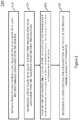
- Figure 2 illustrates a method 200 for controlling a process using a controller 115 in the process plant, in accordance with various embodiments of the present invention.
- the current method is detailed below and is explained using exemplary graphs of process data of the process variable basis weight (shown in graph 310), process variable reel moisture (shown in graph 320) and the process variable size moisture (shown in graph 330) illustrated in figure 3 .
- the process is in a first steady state where the controller 115 controls the process within first operating region.
- the term steady state herein refers to a period of time where the values of the process variables are uniform or substantially uniform i.e. within a band or range of threshold values. Referring to figure 3 , it can be seen that the process is at a first steady state till instance of time T1, as all the three exemplary process variables (basis weight, size moisture and reel moisture) are relatively stable.
- the process is in a second steady state where the controller 115 controls the process within second operating region.
- the grade of the resultant product from the process of the rolling and drying section 160 is changed. Accordingly, the operating point of the controller 115 is modified. Therefore, the process undergoes a transition between the first steady state and second steady state.
- the process has stabilised and is in a second steady state, as all the three exemplary process variables basis weight, reel moisture and size moisture are relatively stable after T2.
- the server 120 determines that a transition has taken place between instance of time T1 and instance of time T2.
- the server 120 receives process data of from a first field device in relation to a first process variable associated with the process.
- the server 120 continuously receives process data of the field devices (130, 140 and 150) through the controller 115.
- the server 120 continuously receives process data associated with basis weight, reel moisture and size moisture.
- the server 120 continuously determines a rate of change or gradient for each variable for all three process variables. Immediately after or at T1, the rate of change of value the process variables reel moisture and size moisture are above a predetermined threshold value, and accordingly the server 120 determines that a transition has started. Similarly, at T2, the rate of change for all the process variables are below the predetermined threshold value and accordingly, the server 120 decides that the transition has ended.
- the server 120 determines a first value of at least one key performance indicator associated with the transition from the process data of the first process variable.
- key performance indicator refers to a score or a grade indicative of the profile of the transition as seen in the process variable.
- key performance indicator includes, but is not limited to, transition time i.e. time taken to go from first steady state to second steady state, percentage of overshoot, smoothness index, number of oscillations as seen in the process data of the at least one process variable, etc.
- the smoothness index is determined by server 120 by fitting a quadratic path between the end instance of the first steady state and the beginning instance of the second steady state as seen from the process data of the first process variable, and then by quantifying the deviation of the first process variable from the quadratic path during the transition. Similarly, by using N order paths between the end instance of the first steady state and the beginning instance of the second steady state, the deviation of the first process variable can be quantified.
- one or more values of the key performance indicator are calculated from process data of the one or more process variables.
- the server 120 calculates the value of percentage of overshoot for basic weight, reel moisture and size moisture from the corresponding process data of basic weight, reel moisture and size moisture between T1 and T2.
- the server 120 compares the determined first value of the at least one key performance indicator against the threshold value associated at least one key performance indicator. Continuing the above mentioned example, the server 120 compares the three first values of the percentage of the overshoot against the threshold value of the percentage of overshoot.
- the at least one key performance indicator is based on a weighted average of one or more of time period between start of transition and end of transition, percentage of overshoot in transition, number of oscillations in transition, gradient of transition.
- the server 120 determines a correction factor for modifying a set point of the process variable stored in the controller for controlling the process in the process plant.
- the server 120 calculates a correction factor for a set point of a process variable used by the controller on the basis of the difference between the three first values and the three threshold value.
- the server 120 is configured to receive process data of a second process variable. The server 120 then compares the process data of the first process variable and the process data of the second process variable between the first steady state and the second steady state to a model of transition. When there are one or more process variables, server 120 is configured to determine the influence of each process variable in the transition using the model of transition.
- the server 120 determines the influence of reel moisture, size moisture, and basis weight on the transition between T1 and T2 by performing a principal component analysis using a multivariate model of transition generated from historic process data of the three variables.
- the server 120 is configured to perform the above mentioned method using offline process data of one or more process variables taken from field devices across a batch operation or a predetermined period of time in case of a continuous operation.
- the server 120 utilises the above mentioned rate of change to determine a plurality of steady states and a plurality of transitions in the process data of the one or more variables. Subsequent to detection of all the steady states, the server 120 clusters all steady states that are similar to each other into groups or clusters. Then the server 120 calculates a transition matrix map.
- Transition Map is a matrix which shows the number of transitions that have been taken place between any two non-clustered Steady states. The number of transitions that take place between every steady state and the other steady state is counted and stored as the cell element in the transition matrix. Then the server 120 considers the transitions between those steady states that have a large number of transitions (more than a predetermined threshold). Accordingly, the server 120 applies the above mentioned method to the selected transitions.
- the current invention allows for utilization of process data during transition for effective and efficient control of the process.
- the system 100 can accordingly regulate the process.
Landscapes
- Engineering & Computer Science (AREA)
- Physics & Mathematics (AREA)
- Automation & Control Theory (AREA)
- General Physics & Mathematics (AREA)
- Manufacturing & Machinery (AREA)
- Quality & Reliability (AREA)
- General Engineering & Computer Science (AREA)
- Artificial Intelligence (AREA)
- Evolutionary Computation (AREA)
- Computer Vision & Pattern Recognition (AREA)
- Mathematical Physics (AREA)
- Medical Informatics (AREA)
- Health & Medical Sciences (AREA)
- Software Systems (AREA)
- Feedback Control In General (AREA)
- Management, Administration, Business Operations System, And Electronic Commerce (AREA)
- General Factory Administration (AREA)
- Testing And Monitoring For Control Systems (AREA)
Claims (5)
- Procédé (200) pour commander un processus dans une installation de processus ayant un ou plusieurs dispositifs de champ (130, 140 et 150) en utilisant un système de commande (110) ayant un contrôleur (115), le processus incluant un premier état d'équilibre dans lequel le contrôleur (115) commande le processus à l'intérieur d'une première région d'exploitation, un deuxième état d'équilibre dans lequel le contrôleur (115) commande le processus à l'intérieur d'une deuxième région d'exploitation, et une transition entre le premier état d'équilibre et le deuxième état d'équilibre, dans lequel le procédé, en utilisant le système de commande (110), comprend :(i) la réception de données de processus depuis au moins un dispositif de champ par rapport à une première variable de processus et une deuxième variable de processus associées au processus ;(ii) la détermination d'une première valeur d'au moins un indicateur de performance clé à partir des données de processus d'au moins l'une parmi la première variable de processus et la deuxième variable de processus entre le premier état d'équilibre et le deuxième état d'équilibre, dans lequel l'au moins un indicateur de performance clé est indicatif d'un profil de la transition ;(iii) la comparaison de la première valeur à une première valeur seuil correspondant à l'au moins un indicateur de performance clé dans lequel la première valeur seuil est calculée à partir d'une ou plusieurs transitions provenant de données de processus historiques de la première variable de processus ;(iv) la comparaison des données de processus de la première variable de processus et des données de processus de la deuxième variable de processus entre le premier état d'équilibre et le deuxième état d'équilibre à un modèle de transition (125),
dans lequel une influence de la première variable de processus et de la deuxième variable de processus dans la transition est déterminée en utilisant le modèle de transition ;(v) la détermination d'une variable de processus à corriger par la comparaison des données de processus de la première variable de processus et des données de processus de la deuxième variable de processus au modèle de transition en identifiant si la première variable de processus ou la deuxième variable de processus ou une combinaison de celles-ci a contribué à rendre la transition anormale ; et(vi) la détermination d'un facteur de correction pour la variable de processus à corriger, sur la base d'une comparaison de la première valeur de l'au moins un indicateur de performance clé à la première valeur seuil pour commander le processus dans l'installation de processus (100). - Procédé selon la revendication 1, dans lequel l'au moins un indicateur de performance clé est l'un parmi une période de temps entre le début de transition et la fin de transition, un pourcentage de dépassement lors de la transition, un nombre d'oscillations lors de la transition, un gradient de transition.
- Procédé selon la revendication 1, dans lequel l'au moins un indicateur de performance clé est basé sur une moyenne pondérée d'un ou plusieurs parmi une période de temps entre le début de transition et la fin de transition, un pourcentage de dépassement lors de la transition, un nombre d'oscillations lors de la transition, un gradient de transition.
- Procédé selon la revendication 1, comprenant en outre(i) la transmission du facteur de correction au contrôleur (115), et(ii) la modification d'un point de consigne de la variable de processus à corriger par le facteur de correction.
- Système (100) pour commander un processus dans une installation de processus, le processus incluant un premier état d'équilibre, un deuxième état d'équilibre, et une transition entre le premier état d'équilibre et le deuxième état d'équilibre, le système comprenant :(i) un ou plusieurs dispositifs de champ (130, 140 et 150) ;(ii) un contrôleur (115) couplé fonctionnellement au ou aux dispositifs de champ pour commander le processus ;(iii) un historien (170) configuré pour stocker des données de processus historiques associées à une ou plusieurs variables de processus ; et(iv) un serveur (120) couplé par communications avec le contrôleur et l'historien (170), le serveur (120) configuré poura. recevoir des données de processus depuis au moins dispositif de champ en rapport avec une première variable de processus et une deuxième variable de processus associées au processus ;b. déterminer une première valeur d'au moins un indicateur de performance clé associé à la transition des données de processus d'au moins l'une parmi la première variable de processus et la deuxième variable de processus, entre le premier état d'équilibre et le deuxième état d'équilibre ;c. comparer la première valeur déterminée de l'au moins un indicateur de performance clé par rapport à une valeur seuil associée à l'au moins un indicateur de performance clé ;d. comparer les données de processus de la première variable de processus et les données de processus de la deuxième variable de processus entre le premier état d'équilibre et le deuxième état d'équilibre à un modèle de transition (125), dans lequel une influence de la première variable de processus et de la deuxième variable de processus dans la transition est déterminée en utilisant le modèle de transition ;e. déterminer une variable de processus à corriger par la comparaison des données de processus de la première variable de processus et des données de processus de la deuxième variable de processus au modèle de transition en identifiant si la première variable de processus ou la deuxième variable de processus ou une combinaison de celles-ci a contribué à rendre la transition anormale ;f. déterminer un facteur de correction pour la variable de processus à corriger sur la base d'une comparaison de la première valeur de l'au moins un indicateur de performance clé et de la valeur seuil pour commander le processus dans l'installation de processus (100).
Applications Claiming Priority (2)
| Application Number | Priority Date | Filing Date | Title |
|---|---|---|---|
| IN6549CH2014 | 2015-01-24 | ||
| PCT/IB2016/050322 WO2016116896A1 (fr) | 2015-01-24 | 2016-01-22 | Procédé de commande d'une installation de traitement mettant en œuvre des données de transition |
Publications (2)
| Publication Number | Publication Date |
|---|---|
| EP3248077A1 EP3248077A1 (fr) | 2017-11-29 |
| EP3248077B1 true EP3248077B1 (fr) | 2020-09-02 |
Family
ID=55273307
Family Applications (1)
| Application Number | Title | Priority Date | Filing Date |
|---|---|---|---|
| EP16702451.2A Active EP3248077B1 (fr) | 2015-01-24 | 2016-01-22 | Procédé et système de commande d'une installation de traitement mettant en oeuvre des données de transition |
Country Status (4)
| Country | Link |
|---|---|
| US (1) | US10606251B2 (fr) |
| EP (1) | EP3248077B1 (fr) |
| CN (1) | CN107407917B (fr) |
| WO (1) | WO2016116896A1 (fr) |
Families Citing this family (3)
| Publication number | Priority date | Publication date | Assignee | Title |
|---|---|---|---|---|
| JP6504089B2 (ja) * | 2016-03-10 | 2019-04-24 | 横河電機株式会社 | 工程監視装置、工程監視システム、工程監視方法、工程監視プログラム及び記録媒体 |
| EP3792708A1 (fr) * | 2019-09-10 | 2021-03-17 | L'air Liquide, Societe Anonyme Pour L'etude Et L'exploitation Des Procedes Georges Claude | Détermination de paramètres de fonctionnement pertinents dans une installation industrielle |
| JP7454419B2 (ja) * | 2020-03-25 | 2024-03-22 | 三菱重工業株式会社 | プラント運転データ監視装置及び方法 |
Family Cites Families (14)
| Publication number | Priority date | Publication date | Assignee | Title |
|---|---|---|---|---|
| US6438430B1 (en) * | 1996-05-06 | 2002-08-20 | Pavilion Technologies, Inc. | Kiln thermal and combustion control |
| CA2301829C (fr) * | 1998-07-21 | 2008-07-08 | Dofasco Inc. | Systeme base sur un modele statistique a plusieurs variables pour controler le fonctionnement d'une machine de coulee continue et detecter l'apparition de ruptures imminentes |
| GB0005866D0 (en) * | 2000-03-10 | 2000-05-03 | Borealis Polymers Oy | Process control system |
| US8280533B2 (en) * | 2000-06-20 | 2012-10-02 | Fisher-Rosemount Systems, Inc. | Continuously scheduled model parameter based adaptive controller |
| US6885975B2 (en) * | 2000-11-14 | 2005-04-26 | Rajagopalan Srinivasan | Method and apparatus for managing process transitions |
| US6859739B2 (en) * | 2001-01-19 | 2005-02-22 | Smartsignal Corporation | Global state change indicator for empirical modeling in condition based monitoring |
| US6901300B2 (en) * | 2002-02-07 | 2005-05-31 | Fisher-Rosemount Systems, Inc.. | Adaptation of advanced process control blocks in response to variable process delay |
| US7624003B2 (en) * | 2005-01-10 | 2009-11-24 | Applied Materials, Inc. | Split-phase chamber modeling for chamber matching and fault detection |
| US20070250214A1 (en) * | 2006-04-20 | 2007-10-25 | Shu-Yee Lee | Method and apparatus for fuzzy logic control enhancing advanced process control performance |
| WO2008014341A1 (fr) * | 2006-07-25 | 2008-01-31 | Fisher-Rosemount Systems, Inc. | Procédés et systems de detection de deviation d'un variable de procédé de valeurs prévues |
| US7856280B2 (en) * | 2006-08-02 | 2010-12-21 | Emerson Process Management Power & Water Solutions, Inc. | Process control and optimization technique using immunological concepts |
| WO2012042363A1 (fr) * | 2010-10-01 | 2012-04-05 | Abb Research Ltd | Procédé et système permettant un étalonnage énergétique pour une analyse de l'écart pour une usine de l'industrie papetière |
| US20140336984A1 (en) * | 2013-05-13 | 2014-11-13 | Abb Technology Ag. | Conditional monitoring of industrial systems |
| CN103699514B (zh) * | 2014-01-14 | 2017-12-15 | 中国能源建设集团广东省电力设计研究院有限公司 | 一种火力发电厂水处理流程稳态检测及运行工况判别方法 |
-
2016
- 2016-01-22 EP EP16702451.2A patent/EP3248077B1/fr active Active
- 2016-01-22 CN CN201680007033.6A patent/CN107407917B/zh active Active
- 2016-01-22 US US15/545,722 patent/US10606251B2/en active Active
- 2016-01-22 WO PCT/IB2016/050322 patent/WO2016116896A1/fr not_active Ceased
Non-Patent Citations (1)
| Title |
|---|
| None * |
Also Published As
| Publication number | Publication date |
|---|---|
| CN107407917A (zh) | 2017-11-28 |
| US10606251B2 (en) | 2020-03-31 |
| CN107407917B (zh) | 2019-11-22 |
| US20180004193A1 (en) | 2018-01-04 |
| EP3248077A1 (fr) | 2017-11-29 |
| WO2016116896A1 (fr) | 2016-07-28 |
Similar Documents
| Publication | Publication Date | Title |
|---|---|---|
| US11604442B2 (en) | Predictive monitoring and diagnostics systems and methods | |
| JP5696171B2 (ja) | 制御パラメータ調整方法、制御パラメータ調整システム及び制御パラメータ設定装置 | |
| US20130139520A1 (en) | Method for monitoring a control device of a fuel metering valve of a turbojet engine | |
| US20020019722A1 (en) | On-line calibration process | |
| US20220179402A1 (en) | Method and device for analyzing a sequential process | |
| US10606251B2 (en) | Method for controlling a process plant using transition data | |
| JP2017120532A (ja) | 機械の保全計画を作成する予防保全管理システム | |
| US12140939B2 (en) | Physical model identification system | |
| KR100598398B1 (ko) | 센서 데이터의 보정방법 및 인터락 시스템의 인터락평가방법 | |
| US12222711B2 (en) | Method for determining model parameters of a production model of a film extrusion line | |
| WO2019076785A1 (fr) | Procédé et dispositif de régulation d'un processus à l'intérieur d'un système, en particulier d'un processus de broyage dans un dispositif de broyage | |
| US11086277B2 (en) | System and method for determining the parameters of a controller | |
| JP7000738B2 (ja) | 品質監視システム及びプログラム | |
| US11360453B2 (en) | Method for operating a system | |
| US20220137606A1 (en) | Method and System for Controlling Performance of a Batch Process in an Industrial Plant | |
| KR20180025251A (ko) | 설계 평가 지원 시스템 | |
| CN106940206A (zh) | 用于故障识别和监视的方法和系统 | |
| US12377453B2 (en) | Determining a sensitivity of a target variable of a rolling material from an operating variable of a hot rolling mill | |
| Wakitani et al. | Design and experimental evaluation of a performance-driven adaptive controller | |
| WO2017162815A1 (fr) | Procédé de commande, système de commande et installation | |
| KR20080109572A (ko) | 인터락시스템 및 그 평가방법 | |
| Cattelino | Improving rolling mill process control | |
| CN115291505A (zh) | 一种提升自动控制回路投用率的方法、装置及系统 | |
| Jelali | Performance Monitoring and Improvement Strategies | |
| KR20080113618A (ko) | 인터락시스템 및 그 단위공정 판단방법 |
Legal Events
| Date | Code | Title | Description |
|---|---|---|---|
| STAA | Information on the status of an ep patent application or granted ep patent |
Free format text: STATUS: THE INTERNATIONAL PUBLICATION HAS BEEN MADE |
|
| PUAI | Public reference made under article 153(3) epc to a published international application that has entered the european phase |
Free format text: ORIGINAL CODE: 0009012 |
|
| STAA | Information on the status of an ep patent application or granted ep patent |
Free format text: STATUS: REQUEST FOR EXAMINATION WAS MADE |
|
| 17P | Request for examination filed |
Effective date: 20170724 |
|
| AK | Designated contracting states |
Kind code of ref document: A1 Designated state(s): AL AT BE BG CH CY CZ DE DK EE ES FI FR GB GR HR HU IE IS IT LI LT LU LV MC MK MT NL NO PL PT RO RS SE SI SK SM TR |
|
| AX | Request for extension of the european patent |
Extension state: BA ME |
|
| DAV | Request for validation of the european patent (deleted) | ||
| DAX | Request for extension of the european patent (deleted) | ||
| STAA | Information on the status of an ep patent application or granted ep patent |
Free format text: STATUS: EXAMINATION IS IN PROGRESS |
|
| 17Q | First examination report despatched |
Effective date: 20190212 |
|
| REG | Reference to a national code |
Ref country code: DE Ref legal event code: R079 Ref document number: 602016043130 Country of ref document: DE Free format text: PREVIOUS MAIN CLASS: G05B0023020000 Ipc: G05B0013040000 |
|
| GRAP | Despatch of communication of intention to grant a patent |
Free format text: ORIGINAL CODE: EPIDOSNIGR1 |
|
| STAA | Information on the status of an ep patent application or granted ep patent |
Free format text: STATUS: GRANT OF PATENT IS INTENDED |
|
| RIC1 | Information provided on ipc code assigned before grant |
Ipc: G05B 13/04 20060101AFI20200310BHEP |
|
| INTG | Intention to grant announced |
Effective date: 20200325 |
|
| GRAS | Grant fee paid |
Free format text: ORIGINAL CODE: EPIDOSNIGR3 |
|
| GRAA | (expected) grant |
Free format text: ORIGINAL CODE: 0009210 |
|
| STAA | Information on the status of an ep patent application or granted ep patent |
Free format text: STATUS: THE PATENT HAS BEEN GRANTED |
|
| AK | Designated contracting states |
Kind code of ref document: B1 Designated state(s): AL AT BE BG CH CY CZ DE DK EE ES FI FR GB GR HR HU IE IS IT LI LT LU LV MC MK MT NL NO PL PT RO RS SE SI SK SM TR |
|
| REG | Reference to a national code |
Ref country code: GB Ref legal event code: FG4D |
|
| REG | Reference to a national code |
Ref country code: AT Ref legal event code: REF Ref document number: 1309553 Country of ref document: AT Kind code of ref document: T Effective date: 20200915 Ref country code: CH Ref legal event code: EP |
|
| REG | Reference to a national code |
Ref country code: DE Ref legal event code: R096 Ref document number: 602016043130 Country of ref document: DE |
|
| REG | Reference to a national code |
Ref country code: IE Ref legal event code: FG4D |
|
| REG | Reference to a national code |
Ref country code: SE Ref legal event code: TRGR |
|
| REG | Reference to a national code |
Ref country code: FI Ref legal event code: FGE |
|
| REG | Reference to a national code |
Ref country code: LT Ref legal event code: MG4D |
|
| PG25 | Lapsed in a contracting state [announced via postgrant information from national office to epo] |
Ref country code: LT Free format text: LAPSE BECAUSE OF FAILURE TO SUBMIT A TRANSLATION OF THE DESCRIPTION OR TO PAY THE FEE WITHIN THE PRESCRIBED TIME-LIMIT Effective date: 20200902 Ref country code: HR Free format text: LAPSE BECAUSE OF FAILURE TO SUBMIT A TRANSLATION OF THE DESCRIPTION OR TO PAY THE FEE WITHIN THE PRESCRIBED TIME-LIMIT Effective date: 20200902 Ref country code: BG Free format text: LAPSE BECAUSE OF FAILURE TO SUBMIT A TRANSLATION OF THE DESCRIPTION OR TO PAY THE FEE WITHIN THE PRESCRIBED TIME-LIMIT Effective date: 20201202 Ref country code: GR Free format text: LAPSE BECAUSE OF FAILURE TO SUBMIT A TRANSLATION OF THE DESCRIPTION OR TO PAY THE FEE WITHIN THE PRESCRIBED TIME-LIMIT Effective date: 20201203 Ref country code: NO Free format text: LAPSE BECAUSE OF FAILURE TO SUBMIT A TRANSLATION OF THE DESCRIPTION OR TO PAY THE FEE WITHIN THE PRESCRIBED TIME-LIMIT Effective date: 20201202 |
|
| REG | Reference to a national code |
Ref country code: NL Ref legal event code: MP Effective date: 20200902 |
|
| REG | Reference to a national code |
Ref country code: AT Ref legal event code: MK05 Ref document number: 1309553 Country of ref document: AT Kind code of ref document: T Effective date: 20200902 |
|
| PG25 | Lapsed in a contracting state [announced via postgrant information from national office to epo] |
Ref country code: RS Free format text: LAPSE BECAUSE OF FAILURE TO SUBMIT A TRANSLATION OF THE DESCRIPTION OR TO PAY THE FEE WITHIN THE PRESCRIBED TIME-LIMIT Effective date: 20200902 Ref country code: LV Free format text: LAPSE BECAUSE OF FAILURE TO SUBMIT A TRANSLATION OF THE DESCRIPTION OR TO PAY THE FEE WITHIN THE PRESCRIBED TIME-LIMIT Effective date: 20200902 Ref country code: PL Free format text: LAPSE BECAUSE OF FAILURE TO SUBMIT A TRANSLATION OF THE DESCRIPTION OR TO PAY THE FEE WITHIN THE PRESCRIBED TIME-LIMIT Effective date: 20200902 |
|
| PG25 | Lapsed in a contracting state [announced via postgrant information from national office to epo] |
Ref country code: EE Free format text: LAPSE BECAUSE OF FAILURE TO SUBMIT A TRANSLATION OF THE DESCRIPTION OR TO PAY THE FEE WITHIN THE PRESCRIBED TIME-LIMIT Effective date: 20200902 Ref country code: RO Free format text: LAPSE BECAUSE OF FAILURE TO SUBMIT A TRANSLATION OF THE DESCRIPTION OR TO PAY THE FEE WITHIN THE PRESCRIBED TIME-LIMIT Effective date: 20200902 Ref country code: SM Free format text: LAPSE BECAUSE OF FAILURE TO SUBMIT A TRANSLATION OF THE DESCRIPTION OR TO PAY THE FEE WITHIN THE PRESCRIBED TIME-LIMIT Effective date: 20200902 Ref country code: PT Free format text: LAPSE BECAUSE OF FAILURE TO SUBMIT A TRANSLATION OF THE DESCRIPTION OR TO PAY THE FEE WITHIN THE PRESCRIBED TIME-LIMIT Effective date: 20210104 Ref country code: CZ Free format text: LAPSE BECAUSE OF FAILURE TO SUBMIT A TRANSLATION OF THE DESCRIPTION OR TO PAY THE FEE WITHIN THE PRESCRIBED TIME-LIMIT Effective date: 20200902 |
|
| PG25 | Lapsed in a contracting state [announced via postgrant information from national office to epo] |
Ref country code: ES Free format text: LAPSE BECAUSE OF FAILURE TO SUBMIT A TRANSLATION OF THE DESCRIPTION OR TO PAY THE FEE WITHIN THE PRESCRIBED TIME-LIMIT Effective date: 20200902 Ref country code: AT Free format text: LAPSE BECAUSE OF FAILURE TO SUBMIT A TRANSLATION OF THE DESCRIPTION OR TO PAY THE FEE WITHIN THE PRESCRIBED TIME-LIMIT Effective date: 20200902 Ref country code: AL Free format text: LAPSE BECAUSE OF FAILURE TO SUBMIT A TRANSLATION OF THE DESCRIPTION OR TO PAY THE FEE WITHIN THE PRESCRIBED TIME-LIMIT Effective date: 20200902 Ref country code: IS Free format text: LAPSE BECAUSE OF FAILURE TO SUBMIT A TRANSLATION OF THE DESCRIPTION OR TO PAY THE FEE WITHIN THE PRESCRIBED TIME-LIMIT Effective date: 20210102 |
|
| REG | Reference to a national code |
Ref country code: DE Ref legal event code: R097 Ref document number: 602016043130 Country of ref document: DE |
|
| PG25 | Lapsed in a contracting state [announced via postgrant information from national office to epo] |
Ref country code: SK Free format text: LAPSE BECAUSE OF FAILURE TO SUBMIT A TRANSLATION OF THE DESCRIPTION OR TO PAY THE FEE WITHIN THE PRESCRIBED TIME-LIMIT Effective date: 20200902 |
|
| PLBE | No opposition filed within time limit |
Free format text: ORIGINAL CODE: 0009261 |
|
| STAA | Information on the status of an ep patent application or granted ep patent |
Free format text: STATUS: NO OPPOSITION FILED WITHIN TIME LIMIT |
|
| 26N | No opposition filed |
Effective date: 20210603 |
|
| PG25 | Lapsed in a contracting state [announced via postgrant information from national office to epo] |
Ref country code: SI Free format text: LAPSE BECAUSE OF FAILURE TO SUBMIT A TRANSLATION OF THE DESCRIPTION OR TO PAY THE FEE WITHIN THE PRESCRIBED TIME-LIMIT Effective date: 20200902 Ref country code: DK Free format text: LAPSE BECAUSE OF FAILURE TO SUBMIT A TRANSLATION OF THE DESCRIPTION OR TO PAY THE FEE WITHIN THE PRESCRIBED TIME-LIMIT Effective date: 20200902 Ref country code: MC Free format text: LAPSE BECAUSE OF FAILURE TO SUBMIT A TRANSLATION OF THE DESCRIPTION OR TO PAY THE FEE WITHIN THE PRESCRIBED TIME-LIMIT Effective date: 20200902 |
|
| REG | Reference to a national code |
Ref country code: CH Ref legal event code: PL |
|
| GBPC | Gb: european patent ceased through non-payment of renewal fee |
Effective date: 20210122 |
|
| PG25 | Lapsed in a contracting state [announced via postgrant information from national office to epo] |
Ref country code: LU Free format text: LAPSE BECAUSE OF NON-PAYMENT OF DUE FEES Effective date: 20210122 |
|
| REG | Reference to a national code |
Ref country code: BE Ref legal event code: MM Effective date: 20210131 |
|
| PG25 | Lapsed in a contracting state [announced via postgrant information from national office to epo] |
Ref country code: IT Free format text: LAPSE BECAUSE OF FAILURE TO SUBMIT A TRANSLATION OF THE DESCRIPTION OR TO PAY THE FEE WITHIN THE PRESCRIBED TIME-LIMIT Effective date: 20200902 Ref country code: FR Free format text: LAPSE BECAUSE OF NON-PAYMENT OF DUE FEES Effective date: 20210131 |
|
| PG25 | Lapsed in a contracting state [announced via postgrant information from national office to epo] |
Ref country code: GB Free format text: LAPSE BECAUSE OF NON-PAYMENT OF DUE FEES Effective date: 20210122 Ref country code: LI Free format text: LAPSE BECAUSE OF NON-PAYMENT OF DUE FEES Effective date: 20210131 Ref country code: CH Free format text: LAPSE BECAUSE OF NON-PAYMENT OF DUE FEES Effective date: 20210131 |
|
| PG25 | Lapsed in a contracting state [announced via postgrant information from national office to epo] |
Ref country code: IE Free format text: LAPSE BECAUSE OF NON-PAYMENT OF DUE FEES Effective date: 20210122 |
|
| PG25 | Lapsed in a contracting state [announced via postgrant information from national office to epo] |
Ref country code: IS Free format text: LAPSE BECAUSE OF FAILURE TO SUBMIT A TRANSLATION OF THE DESCRIPTION OR TO PAY THE FEE WITHIN THE PRESCRIBED TIME-LIMIT Effective date: 20210102 |
|
| PG25 | Lapsed in a contracting state [announced via postgrant information from national office to epo] |
Ref country code: BE Free format text: LAPSE BECAUSE OF NON-PAYMENT OF DUE FEES Effective date: 20210131 |
|
| PG25 | Lapsed in a contracting state [announced via postgrant information from national office to epo] |
Ref country code: HU Free format text: LAPSE BECAUSE OF FAILURE TO SUBMIT A TRANSLATION OF THE DESCRIPTION OR TO PAY THE FEE WITHIN THE PRESCRIBED TIME-LIMIT; INVALID AB INITIO Effective date: 20160122 |
|
| PG25 | Lapsed in a contracting state [announced via postgrant information from national office to epo] |
Ref country code: NL Free format text: LAPSE BECAUSE OF NON-PAYMENT OF DUE FEES Effective date: 20200923 Ref country code: CY Free format text: LAPSE BECAUSE OF FAILURE TO SUBMIT A TRANSLATION OF THE DESCRIPTION OR TO PAY THE FEE WITHIN THE PRESCRIBED TIME-LIMIT Effective date: 20200902 |
|
| PG25 | Lapsed in a contracting state [announced via postgrant information from national office to epo] |
Ref country code: MK Free format text: LAPSE BECAUSE OF FAILURE TO SUBMIT A TRANSLATION OF THE DESCRIPTION OR TO PAY THE FEE WITHIN THE PRESCRIBED TIME-LIMIT Effective date: 20200902 |
|
| PG25 | Lapsed in a contracting state [announced via postgrant information from national office to epo] |
Ref country code: TR Free format text: LAPSE BECAUSE OF FAILURE TO SUBMIT A TRANSLATION OF THE DESCRIPTION OR TO PAY THE FEE WITHIN THE PRESCRIBED TIME-LIMIT Effective date: 20200902 |
|
| PG25 | Lapsed in a contracting state [announced via postgrant information from national office to epo] |
Ref country code: MT Free format text: LAPSE BECAUSE OF FAILURE TO SUBMIT A TRANSLATION OF THE DESCRIPTION OR TO PAY THE FEE WITHIN THE PRESCRIBED TIME-LIMIT Effective date: 20200902 |
|
| PGFP | Annual fee paid to national office [announced via postgrant information from national office to epo] |
Ref country code: SE Payment date: 20260121 Year of fee payment: 11 |
|
| PGFP | Annual fee paid to national office [announced via postgrant information from national office to epo] |
Ref country code: DE Payment date: 20260121 Year of fee payment: 11 |
|
| PGFP | Annual fee paid to national office [announced via postgrant information from national office to epo] |
Ref country code: FI Payment date: 20260129 Year of fee payment: 11 |