EP3248329B1 - Meldetechnik für ein telekommunikationsnetzwerk - Google Patents
Meldetechnik für ein telekommunikationsnetzwerk Download PDFInfo
- Publication number
- EP3248329B1 EP3248329B1 EP15701010.9A EP15701010A EP3248329B1 EP 3248329 B1 EP3248329 B1 EP 3248329B1 EP 15701010 A EP15701010 A EP 15701010A EP 3248329 B1 EP3248329 B1 EP 3248329B1
- Authority
- EP
- European Patent Office
- Prior art keywords
- reporting
- management data
- network
- management
- probability function
- Prior art date
- Legal status (The legal status is an assumption and is not a legal conclusion. Google has not performed a legal analysis and makes no representation as to the accuracy of the status listed.)
- Not-in-force
Links
- 238000000034 method Methods 0.000 title claims description 37
- 230000006870 function Effects 0.000 claims description 71
- 238000005259 measurement Methods 0.000 claims description 16
- 238000012546 transfer Methods 0.000 claims description 12
- 238000005315 distribution function Methods 0.000 claims description 9
- 238000011156 evaluation Methods 0.000 claims description 6
- 238000004590 computer program Methods 0.000 claims description 5
- 230000004913 activation Effects 0.000 claims description 3
- 230000003139 buffering effect Effects 0.000 claims 1
- 238000007726 management method Methods 0.000 description 125
- 238000010586 diagram Methods 0.000 description 8
- 230000005540 biological transmission Effects 0.000 description 6
- 238000013480 data collection Methods 0.000 description 4
- 230000007246 mechanism Effects 0.000 description 4
- 230000001105 regulatory effect Effects 0.000 description 4
- 230000006399 behavior Effects 0.000 description 2
- 230000003247 decreasing effect Effects 0.000 description 2
- 230000003213 activating effect Effects 0.000 description 1
- 238000003491 array Methods 0.000 description 1
- 239000000872 buffer Substances 0.000 description 1
- 230000001413 cellular effect Effects 0.000 description 1
- 230000008859 change Effects 0.000 description 1
- 238000004891 communication Methods 0.000 description 1
- 238000010276 construction Methods 0.000 description 1
- 238000013523 data management Methods 0.000 description 1
- 230000003111 delayed effect Effects 0.000 description 1
- 230000001419 dependent effect Effects 0.000 description 1
- 238000005516 engineering process Methods 0.000 description 1
- 230000014509 gene expression Effects 0.000 description 1
- 230000010354 integration Effects 0.000 description 1
- 230000007774 longterm Effects 0.000 description 1
- 238000012423 maintenance Methods 0.000 description 1
- 230000008569 process Effects 0.000 description 1
- 238000012545 processing Methods 0.000 description 1
- 238000005309 stochastic process Methods 0.000 description 1
Images




Classifications
-
- H—ELECTRICITY
- H04—ELECTRIC COMMUNICATION TECHNIQUE
- H04W—WIRELESS COMMUNICATION NETWORKS
- H04W24/00—Supervisory, monitoring or testing arrangements
- H04W24/08—Testing, supervising or monitoring using real traffic
-
- H—ELECTRICITY
- H04—ELECTRIC COMMUNICATION TECHNIQUE
- H04L—TRANSMISSION OF DIGITAL INFORMATION, e.g. TELEGRAPHIC COMMUNICATION
- H04L41/00—Arrangements for maintenance, administration or management of data switching networks, e.g. of packet switching networks
- H04L41/08—Configuration management of networks or network elements
- H04L41/0803—Configuration setting
- H04L41/0806—Configuration setting for initial configuration or provisioning, e.g. plug-and-play
-
- H—ELECTRICITY
- H04—ELECTRIC COMMUNICATION TECHNIQUE
- H04L—TRANSMISSION OF DIGITAL INFORMATION, e.g. TELEGRAPHIC COMMUNICATION
- H04L41/00—Arrangements for maintenance, administration or management of data switching networks, e.g. of packet switching networks
- H04L41/08—Configuration management of networks or network elements
- H04L41/085—Retrieval of network configuration; Tracking network configuration history
- H04L41/0853—Retrieval of network configuration; Tracking network configuration history by actively collecting configuration information or by backing up configuration information
-
- H—ELECTRICITY
- H04—ELECTRIC COMMUNICATION TECHNIQUE
- H04L—TRANSMISSION OF DIGITAL INFORMATION, e.g. TELEGRAPHIC COMMUNICATION
- H04L41/00—Arrangements for maintenance, administration or management of data switching networks, e.g. of packet switching networks
- H04L41/08—Configuration management of networks or network elements
- H04L41/0893—Assignment of logical groups to network elements
-
- H—ELECTRICITY
- H04—ELECTRIC COMMUNICATION TECHNIQUE
- H04L—TRANSMISSION OF DIGITAL INFORMATION, e.g. TELEGRAPHIC COMMUNICATION
- H04L43/00—Arrangements for monitoring or testing data switching networks
- H04L43/06—Generation of reports
- H04L43/062—Generation of reports related to network traffic
-
- H—ELECTRICITY
- H04—ELECTRIC COMMUNICATION TECHNIQUE
- H04L—TRANSMISSION OF DIGITAL INFORMATION, e.g. TELEGRAPHIC COMMUNICATION
- H04L43/00—Arrangements for monitoring or testing data switching networks
- H04L43/06—Generation of reports
- H04L43/065—Generation of reports related to network devices
-
- H—ELECTRICITY
- H04—ELECTRIC COMMUNICATION TECHNIQUE
- H04L—TRANSMISSION OF DIGITAL INFORMATION, e.g. TELEGRAPHIC COMMUNICATION
- H04L43/00—Arrangements for monitoring or testing data switching networks
- H04L43/16—Threshold monitoring
-
- H—ELECTRICITY
- H04—ELECTRIC COMMUNICATION TECHNIQUE
- H04W—WIRELESS COMMUNICATION NETWORKS
- H04W24/00—Supervisory, monitoring or testing arrangements
- H04W24/06—Testing, supervising or monitoring using simulated traffic
Definitions
- the present disclosure generally relates to reporting in a telecommunications network. More specifically, and without limitation, methods and devices for configuring the reporting of management data are provided.
- NEs network elements
- OAM Operation, Administration and Maintenance
- RAN Radio Access Network
- heterogeneous mobile telephony networks comprise a large number of NEs that transfer management data.
- the invention provides a method of configuring network elements per claim 1, a corresponding computer program product per claim 8 and corresponding device per claim 10.
- Dependent claims further define preferred embodiments of the invention.
- the reporting mode that is based on the probability function may also be referred to as a probabilistic reporting mode or a random reporting mode.
- a network management system configuring at least some network elements for the probabilistic reporting mode may also be referred to as a probabilistic management system.
- the network elements within the telecommunications network may be configured according to different reporting modes.
- the different reporting modes may include an active reporting mode, a passive reporting mode and the probabilistic reporting mode.
- the network operator can assign the at least one network element either to be in the active mode (i.e., management data is pushed to the management node as soon as the data is available without delay), the passive mode (i.e., the management node pulls the management data from the network elements when the management node requires it) or the probabilistic reporting mode (i.e., the network element pushes the management data to the management node depending on an evaluation result of the probability function implemented in the network element).
- Configuring at least some of the network elements according to the probabilistic reporting mode and/or configuring the network elements according to different reporting modes can regulate network load caused by the reporting in some embodiments.
- the probabilistic reporting mode can temporally decouple the network load caused by the reporting in some embodiments.
- the growing amount of reported management data can be handled by configuring at least some network elements according to an embodiment of the technique.
- the amount of overall transferred management data can be regulated, and thus the general load or a peak load, e.g. on a processor and on transmission resources, can be lowered in at least some embodiments.
- the at least one network element may include a cell, a radio base station and/or any other component of the telecommunications network. At least some of the network elements may include physical network entities, e.g., radio base stations, and/or logical network entities, e.g. cells. Same or at least some other network elements may be indirectly associated with a cell of the telecommunications network, e.g., via a radio base station serving the cell.
- the management node may be one of a plurality of management nodes in the telecommunications network.
- the telecommunications network may be partitioned so that each of the reporting network elements is uniquely associated with one of the management nodes.
- the management node associated to the network element may be specified by the configuration message sent to and received by the network element.
- the configuration message may specify that the probabilistic reporting mode be configured.
- the configuration message may further be indicative of the probability function as such.
- the probability function may be expressly defined by the configuration message and/or the configuration message may be indicative of parameters for the probability function.
- the management data may be measured during a measurement interval, e.g., at the network element.
- the probability function may be evaluated, e.g., at an end of the measurement interval and/or by the network element.
- the management data may include, or provide a basis for, at least one of performance measurement data, trace data and low-level alarms.
- the measured management data may be buffered at the network node, e.g., until the condition is fulfilled and/or the management data has been reported.
- the probability function may determine whether the management data is to be sent to the management node upon request or without a request by the management node.
- the condition may be suspensive and the probability function may determine whether or not the management data is reported at a certain point in time, e.g., at the time of evaluating the probability function.
- the result of the evaluation may be binary.
- the probability function may determine a point in time or a delay interval at which the management data is reported.
- the probability function may depend on importance and/or a status (e.g., a workload) of the at least one network element.
- the probability for delayed reporting may increase with the workload and/or may decrease with importance.
- the dependency may further improve a balanced utilization of resources (at the network element and/or across the network). The dependency allows regulating how and/or when the management data is transferred from the network elements to the management node in at least some embodiments.
- any one of the units of the devices, or a further dedicated unit, may be adapted to perform any one of the steps disclosed in the context of the method aspect.
- the devices may comprise any feature disclosed in the context of the method aspect.
- LTE Long Term Evolution
- Fig. 1 schematically illustrates a telecommunications network 100 as an exemplary environment for implementing the technique.
- the telecommunications network 100 comprises a Management System 110 (also referred to as management node) and a plurality of Network Elements (NEs) 120 that report to the management node 110.
- Management System 110 also referred to as management node
- NEs Network Elements
- the NE 120 may relate to any component or entity of the telecommunications network 100.
- the NEs 120 may include physical and/or logical components of the telecommunications network 100.
- a physical component includes, e.g., any component of a Radio Access Network such as a Radio Base Station and/or of a Core Network such as gateway.
- a logical component includes, e.g., a cell of the telecommunications network 100.
- the management node 110 comprises one or several of the following manager units: a Network Manager (NM) unit 112, a Domain Manager (DM) unit 114 and an Element Manager (EM) unit 116.
- the manager units 112 to 116 may interact in different configurations, e.g., depending on a type of the telecommunications network 100.
- the NEs 120 report management data to the management node 110.
- the management data may include performance measurement data, trace data and/or low-level alarm information.
- the performance measurement data may include a Reference Signal Received Power (RSRP) and/or a Signal to Noise and Interference Ratio (SNIR), e.g. as measured at one of the Radio Base Stations of the telecommunications network 100.
- RSRP Reference Signal Received Power
- SNIR Signal to Noise and Interference Ratio
- the NEs 120 that are associated with the management node 110 generate a large amount of management data, which needs to be transferred to the management node 110.
- the management data is transferred by a Management Data Reporting Function 140.
- the Management Data Reporting Function 140 may be implemented at some of the NEs 120. In the exemplary telecommunications network 100 shown in Fig. 1 , in each domain or chain of NEs 120 along which the management data is reported, the NE 120 topologically closest to the management node 110 comprises the Management Data Reporting Function 140.
- At least some of the NEs are associated with groups 130.
- the groups 130 may be disjoint proper subsets of the NEs associated with the management node 110.
- a reporting mode is specified by the management node 110 for each of the groups 130.
- Each NE 120 within the group 130 reports according to the reporting mode specified for the group 130.
- a Reporting Mode Setting Entity configured to set the reporting mode is implemented at the NE 120 or the group 130 for which the Reporting Mode Setting Entity is setting the reporting mode. Alternatively or in addition, the Reporting Mode Setting Entity is implemented at the Management Data Reporting Function 140.
- the telecommunications network 100 may be implemented as a cellular telecommunications network, e.g., a mobile telephony network.
- the telecommunications network 100 may comprise a large number (e.g., more than 100) of physical NEs (e.g. Radio Base Stations) and/or logical NEs (e.g., cells).
- the telecommunications network 100 may be heterogeneous.
- the NEs 120 may have various sizes and/or may differ in importance (e.g., as to a reliable radio access provided by the telecommunications network 100 to user equipments).
- a network operator can manage the telecommunications network 100 using the management node 110, e.g., a user interface of the NM 112.
- Fig. 2 shows a schematic block diagram of a device 200 for configuring network elements, e.g., the NEs 120, of a telecommunications network for reporting management data to a management node.
- the device 200 may be implemented at any one of the NEs 120 or at any one of the groups 130.
- the device 200 comprises a receiving unit 202 for receiving a configuration message that specifies a reporting mode.
- the receiving unit 202 optionally implements the Reporting Mode Setting Entity that sets the reporting mode for the associated NEs 120 according to the received configuration message.
- the device 200 further comprises a reporting unit 204, e.g., the Management Data Reporting Function 140, for conditionally reporting the management data.
- Fig. 3 shows a schematic block diagram of a device 300 for configuring network elements of a telecommunications network for reporting management data to a management node, e.g., the Management System 110.
- the device 300 may be implemented at the management node 110.
- the device 300 comprises a selecting unit 302, e.g., the DM unit 114, for selecting a group of network elements for a specific reporting mode.
- the device 300 further comprises a sending unit 304, e.g., the EM unit 116, for sending a configuration message to the network elements within the selected group to trigger setting the specific reporting mode.
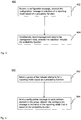
- Fig. 4 shows a flowchart of a method 400 for configuring network elements (e.g., the NEs 120) of a telecommunications network (e.g., the network 100) for reporting management data to a management node (e.g., the Management System 110).
- the method may be implemented by the device 200.
- a step 402 of the method 400 a configuration message is received.
- the received message specifies a reporting mode based on a probability function.
- the management data is reported to the management node depending on a condition that includes the probability function.
- the units 202 and 204 are configured to perform the steps 402 and 404, respectively.
- Fig. 5 shows a flowchart of a method 500 for configuring network elements (e.g., the NEs 120) of a telecommunications network (e.g., the network 100) for reporting management data to a management node (e.g., the Management System 110).
- the method 500 may be implemented by the device 300.
- one or more groups of network elements e.g., the groups 130
- a configuration message is sent towards the network elements associated with the selected group.
- the configuration message requires the network elements to change their configuration to the reporting mode based on the probability function.
- the units 302 and 304 are configured to perform the steps 502 and 504, respectively.
- a control attribute is defined at management interfaces of the devices 200 and 300.
- the control attribute controls the setting of the reporting modes.
- the control attribute allows specifying the reporting mode (also referred to as reporting state), including the reporting mode that is based on the probability function (probabilistic reporting mode).
- the probabilistic reporting mode is one optional state of the control attribute.
- the technique may be implemented for an enhanced UMTS Terrestrial Radio Access Network (eUTRAN), for an UTRAN and/or for a GSM EDGE Radio Access Network (GERAN) as the telecommunications network 100.
- a Network Resource Model is specified in documents 3GPP SA5 TS 28.657, 28.658 and 28.659 (Rel-13) for the eUTRAN, in documents 3GPP SA5 TS 28.651, 28.652 and 28.653 (Rel-13) for the UTRAN, and in documents 3GPP SA5 TS 28.654, 28.655 and 28.656 (Rel-13) for the GERAN.
- the control attribute is included in the Network Resource Model (NRM) Integration Reference Points (IRPs), e.g., in addition to the IRPs specified in document 3GPP TS 32.150 (V12.0.0).
- the device 300 selectively assigns different reporting modes to the NEs 120 (e.g., cells) or to the groups 130 of NEs 120 by communicating with the device 300 for triggering the receiving unit 202, e.g., the Reporting Mode Setting Entity, to set the communicated reporting mode.
- the NEs 120 e.g., cells
- the receiving unit 202 e.g., the Reporting Mode Setting Entity
- the different reporting modes include an active mode, a passive mode and the probabilistic reporting mode (also referred to as a random mode).
- the reporting unit 204 e.g., the Management Data Reporting Function
- the passive mode the reporting unit 204, e.g., the Management Data Reporting Function, transfers the management data only when the management node 110 requests (e.g., pulls) the management data from the NE 120.
- the reporting unit 204 e.g., the Management Data Reporting Function
- the reporting unit 204 evaluates the probability function.
- the management node 110 e.g., the NM 112 responsive to a first input of a network operator, defines the probability function or selects the probability function among a plurality of predefined probability functions.
- the probability function is defined by parameters or symbolic expressions that are input by the network operator.
- the probability function determines a random reporting delay, e.g. for sending the management data to the management node 110 after the management data has become available in the NE 120.
- the definition of the probability function includes at least one of an average reporting delay interval and a distribution of the reporting delay interval.
- the management data may be sent according to a stochastic process, e.g., a Poisson process with constant intensity.
- the definition of the probability function includes a probability p, wherein 0 ⁇ p ⁇ 1, for sending the management data to the management node 110 when the management data becomes available in the NE 120. Furthermore, the conditions and/or the definitions may be combined.
- the overall resource usage e.g., time for a Central Processing Unit, CPU, and capacity for data transfer
- the overall resource usage e.g., time for a Central Processing Unit, CPU, and capacity for data transfer
- the overall resource usage in the whole telecommunications network 100 can be balanced, e.g., by more uniformly distributing resource usage over time.
- the probability function is used in the step 404 by the reporting unit 204, e.g., by the Management Data Reporting Function, to control the transfer of management data from the associated one or more NEs 120 that are set to the probabilistic reporting mode.
- the management node 110 e.g. the DM 114 responsive to a second input of the network operator, defines the groups 130 of NEs 120 (e.g., cells), which are subject for assignment of one of the reporting modes.
- the mechanism of setting the reporting modes by communicating the configuration message, e.g., specifying the control attribute, is applicable to physical NEs (e.g., a base station) as well as to logical entities (e.g., a cell).
- the management node 110 e.g. the NM 112 responsive to a third input of the network operator, assigns to each NE 120 or group 130 of NEs 120 a reporting mode. Setting the assigned reporting mode is controlled by the Reporting Mode Setting Entity in the receiving unit 202.
- the optional reporting modes for the assignment include the active mode, the passive mode and the probabilistic mode. By default, e.g. in the absence of the third input, the active mode is assigned.
- the management node 110 sets and/or changes the reporting mode for a specific one of the NEs 120 (e.g., a cell) or for a group of NEs 120 so that the NEs 120 are assigned different reporting modes. Assigning the reporting mode includes defining or selecting the probability function per NE 120 or per group 130 of NEs 120.
- the groups 130 are structured depending on a network structure. E.g., NEs 120 associated with picocells, microcells and macrocells are respectively grouped.
- the NEs 120 are assigned different reporting modes based on their importance, frequency of use and/or workload.
- NEs 120 that are of high importance (e.g., operationally critical) or frequently used are configured either so that the management data transfer is activated with high probability p, wherein 0.5 ⁇ p ⁇ 1, or are configured to the active mode.
- p high probability
- p 0.5 ⁇ p ⁇ 1
- the y percent less important NEs 120 i.e., the y percent most important NEs 120 that are not configured for the active mode
- the probability for push transfer may be a monotonically increasing function of the importance and the frequency of use and/or a monotonically decreasing function of the workload.
- the reporting mode is configured by the receiving unit 202 (e.g., using the Reporting Mode Setting Entities), per NE 120 and/or per group 130 of NEs 120.
- the reporting unit 204 e.g., the Management Data Reporting Function 140
- the reporting unit 204 reports the management data as soon as the management data becomes available in the associated NE 120, if the associated NE 120 or group 130 is configured for the active reporting mode (also referred to as push method).
- the reporting unit 204 reports management data only when the management node 110 requests the management data, if the associated NE 120 or group 130 is configured for the passive reporting mode will (also referred to as pull method).
- the reporting unit 204 reports the management data at a time determined by the probability function (e.g., a probability distribution function), if the associated NE 120 or group 130 is configured for the probabilistic reporting mode.
- the probabilistic mode may be implemented by subjecting the push transfer of the active mode to the condition that includes the probability function.
- the control attribute is denoted by "reportingState".
- the control attribute holds information of the reporting mode (or reporting state).
- the control attribute indicates that the IRPAgent shall, provided that management data (e.g. performance measurement data or trace data) has been collected, send the collected management data as soon as it is available according to the active reporting mode or send the collected management data at a time determined by the probability function according to the probabilistic reporting mode.
- Values allowed for the control attribute include "Active" and "Random", respectively.
- a data type for the control attribute is structured according to at least one of the following requirements:
- the multiplicity of the control attribute is equal to 1 (so that there is exactly one instance per NE 120 or group 130), the control attribute is initialized as "Active” and the control attribute is nullable (i.e., the control attribute may be set to null in addition to the values "Active” and "Random") for configuring the passive mode.
- a reporting structure and/or a location and distribution of the device 200 varies in different types of network configurations.
- Fig. 6 schematically illustrates a telecommunications network 100 as another exemplary environment for implementing the technique. Like reference signs indicate corresponding features. The technique is implementable in any telecommunications network 100 and not limited to the types of network configurations shown in Figs. 1 and 6 .
- Fig. 7 shows a flowchart of an exemplary implementation of the reporting step 404 performable by the reporting unit 204.
- the NE 120 associated with the reporting unit 204 can be configured to any one of the management data reporting modes "ACTIVE”, “PASSIVE” and "RANDOM".
- Branching substep 704 assesses whether or not the NE 120 is configured for the active mode. In the active mode, the reporting unit 204 sends the performance measurement data collection to the management node 110 in a substep 714. Otherwise, branching substep 706 assesses whether or not the NE 120 is configured for the passive mode. In the passive mode, the reporting unit 204 buffers the performance measurement data collection according to a substep 716 and the reporting unit 204 proceeds at the substep 704.
- the reporting unit 204 determines in a substep 708 that the NE is configured for the probabilistic mode.
- the probability function is evaluated in a substep 710, e.g., based on a probability distribution.
- a result of the evaluation is binary (or compared with a threshold value, which yields the binary result) in a substep 712. If the probabilistic mode has been configured, the reporting step 404 can either push or pull depending on the result of the evaluation of the probability function. The result may determine whether the performance measurement data collection is pushed to the management node 110 in the substep 714 or available for pulling by the management node 110 in the substep 716.
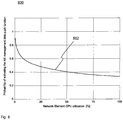
- Fig. 8 shows a diagram 800 including a graph 802 of an exemplary probability function.
- the probability for pushing the report according to the substep 714 is shown on the vertical axis.
- the probability function depends on a local network characteristic, e.g., the frequency of use or a workload (e.g., memory utilization or CPU load) of the NE 120, which is shown on the horizontal axis in Fig. 8 .
- the exemplary probability function shown in Fig. 8 is based on an exponential distribution function, e.g., of the CPU load in the NE 120. For instance, if at a time T1, the CPU utilization is measured to be 75 %, the probability that the management data push mode is activated at T1 will be 0.35. If at a time T2, the CPU utilization is measured to be 5 %, the probability that the management data push mode is activated at T2 will be 0.7.
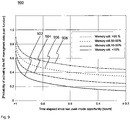
- FIG. 9 Another exemplary diagram 900 for the probability function is illustrated in Fig. 9 . Since a parameter of the probability function (namely, memory utilization) and not its probability variable is indicated in the inset, graphs 902 to 908 illustrate the likelihood of the NE 120 to enter push mode. The likelihood depends on an average memory utilization of the NE 120 and/or a time elapsed since the last opportunity when the pushing step 714 was entered.
- a parameter of the probability function namely, memory utilization
- graphs 902 to 908 illustrate the likelihood of the NE 120 to enter push mode. The likelihood depends on an average memory utilization of the NE 120 and/or a time elapsed since the last opportunity when the pushing step 714 was entered.
- Fig. 9 illustrates examples for a probabilistic reporting mode, wherein the probability of activating the push mechanism 714 of the NE 120 is an exponential distribution function of the time elapsed since the last pushing step 714 opportunity for the NE 120.
- the memory utilization of the NE 120 is a parameter to the probability function. The higher the utilization of the memory (occupied by e.g. measurement data that is buffered for transfer), the higher the probability for the activation of the management data pushing step 714. E.g., the probability function increases according to the graphs 902 to 908 as the memory utilization increases from 10 to 90 percent.
- the amount of transferred management data (e.g., generated by a large number of network elements in a heterogeneous network), and thus the load on the system resources, can be regulated over time.
- the total load on system resources (such as CPU, memory and transmission capacity in the network) can be automatically regulated, without the need for the network operator to assign a fixed active or passive reporting mode to each network element (e.g., each cell) or group thereof.
- Assigning a network element, or a group thereof, to the random reporting mode means that a probability function will determine whether the network element will use a push reporting mechanism or a pull reporting mechanism at a certain time.
- a probability function By selecting a suitable probability function, the overall reporting behavior in the network can result in a better general use of system resources, such as CPU capacity, memory and management data transmission capacity.
- the random reporting mode can be especially useful for those network elements that to a large degree have a non-deterministic behavior.
Landscapes
- Engineering & Computer Science (AREA)
- Computer Networks & Wireless Communication (AREA)
- Signal Processing (AREA)
- Mobile Radio Communication Systems (AREA)
Claims (10)
- Verfahren (400) zum Konfigurieren von Netzwerkelementen (120) eines Telekommunikationsnetzwerks (100) zum Melden von Verwaltungsdaten an einen Verwaltungsknoten (110), wobei das Verfahren die folgenden Schritte umfasst, die von mindestens einem der Netzwerkelemente (120) durchgeführt werden;
Empfangen (402) einer Konfigurationsnachricht, wobei die Konfigurationsnachricht einen Meldemodus basierend auf einer Wahrscheinlichkeitsfunktion (900) angibt; und
Melden (404) von Verwaltungsdaten an den Verwaltungsknoten (110), abhängig von einer Bedingung, wobei die Bedingung die Wahrscheinlichkeitsfunktion (900) beinhaltet,
wobei das Ergebnis der Evaluierung der Wahrscheinlichkeitsfunktion (900) ermittelt (712), ob die Verwaltungsdateni) zu dem Verwaltungsknoten (110) geschoben sind (714), oderii) verfügbar sind, von dem Verwaltungsknoten (110) geholt zu werden (716),wobei die Wahrscheinlichkeitsfunktion (902, 904, 906, 908) eine exponentielle Verteilungsfunktion der vergangenen Zeit seit der letzten Schiebeschrittgelegenheit für das Netzwerkelement (120) ist, wobei die exponentielle Verteilungsfunktion durch Speichernutzung des Netzwerkelements (120) so parametriert ist, dass, je höher die Nutzung des von Messungsdaten, die für Übertragung puffergespeichert sind, belegten Speichers ist, desto höher die exponentielle Verteilungsfunktion für die Aktivierung des Verwaltungsdatenschiebeschritts ist. - Verfahren nach Anspruch 1, wobei das mindestens eine Netzwerkelement (120) eine Zelle oder eine Funkbasisstation des Telekommunikationsnetzwerks (100) beinhaltet.
- Verfahren nach Anspruch 1 oder 2, wobei der Verwaltungsknoten (110) durch die Konfigurationsnachricht spezifiziert ist.
- Verfahren nach einem der Ansprüche 1 bis 3, weiter umfassend:
Messen der Verwaltungsdaten während eines Messungsintervalls. - Verfahren nach Anspruch 4, weiter umfassend:
Evaluieren (710) der Wahrscheinlichkeitsfunktion bei einem Ende des Messungsintervalls. - Verfahren nach einem der Ansprüche 1 bis 6, wobei die Bedingung aufschiebend ist und die Wahrscheinlichkeitsfunktion (800; 900) einen Zeitpunkt ermittelt, bei dem die Verwaltungsdaten gemeldet werden (714) .
- Verfahren nach einem der Ansprüche 1 bis 7, weiter umfassend:
Pufferspeichern (716) der gemessenen Verwaltungsdaten, bis die Bedingung erfüllt ist. - Computerprogrammprodukt, das Codeabschnitte zum Durchführen der Schritte von einem der Ansprüche 1 bis 7 umfasst, wenn das Computerprogrammprodukt auf einer oder mehr Rechenvorrichtungen ausgeführt wird.
- Computerprogrammprodukt nach Anspruch 8, das auf einem computerlesbaren Aufzeichnungsmedium gespeichert ist.
- Vorrichtung (200) zum Konfigurieren von Netzwerkelementen (120) eines Telekommunikationsnetzwerks (100) zum Melden von Verwaltungsdaten an einen Verwaltungsknoten (110), wobei die Vorrichtung umfasst:eine Empfangseinheit (202), die angepasst ist, eine Konfigurationsnachricht zu empfangen, wobei die Konfigurationsnachricht einen Meldungsmodus basierend auf einer Wahrscheinlichkeitsfunktion (900) angibt und wobei die Wahrscheinlichkeitsfunktion (902, 904, 906, 908) eine Funktion einer von einer Verwendungsfrequenz und einer Nutzlast des jeweiligen Netzwerkelements (120) ist; undeine Meldungseinheit (204), die angepasst ist, Verwaltungsdaten an den Verwaltungsknoten (110) abhängig von einer Bedingung zu melden, wobei die Bedingung die Wahrscheinlichkeitsfunktion (800; 900) beinhaltet,wobei das Ergebnis der Evaluierung der Wahrscheinlichkeitsfunktion (900) ermittelt (712), ob die Verwaltungsdateni) zu dem Verwaltungsknoten (110) geschoben sind (714), oderii) verfügbar sind, von dem Verwaltungsknoten (110) geholt zu werden (716),wobei die Wahrscheinlichkeitsfunktion (902, 904, 906, 908) eine exponentielle Verteilungsfunktion der vergangenen Zeit seit der letzten Schiebeschrittgelegenheit für das Netzwerkelement (120) ist, wobei die exponentielle Verteilungsfunktion durch Speichernutzung des Netzwerkelements (120) so parametriert ist, dass, je höher die Nutzung des von Messungsdaten, die für Übertragung puffergespeichert sind, belegten Speichers ist, desto höher die exponentielle Verteilungsfunktion für die Aktivierung des Verwaltungsdatenschiebeschritts ist.
Applications Claiming Priority (1)
| Application Number | Priority Date | Filing Date | Title |
|---|---|---|---|
| PCT/EP2015/051243 WO2016116158A1 (en) | 2015-01-22 | 2015-01-22 | Reporting technique for a telecommunications network |
Publications (2)
| Publication Number | Publication Date |
|---|---|
| EP3248329A1 EP3248329A1 (de) | 2017-11-29 |
| EP3248329B1 true EP3248329B1 (de) | 2020-04-01 |
Family
ID=52395072
Family Applications (1)
| Application Number | Title | Priority Date | Filing Date |
|---|---|---|---|
| EP15701010.9A Not-in-force EP3248329B1 (de) | 2015-01-22 | 2015-01-22 | Meldetechnik für ein telekommunikationsnetzwerk |
Country Status (4)
| Country | Link |
|---|---|
| US (1) | US9769018B2 (de) |
| EP (1) | EP3248329B1 (de) |
| TW (1) | TWI618379B (de) |
| WO (1) | WO2016116158A1 (de) |
Families Citing this family (2)
| Publication number | Priority date | Publication date | Assignee | Title |
|---|---|---|---|---|
| CN112567693B (zh) * | 2018-08-16 | 2024-06-14 | 瑞典爱立信有限公司 | 用于网络设备性能测量的方法和设备 |
| CN116132283A (zh) * | 2022-12-17 | 2023-05-16 | 企知道科技有限公司 | 一种分布式数据采集方法、系统、设备及存储介质 |
Family Cites Families (9)
| Publication number | Priority date | Publication date | Assignee | Title |
|---|---|---|---|---|
| US6212384B1 (en) * | 1997-09-29 | 2001-04-03 | Telefonaktiebolaget L M Ericsson (Publ) | Radio signal source identification system |
| WO2007098678A1 (en) * | 2006-02-28 | 2007-09-07 | Huawei Technologies Co., Ltd. | An agent server, a method for realizing the agent by the agent server and a system and method of security communication system |
| US8755270B2 (en) * | 2007-02-05 | 2014-06-17 | Telefonaktiebolaget L M Ericsson (Publ) | Congestion/load indication for high speed packet access |
| ATE533320T1 (de) | 2007-12-21 | 2011-11-15 | Ericsson Telefon Ab L M | Verfahren zur beschränkung channel quality indicator übertragung aus einem endgerät |
| US8509160B2 (en) * | 2008-02-11 | 2013-08-13 | Apple Inc. | Method for efficient CQI feedback |
| US8406171B2 (en) | 2008-08-01 | 2013-03-26 | Texas Instruments Incorporated | Network MIMO reporting, control signaling and transmission |
| US8711716B2 (en) | 2009-06-19 | 2014-04-29 | Texas Instruments Incorporated | Multiple CQI feedback for cellular networks |
| EP2842363B1 (de) * | 2012-04-27 | 2019-07-24 | Nokia Solutions and Networks Oy | Auf heterogenen netzwerkrichtlinien basierende verwaltung mit wahrscheinlichkeitsberichterstattung und richtlinienselbstzuweisung |
| US20130343299A1 (en) | 2012-06-21 | 2013-12-26 | Samsung Electronics Co., Ltd | Method for cqi feedback without spatial feedback (pmi/ri) for tdd coordinated multi-point and carrier aggregation scenarios |
-
2015
- 2015-01-22 WO PCT/EP2015/051243 patent/WO2016116158A1/en not_active Ceased
- 2015-01-22 EP EP15701010.9A patent/EP3248329B1/de not_active Not-in-force
- 2015-01-22 US US14/417,857 patent/US9769018B2/en active Active
- 2015-12-11 TW TW104141798A patent/TWI618379B/zh not_active IP Right Cessation
Non-Patent Citations (1)
| Title |
|---|
| None * |
Also Published As
| Publication number | Publication date |
|---|---|
| TW201637401A (zh) | 2016-10-16 |
| WO2016116158A1 (en) | 2016-07-28 |
| EP3248329A1 (de) | 2017-11-29 |
| US9769018B2 (en) | 2017-09-19 |
| TWI618379B (zh) | 2018-03-11 |
| US20160218920A1 (en) | 2016-07-28 |
Similar Documents
| Publication | Publication Date | Title |
|---|---|---|
| US11418413B2 (en) | Sharable storage method and system for network data analytics | |
| US12356503B2 (en) | Adding per-user equipment controls to radio intelligent controller E2 policy | |
| EP3721588B1 (de) | Verfahren und systeme zur erzeugung und anpassung von netzwerk-basislinien | |
| US10027542B2 (en) | Sketch based monitoring of a communication network | |
| KR20170088931A (ko) | 서비스 특정 데이터 평면 구성을 변경하기 위한 시스템 및 방법 | |
| US10708926B2 (en) | Base station clustering method, base station control method, and apparatus | |
| CN112583629B (zh) | 一种信息处理方法、相关设备及计算机存储介质 | |
| KR102895740B1 (ko) | 이동 통신 시스템의 훈련 단말 선택 장치 및 방법 | |
| WO2018184667A1 (en) | Apparatus and method for performing network optimization | |
| CN106604207A (zh) | M2m通信中基于分组的小区接入与选择方法 | |
| EP3248329B1 (de) | Meldetechnik für ein telekommunikationsnetzwerk | |
| JP6309647B2 (ja) | モバイルセルラネットワークにおける電力消費量最適化のための方法 | |
| KR102192239B1 (ko) | 무선네트워크 환경에서의 클러스터 기반 부하분산 방법 | |
| US20250227027A1 (en) | Methods for Detecting, Evaluating, and Mitigating Conflicts in Open RAN Systems | |
| CN113260054B (zh) | 无线资源处理方法、装置、设备及存储介质 | |
| EP4683285A1 (de) | Verfahren und vorrichtung zur steuerung einer cloud-plattform und vorrichtung | |
| CN115767506A (zh) | 用户数据订阅方法、上报方法及装置 | |
| EP2765757B1 (de) | Verfahren zur Nutzung von M2M-Kommunikationseigenschaften in zellularen Systemen | |
| US20250344145A1 (en) | Energy saving management method and apparatus | |
| US20240107331A1 (en) | Method performed by network node and network node | |
| KR102558207B1 (ko) | 호 수락 제어 기반 부하균형 방법 및 장치 | |
| Sidibe et al. | Wireless Sensor Node Performance Analysis Under Mac Protocol IEEE 802.15. 4 | |
| KR20250062045A (ko) | 단말 및 uai 전송 방법 | |
| KR20250148464A (ko) | 지능형 빔 관리를 위한 모델 모니터링 방법 및 장치 | |
| WO2025130509A1 (zh) | 一种模型管理方法及系统 |
Legal Events
| Date | Code | Title | Description |
|---|---|---|---|
| STAA | Information on the status of an ep patent application or granted ep patent |
Free format text: STATUS: THE INTERNATIONAL PUBLICATION HAS BEEN MADE |
|
| PUAI | Public reference made under article 153(3) epc to a published international application that has entered the european phase |
Free format text: ORIGINAL CODE: 0009012 |
|
| STAA | Information on the status of an ep patent application or granted ep patent |
Free format text: STATUS: REQUEST FOR EXAMINATION WAS MADE |
|
| 17P | Request for examination filed |
Effective date: 20170609 |
|
| AK | Designated contracting states |
Kind code of ref document: A1 Designated state(s): AL AT BE BG CH CY CZ DE DK EE ES FI FR GB GR HR HU IE IS IT LI LT LU LV MC MK MT NL NO PL PT RO RS SE SI SK SM TR |
|
| AX | Request for extension of the european patent |
Extension state: BA ME |
|
| DAX | Request for extension of the european patent (deleted) | ||
| GRAP | Despatch of communication of intention to grant a patent |
Free format text: ORIGINAL CODE: EPIDOSNIGR1 |
|
| STAA | Information on the status of an ep patent application or granted ep patent |
Free format text: STATUS: GRANT OF PATENT IS INTENDED |
|
| INTG | Intention to grant announced |
Effective date: 20200107 |
|
| GRAS | Grant fee paid |
Free format text: ORIGINAL CODE: EPIDOSNIGR3 |
|
| GRAA | (expected) grant |
Free format text: ORIGINAL CODE: 0009210 |
|
| STAA | Information on the status of an ep patent application or granted ep patent |
Free format text: STATUS: THE PATENT HAS BEEN GRANTED |
|
| AK | Designated contracting states |
Kind code of ref document: B1 Designated state(s): AL AT BE BG CH CY CZ DE DK EE ES FI FR GB GR HR HU IE IS IT LI LT LU LV MC MK MT NL NO PL PT RO RS SE SI SK SM TR |
|
| REG | Reference to a national code |
Ref country code: GB Ref legal event code: FG4D |
|
| REG | Reference to a national code |
Ref country code: AT Ref legal event code: REF Ref document number: 1252777 Country of ref document: AT Kind code of ref document: T Effective date: 20200415 Ref country code: CH Ref legal event code: EP |
|
| REG | Reference to a national code |
Ref country code: DE Ref legal event code: R096 Ref document number: 602015049765 Country of ref document: DE |
|
| REG | Reference to a national code |
Ref country code: IE Ref legal event code: FG4D |
|
| PG25 | Lapsed in a contracting state [announced via postgrant information from national office to epo] |
Ref country code: BG Free format text: LAPSE BECAUSE OF FAILURE TO SUBMIT A TRANSLATION OF THE DESCRIPTION OR TO PAY THE FEE WITHIN THE PRESCRIBED TIME-LIMIT Effective date: 20200701 |
|
| REG | Reference to a national code |
Ref country code: NL Ref legal event code: MP Effective date: 20200401 |
|
| REG | Reference to a national code |
Ref country code: LT Ref legal event code: MG4D |
|
| PG25 | Lapsed in a contracting state [announced via postgrant information from national office to epo] |
Ref country code: SE Free format text: LAPSE BECAUSE OF FAILURE TO SUBMIT A TRANSLATION OF THE DESCRIPTION OR TO PAY THE FEE WITHIN THE PRESCRIBED TIME-LIMIT Effective date: 20200401 Ref country code: IS Free format text: LAPSE BECAUSE OF FAILURE TO SUBMIT A TRANSLATION OF THE DESCRIPTION OR TO PAY THE FEE WITHIN THE PRESCRIBED TIME-LIMIT Effective date: 20200801 Ref country code: NL Free format text: LAPSE BECAUSE OF FAILURE TO SUBMIT A TRANSLATION OF THE DESCRIPTION OR TO PAY THE FEE WITHIN THE PRESCRIBED TIME-LIMIT Effective date: 20200401 Ref country code: PT Free format text: LAPSE BECAUSE OF FAILURE TO SUBMIT A TRANSLATION OF THE DESCRIPTION OR TO PAY THE FEE WITHIN THE PRESCRIBED TIME-LIMIT Effective date: 20200817 Ref country code: LT Free format text: LAPSE BECAUSE OF FAILURE TO SUBMIT A TRANSLATION OF THE DESCRIPTION OR TO PAY THE FEE WITHIN THE PRESCRIBED TIME-LIMIT Effective date: 20200401 Ref country code: CZ Free format text: LAPSE BECAUSE OF FAILURE TO SUBMIT A TRANSLATION OF THE DESCRIPTION OR TO PAY THE FEE WITHIN THE PRESCRIBED TIME-LIMIT Effective date: 20200401 Ref country code: GR Free format text: LAPSE BECAUSE OF FAILURE TO SUBMIT A TRANSLATION OF THE DESCRIPTION OR TO PAY THE FEE WITHIN THE PRESCRIBED TIME-LIMIT Effective date: 20200702 Ref country code: FI Free format text: LAPSE BECAUSE OF FAILURE TO SUBMIT A TRANSLATION OF THE DESCRIPTION OR TO PAY THE FEE WITHIN THE PRESCRIBED TIME-LIMIT Effective date: 20200401 Ref country code: NO Free format text: LAPSE BECAUSE OF FAILURE TO SUBMIT A TRANSLATION OF THE DESCRIPTION OR TO PAY THE FEE WITHIN THE PRESCRIBED TIME-LIMIT Effective date: 20200701 |
|
| REG | Reference to a national code |
Ref country code: AT Ref legal event code: MK05 Ref document number: 1252777 Country of ref document: AT Kind code of ref document: T Effective date: 20200401 |
|
| PG25 | Lapsed in a contracting state [announced via postgrant information from national office to epo] |
Ref country code: LV Free format text: LAPSE BECAUSE OF FAILURE TO SUBMIT A TRANSLATION OF THE DESCRIPTION OR TO PAY THE FEE WITHIN THE PRESCRIBED TIME-LIMIT Effective date: 20200401 Ref country code: RS Free format text: LAPSE BECAUSE OF FAILURE TO SUBMIT A TRANSLATION OF THE DESCRIPTION OR TO PAY THE FEE WITHIN THE PRESCRIBED TIME-LIMIT Effective date: 20200401 Ref country code: HR Free format text: LAPSE BECAUSE OF FAILURE TO SUBMIT A TRANSLATION OF THE DESCRIPTION OR TO PAY THE FEE WITHIN THE PRESCRIBED TIME-LIMIT Effective date: 20200401 |
|
| PG25 | Lapsed in a contracting state [announced via postgrant information from national office to epo] |
Ref country code: AL Free format text: LAPSE BECAUSE OF FAILURE TO SUBMIT A TRANSLATION OF THE DESCRIPTION OR TO PAY THE FEE WITHIN THE PRESCRIBED TIME-LIMIT Effective date: 20200401 |
|
| REG | Reference to a national code |
Ref country code: DE Ref legal event code: R097 Ref document number: 602015049765 Country of ref document: DE |
|
| PG25 | Lapsed in a contracting state [announced via postgrant information from national office to epo] |
Ref country code: DK Free format text: LAPSE BECAUSE OF FAILURE TO SUBMIT A TRANSLATION OF THE DESCRIPTION OR TO PAY THE FEE WITHIN THE PRESCRIBED TIME-LIMIT Effective date: 20200401 Ref country code: EE Free format text: LAPSE BECAUSE OF FAILURE TO SUBMIT A TRANSLATION OF THE DESCRIPTION OR TO PAY THE FEE WITHIN THE PRESCRIBED TIME-LIMIT Effective date: 20200401 Ref country code: IT Free format text: LAPSE BECAUSE OF FAILURE TO SUBMIT A TRANSLATION OF THE DESCRIPTION OR TO PAY THE FEE WITHIN THE PRESCRIBED TIME-LIMIT Effective date: 20200401 Ref country code: SM Free format text: LAPSE BECAUSE OF FAILURE TO SUBMIT A TRANSLATION OF THE DESCRIPTION OR TO PAY THE FEE WITHIN THE PRESCRIBED TIME-LIMIT Effective date: 20200401 Ref country code: RO Free format text: LAPSE BECAUSE OF FAILURE TO SUBMIT A TRANSLATION OF THE DESCRIPTION OR TO PAY THE FEE WITHIN THE PRESCRIBED TIME-LIMIT Effective date: 20200401 Ref country code: AT Free format text: LAPSE BECAUSE OF FAILURE TO SUBMIT A TRANSLATION OF THE DESCRIPTION OR TO PAY THE FEE WITHIN THE PRESCRIBED TIME-LIMIT Effective date: 20200401 Ref country code: ES Free format text: LAPSE BECAUSE OF FAILURE TO SUBMIT A TRANSLATION OF THE DESCRIPTION OR TO PAY THE FEE WITHIN THE PRESCRIBED TIME-LIMIT Effective date: 20200401 |
|
| PLBE | No opposition filed within time limit |
Free format text: ORIGINAL CODE: 0009261 |
|
| STAA | Information on the status of an ep patent application or granted ep patent |
Free format text: STATUS: NO OPPOSITION FILED WITHIN TIME LIMIT |
|
| PG25 | Lapsed in a contracting state [announced via postgrant information from national office to epo] |
Ref country code: PL Free format text: LAPSE BECAUSE OF FAILURE TO SUBMIT A TRANSLATION OF THE DESCRIPTION OR TO PAY THE FEE WITHIN THE PRESCRIBED TIME-LIMIT Effective date: 20200401 Ref country code: SK Free format text: LAPSE BECAUSE OF FAILURE TO SUBMIT A TRANSLATION OF THE DESCRIPTION OR TO PAY THE FEE WITHIN THE PRESCRIBED TIME-LIMIT Effective date: 20200401 |
|
| 26N | No opposition filed |
Effective date: 20210112 |
|
| PG25 | Lapsed in a contracting state [announced via postgrant information from national office to epo] |
Ref country code: SI Free format text: LAPSE BECAUSE OF FAILURE TO SUBMIT A TRANSLATION OF THE DESCRIPTION OR TO PAY THE FEE WITHIN THE PRESCRIBED TIME-LIMIT Effective date: 20200401 |
|
| PG25 | Lapsed in a contracting state [announced via postgrant information from national office to epo] |
Ref country code: MC Free format text: LAPSE BECAUSE OF FAILURE TO SUBMIT A TRANSLATION OF THE DESCRIPTION OR TO PAY THE FEE WITHIN THE PRESCRIBED TIME-LIMIT Effective date: 20200401 |
|
| REG | Reference to a national code |
Ref country code: CH Ref legal event code: PL |
|
| PG25 | Lapsed in a contracting state [announced via postgrant information from national office to epo] |
Ref country code: LU Free format text: LAPSE BECAUSE OF NON-PAYMENT OF DUE FEES Effective date: 20210122 |
|
| REG | Reference to a national code |
Ref country code: BE Ref legal event code: MM Effective date: 20210131 |
|
| PG25 | Lapsed in a contracting state [announced via postgrant information from national office to epo] |
Ref country code: FR Free format text: LAPSE BECAUSE OF NON-PAYMENT OF DUE FEES Effective date: 20210131 |
|
| REG | Reference to a national code |
Ref country code: DE Ref legal event code: R079 Ref document number: 602015049765 Country of ref document: DE Free format text: PREVIOUS MAIN CLASS: H04L0012260000 Ipc: H04L0043000000 |
|
| PG25 | Lapsed in a contracting state [announced via postgrant information from national office to epo] |
Ref country code: LI Free format text: LAPSE BECAUSE OF NON-PAYMENT OF DUE FEES Effective date: 20210131 Ref country code: CH Free format text: LAPSE BECAUSE OF NON-PAYMENT OF DUE FEES Effective date: 20210131 |
|
| PG25 | Lapsed in a contracting state [announced via postgrant information from national office to epo] |
Ref country code: IE Free format text: LAPSE BECAUSE OF NON-PAYMENT OF DUE FEES Effective date: 20210122 |
|
| PG25 | Lapsed in a contracting state [announced via postgrant information from national office to epo] |
Ref country code: BE Free format text: LAPSE BECAUSE OF NON-PAYMENT OF DUE FEES Effective date: 20210131 |
|
| PG25 | Lapsed in a contracting state [announced via postgrant information from national office to epo] |
Ref country code: HU Free format text: LAPSE BECAUSE OF FAILURE TO SUBMIT A TRANSLATION OF THE DESCRIPTION OR TO PAY THE FEE WITHIN THE PRESCRIBED TIME-LIMIT; INVALID AB INITIO Effective date: 20150122 |
|
| PGFP | Annual fee paid to national office [announced via postgrant information from national office to epo] |
Ref country code: GB Payment date: 20230127 Year of fee payment: 9 Ref country code: DE Payment date: 20230127 Year of fee payment: 9 |
|
| PG25 | Lapsed in a contracting state [announced via postgrant information from national office to epo] |
Ref country code: CY Free format text: LAPSE BECAUSE OF FAILURE TO SUBMIT A TRANSLATION OF THE DESCRIPTION OR TO PAY THE FEE WITHIN THE PRESCRIBED TIME-LIMIT Effective date: 20200401 |
|
| PG25 | Lapsed in a contracting state [announced via postgrant information from national office to epo] |
Ref country code: MK Free format text: LAPSE BECAUSE OF FAILURE TO SUBMIT A TRANSLATION OF THE DESCRIPTION OR TO PAY THE FEE WITHIN THE PRESCRIBED TIME-LIMIT Effective date: 20200401 |
|
| PG25 | Lapsed in a contracting state [announced via postgrant information from national office to epo] |
Ref country code: TR Free format text: LAPSE BECAUSE OF FAILURE TO SUBMIT A TRANSLATION OF THE DESCRIPTION OR TO PAY THE FEE WITHIN THE PRESCRIBED TIME-LIMIT Effective date: 20200401 |
|
| REG | Reference to a national code |
Ref country code: DE Ref legal event code: R119 Ref document number: 602015049765 Country of ref document: DE |
|
| GBPC | Gb: european patent ceased through non-payment of renewal fee |
Effective date: 20240122 |
|
| PG25 | Lapsed in a contracting state [announced via postgrant information from national office to epo] |
Ref country code: MT Free format text: LAPSE BECAUSE OF FAILURE TO SUBMIT A TRANSLATION OF THE DESCRIPTION OR TO PAY THE FEE WITHIN THE PRESCRIBED TIME-LIMIT Effective date: 20200401 |
|
| PG25 | Lapsed in a contracting state [announced via postgrant information from national office to epo] |
Ref country code: DE Free format text: LAPSE BECAUSE OF NON-PAYMENT OF DUE FEES Effective date: 20240801 |
|
| PG25 | Lapsed in a contracting state [announced via postgrant information from national office to epo] |
Ref country code: GB Free format text: LAPSE BECAUSE OF NON-PAYMENT OF DUE FEES Effective date: 20240122 |
|
| PG25 | Lapsed in a contracting state [announced via postgrant information from national office to epo] |
Ref country code: GB Free format text: LAPSE BECAUSE OF NON-PAYMENT OF DUE FEES Effective date: 20240122 Ref country code: DE Free format text: LAPSE BECAUSE OF NON-PAYMENT OF DUE FEES Effective date: 20240801 |