EP3248411B1 - Verbindung, übergabe und verkehrsentladung zwischen 3gpp-rans und wi-fi-rans - Google Patents
Verbindung, übergabe und verkehrsentladung zwischen 3gpp-rans und wi-fi-rans Download PDFInfo
- Publication number
- EP3248411B1 EP3248411B1 EP15739326.5A EP15739326A EP3248411B1 EP 3248411 B1 EP3248411 B1 EP 3248411B1 EP 15739326 A EP15739326 A EP 15739326A EP 3248411 B1 EP3248411 B1 EP 3248411B1
- Authority
- EP
- European Patent Office
- Prior art keywords
- base station
- ran
- 3gpp
- request
- credentials
- Prior art date
- Legal status (The legal status is an assumption and is not a legal conclusion. Google has not performed a legal analysis and makes no representation as to the accuracy of the status listed.)
- Not-in-force
Links
Images







Classifications
-
- H—ELECTRICITY
- H04—ELECTRIC COMMUNICATION TECHNIQUE
- H04W—WIRELESS COMMUNICATION NETWORKS
- H04W36/00—Hand-off or reselection arrangements
- H04W36/0005—Control or signalling for completing the hand-off
- H04W36/0011—Control or signalling for completing the hand-off for data sessions of end-to-end connection
- H04W36/0033—Control or signalling for completing the hand-off for data sessions of end-to-end connection with transfer of context information
- H04W36/0038—Control or signalling for completing the hand-off for data sessions of end-to-end connection with transfer of context information of security context information
-
- H—ELECTRICITY
- H04—ELECTRIC COMMUNICATION TECHNIQUE
- H04W—WIRELESS COMMUNICATION NETWORKS
- H04W28/00—Network traffic management; Network resource management
- H04W28/16—Central resource management; Negotiation of resources or communication parameters, e.g. negotiating bandwidth or QoS [Quality of Service]
-
- H—ELECTRICITY
- H04—ELECTRIC COMMUNICATION TECHNIQUE
- H04W—WIRELESS COMMUNICATION NETWORKS
- H04W36/00—Hand-off or reselection arrangements
- H04W36/14—Reselecting a network or an air interface
- H04W36/144—Reselecting a network or an air interface over a different radio air interface technology
- H04W36/1446—Reselecting a network or an air interface over a different radio air interface technology wherein at least one of the networks is unlicensed
-
- H—ELECTRICITY
- H04—ELECTRIC COMMUNICATION TECHNIQUE
- H04W—WIRELESS COMMUNICATION NETWORKS
- H04W36/00—Hand-off or reselection arrangements
- H04W36/24—Reselection being triggered by specific parameters
- H04W36/26—Reselection being triggered by specific parameters by agreed or negotiated communication parameters
-
- H—ELECTRICITY
- H04—ELECTRIC COMMUNICATION TECHNIQUE
- H04W—WIRELESS COMMUNICATION NETWORKS
- H04W36/00—Hand-off or reselection arrangements
- H04W36/34—Reselection control
- H04W36/38—Reselection control by fixed network equipment
-
- H—ELECTRICITY
- H04—ELECTRIC COMMUNICATION TECHNIQUE
- H04W—WIRELESS COMMUNICATION NETWORKS
- H04W48/00—Access restriction; Network selection; Access point selection
- H04W48/18—Selecting a network or a communication service
-
- H—ELECTRICITY
- H04—ELECTRIC COMMUNICATION TECHNIQUE
- H04W—WIRELESS COMMUNICATION NETWORKS
- H04W36/00—Hand-off or reselection arrangements
- H04W36/0005—Control or signalling for completing the hand-off
- H04W36/0055—Transmission or use of information for re-establishing the radio link
- H04W36/0061—Transmission or use of information for re-establishing the radio link of neighbour cell information
-
- H—ELECTRICITY
- H04—ELECTRIC COMMUNICATION TECHNIQUE
- H04W—WIRELESS COMMUNICATION NETWORKS
- H04W36/00—Hand-off or reselection arrangements
- H04W36/0005—Control or signalling for completing the hand-off
- H04W36/0055—Transmission or use of information for re-establishing the radio link
- H04W36/0066—Transmission or use of information for re-establishing the radio link of control information between different types of networks in order to establish a new radio link in the target network
-
- H—ELECTRICITY
- H04—ELECTRIC COMMUNICATION TECHNIQUE
- H04W—WIRELESS COMMUNICATION NETWORKS
- H04W88/00—Devices specially adapted for wireless communication networks, e.g. terminals, base stations or access point devices
- H04W88/08—Access point devices
- H04W88/10—Access point devices adapted for operation in multiple networks, e.g. multi-mode access points
Definitions
- the present disclosure relates to interactions between 3GPP radio access networks (RANs) and Wi-Fi RANs, and more particularly to methods and apparatus for attachment, handover, and traffic offloading between such RANs.
- RANs 3GPP radio access networks
- Wi-Fi RANs wireless fidelity
- the 3rd Generation Partnership Project (3GPP) is an organization that develops and maintains telecommunications standards for cellular communication networks, such as the Global System for Mobile Communications (GSM), Wideband Code Division Multiple Access (W-CDMA), Long Term Evolution (LTE), and more.
- GSM Global System for Mobile Communications
- W-CDMA Wideband Code Division Multiple Access
- LTE Long Term Evolution
- RAN radio access network
- a 3GPP RAN could include a GSM RAN, a LTE RAN, a W-CDMA RAN, etc.
- the 802.11 standards for Wi-Fi RANs are maintained by a separate organization, the Institute of Electrical and Electronics Engineers (IEEE).
- Mobile traffic offloading is a term used to describe the use of complementary network technologies for delivering traffic originally targeted for cellular networks.
- the main complementary network technologies used for mobile traffic offloading are Wi-Fi, femtocells, and Integrated Mobile Broadcast.
- ANSDF Access Network Discovery and Selection Function
- GANC GAN Controller
- Another prior art technique offloads traffic to femtocells.
- This technique makes use of standard cellular radio technologies to enable UEs to participate in the data offloading process.
- this option requires some modification to the devices to accommodate the different backhaul connection, as well as the use of unlicensed spectrum.
- cellular radio technologies are founded on the ability to do network planning within licensed spectrum, it has been deemed to be difficult, from both a technical and business standpoint, to mass deploy femtocell access points.
- Some additional techniques include indoor offloading (which makes use of standard cellular radio technologies to enable UEs to participate in the data offloading process), and Wi-Fi hotspot offloading (which can offload between Wi-Fi networks).
- Patent application US 2010/0041434 A1 discloses a radio communication system in which a combined wireless terminal device notifies a required wireless link quality to a wireless LAN base station monitoring server device through a 3G communication function unit or through a wireless LAN communication function unit.
- the wireless LAN base station monitoring server device selects the access network to which the combined wireless terminal device sets up a connection from the information associated with the wireless link quality, such as the bandwidth occupation situation.
- the wireless LAN base station monitoring server device notifies information as to whether or not a base station device to which the combined wireless terminal device is connectable exists and, if it exists, the wireless LAN base station monitoring server device notifies wireless LAN base station information, such as base station information necessary for a connection.
- the combined wireless terminal device may select to make communication using the 3G network without setting up a connection to the wireless LAN network.
- the wireless communication scheme may be determined whether there are guests connected to the wireless communication scheme and, if so, handover of the guests to another optimum wireless communication scheme is performed until the subscriber that has requested connection can connect to the wireless communication scheme.
- the rules that govern the triggering of the mobile offloading action can be set by either an end-user (mobile subscriber) or an operator.
- the control mechanism operating on these rules may reside in an end-user device, in an operator server, or is divided between the two.
- This disclosure proposes extensions to the 3GPP protocols standard, such as the air interface between mobile user equipment and the base-station, and the interface between base stations, to allow seamless data offloading as well as handover to facilitate mobility.
- a method is implemented by a source base station that supports a 3GPP RAN and has an associated Wi-Fi RAN that is either supported by the source base station or is supported by an access point that is colocated with the source base station.
- the source base station determines that a data session between a UE and the Wi-Fi RAN of the source base station needs to be handed over; and transmits, based on the determining, a request to a target base station that supports a 3GPP RAN to determine a current Wi-Fi service capability of the target base station.
- the source base station receives a response from the target base station that indicates the current Wi-Fi service capability of the target base station.
- the source base station transmits a handover request to the UE based on the response.
- the handover request includes one of:
- a method is implemented by a target base station that supports a 3GPP RAN and has an associated Wi-Fi RAN that is either supported by the target base station or is supported by an access point that is colocated with the target base station.
- the target base station receives a request from a source base station to indicate a Wi-Fi capability of the target base station.
- the source base station supports a 3GPP RAN and has an associated Wi-Fi RAN that is either supported by the source base station or is supported by an access point that is colocated with the source base station.
- the request includes QoS requirements of a UE participating in a data session with the Wi-Fi RAN of the source base station.
- the target base station determines, based on the request, whether the Wi-Fi RAN of the target base station has sufficient available resources to support the QoS requirements of the UE.
- the target base station transmits a corresponding response to the source base station that indicates that the target base station supports a Wi-Fi RAN, and that indicates, based on the determining, whether the target base station has sufficient available resources to support the QoS requirements of the UE.
- a method is implemented by a UE that is capable of supporting a session with a 3GPP RAN and is also capable of supporting a session with a Wi-Fi RAN.
- the UE sends a request to a base station that supports a 3GPP RAN to determine a current Wi-Fi service capability of the base station, wherein the request is sent via the 3GPP RAN.
- the UE receives, via the 3GPP RAN, a corresponding response from the base station that indicates whether the base station has an associated Wi-Fi RAN that is either supported by the base station or is supported by an access point that is colocated with the base station.
- the response also indicates whether the Wi-Fi RAN has sufficient available resources to support QoS requirements of the UE. If the response indicates that the base station has an associated Wi-Fi RAN and that the Wi-Fi RAN has sufficient available resources to support QoS requirements of the UE, the UE subsequently receives Wi-Fi credentials for the Wi-Fi RAN over the 3GPP RAN, and attempts to establish a data session with the Wi-Fi RAN using the Wi-Fi credentials.
- a method is implemented by a UE that is capable of supporting a session with a 3GPP RAN and is also capable of supporting a session with a Wi-Fi RAN.
- the UE participates in a data session with a Wi-Fi RAN that is either supported by a source base station or is supported by an access point that is colocated with the source base station, wherein the source base station also supports a 3GPP RAN.
- the UE receives a handover request from the source base station.
- the handover request includes one of the following:
- a base station that supports a 3GPP RAN and has an associated Wi-Fi RAN that is either supported by the base station or is supported by an access point that is colocated with the base station.
- the base station includes one or more processing circuits configured to receive a request from a UE, and if the request is a request for a current Wi-Fi service capability of the base station, to:
- a base station that supports a 3GPP RAN and has an associated Wi-Fi RAN that is either supported by the base station or is supported by an access point that is colocated with the base station.
- the base station acts as a target base station with respect to a source base station.
- the target base station includes one or more processing circuits configured to receive a request from a source base station to indicate a Wi-Fi capability of the target base station.
- the source base station supports a 3GPP RAN and has an associated Wi-Fi RAN that is either supported by the source base station or is supported by an access point that is colocated with the source base station.
- the received request includes QoS requirements of a UE participating in a data session with the Wi-Fi RAN of the source base station.
- the one or more processing circuits of the target base station are further configured to determine, based on the request, whether the Wi-Fi RAN of the target base station has sufficient available resources to support the QoS requirements of the UE.
- the one or more processing circuits of the target base station are further configured to transmit a corresponding response to the source base station that indicates that the target base station supports a Wi-Fi RAN, and that indicates, based on the determining, whether the target base station has sufficient available resources to support the QoS requirements of the UE.
- a UE is disclosed that is capable of supporting a session with a 3GPP RAN and is also capable of supporting a session with a Wi-Fi RAN.
- the UE includes one or more processing circuits configured to send a request to a base station that supports a 3GPP RAN to determine a current Wi-Fi service capability of the base station, wherein the request is sent via the 3GPP RAN.
- the one or more processing circuits are further configured to receive, via the 3GPP RAN, a corresponding response from the base station that indicates whether the base station has an associated Wi-Fi RAN that is either supported by the base station or is supported by an access point that is colocated with the base station.
- the response also indicates whether the Wi-Fi RAN has sufficient available resources to support QoS requirements of the UE.
- the one or more processing circuits are further configured to, if the response indicates that the base station has an associated Wi-Fi RAN and that the Wi-Fi RAN has sufficient available resources to support QoS requirements of the UE, subsequently receive Wi-Fi credentials for the Wi-Fi RAN over the 3GPP RAN, and attempt to establish a data session with the Wi-Fi RAN using the Wi-Fi credentials.
- a UE is disclosed that is capable of supporting a session with a 3GPP RAN and is also capable of supporting a session with a Wi-Fi RAN.
- the UE includes one or more processing circuits configured to participate in a data session with a Wi-Fi RAN that is either supported by a source base station or is supported by an access point that is colocated with the source base station, wherein the source base station also supports a 3GPP RAN.
- the one or more processing circuits are further configured to receive a handover request from the source base station, with the handover request comprising one of the following:
- aspects of the present disclosure relate to methods and related devices that enable 3GPP wireless traffic offloading, with handover support, based on the capability of a given radio base station (RBS) and a given user equipment (UE).
- Techniques are described which allow a 3GPP base station to select and control the radio access technology (RAT) type (3GPP or Wi-Fi) that a UE uses for its wireless traffic, which enables seamless handover between 3GPP (cellular) and Wi-Fi radio access networks (RANs).
- RAT radio access technology
- This disclosure proposes extensions to the 3GPP protocols standard, such as the air interface between mobile UEs and base stations, and the interface between base stations, to allow seamless data offloading, UE attachment to Wi-Fi RANs, and handovers, to facilitate mobility.
- Various ones of the embodiments discussed below can account for QoS requirements of a given UE, to ensure that a user receives the services and the quality guaranteed by its service provider.
- the QoS requirements can be used as criteria for the selection of
- Another new signaling aspect that is utilized in some embodiments is a request from a base station to a UE requesting that the UE delete Wi-Fi credentials for a Wi-Fi RAN. Such a request may also request that the UE terminate a given Wi-Fi session.
- Wi-Fi handover request which is sent from a base station to a UE, and which informs the UE of a planned handover.
- This request may include Wi-Fi credentials (e.g., a SSID and password) for a destination Wi-Fi RAN.
- Figs. 2-3 , 6-7 , and 11-13 which are discussed below in greater detail, differing shadings are used to indicate how the control signaling discussed below could be used to update existing telecommunication protocols/standards, or serve as the basis for new telecommunication protocols/standards.
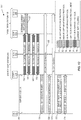
- An overview of all shadings is provided in the legend of Fig. 3 , which shows a UE to 3GPP base station air interface protocol 90, a new UE 3GPP air interface protocol 92, a UE Wi-Fi air interface protocol 94, a new 3GPP to Wi-Fi interface protocol 96, a new 3GPP to Wi-Fi interface protocol 97, and a current 3GPP sequence 98.
- a given base station 42 and its associated AP are associated with one another, and can perform the various signaling that shown with shading 96 in the figures discussed below (i.e., the 3GPP to Wi-Fi interface protocol).
- the Wi-Fi RAN 58 is accessible by the base station 42, and possibly also directly managed by the base station 42.
- a given 3GPP RAN 56 and its associated Wi-Fi RAN 58 have overlapping coverage areas. It is possible, but not required, that colocation connotes that the base station 42 and its colocated access point are located at a same site.
- a given associated Wi-Fi RAN 58 may comprise multiple Wi-Fi APs (and thus multiple Wi-Fi processors) that all support the same Wi-Fi RAN, in a so-called "Wi-Fi cloud" network.
- Base stations 44A-B support 3GPP RANs 56 but do not have associated Wi-Fi RANs.
- Each of the base stations 42, 44 is connected to a wide area network 48 (e.g., the Internet) via respective 3GPP core networks 50A-B.
- a secondary access point 46 provides a "local Wi-Fi" RAN 58' through an ISP 52.
- local Wi-Fi is that provided by an ISP to a consumer's home residence (in which case the access point 46 could be a Wi-Fi router in a residential or commercial location).
- Another example of local Wi-Fi could include open Wi-Fi provided by a municipal government to city residents.
- Another example of local Wi-Fi could include a Wi-Fi hotspot that a user is registered with. The techniques discussed in this application facilitate seamless handover of the UE 54 between the various RANs shown in Fig. 1 .
- base station 42A will be described as a "source base station” and base station 42B will be described as a "target base station.”
- a “source base station” is one that a UE 54 is either attempting to attach to, or that the UE is already conducting a session through
- a “target base station” is a base station that the source base station is attempting to handover a session to (e.g., based on signal strength for better service).
- base stations 42A and 42B are described below as a source and target, respectively, it is understood that other base stations could be source base stations, and that other base stations could be target base stations.
- Fig. 2 is a flowchart for an example UE attachment procedure 60.
- UE 54 is attempting to attach to one of the base stations 42 or 44. This could be occur as a result of the UE 54 turning ON from an OFF state, or as a result of the UE 54 having an ongoing session with local Wi-Fi RAN 58' and detecting a signal degradation in the Wi-Fi RAN 58', for example.
- the UE 54 starts a session with the base station (block 62), and the UE attempts to attach to the base station (block 64) (e.g., according to established 3GPP session initiation procedures).
- the UE is a legacy UE (e.g., a voice-only UE) or if the session is a non-Voice over IP (VoIP) voice session (a "Yes" to block 66), then the session is conducted through a 3GPP RAN of the base station (block 68).
- a UE may also be considered a "legacy" UE if it has Wi-Fi support, but otherwise lacks the UE features discussed herein.
- the BS is considered Wi-Fi capable if the base station has an associated Wi-Fi RAN that is either supported by the base station or is supported by an access point that is colocated with the base station, and the Wi-Fi RAN has sufficient available resources to support QoS requirements of the UE. If the BS is not Wi-Fi capable (a "No" to block 70), then the session is conducted through a 3GPP RAN of the base station (block 68). Otherwise if the BS is Wi-Fi capable (a "Yes" to block 70), then the UE reports its Media Access Control (MAC) address to the base station (block 72), and the base station responds by providing Wi-Fi credentials for its associated Wi-Fi RAN to the UE (block 74).
- the Wi-Fi credentials may include a Service Set Identifier (SSID) and a Wi-Fi password for the base station's associated Wi-Fi RAN, for example.
- SSID Service Set Identifier
- Wi-Fi password for the base station's associated Wi-Fi RAN
- the base station also transmits a request to the UE which requests that the UE turn ON its Wi-Fi features (block 76). After the UE attempts to use the Wi-Fi credentials to connect to the Wi-Fi RAN, the UE reports its Wi-Fi connection status to the base station (block 78). If the UE is successfully able to connect to the Wi-Fi RAN (a "Yes" to block 80), then the UE session is conducted over the Wi-Fi RAN (block 82).
- the base station requests that the UE delete the Wi-Fi credentials and turn OFF its Wi-Fi features (block 84), and the session is conducted through the 3GPP RAN of the base station (block 68).
- the turning OFF/ON of the Wi-Fi features could correspond to the UE turning OFF/ON it's Wi-Fi radio, for example (e.g., to conserve power).
- blocks with the shading 90 correspond to those that may be implemented by updating a UE to 3GPP base station air interface protocol (which can be used, e.g., by UE 54 and base station 42).
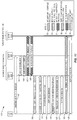
- Fig. 3 is a signaling diagram illustrating a UE attachment procedure 100 that incorporates aspects of the flowchart 60 of Fig. 2 .
- Fig. 3 shows a signaling protocol sequence between the UE 54 and a base station (e.g., base station 42) using a 3GPP air interface during a UE Attachment phase.
- Fig. 3 illustrates a "Wi-Fi Capability Request” and corresponding "Wi-Fi Capability Response" messages (see items 106, 108), which may be used to exchange UE and base station Wi-Fi capabilities, relevant data needed by both ends, and availability of Wi-Fi Resources by the base station's associated Wi-Fi RAN.
- Fig. 3 is a signaling diagram illustrating a UE attachment procedure 100 that incorporates aspects of the flowchart 60 of Fig. 2 .
- Fig. 3 shows a signaling protocol sequence between the UE 54 and a base station (e.g., base station 42) using a 3GPP air interface during a UE
- Wi-Fi Session End messaging (see items 116, 118) which may be used to terminate a Wi-Fi session on the UE, and cleanup the Wi-Fi credentials for the Wi-Fi RAN of the base station from the UE, and detach the UE from the base station 42.
- the UE 54 submits a random access procedure request (102) to the 3GPP processor 57 of a base station (e.g., base station 42), and receives a random access procedure response (104). Items 102, 104 correspond to item 64 of Fig. 2 . Assuming the attachment succeeds, the UE transmits a Wi-Fi capability request to the 3GPP processor 57 (106), the 3GPP processor 57 determines a current Wi-Fi capability of the Wi-Fi processor 59 (107), and the UE receives a corresponding Wi-Fi capability response (108). Items 106, 108 correspond to items 69, 70 of Fig. 2 .
- the UE 54 sends a Wi-Fi connection request (110) to the Wi-Fi processor 59, and receives a Wi-Fi connection response (112). Assuming that a Wi-Fi connection is successfully established, the UE conducts a Wi-Fi data session with the Wi-Fi RAN 58. The UE eventually sends a Wi-Fi Session End message requesting termination of the Wi-Fi session (116).
- the Wi-Fi processor 59 transmits a Wi-Fi Session End message (116) to the 3GPP processor 57, which in turn transmits a Wi-Fi session End message (118) to the UE 54.
- the Wi-Fi Session End message (118) is similar to block 84 of Fig. 8 , in that the base station 42, through the 3GPP RAN 56, requests that the UE delete the Wi-Fi credentials for the Wi-Fi RAN 58, and detach the UE from the base station 42.
- Fig. 3 also illustrates that, in the alternative, the UE 54 and 3GPP processor 57 may engage in a Radio Resource Control (RRC) Connection Establishment Cycle (120) to enable the UE to conduct its session (e.g., a data session, or voice call) over the 3GPP RAN 56.
- RRC Radio Resource Control
- the Wi-Fi Capability Response (108) indicates that the base station 42 does not have an associated Wi-Fi RAN, or that its associated Wi-Fi RAN lacks the resources to meet QoS requirements of the UE 54, then items 110-118 would be bypassed and the UE 54 and base station 42 would proceed to the RRC Connection Establishment Cycle (120).
- the Wi-Fi Connection Response (112) indicates that a Wi-Fi session is not established between the UE 54 and Wi-Fi RAN 58, then items 114-118 would be bypassed and the UE 54 and base station 42 would proceed to the RRC Connection Establishment Cycle (120).
- the attachment procedure of items 102-104 fails, then items 106-118 would be bypassed and the UE 54 and base station 42 would proceed to the RRC Connection Establishment Cycle (120).
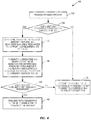
- Fig. 4 illustrates a method 150 implemented by a base station (e.g., base station 42) that supports a 3GPP RAN 56 and has an associated Wi-Fi RAN 58 that is either supported by the base station or is supported by an access point that is colocated with the base station.
- the method 150 incorporates aspects of what is described in Figs. 1-2 .
- the base station 42 receives a request from a UE 54 (block 152). If the request is a request for a current Wi-Fi service capability of the base station (a "Yes" to block 154), then the base station determines, based on the request, whether the Wi-Fi RAN 58 has sufficient available resources to support QoS requirements of the UE (block 156). The base station also transmits a corresponding response to the UE 54 based on the determining which indicates whether the Wi-Fi RAN 58 has sufficient available resources to support QoS requirements of the UE 54 (block 158).
- a base station e.g., base station 42
- the base station If the response indicates that the Wi-Fi RAN 58 has sufficient available resources to support the QoS requirements of the UE 54 (a "Yes" to block 160), then the base station also transmits Wi-Fi credentials to the UE 54 to enable the UE to access the Wi-Fi RAN (block 162).
- the base station 42 attempts to enable the UE 54 to access the 3GPP RAN 56, and does not transmit Wi-Fi credentials to the UE 54 for its Wi-Fi RAN (block 164).
- the base station 42 if the response of block 158 indicates that the Wi-Fi RAN has sufficient available resources to support the QoS requirements of the UE, the base station 42 also transmits a request to the UE 54 which requests that the UE 54 enable its Wi-Fi features.
- the base station 42 may also transmit a request to the UE 54 which requests that the UE 54 delete the Wi-Fi credentials once the data session is terminated or handed over. Such requests can be used to prevent the UE from retaining Wi-Fi credentials for the Wi-Fi RAN 58 of the base station once an established Wi-Fi session is ended (or if a Wi-Fi session is attempted with the Wi-Fi credentials but is never established).
- the base station 42 transmits a request to the UE 54 requesting that the UE 54 disable its Wi-Fi features (see also block 84 of Fig. 2 ).
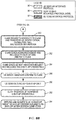
- the UE 54 receives, via the 3GPP RAN 56, a corresponding response from the base station that indicates whether the base station has an associated Wi-Fi RAN 58 that is either supported by the base station or is supported by an access point that is colocated with the base station (block 204).
- the response also indicates whether the Wi-Fi RAN 58 has sufficient available resources to support QoS requirements of the UE 54. If the response indicates that the base station has an associated Wi-Fi RAN 58 and that the Wi-Fi RAN 58 has sufficient available resources to support QoS requirements of the UE 54, the UE 54 subsequently receives Wi-Fi credentials for the Wi-Fi RAN 58 over the 3GPP RAN 56, and attempts to establish a data session with the Wi-Fi RAN 58 using the Wi-Fi credentials (block 206). In one or more embodiments of the method 200, the UE 54 deletes the Wi-Fi credentials based on receiving, via the 3GPP RAN 56, a request from the base station requesting that the UE 54 delete the Wi-Fi credentials.
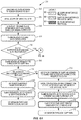
- the base station 42A requests a Wi-Fi capacity of the Wi-Fi RAN 58 associated with a target base station (e.g., base station 42B) (block 258).
- a target base station e.g., base station 42B
- associated with means that the Wi-Fi RAN 58 is supported by the target base station or is supported by an access point colocated with the target base station. Similar to the Wi-Fi capability request 106 of Fig.
- the Wi-Fi capability request of block 258 asks the target base station (1) whether it has an associated Wi-Fi RAN that is either supported by the target base station or is supported by an access point that is colocated with the target base station, and (2) if there is an associated Wi-Fi RAN, whether the associated Wi-Fi RAN has sufficient available resources to support QoS requirements of the UE 54.
- the base station 42A sends the UE 54 a request to handover to a 3GPP RAN of the target base station (block 262). If the UE is able to detect and connect to a known additional Wi-Fi access point (e.g., access point 46 in Fig. 1 ) (a "Yes" to block 264), then the UE 54 rejects the request from the base station 42A to handover to the 3GPP RAN (block 268).
- a known additional Wi-Fi access point e.g., access point 46 in Fig. 1
- the UE 54 accepts the handover request of block 262 by sending a confirmation signal to the source base station 42 (block 272), and the UE 54 triggers an RRC connection establishment cycle which enables completion of a 3GPP cellular attachment (block 274).
- the source base station 42A requests that the UE 54 delete the Wi-Fi credentials for its Wi-Fi RAN 42, and requests that the UE disable its Wi-Fi features (block 276).
- the source base station 42A then performs a 3GPP traffic handover to the target base station (block 278), and the UE conducts its session through the 3GPP RAN 56.
- the source base station 42 transmits a request to the target base station (e.g., base station 42C) which indicates a Wi-Fi capability of the UE, a MAC address of the UE 54, and a current session type (in this example Wi-Fi) (block 280).
- the target base station acknowledges the request of block 280, and provides the source base station 42A with Wi-Fi credentials for the Wi-Fi RAN associated with the target base station (e.g., a SSID and password) (block 282).
- the source base station 42A sends a handover command to the UE 54 that includes the Wi-Fi credentials to enable the UE 54 to connect to the Wi-Fi RAN of the target base station (block 284).
- the UE 54 Having connected to the Wi-Fi RAN of the target base station, and the UE 54 sends a confirmation message to the source base station 42A to indicate the successful Wi-Fi connection to the Wi-Fi RAN of the target base station (block 288). Once those Wi-Fi credentials are deleted, the UE is connected to the Wi-Fi RAN of the target base station and is no longer connected to the Wi-Fi RAN of the source base station 42A (block 290). The source base station 42A requests that the UE 54 delete the Wi-Fi credentials for its associated Wi-Fi RAN 42 (block 292).
- the source base station transmits a request to the UE 54 requesting that once the UE is no longer connected to the Wi-Fi RAN of the target base station that the UE delete the Wi-Fi credentials of Wi-Fi RAN of the target base station and (if the Wi-Fi session has not been handed off to yet another Wi-Fi RAN) that the UE disable its Wi-Fi features (block 294).
- Fig. 7 is a signaling diagram for a Wi-Fi RAN to Wi-Fi RAN handover sequence 300 that incorporates aspects of the flowchart 250 of at least one of Figs. 6A and 6B .
- Fig. 7 shows a signaling protocol sequence between the UE 54 and a base station (e.g., base station 42A) using a 3GPP air interface during a UE Attachment phase.
- the various shadings in Fig. 7 identify potential telecommunication standards which could be updated based on a given message.
- Fig. 7 illustrates the following messaging that could serve as modifications for existing 3GPP air interface protocols:
- the UE 54 has an ongoing Wi-Fi data session with the Wi-Fi RAN of the source base station 42A (301).
- the Wi-Fi processor 59A of the source base station 42A based on a trigger event, sends a handover request (302) to the 3GPP processor 57A.
- the 3GPP processor 57A of source base station 42A acknowledges the need for the handover in a handover response (304) to the Wi-Fi processor 59A.
- Item 302 in Fig. 7 corresponds to block 256 of Fig. 6A .
- the Wi-Fi processor 59 for a given base station 42 may be part of the base station 42, or may be part of an access point that is colocated with the base station 42.
- the 3GPP processor 57A transmits a Wi-Fi Capability Request to target base station 42B (306).
- the 3GPP processor 57B of target base station 42B determines a current Wi-Fi capability of its associated Wi-Fi processor 59B (307).
- the 3GPP processor 57B then transmits a corresponding Wi-Fi Capability Response (308) that indicates whether the target base station 42B has an associated Wi-Fi RAN, and if so whether that associated Wi-Fi RAN has sufficient available resources to support QoS requirements of the UE 54.
- Item 306 of Fig. 7 corresponds to block 258 of Fig. 6A .
- the 3GPP processor 57A transmits a request to the target base station 42B which indicates a Wi-Fi capability of the UE, a MAC address of the UE, and a current session type (in this example Wi-Fi) (310), and in response receives Wi-Fi credentials for the Wi-Fi RAN supported by the Wi-Fi processor 59B.
- Items 310, 312 of Fig. 7 correspond to blocks 280, 282 of Fig. 6B .
- the 3GPP processor 57A transmits a Wi-Fi handover request (314) to the UE 54 that includes the Wi-Fi credentials to enable the UE 54 to connect to the Wi-Fi RAN of the target base station.
- the UE attempts to connect to the Wi-Fi RAN of the target base station 42B using the credentials (316), and then transmits a corresponding Wi-Fi handover response (318) indicating whether that attempt was successful.
- Items 314, 318 of Fig. 7 correspond to blocks 284, 288 of Fig. 6B .
- the 3GPP processor 57A transmits a request to the UE (324) to remove the Wi-Fi credentials for the Wi-Fi RAN associated with the source base station 42A (i.e., the one supported by Wi-Fi circuitry 59A), and receives confirmation (326) that the Wi-Fi credentials have been removed and that the Wi-Fi session of 301 has been terminated.
- the UE then continues conducting its Wi-Fi data session with the Wi-Fi RAN associated with the target base station 42B (328). Items 324, 326, 328 of Fig. 13 correspond to blocks 290, 294, 292, respectively of Fig. 12 .
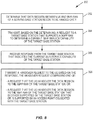
- Fig. 8 is a flowchart illustrating an example method 350 performed by a source base station 42 that incorporates aspects of Figs. 6-7 .
- the base station supports a 3GPP RAN 56 and has an associated Wi-Fi RAN 58 that is either supported by the source base station 42 or is supported by an access point that is colocated with the source base station 42.
- the source base station is base station 42A and that base station 42B is a target base station.
- the base station 42A determines that a data session between a UE 54 and the Wi-Fi RAN 58 of the source base station 42A needs to be handed over (block 352).
- the source base station 42A transmits, based on the determining, a request to target base station (e.g., base station 42B) which that supports a 3GPP RAN 56 to determine a current Wi-Fi service capability of the target base station 42B (block 354).
- the source base station 42A receives a response from the target base station 42B that indicates the current Wi-Fi service capability of the target base station 42B (block 356).
- the source base station 42A then transmits a handover request to the UE 54 based on the response (block 358).
- the handover request includes one of:
- the request to determine a current Wi-Fi service capability of the target base station 42B includes QoS requirements of the UE 54, and transmitting the request that the UE handover the data session to the Wi-Fi RAN of the target base station (block 358) is conditioned upon the response of block 356 indicating that the target base station 42B has an associated Wi-Fi RAN, and that the Wi-Fi RAN of the target base station 42B has sufficient available resources to support QoS requirements of the UE 54.
- the source base station 42A transmits a request to the UE 54 requesting that the UE 54 delete the Wi-Fi credentials after the UE establishes a Wi-Fi session with the Wi-Fi RAN of the target base station 42B using the Wi-Fi credentials and subsequently disconnects from the Wi-Fi RAN of the target base station 42B.
- the source base station 42A transmits an additional handover request to the target base station 42B requesting Wi-Fi credentials for the Wi-Fi RAN of the target base station 42B, and receives a corresponding handover response from the target base station 42B that includes the Wi-Fi credentials for the Wi-Fi RAN of the target base station 42B.
- the handover request of block 358 includes a request that the UE 54 handover its data session to the 3GPP RAN of the target base station 42B, and the method 350 further includes receiving a handover response from the UE 54 indicating whether the UE 54 accepts or rejects the handover request.
- the source base station 42A transmits a request to the UE 54 requesting that the UE 54 disable its Wi-Fi features.
- the source base station 42A transmits a request to the UE 54 requesting that the UE 54 delete Wi-Fi credentials for the Wi-Fi RAN 58 of the source base station 42A.
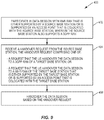
- Fig. 9 is a flowchart illustrating an example method 400 performed by a UE 54 that incorporates aspects of Figs. 6-7 .
- the UE 54 is capable of supporting a session with a 3GPP RAN 56 and is also capable of supporting a session with a Wi-Fi RAN 58.
- the UE 54 participates in a data session with a Wi-Fi RAN 58 that is either supported by a source base station (e.g., base station 42A) or is supported by an access point that is colocated with the source base station 42A, wherein the source base station also supports a 3GPP RAN 56 (block 402).
- the UE 54 receives a handover request from the source base station 42A (block 404), with the handover request including one of the following:
- handing over the data session includes:
- the UE 54 receives a request from the source base station 42A to delete Wi-Fi credentials for the Wi-Fi RAN 58 of the source base station 42A, with the received request being based on the data session with the Wi-Fi RAN of the source base station being terminated or handed away from the source base station. The UE 54 then deletes the Wi-Fi credentials for the Wi-Fi RAN 58 of the source base station 42A based on the request to delete the Wi-Fi credentials.
- Fig. 10 is a flowchart illustrating an example method 450 performed by a target base station (e.g., base station 42B) that incorporates aspects of Figs. 6-7 .
- the target base station 42B supports a 3GPP RAN 56 and has an associated Wi-Fi RAN 58 that is either supported by the target base station 42B or is supported by an access point that is colocated with the target base station 42B.
- the target base station receives a request from a source base station (e.g., base station 42A) to indicate a Wi-Fi capability of the target base station 42B (block 452).
- a source base station e.g., base station 42A
- the source base station 42A supports a 3GPP RAN 56 and has an associated Wi-Fi RAN 58 that is either supported by the source base station 42A or is supported by an access point that is colocated with the source base station 42A.
- the request of block 452 includes QoS requirements of a UE 54 participating in a data session with the Wi-Fi RAN 58 of the source base station 42A.
- the target base station 42B determines whether the Wi-Fi RAN 58 of the target base station 42B has sufficient available resources to support the QoS requirements of the UE 54 (block 452).
- the target base station 42B transmits a corresponding response to the source base station 42A that indicates that the target base station 42B supports a Wi-Fi RAN 58, and that indicates, based on the determining, whether the target base station 42B has sufficient available resources to support the QoS requirements of the UE 54 (block 456).
- the target base station 42B transmits Wi-Fi credentials for the Wi-Fi RAN 58 of the target base station 42B to the source base station 42A if the determining of block 454 indicates that the Wi-Fi RAN 58 of the target base station 42B has sufficient available resources to support the QoS requirements of the UE 54.
- Fig. 11 is a signaling diagram 500 illustrating a non-local Wi-Fi RAN to 3GPP RAN handover sequence that incorporates aspects of at least one of Figs. 6A and 6B (e.g., from Wi-Fi RAN 58 to 3GPP RAN 56).
- the "non-local Wi-Fi" RAN is not a local, open, or secondary Wi-Fi RAN (e.g., Wi-Fi RAN 58' in Fig. 1 ).
- Items 501-506 in Fig. 11 are the same as items 301-306 in Fig. 7 . However, in Fig.
- Fig. 12 is a signaling diagram 550 illustrating a 3GPP RAN to Wi-Fi RAN handover sequence that incorporates aspects of at least one of Figs. 6A-B .
- the UE 54 has an ongoing 3GPP data session with the 3GPP RAN of the source base station 42A (301).
- the 3GPP processor 57A of the source base station 42A based on a trigger event, sends a Wi-Fi capability request to 3GPP processor 57B of the target base station 42B.
- Items 556, 557, 558, 560, and 562 correspond to items 306, 307, 308, 310, and 312, respectively of Fig. 7 .
- 3GPP processor 57A transmits a Wi-Fi Capability Request to target base station 42B (556), the 3GPP processor 57B of target base station 42B determines a current Wi-Fi capability of its associated Wi-Fi processor 59B (557), and the 3GPP processor 57B then transmits a corresponding Wi-Fi Capability Response (558) that indicates whether the target base station 42B has an associated Wi-Fi RAN, and if so whether that associated Wi-Fi RAN has sufficient available resources to support QoS requirements of the UE 54.
- Wi-Fi Capability Response 558
- the 3GPP processor 57A transmits a request to the target base station 42B which indicates a Wi-Fi capability of the UE, a MAC address of the UE, and a current session type (in this example Wi-Fi) (560), and in response receives Wi-Fi credentials for the Wi-Fi RAN associated with the Wi-Fi processor 59B (562).
- the 3GPP processor 57A then sends, via 3GPP RAN 56 of the source base station 42A, a Wi-Fi handover request (564) to the UE 54 that includes the Wi-Fi credentials for the Wi-Fi RAN 58 of the target base station 42B.
- Fig. 13 is a signaling diagram 600 illustrating a Wi-Fi RAN to local Wi-Fi RAN handover sequence that incorporates aspects of at least one of Figs. 6A and 6B .
- UE 54 has an ongoing Wi-Fi data session with Wi-Fi RAN 58 of source base station (supported by Wi-Fi processor 59).
- the UE 54 detects a local Wi-Fi RAN 58' which is either open, or for which it has Wi-Fi credentials (604).
- the local Wi-Fi RAN is supported by Wi-Fi access point 46 (e.g., home router providing Internet access via an ISP).
- Figs. 14-15 illustrate some example use cases in which 3GPP RANs 56 and Wi-Fi RANs 58 work seamlessly with each other to provide continued service to a UE 54, while advantageously offloading from the 3GPP RANs 56 whenever possible.
- similar reference numerals are used in Figs. 14-15 as are used in Fig. 1 to indicate similar elements.
- UE 54 has an ongoing Wi-Fi data session with Wi-Fi RAN 58 of base station 42A (see "A"), but then moves to be in proximity to base station 42B.
- Base station 42B has an associated Wi-Fi RAN 58 which has sufficient available resources to support QoS requirements of the UE 54.
- the Wi-Fi data session is handed over to Wi-Fi RAN 58 of base station 42B (see “B”).
- the UE 54 then moves in proximity a base station which does not have an associated Wi-Fi RAN (e.g., base station 44A).
- the UE's Wi-Fi data session switches to a 3GPP data session with 3GPP RAN 56 of base station 44A (see “C”).
- the UE 54 the moves in proximity to a base station 42C which has an associated Wi-Fi RAN 58 which has sufficient available resources to support QoS requirements of the UE 54, and the 3GPP data session switches to a Wi-Fi data session with Wi-Fi RAN 58 of the base station 42C (see “D”).
- item "C" could correspond to the UE moving into proximity of a base station which has an associated Wi-Fi RAN that lacks sufficient available resources to support QoS requirements of the UE 54.
- Fig. 16A illustrates an example dual mode base station 700A that supports both a 3GPP RAN 56 and a Wi-Fi RAN 58.
- the base station 700A includes one or more processing circuits configured as a 3GPP processor 702 configured to support the 3GPP RAN 56 via a 3GPP radio 704.
- the one or more processing circuits of the 3GPP processor 702 may include, for example, one or more microprocessors, microcontrollers, digital signal processors, or the like, configured with appropriate software and/or firmware to carry out one or more of the techniques discussed above.
- the 3GPP processor 702 may be used as the 3GPP circuitry 57 discussed above, for example.
- the base station 700A also includes one or more processing circuits configured as a Wi-Fi processor 712 configured to support a Wi-Fi RAN 58 via a Wi-Fi radio 714.
- the one or more processing circuits of the Wi-Fi processor 712 may include, for example, one or more microprocessors, microcontrollers, digital signal processors, or the like, configured with appropriate software and/or firmware to carry out one or more of the techniques discussed above.
- the Wi-Fi processor 712 may be used as the Wi-Fi circuitry 59 discussed above, for example.
- the Wi-Fi processor 712 has an associated memory circuit 718, which may comprise one or several types of memory such as read-only memory (ROM), random-access memory, cache memory, flash memory devices, optical storage devices, etc.
- the memory circuit 718 includes program instructions for executing one or more 802.11 Wi-Fi protocols, as well as instructions for carrying out one or more of the techniques described herein.
- Fig. 16B illustrates an alternative embodiment of the base station 700B, in which the Wi-Fi processor 712, Wi-Fi radio 714, and memory circuit 718 are separate from but colocated with the base station 700B.
- the base station 700B supports a 3GPP RAN 56 and has a colocated access point 710 that supports a Wi-Fi RAN 58
- the base station 700A supports both the 3GPP RAN 56 and the Wi-Fi RAN 58.
- the base stations 700A, 700B will be generally referred to as base station 700 below.
- the one or more processing circuits of the 3GPP processor 702 are configured to receive a request from a UE 54, and if the request is a request for a current Wi-Fi service capability of the base station 700, to:
- the base station 700 acts as a source base station with respect to a target base station.
- the one or more processing circuits of the 3GPP processor 702 are configured to determine that a data session between UE 54 and the Wi-Fi RAN 58 of the base station 700 needs to be handed over; and to transmit, based on the determining, a request to the target base station that supports a 3GPP RAN to determine a current Wi-Fi service capability of the target base station.
- the 3GPP processor 702 is further configured to receive a response from the target base station that indicates the current Wi-Fi service capability of the target base station, and to transmit a handover request to the UE 54 based on the response.
- the handover request includes one of:
- the base station 700 acts as a target base station with respect to a source base station.
- the one or more processing circuits of the 3GPP processor 702 are configured to receive a request from a source base station to indicate a Wi-Fi capability of the target base station 700.
- the source base station supports a 3GPP RAN and has an associated Wi-Fi RAN that is either supported by the source base station or is supported by an access point that is colocated with the source base station.
- the received request includes QoS requirements of a UE 54 participating in a data session with the Wi-Fi RAN of the source base station.
- the one or more processing circuits of the 3GPP processor 702 are further configured to determine, based on the request, whether the Wi-Fi RAN 58 of the target base station 700 has sufficient available resources to support the QoS requirements of the UE 54; and to transmit a corresponding response to the source base station that indicates that the target base station 700 supports a Wi-Fi RAN 58, and that indicates, based on the determining, whether the target base station 700 has sufficient available resources to support the QoS requirements of the UE 54.
- Fig. 17 illustrates an example user equipment (UE) 800 that has 3GPP and Wi-Fi capabilities. That is, the UE is capable of supporting a session with a 3GPP RAN 56 and is also capable of supporting a session with a Wi-Fi RAN 58.
- the UE may be used as the UE 54 discussed above, for example.
- the UE 800 may be configured to implement any combination of the UE features shown in any of Figs. 2-3 , 5-7 , 9 , or 11-14 , for example.
- the one or more processing circuits 802 are configured to send a request to a base station that supports a 3GPP RAN to determine a current Wi-Fi service capability of the base station, wherein the request is sent via the 3GPP RAN 56.
- the one or more processing circuits 802 are further configured to receive, via the 3GPP RAN 56, a corresponding response from the base station indicating whether the base station has an associated Wi-Fi RAN 58 that is either supported by the base station (see, e.g., Fig. 16A ) or is supported by an access point that is colocated with the base station (see, e.g., Fig. 16B ).
- the response also indicates whether the Wi-Fi RAN has sufficient available resources to support QoS requirements of the UE 800.
- the one or more processing circuits 802 are further configured to, if the response indicates that the Wi-Fi RAN of the base station exists and has sufficient available resources to support QoS requirements of the UE 800, subsequently receive Wi-Fi credentials for the Wi-Fi RAN 58 over the 3GPP RAN 56, and attempt to establish a data session with the Wi-Fi RAN 58 using the Wi-Fi credentials.
- the one or more processing circuits 802 are configured to participate in a data session with a Wi-Fi RAN 58 that is either supported by a source base station 700 or is supported by an access point that is colocated with the source base station, wherein the source base station also supports a 3GPP RAN.
- the one or more processing circuits 802 are configured to receive a handover request from the source base station 700, with the handover request comprising one of the following:
- the methods and apparatus described above offer a number of advantages over prior art solutions. For example, they may be based on extending current, internationally adopted standards (i.e., 3GPP and 802.11 standards), and support both data offloading and mobility/handover within these two types of RANs (i.e., 3GPP RANs and Wi-Fi RANs).
- 3GPP and 802.11 standards i.e., 3GPP RANs and Wi-Fi RANs.
- LTE terminology e.g., eNodeB
- the teachings above can be adapted to all 3GPP based standards. They may enable service providers to offer different level of services based on QoS requirements of a given UE.
- no new network equipment is needed to implement the teachings above, only software changes are required.
- legacy UEs that only use voice calling and omit data features are also supported by the base station configurations discussed above. As such, the present disclosure offers a cost effective way to address network congestion to service providers.
- the actions noted in the blocks of the flowcharts and signaling diagrams above may occur out of the order noted in the figures.
- two blocks shown in succession may, in fact, be executed substantially concurrently, or the blocks may sometimes be executed in the reverse order, depending upon the functionality involved.
- the base station could request that a UE turn ON its Wi-Fi features (block 76) prior to sending Wi-Fi credentials to the UE (block 74).
- the 3GPP processor 57 could determine a current Wi-Fi capability (item 107) before receiving a Wi-Fi capability request (item 106). The determining of the current Wi-Fi capability could happen periodically, for example, in which case item 107 may precede item 106.
Landscapes
- Engineering & Computer Science (AREA)
- Computer Networks & Wireless Communication (AREA)
- Signal Processing (AREA)
- Computer Security & Cryptography (AREA)
- Quality & Reliability (AREA)
- Mobile Radio Communication Systems (AREA)
Claims (11)
- Verfahren (150), das von einer Basisstation implementiert wird, die ein 3GPP-Funkzugangsnetzwerk, RAN. unterstützt und mit einem Wi-Fi-RAN assoziiert ist, das entweder durch die Basisstation unterstützt wird oder durch einen Zugangspunkt unterstützt wird, der ortsgleich mit der Basisstation angeordnet ist, wobei der Zugangspunkt und die Basisstation Signalisierung miteinander durchführen, wobei das Verfahren (150) umfasst:Empfangen (152) einer Wi-Fi-Fähigkeitsanfrage hinsichtlich dessen, ob ein Wi-Fi-RAN mit genügend verfügbaren Ressourcen zum Unterstützen von Dienstqualitäts-,QoS-,Anforderungen der UE gegenwärtig mit der Basisstation assoziiert ist, von einer Benutzereinrichtung, UE, über das 3GPP-RAN;Bestimmen (156) basierend auf der Wi-Fi-Fähigkeitsanfrage, ob das assoziierte Wi-Fi-RAN genügend verfügbare Ressourcen zum Unterstützen der QoS-Anforderungen aufweist; undSenden (158) einer entsprechenden Antwort basierend auf dem Bestimmen, das anzeigt, ob das assoziierte Wi-Fi-RAN genügend verfügbare Ressourcen zum Unterstützen der QoS-Anforderungen der UE aufweist, über das 3GPP-RAN an die UE;wobei, wenn die Antwort anzeigt, dass das assoziierte Wi-Fi-RAN genügend verfügbare Ressourcen zum Unterstützen der QoS-Anforderungen der UE aufweist, die Basisstation außerdem WiFi-Anmeldeinformationen an die UE sendet (162), um die UE zum Erlangen von Zugang zum Wi-Fi-RAN zu befähigen;wobei, wenn die Antwort anzeigt, dass das assoziierte Wi-Fi-RAN nicht genügend verfügbare Ressourcen zum Unterstützen der QoS-Anforderungen der UE aufweist, die Basisstation versucht (164), die UE zum Erlangen von Zugang zum 3GPP-RAN zu befähigen, indem sie zu einem Funkressourcensteuerungs-,RRC-,Verbindungsherstellungszyklus (120) übergeht und keine Wi-Fi-Anmeldeinformationen für das assoziierte Wi-Fi-RAN an die UE sendet,wenn die UE nicht zum Aufbauen einer Datensitzung mit dem assoziierten Wi-Fi-RAN unter Verwendung der Wi-Fi-Anmeldeinformationen in der Lage ist:- Senden einer Forderung an die UE, die fordert, dass die UE die Wi-Fi-Anmeldeinformationen ohne Aufbauen einer Datensitzung mit dem assoziierten Wi-Fi-RAN löschen soll;- Versuchen, die UE zum Erlangen von Zugang zum 3GPP-RAN zu befähigen; undSenden, wenn die UE zum Aufbauen einer Datensitzung mit dem assoziierten Wi-Fi-RAN unter Verwendung der Wi-Fi-Anmeldeinformationen in der Lage ist, einer Forderung an die UE, die fordert, dass die UE die Wi-Fi-Anmeldeinformationen löschen soll, sobald die Datensitzung beendet oder weitergegeben wird.
- Verfahren (150) nach Anspruch 1, wobei, wenn die Antwort anzeigt, dass das assoziierte Wi-Fi-RAN genügend verfügbare Ressourcen zum Unterstützen der QoS-Anforderungen der UE aufweist, die Basisstation außerdem eine Forderung an die UE sendet, die fordert, dass die UE ihre Wi-Fi-RAN-Merkmale aktivieren soll.
- Verfahren (150) nach Anspruch 1 oder 2, ferner umfassend:
Senden, wenn die UE nicht zum Aufbauen einer Datensitzung mit dem assoziierten Wi-Fi-RAN unter Verwendung der Wi-Fi-Anmeldeinformationen in der Lage ist, einer Forderung an die UE, die fordert, dass die UE ihre Wi-Fi-Merkmale deaktivieren soll. - Verfahren (350), das von einer Ursprungs-Basisstation implementiert wird, die ein 3GPP-Funkzugangsnetzwerk, RAN. unterstützt und mit einem Wi-Fi-RAN assoziiert ist, das entweder durch die Ursprungs-Basisstation unterstützt wird oder durch einen Zugangspunkt unterstützt wird, der ortsgleich mit der Ursprungs-Basisstation angeordnet ist, wobei der Zugangspunkt und die Ursprungs-Basisstation Signalisierung miteinander durchführen, wobei das Verfahren (350) umfasst:Bestimmen (352), dass eine Datensitzung zwischen einer Benutzereinrichtung, UE, und dem mit der Ursprungs-Basisstation assoziierten Wi-Fi-RAN weitergegeben werden muss;Senden (354) einer WiFi-Fähigkeitsanfrage hinsichtlich dessen, ob ein Wi-Fi-RAN mit genügend verfügbaren Ressourcen zum Unterstützen von Dienstqualitäts-,QoS-,Anforderungen der UE gegenwärtig mit einer Ziel-Basisstation assoziiert ist, basierend auf dem Bestimmen an die Ziel-Basisstation, die eine 3GPP-RAN unterstützt;Empfangen (356) einer Antwort auf die Wi-Fi-Fähigkeitsanfrage von der Ziel-Basisstation, wobei die Antwort anzeigt, ob das Wi-Fi-RAN mit genügend verfügbaren Ressourcen zum Unterstützen von Dienstqualitäts-,QoS-,Anforderungen der UE gegenwärtig mit der Ziel-Basisstation assoziiert ist;Senden (358) einer Weitergabeforderung an die UE basierend auf der Antwort, wobei die Weitergabeforderung eine umfasst von:einer Forderung, dass die UE die Datensitzung an das mit der Ziel-Basisstation assoziierte 3GPP-RAN weitergeben soll; odereiner Forderung, dass die UE die Datensitzung an ein mit der Ziel-Basisstation assoziiertes WiFi-RAN weitergeben soll, wobei das mit der Basisstation assoziierte WiFi-RAN entweder durch die Ziel-Basisstation unterstützt wird oder durch einen Zugangspunkt unterstützt wird, der ortsgleich mit der Ziel-Basisstation angeordnet ist,Empfangen von WiFi-Anmeldeinformationen von der Ziel-Basisstation für das mit der Ziel-Basisstation assoziierte WiFi-RAN;Senden der WiFi-Anmeldeinformationen für das mit der Ziel-Basisstation assoziierte WiFi-RAN als Teil der Weitergabeforderung an die UE; undSenden einer Forderung an die UE, die fordert, dass die UE die WiFi-Anmeldeinformationen löschen soll, nachdem die UE unter Verwendung der WiFi-Anmeldeinformationen eine WiFi-Sitzung mit dem mit der Ziel-Basisstation assoziierten WiFi-RAN aufbaut und sich anschließend von dem mit der Ziel-Basisstation assoziierten WiFi-RAN trennt.
- Verfahren (350) nach Anspruch 4,
wobei die WiFi-Fähigkeitsanfrage die QoS-Anforderungen der UE umfasst; und
wobei das Senden der Forderung, dass die UE die Datensitzung an das mit der Ziel-Basisstation assoziierte WiFi-RAN weitergeben soll, von der Antwort abhängig gemacht wird, die anzeigt, dass die Ziel-Basisstation mit einem WiFi-RAN assoziiert ist, und dass das mit der Ziel-Basisstation assoziierte WiFi-RAN genügend verfügbare Ressourcen zum Unterstützen von QoS-Anforderungen der UE aufweist. - Verfahren (350) nach Anspruch 5, ferner umfassend:Senden einer zusätzlichen Weitergabeforderung an die Ziel-Basisstation, die WiFi-Anmeldeinformationen für das mit der Ziel-Basisstation assoziierte WiFi-RAN fordert; undEmpfangen einer entsprechenden Weitergabeantwort von der Ziel-Basisstation, welche die WiFi-Anmeldeinformationen für das mit der Ziel-Basisstation assoziierte WiFi-RAN umfasst.
- Verfahren (350) nach einem der Ansprüche 4 bis 6, wobei die Weitergabeforderung eine Forderung umfasst, dass die UE die Datensitzung an das 3GPP-RAN der Ziel-Basisstation weitergeben soll, und das Verfahren umfasst:Empfangen einer Weitergabeantwort von der UE, die anzeigt, ob die UE die Weitergabeforderung akzeptiert oder zurückweist; undSenden, wenn die Weitergabeantwort von der UE anzeigt, dass die UE die Weitergabeforderung akzeptiert, einer Forderung an die UE, die fordert, dass die UE ihre Wi-Fi-Merkmale deaktivieren soll; und/oderferner umfassend:
Senden einer Forderung an die UE, die fordert, dass die UE WiFi-Anmeldeinformationen für das mit der Ursprungs-Basisstation assoziierte WiFi-RAN löschen soll, nach dem Senden der Weitergabeforderung an die UE. - Verfahren (200), das von einer Benutzereinrichtung, UE, implementiert wird, die zum Unterstützen einer Sitzung mit einem 3GPP-Funkzugangsnetzwerk, RAN, imstande ist, und außerdem zum Unterstützen einer Sitzung mit einem WiFi-RAN imstande ist, wobei das Verfahren (200) umfasst:Senden (202) einer WiFi-Fähigkeitsanfrage hinsichtlich dessen, ob ein Wi-Fi-RAN mit genügend verfügbaren Ressourcen zum Unterstützen von Dienstqualitäts-,QoS-,Anforderungen der UE gegenwärtig mit einer Basisstation assoziiert ist, an die Basisstation, die eine 3GPP-RAN unterstützt, wobei die WiFi-Fähigkeitsanfrage über das 3GPP-RAN gesendet wird;Empfangen (204) einer entsprechenden Antwort, die anzeigt, ob die Basisstation mit einem WiFi-RAN assoziiert ist, das entweder durch die Basisstation unterstützt wird oder durch einen Zugangspunkt unterstützt wird, der ortsgleich mit der Basisstation angeordnet ist, von der Basisstation über das 3GPP-RAN, und wobei die Antwort, wenn die Basisstation mit dem WiFi-RAN assoziiert ist, außerdem anzeigt, ob das assoziierte WiFi-RAN genügend verfügbare Ressourcen zum Unterstützen von QoS-Anforderungen der UE aufweist;anschließendes Empfangen (206) von WiFi-Anmeldeinformationen für das assoziierte WiFi-RAN über das 3GPP-RAN und Versuchen, eine Datensitzung unter Verwendung der WiFi-Anmeldeinformationen mit dem assoziierten WiFi-RAN aufzubauen, wenn die Antwort anzeigt, dass die Basisstation das assoziierte WiFi-RAN aufweist und dass das assoziierte WiFi-RAN genügend verfügbare Ressourcen zum Unterstützen von QoS-Anforderungen der UE aufweist;wenn die UE nicht zum Aufbauen einer Datensitzung mit dem assoziierten Wi-Fi-RAN unter Verwendung der Wi-Fi-Anmeldeinformationen in der Lage ist:- Empfangen einer Forderung von der Basisstation, die fordert, dass die UE die Wi-Fi-Anmeldeinformationen ohne Aufbauen einer Datensitzung mit dem assoziierten Wi-Fi-RAN löschen soll;- Löschen der Wi-Fi-Anmeldeinformationen bei Empfang der Forderung von der Basisstation über das 3GPP-RAN; und- Versuchen, Zugang zum 3GPP-RAN zu erlangen; undwenn die UE zum Aufbauen einer Datensitzung mit dem assoziierten Wi-Fi-RAN unter Verwendung der Wi-Fi-Anmeldeinformationen in der Lage ist:- Empfangen einer Forderung von der Basisstation, die fordert, dass die UE die Wi-Fi-Anmeldeinformationen löschen soll, sobald die Datensitzung beendet oder weitergegeben wird; und- Löschen der Wi-Fi-Anmeldeinformationen bei Empfang der Forderung von der Basisstation über das 3GPP-RAN.
- Computerlesbares Medium, umfassend Codeabschnitte, die bei Ausführung auf einem Prozessor einer Basisstation, die ein 3GPP-Funkzugangsnetzwerk, RAN, unterstützt und mit einem WiFi-RAN assoziiert, die Basisstation zum Ausführen aller Schritte eines Verfahrens nach einem der vorhergehenden Verfahrensansprüche 1 bis 7 veranlassen, und umfassend Codeabschnitte, die bei Ausführung auf einem Prozessor einer Benutzereinrichtung, UE, die zum Unterstützen einer Sitzung mit einem 3GPP-Funkzugangsnetzwerk, RAN, imstande ist, und außerdem zum Unterstützen einer Sitzung mit einem WiFi-RAN imstande ist, die Benutzereinrichtung zum Ausführen aller Schritte eines Verfahrens nach Anspruch 8 veranlassen.
- Basisstation (42, 700) die ein 3GPP-Funkzugangsnetzwerk, RAN, (56) unterstützt und mit einem Wi-Fi-RAN (58) assoziiert ist, das entweder durch die Basisstation (42, 700) unterstützt wird oder durch einen Zugangspunkt (710) unterstützt wird, der ortsgleich mit der Basisstation (42, 700) angeordnet ist, wobei der Zugangspunkt und die Basisstation zum Durchführen von Signalisierung miteinander imstande sind, wobei die Basisstation (42, 700) eine oder mehrere Verarbeitungsschaltungen (702) umfasst, die zum Durchführen der Verfahren nach einem der Ansprüche 1 bis 7 konfiguriert ist.
- Benutzereinrichtung, UE, (54, 800), die zum Unterstützen einer Sitzung mit einem 3GPP-Funkzugangsnetzwerk, RAN, (56) imstande ist und außerdem zum Unterstützen einer Sitzung mit einem WiFi-RAN (58) imstande ist, wobei die UE (54, 800) eine oder mehrere Verarbeitungsschaltungen (802) umfasst, die zum Durchführen des Verfahrens nach Anspruch 8 konfiguriert sind.
Applications Claiming Priority (1)
| Application Number | Priority Date | Filing Date | Title |
|---|---|---|---|
| PCT/IB2015/050352 WO2016113601A1 (en) | 2015-01-16 | 2015-01-16 | Attachment, handover, and traffic offloading between 3gpp rans and wi-fi rans |
Publications (2)
| Publication Number | Publication Date |
|---|---|
| EP3248411A1 EP3248411A1 (de) | 2017-11-29 |
| EP3248411B1 true EP3248411B1 (de) | 2020-11-18 |
Family
ID=53682741
Family Applications (1)
| Application Number | Title | Priority Date | Filing Date |
|---|---|---|---|
| EP15739326.5A Not-in-force EP3248411B1 (de) | 2015-01-16 | 2015-01-16 | Verbindung, übergabe und verkehrsentladung zwischen 3gpp-rans und wi-fi-rans |
Country Status (3)
| Country | Link |
|---|---|
| US (2) | US9674747B2 (de) |
| EP (1) | EP3248411B1 (de) |
| WO (1) | WO2016113601A1 (de) |
Cited By (1)
| Publication number | Priority date | Publication date | Assignee | Title |
|---|---|---|---|---|
| US11528650B2 (en) * | 2015-07-10 | 2022-12-13 | Parallel Wireless, Inc. | Enhanced X2 protocol |
Families Citing this family (20)
| Publication number | Priority date | Publication date | Assignee | Title |
|---|---|---|---|---|
| WO2016067078A1 (en) | 2014-10-30 | 2016-05-06 | Telefonaktiebolaget Lm Ericsson (Publ) | Integrated cellular system with wi-fi-fallback |
| JP6213491B2 (ja) * | 2015-02-06 | 2017-10-18 | カシオ計算機株式会社 | 無線通信装置、無線通信システム及びプログラム |
| GB2537404B (en) * | 2015-04-16 | 2018-04-18 | Samsung Electronics Co Ltd | WLAN-LTE Interworking |
| CN104902583A (zh) * | 2015-05-25 | 2015-09-09 | 深圳创维-Rgb电子有限公司 | 一种红外传输的wifi联网方法及系统 |
| US12641505B2 (en) * | 2016-01-27 | 2026-05-26 | Nokia Solutions And Networks Oy | Method and apparatus for implementing mobile edge application session connectivity and mobility |
| US10264621B2 (en) | 2016-03-18 | 2019-04-16 | Parallel Wireless, Inc | IuGW architecture |
| US10327185B2 (en) | 2016-03-18 | 2019-06-18 | Parallel Wireless, Inc. | IuGW architecture with RTP localization |
| CN107295580A (zh) * | 2016-03-30 | 2017-10-24 | 中兴通讯股份有限公司 | 接入点切换方法及装置 |
| US10098066B2 (en) * | 2016-06-27 | 2018-10-09 | Microsoft Technology Licensing, Llc | Auxiliary back-off to avoid battery and network resource depletion in variable network conditions |
| US20180048700A1 (en) * | 2016-08-11 | 2018-02-15 | Qualcomm Incorporated | Distribution of application data between modems |
| US9883373B1 (en) | 2016-09-15 | 2018-01-30 | At&T Intellectual Property I, L.P. | Facilitation of mobile technology microcellular service |
| CN109417741B (zh) | 2016-11-16 | 2021-01-29 | 华为技术有限公司 | 数据迁移方法及装置 |
| WO2018127477A1 (en) * | 2017-01-04 | 2018-07-12 | Sony Corporation | Handover of terminal between nodes supporting two rats |
| US10841862B2 (en) | 2017-05-26 | 2020-11-17 | Qualcomm Incorporated | Millimeter wave directional discovery signal design |
| US11165641B2 (en) * | 2018-01-31 | 2021-11-02 | Parallel Wireless, Inc. | Community self-managed radio access network |
| US11284473B2 (en) | 2018-07-27 | 2022-03-22 | Samsung Electronics Co., Ltd. | Method and apparatus for intelligent WiFi connection management |
| US12047832B2 (en) * | 2018-12-28 | 2024-07-23 | Beijing Xiaomi Mobile Software Co., Ltd. | Mobility management methods and apparatuses and base stations |
| CN110536362B (zh) * | 2019-02-14 | 2026-03-13 | 中兴通讯股份有限公司 | 通信配置、通信配置方法、装置、终端、基站及通信系统 |
| EP4542930A1 (de) * | 2023-10-18 | 2025-04-23 | Roku, Inc. | Netzwerkvorrichtung mit berechtigungsnachweisbezogener nachrichteninhaltsauswahlfunktion |
| US20250330887A1 (en) * | 2024-04-19 | 2025-10-23 | Plume Design, Inc. | Systems and methods for performing a network handover between wifi and non-wifi networks |
Family Cites Families (22)
| Publication number | Priority date | Publication date | Assignee | Title |
|---|---|---|---|---|
| US6363065B1 (en) | 1999-11-10 | 2002-03-26 | Quintum Technologies, Inc. | okApparatus for a voice over IP (voIP) telephony gateway and methods for use therein |
| US7072652B2 (en) | 2003-12-15 | 2006-07-04 | Intel Corporation | Handoff apparatus, systems, and methods |
| DE602005019107D1 (de) | 2005-03-10 | 2010-03-11 | Thomson Licensing Sa | Hybrides leitweglenkprotokoll für ein netzwerk mit maschentopologie |
| EP2222117B1 (de) | 2005-09-30 | 2016-03-16 | Telefonaktiebolaget LM Ericsson (publ) | Mittel und Verfahren zur Unterstützung der Übergabe in integrierten Funkzugangsnetzen |
| US9143585B2 (en) | 2006-07-07 | 2015-09-22 | Wi-Lan Inc. | Method and system for generic multiprotocol convergence over wireless air interface |
| TW200835357A (en) | 2007-01-17 | 2008-08-16 | Nec Corp | Radio communication system, its method, device and program used for them |
| EP2914021B1 (de) * | 2007-03-22 | 2018-10-31 | NEC Corporation | Mobiles Kommunikationssystem und Kommunikationsverfahren |
| US7895345B2 (en) | 2007-04-13 | 2011-02-22 | Microsoft Corporation | Distributed routing table architecture and design |
| GB2457656C (en) * | 2008-02-18 | 2014-09-17 | Sony Corp | Cellular communication system, apparatus and method for network discovery |
| JP2009231976A (ja) * | 2008-03-19 | 2009-10-08 | Nec Corp | 異なる無線アクセス方式間のハンドオーバ方法および無線通信システム |
| KR101309614B1 (ko) * | 2009-12-22 | 2013-09-23 | 한국전자통신연구원 | 지능형 통합 기지국 및 그 운용 방법 |
| US20130137423A1 (en) | 2011-05-27 | 2013-05-30 | Qualcomm Incorporated | Allocating access to multiple radio access technologies via a multi-mode access point |
| US9510256B2 (en) * | 2011-09-20 | 2016-11-29 | Wildfire.Exchange, Inc. | Seamless handoff, offload, and load balancing in integrated Wi-Fi/small cell systems |
| WO2013052163A1 (en) * | 2011-10-03 | 2013-04-11 | Intel Corporation | Device to device (d2d) communication mechanisms |
| JP5772526B2 (ja) * | 2011-11-14 | 2015-09-02 | 富士通株式会社 | 基地局、無線通信システム、及び無線通信方法 |
| EP2677773B1 (de) * | 2012-06-22 | 2020-05-13 | BlackBerry Limited | Nahfeldkommunikationstransport-Automatikerkennung |
| CN104871578B (zh) | 2012-12-19 | 2018-11-09 | 瑞典爱立信有限公司 | 用于wi-fi在ran中的集成的ue可接入性指示的方法、用户设备及网络实体 |
| TWI492656B (zh) | 2012-12-25 | 2015-07-11 | 廣達電腦股份有限公司 | 無線存取點 |
| WO2014112941A1 (en) | 2013-01-18 | 2014-07-24 | Telefonaktiebolaget L M Ericsson (Publ) | Enhanced integration between wi-fi and mobile communication networks |
| US9622134B2 (en) | 2013-05-06 | 2017-04-11 | Qualcomm Incorporated | Coordinating handover events across RATs |
| US10575347B2 (en) * | 2013-11-04 | 2020-02-25 | Microsoft Technology Licensing, Llc | Delivery of shared WiFi credentials |
| WO2016067078A1 (en) | 2014-10-30 | 2016-05-06 | Telefonaktiebolaget Lm Ericsson (Publ) | Integrated cellular system with wi-fi-fallback |
-
2015
- 2015-01-16 EP EP15739326.5A patent/EP3248411B1/de not_active Not-in-force
- 2015-01-16 WO PCT/IB2015/050352 patent/WO2016113601A1/en not_active Ceased
- 2015-01-16 US US14/416,961 patent/US9674747B2/en active Active
-
2017
- 2017-04-13 US US15/486,633 patent/US10206152B2/en not_active Expired - Fee Related
Non-Patent Citations (1)
| Title |
|---|
| None * |
Cited By (1)
| Publication number | Priority date | Publication date | Assignee | Title |
|---|---|---|---|---|
| US11528650B2 (en) * | 2015-07-10 | 2022-12-13 | Parallel Wireless, Inc. | Enhanced X2 protocol |
Also Published As
| Publication number | Publication date |
|---|---|
| US20160212666A1 (en) | 2016-07-21 |
| WO2016113601A1 (en) | 2016-07-21 |
| EP3248411A1 (de) | 2017-11-29 |
| US9674747B2 (en) | 2017-06-06 |
| US10206152B2 (en) | 2019-02-12 |
| US20170223591A1 (en) | 2017-08-03 |
Similar Documents
| Publication | Publication Date | Title |
|---|---|---|
| US10206152B2 (en) | Attachment, handover, and traffic offloading between 3GPP RANS and Wi-Fi RANS | |
| JP5260642B2 (ja) | マルチメディア・モバイルネットワークにおいて音声サービスを提供するシステムおよび方法 | |
| EP2283677B1 (de) | Techniken zur effizienzoptimierung in einer situation für ein mögliches handover eines mobilen endgeräts | |
| US9253704B1 (en) | Intelligence in handover assessment for LTE/VoLTE calls to improve retainability | |
| JP5324702B2 (ja) | 無線アクセス技術を識別する移動局のためのシステムおよび方法 | |
| EP2448363B1 (de) | Funkbasisstation und -verfahren | |
| US9432885B2 (en) | Method and apparatus for packet-switched service handover in wireless communication system | |
| TWI590684B (zh) | 更新網路偵測及選擇資訊與網路流量導向資訊的方法 | |
| CN110036664A (zh) | 支持下一代(5g)网络中的单无线电语音呼叫连续性 | |
| US20130195009A1 (en) | Cs/ps coordination for csfb/srvcc | |
| US20170332301A1 (en) | Handover using dual active connections | |
| JP6699913B2 (ja) | 音声サービスを実行している端末を処理するための方法および装置、通信システム、プログラムならびにコンピュータ可読記憶媒体 | |
| WO2009006774A1 (fr) | Procédé de transfert intérieur dans un système | |
| JP2010531593A (ja) | マルチメディア・モバイルネットワークにおいて音声サービスを提供するシステムおよび方法 | |
| CN105917702A (zh) | 无线通信系统中用于双连接的路径切换方法及其装置 | |
| US20230276328A1 (en) | Shared use of cellular networks to provide wireless services | |
| US10623955B2 (en) | Integrated cellular system with Wi-Fi-fallback | |
| EP2813096B1 (de) | Verfahren und vorrichtung für autonomen betrieb in einem zellenbasierten lan | |
| CN101795475A (zh) | 一种在lte中进行跨plmn切换的方法及装置 | |
| CN102428680A (zh) | 用于在多模式移动设备的无线切换期间节省资源的方法 | |
| WO2010031331A1 (zh) | 测量报告上报及目标小区信息下发方法、移动终端和基站 | |
| CN103037452A (zh) | 支持话音业务连续性的方法 | |
| JP2014523188A (ja) | ハンドオーバー失敗防止方法 | |
| CN104823485B (zh) | 一种双连接下的通信方法、基站和用户设备 | |
| CN108419230B (zh) | 一种通信方法、基站及存储介质 |
Legal Events
| Date | Code | Title | Description |
|---|---|---|---|
| STAA | Information on the status of an ep patent application or granted ep patent |
Free format text: STATUS: THE INTERNATIONAL PUBLICATION HAS BEEN MADE |
|
| PUAI | Public reference made under article 153(3) epc to a published international application that has entered the european phase |
Free format text: ORIGINAL CODE: 0009012 |
|
| STAA | Information on the status of an ep patent application or granted ep patent |
Free format text: STATUS: REQUEST FOR EXAMINATION WAS MADE |
|
| 17P | Request for examination filed |
Effective date: 20170816 |
|
| AK | Designated contracting states |
Kind code of ref document: A1 Designated state(s): AL AT BE BG CH CY CZ DE DK EE ES FI FR GB GR HR HU IE IS IT LI LT LU LV MC MK MT NL NO PL PT RO RS SE SI SK SM TR |
|
| AX | Request for extension of the european patent |
Extension state: BA ME |
|
| DAX | Request for extension of the european patent (deleted) | ||
| STAA | Information on the status of an ep patent application or granted ep patent |
Free format text: STATUS: EXAMINATION IS IN PROGRESS |
|
| 17Q | First examination report despatched |
Effective date: 20200319 |
|
| RIC1 | Information provided on ipc code assigned before grant |
Ipc: H04W 48/18 20090101ALI20200429BHEP Ipc: H04W 36/26 20090101AFI20200429BHEP Ipc: H04W 88/10 20090101ALN20200429BHEP |
|
| RIC1 | Information provided on ipc code assigned before grant |
Ipc: H04W 36/26 20090101AFI20200527BHEP Ipc: H04W 48/18 20090101ALI20200527BHEP Ipc: H04W 88/10 20090101ALN20200527BHEP |
|
| GRAP | Despatch of communication of intention to grant a patent |
Free format text: ORIGINAL CODE: EPIDOSNIGR1 |
|
| STAA | Information on the status of an ep patent application or granted ep patent |
Free format text: STATUS: GRANT OF PATENT IS INTENDED |
|
| INTG | Intention to grant announced |
Effective date: 20200703 |
|
| GRAS | Grant fee paid |
Free format text: ORIGINAL CODE: EPIDOSNIGR3 |
|
| GRAA | (expected) grant |
Free format text: ORIGINAL CODE: 0009210 |
|
| STAA | Information on the status of an ep patent application or granted ep patent |
Free format text: STATUS: THE PATENT HAS BEEN GRANTED |
|
| AK | Designated contracting states |
Kind code of ref document: B1 Designated state(s): AL AT BE BG CH CY CZ DE DK EE ES FI FR GB GR HR HU IE IS IT LI LT LU LV MC MK MT NL NO PL PT RO RS SE SI SK SM TR |
|
| REG | Reference to a national code |
Ref country code: GB Ref legal event code: FG4D |
|
| REG | Reference to a national code |
Ref country code: CH Ref legal event code: EP |
|
| REG | Reference to a national code |
Ref country code: IE Ref legal event code: FG4D |
|
| REG | Reference to a national code |
Ref country code: DE Ref legal event code: R096 Ref document number: 602015062157 Country of ref document: DE |
|
| REG | Reference to a national code |
Ref country code: AT Ref legal event code: REF Ref document number: 1337106 Country of ref document: AT Kind code of ref document: T Effective date: 20201215 |
|
| REG | Reference to a national code |
Ref country code: NL Ref legal event code: FP |
|
| REG | Reference to a national code |
Ref country code: AT Ref legal event code: MK05 Ref document number: 1337106 Country of ref document: AT Kind code of ref document: T Effective date: 20201118 |
|
| PG25 | Lapsed in a contracting state [announced via postgrant information from national office to epo] |
Ref country code: NO Free format text: LAPSE BECAUSE OF FAILURE TO SUBMIT A TRANSLATION OF THE DESCRIPTION OR TO PAY THE FEE WITHIN THE PRESCRIBED TIME-LIMIT Effective date: 20210218 Ref country code: FI Free format text: LAPSE BECAUSE OF FAILURE TO SUBMIT A TRANSLATION OF THE DESCRIPTION OR TO PAY THE FEE WITHIN THE PRESCRIBED TIME-LIMIT Effective date: 20201118 Ref country code: RS Free format text: LAPSE BECAUSE OF FAILURE TO SUBMIT A TRANSLATION OF THE DESCRIPTION OR TO PAY THE FEE WITHIN THE PRESCRIBED TIME-LIMIT Effective date: 20201118 Ref country code: PT Free format text: LAPSE BECAUSE OF FAILURE TO SUBMIT A TRANSLATION OF THE DESCRIPTION OR TO PAY THE FEE WITHIN THE PRESCRIBED TIME-LIMIT Effective date: 20210318 Ref country code: GR Free format text: LAPSE BECAUSE OF FAILURE TO SUBMIT A TRANSLATION OF THE DESCRIPTION OR TO PAY THE FEE WITHIN THE PRESCRIBED TIME-LIMIT Effective date: 20210219 |
|
| PG25 | Lapsed in a contracting state [announced via postgrant information from national office to epo] |
Ref country code: BG Free format text: LAPSE BECAUSE OF FAILURE TO SUBMIT A TRANSLATION OF THE DESCRIPTION OR TO PAY THE FEE WITHIN THE PRESCRIBED TIME-LIMIT Effective date: 20210218 Ref country code: AT Free format text: LAPSE BECAUSE OF FAILURE TO SUBMIT A TRANSLATION OF THE DESCRIPTION OR TO PAY THE FEE WITHIN THE PRESCRIBED TIME-LIMIT Effective date: 20201118 Ref country code: IS Free format text: LAPSE BECAUSE OF FAILURE TO SUBMIT A TRANSLATION OF THE DESCRIPTION OR TO PAY THE FEE WITHIN THE PRESCRIBED TIME-LIMIT Effective date: 20210318 Ref country code: LV Free format text: LAPSE BECAUSE OF FAILURE TO SUBMIT A TRANSLATION OF THE DESCRIPTION OR TO PAY THE FEE WITHIN THE PRESCRIBED TIME-LIMIT Effective date: 20201118 Ref country code: PL Free format text: LAPSE BECAUSE OF FAILURE TO SUBMIT A TRANSLATION OF THE DESCRIPTION OR TO PAY THE FEE WITHIN THE PRESCRIBED TIME-LIMIT Effective date: 20201118 Ref country code: SE Free format text: LAPSE BECAUSE OF FAILURE TO SUBMIT A TRANSLATION OF THE DESCRIPTION OR TO PAY THE FEE WITHIN THE PRESCRIBED TIME-LIMIT Effective date: 20201118 |
|
| REG | Reference to a national code |
Ref country code: LT Ref legal event code: MG9D |
|
| PG25 | Lapsed in a contracting state [announced via postgrant information from national office to epo] |
Ref country code: HR Free format text: LAPSE BECAUSE OF FAILURE TO SUBMIT A TRANSLATION OF THE DESCRIPTION OR TO PAY THE FEE WITHIN THE PRESCRIBED TIME-LIMIT Effective date: 20201118 |
|
| PG25 | Lapsed in a contracting state [announced via postgrant information from national office to epo] |
Ref country code: CZ Free format text: LAPSE BECAUSE OF FAILURE TO SUBMIT A TRANSLATION OF THE DESCRIPTION OR TO PAY THE FEE WITHIN THE PRESCRIBED TIME-LIMIT Effective date: 20201118 Ref country code: EE Free format text: LAPSE BECAUSE OF FAILURE TO SUBMIT A TRANSLATION OF THE DESCRIPTION OR TO PAY THE FEE WITHIN THE PRESCRIBED TIME-LIMIT Effective date: 20201118 Ref country code: SM Free format text: LAPSE BECAUSE OF FAILURE TO SUBMIT A TRANSLATION OF THE DESCRIPTION OR TO PAY THE FEE WITHIN THE PRESCRIBED TIME-LIMIT Effective date: 20201118 Ref country code: LT Free format text: LAPSE BECAUSE OF FAILURE TO SUBMIT A TRANSLATION OF THE DESCRIPTION OR TO PAY THE FEE WITHIN THE PRESCRIBED TIME-LIMIT Effective date: 20201118 Ref country code: RO Free format text: LAPSE BECAUSE OF FAILURE TO SUBMIT A TRANSLATION OF THE DESCRIPTION OR TO PAY THE FEE WITHIN THE PRESCRIBED TIME-LIMIT Effective date: 20201118 Ref country code: SK Free format text: LAPSE BECAUSE OF FAILURE TO SUBMIT A TRANSLATION OF THE DESCRIPTION OR TO PAY THE FEE WITHIN THE PRESCRIBED TIME-LIMIT Effective date: 20201118 |
|
| REG | Reference to a national code |
Ref country code: DE Ref legal event code: R097 Ref document number: 602015062157 Country of ref document: DE |
|
| PG25 | Lapsed in a contracting state [announced via postgrant information from national office to epo] |
Ref country code: DK Free format text: LAPSE BECAUSE OF FAILURE TO SUBMIT A TRANSLATION OF THE DESCRIPTION OR TO PAY THE FEE WITHIN THE PRESCRIBED TIME-LIMIT Effective date: 20201118 Ref country code: MC Free format text: LAPSE BECAUSE OF FAILURE TO SUBMIT A TRANSLATION OF THE DESCRIPTION OR TO PAY THE FEE WITHIN THE PRESCRIBED TIME-LIMIT Effective date: 20201118 |
|
| REG | Reference to a national code |
Ref country code: CH Ref legal event code: PL |
|
| PLBE | No opposition filed within time limit |
Free format text: ORIGINAL CODE: 0009261 |
|
| STAA | Information on the status of an ep patent application or granted ep patent |
Free format text: STATUS: NO OPPOSITION FILED WITHIN TIME LIMIT |
|
| PG25 | Lapsed in a contracting state [announced via postgrant information from national office to epo] |
Ref country code: LU Free format text: LAPSE BECAUSE OF NON-PAYMENT OF DUE FEES Effective date: 20210116 |
|
| REG | Reference to a national code |
Ref country code: BE Ref legal event code: MM Effective date: 20210131 |
|
| 26N | No opposition filed |
Effective date: 20210819 |
|
| PG25 | Lapsed in a contracting state [announced via postgrant information from national office to epo] |
Ref country code: FR Free format text: LAPSE BECAUSE OF NON-PAYMENT OF DUE FEES Effective date: 20210118 Ref country code: IT Free format text: LAPSE BECAUSE OF FAILURE TO SUBMIT A TRANSLATION OF THE DESCRIPTION OR TO PAY THE FEE WITHIN THE PRESCRIBED TIME-LIMIT Effective date: 20201118 Ref country code: AL Free format text: LAPSE BECAUSE OF FAILURE TO SUBMIT A TRANSLATION OF THE DESCRIPTION OR TO PAY THE FEE WITHIN THE PRESCRIBED TIME-LIMIT Effective date: 20201118 |
|
| PG25 | Lapsed in a contracting state [announced via postgrant information from national office to epo] |
Ref country code: CH Free format text: LAPSE BECAUSE OF NON-PAYMENT OF DUE FEES Effective date: 20210131 Ref country code: SI Free format text: LAPSE BECAUSE OF FAILURE TO SUBMIT A TRANSLATION OF THE DESCRIPTION OR TO PAY THE FEE WITHIN THE PRESCRIBED TIME-LIMIT Effective date: 20201118 Ref country code: LI Free format text: LAPSE BECAUSE OF NON-PAYMENT OF DUE FEES Effective date: 20210131 |
|
| PG25 | Lapsed in a contracting state [announced via postgrant information from national office to epo] |
Ref country code: IE Free format text: LAPSE BECAUSE OF NON-PAYMENT OF DUE FEES Effective date: 20210116 Ref country code: ES Free format text: LAPSE BECAUSE OF FAILURE TO SUBMIT A TRANSLATION OF THE DESCRIPTION OR TO PAY THE FEE WITHIN THE PRESCRIBED TIME-LIMIT Effective date: 20201118 |
|
| PGFP | Annual fee paid to national office [announced via postgrant information from national office to epo] |
Ref country code: GB Payment date: 20220127 Year of fee payment: 8 Ref country code: DE Payment date: 20220127 Year of fee payment: 8 |
|
| PG25 | Lapsed in a contracting state [announced via postgrant information from national office to epo] |
Ref country code: IS Free format text: LAPSE BECAUSE OF FAILURE TO SUBMIT A TRANSLATION OF THE DESCRIPTION OR TO PAY THE FEE WITHIN THE PRESCRIBED TIME-LIMIT Effective date: 20210318 |
|
| PGFP | Annual fee paid to national office [announced via postgrant information from national office to epo] |
Ref country code: NL Payment date: 20220126 Year of fee payment: 8 |
|
| PG25 | Lapsed in a contracting state [announced via postgrant information from national office to epo] |
Ref country code: BE Free format text: LAPSE BECAUSE OF NON-PAYMENT OF DUE FEES Effective date: 20210131 |
|
| PG25 | Lapsed in a contracting state [announced via postgrant information from national office to epo] |
Ref country code: HU Free format text: LAPSE BECAUSE OF FAILURE TO SUBMIT A TRANSLATION OF THE DESCRIPTION OR TO PAY THE FEE WITHIN THE PRESCRIBED TIME-LIMIT; INVALID AB INITIO Effective date: 20150116 |
|
| PG25 | Lapsed in a contracting state [announced via postgrant information from national office to epo] |
Ref country code: CY Free format text: LAPSE BECAUSE OF FAILURE TO SUBMIT A TRANSLATION OF THE DESCRIPTION OR TO PAY THE FEE WITHIN THE PRESCRIBED TIME-LIMIT Effective date: 20201118 |
|
| REG | Reference to a national code |
Ref country code: DE Ref legal event code: R119 Ref document number: 602015062157 Country of ref document: DE |
|
| REG | Reference to a national code |
Ref country code: NL Ref legal event code: MM Effective date: 20230201 |
|
| GBPC | Gb: european patent ceased through non-payment of renewal fee |
Effective date: 20230116 |
|
| PG25 | Lapsed in a contracting state [announced via postgrant information from national office to epo] |
Ref country code: NL Free format text: LAPSE BECAUSE OF NON-PAYMENT OF DUE FEES Effective date: 20230201 Ref country code: GB Free format text: LAPSE BECAUSE OF NON-PAYMENT OF DUE FEES Effective date: 20230116 Ref country code: DE Free format text: LAPSE BECAUSE OF NON-PAYMENT OF DUE FEES Effective date: 20230801 |
|
| PG25 | Lapsed in a contracting state [announced via postgrant information from national office to epo] |
Ref country code: MK Free format text: LAPSE BECAUSE OF FAILURE TO SUBMIT A TRANSLATION OF THE DESCRIPTION OR TO PAY THE FEE WITHIN THE PRESCRIBED TIME-LIMIT Effective date: 20201118 |
|
| PG25 | Lapsed in a contracting state [announced via postgrant information from national office to epo] |
Ref country code: MT Free format text: LAPSE BECAUSE OF FAILURE TO SUBMIT A TRANSLATION OF THE DESCRIPTION OR TO PAY THE FEE WITHIN THE PRESCRIBED TIME-LIMIT Effective date: 20201118 |
|
| PG25 | Lapsed in a contracting state [announced via postgrant information from national office to epo] |
Ref country code: TR Free format text: LAPSE BECAUSE OF FAILURE TO SUBMIT A TRANSLATION OF THE DESCRIPTION OR TO PAY THE FEE WITHIN THE PRESCRIBED TIME-LIMIT Effective date: 20201118 |