EP3249060B1 - Wärmebehandlungsverfahren von austenitischen stählen - Google Patents
Wärmebehandlungsverfahren von austenitischen stählen Download PDFInfo
- Publication number
- EP3249060B1 EP3249060B1 EP17167986.3A EP17167986A EP3249060B1 EP 3249060 B1 EP3249060 B1 EP 3249060B1 EP 17167986 A EP17167986 A EP 17167986A EP 3249060 B1 EP3249060 B1 EP 3249060B1
- Authority
- EP
- European Patent Office
- Prior art keywords
- austenitic
- hns
- precipitates
- steel
- temperature
- Prior art date
- Legal status (The legal status is an assumption and is not a legal conclusion. Google has not performed a legal analysis and makes no representation as to the accuracy of the status listed.)
- Active
Links
Images

Classifications
-
- C—CHEMISTRY; METALLURGY
- C21—METALLURGY OF IRON
- C21D—MODIFYING THE PHYSICAL STRUCTURE OF FERROUS METALS; GENERAL DEVICES FOR HEAT TREATMENT OF FERROUS OR NON-FERROUS METALS OR ALLOYS; MAKING METAL MALLEABLE, e.g. BY DECARBURISATION OR TEMPERING
- C21D9/00—Heat treatment, e.g. annealing, hardening, quenching or tempering, adapted for particular articles; Furnaces therefor
- C21D9/0068—Heat treatment, e.g. annealing, hardening, quenching or tempering, adapted for particular articles; Furnaces therefor for particular articles not mentioned below
-
- C—CHEMISTRY; METALLURGY
- C21—METALLURGY OF IRON
- C21D—MODIFYING THE PHYSICAL STRUCTURE OF FERROUS METALS; GENERAL DEVICES FOR HEAT TREATMENT OF FERROUS OR NON-FERROUS METALS OR ALLOYS; MAKING METAL MALLEABLE, e.g. BY DECARBURISATION OR TEMPERING
- C21D1/00—General methods or devices for heat treatment, e.g. annealing, hardening, quenching or tempering
- C21D1/18—Hardening; Quenching with or without subsequent tempering
-
- C—CHEMISTRY; METALLURGY
- C21—METALLURGY OF IRON
- C21D—MODIFYING THE PHYSICAL STRUCTURE OF FERROUS METALS; GENERAL DEVICES FOR HEAT TREATMENT OF FERROUS OR NON-FERROUS METALS OR ALLOYS; MAKING METAL MALLEABLE, e.g. BY DECARBURISATION OR TEMPERING
- C21D1/00—General methods or devices for heat treatment, e.g. annealing, hardening, quenching or tempering
- C21D1/26—Methods of annealing
-
- C—CHEMISTRY; METALLURGY
- C21—METALLURGY OF IRON
- C21D—MODIFYING THE PHYSICAL STRUCTURE OF FERROUS METALS; GENERAL DEVICES FOR HEAT TREATMENT OF FERROUS OR NON-FERROUS METALS OR ALLOYS; MAKING METAL MALLEABLE, e.g. BY DECARBURISATION OR TEMPERING
- C21D6/00—Heat treatment of ferrous alloys
- C21D6/002—Heat treatment of ferrous alloys containing Cr
-
- C—CHEMISTRY; METALLURGY
- C21—METALLURGY OF IRON
- C21D—MODIFYING THE PHYSICAL STRUCTURE OF FERROUS METALS; GENERAL DEVICES FOR HEAT TREATMENT OF FERROUS OR NON-FERROUS METALS OR ALLOYS; MAKING METAL MALLEABLE, e.g. BY DECARBURISATION OR TEMPERING
- C21D6/00—Heat treatment of ferrous alloys
- C21D6/02—Hardening by precipitation
-
- C—CHEMISTRY; METALLURGY
- C22—METALLURGY; FERROUS OR NON-FERROUS ALLOYS; TREATMENT OF ALLOYS OR NON-FERROUS METALS
- C22C—ALLOYS
- C22C38/00—Ferrous alloys, e.g. steel alloys
- C22C38/001—Ferrous alloys, e.g. steel alloys containing N
-
- C—CHEMISTRY; METALLURGY
- C22—METALLURGY; FERROUS OR NON-FERROUS ALLOYS; TREATMENT OF ALLOYS OR NON-FERROUS METALS
- C22C—ALLOYS
- C22C38/00—Ferrous alloys, e.g. steel alloys
- C22C38/04—Ferrous alloys, e.g. steel alloys containing manganese
-
- C—CHEMISTRY; METALLURGY
- C22—METALLURGY; FERROUS OR NON-FERROUS ALLOYS; TREATMENT OF ALLOYS OR NON-FERROUS METALS
- C22C—ALLOYS
- C22C38/00—Ferrous alloys, e.g. steel alloys
- C22C38/18—Ferrous alloys, e.g. steel alloys containing chromium
-
- C—CHEMISTRY; METALLURGY
- C22—METALLURGY; FERROUS OR NON-FERROUS ALLOYS; TREATMENT OF ALLOYS OR NON-FERROUS METALS
- C22C—ALLOYS
- C22C38/00—Ferrous alloys, e.g. steel alloys
- C22C38/18—Ferrous alloys, e.g. steel alloys containing chromium
- C22C38/22—Ferrous alloys, e.g. steel alloys containing chromium with molybdenum or tungsten
-
- C—CHEMISTRY; METALLURGY
- C22—METALLURGY; FERROUS OR NON-FERROUS ALLOYS; TREATMENT OF ALLOYS OR NON-FERROUS METALS
- C22C—ALLOYS
- C22C38/00—Ferrous alloys, e.g. steel alloys
- C22C38/18—Ferrous alloys, e.g. steel alloys containing chromium
- C22C38/38—Ferrous alloys, e.g. steel alloys containing chromium with more than 1.5% by weight of manganese
-
- C—CHEMISTRY; METALLURGY
- C21—METALLURGY OF IRON
- C21D—MODIFYING THE PHYSICAL STRUCTURE OF FERROUS METALS; GENERAL DEVICES FOR HEAT TREATMENT OF FERROUS OR NON-FERROUS METALS OR ALLOYS; MAKING METAL MALLEABLE, e.g. BY DECARBURISATION OR TEMPERING
- C21D2211/00—Microstructure comprising significant phases
- C21D2211/001—Austenite
-
- C—CHEMISTRY; METALLURGY
- C21—METALLURGY OF IRON
- C21D—MODIFYING THE PHYSICAL STRUCTURE OF FERROUS METALS; GENERAL DEVICES FOR HEAT TREATMENT OF FERROUS OR NON-FERROUS METALS OR ALLOYS; MAKING METAL MALLEABLE, e.g. BY DECARBURISATION OR TEMPERING
- C21D2211/00—Microstructure comprising significant phases
- C21D2211/004—Dispersions; Precipitations
-
- C—CHEMISTRY; METALLURGY
- C21—METALLURGY OF IRON
- C21D—MODIFYING THE PHYSICAL STRUCTURE OF FERROUS METALS; GENERAL DEVICES FOR HEAT TREATMENT OF FERROUS OR NON-FERROUS METALS OR ALLOYS; MAKING METAL MALLEABLE, e.g. BY DECARBURISATION OR TEMPERING
- C21D2261/00—Machining or cutting being involved
Definitions
- the present invention relates to a process for the heat treatment of austenitic steels. More specifically, the present invention relates to austenitic steels alloyed with nitrogen well known under their Anglo-Saxon name Austenitic High Nitrogen Steel or austenitic steels HNS. The invention is also interested in austenitic steels with high concentrations of interstitial atoms, better known by their Anglo-Saxon name Austenitic High Interstitial Steel or austenitic steels HIS.
- Austenitic steels alloyed with nitrogen which, for convenience, we will call hereafter austenitic steels HNS
- austenitic steels with high concentrations of interstitial atoms which will be called hereafter austenitic steels HIS have properties of hardness, corrosion resistance and hypoallergenic which make them very interesting in particular for applications in the field of watchmaking and jewelry, both for the manufacture of trim elements intended to come into contact with the skin due to their very low nickel concentration, and for the manufacture of watch movement components because they are very hard, in particular after hardening.
- HNS austenitic steels contain interstitial nitrogen atoms in high concentrations which can extend up to 1.5% in weight depending on the composition and use of the alloy.
- HIS austenitic steels directly derived from HNS austenitic steels, contain significant amounts of interstitial carbon atoms in addition to interstitial nitrogen atoms.
- HNS and HIS austenitic steels exhibit in particular interesting hypoallergenic properties due to their very low nickel content and their resistance to corrosion.
- HNS and HIS austenitic steels are very difficult to machine, especially because they have a very high elastic limit, strain hardening rate and ductility. Tests show, for example, that the machining operations are two to three times longer than for steel 1.4435 and the wear of the machining tools is very important.
- the machining of these austenitic HNS and HIS steels which, in many respects, is similar to machining titanium, is therefore long, difficult and expensive and constitutes the main obstacle to the use of these steels, particularly in the field of watchmaking and jewelry.
- the document US 5,714,115 describes an austenitic steel alloy having the chemical composition 17.5% Cr, 4% Mo, 11% Mn, 0.02% C, 0.88% N and 0.01% Ni, the residue consisting of Fe The alloy is remelted in an electrically conductive slag, then forged. After annealing in solution at 1150 ° C., a homogeneous austenitic alloy is obtained, free from precipitation and delta ferrite, that is to say completely non-magnetic.
- CN103233174B discloses a process for preparing high nitrogen austenitic stainless steel for vascular stents.
- the subject of the present invention is a process for the heat treatment of austenitic steels of the HNS and HIS type, the aim of which is to make such austenitic steels more easily machinable.
- an austenitic steel alloy HNS is provided. or HIS that is brought to its austenitization temperature or that is sintered at the austenitization temperature, then, immediately from the austenitization temperature, the temperature of the austenitic steel alloy HNS is lowered or HIS sufficiently slowly for precipitates of the nitride, carbide or even carbonitride type of chromium and / or molybdenum to appear in the structure of the resulting austenitic steel HNS or HIS, then finally the austenitic steel HNS or HIS is brought back at room temperature.
- step which consists in causing precipitates to appear in an HNS or HIS austenitic steel precedes the step which, after machining this austenitic HNS or HIS steel, consists in putting the precipitates back into solution.
- the heat treatment process applies equally well to parts obtained by casting and subsequent thermomechanical treatment, as to parts obtained by powder metallurgy such as metal injection molding also known by its English name. -saxonne Metal Injection Molding or MIM.
- powder metallurgy such as metal injection molding also known by its English name.
- MIM powder metallurgy
- immediately after sintering the alloy at its austenitization temperature in order to obtain an austenitic steel of the HNS or HIS type it is possible, according to a method which is not part of the claimed invention, to cool slowly. the alloy in order to promote the formation of precipitates.
- Slow cooling is understood to mean cooling which, after austenitization or sintering, promotes the appearance of precipitates in the microstructure of the austenitic HNS and HIS steels thus treated, as opposed to the classic heat treatment of quenching which consists in rapidly cooling the HNS and HIS steels. HIS after austenitization or sintering in order to avoid the formation of precipitates.
- the austenitic steels HNS and HIS be subjected to a slow cooling heat treatment which is not part of the of the invention claimed to promote the appearance of precipitates, it goes against the usual practice of cooling the alloys as quickly as possible in order to avoid as much as possible the formation of precipitates in austenitic HNS steels and Resulting HIS.
- the austenitic steel HNS or HIS after the austenitic steel HNS or HIS has undergone a heat treatment of austenitization or sintering at the austenitization temperature, then quenching, it is heats the austenitic steel HNS or HIS again to a temperature and for a period of time such that precipitates of the nitride, carbide or else carbonitride type of chromium and / or molybdenum appear.
- This second variant is the most practical because it makes it possible to be able to perfectly control the parameters of the various heat treatments.
- the first and second implementation variants of the heat treatment process of an austenitic HNS or HIS steel are therefore more particularly intended for obtaining trim elements for timepieces or jewelry, because they promote the corrosion resistance of these steels.
- These two variants have in common that after application of a heat treatment of austenitization to an austenitic steel HNS or HIS and subsequent machining, one can indeed bring the resulting part to the annealing temperature, then quench the latter in order to return precipitates in solution.
- an HNS or HIS austenitic steel is brought to its annealing temperature, in other words to its austenitization temperature, then it is rapidly cooled (quenching) so that no precipitate does not form, it is cold deformed and then this austenitic HNS or HIS steel is brought to a temperature and for a period of time such that precipitates of the nitride, carbide or else carbonitride type of chromium and / or molybdenum appear.
- the hardness of the austenitic steel HNS or HIS obtained after austenitization and cold deformation is very little affected by the precipitation treatment carried out subsequently.
- the machinability of such steels is appreciably improved.
- the present invention proceeds from the general inventive idea which consists in subjecting the austenitic steels HNS and HIS to a heat treatment aiming to make the precipitates which have been made to appear in such austenitic steels HNS or HIS, for example during ironing back into solution. a pre-treatment of precipitation.
- heat treatment of precipitation means a treatment which aims to place these austenitic steels HNS and HIS for a certain period of time under temperature conditions which allow the appearance of precipitates such as nitrides, carbides or carbonitrides, in particular of molybdenum and / or of chromium.
- this annealing treatment will preferably but not be limited to trim elements for watches or for jewelry for which corrosion resistance and ability to polish are more important properties than hardness.
- each HNS or HIS austenitic steel composition has a time-temperature-transformation diagram which is specific to it and which is also a function of the nature of the precipitate considered.
- the figure 1 is a time (t) - temperature (T) - transformation diagram which illustrates the heat treatment of an austenitic HNS or HIS steel according to the implementation variant of the process which is not part of the claimed invention.
- Tr1 be the austenitization or annealing temperature of an austenitic steel of the HNS or HIS type and let a be the curve which, on the time-temperature-transformation diagram of the figure 1 , delimits an area which corresponds to the time and temperature conditions which allow the formation of rushed.
- the figure 2 is a time (t) - temperature (T) - transformation diagram which illustrates the heat treatment of an austenitic HNS or HIS steel according to the first implementation variant of the process.
- Tr2 be the austenitization or annealing temperature of an austenitic steel of the HNS or HIS type and let b be the curve which, on the time-temperature-transformation diagram of the figure 2 , delimits an area which corresponds to time and temperature conditions which allow the formation of precipitates.
- Tr2 the austenitization or annealing temperature of an austenitic steel of the HNS or HIS type
- b the curve which, on the time-temperature-transformation diagram of the figure 2 , delimits an area which corresponds to time and temperature conditions which allow the formation of precipitates.
- the figure 3 is a time (t) - temperature (T) - transformation diagram which illustrates the heat treatment of an austenitic steel HNS or HIS according to the second implementation variant of the process.
- Tr3 be the austenitization or annealing temperature of an austenitic steel of the HNS or HIS type and let c be the curve which, on the time-temperature-transformation diagram of the figure 3 , delimits an area which corresponds to time and temperature conditions which allow the formation of precipitates.
- the steel in question here is an austenitic HNS or HIS steel which has been cooled sufficiently rapidly from its temperature of annealing Tr3 to room temperature in order to avoid any formation of precipitates.
- such an austenitic HNS or HIS steel is heated according to curve 10 and maintained at a temperature and for a period of time such that precipitates appear (curve 12), then is cooled (curve 12). 14).
- the third implementation variant of the process differs from the second variant of the same process only in that, after receiving treatment followed by quenching and before the precipitation treatment, the austenitic steel HNS or HIS is work hardened, that is, cold-deformed.
- the heat treatment which consists in bringing an austenitic steel to a temperature and for a period of time such that precipitates are formed is therefore applied, in this fourth variant, to a material hardened beforehand by work hardening.
- the fourth and last implementation variant of the process consists in subjecting the austenitic steel to a cold deformation treatment after heat treatment according to one of the first three implementation variants.
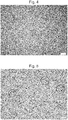
- the figure 4 is a view of a metallographic section of a sample of HIS X20CrMnMoN17-11-3 steel which has been annealed at its austenitization temperature and then quenched. It is noted on examination of this figure that the grain boundaries are not very marked, which denotes the absence of precipitates.
- the figure 5 is a view of a metallographic section of a sample of austenitic steel HIS X20CrMnMoN17-11-3 having undergone a heat treatment in accordance with the second variant implementation of the method.
- the grain boundaries are marked, which denotes the presence of significant amounts of precipitates along these grain boundaries.
- Some larger precipitates have grown inside the grains from the grain boundaries.
- concentration of precipitates could be obtained by bringing, after rapid cooling from the annealing temperature, the austenitic steel HIS X20CrMnMoN17-11-3 at a temperature of 800 ° C for two hours.
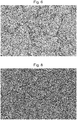
- the figure 6 is a view of a metallographic section of a sample of austenitic steel HIS X20CrMnMoN17-11-3 which is in the form of a bar whose outer diameter is reduced from 3 mm to 2.5 mm by cold deformation by wire drawing, ie a reduction in diameter of 16.6%.
- this sample was then brought to a temperature of 800 ° C. for two hours according to the temperature curve shown in figure 3 .
- the steel has many precipitates, both at the grain boundaries and inside the grains.
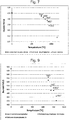
- the figure 7 is a graph which shows the evolution of the hardness of the austenitic steel HIS X20CrMnMoN17-11-3 of the figure 6 depending on the temperature to which this steel is brought to form the precipitates. It is observed that the hardness of austenitic steel without precipitation treatment and after cold working is 450 HV10 (symbol in the form of a square on the graph). The same austenitic steel is, after cold work hardening, heat treated in accordance with the third implementation variant of the process.
- Samples of this steel are brought respectively to temperatures of 750 ° C, 800 ° C, 850 ° C, 900 ° C and 950 ° C for a period of two hours, then cooled (diamond-shaped symbols on the graph) . It is observed that, for samples heated between 700 ° C and 900 ° C, the hardness is between approximately 425 HV10 and 375 HV10. In other words, the hardness of these samples of austenitic steel heat-treated in accordance with the third variant of the process varies little with respect to the hardness of austenitic steel which has been cold-worked but which has not been subjected to a precipitation treatment.
- the machinability of the austenitic steel samples which have undergone a precipitation heat treatment according to this third variant of the process is markedly improved. Only the austenitic steel sample heated to 950 ° C for two hours has a hardness significantly lower than that of austenitic steel without precipitation treatment (less than 350 HV10). Finally, a sample of austenitic steel HIS X20CrMnMoN17-11-3 having only undergone an annealing treatment followed by quenching (symbol in the form of a triangle on the graph) has a hardness less than 250 HV10.
- the figure 8 is a view of a metallographic section of a sample of austenitic steel HIS X20CrMnMoN17-11-3 which is in the form of a bar whose outer diameter is reduced from 3 mm to 2 mm by cold deformation by drawing , or an even greater reduction in diameter of 33.3%.
- This steel sample undergoes the same heat treatment as at the figure 6 by being brought to a temperature of 800 ° C. for two hours in accordance with the third variant of the implementation of the method.
- the phenomenon of precipitation is even more pronounced since, in addition to the precipitates which form along the grain boundaries and from the grain boundaries towards the interior of the grains, there is a high concentration of precipitates within themselves. grains.
- the figure 9 is a graph which shows the evolution of the hardness of the steel of the figure 8 depending on the time and the temperature to which this steel is heated after work hardening to form the precipitates. It is observed that the hardness of austenitic steel without precipitation treatment and after cold work hardening is between 550 HV10 and 560 HV10 (symbol in the form of a square on the graph). This hardness is greater than that at the figure 7 because the work hardening rate is higher.
- the diamond-shaped symbols on the figure 9 correspond to samples of austenitic steel brought to respective temperatures of 700 ° C, 750 ° C, 800 ° C and 850 ° C for 45 minutes.
- HNS and HIS steels to which the precipitation process can be applied are: X5CrMnN18-18, X8CrMnN19-19, X8CrMnMoN18-18-2, X13CrMnMoN18-14-3, X20CrMnMoN17-11-3 or even X5MnCrMoN23-21.
- precipitates that can form during the precipitation process are: M23C, MC, M6C or even M2N, where M denotes one or more of the metallic elements of the alloy which can be combined with carbon or nitrogen. to form carbides or nitrides or carbonitrides.
- the invention applies in particular to jewelry and to the trim elements of timepieces.
- the present invention teaches a process for the heat treatment of a HNS or HIS austenitic steel containing precipitates, this process comprising the step which consists, after machining of parts, in particular of jewelry or watchmaking, carried out in using an HNS or HIS austenitic steel containing precipitates, to put the precipitates back into solution by bringing these HNS or HIS austenitic steel parts to their austenitization temperature, then cooling these parts sufficiently quickly, typically by quenching, to prevent the precipitates to form again.
- machining operations is understood to mean in particular but not exclusively the operations of boring, milling, drilling, threading, tapping and cutting.
Landscapes
- Chemical & Material Sciences (AREA)
- Engineering & Computer Science (AREA)
- Materials Engineering (AREA)
- Mechanical Engineering (AREA)
- Metallurgy (AREA)
- Organic Chemistry (AREA)
- Physics & Mathematics (AREA)
- Thermal Sciences (AREA)
- Crystallography & Structural Chemistry (AREA)
- Heat Treatment Of Steel (AREA)
- Heat Treatment Of Articles (AREA)
- Adornments (AREA)
Claims (3)
- Wärmebehandlungsverfahren eines austenitischen Stahls vom Typ High Nitrogen Steel oder austenitischer Stahl HNS oder eines austenitischen Stahls vom Typ High Interstitial Steel oder austenitischer Stahl HIS, wobei dieser austenitische Stahl HNS oder HIS Absetzungen vom Typ Nitride, Carbide oder Carbonitride von Chrom und/oder Molybdän enthält, wobei das Verfahren den folgenden Schritt umfasst:• vor der Bearbeitung Sichtbarmachen der Absetzungen von Nitriden, Carbiden oder Carbonitriden von Chrom und/oder Molybdän in dem austenitischen Stahl HNS oder HIS, wobei dies dadurch erreicht wird, dass eine Legierung aus austenitischem Stahl HNS oder HIS bereitgestellt wird, die auf ihre Austenitisierungstemperatur gebracht wird oder die bei der Austenitisierungstemperatur gesintert wird, und dann unmittelbar ausgehend von der Austenitisierungstemperatur einer thermischen Abkühlungsbehandlung unterzogen wird, wobei die Abkühlung des resultierenden austenitischen Stahls HNS oder HIS unterbrochen wird, wenn die Temperatur einen Wert erreicht hat, bei dem die Absetzungen erscheinen, wobei der austenitische Stahl HNS oder HIS über einen solchen Zeitraum auf dieser Temperatur gehalten wird, dass die Absetzungen sichtbar werden, wobei der austenitische Stahl HNS oder HIS schließlich wieder auf Raumtemperatur zurückgebracht wird;wobei das Verfahren weiterhin einen Schritt umfasst, der darin besteht,• nach der Bearbeitung des austenitischen Stahls HNS oder HIS, der die Absetzungen enthält, die Absetzungen wieder in Lösung zu bringen, indem der austenitische Stahl HNS oder HIS auf seine Austenitisierungstemperatur gebracht wird, anschließend den austenitischen Stahl HNS oder HIS ausreichend schnell abzukühlen, um neu sich bildende Absetzungen zu vermeiden.
- Wärmebehandlungsverfahren eines austenitischen Stahls vom Typ High Nitrogen Steel oder austenitischer Stahl HNS oder eines austenitsichen Stahls vom Typs High Interstitial Steel oder austenitischer Stahl HIS, wobei dieser austenitische Stahl HNS oder austenitischer Stahl HIS Absetzungen vom Typ Nitride, Carbide oder Carbonitride von Chrom und/oder Molybdän enthält, wobei das Verfahren den folgenden Schritt umfasst:• vor der Bearbeitung Sichtbarmachen der Absetzungen von Nitriden, Carbiden oder Carbonitriden von Chrom und/oder Molybdän in dem austenitischen Stahl HNS oder HIS, wobei dies dadurch erreicht wird, dass die Legierung aus austenitischem Stahl HNS oder HIS einer Austenitisierungs- oder Sinter-Wärmebehandlung bei der Austenitisierungstemperatur unterzogen wird, und dann diese Legierung aus austenitischem Stahl HNS oder HIS abgeschreckt wird und erneut über einen solchen Zeitraum bis auf eine Temperatur erwärmt wird, dass die Absetzungen vom Typ Nitride, Carbide oder aber Carbonitride von Chrom und/oder Molybdän sichtbar werden,wobei dieses Verfahren weiterhin einen Schritt umfasst, der darin besteht,• nach der Bearbeitung des austenitischen Stahls HNS oder HIS, der die Absetzungen enthält, die Absetzungen wieder in Lösung zu bringen, indem der austenitische Stahl HNS oder HIS auf seine Austenitisierungstemperatur gebracht wird, anschließend den austenitischen Stahl HNS oder HIS ausreichend schnell abzukühlen, um neu sich bildende Absetzungen zu vermeiden.
- Verfahren nach Anspruch 2, wobei nach dem Härten und bevor der austenitische Stahl HNS oder HIS für einen solchen Zeitraum auf eine Temperatur gebracht wird, dass die Absetzungen vom Typ Nitride, Carbide oder aber Carbonitride von Chrom und/oder Molybdän sichtbar werden, der austenitische Stahl HNS oder HIS kaltverformt wird.
Applications Claiming Priority (1)
| Application Number | Priority Date | Filing Date | Title |
|---|---|---|---|
| EP16171672.5A EP3249059A1 (de) | 2016-05-27 | 2016-05-27 | Wärmebehandlungsverfahren von austenitischen stählen, und so hergestellte austenitische stähle |
Publications (2)
| Publication Number | Publication Date |
|---|---|
| EP3249060A1 EP3249060A1 (de) | 2017-11-29 |
| EP3249060B1 true EP3249060B1 (de) | 2021-06-30 |
Family
ID=56148091
Family Applications (2)
| Application Number | Title | Priority Date | Filing Date |
|---|---|---|---|
| EP16171672.5A Withdrawn EP3249059A1 (de) | 2016-05-27 | 2016-05-27 | Wärmebehandlungsverfahren von austenitischen stählen, und so hergestellte austenitische stähle |
| EP17167986.3A Active EP3249060B1 (de) | 2016-05-27 | 2017-04-25 | Wärmebehandlungsverfahren von austenitischen stählen |
Family Applications Before (1)
| Application Number | Title | Priority Date | Filing Date |
|---|---|---|---|
| EP16171672.5A Withdrawn EP3249059A1 (de) | 2016-05-27 | 2016-05-27 | Wärmebehandlungsverfahren von austenitischen stählen, und so hergestellte austenitische stähle |
Country Status (4)
| Country | Link |
|---|---|
| US (1) | US11136638B2 (de) |
| EP (2) | EP3249059A1 (de) |
| JP (1) | JP6509944B2 (de) |
| CN (1) | CN107435087B (de) |
Families Citing this family (3)
| Publication number | Priority date | Publication date | Assignee | Title |
|---|---|---|---|---|
| CH715726B1 (fr) * | 2019-01-11 | 2022-10-14 | Richemont Int Sa | Procédé d'obtention d'un composant fonctionnel pour mouvement horloger. |
| JP2021139827A (ja) * | 2020-03-09 | 2021-09-16 | セイコーエプソン株式会社 | 時計用部品の製造方法 |
| CN115976303B (zh) * | 2023-02-06 | 2024-09-27 | 昆明理工大学 | 一种提高含v合金化高锰钢铸件耐磨性能的方法 |
Citations (1)
| Publication number | Priority date | Publication date | Assignee | Title |
|---|---|---|---|---|
| US5158745A (en) * | 1990-02-19 | 1992-10-27 | Nippon Steel Corporation | High-nitrogen ferritic heat-resisting steel |
Family Cites Families (20)
| Publication number | Priority date | Publication date | Assignee | Title |
|---|---|---|---|---|
| AT276456B (de) | 1967-11-23 | 1969-11-25 | Schoeller Bleckmann Stahlwerke | Verfahren zur Wärmebehandlung stickstofflegierter, austenitischer, nichtrostender Stähle zur Erzielung einer hohen 0,2%-Dehngrenze und guten Kriechverhaltens bei Raumtemperatur |
| JPS49126511A (de) * | 1973-04-11 | 1974-12-04 | ||
| SU722966A1 (ru) * | 1978-09-26 | 1980-03-25 | Московский металлургический завод "Серп и молот" | Способ изготовлени калиброванных прутков из аустенитных нержавеющих сталей |
| US4929419A (en) * | 1988-03-16 | 1990-05-29 | Carpenter Technology Corporation | Heat, corrosion, and wear resistant steel alloy and article |
| JPH03229815A (ja) * | 1990-02-05 | 1991-10-11 | Sumitomo Metal Ind Ltd | 高強度オーステナイト系合金の製造方法 |
| CH688862A5 (de) * | 1995-01-03 | 1998-04-30 | Basf Ag | Korrosionsbestaendige Legierung zur Verwendung als Werkstoff fuer am oder im menschlichen Koerper verwendete Gegenstaende, insbesondere zur Vermeidung von Nickel-Allergie. |
| DE19513407C1 (de) * | 1995-04-08 | 1996-10-10 | Vsg En & Schmiedetechnik Gmbh | Verwendung einer austenitischen Stahllegierung für hautverträgliche Gegenstände |
| US5841046A (en) * | 1996-05-30 | 1998-11-24 | Crucible Materials Corporation | High strength, corrosion resistant austenitic stainless steel and consolidated article |
| US20020110476A1 (en) | 2000-12-14 | 2002-08-15 | Maziasz Philip J. | Heat and corrosion resistant cast stainless steels with improved high temperature strength and ductility |
| JP4538966B2 (ja) * | 2001-02-05 | 2010-09-08 | 大同特殊鋼株式会社 | 高強度高耐食非磁性ステンレス鋼 |
| US7662207B2 (en) * | 2002-09-27 | 2010-02-16 | Nano Technology Institiute, Inc. | Nano-crystal austenitic steel bulk material having ultra-hardness and toughness and excellent corrosion resistance, and method for production thereof |
| JP4379804B2 (ja) * | 2004-08-13 | 2009-12-09 | 大同特殊鋼株式会社 | 高窒素オーステナイト系ステンレス鋼 |
| JP4915202B2 (ja) * | 2005-11-03 | 2012-04-11 | 大同特殊鋼株式会社 | 高窒素オーステナイト系ステンレス鋼 |
| CN101342591B (zh) * | 2008-08-29 | 2010-09-29 | 安泰科技股份有限公司 | 粉末冶金含氮不锈钢零件的制备方法 |
| JP2010280950A (ja) * | 2009-06-04 | 2010-12-16 | Daido Steel Co Ltd | 排気バルブ用耐熱鋼及びその製造方法 |
| JP5272078B2 (ja) * | 2009-07-13 | 2013-08-28 | コリア インスティチュート オブ マシーナリー アンド マテリアルズ | 高強度・高耐食の炭窒素複合添加オーステナイト系ステンレス鋼及びその製造方法 |
| WO2011096592A1 (ja) * | 2010-02-04 | 2011-08-11 | 小田産業株式会社 | 高強度・高延性で優れた耐食性・耐熱性を有する高窒素ステンレス鋼管及びそれらの製造方法 |
| SI2714955T1 (sl) * | 2011-05-26 | 2021-11-30 | N'Genius Technology Limited | Avstenitno nerjavno jeklo |
| JP5845068B2 (ja) * | 2011-11-24 | 2016-01-20 | 株式会社神戸製鋼所 | アルミニウム−マグネシウム合金およびその合金板 |
| CN103233174B (zh) * | 2013-04-26 | 2015-06-10 | 中国科学院金属研究所 | 一种血管支架用高氮奥氏体不锈钢及其应用 |
-
2016
- 2016-05-27 EP EP16171672.5A patent/EP3249059A1/de not_active Withdrawn
-
2017
- 2017-04-25 EP EP17167986.3A patent/EP3249060B1/de active Active
- 2017-05-08 US US15/589,067 patent/US11136638B2/en active Active
- 2017-05-23 JP JP2017101408A patent/JP6509944B2/ja active Active
- 2017-05-26 CN CN201710383822.6A patent/CN107435087B/zh active Active
Patent Citations (1)
| Publication number | Priority date | Publication date | Assignee | Title |
|---|---|---|---|---|
| US5158745A (en) * | 1990-02-19 | 1992-10-27 | Nippon Steel Corporation | High-nitrogen ferritic heat-resisting steel |
Non-Patent Citations (2)
| Title |
|---|
| G. F. TORKHOVYU. V. LATASHR. R. FESSLERA. H. CLAUERE. E. FLETCHERA. L. HOFFMANNER: "Development of Melting and Thermomechanical-Processing Parameters for a High-Nitrogen Stainless Steel Prepared by Plasma-Arc Remelting", JOM, vol. 30, no. 12, 1 December 1978 (1978-12-01), pages 20 - 27, XP009518627, ISSN: 1047-4838, DOI: 10.1007/BF03354393 * |
| K. MINEURA ET AL: "Effect of calcium treatment on hot workability of Cr-Ni-0.7N stainless steel", MATERIALS SCIENCE AND TECHNOLOGY, vol. 6, no. 8, 18 August 1990 (1990-08-18), GB, pages 743 - 748, XP055664706, ISSN: 0267-0836, DOI: 10.1179/mst.1990.6.8.743 * |
Also Published As
| Publication number | Publication date |
|---|---|
| CN107435087A (zh) | 2017-12-05 |
| EP3249060A1 (de) | 2017-11-29 |
| JP6509944B2 (ja) | 2019-05-08 |
| US20170342520A1 (en) | 2017-11-30 |
| JP2017210684A (ja) | 2017-11-30 |
| US11136638B2 (en) | 2021-10-05 |
| EP3249059A1 (de) | 2017-11-29 |
| CN107435087B (zh) | 2020-01-07 |
Similar Documents
| Publication | Publication Date | Title |
|---|---|---|
| US8308873B2 (en) | Method of processing steel and steel article | |
| EP3445878B1 (de) | Verfahren zur herstellung eines martensitischen rostfreien stahlteils aus einem blech | |
| EP2310546B1 (de) | Angelassener martensitischer stahl, verfahren zur herstellung eines teils aus dem stahl und dadurch erhaltenes teil | |
| EP1979583B1 (de) | Verfahren zur herstellung von einem ventil für einen verbrennungsmotor und dadurch hergestelltes ventil | |
| EP3472363A1 (de) | Stahlzusammensetzung | |
| EP0629714A1 (de) | Martensitisches rostfreies Stahl mit verbesserter Bearbeitbarkeit | |
| EP3249060A1 (de) | Wärmebehandlungsverfahren von austenitischen stählen, und so hergestellte austenitische stähle | |
| EP2728028B1 (de) | Nickel-free stainless-steel alloy | |
| EP3074542A1 (de) | Einsatzhärtungsverfahren für leistungsstarke langlebige lager aus martensitischem edelstahl | |
| EP3378957B1 (de) | Stahl, herstellungsverfahren von mechanischen teilen aus diesem stahl, und so hergestellte teile | |
| CA2559562C (fr) | Acier pour pieces mecaniques, procede de fabrication de pieces mecaniques l'utilisant et pieces mecaniques ainsi realisees | |
| CH704233A1 (fr) | Pièces d'habillage en titane pour l'horlogerie. | |
| CH711842B1 (fr) | Procédé de traitement thermique d'aciers austénitiques et aciers austénitiques ainsi obtenus. | |
| EP2430198B1 (de) | Verfahren zur verstärkung eines mechanischen teils aus einer eisenlegierung | |
| US20240271239A1 (en) | Process for obtaining a fine-grained martensitic structure component | |
| CN116888282A (zh) | 非磁性计时器部件和用于获得非磁性计时器部件的热机械处理方法 | |
| HK1246369B (zh) | 奥氏体钢的热处理方法及由此得到的奥氏体钢 | |
| HK1246369A1 (en) | Method for heat treatment of austenitic steels and austenitic steels obtained thereby | |
| EP1051533A1 (de) | Uhrenteil aus titan-legierung | |
| CH707505B1 (fr) | Axe de pivotement en métal pour mouvement horloger et procédé de fabrication d'un tel axe. | |
| EP3656245A1 (de) | Uhr- oder schmuckartikel auf der basis einer goldlegierung, die mindestens 990 gewichtspromille gold enthält | |
| CH718042A2 (fr) | Acier inoxydable dur paramagnétique et son procédé de fabrication. | |
| CH716664A2 (fr) | Composant horloger amagnétique et dur, notamment axe de pivotement d'un organe réglant. | |
| BE468057A (de) |
Legal Events
| Date | Code | Title | Description |
|---|---|---|---|
| PUAI | Public reference made under article 153(3) epc to a published international application that has entered the european phase |
Free format text: ORIGINAL CODE: 0009012 |
|
| STAA | Information on the status of an ep patent application or granted ep patent |
Free format text: STATUS: THE APPLICATION HAS BEEN PUBLISHED |
|
| AK | Designated contracting states |
Kind code of ref document: A1 Designated state(s): AL AT BE BG CH CY CZ DE DK EE ES FI FR GB GR HR HU IE IS IT LI LT LU LV MC MK MT NL NO PL PT RO RS SE SI SK SM TR |
|
| AX | Request for extension of the european patent |
Extension state: BA ME |
|
| STAA | Information on the status of an ep patent application or granted ep patent |
Free format text: STATUS: REQUEST FOR EXAMINATION WAS MADE |
|
| 17P | Request for examination filed |
Effective date: 20180529 |
|
| RBV | Designated contracting states (corrected) |
Designated state(s): AL AT BE BG CH CY CZ DE DK EE ES FI FR GB GR HR HU IE IS IT LI LT LU LV MC MK MT NL NO PL PT RO RS SE SI SK SM TR |
|
| STAA | Information on the status of an ep patent application or granted ep patent |
Free format text: STATUS: EXAMINATION IS IN PROGRESS |
|
| 17Q | First examination report despatched |
Effective date: 20180730 |
|
| RIC1 | Information provided on ipc code assigned before grant |
Ipc: C22C 38/00 20060101ALI20181204BHEP Ipc: C21D 9/00 20060101ALI20181204BHEP Ipc: C22C 38/18 20060101ALI20181204BHEP Ipc: C21D 1/18 20060101ALI20181204BHEP Ipc: C22C 38/22 20060101ALI20181204BHEP Ipc: C22C 38/38 20060101ALI20181204BHEP Ipc: C21D 6/02 20060101ALI20181204BHEP Ipc: C22C 38/04 20060101ALI20181204BHEP Ipc: C21D 6/00 20060101AFI20181204BHEP |
|
| GRAP | Despatch of communication of intention to grant a patent |
Free format text: ORIGINAL CODE: EPIDOSNIGR1 |
|
| STAA | Information on the status of an ep patent application or granted ep patent |
Free format text: STATUS: GRANT OF PATENT IS INTENDED |
|
| INTG | Intention to grant announced |
Effective date: 20210316 |
|
| GRAS | Grant fee paid |
Free format text: ORIGINAL CODE: EPIDOSNIGR3 |
|
| GRAA | (expected) grant |
Free format text: ORIGINAL CODE: 0009210 |
|
| STAA | Information on the status of an ep patent application or granted ep patent |
Free format text: STATUS: THE PATENT HAS BEEN GRANTED |
|
| AK | Designated contracting states |
Kind code of ref document: B1 Designated state(s): AL AT BE BG CH CY CZ DE DK EE ES FI FR GB GR HR HU IE IS IT LI LT LU LV MC MK MT NL NO PL PT RO RS SE SI SK SM TR |
|
| REG | Reference to a national code |
Ref country code: CH Ref legal event code: EP |
|
| REG | Reference to a national code |
Ref country code: AT Ref legal event code: REF Ref document number: 1406392 Country of ref document: AT Kind code of ref document: T Effective date: 20210715 |
|
| REG | Reference to a national code |
Ref country code: DE Ref legal event code: R096 Ref document number: 602017041095 Country of ref document: DE |
|
| REG | Reference to a national code |
Ref country code: IE Ref legal event code: FG4D Free format text: LANGUAGE OF EP DOCUMENT: FRENCH |
|
| REG | Reference to a national code |
Ref country code: LT Ref legal event code: MG9D |
|
| PG25 | Lapsed in a contracting state [announced via postgrant information from national office to epo] |
Ref country code: FI Free format text: LAPSE BECAUSE OF FAILURE TO SUBMIT A TRANSLATION OF THE DESCRIPTION OR TO PAY THE FEE WITHIN THE PRESCRIBED TIME-LIMIT Effective date: 20210630 Ref country code: HR Free format text: LAPSE BECAUSE OF FAILURE TO SUBMIT A TRANSLATION OF THE DESCRIPTION OR TO PAY THE FEE WITHIN THE PRESCRIBED TIME-LIMIT Effective date: 20210630 Ref country code: BG Free format text: LAPSE BECAUSE OF FAILURE TO SUBMIT A TRANSLATION OF THE DESCRIPTION OR TO PAY THE FEE WITHIN THE PRESCRIBED TIME-LIMIT Effective date: 20210930 |
|
| REG | Reference to a national code |
Ref country code: NL Ref legal event code: MP Effective date: 20210630 |
|
| REG | Reference to a national code |
Ref country code: AT Ref legal event code: MK05 Ref document number: 1406392 Country of ref document: AT Kind code of ref document: T Effective date: 20210630 |
|
| PG25 | Lapsed in a contracting state [announced via postgrant information from national office to epo] |
Ref country code: LV Free format text: LAPSE BECAUSE OF FAILURE TO SUBMIT A TRANSLATION OF THE DESCRIPTION OR TO PAY THE FEE WITHIN THE PRESCRIBED TIME-LIMIT Effective date: 20210630 Ref country code: GR Free format text: LAPSE BECAUSE OF FAILURE TO SUBMIT A TRANSLATION OF THE DESCRIPTION OR TO PAY THE FEE WITHIN THE PRESCRIBED TIME-LIMIT Effective date: 20211001 Ref country code: SE Free format text: LAPSE BECAUSE OF FAILURE TO SUBMIT A TRANSLATION OF THE DESCRIPTION OR TO PAY THE FEE WITHIN THE PRESCRIBED TIME-LIMIT Effective date: 20210630 Ref country code: RS Free format text: LAPSE BECAUSE OF FAILURE TO SUBMIT A TRANSLATION OF THE DESCRIPTION OR TO PAY THE FEE WITHIN THE PRESCRIBED TIME-LIMIT Effective date: 20210630 Ref country code: NO Free format text: LAPSE BECAUSE OF FAILURE TO SUBMIT A TRANSLATION OF THE DESCRIPTION OR TO PAY THE FEE WITHIN THE PRESCRIBED TIME-LIMIT Effective date: 20210930 |
|
| PG25 | Lapsed in a contracting state [announced via postgrant information from national office to epo] |
Ref country code: SM Free format text: LAPSE BECAUSE OF FAILURE TO SUBMIT A TRANSLATION OF THE DESCRIPTION OR TO PAY THE FEE WITHIN THE PRESCRIBED TIME-LIMIT Effective date: 20210630 Ref country code: SK Free format text: LAPSE BECAUSE OF FAILURE TO SUBMIT A TRANSLATION OF THE DESCRIPTION OR TO PAY THE FEE WITHIN THE PRESCRIBED TIME-LIMIT Effective date: 20210630 Ref country code: RO Free format text: LAPSE BECAUSE OF FAILURE TO SUBMIT A TRANSLATION OF THE DESCRIPTION OR TO PAY THE FEE WITHIN THE PRESCRIBED TIME-LIMIT Effective date: 20210630 Ref country code: PT Free format text: LAPSE BECAUSE OF FAILURE TO SUBMIT A TRANSLATION OF THE DESCRIPTION OR TO PAY THE FEE WITHIN THE PRESCRIBED TIME-LIMIT Effective date: 20211102 Ref country code: NL Free format text: LAPSE BECAUSE OF FAILURE TO SUBMIT A TRANSLATION OF THE DESCRIPTION OR TO PAY THE FEE WITHIN THE PRESCRIBED TIME-LIMIT Effective date: 20210630 Ref country code: ES Free format text: LAPSE BECAUSE OF FAILURE TO SUBMIT A TRANSLATION OF THE DESCRIPTION OR TO PAY THE FEE WITHIN THE PRESCRIBED TIME-LIMIT Effective date: 20210630 Ref country code: EE Free format text: LAPSE BECAUSE OF FAILURE TO SUBMIT A TRANSLATION OF THE DESCRIPTION OR TO PAY THE FEE WITHIN THE PRESCRIBED TIME-LIMIT Effective date: 20210630 Ref country code: CZ Free format text: LAPSE BECAUSE OF FAILURE TO SUBMIT A TRANSLATION OF THE DESCRIPTION OR TO PAY THE FEE WITHIN THE PRESCRIBED TIME-LIMIT Effective date: 20210630 Ref country code: AT Free format text: LAPSE BECAUSE OF FAILURE TO SUBMIT A TRANSLATION OF THE DESCRIPTION OR TO PAY THE FEE WITHIN THE PRESCRIBED TIME-LIMIT Effective date: 20210630 |
|
| PG25 | Lapsed in a contracting state [announced via postgrant information from national office to epo] |
Ref country code: PL Free format text: LAPSE BECAUSE OF FAILURE TO SUBMIT A TRANSLATION OF THE DESCRIPTION OR TO PAY THE FEE WITHIN THE PRESCRIBED TIME-LIMIT Effective date: 20210630 |
|
| REG | Reference to a national code |
Ref country code: DE Ref legal event code: R097 Ref document number: 602017041095 Country of ref document: DE |
|
| PG25 | Lapsed in a contracting state [announced via postgrant information from national office to epo] |
Ref country code: DK Free format text: LAPSE BECAUSE OF FAILURE TO SUBMIT A TRANSLATION OF THE DESCRIPTION OR TO PAY THE FEE WITHIN THE PRESCRIBED TIME-LIMIT Effective date: 20210630 |
|
| PLBE | No opposition filed within time limit |
Free format text: ORIGINAL CODE: 0009261 |
|
| STAA | Information on the status of an ep patent application or granted ep patent |
Free format text: STATUS: NO OPPOSITION FILED WITHIN TIME LIMIT |
|
| PG25 | Lapsed in a contracting state [announced via postgrant information from national office to epo] |
Ref country code: AL Free format text: LAPSE BECAUSE OF FAILURE TO SUBMIT A TRANSLATION OF THE DESCRIPTION OR TO PAY THE FEE WITHIN THE PRESCRIBED TIME-LIMIT Effective date: 20210630 |
|
| 26N | No opposition filed |
Effective date: 20220331 |
|
| PG25 | Lapsed in a contracting state [announced via postgrant information from national office to epo] |
Ref country code: IT Free format text: LAPSE BECAUSE OF FAILURE TO SUBMIT A TRANSLATION OF THE DESCRIPTION OR TO PAY THE FEE WITHIN THE PRESCRIBED TIME-LIMIT Effective date: 20210630 |
|
| GBPC | Gb: european patent ceased through non-payment of renewal fee |
Effective date: 20220425 |
|
| REG | Reference to a national code |
Ref country code: BE Ref legal event code: MM Effective date: 20220430 |
|
| PG25 | Lapsed in a contracting state [announced via postgrant information from national office to epo] |
Ref country code: MC Free format text: LAPSE BECAUSE OF FAILURE TO SUBMIT A TRANSLATION OF THE DESCRIPTION OR TO PAY THE FEE WITHIN THE PRESCRIBED TIME-LIMIT Effective date: 20210630 Ref country code: LU Free format text: LAPSE BECAUSE OF NON-PAYMENT OF DUE FEES Effective date: 20220425 Ref country code: GB Free format text: LAPSE BECAUSE OF NON-PAYMENT OF DUE FEES Effective date: 20220425 |
|
| PG25 | Lapsed in a contracting state [announced via postgrant information from national office to epo] |
Ref country code: BE Free format text: LAPSE BECAUSE OF NON-PAYMENT OF DUE FEES Effective date: 20220430 |
|
| PG25 | Lapsed in a contracting state [announced via postgrant information from national office to epo] |
Ref country code: LT Free format text: LAPSE BECAUSE OF FAILURE TO SUBMIT A TRANSLATION OF THE DESCRIPTION OR TO PAY THE FEE WITHIN THE PRESCRIBED TIME-LIMIT Effective date: 20210630 Ref country code: IE Free format text: LAPSE BECAUSE OF NON-PAYMENT OF DUE FEES Effective date: 20220425 |
|
| P01 | Opt-out of the competence of the unified patent court (upc) registered |
Effective date: 20230615 |
|
| PG25 | Lapsed in a contracting state [announced via postgrant information from national office to epo] |
Ref country code: HU Free format text: LAPSE BECAUSE OF FAILURE TO SUBMIT A TRANSLATION OF THE DESCRIPTION OR TO PAY THE FEE WITHIN THE PRESCRIBED TIME-LIMIT; INVALID AB INITIO Effective date: 20170425 |
|
| PG25 | Lapsed in a contracting state [announced via postgrant information from national office to epo] |
Ref country code: MK Free format text: LAPSE BECAUSE OF FAILURE TO SUBMIT A TRANSLATION OF THE DESCRIPTION OR TO PAY THE FEE WITHIN THE PRESCRIBED TIME-LIMIT Effective date: 20210630 Ref country code: CY Free format text: LAPSE BECAUSE OF FAILURE TO SUBMIT A TRANSLATION OF THE DESCRIPTION OR TO PAY THE FEE WITHIN THE PRESCRIBED TIME-LIMIT Effective date: 20210630 |
|
| PG25 | Lapsed in a contracting state [announced via postgrant information from national office to epo] |
Ref country code: MT Free format text: LAPSE BECAUSE OF FAILURE TO SUBMIT A TRANSLATION OF THE DESCRIPTION OR TO PAY THE FEE WITHIN THE PRESCRIBED TIME-LIMIT Effective date: 20210630 |
|
| PGFP | Annual fee paid to national office [announced via postgrant information from national office to epo] |
Ref country code: DE Payment date: 20250319 Year of fee payment: 9 |
|
| PGFP | Annual fee paid to national office [announced via postgrant information from national office to epo] |
Ref country code: CH Payment date: 20250501 Year of fee payment: 9 |
|
| PG25 | Lapsed in a contracting state [announced via postgrant information from national office to epo] |
Ref country code: TR Free format text: LAPSE BECAUSE OF FAILURE TO SUBMIT A TRANSLATION OF THE DESCRIPTION OR TO PAY THE FEE WITHIN THE PRESCRIBED TIME-LIMIT Effective date: 20210630 |
|
| PGFP | Annual fee paid to national office [announced via postgrant information from national office to epo] |
Ref country code: FR Payment date: 20260319 Year of fee payment: 10 |
|
| REG | Reference to a national code |
Ref country code: CH Ref legal event code: U11 Free format text: ST27 STATUS EVENT CODE: U-0-0-U10-U11 (AS PROVIDED BY THE NATIONAL OFFICE) Effective date: 20260501 |