EP3249559A2 - Dispositif, système et procédé de disposition ergonomique d'équipements ménagers - Google Patents
Dispositif, système et procédé de disposition ergonomique d'équipements ménagers Download PDFInfo
- Publication number
- EP3249559A2 EP3249559A2 EP17000856.9A EP17000856A EP3249559A2 EP 3249559 A2 EP3249559 A2 EP 3249559A2 EP 17000856 A EP17000856 A EP 17000856A EP 3249559 A2 EP3249559 A2 EP 3249559A2
- Authority
- EP
- European Patent Office
- Prior art keywords
- data
- user
- kitchen
- height
- biometric
- Prior art date
- Legal status (The legal status is an assumption and is not a legal conclusion. Google has not performed a legal analysis and makes no representation as to the accuracy of the status listed.)
- Withdrawn
Links
Images



Classifications
-
- G—PHYSICS
- G06—COMPUTING OR CALCULATING; COUNTING
- G06F—ELECTRIC DIGITAL DATA PROCESSING
- G06F30/00—Computer-aided design [CAD]
- G06F30/10—Geometric CAD
- G06F30/13—Architectural design, e.g. computer-aided architectural design [CAAD] related to design of buildings, bridges, landscapes, production plants or roads
Definitions
- the invention relates to a device, a method and a system for collecting biometric data, in particular device-specific data, for ergonomic design of kitchen equipment and the use of the device.
- the preferred and mainly used reference is the size of the available space.
- Customer-specific data such as the user's body size and ergonomics, as well as the prevention of accidents, faulty work, postural damage and other health hazards are not or only insufficiently taken into account in the current procedures.
- kitchen facilities can be created, which are perfectly adapted to the size of the room, but which are not personalized to the customer.
- This is particularly disadvantageous if the user, for example, has a different size from the average body size, which can lead to problems in the use of a kitchen device, for example, as individual elements without aids or only under faulty loads can not be reached or the use of electrical appliances unrestricted is possible.
- a base depth that is too small in relation to the foot length under a worktop causes a user to be too far away from the worktop, which can lead to back problems.
- a device for collecting device-related biometric data for the ergonomic design of kitchen devices wherein the device has a measuring device for measuring biometric data.
- the respective device-related biometric data of the customer are determined.
- all biometric data which are relevant for the ergonomic design of a device are regarded as device-related. These data serve as the basis for the design of the respective kitchen element.
- One advantage of this is that in this way a kitchen can be specifically adapted to the physical or biometric characteristics of the respective user, using all measurable biometric data, so that the risk of accidents and posture damage is avoided by a non-ergonomic kitchen design.
- additional data relating to taste, planned kitchen function or price may be included.
- the biometric data measured by the device include elbow height, height, shoulder height, arm length, shoe size, foot length, hip height, upper body size, eyesight, hearing, gripping height, tibial height, Step height and / or finger length. All these data are particularly relevant in the design of a kitchen.
- the elbow height is crucial for the height of the worktop in order to create a comfortable for a user of the kitchen working height can.
- the height and / or shoulder height in connection with the arm length serves, for example, the design of the wall cabinets and / or electrical appliances with respect to their dimensions and installation height.
- an electrical appliance for example, a stove, oven, dishwasher, refrigerator or freezer understood.
- the cabinets are arranged in a still comfortably accessible height, so that all kitchen utensils or crockery stored in these cabinets can also be reached without further aids.
- the user should not tilt too far over a horizontal plane, for example by at most 60 °, in particular at most 45 °, preferably at most 30 ° in order to avoid faulty loading.
- the shoe size and / or foot length is important for the design of down-to-earth kitchen cabinets.
- a recess for example in the form of a suitable base depth, attached to the basement cabinets based on the shoe size and / or foot length.
- the waist height in conjunction with the upper body size and the arm length are relevant parameters in the design of the depth of the worktop and the attachment of the hob and / or the sink on it.
- any displays or fittings may or may not be designed to be large, so that the information for a user of the kitchen can be easily read and unambiguously identified.
- it is important for a digital display for the oven that it is easy to see which temperature is set and, if integrated, which baking or cooking time is set.
- hearing is crucial in the selection of electrical appliances with audible warning signals.
- the depth of the recesses of the handles for example on drawers, electrical appliances and cabinets, can be adjusted individually.
- the gripping height that is the height of the upright user's wrist above the ground with the arm hanging down, can be used for optimum height positioning of the grips.
- a combination of the arm length with the gripping height and / or the shoulder height can for example define a mounting height of a baking oven. This prevents, for example, that from an over-installed oven baking trays and / or baking molds can be removed only with difficulty, which can lead to severe burns.
- the step height defines the stride length of the user and thus an optimal arrangement of different kitchen furniture to each other to achieve optimal paths for typical work processes in the kitchen, for example, wash food in a sink - food on a worktop - food on a stove cook.
- the tibial height defines the height of the upright user's knee above the floor.
- collisions with kitchen furniture in the leg area are particularly painful and dangerous when they hit a knee. Therefore, protruding parts of kitchen furniture and / or electrical appliances, for example, drawers, drawers or doors, are advantageously arranged at a height by means of the tibial height, in which they can not hit a knee.
- the adaptation of the individual elements to the existing room size is preferably made only in a later step.
- the preferences and / or biometric data as well as other boundary conditions can be parameterized in a user data record.
- An advantage of the invention is exactly the same for the Purpose necessary biometric data to capture in order to advise the user to be measured time-saving and resource-efficient to determine an optimization result.
- furnishings can be parameterized on the suitability for users, technical data, costs or availability, with the parameterized user data in facility data.
- the invention can also be based on a user group, such as a family, shared flat or office community.
- a weighting can be made.
- a kitchen device can be optimized so that it is wheelchair accessible even for a handicapped user or for certain cooking purposes, such as an open grill designed.
- Such criteria can be defined according to the invention as mandatory criteria for the kitchen design.
- a user group for example, kitchen equipment or other facilities that are used by a variety of users, such as in training facilities, rented premises or hotel rooms.
- an abstract profile may be generally comfortable and ergonomically usable e.g. Kitchen facilities are defined, which is always considered by the technical, preferably computer-aided, optimization and remains, even if a variety of individual parameters are changed with unmanageable correlations to other parameters and thus the overall result. This can not be done without technical means.
- the planning process for a kitchen equipment is designed efficiently, and costly planning errors are avoided.
- the user data may be correlated with the facility data to generate arrangement data for the arrangement of furnishings, such as a kitchen appliance.
- the data in the user data set can be weighted manually depending on the preference of the user, for example by input to an example web-based user interface.
- the data in the user data set can also be weighted by an algorithm based on empirical values or fashion trends.
- the algorithm can in particular be a self-learning algorithm, such as. A neural network-based algorithm.
- an inventive algorithm can take into account the compatibility according to technical, design or cost considerations.
- user-related criteria such as the design of the individual modules of a kitchen appliance to specific physical or health requirements or restrictions.
- a technical advantage of the inventive computer support of the method is that without computer-aided inclusion of the variety of technical and other the technical design of a kitchen device influencing parameters not and especially not real-time manageable.
- real time according to the invention relates, for example, to the typical period of a consultation for a kitchen appliance, within which advantageously one or preferably several qualified proposals are to be submitted. This concept according to the invention can also be applied to other furnishing arrangements.
- the device has a sensor system for automatically acquiring the measured data with a data interface, wherein the data interface for transmitting the collected data to a computer unit is designed or the sensor system forms a unit with the computer unit.
- a unit between the sensor system and the computing unit can be realized, for example, by a tablet or a laptop on which a program for collecting biometric data is executed which receives the data measured by the measuring device.
- the data can be transmitted wirelessly if the sensor system does not form a unit with the arithmetic unit.
- the device is advantageously designed mobile.
- a mobile variant has, for example, rollers and can be designed to be movable or displaceable, for example by means of an electric motor, in order to be able to use the device in a furniture store at several locations.
- Motor assist is advantageous because the device must have a height in its entirety to measure the total height of each customer.
- the device preferably has a maximum height between 180-250 cm, more preferably 190-230 cm, and more preferably between 200-220 cm.
- the maximum width of the device is at least 100 cm and at most 200 cm.
- the measuring devices along the height and the width are movable, so that all body sizes can be measured up to the maximum height and width also.
- the device has a device for data input.
- a device for data input is advantageous, since so after the creation of a proposal for a kitchen device special adjustments to customer requirements are possible.
- preferences regarding price range, color of the device, material of the countertop, material of the cabinets and / or regarding the make of the electrical appliances to be installed can be implemented.
- biometric data such as body size
- the invention further relates to the use of the device for ergonomic design of kitchen equipment, wherein the device is designed according to one of claims 1 to 6.
- features of a device which permit ergonomic use are determined from the biometric data, if appropriate after a weighted summary of the data of a plurality of users. For example, from the shoe size, or foot length of a user, the optimum base depth of down-home furnishings can be determined.
- the possible manifestations of the ergonomically relevant features such as dimensions, handle positions or installation height, as well as information on compatibility with other kitchen elements in kitchen element data sets are stored for each kitchen element. In this way, the kitchen elements that match the biometric data can be selected and put together with the appropriate characteristic values.
- the optimization can only be implemented in a computer-aided manner in a time and cost-efficient manner.
- a spatial plan is created as a result of the design, in particular three-dimensional.
- a spatial plan is advantageous because the customer directly the entire kitchen equipment, especially three-dimensional, consider can and, if necessary, immediately express change requests, eg with regard to the arrangement of the individual elements.
- the result of the design contains areas which are not reachable by a user due to his biometric data or only under fault loading and / or pose danger sources, these areas are advantageously marked in the spatial plan as warning zones. In this way, the customer and / or a customer advisor can recognize potential sources of danger of the kitchen equipment and, if necessary, by changes, for example, to user-specific additional data and / or to a manual adjustment of kitchen elements eliminate.
- a further advantage is that after selection, the kitchen elements can be manually adapted to specific requirements. These requirements may be specific color selection, countertop material, kitchen equipment material, price range, and / or the make of the electrical appliances to be installed.
- the method comprises an evaluation of the selection, for example with regard to security of use, technical compatibility and / or compatibility with biometric user data and / or user-related additional data.
- the evaluation can be carried out, for example, by a computer program which displays the result of the evaluation, in particular together with a result of the design, for example in a traffic light system and / or school grading system and / or as a percentage value.
- the method can also include the collection and / or processing of user-related additional data that are relevant for the design of a device.
- the additional data may include, for example, preferences regarding color and material selection, requirements for the technical equipment, requirements for accessibility, dimensions of the room to be furnished and / or price expectations.
- the biometric data and / or user-related additional data can also be collected by a user group with a plurality of users. Preferred is a weighting among the users, particularly preferred as related to the utility of the kitchen equipment important parameters of each user, made. Thus, the kitchen for the entire user group can be designed appropriately usable, even for the user of the user group with the most difficult requirements.
- Biometric data and / or additional user-related data can be stored together with the evaluation results in a database. It can be determined from this database which device properties are particularly suitable for which user groups, in particular from an ergonomic point of view. With this information, the device production planning and / or the device design can advantageously be adapted by the manufacturer to the customer's requirements. By adapting to customer demand, the costly production of in-storekeepers can be avoided.
- the method according to the invention can be carried out in particular on an Internet platform.
- a user can enter biometric data, body dimensions, special requirements, for example due to physical impairments, preferred colors and materials, price expectations and / or room dimensions, via an Internet browser.
- a server can select suitable setup elements from the entered data and display them to the user. The user can adjust or confirm the selection, for example by changing the output data.
- the server can determine possible combinations of the selected furnishing elements and display them to the user, for example in the form of a three-dimensional room plan in particular. By repeatedly going through the process, the user can iteratively determine the best compilation for him. Subsequently, the determined data can be transferred to a furnishing or kitchen house.
- An advantage of this embodiment is that the user must spend less time in the furniture or kitchen house and accordingly less care must be taken, as the user can do most of the planning on the Internet platform at any location at any time. Only the review and detailed planning, for example, for haptic material selection or oversize, must still be carried out in the furnishing or kitchen house.
- the invention further relates to a system for the ergonomic design of kitchen equipment comprising at least one measuring device, at least one sensor system and a computing unit.
- an algorithm is provided by means of which data of the device-specific data sets obtained from biometric user data weightable and comparable to data from kitchen element data sets.
- the device-specific data sets contain the target data relevant to the ergonomic device design for the user or users, such as, for example, grip position, height, depth, installation height and / or base depth.
- the kitchen element data sets contain the possible actual data corresponding to the target data for each kitchen element and in particular can also contain data on the compatibility of individual kitchen elements with one another.
- various kitchen elements are stored in associated data sets in a database.
- the algorithm compares the data sets and selects the elements that best fit the measured data. Furthermore, it is possible for the algorithm to weight individual data of the device-specific data records in order, for example, to include in the selection for users with poor eyesight only those kitchen devices which have large and / or workable fittings and control elements, in particular control elements marked with restorable symbols.
- the algorithm according to the invention efficiently permits a comprehensive design of a kitchen appliance based on biometric user data, so that the kitchen appliance is adapted to the user or users for safe use.
- individual elements of the kitchen device can be selected by the algorithm depending on the function. Based on the biometric data, the algorithm selects those parts which meet the requirements and which are adapted to the measured data. For example, due to the elbow height, an element is selected that has the appropriate height to allow the customer an optimal working height.
- the compatibility of the selected parts with one another is preferably testable by the algorithm.
- a compatibility check is essential because the parts are initially selected independently of each other only by functionality. However, the selected individual parts must be able to be joined together and if necessary also cooperate to allow use of the kitchen equipment. Accordingly, the algorithm can check whether the parts can be connected to one another, for example, and / or whether the selected electrical devices can be installed or operated in the proposed parts.
- the algorithm is configured as a preferably self-learning optimization algorithm.
- the optimization algorithm selects the optimal furnishings based on the measured parameters and combines them into at least one suggestion.
- the optimization algorithm creates several suitable solution proposals from which the customer selects the preferred one.
- the system may include a number of adjustable furnishings.
- the furnishings can include, for example, kitchen furniture whose grip position, height, depth, installation height and / or base depth are adjustable.
- the furnishings can be designed to capture the user-specific data relating to the setting options by the user trying various possible settings until the furnishings are set appropriately. For example, if the user adjusts a countertop height to fit, it sets the device-specific datum "countertop height" for the kitchen element selection.
- the furnishings are designed to be automatically adjusted, for example by means of electric motors.
- the furnishing objects comprise a data interface which is designed to receive device-specific data determined by a user's biometric data from a computing unit, so that the furnishings can be automatically adjusted to match the biometric data.
- the furnishings can be designed so that the user carries out a further fine adjustment on the basis of this automatic adjustment.
- adjustable furnishings is that the user or user group can immediately experience how different device settings affect his or her user experience.
- inhomogeneous user groups so the individual users can find out how far they can move away from their respective optimal settings without significant loss of comfort to find a compromise setting that is possible to all users.
- the invention realizes a uniform idea for kitchen design. Therefore, features mentioned in the context of the apparatus, system or method of the invention are also applicable to the other objects of the invention.
- the invention can be applied to arbitrary furnishing situations, such as e.g. Living, bathing or bedroom furniture, interiors of movables such as cars, Trucks, ships, caravans or aircraft, or on the establishment of special rooms, such as laboratories or clean rooms.
- FIG. 1 shows a schematic representation of a device 10 according to the invention, which comprises a sensor system 11 and a measuring device 12.
- the measuring device 12 is used to measure biometric data.
- the sensor system 11 has a plurality of sensors 11A, 11B, 11C, which automatically detect the measured data. Furthermore, a device 19 for data input in the device 10 is provided.
- FIG. 2 shows a side view of an exemplary embodiment of the device 10 according to the invention.
- a plurality of sensors 11 A, 11 B, 11 C are arranged along the measuring device 12, which are preferably arranged displaceably on the measuring device.
- sensor 11A preferably serves to detect the entire body size.
- Sensor 11 B can detect the elbow height, arm length and / or finger length on the one hand.
- a support 13 for the palm and a slider 14 are provided, by means of which the finger length can be measured.
- Via the sensor 11C it is possible to measure the hip height, leg length and / or the stride length.
- an algorithm is implemented, which processes the transmitted data and compares it with stored data sets.
- Rollers 18 are also preferably attached to the device 10 in order to make the device 10 mobile.
- an electric motor 17 is provided, which facilitates a displacement of the device 10.
- the number of sensors listed here is only an example. Additional sensors may be provided which are each designed to detect specific biometric data. For example, a separate sensor can be arranged on the measuring device 12 for each measured variable.
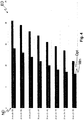
- FIG. 3 shows a diagram for the determination of device-specific data from user biometric user data using the example of the optimal height worktop height determined by a user.
- a user datum BD in this case the height in cm, with one bar each, the upper warning range Max, the optimum range Opt and the lower warning range Min of a corresponding device datum ED, here the worktop height in cm are shown.
- the individual areas are only labeled by the example of the body size 150 cm.
- the worktop height should be in the optimum range for a user.
- a different worktop height in the tolerance range T from the lower warning range to the upper warning range can also be selected in order to find a compromise that satisfies the different requirements of as many users as possible.
- FIG. 4 shows a diagram for determining device-specific data from biometric user data using the example of the foot length or shoe size of a user determined optimal base depth.
- a user datum BD here the foot length in cm, or shoe size
- the optimum range Opt and the lower warning range Min of a corresponding setup datum ED here the base depth in cm are shown.
- the individual areas are only labeled by the example of the foot length 20 cm.
- the upper warning area is omitted here, since the base depth can not be too large for ergonomic reasons.
- the values for the base depths are 40% of the foot length as the lower warning range and 60% of the foot length as the optimum range, assuming that about half the foot length is equal to the thickness of the leg extension.
- FIG. 5 shows a schematic representation of an exemplary method 100 for the computer-aided collection of device-related biometric data for ergonomic design of kitchen equipment.
- the collection 110 of biometric data and / or user-related additional data takes place, for example, via a website on which a user can enter his biometric data such as body measurements, sight and / or hearing, his price expectations and / or the dimensions of the kitchen to be set up, for example via slider 111 .
- the user may, for example via selection switch 112 further options such as accessibility of the kitchen equipment and / or for example via color palettes 113 preferences regarding the color and / or material selection enter.
- the storage 120 of the data takes place in an individual data record, for example locally in the terminal used by the user, for example a laptop.
- the transmission 130 of the collected data record takes place to a computing unit, for example a server connected to the Internet.
- This arithmetic unit can then perform the evaluation 140 of the data set for the design of the device.
- the computer-aided optimization 150 of an assignment of collected data records to device-specific data records can take place, for example, from the collected user data sets device-specific data sets with ergonomic layout design for the user or relevant target data such as grip position, height, depth, Installation height and / or base depth is determined.
- target data such as grip position, height, depth, Installation height and / or base depth is determined.
- other user data such as color preferences, material preferences and / or price expectations can also be incorporated into the device-specific data records.
- the selection 160 and compilation 170 of device elements in particular correspond to the previously determined device-specific data sets and are mutually compatible.
- the representation 180 of a room plan or several alternative room plans for the user can take place via the Internet page, so that the user immediately receives an overall impression of the evaluation result.
- a number of arrangement suggestions can be adapted dynamically and possibly even in real time to the data entered by the user, advantageously in combination with availability information.
- the design of kitchen appliances can be optimized by repeatedly going through the process 100 and / or by allowing manual intervention by the user in the selection 160 and / or compilation 170.
- a transmission 190 of biometric data, other user data and evaluation results can take place, for example, to a kitchen house in which the further detailed planning and finally the purchase of a kitchen device corresponding to the design can be carried out.
- the server performing the evaluation 140 may be connected to a database, such as a merchandise management system or one or more aggregated online databases, a kitchen or kitchen manufacturer, such that the availability of facility elements, cost forecasts, transportation capacities, and / or assembly capacity in the evaluation 140 can be included.
- a database such as a merchandise management system or one or more aggregated online databases, a kitchen or kitchen manufacturer, such that the availability of facility elements, cost forecasts, transportation capacities, and / or assembly capacity in the evaluation 140 can be included.
Landscapes
- Engineering & Computer Science (AREA)
- Physics & Mathematics (AREA)
- Geometry (AREA)
- General Physics & Mathematics (AREA)
- Computer Hardware Design (AREA)
- Theoretical Computer Science (AREA)
- Mathematical Optimization (AREA)
- Computational Mathematics (AREA)
- Architecture (AREA)
- Mathematical Analysis (AREA)
- Structural Engineering (AREA)
- Pure & Applied Mathematics (AREA)
- Evolutionary Computation (AREA)
- General Engineering & Computer Science (AREA)
- Civil Engineering (AREA)
- Measurement And Recording Of Electrical Phenomena And Electrical Characteristics Of The Living Body (AREA)
- Testing Or Calibration Of Command Recording Devices (AREA)
Applications Claiming Priority (1)
| Application Number | Priority Date | Filing Date | Title |
|---|---|---|---|
| DE102016006178.2A DE102016006178A1 (de) | 2016-05-24 | 2016-05-24 | Vorrichtung, System und Verfahren zur ergonomischen Auslegung von Kücheneinrichtungen |
Publications (2)
| Publication Number | Publication Date |
|---|---|
| EP3249559A2 true EP3249559A2 (fr) | 2017-11-29 |
| EP3249559A3 EP3249559A3 (fr) | 2017-12-20 |
Family
ID=59034414
Family Applications (1)
| Application Number | Title | Priority Date | Filing Date |
|---|---|---|---|
| EP17000856.9A Withdrawn EP3249559A3 (fr) | 2016-05-24 | 2017-05-19 | Dispositif, système et procédé de disposition ergonomique d'équipements ménagers |
Country Status (2)
| Country | Link |
|---|---|
| EP (1) | EP3249559A3 (fr) |
| DE (1) | DE102016006178A1 (fr) |
Cited By (2)
| Publication number | Priority date | Publication date | Assignee | Title |
|---|---|---|---|---|
| CN119745205A (zh) * | 2024-12-31 | 2025-04-04 | 慕思健康睡眠股份有限公司 | 人体腰长确定方法及床垫分区方法 |
| CN119769869A (zh) * | 2024-12-31 | 2025-04-08 | 慕思健康睡眠股份有限公司 | 异龄双向支撑床垫 |
Family Cites Families (1)
| Publication number | Priority date | Publication date | Assignee | Title |
|---|---|---|---|---|
| DE102004036593A1 (de) | 2004-07-22 | 2006-02-09 | InVIDO GmbH Individuelle Möbelsysteme | Verfahren zur Herstellung von Möbeln, Computer-Programm-Produkte und digitales Speichermedium |
-
2016
- 2016-05-24 DE DE102016006178.2A patent/DE102016006178A1/de not_active Withdrawn
-
2017
- 2017-05-19 EP EP17000856.9A patent/EP3249559A3/fr not_active Withdrawn
Non-Patent Citations (4)
| Title |
|---|
| EDWARD STEINFELD ET AL: "Anthropometry of Wheeled Mobility Project", FINAL REPORT ANTHROPOMETRY OF WHEELED MOBILITY PROJECT, 31 December 2010 (2010-12-31), XP055647917, Retrieved from the Internet <URL:https://www.udeworld.com/documents/anthropometry/pdfs/AnthropometryofWheeledMobilityProject_FinalReport.pdf> [retrieved on 20191129] * |
| MARCEL GÄDING: "Ergonomie - Küche ganz nach Maß", 21 January 2015 (2015-01-21), pages 1 - 3, XP055509748, Retrieved from the Internet <URL:http://das-verbrauchermagazin.de/ergonomie-kueche-ganz-nach-mass/> [retrieved on 20180925] * |
| RONNY WISKIN: "Pressalit Care Indivo Kitchen", YOUTUBE, 29 November 2012 (2012-11-29), pages 2 pp., XP054979978, Retrieved from the Internet <URL:https://www.youtube.com/watch?v=MHJzsSTeepk> [retrieved on 20191202] * |
| TIELSA: "tielsa - connected kitchen", YOUTUBE, 31 March 2015 (2015-03-31), pages 2 pp., XP054979977, Retrieved from the Internet <URL:https://www.youtube.com/watch?v=3TtrxmHHXSE> [retrieved on 20191202] * |
Cited By (2)
| Publication number | Priority date | Publication date | Assignee | Title |
|---|---|---|---|---|
| CN119745205A (zh) * | 2024-12-31 | 2025-04-04 | 慕思健康睡眠股份有限公司 | 人体腰长确定方法及床垫分区方法 |
| CN119769869A (zh) * | 2024-12-31 | 2025-04-08 | 慕思健康睡眠股份有限公司 | 异龄双向支撑床垫 |
Also Published As
| Publication number | Publication date |
|---|---|
| EP3249559A3 (fr) | 2017-12-20 |
| DE102016006178A1 (de) | 2017-11-30 |
Similar Documents
| Publication | Publication Date | Title |
|---|---|---|
| EP2556778B1 (fr) | Machine de cuisine pouvant être actionnée par un écran conçu comme un écran tactile | |
| EP3730005B1 (fr) | Procédé de génération d'au moins une proposition de recette, appareil de cuisine ainsi que système de préparation des aliments | |
| EP3495741A1 (fr) | Procédé de détermination d'un déroulement de travail dans un système d'appareils de cuisson | |
| DE102009058258A1 (de) | Küchenmaschine | |
| EP2215408B1 (fr) | Appareil électroménager avec dispositif d'affichage | |
| DE102015103596A1 (de) | Verfahren zum Betrieb einer elektromotorisch angetriebenen Küchenmaschine | |
| EP3574264A1 (fr) | Procédé pour faire fonctionner un appareil de cuisson et module pour la mise en oeuvre de ce procédé | |
| EP3069643A1 (fr) | Procédé de fonctionnement d'un robot ménager à moteur électrique | |
| DE102016006178A1 (de) | Vorrichtung, System und Verfahren zur ergonomischen Auslegung von Kücheneinrichtungen | |
| DE102018221749A1 (de) | Backofen und Steuerverfahren | |
| DE102011102394B4 (de) | Vorrichtung und Verfahren zur Bedienung eines Kochfeldes | |
| DE102010054382B4 (de) | Verfahren zur Steuerung eines Gargerätes und Gargerät mit Gerätesteuerung | |
| DE102016225434A1 (de) | Fernanzeigevorrichtung zur Verwendung in einem persönlichen Metrologie-Netzwerk | |
| EP1706673B2 (fr) | Appareil de cuisson | |
| DE102014111508B3 (de) | Elektrisches Küchengerät | |
| DE102007046923A1 (de) | Verfahren zur vereinfachten Programmierung von Programmen eines Gargerätes und Gargerät zum Durchführen solch eines Verfahrens | |
| DE102016116367A1 (de) | Verfahren zur Objekterfassung | |
| EP3702747A1 (fr) | Dispositif formant plaque de cuisson | |
| DE102020215319A1 (de) | Verfahren zum Betrieb eines Kochfelds, Kochfeld und Kochfeldsystem | |
| EP3974939A1 (fr) | Appareil électroménager et procédé de fonctionnement | |
| DE102010016473B4 (de) | Verfahren zum Anleiten, Anweisen und/oder Anlernen von Benutzern eines Gargeräts und Gargerät zur Durchführung solch eines Verfahrens | |
| EP2943091A1 (fr) | Ensemble de meubles intelligent et interactif | |
| DE19748330C2 (de) | Verfahren zum Begrenzen der momentanen Gesamtleistungsaufnahme von elektrischen Verbrauchern und Vorrichtung zur Durchführung des Verfahrens | |
| DE102011001066B4 (de) | Verfahren zum Auswählen von Garprogrammen | |
| EP3941158B1 (fr) | Système de cuisson et procédé de fonctionnement |
Legal Events
| Date | Code | Title | Description |
|---|---|---|---|
| PUAI | Public reference made under article 153(3) epc to a published international application that has entered the european phase |
Free format text: ORIGINAL CODE: 0009012 |
|
| PUAL | Search report despatched |
Free format text: ORIGINAL CODE: 0009013 |
|
| AK | Designated contracting states |
Kind code of ref document: A2 Designated state(s): AL AT BE BG CH CY CZ DE DK EE ES FI FR GB GR HR HU IE IS IT LI LT LU LV MC MK MT NL NO PL PT RO RS SE SI SK SM TR |
|
| AX | Request for extension of the european patent |
Extension state: BA ME |
|
| AK | Designated contracting states |
Kind code of ref document: A3 Designated state(s): AL AT BE BG CH CY CZ DE DK EE ES FI FR GB GR HR HU IE IS IT LI LT LU LV MC MK MT NL NO PL PT RO RS SE SI SK SM TR |
|
| AX | Request for extension of the european patent |
Extension state: BA ME |
|
| RIC1 | Information provided on ipc code assigned before grant |
Ipc: G06F 17/50 20060101AFI20171116BHEP |
|
| 17P | Request for examination filed |
Effective date: 20180619 |
|
| RBV | Designated contracting states (corrected) |
Designated state(s): AL AT BE BG CH CY CZ DE DK EE ES FI FR GB GR HR HU IE IS IT LI LT LU LV MC MK MT NL NO PL PT RO RS SE SI SK SM TR |
|
| 17Q | First examination report despatched |
Effective date: 20181113 |
|
| STAA | Information on the status of an ep patent application or granted ep patent |
Free format text: STATUS: THE APPLICATION HAS BEEN WITHDRAWN |
|
| 18W | Application withdrawn |
Effective date: 20200311 |