EP3249932A1 - Procédé et appareil d'émission et de réception de contenu multimédia - Google Patents
Procédé et appareil d'émission et de réception de contenu multimédia Download PDFInfo
- Publication number
- EP3249932A1 EP3249932A1 EP16740381.5A EP16740381A EP3249932A1 EP 3249932 A1 EP3249932 A1 EP 3249932A1 EP 16740381 A EP16740381 A EP 16740381A EP 3249932 A1 EP3249932 A1 EP 3249932A1
- Authority
- EP
- European Patent Office
- Prior art keywords
- service
- protocol
- information
- signaling
- related information
- Prior art date
- Legal status (The legal status is an assumption and is not a legal conclusion. Google has not performed a legal analysis and makes no representation as to the accuracy of the status listed.)
- Granted
Links
Images





Classifications
-
- H—ELECTRICITY
- H04—ELECTRIC COMMUNICATION TECHNIQUE
- H04N—PICTORIAL COMMUNICATION, e.g. TELEVISION
- H04N21/00—Selective content distribution, e.g. interactive television or video on demand [VOD]
- H04N21/40—Client devices specifically adapted for the reception of or interaction with content, e.g. set-top-box [STB]; Operations thereof
- H04N21/43—Processing of content or additional data, e.g. demultiplexing additional data from a digital video stream; Elementary client operations, e.g. monitoring of home network or synchronising decoder's clock; Client middleware
- H04N21/434—Disassembling of a multiplex stream, e.g. demultiplexing audio and video streams, extraction of additional data from a video stream; Remultiplexing of multiplex streams; Extraction or processing of SI; Disassembling of packetised elementary stream
- H04N21/4345—Extraction or processing of SI, e.g. extracting service information from an MPEG stream
-
- H—ELECTRICITY
- H04—ELECTRIC COMMUNICATION TECHNIQUE
- H04N—PICTORIAL COMMUNICATION, e.g. TELEVISION
- H04N21/00—Selective content distribution, e.g. interactive television or video on demand [VOD]
- H04N21/20—Servers specifically adapted for the distribution of content, e.g. VOD servers; Operations thereof
- H04N21/23—Processing of content or additional data; Elementary server operations; Server middleware
- H04N21/238—Interfacing the downstream path of the transmission network, e.g. adapting the transmission rate of a video stream to network bandwidth; Processing of multiplex streams
- H04N21/2381—Adapting the multiplex stream to a specific network, e.g. an Internet Protocol [IP] network
-
- H—ELECTRICITY
- H04—ELECTRIC COMMUNICATION TECHNIQUE
- H04L—TRANSMISSION OF DIGITAL INFORMATION, e.g. TELEGRAPHIC COMMUNICATION
- H04L69/00—Network arrangements, protocols or services independent of the application payload and not provided for in the other groups of this subclass
- H04L69/18—Multiprotocol handlers, e.g. single devices capable of handling multiple protocols
-
- H—ELECTRICITY
- H04—ELECTRIC COMMUNICATION TECHNIQUE
- H04L—TRANSMISSION OF DIGITAL INFORMATION, e.g. TELEGRAPHIC COMMUNICATION
- H04L69/00—Network arrangements, protocols or services independent of the application payload and not provided for in the other groups of this subclass
- H04L69/24—Negotiation of communication capabilities
-
- H—ELECTRICITY
- H04—ELECTRIC COMMUNICATION TECHNIQUE
- H04N—PICTORIAL COMMUNICATION, e.g. TELEVISION
- H04N21/00—Selective content distribution, e.g. interactive television or video on demand [VOD]
- H04N21/20—Servers specifically adapted for the distribution of content, e.g. VOD servers; Operations thereof
- H04N21/23—Processing of content or additional data; Elementary server operations; Server middleware
- H04N21/238—Interfacing the downstream path of the transmission network, e.g. adapting the transmission rate of a video stream to network bandwidth; Processing of multiplex streams
-
- H—ELECTRICITY
- H04—ELECTRIC COMMUNICATION TECHNIQUE
- H04N—PICTORIAL COMMUNICATION, e.g. TELEVISION
- H04N21/00—Selective content distribution, e.g. interactive television or video on demand [VOD]
- H04N21/20—Servers specifically adapted for the distribution of content, e.g. VOD servers; Operations thereof
- H04N21/23—Processing of content or additional data; Elementary server operations; Server middleware
- H04N21/238—Interfacing the downstream path of the transmission network, e.g. adapting the transmission rate of a video stream to network bandwidth; Processing of multiplex streams
- H04N21/2389—Multiplex stream processing, e.g. multiplex stream encrypting
-
- H—ELECTRICITY
- H04—ELECTRIC COMMUNICATION TECHNIQUE
- H04N—PICTORIAL COMMUNICATION, e.g. TELEVISION
- H04N21/00—Selective content distribution, e.g. interactive television or video on demand [VOD]
- H04N21/40—Client devices specifically adapted for the reception of or interaction with content, e.g. set-top-box [STB]; Operations thereof
- H04N21/43—Processing of content or additional data, e.g. demultiplexing additional data from a digital video stream; Elementary client operations, e.g. monitoring of home network or synchronising decoder's clock; Client middleware
- H04N21/434—Disassembling of a multiplex stream, e.g. demultiplexing audio and video streams, extraction of additional data from a video stream; Remultiplexing of multiplex streams; Extraction or processing of SI; Disassembling of packetised elementary stream
- H04N21/4347—Demultiplexing of several video streams
-
- H—ELECTRICITY
- H04—ELECTRIC COMMUNICATION TECHNIQUE
- H04N—PICTORIAL COMMUNICATION, e.g. TELEVISION
- H04N21/00—Selective content distribution, e.g. interactive television or video on demand [VOD]
- H04N21/60—Network structure or processes for video distribution between server and client or between remote clients; Control signalling between clients, server and network components; Transmission of management data between server and client, e.g. sending from server to client commands for recording incoming content stream; Communication details between server and client
- H04N21/61—Network physical structure; Signal processing
- H04N21/6106—Network physical structure; Signal processing specially adapted to the downstream path of the transmission network
- H04N21/6112—Network physical structure; Signal processing specially adapted to the downstream path of the transmission network involving terrestrial transmission, e.g. DVB-T
-
- H—ELECTRICITY
- H04—ELECTRIC COMMUNICATION TECHNIQUE
- H04N—PICTORIAL COMMUNICATION, e.g. TELEVISION
- H04N21/00—Selective content distribution, e.g. interactive television or video on demand [VOD]
- H04N21/60—Network structure or processes for video distribution between server and client or between remote clients; Control signalling between clients, server and network components; Transmission of management data between server and client, e.g. sending from server to client commands for recording incoming content stream; Communication details between server and client
- H04N21/61—Network physical structure; Signal processing
- H04N21/6106—Network physical structure; Signal processing specially adapted to the downstream path of the transmission network
- H04N21/6125—Network physical structure; Signal processing specially adapted to the downstream path of the transmission network involving transmission via Internet
-
- H—ELECTRICITY
- H04—ELECTRIC COMMUNICATION TECHNIQUE
- H04N—PICTORIAL COMMUNICATION, e.g. TELEVISION
- H04N21/00—Selective content distribution, e.g. interactive television or video on demand [VOD]
- H04N21/60—Network structure or processes for video distribution between server and client or between remote clients; Control signalling between clients, server and network components; Transmission of management data between server and client, e.g. sending from server to client commands for recording incoming content stream; Communication details between server and client
- H04N21/61—Network physical structure; Signal processing
- H04N21/6156—Network physical structure; Signal processing specially adapted to the upstream path of the transmission network
- H04N21/6175—Network physical structure; Signal processing specially adapted to the upstream path of the transmission network involving transmission via Internet
-
- H—ELECTRICITY
- H04—ELECTRIC COMMUNICATION TECHNIQUE
- H04N—PICTORIAL COMMUNICATION, e.g. TELEVISION
- H04N21/00—Selective content distribution, e.g. interactive television or video on demand [VOD]
- H04N21/60—Network structure or processes for video distribution between server and client or between remote clients; Control signalling between clients, server and network components; Transmission of management data between server and client, e.g. sending from server to client commands for recording incoming content stream; Communication details between server and client
- H04N21/63—Control signaling related to video distribution between client, server and network components; Network processes for video distribution between server and clients or between remote clients, e.g. transmitting basic layer and enhancement layers over different transmission paths, setting up a peer-to-peer communication via Internet between remote STB's; Communication protocols; Addressing
- H04N21/643—Communication protocols
-
- H—ELECTRICITY
- H04—ELECTRIC COMMUNICATION TECHNIQUE
- H04N—PICTORIAL COMMUNICATION, e.g. TELEVISION
- H04N21/00—Selective content distribution, e.g. interactive television or video on demand [VOD]
- H04N21/40—Client devices specifically adapted for the reception of or interaction with content, e.g. set-top-box [STB]; Operations thereof
- H04N21/43—Processing of content or additional data, e.g. demultiplexing additional data from a digital video stream; Elementary client operations, e.g. monitoring of home network or synchronising decoder's clock; Client middleware
- H04N21/438—Interfacing the downstream path of the transmission network originating from a server, e.g. retrieving encoded video stream packets from an IP network
- H04N21/4383—Accessing a communication channel
-
- H—ELECTRICITY
- H04—ELECTRIC COMMUNICATION TECHNIQUE
- H04N—PICTORIAL COMMUNICATION, e.g. TELEVISION
- H04N21/00—Selective content distribution, e.g. interactive television or video on demand [VOD]
- H04N21/40—Client devices specifically adapted for the reception of or interaction with content, e.g. set-top-box [STB]; Operations thereof
- H04N21/47—End-user applications
- H04N21/472—End-user interface for requesting content, additional data or services; End-user interface for interacting with content, e.g. for content reservation or setting reminders, for requesting event notification, for manipulating displayed content
- H04N21/47202—End-user interface for requesting content, additional data or services; End-user interface for interacting with content, e.g. for content reservation or setting reminders, for requesting event notification, for manipulating displayed content for requesting content on demand, e.g. video on demand
Definitions
- the present disclosure relates to a method and apparatus for transmitting and receiving multimedia content.
- IP Internet protocol
- the MPEG-2 TS having a fixed-length packet of 188 bytes is inefficient to support a high data rate.
- the MPEG-2 TS is difficult to use by mutual conversion with the IP.
- a new AV delivery format may be required which is IP-friendly and more efficient than the MPEG-2 TS.
- FIG. 1 illustrates an example of a protocol information configuration defined for each service component in a general IP broadcasting network service.
- AV streaming uses a real-time transport protocol (RTP) as indicated by 102 and a file data service uses a file delivery over unidirectional transport (FLUTE) as indicated by 104. That is, a protocol specific to each service is used.
- RTP real-time transport protocol
- FLUTE file delivery over unidirectional transport
- a DVB-H-based real-time service as shown in FIG. 1 uses an RTP for data transmission.
- a data packet (hereinafter, referred to as an 'RTP packet') transmitted using the RTP may not surely arrive at a reception side in the same order as transmitted from a transmission side.
- all the transmitted RTP packets are not certain to arrive correctly at the reception side.
- the RTP fails to provide a way to guarantee the quality of a service in spite of excellent real-time transmission performance. Accordingly, there is a need for another transmission protocol capable of making up for such weak points and a broadcasting service structure capable of supporting the protocol.
- An embodiment of the present disclosure provides a method for transmitting multimedia content based on a protocol suitable for each environment depending on real-time/non-real-time service characteristics and a transmission apparatus for performing the transmission.
- an embodiment of the present disclosure provides a scheme for transmitting protocol information mapped to each service to a reception apparatus.
- An embodiment of the present disclosure also provides a method for receiving protocol information mapped to each service, transmitted by a transmission apparatus, and efficiently identifying and receiving a service configured with a different protocol based on the protocol information, and a reception apparatus for performing the reception.
- a method for transmitting multimedia content in a broadcasting communication system including identifying protocol information mapped for each service corresponding to multimedia content, transmitting service-related information including the identified protocol information mapped for each service, and transmitting multimedia content corresponding to a service to a reception side by using the identified protocol.
- a method for receiving multimedia content in a broadcasting communication system including receiving service-related information including protocol information mapped for each service corresponding to multimedia content, receiving multimedia content corresponding to a service, identifying a protocol corresponding to the service from the protocol information mapped for each service, and playing back the multimedia content by using the identified protocol.
- an apparatus for transmitting multimedia content in a broadcasting communication system including a controller configured to identify protocol information mapped for each service corresponding to multimedia content, and a transceiver configured to transmit service-related information including the identified protocol information mapped for each service and to transmit multimedia content corresponding to a service to a reception side by using the identified protocol.
- an apparatus for receiving multimedia content in a broadcasting communication system including a transceiver configured to receive service-related information including protocol information mapped for each service corresponding to multimedia content and to receive multimedia content corresponding to a service and a controller configured to identify a protocol corresponding to the service from the protocol information mapped for each service and to play back the multimedia content by using the identified protocol.
- a broadcasting system uses a plurality of transport protocols, and clearly separately uses a protocol for each purpose, such as a protocol for contents transmission, a protocol for file transmission, and so forth.
- a hybrid broadcasting system such as the Advanced Television System Committee (ATSC) 3.0 may employ a plurality of transport techniques such as an MPEG media transport (MMT) protocol or a real-time object delivery over unidirectional transport (ROUTE) file delivery over unidirectional transport (FLUTE) as an application transport protocol.
- MMT MPEG media transport
- ROUTE real-time object delivery over unidirectional transport
- FLUTE unidirectional transport
- the ROUTE protocol is a transport protocol specialized for transmission of data in the form of a file rather than real-time A/V media data.
- an ATSC 3.0-based broadcasting system will be described as an example. However, an embodiment of the present disclosure is also applicable to other systems than the ATSC 3.0.
- an embodiment of the present disclosure proposes a method and apparatus for transmitting and receiving a service by using a plurality of protocols in a broadcasting system.
- a transmission apparatus delivers a service provided by a broadcasting system and service-related information including signaling information needed for reception of the service to a reception side.
- the service-related information may include services provided by the broadcasting system and a bootstrap of signaling information for obtaining and discovering service components of each service, and may include, for example, protocol information mapped to each service, etc.
- the reception apparatus receives the service-related information transmitted from the transmission apparatus, receives signaling information for receiving a service based on the service-related information, identifies protocol information mapped to each service based on the signaling information, and receives a corresponding service. More specifically, according to an embodiment of the present disclosure, in a broadcasting system, the transmission apparatus maps a proper protocol to each service or service component, configures service-related information with information about a protocol mapped to a service or service component, and delivers the service-related information to the reception apparatus. An embodiment of the present disclosure proposes multiple embodiments about schemes for delivering service-related information to the reception apparatus.
- the service-related information may be transmitted using electronic program guide (EPG) information that may be checked by other means than a broadcasting network, e.g., an e-mail, Internet, a universal serial bus (USB), installation of a separate application, etc., or using session description protocol (SDP) session information.
- EPG electronic program guide
- the service-related information may be transmitted through a user datagram protocol (UDP)/IP packet header, using link layer signaling, or using high-layer signaling information delivered over a broadcasting network.
- UDP user datagram protocol
- a protocol stack in a broadcasting system may include a network layer 110 processing IP packets, a transport layer 112 including a protocol stack including various protocols, signaling information for receiving each service/service component, e.g., service-related information including protocol information for identifying a protocol mapped to each service/service component, and an application layer 114 that receives a packet processed in each protocol and delivers the packet to a user in the form of a service.
- the protocol stack of the transport layer 112 may include an MMT protocol and a ROUTE protocol. Referring to a protocol stack at a reception side shown in FIG.
- a transport layer for a service received by the reception side includes the MMT protocol and the ROUTE protocol.
- a UDP/IP packet multicast by a broadcasting physical layer (ATSC 3.0 Physical Layer) is mapped to the MMT protocol or the ROUTE protocol.
- a packet transmitted from the transmission apparatus using the MMT protocol is identified by signaling information corresponding to data and control information.
- the data may be included in a packet based on a data structure of a media processing unit (MPU) including an independently-decodable minimum unit of a media content transmitted using the MMT protocol.
- the data structure of the MPU may be a media fragment unit (MFU) that corresponds to each of images of video if the media content is the video.
- MFU media fragment unit
- the MPU is included in packets corresponding to each service component of the same service, and the video is defined as an asset in an MMT-based technique.
- the MMT protocol packet that delivers the same asset is assigned the same packet identifier.
- MPUs of the packet are also assigned the same packet identifier.
- the data may be received in the form of a payload in an MPU mode.
- the ROUTE protocol it is defined that streaming content formatted by a dynamic adaptive streaming over hypertext transfer protocol (HTTP) (DASH) is delivered through broadcasting.
- HTTP dynamic adaptive streaming over hypertext transfer protocol
- a packet transmitted from the transmission apparatus using ROUTE is identified by signaling information corresponding to data and control information, and the data is received through the packet in the unit of an object produced by dividing media content into predetermined units.
- the object may be received in the form of a DASH segment defined as a media segment through the packet, and the signaling information may be received in the form of a medial presentation description (MPD) through the packet.
- the DASH MPD may indicate, for example, a timeline of DASH segments, etc.
- the transmission apparatus transmits service-related information including signaling information for receiving a service/service component to the reception side.
- the service-related information according to an embodiment of the present disclosure may be periodically transmitted at intervals preset by an operator or a user before a broadcasting service is provided.
- the service-related information may be updated according to a change of a channel environment, a user's request, and so forth, and the updated service-related information may also be transmitted before the broadcasting service is provided.
- the transmission apparatus transmits each UDP/IP packet corresponding to a service or service component to the reception side using a protocol mapped to the service or service component.
- the signaling information included in the service-related information may include protocol information for identifying a service/service component configured with a different protocol. More specifically, the protocol information may include a protocol indicator according to an embodiment of the present disclosure. According to an embodiment, the service-related information may further include a protocol change indicator indicating a case where a protocol of a service/service component is changeable and a changed protocol indicator.
- the transmission apparatus may configure the service-related information such that the service-related information includes IP/port information mapped to each service information and protocol information of each UDP packet.
- the transmission apparatus may configure the service-related information by additionally mapping protocol change information to each service information.
- the transmission apparatus may configure the service-related information such that the service-related information includes IP/port information, a protocol indicator, and protocol change information which are mapped to each real-time service component of the same service.
- a protocol control module included in the reception apparatus configured as shown in FIG. 8 may obtain a protocol indicator or a protocol change indicator for each service/service component, which may be configured as described above, through the service-related information received from the transmission apparatus.
- the protocol information used in an embodiment of the present disclosure may be designated in various units.
- the designated range of the protocol information will be configured based on a service or service component as an example.
- the designated range of the protocol information according to an embodiment of the present disclosure is not limited to the service unit/service component unit.
- the designated range of the protocol information may be set to a service unit.
- a service may correspond to an independent content such as a movie, news, a drama, radio, a file, etc.
- the transmission apparatus may transmit service-related information including protocol information mapped to each service to the reception side.
- the transmission apparatus then transmits a packet of a service to the reception side using a protocol mapped to the service. For example, suppose that a different protocol for a broadcasting service provided by a different broadcaster is used.
- the transmission apparatus needs to configure service-related information including protocol information for identifying a protocol with which the broadcasting service of each broadcaster is configured and to transmit the configured service-related information to the reception side.
- the transmission side may configure the service-related information including the protocol information mapped to the broadcasting service provided by each broadcaster as shown in Table 1, for example.
- the service-related information may be configured to be included in an EPG corresponding to a function of showing a program schedule on a TV screen.
- the service-related information may include service identification information corresponding to the service information, an IP address corresponding to IP/port information, and a protocol indicator corresponding to the protocol information.
- the service identification information indicates the KBS
- an IP address '111.111.111.111' and a protocol indicator 'MMT' are mapped. It means that the broadcasting service provided by the KBS is transmitted to the reception side using the MMT protocol through the IP address '111.111.111.111'.
- the service identification information indicates the MBC
- an IP address '222.222.222.222' and a protocol indicator 'ROUTE' are mapped. It means that the broadcasting service provided by the MBC is transmitted to the reception side using the ROUTE protocol through the IP address '222.222.222.222'.
- the reception side receives the service-related information configured as shown in Table 1, the reception side checks an IP address of an IP packet header of the received service when a transport layer of the reception side delivers an IP packet to a protocol stack. Assuming that the checked IP address is '111.111.111.111', the transport layer of the reception side delivers the IP packet of the received service to an MMT protocol stack to which the checked IP address is mapped based on the service-related information.
- the transport layer of the reception side delivers the IP packet of the received service to a ROUTE protocol stack to which the checked IP address is mapped based on the service-related information.
- Table 2 shows an example where protocol information included in service-related information according to an embodiment of the present disclosure is expressed in the form of a protocol indicator mapped to each protocol type.
- Protocol Indicator Used Protocol 0 MMT 1 ROUTE 2 FLUTE 3 RTP ⁇ ⁇ FOR FUTURE USE
- the protocol indicator may be defined in the form of a number indicating a protocol. That is, the MMT protocol is indicated by '0', and the ROUTE protocol is indicated by '1'.
- the protocol indicator mapped to the KBS is expressed with '0' corresponding to the MMT protocol
- the protocol indicator mapped to the MBC is expressed with '1' corresponding to the ROUTE protocol.
- the numeric expression of the protocol indicator according to an embodiment of the present disclosure is merely an example, and the protocol indicator is not limited to the numeric expression.
- the designated range of the protocol information may be set to a service component unit.
- service components of the same service may be configured with different protocols depending on characteristics of each service component. For example, when a service corresponding to a particular movie provided by an operator is provided, service components of the movie may correspond to country-specific subtitles, audio contents, and video contents of the movie, respectively.
- the transmission apparatus may transmit service-related information including protocol information mapped to each service component of the same service to the reception side. By using a protocol mapped to each service component, the transmission apparatus transmits a packet of the service component to the reception side.
- the transmission apparatus configures service-related information including service identification information and each service component identification information, which correspond to service information, IP address and port information corresponding to IP/port information, and a protocol indicator corresponding to protocol information as shown in Table 3, and transmits the service-related information to the reception side.
- the service-related information may be configured by mapping an IP address, a port address, and a protocol indicator for each service component, included in each service identification information. More specifically, if the service identification information indicates the MBC, service components of a broadcasting service provided by the MBC correspond to AV streaming and file data, respectively, and have the same IP address '222.222.222.222', but different port addresses and protocol identifiers. That is, to the AV streaming, a port address '3' and the protocol indicator 'MMT' are mapped, whereas to the file data, a port address '4' and the protocol indicator 'ROUTE' is mapped.
- the service component may be transmitted using different protocols depending on environment and service characteristics supported by the service component.
- Table 4 shows an example of service-related information indicating a case where the same service component in the same service uses several protocols.
- Service Identification Information Service Component Identification Information IP Address Port Number Protocol Indicator KBS Video 111.111.111.111 1 MMT Audio 2 MMT File data 3 MMT ⁇ ; ⁇ MMT Video 11 Route Audio 12 Route File data 13 Route ⁇ ⁇ Route
- a broadcasting service corresponding to service identification information 'KBS' is assumed to include service components of video, audio, and file data.
- the service components using the same IP address may be divided into some having the protocol indicator 'MMT' and others having the protocol indicator 'ROUTE'.
- the reception side may be provided with a personal or seamless service by changing a protocol of a service component provided by the KBS based on the service-related information configured as shown in Table 4 due to user's selection or a change of a surrounding service environment.
- the reception side is provided with an audio or data file configured with the ROUTE protocol for a currently viewed broadcasting service.
- the transmission apparatus may transmit an audio or data file corresponding to the another language after changing the protocol to the MMT protocol for real-time synchronization with video of the broadcasting service.
- the transmission apparatus then configures the service-related information including protocol change information of the broadcasting service and transmits the configured service-related information to the reception side.
- the transmission apparatus may deliver the service-related information including the protocol change information to the reception side by using, for example, EPG information, by using L2 signaling for faster real-time correspondence, or through an IP packet header.
- the transmission apparatus may transmit a changed port number corresponding to an IP packet of an audio or data file changed to another language for the same service to the reception side through the service-related information.
- the reception side checks a protocol indicator corresponding to the changed port of the audio or data file from previously received service-related information, thus identifying a protocol of the changed audio or data.
- Table 5 shows an example of service-related information including protocol change information according to an embodiment of the present disclosure.
- Service Identification Information Service Component Identification Information Previous Protocol Indicator Protocol Change Indicator Changed Protocol Indicator KBS Video 01 1 11 00(MMT) 01(ROUTE ) 10(RTP) 11(Protocol 4) Audio 01 0 01 MBC Video 00 1 10 Audio 00 1 11
- a protocol change indicator indicates that a protocol is changed.
- a previous protocol indicator of the video component is '01' indicating the ROUTE protocol
- the changed protocol indicator is '11' indicating Protocol 4.
- the protocol change indicator indicates that the protocol is not changed.
- both a previous protocol indicator and a changed protocol indicator of the audio component are '10' indicating the ROUTE protocol.
- the transmission apparatus transmits protocol change information of a service/service component through L2 signaling information, etc., whereby the transmission apparatus may notify the reception side of changed protocol information for each service/service component (or service/service component-specific changed protocol information) on a real-time basis.
- FIGs. 2A and 2B are flowcharts of operations of a reception apparatus according to an embodiment of the present disclosure.
- FIG. 2A is a flowchart of operations when a reception apparatus according to an embodiment of the present disclosure receives service-related information according to an embodiment of the present disclosure through L2 signaling while performing channel scanning.
- FIG. 2B is a flowchart of operations when a reception apparatus according to an embodiment of the present disclosure receives service-related information according to an embodiment of the present disclosure if performing channel switchover, or performing channel selection upon powered on.
- the transmission apparatus is assumed to deliver service-related information including service/service component-specific protocol information to the reception apparatus through L2 signaling information.
- the reception apparatus for example, a TV is powered on, the reception apparatus performs initial channel scanning in operation 200.
- the reception apparatus obtains the service-related information according to an embodiment of the present disclosure through the initial channel scan.
- the reception apparatus detects a preamble through the initial channel scanning in operation 202, and performs physical layer pipe (PLP) decoding based on the obtained service-related information and the detected preamble in operation 204.
- PLP physical layer pipe
- the reception apparatus decodes signaling information obtained from the obtained service-related information to obtain information for receiving a service, for example, a radio frequency (RF) channel, a PLP identifier, etc., in operation 206.
- the reception apparatus according to an embodiment of the present disclosure performs RF tuning-in by using the service-related information and performs PLP selection corresponding to the service, and performs L2 signaling parsing in operation 206.
- L2 signaling parsing the reception apparatus obtains protocol information of signaling information required for service reception, service/service component-specific protocol information from the service-related information according to an embodiment of the present disclosure.
- the service-related information may include bootstrap information regarding an ESG, an EPG, SDP session information, etc.
- the reception apparatus is assumed to be, for example, a TV.
- the reception apparatus in operation 210, is assumed to perform channel selection upon powered on or to perform channel switchover.
- the reception apparatus has already obtained the service-related information through the initial channel scanning and has already obtained the signaling information for receiving a service received in a selected channel from the service-related information, for example, the RF channel information, the PLP identifier, etc.
- the reception apparatus performs RF tuning-in by using the RF channel information corresponding to the selected channel, etc.
- the reception apparatus detects a preamble of the selected channel, selects a PLP of the service based on the service-related information, and decodes the selected PLP.
- the reception apparatus performs L2 signaling information parsing.
- L2 signaling information parsing the reception apparatus obtains protocol information of signaling information required for service reception, service/service component-specific protocol information from the service-related information according to an embodiment of the present disclosure.
- the service-related information may include bootstrap information regarding an ESG, an EPG, SDP session information, etc.
- the service-related information including the service/service component-specific protocol information or the changed protocol information according to an embodiment of the present disclosure may be transmitted in various ways according to an embodiment.
- the transmission apparatus may be delivered through an EPG delivered out-of-band (OoB) instead of over a broadcasting network.
- the transmission apparatus delivers EPG data including service-related information according to an embodiment of the present disclosure to the reception side, e.g., a broadcasting receiving terminal through a separate third delivery channel corresponding to the OoB manner, e.g., an e-mail, USB delivery, separate application installation, an Internet channel, etc.
- the service-related information according to an embodiment of the present disclosure may include protocol information or changed protocol information applied to transmission based on a different service for a different broadcaster, e.g., the KBS, the MBC, etc., or based on a service component corresponding to video, audio, a generic file, etc.
- the protocol information or the changed protocol information according to an embodiment of the present disclosure is transmitted through a separate third channel other than a channel through which broadcasting data information is transmitted, without causing, for example, a transmission error that affects capabilities of a broadcasting signal, etc.
- the transmission apparatus transmits the EPG before transmitting broadcasting data, making it difficult to reflect the changed protocol information in real time.
- the transmission apparatus transmitting video of news broadcasting of the KBS channel with the RTP transmits the video of the news broadcasting midway when necessary by replacing the RTP with another protocol such as the MMT, etc., it is not easy for the transmission apparatus to update the changed protocol information through the EPG and transmit the changed protocol information to the reception side.
- Table 6 shows an example where a protocol indicator is inserted into each service/service component in an ESG according to an embodiment of the present disclosure.
- a service 'Channel 1' includes a service component of each of H.264-based video and audio, a rate of a service component corresponding to the video is 25 frames, and an example of transmission with the MMT protocol is shown. Likewise, a service component corresponding to the audio is transmitted with the ROUTE protocol.
- FIGs. 3 and 4 a description will be made of operations of the reception apparatus when the service-related information according to an embodiment of the present disclosure is delivered to the reception side using the OoB manner. More specifically, the embodiment of FIGs. 3 and 4 corresponds to a flowchart of operations of the reception side when the service-related information according to an embodiment of the present disclosure is transmitted in the OoB manner or through a broadcasting channel.
- FIG. 3 is another example of a flowchart of operations of a reception apparatus according to an embodiment of the present disclosure.
- the transmission side delivers service-related information according to an embodiment of the present disclosure to the reception apparatus through L2 signaling information.
- the service-related information includes protocol information for receiving signaling information required for service reception (hereinafter, referred to as 'protocol information of signaling information') and service/service component-specific protocol information.
- the service-related information may be transmitted through the ESG, the EPG, the SDP session information, etc., or transmitted in the OoB manner to the reception side.
- the service-related information may include bootstrap information about the ESG, the EPG, the SDP session information, etc., and bootstrap information of service signaling information of the service-related information delivered to the reception side, for example, in the OoB manner, such as in a broadband.
- the reception apparatus when the reception apparatus, for example, a TV is powered on, the reception apparatus performs initial channel scanning in operation 300.
- the reception apparatus obtains the service-related information according to an embodiment of the present disclosure through the initial channel scanning.
- the reception apparatus detects a preamble.
- the reception apparatus decodes L1 signaling based on the detected preamble.
- the reception apparatus selects a PLP obtained from the decoded L1 signaling and decodes the selected PLP in operation 306, and performs L2 signaling parsing in operation 308.
- L2 signaling parsing the reception apparatus obtains a position of signaling including bootstrap information for receiving signaling information and a type of a transport protocol of the signaling information, etc., from the service-related information according to an embodiment of the present disclosure.
- the signaling position may include the bootstrap information regarding, e.g., the ESG, the EPG, the SDP, etc., if the signaling information for service reception is received through a broadcasting channel, or may include high-layer bootstrap information if the signaling information for service reception is received through OoB information.
- the signaling position may be indicated by an IP address or a port number and a protocol indicator, etc., for transmission of the signaling information.
- the reception apparatus determines whether the obtained signaling position is OoB or in a broadcasting channel. If the signaling information is received in the OoB manner, e.g., in the broadband, the reception apparatus goes to operation 314. In operation 314, the reception apparatus requests signaling information of a service by using bootstrap information corresponding to the signaling position, e.g., a uniform resource locator (URL), receives the signaling information, and parses the signaling information. In operation 316, the reception apparatus obtains service/service component-specific protocol information from the received signaling information.
- bootstrap information corresponding to the signaling position
- URL uniform resource locator
- the reception apparatus obtains, from the service/service component-specific protocol information, a protocol indicator or a changed protocol indicator for each service or service component desired to be received, and delivers the service/service component received based on the obtained protocol indicator to a protocol stack.
- the reception apparatus If it is determined in operation 310 that the signaling information is received through the broadcasting channel, the reception apparatus goes to operation 312. In operation 312, the reception apparatus obtains the bootstrap information regarding the ESG, the EPG, the SDP, etc., from the signaling position for the reception through the broadcasting channel, and delivers the signaling information to a protocol stack based on the obtained bootstrap information to parse the signaling information.
- a protocol of the signaling information may include one of the MMT protocol and the ROUTE protocol.
- the reception apparatus obtains the service/service component-specific protocol information from the signaling information in operation 316, and performs operation 318 based on the obtained protocol information.
- FIG. 4 is another example of a flowchart of operations of a reception apparatus according to an embodiment of the present disclosure.
- the transmission side delivers service-related information according to an embodiment of the present disclosure to the reception apparatus through L2 signaling information.
- the service-related information may include protocol information of signaling information and service/service component-specific protocol information.
- the service-related information may be transmitted through the ESG, the EPG, the SDP session information, etc., or transmitted in the OoB manner to the reception side.
- the service-related information may include bootstrap information about the ESG, the EPG, the SDP session information, etc., and bootstrap information of service signaling information of the service-related information delivered to the reception side, for example, in the OoB manner, such as in a broadband.
- channel selection is performed as the reception apparatus, e.g., the TV is powered on or upon channel switchover.
- service-related information for receiving a service already received in a channel selected through the initial channel scanning performed as soon as the reception apparatus is powered on for example, the RF channel information, the PLP identifier, etc., have been obtained.
- the reception apparatus receives the service by performing RF tuning-in with the RF channel information corresponding to the selected channel, etc.
- the reception apparatus decodes the L1 signaling.
- the reception apparatus selects a PLP of the service, obtained from the decoded L1 signaling, and decodes the selected PLP.
- the reception apparatus performs L2 signaling parsing.
- L2 signaling parsing the reception apparatus obtains a position of signaling including bootstrap information for receiving signaling information and a type of a transport protocol of the signaling information, etc., from the service-related information according to an embodiment of the present disclosure.
- the signaling position may include the bootstrap information regarding, e.g., the ESG, the EPG, the SDP, etc., if the signaling information for service reception is received through a broadcasting channel, or may include high-layer bootstrap information if the signaling information is received in the OoB manner.
- the signaling position may be indicated by an IP address or a port number and a protocol indicator, etc., for transmission of the signaling information.
- the reception apparatus determines whether the obtained signaling position is OoB or in a broadcasting channel. If determining that the signaling information is received in the OoB manner, for example, in the broadband, the reception apparatus requests and receives the signaling information by using bootstrap information corresponding to the signaling position, e.g., a URL, and parses the signaling information.
- the reception apparatus obtains service/service component-specific protocol information from the signaling information.
- the reception apparatus obtains, from the service/service component-specific protocol information, a protocol indicator or a changed protocol indicator for each service or service component desired to be received, and receives the service/service component based on the obtained protocol indicator.
- the reception apparatus obtains the bootstrap information regarding the ESG, the EPG, the SDP, etc., from the signaling position for the reception through the broadcasting channel, and delivers the signaling information to a protocol stack based on the obtained bootstrap information.
- a protocol of the signaling information may include one of the MMT protocol and the ROUTE protocol.
- the reception apparatus obtains service/service component-specific protocol identification information from the signaling information in operation 416, and goes to operation 418.
- the transmission apparatus may also deliver service-related information through SDP session information. More specifically, in an embodiment where the transmission apparatus delivers the service-related information through the SDP session information, the service-related information according to an embodiment of the present disclosure may be inserted into SDP session information used for session establishment between a transmission end and a reception end using various protocols, and may be transmitted through the SDP session information.
- the service-related information may include protocol information or changed protocol information applied to service-based or servicecomponent-based transmission.
- the reception apparatus may receive the SDP session information according to an embodiment of the present disclosure and identify real-time change of protocol information for each service/in a service component through the received SDP session information.
- An embodiment where the service-related information is transmitted through the SDP session information including the service-related information may be used when the use of additional bits in a reserved field of an EPG, an IP packet header, L2 signaling, etc., is not possible, or together with at least one method according to other embodiments.
- Table 7 shows an example where service component-specific protocol information is included in the SDP session information according to an embodiment of the present disclosure.
- a video element of an SDP session is transmitted through a port 4002 and uses the MMT protocol.
- a protocol change indicator may be proprietarily added to designate whether the transport protocol may be changed.
- the protocol change indicator '0' indicates that the transport protocol may not be changed.
- An audio element of the SDP session is transmitted through a port 4004 and uses the RTP protocol.
- a protocol change indicator may be proprietarily added to designate whether the transport protocol may be changed.
- the protocol change indicator '1' indicates that the transport protocol may be changed.
- the transmission apparatus may transmit service-related information to the reception side through an UDP/IP packet header. More specifically, in an embodiment of the present disclosure, the transmission apparatus may transmit service-related information through an IP packet header or a UDP packet header.
- the service-related information may include protocol information or changed protocol information for each service or service component (or service/service component-specific protocol information or changed protocol information).
- a protocol may be more flexibly changed in real time when compared to the embodiment where the service-related information is transmitted through the EPG.
- a point in time when the protocol is actually changed may not coincide with a point in time when the service-related information indicating the change of the protocol is delivered.
- service playback may not be possible.
- Table 8 shows an example of a structure of a general IPv4 packet header.
- a protocol field indicates information of a protocol used in a layer immediately higher than an IP. For example, if the protocol field is designated as '#17', it means that the protocol is a UDP, and if the protocol field is designated as '#6', it means that the protocol is a transmission control protocol (TCP). According to a given condition, the protocol field according to an embodiment of the present disclosure may be used after being extended to indicate a transport protocol used in a higher layer.
- the transmission apparatus may also deliver the service-related information through L2 signaling.
- the transmission apparatus may transmit service-related information according to an embodiment of the present disclosure in various forms in a header of a separate dedicated L2 signaling message or L2 packet.
- the service-related information may include service/service component-specific protocol information or changed protocol information.
- protocol change information regarding a change of a protocol may be delivered to the reception side in a faster and more flexible manner than a case where the service-related information is transmitted through the ESG, the EPG, the SDP session information, or the IP header.
- the overall overhead of transmission signaling bits may increase.
- FIG. 5 illustrates an example of a structure of a header of an L2 layer signaling message in ATSC 3.0.
- a payload of the L2 packet includes a signaling message which may include service-related information according to an embodiment of the present disclosure in various forms.
- the service-related information may include service/service component-specific protocol information or changed protocol information.
- the service-related information may be configured and included in at least one of the forms shown in Table 1 through Table 5.
- Table 9 shows an example of service-related information included in a signaling message of an L2 packet.
- the service-related information included in the signaling message of the L2 packet may include an IP address and a port number for identifying each IP session, and a protocol identifier indicating a protocol to be used.
- Table 10 shows an embodiment where signaling information of the L2 packet includes protocol information or changed protocol information used for transmission of a PLP when L2 signaling is transmitted through one of PLPs for transmitting a service mapped to a logical channel.
- information about the number of logical channels and information about a transport ID mapped to an individual logical channel ID may be provided.
- the transport ID indicates a protocol used for logical channel transmission.
- Information of IP sessions used for a service corresponding to a given logical channel that is, logical channel-to-IP sessions mapping information may be included in Table 10 or may be provided as a separate table.
- the reception apparatus may identify IP sessions for a logical channel and a protocol used in each IP session, and operate based on the identified protocol.
- Table 11 shows an embodiment where a signaling message of an L2 packet includes protocol information used for transmission of a PLP for transmitting L2 signaling or changed protocol information.
- protocol information used for PLP-specific transmission, or changed protocol information may be transmitted through L1 signaling of a physical layer.
- information of IP sessions used for a service corresponding to a given logical channel, that is, PLP-to-IP sessions mapping information may be included in Table 11 or may be provided as a separate table.
- Table 12 shows an embodiment where a signaling message of an L2 packet includes protocol information used for transmission of a physical RF channel or changed protocol information.
- the transmission apparatus may be configured like high-layer signaling information delivered through an in-band manner, e.g., the ESG, the EPG, the SDP, etc., and may be delivered to the reception side.
- the high-layer signaling information delivered in the in-band manner is delivered through an in-band transport protocol defined between the transmission apparatus and the reception apparatus, e.g., the FLUTE, the MMT, the ROUTE, the MMT, the RTP, etc.
- the high-layer signaling information delivered in the in-band manner is also configured to include service/service component-specific protocol information.
- the reception apparatus may not know to which protocol layer a service or service component is to be branched for processing, and thus may not be able to perform a reception operation.
- the reception apparatus since the reception apparatus has to receive even the high-layer signaling information in the in-band manner, the reception apparatus needs to perform an additional operation of starting receiving a service/service component by initially obtaining information of a service/service component-specific protocol to be received, even in a state of not receiving branch information of the service/service component-specific protocol to be obtained from the high-layer signaling information.
- the reception apparatus may fix and use a separate bootstrap port for obtaining the branch information of the service/service component-specific protocol.
- FIG. 6 illustrates operations of a reception apparatus that uses a fixed separate bootstrap port to initially obtain branch information of a service/service component-specific protocol according to an embodiment of the present disclosure.
- the branch information may be transmitted assigned with a separate dedicated number.
- the reception apparatus is assumed to select a predetermined port, e.g., a port 0, to preferentially extract branch information transmitted in the in-band manner from the transmission side.
- a packet to be received through the port 0 is assumed to be received with a pre-agreed protocol, e.g., the 'ROUTE' protocol.
- the reception apparatus receives a packet received from a broadcasting session with the ROUTE protocol in operation 600, and branches the received packet to a ROUTE protocol stack in operation 602. In operation 604, the reception apparatus preferentially extracts the branch information from the received packet.
- the branch information may be preferentially extracted from the received packet through a pre-agreed transport session identifier (TSI) or transport object identifier (TOI). If the received packet uses the MMT protocol, the branch information may be preferentially extracted through a pre-agreed packet identifier. Then, in operation 606, the ROUTE protocol stack delivers the extracted branch information to a branch information bootstrap session. Packets received through the branch information bootstrap session are branched to a protocol stack through the branch information.
- ALC asynchronous layered coding
- the reception apparatus may fix and use an initial protocol for initially obtaining branch information transmitted in the in-band manner.
- FIG. 7 illustrates operations of a reception apparatus that uses a protocol for initially obtaining branch information as an initial protocol according to an embodiment of the present disclosure.
- an initial protocol for initially obtaining branch information is set to the MMT protocol.
- the reception apparatus monitors all ports and receives initially received packets using the MMT protocol.
- the reception apparatus preferentially extracts the branch information from the received packets. More specifically, if using the ALC (RFC 5775) standard such as the ROUTE or FLUTE protocol as the initial protocol, the reception apparatus may preferentially extract the branch information from packets received through a pre-agreed TSI or TOI. If using the MMT protocol as the initial protocol, the reception apparatus preferentially extracts the branch information from a packet received through a pre-agreed packet identifier.
- ALC RLC 5775
- the reception apparatus branches each of subsequently received packets to a protocol stack based on the extracted branch information.
- service-related information delivered in the in-band manner is delivered to the reception apparatus through L2 signaling.
- the service-related information may include an IP address or a port number for transmitting high-layer signaling information for receiving a service and include protocol information of a used protocol.
- the transmission apparatus transmits, in the in-band manner, the service-related information to be delivered in the in-band manner, and transmits information about a change of protocol information of the high-layer signaling information to the reception side through L2 signaling or L1 signaling. In this case, the reception apparatus may determine in an L2 layer whether the protocol information of the high-layer signaling information is changed, without checking higher layers.
- the transmission apparatus may designate and use a protocol for each port.
- a range of dynamic ports 49152 ⁇ 65535 proposed in the IANA may be fixedly assigned to a protocol.
- the reception apparatus may receive a packet received through ports#51000 to #52000 using the MMT protocol, and preferentially extract branch information of the received packet using a pre-agreed packet identifier.
- the reception apparatus may receive a packet received through ports #54000 to #55000 using the ROUTE protocol, and preferentially extract branch information of the received packet using a pre-agreed TSI or TOI.
- the transmission apparatus may transmit a port number and protocol information mapped to the port number as shown in Table 13 to the reception side through L2 signaling.
- FIG. 8 is a block diagram of a reception apparatus according to an embodiment of the present disclosure.
- the reception apparatus may roughly include an application layer 802, a transport layer 804, a network layer 806, a data link layer 808, and a physical layer 810.
- the transport layer 804 may include a protocol information analyzer 814 that receives service-related information according to an embodiment of the present disclosure and analyzes protocol information of a service/service component and a protocol control module 812 that branches a packet corresponding to the service/service component to a protocol stack
- the protocol control analyzer 814 extracts protocol information or changed protocol information for transmitting particular media among element media (A/V/File, etc.) corresponding to service components of one service from the received service-related information, and delivers the extracted protocol information or changed protocol information to the protocol control module 812.
- the protocol information may be described in the form of, for example, mapping list information A between IP/port information and a protocol for which the element media has to be transmitted.
- the protocol control module 812 may compare IP/port information (B) included in header information of an UDP/IP packet delivered from a UDP/IP stack with the mapping list information (A) and determine to which protocol stack the UDP/IP packet is to be delivered.
- the protocol information analyzer 812 extracts service/service component-specific protocol information or changed protocol information from the service-related information transmitted from the transmission side.
- the service-related information is delivered through the EPG, the SDP session information, L2 signaling, the header of the IP packet, etc., according to the above-described embodiment.
- the protocol information analyzer 812 collects/determines the extracted information and delivers the result to the protocol control module 814.
- the protocol information analyzer 814 extracts, from the EPG, mapping list information between IP/port information of element media and a protocol for which the element media has to be transmitted.
- the protocol information analyzer 814 extracts, from an L2 signaling message, mapping list information between a port number of element media and a protocol for which the element media has to be transmitted.
- the protocol information analyzer 814 may extract, from an indicator designated in an extension header field of an IP packet header, information indicating with which protocol an IP packet has to be delivered and processed.
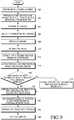
- FIG. 9 is an example of a flowchart of operations of a reception apparatus according to an embodiment of the present disclosure.
- the reception apparatus obtains service-related information according to an embodiment of the present disclosure through an EPG delivered in the OoB manner.
- the service-related information may include service/service component-specific protocol information or changed protocol information.
- the reception apparatus obtains service-related information through initial channel scanning.
- the initial scanning in the current embodiment includes an operation in which the reception apparatus obtains the service-related information according to an embodiment of the present disclosure from the EPG delivered in the OoB manner.
- the reception apparatus obtains, through channel selection, a route to an IP for receiving a service, e.g., physical channel information such as an RF channel, a PLP identifier, etc., by using the service-related information.
- the reception apparatus also obtains a protocol used for transmission of the service, e.g., the MMT or the ROUTE (if the EPG information is used).
- the reception apparatus performs RF tuning-in based on the service-related information in operation 904, and performs PLP selection corresponding to the service in operation 906.
- the reception apparatus performs L2 signaling parsing.
- L2 signaling parsing the reception apparatus according to an embodiment of the present disclosure may extract L2 signaling included in a payload by processing a link layer packet and obtain update information of the service-related information and other information through L2 signaling.
- the update information of the service-related information may include indication information of a changed protocol if a protocol used for transmission of a service/service component is changed, and the indication information of the changed protocol may be transmitted, for example, through L2 signaling.
- bootstrap information for obtaining the indication information of the changed protocol may be included.
- the reception apparatus obtains a UDP/IP packet through a UDP/IP session in operation 910.
- the reception apparatus extracts IP port information from a header of the UDP/IP packet through which media data is transmitted.
- the reception apparatus extracts service/service component-specific protocol information from the service-related information included in the EPG obtained in the initial scanning. In this case, the service/service component-specific protocol information is assumed to be mapped to an IP port as described with reference to Table 1.
- the reception apparatus determines whether a new EPG including the changed protocol information is received in operation 916. If the new EPG exists, the reception apparatus extracts new protocol information from the new EPG in operation 918. In operation 920, the reception apparatus compares the extracted IP information with the new protocol information extracted from the new EPG. In operation 922, the reception apparatus branches the UDP/IP packet to a protocol stack corresponding to the extracted IP port information according to the comparison result as shown in Table 1.
- the reception apparatus compares the protocol information obtained from the EPG received through the initial channel scanning with the extracted IP port information and branches the UDP/IP packet to a corresponding protocol stack according to the comparison result in operation 922.
- the reception apparatus processes a packet with the corresponding protocol in an application layer in operation 924, and plays back the service in operation 926.
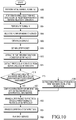
- FIG. 10 is an example of a flowchart of operations of a reception apparatus according to an embodiment of the present disclosure.
- the reception apparatus obtains service-related information according to an embodiment of the present disclosure through SDP session information.
- the reception apparatus obtains service-related information through initial channel scanning.
- the initial scanning may include an operation in which the reception apparatus obtains the service-related information according to an embodiment of the present disclosure from the SDP session information delivered in the OoB manner.
- the reception apparatus obtains, through channel selection, a route to an IP for receiving a service, e.g., physical channel information such as an RF channel, a PLP identifier, etc., by using the service-related information.
- a service e.g., physical channel information such as an RF channel, a PLP identifier, etc.
- the reception apparatus performs RF tuning-in based on the service-related information in operation 1004, and performs PLP selection corresponding to the service in operation 1006.
- the reception apparatus performs L2 signaling parsing.
- L2 signaling parsing the reception apparatus according to an embodiment of the present disclosure may extract L2 signaling included in a payload by processing a link layer packet, and obtain update information of the service-related information and other information through L2 signaling.
- the update information of the service-related information may include indication information of a changed protocol if a protocol used for transmission of a service/service component is changed, and the indication information of the changed protocol may be transmitted, for example, through L2 signaling.
- bootstrap information of an SDP session for obtaining the indication information of the changed protocol may be included.
- the reception apparatus obtains a UDP/IP packet through a UDP/IP session in operation 1010.
- the reception apparatus obtains the UDP/IP session and extracts IP port information from a header of the UDP/IP packet through which media data is transmitted.
- the reception apparatus extracts service/service component-specific protocol information from the service-related information included in the SDP session information obtained in the initial scanning. In this case, the service/service component-specific protocol information is assumed to be mapped to an IP port as described with reference to Table 1.
- the reception apparatus determines whether new SDP session information including the changed protocol information is received in operation 1016. If the new SDP session information exists, the reception apparatus extracts new protocol information from the new SDP session information in operation 1018. In operation 1020, the reception apparatus compares the extracted IP information with the new protocol information extracted from the new EPG. In operation 1022, the reception apparatus branches the UDP/IP packet to a protocol stack corresponding to the extracted IP port information according to the comparison result as shown in Table 1.
- the reception apparatus compares the protocol information obtained from the SDP session information received through the initial channel scanning with the extracted IP port information, and branches the UDP/IP packet to a corresponding protocol stack according to the comparison result in operation 1022.
- the reception apparatus processes a packet with the corresponding protocol in an application layer in operation 1024, and plays back the service in operation 1026.
- FIG. 11 is an example of a flowchart of operations of a reception apparatus according to an embodiment of the present disclosure.
- the reception apparatus obtains service-related information according to an embodiment of the present disclosure included in a header of a UDP/IP packet.
- the service-related information may include service/service component-specific protocol information or changed protocol information.
- the reception apparatus after performing initial channel scanning in operation 1100, the reception apparatus performs channel selection in operation 1102 to obtain service-related information according to an embodiment of the present disclosure.
- the reception apparatus obtains a route to an IP for receiving a service, e.g., physical channel information such as an RF channel, a PLP identifier, etc., from the service-related information.
- a service e.g., physical channel information such as an RF channel, a PLP identifier, etc.
- the reception apparatus performs RF tuning-in based on the service-related information in operation 1104, and performs PLP selection corresponding to the service in operation 1106.
- the reception apparatus performs L2 signaling parsing.
- L2 signaling parsing the reception apparatus according to an embodiment of the present disclosure may extract L2 signaling included in a payload by parsing a link layer packet, and obtains a UDP/IP packet through which media data is transmitted in operation 1110.
- the reception apparatus extracts service/service component-specific IP port information through a header of the UDP/IP packet in operation 1112, and extracts service/service component-specific protocol information obtained from the header of the UDP/IP packet obtained in the initial scanning in operation 1114.
- the service/service component-specific protocol information is assumed to be mapped to an IP port as described with reference to Table 1.
- the reception apparatus compares the extracted IP information with the protocol information.
- the reception apparatus branches the UDP/IP packet to a protocol stack corresponding to the extracted IP port information according to the comparison result as shown in Table 1.
- the reception apparatus processes a packet with the corresponding protocol in an application layer in operation 1120, and plays back the service in operation 1122.
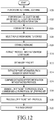
- FIG. 12 is an example of a flowchart of operations of a reception apparatus according to an embodiment of the present disclosure.
- service-related information according to an embodiment of the present disclosure is delivered to the reception side through L2 signaling.
- the service-related information may include service/service component-specific protocol information or changed protocol information.
- the reception apparatus obtains service-related information through initial channel scanning.
- the reception apparatus performs channel selection and obtains a route to an IP for receiving a service, e.g., physical channel information such as an RF channel, a PLP identifier, etc., by using the service-related information.
- a service e.g., physical channel information such as an RF channel, a PLP identifier, etc.
- the reception apparatus performs RF tuning-in based on the service-related information in operation 1204, and performs PLP selection corresponding to the service in operation 1206.
- the reception apparatus performs L2 signaling parsing.
- L2 signaling parsing the reception apparatus extracts L2 signaling included in a payload by parsing a link layer packet, and the reception apparatus according to an embodiment of the present disclosure extracts an IP packet through a header of the IP packet and obtains update information and protocol information or changed protocol information of the service-related information through the L2 signaling in operation 1210.
- the reception apparatus obtains a UDP/IP packet for transmitting media data in operation 1212, and extracts IP port information from a header of the obtained UDP/IP packet in operation 1214.
- the reception apparatus compares the IP information extracted from the header of the UDP/IP packet with the protocol information extracted from the L2 signaling.
- the reception apparatus branches the UDP/IP packet to a protocol stack corresponding to the extracted IP port information according to the comparison result as shown in Table 1.
- the reception apparatus processes a packet with the corresponding protocol in an application layer in operation 1220, and plays back the service in operation 1222.
- FIG. 13 is an example of a flowchart of operations of a reception apparatus according to an embodiment of the present disclosure.
- the reception apparatus obtains service-related information delivered in the in-band manner.
- the service-related information delivered in the in-band manner may include, for example, the ESG, the EPG, the SDP session information, etc.
- the service-related information may include a position of signaling including bootstrap information for receiving the signaling information required for service reception, transport protocol information of the signaling information, and so forth.
- the position of signaling may be expressed in the form of mapping information between a port number of a port through which the signaling information is transmitted and a protocol indicator.
- the mapping information may be delivered to the reception side through L2 signaling.
- the reception apparatus obtains service-related information delivered in the in-band manner through initial channel scanning. After the initial channel scanning, in operation 1302, the reception apparatus obtains, through channel selection, a route to an IP for receiving a service, e.g., physical channel information such as an RF channel, a PLP identifier, etc., by using the service-related information.
- a service e.g., physical channel information such as an RF channel, a PLP identifier, etc.
- the reception apparatus performs RF tuning-in based on the service-related information in operation 1304, and performs PLP selection corresponding to the service in operation 1306.
- the reception apparatus performs L2 signaling parsing.
- L2 signaling parsing the reception apparatus according to an embodiment of the present disclosure may extract L2 signaling included in a payload by processing a link layer packet and obtain update information of the service-related information and high-layer protocol information through L2 signaling.
- the high-layer protocol information is used when the service-related information is obtained through L2 signaling.
- the reception apparatus obtains an UDP/IP packet through which media data is transmitted.
- the service-related information is used when an initial UDP/IP packet is received with a preset port number or protocol as described with reference to FIG. 6 .
- the reception apparatus filters a UDP/IP packet received at a preset IP port number among the obtained UDP/IP packets.
- the reception apparatus branches the filtered UDP/IP packet to a protocol stack corresponding to the preset protocol.
- the reception apparatus obtains service/service component-specific protocol information from the service-related information.
- the reception apparatus extracts IP port information from a header of the UDP/IP packet.
- the reception apparatus compares the extracted IP port information with the service/service component-specific protocol information obtained from the service-related information.
- the reception apparatus branches the UDP/IP packet to a protocol stack corresponding to the extracted IP port information according to the comparison result as shown in Table 1.
- the reception apparatus processes a packet with the corresponding protocol in an application layer in operation 1324, and plays back the service in operation 1326.
- FIG. 14 is an example of a flowchart of operations of a reception apparatus according to an embodiment of the present disclosure.
- An embodiment of FIG. 14 fixes an IP port range in which a protocol is used and uses such an IP port.
- information about the IP port range in which the protocol is used may be delivered to the reception side through L2 signaling.
- the reception apparatus obtains service-related information according to an embodiment of the present disclosure by performing initial channel scanning.
- the service-related information may include service/service component-specific protocol information or changed protocol information.
- the reception apparatus obtains, through channel selection, a route to an IP for service reception, e.g., physical channel information such as an RF channel, a PLP identifier, etc., by using the service-related information.
- the reception apparatus performs RF tuning-in based on the service-related information in operation 1404, and performs PLP selection corresponding to the service in operation 1406.
- the reception apparatus performs L2 signaling parsing.
- L2 signaling parsing the reception apparatus according to an embodiment of the present disclosure extracts L2 signaling included in a payload by processing a link layer packet and obtains update information of the service-related information and high-layer protocol information through L2 signaling, in operation 1410.
- the update information of the service-related information may include indication information of a changed protocol if a protocol used for transmission of the service is changed, and the indication information of the changed protocol may be transmitted, for example, through L2 signaling.
- bootstrap information for obtaining the indication information of the changed protocol may be included.
- the reception apparatus obtains an UDP/IP packet through which media data is transmitted.
- the reception apparatus according to the embodiment of FIG. 14 has received protocol information based on the service-related information and has received a protocol mapping table (a port number is mapped to each protocol) including a protocol mapped to each port range as shown in Table 14.
- the reception apparatus branches UDP/IP packets received through a port to a protocol stack corresponding to a predetermined protocol by using the received protocol information and protocol mapping table.
- the reception apparatus processes a packet with the corresponding protocol in an application layer in operation 1418, and plays back the service in operation 1420.
- FIG. 15 illustrates an example of a protocol stack to which two transport techniques, MMT and ROUTE, according to an embodiment of the present disclosure are applied.
- an L2 layer exists between an UDP/IP layer and an ATSC 3.0 physical layer.
- the transmission side configures service-related information including service/service component-specific protocol information or changed protocol information in the form of one of the above-described tables, and delivers the configured service-related information to the reception side.
- the reception side then receives the service-related information according to at least one or a combination of the embodiments of FIGs. 9 through 14 , and identifies a protocol of each UDP/IP packet corresponding to a subsequently received service/service component.
- the reception side branches the UDP/IP packet to a protocol stack corresponding to the identified protocol and processes and serves the UDP/IP packet in the protocol corresponding to the packet.
- each UDP/IP packet corresponding to a service/service component is received using the MMT or ROUTE protocol, and the received packet is divided into signaling information corresponding to control information and data when the MMT protocol is used.
- the data may be included in the packet based on an MPU including an independently-decodable minimum unit of a media content transmitted using the MMT protocol.
- the data may be received in the form of a payload in an MPU mode. If the packet uses ROUTE, it is defined that streaming content formatted by the DASH is delivered through broadcasting.
- a packet transmitted from the transmission apparatus using ROUTE is also divided into data and signaling information corresponding to control information, and in this case, the data is received in a DASH segment form defined in a media segment through the packet, and the signaling information is received in a DASH MPD form through the packet.
- the DASH MPD may indicate, for example, a timeline of DASH segments, etc.
- FIG. 16A is a block diagram of a transmission apparatus according to an embodiment of the present disclosure.
- a transmission apparatus 1600 may include a controller 1602, a transceiver 1604, and a service-related information generator 1606.
- FIG. 16B is a flowchart of operations of a transmission apparatus according to an embodiment of the present disclosure.
- the service-related information generator 1606 configures service-related information under control of the controller 1602 in operation 1600.
- the service-related information may include service/service component-specific protocol information or changed protocol information provided by a broadcasting system and may be configured as shown in Table 1 through Table 5.
- the service-related information may further include position information of signaling information for the reception side's service reception and protocol information.
- the position information of the signaling information may include bootstrap information in order for the reception side to receive the signaling information, and the protocol information may include a protocol indicator used for transmission.
- the protocol information may be transmitted in which an IP address, a port number, etc., to which the signaling information is transmitted, are mapped to a protocol indicator.
- the transceiver 1064 delivers the service-related information to the reception side before providing a broadcasting service to the reception side.
- the service-related information may be periodically transmitted at intervals preset by an operator or a user before a broadcasting service is provided.
- the controller 1602 determines whether the service-related information needs to be updated according to a change of a channel environment, a user's request, etc. If determining that the update is not needed, the transmission apparatus waits for next update.
- the controller 1602 updates the service-related information and controls the service-related information generator 1606 to generate the updated service-related information.
- the updated service-related information may include the above-described changed protocol information, and so forth.
- the transceiver 1604 transmits the updated service-related information to the reception side under control of the controller 1602.
- the updated service-related information may be transmitted in a form that is different from the service-related information transmitted in operation 1600. For example, if previous service-related information is transmitted in the form of an ESG, an EPG, or SPD session information in the in-band manner, the updated service-related information may be separately transmitted to the reception side through L2 signaling. If the previous service-related information is delivered to the reception side in the OoB manner, the updated service-related information may be transmitted to the reception side in the OoB manner at a different point in time.
- an embodiment of the present disclosure provides a protocol suitable for each environment based on real-time/non-real-time services and characteristics of various devices, transmits a service from a transmission side by using a protocol based on advantages and characteristics of different protocols, and delivers service information including protocol information about a service or service component to a reception side, thereby allowing the reception side to efficiently receive the service corresponding to the service/service component based on the protocol information.
Landscapes
- Engineering & Computer Science (AREA)
- Signal Processing (AREA)
- Multimedia (AREA)
- Computer Security & Cryptography (AREA)
- Computer Networks & Wireless Communication (AREA)
- Two-Way Televisions, Distribution Of Moving Picture Or The Like (AREA)
Applications Claiming Priority (3)
| Application Number | Priority Date | Filing Date | Title |
|---|---|---|---|
| KR20150008946 | 2015-01-19 | ||
| KR20150015547 | 2015-01-30 | ||
| PCT/KR2016/000552 WO2016117908A1 (fr) | 2015-01-19 | 2016-01-19 | Procédé et appareil d'émission et de réception de contenu multimédia |
Publications (3)
| Publication Number | Publication Date |
|---|---|
| EP3249932A1 true EP3249932A1 (fr) | 2017-11-29 |
| EP3249932A4 EP3249932A4 (fr) | 2018-01-10 |
| EP3249932B1 EP3249932B1 (fr) | 2020-11-04 |
Family
ID=56417372
Family Applications (1)
| Application Number | Title | Priority Date | Filing Date |
|---|---|---|---|
| EP16740381.5A Active EP3249932B1 (fr) | 2015-01-19 | 2016-01-19 | Procédé et appareil d'émission et de réception de contenu multimédia |
Country Status (7)
| Country | Link |
|---|---|
| US (3) | US10448068B2 (fr) |
| EP (1) | EP3249932B1 (fr) |
| KR (2) | KR102617287B1 (fr) |
| CN (1) | CN107211175B (fr) |
| CA (2) | CA2974341C (fr) |
| MX (2) | MX373215B (fr) |
| WO (1) | WO2016117908A1 (fr) |
Families Citing this family (18)
| Publication number | Priority date | Publication date | Assignee | Title |
|---|---|---|---|---|
| US10667004B2 (en) * | 2014-12-22 | 2020-05-26 | Lg Electronics Inc. | Broadcasting signal reception device, and broadcasting signal reception method based on pull mode |
| US10448068B2 (en) * | 2015-01-19 | 2019-10-15 | Samsung Electronics Co., Ltd. | Method and apparatus for transmitting and receiving signaling information associated with multimedia content |
| WO2016117904A1 (fr) | 2015-01-21 | 2016-07-28 | 엘지전자 주식회사 | Appareil d'émission de signal de radiodiffusion, appareil de réception de signal de radiodiffusion, procédé d'émission de signal de radiodiffusion et procédé de réception de signal de radiodiffusion |
| US10341036B2 (en) * | 2015-02-10 | 2019-07-02 | Lg Electronics Inc. | Broadcast signal transmission apparatus, broadcast signal reception apparatus, broadcast signal transmission method, and broadcast signal reception method |
| KR102111572B1 (ko) * | 2015-02-13 | 2020-05-15 | 에스케이텔레콤 주식회사 | 저지연 생방송 컨텐츠 제공을 위한 프로그램을 기록한 기록매체 및 장치 |
| US10721538B2 (en) | 2015-03-08 | 2020-07-21 | Lg Electronics Inc. | Apparatus and method for transmitting and receiving broadcast signal |
| US11310094B2 (en) | 2015-09-08 | 2022-04-19 | Lg Electronics Inc. | Apparatus and method for transmitting or receiving broadcast signal |
| WO2017043898A1 (fr) | 2015-09-08 | 2017-03-16 | 엘지전자(주) | Appareil et procédé pour émettre et recevoir un signal de radiodiffusion |
| US11805293B2 (en) * | 2017-03-29 | 2023-10-31 | Samsung Electronics Co., Ltd. | Device and method for transmitting and receiving signal in multimedia system |
| KR102480372B1 (ko) | 2018-03-09 | 2022-12-26 | 삼성전자주식회사 | 전자장치 및 그 제어방법 |
| JP7148258B2 (ja) * | 2018-04-05 | 2022-10-05 | フォルシアクラリオン・エレクトロニクス株式会社 | 連携システム、連携方法、連携プログラム |
| CN113543205B (zh) * | 2020-04-17 | 2024-01-26 | 大唐移动通信设备有限公司 | 一种业务提供方法、通信系统、装置及介质 |
| CN112601042B (zh) * | 2020-11-23 | 2022-12-09 | 聚好看科技股份有限公司 | 显示设备、服务器及视频通话兼容不同协议信令的方法 |
| CN112769832A (zh) * | 2021-01-12 | 2021-05-07 | 中国科学院上海高等研究院 | 多协议兼容的数据发送、数据接收方法及装置 |
| CN113141358B (zh) * | 2021-04-20 | 2023-09-01 | 中国科学院上海高等研究院 | 多协议兼容的服务引导发现传输接收、发送方法及装置 |
| CN113132386B (zh) * | 2021-04-20 | 2023-07-25 | 中国科学院上海高等研究院 | 多协议兼容的引导传输发送、接收方法及装置 |
| CN115002081B (zh) * | 2022-05-30 | 2023-12-26 | 重庆紫光华山智安科技有限公司 | 媒体流传输方法及相关装置 |
| US12408005B2 (en) * | 2022-05-31 | 2025-09-02 | Cisco Technology, Inc. | Differentiated time-difference of arrival for ultra-wideband (UWB) |
Family Cites Families (17)
| Publication number | Priority date | Publication date | Assignee | Title |
|---|---|---|---|---|
| BRPI0614926A2 (pt) * | 2005-08-22 | 2011-04-19 | Korea Electronics Telecomm | metadado de extensão de pmcp, dispositivo de geração de fluxo de dados, sistema de emissão de difusão de dados digitais e método de emissão de difusão de dados digitais do mesmo |
| US8763036B2 (en) * | 2005-11-04 | 2014-06-24 | Nokia Corporation | Method for indicating service types in the service guide |
| KR101328929B1 (ko) | 2006-11-22 | 2013-11-14 | 엘지전자 주식회사 | 디지털 방송 신호를 처리하는 방법 및 장치 |
| KR101377952B1 (ko) | 2007-06-05 | 2014-03-25 | 엘지전자 주식회사 | 방송 신호 전송 방법, 방송 신호 수신 방법 및 방송 수신기 |
| US8014333B2 (en) | 2007-08-24 | 2011-09-06 | Lg Electronics, Inc. | Digital broadcasting system and method of processing data in digital broadcasting system |
| KR100925243B1 (ko) | 2008-04-17 | 2009-11-05 | 에스케이브로드밴드주식회사 | 서비스 제공 장치, 셋탑 박스 및 그의 서비스 제공 방법 |
| WO2010021526A2 (fr) * | 2008-08-22 | 2010-02-25 | Lg Electronics Inc. | Procédé de traitement d'informations supplémentaires relatives à un service ou contenu annoncé dans un service en temps non réel et récepteur de diffusion |
| US20130258946A1 (en) * | 2010-07-27 | 2013-10-03 | Humax Co., Ltd. | Cross-layer optimization method in a multimedia transmission system, and an abstraction layer component for the same |
| KR101216392B1 (ko) | 2011-01-06 | 2012-12-28 | 주식회사 씨앤앰강남케이블티브이 | 오픈 플랫폼에서의 vod 시스템 및 vod 데이터 전송 방법 |
| KR20120137198A (ko) * | 2011-06-11 | 2012-12-20 | 삼성전자주식회사 | 통신 시스템에서 패킷 송수신 장치 및 방법 |
| EP3554088B1 (fr) | 2011-10-13 | 2024-02-07 | Samsung Electronics Co., Ltd. | Appareil et procédé de configuration d'un message de commande dans un système de diffusion |
| KR101995314B1 (ko) * | 2013-04-22 | 2019-07-02 | 삼성전자주식회사 | Dvb 지상파 방송 시스템에서 mpeg mmt를 위한 시그널링 정보를 송수신하는 장치 및 방법 |
| KR20140126827A (ko) | 2013-04-22 | 2014-11-03 | 삼성전자주식회사 | Dvb 시스템에서 mmt를 이용하여 방송 서비스를 송수신하는 방법 및 장치 |
| WO2016028052A2 (fr) | 2014-08-20 | 2016-02-25 | 엘지전자 주식회사 | Appareil de transmission de signal de diffusion, appareil de réception de signal de diffusion, procédé de transmission de signal de diffusion, et procédé de réception de signal de diffusion |
| KR101812186B1 (ko) * | 2014-09-25 | 2017-12-26 | 엘지전자 주식회사 | 방송 신호 송신 장치, 방송 신호 수신 장치, 방송 신호 송신 방법, 및 방송 신호 수신 방법 |
| EP3232668A4 (fr) * | 2014-12-10 | 2018-06-13 | LG Electronics Inc. | Dispositif de transmission de signal de radiodiffusion, dispositif de réception de signal de radiodiffusion, procédé de transmission de signal de radiodiffusion, et procédé de réception de signal de radiodiffusion |
| US10448068B2 (en) * | 2015-01-19 | 2019-10-15 | Samsung Electronics Co., Ltd. | Method and apparatus for transmitting and receiving signaling information associated with multimedia content |
-
2016
- 2016-01-19 US US15/544,423 patent/US10448068B2/en active Active
- 2016-01-19 CN CN201680006400.0A patent/CN107211175B/zh active Active
- 2016-01-19 CA CA2974341A patent/CA2974341C/fr active Active
- 2016-01-19 MX MX2017009429A patent/MX373215B/es active IP Right Grant
- 2016-01-19 CA CA3161483A patent/CA3161483C/fr active Active
- 2016-01-19 WO PCT/KR2016/000552 patent/WO2016117908A1/fr not_active Ceased
- 2016-01-19 EP EP16740381.5A patent/EP3249932B1/fr active Active
- 2016-01-19 KR KR1020227037907A patent/KR102617287B1/ko active Active
- 2016-01-19 KR KR1020177023265A patent/KR102462377B1/ko active Active
-
2017
- 2017-07-19 MX MX2020004511A patent/MX2020004511A/es unknown
-
2019
- 2019-10-07 US US16/594,817 patent/US11082729B2/en active Active
-
2021
- 2021-07-30 US US17/390,183 patent/US11528519B2/en active Active
Also Published As
| Publication number | Publication date |
|---|---|
| CA3161483C (fr) | 2026-01-13 |
| CA2974341C (fr) | 2022-08-23 |
| CN107211175A (zh) | 2017-09-26 |
| EP3249932B1 (fr) | 2020-11-04 |
| WO2016117908A1 (fr) | 2016-07-28 |
| KR102617287B1 (ko) | 2023-12-27 |
| MX2020004511A (es) | 2020-08-13 |
| CA2974341A1 (fr) | 2016-07-28 |
| CN107211175B (zh) | 2020-07-07 |
| KR102462377B1 (ko) | 2022-11-04 |
| US20170347134A1 (en) | 2017-11-30 |
| US10448068B2 (en) | 2019-10-15 |
| MX2017009429A (es) | 2017-10-12 |
| KR20170102563A (ko) | 2017-09-11 |
| EP3249932A4 (fr) | 2018-01-10 |
| CA3161483A1 (fr) | 2016-07-28 |
| MX373215B (es) | 2020-05-07 |
| US11528519B2 (en) | 2022-12-13 |
| US20210360297A1 (en) | 2021-11-18 |
| KR20220151223A (ko) | 2022-11-14 |
| US20200037006A1 (en) | 2020-01-30 |
| US11082729B2 (en) | 2021-08-03 |
Similar Documents
| Publication | Publication Date | Title |
|---|---|---|
| US11528519B2 (en) | Method and apparatus for transmitting and receiving signaling information associated with multimedia content | |
| CA2917516C (fr) | Procede et appareil de transmission/reception de signal de radiodiffusion dans un systeme de radiodiffusion hybride | |
| JP6092122B2 (ja) | 放送通信融合型サービスのための送信方法及び装置 | |
| US6977914B2 (en) | Broadcast hand-over in a wireless network | |
| US8503447B2 (en) | Broadcast receiver and channel information processing method | |
| CN103843266B (zh) | 在广播系统中播放广播内容的装置和方法 | |
| US8561109B2 (en) | Method and system for aggregating TV program information from different live TV feeds | |
| JP5049151B2 (ja) | 受信装置及び伝送システム | |
| US7646727B2 (en) | Retransmission method for digital broadcast and its broadcast receiving device | |
| KR20160123942A (ko) | 방송 서비스를 구성하는 콘텐츠 관련 정보들을 제공하는 방법 및 장치 | |
| CN101455013A (zh) | 用于将信道标识符映射到分组标识符的服务发现段 | |
| JP4200160B2 (ja) | インターネットプロトコルベースのデジタル放送システムにおける放送チャンネル情報を提供するための装置及び方法 | |
| EP2046033A2 (fr) | Récepteur de diffusion et procédé de traitement d'informations de système | |
| KR102482207B1 (ko) | 디지털 방송 시스템에서 서비스 전환을 위한 방법 및 장치 | |
| US20170195729A1 (en) | Method to optimize the transmission of a set of television channels | |
| JP2020010199A (ja) | Ip再送信装置、siサーバ、エッジルータ、受信機、ip再送信方法、および送信設備 | |
| KR100790179B1 (ko) | Dvb―h 수신 단말에서 브로드캐스팅 데이터를효율적으로 수신하는 방법 및 이를 위한 dvb―h 수신단말 | |
| WO2020007347A1 (fr) | Réception d'un signal de diffusion | |
| KR20190020997A (ko) | 하이브리드 방송 및 브로드밴드 환경에서의 전송 방법 및 구성 | |
| KR20190067385A (ko) | 하이브리드 방송 및 무선 환경에서의 컨텐츠 전송 방법 및 시스템 |
Legal Events
| Date | Code | Title | Description |
|---|---|---|---|
| STAA | Information on the status of an ep patent application or granted ep patent |
Free format text: STATUS: THE INTERNATIONAL PUBLICATION HAS BEEN MADE |
|
| PUAI | Public reference made under article 153(3) epc to a published international application that has entered the european phase |
Free format text: ORIGINAL CODE: 0009012 |
|
| STAA | Information on the status of an ep patent application or granted ep patent |
Free format text: STATUS: REQUEST FOR EXAMINATION WAS MADE |
|
| 17P | Request for examination filed |
Effective date: 20170821 |
|
| AK | Designated contracting states |
Kind code of ref document: A1 Designated state(s): AL AT BE BG CH CY CZ DE DK EE ES FI FR GB GR HR HU IE IS IT LI LT LU LV MC MK MT NL NO PL PT RO RS SE SI SK SM TR |
|
| AX | Request for extension of the european patent |
Extension state: BA ME |
|
| A4 | Supplementary search report drawn up and despatched |
Effective date: 20171211 |
|
| RIC1 | Information provided on ipc code assigned before grant |
Ipc: H04N 21/2381 20110101AFI20171205BHEP Ipc: H04N 21/238 20110101ALI20171205BHEP |
|
| DAV | Request for validation of the european patent (deleted) | ||
| DAX | Request for extension of the european patent (deleted) | ||
| STAA | Information on the status of an ep patent application or granted ep patent |
Free format text: STATUS: EXAMINATION IS IN PROGRESS |
|
| 17Q | First examination report despatched |
Effective date: 20180629 |
|
| GRAP | Despatch of communication of intention to grant a patent |
Free format text: ORIGINAL CODE: EPIDOSNIGR1 |
|
| STAA | Information on the status of an ep patent application or granted ep patent |
Free format text: STATUS: GRANT OF PATENT IS INTENDED |
|
| INTG | Intention to grant announced |
Effective date: 20191216 |
|
| GRAJ | Information related to disapproval of communication of intention to grant by the applicant or resumption of examination proceedings by the epo deleted |
Free format text: ORIGINAL CODE: EPIDOSDIGR1 |
|
| STAA | Information on the status of an ep patent application or granted ep patent |
Free format text: STATUS: EXAMINATION IS IN PROGRESS |
|
| INTC | Intention to grant announced (deleted) | ||
| GRAP | Despatch of communication of intention to grant a patent |
Free format text: ORIGINAL CODE: EPIDOSNIGR1 |
|
| STAA | Information on the status of an ep patent application or granted ep patent |
Free format text: STATUS: GRANT OF PATENT IS INTENDED |
|
| INTG | Intention to grant announced |
Effective date: 20200529 |
|
| GRAS | Grant fee paid |
Free format text: ORIGINAL CODE: EPIDOSNIGR3 |
|
| GRAA | (expected) grant |
Free format text: ORIGINAL CODE: 0009210 |
|
| STAA | Information on the status of an ep patent application or granted ep patent |
Free format text: STATUS: THE PATENT HAS BEEN GRANTED |
|
| AK | Designated contracting states |
Kind code of ref document: B1 Designated state(s): AL AT BE BG CH CY CZ DE DK EE ES FI FR GB GR HR HU IE IS IT LI LT LU LV MC MK MT NL NO PL PT RO RS SE SI SK SM TR |
|
| REG | Reference to a national code |
Ref country code: GB Ref legal event code: FG4D |
|
| REG | Reference to a national code |
Ref country code: CH Ref legal event code: EP |
|
| REG | Reference to a national code |
Ref country code: AT Ref legal event code: REF Ref document number: 1332358 Country of ref document: AT Kind code of ref document: T Effective date: 20201115 |
|
| REG | Reference to a national code |
Ref country code: IE Ref legal event code: FG4D |
|
| REG | Reference to a national code |
Ref country code: DE Ref legal event code: R096 Ref document number: 602016047156 Country of ref document: DE |
|
| REG | Reference to a national code |
Ref country code: NL Ref legal event code: MP Effective date: 20201104 |
|
| REG | Reference to a national code |
Ref country code: AT Ref legal event code: MK05 Ref document number: 1332358 Country of ref document: AT Kind code of ref document: T Effective date: 20201104 |
|
| PG25 | Lapsed in a contracting state [announced via postgrant information from national office to epo] |
Ref country code: NO Free format text: LAPSE BECAUSE OF FAILURE TO SUBMIT A TRANSLATION OF THE DESCRIPTION OR TO PAY THE FEE WITHIN THE PRESCRIBED TIME-LIMIT Effective date: 20210204 Ref country code: PT Free format text: LAPSE BECAUSE OF FAILURE TO SUBMIT A TRANSLATION OF THE DESCRIPTION OR TO PAY THE FEE WITHIN THE PRESCRIBED TIME-LIMIT Effective date: 20210304 Ref country code: RS Free format text: LAPSE BECAUSE OF FAILURE TO SUBMIT A TRANSLATION OF THE DESCRIPTION OR TO PAY THE FEE WITHIN THE PRESCRIBED TIME-LIMIT Effective date: 20201104 Ref country code: GR Free format text: LAPSE BECAUSE OF FAILURE TO SUBMIT A TRANSLATION OF THE DESCRIPTION OR TO PAY THE FEE WITHIN THE PRESCRIBED TIME-LIMIT Effective date: 20210205 Ref country code: FI Free format text: LAPSE BECAUSE OF FAILURE TO SUBMIT A TRANSLATION OF THE DESCRIPTION OR TO PAY THE FEE WITHIN THE PRESCRIBED TIME-LIMIT Effective date: 20201104 |
|
| PG25 | Lapsed in a contracting state [announced via postgrant information from national office to epo] |
Ref country code: SE Free format text: LAPSE BECAUSE OF FAILURE TO SUBMIT A TRANSLATION OF THE DESCRIPTION OR TO PAY THE FEE WITHIN THE PRESCRIBED TIME-LIMIT Effective date: 20201104 Ref country code: ES Free format text: LAPSE BECAUSE OF FAILURE TO SUBMIT A TRANSLATION OF THE DESCRIPTION OR TO PAY THE FEE WITHIN THE PRESCRIBED TIME-LIMIT Effective date: 20201104 Ref country code: AT Free format text: LAPSE BECAUSE OF FAILURE TO SUBMIT A TRANSLATION OF THE DESCRIPTION OR TO PAY THE FEE WITHIN THE PRESCRIBED TIME-LIMIT Effective date: 20201104 Ref country code: BG Free format text: LAPSE BECAUSE OF FAILURE TO SUBMIT A TRANSLATION OF THE DESCRIPTION OR TO PAY THE FEE WITHIN THE PRESCRIBED TIME-LIMIT Effective date: 20210204 Ref country code: PL Free format text: LAPSE BECAUSE OF FAILURE TO SUBMIT A TRANSLATION OF THE DESCRIPTION OR TO PAY THE FEE WITHIN THE PRESCRIBED TIME-LIMIT Effective date: 20201104 Ref country code: IS Free format text: LAPSE BECAUSE OF FAILURE TO SUBMIT A TRANSLATION OF THE DESCRIPTION OR TO PAY THE FEE WITHIN THE PRESCRIBED TIME-LIMIT Effective date: 20210304 Ref country code: LV Free format text: LAPSE BECAUSE OF FAILURE TO SUBMIT A TRANSLATION OF THE DESCRIPTION OR TO PAY THE FEE WITHIN THE PRESCRIBED TIME-LIMIT Effective date: 20201104 |
|
| REG | Reference to a national code |
Ref country code: LT Ref legal event code: MG9D |
|
| PG25 | Lapsed in a contracting state [announced via postgrant information from national office to epo] |
Ref country code: HR Free format text: LAPSE BECAUSE OF FAILURE TO SUBMIT A TRANSLATION OF THE DESCRIPTION OR TO PAY THE FEE WITHIN THE PRESCRIBED TIME-LIMIT Effective date: 20201104 |
|
| PG25 | Lapsed in a contracting state [announced via postgrant information from national office to epo] |
Ref country code: SM Free format text: LAPSE BECAUSE OF FAILURE TO SUBMIT A TRANSLATION OF THE DESCRIPTION OR TO PAY THE FEE WITHIN THE PRESCRIBED TIME-LIMIT Effective date: 20201104 Ref country code: LT Free format text: LAPSE BECAUSE OF FAILURE TO SUBMIT A TRANSLATION OF THE DESCRIPTION OR TO PAY THE FEE WITHIN THE PRESCRIBED TIME-LIMIT Effective date: 20201104 Ref country code: EE Free format text: LAPSE BECAUSE OF FAILURE TO SUBMIT A TRANSLATION OF THE DESCRIPTION OR TO PAY THE FEE WITHIN THE PRESCRIBED TIME-LIMIT Effective date: 20201104 Ref country code: CZ Free format text: LAPSE BECAUSE OF FAILURE TO SUBMIT A TRANSLATION OF THE DESCRIPTION OR TO PAY THE FEE WITHIN THE PRESCRIBED TIME-LIMIT Effective date: 20201104 Ref country code: SK Free format text: LAPSE BECAUSE OF FAILURE TO SUBMIT A TRANSLATION OF THE DESCRIPTION OR TO PAY THE FEE WITHIN THE PRESCRIBED TIME-LIMIT Effective date: 20201104 Ref country code: RO Free format text: LAPSE BECAUSE OF FAILURE TO SUBMIT A TRANSLATION OF THE DESCRIPTION OR TO PAY THE FEE WITHIN THE PRESCRIBED TIME-LIMIT Effective date: 20201104 |
|
| REG | Reference to a national code |
Ref country code: DE Ref legal event code: R097 Ref document number: 602016047156 Country of ref document: DE |
|
| PG25 | Lapsed in a contracting state [announced via postgrant information from national office to epo] |
Ref country code: DK Free format text: LAPSE BECAUSE OF FAILURE TO SUBMIT A TRANSLATION OF THE DESCRIPTION OR TO PAY THE FEE WITHIN THE PRESCRIBED TIME-LIMIT Effective date: 20201104 Ref country code: MC Free format text: LAPSE BECAUSE OF FAILURE TO SUBMIT A TRANSLATION OF THE DESCRIPTION OR TO PAY THE FEE WITHIN THE PRESCRIBED TIME-LIMIT Effective date: 20201104 |
|
| REG | Reference to a national code |
Ref country code: CH Ref legal event code: PL |
|
| PLBE | No opposition filed within time limit |
Free format text: ORIGINAL CODE: 0009261 |
|
| STAA | Information on the status of an ep patent application or granted ep patent |
Free format text: STATUS: NO OPPOSITION FILED WITHIN TIME LIMIT |
|
| PG25 | Lapsed in a contracting state [announced via postgrant information from national office to epo] |
Ref country code: LU Free format text: LAPSE BECAUSE OF NON-PAYMENT OF DUE FEES Effective date: 20210119 |
|
| REG | Reference to a national code |
Ref country code: BE Ref legal event code: MM Effective date: 20210131 |
|
| 26N | No opposition filed |
Effective date: 20210805 |
|
| PG25 | Lapsed in a contracting state [announced via postgrant information from national office to epo] |
Ref country code: IT Free format text: LAPSE BECAUSE OF FAILURE TO SUBMIT A TRANSLATION OF THE DESCRIPTION OR TO PAY THE FEE WITHIN THE PRESCRIBED TIME-LIMIT Effective date: 20201104 Ref country code: AL Free format text: LAPSE BECAUSE OF FAILURE TO SUBMIT A TRANSLATION OF THE DESCRIPTION OR TO PAY THE FEE WITHIN THE PRESCRIBED TIME-LIMIT Effective date: 20201104 Ref country code: NL Free format text: LAPSE BECAUSE OF FAILURE TO SUBMIT A TRANSLATION OF THE DESCRIPTION OR TO PAY THE FEE WITHIN THE PRESCRIBED TIME-LIMIT Effective date: 20201104 |
|
| PG25 | Lapsed in a contracting state [announced via postgrant information from national office to epo] |
Ref country code: CH Free format text: LAPSE BECAUSE OF NON-PAYMENT OF DUE FEES Effective date: 20210131 Ref country code: SI Free format text: LAPSE BECAUSE OF FAILURE TO SUBMIT A TRANSLATION OF THE DESCRIPTION OR TO PAY THE FEE WITHIN THE PRESCRIBED TIME-LIMIT Effective date: 20201104 Ref country code: LI Free format text: LAPSE BECAUSE OF NON-PAYMENT OF DUE FEES Effective date: 20210131 |
|
| PG25 | Lapsed in a contracting state [announced via postgrant information from national office to epo] |
Ref country code: IE Free format text: LAPSE BECAUSE OF NON-PAYMENT OF DUE FEES Effective date: 20210119 |
|
| PG25 | Lapsed in a contracting state [announced via postgrant information from national office to epo] |
Ref country code: IS Free format text: LAPSE BECAUSE OF FAILURE TO SUBMIT A TRANSLATION OF THE DESCRIPTION OR TO PAY THE FEE WITHIN THE PRESCRIBED TIME-LIMIT Effective date: 20210304 |
|
| PG25 | Lapsed in a contracting state [announced via postgrant information from national office to epo] |
Ref country code: BE Free format text: LAPSE BECAUSE OF NON-PAYMENT OF DUE FEES Effective date: 20210131 |
|
| PG25 | Lapsed in a contracting state [announced via postgrant information from national office to epo] |
Ref country code: CY Free format text: LAPSE BECAUSE OF FAILURE TO SUBMIT A TRANSLATION OF THE DESCRIPTION OR TO PAY THE FEE WITHIN THE PRESCRIBED TIME-LIMIT Effective date: 20201104 |
|
| PG25 | Lapsed in a contracting state [announced via postgrant information from national office to epo] |
Ref country code: HU Free format text: LAPSE BECAUSE OF FAILURE TO SUBMIT A TRANSLATION OF THE DESCRIPTION OR TO PAY THE FEE WITHIN THE PRESCRIBED TIME-LIMIT; INVALID AB INITIO Effective date: 20160119 |
|
| PG25 | Lapsed in a contracting state [announced via postgrant information from national office to epo] |
Ref country code: MK Free format text: LAPSE BECAUSE OF FAILURE TO SUBMIT A TRANSLATION OF THE DESCRIPTION OR TO PAY THE FEE WITHIN THE PRESCRIBED TIME-LIMIT Effective date: 20201104 |
|
| PG25 | Lapsed in a contracting state [announced via postgrant information from national office to epo] |
Ref country code: MT Free format text: LAPSE BECAUSE OF FAILURE TO SUBMIT A TRANSLATION OF THE DESCRIPTION OR TO PAY THE FEE WITHIN THE PRESCRIBED TIME-LIMIT Effective date: 20201104 |
|
| PG25 | Lapsed in a contracting state [announced via postgrant information from national office to epo] |
Ref country code: TR Free format text: LAPSE BECAUSE OF FAILURE TO SUBMIT A TRANSLATION OF THE DESCRIPTION OR TO PAY THE FEE WITHIN THE PRESCRIBED TIME-LIMIT Effective date: 20201104 |
|
| PGFP | Annual fee paid to national office [announced via postgrant information from national office to epo] |
Ref country code: GB Payment date: 20251222 Year of fee payment: 11 |
|
| PGFP | Annual fee paid to national office [announced via postgrant information from national office to epo] |
Ref country code: FR Payment date: 20251223 Year of fee payment: 11 |
|
| PGFP | Annual fee paid to national office [announced via postgrant information from national office to epo] |
Ref country code: DE Payment date: 20251222 Year of fee payment: 11 |