EP3249957B1 - Procédé, appareil et système pour l'acquisition d'informations de localisation d'un objet cible - Google Patents
Procédé, appareil et système pour l'acquisition d'informations de localisation d'un objet cible Download PDFInfo
- Publication number
- EP3249957B1 EP3249957B1 EP15882323.7A EP15882323A EP3249957B1 EP 3249957 B1 EP3249957 B1 EP 3249957B1 EP 15882323 A EP15882323 A EP 15882323A EP 3249957 B1 EP3249957 B1 EP 3249957B1
- Authority
- EP
- European Patent Office
- Prior art keywords
- terminal
- location information
- target object
- location
- broadcast message
- Prior art date
- Legal status (The legal status is an assumption and is not a legal conclusion. Google has not performed a legal analysis and makes no representation as to the accuracy of the status listed.)
- Active
Links
Images





Classifications
-
- H—ELECTRICITY
- H04—ELECTRIC COMMUNICATION TECHNIQUE
- H04W—WIRELESS COMMUNICATION NETWORKS
- H04W4/00—Services specially adapted for wireless communication networks; Facilities therefor
- H04W4/02—Services making use of location information
-
- H—ELECTRICITY
- H04—ELECTRIC COMMUNICATION TECHNIQUE
- H04W—WIRELESS COMMUNICATION NETWORKS
- H04W4/00—Services specially adapted for wireless communication networks; Facilities therefor
- H04W4/02—Services making use of location information
- H04W4/029—Location-based management or tracking services
-
- H—ELECTRICITY
- H04—ELECTRIC COMMUNICATION TECHNIQUE
- H04L—TRANSMISSION OF DIGITAL INFORMATION, e.g. TELEGRAPHIC COMMUNICATION
- H04L67/00—Network arrangements or protocols for supporting network services or applications
- H04L67/50—Network services
- H04L67/52—Network services specially adapted for the location of the user terminal
-
- H—ELECTRICITY
- H04—ELECTRIC COMMUNICATION TECHNIQUE
- H04W—WIRELESS COMMUNICATION NETWORKS
- H04W4/00—Services specially adapted for wireless communication networks; Facilities therefor
- H04W4/80—Services using short range communication, e.g. near-field communication [NFC], radio-frequency identification [RFID] or low energy communication
-
- H—ELECTRICITY
- H04—ELECTRIC COMMUNICATION TECHNIQUE
- H04B—TRANSMISSION
- H04B5/00—Near-field transmission systems, e.g. inductive or capacitive transmission systems
- H04B5/40—Near-field transmission systems, e.g. inductive or capacitive transmission systems characterised by components specially adapted for near-field transmission
- H04B5/48—Transceivers
-
- H—ELECTRICITY
- H04—ELECTRIC COMMUNICATION TECHNIQUE
- H04M—TELEPHONIC COMMUNICATION
- H04M2250/00—Details of telephonic subscriber devices
- H04M2250/04—Details of telephonic subscriber devices including near field communication means, e.g. RFID
Definitions
- the present invention relates to the field of short-distance wireless communications technologies, and in particular, to a method and system for obtaining location information of a target object, and an apparatus.
- an anti-loss application (Application, App for short) running on a terminal can effectively search via crowdsorcing.
- the terminal may issue a "loss statement" in the anti-loss application, and all terminals on which the anti-loss application is running help to search for the lost object. If the lost object is found, a terminal finding the lost object sends location information of the lost object to the terminal of the owner. In this way, the owner can find the lost object conveniently.
- a server of the anti-loss application controls the terminal finding the lost object to send the location information of the lost object to the terminal of the owner, but the location information of the lost object is not displayed on the terminal finding the lost object. In this way, the lost object can be prevented from being taken away by a user that owns the terminal finding the lost object.
- the anti-loss application needs to be installed on other terminals that can help to search for an object.
- a current object search method has a disadvantage of relatively low search efficiency.
- US 2012/315902 A1 discloses a wireless communication system that includes: a first wireless communication terminal to register an external device, wherein a subscriber information management device transmits a location of the external device to the first wireless communication terminal based on a search result of the external device based on a search request for the external device, the search request being transmitted from the subscriber information management device to a second wireless communication terminal within a search target area, the second wireless communication terminal being identified by the subscriber information management device based on registration information including certain information and location information of the external device.
- the present invention provides a method of claim 1 and a system of claim 13 for obtaining location information of a target object, and an apparatus of claim 6, so as to resolve a prior-art disadvantage of relatively low search efficiency. Possible implementation manners are disclosed in the dependent claims.
- a method for obtaining location information of a target object including:
- the receiving, by a second terminal, the search request specifically includes: receiving, by the second terminal, the search request sent by the first terminal or a server.
- the method further includes: displaying, by the second terminal on a screen in real time, the location at which the second terminal is currently located, the location represented by the first location information, and the distance between the location at which the second terminal is currently located and the location represented by the first location information.
- the method further includes:
- the sending, by the second terminal, a first broadcast message carrying the identifier of the target object specifically includes: sending, by the second terminal, the broadcast message directly.
- the returning, by the second terminal, the second location information to the first terminal specifically includes: returning, by the second terminal, the second location information presented on a map to the first terminal.
- the method before the returning, by the second terminal, the second location information to the first terminal, the method further includes: receiving, by the second terminal, voice information sent by the first terminal, and feeding back voice information to the first terminal.
- a second terminal including:
- the receiving unit is specifically configured to: receive the search request sent by the first terminal or a server.
- the second terminal further includes a display unit, and the display unit is configured to: display, on a screen in real time, the location at which the second terminal is currently located, the location represented by the first location information, and the distance between the location at which the second terminal is currently located and the location represented by the first location information.
- the display unit displays, on the screen, an operational option that triggers sending of the first broadcast message, where the first threshold is greater than the second threshold; and the sending unit is further configured to: when the display unit detects that the operational option is triggered, send the first broadcast message.
- the sending unit is specifically configured to send the broadcast message directly.
- the sending unit is specifically configured to: return the second location information presented on a map to the first terminal.
- the receiving unit is further configured to receive voice information sent by the first terminal; and the sending unit is further configured to feed back voice information to the first terminal.
- a system for obtaining location information of a target object including a first terminal and a second terminal; the first terminal is configured to obtain first location information of a target object, wherein the first location information is location information of a location at which the first terminal is located when a connection between the first terminal and the target object is disrupted; the first terminal is configured to select at least one second user from a user relationship chain of a first user according to a user selection instruction of the first user and send a search request to the second terminal respectively related to the at least one second user, wherein the search request carries an identifier of the target object and the first location information, and the search request is used to instruct the second terminal to search, according to the first location information, for the target object corresponding to the identifier of the target object; the second terminal is configured to receive the search request, when determine, by the second terminal, that a distance between a location at which the second terminal is currently located and the location represented by the first location information is less than or equal to a first threshold, send
- a terminal when searching for an object, a terminal can search for the object by using only another terminal on which an anti-loss application is installed, which therefore results in a disadvantage of relatively low object search efficiency.
- a solution of obtaining location information of a target object at least one second user is selected from a user relationship chain of a first user, and the location information of the target object is obtained by using a second terminal related to the second user.
- the location information of the target object is obtained by using a second terminal whose distance to a location represented by first location information is less than or equal to a preset distance.
- system and “network” may be used interchangeably in this specification.
- network may be used interchangeably in this specification.
- the term “and/or” in this specification describes only an association relationship for describing associated objects and represents that three relationships may exist. For example, A and/or B may represent the following three cases: Only A exists, both A and B exist, and only B exists.
- the character “/” in this specification generally indicates an “or” relationship between the associated objects.
- the present invention may be applied to a scenario of losing an object, a child, or a pet in a public place
- the public place may be a school, a work place, an airport, a station, a shopping mall, or the like.
- a procedure of obtaining location information of a target object is as follows:
- the target object may be a wearable device or an object with a smart label.
- the wearable device may be a smart watch, a smart band, or the like, and the smart label refers to an electronic label with a short-distance communication capability.
- the wearable device and the smart label are technologies known in the communications field, and therefore, are not described in detail herein one by one.
- the target object before the first terminal obtains the location information of the target object, the target object needs to be set so that sniffer is started after the connection between the target object and the first terminal is disrupted. That is, before the first terminal loses the target object, the target object needs to be set so that sniffer is started after the connection to the first terminal is disrupted.
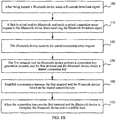
- a specific process is shown in FIG. 1B , and a description is provided below by using an example in which a target object is a Bluetooth device.
- Step 100 After being started, a Bluetooth device sends a Bluetooth broadcast signal.
- the Bluetooth broadcast signal includes ID (identifier) information of the Bluetooth device.
- Step 110 A first terminal enables Bluetooth, and sends a paired connection setup request to the Bluetooth device when receiving the Bluetooth broadcast signal.
- Step 120 The Bluetooth device receives the paired connection setup request.
- Step 130 The first terminal and the Bluetooth device perform a connection key generation process, and the first terminal and the Bluetooth device obtain a shared connection key.
- Step 140 Establish a connection between the first terminal and the Bluetooth device based on the shared connection key.
- Step 150 When the connection between the first terminal and the Bluetooth device is disrupted, the Bluetooth device enters a sniffer state.
- a terminal that first establishes a connection to the Bluetooth device is set to a terminal having the primary permission. If the terminal having the primary permission sends the shared connection key and the ID information of the Bluetooth device to another terminal, the another terminal may also establish a connection to the Bluetooth device.
- the Bluetooth device needs to be activated before the Bluetooth device is enabled, and there are multiple manners for activating the Bluetooth device.
- a password is preset for the Bluetooth device before delivery from a factory, and the preset password may be a mixed sequence of a string of characters and figures, and is printed in a specification of the product.
- a user activates the Bluetooth device according to the preset password.
- the first location information may be information of the location at which the target object is located when the connection between the first terminal and the target object is disrupted.
- the first terminal may obtain the first location information by using a GPS (Global Positioning Systems, Global Positioning System) technology or a WIFI (Wireless Fidelity, Wireless Fidelity) technology, or by means of collaborative positioning.
- GPS Global Positioning Systems, Global Positioning System
- WIFI Wireless Fidelity, Wireless Fidelity
- the user relationship chain is at least one of a contact in a contact list, a user relationship chain in a communication application, or a user relationship chain in a social application.
- a user relationship chain in a communication application may be WeChat friends (as shown in FIG. 1C ), QQ friends, MSN (Microsoft Service Network, Microsoft Service Network) friends, Line friends, or WhatsApp friends; and a user relationship chain in a social application may be Facebook (Facebook) friends, or Twitter (Twitter) friends.
- the first terminal sends the search request to the second terminal respectively related to the at least one second user by using the following manner: sending, by the first terminal, a first search request to a server, where the first search request carries the identifier of the target object, information about the at least one second user, and the first location information, and the first search request is used to instruct the server to send the search request to the second terminal respectively related to the at least one second user.
- the search request may be directly sent by the first terminal to the second terminal, or may be sent by the server.
- implementation manners are not limited to the foregoing two manners, and are not described in detail herein one by one.
- the first terminal may receive the second location information returned by at least one second terminal by using the following manner: receiving, by the first terminal, the second location information that is presented on a map and that is returned by the at least one second terminal.
- Xiao Zhang lost a necklace, and the necklace is labeled with a smart label. Then, Xiao Zhang looks for the necklace with the help of WeChat friends. After a terminal of a WeChat friend Xiao Ming establishes a connection to the smart label, Xiao Ming returns current location information (that is, the second location information in step 13) of Xiao Ming to the terminal (that is, the first terminal described in step 10) of Xiao Zhang, as shown in FIG. 1D .
- the second location information is presented on a map.
- the second location information may also be presented in a form of a short message, or the second location information may be presented in a form of voice information.
- the first terminal selects multiple second users.
- the second location information may be returned by all second terminals of second terminals related to the selected second users, or the second location information may be returned by some second terminals of second terminals related to the selected second users, or the second location information may be returned by none of second terminals related to the selected second users.
- the second location information may be returned by the ten second terminals, or the second location information may be returned by five second terminals, or the second location information may be returned by none of the second terminals.
- the following operation is further included: sending, by the first terminal, voice information to the second terminal, and receiving voice information fed back by the second terminal.
- a user owning the first terminal went to a supermarket A, a park B, and a bookstore C.
- the first terminal sends voice information "Search around the supermarket A” to the second terminal, and the second terminal returns voice information "Not found around the supermarket A”.
- the first terminal sends voice information "Search around the park B" to the second terminal, and the second terminal returns voice information "Not found around the park B”.
- the first terminal sends voice information "Search around the bookstore C" to the second terminal, and the second terminal returns voice information "Found at the bookstore C". In this way, the second terminal may quickly find the target object.
- the first location information may be specific coordinates. Because some target objects are moving, or a target object is lost in a moving device, a location of the target object changes. In this case, even if the first terminal may obtain specific coordinates of the target object when the first terminal is disconnected from the target object the location information of the target object still needs to be obtained because the location of the target object changes.
- the first location information may also not be specific coordinates, but a location range, such as "Madian” or "Shangdi".
- the location information of the target object that is, the second location information still needs to be obtained.
- a coverage of the obtained second location information is smaller than the coverage of the first location information. Therefore, the obtained second location information is useful.
- the first terminal determines that the first location information is "Madian", but "Madian” is a relatively large coverage. Therefore, the first user owning the first terminal asks WeChat friends around "Madian” of WeChat friends to help to look for the target object. After a WeChat friend 1 finds the target object, a second terminal of the WeChat friend 1 returns a location "a hall of a north ring center building" at which the WeChat friend 1 is located to the first terminal. The first user determines that the target object is lost in the hall of the north ring center building.
- a process of establishing a connection between the second terminal and the target object is as follows:
- two-way authentication needs to be performed between the target object and the second terminal.
- the second terminal returns the second location information to the first terminal only after the two-way authentication succeeds.
- the second terminal may be a terminal sharing a screen with the first terminal, or may be a terminal that can perform point-to-point communication with the first terminal, which is not described in detail herein one by one.
- another procedure of obtaining location information of a target object is as follows:
- the second terminal may receive the search request by using the following manner: receiving, by the second terminal, the search request sent by the first terminal or a server.
- the following operation is further included: displaying, by the second terminal on a screen in real time, the location at which the second terminal is currently located, the location represented by the first location information, and the distance between the location at which the second terminal is currently located and the location represented by the first location information, as shown in FIG. 2B .
- the following operation is further included: if the distance between the location at which the second terminal is located and the location represented by the first location information is greater than a second threshold, displaying, by the second terminal on the screen, an operational option that triggers sending of the first broadcast message, where the first threshold is greater than the second threshold.
- the second terminal may send the first broadcast message carrying the identifier of the target object by using the following manner: when detecting that the operational option is triggered, sending, by the second terminal, the first broadcast message.
- the second terminal does not need to send the first broadcast message when the second terminal is very far away from the target object. Therefore, the power consumption of the second terminal is reduced.
- the second terminal may send the first broadcast message carrying the identifier of the target object by using the following manner: sending, by the second terminal, the first broadcast message directly.
- the second terminal displays, on the screen, the operational option that triggers sending of the first broadcast message rather than sending the first broadcast message immediately, and sends the first broadcast message only when the second terminal detects that the operational option is triggered. If the distance between the location at which the second terminal is located and the location represented by the first location information is less than or equal to the second threshold, where the first threshold is greater than the second threshold, the second terminal sends the first broadcast message directly.
- the first threshold is 2000 meters
- the second threshold is 500 meters.
- the second terminal may not send the first broadcast message. If a user clicks the operational option, even if the distance between the location at which the second terminal is currently located and the location represented by the first location information is greater than 500 meters, the second terminal may send the first broadcast message. If the operational option is not triggered, the second terminal does not send the first broadcast message when the distance between the second terminal and the location represented by the first location information is greater than 500 meters. However, when the distance between the second terminal and the location represented by the first location information is less than or 500 meters, the second terminal directly sends the first broadcast message.
- the following manner may be used: returning, by the second terminal, the second location information presented on a map to the first terminal.
- the second location information may be presented in a form of voice.
- voice a form of voice
- the following operation may also be included: receiving, by the second terminal, voice information sent by the first terminal, and feeding back voice information to the first terminal.
- an interface of the second terminal may be shown in FIG. 2C .
- a process of establishing a connection between the second terminal and the target object is as follows:
- two-way authentication needs to be performed between the target object and the second terminal.
- the second terminal returns the second location information to the first terminal only after the two-way authentication succeeds.
- another procedure of obtaining location information of a target object is as follows:
- the following manner may be used: receiving, by the first terminal, the second location information that is presented on a map and that is returned by the at least one second terminal.
- a process of establishing a connection between the second terminal and the target object is as follows:
- two-way authentication needs to be performed between the target object and the second terminal.
- the second terminal returns the second location information to the first terminal only after the two-way authentication succeeds.
- another procedure of obtaining location information of a target object is as follows:
- the second terminal after the second terminal establishes the connection to the target object, and returns the second location information to the first terminal, the second terminal actively disrupts the connection to the target object.
- the target object may also actively disrupt the connection to the second terminal. Therefore, after the returning, by the second terminal, second location information to the first terminal, the following operation is further included:
- the second terminal may return the second location information to the first terminal by using the following manner: returning, by the second terminal, the second location information presented on a map to the first terminal.
- a process of establishing a connection between the second terminal and the target object is as follows:
- two-way authentication needs to be performed between the target object and the second terminal.
- the second terminal returns the second location information to the first terminal only after the two-way authentication succeeds.
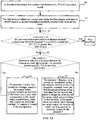
- FIG. 5A to better understand the embodiments of the present invention, a specific application scenario is provided below to further describe in detail a process of obtaining location information of a target object.
- Step 50 A first terminal obtains first location information (XI, Yl) of a lost smart watch.
- Step 51 The first terminal selects ten second users from WeChat friends, and sends a search request to second terminals respectively related to the selected ten users.
- the search request carries an identifier of the smart watch and the first location information.
- Step 52 A terminal 1 of ten terminals determines whether a distance between a location at which the terminal 1 is currently located and (XI, Y1) is greater than 2000 meters; and if yes, stops search; otherwise, performs step 53.
- Step 53 The terminal 1 determines whether a distance between the location at which the terminal 1 is currently located and (XI, Yl) is less than 500 meters; and if yes, performs step 54; otherwise, performs step 55.
- Step 54 The terminal 1 sends a first broadcast message, searches for a smart watch corresponding to an identifier of the smart watch, and when a connection to the smart watch is established, sends the location at which the terminal 1 is currently located to the first terminal.
- Step 55 The terminal 1 displays, on a screen, an operational option that triggers sending of a first broadcast message, sends the first broadcast message when detecting that the operational option is triggered, searches for the smart watch corresponding to the identifier of the smart watch, and sends, when finding the smart watch, the location at which the first terminal is currently located to the terminal 1.
- a search process of the terminal 1 is described in step 52 to step 55.
- the remaining nine terminals execute the same process as the terminal 1, and details are not described herein one by one.
- FIG. 5B a specific application scenario is provided below to further describe, in detail, a process of obtaining location information of a target object.
- Step 500 A first terminal obtains first location information (XI, Yl) of a lost smart watch.
- Step 510 The first terminal sends a first search request to a WeChat server.
- the first search request carries the first location information, identifier information of the smart watch, and a stranger access rights information credential.
- Step 520 The WeChat server sends a second search request to ten second terminals whose distances to (XI, Y1) are 5000 meters.
- the second search request carries an identifier of the smart watch and the stranger access rights information credential.
- Step 530 A terminal 1 of ten terminals searches for the smart watch corresponding to an identifier of the smart watch, and determines, when a connection to the smart watch is established, that the smart watch is found.
- Step 540 The terminal 1 sends a location at which the terminal 1 is located when the smart watch is found to the first terminal, and disrupts the connection to the smart watch.
- a search process of the terminal 1 is described in step 530 and step 540.
- the remaining nine terminals execute the same process as the terminal 1, and details are not described herein one by one.
- an embodiment of the present invention provides a first terminal.
- the first terminal includes an obtaining unit 60, a selection unit 61, a sending unit 62, and a receiving unit 63.
- the obtaining unit 60 is configured to obtain first location information of a target object, where the first location information is location information of a location at which the first terminal is located when a connection between the first terminal and the target object is disrupted.
- the selection unit 61 is configured to select at least one second user from a user relationship chain of a first user according to a user selection instruction of the first user.
- the sending unit 62 is configured to send a search request to a second terminal respectively related to the at least one second user, where the search request carries an identifier of the target object and the first location information, and the search request is used to instruct the second terminal to search, according to the first location information, for the target object corresponding to the identifier of the target object.
- the receiving unit 63 is configured to receive second location information returned by at least one second terminal, and determine the second location information as location information of a location at which the target object is located, where the second location information is location information of a location at which the second terminal is located when a connection between the second terminal and the target object is established.
- the user relationship chain is at least one of the following: a contact in a contact list, a user relationship chain in a communication application, or a user relationship chain in a social application.
- the sending unit 62 is further configured to: send a first search request to a server, where the first search request carries the identifier of the target object, information about the at least one second user, and the first location information, and the first search request is used to instruct the server to send the search request to the second terminal respectively related to the at least one second user.
- the receiving unit 63 is specifically configured to: receive the second location information that is presented on a map and that is returned by the at least one second terminal.
- the sending unit 62 is further configured to send voice information to the second terminal; and the receiving unit 63 is further configured to receive voice information fed back by the second terminal.
- an embodiment of the present invention further provides a first terminal.
- the first terminal includes a processor 600, a transmitter 610, and a receiver 620.
- the processor 600 is configured to obtain first location information of a target object, where the first location information is location information of a location at which the first terminal is located when a connection between the first terminal and the target object is disrupted.
- the processor 600 is further configured to select at least one second user from a user relationship chain of a first user according to a user selection instruction of the first user.
- the processor 610 is configured to send a search request to a second terminal respectively related to the at least one second user, where the search request carries an identifier of the target object and the first location information, and the search request is used to instruct the second terminal to search, according to the first location information, for the target object corresponding to the identifier of the target object.
- the receiver 620 is configured to receive second location information returned by at least one second terminal, and determine the second location information as location information of a location at which the target object is located, where the second location information is location information of a location at which the second terminal is located when a connection between the second terminal and the target object is established.
- an embodiment of the present invention provides a second terminal.
- the second terminal includes a receiving unit 70, a sending unit 71, and a request unit 72.
- the receiving unit 70 is configured to receive a search request.
- the search request carries an identifier of a target object and first location information, and the first location information is location information of a location at which the first terminal is located when a connection between a first terminal and the target object is disrupted.
- the sending unit 71 is configured to: when it is determined that a distance between a location at which the terminal is located and the location represented by the first location information is less than or equal to a first threshold, send a first broadcast message carrying the identifier of the target object.
- the request unit 72 is configured to: when a second broadcast message sent by the target object is detected, request to establish a connection to the target object.
- the sending unit 71 is further configured to: after the connection to the target object is established, return second location information to the first terminal.
- the second location information is location information of a location at which the terminal is located when the connection between the terminal and the target object is established.
- the receiving unit 70 is specifically configured to: receive the search request sent by the first terminal or a server.
- a display unit 73 is further included.
- the display unit 73 is configured to: display, on a screen in real time, the location at which the second terminal is currently located, the location represented by the first location information, and the distance between the location at which the second terminal is currently located and the location represented by the first location information.
- the display unit 73 displays, on the screen, an operational option that triggers sending of the first broadcast message, where the first threshold is greater than the second threshold.
- the sending unit 71 is further configured to: when the display unit 73 detects that the operational option is triggered, send the first broadcast message.
- the sending unit 71 is specifically configured to send the broadcast message directly.
- the sending unit 71 is specifically configured to: return the second location information presented on a map to the first terminal.
- the receiving unit 70 is further configured to receive voice information sent by the first terminal; and the sending unit 71 is further configured to feed back voice information to the first terminal.
- an embodiment of the present invention provides a second terminal.
- the second terminal includes a receiver 700, a transmitter 710, and a processor 720.
- the receiver 700 is configured to receive a search request, where the search request carries an identifier of a target object and first location information, and the first location information is location information of a location at which the first terminal is located when a connection between a first terminal and the target object is disrupted.
- the transmitter 710 is configured to: when it is determined that a distance between a location at which the terminal is located and the location represented by the first location information is less than or equal to a first threshold, send a first broadcast message carrying the identifier of the target object.
- the processor 720 is configured to: when a second broadcast message sent by the target object is detected, request to establish a connection to the target object.
- the transmitter 710 is further configured to: after the connection to the target object is established, return second location information to the first terminal.
- the second location information is location information of a location at which the terminal is located when the connection between the terminal and the target object is established.
- FIG. 8A provides a first terminal as an example.
- the first terminal includes an obtaining unit 80, a sending unit 81, and a receiving unit 82.
- the obtaining unit 80 is configured to obtain first location information of a target object, where the first location information is location information of a location at which the first terminal is located when a connection between the first terminal and the target object is disrupted.
- the sending unit 81 is configured to: send a first search request to a server.
- the first search request carries an identifier of the target object, the first location information, and a stranger access rights information credential, and the stranger access rights information credential is used to instruct a second terminal to disrupt a connection to the target object after a second terminal returns second location information to the first terminal.
- the first search request is used to instruct the server to send a second search request to at least one second terminal.
- the second terminal is a terminal whose distance to the location represented by the first location information is less than or equal to a preset distance.
- the second search request carries the identifier of the target object and the stranger access rights information credential, and the second search request is used to instruct the at least one second terminal to search for the target object corresponding to the identifier of the target object.
- the receiving unit 82 is configured to receive the second location information returned by the at least one second terminal, and determine the second location information as location information of a location at which the target object is located, where the second location information is location information of a location at which the second terminal is located when a connection between the second terminal and the target object is established.
- the receiving unit 82 is specifically configured to: receive the second location information that is presented on a map and that is returned by the at least one second terminal.
- FIG. 8B further provides a first terminal as another example.
- the first terminal includes a processor 800, a transmitter 810, and a receiver 820.
- the processor 800 is configured to obtain first location information of a target object, where the first location information is location information of a location at which the first terminal is located when a connection between the first terminal and the target object is disrupted.
- the sender 810 is configured to: send a first search request to a server.
- the first search request carries an identifier of the target object, the first location information, and a stranger access rights information credential, and the stranger access rights information credential is used to instruct a second terminal to disrupt a connection to the target object after a second terminal returns second location information to the first terminal.
- the first search request is used to instruct the server to send a second search request to at least one second terminal.
- the second terminal is a terminal whose distance to the location represented by the first location information is less than or equal to a preset distance.
- the second search request carries the identifier of the target object and the stranger access rights information credential, and the second search request is used to instruct the at least one second terminal to search for the target object corresponding to the identifier of the target object.
- the receiver 820 is configured to receive the second location information returned by the at least one second terminal, and determine the second location information as location information of a location at which the target object is located.
- the second location information is location information of a location at which the second terminal is located when a connection between the second terminal and the target object is established.
- FIG. 9A provides a second terminal as an example.
- the second terminal includes a receiving unit 90, a request unit 92, and a disruption unit 93.
- the receiving unit 90 is configured to receive a second search request sent by a server.
- the second search request carries an identifier of a target object and a stranger access rights information credential.
- the sending unit 91 is configured to send a first broadcast message carrying the identifier of the target object.
- the request unit 92 is configured to: when a second broadcast message sent by the target object is detected, request to establish a connection to the target object.
- the sending unit 91 is further configured to: when the connection to the target object is established, return second location information to a first terminal.
- the second location information is location information of a location at which the second terminal is located when the connection between the second terminal and the target object is established.
- the disruption unit 93 is configured to: after the second location information is returned to the first terminal according to the stranger access rights information credential, disrupt the connection to the target object.
- the sending unit 91 is further configured to:
- the receiving unit 90 is further configured to: return the second location information presented on a map to the first terminal.
- FIG. 9B provides a second terminal as another example.
- the second terminal includes a receiver 900, a transmitter 910, and a processor 920.
- the receiver 900 is configured to receive a second search request sent by a server.
- the second search request carries an identifier of a target object and a stranger access rights information credential.
- the transmitter 910 is configured to send a first broadcast message carrying the identifier of the target object.
- the processor 920 is configured to: when a second broadcast message sent by the target object is detected, request to establish a connection to the target object.
- the transmitter 910 is further configured to: when the connection to the target object is established, return second location information to a first terminal.
- the second location information is location information of a location at which the second terminal is located when the connection between the second terminal and the target object is established.
- the processor 920 is configured to: after the second location information is returned to the first terminal according to the stranger access rights information credential, disrupt the connection to the target object.
- an embodiment of the present invention further provides a schematic diagram of obtaining location information of a target object, including the first terminals shown in FIG. 6A and FIG. 6B , and the second terminals shown in FIG. 7A to FIG. 7C .
- These computer program instructions may be provided for a general-purpose computer, a dedicated computer, an embedded processor, or a processor of any other programmable data processing device to generate a machine, so that the instructions executed by a computer or a processor of any other programmable data processing device generate an apparatus for implementing a function in one or more processes in the flowcharts and/or in one or more blocks in the block diagrams.
- These computer program instructions may also be stored in a computer readable memory that can instruct the computer or any other programmable data processing device to work in a specific manner, so that the instructions stored in the computer readable memory generate an artifact that includes an instruction apparatus.
- the instruction apparatus implements a function in one or more processes in the flowcharts and/or in one or more blocks in the block diagrams.
- These computer program instructions may also be loaded onto a computer or another programmable data processing device, so that a series of operations and steps are performed on the computer or the another programmable device, thereby generating computer-implemented processing. Therefore, the instructions executed on the computer or the another programmable device provide steps for implementing a function in one or more processes in the flowcharts and/or in one or more blocks in the block diagrams.
Landscapes
- Engineering & Computer Science (AREA)
- Computer Networks & Wireless Communication (AREA)
- Signal Processing (AREA)
- Telephonic Communication Services (AREA)
- Telephone Function (AREA)
- Mobile Radio Communication Systems (AREA)
Claims (13)
- Procédé permettant d'obtenir des informations d'emplacement d'un objet cible, comprenant les étapes suivantes :recevoir (200), par un deuxième terminal, une requête de recherche, la requête de recherche contenant un identifiant d'un objet cible et des premières informations d'emplacement, et les premières informations d'emplacement étant des informations d'emplacement d'un emplacement auquel un premier terminal est situé lorsqu'une connexion entre le premier terminal et l'objet cible est interrompue ;lors d'une détermination, par le deuxième terminal, qu'une distance entre un emplacement auquel le deuxième terminal est couramment situé et l'emplacement représenté par les premières informations d'emplacement est inférieure ou égale à un premier seuil, envoyer (210), par le deuxième terminal, un premier message de diffusion contenant l'identifiant de l'objet cible ;lors de la détection d'un deuxième message de diffusion envoyé par l'objet cible, demander (220), par le deuxième terminal, d'établir une connexion avec l'objet cible ; etaprès que la connexion avec l'objet cible a été établie, retourner (230), par le deuxième terminal, des deuxièmes informations d'emplacement au premier terminal, les deuxièmes informations d'emplacement étant des informations d'emplacement d'un emplacement auquel le deuxième terminal est situé lorsque la connexion entre le deuxième terminal et l'objet cible est établie.
- Procédé selon la revendication 1, dans lequel l'étape de réception (200), par un deuxième terminal, de la requête de recherche comprend spécifiquement :
recevoir, par le deuxième terminal, la requête de recherche envoyée par le premier terminal ou un serveur. - Procédé selon la revendication 1 ou 2, après l'étape de détermination, par le deuxième terminal, qu'une distance entre un emplacement auquel le deuxième terminal est situé et l'emplacement représenté par les premières informations d'emplacement est inférieure ou égale à un premier seuil, et avant l'étape d'envoi du premier message de diffusion, comprenant en outre :
afficher, par le deuxième terminal sur un écran en temps réel, l'emplacement auquel le deuxième terminal est couramment situé, l'emplacement représenté par les premières informations d'emplacement, et la distance entre l'emplacement auquel le deuxième terminal est couramment situé et l'emplacement représenté par les premières informations d'emplacement. - Procédé selon la revendication 3, après l'étape d'affichage, par le deuxième terminal sur un écran en temps réel, de l'emplacement auquel le deuxième terminal est couramment situé, de l'emplacement représenté par les premières informations d'emplacement, et de la distance, comprenant en outre :si la distance entre l'emplacement auquel le deuxième terminal est couramment situé et l'emplacement représenté par les premières informations d'emplacement est supérieure à un deuxième seuil, afficher, par le deuxième terminal sur l'écran, une option opérationnelle qui déclenche l'envoi du premier message de diffusion, le premier seuil étant supérieur au deuxième seuil ; etl'étape d'envoi, par le deuxième terminal, d'un premier message de diffusion contenant l'identifiant de l'objet cible comprend spécifiquement :
lorsque le deuxième terminal détecte que l'option opérationnelle est déclenchée, envoyer, par le deuxième terminal, le premier message de diffusion. - Procédé selon la revendication 3 dans lequel, si la distance entre l'emplacement auquel le deuxième terminal est couramment situé et l'emplacement représenté par les premières informations d'emplacement est inférieure ou égale à un deuxième seuil, le premier seuil étant supérieur au deuxième seuil,
l'étape d'envoi, par le deuxième terminal, d'un premier message de diffusion contenant l'identifiant de l'objet cible comprend spécifiquement :
envoyer, par le deuxième terminal, le premier message de diffusion directement. - Deuxième terminal, comprenant :une unité de réception (70), configurée pour recevoir une requête de recherche, la requête de recherche contenant un identifiant d'un objet cible et des premières informations d'emplacement, et les premières informations d'emplacement étant des informations d'emplacement d'un emplacement auquel le premier terminal est situé lorsqu'une connexion entre un premier terminal et l'objet cible est interrompue ;une unité d'envoi (71), configurée pour : lorsqu'il est déterminé, par le terminal, qu'une distance entre un emplacement auquel le terminal est couramment situé et l'emplacement représenté par les premières informations d'emplacement est inférieure ou égale à un premier seuil, envoyer un premier message de diffusion contenant l'identifiant de l'objet cible ; etune unité de requête (72), configurée pour : lorsqu'un deuxième message de diffusion envoyé par l'objet cible est détecté, demander d'établir une connexion avec l'objet cible,l'unité d'envoi (71) étant en outre configurée pour : après que la connexion avec l'objet cible a été établie, retourner des deuxièmes informations d'emplacement au premier terminal, les deuxièmes informations d'emplacement étant des informations d'emplacement d'un emplacement auquel le terminal est situé lorsque la connexion entre le terminal et l'objet cible est établie.
- Terminal selon la revendication 6, dans lequel l'unité de réception (70) est spécifiquement configurée pour :
recevoir la requête de recherche envoyée par le premier terminal ou un serveur. - Terminal selon la revendication 6 ou 7, dans lequel le terminal comprend en outre une unité d'affichage (73), et l'unité d'affichage (73) est configurée pour :
afficher, sur un écran en temps réel, l'emplacement auquel le deuxième terminal est couramment situé, l'emplacement représenté par les premières informations d'emplacement, et la distance entre l'emplacement auquel le deuxième terminal est couramment situé et l'emplacement représenté par les premières informations d'emplacement. - Terminal selon la revendication 8 dans lequel, si la distance entre l'emplacement auquel le deuxième terminal est couramment situé et l'emplacement représenté par les premières informations d'emplacement est supérieure à un deuxième seuil, l'unité d'affichage (73) affiche, sur l'écran, une option opérationnelle qui déclenche l'envoi du premier message de diffusion, le premier seuil étant supérieur au deuxième seuil ;
et
l'unité d'envoi (71) est en outre configurée pour : lorsque l'unité d'affichage (73) détecte que l'option opérationnelle est déclenchée, envoyer le premier message de diffusion. - Terminal selon la revendication 8 dans lequel, si la distance entre l'emplacement auquel le terminal est couramment situé et l'emplacement représenté par les premières informations d'emplacement est inférieure ou égale à un deuxième seuil, le premier seuil étant supérieur au deuxième seuil,
l'unité d'envoi (71) est configurée spécifiquement pour envoyer le message de diffusion directement. - Terminal selon l'une quelconque des revendications 6 à 10, dans lequel l'unité d'envoi (71) est configurée spécifiquement pour :
retourner les deuxièmes informations d'emplacement présentées sur une carte au premier terminal. - Terminal selon l'une quelconque des revendications 6 à 11, dans lequel l'unité de réception (70) est en outre configurée pour recevoir des informations vocales envoyées par le premier terminal ; et
l'unité d'envoi (71) est en outre configurée pour retourner des informations vocales au premier terminal. - Système permettant d'obtenir des informations d'emplacement d'un objet cible, comprenant un premier terminal et un deuxième terminal ;
le premier terminal est configuré pour obtenir des premières informations d'emplacement d'un objet cible, les premières informations d'emplacement étant des informations d'emplacement d'un emplacement auquel le premier terminal est situé lorsqu'une connexion entre le premier terminal et l'objet cible est interrompue ;
le premier terminal est configuré pour sélectionner au moins un deuxième utilisateur à partir d'une chaîne de relations utilisateur d'un premier utilisateur selon une instruction de sélection utilisateur du premier utilisateur et envoyer une requête de recherche au deuxième terminal respectivement concernant ledit deuxième utilisateur, la requête de recherche contenant un identifiant de l'objet cible et les premières informations d'emplacement, et la requête de recherche étant utilisée pour ordonner au deuxième terminal de rechercher, selon les premières informations d'emplacement, l'objet cible correspondant à l'identifiant de l'objet cible ;
le deuxième terminal est configuré pour recevoir la requête de recherche, lors d'une détermination, par le deuxième terminal, qu'une distance entre un emplacement auquel le deuxième terminal est couramment situé et l'emplacement représenté par les premières informations d'emplacement est inférieure ou égale à un premier seuil, envoyer un premier message de diffusion contenant l'identifiant de l'objet cible ;
le deuxième terminal est configuré pour, lors de la détection d'un deuxième message de diffusion envoyé par l'objet cible, demander d'établir une connexion avec l'objet cible, et après que la connexion avec l'objet cible a été établie, retourner des deuxièmes informations d'emplacement au premier terminal, les deuxièmes informations d'emplacement étant des informations d'emplacement d'un emplacement auquel le deuxième terminal est situé lorsque la connexion entre le deuxième terminal et l'objet cible est établie ;
le premier terminal est configuré pour recevoir les deuxièmes informations d'emplacement, et déterminer les deuxièmes informations d'emplacement comme des informations d'emplacement d'un emplacement auquel l'objet cible est situé.
Applications Claiming Priority (1)
| Application Number | Priority Date | Filing Date | Title |
|---|---|---|---|
| PCT/CN2015/073207 WO2016131183A1 (fr) | 2015-02-16 | 2015-02-16 | Procédé, appareil et système pour l'acquisition d'informations de localisation d'un objet cible |
Publications (3)
| Publication Number | Publication Date |
|---|---|
| EP3249957A1 EP3249957A1 (fr) | 2017-11-29 |
| EP3249957A4 EP3249957A4 (fr) | 2018-01-17 |
| EP3249957B1 true EP3249957B1 (fr) | 2020-01-08 |
Family
ID=56691904
Family Applications (1)
| Application Number | Title | Priority Date | Filing Date |
|---|---|---|---|
| EP15882323.7A Active EP3249957B1 (fr) | 2015-02-16 | 2015-02-16 | Procédé, appareil et système pour l'acquisition d'informations de localisation d'un objet cible |
Country Status (4)
| Country | Link |
|---|---|
| US (1) | US10292006B2 (fr) |
| EP (1) | EP3249957B1 (fr) |
| CN (1) | CN106170994B (fr) |
| WO (1) | WO2016131183A1 (fr) |
Families Citing this family (13)
| Publication number | Priority date | Publication date | Assignee | Title |
|---|---|---|---|---|
| CN109936816B (zh) * | 2014-05-13 | 2022-04-05 | 华为技术有限公司 | 定位方法和通信设备 |
| CN108966123A (zh) * | 2018-07-02 | 2018-12-07 | 中国联合网络通信集团有限公司 | 位置共享方法、系统、第一终端设备和第二终端设备 |
| KR20250059555A (ko) * | 2019-04-17 | 2025-05-02 | 애플 인크. | 아이템을 추적하고 찾기 위한 사용자 인터페이스 |
| CN110062367B (zh) * | 2019-04-23 | 2022-05-24 | 广东小天才科技有限公司 | 一种安全状态判断方法、装置及系统 |
| EP4734480A2 (fr) | 2019-04-28 | 2026-04-29 | Apple Inc. | Génération de séquences de sortie tactiles associées à un objet |
| CN110730431B (zh) * | 2019-10-10 | 2023-04-07 | 中国地铁工程咨询有限责任公司 | 基于移动终端地图的线路显示系统和方法 |
| CN111343625B (zh) * | 2020-04-13 | 2020-08-14 | 北京智源人工智能研究院 | 人员接触判断方法及设备 |
| CN111866257B (zh) * | 2020-07-13 | 2022-03-25 | 中国联合网络通信集团有限公司 | 失物招领方法、系统、计算机设备及可读存储介质 |
| EP4201086B1 (fr) | 2020-09-25 | 2026-04-01 | Apple Inc. | Interfaces utilisateur pour suivre et trouver des articles |
| CN113014633B (zh) * | 2021-02-20 | 2022-07-01 | 杭州云深科技有限公司 | 预置设备的定位方法、装置、计算机设备及存储介质 |
| KR20260040341A (ko) | 2021-04-19 | 2026-03-24 | 애플 인크. | 위치 추적을 위한 사용자 인터페이스들 |
| CN117950785A (zh) | 2021-05-17 | 2024-04-30 | 苹果公司 | 用于实体状况的用户界面 |
| CN115551074B (zh) * | 2021-06-30 | 2026-02-03 | 华为技术有限公司 | 一种设备位置查找方法及系统 |
Family Cites Families (78)
| Publication number | Priority date | Publication date | Assignee | Title |
|---|---|---|---|---|
| JP2887815B2 (ja) * | 1990-08-08 | 1999-05-10 | アイシン精機株式会社 | 移動局位置モニタリングシステム |
| US5774876A (en) * | 1996-06-26 | 1998-06-30 | Par Government Systems Corporation | Managing assets with active electronic tags |
| US7941534B2 (en) * | 1997-04-14 | 2011-05-10 | Carlos De La Huerga | System and method to authenticate users to computer systems |
| GB0007942D0 (en) * | 2000-04-01 | 2000-05-17 | Hewlett Packard Co | Distributed search method |
| JP3770589B2 (ja) * | 2000-08-09 | 2006-04-26 | 矢崎総業株式会社 | 車両追跡システム、車両盗難警報システム、盗難車追跡システム、及び盗難警報車両追跡システム |
| GB2370656A (en) * | 2000-08-19 | 2002-07-03 | Ik Com Ltd | Lost property system and method |
| US6433685B1 (en) * | 2001-03-02 | 2002-08-13 | Hewlett-Packard Company | System and method for locating lost or stolen articles |
| EP1417659A1 (fr) * | 2001-07-13 | 2004-05-12 | Juan Carlos Cordoba | Systeme d'alarme pour dispositif portable |
| US7865440B2 (en) * | 2001-10-11 | 2011-01-04 | International Business Machines Corporation | Method, system, and program for securely providing keys to encode and decode data in a storage cartridge |
| US7075433B2 (en) * | 2002-01-26 | 2006-07-11 | International Business Machines Corporation | Bluetooth theft control |
| US20030204526A1 (en) * | 2002-04-24 | 2003-10-30 | Saeid Salehi-Had | Interlocking smart fob enabling secure access and tracking for electronic devices |
| US7551930B2 (en) * | 2002-05-06 | 2009-06-23 | Nokia Corporation | Location-based services for mobile stations using short range wireless technology |
| US7107009B2 (en) * | 2002-06-26 | 2006-09-12 | Nokia Corporation | Method, system and computer program product for personalizing the functionality of a personal communication device |
| JP4212839B2 (ja) * | 2002-06-28 | 2009-01-21 | 富士通株式会社 | 拾得物情報管理サーバ、拾得物情報管理プログラム、および拾得物情報管理方法 |
| US20040123106A1 (en) * | 2002-08-27 | 2004-06-24 | Lexent Technologies, Inc. | Apparatus and methods for motion and proximity enhanced remote identity broadcast with biometric authentication |
| US6983888B2 (en) * | 2003-09-02 | 2006-01-10 | Cheng-Fu Weng | Portable wireless anti-theft USB disc |
| JP2005136691A (ja) * | 2003-10-30 | 2005-05-26 | Fuji Photo Film Co Ltd | 画像管理システム |
| US7002473B2 (en) * | 2003-12-17 | 2006-02-21 | Glick Larry D | Loss prevention system |
| WO2005117479A1 (fr) * | 2004-05-24 | 2005-12-08 | Computer Associates Think, Inc. | Système et méthode servant à la configuration automatique d'un appareil mobile |
| US7149086B2 (en) * | 2004-12-10 | 2006-12-12 | Intel Corporation | Systems to cool multiple electrical components |
| JP2006211014A (ja) * | 2005-01-25 | 2006-08-10 | Matsushita Electric Ind Co Ltd | 捜索支援システム |
| US7353034B2 (en) * | 2005-04-04 | 2008-04-01 | X One, Inc. | Location sharing and tracking using mobile phones or other wireless devices |
| US7657071B2 (en) * | 2005-04-11 | 2010-02-02 | Siemens Medical Solutions Usa, Inc. | Systems, devices, and methods for bundle segmentation in diffusion tensor magnetic resonance imaging |
| WO2007020650A2 (fr) * | 2005-08-18 | 2007-02-22 | Abraham Gill | Systeme comprenant un dispositif de stockage portatif equipe d'un detecteur de proximite d'utilisateur et procede servant a prevenir la perte de ce dispositif |
| US8571580B2 (en) * | 2006-06-01 | 2013-10-29 | Loopt Llc. | Displaying the location of individuals on an interactive map display on a mobile communication device |
| US20070291104A1 (en) * | 2006-06-07 | 2007-12-20 | Wavetronex, Inc. | Systems and methods of capturing high-resolution images of objects |
| EP2341362B1 (fr) * | 2006-07-03 | 2021-12-15 | Nokia Technologies Oy | Méthode et système pour faciliter la location d'un appareil électronique mobil |
| US8190174B2 (en) * | 2006-12-22 | 2012-05-29 | Verizon Patent And Licensing Inc. | Method, system, and computer program product for providing location based services |
| US8457617B2 (en) * | 2007-08-30 | 2013-06-04 | Centurylink Intellectual Property Llc | System and method for a wireless device locator |
| US8600357B2 (en) * | 2007-11-02 | 2013-12-03 | Dustin J. Sterlino | Mass notification system |
| US20090207014A1 (en) * | 2008-02-20 | 2009-08-20 | Mourad Ben Ayed | Systems for monitoring proximity to prevent loss or to assist recovery |
| US8932368B2 (en) * | 2008-04-01 | 2015-01-13 | Yougetitback Limited | Method for monitoring the unauthorized use of a device |
| US20090292464A1 (en) * | 2008-05-23 | 2009-11-26 | Tele Atlas North America, Inc. | System and method for providing geographic markers on electronic objects and real-world objects |
| US20100188226A1 (en) * | 2009-01-29 | 2010-07-29 | Gm Global Technology Operations, Inc. | Device configuration manager and absent connection alerter |
| US8498618B2 (en) * | 2009-06-22 | 2013-07-30 | Mourad Ben Ayed | Systems for intelligent authentication based on proximity |
| US9342532B2 (en) * | 2009-09-09 | 2016-05-17 | Deutsche Telekom Ag | System and method for real-time map-based lost and found |
| US20150154851A1 (en) * | 2009-10-06 | 2015-06-04 | Luc Vincent | System and method of filling in gaps in image data |
| US9324066B2 (en) * | 2009-12-21 | 2016-04-26 | Verizon Patent And Licensing Inc. | Method and system for providing virtual credit card services |
| JP5679670B2 (ja) * | 2010-01-27 | 2015-03-04 | 京セラ株式会社 | 通信システム及び携帯通信装置 |
| US8810392B1 (en) * | 2010-02-04 | 2014-08-19 | Google Inc. | Device and method for monitoring the presence of items and issuing an alert if an item is not detected |
| US9100782B2 (en) * | 2010-07-27 | 2015-08-04 | Sk Telecom Co., Ltd. | Location and state information providing/inquiring system using WLAN/WPAN communication, log information providing/inquiring system and method, service server and customer terminal, location and state providing/inquiring method |
| US8370168B1 (en) * | 2010-08-17 | 2013-02-05 | Amazon Technologies, Inc. | Facilitating return of a missing user device to a device owner |
| KR101788048B1 (ko) * | 2010-12-02 | 2017-10-19 | 엘지전자 주식회사 | 이동 단말기 및 그 제어방법 |
| US10068440B2 (en) * | 2011-01-12 | 2018-09-04 | Open Invention Network, Llc | Systems and methods for tracking assets using associated portable electronic device in the form of beacons |
| WO2012115593A1 (fr) * | 2011-02-21 | 2012-08-30 | National University Of Singapore | Appareil, système et procédé d'annotation de fichiers multimédias avec des données de capteur |
| US8977228B2 (en) * | 2011-03-02 | 2015-03-10 | Andrew Nichols | System and apparatus for alerting user of theft or loss, or whereabouts, of objects, people or pets |
| US8533857B2 (en) * | 2011-04-12 | 2013-09-10 | Teletech Holdings, Inc. | Methods for providing cross-vendor support services |
| JP6019544B2 (ja) * | 2011-06-07 | 2016-11-02 | 富士通株式会社 | 無線通信システムおよび加入者情報管理装置 |
| TW201300813A (zh) * | 2011-06-22 | 2013-01-01 | Ind Tech Res Inst | 電子裝置、定位方法與系統、電腦程式產品與記錄媒體 |
| US9049545B2 (en) * | 2011-09-20 | 2015-06-02 | Infosys Limited | System and method for determining location of an item |
| US9357496B2 (en) * | 2011-12-23 | 2016-05-31 | Elwha Llc | Computational systems and methods for locating a mobile device |
| US9191756B2 (en) * | 2012-01-06 | 2015-11-17 | Iii Holdings 4, Llc | System and method for locating a hearing aid |
| CN103259765A (zh) | 2012-02-19 | 2013-08-21 | 上海博路信息技术有限公司 | 一种基于蓝牙的区域社交系统 |
| US20130217333A1 (en) * | 2012-02-22 | 2013-08-22 | Qualcomm Incorporated | Determining rewards based on proximity of devices using short-range wireless broadcasts |
| CN103379580B (zh) * | 2012-04-13 | 2018-12-14 | 华为技术有限公司 | 设备发现的方法、设备和系统 |
| US20150084745A1 (en) * | 2012-05-23 | 2015-03-26 | Allen D. Hertz | Misplaced Article Recovery Process |
| CN104335497B (zh) * | 2012-06-04 | 2017-02-22 | 高通股份有限公司 | 用于蓝牙人机接口设备的自动连接的方法和设备 |
| US20150126234A1 (en) * | 2012-09-12 | 2015-05-07 | ACCO Brands Corporation | User interface for object tracking |
| US9076119B2 (en) * | 2012-09-26 | 2015-07-07 | Symbol Technologies, Llc | RFID-based inventory monitoring systems and methods with self-adjusting operational parameters |
| KR102069863B1 (ko) * | 2012-11-12 | 2020-01-23 | 삼성전자주식회사 | 입력 수단의 결제 기능을 제어하는 전자 장치 및 방법 |
| US8847754B2 (en) * | 2012-11-15 | 2014-09-30 | James Buchheim | Locator beacon and radar application for mobile device |
| US20140162701A1 (en) * | 2012-12-10 | 2014-06-12 | Plantronics, Inc. | Mobile device location finder |
| US9408072B2 (en) * | 2012-12-12 | 2016-08-02 | Sap Se | Optimizing handling of found items through a mobile lost and found application |
| US9275206B2 (en) * | 2013-01-23 | 2016-03-01 | International Business Machines Corporation | Managing sensitive information |
| US9357348B2 (en) * | 2013-01-29 | 2016-05-31 | Tile, Inc. | Systems and methods for locating a tracking device |
| US9361781B2 (en) * | 2013-03-15 | 2016-06-07 | Anton J. Holzapfel | Method and system for detecting a state of a golf club |
| US9741008B2 (en) * | 2013-05-03 | 2017-08-22 | Consumer Product Recovery And Finance Company, Inc. | Apparatus and method for finding and reporting lost items |
| US9665913B2 (en) * | 2013-05-03 | 2017-05-30 | Consumer Product Recovery And Finance Company, Inc. | Apparatus and method for finding and reporting lost items |
| US9767672B2 (en) * | 2013-06-14 | 2017-09-19 | Ebay Inc. | Mobile device self-identification system |
| WO2014203247A2 (fr) * | 2013-06-19 | 2014-12-24 | Wefind-Tech Ltd | Système et procédé pour un réseau ad hoc pour suivre la position d'un sujet |
| US20150006499A1 (en) * | 2013-06-28 | 2015-01-01 | Google Inc. | Systems, Methods, and Computer-Readable Media for Locating Real-World Objects Using Computer-Implemented Searching |
| US9961052B2 (en) * | 2013-06-28 | 2018-05-01 | Extreme Networks, Inc. | Virtualized host ID key sharing |
| CN105453074B (zh) * | 2013-09-11 | 2019-07-12 | 英特尔公司 | 用于为装置促进动态检测和传递地理位置的机制 |
| US9903940B2 (en) * | 2013-12-30 | 2018-02-27 | Qualcomm Incorporated | Entrusted device localization scheme using ultrasound signatures |
| CN103841514A (zh) * | 2014-01-26 | 2014-06-04 | 北京自在科技有限责任公司 | 一种寻物防丢方法、物品终端及物品管理终端 |
| CN103809758A (zh) * | 2014-02-28 | 2014-05-21 | 北京智谷睿拓技术服务有限公司 | 内容显示方法及设备 |
| US9900733B2 (en) * | 2014-10-30 | 2018-02-20 | At&T Intellectual Property I, L.P. | Search and recovery of mobile devices |
| US20160205502A1 (en) * | 2015-01-14 | 2016-07-14 | Synchronoss Technologies, Inc. | Method and system for locating an electronic device |
-
2015
- 2015-02-16 EP EP15882323.7A patent/EP3249957B1/fr active Active
- 2015-02-16 WO PCT/CN2015/073207 patent/WO2016131183A1/fr not_active Ceased
- 2015-02-16 CN CN201580001839.XA patent/CN106170994B/zh active Active
-
2017
- 2017-08-15 US US15/677,187 patent/US10292006B2/en active Active
Non-Patent Citations (1)
| Title |
|---|
| None * |
Also Published As
| Publication number | Publication date |
|---|---|
| CN106170994B (zh) | 2019-05-10 |
| US10292006B2 (en) | 2019-05-14 |
| EP3249957A1 (fr) | 2017-11-29 |
| WO2016131183A1 (fr) | 2016-08-25 |
| EP3249957A4 (fr) | 2018-01-17 |
| CN106170994A (zh) | 2016-11-30 |
| US20180020323A1 (en) | 2018-01-18 |
Similar Documents
| Publication | Publication Date | Title |
|---|---|---|
| US10292006B2 (en) | Method and system for obtaining location information of target object, and apparatus | |
| US12120576B2 (en) | Location history access for lost tracking device | |
| CN107079525B (zh) | 跟踪移动设备 | |
| US11871372B2 (en) | Commissioning electronic devices for use in a tracking system | |
| US10008097B1 (en) | Lost tracking device configuration | |
| US11425525B2 (en) | Privacy preservation platform | |
| JP6395604B2 (ja) | 情報配信システム、無線通信機器及びプログラム | |
| US9848299B1 (en) | Tracking device communication privacy controls | |
| US12052637B2 (en) | Tracking device location and coordination | |
| EP3205135B1 (fr) | Identification de diffusion sur la base d'un nuage privé et sécurisé | |
| US9332521B2 (en) | Storage medium having stored therein communication program, information processing apparatus, communication terminal apparatus, communication system, and communication method | |
| EP3040918A1 (fr) | Système pour localiser des articles perdus | |
| RU2847011C1 (ru) | Способ и аппаратура для администрирования беспроводного соединения электронного устройства | |
| US20250260992A1 (en) | Methods and systems for proof of location prior to action permission | |
| KR101291720B1 (ko) | 위치기반 서비스 서버, 단말기를 통한 위치기반 서비스 시스템, 및 그 제공방법 | |
| EP3188046A1 (fr) | Procédé et dispositif d'acquisition d'informations d'utilisateur et dispositifs de terminal et serveur pertinents | |
| Nakagawa | Improvement in the geofencing service interface using indoor positioning systems and mobile sensors | |
| KR20150116090A (ko) | 위치 기반 서비스 제공 방법 및 사용자 단말 | |
| EP3889818A1 (fr) | Procédé permettant de localiser une étiquette | |
| KR20170076466A (ko) | 비콘을 이용한 보안 메시지 처리 장치 및 방법 |
Legal Events
| Date | Code | Title | Description |
|---|---|---|---|
| STAA | Information on the status of an ep patent application or granted ep patent |
Free format text: STATUS: THE INTERNATIONAL PUBLICATION HAS BEEN MADE |
|
| PUAI | Public reference made under article 153(3) epc to a published international application that has entered the european phase |
Free format text: ORIGINAL CODE: 0009012 |
|
| STAA | Information on the status of an ep patent application or granted ep patent |
Free format text: STATUS: REQUEST FOR EXAMINATION WAS MADE |
|
| 17P | Request for examination filed |
Effective date: 20170822 |
|
| AK | Designated contracting states |
Kind code of ref document: A1 Designated state(s): AL AT BE BG CH CY CZ DE DK EE ES FI FR GB GR HR HU IE IS IT LI LT LU LV MC MK MT NL NO PL PT RO RS SE SI SK SM TR |
|
| AX | Request for extension of the european patent |
Extension state: BA ME |
|
| A4 | Supplementary search report drawn up and despatched |
Effective date: 20171214 |
|
| RIC1 | Information provided on ipc code assigned before grant |
Ipc: H04W 4/00 20180101ALI20171208BHEP Ipc: H04B 5/02 20060101ALI20171208BHEP Ipc: H04W 4/02 20180101AFI20171208BHEP |
|
| DAX | Request for extension of the european patent (deleted) | ||
| STAA | Information on the status of an ep patent application or granted ep patent |
Free format text: STATUS: EXAMINATION IS IN PROGRESS |
|
| 17Q | First examination report despatched |
Effective date: 20190213 |
|
| GRAP | Despatch of communication of intention to grant a patent |
Free format text: ORIGINAL CODE: EPIDOSNIGR1 |
|
| STAA | Information on the status of an ep patent application or granted ep patent |
Free format text: STATUS: GRANT OF PATENT IS INTENDED |
|
| GRAJ | Information related to disapproval of communication of intention to grant by the applicant or resumption of examination proceedings by the epo deleted |
Free format text: ORIGINAL CODE: EPIDOSDIGR1 |
|
| GRAP | Despatch of communication of intention to grant a patent |
Free format text: ORIGINAL CODE: EPIDOSNIGR1 |
|
| GRAJ | Information related to disapproval of communication of intention to grant by the applicant or resumption of examination proceedings by the epo deleted |
Free format text: ORIGINAL CODE: EPIDOSDIGR1 |
|
| GRAP | Despatch of communication of intention to grant a patent |
Free format text: ORIGINAL CODE: EPIDOSNIGR1 |
|
| INTG | Intention to grant announced |
Effective date: 20190628 |
|
| INTG | Intention to grant announced |
Effective date: 20190709 |
|
| INTG | Intention to grant announced |
Effective date: 20190718 |
|
| GRAS | Grant fee paid |
Free format text: ORIGINAL CODE: EPIDOSNIGR3 |
|
| GRAA | (expected) grant |
Free format text: ORIGINAL CODE: 0009210 |
|
| STAA | Information on the status of an ep patent application or granted ep patent |
Free format text: STATUS: THE PATENT HAS BEEN GRANTED |
|
| AK | Designated contracting states |
Kind code of ref document: B1 Designated state(s): AL AT BE BG CH CY CZ DE DK EE ES FI FR GB GR HR HU IE IS IT LI LT LU LV MC MK MT NL NO PL PT RO RS SE SI SK SM TR |
|
| REG | Reference to a national code |
Ref country code: GB Ref legal event code: FG4D |
|
| REG | Reference to a national code |
Ref country code: CH Ref legal event code: EP |
|
| REG | Reference to a national code |
Ref country code: DE Ref legal event code: R096 Ref document number: 602015045420 Country of ref document: DE |
|
| REG | Reference to a national code |
Ref country code: IE Ref legal event code: FG4D |
|
| REG | Reference to a national code |
Ref country code: AT Ref legal event code: REF Ref document number: 1224212 Country of ref document: AT Kind code of ref document: T Effective date: 20200215 |
|
| REG | Reference to a national code |
Ref country code: NL Ref legal event code: FP |
|
| REG | Reference to a national code |
Ref country code: LT Ref legal event code: MG4D |
|
| PG25 | Lapsed in a contracting state [announced via postgrant information from national office to epo] |
Ref country code: NO Free format text: LAPSE BECAUSE OF FAILURE TO SUBMIT A TRANSLATION OF THE DESCRIPTION OR TO PAY THE FEE WITHIN THE PRESCRIBED TIME-LIMIT Effective date: 20200408 Ref country code: FI Free format text: LAPSE BECAUSE OF FAILURE TO SUBMIT A TRANSLATION OF THE DESCRIPTION OR TO PAY THE FEE WITHIN THE PRESCRIBED TIME-LIMIT Effective date: 20200108 Ref country code: RS Free format text: LAPSE BECAUSE OF FAILURE TO SUBMIT A TRANSLATION OF THE DESCRIPTION OR TO PAY THE FEE WITHIN THE PRESCRIBED TIME-LIMIT Effective date: 20200108 Ref country code: PT Free format text: LAPSE BECAUSE OF FAILURE TO SUBMIT A TRANSLATION OF THE DESCRIPTION OR TO PAY THE FEE WITHIN THE PRESCRIBED TIME-LIMIT Effective date: 20200531 Ref country code: LT Free format text: LAPSE BECAUSE OF FAILURE TO SUBMIT A TRANSLATION OF THE DESCRIPTION OR TO PAY THE FEE WITHIN THE PRESCRIBED TIME-LIMIT Effective date: 20200108 |
|
| PG25 | Lapsed in a contracting state [announced via postgrant information from national office to epo] |
Ref country code: GR Free format text: LAPSE BECAUSE OF FAILURE TO SUBMIT A TRANSLATION OF THE DESCRIPTION OR TO PAY THE FEE WITHIN THE PRESCRIBED TIME-LIMIT Effective date: 20200409 Ref country code: BG Free format text: LAPSE BECAUSE OF FAILURE TO SUBMIT A TRANSLATION OF THE DESCRIPTION OR TO PAY THE FEE WITHIN THE PRESCRIBED TIME-LIMIT Effective date: 20200408 Ref country code: HR Free format text: LAPSE BECAUSE OF FAILURE TO SUBMIT A TRANSLATION OF THE DESCRIPTION OR TO PAY THE FEE WITHIN THE PRESCRIBED TIME-LIMIT Effective date: 20200108 Ref country code: LV Free format text: LAPSE BECAUSE OF FAILURE TO SUBMIT A TRANSLATION OF THE DESCRIPTION OR TO PAY THE FEE WITHIN THE PRESCRIBED TIME-LIMIT Effective date: 20200108 Ref country code: SE Free format text: LAPSE BECAUSE OF FAILURE TO SUBMIT A TRANSLATION OF THE DESCRIPTION OR TO PAY THE FEE WITHIN THE PRESCRIBED TIME-LIMIT Effective date: 20200108 Ref country code: IS Free format text: LAPSE BECAUSE OF FAILURE TO SUBMIT A TRANSLATION OF THE DESCRIPTION OR TO PAY THE FEE WITHIN THE PRESCRIBED TIME-LIMIT Effective date: 20200508 |
|
| REG | Reference to a national code |
Ref country code: CH Ref legal event code: PL |
|
| REG | Reference to a national code |
Ref country code: DE Ref legal event code: R097 Ref document number: 602015045420 Country of ref document: DE |
|
| REG | Reference to a national code |
Ref country code: BE Ref legal event code: MM Effective date: 20200229 |
|
| PG25 | Lapsed in a contracting state [announced via postgrant information from national office to epo] |
Ref country code: RO Free format text: LAPSE BECAUSE OF FAILURE TO SUBMIT A TRANSLATION OF THE DESCRIPTION OR TO PAY THE FEE WITHIN THE PRESCRIBED TIME-LIMIT Effective date: 20200108 Ref country code: LU Free format text: LAPSE BECAUSE OF NON-PAYMENT OF DUE FEES Effective date: 20200216 Ref country code: CZ Free format text: LAPSE BECAUSE OF FAILURE TO SUBMIT A TRANSLATION OF THE DESCRIPTION OR TO PAY THE FEE WITHIN THE PRESCRIBED TIME-LIMIT Effective date: 20200108 Ref country code: SK Free format text: LAPSE BECAUSE OF FAILURE TO SUBMIT A TRANSLATION OF THE DESCRIPTION OR TO PAY THE FEE WITHIN THE PRESCRIBED TIME-LIMIT Effective date: 20200108 Ref country code: ES Free format text: LAPSE BECAUSE OF FAILURE TO SUBMIT A TRANSLATION OF THE DESCRIPTION OR TO PAY THE FEE WITHIN THE PRESCRIBED TIME-LIMIT Effective date: 20200108 Ref country code: MC Free format text: LAPSE BECAUSE OF FAILURE TO SUBMIT A TRANSLATION OF THE DESCRIPTION OR TO PAY THE FEE WITHIN THE PRESCRIBED TIME-LIMIT Effective date: 20200108 Ref country code: EE Free format text: LAPSE BECAUSE OF FAILURE TO SUBMIT A TRANSLATION OF THE DESCRIPTION OR TO PAY THE FEE WITHIN THE PRESCRIBED TIME-LIMIT Effective date: 20200108 Ref country code: DK Free format text: LAPSE BECAUSE OF FAILURE TO SUBMIT A TRANSLATION OF THE DESCRIPTION OR TO PAY THE FEE WITHIN THE PRESCRIBED TIME-LIMIT Effective date: 20200108 Ref country code: SM Free format text: LAPSE BECAUSE OF FAILURE TO SUBMIT A TRANSLATION OF THE DESCRIPTION OR TO PAY THE FEE WITHIN THE PRESCRIBED TIME-LIMIT Effective date: 20200108 |
|
| PLBE | No opposition filed within time limit |
Free format text: ORIGINAL CODE: 0009261 |
|
| STAA | Information on the status of an ep patent application or granted ep patent |
Free format text: STATUS: NO OPPOSITION FILED WITHIN TIME LIMIT |
|
| REG | Reference to a national code |
Ref country code: AT Ref legal event code: MK05 Ref document number: 1224212 Country of ref document: AT Kind code of ref document: T Effective date: 20200108 |
|
| PG25 | Lapsed in a contracting state [announced via postgrant information from national office to epo] |
Ref country code: LI Free format text: LAPSE BECAUSE OF NON-PAYMENT OF DUE FEES Effective date: 20200229 Ref country code: CH Free format text: LAPSE BECAUSE OF NON-PAYMENT OF DUE FEES Effective date: 20200229 |
|
| 26N | No opposition filed |
Effective date: 20201009 |
|
| PG25 | Lapsed in a contracting state [announced via postgrant information from national office to epo] |
Ref country code: IE Free format text: LAPSE BECAUSE OF NON-PAYMENT OF DUE FEES Effective date: 20200216 Ref country code: IT Free format text: LAPSE BECAUSE OF FAILURE TO SUBMIT A TRANSLATION OF THE DESCRIPTION OR TO PAY THE FEE WITHIN THE PRESCRIBED TIME-LIMIT Effective date: 20200108 Ref country code: AT Free format text: LAPSE BECAUSE OF FAILURE TO SUBMIT A TRANSLATION OF THE DESCRIPTION OR TO PAY THE FEE WITHIN THE PRESCRIBED TIME-LIMIT Effective date: 20200108 |
|
| PG25 | Lapsed in a contracting state [announced via postgrant information from national office to epo] |
Ref country code: BE Free format text: LAPSE BECAUSE OF NON-PAYMENT OF DUE FEES Effective date: 20200229 Ref country code: PL Free format text: LAPSE BECAUSE OF FAILURE TO SUBMIT A TRANSLATION OF THE DESCRIPTION OR TO PAY THE FEE WITHIN THE PRESCRIBED TIME-LIMIT Effective date: 20200108 Ref country code: SI Free format text: LAPSE BECAUSE OF FAILURE TO SUBMIT A TRANSLATION OF THE DESCRIPTION OR TO PAY THE FEE WITHIN THE PRESCRIBED TIME-LIMIT Effective date: 20200108 |
|
| PG25 | Lapsed in a contracting state [announced via postgrant information from national office to epo] |
Ref country code: TR Free format text: LAPSE BECAUSE OF FAILURE TO SUBMIT A TRANSLATION OF THE DESCRIPTION OR TO PAY THE FEE WITHIN THE PRESCRIBED TIME-LIMIT Effective date: 20200108 Ref country code: MT Free format text: LAPSE BECAUSE OF FAILURE TO SUBMIT A TRANSLATION OF THE DESCRIPTION OR TO PAY THE FEE WITHIN THE PRESCRIBED TIME-LIMIT Effective date: 20200108 Ref country code: CY Free format text: LAPSE BECAUSE OF FAILURE TO SUBMIT A TRANSLATION OF THE DESCRIPTION OR TO PAY THE FEE WITHIN THE PRESCRIBED TIME-LIMIT Effective date: 20200108 |
|
| PG25 | Lapsed in a contracting state [announced via postgrant information from national office to epo] |
Ref country code: MK Free format text: LAPSE BECAUSE OF FAILURE TO SUBMIT A TRANSLATION OF THE DESCRIPTION OR TO PAY THE FEE WITHIN THE PRESCRIBED TIME-LIMIT Effective date: 20200108 Ref country code: AL Free format text: LAPSE BECAUSE OF FAILURE TO SUBMIT A TRANSLATION OF THE DESCRIPTION OR TO PAY THE FEE WITHIN THE PRESCRIBED TIME-LIMIT Effective date: 20200108 |
|
| PGFP | Annual fee paid to national office [announced via postgrant information from national office to epo] |
Ref country code: FR Payment date: 20251231 Year of fee payment: 12 |
|
| PGFP | Annual fee paid to national office [announced via postgrant information from national office to epo] |
Ref country code: NL Payment date: 20260106 Year of fee payment: 12 |
|
| PGFP | Annual fee paid to national office [announced via postgrant information from national office to epo] |
Ref country code: GB Payment date: 20260106 Year of fee payment: 12 |
|
| PGFP | Annual fee paid to national office [announced via postgrant information from national office to epo] |
Ref country code: DE Payment date: 20251230 Year of fee payment: 12 |