EP3250676B1 - Biomarker für erkrankungen im zusammenhang mit kolorektalkrebs - Google Patents
Biomarker für erkrankungen im zusammenhang mit kolorektalkrebs Download PDFInfo
- Publication number
- EP3250676B1 EP3250676B1 EP15879399.2A EP15879399A EP3250676B1 EP 3250676 B1 EP3250676 B1 EP 3250676B1 EP 15879399 A EP15879399 A EP 15879399A EP 3250676 B1 EP3250676 B1 EP 3250676B1
- Authority
- EP
- European Patent Office
- Prior art keywords
- mlg
- seq
- controls
- train
- carcinoma
- Prior art date
- Legal status (The legal status is an assumption and is not a legal conclusion. Google has not performed a legal analysis and makes no representation as to the accuracy of the status listed.)
- Active
Links
Images


Classifications
-
- C—CHEMISTRY; METALLURGY
- C12—BIOCHEMISTRY; BEER; SPIRITS; WINE; VINEGAR; MICROBIOLOGY; ENZYMOLOGY; MUTATION OR GENETIC ENGINEERING
- C12Q—MEASURING OR TESTING PROCESSES INVOLVING ENZYMES, NUCLEIC ACIDS OR MICROORGANISMS; COMPOSITIONS OR TEST PAPERS THEREFOR; PROCESSES OF PREPARING SUCH COMPOSITIONS; CONDITION-RESPONSIVE CONTROL IN MICROBIOLOGICAL OR ENZYMOLOGICAL PROCESSES
- C12Q1/00—Measuring or testing processes involving enzymes, nucleic acids or microorganisms; Compositions therefor; Processes of preparing such compositions
- C12Q1/68—Measuring or testing processes involving enzymes, nucleic acids or microorganisms; Compositions therefor; Processes of preparing such compositions involving nucleic acids
- C12Q1/6876—Nucleic acid products used in the analysis of nucleic acids, e.g. primers or probes
- C12Q1/6888—Nucleic acid products used in the analysis of nucleic acids, e.g. primers or probes for detection or identification of organisms
- C12Q1/689—Nucleic acid products used in the analysis of nucleic acids, e.g. primers or probes for detection or identification of organisms for bacteria
-
- C—CHEMISTRY; METALLURGY
- C12—BIOCHEMISTRY; BEER; SPIRITS; WINE; VINEGAR; MICROBIOLOGY; ENZYMOLOGY; MUTATION OR GENETIC ENGINEERING
- C12Q—MEASURING OR TESTING PROCESSES INVOLVING ENZYMES, NUCLEIC ACIDS OR MICROORGANISMS; COMPOSITIONS OR TEST PAPERS THEREFOR; PROCESSES OF PREPARING SUCH COMPOSITIONS; CONDITION-RESPONSIVE CONTROL IN MICROBIOLOGICAL OR ENZYMOLOGICAL PROCESSES
- C12Q1/00—Measuring or testing processes involving enzymes, nucleic acids or microorganisms; Compositions therefor; Processes of preparing such compositions
- C12Q1/68—Measuring or testing processes involving enzymes, nucleic acids or microorganisms; Compositions therefor; Processes of preparing such compositions involving nucleic acids
- C12Q1/6876—Nucleic acid products used in the analysis of nucleic acids, e.g. primers or probes
- C12Q1/6883—Nucleic acid products used in the analysis of nucleic acids, e.g. primers or probes for diseases caused by alterations of genetic material
- C12Q1/6886—Nucleic acid products used in the analysis of nucleic acids, e.g. primers or probes for diseases caused by alterations of genetic material for cancer
Definitions
- the present invention relates to biomarkers and methods for predicting the risk of colorectal cancer.
- Colorectal cancer is among the top three most frequently diagnosed cancer worldwide and a leading cause of cancer mortality. The incidence is higher in more developed countries, but is rapidly increasing in historically low risk areas such as Eastern Asia, Spain and Eastern Europe, attributable to a so-called western lifestyle. Genetic changes accumulate for many years in the development of colorectal cancer, often involving loss of the tumour suppressor gene adenomatous polyposis coli ( APC ) , followed by activating and inactivating mutations in KRAS, PIK3CA and TP53, respectively ( Brenner, H., Kloor, M. & Pox, C. P. Colorectal cancer. Lancet383, 1490-502 (2014 )).
- APC tumour suppressor gene adenomatous polyposis coli
- CRC cases are sporadic, but are preceded by dysplastic adenomas which could progress into malignant forms, referred to as the adenoma-carcinoma sequence.
- adenoma-carcinoma sequence dysplastic adenomas which could progress into malignant forms
- CRC is among the most studied diseases implicated with the gut microbiota.
- Causal relationships were typically investigated by application of antibiotic cocktails that eradicate the gut microbiota without knowing the exact microbial strains and genes at play.
- Fusobacterium has been detected in colorectal carcinoma relative to normal colon tissue, and was found to be enriched in adenomas.
- Fusobacterium nucleatum a periodontal pathogen, has been shown to promote myeloid infiltration of intestinal tumours in Apc Min /+ mice and associate with increased expression of proinflammatory genes such as Ptgs2 ( COX-2 ) , Scyb1 ( IL8 ), Il6, Tnf ( TNF ⁇ ), and Mmp3 in mice and humans ( Kostic, A. D.
- Intestinal microbiota analysis of feces DNA has the potential to be used as a non-invasive test for finding specific biomarkers that may be used as a screening tool for early diagnosis of patients having CRC, thus leading to a longer survival and a better quality of life.
- Embodiments of the present disclosure seek to solve at least one of the problems existing in the prior art to at least some extent.
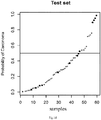
- the inventors calculated probability of illness through a random forest model based on the 15 MLGs and 10 MLGs respectively.
- the inventors' data provide insight into the characteristics of the gut metagenome related to CRC risk, a paradigm for future studies of the pathophysiological role of the gut metagenome in other relevant disorders, and the potential usefulness for a gut-microbiota-based approach for assessment of individuals at risk of such disorders.
- the 15 MLGs and 10 MLGs are valuable for increasing CRC detection at earlier stages due to the following.
- the markers of the present invention are more specific and sensitive as compared with conventional markers.
- analysis of stool promises accuracy, safety, affordability, and patient compliance. And samples of stool are transportable.
- the present invention relates to an in vitro method, which is comfortable and noninvasive, so people will participate in a given screening program more easily.
- the markers of the present invention may also serve as tools for therapy monitoring in CRC patients to detect the response to therapy.
- the present invention provides a nucleic acid biomarker set for predicting or diagnosing a disease related to microbiota in a subject or determining whether a subject is at the risk of developing the disease, wherein the disease is colorectal cancer.
- the present invention provides use of a kit for predicting or diagnosing a disease related to microbiota in a subject or determining whether a subject is at the risk of developing the disease, comprising agents for determining the level or amount of each biomarker of the biomarker set of the present invention in a sample, wherein the disease is colorectal cancer.
- the present invention provides a method for predicting or diagnosing a disease related to microbiota in a subject or determining whether a subject is at the risk of developing the disease, wherein the disease is colorectal cancer.
- a biomarker also named “a biological marker” refers to a measurable indicator of a biological state or condition of a subject.
- biomarkers can be any substance in the subject, for example, nucleic acid marker (e.g. DNA), protein marker, cytokine marker, chemokine marker, carbohydrate marker, antigen marker, antibody marker, species marker (species/genus marker) and functions marker (KO/OG marker) and the like, provided that they are in relation with a particular biological state or condition (such as, a disease) of the subject.
- Biomarkers are often measured and evaluated to examine normal biological processes, pathogenic processes, or pharmacologic responses to a therapeutic intervention, and are useful in many scientific fields.
- a biomarker set refers to a set of biomarkers (that is, a combination of two or more biomarkers).
- a disease related to microbiota refers to a disease that is in relation with imbalance of microbiota in gut.
- the disease may be caused, induced or aggravated by imbalance of microbiota in gut.
- Such a disease may be advanced adenoma of colorectum or colorectal cancer/carcinoma.
- a subject refers to an animal, particularly a mammal, such as a primate, preferably human.
- colonal cancer has the same meaning as “colorectal carcinoma”.
- the expression "advanced adenoma” and “colorectal advanced adenoma” have the same meaning as “advanced adenoma in colorectum”.
- the expression "cutoff” and “cut-off' have the same meaning, referring to a predicted critical value.
- the predicted critical value can be obtained by conventional experiments, for example by determining relative abundances of biomarkers in the samples from subjects with known physiological status through parallel testings.
- MLG is defined as a group of genetic material in a metagenome that is probably physically linked as a unit rather than being independently distributed (See, Qin, J. et al. A metagenome-wide association study of gut microbiota in type 2 diabetes. Nature 490, 55-60 (2012 )). It allows to avoid the need to completely determine the specific microbial species present in the metagenome, which is important given there are a large number of unknown organisms and that there is frequent lateral gene transfer (LGT) between bacteria.
- LGT lateral gene transfer
- MLG refers to a group of genes that has a consistent abundance level and taxonomic assignment.
- a specific fragment of a MLG refers to a frament of MLG which is unique for the MLG.
- Conventional methods can be used for determine whether a fragment is unique for the MLG which it is derived from. For example, one may input the sequence of the fragment into a public database (such as GenBank) and carry out BLAST programme. If the fragment is only present in one species in the database (in this case, the MLG would represent or correspond to the species) or if there is no homolog with at least 90% identity (such as 95% identity) with the fragment in the database (in this case, the MLG would refer to an unknown species), the fragment may be considered as unique.
- a MLG generally refers to a specific microbial species (either known or unknown), and thus "a specific fragment" of the MLG may also be considered as a genomic fragment unique for the specific microbial species (that is, the fragment is only present in the specific microbial species).
- the term "identity” refers to the match degree between two polypeptides or between two nucleic acids.
- two sequences for comparison have the same base or amino acid monomer sub-unit at a certain site (e.g., each of two DNA molecules has an adenine at a certain site, or each of two polypeptides has a lysine at a certain site)
- the two molecules are identical at the site.
- the percent identity between two sequences is a function of the number of identical sites shared by the two sequences over the total number of sites for comparison x 100. For example, if 6 of 10 sites of two sequences are matched, these two sequences have an identity of 60%.
- DNA sequences CTGACT and CAGGTT share an identity of 50% (3 of 6 sites are matched).
- the comparison of two sequences is conducted in a manner to produce maximum identity.
- Such alignment can be conducted by using a computer program such as Align program (DNAstar, Inc.) which is based on the method of Needleman, et al. (J. Mol. Biol. 48:443-453, 1970 ).
- agents for determining the level or amount of a biomarker refers to agents that could be used to quantitate or measure the level or amount of a biomarker in a sample.
- agents can be readily designed or obtained by a conventional method well known in the art, on the basis of the sequences for the biomarkers as provided in the present invention.
- agents include, but are not limited to, PCR primers that can be used to quantitate or measure the level or amount of a biomarker by e.g. Realtime PCR; probes that can be used to quantitate or measure the level or amount of a biomarker by e.g.
- the second generation sequencing method or the third generation sequencing method may also be used to quantitate or measure the level or amount of a biomarker. Therefore, such agents can also be agents for carrying out the second generation sequencing method or the third generation sequencing method, which are commercially available.
- the expression "primers which are capable of specifically amplifying" a certain nucleic acid or a certain sequence means that the primers, when used for amplification (e.g. PCR amplification), specifically anneal to the certain nucleic acid or sequence, and produce a unique amplification product (that is, do not anneal to other nucleic acids or sequences or produce other side products).
- amplification e.g. PCR amplification
- the expression "probes which are capable of specifically hybridizing with” a certain nucleic acid or a certain sequence means that the probes, when used for hybridization or detection under a strigency condition, specifically anneal to and hybridize with the certain nucleic acid or sequence, but do not anneal to or hybridize with other nucleic acids or sequences.
- the term "the second generation sequencing method” refers to a new generation DNA sequencing method, which is developed in current years and represented by Illumina GA, Roche 454, ABI Solid, and the like; and is distinguished from the traditional sequencing method (such as, Sanger sequencing method).
- the difference between the second generation sequencing method and the traditional sequencing method lies in that the second generation sequencing method analyses a DNA sequence by conducting sequencing as carrying out synthesis.
- the second generation sequencing method has the following advantages: 1) low cost, which is 1% of the cost of the traditional sequencing method; 2) high throughput, capable of conducting sequencing to multiple samples simultaneously, and capable of producing a data of about 50 billion (50G) bases for one Solexa sequencing; 3) high accuracy (greater than 98.4%), which effectively solve the problem relating to readout of poly-repetitive sequences.
- the high sequencing throughput in turn improves the sequencing depth of the sequences (for example, each sequence can be sequenced for more times), thereby ensuring the credibility of the sequencing result.
- the term "the third generation sequencing method” refers to a new generation of single-molecule sequencing technology which is developed recently.
- the third generation of sequencing technologies offer advantages over current sequencing technologies, including (i) higher throughput; (ii) faster turnaround time (e.g. sequencing metazoan genomes at high fold coverage in minutes); (iii) longer read lengths to enhance de novo assembly and enable direct detection of haplotypes and even whole chromosome phasing; (iv) higher consensus accuracy to enable rare variant detection; (v) small amounts of starting material (theoretically only a single molecule may be required for sequencing); and (vi) low cost, where sequencing the human genome at high fold coverage for less than $100 is now a reasonable goal for the community.
- the third generation sequencing method see, e.g. Eric E. Schadt et al., A window into third-generation sequencing, Human Molecular Genetics, 2010, Vol.19, Review Issue 2, R227-R240 .
- the term "relative abundance” has the common meaning as known in the art, and can be calculated by a method known in the art.
- the relative abundance of a gene i.e. a biomarker
- a MLG can be determined or calculated by the method as disclosed in Qin, J. et al. A metagenome-wide association study of gut microbiota in type 2 diabetes. Nature 490, 55-60 (2012 ).
- the present invention provides a nucleic acid biomarker set for predicting or diagnosing a disease related to microbiota, wherein the disease is colorectal carcinoma, in a subject or determining whether a subject is at the risk of developing the disease, comprising the following biomarkers (all the biomarkers were listed in Table 3):
- the nucleic acid biomarker set of the invention comprises the biomarkers as defined in (1)-(13).
- a specific fragment can be of any length, provided that such a fragment is unique for the MLG which it is derived from or a species represented by the MLG (that is, the fragment does not exist in other MLGs or other species).
- the specific fragment may be at least 30 bp, or at least 40 bp, or at least 50 bp, or at least 60 bp, or at least 70 bp, or at least 80 bp, or at least 90 bp, or at least 100 bp, or at least 150 bp, or at least 200 bp, or at least 250 bp, or at least 300 bp, or at least 350 bp, or at least 400 bp, or at least 450 bp, or at least 500 bp, or at least 600 bp, or at least 700 bp, or at least 800 bp, or at least 900 bp, or at least 1000 bp, or at least 1500 bp, or at least 2000 bp, in length.
- nucleic acid biomarker set of the invention may be further characterized by any one or more of the following items:
- the subject is a mammal, such as a primate, preferably human.
- the biomarker set of the present invention is used for distinguishing a patient with colorectal carcinoma from a healthy subject and a patient with advanced adenoma.
- the present invention provides the use of a kit in the method of the present invention for predicting or diagnosing a disease related to microbiota in a subject or determining whether a subject is at the risk of developing the disease, wherein the disease is colorectal carcinoma, comprising agents for determining the level or amount of each biomarker of the nucleic acid biomarker set according to the invention in a sample, wherein the agents are selected from the group consisting of:
- the primer set comprises the primers as defined in (a1)-(a13).
- the probe set comprises the probes as defined in (b1)-(b13).
- the kit is used for predicting or diagnosing a disease related to microbiota in a subject or determining whether a subject is at the risk of developing the disease via a method comprising the following steps:
- the training dataset comprises the data about the level or amount of each biomarker of a plurality of subjects having the disease and a plurality of healthy subjects.
- the training dataset comprises the data in Tables 4-1 and 4-2, and a probability greater than a cutoff of 0.5 indicates that the subject has or is at the risk of developing the disease.
- the subject is a mammal, such as a primate, preferably human.
- the sample is a fecal sample.
- the level or amount of each biomarker is the relative abundance of each biomarker in the sample.
- the kit further comprise addition agents, such as an agent for treating the sample (e.g. sterile water), an agent for carrying out PCR amplification (e.g. polymerase, dNTP, and amplification buffer), and an agent for carrying out hybridization (such as labeling buffer, hybridization buffer, and washing buffer).
- an agent for treating the sample e.g. sterile water
- an agent for carrying out PCR amplification e.g. polymerase, dNTP, and amplification buffer
- an agent for carrying out hybridization such as labeling buffer, hybridization buffer, and washing buffer.
- agents for determining the level or amount of each biomarker of the biomarker set according to the present invention in the preparation of a kit for predicting or diagnosing a disease related to microbiota in a subject or determining whether a subject is at the risk of developing the disease.
- the agents for determining the level or amount of each biomarker of the biomarker set are as defined above.
- the kit is used for predicting or diagnosing a disease related to microbiota in a subject or determining whether a subject is at the risk of developing the disease via a method comprising the following steps:
- the training dataset comprises the data about the level or amount of each biomarker of a plurality of subjects having the disease and a plurality of healthy subjects.
- the training dataset comprises the data in Tables 4-1 and 4-2, and a probability greater than a cutoff of 0.5 indicates that the subject has or is at the risk of developing the disease.
- the subject is a mammal, such as a primate, preferably human.
- the sample is a fecal sample.
- the level or amount of each biomarker is the relative abundance of each biomarker in the sample.
- the disease is colorectal carcinoma.
- the kit further comprise addition agents, such as an agent for treating the sample (e.g. sterile water), an agent for carrying out PCR amplification (e.g. polymerase, dNTP, and amplification buffer), and an agent for carrying out hybridization (such as labeling buffer, hybridization buffer, and washing buffer).
- an agent for treating the sample e.g. sterile water
- an agent for carrying out PCR amplification e.g. polymerase, dNTP, and amplification buffer
- an agent for carrying out hybridization such as labeling buffer, hybridization buffer, and washing buffer.
- the present invention provides a method for predicting or diagnosing a disease related to microbiota in a subject or determining whether a subject is at the risk of developing the disease, comprising the following steps:
- the training dataset comprises the data about the level or amount of each biomarker of a plurality of subjects having the disease and a plurality of healthy subjects
- the training dataset comprises the data in Tables 4-1 and 4-2, and a probability greater than a cutoff of 0.5 indicates that the subject has or is at the risk of developing the disease.
- the kit as defined above or the agents as defined above are used in step (1).
- the subject is a mammal, such as a primate, preferably human.
- the sample is a fecal sample.
- the level or amount of each biomarker is the relative abundance of each biomarker in the sample.
- the method is carried out in vitro.
- the laxative Klean-Prep® (containing macrogol 59.0 g, sodium sulphate 5.68 g, sodium bicarbonate 1.68 g, NaCl 1.46 g and potassium chloride 0.74 g; Norgine, Marburg, Germany) was used for bowel preparation before colonoscopy. Colonoscopic findings were classified as tubular adenoma, advanced adenoma (i.e. villous or tubulovillous features, size ⁇ 1 cm or high-grade dysplasia), or carcinoma after a combined analysis of macroscopic and histological results ( Bond, J. H. Polyp guideline: diagnosis, treatment, and surveillance for patients with colorectal polypsACG Colorectal Polyp Guideline. Am. J. Gastroenterol.95, 3053-3063 (2000 ), Winawer SJ & AG., Z. The advanced adenoma as the primary target of screening. Gastrointest Endosc Clin N Am12, 1-9 (2002 )).
- Subjects were stratified with respect to gender, age and body mass index (BMI) so that the three groups (control, advanced adenoma, carcinoma) were comparable with respect to these variables.
- the advanced adenoma group 14 were located to the right colon (including caecum, ascending colon and transverse colon), 15 were located to the left colon (ranging from the splenic flexure to the sigmoid) and 15 to the rectum.
- the carcinoma group 8 were located to the right colon, 11 to the left colon and 27 to the rectum.
- Colorectal carcinoma was classified by the American Joint Committee on Cancer (AJCC) TNM staging system ( Greene, F. L. Current TNM staging of colorectal cancer. Lancet. Oncol.8, 572-3 (2007 )).
- Table 1-1 Clinical data of all 156 samples Sample ID Clinical data State Age (yrs) BMI TNM - Classification of carcinoma Histology Localization in colon (right/ left/rectum) 147 samples 31766 controls 73 32 n.a. n.a. n.a. 31537 controls 70 31 n.a. n.a. n.a. 31600 controls 70 30 n.a. n.a. n.a. 31428 controls 69 30 n.a. n.a. n.a. 530167 controls 72 30 n.a. n.a. n.a. 530315 controls 75 31 n.a. n.a. n.a. 530050 controls 71 29 n.a.
- n.a. n.a. 31160 controls 67 30 n.a. n.a. n.a. 530177 controls 71 29 n.a. n.a. n.a. 31700 controls 72 28.7 n.a. n.a. n.a. 31714 controls 69 28.3 n.a. n.a. n.a. 31219 controls 74 28.3 n.a. n.a. n.a. 31557 controls 74 28.5 n.a. n.a. n.a. 530154 controls 74 28.5 n.a. n.a. n.a. 530444 controls 62 22.1 n.a. n.a. n.a.
- 31021 controls 60 22.1 n.a. n.a. n.a. 530074 controls 68 22.1 n.a. n.a. 530227 controls 68 22.4 n.a. n.a. n.a. 530394 controls 67 22.58 n.a. n.a. n.a. 530295 controls 70 22.67 n.a. n.a. n.a. 530368 controls 70 22.8 n.a. n.a. n.a. 31300 controls 68 21.7 n.a. n.a. n.a. 31452 controls 66 21.7 n.a. n.a. n.a.
- 31723 controls 69 22.4 n.a. n.a. n.a. 531424 controls 46 28.74 n.a. n.a. n.a. 31009 controls 68 32 n.a. n.a. n.a. 530251 controls 72 31.8 n.a. n.a. n.a. 31416 controls 72 31.8 n.a. n.a. n.a. 530119 controls 70 31.6 n.a. n.a. n.a. 31749 controls 70 31.25 n.a. n.a. n.a. 530364 controls 63 31.17 n.a. n.a. n.a.
- 31328 controls 63 30.9 n.a. n.a. n.a. 530163 controls 63 30.4 n.a. n.a. n.a. 31379 controls 63 30.4 n.a. n.a. n.a. 31112 controls 66 30.3 n.a. n.a. n.a. 31750 controls 66 34.04 n.a. n.a. n.a. 530451 controls 68 29.8 n.a. n.a. n.a. 31129 controls 73 29.7 n.a. n.a. n.a. 530052 controls 64 29.38 n.a. n.a. n.a.
- 31512 controls 64 29.3 n.a. n.a. n.a. 31236 controls 65 29.06 n.a. n.a. n.a. 31360 controls 71 29.04 n.a. n.a. n.a. 31343 controls 72 29.03 n.a. n.a. n.a. 530215 controls 65 31.22 n.a. n.a. n.a. 31519 controls 65 28.90 n.a. n.a. n.a. 31450 controls 67 23.14 n.a. n.a. n.a. 531414 controls 46 23.15 n.a. n.a. n.a.
- 31071 controls 68 23.45 n.a. n.a. n.a. 530331 controls 70 23.67 n.a. n.a. n.a. 530258 controls 65 22.03 n.a. n.a. n.a. 31333 controls 68 22.2 n.a. n.a. n.a. 31232 controls 70 22.64 n.a. n.a. n.a. 530055 controls 64 22.78 n.a. n.a. n.a. 31267 controls 67 22.79 n.a. n.a. n.a. 31711 controls 66 30.02 n.a. n.a. n.a.
- 530075 controls 63 34.14 n.a. n.a. n.a. 31637 controls 66 29.98 n.a. n.a. n.a. 31398 advanced adenoma 68 34.01 n.a. n.a. right 531403 advanced adenoma 59 29.2 n.a. n.a. left 530168 advanced adenoma 62 32.8 n.a. n.a. right 530185 advanced adenoma 52 32.8 n.a. n.a. right 530600 advanced adenoma 70 25.2 n.a. n.a. right 31477 advanced adenoma 78 31.24 n.a. n.a.
- rectum 530403 advanced adenoma 75 30.12 n.a. n.a. right 530002 advanced adenoma 60 30 n.a. n.a. right 530697 advanced adenoma 63 30.47 n.a. n.a. left 31455 advanced adenoma 72 27.43 n.a. n.a. rectum 530756 advanced adenoma 70 29.38 n.a. n.a. left 31424 advanced adenoma 68 24.84 n.a. n.a. right 31501 advanced adenoma 69 24.4 n.a. n.a. right 31256 advanced adenoma 69 24.13 n.a.
- rectum 530840 advanced adenoma 74 24.13 n.a. n.a. right 31446 carcinoma 84 31.22 pTis carcinoma in situ right 31881 carcinoma 60 30.08 T4N1M0 adenocarcinoma rectum 31866 carcinoma 73 29.75 T3N0M0 adenocarcinoma left 31874 carcinoma 74 29.17 T4N1M1 adenocarcinoma left 31549 carcinoma 84 27.77 T1N0M0 adenocarcinoma left 31878 carcinoma 52 27.14 T3N1M0 adenocarcinoma rectum 531281 carcinoma 72 27.12 pTis carcinoma in situ left 31877 carcinoma 72 26.67 T3N1M0 adenocarcinoma rectum 530373 carcinoma 47 25.78 T2N0M0 adenocarcinoma rectum 531155 carcinoma 72 24.22 T1N0M0 adenocarcinoma right
- n.a. n.a. 532779 controls 70 28.72 n.a. n.a. n.a. 532796 controls 73 26.56 n.a. n.a. n.a. 532802 controls 68 23.53 n.a. n.a. n.a. 532826 controls 78 31.22 n.a. n.a. n.a. 532832 advanced adenoma 68 27.55 n.a. n.a. n.a. 532305 advanced adenoma 56 43.58 n.a. n.a. n.a. 532915 controls 43 22.65 n.a. n.a. 531663 advanced adenoma 63 25.65 n.a. n.a. n.a.
- Fresh stool samples were collected from all patients and subjects. Samples were mechanically homogenized with a sterile spatula, then 4 aliquots were taken, using the Sarstedt stool sampling system (Sarstedt, Nümbrecht, Germany). Each aliquot contained 1g of stool in a sterile 12ml cryovial. Fecal aliquots were then stored at home freezers at -20°C and transported to the laboratory within 48 hours after collection in a freezer pack, where they were immediately stored at -80°C. Patients and subjects did not receive probiotics or antibiotics within the last 3 months.
- Paired-end metagenomic sequencing was performed on the Illumina platform (insert size 350bp, read length 100bp), and the sequencing reads were quality-controlled and de novo assembled into contigs using SOAPdenovo v2.04 (default parameters except for -K 51 -M 3 -F -u) ( Luo, R. et al. SOAPdenovo2: an empirically improved memory-efficient short-read de novo assembler. Gigascience1, 18 (2012 )), as described previously (Qin et al. 2012, supra).
- the high-quality sequencing reads (5 GB per sample on average) were assembled de novo, and the genes identified were compiled into a non-redundant catalogue of 3.5M genes, which allowed on average 76.3% of the reads in each sample to be mapped.
- Gene prediction from the assembled contigs was performed using GeneMark v2.7d. Redundant genes were removed using BLAT ( Kent, W. J. BLAT--the BLAST-like alignment tool. Genome Res.12, 656-64 (2002 )) with the cutoff of 90% overlap and 95% identity (no gaps allowed). Relative abundances of the genes were determined by aligning high-quality sequencing reads to the gene catalogue using the same procedure as in Qin et al. 2012, supra.
- Taxonomic assignment of the predicted genes was performed according to the IMG database (v400) using an in-house pipeline detailed previously (Qin et al. 2012, supra ) , with 80% overlap and 65% identity, top 10% scores (BLASTN v2.2.24, -e 0.01 -b 100 -K 1 -F T -m 8). The cutoffs were 65% identity for assignment to phylum, 85% identity to genus, 95% identity to species; and ⁇ 50% consensus for the taxon under question, if multiple hits remained.
- Taxonomic assignment and abundance profiling of the MLGs were performed according to the taxonomy and the relative abundance of their constituent genes, as previously described (Qin et al. 2012, supra ) . Briefly, assignment to species requires more than 90% of genes in an MLG to align with the species' genome with more than 95% identity, 70% overlap of query. Assigning an MLG to a genus requires more than 80% of its genes to align with a genome with 85% identity in both DNA and protein sequences.
- the inventors identified 130,715 genes that displayed significant abundance differences in any two of the three groups (Kruskal-Wallis test,Benjamin-Hochberg q-value ⁇ 0.1). None of the available phenotypes other than tumour status displayed a significant difference among the controls, adenoma, and carcinoma patients, except for serum ferritin and red meat consumption (p ⁇ 0.05, Kruskal-Wallis test, Table 1-2).
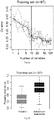
- a random forest model (R.2.14, randomForest4.6-7 package) ( Liaw, Andy & Wiener, Matthew. Classification and Regression by randomForest, R News (2002), Vol. 2/3 p. 18 ) was trained using the MLG abundance profile of the training cohort (set) to select the optimal set of MLG markers. The model was tested on the testing set and the prediction error was determined.
- 10-fold cross-validation was performed on a random forest model (R 3.0.2, randomForest4.6-7 package) using the MLG abundance profile of the control, advanced adenoma or carcinoma samples.
- the cross-validational error curves (average of 10 test sets each) from 5 trials of the 10-fold cross-validation were averaged, and the minimum error in the averaged curve plus the standard deviation at that point was used as the cutoff. All sets ( ⁇ 50) of MLG markers with an error less than the cutoff were listed, and the set with the smallest number of MLGs was chosen as the optimal set.
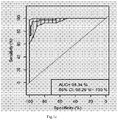
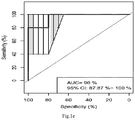
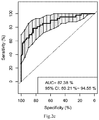
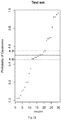
- the probability of adenoma or carcinoma was calculated using this set of MLGs and an ROC was drawn (R 3.0.2, pROC3 package). The model was further tested on the testing set and the prediction error was determined.
- MLG markers were the likely oral anaerobes mlg-75 and mlg-84, the former also showed a high odds ratio for adenoma (Table 2-2), suggesting an early role in pathogenesis.
- Other MLG markers included Bacteroides massiliensis, mlg-2985, mlg-121 and 10 further taxonomically undefined MLGs (Table 2-2).
- MLGs selected by the carcinoma classifier captured important features of the deteriorating gut microbiome in adenoma and carcinoma and have great potential for early and non-invasive diagnosis of these tumours.
- the results in Table 6 showed that the AUC is 0.91751663 for the combination of the top 2 important MLGs (MLG 5045 and MLG 121); 0.970731707 for the combination of the top 3 important MLGs (MLG 5045, MLG 121 and MLG 75); 0.959645233 for the top 4 MLGs; 0.975609756 for the top 5 MLGs; 0.978713969 for the top 6 MLGs; 0.980044346 for the top 7 MLGs; 0.985365854 for the top 8 MLGs; 0.984035477 for the top 9 MLGs; 0.981818182 for the top 10 MLGs; 0.980931264 for the top 11 MLGs; 0.979157428 for the top 12 MLGs; 0.987583149 for the top 13 MLGs; 0.986696231 for the top 14 MLGs; and 0.983370288 for the 15 MLGs.
- MLGs as identified herein could be used as biomarkers for diagnosis of colorectal carcinoma and/or determining the risk of colorectal carcinoma with high sensitivity and high specificity.
- the inventors further directly investigated the utility of the gut MLGs for identifying adenoma, which is more difficult to screen than colorectal carcinoma but important for early intervention.
- the results in Table 11 showed that the AUC is 0.782251082 for the combination of the top 2 important MLGs (MLG 317 and MLG 3770); 0.805194805 for the combination of the top 3 important MLGs (MLG 317, MLG 3770 and MLG 3840); 0.773160173 for the top 4 MLGs; 0.795238095 for the top 5 MLGs; 0.780952381 for the top 6 MLGs; 0.895670996 for the top 7 MLGs; 0.896536797 for the top 8 MLGs; 0.884848485 for the top 9 MLGs; and 0.873809524 for the 10 MLGs.
- MLGs as identified herein could be used as biomarkers for diagnosis of colorectal advanced adenoma and/or determining the risk of colorectal advanced adenoma with high sensitivity and high specificity.
- Table 1-2 Concordance in phenotypes among the three groups in Table 1-1.
- AA adenoma
- CRC control
- AA adenoma
- CRC adenoma
- AA adenoma vs. carcinoma
- AA adenoma
- CRC control
- AA adenoma
- CRC adenoma
- AA adenoma vs. carcinoma
- the inventors have identified and validated 15 MLGs for early and non-invasive diagnosis of colorectal carcinoma and 10 MLGs for early and non-invasive diagnosis of colorectal adenoma by a random forest model based on the associated genes markers. And the inventors have constructed a method to evaluate the risk of colorectal carcinoma and adenoma based on these associated gut microbes.
Landscapes
- Chemical & Material Sciences (AREA)
- Life Sciences & Earth Sciences (AREA)
- Organic Chemistry (AREA)
- Health & Medical Sciences (AREA)
- Proteomics, Peptides & Aminoacids (AREA)
- Analytical Chemistry (AREA)
- Engineering & Computer Science (AREA)
- Zoology (AREA)
- Wood Science & Technology (AREA)
- Immunology (AREA)
- Genetics & Genomics (AREA)
- Molecular Biology (AREA)
- Biophysics (AREA)
- Biotechnology (AREA)
- Microbiology (AREA)
- Physics & Mathematics (AREA)
- Pathology (AREA)
- Biochemistry (AREA)
- Bioinformatics & Cheminformatics (AREA)
- General Engineering & Computer Science (AREA)
- General Health & Medical Sciences (AREA)
- Hospice & Palliative Care (AREA)
- Oncology (AREA)
- Measuring Or Testing Involving Enzymes Or Micro-Organisms (AREA)
Claims (8)
- Nukleinsäure-Biomarker-Set zum Vorhersagen oder Diagnostizieren einer Krankheit in Verbindung mit Mikrobiota bei einem Subjekt, oder zum Bestimmen, ob bei einem Subjekt das Risiko besteht, die Krankheit zu entwickeln, umfassend:(1) MLG 5045, bestehend aus Nukleinsäure mit der Sequenz von SEQ ID NO: 3732-3918; und(2) MLG 121, bestehend aus Nukleinsäuren mit der Sequenz von SEQ ID NO: 3919-6548; optional umfasst das Biomarker-Set ferner eines oder mehrere der Folgenden:(3) MLG 75, bestehend aus Nukleinsäuren mit der Sequenz von SEQ ID NO: 1350-1527;(4) MLG 109, bestehend aus Nukleinsäuren mit der Sequenz von SEQ ID NO: 6549-7235;(5) MLG 317, bestehend aus Nukleinsäuren mit der Sequenz von SEQ ID NO: 7581-7700;(6) MLG 135, bestehend aus Nukleinsäuren mit der Sequenz von SEQ ID NO: 2230-3731;(7) MLG 223, bestehend aus Nukleinsäuren mit der Sequenz von SEQ ID NO: 9892-11298;(8) MLG 100 bestehend aus Nukleinsäuren mit der Sequenz von SEQ ID NO: 9596-9891;(9) MLG 219, bestehend aus Nukleinsäuren mit der Sequenz von SEQ ID NO: 7701-8028;(10) MLG 114, bestehend aus Nukleinsäuren mit der Sequenz von SEQ ID NO: 1528-2089;(11) MLG 84, bestehend aus Nukleinsäuren mit der Sequenz von SEQ ID NO: 1-165;(12) MLG 166, bestehend aus Nukleinsäuren mit der Sequenz von SEQ ID NO: 7236-7580;(13) MLG 2985, bestehend aus Nukleinsäuren mit der Sequenz von SEQ ID NO: 8029-9595;(14) MLG 131, bestehend aus Nukleinsäuren mit der Sequenz von SEQ ID NO: 166-1349; und(15) MLG 1564, bestehend aus Nukleinsäuren mit der Sequenz von SEQ ID NO: 2090-2229; vorzugsweise umfasst das Biomarker-Set die Nukleinsäure-Biomarker, wie sie in (1)-(13) definiert sind, wobei die Krankheit kolorektales Karzinom ist.
- Biomarker-Set nach Anspruch 1, wobei das Subjekt ein Säugetier ist, wie beispielsweise ein Primat, vorzugsweise ein Mensch.
- Verfahren zum Vorhersagen oder Diagnostizieren einer Krankheit in Verbindung mit Mikrobiota bei einem Subjekt, oder zum Bestimmen, ob bei einem Subjekt das Risiko besteht, die Krankheit zu entwickeln, umfassend die folgenden Schritte:(1) Bestimmen des Pegels oder der Menge von jedem Biomarker des Biomarker-Sets gemäß einem der Ansprüche 1 bis 2 in einer Stuhlprobe von dem Subjekt; und(2a) Berechnen einer Wahrscheinlichkeit für die Krankheit durch Vergleichen des Pegels oder der Menge von jedem Biomarker in der Probe mit einem Trainingsdatensatz unter Verwendung eines multivariaten statistischen Modells (wie z. B. eines Random-Forest-Modells);
vorzugsweise umfasst der Trainingsdatensatz die Daten über den Pegel oder die Menge von jedem Biomarker einer Vielzahl von Subjekten, die die Krankheit aufweisen, und einer Vielzahl von gesunden Subjekten;
wobei die Wahrscheinlichkeit der Krankheit, die größer als ein Grenzwert ist, angibt, dass das Subjekt die Krankheit hat oder bei dem das Risiko besteht, die Krankheit zu entwickeln; oder(2b) Vergleichen des Pegels oder der Menge von jedem Biomarker in der Probe mit dem Pegel oder der Menge des entsprechenden Biomarkers in der Kontrolle; wobei die Kontrolle eine Vielzahl von gesunden Subjekten ist;wobei im Vergleich zur Kontrolle der Anstieg des Pegels oder der Menge der Biomarker in der Probe angibt, dass das Subjekt die Krankheit hat oder bei dem das Risiko besteht, die Krankheit zu entwickeln;
wobei die Krankheit kolorektales Karzinom ist. - Verfahren nach Anspruch 3, wobei der Trainingsdatensatz die Daten in Tabellen 4-1 und 4-2 umfasst und eine Wahrscheinlichkeit, die größer als ein Grenzwert von 0,5 ist, angibt, dass das Subjekt die Krankheit hat oder bei dem das Risiko besteht, die Krankheit zu entwickeln.
- Verfahren nach einem der Ansprüche 3 bis 4, wobei das Subjekt ein Säugetier ist, wie beispielsweise ein Primat, vorzugsweise ein Mensch.
- Verfahren nach einem der Ansprüche 3 bis 5, wobei der Pegel oder die Menge von jedem Biomarker die relative Häufigkeit von jedem Biomarker in der Probe ist.
- Verwendung eines Kits in dem Verfahren nach Anspruch 3, wobei das Kit Agenzien umfasst, die den Pegel oder die Menge von jedem Biomarkers des Biomarker-Sets nach einem der Ansprüche 1 bis 2 in einer Stuhlprobe bestimmen können, wobei die Krankheit kolorektales Karzinom ist, wobei die Agenzien ausgewählt sind aus der Gruppe bestehend aus:(a) einem Primer-Set, umfassend:(a1) einen oder mehrere Primer, die in der Lage sind, spezifisch MLG 5045 bestehend aus SEQ ID NO: 3732-3918 zu amplifizieren; und(a2) einen oder mehrere Primer, die in der Lage sind, spezifisch MLG 121 bestehend aus SEQ ID NO: 3919-6548 zu amplifizieren; und
optional umfasst das Primer-Set ferner einen oder mehrere der folgenden Primer:(a3) einen oder mehrere Primer, die in der Lage sind, spezifisch MLG 75 bestehend aus SEQ ID NO: 1350-1527 zu amplifizieren; und(a4) einen oder mehrere Primer, die in der Lage sind, spezifisch MLG 109 bestehend aus SEQ ID NO: 6549-7235 zu amplifizieren; und(a5) einen oder mehrere Primer, die in der Lage sind, spezifisch MLG 317 bestehend aus SEQ ID NO: 7581-7700 zu amplifizieren; und(a6) einen oder mehrere Primer, die in der Lage sind, spezifisch MLG 135 bestehend aus SEQ ID NO: 2230-3731 zu amplifizieren; und(a7) einen oder mehrere Primer, die in der Lage sind, spezifisch MLG 223 bestehend aus SEQ ID NO: 9892-11298 zu amplifizieren; und(a8) einen oder mehrere Primer, die in der Lage sind, spezifisch MLG 100 bestehend aus SEQ ID NO: 9596-9891 zu amplifizieren; und(a9) einen oder mehrere Primer, die in der Lage sind, spezifisch MLG 219 bestehend aus SEQ ID NO: 7701-8028 zu amplifizieren; und(a10) einen oder mehrere Primer, die in der Lage sind, spezifisch MLG 114 bestehend aus SEQ ID NO: 1528-2089 zu amplifizieren; und(a11) einen oder mehrere Primer, die in der Lage sind, spezifisch MLG 84 bestehend aus SEQ ID NO: 1-165 zu amplifizieren; und(a12) einen oder mehrere Primer, die in der Lage sind, spezifisch MLG 166 bestehend aus SEQ ID NO: 7236-7580 zu amplifizieren; und(a13) einen oder mehrere Primer, die in der Lage sind, spezifisch MLG 2985 bestehend aus SEQ ID NO: 8029-9595 zu amplifizieren; und(a14) einen oder mehrere Primer, die in der Lage sind, spezifisch MLG 131 bestehend aus SEQ ID NO: 166-1349 zu amplifizieren; und(a15) einen oder mehrere Primer, die in der Lage sind, spezifisch MLG 1564 bestehend aus SEQ ID NO: 2090-2229 zu amplifizieren; und
vorzugsweise umfasst das Primer-Set die Primer, wie sie in (a1)-(a13) definiert sind;(b) ein Sonden-Set, umfassend:(a1) eine oder mehrere Sonden, die in der Lage sind, spezifisch mit MLG 5045 bestehend aus SEQ ID NO: 3732-3918 zu hybridisieren; und(b2) eine oder mehrere Sonden, die in der Lage sind, spezifisch mit MLG 121 bestehend aus SEQ ID NO: 3919-6548 zu hybridisieren;
optional umfasst das Sonden-Set ferner eine oder mehrere der folgenden Sonden:(b3) eine oder mehrere Sonden, die in der Lage sind, spezifisch mit MLG 75 bestehend aus SEQ ID NO: 1350-1527 zu hybridisieren;(b4) eine oder mehrere Sonden, die in der Lage sind, spezifisch mit MLG 109 bestehend aus SEQ ID NO: 6549-7235 zu hybridisieren;(b5) eine oder mehrere Sonden, die in der Lage sind, spezifisch mit MLG 317 bestehend aus SEQ ID NO: 7581-7700 zu hybridisieren;(b6) eine oder mehrere Sonden, die in der Lage sind, spezifisch mit MLG 135 bestehend aus SEQ ID NO: 2230-3731 zu hybridisieren;(b7) eine oder mehrere Sonden, die in der Lage sind, spezifisch mit MLG 223 bestehend aus SEQ ID NO: 9892-11298 zu hybridisieren;(b8) eine oder mehrere Sonden, die in der Lage sind, spezifisch mit MLG 100 bestehend aus SEQ ID NO: 9596-9891 zu hybridisieren;(b9) eine oder mehrere Sonden, die in der Lage sind, spezifisch mit MLG 219 bestehend aus SEQ ID NO: 7701-8028 zu hybridisieren;(b10) eine oder mehrere Sonden, die in der Lage sind, spezifisch mit MLG 114 bestehend aus SEQ ID NO: 1528-2089 zu hybridisieren;(b11) eine oder mehrere Sonden, die in der Lage sind, spezifisch mit MLG 84 bestehend aus SEQ ID NO: 1-165 zu hybridisieren;(b12) eine oder mehrere Sonden, die in der Lage sind, spezifisch mit MLG 166 bestehend aus SEQ ID NO: 7236-7580 zu hybridisieren;(b13) eine oder mehrere Sonden, die in der Lage sind, spezifisch mit MLG 2985 bestehend aus SEQ ID NO: 8029-9595 zu hybridisieren; und(b14) eine oder mehrere Sonden, die in der Lage sind, spezifisch mit MLG 131 bestehend aus SEQ ID NO: 166-1349 zu hybridisieren;(b15) eine oder mehrere Sonden, die in der Lage sind, spezifisch mit MLG 1564 bestehend aus SEQ ID NO: 2090-2229 zu hybridisieren; und
vorzugsweise umfasst das Sonden-Set die Sonden, wie sie in (b1)-(b13) definiert sind;(c) ein Mikroarray, umfassend das Primer-Set von (a) und/oder das Sonden-Set von (b); und(d) eine beliebige Kombination von (a)-(c). - Verwendung des Kits nach Anspruch 7, wobei das Kit ferner Additive umfasst, wie z. B. ein Mittel zum Behandeln der Probe (z. B. steriles Wasser), ein Mittel zum Durchführen von PCR-Amplifikation (z. B. Polymerase, dNTP und Amplifikationspuffer) und ein Mittel zum Durchführen von Hybridisierung (z. B. Markierungspuffer, Hybridisierungspuffer und Waschpuffer).
Applications Claiming Priority (1)
| Application Number | Priority Date | Filing Date | Title |
|---|---|---|---|
| PCT/CN2015/071896 WO2016119191A1 (en) | 2015-01-30 | 2015-01-30 | Biomarkers for colorectal cancer related diseases |
Publications (3)
| Publication Number | Publication Date |
|---|---|
| EP3250676A1 EP3250676A1 (de) | 2017-12-06 |
| EP3250676A4 EP3250676A4 (de) | 2018-06-27 |
| EP3250676B1 true EP3250676B1 (de) | 2021-08-11 |
Family
ID=56542187
Family Applications (1)
| Application Number | Title | Priority Date | Filing Date |
|---|---|---|---|
| EP15879399.2A Active EP3250676B1 (de) | 2015-01-30 | 2015-01-30 | Biomarker für erkrankungen im zusammenhang mit kolorektalkrebs |
Country Status (4)
| Country | Link |
|---|---|
| EP (1) | EP3250676B1 (de) |
| CN (1) | CN108064273B (de) |
| DK (1) | DK3250676T3 (de) |
| WO (1) | WO2016119191A1 (de) |
Families Citing this family (2)
| Publication number | Priority date | Publication date | Assignee | Title |
|---|---|---|---|---|
| CN109762900B (zh) * | 2019-01-14 | 2022-07-29 | 深圳微健康基因科技有限公司 | 结直肠癌标志物及其应用 |
| JP7701052B2 (ja) * | 2019-11-20 | 2025-07-01 | 国立大学法人大阪大学 | 関節リウマチの発症に関与する細菌の検出方法、該細菌の検出用試薬、関節リウマチの素因の有無を判定する方法及び該素因の有無を判定するための剤 |
Family Cites Families (9)
| Publication number | Priority date | Publication date | Assignee | Title |
|---|---|---|---|---|
| WO2002101357A2 (en) * | 2001-06-10 | 2002-12-19 | Irm Llc | Molecular signatures of commonly fatal carcinomas |
| GB0130821D0 (en) * | 2001-12-24 | 2002-02-06 | Tayside University Hospitals N | DNA screening |
| WO2005083128A2 (en) * | 2004-02-25 | 2005-09-09 | University Of South Florida | Methods for predicting cancer outcome and gene signatures for use therein |
| DE102004037860A1 (de) * | 2004-08-04 | 2006-03-16 | Friedrich-Alexander-Universität Erlangen-Nürnberg | Turmormarker zur Diagnose von Karzinomen und/oder davon abstammender Metastasen |
| WO2006136170A2 (en) * | 2005-06-22 | 2006-12-28 | Aarhus Universitet | Disease risk estimating method using sequence polymorphisms in a specific region of chromosome 19 |
| EP2041317A4 (de) * | 2006-07-13 | 2009-10-14 | Univ Ohio State Res Found | Mikro-rna-basierte verfahren und zusammensetzungen zur diagnose und behandlung von erkrankungen in zusammenhang mit darmkrebs |
| WO2014019271A1 (en) * | 2012-08-01 | 2014-02-06 | Bgi Shenzhen | Biomarkers for diabetes and usages thereof |
| WO2014019408A1 (en) * | 2012-08-01 | 2014-02-06 | Bgi Shenzhen | Biomarkers for diabetes and usages thereof |
| US11060148B2 (en) * | 2012-10-16 | 2021-07-13 | Dana-Farber Cancer Institute, Inc. | Diagnosing and treating colorectal cancer |
-
2015
- 2015-01-30 CN CN201580074801.5A patent/CN108064273B/zh active Active
- 2015-01-30 EP EP15879399.2A patent/EP3250676B1/de active Active
- 2015-01-30 WO PCT/CN2015/071896 patent/WO2016119191A1/en not_active Ceased
- 2015-01-30 DK DK15879399.2T patent/DK3250676T3/da active
Non-Patent Citations (1)
| Title |
|---|
| None * |
Also Published As
| Publication number | Publication date |
|---|---|
| EP3250676A4 (de) | 2018-06-27 |
| HK1249134A1 (zh) | 2018-10-26 |
| DK3250676T3 (da) | 2021-09-06 |
| EP3250676A1 (de) | 2017-12-06 |
| CN108064273B (zh) | 2021-07-23 |
| WO2016119191A1 (en) | 2016-08-04 |
| CN108064273A (zh) | 2018-05-22 |
Similar Documents
| Publication | Publication Date | Title |
|---|---|---|
| EP3250708B1 (de) | Biomarker für erkrankungen im zusammenhang mit kolorektalkrebs | |
| Altomare et al. | Gut mucosal-associated microbiota better discloses inflammatory bowel disease differential patterns than faecal microbiota | |
| KR102930361B1 (ko) | 암의 평가 및/또는 치료를 위한 무 세포 dna | |
| Eklöf et al. | Cancer‐associated fecal microbial markers in colorectal cancer detection | |
| ES2683826T3 (es) | Determinación de la diversidad bacteriana intestinal reducida | |
| CN108064263B (zh) | 用于类风湿性关节炎的生物标记物及其用途 | |
| EP3245298B1 (de) | Biomarker für erkrankungen im zusammenhang mit kolorektalkrebs | |
| EP2927327A1 (de) | Nichtinvasives In-vitro-Verfahren für die Diagnose und Prognose von Kolorektalkarzinom | |
| EP3250710B1 (de) | Host-dna als biomarker von morbus crohn | |
| Fujii et al. | Altered intestinal Streptococcus anginosus and 5α-reductase gene levels in patients with hepatocellular carcinoma and elevated Bacteroides stercoris in atezolizumab/bevacizumab non-responders | |
| Cai et al. | The potential roles of gut microbiome in anal fistula | |
| EP3250676B1 (de) | Biomarker für erkrankungen im zusammenhang mit kolorektalkrebs | |
| El Leithy et al. | Long-read 16S rRNA amplicon sequencing reveals microbial characteristics in patients with colorectal adenomas and carcinoma lesions in Egypt | |
| US20150284779A1 (en) | Determination of a tendency to gain weight | |
| TWI881732B (zh) | 預測結直腸癌或結直腸腺瘤風險的新型微生物標誌物 | |
| TWI882703B (zh) | 預測結直腸癌或結直腸腺瘤風險的新型微生物標誌物 | |
| CN114207150A (zh) | 筛查、诊断和/或监测结直肠晚期肿瘤、晚期腺瘤和/或结直肠癌的改进方法 | |
| EP3359682B1 (de) | Verfahren zur diagnose von leberfibrose auf basis von bakteriellem profil und diversität | |
| RU2771080C2 (ru) | Способ определения ответа пациента с диагнозом меланома кожи на анти-PD1-терапию | |
| HK1240281B (zh) | 结直肠癌相关疾病的生物标志物 | |
| HK1249134B (zh) | 结直肠癌相关疾病的生物标志物 | |
| Teh et al. | P925 Deep functional assessment of the colonic mucosa-associated microbiota in Crohn’s disease and health identifies pro-and anti-inflammatory secretomes and associated bacterial consortia. The ENIGMA study | |
| Ventin-Holmberg et al. | P929 Gut mucosal microbiota composition in Inflammatory Bowel Disease introduced to infliximab | |
| Farmani et al. | Exploring Fungal Biomarkers as Predictors of Treatment Response in Ulcerative Colitis Patients Receiving Anti-TNF Therapy | |
| WO2022032282A1 (en) | Methods and reagents for microbiome analysis |
Legal Events
| Date | Code | Title | Description |
|---|---|---|---|
| STAA | Information on the status of an ep patent application or granted ep patent |
Free format text: STATUS: THE INTERNATIONAL PUBLICATION HAS BEEN MADE |
|
| PUAI | Public reference made under article 153(3) epc to a published international application that has entered the european phase |
Free format text: ORIGINAL CODE: 0009012 |
|
| STAA | Information on the status of an ep patent application or granted ep patent |
Free format text: STATUS: REQUEST FOR EXAMINATION WAS MADE |
|
| 17P | Request for examination filed |
Effective date: 20170807 |
|
| AK | Designated contracting states |
Kind code of ref document: A1 Designated state(s): AL AT BE BG CH CY CZ DE DK EE ES FI FR GB GR HR HU IE IS IT LI LT LU LV MC MK MT NL NO PL PT RO RS SE SI SK SM TR |
|
| AX | Request for extension of the european patent |
Extension state: BA ME |
|
| DAX | Request for extension of the european patent (deleted) | ||
| A4 | Supplementary search report drawn up and despatched |
Effective date: 20180530 |
|
| RIC1 | Information provided on ipc code assigned before grant |
Ipc: C12Q 1/04 20060101ALI20180524BHEP Ipc: C12Q 1/689 20180101ALI20180524BHEP Ipc: C12N 1/20 20060101AFI20180524BHEP Ipc: C12Q 1/6886 20180101ALI20180524BHEP |
|
| STAA | Information on the status of an ep patent application or granted ep patent |
Free format text: STATUS: EXAMINATION IS IN PROGRESS |
|
| 17Q | First examination report despatched |
Effective date: 20190509 |
|
| GRAP | Despatch of communication of intention to grant a patent |
Free format text: ORIGINAL CODE: EPIDOSNIGR1 |
|
| STAA | Information on the status of an ep patent application or granted ep patent |
Free format text: STATUS: GRANT OF PATENT IS INTENDED |
|
| INTG | Intention to grant announced |
Effective date: 20210303 |
|
| GRAS | Grant fee paid |
Free format text: ORIGINAL CODE: EPIDOSNIGR3 |
|
| GRAA | (expected) grant |
Free format text: ORIGINAL CODE: 0009210 |
|
| STAA | Information on the status of an ep patent application or granted ep patent |
Free format text: STATUS: THE PATENT HAS BEEN GRANTED |
|
| AK | Designated contracting states |
Kind code of ref document: B1 Designated state(s): AL AT BE BG CH CY CZ DE DK EE ES FI FR GB GR HR HU IE IS IT LI LT LU LV MC MK MT NL NO PL PT RO RS SE SI SK SM TR |
|
| REG | Reference to a national code |
Ref country code: CH Ref legal event code: EP |
|
| REG | Reference to a national code |
Ref country code: DE Ref legal event code: R096 Ref document number: 602015072289 Country of ref document: DE |
|
| REG | Reference to a national code |
Ref country code: DK Ref legal event code: T3 Effective date: 20210831 |
|
| REG | Reference to a national code |
Ref country code: IE Ref legal event code: FG4D Ref country code: AT Ref legal event code: REF Ref document number: 1419412 Country of ref document: AT Kind code of ref document: T Effective date: 20210915 |
|
| REG | Reference to a national code |
Ref country code: LT Ref legal event code: MG9D |
|
| REG | Reference to a national code |
Ref country code: NL Ref legal event code: MP Effective date: 20210811 |
|
| REG | Reference to a national code |
Ref country code: AT Ref legal event code: MK05 Ref document number: 1419412 Country of ref document: AT Kind code of ref document: T Effective date: 20210811 |
|
| PG25 | Lapsed in a contracting state [announced via postgrant information from national office to epo] |
Ref country code: AT Free format text: LAPSE BECAUSE OF FAILURE TO SUBMIT A TRANSLATION OF THE DESCRIPTION OR TO PAY THE FEE WITHIN THE PRESCRIBED TIME-LIMIT Effective date: 20210811 Ref country code: BG Free format text: LAPSE BECAUSE OF FAILURE TO SUBMIT A TRANSLATION OF THE DESCRIPTION OR TO PAY THE FEE WITHIN THE PRESCRIBED TIME-LIMIT Effective date: 20211111 Ref country code: LT Free format text: LAPSE BECAUSE OF FAILURE TO SUBMIT A TRANSLATION OF THE DESCRIPTION OR TO PAY THE FEE WITHIN THE PRESCRIBED TIME-LIMIT Effective date: 20210811 Ref country code: FI Free format text: LAPSE BECAUSE OF FAILURE TO SUBMIT A TRANSLATION OF THE DESCRIPTION OR TO PAY THE FEE WITHIN THE PRESCRIBED TIME-LIMIT Effective date: 20210811 Ref country code: ES Free format text: LAPSE BECAUSE OF FAILURE TO SUBMIT A TRANSLATION OF THE DESCRIPTION OR TO PAY THE FEE WITHIN THE PRESCRIBED TIME-LIMIT Effective date: 20210811 Ref country code: PT Free format text: LAPSE BECAUSE OF FAILURE TO SUBMIT A TRANSLATION OF THE DESCRIPTION OR TO PAY THE FEE WITHIN THE PRESCRIBED TIME-LIMIT Effective date: 20211213 Ref country code: NO Free format text: LAPSE BECAUSE OF FAILURE TO SUBMIT A TRANSLATION OF THE DESCRIPTION OR TO PAY THE FEE WITHIN THE PRESCRIBED TIME-LIMIT Effective date: 20211111 Ref country code: HR Free format text: LAPSE BECAUSE OF FAILURE TO SUBMIT A TRANSLATION OF THE DESCRIPTION OR TO PAY THE FEE WITHIN THE PRESCRIBED TIME-LIMIT Effective date: 20210811 Ref country code: RS Free format text: LAPSE BECAUSE OF FAILURE TO SUBMIT A TRANSLATION OF THE DESCRIPTION OR TO PAY THE FEE WITHIN THE PRESCRIBED TIME-LIMIT Effective date: 20210811 Ref country code: SE Free format text: LAPSE BECAUSE OF FAILURE TO SUBMIT A TRANSLATION OF THE DESCRIPTION OR TO PAY THE FEE WITHIN THE PRESCRIBED TIME-LIMIT Effective date: 20210811 |
|
| PG25 | Lapsed in a contracting state [announced via postgrant information from national office to epo] |
Ref country code: PL Free format text: LAPSE BECAUSE OF FAILURE TO SUBMIT A TRANSLATION OF THE DESCRIPTION OR TO PAY THE FEE WITHIN THE PRESCRIBED TIME-LIMIT Effective date: 20210811 Ref country code: LV Free format text: LAPSE BECAUSE OF FAILURE TO SUBMIT A TRANSLATION OF THE DESCRIPTION OR TO PAY THE FEE WITHIN THE PRESCRIBED TIME-LIMIT Effective date: 20210811 Ref country code: GR Free format text: LAPSE BECAUSE OF FAILURE TO SUBMIT A TRANSLATION OF THE DESCRIPTION OR TO PAY THE FEE WITHIN THE PRESCRIBED TIME-LIMIT Effective date: 20211112 |
|
| PG25 | Lapsed in a contracting state [announced via postgrant information from national office to epo] |
Ref country code: NL Free format text: LAPSE BECAUSE OF FAILURE TO SUBMIT A TRANSLATION OF THE DESCRIPTION OR TO PAY THE FEE WITHIN THE PRESCRIBED TIME-LIMIT Effective date: 20210811 |
|
| REG | Reference to a national code |
Ref country code: DE Ref legal event code: R097 Ref document number: 602015072289 Country of ref document: DE |
|
| PG25 | Lapsed in a contracting state [announced via postgrant information from national office to epo] |
Ref country code: SM Free format text: LAPSE BECAUSE OF FAILURE TO SUBMIT A TRANSLATION OF THE DESCRIPTION OR TO PAY THE FEE WITHIN THE PRESCRIBED TIME-LIMIT Effective date: 20210811 Ref country code: SK Free format text: LAPSE BECAUSE OF FAILURE TO SUBMIT A TRANSLATION OF THE DESCRIPTION OR TO PAY THE FEE WITHIN THE PRESCRIBED TIME-LIMIT Effective date: 20210811 Ref country code: RO Free format text: LAPSE BECAUSE OF FAILURE TO SUBMIT A TRANSLATION OF THE DESCRIPTION OR TO PAY THE FEE WITHIN THE PRESCRIBED TIME-LIMIT Effective date: 20210811 Ref country code: EE Free format text: LAPSE BECAUSE OF FAILURE TO SUBMIT A TRANSLATION OF THE DESCRIPTION OR TO PAY THE FEE WITHIN THE PRESCRIBED TIME-LIMIT Effective date: 20210811 Ref country code: CZ Free format text: LAPSE BECAUSE OF FAILURE TO SUBMIT A TRANSLATION OF THE DESCRIPTION OR TO PAY THE FEE WITHIN THE PRESCRIBED TIME-LIMIT Effective date: 20210811 Ref country code: AL Free format text: LAPSE BECAUSE OF FAILURE TO SUBMIT A TRANSLATION OF THE DESCRIPTION OR TO PAY THE FEE WITHIN THE PRESCRIBED TIME-LIMIT Effective date: 20210811 |
|
| PLBE | No opposition filed within time limit |
Free format text: ORIGINAL CODE: 0009261 |
|
| STAA | Information on the status of an ep patent application or granted ep patent |
Free format text: STATUS: NO OPPOSITION FILED WITHIN TIME LIMIT |
|
| 26N | No opposition filed |
Effective date: 20220512 |
|
| PG25 | Lapsed in a contracting state [announced via postgrant information from national office to epo] |
Ref country code: IT Free format text: LAPSE BECAUSE OF FAILURE TO SUBMIT A TRANSLATION OF THE DESCRIPTION OR TO PAY THE FEE WITHIN THE PRESCRIBED TIME-LIMIT Effective date: 20210811 |
|
| PG25 | Lapsed in a contracting state [announced via postgrant information from national office to epo] |
Ref country code: SI Free format text: LAPSE BECAUSE OF FAILURE TO SUBMIT A TRANSLATION OF THE DESCRIPTION OR TO PAY THE FEE WITHIN THE PRESCRIBED TIME-LIMIT Effective date: 20210811 Ref country code: MC Free format text: LAPSE BECAUSE OF FAILURE TO SUBMIT A TRANSLATION OF THE DESCRIPTION OR TO PAY THE FEE WITHIN THE PRESCRIBED TIME-LIMIT Effective date: 20210811 |
|
| REG | Reference to a national code |
Ref country code: CH Ref legal event code: PL |
|
| REG | Reference to a national code |
Ref country code: BE Ref legal event code: MM Effective date: 20220131 |
|
| PG25 | Lapsed in a contracting state [announced via postgrant information from national office to epo] |
Ref country code: LU Free format text: LAPSE BECAUSE OF NON-PAYMENT OF DUE FEES Effective date: 20220130 |
|
| PG25 | Lapsed in a contracting state [announced via postgrant information from national office to epo] |
Ref country code: BE Free format text: LAPSE BECAUSE OF NON-PAYMENT OF DUE FEES Effective date: 20220131 |
|
| PG25 | Lapsed in a contracting state [announced via postgrant information from national office to epo] |
Ref country code: LI Free format text: LAPSE BECAUSE OF NON-PAYMENT OF DUE FEES Effective date: 20220131 Ref country code: CH Free format text: LAPSE BECAUSE OF NON-PAYMENT OF DUE FEES Effective date: 20220131 |
|
| PG25 | Lapsed in a contracting state [announced via postgrant information from national office to epo] |
Ref country code: IE Free format text: LAPSE BECAUSE OF NON-PAYMENT OF DUE FEES Effective date: 20220130 |
|
| P01 | Opt-out of the competence of the unified patent court (upc) registered |
Effective date: 20230708 |
|
| PG25 | Lapsed in a contracting state [announced via postgrant information from national office to epo] |
Ref country code: HU Free format text: LAPSE BECAUSE OF FAILURE TO SUBMIT A TRANSLATION OF THE DESCRIPTION OR TO PAY THE FEE WITHIN THE PRESCRIBED TIME-LIMIT; INVALID AB INITIO Effective date: 20150130 |
|
| PG25 | Lapsed in a contracting state [announced via postgrant information from national office to epo] |
Ref country code: MK Free format text: LAPSE BECAUSE OF FAILURE TO SUBMIT A TRANSLATION OF THE DESCRIPTION OR TO PAY THE FEE WITHIN THE PRESCRIBED TIME-LIMIT Effective date: 20210811 Ref country code: CY Free format text: LAPSE BECAUSE OF FAILURE TO SUBMIT A TRANSLATION OF THE DESCRIPTION OR TO PAY THE FEE WITHIN THE PRESCRIBED TIME-LIMIT Effective date: 20210811 |
|
| PG25 | Lapsed in a contracting state [announced via postgrant information from national office to epo] |
Ref country code: TR Free format text: LAPSE BECAUSE OF FAILURE TO SUBMIT A TRANSLATION OF THE DESCRIPTION OR TO PAY THE FEE WITHIN THE PRESCRIBED TIME-LIMIT Effective date: 20210811 |
|
| PG25 | Lapsed in a contracting state [announced via postgrant information from national office to epo] |
Ref country code: MT Free format text: LAPSE BECAUSE OF FAILURE TO SUBMIT A TRANSLATION OF THE DESCRIPTION OR TO PAY THE FEE WITHIN THE PRESCRIBED TIME-LIMIT Effective date: 20210811 |
|
| PGFP | Annual fee paid to national office [announced via postgrant information from national office to epo] |
Ref country code: GB Payment date: 20260127 Year of fee payment: 12 |
|
| PGFP | Annual fee paid to national office [announced via postgrant information from national office to epo] |
Ref country code: DE Payment date: 20260114 Year of fee payment: 12 Ref country code: DK Payment date: 20260129 Year of fee payment: 12 |
|
| PGFP | Annual fee paid to national office [announced via postgrant information from national office to epo] |
Ref country code: FR Payment date: 20260130 Year of fee payment: 12 |