EP3254697A1 - Des moyens pour le traitement de la guérison d'une fracture retardée - Google Patents
Des moyens pour le traitement de la guérison d'une fracture retardée Download PDFInfo
- Publication number
- EP3254697A1 EP3254697A1 EP17182589.6A EP17182589A EP3254697A1 EP 3254697 A1 EP3254697 A1 EP 3254697A1 EP 17182589 A EP17182589 A EP 17182589A EP 3254697 A1 EP3254697 A1 EP 3254697A1
- Authority
- EP
- European Patent Office
- Prior art keywords
- inhibitor
- cells
- ifn
- tnf
- gamma
- Prior art date
- Legal status (The legal status is an assumption and is not a legal conclusion. Google has not performed a legal analysis and makes no representation as to the accuracy of the status listed.)
- Granted
Links
Images



Classifications
-
- G—PHYSICS
- G01—MEASURING; TESTING
- G01N—INVESTIGATING OR ANALYSING MATERIALS BY DETERMINING THEIR CHEMICAL OR PHYSICAL PROPERTIES
- G01N33/00—Investigating or analysing materials by specific methods not covered by groups G01N1/00 - G01N31/00
- G01N33/48—Biological material, e.g. blood, urine; Haemocytometers
- G01N33/50—Chemical analysis of biological material, e.g. blood, urine; Testing involving biospecific ligand binding methods; Immunological testing
- G01N33/53—Immunoassay; Biospecific binding assay; Materials therefor
- G01N33/569—Immunoassay; Biospecific binding assay; Materials therefor for microorganisms, e.g. protozoa, bacteria, viruses
- G01N33/56966—Animal cells
-
- A—HUMAN NECESSITIES
- A61—MEDICAL OR VETERINARY SCIENCE; HYGIENE
- A61K—PREPARATIONS FOR MEDICAL, DENTAL OR TOILETRY PURPOSES
- A61K31/00—Medicinal preparations containing organic active ingredients
-
- A—HUMAN NECESSITIES
- A61—MEDICAL OR VETERINARY SCIENCE; HYGIENE
- A61K—PREPARATIONS FOR MEDICAL, DENTAL OR TOILETRY PURPOSES
- A61K39/00—Medicinal preparations containing antigens or antibodies
- A61K39/395—Antibodies; Immunoglobulins; Immune serum, e.g. antilymphocytic serum
-
- A—HUMAN NECESSITIES
- A61—MEDICAL OR VETERINARY SCIENCE; HYGIENE
- A61P—SPECIFIC THERAPEUTIC ACTIVITY OF CHEMICAL COMPOUNDS OR MEDICINAL PREPARATIONS
- A61P19/00—Drugs for skeletal disorders
-
- C—CHEMISTRY; METALLURGY
- C07—ORGANIC CHEMISTRY
- C07K—PEPTIDES
- C07K16/00—Immunoglobulins [IG], e.g. monoclonal or polyclonal antibodies
- C07K16/18—Immunoglobulins [IG], e.g. monoclonal or polyclonal antibodies against material from animals or humans
- C07K16/24—Immunoglobulins [IG], e.g. monoclonal or polyclonal antibodies against material from animals or humans against cytokines, lymphokines or interferons
- C07K16/241—Tumor Necrosis Factors
-
- C—CHEMISTRY; METALLURGY
- C07—ORGANIC CHEMISTRY
- C07K—PEPTIDES
- C07K16/00—Immunoglobulins [IG], e.g. monoclonal or polyclonal antibodies
- C07K16/18—Immunoglobulins [IG], e.g. monoclonal or polyclonal antibodies against material from animals or humans
- C07K16/24—Immunoglobulins [IG], e.g. monoclonal or polyclonal antibodies against material from animals or humans against cytokines, lymphokines or interferons
- C07K16/249—Interferons
-
- G—PHYSICS
- G01—MEASURING; TESTING
- G01N—INVESTIGATING OR ANALYSING MATERIALS BY DETERMINING THEIR CHEMICAL OR PHYSICAL PROPERTIES
- G01N33/00—Investigating or analysing materials by specific methods not covered by groups G01N1/00 - G01N31/00
- G01N33/48—Biological material, e.g. blood, urine; Haemocytometers
- G01N33/50—Chemical analysis of biological material, e.g. blood, urine; Testing involving biospecific ligand binding methods; Immunological testing
- G01N33/53—Immunoassay; Biospecific binding assay; Materials therefor
- G01N33/569—Immunoassay; Biospecific binding assay; Materials therefor for microorganisms, e.g. protozoa, bacteria, viruses
- G01N33/56966—Animal cells
- G01N33/56972—White blood cells
-
- C—CHEMISTRY; METALLURGY
- C07—ORGANIC CHEMISTRY
- C07K—PEPTIDES
- C07K2317/00—Immunoglobulins specific features
- C07K2317/70—Immunoglobulins specific features characterized by effect upon binding to a cell or to an antigen
-
- C—CHEMISTRY; METALLURGY
- C07—ORGANIC CHEMISTRY
- C07K—PEPTIDES
- C07K2317/00—Immunoglobulins specific features
- C07K2317/70—Immunoglobulins specific features characterized by effect upon binding to a cell or to an antigen
- C07K2317/76—Antagonist effect on antigen, e.g. neutralization or inhibition of binding
-
- G—PHYSICS
- G01—MEASURING; TESTING
- G01N—INVESTIGATING OR ANALYSING MATERIALS BY DETERMINING THEIR CHEMICAL OR PHYSICAL PROPERTIES
- G01N2333/00—Assays involving biological materials from specific organisms or of a specific nature
- G01N2333/435—Assays involving biological materials from specific organisms or of a specific nature from animals; from humans
- G01N2333/705—Assays involving receptors, cell surface antigens or cell surface determinants
- G01N2333/70503—Immunoglobulin superfamily, e.g. VCAMs, PECAM, LFA-3
- G01N2333/70517—CD8
-
- G—PHYSICS
- G01—MEASURING; TESTING
- G01N—INVESTIGATING OR ANALYSING MATERIALS BY DETERMINING THEIR CHEMICAL OR PHYSICAL PROPERTIES
- G01N2333/00—Assays involving biological materials from specific organisms or of a specific nature
- G01N2333/435—Assays involving biological materials from specific organisms or of a specific nature from animals; from humans
- G01N2333/705—Assays involving receptors, cell surface antigens or cell surface determinants
- G01N2333/70596—Molecules with a "CD"-designation not provided for elsewhere in G01N2333/705
-
- G—PHYSICS
- G01—MEASURING; TESTING
- G01N—INVESTIGATING OR ANALYSING MATERIALS BY DETERMINING THEIR CHEMICAL OR PHYSICAL PROPERTIES
- G01N2800/00—Detection or diagnosis of diseases
- G01N2800/10—Musculoskeletal or connective tissue disorders
-
- G—PHYSICS
- G01—MEASURING; TESTING
- G01N—INVESTIGATING OR ANALYSING MATERIALS BY DETERMINING THEIR CHEMICAL OR PHYSICAL PROPERTIES
- G01N2800/00—Detection or diagnosis of diseases
- G01N2800/52—Predicting or monitoring the response to treatment, e.g. for selection of therapy based on assay results in personalised medicine; Prognosis
Definitions
- the present invention relates to a method, a system and a kit for prediction and prevention of delayed bone fracture healing.
- Fracture healing is a physiological process with sequential, overlapping stages and results in a restoration of bone tissue. Under certain risk factors, however, such as severe fractures, old age, steroid therapy or diabetes, this process can be delayed or even incomplete (non-union healing) with poor long-term outcome and a high socio-economic impact. Delayed or incomplete healing can be observed in approximately 5-10% of patients following a fracture of the long bones.
- mice deficient for adaptive immunity surprisingly expressed enhance bone healing although the mineralisation was less effective than in controls ( Colburn et al. Arthritis Rheum.; 60(6):1694-703 ; Schmidt-Bleek et al. Cell Tissue Res; DOI 10.1007/s00441-011-1205-7 ).
- a significantly higher cytotoxic T cell percentage within hematoma was found in sheep with delayed/impaired healing, due to a treatment with a mechanically critical external fixator having a high rotational instability, compared with rigidly fixated animals.
- Osteocalcin and bone alkaline phosphatase have been investigated as predictive markers for delayed fracture healing. Only osteocalcin, however, showed minor differences between patients with normal and delayed fracture healing, and not before forty-two days after the fracture occurred. Furthermore, transforming growth factor beta 1 (TGF-beta 1) has been discussed as another potential biomarker. Examinations showed that after 4 weeks post fracture TGF-beta 1 levels of patients with delayed bone fracture healing were lower than the levels of patients showing normal healing. However, these parameters have only a limited validity for the prediction of bone healing due to a high intra-inter patients variability, a short half life of the cytokines, and a late predictive time point during the fracture healing.
- TGF-beta 1 transforming growth factor beta 1
- the objective of the instant invention is to provide means and methods for the prediction of delayed bone fracture.
- the present invention was made during the course of an investigation assessing the inflammatory reaction and immune cell composition in peripheral blood of proximal tibial fracture patients during the healing process at typical time points of clinical relevance. Relevant differences in the immune cell composition in the peripheral blood during the fracture healing process related to a delayed healing were identified.
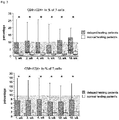
- CD3+ or the major subset distribution (CD3+4+ and CD3+8+) did not show differences between the groups (normal vs. delayed healing).
- delayed healing was strongly associated with a significantly enhanced frequency of terminally differentiated CD8+ effector T cells expressing the phenotype CD8+11 a++28- and/or CD8+11 a++57+ and/or CD8+11 a++CD28-57+, which corresponds to CD8+ TEMRA cells (CD57+8+ delayed healing vs. normal: 1.6-1.8 fold, CD28-8+ delayed healing vs. normal: 1.5-1.6 fold; CD11++8+ delayed healing vs.
- CD8+ TEMRA cells also express the marker phenotype CCR7-CD45RA+CD45RO-. This difference was stable over follow-up time of 18 weeks reflecting rather the individual immune experience than the post-trauma reaction to the fracture.
- CD8+ TEMRA cells are characterized by their (inflammatory) tissue homing properties and strong bystander responsiveness. They can be also triggered independently of their T-cell receptor (TCR) in an antigen-independent matter by cytokines, such as IL-6, IL-8, IL-12, IL-18, IL-23, or TNF ⁇ . Those cytokines are delivered by cells of the innate immune system triggered in the fracture hematoma as a result of interaction between toll-like receptor molecules (TLR) and damage-associated molecular patterns (DAMPs). Furthermore, macrophages and dendritic cells can trigger the release of inflammatory cytokines (e.g.
- IFN-gamma by these CD8+TEMRA cells, which support overwhelming inflammation and fibrosis as well as inhibition of osteogenesis. Additionally, these cells are up-regulated in chronic immune activation states, such as in infectious diseases, like HIV, tuberculosis or cytomegalovirus.
- an ex vivo method for prognosis of delayed bone fracture healing comprising determining the frequency of a subpopulation of CD8+ T cells selected from a first group comprised of CD8+CD57+ cells, CD8+CD28- cells and/or CD8+CD28-CD57+ cells, in a sample obtained from a subject.
- an ex vivo method for prognosis of delayed bone fracture healing comprising determining the frequency of a subpopulation of CD8+ T cells selected from a first group comprised of CD8+CD11 a+CD57+ cells, CD8+ CD11 a+CD28- cells and/or CD8+ CD11 a+CD28-CD57+ cells, in a sample obtained from a subject.
- the sample is a blood sample, in particular obtained from peripheral blood, or a biopsy sample obtained from a region in the vicinity of a bone fracture, in particular from the inflammatory peri-fracture hematoma.
- the method of the invention is used for predicting the outcome after bone fracture or for classifying a sample from a subject, wherein the sample is assigned to a probability of an outcome after bone fracture.
- Frequency in the sense of the invention refers to the number of cells defined by certain marker molecules presented on the surface of these cells in relation to the number of cells of an entire definable population.
- a frequency of 5% for the CD8+CD4+ subpopulation of the CD3+ cells means that 5% of all CD3+ cells belong to the CD8+CD4+ subpopulation.
- cells may be characterized herein by showing the cluster of differentiation positivity/negativity in abbreviated form: CD4+8+ is synonymous with CD4+CD8+.
- CD4+8+ is synonymous with CD4+CD8+.
- the frequency of a given subpopulation is determined in relation to the total number of the parent population (as indicated in each table CD3+ or CD8+ cells, respectively) in the sample.
- any cell population is designated "positive” with respect to a certain marker molecule herein, this designation shall mean that said cell population can be stained by a common fluorescent-dye-labeled antibody against the marker molecule and will give a fluorescence signal of at least one, two or three log higher intensity compared to unlabeled cells or cells labeled with the same antibody but commonly known as not expressing said marker molecule or an isotype control antibody.
- any cell population that is designated "negative” with respect to certain marker molecule cannot be stained by a fluorescent-dye-labeled antibody as described above against the marker molecule.
- Cells designated “double positive” or “++” with respect to a certain marker molecule means cells exhibiting a high expression of this certain marker molecule which can be separated as a distinct subpopulation by electronic gating. "++” cells give a fluorescence signal significantly stronger than that given by cells at the lower end of the single positive "+” gate. "++” events can typically be distinguished as a distinct cluster. Cells double positive “++” for a given marker are part of the positive "+” population for that marker.
- Fig. 12 shows a histogram of CD8/CD11 positive and double positive cells: of all CD11a positive cells encircled in the two example histograms, those on the right of the vertical bar constitute the "++" population.
- the method of the invention comprises determining the frequency of subpopulation selected from a second group comprised of CD8+CD11a++, CD8+CD11 a++CD28-, CD8+CD11 a++CD57+, and CD8+CD11a++CD28-CD57+ T cells.
- the method according to the above aspect and embodiments of the invention further comprises determining the frequency of a CD8+/CD4+ subpopulation of CD3+ cells.
- the predictive or diagnostic value of the method of the invention may be augmented by determining the frequency of additional subpopulations as described above.
- the frequencies of the additional subpopulations may be determined consecutively or simultaneously. A simultaneous determination is preferred.
- the method further comprises determining the level of IL-6 in the peripheral blood.
- the predictive value of the method according to the above aspect and embodiments may further be enhanced by determination of IL-6 as an immunological marker of systemic inflammation.
- the level may be expressed as a concentration and measured in units such as pg/ml or mol/l.
- the method according to the invention is performed by contacting a sample with a first ligand specifically reactive to a marker molecule selected from a marker group comprised of CD4 (Uniprot ID P01730), CD11a (Uniprot ID P20701), CD28 (Uniprot ID P10747), CD57 and IL-6 (Uniprot ID P05231), and determining the frequency of a cell presenting the marker molecule marked with the first ligand or determining the frequency of the first ligand bound to the marker molecule.
- a marker group comprised of CD4 (Uniprot ID P01730), CD11a (Uniprot ID P20701), CD28 (Uniprot ID P10747), CD57 and IL-6 (Uniprot ID P05231)
- the first ligand is selected from the group comprised of an antibody, an antibody fragment, an antibody-like-molecule, an oligopeptide of 6 to 30 amino acids, and a nucleic acid aptamer molecule of 10 to 75 nucleotides in length, wherein the ligand is capable to bind to a member of the marker group described in the preceding paragraph with a dissociation constant of 10 -8 mol/l or smaller.
- the antibody fragment is the Fab domain of an antibody (the antigen binding region of an antibody) or a single chain antibody (scFv), a fusion protein consisting of the variable regions of light and heavy chains of an antibody connected by a peptide linker.
- An antibody fragment or an antibody-like molecule may be manufactured by suitable methods such as recombinant protein expression.
- a first ligand may also be developed by evolutive methods such as phage display, ribosome display or SELEX, wherein polypeptides or oligonucleotides are selected according to their binding affinity to a target of interest. Additionally, higher affinity inhibitors may be identified by reiterative rounds of evolution and selection of the amino acid sequence or nucleotide sequence.
- the oligopeptide of 6 to 30 amino acids as referred to above is a peptide derived from the part of a ligand, which is recognized by a member of the marker group described above.
- the ligand that is recognized by a member of the marker group described above is selected from CD80 (Uniprot ID P33681) or CD86 (Uniprot ID P42081), which are ligands of CD28, or CD54 (Uniprot ID P05362), which is a CD11a ligand.
- the first ligand is an antibody reactive to CD4, CD11a, CD28, CD57 and further comprises a fluorescent moiety for optical detection, wherein a marker molecule according to the preceding paragraphs is bound to such antibody, and cells presenting that marker molecule can be counted by a fluorescence based flow cytometric method such as fluorescence activated cell sorting.
- the first ligand is an antibody reactive to IL-6 and may comprise an enzymatic activity, wherein this enzymatic activity is the catalysis of a reaction that can be spectroscopically observed.
- the first ligand is specifically bound by a second ligand, wherein the second ligand comprises an enzymatic activity or a fluorescent moiety.
- a plurality of different marker molecules may be determined by use of a plurality of different first ligands, wherein each ligand specifically binds to a particular marker molecule.
- each first ligand of the plurality comprises a certain enzymatic activity or fluorescent moiety as described above that can be spectroscopically distinguished form the enzymatic activity or fluorescent moiety of each other first ligand of the plurality.
- each first ligand is bound be a specific second ligand having a certain enzymatic activity or fluorescent moiety that can be spectroscopically distinguished for the enzymatic activity or fluorescent moiety of each other second ligand.
- the first and second ligand or pluralities thereof are antibodies and used in an Enzyme-linked immunosorbent assay.
- the frequency of a subpopulation according to the preceding aspect of the invention is determined by counting cells that are marked with a fluorescent antibody directed to a marker molecule selected from group comprised of CD4, CD8, CD11a, CD28 and CD57 in a flow cytometric assay.
- the method further comprises determining the Calori-Score of the subject according to the above aspect of the invention.
- the Calori-Score in the sense of the invention is a measure for nonunion, the permanent failure of healing following fracture, and may be determined by a method that assesses relevant fracture healing factors such as quality of bone, bone alignment, invasiveness of primary intervention or clinical infection status.
- a subject showing a Calori-Score that is at least 5 % higher than a standard is assigned to a group having an elevated probability for delayed fracture healing.
- a detailed description of this method can be found in Calori et al., Injury, 39, Supp 2, S59-63, 2008 .
- the method further comprises comparing the determined frequency, level or Calori-Score to a standard.
- a standard in the sense of the invention means a sample of a subject showing a normal or not delayed bone fracture healing.
- the standard may be a subject showing a normal bone fracture healing.
- fracture healing of a subject is considered normal if none of the following criteria are true:
- a sample exhibiting a twofold higher frequency of CD8+/CD4+ cells compared to a standard determined (retrospectively) for number of patients showing normal fracture healing is assigned to a group having an elevated probability for delayed fracture healing.
- a sample showing a frequency of T cells being CD11a++, CD28- or CD57+ that is at least 10 % higher compared to a standard determined (retrospectively) for number of patients showing normal fracture healing is assigned to a group having an elevated probability for delayed fracture healing.
- a sample showing a frequency of at least 30 % for cells being CD28- or CD57+ of the CD8+ T cells is assigned to a group having an elevated probability for delayed fracture healing
- a sample showing a frequency of at least 65 % for cells being CD11a++ of the CD8+ T cells is assigned to a group having an elevated probability for delayed fracture healing
- a sample showing a frequency of at least 5 % for cells being CD4+ of the CD8+ T cells is assigned to a group having an elevated probability for delayed fracture healing.
- the method of the invention further comprises determining the frequency of a subpopulation of CD4+ T cells, wherein that subpopulation is selected from CD4+CD57+ cells and CD4+CD28- cells.
- a system for diagnosis of delayed bone fracture healing comprising
- the device is a flow cytometer, comprising a flow cell for transporting and aligning cells, a light source such as a laser and a detector suitable for measuring light or other biophysical parameters such as impedance.
- a flow cell for transporting and aligning cells
- a light source such as a laser
- a detector suitable for measuring light or other biophysical parameters such as impedance.
- Such device may be used for determining the frequency of subpopulations of CD8+ cells according to the above aspects and embodiments of the invention.
- the device may is spectrophotometer or a plate reader, comprising a compartment holding the sample such as a cuvette or a microtiter plate, a light source and a UV/Vis detector suitable for measurement of absorbance or fluorescence, such as a diode array.
- the device is used for determining the level of IL-6 according to the above aspects or embodiments of the invention.
- the programmed microprocessor is integrated in the device described in the preceding paragraphs or is part of a control unit or a computer for operating the device.
- the device described above is equipped and designated to determine the frequency of the subpopulation of CD8+ T cells according to the above aspects and embodiments of the invention.
- kits of parts for diagnosis of delayed bone fracture healing comprising an anti-CD8-antibody, an anti-CD4-antibody, an anti-CD11a-antibody and an anti-CD28-antibody, wherein the above described antibodies are suitable for fluorescence based flow cytometry.
- the kit further comprises an anti-CD57-antibody.
- the antibodies according to the above aspect of the invention are monoclonal antibodies of murine origin and comprise a fluorescent moiety for optical detection in the flow cytometry such as APC (allophycocyanin), FITC (fluorescein isothiocyanate) or PE (phycoerythrin).
- APC allophycocyanin
- FITC fluorescein isothiocyanate
- PE phycoerythrin
- the antibody is selected from the group comprised of PE-Cy7 conjugated mouse anti-human CD4 IgG 1 , a murine monoclonal antibody conjugated with a PE-Cy7(cyanine dye) tandem fluorophor, APC-Cy7-labelled mouse anti-human CD8 IgG 1 , a murine monoclonal antibody conjugated with the tandem fluorophor APC-Cy7, FITC-labelled mouse anti-human CD57 IgM, a murine monoclonal antibody, APC-H7 mouse anti-human CD28 IgG 1 , a murine monoclonal antibody conjugated with the tandem fluorophor APC-H7 being an analogue of APC-Cy7 and having the same spectroscopic properties, and FITC-labelled mouse anti-human CD11a (Anti-LFA-1 ⁇ , leukocyte function associated antigen-1, alpha polypeptide) IgG 2a , a murine monoclonal antibody.
- an inhibitor of IFN-gamma (Uniprot P01579) or TNF- ⁇ (Uniprot P01375) is provided for use in a method for treatment of delayed fracture healing, wherein the inhibitor is a ligand to IFN-gamma or TNF- ⁇ selected from the group comprised of an antibody, an antibody fragment, an antibody-like-molecule, a soluble receptor construct, an oligopeptide of 6 to 30 amino acids, and a nucleic acid aptamer molecule of 10 to 75 nucleotides in length, an inhibitor of IFN-y or TNF-a secretion (e.g.
- si-RNA or small molecules such as -for example- calcineurin inhibitors
- the ligand is capable to selectively bind to IFN-gamma or TNF- ⁇ with a dissociation constant of 10 -8 mol/l or smaller
- the ligand to IFN-gamma or TNF- ⁇ is furthermore capable of abrogating or suppressing the biological effects of IFN-gamma or TNF- ⁇ .
- the inhibitor is a monoclonal antibody raised against IFN-gamma or TNF- ⁇ .
- the inhibitor is a chimeric, humanized, or human monoclonal antibody against IFN-gamma or TNF- ⁇ .
- the inhibitor in which the inhibitor is an antibody fragment, is the Fab domain of an antibody (the antigen binding region of an antibody) raised against IFN-gamma or TNF- ⁇ , or a single chain antibody (scFv), i.e. a fusion protein consisting of the variable regions of light and heavy chains of an antibody connected by a peptide linker.
- scFv single chain antibody
- An antibody fragment or an antibody-like molecule may be manufactured by suitable methods such as recombinant protein expression.
- the inhibitor is a chimeric construct linking an antigen binding-domain selectively binding to IFN-gamma or TNF- ⁇ , to the Fc-domain of a human immunoglobulin.
- a chimeric construct linking an antigen binding-domain selectively binding to IFN-gamma or TNF- ⁇ , to the Fc-domain of a human immunoglobulin.
- One example of such construct is the drug etanercept ( CAS No. 185243-69-0 ).
- an inhibitor according to this aspect of the invention may also be developed by evolutive methods such as phage display, ribosome display or SELEX, wherein polypeptides or oligonucleotides are selected according to their binding affinity to IFN-gamma or TNF- ⁇ .
- the oligopeptide of 6 to 30 amino acids as referred to above is a peptide derived from the part of a physiological binding partner of IFN-gamma or TNF- ⁇ , which is selectively recognized by IFN-gamma or TNF- ⁇ .
- the synthesis of IFN-gamma or TNF-a can be blocked by si-RNA or small molecule drugs, such as calcineurin inhibitors, phosphodiesterase inhibitors.
- an inhibitor of CD8+ cells for use in a method for treatment or therapy of delayed fracture healing.
- such inhibitor of CD8+ cells is a ligand to CD8, selected from the group comprised of an antibody, an antibody fragment, an antibody-like-molecule, an oligopeptide of 6 to 30 amino acids, and a nucleic acid aptamer molecule of 10 to 75 nucleotides in length, and wherein the ligand (the inhibitor) is capable to selectively bind to CD8 with a dissociation constant of 10 -8 mol/l or smaller, and wherein the ligand to CD8 (the inhibitor) is furthermore capable of abrogating or suppressing the biological effects of a CD8+ T cell, particularly capable of inhibiting the secretion IFN-gamma or TNF- ⁇ by said CD8+ T cell.
- the inhibitor is a monoclonal antibody raised against CD8.
- the inhibitor is a chimeric, humanized or human monoclonal antibody against CD8, including antithymocyte globuline.
- the inhibitor is an antibody raised against CD11a/CD18 (LFA-1). In one embodiment of this aspect of the invention, the inhibitor is an antibody raised against CD49d (VLA-4). In one embodiment of this aspect of the invention, the inhibitor is an antibody raised against CD137 (4-1 BB).
- the inhibitor is a monoclonal antibody raised against molecules on activated CD8 such as, by way of non-limiting example, CD11a/CD18 (LFA-1), CD49d (VLA-4) or CD137 (4-1 BB).
- the inhibitor is a chimeric, humanized or human monoclonal antibody.
- the inhibitor is a chimeric construct linking an antigen binding-domain selectively binding to CD8 or a CD8-specific activation antigen, such as CD11a/CD18 (LFA-1), CD49d (VLA-4), CD137 (4-1BB), to the Fc-domain of a human immunoglobulin.
- a CD8-specific activation antigen such as CD11a/CD18 (LFA-1), CD49d (VLA-4), CD137 (4-1BB
- One example of such construct is the drug alefacept ( CAS No. 222535-22-0 ).
- a pharmaceutical composition for treating delayed fracture healing comprising an inhibitor of (or ligand to) IFN-gamma or TNF- ⁇ or CD8 according to any one of the above aspects of the invention.
- the pharmaceutical composition is formulated for parenteral administration, such as subcutaneous, intravenous, intrahepatic, intramuscular, or local intrafracture administration.
- the pharmaceutical composition comprises from approximately 0.1% to approximately 10% active ingredient. In some embodiments, the pharmaceutical composition comprises from approximately 10% to approximately 100% active ingredient (lyophilisate).
- the pharmaceutical composition comprises an inhibitor of IFN-gamma and an inhibitor of TNF- ⁇ . In some embodiments, the pharmaceutical composition comprises an inhibitor of CD8. In some embodiments, the pharmaceutical composition comprises a monoclonal antibody or other neutralizing agents against IFN-gamma and a monoclonal antibody or neutralizing agent (e.g. an Fc-lg construct directed against TNF- ⁇ , such as etanercept) against TNF- ⁇ .
- a monoclonal antibody or other neutralizing agents against IFN-gamma and a monoclonal antibody or neutralizing agent (e.g. an Fc-lg construct directed against TNF- ⁇ , such as etanercept) against TNF- ⁇ .
- a dosage form for treating delayed fracture healing comprising an inhibitor of (or ligand to) IFN-gamma or TNF- ⁇ according to any one of the above aspects of the invention.
- Dosage forms may be for enteral administration, such as nasal, buccal, rectal, transdermal or oral administration, or as an inhalation form or suppository.
- parenteral administration may be used, such as subcutaneous, intravenous, intrahepatic or intramuscular injection forms.
- a pharmaceutically acceptable carrier and/or excipient may be present.
- a method for treating a patient suffering from delayed fracture healing comprising the administration of an inhibitor of (or ligand to) IFN-gamma or TNF- ⁇ , or a pharmaceutical composition or dosage form according to any one of the above aspects of the invention, to said patient.
- a method for treating a patient suffering from delayed fracture healing comprising the administration of an agent capable of effecting CD8+ T cell depletion in said patient, such as an antibody to CD8, to said patient, is contemplated.
- a method for the manufacture of a medicament for treating delayed fracture healing comprising the use of an inhibitor of (or ligand to) IFN-gamma or TNF- ⁇ according to any one of the above aspects of the invention.
- first week three-five days post operative
- erythrocytes, haemoglobin, hematocrit, thrombocytes, creatinine, sodium, potassium, uric acid, ostase, CRP were measured in plasma and serum samples according to the laboratory standard operating procedures (SOPs).
- SOPs laboratory standard operating procedures
- the serum sample for osteocalcin assessment was immediately centrifuged (3500rpm/15 minutes), stored in pre-freezed aliquots and sent to the laboratory within three hours.
- Cytokines (TNF ⁇ , IL-6, total IL-8, IL-10) were measured in plasma samples by using a semiautomatic system.
- the antibodies and the respective reagents for intracellular cytokine staining were purchased from BD Pharmingen.
- T-cell related cluster of differentiation were examined to evaluate the adaptive immunity of the host defense including CD3, CD4, CD8, CD11a+, CD57+ and CD28+.
- Cell sorting was performed by using BD FACSAria II flow cytometer and the purity of the obtained fractions was determined on the BD LSRII flow cytometer.
- CD62L-CD45RA+ T cell receptor activated CD8+ TEMRA cells
- BM-MSC bone marrow derived mesenchymal stromal cells
- a homogeneous population of BM-MSCs was validated by analysis of the cell surface marker expression using flow cytometric analysis [Glaeser, J.D., S. Geissler, A. Ode, C.J. Schipp, G. Matziolis, W.R. Taylor, P. Knaus, C. Perka, G.N. Duda, and G. Kasper, Modulation of matrix metalloprotease-2 levels by mechanical loading of three-dimensional mesenchymal stem cell constructs: impact on in vitro tube formation. Tissue Eng Part A. 16(10): p. 3139-48 (2010 )]. All cell assays described below were performed with BM-MSCs at passages 3-4 from at least 4 different donors in three technical replicates.
- Osteogenic differentiation of confluent BM-MSCs was induced by using osteogenic media (OM) supplemented with different concentrations of IFN-y or TNF- ⁇ , respectively.
- OM osteogenic media
- the CM were diluted 1:2 with double-concentrated OM.
- the matrix mineralization was visualized with Alizarin Red staining. Quantification was achieved by measuring the absorbance of Alizarin Red (ODAR) after extraction with 10% cetylpyridiniumchloride. Obtained values were normalized to number of viable cells determined by alamarBlue.
- BM-MSCs/cm2 were seeded onto 96-well plates one day before the experiment. The next day, medium was exchanged and cells were cultured in EM containing different concentrations of IFN-y or TNF- ⁇ (0, 1, 10 and 100 ng/ml) for three days. Cell viability was measured using alamarBlue cell viability assay. Equal cell seeding were confirmed one day after seeding using CyQuant assay according to manufactures instruction.
- BM-MSCs/cm2 were seeded onto 24 well plates.
- BM-MSCs were cultured for two days with medium containing the indicated concentration of IFN-y or TNF- ⁇ , respectively. Subsequently, medium was removed and the caspase-3 and -7 activities were measured in cell lysates using Caspase-Glo® 3/7 Assay according to manufactures instructions and values were normalized to cell number determined by CyQuant assay.
- CD8+ immune cell depletion in the CD8- T cell group was achieved with an antibody (mCD8 (YTS 169.4), BioXCell) injection (200 ⁇ g mCD8, per injection for four consecutive days with the last day being the day of surgery).
- CD8+ cell depletion was monitored via FACS analysis (LSR II flow cytometer) using specific antibodies against CD3, CD8a and CD4.
- the CD8+ T cell group received an intravenous injection in the tail vain of 200 ⁇ l with 2.5x10⁶ CD8+ cells on the day before surgery.
- the osteotomy was performed on the left femur using the MouseExFix system.
- the femur underwent a ⁇ CT analysis (Viva ⁇ CT 40) with a voxel size of 10.5 ⁇ m, 55keVp, 145 ⁇ A and the volume of interest (VOI) included 2mm with the osteotomy gap at the centre.
- the healing outcome at 21 d after osteotomy was rated as either bridged or non-bridged by three independent orthopaedic surgeons in a blinded evaluation.
- functional data were performed to assess the painless full weight bearing after 12 weeks post operative.
- Table 1 Patient characteristics Pat. Nr. Age Weight (kg) Height (cm) BMI Smoking Healing Status 1 47 60 159 23,733 yes delayed 2 62 90 183 26,874 no normal 4 57 53 153 22,641 no delayed 5 39 80 168 28,345 no normal 7 59 62 158 24,836 no delayed 8 23 75 192 20,345 yes normal 9 58 97 168 34,368 yes normal 10 24 60 159 23,733 yes normal 11 46 80 176 25,826 yes normal 12 45 92 188 26,03 no delayed 13 46 86 174 28,405 yes normal 14 62 66 162 25,149 no delayed 16 25 90 185 26,297 no normal 17 49 81 172 27,38 yes delayed 18 64 70 180 21,605 no delayed
- a 3-D-motion analysis was conducted using 12 infrared cameras at a sampling rate of 120 Hz and retro-reflective markers which were attached to the skin on the first and fifth metatarsal head and the heel. Ground reaction forces were collected by two force platforms at 960 Hz.
- the kinematic data allowed computation of gait parameters such as walking speed, step and stride length, cadence, stride height and the duration of swing and stance phase. Furthermore, the ground reaction forces were taken to compute the peak horizontal force and the stance duration for the affected and the contralateral limb.
- the patients also performed a sit to-stand test from a chair with each foot placed on a separate force platform to determine differences in the peak force between the extremities as well as the duration of the sit-to-stand test, reflected by the ground reaction force.
- ROC-curve receiver operation characteristics
- Each box plot shows median, lower and upper quartile.
- the Calori-Score is calculated by the following factors, wherein the factors are summed up and multiplied by two.
- Bone factors bone quality good (0 Pt), moderate (e. g. mild osteoporotic, 1 Pt), bad (e. g. bone loss, 2 Pt), very bad (e. g. necrotic, avascular 3 Pt.) primary fracture closed (0 Pt), open 1 degree (1 Pt), open 2-3 degrees A grade (3 Pt), open 3 degrees B-C grade (5 Pt) additional intervention none (1 Pt), ⁇ 2 (2 Pt), ⁇ 4 (3 Pt), > 4 (4 Pt) OP-Invasiveness minimal invasive (e. g. screws, 0 Pt), internal intramedular (e. g.
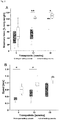
- Gait analyses were performed after 6, 12 and 18 weeks post operative to assess the functional status of the patients ( Fig. 2 ). Thereby, delayed healing patients showed a significant lower walking speed and maximum ground reaction force confirming the radiological classification of the two different groups. Furthermore, it clearly shows the prolonged healing time in the delayed healing group. Remarkably, only in week 18 postoperatively, the delayed healing patients meet the walking speed levels of the 6 th postoperative week in the normal healing group.
- Example 3 Frequency of CD8+/CD4+ cells in the CD3+ T cell population
- Example 4 Frequency of CD11a++ cells in the CD8+ T-cells population
- CD11a++ T-cells in the delayed healing group was significantly higher compared to normal healing patients over the complete study time of 18 weeks.
- delayed healing patients showed pathologically enhanced CD11a++ T-cell levels compared to the reference range (dashed line). Furthermore, they showed significantly higher values compared to an unfractured healthy control group. 3 delayed and 3 normal healing patients 60 weeks were assessed after surgery. Both groups showed the same CD11a++ T-cell concentration. No differences were found in each group over time. Single cell values for each group and time point are shown in table 4. An example for two different measurements and analysis of the CD11a++ (high positive) and CD11a+ (positive) fraction in human patients is shown in Fig. 12 .
- Example 5 Frequency of CD57+ cell in the CD8+-T-cell population
- Example 6 Frequency of CD28- cells in the CD8+-T cell population
- CD8+CD28- T-cells Similar sequences are shown by the CD8+CD28- T-cells ( Fig. 6 ). Here, delayed healing patients showed persistent higher CD8+CD28- T-cell levels of 29%-34%, compared to normal healing patients or values of healthy people, respectively. Similar to the results of the CD8+CD57+ T-cells, the differences in CD8+CD28- T-cell percentages became significant during the second week of hospitalization and these differences were also stable over the complete study time and 60 weeks after surgery. Furthermore, no significant differences were observed within each group during the study. Single cell values for each group and time point are shown in table 6.
- Example 8 CD8+ TEMRA migration from the peripheral blood to the hematoma
- CD8+ TEMRA cells are thought to be strong cytokine producers. Indeed, after ex vivo stimulation of T-cells by plate-coated anti-CD3/28 mAb, the strongest cytokine response (>50% IFN-y producing cells) within the CD3+8+57+28- subset was observed compared to other T-cell subsets (CD4+, total CD8+, CD8+57-28+ T-cells; 18-35% IFN-y producing cells) ( Fig. 9 ).
- BM-MSC human bone marrow-derived MSC
- Example 10 Inhibition of the osteogenesis of bone marrow mesenchymal stromal cells by TNF- ⁇ and IFN- ⁇
- Fig. 10 shows that (CD3+8+) CD11 a++, CD57+ and CD28- T cells inhibit osteogenesis of BM-MSCs via IFN- ⁇ and TNF- ⁇ .
- Fig10B and C show representative pictures (upper panel) of BM-MSCs after treatment with osteogenic medium supplemented with indicated IFN- ⁇ and TNF- ⁇ concentrations, respectively. Diagrams show optical density values of Alizarin Red (OD AR ) normalized to cell number.
- Fig10 . D and E) show BM-MSCs vitality determined with alamarBlue (R) after culture in media supplemented with indicated cytokine concentrations.
- FIG. 10 F shows the relative fluorescence value of Caspase-Glo TM 3/7 Assay normalized to total DNA content determined by CyQuant TM .
- FIG. 10 G shows matrix mineralization of BM-MSCs after cultivation in conditioned media (CM) of ex vivo stimulated sorted CD8+ TEMRA relative to corresponding control without CM.
- CM conditioned media
- CM conditioned media
- Example 11 CD8+ depletion improves bone fracture heating in a mouse model
- Figure 11 shows that CD8+ depletion in mice improves bone fracture healing
- B) shows the amount of CD62L-CD8+ of CD3+ T cells in the BM of the indicated groups.
- C and D) show results of quantitative ⁇ CT evaluation for the groups described in A, and.
- E-H Show representative ⁇ CT images for the indicated groups. Analysis of variance with Bonferroni correction * P ⁇ 0.05, ** P ⁇ 0.01.
- CD8+ cells were depleted by an antibody therapy (CD8- group), which was expected to result in improved bone healing. Successful depletion was confirmed in the blood by flow cytrometry. A nearly complete CD8+ T-cell depletion was archived on the day of surgery with a partly recovery over the healing period of 21 days (prior depletion CD3+CD8+ 20.8%, day of surgery CD3+CD8+ 0.07%, day 21 CD3+CD8+ 6.1%).
- the immune system of the animals had very limited contact to pathogens and therefore only a low percentage of CD62L-CD8+ memory T-cells.
- WT the mice were housed under semi-sterile conditions without a barrier for at least four weeks. These animals were widely exposed to pathogens, resulting in enhanced CD62L-CD8+ memory T-cells levels.
- the last group (CD8+) received an adaptive transfer of CD8+ T-cells to further increase the CD8+ T-cell number.
- the amount of the CD8+ T cells in the bone marrow were determined. As expected, the percentage of CD8+ T cells was distinctly lower in the CD8-group compared to all other groups ( Fig. 11a ). Furthermore, the CD8+ T cells in BM progressively increased from the CD8- group (13 ⁇ 6.6), WT group (30 ⁇ 5.8), WTexp group (37 ⁇ 2.8), to the highest percentages detected in the CD8+ group (40 ⁇ 3.6). Similar results were found for the memory CD62L-CD8+ T cell subpopulation, which were also significantly lower in the CD8- group compared to all other groups ( Fig. 11 b) .
- ⁇ CT evaluation of the fracture callus quality showed a progressive decrease in the bone volume to total volume ratio (BV/TV) and bone volume density from CD8- group to the CD8+ group ( Fig 11c-h ).
- Example 12 CD57+ cells in the CD8+ T-cell population of bone fracture patients in the blood before and after surgery and in the fracture hematoma (FH).
- Fig. 13 shows that this cell phenotype is not influenced by the surgery intervention as reflected by similar pre- and postoperative values and therefore suitable as pre-operative prognostic marker. Moreover, using the calculated retrospective cut off value for the prognosis of delayed fracture healing, a delayed healing process can be expected in three of the patients (marked with arrow).
- the frequency of CD8+CD57+ cells in blood and the fracture hematoma is a suitable measure for delayed healing processes in long bone fracture patients.
- Example 13 CD28- cells in the CD8+ T-cell population of bone fracture patients in the blood before and after surgery and in the fracture hematoma (FH).
- Example 14 The frequency of CD57+ cells and CD28- cells in the CD4+ T-cell population of bone fracture patients in the blood before and after surgery and in the fracture hematoma (FH).
- the CD8+ TEMRA cells play an important negative role in the fracture healing process. Therefore, the effector/memory and regulatory T-cells (Tregs) t enhances the healing process leading to an earlier and successful healing outcome.
- Fig. 15 shows that these cells are not influenced by the surgery intervention and found a significant migration into the fracture hematoma.
- Delayed or even incomplete (non-union healing) healing of the long bones affects approximately 5-10% of the patients and is associated with poor long-term outcome with a high socio-economic impact.
- 41% of the enrolled patients showed a delayed healing as reflected by fracture gap or callus formation and reduced physical function over 18 weeks after the primary surgery intervention.
- the walking speed in the 18 th postoperative week of the delayed healing patients were comparable with the levels of the 6 th postoperative week in the normal healing group.
- CD8+CD57+ expressing lymphocytes are expanded in late stage chronic (viral) infections by dysregulation of the normal apoptotic pathway.
- Clinical interventions are assumed to play a major role in the patients healing course. In the study present here, no differences in the number of interventions, surgery methods or bone quality between the two groups were found.
- CD57+ as % of CD8+ TC week 1 CD57+ as % of CD8+ TC week 2
- CD57+ as % of CD8+ TC week 6 CD57+ as % of CD8+ TC week 12
- CD57+ as % of CD8+ TC week 18 CD57+ as % of CD8+ TC month 15 1 56 48 . . . 2 52 44 . 32 40 42 . 4 20 27 38 31 35 39 29 5 30 30 29 41 30 30 . 7 24 28 33 35 32 33 . 8 7 8 6 4 5 4 . 9 12 13 18 18 17 16 . 10 5 6 6 5 6 2 11 23 22 21 16 16 22 . 12 39 38 38 46 32 36 .
- CD28- in % of CD8+ TC week 1 CD28- in % of CD8+ TC week 2
- CD28- in % of CD8+ TC week 6 CD28- in % of CD8+ TC week 12
- CD28- in % of CD8+ TC month 15 1 59 49 2 60
- 41 46 49 40 5 34 34 32 34 33 35 7 33 31 35 37 35
- 43 41 46 32 40 13 29 25 20 20 26 28 14 59 56 50
- 46 51 56 16 40 29 32 30
- 35 40 17 39 40 36
- 38 37 18 78 75 77 71 62 63 63 Table 7 (all times given post operation) Pat.
Landscapes
- Health & Medical Sciences (AREA)
- Life Sciences & Earth Sciences (AREA)
- Chemical & Material Sciences (AREA)
- Immunology (AREA)
- Engineering & Computer Science (AREA)
- Medicinal Chemistry (AREA)
- Cell Biology (AREA)
- Hematology (AREA)
- Molecular Biology (AREA)
- General Health & Medical Sciences (AREA)
- Urology & Nephrology (AREA)
- Biomedical Technology (AREA)
- Biochemistry (AREA)
- Microbiology (AREA)
- Organic Chemistry (AREA)
- Pathology (AREA)
- Virology (AREA)
- Zoology (AREA)
- Biotechnology (AREA)
- Food Science & Technology (AREA)
- Tropical Medicine & Parasitology (AREA)
- Physics & Mathematics (AREA)
- Analytical Chemistry (AREA)
- General Physics & Mathematics (AREA)
- Veterinary Medicine (AREA)
- Public Health (AREA)
- Animal Behavior & Ethology (AREA)
- Pharmacology & Pharmacy (AREA)
- Epidemiology (AREA)
- Bioinformatics & Cheminformatics (AREA)
- Biophysics (AREA)
- Genetics & Genomics (AREA)
- Proteomics, Peptides & Aminoacids (AREA)
- Mycology (AREA)
- Physical Education & Sports Medicine (AREA)
- Chemical Kinetics & Catalysis (AREA)
- General Chemical & Material Sciences (AREA)
- Nuclear Medicine, Radiotherapy & Molecular Imaging (AREA)
- Medicines Containing Antibodies Or Antigens For Use As Internal Diagnostic Agents (AREA)
- Measuring Or Testing Involving Enzymes Or Micro-Organisms (AREA)
Applications Claiming Priority (3)
| Application Number | Priority Date | Filing Date | Title |
|---|---|---|---|
| EP12153850.8A EP2623978A1 (fr) | 2012-02-03 | 2012-02-03 | Sous-ensembles de lymphocyte T CD8+ en tant que marqueurs pour la prédiction de la guérison de fractures retardées |
| EP13702481.6A EP2810065B1 (fr) | 2012-02-03 | 2013-02-04 | Sous-ensembles de lymphocyte t cd8+ en tant que marqueurs pour la prédiction de la guérison de fractures retardées |
| PCT/EP2013/052181 WO2013113941A1 (fr) | 2012-02-03 | 2013-02-04 | Sous-ensembles de lymphocytes t cd8+ en tant que marqueurs pour la prédiction du retard de consoliation d'une fracture |
Related Parent Applications (1)
| Application Number | Title | Priority Date | Filing Date |
|---|---|---|---|
| EP13702481.6A Division EP2810065B1 (fr) | 2012-02-03 | 2013-02-04 | Sous-ensembles de lymphocyte t cd8+ en tant que marqueurs pour la prédiction de la guérison de fractures retardées |
Publications (2)
| Publication Number | Publication Date |
|---|---|
| EP3254697A1 true EP3254697A1 (fr) | 2017-12-13 |
| EP3254697B1 EP3254697B1 (fr) | 2019-11-06 |
Family
ID=47633100
Family Applications (3)
| Application Number | Title | Priority Date | Filing Date |
|---|---|---|---|
| EP12153850.8A Withdrawn EP2623978A1 (fr) | 2012-02-03 | 2012-02-03 | Sous-ensembles de lymphocyte T CD8+ en tant que marqueurs pour la prédiction de la guérison de fractures retardées |
| EP13702481.6A Active EP2810065B1 (fr) | 2012-02-03 | 2013-02-04 | Sous-ensembles de lymphocyte t cd8+ en tant que marqueurs pour la prédiction de la guérison de fractures retardées |
| EP17182589.6A Active EP3254697B1 (fr) | 2012-02-03 | 2013-02-04 | Des moyens pour le traitement de la guérison d'une fracture retardée |
Family Applications Before (2)
| Application Number | Title | Priority Date | Filing Date |
|---|---|---|---|
| EP12153850.8A Withdrawn EP2623978A1 (fr) | 2012-02-03 | 2012-02-03 | Sous-ensembles de lymphocyte T CD8+ en tant que marqueurs pour la prédiction de la guérison de fractures retardées |
| EP13702481.6A Active EP2810065B1 (fr) | 2012-02-03 | 2013-02-04 | Sous-ensembles de lymphocyte t cd8+ en tant que marqueurs pour la prédiction de la guérison de fractures retardées |
Country Status (11)
| Country | Link |
|---|---|
| US (3) | US20150010924A1 (fr) |
| EP (3) | EP2623978A1 (fr) |
| JP (3) | JP6205371B2 (fr) |
| KR (1) | KR20140119174A (fr) |
| CN (1) | CN104081205B (fr) |
| AU (1) | AU2013214129A1 (fr) |
| CA (1) | CA2860727A1 (fr) |
| ES (1) | ES2760977T3 (fr) |
| HK (1) | HK1200534A1 (fr) |
| NZ (1) | NZ628251A (fr) |
| WO (1) | WO2013113941A1 (fr) |
Families Citing this family (9)
| Publication number | Priority date | Publication date | Assignee | Title |
|---|---|---|---|---|
| GB201418896D0 (en) * | 2014-10-23 | 2014-12-10 | Isis Innovation | Biomarker and therapy intervention for malignancy risk patients |
| US11164082B2 (en) * | 2017-02-28 | 2021-11-02 | Anixa Diagnostics Corporation | Methods for using artificial neural network analysis on flow cytometry data for cancer diagnosis |
| EP3499236A1 (fr) * | 2017-12-12 | 2019-06-19 | Charité - Universitätsmedizin Berlin | Sous-ensembles de cellules t cd8 utilisés comme biomarqueur pour prédire une non-fusion après une chirurgie de fusion des vertèbres |
| EP3631450B1 (fr) * | 2017-05-29 | 2022-11-23 | Charité - Universitätsmedizin Berlin | Sous-ensembles de cellules t cd8 utilisés comme biomarqueur pour prédire une non-fusion après une chirurgie de fusion des vertèbres |
| DE102017125150B4 (de) * | 2017-10-26 | 2019-10-10 | Epiontis Gmbh | Endosialin (CD248) als epigenetischer Marker zur Identifizierung von Immunzellen, insbesondere naïver CD8+ T-Zellen |
| US20230221303A1 (en) * | 2020-04-20 | 2023-07-13 | Longeveron Inc. | Potency assay |
| WO2023110942A1 (fr) | 2021-12-14 | 2023-06-22 | Charité-Universitätsmedizin Berlin | Prévention de guérison d'une fracture altérée |
| WO2024249568A1 (fr) | 2023-05-30 | 2024-12-05 | Paragon Therapeutics, Inc. | Compositions d'anticorps anti-intégrine alpha4beta7 et procédés d'utilisation |
| CN121889424A (zh) | 2023-08-14 | 2026-04-17 | 派拉冈医疗公司 | α4β7整联蛋白结合蛋白及使用方法 |
Citations (3)
| Publication number | Priority date | Publication date | Assignee | Title |
|---|---|---|---|---|
| JP2007089788A (ja) * | 2005-09-28 | 2007-04-12 | Asahi Kasei Corp | CD49d強陽性細胞除去材料 |
| US20070166307A1 (en) * | 2003-06-20 | 2007-07-19 | Isis Innovation Limited | Suppression of transplant rejection |
| US20120014947A1 (en) * | 2010-07-16 | 2012-01-19 | The University Of Chicago | Methods and compositions to reduce liver damage associated with conditions or therapies that affect the immune system |
Family Cites Families (14)
| Publication number | Priority date | Publication date | Assignee | Title |
|---|---|---|---|---|
| US6180403B1 (en) | 1999-10-28 | 2001-01-30 | Isis Pharmaceuticals Inc. | Antisense inhibition of tumor necrosis factor alpha converting enzyme (TACE) expression |
| JPH11183481A (ja) * | 1997-12-25 | 1999-07-09 | Teijin Ltd | 骨折治癒早期診断法 |
| AU2001288094A1 (en) * | 2000-09-21 | 2002-04-02 | Center For Advanced Science And Technology Incubation, Ltd. | Method of regulating osteoclast formation |
| EP1415156B1 (fr) * | 2001-07-10 | 2009-09-02 | The Board Of Trustees Of The Leland Stanford Junior University | Procedes et compositions pour detecter l'etat d'activation de multiples proteines dans des cellules individuelles |
| US20030129665A1 (en) * | 2001-08-30 | 2003-07-10 | Selvan Gowri Pyapali | Methods for qualitative and quantitative analysis of cells and related optical bio-disc systems |
| EP1572189A1 (fr) * | 2002-11-15 | 2005-09-14 | Warner-Lambert Company LLC | Methode de diminution de crp et de reduction d'inflammation systemique |
| AU2003298775B2 (en) * | 2002-11-26 | 2008-07-17 | Anthrogenesis Corporation | Cytotherapeutics, cytotherapeutic units and methods for treatments using them |
| CN101056654A (zh) * | 2004-10-07 | 2007-10-17 | 苏黎士大学 | 用于预防和治疗银屑病的i型干扰素阻断剂 |
| WO2006100033A1 (fr) * | 2005-03-21 | 2006-09-28 | Mpb Meltec Patent- Und Beteiligungsgesellschaft Mbh | Procede permettant d'identifier des motifs de combinaison de proteines specifiques de cellule |
| AU2006230419A1 (en) * | 2005-03-31 | 2006-10-05 | Targeted Genetics Corporation | Methods for lowering the level of tumor necrosis factor (TNF) in TNF-associated disorders |
| JP2008539796A (ja) * | 2005-05-20 | 2008-11-20 | バイレクシス コーポレイション | 初代細胞の形質導入 |
| JP5536334B2 (ja) * | 2005-10-14 | 2014-07-02 | マリーナ バイオテック,インコーポレイテッド | Rna治療用ペプチドリボ核酸縮合体粒子のための化合物及び方法 |
| JP2011517672A (ja) * | 2008-03-24 | 2011-06-16 | アボツト・バイオテクノロジー・リミテツド | 骨損失を治療するための方法及び組成物 |
| FR2953023B1 (fr) * | 2009-11-23 | 2011-12-09 | Commissariat Energie Atomique | Utilisation d'une isoforme d'hla-g comme marqueur de l'osteogenese |
-
2012
- 2012-02-03 EP EP12153850.8A patent/EP2623978A1/fr not_active Withdrawn
-
2013
- 2013-02-04 EP EP13702481.6A patent/EP2810065B1/fr active Active
- 2013-02-04 KR KR1020147024213A patent/KR20140119174A/ko not_active Withdrawn
- 2013-02-04 WO PCT/EP2013/052181 patent/WO2013113941A1/fr not_active Ceased
- 2013-02-04 AU AU2013214129A patent/AU2013214129A1/en not_active Abandoned
- 2013-02-04 CN CN201380007559.0A patent/CN104081205B/zh active Active
- 2013-02-04 US US14/376,398 patent/US20150010924A1/en not_active Abandoned
- 2013-02-04 EP EP17182589.6A patent/EP3254697B1/fr active Active
- 2013-02-04 JP JP2014555249A patent/JP6205371B2/ja active Active
- 2013-02-04 NZ NZ628251A patent/NZ628251A/en not_active IP Right Cessation
- 2013-02-04 CA CA2860727A patent/CA2860727A1/fr not_active Abandoned
- 2013-02-04 HK HK15100926.2A patent/HK1200534A1/xx unknown
- 2013-02-04 ES ES17182589T patent/ES2760977T3/es active Active
-
2017
- 2017-09-04 JP JP2017169352A patent/JP2018035157A/ja active Pending
-
2019
- 2019-11-15 JP JP2019207023A patent/JP2020073485A/ja active Pending
- 2019-12-12 US US16/711,480 patent/US11639935B2/en active Active
-
2022
- 2022-10-02 US US17/937,449 patent/US20230033136A1/en active Pending
Patent Citations (3)
| Publication number | Priority date | Publication date | Assignee | Title |
|---|---|---|---|---|
| US20070166307A1 (en) * | 2003-06-20 | 2007-07-19 | Isis Innovation Limited | Suppression of transplant rejection |
| JP2007089788A (ja) * | 2005-09-28 | 2007-04-12 | Asahi Kasei Corp | CD49d強陽性細胞除去材料 |
| US20120014947A1 (en) * | 2010-07-16 | 2012-01-19 | The University Of Chicago | Methods and compositions to reduce liver damage associated with conditions or therapies that affect the immune system |
Non-Patent Citations (15)
| Title |
|---|
| ARASH MOGHADDAM ET AL: "Clinical application of BMP 7 in long bone non-unions", ARCHIVES OF ORTHOPAEDIC AND TRAUMA SURGERY ; INCLUDING ARTHROSCOPY AND SPORTS MEDICINE, SPRINGER, BERLIN, DE, vol. 130, no. 1, 3 November 2009 (2009-11-03), pages 71 - 76, XP019759776, ISSN: 1434-3916 * |
| CALORI ET AL., INJURY, vol. 39, no. 2, 2008, pages 59 - 63 |
| CHEMICAL ABSTRACTS, Columbus, Ohio, US; abstract no. 185243-69-0 |
| CHEMICAL ABSTRACTS, Columbus, Ohio, US; abstract no. 222535-22-0 |
| COLBURN ET AL., ARTHRITIS RHEUM., vol. 60, no. 6, pages 1694 - 703 |
| GLAESER, J.D.; S. GEISSLER; A. ODE; C.J. SCHIPP; G. MATZIOLIS; W.R. TAYLOR; P. KNAUS; C. PERKA; G.N. DUDA; G. KASPER: "Modulation of matrix metalloprotease-2 levels by mechanical loading of three-dimensional mesenchymal stem cell constructs: impact on in vitro tube formation", TISSUE ENG PART A., vol. 16, no. 10, 2010, pages 3139 - 48 |
| GULOTTA L V ET AL: "TNF-alpha Blockade Improves Early Tendon-to-Bone Healing in a Rat Rotator Cuff Repair Model (SS-10)", ARTHROSCOPY, RAVEN PRESS, NEW YORK, NY, US, vol. 25, no. 6, 1 June 2009 (2009-06-01), pages e5 - e6, XP026123781, ISSN: 0749-8063, [retrieved on 20090522], DOI: 10.1016/J.ARTHRO.2009.04.011 * |
| GUSTAVO PRADILLA ET AL: "Prevention of vasospasm following subarachnoid hemorrhage in rabbits by anti-CD/CD18 monoclonal antibody therapy", JOURNAL OF NEUROSUR, AMERICAN ASSOCIATION OF NEUROLOGICAL SURGEONS, US, vol. 101, 1 July 2004 (2004-07-01), pages 88 - 92, XP008126429, ISSN: 0022-3085, DOI: 10.3171/JNS.2004.101.1.0088 * |
| KOLAR ET AL., TISSUE ENG PART B REV., vol. 16, no. 4, pages 427 - 34 |
| MALVIYA AJAY ET AL: "The effect of newer anti-rheumatic drugs on osteogenic cell proliferation: an in-vitro study", JOURNAL OF ORTHOPAEDIC SURGERY AND RESEARCH, BIOMED CENTRAL LTD, LO, vol. 4, no. 1, 26 May 2009 (2009-05-26), pages 17, XP021060114, ISSN: 1749-799X, DOI: 10.1186/1749-799X-4-17 * |
| OLOF SANDBERG ET AL: "Etanercept does not impair healing in rat models of tendon or metaphyseal bone injury", ACTA ORTHOPAEDICA, vol. 83, no. 3, 23 May 2012 (2012-05-23), GB, pages 305 - 310, XP055408797, ISSN: 1745-3674, DOI: 10.3109/17453674.2012.693018 * |
| S. REINKE ET AL: "Terminally Differentiated CD8+ T Cells Negatively Affect Bone Regeneration in Humans", SCIENCE TRANSLATIONAL MEDICINE, vol. 5, no. 177, 20 March 2013 (2013-03-20), pages 177ra36 - 177ra36, XP055365176, ISSN: 1946-6234, DOI: 10.1126/scitranslmed.3004754 * |
| SCHMIDT-BLEEK ET AL., CELL TISSUE RES |
| SCHMIDT-BLEEK ET AL., J ORTHOP RES., vol. 27, no. 9, pages 1147 - 51 |
| TOBEN ET AL., J BONE MINER RES., vol. 26, no. 1, pages 113 - 24 |
Also Published As
| Publication number | Publication date |
|---|---|
| JP6205371B2 (ja) | 2017-09-27 |
| JP2020073485A (ja) | 2020-05-14 |
| EP2623978A1 (fr) | 2013-08-07 |
| CA2860727A1 (fr) | 2013-08-08 |
| JP2015507197A (ja) | 2015-03-05 |
| EP3254697B1 (fr) | 2019-11-06 |
| US11639935B2 (en) | 2023-05-02 |
| NZ628251A (en) | 2015-12-24 |
| KR20140119174A (ko) | 2014-10-08 |
| ES2760977T3 (es) | 2020-05-18 |
| HK1200534A1 (en) | 2015-08-07 |
| CN104081205A (zh) | 2014-10-01 |
| US20200116721A1 (en) | 2020-04-16 |
| JP2018035157A (ja) | 2018-03-08 |
| WO2013113941A1 (fr) | 2013-08-08 |
| AU2013214129A1 (en) | 2014-08-28 |
| EP2810065B1 (fr) | 2017-08-02 |
| CN104081205B (zh) | 2017-04-05 |
| US20230033136A1 (en) | 2023-02-02 |
| EP2810065A1 (fr) | 2014-12-10 |
| US20150010924A1 (en) | 2015-01-08 |
Similar Documents
| Publication | Publication Date | Title |
|---|---|---|
| US20230033136A1 (en) | Cd8+t-cell subsets as markers for prediction of delayed fracture healing | |
| Dimopoulos et al. | EHA–EMN Evidence-Based Guidelines for diagnosis, treatment and follow-up of patients with multiple myeloma | |
| Wang et al. | Blocking CD47 promotes antitumour immunity through CD103+ dendritic cell–NK cell axis in murine hepatocellular carcinoma model | |
| Ziegler et al. | Characterization of growth factors, cytokines, and chemokines in bone marrow concentrate and platelet-rich plasma: a prospective analysis | |
| Nakagawa et al. | Brodalumab, a human anti-interleukin-17-receptor antibody in the treatment of Japanese patients with moderate-to-severe plaque psoriasis: efficacy and safety results from a phase II randomized controlled study | |
| Rubinstein et al. | Chimeric antigen receptor T cell therapy in patients with multiply relapsed or refractory extramedullary leukemia | |
| US20210196822A1 (en) | Treatment of triple negative breast cancer with targeted tgf-b inhibition | |
| US20260109766A1 (en) | Lag-3 antagonist therapy for melanoma | |
| US20200155599A1 (en) | Anti-egfr/high affinity nk-cells compositions and methods for chordoma treatment | |
| KR20220005075A (ko) | 키메라 항원 수용체 면역요법의 투여 방법 | |
| JP2022549765A (ja) | 老化に関連する疾患を治療するための方法 | |
| Chaverri et al. | A pilot study of circulating levels of TGF-β1 and TGF-β2 as biomarkers of bone healing in patients with non-hypertrophic pseudoarthrosis of long bones | |
| Shiqing et al. | Efficacy of low molecular weight heparin in spinal trauma patients after part concentrated screw surgery and its influence on blood parameters and the incidence of deep venous thrombosis | |
| Joseph et al. | Programmed cell death protein 1 (PD-1) blockade regulates skeletal remodeling in a sex-and age-dependent manner | |
| JP2020511535A (ja) | 中枢神経系(cns)がんを治療するためのプロテアソーム阻害剤の利用 | |
| JP2025003730A (ja) | 癌患者への免疫チェックポイント阻害薬の投与の有効性を予測するためのデータを収集する方法 | |
| WO2023235511A1 (fr) | Élimination ciblée de cellules sénescentes par des lymphocytes t gamma-delta | |
| US20090117076A1 (en) | Methods For Treating Tumor Cells | |
| US20230338492A1 (en) | Aldh1 antigen-pulsed dendritic cells | |
| US20250177520A1 (en) | Methods for the treatment of multiple myeloma | |
| Joachim | Bacterial-Derived Metabolites in the Context of Immune Checkpoint Inhibitor Cancer Therapy | |
| KR20260052103A (ko) | 항용해성 알칼리성 포스파타아제 면역 반응을 완화하기 위한 면역억제 치료 | |
| Pandey et al. | CO116 Cardiovascular Safety of Glimepiride: An Indirect Treatment Comparison of Cardiovascular Safety Outcome Trials of DPP4 Inhibitors | |
| WO2024126431A1 (fr) | Agents de liaison anti-ilt7 pour le traitement et la prévention de la myosite | |
| Nedovic et al. | AB0318 Does Concentration of Antibodies To Etanercept and Adalimumab Correlates with Parameters of Disease Activity in Patients with Rheumatoid Arthritis? |
Legal Events
| Date | Code | Title | Description |
|---|---|---|---|
| PUAI | Public reference made under article 153(3) epc to a published international application that has entered the european phase |
Free format text: ORIGINAL CODE: 0009012 |
|
| STAA | Information on the status of an ep patent application or granted ep patent |
Free format text: STATUS: THE APPLICATION HAS BEEN PUBLISHED |
|
| AC | Divisional application: reference to earlier application |
Ref document number: 2810065 Country of ref document: EP Kind code of ref document: P |
|
| AK | Designated contracting states |
Kind code of ref document: A1 Designated state(s): AL AT BE BG CH CY CZ DE DK EE ES FI FR GB GR HR HU IE IS IT LI LT LU LV MC MK MT NL NO PL PT RO RS SE SI SK SM TR |
|
| RIN1 | Information on inventor provided before grant (corrected) |
Inventor name: REINKE, SIMON Inventor name: VOLK, HANS-DIETER, PROF. DR. Inventor name: DUDA, GEORG, PROF. DR. Inventor name: KLEBER, CHRISTIAN Inventor name: MEISEL, CHRISTIAN Inventor name: GEISSLER, SVEN Inventor name: SCHMIDT-BLEEK, KATHARINA, DR. |
|
| STAA | Information on the status of an ep patent application or granted ep patent |
Free format text: STATUS: REQUEST FOR EXAMINATION WAS MADE |
|
| 17P | Request for examination filed |
Effective date: 20180613 |
|
| RBV | Designated contracting states (corrected) |
Designated state(s): AL AT BE BG CH CY CZ DE DK EE ES FI FR GB GR HR HU IE IS IT LI LT LU LV MC MK MT NL NO PL PT RO RS SE SI SK SM TR |
|
| GRAP | Despatch of communication of intention to grant a patent |
Free format text: ORIGINAL CODE: EPIDOSNIGR1 |
|
| STAA | Information on the status of an ep patent application or granted ep patent |
Free format text: STATUS: GRANT OF PATENT IS INTENDED |
|
| INTG | Intention to grant announced |
Effective date: 20181218 |
|
| RIN1 | Information on inventor provided before grant (corrected) |
Inventor name: REINKE, SIMON, DR. RER. MEDIC. Inventor name: KLEBER, CHRISTIAN Inventor name: GEISSLER, SVEN Inventor name: MEISEL, CHRISTIAN Inventor name: DUDA, GEORG, PROF. DR. Inventor name: VOLK, HANS-DIETER, PROF. DR. Inventor name: SCHMIDT-BLEEK, KATHARINA, DR. |
|
| GRAJ | Information related to disapproval of communication of intention to grant by the applicant or resumption of examination proceedings by the epo deleted |
Free format text: ORIGINAL CODE: EPIDOSDIGR1 |
|
| STAA | Information on the status of an ep patent application or granted ep patent |
Free format text: STATUS: REQUEST FOR EXAMINATION WAS MADE |
|
| GRAP | Despatch of communication of intention to grant a patent |
Free format text: ORIGINAL CODE: EPIDOSNIGR1 |
|
| STAA | Information on the status of an ep patent application or granted ep patent |
Free format text: STATUS: GRANT OF PATENT IS INTENDED |
|
| INTC | Intention to grant announced (deleted) | ||
| INTG | Intention to grant announced |
Effective date: 20190529 |
|
| GRAS | Grant fee paid |
Free format text: ORIGINAL CODE: EPIDOSNIGR3 |
|
| GRAA | (expected) grant |
Free format text: ORIGINAL CODE: 0009210 |
|
| STAA | Information on the status of an ep patent application or granted ep patent |
Free format text: STATUS: THE PATENT HAS BEEN GRANTED |
|
| AC | Divisional application: reference to earlier application |
Ref document number: 2810065 Country of ref document: EP Kind code of ref document: P |
|
| AK | Designated contracting states |
Kind code of ref document: B1 Designated state(s): AL AT BE BG CH CY CZ DE DK EE ES FI FR GB GR HR HU IE IS IT LI LT LU LV MC MK MT NL NO PL PT RO RS SE SI SK SM TR |
|
| REG | Reference to a national code |
Ref country code: GB Ref legal event code: FG4D |
|
| REG | Reference to a national code |
Ref country code: CH Ref legal event code: EP Ref country code: AT Ref legal event code: REF Ref document number: 1197881 Country of ref document: AT Kind code of ref document: T Effective date: 20191115 |
|
| REG | Reference to a national code |
Ref country code: IE Ref legal event code: FG4D |
|
| REG | Reference to a national code |
Ref country code: DE Ref legal event code: R096 Ref document number: 602013062766 Country of ref document: DE |
|
| REG | Reference to a national code |
Ref country code: NL Ref legal event code: MP Effective date: 20191106 |
|
| REG | Reference to a national code |
Ref country code: LT Ref legal event code: MG4D |
|
| PG25 | Lapsed in a contracting state [announced via postgrant information from national office to epo] |
Ref country code: NL Free format text: LAPSE BECAUSE OF FAILURE TO SUBMIT A TRANSLATION OF THE DESCRIPTION OR TO PAY THE FEE WITHIN THE PRESCRIBED TIME-LIMIT Effective date: 20191106 Ref country code: SE Free format text: LAPSE BECAUSE OF FAILURE TO SUBMIT A TRANSLATION OF THE DESCRIPTION OR TO PAY THE FEE WITHIN THE PRESCRIBED TIME-LIMIT Effective date: 20191106 Ref country code: PL Free format text: LAPSE BECAUSE OF FAILURE TO SUBMIT A TRANSLATION OF THE DESCRIPTION OR TO PAY THE FEE WITHIN THE PRESCRIBED TIME-LIMIT Effective date: 20191106 Ref country code: LT Free format text: LAPSE BECAUSE OF FAILURE TO SUBMIT A TRANSLATION OF THE DESCRIPTION OR TO PAY THE FEE WITHIN THE PRESCRIBED TIME-LIMIT Effective date: 20191106 Ref country code: BG Free format text: LAPSE BECAUSE OF FAILURE TO SUBMIT A TRANSLATION OF THE DESCRIPTION OR TO PAY THE FEE WITHIN THE PRESCRIBED TIME-LIMIT Effective date: 20200206 Ref country code: NO Free format text: LAPSE BECAUSE OF FAILURE TO SUBMIT A TRANSLATION OF THE DESCRIPTION OR TO PAY THE FEE WITHIN THE PRESCRIBED TIME-LIMIT Effective date: 20200206 Ref country code: GR Free format text: LAPSE BECAUSE OF FAILURE TO SUBMIT A TRANSLATION OF THE DESCRIPTION OR TO PAY THE FEE WITHIN THE PRESCRIBED TIME-LIMIT Effective date: 20200207 Ref country code: LV Free format text: LAPSE BECAUSE OF FAILURE TO SUBMIT A TRANSLATION OF THE DESCRIPTION OR TO PAY THE FEE WITHIN THE PRESCRIBED TIME-LIMIT Effective date: 20191106 Ref country code: PT Free format text: LAPSE BECAUSE OF FAILURE TO SUBMIT A TRANSLATION OF THE DESCRIPTION OR TO PAY THE FEE WITHIN THE PRESCRIBED TIME-LIMIT Effective date: 20200306 Ref country code: FI Free format text: LAPSE BECAUSE OF FAILURE TO SUBMIT A TRANSLATION OF THE DESCRIPTION OR TO PAY THE FEE WITHIN THE PRESCRIBED TIME-LIMIT Effective date: 20191106 |
|
| REG | Reference to a national code |
Ref country code: ES Ref legal event code: FG2A Ref document number: 2760977 Country of ref document: ES Kind code of ref document: T3 Effective date: 20200518 |
|
| PG25 | Lapsed in a contracting state [announced via postgrant information from national office to epo] |
Ref country code: RS Free format text: LAPSE BECAUSE OF FAILURE TO SUBMIT A TRANSLATION OF THE DESCRIPTION OR TO PAY THE FEE WITHIN THE PRESCRIBED TIME-LIMIT Effective date: 20191106 Ref country code: HR Free format text: LAPSE BECAUSE OF FAILURE TO SUBMIT A TRANSLATION OF THE DESCRIPTION OR TO PAY THE FEE WITHIN THE PRESCRIBED TIME-LIMIT Effective date: 20191106 Ref country code: IS Free format text: LAPSE BECAUSE OF FAILURE TO SUBMIT A TRANSLATION OF THE DESCRIPTION OR TO PAY THE FEE WITHIN THE PRESCRIBED TIME-LIMIT Effective date: 20200306 |
|
| PG25 | Lapsed in a contracting state [announced via postgrant information from national office to epo] |
Ref country code: AL Free format text: LAPSE BECAUSE OF FAILURE TO SUBMIT A TRANSLATION OF THE DESCRIPTION OR TO PAY THE FEE WITHIN THE PRESCRIBED TIME-LIMIT Effective date: 20191106 |
|
| PG25 | Lapsed in a contracting state [announced via postgrant information from national office to epo] |
Ref country code: CZ Free format text: LAPSE BECAUSE OF FAILURE TO SUBMIT A TRANSLATION OF THE DESCRIPTION OR TO PAY THE FEE WITHIN THE PRESCRIBED TIME-LIMIT Effective date: 20191106 Ref country code: RO Free format text: LAPSE BECAUSE OF FAILURE TO SUBMIT A TRANSLATION OF THE DESCRIPTION OR TO PAY THE FEE WITHIN THE PRESCRIBED TIME-LIMIT Effective date: 20191106 Ref country code: EE Free format text: LAPSE BECAUSE OF FAILURE TO SUBMIT A TRANSLATION OF THE DESCRIPTION OR TO PAY THE FEE WITHIN THE PRESCRIBED TIME-LIMIT Effective date: 20191106 Ref country code: DK Free format text: LAPSE BECAUSE OF FAILURE TO SUBMIT A TRANSLATION OF THE DESCRIPTION OR TO PAY THE FEE WITHIN THE PRESCRIBED TIME-LIMIT Effective date: 20191106 |
|
| REG | Reference to a national code |
Ref country code: DE Ref legal event code: R097 Ref document number: 602013062766 Country of ref document: DE |
|
| REG | Reference to a national code |
Ref country code: AT Ref legal event code: MK05 Ref document number: 1197881 Country of ref document: AT Kind code of ref document: T Effective date: 20191106 |
|
| PG25 | Lapsed in a contracting state [announced via postgrant information from national office to epo] |
Ref country code: SK Free format text: LAPSE BECAUSE OF FAILURE TO SUBMIT A TRANSLATION OF THE DESCRIPTION OR TO PAY THE FEE WITHIN THE PRESCRIBED TIME-LIMIT Effective date: 20191106 Ref country code: SM Free format text: LAPSE BECAUSE OF FAILURE TO SUBMIT A TRANSLATION OF THE DESCRIPTION OR TO PAY THE FEE WITHIN THE PRESCRIBED TIME-LIMIT Effective date: 20191106 |
|
| PLBE | No opposition filed within time limit |
Free format text: ORIGINAL CODE: 0009261 |
|
| STAA | Information on the status of an ep patent application or granted ep patent |
Free format text: STATUS: NO OPPOSITION FILED WITHIN TIME LIMIT |
|
| 26N | No opposition filed |
Effective date: 20200807 |
|
| REG | Reference to a national code |
Ref country code: BE Ref legal event code: MM Effective date: 20200229 |
|
| PG25 | Lapsed in a contracting state [announced via postgrant information from national office to epo] |
Ref country code: MC Free format text: LAPSE BECAUSE OF FAILURE TO SUBMIT A TRANSLATION OF THE DESCRIPTION OR TO PAY THE FEE WITHIN THE PRESCRIBED TIME-LIMIT Effective date: 20191106 Ref country code: LU Free format text: LAPSE BECAUSE OF NON-PAYMENT OF DUE FEES Effective date: 20200204 |
|
| PG25 | Lapsed in a contracting state [announced via postgrant information from national office to epo] |
Ref country code: AT Free format text: LAPSE BECAUSE OF FAILURE TO SUBMIT A TRANSLATION OF THE DESCRIPTION OR TO PAY THE FEE WITHIN THE PRESCRIBED TIME-LIMIT Effective date: 20191106 Ref country code: SI Free format text: LAPSE BECAUSE OF FAILURE TO SUBMIT A TRANSLATION OF THE DESCRIPTION OR TO PAY THE FEE WITHIN THE PRESCRIBED TIME-LIMIT Effective date: 20191106 |
|
| PG25 | Lapsed in a contracting state [announced via postgrant information from national office to epo] |
Ref country code: IE Free format text: LAPSE BECAUSE OF NON-PAYMENT OF DUE FEES Effective date: 20200204 |
|
| PG25 | Lapsed in a contracting state [announced via postgrant information from national office to epo] |
Ref country code: BE Free format text: LAPSE BECAUSE OF NON-PAYMENT OF DUE FEES Effective date: 20200229 |
|
| PG25 | Lapsed in a contracting state [announced via postgrant information from national office to epo] |
Ref country code: TR Free format text: LAPSE BECAUSE OF FAILURE TO SUBMIT A TRANSLATION OF THE DESCRIPTION OR TO PAY THE FEE WITHIN THE PRESCRIBED TIME-LIMIT Effective date: 20191106 Ref country code: MT Free format text: LAPSE BECAUSE OF FAILURE TO SUBMIT A TRANSLATION OF THE DESCRIPTION OR TO PAY THE FEE WITHIN THE PRESCRIBED TIME-LIMIT Effective date: 20191106 Ref country code: CY Free format text: LAPSE BECAUSE OF FAILURE TO SUBMIT A TRANSLATION OF THE DESCRIPTION OR TO PAY THE FEE WITHIN THE PRESCRIBED TIME-LIMIT Effective date: 20191106 |
|
| PG25 | Lapsed in a contracting state [announced via postgrant information from national office to epo] |
Ref country code: MK Free format text: LAPSE BECAUSE OF FAILURE TO SUBMIT A TRANSLATION OF THE DESCRIPTION OR TO PAY THE FEE WITHIN THE PRESCRIBED TIME-LIMIT Effective date: 20191106 |
|
| PGFP | Annual fee paid to national office [announced via postgrant information from national office to epo] |
Ref country code: FR Payment date: 20230217 Year of fee payment: 11 Ref country code: ES Payment date: 20230317 Year of fee payment: 11 Ref country code: CH Payment date: 20230307 Year of fee payment: 11 |
|
| PGFP | Annual fee paid to national office [announced via postgrant information from national office to epo] |
Ref country code: IT Payment date: 20230228 Year of fee payment: 11 Ref country code: GB Payment date: 20230221 Year of fee payment: 11 Ref country code: DE Payment date: 20230216 Year of fee payment: 11 |
|
| P01 | Opt-out of the competence of the unified patent court (upc) registered |
Effective date: 20230526 |
|
| REG | Reference to a national code |
Ref country code: DE Ref legal event code: R119 Ref document number: 602013062766 Country of ref document: DE |
|
| REG | Reference to a national code |
Ref country code: CH Ref legal event code: PL |
|
| PG25 | Lapsed in a contracting state [announced via postgrant information from national office to epo] |
Ref country code: CH Free format text: LAPSE BECAUSE OF NON-PAYMENT OF DUE FEES Effective date: 20240229 |
|
| GBPC | Gb: european patent ceased through non-payment of renewal fee |
Effective date: 20240204 |
|
| PG25 | Lapsed in a contracting state [announced via postgrant information from national office to epo] |
Ref country code: CH Free format text: LAPSE BECAUSE OF NON-PAYMENT OF DUE FEES Effective date: 20240229 |
|
| PG25 | Lapsed in a contracting state [announced via postgrant information from national office to epo] |
Ref country code: DE Free format text: LAPSE BECAUSE OF NON-PAYMENT OF DUE FEES Effective date: 20240903 |
|
| PG25 | Lapsed in a contracting state [announced via postgrant information from national office to epo] |
Ref country code: GB Free format text: LAPSE BECAUSE OF NON-PAYMENT OF DUE FEES Effective date: 20240204 |
|
| PG25 | Lapsed in a contracting state [announced via postgrant information from national office to epo] |
Ref country code: FR Free format text: LAPSE BECAUSE OF NON-PAYMENT OF DUE FEES Effective date: 20240229 |
|
| PG25 | Lapsed in a contracting state [announced via postgrant information from national office to epo] |
Ref country code: GB Free format text: LAPSE BECAUSE OF NON-PAYMENT OF DUE FEES Effective date: 20240204 Ref country code: FR Free format text: LAPSE BECAUSE OF NON-PAYMENT OF DUE FEES Effective date: 20240229 Ref country code: DE Free format text: LAPSE BECAUSE OF NON-PAYMENT OF DUE FEES Effective date: 20240903 |
|
| PG25 | Lapsed in a contracting state [announced via postgrant information from national office to epo] |
Ref country code: IT Free format text: LAPSE BECAUSE OF NON-PAYMENT OF DUE FEES Effective date: 20240204 |
|
| REG | Reference to a national code |
Ref country code: ES Ref legal event code: FD2A Effective date: 20250326 |
|
| PG25 | Lapsed in a contracting state [announced via postgrant information from national office to epo] |
Ref country code: ES Free format text: LAPSE BECAUSE OF NON-PAYMENT OF DUE FEES Effective date: 20240205 |