EP3255452A1 - Erkennungsvorrichtung und erkennungsverfahren - Google Patents
Erkennungsvorrichtung und erkennungsverfahren Download PDFInfo
- Publication number
- EP3255452A1 EP3255452A1 EP15881216.4A EP15881216A EP3255452A1 EP 3255452 A1 EP3255452 A1 EP 3255452A1 EP 15881216 A EP15881216 A EP 15881216A EP 3255452 A1 EP3255452 A1 EP 3255452A1
- Authority
- EP
- European Patent Office
- Prior art keywords
- obstacle
- area
- detection apparatus
- signal
- transmission signal
- Prior art date
- Legal status (The legal status is an assumption and is not a legal conclusion. Google has not performed a legal analysis and makes no representation as to the accuracy of the status listed.)
- Withdrawn
Links
- 238000001514 detection method Methods 0.000 title claims abstract description 36
- 230000005540 biological transmission Effects 0.000 claims abstract description 80
- 230000000903 blocking effect Effects 0.000 claims abstract description 72
- 238000000034 method Methods 0.000 claims abstract description 11
- 239000011159 matrix material Substances 0.000 claims description 33
- 238000012876 topography Methods 0.000 claims description 3
- 238000001556 precipitation Methods 0.000 description 32
- CIWBSHSKHKDKBQ-JLAZNSOCSA-N Ascorbic acid Chemical compound OC[C@H](O)[C@H]1OC(=O)C(O)=C1O CIWBSHSKHKDKBQ-JLAZNSOCSA-N 0.000 description 20
- 238000002592 echocardiography Methods 0.000 description 10
- 230000012447 hatching Effects 0.000 description 10
- 238000010586 diagram Methods 0.000 description 2
- 241000251468 Actinopterygii Species 0.000 description 1
- 238000013500 data storage Methods 0.000 description 1
- 230000009977 dual effect Effects 0.000 description 1
- 230000000694 effects Effects 0.000 description 1
- 238000012423 maintenance Methods 0.000 description 1
- 230000010287 polarization Effects 0.000 description 1
- 239000007787 solid Substances 0.000 description 1
Images



Classifications
-
- G—PHYSICS
- G01—MEASURING; TESTING
- G01S—RADIO DIRECTION-FINDING; RADIO NAVIGATION; DETERMINING DISTANCE OR VELOCITY BY USE OF RADIO WAVES; LOCATING OR PRESENCE-DETECTING BY USE OF THE REFLECTION OR RERADIATION OF RADIO WAVES; ANALOGOUS ARRANGEMENTS USING OTHER WAVES
- G01S7/00—Details of systems according to groups G01S13/00, G01S15/00, G01S17/00
- G01S7/02—Details of systems according to groups G01S13/00, G01S15/00, G01S17/00 of systems according to group G01S13/00
- G01S7/024—Details of systems according to groups G01S13/00, G01S15/00, G01S17/00 of systems according to group G01S13/00 using polarisation effects
- G01S7/025—Details of systems according to groups G01S13/00, G01S15/00, G01S17/00 of systems according to group G01S13/00 using polarisation effects involving the transmission of linearly polarised waves
-
- G—PHYSICS
- G01—MEASURING; TESTING
- G01S—RADIO DIRECTION-FINDING; RADIO NAVIGATION; DETERMINING DISTANCE OR VELOCITY BY USE OF RADIO WAVES; LOCATING OR PRESENCE-DETECTING BY USE OF THE REFLECTION OR RERADIATION OF RADIO WAVES; ANALOGOUS ARRANGEMENTS USING OTHER WAVES
- G01S13/00—Systems using the reflection or reradiation of radio waves, e.g. radar systems; Analogous systems using reflection or reradiation of waves whose nature or wavelength is irrelevant or unspecified
- G01S13/88—Radar or analogous systems specially adapted for specific applications
- G01S13/95—Radar or analogous systems specially adapted for specific applications for meteorological use
- G01S13/951—Radar or analogous systems specially adapted for specific applications for meteorological use ground based
-
- G—PHYSICS
- G01—MEASURING; TESTING
- G01S—RADIO DIRECTION-FINDING; RADIO NAVIGATION; DETERMINING DISTANCE OR VELOCITY BY USE OF RADIO WAVES; LOCATING OR PRESENCE-DETECTING BY USE OF THE REFLECTION OR RERADIATION OF RADIO WAVES; ANALOGOUS ARRANGEMENTS USING OTHER WAVES
- G01S13/00—Systems using the reflection or reradiation of radio waves, e.g. radar systems; Analogous systems using reflection or reradiation of waves whose nature or wavelength is irrelevant or unspecified
- G01S13/88—Radar or analogous systems specially adapted for specific applications
- G01S13/95—Radar or analogous systems specially adapted for specific applications for meteorological use
-
- G—PHYSICS
- G01—MEASURING; TESTING
- G01S—RADIO DIRECTION-FINDING; RADIO NAVIGATION; DETERMINING DISTANCE OR VELOCITY BY USE OF RADIO WAVES; LOCATING OR PRESENCE-DETECTING BY USE OF THE REFLECTION OR RERADIATION OF RADIO WAVES; ANALOGOUS ARRANGEMENTS USING OTHER WAVES
- G01S7/00—Details of systems according to groups G01S13/00, G01S15/00, G01S17/00
- G01S7/02—Details of systems according to groups G01S13/00, G01S15/00, G01S17/00 of systems according to group G01S13/00
- G01S7/28—Details of pulse systems
- G01S7/285—Receivers
- G01S7/295—Means for transforming co-ordinates or for evaluating data, e.g. using computers
-
- G—PHYSICS
- G01—MEASURING; TESTING
- G01S—RADIO DIRECTION-FINDING; RADIO NAVIGATION; DETERMINING DISTANCE OR VELOCITY BY USE OF RADIO WAVES; LOCATING OR PRESENCE-DETECTING BY USE OF THE REFLECTION OR RERADIATION OF RADIO WAVES; ANALOGOUS ARRANGEMENTS USING OTHER WAVES
- G01S7/00—Details of systems according to groups G01S13/00, G01S15/00, G01S17/00
- G01S7/52—Details of systems according to groups G01S13/00, G01S15/00, G01S17/00 of systems according to group G01S15/00
- G01S7/523—Details of pulse systems
- G01S7/526—Receivers
- G01S7/53—Means for transforming coordinates or for evaluating data, e.g. using computers
-
- Y—GENERAL TAGGING OF NEW TECHNOLOGICAL DEVELOPMENTS; GENERAL TAGGING OF CROSS-SECTIONAL TECHNOLOGIES SPANNING OVER SEVERAL SECTIONS OF THE IPC; TECHNICAL SUBJECTS COVERED BY FORMER USPC CROSS-REFERENCE ART COLLECTIONS [XRACs] AND DIGESTS
- Y02—TECHNOLOGIES OR APPLICATIONS FOR MITIGATION OR ADAPTATION AGAINST CLIMATE CHANGE
- Y02A—TECHNOLOGIES FOR ADAPTATION TO CLIMATE CHANGE
- Y02A90/00—Technologies having an indirect contribution to adaptation to climate change
- Y02A90/10—Information and communication technologies [ICT] supporting adaptation to climate change, e.g. for weather forecasting or climate simulation
Definitions
- This disclosure relates to a detection apparatus and a detecting method.
- weather radar apparatuses As detection apparatuses which measure a meteorological phenomenon, such as precipitation, weather radar apparatuses are known (e.g., see Patent Document 1).
- the weather radar apparatus disclosed in Patent Document 1 acquires a horizontally polarized wave reception signal and a vertically polarized wave reception signal from reflection waves caused by emitting a horizontally polarized wave and a vertically polarized wave, respectively.
- the weather radar apparatus further calculates a horizontal radar reflection factor Zh, a propagation phase difference change rate Kdp, etc. based on the horizontally polarized wave reception signal and the vertically polarized wave reception signal.
- the weather radar apparatus obtains a three-dimensional distribution of a precipitation intensity in an observation range based on the horizontal radar reflection factor Zh, the propagation phase difference change rate Kdp, etc.
- the weather radar apparatus measures the precipitation intensity for each given space.
- the given space is defined as a three-dimensional space having a given length (depth) in horizontal directions and a given height in vertical directions.
- the weather radar apparatus further stores blocking map data as data specifying an area where a radar beam emitted by the weather radar apparatus is at least partially blocked. For every mesh segment formed for each altitude in the observation range, the weather radar apparatus specifies whether the mesh segment indicates an area where at least a part of the radar beam is blocked by using the blocking map data. Then, the weather radar apparatus calculates a rainfall intensity by using the blocking map data for each area of the observation range.
- Patent Document 1 JP4667426B (Claim 1)
- topographical information indicating whether an obstacle is located in an observation area is extremely important.
- the obstacles include structures (such as a building), a mountain, etc.
- the radar transmission signal In the observation using a radar transmission signal, if the radar transmission signal is blocked by the obstacle, it practically becomes impossible to observe the area beyond the area where the obstacle is located. Therefore, in the meteorological observation, such as precipitation observation, it is extremely important that the radar apparatus can grasp in advance an observable area by the radar transmission signal and a non-observable area due to an obstacle.
- the weather radar apparatus In the non-observable area, echo signals are not observed despite rain actually occurring. For this reason, if the weather radar apparatus does not grasp the area (non-observable area), it may display an observation result that precipitation does not occur in the area. It is requested that the weather radar apparatus further reduces such erroneous display. Therefore, the weather radar apparatus requires data (topographical data etc.) for specifying the obstacle in each observation area.
- Patent Document 1 requires the data for specifying the obstacle for every given space specified by three-dimensional information of an east-west position, a north-south position, and an altitude. That is, since the data specifying the obstacle is required for every given space in the three-dimensional space, three-dimensional data cells are required, resulting in a large volume. Further, the weather radar apparatus requires complicated processing for utilizing a significant amount of the three-dimensional data to specify an obstacle.
- This disclosure is made in view of the above situations, and aims to provide a detection apparatus and a detecting method, which are capable of specifying with a smaller data amount an area where a transmission signal is blocked when performing a detection using transmission and reception signals.
- an area where a transmission signal is blocked when performing a detection using transmission and reception signals may be specified with a smaller data amount.
- Fig. 1 is a block diagram of a weather radar apparatus 1 as a detection apparatus according to one embodiment of the present disclosure.
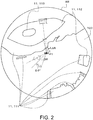
- Fig. 2 is a schematic plan view of an observation area AR including a transmitting and receiving location P1 of the weather radar apparatus 1 and the periphery thereof.
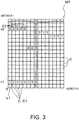
- Fig. 3 is a view conceptually illustrating a data structure stored in a memory 9 of the weather radar apparatus 1.
- Fig. 4 is a schematic view illustrating an elevation angle ⁇ and a blocking area 10 (101 and 102).
- Figs. 5 to 8 are views illustrating examples of an image displayed on a display screen 7a of an interface display device 7 of the weather radar apparatus 1.
- the weather radar apparatus 1 of this embodiment may be installed at the given transmitting and receiving location P1.
- the observing location P1 may be located on a flat surface 100 of the ground surface (flat ground).
- an obstacle 11 111, 112 and 113 may be located around the observing location P1.
- the weather radar apparatus 1 may observe a meteorological weather around the transmitting and receiving location P1. More specifically, the weather radar apparatus 1 may detect precipitation as a target around the transmitting and receiving location P1 and calculate a precipitation intensity. "Precipitation” here may mean moisture falling from the sky to the ground, such as rain, snow, graupel, and sleet.
- the weather radar apparatus 1 may adopt a dual polarization method. That is, the weather radar apparatus 1 may emit a transmission signal B1 including a horizontally polarized wave and a vertically polarized wave, and then receive a reception signal B2.
- the reception signal B2 may include a horizontally polarized wave reception signal and a vertically polarized wave reception signal.
- the reception signal B2 may include an echo signal caused by the transmission signal B1 reflecting on an object such as moisture within the atmosphere and the obstacle 11.
- the weather radar apparatus 1 may include an antenna 2, a circulator 3, an RF converter 4, a signal processing device 5, a power amplifier 6, and the interface display device 7.
- the interface display device 7 may include a user-interface panel (not illustrated) which may be operated by an operator. The operator may operate the weather radar apparatus 1 by controlling this user-interface panel.
- the antenna 2 may be a radar antenna (signal transmitting-receiving unit) capable of transmitting the transmission signal B1 having a narrow directivity. Further, the antenna 2 may be configured to be capable of receiving the reception signal B2. The weather radar apparatus 1 may measure time from the transmission of the transmission signal B1 to the reception of the reception signal B2. Thus, the weather radar apparatus 1 may detect a distance r to the object.
- the antenna 2 may be configured to be rotatable 360° on a horizontal plane. Moreover, the antenna 2 may be configured so that the elevation angle ⁇ may be changed within the range of 0° to 180°.
- the antenna 2 may be configured to repeatedly transmit and receive the signals B1 and B2 while changing the directions of transmitting and receiving the signals B1 and B2 (azimuth ⁇ , elevation angle ⁇ ).
- data indicating a currently oriented direction (azimuth ⁇ ) of the antenna 2 may be outputted from the antenna 2 to the signal processing device 5.
- the weather radar apparatus 1 may acquire the reached position of the reception signal B2, as polar coordinates of the distance r, the azimuth ⁇ (antenna angle), and the elevation angle ⁇ .
- the weather radar apparatus 1 may detect the periphery of the observing location P1 in a hemispherical shape.
- the observation area AR that is, the weather observable area of the weather radar apparatus 1 may be, for example, a circular area with a radius of about several km to several tens km, centering on the transmitting and receiving location P1 in a plan view. Further, the weather radar apparatus 1 may observe the precipitation intensity over a given altitude range.
- the operation from a transmission of the transmission signal B1 to a transmission of the next transmission signal B1 may also be referred to as “sweep.”
- the operation of rotating the antenna by 360° while transmitting and receiving the signals B1 and B2 may also be referred to as “scanning.”
- Example of the scanning operation in this embodiment may include a volume scan, an RHI scan, a sector RHI scan, a sector PPI scan, and a PPI scan.
- the circulator 3 may be configured to output the transmission signal outputted from the power amplifier 6 to the antenna 2. Further, the circulator 3 may be configured to output the reception signal B2 received by the antenna 2 to the RF converter 4.
- the RF converter 4 may up-convert and amplify to a given RF frequency band the transmission signal generated by a signal processor 8 of the signal processing device 5, and output it to the power amplifier 6.
- the power amplifier 6 may amplify the transmission signal and then output it to the circulator 3.
- the RF converter 4 may down-convert and amplify the received reception signal to an IF frequency band.
- the signal processing device 5 may include the signal processor 8 configured to process the reception signal, the memory 9, and a controller 15 configured to control the processing of the reception signal by the signal processor 8 based on blocking area specifying information (described later) stored in the memory 9.
- the signal processor 8 may be configured to detect the precipitation as a target in a given three-dimensional observation area AR using the reception signal B2 caused by the reflection of the transmission signal B1. Further, the signal processor 8 may be configured to calculate the precipitation intensity.
- the signal processor 8 and the controller 15 may be configured using hardware including a CPU, RAM(s), and ROM(s) (not illustrated). Moreover, the signal processor 8 and the controller 15 may be configured using software including a signal processing program stored in the ROM.
- the signal processing program may be a program which causes the signal processor 8 and the controller 9 to execute the detecting method of this embodiment.
- the hardware and the software may be configured to cooperate with each other.
- the signal processor 8 and the controller 15 may be configured to perform the processing described below for every scan.
- the signal processor 8 may AD-convert the amplified reception signal to sample the reception signal in an analog format and convert the amplified reception signal into a reception signal composed of a plurality of bits (reception data).
- the reception signal may include data specifying the intensity of the echo signal (echo level) in the reception signal B2 received by the antenna 2.
- the reception signal may include horizontally polarized wave reception data obtained by converting the horizontally polarized wave reception signal into digital data and vertically polarized wave reception data obtained by converting the vertically polarized wave reception signal into digital data.
- the signal processor 8 may calculate the precipitation intensity for every unit area ⁇ AR of the observation area AR using, for example, the horizontally polarized wave reception data and the vertically polarized wave reception data. Thus, the signal processor 8 may obtain a three-dimensional distribution of the precipitation intensity. In other words, the signal processor 8 may obtain the precipitation intensity for over the entire observation area AR.
- the signal processor 8 may calculate the precipitation intensity in each unit area ⁇ AR by using a polar coordinate system having the origin at the transmitting and receiving location P1. Note that in Fig. 2 , only some of the plurality of unit areas ⁇ AR are illustrated. In this embodiment, a dimension of the unit area ⁇ AR in an azimuth direction D ⁇ with respect to the transmitting and receiving location P1 may be set to about 0.5 deg.
- a dimension of the unit area ⁇ AR in a distance direction DR (a direction away from the observing location, radial direction) may be set to, for example, about 100m.
- a dimension of the unit area ⁇ AR in a height direction with respect to the transmitting and receiving location P1 may be set to, for example, several degrees of the elevation angle ⁇ . That is, the signal processor 8 may calculate the precipitation intensity for every unit area ⁇ AR having the width of 0.5 deg in the azimuth direction D ⁇ , the length of 100m in the distance direction DR, and the height of several degrees of the elevation angle ⁇ in the height direction D ⁇ .
- the signal processor 8 may generate data specifying the precipitation intensity for each unit area ⁇ AR. This data may be set so that the color displayed on the display screen 7a changes depending on the precipitation intensity.
- the signal processor 8 and the controller 15 may set part(s) of the observation area AR where it is impossible or practically impossible to receive the echo signal, as the blocking area 10 (101 and 102).
- the signal processor 8 may be configured not to display the observation result of the precipitation on the display screen 7a for the blocking area 10 (101 and 102).
- the signal processor 8 may be configured to change the processing of the reception signal B2 between a case where the antenna 2 receives the reception signal B2 from the unit area ⁇ AR where the obstacle 11 is located and a case where the antenna 2 receives the reception signal B2 from the unit area ⁇ AR where the obstacle 11 is not located.
- an echo EC may not be displayed.
- the signal processor 8 may set the echo level (value of echo data) detected in the blocking area 10 to a lowest value (zero) so that the echo data is not used in signal processing after this setting.
- the signal processor 8 may invalidate the echo data detected in the blocking area 10.
- the echo data detected in the blocking area 10 may be set to an invalid value so that the echo data is not used in signal processing after this setting.
- the signal processor 8 may add a flag to the echo data detected in the blocking area 10. In this case, the content of the signal processing after the flag addition may be changed depending on whether the flag is assigned in the reception signal.
- the signal processor 8 may output data specifying the precipitation intensity in each unit area ⁇ AR and data specifying the blocking area 10, to the interface display device 7.
- the display screen 7a of the interface display device 7 may display an image illustrating a precipitation distribution in the observation area AR. Details of this image are described later.
- the blocking area 10 may be an area farther than the obstacle 11 and where the transmission signal B1 emitted from the antenna 2 is blocked by the obstacle 11 (111, 112 and 113) and the detection by the transmission signal B1 is impossible.
- the obstacle 11 (111, 112 and 113) described above may include structures (such as a building), a mountain, etc.
- the signal processor 8 may be connected to the memory 9 and the controller 15.
- the memory 9 may store the blocking area specifying information as information used by the signal processor 8.
- the memory 9 may be a nonvolatile memory device formed using a storage medium such as an HDD (Hard Disk Drive), an SSD (Solid State Drive), a ROM (Read Only Memory), etc.
- the memory 9 may store a data structure expressed by a matrix MT illustrated in Fig. 3 .
- the memory 9 may store in a two-dimensional data structure, the blocking area specifying information in which the height of the obstacle 11 is specified by a single parameter ⁇ and plane coordinates of the obstacle 11 are specified by two parameters r and ⁇ .
- the two-dimensional data structure may be a matrix structure including a plurality of cells C.
- the matrix MT including the plurality of cells C may be defined.
- the controller 15 may be configured to be capable of causing the signal processor 8 to display the matrix MT (blocking area specifying information specified by the two-dimensional data structure) as an image on the display screen 7a.
- the two parameters r and ⁇ may define the plane coordinates for each of the plurality of unit areas ⁇ AR at the bottom (ground surface) of the observation area AR.
- the single parameter ⁇ may specify the height of the obstacle 11 as an elevation angle.
- the memory 9 may store the blocking area specifying information specified by these r, ⁇ and ⁇ in the two-dimensional data structure defined by the cells C arranged in a matrix.
- the blocking area specifying information may be stored in the memory 9 in advance at the time of shipping the weather radar apparatus 1 or may be stored in the memory 9 additionally through a network line after the weather radar apparatus 1 is shipped.
- two parameters r and ⁇ out of the three parameters r, ⁇ and ⁇ may be defined as a component constituting a row and a component constituting a column, respectively.
- the other one parameter ⁇ among the three parameters r, ⁇ and ⁇ may be stored in the cell C corresponding to the unit area ⁇ AR where the obstacle 11 is located at the bottom of the observation area AR.
- the plane coordinates may be the polar coordinates having the origin at the transmitting and receiving location P1 where the transmission signal B1 is transmitted and the reception signal B2 is received.
- the two parameters r and ⁇ defining the plane coordinates may be a coordinate in the azimuth direction D ⁇ around the transmitting and receiving location P1 (azimuth ⁇ ) and a coordinate in the distance direction DR from the transmitting and receiving location P1 (distance r).
- each cell C may be associated with a corresponding unit area ⁇ AR at the bottom of the observation area AR. That is, each cell C may be defined as a cell indicating the corresponding unit area ⁇ AR at the bottom of the observation area AR. Further in each cell C of the matrix MT, the two parameters r and ⁇ specifying the plane coordinates in the corresponding unit area ⁇ AR at the bottom of the observation area AR may be defined as the component constituting the row and the component constituting the column.
- one parameter ⁇ may indicate a position in the azimuth direction D ⁇ from the transmitting and receiving location P1 (origin O), and be defined as the component constituting the column (horizontal axis) in the matrix MT.
- the other parameter r may indicate a position in the distance direction DR from the transmitting and receiving location P1 (origin O), and be defined as the component constituting the row (vertical axis) in the matrix MT. Note that the position of each cell C may be arranged corresponding to the position of the above-described unit area ⁇ AR.
- one parameter ⁇ specifying the height of the obstacle 11 may be stored.
- This parameter ⁇ may be the elevation angle ⁇ of the obstacle 11, having the origin at the transmitting and receiving location P1. Note that in Fig. 4 , the elevation angle ⁇ may indicate an exaggerated value which is higher than an actual value.
- a case may be considered in which the obstacle 11 (obstacles 111 and 112) is located in a state where the antenna 2 at the transmitting and receiving location P1 is oriented in an azimuth direction D ⁇ corresponding to a given column L1 in the matrix MT.
- the plurality of obstacles 111 and 112 may be located in the transmission direction of the transmission signal B1 (distance direction DR).
- a distance r2 from the transmitting and receiving location P1 to the obstacle 112 may be longer than a distance r1 from the transmitting and receiving location P1 to the obstacle 111.
- the obstacle 11 may not be located between the transmitting and receiving location P1 and the obstacle 111. Therefore, the transmission signal B1 emitted from the antenna 2 at the transmitting and receiving location P1 may reach, without being blocked, to the position at which the obstacle 111 is located.
- the cell C in the zero-th row to the cell C in one row before the row corresponding to the position of the obstacle 111 (the cell C in the first row from the origin O, the cell C adjacent to the cell C corresponding to the distance r1) may be blank.
- the cell C corresponding to the unit area ⁇ AR where the obstacle 11 is not located may be a blank cell which does not store data.
- an elevation angle ⁇ 1 of the obstacle 111 from the transmitting and receiving location P1 may be 1 deg.
- the elevation angle ⁇ of the transmission signal B1 emitted from the antenna 2 may be equal to or smaller than the elevation angle ⁇ 1 (1 deg)
- the transmission signal B1 may be blocked by the obstacle 111 and not reach beyond the obstacle 111. Therefore, the reception signal B2 when the elevation angle ⁇ is equal to or smaller than the elevation angle ⁇ 1 may not indicate a result of observing beyond the obstacle 111.
- the elevation angle ⁇ may be a tilt angle of the transmission signal B1 with respect to the horizontal plane.
- the elevation angle ⁇ of the transmission signal B1 immediately before the transmission signal B1 no longer intersects with the obstacle 11 may be defined as the elevation angle ⁇ 1 with respect to the given obstacle 11.
- An elevation angle ⁇ 2 of the obstacle 112 from the antenna 2 may be 2 deg.
- the elevation angle ⁇ of the transmission signal B1 emitted from the antenna 2 is equal to or smaller than the elevation angle ⁇ 2 (2 deg)
- the transmission signal B1 may be blocked by the obstacle 112 and not reach beyond the obstacle 112. Therefore, the reception signal B2 when the elevation angle ⁇ is equal to or smaller than the elevation angle ⁇ 2 may not indicate a result of observing beyond the obstacle 112. Therefore, among the cells C of the matrix MT, in the cell C2 corresponding to the position of the obstacle 112, data indicating that the elevation angle ⁇ of the obstacle 112 is the elevation angle ⁇ 2 may be stored.
- data indicating that the elevation angle ⁇ is an elevation angle ⁇ 3 may be stored in a cell C (not illustrated) corresponding to the position of the obstacle 113.
- the parameter for specifying the elevation angle ⁇ (height) of the obstacle 11 may be set to become higher in a stepwise fashion as the distance from the transmitting and receiving location P1 to the obstacle 11 (111, 112 and 113) becomes longer.
- the cell between the cell C1 corresponding to the position at which the obstacle 111 is located and the cell C2 corresponding to the position at which the obstacle 112 is located may be blank.
- the data storage amount may be reduced.
- the parameter ⁇ may be stored only when the value of the parameter ⁇ increases in the case where the parameter r in the distance direction DR having the origin at the transmitting location P1 increases.
- the matrix MT may store information on the elevation angle ⁇ (height) of the obstacle 11 in the cell C corresponding to the location where the obstacle 11 is located.
- the signal processor 8 may be controlled by the controller 15 to display the blocking area 10 on the display screen 7a by using the blocking area specifying information stored in the memory 9.
- the signal processor 8 may refer to the data stored in the memory 9 for each three-dimensional unit area ⁇ AR. For the unit area ⁇ AR where the blocking area 10 is located, data indicating that the unit area ⁇ AR is the blocking area 10 may be generated.
- the signal processor 8 may calculate the precipitation intensity by the processing described above, and generate color data etc. for displaying the precipitation intensity on the display screen.
- the signal processor 8 may be configured to change the processing of the reception signal between the case where the antenna 2 transmits the transmission signal B1 to the unit area ⁇ AR where the obstacle 11 is located, and the case where the antenna 2 transmits the transmission signal B1 to the unit area ⁇ AR where the obstacle 11 is not located.
- the signal processor 8 may be configured to generate display data for displaying an index indicating reliability of the reception signal in association with the blocking area specifying information, and to display an image based on the display data on the display screen 7a.
- the signal processor 8 may output data specifying the blocking area 10 or the precipitation intensity for each unit area ⁇ AR as image data to the interface display device 7. Based on this image, the interface display device 7 may display the detection result of the weather radar apparatus 1 on the display screen 7a.
- Fig. 5 illustrates a case where the observation result measured using the transmission signal B1 with the elevation angle ⁇ of 1 deg or smaller is displayed on the display screen 7a as a cross-sectional view of the elevation angle ⁇ .
- illustration of the coarse hatching C1 may indicate that the position corresponding to a position farther than the obstacle 111 when seen from the transmitting and receiving location P1 on the display screen 7a is the blocking area 10 (101).
- echo images EC1 to EC4 indicating precipitation areas may be displayed by cross hatching.
- the portion overlapping with the hatching C1 which indicates the blocking area 10 may be displayed differently from the portion not overlapping with the hatching C1.
- a change mode of the color may include displaying in an inversion color or by overlaying gray (transparent color) with layer processing.
- the blocking area 10 there may be a portion where the transmission signal B1 is not completely blocked because the beam (transmission signal B1) has a width. In such a portion, the echo level of the reception signal B2 may become weak and it may be difficult to accurately observe the precipitation.
- Fig. 6 illustrates a case where the observation result measured using the transmission signal B1 with the elevation angle ⁇ of 2 deg or smaller is displayed on the display screen 7a as a cross-sectional view of the elevation angle ⁇ .
- illustration of the fine hatching C2 may indicate that the position corresponding to a position farther than the obstacle 112 when seen from the transmitting and receiving location P1 on the display screen 7a is the blocking area 10 (102).
- echo images EC5 to EC9 indicating precipitation areas may be displayed by cross hatching.
- the portion overlapping with the hatching C2 which indicates the blocking area 10 may be displayed differently from the portion not overlapping with the hatching C2.
- the different display mode here may be the same as the observation result at the elevation angle ⁇ 1.
- Fig. 7 illustrates a case where the observation result measured using the transmission signal B1 with an elevation angle ⁇ larger than 2 deg is displayed on the display screen 7a as a cross-sectional view of the elevation angle ⁇ .
- the transmission signal B1 since the transmission signal B1 is not blocked by the blocking area 10 (101, 102 and 103), no indication of the blocking area 10 may be displayed on the display screen 7a.
- echo images EC10 to EC14 indicating precipitation areas may be displayed.
- the controller 15 may be configured to be capable of causing the signal processor 8 to display the matrix MT (blocking area specifying information specified by the two-dimensional data structure) as an image on the display screen 7a.
- the matrix MT blocking area specifying information specified by the two-dimensional data structure
- the controller 15 may be configured to be capable of causing the signal processor 8 to display the matrix MT (blocking area specifying information specified by the two-dimensional data structure) as an image on the display screen 7a.
- the blocking area 10 (101, 102 and 103) corresponding to the elevation angles ⁇ 1, ⁇ 2 and ⁇ 3 may be displayed on the display screen 7a by the hatchings C1, C2 and C3 as an example.
- This display may be performed separately from displaying the echo EC.
- the illustration in Fig. 8 is two-dimensional, it may also be displayed as a three-dimensional image. Note that, instead of the display of Fig. 8 , the matrix MT in Fig. 3 itself may be displayed.
- the two-dimensional data structure stored in the memory 9 may include the blocking area specifying information in which the height of the obstacle 11 when the obstacle 11 blocking the transmission signal B1 in the observation area AR is located is specified by the single parameter ⁇ .
- the data structure which specifies the blocking area 10 in the three-dimensional observation area AR may be achieved with a small data amount. That is, this data structure may not need to be set for every unit height (unit elevation angle) of the observation area AR, and an extremely large number of three-dimensionally arranged cells (database) may not be needed. Therefore, according to this embodiment, the blocking area 10 where the transmission signal B1 is blocked at the time of observation by the weather radar apparatus 1 may be specified with an even smaller data amount. Further, the processing required for calculating the precipitation intensity which takes into consideration the blocking area 10 may be simplified.
- the plane coordinates of the obstacle 10 may be specified with a simple and small data amount of two parameters r and ⁇ .
- each cell C two parameters (r and ⁇ ) specifying the plane coordinates of each unit area ⁇ AR may be defined as the component constituting the row and the component constituting the column in the matrix MT.
- the parameter specifying the height of the obstacle 11 may be stored in the corresponding cell C.
- each unit area ⁇ AR may be an area specified by the polar coordinates having the origin at the transmitting and receiving location P1.
- the parameter specifying the height of the obstacle 11 may be the elevation angle ⁇ of the obstacle 11 having the origin at the transmitting and receiving location P1.
- a parameter suitable for specifying the obstacle 11 by taking into consideration the rectilinearity of the transmission signal B1 may be stored in the corresponding cell C of the matrix MT.
- the matrix MT may store the parameter ⁇ only when the value of the parameter ⁇ specifying the height of the obstacle 11 increases.
- the signal processor 8 may be configured to change the processing of the reception signal between the case where the transmission signal B1 is transmitted to the unit area ⁇ AR where the obstacle 11 is located and the case where the transmission signal B1 is transmitted to the unit area ⁇ AR where the obstacle 11 is not located.
- the presence of the blocking area 10 may clearly be displayed on the display screen 7a.
- the signal processor 8 may be configured to display the blocking area specifying information specified by the two-dimensional data structure, in at least one mode among a table of the matrix (matrix MT), the two-dimensional image, and the three-dimensional image.
- the signal processor 8 may be configured to generate the index indicating the reliability of the reception signal.
- the reliability index and the blocking area specifying information may be displayed on the display screen 7a in association with topography data of the observation area AR.
- highly reliable echoes echoes EC not overlapping with the hatchings C1 and C2 indicating the blocking area 10
- the echo EC caused by the reception signal B1 from the obstacle 11 may have comparatively low reliability and be displayed in a manner which indicates the low reliability.
- the operator can more reliably recognize the reliability of the echo indicating precipitation.
- the present disclosure may broadly be applied as a detection apparatus and a detecting method.
Landscapes
- Engineering & Computer Science (AREA)
- Radar, Positioning & Navigation (AREA)
- Remote Sensing (AREA)
- Physics & Mathematics (AREA)
- Computer Networks & Wireless Communication (AREA)
- General Physics & Mathematics (AREA)
- Electromagnetism (AREA)
- Radar Systems Or Details Thereof (AREA)
Applications Claiming Priority (2)
| Application Number | Priority Date | Filing Date | Title |
|---|---|---|---|
| JP2015018695 | 2015-02-02 | ||
| PCT/JP2015/085007 WO2016125399A1 (ja) | 2015-02-02 | 2015-12-15 | 探知装置、および、探知方法 |
Publications (2)
| Publication Number | Publication Date |
|---|---|
| EP3255452A1 true EP3255452A1 (de) | 2017-12-13 |
| EP3255452A4 EP3255452A4 (de) | 2018-09-12 |
Family
ID=56563756
Family Applications (1)
| Application Number | Title | Priority Date | Filing Date |
|---|---|---|---|
| EP15881216.4A Withdrawn EP3255452A4 (de) | 2015-02-02 | 2015-12-15 | Erkennungsvorrichtung und erkennungsverfahren |
Country Status (4)
| Country | Link |
|---|---|
| US (1) | US10620311B2 (de) |
| EP (1) | EP3255452A4 (de) |
| JP (1) | JP6466480B2 (de) |
| WO (1) | WO2016125399A1 (de) |
Families Citing this family (6)
| Publication number | Priority date | Publication date | Assignee | Title |
|---|---|---|---|---|
| JP6896319B2 (ja) * | 2017-02-02 | 2021-06-30 | 日本無線株式会社 | レーダ受信信号処理装置、プログラム及び方法 |
| JP6896318B2 (ja) * | 2017-02-02 | 2021-06-30 | 日本無線株式会社 | レーダ受信信号処理装置、プログラム及び方法 |
| JP7051081B2 (ja) * | 2017-12-06 | 2022-04-11 | 国立研究開発法人宇宙航空研究開発機構 | 信号処理装置及び信号処理方法 |
| CN110596787A (zh) * | 2019-08-29 | 2019-12-20 | 成都锦江电子系统工程有限公司 | 一种基于x波段全固态双偏振雨量雷达的降水估测方法 |
| CN113096122A (zh) * | 2021-05-06 | 2021-07-09 | 中国科学院地质与地球物理研究所 | 流星检测方法、装置及电子设备 |
| CN115144869B (zh) * | 2022-09-05 | 2022-11-29 | 北京理工大学 | 基于太赫兹雷达的曲面物体检测方法及装置 |
Family Cites Families (25)
| Publication number | Priority date | Publication date | Assignee | Title |
|---|---|---|---|---|
| JPH077055B2 (ja) | 1988-01-13 | 1995-01-30 | 三菱電機株式会社 | 気象用レーダのデータ合成装置 |
| US5202690A (en) * | 1992-06-02 | 1993-04-13 | Frederick Philip R | Automatic horizontal and vertical scanning radar |
| US5583972A (en) * | 1993-08-02 | 1996-12-10 | Miller; Richard L. | 3-D weather display and weathercast system |
| JPH07181245A (ja) | 1993-12-22 | 1995-07-21 | Mitsubishi Denki Eng Kk | レーダ装置 |
| US5648782A (en) * | 1995-10-03 | 1997-07-15 | University Corporation For Atmospheric Research | Microburst detection system |
| JPH10104356A (ja) | 1996-10-01 | 1998-04-24 | Toshiba Corp | 気象レーダ装置 |
| US5907568A (en) * | 1996-11-22 | 1999-05-25 | Itt Manufacturing Enterprises, Inc. | Integrated precision approach radar display |
| JP3247623B2 (ja) | 1996-12-03 | 2002-01-21 | 東芝エンジニアリング株式会社 | 降雨情報表示方法及びその装置 |
| US6266063B1 (en) * | 1997-10-20 | 2001-07-24 | Baron Services, Inc. | Real-time three-dimensional weather display method and weathercast system |
| JP3356985B2 (ja) | 1998-01-20 | 2002-12-16 | 三菱電機株式会社 | レーダ装置 |
| US6469664B1 (en) * | 1999-10-05 | 2002-10-22 | Honeywell International Inc. | Method, apparatus, and computer program products for alerting surface vessels to hazardous conditions |
| JP2001118054A (ja) | 1999-10-18 | 2001-04-27 | Wanami Tsusho:Kk | コンピューターによる短波長発振波通信の地形障害に係るシミュレーション計算とその表現 |
| JP2001242246A (ja) | 2000-03-01 | 2001-09-07 | Mitsubishi Electric Corp | レーダ装置 |
| JP2001296116A (ja) | 2000-04-14 | 2001-10-26 | Mitsubishi Electric Corp | 複数センサの制御装置 |
| JP2004354252A (ja) | 2003-05-29 | 2004-12-16 | Toshiba Corp | Dbfレーダ受信装置 |
| US20050100076A1 (en) * | 2003-08-04 | 2005-05-12 | Gazdzinski Robert F. | Adaptive holographic wideband communications apparatus and methods |
| JP4421492B2 (ja) | 2005-02-08 | 2010-02-24 | 株式会社東芝 | 気象予測システム及びその同化処理方法 |
| JP2007248355A (ja) * | 2006-03-17 | 2007-09-27 | Hitachi Engineering & Services Co Ltd | 気象データ推定装置及び方法 |
| FR2917506B1 (fr) * | 2007-06-15 | 2010-10-22 | Thales Sa | Procede de stockage de mesures prises par un radar |
| JP4667426B2 (ja) | 2007-06-26 | 2011-04-13 | 三菱電機株式会社 | 気象レーダ装置 |
| JP4613934B2 (ja) | 2007-07-18 | 2011-01-19 | 三菱電機株式会社 | 気象レーダ装置 |
| JP2009069020A (ja) | 2007-09-13 | 2009-04-02 | Toshiba Corp | レーダ装置 |
| US7969349B2 (en) * | 2009-04-06 | 2011-06-28 | Raytheon Company | System and method for suppressing close clutter in a radar system |
| JP5429493B2 (ja) | 2010-07-13 | 2014-02-26 | 東京電力株式会社 | 降雨観測設備の投資計画評価方法 |
| US8604963B1 (en) * | 2010-09-28 | 2013-12-10 | Rockwell Collins, Inc. | Radar system and method |
-
2015
- 2015-12-15 WO PCT/JP2015/085007 patent/WO2016125399A1/ja not_active Ceased
- 2015-12-15 US US15/548,320 patent/US10620311B2/en active Active
- 2015-12-15 EP EP15881216.4A patent/EP3255452A4/de not_active Withdrawn
- 2015-12-15 JP JP2016573200A patent/JP6466480B2/ja active Active
Also Published As
| Publication number | Publication date |
|---|---|
| JPWO2016125399A1 (ja) | 2017-11-24 |
| EP3255452A4 (de) | 2018-09-12 |
| US10620311B2 (en) | 2020-04-14 |
| JP6466480B2 (ja) | 2019-02-06 |
| WO2016125399A1 (ja) | 2016-08-11 |
| US20180017676A1 (en) | 2018-01-18 |
Similar Documents
| Publication | Publication Date | Title |
|---|---|---|
| US10620311B2 (en) | Detection apparatus and detecting method | |
| US10685469B1 (en) | Aviation display depiction of weather threats | |
| US10494108B1 (en) | System and method for providing icing condition warnings | |
| US9864055B1 (en) | Weather radar system and method for detecting a high altitude crystal cloud condition | |
| US20200072764A1 (en) | Determining material category based on the polarization of received signals | |
| US9329266B2 (en) | Weather radar apparatus, observation sequence generation method, and observation sequence generation program | |
| US8451163B2 (en) | Weather radar apparatus and weather observation method | |
| US9823347B1 (en) | Weather radar system and method for high altitude crystal warning interface | |
| CN110726980A (zh) | 一种机载相控阵天气雷达对地表杂波的分析方法 | |
| CN111090106A (zh) | 一种大气能见度测量系统、方法及装置 | |
| CN116609743B (zh) | 一种雷达标定方法及装置 | |
| CN104614722B (zh) | 一种基于信噪比识别雷达遮挡的方法 | |
| JP2007248293A (ja) | 海洋レーダ装置 | |
| JP6586462B2 (ja) | 水蒸気観測装置 | |
| JP6445145B2 (ja) | 降水強度算出装置、気象レーダ装置、降水強度算出方法、及び降水強度算出プログラム | |
| CN106772385A (zh) | 一种基于毫米波雷达的港口航道海雾探测方法及系统 | |
| US10809369B2 (en) | Radar signal processing apparatus and radar signal processing method | |
| Alford et al. | Rapid update, flexible, and advanced scanning concepts demonstrated by the NSSL advanced technology demonstrator phased array radar in CY24 | |
| Su et al. | A comparative study on quantitative precipitation estimation based on GPM satellite and X-band phased-array weather radar | |
| CN116821623B (zh) | 一种短时强降水识别方法、装置及设备 | |
| US20240192319A1 (en) | Clutter detection apparatus, weather observation system, clutter detection method, and program | |
| Dyrcz | WR 2120 weather radar in support of navigation safety–operational experience | |
| US20250208257A1 (en) | Detecting hardware failure in a radar system based on comparing actual and expected radar data | |
| KR200225811Y1 (ko) | 디지털레이더시스템 | |
| Challa et al. | REVIEW OF WEATHER RADARS-PAST, PRESENT AND THE SCOPE FOR FURTURE MODIFICATIONS WITH TECHNOLOGY INNOVATION |
Legal Events
| Date | Code | Title | Description |
|---|---|---|---|
| STAA | Information on the status of an ep patent application or granted ep patent |
Free format text: STATUS: THE INTERNATIONAL PUBLICATION HAS BEEN MADE |
|
| PUAI | Public reference made under article 153(3) epc to a published international application that has entered the european phase |
Free format text: ORIGINAL CODE: 0009012 |
|
| STAA | Information on the status of an ep patent application or granted ep patent |
Free format text: STATUS: REQUEST FOR EXAMINATION WAS MADE |
|
| 17P | Request for examination filed |
Effective date: 20170727 |
|
| AK | Designated contracting states |
Kind code of ref document: A1 Designated state(s): AL AT BE BG CH CY CZ DE DK EE ES FI FR GB GR HR HU IE IS IT LI LT LU LV MC MK MT NL NO PL PT RO RS SE SI SK SM TR |
|
| AX | Request for extension of the european patent |
Extension state: BA ME |
|
| DAV | Request for validation of the european patent (deleted) | ||
| DAX | Request for extension of the european patent (deleted) | ||
| A4 | Supplementary search report drawn up and despatched |
Effective date: 20180810 |
|
| RIC1 | Information provided on ipc code assigned before grant |
Ipc: G01S 13/95 20060101ALI20180806BHEP Ipc: G01S 7/295 20060101AFI20180806BHEP Ipc: G01S 7/53 20060101ALI20180806BHEP |
|
| STAA | Information on the status of an ep patent application or granted ep patent |
Free format text: STATUS: EXAMINATION IS IN PROGRESS |
|
| 17Q | First examination report despatched |
Effective date: 20191220 |
|
| STAA | Information on the status of an ep patent application or granted ep patent |
Free format text: STATUS: THE APPLICATION IS DEEMED TO BE WITHDRAWN |
|
| 18D | Application deemed to be withdrawn |
Effective date: 20200603 |