EP3258426A1 - Automatische zustandsüberwachung und anomaliedetektion für prädiktive wartung - Google Patents
Automatische zustandsüberwachung und anomaliedetektion für prädiktive wartung Download PDFInfo
- Publication number
- EP3258426A1 EP3258426A1 EP16002726.4A EP16002726A EP3258426A1 EP 3258426 A1 EP3258426 A1 EP 3258426A1 EP 16002726 A EP16002726 A EP 16002726A EP 3258426 A1 EP3258426 A1 EP 3258426A1
- Authority
- EP
- European Patent Office
- Prior art keywords
- computer
- target sensor
- sensor
- sensors
- difference
- Prior art date
- Legal status (The legal status is an assumption and is not a legal conclusion. Google has not performed a legal analysis and makes no representation as to the accuracy of the status listed.)
- Ceased
Links
Images


Classifications
-
- G—PHYSICS
- G06—COMPUTING OR CALCULATING; COUNTING
- G06Q—INFORMATION AND COMMUNICATION TECHNOLOGY [ICT] SPECIALLY ADAPTED FOR ADMINISTRATIVE, COMMERCIAL, FINANCIAL, MANAGERIAL OR SUPERVISORY PURPOSES; SYSTEMS OR METHODS SPECIALLY ADAPTED FOR ADMINISTRATIVE, COMMERCIAL, FINANCIAL, MANAGERIAL OR SUPERVISORY PURPOSES, NOT OTHERWISE PROVIDED FOR
- G06Q10/00—Administration; Management
- G06Q10/20—Administration of product repair or maintenance
-
- G—PHYSICS
- G06—COMPUTING OR CALCULATING; COUNTING
- G06F—ELECTRIC DIGITAL DATA PROCESSING
- G06F11/00—Error detection; Error correction; Monitoring
- G06F11/07—Responding to the occurrence of a fault, e.g. fault tolerance
- G06F11/0703—Error or fault processing not based on redundancy, i.e. by taking additional measures to deal with the error or fault not making use of redundancy in operation, in hardware, or in data representation
- G06F11/0706—Error or fault processing not based on redundancy, i.e. by taking additional measures to deal with the error or fault not making use of redundancy in operation, in hardware, or in data representation the processing taking place on a specific hardware platform or in a specific software environment
-
- G—PHYSICS
- G06—COMPUTING OR CALCULATING; COUNTING
- G06F—ELECTRIC DIGITAL DATA PROCESSING
- G06F11/00—Error detection; Error correction; Monitoring
- G06F11/07—Responding to the occurrence of a fault, e.g. fault tolerance
- G06F11/0703—Error or fault processing not based on redundancy, i.e. by taking additional measures to deal with the error or fault not making use of redundancy in operation, in hardware, or in data representation
- G06F11/0751—Error or fault detection not based on redundancy
- G06F11/0754—Error or fault detection not based on redundancy by exceeding limits
-
- G—PHYSICS
- G06—COMPUTING OR CALCULATING; COUNTING
- G06F—ELECTRIC DIGITAL DATA PROCESSING
- G06F11/00—Error detection; Error correction; Monitoring
- G06F11/07—Responding to the occurrence of a fault, e.g. fault tolerance
- G06F11/0703—Error or fault processing not based on redundancy, i.e. by taking additional measures to deal with the error or fault not making use of redundancy in operation, in hardware, or in data representation
- G06F11/0766—Error or fault reporting or storing
- G06F11/0769—Readable error formats, e.g. cross-platform generic formats, human understandable formats
-
- G—PHYSICS
- G06—COMPUTING OR CALCULATING; COUNTING
- G06F—ELECTRIC DIGITAL DATA PROCESSING
- G06F11/00—Error detection; Error correction; Monitoring
- G06F11/07—Responding to the occurrence of a fault, e.g. fault tolerance
- G06F11/0703—Error or fault processing not based on redundancy, i.e. by taking additional measures to deal with the error or fault not making use of redundancy in operation, in hardware, or in data representation
- G06F11/0766—Error or fault reporting or storing
- G06F11/0784—Routing of error reports, e.g. with a specific transmission path or data flow
-
- G—PHYSICS
- G06—COMPUTING OR CALCULATING; COUNTING
- G06F—ELECTRIC DIGITAL DATA PROCESSING
- G06F11/00—Error detection; Error correction; Monitoring
- G06F11/30—Monitoring
- G06F11/3003—Monitoring arrangements specially adapted to the computing system or computing system component being monitored
- G06F11/3006—Monitoring arrangements specially adapted to the computing system or computing system component being monitored where the computing system is distributed, e.g. networked systems, clusters, multiprocessor systems
-
- G—PHYSICS
- G06—COMPUTING OR CALCULATING; COUNTING
- G06F—ELECTRIC DIGITAL DATA PROCESSING
- G06F11/00—Error detection; Error correction; Monitoring
- G06F11/30—Monitoring
- G06F11/3065—Monitoring arrangements determined by the means or processing involved in reporting the monitored data
-
- G—PHYSICS
- G06—COMPUTING OR CALCULATING; COUNTING
- G06F—ELECTRIC DIGITAL DATA PROCESSING
- G06F11/00—Error detection; Error correction; Monitoring
- G06F11/30—Monitoring
- G06F11/34—Recording or statistical evaluation of computer activity, e.g. of down time, of input/output operation ; Recording or statistical evaluation of user activity, e.g. usability assessment
- G06F11/3409—Recording or statistical evaluation of computer activity, e.g. of down time, of input/output operation ; Recording or statistical evaluation of user activity, e.g. usability assessment for performance assessment
-
- G—PHYSICS
- G06—COMPUTING OR CALCULATING; COUNTING
- G06F—ELECTRIC DIGITAL DATA PROCESSING
- G06F11/00—Error detection; Error correction; Monitoring
- G06F11/30—Monitoring
- G06F11/34—Recording or statistical evaluation of computer activity, e.g. of down time, of input/output operation ; Recording or statistical evaluation of user activity, e.g. usability assessment
- G06F11/3447—Performance evaluation by modeling
-
- G—PHYSICS
- G06—COMPUTING OR CALCULATING; COUNTING
- G06F—ELECTRIC DIGITAL DATA PROCESSING
- G06F11/00—Error detection; Error correction; Monitoring
- G06F11/30—Monitoring
- G06F11/34—Recording or statistical evaluation of computer activity, e.g. of down time, of input/output operation ; Recording or statistical evaluation of user activity, e.g. usability assessment
- G06F11/3452—Performance evaluation by statistical analysis
-
- G—PHYSICS
- G06—COMPUTING OR CALCULATING; COUNTING
- G06N—COMPUTING ARRANGEMENTS BASED ON SPECIFIC COMPUTATIONAL MODELS
- G06N20/00—Machine learning
-
- G—PHYSICS
- G06—COMPUTING OR CALCULATING; COUNTING
- G06N—COMPUTING ARRANGEMENTS BASED ON SPECIFIC COMPUTATIONAL MODELS
- G06N7/00—Computing arrangements based on specific mathematical models
- G06N7/01—Probabilistic graphical models, e.g. probabilistic networks
-
- G—PHYSICS
- G06—COMPUTING OR CALCULATING; COUNTING
- G06F—ELECTRIC DIGITAL DATA PROCESSING
- G06F2201/00—Indexing scheme relating to error detection, to error correction, and to monitoring
- G06F2201/81—Threshold
-
- G—PHYSICS
- G06—COMPUTING OR CALCULATING; COUNTING
- G06F—ELECTRIC DIGITAL DATA PROCESSING
- G06F2201/00—Indexing scheme relating to error detection, to error correction, and to monitoring
- G06F2201/875—Monitoring of systems including the internet
Definitions
- a network of physical objects including devices, vehicles, buildings and other items, each embedded with electronics, software, sensors, and network connectivity that enables the objects to collect and exchange data, can be referred to as an "internet of things.”
- the internet of things can enable objects to be sensed and controlled remotely across existing network infrastructure, which can enable integration of the physical world into computer-based systems.
- Each object can be uniquely identifiable through its embedded computing system and can be able to interoperate within existing network infrastructures, such as the Internet.
- the objects, or “things” can refer to a wide variety of devices such as heart monitoring implants, biochip transponders on farm animals, electric clams in coastal waters, automobiles with built-in sensors, or other types of objects.
- the present disclosure describes methods and systems, including computer-implemented methods, computer program products, and computer systems for automatic anomaly detection for predictive maintenance.
- a particular sensor is indicated as a target sensor and the other sensors as input sensors.
- a regression model is trained using historical data from the plurality of related sensors. The trained regression model is applied to the target sensor to generate a predicted target sensor value. A difference between an actual target sensor value and the predicted target sensor value is calculated. A probability of difference for the calculated difference between the actual target sensor value and the predicted target sensor value is compared against a threshold value.
- the above-described implementation is implementable using a computer-implemented method; a non-transitory, computer-readable medium storing computer-readable instructions to perform the computer-implemented method; and a computer system comprising a computer memory interoperably coupled with a hardware processor configured to perform the computer-implemented method/the instructions stored on the non-transitory, computer-readable medium.
- automatic predictive maintenance can be performed without the collection, validation and labelling of equipment states.
- automatic predictive maintenance can reduce maintenance costs, prevent equipment breakdowns, prevent risk of collateral damage, reduce secondary failures, and prolong equipment life.
- automatic predictive maintenance can be performed in real time without human intervention.
- underlying relationships between sensors in a sensor network can be identified.
- automatic predictive maintenance can be performed in a generic way, without requiring specific configuration or pre-knowledge.
- Predictive maintenance can be used to capture equipment behavior, predict equipment failure with sufficient warning before failures occur, and prevent occurrence of failures by performing maintenance. Monitoring for future possible failures allows maintenance to be planned before an actual failure occurs. Using predictive maintenance techniques, equipment status can be monitored in real time and failure alarms can be arisen automatically when failure is likely to occur. Benefits of using predictive maintenance includes minimizing maintenance cost, avoiding equipment breakdown, preventing risk of collateral damage and secondary failure, prolonging equipment life, etc.. With predictive maintenance, condition monitoring can be performed which includes using sensors included in equipment to monitor the running of the equipment. Sensor data can be collected at a given frequency from the sensors. The sensor information can represent equipment states in a series of time.
- each sensor record can be labelled to indicate whether there is a failure occurring to the equipment when the sensor record is collected.
- Supervised learning algorithms can be used to analyze the sensor information with the purpose of predictive maintenance. Time series analysis and trend analysis can be used to monitor whether the equipment is trending towards failure and to predict future possible behavior.
- Supervised predictive maintenance can pose a number of challenges.
- the use of and the number of sensors in sensor networks continues to increase, as does a rate of data collection from sensors in sensor networks.
- An increasing number of sensors and sensor data records can result in a difficulty in attempting to label all sensor records.
- it can be challenge to determine and validate equipment status.
- Equipment failures can be regarded as rare events, and can be hard to identify and label correctly. Data may need to be collected for a long time before data indicating an equipment failure is detected.
- Supervised approaches can include manual configuration of supervised learning algorithms, including multiple types of equipment with various types of sensors. Instead of using a supervised approach for predictive maintenance, an automatic approach for condition monitoring and predictive maintenance can be used, as described in more detail below.
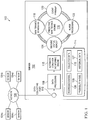
- FIG. 1 is a block diagram of an example system 100 for automatic anomaly detection for predictive maintenance, according to an implementation.
- a server 102 is connected to various sensors 104a, 104b, 104c, and 104d over a network 106.
- a data processing component 108 can collect data from the sensors 104a, 104b, 104c, and 104d, using a data collecting port 110, and store the received data as collected data 112 in a repository 114.
- An automatic condition monitoring engine 115 included in a predictive maintenance engine 116 can analyze the collected data 112 to detect anomalies.
- a maintenance scheduler 118 can be used to schedule maintenance for a sensor associated with the detected anomaly.
- An event handler 120 can detect when one or more anomalies correspond to a predefined event. If an event occurs, an alarm processing component 122 can notify registered parties. For example, an alarm notification can be sent to a client device.
- the predictive maintenance engine 116 can be configured to generate and send machine status reports 124 to an administrator device or to other recipients.
- the automatic condition monitoring engine 115 can be configured to detect and analyze relationships among a group of related sensors.
- a group of related sensors can be in a same item of equipment.
- the automatic condition monitoring engine 115 can analyze the behavior of each sensor based on the behavior of other related sensors.
- a sensor value for a particular sensor can be predicted by the automatic condition monitoring engine 115 from sensor values from other related sensors.
- the automatic condition monitoring engine 115 can build a regression model 126 for a given sensor based on the given sensor as a target variable and the other sensors as input variables.
- the regression model 126 can be based on a target variable associated with the sensor 104a and input variables associated with the sensors 104b, 104c, and 104d.
- Historical data 127 previously collected from the sensors 104a, 104b, 104c, and 104d can be used as training data for the regression model 126.
- the historical data 127 can be fed into the regression model 126 to predict expected sensor values which represent values from the sensor 104a given values of the other sensors 104b, 104c, and 104d when the sensor 104a is in a normal state.
- the automatic condition monitoring engine 115 can build a probability model 128 based on differences between the actual sensor values included in the collected data 112 and the expected sensor values calculated using the regression model 126.
- the automatic condition monitoring engine 115 can automatically set a comparison threshold (or the threshold can be set manually).
- the automatic condition monitoring engine 115 can identify sensor values with probabilities from the probability model 128 that are lower than the comparison threshold as rare and likely anomalous events.
- the automatic condition monitoring engine 115 can identify sensor values with probabilities from the probability model 128 that are higher than the threshold as values that represent a normal state.
- the automatic condition monitoring engine 115 can build a regression model for each of the other sensors 104b, 104c, and 104d and apply a similar predictive approach as done for the sensor 104a to predict anomalous values for the other sensors.
- the regression model 126 and the other regression models can be applied to future data from the sensors 104a, 104b, 104c, and 104d collected using the data collecting port 110.
- the automatic condition monitoring engine 115 can perform automatic anomaly detection without manually identifying and validating equipment states. Anomaly detection can be performed in real time without human involvement. Unlike a supervised approach where regression models may require configuration, the regression model 126 can be used without configurations such as preconfigured assumptions. The regression model 126 can be, therefore, more generic and applicable to different types of predictive maintenance problems. The regression model 126 and other regression models can represent the different behaviors of the different sensors and the relationships between the different sensors. Automatic predictive maintenance can be used in conjunction with supervised approaches. For example, output from the predictive maintenance engine 116 can be provided to one or more systems that implement a supervised approach for other types of predictions.
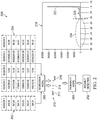
- FIG. 2 illustrates an example system 200 for anomaly detection, according to an implementation.
- Historical data 202 associated with a first sensor and historical data 204 associated with second, third, fourth, and fifth sensors can be used to train a regression model 206.
- the regression model 206 can be configured, for example, so that the first sensor is represented as a target variable and the second, third, fourth, and fifth sensors are represented as input variables.
- the target variable associated with the regression model 206 can represent expected values for the first sensor when the first sensor is in a normal state.
- the input variables associated with the second, third, fourth, and fifth sensors can predict the target value associated with the first sensor.
- a probability model 208 that is based on a formula 210 can be used to determine whether the actual sensor values from the first sensor indicate a normal state for the first sensor or an anomalous state, in which case an anomaly detection 212 has occurred.
- the probability model 208 can be a Gaussian Mixture model.
- the formula 210 can be used to determine a difference 213 between an actual sensor value 214 from the first sensor and a predicted sensor value 216 for the first sensor.
- the probability model 208 can be configured so that the anomaly detection 212 occurs when the probability of difference 213 is lower than a threshold.
- the actual sensor value can be labeled as an anomalous value.
- normal values are shown in a graph portion 222, to the right of a line 223 and anomalous values are show in a graph portion 224, to the left of the line 223.
- a process similar to the process described above for the first sensor can be repeated for each of the other sensors other than the first sensor.
- a second regression model similar to the regression model 206 can be configured, with the second sensor as a target variable and the first, third, fourth, and fifth sensors as input variables.
- a third regression model can be configured, with the third sensor as a target variable and the first, second, fourth, and fifth sensors as input variables.
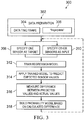
- FIG. 3 is a flowchart of an example method 300 for generating and training a regression model, according to an implementation.
- method 300 may be performed, for example, by any suitable system, environment, software, and hardware, or a combination of systems, environments, software, and hardware, as appropriate.
- various steps of method 300 can be run in parallel, in combination, in loops, or in any order.
- historical data is prepared for regression model training.
- Such historical data can be also referred as reference data.
- Operators can specify that a certain number of last number of days / weeks (a data time frame 304) can be used for defining the reference data. Such an approach can be used to detect anomalies that occur due to sudden changes. Gradual changes due to wear or aging of a machine can be automatically considered as a new normal set of data. Operators can also explicitly select one or multiple data "fingerprints" 306, such as the behavior of a machine after maintenance or initial installation.
- method 300 proceeds to 308.
- a particular sensor in a set of related sensors is specified as a target sensor.
- the target sensor can be associated with the target variable in a regression model associated with the particular sensor.
- method 300 proceeds to 310.
- other sensors in the set of related sensors other than the particular sensor are specified as input sensors.
- Input sensors can correspond to input variables in the regression model for the particular sensor.
- method 300 proceeds to 312.
- the regression model is trained using historical data from the set of related sensors. From 312, method 300 proceeds to 314.
- the trained regression model for the particular sensor is applied to predict expected sensor values for the particular sensor.
- the historical data can be applied to the regression model to generate expected sensor values of the target sensor in a normal status.
- the historical data can be data for which normal and anomalous states are known.
- method 300 proceeds to 316.
- differences between predicted values and actual values for the particular sensor are measured.
- method 300 proceeds to 318.
- a probability model for the particular sensor is generated based on the measured differences.
- method 300 returns to 308.
- a different sensor other than the particular sensor is specified as a target sensor, and, at 310, the particular sensor and sensors other than the different sensor and the particular sensor are specified as input sensors.
- method 300 proceeds to 312, 314, 316, and 318 in association with the different sensor.
- Method 300 again returns to 310, and 310 through 318 are repeated iteratively until 310 through 318 have been repeated for each sensor.
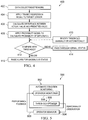
- FIG. 4 is a flowchart of an example method 400 for applying a regression model and building probability models, according to an implementation.
- method 400 may be performed, for example, by any suitable system, environment, software, and hardware, or a combination of systems, environments, software, and hardware, as appropriate.
- various steps of method 400 can be run in parallel, in combination, in loops, or in any order.
- data is collected from a target sensor and other sensors. From 402, method 400 proceeds to 404.
- the regression model is applied to the target sensor.
- the regression model can produce a predicted value for the target sensor given data collected from the other sensors.
- method 400 proceeds to 406.
- a difference between the actual value from the target sensor and the predicted value for the target sensor is calculated.
- method 400 proceeds to 408.
- a probability model associated with the target sensor is applied to calculate a probability of difference for the target sensor.
- method 400 proceeds to 410.
- a comparison threshold is specified.
- the comparison threshold can be specified manually or automatically / dynamically. Automatic specification of the comparison threshold is described in more detail below with respect to FIG. 5 .
- method 400 proceeds to 412.
- a determination is made as to whether the calculated probability of difference is greater than the comparison threshold.
- method 400 proceeds from 412 to 414.
- method 400 proceeds to 416.
- FIG. 5 is a block diagram 500 of an automatic condition monitoring component 502 for automatic threshold optimization, according to an implementation.
- the automatic condition monitoring component 502 can observe interactions and feedback 503 between operators (for example, human or computing equipment or both) and the automatic condition monitoring engine 502.
- the interactions and feedback 503 can be operator behavior 504 in predictive maintenance by an operator, or an evaluation made by an operator explicitly on accuracy of an anomaly detection, or any other form reflecting performance of automatic condition monitoring.
- an operation monitoring component 506 of the automatic condition-monitoring engine 502 receives the interactions and feedback 503 from an operator, a threshold optimizer 508 can process the received information to evaluate how well condition monitoring has been performed. Evaluation information can be used to determine a new optimal comparison threshold for anomaly detection to be used in the future.
- the threshold optimizer 508 can automatically determine the comparison threshold as compared to a manual configuration. An operator 50 may not be aware that automatic threshold optimization is occurring.
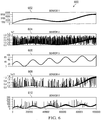
- FIG. 6 illustrates example historical data 600 for a group of related sensors, according to an implementation.
- Graphs 602, 604, 606, 608, and 610 display data values associated with first, second, third, fourth, and fifth sensors, respectively.
- Each graph 602-610 displays historical values for a respective sensor that were collected at given points in time.
- FIG. 7 is a block diagram 700 that illustrates correlations between sensors, according to an implementation.
- the regression model and historical data such as the historical data 600 can be used to identify correlations between sensors.
- key influence determination can be performed to identify the sensors that have a highest contribution or effect on a target sensor.
- the identified sensors are considered as most related to the target sensor.
- Graphs 702, 704, 706, 708, and 710 are outputs of regression models built based on each of corresponding, respective sensors, in a set of sensors.
- the graphs 702, 704, 706, 708, and 710 show the identified correlated sensors that have an impact on the target sensor as a key influence.
- the sensor may contribute more information in a regression model than other sensors that are not closely related to the target sensor.
- graphs 702, 704, and 706 indicate that sensors one, two, and four are correlated.
- Graphs 708 and 710 indicate that sensors three and five are correlated.
- the output of key influence evaluation of the sensors on the target sensor is summarized in a table 714 and visualized in graphs 712 and 716.
- the correlations between sensors one, two, and four are illustrated in the graph 712 and in the table 714.
- the correlation between sensor three and sensor five is illustrated in the graph 716 and in the table 714.
- FIG. 8 is an exemplary graph 800 displaying normal and anomalous sensor values, according to an implementation.
- the graph 800 represents results of classifying sensor values using the regression model approach described above. Dimension reduction techniques have been used to visualize sensor records.
- a first, larger data cloud 802 and a second, smaller data cloud 804 represent clusters of normal sensor values corresponding to normal equipment states.
- Anomalous outlier sensor values, that are located on the graph 800 outside of the data clouds 802 and 804 represent anomalous equipment states and are shown as squares, such as a square 806.
- FIG. 9 is a block diagram of an exemplary computer system 900 used to provide computational functionalities associated with described algorithms, methods, functions, processes, flows, and procedures as described in the instant disclosure, according to an implementation.
- the illustrated computer 902 is intended to encompass any computing device such as a server, desktop computer, laptop/notebook computer, wireless data port, smart phone, personal data assistant (PDA), tablet computing device, one or more processors within these devices, or any other suitable processing device, including physical or virtual instances (or both) of the computing device.
- any computing device such as a server, desktop computer, laptop/notebook computer, wireless data port, smart phone, personal data assistant (PDA), tablet computing device, one or more processors within these devices, or any other suitable processing device, including physical or virtual instances (or both) of the computing device.
- PDA personal data assistant
- the computer 902 may comprise a computer that includes an input device, such as a keypad, keyboard, touch screen, or other device that can accept user information, and an output device that conveys information associated with the operation of the computer 902, including digital data, visual, or audio information (or a combination of information), or a GUI.
- an input device such as a keypad, keyboard, touch screen, or other device that can accept user information
- an output device that conveys information associated with the operation of the computer 902, including digital data, visual, or audio information (or a combination of information), or a GUI.
- the computer 902 can serve in a role as a client, network component, a server, a database or other persistency, or any other component (or a combination of roles) of a computer system for performing the subject matter described in the instant disclosure.
- the illustrated computer 902 is communicably coupled with a network 930.
- one or more components of the computer 902 may be configured to operate within environments, including cloud-based computing, local, global, or other environment (or a combination of environments).
- the computer 902 is an electronic computing device operable to receive, transmit, process, store, or manage data and information associated with the described subject matter. According to some implementations, the computer 902 may also include or be communicably coupled with an application server, e-mail server, web server, caching server, streaming data server, business intelligence (BI) server, or other server (or a combination of servers).
- an application server e-mail server, web server, caching server, streaming data server, business intelligence (BI) server, or other server (or a combination of servers).
- BI business intelligence
- the computer 902 can receive requests over network 930 from a client application (for example, executing on another computer 902) and responding to the received requests by processing the said requests in an appropriate software application.
- requests may also be sent to the computer 902 from internal users (for example, from a command console or by other appropriate access method), external or third-parties, other automated applications, as well as any other appropriate entities, individuals, systems, or computers.
- Each of the components of the computer 902 can communicate using a system bus 903.
- any or all of the components of the computer 902, both hardware or software (or a combination of hardware and software) may interface with each other or the interface 904 (or a combination of both) over the system bus 903 using an application programming interface (API) 912 or a service layer 913 (or a combination of the API 912 and service layer 913).
- the API 912 may include specifications for routines, data structures, and object classes.
- the API 912 may be either computer-language independent or dependent and refer to a complete interface, a single function, or even a set of APIs.
- the service layer 913 provides software services to the computer 902 or other components (whether or not illustrated) that are communicably coupled to the computer 902.
- the functionality of the computer 902 may be accessible for all service consumers using this service layer.
- Software services such as those provided by the service layer 913, provide reusable, defined business functionalities through a defined interface.
- the interface may be software written in JAVA, C++, or other suitable language providing data in extensible markup language (XML) format or other suitable format.
- XML extensible markup language
- alternative implementations may illustrate the API 912 or the service layer 913 as stand-alone components in relation to other components of the computer 902 or other components (whether or not illustrated) that are communicably coupled to the computer 902.
- any or all parts of the API 912 or the service layer 913 may be implemented as child or sub-modules of another software module, enterprise application, or hardware module without departing from the scope of this disclosure.
- the computer 902 includes an interface 904. Although illustrated as a single interface 904 in FIG. 9 , two or more interfaces 904 may be used according to particular needs, desires, or particular implementations of the computer 902.
- the interface 904 is used by the computer 902 for communicating with other systems, in a distributed environment, that are connected to the network 930 (whether illustrated or not).
- the interface 904 comprises logic encoded in software or hardware (or a combination of software and hardware) operable to communicate with the network 930. More specifically, the interface 904 may comprise software supporting one or more communication protocols associated with communications such that the network 930 or interface's hardware is operable to communicate physical signals within and outside of the illustrated computer 902.
- the computer 902 includes a processor 905. Although illustrated as a single processor 905 in FIG. 9 , two or more processors may be used according to particular needs, desires, or particular implementations of the computer 902. Generally, the processor 905 executes instructions and manipulates data to perform the operations of the computer 902 and any algorithms, methods, functions, processes, flows, and procedures as described in the instant disclosure.
- the computer 902 also includes a memory 906 that holds data for the computer 902 or other components (or a combination of both) that can be connected to the network 930 (whether illustrated or not).
- memory 906 can be a database storing data consistent with this disclosure. Although illustrated as a single memory 906 in FIG. 9 , two or more memories may be used according to particular needs, desires, or particular implementations of the computer 902 and the described functionality. While memory 906 is illustrated as an integral component of the computer 902, in alternative implementations, memory 906 can be external to the computer 902.
- the application 907 is an algorithmic software engine providing functionality according to particular needs, desires, or particular implementations of the computer 902, particularly with respect to functionality described in this disclosure.
- application 907 can serve as one or more components, modules, applications, etc.
- the application 907 may be implemented as multiple applications 907 on the computer 902.
- the application 907 can be external to the computer 902.
- computers 902 there may be any number of computers 902 associated with, or external to, a computer system containing computer 902, each computer 902 communicating over network 930. Further, the term “client,” “user,” and other appropriate terminology may be used interchangeably as appropriate without departing from the scope of this disclosure. Moreover, this disclosure contemplates that many users may use one computer 902, or that one user may use multiple computers 902.
- a computer-implemented method includes indicating, for a plurality of related sensors, a particular sensor as a target sensor and the other sensors as input sensors; training a regression model using historical data from the plurality of related sensors; applying the trained regression model to the target sensor to generate a predicted target sensor value; calculating a difference between an actual target sensor value and the predicted target sensor value; and comparing a probability of difference for the calculated difference between the actual target sensor value and the predicted target sensor value against a threshold value.
- a first feature combinable with any of the following features, comprising generating expected sensor values of the target sensor in a normal status by applying the historical data to the regression model.
- a second feature combinable with any of the previous or following features, comprising generating a probability model based at least on a measured difference between the expected sensor values and actual sensor values.
- a third feature combinable with any of the previous or following features, comprising applying the probability model to calculate the probability of difference for the calculated difference between the actual target sensor value and the predicted target sensor value.
- a fourth feature combinable with any of the previous or following features, wherein the probability model is a Gaussian mixture model.
- a fifth feature combinable with any of the previous or following features, comprising: initiating an alarm state if the comparison is below the threshold value; and indicating a normal status if the comparison is above the threshold value.
- a sixth feature combinable with any of the previous or following features, wherein the threshold value is dynamically determined.
- a non-transitory, computer-readable medium storing computer-readable instructions executable by a computer is configured to: indicate, for a plurality of related sensors, a particular sensor as a target sensor and the other sensors as input sensors; train a regression model using historical data from the plurality of related sensors; apply the trained regression model to the target sensor to generate a predicted target sensor value; calculate a difference between an actual target sensor value and the predicted target sensor value; and compare a probability of difference for the calculated difference between the actual target sensor value and the predicted target sensor value against a threshold value.
- a first feature combinable with any of the following features, comprising generating expected sensor values of the target sensor in a normal status by applying the historical data to the regression model.
- a second feature combinable with any of the previous or following features, comprising generating a probability model based at least on a measured difference between the expected sensor values and actual sensor values.
- a third feature combinable with any of the previous or following features, comprising applying the probability model to calculate the probability of difference for the calculated difference between the actual target sensor value and the predicted target sensor value.
- a fourth feature combinable with any of the previous or following features, wherein the probability model is a Gaussian mixture model.
- a fifth feature combinable with any of the previous or following features, comprising: initiating an alarm state if the comparison is below the threshold value; and indicating a normal status if the comparison is above the threshold value.
- a sixth feature combinable with any of the previous or following features, wherein the threshold value is dynamically determined.
- a computer-implemented system comprises a computer memory and a hardware processor interoperably coupled with the computer memory and configured to perform operations comprising: indicating, for a plurality of related sensors, a particular sensor as a target sensor and the other sensors as input sensors; training a regression model using historical data from the plurality of related sensors; applying the trained regression model to the target sensor to generate a predicted target sensor value; calculating a difference between an actual target sensor value and the predicted target sensor value; and comparing a probability of difference for the calculated difference between the actual target sensor value and the predicted target sensor value against a threshold value.
- a first feature combinable with any of the following features, comprising generating expected sensor values of the target sensor in a normal status by applying the historical data to the regression model.
- a second feature combinable with any of the previous or following features, comprising generating a probability model based at least on a measured difference between the expected sensor values and actual sensor values.
- a third feature combinable with any of the previous or following features, comprising applying the probability model to calculate the probability of difference for the calculated difference between the actual target sensor value and the predicted target sensor value.
- a fourth feature combinable with any of the previous or following features, wherein the probability model is a Gaussian mixture model.
- a fifth feature combinable with any of the previous or following features, comprising: initiating an alarm state if the comparison is below the threshold value; and indicating a normal status if the comparison is above the threshold value.
- Implementations of the subject matter and the functional operations described in this specification can be implemented in digital electronic circuitry, in tangibly embodied computer software or firmware, in computer hardware, including the structures disclosed in this specification and their structural equivalents, or in combinations of one or more of them.
- Implementations of the subject matter described in this specification can be implemented as one or more computer programs, that is, one or more modules of computer program instructions encoded on a tangible, non-transitory, computer-readable computer-storage medium for execution by, or to control the operation of, data processing apparatus.
- the program instructions can be encoded on an artificially generated propagated signal, for example, a machine-generated electrical, optical, or electromagnetic signal that is generated to encode information for transmission to suitable receiver apparatus for execution by a data processing apparatus.
- the computer-storage medium can be a machine-readable storage device, a machine-readable storage substrate, a random or serial access memory device, or a combination of computer-storage mediums.
- data processing apparatus refers to data processing hardware and encompass all kinds of apparatus, devices, and machines for processing data, including by way of example, a programmable processor, a computer, or multiple processors or computers.
- the apparatus can also be or further include special purpose logic circuitry, for example, a central processing unit (CPU), an FPGA (field programmable gate array), or an ASIC (application-specific integrated circuit).
- the data processing apparatus or special purpose logic circuitry may be hardware- or software-based (or a combination of both hardware-and software-based).
- the apparatus can optionally include code that creates an execution environment for computer programs, for example, code that constitutes processor firmware, a protocol stack, a database management system, an operating system, or a combination of execution environments.
- code that constitutes processor firmware for example, code that constitutes processor firmware, a protocol stack, a database management system, an operating system, or a combination of execution environments.
- the present disclosure contemplates the use of data processing apparatuses with or without conventional operating systems, for example LINUX, UNIX, WINDOWS, MAC OS, ANDROID, IOS, or any other suitable conventional operating system.
- a computer program which may also be referred to or described as a program, software, a software application, a module, a software module, a script, or code can be written in any form of programming language, including compiled or interpreted languages, or declarative or procedural languages, and it can be deployed in any form, including as a stand-alone program or as a module, component, subroutine, or other unit suitable for use in a computing environment.
- a computer program may, but need not, correspond to a file in a file system.
- a program can be stored in a portion of a file that holds other programs or data, for example, one or more scripts stored in a markup language document, in a single file dedicated to the program in question, or in multiple coordinated files, for example, files that store one or more modules, sub-programs, or portions of code.
- a computer program can be deployed to be executed on one computer or on multiple computers that are located at one site or distributed across multiple sites and interconnected by a communication network. While portions of the programs illustrated in the various figures are shown as individual modules that implement the various features and functionality through various objects, methods, or other processes, the programs may instead include a number of sub-modules, third-party services, components, libraries, and such, as appropriate. Conversely, the features and functionality of various components can be combined into single components as appropriate.
- the processes and logic flows described in this specification can be performed by one or more programmable computers executing one or more computer programs to perform functions by operating on input data and generating output.
- the processes and logic flows can also be performed by, and apparatus can also be implemented as, special purpose logic circuitry, for example, a CPU, an FPGA, or an ASIC.
- Computers suitable for the execution of a computer program can be based on general or special purpose microprocessors, both, or any other kind of CPU.
- a CPU will receive instructions and data from a read-only memory (ROM) or a random access memory (RAM), or both.
- the essential elements of a computer are a CPU, for performing or executing instructions, and one or more memory devices for storing instructions and data.
- a computer will also include, or be operatively coupled to, receive data from or transfer data to, or both, one or more mass storage devices for storing data, for example, magnetic, magneto-optical disks, or optical disks.
- mass storage devices for storing data, for example, magnetic, magneto-optical disks, or optical disks.
- a computer need not have such devices.
- a computer can be embedded in another device, for example, a mobile telephone, a personal digital assistant (PDA), a mobile audio or video player, a game console, a global positioning system (GPS) receiver, or a portable storage device, for example, a universal serial bus (USB) flash drive, to name just a few.
- PDA personal digital assistant
- GPS global positioning system
- USB universal serial bus
- Computer-readable media suitable for storing computer program instructions and data include all forms of non-volatile memory, media and memory devices, including by way of example semiconductor memory devices, for example, erasable programmable read-only memory (EPROM), electrically erasable programmable read-only memory (EEPROM), and flash memory devices; magnetic disks, for example, internal hard disks or removable disks; magneto-optical disks; and CD-ROM, DVD+/-R, DVD-RAM, and DVD-ROM disks.
- semiconductor memory devices for example, erasable programmable read-only memory (EPROM), electrically erasable programmable read-only memory (EEPROM), and flash memory devices
- EPROM erasable programmable read-only memory
- EEPROM electrically erasable programmable read-only memory
- flash memory devices for example, internal hard disks or removable disks
- magneto-optical disks for example, internal hard disks or removable disks
- the memory may store various objects or data, including caches, classes, frameworks, applications, backup data, jobs, web pages, web page templates, database tables, repositories storing dynamic information, and any other appropriate information including any parameters, variables, algorithms, instructions, rules, constraints, or references thereto. Additionally, the memory may include any other appropriate data, such as logs, policies, security or access data, reporting files, as well as others.
- the processor and the memory can be supplemented by, or incorporated in, special purpose logic circuitry.
- implementations of the subject matter described in this specification can be implemented on a computer having a display device, for example, a CRT (cathode ray tube), LCD (liquid crystal display), LED (Light Emitting Diode), or plasma monitor, for displaying information to the user and a keyboard and a pointing device, for example, a mouse, trackball, or trackpad by which the user can provide input to the computer.
- a display device for example, a CRT (cathode ray tube), LCD (liquid crystal display), LED (Light Emitting Diode), or plasma monitor
- a keyboard and a pointing device for example, a mouse, trackball, or trackpad by which the user can provide input to the computer.
- Input may also be provided to the computer using a touchscreen, such as a tablet computer surface with pressure sensitivity, a multi-touch screen using capacitive or electric sensing, or other type of touchscreen.
- a computer can interact with a user by sending documents to and receiving documents from a device that is used by the user; for example, by sending web pages to a web browser on a user's client device in response to requests received from the web browser.
- GUI graphical user interface
- GUI may be used in the singular or the plural to describe one or more graphical user interfaces and each of the displays of a particular graphical user interface. Therefore, a GUI may represent any graphical user interface, including but not limited to, a web browser, a touch screen, or a command line interface (CLI) that processes information and efficiently presents the information results to the user.
- a GUI may include a plurality of user interface (UI) elements, some or all associated with a web browser, such as interactive fields, pull-down lists, and buttons operable by the business suite user. These and other UI elements may be related to or represent the functions of the web browser.
- UI user interface
- Implementations of the subject matter described in this specification can be implemented in a computing system that includes a back-end component, for example, as a data server, or that includes a middleware component, for example, an application server, or that includes a front-end component, for example, a client computer having a graphical user interface or a Web browser through which a user can interact with an implementation of the subject matter described in this specification, or any combination of one or more such back-end, middleware, or front-end components.
- the components of the system can be interconnected by any form or medium of wireline or wireless digital data communication (or a combination of data communication), for example, a communication network.
- Examples of communication networks include a local area network (LAN), a radio access network (RAN), a metropolitan area network (MAN), a wide area network (WAN), Worldwide Interoperability for Microwave Access (WIMAX), a wireless local area network (WLAN) using, for example, 802.11 a/b/g/n or 802.20 (or a combination of 802.11 x and 802.20 or other protocols consistent with this disclosure), all or a portion of the Internet, or any other communication system or systems at one or more locations (or a combination of communication networks).
- the network may communicate with, for example, Internet Protocol (IP) packets, Frame Relay frames, Asynchronous Transfer Mode (ATM) cells, voice, video, data, or other suitable information (or a combination of communication types) between network addresses.
- IP Internet Protocol
- ATM Asynchronous Transfer Mode
- the computing system can include clients and servers.
- a client and server are generally remote from each other and typically interact through a communication network.
- the relationship of client and server arises by virtue of computer programs running on the respective computers and having a client-server relationship to each other.
- any or all of the components of the computing system may interface with each other or the interface using an application programming interface (API) or a service layer (or a combination of API and service layer).
- API application programming interface
- the API may include specifications for routines, data structures, and object classes.
- the API may be either computer language independent or dependent and refer to a complete interface, a single function, or even a set of APIs.
- the service layer provides software services to the computing system. The functionality of the various components of the computing system may be accessible for all service consumers using this service layer.
- Software services provide reusable, defined business functionalities through a defined interface.
- the interface may be software written in JAVA, C++, or other suitable language providing data in extensible markup language (XML) format or other suitable format.
- the API or service layer (or a combination of the API and the service layer) may be an integral or a stand-alone component in relation to other components of the computing system.
- any or all parts of the service layer may be implemented as child or sub-modules of another software module, enterprise application, or hardware module without departing from the scope of this disclosure.
- any claimed implementation below is considered to be applicable to at least a computer-implemented method; a non-transitory, computer-readable medium storing computer-readable instructions to perform the computer-implemented method; and a computer system comprising a computer memory interoperably coupled with a hardware processor configured to perform the computer-implemented method or the instructions stored on the non-transitory, computer-readable medium.
Landscapes
- Engineering & Computer Science (AREA)
- Theoretical Computer Science (AREA)
- Physics & Mathematics (AREA)
- General Physics & Mathematics (AREA)
- General Engineering & Computer Science (AREA)
- Quality & Reliability (AREA)
- Computing Systems (AREA)
- Business, Economics & Management (AREA)
- Software Systems (AREA)
- Mathematical Physics (AREA)
- Evolutionary Computation (AREA)
- Data Mining & Analysis (AREA)
- Artificial Intelligence (AREA)
- Human Resources & Organizations (AREA)
- Computer Hardware Design (AREA)
- Probability & Statistics with Applications (AREA)
- Mathematical Analysis (AREA)
- Tourism & Hospitality (AREA)
- Mathematical Optimization (AREA)
- Economics (AREA)
- Entrepreneurship & Innovation (AREA)
- Marketing (AREA)
- Operations Research (AREA)
- Computational Mathematics (AREA)
- Strategic Management (AREA)
- Pure & Applied Mathematics (AREA)
- General Business, Economics & Management (AREA)
- Computer Vision & Pattern Recognition (AREA)
- Medical Informatics (AREA)
- Life Sciences & Earth Sciences (AREA)
- Bioinformatics & Cheminformatics (AREA)
- Bioinformatics & Computational Biology (AREA)
- Evolutionary Biology (AREA)
- Algebra (AREA)
- Computer Networks & Wireless Communication (AREA)
- Testing And Monitoring For Control Systems (AREA)
Applications Claiming Priority (1)
| Application Number | Priority Date | Filing Date | Title |
|---|---|---|---|
| US15/185,951 US20170364818A1 (en) | 2016-06-17 | 2016-06-17 | Automatic condition monitoring and anomaly detection for predictive maintenance |
Publications (1)
| Publication Number | Publication Date |
|---|---|
| EP3258426A1 true EP3258426A1 (de) | 2017-12-20 |
Family
ID=57714308
Family Applications (1)
| Application Number | Title | Priority Date | Filing Date |
|---|---|---|---|
| EP16002726.4A Ceased EP3258426A1 (de) | 2016-06-17 | 2016-12-22 | Automatische zustandsüberwachung und anomaliedetektion für prädiktive wartung |
Country Status (2)
| Country | Link |
|---|---|
| US (1) | US20170364818A1 (de) |
| EP (1) | EP3258426A1 (de) |
Cited By (8)
| Publication number | Priority date | Publication date | Assignee | Title |
|---|---|---|---|---|
| CN110874601A (zh) * | 2018-08-29 | 2020-03-10 | 阿里巴巴集团控股有限公司 | 识别设备运行状态的方法、状态识别模型训练方法及装置 |
| CN111078512A (zh) * | 2019-11-05 | 2020-04-28 | 远景智能国际私人投资有限公司 | 告警记录生成方法、装置、告警设备及存储介质 |
| US10858123B2 (en) | 2018-06-21 | 2020-12-08 | Honeywell International Inc. | Methods and systems for detecting data anomalies |
| EP3761240A1 (de) * | 2019-07-01 | 2021-01-06 | Palantir Technologies Inc. | Prädiktive datenobjekte |
| WO2021018741A1 (de) | 2019-08-01 | 2021-02-04 | Schuler Pressen Gmbh | Verfahren und vorrichtung zur planung von wartungsarbeiten an wenigstens einer maschine |
| CH717129A1 (de) * | 2020-02-14 | 2021-08-16 | Mechmine Iic | Verfahren zur sicheren Darstellung von Ursprungsdaten für eine Cloudlösung. |
| EP3916556A1 (de) * | 2020-05-29 | 2021-12-01 | Ovh | Verfahren und system zur erkennung von anomalien in einer datenpipeline |
| EP4619907A4 (de) * | 2022-12-15 | 2026-03-25 | Services Petroliers Schlumberger | Auf maschinenlernen basierende methanemissionsüberwachung |
Families Citing this family (50)
| Publication number | Priority date | Publication date | Assignee | Title |
|---|---|---|---|---|
| US10838837B2 (en) * | 2016-06-24 | 2020-11-17 | International Business Machines Corporation | Sensor based system state prediction |
| US11044181B1 (en) * | 2016-08-02 | 2021-06-22 | Initial State Technologies, Inc. | Data aggregation, transformation and visualization of networked broadcast reports |
| US10248713B2 (en) | 2016-11-30 | 2019-04-02 | Business Objects Software Ltd. | Time series analysis using a clustering based symbolic representation |
| US11736358B2 (en) | 2017-01-20 | 2023-08-22 | Transform Sr Brands Llc | Interfacing event detectors with a network interface |
| US10587635B2 (en) * | 2017-03-31 | 2020-03-10 | The Boeing Company | On-board networked anomaly detection (ONAD) modules |
| US10733813B2 (en) * | 2017-11-01 | 2020-08-04 | International Business Machines Corporation | Managing anomaly detection models for fleets of industrial equipment |
| TWI806927B (zh) | 2017-11-15 | 2023-07-01 | 以色列商普騰泰克斯有限公司 | 積體電路邊限測量和故障預測裝置 |
| US12282058B2 (en) | 2017-11-23 | 2025-04-22 | Proteantecs Ltd. | Integrated circuit pad failure detection |
| CN116736185A (zh) | 2017-11-23 | 2023-09-12 | 普罗泰克斯公司 | 集成电路焊盘故障检测 |
| US11740281B2 (en) | 2018-01-08 | 2023-08-29 | Proteantecs Ltd. | Integrated circuit degradation estimation and time-of-failure prediction using workload and margin sensing |
| EP3737953B1 (de) | 2018-01-08 | 2026-03-04 | Proteantecs Ltd. | Integrierter arbeitslast-, temperatur- und/oder unterschwellenwertlecksensor für integrierte schaltung |
| JP6978975B2 (ja) * | 2018-04-13 | 2021-12-08 | 本田技研工業株式会社 | 情報出力装置及び情報出力方法 |
| TWI828676B (zh) * | 2018-04-16 | 2024-01-11 | 以色列商普騰泰克斯有限公司 | 用於積體電路剖析及異常檢測之方法和相關的電腦程式產品 |
| EP3811246A4 (de) | 2018-06-19 | 2022-03-23 | Proteantecs Ltd. | Effiziente simulation und prüfung einer integrierten schaltung |
| KR102131922B1 (ko) * | 2018-08-29 | 2020-07-08 | 국방과학연구소 | 복수의 주변 디바이스로부터 데이터를 수신하는 방법 및 디바이스 |
| US11443287B2 (en) | 2018-12-06 | 2022-09-13 | Bank Of America Corporation | Using distributed databases for network regression analysis |
| DE102019219727A1 (de) * | 2018-12-26 | 2020-07-02 | Presenso Ltd. | System und Verfahren zum Detektieren von Anomalien in Sensordaten von industriellen Maschinen, die in einer vorbestimmten Umgebung angeordnet sind |
| KR102796090B1 (ko) | 2018-12-30 | 2025-04-16 | 프로틴텍스 엘티디. | 집적 회로 i/o 무결성 및 열화 모니터링 |
| US11348813B2 (en) | 2019-01-31 | 2022-05-31 | Applied Materials, Inc. | Correcting component failures in ion implant semiconductor manufacturing tool |
| US11307570B2 (en) * | 2019-05-31 | 2022-04-19 | Panasonic Intellectual Property Management Co., Ltd. | Machine learning based predictive maintenance of equipment |
| TW202127252A (zh) | 2019-12-04 | 2021-07-16 | 以色列商普騰泰克斯有限公司 | 記憶體裝置退化偵測 |
| IT202000004573A1 (it) * | 2020-03-04 | 2021-09-04 | Nuovo Pignone Tecnologie Srl | Modello di rischio ibrido per l'ottimizzazione della manutenzione e sistema per l'esecuzione di tale metodo. |
| EP4139697A4 (de) | 2020-04-20 | 2024-05-22 | Proteantecs Ltd. | Überwachung der verbindung zwischen chips |
| US11727030B2 (en) | 2020-05-05 | 2023-08-15 | Business Objects Software Ltd. | Automatic hot area detection in heat map visualizations |
| US11321332B2 (en) | 2020-05-18 | 2022-05-03 | Business Objects Software Ltd. | Automatic frequency recommendation for time series data |
| US11475021B2 (en) | 2020-05-18 | 2022-10-18 | Business Objects Software Ltd. | Flexible algorithm for time dimension ranking |
| CN113708986B (zh) * | 2020-05-21 | 2023-02-03 | 富联精密电子(天津)有限公司 | 服务器监控装置、方法及计算机可读存储介质 |
| US11513878B2 (en) * | 2020-06-26 | 2022-11-29 | Acronis International Gmbh | Systems and methods for detecting behavioral anomalies in applications |
| IL299556A (en) | 2020-07-06 | 2023-02-01 | Proteantecs Ltd | Integrated circuit margin measurement for structural testing |
| WO2022215076A1 (en) | 2021-04-07 | 2022-10-13 | Proteantecs Ltd. | Adaptive frequency scaling based on clock cycle time measurement |
| US11952142B2 (en) * | 2021-05-10 | 2024-04-09 | Honeywell International Inc. | Methods and systems for depicting avionics data anomalies |
| WO2023015484A1 (en) * | 2021-08-11 | 2023-02-16 | Siemens Aktiengesellschaft | Method and apparatus for training a model |
| US20230075005A1 (en) * | 2021-09-09 | 2023-03-09 | Honeywell International Inc. | Intelligent asset anomaly prediction via feature generation |
| CA3235376A1 (en) * | 2021-10-13 | 2023-04-20 | SparkCognition, Inc. | Anomaly detection based on normal behavior modeling |
| CN114358400B (zh) * | 2021-12-21 | 2023-06-23 | 浙江高信技术股份有限公司 | 一种智慧桥隧涵边坡监控系统 |
| US20250103038A1 (en) * | 2022-01-11 | 2025-03-27 | Northeastern University | Method for detecting abnormal working conditions of multi-view data based on feature regression |
| US12007832B2 (en) | 2022-02-25 | 2024-06-11 | Bank Of America Corporation | Restoring a system by load switching to an alternative cloud instance and self healing |
| US12061465B2 (en) | 2022-02-25 | 2024-08-13 | Bank Of America Corporation | Automatic system anomaly detection |
| US11815551B1 (en) | 2022-06-07 | 2023-11-14 | Proteantecs Ltd. | Die-to-die connectivity monitoring using a clocked receiver |
| WO2024030525A1 (en) | 2022-08-03 | 2024-02-08 | Schlumberger Technology Corporation | Automated record quality determination and processing for pollutant emission quantification |
| US12577871B2 (en) | 2022-08-03 | 2026-03-17 | Schlumberger Technology Corporation | Linear cut generation method for sensor inversion constraint imposition |
| US12547907B2 (en) | 2022-09-21 | 2026-02-10 | International Business Machines Corporation | Detecting and rectifying model drift using governance |
| US20240169252A1 (en) * | 2022-11-21 | 2024-05-23 | Halliburton Energy Services, Inc. | Anomaly monitoring and mitigation of an electric submersible pump |
| US12013800B1 (en) | 2023-02-08 | 2024-06-18 | Proteantecs Ltd. | Die-to-die and chip-to-chip connectivity monitoring |
| US12130696B1 (en) * | 2023-04-13 | 2024-10-29 | Honeywell International Inc. | Systems, apparatuses, methods, and computer program products for parallel processing of real-time data and accumulated data |
| AU2024284054A1 (en) | 2023-06-09 | 2026-01-08 | Schlumberger Technology B.V. | Emission detecting camera placement planning using 3d models |
| US12254622B2 (en) | 2023-06-16 | 2025-03-18 | Schlumberger Technology Corporation | Computing emission rate from gas density images |
| US12123908B1 (en) | 2023-09-12 | 2024-10-22 | Proteantecs Ltd. | Loopback testing of integrated circuits |
| US12461143B2 (en) | 2024-01-24 | 2025-11-04 | Proteantecs Ltd. | Integrated circuit margin measurement |
| US20250371359A1 (en) * | 2024-05-30 | 2025-12-04 | Caterpillar Inc. | Equipment profiling and automatic sensor signaling channel failover using machine learning |
Citations (1)
| Publication number | Priority date | Publication date | Assignee | Title |
|---|---|---|---|---|
| WO2015053774A1 (en) * | 2013-10-10 | 2015-04-16 | Ge Intelligent Platforms, Inc. | Correlation and annotation of time series data sequences to extracted or existing discrete data |
-
2016
- 2016-06-17 US US15/185,951 patent/US20170364818A1/en not_active Abandoned
- 2016-12-22 EP EP16002726.4A patent/EP3258426A1/de not_active Ceased
Patent Citations (1)
| Publication number | Priority date | Publication date | Assignee | Title |
|---|---|---|---|---|
| WO2015053774A1 (en) * | 2013-10-10 | 2015-04-16 | Ge Intelligent Platforms, Inc. | Correlation and annotation of time series data sequences to extracted or existing discrete data |
Cited By (13)
| Publication number | Priority date | Publication date | Assignee | Title |
|---|---|---|---|---|
| US10858123B2 (en) | 2018-06-21 | 2020-12-08 | Honeywell International Inc. | Methods and systems for detecting data anomalies |
| CN110874601A (zh) * | 2018-08-29 | 2020-03-10 | 阿里巴巴集团控股有限公司 | 识别设备运行状态的方法、状态识别模型训练方法及装置 |
| CN110874601B (zh) * | 2018-08-29 | 2023-05-26 | 阿里巴巴集团控股有限公司 | 识别设备运行状态的方法、状态识别模型训练方法及装置 |
| EP3761240A1 (de) * | 2019-07-01 | 2021-01-06 | Palantir Technologies Inc. | Prädiktive datenobjekte |
| US11182710B2 (en) | 2019-07-01 | 2021-11-23 | Palantir Technologies Inc. | Predictive data objects |
| US12147950B2 (en) | 2019-07-01 | 2024-11-19 | Palantir Technologies Inc. | Predictive data objects |
| WO2021018741A1 (de) | 2019-08-01 | 2021-02-04 | Schuler Pressen Gmbh | Verfahren und vorrichtung zur planung von wartungsarbeiten an wenigstens einer maschine |
| CN111078512A (zh) * | 2019-11-05 | 2020-04-28 | 远景智能国际私人投资有限公司 | 告警记录生成方法、装置、告警设备及存储介质 |
| CN111078512B (zh) * | 2019-11-05 | 2023-09-12 | 远景智能国际私人投资有限公司 | 告警记录生成方法、装置、告警设备及存储介质 |
| CH717129A1 (de) * | 2020-02-14 | 2021-08-16 | Mechmine Iic | Verfahren zur sicheren Darstellung von Ursprungsdaten für eine Cloudlösung. |
| EP3916556A1 (de) * | 2020-05-29 | 2021-12-01 | Ovh | Verfahren und system zur erkennung von anomalien in einer datenpipeline |
| US11288260B2 (en) | 2020-05-29 | 2022-03-29 | Ovh | Method and system for detecting anomalies in a data pipeline |
| EP4619907A4 (de) * | 2022-12-15 | 2026-03-25 | Services Petroliers Schlumberger | Auf maschinenlernen basierende methanemissionsüberwachung |
Also Published As
| Publication number | Publication date |
|---|---|
| US20170364818A1 (en) | 2017-12-21 |
Similar Documents
| Publication | Publication Date | Title |
|---|---|---|
| EP3258426A1 (de) | Automatische zustandsüberwachung und anomaliedetektion für prädiktive wartung | |
| US10013303B2 (en) | Detecting anomalies in an internet of things network | |
| US12367442B2 (en) | Real-time adaptive operations performance management system | |
| US11943235B2 (en) | Detecting suspicious user logins in private networks using machine learning | |
| US10962968B2 (en) | Predicting failures in electrical submersible pumps using pattern recognition | |
| US20210303381A1 (en) | System and method for automating fault detection in multi-tenant environments | |
| US10452040B2 (en) | Graph-based data analysis for sensor networks | |
| EP3206368A1 (de) | Telemetry-analyse-system für physikalische prozess-anomaly-erkennung | |
| US20180027002A1 (en) | Outlier detection in enterprise threat detection | |
| US20170235626A1 (en) | Anomaly Fusion on Temporal Casualty Graphs | |
| KR102150815B1 (ko) | 다수의 시스템 지시자의 모니터링 | |
| US20190005423A1 (en) | Calculation and visualization of security risks in enterprise threat detection | |
| US20180176238A1 (en) | Using frequency analysis in enterprise threat detection to detect intrusions in a computer system | |
| US20180176234A1 (en) | Bi-directional content replication logic for enterprise threat detection | |
| US10705940B2 (en) | System operational analytics using normalized likelihood scores | |
| WO2017214613A1 (en) | Streaming data decision-making using distributions with noise reduction | |
| WO2022115419A1 (en) | Method of detecting an anomaly in a system | |
| US12196060B2 (en) | System for controlling performance of salt water disposal wells | |
| EP2972090A1 (de) | Vorhersage von systemtrajektorien zu kritischen übergängen | |
| US20180060987A1 (en) | Identification of abnormal behavior in human activity based on internet of things collected data | |
| US9372766B2 (en) | Circumventing load imbalance in parallel simulations caused by faulty hardware nodes | |
| EP3664412A1 (de) | Überwachung der netzwerkaktivität | |
| WO2019081535A1 (en) | IDENTIFICATION OF FUNCTIONS SUBJECT TO LOGIC ERRORS IN BINARY SOFTWARE COMPONENTS | |
| HK40019675B (zh) | 监测多个系统指标的方法和系统 | |
| HK40019675A (en) | Methods and systems for monitoring multiple system indicators |
Legal Events
| Date | Code | Title | Description |
|---|---|---|---|
| PUAI | Public reference made under article 153(3) epc to a published international application that has entered the european phase |
Free format text: ORIGINAL CODE: 0009012 |
|
| AK | Designated contracting states |
Kind code of ref document: A1 Designated state(s): AL AT BE BG CH CY CZ DE DK EE ES FI FR GB GR HR HU IE IS IT LI LT LU LV MC MK MT NL NO PL PT RO RS SE SI SK SM TR |
|
| AX | Request for extension of the european patent |
Extension state: BA ME |
|
| 17P | Request for examination filed |
Effective date: 20180614 |
|
| RBV | Designated contracting states (corrected) |
Designated state(s): AL AT BE BG CH CY CZ DE DK EE ES FI FR GB GR HR HU IE IS IT LI LT LU LV MC MK MT NL NO PL PT RO RS SE SI SK SM TR |
|
| 17Q | First examination report despatched |
Effective date: 20180910 |
|
| STAA | Information on the status of an ep patent application or granted ep patent |
Free format text: STATUS: THE APPLICATION HAS BEEN REFUSED |
|
| 18R | Application refused |
Effective date: 20201102 |