EP3259734B1 - Verminderung von blendung - Google Patents
Verminderung von blendung Download PDFInfo
- Publication number
- EP3259734B1 EP3259734B1 EP15882297.3A EP15882297A EP3259734B1 EP 3259734 B1 EP3259734 B1 EP 3259734B1 EP 15882297 A EP15882297 A EP 15882297A EP 3259734 B1 EP3259734 B1 EP 3259734B1
- Authority
- EP
- European Patent Office
- Prior art keywords
- eye
- images
- image
- image processing
- processing system
- Prior art date
- Legal status (The legal status is an assumption and is not a legal conclusion. Google has not performed a legal analysis and makes no representation as to the accuracy of the status listed.)
- Active
Links
Images





Classifications
-
- G—PHYSICS
- G06—COMPUTING OR CALCULATING; COUNTING
- G06N—COMPUTING ARRANGEMENTS BASED ON SPECIFIC COMPUTATIONAL MODELS
- G06N3/00—Computing arrangements based on biological models
- G06N3/02—Neural networks
- G06N3/08—Learning methods
-
- G—PHYSICS
- G06—COMPUTING OR CALCULATING; COUNTING
- G06N—COMPUTING ARRANGEMENTS BASED ON SPECIFIC COMPUTATIONAL MODELS
- G06N20/00—Machine learning
-
- G—PHYSICS
- G06—COMPUTING OR CALCULATING; COUNTING
- G06N—COMPUTING ARRANGEMENTS BASED ON SPECIFIC COMPUTATIONAL MODELS
- G06N3/00—Computing arrangements based on biological models
- G06N3/02—Neural networks
- G06N3/04—Architecture, e.g. interconnection topology
- G06N3/045—Combinations of networks
-
- G—PHYSICS
- G06—COMPUTING OR CALCULATING; COUNTING
- G06N—COMPUTING ARRANGEMENTS BASED ON SPECIFIC COMPUTATIONAL MODELS
- G06N3/00—Computing arrangements based on biological models
- G06N3/02—Neural networks
- G06N3/04—Architecture, e.g. interconnection topology
- G06N3/0464—Convolutional networks [CNN, ConvNet]
-
- G—PHYSICS
- G06—COMPUTING OR CALCULATING; COUNTING
- G06N—COMPUTING ARRANGEMENTS BASED ON SPECIFIC COMPUTATIONAL MODELS
- G06N3/00—Computing arrangements based on biological models
- G06N3/02—Neural networks
- G06N3/08—Learning methods
- G06N3/09—Supervised learning
-
- G—PHYSICS
- G06—COMPUTING OR CALCULATING; COUNTING
- G06V—IMAGE OR VIDEO RECOGNITION OR UNDERSTANDING
- G06V10/00—Arrangements for image or video recognition or understanding
- G06V10/10—Image acquisition
- G06V10/12—Details of acquisition arrangements; Constructional details thereof
- G06V10/14—Optical characteristics of the device performing the acquisition or on the illumination arrangements
- G06V10/141—Control of illumination
-
- G—PHYSICS
- G06—COMPUTING OR CALCULATING; COUNTING
- G06V—IMAGE OR VIDEO RECOGNITION OR UNDERSTANDING
- G06V20/00—Scenes; Scene-specific elements
- G06V20/50—Context or environment of the image
- G06V20/59—Context or environment of the image inside of a vehicle, e.g. relating to seat occupancy, driver state or inner lighting conditions
- G06V20/597—Recognising the driver's state or behaviour, e.g. attention or drowsiness
-
- G—PHYSICS
- G06—COMPUTING OR CALCULATING; COUNTING
- G06V—IMAGE OR VIDEO RECOGNITION OR UNDERSTANDING
- G06V40/00—Recognition of biometric, human-related or animal-related patterns in image or video data
- G06V40/10—Human or animal bodies, e.g. vehicle occupants or pedestrians; Body parts, e.g. hands
- G06V40/16—Human faces, e.g. facial parts, sketches or expressions
-
- G—PHYSICS
- G06—COMPUTING OR CALCULATING; COUNTING
- G06V—IMAGE OR VIDEO RECOGNITION OR UNDERSTANDING
- G06V40/00—Recognition of biometric, human-related or animal-related patterns in image or video data
- G06V40/10—Human or animal bodies, e.g. vehicle occupants or pedestrians; Body parts, e.g. hands
- G06V40/18—Eye characteristics, e.g. of the iris
-
- G—PHYSICS
- G06—COMPUTING OR CALCULATING; COUNTING
- G06V—IMAGE OR VIDEO RECOGNITION OR UNDERSTANDING
- G06V40/00—Recognition of biometric, human-related or animal-related patterns in image or video data
- G06V40/10—Human or animal bodies, e.g. vehicle occupants or pedestrians; Body parts, e.g. hands
- G06V40/18—Eye characteristics, e.g. of the iris
- G06V40/19—Sensors therefor
Definitions
- the present invention generally relates to an imaging system and, more particularly, relates to a system and method for illuminating, capturing, and processing images of an object, such as a person's eye(s), in a manner that reduces glare within the images.
- imaging systems have been proposed for use in equipment and on-board vehicles to monitor a driver and/or passenger(s) in an automotive vehicle.
- Some proposed imaging systems include one or more cameras focused on the operator or driver of the equipment or vehicle to capture images of the operator's or driver's face. The captured video images are processed to determine various facial characteristics of the eyes, face, and head. Given the determined facial characteristics, such as a driver's eye positioning and gaze, vehicle control systems can provide enhanced vehicle functions.
- Reduced glare images allow for enhanced imagery, which is particularly advantageous for use in a vehicle where an object driver of the vehicle may be wearing a corrective lens and glare may be present.
- the above described patent seems to solve some glare problems, it does not account for image motion between consecutive images.
- normal head movements should not result in interruption in monitoring the ⁇ subject, operator or driver.
- the resulting image may contain artifacts or 'ghosting.' These artifacts may totally negate the intended glare reduction effect which can be very detrimental to the analysis of the images.
- EP 1 908 396 (A1 ) relates to a system and method for illuminating, capturing, and processing video images of an object, such as a person's eye(s), in a manner that reduces glare such as that caused by light reflections.
- US 2014/140577 (A1 ) relates to an eyelid detection technique that detects the positions of the upper and lower eyelids from a face image.
- a system and method are provided for illuminating, capturing and processing images of a subject, operator, driver and/or passenger(s) in a vehicle or operating equipment.
- one or more facial features are used in tracking or monitoring a driver, such as eyes. Images of a driver's eyes may be blemished by light reflection and glare. images are captured and processed in a manner that reduces the glare caused by light reflections.
- the present invention is particularly useful for monitoring a passenger, such as a driver of a vehicle wearing corrective lenses which can cause glare upon reflection of the illuminated light.
- the system includes an imaging camera orientated to generate images of one or more facial features in successive image fields or frames.
- the system also includes first and second light sources located at first and second locations that illuminate the object.
- the first and second light sources generate light sources in sync with the image, fields or frames from the camera. Images are captured and the system further includes processing of the images to enhance or improve the image of an object or to reduce undesirable attributes of the image such as glare and unwanted or undesirable reflections.
- the described system may be applied and used in a multitude of environments.
- One example is monitoring a driver or passengers of a vehicle.
- the described system may be applied to an operator using or operating any other equipment, such as machinery or in a specific example, an aircraft control person.
- a subject, operator, driver and/or passenger(s), an operator of equipment or anyone being monitored, will herein be referred to as a subject.
- references to image n+1, n, n-1 etc. generally refer to a prior image, a current image and future image, etc.
- an image processing system including:
- the processor is further adapted to:
- the at least one characteristic includes an eye position and the processor is further adapted to process the first and second images to determine a position of the at least one eye in the images.
- the at least one characteristic include a degree of eye openness and the processor is further adapted to perform an eye opening measurement to determine a degree of openness of the at least one eye.
- the at least one characteristic includes a pupil contour and the processor is further adapted to process the first and second images to determine a direction of eye gaze.
- the eye model is preferably generated based on machine learning of a set of training data.
- the machine learning includes performing a fern-based regression algorithm.
- the machine learning includes performing a convolutional neural network algorithm.
- the eye model includes a reference data for determining a degree of eye openness.
- the model includes at least one reference point defined by features of an eye.
- the at least one reference point preferably includes a pupil, eye corners and points along an upper and lower eyelid.
- the model includes a mesh structure defined with respect to the at least one reference point.
- the mesh structure preferably includes triangular elements with three vertices. Coordinates of pixels in regions of the at least one eye of the first and second images are preferably mapped to the mesh structure as linear combinations of the reference points.
- comparing and modifying the brightness values of one or more of the corresponding pixels in the first image and/or the second image is performed according to a weighted average operation.
- comparing and modifying the brightness values of one or more of the corresponding pixels in the first image and/or the second image is performed according to a threshold operation.
- c is an output pixel brightness value
- a and b represent respective pixel brightness values of corresponding pixels of the first and second images being compared
- t represents a predefined brightness threshold
- c is an output pixel brightness value
- a and b represent respective pixel brightness values of corresponding pixels of the first and second images being compared
- t represents a predefined brightness threshold.
- the processor is further adapted to perform one or more of gaze direction tracking, head pose tracking, eye closure frequency or times and subject facial recognition.
- the first illumination condition includes activation of a first illumination device and deactivation of a second illumination device.
- the second illumination condition preferably includes activation of the second illumination device and deactivation of the first illumination device. Successive images are preferably captured during the first and second illumination conditions in an alternating manner.
- a third illumination condition includes deactivation of both the first and second illumination devices.
- three successive images are captured during the first, second and third illumination conditions in a sequential manner and the three images are processed together as a triplet by the processor.
- controller and the processor are the same hardware.
- a subject's face or facial image 102 is shown without glare.
- a subject's face or facial image 101 may include glare or reflections when illuminated.
- facial areas such as cheeks 111, forehead 112, the nose 114, eyeglass frames 115, eyeglass lenses 116, and the surface of eyes 117 themselves may reflect light and cause glare.
- the glare may distort or hide a portion or portions of the subject's facial image or features, such as the subject's eyes, which are being tracked or monitored.
- a problem with some systems is they do not account for facial and feature image motion between two consecutive frames, fields or images (three consecutive frames in the case of visible light subtraction). Captured or acquired sequential images of the same eye may have different positions resulting from head or eye motion. Referring to Figure 2 A and B, for example, a subject's head has moved between image n, 204 and image n+1, 205 resulting in an eye position change. Referring to Figure 2C , a pixel-wise min operation is performed using the two images 204, 205, and the resulting or post processing image 206 will contain defects, distortions, artifacts or ghosting eye images which can be very detrimental for the analysis of this image (e.g. eye or gaze tracking).
- a subject's face or facial image is acquired using at least one imaging camera 301 and at least one illumination source (using visible light, infrared or other non-visible light source) 304 located at a first position.
- a facial image will include reflections or glare.
- a second illumination source 306 located at a second position facial images will also include reflections or glare.
- the locations of the reflections or glare from the second illumination source will be shifted to a different location on the face or on facial features in comparison to the locations of reflections or glare from the first illumination source.
- the illumination sources located in different positions provide different reflection angles 309 and 311, from the camera perspective, therefore shifting each corresponding glare spot on the subject's face or facial image.
- an imaging camera 301 and illumination sources may be manufactured or built as a single unit 310 or common housing containing a plurality of two or more illumination sources 304, 306 illuminating a subject driver from opposing sides of the subject's face.
- One embodiment is shown installed in a vehicle dash board 320.
- the system may include one or more cameras mounted in any location suitable to capture images of the head or facial features of a subject and/or passenger in the vehicle 10.
- more than two light illumination sources may be employed in the system according to other embodiments.
- the illumination sources may be infrared (IR) or visible light illuminators.
- a first and a second light illumination source each include a single light emitting diode (LED).
- the first and a second light illumination source may each include a plurality of LEDs.
- the illumination sources may be located at other locations or various positions to vary the reflective angles between the illumination sources, the driver's face and the camera.
- a single unit containing a camera and two illumination sources, with the illumination sources spaced apart by approximately 1 inch to 4 inches providing a difference in angles in the range of 2 to 8 degrees.
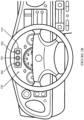
- the single unit may be placed in the dashboard or mounted on the steering column, conveniently positioned to view a driver's face and sufficiently positioned to capture successive images of the region where the subject (e.g., driver's head) is expected to be located during normal driving.
- the imaging camera captures at least a portion of the driver's head, particularly the face including one or both eyes and the surrounding ocular features.
- Additional components of the system may also be included within the common housing or may be provided as separate components according to other embodiments.
- a vision system includes a camera 301, first 304 and second 306 illumination sources, a control unit 310, and vision processor 312.
- the vision processor 312 may be implemented with a microprocessor, or microprocessor in conjunction with custom or specialized circuitry, executing code stored in memory.
- the vision processor 312 also includes memory, such as random access memory (RAM), read-only memory (ROM), electrically erasable programmable read-only memory (EEPROM), and other equivalent memory or storage systems as should be readily apparent to those skilled in the art.
- the illumination control function may be implemented in the vision processor 312 or in any other processor or controller having adequate processing capability.
- the vision processor 312 and illumination controller 310 may be integrated together or may be implemented in separate hardware and/or software or firmware.
- the camera 301, the control unit 310 or the vision processor 312 may each generate control signals for any or each of the other units 301, 310, 312.
- synchronizing signals for the camera 301 and the control unit 310 are generated by the vision processor 312.
- the camera 301 generates synchronizing signals for the control unit 310 and a vision processor 312.
- the control unit 310 provides output signals to control each of the first and second illumination sources 304, 306.
- the control unit 310 sequentially controls activation of the first and then second illumination sources 304, 306, activating each illumination source one at a time.
- the first illumination source is turned on; the second illumination source is turned off, and vice versa.
- the control unit operates in one of three states where 1) the first illumination source 304 is turned on with the second illumination source turned off, 2) the first illumination source 304 is turned off with the second illumination source turned on and 3) both illuminators are turned off.
- Other embodiments include the control unit generating signals which control the first and second illumination sources 304, 306 in a variety of states and patterns. Illumination of the subject by the different states of the illumination sources is referred to as 'illumination conditions'.
- the first and second illumination sources 304, 306 are controlled in synchronicity with the camera 301, to sufficiently illuminate a subject so that the camera generates images that meet or exceed a quality level required by the vision processor. This includes setting a suitable exposure or integration time of the camera 301. Glare caused by other sources such as sunlight and other light sources may be identified when both the first and second illumination sources are turned off.
- the first embodiment generates a strobe pattern synchronized with the camera 301.
- the strobe pattern is generated by alternating illuminators 304, 306 which are labeled L, R, L, R, etc.
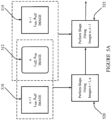
- a first step (n + 1) the first illumination source L is turned on, and the second illumination source R is turned off to define a first illumination condition.
- the (n + 1) image 510 is then captured by the vision processor 312 and camera 301 under this first illumination condition.
- a second step (n) the first illumination source L is turned off, and the second illumination source R is turned on to define a second illumination condition.
- the (n) image 512 is then captured by the vision processor 312 and camera 301 under this second illumination condition.
- the two consecutive images are then processed by the vision processor 312, performing an eye shape fitting routine, combining information from the two captured images.
- eye shape-fitting is performed by combining information from both images and the process is repeated for adjacent pairs of captured images.
- a subsequent image 514 captured under the first illumination condition is combined with image 512 and the eye shape fitting routine is applied to these two images at step 522.
- an eye shape fit is performed twice per individual image frame.
- the two shape-fits are combined for a more robust result (e.g., use a best fit function according to a goodness of fit test).
- Another option is skipping the processing for a pair of images if the vision processor 312 power is limited.
- the steps for the first embodiment are repeated as additional sequential images are generated by the camera and synchronized illumination sources.
- Example eye shape fitting routines are described in more detail below.
- a third embodiment generates a strobe pattern synchronized with the camera 301.
- the strobe pattern is generated by alternating illuminators 304, 306 which are labeled L, R, L, R, etc.
- the first illumination source L is turned on, and the second illumination source R is turned off to define a first illumination condition.
- the (n + 1) image 540 is then captured by the vision processor 312 and camera 301.
- the first illumination source L is turned off, and the second illumination source R is also turned off to define a second illumination condition.
- the (n) image 542 is then captured by the vision processor 312 and camera 301.
- a third step (n-1) the first illumination source L is turned off, and the second illumination source R is turned on to define a third illumination condition.
- the (n-1) image 544 is then captured by the vision processor 312 and camera 301.
- a fourth step (n-2) the first illumination source L is turned off, and the second illumination source R is also turned off to again set the second illumination condition.
- the (n-2) image 546 is then captured by the vision processor 312 and camera 301.
- the three consecutive images (540, 542 and 546) are then processed by the vision processor, performing an eye shape fitting routine, combining information from the three captured images. In this embodiment, eye shape-fitting is performed by combining information from three images and the process is repeated for adjacent triplets of captured images.
- the eye shape fitting routine is performed on the next image triplet including images 542, 544 and 546.
- an eye shape fit is performed three times per frame.
- the three shape-fits are combined for a more robust result (e.g., use a best fit function according to a goodness of fit test).
- Another option is skipping the processing for the triplet images if the vision processor 312 power is limited.
- the steps for the third embodiment are repeated as additional sequential images are generated by the camera and synchronized illumination sources.
- the vision processor 312 receives images from the camera in successive fields, frames or images.
- the vision processor 312 includes a frame grabber or image storage circuitry for receiving and storing the successive images.
- a predetermined number of images are captured by the vision processor 312 and the vision processor then processes the images in a manner to reduce glare.
- a variety of routines are performed by the video processor implementing operations and calculations on the overall image and on individual pixels.
- the eye shape fitting routine involves extracting eye shape features from each of the images in the pair or triplet and inputting these characteristics from each images to an eye model to determine overall eye characteristics, such as eye openness, eye position, or even eye gaze direction in the presence of glare. More generally, however, the eye model may not include the full eye shape but may simply be indicative of an eye openness value (say, normalised between 0 and 1).
- the video processor 312 is also configured to perform one or more routines to recognize and identify facial features or characteristics of the subject. Additional exemplary routines may include but are not limited to position recognition, feature tracking (such as head tracking, eye tracking) and image area and/or pixel manipulation (such as image pixel functions and calculations) in determining an expected gaze vector of the subject, subject distraction, and subject drowsiness.
- head tracking is performed to determine a head position or head pose
- eye features are found and recognized
- shape fitting and triangular mesh operations are performed for at least one eye
- position differences between sequential eye images are identified by finding corresponding pixels
- eye-image position changes are identified and the image is adjusted to compensate for the change in position for the subject glasses and then operators or functions are performed to reduce or eliminate glare.
- At least one algorithmic fitting operation is performed that produces at least one eye opening measurement.
- the algorithmic operation is performed using multiple images and operations or calculations are performed on individual pixels.
- the preferred approach is to identify one or more reference facial features in each image such as pupils, eye corners and points along the upper and lower eyelids. These identified reference facial features are applied to an eye shape model to characterise an overall eye shape.
- the head tracking may be performed on the entire images of the subject's face
- the eye processing procedure is preferably performed on a subset or window of pixels around the identified eyes.
- the eye regions are selected through the identification of eye features such as pupils, eyelids and eye corners.
- Full pixel sets, i.e. full images are not combined into a single full image.
- the algorithm that measures eye opening produces an eye opening measurement from this information.
- the eye opening measurement may be derived directly from the shape of the eye model or may be derived empirically from the image data using an eye openness determining technique.
- An exemplary technique for measuring an eye openness value from an identified eye shape is described in United States Patent 7,043,056 to Edwards et al. entitled Facial Image Processing System and assigned to Seeing Machines Pty Ltd.
- At no point during the computation is a combined image formed from the input images with a pixel-wise min operator (although min operation between pixels may be used for the computation of the eye opening signal, which could be replaced with the option mentioned above (involving facial feature identification) if necessary).
- a head tracking routine or step is processed before extracting eye images.
- the head tracker accurately locates the position of the eye in each frame, and hence allows compensation for motion of the head. Head motion artifacts are reduced with the head tracker, and in another step, eye motion artifacts are reduced with a 'shape fitting' routine.
- shape fitting routine a triangular mesh operation is preferably used to compute pixel coordinates within the shape of an eye, instead of calculating nearest vertex and 2D offset. This triangular mesh operation is described below.
- the impact of glare in the images is reduced by extracting information about the eye shape, including eyelids, iris and pupil contour, from the model fit without having to analyze or generate the full image(s) captured by the camera.
- only the degree of eye openness is extracted from the model fit. Referring to Figure 6 , an example of glare is shown in both images n and n+1. Eyelids are tracked and analyzed using multiple images. Eye shapes are fitted despite the presence of glare as the glare does not overlap the same part of the shape in image n and image n+1. Information from both images n and n+1 is used as an input to fit an eye shape model.
- minimum, maximum, and difference operators are used to modify pixel brightness values.
- Brightness values from multiple images in the regression process for example, brightness in image n, brightness in image n+1, min brightness n, n+1, max brightness n, n+1, difference brightness n, n+1 are used in the process. The result is that, in these latter embodiments, the pixel brightness values of each image are modified depending on the detection of glare and the eye shape detected.
- fitting of eye features to an eye shape model does not require modification of the pixel brightness values - the pixel position of the features can be directly mapped to the eye model.
- the operation or function of the algorithm is more robust in identifying the presence of glare and large shape variations such as an eye closure since the glare is not located on the same part of the shape in images n and n+1. Any motion, for example head motion, eye closure, gaze change, etc., will be taken into account since the pixel coordinates are relative to the shape of the fitted eye model.
- information such as pixel value (brightness and or/coordinates) in image n, corresponding pixel value, in the shape coordinates and in image n+1, a minimum pixel value between the 2 pixels, a difference or a pixel value between the 2 pixels, a maximum pixel value between the 2 pixels may be used.
- a decision on which pixels to use and which pixel value to use, brightness, min brightness, max brightness, difference brightness is learned by the vision processor during a previous off-line training process step.
- the vision processor is configured to run a machine learning algorithm to 'learn' eye shapes based on off-line training using test data.
- the test data preferably includes eye images from many different subjects in many different states (eye closure states and eye directions).
- the off-line training generates an eye model which is used as a fit for the captured images.
- the eye model represents a 2D or 3D shape of an eye which is defined by reference points referred to as 'landmarks'.
- Exemplary landmarks include pupils, eye corners and points along the upper and lower eyelids.
- the landmarks in the model are matched to corresponding identified eye features in the images and the model is fit to the image. Even in the presence of glare, if a sufficient number of landmark features can be identified from the two or three images captured under different illumination conditions, a confident fit may be applied.
- the eye model represents simply a degree of eye openness.
- Suitable machine learning algorithms include fern-based algorithms or convolutional neural networks. Both of these processes rely on determining rules or patterns in data based on learning from a large set of training data.
- An exemplary fern-based algorithm that could be utilised in the present invention is described in US Patent Application Publication 2014/0185924 to Xudong, et al. entitled “Face alignment by explicit shape regression” and assigned to Microsoft Corporation.
- An exemplary algorithm utilising convolutional neural networks is described in Sun, Yi, Xiaogang Wang, and Xiaoou Tang. "Deep convolutional network cascade for facial point detection” Computer Vision and Pattern Recognition (CVPR), 2013 IEEE Conference on. IEEE, 2013 ..
- the machine learning processes can be used to identify not only different eye shapes but degrees of eye closure also. With sufficient training, the vision processor is able to 'learn' to disregard glare information and focus instead on the parts of the image that are glare free.
- the identification of landmark points is required. Algorithms utilising a convolutional neural network may not require the identification of landmark points but rather, information such as the degree of eye openness may be derived directly from the images and the offline training data. Details of a fern-based algorithm are described below.
- a mesh model of an eye can be built.
- the mesh represents a reference system for mapping the eyes identified in the different images. The greater the number of landmarks defined, the finer the mesh structure.
- a triangular mesh function or routine models the eye shape and identifies the position of single pixels within the shape. The single pixels are indexed by a triangle index and weights to the 3 vertices of a triangle.
- the algorithmic operation uses a 'shape fitting' method or routine that will fit the eye shape (pupil, iris, eyelids) in both images n and n+1.
- n+1, n+2 are optionally used in the case of visible light subtraction.
- the pixel coordinates for the fitting process are relative to the shape of the eye in each image, not fixed in image coordinates.
- an exemplary triangular mesh for an eye shape is shown, identifying upper 810 and lower 812 eyelids, iris contour 814, and pupil contour 816.
- the algorithmic approach starts with an initial shape in the image, then refines the shape in multiple steps using the image texture and corresponding 'shape increments' that have been learned from an offline training process on a sufficiently large quantity of annotated images.
- the shape fitting algorithm eliminates 'image ghosting' effects and artifacts produced by head or eye motion using a 'shape regression' algorithm.
- the characteristics of the subject's eye or eyes can be determined from the fitted eye shape model in the presence of glare.
- additional glare reduction procedures may be performed. For example, the positions of corresponding pixels in sequential images can be mapped to the fixed coordinates of the model.
- the vision processor then proceeds to perform pixel operations to minimize glare in the eye regions of the images.
- Each of the following functions are used or implemented as individual embodiments or other embodiments may include multiple functions that are serially combined. Generally, threshold methods or functions are used however other functions may be applied.
- glare reduction functions are applied as modifications to pixel brightness values in the existing images to modify the relevant pixels affected by glare. That is, only the pixels that exceed the threshold or satisfy the criteria are modified. No additional or composite image is generated from the sequential image pair or triplets.
- Reduced glare images allow for enhanced imagery, which is particularly advantageous for use in a vehicle where a subject, such as the driver of a vehicle, may be wearing corrective lenses and glare may be present in the captured image. While two illumination sources are shown and described herein, it should be appreciated that the illumination and imaging system may employ more than two illumination sources located at various locations.
Landscapes
- Engineering & Computer Science (AREA)
- Theoretical Computer Science (AREA)
- Physics & Mathematics (AREA)
- General Physics & Mathematics (AREA)
- Software Systems (AREA)
- Multimedia (AREA)
- Health & Medical Sciences (AREA)
- General Health & Medical Sciences (AREA)
- Evolutionary Computation (AREA)
- Mathematical Physics (AREA)
- General Engineering & Computer Science (AREA)
- Data Mining & Analysis (AREA)
- Computing Systems (AREA)
- Artificial Intelligence (AREA)
- Molecular Biology (AREA)
- Biomedical Technology (AREA)
- Computational Linguistics (AREA)
- Biophysics (AREA)
- Life Sciences & Earth Sciences (AREA)
- Human Computer Interaction (AREA)
- Ophthalmology & Optometry (AREA)
- Computer Vision & Pattern Recognition (AREA)
- Medical Informatics (AREA)
- Oral & Maxillofacial Surgery (AREA)
- Image Processing (AREA)
Claims (14)
- Bildverarbeitungssystem, das aufweist:zwei oder mehr Beleuchtungsvorrichtungen, die positioniert sind, ein Gesicht einer Person aus jeweiligen Beleuchtungswinkeln selektiv zu beleuchten;eine Kamera, die positioniert ist, Bilder von mindestens einem Teil des Gesichts der Person, einschließlich mindestens eines Auges, aufzunehmen;eine Steuerung, die konfiguriert ist, die Beleuchtungsvorrichtungen und die Kamera so zu steuern, dass ein erstes Bild unter einer ersten Beleuchtungsbedingung mit ersten Blendeigenschaften und ein zweites Bild unter einer zweiten Beleuchtungsbedingung mit zweiten Blendeigenschaften aufgenommen wird, wobei die ersten und zweiten Beleuchtungsbedingungen durch die Beleuchtungsvorrichtungen definiert sind; undeinen Prozessor, der eingerichtet ist, ein Augenmodell basierend auf mindestens einer erfassten Eigenschaft des mindestens einen Auges in dem ersten und dem zweiten Bild an das erste und das zweite Bild anzupassen, um Informationen über die Position und die Form des mindestens einen Auges zu erhalten;wobei der Prozessor ferner eingerichtet ist, um:entsprechende Pixel aus dem ersten und zweiten Bild zu bestimmen, die sich auf denselben Bereich des mindestens einen Auges beziehen;die Helligkeitswerte der entsprechenden Pixel zu vergleichen; undselektiv die Helligkeitswerte eines oder mehrerer der entsprechenden Pixel im ersten Bild und/oder im zweiten Bild zu modifizieren, um eine Blendung zu reduzieren.
- Bildverarbeitungssystem nach Anspruch 1, wobei die mindestens eine Eigenschaft eine Augenposition einschließt und der Prozessor ferner eingerichtet ist, das erste und das zweite Bild zu verarbeiten, um eine Position des mindestens einen Auges in den Bildern zu bestimmen.
- Bildverarbeitungssystem nach Anspruch 1 oder 2, wobei die mindestens eine Eigenschaft einen Grad der Augenöffnung umfasst und der Prozessor ferner eingerichtet ist, eine Augenöffnungsmessung durchzuführen, um einen Grad der Öffnung des mindestens einen Auges zu bestimmen.
- Bildverarbeitungssystem nach einem der vorhergehenden Ansprüche, wobei das Augenmodell basierend auf maschinellem Lernen eines Satzes von Trainingsdaten erzeugt wird.
- Bildverarbeitungssystem nach Anspruch 4, wobei das maschinelle Lernen die Durchführung eines FERN-basierten Regressionsalgorithmus oder eines Algorithmus für ein faltungsneuronales Netz umfasst.
- Bildverarbeitungssystem nach Anspruch 5, wobei das Modell mindestens einen Referenzpunkt enthält, der durch eine oder mehrere Pupillen, Augenwinkel und Punkte entlang eines oberen und unteren Augenlids definiert ist.
- Bildverarbeitungssystem nach Anspruch 6, wobei das Modell eine Netzstruktur enthält, die in Bezug auf den mindestens einen Referenzpunkt definiert ist.
- Bildverarbeitungssystem nach Anspruch 7, wobei die Netzstruktur dreieckige Elemente mit drei Scheitelpunkten enthält.
- Bildverarbeitungssystem nach Anspruch 7 oder Anspruch 8, wobei Koordinaten von Pixeln in Bereichen des mindestens einen Auges des ersten und zweiten Bildes als Linearkombinationen der Referenzpunkte auf die Netzstruktur abgebildet werden.
- Bildverarbeitungssystem nach einem der vorhergehenden Ansprüche, wobei das Vergleichen und Modifizieren der Helligkeitswerte eines oder mehrerer der entsprechenden Pixel im ersten Bild und/oder im zweiten Bild gemäß einer gewichteten Mittelwertoperation durchgeführt werden.
- Bildverarbeitungssystem nach Anspruch 10, wobei die Mittelwertoperation ist:

- Bildverarbeitungssystem nach einem der Ansprüche 1 bis 9, wobei das Vergleichen und Modifizieren der Helligkeitswerte eines oder mehrerer der entsprechenden Pixel im ersten Bild und/oder im zweiten Bild gemäß einer Schwellenwertoperation durchgeführt werden.
- Bildverarbeitungssystem nach einem der vorangehenden Ansprüche, wobei die mindestens eine Eigenschaft eine Pupillenkontur einschließt und der Prozessor ferner eingerichtet ist, das erste und das zweite Bild zu verarbeiten, um eine Blickrichtung der Augen zu bestimmen.
- Bildverarbeitungsverfahren, das die Schritte umfasst:Selektives Beleuchten eines Gesichts einer Person aus mindestens zwei Beleuchtungswinkeln;Aufnehmen von Bildern von mindestens einem Teil des Gesichts der Person, der mindestens ein Auge enthält, so dass unterschiedliche Bilder unter mindestens einer ersten Beleuchtungsbedingung mit ersten Blendeigenschaften bzw. einer zweiten Beleuchtungsbedingung mit zweiten Blendeigenschaften aufgenommen werden; undAnpassen eines Augenmodells an das erste und das zweite Bild basierend auf mindestens einem erfassten Merkmal des mindestens einen Auges in dem ersten und dem zweiten Bild, um Informationen über die Position und die Form des mindestens einen Auges zu erhalten;Bestimmen entsprechender Pixel aus dem ersten und zweiten Bild, die sich auf denselben Bereich des mindestens einen Auges beziehen;Vergleichen der Helligkeitswerte der entsprechenden Pixel; undselektives Modifizieren von Helligkeitswerten eines oder mehrerer der entsprechenden Pixel in dem ersten Bild und/oder dem zweiten Bild, um eine Blendung zu reduzieren, während das Augenmodell angepasst wird.
Applications Claiming Priority (2)
| Application Number | Priority Date | Filing Date | Title |
|---|---|---|---|
| AU2015900592A AU2015900592A0 (en) | 2015-02-20 | Glare Reduction | |
| PCT/AU2015/000769 WO2016131075A1 (en) | 2015-02-20 | 2015-12-31 | Glare reduction |
Publications (3)
| Publication Number | Publication Date |
|---|---|
| EP3259734A1 EP3259734A1 (de) | 2017-12-27 |
| EP3259734A4 EP3259734A4 (de) | 2019-02-20 |
| EP3259734B1 true EP3259734B1 (de) | 2024-07-24 |
Family
ID=56691963
Family Applications (1)
| Application Number | Title | Priority Date | Filing Date |
|---|---|---|---|
| EP15882297.3A Active EP3259734B1 (de) | 2015-02-20 | 2015-12-31 | Verminderung von blendung |
Country Status (3)
| Country | Link |
|---|---|
| US (1) | US10521683B2 (de) |
| EP (1) | EP3259734B1 (de) |
| WO (1) | WO2016131075A1 (de) |
Families Citing this family (30)
| Publication number | Priority date | Publication date | Assignee | Title |
|---|---|---|---|---|
| JP2019514302A (ja) * | 2016-05-25 | 2019-05-30 | エムテクビジョン カンパニー リミテッド | 運転者の目位置の検出装置と方法、及びローリングシャッター駆動方式のイメージセンサーを備えた撮像装置とその照明制御方法 |
| US10675955B2 (en) * | 2016-11-14 | 2020-06-09 | Google Llc | Adaptive glare removal and/or color correction |
| CN107633206B (zh) * | 2017-08-17 | 2018-09-11 | 平安科技(深圳)有限公司 | 眼球动作捕捉方法、装置及存储介质 |
| US10521661B2 (en) * | 2017-09-01 | 2019-12-31 | Magic Leap, Inc. | Detailed eye shape model for robust biometric applications |
| US10825157B2 (en) * | 2017-09-29 | 2020-11-03 | Apple Inc. | Glare reduction in captured images |
| CN109664889B (zh) * | 2017-10-12 | 2021-01-26 | 北京旷视科技有限公司 | 一种车辆控制方法、装置和系统以及存储介质 |
| KR102410834B1 (ko) * | 2017-10-27 | 2022-06-20 | 삼성전자주식회사 | 반사 영역을 제거하는 방법, 사용자의 눈을 추적하는 방법 및 그 장치 |
| US11386709B2 (en) | 2017-10-31 | 2022-07-12 | Seeing Machines Limited | System and method for improving signal to noise ratio in object tracking under poor light conditions |
| WO2019094322A1 (en) | 2017-11-07 | 2019-05-16 | EyeVerify Inc. | Capturing images under coded illumination patterns to reduce effects of ambient lighting conditions |
| KR102476757B1 (ko) * | 2017-12-21 | 2022-12-09 | 삼성전자주식회사 | 반사를 검출하는 장치 및 방법 |
| EP3540574B1 (de) * | 2018-03-15 | 2021-08-11 | HTC Corporation | Augenverfolgungsverfahren, elektronische vorrichtung und nichttransitorisches computerlesbares speichermedium |
| TWI637289B (zh) * | 2018-05-18 | 2018-10-01 | 緯創資通股份有限公司 | 基於眼球追蹤的顯示控制系統 |
| WO2019228633A1 (en) * | 2018-05-31 | 2019-12-05 | Tobii Ab | Zero delay gaze filter |
| US10684681B2 (en) * | 2018-06-11 | 2020-06-16 | Fotonation Limited | Neural network image processing apparatus |
| WO2020095233A1 (en) | 2018-11-07 | 2020-05-14 | Spectrum Optix Inc. | Bright spot removal using a neural network |
| KR102815809B1 (ko) | 2018-12-04 | 2025-06-04 | 삼성전자주식회사 | 영상 처리 방법 및 장치 |
| US10807605B2 (en) | 2018-12-19 | 2020-10-20 | Waymo Llc | Systems and methods for detecting and dynamically mitigating driver fatigue |
| US10878548B2 (en) | 2019-03-28 | 2020-12-29 | Advanced New Technologies Co., Ltd. | Specular reflection reduction using polarized light sources |
| WO2021207571A1 (en) * | 2020-04-10 | 2021-10-14 | Smith & Nephew, Inc. | Reciprocal optical tracking system and methods thereof |
| EP4261662A3 (de) * | 2020-06-30 | 2023-11-29 | Apple Inc. | Streulichtminderung in optischen systemen |
| WO2022060348A1 (en) * | 2020-09-15 | 2022-03-24 | Hewlett-Packard Development Company, L.P. | Glare reduction in images |
| KR20220053092A (ko) * | 2020-10-21 | 2022-04-29 | 현대모비스 주식회사 | 운전자를 위한 주행 보조 시스템 및 방법 |
| JP2022123858A (ja) | 2021-02-11 | 2022-08-24 | シーイング マシーンズ リミテッド | 電気的に切り替えられた偏光を用いた改善された乗員モニタリング |
| US12033218B2 (en) * | 2022-01-31 | 2024-07-09 | Vehicle Service Group, Llc | Assessing damages on vehicles |
| GB2618078A (en) * | 2022-04-25 | 2023-11-01 | Continental Automotive Tech Gmbh | An image processing method for removal of glare spots and system for the same |
| WO2024047496A1 (en) * | 2022-08-29 | 2024-03-07 | Gentex Corporation | Illumination control for an imaging system |
| CN115315047A (zh) * | 2022-09-06 | 2022-11-08 | 中国第一汽车股份有限公司 | 汽车室内灯光亮度调节方法、装置、电子设备以及介质 |
| EP4439477B1 (de) * | 2023-03-27 | 2026-04-29 | Rockwell Collins, Inc. | Pilotenhaltungserkennungssystem und -verfahren |
| US20240404050A1 (en) * | 2023-06-01 | 2024-12-05 | Johnson & Johnson Surgical Vision, Inc. | System and method for removal of corneal specular reflections in eye imaging |
| US20250103693A1 (en) * | 2023-09-27 | 2025-03-27 | Apple Inc. | Multiple Illumination Conditions for Biometric Authentication |
Family Cites Families (16)
| Publication number | Priority date | Publication date | Assignee | Title |
|---|---|---|---|---|
| AUPP048097A0 (en) * | 1997-11-21 | 1997-12-18 | Xenotech Research Pty Ltd | Eye tracking apparatus |
| US6088470A (en) * | 1998-01-27 | 2000-07-11 | Sensar, Inc. | Method and apparatus for removal of bright or dark spots by the fusion of multiple images |
| AUPQ896000A0 (en) | 2000-07-24 | 2000-08-17 | Seeing Machines Pty Ltd | Facial image processing system |
| US7599524B2 (en) * | 2003-04-04 | 2009-10-06 | Sarnoff Corporation | Method and apparatus for providing a robust object finder |
| US7777778B2 (en) | 2004-10-27 | 2010-08-17 | Delphi Technologies, Inc. | Illumination and imaging system and method |
| US7430365B2 (en) * | 2005-03-31 | 2008-09-30 | Avago Technologies Ecbu (Singapore) Pte Ltd. | Safe eye detection |
| US7747068B1 (en) | 2006-01-20 | 2010-06-29 | Andrew Paul Smyth | Systems and methods for tracking the eye |
| US7578593B2 (en) | 2006-06-01 | 2009-08-25 | Delphi Technologies, Inc. | Eye monitoring method with glare spot shifting |
| US7646422B2 (en) | 2006-10-04 | 2010-01-12 | Branislav Kisacanin | Illumination and imaging system with glare reduction and method therefor |
| SE0602545L (en) | 2006-11-29 | 2008-05-30 | Tobii Technology Ab | Eye tracking illumination |
| JP4623172B2 (ja) | 2008-09-03 | 2011-02-02 | 株式会社デンソー | 瞳孔検出装置、瞳孔検出装置用プログラム及び瞳孔検出方法 |
| JP4893863B1 (ja) * | 2011-03-11 | 2012-03-07 | オムロン株式会社 | 画像処理装置、および画像処理方法 |
| DE112011105441B4 (de) | 2011-07-11 | 2019-11-14 | Toyota Jidosha Kabushiki Kaisha | Augenliderfassungsvorrichtung |
| ES2620762T3 (es) | 2011-10-27 | 2017-06-29 | Tobii Ab | Gestión de potencia en un sistema de rastreo ocular |
| US20140185924A1 (en) | 2012-12-27 | 2014-07-03 | Microsoft Corporation | Face Alignment by Explicit Shape Regression |
| US20150296135A1 (en) * | 2014-04-10 | 2015-10-15 | Magna Electronics Inc. | Vehicle vision system with driver monitoring |
-
2015
- 2015-12-31 EP EP15882297.3A patent/EP3259734B1/de active Active
- 2015-12-31 WO PCT/AU2015/000769 patent/WO2016131075A1/en not_active Ceased
- 2015-12-31 US US15/552,206 patent/US10521683B2/en active Active
Also Published As
| Publication number | Publication date |
|---|---|
| EP3259734A1 (de) | 2017-12-27 |
| US10521683B2 (en) | 2019-12-31 |
| WO2016131075A1 (en) | 2016-08-25 |
| US20180039846A1 (en) | 2018-02-08 |
| EP3259734A4 (de) | 2019-02-20 |
Similar Documents
| Publication | Publication Date | Title |
|---|---|---|
| EP3259734B1 (de) | Verminderung von blendung | |
| EP3857442B1 (de) | Beurteilung der aufmerksamkeit eines fahrers | |
| EP2975997B1 (de) | System und verfahren zur blickverfolgung auf der achse | |
| EP1732028B1 (de) | System und Verfahren zur Erfassung eines Auges | |
| US10318831B2 (en) | Method and system for monitoring the status of the driver of a vehicle | |
| US9773179B2 (en) | Vehicle operator monitoring system and method | |
| US9405982B2 (en) | Driver gaze detection system | |
| EP1933256B1 (de) | Augenschließungs-Erkennungssystem und -verfahren | |
| EP2023269A2 (de) | System und Verfahren zur Aufmerksamkeitsdetektion | |
| EP2060993B1 (de) | Aufmerksamkeitserkennungssystem und Verfahren | |
| EP2860663B1 (de) | Vorrichtung zur Erkennung eines Teiles eines Auges | |
| JP2021501517A (ja) | 低照明光条件下での物体追跡における信号対雑音比を向上させるためのシステム及び方法 | |
| EP1589485A2 (de) | Verfahren zur Verfolgung eines Objekts und Ermittelung eines Augenzustands | |
| WO2018051681A1 (ja) | 視線計測装置 | |
| CN109565549A (zh) | 用于运行内饰摄像机的方法和设备 | |
| US7668337B2 (en) | Ellipsoid detecting method, figure center detecting method, image recognizing device, and controller based on image | |
| JP6957048B2 (ja) | 眼部画像処理装置 | |
| KR100338805B1 (ko) | 졸음 레벨 검출 방법 | |
| CN120406719A (zh) | 眼动追踪方法、眼动追踪设备、眼动追踪系统和存储介质 | |
| CN121926594A (zh) | 一种基于眼动和眨眼行为的疲劳监测方法 | |
| HK40068044A (en) | Image restoration method, apparatus, device, and medium | |
| JP2023125652A (ja) | 瞳孔検出装置および瞳孔検出方法 |
Legal Events
| Date | Code | Title | Description |
|---|---|---|---|
| STAA | Information on the status of an ep patent application or granted ep patent |
Free format text: STATUS: THE INTERNATIONAL PUBLICATION HAS BEEN MADE |
|
| PUAI | Public reference made under article 153(3) epc to a published international application that has entered the european phase |
Free format text: ORIGINAL CODE: 0009012 |
|
| STAA | Information on the status of an ep patent application or granted ep patent |
Free format text: STATUS: REQUEST FOR EXAMINATION WAS MADE |
|
| 17P | Request for examination filed |
Effective date: 20170920 |
|
| AK | Designated contracting states |
Kind code of ref document: A1 Designated state(s): AL AT BE BG CH CY CZ DE DK EE ES FI FR GB GR HR HU IE IS IT LI LT LU LV MC MK MT NL NO PL PT RO RS SE SI SK SM TR |
|
| AX | Request for extension of the european patent |
Extension state: BA ME |
|
| DAV | Request for validation of the european patent (deleted) | ||
| DAX | Request for extension of the european patent (deleted) | ||
| RAP1 | Party data changed (applicant data changed or rights of an application transferred) |
Owner name: SEEING MACHINES LIMITED |
|
| RIC1 | Information provided on ipc code assigned before grant |
Ipc: G06T 7/00 20170101AFI20180913BHEP Ipc: G06K 9/00 20060101ALI20180913BHEP |
|
| A4 | Supplementary search report drawn up and despatched |
Effective date: 20190117 |
|
| RIC1 | Information provided on ipc code assigned before grant |
Ipc: G06K 9/00 20060101ALI20190111BHEP Ipc: G06T 7/00 20170101AFI20190111BHEP |
|
| STAA | Information on the status of an ep patent application or granted ep patent |
Free format text: STATUS: EXAMINATION IS IN PROGRESS |
|
| 17Q | First examination report despatched |
Effective date: 20201222 |
|
| P01 | Opt-out of the competence of the unified patent court (upc) registered |
Effective date: 20230420 |
|
| REG | Reference to a national code |
Ref country code: DE Ref legal event code: R079 Free format text: PREVIOUS MAIN CLASS: G06T0007000000 Ref country code: DE Ref legal event code: R079 Ref document number: 602015089340 Country of ref document: DE Free format text: PREVIOUS MAIN CLASS: G06T0007000000 Ipc: G06V0010141000 |
|
| GRAP | Despatch of communication of intention to grant a patent |
Free format text: ORIGINAL CODE: EPIDOSNIGR1 |
|
| STAA | Information on the status of an ep patent application or granted ep patent |
Free format text: STATUS: GRANT OF PATENT IS INTENDED |
|
| RIC1 | Information provided on ipc code assigned before grant |
Ipc: G06N 3/045 20230101ALI20240212BHEP Ipc: G06V 40/19 20220101ALI20240212BHEP Ipc: G06V 20/59 20220101ALI20240212BHEP Ipc: G06V 10/141 20220101AFI20240212BHEP |
|
| INTG | Intention to grant announced |
Effective date: 20240304 |
|
| GRAS | Grant fee paid |
Free format text: ORIGINAL CODE: EPIDOSNIGR3 |
|
| GRAA | (expected) grant |
Free format text: ORIGINAL CODE: 0009210 |
|
| STAA | Information on the status of an ep patent application or granted ep patent |
Free format text: STATUS: THE PATENT HAS BEEN GRANTED |
|
| AK | Designated contracting states |
Kind code of ref document: B1 Designated state(s): AL AT BE BG CH CY CZ DE DK EE ES FI FR GB GR HR HU IE IS IT LI LT LU LV MC MK MT NL NO PL PT RO RS SE SI SK SM TR |
|
| REG | Reference to a national code |
Ref country code: GB Ref legal event code: FG4D |
|
| REG | Reference to a national code |
Ref country code: CH Ref legal event code: EP |
|
| REG | Reference to a national code |
Ref country code: IE Ref legal event code: FG4D Ref country code: DE Ref legal event code: R096 Ref document number: 602015089340 Country of ref document: DE |
|
| REG | Reference to a national code |
Ref country code: LT Ref legal event code: MG9D |
|
| REG | Reference to a national code |
Ref country code: NL Ref legal event code: MP Effective date: 20240724 |
|
| PG25 | Lapsed in a contracting state [announced via postgrant information from national office to epo] |
Ref country code: PT Free format text: LAPSE BECAUSE OF FAILURE TO SUBMIT A TRANSLATION OF THE DESCRIPTION OR TO PAY THE FEE WITHIN THE PRESCRIBED TIME-LIMIT Effective date: 20241125 |
|
| REG | Reference to a national code |
Ref country code: AT Ref legal event code: MK05 Ref document number: 1707020 Country of ref document: AT Kind code of ref document: T Effective date: 20240724 |
|
| PG25 | Lapsed in a contracting state [announced via postgrant information from national office to epo] |
Ref country code: NL Free format text: LAPSE BECAUSE OF FAILURE TO SUBMIT A TRANSLATION OF THE DESCRIPTION OR TO PAY THE FEE WITHIN THE PRESCRIBED TIME-LIMIT Effective date: 20240724 |
|
| PG25 | Lapsed in a contracting state [announced via postgrant information from national office to epo] |
Ref country code: PT Free format text: LAPSE BECAUSE OF FAILURE TO SUBMIT A TRANSLATION OF THE DESCRIPTION OR TO PAY THE FEE WITHIN THE PRESCRIBED TIME-LIMIT Effective date: 20241125 Ref country code: NL Free format text: LAPSE BECAUSE OF FAILURE TO SUBMIT A TRANSLATION OF THE DESCRIPTION OR TO PAY THE FEE WITHIN THE PRESCRIBED TIME-LIMIT Effective date: 20240724 |
|
| PG25 | Lapsed in a contracting state [announced via postgrant information from national office to epo] |
Ref country code: NO Free format text: LAPSE BECAUSE OF FAILURE TO SUBMIT A TRANSLATION OF THE DESCRIPTION OR TO PAY THE FEE WITHIN THE PRESCRIBED TIME-LIMIT Effective date: 20241024 |
|
| PG25 | Lapsed in a contracting state [announced via postgrant information from national office to epo] |
Ref country code: FI Free format text: LAPSE BECAUSE OF FAILURE TO SUBMIT A TRANSLATION OF THE DESCRIPTION OR TO PAY THE FEE WITHIN THE PRESCRIBED TIME-LIMIT Effective date: 20240724 Ref country code: GR Free format text: LAPSE BECAUSE OF FAILURE TO SUBMIT A TRANSLATION OF THE DESCRIPTION OR TO PAY THE FEE WITHIN THE PRESCRIBED TIME-LIMIT Effective date: 20241025 Ref country code: PL Free format text: LAPSE BECAUSE OF FAILURE TO SUBMIT A TRANSLATION OF THE DESCRIPTION OR TO PAY THE FEE WITHIN THE PRESCRIBED TIME-LIMIT Effective date: 20240724 |
|
| PG25 | Lapsed in a contracting state [announced via postgrant information from national office to epo] |
Ref country code: BG Free format text: LAPSE BECAUSE OF FAILURE TO SUBMIT A TRANSLATION OF THE DESCRIPTION OR TO PAY THE FEE WITHIN THE PRESCRIBED TIME-LIMIT Effective date: 20240724 |
|
| PG25 | Lapsed in a contracting state [announced via postgrant information from national office to epo] |
Ref country code: LV Free format text: LAPSE BECAUSE OF FAILURE TO SUBMIT A TRANSLATION OF THE DESCRIPTION OR TO PAY THE FEE WITHIN THE PRESCRIBED TIME-LIMIT Effective date: 20240724 |
|
| PG25 | Lapsed in a contracting state [announced via postgrant information from national office to epo] |
Ref country code: AT Free format text: LAPSE BECAUSE OF FAILURE TO SUBMIT A TRANSLATION OF THE DESCRIPTION OR TO PAY THE FEE WITHIN THE PRESCRIBED TIME-LIMIT Effective date: 20240724 Ref country code: IS Free format text: LAPSE BECAUSE OF FAILURE TO SUBMIT A TRANSLATION OF THE DESCRIPTION OR TO PAY THE FEE WITHIN THE PRESCRIBED TIME-LIMIT Effective date: 20241124 |
|
| PG25 | Lapsed in a contracting state [announced via postgrant information from national office to epo] |
Ref country code: HR Free format text: LAPSE BECAUSE OF FAILURE TO SUBMIT A TRANSLATION OF THE DESCRIPTION OR TO PAY THE FEE WITHIN THE PRESCRIBED TIME-LIMIT Effective date: 20240724 |
|
| PG25 | Lapsed in a contracting state [announced via postgrant information from national office to epo] |
Ref country code: RS Free format text: LAPSE BECAUSE OF FAILURE TO SUBMIT A TRANSLATION OF THE DESCRIPTION OR TO PAY THE FEE WITHIN THE PRESCRIBED TIME-LIMIT Effective date: 20241024 Ref country code: ES Free format text: LAPSE BECAUSE OF FAILURE TO SUBMIT A TRANSLATION OF THE DESCRIPTION OR TO PAY THE FEE WITHIN THE PRESCRIBED TIME-LIMIT Effective date: 20240724 |
|
| PG25 | Lapsed in a contracting state [announced via postgrant information from national office to epo] |
Ref country code: RS Free format text: LAPSE BECAUSE OF FAILURE TO SUBMIT A TRANSLATION OF THE DESCRIPTION OR TO PAY THE FEE WITHIN THE PRESCRIBED TIME-LIMIT Effective date: 20241024 Ref country code: PL Free format text: LAPSE BECAUSE OF FAILURE TO SUBMIT A TRANSLATION OF THE DESCRIPTION OR TO PAY THE FEE WITHIN THE PRESCRIBED TIME-LIMIT Effective date: 20240724 Ref country code: NO Free format text: LAPSE BECAUSE OF FAILURE TO SUBMIT A TRANSLATION OF THE DESCRIPTION OR TO PAY THE FEE WITHIN THE PRESCRIBED TIME-LIMIT Effective date: 20241024 Ref country code: LV Free format text: LAPSE BECAUSE OF FAILURE TO SUBMIT A TRANSLATION OF THE DESCRIPTION OR TO PAY THE FEE WITHIN THE PRESCRIBED TIME-LIMIT Effective date: 20240724 Ref country code: IS Free format text: LAPSE BECAUSE OF FAILURE TO SUBMIT A TRANSLATION OF THE DESCRIPTION OR TO PAY THE FEE WITHIN THE PRESCRIBED TIME-LIMIT Effective date: 20241124 Ref country code: HR Free format text: LAPSE BECAUSE OF FAILURE TO SUBMIT A TRANSLATION OF THE DESCRIPTION OR TO PAY THE FEE WITHIN THE PRESCRIBED TIME-LIMIT Effective date: 20240724 Ref country code: GR Free format text: LAPSE BECAUSE OF FAILURE TO SUBMIT A TRANSLATION OF THE DESCRIPTION OR TO PAY THE FEE WITHIN THE PRESCRIBED TIME-LIMIT Effective date: 20241025 Ref country code: FI Free format text: LAPSE BECAUSE OF FAILURE TO SUBMIT A TRANSLATION OF THE DESCRIPTION OR TO PAY THE FEE WITHIN THE PRESCRIBED TIME-LIMIT Effective date: 20240724 Ref country code: ES Free format text: LAPSE BECAUSE OF FAILURE TO SUBMIT A TRANSLATION OF THE DESCRIPTION OR TO PAY THE FEE WITHIN THE PRESCRIBED TIME-LIMIT Effective date: 20240724 Ref country code: BG Free format text: LAPSE BECAUSE OF FAILURE TO SUBMIT A TRANSLATION OF THE DESCRIPTION OR TO PAY THE FEE WITHIN THE PRESCRIBED TIME-LIMIT Effective date: 20240724 Ref country code: AT Free format text: LAPSE BECAUSE OF FAILURE TO SUBMIT A TRANSLATION OF THE DESCRIPTION OR TO PAY THE FEE WITHIN THE PRESCRIBED TIME-LIMIT Effective date: 20240724 |
|
| PG25 | Lapsed in a contracting state [announced via postgrant information from national office to epo] |
Ref country code: RO Free format text: LAPSE BECAUSE OF FAILURE TO SUBMIT A TRANSLATION OF THE DESCRIPTION OR TO PAY THE FEE WITHIN THE PRESCRIBED TIME-LIMIT Effective date: 20240724 Ref country code: DK Free format text: LAPSE BECAUSE OF FAILURE TO SUBMIT A TRANSLATION OF THE DESCRIPTION OR TO PAY THE FEE WITHIN THE PRESCRIBED TIME-LIMIT Effective date: 20240724 Ref country code: SM Free format text: LAPSE BECAUSE OF FAILURE TO SUBMIT A TRANSLATION OF THE DESCRIPTION OR TO PAY THE FEE WITHIN THE PRESCRIBED TIME-LIMIT Effective date: 20240724 |
|
| PG25 | Lapsed in a contracting state [announced via postgrant information from national office to epo] |
Ref country code: EE Free format text: LAPSE BECAUSE OF FAILURE TO SUBMIT A TRANSLATION OF THE DESCRIPTION OR TO PAY THE FEE WITHIN THE PRESCRIBED TIME-LIMIT Effective date: 20240724 |
|
| PG25 | Lapsed in a contracting state [announced via postgrant information from national office to epo] |
Ref country code: CZ Free format text: LAPSE BECAUSE OF FAILURE TO SUBMIT A TRANSLATION OF THE DESCRIPTION OR TO PAY THE FEE WITHIN THE PRESCRIBED TIME-LIMIT Effective date: 20240724 |
|
| REG | Reference to a national code |
Ref country code: DE Ref legal event code: R097 Ref document number: 602015089340 Country of ref document: DE |
|
| PG25 | Lapsed in a contracting state [announced via postgrant information from national office to epo] |
Ref country code: IT Free format text: LAPSE BECAUSE OF FAILURE TO SUBMIT A TRANSLATION OF THE DESCRIPTION OR TO PAY THE FEE WITHIN THE PRESCRIBED TIME-LIMIT Effective date: 20240724 Ref country code: SK Free format text: LAPSE BECAUSE OF FAILURE TO SUBMIT A TRANSLATION OF THE DESCRIPTION OR TO PAY THE FEE WITHIN THE PRESCRIBED TIME-LIMIT Effective date: 20240724 |
|
| PLBE | No opposition filed within time limit |
Free format text: ORIGINAL CODE: 0009261 |
|
| STAA | Information on the status of an ep patent application or granted ep patent |
Free format text: STATUS: NO OPPOSITION FILED WITHIN TIME LIMIT |
|
| 26N | No opposition filed |
Effective date: 20250425 |
|
| PG25 | Lapsed in a contracting state [announced via postgrant information from national office to epo] |
Ref country code: MC Free format text: LAPSE BECAUSE OF FAILURE TO SUBMIT A TRANSLATION OF THE DESCRIPTION OR TO PAY THE FEE WITHIN THE PRESCRIBED TIME-LIMIT Effective date: 20240724 |
|
| REG | Reference to a national code |
Ref country code: CH Ref legal event code: PL |
|
| PG25 | Lapsed in a contracting state [announced via postgrant information from national office to epo] |
Ref country code: LU Free format text: LAPSE BECAUSE OF NON-PAYMENT OF DUE FEES Effective date: 20241231 |
|
| GBPC | Gb: european patent ceased through non-payment of renewal fee |
Effective date: 20241231 |
|
| PG25 | Lapsed in a contracting state [announced via postgrant information from national office to epo] |
Ref country code: SE Free format text: LAPSE BECAUSE OF FAILURE TO SUBMIT A TRANSLATION OF THE DESCRIPTION OR TO PAY THE FEE WITHIN THE PRESCRIBED TIME-LIMIT Effective date: 20240724 |
|
| REG | Reference to a national code |
Ref country code: BE Ref legal event code: MM Effective date: 20241231 |
|
| PG25 | Lapsed in a contracting state [announced via postgrant information from national office to epo] |
Ref country code: GB Free format text: LAPSE BECAUSE OF NON-PAYMENT OF DUE FEES Effective date: 20241231 Ref country code: BE Free format text: LAPSE BECAUSE OF NON-PAYMENT OF DUE FEES Effective date: 20241231 |
|
| PG25 | Lapsed in a contracting state [announced via postgrant information from national office to epo] |
Ref country code: CH Free format text: LAPSE BECAUSE OF NON-PAYMENT OF DUE FEES Effective date: 20241231 |
|
| PG25 | Lapsed in a contracting state [announced via postgrant information from national office to epo] |
Ref country code: IE Free format text: LAPSE BECAUSE OF NON-PAYMENT OF DUE FEES Effective date: 20241231 |
|
| PGFP | Annual fee paid to national office [announced via postgrant information from national office to epo] |
Ref country code: FR Payment date: 20251219 Year of fee payment: 11 |
|
| PGFP | Annual fee paid to national office [announced via postgrant information from national office to epo] |
Ref country code: DE Payment date: 20251230 Year of fee payment: 11 |