EP3260219B1 - Formvibrationsvorrichtung - Google Patents
Formvibrationsvorrichtung Download PDFInfo
- Publication number
- EP3260219B1 EP3260219B1 EP16752354.7A EP16752354A EP3260219B1 EP 3260219 B1 EP3260219 B1 EP 3260219B1 EP 16752354 A EP16752354 A EP 16752354A EP 3260219 B1 EP3260219 B1 EP 3260219B1
- Authority
- EP
- European Patent Office
- Prior art keywords
- shaft
- mold
- lubricating oil
- ball screw
- nut
- Prior art date
- Legal status (The legal status is an assumption and is not a legal conclusion. Google has not performed a legal analysis and makes no representation as to the accuracy of the status listed.)
- Active
Links
Images




Classifications
-
- B—PERFORMING OPERATIONS; TRANSPORTING
- B22—CASTING; POWDER METALLURGY
- B22D—CASTING OF METALS; CASTING OF OTHER SUBSTANCES BY THE SAME PROCESSES OR DEVICES
- B22D11/00—Continuous casting of metals, i.e. casting in indefinite lengths
- B22D11/04—Continuous casting of metals, i.e. casting in indefinite lengths into open-ended moulds
- B22D11/053—Means for oscillating the moulds
-
- F—MECHANICAL ENGINEERING; LIGHTING; HEATING; WEAPONS; BLASTING
- F16—ENGINEERING ELEMENTS AND UNITS; GENERAL MEASURES FOR PRODUCING AND MAINTAINING EFFECTIVE FUNCTIONING OF MACHINES OR INSTALLATIONS; THERMAL INSULATION IN GENERAL
- F16H—GEARING
- F16H25/00—Gearings comprising primarily only cams, cam-followers and screw-and-nut mechanisms
- F16H25/18—Gearings comprising primarily only cams, cam-followers and screw-and-nut mechanisms for conveying or interconverting oscillating or reciprocating motions
- F16H25/20—Screw mechanisms
- F16H25/22—Screw mechanisms with balls, rollers, or similar members between the co-operating parts; Elements essential to the use of such members
-
- F—MECHANICAL ENGINEERING; LIGHTING; HEATING; WEAPONS; BLASTING
- F16—ENGINEERING ELEMENTS AND UNITS; GENERAL MEASURES FOR PRODUCING AND MAINTAINING EFFECTIVE FUNCTIONING OF MACHINES OR INSTALLATIONS; THERMAL INSULATION IN GENERAL
- F16H—GEARING
- F16H25/00—Gearings comprising primarily only cams, cam-followers and screw-and-nut mechanisms
- F16H25/18—Gearings comprising primarily only cams, cam-followers and screw-and-nut mechanisms for conveying or interconverting oscillating or reciprocating motions
- F16H25/20—Screw mechanisms
- F16H25/22—Screw mechanisms with balls, rollers, or similar members between the co-operating parts; Elements essential to the use of such members
- F16H25/2204—Screw mechanisms with balls, rollers, or similar members between the co-operating parts; Elements essential to the use of such members with balls
-
- F—MECHANICAL ENGINEERING; LIGHTING; HEATING; WEAPONS; BLASTING
- F16—ENGINEERING ELEMENTS AND UNITS; GENERAL MEASURES FOR PRODUCING AND MAINTAINING EFFECTIVE FUNCTIONING OF MACHINES OR INSTALLATIONS; THERMAL INSULATION IN GENERAL
- F16H—GEARING
- F16H25/00—Gearings comprising primarily only cams, cam-followers and screw-and-nut mechanisms
- F16H25/18—Gearings comprising primarily only cams, cam-followers and screw-and-nut mechanisms for conveying or interconverting oscillating or reciprocating motions
- F16H25/20—Screw mechanisms
- F16H25/24—Elements essential to such mechanisms, e.g. screws, nuts
-
- F—MECHANICAL ENGINEERING; LIGHTING; HEATING; WEAPONS; BLASTING
- F16—ENGINEERING ELEMENTS AND UNITS; GENERAL MEASURES FOR PRODUCING AND MAINTAINING EFFECTIVE FUNCTIONING OF MACHINES OR INSTALLATIONS; THERMAL INSULATION IN GENERAL
- F16H—GEARING
- F16H57/00—General details of gearing
- F16H57/02—Gearboxes; Mounting gearing therein
- F16H57/029—Gearboxes; Mounting gearing therein characterised by means for sealing the gearboxes, e.g. to improve airtightness
-
- F—MECHANICAL ENGINEERING; LIGHTING; HEATING; WEAPONS; BLASTING
- F16—ENGINEERING ELEMENTS AND UNITS; GENERAL MEASURES FOR PRODUCING AND MAINTAINING EFFECTIVE FUNCTIONING OF MACHINES OR INSTALLATIONS; THERMAL INSULATION IN GENERAL
- F16H—GEARING
- F16H57/00—General details of gearing
- F16H57/04—Features relating to lubrication or cooling or heating
- F16H57/048—Type of gearings to be lubricated, cooled or heated
- F16H57/0497—Screw mechanisms
-
- H—ELECTRICITY
- H02—GENERATION; CONVERSION OR DISTRIBUTION OF ELECTRIC POWER
- H02K—DYNAMO-ELECTRIC MACHINES
- H02K7/00—Arrangements for handling mechanical energy structurally associated with dynamo-electric machines, e.g. structural association with mechanical driving motors or auxiliary dynamo-electric machines
- H02K7/06—Means for converting reciprocating motion into rotary motion or vice versa
-
- H—ELECTRICITY
- H02—GENERATION; CONVERSION OR DISTRIBUTION OF ELECTRIC POWER
- H02K—DYNAMO-ELECTRIC MACHINES
- H02K7/00—Arrangements for handling mechanical energy structurally associated with dynamo-electric machines, e.g. structural association with mechanical driving motors or auxiliary dynamo-electric machines
- H02K7/10—Structural association with clutches, brakes, gears, pulleys or mechanical starters
-
- H—ELECTRICITY
- H02—GENERATION; CONVERSION OR DISTRIBUTION OF ELECTRIC POWER
- H02K—DYNAMO-ELECTRIC MACHINES
- H02K7/00—Arrangements for handling mechanical energy structurally associated with dynamo-electric machines, e.g. structural association with mechanical driving motors or auxiliary dynamo-electric machines
- H02K7/10—Structural association with clutches, brakes, gears, pulleys or mechanical starters
- H02K7/1004—Structural association with clutches, brakes, gears, pulleys or mechanical starters with pulleys
-
- F—MECHANICAL ENGINEERING; LIGHTING; HEATING; WEAPONS; BLASTING
- F16—ENGINEERING ELEMENTS AND UNITS; GENERAL MEASURES FOR PRODUCING AND MAINTAINING EFFECTIVE FUNCTIONING OF MACHINES OR INSTALLATIONS; THERMAL INSULATION IN GENERAL
- F16H—GEARING
- F16H25/00—Gearings comprising primarily only cams, cam-followers and screw-and-nut mechanisms
- F16H25/18—Gearings comprising primarily only cams, cam-followers and screw-and-nut mechanisms for conveying or interconverting oscillating or reciprocating motions
- F16H25/20—Screw mechanisms
- F16H2025/2031—Actuator casings
-
- F—MECHANICAL ENGINEERING; LIGHTING; HEATING; WEAPONS; BLASTING
- F16—ENGINEERING ELEMENTS AND UNITS; GENERAL MEASURES FOR PRODUCING AND MAINTAINING EFFECTIVE FUNCTIONING OF MACHINES OR INSTALLATIONS; THERMAL INSULATION IN GENERAL
- F16H—GEARING
- F16H25/00—Gearings comprising primarily only cams, cam-followers and screw-and-nut mechanisms
- F16H25/18—Gearings comprising primarily only cams, cam-followers and screw-and-nut mechanisms for conveying or interconverting oscillating or reciprocating motions
- F16H25/20—Screw mechanisms
- F16H2025/2043—Screw mechanisms driving an oscillating lever, e.g. lever with perpendicular pivoting axis
-
- F—MECHANICAL ENGINEERING; LIGHTING; HEATING; WEAPONS; BLASTING
- F16—ENGINEERING ELEMENTS AND UNITS; GENERAL MEASURES FOR PRODUCING AND MAINTAINING EFFECTIVE FUNCTIONING OF MACHINES OR INSTALLATIONS; THERMAL INSULATION IN GENERAL
- F16H—GEARING
- F16H25/00—Gearings comprising primarily only cams, cam-followers and screw-and-nut mechanisms
- F16H25/18—Gearings comprising primarily only cams, cam-followers and screw-and-nut mechanisms for conveying or interconverting oscillating or reciprocating motions
- F16H25/20—Screw mechanisms
- F16H2025/2062—Arrangements for driving the actuator
- F16H2025/2096—Arrangements for driving the actuator using endless flexible members
Definitions
- the present invention relates to a mold oscillator for oscillating a mold to reduce friction between the mold and a surface of a cast piece in a continuous casting machine for continuously casting steel or the like.
- molten steel is poured from a tundish into a rectangular tube-shaped mold and the molten steel is cooled through contact with the mold, a cast piece, in which unsolidified steel is present at the center portion thereof, is continuously drawn downward, and molten steel is continuously poured into the mold.
- the cast piece drawn downward out of the mold is water cooled by water spray.
- the cast piece is cut into pieces of predetermined length and sent to a downstream process, that is, rolling.
- molten steel is brought into contact with the inner side surface of the mold, so that the molten steel is cooled and a solidified shell is formed.
- the mold is oscillated in the vertical direction (Patent Document 1). This prevents the cast piece from adhering to the inner side surface of the mold, so that it is possible to smoothly draw the cast piece out of the bottom of the mold.
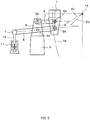
- FIG. 8 is a schematic diagram showing an eccentric cam-type mold oscillator.
- an arm support portion 3 is mounted on a partition wall 6.
- One end portion of a sub-arm 4 and a midpoint portion of a main arm 5 are respectively supported in a swingable manner by horizontal pivot shafts 3a and 3b provided in the arm support portion 3.
- a mold 1 is supported on an oscillation table 2 and oscillated together with the oscillation table 2.
- the other end portion of the sub-arm 4 and one end portion of the main arm 5 are respectively connected to horizontal pivot shafts 2a and 2b of the oscillation table 2 in a swingable manner.
- the main arm 5 and the sub-arm 4 constitute a parallel link, so that the four points, the pivot shafts 3a, 3b, 2b and 2a, operate in relation to one another with distances therebetween being fixed.
- the distance between the pivot shafts 2a and 2b, the distance between the pivot shafts 3a and 3b, the distance between the pivot shafts 3a and 2a, and the distance between the pivot shafts 3b and 2b are set so that extensions of line segments 2c and 2d cross each other at a swing arm center 1a, the line segment 2c connecting between the pivot shaft 3a and the pivot shaft 2a, the line segment 2d connecting between the pivot shaft 3b and the pivot shaft 2b.
- a motor 10 is mounted on an installation floor with the pivot shaft being horizontally positioned.
- the rotary shaft of the motor 10 is provided with an eccentric cam 9.
- the eccentric cam 9 and a pivot shaft 7 at the other end of the main arm 5 are connected via a link 8. Accordingly, rotation of the motor 10 causes rotation of the eccentric cam 9, which in turn causes vertical movement of the link 8 via the eccentric cam 9.
- the vertical movement of the link 8 causes the main arm 5 to swing, which in turn causes the sub-arm 4 to swing. In this way, the mold 1 is oscillated in the vertical direction.
- FIG. 9 is a schematic diagram showing a hydraulic servo-type mold oscillator.
- a hydraulic servo-type mold oscillator In this hydraulic servo-type mold oscillator, a hydraulic servo cylinder 11 is installed in place of the eccentric cam.
- an upper end of a piston 12 In the hydraulic servo cylinder 11, an upper end of a piston 12 is rotatably connected to a pivot shaft 7, so that the other end portion (pivot shaft 7) of a main arm 5 is caused to reciprocate in the vertical direction by the piston 12 driven by the hydraulic servo cylinder 11.
- FIG. 10 is a schematic diagram showing an electrically driven servo-type mold oscillator.
- an electrically driven servo actuator 20 is installed in place of the eccentric cam shown in FIG. 8 .
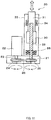
- FIG. 11 is a schematic diagram showing the electrically driven servo actuator 20.
- a base 21 is mounted on an installation floor.
- a servo motor 22 and a cylinder tube 33 are installed on the base 21.
- the servo motor 22 is installed so that a rotary shaft 23 is positioned in the base 21 with the axial direction of the rotary shaft 23 being directed downward in the vertical direction.
- the rotary shaft 23 is provided with a pulley 24.
- a threaded shaft 29 of a ball screw is rotatably installed via angular bearings 55 with the axial direction of the threaded shaft 29 being directed in the vertical direction, and a lower part of the threaded shaft 29 is positioned in the base 21.
- a pulley 25 is fixed to a lower end portion of the threaded shaft 29.
- a belt 26 is looped between the pulley 24 and the pulley 25. Accordingly, forward and reverse rotation of the motor 22 causes forward and reverse rotation of the threaded shaft 29 via the belt 26. Accordingly, in this embodiment, the pulleys 24 and 25, and the belt 26 function as the power transmitting mechanism.
- a nut-side shaft 31 is fixed to a ball nut 30 coaxially with the threaded shaft 29 that is positioned with the central axis thereof being directed in the vertical direction.
- the ball nut 30 is screw-fitted on the threaded shaft 29 with balls interposed therebetween. Forward and reverse rotation of the threaded shaft 29 causes the ball nut 30 to move in the vertical direction.
- the nut-side shaft 31 is fixed to the upper end of the ball nut 30 with the axial direction of the nut-side shaft 31 being directed in the vertical direction.
- the nut-side shaft 31 is supported by ball splines 34 so as to be able to move in the vertical direction.
- the upper end of the nut-side shaft 31 protrudes upward from an upper portion of the cylinder tube 33.
- the upper end of the nut-side shaft 31 is connected to the pivot shaft 7 at the other end of the main arm 5.
- the belt 26 transmits rotational driving force produced by forward and reverse rotation of the rotary shaft 23 of the servo motor 22 to the threaded shaft 29 in the cylinder tube 33, which causes forward and reverse rotation of the threaded shaft 29.
- the forward and reverse rotation of the threaded shaft 29 causes the ball nut 30 screw-fitted on the threaded shaft 29 to move in the vertical direction, which in turn causes the nut-side shaft 31 fixed to the upper end of the ball nut 30 to move in the vertical direction.
- the swinging motion of the main arm 5 is followed by swinging motion of a sub-arm 4, which in turn causes a mold 1 to oscillate in the vertical direction.
- Patent Document 1 Japanese Translation of PCT International Application Publication No. H11-506982 ( JP 11-506982 A )
- amplitude of oscillation cannot be changed during casting operation.
- a pattern with time, or waveform, of oscillation of the mold is limited to a sinusoidal wave.
- amplitude of oscillation of the mold can be changed even during casting operation by adjusting timing of control of the pressure for advancing the piston 12 of the hydraulic servo cylinder 11 and the pressure for retracting the piston 12.
- the pattern of the mold oscillation is not limited to a sinusoidal wave and it is possible to set a non-sinusoidal waveform.
- amplitude of oscillation of the mold can be changed even during casting operation.
- the pattern of the mold oscillation can be set to either of a sinusoidal waveform and a non-sinusoidal waveform.
- the hydraulic servo-type mold oscillator requires inspection of filters, hydraulic oil, etc. of the hydraulic servo cylinder 11. Moreover, it is required to control contamination of the hydraulic oil.
- the nut-side shaft 31 is caused to move in the vertical direction by forward and reverse rotation of the servo motor.
- the amplitude required for the purpose of mold oscillation is small, that is, about ⁇ 6 mm for example.
- the rotation angle of the threaded shaft 29 for swinging operation is small and moreover, long-time continuous operation is required, which means that the threaded shaft 29 and the ball nut 30 are required to operate under severe conditions.
- ordinary grease is used to lubricate the threaded shaft 29 and the ball nut 30.
- the threaded shaft 29 is repeatedly rotated forward and backward within a small oscillatory rotation angle and therefore, there is a possibility that breakdown of oil film occurs in the case of grease lubrication.
- the present invention has been made in consideration of such a problem and an object of the present invention is to provide an easy-to-maintain, electrically driven servo-type mold oscillator, with which it is possible to increase service life.
- a mold oscillator according to the present invention is a mold oscillator for oscillating a mold of a continuous casting machine, characterized by including:
- This mold oscillator may further include: a bearing supporting the first shaft so that the first shaft can rotate about a central axis thereof; and a bearing retainer, in which a channel for communicating the outlet port with a space between an inner race and an outer race of the bearing is formed, the bearing retainer being fixed under the bearing at a position corresponding to a midpoint portion of the first shaft in a longitudinal direction thereof, wherein a seal contacting the first shaft is included in the bearing retainer so as to prevent the lubricating oil from leaking downward.
- the mold oscillator further includes:
- a configuration may be adopted, in which a sealing member for sealing a gap between the casing and the second shaft is detachably fitted.
- the mold oscillator according to the present invention may further include an arm mechanism, having an arm extending in a lateral direction, for oscillating the mold by moving the mold in the vertical direction through swinging movement of the arm, wherein a fulcrum is provided at a midpoint portion of the arm, one end of the arm is connected to the second shaft, and the other end of the arm is connected to the mold.
- an arm mechanism having an arm extending in a lateral direction, for oscillating the mold by moving the mold in the vertical direction through swinging movement of the arm, wherein a fulcrum is provided at a midpoint portion of the arm, one end of the arm is connected to the second shaft, and the other end of the arm is connected to the mold.
- the ball nut of the ball screw and part of the threaded shaft of the ball screw, on which part the ball nut is engaged with the threaded shaft are submerged in a lubricating oil to lubricate the ball screw with an oil bath, and therefore, it is possible to sufficiently lubricate moving parts in the casing. Accordingly, it is possible to significantly elongate life of the moving parts included in the actuator of the mold oscillator.
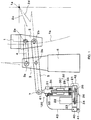
- FIG. 1 is a schematic diagram showing a concept of an electrically driven actuator 120 of a mold oscillator according to the embodiment of the present invention.
- the electrically driven actuator 120 of the mold oscillator shown in FIG. 1 is obtained by further installing a lubricating oil tank 41 under a base 21 and a pump 40 for circulating a lubricating oil stored in the lubricating oil tank 41 through a cylinder tube 33, which functions as the casing of the present invention, in addition to the electrically driven actuator 20 shown in FIG. 11 .
- the lubricating oil sent under pressure from the pump 40 is passed through a filter (not shown), supplied to an upper portion of the cylinder tube 33 via a supply pipe 43, and collected from a lower portion of the cylinder tube 33 into the tank 41 through a collection pipe 42, whereby the lubricating oil is circulated for lubrication of a threaded shaft 29 and a ball nut 30.
- the threaded shaft 29 and the ball nut 30 are submerged in the lubricating oil bath, so that the threaded shaft 29 and the ball nut 30, which are oscillated within a small oscillatory rotation angle and operated for a long time, are lubricated without breakdown of oil film.
- the lubricating oil is collected in the tank 41, so that it is possible to easily determine the degree of degradation of the lubricating oil, which makes it possible to determine the timing of performing an overhaul of the actuator 120 of the mold oscillator.
- the supply device includes the supply pipe 43, the pump 40, and the filter (not shown).
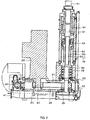
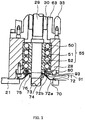
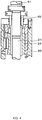
- FIG. 2 is a front sectional view showing the electrically driven actuator 120, and FIGS. 3 and 4 are partially enlarged views thereof.
- FIG. 5 is a side sectional view of the same.
- the base 21 is mounted on an installation floor.
- the circular cylinder tube 33 the central axis of which is directed in the vertical direction, is fixed in a standing position on the base 21, a bearing support portion 28 is provided under the cylinder tube 33, and angular bearings 55 are fitted into the bearing support portion 28.
- the threaded shaft 29 is rotatably supported by the angular bearings 55 with the central axis of the threaded shaft 29 being directed in the vertical direction.
- an outer race 51 and an inner race 52 are fixed, the outer race 51 supporting balls 50 on the outer side, the inner race 52 supporting the balls 50 on the inner side and being in contact with an outer circumferential surface of the threaded shaft 29.
- the balls 50 are held between the inner race 52 and the outer race 51 so as not to fall out. In this way, the balls 50 rotate in a state where the balls 50 are held between the inner race 52 and the outer race 51, so that the threaded shaft 29 is supported so as to be rotatable about the central axis thereof.
- the ball screw is positioned so that the central axis thereof is directed in the vertical direction as in the case of this embodiment, it is possible to secure high stability and durability.
- the ball nut 30 is disposed in this cylinder tube 33 and is screw-fitted on the threaded shaft 29 with the balls interposed therebetween.
- a nut-side shaft 31 fixed to the ball nut 30 coaxially with the threaded shaft 29 is also disposed.
- a lower end portion of the nut-side shaft 31 is fixed to an upper end portion of the ball nut 30.
- the threaded shaft 29 functions as the first shaft of the present invention and the nut-side shaft 31 functions as the second shaft.
- Ball splines 34 are fixed to an inner surface of the cylinder tube 33 at a position corresponding to the nut-side shaft 31.
- the nut-side shaft 31 is supported by the ball splines 34 so as to be able to reciprocate in the vertical direction and so as not to be rotatable. Since the nut-side shaft 31 is supported by the ball splines 34 so as not to be rotatable, the nut-side shaft 31 cannot rotate about the central axis thereof. Accordingly, forward and reverse rotation (oscillatory rotation) of the threaded shaft 29 about the central axis thereof causes the ball nut 30, which is screw-fitted on the threaded shaft 29 with the balls interposed therebetween, to reciprocate in the vertical direction within a range corresponding to the oscillatory rotation angle.
- the nut-side shaft 31 is supported by the ball splines 34 so as to be able to move in the vertical direction and so as not to be rotatable and therefore, the nut-side shaft 31 fixed to the ball nut 30 moves in the vertical direction within the range equal to that of the ball nut 30.
- a cylindrical stopper 63 is disposed so as to surround the threaded shaft 29.
- a sealing member 65 for sealing a gap is detachably fitted between the cylinder tube 33 and the nut-side shaft 31.
- the nut-side shaft 31 continuously oscillates in the vertical direction and therefore, the sealing member of this portion wears severely.
- the sealing member 65 is detachably fitted in this way, it it possible to avoid a situation where the entire cylinder tube 33 must be replaced because of wear of the portion contacting the nut-side shaft 31 (second shaft).
- An upper end of the nut-side shaft 31 protrudes upward from the upper portion of the cylinder tube 33.
- the upper end of the nut-side shaft 31 is connected to the mold side.
- the upper end of the nut-side shaft 31 is provided with a connection portion 61, which is rotatably connected to a pivot shaft 7 of a main arm 5.
- the main arm 5 swings and oscillates the mold.
- a motor 22 is installed on the base 21 in parallel with the cylinder tube 33.
- a rotary shaft 23 of the motor 22 is inserted into the base 21 with the rotation axis of the rotary shaft 23 being directed in the vertical direction.
- the rotary shaft 23 is provided with a pulley 24.
- the part of the threaded shaft 29 that is inserted in the base 21 is provided with a pulley 25.
- a belt 26 is looped between the pulleys 24 and 25, so that oscillatory rotation of the rotary shaft 23 of the motor 22 is transmitted to the threaded shaft 29 via the belt 26.
- the lubricating oil tank 41 is provided below the base 21 and the lubricating oil in the lubricating oil tank 41 is supplied to an inlet port 90 (see FIG. 5 ) provided in the upper portion of the cylinder tube 33 via the supply pipe 43 (see FIG. 1 ) by the small pump 40 provided above the lubricating oil tank 41.
- the lubricating oil supplied into the cylinder tube 33 is collected into the lubricating oil tank 41 from an outlet port 91 provided in the bearing retainer 80 in the lower portion of the casing through the collection pipe 42 (see FIGS. 1 and 2 ).
- the position, at which the inlet port is provided, is not particularly limited as long as the inlet port is provided above the outlet port.
- the inlet port be provided above an element for supporting the second shaft (the nut-side shaft 31 in this embodiment) so as to be movable in the vertical direction and so as not to be rotatable, such as ball splines, as in the case of this embodiment.
- the lubricating oil for lubricating the supporting element is also supplied by the supply device through the filter, so that it is possible to perform lubrication with the use of the lubricating oil, from which contaminants have been removed.
- a bearing retainer 80 is fixed at the bottom surface of the angular bearings 55.
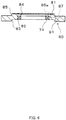
- FIG. 6 is a front sectional view of the bearing retainer 80.
- FIG. 7 is a bottom view of the bearing retainer 80.
- the bearing retainer 80 has a circular ring shape and has a three stepped structure, including an inner hole 84 at the upper surface that has the smallest radius, a middle hole 82 that is formed below the inner hole 84, and a lower hole 83 that is formed below the middle hole 82.
- an upper end 85 that has a radius smaller than that of the outermost edge of the bearing retainer 80 is formed as a step.
- Part of the upper surface of the bearing retainer 80 is slightly lowered to form a hollow 81 in the radially inner side of the upper end 85.
- the upper end 85 has a diameter the same as that of the outer edge of the bearings 55.
- the retainer 80 is fixed to the bottom surface of the bearing support portion 28 by screws with the upper end 85 being in contact with the bearing 55.
- a seal 74 is fitted into the middle hole 82 of the retainer 80.
- a metal ring 73 is disposed so as to be fitted onto the threaded shaft 29 between the seal 74 and the threaded shaft 29.
- a cylindrical fixing member 76 is fixed so as to be fitted onto the threaded shaft 29, and a parasol shaped member, which has a cone shape widening downward and has a horizontal ring shaped portion at the upper end, is sandwiched between the metal ring 73 and the fixing member 76, forming a rotary parasol portion 71.
- the seal 74 is fixed to the retainer 80 so as not to be separated from the retainer 80 by fixing a circular ring shaped retaining plate 75 to the bottom surface of the retainer 80 by screws.
- An oval counterbored hole portion 85a is formed on the upper surface side of the retainer 80 in a portion extending from the hollow 81 to the radially outer side of the upper end 85, and a channel 87 passing through the retainer 80 in a plate thickness direction is formed in a bottom portion of the counterbored hole portion 85a in a radially outer side.
- the lubricating oil flows out of the outlet port 91 through the channel 87 in the retainer 80 and is introduced into the lubricating oil tank 41 via the collection pipe 42.
- the cylinder tube 33, the bearing support portion 28, and the bearing retainer 80 function as the casing of the present invention.
- the rotary parasol portion 71 is formed by fitting the parasol shaped member, which has the cone shape widening downward and has the horizontal ring shaped portion at the upper end, onto the threaded shaft 29 and sandwiching the horizontal ring shaped portion between the metal ring 73 and the fixing member 76 to fix the parasol shaped member to the threaded shaft 29.
- a stationary parasol portion 72 is formed by fixing a horizontal portion 72a of a parasol shaped member to an upper surface of the base 21, which parasol shaped member has a cone shaped portion 72b widening downward at an angle the same as that of the cone shaped portion of the rotary parasol portion 71 and has the horizontal portion 72a extending horizontally outward from the lower end of the cone shaped portion 72b.
- the horizontal portion 72a of the parasol shaped member forming the stationary parasol portion 72 is fixed to a peripheral portion around the opening 70.
- the rotary parasol portion 71 that rotates with the threaded shaft 29 and the stationary parasol portion 72 that is fixed to the base 21 are disposed so that the rotary parasol portion 71 is positioned on the upper side of the stationary parasol portion 72 and the cone shaped portions of these parasol portions at least partially overlap each other in the radial direction around the entire circumference.
- a drain outlet 93 for discharging, into the outside, the lubricating oil received on the upper surface of the stationary parasol portion 72 is provided in the bearing support portion 28.
- the lubricating oil flows on the cone shaped portion of the rotary parasol portion 71 and the cone shaped portion of the stationary parasol portion 72 to be introduced onto the horizontal portion 72a of the stationary parasol portion 72, and is then discharged into the outside from the drain outlet 93. Accordingly, even when the lubricating oil leaks downward from the inner edge of the retainer 80, the lubricating oil is prevented from leaking to the area under the stationary parasol portion 72 to reach the pulley 25 or the belt 26. In this embodiment, the lubricating oil discharged from the drain outlet 93 into the outside is not collected into the lubricating oil tank, that is, discarded into the outside.
- operation is performed in a state where the threaded shaft 29 and the ball nut 30 are submerged in the lubricating oil, so that wear is significantly reduced.
- This makes it possible to increase life of the actuator of the mold oscillator.
- providing the rotary parasol portion 71 and the stationary parasol portion 72 makes it possible to obtain more secure sealing against leakage of the lubricating oil to prevent the lubricating oil from entering the inside of the base 21, so that it is possible to prevent the lubricating oil from adhering to the pulleys 24 and 25 and the belt 26 in the base 21 to hamper operation thereof and to prevent deterioration of the belt.
- the nut-side shaft may be positioned on the lower side as the first shaft. That is, the ball screw unit may be disposed in an inverted position relative to the position in the case of the above embodiments.
- the outlet port of the present invention is provided below the bearings in the lower portion of the casing in the above embodiments
- the outlet port may be provided above the bearings in the lower portion of the casing as long as the upper or lower end of the bearings is liquid-tightly sealed.
- the outlet port is provided below the bearings and the lubricating oil is passed through the space between the inner races and the outer races of the bearings and is then collected as in the case of the above embodiments, it is possible to prevent contaminants from remaining in the bearings.
Landscapes
- Engineering & Computer Science (AREA)
- General Engineering & Computer Science (AREA)
- Mechanical Engineering (AREA)
- Power Engineering (AREA)
- Transmission Devices (AREA)
- Continuous Casting (AREA)
- Connection Of Motors, Electrical Generators, Mechanical Devices, And The Like (AREA)
Claims (5)
- Formoszillator zum Oszillieren einer Form einer Stranggussmaschine, dadurch gekennzeichnet, dass er umfasst:einen Servomotor (22);eine Kugelgewindeeinheit, die ein Kugelgewinde (32) einschließt, die eine Gewindewelle (29) und eine Kugelmutter (30) und eine mutterseitige Welle (31) aufweist, die an der Kugelmutter (30) koaxial zur Gewindewelle (29) befestigt ist, wobei die Kugelgewindeeinheit so positioniert ist, dass sich eine zentrale Achse der Kugelgewindeeinheit in einer vertikalen Richtung erstreckt;einen Kraftübertragungsmechanismus (24, 25, 26), der die Drehung einer Drehwelle (23) des Servomotors (22) auf eine erste Welle überträgt, die eine von der Gewindewelle (29) und der mutterseitigen Welle (31) der Kugelgewindeeinheit ist, die auf einer unteren Seite positioniert ist;ein Gehäuse (28, 33, 80), das mindestens einen Teil des Kugelgewindes (32) umgibt, wobei das Gehäuse (28, 33, 80) so konfiguriert ist, dass es die Kugelmutter (30) des Kugelgewindes (32) und einen Teil der Gewindewelle (29) des Kugelgewindes (32) untertauchen kann, wobei auf diesem Teil die Kugelmutter (30) mit der Gewindewelle (29), in einem Schmieröl zum Schmieren des Kugelgewindes (32) mit einem Ölbad, in Eingriff steht;einen Schmierölbehälter (41), der das Schmieröl speichert;eine Sammelleitung (42) zum Einführen des Schmieröls in den Schmierölbehälter (41), wobei die Sammelleitung (42) mit einer Auslassöffnung (91) verbunden ist, die in einem unteren Abschnitt des Gehäuses (28, 33, 80) bereitgestellt ist; undeine Zuführvorrichtung (40, 43) zum erneuten Zuführen des Schmieröls in dem Schmierölbehälter (41) in das Gehäuse (28, 33, 80) durch eine Einlassöffnung (90), die über der Auslassöffnung (91) in dem Gehäuse (28, 33, 80) bereitgestellt ist, wobeieine zweite Welle, welche die andere von der Gewindewelle (29) und der mutterseitigen Welle (31) der Kugelgewindeeinheit ist, mit der Formseite verbunden ist.
- Formoszillator nach Anspruch 1, weiter umfassend: ein Lager (55), das die erste Welle abstützt, sodass die erste Welle um eine zentrale Achse davon drehen kann; und eine Lagerhalterung (80), in der ein Kanal (87) zum Verbinden der Auslassöffnung (91) mit einem Raum zwischen einem inneren Laufring (52) und einem äußeren Laufring (51) des Lagers (55) gebildet ist, wobei die Lagerhalterung (80) unter dem Lager (55) an einer Position befestigt ist, die einem Mittelpunktabschnitt der ersten Welle in einer Längsrichtung davon entspricht, wobei eine Dichtung (74), welche die erste Welle berührt, in der Lagerhalterung (80) eingeschlossen ist, um zu verhindern, dass das Schmieröl nach unten leckt.
- Formoszillator nach Anspruch 2, weiter umfassend:einen drehbaren Sonnenschirmabschnitt (71), der an einer Seitenfläche der ersten Welle der Kugelgewindeeinheit unterhalb der Lagerhalterung (80) bereitgestellt ist und eine sich nach unten aufweitende Sonnenschirmform aufweist, wobei der drehbare Sonnenschirmabschnitt (71) konfiguriert ist, um mit der ersten Welle zu drehen; undeinen feststehenden Sonnenschirmabschnitt (72), der unter dem drehbaren Sonnenschirmabschnitt (71) befestigt ist und eine sich nach unten aufweitende Sonnenschirmform aufweist, wobei der feststehende Sonnenschirmabschnitt (72) so angeordnet ist, dass er den drehbaren Sonnenschirmabschnitt (71) in einer radialen Richtung um den gesamten Umfang mindestens bereichsweise überlappt, wobeiein Ablass (93) zum Ablassen des Schmieröls nach außen in dem feststehenden Sonnenschirmabschnitt (72) in dem Gehäuse (28, 33, 80) bereitgestellt ist.
- Formoszillator nach Anspruch 1, wobei
ein Dichtelement (65) zum Abdichten eines Spalts zwischen dem Gehäuse (28, 33, 80) und der zweiten Welle lösbar aufgesetzt ist. - Formoszillator nach Anspruch 1, weiter umfassend einen Armmechanismus, der einen Arm (5) einschließt, der sich in einer lateralen Richtung erstreckt, um durch Bewegen der Form in der vertikalen Richtung durch die Schwingbewegung des Arms (5) die Form zu oszillieren, wobei ein Drehpunkt an einem Mittelpunktabschnitt des Arms (5) bereitgestellt ist, wobei ein Ende des Arms (5) mit der zweiten Welle verbunden ist und das andere Ende des Arms (5) mit der Form verbunden ist.
Applications Claiming Priority (2)
| Application Number | Priority Date | Filing Date | Title |
|---|---|---|---|
| JP2015030292A JP6522362B2 (ja) | 2015-02-19 | 2015-02-19 | 鋳型振動装置 |
| PCT/JP2016/053812 WO2016132968A1 (ja) | 2015-02-19 | 2016-02-09 | 鋳型振動装置 |
Publications (3)
| Publication Number | Publication Date |
|---|---|
| EP3260219A1 EP3260219A1 (de) | 2017-12-27 |
| EP3260219A4 EP3260219A4 (de) | 2018-03-14 |
| EP3260219B1 true EP3260219B1 (de) | 2019-01-23 |
Family
ID=56689139
Family Applications (1)
| Application Number | Title | Priority Date | Filing Date |
|---|---|---|---|
| EP16752354.7A Active EP3260219B1 (de) | 2015-02-19 | 2016-02-09 | Formvibrationsvorrichtung |
Country Status (6)
| Country | Link |
|---|---|
| US (1) | US10189078B2 (de) |
| EP (1) | EP3260219B1 (de) |
| JP (1) | JP6522362B2 (de) |
| KR (1) | KR101941395B1 (de) |
| TR (1) | TR201902250T4 (de) |
| WO (1) | WO2016132968A1 (de) |
Families Citing this family (1)
| Publication number | Priority date | Publication date | Assignee | Title |
|---|---|---|---|---|
| CN107477156A (zh) * | 2017-09-22 | 2017-12-15 | 广东凯宝机器人科技有限公司 | 一种减速机构 |
Family Cites Families (10)
| Publication number | Priority date | Publication date | Assignee | Title |
|---|---|---|---|---|
| US671553A (en) * | 1901-01-28 | 1901-04-09 | Joseph B Haug | Vehicle-shaft. |
| US4727924A (en) * | 1986-10-08 | 1988-03-01 | Georgetown Steel Corporation | Mold oscillator |
| JPS63256242A (ja) | 1987-04-15 | 1988-10-24 | Sumitomo Heavy Ind Ltd | モ−ルドオシレ−シヨン装置の駆動方式 |
| US4945975A (en) * | 1988-12-08 | 1990-08-07 | Kawasaki Steel Corporation | Method of oscillation of mold of vertical continuous caster |
| TW274529B (de) * | 1993-10-21 | 1996-04-21 | Hitachi Shipbuilding Eng Co | |
| DE19515316C1 (de) * | 1995-04-19 | 1996-08-29 | Mannesmann Ag | Verfahren zum Betreiben einer Kokille |
| US5809838A (en) * | 1995-05-30 | 1998-09-22 | Nsk Ltd. | Ball screw device with means for maintaining balance |
| JP3026173B2 (ja) * | 1997-04-22 | 2000-03-27 | 住友重機械工業株式会社 | モールドオシレーション駆動制御装置 |
| DE19940997A1 (de) * | 1999-08-28 | 2001-03-01 | Sms Demag Ag | Einrichtung zum Stranggießen von Metall |
| JP3811650B2 (ja) * | 2002-01-29 | 2006-08-23 | 住友重機械工業株式会社 | 射出成形機の潤滑装置 |
-
2015
- 2015-02-19 JP JP2015030292A patent/JP6522362B2/ja active Active
-
2016
- 2016-02-09 WO PCT/JP2016/053812 patent/WO2016132968A1/ja not_active Ceased
- 2016-02-09 US US15/552,144 patent/US10189078B2/en active Active
- 2016-02-09 EP EP16752354.7A patent/EP3260219B1/de active Active
- 2016-02-09 KR KR1020177022763A patent/KR101941395B1/ko active Active
- 2016-02-09 TR TR2019/02250T patent/TR201902250T4/tr unknown
Non-Patent Citations (1)
| Title |
|---|
| None * |
Also Published As
| Publication number | Publication date |
|---|---|
| US10189078B2 (en) | 2019-01-29 |
| KR101941395B1 (ko) | 2019-01-22 |
| JP6522362B2 (ja) | 2019-05-29 |
| EP3260219A1 (de) | 2017-12-27 |
| TR201902250T4 (tr) | 2019-03-21 |
| JP2016150372A (ja) | 2016-08-22 |
| EP3260219A4 (de) | 2018-03-14 |
| WO2016132968A1 (ja) | 2016-08-25 |
| KR20170105076A (ko) | 2017-09-18 |
| US20180043425A1 (en) | 2018-02-15 |
Similar Documents
| Publication | Publication Date | Title |
|---|---|---|
| EP3260220B1 (de) | Formvibrationsvorrichtung | |
| JP5547331B1 (ja) | 遠心分離装置 | |
| JP2016505352A (ja) | ダイレクトドライブによるセパレータ | |
| JP2016505352A5 (de) | ||
| US10047734B2 (en) | Hydrostatic axial piston machine | |
| RU2660911C2 (ru) | Устройство для смазки подшипника качения электродвигателя | |
| EP3260219B1 (de) | Formvibrationsvorrichtung | |
| US5727469A (en) | Rotary printing press cylinder mounting | |
| JP2013154520A (ja) | ゴム攪拌装置におけるシール機構およびシール方法並びにゴム攪拌装置 | |
| RU2492326C2 (ru) | Ротационная машина с поршнями и барабаном | |
| RU2376104C2 (ru) | Кристаллизатор для непрерывной разливки с устройством качания | |
| RU2770927C1 (ru) | Устройство охлаждения для ролика непрерывного литья | |
| JP5826649B2 (ja) | ゴム攪拌装置におけるシール機構 | |
| RU159639U1 (ru) | Устройство для подачи масла в подшипник опоры ротора газотурбинного двигателя | |
| CN204371574U (zh) | 一种高速轴向柱塞泵 | |
| CA2877015C (en) | Vertical shaft with a slide bearing for a turbine or a generator | |
| CN109046804B (zh) | 机械推料离心机推料驱动装置 | |
| CN209632746U (zh) | 一种航空用轴承套圈外圈磨床 | |
| EP2243965B1 (de) | Oszillierender Druckmittelzylinder für Betonpumpen mit hydraulisch angetriebener Zahnstangeneinheit | |
| US1762983A (en) | Engine, pump, compressor, and the like | |
| CN201487167U (zh) | 一种圆滑块及其曲柄圆滑块机构、机械设备 | |
| EP4345341A2 (de) | Übertragung | |
| SU348286A1 (ru) | УСТРОЙСТВО ДЛЯ ЗАЛИВКИ МЕТАЛЛАПАШУно-1Л.;;::' к^-';.БИБЛИО"ГСг{А I | |
| SU1713746A1 (ru) | Устройство дл центробежного распылени расплавов металлов | |
| JP3551031B2 (ja) | 軸受潤滑構造 |
Legal Events
| Date | Code | Title | Description |
|---|---|---|---|
| STAA | Information on the status of an ep patent application or granted ep patent |
Free format text: STATUS: THE INTERNATIONAL PUBLICATION HAS BEEN MADE |
|
| PUAI | Public reference made under article 153(3) epc to a published international application that has entered the european phase |
Free format text: ORIGINAL CODE: 0009012 |
|
| STAA | Information on the status of an ep patent application or granted ep patent |
Free format text: STATUS: REQUEST FOR EXAMINATION WAS MADE |
|
| 17P | Request for examination filed |
Effective date: 20170901 |
|
| AK | Designated contracting states |
Kind code of ref document: A1 Designated state(s): AL AT BE BG CH CY CZ DE DK EE ES FI FR GB GR HR HU IE IS IT LI LT LU LV MC MK MT NL NO PL PT RO RS SE SI SK SM TR |
|
| AX | Request for extension of the european patent |
Extension state: BA ME |
|
| A4 | Supplementary search report drawn up and despatched |
Effective date: 20180213 |
|
| RIC1 | Information provided on ipc code assigned before grant |
Ipc: F16H 25/20 20060101ALI20180207BHEP Ipc: H02K 7/10 20060101ALI20180207BHEP Ipc: H02K 7/06 20060101ALI20180207BHEP Ipc: F16H 25/22 20060101ALI20180207BHEP Ipc: F16H 25/24 20060101ALI20180207BHEP Ipc: B22D 11/053 20060101AFI20180207BHEP |
|
| DAV | Request for validation of the european patent (deleted) | ||
| DAX | Request for extension of the european patent (deleted) | ||
| RIC1 | Information provided on ipc code assigned before grant |
Ipc: H02K 7/06 20060101ALI20180425BHEP Ipc: F16H 25/20 20060101ALI20180425BHEP Ipc: F16H 25/24 20060101ALI20180425BHEP Ipc: B22D 11/053 20060101AFI20180425BHEP Ipc: H02K 7/10 20060101ALI20180425BHEP Ipc: F16H 25/22 20060101ALI20180425BHEP |
|
| GRAP | Despatch of communication of intention to grant a patent |
Free format text: ORIGINAL CODE: EPIDOSNIGR1 |
|
| STAA | Information on the status of an ep patent application or granted ep patent |
Free format text: STATUS: GRANT OF PATENT IS INTENDED |
|
| INTG | Intention to grant announced |
Effective date: 20180713 |
|
| GRAJ | Information related to disapproval of communication of intention to grant by the applicant or resumption of examination proceedings by the epo deleted |
Free format text: ORIGINAL CODE: EPIDOSDIGR1 |
|
| STAA | Information on the status of an ep patent application or granted ep patent |
Free format text: STATUS: REQUEST FOR EXAMINATION WAS MADE |
|
| INTC | Intention to grant announced (deleted) | ||
| GRAR | Information related to intention to grant a patent recorded |
Free format text: ORIGINAL CODE: EPIDOSNIGR71 |
|
| GRAS | Grant fee paid |
Free format text: ORIGINAL CODE: EPIDOSNIGR3 |
|
| STAA | Information on the status of an ep patent application or granted ep patent |
Free format text: STATUS: GRANT OF PATENT IS INTENDED |
|
| GRAA | (expected) grant |
Free format text: ORIGINAL CODE: 0009210 |
|
| STAA | Information on the status of an ep patent application or granted ep patent |
Free format text: STATUS: THE PATENT HAS BEEN GRANTED |
|
| INTG | Intention to grant announced |
Effective date: 20181204 |
|
| AK | Designated contracting states |
Kind code of ref document: B1 Designated state(s): AL AT BE BG CH CY CZ DE DK EE ES FI FR GB GR HR HU IE IS IT LI LT LU LV MC MK MT NL NO PL PT RO RS SE SI SK SM TR |
|
| REG | Reference to a national code |
Ref country code: GB Ref legal event code: FG4D |
|
| REG | Reference to a national code |
Ref country code: CH Ref legal event code: EP |
|
| REG | Reference to a national code |
Ref country code: AT Ref legal event code: REF Ref document number: 1091042 Country of ref document: AT Kind code of ref document: T Effective date: 20190215 |
|
| REG | Reference to a national code |
Ref country code: IE Ref legal event code: FG4D |
|
| REG | Reference to a national code |
Ref country code: DE Ref legal event code: R096 Ref document number: 602016009506 Country of ref document: DE |
|
| REG | Reference to a national code |
Ref country code: NL Ref legal event code: MP Effective date: 20190123 |
|
| PG25 | Lapsed in a contracting state [announced via postgrant information from national office to epo] |
Ref country code: NL Free format text: LAPSE BECAUSE OF FAILURE TO SUBMIT A TRANSLATION OF THE DESCRIPTION OR TO PAY THE FEE WITHIN THE PRESCRIBED TIME-LIMIT Effective date: 20190123 |
|
| PG25 | Lapsed in a contracting state [announced via postgrant information from national office to epo] |
Ref country code: NO Free format text: LAPSE BECAUSE OF FAILURE TO SUBMIT A TRANSLATION OF THE DESCRIPTION OR TO PAY THE FEE WITHIN THE PRESCRIBED TIME-LIMIT Effective date: 20190423 Ref country code: PT Free format text: LAPSE BECAUSE OF FAILURE TO SUBMIT A TRANSLATION OF THE DESCRIPTION OR TO PAY THE FEE WITHIN THE PRESCRIBED TIME-LIMIT Effective date: 20190523 Ref country code: FI Free format text: LAPSE BECAUSE OF FAILURE TO SUBMIT A TRANSLATION OF THE DESCRIPTION OR TO PAY THE FEE WITHIN THE PRESCRIBED TIME-LIMIT Effective date: 20190123 Ref country code: SE Free format text: LAPSE BECAUSE OF FAILURE TO SUBMIT A TRANSLATION OF THE DESCRIPTION OR TO PAY THE FEE WITHIN THE PRESCRIBED TIME-LIMIT Effective date: 20190123 Ref country code: PL Free format text: LAPSE BECAUSE OF FAILURE TO SUBMIT A TRANSLATION OF THE DESCRIPTION OR TO PAY THE FEE WITHIN THE PRESCRIBED TIME-LIMIT Effective date: 20190123 Ref country code: ES Free format text: LAPSE BECAUSE OF FAILURE TO SUBMIT A TRANSLATION OF THE DESCRIPTION OR TO PAY THE FEE WITHIN THE PRESCRIBED TIME-LIMIT Effective date: 20190123 Ref country code: LT Free format text: LAPSE BECAUSE OF FAILURE TO SUBMIT A TRANSLATION OF THE DESCRIPTION OR TO PAY THE FEE WITHIN THE PRESCRIBED TIME-LIMIT Effective date: 20190123 |
|
| REG | Reference to a national code |
Ref country code: AT Ref legal event code: MK05 Ref document number: 1091042 Country of ref document: AT Kind code of ref document: T Effective date: 20190123 |
|
| PG25 | Lapsed in a contracting state [announced via postgrant information from national office to epo] |
Ref country code: HR Free format text: LAPSE BECAUSE OF FAILURE TO SUBMIT A TRANSLATION OF THE DESCRIPTION OR TO PAY THE FEE WITHIN THE PRESCRIBED TIME-LIMIT Effective date: 20190123 Ref country code: GR Free format text: LAPSE BECAUSE OF FAILURE TO SUBMIT A TRANSLATION OF THE DESCRIPTION OR TO PAY THE FEE WITHIN THE PRESCRIBED TIME-LIMIT Effective date: 20190424 Ref country code: IS Free format text: LAPSE BECAUSE OF FAILURE TO SUBMIT A TRANSLATION OF THE DESCRIPTION OR TO PAY THE FEE WITHIN THE PRESCRIBED TIME-LIMIT Effective date: 20190523 Ref country code: BG Free format text: LAPSE BECAUSE OF FAILURE TO SUBMIT A TRANSLATION OF THE DESCRIPTION OR TO PAY THE FEE WITHIN THE PRESCRIBED TIME-LIMIT Effective date: 20190423 Ref country code: LV Free format text: LAPSE BECAUSE OF FAILURE TO SUBMIT A TRANSLATION OF THE DESCRIPTION OR TO PAY THE FEE WITHIN THE PRESCRIBED TIME-LIMIT Effective date: 20190123 Ref country code: RS Free format text: LAPSE BECAUSE OF FAILURE TO SUBMIT A TRANSLATION OF THE DESCRIPTION OR TO PAY THE FEE WITHIN THE PRESCRIBED TIME-LIMIT Effective date: 20190123 |
|
| REG | Reference to a national code |
Ref country code: DE Ref legal event code: R119 Ref document number: 602016009506 Country of ref document: DE |
|
| REG | Reference to a national code |
Ref country code: CH Ref legal event code: PL |
|
| PG25 | Lapsed in a contracting state [announced via postgrant information from national office to epo] |
Ref country code: RO Free format text: LAPSE BECAUSE OF FAILURE TO SUBMIT A TRANSLATION OF THE DESCRIPTION OR TO PAY THE FEE WITHIN THE PRESCRIBED TIME-LIMIT Effective date: 20190123 Ref country code: IT Free format text: LAPSE BECAUSE OF FAILURE TO SUBMIT A TRANSLATION OF THE DESCRIPTION OR TO PAY THE FEE WITHIN THE PRESCRIBED TIME-LIMIT Effective date: 20190123 Ref country code: DK Free format text: LAPSE BECAUSE OF FAILURE TO SUBMIT A TRANSLATION OF THE DESCRIPTION OR TO PAY THE FEE WITHIN THE PRESCRIBED TIME-LIMIT Effective date: 20190123 Ref country code: LU Free format text: LAPSE BECAUSE OF NON-PAYMENT OF DUE FEES Effective date: 20190209 Ref country code: EE Free format text: LAPSE BECAUSE OF FAILURE TO SUBMIT A TRANSLATION OF THE DESCRIPTION OR TO PAY THE FEE WITHIN THE PRESCRIBED TIME-LIMIT Effective date: 20190123 Ref country code: AL Free format text: LAPSE BECAUSE OF FAILURE TO SUBMIT A TRANSLATION OF THE DESCRIPTION OR TO PAY THE FEE WITHIN THE PRESCRIBED TIME-LIMIT Effective date: 20190123 Ref country code: MC Free format text: LAPSE BECAUSE OF FAILURE TO SUBMIT A TRANSLATION OF THE DESCRIPTION OR TO PAY THE FEE WITHIN THE PRESCRIBED TIME-LIMIT Effective date: 20190123 Ref country code: CZ Free format text: LAPSE BECAUSE OF FAILURE TO SUBMIT A TRANSLATION OF THE DESCRIPTION OR TO PAY THE FEE WITHIN THE PRESCRIBED TIME-LIMIT Effective date: 20190123 Ref country code: SK Free format text: LAPSE BECAUSE OF FAILURE TO SUBMIT A TRANSLATION OF THE DESCRIPTION OR TO PAY THE FEE WITHIN THE PRESCRIBED TIME-LIMIT Effective date: 20190123 |
|
| REG | Reference to a national code |
Ref country code: BE Ref legal event code: MM Effective date: 20190228 |
|
| REG | Reference to a national code |
Ref country code: IE Ref legal event code: MM4A |
|
| PG25 | Lapsed in a contracting state [announced via postgrant information from national office to epo] |
Ref country code: SM Free format text: LAPSE BECAUSE OF FAILURE TO SUBMIT A TRANSLATION OF THE DESCRIPTION OR TO PAY THE FEE WITHIN THE PRESCRIBED TIME-LIMIT Effective date: 20190123 |
|
| PLBE | No opposition filed within time limit |
Free format text: ORIGINAL CODE: 0009261 |
|
| STAA | Information on the status of an ep patent application or granted ep patent |
Free format text: STATUS: NO OPPOSITION FILED WITHIN TIME LIMIT |
|
| PG25 | Lapsed in a contracting state [announced via postgrant information from national office to epo] |
Ref country code: AT Free format text: LAPSE BECAUSE OF FAILURE TO SUBMIT A TRANSLATION OF THE DESCRIPTION OR TO PAY THE FEE WITHIN THE PRESCRIBED TIME-LIMIT Effective date: 20190123 Ref country code: CH Free format text: LAPSE BECAUSE OF NON-PAYMENT OF DUE FEES Effective date: 20190228 Ref country code: LI Free format text: LAPSE BECAUSE OF NON-PAYMENT OF DUE FEES Effective date: 20190228 |
|
| 26N | No opposition filed |
Effective date: 20191024 |
|
| PG25 | Lapsed in a contracting state [announced via postgrant information from national office to epo] |
Ref country code: DE Free format text: LAPSE BECAUSE OF NON-PAYMENT OF DUE FEES Effective date: 20190903 Ref country code: IE Free format text: LAPSE BECAUSE OF NON-PAYMENT OF DUE FEES Effective date: 20190209 |
|
| PG25 | Lapsed in a contracting state [announced via postgrant information from national office to epo] |
Ref country code: BE Free format text: LAPSE BECAUSE OF NON-PAYMENT OF DUE FEES Effective date: 20190228 Ref country code: FR Free format text: LAPSE BECAUSE OF NON-PAYMENT OF DUE FEES Effective date: 20190323 Ref country code: SI Free format text: LAPSE BECAUSE OF FAILURE TO SUBMIT A TRANSLATION OF THE DESCRIPTION OR TO PAY THE FEE WITHIN THE PRESCRIBED TIME-LIMIT Effective date: 20190123 |
|
| PG25 | Lapsed in a contracting state [announced via postgrant information from national office to epo] |
Ref country code: MT Free format text: LAPSE BECAUSE OF NON-PAYMENT OF DUE FEES Effective date: 20190209 |
|
| GBPC | Gb: european patent ceased through non-payment of renewal fee |
Effective date: 20200209 |
|
| PG25 | Lapsed in a contracting state [announced via postgrant information from national office to epo] |
Ref country code: GB Free format text: LAPSE BECAUSE OF NON-PAYMENT OF DUE FEES Effective date: 20200209 |
|
| PG25 | Lapsed in a contracting state [announced via postgrant information from national office to epo] |
Ref country code: CY Free format text: LAPSE BECAUSE OF FAILURE TO SUBMIT A TRANSLATION OF THE DESCRIPTION OR TO PAY THE FEE WITHIN THE PRESCRIBED TIME-LIMIT Effective date: 20190123 |
|
| PG25 | Lapsed in a contracting state [announced via postgrant information from national office to epo] |
Ref country code: HU Free format text: LAPSE BECAUSE OF FAILURE TO SUBMIT A TRANSLATION OF THE DESCRIPTION OR TO PAY THE FEE WITHIN THE PRESCRIBED TIME-LIMIT; INVALID AB INITIO Effective date: 20160209 |
|
| PG25 | Lapsed in a contracting state [announced via postgrant information from national office to epo] |
Ref country code: MK Free format text: LAPSE BECAUSE OF FAILURE TO SUBMIT A TRANSLATION OF THE DESCRIPTION OR TO PAY THE FEE WITHIN THE PRESCRIBED TIME-LIMIT Effective date: 20190123 |
|
| PGFP | Annual fee paid to national office [announced via postgrant information from national office to epo] |
Ref country code: TR Payment date: 20260206 Year of fee payment: 11 |