EP3260596B1 - Procédé de décendrage et système de décendrage - Google Patents
Procédé de décendrage et système de décendrage Download PDFInfo
- Publication number
- EP3260596B1 EP3260596B1 EP16175911.3A EP16175911A EP3260596B1 EP 3260596 B1 EP3260596 B1 EP 3260596B1 EP 16175911 A EP16175911 A EP 16175911A EP 3260596 B1 EP3260596 B1 EP 3260596B1
- Authority
- EP
- European Patent Office
- Prior art keywords
- stock
- treatment device
- deashing
- accept
- led
- Prior art date
- Legal status (The legal status is an assumption and is not a legal conclusion. Google has not performed a legal analysis and makes no representation as to the accuracy of the status listed.)
- Active
Links
Images


Classifications
-
- D—TEXTILES; PAPER
- D21—PAPER-MAKING; PRODUCTION OF CELLULOSE
- D21B—FIBROUS RAW MATERIALS OR THEIR MECHANICAL TREATMENT
- D21B1/00—Fibrous raw materials or their mechanical treatment
- D21B1/04—Fibrous raw materials or their mechanical treatment by dividing raw materials into small particles, e.g. fibres
- D21B1/12—Fibrous raw materials or their mechanical treatment by dividing raw materials into small particles, e.g. fibres by wet methods, by the use of steam
- D21B1/30—Defibrating by other means
- D21B1/32—Defibrating by other means of waste paper
-
- D—TEXTILES; PAPER
- D21—PAPER-MAKING; PRODUCTION OF CELLULOSE
- D21D—TREATMENT OF THE MATERIALS BEFORE PASSING TO THE PAPER-MAKING MACHINE
- D21D5/00—Purification of the pulp suspension by mechanical means; Apparatus therefor
- D21D5/18—Purification of the pulp suspension by mechanical means; Apparatus therefor with the aid of centrifugal force
- D21D5/24—Purification of the pulp suspension by mechanical means; Apparatus therefor with the aid of centrifugal force in cyclones
-
- Y—GENERAL TAGGING OF NEW TECHNOLOGICAL DEVELOPMENTS; GENERAL TAGGING OF CROSS-SECTIONAL TECHNOLOGIES SPANNING OVER SEVERAL SECTIONS OF THE IPC; TECHNICAL SUBJECTS COVERED BY FORMER USPC CROSS-REFERENCE ART COLLECTIONS [XRACs] AND DIGESTS
- Y02—TECHNOLOGIES OR APPLICATIONS FOR MITIGATION OR ADAPTATION AGAINST CLIMATE CHANGE
- Y02W—CLIMATE CHANGE MITIGATION TECHNOLOGIES RELATED TO WASTEWATER TREATMENT OR WASTE MANAGEMENT
- Y02W30/00—Technologies for solid waste management
- Y02W30/50—Reuse, recycling or recovery technologies
- Y02W30/64—Paper recycling
Definitions
- the invention relates generally to producing fiber webs. Particularly the invention relates to a deashing system for a containerboard or cartonboard line according to the preamble of claim 1 and to a deashing method for containerboard or cartonboard according to the preamble of claim 7.
- a typical production and treatment line comprises a forming section comprising a head box and a forming unit and a press section as well as a subsequent drying section and a reel-up.
- the production and treatment line can further comprise other devices and sections for finishing the fiber web, for example, a size press, a calender, a coating section.
- the production and treatment line also comprises typically at least one winder for forming customer rolls as well as a roll packaging apparatus.
- DE patent publication 2836186 is disclosed a process for removing the ash from fibrous stock suspensions when processing waste-paper by means of a separation process with subsequent clarification of the ash-laden water, in which the fibrous stock suspension is subjected to a sorting process via a sorting strainer and the ash and a short-fiber portion is passed through the strainer and thereafter separation into ash and fibers is effected, while the pulp stock remaining in front of the sorting strainer is conducted away for further processing.
- the treatment system of the pulp and recycled fiber comprises a pulping section 10 followed by coarse screening section 11, after which the centrifugal cleaning section 12 is located.
- the centrifugal cleaning is followed by fractionation section 13, at which short fiber content is typically 50-70% and long fiber content is typically 30-50% for container board stock.
- Short fiber stock is lead to short fiber deashing washers 17 and long fiber stock is lead to long fiber fine screening system 14 and after the long fiber fine screening system 14 to long fiber thickening system 15, from which filtrates are led to filtrate tanks 21, 22 and long fiber stock to long fiber tank 24.
- short fiber stock is led to a short fiber tank 23 and filtrate waters to white water tank 26 via a short fiber deashing microflotation system 16.
- short fiber stock is led to a short fiber refining system 18 and from the long fiber tank 24 the long fiber stock is led to a long fiber system 19.
- Recycled fiber stock has typically a large content of ash, which decreases the strength and is thus to be removed by deashing devices in the centrifugal cleaning system 12 and by the short fiber deashing washers 17.
- the deashing is a conflicting practice as the ash has the strength decreasing effect but on the other hand the ash is needed for savings in stock weight values.
- the actual need of decreasing the ash concentration is typically only 1-3% thus in prior art systems a lot of capacity is used to first deashing and to secondly returning the ash to the processing, which amounts to need of increased capacity by double processing and thus to increasing of cost of the system.
- An object of the invention is to create a deashing system and method, in which the disadvantages and problems of prior art are eliminated or at least minimized.
- an object of the invention is to provide a new type of deashing system and method in which capacity need is decreased and thus cost savings achieved.
- the deashing system according to the invention is mainly characterized by the features of the characterizing clause of claim 1.
- the deashing method according to the invention in turn is mainly characterized by the features of the characterizing clause of claim 7.
- Advantageous embodiments and features are disclosed in the dependent claims.
- the deashing system for a recycled fiber stock comprising means for fractionating and washing the recycled fiber stock, wherein the means for fractionate the recycled fiber stock comprises a first and second treatment devices, wherein the first treatment device divides the recycled fiber stock into accept and reject fractions, which accept fraction is led forward in the system and which reject fraction is led to the second treatment device, and wherein the second treatment device divides that stock into accept and reject fractions, which accept fraction is led to a washer for removing ash from the stock, and wherein the washed stock is mixed with the accept fraction coming from the first treatment device.
- the first and second treatment devices are centrifugal cleaners.
- the washer comprises two fabrics, through which ash is removed from the stock, advantageously the washer is a twin wire washer.
- the reject fraction is led to a third treatment device and the accept fraction of the third treatment device is led to the second treatment device feed end or into connection to the accept fraction coming from the second treatment device towards the washer.
- the deashing system further comprises at least a fourth treatment device.
- the third and the fourth and possible further treatment devices are centrifugal cleaners.
- the deashing system is between a coarse screening section and a fractionation section.
- the deashing system is in the centrifugal cleaning system area.
- a stock formed of fiber, fines, sand and ash and water is fed into means for fractionate the recycled fiber stock comprising a first and second treatment devices, wherein the first treatment device divides the recycled fiber stock into accept and reject fractions, which accept fraction is led forward in the system and which reject fraction is led to the second treatment device, wherein the second treatment device divides that stock into accept and reject fractions, which accept fraction is led to a washer for removing ash from the stock, and wherein the washed stock is mixed with the accept fraction coming from the first treatment device.
- the deashing system As is clear from the above by the deashing system according to the invention many advantages are achieved. In the deashing system smaller centrifugal cleaning system can be used and in the second stage high concentration of ash, coarser fibers, increased washer capacity and easier sticky removals is achieved as well as higher fiber feed concentration and easy fine sand removal are achieved.
- the accept stock from the washer is ready to be used in the further production of the fiber web and no additional processing is needed and the accept stock from the washer is also in higher concentration and thus the dimensioning of devices of further processing is advantageous, for example the dimensioning can be decreased also for the fractionation devices as the stock amount to be treated is smaller. Invention reduces also energy consumption of the recycled fiber stock system.
- Deashing system and deashing method are particularly suitable for processing OCC (old corrugated carton) based raw material.
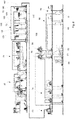
- figure 1 is shown schematically an example of a deashing system according to prior art in connection with a pulp and recycled fiber treatment system for container board.
- figure 2 is shown schematically an advantageous example of a deashing system according to the invention in connection with a pulp and recycled fiber treatment system for containerboard.
- figure 3 is shown very schematically an advantageous example of a deashing system according to the invention.
- FIG 1 an example of a deashing system according to prior art is shown, in which the treatment system of the pulp and recycled fiber comprises a pulping section 10 followed by coarse screening section 11, after which a centrifugal cleaning section 12 is located.
- the centrifugal cleaning is followed by a fractionation section 13, at which short fiber content is typically 50-70% and long fiber content is typically 30-50% for container board stock.
- Short fiber stock is lead to short fiber deashing washers 17 and long fiber stock is lead to a long fiber fine screening section 14 and after the long fiber fine screening section 14 to a long fiber thickening system 15, from which filtrates are led to filtrate tanks 21, 22 and long fiber stock to a long fiber tank 24.
- short fiber stock is led to a short fiber tank 23 and filtrate waters to a white water tank 26 via a short fiber deashing microflotation system 16.
- the short fiber stock is led to a short fiber refining system 18 and from the long fiber tank 24 the long fiber stock is led to a long fiber system 19.
- Recycled fiber stock has typically a large content of ash, which decreases the strength and ash content level is needed to be decreased by deashing devices in the centrifugal cleaning system 12 and by the short fiber deashing washers 17.
- recycled fiber bales are break down into individual fibers as much as possible to form a suspension that can be pumped.
- the purpose of screening section 11, 14 is to remove debris and solid contaminants from the recycled fiber stock.
- This screening section 11, 14 uses appropriate screen configurations according to particle size, shape, and deformability of the contaminants.
- the screen openings are bigger than in the fine screening 14.
- the purpose of centrifugal cleaning 12 is to remove particles from the suspension that affect paper quality or cause excessive wear in subsequent processing machinery. These contaminants may include heavy weight particles such as sand, metal pieces and shiver or light weight particles including plastic.
- the treatment system of the pulp and recycled fiber comprises a pulping section 50 followed by a coarse screening section 51, after which a centrifugal cleaning section 70; 105 with a deashing washer 72 is located.
- the deashing system for a recycled fiber stock comprising means for fractionate and wash the recycled fiber stock, which means for fractionate the recycled fiber stock comprises a first and second treatment devices 101, 102, in which the first treatment device 101 divides the recycled fiber stock into accept and reject fractions, in which accept fraction is led forward in the system and reject fraction is led to the second treatment device 102 and the second treatment device 102 divides that stock into accept and reject fractions, in which accept fraction is led to the washer 72; 106 for removing ash from the stock and washed stock is mixed with the accept fraction coming from the first treatment device 101.
- the centrifugal cleaning system 70 with the deashing washer 72 is followed by a fractionation section 53, at which short fiber content is typically 50-70% and long fiber content is typically 30-50% for container board stock.
- the deashing system 100 is between a coarse screening section 51 and a fractionation section 53.
- Short fiber stock is led to the short and long fiber thickening system 56.
- Long fiber stock is lead to a long fiber fine screening system 54 and after the long fiber fine screening system 54 to fiber thickening system 55, from which filtrates are led to filtrate tanks 61, 62 and the long fiber stock to a long fiber tank 64, and the short fiber thickening device 56, from which the short fiber stock is led to a short fiber tank 63.
- Filtrate waters of the long fiber thickening device 55 are led via the filtrate tanks 61, 62 to the white water tank 65. From the short fiber tank 63 the short fiber stock is led to a short fiber refining system 58 and from the long fiber tank 64 the long fiber stock is led to a long fiber refining system 59.
- the operation of the centrifugal cleaning system 70 with deashing system 100 including deashing washer 72; 106 is in more detail explained in connection with figure 3 .
- recycled fiber bales are break down into individual fibers as much as possible to form a suspension that can be pumped. Typically in the pulping section 50 is used vertical or drum pulpers.
- the purpose of screening section 51, 54 is to remove debris and solid contaminants from the recycled fiber stock.
- This screening section 51, 54 uses appropriate screen configurations according to particle size, shape, and deformability of the contaminants.
- the screen openings are bigger than in the fine screening 54.
- the purpose of centrifugal cleaning 70 is to remove particles from the suspension that affect paper quality or cause excessive wear in subsequent processing machinery. These contaminants may include heavy weight particles such as sand, metal pieces and shiver or light weight particles including plastic and the deashing system is advantageously in the centrifugal cleaning system 70 area.
- recycled fiber stock fraction formed of fiber, fines, sand and ash 1+2 and water is fed to the deashing system 100.
- first treatment device 101 the recycled fiber stock fraction is divided to two fractions; accept and reject fractions, the accept fraction consisting of the fiber, fines, ash 1 and water and the reject fraction consisting of ash 2, sand and water.
- the accept fraction is led to an accept tank 108 via line 105.
- the reject is lead to a second treatment device 102, in which the stock is divided into accept fraction and reject fraction.
- the stock is treated such that the ash content is divided into two ash part fractions; accept fraction for ash 1 and reject fraction for ash 2, and ash 1 remains in the accept fraction to be lead to the accept tank 108 and thus to be used in the production of the fiber web and ash 2 in the reject fraction is further cleaned to remove sand, fines and water from it and thereafter ash 2 is removed from the process.
- Ash 1 concentration of the stock to be led to the accept tank 108 is reduced 3%, advantageously 1-2% by which tens of % are achieved in strength improvement of the fiber web.
- the deashing system for a recycled fiber stock comprising means for fractionate and wash the recycled fiber stock, which means for fractionate the recycled fiber stock comprises a first and second treatment devices 101, 102, in which the first treatment device 101 divides the recycled fiber stock into accept and reject fractions, in which accept fraction is led forward in the system and reject fraction is led to the second treatment device 102 and the second treatment device 102 divides that stock into accept and reject fractions, in which accept fraction is led to the washer 106 for removing ash from the stock and washed stock is mixed with the accept fraction coming from the first treatment device 101.
- the deashing system 100 further comprises at least a fourth treatment device 104.
- the third 103 and the fourth 104 and possible further treatment devices are centrifugal cleaners.
- Accept fraction from the fourth treatment device 104 is led to the third treatment device 103 feed end and reject fraction from the fourth treatment device 104 contains mainly sand and other heavy particles which are removed from the process by line 111. Depending on the stock quality, it is possible to arrange deashing system only by two or three treatment devices.
- the washer 106 can be a drum or a gap or a screening washer or a twin wire washer and a wire roll press or pressurized water removal can be used.
- the water treatment device 110 can comprise a microflotation device.
Landscapes
- Engineering & Computer Science (AREA)
- Mechanical Engineering (AREA)
- Life Sciences & Earth Sciences (AREA)
- Wood Science & Technology (AREA)
- Paper (AREA)
Claims (7)
- Procédé de décendrage (100) pour stock de fibres recyclées, comprenant un moyen de fractionnement et de lavage du stock de fibres recyclées, le moyen de fractionnement du stock de fibres recyclées comprenant un premier dispositif de traitement (101) qui divise le stock de fibres recyclées en fractions acceptée et rejetée, laquelle fraction acceptée est envoyée dans le système, caractérisé en ce que le moyen de fractionnement du stock de fibres recyclées comprend en outre un deuxième dispositif de traitement (102) auquel la fraction rejetée est envoyée, et que le deuxième dispositif de traitement (102) divise ce stock en fractions acceptée et rejetée, laquelle fraction acceptée est envoyée vers un laveur (72; 106) pour éliminer la cendre du stock, et que le stock lavé est mélangé à la fraction acceptée provenant du premier dispositif de traitement (101).
- Procédé de décendrage (100) selon la revendication 1, caractérisé en ce que les premier et deuxième dispositifs de traitement sont des nettoyeurs centrifuges.
- Procédé de décendrage (100) selon la revendication 1 ou 2, caractérisé en ce que le laveur (72,106) comprend deux tissus à travers lesquels la cendre est éliminée du stock et que le laveur est avantageusement un laveur bifilaire.
- Procédé de décendrage (100) selon l'une quelconque des revendications 1 à 3, caractérisé en ce que, depuis le deuxième dispositif de traitement (102), la fraction rejetée est envoyée vers un troisième dispositif de traitement (103) et la fraction acceptée du troisième dispositif de traitement est envoyée vers l'extrémité d'alimentation du deuxième dispositif de traitement (102) ou mise en connexion avec la fraction acceptée provenant du deuxième dispositif de traitement (102) en direction du laveur (106).
- Procédé de décendrage (100) selon l'une quelconque des revendications 1 à 4, caractérisé en ce que le système de décendrage (100) comprend en outre au moins un quatrième dispositif de traitement.
- Procédé de décendrage (100) selon la revendication 5, caractérisé en ce que les troisième et quatrième et éventuels autres dispositifs de traitement sont des nettoyeurs centrifuges.
- Procédé de décendrage d'un stock de fibres recyclées, dans lequel procédé le stock formé de fibres, de fragments, de sable et de cendre et d'eau est apporté à un moyen de fractionnement du stock de fibres recyclées comprenant un premier dispositif de traitement (101), lequel premier dispositif de traitement (101) divise le stock de fibres recyclées en des fractions acceptée et rejetée, laquelle fraction acceptée est envoyée dans le système, caractérisé en ce que le moyen de fractionnement du stock de fibres recyclées comprend en outre un deuxième dispositif de traitement (102) auquel la fraction rejetée est envoyée et lequel deuxième dispositif de traitement (102) divise ce stock en fractions acceptée et rejetée, laquelle fraction acceptée est envoyée vers un laveur (72; 106) pour éliminer la cendre du stock, et en ce que le stock lavé est mélangé à la fraction acceptée provenant du premier dispositif de traitement (101).
Priority Applications (1)
| Application Number | Priority Date | Filing Date | Title |
|---|---|---|---|
| EP16175911.3A EP3260596B1 (fr) | 2016-06-23 | 2016-06-23 | Procédé de décendrage et système de décendrage |
Applications Claiming Priority (1)
| Application Number | Priority Date | Filing Date | Title |
|---|---|---|---|
| EP16175911.3A EP3260596B1 (fr) | 2016-06-23 | 2016-06-23 | Procédé de décendrage et système de décendrage |
Publications (2)
| Publication Number | Publication Date |
|---|---|
| EP3260596A1 EP3260596A1 (fr) | 2017-12-27 |
| EP3260596B1 true EP3260596B1 (fr) | 2018-10-31 |
Family
ID=56296508
Family Applications (1)
| Application Number | Title | Priority Date | Filing Date |
|---|---|---|---|
| EP16175911.3A Active EP3260596B1 (fr) | 2016-06-23 | 2016-06-23 | Procédé de décendrage et système de décendrage |
Country Status (1)
| Country | Link |
|---|---|
| EP (1) | EP3260596B1 (fr) |
Families Citing this family (1)
| Publication number | Priority date | Publication date | Assignee | Title |
|---|---|---|---|---|
| WO2019219299A1 (fr) * | 2018-05-18 | 2019-11-21 | Voith Patent Gmbh | Procédé et dispositif de production d'une bande fibreuse |
Family Cites Families (1)
| Publication number | Priority date | Publication date | Assignee | Title |
|---|---|---|---|---|
| DE2836186C2 (de) * | 1978-08-18 | 1980-02-07 | J.M. Voith Gmbh, 7920 Heidenheim | Verfahren und Vorrichtung zur Entaschung von Faserstoffsuspensionen bei der Altpapieraufbereitung |
-
2016
- 2016-06-23 EP EP16175911.3A patent/EP3260596B1/fr active Active
Non-Patent Citations (1)
| Title |
|---|
| None * |
Also Published As
| Publication number | Publication date |
|---|---|
| EP3260596A1 (fr) | 2017-12-27 |
Similar Documents
| Publication | Publication Date | Title |
|---|---|---|
| US5133832A (en) | Process and system for preparation of waste paper stock with short and long fiber fractionation | |
| US3873410A (en) | Method and apparatus for recovering paper fibers from waste paper containing materials | |
| EP2519689B1 (fr) | Procede pour fabriquer un produit contenant des fibres | |
| US20050115690A1 (en) | Methods for producing recycled pulp from waste paper | |
| EP3260596A1 (fr) | Procédé de décendrage et système de décendrage | |
| WO2010069667A1 (fr) | Procédé de préparation de matières premières contenant des vieux papiers, pour former une suspension de matières fibreuses convenant à la production de papiers graphiques | |
| US6187135B1 (en) | Process for making recycled paper having improving strength properties | |
| EP3247835B1 (fr) | Agencement d'usine et procédé de désencrage | |
| US6605184B1 (en) | Method and apparatus for treatment of fiber suspension containing minerals, such as coated broke, in paper production | |
| US7163604B2 (en) | Production of fiber suspension from waste paper | |
| EP0759104B1 (fr) | Procede de defibrage de papier recycle | |
| US5470432A (en) | Method and arrangement for the treatment of a fiber suspension | |
| DE50109488D1 (de) | Verfahren zum Auflösen und Reinigen von störstoffhaltigen Papierfaserrohstoffen insbesondere von Altpapier | |
| CN113089356A (zh) | 废纸制浆系统 | |
| EP4575080A1 (fr) | Appareil de dispersion avec système de dilution | |
| CN104662226B (zh) | 损纸处理系统 | |
| CA2278610A1 (fr) | Procede et appareil de traitement d'une suspension de fibres | |
| US20090272504A1 (en) | Method and apparatus for the integrated cleaning of a paper-pulp processing plant | |
| EP0887458A1 (fr) | Procédé pour tenir en suspension et nettoyer une pulpe de papier contenant des impuretés | |
| Olson | A lecture on pressure screening | |
| US8444807B2 (en) | Method for preparing paper pulp from recycled paper containing contaminants | |
| EP3663462B1 (fr) | Dispositif de criblage et rotor | |
| WO2004067838A1 (fr) | Procede et dispositif de manipulation de rejets contenant des charges dans une machine de fabrication du papier et une machine de fabrication du carton | |
| CN118498105A (zh) | 鼓式制浆机的鼓和鼓式制浆机 | |
| GB2641002A (en) | An unbleached natural brown copier paper and process thereof |
Legal Events
| Date | Code | Title | Description |
|---|---|---|---|
| PUAI | Public reference made under article 153(3) epc to a published international application that has entered the european phase |
Free format text: ORIGINAL CODE: 0009012 |
|
| STAA | Information on the status of an ep patent application or granted ep patent |
Free format text: STATUS: THE APPLICATION HAS BEEN PUBLISHED |
|
| AK | Designated contracting states |
Kind code of ref document: A1 Designated state(s): AL AT BE BG CH CY CZ DE DK EE ES FI FR GB GR HR HU IE IS IT LI LT LU LV MC MK MT NL NO PL PT RO RS SE SI SK SM TR |
|
| AX | Request for extension of the european patent |
Extension state: BA ME |
|
| STAA | Information on the status of an ep patent application or granted ep patent |
Free format text: STATUS: REQUEST FOR EXAMINATION WAS MADE |
|
| GRAP | Despatch of communication of intention to grant a patent |
Free format text: ORIGINAL CODE: EPIDOSNIGR1 |
|
| STAA | Information on the status of an ep patent application or granted ep patent |
Free format text: STATUS: GRANT OF PATENT IS INTENDED |
|
| 17P | Request for examination filed |
Effective date: 20180511 |
|
| RBV | Designated contracting states (corrected) |
Designated state(s): AL AT BE BG CH CY CZ DE DK EE ES FI FR GB GR HR HU IE IS IT LI LT LU LV MC MK MT NL NO PL PT RO RS SE SI SK SM TR |
|
| RIC1 | Information provided on ipc code assigned before grant |
Ipc: D21D 5/24 20060101ALI20180604BHEP Ipc: D21B 1/32 20060101AFI20180604BHEP |
|
| INTG | Intention to grant announced |
Effective date: 20180620 |
|
| GRAS | Grant fee paid |
Free format text: ORIGINAL CODE: EPIDOSNIGR3 |
|
| GRAA | (expected) grant |
Free format text: ORIGINAL CODE: 0009210 |
|
| STAA | Information on the status of an ep patent application or granted ep patent |
Free format text: STATUS: THE PATENT HAS BEEN GRANTED |
|
| AK | Designated contracting states |
Kind code of ref document: B1 Designated state(s): AL AT BE BG CH CY CZ DE DK EE ES FI FR GB GR HR HU IE IS IT LI LT LU LV MC MK MT NL NO PL PT RO RS SE SI SK SM TR |
|
| REG | Reference to a national code |
Ref country code: CH Ref legal event code: EP Ref country code: GB Ref legal event code: FG4D |
|
| REG | Reference to a national code |
Ref country code: AT Ref legal event code: REF Ref document number: 1059532 Country of ref document: AT Kind code of ref document: T Effective date: 20181115 |
|
| REG | Reference to a national code |
Ref country code: DE Ref legal event code: R096 Ref document number: 602016006731 Country of ref document: DE |
|
| REG | Reference to a national code |
Ref country code: IE Ref legal event code: FG4D |
|
| REG | Reference to a national code |
Ref country code: NL Ref legal event code: MP Effective date: 20181031 |
|
| REG | Reference to a national code |
Ref country code: LT Ref legal event code: MG4D |
|
| PG25 | Lapsed in a contracting state [announced via postgrant information from national office to epo] |
Ref country code: ES Free format text: LAPSE BECAUSE OF FAILURE TO SUBMIT A TRANSLATION OF THE DESCRIPTION OR TO PAY THE FEE WITHIN THE PRESCRIBED TIME-LIMIT Effective date: 20181031 Ref country code: IS Free format text: LAPSE BECAUSE OF FAILURE TO SUBMIT A TRANSLATION OF THE DESCRIPTION OR TO PAY THE FEE WITHIN THE PRESCRIBED TIME-LIMIT Effective date: 20190228 Ref country code: BG Free format text: LAPSE BECAUSE OF FAILURE TO SUBMIT A TRANSLATION OF THE DESCRIPTION OR TO PAY THE FEE WITHIN THE PRESCRIBED TIME-LIMIT Effective date: 20190131 Ref country code: NO Free format text: LAPSE BECAUSE OF FAILURE TO SUBMIT A TRANSLATION OF THE DESCRIPTION OR TO PAY THE FEE WITHIN THE PRESCRIBED TIME-LIMIT Effective date: 20190131 Ref country code: LT Free format text: LAPSE BECAUSE OF FAILURE TO SUBMIT A TRANSLATION OF THE DESCRIPTION OR TO PAY THE FEE WITHIN THE PRESCRIBED TIME-LIMIT Effective date: 20181031 Ref country code: LV Free format text: LAPSE BECAUSE OF FAILURE TO SUBMIT A TRANSLATION OF THE DESCRIPTION OR TO PAY THE FEE WITHIN THE PRESCRIBED TIME-LIMIT Effective date: 20181031 Ref country code: HR Free format text: LAPSE BECAUSE OF FAILURE TO SUBMIT A TRANSLATION OF THE DESCRIPTION OR TO PAY THE FEE WITHIN THE PRESCRIBED TIME-LIMIT Effective date: 20181031 Ref country code: PL Free format text: LAPSE BECAUSE OF FAILURE TO SUBMIT A TRANSLATION OF THE DESCRIPTION OR TO PAY THE FEE WITHIN THE PRESCRIBED TIME-LIMIT Effective date: 20181031 |
|
| PG25 | Lapsed in a contracting state [announced via postgrant information from national office to epo] |
Ref country code: SE Free format text: LAPSE BECAUSE OF FAILURE TO SUBMIT A TRANSLATION OF THE DESCRIPTION OR TO PAY THE FEE WITHIN THE PRESCRIBED TIME-LIMIT Effective date: 20181031 Ref country code: NL Free format text: LAPSE BECAUSE OF FAILURE TO SUBMIT A TRANSLATION OF THE DESCRIPTION OR TO PAY THE FEE WITHIN THE PRESCRIBED TIME-LIMIT Effective date: 20181031 Ref country code: AL Free format text: LAPSE BECAUSE OF FAILURE TO SUBMIT A TRANSLATION OF THE DESCRIPTION OR TO PAY THE FEE WITHIN THE PRESCRIBED TIME-LIMIT Effective date: 20181031 Ref country code: GR Free format text: LAPSE BECAUSE OF FAILURE TO SUBMIT A TRANSLATION OF THE DESCRIPTION OR TO PAY THE FEE WITHIN THE PRESCRIBED TIME-LIMIT Effective date: 20190201 Ref country code: PT Free format text: LAPSE BECAUSE OF FAILURE TO SUBMIT A TRANSLATION OF THE DESCRIPTION OR TO PAY THE FEE WITHIN THE PRESCRIBED TIME-LIMIT Effective date: 20190301 Ref country code: RS Free format text: LAPSE BECAUSE OF FAILURE TO SUBMIT A TRANSLATION OF THE DESCRIPTION OR TO PAY THE FEE WITHIN THE PRESCRIBED TIME-LIMIT Effective date: 20181031 |
|
| PG25 | Lapsed in a contracting state [announced via postgrant information from national office to epo] |
Ref country code: CZ Free format text: LAPSE BECAUSE OF FAILURE TO SUBMIT A TRANSLATION OF THE DESCRIPTION OR TO PAY THE FEE WITHIN THE PRESCRIBED TIME-LIMIT Effective date: 20181031 Ref country code: DK Free format text: LAPSE BECAUSE OF FAILURE TO SUBMIT A TRANSLATION OF THE DESCRIPTION OR TO PAY THE FEE WITHIN THE PRESCRIBED TIME-LIMIT Effective date: 20181031 Ref country code: IT Free format text: LAPSE BECAUSE OF FAILURE TO SUBMIT A TRANSLATION OF THE DESCRIPTION OR TO PAY THE FEE WITHIN THE PRESCRIBED TIME-LIMIT Effective date: 20181031 |
|
| REG | Reference to a national code |
Ref country code: DE Ref legal event code: R097 Ref document number: 602016006731 Country of ref document: DE |
|
| PG25 | Lapsed in a contracting state [announced via postgrant information from national office to epo] |
Ref country code: SK Free format text: LAPSE BECAUSE OF FAILURE TO SUBMIT A TRANSLATION OF THE DESCRIPTION OR TO PAY THE FEE WITHIN THE PRESCRIBED TIME-LIMIT Effective date: 20181031 Ref country code: RO Free format text: LAPSE BECAUSE OF FAILURE TO SUBMIT A TRANSLATION OF THE DESCRIPTION OR TO PAY THE FEE WITHIN THE PRESCRIBED TIME-LIMIT Effective date: 20181031 Ref country code: SM Free format text: LAPSE BECAUSE OF FAILURE TO SUBMIT A TRANSLATION OF THE DESCRIPTION OR TO PAY THE FEE WITHIN THE PRESCRIBED TIME-LIMIT Effective date: 20181031 Ref country code: EE Free format text: LAPSE BECAUSE OF FAILURE TO SUBMIT A TRANSLATION OF THE DESCRIPTION OR TO PAY THE FEE WITHIN THE PRESCRIBED TIME-LIMIT Effective date: 20181031 |
|
| PLBE | No opposition filed within time limit |
Free format text: ORIGINAL CODE: 0009261 |
|
| STAA | Information on the status of an ep patent application or granted ep patent |
Free format text: STATUS: NO OPPOSITION FILED WITHIN TIME LIMIT |
|
| 26N | No opposition filed |
Effective date: 20190801 |
|
| PG25 | Lapsed in a contracting state [announced via postgrant information from national office to epo] |
Ref country code: SI Free format text: LAPSE BECAUSE OF FAILURE TO SUBMIT A TRANSLATION OF THE DESCRIPTION OR TO PAY THE FEE WITHIN THE PRESCRIBED TIME-LIMIT Effective date: 20181031 |
|
| PG25 | Lapsed in a contracting state [announced via postgrant information from national office to epo] |
Ref country code: MC Free format text: LAPSE BECAUSE OF FAILURE TO SUBMIT A TRANSLATION OF THE DESCRIPTION OR TO PAY THE FEE WITHIN THE PRESCRIBED TIME-LIMIT Effective date: 20181031 |
|
| REG | Reference to a national code |
Ref country code: CH Ref legal event code: PL |
|
| REG | Reference to a national code |
Ref country code: BE Ref legal event code: MM Effective date: 20190630 |
|
| PG25 | Lapsed in a contracting state [announced via postgrant information from national office to epo] |
Ref country code: TR Free format text: LAPSE BECAUSE OF FAILURE TO SUBMIT A TRANSLATION OF THE DESCRIPTION OR TO PAY THE FEE WITHIN THE PRESCRIBED TIME-LIMIT Effective date: 20181031 |
|
| PG25 | Lapsed in a contracting state [announced via postgrant information from national office to epo] |
Ref country code: IE Free format text: LAPSE BECAUSE OF NON-PAYMENT OF DUE FEES Effective date: 20190623 |
|
| PG25 | Lapsed in a contracting state [announced via postgrant information from national office to epo] |
Ref country code: LI Free format text: LAPSE BECAUSE OF NON-PAYMENT OF DUE FEES Effective date: 20190630 Ref country code: LU Free format text: LAPSE BECAUSE OF NON-PAYMENT OF DUE FEES Effective date: 20190623 Ref country code: BE Free format text: LAPSE BECAUSE OF NON-PAYMENT OF DUE FEES Effective date: 20190630 Ref country code: CH Free format text: LAPSE BECAUSE OF NON-PAYMENT OF DUE FEES Effective date: 20190630 |
|
| GBPC | Gb: european patent ceased through non-payment of renewal fee |
Effective date: 20200623 |
|
| PG25 | Lapsed in a contracting state [announced via postgrant information from national office to epo] |
Ref country code: GB Free format text: LAPSE BECAUSE OF NON-PAYMENT OF DUE FEES Effective date: 20200623 |
|
| PG25 | Lapsed in a contracting state [announced via postgrant information from national office to epo] |
Ref country code: CY Free format text: LAPSE BECAUSE OF FAILURE TO SUBMIT A TRANSLATION OF THE DESCRIPTION OR TO PAY THE FEE WITHIN THE PRESCRIBED TIME-LIMIT Effective date: 20181031 |
|
| PG25 | Lapsed in a contracting state [announced via postgrant information from national office to epo] |
Ref country code: HU Free format text: LAPSE BECAUSE OF FAILURE TO SUBMIT A TRANSLATION OF THE DESCRIPTION OR TO PAY THE FEE WITHIN THE PRESCRIBED TIME-LIMIT; INVALID AB INITIO Effective date: 20160623 Ref country code: MT Free format text: LAPSE BECAUSE OF FAILURE TO SUBMIT A TRANSLATION OF THE DESCRIPTION OR TO PAY THE FEE WITHIN THE PRESCRIBED TIME-LIMIT Effective date: 20181031 |
|
| REG | Reference to a national code |
Ref country code: AT Ref legal event code: UEP Ref document number: 1059532 Country of ref document: AT Kind code of ref document: T Effective date: 20181031 |
|
| PG25 | Lapsed in a contracting state [announced via postgrant information from national office to epo] |
Ref country code: MK Free format text: LAPSE BECAUSE OF FAILURE TO SUBMIT A TRANSLATION OF THE DESCRIPTION OR TO PAY THE FEE WITHIN THE PRESCRIBED TIME-LIMIT Effective date: 20181031 |
|
| PGFP | Annual fee paid to national office [announced via postgrant information from national office to epo] |
Ref country code: FI Payment date: 20250627 Year of fee payment: 10 |
|
| PGFP | Annual fee paid to national office [announced via postgrant information from national office to epo] |
Ref country code: DE Payment date: 20250618 Year of fee payment: 10 |
|
| PGFP | Annual fee paid to national office [announced via postgrant information from national office to epo] |
Ref country code: FR Payment date: 20250625 Year of fee payment: 10 |
|
| PGFP | Annual fee paid to national office [announced via postgrant information from national office to epo] |
Ref country code: AT Payment date: 20250620 Year of fee payment: 10 |