EP3262111B1 - Ölgestreckter kautschuk, kautschukzusammensetzung und verfahren zur herstellung des ölgestreckten kautschuks - Google Patents
Ölgestreckter kautschuk, kautschukzusammensetzung und verfahren zur herstellung des ölgestreckten kautschuks Download PDFInfo
- Publication number
- EP3262111B1 EP3262111B1 EP16755996.2A EP16755996A EP3262111B1 EP 3262111 B1 EP3262111 B1 EP 3262111B1 EP 16755996 A EP16755996 A EP 16755996A EP 3262111 B1 EP3262111 B1 EP 3262111B1
- Authority
- EP
- European Patent Office
- Prior art keywords
- oil
- rubber
- ref
- coconut
- sunthene
- Prior art date
- Legal status (The legal status is an assumption and is not a legal conclusion. Google has not performed a legal analysis and makes no representation as to the accuracy of the status listed.)
- Active
Links
Images



Classifications
-
- C—CHEMISTRY; METALLURGY
- C08—ORGANIC MACROMOLECULAR COMPOUNDS; THEIR PREPARATION OR CHEMICAL WORKING-UP; COMPOSITIONS BASED THEREON
- C08L—COMPOSITIONS OF MACROMOLECULAR COMPOUNDS
- C08L9/00—Compositions of homopolymers or copolymers of conjugated diene hydrocarbons
-
- B—PERFORMING OPERATIONS; TRANSPORTING
- B60—VEHICLES IN GENERAL
- B60C—VEHICLE TYRES; TYRE INFLATION; TYRE CHANGING; CONNECTING VALVES TO INFLATABLE ELASTIC BODIES IN GENERAL; DEVICES OR ARRANGEMENTS RELATED TO TYRES
- B60C1/00—Tyres characterised by the chemical composition or the physical arrangement or mixture of the composition
- B60C1/0016—Compositions of the tread
-
- A—HUMAN NECESSITIES
- A43—FOOTWEAR
- A43B—CHARACTERISTIC FEATURES OF FOOTWEAR; PARTS OF FOOTWEAR
- A43B13/00—Soles; Sole-and-heel integral units
- A43B13/14—Soles; Sole-and-heel integral units characterised by the constructive form
- A43B13/18—Resilient soles
- A43B13/187—Resiliency achieved by the features of the material, e.g. foam, non liquid materials
-
- C—CHEMISTRY; METALLURGY
- C08—ORGANIC MACROMOLECULAR COMPOUNDS; THEIR PREPARATION OR CHEMICAL WORKING-UP; COMPOSITIONS BASED THEREON
- C08K—Use of inorganic or non-macromolecular organic substances as compounding ingredients
- C08K3/00—Use of inorganic substances as compounding ingredients
- C08K3/34—Silicon-containing compounds
- C08K3/36—Silica
-
- C—CHEMISTRY; METALLURGY
- C08—ORGANIC MACROMOLECULAR COMPOUNDS; THEIR PREPARATION OR CHEMICAL WORKING-UP; COMPOSITIONS BASED THEREON
- C08K—Use of inorganic or non-macromolecular organic substances as compounding ingredients
- C08K5/00—Use of organic ingredients
- C08K5/04—Oxygen-containing compounds
- C08K5/09—Carboxylic acids; Metal salts thereof; Anhydrides thereof
-
- C—CHEMISTRY; METALLURGY
- C08—ORGANIC MACROMOLECULAR COMPOUNDS; THEIR PREPARATION OR CHEMICAL WORKING-UP; COMPOSITIONS BASED THEREON
- C08L—COMPOSITIONS OF MACROMOLECULAR COMPOUNDS
- C08L9/00—Compositions of homopolymers or copolymers of conjugated diene hydrocarbons
- C08L9/06—Copolymers with styrene
-
- C—CHEMISTRY; METALLURGY
- C08—ORGANIC MACROMOLECULAR COMPOUNDS; THEIR PREPARATION OR CHEMICAL WORKING-UP; COMPOSITIONS BASED THEREON
- C08L—COMPOSITIONS OF MACROMOLECULAR COMPOUNDS
- C08L91/00—Compositions of oils, fats or waxes; Compositions of derivatives thereof
-
- C—CHEMISTRY; METALLURGY
- C08—ORGANIC MACROMOLECULAR COMPOUNDS; THEIR PREPARATION OR CHEMICAL WORKING-UP; COMPOSITIONS BASED THEREON
- C08L—COMPOSITIONS OF MACROMOLECULAR COMPOUNDS
- C08L2207/00—Properties characterising the ingredient of the composition
- C08L2207/32—Properties characterising the ingredient of the composition containing low molecular weight liquid component
- C08L2207/322—Liquid component is processing oil
Definitions
- the present invention generally relates to an oil-extended rubber and a method for manufacturing the oil-extended rubber.
- the present invention also relates to a rubber composition, and a tire or a shoe sole containing the rubber composition.
- the object of this invention is to provide an oil-extended rubber and a rubber composition which show improved physical properties and a rubber composition containing the oil-extended rubber, which can be applied to rubber industry or tires industry or shoe sole industry containing the rubber composition.
- This object is solved by the rubber in accordance with claim 1, the rubber composition in accordance with claim 9 and a method in accordance with claim 12.
- the present inventors have unexpectedly found that the use of coconut oils with specific prescription can allow the rubber compositions containing the same to improve such physical properties as abrasion resistance, and elastic properties including rebound and compression set.
- a tire may comprise the rubber composition according to claim 9.
- a shoe sole may comprise the rubber composition according to claim 9.
- an oil-extended rubber contains a vulcanizable rubber component and a coconut oil with a free fatty acid content of 5 to 18 % by mass or more.
- Any vulcanizable rubber component can be used for the oil-extended rubber.
- the vulcanizable rubbers include polybutadiene and their derivatives. 1,4-cis-polybutadiene is preferably employed. Styrene-butadiene rubber (SBR) and Natural rubber (NR) can also be preferably employed.
- the vulcanizable rubber can be a polybutadiene rubber having the following properties:
- the Mooney viscosity (ML1+4, 100°C) is preferably in the range of 29-90, and more preferably 40-85 and is further more preferably in the range of 43-80.
- a larger Mooney viscosity than the above range may deteriorate the mixing processability while a smaller one than the above range may lower the abrasion resistance undesirably and cold flow problem.
- the molecular weight distribution [Weight average molecular weight (Mw)/Number average molecular weight (Mn)] is in the range of 1.8-4.5, and more preferably in the range of 2.0-3.0. A larger molecular weight distribution than the above range may lower the abrasion resistance, while a smaller one than the above range may deteriorate the roll mill processability undesirably.
- the weight average molecular weight (Mw) is preferably in the range of 400,000-1,200,000, and more preferably in the range of 500,000-1,000,000 and is further more preferably in the range of 550,000-850,000. A larger one than the above range may lower the roll mill processability, while a smaller one than the above range may lower the abrasion resistance undesirably.
- the number average molecular weight (Mn) is preferably in the range of 120,000-600,000, and more preferably in the range of 150,000-500,000 and is further more preferably in the range of 200,000-400,000. A larger one than the above range may lower the roll mill processability, while a smaller one than the above range may lower the abrasion resistance undesirably.
- the velocity dependence index (n-value) of the Mooney viscosity is in the range of 2.0-3.0, preferably in the range of 2.4-2.9, and more preferably in the range of 2.4-2.8.
- a smaller n-value than 2.3 worsens the ability incorporated into compound of filler, while a large one than 3.0 lower the rebound resilience undesirably.
- the n-value index is determined from the degree of branching and the molecular weight distribution in the polybutadiene and is not correlated with the Mooney viscosity. A larger degree of branching or molecular weight distribution of the polybutadiene increases the n-value index, while a smaller degree of branching or molecular weight distribution decreases the n-value index.
- the range of the n-value may be operated and changed in the following two stages because it is required to optimize the molecular weight distribution.
- a butadiene polymerization stage polybutadienes of several types with smaller n-values and different molecular weights are polymerized.
- the polybutadienes of several types with different molecular weights are blended to widen the molecular weight distribution to adjust the n-value index of polybutadiene within an appropriate range.
- the n-value index in the polymerization stage can be adjusted with a mixed molar ratio of an organoaluminum compound serving as co-catalyst to water.
- an increased amount of water added to a certain amount of the organoaluminum compound reduces the mixed molar ratio, and as the mixed molar ratio becomes smaller, the n-value tends to become smaller.
- the mixed molar ratio of the organoaluminum compound serving as co-catalyst to water in the polymerizing stage is preferably 2.0 or lower, and particularly preferably 1.0-1.8.
- a mixed molar ratio of 2.0 or higher makes the n-value index too large while a mixed molar ratio lower than 1.0 may extremely lower the polymerization activity undesirably.
- the 5% toluene solution viscosity (Tcp) and the Mooney viscosity (ML) have a ratio (Tcp/ML), which is preferably in the range of 2.0-4.0, and more preferably in the range of 2.5-3.0.
- a larger Tcp/ML ratio than the above range increases the cold flow property of a rubber while a smaller one than the above range lowers the abrasion resistance undesirably.
- the cis-1,4 content is preferably 95% or higher, more preferably 97% or higher, and particularly preferably 98% or higher. A lower cis-1,4 content than the above deteriorates the abrasion resistance undesirably.
- the above polybutadiene can be produced in the presence of a cobalt-based catalyst.
- a cobalt-based catalyst composition includes (A) a cobalt compound, (B) a halogen-containing organoaluminum compound, and (C) water.
- the cobalt compound preferably employs salts and complexes of cobalt.
- Particularly preferable examples include cobalt salts such as cobalt chloride, cobalt bromide, cobalt nitrate, cobalt octylate (ethylhexanoate), cobalt naphthenate, cobalt acetate, and cobalt malonate; cobalt bisacetyl acetonate, and cobalt trisacetyl acetonate; acetoacetic acid ethyl ester cobalt; an organic basic complex such as a pyridine complex or picoline complex of a cobalt salt; and an ethyl alcohol complex.
- cobalt salts such as cobalt chloride, cobalt bromide, cobalt nitrate, cobalt octylate (ethylhexanoate), cobalt naphthenate, cobalt acetate, and cobalt malon
- halogen-containing organoaluminum examples include trialkyl aluminum or dialkyl aluminum chloride, dialkyl aluminum bromide, alkyl aluminum sesquichloride, alkyl aluminum sesquibromide, and alkyl aluminum dichloride.
- Examples of specific compounds include trialkyl aluminum such as trimethyl aluminum, triethyl aluminum, triisobutyl aluminum, trihexyl aluminum, trioctyl aluminum, and tridecyl aluminum.
- halogen-containing organoaluminum further include organoaluminum halides such as dialkyl aluminum chlorides such as dimethyl aluminum chloride and diethyl aluminum chloride, sesquiethyl aluminum chloride, and ethyl aluminum dichloride; and hydrogenated organoaluminum compound such as diethyl aluminum hydride, diisobutyl aluminum hydride, and sesquiethyl aluminum hydride.
- organoaluminum compounds may be used in combination of two or more.
- the molar ratio (B)/(A) between the component (A) and the component (B) is preferably 0.1-5000, and more preferably 1-2000.
- the molar ratio (B)/(C) between the component (B) and the component (C) is preferably 0.7-5, more preferably 0.8-4, and particularly preferably 1-3.
- butadiene monomer may contain a small amount of: conjugated dienes such as isoprene, 1,3-pentadiene, 2-ethyl-1,3-butadiene, 2,3-dimethylbutadiene, 2-methylpentadiene, 4-methylpentadiene, and 2,4-hexadiene; non-cyclic monoolefins such as ethylene, propylene, butene-1, butene-2, isobutene, pentene-1,4-methylpentene-1, hexene-1, and octene-1; cyclic monoolefins such as cyclopentene, cyclohexene, and norbornene; and/or aromatic vinyl compounds such as styrene, and ⁇ -methylstyrene; and non-conjugated diolefins such as dicyclopentadiene, 5-ethylidene-2-norbornene, and 1,5-hexadiene; non
- Polymerization methods are not limited particularly.
- bulk polymerization using a conjugated diene compound monomer such as 1,3-butadiene as a polymerization solvent and solution polymerization may be applicable.
- the solvent in the solution polymerization include aromatic hydrocarbons such as toluene, benzene, and xylene; aliphatic hydrocarbons such as n-hexane, butane, heptane, and pentane; alicyclic hydrocarbons such as cyclopentane, and cyclohexane; olefin-based hydrocarbons such as the above olefin compounds, cis-2-butene, and trans-2-butene; hydrocarbon-based solvents such as mineral spirit, solvent naphtha, and kerosene; and halogenated hydrocarbon-based solvents such as methylene chloride.
- toluene, cyclohexane, and a mixture of cis-2-butene with trans-2-butene are employed suitably.
- Polymerization temperatures preferably fall within a range between -30°C and 150°C, and particularly preferably within a range between 30°C and 100°C.
- Polymerization periods of time preferably fall within a range between one minute and 12 hours, and particularly preferably within a range between five minutes and five hours.
- the inside of the polymerization vessel is depressurized if required, and then post treatments such as steps of cleaning and drying are taken.
- the coconut oil used for the oil-extended rubber has a free fatty acid content of 5 to 18% by mass.
- the free fatty acid content is herein defined as a value measured by the test method according to AOAC (2012) 940.28. More specifically, each coconut oil sample is measured at room temperature. In this method, 5.0 gram of the each oil sample is prepared in Erlenmeyer flask. Then, 25 ml of isopropyl alcohol or ethanol is added and homogeneously mixed with oil sample. After that, 5-6 drops of phenolphthalein is added as a titration indicator. The oil solution is titrated with 0.1N NaOH solution until the color of mixture is changed to pink.
- the content of Free Fatty Acid (%FFA) is calculated as below:
- the present inventors have found that employing coconut oils having a free fatty acid content of 5 to 18% by mass can improve the physical properties of the rubber composition. As will be described in detail below, it has been found that the use of coconut oils having a free fatty acid content of 5 to 18% by mass in the rubber makes it possible to attain well balanced physical properties of the rubber composition.
- the free fatty acid content is 5 to 18% by mass When these are the cases, better balanced physical properties of the rubber composition can be attained.
- the free fatty acid content preferably is 5 to 9% by mass. Such conditions will improve physical properties of the rubber.
- the iodine value of the coconut oil is arbitrary. However, it is preferable that the iodine value of the coconut oil is set as 10 or more. When this is the case, physical properties of the rubber composition can be improved further.
- Iodine value is herein defined as a value measured by the test method according to AOAC (2012) 993.20. More specifically, each coconut oil sample is measured at room temperature. 3.0 gram of the each oil sample is prepared in 500 ml Erlenmeyer flask (at least 2 blank determinations to run with each sample group are to be prepared as well). Then, 15 ml of cyclohexane-acetic acid solvent is added and completely dissolved with each oil sample.
- Wijs solution is dispensed into flask containing test sample flask, stopper flask, and swirl to mix. Immediately timer is set for half an hour and flask is stored in dark at 25°C ⁇ 5°C for duration of reaction. Then, sample flask is removed from dark environment. Then, 20 ml KI solution is added into sample flask and mixed. 150 ml of H 2 O is added and the sample is gradually titrated with 0.1 mol/L standard Na 2 S 2 O 3 solution with constant and vigorous shaking or mechanical stirring. Titrating is continued until yellow color of the sample has almost disappeared. 1-2 ml of starch indicator solution is added to flask and titrating is continued until blue color has just disappeared. Iodine value (IV) is calculated as below:
- Iodine value IV B ⁇ S ⁇ M ⁇ 12.69 W wherein:
- the content of the coconut oil is ranging from 21.5 to 37.5 phr.
- the coconut oil with a free fatty acid content of 5 to 18% by mass can be obtained as a crude coconut oil.
- such coconut oil can be obtained by refining a crude coconut oil and adding fatty acid such as lauric acid thereto.
- such coconut oil can be obtained by heating up the crude oil, letting it cool down, separating it into clear part (refined coconut oil) and opaque part (oil with higher amount of fatty acids).
- the cost for the oil-extended rubber or the rubber composition could be lower.
- the refined oil with additional fatty acid or the oil obtained as the opaque part as described above is used, the physical properties of coconut oil and the oil-extended rubber or the rubber composition could be more stable. Refinement of the crude oil described above can be done either chemically or physically.
- the oil-extended rubber can be manufactured, for example, by mixing a vulcanizable rubber component and a coconut oil with a free fatty acid content of 5 to 18% by mass.
- the oil-extended rubber can be obtained by a solid-phase synthesis. Namely, the mixing step as described above can be performed without adding solvents.
- the oil-extended rubber can be obtained as follows. Firstly, diene rubber is masticated by mixing equipment such as banbury mixer, kneader, two roll mills, or extruder (single screw or twin screw) around 1 minute at 90°C or less. Then, coconut oil is added with required amount of free fatty acid in masticated rubber for 3 minutes for well dispersion. In this way, coconut oil-extended polybutadiene rubber can be produced.
- the oil-extended rubber can also be obtained by a liquid-phase synthesis.
- the oil-extended rubber can be manufactured by (1) dissolving the vulcanizable rubber component in a solvent prior to performing the mixing step, and (2) using the dissolved vulcanizable rubber component in the mixing step. This method would make the mass production easier compared to the solid-phase synthesis as described earlier.
- the solvent for dissolving the vulcanizable rubber component include aliphatic alkanes such as n-hexane, cycloalkanes such as cyclohexane, and aromatic solvents such as toluene, benzene, and styrene. Among these solvents, cycloalkanes such as cyclohexane are most preferably employed as the solvent.
- the oil-extended rubber can be obtained by a liquid-phase synthesis as following procedure. 100 gram of 1,4-cis-polybutadiene rubber is dissolved in cyclohexane for 2-4 hours at room temperature. Coconut oil with required amount of free fatty acid is added into rubber solution. Coconut oil is homogenously mixed in rubber solution within 30 minutes. Coconut oil-extended polybutadiene rubber solution is dried in vacuum oven for 1 hour at 100 °C. In this way, coconut oil-extended polybutadiene rubber can be produced.
- the oil-extended rubber can also be obtained by after 1,4-cis-polybutadiene rubber polymerization in the presence of a cobalt-based catalyst as mentioned above as in the following procedure.
- Polybutadiene polymerization is done following required specification of polymer properties such as Mooney Viscosity, Molecular weight, Molecular Weight Distribution (MWD), solution viscosity (T-cp).
- Mooney Viscosity Molecular weight
- MWD Molecular Weight Distribution
- T-cp solution viscosity
- polymerization reaction is terminated by adding some amounts of water and antioxidant.
- coconut oil with required amount of free fatty acid is added into rubber solution.
- Coconut oil is homogenously mixed in rubber solution within 30 minutes before de-solvent and drying process.
- Coconut oil-extended polybutadiene rubber solution is dried in vacuum oven for 1 hour at 100 °C. In this way, coconut oil-extended polybutadiene rubber can be produced.
- a rubber composition contains the oil-extended rubber as described above. Such rubber compositions have been found to show improved physical properties such as abrasion resistance and elastic properties including rebound and compression set.
- the content of the oil-extended rubber may be ranging from 1 to 100 phr, and preferably from 10 to 80 phr, and more preferably from 30 to 70 phr.
- the rubber composition further contains a diene-based rubber other than the vulcanizable rubber.
- diene-based rubber other than the vulcanizable rubber examples include butadiene rubber, natural rubber, isoprene rubber, styrene butadiene rubber, and a mixture thereof.
- Other examples thereof include high cis polybutadiene rubber, low cis polybutadiene rubber, emulsion-polymerized styrene butadiene rubber or solution-polymerized styrene butadiene rubber (SBR), ethylene propylene diene rubber (EPDM), nitrile rubber (NBR), butyl rubber (IIR), chloroprene rubber (CR), and mixture thereof.
- Derivatives of these rubbers for example, polybutadiene rubbers modified with tin compounds, or the above rubbers epoxy-modified, silane-modified, or maleic acid-modified may also be used solely or in combination of two or more.
- the content of the diene-based rubber other than the vulcanizable rubber may be ranging from 1 to 100 phr, and preferably from 10 to 80 phr, and more preferably from 30 to 70 phr.
- the rubber composition further contains a rubber reinforcing agent.
- the rubber reinforcing agent include silica, carbon black, and a mixture thereof.
- Other examples thereof include inorganic reinforcing agents such as various types of carbon black and white carbon, carbon nanotube, clay, talcum, activated calcium carbonate, and ultrafine magnesium silicate; and organic reinforcing agents such as polyethylene resin, polypropylene resin, high styrene resin, phenol resin, lignin, modified melamine resin, cumarone indene resin, and petroleum resin.
- Particularly preferable examples include carbon black having a particle diameter of 90 nm or below and an amount of dibutyl phthalate (DBP) oil absorption number of 70 ml/100 g or more, for example, FEF, FF, GPF, SAF, ISAF, SRF, and HAF.
- DBP dibutyl phthalate
- the content of the rubber reinforcing agent may be ranging from 5 to 100 phr, and preferably from 10 to 80 phr, and more preferably from 25 to 75 phr.
- the rubber reinforcing agent most preferably contains silica and/or carbon black.
- the rubber composition may further contain compounding ingredients kneaded therein, such as a vulcanizing agent, a vulcanization accelerator, an anti-oxidant, a filler, a rubber process oil, zinc oxide, and a stearic acid, if required, as generally used in the rubber industrial field.
- compounding ingredients kneaded therein such as a vulcanizing agent, a vulcanization accelerator, an anti-oxidant, a filler, a rubber process oil, zinc oxide, and a stearic acid, if required, as generally used in the rubber industrial field.
- vulcanizing agent examples include publicly known vulcanizing agents, for example, sulfur, organic peroxides, resinous vulcanizing agents, and metal oxides such as a magnesium oxide.
- vulcanization accelerator examples include publicly known vulcanization accelerators, for example, aldehydes, ammonias, amines, guanidines, thioureas, thiazoles, thiurams, dithiocarbamates, and xanthates.
- anti-oxidant examples include amine-ketone series, imidazole series, amine series, phenol series, sulfur series, and phosphorous series.
- filler examples include inorganic fillers such as calcium carbonate, basic magnesium carbonate, clay, litharge, diatomsceous earth; and organic fillers such as reclaimed rubber and powdered rubber.
- Examples of the rubber process oil include aromatic series, naphthenic series, and paraffinic series, either of which may be used.
- the rubber composition can further contain a coconut oil in addition to the one having been already added to the oil-extended rubber.
- the coconut oil that can be additionally contained in the rubber composition may have a free fatty acid content of 0.05% by mass or more, or that of less than 0.05% by mass. By doing this, for example, the viscosity of the rubber composition can be properly adjusted.
- a rubber composition contains a vulcanizable rubber component, a coconut oil with a free fatty acid content of 0.05% by mass or more, a diene-based rubber other than the vulcanizable rubber, and a rubber reinforcing agent.
- the rubber composition can further contain compounding ingredients, such as a vulcanizing agent, a vulcanization accelerator, an anti-oxidant, a filler, a rubber process oil, zinc oxide, and a stearic acid, if required, as generally used in the rubber industrial field.
- compounding ingredients such as a vulcanizing agent, a vulcanization accelerator, an anti-oxidant, a filler, a rubber process oil, zinc oxide, and a stearic acid, if required, as generally used in the rubber industrial field.
- the specific examples of these components are the same as described above.
- Such embodiment can also result in an enhancement in such physical properties as abrasion resistance, and elastic properties including rebound and compression set.
- the rubber composition described above can be used for tire application.
- the tire containing the rubber composition as described above has been found to show excellent performance in such properties as abrasion resistance, wet skid and ice skid resistance, and elastic properties including rebound and compression set.
- the rubber composition described above can also be used for a shoe sole application.
- the shoe sole containing the rubber composition as described above has been found to show excellent performance in such properties as abrasion resistance, wet skid resistance, and elastic properties including rebound and compression set.
- the oil-extended rubber was obtained by a liquid-phase synthesis as follows. 100 gram of 1,4-cis-polybutadiene rubber was dissolved in cyclohexane for 2-4 hours at room temperature. Coconut oil with required amount of free fatty acid was added into rubber solution. Coconut oil was homogenously mixed in rubber solution within 30 minutes. Coconut oil-extended polybutadiene rubber solution was dried in vacuum oven for 1 hour at 100 °C. In this way, coconut oil-extended polybutadiene rubber was produced.
- the sheets of the primary compounds obtained from the aforementioned non-productive mixing were then subject to the mixing with vulcanizing agent, most preferably sulfur, and the vulcanizing accelerators by using two standard roller at preferred temperature range of 55-65 °C within 4 minutes.
- vulcanizing agent most preferably sulfur
- vulcanizing accelerators by using two standard roller at preferred temperature range of 55-65 °C within 4 minutes.
- the rubber compounds from the productive mixing (secondary compound) have been pulled in sheets and the samples were then subject to the measurements of Mooney viscosity (ML1+4,100 °C), curing time on a Moving Die Rheometer (MDR) at 160 °C.
- the secondary filler-filled rubber compounds obtained from the productive mixing were processed in the mold pressing at 160 °C according the curing time observed by a MDR as already mentioned.
- the rubber vulcanizates in various forms of the specimens were then subject to the measurements of the viscoelastic property during the temperature sweep, tensile strength, hardness, specific gravity, tear resistance, rebound resilience, abrasion resistance, and compression set.
- the viscoelastic property during the temperature sweep of the vulcanizates specimens can directly relate to the results of the dynamic storage modulus E', the dynamic loss modulus (E") and the ratio of dynamic storage modulus and loss modulus, E"/E' ( (tan delta).
- E' dynamic storage modulus
- E' dynamic loss modulus
- E' ratio of dynamic storage modulus and loss modulus
- E"/E' ratio of dynamic storage modulus and loss modulus
- E'/E' (tan delta).
- the elastomeric or rubber materials with excellent viscoelastic property suitable for the application in tire treads should show the lower modulus at minus temperature (at higher than glass transition temperature), indicating the rubber state of the materials during being used at the snowing or icing environment, and the higher tan delta at minus temperature (at higher than glass transition temperature), indicating the better wet traction property during being used at the snowing or icing environment.
- the lower tan delta at high temperature is preferred for the rubber materials with excellent visco
- Microstructure measurements were performed by FT-IR spectroscopy on a SHIMADZU-IRPrestige-21 using the standard KBR film and CS 2 solution methods.
- Mooney viscosity (ML1+4, at 100 °C) measurement was performed in accordance with ASTM D1646 standard.
- Cure time of vulcanization was determined from the time at 90 percent cured state of rubber compound (t 90), which was measured by Moving Die Rheometer (MDR) on an Alpha Technologies MDR2000 at 160 °C, constant frequency of 1.667 Hz and 0.5 degree of arc for torsional shear in accordance with ASTM D5289 standard. To be more specific, the following values were measured:
- Dynamic temperature sweep analysis was performed on an EPLEXOR QC 25 (GABO, Germany) between -80 and 100 °C in tension mode at a constant frequency of 10 Hz, 1.0 % static strain and 0.1 % dynamic strain, heating rate 2 °C/minute.
- Abrasion resistance was measured on the akron abrasion resistance machine according to the BS903 standard with standard weight 61b. and sample angle of 15°.
- Compression set measurement was performed in accordance with ASTM D395.
- the 1,4-cis-polybutadiene rubber used for the preparation is BR150L with Mooney viscosity of 52 as specified in Table 1 below as "P1.”
- the oil-extended rubbers P2, P3, P4, P5 and P6 were synthesized according to the method described above.
- the oil-extended rubber with paraffinic oil (P7) was also prepared for comparison.
- the specification and Mooney viscosity of these polymers are summarized in Table 1 below.
- the secondary compounds were prepared according to the method described above and the recipe described in Table 2 below.
- Si69 means (Bis[3-(triethoxysilyl)propyl]tetrasulfide)
- St Acid means Stearic Acid
- AO.6C means (N-(1,3-Dimethylbutyl)-N'-phenyl-p-phenylenediamine).
- Table 2 components phr S-SBR 1205 70 Oil-extended rubber 30 Silica (VN3) powder 75 Si69 6 Added oil see Table 3 ZnO 3 St Acid 1 AO.6C 1
- the vulcanizable rubber used for the preparation is BR150L whose properties are summarized in Table 6 below.
- Table 6 Name BR150L Mooney viscosity ML 1+4 ,100°C 44.4 T-cp (cps) 108.6 Cis content (%) 98.41
- the secondary compounds were prepared according to the method described above and the recipe described in Table 7 below.
- Table 7 components phr S-SBR 1205 70 BR150L 30 Silica (VN3) powder 75 Si69 6 Added oil See Table 8 ZnO 3 St Acid 1 AO.6C 1
- the physical properties are generally improved by adding coconut oil as a component.
- the vulcanizable rubber used for the preparation is BR150L whose properties are summarized in Table 6 above.
- the secondary compounds were prepared according to the method described above and the recipe described in Table 10 below.
- Table 10 components phr S-SBR 1205 70 BR150L 30 Silica (VN3) powder 75 Si69 6 Added oil 21.5 ZnO 3 St Acid 1 AO.6C 1
- Refined coconut oil was prepared as follows. That is, the crude coconut oil was heated up for some period of time and was allowed to cool. By doing so, the crude oil was separated into the clear part (edible oil with low melting point; refined coconut oil) and the opaque part (oil with higher amount of fatty acid with high melting point). This clear part was used as the "refined coconut oil.”
- oils with "(RF)” mean the oils which are the opaque parts prepared by the refining process as described above which may have been adjusted the amount of free fatty acids in the desired range.
- oils without "(RF)” mean that the coconut oil used in the example was a crude coconut oil which may have been adjusted the amount of free fatty acids in the desired range.
- the physical properties are generally improved by adding coconut oil with various FFA content as a component.
- the vulcanizable rubber used for the preparation is BR150L whose properties are summarized in Table 6 above.
- the secondary compounds were prepared according to the method described above and the recipe described in Table 13 below.
- Table 13 components phr S-SBR 1205 70 BR150L 30 Silica (VN3) powder 75 Si69 6 Added oil See Table 14 ZnO 3 St Acid 1 AO.6C 1
- the physical properties are generally improved by adding coconut oil with various amounts as a component.
- the vulcanizable rubber used for the preparation is BR150L whose properties are summarized in Table 6 above.
- the secondary compounds were prepared according to the method described above and the recipe described in Table 16 below.
- Table 17 Compound No. C54 (Ref) C55 C56 (Ref) C57 Additional Oil Type Sunthene 4240 Coconut FFA7% Sunthene 4240 Coconut FFA7% Mooney viscosity; 1st ML 1+4 ,100°C 59.9 45.4 67.9 56.1 Mooney viscosity; 2nd ML 1+4 ,100°C 51.2 36.4 56.9 48.5 Curing rate (160 °C) Min. T (dN ⁇ m) 1.4 0.9 1.7 1.5 Max. T (dN ⁇ m) 19.0 20.6 21.8 21.7 Ts1 min. 1.2 1.5 1.5 1.5 Tc(10) min. 2.2 2.6 3.0 2.5 Tc(90) min. 7.28 7.41 8.34 7.22
- the physical properties are generally improved by adding coconut oil regardless of the type of the diene-based rubbers.
- the vulcanizable rubber used for the preparation is BR150L whose properties are summarized in Table 6 above.
- the secondary compounds were prepared according to the method described above and the recipe described in Table 19 below.
- Table 20 Compound No. C56 (Ref) C57 C58 (Ref) C59 (Ref) C60 (Ref) C61 (Ref) C62 (Ref) C63 (Ref) C64 (Ref) C65 (Ref) C66 (Ref) Additional Oil Type Sunthene 4240 Coconut FFA7% Soy-oil Palm-oil Corn-oil Ri6000-Oil Ri2500-Oil Se-oil Ol-oil SunF-oil Ca-oil Mooney viscosity; 1st ML 1+4 ,100°C 67.9 56.1 61.4 58.9 61.1 59.6 61.4 61.8 62.9 65 64.3 Mooney viscosity; 2nd ML 1+4 ,100°C 56.9 48.5 53.1 55.8 53.8 52.5 53.9 53.3 55.0 54.8 55.3 Curing rate (160 °C) Min.
- the physical properties are generally improved by adding coconut oil compared to the cases where other additional oils are employed.
- the sheets of the primary compounds obtained from the aforementioned non-productive mixing were then subject to the mixing with vulcanizing agent, most preferably sulfur, and the vulcanizing accelerators by using the standard roll at preferred temperature range of 35-45 °C within 3 minutes.
- vulcanizing agent most preferably sulfur
- vulcanizing accelerators by using the standard roll at preferred temperature range of 35-45 °C within 3 minutes.
- the rubber compounds from the productive mixing (secondary compound) have been pulled in sheets and the samples were then subject to the measurements of Mooney viscosity (ML1+4,100 °C), curing time on a Moving Die Rheometer (MDR) at 160 °C.
- the secondary filler-filled rubber compounds obtained from the productive mixing were processed in the mold pressing at 145 °C and 35 minutes.
- the rubber vulcanizates in various forms of the specimens were then subject to the measurements of the viscoelastic property during the temperature sweep, tensile strength, hardness, specific gravity, tear resistance, rebound resilience, abrasion resistance, and compression set.
- the sheets of the primary compounds obtained from the aforementioned non-productive mixing were then subject to the mixing with vulcanizing agent, most preferably sulfur, and the vulcanizing accelerators by using the standard roll at preferred temperature range of 60-70 °C within 4 minutes.
- vulcanizing agent most preferably sulfur
- vulcanizing accelerators by using the standard roll at preferred temperature range of 60-70 °C within 4 minutes.
- the rubber compounds from the productive mixing (secondary compound) have been pulled in sheets and the samples were then subject to the measurements of Mooney viscosity (ML1+4,100 °C), curing time on a Moving Die Rheometer (MDR) at 160 °C.
- the secondary filler-filled rubber compounds obtained from the productive mixing were processed in the mold pressing at 150 °C according the curing time observed by a MDR as already mentioned (t90x2).
- the rubber vulcanizates in various forms of the specimens were then subject to the measurements of the viscoelastic property during the temperature sweep, tensile strength, hardness, specific gravity, tear resistance, rebound resilience, abrasion resistance, and compression set.
- the physical properties are generally improved by using coconut oil and coconut oil extended rubber compared to the cases where petroleum oil is used instead or the cases where coconut oil is not used.
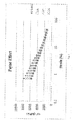
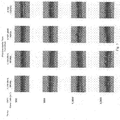
- the Payne effect was measured after vulcanization of rubber specimens by using Alpha Technology RPA2000.
- the vulcanization process was done at 160°C, 30 minutes, then; temperature was decreased to 55°C.
- Vulcanized rubber specimens was measured the Payne effect under condition of temperature 55°C, frequency 1.667 Hz, strain 0.7-45%.
- the rubber compound characteristic such as storage modulus (G'), loss modulus (G"), and tan delta (tan ⁇ ) was measured and analyzed.
- the physical properties are generally improved by using coconut oil compared to the cases where other types of oils are used instead.
- S-SBR1205 compound system showed the better improvement of physical properties than E-SBR compound system.
- the physical properties are generally improved by using coconut oil compared to the case where other type of oil is used instead.
- the higher ML viscosity of BR matrix of coconut oil extended BR showed the better improvement of physical properties than the lower ML viscosity of BR matrix.
- CBR coconut oil extended BR
- the physical properties are generally improved by using coconut oil extended BR compared to the case where other types of BRs are used.
- CBR50 means the CBR with ML viscosity of around 50 and the same rule applies to CBR60, CBR70, and CBR80. FFA contents for these are 21.5% by mass.
- the sheets of the primary compounds obtained from the aforementioned non-productive mixing were then subject to the mixing with vulcanizing agent, most preferably sulfur, and the vulcanizing accelerators by using the standard roll at preferred temperature range of 60-70 °C within 3 minutes.
- vulcanizing agent most preferably sulfur
- vulcanizing accelerators by using the standard roll at preferred temperature range of 60-70 °C within 3 minutes.
- the rubber compounds from the productive mixing (secondary compound) have been pulled in sheets and the samples were then subject to the measurements of Mooney viscosity (ML1+4,100 °C), curing time on a Moving Die Rheometer (MDR) at 160 °C.
- the secondary filler-filled rubber compounds obtained from the productive mixing were processed in the mold pressing at 150 °C according the curing time observed by a MDR as already mentioned (t90x2).
- the rubber vulcanizates in various forms of the specimens were then subject to the measurements of the viscoelastic property during the temperature sweep, tensile strength, hardness, specific gravity, tear resistance, rebound resilience, abrasion resistance, and compression set.
- the physical properties are generally improved by using coconut oil extended BR compared to the case where other types of BRs are employed.
- the sheets of the primary compounds obtained from the aforementioned non-productive mixing were then subject to the mixing with vulcanizing agent, most preferably sulfur, and the vulcanizing accelerators by using the standard roll at preferred temperature range of 60-70 °C within 4 minutes.
- vulcanizing agent most preferably sulfur
- vulcanizing accelerators by using the standard roll at preferred temperature range of 60-70 °C within 4 minutes.
- the rubber compounds from the productive mixing (secondary compound) have been pulled in sheets and the samples were then subject to the measurements of Mooney viscosity (ML1+4,100 °C), curing time on a Moving Die Rheometer (MDR) at 160 °C.
- Table 57 Product name C 123(Ref) C 124 (Ref) C 125 (Ref) C 126 (Ref) C 127 (Ref) C 128 (Ref) C 129 (Ref) C 130 C 131 (Ref) C 132 (Ref) Grade name CB24 NEODENE-45 NeocisBR040 LG-1208 BR150L BR360L BR230 CBR21.5 150L/25 150L/40 Mooney viscosity; 2nd ML1+4, 100°C 69.0 69.6 69.1 67.6 67.8 69.7 63.7 65.0 66.0 73.7 Curing rate Min.
- the secondary filler-filled rubber compounds obtained from the productive mixing were processed in the mold pressing at 150 °C according the curing time observed by a MDR as already mentioned (t90x2).
- the rubber vulcanizates in various forms of the specimens were then subject to the measurements of the viscoelastic property during the temperature sweep, tensile strength, hardness, specific gravity, tear resistance, rebound resilience, abrasion resistance, and compression set.
- the physical properties are generally improved by using coconut oil extended BR compared to the case where other types of BRs are employed.
- the purpose of this invention is to provide an oil-extended rubber which has improved physical properties and a rubber composition containing the oil-extended rubber, which can be applied to rubber industry or tires industry or shoe sole industry containing the rubber composition.
Landscapes
- Chemical & Material Sciences (AREA)
- Health & Medical Sciences (AREA)
- Chemical Kinetics & Catalysis (AREA)
- Medicinal Chemistry (AREA)
- Polymers & Plastics (AREA)
- Organic Chemistry (AREA)
- Engineering & Computer Science (AREA)
- Oil, Petroleum & Natural Gas (AREA)
- Mechanical Engineering (AREA)
- Materials Engineering (AREA)
- Compositions Of Macromolecular Compounds (AREA)
- Tires In General (AREA)
Claims (14)
- Ölgestreckter Kautschuk, umfassend:eine vulkanisierbare Kautschukkomponente; undein Kokosöl mit einem Gehalt an freien Fettsäuren in einem Bereich von 5 bis 18 Masse-%, gemessen gemäß dem Prüfverfahren nach AOAC (2012) 940.28,wobei der Gehalt des Kokosöls von 21,5 bis 37,5 part per hundred rubber (phr) reicht.
- Ölgestreckter Kautschuk nach Anspruch 1, wobei eine Iodzahl des Kokosöls 10 oder mehr beträgt.
- Ölgestreckter Kautschuk nach Anspruch 1, wobei die vulkanisierbare Kautschukkomponente ein Polybutadien ist.
- Ölgestreckter Kautschuk nach Anspruch 1, wobei die vulkanisierbare Kautschukkomponente ein 1,4-cis-Polybutadien ist.
- Kautschukzusammensetzung, die den ölgestreckten Kautschuk nach einem der Ansprüche 1 bis 4 umfasst, und die des Weiteren umfasst:einen Dienkautschuk außer dem vulkanisierbaren Kautschuk; undein Kautschukverstärkungsmittel.
- Kautschukzusammensetzung nach Anspruch 5, die des Weiteren ein Kautschukprozessöl umfasst.
- Kautschukzusammensetzung nach Anspruch 5, die des Weiteren ein Kokosöl umfasst.
- Kautschukzusammensetzung nach einem der Ansprüche 5 bis 7, wobei das Kautschukverstärkungsmittel Siliciumdioxid umfasst.
- Kautschukzusammensetzung, die eine vulkanisierbare Kautschukkomponente, ein Kokosöl mit einem Gehalt an freien Fettsäuren in einem Bereich von 5 bis 18 Masse-%, gemessen gemäß dem Prüfverfahren nach AOAC (2012) 940.28, einen Dienkautschuk außer dem vulkanisierbaren Kautschuk und ein Kautschukverstärkungsmittel umfasst,
wobei der Gehalt des Kokosöls von 21,5 bis 37,5 part per hundred rubber (phr) reicht. - Reifen, der die Kautschukzusammensetzung nach einem der Ansprüche 5 bis 9 umfasst.
- Schuhsohle, die die Kautschukzusammensetzung nach einem der Ansprüche 5 bis 9 umfasst.
- Verfahren zur Herstellung eines ölgestreckten Kautschuks, wobei das Verfahren den Schritt umfasst:Mischen einer vulkanisierbaren Kautschukkomponente und eines Kokosöls mit einem Gehalt an freien Fettsäuren in einem Bereich von 5 bis 18 Masse-%, gemessen gemäß dem Prüfverfahren nach AOAC (2012) 940.28,wobei der Gehalt des Kokosöls so eingestellt wird, dass er im Bereich von 21,5 bis 37,5 part per hundred rubber (phr) liegt.
- Verfahren nach Anspruch 12, wobei der Mischschritt ohne die Zugabe von Lösungsmitteln durchgeführt wird.
- Verfahren nach Anspruch 12, das des Weiteren den Schritt umfasst:Lösen der vulkanisierbaren Kautschukkomponente in einem Lösungsmittel vor der Durchführung des Mischschritts; undVerwenden der gelösten vulkanisierbaren Kautschukkomponente im Mischschritt.
Applications Claiming Priority (2)
| Application Number | Priority Date | Filing Date | Title |
|---|---|---|---|
| TH1501001097 | 2015-02-27 | ||
| PCT/TH2016/000014 WO2016137407A1 (en) | 2015-02-27 | 2016-02-26 | Oil-extended rubber, rubber composition, and method for manufacturing the oil-extended rubber |
Publications (3)
| Publication Number | Publication Date |
|---|---|
| EP3262111A1 EP3262111A1 (de) | 2018-01-03 |
| EP3262111A4 EP3262111A4 (de) | 2018-10-24 |
| EP3262111B1 true EP3262111B1 (de) | 2020-06-17 |
Family
ID=56788877
Family Applications (1)
| Application Number | Title | Priority Date | Filing Date |
|---|---|---|---|
| EP16755996.2A Active EP3262111B1 (de) | 2015-02-27 | 2016-02-26 | Ölgestreckter kautschuk, kautschukzusammensetzung und verfahren zur herstellung des ölgestreckten kautschuks |
Country Status (9)
| Country | Link |
|---|---|
| US (1) | US20180244103A1 (de) |
| EP (1) | EP3262111B1 (de) |
| JP (1) | JP6548750B2 (de) |
| KR (1) | KR101900638B1 (de) |
| CN (1) | CN107406628B (de) |
| MY (1) | MY182954A (de) |
| SG (1) | SG11201705754QA (de) |
| TW (1) | TWI599617B (de) |
| WO (1) | WO2016137407A1 (de) |
Cited By (1)
| Publication number | Priority date | Publication date | Assignee | Title |
|---|---|---|---|---|
| WO2025093385A1 (en) * | 2023-10-30 | 2025-05-08 | Arlanxeo Deutschland Gmbh | Oil-extended polybutadiene polymer |
Families Citing this family (7)
| Publication number | Priority date | Publication date | Assignee | Title |
|---|---|---|---|---|
| JP7106839B2 (ja) * | 2017-10-27 | 2022-07-27 | 住友ゴム工業株式会社 | ゴム組成物および空気入りタイヤ |
| TWI698327B (zh) * | 2018-06-29 | 2020-07-11 | 馳綠國際股份有限公司 | 鞋料件的製造方法 |
| JP7224196B2 (ja) | 2019-02-01 | 2023-02-17 | 住友ゴム工業株式会社 | トレッド用ゴム組成物及び空気入りタイヤ |
| CN113677719B (zh) * | 2019-03-10 | 2024-12-27 | 株式会社普利司通 | 改性的高顺式聚二烯聚合物、相关方法和橡胶组合物 |
| US12018155B1 (en) | 2019-12-27 | 2024-06-25 | Poet Research, Inc. | Process oil for rubber compounding |
| DE102024203451A1 (de) * | 2024-04-15 | 2025-10-16 | Contitech Deutschland Gmbh | Nachhaltiger Weichmacher für EPDM |
| CN121794325A (zh) | 2024-05-10 | 2026-04-03 | Ube弹性体株式会社 | 橡胶组合物 |
Family Cites Families (22)
| Publication number | Priority date | Publication date | Assignee | Title |
|---|---|---|---|---|
| BE661412A (de) * | 1964-03-20 | |||
| US4310468A (en) * | 1980-12-23 | 1982-01-12 | Cpc International Inc. | Extraction of oil from vegetable materials |
| JP2003063206A (ja) * | 2001-08-24 | 2003-03-05 | Sumitomo Rubber Ind Ltd | エコタイヤ |
| JP4209118B2 (ja) * | 2002-02-06 | 2009-01-14 | 花王株式会社 | アルカノールアミドの製造法 |
| CN1642988A (zh) * | 2002-03-13 | 2005-07-20 | 埃克森美孚化学专利公司 | 耐磨性弹性体组合物 |
| US6998448B2 (en) * | 2002-09-16 | 2006-02-14 | The Goodyear Tire & Rubber Company | Tire with tread of CIS 1,4-polybutadiene rich rubber composition which contains a functional styrene/butadiene elastomer, silica and coupling agent |
| JP4970755B2 (ja) * | 2005-08-17 | 2012-07-11 | 住友ゴム工業株式会社 | ゴムの製造方法およびそれにより得られるゴム |
| MY140578A (en) * | 2005-12-07 | 2009-12-31 | Malaysian Agricultural Res And Dev Inst Mardi | Modified coconut oils with broad antimicrobial spectrum |
| JP4624370B2 (ja) * | 2006-03-28 | 2011-02-02 | 住友ゴム工業株式会社 | タイヤ用油展ゴムの製造方法、該タイヤ用油展ゴム、それを用いたゴム組成物およびタイヤ |
| US20090048400A1 (en) * | 2007-08-14 | 2009-02-19 | Manfred Josef Jung | Method for Making Tire with Black Sidewall and Tire Made by the Method |
| JP2009242777A (ja) * | 2008-03-12 | 2009-10-22 | Lion Corp | 脂肪酸低級アルキルエステルの製造方法 |
| US9027930B2 (en) * | 2008-06-03 | 2015-05-12 | Relborgn Pty Ltd | Method and composition for sealing passages |
| KR101053058B1 (ko) * | 2008-12-23 | 2011-08-01 | 한국타이어 주식회사 | 고무 조성물 |
| DE102010033035A1 (de) * | 2010-08-02 | 2012-02-02 | Emery Oleochemicals Gmbh | Gleitmittelkombination für die Verarbeitung von thermoplastischen Kunststoffen |
| US9969952B2 (en) * | 2010-09-13 | 2018-05-15 | Palsgaard A/S | Refined vegetable oil and a method of producing it |
| IT1403273B1 (it) * | 2010-12-20 | 2013-10-17 | Novamont Spa | Derivati di oli vegetali come oli estensori per composizioni elastomeriche |
| JP5346365B2 (ja) * | 2011-04-11 | 2013-11-20 | 住友ゴム工業株式会社 | ビードエイペックス用ゴム組成物及び空気入りタイヤ |
| KR101278216B1 (ko) * | 2011-09-28 | 2013-07-01 | 넥센타이어 주식회사 | 내마모성이 향상된 친환경 타이어 고무 조성물 |
| EP2792689A1 (de) * | 2013-04-18 | 2014-10-22 | LANXESS Deutschland GmbH | Ölgestrecktes funktionalisiertes Styrolbutadien-Copolymer |
| JP2015067827A (ja) * | 2013-10-01 | 2015-04-13 | 横浜ゴム株式会社 | ゴム組成物およびそれを用いた空気入りタイヤ |
| JP2015101712A (ja) * | 2013-11-28 | 2015-06-04 | 横浜ゴム株式会社 | タイヤインナーライナー用ゴム組成物およびそれを用いた空気入りタイヤ |
| US10179479B2 (en) * | 2015-05-19 | 2019-01-15 | Bridgestone Americas Tire Operations, Llc | Plant oil-containing rubber compositions, tread thereof and race tires containing the tread |
-
2016
- 2016-02-26 SG SG11201705754QA patent/SG11201705754QA/en unknown
- 2016-02-26 KR KR1020177022793A patent/KR101900638B1/ko not_active Expired - Fee Related
- 2016-02-26 TW TW105106031A patent/TWI599617B/zh not_active IP Right Cessation
- 2016-02-26 MY MYPI2017702964A patent/MY182954A/en unknown
- 2016-02-26 EP EP16755996.2A patent/EP3262111B1/de active Active
- 2016-02-26 CN CN201680012373.8A patent/CN107406628B/zh active Active
- 2016-02-26 WO PCT/TH2016/000014 patent/WO2016137407A1/en not_active Ceased
- 2016-02-26 US US15/553,114 patent/US20180244103A1/en not_active Abandoned
- 2016-02-26 JP JP2017563911A patent/JP6548750B2/ja active Active
Non-Patent Citations (1)
| Title |
|---|
| None * |
Cited By (1)
| Publication number | Priority date | Publication date | Assignee | Title |
|---|---|---|---|---|
| WO2025093385A1 (en) * | 2023-10-30 | 2025-05-08 | Arlanxeo Deutschland Gmbh | Oil-extended polybutadiene polymer |
Also Published As
| Publication number | Publication date |
|---|---|
| CN107406628A (zh) | 2017-11-28 |
| CN107406628B (zh) | 2021-02-09 |
| TWI599617B (zh) | 2017-09-21 |
| WO2016137407A1 (en) | 2016-09-01 |
| JP6548750B2 (ja) | 2019-07-24 |
| MY182954A (en) | 2021-02-05 |
| EP3262111A4 (de) | 2018-10-24 |
| KR20170104583A (ko) | 2017-09-15 |
| JP2018514639A (ja) | 2018-06-07 |
| SG11201705754QA (en) | 2017-09-28 |
| WO2016137407A4 (en) | 2016-10-20 |
| KR101900638B1 (ko) | 2018-11-08 |
| EP3262111A1 (de) | 2018-01-03 |
| TW201631002A (zh) | 2016-09-01 |
| US20180244103A1 (en) | 2018-08-30 |
Similar Documents
| Publication | Publication Date | Title |
|---|---|---|
| EP3262111B1 (de) | Ölgestreckter kautschuk, kautschukzusammensetzung und verfahren zur herstellung des ölgestreckten kautschuks | |
| EP2733169B1 (de) | Kautschukzusammensetzung für seitenwand und luftreifen | |
| JP7381725B2 (ja) | 水添共役ジエン系重合体、水添共役ジエン系重合体組成物、及びゴム組成物並びに水添共役ジエン系重合体の製造方法 | |
| CN102666136B (zh) | 用于飞机轮胎胎面的橡胶组合物 | |
| EP3336139B1 (de) | Luftreifen | |
| EP3385316B1 (de) | Kautschukzusammensetzung und reifen mit lauffläche mit oxidiertem russ | |
| JP5480781B2 (ja) | ベーストレッド用ゴム組成物及び空気入りタイヤ | |
| EP3109066A1 (de) | Reifen mit lauffläche für kombination aus niedrigtemperaturleistung und nassgriffigkeit | |
| EP3459996A1 (de) | Kautschukzusammensetzung | |
| WO2012165038A1 (ja) | トレッド用ゴム組成物及び空気入りタイヤ | |
| EP4003754B1 (de) | Reifen mit einer kautschukzusammensetzung mit einem spezifischen kohlenwasserstoffharz | |
| JP2019026671A (ja) | タイヤ | |
| EP4004103B1 (de) | Reifen enthaltend eine kautschukzusammensetzung enthaltend ein spezeifisches kohlenwasserstoffharz | |
| EP3950814A1 (de) | Konjugierte diene-polymer-zusammensetzung | |
| US20150259517A1 (en) | High-styrene content sbr in rubber compositions | |
| EP4003755B1 (de) | Reifen mit einer kautschukzusammensetzung mit einem spezifischen kohlenwasserstoffharz | |
| US20200190293A1 (en) | Rubber composition, method for manufacturing rubber composition, and tire | |
| EP3628692A1 (de) | Kieselsäureverstärkte kautschukzusammensetzung mit einem multifunktionalen gruppenfunktionalisierten elastomer und reifen mit lauffläche | |
| JP2019104772A (ja) | タイヤ用ゴム組成物および空気入りタイヤ | |
| US10233311B2 (en) | Preparation of silica reinforced rubber containing styrene/butadiene elastomer, rubber composition and tire with component | |
| EP4703425A1 (de) | Reifenkautschukzusammensetzung, laufflächenkautschuk und reifen | |
| TW202031695A (zh) | 聚丁二烯及其製造方法 | |
| JPH04356548A (ja) | ゴム組成物 | |
| JP2019104771A (ja) | タイヤ用ゴム組成物および空気入りタイヤ | |
| JP2021107503A (ja) | スタッドレスタイヤトレッド用ゴム組成物及びスタッドレスタイヤ |
Legal Events
| Date | Code | Title | Description |
|---|---|---|---|
| STAA | Information on the status of an ep patent application or granted ep patent |
Free format text: STATUS: THE INTERNATIONAL PUBLICATION HAS BEEN MADE |
|
| PUAI | Public reference made under article 153(3) epc to a published international application that has entered the european phase |
Free format text: ORIGINAL CODE: 0009012 |
|
| STAA | Information on the status of an ep patent application or granted ep patent |
Free format text: STATUS: REQUEST FOR EXAMINATION WAS MADE |
|
| 17P | Request for examination filed |
Effective date: 20170822 |
|
| AK | Designated contracting states |
Kind code of ref document: A1 Designated state(s): AL AT BE BG CH CY CZ DE DK EE ES FI FR GB GR HR HU IE IS IT LI LT LU LV MC MK MT NL NO PL PT RO RS SE SI SK SM TR |
|
| AX | Request for extension of the european patent |
Extension state: BA ME |
|
| DAV | Request for validation of the european patent (deleted) | ||
| DAX | Request for extension of the european patent (deleted) | ||
| A4 | Supplementary search report drawn up and despatched |
Effective date: 20180920 |
|
| RIC1 | Information provided on ipc code assigned before grant |
Ipc: C08L 9/00 20060101AFI20180915BHEP Ipc: C08K 3/36 20060101ALI20180915BHEP Ipc: C08K 5/101 20060101ALI20180915BHEP |
|
| GRAP | Despatch of communication of intention to grant a patent |
Free format text: ORIGINAL CODE: EPIDOSNIGR1 |
|
| STAA | Information on the status of an ep patent application or granted ep patent |
Free format text: STATUS: GRANT OF PATENT IS INTENDED |
|
| INTG | Intention to grant announced |
Effective date: 20200120 |
|
| GRAS | Grant fee paid |
Free format text: ORIGINAL CODE: EPIDOSNIGR3 |
|
| GRAA | (expected) grant |
Free format text: ORIGINAL CODE: 0009210 |
|
| STAA | Information on the status of an ep patent application or granted ep patent |
Free format text: STATUS: THE PATENT HAS BEEN GRANTED |
|
| AK | Designated contracting states |
Kind code of ref document: B1 Designated state(s): AL AT BE BG CH CY CZ DE DK EE ES FI FR GB GR HR HU IE IS IT LI LT LU LV MC MK MT NL NO PL PT RO RS SE SI SK SM TR |
|
| REG | Reference to a national code |
Ref country code: GB Ref legal event code: FG4D |
|
| REG | Reference to a national code |
Ref country code: CH Ref legal event code: EP |
|
| REG | Reference to a national code |
Ref country code: IE Ref legal event code: FG4D |
|
| REG | Reference to a national code |
Ref country code: DE Ref legal event code: R096 Ref document number: 602016038281 Country of ref document: DE |
|
| REG | Reference to a national code |
Ref country code: AT Ref legal event code: REF Ref document number: 1281237 Country of ref document: AT Kind code of ref document: T Effective date: 20200715 |
|
| PG25 | Lapsed in a contracting state [announced via postgrant information from national office to epo] |
Ref country code: GR Free format text: LAPSE BECAUSE OF FAILURE TO SUBMIT A TRANSLATION OF THE DESCRIPTION OR TO PAY THE FEE WITHIN THE PRESCRIBED TIME-LIMIT Effective date: 20200918 Ref country code: SE Free format text: LAPSE BECAUSE OF FAILURE TO SUBMIT A TRANSLATION OF THE DESCRIPTION OR TO PAY THE FEE WITHIN THE PRESCRIBED TIME-LIMIT Effective date: 20200617 Ref country code: LT Free format text: LAPSE BECAUSE OF FAILURE TO SUBMIT A TRANSLATION OF THE DESCRIPTION OR TO PAY THE FEE WITHIN THE PRESCRIBED TIME-LIMIT Effective date: 20200617 Ref country code: NO Free format text: LAPSE BECAUSE OF FAILURE TO SUBMIT A TRANSLATION OF THE DESCRIPTION OR TO PAY THE FEE WITHIN THE PRESCRIBED TIME-LIMIT Effective date: 20200917 Ref country code: FI Free format text: LAPSE BECAUSE OF FAILURE TO SUBMIT A TRANSLATION OF THE DESCRIPTION OR TO PAY THE FEE WITHIN THE PRESCRIBED TIME-LIMIT Effective date: 20200617 |
|
| REG | Reference to a national code |
Ref country code: LT Ref legal event code: MG4D |
|
| REG | Reference to a national code |
Ref country code: NL Ref legal event code: MP Effective date: 20200617 |
|
| PG25 | Lapsed in a contracting state [announced via postgrant information from national office to epo] |
Ref country code: HR Free format text: LAPSE BECAUSE OF FAILURE TO SUBMIT A TRANSLATION OF THE DESCRIPTION OR TO PAY THE FEE WITHIN THE PRESCRIBED TIME-LIMIT Effective date: 20200617 Ref country code: LV Free format text: LAPSE BECAUSE OF FAILURE TO SUBMIT A TRANSLATION OF THE DESCRIPTION OR TO PAY THE FEE WITHIN THE PRESCRIBED TIME-LIMIT Effective date: 20200617 Ref country code: RS Free format text: LAPSE BECAUSE OF FAILURE TO SUBMIT A TRANSLATION OF THE DESCRIPTION OR TO PAY THE FEE WITHIN THE PRESCRIBED TIME-LIMIT Effective date: 20200617 Ref country code: BG Free format text: LAPSE BECAUSE OF FAILURE TO SUBMIT A TRANSLATION OF THE DESCRIPTION OR TO PAY THE FEE WITHIN THE PRESCRIBED TIME-LIMIT Effective date: 20200917 |
|
| REG | Reference to a national code |
Ref country code: AT Ref legal event code: MK05 Ref document number: 1281237 Country of ref document: AT Kind code of ref document: T Effective date: 20200617 |
|
| PG25 | Lapsed in a contracting state [announced via postgrant information from national office to epo] |
Ref country code: AL Free format text: LAPSE BECAUSE OF FAILURE TO SUBMIT A TRANSLATION OF THE DESCRIPTION OR TO PAY THE FEE WITHIN THE PRESCRIBED TIME-LIMIT Effective date: 20200617 Ref country code: NL Free format text: LAPSE BECAUSE OF FAILURE TO SUBMIT A TRANSLATION OF THE DESCRIPTION OR TO PAY THE FEE WITHIN THE PRESCRIBED TIME-LIMIT Effective date: 20200617 |
|
| PG25 | Lapsed in a contracting state [announced via postgrant information from national office to epo] |
Ref country code: RO Free format text: LAPSE BECAUSE OF FAILURE TO SUBMIT A TRANSLATION OF THE DESCRIPTION OR TO PAY THE FEE WITHIN THE PRESCRIBED TIME-LIMIT Effective date: 20200617 Ref country code: CZ Free format text: LAPSE BECAUSE OF FAILURE TO SUBMIT A TRANSLATION OF THE DESCRIPTION OR TO PAY THE FEE WITHIN THE PRESCRIBED TIME-LIMIT Effective date: 20200617 Ref country code: AT Free format text: LAPSE BECAUSE OF FAILURE TO SUBMIT A TRANSLATION OF THE DESCRIPTION OR TO PAY THE FEE WITHIN THE PRESCRIBED TIME-LIMIT Effective date: 20200617 Ref country code: SM Free format text: LAPSE BECAUSE OF FAILURE TO SUBMIT A TRANSLATION OF THE DESCRIPTION OR TO PAY THE FEE WITHIN THE PRESCRIBED TIME-LIMIT Effective date: 20200617 Ref country code: EE Free format text: LAPSE BECAUSE OF FAILURE TO SUBMIT A TRANSLATION OF THE DESCRIPTION OR TO PAY THE FEE WITHIN THE PRESCRIBED TIME-LIMIT Effective date: 20200617 Ref country code: PT Free format text: LAPSE BECAUSE OF FAILURE TO SUBMIT A TRANSLATION OF THE DESCRIPTION OR TO PAY THE FEE WITHIN THE PRESCRIBED TIME-LIMIT Effective date: 20201019 Ref country code: ES Free format text: LAPSE BECAUSE OF FAILURE TO SUBMIT A TRANSLATION OF THE DESCRIPTION OR TO PAY THE FEE WITHIN THE PRESCRIBED TIME-LIMIT Effective date: 20200617 |
|
| PG25 | Lapsed in a contracting state [announced via postgrant information from national office to epo] |
Ref country code: IS Free format text: LAPSE BECAUSE OF FAILURE TO SUBMIT A TRANSLATION OF THE DESCRIPTION OR TO PAY THE FEE WITHIN THE PRESCRIBED TIME-LIMIT Effective date: 20201017 Ref country code: SK Free format text: LAPSE BECAUSE OF FAILURE TO SUBMIT A TRANSLATION OF THE DESCRIPTION OR TO PAY THE FEE WITHIN THE PRESCRIBED TIME-LIMIT Effective date: 20200617 Ref country code: PL Free format text: LAPSE BECAUSE OF FAILURE TO SUBMIT A TRANSLATION OF THE DESCRIPTION OR TO PAY THE FEE WITHIN THE PRESCRIBED TIME-LIMIT Effective date: 20200617 |
|
| REG | Reference to a national code |
Ref country code: DE Ref legal event code: R097 Ref document number: 602016038281 Country of ref document: DE |
|
| PLBE | No opposition filed within time limit |
Free format text: ORIGINAL CODE: 0009261 |
|
| STAA | Information on the status of an ep patent application or granted ep patent |
Free format text: STATUS: NO OPPOSITION FILED WITHIN TIME LIMIT |
|
| PG25 | Lapsed in a contracting state [announced via postgrant information from national office to epo] |
Ref country code: DK Free format text: LAPSE BECAUSE OF FAILURE TO SUBMIT A TRANSLATION OF THE DESCRIPTION OR TO PAY THE FEE WITHIN THE PRESCRIBED TIME-LIMIT Effective date: 20200617 |
|
| 26N | No opposition filed |
Effective date: 20210318 |
|
| PG25 | Lapsed in a contracting state [announced via postgrant information from national office to epo] |
Ref country code: SI Free format text: LAPSE BECAUSE OF FAILURE TO SUBMIT A TRANSLATION OF THE DESCRIPTION OR TO PAY THE FEE WITHIN THE PRESCRIBED TIME-LIMIT Effective date: 20200617 |
|
| PG25 | Lapsed in a contracting state [announced via postgrant information from national office to epo] |
Ref country code: MC Free format text: LAPSE BECAUSE OF FAILURE TO SUBMIT A TRANSLATION OF THE DESCRIPTION OR TO PAY THE FEE WITHIN THE PRESCRIBED TIME-LIMIT Effective date: 20200617 |
|
| GBPC | Gb: european patent ceased through non-payment of renewal fee |
Effective date: 20210226 |
|
| REG | Reference to a national code |
Ref country code: BE Ref legal event code: MM Effective date: 20210228 |
|
| PG25 | Lapsed in a contracting state [announced via postgrant information from national office to epo] |
Ref country code: CH Free format text: LAPSE BECAUSE OF NON-PAYMENT OF DUE FEES Effective date: 20210228 Ref country code: LI Free format text: LAPSE BECAUSE OF NON-PAYMENT OF DUE FEES Effective date: 20210228 Ref country code: LU Free format text: LAPSE BECAUSE OF NON-PAYMENT OF DUE FEES Effective date: 20210226 |
|
| PG25 | Lapsed in a contracting state [announced via postgrant information from national office to epo] |
Ref country code: IE Free format text: LAPSE BECAUSE OF NON-PAYMENT OF DUE FEES Effective date: 20210226 Ref country code: GB Free format text: LAPSE BECAUSE OF NON-PAYMENT OF DUE FEES Effective date: 20210226 |
|
| PG25 | Lapsed in a contracting state [announced via postgrant information from national office to epo] |
Ref country code: BE Free format text: LAPSE BECAUSE OF NON-PAYMENT OF DUE FEES Effective date: 20210228 |
|
| PG25 | Lapsed in a contracting state [announced via postgrant information from national office to epo] |
Ref country code: CY Free format text: LAPSE BECAUSE OF FAILURE TO SUBMIT A TRANSLATION OF THE DESCRIPTION OR TO PAY THE FEE WITHIN THE PRESCRIBED TIME-LIMIT Effective date: 20200617 |
|
| P01 | Opt-out of the competence of the unified patent court (upc) registered |
Effective date: 20230605 |
|
| PG25 | Lapsed in a contracting state [announced via postgrant information from national office to epo] |
Ref country code: HU Free format text: LAPSE BECAUSE OF FAILURE TO SUBMIT A TRANSLATION OF THE DESCRIPTION OR TO PAY THE FEE WITHIN THE PRESCRIBED TIME-LIMIT; INVALID AB INITIO Effective date: 20160226 |
|
| PG25 | Lapsed in a contracting state [announced via postgrant information from national office to epo] |
Ref country code: MK Free format text: LAPSE BECAUSE OF FAILURE TO SUBMIT A TRANSLATION OF THE DESCRIPTION OR TO PAY THE FEE WITHIN THE PRESCRIBED TIME-LIMIT Effective date: 20200617 |
|
| PGFP | Annual fee paid to national office [announced via postgrant information from national office to epo] |
Ref country code: IT Payment date: 20240220 Year of fee payment: 9 Ref country code: FR Payment date: 20240229 Year of fee payment: 9 |
|
| PG25 | Lapsed in a contracting state [announced via postgrant information from national office to epo] |
Ref country code: TR Free format text: LAPSE BECAUSE OF FAILURE TO SUBMIT A TRANSLATION OF THE DESCRIPTION OR TO PAY THE FEE WITHIN THE PRESCRIBED TIME-LIMIT Effective date: 20200617 |
|
| PG25 | Lapsed in a contracting state [announced via postgrant information from national office to epo] |
Ref country code: MT Free format text: LAPSE BECAUSE OF FAILURE TO SUBMIT A TRANSLATION OF THE DESCRIPTION OR TO PAY THE FEE WITHIN THE PRESCRIBED TIME-LIMIT Effective date: 20200617 |
|
| PG25 | Lapsed in a contracting state [announced via postgrant information from national office to epo] |
Ref country code: FR Free format text: LAPSE BECAUSE OF NON-PAYMENT OF DUE FEES Effective date: 20250228 Ref country code: IT Free format text: LAPSE BECAUSE OF NON-PAYMENT OF DUE FEES Effective date: 20250226 |
|
| PGFP | Annual fee paid to national office [announced via postgrant information from national office to epo] |
Ref country code: DE Payment date: 20260320 Year of fee payment: 11 |