EP3263109B1 - Médicament pour prévenir et/ou traiter la démence - Google Patents
Médicament pour prévenir et/ou traiter la démence Download PDFInfo
- Publication number
- EP3263109B1 EP3263109B1 EP16755471.6A EP16755471A EP3263109B1 EP 3263109 B1 EP3263109 B1 EP 3263109B1 EP 16755471 A EP16755471 A EP 16755471A EP 3263109 B1 EP3263109 B1 EP 3263109B1
- Authority
- EP
- European Patent Office
- Prior art keywords
- group
- cyano
- carbon atoms
- thiazolo
- pyrimidine
- Prior art date
- Legal status (The legal status is an assumption and is not a legal conclusion. Google has not performed a legal analysis and makes no representation as to the accuracy of the status listed.)
- Active
Links
- 0 C[C@]1(C*=C(*)C(C#C)=CC(N)=C(C)*)*=CN=C=C1 Chemical compound C[C@]1(C*=C(*)C(C#C)=CC(N)=C(C)*)*=CN=C=C1 0.000 description 1
Images


Classifications
-
- A—HUMAN NECESSITIES
- A61—MEDICAL OR VETERINARY SCIENCE; HYGIENE
- A61K—PREPARATIONS FOR MEDICAL, DENTAL OR TOILETRY PURPOSES
- A61K31/00—Medicinal preparations containing organic active ingredients
- A61K31/33—Heterocyclic compounds
- A61K31/395—Heterocyclic compounds having nitrogen as a ring hetero atom, e.g. guanethidine or rifamycins
- A61K31/495—Heterocyclic compounds having nitrogen as a ring hetero atom, e.g. guanethidine or rifamycins having six-membered rings with two or more nitrogen atoms as the only ring heteroatoms, e.g. piperazine or tetrazines
- A61K31/505—Pyrimidines; Hydrogenated pyrimidines, e.g. trimethoprim
- A61K31/519—Pyrimidines; Hydrogenated pyrimidines, e.g. trimethoprim ortho- or peri-condensed with heterocyclic rings
-
- A—HUMAN NECESSITIES
- A61—MEDICAL OR VETERINARY SCIENCE; HYGIENE
- A61K—PREPARATIONS FOR MEDICAL, DENTAL OR TOILETRY PURPOSES
- A61K31/00—Medicinal preparations containing organic active ingredients
- A61K31/33—Heterocyclic compounds
- A61K31/395—Heterocyclic compounds having nitrogen as a ring hetero atom, e.g. guanethidine or rifamycins
- A61K31/40—Heterocyclic compounds having nitrogen as a ring hetero atom, e.g. guanethidine or rifamycins having five-membered rings with one nitrogen as the only ring hetero atom, e.g. sulpiride, succinimide, tolmetin, buflomedil
- A61K31/403—Heterocyclic compounds having nitrogen as a ring hetero atom, e.g. guanethidine or rifamycins having five-membered rings with one nitrogen as the only ring hetero atom, e.g. sulpiride, succinimide, tolmetin, buflomedil condensed with carbocyclic rings, e.g. carbazole
-
- A—HUMAN NECESSITIES
- A61—MEDICAL OR VETERINARY SCIENCE; HYGIENE
- A61K—PREPARATIONS FOR MEDICAL, DENTAL OR TOILETRY PURPOSES
- A61K31/00—Medicinal preparations containing organic active ingredients
- A61K31/33—Heterocyclic compounds
- A61K31/395—Heterocyclic compounds having nitrogen as a ring hetero atom, e.g. guanethidine or rifamycins
- A61K31/41—Heterocyclic compounds having nitrogen as a ring hetero atom, e.g. guanethidine or rifamycins having five-membered rings with two or more ring hetero atoms, at least one of which being nitrogen, e.g. tetrazole
- A61K31/4164—1,3-Diazoles
- A61K31/4184—1,3-Diazoles condensed with carbocyclic rings, e.g. benzimidazoles
-
- A—HUMAN NECESSITIES
- A61—MEDICAL OR VETERINARY SCIENCE; HYGIENE
- A61K—PREPARATIONS FOR MEDICAL, DENTAL OR TOILETRY PURPOSES
- A61K31/00—Medicinal preparations containing organic active ingredients
- A61K31/33—Heterocyclic compounds
- A61K31/395—Heterocyclic compounds having nitrogen as a ring hetero atom, e.g. guanethidine or rifamycins
- A61K31/41—Heterocyclic compounds having nitrogen as a ring hetero atom, e.g. guanethidine or rifamycins having five-membered rings with two or more ring hetero atoms, at least one of which being nitrogen, e.g. tetrazole
- A61K31/42—Oxazoles
- A61K31/423—Oxazoles condensed with carbocyclic rings
-
- A—HUMAN NECESSITIES
- A61—MEDICAL OR VETERINARY SCIENCE; HYGIENE
- A61K—PREPARATIONS FOR MEDICAL, DENTAL OR TOILETRY PURPOSES
- A61K31/00—Medicinal preparations containing organic active ingredients
- A61K31/33—Heterocyclic compounds
- A61K31/395—Heterocyclic compounds having nitrogen as a ring hetero atom, e.g. guanethidine or rifamycins
- A61K31/41—Heterocyclic compounds having nitrogen as a ring hetero atom, e.g. guanethidine or rifamycins having five-membered rings with two or more ring hetero atoms, at least one of which being nitrogen, e.g. tetrazole
- A61K31/425—Thiazoles
- A61K31/428—Thiazoles condensed with carbocyclic rings
-
- A—HUMAN NECESSITIES
- A61—MEDICAL OR VETERINARY SCIENCE; HYGIENE
- A61K—PREPARATIONS FOR MEDICAL, DENTAL OR TOILETRY PURPOSES
- A61K31/00—Medicinal preparations containing organic active ingredients
- A61K31/33—Heterocyclic compounds
- A61K31/395—Heterocyclic compounds having nitrogen as a ring hetero atom, e.g. guanethidine or rifamycins
- A61K31/435—Heterocyclic compounds having nitrogen as a ring hetero atom, e.g. guanethidine or rifamycins having six-membered rings with one nitrogen as the only ring hetero atom
- A61K31/4353—Heterocyclic compounds having nitrogen as a ring hetero atom, e.g. guanethidine or rifamycins having six-membered rings with one nitrogen as the only ring hetero atom ortho- or peri-condensed with heterocyclic ring systems
- A61K31/4355—Heterocyclic compounds having nitrogen as a ring hetero atom, e.g. guanethidine or rifamycins having six-membered rings with one nitrogen as the only ring hetero atom ortho- or peri-condensed with heterocyclic ring systems the heterocyclic ring system containing a five-membered ring having oxygen as a ring hetero atom
-
- A—HUMAN NECESSITIES
- A61—MEDICAL OR VETERINARY SCIENCE; HYGIENE
- A61K—PREPARATIONS FOR MEDICAL, DENTAL OR TOILETRY PURPOSES
- A61K31/00—Medicinal preparations containing organic active ingredients
- A61K31/33—Heterocyclic compounds
- A61K31/395—Heterocyclic compounds having nitrogen as a ring hetero atom, e.g. guanethidine or rifamycins
- A61K31/435—Heterocyclic compounds having nitrogen as a ring hetero atom, e.g. guanethidine or rifamycins having six-membered rings with one nitrogen as the only ring hetero atom
- A61K31/4353—Heterocyclic compounds having nitrogen as a ring hetero atom, e.g. guanethidine or rifamycins having six-membered rings with one nitrogen as the only ring hetero atom ortho- or peri-condensed with heterocyclic ring systems
- A61K31/4365—Heterocyclic compounds having nitrogen as a ring hetero atom, e.g. guanethidine or rifamycins having six-membered rings with one nitrogen as the only ring hetero atom ortho- or peri-condensed with heterocyclic ring systems the heterocyclic ring system having sulfur as a ring hetero atom, e.g. ticlopidine
-
- A—HUMAN NECESSITIES
- A61—MEDICAL OR VETERINARY SCIENCE; HYGIENE
- A61K—PREPARATIONS FOR MEDICAL, DENTAL OR TOILETRY PURPOSES
- A61K31/00—Medicinal preparations containing organic active ingredients
- A61K31/33—Heterocyclic compounds
- A61K31/395—Heterocyclic compounds having nitrogen as a ring hetero atom, e.g. guanethidine or rifamycins
- A61K31/435—Heterocyclic compounds having nitrogen as a ring hetero atom, e.g. guanethidine or rifamycins having six-membered rings with one nitrogen as the only ring hetero atom
- A61K31/4353—Heterocyclic compounds having nitrogen as a ring hetero atom, e.g. guanethidine or rifamycins having six-membered rings with one nitrogen as the only ring hetero atom ortho- or peri-condensed with heterocyclic ring systems
- A61K31/437—Heterocyclic compounds having nitrogen as a ring hetero atom, e.g. guanethidine or rifamycins having six-membered rings with one nitrogen as the only ring hetero atom ortho- or peri-condensed with heterocyclic ring systems the heterocyclic ring system containing a five-membered ring having nitrogen as a ring hetero atom, e.g. indolizine, beta-carboline
-
- A—HUMAN NECESSITIES
- A61—MEDICAL OR VETERINARY SCIENCE; HYGIENE
- A61P—SPECIFIC THERAPEUTIC ACTIVITY OF CHEMICAL COMPOUNDS OR MEDICINAL PREPARATIONS
- A61P25/00—Drugs for disorders of the nervous system
- A61P25/28—Drugs for disorders of the nervous system for treating neurodegenerative disorders of the central nervous system, e.g. nootropic agents, cognition enhancers, drugs for treating Alzheimer's disease or other forms of dementia
Definitions
- the present invention relates to a composition for use in the prophylactic and/or therapeutic treatment of dementia.
- Alzheimer type dementia dementia
- cerebrovascular dementia dementia with Lewy bodies
- the Alzheimer type dementia of which number of patients is large, and for which countermeasure is difficult, poses a problem.
- Neurofibrillary tangles in the cerebrum and increase in senile plaques are considered to be the causes of Alzheimer type dementia ( Jack CR et al. (2010) Progress of Alzheimer disease, Lancet Neurol., 9, 119, 2010 ).
- the limbic system bears an important role for memory, and especially the hippocampus and the mammillary body are important organs that govern memory.
- acetylcholine esterase inhibitors such as donepezil, galanthamine, and rivastigmine, and memantine, which is an NMDA receptor antagonist, are clinically used so far for improving symptoms of Alzheimer type dementia, sufficient curative effect has not been obtained yet.
- AN1792 Elan Pharmaceuticals
- atorvastatin Pfizer
- simvastatin Merck
- HMG-CoA reductase inhibitors Dimebon (Pfizer)
- Dimebon Pfizer
- phenserine Axonyx
- acetylcholine esterase inhibitor rosiglitazone (Glaxo SmithKline)
- rosiglitazone Glaxo SmithKline
- Nerochem tramiprosate
- xaliproden Sanofi
- bapineuzumab Pfizer
- AZD3293 (AstraZeneca, Eli Lilly), which is an inhibitor of ⁇ secretase involved in the ⁇ amyloid protein synthesis
- LuAE58054 (Lundbeck, Otsuka Pharmaceutical)
- LuAF20513 (Lundbeck, Otsuka Pharmaceutical)
- success of these is not guaranteed at all, in view of the fact that clinical developments of almost all the medicaments for Alzheimer's disease ended in failure.
- Xanthine oxidase inhibitors such as allopurinol ( Journal of the American Chemical Society (1956), 78, 784-90 ; Journal of the Chemical Society (1958), 2973-81 ), oxypurinol ( Bulletin des Travaux de la Societe de Pharmacie de Bordeaux (1928) 66, 8-12 ; Berichte der Deutschen Chemischenmaschine (1911), 44, 2155-8 ), febuxostat (Japanese Patent Nos. 2725886 , 2706037 , and 3202607 ), and topiroxostat (Japanese Patent Nos. 3600832 , 3779725 , and Japanese Patent Unexamined Publication (KOKAI) No. 2005-041802 ) are medicaments generally considered to be useful for the therapeutic treatment of hyperuricemia. All of these substances are compounds obtained in the process of preparing xanthine derivatives.
- Japanese Patent Unexamined Publication (KOHYO) No. 2007-533751 describes a method for treatment of an Alzheimer's disease patient with a reactive oxygen-generating enzyme inhibitor in claim 25, and exemplifies xanthine oxidase inhibitor as the reactive oxygen-generating enzyme inhibitor.
- this reference specifically discloses only effects of allopurinol and nitrated allopurinol on sarcomere length and systolic calcium transient, which are indices of contraction of isolated cardiac muscle cells derived from nNOS-deficient rats (Japanese Patent Unexamined Publication (KOHYO) No. 2007-533751 , Fig. 1 ).
- 2007-533751 describes in Working Example XI that "A 65-year old with Alzheimer's disease is begun on 300 mg/day nitrated allopurinol (16). His memory and cognitive functions are stabilized after 3 months".
- this description does not include any description concerning specific administration frequency or specific cognitive performance improvement index.
- this description is a so-called predictive statement described in the present tense, and this reference neither refers to the action mechanism, nor confirms even that nitrated allopurinol has the xanthine oxidase inhibitory activity. Therefore, the efficacy of reactive oxygen-generating enzyme inhibitors cannot be enlarged over use for Alzheimer's disease.
- the nerve cell death was suppressed by (1) simultaneous addition of 100 ⁇ M of oxypurinol as a xanthine oxidase inhibitor and 100 ⁇ M of acetyl-L-aspartyl-L-glutamyl-L-valyl-L-aspart-1-al as a caspase inhibitor, (2) simultaneous addition of 100 nM of (-)-4-hydroxy-8-(3-methoxy-4-phenylsulfinylphenyl)pyrazolo[1,5-a]-1,3,5-triazine sodium salt as a xanthine oxidase inhibitor and 100 ⁇ M of acetyl-L-aspartyl-L-glutamyl-L-valyl-L-aspart-1-al as a caspase inhibitor, and (3) simultaneous addition of 100 ⁇ M of oxypurinol as a xanthine oxidase inhibitor and 300 ⁇ M of apocynin as
- Japanese Patent Unexamined Publication (KOKAI) No. 2003-201255 suppression of the nerve cell death is not observed at all with a xanthine oxidase inhibitor alone, and therefore it cannot be said that that is the effect of xanthine oxidase inhibitor alone.
- Japanese Patent Unexamined Publication (KOKAI) No. 2003-201255 describes only results of investigations at cell level, and therefore it is completely unknown whether such an agent can prevent or improve degeneration or reduction of nerve cells in an individual of animal. Furthermore, it cannot be confirmed that such an agent can prevent degeneration of a part of the cerebrum responsible for the cognitive function, or can prevent degradation of actual cognitive function from the descriptions of Japanese Patent Unexamined Publication (KOKAI) No. 2003-201255 , and therefore it is completely unknown whether a xanthine oxidase inhibitor can prevent and/or cure dementia.
- any other prior techniques referring to the relation between a xanthine oxidase inhibitor and dementia are not known. Therefore, any prior art that teaches use of a xanthine oxidase inhibitor alone for prophylactic and/or therapeutic treatment of degradation of cognitive function in dementia is not known.
- An object of the present invention is to provide a composition for use in the prophylactic and/or therapeutic treatment of dementia.
- the invention is defined in the appended claims.
- both the pathological finding that amyloid senile plaques of which core protein is the amyloid ⁇ peptide (A ⁇ ) excessively accumulate in the cerebrum, and the pathological finding that many neurofiblils of which core protein is the tau protein as one of the microtubule binding proteins appear are considered to be pathologically most important.
- the inventors of the present invention administered compounds represented by the following general formula (I), which are xanthine oxidase inhibitors generally considered to be useful for therapeutic treatment of hyperuricemia, to the aforementioned Alzheimer's disease model double transgenic mice over one year after one year passed from the birth, and performed histological examination.
- the compounds significantly suppress the appearance of both senile plaques and neurofibrillary tangles in the Alzheimer's disease model double transgenic mice.
- the inventors of the present invention confirmed that the aforementioned compounds are useful as an active ingredient of a medicament for prophylactic and/or therapeutic treatment of dementia, and accomplished the present invention.
- the present invention encompasses the following inventions.
- the medicament of the present invention can markedly suppress emergence of both senile plaques and neurofibrillary tangles, it is useful as a medicament for prophylactic and/or therapeutic treatment of Alzheimer type dementia.
- alkyl group or alkyl moiety of a substituent containing an alkyl moiety may be any of straight, branched, cyclic alkyl groups and an alkyl group consisting of any combination of the foregoings.
- alkyl moiety of the aralkyl group as R 4 alkyl moiety of the aralkylcarbonyl group as R 4 , and alkyl moiety of the aralkyl group as R 5 or R 6 , an alkyl group having 1 to 4 carbon atoms can be used.
- alkyl group or alkyl moiety having 1 to 4 carbon atoms include, for example, methyl group, ethyl group, n-propyl group, isopropyl group, n-butyl group, isobutyl group, sec-butyl group, tert-butyl group, and the like, but are not limited to these.
- halogen atom fluorine atom, chlorine atom, bromine atom, or iodine atom can be used.
- a group having two or more halogen atoms they may consist of a combination of two or more kinds of halogen atoms.
- Examples of the alkyl group having 1 to 8 carbon atoms and substituted with 1 to 3 halogen atoms as R 1 or R 2 include, for example, fluoromethyl group, difluoromethyl group, trifluoromethyl group, chloromethyl group, dichloromethyl group, trichloromethyl group, bromomethyl group, dibromomethyl group, tribromomethyl group, iodomethyl group, diiodomethyl group, triiodomethyl group, 2,2,2-trifluoroethyl group, 3,3,3-trifluoropropyl group, and the like, but are not limited to these.
- a certain functional group may have a specific substituent, as used for, for example, the alkyl group as R 4 , means that the functional group is unsubstituted, or has one or two or more of the specific substituent or substituents at chemically substitutable position.
- Number and substituting position of substituent existing in a functional group is not particularly limited, and when two or more substituents exist, they may be the same or different.
- the aralkyl group, or aralkyl moiety of the aralkylcarbonyl group containing an aralkyl moiety means an alkyl group having 1 to 4 carbon atoms and substituted with one or two or more aryl groups, preferably an alkyl group having 1 to 4 carbon atoms and substituted with one aryl group.
- aryl group, or aryl moiety constituting the aralkyl group, arylcarbonyl group, or aralkylcarbonyl group containing an aryl moiety a monocyclic or bicyclic aromatic hydrocarbon group having 6 to 10 carbon atoms can be used.
- the aryl group or aryl moiety include, for example, phenyl group, 1-naphthyl group, 2-naphthyl group, anthryl group, phenanthryl group, acenaphthylenyl group, and the like.
- aralkyl group examples include, for example, benzyl group, 1-naphthylmethyl group, 2-naphthylmethyl group, anthracenylmethyl group, phenanthrenylmethyl group, acenaphthylenylmethyl group, diphenylmethyl group, 1-phenethyl group, 2-phenethyl group, 1-(1-naphthyl)ethyl group, 1-(2-naphthyl)ethyl group, 2-(1-naphthyl)ethyl group, 2-(2-naphthyl)ethyl group, 3-phenylpropyl group, 3-(1-naphthyl)propyl group, 3-(2-naphthyl)propyl group, 4-phenylbutyl group, 4-(1-naphthyl)butyl group, 4-(2-naphthyl)butyl group, and the like
- the aryl group or the aryl moiety may have a substituent.
- substituents include, for example, a halogen atom, oxo group, thioxo group, nitro group, nitroso group, cyano group, isocyano group, cyanato group, thiocyanato group, isocyanato group, isothiocyanato group, hydroxy group, sulfanyl group, carboxy group, sulfanylcarbonyl group, oxalo group, mesoxalo group, thiocarboxy group, dithiocarboxy group, carbamoyl group, thiocarbamoyl group, sulfo group, sulfamoyl group, sulfino group, sulfinamoyl group, sulfeno group, sulfenamoyl group, phosphono group,
- R 1 is OR 4 .
- _R 4 is an alkyl group having 1 to 8 carbon atoms, which may have a substituent selected from the group consisting of a halogen atom, hydroxy group, nitro group, and cyano group, or R 4 is an aryl group having 6 to 10 carbon atoms.
- R 1 is an alkoxy group having 1 to 5 carbon atoms, which may have a substituent selected from the group consisting of a halogen atom, hydroxy group, nitro group, and cyano group, or R 1 is phenoxy group.
- R 2 is a halogen atom, nitro group, cyano group, or CO 2 R 7 , and it is more preferred that R 2 is a halogen atom, nitro group, cyano group, or carboxyl group. It is particularly preferred that R 2 is cyano group.
- R 3 is hydrogen atom, amino group, hydroxy group, a halogen atom, or CO 2 R 8 , and it is more preferred that R 3 is hydrogen atom, amino group, hydroxy group, a halogen atom, or carboxylgroup.
- X is oxygen atom, or sulfur atom.
- R 1 is an alkoxy group having 1 to 5 carbon atoms, or phenoxy group, which may have a substituent selected from the group consisting of a halogen atom, hydroxy group, nitro group, and cyano group
- R 2 is nitro group, cyano group, a halogen atom, or carboxyl group
- R 3 is hydrogen atom, amino group, hydroxy group, a halogen atom, or carboxyl group
- X is oxygen atom, or sulfur atom
- R 1 is an alkoxy group having 1 to 5 carbon atoms or phenoxy group
- R 2 is cyano group
- R 3 is hydroxy group
- X is oxygen atom, or sulfur atom
- the active ingredient of the composition of the present invention besides a compound represented by the general formula (A) or general formula (I) in free form, such a compound in the form of a salt may be used.
- Type of the salt is not particularly limited, and an arbitrary salt can be used so long as it is a physiologically acceptable salt.
- Example of the salt include, for example, alkali metal salts such as salts with sodium, potassium, etc.; alkaline earth metal salts such as salts with calcium, magnesium etc.; organic amine salts such as salts with methylamine, ethylamine, diethanolamine, etc.; mineral acid salts such as hydrochlorides, sulfates, and nitrates, organic acid salts such as p-toluenesulfonates, maleates, and tartrates, and the like, but are not limited to these.
- an arbitrary solvate of a compound represented by the general formula (A) or general formula (I), or a salt thereof may be used.
- Type of the solvent constituting the solvate is not particularly limited, and examples include, for example, water (namely, hydrate), ethanol, ethyl acetate, acetone, and the like.
- the compounds represented by the general formula (A) or general formula (I) may exist as an isomer such as optical isomer, diastereoisomer, or tautomer depending on type of substituent.
- An arbitrary isomer in pure form as well as a mixture of arbitrary isomers can be used as the active ingredient of the medicament of the present invention.
- a crystalline substance in an arbitrary form, amorphous substance in an arbitrary form, an arbitrary mixture of a crystalline substance and an amorphous substance, and the like can be used.
- the method for obtaining the compounds represented by the general formula (A) or general formula (I) is not particularly limited, they can be synthesized from easily obtainable starting compounds according to the methods described in, for example, International Patent Publications WO2003/42185 , WO2005/121153 , WO2007/4688 , Japanese Patent Nos. 3600832 , 3779725 , Japanese Patent Unexamined Publication (KOKAI) No. 2005-41802 , Japanese Patent Nos. 2725886 , 2706037 , 3202607 .
- the composition of the present invention can be used as a medicament for prophylactic and/or therapeutic treatment of dementia.
- the prophylactic and/or therapeutic treatment of dementia includes preventing advance of dementia already developed.
- Examples of the dementia as object of the application of the medicament of the present invention include, for example, Alzheimer type dementia.
- the composition of the present invention can also be applied to dementia selected from the group consisting of senile dementia, mild cognitive disorder, mild dysgnosia, age-associated memory impairment (AAMI), AIDS dementia, Pick's disease, Down's syndrome-related dementia, cerebrovascular dementia, senile memory disorder, learning disorder, hippocampal degeneration, cognitive dysfunction, and microinfarct dementia.
- AAMI age-associated memory impairment
- the object of the application of the composition of the present invention is not limited to these, and it can also be applied to a patient in an early stage of dementia or before development of dementia, who is diagnosed to be suspected to have dementia or to have a possibility of developing dementia by a skillful medical practitioner.
- the composition of the present invention is generally provided in the form of a pharmaceutical composition utilizing one or two or more kinds of pharmaceutical additives commonly used in this field.
- a pharmaceutical composition for oral administration such as capsule, tablet, syrup, powder, granule, subtilized granule, or solution, injection or fusion drip for intravenous administration, injection for intramuscular administration or subcutaneous administration, inhalant, percutaneous absorption preparation, or the like, but the form of the medicament is not limited to these forms.
- the medicament of the present invention can be formed by the methods well known to those skilled in the art with appropriately choosing pharmaceutical additives depending on the form of the pharmaceutical composition.
- Method for administration and time of administration of the composition of the present invention are not particularly limited, and they can be appropriately chosen depending on the purpose such as prophylactic or therapeutic purpose, severity of dementia, and the like. Dose of the composition of the present invention can be appropriately chosen in consideration of various factors such as age, body weight, body constitution, and symptoms of patients, as well as whether compositions containing other ingredients as active ingredients are administered or not.
- Concentration of the compound A was adjusted as follows, and dose and administration method of the compound A were as follows.
- methylcellulose As a base, 0.5% methylcellulose was prepared.
- a stock solution of the compound A having 10-fold concentration was once prepared in order to avoid weighing error of the medicament used in an extremely small amount and degradation of efficacy. That is, the compound A was mashed in an agate mortar, a small volume of 0.5% methylcelluloses was added to suspend the compound, and then 0.5% methylcelluloses was gradually added portionwise in small volumes to completely suspend and dissolve the compound.
- the compound A in an amount of 50 mg was finally suspended and dissolved in 10 mL of 0.5% methylcellulose to prepare a stock solution of 10-fold concentration of 50 mg of the compound A and 10 mL of 0.5% methylcellulose (50 mg/10 mL).
- the stock solution having 10-fold concentration [50 mg of compound A and 10 mL of 0.5% methylcellulose (50 mg/10 mL)] was prepared every week and refrigerated. On each day of administration, the stock solution of 10-fold concentration was diluted 10 times with full stirring, and also at the time of administration to mice, the stirred solution was sucked into a stomach tube to obtain a concentration for administration.
- the volume was correctly measured in a plastic syringe, a stomach tube for mice was directly connected to the plastic syringe, and the medicament was surely orally administered through the esophagus.
- Tg(APPSWE)2576KhaTg(Prnp-MA.PT*P301L)JNPL3HImc Alzheimer's disease model double transgenic mice that highly express both of the human gene encoding 695 amino acids of the amyloid ⁇ (A ⁇ ) precursor protein of human Alzheimer's disease and having a Sweden mutation, and the human tau protein gene having a mutation for substitution of leucine for proline at the position 301 (P301L) were used (purchased from Taconic Farms, Inc., Hudson, NY, U.S.A.).
- SPF specific pathogen free, microorganism-controlled state free from specific pathogens
- mice were individually isolated over four weeks to confirm again that they were SPF, in order to eliminate infectious diseases, and the like in the mice harboring naturally colonized microorganisms, and minimize individual differences as much as possible.
- mice were systemically anesthetized by intraperitoneally injecting pentobarbital sodium (trade name, Nembutal; Dainippon Sumitomo Pharma) in a volume of 1 mL per 1 g of individual body weight. After confirming that the animals were completely under anesthesia, the individuals were euthanized by a carbon dioxide treatment, and laparotomy and thoracotomy were performed. After blood was collected from the right ventricle, the blood of internal organs of the whole body was removed with physiological saline injected via the aorta of the left ventricle.
- pentobarbital sodium trade name, Nembutal; Dainippon Sumitomo Pharma
- organs including the cerebrum, cerebellum, brain stem, spine, and the like were embedded in paraffin, and sectioned with a microtome.
- the organ tissues were treated by the following six steps of fixation of the internal organ tissues, dehydration, de-ethanolation, paraffin impregnation, paraffin embedding, and paraffin section preparation.
- a carbon steel double-edged razor (FA-10, Feather Safety Razor, Osaka) was broken at the center, and thereby made into two of single-edged razors.
- the single-edged razor obtained as described above, the first coronal cut surface was made at the center of the mammillary body of the cerebrum of the Alzheimer's disease model double transgenic mouse.
- cerebrum coronal cut surfaces were successively formed for both the rostrad direction and the tail direction with intervals of about 2 mm.
- the first cut surface was produced in a cut surface plane including the trigeminal nerves on the right and left sides of the pons cerebelli and perpendicular to the major axis of the brain stem.
- brain stem and cerebellum cut surfaces were successively formed for both the rostrad direction and the tail direction with intervals of about 2 mm.
- Histochemical staining and immunohistochemical staining were performed by the following methods.
- amyloid ⁇ protein immunohistochemical staining kit (Code No. 299-56701, Wako Pure Chemical Industries, Osaka) was used.
- the anti-amyloid ⁇ protein (1-40) mouse monoclonal antibody (clone No. BA27) included in the kit was used.
- the anti-amyloid ⁇ -protein (1-42) mouse monoclonal antibody (clone No. BC05) included in the kit was used.
- the proteins were finally visualized by using 3,3'-diaminobenzidine tetrahydrochloride (DAB, Dako, Glostrup, Denmark) as a color developer.
- DAB 3,3'-diaminobenzidine tetrahydrochloride
- Detection was performed with a combination of the following primary antibody and the ABC (avidin-biotin-immunoperoxidase complex) method.
- an anti-phosphorylated tau protein (PHF-tau) mouse monoclonal antibody (clone AT8, Innogenetics, presently Fujirebio, Tokyo) was used.
- PPF-tau anti-phosphorylated tau protein
- ABC Kit Vectastain ABC kit (Vector Laboratories, Burlingame, CA, U.S.A.) was used.
- samples of the HE staining, A ⁇ 40 immunostaining, A ⁇ 42 immunostaining, and AT8 immunostaining were observed with a light microscope (BX41, Olympus, Tokyo) carrying a 3-CCD digital camera system (FX380, Olympus) loading image analysis software (FLVFS-LS Ver.1.12, Olympus), and image capturing and image analysis were performed with the apparatus.
- the structures of the senile plaques of the Alzheimer's disease model double transgenic mice could be easily identified only by HE staining, which is routine staining, like the senile plaques of human Alzheimer's disease.
- the senile plaques and neurofibrillary tangles that appear in the Alzheimer's disease model double transgenic mice, and the senile plaques and neurofibrillary tangles as neurohistopathological hallmarks of human Alzheimer's disease were neuropathologically the same structures ( Fig. 2 ).
- the favorite sites of the amyloid senile plaques were the hippocampus (Ammon angle), subiculum, and cerebral cortex (especially entorhinal cortex).
- the cerebrum cut surfaces, and brain stem and cerebellum cut surfaces of the Alzheimer's disease model double transgenic mice mainly the cut surfaces of the favorite sites of the senile plaques and neurofibrillary tangles as neurohistopathological hallmarks of human Alzheimer's disease, were histochemically and immunohistochemically quantitatively analyzed as evaluation method for effect of drug therapy ( Fig. 3 ).
- Therapeutic effect of a medicament for Alzheimer's disease was determined by quantitatively analyzing number of senile plaques that appeared as a neurohistopathological hallmark of human Alzheimer's disease and suppression of number of nerve cells having neurofibrillary tangles as a neurohistopathological hallmark of human Alzheimer's disease in the mice according to the following methods.
- the senile plaques were searched for in consideration of two factors, number of senile plaques and size of senile plaques (growth degree of senile plaques). That is, senile plaques having a diameter of 100 ⁇ m or larger were classified as large-sized senile plaques, those having a diameter of 50 ⁇ m or smaller as small-sized senile plaques, and those having a diameter between 50 ⁇ m and 100 ⁇ m as medium-sized senile plaques, and numbers of each type of plaques were counted ( Fig. 4 ). The count of the numbers was performed by the double blind method. That is, in the quantitative neuropathological analysis, only the individual identification numbers were attached to the samples, and the number of cells in the samples were counted in a state that it could not be known whether the samples were those of the placebo group or the compound A administration group.
- the neurofibrillary tangles were evaluated only with the number of nerve cells having neurofibrillary tangles. The number was counted by the double blind method as in the count of the number of senile plaques.
- the quantitative values of the number of the senile plaques that appeared and the number of nerve cells accompanied by neurofibrillary tangles are indicated as average value ⁇ standard deviation.
- statistical analysis was performed by using the Macintosh software, Statview (Ver.5.0, SAS Institute Inc., California, U.S.A .).
- the statistical significance test was performed by using the Mann-Whitney U test, and when P ⁇ 0.05, it was judged that there was statically significant difference.
- FIGs. 5 and 6 Pathological tissue samples of mammillary body coronal cut surfaces including the hippocampus in the cerebrum of the Alzheimer's disease model double transgenic mice are shown in Figs. 5 and 6 .
- Senile plaques which do not appear in the model mice younger than 700 days old and normal mice of more than 700 days old, could be easily identified in the hippocampuses of the Alzheimer's disease model double transgenic mice by HE staining.
- senile plaques that appeared in the Alzheimer's disease model double transgenic mice, there were two kinds of senile plaques distinguished on the basis of neuropathologico-morphological characteristics, i.e., senile plaques consisting of a structure having a center portion called core, which is deeply stained by the HE staining, and hallo around the core, which is lightly stained by the HE staining, and senile plaques consisting of only the hallo, which is lightly stained by the HE staining.
- the senile plaques that appear in human Alzheimer's disease were the same as the senile plaques that appear in human Alzheimer's disease from the viewpoint of the HE-staining.
- the senile plaques that appeared in the Alzheimer's disease model double transgenic mice of the former type correspond to the classical type senile plaques among the senile plaques that appear in human Alzheimer's disease, and the senile plaques of the latter type correspond to the diffuse type senile plaques among the senile plaques that appear in human Alzheimer's disease.
- the senile plaques that appeared in the Alzheimer's disease model double transgenic mice and could be identified by the HE staining could be identified with either one or both of the anti-amyloid ⁇ protein_A ⁇ 40 antibody (clone No. BA27), and anti-amyloid ⁇ protein_A ⁇ 42 antibody (clone No. BC05).
- the senile plaques that appeared in the 0.5% methylcellulose administration control group ( Fig. 5 ), and the senile plaques that appeared in the compound A treatment group ( Fig. 6 ) were the same from the viewpoints of neuropathologico-morphology, and staining.
- the A ⁇ 40 and A ⁇ 42 immunostaining-positive senile plaques that appeared in the Alzheimer's disease model double transgenic mice of the both groups were the same as the A ⁇ 40 and A ⁇ 42 immunostaining-positive senile plaques that appear in human Alzheimer's disease from the viewpoints of neuropathologico-morphology, and staining.
- the neurohistopathological characteristics of the senile plaques that appeared in the Alzheimer's disease model double transgenic mice were the same as the neurohistopathological characteristics of the senile plaque of human Alzheimer's disease, and the neurohistopathological characteristics of the senile plaques in both the control group and the compound A treatment group were the same. Therefore, in the evaluation based on senile plaques, the effectiveness of the compound A for suppressing human Alzheimer's disease was evaluated with the results of the quantitative analysis of the number of senile plaques and size (growth degree) of the diameter thereof.
- senile plaques that appeared in a coronal cut surface of the mammillary body including hippocampus and subiculum
- cerebrum coronal cut surface of entorhinal cortex cerebrum coronal cut surface of entorhinal cortex
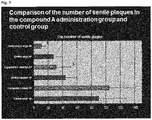
- the numbers of the large-sized senile plaques were 11.1 ⁇ 5.9 for the compound A treatment group, and 26.9 ⁇ 12.3 for the control group, the numbers of the medium-sized senile plaques were 30.9 ⁇ 20.5 for the compound A treatment group, and 44.3 ⁇ 14.5 for the control group, and the numbers of the small-sized senile plaques were 104.4 ⁇ 36.8 for the compound A treatment group, and 88.3 ⁇ 35.2 for the control group.
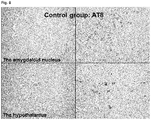
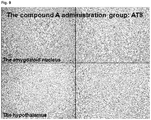
- FIGs. 8 and 9 Pathological tissue samples of cerebrum coronal cut surfaces including the amygdaloid nucleus and hypothalamus in the cerebrums of the Alzheimer's disease model double transgenic mice are shown in Figs. 8 and 9 .
- Neurofibrillary tangles which do not appear in the model mice not older than 700 days old and normal mice of 700 days or more old, could be easily identified in the hypothalamus and amygdaloid nucleus of the Alzheimer's disease model double transgenic mice by the AT8 immunostaining, which identifies the phosphorylated tau protein as the core protein of neurofibrillary tangles.
- nerve cells having AT8 immunostaining-positive neurofibrillary tangles that appeared in both the groups were the same as nerve cells having AT8 immunostaining-positive neurofibrillary tangles that appear in human Alzheimer's disease patients from the viewpoints of neuropathologico-morphology and staining.
- the AT8 immunostaining-positive neurofibrillary tangles that appear in human Alzheimer's disease patients and the AT8 immunostaining-positive neurofibrillary tangles that appeared in the Alzheimer's disease model double transgenic mice
- the AT8 immunostaining showed markedly higher sensitivity for detection of the neurofibrillary tangles compared with HE staining
- the nerve cells having neurofibrillary tangles were evaluated on the basis of AT8 immunostaining-positive neurofibrillary tangles.
- the neurohistopathological characteristics of the nerve cells having AT8 immunostaining-positive neurofibrillary tangles observed in the Alzheimer's disease model double transgenic mice are the same as the neurohistopathological characteristics of nerve cells having AT8 immunostaining-positive neurofibrillary tangles observed in human Alzheimer's disease patients, and the neurohistopathological characteristics of the nerve cells having AT8 immunostaining-positive neurofibrillary tangles observed in both the control group and the compound A treatment group were the same.
- nerve cells having the AT8 immunostaining-positive neurofibrillary tangles that appeared on cerebrum coronal cut surfaces including the hypothalamus, and cerebrum coronal cut surface in which the amygdaloid nucleus showed the maximum diameter were counted.
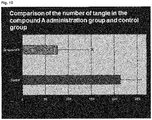
- the number of the nerve cells having AT8 immunostaining-positive neurofibrillary tangles per one cerebrum coronal cut surface for the compound A treatment group was 77.0 ⁇ 67.1, and the number of the nerve cells having AT8 immunostaining-positive neurofibrillary tangles per one cerebrum coronal cut surface for the 0.5% methylcellulose administration control group was 209.9 ⁇ 46.0.
- the compound A which is a selective inhibitor of xanthate oxidase reductase, markedly suppresses advance of Alzheimer's disease in model mice based on the causative genes of the disease, as shown by the pathological findings thereof. That is, it was found that the compound A, which is a selective inhibitor of xanthate oxidase reductase, significantly suppresses the numbers of large-sized senile plaques and medium-sized senile plaques in Alzheimer's disease model mice through oral administration thereof. It was also found that the compound A markedly suppresses neurofibrillary tangles, i.e., accumulation of the phosphorylated tau protein in nerve cells, in Alzheimer's disease model mice through oral administration thereof.
Landscapes
- Health & Medical Sciences (AREA)
- Chemical & Material Sciences (AREA)
- Medicinal Chemistry (AREA)
- Pharmacology & Pharmacy (AREA)
- Life Sciences & Earth Sciences (AREA)
- Animal Behavior & Ethology (AREA)
- General Health & Medical Sciences (AREA)
- Public Health (AREA)
- Veterinary Medicine (AREA)
- Epidemiology (AREA)
- Engineering & Computer Science (AREA)
- Bioinformatics & Cheminformatics (AREA)
- Biomedical Technology (AREA)
- Neurology (AREA)
- Neurosurgery (AREA)
- Hospice & Palliative Care (AREA)
- Psychiatry (AREA)
- Chemical Kinetics & Catalysis (AREA)
- General Chemical & Material Sciences (AREA)
- Nuclear Medicine, Radiotherapy & Molecular Imaging (AREA)
- Organic Chemistry (AREA)
- Pharmaceuticals Containing Other Organic And Inorganic Compounds (AREA)
Claims (11)
- Composition destinée à être utilisée dans le traitement prophylactique et/ou thérapeutique de la démence, qui comprend un composé représenté par la formule générale (I) suivante, un tautomère ou un stéréoisomère du composé, ou un sel pharmaceutiquement acceptable de celui-ci, ou un cristal ou un solvate de celui-ci en tant que principe actif :
 R1 représente un groupe alkyle présentant de 1 à 8 atomes de carbone, un groupe alkyle présentant de 1 à 8 atomes de carbone et substitué par 1 à 3 atomes d'halogène, -OR4, -CO2R5 ou -S(O)nR6, où R4 représente un atome d'hydrogène ou un groupe alkyle présentant de 1 à 8 atomes de carbone, un groupe aralkyle (la fraction aryle présente de 6 à 10 atomes de carbone, et la fraction alkyle présente de 1 à 4 atomes de carbone), un groupe alkylcarbonyle présentant de 2 à 9 atomes de carbone, un groupe arylcarbonyle (la fraction aryle présente de 6 à 10 atomes de carbone), un groupe aralkylcarbonyle (la fraction aryle présente de 6 à 10 atomes de carbone, et la fraction alkylcarbonyle présente de 2 à 5 atomes de carbone) ou un groupe aryle présentant de 6 à 10 atomes de carbone, qui peut présenter un groupe ou un atome choisi parmi un atome d'halogène, un groupe hydroxyle, un groupe nitro et un groupe cyano en tant que substituant, R5 et R6 représentent indépendamment un atome d'hydrogène ou un groupe alkyle présentant de 1 à 8 atomes de carbone, un groupe aralkyle (la fraction aryle présente de 6 à 10 atomes de carbone, et la fraction alkyle présente de 1 à 4 atomes de carbone), ou un groupe aryle présentant de 6 à 10 atomes de carbone, qui peut présenter un groupe ou un atome choisi parmi un atome d'halogène, un groupe hydroxyle, un groupe nitro, un groupe cyano et un groupe amino en tant que substituant, et n représente un nombre entier allant de 0 à 2,R2 représente un atome d'hydrogène, un atome d'halogène, un groupe nitro, un groupe cyano, un groupe formyle, un groupe alkyle présentant de 1 à 8 atomes de carbone, un groupe alkyle présentant de 1 à 8 atomes de carbone et substitué par 1 à 3 atomes d'halogène ou CO2R7, où R7 a la même signification que celle de R5 susmentionnée,R3 représente un atome d'hydrogène, un atome d'halogène, un groupe hydroxyle, un groupe amino, CO2R8, PO3H, PO(OH)(OR9), S(O)mR10 ou un groupe alkyle présentant de 1 à 8 atomes de carbone ou un groupe alkylaminocarbonyle (le groupe alkyle présente de 1 à 8 atomes de carbone), qui peut présenter un groupe ou un atome choisi parmi un atome d'halogène, un groupe hydroxyle, un groupe nitro, un groupe cyano et un groupe amino en tant que substituant, où R8, R9 et R10 ont la même signification que celle de R5 susmentionnée, et m a la même signification que celle de n susmentionnée,X représente NR11, un atome d'oxygène ou un atome de soufre, où R11 représente un atome d'hydrogène ou un groupe alkyle présentant de 1 à 8 atomes de carbone, qui peut présenter un groupe ou un atome choisi parmi un atome d'halogène, un groupe hydroxyle, un groupe nitro, un groupe cyano et un groupe amino en tant que substituant, etY et Z représentent des atomes d'azote.
 - Composition destinée à être utilisée selon la revendication 1, dans laquelle R1 représente OR4.
- Composition destinée à être utilisée selon la revendication 2, dans laquelle R4 est un groupe alkyle présentant de 1 à 8 atomes de carbone ou un groupe aryle présentant de 6 à 10 atomes de carbone, qui peut présenter un substituant choisi parmi le groupe consistant en un atome d'halogène, un groupe hydroxyle, un groupe nitro et un groupe cyano.
- Composition destinée à être utilisée selon la revendication 1 ou 2, dans laquelle R1 est un groupe alcoxy présentant de 1 à 5 atomes de carbone ou un groupe phénoxy, qui peut présenter un substituant choisi parmi le groupe consistant en un atome d'halogène, un groupe hydroxyle, un groupe nitro et un groupe cyano.
- Composition destinée à être utilisée selon l'une quelconque des revendications 1 à 4, dans laquelle R2 est un groupe nitro, un groupe cyano, un atome d'halogène ou un groupe carboxylique.
- Composition destinée à être utilisée selon l'une quelconque des revendications 1 à 5, dans laquelle R3 est un atome d'hydrogène, un groupe amino, un groupe hydroxyle, un atome d'halogène ou un groupe carboxylique.
- Composition destinée à être utilisée selon l'une quelconque des revendications 1 à 6, dans laquelle X est un atome d'oxygène ou un atome de soufre.
- Composition destinée à être utilisée selon l'une quelconque des revendications 1 à 7, dans laquelle R1 est un groupe alcoxy présentant de 1 à 5 atomes de carbone ou un groupe phénoxy, qui peut présenter un substituant choisi parmi le groupe consistant en un atome d'halogène, un groupe hydroxyle, un groupe nitro et un groupe cyano, R2 est un groupe nitro, un groupe cyano, un atome d'halogène ou un groupe carboxylique, R3 est un atome d'hydrogène, un groupe amino, un groupe hydroxyle, un atome d'halogène ou un groupe carboxylique, et X est un atome d'oxygène ou un atome de soufre.
- Composition destinée à être utilisée selon l'une quelconque des revendications 1 à 8, dans laquelle R1 est un groupe alcoxy présentant de 1 à 5 atomes de carbone ou un groupe phénoxy, R2 est un groupe cyano, R3 est un groupe hydroxyle, et X est un atome d'oxygène ou un atome de soufre.
- Composition destinée à être utilisée selon la revendication 1, dans laquelle le composé est choisi parmi le groupe consistant en les formules (1) à (3) et (6) à (30) suivantes :(1) 5-(7-hydroxyoxazolo[5,4-d]pyrimidin-2-yl)-2-méthoxy-benzonitrile ;(2) 5-(7-hydroxythiazolo[5,4-d]pyrimidin-2-yl)-2-phénoxy-benzonitrile ;(3) 2-[4-(2-fluorophénoxy)-3-nitro-phényl]thiazolo[5,4-d]pyrimidin-7-ol ;(6) 2-[4-(4-fluorophénoxy)-3-cyanophényl]thiazolo[5,4-d]pyrimidine ;(7) 2-(3-cyano-4-phénoxyphényl)thiazolo[5,4-d]pyrimidine ;(8) 2-[3-cyano-4-(3-pyridyloxy)phényl]thiazolo[5,4-d]pyrimidine ;(9) 8-[3-cyano-4-(4-fluorophénoxy)phényl]-9H-purine ;(10) 2-[3-cyano-4-(2-fluorophénoxy)phényl]thiazolo[5,4-d]pyrimidine ;(11) 2-[3-cyano-4-(3-fluorophénoxy)phényl]thiazolo[5,4-d]pyrimidine ;(12) 2-[3-cyano-4-(4-fluorophénylthio)phényl]thiazolo[5,4-d]pyrimidine ;(13) 2-[3-cyano-4-(2-hydroxyphénoxy)phényl]thiazolo[5,4-d]pyrimidine ;(14) 2-[4-(4-chlorophényloxy)-3-cyanophényl]thiazolo[5,4-d]pyrimidine ;(15) 2-[3-cyano-4-(2-fluorophénylthio)phényl]thiazolo[5,4-d]pyrimidine ;(16) 2-(3-cyano-4-phénylthiophényl)thiazolo[5,4-d]pyrimidine ;(17) 2-(4-allyloxy-3-cyanophényl)thiazolo[5,4-d]pyrimidine ;(18) 2-(3-cyano-4-morpholin-4-ylphényl)thiazolo[5,4-d]pyrimidine ;(19) 2-[3-cyano-4-(4-méthyl-1-pipérazinyl)phényl]thiazolo[5,4-d]pyrimidine ;(20) 2-[4-(3-chlorophényloxy)-3-cyanophényl]thiazolo[5,4-d]pyrimidine ;(21) 2-[3-cyano-4-(thiomorpholin-4-yl)phényl]thiazolo[5,4-d]pyrimidine ;(22) 2-[4-(2-chlorophényloxy)-3-cyanophényl]thiazolo[5,4-d]pyrimidine ;(23) 2-[3-cyano-4-(4-fluorophénoxy)phényl]oxazolo[5,4-d]pyrimidine ;(24) 2-[3-cyano-4-(3-fluorophénylthio)phényl]thiazolo[5,4-d]pyrimidine ;(25) 2-[4-(2-aminophénoxy)-3-cyanophényl]thiazolo[5,4-d]pyrimidine ;(26) 2-[3-cyano-4-(3-pyridyloxy)phényl]thiazolo[5,4-d]pyrimidine hydrochlorure ;(27) 2-[3-cyano-4-(4-hydroxyphénoxy)phényl]thiazolo[5,4-d]pyrimidine ;(28) 2-[3-cyano-4-(2-hydroxycarbonylphénoxy)phényl]thiazolo[5,4-d]pyrimidine ;(29) sel de potassium de 2-[3-cyano-4-(2-hydroxyphénoxy)phényl]thiazolo[5,4-d]pyrimidine ; et(30) sel de potassium de 2-[3-cyano-4-(4-hydroxyphénoxy)phényl]thiazolo[5,4-d]pyrimidine.
- Composition destinée à être utilisée selon l'une quelconque des revendications 1 à 10, dans laquelle la démence est une démence de type Alzheimer.
Applications Claiming Priority (2)
| Application Number | Priority Date | Filing Date | Title |
|---|---|---|---|
| JP2015034426 | 2015-02-24 | ||
| PCT/JP2016/055226 WO2016136727A1 (fr) | 2015-02-24 | 2016-02-23 | Médicament pour prévenir et/ou traiter la démence |
Publications (3)
| Publication Number | Publication Date |
|---|---|
| EP3263109A1 EP3263109A1 (fr) | 2018-01-03 |
| EP3263109A4 EP3263109A4 (fr) | 2018-08-22 |
| EP3263109B1 true EP3263109B1 (fr) | 2020-06-17 |
Family
ID=56788940
Family Applications (1)
| Application Number | Title | Priority Date | Filing Date |
|---|---|---|---|
| EP16755471.6A Active EP3263109B1 (fr) | 2015-02-24 | 2016-02-23 | Médicament pour prévenir et/ou traiter la démence |
Country Status (5)
| Country | Link |
|---|---|
| US (1) | US10413546B2 (fr) |
| EP (1) | EP3263109B1 (fr) |
| JP (2) | JP6891108B2 (fr) |
| CN (1) | CN107427517B (fr) |
| WO (1) | WO2016136727A1 (fr) |
Families Citing this family (7)
| Publication number | Priority date | Publication date | Assignee | Title |
|---|---|---|---|---|
| TWI780270B (zh) * | 2017-11-28 | 2022-10-11 | 靜岡縣公立大學法人 | 固體分散體 |
| WO2020009374A1 (fr) * | 2018-07-04 | 2020-01-09 | 고려대학교 세종산학협력단 | Nouveaux dérivés d'oxazoloquinolinone substitués en position 4, sel pharmaceutiquement acceptable de ceux-ci et composition pharmaceutique pour la prévention ou le traitement de maladies allergiques notamment l'asthme ou la dermatite atopique les comprenant |
| JP6903252B2 (ja) * | 2019-06-04 | 2021-07-14 | 日本ケミファ株式会社 | キサンチンオキシダーゼ阻害剤含有腸溶性製剤 |
| CN116059192B (zh) | 2019-11-13 | 2024-10-29 | 润佳(苏州)医药科技有限公司 | 同位素富集的3-氨基-1-丙磺酸及其衍生物的用途 |
| WO2022124325A1 (fr) * | 2020-12-08 | 2022-06-16 | 国立大学法人東京大学 | Activateur intracellulaire d'atp |
| WO2025258615A1 (fr) * | 2024-06-12 | 2025-12-18 | 学校法人日本医科大学 | Agent améliorant la fonction motrice et composition pharmaceutique le contenant |
| CN118598938A (zh) * | 2024-06-17 | 2024-09-06 | 杭州康源食品科技有限公司 | 一种具有改善认知功能的四肽及其应用 |
Family Cites Families (17)
| Publication number | Priority date | Publication date | Assignee | Title |
|---|---|---|---|---|
| DK0513379T3 (da) | 1990-11-30 | 1996-09-30 | Teijin Ltd | 2-Arylthiazolderivater og farmaceutisk præparat indeholdende sådanne |
| JP2706037B2 (ja) | 1993-04-13 | 1998-01-28 | 帝人株式会社 | シアノ化合物およびその製造方法 |
| JP3202607B2 (ja) | 1996-08-01 | 2001-08-27 | 帝人株式会社 | 2−(4−アルコキシ−3−シアノフェニル)チアゾール誘導体の製造法 |
| JP2003201255A (ja) * | 2001-11-05 | 2003-07-18 | Otsuka Pharmaceut Factory Inc | アルツハイマー病予防および治療剤 |
| US7253154B2 (en) | 2001-11-16 | 2007-08-07 | Nippon Chemiphar Co., Ltd. | Substituted thiazolopyrimidines as xanthine oxidase inhibitors |
| NZ531673A (en) | 2002-01-28 | 2006-06-30 | Fuji Yakuhin Co | Novel 1,2,4-triazole compounds |
| KR20060037373A (ko) | 2003-07-24 | 2006-05-03 | 가부시키가이샤 후지야쿠힝 | 1,2,4-트리아졸 화합물의 제조 방법 및 그 중간체 |
| JP2005041802A (ja) | 2003-07-25 | 2005-02-17 | Fujiyakuhin Co Ltd | 1,2,4−トリアゾール化合物の製造方法 |
| KR100515320B1 (ko) * | 2003-07-30 | 2005-09-15 | 삼성에스디아이 주식회사 | 플라즈마 디스플레이 패널 |
| US7067659B2 (en) | 2004-04-23 | 2006-06-27 | Duke University | Reactive oxygen generating enzyme inhibitor with nitric oxide bioactivity and uses thereof |
| JP4914210B2 (ja) * | 2004-06-14 | 2012-04-11 | 日本ケミファ株式会社 | 縮合ピリミジン誘導体、及びキサンチンオキシダーゼ阻害剤 |
| CN101044126A (zh) * | 2004-08-26 | 2007-09-26 | 惠氏公司 | 作为雌激素药物的前药取代的苯并唑化合物 |
| US20090149452A1 (en) | 2005-07-01 | 2009-06-11 | Nippon Chemiphar Co., Ltd. | Xanthine oxidase inhibitor |
| ATE518839T1 (de) | 2007-08-23 | 2011-08-15 | Sanofi Sa | Azoloarin derivate, verfahren zu deren herstellung, diese verbindungen enthaltende arzneimittel und deren verwendung |
| CN102224423B (zh) | 2008-09-23 | 2014-10-22 | 维斯塔实验室有限公司 | 聚集的τ分子的配体 |
| US20130046093A1 (en) * | 2011-08-18 | 2013-02-21 | Korea Institute Of Science And Technology | Pharmaceutical compositions for preventing or treating degenerative brain disease and method of screening the same |
| WO2014083327A1 (fr) * | 2012-11-27 | 2014-06-05 | Md Pharma Ab | Dérivés d'adénine appropriés pour le traitement (entre autres) de la dystrophie musculaire |
-
2016
- 2016-02-23 EP EP16755471.6A patent/EP3263109B1/fr active Active
- 2016-02-23 JP JP2017502378A patent/JP6891108B2/ja active Active
- 2016-02-23 US US15/548,550 patent/US10413546B2/en active Active
- 2016-02-23 CN CN201680012029.9A patent/CN107427517B/zh active Active
- 2016-02-23 WO PCT/JP2016/055226 patent/WO2016136727A1/fr not_active Ceased
-
2020
- 2020-11-02 JP JP2020183504A patent/JP2021070703A/ja active Pending
Non-Patent Citations (1)
| Title |
|---|
| None * |
Also Published As
| Publication number | Publication date |
|---|---|
| JPWO2016136727A1 (ja) | 2017-11-30 |
| CN107427517A (zh) | 2017-12-01 |
| JP6891108B2 (ja) | 2021-06-18 |
| US10413546B2 (en) | 2019-09-17 |
| EP3263109A1 (fr) | 2018-01-03 |
| EP3263109A4 (fr) | 2018-08-22 |
| CN107427517B (zh) | 2021-11-16 |
| US20180117047A1 (en) | 2018-05-03 |
| JP2021070703A (ja) | 2021-05-06 |
| WO2016136727A1 (fr) | 2016-09-01 |
Similar Documents
| Publication | Publication Date | Title |
|---|---|---|
| EP3263109B1 (fr) | Médicament pour prévenir et/ou traiter la démence | |
| US20110081428A1 (en) | Use of thioflavin-like compounds to increase life span and/or health span | |
| JP7285599B2 (ja) | 筋萎縮性側索硬化症治療剤及び治療用組成物 | |
| US20100152125A1 (en) | Compositions And Methods For The Diagnosis, Treatment, And Prevention Of Amyotrophic Lateral Sclerosis And Related Neurological Diseases | |
| AU2006318447A1 (en) | Methods of using small molecule compounds for neuroprotection | |
| JPWO2015099094A1 (ja) | アルツハイマー病及び前頭側頭葉変性症の診断方法、診断薬、治療薬、及びこれら薬剤のスクリーニング方法 | |
| US20080027052A1 (en) | Methods for treating cystic kidney disease | |
| Li et al. | A neuroprotective role of Ufmylation through Atg9 in the aging brain of Drosophila | |
| US20220193053A1 (en) | Cystic fibrosis transmembrane conductance regulator modulators for treating autosomal dominant polycystic kidney disease | |
| US20190275040A1 (en) | Compounds and methods for treating or preventing alzheimer's disease | |
| JP2026021307A (ja) | 神経疾患又は状態を治療するための新しい治療レジメン | |
| JP2024517653A (ja) | 神経細胞プロテオームを崩壊に対して安定化して血管細胞を保護する方法 | |
| ES2842577T3 (es) | Fármaco terapéutico o profiláctico para la demencia | |
| AU2020375441A1 (en) | Treatment of renal cystic disease | |
| US20190070174A1 (en) | Methods of treating neurodegenerative diseases | |
| JP2019501972A (ja) | Tdp−43タンパク質症の治療のためのタクロリムス | |
| US20090137643A1 (en) | Methods for Inhibiting or Reversing Tau Filament Fibrillization | |
| US9422239B1 (en) | Dual PPAR-δ PPAR-γ agonists | |
| US20240115581A1 (en) | Combination therapy for the treatment or prevention of neurological disorders | |
| WO2024061474A1 (fr) | Polythérapie pour le traitement ou la prévention de troubles neurologiques | |
| TW202547458A (zh) | 用於治療體染色體顯性多囊性腎病之方法 | |
| WO2017190059A1 (fr) | Stabilisation de monomères de la proinsuline |
Legal Events
| Date | Code | Title | Description |
|---|---|---|---|
| STAA | Information on the status of an ep patent application or granted ep patent |
Free format text: STATUS: THE INTERNATIONAL PUBLICATION HAS BEEN MADE |
|
| PUAI | Public reference made under article 153(3) epc to a published international application that has entered the european phase |
Free format text: ORIGINAL CODE: 0009012 |
|
| STAA | Information on the status of an ep patent application or granted ep patent |
Free format text: STATUS: REQUEST FOR EXAMINATION WAS MADE |
|
| 17P | Request for examination filed |
Effective date: 20170918 |
|
| AK | Designated contracting states |
Kind code of ref document: A1 Designated state(s): AL AT BE BG CH CY CZ DE DK EE ES FI FR GB GR HR HU IE IS IT LI LT LU LV MC MK MT NL NO PL PT RO RS SE SI SK SM TR |
|
| AX | Request for extension of the european patent |
Extension state: BA ME |
|
| DAV | Request for validation of the european patent (deleted) | ||
| DAX | Request for extension of the european patent (deleted) | ||
| RIC1 | Information provided on ipc code assigned before grant |
Ipc: A61K 31/428 20060101ALI20180710BHEP Ipc: A61K 31/4355 20060101ALI20180710BHEP Ipc: A61K 31/423 20060101ALI20180710BHEP Ipc: A61P 25/28 20060101ALI20180710BHEP Ipc: A61K 31/4365 20060101ALI20180710BHEP Ipc: A61K 31/4184 20060101ALI20180710BHEP Ipc: A61K 31/403 20060101ALI20180710BHEP Ipc: A61K 31/437 20060101ALI20180710BHEP Ipc: A61K 31/519 20060101AFI20180710BHEP |
|
| A4 | Supplementary search report drawn up and despatched |
Effective date: 20180720 |
|
| GRAP | Despatch of communication of intention to grant a patent |
Free format text: ORIGINAL CODE: EPIDOSNIGR1 |
|
| STAA | Information on the status of an ep patent application or granted ep patent |
Free format text: STATUS: GRANT OF PATENT IS INTENDED |
|
| INTG | Intention to grant announced |
Effective date: 20200103 |
|
| GRAS | Grant fee paid |
Free format text: ORIGINAL CODE: EPIDOSNIGR3 |
|
| GRAA | (expected) grant |
Free format text: ORIGINAL CODE: 0009210 |
|
| STAA | Information on the status of an ep patent application or granted ep patent |
Free format text: STATUS: THE PATENT HAS BEEN GRANTED |
|
| AK | Designated contracting states |
Kind code of ref document: B1 Designated state(s): AL AT BE BG CH CY CZ DE DK EE ES FI FR GB GR HR HU IE IS IT LI LT LU LV MC MK MT NL NO PL PT RO RS SE SI SK SM TR |
|
| REG | Reference to a national code |
Ref country code: GB Ref legal event code: FG4D |
|
| REG | Reference to a national code |
Ref country code: CH Ref legal event code: EP |
|
| REG | Reference to a national code |
Ref country code: IE Ref legal event code: FG4D |
|
| REG | Reference to a national code |
Ref country code: DE Ref legal event code: R096 Ref document number: 602016038280 Country of ref document: DE |
|
| REG | Reference to a national code |
Ref country code: AT Ref legal event code: REF Ref document number: 1280508 Country of ref document: AT Kind code of ref document: T Effective date: 20200715 |
|
| REG | Reference to a national code |
Ref country code: DE Ref legal event code: R082 Ref document number: 602016038280 Country of ref document: DE Representative=s name: GODEMEYER BLUM LENZE PATENTANWAELTE, PARTNERSC, DE Ref country code: DE Ref legal event code: R081 Ref document number: 602016038280 Country of ref document: DE Owner name: NISHINO, TAKESHI, JP Free format text: FORMER OWNERS: NATIONAL UNIVERSITY CORPORATION TOTTORI UNIVERSITY, TOTTORI, JP; NIPPON CHEMIPHAR CO., LTD., TOKYO, JP; NIPPON MEDICAL SCHOOL FOUNDATION, TOKYO, JP Ref country code: DE Ref legal event code: R081 Ref document number: 602016038280 Country of ref document: DE Owner name: NATIONAL UNIVERSITY CORPORATION TOTTORI UNIVER, JP Free format text: FORMER OWNERS: NATIONAL UNIVERSITY CORPORATION TOTTORI UNIVERSITY, TOTTORI, JP; NIPPON CHEMIPHAR CO., LTD., TOKYO, JP; NIPPON MEDICAL SCHOOL FOUNDATION, TOKYO, JP Ref country code: DE Ref legal event code: R081 Ref document number: 602016038280 Country of ref document: DE Owner name: OKAMOTO, KEN, JP Free format text: FORMER OWNERS: NATIONAL UNIVERSITY CORPORATION TOTTORI UNIVERSITY, TOTTORI, JP; NIPPON CHEMIPHAR CO., LTD., TOKYO, JP; NIPPON MEDICAL SCHOOL FOUNDATION, TOKYO, JP Ref country code: DE Ref legal event code: R081 Ref document number: 602016038280 Country of ref document: DE Owner name: NIPPON CHEMIPHAR CO., LTD., JP Free format text: FORMER OWNERS: NATIONAL UNIVERSITY CORPORATION TOTTORI UNIVERSITY, TOTTORI, JP; NIPPON CHEMIPHAR CO., LTD., TOKYO, JP; NIPPON MEDICAL SCHOOL FOUNDATION, TOKYO, JP |
|
| REG | Reference to a national code |
Ref country code: CH Ref legal event code: PK Free format text: BERICHTIGUNGEN |
|
| RAP2 | Party data changed (patent owner data changed or rights of a patent transferred) |
Owner name: OKAMOTO, KEN Owner name: NIPPON CHEMIPHAR CO., LTD. Owner name: NATIONAL UNIVERSITY CORPORATION TOTTORI UNIVERSITY Owner name: NISHINO, TAKESHI |
|
| RIN2 | Information on inventor provided after grant (corrected) |
Inventor name: KATO SHINSUKE Inventor name: SUZUKI HIDENORI Inventor name: OKAMOTO KEN Inventor name: KATO MASAKO Inventor name: NISHINO TAKESHI |
|
| REG | Reference to a national code |
Ref country code: GB Ref legal event code: 732E Free format text: REGISTERED BETWEEN 20200917 AND 20200923 |
|
| PG25 | Lapsed in a contracting state [announced via postgrant information from national office to epo] |
Ref country code: GR Free format text: LAPSE BECAUSE OF FAILURE TO SUBMIT A TRANSLATION OF THE DESCRIPTION OR TO PAY THE FEE WITHIN THE PRESCRIBED TIME-LIMIT Effective date: 20200918 Ref country code: FI Free format text: LAPSE BECAUSE OF FAILURE TO SUBMIT A TRANSLATION OF THE DESCRIPTION OR TO PAY THE FEE WITHIN THE PRESCRIBED TIME-LIMIT Effective date: 20200617 Ref country code: NO Free format text: LAPSE BECAUSE OF FAILURE TO SUBMIT A TRANSLATION OF THE DESCRIPTION OR TO PAY THE FEE WITHIN THE PRESCRIBED TIME-LIMIT Effective date: 20200917 Ref country code: LT Free format text: LAPSE BECAUSE OF FAILURE TO SUBMIT A TRANSLATION OF THE DESCRIPTION OR TO PAY THE FEE WITHIN THE PRESCRIBED TIME-LIMIT Effective date: 20200617 Ref country code: SE Free format text: LAPSE BECAUSE OF FAILURE TO SUBMIT A TRANSLATION OF THE DESCRIPTION OR TO PAY THE FEE WITHIN THE PRESCRIBED TIME-LIMIT Effective date: 20200617 |
|
| REG | Reference to a national code |
Ref country code: LT Ref legal event code: MG4D |
|
| REG | Reference to a national code |
Ref country code: NL Ref legal event code: MP Effective date: 20200617 |
|
| PG25 | Lapsed in a contracting state [announced via postgrant information from national office to epo] |
Ref country code: BG Free format text: LAPSE BECAUSE OF FAILURE TO SUBMIT A TRANSLATION OF THE DESCRIPTION OR TO PAY THE FEE WITHIN THE PRESCRIBED TIME-LIMIT Effective date: 20200917 Ref country code: RS Free format text: LAPSE BECAUSE OF FAILURE TO SUBMIT A TRANSLATION OF THE DESCRIPTION OR TO PAY THE FEE WITHIN THE PRESCRIBED TIME-LIMIT Effective date: 20200617 Ref country code: HR Free format text: LAPSE BECAUSE OF FAILURE TO SUBMIT A TRANSLATION OF THE DESCRIPTION OR TO PAY THE FEE WITHIN THE PRESCRIBED TIME-LIMIT Effective date: 20200617 Ref country code: LV Free format text: LAPSE BECAUSE OF FAILURE TO SUBMIT A TRANSLATION OF THE DESCRIPTION OR TO PAY THE FEE WITHIN THE PRESCRIBED TIME-LIMIT Effective date: 20200617 |
|
| REG | Reference to a national code |
Ref country code: AT Ref legal event code: MK05 Ref document number: 1280508 Country of ref document: AT Kind code of ref document: T Effective date: 20200617 |
|
| PG25 | Lapsed in a contracting state [announced via postgrant information from national office to epo] |
Ref country code: NL Free format text: LAPSE BECAUSE OF FAILURE TO SUBMIT A TRANSLATION OF THE DESCRIPTION OR TO PAY THE FEE WITHIN THE PRESCRIBED TIME-LIMIT Effective date: 20200617 Ref country code: AL Free format text: LAPSE BECAUSE OF FAILURE TO SUBMIT A TRANSLATION OF THE DESCRIPTION OR TO PAY THE FEE WITHIN THE PRESCRIBED TIME-LIMIT Effective date: 20200617 |
|
| PG25 | Lapsed in a contracting state [announced via postgrant information from national office to epo] |
Ref country code: AT Free format text: LAPSE BECAUSE OF FAILURE TO SUBMIT A TRANSLATION OF THE DESCRIPTION OR TO PAY THE FEE WITHIN THE PRESCRIBED TIME-LIMIT Effective date: 20200617 Ref country code: EE Free format text: LAPSE BECAUSE OF FAILURE TO SUBMIT A TRANSLATION OF THE DESCRIPTION OR TO PAY THE FEE WITHIN THE PRESCRIBED TIME-LIMIT Effective date: 20200617 Ref country code: IT Free format text: LAPSE BECAUSE OF FAILURE TO SUBMIT A TRANSLATION OF THE DESCRIPTION OR TO PAY THE FEE WITHIN THE PRESCRIBED TIME-LIMIT Effective date: 20200617 Ref country code: SM Free format text: LAPSE BECAUSE OF FAILURE TO SUBMIT A TRANSLATION OF THE DESCRIPTION OR TO PAY THE FEE WITHIN THE PRESCRIBED TIME-LIMIT Effective date: 20200617 Ref country code: CZ Free format text: LAPSE BECAUSE OF FAILURE TO SUBMIT A TRANSLATION OF THE DESCRIPTION OR TO PAY THE FEE WITHIN THE PRESCRIBED TIME-LIMIT Effective date: 20200617 Ref country code: PT Free format text: LAPSE BECAUSE OF FAILURE TO SUBMIT A TRANSLATION OF THE DESCRIPTION OR TO PAY THE FEE WITHIN THE PRESCRIBED TIME-LIMIT Effective date: 20201019 Ref country code: ES Free format text: LAPSE BECAUSE OF FAILURE TO SUBMIT A TRANSLATION OF THE DESCRIPTION OR TO PAY THE FEE WITHIN THE PRESCRIBED TIME-LIMIT Effective date: 20200617 Ref country code: RO Free format text: LAPSE BECAUSE OF FAILURE TO SUBMIT A TRANSLATION OF THE DESCRIPTION OR TO PAY THE FEE WITHIN THE PRESCRIBED TIME-LIMIT Effective date: 20200617 |
|
| PG25 | Lapsed in a contracting state [announced via postgrant information from national office to epo] |
Ref country code: IS Free format text: LAPSE BECAUSE OF FAILURE TO SUBMIT A TRANSLATION OF THE DESCRIPTION OR TO PAY THE FEE WITHIN THE PRESCRIBED TIME-LIMIT Effective date: 20201017 Ref country code: SK Free format text: LAPSE BECAUSE OF FAILURE TO SUBMIT A TRANSLATION OF THE DESCRIPTION OR TO PAY THE FEE WITHIN THE PRESCRIBED TIME-LIMIT Effective date: 20200617 Ref country code: PL Free format text: LAPSE BECAUSE OF FAILURE TO SUBMIT A TRANSLATION OF THE DESCRIPTION OR TO PAY THE FEE WITHIN THE PRESCRIBED TIME-LIMIT Effective date: 20200617 |
|
| REG | Reference to a national code |
Ref country code: DE Ref legal event code: R097 Ref document number: 602016038280 Country of ref document: DE |
|
| PLBE | No opposition filed within time limit |
Free format text: ORIGINAL CODE: 0009261 |
|
| STAA | Information on the status of an ep patent application or granted ep patent |
Free format text: STATUS: NO OPPOSITION FILED WITHIN TIME LIMIT |
|
| PG25 | Lapsed in a contracting state [announced via postgrant information from national office to epo] |
Ref country code: DK Free format text: LAPSE BECAUSE OF FAILURE TO SUBMIT A TRANSLATION OF THE DESCRIPTION OR TO PAY THE FEE WITHIN THE PRESCRIBED TIME-LIMIT Effective date: 20200617 |
|
| 26N | No opposition filed |
Effective date: 20210318 |
|
| PG25 | Lapsed in a contracting state [announced via postgrant information from national office to epo] |
Ref country code: SI Free format text: LAPSE BECAUSE OF FAILURE TO SUBMIT A TRANSLATION OF THE DESCRIPTION OR TO PAY THE FEE WITHIN THE PRESCRIBED TIME-LIMIT Effective date: 20200617 |
|
| PG25 | Lapsed in a contracting state [announced via postgrant information from national office to epo] |
Ref country code: MC Free format text: LAPSE BECAUSE OF FAILURE TO SUBMIT A TRANSLATION OF THE DESCRIPTION OR TO PAY THE FEE WITHIN THE PRESCRIBED TIME-LIMIT Effective date: 20200617 |
|
| REG | Reference to a national code |
Ref country code: BE Ref legal event code: MM Effective date: 20210228 |
|
| PG25 | Lapsed in a contracting state [announced via postgrant information from national office to epo] |
Ref country code: LU Free format text: LAPSE BECAUSE OF NON-PAYMENT OF DUE FEES Effective date: 20210223 Ref country code: LI Free format text: LAPSE BECAUSE OF NON-PAYMENT OF DUE FEES Effective date: 20210228 Ref country code: CH Free format text: LAPSE BECAUSE OF NON-PAYMENT OF DUE FEES Effective date: 20210228 |
|
| PG25 | Lapsed in a contracting state [announced via postgrant information from national office to epo] |
Ref country code: IE Free format text: LAPSE BECAUSE OF NON-PAYMENT OF DUE FEES Effective date: 20210223 |
|
| PG25 | Lapsed in a contracting state [announced via postgrant information from national office to epo] |
Ref country code: BE Free format text: LAPSE BECAUSE OF NON-PAYMENT OF DUE FEES Effective date: 20210228 |
|
| PG25 | Lapsed in a contracting state [announced via postgrant information from national office to epo] |
Ref country code: CY Free format text: LAPSE BECAUSE OF FAILURE TO SUBMIT A TRANSLATION OF THE DESCRIPTION OR TO PAY THE FEE WITHIN THE PRESCRIBED TIME-LIMIT Effective date: 20200617 |
|
| PG25 | Lapsed in a contracting state [announced via postgrant information from national office to epo] |
Ref country code: HU Free format text: LAPSE BECAUSE OF FAILURE TO SUBMIT A TRANSLATION OF THE DESCRIPTION OR TO PAY THE FEE WITHIN THE PRESCRIBED TIME-LIMIT; INVALID AB INITIO Effective date: 20160223 |
|
| PG25 | Lapsed in a contracting state [announced via postgrant information from national office to epo] |
Ref country code: MK Free format text: LAPSE BECAUSE OF FAILURE TO SUBMIT A TRANSLATION OF THE DESCRIPTION OR TO PAY THE FEE WITHIN THE PRESCRIBED TIME-LIMIT Effective date: 20200617 |
|
| PG25 | Lapsed in a contracting state [announced via postgrant information from national office to epo] |
Ref country code: TR Free format text: LAPSE BECAUSE OF FAILURE TO SUBMIT A TRANSLATION OF THE DESCRIPTION OR TO PAY THE FEE WITHIN THE PRESCRIBED TIME-LIMIT Effective date: 20200617 |
|
| PG25 | Lapsed in a contracting state [announced via postgrant information from national office to epo] |
Ref country code: MT Free format text: LAPSE BECAUSE OF FAILURE TO SUBMIT A TRANSLATION OF THE DESCRIPTION OR TO PAY THE FEE WITHIN THE PRESCRIBED TIME-LIMIT Effective date: 20200617 |
|
| PGFP | Annual fee paid to national office [announced via postgrant information from national office to epo] |
Ref country code: FR Payment date: 20251231 Year of fee payment: 11 |
|
| PGFP | Annual fee paid to national office [announced via postgrant information from national office to epo] |
Ref country code: GB Payment date: 20260106 Year of fee payment: 11 |
|
| PGFP | Annual fee paid to national office [announced via postgrant information from national office to epo] |
Ref country code: DE Payment date: 20260102 Year of fee payment: 11 |