EP3263138B1 - Vorrichtung und verfahren zur sterilisation eines endoskops - Google Patents
Vorrichtung und verfahren zur sterilisation eines endoskops Download PDFInfo
- Publication number
- EP3263138B1 EP3263138B1 EP17178746.8A EP17178746A EP3263138B1 EP 3263138 B1 EP3263138 B1 EP 3263138B1 EP 17178746 A EP17178746 A EP 17178746A EP 3263138 B1 EP3263138 B1 EP 3263138B1
- Authority
- EP
- European Patent Office
- Prior art keywords
- sterilization chamber
- sterilization
- block
- pressure
- approximately
- Prior art date
- Legal status (The legal status is an assumption and is not a legal conclusion. Google has not performed a legal analysis and makes no representation as to the accuracy of the status listed.)
- Active
Links
Images



Classifications
-
- A—HUMAN NECESSITIES
- A61—MEDICAL OR VETERINARY SCIENCE; HYGIENE
- A61L—METHODS OR APPARATUS FOR STERILISING MATERIALS OR OBJECTS IN GENERAL; DISINFECTION, STERILISATION OR DEODORISATION OF AIR; CHEMICAL ASPECTS OF BANDAGES, DRESSINGS, ABSORBENT PADS OR SURGICAL ARTICLES; MATERIALS FOR BANDAGES, DRESSINGS, ABSORBENT PADS OR SURGICAL ARTICLES
- A61L2/00—Disinfection or sterilisation of materials or objects, in general; Accessories therefor
- A61L2/24—Apparatus using programmed or automatic operation
-
- A—HUMAN NECESSITIES
- A61—MEDICAL OR VETERINARY SCIENCE; HYGIENE
- A61B—DIAGNOSIS; SURGERY; IDENTIFICATION
- A61B1/00—Instruments for performing medical examinations of the interior of cavities or tubes of the body by visual or photographical inspection, e.g. endoscopes; Illuminating arrangements therefor
- A61B1/12—Instruments for performing medical examinations of the interior of cavities or tubes of the body by visual or photographical inspection, e.g. endoscopes; Illuminating arrangements therefor with cooling or rinsing arrangements
- A61B1/121—Instruments for performing medical examinations of the interior of cavities or tubes of the body by visual or photographical inspection, e.g. endoscopes; Illuminating arrangements therefor with cooling or rinsing arrangements provided with means for cleaning post-use
-
- A—HUMAN NECESSITIES
- A61—MEDICAL OR VETERINARY SCIENCE; HYGIENE
- A61L—METHODS OR APPARATUS FOR STERILISING MATERIALS OR OBJECTS IN GENERAL; DISINFECTION, STERILISATION OR DEODORISATION OF AIR; CHEMICAL ASPECTS OF BANDAGES, DRESSINGS, ABSORBENT PADS OR SURGICAL ARTICLES; MATERIALS FOR BANDAGES, DRESSINGS, ABSORBENT PADS OR SURGICAL ARTICLES
- A61L2/00—Disinfection or sterilisation of materials or objects, in general; Accessories therefor
- A61L2/02—Disinfection or sterilisation of materials or objects, in general; Accessories therefor using physical processes
- A61L2/14—Plasma, i.e. ionised gases
-
- A—HUMAN NECESSITIES
- A61—MEDICAL OR VETERINARY SCIENCE; HYGIENE
- A61L—METHODS OR APPARATUS FOR STERILISING MATERIALS OR OBJECTS IN GENERAL; DISINFECTION, STERILISATION OR DEODORISATION OF AIR; CHEMICAL ASPECTS OF BANDAGES, DRESSINGS, ABSORBENT PADS OR SURGICAL ARTICLES; MATERIALS FOR BANDAGES, DRESSINGS, ABSORBENT PADS OR SURGICAL ARTICLES
- A61L2/00—Disinfection or sterilisation of materials or objects, in general; Accessories therefor
- A61L2/16—Disinfection or sterilisation of materials or objects, in general; Accessories therefor using chemical substances
- A61L2/18—Liquid substances
- A61L2/186—Peroxide solutions
-
- A—HUMAN NECESSITIES
- A61—MEDICAL OR VETERINARY SCIENCE; HYGIENE
- A61L—METHODS OR APPARATUS FOR STERILISING MATERIALS OR OBJECTS IN GENERAL; DISINFECTION, STERILISATION OR DEODORISATION OF AIR; CHEMICAL ASPECTS OF BANDAGES, DRESSINGS, ABSORBENT PADS OR SURGICAL ARTICLES; MATERIALS FOR BANDAGES, DRESSINGS, ABSORBENT PADS OR SURGICAL ARTICLES
- A61L2/00—Disinfection or sterilisation of materials or objects, in general; Accessories therefor
- A61L2/16—Disinfection or sterilisation of materials or objects, in general; Accessories therefor using chemical substances
- A61L2/20—Gaseous substances, e.g. vapours
-
- A—HUMAN NECESSITIES
- A61—MEDICAL OR VETERINARY SCIENCE; HYGIENE
- A61L—METHODS OR APPARATUS FOR STERILISING MATERIALS OR OBJECTS IN GENERAL; DISINFECTION, STERILISATION OR DEODORISATION OF AIR; CHEMICAL ASPECTS OF BANDAGES, DRESSINGS, ABSORBENT PADS OR SURGICAL ARTICLES; MATERIALS FOR BANDAGES, DRESSINGS, ABSORBENT PADS OR SURGICAL ARTICLES
- A61L2/00—Disinfection or sterilisation of materials or objects, in general; Accessories therefor
- A61L2/16—Disinfection or sterilisation of materials or objects, in general; Accessories therefor using chemical substances
- A61L2/20—Gaseous substances, e.g. vapours
- A61L2/202—Ozone
-
- A—HUMAN NECESSITIES
- A61—MEDICAL OR VETERINARY SCIENCE; HYGIENE
- A61L—METHODS OR APPARATUS FOR STERILISING MATERIALS OR OBJECTS IN GENERAL; DISINFECTION, STERILISATION OR DEODORISATION OF AIR; CHEMICAL ASPECTS OF BANDAGES, DRESSINGS, ABSORBENT PADS OR SURGICAL ARTICLES; MATERIALS FOR BANDAGES, DRESSINGS, ABSORBENT PADS OR SURGICAL ARTICLES
- A61L2/00—Disinfection or sterilisation of materials or objects, in general; Accessories therefor
- A61L2/16—Disinfection or sterilisation of materials or objects, in general; Accessories therefor using chemical substances
- A61L2/20—Gaseous substances, e.g. vapours
- A61L2/208—Hydrogen peroxide
-
- A—HUMAN NECESSITIES
- A61—MEDICAL OR VETERINARY SCIENCE; HYGIENE
- A61L—METHODS OR APPARATUS FOR STERILISING MATERIALS OR OBJECTS IN GENERAL; DISINFECTION, STERILISATION OR DEODORISATION OF AIR; CHEMICAL ASPECTS OF BANDAGES, DRESSINGS, ABSORBENT PADS OR SURGICAL ARTICLES; MATERIALS FOR BANDAGES, DRESSINGS, ABSORBENT PADS OR SURGICAL ARTICLES
- A61L2/00—Disinfection or sterilisation of materials or objects, in general; Accessories therefor
- A61L2/26—Accessories
- A61L2/28—Devices for testing the effectiveness or completeness of sterilisation or disinfection, e.g. indicators which change colour
-
- A—HUMAN NECESSITIES
- A61—MEDICAL OR VETERINARY SCIENCE; HYGIENE
- A61L—METHODS OR APPARATUS FOR STERILISING MATERIALS OR OBJECTS IN GENERAL; DISINFECTION, STERILISATION OR DEODORISATION OF AIR; CHEMICAL ASPECTS OF BANDAGES, DRESSINGS, ABSORBENT PADS OR SURGICAL ARTICLES; MATERIALS FOR BANDAGES, DRESSINGS, ABSORBENT PADS OR SURGICAL ARTICLES
- A61L2103/00—Materials or objects being the target of disinfection or sterilisation
- A61L2103/15—Laboratory, medical or dentistry appliances, e.g. catheters or sharps
-
- A—HUMAN NECESSITIES
- A61—MEDICAL OR VETERINARY SCIENCE; HYGIENE
- A61L—METHODS OR APPARATUS FOR STERILISING MATERIALS OR OBJECTS IN GENERAL; DISINFECTION, STERILISATION OR DEODORISATION OF AIR; CHEMICAL ASPECTS OF BANDAGES, DRESSINGS, ABSORBENT PADS OR SURGICAL ARTICLES; MATERIALS FOR BANDAGES, DRESSINGS, ABSORBENT PADS OR SURGICAL ARTICLES
- A61L2202/00—Aspects relating to methods or apparatus for disinfecting or sterilising materials or objects
- A61L2202/10—Apparatus features
- A61L2202/11—Apparatus for generating biocidal substances, e.g. vaporisers, UV lamps
-
- A—HUMAN NECESSITIES
- A61—MEDICAL OR VETERINARY SCIENCE; HYGIENE
- A61L—METHODS OR APPARATUS FOR STERILISING MATERIALS OR OBJECTS IN GENERAL; DISINFECTION, STERILISATION OR DEODORISATION OF AIR; CHEMICAL ASPECTS OF BANDAGES, DRESSINGS, ABSORBENT PADS OR SURGICAL ARTICLES; MATERIALS FOR BANDAGES, DRESSINGS, ABSORBENT PADS OR SURGICAL ARTICLES
- A61L2202/00—Aspects relating to methods or apparatus for disinfecting or sterilising materials or objects
- A61L2202/10—Apparatus features
- A61L2202/12—Apparatus for isolating biocidal substances from the environment
- A61L2202/122—Chambers for sterilisation
-
- A—HUMAN NECESSITIES
- A61—MEDICAL OR VETERINARY SCIENCE; HYGIENE
- A61L—METHODS OR APPARATUS FOR STERILISING MATERIALS OR OBJECTS IN GENERAL; DISINFECTION, STERILISATION OR DEODORISATION OF AIR; CHEMICAL ASPECTS OF BANDAGES, DRESSINGS, ABSORBENT PADS OR SURGICAL ARTICLES; MATERIALS FOR BANDAGES, DRESSINGS, ABSORBENT PADS OR SURGICAL ARTICLES
- A61L2202/00—Aspects relating to methods or apparatus for disinfecting or sterilising materials or objects
- A61L2202/10—Apparatus features
- A61L2202/14—Means for controlling sterilisation processes, data processing, presentation and storage means, e.g. sensors, controllers, programs
-
- A—HUMAN NECESSITIES
- A61—MEDICAL OR VETERINARY SCIENCE; HYGIENE
- A61L—METHODS OR APPARATUS FOR STERILISING MATERIALS OR OBJECTS IN GENERAL; DISINFECTION, STERILISATION OR DEODORISATION OF AIR; CHEMICAL ASPECTS OF BANDAGES, DRESSINGS, ABSORBENT PADS OR SURGICAL ARTICLES; MATERIALS FOR BANDAGES, DRESSINGS, ABSORBENT PADS OR SURGICAL ARTICLES
- A61L2202/00—Aspects relating to methods or apparatus for disinfecting or sterilising materials or objects
- A61L2202/10—Apparatus features
- A61L2202/18—Aseptic storing means
Definitions
- Re-usable medical devices such as certain surgical instruments, endoscopes, etc.
- Various sterilization techniques may be employed, such as steam, hydrogen peroxide, peracetic acid, and vapor phase sterilization, either with or without a gas plasma and ethylene oxide (EtO).
- EtO ethylene oxide
- medical devices Before sterilization, medical devices may be packaged within containers or pouches having a semi-permeable barrier that allows transmission of the sterilizing fluid-sometimes referred to as a sterilant-but prevents admission of contaminating organisms, particularly post-sterilization and until the package is opened by medical personnel.
- a semi-permeable barrier that allows transmission of the sterilizing fluid-sometimes referred to as a sterilant-but prevents admission of contaminating organisms, particularly post-sterilization and until the package is opened by medical personnel.
- the contaminating organisms within the package must be killed because any organisms that survive the sterilization cycle could multiply and re-contaminate the medical device. Diffusion of the sterilant may be particularly problematic for medical devices that have diffusion-restricted spaces therein because these diffusion-restricted spaces may reduce the likelihood that a sterilization cycle may be effective.
- some endoscopes have one or more long narrow lumens into which the sterilant must diffuse in sufficient concentration for sufficient time to achieve a successful
- Sterilization of medical devices may be performed with an automated sterilization system such as a STERRAD ® System by Advanced Sterilization Products of Irvine, California.
- automated sterilization systems are described in U.S. Pat. No. 6,939,519, entitled “Power System for Sterilization Systems Employing Low Frequency Plasma," issued September 6, 2005 ; U.S. Pat. No. 6,852,279, entitled “Sterilization with Temperature-Controlled Diffusion Path,” issued February 8, 2005 ; U.S. Pat. No. 6,852,277, entitled “Sterilization System Employing a Switching Module Adapter to Pulsate the Low Frequency Power Applied to a Plasma," issued February 8, 2005 ; U.S. Pat. No.
- Some sterilization systems may use vaporized chemical sterilants or chemical gas such as hydrogen peroxide, peracetic acid, ozone, chlorine dioxide, nitrogen dioxide, etc., to sterilize medical devices. Examples of such systems are described in U.S. Pat. No. 6,365,102, entitled “Method of Enhanced Sterilization with Improved Material Compatibility,” issued April 2, 2002 , U.S. Pat. No.
- some medical devices such as long and/or narrow flexible endoscopes may not be completely sterilized by these systems due to the insufficient reach of sterilant vapor to the inside of the channels. Such medical devices might therefore only be disinfected without being sterilized.
- Sterilization systems that use ethylene oxide may have a relatively long processing time (e.g., longer than 24 hours), which may be undesirable in some cases.
- a sterilization indicator is a device that may be placed alongside or in proximity to a medical device being subject to a sterilization cycle, such that the sterilization indicator is subject to the same sterilization cycle as the medical device.
- a biological indictor having a predetermined quantity of microorganisms may be placed into a sterilization chamber alongside a medical device and subject to a sterilization cycle. After the cycle is complete, the microorganisms in the biological indicator may be cultured to determine whether any of the microorganisms survived the cycle. The presence or absence of living microorganisms in the biological indicator will indicate whether the sterilization cycle was effective.
- FIG. 1 depicts an exemplary sterilizing cabinet (150) that is operable to sterilize medical devices such as endoscopes, etc.
- Sterilizing cabinet (150) of the present example includes a sterilization chamber (152), which is configured to receive one or more medical devices for sterilization. While not shown, sterilizing cabinet (150) also includes a door that opens and closes sterilization chamber (152) in response to actuation of a kick plate. An operator may thereby open and close sterilization chamber (152) in a hands-free fashion.
- any other suitable features may be used to provide selective access to sterilization chamber.
- Sterilizing cabinet (150) also includes a sterilization module (156) that is operable to dispense a sterilant into sterilization chamber (152) in order to sterilize medical devices contained in sterilization chamber (152).
- sterilization module (156) is configured to receive replaceable sterilant cartridges (158) containing a certain amount of sterilant.
- each sterilant cartridge (158) may contain enough sterilant to perform five sterilization procedures.
- Sterilizing cabinet (150) of the present example further includes a touch screen display (160).
- Touch screen display (160) is operable to render the various user interface display screens, such as those described in U.S. Provisional Pat. App. No. 62/31 6,722 .
- touch screen display (160) may display various other screens as well.
- Touch screen display (160) is further configured to receive user input in the form of the user contacting touch screen display (160) in accordance with conventional touch screen technology.
- sterilizing cabinet (150) may include various other kinds of user input features, including but not limited to buttons, keypads, keyboards, a mouse, a trackball, etc.
- Sterilizing cabinet (150) of the present example further includes a processor (162), which is in communication with sterilization module (156) and with touch screen display (160).
- Processor (162) is operable to execute control algorithms to drive sterilization module (156) in accordance with user input.
- Processor (162) is further operable to execute instructions to display the various screens on touch screen display (160); and to process instructions received from a user via touch screen display (160) (and/or via other user input features).
- Processor (162) is also in communication with various other components of sterilization cabinet (150) and is thereby operable to drive those components and/or process input and/or other data from those components.
- Various suitable components and configurations that may be used to form processor (162) will be apparent to those of ordinary skill in the art in view of the teachings herein.
- Sterilizing cabinet (150) of the present example further includes an identification tag reader (166), which is operable to read an identification tag of a biological indicator as described herein.
- identification tag reader (166) may comprise an optical reader that is operable to read an optical identification tag (e.g., barcode, QR code, etc.) of a biological indicator.
- identification tag reader (166) may comprise RFID reader that is operable to read an RFID identification tag (e.g., barcode, QR code, etc.) of a biological indicator.
- RFID reader e.g., barcode, QR code, etc.
- Sterilizing cabinet (150) of the present example further includes a memory (168), which is operable to store control logic and instructions and that are executed by processor (162) to drive components such as sterilization module (156), touch screen display (160), communication module (154), and identification tag reader (166).
- Memory (168) may also be used to store results associated with setup of a sterilization cycle, performance of a load conditioning cycle, performance of a sterilization cycle, and/or various other kinds of information.
- Various suitable forms that memory (168) may take, as well as various ways in which memory (168) may be used, will be apparent to those of ordinary skill in the art in view of the teachings herein.
- Sterilizing cabinet (150) of the present example further includes a printer (170), which is operable to print information such as results associated with setup of a sterilization cycle, performance of a load conditioning cycle, performance of a sterilization cycle, and/or various other kinds of information.
- printer (170) may comprise a thermal printer, though of course any other suitable kind of printer may be used.
- printer (170) may take, as well as various ways in which printer (170) may be used, will be apparent to those of ordinary skill in the art in view of the teachings herein. It should also be understood that printer (170) is merely optional and may be omitted in some versions.
- Sterilizing cabinet (150) of the present example further includes a vacuum source (180) and a venting valve (182).
- Vacuum source (180) is in fluid communication with sterilization chamber (152) and is also in communication with processor (162).
- processor (162) is operable to selectively activate vacuum source (180) in accordance with one or more control algorithms.
- vacuum source (180) is activated, vacuum source (180) is operable to reduce the pressure within sterilization chamber (152) as will be described in greater detail below.
- Venting valve (182) is also in fluid communication with sterilization chamber (152).
- venting valve (182) is in communication with processor (162) such that processor (162) is operable to selectively activate venting valve (182) in accordance with one or more control algorithms.
- venting valve (182) When venting valve (182) is activated, venting valve (182) is operable to vent sterilization chamber (152) to atmosphere as will be described in greater detail below.
- Various suitable components that may be used to provide vacuum source (180) and venting valve (182) will be apparent to those of ordinary skill in the art in view of the teachings herein.
- sterilizing cabinet (150) may be configured and operable in accordance with at least some of the teachings of U.S. Pat. No. 6,939519 ; U.S. Pat. No. 6,852,279 ; U.S. Pat. No. 6,852,277 ; U.S. Pat. No. 6,447,719 ; U.S. Pat. No. 6,365,102 ; U.S. Pat. No. 6,325,972 ; and/or U.S. Provisional Patent App. No. 62/316,722 .
- FIG. 2 depicts a high level flowchart of an exemplary set of steps that sterilizing cabinet (150) could perform to sterilize a used medical device, such as an endoscope.
- Sterilizing cabinet (150) may be configured to perform one or more sterilization cycles, with different sterilization cycles being appropriate for different types and quantities of medical devices.
- sterilizing cabinet (150) may display one or more available sterilization cycles via touch screen display (160) and then receive a sterilization cycle selection (block 200) from the user.
- Sterilizing cabinet (150) may also display instructions indicating whether a biological indicator should be used with the selected sterilization cycle, and receive a biological indicator identification (block 202).
- a biological indicator identification (block 202) may be provided via identification tag reader (166), via touch screen display (160), or otherwise.
- a biological indicator may be placed inside sterilization chamber (152) of sterilizing cabinet (150) before the sterilization cycle begins and may remain in the sterilization chamber during the sterilization cycle. The user may thus identify the particular biological indicator (block 202) before the biological indicator is placed in the sterilization chamber.
- the biological indicator may contain microorganisms that are responsive to a particular sterilization cycle.
- the biological indicator may be tested for the microorganisms in order to provide a measure of the effectiveness of the sterilization cycle.
- a biological indicator may not necessarily be required for all sterilization cycles, but may be required based on hospital rules or local regulations.
- sterilizing cabinet (150) may provide a display via touch screen display (160) indicating a proper medical device placement. This display may serve as a visual guide to a user's placement of medical device(s) (and perhaps a biological indicator) within sterilizing chamber (152) of sterilizing cabinet (150), based on the sterilization cycle selection (block 200).
- a door of sterilization chamber (152) may be opened to enable the user to place the medical device(s) (and perhaps a biological indicator) within sterilizing chamber (152) as instructed.
- sterilizing cabinet (150) is configured to automatically verify proper medical device placement.
- sterilizing cabinet (150) may employ photo sensors, imaging devices, weight sensors, and/or other components to verify proper medical device placement in sterilizing chamber (152). It should be understood, however, that some versions of sterilizing cabinet (150) may lack the capability of automatically verifying proper placement of a medical device within sterilizing chamber (152).
- sterilizing cabinet (150) may start a load conditioning process (block 206).
- the load conditioning process (block 206) prepares sterilization chamber (152) and the medical device(s) within sterilization chamber (152) for optimal sterilization during a sterilization cycle.
- Conditioning may include controlling and optimizing one or more characteristics of sterilization chamber (152).
- sterilizing cabinet (150) may continuously monitor the level of moisture within sterilization chamber (152) while reducing the level of moisture by, for example, circulating and dehumidifying the air of sterilization chamber (152), creating a vacuum within sterilization chamber (152), heating sterilization chamber (152), and/or other methods for dehumidifying a sealed chamber. This may continue until sterilizing cabinet (150) determines that an acceptable level of moisture has been reached.
- sterilizing cabinet (150) may also continuously detect the temperature within sterilization chamber (152) while heating sterilization chamber (152) by, for example, convection of heated air, conduction through an interior surface of sterilization chamber (152), and/or using other techniques. This may continue until sterilizing cabinet (150) determines that an acceptable internal temperature has been reached.
- Various conditioning actions such as controlling temperature or humidity may be performed in parallel or in sequence.
- the load conditioning cycle may verify that the sterilization chamber is sealed; verifying contents of the sterilization chamber; checking physical characteristics of the contents of the sterilization chamber such as content volume, content weight, or other characteristics; and/or performing one or more conditioning steps that may include chemical treatment, plasma treatment, or other types of treatment to reduce moisture, raise temperature, and/or otherwise prepare the medical devices in sterilization chamber (152) for the sterilization cycle (block 208).
- sterilizing cabinet (150) may display information via touch screen display (160) indicating to a user the duration of time before the sterilization cycle (block 208) performance may begin. Once all load conditioning criteria have been successfully met, the load conditioning cycle (block 206) is complete, and the sterilization cycle (block 208) may then be performed. It should therefore be understood that sterilizing cabinet (150) is configured such that the sterilization cycle (block 208) is not actually initiated until after the load conditioning cycle (block 206) is complete. It should also be understood that the load conditioning cycle (block 206) may be omitted or varied in some versions of sterilizing cabinet (150) operation.
- sterilization cabinet (150) may begin performing the sterilization cycle (block 208) automatically and immediately after load conditioning (block 206) has been completed.
- the sterilization cycle (block 208) may include exposing the medical device(s) in the sterilizing chamber to pressurized sterilant gas, further heat treatment, chemical treatment, plasma treatment, vacuum treatment, and/or other types of sterilization procedures.
- sterilization cabinet (150) may display information via touch screen display (160) such as a duration remaining for the sterilization cycle (block 208), the current stage of the sterilization cycle (block 208) (e.g. plasma, vacuum, injection, heat, chemical treatment), and/or other information.
- the sterilization cycle includes the exemplary sub-steps shown in FIG. 3 .
- the cycle may begin with a vacuum being applied (block 310) within sterilization chamber (152).
- processor (162) may activate vacuum source (180) in accordance with a control algorithm.
- Processor (162) will then determine (block 312) whether a sufficient pressure level has been reached within sterilization chamber (152).
- processor (162) may monitor data from one or more pressure sensors within sterilization chamber (152) as part of the determination step (block 312).
- processor (162) may simply activate vacuum source (180) for a predetermined time period and assume that the appropriate pressure has been reached in sterilization (152) based upon the duration for which vacuum source (180) is activated.
- processor (162) may determine (block 312) whether a sufficient pressure level has been reached within sterilization chamber (152) will be apparent to those of ordinary skill in the art in view of the teachings herein. Until the appropriate pressure level has been reached within sterilization chamber (152), vacuum source (180) will remain activated.
- sterilization chamber (152) reaches an appropriate pressure level (e.g., between approximately 27 Pa (0.2 torr) and approximately 1333 (10 torr))
- processor (162) then activates sterilization module (156) to apply a sterilant (block 314) in sterilization chamber (152).
- a sterilant may comprise a vapor of oxidizing agent such as hydrogen peroxide, peroxy acids (e.g. peracetic acid, performic acid, etc.), ozone, or a mixture thereof.
- the sterilant may comprise chlorine dioxide.
- the sterilant may be applied (block 314) in different ways based on the user's selection of cycle (block 200) as described above.
- processor (162) monitors the time (block 316) to determine whether a sufficient, predetermined duration has passed.
- this predetermined duration may be anywhere from a few seconds to several minutes.
- sterilization chamber (152) remains in a sealed state at the above-noted predetermined pressure level, with the applied sterilant acting upon the medical device(s) contained within sterilization chamber (152).
- processor (162) activates (block 318) venting valve (182) to vent sterilization chamber (152) to atmosphere.
- sterilization chamber (152) is allowed to reach atmospheric pressure, while in other versions sterilization chamber (152) only reaches sub-atmospheric pressure.
- the venting stage of the process may be referred to as the "diffusion phase.”
- the sterilization cycle is then complete (block 320) after completion of the diffusion phase.
- vacuum is again applied to sterilization chamber (152) after completion of the diffusion phase; and then a plasma is applied to sterilization chamber (152). It should be understood that the entire sterilization cycle shown in FIG.
- a medical device may remain within sterilization chamber (152) and experience two or more iterations of the entire cycle shown in FIGS. 3 (including the above-noted variation where a subsequent vacuum then sterilization are applied).
- the number of iterations may vary based on the cycle selection (block 200), which may be influenced by the particular kind of medical device that is being sterilized in sterilization chamber (152).
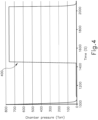
- FIG. 4 depicts an exemplary plot (400) showing the pressure within sterilization chamber (152) during performance of the sterilization cycle (block 208) as depicted in FIG. 3 and as described above.
- the pressure level drops significantly and suddenly when vacuum source (180) is activated to apply vacuum (block 310) to sterilization chamber (152).
- the pressure level then stays substantially constant while the sterilant is applied (block 314) and during the subsequent, predetermined duration (block 316).
- the pressure level then increases significantly and suddenly when venting valve (182) is activated (block 318) to vent sterilization chamber (152) to atmosphere.
- plot (400) shows how the pressure within sterilization chamber (152) simply toggles between a single relatively high level (i.e., atmospheric pressure) and a single relatively low level (i.e., a vacuum state).
- a single relatively high level i.e., atmospheric pressure
- a single relatively low level i.e., a vacuum state
- sterilization cabinet (150) may cycle the results (block 210) of the sterilization cycle (block 208). For instance, if the sterilization cycle (block 208) was canceled or unable to complete due to error or by a user action, sterilizing cabinet (150) may remain sealed and may also display a sterilization cycle cancellation message via touch screen display (160); as well as various details relating to the sterilization cycle, such as date, time, configuration, elapsed time, sterilization cycle operator, the stage at which the sterilization cycle failed, and other information that may be used to identify why the sterilization cycle.
- sterilization cabinet (150) may display a notification via touch screen display (160) indicating successful completion of the sterilization cycle (block 208).
- sterilization cabinet (150) may display information such as sterilization cycle identifier, sterilization cycle type, start time, duration, operator, and other information (666).
- sterilizing cabinet (150) may be configured to perform sterilization processes in accordance with at least some of the teachings of U.S. Pat. No. 6,939,519 ; U.S. Pat. No. 6,852,279 ; U.S. Pat. No. 6,852,277 ; U.S. Pat. No. 6,447,719 ; U.S. Pat. No. 6,365,102 ; U.S. Pat. No. 6,325,972 ; and/or U.S. Provisional Patent App. No. 62/316,722 .
- sterilizing cabinet (150) may have difficulty effectively sterilizing medical devices such as flexible endoscopes with relatively long, narrow lumens.
- some conventional sterilizing cabinets may be capable of sterilizing lumens that are shorter than or equal to approximately 875 mm, with a lumen diameter of approximately 1 mm or larger. It may therefore be desirable to provide a modified sterilization cycle (block 208) that further promotes effective sterilization of a medical device having one or more relatively long, narrow lumens.
- a modified sterilization cycle is described in greater detail below.
- a medical device having one or more relatively long, narrow lumens may comprise a gastrointestinal endoscope that is between approximately 1 m long and approximately 3 m long, with a lumen having a diameter between approximately 0.5 mm and approximately 2.0 mm. It should nevertheless be understood that the process described below may also be performed on endoscopes having a length of at least approximately 500 mm or at least approximately 800 mm, with a lumen having a diameter less than approximately 6.0 mm.
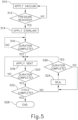
- FIG. 5 depicts an exemplary alternative set of sub-steps that may be performed to provide the sterilization cycle (block 208) of sterilizing cabinet (150).
- the cycle may begin with a vacuum being applied (block 510) within sterilization chamber (152).
- processor (162) may activate vacuum source (180) in accordance with a control algorithm.
- Processor (162) will then determine (block 512) whether a sufficient pressure level has been reached within sterilization chamber (152).
- processor (162) may monitor data from one or more pressure sensors within sterilization chamber (152) as part of the determination step (block 512).
- processor (162) may simply activate vacuum source (180) for a predetermined time period and assume that the appropriate pressure has been reached in sterilization (152) based upon the duration for which vacuum source (180) is activated.
- processor (162) may determine (block 512) whether a sufficient pressure level has been reached within sterilization chamber (152) will be apparent to those of ordinary skill in the art in view of the teachings herein. Until the appropriate pressure level has been reached within sterilization chamber (152), vacuum source (180) will remain activated.
- sterilization chamber (152) reaches an appropriate pressure level (e.g., between approximately 27 Pa (0.2 torr) and approximately 1333 (10 torr))
- processor (162) then activates sterilization module (156) to apply a sterilant (block 514) in sterilization chamber (152).
- the sterilant may comprise a vapor of oxidizing agent such as hydrogen peroxide, peroxy acids (e.g. peracetic acid, performic acid, etc.), ozone, or a mixture thereof.
- the sterilant may comprise chlorine dioxide or nitrogen dioxide.
- suitable forms that the sterilant may take are described herein; while other forms will be apparent to those of ordinary skill in the art in view of the teachings herein.
- the sterilant may be applied (block 514) in different ways based on the user's selection of cycle (block 200) as described above.
- processor (162) monitors the time (block 516) to determine whether a sufficient, predetermined duration has passed.
- this predetermined duration may be anywhere from a few seconds to several minutes.
- sterilization chamber (152) remains in a sealed state at the above-noted predetermined pressure level, with the applied sterilant acting upon the medical device(s) contained within sterilization chamber (152). This stage of the process may be referred to as the "transfer phase.”
- processor (162) activates (block 518) venting valve (182) to vent sterilization chamber (152) to atmosphere.
- processor (162) monitors the time (block 520) to determine whether a sufficient, predetermined venting (block 518) duration has passed. Until the predetermined venting (block 518) duration has passed, sterilization chamber (152) remains in a vented state.
- processor (162) determines (block 522) whether the sterilization cycle is complete. Examples of how this determination (block 522) may be made will be described in greater detail below. It should be understood that, in the present example, the predetermined venting (block 518) duration may be very brief. By way of example only, the predetermined venting (block 518) duration may be approximately one second, two seconds, three seconds, four seconds, five seconds, or any other suitable duration.
- processor (162) determines (block 522) that the sterilization cycle is complete, then the sterilization cycle is in fact complete (block 528). However, if processor (162) determines (block 522) that the sterilization cycle is not yet complete, then processor (162) closes venting valve (182) to seal (block 524) sterilization chamber (152) at a pressure level that is still less than atmospheric pressure. As noted above, the venting (block 518) duration is very short in this example, such that the act of sealing (block 524) may occur very quickly after venting (block 518) is initiated, assuming that the determinations (block 520, 522) confirm that sealing (block 524) is in order.
- Sterilization chamber (152) will remain sealed (block 524) for a certain period of time.
- processor (162) monitors the time (block 526) to determine whether a sufficient, predetermined sealing (block 524) duration has passed. Until the predetermined sealing (block 524) duration has passed, sterilization chamber (152) remains in a sealed state. After the predetermined sealing (block 524) duration has passed, processor (162) activates (block 518) venting valve (182) again to vent sterilization chamber (152) to atmosphere.
- the predetermined sealing duration may be between approximately 5 seconds and 5 minutes, or more particularly between approximately 10 seconds and approximately 2 minutes, or more particularly between approximately 20 seconds and approximately 2 minutes.
- each step of venting (block 518) is very brief in this example, such that the pressure of sterilization chamber (152) is held at levels below atmospheric pressure during the acts of sealing (block 524) (e.g., for a duration between approximately a few seconds or a few minutes).
- each step of venting results in a respective increase in the pressure within sterilization chamber (152) by approximately 1333 Pa (10 torr) to approximately 13332 Pa (100 torr), or more particularly by approximately 1333 Pa (10 torr) to approximately 4000 (30 torr).
- Other suitable step-wise pressure increase values will be apparent to those of ordinary skill in the art in view of the teachings herein.
- venting valve (182) remains open to allow sterilization chamber (152) to remain at atmospheric pressure.
- the final venting step (block 518) of the process may be referred to as the "diffusion phase.”
- the venting duration (block 520) and/or the sealing duration (block 526) may vary.
- the venting duration (block 520) and/or the sealing duration (block 526) may vary based on the cycle selection (block 200), which may be influenced by the particular kind of medical device that is being sterilized in sterilization chamber (152).
- the venting duration (block 520) and/or the sealing duration (block 526) may vary based on where the sterilization cycle is at in the process (i.e., which venting (block 518) iteration and/or which sealing (block 524) iteration).
- Various suitable ways in which the venting duration (block 520) and/or the sealing duration (block 526) may vary, and various bases upon which such durations may vary, will be apparent to those of ordinary skill in the art in view of the teachings herein.
- FIG. 6 depicts an exemplary plot (600) showing the pressure within sterilization chamber (152) during performance of the sterilization cycle (block 208) as depicted in FIG. 5 and as described above.
- the pressure level drops significantly and suddenly when vacuum source (180) is activated to apply vacuum (block 510) to sterilization chamber (152).
- the pressure level then stays substantially constant while the sterilant is applied (block 514) and during the subsequent, predetermined duration (block 516).
- the pressure level then increases slightly when venting valve (182) is activated (block 518) to vent sterilization chamber (152) to atmosphere; yet stays at a level below atmosphere when sterilization chamber (152) is sealed (block 524).
- the pressure level then again increases slightly when venting valve (182) is again activated (block 518) to vent sterilization chamber (152) to atmosphere; yet still stays at a level below atmosphere when sterilization chamber (152) is again sealed (block 524).
- plot (600) shows how the pressure within sterilization chamber (152) is increased in a step-wise fashion from a substantial vacuum state to atmospheric pressure. While FIG. 6 shows four iterations of brief venting and brief sealing, other processes may employ any other suitable number of iterations of brief venting and brief sealing.
- variations may provide anywhere between two iterations of brief venting and brief sealing and 100 iterations of brief venting and brief sealing, or more particularly between two iterations of brief venting and brief sealing and ten iterations of brief venting and brief sealing, or more particularly between three iterations of brief venting and brief sealing and seven iterations of brief venting and brief sealing.
- the process shown in FIGS. 5-6 may provide more effective sterilization of some medical devices as compared to the sterilization of the same medical devices using the process shown in FIGS. 3-4 .
- the step-wise venting of sterilization chamber (152) may provide agitation of the contents of sterilization chamber (152), which may assist in driving the sterilant into the lumen(s) and/or other internal spaces within the medical device.
- sterilization cabinet (150) may provide convective mass transfer of sterilant vapor molecules inside the lumen(s) and/or other internal spaces within the medical device; as compared to the simple diffusive mass transfer of vapor associated with the process shown in FIGS. 3-4 .
- sterilization cabinet (150) may sterilize a relatively long gastrointestinal endoscope (e.g., up to approximately 3 m in length and with a lumen having a diameter up to approximately 1 mm); as compared to sterilization cabinet (150) performing the process shown in FIGS. 3-4 , which would not be able to sterilize the long, narrow lumens of the same kind of gastrointestinal endoscope.
- the entire cycle shown in FIGS. 5-6 may be repeated one or more times after being completed once.
- a medical device may remain within sterilization chamber (152) and experience two or more iterations of the entire cycle shown in FIGS. 5-6 .
- the number of iterations may vary based on the cycle selection (block 200), which may be influenced by the particular kind of medical device that is being sterilized in sterilization chamber (152).
- an endoscope with a 3m long lumen may be placed in sterilization chamber (152). Vacuum may be applied (block 510) to achieve a pressure level of approximately 600 Pa (4.5 torr) in sterilization chamber (152). Sterilant (e.g., approximately 1 mL of a hydrogen peroxide vapor at a concentration of 59%) may then be applied (block 514) to provide a transfer phase lasting approximately 30 seconds. Sterilization chamber (152) may then be briefly vented (block 518) to achieve a pressure level of approximately 1827 Pa (13.7 torr), and then sterilization chamber (152) may be sealed (block 524). Sterilization chamber (152) may be held at the approximately 1827 Pa (13.7 torr) for approximately 150 seconds.
- Sterilant e.g., approximately 1 mL of a hydrogen peroxide vapor at a concentration of 59%) may then be applied (block 514) to provide a transfer phase lasting approximately 30 seconds.
- Sterilization chamber (152) may then be briefly vented (block 518) to achieve
- Sterilization chamber (152) may then be briefly vented (block 518) again to achieve a pressure level of approximately 4013 Pa (30.1 torr), and then sterilization chamber (152) may be sealed (block 524) again.
- Sterilization chamber (152) may be held at the approximately 4013 Pa (30.1 torr) for approximately 200 seconds.
- Sterilization chamber (152) may then be briefly vented (block 518) again to achieve a pressure level of approximately 6279 Pa (47.1 torr), and then sterilization chamber (152) may be sealed (block 524) again.
- Sterilization chamber (152) may be held at the approximately 6279 Pa (47.1 torr) for approximately 190 seconds.
- Sterilization chamber (152) may then be briefly vented (block 518) again to achieve a pressure level of approximately 101325 Pa (760 torr) (i.e., atmospheric pressure), thereby providing a diffusion phase.
- a pressure level of approximately 101325 Pa (760 torr) i.e., atmospheric pressure
- a pre-plasma may be applied in the sterilization cycle (block 208) to heat up the medical device contained in sterilization chamber (152).
- plasma may be applied between applying a vacuum (block 510) and applying sterilant (block 514).
- a post-plasma may be applied at the end of the sterilization cycle (block 208) to degrade any residual sterilant that may be adsorbed to the surface of the medical device contained in sterilization chamber (152). It should be understood that, before applying the post-plasma, a vacuum would first need to be applied to sterilization chamber (152).
- sterilization module (156) may comprise a combination of a vaporizer and a condenser.
- the vaporizer may include a chamber that receives a particular concentration of sterilant solution (e.g., a liquid hydrogen peroxide solution with a concentration of approximately 59% nominal, or between approximately 58% and approximately 59.6%); where the sterilant solution changes phase from liquid to vapor.
- the condenser may provide condensation of the sterilant solution vapor, and the concentration of the sterilant solution may be thereby increased (e.g., from approximately 59% nominal to somewhere between approximately 83% nominal and approximately 95% nominal), by removal of water vapor.
- any other suitable methods and components may be used to apply sterilant in the form of a vapor within sterilization chamber (152).
- the sterilant may also be applied (in liquid form) to the inside of lumen(s) and/or other internal spaces within the medical device and/or the outside of the medical device, before the medical device is placed in sterilization chamber (152).
- the sterilant may evaporate while vacuum is applied (block 510) and even after vacuum is applied (block 510); and provide more concentration of sterilant to the areas of the medical device with less penetration range, thereby further promoting effective sterilization.
- the process depicted in FIG. 5 may be carried out at temperatures where the walls of sterilization chamber (152) are between approximately 30°C and approximately 56°C, or more particularly between approximately 47°C and approximately 56°C, or even more particularly approximately 50°C; and where the temperature of the medical device in sterilization chamber (152) is between approximately 5-10°C and approximately 40-55°C.
Landscapes
- Health & Medical Sciences (AREA)
- Life Sciences & Earth Sciences (AREA)
- General Health & Medical Sciences (AREA)
- Public Health (AREA)
- Veterinary Medicine (AREA)
- Animal Behavior & Ethology (AREA)
- Epidemiology (AREA)
- General Chemical & Material Sciences (AREA)
- Chemical Kinetics & Catalysis (AREA)
- Chemical & Material Sciences (AREA)
- Engineering & Computer Science (AREA)
- Physics & Mathematics (AREA)
- Plasma & Fusion (AREA)
- Surgery (AREA)
- Pathology (AREA)
- Molecular Biology (AREA)
- Medical Informatics (AREA)
- Heart & Thoracic Surgery (AREA)
- Biomedical Technology (AREA)
- Radiology & Medical Imaging (AREA)
- Optics & Photonics (AREA)
- Nuclear Medicine, Radiotherapy & Molecular Imaging (AREA)
- Biophysics (AREA)
- Apparatus For Disinfection Or Sterilisation (AREA)
- Endoscopes (AREA)
Claims (12)
- Verfahren zur Sterilisation eines Artikels, wobei das Verfahren umfasst:(a) Aufnehmen des Artikels in einer Sterilisationskammer (152);(b) Anlegen eines Vakuums an die Sterilisationskammer (152), um den Druck in der Sterilisationskammer auf einen ersten Druck zu reduzieren, der unter dem atmosphärischen Druck liegt;(c) Einführen eines Sterilisationsmittels in die Sterilisationskammer (152);(d) Aufrechterhalten des ersten Drucks in der Sterilisationskammer (152) für einen ersten Zeitraum;(e) Belüften der Sterilisationskammer (152), um den Druck innerhalb der Sterilisationskammer (152) schrittweise um 1.333 Pa bis 13.332 Pa (10 Torr bis 100 Torr) auf einen zweiten Druck zu erhöhen, ohne den atmosphärischen Druck zu erreichen;(f) Aufrechterhalten des zweiten Drucks in der Sterilisationskammer (152) für einen zweiten Zeitraum;(g) mindestens einmaliges Wiederholen der Schritte (e) bis (f), um den Druck in der Sterilisationskammer (152) auf einen dritten Druck und nachfolgende Drücke zu erhöhen, und den dritten und nachfolgenden Drücke in der Sterilisationskammer (152) für einen dritten und nachfolgende Zeiträume aufrechterhalten;(h) Belüften der Sterilisationskammer (152), um den Druck in der Sterilisationskammer (152) auf den atmosphärischen Druck zu erhöhen.
- Verfahren nach Anspruch 1, wobei der Artikel eine medizinische Vorrichtung umfasst.
- Verfahren nach Anspruch 2, wobei die medizinische Vorrichtung ein Endoskop umfasst.
- Verfahren nach Anspruch 3, wobei das Endoskop ein Lumen definiert, optional wobei das Lumen eine Länge von mindestens 800 mm und einen Innendurchmesser von weniger als 6 mm aufweist.
- Verfahren nach einem der Ansprüche 1 bis 4, wobei der zweite Zeitraum länger als der erste Zeitraum ist.
- Verfahren nach einem der Ansprüche 1 bis 5,wobei der erste Zeitraum zwischen etwa 5 Sekunden und etwa 5 Minuten liegt, oderwobei der erste Zeitraum zwischen etwa 20 Sekunden und etwa 2 Minuten liegt.
- Verfahren nach einem der Ansprüche 1 bis 6,
wobei der zweite Druck zwischen etwa 10 Torr größer als der erste Druck und etwa 30 Torr größer als der erste Druck ist. - Verfahren nach einem der Ansprüche 1 bis 7, das weiter das Anlegen eines Plasmas an die Sterilisationskammer (152) umfasst.
- Verfahren nach Anspruch 8, wobei der Vorgang des Anlegens eines Plasmas das Anlegen eines Plasmas an die Sterilisationskammer (152) zwischen dem Vorgang des Anlegens des Vakuums an die Sterilisationskammer (152) und dem Vorgang des Einführens des Sterilisationsmittels in die Sterilisationskammer (152) umfasst, oder
wobei der Vorgang des Anlegens eines Plasmas Folgendes umfasst:(i) Vakuumieren der Sterilisationskammer (152) nach der Aufrechterhaltung des dritten Drucks in der Sterilisationskammer (152) und anschließend(ii) Anlegen eines Plasmas. - Verfahren nach einem der Ansprüche 1 bis 9, das weiter das Einführen von zusätzlichem Sterilisationsmittel in die Sterilisationskammer (152) während des Vorgangs des Belüftens der Sterilisationskammer (152) umfasst, um den Druck in der Sterilisationskammer (152) auf den zweiten Druck zu erhöhen.
- Verfahren nach einem der Ansprüche 1 bis 10, das weiter das Aufbringen von Sterilisationsmittel auf einen oder mehrere Innenräume innerhalb des Artikels, bevor der Artikel in einer Sterilisationskammer (152) aufgenommen wird.
- Verfahren nach einem der Ansprüche 1 bis 11, wobei das Sterilisationsmittel ausgewählt wird aus der Gruppe bestehend aus Wasserstoffperoxid, Peroxysäuren, Ozon oder einer Mischung davon.
Applications Claiming Priority (1)
| Application Number | Priority Date | Filing Date | Title |
|---|---|---|---|
| US15/198,670 US10314929B2 (en) | 2016-06-30 | 2016-06-30 | Apparatus and method for sterilizing endoscope |
Publications (3)
| Publication Number | Publication Date |
|---|---|
| EP3263138A1 EP3263138A1 (de) | 2018-01-03 |
| EP3263138C0 EP3263138C0 (de) | 2025-04-23 |
| EP3263138B1 true EP3263138B1 (de) | 2025-04-23 |
Family
ID=59258093
Family Applications (1)
| Application Number | Title | Priority Date | Filing Date |
|---|---|---|---|
| EP17178746.8A Active EP3263138B1 (de) | 2016-06-30 | 2017-06-29 | Vorrichtung und verfahren zur sterilisation eines endoskops |
Country Status (12)
| Country | Link |
|---|---|
| US (3) | US10314929B2 (de) |
| EP (1) | EP3263138B1 (de) |
| JP (3) | JP7037291B2 (de) |
| KR (1) | KR20180003474A (de) |
| CN (1) | CN107551296A (de) |
| AU (1) | AU2017204384A1 (de) |
| BR (1) | BR102017014044A2 (de) |
| CA (1) | CA2971976A1 (de) |
| IL (1) | IL253127A0 (de) |
| MX (1) | MX2017008719A (de) |
| RU (1) | RU2017122155A (de) |
| TW (1) | TW201808347A (de) |
Families Citing this family (15)
| Publication number | Priority date | Publication date | Assignee | Title |
|---|---|---|---|---|
| US10314929B2 (en) | 2016-06-30 | 2019-06-11 | Ethicon, Inc. | Apparatus and method for sterilizing endoscope |
| US11696967B2 (en) | 2016-06-30 | 2023-07-11 | Asp Global Manufacturing Gmbh | Apparatus and method for sterilizing endoscope |
| FR3058733A1 (fr) * | 2016-11-15 | 2018-05-18 | Jean Francois Biron | Methode de validation d'un procede de sterilisation comportant deux contaminations successives |
| US11000614B2 (en) * | 2018-06-28 | 2021-05-11 | Asp Global Manufacturing Gmbh | System and method for automating verification of medical instrument sterilization compatibility and sterilization cycle selection |
| US11437138B2 (en) * | 2018-10-15 | 2022-09-06 | Mobile Aspects, Inc. | System, method, and computer program product for tracking endoscopes in a forced-air drying cabinet |
| EP3714762B1 (de) * | 2019-03-29 | 2023-08-23 | Picosun Oy | Verfahren und vorrichtung zum reinigen von medizinischen instrumenten und zum erkennen von rückständen darauf |
| US12514945B2 (en) | 2019-10-23 | 2026-01-06 | Advanced Sterilization Products, Inc. | Adjusting sterilization cycles by imaging loads |
| CN114786735B (zh) * | 2020-03-27 | 2025-05-06 | 三浦工业株式会社 | 灭菌方法以及灭菌装置 |
| JP7654686B2 (ja) * | 2020-04-08 | 2025-04-01 | エイエスピー・グローバル・マニュファクチャリング・ゲーエムベーハー | 内視鏡を滅菌する方法 |
| US20230330287A1 (en) * | 2020-09-29 | 2023-10-19 | Asp Global Manufacturing Gmbh | Medical device sterilization system with plasma-based detection of residual alcohol |
| CN113209343A (zh) * | 2021-04-19 | 2021-08-06 | 杭州优尼克消毒设备有限公司 | 一种兼容混合气体的环氧乙烷灭菌器 |
| USD1021702S1 (en) * | 2021-10-20 | 2024-04-09 | GM Global Technology Operations LLC | Vehicle center grille |
| CN114306692A (zh) * | 2021-12-30 | 2022-04-12 | 老肯医疗科技股份有限公司 | 一种高效率灭菌的过氧化氢等离子灭菌器及灭菌方法 |
| AU2023269290B2 (en) * | 2022-05-13 | 2025-12-11 | Noxilizer, Inc. | Sterilization method |
| WO2025075765A1 (en) * | 2023-10-03 | 2025-04-10 | American Sterilizer Company | Vacuum assisted gas/vapor decontamination system having a reduced differential pressure between an interstitial space of a medical device and a decontamination chamber |
Family Cites Families (43)
| Publication number | Priority date | Publication date | Assignee | Title |
|---|---|---|---|---|
| US4908188A (en) * | 1985-02-05 | 1990-03-13 | The Scopas Technology Company, Inc. | Gas sterilant system |
| US4731222A (en) * | 1986-02-06 | 1988-03-15 | Innovative Medical Technologies | Automated liquid sterilization system |
| US5645796A (en) * | 1990-08-31 | 1997-07-08 | Abtox, Inc. | Process for plasma sterilizing with pulsed antimicrobial agent treatment |
| WO1993017726A1 (en) * | 1992-03-13 | 1993-09-16 | American Sterilizer Company | Sterilization apparatus and method for multicomponent sterilant |
| US5527508A (en) | 1992-11-12 | 1996-06-18 | American Sterilizer Company | Method of enhanced penetration of low vapor pressure chemical vapor sterilants during sterilization |
| US5656238A (en) * | 1994-10-11 | 1997-08-12 | Johnson & Johnson Medical, Inc. | Plasma-enhanced vacuum drying |
| US6325972B1 (en) | 1998-12-30 | 2001-12-04 | Ethicon, Inc. | Apparatus and process for concentrating a liquid sterilant and sterilizing articles therewith |
| US6030579A (en) * | 1996-04-04 | 2000-02-29 | Johnson & Johnson Medical, Inc. | Method of sterilization using pretreatment with hydrogen peroxide |
| JP3831505B2 (ja) * | 1997-12-26 | 2006-10-11 | 生化学工業株式会社 | 医療用滅菌包装における滅菌方法 |
| US6852279B2 (en) | 2002-06-28 | 2005-02-08 | Ethicon, Inc. | Sterilization with temperature-controlled diffusion path |
| US6365102B1 (en) | 1999-03-31 | 2002-04-02 | Ethicon, Inc. | Method of enhanced sterilization with improved material compatibility |
| US7128872B2 (en) | 1999-04-30 | 2006-10-31 | Tso3 Inc. | Method and apparatus for ozone sterilization |
| US6528016B1 (en) * | 2000-06-27 | 2003-03-04 | Ethicon, Inc. | Method for rapidly determining the acceptability of loads to be sterilized |
| US6447719B1 (en) | 2000-10-02 | 2002-09-10 | Johnson & Johnson | Power system for sterilization systems employing low frequency plasma |
| US6852277B2 (en) | 2000-10-02 | 2005-02-08 | Ethicon, Inc. | Sterilization system employing a switching module adapted to pulsate the low frequency power applied to a plasma |
| BRPI0400237A (pt) | 2004-01-16 | 2005-08-16 | Tadashi Shiosawa | Processo de esterelização a vácuo com aplicação de vapor de uma mistura de ácido peracético com peróxido de hidrogênio e plasma de gás residual de ar atmosférico excitado por descarga elétrica dc pulsada; dispositivos e métodos operacionais utilizados no processo de esterilização |
| WO2005094907A1 (ja) | 2004-03-31 | 2005-10-13 | Yuyama Mfg. Co., Ltd. | 滅菌方法及び装置 |
| US7300638B2 (en) * | 2004-05-18 | 2007-11-27 | American Sterilizer Company | Sterilization device for sterilization of lumen devices |
| JP2006138071A (ja) | 2004-11-10 | 2006-06-01 | Miura Co Ltd | 自動開閉扉を備えた装置 |
| CN101065155A (zh) * | 2004-11-26 | 2007-10-31 | 互曼迈迪泰克公司 | 过氧化氢蒸汽灭菌装置及使用该装置的灭菌方法 |
| AU2005307944B2 (en) | 2004-11-26 | 2010-04-15 | Human Meditek Co., Ltd. | Hydrogen peroxide vapor sterilizer and sterilizing methods using the same |
| US7651672B2 (en) * | 2005-12-29 | 2010-01-26 | Ethicon, Inc. | Cabinet type endoscope processor |
| WO2007080907A1 (ja) * | 2006-01-11 | 2007-07-19 | Elk Corporation | 滅菌方法およびプラズマ滅菌装置 |
| US8110156B2 (en) * | 2008-09-25 | 2012-02-07 | Ricciardi Jonathan J | Methods and apparatuses for the treatment of interior and exterior areas of objects |
| US8366995B2 (en) * | 2009-06-11 | 2013-02-05 | Sterilucent, Inc. | Apparatus and method for drying and then sterilizing objects in a load using a chemical sterilant |
| US8230616B2 (en) * | 2009-06-11 | 2012-07-31 | Sterilucent, Inc. | Apparatus and method for drying and sterilizing objects in a load |
| CA2808705C (en) | 2009-09-30 | 2017-11-14 | Jean-Martin Vallieres | Hydrogen peroxide sterilization method |
| GB2483741A (en) * | 2010-09-15 | 2012-03-21 | Medicart Int Ltd | Conditioning medical equipment |
| WO2012165921A1 (ko) * | 2011-06-03 | 2012-12-06 | 한국기초과학자원연구원 | 의료용 플라즈마 멸균장치 |
| US8882680B2 (en) * | 2011-12-02 | 2014-11-11 | Interscope, Inc. | Insertable endoscopic instrument for tissue removal |
| WO2014020448A2 (en) | 2012-08-02 | 2014-02-06 | Goa Teknoloji Danişmanlik Elektronik, Imalat Ticaret Ithalat Ihracat A. Ş. | Multi mode low temperature plasma sterilizer |
| US9522202B1 (en) * | 2013-05-07 | 2016-12-20 | Getinge Stericool Medikal Aletler San, Ve Tic. A.S. | Variable plasma generator for use with low temperature sterilizers |
| KR101524042B1 (ko) * | 2013-07-15 | 2015-06-01 | (주) 씨엠테크 | 멸균장치 및 이를 이용한 멸균방법 |
| US9302021B2 (en) | 2013-08-30 | 2016-04-05 | American Sterilizer Company | Method of performing sterilization cycle |
| EP3881869A1 (de) * | 2013-09-06 | 2021-09-22 | TSO3 Inc. | Sterilisationsverfahren und vorrichtung sowie adaptive regelung dafür |
| KR102334296B1 (ko) * | 2013-12-16 | 2021-12-01 | 쓰리엠 이노베이티브 프로퍼티즈 컴파니 | 습도를 제어하기 위한 시스템 및 방법 |
| JP2015223455A (ja) | 2014-05-30 | 2015-12-14 | キヤノンマーケティングジャパン株式会社 | 滅菌方法、滅菌装置 |
| CN104735893B (zh) * | 2015-03-31 | 2017-10-20 | 西安交通大学 | 一种低温等离子体用于细长管道灭菌的装置与方法 |
| CN105709249B (zh) * | 2016-04-25 | 2018-05-22 | 刘文君 | 一种臭氧灭菌装置及方法 |
| US10441672B2 (en) | 2016-04-26 | 2019-10-15 | Asp Global Manufacturing Gmbh | Apparatus and method for detecting moisture in a vacuum chamber |
| CN109862920A (zh) * | 2016-06-17 | 2019-06-07 | 斯特里弗医疗股份有限公司 | 灭菌、消毒、卫生处理、净化和治疗装置、系统以及方法 |
| US11696967B2 (en) | 2016-06-30 | 2023-07-11 | Asp Global Manufacturing Gmbh | Apparatus and method for sterilizing endoscope |
| US10314929B2 (en) | 2016-06-30 | 2019-06-11 | Ethicon, Inc. | Apparatus and method for sterilizing endoscope |
-
2016
- 2016-06-30 US US15/198,670 patent/US10314929B2/en active Active
-
2017
- 2017-06-22 IL IL253127A patent/IL253127A0/en unknown
- 2017-06-23 RU RU2017122155A patent/RU2017122155A/ru not_active Application Discontinuation
- 2017-06-27 CA CA2971976A patent/CA2971976A1/en not_active Abandoned
- 2017-06-28 TW TW106121520A patent/TW201808347A/zh unknown
- 2017-06-28 AU AU2017204384A patent/AU2017204384A1/en not_active Abandoned
- 2017-06-28 BR BR102017014044-0A patent/BR102017014044A2/pt not_active Application Discontinuation
- 2017-06-29 MX MX2017008719A patent/MX2017008719A/es unknown
- 2017-06-29 JP JP2017127176A patent/JP7037291B2/ja active Active
- 2017-06-29 EP EP17178746.8A patent/EP3263138B1/de active Active
- 2017-06-30 KR KR1020170083397A patent/KR20180003474A/ko not_active Withdrawn
- 2017-06-30 CN CN201710526246.6A patent/CN107551296A/zh active Pending
-
2018
- 2018-12-19 US US16/225,035 patent/US11648327B2/en active Active
-
2022
- 2022-03-04 JP JP2022033338A patent/JP7358537B2/ja active Active
-
2023
- 2023-05-11 US US18/196,133 patent/US20230364289A1/en active Pending
- 2023-09-26 JP JP2023162933A patent/JP7639090B2/ja active Active
Also Published As
| Publication number | Publication date |
|---|---|
| US20230364289A1 (en) | 2023-11-16 |
| KR20180003474A (ko) | 2018-01-09 |
| JP2023179564A (ja) | 2023-12-19 |
| JP7037291B2 (ja) | 2022-03-16 |
| EP3263138C0 (de) | 2025-04-23 |
| JP2022078206A (ja) | 2022-05-24 |
| JP7358537B2 (ja) | 2023-10-10 |
| JP2018008051A (ja) | 2018-01-18 |
| MX2017008719A (es) | 2018-09-10 |
| CN107551296A (zh) | 2018-01-09 |
| US20180000976A1 (en) | 2018-01-04 |
| US11648327B2 (en) | 2023-05-16 |
| EP3263138A1 (de) | 2018-01-03 |
| AU2017204384A1 (en) | 2018-01-18 |
| TW201808347A (zh) | 2018-03-16 |
| IL253127A0 (en) | 2017-09-28 |
| BR102017014044A2 (pt) | 2018-01-23 |
| JP7639090B2 (ja) | 2025-03-04 |
| US10314929B2 (en) | 2019-06-11 |
| RU2017122155A (ru) | 2018-12-24 |
| US20190224356A1 (en) | 2019-07-25 |
| CA2971976A1 (en) | 2017-12-30 |
Similar Documents
| Publication | Publication Date | Title |
|---|---|---|
| US20230364289A1 (en) | Apparatus And Method For Sterilizing Endoscope | |
| US20230398251A1 (en) | Apparatus And Method For Sterilizing Endoscope | |
| EP3326658A1 (de) | Sterilisationssystem mit unabhängigen vakuumkammern | |
| EP3119441B1 (de) | Sättigungsverstärktes dekontaminierungsverfahren mit niedrigkonzentriertem verdampftem wasserstoffperoxid | |
| CN107432943A (zh) | 用于检测真空室中水分的设备和方法 | |
| US11712491B2 (en) | Apparatus and method for detecting improper positioning of removable component of sterilizing system | |
| JP7654686B2 (ja) | 内視鏡を滅菌する方法 | |
| Rogers | Healthcare Sterilisation: Challenging Practices, Volume 2 | |
| Agalloco | Isolator decontamination |
Legal Events
| Date | Code | Title | Description |
|---|---|---|---|
| PUAI | Public reference made under article 153(3) epc to a published international application that has entered the european phase |
Free format text: ORIGINAL CODE: 0009012 |
|
| STAA | Information on the status of an ep patent application or granted ep patent |
Free format text: STATUS: THE APPLICATION HAS BEEN PUBLISHED |
|
| AK | Designated contracting states |
Kind code of ref document: A1 Designated state(s): AL AT BE BG CH CY CZ DE DK EE ES FI FR GB GR HR HU IE IS IT LI LT LU LV MC MK MT NL NO PL PT RO RS SE SI SK SM TR |
|
| AX | Request for extension of the european patent |
Extension state: BA ME |
|
| STAA | Information on the status of an ep patent application or granted ep patent |
Free format text: STATUS: REQUEST FOR EXAMINATION WAS MADE |
|
| 17P | Request for examination filed |
Effective date: 20180626 |
|
| RBV | Designated contracting states (corrected) |
Designated state(s): AL AT BE BG CH CY CZ DE DK EE ES FI FR GB GR HR HU IE IS IT LI LT LU LV MC MK MT NL NO PL PT RO RS SE SI SK SM TR |
|
| RAP1 | Party data changed (applicant data changed or rights of an application transferred) |
Owner name: ASP GLOBAL MANUFACTURING GMBH |
|
| STAA | Information on the status of an ep patent application or granted ep patent |
Free format text: STATUS: EXAMINATION IS IN PROGRESS |
|
| 17Q | First examination report despatched |
Effective date: 20210311 |
|
| P01 | Opt-out of the competence of the unified patent court (upc) registered |
Effective date: 20231109 |
|
| GRAP | Despatch of communication of intention to grant a patent |
Free format text: ORIGINAL CODE: EPIDOSNIGR1 |
|
| STAA | Information on the status of an ep patent application or granted ep patent |
Free format text: STATUS: GRANT OF PATENT IS INTENDED |
|
| INTG | Intention to grant announced |
Effective date: 20240610 |
|
| GRAS | Grant fee paid |
Free format text: ORIGINAL CODE: EPIDOSNIGR3 |
|
| GRAJ | Information related to disapproval of communication of intention to grant by the applicant or resumption of examination proceedings by the epo deleted |
Free format text: ORIGINAL CODE: EPIDOSDIGR1 |
|
| GRAL | Information related to payment of fee for publishing/printing deleted |
Free format text: ORIGINAL CODE: EPIDOSDIGR3 |
|
| STAA | Information on the status of an ep patent application or granted ep patent |
Free format text: STATUS: EXAMINATION IS IN PROGRESS |
|
| GRAP | Despatch of communication of intention to grant a patent |
Free format text: ORIGINAL CODE: EPIDOSNIGR1 |
|
| STAA | Information on the status of an ep patent application or granted ep patent |
Free format text: STATUS: GRANT OF PATENT IS INTENDED |
|
| INTC | Intention to grant announced (deleted) | ||
| INTG | Intention to grant announced |
Effective date: 20241115 |
|
| GRAA | (expected) grant |
Free format text: ORIGINAL CODE: 0009210 |
|
| STAA | Information on the status of an ep patent application or granted ep patent |
Free format text: STATUS: THE PATENT HAS BEEN GRANTED |
|
| AK | Designated contracting states |
Kind code of ref document: B1 Designated state(s): AL AT BE BG CH CY CZ DE DK EE ES FI FR GB GR HR HU IE IS IT LI LT LU LV MC MK MT NL NO PL PT RO RS SE SI SK SM TR |
|
| REG | Reference to a national code |
Ref country code: GB Ref legal event code: FG4D |
|
| REG | Reference to a national code |
Ref country code: CH Ref legal event code: EP |
|
| REG | Reference to a national code |
Ref country code: DE Ref legal event code: R096 Ref document number: 602017089028 Country of ref document: DE |
|
| REG | Reference to a national code |
Ref country code: IE Ref legal event code: FG4D |
|
| U01 | Request for unitary effect filed |
Effective date: 20250523 |
|
| U07 | Unitary effect registered |
Designated state(s): AT BE BG DE DK EE FI FR IT LT LU LV MT NL PT RO SE SI Effective date: 20250603 |
|
| P04 | Withdrawal of opt-out of the competence of the unified patent court (upc) registered |
Free format text: CASE NUMBER: APP_25708/2025 Effective date: 20250528 |
|
| PGFP | Annual fee paid to national office [announced via postgrant information from national office to epo] |
Ref country code: GB Payment date: 20250618 Year of fee payment: 9 |
|
| PG25 | Lapsed in a contracting state [announced via postgrant information from national office to epo] |
Ref country code: ES Free format text: LAPSE BECAUSE OF FAILURE TO SUBMIT A TRANSLATION OF THE DESCRIPTION OR TO PAY THE FEE WITHIN THE PRESCRIBED TIME-LIMIT Effective date: 20250423 |
|
| PG25 | Lapsed in a contracting state [announced via postgrant information from national office to epo] |
Ref country code: GR Free format text: LAPSE BECAUSE OF FAILURE TO SUBMIT A TRANSLATION OF THE DESCRIPTION OR TO PAY THE FEE WITHIN THE PRESCRIBED TIME-LIMIT Effective date: 20250724 Ref country code: NO Free format text: LAPSE BECAUSE OF FAILURE TO SUBMIT A TRANSLATION OF THE DESCRIPTION OR TO PAY THE FEE WITHIN THE PRESCRIBED TIME-LIMIT Effective date: 20250723 |
|
| PG25 | Lapsed in a contracting state [announced via postgrant information from national office to epo] |
Ref country code: PL Free format text: LAPSE BECAUSE OF FAILURE TO SUBMIT A TRANSLATION OF THE DESCRIPTION OR TO PAY THE FEE WITHIN THE PRESCRIBED TIME-LIMIT Effective date: 20250423 |
|
| PG25 | Lapsed in a contracting state [announced via postgrant information from national office to epo] |
Ref country code: HR Free format text: LAPSE BECAUSE OF FAILURE TO SUBMIT A TRANSLATION OF THE DESCRIPTION OR TO PAY THE FEE WITHIN THE PRESCRIBED TIME-LIMIT Effective date: 20250423 |
|
| PG25 | Lapsed in a contracting state [announced via postgrant information from national office to epo] |
Ref country code: RS Free format text: LAPSE BECAUSE OF FAILURE TO SUBMIT A TRANSLATION OF THE DESCRIPTION OR TO PAY THE FEE WITHIN THE PRESCRIBED TIME-LIMIT Effective date: 20250723 |
|
| PG25 | Lapsed in a contracting state [announced via postgrant information from national office to epo] |
Ref country code: IS Free format text: LAPSE BECAUSE OF FAILURE TO SUBMIT A TRANSLATION OF THE DESCRIPTION OR TO PAY THE FEE WITHIN THE PRESCRIBED TIME-LIMIT Effective date: 20250823 |
|
| U21 | Renewal fee for the european patent with unitary effect paid with additional fee |
Year of fee payment: 9 Effective date: 20251126 |
|
| PG25 | Lapsed in a contracting state [announced via postgrant information from national office to epo] |
Ref country code: SM Free format text: LAPSE BECAUSE OF FAILURE TO SUBMIT A TRANSLATION OF THE DESCRIPTION OR TO PAY THE FEE WITHIN THE PRESCRIBED TIME-LIMIT Effective date: 20250423 |
|
| PG25 | Lapsed in a contracting state [announced via postgrant information from national office to epo] |
Ref country code: CZ Free format text: LAPSE BECAUSE OF FAILURE TO SUBMIT A TRANSLATION OF THE DESCRIPTION OR TO PAY THE FEE WITHIN THE PRESCRIBED TIME-LIMIT Effective date: 20250423 |
|
| PG25 | Lapsed in a contracting state [announced via postgrant information from national office to epo] |
Ref country code: SK Free format text: LAPSE BECAUSE OF FAILURE TO SUBMIT A TRANSLATION OF THE DESCRIPTION OR TO PAY THE FEE WITHIN THE PRESCRIBED TIME-LIMIT Effective date: 20250423 |
|
| REG | Reference to a national code |
Ref country code: CH Ref legal event code: H13 Free format text: ST27 STATUS EVENT CODE: U-0-0-H10-H13 (AS PROVIDED BY THE NATIONAL OFFICE) Effective date: 20260127 |
|
| PG25 | Lapsed in a contracting state [announced via postgrant information from national office to epo] |
Ref country code: MC Free format text: LAPSE BECAUSE OF FAILURE TO SUBMIT A TRANSLATION OF THE DESCRIPTION OR TO PAY THE FEE WITHIN THE PRESCRIBED TIME-LIMIT Effective date: 20250423 |
|
| PLBE | No opposition filed within time limit |
Free format text: ORIGINAL CODE: 0009261 |
|
| STAA | Information on the status of an ep patent application or granted ep patent |
Free format text: STATUS: NO OPPOSITION FILED WITHIN TIME LIMIT |
|
| REG | Reference to a national code |
Ref country code: CH Ref legal event code: L10 Free format text: ST27 STATUS EVENT CODE: U-0-0-L10-L00 (AS PROVIDED BY THE NATIONAL OFFICE) Effective date: 20260304 |