EP3269128B1 - Zubehörvorrichtung mit übergängen zwischen einem autonomen modus und einem partnervorrichtungsrelaismodus zur zellularen kommunikation - Google Patents
Zubehörvorrichtung mit übergängen zwischen einem autonomen modus und einem partnervorrichtungsrelaismodus zur zellularen kommunikation Download PDFInfo
- Publication number
- EP3269128B1 EP3269128B1 EP16706488.0A EP16706488A EP3269128B1 EP 3269128 B1 EP3269128 B1 EP 3269128B1 EP 16706488 A EP16706488 A EP 16706488A EP 3269128 B1 EP3269128 B1 EP 3269128B1
- Authority
- EP
- European Patent Office
- Prior art keywords
- accessory device
- mode
- companion device
- companion
- base station
- Prior art date
- Legal status (The legal status is an assumption and is not a legal conclusion. Google has not performed a legal analysis and makes no representation as to the accuracy of the status listed.)
- Active
Links
Images


Classifications
-
- H—ELECTRICITY
- H04—ELECTRIC COMMUNICATION TECHNIQUE
- H04M—TELEPHONIC COMMUNICATION
- H04M1/00—Substation equipment, e.g. for use by subscribers
- H04M1/72—Mobile telephones; Cordless telephones, i.e. devices for establishing wireless links to base stations without route selection
- H04M1/724—User interfaces specially adapted for cordless or mobile telephones
- H04M1/72403—User interfaces specially adapted for cordless or mobile telephones with means for local support of applications that increase the functionality
- H04M1/72409—User interfaces specially adapted for cordless or mobile telephones with means for local support of applications that increase the functionality by interfacing with external accessories
- H04M1/72412—User interfaces specially adapted for cordless or mobile telephones with means for local support of applications that increase the functionality by interfacing with external accessories using two-way short-range wireless interfaces
-
- G—PHYSICS
- G06—COMPUTING OR CALCULATING; COUNTING
- G06F—ELECTRIC DIGITAL DATA PROCESSING
- G06F1/00—Details not covered by groups G06F3/00 - G06F13/00 and G06F21/00
- G06F1/16—Constructional details or arrangements
- G06F1/1613—Constructional details or arrangements for portable computers
- G06F1/163—Wearable computers, e.g. on a belt
-
- H—ELECTRICITY
- H04—ELECTRIC COMMUNICATION TECHNIQUE
- H04W—WIRELESS COMMUNICATION NETWORKS
- H04W4/00—Services specially adapted for wireless communication networks; Facilities therefor
- H04W4/80—Services using short range communication, e.g. near-field communication [NFC], radio-frequency identification [RFID] or low energy communication
-
- H—ELECTRICITY
- H04—ELECTRIC COMMUNICATION TECHNIQUE
- H04W—WIRELESS COMMUNICATION NETWORKS
- H04W48/00—Access restriction; Network selection; Access point selection
- H04W48/18—Selecting a network or a communication service
-
- H—ELECTRICITY
- H04—ELECTRIC COMMUNICATION TECHNIQUE
- H04W—WIRELESS COMMUNICATION NETWORKS
- H04W72/00—Local resource management
- H04W72/20—Control channels or signalling for resource management
- H04W72/29—Control channels or signalling for resource management between an access point and the access point controlling device
-
- H—ELECTRICITY
- H04—ELECTRIC COMMUNICATION TECHNIQUE
- H04W—WIRELESS COMMUNICATION NETWORKS
- H04W72/00—Local resource management
- H04W72/50—Allocation or scheduling criteria for wireless resources
- H04W72/51—Allocation or scheduling criteria for wireless resources based on terminal or device properties
-
- H—ELECTRICITY
- H04—ELECTRIC COMMUNICATION TECHNIQUE
- H04W—WIRELESS COMMUNICATION NETWORKS
- H04W72/00—Local resource management
- H04W72/50—Allocation or scheduling criteria for wireless resources
- H04W72/54—Allocation or scheduling criteria for wireless resources based on quality criteria
-
- H—ELECTRICITY
- H04—ELECTRIC COMMUNICATION TECHNIQUE
- H04W—WIRELESS COMMUNICATION NETWORKS
- H04W88/00—Devices specially adapted for wireless communication networks, e.g. terminals, base stations or access point devices
- H04W88/02—Terminal devices
- H04W88/04—Terminal devices adapted for relaying to or from another terminal or user
-
- H—ELECTRICITY
- H04—ELECTRIC COMMUNICATION TECHNIQUE
- H04W—WIRELESS COMMUNICATION NETWORKS
- H04W88/00—Devices specially adapted for wireless communication networks, e.g. terminals, base stations or access point devices
- H04W88/02—Terminal devices
- H04W88/06—Terminal devices adapted for operation in multiple networks or having at least two operational modes, e.g. multi-mode terminals
-
- H—ELECTRICITY
- H04—ELECTRIC COMMUNICATION TECHNIQUE
- H04B—TRANSMISSION
- H04B1/00—Details of transmission systems, not covered by a single one of groups H04B3/00 - H04B13/00; Details of transmission systems not characterised by the medium used for transmission
- H04B1/38—Transceivers, i.e. devices in which transmitter and receiver form a structural unit and in which at least one part is used for functions of transmitting and receiving
- H04B1/3827—Portable transceivers
- H04B1/385—Transceivers carried on the body, e.g. in helmets
-
- H—ELECTRICITY
- H04—ELECTRIC COMMUNICATION TECHNIQUE
- H04B—TRANSMISSION
- H04B1/00—Details of transmission systems, not covered by a single one of groups H04B3/00 - H04B13/00; Details of transmission systems not characterised by the medium used for transmission
- H04B1/38—Transceivers, i.e. devices in which transmitter and receiver form a structural unit and in which at least one part is used for functions of transmitting and receiving
- H04B1/3827—Portable transceivers
- H04B1/385—Transceivers carried on the body, e.g. in helmets
- H04B2001/3861—Transceivers carried on the body, e.g. in helmets carried in a hand or on fingers
-
- H—ELECTRICITY
- H04—ELECTRIC COMMUNICATION TECHNIQUE
- H04M—TELEPHONIC COMMUNICATION
- H04M1/00—Substation equipment, e.g. for use by subscribers
- H04M1/60—Substation equipment, e.g. for use by subscribers including speech amplifiers
- H04M1/6033—Substation equipment, e.g. for use by subscribers including speech amplifiers for providing handsfree use or a loudspeaker mode in telephone sets
- H04M1/6041—Portable telephones adapted for handsfree use
- H04M1/6058—Portable telephones adapted for handsfree use involving the use of a headset accessory device connected to the portable telephone
- H04M1/6066—Portable telephones adapted for handsfree use involving the use of a headset accessory device connected to the portable telephone including a wireless connection
-
- H—ELECTRICITY
- H04—ELECTRIC COMMUNICATION TECHNIQUE
- H04M—TELEPHONIC COMMUNICATION
- H04M2250/00—Details of telephonic subscriber devices
- H04M2250/02—Details of telephonic subscriber devices including a Bluetooth® interface
-
- H—ELECTRICITY
- H04—ELECTRIC COMMUNICATION TECHNIQUE
- H04M—TELEPHONIC COMMUNICATION
- H04M2250/00—Details of telephonic subscriber devices
- H04M2250/06—Details of telephonic subscriber devices including a wireless LAN interface
-
- H—ELECTRICITY
- H04—ELECTRIC COMMUNICATION TECHNIQUE
- H04W—WIRELESS COMMUNICATION NETWORKS
- H04W52/00—Power management, e.g. Transmission Power Control [TPC] or power classes
- H04W52/02—Power saving arrangements
- H04W52/0209—Power saving arrangements in terminal devices
- H04W52/0261—Power saving arrangements in terminal devices managing power supply demand, e.g. depending on battery level
-
- H—ELECTRICITY
- H04—ELECTRIC COMMUNICATION TECHNIQUE
- H04W—WIRELESS COMMUNICATION NETWORKS
- H04W52/00—Power management, e.g. Transmission Power Control [TPC] or power classes
- H04W52/02—Power saving arrangements
- H04W52/0209—Power saving arrangements in terminal devices
- H04W52/0261—Power saving arrangements in terminal devices managing power supply demand, e.g. depending on battery level
- H04W52/0274—Power saving arrangements in terminal devices managing power supply demand, e.g. depending on battery level by switching on or off the equipment or parts thereof
- H04W52/0277—Power saving arrangements in terminal devices managing power supply demand, e.g. depending on battery level by switching on or off the equipment or parts thereof according to available power supply, e.g. switching off when a low battery condition is detected
-
- Y—GENERAL TAGGING OF NEW TECHNOLOGICAL DEVELOPMENTS; GENERAL TAGGING OF CROSS-SECTIONAL TECHNOLOGIES SPANNING OVER SEVERAL SECTIONS OF THE IPC; TECHNICAL SUBJECTS COVERED BY FORMER USPC CROSS-REFERENCE ART COLLECTIONS [XRACs] AND DIGESTS
- Y02—TECHNOLOGIES OR APPLICATIONS FOR MITIGATION OR ADAPTATION AGAINST CLIMATE CHANGE
- Y02D—CLIMATE CHANGE MITIGATION TECHNOLOGIES IN INFORMATION AND COMMUNICATION TECHNOLOGIES [ICT], I.E. INFORMATION AND COMMUNICATION TECHNOLOGIES AIMING AT THE REDUCTION OF THEIR OWN ENERGY USE
- Y02D30/00—Reducing energy consumption in communication networks
- Y02D30/70—Reducing energy consumption in communication networks in wireless communication networks
Definitions
- the present application relates to wireless communication, including enabling an accessory device, such as a smart watch, to selectively either provide direct cellular communication or utilize a companion wireless device as a proxy for cellular communication in a system or method therein according to the independent claims.
- Wireless communication systems are rapidly growing in usage. Further, wireless communication technology has evolved from voice-only communications to also include the transmission of data, such as Internet and multimedia content.
- Mobile electronic devices may take the form of smart phones or tablets, which users often carry on their person or hold.
- Wearable devices such as smart watches, are a newer form of mobile electronic device. These and other devices may be referred to as accessory devices.
- the wireless communications capabilities of wearable devices have been generally limited; for example, some wearable devices have been capable of communicating only through wired interfaces or over short-range point-to-point technologies.
- wearable devices typically have smaller batteries than larger portable devices such as smart phones and tablets.
- WO 2015/120625 A1 discloses a method, corresponding apparatuses, and a non-transitory computer readable medium for operating a companion device and a companion device wherein the method comprises detecting, at a companion device, presence of a primary device that is paired with the companion device according to at least one short-range radio communication technique and connecting the companion device to a cellular network upon detecting that the primary device is not present.
- US 2008/113689 A1 discloses methods for direct communication with a telecommunication system and also communicating with a telecommunications system via an intermediary local device according to the preamble of the independent claims.
- WWPD wearable wireless portable device
- cellular/WAN communications circuitry for establishing a direct connection to a telecommunication network and a low-power short range radio for establishing an indirect connection to the telecommunication network via the communications circuitry of the more feature-rich mobile device.
- JP 2013-197756 A discloses continued communication performed in a communication device of a relay target, in the case of a decreased charge amount of the communication device that relays communication by tethering.
- EP 2 733 609 A2 discloses an apparatus includes a wearable computing device including one or more processors to analyze a task of an application; analyze one or more characteristics of the wearable computing device; determine to delegate the task based on the analysis of the task and the analysis of the characteristics; delegate the task to be processed by one or more computing devices separate from the wearable computing device; and receive from the computing devices results from processing the delegated task.
- wearable devices it would be desirable for wearable devices to provide communications capabilities similar to those of larger devices, such as smart phones. Thus, improvements in the field are desirable.
- Embodiments of the present invention are presented herein of, inter alia, an accessory device, such as a smart watch, in a system according to the claimed invention and associated methods for enabling the accessory device in a system according to the claimed invention to selectively use a companion device as a proxy for cellular communications, such as packet-based cellular communications.
- the accessory device is configured to switch between operating in relay mode, in which the accessory device is configured to use the cellular capabilities of the companion device to relay communications between the accessory device and a cellular base station, and autonomous mode, in which the accessory device may communicate cellular e.g. voice / data directly with the base station without relaying communications through the companion device.
- the accessory device is configured to use two or more factors including various measurements and/or conditions to determine whether or when to switch between relay mode and autonomous mode.
- the accessory device may switch between relay mode and autonomous mode during an active voice call or may otherwise change modes when no call is ongoing.
- the term "configured to” is used herein to connote structure by indicating that the units/circuits/components include structure (e.g., circuitry) that performs the task or tasks during operation. As such, the unit/circuit/component can be said to be configured to perform the task even when the specified unit/circuit/component is not currently operational (e.g., is not on).
- the units/circuits/components used with the "configured to" language include hardware- for example, circuits, memory storing program instructions executable to implement the operation, etc.
- Memory Medium Any of various types of non-transitory memory devices or storage devices.
- the term "memory medium” is intended to include an installation medium, e.g., a CD- ROM, floppy disks, or tape device; a computer system memory or random access memory such as DRAM, DDR RAM, SRAM, EDO RAM, Rambus RAM, etc.; a non-volatile memory such as a Flash, magnetic media, e.g., a hard drive, or optical storage; registers, or other similar types of memory elements, etc.
- the memory medium may include other types of non-transitory memory as well or combinations thereof.
- the memory medium may be located in a first computer system in which the programs are executed, or may be located in a second different computer system which connects to the first computer system over a network, such as the Internet. In the latter instance, the second computer system may provide program instructions to the first computer for execution.
- the term "memory medium" may include two or more memory mediums which may reside in different locations, e.g., in different computer systems that are connected over a network
- the memory medium may store program instructions (e.g., embodied as computer programs) that may be executed by one or more processors.
- Carrier Medium a memory medium as described above, as well as a physical transmission medium, such as a bus, network, and/or other physical transmission medium that conveys signals such as electrical, electromagnetic, or digital signals.
- a physical transmission medium such as a bus, network, and/or other physical transmission medium that conveys signals such as electrical, electromagnetic, or digital signals.
- Programmable Hardware Element - includes various hardware devices comprising multiple programmable function blocks connected via a programmable interconnect. Examples include FPGAs (Field Programmable Gate Arrays), PLDs (Programmable Logic Devices), FPOAs (Field Programmable Object Arrays), and CPLDs (Complex PLDs).
- the programmable function blocks may range from fine grained (combinatorial logic or look up tables) to coarse grained (arithmetic logic units or processor cores).
- a programmable hardware element may also be referred to as "reconfigurable logic”.
- Computer System any of various types of computing or processing systems, including a personal computer system (PC), mainframe computer system, workstation, network appliance, Internet appliance, personal digital assistant (PDA), television system, grid computing system, or other device or combinations of devices.
- PC personal computer system
- mainframe computer system workstation
- network appliance Internet appliance
- PDA personal digital assistant
- television system grid computing system, or other device or combinations of devices.
- computer system can be broadly defined to encompass any device (or combination of devices) having at least one processor that executes instructions from a memory medium.
- UE User Equipment
- UE Device any of various types of computer systems devices which are mobile or portable and which performs wireless communications.
- UE devices include mobile telephones or smart phones (e.g., iPhone TM , Android TM -based phones), portable gaming devices (e.g., Nintendo DS TM , PlayStation Portable TM , Gameboy Advance TM , iPhone TM ), laptops, wearable devices (e.g. smart watch, smart glasses), PDAs, portable Internet devices, music players, data storage devices, or other handheld devices, etc.
- the term “UE” or “UE device” can be broadly defined to encompass any electronic, computing, and/or telecommunications device (or combination of devices) which is easily transported by a user and capable of wireless communication.
- Base Station also called “eNB”
- eNB Base Station
- Base Station has the full breadth of its ordinary meaning, and at least includes a wireless communication station installed at a fixed location and used to communicate as part of a wireless cellular communication system.
- Processing Element - refers to various elements or combinations of elements. Processing elements include, for example, circuits such as an ASIC (Application Specific Integrated Circuit), portions or circuits of individual processor cores, entire processor cores, individual processors, programmable hardware devices such as a field programmable gate array (FPGA), and/or larger portions of systems that include multiple processors.
- ASIC Application Specific Integrated Circuit
- FPGA field programmable gate array
- Automatically - refers to an action or operation performed by a computer system (e.g., software executed by the computer system) or device (e.g., circuitry, programmable hardware elements, ASICs, etc.), without user input directly specifying or performing the action or operation.
- a computer system e.g., software executed by the computer system
- device e.g., circuitry, programmable hardware elements, ASICs, etc.
- An automatic procedure may be initiated by input provided by the user, but the subsequent actions that are performed "automatically” are not specified by the user, i.e., are not performed "manually", where the user specifies each action to perform.
- a user filling out an electronic form by selecting each field and providing input specifying information is filling out the form manually, even though the computer system must update the form in response to the user actions.
- the form may be automatically filled out by the computer system where the computer system (e.g., software executing an the computer system) analyzes the fields of the form and falls in the form without any user input specifying the answers to the fields.
- the user may invoke the automatic filling of the form, but is not involved in the actual filling of the form (e.g., the user is not manually specifying answers to fields but rather they are being automatically completed).
- the present specification provides various examples of operations being automatically performed in response to actions the user has taken.
- Figure 1 illustrates an example of a wireless cellular communication system according to the claimed invention. It is noted that Figure 1 represents one possibility among many, and that features of the present disclosure may be implemented in any of various systems, as desired.
- the exemplary wireless communication system includes a cellular base station 102A, which communicates over a transmission medium with one or more wireless devices 106A, 106B, etc., as well as accessory device 107.
- Wireless devices 106A, 106B, and 107 may be user devices, which may be referred to herein as "user equipment” (UE) or UE devices.
- UE user equipment
- the base station 102 may be a base transceiver station (BTS) or cell site, and may include hardware that enables wireless communication with the UE devices 106A, 106B, and 107.
- the base station 102 may also be equipped to communicate with a network 100 (e.g., a core network of a cellular service provider, a telecommunication network such as a public switched telephone network (PSTN), and/or the Internet, among various possibilities).
- PSTN public switched telephone network
- the base station 102 may facilitate communication between the UE devices 106 and 107 and/or between the UE devices 106 / 107 and the network 100.
- base station 102 can be configured to provide communications over one or more other wireless technologies, such as an access point supporting one or more WLAN protocols, such as 802.11 a, b, g, n, ac, ad, and/or ax, or LTE in an unlicensed band (LAA).
- WLAN protocols such as 802.11 a, b, g, n, ac, ad, and/or ax
- LAA unlicensed band
- the communication area (or coverage area) of the base station 102 may be referred to as a "cell.”
- the base station 102 and the UEs 106 / 107 may be configured to communicate over the transmission medium using any of various radio access technologies (RATs) or wireless communication technologies, such as GSM, UMTS (WCDMA, TDS-CDMA), LTE, LTE-Advanced (LTE-A), HSPA, 3GPP2 CDMA2000 (e.g., 1xRTT, lxEV-DO, HRPD, eHRPD), Wi-Fi, WiMAX etc.
- RATs radio access technologies
- LTE Long Term Evolution
- LTE-A LTE-Advanced
- HSPA High Speed Packet Access 2000
- 3GPP2 CDMA2000 e.g., 1xRTT, lxEV-DO, HRPD, eHRPD
- Wi-Fi WiMAX
- One example of LTE or LTE-A communications may be VoLTE (Voice over LTE).
- Base station 102 and other similar base stations (not shown) operating according to one or more cellular communication technologies may thus be provided as a network of cells, which may provide continuous or nearly continuous overlapping service to UE devices 106A-N and 107 and similar devices over a wide geographic area via one or more cellular communication technologies.
- a UE device 106 / 107 may be capable of communicating using any of a plurality of wireless communication technologies.
- a UE device 106 / 107 might be configured to communicate using one or more of GSM, UMTS, CDMA2000, LTE, LTE-A, WLAN (Wi-Fi), Bluetooth, WiMAX, one or more global navigational satellite systems (GNSS, e.g., GPS or GLONASS), one and/or more mobile television broadcasting standards (e.g., ATSC-M/H), etc.
- GNSS global navigational satellite systems
- a UE device 106 / 107 may be configured to communicate using only a single wireless communication technology.
- the UEs 106A and 106B are typically handheld devices such as smart phones or tablets, but may be any of various types of device with communication capability, such as cellular communications capability.
- the UE 106B may be configured to communicate with the UE device 107, which may be referred to as an accessory device 107 according to the claimed invention.
- the accessory device 107 may be any of various types of devices, typically a wearable device that has a smaller form factor, and may have limited battery, output power and/or communications abilities relative to UEs 106.
- the UE 106B may be a smart phone carried by a user, and the accessory device 107 may be a smart watch worn by that same user, or possibly a different user.
- the UE 106B may be a smart phone carried by a first user, and the accessory device 107 may be a smart watch worn by a second, different user.
- the UE 106B and the accessory device 107 may communicate using any of various short-range communication protocols, such as Bluetooth, Wi-Fi, etc.
- the accessory device 107 includes communications capability, e.g., cellular communication capability, and hence is able to directly communicate with cellular base station 102. However, since the accessory device 107 is possibly limited in one or more of its communication capabilities, output power, and/or battery, the accessory device 107 may in some instances selectively utilize the UE 106B as a proxy for communication purposes with the base station 102 and hence to the network 100. In other words, according to the claimed invention, the accessory device 107 is configured to selectively use the cellular communication capabilities of the UE 106B to conduct its cellular communications.
- communications capability e.g., cellular communication capability
- the limitation on communication abilities of the accessory device 107 can be permanent, e.g., due to limitations in output power or the radio access technologies (RATs) supported, or temporary, e.g., due to conditions such as current battery status, inability to access a network, or poor reception.
- RATs radio access technologies
- FIG. 2 illustrates an example accessory device 107 in communication with base station 102.
- the accessory device 107 may be a wearable device such as a smart watch.
- the accessory device 107 comprises cellular communication capability and is capable of directly communicating with the base station 102 as shown.
- the accessory device may be said to be in "autonomous mode.”
- the accessory device 107 is configured for communicating with another device (e.g., UE 106), referred to as a proxy device or intermediate device, using a short-range communications protocol, and using then the cellular functionality of this proxy device for communicating cellular voice / data with the base station 102.
- the accessory device 107 may provide voice / data packets intended for the base station 102 over the short-range link to the UE 106, and the UE 106 may use its cellular functionality to transmit (or relay) this voice / data to the base station on behalf of the accessory device 107.
- the voice / data packets transmitted by the base station and intended for the accessory device 107 may be received by the cellular functionality of the UE 106 and then may be relayed over the short-range link to the accessory device.
- the UE 106 may be a mobile phone, a tablet, or any other type of hand-held device, a media player, a computer, a laptop or virtually any type of wireless device.
- the accessory device 107 is configured to indirectly communicate with the base station using the cellular functionality of an intermediate or proxy device, the accessory device may be said to be in "relay mode.”
- the accessory device 107 selectively using either its own cellular functionality (autonomous mode) to communicate with a base station, or using the cellular functionality of the UE 106 (relay mode) for communications, e.g., for LTE or VoLTE.
- embodiments described herein may also be used with other radio access technologies (RATs), such as to enable the accessory device 107 to selectively using either its own Wi-Fi functionality (autonomous mode) to communicate with a Wi-Fi access point, or use the Wi-Fi functionality of the UE 106 (relay mode) for Wi-Fi communications.
- RATs radio access technologies
- the accessory device 107 includes one or more processors that are configured to execute program instructions stored in memory.
- the accessory device 107 may perform any of the method embodiments described herein by executing such stored instructions.
- the accessory device 107 may include a processing element, such as a programmable hardware element such as an FPGA (field-programmable gate array), integrated circuit (IC), or other circuitry, that is configured to perform any of the method embodiments described herein, or any portion of any of the method embodiments described herein.
- a processing element such as a programmable hardware element such as an FPGA (field-programmable gate array), integrated circuit (IC), or other circuitry, that is configured to perform any of the method embodiments described herein, or any portion of any of the method embodiments described herein.
- the accessory device 107 includes at least one antenna for communicating using two or more wireless communication protocols or radio access technologies.
- the UE device 106 might be configured to communicate using a single shared radio.
- the shared radio may couple to a single antenna, or may couple to multiple antennas (e.g., for MIMO) for performing wireless communications.
- the UE device 106 includes two radios.
- the UE 106 might include a shared radio for communicating using either of LTE (or LTE-Advanced) or Bluetooth.
- the UE 106 includes two separate radios for communicating using each of LTE-Advanced and Bluetooth. Other configurations are also possible.
- the accessory device 107 may be any of various types of devices that, in some embodiments, has a smaller form factor relative to a conventional smart phone, and may have one or more of limited communication capabilities, limited output power, or limited battery life relative to a conventional smart phone. As noted above, in some embodiments, the accessory device 107 is a smart watch or other type of wearable device. As another example, the accessory device 107 may be a tablet device, such as an iPad, with WiFi capabilities (and possibly limited or no cellular communication capabilities) that is not currently near a WiFi hotspot and hence is not currently able to communicate over WiFi with the Internet.
- WiFi capabilities and possibly limited or no cellular communication capabilities
- the term "accessory device” refers to any of various types of devices that in some instances have limited or reduced communication capabilities and hence may selectively and opportunistically utilize the UE 106 as a proxy for communication purposes for one or more applications and/or RATs.
- the UE 106 When the UE 106 is capable of being used by the accessory device 107 as a proxy, the UE 106 may be referred to as a companion device to the accessory device 107.
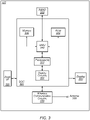
- FIG. 3 illustrates one possible block diagram of an accessory device 107 according to the claimed invention.
- the UE 107 may include a system an chip (SOC) 300, which may include portions for various purposes.
- the SOC 300 may include processor(s) 302 which may execute program instructions for the UE 106, and display circuitry 304 which may perform graphics processing and provide display signals to the display 360.
- the processor(s) 302 may also be coupled to memory management unit (MMU) 340, which may be configured to receive addresses from the processor(s) 302 and translate those addresses to locations in memory (e.g., memory 306, read-only memory (ROM) 350, Flash memory 310).
- the MMU 340 may be configured to perform memory protection and page table translation or setup.
- the MMU 340 may be included as a portion of the processor(s) 302.
- the accessory device 107 may also include other circuits or devices, such as the display circuitry 304, radio 330, connector I/F 320, and/or display 340.
- ROM 350 may include a bootloader, which may be executed by the processor(s) 302 during bootup or initialization.
- the SOC 300 may be coupled to various other circuits of the accessory device 107.
- the accessory device 107 may include various types of memory, a connector interface 320 (e.g., for coupling to a computer system), the display 360, and wireless communication circuitry (e.g., for communication using LTE, CDMA2000, Bluetooth, WiFi, NFC, GPS, etc.).
- the accessory device 107 includes at least one antenna, for performing wireless communication with base stations and/or other devices.
- the accessory device 107 may use antenna 335 to perform the wireless communication.
- the UE may in some embodiments be configured to communicate wirelessly using a plurality of wireless communication standards or radio access technologies (RATs).
- RATs radio access technologies
- the accessory device 107 may include hardware and software components for implementing methods according to embodiments of this disclosure.
- the processor 302 of the accessory device 107 may be configured to implement part or all of the methods described herein, e.g., by executing program instructions stored on a memory medium (e.g., a non-transitory computer-readable memory medium).
- processor 302 may be configured as a programmable hardware element, such as an FPGA (Field Programmable Gate Array), or as an ASIC (Application Specific Integrated Circuit).
- UEs 106A and 106B shown in Figure 1 may have a similar architecture to that described above.
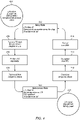
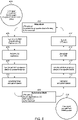
- FIGS 4 and 5 are flow diagrams illustrating example methods by which the accessory device 107 switches between operating in autonomous mode and operating in relay mode for wireless communications (e.g., LTE or VoLTE communications) according to the claimed invention.
- the accessory device 107 uses the companion device, UE 106, which may be a smart phone, to relay communications between the accessory device 107 and a base station 102.
- the companion device 106 i.e., the relay device or the proxy device
- the accessory device 107 communicates directly with the base station 102 using a wireless link (cellular link) between the accessory device and the base station.
- the accessory device 107 communicates independently (i.e., autonomously) with the cellular base station, much like a cell phone, without using the companion device to communicate to the base station.
- the accessory device 107 may selectively operate in, or switch between, autonomous mode or relay mode during an active voice call or when no voice call is ongoing.
- Figure 4 illustrates switching between the two modes of communication when no active voice call (or no active data communication) is occurring.
- Figure 5 illustrates switching between the two modes of communication during an active voice call.
- the accessory device 107 is currently operating in relay mode, in which the accessory device 107 may use the companion device to proxy or relay wireless communications, e.g., packet-based communications such as LTE communications, with the base station.
- the accessory device 107 may use the companion device for other types of communication as well, such as SMS, etc.
- the accessory device may be connected to the companion device wirelessly using Bluetooth Low Energy (BTLE) or Apple Wireless Direct Link (AWDL) technologies.
- BTLE Bluetooth Low Energy
- AWDL Apple Wireless Direct Link
- the accessory device 107 may not be currently operating a cellular communications protocol stack, e.g., an LTE stack, since it is not currently using its cellular communication circuitry to directly communicate with the base station.
- the LTE stack may be considered to be inactive or "off'.
- the accessory device may not be engaged in an active voice call.
- methods or scenarios wherein the accessory device may operate an ongoing voice call are described below in relation to Figure 5 .
- Block 404 represents example conditions that may be used to determine if the accessory device 107 should transition from relay mode 402 to autonomous mode 422.
- these items of information may comprise data regarding one or more of the signal strength of the link between the accessory device 107 and the companion device 106, the power or battery status of the companion device 106 and/or the accessory device 107, the link between the companion device 106 and the base station 102, or whether the companion device 106 presently supports voice or SMS communications.
- information regarding the signal strength of the link between the accessory device 107 and the companion device 106 may influence or determine whether the accessory device 107 desires to switch to autonomous mode. For example, if the signal strength of the link between the accessory device and the companion device is low (or getting lower) as determined by various measurements, or if the link has failed altogether (i.e., the accessory device can no longer communicate with the companion device), then the accessory device may determine to switch to autonomous mode. In some scenarios, the companion device 106 may not be in dose proximity to the accessory device 107 or the link between the two devices may be obstructed, or the signal strength or quality of the link may otherwise be considered low or insufficient.
- the power status of the companion device 106 also influences the decision to switch from relay mode to autonomous mode according to the claimed invention. For example, if the companion device 106 is operating in a low battery state, e.g., if the battery of the companion device 106 drops below a threshold, then it may signal the accessory device 107 regarding its battery status, and the accessory device may respond by switching to autonomous mode. This may avoid overly burdening the companion device 106 when it is operating with low battery, and may also avoid interrupting ongoing communications should the companion device 106 cease to relay communications due to power constraints.
- the accessory device 107 may be caused to transition from relay mode to autonomous mode.
- the companion device 106 may provide signaling to the accessory device 107 indicating that the companion device 106 is about to deactivate cellular capabilities, and in response the accessory device 107 may transition from relay mode to autonomous mode.
- Other conditions or criteria in addition to or instead of those described above, may also be used to determine when or whether the accessory device 107 transitions from relay mode to autonomous mode.
- the accessory device may perform steps 406, 408 and 410.
- the accessory device 107 may enable its LTE stack for execution, acquire service with a base station, and register on the LTE network.
- the accessory device 107 may use current cell coverage information (also called base station information) previously received from the companion device 106, as discussed further below with regard to Figure 6 . This cell coverage information may allow the accessory device 107 to more efficiently acquire the best possible cell.
- the accessory device 107 may perform IMS (IP Multimedia Subsystem) registration. This may involve the accessory device 107 registering with an IMS server so that it is able to receive multimedia data, such as videoconferencing calls (e.g., Apple Facetime), or similar data services.
- IMS IP Multimedia Subsystem
- the accessory device 107 may disconnect from the companion device 106.
- the accessory device 107 may discontinue communicating with the companion device 106 with its short-range communication circuitry, e.g., Bluetooth circuitry.
- the accessory device 107 After the accessory device 107 performs 406, 408 and 410, the accessory device has transitioned to autonomous mode 422, wherein its LTE stack is on or executing, the device is registered on LTE and registered for IMS. Also, there still may be no active voice call.
- the accessory device 107 may transition to operating in relay mode 402.
- the accessory device 107 is configured to use two or more of various items of information to determine whether to transition from autonomous mode 422 to relay mode 402, i.e., to cease direct communication with the base station and begin using the companion device 106 as a proxy or intermediary to communicate to the base station 102.
- Block 418 presents example items of information that may be used to determine if the accessory device 107 should transition from autonomous mode 422 to relay mode 402.
- the items of information may comprise data regarding one or more of the signal strength of the link between the accessory device and the companion device, the Power or battery status of the companion device (according to the claimed invention) and/or the accessory device, the link between the companion device and the base station, or whether the companion device presently supports voice or SMS communications (according to the claimed invention).
- the signal strength or quality of the link between the companion device 106 and the accessory device 107 may determine or influence whether the accessory device switches to relay mode. For example, if one or more measurements or conditions regarding the link between the two devices indicate the link to be of sufficient strength or quality, e.g., through comparison to one or more threshold values, then the accessory device 107 may operate to switch to relay mode 402 in order to leverage the link with the companion device 106.
- information regarding the current capabilities of the companion device 106 for performing certain cellular communications is used to determine whether the accessory device 107 should switch to operating in relay mode, i.e., to using the companion device to relay communications with the base station 102. For example, if the companion device 106 does not currently support cellular communications such as voice and SMS communications, e.g., because it is not registered with the base station or because its cellular functionality is otherwise off or disabled, then the accessory device may determine not to switch to relay mode.
- the companion device 106 signals the accessory device 107 regarding its communications capabilities and/or registration status. The accessory device 107 may determine to switch into relay mode if the companion device 106 presently supports a certain level of cellular connectivity, e.g., if the companion device is registered with the base station to perform cellular communications such as IMS communications.
- the accessory device 107 may use information regarding the battery status of the companion device 106 in determining whether to switch to relay mode. In some embodiments, if the companion device 106 is determined to have low battery according to various factors, then the accessory device may not use the companion device for relaying communications. Conversely, the accessory device may switch to relay mode if it determines that the companion device has adequate battery power to serve as a proxy and to relay communications between the accessory device and the base station.
- any combination of the abovementioned factors, as well as other conditions or factors, may be used to determine whether the accessory device 107 should transition from autonomous mode 422 to relay mode 402. For example, information regarding the battery status of the accessory device may also be used. In some scenarios, the accessory device may desire to transition into relay mode if its own battery level is low, as operating in relay mode may reduce strain an device resources.
- the accessory device 107 may perform steps 412, 414, and 416.
- the accessory device 107 may establish a connection to the companion device 106.
- the accessory device 107 may establish a wireless link to the companion device 106 using Bluetooth Low Energy (BTLE) or Apple Wireless Direct Link (AWDL) technologies.
- BTLE Bluetooth Low Energy
- AWDL Apple Wireless Direct Link
- the accessory device 107 may operate to cancel or disable registration with the base station 102 for IMS (IP Multimedia Subsystem) communications.
- the accessory device may deactivate its communications protocol stack, e.g., its LTE stack. Hence, in transitioning to relay mode, the accessory device 107 may selectively disable some of its own cellular communications functions because in relay mode the accessory device may use the companion device 106 to perform cellular communications.
- IMS IP Multimedia Subsystem
- the accessory device 107 may have transitioned to relay mode 402 and may be connected to the companion device 106, which may serve as a proxy for performing cellular communications with the base station 102.
- the accessory device may remain in relay mode for a period of time or otherwise may transition from relay mode to autonomous mode according to one or more conditions.
- the accessory device may still not be engaged in a voice call; methods or scenarios wherein the accessory device may operate an ongoing voice call are described below in relation to Figure 5 .
- Figure 5 is a flow diagram illustrating an example method by which the accessory device 107 may switch between operating in autonomous mode and operating in relay mode during an ongoing voice call.
- the accessory device 107 may operate in relay mode, wherein it may be connected to the companion device 106 and its LTE stack may be disabled as described above with regard to Figure 4 .
- the accessory device may be engaged in an active voice call.
- the companion device 106 may be used as an intermediary for voice communications, such as Voice over LTE (VoLTE) communications, exchanged between the accessory device 107 and the base station 102.
- VoIP Voice over LTE
- the accessory device 107 may perform 406, 408, 409, and 410.
- the accessory device may enable its LTE stack for execution, acquire service with a base station, and register on the LTE network. In acquiring service with a base station, the accessory device 107 may use current base station information previously received from the companion device 106, as discussed further below with regard to Figure 6 .
- the accessory device may perform IMS (IP Multimedia Subsystem) registration. Hence, the accessory device 107 may operate to enable direct communications with the base station 102.
- IMS IP Multimedia Subsystem
- the ongoing call may be transferred from the companion device 106 to the accessory device 107, which may now be registered with the base station and capable of performing direct cellular communications without using the companion device.
- the companion device may cease to relay communications between the accessory device and the base station 102, and the accessory device may begin to communicate directly with the base station in order to maintain the voice call.
- the accessory device 107 After the accessory device 107 disconnects from the companion device 106 at 410 (as described above with regard to Figure 5 ), the accessory device has transitioned to autonomous mode 422.
- the accessory device 107 may exchange frequent and/or periodic communications, such as VoLTE communications, with the base station 102 in order to maintain the voice call.
- the LTE stack on the accessory device may execute to handle voice communications with the base station.
- the accessory device may establish (or reestablish) a connection with the companion device at 412.
- the accessory device may operate to transfer the voice call to the companion device.
- the accessory device may cease to communicate directly with the base station and may begin to use the companion device as a proxy to sustain the voice call.
- the accessory device may disable certain communications processes, which may no longer be required to handle the voice call.
- the accessory device 107 After the accessory device 107 has transferred the call to the companion device 106, disabled its LTE stack, and cancelled its IMS registration, the accessory device may operate in relay mode 402
- the companion device may actively exchange communications, e.g., for the ongoing voice call, with the base station 102.
- Figure 6 is a flowchart diagram illustrating an example method by which the accessory device 107 may receive information from the companion device 106 usable by the accessory device to more efficiently connect to the base station 102.
- one or more conditions may exist (or arise) that may potentially cause the accessory device to switch from operating in relay mode to operating in autonomous mode, i.e., to cease using the companion device as a proxy for cellular communications.
- These one or more conditions may comprise various conditions as described above in regard to 404. For example, if the companion device battery level is below a certain threshold value, then it may be desirable to initiate a transition between operating in relay mode to operating in autonomous mode. Transitioning the accessory device to autonomous mode may avoid overly burdening the companion device 106 when it is operating with low battery, and may also avoid interrupting ongoing communications should the companion device 106 cease to relay communications due to power constraints.
- the companion device may transmit information regarding current cell coverage to the accessory device.
- Examples of current cell coverage information shared by the companion device may include one or more of serving cell ID, RSRP (Reference Signal Received Power), neighbor cells and their RSRP, and/or certain SIB information. This information may be transmitted in response to the one or more conditions as determined at 602, e.g., the companion device battery level being below a certain threshold value.
- the companion device may communicate the information as part of the process whereby the accessory device transitions from operating in relay mode to autonomous mode. For example, prior to disconnecting from the accessory device at 410, the companion device may transmit the information regarding current cell phone coverage to the accessory device.
- the companion device may transmit information regarding current cell phone coverage to the accessory device on frequent or periodic intervals.
- the information may not be transmitted in response to one or more conditions as described above, but automatically and/or periodically. This may prepare for scenarios in which the link between the accessory device and the companion device unexpectedly fails or otherwise for scenarios in which the accessory device is no longer able to use the companion device as a proxy for cellular communications and may begin to communicate directly with the base station.
- the accessory device may have received the information regarding current cell coverage as communicated at 604.
- the accessory device may use the received information to connect to the base station. Without this information, the process of establishing an initial connection with the base station may be more time-consuming and/or burden resources on the accessory device. For example, without this information, the accessory device may need to perform one or more processes to identify and communicate various setup information with the base station. With the information regarding the base station received from the companion device 106, the accessory device 107 may more efficiently initiate and/or establish a connection to the base station for use in subsequent direct communications with the base station.
- Embodiments of the present disclosure may be realized in any of various forms. For example some embodiments may be realized as a computer-implemented method, a computer-readable memory medium, or a computer system. Other embodiments may be realized using one or more custom-designed hardware devices such as ASICs. Still other embodiments may be realized using one or more programmable hardware elements such as FPGAs.
- a non-transitory computer-readable memory medium may be configured so that it stores program instructions and/or data, where the program instructions, if executed by a computer system, cause the computer system to perform a method, e.g., any of a method embodiments described herein, or, any combination of the method embodiments described herein, or, any subset of any of the method embodiments described herein, or, any combination of such subsets.
- a device e.g., a UE 106 may be configured to include a processor (or a set of processors) and a memory medium, where the memory medium stores program instructions, where the processor is configured to read and execute the program instructions from the memory medium, where the program instructions are executable to implement a method, e.g., any of the various method embodiments described herein (or, any combination of the method embodiments described herein, or, any subset of any of the method embodiments described herein, or, any combination of such subsets).
- the device may be realized in any of various forms.
Landscapes
- Engineering & Computer Science (AREA)
- Computer Networks & Wireless Communication (AREA)
- Signal Processing (AREA)
- Theoretical Computer Science (AREA)
- Computer Hardware Design (AREA)
- Human Computer Interaction (AREA)
- General Physics & Mathematics (AREA)
- Physics & Mathematics (AREA)
- General Engineering & Computer Science (AREA)
- Computer Security & Cryptography (AREA)
- Quality & Reliability (AREA)
- Telephone Function (AREA)
- Mobile Radio Communication Systems (AREA)
Claims (13)
- System, das Folgendes umfasst:eine Begleitvorrichtung (106); undeine Zusatzvorrichtung (107), wobei die Zusatzvorrichtung (107) umfasst:mindestens eine Antenne zur Durchführung einer drahtlosen Kommunikation;ein erstes Funkgerät, das mit der mindestens einen Antenne gekoppelt ist, wobei das erste Funkgerät konfiguriert ist, um eine zellulare Kommunikation mit einer Basisstation (102) durchzuführen;ein zweites Funkgerät, das mit der mindestens einen Antenne gekoppelt ist, wobei das zweite Funkgerät konfiguriert ist, um eine Nahbereichskommunikation mit der Begleitvorrichtung (106) durchzuführen; undeinen oder mehrere Prozessoren, die mit dem ersten und dem zweiten Funkgerät gekoppelt sind, wobei der eine oder die mehreren Prozessoren und das erste und das zweite Funkgerät konfiguriert sind, um drahtlose Kommunikation unter Verwendung der mindestens einen Antenne durchzuführen;wobei die Zusatzvorrichtung (107) konfiguriert ist zum:Arbeiten in einem ersten Modus, in dem das erste Funkgerät der Zusatzvorrichtung (107) konfiguriert ist, um eine zellulare Kommunikation direkt mit einer Basisstation (102) durchzuführen;Arbeiten in einem zweiten Modus, in dem das zweite Funkgerät der Zusatzvorrichtung (107) konfiguriert ist, um eine Nahbereichskommunikation mit der Begleitvorrichtung (106) durchzuführen, und wobei die Zusatzvorrichtung konfiguriert ist, um die zellulare Funktionalität der Begleitvorrichtung (106) zu nutzen, um eine zellulare Kommunikation über die Begleitvorrichtung (106) an die Basisstation (102) bereitzustellen; dadurch gekennzeichnet, dass die Zusatzvorrichtung (107) ferner konfiguriert ist zum:Empfangen von Signalen, die der Zusatzvorrichtung (107) von der Begleitvorrichtung (106) in Bezug auf die Batterieleistung und die aktuellen zellularen Kommunikationsfähigkeiten der Begleitvorrichtung (106) bereitgestellt werden, und, in Reaktion auf die empfangenen Signale, selektives und automatisches Übergehen zwischen dem ersten Modus und dem zweiten Modus basierend auf zwei oder mehr Faktoren, die die Batterieleistung der Begleitvorrichtung (106), und ob die Begleitvorrichtung (106) derzeit zellulare Kommunikation unterstützt, umfassen.
- System nach Anspruch 1, wobei die zwei oder mehr Faktoren ferner eine Signalstärke der Nahbereichskommunikation zwischen der Zusatzvorrichtung (107) und der Begleitvorrichtung (106) umfassen.
- System nach Anspruch 1, wobei die zwei oder mehr Faktoren ferner einen zellularen Kommunikationsstatus der Zusatzvorrichtung (107) umfassen.
- System nach Anspruch 1, wobei ein aktiver Sprachanruf gerade von einem der Zusatzvorrichtung (107) oder der Begleitvorrichtung (106) durchgeführt wird; und wobei die Zusatzvorrichtung (107) konfiguriert ist, um den aktiven Sprachanruf während des Übergangs zwischen dem ersten Modus und dem zweiten Modus entweder zu der oder von der Begleitvorrichtung (106) weiterzuleiten.
- System nach Anspruch 1, wobei die Zusatzvorrichtung (107) eine intelligente Uhr ist.
- System nach Anspruch 1, wobei die zwei oder mehr Faktoren ferner eine von der Begleitvorrichtung empfangene Mitteilung umfassen, die anzeigt, dass die Zusatzvorrichtung (107) von dem zweiten Modus in den ersten Modus übergehen sollte.
- System nach Anspruch 1, wobei, während die Zusatzvorrichtung (107) während des Betriebs in dem ersten Modus an einem aktiven Sprachanruf beteiligt ist, ein Anrufstapel der Zusatzvorrichtung (107) deaktiviert wird und der aktive Sprachanruf durch die Begleitvorrichtung (106) an die Basisstation (102) weitergeleitet wird.
- System nach Anspruch 7, wobei die Zusatzvorrichtung (107) als Teil des Übergangs von dem zweiten Modus in den ersten Modus konfiguriert ist, um seinen Anrufstapel zu aktivieren und um den aktiven Sprachanruf zu bearbeiten zu beginnen.
- System nach Anspruch 1, wobei die Zusatzvorrichtung (107) ferner konfiguriert ist zum:
Empfangen von Informationen von der Begleitvorrichtung (106), wobei die Informationen von der Zusatzvorrichtung (107) verwendet werden können, um den Übergang von dem zweiten Modus in den ersten Modus zu erleichtern. - System nach Anspruch 9, wobei die Informationen Informationen über die Basisstation (102) oder die aktuelle Zellenabdeckung umfassen.
- System nach Anspruch 9,
wobei die Zusatzvorrichtung (107) ferner konfiguriert ist zum:
Verwenden der Informationen von der Begleitvorrichtung (106), um sich mit der Basisstation (102) als Teil des Übergangs von dem zweiten Modus in den ersten Modus zu verbinden. - Verfahren zum Betreiben eines Systems, das eine Begleitvorrichtung (106) und eine Zusatzvorrichtung (107) umfasst, wobei das Verfahren umfasst:
durch einen oder mehrere Prozessoren (302) der Zusatzvorrichtung (107), die mit einem ersten und einem zweiten Funkgerät der Zusatzvorrichtung (107) gekoppelt sind, wobei der eine oder die mehreren Prozessoren (302) und das erste und das zweite Funkgerät konfiguriert sind, um drahtlose Kommunikation durchzuführen:Arbeiten in einem ersten Modus, wobei der eine oder die mehreren Prozessoren (302) konfiguriert sind, um eine zellulare Kommunikation direkt mit einer Basisstation (102) unter Verwendung des ersten Funkgeräts durchzuführen;wobei in einem zweiten Modus das zweite Funkgerät der Zusatzvorrichtung (107) konfiguriert ist, um eine Nahbereichskommunikation mit der Begleitvorrichtung (106) durchzuführen, und die Zusatzvorrichtung (107) konfiguriert ist, um die zellulare Funktionalität der Begleitvorrichtung (106) nutzt, um eine zellulare Kommunikation durch die Begleitvorrichtung (106) an die Basisstation (102) bereitzustellen, gekennzeichnet durchEmpfangen von Signalen von der Begleitvorrichtung (106) bezüglich der Batterieleistung und der aktuellen zellularen Kommunikationsfähigkeiten der Begleitvorrichtung (106) durch die Zubehöreinrichtung (107) und, als Reaktion auf die empfangenen Signale, selektives und automatisches Übergehen von dem ersten Modus in den zweiten Modus basierend auf zwei oder mehr Faktoren, die die Batterieleistung der Begleitvorrichtung (106), und ob die Begleitvorrichtung (106) aktuell zellulare Kommunikation unterstützt, umfassen. - Verfahren nach Anspruch 12, wobei der Übergang zumindest teilweise auf der Bestimmung basiert, dass ein Batteriestand der Zusatzvorrichtung (107) unter einem Schwellenwert liegt.
Applications Claiming Priority (3)
| Application Number | Priority Date | Filing Date | Title |
|---|---|---|---|
| US201562129893P | 2015-03-08 | 2015-03-08 | |
| US15/013,738 US9860833B2 (en) | 2015-03-08 | 2016-02-02 | Accessory device which transitions between an autonomous mode and a companion device relay mode for cellular communication |
| PCT/US2016/017272 WO2016144468A1 (en) | 2015-03-08 | 2016-02-10 | Accessory device which transitions between an autonomous mode and a companion device relay mode for cellular communication |
Publications (2)
| Publication Number | Publication Date |
|---|---|
| EP3269128A1 EP3269128A1 (de) | 2018-01-17 |
| EP3269128B1 true EP3269128B1 (de) | 2022-04-06 |
Family
ID=56850205
Family Applications (1)
| Application Number | Title | Priority Date | Filing Date |
|---|---|---|---|
| EP16706488.0A Active EP3269128B1 (de) | 2015-03-08 | 2016-02-10 | Zubehörvorrichtung mit übergängen zwischen einem autonomen modus und einem partnervorrichtungsrelaismodus zur zellularen kommunikation |
Country Status (5)
| Country | Link |
|---|---|
| US (1) | US9860833B2 (de) |
| EP (1) | EP3269128B1 (de) |
| KR (2) | KR101946186B1 (de) |
| CN (1) | CN107409158B (de) |
| WO (1) | WO2016144468A1 (de) |
Families Citing this family (28)
| Publication number | Priority date | Publication date | Assignee | Title |
|---|---|---|---|---|
| CN104967557B (zh) * | 2015-05-28 | 2017-03-01 | 腾讯科技(深圳)有限公司 | 通信消息发送方法及装置 |
| EP3348113B1 (de) * | 2015-09-08 | 2021-05-19 | Apple Inc. | Übergabe einer aktiven kommunikationssitzung zwischen direkten und weitergeleiteten verbindungen |
| CN106506477B (zh) * | 2016-10-24 | 2019-11-15 | 北京小米移动软件有限公司 | 通话转接方法、装置及系统 |
| JP6915262B2 (ja) * | 2016-11-25 | 2021-08-04 | セイコーエプソン株式会社 | ウェアラブル機器、情報端末装置、通信システム、電子機器、及び通信制御方法 |
| JP6863011B2 (ja) | 2017-03-31 | 2021-04-21 | トヨタ自動車株式会社 | 操舵制御装置 |
| US9980230B1 (en) * | 2017-05-31 | 2018-05-22 | Apple Inc. | Dynamic baseband management |
| US10863564B2 (en) * | 2017-09-29 | 2020-12-08 | Apple Inc. | Wireless connection management for an accessory device |
| KR102110015B1 (ko) * | 2017-10-26 | 2020-05-13 | 박상래 | 디지털 무전기 기능을 갖는 스마트워치 |
| US10638425B2 (en) * | 2017-12-12 | 2020-04-28 | Qualcomm Incorporated | Adaptive out of service scan for modem power optimization in a wireless communication system |
| CN109963386A (zh) * | 2017-12-22 | 2019-07-02 | 富欣实业股份有限公司 | 无线无源的灯光语音控制系统及其操作方法 |
| US10979939B2 (en) * | 2018-05-11 | 2021-04-13 | Apple Inc. | Intelligent baseband operating mode selection for 5G based device |
| US10778322B2 (en) * | 2018-05-14 | 2020-09-15 | Samsung Electronics Co., Ltd. | Methods and systems for dynamically configuring mode of operation for a prose enabled user equipment |
| US10771188B2 (en) * | 2018-06-01 | 2020-09-08 | Apple Inc. | Reduction in latency for cellular handover in wearable devices |
| JP7157626B2 (ja) * | 2018-10-24 | 2022-10-20 | キヤノン株式会社 | 通信装置、通信装置の制御方法、およびプログラム |
| EP3700238B1 (de) * | 2019-02-20 | 2026-04-08 | Volkswagen Aktiengesellschaft | Verfahren zur durchführung einer drahtlosen kommunikation, mobilstation, fahrzeug und basisstation |
| WO2020227133A1 (en) * | 2019-05-06 | 2020-11-12 | Apple Inc. | Standalone wearable device configuration and interface |
| US11528271B2 (en) | 2019-05-06 | 2022-12-13 | Apple Inc. | Authenticating and creating accounts on behalf of another user |
| US10863397B2 (en) * | 2019-05-08 | 2020-12-08 | Apple Inc. | Opportunistic use of the cellular capabilities of a paired device |
| US10687182B1 (en) * | 2019-05-31 | 2020-06-16 | Apple Inc. | Accessory device texting enhancements |
| US11669883B2 (en) | 2019-06-01 | 2023-06-06 | Apple Inc. | Security model and interface for digital purchases on a wearable device |
| CN112689259B (zh) | 2019-10-18 | 2025-08-12 | 苹果公司 | 用于已连接汽车和车载用户装备的增强的网络连接性 |
| CN111343678B (zh) * | 2020-02-24 | 2022-04-08 | 无锡未来镜显示科技有限公司 | 用于智能家居音乐系统的高速传输背景音乐控制信息的方法及系统 |
| WO2022120718A1 (zh) * | 2020-12-10 | 2022-06-16 | 北京小米移动软件有限公司 | 数据传输方法、装置、通信设备及存储介质 |
| CN115150812B (zh) * | 2021-03-31 | 2024-10-11 | 华为技术有限公司 | 一种通信系统、第一电子设备和第二电子设备 |
| CN115474179A (zh) * | 2021-05-28 | 2022-12-13 | 中兴通讯股份有限公司 | 一种跟踪器的网络自动控制方法、装置、设备及存储介质 |
| US20250048479A1 (en) * | 2021-12-17 | 2025-02-06 | Telefonaktiebolaget Lm Ericsson (Publ) | Methods and Apparatuses for Operating a Radio Unit During Loss of Connection in a Radio Access Network |
| CN118139035A (zh) * | 2022-08-13 | 2024-06-04 | 柏思科技有限公司 | 在主要无线通信设备处结合辅助无线通信设备进行数据通信的方法和系统 |
| CN115997391B (zh) * | 2022-10-26 | 2025-11-28 | 北京小米移动软件有限公司 | 通信方法、装置和系统 |
Citations (2)
| Publication number | Priority date | Publication date | Assignee | Title |
|---|---|---|---|---|
| JP2013197756A (ja) * | 2012-03-16 | 2013-09-30 | Fujitsu Ltd | 通信装置、通信システム、および通信方法 |
| EP2733609A2 (de) * | 2012-11-20 | 2014-05-21 | Samsung Electronics Co., Ltd | Delegierung der Verarbeitung aus einer tragbaren elektronischen Vorrichtung |
Family Cites Families (11)
| Publication number | Priority date | Publication date | Assignee | Title |
|---|---|---|---|---|
| US7519002B2 (en) * | 2002-08-22 | 2009-04-14 | Agilent Technologies, Inc. | Method of switching between multiple call signaling protocol stacks in a voice quality tester and apparatus using same |
| CN101371603B (zh) * | 2006-01-11 | 2013-10-23 | 高通股份有限公司 | 无线对等网络中的无线设备发现 |
| US8112125B2 (en) * | 2006-11-10 | 2012-02-07 | At&T Intellectual Property I, Lp | Voice activated dialing for wireless headsets |
| US8547055B2 (en) * | 2007-03-14 | 2013-10-01 | Ford Global Technologies, Llc | Method and apparatus to control electric power consumption |
| US8712324B2 (en) * | 2008-09-26 | 2014-04-29 | Qualcomm Incorporated | Inductive signal transfer system for computing devices |
| EP2458931B1 (de) | 2010-11-24 | 2017-11-01 | BlackBerry Limited | Verwaltung von drahtlosen Datennahübertragungen |
| US10158391B2 (en) * | 2012-10-15 | 2018-12-18 | Qualcomm Incorporated | Wireless area network enabled mobile device accessory |
| US9568891B2 (en) | 2013-08-15 | 2017-02-14 | I.Am.Plus, Llc | Multi-media wireless watch |
| WO2015083969A1 (en) | 2013-12-05 | 2015-06-11 | Lg Electronics Inc. | Mobile terminal and method for controlling the same |
| EP3108713A4 (de) | 2014-02-17 | 2017-10-25 | Nokia Technologies OY | Verfahren und vorrichtung zum betreiben einer begleitvorrichtung |
| US9544937B2 (en) | 2014-03-27 | 2017-01-10 | Apple Inc. | Performing data communication using a first RAT while performing a voice call using a second RAT |
-
2016
- 2016-02-02 US US15/013,738 patent/US9860833B2/en active Active
- 2016-02-10 CN CN201680012979.1A patent/CN107409158B/zh active Active
- 2016-02-10 EP EP16706488.0A patent/EP3269128B1/de active Active
- 2016-02-10 KR KR1020177023701A patent/KR101946186B1/ko active Active
- 2016-02-10 KR KR1020197002791A patent/KR102049707B1/ko active Active
- 2016-02-10 WO PCT/US2016/017272 patent/WO2016144468A1/en not_active Ceased
Patent Citations (2)
| Publication number | Priority date | Publication date | Assignee | Title |
|---|---|---|---|---|
| JP2013197756A (ja) * | 2012-03-16 | 2013-09-30 | Fujitsu Ltd | 通信装置、通信システム、および通信方法 |
| EP2733609A2 (de) * | 2012-11-20 | 2014-05-21 | Samsung Electronics Co., Ltd | Delegierung der Verarbeitung aus einer tragbaren elektronischen Vorrichtung |
Also Published As
| Publication number | Publication date |
|---|---|
| US20160262094A1 (en) | 2016-09-08 |
| CN107409158A (zh) | 2017-11-28 |
| CN107409158B (zh) | 2020-09-08 |
| KR20190012276A (ko) | 2019-02-08 |
| US9860833B2 (en) | 2018-01-02 |
| KR102049707B1 (ko) | 2019-11-28 |
| KR101946186B1 (ko) | 2019-02-08 |
| KR20170110638A (ko) | 2017-10-11 |
| EP3269128A1 (de) | 2018-01-17 |
| WO2016144468A1 (en) | 2016-09-15 |
Similar Documents
| Publication | Publication Date | Title |
|---|---|---|
| US9860833B2 (en) | Accessory device which transitions between an autonomous mode and a companion device relay mode for cellular communication | |
| CN110557793B (zh) | 支持在功率受限设备上Wi-Fi到蜂窝无缝切换的方法和系统 | |
| EP4124128A1 (de) | Kommunikationskoordination und kollisionsvermeidung für mehrteilnehmeridentifikationsmodulvorrichtungen | |
| EP4128989B1 (de) | Kommunikationskoordinations- und stromspartechniken für mehrteilnehmeridentitätsmodulvorrichtungen | |
| EP3780742B1 (de) | Aufeinanderfolgende bedingte handover | |
| US11595860B2 (en) | Intelligent baseband operating mode selection for 5G based device | |
| US11012941B2 (en) | Dynamic baseband management | |
| US20210068010A1 (en) | Cell Re-Selection while Inactive | |
| KR101900198B1 (ko) | 셀룰러 시스템 선택 주파수 스캔 범주 | |
| CN105050144B (zh) | 执行从第二代rat到第四代rat的切换 | |
| EP3570571B1 (de) | Management für wiederholungsübertragung beim kurzmitteilungsdienst | |
| US11627613B2 (en) | Mechanism for low latency communication using historical beam information | |
| WO2020029061A1 (en) | Public Warning System Duplicate Message Detection | |
| US10863564B2 (en) | Wireless connection management for an accessory device | |
| US10771188B2 (en) | Reduction in latency for cellular handover in wearable devices |
Legal Events
| Date | Code | Title | Description |
|---|---|---|---|
| STAA | Information on the status of an ep patent application or granted ep patent |
Free format text: STATUS: THE INTERNATIONAL PUBLICATION HAS BEEN MADE |
|
| PUAI | Public reference made under article 153(3) epc to a published international application that has entered the european phase |
Free format text: ORIGINAL CODE: 0009012 |
|
| STAA | Information on the status of an ep patent application or granted ep patent |
Free format text: STATUS: REQUEST FOR EXAMINATION WAS MADE |
|
| 17P | Request for examination filed |
Effective date: 20170823 |
|
| AK | Designated contracting states |
Kind code of ref document: A1 Designated state(s): AL AT BE BG CH CY CZ DE DK EE ES FI FR GB GR HR HU IE IS IT LI LT LU LV MC MK MT NL NO PL PT RO RS SE SI SK SM TR |
|
| AX | Request for extension of the european patent |
Extension state: BA ME |
|
| DAV | Request for validation of the european patent (deleted) | ||
| DAX | Request for extension of the european patent (deleted) | ||
| RAP1 | Party data changed (applicant data changed or rights of an application transferred) |
Owner name: APPLE INC. |
|
| STAA | Information on the status of an ep patent application or granted ep patent |
Free format text: STATUS: EXAMINATION IS IN PROGRESS |
|
| 17Q | First examination report despatched |
Effective date: 20200123 |
|
| GRAP | Despatch of communication of intention to grant a patent |
Free format text: ORIGINAL CODE: EPIDOSNIGR1 |
|
| STAA | Information on the status of an ep patent application or granted ep patent |
Free format text: STATUS: GRANT OF PATENT IS INTENDED |
|
| INTG | Intention to grant announced |
Effective date: 20211022 |
|
| GRAS | Grant fee paid |
Free format text: ORIGINAL CODE: EPIDOSNIGR3 |
|
| GRAA | (expected) grant |
Free format text: ORIGINAL CODE: 0009210 |
|
| STAA | Information on the status of an ep patent application or granted ep patent |
Free format text: STATUS: THE PATENT HAS BEEN GRANTED |
|
| AK | Designated contracting states |
Kind code of ref document: B1 Designated state(s): AL AT BE BG CH CY CZ DE DK EE ES FI FR GB GR HR HU IE IS IT LI LT LU LV MC MK MT NL NO PL PT RO RS SE SI SK SM TR |
|
| REG | Reference to a national code |
Ref country code: GB Ref legal event code: FG4D |
|
| REG | Reference to a national code |
Ref country code: CH Ref legal event code: EP |
|
| REG | Reference to a national code |
Ref country code: AT Ref legal event code: REF Ref document number: 1482470 Country of ref document: AT Kind code of ref document: T Effective date: 20220415 |
|
| REG | Reference to a national code |
Ref country code: IE Ref legal event code: FG4D |
|
| REG | Reference to a national code |
Ref country code: DE Ref legal event code: R096 Ref document number: 602016070738 Country of ref document: DE |
|
| REG | Reference to a national code |
Ref country code: LT Ref legal event code: MG9D |
|
| REG | Reference to a national code |
Ref country code: NL Ref legal event code: MP Effective date: 20220406 |
|
| REG | Reference to a national code |
Ref country code: AT Ref legal event code: MK05 Ref document number: 1482470 Country of ref document: AT Kind code of ref document: T Effective date: 20220406 |
|
| PG25 | Lapsed in a contracting state [announced via postgrant information from national office to epo] |
Ref country code: NL Free format text: LAPSE BECAUSE OF FAILURE TO SUBMIT A TRANSLATION OF THE DESCRIPTION OR TO PAY THE FEE WITHIN THE PRESCRIBED TIME-LIMIT Effective date: 20220406 |
|
| PG25 | Lapsed in a contracting state [announced via postgrant information from national office to epo] |
Ref country code: SE Free format text: LAPSE BECAUSE OF FAILURE TO SUBMIT A TRANSLATION OF THE DESCRIPTION OR TO PAY THE FEE WITHIN THE PRESCRIBED TIME-LIMIT Effective date: 20220406 Ref country code: PT Free format text: LAPSE BECAUSE OF FAILURE TO SUBMIT A TRANSLATION OF THE DESCRIPTION OR TO PAY THE FEE WITHIN THE PRESCRIBED TIME-LIMIT Effective date: 20220808 Ref country code: NO Free format text: LAPSE BECAUSE OF FAILURE TO SUBMIT A TRANSLATION OF THE DESCRIPTION OR TO PAY THE FEE WITHIN THE PRESCRIBED TIME-LIMIT Effective date: 20220706 Ref country code: LT Free format text: LAPSE BECAUSE OF FAILURE TO SUBMIT A TRANSLATION OF THE DESCRIPTION OR TO PAY THE FEE WITHIN THE PRESCRIBED TIME-LIMIT Effective date: 20220406 Ref country code: HR Free format text: LAPSE BECAUSE OF FAILURE TO SUBMIT A TRANSLATION OF THE DESCRIPTION OR TO PAY THE FEE WITHIN THE PRESCRIBED TIME-LIMIT Effective date: 20220406 Ref country code: GR Free format text: LAPSE BECAUSE OF FAILURE TO SUBMIT A TRANSLATION OF THE DESCRIPTION OR TO PAY THE FEE WITHIN THE PRESCRIBED TIME-LIMIT Effective date: 20220707 Ref country code: FI Free format text: LAPSE BECAUSE OF FAILURE TO SUBMIT A TRANSLATION OF THE DESCRIPTION OR TO PAY THE FEE WITHIN THE PRESCRIBED TIME-LIMIT Effective date: 20220406 Ref country code: ES Free format text: LAPSE BECAUSE OF FAILURE TO SUBMIT A TRANSLATION OF THE DESCRIPTION OR TO PAY THE FEE WITHIN THE PRESCRIBED TIME-LIMIT Effective date: 20220406 Ref country code: BG Free format text: LAPSE BECAUSE OF FAILURE TO SUBMIT A TRANSLATION OF THE DESCRIPTION OR TO PAY THE FEE WITHIN THE PRESCRIBED TIME-LIMIT Effective date: 20220706 Ref country code: AT Free format text: LAPSE BECAUSE OF FAILURE TO SUBMIT A TRANSLATION OF THE DESCRIPTION OR TO PAY THE FEE WITHIN THE PRESCRIBED TIME-LIMIT Effective date: 20220406 |
|
| PG25 | Lapsed in a contracting state [announced via postgrant information from national office to epo] |
Ref country code: RS Free format text: LAPSE BECAUSE OF FAILURE TO SUBMIT A TRANSLATION OF THE DESCRIPTION OR TO PAY THE FEE WITHIN THE PRESCRIBED TIME-LIMIT Effective date: 20220406 Ref country code: PL Free format text: LAPSE BECAUSE OF FAILURE TO SUBMIT A TRANSLATION OF THE DESCRIPTION OR TO PAY THE FEE WITHIN THE PRESCRIBED TIME-LIMIT Effective date: 20220406 Ref country code: LV Free format text: LAPSE BECAUSE OF FAILURE TO SUBMIT A TRANSLATION OF THE DESCRIPTION OR TO PAY THE FEE WITHIN THE PRESCRIBED TIME-LIMIT Effective date: 20220406 Ref country code: IS Free format text: LAPSE BECAUSE OF FAILURE TO SUBMIT A TRANSLATION OF THE DESCRIPTION OR TO PAY THE FEE WITHIN THE PRESCRIBED TIME-LIMIT Effective date: 20220806 |
|
| REG | Reference to a national code |
Ref country code: DE Ref legal event code: R097 Ref document number: 602016070738 Country of ref document: DE |
|
| PG25 | Lapsed in a contracting state [announced via postgrant information from national office to epo] |
Ref country code: SM Free format text: LAPSE BECAUSE OF FAILURE TO SUBMIT A TRANSLATION OF THE DESCRIPTION OR TO PAY THE FEE WITHIN THE PRESCRIBED TIME-LIMIT Effective date: 20220406 Ref country code: SK Free format text: LAPSE BECAUSE OF FAILURE TO SUBMIT A TRANSLATION OF THE DESCRIPTION OR TO PAY THE FEE WITHIN THE PRESCRIBED TIME-LIMIT Effective date: 20220406 Ref country code: RO Free format text: LAPSE BECAUSE OF FAILURE TO SUBMIT A TRANSLATION OF THE DESCRIPTION OR TO PAY THE FEE WITHIN THE PRESCRIBED TIME-LIMIT Effective date: 20220406 Ref country code: EE Free format text: LAPSE BECAUSE OF FAILURE TO SUBMIT A TRANSLATION OF THE DESCRIPTION OR TO PAY THE FEE WITHIN THE PRESCRIBED TIME-LIMIT Effective date: 20220406 Ref country code: DK Free format text: LAPSE BECAUSE OF FAILURE TO SUBMIT A TRANSLATION OF THE DESCRIPTION OR TO PAY THE FEE WITHIN THE PRESCRIBED TIME-LIMIT Effective date: 20220406 Ref country code: CZ Free format text: LAPSE BECAUSE OF FAILURE TO SUBMIT A TRANSLATION OF THE DESCRIPTION OR TO PAY THE FEE WITHIN THE PRESCRIBED TIME-LIMIT Effective date: 20220406 |
|
| PLBE | No opposition filed within time limit |
Free format text: ORIGINAL CODE: 0009261 |
|
| STAA | Information on the status of an ep patent application or granted ep patent |
Free format text: STATUS: NO OPPOSITION FILED WITHIN TIME LIMIT |
|
| 26N | No opposition filed |
Effective date: 20230110 |
|
| PG25 | Lapsed in a contracting state [announced via postgrant information from national office to epo] |
Ref country code: AL Free format text: LAPSE BECAUSE OF FAILURE TO SUBMIT A TRANSLATION OF THE DESCRIPTION OR TO PAY THE FEE WITHIN THE PRESCRIBED TIME-LIMIT Effective date: 20220406 |
|
| PG25 | Lapsed in a contracting state [announced via postgrant information from national office to epo] |
Ref country code: SI Free format text: LAPSE BECAUSE OF FAILURE TO SUBMIT A TRANSLATION OF THE DESCRIPTION OR TO PAY THE FEE WITHIN THE PRESCRIBED TIME-LIMIT Effective date: 20220406 |
|
| P01 | Opt-out of the competence of the unified patent court (upc) registered |
Effective date: 20230523 |
|
| PG25 | Lapsed in a contracting state [announced via postgrant information from national office to epo] |
Ref country code: MC Free format text: LAPSE BECAUSE OF FAILURE TO SUBMIT A TRANSLATION OF THE DESCRIPTION OR TO PAY THE FEE WITHIN THE PRESCRIBED TIME-LIMIT Effective date: 20220406 |
|
| REG | Reference to a national code |
Ref country code: CH Ref legal event code: PL |
|
| REG | Reference to a national code |
Ref country code: BE Ref legal event code: MM Effective date: 20230228 |
|
| GBPC | Gb: european patent ceased through non-payment of renewal fee |
Effective date: 20230210 |
|
| PG25 | Lapsed in a contracting state [announced via postgrant information from national office to epo] |
Ref country code: LU Free format text: LAPSE BECAUSE OF NON-PAYMENT OF DUE FEES Effective date: 20230210 Ref country code: LI Free format text: LAPSE BECAUSE OF NON-PAYMENT OF DUE FEES Effective date: 20230228 Ref country code: CH Free format text: LAPSE BECAUSE OF NON-PAYMENT OF DUE FEES Effective date: 20230228 |
|
| REG | Reference to a national code |
Ref country code: IE Ref legal event code: MM4A |
|
| PG25 | Lapsed in a contracting state [announced via postgrant information from national office to epo] |
Ref country code: GB Free format text: LAPSE BECAUSE OF NON-PAYMENT OF DUE FEES Effective date: 20230210 |
|
| PG25 | Lapsed in a contracting state [announced via postgrant information from national office to epo] |
Ref country code: IT Free format text: LAPSE BECAUSE OF FAILURE TO SUBMIT A TRANSLATION OF THE DESCRIPTION OR TO PAY THE FEE WITHIN THE PRESCRIBED TIME-LIMIT Effective date: 20220406 Ref country code: IE Free format text: LAPSE BECAUSE OF NON-PAYMENT OF DUE FEES Effective date: 20230210 Ref country code: GB Free format text: LAPSE BECAUSE OF NON-PAYMENT OF DUE FEES Effective date: 20230210 Ref country code: FR Free format text: LAPSE BECAUSE OF NON-PAYMENT OF DUE FEES Effective date: 20230228 |
|
| PG25 | Lapsed in a contracting state [announced via postgrant information from national office to epo] |
Ref country code: BE Free format text: LAPSE BECAUSE OF NON-PAYMENT OF DUE FEES Effective date: 20230228 |
|
| PG25 | Lapsed in a contracting state [announced via postgrant information from national office to epo] |
Ref country code: BG Free format text: LAPSE BECAUSE OF FAILURE TO SUBMIT A TRANSLATION OF THE DESCRIPTION OR TO PAY THE FEE WITHIN THE PRESCRIBED TIME-LIMIT Effective date: 20220406 |
|
| PG25 | Lapsed in a contracting state [announced via postgrant information from national office to epo] |
Ref country code: BG Free format text: LAPSE BECAUSE OF FAILURE TO SUBMIT A TRANSLATION OF THE DESCRIPTION OR TO PAY THE FEE WITHIN THE PRESCRIBED TIME-LIMIT Effective date: 20220406 |
|
| PG25 | Lapsed in a contracting state [announced via postgrant information from national office to epo] |
Ref country code: CY Free format text: LAPSE BECAUSE OF FAILURE TO SUBMIT A TRANSLATION OF THE DESCRIPTION OR TO PAY THE FEE WITHIN THE PRESCRIBED TIME-LIMIT; INVALID AB INITIO Effective date: 20160210 |
|
| PG25 | Lapsed in a contracting state [announced via postgrant information from national office to epo] |
Ref country code: HU Free format text: LAPSE BECAUSE OF FAILURE TO SUBMIT A TRANSLATION OF THE DESCRIPTION OR TO PAY THE FEE WITHIN THE PRESCRIBED TIME-LIMIT; INVALID AB INITIO Effective date: 20160210 |
|
| PG25 | Lapsed in a contracting state [announced via postgrant information from national office to epo] |
Ref country code: TR Free format text: LAPSE BECAUSE OF FAILURE TO SUBMIT A TRANSLATION OF THE DESCRIPTION OR TO PAY THE FEE WITHIN THE PRESCRIBED TIME-LIMIT Effective date: 20220406 |
|
| PGFP | Annual fee paid to national office [announced via postgrant information from national office to epo] |
Ref country code: DE Payment date: 20251216 Year of fee payment: 11 |