EP3270598A2 - Système et procédé pour la fourniture d'informations - Google Patents
Système et procédé pour la fourniture d'informations Download PDFInfo
- Publication number
- EP3270598A2 EP3270598A2 EP17181529.3A EP17181529A EP3270598A2 EP 3270598 A2 EP3270598 A2 EP 3270598A2 EP 17181529 A EP17181529 A EP 17181529A EP 3270598 A2 EP3270598 A2 EP 3270598A2
- Authority
- EP
- European Patent Office
- Prior art keywords
- cable modem
- network
- cmts
- fraud
- cable
- Prior art date
- Legal status (The legal status is an assumption and is not a legal conclusion. Google has not performed a legal analysis and makes no representation as to the accuracy of the status listed.)
- Ceased
Links
Images



Classifications
-
- H—ELECTRICITY
- H04—ELECTRIC COMMUNICATION TECHNIQUE
- H04L—TRANSMISSION OF DIGITAL INFORMATION, e.g. TELEGRAPHIC COMMUNICATION
- H04L63/00—Network architectures or network communication protocols for network security
- H04L63/08—Network architectures or network communication protocols for network security for authentication of entities
- H04L63/0876—Network architectures or network communication protocols for network security for authentication of entities based on the identity of the terminal or configuration, e.g. MAC address, hardware or software configuration or device fingerprint
-
- H—ELECTRICITY
- H04—ELECTRIC COMMUNICATION TECHNIQUE
- H04N—PICTORIAL COMMUNICATION, e.g. TELEVISION
- H04N21/00—Selective content distribution, e.g. interactive television or video on demand [VOD]
- H04N21/20—Servers specifically adapted for the distribution of content, e.g. VOD servers; Operations thereof
- H04N21/25—Management operations performed by the server for facilitating the content distribution or administrating data related to end-users or client devices, e.g. end-user or client device authentication, learning user preferences for recommending movies
- H04N21/254—Management at additional data server, e.g. shopping server, rights management server
- H04N21/2541—Rights Management
-
- G—PHYSICS
- G06—COMPUTING OR CALCULATING; COUNTING
- G06F—ELECTRIC DIGITAL DATA PROCESSING
- G06F21/00—Security arrangements for protecting computers, components thereof, programs or data against unauthorised activity
- G06F21/30—Authentication, i.e. establishing the identity or authorisation of security principals
- G06F21/44—Program or device authentication
-
- G—PHYSICS
- G06—COMPUTING OR CALCULATING; COUNTING
- G06F—ELECTRIC DIGITAL DATA PROCESSING
- G06F21/00—Security arrangements for protecting computers, components thereof, programs or data against unauthorised activity
- G06F21/50—Monitoring users, programs or devices to maintain the integrity of platforms, e.g. of processors, firmware or operating systems
- G06F21/55—Detecting local intrusion or implementing counter-measures
- G06F21/552—Detecting local intrusion or implementing counter-measures involving long-term monitoring or reporting
-
- G—PHYSICS
- G06—COMPUTING OR CALCULATING; COUNTING
- G06F—ELECTRIC DIGITAL DATA PROCESSING
- G06F21/00—Security arrangements for protecting computers, components thereof, programs or data against unauthorised activity
- G06F21/50—Monitoring users, programs or devices to maintain the integrity of platforms, e.g. of processors, firmware or operating systems
- G06F21/57—Certifying or maintaining trusted computer platforms, e.g. secure boots or power-downs, version controls, system software checks, secure updates or assessing vulnerabilities
-
- H—ELECTRICITY
- H04—ELECTRIC COMMUNICATION TECHNIQUE
- H04L—TRANSMISSION OF DIGITAL INFORMATION, e.g. TELEGRAPHIC COMMUNICATION
- H04L63/00—Network architectures or network communication protocols for network security
- H04L63/02—Network architectures or network communication protocols for network security for separating internal from external traffic, e.g. firewalls
- H04L63/0227—Filtering policies
-
- H—ELECTRICITY
- H04—ELECTRIC COMMUNICATION TECHNIQUE
- H04L—TRANSMISSION OF DIGITAL INFORMATION, e.g. TELEGRAPHIC COMMUNICATION
- H04L63/00—Network architectures or network communication protocols for network security
- H04L63/10—Network architectures or network communication protocols for network security for controlling access to devices or network resources
- H04L63/101—Access control lists [ACL]
-
- H—ELECTRICITY
- H04—ELECTRIC COMMUNICATION TECHNIQUE
- H04L—TRANSMISSION OF DIGITAL INFORMATION, e.g. TELEGRAPHIC COMMUNICATION
- H04L63/00—Network architectures or network communication protocols for network security
- H04L63/14—Network architectures or network communication protocols for network security for detecting or protecting against malicious traffic
- H04L63/1408—Network architectures or network communication protocols for network security for detecting or protecting against malicious traffic by monitoring network traffic
- H04L63/1416—Event detection, e.g. attack signature detection
-
- H—ELECTRICITY
- H04—ELECTRIC COMMUNICATION TECHNIQUE
- H04N—PICTORIAL COMMUNICATION, e.g. TELEVISION
- H04N21/00—Selective content distribution, e.g. interactive television or video on demand [VOD]
- H04N21/20—Servers specifically adapted for the distribution of content, e.g. VOD servers; Operations thereof
- H04N21/25—Management operations performed by the server for facilitating the content distribution or administrating data related to end-users or client devices, e.g. end-user or client device authentication, learning user preferences for recommending movies
- H04N21/258—Client or end-user data management, e.g. managing client capabilities, user preferences or demographics, processing of multiple end-users preferences to derive collaborative data
- H04N21/25808—Management of client data
- H04N21/25816—Management of client data involving client authentication
-
- H—ELECTRICITY
- H04—ELECTRIC COMMUNICATION TECHNIQUE
- H04N—PICTORIAL COMMUNICATION, e.g. TELEVISION
- H04N21/00—Selective content distribution, e.g. interactive television or video on demand [VOD]
- H04N21/20—Servers specifically adapted for the distribution of content, e.g. VOD servers; Operations thereof
- H04N21/25—Management operations performed by the server for facilitating the content distribution or administrating data related to end-users or client devices, e.g. end-user or client device authentication, learning user preferences for recommending movies
- H04N21/258—Client or end-user data management, e.g. managing client capabilities, user preferences or demographics, processing of multiple end-users preferences to derive collaborative data
- H04N21/25808—Management of client data
- H04N21/25841—Management of client data involving the geographical location of the client
-
- H—ELECTRICITY
- H04—ELECTRIC COMMUNICATION TECHNIQUE
- H04N—PICTORIAL COMMUNICATION, e.g. TELEVISION
- H04N21/00—Selective content distribution, e.g. interactive television or video on demand [VOD]
- H04N21/20—Servers specifically adapted for the distribution of content, e.g. VOD servers; Operations thereof
- H04N21/25—Management operations performed by the server for facilitating the content distribution or administrating data related to end-users or client devices, e.g. end-user or client device authentication, learning user preferences for recommending movies
- H04N21/258—Client or end-user data management, e.g. managing client capabilities, user preferences or demographics, processing of multiple end-users preferences to derive collaborative data
- H04N21/25808—Management of client data
- H04N21/2585—Generation of a revocation list, e.g. of client devices involved in piracy acts
-
- H—ELECTRICITY
- H04—ELECTRIC COMMUNICATION TECHNIQUE
- H04N—PICTORIAL COMMUNICATION, e.g. TELEVISION
- H04N21/00—Selective content distribution, e.g. interactive television or video on demand [VOD]
- H04N21/20—Servers specifically adapted for the distribution of content, e.g. VOD servers; Operations thereof
- H04N21/25—Management operations performed by the server for facilitating the content distribution or administrating data related to end-users or client devices, e.g. end-user or client device authentication, learning user preferences for recommending movies
- H04N21/258—Client or end-user data management, e.g. managing client capabilities, user preferences or demographics, processing of multiple end-users preferences to derive collaborative data
- H04N21/25866—Management of end-user data
- H04N21/25875—Management of end-user data involving end-user authentication
-
- H—ELECTRICITY
- H04—ELECTRIC COMMUNICATION TECHNIQUE
- H04N—PICTORIAL COMMUNICATION, e.g. TELEVISION
- H04N21/00—Selective content distribution, e.g. interactive television or video on demand [VOD]
- H04N21/20—Servers specifically adapted for the distribution of content, e.g. VOD servers; Operations thereof
- H04N21/25—Management operations performed by the server for facilitating the content distribution or administrating data related to end-users or client devices, e.g. end-user or client device authentication, learning user preferences for recommending movies
- H04N21/258—Client or end-user data management, e.g. managing client capabilities, user preferences or demographics, processing of multiple end-users preferences to derive collaborative data
- H04N21/25866—Management of end-user data
- H04N21/25883—Management of end-user data being end-user demographical data, e.g. age, family status or address
-
- H—ELECTRICITY
- H04—ELECTRIC COMMUNICATION TECHNIQUE
- H04N—PICTORIAL COMMUNICATION, e.g. TELEVISION
- H04N21/00—Selective content distribution, e.g. interactive television or video on demand [VOD]
- H04N21/40—Client devices specifically adapted for the reception of or interaction with content, e.g. set-top-box [STB]; Operations thereof
- H04N21/41—Structure of client; Structure of client peripherals
- H04N21/426—Internal components of the client ; Characteristics thereof
- H04N21/42684—Client identification by a unique number or address, e.g. serial number, MAC address, socket ID
-
- H—ELECTRICITY
- H04—ELECTRIC COMMUNICATION TECHNIQUE
- H04N—PICTORIAL COMMUNICATION, e.g. TELEVISION
- H04N21/00—Selective content distribution, e.g. interactive television or video on demand [VOD]
- H04N21/60—Network structure or processes for video distribution between server and client or between remote clients; Control signalling between clients, server and network components; Transmission of management data between server and client, e.g. sending from server to client commands for recording incoming content stream; Communication details between server and client
- H04N21/61—Network physical structure; Signal processing
- H04N21/6106—Network physical structure; Signal processing specially adapted to the downstream path of the transmission network
- H04N21/6118—Network physical structure; Signal processing specially adapted to the downstream path of the transmission network involving cable transmission, e.g. using a cable modem
-
- H—ELECTRICITY
- H04—ELECTRIC COMMUNICATION TECHNIQUE
- H04N—PICTORIAL COMMUNICATION, e.g. TELEVISION
- H04N21/00—Selective content distribution, e.g. interactive television or video on demand [VOD]
- H04N21/60—Network structure or processes for video distribution between server and client or between remote clients; Control signalling between clients, server and network components; Transmission of management data between server and client, e.g. sending from server to client commands for recording incoming content stream; Communication details between server and client
- H04N21/61—Network physical structure; Signal processing
- H04N21/6156—Network physical structure; Signal processing specially adapted to the upstream path of the transmission network
- H04N21/6168—Network physical structure; Signal processing specially adapted to the upstream path of the transmission network involving cable transmission, e.g. using a cable modem
-
- H—ELECTRICITY
- H04—ELECTRIC COMMUNICATION TECHNIQUE
- H04N—PICTORIAL COMMUNICATION, e.g. TELEVISION
- H04N21/00—Selective content distribution, e.g. interactive television or video on demand [VOD]
- H04N21/60—Network structure or processes for video distribution between server and client or between remote clients; Control signalling between clients, server and network components; Transmission of management data between server and client, e.g. sending from server to client commands for recording incoming content stream; Communication details between server and client
- H04N21/63—Control signaling related to video distribution between client, server and network components; Network processes for video distribution between server and clients or between remote clients, e.g. transmitting basic layer and enhancement layers over different transmission paths, setting up a peer-to-peer communication via Internet between remote STB's; Communication protocols; Addressing
- H04N21/647—Control signaling between network components and server or clients; Network processes for video distribution between server and clients, e.g. controlling the quality of the video stream, by dropping packets, protecting content from unauthorised alteration within the network, monitoring of network load, bridging between two different networks, e.g. between IP and wireless
- H04N21/64723—Monitoring of network processes or resources, e.g. monitoring of network load
- H04N21/64738—Monitoring network characteristics, e.g. bandwidth, congestion level
-
- H—ELECTRICITY
- H04—ELECTRIC COMMUNICATION TECHNIQUE
- H04L—TRANSMISSION OF DIGITAL INFORMATION, e.g. TELEGRAPHIC COMMUNICATION
- H04L2463/00—Additional details relating to network architectures or network communication protocols for network security covered by H04L63/00
- H04L2463/121—Timestamp
-
- H—ELECTRICITY
- H04—ELECTRIC COMMUNICATION TECHNIQUE
- H04L—TRANSMISSION OF DIGITAL INFORMATION, e.g. TELEGRAPHIC COMMUNICATION
- H04L63/00—Network architectures or network communication protocols for network security
- H04L63/14—Network architectures or network communication protocols for network security for detecting or protecting against malicious traffic
- H04L63/1441—Countermeasures against malicious traffic
- H04L63/1466—Active attacks involving interception, injection, modification, spoofing of data unit addresses, e.g. hijacking, packet injection or TCP sequence number attacks
-
- H—ELECTRICITY
- H04—ELECTRIC COMMUNICATION TECHNIQUE
- H04L—TRANSMISSION OF DIGITAL INFORMATION, e.g. TELEGRAPHIC COMMUNICATION
- H04L63/00—Network architectures or network communication protocols for network security
- H04L63/16—Implementing security features at a particular protocol layer
- H04L63/162—Implementing security features at a particular protocol layer at the data link layer
-
- H—ELECTRICITY
- H04—ELECTRIC COMMUNICATION TECHNIQUE
- H04L—TRANSMISSION OF DIGITAL INFORMATION, e.g. TELEGRAPHIC COMMUNICATION
- H04L63/00—Network architectures or network communication protocols for network security
- H04L63/16—Implementing security features at a particular protocol layer
- H04L63/166—Implementing security features at a particular protocol layer at the transport layer
Definitions
- the present invention relates generally to the real-time detection and prevention of fraud in the broadcast cable business. More specifically, it relates to systems and methods for a cable operator to detect and prevent fraud by subscribers or illegitimate users.
- a telephony or content-distribution services operating over a cabled network with cable modems renders services to subscribers.
- Subscribers hire services from the cable operator including, but not limited to, broadband Internet access and IP (Internet Protocol) telephony.
- the subscribers may connect to a private network (hereafter "the network") to consume these services, where the network may be owned, partially owned or rented by the cable operator.
- Subscribers may connect their computers, routers, IP telephones, tablets, cell phones, and possibly other devices to the network through network terminals, called cable modems.
- the cable operator may impose restrictions to the service it provides in different offered subscription plans, for example, through Terms of Service agreements. Some subscribers or non-subscribers may attempt to violate these restrictions in order to get an advantage and, for example, get subscription services without paying for these or get services not included in their subscription plan.
- the cable operator is incentivized to detect and prevent fraud while at the same time ensuring that such fraud detection and prevention does not impact its legitimate subscribers.
- Fraud against a cable operator may take various forms.
- a fraudster may modify the firmware of a cable modem to mimic the cable modem used by a subscriber thus attempting to get the services paid by this subscriber for free.
- a subscriber having two homes may pay for cable services on one home where roaming (moving the cable modem to a second home) is not allowed.
- the subscriber may move the cable modem (provided by the cable operator) to a second home where there is a physical connection and in an attempt to get unpaid access.
- a fraudster may attempt to get "faster" (higher bandwidth) internet access by tampering with the configuration of a cable modem, or alter the firmware in any other form to get some advantage.
- a fraudster may modify a cable modem to prevent it from receiving messages from the Cable modem Termination System (CMTS), and thus answer to Simple Network Management Protocol (SNMP) traps which could lead to detecting fraud or updating its firmware.
- CMTS Cable modem Termination System
- SNMP Simple Network Management Protocol
- Other types of fraud are also possible.
- Fraud management is a complex part of the business for a cable operator. Fraud management consists of actions that lead to detecting fraud, and the policies used to decide what to do in case of a detected fraud. Fraud management deals with detection and prevention of fraud and without causing a perceptible impact to paying subscribers. Therefore, there is a need in the industry to address one or more of the abovementioned issues.
- a first aspect of the present invention is directed to a communication network that includes cable modems, a network collector, cable modem termination systems (CMTS), and a network data converger.
- the network collector scans a first cable modem and receives and sends to the network data converger device identification for the first modem and an address of a first CMTS connected to the first cable modem.
- the network collector adds this information to a devices inventory.
- the network collector scans a second cable modem and receives and sends to the network data converger device identification and an address of a second CMTS connected to the second cable modem.
- the network data converger compares this information to the information in the devices inventory and may determine fraud based on the comparison.
- a second aspect of the present invention is directed to a network including a database engine, a network collector, a network data converger, and a Cable Modem Termination System.
- the network collector scans the cable modem to obtain a configured upward speed and/or downward speed.
- a configured upward speed and/or downward speed is sent to the network data converger.
- the network data converger queries the database engine for an allowed upward speed and/or downward speed of a subscription plan associated with the cable modem.
- the allowed upward speed and/or downward speed is compared with the configured upward speed and/or downward speed, and an occurrence of fraud is declared if the compared values match.
- device identification refers to data that may be used to identify a network device such as a cable modem or CMTS.
- the device identification may include, but is not limited to, a MAC address, a firmware version, and/or a serial number.
- device configuration refers to data that may be used to configure one or more operational parameter of a network device such as a cable modem or CMTS.
- the device identification may include, but is not limited to, data bandwidth information such as an IP address and upward and downward speeds.
- a "fraud attempt” is an action performed by a party wanting to gain unwarranted access or services from the cable operator. Referring to FIG. 1 , this may typically be done by using a device whose software (and hardware) imitates a cable modem 110a-f of a subscriber. For example, a fraudster may somehow gain information on a first cable modem 110a used by a legitimate subscriber. In one scenario, the fraudster learns device identification such as the MAC address, firmware version, and serial number of a first cable modem 110a and modifies (“clones") a second cable modem 110c so that it answers with the MAC address, firmware version and serial number of the first cable modem 110a when queried, for example, via the SNMP protocol.
- the fraudster connects the second cable modem 110c to a cable operator network which implements no fraud detection mechanisms, the second cable modem 110c (clone) will be given the same services that the first cable modem 110a receives. Even if the first cable modem 110a and the clone cable modem 110c are connected at the same time to the cable operator network, both may be allowed. This is mainly because the Provisioning Servers are stateless servers that simply respond to requests as they receive them.
- a “Provisioning Server” refers to one of a group of servers in charge of provisioning including but not limited to CMTS, DHCP (Dynamic Host Configuration Protocol), TFTP (Trivial File Transfer Protocol) or HTTP/HTTPS (Hypertext Transfer Protocol/ Hypertext Transfer Protocol Secure) servers.
- CMTS Compute System
- DHCP Dynamic Host Configuration Protocol
- TFTP Trivial File Transfer Protocol
- HTTP/HTTPS Hypertext Transfer Protocol/ Hypertext Transfer Protocol Secure
- the configuration file may contain device configuration for the cable modem and may be tailored for the specific subscription plan, cable modem vendor and model, and in particular may include the upwards and downwards speeds.
- the CMTS 120 reads the upwards and downwards speeds from the configuration file, and is in charge of allowing the CABLE MODEM 110a-f to download and upload according to these. Once the cable modem joins the network, it is configured with an IP address.
- a subscriber might move the cable modem 110a to a different location, non-limiting examples being a holiday home, an office or a second home.
- the cable operator may not allow this action (called roaming).
- the cable operator would like to detect roaming attempts, and maybe even block them. This may not be possible without the intervention of a fraud management solution.
- a fraud management solution preventing roaming must do so with care, since there are also legitimate reasons for a cable modem 110a-f to logically move to a different location (for example, node splits which are explained later in this description).
- cable modems 110a-f described herein may generally be regarded as similar and/or interchangeable devices, and are therefore are referred collectively as cable modems 110a-f. However, in specific examples it may be useful to distinguish between cable modems 110a-f, so each cable modem 110a-f may be referred to individually, for example, as a first cable modem 110a and a second cable modem 110c. Although in FIGS. 1 and 2 the cable modem 110a and a second cable modem 110c are illustrated as being connected to different DOCSIS networks associated with different CMTS 120, unless otherwise noted the identification of a specific cable modem 110a-f may be considered as purely exemplary without regard to its specific location in the networks 100 ( FIG. 1 ), 200 ( FIG. 2 ).
- exemplary embodiments of the present invention include methods and mechanisms that detect the above-mentioned forms of fraud and give the cable operator options to deal with these cases.
- each provisioning group executes a fraud management protocol with a policy server 130, a fraud detection server, a CMTS 120, network collector 140 and/or termination systems (e.g., cable modems 110a-f) to this end.
- a fraud management protocol with a policy server 130, a fraud detection server, a CMTS 120, network collector 140 and/or termination systems (e.g., cable modems 110a-f) to this end.
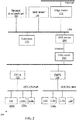
- FIG. 1 shows an exemplary network 100 of a cable operator deploying a first embodiment of the present invention.
- a private network may be deployed and run according to the Data Over Cable Service Interface Specification (DOCSIS) standard.
- the nodes in this network 100 may include but are not limited to cable modems (CM) 110a-f, captive portal web applications, captive portal web managers, provisioning groups, cable modem termination systems (CMTS 120), policy servers 130, network collectors 140 (or network collector 140 servers), network data convergers 150 (NDC) or NDC servers, an edge router 175, and multimedia terminal adapters 115 (MTA), among others.
- CM cable modems
- CMTS 120 cable modem termination systems
- CMTS 120 cable modem termination systems
- policy servers 130 policy servers 130
- network collectors 140 or network collector 140 servers
- NDC network data convergers 150
- MTA multimedia terminal adapters 115
- Cable modems 110a-f are generally hardware devices that execute software and/or firmware, and may be uniquely identified by a factory-assigned media access control (MAC) address.
- a captive portal web application is a web application that renders information which is received from the captive portal web manager, for example, to users of the cable operator network when fraud is discovered. If the connection for the cable modem 110a- f is detected as illegitimate by the fraud management solution, the cable operator may intercept most packets coming from this cable modem 110a-f, regardless of their destination address and port. A request from a web browser made through this connection may be redirected to the captive portal web application, and answered with a webpage describing the terms of use, or an arbitrary message or webpage configured by the operator, for example, it may be a message describing the situation.
- the captive portal web manager is an application used for fraud management, marketing messaging and other purposes.
- a captive portal web manager may allow the user to configure a response template (e.g., an HTML template) that may be used by the captive portal web application.
- a response template e.g., an HTML template
- this template may be used to craft the response.
- a provisioning group may encompass a group of servers including a policy server 130 and a CMTS 120. These items are described below.
- a CMTS 120 is a broadband router that connects to one or more cable modems 110a-f through coaxial and/or optical fiber cable, converts their signals to the IP protocol and into an (IP) router. This CMTS 120 - IP router pair connects cable modems 110a-f to the other equipment in the network.
- the CMTS 120 under the first embodiment may be configured to allow operations in the Packet Cable Multimedia (PCMM) specification.
- PCMM Packet Cable Multimedia
- the PCMM specification defines a framework that can be used for marking all the network packets received from cable modems 110a-f with a certain identifier according to fraud policies.
- An application runs on a policy server 130 which periodically polls the policies table in the database.
- a policy defines an action which applies to one (or possibly more) cable modems 110a-f.
- the policy server 130 may read a fraud-related policy and send a PacketCable Multimedia (PCMM) gate-set message to one CMTS 120.
- PCMM PacketCable Multimedia
- all the packets sent from the cable modems 110a-f underlying any policy through this CMTS 120 may be marked using the Type Of Service field in its IPv4 header.
- a network collector 140 is a server primarily used for inventorying the cable modems 110a-f in its provisioning group.
- the network collector 140 may at least execute scans in the following situations: a) network collector 140 performs discovery scans of all the cable modems 110a-f connected to its provisioning group once it is activated and periodically, the periodicity being configured by the cable operator, b) when a cable modem 110a-f registers, then only this cable modem 110a-f is scanned, c) when asked by the network data converger 150 to either scan all the cable modems 110a-f or a single one.
- the network collector 140 may update the devices table, also referred to as the devices inventory, in the database engine 170.
- Scanned information is obtained through an SNMP scan or a scan through SNMP.
- the discovery scan is an SNMP scan where the network collector 140 uses the SNMP protocol to obtain information for the cable modems 110a-f.
- the network collector 140 first obtains general information from SNMP tables in the CMTS 120 including but not limited to DOCSIS Capability, IPs, interfaces, and information for every cable modem110a-f connected to this CMTS 120 (such as the MAC address of the cable modem 110a-f, IP address of the CMTS 120, the CMTS 120 interfaces it connects to, and its status).
- the network collector 140 scans a single cable modem 110a-f, it retrieves from the cable modem 110a-f the SysDescription (that provides the information about the Vendor, Model, Hardware and Software versions, and serial number) and possibly other parameters.
- SysDescription that provides the information about the Vendor, Model, Hardware and Software versions, and serial number
- An NDC server 150 runs an application that is in charge of detecting and reporting fraud.
- the NDC server 150 may run two procedures. A reactive procedure which is triggered every time a cable modem 110a-f connects to the network 100 and is in charge of assessing if the connection is fraudulent, if it should be watch listed, or is valid. Also the NDC server 150 may run a watch list monitor procedure periodically to decide if the elements in the watch list should be considered as valid, fraudulent, if the element should be eliminated from the watch list, or if the decision should be delayed until more information becomes available. This is explained in greater detail below.
- a database engine 170 may serve the applications, and include one or more of several types of tables.
- the devices table (alternatively referred to as the devices inventory or table of cable modems 110a-f) may identify each cable modem 110a-f by its MAC address.
- the entry for this cable modem 110a-f may be updated (recall that the cable modem 110a-f is identified by its MAC address) with the scan's information.
- the scan may include at least the serial number for the cable modem 110a-f, the IP address of the CMTS 120 and the time when the information was updated.
- a second policy table may store policies describing a subject (either the IP address of a cable modem or the MAC address of a cable modem 110a-f and the IP address or MAC domain of the CMTS 120 it connects to) and an action.
- a watch list table may be queried by the policy server 130 and its use is described below.
- a subscription table may link each subscriber to a subscription plan and a cable modem 110a-f in the devices table. The information for the subscription plan may include, but is not limited to, the location where the service is received, and the upwards and downwards speed for the service.
- An edge router 175 is a router that connects to the provisioning groups, the captive portal web application, the database engines 170, and to the internet.
- the edge router 175 may implement Policy Based Routing (PBR).
- PBR Policy Based Routing
- a cable modem 110a-f In a standard cable network, once a cable modem 110a-f is physically connected to the network 100 it boots to get a logical connection. In this process, it first acquires connectivity to a CMTS 120, and then negotiates with the Provisioning Servers in order to get the cable modem 110a-f configured and give it access to the cable services.
- an aging threshold is a positive integer and a watch list threshold is also a positive integer.
- the allowance of roaming may be defined as a parameter, for example yes (roaming is allowed) or no (roaming is not allowed).
- An exemplary embodiment of a network data converger 150 runs two processes: a reactive process that is triggered every time a cable modem 110a-f registers to a CMTS 120 and validates whether the connection should be allowed, and a periodic process tasked with managing the watch list.
- Each CMTS 120 is configured to send SNMP traps to its respective network collector 140 when a cable modem 110a-f is turned on or off. These may be standard SNMP traps that are sent every time a cable modem 110a-f registers or deregisters in the CMTS 120. If the trap is off, the network collector 140 may update the cable modem 110a-f status as offline in the devices table. If the trap is on, the network collector 140 may send an SNMP get command to the cable modem 110a-f to retrieve updated information on this device (the cable modem 110a-f), relay this information to the NDC and then the NDC updates this information into the devices table when the NDC allows access to the cable modem 110a-f.
- the underlying CMTS 120 forwards the cable modem 110a-f information to the network controller 140.
- the network collector 140 scans the cable modem 110a-f, for example, by SNMP, and receives a tuple generally consisting at least of MAC address, serial number and a timestamp that contains the date and time when the information retrieval takes place, herein called the "received information.”
- the network collector 140 sends the received information to the network data converger 150.
- the network data converger 150 waits for these tuples of received information. Once the network data converger 150 receives one such tuple, the network data converger 150 does one or more validation checks that are enumerated herein to ensure that the cable modem 110a-f connection is not fraudulent.
- the network data converger 150 checks if the MAC address is associated with a subscription by querying the database management system. If the MAC address is associated with a subscription, the NDC 150 queries the devices table for all the information it has associated to the MAC address in the received information and obtains analogous values that are referred to herein as the "stored information.” If the serial number in the stored and received information do not agree, then fraud is detected with the classification "Different Serial.” If this happens, the NDC 150 writes a new policy in the policies table with fraud information and the validation is terminated.
- the fraud information includes but is not limited to MAC address, serial number, fraud type (Different serial), and the IP address identifying the CMTS 120 to which the cable modem 110a-f is connected.
- the NDC 150 computes the aging of the stored information by computing the number of minutes elapsed between the timestamp in the stored information and the timestamp in the retrieved information. If the aging of the stored information exceeds the aging threshold (defined during setup), then the NDC 150 asks the network controller to check if the cable modem 110 a-f (underlying the stored information) is still online; to do this, the network controller checks the database in the CMTS 120, or may scan the cable modem 110a-f through SNMP.
- One CMTS 120 may have several MAC domains.
- a MAC domain is a unique value.
- the configuration of the CMTS 120 defines the number of MAC domains it has and each cable modem 110a-f connection offered by the CMTS 120 is assigned to a MAC domain. It should be noted that it is possible for a CMTS 120 to not accept connections from two cable modems 110a-f with the same MAC address, or alternatively not accept two cable modems 110a-f (with the same MAC address) within the same MAC domain (but accept two cable modems 110a-f with the same MAC address in the same CMTS 120 when they have different MAC domains).
- CMTS 120 IP address (or alternatively the MAC domain) referenced in the stored information is the same as the one in the retrieved information, then no fraud is detected and the validation is terminated. In this case, it is assumed that the cable modem 110a-f first turned offline and went back online at this moment.
- the NDC 150 detects fraud, for example, with a classification "Original online.”
- the outcome depends on whether roaming is allowed. If roaming is allowed, then the connection is considered as potential fraud and the cable modem 110a-f underlying the received information is added to the watch list. If roaming is not allowed, then the cable modem 110a-f is added to the watch list and fraud is detected.
- the present system and method allows using a more accurate method for pinpointing the point in the network where the cable modem110a-f connects to: instead of comparing the IP address of the CMTS 120 as above, it will compare the MAC domain within the CMTS.
- a MAC domain is a unique value.
- One CMTS 120 may have several MAC domains. The configuration of the CMTS 120 will define the number of MAC domains and which of the cable modem 110a-f connections it offers are assigned to each MAC domain.
- the NDC 150 writes a new policy in the policies table.
- the policy may include, for example, the MAC address, serial number, CMTS 120 IP address for the cable modem in the received information and fraud classification, and/or other information to manage fraud.
- the cable modem 110a-f is added to the watch list table, in general at least the following information may be recorded: the stored information and the received information (the information for the original and the new cable modems 110a-f).
- the NDC 150 may iterate over all the items in the watch list in a periodic process. If the time elapsed between the timestamp and the present is bigger than the watch list threshold, the entry is removed and the event is logged as an occurrence of roaming (when roaming is allowed).
- the network data converger 150 checks for the status of the cable modem 110a-f in the stored information.
- each watch list item includes at least, one tuple of stored information and one tuple of retrieved information. This may be done by sending a command to the network controller to retrieve the information for the MAC address under scrutiny. The answer is called the refreshed information. If a cable modem 110a-f appears online, other than that in the received information, then one of the following outcomes may occur.
- the cable modem 110a-f in the refreshed information is marked as Fraud classified as "Original online” and the item is removed from the watch list. If the CMTS 120 IP address (alternatively MAC domain) for the cable modem 110a-f in the refreshed information is a third value (different from stored and received information), and if the cable modem 110a-f in the received information is still online, then the cable modem 110a-f in the refreshed information is marked as Fraud and classified as "Watch listed online.” However, the watch list item is not removed.
- the policy server 130 may run a procedure which periodically polls the policies table.
- a "policy” defines an action which applies to one cable modem 110a-f ID (the ID being a unique identifier assigned to the tuple CMTS 120 IP/MAC domain, MAC address, serial number).
- fraud policies define which cable modems 110a-f may preferably be denied access to the internet and have its requests redirected to the captive portal web application. This may be achieved in different ways.
- the edge router 175 redirects traffic as follows.
- the associated information includes a MAC address for the offending cable modem 110a-f and an IP address for the CMTS 120 the offending cable modem 110a-f is connected to.
- the policy server 130 may use this information to send a PacketCable Multimedia (PCMM) gate-set message to the aforementioned CMTS 120.
- PCMM PacketCable Multimedia
- This command makes the CMTS 120 mark all the packets sent from the cable modem 110a-f with this MAC address using the Type Of Service field in the header of each IPv4 packet.
- traffic redirection may be implemented using Policy Based Routing (PBR) by DiffServ (Differentiated Services) specified in an IETF standard (RFC 2474).
- PBR Policy Based Routing
- DiffServ Differentiated Services
- RRC 2474 IETF standard
- the standard determines how to define the DiffServ field within IP headers, and a classification scheme for this field. Every marked packet, including those sent by this cable modem 110a-f through this CMTS 120 and reaching the edge router 175, is forwarded, for example, by the edge router 175, to the captive portal web application. Responses from the captive portal web-application are sent back in the opposite direction.
- traffic redirection may be implemented by the CMTS 120, where the CMTS 120 redirects the traffic to the Captive Portal based on the ToS/DiffServ headers and destination ports being used.
- each CMTS 120 preferably has a direct connection to the server hosting the captive portal web application, where the direct connection is usually achieved by direct VLAN connections from each CMTS 120 to the LAN where the said server resides.
- the following examples illustrate users attempting fraud detected and managed by the above described embodiments. If a forger modifies a second cable modem 110c so that it uses the MAC address of a first cable modem 110a belonging to an active subscription, and the first cable modem 110a is connected to the network. However, the forger does not modify the serial number, so that the first cable modem 110a has a different serial number from the second cable modem 110c. Once the second cable modem 110c has been modified, the forger connects the second cable modem 110c to the network, turns the second cable modem 110c on and the second cable modem 110c boots and registers to the CMTS 120.
- This fraud may be detected when the network collector 140 scans the second cable modem 110c through SNMP after it registers and receives at least the MAC address and serial number associated to second cable modem 110c.
- the network collector 140 forwards this information, herein the "received information" to the network data converger 150.
- the network data converger 150 queries the devices table for the serial number and other information associated to the MAC address in the received information tuple, herein referred to as "stored information" to the result of this query. Since the stored and received serial number do not agree, the NDC 150 detects fraud coming from the second cable modem 110c with the classification "Different serial number.”
- the network data converger 150 communicates with database engine 170 to insert an entry in the policies table with the fraud information including the MAC address of the cable modem110a-f, the location of the cable modem110a-f (e.g., IP address of the CMTS 120 or MAC domain), and the fraud classification.
- the policy server 130 polls the policies table to check for new policies periodically. Once the policy server 130 reads this new entry, the policy server 130 sends a set-gate command to the CMTS 120 to create a PCMM gate in order to mark all traffic from this cable modem 110a-f exiting through the CMTS 120. Once this happens, every (marked) packet sent by this cable modem 110a-f through the CMTS 120 and reaching the edge router 175 is forwarded (by the edge router 175) to the captive portal web application.
- a second (perfect clone) cable modem 110c connects to a CMTS in the cable network.
- the second cable modem 110c has been altered to answer with the MAC address and serial number of a first cable modem 110a associated to a valid subscription while the first cable modem 110a is online. This may be detected as follows. After the registration procedure the second cable modem 110c is scanned through SNMP by the network collector 140, in turns, the network collector 140 forwards information for the second cable modem 110c consisting mainly in the MAC, serial number, IP address and circuit ID for the CMTS 120 to the network data converger 150.
- the network data converger 150 keeps a complete view of all the cable modems 110a-f, i.e., can query the devices table. Hence, the network data converger 150 server notes that another cable modem 110a-f with the same MAC address and serial number is present and connected to another CMTS 120.
- the network data converger 150 checks the aging of the information associated to the first cable modem 110a for example, by computing how many minutes elapsed since the entry's timestamp and the moment the check is being made.
- the NDC 150 sends a command to the network collector 140 to scan the first cable modem110a.
- the NDC 150 learns that the first cable modem 110a has its status as "online.”
- the NDC 150 detects fraud coming from the second cable modem 110c classified as "Original online.”
- the network data converger 150 inserts an entry in the policies table with the information for the second cable modem 110c and the fraud classification.
- the policy server 130 may create a PCMM gate in the CMTS 120 so that the traffic from the second cable modem through the CMTS 120 bares a special mark. Thence, the edge router 175 forwards this marked traffic to the captive portal web application.
- a second (perfect clone) cable modem 110c connects to a CMTS.
- the second cable modem 110c has been altered to answer with the MAC address and serial number of the first cable modem 110a associated to a valid subscription.
- the first cable modem 110a is not currently online but has been online earlier at such a time that the aging threshold has been exceeded.
- the cable operator's network receives more than one cable modem 110a-f connection, at different times, with the same MAC address but different MAC domains or CMTS' 120 IP addresses, the cable operator cannot conclude if this is due to fraud or legitimate reasons. For example, maybe the original cable modem 110a was turned off and sometime later the cloned cable modem 110c is turned on at some other place. This last example would constitute a fraud attempt.
- the cable modem 110a was turned off and reconnected at another network outlet --which connects to another CMTS 120 or MAC domain in the same CMTS 120-- or the cable operator has produced "a node split" which has reconnected the cable modem 110a to another MAC domain in the CMTS 120 or another CMTS 120.
- the previous are all legitimate reasons and should not be treated as fraud attempts.
- This fraud may be detected as follows. After performing a SNMP scan for the second cable modem 110c, the network collector 140 forwards the received information to the network data converger 150, which in turn retrieves the stored information associated to the MAC of the second cable modem 110c from the devices table. Since the stored and received serial numbers agree, no fraud is detected at this point. Next, the NDC 150 checks stored against retrieved CMTS 120 IP addresses and notes that they are different.
- the NDC 150 may perform further checks to decide whether the use is legitimate or fraudulent. According to the process described above, the NDC 150 computes the difference between the timestamps in the stored and in the received information. Since the aging threshold has been exceeded, so no fraud is detected, the NDC 150 asks the NC to scan the cable modem 110a and, once done, the network data converger 150 notes that no other cable modem 110a-f with the MAC address of the second cable modem 110c appears online. However, the NDC 150 notes that the last time a cable modem 110a-f with this MAC address was online, it had connected to a CMTS 120 with a different IP address. Since roaming detection has been turned on, the connection for the cable modem 110a-f is detected as potentially fraudulent.
- the watch list may be, for example, a table in the database engine 170 that stores the MAC address, serial number, both CMTS 120 IP addresses (stored and received) and a timestamp describing when was this entry inserted to the table.
- the network data converger 150 may check for the status of the first cable modem 110a in case the first cable modem 110a appears online.
- the network data converger 150 commands the network controller to send SNMP traps to the CMTS 120 associated to the first cable modem as described in the stored information.
- the first cable modem 110a registers online to the associated CMTS 120 and the NDC discovers this during one of its periodic checks, then the network data converger 150 marks the watch listed second cable modem 110c as fraud, the watch listed second cable modem 110c is classified as "Original online,” and the watch list item is removed from the watch list.
- the following example illustrates a broken control fraud.
- This form of fraud takes place when a user modifies a second cable modem 110c hardware so that the device (the second cable modem 110c) stops responding SNMP communications.
- the second cable modem 110c is modified to answer with the MAC address of a first cable modem 110a associated to a valid subscription, and the second cable modem 110c does not answer to the SNMP scan from the network collector 140.
- This fraud may be detected as follows.
- the procedure for this case is very similar to those described above, only that in this case the second cable modem 110c does not respond the scan through SNMP and the NDC 150 is not be able to check the validity of the serial number.
- the first cable modem 110a is still online and connected to a CMTS 120 with a different IP address, then fraud is detected with the classification "Original online.”
- the network data converger 150 inserts an entry in the policies table with the information for the offending second cable modem 110c and the fraud classification.
- the network data converger creates a PCMM gate in the CMTS 120 so that all the traffic from the second cable modem 110c through the CMTS 120 bares a special mark. Thence, the operators edge router 175 forwards all marked traffic to the captive portal web application.
- the network data collector may ask the network collector to attempt scanning the cable modem 110c a predetermined number of times, and if the NC receives no answer after the number of failed scan attempts reaches this predetermined number, then the NDC detects fraud with the classification "Broken Control".
- a form of fraud takes place when a user modifies the configuration file in his cable modem 110a-f so that the configuration set by the cable operator through the provisioning group as defined in the subscription plan is ignored or partially ignored, and any or both of the upwards and downwards speeds are redefined by the subscriber.
- the subscriber may want to get faster speeds than those included in his subscription, and he may obtain them by tampering with the configuration.
- This fraud may be detected as follows. After the registration procedure the cable modem 110a-f, is scanned through SNMP by the network collector 140. The SNMP queries the cable modem 110a-f for its configuration and obtains -in particular- its upwards and downwards speeds. This information is forwarded to the network data converger 150. The NDC 150 can obtain the MAC address for the uncapped cable modem, use this to query the devices table to obtain the subscription ID underlying this cable modem, and query the subscription table with the subscription ID to obtain the allowed upward and downward speed, and hence it can verify that the speeds configured in the cable modem 110a-f are the same as those established in the database.
- the NDC 150 may optionally query via SNMP the CMTS 120 for the upwards and downwards speed it has been configured to use with the cable modem 110a-f. Again, if any of these differ from those obtained from the subscription table, then fraud is detected. Corroborating this through the CMTS 120 instead of relying exclusively in the cable modem 110a-f may be particularly important if the cable modem 110a-f does not respond to SNMP queries.
- the network data converger 150 inserts an entry in the policies table with the information for the offending cable modem 110a-f and the fraud classification.
- the network data converger creates a PCMM gate in the CMTS 120 so that all the traffic from this cable modem 110a-f through the CMTS 120 bares a special mark. Thence, the operators edge router 175 forwards all marked traffic to the captive portal web application.
- cable modems 110a-f There are several actions associated to cable modems 110a-f that have either been placed in the captive portal or a watch list.
- the reporting capabilities are used to give the cable operator a clean picture of fraud attempts stopped and what goes on with the watch list, all this may be broken down by different dimensions including but not limited to: fraud classification, CMTS 120, cable modem vendor.
- the Real-Time Monitor may be, for example, a web application, hosted in the web server 160.
- the Real-Time Monitor displays fraud information in real time.
- the reports and features may include, but are not limited to, a number of detected frauds in a given date range versus time, a number of detected frauds in a given date range versus time, where the different fraud classifications are distinguished, a pie chart describing the proportions each fraud classification occupies among the total detected frauds within given dates, device-specific information for cable modems 110a-f used to commit fraud, e.g., serial number, CMTS 120 IP, firmware version, and information about the status of the enforcement through the Policy server 130 in case it applies.
- the tool can present the status of each PCMM gate in the CMTS 120. This status information is provided by the Policy server 130 and is updated in the database at regular basis. If, for example, a gate could not be synchronized and hence-it is not being applied, the user can retry the application of the gates.
- the cable operator company may assign an employee, herein called the fraud officer, to manage fraud attempts.
- the job of the fraud officer is to review the fraud attempts and act on this.
- a cable modem 110a-f could be banned from connection or a subscription terminated due to contract breach.
- a CMTS 120 is causing problems to valid users and needs to be updated or replaced.
- the main use case for the real-time monitor consists in that the fraud officer logging into the real-time monitor web application, reviewing how many fraud cases have been detected, for example in the last week, and which is their fraud classification. Depending on the amount of fraud attempts detected, the fraud officer may filter last week's fraud attempts by a specific fraud classification (and other parameters). Next, the fraud officer may bring up a table with all the details about the (filtered) fraud attempts. Finally the fraud officer may request more information about a specific device.
- the real-time monitor can access all the tables in the NDC 150 and NC, so he could query the vendor and model of the cable modems 110a-f involved, or he could check which are the timestamps for the stored and retrieved information in each fraud, the geographical location of the intervening CMTS 120, et cetera.
- the cable operator employee may review the list of cable modems 110a-f that appear in the watch list to uncover patterns. For example, retrieve the places and times where the same MAC address registers and unregisters.
- FIG. 2 shows a second network 200 that is a variation of the network 100 of FIG. 1 to illustrate a second embodiment of the fraud detection system and method.
- a value-added services (VAS) router 290 is a network device which provides a secure channel over the Internet between the local network consisting of all the CMTS 120 and a VAS server 280, located in the cloud/internet. It also provides the functionality of a TFTP server to the CMTS 120 (and the cable modems 110a-f that connect to them). Moreover, in conjunction with the VAS server 280, it will provide the capabilities of a network collector 140 ( FIG. 1 ).
- the value-added services (VAS) server 280 is a network device which provides a secure channel over the Internet between the VAS router 290 and the cloud services, including but not limited to database, web server and Network data converger 150 (NDC 150) services.
- VAS value-added services
- the network 200 under the second embodiment may be implemented by a company providing services to cable operators. As described earlier regarding the network 100 under the first embodiment (shown in FIG. 1 ), the service provider may install new equipment in the network 100 ( FIG. 1 ) of the cable operator and configure devices to work as described earlier.
- the cable operator may only add to their architecture a configured VAS router 290, as pictured in FIG. 2 .
- the VAS server 280 and remaining services may all be provided by the services company.
- the cable operator runs a cable network 200 (with no fraud prevention systems) including cable modems 110a-f, one or more CMTS 120 and a provisioning group.
- the service provider adds to this private network a VAS server 280, and assume the VAS server 280 is configured to connect through an edge router 175.
- the service provider runs a LAN network of its own including a VAS router 290, a policy server, a database management system, a captive portal manager and captive portal web application.
- the VAS server 280 and VAS router 290 may be connected through a secure connection, for example, a virtual private network (VPN).
- VPN virtual private network
- the network collector within the VAS router 290 is configured to scan cable modems 110a-f and results to the network data converger 150 through the VAS server 280-VAS router 290 connection, and analogously where the network data converger 150 can ask the network collector to execute commands and relay results.
- these new servers may by hosted in a totally different physical location, since the VAS router 290 to VAS server 280 connection may be over the internet.
- the service provider may handle all the management of this equipment, and may scale them (add more equipment) as needed.
- FIG. 3 is a flowchart 300 of an exemplary method for detecting fraud in a network. It should be noted that any process descriptions or blocks in flowcharts should be understood as representing modules, segments, portions of code, or steps that include one or more instructions for implementing specific logical functions in the process, and alternative implementations are included within the scope of the present invention in which functions may be executed out of order from that shown or discussed, including substantially concurrently or in reverse order, depending on the functionality involved, as would be understood by those reasonably skilled in the art of the present invention.
- a first cable modem in a network is queried, for example, via SMTP, as shown by block 310.
- the MAC address and serial number of the first cable modem is received as a result of the query, as shown by block 320.
- the first cable modem is added to a devices inventory, as shown by block 330.
- a second cable modem in a network is queried, for example, via SMTP, as shown by block 340.
- the MAC address and serial number of the first cable modem is received as a result of the query, as shown by block 350.
- the MAC address and serial number of the second cable modem is compared to the MAC address and serial number of the first cable modem, as shown by block 360. If the first serial number and MAC address does not match the second serial number and MAC address, it is determined that an instance of fraud has occurred.
- the present system for executing the functionality described in detail above may be a computer, an example of which is shown in the schematic diagram of FIG. 4 .
- the system 500 contains a processor 502, a storage device 504, a memory 506 having software 508 stored therein that defines the abovementioned functionality, input and output (I/O) devices 510 (or peripherals), and a local bus, or local interface 512 allowing for communication within the system 500.
- the local interface 512 can be, for example but not limited to, one or more buses or other wired or wireless connections, as is known in the art.
- the local interface 512 may have additional elements, which are omitted for simplicity, such as controllers, buffers (caches), drivers, repeaters, and receivers, to enable communications. Further, the local interface 512 may include address, control, and/or data connections to enable appropriate communications among the aforementioned components.
- the processor 502 is a hardware device for executing software, particularly that stored in the memory 506.
- the processor 502 can be any custom made or commercially available single core or multi-core processor, a central processing unit (CPU), an auxiliary processor among several processors associated with the present system 500, a semiconductor based microprocessor (in the form of a microchip or chip set), a macroprocessor, or generally any device for executing software instructions.
- the memory 506 can include any one or combination of volatile memory elements (e.g., random access memory (RAM, such as DRAM, SRAM, SDRAM, etc.)) and nonvolatile memory elements (e.g., ROM, hard drive, tape, CDROM, etc.). Moreover, the memory 506 may incorporate electronic, magnetic, optical, and/or other types of storage media. Note that the memory 506 can have a distributed architecture, where various components are situated remotely from one another, but can be accessed by the processor 502.
- the software 508 defines functionality performed by the system 500, in accordance with the present invention.
- the software 508 in the memory 506 may include one or more separate programs, each of which contains an ordered listing of executable instructions for implementing logical functions of the system 500, as described below.
- the memory 506 may contain an operating system (O/S) 520.
- the operating system essentially controls the execution of programs within the system 500 and provides scheduling, input-output control, file and data management, memory management, and communication control and related services.
- the I/O devices 510 may include input devices, for example but not limited to, a keyboard, mouse, scanner, microphone, etc. Furthermore, the I/O devices 510 may also include output devices, for example but not limited to, a printer, display, etc. Finally, the I/O devices 510 may further include devices that communicate via both inputs and outputs, for instance but not limited to, a modulator/demodulator (modem; for accessing another device, system, or network), a radio frequency (RF) or other transceiver, a telephonic interface, a bridge, a router, or other device.
- modem for accessing another device, system, or network
- RF radio frequency
- the processor 502 is configured to execute the software 508 stored within the memory 506, to communicate data to and from the memory 506, and to generally control operations of the system 500 pursuant to the software 508, as explained above.
- the processor 502 When the functionality of the system 500 is in operation, the processor 502 is configured to execute the software 508 stored within the memory 506, to communicate data to and from the memory 506, and to generally control operations of the system 500 pursuant to the software 508.
- the operating system 520 is read by the processor 502, perhaps buffered within the processor 502, and then executed.
- a computer-readable medium for use by or in connection with any computer-related device, system, or method.
- Such a computer-readable medium may, in some embodiments, correspond to either or both the memory 506 or the storage device 504.
- a computer-readable medium is an electronic, magnetic, optical, or other physical device or means that can contain or store a computer program for use by or in connection with a computer-related device, system, or method.
- Instructions for implementing the system can be embodied in any computer-readable medium for use by or in connection with the processor or other such instruction execution system, apparatus, or device.
- such instruction execution system, apparatus, or device may, in some embodiments, be any computer-based system, processor-containing system, or other system that can fetch the instructions from the instruction execution system, apparatus, or device and execute the instructions.
- a "computer-readable medium" can be any means that can store, communicate, propagate, or transport the program for use by or in connection with the processor or other such instruction execution system, apparatus, or device.
- Such a computer-readable medium can be, for example but not limited to, an electronic, magnetic, optical, electromagnetic, infrared, or semiconductor system, apparatus, device, or propagation medium. More specific examples (a nonexhaustive list) of the computer-readable medium would include the following: an electrical connection (electronic) having one or more wires, a portable computer diskette (magnetic), a random access memory (RAM) (electronic), a read-only memory (ROM) (electronic), an erasable programmable read-only memory (EPROM, EEPROM, or Flash memory) (electronic), an optical fiber (optical), and a portable compact disc read-only memory (CDROM) (optical).
- an electrical connection having one or more wires
- a portable computer diskette magnetic
- RAM random access memory
- ROM read-only memory
- EPROM erasable programmable read-only memory
- EPROM erasable programmable read-only memory
- CDROM portable compact disc read-only memory
- the computer-readable medium could even be paper or another suitable medium upon which the program is printed, as the program can be electronically captured, via for instance optical scanning of the paper or other medium, then compiled, interpreted or otherwise processed in a suitable manner if necessary, and then stored in a computer memory.
- system 500 can be implemented with any or a combination of the following technologies, which are each well known in the art: a discrete logic circuit(s) having logic gates for implementing logic functions upon data signals, an application specific integrated circuit (ASIC) having appropriate combinational logic gates, a programmable gate array(s) (PGA), a field programmable gate array (FPGA), etc.
- ASIC application specific integrated circuit
- PGA programmable gate array
- FPGA field programmable gate array
Landscapes
- Engineering & Computer Science (AREA)
- Signal Processing (AREA)
- Databases & Information Systems (AREA)
- Multimedia (AREA)
- Computer Security & Cryptography (AREA)
- Computer Graphics (AREA)
- General Engineering & Computer Science (AREA)
- Computer Hardware Design (AREA)
- Computer Networks & Wireless Communication (AREA)
- Theoretical Computer Science (AREA)
- Software Systems (AREA)
- Computing Systems (AREA)
- Power Engineering (AREA)
- Physics & Mathematics (AREA)
- General Physics & Mathematics (AREA)
- Small-Scale Networks (AREA)
- Data Exchanges In Wide-Area Networks (AREA)
Applications Claiming Priority (1)
| Application Number | Priority Date | Filing Date | Title |
|---|---|---|---|
| US201662362749P | 2016-07-15 | 2016-07-15 |
Publications (2)
| Publication Number | Publication Date |
|---|---|
| EP3270598A2 true EP3270598A2 (fr) | 2018-01-17 |
| EP3270598A3 EP3270598A3 (fr) | 2018-03-21 |
Family
ID=59655843
Family Applications (1)
| Application Number | Title | Priority Date | Filing Date |
|---|---|---|---|
| EP17181529.3A Ceased EP3270598A3 (fr) | 2016-07-15 | 2017-07-14 | Système et procédé pour la fourniture d'informations |
Country Status (3)
| Country | Link |
|---|---|
| US (1) | US10757099B2 (fr) |
| EP (1) | EP3270598A3 (fr) |
| CA (1) | CA2973249C (fr) |
Cited By (1)
| Publication number | Priority date | Publication date | Assignee | Title |
|---|---|---|---|---|
| EP3515016A3 (fr) * | 2018-01-22 | 2019-09-25 | Intraway R&D S.A. | Système et procédé pour fournir un portail captif par multimédia packetcable |
Families Citing this family (4)
| Publication number | Priority date | Publication date | Assignee | Title |
|---|---|---|---|---|
| EP3370343A1 (fr) | 2017-03-01 | 2018-09-05 | Intraway R&D S.A. | Procédé et système de détection d'interférences et de diagnostic dans des réseaux câblés |
| US11418478B2 (en) * | 2018-12-20 | 2022-08-16 | Arris Enterprises Llc | Systems and methods for improving ARP/ND performance on host communication devices |
| US11934568B2 (en) * | 2019-12-12 | 2024-03-19 | Mellanox Technologies, Ltd. | Cable security |
| US11496442B2 (en) * | 2020-02-07 | 2022-11-08 | Charter Communications Operating, Llc | System and method for detecting and responding to theft of service devices |
Family Cites Families (75)
| Publication number | Priority date | Publication date | Assignee | Title |
|---|---|---|---|---|
| US5724510A (en) * | 1996-09-06 | 1998-03-03 | Fluke Corporation | Method of configuring a valid IP address and detecting duplicate IP addresses in a local area network |
| US6324267B1 (en) * | 1997-01-17 | 2001-11-27 | Scientific-Atlanta, Inc. | Two-tiered authorization and authentication for a cable data delivery system |
| US6636971B1 (en) * | 1999-08-02 | 2003-10-21 | Intel Corporation | Method and an apparatus for secure register access in electronic device |
| US6625258B1 (en) * | 1999-12-27 | 2003-09-23 | Nortel Networks Ltd | System and method for providing unified communication services support |
| US20020052915A1 (en) * | 2000-04-28 | 2002-05-02 | Bahman Amin-Salehi | Network service provider gateway that provides value added services |
| EP1218832B1 (fr) * | 2000-05-19 | 2016-09-21 | Cisco Technology, Inc. | Attribution d'acces dans un support de communications partage |
| US20020133613A1 (en) * | 2001-03-16 | 2002-09-19 | Teng Albert Y. | Gateway metering and bandwidth management |
| WO2003005195A2 (fr) * | 2001-07-03 | 2003-01-16 | Imagine Broadband Limited | Communications a large bande |
| US7142651B2 (en) * | 2001-11-29 | 2006-11-28 | Ectel Ltd. | Fraud detection in a distributed telecommunications networks |
| JP2006506852A (ja) * | 2002-11-12 | 2006-02-23 | ネクスト・ジェネレイション・ブロードバンド・インコーポレイテッド | 既存の高速データインフラストラクチャに補足的能力を追加する知的構成ブリッジシステムおよび方法 |
| US8260941B2 (en) * | 2002-12-20 | 2012-09-04 | Time Warner Cable, Inc. | System and method for detecting and reporting cable modems with duplicate media access control addresses |
| US7272846B2 (en) * | 2002-12-20 | 2007-09-18 | Time Warner Cable, A Division Of Time Warner Entertainment Company, Lp | System and method for detecting and reporting cable modems with duplicate media access control addresses |
| US7362773B2 (en) * | 2003-03-25 | 2008-04-22 | Terayon Communications Systems | DOCSIS 2.0 SCDMA capable sniffers which can capture legacy DOCSIS bursts as well |
| US7971237B2 (en) * | 2003-05-15 | 2011-06-28 | Verizon Business Global Llc | Method and system for providing fraud detection for remote access services |
| WO2005001648A2 (fr) * | 2003-06-23 | 2005-01-06 | Concord Communications, Inc. | Decouverte et fusion de donnees reseau |
| US20050078609A1 (en) * | 2003-10-10 | 2005-04-14 | Adc Broadband Access Systems, Inc. | Access switch for a cable network having a zero configuration multimedia service subsystem |
| US20050078689A1 (en) * | 2003-10-10 | 2005-04-14 | Adc Broadband Access Systems, Inc. | Providing multimedia services over a cable network |
| US7280479B2 (en) * | 2003-10-10 | 2007-10-09 | Adc Broadband Access Systems, Inc. | State machine for providing dynamic quality of service in a cable network |
| US7512969B2 (en) * | 2003-11-21 | 2009-03-31 | Time Warner Cable, A Division Of Time Warner Entertainment Company, L.P. | System and method for detecting and reporting cable network devices with duplicate media access control addresses |
| US7895632B2 (en) * | 2004-02-12 | 2011-02-22 | Sony Corporation | Cable diagnostic and monitoring system |
| US20050212504A1 (en) * | 2004-03-24 | 2005-09-29 | Dan Revital | System and method for cable localization |
| WO2005125037A1 (fr) * | 2004-06-14 | 2005-12-29 | Tollgrade Communications, Inc. | Controle de qualite de voix sur ip (voip) sur un reseau de fibres/coaxial (hfc) hybride |
| US7571460B2 (en) * | 2004-08-06 | 2009-08-04 | Time Warner Cable, Inc. | System and method for affecting the behavior of a network device in a cable network |
| US8264971B2 (en) * | 2004-10-28 | 2012-09-11 | Telecom Italia S.P.A. | Method for managing resources in a platform for telecommunication service and/or network management, corresponding platform and computer program product therefor |
| EP1875653B1 (fr) * | 2005-04-29 | 2018-12-12 | Oracle International Corporation | Système et procédé de contrôle et détection de fraude et authentification utilisateur à plusieurs niveaux |
| US8181262B2 (en) * | 2005-07-20 | 2012-05-15 | Verimatrix, Inc. | Network user authentication system and method |
| US20070276943A1 (en) * | 2006-03-14 | 2007-11-29 | General Instrument Corporation | Prevention of Cloning Attacks in a DOCSIS Network |
| US7480656B2 (en) * | 2006-03-20 | 2009-01-20 | Sony Computer Entertainment America Inc. | Active validation of network devices |
| US8161516B2 (en) * | 2006-06-20 | 2012-04-17 | Arris Group, Inc. | Fraud detection in a cable television |
| US20080076425A1 (en) * | 2006-09-22 | 2008-03-27 | Amit Khetawat | Method and apparatus for resource management |
| US7957305B2 (en) * | 2006-08-16 | 2011-06-07 | Cisco Technology, Inc. | Hierarchical cable modem clone detection |
| US7869369B2 (en) * | 2007-02-19 | 2011-01-11 | Michael Overcash | Cable modem location analyzing device |
| US8862747B2 (en) * | 2007-03-10 | 2014-10-14 | Bridge And Post, Inc. | Method and apparatus for tagging network traffic using extensible fields in message headers |
| US20080235746A1 (en) * | 2007-03-20 | 2008-09-25 | Michael James Peters | Methods and apparatus for content delivery and replacement in a network |
| US9629928B1 (en) * | 2008-03-31 | 2017-04-25 | Symantec Corporation | Hash-based inventory identification |
| US7986690B2 (en) * | 2008-08-12 | 2011-07-26 | Cisco Technology, Inc. | Inter-gateway cloned device detector using provisioning request analysis |
| US20100070639A1 (en) * | 2008-09-12 | 2010-03-18 | Cable Television Laboratories, Inc. | Network Clone Detection |
| US9357247B2 (en) * | 2008-11-24 | 2016-05-31 | Time Warner Cable Enterprises Llc | Apparatus and methods for content delivery and message exchange across multiple content delivery networks |
| KR101107742B1 (ko) * | 2008-12-16 | 2012-01-20 | 한국인터넷진흥원 | 에스아이피(sip) 기반 서비스의 보호를 위한 sip 침입 탐지 및 대응 시스템 |
| US10064055B2 (en) * | 2009-01-28 | 2018-08-28 | Headwater Research Llc | Security, fraud detection, and fraud mitigation in device-assisted services systems |
| US7848258B2 (en) * | 2009-02-06 | 2010-12-07 | Cisco Technology, Inc. | Dynamically transitioning static network addresses |
| US8725837B2 (en) * | 2009-06-10 | 2014-05-13 | Verizon Patent And Licensing Inc. | Content awareness caching with network-aware geo-location protocol |
| EP2457358B1 (fr) * | 2009-07-20 | 2018-12-12 | Verimatrix, Inc. | Systèmes et procédés destinés à détecter des dispositifs de lecture clones |
| US8745758B2 (en) * | 2009-11-02 | 2014-06-03 | Time Warner Cable Enterprises Llc | Apparatus and methods for device authorization in a premises network |
| US9614686B2 (en) * | 2009-11-02 | 2017-04-04 | Time Warner Cable Enterprises Llc | Protected premises network apparatus and methods |
| US8254385B2 (en) * | 2009-12-11 | 2012-08-28 | Comcast Cable Communications, Llc | Internet protocol multicast content delivery |
| US9602425B2 (en) * | 2009-12-31 | 2017-03-21 | Cable Television Laboratories, Inc. | Zero sign-on authentication |
| US8416696B2 (en) * | 2010-01-04 | 2013-04-09 | Cisco Technology, Inc. | CFM for conflicting MAC address notification |
| US8644706B2 (en) * | 2010-01-22 | 2014-02-04 | Gainspeed, Inc. | Distributed cable modem termination system with software reconfigurable MAC and PHY capability |
| US9584869B2 (en) * | 2010-01-22 | 2017-02-28 | Gainspeed, Inc. | Virtual CCAP cable modem termination system with software reconfigurable MAC |
| US9342661B2 (en) * | 2010-03-02 | 2016-05-17 | Time Warner Cable Enterprises Llc | Apparatus and methods for rights-managed content and data delivery |
| US8607293B2 (en) * | 2010-04-30 | 2013-12-10 | Time Warner Cable, Inc. | System and method for determining network relationships with unreliable data |
| US9906838B2 (en) * | 2010-07-12 | 2018-02-27 | Time Warner Cable Enterprises Llc | Apparatus and methods for content delivery and message exchange across multiple content delivery networks |
| US8707339B2 (en) * | 2010-07-30 | 2014-04-22 | CSC Holdings, LLC | System and method for detecting hacked modems |
| US8601523B2 (en) * | 2010-08-18 | 2013-12-03 | CSC Holdings, LLC | Topographic fraud detection |
| US20120047583A1 (en) * | 2010-08-20 | 2012-02-23 | Nyemahame Nsirim L | Cable fraud detection system |
| US9641418B1 (en) * | 2010-08-25 | 2017-05-02 | Arris Enterprises, Inc. | Use of physical location and timing delay in fraud detection |
| FR3001595A1 (fr) * | 2013-01-28 | 2014-08-01 | France Telecom | Procede de detection de fraude dans un reseau ims |
| WO2015010742A1 (fr) * | 2013-07-25 | 2015-01-29 | Telefonaktiebolaget L M Ericsson (Publ) | Détection de trafic frauduleux dans un système de télécommunications |
| US20150058421A1 (en) * | 2013-08-23 | 2015-02-26 | The NDSU Development Foundation Alumni Association | System and methods for improved communication of information |
| US9237116B2 (en) * | 2013-09-12 | 2016-01-12 | Cisco Technology, Inc. | Network system time domain re-stamping |
| EP3096491B1 (fr) * | 2014-02-18 | 2018-10-17 | Huawei Technologies Co., Ltd. | Procédé, appareil et système d'obtention d'un fichier de configuration |
| US9426118B2 (en) * | 2014-10-28 | 2016-08-23 | Belkin International Inc. | Remote grant of network access |
| US10122630B1 (en) * | 2014-08-15 | 2018-11-06 | F5 Networks, Inc. | Methods for network traffic presteering and devices thereof |
| CN105721397A (zh) * | 2014-12-04 | 2016-06-29 | 华为技术有限公司 | Cm注册方法和装置 |
| US20180165431A1 (en) * | 2015-06-01 | 2018-06-14 | Thomson Licensing | Method, apparatus and system for device replacement detection and device recommendation |
| WO2017040046A1 (fr) * | 2015-08-28 | 2017-03-09 | Pcms Holdings, Inc. | Procédé et appareil permettant d'accorder des droits d'accès à des utilisateurs de réseaux de communication |
| EP3342117A1 (fr) * | 2015-08-28 | 2018-07-04 | Telefonaktiebolaget LM Ericsson (publ) | Systèmes et procédés de routage du trafic d'un dispositif de communication |
| CN105392141A (zh) * | 2015-10-30 | 2016-03-09 | 小米科技有限责任公司 | 设备控制方法及装置 |
| CN105517103A (zh) * | 2015-12-03 | 2016-04-20 | 小米科技有限责任公司 | 基于智能终端设备的网络接入的方法和装置 |
| CN107104872B (zh) * | 2016-02-23 | 2020-11-03 | 华为技术有限公司 | 接入控制方法、装置及系统 |
| US10586023B2 (en) * | 2016-04-21 | 2020-03-10 | Time Warner Cable Enterprises Llc | Methods and apparatus for secondary content management and fraud prevention |
| US10122725B2 (en) * | 2016-05-19 | 2018-11-06 | Centurylink Intellectual Property Llc | System and method for implementing community wireless communications service |
| US10469499B2 (en) * | 2016-06-30 | 2019-11-05 | Calix, Inc. | Website filtering using bifurcated domain name system |
| US9686238B1 (en) * | 2016-07-07 | 2017-06-20 | Oceus Networks Inc. | Secure network enrollment |
-
2017
- 2017-07-14 EP EP17181529.3A patent/EP3270598A3/fr not_active Ceased
- 2017-07-14 CA CA2973249A patent/CA2973249C/fr active Active
- 2017-07-14 US US15/649,728 patent/US10757099B2/en active Active
Non-Patent Citations (1)
| Title |
|---|
| None |
Cited By (2)
| Publication number | Priority date | Publication date | Assignee | Title |
|---|---|---|---|---|
| EP3515016A3 (fr) * | 2018-01-22 | 2019-09-25 | Intraway R&D S.A. | Système et procédé pour fournir un portail captif par multimédia packetcable |
| US11146838B2 (en) | 2018-01-22 | 2021-10-12 | Intraway R&D S.A. | Captive portal by packetcable multimedia |
Also Published As
| Publication number | Publication date |
|---|---|
| US10757099B2 (en) | 2020-08-25 |
| CA2973249A1 (fr) | 2018-01-15 |
| EP3270598A3 (fr) | 2018-03-21 |
| CA2973249C (fr) | 2023-01-17 |
| US20180020000A1 (en) | 2018-01-18 |
Similar Documents
| Publication | Publication Date | Title |
|---|---|---|
| US10757099B2 (en) | System and method for providing fraud control | |
| EP3449600B1 (fr) | Approche de mise en réseau fondée sur une intention commandée par données utilisant un contrôleur sdn distribué de faible poids pour distribuer des expériences de consommateur intelligentes | |
| US20240205103A1 (en) | Extensible Analytics and Recommendation Engine for Network Traffic Data | |
| US7590733B2 (en) | Dynamic address assignment for access control on DHCP networks | |
| US20200021609A1 (en) | Communications methods and apparatus for dynamic detection and/or mitigation of threats and/or anomalies | |
| US8315179B2 (en) | System and method for authorizing threshold testing within a network | |
| US8189468B2 (en) | System and method for regulating messages between networks | |
| US20190166013A1 (en) | A data driven intent based networking approach using a light weight distributed SDN controller for delivering intelligent consumer experience | |
| EP1956463A2 (fr) | Procédé et appareil pour sécurité de réseau basée sur un état de sécurité de dispositif | |
| US9961163B2 (en) | Method and system for notifying subscriber devices in ISP networks | |
| US8817664B2 (en) | Network edge switch configuration based on connection profile | |
| US8266303B2 (en) | Managing network connections | |
| US12120128B1 (en) | Route and packet flow evaluation on a cloud exchange | |
| US9147172B2 (en) | Source configuration based on connection profile | |
| CN114567589B (zh) | 路由上报的识别方法及装置 | |
| CN107666444A (zh) | 一种数据流量路由的方法和系统 | |
| US20260044807A1 (en) | Utilizing cloud-based data for determining and recommending organization office site locations | |
| CN118660248B (zh) | 基于fttr的数据管控方法和装置、设备及介质 | |
| EP3515016B1 (fr) | Système et procédé pour fournir un portail captif par multimédia packetcable | |
| Shields | The Shortcut Guide to Network Management for the Mid-Market | |
| CN106453408A (zh) | 一种防仿冒下线攻击的方法和装置 |
Legal Events
| Date | Code | Title | Description |
|---|---|---|---|
| PUAI | Public reference made under article 153(3) epc to a published international application that has entered the european phase |
Free format text: ORIGINAL CODE: 0009012 |
|
| STAA | Information on the status of an ep patent application or granted ep patent |
Free format text: STATUS: THE APPLICATION HAS BEEN PUBLISHED |
|
| AK | Designated contracting states |
Kind code of ref document: A2 Designated state(s): AL AT BE BG CH CY CZ DE DK EE ES FI FR GB GR HR HU IE IS IT LI LT LU LV MC MK MT NL NO PL PT RO RS SE SI SK SM TR |
|
| AX | Request for extension of the european patent |
Extension state: BA ME |
|
| PUAL | Search report despatched |
Free format text: ORIGINAL CODE: 0009013 |
|
| AK | Designated contracting states |
Kind code of ref document: A3 Designated state(s): AL AT BE BG CH CY CZ DE DK EE ES FI FR GB GR HR HU IE IS IT LI LT LU LV MC MK MT NL NO PL PT RO RS SE SI SK SM TR |
|
| AX | Request for extension of the european patent |
Extension state: BA ME |
|
| RIC1 | Information provided on ipc code assigned before grant |
Ipc: H04N 21/61 20110101ALI20180215BHEP Ipc: H04N 21/258 20110101ALI20180215BHEP Ipc: H04N 21/647 20110101ALI20180215BHEP Ipc: H04N 21/254 20110101AFI20180215BHEP Ipc: H04N 21/426 20110101ALI20180215BHEP |
|
| STAA | Information on the status of an ep patent application or granted ep patent |
Free format text: STATUS: REQUEST FOR EXAMINATION WAS MADE |
|
| 17P | Request for examination filed |
Effective date: 20180921 |
|
| RBV | Designated contracting states (corrected) |
Designated state(s): AL AT BE BG CH CY CZ DE DK EE ES FI FR GB GR HR HU IE IS IT LI LT LU LV MC MK MT NL NO PL PT RO RS SE SI SK SM TR |
|
| STAA | Information on the status of an ep patent application or granted ep patent |
Free format text: STATUS: EXAMINATION IS IN PROGRESS |
|
| 17Q | First examination report despatched |
Effective date: 20190220 |
|
| APBK | Appeal reference recorded |
Free format text: ORIGINAL CODE: EPIDOSNREFNE |
|
| APBN | Date of receipt of notice of appeal recorded |
Free format text: ORIGINAL CODE: EPIDOSNNOA2E |
|
| APAF | Appeal reference modified |
Free format text: ORIGINAL CODE: EPIDOSCREFNE |
|
| APBT | Appeal procedure closed |
Free format text: ORIGINAL CODE: EPIDOSNNOA9E |
|
| STAA | Information on the status of an ep patent application or granted ep patent |
Free format text: STATUS: THE APPLICATION HAS BEEN REFUSED |
|
| 18R | Application refused |
Effective date: 20220705 |