EP3272052B1 - Noeud de réseau, dispositif utilisateur et procédés associés basés sur la superposition de transmissions de signaux - Google Patents
Noeud de réseau, dispositif utilisateur et procédés associés basés sur la superposition de transmissions de signaux Download PDFInfo
- Publication number
- EP3272052B1 EP3272052B1 EP15727319.4A EP15727319A EP3272052B1 EP 3272052 B1 EP3272052 B1 EP 3272052B1 EP 15727319 A EP15727319 A EP 15727319A EP 3272052 B1 EP3272052 B1 EP 3272052B1
- Authority
- EP
- European Patent Office
- Prior art keywords
- control information
- user device
- group
- signal
- udci
- Prior art date
- Legal status (The legal status is an assumption and is not a legal conclusion. Google has not performed a legal analysis and makes no representation as to the accuracy of the status listed.)
- Active
Links
Images


Classifications
-
- H—ELECTRICITY
- H04—ELECTRIC COMMUNICATION TECHNIQUE
- H04L—TRANSMISSION OF DIGITAL INFORMATION, e.g. TELEGRAPHIC COMMUNICATION
- H04L5/00—Arrangements affording multiple use of the transmission path
- H04L5/003—Arrangements for allocating sub-channels of the transmission path
- H04L5/0053—Allocation of signalling, i.e. of overhead other than pilot signals
-
- H—ELECTRICITY
- H04—ELECTRIC COMMUNICATION TECHNIQUE
- H04W—WIRELESS COMMUNICATION NETWORKS
- H04W4/00—Services specially adapted for wireless communication networks; Facilities therefor
- H04W4/06—Selective distribution of broadcast services, e.g. multimedia broadcast multicast service [MBMS]; Services to user groups; One-way selective calling services
- H04W4/08—User group management
Definitions
- the present invention relates to a network node and a user device. Furthermore, the present invention also relates to corresponding methods, and a computer program.
- the downlink of the 3GPP Long Term Evolution (LTE) cellular communication system is based on Orthogonal Frequency Division Multiplex (OFDM) transmission, which uses time and frequency resource units for transmission.
- OFDM Orthogonal Frequency Division Multiplex
- the smallest time-frequency resource unit, called Resource Element (RE) consists of a single complex sinusoid frequency (sub-carrier) in an OFDM symbol.
- the resource elements are grouped into larger units called Physical Resource Blocks (PRBs).
- PRB occupies a half of a subframe, called "slot", consisting of six or seven consecutive OFDM symbol intervals in time domain (0.5 milliseconds in total), and twelve consecutive sub-carrier frequencies in the frequency domain (180 kHz in total).
- Downlink and uplink transmissions in LTE occur in an orthogonal manner, i.e., in each downlink (/uplink) subframe users are scheduled to receive (/transmit) in orthogonal radio resources by being granted access to non-overlapping sets of physical resource blocks.
- the downlink of the 3GPP LTE-A system also supports Multi-User Multiple-Input-Multiple-Output (MU-MIMO) transmission, where a set of users are orthogonally multiplexed in different antenna spatial layers (corresponding to orthogonal radio channels) while being granted access to the same or overlapping sets of time-frequency resources. In this way, more users can be simultaneously served by the base station.
- MU-MIMO Multi-User Multiple-Input-Multiple-Output
- Downlink and uplink scheduling information containing all the necessary parameters for receiving the downlink physical data shared channel or transmitting the uplink physical data shared channel, respectively, are transmitted to the UEs as Downlink Control Information (DCI) in a physical downlink control channel.
- the control information may include downlink or uplink resource assignments, user identity, transport format information (modulation, coding, payload size, etc.) Hybrid Automatic Repeat Request (HARQ) information, and MIMO information for the user device (e.g., precoding vector/matrix indicators, etc).
- HARQ Hybrid Automatic Repeat Request
- MIMO information for the user device (e.g., precoding vector/matrix indicators, etc).
- the LTE Rel-8/10 specifies a Physical Downlink Control Channel (PDCCH) as a signal carrying DCI for a user equipment device.
- the PDCCH is transmitted in a control region that can occupy up to three OFDM symbols at the beginning of each subframe, whereas the remaining part of the subframe forms the data region used for the transmission
- the LTE Rel-11 introduced a new control channel, the Enhanced Physical Downlink Control Channel (EPDCCH), to increase the control channel capacity and to support transmission beam-forming, improved spatial reuse, and frequency-domain interference coordination, while taking into account the coexistence with the legacy PDCCH.
- the EPDCCH consists of a user device specific search-space configured via higher layer Radio Resource Control (RRC) signalling within the PDSCH resources (i.e., PRB pairs), and has the distinct characteristic of using demodulation reference signals for demodulation.
- RRC Radio Resource Control
- a UE configured to use EPDCCH monitors the EPDCCH UE-specific search space instead of the PDCCH UE-specific search space.
- the PDCCH common search space is monitored regardless of whether and EPDCCH has been configured or not.
- Non-orthogonal Multiple Access schemes, where groups of user devices are selected in each Transmission Time Interval (TTI) to receive (in downlink) or to transmit (in uplink) data streams in the same set of time-frequency resources (i.e., Resource Blocks (RB), groups of resource blocks (RBG), sub-band) or in partially overlapping sets thereof.
- TTI Transmission Time Interval
- RB Resource Blocks
- RBG resource blocks
- sub-band sub-band
- LDS Low-Density Spread
- CEMA Constellation Expansion Multiple Access
- RA-CEMA adaptive rate
- SOMA Semi-Orthogonal Multiple Access
- NOMA NTT Non-Orthogonal Multiple Access
- one PDCCH/EPDCCH carries one DCI message using one of the available DCI formats.
- the LTE downlink control channel should be able to transmit multiple DCI messages within each subframe (at least one per scheduled user).
- Each DCI message is transmitted in a separate PDCCH/EPDCCH, resulting in multiple simultaneous PDCCH/ EPDCCH transmissions within each cell in a subframe.
- scheduling assignments/grants for carrier aggregation are transmitted to the user devices individually per component carrier.
- a major drawback of this method is that the control signalling overhead is directly proportional to the number of scheduled users (in downlink and uplink), thereby becoming a major limitation for non-orthogonal multiple access schemes.
- the related art 3GPP LTE system also provides MU-MIMO transmission to spatially multiplexed users, thereby transmitting orthogonal downlink data signals to multiple users in the same or partially overlapping time-frequency resources.
- the LTE system transmits separate downlink control information to each individual user according to the DCI format 1D.
- downlink control information that is common to all user devices spatially multiplexed in the same time-frequency resources has to be transmitted over the air as many times as the number of user devices multiplexed.
- An alternative conventional solution proposes a method for processing downlink MU-MIMO transmission based upon receiving, at the user device, a separate control channel, in addition to the user-specific control channel, carrying downlink control information that is common to all user devices spatially multiplexed in the same time-frequency resources for MU-MIMO transmission. While this solution may achieve the goal of reducing control signalling overhead for enabling MU-MIMO transmission by transmitting the common control information only once, the user device specific MIMO control information is still transmitted in a separate user device specific control channel or transmitted implicitly with user specific reference signals. In both cases, additional signalling overhead is required for user device specific control information.
- 3GPP document R1-152063, NTT DOCOMO "Evaluation methodologies for downlink multiuser superposition transmissions", RAN WG1, Belgrade, Serbia,11 April 2015 (2015-04-11 ), discusses evaluation methodologies for downlink multiuser superposition transmissions.
- An objective of embodiments of the present invention is to provide a solution which mitigates or solves the drawbacks and problems of conventional solutions.
- Another objective of embodiments of the present invention is to provide methods and devices for transmitting downlink control signals to a large number of user devices with reduced signalling overhead in a wireless communication system.
- a number of advantages are provided by a network node according to the first aspect.
- An advantage over conventional solutions is to transmit group common control information and user device specific control information into a single control information message (the first signal), thereby reducing signalling overhead in the case of superposed transmission or reception of data as in the case of non-orthogonal multiple access of user devices to a common pool of radio resources of a physical downlink or uplink shared data channel.
- the user devices of the selected group share at least one common time and frequency resource for the superposed reception or transmission of data.
- An advantage with this possible implementation form is that user devices selected to share at least one common time and frequency resource for the superposed reception or transmission of data can be addressed with a single control message comprising group control information common to the user devices, thereby reducing control signalling overhead.
- the first signal is transmitted in at least one control channel.
- control information addressing a group of user devices selected to share at least one common time and frequency resource for the superposed reception or transmission of data can be dynamically transmitted on a transmission time interval basis.
- control information comprises user device control information for each user device of the selected group.
- a number of advantages are provides by a user device according to the second aspect.
- An advantage over conventional solutions is to receive group common control information and user device specific control information into a single control information message, thereby reducing signalling overhead in the case of superposed transmission or reception of data as in the case of non-orthogonal multiple access of user devices to a common pool of radio resources of a physical downlink or uplink shared data channel.
- the group control information indicates one or more in the group comprising: scheduling assignment information; multiple input multiple output, MIMO, transmission information; transport format information; number of scheduled user device information, multiple access mode information; and user device power allocation information.
- An advantage with this possible implementation form is that a number of superposed non-orthogonal multiple access schemes for data transmission in the downlink or uplink can be realized with reduced control signalling overhead.
- a further advantage with this possible implementation form is that MIMO transmission techniques and superposed orthogonal multiple access schemes can be combined with reduced control signalling overhead.
- the scheduling assignment information indicates a set of time and frequency resources assigned to the user devices of the selected group or a subset of time and frequency resources shared by the user devices of the selected group.
- An advantage with this possible implementation form is that scheduling assignments for a group of user devices selected to share at least one common time and frequency resource for the superposed reception or transmission of data can be transmitted to all user devices in the group with a single multicast control message comprising group control information common to the user devices, thereby reducing control signalling overhead.
- the MIMO transmission information indicates one or more in the group comprising: a MIMO pre-coding matrix index or pre-coding vector index common to the user devices of the selected group; a common number of data streams or layers available to the user devices of the selected group.
- An advantage with this possible implementation form is that user devices can be configured with control information for MIMO transmission techniques and superposed non-orthogonal multiple access schemes with reduced control signalling overhead.
- the multiple access mode information comprises an indication of one or more in the group comprising: non-orthogonal multiple access, semi-orthogonal multiple access; constellation expansion multiple access, rate adaptive constellation expansion multiple access, multiuser superposed transmission; and multi-user MIMO multiple access.
- An advantage with this possible implementation form is that a number of superposed non-orthogonal multiple access schemes for data transmission in the downlink or uplink can be realized with reduced control signalling overhead.
- the group control information indicates one or more in the group comprising: a common MIMO pre-coding matrix index or pre-coding vector index; a common number of data streams or layers available to the user devices of the selected group; and a set of common time and frequency resources assigned to the user devices of the selected group or a subset of time and frequency resources shared by the user devices of the selected group.
- An advantage with this possible implementation form is that user devices can be configured with control information for MIMO transmission techniques and superposed non-orthogonal multiple access schemes with reduced control signalling overhead.
- the group control information further indicates a common modulation format.
- An advantage with this possible implementation form is that multiple users can be configured for superposed transmission or reception of data with reduced control signalling overhead when using superposition schemes with common modulation format.
- the user device control information indicates one or more in the group comprising: user device identity information; transport format information; hybrid automatic repeat request, HARQ, information; and user device power allocation information.
- An advantage with this possible implementation form is that a number of superposed non-orthogonal multiple access schemes can be configured with user device specific control information while reducing the control signalling overhead.
- the user device power allocation information comprises one or more in the group comprising: downlink power allocation to least one user device of the user devices of the selected group; and uplink power allocation to least one user device of the user devices of the selected group.
- An advantage with this possible implementation form is that user devices in the group of user devices selected for superposed transmission of reception of data can be configured to operate with different transmission power.
- the transport format information comprises a common modulation format to the user devices of the selected group or a modulation and coding scheme indicator.
- An advantage with this possible implementation form is that control signalling overhead can be reduced.
- the user device control information indicates a channel code rate; and a multiuser interleaving scheme.
- the user device control information indicates user device power allocation; a modulation scheme and a channel code rate or a modulation and coding scheme indicator; a user device specific MIMO pre-coding matrix index or pre-coding vector index.
- modulation scheme and power allocation which are user device-specific in some of the aforementioned superposition schemes, are signalled only to the receiver that needs such information for performing reception of data.
- the user device control information further indicates number of user device specific data streams or layers available to the user devices of the selected group.
- An advantage with this possible implementation form is that user devices can be configured with control information for MIMO transmission techniques and superposed non-orthogonal multiple access schemes with reduced control signalling overhead.
- the control information is comprised in a single downlink control information format.
- An advantage with this possible implementation form is an efficient downlink signalling scheme for superposed non-orthogonal multiple access transmission schemes comprising a multicast transmission of common control information to a group of user devices and user device-specific control information to each user device in the group.
- the present invention also relates to a computer program, characterized in code means, which when run by processing means causes said processing means to execute any method according to the present invention.
- said computer program is included in the computer readable medium, and comprises of one or more from the group: ROM (Read-Only Memory), PROM (Programmable ROM), EPROM (Erasable PROM), Flash memory, EEPROM (Electrically EPROM) and hard disk drive. Further applications and advantages of the present invention will be apparent from the following detailed description.
- groups of user devices can be selected in each transmission time unit (e.g., a subframe in LTE) to receive (in downlink) or to transmit (in uplink) using data channels in the same or partially overlapping time-frequency resources, i.e., Resource Blocks (RB), groups of resource blocks (RBG), sub-bands, etc.
- RB Resource Blocks
- RBG resource blocks
- sub-bands etc.
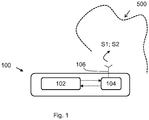
- Fig. 1 shows a network node 100 according to an embodiment of the present invention.
- the network node 100 has the capabilities to communicate with other communication devices (not shown in Fig. 1 ) in the wireless communication system 500.
- the network node 100 comprises a transceiver 104 which in this embodiment is coupled to an antenna unit 106.
- the transceiver 104 is further communicably coupled to a processor 102 of the network node 100.
- the processor 102 of the network node 100 is configured to select a group of user devices 300a, 300b,..., 300n (see Fig. 8 ) for superposed reception or transmission of data.
- the processor 102 is further configured to determine Control Information (CI) for, or specific to the user devices 300a, 300b,..., 300n of the selected group.
- the CI comprises Group Control Information (GCI) common to the user devices 300a, 300b,..., 300n of the selected group and at least one User Device Control Information (UDCI) specific to at least one user device of the user devices 300a, 300b,..., 300n of the selected group.
- GCI Group Control Information
- UDCI User Device Control Information
- the network node 100 may determine a separate UDCI for each user device 300a, 300b,..., 300n of the selected group.
- the transceiver 104 of the network node 100 is configured to transmit a first signal S1 which is addressed to the user devices 300a, 300b,..., 300n of the selected group in a first set of time and frequency resources. In other words, all user devices 300a, 300b,..., 300n of the selected group read the first signal S1.
- the first signal S1 comprises the GCI and the UDCI.
- the transceiver 104 of the network node 100 is configured to transmit a first signal S1 which is addressed to the user devices 300a, 300b,..., 300n of the selected group in a first set of time and frequency resources.
- all user devices 300a, 300b,..., 300n of the selected group read the first signal S1.
- the first signal S1 comprises the GCI.
- the transceiver 104 of the network node 100 is according to this aspect further configured to transmit a second signal S2 which is addressed to at least one user device of the user devices 300a, 300b,..., 300n of the selected group in a second set of time and frequency resources.
- the second signal S2 comprises the UDCI.
- the network node 100 may send to each of the user device 300a, 300b,..., 300n of the selected group a respective signal S2 in the second set of time frequency resources comprising the UDCI corresponding to the respective user device 300a, 300b,..., 300n.
- Fig. 5 illustrates the signalling between the network node 100 and a user device 300 according to an embodiment of the present invention.
- the network node 100 determines the GCI and the UDCI.
- a first signal S1 is transmitted to the user device 300.
- the first signal S1 indicates the GCI and the UDCI.
- the network node 100 transmits a first signal S1 and a second signal S2 to the user device 300.
- the first signal S1 indicates the GCI and the second signal S2 indicates the UDCI to the user device 300.
- the first signal S1 and second signal S2 are transmitted/signalled in different sets of time and frequency resources.
- Fig. 2 shows a method 200 according to an embodiment of the present invention.
- the method 200 may be executed in a network node 100, such as the one shown in Fig. 1 .
- the method 200 comprises the step of selecting 202 a group of user devices 300a, 300b,..., 300n for superposed reception or transmission of data.
- the method 200 further comprises the step of determining 204 CI for the user devices 300a, 300b,..., 300n of the selected group, the CI comprising GCI common to the user devices 300a, 300b,..., 300n of the selected group and at least one UDCI specific to at least one user device 300 of the user devices 300a, 300b,..., 300n of the selected group.
- the method 200 further comprises the step of transmitting 206 a first signal S1 which is addressed to the user devices 300a, 300b,..., 300n of the selected group in a first set of time and frequency resources, the first signal comprising the GCI and the UDCI.
- the method 200 further comprises the step of transmitting 208 a first signal S1 which is addressed to the user devices 300a, 300b,..., 300n of the selected group in a first set of time and frequency resources, the first signal S1 comprising the GCI, and transmit a second signal S2 which is addressed to at least one user device 300 of the user devices 300a, 300b,..., 300n of the selected group in a second set of time and frequency resources, the second signal S2 comprising the UDCI.
- Fig. 3 shows a user device 300 according to an embodiment of the present invention.
- the user device 300 comprises a processor 302 communicably coupled to a transceiver 304.
- the user device 300 also comprises an antenna unit 306 coupled to the transceiver 304.
- the transceiver 304 of the user device 300 is configured to receive a first signal S1 in a first set of time and frequency resources, the first signal S1 comprising GCI common to a selected group of user devices 300a, 300b,..., 300n and UDCI specific to the user device 300.
- the transceiver 304 of the user device 300 is configured to receive a first signal S1 in a first set of time and frequency resources, the first signal S1 comprising the GCI, and receive a second signal S2 in a second set of time and frequency resources, the second signal S2 comprising the UDCI.
- the processor 302 of the user device 300 is configured to decode the GCI and the UDCI.
- the transceiver 304 of the user device 300 further is configured to receive or transmit data according to the GCI and the UDCI.
- Fig. 4 shows a corresponding method 400 according to an embodiment of the present invention.
- the method 400 may be executed in a user device 300, such as the one shown in Fig. 3 .
- the method 400 comprises the step of receiving 402 a first signal S1 in a first set of time and frequency resources, the first signal S1 comprising GCI common to a selected group of user devices 300a, 300b,..., 300n and UDCI specific to the user device 300.
- the method 400 comprises the step of receiving 404 a first signal S1 in a first set of time and frequency resources, the first signal S1 comprising the GCI, and further to receive a second signal S2 in a second set of time and frequency resources, the second signal S2 comprising the UDCI.
- the method 400 further comprises the step of decoding 406 the GCI and the UDCI.
- the method 400 further comprises the step of receiving or transmitting data 408 according to the GCI and the UDCI. Therefore, upon the step of receiving 402 a first signal S1 or the step of receiving 404 a first signal S1 and a second signal S2, the user device 300 receives CI necessary for further receiving data in a downlink data channel or for transmitting data in an uplink data channel.
- the first signal S1 and the second signal S2 are transmitted in at least one control channel. Therefore, the GCI may be multicast to the intended group of user devices scheduled in a certain TTI through the PDCCH or EPDCCH. In addition, the UDCI may be unicast to each user devices scheduled in a certain TTI through the PDCCH or EPDCCH.
- the CI is comprised in a single (multicast) downlink control information format.
- Fig. 6 illustrates such an embodiment in which the single (multicast) downlink control information format comprises of two parts. The first part comprising the GCI and the second part comprises the UDCI.
- the multicast downlink control information format may be a control message transmitted by the network node 100 to user devices according known control protocols. It should be noted that the two parts need not be separated in the control message and may e.g. be interleaved in the control message.
- Fig. 7 illustrates a wireless communication system 500 according to an embodiment of the present invention.
- the network node 100 is a radio network base station which transmits the first S1 and/or the second signal S2 in the downlink to a number of selected user devices 300a, 300b,..., 300n.
- the network node 100 transmits a first signal comprising the GCI and the UDCI; or the network node transmits a first signal S1 comprising the CGI and a second signal S2 comprising the UDCI.
- the user devices 300a, 300b,..., 300n derives the GCI and the UDCI and transmits and/or receives according to the GCI and the UDCI.
- the x-axis represents time and the y-axis frequency.
- four user devices 300a, 300b, 300c, 300d are assigned multiple sets of possible non-contiguous time-frequency resources (in time or frequency, or both) blocks for data transmission or reception.
- Each set of time-frequency resources may be assigned to one or more user devices.
- the group of user devices 300a and 300b is assigned to use resource set 1.
- the Network Node (NN) 100 (not shown in Fig. 8 ) determines CI for, or specific to the group of user devices 300a and 300b.
- the CI comprises GCI common to the user devices 300a and 300b of the selected group and at least one UDCI specific to at least one user device of the user devices 300a and 300b of the selected group.
- the group of user devices 300b and 300d is configured to receive or transmit data in the resource set 3 according to the same method as described above.
- the network node 100 determines CI for, or specific to the group of user devices 300b and 300d.
- the CI comprises GCI common to the user devices 300b and 300d of the selected group and at least one UDCI specific to at least one user device of the user devices 300b and 300d of the selected group.
- User device 300c in Fig. 8 is configured to receive or transmit data in the resource set 2. No other user devices are assigned to resource set 2.
- the network node 100 determines CI for user device 300c comprising only UDCI and sends it to user device 300c.
- a single control message (the first signal) is sufficient to at least signal group specific control information (GCI) to the members (user devices) of the selected group.
- GCI signal group specific control information
- user device specific control information (UDCI) specific to each user device of a selected group can be sent in the same message or a further message (second signal). Therefore, the CI may refer to a scheduling grant for superposed non-orthogonal multiple access of a group of user devices to either the downlink or the uplink the data channel.
- the advantage of this method over conventional solutions is to transmit GCI and UDCI into a single multicast downlink control information format (i.e., a single multicast control message), thereby reducing signaling overhead in the case of non-orthogonal multiple access of user devices to a common pool of radio resources of a physical downlink or uplink shared data channel. Therefore, all user devices assigned to access the same (downlink or uplink) radio resources receive both GCI and UDCI by receiving the disclosed downlink control information format. This has the advantage to reduce signaling overhead and increase the efficiency of the resource utilization.
- control information specific to individual user devices 300a, 300b,..., 300n, i.e. UDCI, in the selected group of user device may, in this case, further be transmitted to the individual user devices with a separate control message i.e., in a separate user-specific control information format.
- This has the advantage to simplify the design of the downlink control information formats, while still reducing the control signaling overhead compared to the case in which the GCI common to all user devices in the group is transmitted separately to each individual user device scheduled for non-orthogonal multiple access to the same downlink or uplink radio resources.
- the GCI for superposed transmission or reception of data in shared or partially overlapping radio resources of a data channel may include one or more information in the group comprising: scheduling assignment information; multiple input multiple output, MIMO, transmission information; transport format information; number of scheduled user device information, multiple access mode information; and user device power allocation information.
- the scheduling assignment information indicates or specifies the radio resources (e.g. resource block, group of resource blocks, sub-bands, etc.) of a physical shared data channel (e.g., in downlink or in uplink) to be used by a group of user devices 300a, 300b,..., 300n selected for non-orthogonal multiple access. That is, a set of time and frequency resources assigned to the user devices 300a, 300b,..., 300n of the selected group or a subset of time and frequency resources shared by the user devices 300a, 300b,..., 300n of the selected group.
- the radio resources e.g. resource block, group of resource blocks, sub-bands, etc.
- the MIMO transmission information may indicate one or a combination of: a MIMO pre-coding matrix index or pre-coding vector index common to the user devices 300a, 300b,..., 300n of the selected group; a common number of data streams or layers available to the user devices 300a, 300b,..., 300n of the selected group.
- the number of user devices scheduled for superposed transmission or reception of data in shared or partially overlapping radio resources of a data channel indicates the number of user devices assigned to simultaneously access a common or overlapping set of radio resources in non-orthogonal way.
- a non-orthogonal multiple access mode indicates the multiple access scheme the user devices should adopt to access the common set of radio resources, such as non-orthogonal multiple access, superposition coding, semi-orthogonal multiple access; constellation expansion multiple access, rate adaptive constellation expansion multiple access, multiuser superposed transmission; multi-user MIMO multiple access, and the like.
- this information enables each user device 300a, 300b,..., 300n of the selected group to identify and decode its own data after joint detection of all data.
- the multiple access mode information indicates whether a non-orthogonal multiple access scheme is configured for superposed transmission or reception of data.
- the non-orthogonal multiple access scheme can refer to one or more in the group comprising: non-orthogonal multiple access, semi-orthogonal multiple access; constellation expansion multiple access, rate adaptive constellation expansion multiple access, multiuser superposed transmission; and multi-user MIMO multiple access. This can e.g. be realized with a one-bit flag in a multicast control information signal.
- the user device power allocation information comprises one or more in the group comprising: downlink power allocation to least one user device 300 of the user devices 300a, 300b,..., 300n of the selected group; and uplink power allocation to least one user device 300 of the user devices 300a, 300b,..., 300n of the selected group.
- the user device power allocation information may be used to indicate common power control settings for shared data channel transmission or reference signal transmission with non-orthogonal multiple access.
- the power settings may refer also to MIMO transmission, such as power settings for all user devices in a MIMO stream or layer in the case of non-orthogonal multiple access with SU-MIMO transmission, or power settings for all user devices per transmission beam in the case of non-orthogonal multiple access with transmission beam-forming or MU-MIMO.
- MIMO transmission such as power settings for all user devices in a MIMO stream or layer in the case of non-orthogonal multiple access with SU-MIMO transmission, or power settings for all user devices per transmission beam in the case of non-orthogonal multiple access with transmission beam-forming or MU-MIMO.
- This information can further be utilized to enable advanced receiver processing, such as successive interference cancellation/suppression. For the case of uplink multiple access, this information enables each user device to use the proper shared data channel resources and transmission format for multiple access to the data channel.
- the GCI indicates one or more in the group comprising: a common MIMO pre-coding matrix index or pre-coding vector index; a common number of data streams or layers available to the user devices 300a, 300b,..., 300n of the selected group; and a set of common time and frequency resources assigned to the user devices 300a, 300b,..., 300n of the selected group or a subset of time and frequency resources shared by the user devices 300a, 300b,..., 300n of the selected group.
- the GCI further indicates a common modulation format. This is particularly convenient in non-orthogonal MA systems using a common modulation format shared among the user device signals, e.g. in Rate Adaptive Constellation Expansion MA systems.
- the UDCI for non-orthogonal multiple access to downlink or uplink shared data channel resources may include information in the group comprising: user device identity information; transport format information; hybrid automatic repeat request, HARQ, information; and user device power allocation information.
- the user device identity information indicates which user devices the group-specific downlink control information format is intended for, thereby enabling group of user devices dynamically scheduled, for instance, on a TTI basis to receive and decode control information for non-orthogonal multiple access to shared downlink or uplink radio resources.
- the order in which user device identities appear in the downlink control information format can further enable the corresponding user devices to identify the associated additional user device specific control information within the control signal format.
- the order in which user specific information appears in a field can be mapped implicitly or explicitly to the order in which the user identities appear in the user identity field of the control information format.
- the transport format information may indicate parts or all transport format information intend for a user device.
- Transport format information common to all scheduled user devices can be transmitted as part of the common downlink control information, whilst user device specific transport format information can be transmitted in a separate field of the control signal format.
- the transport format information comprises a common modulation format to the user devices 300a, 300b,..., 300n of the selected group or a modulation and coding scheme indicator.
- the HARQ information refers to user device specific information for retransmission of previously failed transmission attempts.
- the information may comprise number of retransmission attempt(s), transmission format, modulation and coding rate.
- the user device power allocation information comprises one or more in the group comprising: downlink power allocation to least one user device 300 of the user devices 300a, 300b,..., 300n of the selected group; and uplink power allocation to least one user device 300 of the user devices 300a, 300b,..., 300n of the selected group.
- the power allocation information may indicate the fraction of the overall transmission power used to transmit information of each user device within the same pool of shared data radio resources.
- Power allocation information may further indicate transmission power used for user device specific pilot reference signals within the pool of shared data radio resources assigned for non-orthogonal multiple access.
- This power allocation information may comprise, e.g., a power offset compared to the data transmission power used for the user device.
- Power control settings may further be resource specific, i.e., resource block specific, group of resource block specific, or sub-band specific.
- the UDCI indicates a channel code rate; and a multiuser interleaving scheme.
- This embodiment is convenient for non-orthogonal MA schemes that do not require CodeWord-level Interference Cancellation (CWIC), because a user device 300 only needs to know the code rate used to encode its own codewords and the multiuser interleaving scheme.
- CWIC CodeWord-level Interference Cancellation
- the GCI sent to the group of user devices comprises at least one of:
- This exemplary embodiment refers to non-orthogonal multiple access schemes using a common modulation format, like Rate-adaptive constellation Expansion Multiple Access.
- a common modulation format like Rate-adaptive constellation Expansion Multiple Access.
- no power allocation to user devices is performed and the user devices are multiplexed on the codewords domain.
- the parameters common to all user devices are signaled using the GCI and the user device-specific parameters are signaled using the UDCI.
- the GCI sent to the group of user devices comprises at least one of:
- This exemplary embodiment refers to non-orthogonal multiple access (MA) schemes performing linear superposition like NOMA and SOMA where power allocation coefficients are specific to each user device.
- the parameters common to all user devices are signaled using the GCI and the user device-specific parameters are signaled using the UDCI.
- the network node 100 or a radio network node, or base station e.g. a Radio Base Station (RBS), which in some networks may be referred to as transmitter, "eNB”, “eNodeB”, “NodeB” or “B node”, depending on the technology and terminology used.
- the radio network nodes may be of different classes such as e.g. macro eNodeB, home eNodeB or pico base station, based on transmission power and thereby also cell size.
- the radio network node can be a Station (STA), which is any device that contains an IEEE 802.11-conformant Media Access Control (MAC) and Physical Layer (PHY) interface to the Wireless Medium (WM).
- STA Station
- MAC Media Access Control
- PHY Physical Layer
- the user device 300 or a User Equipment (UE), mobile station, wireless terminal and/or mobile terminal is enabled to communicate wirelessly in a wireless communication system, sometimes also referred to as a cellular radio system.
- the User Equipment (UE) may further be referred to as mobile telephones, cellular telephones, computer tablets or laptops with wireless capability.
- the UEs in the present context may be, for example, portable, pocket-storable, hand-held, computer-comprised, or vehicle-mounted mobile devices, enabled to communicate voice and/or data, via the radio access network, with another entity, such as another receiver or a server.
- the UE can be a Station (STA), which is any device that contains an IEEE 802.11-conformant Media Access Control (MAC) and Physical Layer (PHY) interface to the Wireless Medium (WM).
- MAC Media Access Control
- PHY Physical Layer
- any method according to the present invention may be implemented in a computer program, having code means, which when run by processing means causes the processing means to execute the steps of the method.
- the computer program is included in a computer readable medium of a computer program product.
- the computer readable medium may comprises of essentially any memory, such as a ROM (Read-Only Memory), a PROM (Programmable Read-Only Memory), an EPROM (Erasable PROM), a Flash memory, an EEPROM (Electrically Erasable PROM), or a hard disk drive.
- the present first network node and second network node comprises the necessary communication capabilities in the form of e.g., functions, means, units, elements, etc., for performing the present solution.
- means, units, elements and functions are: processors, memory, buffers, control logic, encoders, decoders, rate matchers, de-rate matchers, mapping units, multipliers, decision units, selecting units, switches, interleavers, de-interleavers, modulators, demodulators, inputs, outputs, antennas, amplifiers, receiver units, transmitter units, DSPs, MSDs, TCM encoder, TCM decoder, power supply units, power feeders, communication interfaces, communication protocols, etc. which are suitably arranged together for performing the present solution.
- the processors of the present devices may comprise, e.g., one or more instances of a Central Processing Unit (CPU), a processing unit, a processing circuit, a processor, an Application Specific Integrated Circuit (ASIC), a microprocessor, or other processing logic that may interpret and execute instructions.
- CPU Central Processing Unit
- ASIC Application Specific Integrated Circuit
- the expression "processor” may thus represent a processing circuitry comprising a plurality of processing circuits, such as, e.g., any, some or all of the ones mentioned above.
- the processing circuitry may further perform data processing functions for inputting, outputting, and processing of data comprising data buffering and device control functions, such as call processing control, user interface control, or the like.
Landscapes
- Engineering & Computer Science (AREA)
- Signal Processing (AREA)
- Computer Networks & Wireless Communication (AREA)
- Multimedia (AREA)
- Mobile Radio Communication Systems (AREA)
Claims (16)
- Noeud de réseau destiné à un système de communication sans fil (500) utilisant un accès multiple non orthogonal, le noeud de réseau (100) comprenant :un processeur (102) configuré poursélectionner un groupe de dispositifs d'utilisateur (300a, 300b, ..., 300n) pour la réception superposée ou l'émission superposée de données,déterminer des informations de commande, CI, pour les dispositifs d'utilisateur (300a, 300b, ..., 300n) du groupe sélectionné, les informations de commande, CI, contenant des informations de commande de groupe, GCI, communes aux dispositifs d'utilisateur (300a, 300b, ..., 300n) du groupe sélectionné et au moins des informations de commande de dispositif d'utilisateur, UDCI, spécifiques à au moins un dispositif d'utilisateur (300) des dispositifs d'utilisateur (300a, 300b, ..., 300n) du groupe sélectionné, lesdites informations de commande, CI, étant contenues dans un format d'informations de commande de liaison descendante, DCI, unique ; etun émetteur/récepteur (104) configuré pourémettre un premier signal qui est adressé aux dispositifs d'utilisateur (300a, 300b, ..., 300n) du groupe sélectionné dans un premier ensemble de ressources de temps et de fréquence, le premier signal contenant les informations de commande de groupe, GCI, et les informations de commande de dispositif d'utilisateur, UDCI ; ouémettre un premier signal qui est adressé aux dispositifs d'utilisateur (300a, 300b, ..., 300n) du groupe sélectionné dans un premier ensemble de ressources de temps et de fréquence, le premier signal contenant les informations de commande de groupe, GCI, et émettre un deuxième signal qui est adressé à au moins un dispositif d'utilisateur (300) des dispositifs d'utilisateur (300a, 300b, ..., 300n) du groupe sélectionné dans un deuxième ensemble de ressources de temps et de fréquence, le deuxième signal contenant les informations de commande de dispositif d'utilisateur, UDCI.
- Noeud de réseau (100) selon la revendication 1, dans lequel les dispositifs d'utilisateur (300a, 300b, ..., 300n) du groupe sélectionné partagent au moins une ressource de temps et de fréquence commune pour la réception ou l'émission superposée de données.
- Noeud de réseau (100) selon la revendication 1 ou 2, dans lequel le premier signal est émis dans au moins un canal de commande.
- Noeud de réseau (100) selon l'une quelconque des revendications précédentes, dans lequel les informations de commande, CI, contiennent des informations de commande de dispositif d'utilisateur, UDCI, pour chaque dispositif d'utilisateur du groupe sélectionné.
- Dispositif d'utilisateur destiné à un système de communication sans fil (500) utilisant un accès multiple non orthogonal, le dispositif d'utilisateur (300) comprenant :un émetteur/récepteur (104) configuré pourrecevoir un premier signal dans un premier ensemble de ressources de temps et de fréquence, le premier signal contenant des informations de commande de groupe, GCI, communes à un groupe sélectionné de dispositifs d'utilisateur (300a, 300b, ..., 300n) et des informations de commande de dispositif d'utilisateur, UDCI, spécifiques au dispositif d'utilisateur (300) ; ourecevoir un premier signal dans un premier ensemble de ressources de temps et de fréquence, le premier signal contenant les informations de commande de groupe, GCI, et recevoir un deuxième signal dans un deuxième ensemble de ressources de temps et de fréquence, le deuxième signal contenant les informations de commande de dispositif d'utilisateur, UDCI, les informations de commande de groupe, GCI, et les informations de commande de dispositif d'utilisateur, UDCI, étant contenues dans des informations de commande, CI, contenues dans un format d'informations de commande de liaison descendante, DCI, unique ; etun processeur (302) configuré pourdécoder les informations de commande de groupe, GCI, et les informations de commande de dispositif d'utilisateur, UDCI, etl'émetteur/récepteur (304) étant également configuré pour recevoir ou émettre des données en fonction des informations de commande de groupe, GCI, et des informations de commande de dispositif d'utilisateur, UDCI.
- Noeud de réseau (100) ou dispositif d'utilisateur (300) selon l'une quelconque des revendications précédentes, dans lequel les informations de commande de groupe, GCI, indiquent un ou plusieurs éléments du groupe contenant : des informations d'affectation d'ordonnancement ; des informations d'émission à entrées multiples et sorties multiples, MIMO ; des informations de format de transport ; des informations de nombre de dispositifs d'utilisateur ordonnancés, des informations de mode d'accès multiple ; et des informations d'attribution de puissance de dispositif d'utilisateur.
- Noeud de réseau (100) ou dispositif d'utilisateur (300) selon l'une quelconque des revendications précédentes, dans lequel les informations de commande de groupe, GCI, indiquent un ou plusieurs éléments du groupe contenant : un index de matrice de précodage MIMO commun ou un index de vecteur de précodage ; un nombre commun de flux de données ou de couches disponibles aux dispositifs d'utilisateur (300a, 300b, ..., 300n) du groupe sélectionné ; et un ensemble de ressources de temps et de fréquence communes affectées aux dispositifs d'utilisateur (300a, 300b, ..., 300n) du groupe sélectionné ou un sous-ensemble de ressources de temps et de fréquence partagées par les dispositifs d'utilisateur (300a, 300b, ..., 300n) du groupe sélectionné.
- Noeud de réseau (100) ou dispositif d'utilisateur (300) selon la revendication 7, dans lequel les informations de commande de groupe, GCI, indiquent également un format de modulation commun.
- Noeud de réseau (100) ou dispositif d'utilisateur (300) selon l'une quelconque des revendications précédentes, dans lequel les informations de commande de dispositif d'utilisateur, UDCI, indiquent un ou plusieurs éléments du groupe contenant : des informations d'identité de dispositif d'utilisateur ; des informations de format de transport ; des informations de demande de répétition automatique hybride, HARQ ; et des informations d'attribution de puissance de dispositif d'utilisateur.
- Noeud de réseau (100) ou dispositif d'utilisateur (300) selon l'une quelconque des revendications précédentes, dans lequel les informations de commande de dispositif d'utilisateur, UDCI, indiquent une vitesse de code de canal ; et un schéma d'entrelacement multi-utilisateur.
- Noeud de réseau (100) ou dispositif d'utilisateur (300) selon l'une quelconque des revendications précédentes, dans lequel les informations de commande de dispositif d'utilisateur, UDCI, indiquent une attribution de puissance de dispositif d'utilisateur ; un schéma de modulation et une vitesse de code de canal ou un indicateur de schéma de codage er de modulation ; un index de matrice de précodage MIMO spécifique à un dispositif d'utilisateur ou un index de vecteur de précodage.
- Noeud de réseau (100) ou dispositif d'utilisateur (300) selon la revendication 10 ou 11, dans lequel les informations de commande de dispositif d'utilisateur, UDCI, indiquent également le nombre de flux de données ou de couches spécifiques à un dispositif d'utilisateur, disponibles aux dispositifs d'utilisateur (300a, 300b, ..., 300n) du groupe sélectionné.
- Noeud de réseau (100) ou dispositif d'utilisateur (300) selon l'une quelconque des revendications précédentes, dans lequel les informations de commande, CI, sont contenues dans un format d'informations de commande de liaison descendante, DCI, de multidiffusion unique.
- Procédé (200) exécuté dans un noeud de réseau destiné à un système de communication sans fil (500) utilisant un accès multiple non orthogonal, le procédé comprenant les étapes consistant à :sélectionner (202) un groupe de dispositifs d'utilisateur (300a, 300b, ..., 300n) pour la réception superposée ou l'émission superposée de données ;déterminer (204) des informations de commande, CI, pour les dispositifs d'utilisateur (300a, 300b, ..., 300n) du groupe sélectionné, les informations de commande, CI, contenant des informations de commande de groupe, GCI, communes aux dispositifs d'utilisateur (300a, 300b, ..., 300n) du groupe sélectionné et au moins des informations de commande de dispositif d'utilisateur, UDCI, spécifiques à au moins un dispositif d'utilisateur (300) des dispositifs d'utilisateur (300a, 300b, ..., 300n) du groupe sélectionné, lesdites informations de commande, CI, étant contenues dans un format d'informations de commande de liaison descendante, DCI, unique ;émettre (206) un premier signal qui est adressé aux dispositifs d'utilisateur (300a, 300b, ..., 300n) du groupe sélectionné dans un premier ensemble de ressources de temps et de fréquence, le premier signal contenant les informations de commande de groupe, GCI, et les informations de commande de dispositif d'utilisateur, UDCI ; ouémettre (208) un premier signal qui est adressé aux dispositifs d'utilisateur (300a, 300b, ..., 300n) du groupe sélectionné dans un premier ensemble de ressources de temps et de fréquence, le premier signal contenant les informations de commande de groupe, GCI, et émettre un deuxième signal qui est adressé à au moins un dispositif d'utilisateur (300) des dispositifs d'utilisateur (300a, 300b, ..., 300n) du groupe sélectionné dans un deuxième ensemble de ressources de temps et de fréquence, le deuxième signal contenant les informations de commande de dispositif d'utilisateur, UDCI.
- Procédé (400) exécuté dans un dispositif d'utilisateur destiné à un système de communication sans fil (500) utilisant un accès multiple non orthogonal, le procédé comprenant les étapes consistant à :recevoir (402) un premier signal dans un premier ensemble de ressources de temps et de fréquence, le premier signal contenant des informations de commande de groupe, GCI, communes à un groupe sélectionné de dispositifs d'utilisateur (300a, 300b, ..., 300n) et des informations de commande de dispositif d'utilisateur, UDCI, spécifiques au dispositif d'utilisateur (300) ; ourecevoir (404) un premier signal dans un premier ensemble de ressources de temps et de fréquence, le premier signal contenant les informations de commande de groupe, GCI,et recevoir un deuxième signal dans un deuxième ensemble de ressources de temps et de fréquence, le deuxième signal contenant les informations de commande de dispositif d'utilisateur, UDCI, les informations de commande de groupe, GCI, et les informations de commande de dispositif d'utilisateur, UDCI, étant contenues dans des informations de commande, CI, contenues dans un format d'informations de commande de liaison descendante, DCI, unique ; etdécoder (406) les informations de commande de groupe, GCI, et les informations de commande de dispositif d'utilisateur, UDCI ;recevoir ou émettre (408) des données en fonction des informations de commande de groupe, GCI, et des informations de commande de dispositif d'utilisateur, UDCI.
- Programme informatique comprenant un code de programme contenant des instructions qui, lorsqu'elles sont exécutées par un ordinateur, font que l'ordinateur exécute un procédé selon la revendication 14 ou la revendication 15.
Applications Claiming Priority (1)
| Application Number | Priority Date | Filing Date | Title |
|---|---|---|---|
| PCT/EP2015/060617 WO2016180491A1 (fr) | 2015-05-13 | 2015-05-13 | Nœud de réseau, dispositif utilisateur et ses procédés basés sur une transmission de superposition |
Publications (2)
| Publication Number | Publication Date |
|---|---|
| EP3272052A1 EP3272052A1 (fr) | 2018-01-24 |
| EP3272052B1 true EP3272052B1 (fr) | 2019-03-06 |
Family
ID=53298321
Family Applications (1)
| Application Number | Title | Priority Date | Filing Date |
|---|---|---|---|
| EP15727319.4A Active EP3272052B1 (fr) | 2015-05-13 | 2015-05-13 | Noeud de réseau, dispositif utilisateur et procédés associés basés sur la superposition de transmissions de signaux |
Country Status (4)
| Country | Link |
|---|---|
| US (1) | US20180019852A1 (fr) |
| EP (1) | EP3272052B1 (fr) |
| CN (1) | CN107592961B (fr) |
| WO (1) | WO2016180491A1 (fr) |
Families Citing this family (13)
| Publication number | Priority date | Publication date | Assignee | Title |
|---|---|---|---|---|
| US10694531B2 (en) * | 2016-05-13 | 2020-06-23 | Qualcomm Incorporated | Grouping user equipment based on precoding matrix indicators for combined transmission |
| US10736138B2 (en) * | 2016-09-29 | 2020-08-04 | Lg Electronics Inc. | Method for performing contention-based non-orthogonal multiple access in wireless communication system, and device for same |
| KR102156668B1 (ko) * | 2016-11-16 | 2020-09-17 | 주식회사 케이티 | 차세대 무선망에서 하향링크 신호를 송수신하는 방법 및 그 장치 |
| CN108964853B (zh) | 2017-05-18 | 2023-11-17 | 华为技术有限公司 | 一种时隙的指示方法、接入网设备和用户设备 |
| WO2019000279A1 (fr) * | 2017-06-28 | 2019-01-03 | 华为技术有限公司 | Procédé et appareil de régulation de puissance de porteuse, support d'informations et produit-programme d'ordinateur |
| US11716746B2 (en) | 2018-02-14 | 2023-08-01 | Interdigital Patent Holdings, Inc. | Scheduling and transmission for NOMA |
| WO2019158199A1 (fr) * | 2018-02-15 | 2019-08-22 | Telefonaktiebolaget Lm Ericsson (Publ) | Appareils, procédés et programmes informatiques de regroupement d'utilisateurs dans un réseau d'accès multiple non orthogonal (noma) |
| CN116033575A (zh) * | 2018-03-23 | 2023-04-28 | 上海朗帛通信技术有限公司 | 一种被用于无线通信的用户设备、基站中的方法和装置 |
| US11445487B2 (en) | 2018-06-15 | 2022-09-13 | At&T Intellectual Property I, L.P. | Single user super position transmission for future generation wireless communication systems |
| US11140668B2 (en) * | 2018-06-22 | 2021-10-05 | At&T Intellectual Property I, L.P. | Performance of 5G MIMO |
| US10945281B2 (en) | 2019-02-15 | 2021-03-09 | At&T Intellectual Property I, L.P. | Facilitating improved performance of multiple downlink control channels in advanced networks |
| CN111757516B (zh) * | 2019-03-29 | 2022-07-12 | 大唐移动通信设备有限公司 | 一种下行控制信息的发送、处理方法及装置 |
| US11877299B2 (en) * | 2020-03-05 | 2024-01-16 | Qualcomm Incorporated | Control channel resources for group-feedback in multi-cast |
Family Cites Families (18)
| Publication number | Priority date | Publication date | Assignee | Title |
|---|---|---|---|---|
| US150496A (en) * | 1874-05-05 | Improvement in extension-table slides | ||
| CN101594555B (zh) * | 2008-05-30 | 2012-11-07 | 华为技术有限公司 | 一种媒体转发方法、系统和装置 |
| US8811267B2 (en) * | 2008-08-13 | 2014-08-19 | Samsung Electronics Co., Ltd. | Communication system for supporting primary user and secondary user |
| TWI496427B (zh) * | 2009-03-16 | 2015-08-11 | Interdigital Patent Holdings | 具載波聚合及叢集-dft上鏈mimo之資料及控制多工 |
| CN102577291B (zh) * | 2009-09-18 | 2015-08-12 | Lg电子株式会社 | 在多载波无线通信系统中收发调度信号的方法和装置 |
| KR101617049B1 (ko) * | 2009-11-03 | 2016-05-02 | 엘지전자 주식회사 | 무선 통신 시스템에서 측정 결과 보고 방법 및 장치 |
| US10003486B2 (en) * | 2014-04-28 | 2018-06-19 | Intel IP Corporation | Non-orthogonal multiple access (NOMA) wireless systems and methods |
| US9712272B2 (en) * | 2014-06-02 | 2017-07-18 | Intel IP Corporation | User equipment and method for dynamic non-orthogonal multiple access communication |
| US10396930B2 (en) * | 2014-11-04 | 2019-08-27 | Lg Electronics Inc. | NOMA scheme data receiving method and user equipment |
| CN107409295B (zh) * | 2015-02-27 | 2020-04-28 | 华为技术有限公司 | 传输下行控制信息的方法和装置 |
| US20160337018A1 (en) * | 2015-05-12 | 2016-11-17 | Mediatek Inc. | Use of Different Precoders for Superposed Signals in Downlink Multiuser Superposition Transmission |
| US10098103B2 (en) * | 2015-06-22 | 2018-10-09 | Samsung Electronics Co., Ltd. | Method and apparatus for multiuser superposition transmission |
| US10285169B2 (en) * | 2015-07-10 | 2019-05-07 | Qualcomm Incorporated | Downlink control information (DCI) enhancements for non-orthogonal multiple access |
| US11095404B2 (en) * | 2015-07-31 | 2021-08-17 | Qualcomm Incorporated | Multiplexing downlink control information of same aggregation level by coding together |
| US10454652B2 (en) * | 2015-08-04 | 2019-10-22 | Hfi Innovation Inc. | Methods of enabling multiuser superposition transmission |
| GB2541390B (en) * | 2015-08-14 | 2021-10-20 | Tcl Communication Ltd | Systems and methods for multi-user communication |
| US10201006B2 (en) * | 2016-04-01 | 2019-02-05 | Qualcomm Incorporated | Downlink control information for multi-layer transmissions |
| CN120692671A (zh) * | 2017-03-24 | 2025-09-23 | 北京三星通信技术研究有限公司 | 半静态资源调度方法、功率控制方法及相应用户设备 |
-
2015
- 2015-05-13 CN CN201580079980.1A patent/CN107592961B/zh active Active
- 2015-05-13 EP EP15727319.4A patent/EP3272052B1/fr active Active
- 2015-05-13 WO PCT/EP2015/060617 patent/WO2016180491A1/fr not_active Ceased
-
2017
- 2017-09-28 US US15/718,849 patent/US20180019852A1/en not_active Abandoned
Non-Patent Citations (1)
| Title |
|---|
| None * |
Also Published As
| Publication number | Publication date |
|---|---|
| US20180019852A1 (en) | 2018-01-18 |
| EP3272052A1 (fr) | 2018-01-24 |
| WO2016180491A1 (fr) | 2016-11-17 |
| CN107592961A (zh) | 2018-01-16 |
| CN107592961B (zh) | 2020-08-25 |
Similar Documents
| Publication | Publication Date | Title |
|---|---|---|
| EP3272052B1 (fr) | Noeud de réseau, dispositif utilisateur et procédés associés basés sur la superposition de transmissions de signaux | |
| CN108352937B (zh) | 下行链路控制信道的调度方法、用户设备及存储器 | |
| EP2599356B1 (fr) | Procédés de signalisation pour planificateur de liaison descendante dynamique spécifique d'ue dans des systèmes ofdma | |
| CN109565403B (zh) | 通信系统中物理下行链路控制信道的发送 | |
| US8811321B2 (en) | Method for transceiving a downlink reference signal, and base station and user equipment using same | |
| JP5635096B2 (ja) | シングルユーザ多入力多出力(su−mimo)とマルチユーザmimo(mu−mimo)とをサポートするための方法および装置 | |
| US11039424B2 (en) | Network node, user device and methods thereof | |
| EP3389204A1 (fr) | Procédé d'indication de signal de référence de démodulation (dmrs), terminal et station de base | |
| US20110170497A1 (en) | Resource allocation and signaling method for multi-antenna LTE sounding | |
| CN107437962A (zh) | 在无线通信系统中识别用户设备的资源调度的方法和装置 | |
| KR20130114002A (ko) | Massive MIMO 전송을 지원하는 이동 통신 시스템에서 채널 송수신 방법 및 장치 | |
| EP3031271A1 (fr) | Appareil de terminal, appareil de station de base, système de communication, procédé de communication et circuit intégré | |
| AU2013389278A1 (en) | Methods and nodes in a wireless communication system | |
| KR20130058565A (ko) | 송수신 포인트, 송수신 포인트의 제어 정보 전송 방법, 단말, 및 단말의 제어 정보 수신 방법 | |
| EP3065331A1 (fr) | Planification de liaison descendante dans des systèmes de communication de type noma |
Legal Events
| Date | Code | Title | Description |
|---|---|---|---|
| STAA | Information on the status of an ep patent application or granted ep patent |
Free format text: STATUS: THE INTERNATIONAL PUBLICATION HAS BEEN MADE |
|
| PUAI | Public reference made under article 153(3) epc to a published international application that has entered the european phase |
Free format text: ORIGINAL CODE: 0009012 |
|
| STAA | Information on the status of an ep patent application or granted ep patent |
Free format text: STATUS: REQUEST FOR EXAMINATION WAS MADE |
|
| 17P | Request for examination filed |
Effective date: 20171018 |
|
| AK | Designated contracting states |
Kind code of ref document: A1 Designated state(s): AL AT BE BG CH CY CZ DE DK EE ES FI FR GB GR HR HU IE IS IT LI LT LU LV MC MK MT NL NO PL PT RO RS SE SI SK SM TR |
|
| AX | Request for extension of the european patent |
Extension state: BA ME |
|
| DAV | Request for validation of the european patent (deleted) | ||
| DAX | Request for extension of the european patent (deleted) | ||
| GRAP | Despatch of communication of intention to grant a patent |
Free format text: ORIGINAL CODE: EPIDOSNIGR1 |
|
| STAA | Information on the status of an ep patent application or granted ep patent |
Free format text: STATUS: GRANT OF PATENT IS INTENDED |
|
| RIC1 | Information provided on ipc code assigned before grant |
Ipc: H04L 5/00 20060101AFI20180823BHEP Ipc: H04W 4/08 20090101ALI20180823BHEP |
|
| INTG | Intention to grant announced |
Effective date: 20180912 |
|
| GRAS | Grant fee paid |
Free format text: ORIGINAL CODE: EPIDOSNIGR3 |
|
| GRAA | (expected) grant |
Free format text: ORIGINAL CODE: 0009210 |
|
| STAA | Information on the status of an ep patent application or granted ep patent |
Free format text: STATUS: THE PATENT HAS BEEN GRANTED |
|
| AK | Designated contracting states |
Kind code of ref document: B1 Designated state(s): AL AT BE BG CH CY CZ DE DK EE ES FI FR GB GR HR HU IE IS IT LI LT LU LV MC MK MT NL NO PL PT RO RS SE SI SK SM TR |
|
| REG | Reference to a national code |
Ref country code: GB Ref legal event code: FG4D |
|
| REG | Reference to a national code |
Ref country code: CH Ref legal event code: EP Ref country code: AT Ref legal event code: REF Ref document number: 1106034 Country of ref document: AT Kind code of ref document: T Effective date: 20190315 |
|
| REG | Reference to a national code |
Ref country code: DE Ref legal event code: R096 Ref document number: 602015025822 Country of ref document: DE |
|
| REG | Reference to a national code |
Ref country code: IE Ref legal event code: FG4D |
|
| REG | Reference to a national code |
Ref country code: NL Ref legal event code: MP Effective date: 20190306 |
|
| REG | Reference to a national code |
Ref country code: LT Ref legal event code: MG4D |
|
| PG25 | Lapsed in a contracting state [announced via postgrant information from national office to epo] |
Ref country code: SE Free format text: LAPSE BECAUSE OF FAILURE TO SUBMIT A TRANSLATION OF THE DESCRIPTION OR TO PAY THE FEE WITHIN THE PRESCRIBED TIME-LIMIT Effective date: 20190306 Ref country code: FI Free format text: LAPSE BECAUSE OF FAILURE TO SUBMIT A TRANSLATION OF THE DESCRIPTION OR TO PAY THE FEE WITHIN THE PRESCRIBED TIME-LIMIT Effective date: 20190306 Ref country code: NO Free format text: LAPSE BECAUSE OF FAILURE TO SUBMIT A TRANSLATION OF THE DESCRIPTION OR TO PAY THE FEE WITHIN THE PRESCRIBED TIME-LIMIT Effective date: 20190606 Ref country code: LT Free format text: LAPSE BECAUSE OF FAILURE TO SUBMIT A TRANSLATION OF THE DESCRIPTION OR TO PAY THE FEE WITHIN THE PRESCRIBED TIME-LIMIT Effective date: 20190306 |
|
| PG25 | Lapsed in a contracting state [announced via postgrant information from national office to epo] |
Ref country code: BG Free format text: LAPSE BECAUSE OF FAILURE TO SUBMIT A TRANSLATION OF THE DESCRIPTION OR TO PAY THE FEE WITHIN THE PRESCRIBED TIME-LIMIT Effective date: 20190606 Ref country code: GR Free format text: LAPSE BECAUSE OF FAILURE TO SUBMIT A TRANSLATION OF THE DESCRIPTION OR TO PAY THE FEE WITHIN THE PRESCRIBED TIME-LIMIT Effective date: 20190607 Ref country code: NL Free format text: LAPSE BECAUSE OF FAILURE TO SUBMIT A TRANSLATION OF THE DESCRIPTION OR TO PAY THE FEE WITHIN THE PRESCRIBED TIME-LIMIT Effective date: 20190306 Ref country code: LV Free format text: LAPSE BECAUSE OF FAILURE TO SUBMIT A TRANSLATION OF THE DESCRIPTION OR TO PAY THE FEE WITHIN THE PRESCRIBED TIME-LIMIT Effective date: 20190306 Ref country code: HR Free format text: LAPSE BECAUSE OF FAILURE TO SUBMIT A TRANSLATION OF THE DESCRIPTION OR TO PAY THE FEE WITHIN THE PRESCRIBED TIME-LIMIT Effective date: 20190306 Ref country code: RS Free format text: LAPSE BECAUSE OF FAILURE TO SUBMIT A TRANSLATION OF THE DESCRIPTION OR TO PAY THE FEE WITHIN THE PRESCRIBED TIME-LIMIT Effective date: 20190306 |
|
| REG | Reference to a national code |
Ref country code: AT Ref legal event code: MK05 Ref document number: 1106034 Country of ref document: AT Kind code of ref document: T Effective date: 20190306 |
|
| PG25 | Lapsed in a contracting state [announced via postgrant information from national office to epo] |
Ref country code: SK Free format text: LAPSE BECAUSE OF FAILURE TO SUBMIT A TRANSLATION OF THE DESCRIPTION OR TO PAY THE FEE WITHIN THE PRESCRIBED TIME-LIMIT Effective date: 20190306 Ref country code: RO Free format text: LAPSE BECAUSE OF FAILURE TO SUBMIT A TRANSLATION OF THE DESCRIPTION OR TO PAY THE FEE WITHIN THE PRESCRIBED TIME-LIMIT Effective date: 20190306 Ref country code: CZ Free format text: LAPSE BECAUSE OF FAILURE TO SUBMIT A TRANSLATION OF THE DESCRIPTION OR TO PAY THE FEE WITHIN THE PRESCRIBED TIME-LIMIT Effective date: 20190306 Ref country code: EE Free format text: LAPSE BECAUSE OF FAILURE TO SUBMIT A TRANSLATION OF THE DESCRIPTION OR TO PAY THE FEE WITHIN THE PRESCRIBED TIME-LIMIT Effective date: 20190306 Ref country code: IT Free format text: LAPSE BECAUSE OF FAILURE TO SUBMIT A TRANSLATION OF THE DESCRIPTION OR TO PAY THE FEE WITHIN THE PRESCRIBED TIME-LIMIT Effective date: 20190306 Ref country code: AL Free format text: LAPSE BECAUSE OF FAILURE TO SUBMIT A TRANSLATION OF THE DESCRIPTION OR TO PAY THE FEE WITHIN THE PRESCRIBED TIME-LIMIT Effective date: 20190306 Ref country code: PT Free format text: LAPSE BECAUSE OF FAILURE TO SUBMIT A TRANSLATION OF THE DESCRIPTION OR TO PAY THE FEE WITHIN THE PRESCRIBED TIME-LIMIT Effective date: 20190706 Ref country code: ES Free format text: LAPSE BECAUSE OF FAILURE TO SUBMIT A TRANSLATION OF THE DESCRIPTION OR TO PAY THE FEE WITHIN THE PRESCRIBED TIME-LIMIT Effective date: 20190306 |
|
| PG25 | Lapsed in a contracting state [announced via postgrant information from national office to epo] |
Ref country code: SM Free format text: LAPSE BECAUSE OF FAILURE TO SUBMIT A TRANSLATION OF THE DESCRIPTION OR TO PAY THE FEE WITHIN THE PRESCRIBED TIME-LIMIT Effective date: 20190306 Ref country code: PL Free format text: LAPSE BECAUSE OF FAILURE TO SUBMIT A TRANSLATION OF THE DESCRIPTION OR TO PAY THE FEE WITHIN THE PRESCRIBED TIME-LIMIT Effective date: 20190306 |
|
| REG | Reference to a national code |
Ref country code: DE Ref legal event code: R097 Ref document number: 602015025822 Country of ref document: DE |
|
| REG | Reference to a national code |
Ref country code: CH Ref legal event code: PL |
|
| PG25 | Lapsed in a contracting state [announced via postgrant information from national office to epo] |
Ref country code: AT Free format text: LAPSE BECAUSE OF FAILURE TO SUBMIT A TRANSLATION OF THE DESCRIPTION OR TO PAY THE FEE WITHIN THE PRESCRIBED TIME-LIMIT Effective date: 20190306 Ref country code: IS Free format text: LAPSE BECAUSE OF FAILURE TO SUBMIT A TRANSLATION OF THE DESCRIPTION OR TO PAY THE FEE WITHIN THE PRESCRIBED TIME-LIMIT Effective date: 20190706 |
|
| PLBE | No opposition filed within time limit |
Free format text: ORIGINAL CODE: 0009261 |
|
| STAA | Information on the status of an ep patent application or granted ep patent |
Free format text: STATUS: NO OPPOSITION FILED WITHIN TIME LIMIT |
|
| PG25 | Lapsed in a contracting state [announced via postgrant information from national office to epo] |
Ref country code: LI Free format text: LAPSE BECAUSE OF NON-PAYMENT OF DUE FEES Effective date: 20190531 Ref country code: DK Free format text: LAPSE BECAUSE OF FAILURE TO SUBMIT A TRANSLATION OF THE DESCRIPTION OR TO PAY THE FEE WITHIN THE PRESCRIBED TIME-LIMIT Effective date: 20190306 Ref country code: CH Free format text: LAPSE BECAUSE OF NON-PAYMENT OF DUE FEES Effective date: 20190531 Ref country code: MC Free format text: LAPSE BECAUSE OF FAILURE TO SUBMIT A TRANSLATION OF THE DESCRIPTION OR TO PAY THE FEE WITHIN THE PRESCRIBED TIME-LIMIT Effective date: 20190306 |
|
| REG | Reference to a national code |
Ref country code: BE Ref legal event code: MM Effective date: 20190531 |
|
| 26N | No opposition filed |
Effective date: 20191209 |
|
| PG25 | Lapsed in a contracting state [announced via postgrant information from national office to epo] |
Ref country code: SI Free format text: LAPSE BECAUSE OF FAILURE TO SUBMIT A TRANSLATION OF THE DESCRIPTION OR TO PAY THE FEE WITHIN THE PRESCRIBED TIME-LIMIT Effective date: 20190306 Ref country code: LU Free format text: LAPSE BECAUSE OF NON-PAYMENT OF DUE FEES Effective date: 20190513 |
|
| PG25 | Lapsed in a contracting state [announced via postgrant information from national office to epo] |
Ref country code: TR Free format text: LAPSE BECAUSE OF FAILURE TO SUBMIT A TRANSLATION OF THE DESCRIPTION OR TO PAY THE FEE WITHIN THE PRESCRIBED TIME-LIMIT Effective date: 20190306 |
|
| PG25 | Lapsed in a contracting state [announced via postgrant information from national office to epo] |
Ref country code: IE Free format text: LAPSE BECAUSE OF NON-PAYMENT OF DUE FEES Effective date: 20190513 |
|
| PG25 | Lapsed in a contracting state [announced via postgrant information from national office to epo] |
Ref country code: BE Free format text: LAPSE BECAUSE OF NON-PAYMENT OF DUE FEES Effective date: 20190531 |
|
| PG25 | Lapsed in a contracting state [announced via postgrant information from national office to epo] |
Ref country code: FR Free format text: LAPSE BECAUSE OF NON-PAYMENT OF DUE FEES Effective date: 20190531 |
|
| PGFP | Annual fee paid to national office [announced via postgrant information from national office to epo] |
Ref country code: GB Payment date: 20200506 Year of fee payment: 6 |
|
| PG25 | Lapsed in a contracting state [announced via postgrant information from national office to epo] |
Ref country code: CY Free format text: LAPSE BECAUSE OF FAILURE TO SUBMIT A TRANSLATION OF THE DESCRIPTION OR TO PAY THE FEE WITHIN THE PRESCRIBED TIME-LIMIT Effective date: 20190306 |
|
| PG25 | Lapsed in a contracting state [announced via postgrant information from national office to epo] |
Ref country code: MT Free format text: LAPSE BECAUSE OF FAILURE TO SUBMIT A TRANSLATION OF THE DESCRIPTION OR TO PAY THE FEE WITHIN THE PRESCRIBED TIME-LIMIT Effective date: 20190306 Ref country code: HU Free format text: LAPSE BECAUSE OF FAILURE TO SUBMIT A TRANSLATION OF THE DESCRIPTION OR TO PAY THE FEE WITHIN THE PRESCRIBED TIME-LIMIT; INVALID AB INITIO Effective date: 20150513 |
|
| GBPC | Gb: european patent ceased through non-payment of renewal fee |
Effective date: 20210513 |
|
| PG25 | Lapsed in a contracting state [announced via postgrant information from national office to epo] |
Ref country code: GB Free format text: LAPSE BECAUSE OF NON-PAYMENT OF DUE FEES Effective date: 20210513 |
|
| PG25 | Lapsed in a contracting state [announced via postgrant information from national office to epo] |
Ref country code: MK Free format text: LAPSE BECAUSE OF FAILURE TO SUBMIT A TRANSLATION OF THE DESCRIPTION OR TO PAY THE FEE WITHIN THE PRESCRIBED TIME-LIMIT Effective date: 20190306 |
|
| P01 | Opt-out of the competence of the unified patent court (upc) registered |
Effective date: 20230524 |
|
| PGFP | Annual fee paid to national office [announced via postgrant information from national office to epo] |
Ref country code: DE Payment date: 20250402 Year of fee payment: 11 |