EP3273236A1 - Verfahren zur extraktion von mykotoxinen aus getreiden, anderen lebensmitteln und futtermitteln - Google Patents
Verfahren zur extraktion von mykotoxinen aus getreiden, anderen lebensmitteln und futtermitteln Download PDFInfo
- Publication number
- EP3273236A1 EP3273236A1 EP16001588.9A EP16001588A EP3273236A1 EP 3273236 A1 EP3273236 A1 EP 3273236A1 EP 16001588 A EP16001588 A EP 16001588A EP 3273236 A1 EP3273236 A1 EP 3273236A1
- Authority
- EP
- European Patent Office
- Prior art keywords
- mycotoxins
- naphthyl
- aflatoxin
- extraction
- nds
- Prior art date
- Legal status (The legal status is an assumption and is not a legal conclusion. Google has not performed a legal analysis and makes no representation as to the accuracy of the status listed.)
- Granted
Links
Images

Classifications
-
- A—HUMAN NECESSITIES
- A23—FOODS OR FOODSTUFFS; TREATMENT THEREOF, NOT COVERED BY OTHER CLASSES
- A23L—FOODS, FOODSTUFFS OR NON-ALCOHOLIC BEVERAGES, NOT OTHERWISE PROVIDED FOR; PREPARATION OR TREATMENT THEREOF
- A23L5/00—Preparation or treatment of foods or foodstuffs, in general; Food or foodstuffs obtained thereby; Materials therefor
- A23L5/20—Removal of unwanted matter, e.g. deodorisation or detoxification
- A23L5/23—Removal of unwanted matter, e.g. deodorisation or detoxification by extraction with solvents
-
- A—HUMAN NECESSITIES
- A23—FOODS OR FOODSTUFFS; TREATMENT THEREOF, NOT COVERED BY OTHER CLASSES
- A23K—FODDER
- A23K10/00—Animal feeding-stuffs
- A23K10/30—Animal feeding-stuffs from material of plant origin, e.g. roots, seeds or hay; from material of fungal origin, e.g. mushrooms
-
- A—HUMAN NECESSITIES
- A23—FOODS OR FOODSTUFFS; TREATMENT THEREOF, NOT COVERED BY OTHER CLASSES
- A23L—FOODS, FOODSTUFFS OR NON-ALCOHOLIC BEVERAGES, NOT OTHERWISE PROVIDED FOR; PREPARATION OR TREATMENT THEREOF
- A23L7/00—Cereal-derived products; Malt products; Preparation or treatment thereof
- A23L7/10—Cereal-derived products
- A23L7/197—Treatment of whole grains not provided for in groups A23L7/117 - A23L7/196
-
- B—PERFORMING OPERATIONS; TRANSPORTING
- B01—PHYSICAL OR CHEMICAL PROCESSES OR APPARATUS IN GENERAL
- B01D—SEPARATION
- B01D15/00—Separating processes involving the treatment of liquids with solid sorbents; Apparatus therefor
- B01D15/08—Selective adsorption, e.g. chromatography
- B01D15/26—Selective adsorption, e.g. chromatography characterised by the separation mechanism
- B01D15/38—Selective adsorption, e.g. chromatography characterised by the separation mechanism involving specific interaction not covered by one or more of groups B01D15/265 and B01D15/30 - B01D15/36, e.g. affinity, ligand exchange or chiral chromatography
- B01D15/3804—Affinity chromatography
- B01D15/3809—Affinity chromatography of the antigen-antibody type, e.g. protein A, G or L chromatography
-
- G—PHYSICS
- G01—MEASURING; TESTING
- G01N—INVESTIGATING OR ANALYSING MATERIALS BY DETERMINING THEIR CHEMICAL OR PHYSICAL PROPERTIES
- G01N33/00—Investigating or analysing materials by specific methods not covered by groups G01N1/00 - G01N31/00
- G01N33/02—Food
-
- G—PHYSICS
- G01—MEASURING; TESTING
- G01N—INVESTIGATING OR ANALYSING MATERIALS BY DETERMINING THEIR CHEMICAL OR PHYSICAL PROPERTIES
- G01N33/00—Investigating or analysing materials by specific methods not covered by groups G01N1/00 - G01N31/00
- G01N33/02—Food
- G01N33/10—Starch-containing substances, e.g. dough
-
- G—PHYSICS
- G01—MEASURING; TESTING
- G01N—INVESTIGATING OR ANALYSING MATERIALS BY DETERMINING THEIR CHEMICAL OR PHYSICAL PROPERTIES
- G01N33/00—Investigating or analysing materials by specific methods not covered by groups G01N1/00 - G01N31/00
- G01N33/48—Biological material, e.g. blood, urine; Haemocytometers
- G01N33/50—Chemical analysis of biological material, e.g. blood, urine; Testing involving biospecific ligand binding methods; Immunological testing
- G01N33/53—Immunoassay; Biospecific binding assay; Materials therefor
-
- A—HUMAN NECESSITIES
- A23—FOODS OR FOODSTUFFS; TREATMENT THEREOF, NOT COVERED BY OTHER CLASSES
- A23V—INDEXING SCHEME RELATING TO FOODS, FOODSTUFFS OR NON-ALCOHOLIC BEVERAGES AND LACTIC OR PROPIONIC ACID BACTERIA USED IN FOODSTUFFS OR FOOD PREPARATION
- A23V2002/00—Food compositions, function of food ingredients or processes for food or foodstuffs
-
- G—PHYSICS
- G01—MEASURING; TESTING
- G01N—INVESTIGATING OR ANALYSING MATERIALS BY DETERMINING THEIR CHEMICAL OR PHYSICAL PROPERTIES
- G01N1/00—Sampling; Preparing specimens for investigation
- G01N1/28—Preparing specimens for investigation including physical details of (bio-)chemical methods covered elsewhere, e.g. G01N33/50, C12Q
- G01N1/40—Concentrating samples
- G01N1/4055—Concentrating samples by solubility techniques
- G01N2001/4061—Solvent extraction
Definitions
- the invention has the goal of different mycotoxins ( Fig. 1 ) as uniformly as possible with a single extractant from food and feed.
- the object of the present invention is derived to develop an extraction method, with which it is possible to uniformly extract mycotoxins with different solution properties
- the mycotoxins aflatoxin, deoxynivalenol, ochratoxin A, zearalenone, fumonisin and T2 / HT2 from cereals (corn, wheat, rye, oats, barley and their relatives from the Triticeae tribe), feed, nuts, soy , Corn gluten, and rice but also figs, dates, raisins and pistachios to extract and then quantify.
- hydrophobic and hydrophilic mycotoxins can be extracted with the aid of aqueous, buffered naphthyl and / or phenyl compounds or their heterocyclic analogues.
- the resulting aqueous supernatant containing the extracted mycotoxins is then separated and used for analysis.
- the determination or the further purification of the mycotoxins can be carried out, for example, by means of enzymatic, enzyme-immunological, chromatographically-assisted and / or immunoaffinity-chromatographic methods.
- the invention is explained in more detail below on the determination of aflatoxin in corn.
- the reference extraction method provides for a sample weight of 1 g, which is extracted with 5 mL 70% methanol in water for 10 min with shaking (Table 2). After centrifugation or filtration, the supernatant is diluted 1: 7 with distilled water (eg 100 ⁇ L extract + 600 ⁇ L water) and quantified in a commercial commercial ELISA the aflatoxin content.
- RIDASCREEN ® Aflatoxin Total is (art. No. 4701, R-Biopharm AG, Darmstadt, see also Table 2). The basis is the antigen-antibody reaction.
- the wells of the microtiter plates are coated with capture antibodies to anti-aflatoxin antibody.
- Calibrators or extracted sample solution enzyme-labeled aflatoxin (enzyme conjugate) and anti-aflatoxin antibody are added. Free and enzyme-labeled aflatoxin compete for the aflatoxin antibody binding sites. At the same time, the anti-aflatoxin antibodies are bound by the immobilized capture antibodies. Unbound enzyme-labeled aflatoxin is then removed again in a washing step. Detection is carried out by adding substrate / chromogen solution. Bound enzyme conjugate converts the chromogen into a blue end product. The addition of the stop reagent leads to a color change from blue to yellow.
- 1 g homogenized corn sample with 5 ml of a solution consisting of 250 mM 1,5-Naphthyldisulfonklare buffered to pH 8 with 100 mM tris (hydroxymethyl) -aminomethan (Tris), shaken for 10 min and centrifuged or filtered.
- the clear supernatant is diluted 1: 7 with distilled water and measured in the ELISA as described above.
- OD values were determined in the commercially available ELISA RIDASCREEN® Aflatoxin Total. reference extraction 250mM 1.5-NDS + 100mM Tris pH 8.0 OD Blank 1,591 1,966 OD positive 0.474 0.525 Signal reduction [%] 71 73
- the extraction is not limited to the aflatoxins mentioned above.
- deoxynivalenol, ochratoxin A, zearalenone, fumonisin and T2 / HT2 are extracted by the method according to the invention.
- other toxins such as ergot alkaloids, citrinin, and sterigmatocystin may be extracted by the method of the invention.
- the aqueous solution of the naphthyl or phenyl compounds or their heterocyclic analogues should be buffered in the range of pH 5-10.
- Tris (hydroxymethyl) -aminomethane (Tris) and "imidazole” -containing buffers in the range of pH 7.5-8.5 are to be regarded as preferred (see example in Table 3).
- the "imidazole” buffer was prepared by mixing isopropylimidazole and imidazole hydrochloride in the appropriate proportions.
- Other buffer systems such as phosphate and EPPS (N- (2-hydroxyethyl) -piperazine-N '- (3-propanesulfonic acid) are also possible, but may have different extraction results depending on concentration and mycotoxin.
- the method has the advantage over the previously known extraction methods that all important mycotoxins can be extracted efficiently and as completely as possible from relevant food matrices with an environmentally friendly, aqueous extractant.
- the analysis of several different mycotoxins no longer requires, as in the conventional methods, separate sample weights and individual extractants, but only a one-off sample weighing and a universal extraction with the claimed method. This results in a significant time and material savings for the user of this new method, which leads to a cost reduction and the avoidance of exposure to hazardous solvents from the extraction means conventional methods.
- Table 4 Extraction yield of aflatoxin from corn using the claimed substances 1,5-naphthyldisulfonic acid (1,5-NDS, 250 mM) using various buffers (100 mM) and pH values in comparison to the reference extraction (Ref., See also Table 2).
- the OD values were determined in the commercially available ELISA RIDASCREEN® Aflatoxin Total. Ref. 1.5-NDS Tris pH 8.0 1.5-NDS Tris pH 8.5 1,5-NDS imidazole pH 8.0 1,5-NDS imidazole pH 8.5 OD Blank 1,591 1,966 1,917 1,684 1,578 OD positive 0.474 0.525 0.491 0.401 0.326 Signal reduction [%] 71 73 74 76 79
- Table 5 Extraction yield of aflatoxin from corn using the claimed substances 2,6-naphthyldisulfonic acid (2,6-NDS, 125 mM) using various buffers (100 mM) and pH values in comparison to the reference extraction (Ref., See also Table 2). The OD values were determined in the commercially available ELISA RIDASCREEN® Aflatoxin Total. Ref.
- Table 7 Extraction yield of DON from wheat using the claimed substances 2,6-naphthyldisulfonic acid (2,6-NDS, 125 mM) using various buffers (100 mM) and pH values in comparison to the reference extraction (Ref., See also Table 2).
- the OD values were determined in the commercially available ELISA RIDASCREEN® DON.
- Ref. 2,6-NDS Tris pH 8.0 2,6-NDS Tris pH 8.5 2,6-NDS imidazole pH 8.0 2,6-NDS imidazole pH 8.5 OD
- Blank 2,463 2,694 2,667 2,610 2,657 OD positive 0.886 0.923 0.923 0.871 0.906
- Signal reduction [%] 64 66 65 67 66
- Table 8 Extraction yield of ochratoxin A from corn using the claimed substances 1,5-naphthyldisulfonic acid (1,5-NDS, 250 mM) using various buffers (100 mM) and pH values in comparison to the reference extraction (ref also table 2). The OD values were determined in the commercially available ELISA RIDASCREEN® Ochratoxin A 30/15. Ref. 1.5-NDS Tris pH 8.0 1.5-NDS Tris pH 8.5 1,5-NDS imidazole pH 8.0 1,5-NDS imidazole pH 8.5 OD Blank 1,551 1,447 1,374 1.479 1,277 OD positive 0,305 0.338 0.306 0,366 0.296 Signal reduction [%] 80 77 78 75 77
- Table 9 Extraction yield of ochratoxin A from corn using the claimed substances 2,6-naphthyldisulfonic acid (2,6-NDS, 125 mM) using various buffers (100 mM) and pH values in comparison to the reference extraction (ref also table 2). The OD values were determined in the commercially available ELISA RIDASCREEN® Ochratoxin A 30/15. Ref.
- Table 10 Extraction yield of zearalenone from maize using the claimed substances 1,5-naphthyldisulfonic acid (1,5-NDS, 250 mM) or 2,6-naphthyl disulfonic acid using various buffers (2,6-NDS, 100 mM) and pH Values compared to the reference extraction (Ref., See also Table 2). The OD values were determined in the commercially available ELISA RIDASCREEN® zearalenone. Ref.
- Table 12 Extraction yield of T2 and HT2 from maize using the claimed substances 1,5-naphthyldisulfonic acid (1,5-NDS, 250 mM) or 2,6-naphthyldisulfonic acid using various buffers (2,6-NDS, 100 mM) and pH values compared to the reference extraction (Ref., see also Table 2).
- the OD values were determined in the commercially available ELISA RIDASCREEN® T2 / HT2. Ref.
- Table 14 Extraction yield of aflatoxin from corn using the claimed substance 1,5-naphthyldisulfonic acid in various concentrations at pH 8.0 (5 mM phosphate) in comparison to the reference extraction (Ref., See also Table 2).
- the OD values were determined in the commercially available ELISA RIDASCREEN® Aflatoxin Total. Ref. 300 mM 200 mM 100 mM 50 mM 10mM OD Blank 1,320 1,516 1,611 1,601 1,596 1,601 OD positive 0,325 0.309 0.373 0.452 0.752 0.920 Signal reduction [%] 75 80 77 72 53 43
- Table 15 Extraction yield of aflatoxin from corn using the claimed substance 2,6-Naphtyldisulfonklare in various concentrations at pH 8.0 (5 mM phosphate) compared to the reference extraction (Ref., See also Table 2).
- the OD values were determined in the commercially available ELISA RIDASCREEN® Aflatoxin Total. Ref. 100 mM 75 mM 50 mM 10mM 5mM OD Blank 1.544 1,860 1,854 1,881 1,962 1,973 OD positive 0.438 0.489 0.521 0,620 1,101 1,051 Signal reduction [%] 72 74 72 67 44 47
- Table 16 Extraction yield of deoxynivalenol, fumonisin and zearalenone (matrices see Table 1) using the claimed substance 4-hydroxyphenylsulfonic acid (375 mM, 4-OH-PSN) with the addition of 50 mM phosphate (pH 8.0) in comparison to the reference extraction (ref ., see also Table 2).
- the OD values were determined in commercially available ELISA of the RIDASCREEN® series (see Table 2).
- Table 17 Extraction yields of aflatoxin, ochratoxin and T2 / HT2 (matrices see Table 1) using the claimed substance 4-hydroxyphenylsulfonic acid (375 mM, 4-OH-PSN) with the addition of 50 mM phosphate (pH 8.0) in comparison to the reference extraction (Ref., See also Table 2).
- the OD values were determined in commercially available ELISA of the RIDASCREEN® series (see Table 2).
- Table 18 Extraction yield of aflatoxin from corn using the claimed substance 4-hydroxyphenylsulfonic acid in various concentrations at pH 8.0 (5 mM phosphate) in comparison to the reference extraction (Ref., See also Table 2).
- the OD values were determined in the commercially available ELISA RIDASCREEN® Aflatoxin Total. Ref. 600 mM 500 mM 400 mM 300 mM 200 mM 100 mM OD Blank 1,485 1,692 1,707 1,712 1,722 1,692 1,649 OD positive 0,440 0.512 0.533 0.547 0,568 0.676 0.855 Signal reduction [%] 70 70 69 68 67 60 48
- Table 19 Extraction yield of ochratoxin from maize using the claimed substance 4-hydroxyphenylsulfonic acid in various concentrations at pH 8.0 (5 mM phosphate) in comparison to the reference extraction (Ref., See also Table 2).
- the OD values were determined in the commercially available ELISA RIDASCREEN® Ochratoxin A 30/15. Ref. 600 mM 500 mM 400 mM 300 mM 200 mM 50 mM OD Blank 1,620 1,308 1,365 1.345 1,383 1.475 1,692 OD positive 0.239 0.264 0.229 0.264 0,241 0,267 0.309 Signal reduction [%] 85 80 83 80 83 82 82
- Table 20 Extraction yield of ochratoxin from corn with combined use of the claimed substances 1,5-naphthyldisulfonic acid (1,5-NDS, 250 mM) and 4-hydroxyphenylsulfonic acid (various concentrations from 10 mM to 150 mM) at pH 8.0 (5 mM phosphate ) compared to the reference extraction (Ref., see also Table 2).
- the OD values were determined in the commercially available ELISA RIDASCREEN® Ochratoxin A 30/15. 250 mM 1,5-NDS Ref.
- Table 21 Extraction yield of ochratoxin from corn with combined use of the claimed substances 1,5-naphthyldisulfonic acid (1,5-NDS, 250 mM) and 4-hydroxyphenylsulfonic acid (4-OH-PSN, 50 mM and 75 mM) at different pH values. Values of 7.5 to 9.0 compared to the reference extraction (Ref., See also Table 2). The OD values were determined in the commercially available ELISA RIDASCREEN® Ochratoxin A 30/15. 250 mM 1,5-NDS 50mM 4-OH-PSN 75mM 4-OH-PSN Ref.
- Table 23 Extraction yield of ochratoxin from corn with combined use of the claimed substances 2,6-naphthyldisulfonic acid (2,6-NDS, 125 mM) and 4-hydroxyphenylsulfonic acid (4-OH-PSN, 50 mM and 75 mM) at different pH values. Values of 7.5 to 9.0 compared to the reference extraction (Ref., See also Table 2). The OD values were determined in the commercially available ELISA RIDASCREEN® Ochratoxin A 30/15. 125 mM 2,6-NDS 50mM 4-OH-PSN 75mM 4-OH-PSN Ref.
Landscapes
- Life Sciences & Earth Sciences (AREA)
- Health & Medical Sciences (AREA)
- Chemical & Material Sciences (AREA)
- Engineering & Computer Science (AREA)
- Food Science & Technology (AREA)
- Immunology (AREA)
- Analytical Chemistry (AREA)
- Polymers & Plastics (AREA)
- General Physics & Mathematics (AREA)
- Pathology (AREA)
- General Health & Medical Sciences (AREA)
- Medicinal Chemistry (AREA)
- Physics & Mathematics (AREA)
- Biochemistry (AREA)
- Molecular Biology (AREA)
- Nutrition Science (AREA)
- Biotechnology (AREA)
- Urology & Nephrology (AREA)
- Hematology (AREA)
- Biomedical Technology (AREA)
- Zoology (AREA)
- Animal Husbandry (AREA)
- Physiology (AREA)
- Mycology (AREA)
- Botany (AREA)
- Chemical Kinetics & Catalysis (AREA)
- Cell Biology (AREA)
- Microbiology (AREA)
- Peptides Or Proteins (AREA)
- Coloring Foods And Improving Nutritive Qualities (AREA)
- Fodder In General (AREA)
- General Preparation And Processing Of Foods (AREA)
- Heterocyclic Carbon Compounds Containing A Hetero Ring Having Oxygen Or Sulfur (AREA)
Abstract
Description
- Die Erfindung betrifft ein Verfahren zur Extraktion von Mykotoxinen aus Getreiden und anderen Lebensmitteln oder aus Futtermitteln und deren anschließende Quantifizierung. Anwendungsgebiete sind die Lebensmittelindustrie, die Futtermittelindustrie oder die Biotechnologie.
- Mykotoxine sind von Schimmelpilzen gebildete sekundäre Stoffwechselprodukte, die bei Wirbeltieren bereits in kleinsten Mengen giftig wirken. Derzeit sind etwa 200 verschiedene Mykotoxine bekannt, die von über 300 Pilzarten gebildet werden. Der Begriff Mykotoxine umfasst eine Reihe chemischer Verbindungen mit unterschiedlicher Struktur und Wirkung, die sich zu folgenden Stoffgruppen zusammenfassen lassen: Aflatoxine, Ochratoxine, Trichothecene wie beispielsweise Deoxynivalenol, Fumonisine, Alternaria-Toxine, Fusarium-Toxine, Mutterkornalkaloide.
- Von besonderer Bedeutung in der Lebens- und Futtermittelindustrie sind Myktoxine der Aflatoxin-Gruppe, der Fumonisin-Gruppe, Ochratoxin A, Deoxynivalenol (DON), HT-2-Toxin (kurz HT2), T-2-Toxin (kurz T2) und Zearalenon. Aufgrund deren ausgesprochen hohen Gefährdungspotentials und der weiten Verbreitung können bereits kleinste Mengen in Lebens- und Futtermittel die Gesundheit von Mensch und Tier akut oder chronisch beeinträchtigen. Daher haben Gesetzgeber weltweit national gültige Grenzwerte für die verschiedenen Mykotoxine in unterschiedlichen Matrices erlassen. Als Beispiel sei an dieser Stelle die EU-Richtlinie 1881 aus dem Jahr 2006 genannt. Ferner wurden in diesem Zusammenhang Minimalanforderungen an Testsysteme (z.B. ELISA) in der EU durch die Richtlinie 519 aus dem Jahr 2014 festgelegt. Es besteht deshalb ein außerordentliches Interesse, Lebens- oder Futtermittel auf eine eventuelle Mykotoxinbelastung zu untersuchen. Als problematisch hat sich dabei in der Vergangenheit der Umstand erwiesen, dass die oben erwähnten Mykotoxine äußerst heterogen in ihrer Molekülstruktur sind und damit unterschiedlichste Eigenschaften wie z.B. unterschiedliche Lösungseigenschaften besitzen. So sind die hydrophoben Aflatoxine unlöslich in Wasser, während im Gegensatz dazu die Fumonisine und Deoxynivalenol in Wasser löslich sind (
Fig. 1 ). Aflatoxine müssen daher unter Einsatz von Wasser-Methanol oder Wasser-Ethanol-Gemischen aus einer Probe extrahiert werden. Die anderen Mykotoxine wie z.B. T2 und HT2 (Fig. 1 ) nehmen hinsichtlich ihrer Polarität und Extrahierbarkeit eine Mittelstellung ein, benötigen aber auch Lösungsmittel wie Methanol zur Extraktion. - Bisher erfolgte die Extraktion von Mykotoxinen unter Einsatz organischer Lösungsmittel wie Ethanol, Acetonitril oder Methanol. Allerdings fallen dabei große Mengen an organischen Lösungsmitteln an, die anschließend entsorgt werden müssen. Als Alternative dazu wurden Methoden entwickelt, bei denen durch Zusatz spezifischer Substanzen wie Cyclodextrine, proteinhaltige Komponenten (z.B. Rinderserumalbumin) bzw. Lösungsvermittler (z.B. nicht-ionische Tenside wie Triton oder Brij) bestimmte Mykotoxine extrahiert werden können. Solche Verfahren ohne organische Lösungsmittel sind häufig in den letzten Jahren patentiert worden (
US 2014/0356978 ;WO 2015/188205 ;WO 2016/057044 ). Allerdings wird bei den Extraktionen ohne organische Lösungsmittel die Extraktion von Ochratoxin entweder nicht beschrieben oder erfordert wegen der im Molekül enthaltenen Carboxylfunktion den Einsatz eines speziellen Puffers (Mishra et al., 2016, Food Add.Contam. 33: 500-508). Eine Extraktionsmethode für alle relevanten Mykotoxine wurde noch nicht beschrieben. - Aufgrund der genannten Nachteile sind diese Methoden nicht Mittel der Wahl, um Lebensmittel wie beispielsweise Getreideproben schnell, einfach, umweltschonend und kostengünstig auf die Anwesenheit von verschiedensten Mykotoxinen zu analysieren.
- Die Erfindung hat das Ziel, verschiedenste Mykotoxine (
Abb. 1 ) möglichst einheitlich mit einem einzigen Extraktionsmittel aus Lebensmitteln und Futtermitteln zu extrahieren. - Daraus leitet sich die Aufgabe der vorliegenden Erfindung ab, ein Extraktionsverfahren zu entwickeln, mit dem es möglich ist Mykotoxine mit unterschiedlichen Lösungseigenschaften einheitlich zu extrahieren
- Insbesondere leitet sich daraus die Aufgabe ab, die Mykotoxine Aflatoxin, Deoxynivalenol, Ochratoxin A, Zearalenon, Fumonisin und T2/HT2 aus Getreide (Mais, Weizen, Roggen, Hafer, Gerste und deren Verwandte aus dem Tribus Triticeae), Futtermittel, Nüssen, Soja, Maisgluten, und Reis aber auch Feigen, Datteln, Rosinen und Pistazien zu extrahieren und anschließend zu quantifizieren.
- Diese Aufgabe wird durch ein Verfahren gemäß Anspruch 1 gelöst. Weitere mögliche Ausführungsformen ergeben sich aus den Unteransprüchen, der Beschreibung und den Beispielen.
- Überraschend wurde gefunden, dass mit Hilfe von wässrigen, gepufferten Naphthyl- und/oder Phenylverbindungen bzw. deren heterozyklische Analoga sowohl hydrophobe als auch hydrophile Mykotoxine extrahiert werden können.
- Das erfindungsgemäße Verfahren ist dadurch gekennzeichnet, dass gepufferte Lösungen von Naphthyl- und/oder Phenylverbindungen und/oder deren heterozyklische Analoga, die wenigstens eine Sulfonsäure- bzw. wenigstens eine Carbonsäuregruppe tragen, mit den Getreiden oder anderen Lebensmitteln oder Futtermitteln in Kontakt gebracht werden, die wässrige Lösung anschließend abgetrennt und der Gehalt der extrahierten Mykotoxine in der wässrigen Lösung bestimmt wird.
- Es zeigte sich, dass Naphthyl- oder Phenylverbindungen oder deren heterozyklische Analoga der allgemeinen Formel I einzeln oder als Gemisch eingesetzt in der Lage sind, Mykotoxine verschiedenster Gruppen besonders effektiv zu extrahieren.
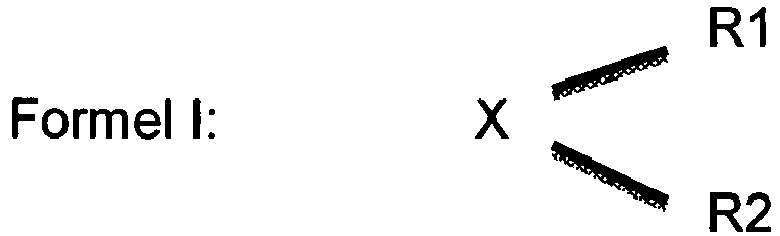
- X = Naphthyl- oder Phenylrest oder deren heterozyklische Analoga
- R1 = wenigstens eine Sulfonsäuregruppe oder wenigstens eine Carbonsäuregruppe
- R2 = unsubstituiert oder eine funktionelle Gruppe ausgewählt aus Hydroxy-, Alkyl-, Alkoxy-, Amino-, Sulhydryl-, Halogen- und Thioether, die in o-, m- oder p-Stellung zur Säuregruppe im Molekül angeordnet sind
- Nachfolgend sind Beispiele aufgelistet, die in der Lage sind Mykotoxine verschiedenster Gruppen zu extrahieren:
- 1,5-Naphthyldisulfonsäure
- 2,6-Naphthyldisulfonsäure
- 4-Hydroxyphenylsulfonsäure
- Benzolsulfonsäure,
- 4-Methylbenzolsulfonsäure,
- Benzol-1,3-disulfonsäure,
- 1-Naphthol-3,6-disulfonsäure,
- 3-Sulfobenzoesäure,
- 4-Sulfobenzoesäure,
- 2-Hydroxybenzoesäure,
- 2,6-Dihydroxybenzoesäure,
- 2,5-Dihydroxybenzoesäure,
- 2,4-Dihydroxybenzoesäure,
- 3,4-Dihydroxybenzoesäure,
- 3,5-Dihydroxybenzoesäure.
- 2-Hydroxy-5-sulfobenzoesäure
- Als besonders vorteilhaft stellte sich der alleinige aber auch kombinierte Einsatz von 1,5-Naphtyldisulfonsäure, 2,6-Naphtyldisulfonsäure und/oder p-Hydroxyphenylsulfonsäure heraus.
- Der resultierende wässrige Überstand, der die extrahierten Mykotoxine enthält, wird anschließend abgetrennt und für die Analytik eingesetzt. So kann die Bestimmung oder die weitere Reinigung der Mykotoxine beispielsweise mit Hilfe von enzymatischen, enzymimmunologischen, chromatographisch-gestützten und/oder immunoaffinitätschromatographischen Verfahren erfolgen.
- Für alle nachfolgend beschriebene Versuche kommen zertifizierte Referenzmaterialien zum Einsatz (Tabelle 1). Für jedes Mykotoxin werden eine Blankprobe und eine kontaminierte Referenzprobe vermessen.
Tabelle 1. Zertifizierte Mykotoxin-Referenzmaterialien zur Überprüfung des Extraktionseffizienz der beanspruchten Verfahren Mykotoxin (Matrix) Referenzwert* Zertifiziertes Material Bezeichnung** Aflatoxine (Mais) n.d. AC 215 31,2 ± 3,1 μg/kg AC 295 Ochratoxin (Mais) n.d. OC 853 12,3 ± 1,3 μg/kg OC 866 Deoxynivalenol (Weizen) n.d. DW 100 2,1 ± 0,3 mg/kg DW 174 Fumonisine (Mais) n.d. FC 400 0,5 ± 0,07 mg/kg FC 458 Zearalenon (Mais) n.d. ZC 300 472,1 ± 65,6 μg/kg ZC 321 T2/HT2 (Mais) n.d. TC 978 255,7 ± 18 μg/kg T2 und 681,1 ± 45,8 μg/kg HT2 TC 982 *nicht detektiert mittels HPLC; siehe Zertifikate der Firma Trilogy für nähere Erläuterungen wie z.B. Nachweisgrenze der verwendeten Methode
**zum Einsatz kamen Materialien der Firma Trilogy (Washington, MO, USA) - Die Erfindung wird nachfolgend an der Bestimmung von Aflatoxin in Mais näher erläutert. Die Referenz-Extraktionsmethode sieht eine Probeneinwaage von 1 g vor, welche mit 5 mL 70% Methanol in Wasser 10 min unter Schütteln extrahiert wird (Tabelle 2). Nach Zentrifugation oder Filtration wird der Überstand 1:7 mit destilliertem Wasser verdünnt (z.B. 100 μL Extrakt + 600 μL Wasser) und in einem handelsüblichen kommerziellen ELISA der Aflatoxingehalt quantifiziert. Zum Einsatz kommt der RIDASCREEN® Aflatoxin Total (Art. Nr. 4701, R-Biopharm AG, Darmstadt, siehe auch Tabelle 2). Grundlage ist die Antigen-Antikörper-Reaktion. Die Vertiefungen der Mikrotiterplatten sind mit Fänger-Antikörpern gegen anti-Aflatoxin-Antikörper beschichtet. Zugegeben werden Kalibratoren bzw. extrahierte Probenlösung, enzymmarkiertes Aflatoxin (Enzymkonjugat) und anti-Aflatoxin-Antikörper. Freies und enzymmarkiertes Aflatoxin konkurrieren um die Aflatoxin-Antikörperbindungsstellen. Gleichzeitig werden auch die anti-Aflatoxin-Antikörper von den immobilisierten Fänger-Antikörpern gebunden. Nicht gebundenes enzymmarkiertes Aflatoxin wird anschließend in einem Waschschritt wieder entfernt. Der Nachweis erfolgt durch Zugabe von Substrat-/Chromogenlösung. Gebundenes Enzymkonjugat wandelt das Chromogen in ein blaues Endprodukt um. Die Zugabe des Stopp-Reagenzes führt zu einem Farbumschlag von blau nach gelb. Die Messung erfolgt photometrisch bei 450 nm; die gemessene optische Dichte (OD)der Lösung ist umgekehrt proportional zur Aflatoxin-Konzentration in der Probe.
Tabelle 2. Angewandte Referenzextraktion und eingesetztes ELISA-System zum Vergleich der Extraktionseffizienz der beanspruchten Verfahren Mykotoxin (Matrix) Referenzextraktion ELISA Aflatoxine (Mais) 1 g Probe + 5 mL 70% Methanol in Wasser; Verdünnung 1:7 mit Wasser R4701 (RIDASCREEN® Aflatoxin Total) Ochratoxin (Mais) 1 g Probe + 5 mL 130 mM NaHCO3 (pH 8.1); Verdünnung 1:4 mit Wasser R1311 (RIDASCREEN® Ochratoxin A 30/15 Deoxynivalenol (Weizen) 1 g Probe + 5 mL Wasser; Verdünnung 1:10 mit Wasser R5906 (RIDASCREEN® DON) Fumonisine (Mais) 1 g Probe + 5 mL 70% Methanol in Wasser; Verdünnung 1:14 mit Wasser R3401 (RIDASCREEN® Fumonisin) Zearalenon (Mais) 1 g Probe + 5 mL 70% Methanol in Wasser; Verdünnung mit Puffer R1401 (RIDASCREEN® Zearalenon) T2/HT2 (Mais) 1 g Probe + 5 mL 70% Methanol in Wasser; Verdünnung 1:20 mit Wasser R3805 (RIDASCREEN® T2 / HT2 Toxin - Nachfolgend ist als Beispiel ein bevorzugtes Verfahren für die Extraktion von Aflatoxin aus Mais dargestellt. Dazu wird 1 g homogenisierte Maisprobe mit 5 mL einer Lösung bestehend aus 250 mM 1,5-Naphthyldisulfonsäure gepuffert auf pH 8 mit 100 mM Tris-(hydroxymethyl)-aminomethan (Tris) versetzt, 10 min geschüttelt und zentrifugiert bzw. filtriert. Der klare Überstand wird 1:7 mit destilliertem Wasser verdünnt und wie oben bereits beschrieben im ELISA vermessen.
- Die Ergebnisse sind in Tabelle 3 dargestellt. Dabei ist zu beachten, dass aus Vergleichsbarkeitsgründen die Ergebnisse als "Signalreduktion in %" angegeben werden. Die Signalreduktion ergibt sich aus dem kompetitiven Format des ELISAs als Testsystems. Bewertet werden soll die Extraktionsausbeute im Vergleich zwischen dem neuen, beanspruchten Verfahren und der etablierten Referenzextraktion. Eine hohe Analytkonzentration im Extrakt (bedingt durch eine hohe Extraktionsausbeute) führt zu einer Reduktion des Messsignals (OD450 nm) Die Signalreduktion in [%] berechnet sich wie folgt:

Tabelle 3: Extraktionsausbeute von Aflatoxin aus Mais unter Einsatz der beanspruchten Substanz 1,5-Naphthyldisulfonsäure (in Tris-Puffer pH 8.0) im Vergleich zur Referenzextraktion. Die OD-Werte wurde im kommerziell erhältlichen ELISA RIDASCREEN® Aflatoxin Total ermittelt. Referenzextraktion 250 mM 1,5-NDS + 100 mM Tris pH 8.0 ODBlank 1,591 1,966 ODPositiv 0,474 0,525 Signalreduktion [%] 71 73 - Vergleicht man die Werte der Referenzextraktion mit denen der beanspruchten Extraktion, so wird deutlich, dass diese sehr ähnlich sind. Aflatoxin wurde somit erfolgreich aus der Matrix Mais durch das beanspruchte Verfahren quantitativ extrahiert. Geringe Unterschiede in den OD-Werten vor allem der Blankproben können durch Sekundäreffekte der beanspruchten Substanzen im Messsystem ELISA erklärt werden. Durch Wechselwirkungen wird die Kompetition zwischen Aflatoxin aus dem Extrakt (Probe) und Aflatoxin-Enzym-Konjugat um Antikörperbindungsstellen leicht gestört. Dieses ist auch der Grund, warum keine Konzentrationswerte ermittelt worden sind, sondern die Ergebnisse als "Signalreduktion [%]" angegeben werden. Diese würden ein falsches Bild entstehen lassen, weil die Beeinflussung des ELISAs nicht Teil der beanspruchten Extraktion ist. Die ELISA Systeme können entsprechend auf solche Substanzen eingestellt werden, so dass die Richtigkeit des Messsystems gegeben ist.
- Unabhängig von dem oben aufgeführten Beispiel ist es aber auch möglich, andere Proben aus dem Lebensmittel- bzw. Futtermittelbereich zu untersuchen wie beispielsweise Weizen, Roggen, Hafer, Gerste und deren Verwandte aus dem Tribus Triticeae, Futtermittel, Nüssen, Soja, Maisgluten und Reis. Ferner sind Feigen, Datteln, Rosinen und Pistazien von Interesse.
- Ebenso ist die Extraktion nicht auf die oben genannten Aflatoxine limitiert. So ist es auch möglich, dass Deoxynivalenol, Ochratoxin A, Zearalenon, Fumonisin und T2/HT2 mit dem erfindungsgemäßen Verfahren extrahiert werden. Ebenso können andere Toxine wie Ergotalkaloide, Citrinin, und Sterigmatocystin mit dem erfindungsgemäßen Verfahren extrahiert werden.
- Untersuchungen haben gezeigt, dass die Effektivität des Verfahrens durch ein geeignetes Puffersystem positiv beeinflusst wird. So sollte die wässrige Lösung der Naphthyl- oder Phenylverbindungen oder deren heterozyklische Analoga im Bereich von pH 5 - 10 gepuffert vorliegen. Dabei sind Tris-(hydroxymethyl)-aminomethan (Tris)- und "Imidazol"-haltige Puffer im Bereich von pH 7.5 - 8.5 als bevorzugt anzusehen (siehe Beispiel in Tablle 3). Der "Imidazol"-Puffer wurde durch Mischung von Isopropylimidazol und Imidazolhydrochlorid in den entsprechenden Anteilen angesetzt. Andere Puffersysteme wie Phosphat und EPPS (N-(2-Hydroxyethyl)-piperazin-N'-(3-propansulfonsäure) sind ebenfalls möglich, können aber in Abhängigkeit von Konzentration und Mykotoxin abweichende Extraktionsergebnisse aufweisen.
- Möglich ist auch ein Extraktionsverfahren, bei dem aromatische Phenyl- oder Naphthylverbindungen verwendet werden, mit wenigstens einer mit Stickstoff substituierten Position.
- Das Verfahren weist gegenüber den bisher bekannten Extraktionsverfahren den Vorteil auf, dass alle wichtigen Mykotoxine mit einem umweltschonenden, wässrigen Extraktionsmittel effizient und möglichst vollständig aus relevanten Lebensmittelmatrices extrahiert werden können. Die Analyse mehrerer unterschiedlicher Mykotoxine erfordert nicht mehr, wie in den herkömmlichen Verfahren, separate Probeneinwaagen und individuelle Extraktionsmittel, sondern lediglich eine einmalige Probeneinwaage und eine universelle Extraktion mit dem beanspruchten Verfahren. Dadurch ergeben sich für den Anwender dieses neuen Verfahrens eine signifikante Zeit- und Materialersparnis, die zu einer Kostenreduktion führt sowie die Vermeidung einer Exposition mit gesundheitsgefährdenden Lösungsmitteln aus den Extraktionsmitteln herkömmlicher Verfahren.
- Die Erfindung wird nachfolgend mit Ausführungsbeispielen näher erläutert.
-
Tabelle 4: Extraktionsausbeute von Aflatoxin aus Mais unter Einsatz der beanspruchten Substanzen 1,5-Naphtyldisulfonsäure (1,5-NDS, 250 mM) unter Einsatz verschiedener Puffer (100 mM) und pH-Werte im Vergleich zur Referenzextraktion (Ref., siehe auch Tabelle 2). Die OD-Werte wurde im kommerziell erhältlichen ELISA RIDASCREEN® Aflatoxin Total ermittelt. Ref. 1,5-NDS Tris pH 8.0 1,5-NDS Tris pH 8.5 1,5-NDS Imidazol pH 8.0 1,5-NDS Imidazol pH 8.5 ODBlank 1,591 1,966 1,917 1,684 1,578 ODPositiv 0,474 0,525 0,491 0,401 0,326 Signalreduktion [%] 71 73 74 76 79 -
Tabelle 5: Extraktionsausbeute von Aflatoxin aus Mais unter Einsatz der beanspruchten Substanzen 2,6-Naphtyldisulfonsäure (2,6-NDS, 125 mM) unter Einsatz verschiedener Puffer (100 mM) und pH-Werte im Vergleich zur Referenzextraktion (Ref., siehe auch Tabelle 2). Die OD-Werte wurde im kommerziell erhältlichen ELISA RIDASCREEN® Aflatoxin Total ermittelt. Ref. 2,6-NDS Tris pH 8.0 2,6-NDS Tris pH 8.5 2,6-NDS Imidazol pH 8.0 2,6-NDS Imidazol pH 8.5 ODBlank 1,505 1,686 1,711 1,654 1,645 ODPositiv 0,377 0,435 0,356 0,403 0,393 Signalreduktion [%] 75 74 79 76 76 -
Tabelle 6: Extraktionsausbeute von DON aus Weizen unter Einsatz der beanspruchten Substanzen 1,5-Naphtyldisulfonsäure (1,5-NDS, 250 mM) unter Einsatz verschiedener Puffer (100 mM) und pH-Werte im Vergleich zur Referenzextraktion (Ref., siehe auch Tabelle 2). Die OD-Werte wurde im kommerziell erhältlichen ELISA RIDASCREEN® DON ermittelt. Ref. 1,5-NDS Tris pH 8.0 1,5-NDS Tris pH 8.5 1,5-NDS Imidazol pH 8.0 1,5-NDS Imidazol pH 8.5 ODBlank 2,440 2,682 2,722 2,649 2,638 ODPositiv 0,738 0,795 0,842 0,744 0,811 Signalreduktion [%] 70 70 69 72 69 -
Tabelle 7: Extraktionsausbeute von DON aus Weizen unter Einsatz der beanspruchten Substanzen 2,6-Naphtyldisulfonsäure (2,6-NDS, 125 mM) unter Einsatz verschiedener Puffer (100 mM) und pH-Werte im Vergleich zur Referenzextraktion (Ref., siehe auch Tabelle 2). Die OD-Werte wurde im kommerziell erhältlichen ELISA RIDASCREEN® DON ermittelt. Ref. 2,6-NDS Tris pH 8.0 2,6-NDS Tris pH 8.5 2,6-NDS Imidazol pH 8.0 2,6-NDS Imidazol pH 8.5 ODBlank 2,463 2,694 2,667 2,610 2,657 ODPositiv 0,886 0,923 0,923 0,871 0,906 Signalreduktion [%] 64 66 65 67 66 -
Tabelle 8: Extraktionsausbeute von Ochratoxin A aus Mais unter Einsatz der beanspruchten Substanzen 1,5-Naphtyldisulfonsäure (1,5-NDS, 250 mM) unter Einsatz verschiedener Puffer (100 mM) und pH-Werte im Vergleich zur Referenzextraktion (Ref., siehe auch Tabelle 2). Die OD-Werte wurde im kommerziell erhältlichen ELISA RIDASCREEN® Ochratoxin A 30/15 ermittelt. Ref. 1,5-NDS Tris pH 8.0 1,5-NDS Tris pH 8.5 1,5-NDS Imidazol pH 8.0 1,5-NDS Imidazol pH 8.5 ODBlank 1,551 1,447 1,374 1,479 1,277 ODPositiv 0,305 0,338 0,306 0,366 0,296 Signalreduktion [%] 80 77 78 75 77 -
Tabelle 9: Extraktionsausbeute von Ochratoxin A aus Mais unter Einsatz der beanspruchten Substanzen 2,6-Naphtyldisulfonsäure (2,6-NDS, 125 mM) unter Einsatz verschiedener Puffer (100 mM) und pH-Werte im Vergleich zur Referenzextraktion (Ref., siehe auch Tabelle 2). Die OD-Werte wurde im kommerziell erhältlichen ELISA RIDASCREEN® Ochratoxin A 30/15 ermittelt. Ref. 2,6-NDS Tris pH 8.0 2,6-NDS Tris pH 8.5 2,6-NDS Imidazol pH 8.0 2,6-NDS Imidazol pH 8.5 ODBlank 1,551 1,602 1,462 1,425 1,374 ODPositiv 0,305 0,407 0,309 0,324 0,263 Signalreduktion [%] 80 75 79 77 81 -
Tabelle 10: Extraktionsausbeute von Zearalenon aus Mais unter Einsatz der beanspruchten Substanzen 1,5-Naphtyldisulfonsäure (1,5-NDS, 250 mM) oder 2,6-Naphthyldisulfonsäure unter Einsatz verschiedener Puffer (2,6-NDS, 100 mM) und pH-Werte im Vergleich zur Referenzextraktion (Ref., siehe auch Tabelle 2). Die OD-Werte wurde im kommerziell erhältlichen ELISA RIDASCREEN® Zearalenon ermittelt. Ref. 1,5-NDS Tris pH 8.0 1,5-NDS Imidazol pH 8.5 2,6-NDS Tris pH 8.0 2,6-NDS Imidazol pH 8.0 ODBlank 3,093 2,594 2,540 2,403 2,214 ODPositiv 0,227 0,355 0,268 0,245 0,301 Signalreduktion [%] 93 86 89 90 86 -
Tabelle 11: Extraktionsausbeute von Fumonisin aus Mais unter Einsatz der beanspruchten Substanzen 1,5-Naphtyldisulfonsäure (1,5-NDS, 50 mM) oder 2,6-Naphthyldisulfonsäure unter Einsatz verschiedener Puffer (2,6-NDS, 100 mM) und pH-Werte im Vergleich zur Referenzextraktion (Ref., siehe auch Tabelle 2). Die OD-Werte wurde im kommerziell erhältlichen ELISA RIDASCREEN® Fumonisin ermittelt. Ref. 1,5-NDS Tris pH 8.0 1,5-NDS Imidazol pH 8.0 2,6-NDS Tris pH 8.0 2,6-NDS Imidazol pH 8.0 ODBlank 1,193 0,719 0,762 0,874 0,881 ODPositiv 0,339 0,174 0,151 0,202 0,188 Signalreduktion [%] 72 76 80 77 79 -
Tabelle 12: Extraktionsausbeute von T2 und HT2 aus Mais unter Einsatz der beanspruchten Substanzen 1,5-Naphtyldisulfonsäure (1,5-NDS, 250 mM) oder 2,6-Naphthyldisulfonsäure unter Einsatz verschiedener Puffer (2,6-NDS, 100 mM) und pH-Werte im Vergleich zur Referenzextraktion (Ref., siehe auch Tabelle 2). Die OD-Werte wurde im kommerziell erhältlichen ELISA RIDASCREEN® T2/HT2 ermittelt. Ref. 1,5-NDS Tris pH 8.0 1,5-NDS Imidazol pH 8.0 2,6-NDS Tris pH 8.0 2,6-NDS Imidazol pH 8.0 ODBlank 1,676 0,947 0,921 0,868 0,799 ODPositiv 0,467 0,289 0,282 0,270 0,265 Signalreduktion [%] 72 69 69 69 67 -
Tabelle 13: Extraktionsausbeute von Aflatoxin aus Mais unter Einsatz der beanspruchten Substanzen 1,5-Naphtyldisulfonsäure (1,5-NDS, 250 mM) oder 2,6-Naphthyldisulfonsäure (2,6-NDS, 100 mM) unter Einsatz verschiedener Pufferstärken und pH-Werte im Vergleich zur Referenzextraktion (Ref., siehe auch Tabelle 2). Die OD-Werte wurde im kommerziell erhältlichen ELISA RIDASCREEN® Aflatoxin Total ermittelt. Ref. 1,5-NDS Phosphat 200 mM pH 8.0 1,5-NDS Epps* 100 mM pH 8.5 2,6-NDS Phosphat 25 mM pH 8.0 2,6-NDS Phosphat 75 mM pH 8.5 ODBlank 1,487 1,542 1,607 1,474 1,445 ODPositiv 0,326 0,303 0,350 0,339 0,350 Signalreduktion [%] 78 80 78 77 76 *(N-(2-Hydroxyethyl)-piperazin-N'-(3-propansulfonsäure) -
Tabelle 14: Extraktionsausbeute von Aflatoxin aus Mais unter Einsatz der beanspruchten Substanz 1,5-Naphtyldisulfonsäure in verschiedenen Konzentrationen bei pH 8.0 (5 mM Phosphat) im Vergleich zur Referenzextraktion (Ref., siehe auch Tabelle 2). Die OD-Werte wurde im kommerziell erhältlichen ELISA RIDASCREEN® Aflatoxin Total ermittelt. Ref. 300 mM 200 mM 100 mM 50 mM 10 mM ODBlank 1,320 1,516 1,611 1,601 1,596 1,601 ODPositiv 0,325 0,309 0,373 0,452 0,752 0,920 Signalreduktion [%] 75 80 77 72 53 43 -
Tabelle 15: Extraktionsausbeute von Aflatoxin aus Mais unter Einsatz der beanspruchten Substanz 2,6-Naphtyldisulfonsäure in verschiedenen Konzentrationen bei pH 8.0 (5 mM Phosphat) im Vergleich zur Referenzextraktion (Ref., siehe auch Tabelle 2). Die OD-Werte wurde im kommerziell erhältlichen ELISA RIDASCREEN® Aflatoxin Total ermittelt. Ref. 100 mM 75 mM 50 mM 10 mM 5 mM ODBlank 1,544 1,860 1,854 1,881 1,962 1,973 ODPositiv 0,438 0,489 0,521 0,620 1,101 1,051 Signalreduktion [%] 72 74 72 67 44 47 -
Tabelle 16: Extraktionsausbeute von Deoxynivalenol, Fumonisin und Zearalenon (Matrices siehe Tabelle 1) unter Einsatz der beanspruchten Substanz 4-Hydroxyphenylsulfonsäure (375 mM; 4-OH-PSN) unter Zusatz von 50 mM Phosphat (pH 8.0) im Vergleich zur Referenzextraktion (Ref., siehe auch Tabelle 2). Die OD-Werte wurde in kommerziell erhältlichen ELISA der RIDASCREEN® Serie ermittelt (siehe Tabelle 2). DON Ref. DON 4-OH-PSN Fumo* Ref. Fumo* 4-OH-PSN Zea* Ref. Zea* 4-OH-PSN ODBlank 2,337 2,577 1,261 0,814 3,012 2,338 ODPositiv 0,786 0,824 0,398 0,195 0,195 0,294 Signalreduktion [%] 66 68 68 76 94 87 *DON, Deoxynivalenol; Fumo, Fumonisin; Zea, Zearalenon -
Tabelle 17: Extraktionsausbeute von Aflatoxin, Ochratoxin und T2/HT2 (Matrices siehe Tabelle 1) unter Einsatz der beanspruchten Substanz 4-Hydroxyphenylsulfonsäure (375 mM; 4-OH-PSN) unter Zusatz von 50 mM Phosphat (pH 8.0) im Vergleich zur Referenzextraktion (Ref., siehe auch Tabelle 2). Die OD-Werte wurde in kommerziell erhältlichen ELISA der RIDASCREEN® Serie ermittelt (siehe Tabelle 2). Afla* Ref. Afla* 4-OH-PSN OTA* Ref. OTA* 4-OH-PSN T2/HT2 Ref. T2/HT2 4-OH-PSN ODBlank 1,701 1,821 1,551 1,557 1,889 0,965 ODPositiv 0,451 0,673 0,305 0,308 0,525 0,342 Signalreduktion [%] 73 63 80 80 72 65 *Afla, Aflatoxin; OTA, Ochratoxin -
Tabelle 18: Extraktionsausbeute von Aflatoxin aus Mais unter Einsatz der beanspruchten Substanz 4-Hydroxyphenylsulfonsäure in verschiedenen Konzentrationen bei pH 8.0 (5 mM Phosphat) im Vergleich zur Referenzextraktion (Ref., siehe auch Tabelle 2). Die OD-Werte wurde im kommerziell erhältlichen ELISA RIDASCREEN® Aflatoxin Total ermittelt. Ref. 600 mM 500 mM 400 mM 300 mM 200 mM 100 mM ODBlank 1,485 1,692 1,707 1,712 1,722 1,692 1,649 ODPositiv 0,440 0,512 0,533 0,547 0,568 0,676 0,855 Signalreduktion [%] 70 70 69 68 67 60 48 -
Tabelle 19: Extraktionsausbeute von Ochratoxin aus Mais unter Einsatz der beanspruchten Substanz 4-Hydroxyphenylsulfonsäure in verschiedenen Konzentrationen bei pH 8.0 (5 mM Phosphat) im Vergleich zur Referenzextraktion (Ref., siehe auch Tabelle 2). Die OD-Werte wurde im kommerziell erhältlichen ELISA RIDASCREEN® Ochratoxin A 30/15 ermittelt. Ref. 600 mM 500 mM 400 mM 300 mM 200 mM 50 mM ODBlank 1,620 1,308 1,365 1,345 1,383 1,475 1,692 ODPositiv 0,239 0,264 0,229 0,264 0,241 0,267 0,309 Signalreduktion [%] 85 80 83 80 83 82 82 -
Tabelle 20: Extraktionsausbeute von Ochratoxin aus Mais unter kombiniertem Einsatz der beanspruchten Substanzen 1,5-Naphthyldisulfonsäure (1,5-NDS, 250 mM) und 4-Hydroxyphenylsulfonsäure (verschiedene Konzentrationen von 10 mM bis 150 mM) bei pH 8.0 (5 mM Phosphat) im Vergleich zur Referenzextraktion (Ref., siehe auch Tabelle 2). Die OD-Werte wurde im kommerziell erhältlichen ELISA RIDASCREEN® Ochratoxin A 30/15 ermittelt. 250 mM 1,5-NDS Ref. 150 mM 100 mM 75 mM 50 mM 20 mM 10 mM ODBlank 1,551 1,120 1,231 1,360 1,352 1,494 1,495 ODPositiv 0,305 0,330 0,375 0,321 0,355 0,422 0,485 Signalreduktion [%] 80 71 70 76 74 72 68 -
Tabelle 21: Extraktionsausbeute von Ochratoxin aus Mais unter kombiniertem Einsatz der beanspruchten Substanzen 1,5-Naphthyldisulfonsäure (1,5-NDS, 250 mM) und 4-Hydroxyphenylsulfonsäure (4-OH-PSN, 50 mM und 75 mM) bei verschiedenen pH-Werten von 7.5 bis 9.0 im Vergleich zur Referenzextraktion (Ref., siehe auch Tabelle 2). Die OD-Werte wurde im kommerziell erhältlichen ELISA RIDASCREEN® Ochratoxin A 30/15 ermittelt. 250 mM 1,5-NDS 50 mM 4-OH-PSN 75 mM 4-OH-PSN Ref. pH 7.5 pH 8.0 pH 8.5 pH 9.0 pH 7.5 pH 8.0 pH 8.5 pH 9.0 ODBlank 1,551 1,342 1,249 1,210 1,265 1,244 1,223 1,139 1,108 ODPositiv 0,305 0,348 0,292 0,205 0,240 0,379 0,358 0,278 0,257 Signalreduktion [%] 80 74 77 83 81 70 71 76 77 -
Tabelle 22: Extraktionsausbeute von Ochratoxin aus Mais unter kombiniertem Einsatz der beanspruchten Substanzen 2,6-Naphthyldisulfonsäure (125 mM) und 4-Hydroxyphenylsulfonsäure (verschiedene Konzentrationen von 20 mM bis 150 mM) bei pH 8.0 (5 mM Phosphat) im Vergleich zur Referenzextraktion (Ref., siehe auch Tabelle 2). Die OD-Werte wurde im kommerziell erhältlichen ELISA RIDASCREEN® Ochratoxin A 30/15 ermittelt. Ref. 70 mM 60 mM 50 mM 40 mM 30 mM 20 mM ODBlank 1,952 1,213 1,421 1,457 1,474 1,555 1,647 ODPositiv 0,441 0,327 0,430 0,395 0,494 0,452 0,409 Signalreduktion [%] 77 73 70 73 67 71 75 -
Tabelle 23: Extraktionsausbeute von Ochratoxin aus Mais unter kombiniertem Einsatz der beanspruchten Substanzen 2,6-Naphthyldisulfonsäure (2,6-NDS, 125 mM) und 4-Hydroxyphenylsulfonsäure (4-OH-PSN, 50 mM und 75 mM) bei verschiedenen pH-Werten von 7.5 bis 9.0 im Vergleich zur Referenzextraktion (Ref., siehe auch Tabelle 2). Die OD-Werte wurde im kommerziell erhältlichen ELISA RIDASCREEN® Ochratoxin A 30/15 ermittelt. 125 mM 2,6-NDS 50 mM 4-OH-PSN 75 mM 4-OH-PSN Ref. pH 7.5 pH 8.0 pH 8.5 pH 9.0 pH 7.5 pH 8.0 pH 8.5 pH 9.0 ODBlank 1,986 1,698 1,608 1,558 1,477 1,562 1,479 1,405 1,416 ODPositiv 0,484 0,408 0,292 0,358 0,266 0,424 0,342 0,281 0,329 Signalreduktion [%] 76 76 82 77 82 73 77 80 77 -
- Figur 1:
- Liste von in der Lebens- und Futtermittelindustrie relevanten Mykotoxinen. Neben der Auflistung sind auch deren chemische Strukturformeln und ihre Lösungseigenschaften in wässriger Umgebung dargestellt
Claims (12)
- Verfahren zur Extraktion von Mykotoxinen aus Getreiden und anderen Lebensmitteln oder Futtermitteln, dadurch gekennzeichnet, dass wässrige, gepufferte Lösungen von Naphthyl- und/oder Phenylverbindungen und/oder deren heterozyklische Analoga, die wenigstens eine Sulfonsäure- bzw. wenigstens eine Carbonsäuregruppe tragen, mit den Getreiden oder anderen Lebensmitteln oder Futtermitteln in Kontakt gebracht werden, die wässrige Lösung anschließend abgetrennt und der Gehalt der extrahierten Mykotoxine in der wässrigen Lösung bestimmt wird.
- Verfahren nach Anspruch 1, dadurch gekennzeichnet, dass Naphthyl- und/oder Phenylverbindungen und/oder deren heterozyklische Analoga der allgemeinen Formel I eingesetzt werden:
 X = Naphthyl- oder Phenylrest oder deren heterozyklische Analoga R1= wenigstens eine Sulfonsäuregruppe oder wenigstens eine CarbonsäuregruppeR2 = unsubstituiert oder eine funktionelle Gruppe ausgewählt aus Hydroxy-, Alkyl-, Alkoxy-, Amino-, Sulhydryl-, Halogen- und Thioether, die in o-, m- oder p-Stellung zur Säuregruppe im Molekül angeordnet sind
 - Verfahren nach Anspruch 1 und 2, dadurch gekennzeichnet, dass eine oder mehrere der Naphthyl- und/oder Phenylverbindungen und/oder deren heterozyklische Analoga eingesetzt werden.
- Verfahren nach Anspruch 1-3, dadurch gekennzeichnet, dass Verbindungen mit X = Naphthyl, R1 = Disulfonsäure oder X = Phenyl, R1 = Sulfonsäure und R2 = Hydroxy eingesetzt werden.
- Verfahren nach Anspruch 1-4, dadurch gekennzeichnet, dass 1,5-Naphtyldisulfonsäure, 2,6-Naphtyldisulfonsäure und/oder Hydroxyphenylsulfonsäure eingesetzt werden.
- Verfahren nach Anspruch 1-5, dadurch gekennzeichnet, dass die eingesetzten Naphthyl- und/oder Phenylverbindungen und/oder deren heterozyklische Analoga in Konzentrationen von 5 bis 600 mM in Abhängigkeit von deren maximalen Löslichkeit eingesetzt werden.
- Verfahren nach Anspruch 1-6, dadurch gekennzeichnet, dass die Naphthyl- und/oder Phenylverbindungen und/oder deren heterozyklische Analoga als Lösung, in Pulver- oder in Tablettenform appliziert werden.
- Verfahren nach Anspruch 1-7, dadurch gekennzeichnet, dass die wässrige Lösung von Naphthyl- und/oder Phenylverbindungen und/oder deren heterozyklische Analoga im Bereich von pH 5 - 10 gepuffert vorliegt.
- Verfahren nach Anspruch 1-8 dadurch gekennzeichnet, dass der Gehalt an extrahierten Mykotoxinen in Antikörper-gestützten Systemen wie z.B. ELISA oder Lateral-Flow-Systemen bestimmt wird.
- Verfahren nach Anspruch 1-9, dadurch gekennzeichnet, dass der Gehalt an extrahierten Mykotoxinen in chromatographisch-gestützten Systemen bestimmt wird.
- Verfahren nach Anspruch 1-10, dadurch gekennzeichnet, dass die extrahierten Mykotoxine einer weiteren Reinigung mittels Immunoaffinitätschromatographiesäulen unterworfen werden.
- Verwendung des Verfahrens nach Anspruch 1-11 zur Entfernung von Aflatoxin B1, Aflatoxin B2, Aflatoxin G1, Aflatoxin G2, Aflatoxin M1, Aflatoxin M2, Fumonisin B1, Fumonisin B2, Fumonisin B3, Deoxynivalenol, Ochratoxin A, Zearalenon, T-2, HT-2, Citrinin, Sterigmatocystein und Ergotalkaloiden.
Priority Applications (5)
| Application Number | Priority Date | Filing Date | Title |
|---|---|---|---|
| EP16001588.9A EP3273236B1 (de) | 2016-07-18 | 2016-07-18 | Verfahren zur extraktion von mykotoxinen aus getreiden, anderen lebensmitteln und futtermitteln |
| ES16001588T ES2703686T3 (es) | 2016-07-18 | 2016-07-18 | Método para la extracción de micotoxinas a partir de cereales, otros alimentos y piensos |
| PCT/EP2017/000721 WO2018014988A1 (de) | 2016-07-18 | 2017-06-21 | Verfahren zur extraktion von mykotoxinen aus getreiden, anderen lebensmitteln und futtermitteln |
| CN201780044926.2A CN109477822B (zh) | 2016-07-18 | 2017-06-21 | 用于从谷物、其它食物及饲料中萃取霉菌毒素的方法 |
| US16/318,178 US11627750B2 (en) | 2016-07-18 | 2017-06-21 | Method for extracting mycotoxins from grain, other food products and animal feed |
Applications Claiming Priority (1)
| Application Number | Priority Date | Filing Date | Title |
|---|---|---|---|
| EP16001588.9A EP3273236B1 (de) | 2016-07-18 | 2016-07-18 | Verfahren zur extraktion von mykotoxinen aus getreiden, anderen lebensmitteln und futtermitteln |
Publications (2)
| Publication Number | Publication Date |
|---|---|
| EP3273236A1 true EP3273236A1 (de) | 2018-01-24 |
| EP3273236B1 EP3273236B1 (de) | 2018-10-10 |
Family
ID=56550003
Family Applications (1)
| Application Number | Title | Priority Date | Filing Date |
|---|---|---|---|
| EP16001588.9A Active EP3273236B1 (de) | 2016-07-18 | 2016-07-18 | Verfahren zur extraktion von mykotoxinen aus getreiden, anderen lebensmitteln und futtermitteln |
Country Status (5)
| Country | Link |
|---|---|
| US (1) | US11627750B2 (de) |
| EP (1) | EP3273236B1 (de) |
| CN (1) | CN109477822B (de) |
| ES (1) | ES2703686T3 (de) |
| WO (1) | WO2018014988A1 (de) |
Cited By (1)
| Publication number | Priority date | Publication date | Assignee | Title |
|---|---|---|---|---|
| EP4537672A1 (de) | 2023-10-11 | 2025-04-16 | Agrana Beteiligungs- Aktiengesellschaft | Verfahren zur herstellung eines pflanzenbasierten klebers mit reduziertem t2/ht2-gehalt |
Citations (4)
| Publication number | Priority date | Publication date | Assignee | Title |
|---|---|---|---|---|
| WO2014114982A1 (en) * | 2013-01-22 | 2014-07-31 | Centro De Investigación Y De Estudios Avanzados Del Instituto Politécnico Nacional | Methods for neutralizing aflatoxins by potassium salt of naphtaleneacetic acid |
| US20140356978A1 (en) | 2012-02-03 | 2014-12-04 | Charm Sciences, Inc. | Extraction of Mycotoxins |
| WO2015188205A1 (de) | 2014-06-12 | 2015-12-17 | Erber Aktiengesellschaft | Verfahren zur extraktion von kontaminanten aus agrarischen produkten sowie vorrichtung hierfür |
| WO2016057044A1 (en) | 2014-10-10 | 2016-04-14 | Neogen Corporation | Compositions for use in mycotoxin extraction |
Family Cites Families (10)
| Publication number | Priority date | Publication date | Assignee | Title |
|---|---|---|---|---|
| IT1272452B (it) * | 1993-05-25 | 1997-06-23 | Lowara Spa | Apparecchiatura costituita da pompa multistadio e turbina assialmente integrate, particolarmente adatta per il recupero di energia nei processi di trattamento per osmosi inversa delle acque di scarico industriali e simili |
| EA008906B1 (ru) * | 2002-03-07 | 2007-08-31 | Басф Акциенгезельшафт | Фунгицидная смесь на базе триазолов |
| UA88549C2 (ru) * | 2005-07-18 | 2009-10-26 | Басф Акциенгезелльшафт | Применение метконазола и эпоксиконазола для защиты зерновых культур |
| US20090269859A1 (en) * | 2006-02-09 | 2009-10-29 | Waters Investments Limited | Mobile Bead Configuration Immunoaffinity Column and Methods of Use |
| GB0702489D0 (en) * | 2007-02-09 | 2007-03-21 | Univ Greenwich | Solid phase extraction of aflatoxins |
| JP4870648B2 (ja) * | 2007-10-25 | 2012-02-08 | 株式会社荏原製作所 | 動力回収システム |
| CN101738479A (zh) * | 2008-11-13 | 2010-06-16 | 上海裕隆生物科技有限公司 | 多种霉菌毒素定量检测蛋白芯片及其试剂盒 |
| US20130203613A1 (en) * | 2009-04-09 | 2013-08-08 | Bayer Cropscience Ag | Device and method for the verification and quantitative analysis of analytes, particularly mycotoxins |
| CN102636581A (zh) * | 2011-12-26 | 2012-08-15 | 湖北省农业科学院农业质量标准与检测技术研究所 | 同时检测谷物中黄曲霉毒素b1、赭曲霉毒素a、玉米赤霉烯酮和桔霉素的液相色谱-荧光法 |
| AU2014409265B2 (en) * | 2014-10-20 | 2018-02-08 | Foss Analytical A/S | Determination of analytes in a sample matrix by solvent extraction |
-
2016
- 2016-07-18 ES ES16001588T patent/ES2703686T3/es active Active
- 2016-07-18 EP EP16001588.9A patent/EP3273236B1/de active Active
-
2017
- 2017-06-21 CN CN201780044926.2A patent/CN109477822B/zh active Active
- 2017-06-21 US US16/318,178 patent/US11627750B2/en active Active
- 2017-06-21 WO PCT/EP2017/000721 patent/WO2018014988A1/de not_active Ceased
Patent Citations (4)
| Publication number | Priority date | Publication date | Assignee | Title |
|---|---|---|---|---|
| US20140356978A1 (en) | 2012-02-03 | 2014-12-04 | Charm Sciences, Inc. | Extraction of Mycotoxins |
| WO2014114982A1 (en) * | 2013-01-22 | 2014-07-31 | Centro De Investigación Y De Estudios Avanzados Del Instituto Politécnico Nacional | Methods for neutralizing aflatoxins by potassium salt of naphtaleneacetic acid |
| WO2015188205A1 (de) | 2014-06-12 | 2015-12-17 | Erber Aktiengesellschaft | Verfahren zur extraktion von kontaminanten aus agrarischen produkten sowie vorrichtung hierfür |
| WO2016057044A1 (en) | 2014-10-10 | 2016-04-14 | Neogen Corporation | Compositions for use in mycotoxin extraction |
Non-Patent Citations (4)
| Title |
|---|
| HUYBRECHTS BART ET AL: "Méthodes analytiques de déterminationdes mycotoxines dans les produits agricoles :une revue", CAHIERS AGRICULTURES, vol. 22, no. 3, May 2013 (2013-05-01), pages 202 - 215, XP002765170, DOI: 10.1684/agr.2013.0616 * |
| MISHRA ET AL., FOOD ADD.CONTAM., vol. 33, 2016, pages 500 - 508 |
| SOLEIMANY F ET AL: "Determination of mycotoxins in cereals by liquid chromatography tandem mass spectrometry", FOOD CHEMISTRY, vol. 130, no. 4, 31 July 2011 (2011-07-31), ELSEVIER LTD, NL, pages 1055 - 1060, XP028294534, ISSN: 0308-8146, [retrieved on 20110806], DOI: 10.1016/J.FOODCHEM.2011.07.131 * |
| YIBADATIHAN S ET AL: "Simultaneous determination of multi-mycotoxins in palm kernel cake (PKC) using liquid chromatography-tandem mass spectrometry (LC-MS/MS)", FOOD ADDITIVES AND CONTAMINANTS PART A-CHEMISTRY ANALYSIS CONTROL EXPOSURE & RISK ASSESSMENT, vol. 31, no. 12, December 2014 (2014-12-01), pages 2071 - 2079, XP002765171 * |
Cited By (2)
| Publication number | Priority date | Publication date | Assignee | Title |
|---|---|---|---|---|
| EP4537672A1 (de) | 2023-10-11 | 2025-04-16 | Agrana Beteiligungs- Aktiengesellschaft | Verfahren zur herstellung eines pflanzenbasierten klebers mit reduziertem t2/ht2-gehalt |
| WO2025078485A1 (de) | 2023-10-11 | 2025-04-17 | Agrana Beteiligungs-Aktiengesellschaft | Verfahren zur herstellung eines pflanzenbasierten klebers mit reduziertem t2/ht2-gehalt |
Also Published As
| Publication number | Publication date |
|---|---|
| ES2703686T3 (es) | 2019-03-12 |
| EP3273236B1 (de) | 2018-10-10 |
| US11627750B2 (en) | 2023-04-18 |
| CN109477822A (zh) | 2019-03-15 |
| WO2018014988A1 (de) | 2018-01-25 |
| US20190281870A1 (en) | 2019-09-19 |
| CN109477822B (zh) | 2021-08-06 |
Similar Documents
| Publication | Publication Date | Title |
|---|---|---|
| Galarini et al. | Development and validation of a new qualitative ELISA screening for multiresidue detection of sulfonamides in food and feed | |
| DE2705897C3 (de) | Verfahren zur radioimmunologischen Bestimmung von cyclischem Adenosin-3', 5'-monophosphat und/oder cyclischem Guanosin-3'3'-monophosphat | |
| Hernández-Mesa et al. | Novel solid phase extraction method for the analysis of 5-nitroimidazoles and metabolites in milk samples by capillary electrophoresis | |
| DE102008028908B3 (de) | Nachweis eines Analyten in einem wässrigen Medium | |
| DE102014005993A1 (de) | Verfahren zur Anreicherung von Spurenkomponenten aus einer flüssigen biologischen Probe | |
| Juan-Garcia et al. | Binary and tertiary combination of alternariol, 3-acetyl-deoxynivalenol and 15-acetyl-deoxynivalenol on HepG2 cells: Toxic effects and evaluation of degradation products | |
| Nørskov et al. | Robust and highly sensitive micro liquid chromatography–tandem mass spectrometry method for analyses of polar pesticides (glyphosate, aminomethylphosfonic acid, N-acetyl glyphosate and N-acetyl aminomethylphosfonic acid) in multiple biological matrices | |
| Nebot et al. | Development of a multi-class method for the identification and quantification of residues of antibiotics, coccidiostats and corticosteroids in milk by liquid chromatography–tandem mass spectrometry | |
| Tolosa et al. | Multimycotoxin analysis in water and fish plasma by liquid chromatography-tandem mass spectrometry | |
| EP3273236B1 (de) | Verfahren zur extraktion von mykotoxinen aus getreiden, anderen lebensmitteln und futtermitteln | |
| EP1948819B1 (de) | Bestimmung von diaminooxidase | |
| Guan et al. | An ultrahigh-performance liquid chromatography-fluorescence detection (UHPLC-FLD) method for simultaneous determination of albendazole and its three metabolites in poultry eggs | |
| DE60222423T2 (de) | Auf fluoreszenzpolarisation beruhender homogener assay für aflatoxine | |
| WO2017109133A1 (de) | Verfahren zur in ovo geschlechterbestimmung von küken | |
| DE102011012060A1 (de) | Massenspektrometrische Bestimmung der inhibitorischen Wirkung von Substanzen gegenüber beta-Lactamasen | |
| US12019071B2 (en) | Composition and methods for extracting mycotoxins | |
| EP0392332A2 (de) | Fluoreszenzpolarisationsimmunoassay und Reagentien dafür | |
| EP2918597A1 (de) | Verfahren und kit zum überwachen der probenvorbereitung, von chemischen markierungsreaktionen und von antikörperreaktionen | |
| DD202474A5 (de) | Verfahren zur herstellung von antigenen, antikoerpern und deren komplexen | |
| EP0659277B1 (de) | Verfahren zur bestimmung von androstenon-gehalten in fettgeweben | |
| WO2022043147A1 (de) | Diagnostisches reagenz zum nachweis von sars-cov-2 antikörpern | |
| EP2097537A1 (de) | Massenspektrometrisches verfahren an proben enthaltend nukleinsäuren | |
| EP2433651A1 (de) | Bestimmungsmethode für Aldehyde und Ketone in Glycerin | |
| DE102005026710A1 (de) | Verfahren zum Testen von Substanzen oder Substanzgemischen, dessen Verwendung und entsprechende Analysekits | |
| Oberbichler | Entwicklung eines kompetitiven Fluoreszenzbindungsassays für Biotin und Biotinderivate/eingereicht von Elke Oberbichler, BSc |
Legal Events
| Date | Code | Title | Description |
|---|---|---|---|
| STAA | Information on the status of an ep patent application or granted ep patent |
Free format text: STATUS: EXAMINATION IS IN PROGRESS |
|
| PUAI | Public reference made under article 153(3) epc to a published international application that has entered the european phase |
Free format text: ORIGINAL CODE: 0009012 |
|
| 17P | Request for examination filed |
Effective date: 20170317 |
|
| AK | Designated contracting states |
Kind code of ref document: A1 Designated state(s): AL AT BE BG CH CY CZ DE DK EE ES FI FR GB GR HR HU IE IS IT LI LT LU LV MC MK MT NL NO PL PT RO RS SE SI SK SM TR |
|
| AX | Request for extension of the european patent |
Extension state: BA ME |
|
| GRAP | Despatch of communication of intention to grant a patent |
Free format text: ORIGINAL CODE: EPIDOSNIGR1 |
|
| STAA | Information on the status of an ep patent application or granted ep patent |
Free format text: STATUS: GRANT OF PATENT IS INTENDED |
|
| INTG | Intention to grant announced |
Effective date: 20180306 |
|
| GRAS | Grant fee paid |
Free format text: ORIGINAL CODE: EPIDOSNIGR3 |
|
| GRAA | (expected) grant |
Free format text: ORIGINAL CODE: 0009210 |
|
| STAA | Information on the status of an ep patent application or granted ep patent |
Free format text: STATUS: THE PATENT HAS BEEN GRANTED |
|
| AK | Designated contracting states |
Kind code of ref document: B1 Designated state(s): AL AT BE BG CH CY CZ DE DK EE ES FI FR GB GR HR HU IE IS IT LI LT LU LV MC MK MT NL NO PL PT RO RS SE SI SK SM TR |
|
| REG | Reference to a national code |
Ref country code: GB Ref legal event code: FG4D Free format text: NOT ENGLISH |
|
| REG | Reference to a national code |
Ref country code: CH Ref legal event code: EP Ref country code: AT Ref legal event code: REF Ref document number: 1051844 Country of ref document: AT Kind code of ref document: T Effective date: 20181015 |
|
| REG | Reference to a national code |
Ref country code: IE Ref legal event code: FG4D Free format text: LANGUAGE OF EP DOCUMENT: GERMAN |
|
| REG | Reference to a national code |
Ref country code: DE Ref legal event code: R096 Ref document number: 502016002172 Country of ref document: DE |
|
| REG | Reference to a national code |
Ref country code: NL Ref legal event code: MP Effective date: 20181010 |
|
| REG | Reference to a national code |
Ref country code: LT Ref legal event code: MG4D |
|
| REG | Reference to a national code |
Ref country code: ES Ref legal event code: FG2A Ref document number: 2703686 Country of ref document: ES Kind code of ref document: T3 Effective date: 20190312 |
|
| PG25 | Lapsed in a contracting state [announced via postgrant information from national office to epo] |
Ref country code: NL Free format text: LAPSE BECAUSE OF FAILURE TO SUBMIT A TRANSLATION OF THE DESCRIPTION OR TO PAY THE FEE WITHIN THE PRESCRIBED TIME-LIMIT Effective date: 20181010 |
|
| PG25 | Lapsed in a contracting state [announced via postgrant information from national office to epo] |
Ref country code: FI Free format text: LAPSE BECAUSE OF FAILURE TO SUBMIT A TRANSLATION OF THE DESCRIPTION OR TO PAY THE FEE WITHIN THE PRESCRIBED TIME-LIMIT Effective date: 20181010 Ref country code: BG Free format text: LAPSE BECAUSE OF FAILURE TO SUBMIT A TRANSLATION OF THE DESCRIPTION OR TO PAY THE FEE WITHIN THE PRESCRIBED TIME-LIMIT Effective date: 20190110 Ref country code: LV Free format text: LAPSE BECAUSE OF FAILURE TO SUBMIT A TRANSLATION OF THE DESCRIPTION OR TO PAY THE FEE WITHIN THE PRESCRIBED TIME-LIMIT Effective date: 20181010 Ref country code: PL Free format text: LAPSE BECAUSE OF FAILURE TO SUBMIT A TRANSLATION OF THE DESCRIPTION OR TO PAY THE FEE WITHIN THE PRESCRIBED TIME-LIMIT Effective date: 20181010 Ref country code: HR Free format text: LAPSE BECAUSE OF FAILURE TO SUBMIT A TRANSLATION OF THE DESCRIPTION OR TO PAY THE FEE WITHIN THE PRESCRIBED TIME-LIMIT Effective date: 20181010 Ref country code: LT Free format text: LAPSE BECAUSE OF FAILURE TO SUBMIT A TRANSLATION OF THE DESCRIPTION OR TO PAY THE FEE WITHIN THE PRESCRIBED TIME-LIMIT Effective date: 20181010 Ref country code: IS Free format text: LAPSE BECAUSE OF FAILURE TO SUBMIT A TRANSLATION OF THE DESCRIPTION OR TO PAY THE FEE WITHIN THE PRESCRIBED TIME-LIMIT Effective date: 20190210 Ref country code: NO Free format text: LAPSE BECAUSE OF FAILURE TO SUBMIT A TRANSLATION OF THE DESCRIPTION OR TO PAY THE FEE WITHIN THE PRESCRIBED TIME-LIMIT Effective date: 20190110 |
|
| PG25 | Lapsed in a contracting state [announced via postgrant information from national office to epo] |
Ref country code: AL Free format text: LAPSE BECAUSE OF FAILURE TO SUBMIT A TRANSLATION OF THE DESCRIPTION OR TO PAY THE FEE WITHIN THE PRESCRIBED TIME-LIMIT Effective date: 20181010 Ref country code: PT Free format text: LAPSE BECAUSE OF FAILURE TO SUBMIT A TRANSLATION OF THE DESCRIPTION OR TO PAY THE FEE WITHIN THE PRESCRIBED TIME-LIMIT Effective date: 20190210 Ref country code: RS Free format text: LAPSE BECAUSE OF FAILURE TO SUBMIT A TRANSLATION OF THE DESCRIPTION OR TO PAY THE FEE WITHIN THE PRESCRIBED TIME-LIMIT Effective date: 20181010 Ref country code: GR Free format text: LAPSE BECAUSE OF FAILURE TO SUBMIT A TRANSLATION OF THE DESCRIPTION OR TO PAY THE FEE WITHIN THE PRESCRIBED TIME-LIMIT Effective date: 20190111 Ref country code: SE Free format text: LAPSE BECAUSE OF FAILURE TO SUBMIT A TRANSLATION OF THE DESCRIPTION OR TO PAY THE FEE WITHIN THE PRESCRIBED TIME-LIMIT Effective date: 20181010 |
|
| REG | Reference to a national code |
Ref country code: DE Ref legal event code: R097 Ref document number: 502016002172 Country of ref document: DE |
|
| PG25 | Lapsed in a contracting state [announced via postgrant information from national office to epo] |
Ref country code: CZ Free format text: LAPSE BECAUSE OF FAILURE TO SUBMIT A TRANSLATION OF THE DESCRIPTION OR TO PAY THE FEE WITHIN THE PRESCRIBED TIME-LIMIT Effective date: 20181010 Ref country code: DK Free format text: LAPSE BECAUSE OF FAILURE TO SUBMIT A TRANSLATION OF THE DESCRIPTION OR TO PAY THE FEE WITHIN THE PRESCRIBED TIME-LIMIT Effective date: 20181010 |
|
| PLBE | No opposition filed within time limit |
Free format text: ORIGINAL CODE: 0009261 |
|
| STAA | Information on the status of an ep patent application or granted ep patent |
Free format text: STATUS: NO OPPOSITION FILED WITHIN TIME LIMIT |
|
| PG25 | Lapsed in a contracting state [announced via postgrant information from national office to epo] |
Ref country code: EE Free format text: LAPSE BECAUSE OF FAILURE TO SUBMIT A TRANSLATION OF THE DESCRIPTION OR TO PAY THE FEE WITHIN THE PRESCRIBED TIME-LIMIT Effective date: 20181010 Ref country code: SM Free format text: LAPSE BECAUSE OF FAILURE TO SUBMIT A TRANSLATION OF THE DESCRIPTION OR TO PAY THE FEE WITHIN THE PRESCRIBED TIME-LIMIT Effective date: 20181010 Ref country code: SK Free format text: LAPSE BECAUSE OF FAILURE TO SUBMIT A TRANSLATION OF THE DESCRIPTION OR TO PAY THE FEE WITHIN THE PRESCRIBED TIME-LIMIT Effective date: 20181010 Ref country code: RO Free format text: LAPSE BECAUSE OF FAILURE TO SUBMIT A TRANSLATION OF THE DESCRIPTION OR TO PAY THE FEE WITHIN THE PRESCRIBED TIME-LIMIT Effective date: 20181010 |
|
| 26N | No opposition filed |
Effective date: 20190711 |
|
| PG25 | Lapsed in a contracting state [announced via postgrant information from national office to epo] |
Ref country code: MC Free format text: LAPSE BECAUSE OF FAILURE TO SUBMIT A TRANSLATION OF THE DESCRIPTION OR TO PAY THE FEE WITHIN THE PRESCRIBED TIME-LIMIT Effective date: 20181010 |
|
| REG | Reference to a national code |
Ref country code: CH Ref legal event code: PL |
|
| PG25 | Lapsed in a contracting state [announced via postgrant information from national office to epo] |
Ref country code: TR Free format text: LAPSE BECAUSE OF FAILURE TO SUBMIT A TRANSLATION OF THE DESCRIPTION OR TO PAY THE FEE WITHIN THE PRESCRIBED TIME-LIMIT Effective date: 20181010 |
|
| REG | Reference to a national code |
Ref country code: BE Ref legal event code: MM Effective date: 20190731 |
|
| PG25 | Lapsed in a contracting state [announced via postgrant information from national office to epo] |
Ref country code: BE Free format text: LAPSE BECAUSE OF NON-PAYMENT OF DUE FEES Effective date: 20190731 Ref country code: LI Free format text: LAPSE BECAUSE OF NON-PAYMENT OF DUE FEES Effective date: 20190731 Ref country code: LU Free format text: LAPSE BECAUSE OF NON-PAYMENT OF DUE FEES Effective date: 20190718 Ref country code: CH Free format text: LAPSE BECAUSE OF NON-PAYMENT OF DUE FEES Effective date: 20190731 |
|
| PG25 | Lapsed in a contracting state [announced via postgrant information from national office to epo] |
Ref country code: IE Free format text: LAPSE BECAUSE OF NON-PAYMENT OF DUE FEES Effective date: 20190718 |
|
| GBPC | Gb: european patent ceased through non-payment of renewal fee |
Effective date: 20200718 |
|
| PG25 | Lapsed in a contracting state [announced via postgrant information from national office to epo] |
Ref country code: GB Free format text: LAPSE BECAUSE OF NON-PAYMENT OF DUE FEES Effective date: 20200718 |
|
| PG25 | Lapsed in a contracting state [announced via postgrant information from national office to epo] |
Ref country code: CY Free format text: LAPSE BECAUSE OF FAILURE TO SUBMIT A TRANSLATION OF THE DESCRIPTION OR TO PAY THE FEE WITHIN THE PRESCRIBED TIME-LIMIT Effective date: 20181010 |
|
| PG25 | Lapsed in a contracting state [announced via postgrant information from national office to epo] |
Ref country code: HU Free format text: LAPSE BECAUSE OF FAILURE TO SUBMIT A TRANSLATION OF THE DESCRIPTION OR TO PAY THE FEE WITHIN THE PRESCRIBED TIME-LIMIT; INVALID AB INITIO Effective date: 20160718 Ref country code: MT Free format text: LAPSE BECAUSE OF FAILURE TO SUBMIT A TRANSLATION OF THE DESCRIPTION OR TO PAY THE FEE WITHIN THE PRESCRIBED TIME-LIMIT Effective date: 20181010 |
|
| REG | Reference to a national code |
Ref country code: DE Ref legal event code: R082 Ref document number: 502016002172 Country of ref document: DE Representative=s name: HERTIN UND PARTNER RECHTS- U. PATENTANWAELTE P, DE |
|
| REG | Reference to a national code |
Ref country code: DE Ref legal event code: R082 Ref document number: 502016002172 Country of ref document: DE Representative=s name: HERTIN UND PARTNER RECHTS- U. PATENTANWAELTE P, DE |
|
| PG25 | Lapsed in a contracting state [announced via postgrant information from national office to epo] |
Ref country code: SI Free format text: LAPSE BECAUSE OF FAILURE TO SUBMIT A TRANSLATION OF THE DESCRIPTION OR TO PAY THE FEE WITHIN THE PRESCRIBED TIME-LIMIT Effective date: 20181010 |
|
| PG25 | Lapsed in a contracting state [announced via postgrant information from national office to epo] |
Ref country code: MK Free format text: LAPSE BECAUSE OF FAILURE TO SUBMIT A TRANSLATION OF THE DESCRIPTION OR TO PAY THE FEE WITHIN THE PRESCRIBED TIME-LIMIT Effective date: 20181010 |
|
| REG | Reference to a national code |
Ref country code: AT Ref legal event code: MM01 Ref document number: 1051844 Country of ref document: AT Kind code of ref document: T Effective date: 20210718 |
|
| PG25 | Lapsed in a contracting state [announced via postgrant information from national office to epo] |
Ref country code: AT Free format text: LAPSE BECAUSE OF NON-PAYMENT OF DUE FEES Effective date: 20210718 |
|
| P01 | Opt-out of the competence of the unified patent court (upc) registered |
Effective date: 20230526 |
|
| PGFP | Annual fee paid to national office [announced via postgrant information from national office to epo] |
Ref country code: ES Payment date: 20250819 Year of fee payment: 10 |
|
| PGFP | Annual fee paid to national office [announced via postgrant information from national office to epo] |
Ref country code: DE Payment date: 20250610 Year of fee payment: 10 |
|
| PGFP | Annual fee paid to national office [announced via postgrant information from national office to epo] |
Ref country code: IT Payment date: 20250731 Year of fee payment: 10 |
|
| PGFP | Annual fee paid to national office [announced via postgrant information from national office to epo] |
Ref country code: FR Payment date: 20250723 Year of fee payment: 10 |