EP3274818B1 - Procédés et appareils informatiques à contrôle de conflits de mémoire de graphiques et de système - Google Patents
Procédés et appareils informatiques à contrôle de conflits de mémoire de graphiques et de système Download PDFInfo
- Publication number
- EP3274818B1 EP3274818B1 EP15885874.6A EP15885874A EP3274818B1 EP 3274818 B1 EP3274818 B1 EP 3274818B1 EP 15885874 A EP15885874 A EP 15885874A EP 3274818 B1 EP3274818 B1 EP 3274818B1
- Authority
- EP
- European Patent Office
- Prior art keywords
- sggtt
- gpu
- workload
- hypervisor
- graphics memory
- Prior art date
- Legal status (The legal status is an assumption and is not a legal conclusion. Google has not performed a legal analysis and makes no representation as to the accuracy of the status listed.)
- Active
Links
Images


Classifications
-
- G—PHYSICS
- G06—COMPUTING OR CALCULATING; COUNTING
- G06F—ELECTRIC DIGITAL DATA PROCESSING
- G06F8/00—Arrangements for software engineering
- G06F8/40—Transformation of program code
- G06F8/41—Compilation
- G06F8/42—Syntactic analysis
- G06F8/427—Parsing
-
- G—PHYSICS
- G06—COMPUTING OR CALCULATING; COUNTING
- G06T—IMAGE DATA PROCESSING OR GENERATION, IN GENERAL
- G06T1/00—General purpose image data processing
- G06T1/20—Processor architectures; Processor configuration, e.g. pipelining
-
- G—PHYSICS
- G06—COMPUTING OR CALCULATING; COUNTING
- G06F—ELECTRIC DIGITAL DATA PROCESSING
- G06F12/00—Accessing, addressing or allocating within memory systems or architectures
- G06F12/02—Addressing or allocation; Relocation
- G06F12/08—Addressing or allocation; Relocation in hierarchically structured memory systems, e.g. virtual memory systems
- G06F12/10—Address translation
- G06F12/1009—Address translation using page tables, e.g. page table structures
-
- G—PHYSICS
- G06—COMPUTING OR CALCULATING; COUNTING
- G06F—ELECTRIC DIGITAL DATA PROCESSING
- G06F12/00—Accessing, addressing or allocating within memory systems or architectures
- G06F12/02—Addressing or allocation; Relocation
- G06F12/08—Addressing or allocation; Relocation in hierarchically structured memory systems, e.g. virtual memory systems
- G06F12/10—Address translation
- G06F12/1027—Address translation using associative or pseudo-associative address translation means, e.g. translation look-aside buffer [TLB]
-
- G—PHYSICS
- G06—COMPUTING OR CALCULATING; COUNTING
- G06F—ELECTRIC DIGITAL DATA PROCESSING
- G06F8/00—Arrangements for software engineering
- G06F8/40—Transformation of program code
- G06F8/41—Compilation
- G06F8/44—Encoding
-
- G—PHYSICS
- G06—COMPUTING OR CALCULATING; COUNTING
- G06F—ELECTRIC DIGITAL DATA PROCESSING
- G06F9/00—Arrangements for program control, e.g. control units
- G06F9/06—Arrangements for program control, e.g. control units using stored programs, i.e. using an internal store of processing equipment to receive or retain programs
- G06F9/44—Arrangements for executing specific programs
- G06F9/455—Emulation; Interpretation; Software simulation, e.g. virtualisation or emulation of application or operating system execution engines
- G06F9/45504—Abstract machines for programme code execution, e.g. Java virtual machine [JVM], interpreters, emulators
- G06F9/45508—Runtime interpretation or emulation, e g. emulator loops, bytecode interpretation
- G06F9/45512—Command shells
-
- G—PHYSICS
- G06—COMPUTING OR CALCULATING; COUNTING
- G06F—ELECTRIC DIGITAL DATA PROCESSING
- G06F9/00—Arrangements for program control, e.g. control units
- G06F9/06—Arrangements for program control, e.g. control units using stored programs, i.e. using an internal store of processing equipment to receive or retain programs
- G06F9/44—Arrangements for executing specific programs
- G06F9/455—Emulation; Interpretation; Software simulation, e.g. virtualisation or emulation of application or operating system execution engines
- G06F9/45533—Hypervisors; Virtual machine monitors
- G06F9/45558—Hypervisor-specific management and integration aspects
-
- G—PHYSICS
- G06—COMPUTING OR CALCULATING; COUNTING
- G06F—ELECTRIC DIGITAL DATA PROCESSING
- G06F9/00—Arrangements for program control, e.g. control units
- G06F9/06—Arrangements for program control, e.g. control units using stored programs, i.e. using an internal store of processing equipment to receive or retain programs
- G06F9/46—Multiprogramming arrangements
- G06F9/48—Program initiating; Program switching, e.g. by interrupt
- G06F9/4806—Task transfer initiation or dispatching
- G06F9/4843—Task transfer initiation or dispatching by program, e.g. task dispatcher, supervisor, operating system
-
- G—PHYSICS
- G06—COMPUTING OR CALCULATING; COUNTING
- G06F—ELECTRIC DIGITAL DATA PROCESSING
- G06F9/00—Arrangements for program control, e.g. control units
- G06F9/06—Arrangements for program control, e.g. control units using stored programs, i.e. using an internal store of processing equipment to receive or retain programs
- G06F9/46—Multiprogramming arrangements
- G06F9/48—Program initiating; Program switching, e.g. by interrupt
- G06F9/4806—Task transfer initiation or dispatching
- G06F9/4843—Task transfer initiation or dispatching by program, e.g. task dispatcher, supervisor, operating system
- G06F9/4881—Scheduling strategies for dispatcher, e.g. round robin, multi-level priority queues
-
- G—PHYSICS
- G06—COMPUTING OR CALCULATING; COUNTING
- G06T—IMAGE DATA PROCESSING OR GENERATION, IN GENERAL
- G06T1/00—General purpose image data processing
- G06T1/60—Memory management
-
- G—PHYSICS
- G06—COMPUTING OR CALCULATING; COUNTING
- G06T—IMAGE DATA PROCESSING OR GENERATION, IN GENERAL
- G06T15/00—Three-dimensional [3D] image rendering
- G06T15/005—General purpose rendering architectures
-
- G—PHYSICS
- G06—COMPUTING OR CALCULATING; COUNTING
- G06F—ELECTRIC DIGITAL DATA PROCESSING
- G06F9/00—Arrangements for program control, e.g. control units
- G06F9/06—Arrangements for program control, e.g. control units using stored programs, i.e. using an internal store of processing equipment to receive or retain programs
- G06F9/44—Arrangements for executing specific programs
- G06F9/455—Emulation; Interpretation; Software simulation, e.g. virtualisation or emulation of application or operating system execution engines
- G06F9/45533—Hypervisors; Virtual machine monitors
- G06F9/45558—Hypervisor-specific management and integration aspects
- G06F2009/45583—Memory management, e.g. access or allocation
-
- G—PHYSICS
- G06—COMPUTING OR CALCULATING; COUNTING
- G06F—ELECTRIC DIGITAL DATA PROCESSING
- G06F2212/00—Indexing scheme relating to accessing, addressing or allocation within memory systems or architectures
- G06F2212/30—Providing cache or TLB in specific location of a processing system
- G06F2212/302—In image processor or graphics adapter
-
- G—PHYSICS
- G06—COMPUTING OR CALCULATING; COUNTING
- G06F—ELECTRIC DIGITAL DATA PROCESSING
- G06F2212/00—Indexing scheme relating to accessing, addressing or allocation within memory systems or architectures
- G06F2212/65—Details of virtual memory and virtual address translation
- G06F2212/657—Virtual address space management
Definitions
- the present disclosure relates generally to the technical field of computing, and more particularly, to apparatuses and methods for managing graphics memory overcommitment in graphics processing unit (GPU) virtualization.
- GPU graphics processing unit
- Memory overcommitment is a hypervisor feature that may allow virtual machines (V Ms) to use more memory space than the physical memory at the physical host.
- V Ms virtual machines
- memory overcommitment may improve the utilization of physical memory and allow more VMs runn ing on a physical host with a limited amount of system memory. For example, if a physical h ost only has a 4 gigabyte (GB) memory, then only 4 VMs may be supported under a static par tition scheme without memory overcommitment if each VM is to be allocated with 1 GB me mory.
- GB gigabyte
- WO 2008/005722 A1 discusses creating, updating, and using guest physical address (GPA) to host physical address (HPA) shadow translation tables for translating GPAs of graphics data direct memory access (DMA) requests of a computing environment implementing a virtual machine monitor to support virtual machines.
- the requests may be sent through a render or display path of the computing environment from one or more virtual machines, transparently with respect to the virtual machine monitor.
- the creating, updating, and using may be performed by a memory controller detecting entries sent to existing global and page directory tables, forking off shadow table entries from the detected entries, and translating GPAs to HPAs for the shadow table entries.
- an apparatus may include a graphics processing unit (GPU) and a hypervisor.
- the hypervisor may include a command parser to parse graphics memory addresses associated with a workload of a virtual machine of the apparatus, and generate a first shadow global graphics translation table (SGGTT) for translating the graphics memory addresses.
- the hypervisor may further include a GPU scheduler to check conflict between the first SGGTT and a second SGGTT containing graphics memory addresses used by working sets being-executed or to-be-executed by the render engines of the GPU, and schedule the workload of the virtual machine to a render engine when there is no conflict between the first SGGTT and the second SGGTT.
- the phrase “A and/or B” means (A), (B), or (A and B).
- the phrase “A, B, and/or C” means (A), (B), (C), (A and B), (A and C), (B and C), or (A, B, and C).
- references in the description to one embodiment or an embodiment means that a particular feature, structure, or characteristic described in connection with the embodiment is included in at least one embodiment of the invention.
- the description may use the phrases “in one embodiment,” “in another embodiment,” “in some embodiments,” “in embodiments,” “in various embodiments,” or the like, which may each refer to one or more of the same or different embodiments.
- the terms “comprising,” “including,” “having,” and the like, as used with respect to embodiments of the present disclosure are synonymous.
- the term "engine” or “module” may refer to, be part of, or include an application specific integrated circuit (ASIC), an electronic circuit, a processor (shared, dedicated, or group), and/or memory (shared, dedicated, or group) that execute one or more software or firmware programs, a combinational logic circuit, and/or other suitable components that provide the described functionality.
- ASIC application specific integrated circuit
- an engine or a module may be implemented in firmware, hardware, software, or any combination of firmware, hardware, and software.
- apparatus 100 may include multiple VMs, e.g., VM 130 and VM 140, managed by hypervisor 110, including access to a full array of GPU features in GPU 120.
- hypervisor 110 may enable VM 130 or VM 140 to utilize graphics memory overcommitment in GPU virtualization.
- a virtual GPU e.g., vGPU 160
- hypervisor 110 may track, manage resources and lifecycles of one or more vGPUs. Although only vGPU 160 is shown in Fig. 1 , hypervisor 110 may include other vGPUs. In some embodiments, vGPU 160 may include virtual GPU devices presented to VMs and may be used to interactive with native GPU drivers.
- VM 130 or VM 140 may then access the full array of GPU features and use virtual GPU devices in vGPU 160 to access virtual graphics processors. For instance, once VM 130 is trapped into hypervisor 110, hypervisor 110 may manipulate a vGPU instance, e.g., vGPU 160, and determine whether VM 130 may access virtual GPU devices in vGPU 160.
- the vGPU context may be switched per quantum or event. In some embodiments, the context switch may happen per GPU render engine, e.g., 3D render engine 122 or blitter render engine 124. The periodic switching allows multiple VMs to share a physical GPU in a manner that is transparent to the workloads of the VMs.
- GPU virtualization may take various forms.
- VM 130 may be enabled with device pass-through, which is a virtualization model where the entire GPU 120 is presented to VM 130 as if they are directly connected.
- device pass-through is a virtualization model where the entire GPU 120 is presented to VM 130 as if they are directly connected.
- GPU 120 may also be assigned for exclusive use by VM 130, e.g., even for a limited time.
- Another virtualization model is timesharing, where GPU 120 or portions of it may be shared by multiple VMs, e.g., VM 130 and VM 140, in a fashion of multiplexing.
- Other GPU virtualization models may also be used by apparatus 100 in other embodiments.
- graphics memory associated with GPU 120 may be partitioned, and allotted to various vGPUs in hypervisor 110.
- graphics translation tables may be used by VMs or GPU 120 to map graphics processor memory to system memory or to translate GPU virtual addresses to physical addresses.
- hypervisor 110 may manage graphics memory mapping via shadow GTTs, and the shadow GTTs may be held in a vGPU instance, e.g., vGPU 160.
- each VM may have a corresponding shadow GTT to hold the mapping between graphics memory addresses and physical memory addresses, e.g., machine memory addresses under virtualization environment.
- the shadow GTT may be shared and maintain the mappings for multiple VMs.
- each VM, VM 130 or VM 140 may include both per-process and global GTTs.
- apparatus 100 may use system memory as graphics memory.
- System memory may be mapped into multiple virtual address spaces by GPU page tables.
- Apparatus 100 may support global graphics memory space and per-process graphics memory address space.
- the global graphics memory space may be a virtual address space, e.g., 2GB, mapped through a global graphics translation table (GGTT).
- GGTT global graphics translation table
- the lower portion of this address space is called aperture, accessible from both GPU 120 and CPU (not shown).
- the upper portion of this address space is called high graphics memory space or hidden graphics memory space, which may be used by GPU 120 only.
- shadow global graphics translation tables SGGTTs
- a static global graphics memory space partitioning scheme may face a scalability problem. For example, for a global graphics memory space of 2 GB, the first 512 megabyte (MB) virtual address space may be reserved for aperture, and the rest of them, 1536 MB, may become the high (hidden) graphics memory space. With the static global graphics memory space partitioning scheme, each VM with full GPU virtualization enabled may be allotted with 128 MB aperture and 384 MB high graphics memory space. Therefore, the 2 GB global graphics memory space may only accommodate a maximum of four VMs.
- MB megabyte
- VMs with limited graphics memory space may also suffer performance degradation.
- severe performance downgrade may be observed in some media-heavy workloads of a media application when it uses GPU media hardware acceleration extensively.
- AVC Advanced Video Coding
- 1080p H.264/AVC bit stream decoding at least 40 MB of graphics memory may be needed.
- 10 channels of 1080p H264/AVC bit stream decoding at least 400 MB of graphics memory space may be needed.
- some graphic memory space may have to be set aside for surface composition/color conversion, switching display frame buffer during the decoding process, etc. In this case, 512 MB of graphics memory space per VM may be insufficient for a VM to run multiple video encoding or decoding.
- apparatus 100 may achieve GPU graphics memory overcommitment with on-demand SGGTTs.
- hypervisor 110 may construct SGGTTs on demand, which may include all the to-be-used translations for graphics memory virtual addresses from different GPU components' owner VMs.
- At least one VM managed by hypervisor 110 may be allotted with more than static partitioned global graphics memory address space as well as memory. In some embodiments, at least one VM managed by hypervisor 110 may be allotted with or able to access the entire high graphics memory address space. In some embodiments, at least one VM managed by hypervisor 110 may be allotted with or able to access the entire graphics memory address space.
- Hypervisor 110 may use command parser 118 to detect the potential memory working set of a GPU rendering engine for the commands submitted by VM 130 or VM 140.
- VM 130 may have respective command buffers (not shown) to hold commands from 3D workload 132 or media workload 134.
- VM 140 may have respective command buffers (not shown) to hold commands from 3D workload 142 or media workload 144.
- VM 130 or VM 140 may have other types of graphics workloads.
- command parser 118 may scan a command from a VM and determine if the command contains memory operands. If yes, the command parser may read the related graphics memory space mappings, e.g., from a GTT for the VM, and then write it into a workload specific portion of the SGGTT. After the whole command buffer of a workload gets scanned, the SGGTT that holds memory address space mappings associated with this workload may be generated or updated. Additionally, by scanning the to-be-executed commands from VM 130 or VM 140, command parser 118 may also improve the security of GPU operations, such as by mitigating malicious operations.
- one SGGTT may be generated to hold translations for all workloads from all VMs. In some embodiments, one SGGTT may be generated to hold translations for all workloads, e.g., from one VM only.
- the workload specific SGGTT portion may be constructed on demand by command parser 118 to hold the translations for a specific workload, e.g., 3D workload 132 from VM 130 or media workload 144 from VM 140. In some embodiments, command parser 118 may insert the SGGTT into SGGTT queue 114 and insert the corresponding workload into workload queue 116.
- GPU scheduler 112 may construct such on-demand SGGTT at the time of execution.
- a specific hardware engine may only use a small portion of the graphics memory address space allocated to VM 130 at the time of execution, and the GPU context switch happens infrequently.
- hypervisor 110 may use the SGGTT for VM 130 to only hold the in-execution and to-be-executed translations for various GPU components rather than the entire portion of the global graphics memory address space allotted to VM 130.
- GPU scheduler 112 for GPU 120 may be separated from the scheduler for CPU in apparatus 100.
- GPU scheduler 112 may schedule the workloads separately for different GPU engines, e.g., 3D render engine 122, blitter render engine 124, video command streamer (VCS) render engine 126, and video enhanced command streamer (VECS) render engine 128.
- VCS video command streamer
- VECS video enhanced command streamer
- VM 130 may be 3D intensive, and 3D workload 132 may need to be scheduled to 3D render engine 122 at a moment.
- VM 140 may be media intensive, and media workload 144 may need to be scheduled to VCS render engine 126 and/or VECS render engine 128.
- GPU scheduler 112 may schedule 3D workload 132 from VM 130 and media workload 144 from VM 140 separately.
- GPU scheduler 112 may track in-executing SGGTTs used by respective render engines in GPU 120.
- hypervisor 110 may retain a perrender engine SGGTT for tracking all in-executing graphic memory working sets in respective render engines.
- hypervisor 110 may retain a single SGGTT for tracking all in-executing graphic memory working sets for all render engines.
- such tracking may be based on a separate in-executing SGGTT queue (not shown).
- such tracking may be based on markings on SGGTT queue 114, e.g., using a registry.
- markings on workload queue 116 e.g., using a registry.
- GPU scheduler 112 may examine the SGGTT from SGGTT queue 114 for a to-be-scheduled workload from workload queue 116. In some embodiments, to schedule the next VM for a particular render engine, GPU scheduler 112 may check whether the graphic memory working sets of the particular workload used by the VM for that render engine conflict with the in-executing or to-be-executed graphic memory working sets by that render engine. In other embodiments, such conflict checks may extend to check with the in-executing or to-be-executed graphic memory working sets by all other render engines. In various embodiments, such conflict checks may be based on the corresponding SGGTTs in SGGTT queue 114 or based on SGGTTs retained by hypervisor 110 for tracking all in-executing graphic memory working sets in respective render engines as discussed hereinbefore.
- GPU scheduler 112 may integrate the in-executing and to-be-executed graphic memory working sets together.
- a resulting SGGTT for the in-executing and to-be-executed graphic memory working sets for the particular render engine may also be generated and stored, e.g., in SGGTT queue 114 or in other data storage means.
- a resulting SGGTT for the in-executing and to-be-executed graphic memory working sets for all render engines associated with one VM may also be generated and stored if the graphics memory addresses of all these workloads do not conflict with each other.
- hypervisor 110 may write corresponding SGGTT pages into GPU 120, e.g., to graphics translation tables 150.
- hypervisor 110 may enable this workload to be executed with correct mappings in the global graphics memory space.
- all such translation entries may be written into graphics translation tables 150, either to lower memory space 154 or upper memory space 152.
- Graphics translation tables 150 may contain separate tables per VM to hold for these translation entries in some embodiments.
- Graphics translation tables 150 may also contain separate tables per render engine to hold for these translation entries in other embodiments.
- graphics translation tables 150 may contain, at least, to-be-executed graphics memory addresses.
- GPU scheduler 112 may then defer the schedule-in of that VM, and try to schedule-in another workload of the same or a different VM instead.
- conflict may be detected if two or more VMs may attempt to use a same graphics memory address, e.g., for a same render engine or two different render engines.
- GPU scheduler 112 may change the scheduler policy to avoid selecting one or more of the rendering engines, which have the potential to conflict with each other.
- GPU scheduler 112 may suspend the execution hardware engine to mitigate the conflict.
- memory overcommitment scheme in GPU virtualization as discussed herein may co-exist with static global graphics memory space partitioning schemes.
- the aperture in lower memory space 154 may still be used for static partition among all VMs.
- the high graphics memory space in upper memory space 152 may be used for the memory overcommitment scheme.
- memory overcommit scheme in GPU virtualization may enable each VM to use the entire high graphics memory space in upper memory space 152, which may allow some applications inside each VM to use greater graphic memory space for improved performance.
- a VM initially claiming a large portion of memory may only use a small portion at runtime, while other VMs may be in the status of shortage of memory.
- a hypervisor may allocate memory for VMs on demand, and the saved memory may be used to support more VMs.
- SGGTT based memory overcommitment only graphic memory space used by the to-be-executed workloads may be allocated at runtime, which saves graphics memory space and supports more VMs to access GPU 120.
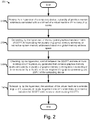
- Fig. 2 it is a flow diagram of an example process 200 for managing graphics memory overcommitment in GPU virtualization, which may be practiced by an example device in accordance with various embodiments.
- the process 200 may be performed by processing logic that comprises hardware (e.g., circuitry, dedicated logic, programmable logic, microcode, etc.), software (e.g., instructions run on a processing device to perform hardware simulation), or a combination thereof.
- the processing logic may be configured for facilitating management of graphics memory overcommitment in GPU virtualization.
- process 200 may be performed by a computing device, e.g., apparatus 100 of Fig. 1 , to implement one or more embodiments of the present disclosure.
- various blocks in Fig. 2 may be combined or arranged in any suitable order, e.g., according to the particular embodiment of hypervisor 110 of Fig. 1 .
- the process may begin at block 210, where a hypervisor of a computing device, e.g., hypervisor 110 of Fig. 1 , may parse a plurality of graphics memory addresses associated with a workload of a virtual machine of the computing device.
- the hypervisor may scan a plurality of command buffers in the virtual machine for those commands of the workload associated with respective render engines of the GPU. Through scanning the commands in the command buffers, the hypervisor may determine the graphics memory working sets, and accordingly determine the graphics memory addresses of respective graphics memory working sets for a VM.
- command parser 118 of hypervisor 110 may scan the whole command buffers corresponding to each rendering engine in GPU 120 before a workload from VM 130 may be submitted to GPU 120.
- command parser 118 may determine which graphics memory addresses are used by a specific workload, e.g., 3D workload 132 or media workload 134. Graphics memory addresses parsed out in this process may be used in block 220 to generate an SGGTT to contain the translation for these addresses to system memory addresses.
- GPU commands may be encountered by a hypervisor.
- Some GPU commands are direct access type, where graphics memory space addresses may be directly translated via entries on the GPU page table.
- Some GPU commands are indirect access type, where indirect memory addresses with indirect states may be used. There are many indirect states. Each indirect state may indicate a region of graphics memory space via assigning a lower bound and an upper bound.
- An indirect address may include the offset inside a region managed by an indirect state. As an example, shaders and many instructions related to fixed functions may use such indirect memory access methods.
- the hypervisor may parse the plurality of graphics memory addresses from a plurality of commands for direct memory access or a plurality of commands for indirect memory access associated with the workload.
- a command parser may figure out the associated graphics memory space regions from the operands of a GPU command.
- the command parser may scan the beginning of graphics memory space addresses from operands of a command, and then get the actual context size from context size register, e.g., CTX_SIZE, offset 0x21a8.
- the command parser may determine indirect states regions from the operands of an indirect state setup instruction, e.g., STATE BASE ADDRESS, DWORD0, or DWORD12, which may denote the region of graphics memory space for a general indirect state.
- an indirect state setup instruction e.g., STATE BASE ADDRESS, DWORD0, or DWORD12
- the hypervisor may generate a shadow global graphics translation table (SGGTT) for translating the plurality of graphics memory addresses to respective system memory addresses based on a global memory address space.
- a command parser of the hypervisor may scan an instruction and determine if this instruction contains memory operands. If yes, the command parser may read the related graphics memory space mappings, e.g., from per-VM global shadow GGTT, and then write it into the SGGTT. After the whole command buffer of a workload gets scanned, a smart SGGTT that holds memory space mappings associated with this workload may also be generated. Therefore, in some embodiments, the SGGTT may be generated for translating the plurality of graphics memory addresses to the system memory addresses for a plurality of commands in an entire command buffer associated with the workload.
- the SGGTT generated for the workload for translating the plurality of graphics memory addresses to the system memory addresses may be associated with only a particular render engine in the GPU.
- a workload in a VM may be associated with a particular render engine in the GPU, e.g., a 3D render engine.
- the generated SGGTT likewise may be associated with the 3D render engine only.
- the SGGTTs may be allowed to access a portion of the global graphics memory address space at least greater than a memory address space would have allocated to the VM based on a static global graphics memory space partitioning scheme.
- memory overcommit schemes based on SGGTTs in GPU virtualization as discussed herein may enable each VM to use the entire high graphics memory address space in some embodiments, or even the entire global graphics memory address space in other embodiments.
- the high graphics memory space may occupy the upper portion of the global graphics memory address space, while the aperture may occupy the lower portion of the global graphics memory address space.
- Some applications inside a VM may leverage from the increased graphic memory address space for improved performance.
- only graphic memory address space used by the to-be-executed workload may be allocated at runtime, which preserves the high graphics memory address space and increases the maximum number of VMs supported by the host. Further, it may also improve the utilization of GPU hardware resources in a full GPU virtualization environment.
- the hypervisor may check conflict between the SGGTT and one or more existing SGGTTs previously generated that contains graphics memory addresses used by graphic memory working sets in-executing or to-be-executed by one or more render engines of a GPU of the computing device.
- the GPU scheduler may check the conflict based at least in part on whether the SGGTT and the existing one or more SGGTTs have a same entry (e.g., a same graphics memory address) in the global graphics memory address space.
- the existing one or more SGGTTs may be based on respective render engines. As an example, each render engine may have a corresponding SGGTT for conflict checking.
- the existing one or more SGGTTs may be integrated as one SGGTT for the GPU.
- the GPU scheduler may integrate the newly generated SGGTT into the one or more existing SGGTTs when there is no conflict between the SGGTT and the one or more existing SGGTTs. However, when there is a conflict between the newly generated SGGTT and the one or more existing SGGTTs, the GPU scheduler may defer such integration. In turn, the GPU scheduler may attempt to schedule the next workload in the queue to the GPU.
- the hypervisor may schedule the workload of the virtual machine to a render engine of the plurality of render engines of the GPU when there is no conflict between the SGGTT and the one or more existing SGGTTs.
- the GPU scheduler may write the integrated SGGTT to the GPU and then submit the workload of the virtual machine to the appropriate render engine.
- Fig. 3 illustrates an embodiment of a computing device 300 suitable for practicing embodiments of the present disclosure.
- Computing device 300 may be any computing device that has a GPU, in forms such as a smartphone, a tablet, a laptop, a wearable device, a server, etc.
- computing device 300 may include system control logic 320 coupled to processor 310, to system memory 330, to non-volatile memory (NVM)/storage 340, and to communication interface 350.
- processor 310 may include GPU 312 and one or more processor cores.
- communication interface 350 may provide an interface for computing device 300 to communicate over one or more network(s) and/or with any other suitable device.
- Communication interface 350 may include any suitable hardware and/or firmware, such as a network adapter, a network interface card, one or more antennas, wireless interface(s), and so forth.
- communication interface 350 may include an interface for computing device 300 to use radio-frequency identification (RFID), near field communication (NFC), optical communications, or other similar technologies to communicate directly (e.g., without an intermediary) with another device.
- RFID radio-frequency identification
- NFC near field communication
- communication interface 350 may interoperate with radio communications technologies such as, for example, Wideband Code Division Multiple Access (WCDMA), Global System for Mobile Communications (GSM), Long Term Evolution (LTE), Bluetooth®, Zigbee, and the like.
- WCDMA Wideband Code Division Multiple Access
- GSM Global System for Mobile Communications
- LTE Long Term Evolution
- Bluetooth® Zigbee, and the like.
- system control logic 320 may include any suitable interface controllers to provide for any suitable interface to the processor 310 and/or to any suitable device or component in communication with system control logic 320.
- System control logic 320 may also interoperate with a display (not shown) for the display of information, such as to a user.
- the display may include one of various display formats and forms, such as, for example, liquid-crystal displays, cathode-ray tube displays, e-ink displays, projection displays.
- the display may include a touch screen.
- system control logic 320 may include one or more memory controller(s) (not shown) to provide an interface to system memory 330.
- System memory 330 may be used to load and store data and/or instructions, for example, for computing device 300.
- System memory 330 may include any suitable volatile memory, such as dynamic random access memory (DRAM), for example.
- DRAM dynamic random access memory
- memory 330 may include, in particular, the logic for managing graphics memory overcommitment in GPU virtualization as earlier described, collectively denoted as graphics memory overcommit management logic 332.
- graphics memory overcommit management logic 332 may include instructions that, when executed by processor 310, result in computing device 300 performing various functions associated with VM 130 or 140, hypervisor 110, and/or GPU 120 in connection with Fig. 1 .
- Graphics memory overcommit management logic 332 may include instructions that, when executed by processor 310, result in computing device 300 providing graphics memory overcommitment in GPU virtualization, such as, but not limited to, process 200.
- system control logic 320 may include one or more input/output (I/O) controller(s) (not shown) to provide an interface to NVM/storage 340 and communication interface 350.
- NVM/storage 340 may be used to store data and/or instructions, for example.
- NVM/storage 340 may include any suitable non-volatile memory, such as flash memory, for example, and/or may include any suitable non-volatile storage device(s), such as one or more hard disk drive(s) (HDD), one or more solid-state drive(s), one or more compact disc (CD) drive(s), and/or one or more digital versatile disc (DVD) drive(s), for example.
- HDD hard disk drive
- CD compact disc
- DVD digital versatile disc
- NVM/storage 340 may include a storage resource that is physically part of a device on which computing device 300 is installed or it may be accessible by, but not necessarily a part of, computing device 300.
- NVM/storage 340 may be accessed by computing device 300 over a network via communication interface 350.
- processor 310 may be packaged together with memory having system control logic 320 and/or logic of graphics memory overcommit management logic 332. In some embodiments, at least one of the processor(s) 310 may be packaged together with memory having system control logic 320 and/or logic of graphics memory overcommit management logic 332 to form a System in Package (SiP). In some embodiments, processor 310 may be integrated on the same die with memory having system control logic 320 and/or logic of graphics memory overcommit management logic 332. In some embodiments, processor 310 may be integrated on the same die with memory having system control logic 320 and/or graphics memory overcommit management logic 332 to form a System on Chip (SoC).
- SoC System on Chip
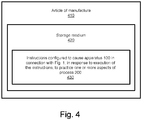
- Fig. 4 illustrates an article of manufacture 410 having programming instructions, incorporating aspects of the present disclosure, in accordance with various embodiments.
- an article of manufacture may be employed to implement various embodiments of the present disclosure.
- the article of manufacture 410 may include a computer-readable non-transitory storage medium 420 where instructions 430 are configured to practice embodiments of or aspects of embodiments of any one of the processes described herein.
- the storage medium 420 may represent a broad range of persistent storage media known in the art, including but not limited to flash memory, dynamic random access memory, static random access memory, an optical disk, a magnetic disk, etc.
- Instructions 430 may enable an apparatus, in response to their execution by the apparatus, to perform various operations described herein.
- storage medium 420 may include instructions 430 configured to cause an apparatus, e.g., apparatus 100, to practice some aspects of graphics memory overcommitment management in GPU virtualization, as illustrated in process 200 of Fig. 2 , in accordance with embodiments of the present disclosure.
- computer-readable storage medium 420 may include one or more computer-readable non-transitory storage media.
- computer-readable storage medium 420 may be transitory, such as signals, encoded with instructions 430.
Landscapes
- Engineering & Computer Science (AREA)
- Theoretical Computer Science (AREA)
- Software Systems (AREA)
- General Engineering & Computer Science (AREA)
- Physics & Mathematics (AREA)
- General Physics & Mathematics (AREA)
- Computer Graphics (AREA)
- Memory System Of A Hierarchy Structure (AREA)
Claims (13)
- Appareil (100) de traitement de données, comprenant : un ou plusieurs processeurs comportant une unité de traitement graphique, notée GPU, (120) ; et
un hyperviseur (110), couplé à la GPU, l'hyperviseur comportant :un analyseur syntaxique de commandes (118) destiné à analyser syntaxiquement une pluralité d'adresses de mémoire graphique associées à une charge de travail d'une machine virtuelle (130, 140) de l'appareil, et générer une première table de traduction graphique globale fantôme, notée SGGTT, pour la traduction de la pluralité d'adresses de mémoire graphique en des adresses de mémoire système respectives de l'appareil sur la base d'une portion d'un espace d'adressage de mémoire global accessible à la machine virtuelle ;un ordonnanceur de GPU (112) destiné à vérifier s'il existe un conflit entre la première SGGTT et une deuxième SGGTT contenant des adresses de mémoire graphique utilisées par une pluralité de working-sets de mémoire graphique en cours d'exécution ou à exécuter par une pluralité de moteurs de rendu de la GPU, et ordonnancer la charge de travail de la machine virtuelle sur un moteur de rendu parmi la pluralité de moteurs de rendu de la GPU en l'absence de conflit entre la première SGGTT et la deuxième SGGTT ; caractérisé parune file d'attente de charges de travail (116) destinée à contenir une pluralité de charges de travail provenant d'une ou de plusieurs machines virtuelles de l'appareil ; etune file d'attente de SGGTT (114) destinée à contenir une pluralité de SGGTT correspondant à la pluralité de charges de travail, l'ordonnanceur de GPU étant destiné en outre à reporter la charge de travail de la machine virtuelle en réponse à un conflit entre la première SGGTT et la deuxième SGGTT, et à ordonnancer une autre charge de travail provenant de la file d'attente de charges de travail lorsqu'une SGGTT respective de l'autre charge de travail n'entre pas en conflit avec la deuxième SGGTT. - Appareil selon la revendication 1, dans lequel l'ordonnanceur de GPU est destiné en outre à intégrer la première SGGTT dans la deuxième SGGTT, écrire une pluralité de mappages d'adresses depuis la SGGTT intégrée vers la GPU, et soumettre la charge de travail de la machine virtuelle au moteur de rendu parmi la pluralité de moteurs de rendu de la GPU en réponse à l'absence de conflit entre la première SGGTT et la deuxième SGGTT.
- Appareil selon l'une quelconque des revendications 1 et 2, dans lequel l'analyseur syntaxique de commandes est destiné en outre à balayer une pluralité de tampons de commandes de l'appareil contenant une pluralité de commandes de la charge de travail pour la pluralité d'adresses de mémoire graphique associées à la pluralité de commandes ; dans lequel l'analyseur syntaxique de commandes est destiné en outre à analyser syntaxiquement la pluralité d'adresses de mémoire graphique à partir de la pluralité de commandes pour un accès direct en mémoire ou un accès indirect en mémoire.
- Appareil selon l'une quelconque des revendications 1 à 3, dans lequel la GPU comprend la pluralité de moteurs de rendu comportant au moins un moteur de rendu dans 3 dimensions, au moins un moteur de rendu de type blitter, au moins un moteur de rendu de type streamer de commandes vidéo, noté VCS, et au moins un moteur de rendu de type streamer de commandes d'amélioration vidéo, noté VECS ; dans lequel la charge de travail n'est destinée qu'à un seul des moteurs de rendu.
- Appareil selon l'une quelconque des revendications 1 à 4, dans lequel la portion de l'espace d'adressage de mémoire global est plus grande qu'un espace de mémoire alloué à la machine virtuelle uniquement sur la base d'un schéma de partitionnement d'espace de mémoire graphique global statique.
- Appareil selon l'une quelconque des revendications 1 à 5, dans lequel la portion de l'espace d'adressage de mémoire global comporte une portion supérieure entière de l'espace d'adressage de mémoire graphique global partagée par au moins une autre machine virtuelle de l'appareil.
- Procédé (200) de traitement de données, comprenant :l'analyse syntaxique (210), par un hyperviseur d'un dispositif informatique, d'une pluralité d'adresses de mémoire graphique associées à une charge de travail d'une machine virtuelle du dispositif informatique ;la génération (220), par l'hyperviseur, d'une table de traduction graphique globale fantôme, notée SGGTT, pour la traduction de la pluralité d'adresses de mémoire graphique en des adresses de mémoire système respectives sur la base d'un espace d'adressage de mémoire graphique global ;la vérification (230), par l'hyperviseur, s'il existe un conflit entre la SGGTT et une ou plusieurs SGGTT existantes précédemment générées contenant des adresses de mémoire graphique utilisées par une pluralité de working-sets de mémoire graphique en cours d'exécution ou à exécuter par une pluralité de moteurs de rendu d'une unité de traitement graphique, notée GPU, du dispositif informatique ; etl'ordonnancement (240), par l'ordonnanceur, de la charge de travail de la machine virtuelle sur un moteur de rendu parmi la pluralité de moteurs de rendu de la GPU en l'absence de conflit entre la SGGTT et les une ou plusieurs SGGTT existantes, caractérisé en ce que l'hyperviseur comprend en outre une file d'attente de charges de travail destinée à contenir une pluralité de charges de travail provenant d'une ou de plusieurs machines virtuelles du dispositif informatique, et une file d'attente de SGGTT destinée à contenir une pluralité de SGGTT correspondant à la pluralité de charges de travail ; etun ordonnanceur de GPU étant destiné en outre à reporter la charge de travail de la machine virtuelle en réponse à un conflit entre la SGGTT et les une ou plusieurs SGGTT existantes, et à ordonnancer une autre charge de travail provenant de la file d'attente de charges de travail lorsqu'une SGGTT respective de l'autre charge de travail n'entre pas en conflit avec les une ou plusieurs SGGTT existantes.
- Procédé selon la revendication 7, comprenant en outre :l'intégration, par l'hyperviseur, de la SGGTT dans les une ou plusieurs SGGTT existantes en l'absence de conflit entre la SGGTT et les une ou plusieurs SGGTT existantes ;le report, par l'hyperviseur, de l'intégration de la SGGTT dans les une ou plusieurs SGGTT existantes et l'ordonnancement de la charge de travail de la machine virtuelle sur le moteur de rendu en présence d'un conflit entre la SGGTT et les une ou plusieurs SGGTT existantes ;l'écriture, par l'hyperviseur, d'une pluralité de mappages d'adresses de la SGGTT dans une table de pages dans la GPU ; etla soumission, par l'hyperviseur, de la charge de travail de la machine virtuelle au moteur de rendu parmi la pluralité de moteurs de rendu de la GPU.
- Procédé selon la revendication 7 ou 8, dans lequel l'analyse syntaxique comprend en outre le balayage, par l'hyperviseur, d'une pluralité de tampons de commandes associés à des moteurs de rendu respectifs de la GPU, la pluralité de tampons de commandes contenant une pluralité de commandes de la charge de travail dans la machine virtuelle ; dans lequel l'analyse syntaxique comprend en outre l'analyse syntaxique, par l'hyperviseur, de la pluralité d'adresses de mémoire graphique à partir de la pluralité de commandes de la charge de travail pour un accès direct en mémoire ou un accès indirect en mémoire.
- Procédé selon l'une quelconque des revendications 7 à 9, dans lequel la génération comprend en outre la génération, par l'hyperviseur, de la SGGTT pour la traduction de la pluralité d'adresses de mémoire graphique d'une pluralité de commandes dans un tampon de commandes entier associé à la charge de travail ; et dans lequel la génération comprend en outre la génération, par l'hyperviseur, de la SGGTT pour la charge de travail pour la traduction de la pluralité d'adresses de mémoire graphique associées uniquement à un moteur de rendu particulier dans la GPU.
- Procédé selon l'une quelconque des revendications 7 à 10, dans lequel la génération comprend en outre la génération, par l'hyperviseur, de la SGGTT sur la base d'une portion de l'espace d'adressage de mémoire graphique global accessible à la machine virtuelle, la portion de l'espace d'adressage de mémoire graphique global étant plus grande qu'un espace d'adressage de mémoire accessible à la machine virtuelle sur la base d'un schéma de partitionnement d'espace de mémoire graphique global statique.
- Procédé selon l'une quelconque des revendications 7 à 11, dans lequel la génération comprend en outre la génération, par l'hyperviseur, de la SGGTT sur la base d'une portion de l'espace d'adressage de mémoire graphique global accessible à la machine virtuelle, la portion de l'espace d'adressage de mémoire graphique global comportant une portion supérieure entière de l'espace d'adressage de mémoire graphique global partagée par au moins une autre machine virtuelle du dispositif informatique.
- Procédé selon l'une quelconque des revendications 7 à 12, dans lequel la vérification comprend en outre la vérification, par l'hyperviseur, s'il existe un conflit selon, au moins en partie, que la SGGTT et les une ou plusieurs SGGTT existantes possèdent ou non une même entrée dans l'espace d'adressage de mémoire graphique global.
Applications Claiming Priority (1)
| Application Number | Priority Date | Filing Date | Title |
|---|---|---|---|
| PCT/CN2015/075116 WO2016149935A1 (fr) | 2015-03-26 | 2015-03-26 | Procédés et appareils informatiques à contrôle de conflits de mémoire de graphiques et de système |
Publications (3)
| Publication Number | Publication Date |
|---|---|
| EP3274818A1 EP3274818A1 (fr) | 2018-01-31 |
| EP3274818A4 EP3274818A4 (fr) | 2018-12-05 |
| EP3274818B1 true EP3274818B1 (fr) | 2021-01-27 |
Family
ID=56977722
Family Applications (1)
| Application Number | Title | Priority Date | Filing Date |
|---|---|---|---|
| EP15885874.6A Active EP3274818B1 (fr) | 2015-03-26 | 2015-03-26 | Procédés et appareils informatiques à contrôle de conflits de mémoire de graphiques et de système |
Country Status (4)
| Country | Link |
|---|---|
| US (1) | US10242422B2 (fr) |
| EP (1) | EP3274818B1 (fr) |
| CN (1) | CN107250980B (fr) |
| WO (1) | WO2016149935A1 (fr) |
Families Citing this family (6)
| Publication number | Priority date | Publication date | Assignee | Title |
|---|---|---|---|---|
| US11327656B2 (en) * | 2018-08-03 | 2022-05-10 | Mobileye Vision Technologies Ltd. | Accessing a dynamic memory module |
| US10838725B2 (en) * | 2018-09-26 | 2020-11-17 | Apple Inc. | Low latency fetch circuitry for compute kernels |
| CN109697060B (zh) * | 2018-12-29 | 2022-08-26 | 广州方硅信息技术有限公司 | 视频特效系统及其生成方法、装置、设备和存储介质 |
| CN109918319B (zh) * | 2019-03-22 | 2021-03-05 | 深圳忆联信息系统有限公司 | 一种固态硬盘控制器加速方法及其系统 |
| CN111913794B (zh) * | 2020-08-04 | 2024-08-09 | 北京百度网讯科技有限公司 | 用于共用gpu的方法、装置、电子设备及可读存储介质 |
| CN115964167B (zh) * | 2022-12-16 | 2023-09-01 | 摩尔线程智能科技(北京)有限责任公司 | 异构计算平台的资源池化方法、装置、设备、介质和产品 |
Family Cites Families (10)
| Publication number | Priority date | Publication date | Assignee | Title |
|---|---|---|---|---|
| US6785793B2 (en) * | 2001-09-27 | 2004-08-31 | Intel Corporation | Method and apparatus for memory access scheduling to reduce memory access latency |
| US9058292B2 (en) * | 2004-12-29 | 2015-06-16 | Intel Corporation | System and method for one step address translation of graphics addresses in virtualization |
| US7499057B2 (en) * | 2005-09-09 | 2009-03-03 | Microsoft Corporation | Address translation in an integrated graphics environment |
| US7868897B2 (en) | 2006-06-30 | 2011-01-11 | Intel Corporation | Apparatus and method for memory address re-mapping of graphics data |
| US8830228B2 (en) * | 2010-12-20 | 2014-09-09 | Microsoft Corporation | Techniques for enabling remote management of servers configured with graphics processors |
| US20120167082A1 (en) * | 2010-12-23 | 2012-06-28 | Sanjay Kumar | Direct sharing of smart devices through virtualization |
| US9672583B2 (en) * | 2011-12-21 | 2017-06-06 | Intel Corporation | GPU accelerated address translation for graphics virtualization |
| US9304813B2 (en) * | 2012-07-18 | 2016-04-05 | Intel Corporation | CPU independent graphics scheduler for performing scheduling operations for graphics hardware |
| WO2014122414A1 (fr) * | 2013-02-05 | 2014-08-14 | Arm Limited | Gestion d'opérations d'accès à une mémoire dans un appareil de traitement de données |
| US9619401B2 (en) * | 2015-02-20 | 2017-04-11 | Wisconsin Alumni Research Foundation | Efficient memory management system for computers supporting virtual machines |
-
2015
- 2015-03-26 EP EP15885874.6A patent/EP3274818B1/fr active Active
- 2015-03-26 US US15/553,143 patent/US10242422B2/en active Active
- 2015-03-26 CN CN201580076870.XA patent/CN107250980B/zh active Active
- 2015-03-26 WO PCT/CN2015/075116 patent/WO2016149935A1/fr not_active Ceased
Non-Patent Citations (1)
| Title |
|---|
| None * |
Also Published As
| Publication number | Publication date |
|---|---|
| CN107250980B (zh) | 2021-02-09 |
| US20180122039A1 (en) | 2018-05-03 |
| US10242422B2 (en) | 2019-03-26 |
| EP3274818A1 (fr) | 2018-01-31 |
| EP3274818A4 (fr) | 2018-12-05 |
| WO2016149935A1 (fr) | 2016-09-29 |
| CN107250980A (zh) | 2017-10-13 |
Similar Documents
| Publication | Publication Date | Title |
|---|---|---|
| EP3274818B1 (fr) | Procédés et appareils informatiques à contrôle de conflits de mémoire de graphiques et de système | |
| US9176765B2 (en) | Virtual machine system and a method for sharing a graphics card amongst virtual machines | |
| US10877793B2 (en) | Extending the base address register by modifying the number of read-only bits associated with a device to be presented to a guest operating system | |
| US20200294183A1 (en) | Container access to graphics processing unit resources | |
| KR101569731B1 (ko) | 가상화를 통한 스마트 장치의 직접적인 공유 | |
| US10310974B2 (en) | Systems and methods for input/output computing resource control | |
| JP6069031B2 (ja) | 計算機及びメモリ管理方法 | |
| WO2017024783A1 (fr) | Procédé, appareil et système de virtualisation | |
| TW201403321A (zh) | 針對記憶體存取的動態記憶列模式定址 | |
| US9766918B2 (en) | Virtual system device identification using GPU to host bridge mapping | |
| US10387325B2 (en) | Dynamic address translation for a virtual machine | |
| US9367478B2 (en) | Controlling direct memory access page mappings | |
| KR20170029583A (ko) | 가상 컴퓨팅 환경에서의 메모리 및 자원 관리 | |
| CN113227983B (zh) | 将虚拟功能的微代码存储在受信任存储器区域中 | |
| CN104216834A (zh) | 一种内存访问的方法、缓冲调度器和内存模块 | |
| US10402323B2 (en) | Organizing memory to optimize memory accesses of compressed data | |
| US12277431B2 (en) | Data buffering method, data processing method, computer device, storage medium | |
| CN121029314A (zh) | 针对虚拟化的处理器特征id响应 | |
| US20060036775A1 (en) | Apparatus and methods for video graphics array (VGA) virtualization in system exploiting multiple operating systems | |
| KR102358752B1 (ko) | 모바일 환경에서 그래픽 처리 장치를 가상화하는 방법 및 기록 매체 | |
| US20170322889A1 (en) | Computing resource with memory resource memory management |
Legal Events
| Date | Code | Title | Description |
|---|---|---|---|
| STAA | Information on the status of an ep patent application or granted ep patent |
Free format text: STATUS: THE INTERNATIONAL PUBLICATION HAS BEEN MADE |
|
| PUAI | Public reference made under article 153(3) epc to a published international application that has entered the european phase |
Free format text: ORIGINAL CODE: 0009012 |
|
| STAA | Information on the status of an ep patent application or granted ep patent |
Free format text: STATUS: REQUEST FOR EXAMINATION WAS MADE |
|
| 17P | Request for examination filed |
Effective date: 20170908 |
|
| AK | Designated contracting states |
Kind code of ref document: A1 Designated state(s): AL AT BE BG CH CY CZ DE DK EE ES FI FR GB GR HR HU IE IS IT LI LT LU LV MC MK MT NL NO PL PT RO RS SE SI SK SM TR |
|
| AX | Request for extension of the european patent |
Extension state: BA ME |
|
| DAV | Request for validation of the european patent (deleted) | ||
| DAX | Request for extension of the european patent (deleted) | ||
| A4 | Supplementary search report drawn up and despatched |
Effective date: 20181106 |
|
| RIC1 | Information provided on ipc code assigned before grant |
Ipc: G06F 8/41 20180101ALI20181029BHEP Ipc: G06F 9/44 20180101ALI20181029BHEP Ipc: G06T 15/00 20110101ALI20181029BHEP Ipc: G06T 1/20 20060101ALI20181029BHEP Ipc: G06F 12/1027 20160101ALI20181029BHEP Ipc: G06F 9/455 20180101AFI20181029BHEP Ipc: G06F 9/48 20060101ALI20181029BHEP Ipc: G06T 1/60 20060101ALI20181029BHEP Ipc: G06F 12/1009 20160101ALI20181029BHEP |
|
| REG | Reference to a national code |
Ref country code: DE Ref legal event code: R079 Ref document number: 602015065356 Country of ref document: DE Free format text: PREVIOUS MAIN CLASS: G06F0009440000 Ipc: G06F0009455000 |
|
| GRAP | Despatch of communication of intention to grant a patent |
Free format text: ORIGINAL CODE: EPIDOSNIGR1 |
|
| STAA | Information on the status of an ep patent application or granted ep patent |
Free format text: STATUS: GRANT OF PATENT IS INTENDED |
|
| RIC1 | Information provided on ipc code assigned before grant |
Ipc: G06T 1/20 20060101ALI20200528BHEP Ipc: G06F 9/48 20060101ALI20200528BHEP Ipc: G06F 12/1009 20160101ALI20200528BHEP Ipc: G06T 1/60 20060101ALI20200528BHEP Ipc: G06F 9/455 20180101AFI20200528BHEP Ipc: G06F 8/41 20180101ALI20200528BHEP Ipc: G06T 15/00 20110101ALI20200528BHEP Ipc: G06F 9/44 20180101ALI20200528BHEP Ipc: G06F 12/1027 20160101ALI20200528BHEP |
|
| INTG | Intention to grant announced |
Effective date: 20200616 |
|
| GRAJ | Information related to disapproval of communication of intention to grant by the applicant or resumption of examination proceedings by the epo deleted |
Free format text: ORIGINAL CODE: EPIDOSDIGR1 |
|
| STAA | Information on the status of an ep patent application or granted ep patent |
Free format text: STATUS: REQUEST FOR EXAMINATION WAS MADE |
|
| INTC | Intention to grant announced (deleted) | ||
| GRAR | Information related to intention to grant a patent recorded |
Free format text: ORIGINAL CODE: EPIDOSNIGR71 |
|
| GRAS | Grant fee paid |
Free format text: ORIGINAL CODE: EPIDOSNIGR3 |
|
| STAA | Information on the status of an ep patent application or granted ep patent |
Free format text: STATUS: GRANT OF PATENT IS INTENDED |
|
| GRAA | (expected) grant |
Free format text: ORIGINAL CODE: 0009210 |
|
| STAA | Information on the status of an ep patent application or granted ep patent |
Free format text: STATUS: THE PATENT HAS BEEN GRANTED |
|
| INTG | Intention to grant announced |
Effective date: 20201217 |
|
| AK | Designated contracting states |
Kind code of ref document: B1 Designated state(s): AL AT BE BG CH CY CZ DE DK EE ES FI FR GB GR HR HU IE IS IT LI LT LU LV MC MK MT NL NO PL PT RO RS SE SI SK SM TR |
|
| REG | Reference to a national code |
Ref country code: GB Ref legal event code: FG4D |
|
| REG | Reference to a national code |
Ref country code: CH Ref legal event code: EP |
|
| REG | Reference to a national code |
Ref country code: AT Ref legal event code: REF Ref document number: 1358975 Country of ref document: AT Kind code of ref document: T Effective date: 20210215 |
|
| REG | Reference to a national code |
Ref country code: IE Ref legal event code: FG4D |
|
| REG | Reference to a national code |
Ref country code: DE Ref legal event code: R096 Ref document number: 602015065356 Country of ref document: DE |
|
| REG | Reference to a national code |
Ref country code: NL Ref legal event code: FP |
|
| REG | Reference to a national code |
Ref country code: LT Ref legal event code: MG9D |
|
| REG | Reference to a national code |
Ref country code: AT Ref legal event code: MK05 Ref document number: 1358975 Country of ref document: AT Kind code of ref document: T Effective date: 20210127 |
|
| PG25 | Lapsed in a contracting state [announced via postgrant information from national office to epo] |
Ref country code: LT Free format text: LAPSE BECAUSE OF FAILURE TO SUBMIT A TRANSLATION OF THE DESCRIPTION OR TO PAY THE FEE WITHIN THE PRESCRIBED TIME-LIMIT Effective date: 20210127 Ref country code: FI Free format text: LAPSE BECAUSE OF FAILURE TO SUBMIT A TRANSLATION OF THE DESCRIPTION OR TO PAY THE FEE WITHIN THE PRESCRIBED TIME-LIMIT Effective date: 20210127 Ref country code: GR Free format text: LAPSE BECAUSE OF FAILURE TO SUBMIT A TRANSLATION OF THE DESCRIPTION OR TO PAY THE FEE WITHIN THE PRESCRIBED TIME-LIMIT Effective date: 20210428 Ref country code: HR Free format text: LAPSE BECAUSE OF FAILURE TO SUBMIT A TRANSLATION OF THE DESCRIPTION OR TO PAY THE FEE WITHIN THE PRESCRIBED TIME-LIMIT Effective date: 20210127 Ref country code: BG Free format text: LAPSE BECAUSE OF FAILURE TO SUBMIT A TRANSLATION OF THE DESCRIPTION OR TO PAY THE FEE WITHIN THE PRESCRIBED TIME-LIMIT Effective date: 20210427 Ref country code: NO Free format text: LAPSE BECAUSE OF FAILURE TO SUBMIT A TRANSLATION OF THE DESCRIPTION OR TO PAY THE FEE WITHIN THE PRESCRIBED TIME-LIMIT Effective date: 20210427 Ref country code: PT Free format text: LAPSE BECAUSE OF FAILURE TO SUBMIT A TRANSLATION OF THE DESCRIPTION OR TO PAY THE FEE WITHIN THE PRESCRIBED TIME-LIMIT Effective date: 20210527 |
|
| PG25 | Lapsed in a contracting state [announced via postgrant information from national office to epo] |
Ref country code: SE Free format text: LAPSE BECAUSE OF FAILURE TO SUBMIT A TRANSLATION OF THE DESCRIPTION OR TO PAY THE FEE WITHIN THE PRESCRIBED TIME-LIMIT Effective date: 20210127 Ref country code: AT Free format text: LAPSE BECAUSE OF FAILURE TO SUBMIT A TRANSLATION OF THE DESCRIPTION OR TO PAY THE FEE WITHIN THE PRESCRIBED TIME-LIMIT Effective date: 20210127 Ref country code: RS Free format text: LAPSE BECAUSE OF FAILURE TO SUBMIT A TRANSLATION OF THE DESCRIPTION OR TO PAY THE FEE WITHIN THE PRESCRIBED TIME-LIMIT Effective date: 20210127 Ref country code: LV Free format text: LAPSE BECAUSE OF FAILURE TO SUBMIT A TRANSLATION OF THE DESCRIPTION OR TO PAY THE FEE WITHIN THE PRESCRIBED TIME-LIMIT Effective date: 20210127 Ref country code: PL Free format text: LAPSE BECAUSE OF FAILURE TO SUBMIT A TRANSLATION OF THE DESCRIPTION OR TO PAY THE FEE WITHIN THE PRESCRIBED TIME-LIMIT Effective date: 20210127 |
|
| PG25 | Lapsed in a contracting state [announced via postgrant information from national office to epo] |
Ref country code: IS Free format text: LAPSE BECAUSE OF FAILURE TO SUBMIT A TRANSLATION OF THE DESCRIPTION OR TO PAY THE FEE WITHIN THE PRESCRIBED TIME-LIMIT Effective date: 20210527 |
|
| REG | Reference to a national code |
Ref country code: DE Ref legal event code: R097 Ref document number: 602015065356 Country of ref document: DE |
|
| PG25 | Lapsed in a contracting state [announced via postgrant information from national office to epo] |
Ref country code: SM Free format text: LAPSE BECAUSE OF FAILURE TO SUBMIT A TRANSLATION OF THE DESCRIPTION OR TO PAY THE FEE WITHIN THE PRESCRIBED TIME-LIMIT Effective date: 20210127 Ref country code: MC Free format text: LAPSE BECAUSE OF FAILURE TO SUBMIT A TRANSLATION OF THE DESCRIPTION OR TO PAY THE FEE WITHIN THE PRESCRIBED TIME-LIMIT Effective date: 20210127 Ref country code: CZ Free format text: LAPSE BECAUSE OF FAILURE TO SUBMIT A TRANSLATION OF THE DESCRIPTION OR TO PAY THE FEE WITHIN THE PRESCRIBED TIME-LIMIT Effective date: 20210127 Ref country code: EE Free format text: LAPSE BECAUSE OF FAILURE TO SUBMIT A TRANSLATION OF THE DESCRIPTION OR TO PAY THE FEE WITHIN THE PRESCRIBED TIME-LIMIT Effective date: 20210127 |
|
| REG | Reference to a national code |
Ref country code: CH Ref legal event code: PL |
|
| PG25 | Lapsed in a contracting state [announced via postgrant information from national office to epo] |
Ref country code: DK Free format text: LAPSE BECAUSE OF FAILURE TO SUBMIT A TRANSLATION OF THE DESCRIPTION OR TO PAY THE FEE WITHIN THE PRESCRIBED TIME-LIMIT Effective date: 20210127 Ref country code: RO Free format text: LAPSE BECAUSE OF FAILURE TO SUBMIT A TRANSLATION OF THE DESCRIPTION OR TO PAY THE FEE WITHIN THE PRESCRIBED TIME-LIMIT Effective date: 20210127 Ref country code: SK Free format text: LAPSE BECAUSE OF FAILURE TO SUBMIT A TRANSLATION OF THE DESCRIPTION OR TO PAY THE FEE WITHIN THE PRESCRIBED TIME-LIMIT Effective date: 20210127 |
|
| PLBE | No opposition filed within time limit |
Free format text: ORIGINAL CODE: 0009261 |
|
| STAA | Information on the status of an ep patent application or granted ep patent |
Free format text: STATUS: NO OPPOSITION FILED WITHIN TIME LIMIT |
|
| REG | Reference to a national code |
Ref country code: BE Ref legal event code: MM Effective date: 20210331 |
|
| GBPC | Gb: european patent ceased through non-payment of renewal fee |
Effective date: 20210427 |
|
| 26N | No opposition filed |
Effective date: 20211028 |
|
| PG25 | Lapsed in a contracting state [announced via postgrant information from national office to epo] |
Ref country code: ES Free format text: LAPSE BECAUSE OF FAILURE TO SUBMIT A TRANSLATION OF THE DESCRIPTION OR TO PAY THE FEE WITHIN THE PRESCRIBED TIME-LIMIT Effective date: 20210127 Ref country code: CH Free format text: LAPSE BECAUSE OF NON-PAYMENT OF DUE FEES Effective date: 20210331 Ref country code: AL Free format text: LAPSE BECAUSE OF FAILURE TO SUBMIT A TRANSLATION OF THE DESCRIPTION OR TO PAY THE FEE WITHIN THE PRESCRIBED TIME-LIMIT Effective date: 20210127 Ref country code: LI Free format text: LAPSE BECAUSE OF NON-PAYMENT OF DUE FEES Effective date: 20210331 Ref country code: LU Free format text: LAPSE BECAUSE OF NON-PAYMENT OF DUE FEES Effective date: 20210326 Ref country code: FR Free format text: LAPSE BECAUSE OF NON-PAYMENT OF DUE FEES Effective date: 20210327 Ref country code: GB Free format text: LAPSE BECAUSE OF NON-PAYMENT OF DUE FEES Effective date: 20210427 Ref country code: IE Free format text: LAPSE BECAUSE OF NON-PAYMENT OF DUE FEES Effective date: 20210326 |
|
| PG25 | Lapsed in a contracting state [announced via postgrant information from national office to epo] |
Ref country code: SI Free format text: LAPSE BECAUSE OF FAILURE TO SUBMIT A TRANSLATION OF THE DESCRIPTION OR TO PAY THE FEE WITHIN THE PRESCRIBED TIME-LIMIT Effective date: 20210127 |
|
| PG25 | Lapsed in a contracting state [announced via postgrant information from national office to epo] |
Ref country code: IT Free format text: LAPSE BECAUSE OF FAILURE TO SUBMIT A TRANSLATION OF THE DESCRIPTION OR TO PAY THE FEE WITHIN THE PRESCRIBED TIME-LIMIT Effective date: 20210127 |
|
| PG25 | Lapsed in a contracting state [announced via postgrant information from national office to epo] |
Ref country code: IS Free format text: LAPSE BECAUSE OF FAILURE TO SUBMIT A TRANSLATION OF THE DESCRIPTION OR TO PAY THE FEE WITHIN THE PRESCRIBED TIME-LIMIT Effective date: 20210527 |
|
| PGFP | Annual fee paid to national office [announced via postgrant information from national office to epo] |
Ref country code: NL Payment date: 20220301 Year of fee payment: 8 |
|
| PG25 | Lapsed in a contracting state [announced via postgrant information from national office to epo] |
Ref country code: BE Free format text: LAPSE BECAUSE OF NON-PAYMENT OF DUE FEES Effective date: 20210331 |
|
| P01 | Opt-out of the competence of the unified patent court (upc) registered |
Effective date: 20230518 |
|
| PG25 | Lapsed in a contracting state [announced via postgrant information from national office to epo] |
Ref country code: CY Free format text: LAPSE BECAUSE OF FAILURE TO SUBMIT A TRANSLATION OF THE DESCRIPTION OR TO PAY THE FEE WITHIN THE PRESCRIBED TIME-LIMIT Effective date: 20210127 |
|
| PG25 | Lapsed in a contracting state [announced via postgrant information from national office to epo] |
Ref country code: HU Free format text: LAPSE BECAUSE OF FAILURE TO SUBMIT A TRANSLATION OF THE DESCRIPTION OR TO PAY THE FEE WITHIN THE PRESCRIBED TIME-LIMIT; INVALID AB INITIO Effective date: 20150326 |
|
| REG | Reference to a national code |
Ref country code: NL Ref legal event code: MM Effective date: 20230401 |
|
| PG25 | Lapsed in a contracting state [announced via postgrant information from national office to epo] |
Ref country code: NL Free format text: LAPSE BECAUSE OF NON-PAYMENT OF DUE FEES Effective date: 20230401 |
|
| PG25 | Lapsed in a contracting state [announced via postgrant information from national office to epo] |
Ref country code: MK Free format text: LAPSE BECAUSE OF FAILURE TO SUBMIT A TRANSLATION OF THE DESCRIPTION OR TO PAY THE FEE WITHIN THE PRESCRIBED TIME-LIMIT Effective date: 20210127 |
|
| PG25 | Lapsed in a contracting state [announced via postgrant information from national office to epo] |
Ref country code: TR Free format text: LAPSE BECAUSE OF FAILURE TO SUBMIT A TRANSLATION OF THE DESCRIPTION OR TO PAY THE FEE WITHIN THE PRESCRIBED TIME-LIMIT Effective date: 20210127 |
|
| PG25 | Lapsed in a contracting state [announced via postgrant information from national office to epo] |
Ref country code: MT Free format text: LAPSE BECAUSE OF FAILURE TO SUBMIT A TRANSLATION OF THE DESCRIPTION OR TO PAY THE FEE WITHIN THE PRESCRIBED TIME-LIMIT Effective date: 20210127 |
|
| PGFP | Annual fee paid to national office [announced via postgrant information from national office to epo] |
Ref country code: DE Payment date: 20260102 Year of fee payment: 12 |