EP3274885B1 - Method for determining gastrointestinal tract dysbiosis - Google Patents
Method for determining gastrointestinal tract dysbiosis Download PDFInfo
- Publication number
- EP3274885B1 EP3274885B1 EP16712848.7A EP16712848A EP3274885B1 EP 3274885 B1 EP3274885 B1 EP 3274885B1 EP 16712848 A EP16712848 A EP 16712848A EP 3274885 B1 EP3274885 B1 EP 3274885B1
- Authority
- EP
- European Patent Office
- Prior art keywords
- tract
- dysbiosis
- microbiota
- microorganisms
- hotelling
- Prior art date
- Legal status (The legal status is an assumption and is not a legal conclusion. Google has not performed a legal analysis and makes no representation as to the accuracy of the status listed.)
- Active
Links
Images


Classifications
-
- G—PHYSICS
- G16—INFORMATION AND COMMUNICATION TECHNOLOGY [ICT] SPECIALLY ADAPTED FOR SPECIFIC APPLICATION FIELDS
- G16H—HEALTHCARE INFORMATICS, i.e. INFORMATION AND COMMUNICATION TECHNOLOGY [ICT] SPECIALLY ADAPTED FOR THE HANDLING OR PROCESSING OF MEDICAL OR HEALTHCARE DATA
- G16H50/00—ICT specially adapted for medical diagnosis, medical simulation or medical data mining; ICT specially adapted for detecting, monitoring or modelling epidemics or pandemics
- G16H50/30—ICT specially adapted for medical diagnosis, medical simulation or medical data mining; ICT specially adapted for detecting, monitoring or modelling epidemics or pandemics for calculating health indices; for individual health risk assessment
-
- A—HUMAN NECESSITIES
- A61—MEDICAL OR VETERINARY SCIENCE; HYGIENE
- A61B—DIAGNOSIS; SURGERY; IDENTIFICATION
- A61B5/00—Measuring for diagnostic purposes; Identification of persons
- A61B5/42—Detecting, measuring or recording for evaluating the gastrointestinal, the endocrine or the exocrine systems
-
- A—HUMAN NECESSITIES
- A61—MEDICAL OR VETERINARY SCIENCE; HYGIENE
- A61B—DIAGNOSIS; SURGERY; IDENTIFICATION
- A61B5/00—Measuring for diagnostic purposes; Identification of persons
- A61B5/72—Signal processing specially adapted for physiological signals or for diagnostic purposes
- A61B5/7271—Specific aspects of physiological measurement analysis
- A61B5/7275—Determining trends in physiological measurement data; Predicting development of a medical condition based on physiological measurements, e.g. determining a risk factor
-
- G—PHYSICS
- G16—INFORMATION AND COMMUNICATION TECHNOLOGY [ICT] SPECIALLY ADAPTED FOR SPECIFIC APPLICATION FIELDS
- G16B—BIOINFORMATICS, i.e. INFORMATION AND COMMUNICATION TECHNOLOGY [ICT] SPECIALLY ADAPTED FOR GENETIC OR PROTEIN-RELATED DATA PROCESSING IN COMPUTATIONAL MOLECULAR BIOLOGY
- G16B5/00—ICT specially adapted for modelling or simulations in systems biology, e.g. gene-regulatory networks, protein interaction networks or metabolic networks
- G16B5/20—Probabilistic models
-
- G—PHYSICS
- G16—INFORMATION AND COMMUNICATION TECHNOLOGY [ICT] SPECIALLY ADAPTED FOR SPECIFIC APPLICATION FIELDS
- G16H—HEALTHCARE INFORMATICS, i.e. INFORMATION AND COMMUNICATION TECHNOLOGY [ICT] SPECIALLY ADAPTED FOR THE HANDLING OR PROCESSING OF MEDICAL OR HEALTHCARE DATA
- G16H50/00—ICT specially adapted for medical diagnosis, medical simulation or medical data mining; ICT specially adapted for detecting, monitoring or modelling epidemics or pandemics
- G16H50/20—ICT specially adapted for medical diagnosis, medical simulation or medical data mining; ICT specially adapted for detecting, monitoring or modelling epidemics or pandemics for computer-aided diagnosis, e.g. based on medical expert systems
-
- Y—GENERAL TAGGING OF NEW TECHNOLOGICAL DEVELOPMENTS; GENERAL TAGGING OF CROSS-SECTIONAL TECHNOLOGIES SPANNING OVER SEVERAL SECTIONS OF THE IPC; TECHNICAL SUBJECTS COVERED BY FORMER USPC CROSS-REFERENCE ART COLLECTIONS [XRACs] AND DIGESTS
- Y02—TECHNOLOGIES OR APPLICATIONS FOR MITIGATION OR ADAPTATION AGAINST CLIMATE CHANGE
- Y02A—TECHNOLOGIES FOR ADAPTATION TO CLIMATE CHANGE
- Y02A90/00—Technologies having an indirect contribution to adaptation to climate change
- Y02A90/10—Information and communication technologies [ICT] supporting adaptation to climate change, e.g. for weather forecasting or climate simulation
Definitions
- the present invention provides means by which the state of the microbiota of the GI tract may be assessed and deviations from the normal state (normobiosis), i.e. dysbiosis, may be determined in a manner which is straightforward to perform, reliable and robust and which is flexible enough to be used with any technique for measuring levels of microorganisms in a GI tract sample. Such information may be used in the diagnosis, monitoring and/or characterisation of diseases and conditions associated with perturbations in the microbiota of the gastrointestinal (GI) tract.
- GI gastrointestinal
- such deviations may be to an extent quantified and thus the invention provides the means of determining the extent of GI tract dysbiosis, which may in turn indicate the severity of the associated disease or condition or may be used to monitor the progression of or characterise the associated disease or condition.
- the GI tract also referred to as the digestive tract or alimentary canal (and which terms may be used interchangeably with GI tract), is the continuous series of organs beginning at the mouth and ending at the anus. Throughout its length the GI tract is colonised by microorganisms of a variety of different species. Together the microorganism content of the GI tract is the microbiota of the GI tract. The relative amounts of the constituent microorganisms or groups thereof can be considered to be a profile of the microbiota. Microbiota profiles therefore give information on microbial diversity (i.e. the number of taxonomically distinct microbes or distinct taxonomic groups which are present) in the GI tract as well as providing information on the relative amounts of the microbes or groups thereof which are present.
- microbial diversity i.e. the number of taxonomically distinct microbes or distinct taxonomic groups which are present
- disease or condition may be caused by, or is exacerbated by, the shift in the profile of the microbiota of the GI tract, or regions thereof (i.e. the relative amounts of constituent microbes and the diversity of those microbes).
- the disease or condition causes, or by some mechanism results in, the display of a profile of the microbiota of the GI tract that differs from the normal state. In some contexts this may even be an adaptive response attempting to address the pathological phenotype of the disease or condition.
- GI gastrointestinal
- IBD Inflammatory Bowel Disease
- CD Crohn's Disease
- UC Ulcerative Colitis
- IBS Irritable Bowel Syndrome
- small bowel bacterial overgrowth syndrome GI tract cancers
- the invention provides a computer-implemented method for determining the likelihood of GI tract dysbiosis in a subject, said method comprising:
- a likelihood of dysbiosis is indicated if both said Q-residual and said Hotelling's T 2 are in excess of their respective normobiotic to dysbiotic thresholds.
- the method of the invention may also be considered to be a method to identify dysbiosis, to detect dysbiosis, to determine the presence of dysbiosis or characterise dysbiosis.
- the method of the invention may therefore be considered to comprise a step of determining the likelihood of GI tract dysbiosis, identifying dysbiosis, detecting dysbiosis, determining the presence of dysbiosis or characterising dysbiosis in the subject based on the indication of a likelihood of dysbiosis provided in the preceding steps.
- the results of such a step may be recorded and optionally stored on a suitable recording/storage medium and/or communicated to a physician, the subject or intermediary or agent thereof.
- the method is performed on a plurality of microbiota profiles.
- These profiles may be from the same subject, e.g. as parallel profiles obtained from the same sample, from different corresponding samples from the same subject, e.g. obtained from the subject at different times, or from different samples from the said subject.
- corresponding samples from another subject may be analysed together with samples from the first subject.
- it may be convenient to arrange said microbiota profiles in a test data matrix, wherein each distinct profile element is aligned across the plurality of microbiota profiles.
- a computer-implemented method for determining the likelihood of GI tract dysbiosis in a subject comprising:
- a method for determining the likelihood of GI tract dysbiosis in a plurality of subjects comprising:
- the method of the invention may be considered a method for detecting, diagnosing or monitoring GI tract dysbiosis in a subject wherein a microbiota profile with a Q-residual or Hotelling's T 2 , typically both, in excess of said respective normobiotic to dysbiotic thresholds indicates dysbiosis.
- Dysbiosis is defined herein as a microbiota profile that differs or deviates from the microbiota profile that is typical of a normal, healthy, subject, which may be referred to herein as "normobiosis” or a “normobiotic state”.
- the extent of dysbiosis is a measure of how different a microbiota profile is from a normal microbiota profile or by how much a microbiota profile deviates from a normal microbiota profile.
- dysbiosis may be more specifically defined as a microbiota profile that differs from the microbiota profile that is typical of a subject which does not have said disease or condition or is not at risk of developing said disease or condition.
- a typical microbiota profile may be obtained from a single subject or even a single sample from a single subject, but preferably will be obtained from a plurality of subjects.
- a microbiota profile (profile of the relative levels of a plurality of microorganisms or groups of microorganisms) in accordance with the methods of the invention is a numerical representation of such levels that has been obtained from an analysis of a GI tract sample from the subject.
- the individual values for such levels may be qualitative, quantitative or semi-quantitative, preferably quantitative.
- the term “amount” could be used in place of "levels” if appropriate.
- the profiling of the GI tract sample may involve any convenient means by which the levels of microorganism or group of microorganisms may be measured, preferably quantified.
- the means used to prepare the microbiota profiles from a plurality of normal subjects and/or a plurality of subjects with dysbiosis from which the latent variables, e.g. orthogonal latent variables, of step (ii) and the threshold values of steps (iv) and (v) are determined are essentially the same as those used to prepare the at least one microbiota profile of the test data set, although in other embodiments the means may differ. Should different means be used an adjustment vector may need to be calculated and applied in order to permit comparison.
- profiling methods of use in accordance the invention are typically in vitro methods performed using any sample taken from the GI tract.
- the GI tract also referred to as the digestive tract or alimentary canal (and which terms may be used interchangeably with GI tract) is the continuous series of organs beginning at the mouth and ending at the anus. Specifically this sequence consists of the mouth, the pharynx, the oesophagus, the stomach, the duodenum, the small intestine, the large intestine and the anus.
- GI tract consisting of the mouth, pharynx, oesophagus, stomach, and duodenum
- the lower GI tract consisting of the jejunum, the ileum (together the small intestine), the cecum, the colon, the rectum (together the large intestine) and the anus.
- a GI tract sample of use in accordance with the invention may include, but is not limited to any fluid or solid taken from the lumen or surface of the GI tract or any sample of any of the tissues that form the organs of the GI tract.
- the sample may be any luminal content of the GI tract (e.g. stomach contents, intestinal contents, mucus and faeces/stool, or combinations thereof) as well as samples obtained mechanically from the GI tract e.g. by swab, rinse, aspirate or scrape of a GI tract cavity or surface or by biopsy of a GI tract tissue/organ. Faecal samples are preferred.
- the sample can also be obtained from part of a GI tract tissue/organ which has been removed surgically.
- the sample may be a portion of the excised tissue/organ.
- the sample may comprise a part of the mucosa, the submucosa, the muscularis externa, the adventitia and/or the serosa of the GI tract tissue/organ.
- tissue samples may be obtained by biopsy during an endoscopic procedure.
- the sample is obtained from the lower GI tract, i.e. from the jejunum, the ileum, the cecum, the colon, the rectum or the anus. More preferably the sample is a mucosal or luminal sample. Faecal samples may be collected by the swab, rinse, aspirate or scrape of the rectum or anus or, most simply, the collection of faeces during or after defecation.
- sample may be used in accordance with the invention in the form in which it was initially retrieved.
- the sample may also have undergone some degree of manipulation, refinement or purification before being used in the methods of the invention.
- sample also includes preparations thereof, e.g. relatively pure or partially purified starting materials, such as semi-pure preparations of the above mentioned samples.
- sample also includes preparations of the above mentioned samples in which the RNA of which, including the 16S rRNA, has undergone reverse transcription. Further included is the product of the microbial culture of said sample.
- the purification may be slight, for instance amounting to no more than the concentration of the solids, or cells, of the sample into a smaller volume or the separation of cells from some or all of the remainder of the sample.
- Representative cell isolation techniques are described in WO98/51693 and WO01/53525 .
- the method of the invention may include a step of sample collection and/or sample processing and/or culture, in particular a step of nucleic acid amplification, e.g. genomic nucleic acid amplification, in particular the amplification of nucleic acid carrying nucleotide sequences characteristic of a microorganism or group of microorganisms.
- a step of sample collection and/or sample processing and/or culture in particular a step of nucleic acid amplification, e.g. genomic nucleic acid amplification, in particular the amplification of nucleic acid carrying nucleotide sequences characteristic of a microorganism or group of microorganisms.
- corresponding sample is used herein to refer to samples of the same type which have been obtained from different subjects and/or at different times in essentially the same way and to which any substantive processing or handling thereof has taken place in essentially the same way.
- Methods for profiling microbiota in a GI tract sample include but are not limited to nucleic acid analysis (e.g. nucleic acid sequencing approaches, oligonucleotide hybridisation probe based approaches, primer based nucleic acid amplification approaches), antibody or other specific affinity ligand based approaches, proteomic and metabolomic approaches.
- nucleic acid analysis e.g. nucleic acid sequencing approaches, oligonucleotide hybridisation probe based approaches, primer based nucleic acid amplification approaches
- antibody or other specific affinity ligand based approaches e.g. the analysis of the sample will be by nucleic acid sequence analysis and may take the form of a sequencing technique.
- the Sanger dideoxynucleotide sequencing method is a well-known and widely used technique for sequencing nucleic acids.
- next generation or “second generation” sequencing approaches in reference to the Sanger dideoxynucleotide method as the "first generation” approach
- second generation sequencing approaches in reference to the Sanger dideoxynucleotide method as the “first generation” approach
- high throughput sequencing methods provide single molecule sequencing and employ techniques such as pyrosequencing, reversible terminator sequencing, cleavable probe sequencing by ligation, non-cleavable probe sequencing by ligation, DNA nanoballs, and real-time single molecule sequencing.
- Nucleic acid sequence analysis may also preferably take the form of an oligonucleotide hybridisation probe based approach in which the presence of a target nucleotide sequence is confirmed by detecting a specific hybridisation event between a probe and its target.
- the oligonucleotide probe is often provided as part of a wider array, e.g. an immobilised nucleic acid microarray.
- the oligonucleotide probe sets and associated methods of WO2012080754 and WO2011043654 may be used to prepare microbiota profiles in accordance with the present invention.
- the methods of the invention may include steps in which the microbiota of a GI tract sample from the subject is profiled, e.g. by any of the above described techniques.
- microorganisms or groups of microorganisms of which the relative levels thereof are to be determined are preselected, e.g. are microorganisms or groups of microorganisms which are indicator and/or causative species for the disease or condition of interest. This is however not essential so long as comparison within the method of the invention is made between the same microorganisms.
- microorganism as used in the context of the invention may be any microbial organism, that is any organism that is microscopic, namely too small to be seen by the naked eye, which may be found in the GI tract.
- the term includes the organisms typically thought of as microorganisms, particularly bacteria, fungi, archaea, algae and protists.
- the term thus particularly includes organisms that are typically unicellular, but which may have the capability of organising into simple cooperative colonies or structures such as filaments, hyphae or mycelia (but not true tissues) under certain conditions.
- the microorganism may be prokaryotic or eukaryotic, and may be from any class, genus or species of microorganism.
- prokaryotic microorganisms include, but are not limited to, bacteria, including the mycoplasmas, (e.g. Gram-positive, Gram-negative bacteria or Gram test non-responsive bacteria) and archaeobacteria.
- Eukaryotic microorganisms include fungi, algae and others that are, or have been, classified in the taxonomic kingdom Protista or regarded as protists, and include, but are not limited to, for example, protozoa, diatoms, protophyta, and fungus-like moulds.
- the groups of microorganisms may be selected from Actinobacteria (e.g. Atopobium, Bifidobacterium), Bacteroidetes (e.g. Bacteroidia, e.g. Alistipes, Bacteroides, Prevotella, Parabacteroides, Bacteroidetes (in particular Bacteroides fragilis ), Firmicutes (e.g. Bacilli, e.g. Bacillus, Lactobacillus, Pedicoccus, Streptococcus; Clostridia, e.g.
- Actinobacteria e.g. Atopobium, Bifidobacterium
- Bacteroidetes e.g. Bacteroidia, e.g. Alistipes, Bacteroides, Prevotella, Parabacteroides, Bacteroidetes (in particular Bacteroides fragilis ), Firmicutes (e.g. Bacilli, e.g. Bacillus, Lactobacillus,
- Dialister Megasphaera, Phascolarctobacterium; Epsilonproteobacteria; Veillonella/Helicobacter (in particular Dialister invisus, Faecalibacterium prausnitzii, Ruminococcus albus, Ruminococcus bromii, Ruminococcus gnavus, Streptococcus sanguinis, Streptococcus thermophilus )), Proteobacteria (e.g. Gammaproteobacteria, e.g. Acinetobacter, Pseudomonas, Salmonella, Citrobacter, Cronobacter, Enterobacter, Shigella, Escherichia), Tenericutes (e.g.
- Mollicutes e.g. Mycoplasma (in particular Mycoplasma hominis ), and Verrucomicrobia (e.g. Verrucomicrobiae, e.g. Akkermansia (in particular Akkermansia Republicphila )).
- references to microbiota profiles may be considered references to bacteriota profiles.
- the number of microorgansims or groups of microorganisms of which the relative levels thereof are to be determined is not limited and so may be at least 2, 5, 10, 20, 30, 40, 50, 60, 70, 80, 90 or 100. In other embodiments the number may be less than 500, 200, 150, 100, 90, 80, 70, 60 or 50. Any range defined by endpoints of any of these numbers is hereby disclosed.
- microbiota profiles may be normalised to account for inter-sample variation within each profiling experimental run and/or inter-experimental variation between each profiling experimental run through the use of appropriate controls during or after the analysis of the samples. Further normalisation to allow for batch variations in lab consumables and to correct for background signals may advantageously be performed.
- a centring vector may be applied to each microbiota profile element and/or each microbiota profile, wherein said vector is derived from the mean value for said microbiota profile element or microbiota profile obtained from corresponding samples from a plurality of normal subjects which have been profiled in the same way.
- test data matrix if used, will typically be arranged such that each sample is presented as a single row and each microorganism or group of microorganisms of which the relative levels thereof have been determined is presented as a single column. The reciprocal of this arrangement may be used.
- latent variables may refer to a subset of variables from within a data set which relate to potentially unknown correlations and trends.
- the term further includes variables which are determined from the combination of original variables in a data set (e.g. the level of a microorganism or group of microorganisms in a GI tract sample), specifically those that reflect correlations between variables and trends in the data set in a more meaningful way than the original variables.
- latent variables are typically derived from the algorithmic decomposition of a data set, e.g. by regression analysis, e.g. partial least squares regression analysis, principal components analysis (PCA), canonical correlation analysis, redundancy analysis, correspondence analysis, and canonical correspondence analysis.
- the latent variables may be orthogonal or non-orthogonal. Orthogonal latent variables are latent variables which are orientated perpendicular to one another.
- the latent variables of use in the invention are orthogonal latent variables.
- Latent variables in particular the orthogonal latent variables of use in accordance with the invention, may be determined by any convenient means, e.g. the partial least squares regression analysis of the levels of said plurality of microorganisms or groups of microorganisms in GI tract samples from a plurality of normal subjects, preferably which have been profiled in the same way.
- the orthogonal latent variables are determined by the orthogonal transformation into principal components of the levels of said plurality of microorganisms or groups of microorganisms in GI tract samples from a plurality of normal subjects, preferably which have been profiled in the same way.
- the orthogonal transformation into principal components is by is PCA, canonical correlation analysis, redundancy analysis, correspondence analysis, and canonical correspondence analysis.
- At least 2 vectors e.g. at least 3, 5, 7, 9, 11, 13, 15, 17, 19 or 20 vectors are applied to the data set.
- no more than 50 vectors e.g. no more than 40, 30, 25, 20, or 15 vectors are applied to the data set. Any range defined by endpoints of any of these numbers is hereby disclosed.
- loading vectors are orthogonal latent variables determined by the regression analysis of the levels of a plurality of microorganisms or groups of microorganisms, e.g. by PCA, canonical correlation analysis, redundancy analysis, correspondence analysis, and canonical correspondence analysis, and so the number of loading vectors which may be used in accordance with the invention is limited by the number of microorganisms or groups of microorganisms investigated or the number of GI tract samples from the plurality of normal subjects of subjects with dysbiosis which have been profiled, whichever is the fewer: the greater the number of microorganisms or groups of microorganisms investigated and the greater the number of samples used the greater the number of orthogonal latent variables, and hence associated vectors, that may be present and may be selected from.
- the determination of the orthogonal latent variables may be performed as part of the method of the invention, but more typically may be performed separately or the orthogonal latent variablesmay be obtained from other sources.
- the loading vector(s) are applied in the form of a projection matrix.
- applying the loading vector(s) to the test data set comprises multiplying the profile elements of the data set by the loading vector(s), e.g. in the form of a projection matrix.
- this multiplication may be matrix multiplication.
- step (ii) in which a first projected data set is produced further comprises applying at least one eigenvalue determined from said at least one loading vector to the test data set.
- the eigenvalue may be applied before or after the loading vector or together with the loading vector. Applying said eigenvalue may comprise multiplying the eigenvalue with the profile elements of the test data set before or after application of the loading vector to the test data set. In other embodiments the eigenvalue may be multiplied with the loading vector before application to the test dataset, e.g. multiplication with the profile elements of the test data set.
- the references to an eigenvalue may include root, exponentiation or logarithm forms thereof. References to multiplication include matrix multiplication.
- the eigenvalues are applied in the form of a matrix with the eigenvalues arranged on the main diagonal, but this is not essential.
- the normobiotic to dysbiotic threshold values to which the Q-residual of step (iv) and the Hotelling's T 2 of step (v) are compared are determined from the corresponding analysis of the same plurality of microorganisms or groups of microorganisms in a corresponding GI tract sample from a plurality of normal subjects and/or subjects with dysbiosis.
- the values displayed by these subjects will provide an indication of where the threshold between normobiosis and dysbiosis lies. The greater the number of subjects analysed the more accurately the threshold may be determined and preferably a plurality of both normal subjects and subjects with dysbiosis will be analysed in the determination of said normobiotic to dysbiotic threshold values.
- thresholds represent the boundary between normobiosis and dysbiosis for a particular plurality of microorganisms or groups of microorganisms in a particular GI tract sample which have been profiled in a particular way and so will differ for each overall embodiment of invention and so must be prepared prior to the time at which the comparison with test samples is made.
- Corresponding analysis means that the threshold values are determined using essentially the same means to process the profiling results from the corresponding GI tract sample as those used to prepare the Q-residual of step (iv) and the Hotelling's T 2 of step (v).
- corresponding analysis further means that the threshold values are determined using essentially the same profiling means on said corresponding samples.
- threshold values may be determined by:
- threshold values may also be determined by:
- threshold values will be set such that values from at least 85%, e.g. at least 90%, 95%, 98% or 99% of the normal subjects analysed will lie on one side of the threshold and values from 85%, e.g. at least 90%, 95%, 98% or 99% of the subjects with dysbiosis that are analysed will lie on the other side of the threshold.
- the method of the invention may be performed in a way that provides a quantitative or semi-quantitative measure of the extent of dysbiosis or the extent of deviation from normobiosis.
- measures may be advantageous in the context of the diagnosis, prognosis and/or characterisation of diseases or conditions associated with dysbiosis since a greater extent of dysbiosis may indicate a more severe manifestation of the disease or condition or a particular subtype thereof.
- measures may also permit more accurate monitoring of disease progression by offering more comparative data.
- the extent to which the Q-residual of step (iv) and the Hotelling's T 2 of step (v) differ from the normobiotic to dysbiotic threshold values to which they are compared will indicate (or provide a measure of, or be proportional to) the extent of dysbiosis.
- dysbiosis may be quantified by combining the Q-residual of step (iv) and the Hotelling's T 2 of step (v) into a single metric for dysbiosis.
- This second combination may be achieved by any convenient means that results in a meaningful informational output from this step.
- the second combination may simply be the sum or multiplication of the Q-residual of step (iv) and the Hotelling's T 2 of step (v).
- the invention provides a method for quantifying dysbiosis, said method comprising performing the above described method of the invention, wherein said comparisons with normobiotic to dysbiotic thresholds together comprise combining the Q-residual of step (iv) and the Hotelling's T 2 of step (v) into a single metric for dysbiosis.
- further manipulation may occur, e.g. the application of root, exponentiation or logarithm techniques to the Q-residual of step (iv) and/or the Hotelling's T 2 of step (v).
- weightings may be applied to one or both of these combinations (discussed in more detail below).
- the second combination may also be manipulated further.
- the Euclidean distance from the origin for both the Q-residual of step (iv) and the Hotelling's T 2 of step (v) is calculated.
- the Q-residual of step (iv) and the Hotelling's T 2 of step (v) are both squared, then summed and then the square root of that calculation is determined to give said single metric for dysbiosis.
- step (iv) the Q-residual of step (iv) and the Hotelling's T 2 of step (v) are potentially correlated and that a high value for one combination can be associated with a high value of the other. It has been recognised that simply summing these values may over-represent the extent of dysbiosis and so the use of Euclidean distance may be advantageous as it reduces the risk of the single metric over-representing the extent of dysbiosis posed by the simple addition of values in the second combination.
- a normobiotic to dysbiotic threshold for the same plurality of microorganisms or groups of microorganisms in a corresponding GI tract sample expressed in the same terms as the above described metric may be calculated in the same way from a plurality of normal subjects and/or subjects with dysbiosis and the extent to which the metric for a test sample differs from said threshold will be proportional to the extent of dysbiosis.
- the combining of the Q-residual of step (iv) and the Hotelling's T 2 of step (v) into a single metric for dysbiosis will comprise scaling said Q-residual of step (iv) and the Hotelling's T 2 of step (v) to result in values of similar magnitude, e.g. by dividing the Q-residual of step (iv) and the Hotelling's T 2 of step (v) by their respective normobiotic to dysbiotic class thresholds (i.e. the normobiotic to dysbiotic thresholds to which comparison is made in steps (iv) and (v) respectively).
- normobiotic to dysbiotic class thresholds i.e. the normobiotic to dysbiotic thresholds to which comparison is made in steps (iv) and (v) respectively.
- a scaled single metric is highly convenient and offers advantages in the interpretation of results from different subjects.
- said single metric (preferably said scaled single metric) may further be plotted on a finite, preferably continuous, numerical scale from normobiotic to dysbiotic (or vice versa) with class separation (the boundary between normobiosis and dysbiosis) at a predetermined point, preferably a predetermined integer value, on that finite numerical scale which represents, or is, a combination of, preferably the sum of, the normobiotic to dysbiotic class thresholds (similarly scaled if appropriate) of steps (iv) and (v).
- the extent to which a said single metric determined for a test sample differs from the class separation point in the direction of the maximum dysbiotic endpoint of the scale is proportional to the extent of dysbiosis.
- the portion of the numerical scale between the class separation point and the maximum dysbiotic endpoint of the scale is subdivided into discrete regions which further quantify dysbiosis.
- said regions have boundaries at defined points, e.g. numerical integers.
- the invention provides a method for quantifying dysbiosis, said method comprising performing the above described method of the invention and further plotting said single metric for dysbiosis on a finite, preferably continuous, numerical scale with class separation at a predetermined point which represents, or is, a combination of the normobiotic to dysbiotic class thresholds of steps (iv) and (v), similarly scaled if scaling has been applied.
- the extent to which a said single metric determined for a test sample differs from the class separation point in the direction of the maximum normobiotic endpoint of the scale is inversely proportional to the extent to which the test sample deviates from the model definition of normal.
- the portion of the numerical scale between the class separation point and the maximum normobiotic endpoint of the scale may be subdivided into discrete regions which further quantify deviation from the model definition of normal.
- said regions have thresholds at defined points, e.g. numerical integers.
- the single metric may be reported in terms of the nearest threshold between the various regions of the scale or class separation point.
- said single metric is a combination of two different measures (the Q-residual of step (iv) and the Hotelling's T 2 of step (v)
- the class boundary (normobiosis to dysbiosis) defined by these measures is two dimensional and simply summing the associated normobiotic to dysbiotic class threshold values for both measures to determine the class separation point on said finite numerical scale may not be able to fully resolve the variation between results from normobiotic and dysbiotic samples which may be seen at or close to the class boundary when only one of these measures is beyond its respective threshold value.
- the class separation point for a test sample having at least one of the Q-residual of step (iv) or the Hotelling's T 2 of step (v) above the normobiotic to dysbiotic class threshold values of steps (iv) and (v), respectively, will correspond to, or preferably be, that of one or other of the exceeded normobiotic to dysbiotic class threshold values of steps (iv) or (v).
- the class separation point for a test sample in which neither of the Q-residual of step (iv) or the Hotelling's T 2 of step (v) are beyond the normobiotic to dysbiotic threshold values of steps (iv) and (v), respectively, will correspond to, or preferably be, the sum of the normobiotic to dysbiotic class thresholds of steps (iv) and (v).
- "corresponds to" includes root, exponentiation or logarithm forms thereof, preferably the square root form of said threshold values.
- the following distributions may be used: lognormal distribution, continuous uniform distribution, discrete uniform distribution, normal (or Gaussian) distribution, student's t-distribution, chi-squared distribution, F-distribution, logit normal distribution, log-logistic distribution, Pareto distribution, Bernoulli distribution, binomial distribution, geometric distribution, Poisson distribution, exponential distribution, gamma distribution, beta distribution.
- the single metric may still be reported in terms of the nearest threshold between the various regions of the scale or class separation point but, by calculating the decimal value, determining which threshold is nearest will be more accurate.
- the effects of technical variation on the plotting of test data onto said finite numerical scale, in particular between said class separation point and said maximum dysbiosis endpoint is minimised by applying weightings to the Q-residual of step (iv) and/or the Hotelling's T 2 of step (v) during the second combination step.
- weightings may be the same or may differ.
- One or other may be zero.
- Suitable weightings may be determined without undue burden by repeatedly analysing a reference sample or a plurality of reference samples, e.g. a sample or samples from a subject with GI tract dysbiosis, in accordance with the invention and the determining what weightings values, if any, for each combination result in the most stable inter-experimental output.
- this may be expressed as the following formula (Formula III) wherein q represents the Q-residual of step (iv), T 2 represents the Hotelling's T 2 of step (v) and w represents the weighting applied.
- r w q ⁇ q q thres 2 + w T 2 ⁇ T 2 T 2 thres 2
- weightings may be applied to the analysis of samples having at least one of the Q-residual of step (iv) or the Hotelling's T 2 of step (v) in excess of the normobiotic to dysbiotic class threshold values of steps (iv) and (v), respectively, but not to the analysis of a test sample in which neither of the Q-residual of step (iv) or the Hotelling's T 2 of step (v) are beyond the normobiotic to dysbiotic threshold values of steps (iv) and (v), respectively.
- the methods of the invention do not comprise a step in which a microbiota profile from the GI tract sample is compared, e.g. directly, to a corresponding profile representative of a particular disease or condition or stage thereof or to a corresponding profile representative of a healthy subject or a patient with GI tract dysbiosis.
- the invention provides a method for obtaining information relevant to the diagnosis, monitoring and/or characterisation of diseases and conditions associated with perturbations in the microbiota of the GI tract or the assessment of the risk of developing a disease or condition which is associated with by a perturbation of the microbiota profile of the GI tract, said method comprising performing a method as defined above, wherein the product of said method as defined above, the indication of the likelihood of dysbiosis or the extent of dysbiosis, provides said information.
- the invention provides a method for diagnosing, monitoring and/or characterising diseases and conditions associated with perturbations in the microbiota of the GI tract or the assessing of the risk of developing a disease or condition which is associated with a perturbation of the microbiota profile of the GI tract, said method comprising performing a method as defined above wherein the indication of the likelihood of dysbiosis or the extent of dysbiosis is indicative of the presence or absence, the risk of developing, the progress of, or the characteristics of said disease or condition associated with perturbations in the microbiota of the GI tract.
- the method may further comprise a step of making a diagnosis, of monitoring and/or of making a characterisation of a disease or condition associated with perturbations in the microbiota of the GI tract or of making an assessment of the risk of developing a disease or condition which is associated with a perturbation of the microbiota profile of the GI tract based on the indication of the likelihood or the extent of dysbiosis provided in the preceding steps.
- the results of such a latter step may be recorded and optionally stored on a suitable recording/storage medium and/or communicated to a physician, the subject or intermediary or agent thereof.
- said method is performed with microbiota profiles from a plurality of GI tract samples taken from the patient at different time points. In this way changes in the subjects GI tract microbiota over time may be investigated.
- Diseases and conditions associated with perturbations in the microbiota of the GI tract may be considered to be those which may be caused by, or exacerbated by, a shift in the profile of the microbiota of the GI tract (or regions thereof) those which cause, or result in, the display of a profile of the microbiota of the GI tract tract (or regions thereof) that differs from the normal state or those which may be characterised by or identified by the display of a profile of the microbiota of the GI tract tract (or regions thereof) that differs from the normal state.
- diseases and conditions include, but are not limited to, functional GI tract disorders, e.g.
- IBD Inflammatory Bowel Disease
- CD Crohn's Disease
- UC Ulcerative Colitis
- IBS Irritable Bowel Syndrome
- dyspepsia small bowel bacterial overgrowth syndrome and GI tract cancers (e.g. cancer of the mouth, pharynx, oesophagus, stomach, duodenum, jejunum, ileum, cecum, colon, rectum or anus); breast cancer; ankylosing spondylitis; non-alcoholic steatohepatitis; atopic diseases, e.g. eczema, asthma, atopic dermatitis, allergic conjunctivitis, allergic rhinitis and food allergies; metabolic disorders, e.g.
- diabetes mellitus type 1 and type 2
- obesity and metabolic syndrome neurological disorders, e.g. depression, multiple sclerosis, dementia, and Alzheimer's disease
- autoimmune disease e.g. arthritis
- malnutrition chronic fatigue syndrome and autism.
- the methods of the invention are performed in the context of IBS.
- Diagnosis refers to determination of the presence or existence of a disease or condition or stage thereof in an organism.
- Monitoring refers to establishing the extent of, or possible changes in, a disease or condition, particularly when an individual is known to be suffering from a disease or condition, for example to monitor the effects of treatment or the development of a disease or condition, e.g. to determine the suitability of a treatment, to provide a prognosis, and/or to determine if a patient is in remission or relapse.
- “Characterising” includes determining the features of a particular disease or condition of a subject, e.g. the extent or severity of the disease or condition or the subtype thereof, including likelihood to respond to particular therapies.
- “Assessing the risk of a subject developing a disease or condition” refers to the determination of the chance or the likelihood that the subject will develop the disease or condition. This may be expressed as a numerical probability in some embodiments. The assessment of risk may be by virtue of the extent of dysbiosis determined by the methods of the invention.
- Disease refers to a state of pathological disturbance relative to normal which may result, for example, from infection or an acquired or congenital genetic imperfection.
- a “condition” refers to a state of the mind or body of an organism which has not occurred through a recognised disease, e.g. the presence of an agent in the body such as a toxin, drug or pollutant, or pregnancy.
- Stage thereof refers to different stages of a disease or condition which may or may not exhibit particular physiological or metabolic changes, but do exhibit changes in the profile of the GI tract microbiota. In some embodiments the observed differences in the profile of GI tract microbiota may lead to a previously unappreciated classification of the progress of a disease or condition.
- the subject may be any human or non-human animal subject, but more particularly may be a vertebrate, e.g. a mammal, including livestock and companion animals.
- the subject is a human, in which case the term "patient” may be used interchangeably with the term "subject".
- the subject may be of any age, e.g. an infant, a child, a juvenile, an adolescent or an adult, preferably an adult.
- an adult is considered to be of at least 16 years of age and an infant to be up to 2 years of age.
- the subject will be an infant, in others it will be a child or an adult.
- the subject may have or be suspected of having or be or suspected of being at risk of dysbiosis, or the medical condition in question (e.g. IBS and IBD and its subcategories CD and UC).
- a "normal” or “healthy” subject is a subject that is not considered to have the illness or disease or other medical condition, the diagnosis of which is the object of the method in question, or a disease, illness or other medical condition that is similar thereto or shares common features and symptoms, e.g. GI symptoms and features.
- a "normal” or “healthy” GI tract is a GI tract from such subjects.
- a "normal” or “healthy” subject (or GI tract) is a subject/GI tract that does not have GI tract dysbiosis.
- a normal or healthy subject will be essentially free of serious illness or disease or other medical conditions, or at least is a subject that does not have observable or detectable symptoms of any recognised serious illness or disease.
- a normal or healthy subject will be free of all illness or disease or other medical conditions, or at least does not have observable or detectable symptoms of any recognised illness or disease.
- these references to illness, disease or medical condition is a reference to an illness, disease or medical condition of the GI tract.
- the methods of the invention may be performed on a computer, system or apparatus carrying a program adapted to perform said methods or at least one of the steps thereof.
- the methods of the invention are computer-implemented methods and the invention further provides a computer, system or apparatus carrying a program adapted to perform the methods of the invention.
- a processor for executing the software and a storage device for storing the test data and the results of one or more steps of the methods of the invention will be present.
- the processor and storage device will typically be in communication with one another.
- the computer, system or apparatus is in communication with a network, such as the Internet, e.g. for communication with laboratories and clinics that communicate test data and/or receive the output of the methods of the invention.
- the system or apparatus may be further adapted to perform microbiota profiling, or a step thereof, e.g. the step that results in a microbiota profile of use in accordance with the present invention, preferably in a partial or fully automated manner.
- the invention further provides a computer readable medium carrying said program and such a program per se.
- the invention provides Formulae I, II and III and the use thereof in the types of methods described generally herein and the specific methods of the invention recited herein.
- results (final output) from the methods of the invention may be provided on computer or human readable media or communicated by any suitable means, electronic or otherwise, for comprehension and/or further interpretation by a skilled person.
- the methods of the invention may be used alone as an alternative to other investigative techniques or in addition to such techniques in order to provide information on the microbiota profiles of a subject, e.g. in the diagnosis etc. of diseases and conditions associated with perturbations in the microbiota of the GI tract, in particular in order to diagnose IBS or to dismiss IBS as an explanation for the symptoms presented by the subject.
- the methods of the invention may be used as an alternative or additional diagnostic measure to diagnosis using imaging techniques such as Magnetic Resonance Imaging (MRI), ultrasound imaging, nuclear imaging, X-ray imaging or endoscopy or IBD serological markers, e.g. anti-Saccharomyces cerevisiae antibodies (ASCA) and peri-nuclear anti-neutrophil cytoplasmic antibodies (pANCA).
- imaging techniques such as Magnetic Resonance Imaging (MRI), ultrasound imaging, nuclear imaging, X-ray imaging or endoscopy or IBD serological markers, e.g. anti-Saccharomyces cerevisiae antibodies (ASCA
- a pharmaceutical composition which may be considered to include faecal microbotal transplants and microbial cultures
- a surgical procedure appropriate to treat the disease or condition and/or adjusting the lifestyle of the subject in a manner appropriate to treat the disease or condition.
- the invention can be considered applied in the context of methods for the therapeutic treatment of diseases or conditions associated with perturbations in the microbiota of the GI tract (e.g. IBS etc.) and for guiding and/or optimising such treatments.
- This may include treatments to remedy, or at least address in part, the GI tract dysbiosis of a subject or the extent thereof.
- EXAMPLE 1 Preparing profiles of GI tract microbiota with 54 probes targeting a plurality of microorganisms or groups of microorganisms and using same to determine dysbiosis in IBS and IBD patients
- IBS subtypes The distribution of IBS subtypes was 44% IBS-diarrhoea, 22% IBS-alternating, 17% IBS-constipation, 11% IBS-un-subtyped, and 4% IBS-mixed.
- the diagnosis of IBD was based on clinical presentation confirmed by colonoscopy. Of the 135 IBD samples, 80 (59%) were treatment-naive patients and 55 (41%) were IBD patients in remission.
- the distribution of IBD types was 62% UC and 38% CD for the treatment-naive group, and 67% UC and 33% CD for the IBD in remission group. Informed consent was obtained for all samples along with approval from local scientific ethics committees. Table 1.
- Samples were collected at home, office or hospital, and frozen within 3-5 days. Faecal samples were mixed with stool transport and recovery buffer (Roche, Basel, Switzerland) in a 1:3 ratio by vortexing. All samples were pulse centrifuged and 600 ⁇ l was transferred to a 96-well Lysing Matrix E rack (MP Biomedicals Inc., Santa Ana, CA, USA). Samples were mechanically lysed twice at 1800 rpm, 40 s on 40 s rest, in a FastPrep-96TM (MP Biomedicals Inc.).
- Lysed samples were centrifuged (5 min, 1300 g, PlateSpin II centrifuge, Kubota, Tokyo, Japan), and 250 ⁇ l was incubated at 65°C for 15 min with 250 ⁇ l lysis buffer BLM and 20 ⁇ l protease.
- a 400 ⁇ l aliquot of each protease-treated faecal sample was used to extract total genomic DNA according to magTM maxi kit instructions (LGC Genomics, Berlin, Germany), adjusted for a MagMAXTM express 96 DNA extraction robot (Life Technologies, Waltham, MA, USA).
- PCR primers targeted the 16S rRNA gene and were used to amplify 1180 base pair fragments containing seven variable regions (V3-V9). This was followed by a reaction clean-up as described by Veb ⁇ et al ( Vebo HC, Sekelja M, Nestestog R, et al. Temporal development of the infant gut microbiota in immunoglobulin E-sensitized and nonsensitized children determined by the GA-map infant array. Clin Vaccine Immunol 2011; 18: 1326-1335 ) with minor modifications.
- the PCR template (>75 ng) was used in an single-nucleotide extension (SNE) reaction described in Veb ⁇ et al, with the following modifications: a final volume of 25 ⁇ l containing 0.5 ⁇ M BIOTIN-11-ddCTP (Perkin Elmer, Waltham, MA, USA) was used through five labelling cycles to label a probe-set of 55 probes (0.01 ⁇ M) (54 bacteria target probes and Universal control).
- Complementary probes coupled to carboxyl barcoded magnetic beads (BMBs, Applied BioCode, Santa Fe Springs, CA, USA) were hybridised to the SNE probes and quantified using a BioCode 1000A Analyzer (Applied BioCode).
- a 10 ⁇ l SNE sample was added to a 40 ⁇ l reaction volume containing 31.2 ⁇ l BMB buffer, hybridisation control and 1.8 ⁇ l coupled BMBs. Samples were incubated at 700 rpm, 95°C for 3 min, followed by 700 rpm, 45°C for 15 min in a VortempTM 56 (Labnet International Inc., Edison, NJ, USA). A 25 ⁇ l BMB buffer containing 20 ⁇ g/ml streptavidin R-phycoerythrin LumiGrade ultrasensitive reagent (Roche) was added to each sample before 90 minutes of incubation at 700 rpm, 45°C. Finally, samples were washed according to Applied BioCode's recommendations. The hybridisation signal was processed by the BioCode 1000A Analyzer software (Applied BioCode). The software identified and quantified median signals, bead count and flags, and raw data files were exported for further analysis.
- All probes were designed according to Veb ⁇ et al with a minimum melting temperature (T m ) of 60°C by the nearest-neighbour method for the target group where the nucleotide 3' end of the probe is a cytosine; non-target group probe requirements were a T m of 30°C or absence of a cytosine as the nucleotide adjacent to the 3' end of the probe.
- T m minimum melting temperature
- Each probe was designed to target a bacterial species or group, i.e. Faecalibacterium prausnitzii (species), Lactobacillus (genus), Clostridia (class) and Proteobacteria (phylum), based on their 16S rRNA sequence (V3-V9). Probes that satisfied target detection and non-target exclusion in silico were evaluated for cross-labelling, self-labelling and cross hybridisation before final validation was performed against bacterial strains in vitro.
- variable selection methods variable importance in projection, selectivity ratio and interval partial least squares using data from a selection of normal and IBS samples (data not shown).
- the variables (probes) were selected based on their ability to distinguish between samples isolated from normal healthy individuals and IBS patients.
- a final panel of 54 probes was selected covering the sites across V3 to V7 on the 16S rRNA sequence. Bacterial target specificity, tested with the 54-probe set against 368 single bacterial strains was performed to define the target bacteria for each probe.
- the probes detect bacteria within the six phyla; Firmicutes, Proteobacteria, Bacteroidetes, Actinobacteria, Tenericutes and Verrucomicrobia, covering 11 taxonomic bacterial classes and 36 genera.
- Table 2 List of the bacterial targets of the 54 labelling probes Probe number Phylum Class Genus 1 Actinobacteria Actinobacteria Atopobium 2 Actinobacteria Actinobacteria Bifidobacterium 3 Actinobacteria Actinobacteria 4 Actinobacteria 5 Bacteroidetes Bacteroidia Alistipes 6 Bacteroidetes Bacteroidia Alistipes 7 Bacteroidetes Bacteroidia Bacteroides 8 Bacteroidetes Bacteroidia Bacteroides / Prevotella 9 Bacteroidetes Bacteroidia Bacteroides 10 Bacteroidetes Bacteroidia Bacteroides 11 Bacteroidetes Bacteroidia Bacteroides 12 Bacteroidetes Bacteroidia Bacteroides 13 Bacteroidetes Bacteroidia Parabacteroides 14 Bacteroidetes Bacteroidia Parabacteroides 15 Bacteroidetes Bacteroidia Prevotella 16 Firmicutes Bacilli Bacillus 17 Firmi
- normalised signal intensities below 15 were set to 0 to remove for low background noise and data was mean centred.
- Test and validation samples were normalised, and normalised signals below 15 were set to 0 before data was mean centred using mean probe signals from the normobiotic reference cohort.
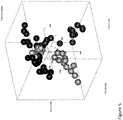
- PCA Principal component analysis
- a single numeric representation of the degree of dysbiosis was derived from a log-normal distribution by assigning estimated portions of the distribution to different values on a scale set from 0-5.
- the scale was optimised with emphasis on reducing technical variation between replicates, meaning that the integer part of the numeric output is decided by predetermined levels of the Euclidian distance.
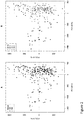
- Both the first and second principal component each separate the normal samples from IBS and IBD samples to a certain degree.
- the scatter of DI values implies that different bacteria dominate dysbiosis for different samples.
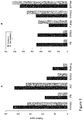
- differences in overall mean normalised signal between dysbiotic and non-dysbiotic status for each of the 54 probes were calculated.
- the predominant bacteria contributing to dysbiosis within the IBS cohort were Firmicutes (Bacilli), Proteobacteria ( Shigella / Escherichia ), Actinobacteria and Ruminococcus gnavus ( Figure 3A ).
- Proteobacteria Shigella / Escherichia
- Firmicutes specifically Faecalibacterium prausnitzii
- Bacteroidetes Bacteroidetes (Bacteroides and Prevotella)
- Proteobacteria was among the top five dysbiosis-contributing bacterial groups for both IBS and IBD, implying similarities in dysbiosis between IBS and IBD.
- all bacterial groups that contributed most to dysbiosis in the IBS cohort showed increased probe signal intensity compared to non-dysbiotic patients, while for the IBD cohort, both reduced ( F. prausnitzii ) and increased probe signal intensities were the main contributors to dysbiosis.
- the present test is a broad-spectrum, reproducible, precise, high-throughput, easy to use method of quantifying the extent of dysbiosis that is especially suitable for clinical use.
- This test gives an algorithmically-derived DI based on bacterial abundance and profile within a sample.
- This DI is an indicator of the degree to which an individual's microbiome deviates from that of a normal reference population and could potentially be highly relevant in clinical diagnosis and monitoring of the progression of conditions such as IBD and IBS.
- the stability of the human gut microbiota is another important feature if microbial characterisation is to play a role in diagnosis, treatment, and prevention of disease. It has been shown that, in an individual's microbiota, 60% of the bacterial strains persisted over the course of 5 years. In our corresponding study, we found only a low within-individual variation in weekly sampling over 14 weeks.
- the presently described test has been used to detect high frequency of dysbiosis in IBS and IBD patients and low frequency in normal individuals. Both IBD patients in remission and treatment-na ⁇ ve IBD patients reported DI scores well above the threshold of 2 with a dysbiosis frequency of 80% and 70%, respectively. Rome III-diagnosed IBS patients showed a frequency of 73%, confirming previous observations, while the frequency in normal individuals was 16%.
- Dysbiosis is associated with many diseases, including IBS, different forms of IBD, obesity and diabetes, and has also been implicated in depression and autism. In recent years, new treatment options have emerged with respect to restoring the balance of the microbiota in dysbiotic patients. FMT is now regarded as the most effective treatment in relapsing Clostridium difficile colitis and is currently being studied in phase I to IV clinical trials in many of the aforementioned conditions (CD, phase II/III NCT01793831; UC, phase I NCT01947101, phase II NCT01896635, phase II/III NCT01790061; IBD including CD and UC, phase IV NCT02033408).
- a key barrier in the interpretation of FMT data has been the variability in bacterial composition of donor microbiota, not only related to pathogenic organisms but also to the composition of the normally occurring microflora, further highlighting the importance of identifying a method to sufficiently characterise both pathogenic and non-pathogenic microbes.
- the ability to characterise an individual's microbiome and monitor alterations may allow for the prediction of therapeutic outcome or even relapse in such conditions. It may also help to explain why a patient is refractory to particular therapeutic regimens and aid adaptation of the regimen accordingly.
- rapid and reproducible detailed bacterial profiles from normobiotic and dysbiotic individuals may aid the continuation of innovative therapeutic approaches such as FMT.
- test could prove clinically useful in determining dysbiosis, not only in IBS and IBD patients, but also in other conditions where knowledge about the microbiota profile might prove clinically useful, in the subsequent monitoring of prescribed treatment regimens, and in the evolution of new therapeutic approaches.
- EXAMPLE 2 Representative analysis of a sample using 54 probes targeting a plurality of microorganisms or groups of microorganisms
- Table 5 Measured signals for 54 test probes and 4 control probes (bold) Probe 0 1 2 3 4 5 6 7 8 9 Measured signal 1187 41 4411 2198 9 10 89 38 50 1691 Probe 10 11 12 13 14 15 16 17 18 19 Measured signal 1358 27 60 303 4330 26 26 250 44 885 Probe 20 21 22 23 24 25 26 27 28 29 Measured signal 1369 7 68 65 49 24 10 32 45 67 Probe 30 31 32 33 34 35 36 37 38 39 Measured signal 2676 798 17 2 2 528 32 203 1 529 Probe 40 41 42 43 44 45 46 47 48 49 Measured signal 765 38 97 183 120 8 5068 4548 4 47 Probe 50 103 104 105 106 107 126 127 Measured signal 1 155 419 11 81 19.352 4 6 Table 6: Measured signals adjusted by hybridisation control probe (107) - test values divided by value of 107 probe.
- T 2 and Qres were then combined into a single metric using squares; weights (0.938 and 0.157) and square root (i.e. Formula III).
- the resulting figure was 2.318146
- the resulting single metric was then plotted on numerical scale with a normobiotic to dysbiotic class separation point of 0.395 (representative value 2), and further thresholds at 1.632 (representative value 3), 2.492 (representative value 4) and infinity at a representative value of 5. This placed the sample between thresholds represented by the values 3 and 4 (close to the upper limit of 2.492 on the interval from 3 to 4). The precise location of the sample of this scale was then calculated as follows: Total log normal distribution density area between 3 and 4 was calculated:
- the log normal distribution density area between 3 and the sample was then divided by the log normal distribution density area between 3 and 4 to find the precise fraction: 0.8390257.
- the lower integer (3) was then added to get the precise position on the scale: 3.839026. This was then rounded up to 4 for reporting.
Landscapes
- Health & Medical Sciences (AREA)
- Engineering & Computer Science (AREA)
- Medical Informatics (AREA)
- Life Sciences & Earth Sciences (AREA)
- Public Health (AREA)
- Biomedical Technology (AREA)
- General Health & Medical Sciences (AREA)
- Pathology (AREA)
- Physics & Mathematics (AREA)
- Biophysics (AREA)
- Molecular Biology (AREA)
- Physiology (AREA)
- Epidemiology (AREA)
- Primary Health Care (AREA)
- Data Mining & Analysis (AREA)
- Databases & Information Systems (AREA)
- Animal Behavior & Ethology (AREA)
- Surgery (AREA)
- Veterinary Medicine (AREA)
- Heart & Thoracic Surgery (AREA)
- Gastroenterology & Hepatology (AREA)
- Computer Vision & Pattern Recognition (AREA)
- Artificial Intelligence (AREA)
- Psychiatry (AREA)
- Endocrinology (AREA)
- Signal Processing (AREA)
- Bioinformatics & Cheminformatics (AREA)
- Probability & Statistics with Applications (AREA)
- Bioinformatics & Computational Biology (AREA)
- Biotechnology (AREA)
- Evolutionary Biology (AREA)
- Spectroscopy & Molecular Physics (AREA)
- Theoretical Computer Science (AREA)
- Measuring Or Testing Involving Enzymes Or Micro-Organisms (AREA)
- Apparatus Associated With Microorganisms And Enzymes (AREA)
- Investigating Or Analysing Biological Materials (AREA)
Priority Applications (1)
| Application Number | Priority Date | Filing Date | Title |
|---|---|---|---|
| PL16712848T PL3274885T3 (pl) | 2015-03-27 | 2016-03-24 | Sposób określania dysbiozy przewodu pokarmowego |
Applications Claiming Priority (2)
| Application Number | Priority Date | Filing Date | Title |
|---|---|---|---|
| GBGB1505364.8A GB201505364D0 (en) | 2015-03-27 | 2015-03-27 | Method for determining gastrointestinal tract dysbiosis |
| PCT/EP2016/056670 WO2016156251A1 (en) | 2015-03-27 | 2016-03-24 | Method for determining gastrointestinal tract dysbiosis |
Publications (2)
| Publication Number | Publication Date |
|---|---|
| EP3274885A1 EP3274885A1 (en) | 2018-01-31 |
| EP3274885B1 true EP3274885B1 (en) | 2021-07-07 |
Family
ID=53178294
Family Applications (1)
| Application Number | Title | Priority Date | Filing Date |
|---|---|---|---|
| EP16712848.7A Active EP3274885B1 (en) | 2015-03-27 | 2016-03-24 | Method for determining gastrointestinal tract dysbiosis |
Country Status (15)
| Country | Link |
|---|---|
| US (1) | US20180046774A1 (da) |
| EP (1) | EP3274885B1 (da) |
| CN (1) | CN107430644B (da) |
| AU (1) | AU2016240362B9 (da) |
| BR (1) | BR112017020644A2 (da) |
| CA (1) | CA2980637A1 (da) |
| DK (1) | DK3274885T3 (da) |
| ES (1) | ES2881280T3 (da) |
| GB (1) | GB201505364D0 (da) |
| MX (1) | MX2017012282A (da) |
| NZ (1) | NZ735506A (da) |
| PL (1) | PL3274885T3 (da) |
| RU (1) | RU2723336C2 (da) |
| WO (1) | WO2016156251A1 (da) |
| ZA (1) | ZA201706307B (da) |
Families Citing this family (26)
| Publication number | Priority date | Publication date | Assignee | Title |
|---|---|---|---|---|
| MA41020A (fr) | 2014-11-25 | 2017-10-03 | Evelo Biosciences Inc | Compositions probiotiques et prébiotiques, et leurs procédés d'utilisation pour la modulation du microbiome |
| GB201617519D0 (en) | 2016-10-14 | 2016-11-30 | Genetic Analysis As | A companion diagnostic method for use in the treatment of irritable bowel syndrome with dietary interventions or faecal microbiota transplant |
| US11978543B2 (en) | 2016-12-14 | 2024-05-07 | Astarte Medical Partners Inc. | System and methods for developing and using a microbiome-based action component |
| CA3047302C (en) * | 2016-12-14 | 2024-01-02 | Tracy WARREN | System and methods for developing and using a microbiome-based action component for patient health |
| WO2018185105A1 (en) * | 2017-04-03 | 2018-10-11 | Bio-Me As | Microorganism detection methods |
| GB201712459D0 (en) | 2017-08-02 | 2017-09-13 | Norges Miljø-Og Biovitenskapelige Univ | Treatment or prevention of gastrointestinal dysbiosis |
| CN111684539B (zh) * | 2017-12-06 | 2024-08-02 | 心脏起搏器股份公司 | 改善临床工作流程的系统 |
| CN112135520B (zh) * | 2018-01-03 | 2024-03-29 | 英凡特健康有限公司 | 测定肠道微生物组中生态失调的方法 |
| AU2019242894B2 (en) * | 2018-03-29 | 2024-12-05 | Kimberly-Clark Worldwide, Inc. | Sensor for indicating a potential forthcoming skin or gastrointestinal issue and methods of using the same |
| CN110396537B (zh) * | 2018-04-24 | 2023-06-20 | 深圳华大生命科学研究院 | 哮喘生物标志物及其用途 |
| US20210381024A1 (en) * | 2018-10-26 | 2021-12-09 | Locus Ip Company, Llc | Personalized System for Restoring the Gastrointestinal Tract Microbiome |
| GB201817889D0 (en) | 2018-11-01 | 2018-12-19 | Bio Me As | Microorganism detection methods |
| JP7295547B2 (ja) * | 2018-11-13 | 2023-06-21 | 株式会社サイキンソー | 腸内dysbiosis判定システム |
| CN109448842B (zh) * | 2018-11-15 | 2019-09-24 | 苏州普瑞森基因科技有限公司 | 人体肠道微生态失衡的确定方法、装置及电子设备 |
| CN109584952B (zh) * | 2018-11-28 | 2023-04-18 | 南京医科大学 | 一种人体微生物菌群生态网络结构和功能变异的识别方法 |
| CN109749960B (zh) * | 2019-01-31 | 2020-05-26 | 上海宝藤生物医药科技股份有限公司 | 基于多种肠道细菌含量评估便秘风险及便秘程度的方法及装置 |
| US20220110546A1 (en) * | 2019-02-27 | 2022-04-14 | Emory University | System and methods for tracking behavior and detecting abnormalities |
| JP7568423B2 (ja) * | 2019-05-10 | 2024-10-16 | キヤノンメディカルシステムズ株式会社 | 診断支援装置 |
| WO2020251249A1 (ko) * | 2019-06-11 | 2020-12-17 | 주식회사 천랩 | 영유아의 장내 미생물 불균형도를 탐지하는 방법 |
| CN110724751B (zh) * | 2019-11-04 | 2023-08-11 | 大连工业大学 | 一种评估肠道菌群对褐藻胶利用能力的方法 |
| CN110827917B (zh) * | 2019-11-06 | 2023-10-20 | 华中科技大学鄂州工业技术研究院 | 一种基于snp鉴定个体肠道菌群类型的方法 |
| CN112458193B (zh) * | 2020-11-27 | 2023-04-07 | 杭州千基生物科技有限公司 | 基于pcr-量子点荧光法的肠道菌群核酸检测试剂盒及检测方法 |
| WO2022233924A1 (en) * | 2021-05-06 | 2022-11-10 | Société des Produits Nestlé S.A. | Systems and methods for estimating, from food frequency questionnaire based nutrients intake data, the relative amounts of faecalibacterium prausnitzii (fprau) in the gut microbiome ecosystem and associated recommendations to improve faecalibacterium prausnitzii |
| WO2022244005A1 (en) * | 2021-05-20 | 2022-11-24 | Tel Hashomer Medical Research Infrastructure And Services Ltd. | Disease classifier and dysbiosis index tools |
| EP4275682A1 (en) | 2022-05-12 | 2023-11-15 | Institut National De La Sante Et De La Recherche Medicale - Inserm | Carbon monoxide-releasing molecule (corm) or composition thereof for use in the treatment or the prevention of an intestinal dysbiosis in a subject |
| CN117059180B (zh) * | 2023-08-14 | 2025-04-01 | 美益添生物医药(武汉)有限公司 | 一种供体肠道菌群的筛选方法、装置、设备及存储介质 |
Family Cites Families (9)
| Publication number | Priority date | Publication date | Assignee | Title |
|---|---|---|---|---|
| CN101196513A (zh) * | 2007-12-28 | 2008-06-11 | 姜傥 | 尿液综合检测方法 |
| AU2009217184B2 (en) * | 2008-02-20 | 2015-03-19 | Digital Medical Experts Inc. | Expert system for determining patient treatment response |
| CN101240315A (zh) * | 2008-02-21 | 2008-08-13 | 上海交通大学 | 检测药物防癌效果的非损伤性分子方法 |
| EP2486143A1 (en) * | 2009-10-05 | 2012-08-15 | AAK Patent B.V. | Methods for diagnosing irritable bowel syndrome |
| GB201021399D0 (en) * | 2010-12-16 | 2011-01-26 | Genetic Analysis As | Oligonucleotide probe set and methods of microbiota profiling |
| US20140179726A1 (en) * | 2011-05-19 | 2014-06-26 | Virginia Commonwealth University | Gut microflora as biomarkers for the prognosis of cirrhosis and brain dysfunction |
| RU2508406C2 (ru) * | 2012-02-01 | 2014-02-27 | Автономная Некоммерческая Организация "Научно-Исследовательский Центр Биотехнологии Антибиотиков И Других Биологически Активных Веществ "Биоан" | СПОСОБ ВИДОВОЙ ИДЕНТИФИКАЦИИ ЛАКТОБАЦИЛЛ L.casei/paracasei, L.fermentum, L.plantarum И L.rhamnosus |
| US9659145B2 (en) * | 2012-07-30 | 2017-05-23 | Nutech Ventures | Classification of nucleotide sequences by latent semantic analysis |
| EP2971148A4 (en) * | 2013-03-14 | 2016-08-17 | Seres Therapeutics Inc | METHODS OF DETECTING PATHOGENS AND ENRICHING FROM MATERIALS AND COMPOSITIONS |
-
2015
- 2015-03-27 GB GBGB1505364.8A patent/GB201505364D0/en not_active Ceased
-
2016
- 2016-03-24 RU RU2017133644A patent/RU2723336C2/ru active
- 2016-03-24 AU AU2016240362A patent/AU2016240362B9/en active Active
- 2016-03-24 ES ES16712848T patent/ES2881280T3/es active Active
- 2016-03-24 CN CN201680018149.XA patent/CN107430644B/zh active Active
- 2016-03-24 PL PL16712848T patent/PL3274885T3/pl unknown
- 2016-03-24 CA CA2980637A patent/CA2980637A1/en active Pending
- 2016-03-24 EP EP16712848.7A patent/EP3274885B1/en active Active
- 2016-03-24 DK DK16712848.7T patent/DK3274885T3/da active
- 2016-03-24 US US15/560,564 patent/US20180046774A1/en not_active Abandoned
- 2016-03-24 MX MX2017012282A patent/MX2017012282A/es unknown
- 2016-03-24 WO PCT/EP2016/056670 patent/WO2016156251A1/en not_active Ceased
- 2016-03-24 BR BR112017020644-7A patent/BR112017020644A2/pt not_active Application Discontinuation
- 2016-03-24 NZ NZ735506A patent/NZ735506A/en unknown
-
2017
- 2017-09-18 ZA ZA2017/06307A patent/ZA201706307B/en unknown
Non-Patent Citations (1)
| Title |
|---|
| None * |
Also Published As
| Publication number | Publication date |
|---|---|
| AU2016240362B9 (en) | 2021-11-04 |
| RU2017133644A3 (da) | 2019-09-18 |
| DK3274885T3 (da) | 2021-08-02 |
| US20180046774A1 (en) | 2018-02-15 |
| MX2017012282A (es) | 2018-06-15 |
| RU2017133644A (ru) | 2019-04-29 |
| ZA201706307B (en) | 2023-05-31 |
| CN107430644B (zh) | 2021-11-19 |
| HK1248858A1 (zh) | 2018-10-19 |
| BR112017020644A2 (pt) | 2018-06-26 |
| ES2881280T3 (es) | 2021-11-29 |
| EP3274885A1 (en) | 2018-01-31 |
| WO2016156251A1 (en) | 2016-10-06 |
| GB201505364D0 (en) | 2015-05-13 |
| CA2980637A1 (en) | 2016-10-06 |
| CN107430644A (zh) | 2017-12-01 |
| AU2016240362A1 (en) | 2017-10-05 |
| NZ735506A (en) | 2023-05-26 |
| RU2723336C2 (ru) | 2020-06-09 |
| AU2016240362B2 (en) | 2021-05-27 |
| PL3274885T3 (pl) | 2021-11-29 |
Similar Documents
| Publication | Publication Date | Title |
|---|---|---|
| AU2016240362B9 (en) | Method for determining gastrointestinal tract dysbiosis | |
| Baud et al. | Microbial diversity in the vaginal microbiota and its link to pregnancy outcomes | |
| Kowalska-Duplaga et al. | Differences in the intestinal microbiome of healthy children and patients with newly diagnosed Crohn’s disease | |
| Stokholm et al. | Maturation of the gut microbiome and risk of asthma in childhood | |
| Altomare et al. | Gut mucosal-associated microbiota better discloses inflammatory bowel disease differential patterns than faecal microbiota | |
| Papa et al. | Non-invasive mapping of the gastrointestinal microbiota identifies children with inflammatory bowel disease | |
| EP3140424B1 (en) | Microbial population analysis | |
| US12596121B2 (en) | Companion diagnostic method for use in the treatment of irritable bowel syndrome with dietary interventions or faecal microbiota transplant | |
| Chamorro et al. | Landscapes and bacterial signatures of mucosa-associated intestinal microbiota in Chilean and Spanish patients with inflammatory bowel disease | |
| Thorsen et al. | The airway microbiota of neonates colonized with asthma-associated pathogenic bacteria | |
| CN116926187A (zh) | 一种肠道微生物标志物的应用 | |
| Al-Bayati et al. | Quantitative analysis of the three gut microbiota in UC and non-UC patients using real-time PCR | |
| Chorbińska et al. | Comparison of the microbiome of bladder urine, upper urinary tract urine, and kidney stones in patients with urolithiasis | |
| HK1248858B (en) | Method for determining gastrointestinal tract dysbiosis | |
| Xiang et al. | Association of metals with early postnatal gut microbiota among infants admitted to the neonatal intensive care unit | |
| Koopman et al. | Integrated multi-omics of feces, plasma and urine can describe and differentiate pediatric active Crohn’s Disease from remission | |
| Hrala et al. | Tissue and stool microbiome in pediatric inflammatory bowel disease patients: diversity differs in patients with relapsing and non-relapsing Crohn’s disease | |
| Midya et al. | Prenatal metal exposures and childhood gut microbial cliques are associated with elevated fecal calprotectin in late childhood | |
| Lee et al. | Systematic evaluation of metatranscriptomic differential gene expression in silico, in vitro, and in vivo enables elucidation of inter-species cross-feeding | |
| Davis et al. | Performance of a novel molecular method in the diagnosis of late-onset sepsis in very low birth weight infants | |
| RU2762266C9 (ru) | Вспомогательный способ диагностики для применения в лечении синдрома раздраженного кишечника с применением коррекционной диеты или трансплантации фекальной микробиоты | |
| Axelsson et al. | Rapid and Cost-Efficient Screening of Bacterial Antibiotic Susceptibility in Enterobacteriaceae–An Assay Measured by Absorbance | |
| Kumar et al. | Variability in the Pre-Analytical Stages Influences Microbiome Laboratory Analyses. Genes 2022, 13, 1069 | |
| WO2024119057A2 (en) | Plasma cell-free rna signatures of tuberculosis | |
| KR20250033538A (ko) | 마이크로바이옴을 이용한 비결핵항산균 감염성 질환의 치료 반응성 예측을 위한 조성물 |
Legal Events
| Date | Code | Title | Description |
|---|---|---|---|
| STAA | Information on the status of an ep patent application or granted ep patent |
Free format text: STATUS: THE INTERNATIONAL PUBLICATION HAS BEEN MADE |
|
| PUAI | Public reference made under article 153(3) epc to a published international application that has entered the european phase |
Free format text: ORIGINAL CODE: 0009012 |
|
| STAA | Information on the status of an ep patent application or granted ep patent |
Free format text: STATUS: REQUEST FOR EXAMINATION WAS MADE |
|
| 17P | Request for examination filed |
Effective date: 20170929 |
|
| AK | Designated contracting states |
Kind code of ref document: A1 Designated state(s): AL AT BE BG CH CY CZ DE DK EE ES FI FR GB GR HR HU IE IS IT LI LT LU LV MC MK MT NL NO PL PT RO RS SE SI SK SM TR |
|
| AX | Request for extension of the european patent |
Extension state: BA ME |
|
| RIN1 | Information on inventor provided before grant (corrected) |
Inventor name: SEKELJA, MONIKA Inventor name: KARLSSON, MAGDALENA Inventor name: HEGGE, FINN Inventor name: LINDAHL, TORBJOERN |
|
| DAV | Request for validation of the european patent (deleted) | ||
| DAX | Request for extension of the european patent (deleted) | ||
| REG | Reference to a national code |
Ref country code: HK Ref legal event code: DE Ref document number: 1248858 Country of ref document: HK |
|
| STAA | Information on the status of an ep patent application or granted ep patent |
Free format text: STATUS: EXAMINATION IS IN PROGRESS |
|
| 17Q | First examination report despatched |
Effective date: 20191209 |
|
| REG | Reference to a national code |
Ref country code: DE Ref legal event code: R079 Ref document number: 602016060276 Country of ref document: DE Free format text: PREVIOUS MAIN CLASS: G06F0019000000 Ipc: G16H0050200000 |
|
| RIC1 | Information provided on ipc code assigned before grant |
Ipc: G16H 50/20 20180101AFI20201005BHEP Ipc: G16B 40/30 20190101ALI20201005BHEP |
|
| GRAP | Despatch of communication of intention to grant a patent |
Free format text: ORIGINAL CODE: EPIDOSNIGR1 |
|
| STAA | Information on the status of an ep patent application or granted ep patent |
Free format text: STATUS: GRANT OF PATENT IS INTENDED |
|
| INTG | Intention to grant announced |
Effective date: 20201204 |
|
| GRAJ | Information related to disapproval of communication of intention to grant by the applicant or resumption of examination proceedings by the epo deleted |
Free format text: ORIGINAL CODE: EPIDOSDIGR1 |
|
| STAA | Information on the status of an ep patent application or granted ep patent |
Free format text: STATUS: EXAMINATION IS IN PROGRESS |
|
| GRAS | Grant fee paid |
Free format text: ORIGINAL CODE: EPIDOSNIGR3 |
|
| STAA | Information on the status of an ep patent application or granted ep patent |
Free format text: STATUS: GRANT OF PATENT IS INTENDED |
|
| INTC | Intention to grant announced (deleted) | ||
| RAP3 | Party data changed (applicant data changed or rights of an application transferred) |
Owner name: GENETIC ANALYSIS AS |
|
| RIN1 | Information on inventor provided before grant (corrected) |
Inventor name: LINDAHL, TORBJOERN Inventor name: KARLSSON, MAGDALENA Inventor name: SEKELJA, MONIKA Inventor name: HEGGE, FINN |
|
| GRAP | Despatch of communication of intention to grant a patent |
Free format text: ORIGINAL CODE: EPIDOSNIGR1 |
|
| INTG | Intention to grant announced |
Effective date: 20210507 |
|
| GRAA | (expected) grant |
Free format text: ORIGINAL CODE: 0009210 |
|
| STAA | Information on the status of an ep patent application or granted ep patent |
Free format text: STATUS: THE PATENT HAS BEEN GRANTED |
|
| AK | Designated contracting states |
Kind code of ref document: B1 Designated state(s): AL AT BE BG CH CY CZ DE DK EE ES FI FR GB GR HR HU IE IS IT LI LT LU LV MC MK MT NL NO PL PT RO RS SE SI SK SM TR |
|
| REG | Reference to a national code |
Ref country code: GB Ref legal event code: FG4D |
|
| REG | Reference to a national code |
Ref country code: AT Ref legal event code: REF Ref document number: 1409373 Country of ref document: AT Kind code of ref document: T Effective date: 20210715 |
|
| REG | Reference to a national code |
Ref country code: FI Ref legal event code: FGE Ref country code: DE Ref legal event code: R096 Ref document number: 602016060276 Country of ref document: DE |
|
| REG | Reference to a national code |
Ref country code: DK Ref legal event code: T3 Effective date: 20210726 |
|
| REG | Reference to a national code |
Ref country code: IE Ref legal event code: FG4D Ref country code: NL Ref legal event code: FP |
|
| REG | Reference to a national code |
Ref country code: SE Ref legal event code: TRGR |
|
| REG | Reference to a national code |
Ref country code: NO Ref legal event code: T2 Effective date: 20210707 |
|
| REG | Reference to a national code |
Ref country code: LT Ref legal event code: MG9D |
|
| REG | Reference to a national code |
Ref country code: ES Ref legal event code: FG2A Ref document number: 2881280 Country of ref document: ES Kind code of ref document: T3 Effective date: 20211129 |
|
| REG | Reference to a national code |
Ref country code: AT Ref legal event code: MK05 Ref document number: 1409373 Country of ref document: AT Kind code of ref document: T Effective date: 20210707 |
|
| PG25 | Lapsed in a contracting state [announced via postgrant information from national office to epo] |
Ref country code: RS Free format text: LAPSE BECAUSE OF FAILURE TO SUBMIT A TRANSLATION OF THE DESCRIPTION OR TO PAY THE FEE WITHIN THE PRESCRIBED TIME-LIMIT Effective date: 20210707 Ref country code: LT Free format text: LAPSE BECAUSE OF FAILURE TO SUBMIT A TRANSLATION OF THE DESCRIPTION OR TO PAY THE FEE WITHIN THE PRESCRIBED TIME-LIMIT Effective date: 20210707 Ref country code: AT Free format text: LAPSE BECAUSE OF FAILURE TO SUBMIT A TRANSLATION OF THE DESCRIPTION OR TO PAY THE FEE WITHIN THE PRESCRIBED TIME-LIMIT Effective date: 20210707 Ref country code: BG Free format text: LAPSE BECAUSE OF FAILURE TO SUBMIT A TRANSLATION OF THE DESCRIPTION OR TO PAY THE FEE WITHIN THE PRESCRIBED TIME-LIMIT Effective date: 20211007 Ref country code: PT Free format text: LAPSE BECAUSE OF FAILURE TO SUBMIT A TRANSLATION OF THE DESCRIPTION OR TO PAY THE FEE WITHIN THE PRESCRIBED TIME-LIMIT Effective date: 20211108 Ref country code: HR Free format text: LAPSE BECAUSE OF FAILURE TO SUBMIT A TRANSLATION OF THE DESCRIPTION OR TO PAY THE FEE WITHIN THE PRESCRIBED TIME-LIMIT Effective date: 20210707 |
|
| PG25 | Lapsed in a contracting state [announced via postgrant information from national office to epo] |
Ref country code: LV Free format text: LAPSE BECAUSE OF FAILURE TO SUBMIT A TRANSLATION OF THE DESCRIPTION OR TO PAY THE FEE WITHIN THE PRESCRIBED TIME-LIMIT Effective date: 20210707 Ref country code: GR Free format text: LAPSE BECAUSE OF FAILURE TO SUBMIT A TRANSLATION OF THE DESCRIPTION OR TO PAY THE FEE WITHIN THE PRESCRIBED TIME-LIMIT Effective date: 20211008 |
|
| REG | Reference to a national code |
Ref country code: DE Ref legal event code: R097 Ref document number: 602016060276 Country of ref document: DE |
|
| PLBE | No opposition filed within time limit |
Free format text: ORIGINAL CODE: 0009261 |
|
| STAA | Information on the status of an ep patent application or granted ep patent |
Free format text: STATUS: NO OPPOSITION FILED WITHIN TIME LIMIT |
|
| PG25 | Lapsed in a contracting state [announced via postgrant information from national office to epo] |
Ref country code: SM Free format text: LAPSE BECAUSE OF FAILURE TO SUBMIT A TRANSLATION OF THE DESCRIPTION OR TO PAY THE FEE WITHIN THE PRESCRIBED TIME-LIMIT Effective date: 20210707 Ref country code: SK Free format text: LAPSE BECAUSE OF FAILURE TO SUBMIT A TRANSLATION OF THE DESCRIPTION OR TO PAY THE FEE WITHIN THE PRESCRIBED TIME-LIMIT Effective date: 20210707 Ref country code: RO Free format text: LAPSE BECAUSE OF FAILURE TO SUBMIT A TRANSLATION OF THE DESCRIPTION OR TO PAY THE FEE WITHIN THE PRESCRIBED TIME-LIMIT Effective date: 20210707 Ref country code: EE Free format text: LAPSE BECAUSE OF FAILURE TO SUBMIT A TRANSLATION OF THE DESCRIPTION OR TO PAY THE FEE WITHIN THE PRESCRIBED TIME-LIMIT Effective date: 20210707 Ref country code: CZ Free format text: LAPSE BECAUSE OF FAILURE TO SUBMIT A TRANSLATION OF THE DESCRIPTION OR TO PAY THE FEE WITHIN THE PRESCRIBED TIME-LIMIT Effective date: 20210707 Ref country code: AL Free format text: LAPSE BECAUSE OF FAILURE TO SUBMIT A TRANSLATION OF THE DESCRIPTION OR TO PAY THE FEE WITHIN THE PRESCRIBED TIME-LIMIT Effective date: 20210707 |
|
| 26N | No opposition filed |
Effective date: 20220408 |
|
| PG25 | Lapsed in a contracting state [announced via postgrant information from national office to epo] |
Ref country code: MC Free format text: LAPSE BECAUSE OF FAILURE TO SUBMIT A TRANSLATION OF THE DESCRIPTION OR TO PAY THE FEE WITHIN THE PRESCRIBED TIME-LIMIT Effective date: 20210707 |
|
| PG25 | Lapsed in a contracting state [announced via postgrant information from national office to epo] |
Ref country code: LU Free format text: LAPSE BECAUSE OF NON-PAYMENT OF DUE FEES Effective date: 20220324 |
|
| PG25 | Lapsed in a contracting state [announced via postgrant information from national office to epo] |
Ref country code: HU Free format text: LAPSE BECAUSE OF FAILURE TO SUBMIT A TRANSLATION OF THE DESCRIPTION OR TO PAY THE FEE WITHIN THE PRESCRIBED TIME-LIMIT; INVALID AB INITIO Effective date: 20160324 |
|
| PG25 | Lapsed in a contracting state [announced via postgrant information from national office to epo] |
Ref country code: MK Free format text: LAPSE BECAUSE OF FAILURE TO SUBMIT A TRANSLATION OF THE DESCRIPTION OR TO PAY THE FEE WITHIN THE PRESCRIBED TIME-LIMIT Effective date: 20210707 Ref country code: CY Free format text: LAPSE BECAUSE OF FAILURE TO SUBMIT A TRANSLATION OF THE DESCRIPTION OR TO PAY THE FEE WITHIN THE PRESCRIBED TIME-LIMIT Effective date: 20210707 |
|
| PGFP | Annual fee paid to national office [announced via postgrant information from national office to epo] |
Ref country code: FI Payment date: 20240319 Year of fee payment: 9 |
|
| PGFP | Annual fee paid to national office [announced via postgrant information from national office to epo] |
Ref country code: BE Payment date: 20240318 Year of fee payment: 9 |
|
| PG25 | Lapsed in a contracting state [announced via postgrant information from national office to epo] |
Ref country code: MT Free format text: LAPSE BECAUSE OF FAILURE TO SUBMIT A TRANSLATION OF THE DESCRIPTION OR TO PAY THE FEE WITHIN THE PRESCRIBED TIME-LIMIT Effective date: 20210707 |
|
| PGFP | Annual fee paid to national office [announced via postgrant information from national office to epo] |
Ref country code: DK Payment date: 20250326 Year of fee payment: 10 |
|
| PGFP | Annual fee paid to national office [announced via postgrant information from national office to epo] |
Ref country code: IE Payment date: 20250320 Year of fee payment: 10 |
|
| PGFP | Annual fee paid to national office [announced via postgrant information from national office to epo] |
Ref country code: ES Payment date: 20250403 Year of fee payment: 10 |
|
| PGFP | Annual fee paid to national office [announced via postgrant information from national office to epo] |
Ref country code: CH Payment date: 20250401 Year of fee payment: 10 |
|
| PG25 | Lapsed in a contracting state [announced via postgrant information from national office to epo] |
Ref country code: FI Free format text: LAPSE BECAUSE OF NON-PAYMENT OF DUE FEES Effective date: 20250324 |
|
| PG25 | Lapsed in a contracting state [announced via postgrant information from national office to epo] |
Ref country code: TR Free format text: LAPSE BECAUSE OF FAILURE TO SUBMIT A TRANSLATION OF THE DESCRIPTION OR TO PAY THE FEE WITHIN THE PRESCRIBED TIME-LIMIT Effective date: 20210707 |
|
| REG | Reference to a national code |
Ref country code: BE Ref legal event code: MM Effective date: 20250331 |
|
| PG25 | Lapsed in a contracting state [announced via postgrant information from national office to epo] |
Ref country code: BE Free format text: LAPSE BECAUSE OF NON-PAYMENT OF DUE FEES Effective date: 20250331 |
|
| PGFP | Annual fee paid to national office [announced via postgrant information from national office to epo] |
Ref country code: NL Payment date: 20260219 Year of fee payment: 11 |
|
| REG | Reference to a national code |
Ref country code: CH Ref legal event code: U11 Free format text: ST27 STATUS EVENT CODE: U-0-0-U10-U11 (AS PROVIDED BY THE NATIONAL OFFICE) Effective date: 20260401 |
|
| PGFP | Annual fee paid to national office [announced via postgrant information from national office to epo] |
Ref country code: SE Payment date: 20260212 Year of fee payment: 11 |
|
| PGFP | Annual fee paid to national office [announced via postgrant information from national office to epo] |
Ref country code: GB Payment date: 20260213 Year of fee payment: 11 |
|
| PGFP | Annual fee paid to national office [announced via postgrant information from national office to epo] |
Ref country code: NO Payment date: 20260128 Year of fee payment: 11 Ref country code: DE Payment date: 20260216 Year of fee payment: 11 |
|
| PGFP | Annual fee paid to national office [announced via postgrant information from national office to epo] |
Ref country code: IT Payment date: 20260128 Year of fee payment: 11 |
|
| PGFP | Annual fee paid to national office [announced via postgrant information from national office to epo] |
Ref country code: FR Payment date: 20260212 Year of fee payment: 11 |
|
| PGFP | Annual fee paid to national office [announced via postgrant information from national office to epo] |
Ref country code: PL Payment date: 20260127 Year of fee payment: 11 |