EP3275157B1 - Sécurité de données bidirectionnelle pour réseaux scada - Google Patents
Sécurité de données bidirectionnelle pour réseaux scada Download PDFInfo
- Publication number
- EP3275157B1 EP3275157B1 EP16769436.3A EP16769436A EP3275157B1 EP 3275157 B1 EP3275157 B1 EP 3275157B1 EP 16769436 A EP16769436 A EP 16769436A EP 3275157 B1 EP3275157 B1 EP 3275157B1
- Authority
- EP
- European Patent Office
- Prior art keywords
- rule
- message
- data
- network
- processor
- Prior art date
- Legal status (The legal status is an assumption and is not a legal conclusion. Google has not performed a legal analysis and makes no representation as to the accuracy of the status listed.)
- Active
Links
Images



Classifications
-
- H—ELECTRICITY
- H04—ELECTRIC COMMUNICATION TECHNIQUE
- H04L—TRANSMISSION OF DIGITAL INFORMATION, e.g. TELEGRAPHIC COMMUNICATION
- H04L63/00—Network architectures or network communication protocols for network security
- H04L63/02—Network architectures or network communication protocols for network security for separating internal from external traffic, e.g. firewalls
- H04L63/0209—Architectural arrangements, e.g. perimeter networks or demilitarized zones
- H04L63/0218—Distributed architectures, e.g. distributed firewalls
-
- H—ELECTRICITY
- H04—ELECTRIC COMMUNICATION TECHNIQUE
- H04L—TRANSMISSION OF DIGITAL INFORMATION, e.g. TELEGRAPHIC COMMUNICATION
- H04L63/00—Network architectures or network communication protocols for network security
- H04L63/02—Network architectures or network communication protocols for network security for separating internal from external traffic, e.g. firewalls
- H04L63/0227—Filtering policies
-
- H—ELECTRICITY
- H04—ELECTRIC COMMUNICATION TECHNIQUE
- H04L—TRANSMISSION OF DIGITAL INFORMATION, e.g. TELEGRAPHIC COMMUNICATION
- H04L63/00—Network architectures or network communication protocols for network security
- H04L63/02—Network architectures or network communication protocols for network security for separating internal from external traffic, e.g. firewalls
- H04L63/0227—Filtering policies
- H04L63/0245—Filtering by information in the payload
-
- H—ELECTRICITY
- H04—ELECTRIC COMMUNICATION TECHNIQUE
- H04L—TRANSMISSION OF DIGITAL INFORMATION, e.g. TELEGRAPHIC COMMUNICATION
- H04L63/00—Network architectures or network communication protocols for network security
- H04L63/02—Network architectures or network communication protocols for network security for separating internal from external traffic, e.g. firewalls
- H04L63/0227—Filtering policies
- H04L63/0254—Stateful filtering
-
- H—ELECTRICITY
- H04—ELECTRIC COMMUNICATION TECHNIQUE
- H04L—TRANSMISSION OF DIGITAL INFORMATION, e.g. TELEGRAPHIC COMMUNICATION
- H04L63/00—Network architectures or network communication protocols for network security
- H04L63/02—Network architectures or network communication protocols for network security for separating internal from external traffic, e.g. firewalls
- H04L63/0227—Filtering policies
- H04L63/0263—Rule management
-
- H—ELECTRICITY
- H04—ELECTRIC COMMUNICATION TECHNIQUE
- H04L—TRANSMISSION OF DIGITAL INFORMATION, e.g. TELEGRAPHIC COMMUNICATION
- H04L63/00—Network architectures or network communication protocols for network security
- H04L63/14—Network architectures or network communication protocols for network security for detecting or protecting against malicious traffic
- H04L63/1408—Network architectures or network communication protocols for network security for detecting or protecting against malicious traffic by monitoring network traffic
-
- H—ELECTRICITY
- H04—ELECTRIC COMMUNICATION TECHNIQUE
- H04L—TRANSMISSION OF DIGITAL INFORMATION, e.g. TELEGRAPHIC COMMUNICATION
- H04L67/00—Network arrangements or protocols for supporting network services or applications
- H04L67/01—Protocols
- H04L67/12—Protocols specially adapted for proprietary or special-purpose networking environments, e.g. medical networks, sensor networks, networks in vehicles or remote metering networks
Definitions
- This disclosure relates generally to the field of cybersecurity for automation and control systems that are monitored and/or controlled over public or private internet protocol (IP) networks. More specifically, it relates to devices and methods for providing secure communications to and from one or more supervisor control and data acquisition (SCADA) devices in such automation and control systems.
- IP internet protocol
- SCADA Supervisor Control and Data Acquisition
- IP internet protocol
- SCADA devices such as switches, meters, and sensors
- IP internet protocol
- Most SCADA devices utilize industrial communication protocols, such as Modbus or Distributed Network Protocol V3.0 (DNP3), which are not designed with robust built-in security.
- DNP3 Distributed Network Protocol V3.0
- these networked devices may be susceptible to cyber-terrorism and other malicious attacks that can shut down operations and cause damage to physical equipment.
- Potential attacks include social engineering, malware, buffer overflow, input validation and man-in-the-middle attacks, from internal or external networks, whether connected to private local networks or the public Internet. This poses a serious cyber-security challenge and risk to critical infrastructure in many industries, such as, for example, petroleum refining, natural gas processing, chemical processing, power generation and distribution, water purification, and even financial institutions.
- FIG. 1 illustrates a conventional SCADA network 10 of automation and control devices.
- the network 10 includes a plurality of SCADA devices 12 linked to an external or remote SCADA control terminal 14 by a network communication device 16, such as, for example, a router. Communication between the remote terminal 14 and the communication device 16 may be through the Internet (as shown), or alternatively, through a Local Area Network (LAN) or a Wide Area Network (WAN).
- a local or internal SCADA control terminal 18 may also be linked to the SCADA devices 12 and the external control terminal 14 by the communication device 16.
- a bi-directional cyber-security (“data guard”) device for a SCADA network is installed in-line between each SCADA device and a network (either internal or external) to protect each SCADA device from attack, and to validate the integrity of all data and commands sent to each SCADA device and all information sent from each SCADA device to the network for further dissemination.
- the bi-directional SCADA network cyber-security or "data guard” device provides protection across all seven OSI model layers by installing a physical hardware isolation barrier between each SCADA device and the network, with a customizable rule-set programmed into the device for processing inbound and outbound data (commands and messages).
- a cyber-security or "data guard” device is configured to pass only validated data, and to delete and/or block data that do not conform to validation criteria established by the rule-set.
- the rule-set can be customized for each SCADA device and the control network.
- separate rule-sets are provided to define how inbound and outbound data are processed, and either deleted/blocked or validated.
- a cyber-security device in accordance with embodiments of this disclosure comprises a processor programed with a data validation rule-set (preferably, but not necessarily, separate data validation rule-sets for inbound and outbound data); an external communication interface configured for bi-directional data communication between the processor and an external network; and an internal communication interface configured for bi-directional data communication between the processor and at least one SCADA device, wherein the data received by the processor via either the external or internal communication interface is either deleted/blocked or passed by the appropriate rule-set, depending on whether the data conform to validation criteria established by the rule-set.
- the processor analyzes the data, preferably byte-by-byte, with the data in each byte being required to conform to the rule-set validation criteria before being passed from the processor to the appropriate interface.
- the processor may also be configured to be re-programmed with new rule-sets during start-up ("re-booting"), but only when a programming switch, preferably a physical hardware switch, is actuated during start-up, thereby assuring that the security provided by the rule-set validation criteria cannot be defeated or compromised without physical access to the cyber-security device.
- re-booting a programming switch, preferably a physical hardware switch
- a method of validating data transmitted between an internal network including a SCADA device and an external network comprises, in at least some embodiments, (a) providing a processor programmed with a rule-set establishing data validation criteria; (b) communicating data to the processor from one of the internal and external networks; (c) operating the processor to determine if the data conform to the data validation criteria established by the rule-set; and (d) communicating the data from the processor to the other of the internal and external networks only if the data conform to the validation criteria.
- any of the aspects described with reference to the figures may be implemented using software, firmware, hardware (e.g., fixed logic circuitry), or a combination of these implementations.
- the terms “logic,” “module,” “component,” “system,” and “functionality,” as used herein, generally represent software, firmware, hardware, or a combination of these elements.
- the terms “logic,” “module,” “component,” “layer,” “system,” and “functionality” represent executable instructions that perform specified tasks when executed on a hardware-based processing device or devices (e.g., CPU or CPUs).
- the program code can be stored in one or more non-transitory, computer readable memory devices.
- the illustrated separation of logic, modules, components, systems, and functionality into distinct units may reflect an actual physical grouping and allocation of software, firmware, and/or hardware, or it can correspond to a conceptual allocation of different tasks performed by a single software program, firmware program, and/or hardware unit.
- the illustrated logic, modules, components, systems, and functionality may be located at a single site (e.g., as implemented by a processing device), or may be distributed over a plurality of locations.
- the term "machine-readable media” and the like refers to any kind of medium for retaining information in any form, including various kinds of storage devices (magnetic, optical, static, etc.).
- the aspects disclosed herein maybe implemented as a computer process (method), a computing system, or as an article of manufacture, such as a computer program product or computer-readable media.
- the computer program product may be embodied or implemented as non-transitory, computer storage media, readable by a computer device, and encoding a computer program of instructions for executing a computer process.
- the computer program product may also be readable by a computing system, and encoding a computer program of instructions for executing a computer process.
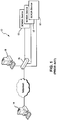
- FIG. 2 shows a SCADA network 20 that includes a plurality of SCADA devices 22 linked to an external or remote SCADA control terminal 24 by a network communication device 26, such as, for example, a router.
- a network communication device 26 such as, for example, a router.
- Communication between the remote terminal 24 and the communication device 26 may be through the Internet (as shown), or alternatively, through a Local Area Network (LAN) or a Wide Area Network (WAN).
- LAN Local Area Network
- WAN Wide Area Network
- a local or internal SCADA control terminal 28 may also be linked to the SCADA devices 22 and the external control terminal 24 by the communication device 26.
- the network 20 differs from the network 10 of Fig. 1 , as described above, primarily by the provision of one or more cyber-security devices or "data guards" 30, in accordance with this disclosure.
- the data guards 30, which will be described in detail below, are installed between the SCADA devices 22 and the communication device 26, whereby all data communicated to or from each SCADA device passes through, and is processed by, one data guard 30, as will be described below.
- a single data guard device 30 is operationally associated with each SCADA device 22, so that each SCADA device 22 has its own dedicated data guard device 30, but other configurations may be suitable, depending on the particular application.
- a network may be configured, for example, with one data guard device 30 operationally associated with two or more SCADA devices 22.
- the data guard device(s) 30 is (are) transparent to the network and would not require changes to or be detected in the network's normal operation.
- a data guard 30 includes a programmable rule-set that provides one or more rules for handling network messages that are sent through it.
- a rule-set comprises a configuration file loaded into a specific location in memory or device storage. Accordingly, the rule-set can be customized for each SCADA device and the control network with which the data guard is associated.
- a rule-set may include static rules, such as "allow” or “deny” based on the message protocol and content.
- a rule-set may also include dynamic rules that use variables that can be assigned to message data fields or registers. In this manner, large numbers of "static rules" may be condensed into smaller rule-sets.
- a dynamic rule may allow messages over a range of message data addresses or command sequences only during certain times of day and another range of message data addresses or command sequences during a different time of day.
- the data guard 30 is configured, in an aspect, to allow only limited changes to its configuration, such as the rule-set and network settings. In an aspect, all other data locations may be restricted from change to provide more security to the operation of the data guard 30.
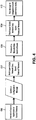
- Figures 3 and 4 show generally the flow of data into and out of a data guard device 30.
- outbound data (information and/or messages) are generated (step 101) by one of the SCADA devices 22.
- the data may represent status information and/or messages acquired by the SCADA device 22 from the automation and control system (not shown) in which the SCADA device 22 is installed.
- the SCADA-generated data are received by the data guard device 30 (step 102) through a protected internal communication interface, preferably an Ethernet interface.
- the data are then processed (step 103) by validation software in the data guard device 30, first to screen out any data deemed invalid or malformed ("unqualified" data) based on a rule-set in accordance with a predefined SCADA protocol that is established by the security software installed in the data guard device 30. Any unqualified data are blocked or deleted (dropped), and a corresponding event log entry may advantageously be created. Well-formed ("qualified") data are then validated against the rule-set established by the security software to assure compliance with the data validation criteria established by the rule-set. Any data that are not in compliance with the validation criteria are deleted or blocked, and an event log entry may advantageously be created.
- step 104 Only data that are validated by compliance with the validation criteria are passed (step 104) to a protected external communication interface (e.g., an Ethernet interface) and then to a control network (e.g., a LAN or WAN), and finally to one or more designated recipients (step 105), which may include the remote SCADA control terminal 24 and, if present, the local SCADA control terminal 28.
- a protected external communication interface e.g., an Ethernet interface
- a control network e.g., a LAN or WAN
- step 105 which may include the remote SCADA control terminal 24 and, if present, the local SCADA control terminal 28.
- the processing of step 103 may also serve another purpose with respect to SCADA sent messages.
- the messages may be scanned to understand the state of the SCADA device that sent the message.
- a SCADA device may operate as a state machine, meaning that it must be in one of a finite number of conditions or states at any given time.
- the SCADA device operates under a particular set of rules allowed in that current state until conditions cause the device to transition to a new state. In that new state, a different set of rules may apply.
- the data guard device may use data from within SCADA device messages to understand the current state and to process network messages, such as commands, accordingly.
- certain messages may communicate the values of variables associated with the SCADA device.
- the data guard device 30 may maintain and update a copy of that variable for use in processing other messages.
- These state variables may be stored in registers, volatile and/or non-volatile memory, or the like.
- state variable data may be processed simultaneously with other processing or in another order.
- the state-based rule-sets operate at the OSI layer 7 (application layer) by looking at the value of variables indicating the device or system state.
- the data guard device 30 may seek to store this state data in order to factor in the state of a device when processing and validating messages, as some messages may be allowed or denied only in specific situations. Updating the state variables based on processing conforming messages allows the data guard to remain transparent in the sending and receiving of messages.
- the SCADA device 22 is being polled by one or both of the remote SCADA control terminal 24 and the local SCADA control terminal 28 at regular intervals during normal operation, whereby the data guard 30 is likely to have relatively accurate state information simply from reading the contents of the responses of the SCADA device 22.
- a data guard 30 may poll a SCADA device 22 or other connected device for its state by generating its own data request messages. In some cases, this is a less desirable-but still functional-method of operation.
- inbound data from, for example, the remote SCADA control terminal 24 and/or the local SCADA control terminal 28 (step 106) are received by the protected external communication interface (step 107) and then processed (step 108) as described above with reference to Fig. 3 . Only data that are validated by compliance with the validation criteria are passed (step 109) to the protected internal communication interface (described below) and then to the designated SCADA device 22 via an appropriately configured network connection (step 110).
- state variable data information may also be processed from messages directed to a SCADA device 22 in a manner as described above with respect to Figure 3 .
- Figure 5 schematically illustrates an instantiation of the cyber-security or "data guard” device 30 as installed in an automation and control network.
- the device 30 includes at least one processor 32 that communicates with an external network 34 by means of an external communication interface, e.g., an external Ethernet interface 36, and with an internal network 38 by means of an internal communication interface, e.g., an internal Ethernet interface 40.
- the processor 32 may be understood as including memory 33 and non-volatile storage 35 with which a processor module communicates.
- the memory 33 and the non-volatile storage 35 may optionally be included with the processor 32 in a microcomputer, as is well known, or they may be separate components.
- Ethernet is a common network protocol used for network communication.
- the original Ethernet bus or star topology was developed for LANs to transfer data at 10 Mbps (megabits per second).
- Newer Ethernet standards for example, Fast Ethernet (100 Base-T) and Gigabit Ethernet) support data transfer rates that are greater than 1 gigabit (Gb).
- the various aspects described herein may use Ethernet (which includes 100 Base-T and/or Gigabit Ethernet) as the network protocol.
- FC Fibre Channel
- FCoE Fibre Channel over Ethernet
- DNP3 DNP3
- the one or more processors 32 also known as central processing units (CPUs), may be, or may include, one or more programmable general-purpose or special-purpose microprocessors, digital signal processors (DSPs), programmable controllers, application specific integrated circuits (ASICs), programmable logic devices (PLDs), or the like, or a combination of such hardware devices.
- the processor 32, non-volatile storage 35 and/or memory 33 maybe combined in a system-on-a-chip (SoC) configuration, such as those commercially available based on ARM or x86 designs.
- SoC system-on-a-chip
- memory 33 and/or storage 35 may be separate components.
- processors 32 executes machine-implemented instructions (or process steps/blocks) out of memory 33.
- processor 32 communicates with the other components through one or more interconnects (unlabeled) that may be referred to as a computer bus or set of computer buses, as is well-known.
- a computer bus may be, for example, a system bus, a Peripheral Component Interconnect (PCI) bus, a PCI-Express (PCIe) bus, a HyperTransport or industry standard architecture (ISA) bus, a SCSI bus, a universal serial bus (USB), an Institute of Electrical and Electronics Engineers (IEEE) standard 1394 bus (sometimes referred to as "Firewire”), or any other type of bus.
- PCI Peripheral Component Interconnect
- PCIe PCI-Express
- ISA industry standard architecture
- SCSI SCSI
- USB universal serial bus
- IEEE Institute of Electrical and Electronics Engineers
- IEEE Institute of Electrical and Electronics Engineers
- the storage device 35 which may be or include, for example, a hard disk (HDD), a CD-ROM, a non-volatile memory device such as flash, a hybrid drive (sometimes referred to as SSHD), or any other storage device for storing persistent, structured or unstructured data.
- Storage 35 may store operating system program files (or data containers), application program files, and one or more rule-sets in the form of scripts, functions, programs, configuration files or other file types.
- storage 35 may also include a data file or data structure that maintains indications of device states as described herein.
- Memory 33 also interfaces with the processor(s) 32 with access to memory storage.
- Memory 33 may include any suitable type of random access main memory (RAM) for example.
- RAM random access main memory
- the processor(s) 32 may store and execute the process steps out of memory 33.
- Read only memory (ROM, not shown) may also be used to store invariant instruction sequences, such as startup instruction sequences or basic input/output system (BIOS) sequences for operation of a keyboard (not shown).
- BIOS basic input/output system
- memory 33 may include a data structure storing device state indications as described herein for use when processing messages with a state-varied rule-set, as described below with reference to Figure 7 .
- each processor 32 is programmable with a rule-set that validates both inbound data that is received from the external Ethernet interface 36, and outbound data that is received from the internal Ethernet interface 40.
- inbound and outbound data are processed by their respective rule-sets that may be simultaneously or separately programmed into the processor(s) 32.
- Programming and re-programming are accomplished via the Ethernet through the external Ethernet interface 36 only when the device 30 is in a programming mode initiated by the activation of a programming switch 46 during boot-up of the processor(s) 32.
- programming and reprogramming are accomplished via the internal Ethernet interface 40-also when the device 30 is in a programming mode initiated by the activation of a programming switch 46.
- the programming switch 46 is a physical (i.e., hardware) switch that can be actuated manually.
- the programming switch 46 may comprise a button, lever, plunger, blade, or the like that can be accessed by a tool (not shown) inserted through an aperture in the housing (not shown) containing the electronic components.
- the programming switch may include a fingerprint scanner or other biometric security device.
- any alteration, whether benign or malicious, of the operational software of the device 30 preferably requires physical access to the device 30.
- Initiation of the programming mode allows the processor(s) 32 to upload a digitally-authenticated rule-set file received in an encrypted programming signal.
- digital authentication may occur through the use of public and private keys.
- the process may include burning in a public key.
- this key is located in ROM or other memory that cannot be overwritten.
- updating a rule-set then may require both knowledge of an associated private key to complement the public key and physical access to the data guard 30 and its programming switch 46. If a rule-set is uploaded without the correct private key signature, the device 30 may generate an error, abort the upload process, delete the attempted rule-set upload, and/or the like.
- the device 30 After uploading the rule-set file, in an aspect, the device 30 is allowed to go through a complete power cycle to enter its operational mode as programmed with the new rule-set.
- a status indicator 48 (preferably a visual indicator such as an LED) may optionally be employed to indicate whether the device 30 is in the programming mode or the operational mode.
- the external Ethernet interface 36 and the internal Ethernet interface 40 are physically and electrically isolated from each other, and can communicate with each other only through the processor(s) 32. This assures that data cannot pass to or from the SCADA devices 22 on the internal network 38 without being validated by the rule-set(s) programmed into the processor(s) 32, thereby providing data security that encompasses all seven OSI model layers (physical, data link, network, transport, session, presentation, and application).
- the functional components of the data guard device 30, as described above, are housed in an enclosure (not shown) that is advantageously made of a suitable metal alloy, such as, for example, aircraft grade 6061-T6 aluminum alloy.
- a suitable metal alloy such as, for example, aircraft grade 6061-T6 aluminum alloy.
- the above-described electronic components can be advantageously potted or otherwise protected to provide a certain level of tamper protection.
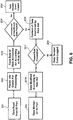
- FIG. 6 is a data flow diagram for exemplary data validation software used in an embodiment of the cyber-security device 30.
- a data message is read (step 201) from a first input/output (I/O) port operationally associated with either the external Ethernet interface 36 or the internal Ethernet interface 40, depending on whether the data message is inbound or outbound.
- the data are queued for processing (step 202), and then qualified (step 203) (preferably byte-by-byte) by a rule-set, as described above, to determine the presence of malformed or unexpected data (“unqualified" data). If any unqualified data are found (“YES" in decision step 204), such data are deleted, and a log entry is created (step 205).
- step 204 If no such unqualified data are found ("NO” in decision step 204), the content of the qualified data is examined in accordance with the rule-set (step 206) to determine compliance with the validation criteria. If non-compliance is determined (“NO” in decision step 207), the data are deleted, and a log entry is created (step 208).
- the data may optionally be modified (as needed) in accordance with any further criteria that may be established by the rule-set (step 209), then written (step 210) on a second I/O port operationally associated with whichever of the Ethernet interfaces 36, 40 was not used in the reading step (step 201), and finally output from the I/O port to the appropriate Ethernet interface.
- An exemplary rule-set that may be used in some embodiments of this disclosure may be generically described as including the following logical processes operating on message data read from an I/O port:
- the message header is read to determine and verify the message type and the expected message header length and version to validate integrity of the message.
- This process includes (a) reading the Start of Message byte sequence where applicable; (b) reading N bytes (where N is the number of bytes defined in the rule-set for that message format), indicating the start of the message that comprises the header; and (c) verifying that the header is valid, that there are no illegal values or extra characters in the message, and that all required fields are present and match requirements defined in the rule-set.
- ASCII messages such as XML may be processed-in a first process-by verifying delimiters or custom delimiters or message criteria to determine message validity as described above.
- the first process also advantageously includes comparing the total size of the data read to the message packet size specified in the header to assure that no extra data have been inserted and that no potential data overflows are possible.
- the contents of the message payload data are looped through to assure that only allowed fields are present in the message and that they conform to limits defined in the rule-set.
- This process includes repeating a sequence of sub-steps through the entire contents of the message data payload or until an invalid message is detected, or the total amount of data read matches or exceeds the expected message packet size.
- the sequence of sub-steps comprises: (1) reading M binary bytes that comprise a data field identifier; (2) reading the value and contents of the data field; (3) assuring that the data field is allowed by rule-set; and (4) if allowed, assure that the values of that data are within limits and ranges defined in the rule-set.
- the message data may be processed to determine if the type of message is allowed and whether or not variables within the message are allowed for that message.
- a SCADA device may control water pressure through a given pipe.
- the SCADA device may allow various commands such as "increase pressure,” “decrease pressure,” “report pressure,” and “emergency stop.”
- a data guard device 30 may be programmed to review incoming messages and determine that they are properly formed, are of the right size, and the like. Furthermore, the actual contents of the messages may also be analyzed for compliance with a rule-set. For example, if an "increase pressure" message comes in, the data guard device 30 may ensure that no extra data are tacked onto the message that could be interpreted improperly by the SCADA device according to a first process.
- the data guard device 30 may also determine if variables, such as function parameters, are within operating limits according to the rule-set. For example, in one rule-set, changes in pressure must occur in increments less than 5 PSI. In such a case, if a "decrease pressure" message is processed with a parameter indicating lowering the pressure by 3PSI, it is allowed as within the rule-set. On the other hand, if the "decrease pressure" message included a parameter of 35, it may be dropped as seeking a change that is too great for the system's rule-set.
- variables such as function parameters
- rule-sets may be based on any of a variety of message processing rules, including message type, message size, message contents, message source, message destination, message protocol, data rate, system state, the data type and values of message contents, and the like. Moreover, rule-sets may allow for variance based on outside input apart from the message contents itself.
- the rule-set can further be programmed to take device state into account when processing messages. While this will often come from the state reported by the SCADA device 22, it can also take into account the states of multiple SCADA devices 22, a SCADA device state, external network device states, internal network device states, combinations or the same, and the like.
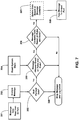
- Figure 7 illustrates a sample data flow process that includes analyzing messages in light of device states.
- a data message is read from an I/O port (step 301). This may comprise a message from an I/O port operationally associated with either an external Ethernet interface 36 or an internal Ethernet interface 40, depending on whether the data message is inbound or outbound.
- the data message is analyzed in a first process (step 302) (preferably byte-by-byte) by a rule-set, as described above, to determine the presence of malformed or unexpected data ("unqualified" data). If any malformed or unqualified data are found ("NO" in decision step 303), the message is deleted, and a log entry may be created (step 309).
- step 304 system state data are read from memory 33 or storage 35 as needed.
- the state data are gleaned from previous messages that are processed through the data guard device 30.
- the data guard device 30 may further be able to poll connected devices for state information, but this additional network traffic may be less desirable or unnecessary.
- the message or command type of the qualified data are then examined in accordance with the rule-set and in light of the system state data read from memory (step 305) to determine whether the message/command type is allowed at that time. If the message is not allowed at that time ("NO" in decision step 305), the message and data are deleted, and a log entry is created (step 309). If the message is allowed, ("YES" in decision step 305), the content of the allowed message is examined in accordance with the rule-set and the current system state data (step 306) to determine compliance with the validation criteria. If non-compliance is determined (“NO” in decision step 306), the message and data are deleted, and a log entry is created (step 309).
- the message data may optionally be used to update the system state data stored in the data guard device 30 (step 307). Then the message is written (step 308) to a second I/O port operationally associated with whichever of the Ethernet interfaces 36, 40 was not used in the reading step (step 301), and finally outputted from the I/O port to the appropriate Ethernet interface.
- a SCADA device controlling water pressure in a pipe has, as a state, the current water pressure.
- an external control terminal 24 may poll the SCADA device 22 for the water pressure at periodic intervals. This will cause a message to be returned from the SCADA device 22 that includes the current water pressure reading.
- the data guard device 30 may make a copy of the current pressure reading as a part of the current system state.
- the rule-set may then be set up to allow or deny messages based on the water pressure state variable.
- a rule-set may include a rule that indicates "increase pressure" or "decrease pressure” messages are only acceptable when the current pressure is outside of a normal pressure range, such as between 70 and 120 PSI.
- the data guard device 30 When a proper "report pressure" message is sent through the data guard device 30 to the SCADA device 22, the data guard device 30 passes along the request and receives the response message from the SCADA device 22.
- the data guard device 30 may process the response message and save the current reading for PSI that is being reported-for example, 75 PSI. If the data guard device 30 then receives an "increase pressure" message, it can review the current pressure state reading and deny the message.
- any of a large number of systems, states, and rule-sets are contemplated herein, and the water pressure example is simply one such possible application.
- the data guard systems and methods may be implemented in a variety of applications and situations, such as, for example, industrial control systems, energy management and distribution systems, remote monitoring systems, and the like.
- Other concrete examples include power stations, oil pipelines, and building HVAC, alarm, fire and other safety systems.
- data guard device 30 cannot be configured or otherwise modified by users over an internal or external network without physical access to the device (due to needing access to the programming switch 46). Therefore, the security provided by the data guard device 30 cannot be overridden or by-passed, even if other protections, such as a firewall or IDS, are compromised.
- the data guard device 30 provides bi-directional protection across all seven OSI model layers in an aspect. This is achieved through the use of two segregated network interfaces providing physical and data-link layer protection between each SCADA device 22 and the control network. Furthermore, the data guard device 30 protects the network and transport OSI model layers by limiting network data traffic to only the configured IP addresses and ports to and from each individual SCADA device. In addition, the data guard device 30 protects the session, presentation, and application OSI model layers through data validation and rule-sets that define what data can be sent to and from each SCADA device 22 based at least in part on the data content of network traffic. Additionally, these layers can also be protected through encryption, which is supported in at least some aspects.
- the data guard device 30 does not modify the message protocol, utilize a proxy, or require any modification to existing software or hardware on the SCADA network.
- the re-programmable feature described above allows the data guard device 30 to support custom rule-sets and configurations to tailor it to any SCADA device and network.
Landscapes
- Engineering & Computer Science (AREA)
- Signal Processing (AREA)
- Computing Systems (AREA)
- Computer Networks & Wireless Communication (AREA)
- Computer Security & Cryptography (AREA)
- Computer Hardware Design (AREA)
- General Engineering & Computer Science (AREA)
- Business, Economics & Management (AREA)
- General Business, Economics & Management (AREA)
- Health & Medical Sciences (AREA)
- General Health & Medical Sciences (AREA)
- Medical Informatics (AREA)
- Small-Scale Networks (AREA)
- Data Exchanges In Wide-Area Networks (AREA)
Claims (15)
- Dispositif de cybersécurité (30) pour assurer une communication sécurisée d'automatisation et de messages de contrôle entre des premier et deuxième réseaux (34, 38) dans un système fonctionnable dans au moins un état de système, le dispositif de cybersécurité (30) comprenant:une première interface de réseau (36, 40) configurée pour accepter des messages destinés pour le deuxième réseau (34, 38), et pour transmettre des messages qualifiés et validés au premier réseau (34, 38) à partir du deuxième réseau (34, 38);une deuxième inteface de réseau (36, 40) configurée pour accepter des messages destinés pour le premier réseau (34, 38), et pour transmettre des messages qualifiés et validés au deuxième réseau (34, 38) à partir du premier réseau (34, 38);un processeur (32) configuré dans un mode opérationnel pour qualifier et valider des messages des première et deuxième interfaces de réseau (36, 40) sur une base d'octet par octet; etde la mémoire (33) configurée pour stocker un ensemble de règles comprenant des règles pour qualifier et valider des messages sur une base d'octet par octet; où au moins un des règles est un système de règle dépendant d'état;où le processeur (32) est fonctionnable dans le mode opérationnel pour:accepter un message de la première interface de réseau (36, 40);retirer l'ensemble de règles de la mémoire (33);recevoir des données incluant de l'information de système d'état;qualifier le message de la première interface de réseau (36, 40), sur une base d'octet par octet, à la base de l'ensemble de règles et de l'information d'état de système;uniquement si le message est qualifié, valider le message, sur une base d'octet par octet, à la base de l'ensemble de règles et de l'information d'état de système; ettransmettre le message au deuxième interface de réseau (36, 40), uniquement si le message est validé et en conformité avec le règle dépendant de l'état de système.
- Dispositif de cybersécurité (30) selon la revendication 1, où le processeur (32) est en outre fonctionnable pour supprimer le message au cas où le message ne peut pas être validé.
- Dispositif de cybersécurité (30) selon l'une quelconque des revendications 1 ou 2, où le processeur (32) est en outre fonctionnable pour mettre à jour l'information de l'etat du système lorsque le processeur (32) reçoit un message incluant de l'information de l'etat du système que le processeur (32) peut valider à la base de l'ensemble de règles.
- Dispositif de cybersécurité (30) selon la revendication 3, où le deuxième réseau (34, 38) inclut un dispositif SCADA (22) et/ou un dispositif d'automatisation et de contrôle, et où le message incluant des données d'état de système est accepté à la deuxième interface de réseau (36, 40) et vient du dispositif SCADA (22) et/ou le dispositif d'automatisation et de contrôle dans le deuxième réseau (34, 38).
- Dispositif de cybersécurité (30) selon l'une quelconque des revendications 1 à 4, où le processeur (32) est fonctionnable dans le mode opérationnel pour traiter les messages de données selon un ensemble de règles mis en oeuvre par processeur incluant le système de règle dépendant d'état, l'ensemble de règles étant configuré pour (a) qualifier, octet par octet, (i) le contenu de chacun des messages reçu du premier réseau (34, 38) via la première inteface de communication (36, 40) en conformité avec des critères de qualification définies par l'ensemble de règles, et en incluant de l'information d'état de système conformément au système de règle dépendant d'état, et (ii), le contenu de chacun des messages reçu du deuxième réseau (34, 38) via la deuxième interface de communication (36, 40) en conformité avec des critères de qualification définies par l'ensemble de règles, et en incluant de l'information d'état de système conformément au système de règle dépendant d'état; et (b), valider, octet par octet, le contenu de chaque message qualifié en conformité avec des critères de validation définies par l'ensemble de règles incluant le système de règle dépendant d'état.
- Dispositif de cybersécurité (30) selon l'une quelconque des revendications 1 à 5, où le processeur (32) est en outre configuré pour fonctionner dans un mode de programmation, et où le processeur (32) peut être actionné pour remplacer l'ensemble de règles avec un nouveau ensemble de règles, uniquement lorsque dans le mode de programmation.
- Dispositif de cybersécurité (30) selon l'une quelconque des revendications 1 à 6, où le processeur (32) est en outre fonctionnable dans le mode opérationnel afin de:accepter un message de la deuxième interface de réseau (36, 40);retirer l'ensemble de règles de la mémoire (33);recevoir des données incluant de l'information d'état d'un système;qualifier le message à partir de la deuxième interface de réseau (36, 40), sur une base d'octet par octet, à la base de l'ensemble de règles et de l'information d'état d'un système;uniquement si le message est qualifié, valider le message, sur une base d'octet par octet, à la base de l'ensemble de règles et de l'information d'état d'un système, ettransmettre le message à la première interface de réseau (36, 40), uniquement si le message est validé et en conformité avec le règle de dépendence d'état de système.
- Dispositif de cybersécurité (30) selon l'une quelconque des revendications 1 à 7, où l'ensemble de règles mise en oeuvre par processeur inclut un premier ensemble de règles configuré pour traiter les messages de données reçus du premier réseau (34, 38), et un deuxième ensemble de règles configuré pour traiter les messages de données reçus du deuxième réseau (34, 38).
- Procédé pour assurer des communications sécurisées à un dispositif (22) d'acquisition de données et de contrôle d'un superviseur (SCADA) ou un dispositif d'automatisation et de contrôle, le procédé comprenant:l'acceptation de messages destinés au dispositif SCADA (22) ou le dispositif d'automatisation et de contrôle à une interface de réseau (36, 40) qui est en communication de données avec un processeur (32) étant programmé avec un ensemble de règles programmable qui inclut des règles pour qualifier les messages acceptés pour la taille et le type de message, et pour valider les contenus de message dans les messages acceptés, où la validation fournie par l'ensemble de règles dépend sur un état de système;le traitement de chaque message accepté destiné au dispositif SCADA (22) ou le dispositif d'automatisation et de contrôle en faisant fonctionner le processeur (32) pour mettre en oeuvre l'ensemble de règles de manière à qualifier et valider, sur une base d'octet par octet, chaque message destiné au dispositif SCADA (22) ou le dispositif d'automatisation et de contrôle conformément aux règles de type de message, de taille de message, et de contenus de message;l'envoi uniquement des messages qui sont qualifiés et validés à la base de l'ensemble de règles du dispositif SCADA (22) ou du dispositif d'automatisation et de contrôle; etla suppression des messages qui ne peuvent pas être qualifiés et validés à la base de l'ensemble de règles.
- Procédé selon la revendication 9, comprenant en outre:l'acceptation de messages du dispositif SCADA (22) ou du dispositif d'automatisation et de contrôle à une interface de réseau (36, 40) qui est en communication de données avec un processeur (32);le traitement de chaque message accepté du dispositif SCADA (22) ou du dispositif d'automatisation et de contrôle en faisant fonctionner le processeur (32) pour mettre en oeuvre l'ensemble de règles de manière à qualifier et valider, sur une base d'octet par octet, chaque message du dispositif SCADA (22) ou du dispositif d'automatisation et de contrôle conformément aux règles de type de message, de taille de message, et de contenus de message;l'envoi uniquement des messages qui sont qualifiés et validés à la base de l'ensemble de règles à l'interface de réseau (36, 40) pour la transmission sur le réseau (34, 38); etla suppression des messages qui ne peuvent pas être qualifiés et validés à la base de l'ensemble de règles.
- Procédé selon l'une des revendications 9 ou 10, comprenant en outre:
la mise à jour d'une indication d'état de système basée sur les contenus d'un message qualifié et validé du dispositif SCADA (22) ou du dispositif d'automatisation et de contrôle. - Procédé selon l'une quelconque des revendications 9 à 11, où l'ensemble des règles est un premier ensemble de règles, le procédé comprenant en outre:la commutation du processeur (32) en mode de programmation;l'acceptation du deuxième ensemble de règles à l'interface de réseau (36, 40), lorsque le processeur (32) est en mode de programmation;le remplacement du premier ensemble de règles avec le deuxième ensemble de règles;la sortie du mode de programmation; etle traitement des futures messages destinés au dispositif SCADA (22) ou le dispositif d'automatisation et de contrôle à la basé du deuxième ensemble de règles en actionnant le processeur (32) pour mettre en oeuvre le deuxième ensemble de règles de manière à qualifier et valider, sur une base d'octet par octet, chaque message accepté destiné au dispositif SCADA (22) ou au dispositif d'automatisation et de contrôle conformément aux règles du type de message, de la taille du message et des contenus du message.
- Système d'automatisation et de contrôle qui peut être fonctionnable dans un ou plusieurs états de système et qui inclut une fonctionnalité de cybersécurité, le système d'automatisation et de contrôle comprenant:un processeur (32) en communication de données avec un réseau externe (34) et un réseau interne (38); etune mémoire (33) associée avec le processeur (32) et configurée pour stocker une indication de l'etat de système et un ensemble de règles définissant des critères de qualification et de validation pour des contenus de données de messages de données entrants reçus du réseau externe (34) et des contenus de données de messages de données sortants reçus du réseau interne (38), où l'ensemble de règles inclut un système de règle dépendant d'état;où le processeur (32) est fonctionnable dans un mode opérationnel pour traiter les messages de données conformément à l'ensemble des règles de manière à (a) qualifier, octet par octet, (i) le contenu de chacun des messages de données reçu du réseau externe (34) via l'interface de communication externe (36) en conformité avec des critères de qualification définis par l'ensemble de règles pour des communications interne via externe, et (ii) le contenu de chacun des messages de données reçus du réseau interne (38) via l'interface de communication interne (40) en conformité avec des critères de qualification définis par l'ensemble de règles pour des communications externe via interne; (b) valider, octet par octet, le contenu de chaque message de données qualifié en conformité avec des critères de validation définis par l'ensemble de règles; et (c) passer entre le réseau interne (38) et le réseau externe (34) uniquement du contenu de données qui a été qualifié et validé et qui est jugé propre basé sur l'indication d'état de système et conformément à l'information d'état de système dans le message de données avec le système de règle dépendant d'état, et où le processeur (32) est fonctionnable dans un mode de programmation dans lequel le processeur (32) est reprogrammable.
- Système selon la revendication 13, où l'ensemble de règles inclut un premier ensemble de règles configuré pour traiter les messages de données entrantes reçus du réseau externe (34), et un deuxième ensemble de règles configuré pour traiter les messages de données sortantes reçus du réseau interne (38).
- Système selon l'une des revendications 13 ou 14, où le processeur (32) est configuré pour être commutable entre le mode opérationnel et le mode de programmation, et du mode de programmation de retour au mode opérationnel après la reprogrammation.
Priority Applications (1)
| Application Number | Priority Date | Filing Date | Title |
|---|---|---|---|
| EP20154606.6A EP3675455B1 (fr) | 2015-03-25 | 2016-03-18 | Sécurité bidirectionnelle de données pour réseaux de télésurveillance et d'acquisition de données |
Applications Claiming Priority (2)
| Application Number | Priority Date | Filing Date | Title |
|---|---|---|---|
| US14/668,602 US9729507B2 (en) | 2014-01-30 | 2015-03-25 | Bi-directional data security for supervisor control and data acquisition networks |
| PCT/US2016/023225 WO2016154036A1 (fr) | 2015-03-25 | 2016-03-18 | Sécurité de données bidirectionnelle pour réseaux scada |
Related Child Applications (2)
| Application Number | Title | Priority Date | Filing Date |
|---|---|---|---|
| EP20154606.6A Division EP3675455B1 (fr) | 2015-03-25 | 2016-03-18 | Sécurité bidirectionnelle de données pour réseaux de télésurveillance et d'acquisition de données |
| EP20154606.6A Division-Into EP3675455B1 (fr) | 2015-03-25 | 2016-03-18 | Sécurité bidirectionnelle de données pour réseaux de télésurveillance et d'acquisition de données |
Publications (3)
| Publication Number | Publication Date |
|---|---|
| EP3275157A1 EP3275157A1 (fr) | 2018-01-31 |
| EP3275157A4 EP3275157A4 (fr) | 2018-11-14 |
| EP3275157B1 true EP3275157B1 (fr) | 2020-08-12 |
Family
ID=56977775
Family Applications (2)
| Application Number | Title | Priority Date | Filing Date |
|---|---|---|---|
| EP16769436.3A Active EP3275157B1 (fr) | 2015-03-25 | 2016-03-18 | Sécurité de données bidirectionnelle pour réseaux scada |
| EP20154606.6A Active EP3675455B1 (fr) | 2015-03-25 | 2016-03-18 | Sécurité bidirectionnelle de données pour réseaux de télésurveillance et d'acquisition de données |
Family Applications After (1)
| Application Number | Title | Priority Date | Filing Date |
|---|---|---|---|
| EP20154606.6A Active EP3675455B1 (fr) | 2015-03-25 | 2016-03-18 | Sécurité bidirectionnelle de données pour réseaux de télésurveillance et d'acquisition de données |
Country Status (2)
| Country | Link |
|---|---|
| EP (2) | EP3275157B1 (fr) |
| WO (1) | WO2016154036A1 (fr) |
Families Citing this family (11)
| Publication number | Priority date | Publication date | Assignee | Title |
|---|---|---|---|---|
| US11855768B2 (en) | 2014-12-29 | 2023-12-26 | Guidewire Software, Inc. | Disaster scenario based inferential analysis using feedback for extracting and combining cyber risk information |
| US11863590B2 (en) | 2014-12-29 | 2024-01-02 | Guidewire Software, Inc. | Inferential analysis using feedback for extracting and combining cyber risk information |
| US10404748B2 (en) | 2015-03-31 | 2019-09-03 | Guidewire Software, Inc. | Cyber risk analysis and remediation using network monitored sensors and methods of use |
| JP6577442B2 (ja) * | 2016-11-01 | 2019-09-18 | 日本電信電話株式会社 | 不正侵入防止装置、不正侵入防止方法および不正侵入防止プログラム |
| FR3066293B1 (fr) * | 2017-05-11 | 2019-11-01 | Thales | Passerelle de securite avionique amelioree et aeronef comportant une telle passerelle |
| US12387270B2 (en) * | 2017-07-26 | 2025-08-12 | Guidewire Software, Inc. | Synthetic diversity analysis with actionable feedback methodologies |
| US11546295B2 (en) | 2018-03-29 | 2023-01-03 | Agency For Science, Technology And Research | Industrial control system firewall module |
| CN114745398B (zh) * | 2021-01-07 | 2024-07-26 | 中国石油天然气股份有限公司 | 数据采集与接入系统 |
| US12229242B2 (en) * | 2021-10-26 | 2025-02-18 | Schneider Electric Systems Usa, Inc. | Securing access to privileged functionality in run-time mode on remote terminal unit |
| US12547645B2 (en) * | 2023-11-20 | 2026-02-10 | Capital One Services, Llc | Systems and methods for classification of database records by mitigating bias using random data re-censoring |
| CN121597506A (zh) * | 2026-01-29 | 2026-03-03 | 芯耀辉科技股份有限公司 | 一种验证平台、验证方法、电子设备及介质 |
Family Cites Families (5)
| Publication number | Priority date | Publication date | Assignee | Title |
|---|---|---|---|---|
| EP1433030A2 (fr) * | 2001-07-31 | 2004-06-30 | Endress + Hauser GmbH + Co. KG | Interface de telesurveillance et d'acquisition de donnees pour moniteur de reservoir ou de processus |
| EP2279465B1 (fr) * | 2008-04-17 | 2014-04-02 | Siemens Aktiengesellschaft | Procédé et système pour la gestion de la cyber-sécurité de systèmes de surveillance industrielle |
| US8572717B2 (en) * | 2008-10-09 | 2013-10-29 | Juniper Networks, Inc. | Dynamic access control policy with port restrictions for a network security appliance |
| US8400258B2 (en) * | 2009-04-30 | 2013-03-19 | Echoflex Solutions, Inc. | Method of remotely configuring a controller responsive to wireless signals |
| US20120198541A1 (en) * | 2011-02-02 | 2012-08-02 | Reeves Randall E | Methods and apparatus for preventing network intrusion |
-
2016
- 2016-03-18 EP EP16769436.3A patent/EP3275157B1/fr active Active
- 2016-03-18 WO PCT/US2016/023225 patent/WO2016154036A1/fr not_active Ceased
- 2016-03-18 EP EP20154606.6A patent/EP3675455B1/fr active Active
Non-Patent Citations (1)
| Title |
|---|
| None * |
Also Published As
| Publication number | Publication date |
|---|---|
| EP3275157A4 (fr) | 2018-11-14 |
| EP3275157A1 (fr) | 2018-01-31 |
| EP3675455B1 (fr) | 2021-07-14 |
| WO2016154036A1 (fr) | 2016-09-29 |
| EP3675455A1 (fr) | 2020-07-01 |
Similar Documents
| Publication | Publication Date | Title |
|---|---|---|
| US9729507B2 (en) | Bi-directional data security for supervisor control and data acquisition networks | |
| EP3275157B1 (fr) | Sécurité de données bidirectionnelle pour réseaux scada | |
| US9954903B2 (en) | Industrial network security translator | |
| US9998426B2 (en) | Bi-directional data security for control systems | |
| US20240214351A1 (en) | Security system, device, and method for protecting control systems | |
| KR102414860B1 (ko) | 메세지를 처리하는 네트워크 프로브 및 방법 | |
| Katulić et al. | Protecting modbus/TCP-based industrial automation and control systems using message authentication codes | |
| US9306953B2 (en) | System and method for secure unidirectional transfer of commands to control equipment | |
| US20190253444A1 (en) | Dynamic security method and system based on multi-fusion linkage response | |
| US20130212378A1 (en) | Method for managing keys in a manipulation-proof manner | |
| CN112511494A (zh) | 一种适用于电力智能终端设备的安全防护系统及方法 | |
| EP3783858B1 (fr) | Sécurité de données bidirectionnelle pour systèmes de commande | |
| US12549519B2 (en) | Security system, device, and method for protecting control systems | |
| KR101287220B1 (ko) | 발전소 통합 제어 시스템의 네트워크 보안 시스템 | |
| US20170063789A1 (en) | OptiArmor Secure Separation Device | |
| HK1244974A1 (en) | Bi-directional data security for supervisor control and data acquisition networks | |
| HK1244974B (en) | Bi-directional data security for supervisor control and data acquisition networks | |
| CN120692047A (zh) | 用于操作技术系统的安全协议代理 | |
| Campbell | Industrial Control Systems | |
| Rahman et al. | Exploring Supervisory Systems Security Threats: Legacy SCADA Vulnerabilities, Communication Protocols, and System Security Strategies | |
| Molesh | Examining the Use of a Network Bypass to Circumvent Data Diodes Within Industrial Control Systems | |
| ASM | FIPS 140-2 Security Policy | |
| Ristov et al. | Security of Computer Systems on Ship | |
| Kong et al. | Architecturing a secured network: Communications and setting up a secure VPN channel |
Legal Events
| Date | Code | Title | Description |
|---|---|---|---|
| STAA | Information on the status of an ep patent application or granted ep patent |
Free format text: STATUS: THE INTERNATIONAL PUBLICATION HAS BEEN MADE |
|
| PUAI | Public reference made under article 153(3) epc to a published international application that has entered the european phase |
Free format text: ORIGINAL CODE: 0009012 |
|
| STAA | Information on the status of an ep patent application or granted ep patent |
Free format text: STATUS: REQUEST FOR EXAMINATION WAS MADE |
|
| 17P | Request for examination filed |
Effective date: 20171024 |
|
| AK | Designated contracting states |
Kind code of ref document: A1 Designated state(s): AL AT BE BG CH CY CZ DE DK EE ES FI FR GB GR HR HU IE IS IT LI LT LU LV MC MK MT NL NO PL PT RO RS SE SI SK SM TR |
|
| AX | Request for extension of the european patent |
Extension state: BA ME |
|
| DAV | Request for validation of the european patent (deleted) | ||
| DAX | Request for extension of the european patent (deleted) | ||
| REG | Reference to a national code |
Ref country code: HK Ref legal event code: DE Ref document number: 1244974 Country of ref document: HK |
|
| A4 | Supplementary search report drawn up and despatched |
Effective date: 20181017 |
|
| RIC1 | Information provided on ipc code assigned before grant |
Ipc: H04L 29/06 20060101AFI20181011BHEP |
|
| GRAP | Despatch of communication of intention to grant a patent |
Free format text: ORIGINAL CODE: EPIDOSNIGR1 |
|
| STAA | Information on the status of an ep patent application or granted ep patent |
Free format text: STATUS: GRANT OF PATENT IS INTENDED |
|
| INTG | Intention to grant announced |
Effective date: 20200303 |
|
| GRAS | Grant fee paid |
Free format text: ORIGINAL CODE: EPIDOSNIGR3 |
|
| GRAA | (expected) grant |
Free format text: ORIGINAL CODE: 0009210 |
|
| STAA | Information on the status of an ep patent application or granted ep patent |
Free format text: STATUS: THE PATENT HAS BEEN GRANTED |
|
| AK | Designated contracting states |
Kind code of ref document: B1 Designated state(s): AL AT BE BG CH CY CZ DE DK EE ES FI FR GB GR HR HU IE IS IT LI LT LU LV MC MK MT NL NO PL PT RO RS SE SI SK SM TR |
|
| REG | Reference to a national code |
Ref country code: CH Ref legal event code: EP |
|
| REG | Reference to a national code |
Ref country code: IE Ref legal event code: FG4D |
|
| REG | Reference to a national code |
Ref country code: DE Ref legal event code: R096 Ref document number: 602016041894 Country of ref document: DE |
|
| REG | Reference to a national code |
Ref country code: AT Ref legal event code: REF Ref document number: 1302680 Country of ref document: AT Kind code of ref document: T Effective date: 20200915 |
|
| REG | Reference to a national code |
Ref country code: NL Ref legal event code: FP |
|
| REG | Reference to a national code |
Ref country code: CH Ref legal event code: NV Representative=s name: STOLMAR AND PARTNER INTELLECTUAL PROPERTY S.A., CH |
|
| REG | Reference to a national code |
Ref country code: LT Ref legal event code: MG4D |
|
| PG25 | Lapsed in a contracting state [announced via postgrant information from national office to epo] |
Ref country code: FI Free format text: LAPSE BECAUSE OF FAILURE TO SUBMIT A TRANSLATION OF THE DESCRIPTION OR TO PAY THE FEE WITHIN THE PRESCRIBED TIME-LIMIT Effective date: 20200812 Ref country code: NO Free format text: LAPSE BECAUSE OF FAILURE TO SUBMIT A TRANSLATION OF THE DESCRIPTION OR TO PAY THE FEE WITHIN THE PRESCRIBED TIME-LIMIT Effective date: 20201112 Ref country code: GR Free format text: LAPSE BECAUSE OF FAILURE TO SUBMIT A TRANSLATION OF THE DESCRIPTION OR TO PAY THE FEE WITHIN THE PRESCRIBED TIME-LIMIT Effective date: 20201113 Ref country code: LT Free format text: LAPSE BECAUSE OF FAILURE TO SUBMIT A TRANSLATION OF THE DESCRIPTION OR TO PAY THE FEE WITHIN THE PRESCRIBED TIME-LIMIT Effective date: 20200812 Ref country code: HR Free format text: LAPSE BECAUSE OF FAILURE TO SUBMIT A TRANSLATION OF THE DESCRIPTION OR TO PAY THE FEE WITHIN THE PRESCRIBED TIME-LIMIT Effective date: 20200812 Ref country code: SE Free format text: LAPSE BECAUSE OF FAILURE TO SUBMIT A TRANSLATION OF THE DESCRIPTION OR TO PAY THE FEE WITHIN THE PRESCRIBED TIME-LIMIT Effective date: 20200812 Ref country code: BG Free format text: LAPSE BECAUSE OF FAILURE TO SUBMIT A TRANSLATION OF THE DESCRIPTION OR TO PAY THE FEE WITHIN THE PRESCRIBED TIME-LIMIT Effective date: 20201112 |
|
| REG | Reference to a national code |
Ref country code: AT Ref legal event code: MK05 Ref document number: 1302680 Country of ref document: AT Kind code of ref document: T Effective date: 20200812 |
|
| PG25 | Lapsed in a contracting state [announced via postgrant information from national office to epo] |
Ref country code: PL Free format text: LAPSE BECAUSE OF FAILURE TO SUBMIT A TRANSLATION OF THE DESCRIPTION OR TO PAY THE FEE WITHIN THE PRESCRIBED TIME-LIMIT Effective date: 20200812 Ref country code: LV Free format text: LAPSE BECAUSE OF FAILURE TO SUBMIT A TRANSLATION OF THE DESCRIPTION OR TO PAY THE FEE WITHIN THE PRESCRIBED TIME-LIMIT Effective date: 20200812 Ref country code: RS Free format text: LAPSE BECAUSE OF FAILURE TO SUBMIT A TRANSLATION OF THE DESCRIPTION OR TO PAY THE FEE WITHIN THE PRESCRIBED TIME-LIMIT Effective date: 20200812 Ref country code: IS Free format text: LAPSE BECAUSE OF FAILURE TO SUBMIT A TRANSLATION OF THE DESCRIPTION OR TO PAY THE FEE WITHIN THE PRESCRIBED TIME-LIMIT Effective date: 20201212 |
|
| PG25 | Lapsed in a contracting state [announced via postgrant information from national office to epo] |
Ref country code: EE Free format text: LAPSE BECAUSE OF FAILURE TO SUBMIT A TRANSLATION OF THE DESCRIPTION OR TO PAY THE FEE WITHIN THE PRESCRIBED TIME-LIMIT Effective date: 20200812 Ref country code: SM Free format text: LAPSE BECAUSE OF FAILURE TO SUBMIT A TRANSLATION OF THE DESCRIPTION OR TO PAY THE FEE WITHIN THE PRESCRIBED TIME-LIMIT Effective date: 20200812 Ref country code: DK Free format text: LAPSE BECAUSE OF FAILURE TO SUBMIT A TRANSLATION OF THE DESCRIPTION OR TO PAY THE FEE WITHIN THE PRESCRIBED TIME-LIMIT Effective date: 20200812 Ref country code: CZ Free format text: LAPSE BECAUSE OF FAILURE TO SUBMIT A TRANSLATION OF THE DESCRIPTION OR TO PAY THE FEE WITHIN THE PRESCRIBED TIME-LIMIT Effective date: 20200812 Ref country code: RO Free format text: LAPSE BECAUSE OF FAILURE TO SUBMIT A TRANSLATION OF THE DESCRIPTION OR TO PAY THE FEE WITHIN THE PRESCRIBED TIME-LIMIT Effective date: 20200812 |
|
| REG | Reference to a national code |
Ref country code: DE Ref legal event code: R097 Ref document number: 602016041894 Country of ref document: DE |
|
| PG25 | Lapsed in a contracting state [announced via postgrant information from national office to epo] |
Ref country code: AL Free format text: LAPSE BECAUSE OF FAILURE TO SUBMIT A TRANSLATION OF THE DESCRIPTION OR TO PAY THE FEE WITHIN THE PRESCRIBED TIME-LIMIT Effective date: 20200812 Ref country code: AT Free format text: LAPSE BECAUSE OF FAILURE TO SUBMIT A TRANSLATION OF THE DESCRIPTION OR TO PAY THE FEE WITHIN THE PRESCRIBED TIME-LIMIT Effective date: 20200812 Ref country code: ES Free format text: LAPSE BECAUSE OF FAILURE TO SUBMIT A TRANSLATION OF THE DESCRIPTION OR TO PAY THE FEE WITHIN THE PRESCRIBED TIME-LIMIT Effective date: 20200812 |
|
| PLBE | No opposition filed within time limit |
Free format text: ORIGINAL CODE: 0009261 |
|
| STAA | Information on the status of an ep patent application or granted ep patent |
Free format text: STATUS: NO OPPOSITION FILED WITHIN TIME LIMIT |
|
| PG25 | Lapsed in a contracting state [announced via postgrant information from national office to epo] |
Ref country code: SK Free format text: LAPSE BECAUSE OF FAILURE TO SUBMIT A TRANSLATION OF THE DESCRIPTION OR TO PAY THE FEE WITHIN THE PRESCRIBED TIME-LIMIT Effective date: 20200812 |
|
| 26N | No opposition filed |
Effective date: 20210514 |
|
| PG25 | Lapsed in a contracting state [announced via postgrant information from national office to epo] |
Ref country code: SI Free format text: LAPSE BECAUSE OF FAILURE TO SUBMIT A TRANSLATION OF THE DESCRIPTION OR TO PAY THE FEE WITHIN THE PRESCRIBED TIME-LIMIT Effective date: 20200812 |
|
| PG25 | Lapsed in a contracting state [announced via postgrant information from national office to epo] |
Ref country code: MC Free format text: LAPSE BECAUSE OF FAILURE TO SUBMIT A TRANSLATION OF THE DESCRIPTION OR TO PAY THE FEE WITHIN THE PRESCRIBED TIME-LIMIT Effective date: 20200812 |
|
| REG | Reference to a national code |
Ref country code: DE Ref legal event code: R079 Ref document number: 602016041894 Country of ref document: DE Free format text: PREVIOUS MAIN CLASS: H04L0029060000 Ipc: H04L0065000000 |
|
| REG | Reference to a national code |
Ref country code: BE Ref legal event code: MM Effective date: 20210331 |
|
| PG25 | Lapsed in a contracting state [announced via postgrant information from national office to epo] |
Ref country code: LU Free format text: LAPSE BECAUSE OF NON-PAYMENT OF DUE FEES Effective date: 20210318 Ref country code: IE Free format text: LAPSE BECAUSE OF NON-PAYMENT OF DUE FEES Effective date: 20210318 |
|
| PG25 | Lapsed in a contracting state [announced via postgrant information from national office to epo] |
Ref country code: BE Free format text: LAPSE BECAUSE OF NON-PAYMENT OF DUE FEES Effective date: 20210331 |
|
| PG25 | Lapsed in a contracting state [announced via postgrant information from national office to epo] |
Ref country code: PT Free format text: LAPSE BECAUSE OF FAILURE TO SUBMIT A TRANSLATION OF THE DESCRIPTION OR TO PAY THE FEE WITHIN THE PRESCRIBED TIME-LIMIT Effective date: 20201214 |
|
| PG25 | Lapsed in a contracting state [announced via postgrant information from national office to epo] |
Ref country code: CY Free format text: LAPSE BECAUSE OF FAILURE TO SUBMIT A TRANSLATION OF THE DESCRIPTION OR TO PAY THE FEE WITHIN THE PRESCRIBED TIME-LIMIT Effective date: 20200812 |
|
| PG25 | Lapsed in a contracting state [announced via postgrant information from national office to epo] |
Ref country code: HU Free format text: LAPSE BECAUSE OF FAILURE TO SUBMIT A TRANSLATION OF THE DESCRIPTION OR TO PAY THE FEE WITHIN THE PRESCRIBED TIME-LIMIT; INVALID AB INITIO Effective date: 20160318 |
|
| PG25 | Lapsed in a contracting state [announced via postgrant information from national office to epo] |
Ref country code: MK Free format text: LAPSE BECAUSE OF FAILURE TO SUBMIT A TRANSLATION OF THE DESCRIPTION OR TO PAY THE FEE WITHIN THE PRESCRIBED TIME-LIMIT Effective date: 20200812 |
|
| PG25 | Lapsed in a contracting state [announced via postgrant information from national office to epo] |
Ref country code: TR Free format text: LAPSE BECAUSE OF FAILURE TO SUBMIT A TRANSLATION OF THE DESCRIPTION OR TO PAY THE FEE WITHIN THE PRESCRIBED TIME-LIMIT Effective date: 20200812 |
|
| PG25 | Lapsed in a contracting state [announced via postgrant information from national office to epo] |
Ref country code: MT Free format text: LAPSE BECAUSE OF FAILURE TO SUBMIT A TRANSLATION OF THE DESCRIPTION OR TO PAY THE FEE WITHIN THE PRESCRIBED TIME-LIMIT Effective date: 20200812 |
|
| PGFP | Annual fee paid to national office [announced via postgrant information from national office to epo] |
Ref country code: CH Payment date: 20250401 Year of fee payment: 10 |
|
| REG | Reference to a national code |
Ref country code: CH Ref legal event code: U11 Free format text: ST27 STATUS EVENT CODE: U-0-0-U10-U11 (AS PROVIDED BY THE NATIONAL OFFICE) Effective date: 20260401 |
|
| PGFP | Annual fee paid to national office [announced via postgrant information from national office to epo] |
Ref country code: GB Payment date: 20260327 Year of fee payment: 11 |
|
| PGFP | Annual fee paid to national office [announced via postgrant information from national office to epo] |
Ref country code: DE Payment date: 20260327 Year of fee payment: 11 |
|
| PGFP | Annual fee paid to national office [announced via postgrant information from national office to epo] |
Ref country code: IT Payment date: 20260319 Year of fee payment: 11 |
|
| PGFP | Annual fee paid to national office [announced via postgrant information from national office to epo] |
Ref country code: NL Payment date: 20260326 Year of fee payment: 11 |
|
| PGFP | Annual fee paid to national office [announced via postgrant information from national office to epo] |
Ref country code: FR Payment date: 20260325 Year of fee payment: 11 |