EP3277246B1 - Autoinjektorsysteme und verfahren zur abgabe von zystenmedikamente auf anfrage - Google Patents
Autoinjektorsysteme und verfahren zur abgabe von zystenmedikamente auf anfrage Download PDFInfo
- Publication number
- EP3277246B1 EP3277246B1 EP17776583.1A EP17776583A EP3277246B1 EP 3277246 B1 EP3277246 B1 EP 3277246B1 EP 17776583 A EP17776583 A EP 17776583A EP 3277246 B1 EP3277246 B1 EP 3277246B1
- Authority
- EP
- European Patent Office
- Prior art keywords
- auto
- medicine
- injector
- depth
- skin
- Prior art date
- Legal status (The legal status is an assumption and is not a legal conclusion. Google has not performed a legal analysis and makes no representation as to the accuracy of the status listed.)
- Active
Links
Images




Classifications
-
- A—HUMAN NECESSITIES
- A61—MEDICAL OR VETERINARY SCIENCE; HYGIENE
- A61M—DEVICES FOR INTRODUCING MEDIA INTO, OR ONTO, THE BODY; DEVICES FOR TRANSDUCING BODY MEDIA OR FOR TAKING MEDIA FROM THE BODY; DEVICES FOR PRODUCING OR ENDING SLEEP OR STUPOR
- A61M5/00—Devices for bringing media into the body in a subcutaneous, intra-vascular or intramuscular way; Accessories therefor, e.g. filling or cleaning devices, arm-rests
- A61M5/178—Syringes
- A61M5/31—Details
- A61M5/315—Pistons; Piston-rods; Guiding, blocking or restricting the movement of the rod or piston; Appliances on the rod for facilitating dosing ; Dosing mechanisms
- A61M5/31533—Dosing mechanisms, i.e. setting a dose
- A61M5/31545—Setting modes for dosing
- A61M5/31548—Mechanically operated dose setting member
- A61M5/3156—Mechanically operated dose setting member using volume steps only adjustable in discrete intervals, i.e. individually distinct intervals
-
- A—HUMAN NECESSITIES
- A61—MEDICAL OR VETERINARY SCIENCE; HYGIENE
- A61M—DEVICES FOR INTRODUCING MEDIA INTO, OR ONTO, THE BODY; DEVICES FOR TRANSDUCING BODY MEDIA OR FOR TAKING MEDIA FROM THE BODY; DEVICES FOR PRODUCING OR ENDING SLEEP OR STUPOR
- A61M5/00—Devices for bringing media into the body in a subcutaneous, intra-vascular or intramuscular way; Accessories therefor, e.g. filling or cleaning devices, arm-rests
- A61M5/178—Syringes
- A61M5/20—Automatic syringes, e.g. with automatically actuated piston rod, with automatic needle injection, filling automatically
-
- A—HUMAN NECESSITIES
- A61—MEDICAL OR VETERINARY SCIENCE; HYGIENE
- A61M—DEVICES FOR INTRODUCING MEDIA INTO, OR ONTO, THE BODY; DEVICES FOR TRANSDUCING BODY MEDIA OR FOR TAKING MEDIA FROM THE BODY; DEVICES FOR PRODUCING OR ENDING SLEEP OR STUPOR
- A61M5/00—Devices for bringing media into the body in a subcutaneous, intra-vascular or intramuscular way; Accessories therefor, e.g. filling or cleaning devices, arm-rests
- A61M5/178—Syringes
- A61M5/20—Automatic syringes, e.g. with automatically actuated piston rod, with automatic needle injection, filling automatically
- A61M5/2033—Spring-loaded one-shot injectors with or without automatic needle insertion
-
- A—HUMAN NECESSITIES
- A61—MEDICAL OR VETERINARY SCIENCE; HYGIENE
- A61M—DEVICES FOR INTRODUCING MEDIA INTO, OR ONTO, THE BODY; DEVICES FOR TRANSDUCING BODY MEDIA OR FOR TAKING MEDIA FROM THE BODY; DEVICES FOR PRODUCING OR ENDING SLEEP OR STUPOR
- A61M5/00—Devices for bringing media into the body in a subcutaneous, intra-vascular or intramuscular way; Accessories therefor, e.g. filling or cleaning devices, arm-rests
- A61M5/178—Syringes
- A61M5/31—Details
- A61M5/315—Pistons; Piston-rods; Guiding, blocking or restricting the movement of the rod or piston; Appliances on the rod for facilitating dosing ; Dosing mechanisms
- A61M5/31525—Dosing
- A61M5/3153—Dosing by single stroke limiting means
-
- A—HUMAN NECESSITIES
- A61—MEDICAL OR VETERINARY SCIENCE; HYGIENE
- A61M—DEVICES FOR INTRODUCING MEDIA INTO, OR ONTO, THE BODY; DEVICES FOR TRANSDUCING BODY MEDIA OR FOR TAKING MEDIA FROM THE BODY; DEVICES FOR PRODUCING OR ENDING SLEEP OR STUPOR
- A61M5/00—Devices for bringing media into the body in a subcutaneous, intra-vascular or intramuscular way; Accessories therefor, e.g. filling or cleaning devices, arm-rests
- A61M5/178—Syringes
- A61M5/31—Details
- A61M5/315—Pistons; Piston-rods; Guiding, blocking or restricting the movement of the rod or piston; Appliances on the rod for facilitating dosing ; Dosing mechanisms
- A61M5/31533—Dosing mechanisms, i.e. setting a dose
- A61M5/31545—Setting modes for dosing
- A61M5/31548—Mechanically operated dose setting member
- A61M5/3155—Mechanically operated dose setting member by rotational movement of dose setting member, e.g. during setting or filling of a syringe
-
- A—HUMAN NECESSITIES
- A61—MEDICAL OR VETERINARY SCIENCE; HYGIENE
- A61M—DEVICES FOR INTRODUCING MEDIA INTO, OR ONTO, THE BODY; DEVICES FOR TRANSDUCING BODY MEDIA OR FOR TAKING MEDIA FROM THE BODY; DEVICES FOR PRODUCING OR ENDING SLEEP OR STUPOR
- A61M5/00—Devices for bringing media into the body in a subcutaneous, intra-vascular or intramuscular way; Accessories therefor, e.g. filling or cleaning devices, arm-rests
- A61M5/178—Syringes
- A61M5/31—Details
- A61M5/315—Pistons; Piston-rods; Guiding, blocking or restricting the movement of the rod or piston; Appliances on the rod for facilitating dosing ; Dosing mechanisms
- A61M5/31533—Dosing mechanisms, i.e. setting a dose
- A61M5/31545—Setting modes for dosing
- A61M5/31548—Mechanically operated dose setting member
- A61M5/3155—Mechanically operated dose setting member by rotational movement of dose setting member, e.g. during setting or filling of a syringe
- A61M5/31553—Mechanically operated dose setting member by rotational movement of dose setting member, e.g. during setting or filling of a syringe without axial movement of dose setting member
-
- A—HUMAN NECESSITIES
- A61—MEDICAL OR VETERINARY SCIENCE; HYGIENE
- A61M—DEVICES FOR INTRODUCING MEDIA INTO, OR ONTO, THE BODY; DEVICES FOR TRANSDUCING BODY MEDIA OR FOR TAKING MEDIA FROM THE BODY; DEVICES FOR PRODUCING OR ENDING SLEEP OR STUPOR
- A61M5/00—Devices for bringing media into the body in a subcutaneous, intra-vascular or intramuscular way; Accessories therefor, e.g. filling or cleaning devices, arm-rests
- A61M5/178—Syringes
- A61M5/31—Details
- A61M5/315—Pistons; Piston-rods; Guiding, blocking or restricting the movement of the rod or piston; Appliances on the rod for facilitating dosing ; Dosing mechanisms
- A61M5/31565—Administration mechanisms, i.e. constructional features, modes of administering a dose
- A61M5/31576—Constructional features or modes of drive mechanisms for piston rods
- A61M5/31578—Constructional features or modes of drive mechanisms for piston rods based on axial translation, i.e. components directly operatively associated and axially moved with plunger rod
- A61M5/3158—Constructional features or modes of drive mechanisms for piston rods based on axial translation, i.e. components directly operatively associated and axially moved with plunger rod performed by axially moving actuator operated by user, e.g. an injection button
-
- A—HUMAN NECESSITIES
- A61—MEDICAL OR VETERINARY SCIENCE; HYGIENE
- A61M—DEVICES FOR INTRODUCING MEDIA INTO, OR ONTO, THE BODY; DEVICES FOR TRANSDUCING BODY MEDIA OR FOR TAKING MEDIA FROM THE BODY; DEVICES FOR PRODUCING OR ENDING SLEEP OR STUPOR
- A61M5/00—Devices for bringing media into the body in a subcutaneous, intra-vascular or intramuscular way; Accessories therefor, e.g. filling or cleaning devices, arm-rests
- A61M5/178—Syringes
- A61M5/31—Details
- A61M5/315—Pistons; Piston-rods; Guiding, blocking or restricting the movement of the rod or piston; Appliances on the rod for facilitating dosing ; Dosing mechanisms
- A61M5/31565—Administration mechanisms, i.e. constructional features, modes of administering a dose
- A61M5/31576—Constructional features or modes of drive mechanisms for piston rods
- A61M5/31583—Constructional features or modes of drive mechanisms for piston rods based on rotational translation, i.e. movement of piston rod is caused by relative rotation between the user activated actuator and the piston rod
- A61M5/31585—Constructional features or modes of drive mechanisms for piston rods based on rotational translation, i.e. movement of piston rod is caused by relative rotation between the user activated actuator and the piston rod performed by axially moving actuator, e.g. an injection button
-
- A—HUMAN NECESSITIES
- A61—MEDICAL OR VETERINARY SCIENCE; HYGIENE
- A61M—DEVICES FOR INTRODUCING MEDIA INTO, OR ONTO, THE BODY; DEVICES FOR TRANSDUCING BODY MEDIA OR FOR TAKING MEDIA FROM THE BODY; DEVICES FOR PRODUCING OR ENDING SLEEP OR STUPOR
- A61M5/00—Devices for bringing media into the body in a subcutaneous, intra-vascular or intramuscular way; Accessories therefor, e.g. filling or cleaning devices, arm-rests
- A61M5/178—Syringes
- A61M5/31—Details
- A61M5/315—Pistons; Piston-rods; Guiding, blocking or restricting the movement of the rod or piston; Appliances on the rod for facilitating dosing ; Dosing mechanisms
- A61M5/31565—Administration mechanisms, i.e. constructional features, modes of administering a dose
- A61M5/3159—Dose expelling manners
-
- A—HUMAN NECESSITIES
- A61—MEDICAL OR VETERINARY SCIENCE; HYGIENE
- A61M—DEVICES FOR INTRODUCING MEDIA INTO, OR ONTO, THE BODY; DEVICES FOR TRANSDUCING BODY MEDIA OR FOR TAKING MEDIA FROM THE BODY; DEVICES FOR PRODUCING OR ENDING SLEEP OR STUPOR
- A61M5/00—Devices for bringing media into the body in a subcutaneous, intra-vascular or intramuscular way; Accessories therefor, e.g. filling or cleaning devices, arm-rests
- A61M5/178—Syringes
- A61M5/31—Details
- A61M5/315—Pistons; Piston-rods; Guiding, blocking or restricting the movement of the rod or piston; Appliances on the rod for facilitating dosing ; Dosing mechanisms
- A61M5/31565—Administration mechanisms, i.e. constructional features, modes of administering a dose
- A61M5/3159—Dose expelling manners
- A61M5/31591—Single dose, i.e. individually set dose administered only once from the same medicament reservoir, e.g. including single stroke limiting means
-
- A—HUMAN NECESSITIES
- A61—MEDICAL OR VETERINARY SCIENCE; HYGIENE
- A61M—DEVICES FOR INTRODUCING MEDIA INTO, OR ONTO, THE BODY; DEVICES FOR TRANSDUCING BODY MEDIA OR FOR TAKING MEDIA FROM THE BODY; DEVICES FOR PRODUCING OR ENDING SLEEP OR STUPOR
- A61M5/00—Devices for bringing media into the body in a subcutaneous, intra-vascular or intramuscular way; Accessories therefor, e.g. filling or cleaning devices, arm-rests
- A61M5/178—Syringes
- A61M5/31—Details
- A61M5/315—Pistons; Piston-rods; Guiding, blocking or restricting the movement of the rod or piston; Appliances on the rod for facilitating dosing ; Dosing mechanisms
- A61M5/31565—Administration mechanisms, i.e. constructional features, modes of administering a dose
- A61M5/3159—Dose expelling manners
- A61M5/31593—Multi-dose, i.e. individually set dose repeatedly administered from the same medicament reservoir
-
- A—HUMAN NECESSITIES
- A61—MEDICAL OR VETERINARY SCIENCE; HYGIENE
- A61M—DEVICES FOR INTRODUCING MEDIA INTO, OR ONTO, THE BODY; DEVICES FOR TRANSDUCING BODY MEDIA OR FOR TAKING MEDIA FROM THE BODY; DEVICES FOR PRODUCING OR ENDING SLEEP OR STUPOR
- A61M5/00—Devices for bringing media into the body in a subcutaneous, intra-vascular or intramuscular way; Accessories therefor, e.g. filling or cleaning devices, arm-rests
- A61M5/178—Syringes
- A61M5/31—Details
- A61M5/32—Needles; Details of needles pertaining to their connection with syringe or hub; Accessories for bringing the needle into, or holding the needle on, the body; Devices for protection of needles
- A61M5/3287—Accessories for bringing the needle into the body; Automatic needle insertion
-
- A—HUMAN NECESSITIES
- A61—MEDICAL OR VETERINARY SCIENCE; HYGIENE
- A61M—DEVICES FOR INTRODUCING MEDIA INTO, OR ONTO, THE BODY; DEVICES FOR TRANSDUCING BODY MEDIA OR FOR TAKING MEDIA FROM THE BODY; DEVICES FOR PRODUCING OR ENDING SLEEP OR STUPOR
- A61M5/00—Devices for bringing media into the body in a subcutaneous, intra-vascular or intramuscular way; Accessories therefor, e.g. filling or cleaning devices, arm-rests
- A61M5/42—Devices for bringing media into the body in a subcutaneous, intra-vascular or intramuscular way; Accessories therefor, e.g. filling or cleaning devices, arm-rests having means for desensitising skin, for protruding skin to facilitate piercing, or for locating point where body is to be pierced
-
- A—HUMAN NECESSITIES
- A61—MEDICAL OR VETERINARY SCIENCE; HYGIENE
- A61M—DEVICES FOR INTRODUCING MEDIA INTO, OR ONTO, THE BODY; DEVICES FOR TRANSDUCING BODY MEDIA OR FOR TAKING MEDIA FROM THE BODY; DEVICES FOR PRODUCING OR ENDING SLEEP OR STUPOR
- A61M5/00—Devices for bringing media into the body in a subcutaneous, intra-vascular or intramuscular way; Accessories therefor, e.g. filling or cleaning devices, arm-rests
- A61M5/46—Devices for bringing media into the body in a subcutaneous, intra-vascular or intramuscular way; Accessories therefor, e.g. filling or cleaning devices, arm-rests having means for controlling depth of insertion
-
- A—HUMAN NECESSITIES
- A61—MEDICAL OR VETERINARY SCIENCE; HYGIENE
- A61M—DEVICES FOR INTRODUCING MEDIA INTO, OR ONTO, THE BODY; DEVICES FOR TRANSDUCING BODY MEDIA OR FOR TAKING MEDIA FROM THE BODY; DEVICES FOR PRODUCING OR ENDING SLEEP OR STUPOR
- A61M2210/00—Anatomical parts of the body
- A61M2210/04—Skin
-
- A—HUMAN NECESSITIES
- A61—MEDICAL OR VETERINARY SCIENCE; HYGIENE
- A61M—DEVICES FOR INTRODUCING MEDIA INTO, OR ONTO, THE BODY; DEVICES FOR TRANSDUCING BODY MEDIA OR FOR TAKING MEDIA FROM THE BODY; DEVICES FOR PRODUCING OR ENDING SLEEP OR STUPOR
- A61M2230/00—Measuring parameters of the user
- A61M2230/005—Parameter used as control input for the apparatus
-
- A—HUMAN NECESSITIES
- A61—MEDICAL OR VETERINARY SCIENCE; HYGIENE
- A61M—DEVICES FOR INTRODUCING MEDIA INTO, OR ONTO, THE BODY; DEVICES FOR TRANSDUCING BODY MEDIA OR FOR TAKING MEDIA FROM THE BODY; DEVICES FOR PRODUCING OR ENDING SLEEP OR STUPOR
- A61M5/00—Devices for bringing media into the body in a subcutaneous, intra-vascular or intramuscular way; Accessories therefor, e.g. filling or cleaning devices, arm-rests
- A61M5/178—Syringes
- A61M5/24—Ampoule syringes, i.e. syringes with needle for use in combination with replaceable ampoules or carpules, e.g. automatic
-
- A—HUMAN NECESSITIES
- A61—MEDICAL OR VETERINARY SCIENCE; HYGIENE
- A61M—DEVICES FOR INTRODUCING MEDIA INTO, OR ONTO, THE BODY; DEVICES FOR TRANSDUCING BODY MEDIA OR FOR TAKING MEDIA FROM THE BODY; DEVICES FOR PRODUCING OR ENDING SLEEP OR STUPOR
- A61M5/00—Devices for bringing media into the body in a subcutaneous, intra-vascular or intramuscular way; Accessories therefor, e.g. filling or cleaning devices, arm-rests
- A61M5/178—Syringes
- A61M5/31—Details
- A61M5/315—Pistons; Piston-rods; Guiding, blocking or restricting the movement of the rod or piston; Appliances on the rod for facilitating dosing ; Dosing mechanisms
- A61M5/31533—Dosing mechanisms, i.e. setting a dose
- A61M5/31545—Setting modes for dosing
- A61M5/31548—Mechanically operated dose setting member
- A61M5/31555—Mechanically operated dose setting member by purely axial movement of dose setting member, e.g. during setting or filling of a syringe
Definitions
- the present invention relates to an auto-injector system that is configurable by a patient to administer varying doses of a medicine.
- the disclosure also provides a method for a patient to configure an auto-injection device and administer a particular dose of medicine and operating an auto-injection device to administer the dose of medicine.
- the method relates to self-treatment of by a patient of acne cysts.
- the changes may be good.
- the internet can provide almost instantaneous access to patient records for both physicians and patients.
- the internet permits dissemination of massive amounts of erroneous medical information.
- Other changes are negative. For example, decreased reimbursement rates and rising costs, such as for medical malpractice insurance, create great pressures on profitability.
- these changes are interrelated and can provide benefits to both physicians and patients.
- patient access to medical records can reduce staff time responding to patient inquiries.
- the internet and telephone may provide benefits beyond dissemination of information.
- physicians and other providers may interact with patients on the telephone to diagnose conditions.
- the internet may be utilized to send photos or videos relevant to conditions.
- KR 101525854 B1 discloses a portable automatic medication injection device comprising a guide which is pressed against the skin when the medication is injected.
- the guide can be adjusted in length using stepped portions to adjust the depth of injection.
- Buttons are additionally provided to increase or decrease the amount of medicine injected.
- EP 2871064 A1 discloses a device for monitoring skin lesions including a sheet member with a plurality of circles with calibrated diameters.
- the sheet member can be positioned over the skin to record the dimension of a skin lesion.
- the device enables a user to record a size variation over time of the lesion.
- Embodiments of the invention as defined in claim 1 include an auto-injector system comprising a measurement guide and an auto-injector device.
- the device includes a syringe.
- a needle is arranged in the vicinity of a first end of the syringe.
- a plunger is arranged within the syringe.
- a volume within the syringe between the plunger and the needle accommodates medicine, such that movement of the plunger toward the needle dispenses medicine through the needle.
- a selection assembly is configurable by a user to adjust an amount of medicine dispensed by the auto-injector device and depth to which the medicine is delivered.
- the measurement guide has indicia configured to measure two or more dimensions of multiple skin lesions or skin disorders of various sizes, wherein the two or more dimensions include at least a diameter and a height of the multiple skin lesions or skin disorders.
- the selection assembly has selectors directly corresponding to different measurements from the indicia. The selectors are selectively operable by the user and configured to adjust the amount and the depth based on the measured two or more dimensions of a skin lesion or a skin disorder.
- inventions of the disclosure include method for self-administration of medicine by a patient.
- the patient measures a size of a cyst on a skin surface of the patient.
- the patient configures a selection assembly of an auto-injector to administer a dose of medicine including an amount of medicine based on the size of the cyst.
- the patient administers the medicine by causing a plunger of the auto-injector to advance through a syringe of the injector.
- Patient self-administration may be one element that could help achieve such a goal.
- the internet can permit the transmission of documents, photos and video. Ease of transmission of information may also facilitate medical care.
- Effective self-administration of medication may be enhanced by simplifying the administration technique. For example, a great deal of time was expended to simplify instructions for automatic external defibrillators to help ensure that patients could easily and effectively use them. Additionally, the adaptability of the administration technique to multiple conditions may further enhance the effectiveness of self-administration of medication.
- the auto-injector could be prescribed or provided to patients during an office visit.
- the patient could take the auto-injector home or pick it up from a pharmacy to have when needed. Alternatively, the patient could fill the prescription when needed. Additionally, a patient could contact a physician, nurse practitioner, physician's assistant, nurse or other provider, over the telephone, through e-mail or other means, discuss the patient's condition and possibly view photos or video of the patient's condition.
- the auto-injector could be prescribed to a patient without an office visit.
- Eliminating an office visit could eliminate the need for an appointment, saving time.
- a patient could obtain an auto-injector to have at home or when away from home, such as at school, work or on a business or leisure trip.
- eliminating the need for an appointment could eliminate the need for a referral and a co-pay.
- the patient can achieve immediate treatment upon developing any one of a number of conditions.
- a variety of conditions may be self-treated by patients utilizing the auto-injector.
- an acne cyst such a cyst anywhere on the body or an inflamed acne cyst.
- inflamed sebaceous cysts, bug bites, erythema nodusum, alopecia areata, hypertrophic scars, keloids, granuloma annulare, discoid lupus erythematosus, hypertrophic lichen planus, lichen planopilaris, lichen simplex chronicus, psoriasis, sarcoidosis, prurigo nodularis, viral warts, vascular anomalies, carcinomas, karatoacanthomas, Kaposi sarcoma, lupus erythematosus, sarcoidosis, lentigo maligna, Peyronie's disease, and genital warts are among the conditions that could be treated. Immediate treatment could greatly speed recovery time. For example, Immedi
- Such conditions typically involve a lesion.
- the lesion may be generally round.
- the lesions are generally circular, papules or nodules, elevated bumps or lumps.
- Such lesions may be inflammatory in nature. Rather than being round, the lesions could be linear, curvilinear, or annular. A plurality of lesions could be arranged in a linear, curvilinear or annular pattern. Lesions may also not result from inflammatory processes. Additionally, the lesions may not be raised and could have other shapes.
- the auto-injector not only permits patient self-administration, a patient may control dose administered by the auto-injector, thereby increasing the potential of the auto-injector to save money.
- the auto-injector may be able to treat lesions and skin disorders of different sizes and a vast number of dermatological and other conditions.
- patients must make an appointment, perhaps obtain pre-authorization for a specialist visit, take time to travel to the physician's office, wait in the office and then have a cyst injected with medication.
- the auto-injector has the possibility to revolutionize treatment in many ways, including savings of time and money.
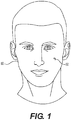
- Fig. 1 illustrates a patient 50 with an inflamed lesion or other skin disorder 52.
- a lesion is identified for treatment, typically, the lesion is measured to help ensure that a correct dosage of medicine is administered.
- the diameter and/or the height of the lesion may be measured.
- a measurement guide is used to measure two or more dimensions of multiple skin lesions or skin disorders of various sizes.
- the measure guide has indicia to measure the two or more dimensions.
- the measurement guide can include a measuring grid with a plurality of openings having varying diameters, and one of the openings may have a diameter corresponding to the diameter of the skin lesion or the skin disorder so that it can is capable of being placed by the user over the skin lesion or the skin disorder to measure the diameter of the skin lesion or the skin disorder.
- evaluation of a lesion for proposed dose and depth of medicant is carried out utilizing a measuring grid.
- Figs. 2 and 3 illustrate an embodiment of a measuring grid 31 that may be utilized to measure a lesion.
- This embodiment of the measuring grid includes a plurality of holes to measure different size lesions.
- the size of the openings in the measuring grid may vary depending at least in part upon the cause of the lesion-some conditions tend to generate large lesions and some small.
- a measuring grid typically includes a plurality of openings of different sizes.
- the embodiment shown in Figs. 2 and 3 includes openings 33 having diameters of about 6 mm, 8 mm, 10 mm, 12 mm, 14 mm, 15 mm, 20 mm, or 25 mm.
- the openings are placed over the lesion or disorder to determine the size of the lesion or skin disorder.
- the measuring grid is also utilized to measure the height of a lesion.
- the holes in the grid may include markings that permit measuring the height.
- the grid may be placed on the lesion and the depth viewed from the side, if the grid is made of a clear material, or by viewing how far the lesion extends up the side of an opening.
- the correct size injection guide and depth may be secured to the auto-injector or auto-injector including a correct sized injection guide may be selected.
- the auto-injector may then be positioned over the lesion and the injection carried out. Placing the measuring grid on the lesion for diameter will determine the dose. Table 1 below provides examples of diagnoses, the type of process that results in the lesion, and how depth and dose are determined.
- a disorder of the skin may be treated intralesionally (in the lesion) or intradermally (in the skin). That is, if the inflammation is in the dermis the treatment will be intradermally. On the other hand, if the inflammation is above the level of the skin then the treatment will be intralesionally.
- the provider may determine the thickness and body area of an inflammatory skin disorder and then choose the proper depth and dose of the medicant. Thickness of the dermis varies from about 0.6 mm to about 3 mm, depending on the body area. The face has the thinnest dermis (0.6 mm) and the back has the thickest dermis (3 mm).
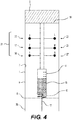
- Fig. 4 illustrates an embodiment of an auto-injector that the patient may utilize to treat the lesion or other skin disorder.
- Embodiments of an auto-injector 100 include a syringe 1.
- the syringe 1 has a first end 3 and second end 5 and an interior wall 7 and exterior wall 9.
- the syringe 1 typically includes a space 11 that houses a medicine 13 to be administered.
- the medicine may be contained by the interior wall 7 of the syringe 1 and other structures described below.
- the medicine 13 may be contained within a vial 15 arranged in the space 11.
- an inflamed lesion or other skin disorder may be treated with a solution of and/or a suspension of triamcinolone acetonide (TAC).
- TAC triamcinolone acetonide
- the strength of the solution may vary depending on the condition and the size of the lesion, among other factors. Typically, the strength of the TAC solution may range from about 2 mg/cc to about 40 mg/cc.
- other medicines may be administered to treat various other dermatological conditions. Additionally, different conditions may require different treatments with other medicines intralesionally.
- bleomycin may be administered intralesionally to treat viral warts, vascular anomalies, basal cell carcinoma, karatoacanthomas, Kaposi's sarcoma, squamous cell carcinoma, and cutaneous leishmaniasis.
- 5-fluorouaracil may be administered intralesionally to treat keloids and squamous cell carcinoma.
- methotrexate may be administered intralesionally to treat keratoacanthomas.
- chloroquine may be administered intralesionally to treat chronic discoid lupus erythematosus and sarcoidosis.
- interferon may be administered intralesionally to treat lentigo maligna, Peyronie's disease, genital warts, keratoacanthomas and basal cell carcinomas. These are just a few examples of a few conditions and treatment with which the auto-injector may be utilized.
- the size of the vial or space to contain medicine may vary, depending upon if the auto-injector is for treating multiple cysts or for carrying out multiple treatments.
- a single use auto-injector may include a smaller vial or space.
- An auto-injector may be refillable or the vial replaceable so that the space for medicine or vial need not necessarily be large.
- An auto-injector for treating multiple lesions or skin disorders may have a larger space for medicine or vial.
- the range of the amount of TAC solution would be between about 0.1 cc to about 0.5 cc of solution.
- Other medicants may also be delivered intralesionally. Such medicants may include bleomycin, 5-fluorouracil, methotrexate, chloroquine and interferon.
- Other conditions that may be treated can include viral warts, keloids, keratoacanthomas and discoid lupus erythematosus.
- the range of solution that is injected to treat these other conditions may range from about 0.1 cc to about 2 cc administered per treatment.
- a needle 17 for delivery of medicine is arranged at the second end 5 of the syringe 1.
- the needle 17 may be replaceable or fixed in place.
- the needle 17 could be similar to a typical needle assembly in a syringe.
- the needle could be fixed to a cap that is connected to the syringe.
- the cap could be attached to the syringe with a threaded connection or another connection that could make the cap and needle removable and replaceable.
- the cap could be permanently adhered to the syringe.
- the needle and/or cap is typically permanently attached to the syringe.
- the needle and/or needle assembly including the cap may be replaceable.
- Some embodiments may include a retractable needle. Such embodiments may be disposable or reusable.
- the size of the needle typically is sufficient to carry out an intralesional or intradermal injection. This typically will result in the injection of the medicine directly into the lesion or other skin condition.
- An intramuscular injection such as carried out for administering a vaccine, is carried out deeper in the skin.
- the auto-injector may administer a dose of medicine at a depth of about 3 mm or less. More typically, the auto-injector is configured to administer a dose at a depth of about 1 mm to about 3 mm.
- the healthcare provider may help choose the proper depth on the auto-injector.
- the length of the needle is typically from about 4 mm to about 12 mm.
- the needle has a thickness, or gauge, to maximize patient comfort.
- the needle may have a gauge of about 32 to about 34.
- the needle is a 34 gauge needle.
- the auto-injector may include an injection guide 29, an embodiment of which is shown in Fig. 4 .
- the guide extends from the second end 5 of the syringe 1 at least as far as the needle. Typically, the guide may extend farther from the second end of the syringe than the needle.
- the injection guide may extend a distance from the second end of the syringe sufficient to prevent contact of the needle with the skin prior to injection.
- the injection guide may help to center the needle over the lesion or other skin disorders prior to injection.
- the injection guide may have a round shape.
- the injection guide may be visually arranged about the perimeter of the lesion or other skin condition and then the injection carried out.
- the injection guide could have an inner diameter of from about 6 mm to about 10 mm.
- the size of the injection guide may differ to treat different size lesions or other skin disorders. For example, to treat a small lesion or other skin disorder, the injection guide may have a diameter of about 6 mm.
- An injection guide having a diameter of about 8mm may be used to treat a medium size lesion or disorder.
- the injection guide may have an inner diameter of about 10 mm.
- the size of the diameter of the inner wall of the injection guide may be smaller or larger than the dimensions discussed herein.
- the injection guide could be formed with the syringe. Alternatively, the injection guide could be permanently or replaceably attached to the second end of the syringe. As such, auto-injectors may be produced having different sized injection guides.
- the injection guide may be replaceable or adjustable.
- the injection guide may be attachable to the syringe with a connection that permits the injection guide to be removed.
- the connection could include threads, tabs and guides, indents and protuberances or any other connection that permits changing the injection guide.
- the guide could also be adjustable, such as including interweaving leaves that can be opened up or closed together, such as a camera diaphragm.
- a replaceable or adjustable injection guide could have the diameters discussed above.
- the auto-injector includes a plunger 19 or other structure configured to apply force to the medicine in the syringe or vial through the needle and into the patient.
- the plunger may be similar to a typical syringe plunger.
- the plunger is typically arranged in the vicinity of the first end 3 of the syringe 1.
- the auto-injector includes a selection assembly 21 configured to vary the amount of medicine administered by the auto-injector.
- the selection assembly 21 has selectors directly corresponding to different measurements from the indicia of a measurement guide, where the selectors are selectively operable by the user and can adjust the amount and the depth based on a size of a skin lesion or a skin disorder.
- the selection assembly 21 may vary the distance that the plunger is advanced and/or vary the amount of medicine administered.
- the selection assembly may alternatively alter the position at which the plunger is arranged prior to commencing the administration of medicine.
- the plunger prior to placing the auto-injector the plunger may be positioned in the desired position. This may cause some medicine to be ejected from the needle.
- the selection assembly may alternatively limit depth to which the plunger moves into the syringe during administration of the medicine. The injection may then be carried out.
- the embodiment of the selection assembly shown in Fig. 4 includes three dose selectors 23, 25 and 27 configured to administer large, medium and small doses to correspondingly sized lesions or other skin disorders.
- the embodiment also includes three depth selectors 35, 37, and 39 configured to control the depth to which the needle will extend during administration of the medicine.
- the dose and depth selectors may be arranged on a side of the auto-injector.
- the dose and depth selectors may include a plurality of levers or buttons.
- the dose selectors in this embodiment may be interconnected with the plunger to control the dose by controlling the depth to which the plunger advances.
- the depth selector may also control the depth to which the plunger advances.
- the selection assembly may be configurable by the user to adjust a depth to which the plunger moves in the syringe and thereby to adjust the amount of medicine dispensed by the auto-injector device. Typical dosage sizes are discussed above.
- the auto-injector may be configured to permit selection among any therapeutically effective dose or amount. Table 2 below provided examples of diameter of lesions, dose and which lever is actuated. TABLE 2 Diameter Guide Diameter Size Lesion Dose Button Less than 6mm 0.01cc TAC S (Small Dose) Between 6-10mm 0.02cc TAC M(Medium Dose) Greater than 10mm 0.03cc TAC L (Large Dose)
- the auto-injector is configured to control the depth to which the injection is made.
- the depth to which the dose is delivered may depend upon the size of the lesion.
- the depth could be, for example, from about 1 mm to about 3 mm.
- the dose of medicine could be delivered at other depths.
- the embodiment shown in Fig. 4 includes three selectors configured to control the depth to which the medicine is delivered.
- the selectors could permit arrangement of the needle to administer the medicine at about 1 mm, about 2 mm, or about 3 mm.
- the depth of delivery is determined utilizing a measuring grid.
- an actuator could be attached to the end of the plunger, similar to a traditional syringe.
- One or more levers could act as a stop to prevent the plunger from moving beyond a certain point. This would control the amount of medicine forced out of the auto-injector by the plunger.
- Some embodiments may include a spring 41 configured to actuate the plunger to administer the medicine.
- the spring may bias the plunger, vial and needle upward as shown in Fig. 4 such that the needle is concealed within the syringe when not in use.
- the plunger will act against the spring during administration of the medicine.
- the size of the dose may depend upon the medicine, concentration of medicine, condition being treated, size of a lesion, among other factors.
- the auto-injector may be configured to administer doses of from about 0.01 cc to about 0.03 cc. To treat an inflamed skin lesion, the auto-injector could be configured to administer about 0.01 cc to a small lesion, about 0.02 cc to a medium lesion or about 0.03 cc to a large lesion. Other amounts could also be administered.
- the depth to which the medicine is administered may also be varied. This could be accomplished by varying the length of the injection guide and/or varying the length of the needle, for example. As described above and shown in Fig. 4 , depth selectors may be included to control a depth to which the plunger may advance and, thus, the depth to which the needle advances from the syringe. Also, depending on the condition being treated, the height of the lesion, and the location on the body the patient can determine the proper depth or a healthcare provider will instruct the patient as to a proper depth.
- Fig. 6 illustrates another embodiment of an auto-injector 100.
- the auto-injector shown in Fig. 6 includes a forward housing element 102 and a rear housing element 104.
- the forward housing element contains the medicine to be administered and the rear housing the user actuated administration mechanism.
- the two housing elements may be connected together with a threaded connection 106 and 108.
- the housing elements may be integral or other connections may be utilized.
- One advantage of a separable connection, such as a threaded connection is that the medicine, needle and other elements may be replaceable.
- a first end of the forward housing element includes a depth selector 110.
- the embodiment of the depth selector shown in Fig. 6 may be rotated to change the extent to which the needle 120 extends from the auto-injector.
- the embodiment of the depth selector shown in Fig. 6 is connected to the forward housing with a threaded connection 112 and 114. Other connections may also be utilized. A separable connection may be advantageous to permit replacement of the needle.
- Indicators 116 on the forward housing and 118 on the depth selector permit the user to select the depth to which the needle 120 will penetrate the user's skin.
- the embodiment of the depth selector shown in Fig. 6 permits the needle to be adjusted to three depths.
- the depth selector and/or the forward housing may include one or more detents and complementary protrusions or other elements to indicate when a certain depth has been selected and/or to maintain the depth selector and needle in the selected position.
- the needle 120 may be part of a needle assembly including a needle base 122 in which the needle may be anchored.
- a needle guide 124 may be included to guide the needle during administration.
- the needle guide may also help to prevent bending of the needle during administration, particularly as the needle penetrates the skin.
- the needle guide may include a tip 126 having an inner diameter slightly wider than the exterior diameter of the needle.
- the adjustment of the depth with the depth adjuster may advance the needle guide.
- the exterior surface of the needle guide may abut the interior of the depth adjuster or the passage 103 in the depth adjuster. If the depth selector is attached to the housing with a threaded connection, as the depth adjuster is screwed or unscrewed, the distance between the distance selector and housing may decrease or increase, respectively. This may advance and withdraw the needle guide and, hence, the needle.
- the forward housing 102 contains the medicine vial 128.
- the vial may include a threaded connection 130 for connecting the needle base to the vial.
- the housing 102 may include a cut out or window 131 to facilitate a visual determination of the amount of medicine in the vial.
- the end of the rear housing includes a dosage adjuster 132.
- the dosage adjuster includes indicators 134 to select a dosage.
- the dosage selected is indicated by an arrow 138 on the housing.
- the dosage adjuster is connected to a drive sleeve 140.
- the drive sleeve includes a ratchet mechanism 142 that only permits rotation in one direction with respect to reset ring 152. Each click of the ratchet mechanism corresponds to an increase in the dosage.
- Torque is applied to a spring 144 as the dosage adjuster is turned.
- Spring 144 is secured to drive sleeve 140 with a spring holder 146.
- the spring holder engages the end of the spring and abuts the ratchet mechanism 142, thereby permitting torque to be applied to the spring 144.
- spring 156 maintains a forward force on the plunger, vial and needle.
- Guide 154 may include a guide leg 154a that can slide in slots in the reset ring 152.
- actuator 150 is pressed by the user. Actuation releases the springs and other elements such that the desired dosage is delivered from the vial at the depth selected with the depth selector.
- the user places the needle into user's skin and presses down on the actuator 150.
- the actuator releases the ratchet mechanism and allows the ratchet mechanism to rotate.
- This rotational energy is provided by the torsion spring 144. Rotation caused by the spring 144 ultimately causes the plunger 160 to advance through the medicine vial, thereby dispensing the medicine.
- a complementarily threaded nut 158 advances on the threaded plunger. When the threaded nut reaches the end of the threaded plunger, the dosage selector cannot be spun any further, indicating that the amount of medicine remaining in the vial is what is displayed on the dial. This may prevent accidental under dosing.
- the auto-injector may be included in a treatment kit 161, an embodiment of which is shown in Fig. 10 .
- the kit may include an antiseptic wipe or swab 162 for disinfecting the injection site.
- the antiseptic wipe could be made of a woven or unwoven material, such as fabric gauze or a paper.
- the wipe could include any suitable antiseptic material, such as alcohol or an antibacterial substance.
- the wipe or swab may be packaged separately.
- the kit may also include the auto-injector 100, as described herein.
- the kit may include an antiseptic wipe or swab 164 to treat the injection site after the injection. Treating the injection site after the injection may help to prevent bacteria from entering the injection site and remove any blood, pus or other fluids leaking from the injection site.
- the kit may include a bandage 166 to cover the injection site.
- a housing or enclosure could contain all of the elements of the kit.
- the housing could also receive the auto-injector and any wipes after use, facilitating disposal of the elements of the kit.
- the auto-injector may be considered medical waste, which requires a particular disposal method.
- the housing could include a seal to maintain the elements of the kit in a sterile condition.
- the auto-injector alone may additionally or alternatively include its own seal or enclosure or housing, whether included in a kit or on its own.
- the seal on a kit or the auto-injector may be breached to gain access to the elements of the kit or the auto-injector.
- the enclosure may include a simple wrap about the auto-injector alone together with other possible elements of the kit.
- Each element of the kit may include a separate housing, enclosure, wrapping or packaging.
- the housing or enclosure may include one or more closure or sealing elements to close the housing or enclosure after carrying out an injection and placing the used elements of the kit back into the housing or enclosure.
- kit typically includes opening the housing, enclosure, wrapping or packaging. If the kit includes a pre-injection wipe, then the wipe may be retrieved from any housing, enclosure, wrapping or packaging and the potential injection site cleaned.
- the auto-injector may be removed from any housing, enclosure, wrapping or packaging and configured for injection as described above. The injection may then be carried out.
- a post-injection wipe may be retrieved from any housing, enclosure, wrapping or packaging and the injection site cleaned.
- the auto-injector and wipes may be disposed of.
- the auto-injector and possibly a pre-injection and/or post injection wipe may be reintroduced into a housing, enclosure, wrapping or packaging, the housing, enclosure, wrapping or packaging closed and the used auto-injector and possibly wipes disposed of, such as in a "sharps" or other medical waste container.
- an auto-injector device for self-administration of a selected dose of medicine by a patient.
- the auto-injector device includes a syringe and a needle arranged in the vicinity of a first end of the syringe.
- the auto-injector device also includes a plunger arranged within the syringe, where a volume within the syringe between the plunger and the needle accommodates a medicine, and the plunger is moveable by a user to administer the medicine through the needle.
- the auto-injector device includes a selection assembly configurable by the user to administer a dose of medicine with an amount of medicine based on a diameter of a skin lesion or a skin disorder.
- the configuration of the selection assembly is determined by a measuring grid including a plurality of openings having varying diameters.
- the opening with the diameter corresponding to the diameter of the skin lesion can be placed by the user over the skin lesion to measure the diameter of the skin lesion.
- the selection assembly is also configurable by the user to adjust a depth to which the plunger moves in the syringe.
- the auto-injector device can further include an injection guide extending from the first end of the syringe, where the injection guide is centered above the skin lesion or skin disorder by the user.
- the auto-injector device can also include a plurality of levers associated with administering a dose of a desired size, where the levers selectable by the user.
- the auto-injector device can include a spring to actuate the plunger to administer the medicine.
- an auto-injector device for self-administration of a selected dose of medicine by a patient to treat an inflamed skin lesion or a skin disorder on a skin surface of the patient.
- the auto-injector device can include a syringe, a needle arranged in the vicinity of a first end of the syringe, and an injection guide extending from the first end of the syringe at least as far as the needle, where the injection guide can center the needle with respect to an injection site on a user.
- the auto-injector device can also include a depth selector configurable by the user to adjust the depth to which the medicine is administered from about 1 mm to about 3 mm.
- the auto-injector device can include a selection assembly configurable by the user to adjust the amount of the medicine dispensed by the auto-injector device, where the selection assembly is configured to administer doses of at least one of about 0.01 cc, about 0.02 cc, and about 0.03 cc.
- a plunger can be arranged within the syringe such that movement of the plunger toward the needle dispenses an amount of the medicine through the needle.
- the auto-injector is configured to administer a therapeutically effective dose of the medicine to treat at least one of: inflamed acne cysts, inflamed sebaceous cysts, bug bites, alopecia areata, hypertrophic scars, keloids, psoriasis, granuloma annulare, discoid lupus erythematosus, hypertrophic lichen planus, lichen planopilaris, lichen simplex chronicus, erythema nodusum, sarcoidosis, and prurigo nodularis.
- the auto-injector device can further include a vial containing a medicine.
Landscapes
- Health & Medical Sciences (AREA)
- Vascular Medicine (AREA)
- Engineering & Computer Science (AREA)
- Anesthesiology (AREA)
- Biomedical Technology (AREA)
- Heart & Thoracic Surgery (AREA)
- Hematology (AREA)
- Life Sciences & Earth Sciences (AREA)
- Animal Behavior & Ethology (AREA)
- General Health & Medical Sciences (AREA)
- Public Health (AREA)
- Veterinary Medicine (AREA)
- Dermatology (AREA)
- Infusion, Injection, And Reservoir Apparatuses (AREA)
Claims (20)
- Autoinjektorsystem, umfassend:eine Messführung (31) mit Markierungen (33), die dafür konfiguriert ist, zwei oder mehr Dimensionen mehrerer Hautläsionen oder Hauterkrankungen verschiedener Größen zu messen, wobei die zwei oder mehr Dimensionen wenigstens einen Durchmesser und eine Höhe der mehreren Hautläsionen oder Hauterkrankungen einschließt; undeine Autoinjektorvorrichtung (100), umfassend:eine Spritze (1);eine Nadel (17, 120), die in der Nähe eines ersten Endes (5) der Spritze angeordnet ist;einen Kolben (19, 160), der innerhalb der Spritze (1) angeordnet ist, wobei ein Volumen (11, 102) innerhalb der Spritze (1) zwischen dem Kolben (19, 160) und der Nadel (17, 120) ein Medikament (13) derart aufnimmt, dass eine Bewegung des Kolbens (19, 160) in Richtung der Nadel (17, 120) eine Medikamentenmenge (13) durch die Nadel (17, 160) abgibt; undeine Auswahlanordnung (21, 110, 132), die von einem Benutzer dafür konfiguriert werden kann, die durch die Autoinjektorvorrichtung (100) abgegebene Medikamentenmenge (13) und eine Tiefe, bis zu der das Medikament (13) verabreicht wird, anzupassen, wobei die Auswahlanordnung (21, 110, 132) Wahlschalter (23, 25, 27, 35, 37, 39, 116, 134) aufweist, die direkt unterschiedlichen Messungen von den Markierungen (33) entsprechen, wobei die Wahlschalter (23, 25, 27, 35, 37, 39, 116, 134) von dem Benutzer selektiv bedienbar und dafür konfiguriert sind, die Menge und die Tiefe basierend auf den gemessenen zwei oder mehr Dimensionen einer Hautläsion oder einer Hauterkrankung anzupassen.
- Autoinjektorsystem nach Anspruch 1, wobei die Autoinjektorvorrichtung (100) ferner umfasst:
eine Injektionsführung (29, 124), die sich von dem ersten Ende (5) der Spritze (1) aus erstreckt, wobei die Injektionsführung dafür konfiguriert ist, die Nadel in Bezug auf eine Injektionsstelle auf dem Benutzer zu zentrieren. - Autoinjektorsystem nach Anspruch 1, wobei die Autoinjektorvorrichtung (100) ferner umfasst:
eine austauschbare Ampulle (15, 128), die das Medikament (13) enthält, wobei das Medikament aus der Ampulle von dem Kolben (19, 160) durch die Nadel (17, 120) abgegeben wird. - Autoinjektorsystem nach Anspruch 1, wobei die Auswahlanordnung (21, 110) konfiguriert ist, um eine Tiefe zu begrenzen, bis zu der sich der Kolben (19, 160) in der Spritze (1) bewegt.
- Autoinjektorsystem nach Anspruch 1, wobei der Autoinjektor wegwerfbar ist und für eine einmalige Verwendung konfiguriert ist.
- Autoinjektorsystem nach Anspruch 1, wobei der Autoinjektor für mehrere Verwendungen konfiguriert ist.
- Autoinjektorsystem nach Anspruch 1, wobei die Auswahlanordnung (21, 132) konfiguriert ist, um Dosen von etwa 0,01 cc, etwa 0,02 cc oder etwa 0,03 cc zu verabreichen.
- Autoinjektorsystem nach Anspruch 1, wobei die Nadel (17, 120) konfiguriert ist, um eine Dosis in einer Tiefe von etwa 1 mm bis etwa 3 mm zu verabreichen.
- Autoinjektorsystem nach Anspruch 1, wobei die Auswahlanordnung (21, 110, 132) konfiguriert ist, um ein Volumen einer zu verabreichenden Dosis und eine Tiefe, bis zu der die Dosis verabreicht wird, anzupassen.
- Autoinjektorsystem nach Anspruch 9, wobei die Auswahlanordnung (21, 110, 132) konfiguriert ist, um eine Tiefe, bis zu der das Medikament (13) verabreicht wird, zu erhöhen, während die Dosis des Medikaments sich erhöht.
- Autoinjektorsystem nach Anspruch 1, wobei die Auswahlanordnung (21) mehrere Dosiswahltasten (23, 25, 27), die konfiguriert sind, um den Autoinjektor zu veranlassen, mehrere unterschiedliche Dosen des Medikaments zu verabreichen und mehrere Tiefenauswahltasten (35, 37, 39) umfasst, die dafür konfiguriert sind, die Tiefe, bis zu der das Medikament (13) durch den Autoinjektor verabreicht wird, anzupassen.
- Autoinjektorsystem nach Anspruch 1, ferner umfassend:
eine Feder (41, 144), die dafür konfiguriert ist, den Kolben (19, 160) zu betätigen, um das Medikament (13) zu verabreichen. - Autoinjektorsystem nach Anspruch 1, wobei der Autoinjektor dafür konfiguriert ist, eine therapeutisch wirksame Dosis zu verabreichen, um Folgendes zu behandeln: entzündete Aknezysten, entzündete Talgzysten, Insektenstiche, Alopecia areata, hypertrophe Narben, Keloide, Psoriasis, Granuloma anulare, diskoiden Lupus erythematodes, Lichen planus hypertrophicus, Lichen planopilaris, Lichen simplex chronicus, Erythema nodosum, Sarkoidose und Prurigo nodularis.
- Autoinjektorsystem nach Anspruch 1, wobei die Markierungen (33) der Messführung (31) dafür konfiguriert sind, einen Durchmesser der Hautläsion oder der Hauterkrankung zu messen, und wobei die Auswahlanordnung (21, 132) vom Benutzer dafür konfiguriert werden kann, die Medikamentenmenge (13) um die Wahlschalter (23, 25, 27, 134) basierend auf dem Durchmesser einer Hautläsion oder einer Hauterkrankung anzupassen.
- Autoinjektorsystem nach Anspruch 14, wobei die Messführung (31) ein Messgitter einschließt, das mehrere Öffnungen (33) umfasst, wobei die Öffnungen verschiedene Durchmesser aufweisen, und wobei eine der Öffnungen (33) mit einem Durchmesser, der dem Durchmesser der Hautläsion oder der Hauterkrankung entspricht, in der Lage ist, von dem Benutzer über der Hautläsion oder der Hauterkrankung platziert zu werden, um den Durchmesser der Hautläsion oder der Hauterkrankung zu messen.
- Autoinjektorsystem nach Anspruch 1, wobei die Auswahlanordnung (21) vom Benutzer dafür konfiguriert werden kann, eine Tiefe, bis zu der der Kolben (19) sich in der Spritze (1) bewegt, anzupassen und dadurch die Medikamentenmenge (13), das von der Autoinjektorvorrichtung (100) abgegeben wird, anzupassen.
- Autoinjektorsystem nach Anspruch 2, wobei die Injektionsführung (29) sich vom ersten Ende (5) der Spritze (1) wenigstens so weit wie die Nadel (17) erstreckt.
- Autoinjektorsystem nach Anspruch 1, ferner umfassend:
eine Ampulle (11), die ein Medikament (13) enthält. - Autoinjektorsystem nach Anspruch 1, wobei die Messführung (31) dafür konfiguriert ist, einen Durchmesser einer Hautläsion und eine Höhe einer Hautläsion zu messen, und wobei die Wahlschalter (23, 25, 27, 134) selektiv vom Benutzer bedienbar sind, um die Menge des abgegebenen Medikaments (13) basierend auf dem Durchmesser der Hautläsion und der Tiefe, bis zu der das Medikament basierend auf der Höhe der Hautläsion verabreicht wird, anzupassen.
- Autoinjektorsystem nach Anspruch 1, wobei die Wahlschalter (35, 37, 39, 116) selektiv vom Benutzer bedienbar und dafür konfiguriert sind, die Tiefe, bis zu der das Medikament (13) verabreicht wird, anzupassen, um 1 mm tief für eine Läsionshöhe von weniger als 2 mm, 2 mm tief für eine Läsionstiefe
zwischen 2 mm und 3 mm und 3 mm tief für eine Läsionshöhe von mehr als 3 mm zu sein.
Priority Applications (1)
| Application Number | Priority Date | Filing Date | Title |
|---|---|---|---|
| EP19208392.1A EP3673887A1 (de) | 2016-03-29 | 2017-03-29 | Autoinjektorsysteme zur abgabe von zystenmedikamente auf anfrage |
Applications Claiming Priority (3)
| Application Number | Priority Date | Filing Date | Title |
|---|---|---|---|
| US201662314616P | 2016-03-29 | 2016-03-29 | |
| US15/240,679 US9694145B1 (en) | 2016-03-29 | 2016-08-18 | Auto-injector systems and method for delivering cyst medication on demand |
| PCT/US2017/024828 WO2017172970A1 (en) | 2016-03-29 | 2017-03-29 | Auto-injector systems and method for delivering cyst medication on demand |
Related Child Applications (1)
| Application Number | Title | Priority Date | Filing Date |
|---|---|---|---|
| EP19208392.1A Division EP3673887A1 (de) | 2016-03-29 | 2017-03-29 | Autoinjektorsysteme zur abgabe von zystenmedikamente auf anfrage |
Publications (3)
| Publication Number | Publication Date |
|---|---|
| EP3277246A1 EP3277246A1 (de) | 2018-02-07 |
| EP3277246A4 EP3277246A4 (de) | 2018-04-11 |
| EP3277246B1 true EP3277246B1 (de) | 2019-11-13 |
Family
ID=59191896
Family Applications (2)
| Application Number | Title | Priority Date | Filing Date |
|---|---|---|---|
| EP17776583.1A Active EP3277246B1 (de) | 2016-03-29 | 2017-03-29 | Autoinjektorsysteme und verfahren zur abgabe von zystenmedikamente auf anfrage |
| EP19208392.1A Withdrawn EP3673887A1 (de) | 2016-03-29 | 2017-03-29 | Autoinjektorsysteme zur abgabe von zystenmedikamente auf anfrage |
Family Applications After (1)
| Application Number | Title | Priority Date | Filing Date |
|---|---|---|---|
| EP19208392.1A Withdrawn EP3673887A1 (de) | 2016-03-29 | 2017-03-29 | Autoinjektorsysteme zur abgabe von zystenmedikamente auf anfrage |
Country Status (7)
| Country | Link |
|---|---|
| US (3) | US9694145B1 (de) |
| EP (2) | EP3277246B1 (de) |
| AU (1) | AU2017245259A1 (de) |
| CA (1) | CA3015948A1 (de) |
| HK (1) | HK1245070A1 (de) |
| IL (1) | IL261369A (de) |
| WO (1) | WO2017172970A1 (de) |
Families Citing this family (7)
| Publication number | Priority date | Publication date | Assignee | Title |
|---|---|---|---|---|
| JP7529565B2 (ja) | 2017-03-31 | 2024-08-06 | インナバスク メディカル インコーポレイテッド | 血管アクセスグラフトのカニューレ挿入のための装置及び方法 |
| US11925781B2 (en) | 2018-10-30 | 2024-03-12 | InnAVasc Medical, Inc. | Apparatus and method for cannulation of vascular access vessel |
| GB201817838D0 (en) * | 2018-10-31 | 2018-12-19 | Imperial Innovations Ltd | Apparatus and method for inserting electrode-based probes into biological tissue |
| CN110860011A (zh) * | 2019-12-30 | 2020-03-06 | 青岛大学附属医院 | 一种便捷式麻醉剂临床注入设备 |
| WO2022245308A1 (en) * | 2021-05-17 | 2022-11-24 | Centuri̇on İlaç Sanayi̇ Ve Ti̇caret Anoni̇m Şi̇rketi̇ | Auto injector with protective feature triggered by dermal contact |
| WO2022197265A1 (en) * | 2021-06-04 | 2022-09-22 | Vem Ilac Sanayi Ve Ticaret Anonim Sirketi | An automatic injector device |
| CN115501426B (zh) * | 2022-10-20 | 2025-11-28 | 江苏德尔福医疗器械有限公司 | 注射笔 |
Family Cites Families (48)
| Publication number | Priority date | Publication date | Assignee | Title |
|---|---|---|---|---|
| US2565081A (en) * | 1948-09-15 | 1951-08-21 | Emma C Maynes | Device for operating hypodermic syringes |
| DE3441608A1 (de) * | 1984-11-14 | 1986-05-15 | Gesellschaft für Strahlen- und Umweltforschung mbH, München, 8531 Ergersheim | Exophytometer |
| DE3715340C2 (de) * | 1987-05-08 | 1995-10-19 | Haselmeier Wilhelm Fa | Injektionsgerät |
| GB8809115D0 (en) | 1988-04-18 | 1988-05-18 | Turner R C | Syringes |
| US5705363A (en) * | 1989-03-02 | 1998-01-06 | The Women's Research Institute | Recombinant production of human interferon τ polypeptides and nucleic acids |
| USD320658S (en) | 1989-06-07 | 1991-10-08 | Adept-Med International, Inc. | Surgical retractor |
| EP0415867A1 (de) | 1989-07-03 | 1991-03-06 | Fabersanitas S.A. | Spritzennadel-Injecktionsvorrichtung ohne Wiederverwendungsmöglichkeit |
| EP0525525B1 (de) * | 1991-07-24 | 1995-05-03 | Medico Development Investment Company | Injektor |
| USD343236S (en) | 1992-01-10 | 1994-01-11 | Adept-Med International, Inc. | Surgical retractor blade |
| US5256140A (en) | 1992-03-27 | 1993-10-26 | Fallien Cosmeceuticals, Ltd. | Composition for levelling skin |
| USD346022S (en) | 1992-09-08 | 1994-04-12 | Adept-Med International, Inc. | Abdominal retractor |
| US5320609A (en) * | 1992-12-07 | 1994-06-14 | Habley Medical Technology Corporation | Automatic pharmaceutical dispensing syringe |
| USD353458S (en) | 1993-04-20 | 1994-12-13 | Adept-Med International, Inc. | Surgical retractor |
| GB9404235D0 (en) * | 1994-03-04 | 1994-04-20 | Matthews Michael W B | Blemish assessor |
| US6203530B1 (en) | 1997-01-28 | 2001-03-20 | Pos-T-Vac, Inc. | Auto-injection device |
| US6171276B1 (en) * | 1997-08-06 | 2001-01-09 | Pharmacia & Upjohn Ab | Automated delivery device and method for its operation |
| US6436424B1 (en) | 2000-03-20 | 2002-08-20 | Biosphere Medical, Inc. | Injectable and swellable microspheres for dermal augmentation |
| SE518981C2 (sv) | 2000-12-14 | 2002-12-17 | Shl Medical Ab | Autoinjektor |
| DE10141039A1 (de) * | 2001-08-22 | 2003-03-13 | Disetronic Licensing Ag | Injektionsgerät und Nadelabdeckvorrichtung |
| MX343796B (es) | 2003-03-13 | 2016-11-23 | M Burgess Cheryl | Metodos para administrar un material en un paciente para realce dermico. |
| WO2005000384A1 (en) * | 2003-06-05 | 2005-01-06 | University Of Florida | Auto-injection devices and methods for intramuscular administration of medications |
| ES2555125T3 (es) * | 2004-02-18 | 2015-12-29 | Ares Trading S.A. | Dispositivo manual de inyección controlada electrónicamente para inyectar medicamentos líquidos |
| US20060037091A1 (en) * | 2004-05-24 | 2006-02-16 | Gurtner Geoffrey C | Method for producing hypertrophic scarring animal model for identification of agents for prevention and treatment of human hypertrophic scarring |
| NZ554828A (en) | 2004-12-06 | 2010-07-30 | Washington Biotech Corp | Medicine injection devices and methods |
| CN101282751B (zh) | 2005-07-18 | 2011-01-12 | 韦斯特制药服务公司 | 具有通气装置的自动注射注射器 |
| EP1878380B1 (de) * | 2006-07-14 | 2010-11-10 | Roche Diagnostics GmbH | Injektionsgerät mit einer zweiten Gerätfunktion zum Gewinnen einer Körperflüssigkeitsprobe |
| DE102007018696A1 (de) * | 2007-04-18 | 2008-10-23 | Sanofi-Aventis Deutschland Gmbh | Injektionsvorrichtung zur Abgabe eines Medikaments |
| JP5581227B2 (ja) | 2008-03-11 | 2014-08-27 | アルコン リサーチ, リミテッド | 硝子体内注射のための低粘度、高凝集トリアムシノロンアセトニド懸濁剤 |
| HUP0800434A2 (en) | 2008-07-15 | 2010-01-28 | Barnabas Kiss | Template to determine the places of the injections, especially for regular medicament injection and/or blood testing |
| ES2784740T3 (es) | 2008-12-09 | 2020-09-30 | Becton Dickinson Co | Sistema de suministro de medicación con multiplicador de fuerza de palanca y engranaje para sistema de inyección a alta presión |
| DE202009003009U1 (de) * | 2009-03-03 | 2009-06-25 | Dieter Hölzle Technik-Projekte GmbH | Injektionsvorrichtung mit Injektionsvolumeneinstellung |
| USD621938S1 (en) | 2009-03-23 | 2010-08-17 | Karl Storz Gmbh & Co. Kg | Instrument for testing a thickness of a tendon graft |
| WO2010124109A1 (en) | 2009-04-22 | 2010-10-28 | Nuvue Therapeutics, Inc. | Fluid flowing device and method for tissue diagnosis or therapy |
| EP2566583B1 (de) * | 2010-05-06 | 2018-07-11 | Regenics AS | Verfahren zur Vorbereitung eines Fischeizellextrakts |
| US9931478B2 (en) * | 2011-04-10 | 2018-04-03 | David Hirshberg | Needles system |
| USD669985S1 (en) | 2011-12-16 | 2012-10-30 | Biomedical Enterprises, Inc. | Orthopedic sizing guide |
| EP2830685B1 (de) * | 2012-03-30 | 2017-05-31 | Tecpharma Licensing AG | Injektionsvorrichtung mit einem relativ zu einem gehäuse verschiebbaren dosisanzeigeelement |
| US9205204B2 (en) | 2012-08-06 | 2015-12-08 | Elwha Llc | Devices and methods for wearable injection guides |
| US20140336577A1 (en) | 2013-05-07 | 2014-11-13 | Jewis J. McCoy | Auto-injector syringe |
| USD725267S1 (en) | 2013-10-18 | 2015-03-24 | Cyber-Implants, LLC | Dental measurement device |
| ITMI20130391U1 (it) | 2013-11-11 | 2015-05-12 | Giorgio Viappiani | Dispositivo per il monitoraggio di lesioni e neoformazioni cutanee |
| USD750776S1 (en) | 2014-02-27 | 2016-03-01 | Andrew B. Lytle | Surgical alignment device |
| EP3113605B1 (de) | 2014-03-04 | 2018-10-31 | Pulse Biosciences, Inc. | Markierung von gewebeoberflächen zur behandlung von läsionen durch elektrische nanoimpulse |
| USD728110S1 (en) | 2014-03-11 | 2015-04-28 | Sonivate Medical, Inc. | Sterile sheath for wearable medical imaging instrument |
| USD755964S1 (en) | 2014-11-06 | 2016-05-10 | Pfm Medical Ag | Medical device |
| KR101525854B1 (ko) | 2015-02-06 | 2015-06-11 | (주)엠큐어 | 휴대용 자동 약물주입기 |
| USD829908S1 (en) | 2017-03-01 | 2018-10-02 | Accutec Blades, Inc. | Grip for a derma blade |
| USD830549S1 (en) | 2017-07-14 | 2018-10-09 | Daniel A. Wartinbee | Nerve sizing device |
-
2016
- 2016-08-18 US US15/240,679 patent/US9694145B1/en active Active
-
2017
- 2017-02-28 US US15/444,598 patent/US10625023B2/en active Active
- 2017-03-29 CA CA3015948A patent/CA3015948A1/en not_active Abandoned
- 2017-03-29 EP EP17776583.1A patent/EP3277246B1/de active Active
- 2017-03-29 HK HK18104474.7A patent/HK1245070A1/zh unknown
- 2017-03-29 WO PCT/US2017/024828 patent/WO2017172970A1/en not_active Ceased
- 2017-03-29 EP EP19208392.1A patent/EP3673887A1/de not_active Withdrawn
- 2017-03-29 AU AU2017245259A patent/AU2017245259A1/en not_active Abandoned
-
2018
- 2018-08-26 IL IL261369A patent/IL261369A/en unknown
-
2020
- 2020-03-13 US US16/818,070 patent/US20200206426A1/en not_active Abandoned
Non-Patent Citations (1)
| Title |
|---|
| None * |
Also Published As
| Publication number | Publication date |
|---|---|
| CA3015948A1 (en) | 2017-10-05 |
| US9694145B1 (en) | 2017-07-04 |
| EP3673887A1 (de) | 2020-07-01 |
| IL261369A (en) | 2018-10-31 |
| EP3277246A4 (de) | 2018-04-11 |
| US20200206426A1 (en) | 2020-07-02 |
| WO2017172970A1 (en) | 2017-10-05 |
| US10625023B2 (en) | 2020-04-21 |
| HK1245070A1 (zh) | 2018-08-24 |
| EP3277246A1 (de) | 2018-02-07 |
| US20170281871A1 (en) | 2017-10-05 |
| AU2017245259A1 (en) | 2018-08-30 |
Similar Documents
| Publication | Publication Date | Title |
|---|---|---|
| EP3277246B1 (de) | Autoinjektorsysteme und verfahren zur abgabe von zystenmedikamente auf anfrage | |
| US12582351B2 (en) | Integrated injection system and communication device | |
| EP2776115B1 (de) | Medizinisches pflaster und injektorsystem | |
| US20130090605A1 (en) | Tunable mechanical injection device for medication | |
| WO2021059211A1 (en) | Drug delivery adjustment | |
| CA3155912A1 (en) | Interconnection of drug administration systems | |
| EP4034193B1 (de) | Medikamentenverabreichungssystem, konfiguriert ist zum bestimmen eines medikamentendosierungsschemas | |
| RU2289429C2 (ru) | Устройство для инъекций | |
| EP2236164B1 (de) | Insulinkartuschenkappe | |
| CN106163589A (zh) | 电子注射器 | |
| EP2950858A1 (de) | Dosierungsinjektor | |
| KR20210010135A (ko) | 계수기를 구비하는 자가약물주입 조절장치 | |
| RU87915U1 (ru) | Система подкожного введения лекарственных средств | |
| AU2011305705A1 (en) | Auto injector for medication | |
| CN119604317A (zh) | 自主剂量注射 | |
| WO2026020518A1 (zh) | 一种多剂量高精度胰岛素一次性注射装置 | |
| HK1147964B (en) | Insulin cartridge cap |
Legal Events
| Date | Code | Title | Description |
|---|---|---|---|
| STAA | Information on the status of an ep patent application or granted ep patent |
Free format text: STATUS: THE INTERNATIONAL PUBLICATION HAS BEEN MADE |
|
| PUAI | Public reference made under article 153(3) epc to a published international application that has entered the european phase |
Free format text: ORIGINAL CODE: 0009012 |
|
| STAA | Information on the status of an ep patent application or granted ep patent |
Free format text: STATUS: REQUEST FOR EXAMINATION WAS MADE |
|
| 17P | Request for examination filed |
Effective date: 20171102 |
|
| AK | Designated contracting states |
Kind code of ref document: A1 Designated state(s): AL AT BE BG CH CY CZ DE DK EE ES FI FR GB GR HR HU IE IS IT LI LT LU LV MC MK MT NL NO PL PT RO RS SE SI SK SM TR |
|
| AX | Request for extension of the european patent |
Extension state: BA ME |
|
| A4 | Supplementary search report drawn up and despatched |
Effective date: 20180308 |
|
| RIC1 | Information provided on ipc code assigned before grant |
Ipc: A61M 5/315 20060101ALI20180303BHEP Ipc: A61M 5/20 20060101ALI20180303BHEP Ipc: A61M 5/28 20060101ALI20180303BHEP Ipc: A61M 5/178 20060101ALI20180303BHEP Ipc: A61J 1/00 20060101AFI20180303BHEP Ipc: A61M 5/46 20060101ALI20180303BHEP Ipc: A61M 5/00 20060101ALI20180303BHEP Ipc: A61M 5/24 20060101ALI20180303BHEP |
|
| REG | Reference to a national code |
Ref country code: HK Ref legal event code: DE Ref document number: 1245070 Country of ref document: HK |
|
| STAA | Information on the status of an ep patent application or granted ep patent |
Free format text: STATUS: EXAMINATION IS IN PROGRESS |
|
| 17Q | First examination report despatched |
Effective date: 20181015 |
|
| GRAP | Despatch of communication of intention to grant a patent |
Free format text: ORIGINAL CODE: EPIDOSNIGR1 |
|
| STAA | Information on the status of an ep patent application or granted ep patent |
Free format text: STATUS: GRANT OF PATENT IS INTENDED |
|
| DAV | Request for validation of the european patent (deleted) | ||
| DAX | Request for extension of the european patent (deleted) | ||
| INTG | Intention to grant announced |
Effective date: 20190603 |
|
| GRAS | Grant fee paid |
Free format text: ORIGINAL CODE: EPIDOSNIGR3 |
|
| GRAA | (expected) grant |
Free format text: ORIGINAL CODE: 0009210 |
|
| STAA | Information on the status of an ep patent application or granted ep patent |
Free format text: STATUS: THE PATENT HAS BEEN GRANTED |
|
| AK | Designated contracting states |
Kind code of ref document: B1 Designated state(s): AL AT BE BG CH CY CZ DE DK EE ES FI FR GB GR HR HU IE IS IT LI LT LU LV MC MK MT NL NO PL PT RO RS SE SI SK SM TR |
|
| REG | Reference to a national code |
Ref country code: CH Ref legal event code: EP Ref country code: AT Ref legal event code: REF Ref document number: 1200922 Country of ref document: AT Kind code of ref document: T Effective date: 20191115 |
|
| REG | Reference to a national code |
Ref country code: DE Ref legal event code: R096 Ref document number: 602017008756 Country of ref document: DE |
|
| REG | Reference to a national code |
Ref country code: IE Ref legal event code: FG4D |
|
| REG | Reference to a national code |
Ref country code: NL Ref legal event code: MP Effective date: 20191113 |
|
| REG | Reference to a national code |
Ref country code: LT Ref legal event code: MG4D |
|
| PG25 | Lapsed in a contracting state [announced via postgrant information from national office to epo] |
Ref country code: FI Free format text: LAPSE BECAUSE OF FAILURE TO SUBMIT A TRANSLATION OF THE DESCRIPTION OR TO PAY THE FEE WITHIN THE PRESCRIBED TIME-LIMIT Effective date: 20191113 Ref country code: BG Free format text: LAPSE BECAUSE OF FAILURE TO SUBMIT A TRANSLATION OF THE DESCRIPTION OR TO PAY THE FEE WITHIN THE PRESCRIBED TIME-LIMIT Effective date: 20200213 Ref country code: NO Free format text: LAPSE BECAUSE OF FAILURE TO SUBMIT A TRANSLATION OF THE DESCRIPTION OR TO PAY THE FEE WITHIN THE PRESCRIBED TIME-LIMIT Effective date: 20200213 Ref country code: NL Free format text: LAPSE BECAUSE OF FAILURE TO SUBMIT A TRANSLATION OF THE DESCRIPTION OR TO PAY THE FEE WITHIN THE PRESCRIBED TIME-LIMIT Effective date: 20191113 Ref country code: LT Free format text: LAPSE BECAUSE OF FAILURE TO SUBMIT A TRANSLATION OF THE DESCRIPTION OR TO PAY THE FEE WITHIN THE PRESCRIBED TIME-LIMIT Effective date: 20191113 Ref country code: PL Free format text: LAPSE BECAUSE OF FAILURE TO SUBMIT A TRANSLATION OF THE DESCRIPTION OR TO PAY THE FEE WITHIN THE PRESCRIBED TIME-LIMIT Effective date: 20191113 Ref country code: GR Free format text: LAPSE BECAUSE OF FAILURE TO SUBMIT A TRANSLATION OF THE DESCRIPTION OR TO PAY THE FEE WITHIN THE PRESCRIBED TIME-LIMIT Effective date: 20200214 Ref country code: PT Free format text: LAPSE BECAUSE OF FAILURE TO SUBMIT A TRANSLATION OF THE DESCRIPTION OR TO PAY THE FEE WITHIN THE PRESCRIBED TIME-LIMIT Effective date: 20200313 Ref country code: LV Free format text: LAPSE BECAUSE OF FAILURE TO SUBMIT A TRANSLATION OF THE DESCRIPTION OR TO PAY THE FEE WITHIN THE PRESCRIBED TIME-LIMIT Effective date: 20191113 Ref country code: SE Free format text: LAPSE BECAUSE OF FAILURE TO SUBMIT A TRANSLATION OF THE DESCRIPTION OR TO PAY THE FEE WITHIN THE PRESCRIBED TIME-LIMIT Effective date: 20191113 |
|
| PG25 | Lapsed in a contracting state [announced via postgrant information from national office to epo] |
Ref country code: IS Free format text: LAPSE BECAUSE OF FAILURE TO SUBMIT A TRANSLATION OF THE DESCRIPTION OR TO PAY THE FEE WITHIN THE PRESCRIBED TIME-LIMIT Effective date: 20200313 Ref country code: RS Free format text: LAPSE BECAUSE OF FAILURE TO SUBMIT A TRANSLATION OF THE DESCRIPTION OR TO PAY THE FEE WITHIN THE PRESCRIBED TIME-LIMIT Effective date: 20191113 Ref country code: HR Free format text: LAPSE BECAUSE OF FAILURE TO SUBMIT A TRANSLATION OF THE DESCRIPTION OR TO PAY THE FEE WITHIN THE PRESCRIBED TIME-LIMIT Effective date: 20191113 |
|
| PG25 | Lapsed in a contracting state [announced via postgrant information from national office to epo] |
Ref country code: AL Free format text: LAPSE BECAUSE OF FAILURE TO SUBMIT A TRANSLATION OF THE DESCRIPTION OR TO PAY THE FEE WITHIN THE PRESCRIBED TIME-LIMIT Effective date: 20191113 |
|
| PG25 | Lapsed in a contracting state [announced via postgrant information from national office to epo] |
Ref country code: DK Free format text: LAPSE BECAUSE OF FAILURE TO SUBMIT A TRANSLATION OF THE DESCRIPTION OR TO PAY THE FEE WITHIN THE PRESCRIBED TIME-LIMIT Effective date: 20191113 Ref country code: EE Free format text: LAPSE BECAUSE OF FAILURE TO SUBMIT A TRANSLATION OF THE DESCRIPTION OR TO PAY THE FEE WITHIN THE PRESCRIBED TIME-LIMIT Effective date: 20191113 Ref country code: RO Free format text: LAPSE BECAUSE OF FAILURE TO SUBMIT A TRANSLATION OF THE DESCRIPTION OR TO PAY THE FEE WITHIN THE PRESCRIBED TIME-LIMIT Effective date: 20191113 Ref country code: CZ Free format text: LAPSE BECAUSE OF FAILURE TO SUBMIT A TRANSLATION OF THE DESCRIPTION OR TO PAY THE FEE WITHIN THE PRESCRIBED TIME-LIMIT Effective date: 20191113 |
|
| REG | Reference to a national code |
Ref country code: DE Ref legal event code: R097 Ref document number: 602017008756 Country of ref document: DE |
|
| REG | Reference to a national code |
Ref country code: AT Ref legal event code: MK05 Ref document number: 1200922 Country of ref document: AT Kind code of ref document: T Effective date: 20191113 |
|
| PG25 | Lapsed in a contracting state [announced via postgrant information from national office to epo] |
Ref country code: SK Free format text: LAPSE BECAUSE OF FAILURE TO SUBMIT A TRANSLATION OF THE DESCRIPTION OR TO PAY THE FEE WITHIN THE PRESCRIBED TIME-LIMIT Effective date: 20191113 Ref country code: SM Free format text: LAPSE BECAUSE OF FAILURE TO SUBMIT A TRANSLATION OF THE DESCRIPTION OR TO PAY THE FEE WITHIN THE PRESCRIBED TIME-LIMIT Effective date: 20191113 |
|
| PLBE | No opposition filed within time limit |
Free format text: ORIGINAL CODE: 0009261 |
|
| STAA | Information on the status of an ep patent application or granted ep patent |
Free format text: STATUS: NO OPPOSITION FILED WITHIN TIME LIMIT |
|
| 26N | No opposition filed |
Effective date: 20200814 |
|
| PG25 | Lapsed in a contracting state [announced via postgrant information from national office to epo] |
Ref country code: MC Free format text: LAPSE BECAUSE OF FAILURE TO SUBMIT A TRANSLATION OF THE DESCRIPTION OR TO PAY THE FEE WITHIN THE PRESCRIBED TIME-LIMIT Effective date: 20191113 Ref country code: ES Free format text: LAPSE BECAUSE OF FAILURE TO SUBMIT A TRANSLATION OF THE DESCRIPTION OR TO PAY THE FEE WITHIN THE PRESCRIBED TIME-LIMIT Effective date: 20191113 |
|
| REG | Reference to a national code |
Ref country code: CH Ref legal event code: PL |
|
| PG25 | Lapsed in a contracting state [announced via postgrant information from national office to epo] |
Ref country code: SI Free format text: LAPSE BECAUSE OF FAILURE TO SUBMIT A TRANSLATION OF THE DESCRIPTION OR TO PAY THE FEE WITHIN THE PRESCRIBED TIME-LIMIT Effective date: 20191113 Ref country code: AT Free format text: LAPSE BECAUSE OF FAILURE TO SUBMIT A TRANSLATION OF THE DESCRIPTION OR TO PAY THE FEE WITHIN THE PRESCRIBED TIME-LIMIT Effective date: 20191113 |
|
| REG | Reference to a national code |
Ref country code: BE Ref legal event code: MM Effective date: 20200331 |
|
| PG25 | Lapsed in a contracting state [announced via postgrant information from national office to epo] |
Ref country code: LU Free format text: LAPSE BECAUSE OF NON-PAYMENT OF DUE FEES Effective date: 20200329 |
|
| PG25 | Lapsed in a contracting state [announced via postgrant information from national office to epo] |
Ref country code: CH Free format text: LAPSE BECAUSE OF NON-PAYMENT OF DUE FEES Effective date: 20200331 Ref country code: IE Free format text: LAPSE BECAUSE OF NON-PAYMENT OF DUE FEES Effective date: 20200329 Ref country code: LI Free format text: LAPSE BECAUSE OF NON-PAYMENT OF DUE FEES Effective date: 20200331 Ref country code: IT Free format text: LAPSE BECAUSE OF FAILURE TO SUBMIT A TRANSLATION OF THE DESCRIPTION OR TO PAY THE FEE WITHIN THE PRESCRIBED TIME-LIMIT Effective date: 20191113 Ref country code: FR Free format text: LAPSE BECAUSE OF NON-PAYMENT OF DUE FEES Effective date: 20200331 |
|
| PG25 | Lapsed in a contracting state [announced via postgrant information from national office to epo] |
Ref country code: BE Free format text: LAPSE BECAUSE OF NON-PAYMENT OF DUE FEES Effective date: 20200331 |
|
| PG25 | Lapsed in a contracting state [announced via postgrant information from national office to epo] |
Ref country code: TR Free format text: LAPSE BECAUSE OF FAILURE TO SUBMIT A TRANSLATION OF THE DESCRIPTION OR TO PAY THE FEE WITHIN THE PRESCRIBED TIME-LIMIT Effective date: 20191113 Ref country code: MT Free format text: LAPSE BECAUSE OF FAILURE TO SUBMIT A TRANSLATION OF THE DESCRIPTION OR TO PAY THE FEE WITHIN THE PRESCRIBED TIME-LIMIT Effective date: 20191113 Ref country code: CY Free format text: LAPSE BECAUSE OF FAILURE TO SUBMIT A TRANSLATION OF THE DESCRIPTION OR TO PAY THE FEE WITHIN THE PRESCRIBED TIME-LIMIT Effective date: 20191113 |
|
| PG25 | Lapsed in a contracting state [announced via postgrant information from national office to epo] |
Ref country code: MK Free format text: LAPSE BECAUSE OF FAILURE TO SUBMIT A TRANSLATION OF THE DESCRIPTION OR TO PAY THE FEE WITHIN THE PRESCRIBED TIME-LIMIT Effective date: 20191113 |
|
| P01 | Opt-out of the competence of the unified patent court (upc) registered |
Effective date: 20230526 |
|
| PGFP | Annual fee paid to national office [announced via postgrant information from national office to epo] |
Ref country code: GB Payment date: 20260106 Year of fee payment: 10 |
|
| PGFP | Annual fee paid to national office [announced via postgrant information from national office to epo] |
Ref country code: DE Payment date: 20260102 Year of fee payment: 10 |