EP3277452B2 - Procédé de production par couches d'une pièce métallique par fabrication additive assistée par laser - Google Patents
Procédé de production par couches d'une pièce métallique par fabrication additive assistée par laser Download PDFInfo
- Publication number
- EP3277452B2 EP3277452B2 EP16713734.8A EP16713734A EP3277452B2 EP 3277452 B2 EP3277452 B2 EP 3277452B2 EP 16713734 A EP16713734 A EP 16713734A EP 3277452 B2 EP3277452 B2 EP 3277452B2
- Authority
- EP
- European Patent Office
- Prior art keywords
- gas
- gas atmosphere
- metallurgical
- workpiece
- production chamber
- Prior art date
- Legal status (The legal status is an assumption and is not a legal conclusion. Google has not performed a legal analysis and makes no representation as to the accuracy of the status listed.)
- Active
Links
Images
Classifications
-
- B—PERFORMING OPERATIONS; TRANSPORTING
- B22—CASTING; POWDER METALLURGY
- B22F—WORKING METALLIC POWDER; MANUFACTURE OF ARTICLES FROM METALLIC POWDER; MAKING METALLIC POWDER; APPARATUS OR DEVICES SPECIALLY ADAPTED FOR METALLIC POWDER
- B22F10/00—Additive manufacturing of workpieces or articles from metallic powder
- B22F10/20—Direct sintering or melting
- B22F10/28—Powder bed fusion, e.g. selective laser melting [SLM] or electron beam melting [EBM]
-
- B—PERFORMING OPERATIONS; TRANSPORTING
- B22—CASTING; POWDER METALLURGY
- B22F—WORKING METALLIC POWDER; MANUFACTURE OF ARTICLES FROM METALLIC POWDER; MAKING METALLIC POWDER; APPARATUS OR DEVICES SPECIALLY ADAPTED FOR METALLIC POWDER
- B22F10/00—Additive manufacturing of workpieces or articles from metallic powder
- B22F10/30—Process control
- B22F10/32—Process control of the atmosphere, e.g. composition or pressure in a building chamber
-
- B—PERFORMING OPERATIONS; TRANSPORTING
- B23—MACHINE TOOLS; METAL-WORKING NOT OTHERWISE PROVIDED FOR
- B23K—SOLDERING OR UNSOLDERING; WELDING; CLADDING OR PLATING BY SOLDERING OR WELDING; CUTTING BY APPLYING HEAT LOCALLY, e.g. FLAME CUTTING; WORKING BY LASER BEAM
- B23K26/00—Working by laser beam, e.g. welding, cutting or boring
- B23K26/12—Working by laser beam, e.g. welding, cutting or boring in a special environment or atmosphere, e.g. in an enclosure
- B23K26/123—Working by laser beam, e.g. welding, cutting or boring in a special environment or atmosphere, e.g. in an enclosure in an atmosphere of particular gases
- B23K26/125—Working by laser beam, e.g. welding, cutting or boring in a special environment or atmosphere, e.g. in an enclosure in an atmosphere of particular gases of mixed gases
-
- B—PERFORMING OPERATIONS; TRANSPORTING
- B23—MACHINE TOOLS; METAL-WORKING NOT OTHERWISE PROVIDED FOR
- B23K—SOLDERING OR UNSOLDERING; WELDING; CLADDING OR PLATING BY SOLDERING OR WELDING; CUTTING BY APPLYING HEAT LOCALLY, e.g. FLAME CUTTING; WORKING BY LASER BEAM
- B23K26/00—Working by laser beam, e.g. welding, cutting or boring
- B23K26/34—Laser welding for purposes other than joining
- B23K26/342—Build-up welding
-
- B—PERFORMING OPERATIONS; TRANSPORTING
- B33—ADDITIVE MANUFACTURING TECHNOLOGY
- B33Y—ADDITIVE MANUFACTURING, i.e. MANUFACTURING OF THREE-DIMENSIONAL [3D] OBJECTS BY ADDITIVE DEPOSITION, ADDITIVE AGGLOMERATION OR ADDITIVE LAYERING, e.g. BY 3D PRINTING, STEREOLITHOGRAPHY OR SELECTIVE LASER SINTERING
- B33Y10/00—Processes of additive manufacturing
-
- B—PERFORMING OPERATIONS; TRANSPORTING
- B33—ADDITIVE MANUFACTURING TECHNOLOGY
- B33Y—ADDITIVE MANUFACTURING, i.e. MANUFACTURING OF THREE-DIMENSIONAL [3D] OBJECTS BY ADDITIVE DEPOSITION, ADDITIVE AGGLOMERATION OR ADDITIVE LAYERING, e.g. BY 3D PRINTING, STEREOLITHOGRAPHY OR SELECTIVE LASER SINTERING
- B33Y40/00—Auxiliary operations or equipment, e.g. for material handling
-
- B—PERFORMING OPERATIONS; TRANSPORTING
- B33—ADDITIVE MANUFACTURING TECHNOLOGY
- B33Y—ADDITIVE MANUFACTURING, i.e. MANUFACTURING OF THREE-DIMENSIONAL [3D] OBJECTS BY ADDITIVE DEPOSITION, ADDITIVE AGGLOMERATION OR ADDITIVE LAYERING, e.g. BY 3D PRINTING, STEREOLITHOGRAPHY OR SELECTIVE LASER SINTERING
- B33Y50/00—Data acquisition or data processing for additive manufacturing
- B33Y50/02—Data acquisition or data processing for additive manufacturing for controlling or regulating additive manufacturing processes
-
- Y—GENERAL TAGGING OF NEW TECHNOLOGICAL DEVELOPMENTS; GENERAL TAGGING OF CROSS-SECTIONAL TECHNOLOGIES SPANNING OVER SEVERAL SECTIONS OF THE IPC; TECHNICAL SUBJECTS COVERED BY FORMER USPC CROSS-REFERENCE ART COLLECTIONS [XRACs] AND DIGESTS
- Y02—TECHNOLOGIES OR APPLICATIONS FOR MITIGATION OR ADAPTATION AGAINST CLIMATE CHANGE
- Y02P—CLIMATE CHANGE MITIGATION TECHNOLOGIES IN THE PRODUCTION OR PROCESSING OF GOODS
- Y02P10/00—Technologies related to metal processing
- Y02P10/25—Process efficiency
Definitions
- the invention relates to a method for the layer-by-layer production of a metallic workpiece by laser-assisted additive manufacturing, in particular by laser melting in a manufacturing chamber.
- a three-dimensional object or workpiece can be manufactured layer by layer from a metallic material.
- the workpiece produced is made up of different metallurgical layers that are produced one after the other during the additive manufacturing process.
- the metallic material can be applied and solidified in powder form, for example.
- the applied material can be exposed to a laser and/or electron beam, for example. In this way, the material can be subjected to a sintering or melting process, for example, which solidifies the material.
- the next layer can be produced in an analogous manner.
- Rapid prototyping can be used to produce tools, workpieces or components for different purposes.
- Additive manufacturing processes can be used in various areas, for example in architecture, mechanical engineering, aerospace, medical technology or the automotive industry.
- a well-known additive manufacturing process is so-called laser melting (or laser sintering, LS).
- a carrier plate on which a workpiece to be manufactured is formed layer by layer is usually arranged in a production chamber. The entire production process takes place in this production chamber.
- Laser melting is therefore also referred to as chamber technology.
- the production chamber is usually self-contained.
- a gas atmosphere with a specific composition can be introduced into the production chamber.
- the metallic material can be influenced depending on the selected composition of the gas atmosphere in the production chamber.
- inert gases are selected for the gas atmosphere, no reaction with the metallic material takes place.
- reactive gases can also be used for the gas atmosphere, which can react with the metallic material. The choice of gas atmosphere can therefore change the metallurgical properties of the workpiece.
- Laser melting is carried out in a production chamber.
- the workpiece produced is made up of different metallurgical layers that are produced one after the other.
- the individual metallurgical layers of the workpiece are each produced by providing a metallic material for each metallurgical layer and exposing it to a laser beam. This takes place under a gas atmosphere in the production chamber.
- the method according to the invention is therefore based on a known method in which metallurgical layers of a workpiece are produced by providing a metallic material for each metallurgical layer in a production chamber and subjecting it to a laser beam, and by providing a gas atmosphere when the layers of the metallic material are subjected to the laser beam in the production chamber.
- the individual metallurgical layers have a thickness in the range of 20 ⁇ m to 100 ⁇ m.
- the metallic material can be applied in powder form or in the form of a rod or strip, for example.
- the workpiece to be produced is arranged in particular on a carrier plate. After producing a metallurgical layer, the carrier plate is lowered in particular by the thickness of this produced layer and the next layer is produced in an analogous manner.
- the carrier plate is arranged in particular in the production chamber.
- the laser beam can, for example, be irradiated into the production chamber from the outside or a corresponding laser head can be arranged in the production chamber.
- the laser beam can be controlled in particular by a control unit.
- Data such as CAD data that characterize the workpiece to be produced can be stored in this control unit.
- the control unit can control the laser beam based on this data and move it over the carrier plate.
- the invention therefore provides that part of the gas atmosphere is withdrawn from the production chamber as a gas stream.
- One or more parameters of the gas stream and/or the gas atmosphere are determined and each compared with a target value.
- the water vapor content of the gas stream or the water vapor content of the gas atmosphere in the production chamber can be determined and compared with a predetermined target value.
- the gas flow is either completely, partially or not at all returned to the production chamber.
- a process gas is fed into the production chamber.
- a process gas for example an inert argon flow, is fed into the production chamber. According to the invention, enough process gas is fed in so that the pressure in the process chamber remains constant. This maintains stable conditions in the process chamber.
- one or more of the following parameters of the gas stream withdrawn from the production chamber are determined: water vapor content, oxygen content, carbon content or its temperature.
- one or more of the following parameters of the gas atmosphere in the production chamber are determined: water vapor content, oxygen content, carbon content or its temperature.
- a gas composition of a gas atmosphere in the production chamber can be used for one or more of the metallurgical layers of the workpiece.
- the gas composition can also be changed after the production of one or more metallurgical layers.
- the respective gas composition of the gas atmosphere in the production chamber also changes the metallurgical properties of the respective metallurgical layers of the workpiece.
- the gas composition for the metallurgical layers is preferably selected in such a way that the metallurgical properties of adjacent metallurgical layers of the workpiece change according to predetermined criteria.
- different target values are provided for different process phases. This means that a first target value is selected for a certain number of consecutive metallurgical layers and a different target value is selected for certain other metallurgical layers. For example, a higher oxygen content in the gas atmosphere is permitted for some metallurgical layers than for other metallurgical layers.
- the gas composition is selected in particular such that the metallurgical properties of adjacent metallurgical layers of the workpiece do not change suddenly, and in particular change continuously or gradually, and that in particular no "jumps" or sudden changes occur in the metallurgical properties of adjacent metallurgical layers.
- a parameter of the gas atmosphere or of the gas stream withdrawn from the production chamber is determined, measured or otherwise ascertained.
- the parameter can be determined either inside the production chamber or outside the production chamber, for example in a line or a container through which or into which the gas stream flows.
- Different gas compositions can occur in different areas of the production chamber. This can be caused, for example, by an undefined foreign gas being introduced into the process chamber together with the material fed into the process chamber. This is particularly true when a powder material is fed in. Due to the lack of or very weak gas flow in the production chamber, the foreign gas is not distributed evenly in the production chamber, but remains in certain areas. It is therefore advantageous to extract part of the gas atmosphere from the production chamber, which is at the same height as the material exposed to the laser beam. If this extracted gas is subsequently analyzed, i.e. a certain parameter of this gas flow is one can draw direct conclusions about the gas atmosphere at the processing location.
- the gas flow is returned to the production chamber in whole, in part or not at all.
- a process gas is fed into the production chamber or not fed at all.
- the process gas can be a pure gas or a gas mixture.
- the quantity, pressure, temperature, composition and/or flow rate or other variables characterizing the process gas can be varied depending on the result of the comparison between the measured parameter and the target value.
- an isotropic, homogeneous gas atmosphere with the respective gas composition prevails, particularly in the entire production chamber.
- This isotropic gas atmosphere allows the metallurgical properties of the respective complete metallurgical layer to be changed in a simple, low-effort and cost-effective manner. It is therefore not necessary to supply certain gases specifically to certain areas of the melting material.
- the gas composition for each or more of the metallurgical layers is selected in such a way that the metallurgical properties of the respective metallurgical layer(s) are set to predetermined values.
- the choice of gas composition thus influences the metallurgical properties of each metallurgical layer in a targeted manner.
- the target values for the measured parameters are selected accordingly and can vary between different layers.
- the metallurgical properties of neighboring metallurgical layers can thus be particularly easily adapted or coordinated with one another.
- the set value of a metallurgical property of a specific metallurgical layer depends on the set value of this metallurgical property of the neighboring metallurgical layer.
- the gas composition for each or more of the metallurgical layers is selected such that the values of the metallurgical properties of adjacent metallurgical layers differ from each other by a maximum of a predetermined threshold value.
- This threshold value is selected in particular such that no metallurgical notch is formed between the adjacent metallurgical layers.
- this threshold value is 5%, more particularly 2.5%, more particularly 1% of one or more metallurgical properties (see below for metallurgical properties that can be used here).
- the threshold value By choosing the threshold value appropriately, a smooth, flowing transition between the metallurgical properties of adjacent metallurgical layers can be ensured. Furthermore, by choosing the threshold value appropriately, it is ensured that the change in the metallurgical properties along the direction of propagation or the longitudinal extent of the workpiece follows the corresponding gradient, profile or distribution.
- the method according to the invention can not only be used to maintain a desired gas atmosphere in the production chamber, but also to bring about certain, in particular minor, changes in the gas atmosphere.
- the target value for comparison with the measured parameter of the gas flow or the gas atmosphere is changed accordingly. If the specific parameter deviates from the target value, the gas flow withdrawn from the production chamber is discarded and a process gas with the desired composition is fed into the production chamber. In this case, it is not necessary in particular to completely remove the gas atmosphere currently present in the production chamber from the production chamber before creating a new metallurgical layer. Since the gas atmosphere is continuously circulated anyway and controlled by measuring one or more parameters, the withdrawn gas flow can be removed and replaced by a process gas of the desired composition until the deviation between the measured parameter and the target value falls below a predetermined limit.
- the invention is particularly advantageously used for setting and regulating a specific oxygen concentration in the production chamber.
- the invention allows the oxygen content of the gas atmosphere to be kept constant at a predetermined value.
- This predetermined value is advantageously between 50 Vppm and 1000 Vppm, for example 100 Vppm, 250 Vppm, 500 Vppm or 800 Vppm.
- the invention not only enables the monitoring of the gas atmosphere with regard to compliance with certain limit values, but also allows active control of the gas atmosphere according to the wishes and specifications of the user.
- a creep strength, a hardness, a stiffness, a thermal conductivity, an electrical conductivity, a melting point, a corrosion resistance, a wear or abrasion resistance, a ductility, electromagnetic properties and/or a porosity as metallurgical properties of the respective metallurgical layers of the workpiece are changed by the respective gas composition of the gas atmosphere in the production chamber.
- the workpiece is preferably made from a low-melting metal.
- the low-melting metal is provided as a metallic material for each metallurgical layer.
- Low-melting metals are considered to be metals that have a melting point of a maximum of 1500 °C, preferably a maximum of 1200 °C, more preferably a maximum of 1000 °C and at least 500 °C.
- aluminum, tin, lead, zinc and/or silver or corresponding mixtures or alloys are used as low-melting metals.
- Corresponding alloys can also be produced from different metallic materials by introducing different component mixtures.
- the workpiece is not made from a refractory metal or a high-melting metal. Accordingly, it is preferred that no refractory metal or high-melting metal is melted as a metallic material.
- Refractory metals or high-melting metals in particular have a melting point of at least 1500 °C. At such high temperatures, gases behave differently than at comparatively low temperatures of in particular a maximum of 1500 °C. The properties of gases and the reactions that take place are significantly different at such high and such low temperatures. In particular, different laws of thermodynamics apply at high temperatures than at such low temperatures. At high temperatures, in particular, it is much more complex to create special metallurgical properties of the metallurgical layers than at low temperatures. However, it is possible to embed refractory metals or other components, for example to produce particularly abrasion-resistant workpieces, in a matrix of low-melting metals, for example to create composite materials.
- the workpiece preferably comprises a low-melting metal and the laser melting is preferably carried out at low temperatures of a maximum of 1500 °C, more preferably a maximum of 1200 °C, more preferably a maximum of 1000 °C. At such low temperatures, the workpiece can be manufactured simply, with little effort and cost-effectively.
- the gas atmosphere in the production chamber can consist of an inert gas, such as argon. If the inert gas atmosphere is to be maintained throughout the entire production process, the oxygen content or the water vapor content of the gas atmosphere or the withdrawn gas stream is determined, for example, and if a certain target value for the oxygen content or the water vapor content is exceeded, the gas stream is no longer or no longer completely returned to the production chamber, but is (partially) replaced by a process gas stream consisting of argon.
- an inert gas such as argon
- a gas composition is used as the gas atmosphere for the metallurgical layers, each consisting of a pure reactive gas or of a gas mixture with at least one reactive gas as a gas component.
- a gas mixture is used which exclusively has different reactive gases as gas components.
- the concentration of the individual reactive gases in the gas atmosphere produces, in particular, the desired metallurgical properties of the respective metallurgical layer.
- a process gas is then fed to the gas atmosphere, which also comprises one or more of the following reactive gases: hydrogen, oxygen, nitrogen, helium, carbon monoxide, carbon dioxide and/or hydrocarbons.
- the process gas can also be a gas mixture of an inert gas and a reactive gas.
- the creep strength, hardness and/or stiffness as metallurgical properties of the respective metallurgical layers of the workpiece can be changed.
- the nitrogen in the respective metallurgical layers produces nitrides, which lead to increased creep strength, hardness and/or stiffness.
- carbides By using carbon dioxide in the gas composition for the gas atmosphere and by the controlled supply of carbon dioxide as a process gas, carbides can be produced in the respective metallurgical layers.
- carbon dioxide in the gas composition By using carbon dioxide in the gas composition, the hardness and/or wear or abrasion resistance as metallurgical properties of the metallurgical layers of the workpiece can be changed.
- oxides in particular metal oxides
- the ductility or extensibility and deformability as metallurgical properties of the respective metallurgical layers of the workpiece can be changed.
- brittle, fragile layers of the workpiece can be created.
- predetermined breaking points can be created in the workpiece.
- a gas composition is used for the gas atmosphere which contains less oxygen than air under normal conditions.
- the proportion of oxygen in the gas composition is between 0.01% and 21%.
- Such a gas composition makes it possible to use different components of the production chamber (e.g. valves, seals, hoses, etc.) which are made of inexpensive materials which are suitable for Compressed air is suitable. This means that it is not necessary to use expensive materials that are explicitly certified for use in oxygen-rich atmospheres.
- Gas compositions with such an oxygen content are particularly suitable for enabling controlled oxidation or controlled reactions in the production chamber. This allows the desired metallurgical properties of the respective metallurgical layers to be set.
- a gas composition for the gas atmosphere and a corresponding process gas are used, wherein a proportion of flammable or explosive gases is lower than the lower ignition limit of the respective gas in the gas composition, more preferably lower than the lower ignition limit of the respective gas in air.
- Hydrogen and/or hydrocarbons are used in particular as flammable or explosive gases.
- the ignition limit of flammable or explosive gases in the gas composition is usually higher than in air.
- a comparatively high content of flammable or explosive gases can be selected.
- the maximum proportion of flammable or explosive gases in the gas composition is 10% lower than the ignition limit of the respective gas in the gas composition or in air. This ensures that the proportion of the gases never exceeds the respective ignition limit, even if the proportion of the respective gas changes, for example due to reactions of the gas atmosphere with the workpiece.
- a gas composition with a maximum carbon monoxide content of 30 ppm and/or with a maximum carbon dioxide content of 5000 ppm is used for the gas atmosphere.
- the process gas is then selected accordingly.
- This type of gas composition is particularly suitable if there is no safety precaution to prevent the production chamber from being opened before the gas atmosphere has been completely removed. In such a case, this gas composition can prevent a user or employee from suffering health damage. If such a safety precaution is in place, the proportion of carbon monoxide and/or carbon dioxide can preferably be selected to be higher than 30 ppm or 5000 ppm.
- the invention has numerous advantages over the prior art.
- the water vapor content and the oxygen content in the gas atmosphere can be easily and safely controlled and regulated.
- Undesirable pore formation in the manufactured workpieces is avoided.
- the quality of the manufactured workpieces increases. Complex post-treatment processes to remove or reduce the pores are not necessary.
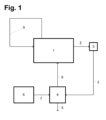
- part of the gas atmosphere is withdrawn from the production chamber 1 as gas stream 2 and fed to an analysis unit 3.
- One or more parameters of the gas stream 2 are determined in the analysis unit 3. If, as in the case described, the gas atmosphere consists of an inert gas, it is often useful to check the water vapor content of the gas stream 2 or the oxygen content of the gas stream 2 in order to determine whether the gas atmosphere is still sufficiently inert. Otherwise, there is a risk, for example, that pores will form inside the workpiece.
- the parameters such as the water vapor content or oxygen content of the gas stream 2 are measured and compared with a target value. If the measured parameters are below the target value, i.e. if the water vapor content or the oxygen content is lower than the specified target value, the gas stream 2 is completely returned to the production chamber 1.
- the analyzed gas flow 2 is fed to a gas control unit 4, which, depending on the result of the comparison of the measured parameter and the target value, either returns the gas flow 2 to the production chamber 1 or discharges a partial flow 5 or the entire gas flow 5 or uses it for another purpose.
- the part 5 of the gas flow 2 that is no longer returned to the production chamber 1 is replaced by a process gas 6.
- a process gas 6 In the present example, pure argon is used as the process gas 6.
- the process gas is also fed to the gas control unit 4 (stream 7), mixed with the gas stream 2 and then fed into the production chamber 1 (stream 8).
- FIG. 1 Another circuit 9 is shown, which continuously removes part of the gas atmosphere from the production chamber 1 and returns it to the production chamber 1. In this way, a circulation of the gas atmosphere and thus homogenization of the gas atmosphere is achieved.
Landscapes
- Engineering & Computer Science (AREA)
- Chemical & Material Sciences (AREA)
- Manufacturing & Machinery (AREA)
- Materials Engineering (AREA)
- Physics & Mathematics (AREA)
- Plasma & Fusion (AREA)
- Optics & Photonics (AREA)
- Mechanical Engineering (AREA)
- Automation & Control Theory (AREA)
- Powder Metallurgy (AREA)
- Laser Beam Processing (AREA)
Claims (11)
- Procédé permettant la production par couches d'une pièce métallique par fabrication additive, dans lequel des couches métallurgiques de la pièce sont obtenues en fournissant, pour chaque couche métallurgique, respectivement un matériau métallique dans une chambre de fabrication et en l'exposant à un faisceau laser, et dans lequel une atmosphère gazeuse est fournie lors de l'exposition des couches du matériau métallique dans la chambre de fabrication, dans lequel une partie de l'atmosphère gazeuse est extraite de la chambre de fabrication sous forme de flux gazeux, au moins un paramètre du flux gazeux et/ou de l'atmosphère gazeuse est déterminé et comparé à une valeur de consigne, caractérisé en ce que, en fonction de la comparaison du paramètre à la valeur de consigne, le flux gazeux est renvoyé soit complètement, soit partiellement, soit pas du tout dans la chambre de fabrication et, en fonction de la comparaison du paramètre à la valeur de consigne, un gaz de traitement est amené à la chambre de fabrication, dans lequel la pression dans la chambre de fabrication est maintenue constante, et en ce que le paramètre est la teneur en vapeur d'eau, la proportion d'oxygène, la teneur en carbone et/ou la température de l'atmosphère gazeuse ou du flux gazeux.
- Procédé selon l'une des revendications précédentes,
caractérisé en ce qu'une partie de l'atmosphère gazeuse est extraite de la chambre de fabrication, laquelle partie se trouve à la même hauteur que le matériau exposé au faisceau laser. - Procédé selon l'une des revendications précédentes, dans lequel des valeurs de consigne différentes sont prévues pour au moins deux couches métallurgiques différentes.
- Procédé selon l'une des revendications précédentes, dans lequel le gaz de traitement est amené lorsque la teneur en vapeur d'eau et/ou la proportion d'oxygène sont supérieures à la valeur de consigne correspondante.
- Procédé selon l'une des revendications précédentes, dans lequel la proportion d'oxygène dans l'atmosphère gazeuse est maintenue constante, en particulier maintenue constante à une valeur comprise entre 50 Vppm et 1000 Vppm.
- Procédé selon l'une des revendications précédentes, dans lequel le paramètre est déterminé dans la chambre de fabrication.
- Procédé selon l'une des revendications précédentes, dans lequel, pour l'atmosphère gazeuse, respectivement un gaz réactif pur ou un mélange gazeux comportant au moins un gaz réactif est utilisé comme composant gazeux pour les couches métallurgiques.
- Procédé selon la revendication 7, dans lequel l'atmosphère gazeuse comprend de l'hydrogène, oxygène, azote, hélium, monoxyde de carbone, dioxyde de carbone et/ou hydrocarbures comme gaz réactif.
- Procédé selon l'une des revendications précédentes, dans lequel respectivement un métal à bas point de fusion est fourni comme matériau métallique.
- Procédé selon la revendication 9, dans lequel le métal à bas point de fusion présente un point de fusion de 1500 °C au maximum, en particulier de 1200 °C au maximum, plus particulièrement de 1000 °C au maximum.
- Procédé selon l'une des revendications précédentes, dans lequel le matériau métallique est fourni sous forme de poudre.
Applications Claiming Priority (2)
| Application Number | Priority Date | Filing Date | Title |
|---|---|---|---|
| EP15000936.3A EP3075470A1 (fr) | 2015-03-31 | 2015-03-31 | Procédé de production par couches d'une pièce à usiner métallique par fabrication additive assistée par laser |
| PCT/EP2016/000502 WO2016155871A1 (fr) | 2015-03-31 | 2016-03-23 | Procédé pour produire une pièce métallique par couches, par fabrication additive assistée par laser |
Publications (3)
| Publication Number | Publication Date |
|---|---|
| EP3277452A1 EP3277452A1 (fr) | 2018-02-07 |
| EP3277452B1 EP3277452B1 (fr) | 2019-01-23 |
| EP3277452B2 true EP3277452B2 (fr) | 2024-12-18 |
Family
ID=52823991
Family Applications (2)
| Application Number | Title | Priority Date | Filing Date |
|---|---|---|---|
| EP15000936.3A Withdrawn EP3075470A1 (fr) | 2015-03-31 | 2015-03-31 | Procédé de production par couches d'une pièce à usiner métallique par fabrication additive assistée par laser |
| EP16713734.8A Active EP3277452B2 (fr) | 2015-03-31 | 2016-03-23 | Procédé de production par couches d'une pièce métallique par fabrication additive assistée par laser |
Family Applications Before (1)
| Application Number | Title | Priority Date | Filing Date |
|---|---|---|---|
| EP15000936.3A Withdrawn EP3075470A1 (fr) | 2015-03-31 | 2015-03-31 | Procédé de production par couches d'une pièce à usiner métallique par fabrication additive assistée par laser |
Country Status (5)
| Country | Link |
|---|---|
| US (1) | US11717891B2 (fr) |
| EP (2) | EP3075470A1 (fr) |
| DK (1) | DK3277452T3 (fr) |
| ES (1) | ES2721163T5 (fr) |
| WO (1) | WO2016155871A1 (fr) |
Families Citing this family (22)
| Publication number | Priority date | Publication date | Assignee | Title |
|---|---|---|---|---|
| EP3075470A1 (fr) | 2015-03-31 | 2016-10-05 | Linde Aktiengesellschaft | Procédé de production par couches d'une pièce à usiner métallique par fabrication additive assistée par laser |
| US11691341B2 (en) | 2015-10-30 | 2023-07-04 | Seurat Technologies, Inc. | Part manipulation using printed manipulation points |
| US10583532B2 (en) * | 2015-12-28 | 2020-03-10 | General Electric Company | Metal additive manufacturing using gas mixture including oxygen |
| US10773340B2 (en) | 2015-12-28 | 2020-09-15 | General Electric Company | Metal additive manufacturing using gas mixture including oxygen |
| US11325191B2 (en) | 2016-05-24 | 2022-05-10 | Arcam Ab | Method for additive manufacturing |
| WO2017202721A1 (fr) * | 2016-05-24 | 2017-11-30 | Arcam Ab | Procédé de fabrication additive par fusion locale de poudre de titane hydrogénée par faisceau d'électrons |
| DE102016012116A1 (de) | 2016-10-10 | 2018-04-12 | Linde Aktiengesellschaft | Verfahren zur generativen Fertigung eines 3-dimensionalen Bauteils |
| EP3318350A1 (fr) * | 2016-11-02 | 2018-05-09 | Linde Aktiengesellschaft | Procédé de fabrication additive d'un composant tridimensionnel |
| JP6410912B1 (ja) * | 2017-11-16 | 2018-10-24 | 株式会社ソディック | 積層造形装置 |
| EP3498457A1 (fr) * | 2017-12-15 | 2019-06-19 | CL Schutzrechtsverwaltungs GmbH | Appareil de fabrication additive d'objets tridimensionnels |
| JP7343484B2 (ja) * | 2018-04-20 | 2023-09-12 | 大陽日酸株式会社 | 金属造形物の製造方法 |
| NL2021323B1 (en) | 2018-07-17 | 2020-01-24 | Additive Ind Bv | Method and apparatus for producing an object by means of additive manufacturing |
| US11426818B2 (en) | 2018-08-10 | 2022-08-30 | The Research Foundation for the State University | Additive manufacturing processes and additively manufactured products |
| EP3628419A1 (fr) | 2018-09-25 | 2020-04-01 | Linde Aktiengesellschaft | Procédé et dispositif d'alimentation en gaz d'un espace de fabrication additive |
| EP3628420A1 (fr) | 2018-09-25 | 2020-04-01 | Linde Aktiengesellschaft | Procédé, gaz et dispositif de fabrication additive |
| CN113195127A (zh) * | 2018-12-14 | 2021-07-30 | 速尔特技术有限公司 | 使用用于二维打印的高通量激光从粉末创建对象的增材制造系统 |
| EP3670031A1 (fr) | 2018-12-19 | 2020-06-24 | Linde GmbH | Procédé et système de génération d'une pièce à usiner tridimensionnelle |
| JP6720400B1 (ja) | 2019-11-14 | 2020-07-08 | 大陽日酸株式会社 | 積層造形システム、積層造形方法 |
| DE102020003426A1 (de) * | 2020-06-06 | 2021-12-09 | Messer Group Gmbh | Verfahren und Vorrichtung zur additiven Fertigung unter Schutzgas |
| DE102020003888A1 (de) | 2020-06-29 | 2021-12-30 | Messer Group Gmbh | Vorrichtung und Verfahren zur additiven Fertigung unter Schutzgas |
| US12162074B2 (en) | 2020-11-25 | 2024-12-10 | Lawrence Livermore National Security, Llc | System and method for large-area pulsed laser melting of metallic powder in a laser powder bed fusion application |
| US12214544B2 (en) | 2022-07-20 | 2025-02-04 | Battelle Savannah River Alliance, Llc | In situ chemical modification during additive manufacturing |
Citations (9)
| Publication number | Priority date | Publication date | Assignee | Title |
|---|---|---|---|---|
| WO1992008592A1 (fr) † | 1990-11-09 | 1992-05-29 | Dtm Corporation | Flux de gaz regule pour frittage selectif au laser |
| JP2006124732A (ja) † | 2004-10-26 | 2006-05-18 | Matsushita Electric Works Ltd | 三次元形状造形物の製造装置 |
| EP2687305A1 (fr) † | 2008-07-18 | 2014-01-22 | MTT Technologies Limited | Appareil et procédé de fabrication |
| CN104353832A (zh) † | 2014-10-24 | 2015-02-18 | 华南理工大学 | 一种金属3d打印机密封舱气氛除氧及循环净化方法及设备 |
| WO2015079200A2 (fr) † | 2013-11-27 | 2015-06-04 | Linde Aktiengesellschaft | Fabrication additive d'un article en titane |
| WO2015131989A1 (fr) † | 2014-03-05 | 2015-09-11 | Linde Aktiengesellschaft | Procédé pour produire une pièce métallique par couches, par fabrication additive assistée par laser |
| US20150367574A1 (en) † | 2014-06-20 | 2015-12-24 | Sodick Co., Ltd. | Three dimensional printer |
| EP2992986A1 (fr) † | 2014-09-03 | 2016-03-09 | SLM Solutions Group AG | Appareil de fabrication de pièces 3D par une méthode de fabrication additive comportant un dispositif de séchage |
| WO2017134044A1 (fr) † | 2016-02-05 | 2017-08-10 | Eos Gmbh Electro Optical Systems | Dispositif et procédé pour produire un objet tridimensionnel |
Family Cites Families (6)
| Publication number | Priority date | Publication date | Assignee | Title |
|---|---|---|---|---|
| US8915728B2 (en) * | 2012-01-27 | 2014-12-23 | United Technologies Corporation | Multi-dimensional component build system and process |
| EP2730353B1 (fr) * | 2012-11-12 | 2022-09-14 | Airbus Operations GmbH | Procédé et appareil de fabrication de couche d'additif |
| EP2774703A1 (fr) * | 2013-03-04 | 2014-09-10 | SLM Solutions GmbH | Appareil de production de pièces de travail sous pression élevée |
| US10730142B2 (en) * | 2014-08-12 | 2020-08-04 | Air Products And Chemicals, Inc. | Gas atmosphere control in laser printing using metallic powders |
| GB201418595D0 (en) * | 2014-10-20 | 2014-12-03 | Renishaw Plc | Additive manufacturing apparatus and methods |
| EP3075470A1 (fr) | 2015-03-31 | 2016-10-05 | Linde Aktiengesellschaft | Procédé de production par couches d'une pièce à usiner métallique par fabrication additive assistée par laser |
-
2015
- 2015-03-31 EP EP15000936.3A patent/EP3075470A1/fr not_active Withdrawn
-
2016
- 2016-03-23 EP EP16713734.8A patent/EP3277452B2/fr active Active
- 2016-03-23 DK DK16713734.8T patent/DK3277452T3/da active
- 2016-03-23 ES ES16713734T patent/ES2721163T5/es active Active
- 2016-03-23 US US15/560,262 patent/US11717891B2/en active Active
- 2016-03-23 WO PCT/EP2016/000502 patent/WO2016155871A1/fr not_active Ceased
Patent Citations (9)
| Publication number | Priority date | Publication date | Assignee | Title |
|---|---|---|---|---|
| WO1992008592A1 (fr) † | 1990-11-09 | 1992-05-29 | Dtm Corporation | Flux de gaz regule pour frittage selectif au laser |
| JP2006124732A (ja) † | 2004-10-26 | 2006-05-18 | Matsushita Electric Works Ltd | 三次元形状造形物の製造装置 |
| EP2687305A1 (fr) † | 2008-07-18 | 2014-01-22 | MTT Technologies Limited | Appareil et procédé de fabrication |
| WO2015079200A2 (fr) † | 2013-11-27 | 2015-06-04 | Linde Aktiengesellschaft | Fabrication additive d'un article en titane |
| WO2015131989A1 (fr) † | 2014-03-05 | 2015-09-11 | Linde Aktiengesellschaft | Procédé pour produire une pièce métallique par couches, par fabrication additive assistée par laser |
| US20150367574A1 (en) † | 2014-06-20 | 2015-12-24 | Sodick Co., Ltd. | Three dimensional printer |
| EP2992986A1 (fr) † | 2014-09-03 | 2016-03-09 | SLM Solutions Group AG | Appareil de fabrication de pièces 3D par une méthode de fabrication additive comportant un dispositif de séchage |
| CN104353832A (zh) † | 2014-10-24 | 2015-02-18 | 华南理工大学 | 一种金属3d打印机密封舱气氛除氧及循环净化方法及设备 |
| WO2017134044A1 (fr) † | 2016-02-05 | 2017-08-10 | Eos Gmbh Electro Optical Systems | Dispositif et procédé pour produire un objet tridimensionnel |
Non-Patent Citations (4)
| Title |
|---|
| ANONYMOUS: "Welding Theory and application", TM 9-237 DEPARTMENT OF THE ARMY TECHNICAL MANUAL, 1976, pages 1 - 3 † |
| F. CVERNA: "Thermal Properties of Metals", ASM READY REFERENCE, 2002, pages 1 - 28 † |
| GIESEKE MATTHIAS: "Selective laser melting of magnesium and magnesium alloys", MAGNESIUM TECHNOLOGY, 2013, pages 65 - 66 † |
| VILARINHO MARIA: "Material science forum vole 514-516", ADVANCED MATERIALS FORUM III, 2005, pages 517 † |
Also Published As
| Publication number | Publication date |
|---|---|
| US11717891B2 (en) | 2023-08-08 |
| WO2016155871A1 (fr) | 2016-10-06 |
| EP3277452B1 (fr) | 2019-01-23 |
| EP3277452A1 (fr) | 2018-02-07 |
| EP3075470A1 (fr) | 2016-10-05 |
| ES2721163T3 (es) | 2019-07-29 |
| ES2721163T5 (en) | 2025-03-20 |
| US20180065209A1 (en) | 2018-03-08 |
| DK3277452T3 (da) | 2019-05-06 |
Similar Documents
| Publication | Publication Date | Title |
|---|---|---|
| EP3277452B1 (fr) | Procédé de production par couches d'une pièce métallique par fabrication additive assistée par laser | |
| EP3691815B1 (fr) | Composant produit par fabrication additive et procédé de production de ce composant | |
| EP2794152B1 (fr) | Procédé de fabrication d'un composant compact et composant produit au moyen dudit procédé | |
| EP3318353B1 (fr) | Procédé de fabrication additive d'un composant tridimensionnel | |
| EP3305445B1 (fr) | Procédé de fabrication additive d'un composant tridimensionnel | |
| DE102015115963B4 (de) | Verfahren zur additiven Fertigung eines Formkörpers aus einem metallischen Werkstoffgemisch | |
| DE102009051551A1 (de) | Verfahren und Vorrichtung zur Herstellung eines Bauteils einer Strömungsmaschine | |
| EP3455015B1 (fr) | Procédé notamment d'impression 3d et codage d'un élément structural tridimensionnel | |
| EP3318351A1 (fr) | Procédé de fabrication additive d'un composant tridimensionnel | |
| DE102016113246A1 (de) | Verfahren und Vorrichtung zur Erzeugung eines metallischen Werkstoffgemischs bei der additiven Fertigung | |
| EP3006139A1 (fr) | Procede de production par couches d'une piece a usiner metallique par fabrication additive assistee par laser | |
| DE102016115676A1 (de) | Additive Fertigung | |
| WO2021245134A1 (fr) | Procédé et dispositif de fabrication additive sous gaz protecteur | |
| WO2015131989A1 (fr) | Procédé pour produire une pièce métallique par couches, par fabrication additive assistée par laser | |
| WO2017132710A1 (fr) | Procédé de fabrication d'un corps en métal dur tridimensionnel par couches | |
| AT517721B1 (de) | Verfahren zur Herstellung eines Gleitlagerelementes | |
| EP3463719B1 (fr) | Procédé de fabrication additive de composants métalliques | |
| CH621956A5 (fr) | ||
| WO2017194275A1 (fr) | Plateforme de construction pour la fabrication additive et procédé | |
| WO2017194205A1 (fr) | Procédé de codage lors du traitement thermique d'une pièce | |
| DE102018101194A1 (de) | Verfahren zum Herstellen eines hoch belastbaren Bauteils aus einem zumindest zweiphasigen metallischen oder intermetallischen Werkstoff | |
| DE102022105514A1 (de) | Verfahren zur Herstellung hochfester, kohlenstoffhaltiger Bauteile aus Stahl | |
| WO2011138422A2 (fr) | Acier de la métallurgie des poudres | |
| DE2248129C3 (de) | Dispersionsverfestigter Sinterkörper sowie Verfahren zu dessen Herstellung | |
| DD205631A1 (de) | Verfahren zur diffusionsbehandlung von hartmetallkoerpern |
Legal Events
| Date | Code | Title | Description |
|---|---|---|---|
| STAA | Information on the status of an ep patent application or granted ep patent |
Free format text: STATUS: THE INTERNATIONAL PUBLICATION HAS BEEN MADE |
|
| PUAI | Public reference made under article 153(3) epc to a published international application that has entered the european phase |
Free format text: ORIGINAL CODE: 0009012 |
|
| STAA | Information on the status of an ep patent application or granted ep patent |
Free format text: STATUS: REQUEST FOR EXAMINATION WAS MADE |
|
| 17P | Request for examination filed |
Effective date: 20170904 |
|
| AK | Designated contracting states |
Kind code of ref document: A1 Designated state(s): AL AT BE BG CH CY CZ DE DK EE ES FI FR GB GR HR HU IE IS IT LI LT LU LV MC MK MT NL NO PL PT RO RS SE SI SK SM TR |
|
| AX | Request for extension of the european patent |
Extension state: BA ME |
|
| DAV | Request for validation of the european patent (deleted) | ||
| DAX | Request for extension of the european patent (deleted) | ||
| GRAP | Despatch of communication of intention to grant a patent |
Free format text: ORIGINAL CODE: EPIDOSNIGR1 |
|
| STAA | Information on the status of an ep patent application or granted ep patent |
Free format text: STATUS: GRANT OF PATENT IS INTENDED |
|
| RIC1 | Information provided on ipc code assigned before grant |
Ipc: B33Y 10/00 20150101ALI20180831BHEP Ipc: B22F 3/105 20060101AFI20180831BHEP Ipc: B23K 26/342 20140101ALI20180831BHEP Ipc: B33Y 50/02 20150101ALI20180831BHEP Ipc: B33Y 30/00 20150101ALI20180831BHEP |
|
| INTG | Intention to grant announced |
Effective date: 20180919 |
|
| GRAS | Grant fee paid |
Free format text: ORIGINAL CODE: EPIDOSNIGR3 |
|
| GRAA | (expected) grant |
Free format text: ORIGINAL CODE: 0009210 |
|
| STAA | Information on the status of an ep patent application or granted ep patent |
Free format text: STATUS: THE PATENT HAS BEEN GRANTED |
|
| AK | Designated contracting states |
Kind code of ref document: B1 Designated state(s): AL AT BE BG CH CY CZ DE DK EE ES FI FR GB GR HR HU IE IS IT LI LT LU LV MC MK MT NL NO PL PT RO RS SE SI SK SM TR |
|
| REG | Reference to a national code |
Ref country code: GB Ref legal event code: FG4D Free format text: NOT ENGLISH |
|
| REG | Reference to a national code |
Ref country code: CH Ref legal event code: EP |
|
| REG | Reference to a national code |
Ref country code: AT Ref legal event code: REF Ref document number: 1091049 Country of ref document: AT Kind code of ref document: T Effective date: 20190215 |
|
| REG | Reference to a national code |
Ref country code: IE Ref legal event code: FG4D Free format text: LANGUAGE OF EP DOCUMENT: GERMAN |
|
| REG | Reference to a national code |
Ref country code: DE Ref legal event code: R096 Ref document number: 502016003223 Country of ref document: DE |
|
| REG | Reference to a national code |
Ref country code: DK Ref legal event code: T3 Effective date: 20190429 |
|
| REG | Reference to a national code |
Ref country code: SE Ref legal event code: TRGR |
|
| REG | Reference to a national code |
Ref country code: NL Ref legal event code: FP |
|
| REG | Reference to a national code |
Ref country code: ES Ref legal event code: FG2A Ref document number: 2721163 Country of ref document: ES Kind code of ref document: T3 Effective date: 20190729 |
|
| PG25 | Lapsed in a contracting state [announced via postgrant information from national office to epo] |
Ref country code: NO Free format text: LAPSE BECAUSE OF FAILURE TO SUBMIT A TRANSLATION OF THE DESCRIPTION OR TO PAY THE FEE WITHIN THE PRESCRIBED TIME-LIMIT Effective date: 20190423 Ref country code: LT Free format text: LAPSE BECAUSE OF FAILURE TO SUBMIT A TRANSLATION OF THE DESCRIPTION OR TO PAY THE FEE WITHIN THE PRESCRIBED TIME-LIMIT Effective date: 20190123 Ref country code: PT Free format text: LAPSE BECAUSE OF FAILURE TO SUBMIT A TRANSLATION OF THE DESCRIPTION OR TO PAY THE FEE WITHIN THE PRESCRIBED TIME-LIMIT Effective date: 20190523 Ref country code: PL Free format text: LAPSE BECAUSE OF FAILURE TO SUBMIT A TRANSLATION OF THE DESCRIPTION OR TO PAY THE FEE WITHIN THE PRESCRIBED TIME-LIMIT Effective date: 20190123 |
|
| PG25 | Lapsed in a contracting state [announced via postgrant information from national office to epo] |
Ref country code: RS Free format text: LAPSE BECAUSE OF FAILURE TO SUBMIT A TRANSLATION OF THE DESCRIPTION OR TO PAY THE FEE WITHIN THE PRESCRIBED TIME-LIMIT Effective date: 20190123 Ref country code: HR Free format text: LAPSE BECAUSE OF FAILURE TO SUBMIT A TRANSLATION OF THE DESCRIPTION OR TO PAY THE FEE WITHIN THE PRESCRIBED TIME-LIMIT Effective date: 20190123 Ref country code: IS Free format text: LAPSE BECAUSE OF FAILURE TO SUBMIT A TRANSLATION OF THE DESCRIPTION OR TO PAY THE FEE WITHIN THE PRESCRIBED TIME-LIMIT Effective date: 20190523 Ref country code: LV Free format text: LAPSE BECAUSE OF FAILURE TO SUBMIT A TRANSLATION OF THE DESCRIPTION OR TO PAY THE FEE WITHIN THE PRESCRIBED TIME-LIMIT Effective date: 20190123 Ref country code: GR Free format text: LAPSE BECAUSE OF FAILURE TO SUBMIT A TRANSLATION OF THE DESCRIPTION OR TO PAY THE FEE WITHIN THE PRESCRIBED TIME-LIMIT Effective date: 20190424 Ref country code: BG Free format text: LAPSE BECAUSE OF FAILURE TO SUBMIT A TRANSLATION OF THE DESCRIPTION OR TO PAY THE FEE WITHIN THE PRESCRIBED TIME-LIMIT Effective date: 20190423 |
|
| REG | Reference to a national code |
Ref country code: DE Ref legal event code: R026 Ref document number: 502016003223 Country of ref document: DE |
|
| PLBI | Opposition filed |
Free format text: ORIGINAL CODE: 0009260 |
|
| PG25 | Lapsed in a contracting state [announced via postgrant information from national office to epo] |
Ref country code: EE Free format text: LAPSE BECAUSE OF FAILURE TO SUBMIT A TRANSLATION OF THE DESCRIPTION OR TO PAY THE FEE WITHIN THE PRESCRIBED TIME-LIMIT Effective date: 20190123 Ref country code: MC Free format text: LAPSE BECAUSE OF FAILURE TO SUBMIT A TRANSLATION OF THE DESCRIPTION OR TO PAY THE FEE WITHIN THE PRESCRIBED TIME-LIMIT Effective date: 20190123 Ref country code: SK Free format text: LAPSE BECAUSE OF FAILURE TO SUBMIT A TRANSLATION OF THE DESCRIPTION OR TO PAY THE FEE WITHIN THE PRESCRIBED TIME-LIMIT Effective date: 20190123 Ref country code: RO Free format text: LAPSE BECAUSE OF FAILURE TO SUBMIT A TRANSLATION OF THE DESCRIPTION OR TO PAY THE FEE WITHIN THE PRESCRIBED TIME-LIMIT Effective date: 20190123 Ref country code: AL Free format text: LAPSE BECAUSE OF FAILURE TO SUBMIT A TRANSLATION OF THE DESCRIPTION OR TO PAY THE FEE WITHIN THE PRESCRIBED TIME-LIMIT Effective date: 20190123 |
|
| PLAX | Notice of opposition and request to file observation + time limit sent |
Free format text: ORIGINAL CODE: EPIDOSNOBS2 |
|
| 26 | Opposition filed |
Opponent name: L'AIR LIQUIDE, SOCIETE ANONYME POUR L'ETUDE ET L'E Effective date: 20191021 |
|
| PG25 | Lapsed in a contracting state [announced via postgrant information from national office to epo] |
Ref country code: SM Free format text: LAPSE BECAUSE OF FAILURE TO SUBMIT A TRANSLATION OF THE DESCRIPTION OR TO PAY THE FEE WITHIN THE PRESCRIBED TIME-LIMIT Effective date: 20190123 Ref country code: LU Free format text: LAPSE BECAUSE OF NON-PAYMENT OF DUE FEES Effective date: 20190323 |
|
| REG | Reference to a national code |
Ref country code: BE Ref legal event code: MM Effective date: 20190331 |
|
| PG25 | Lapsed in a contracting state [announced via postgrant information from national office to epo] |
Ref country code: BE Free format text: LAPSE BECAUSE OF NON-PAYMENT OF DUE FEES Effective date: 20190331 Ref country code: SI Free format text: LAPSE BECAUSE OF FAILURE TO SUBMIT A TRANSLATION OF THE DESCRIPTION OR TO PAY THE FEE WITHIN THE PRESCRIBED TIME-LIMIT Effective date: 20190123 |
|
| PLAF | Information modified related to communication of a notice of opposition and request to file observations + time limit |
Free format text: ORIGINAL CODE: EPIDOSCOBS2 |
|
| PG25 | Lapsed in a contracting state [announced via postgrant information from national office to epo] |
Ref country code: TR Free format text: LAPSE BECAUSE OF FAILURE TO SUBMIT A TRANSLATION OF THE DESCRIPTION OR TO PAY THE FEE WITHIN THE PRESCRIBED TIME-LIMIT Effective date: 20190123 |
|
| PLBB | Reply of patent proprietor to notice(s) of opposition received |
Free format text: ORIGINAL CODE: EPIDOSNOBS3 |
|
| RAP2 | Party data changed (patent owner data changed or rights of a patent transferred) |
Owner name: LINDE GMBH |
|
| PG25 | Lapsed in a contracting state [announced via postgrant information from national office to epo] |
Ref country code: MT Free format text: LAPSE BECAUSE OF FAILURE TO SUBMIT A TRANSLATION OF THE DESCRIPTION OR TO PAY THE FEE WITHIN THE PRESCRIBED TIME-LIMIT Effective date: 20190123 |
|
| REG | Reference to a national code |
Ref country code: DE Ref legal event code: R081 Ref document number: 502016003223 Country of ref document: DE Owner name: LINDE GMBH, DE Free format text: FORMER OWNER: LINDE AKTIENGESELLSCHAFT, 80331 MUENCHEN, DE |
|
| PLAB | Opposition data, opponent's data or that of the opponent's representative modified |
Free format text: ORIGINAL CODE: 0009299OPPO |
|
| R26 | Opposition filed (corrected) |
Opponent name: L'AIR LIQUIDE, SOCIETE ANONYME POUR L'ETUDE ET L'EXPLOITATION DES PROCEDES GEORGES CLAUDE Effective date: 20191021 |
|
| PGFP | Annual fee paid to national office [announced via postgrant information from national office to epo] |
Ref country code: FI Payment date: 20210318 Year of fee payment: 6 |
|
| PG25 | Lapsed in a contracting state [announced via postgrant information from national office to epo] |
Ref country code: CY Free format text: LAPSE BECAUSE OF FAILURE TO SUBMIT A TRANSLATION OF THE DESCRIPTION OR TO PAY THE FEE WITHIN THE PRESCRIBED TIME-LIMIT Effective date: 20190123 |
|
| PGFP | Annual fee paid to national office [announced via postgrant information from national office to epo] |
Ref country code: DK Payment date: 20210323 Year of fee payment: 6 |
|
| PG25 | Lapsed in a contracting state [announced via postgrant information from national office to epo] |
Ref country code: HU Free format text: LAPSE BECAUSE OF FAILURE TO SUBMIT A TRANSLATION OF THE DESCRIPTION OR TO PAY THE FEE WITHIN THE PRESCRIBED TIME-LIMIT; INVALID AB INITIO Effective date: 20160323 |
|
| APAH | Appeal reference modified |
Free format text: ORIGINAL CODE: EPIDOSCREFNO |
|
| APBM | Appeal reference recorded |
Free format text: ORIGINAL CODE: EPIDOSNREFNO |
|
| APBP | Date of receipt of notice of appeal recorded |
Free format text: ORIGINAL CODE: EPIDOSNNOA2O |
|
| APBQ | Date of receipt of statement of grounds of appeal recorded |
Free format text: ORIGINAL CODE: EPIDOSNNOA3O |
|
| PGFP | Annual fee paid to national office [announced via postgrant information from national office to epo] |
Ref country code: IE Payment date: 20220322 Year of fee payment: 7 |
|
| PGFP | Annual fee paid to national office [announced via postgrant information from national office to epo] |
Ref country code: NL Payment date: 20220322 Year of fee payment: 7 Ref country code: CZ Payment date: 20220315 Year of fee payment: 7 |
|
| PG25 | Lapsed in a contracting state [announced via postgrant information from national office to epo] |
Ref country code: MK Free format text: LAPSE BECAUSE OF FAILURE TO SUBMIT A TRANSLATION OF THE DESCRIPTION OR TO PAY THE FEE WITHIN THE PRESCRIBED TIME-LIMIT Effective date: 20190123 |
|
| REG | Reference to a national code |
Ref country code: FI Ref legal event code: MAE |
|
| REG | Reference to a national code |
Ref country code: DK Ref legal event code: EBP Effective date: 20220331 |
|
| PG25 | Lapsed in a contracting state [announced via postgrant information from national office to epo] |
Ref country code: FI Free format text: LAPSE BECAUSE OF NON-PAYMENT OF DUE FEES Effective date: 20220323 |
|
| PG25 | Lapsed in a contracting state [announced via postgrant information from national office to epo] |
Ref country code: DK Free format text: LAPSE BECAUSE OF NON-PAYMENT OF DUE FEES Effective date: 20220331 |
|
| P01 | Opt-out of the competence of the unified patent court (upc) registered |
Effective date: 20230525 |
|
| PG25 | Lapsed in a contracting state [announced via postgrant information from national office to epo] |
Ref country code: CZ Free format text: LAPSE BECAUSE OF NON-PAYMENT OF DUE FEES Effective date: 20230323 |
|
| REG | Reference to a national code |
Ref country code: NL Ref legal event code: MM Effective date: 20230401 |
|
| PG25 | Lapsed in a contracting state [announced via postgrant information from national office to epo] |
Ref country code: NL Free format text: LAPSE BECAUSE OF NON-PAYMENT OF DUE FEES Effective date: 20230401 |
|
| REG | Reference to a national code |
Ref country code: IE Ref legal event code: MM4A |
|
| PG25 | Lapsed in a contracting state [announced via postgrant information from national office to epo] |
Ref country code: IE Free format text: LAPSE BECAUSE OF NON-PAYMENT OF DUE FEES Effective date: 20230323 |
|
| PGFP | Annual fee paid to national office [announced via postgrant information from national office to epo] |
Ref country code: AT Payment date: 20240318 Year of fee payment: 9 |
|
| APBU | Appeal procedure closed |
Free format text: ORIGINAL CODE: EPIDOSNNOA9O |
|
| PGFP | Annual fee paid to national office [announced via postgrant information from national office to epo] |
Ref country code: CH Payment date: 20240401 Year of fee payment: 9 |
|
| PGFP | Annual fee paid to national office [announced via postgrant information from national office to epo] |
Ref country code: ES Payment date: 20240417 Year of fee payment: 9 |
|
| PUAH | Patent maintained in amended form |
Free format text: ORIGINAL CODE: 0009272 |
|
| STAA | Information on the status of an ep patent application or granted ep patent |
Free format text: STATUS: PATENT MAINTAINED AS AMENDED |
|
| 27A | Patent maintained in amended form |
Effective date: 20241218 |
|
| AK | Designated contracting states |
Kind code of ref document: B2 Designated state(s): AL AT BE BG CH CY CZ DE DK EE ES FI FR GB GR HR HU IE IS IT LI LT LU LV MC MK MT NL NO PL PT RO RS SE SI SK SM TR |
|
| REG | Reference to a national code |
Ref country code: DE Ref legal event code: R102 Ref document number: 502016003223 Country of ref document: DE |
|
| REG | Reference to a national code |
Ref country code: SE Ref legal event code: RPEO |
|
| REG | Reference to a national code |
Ref country code: ES Ref legal event code: DC2A Ref document number: 2721163 Country of ref document: ES Kind code of ref document: T5 Effective date: 20250320 |
|
| PGFP | Annual fee paid to national office [announced via postgrant information from national office to epo] |
Ref country code: IT Payment date: 20250331 Year of fee payment: 10 |
|
| REG | Reference to a national code |
Ref country code: CH Ref legal event code: H13 Free format text: ST27 STATUS EVENT CODE: U-0-0-H10-H13 (AS PROVIDED BY THE NATIONAL OFFICE) Effective date: 20251023 |
|
| REG | Reference to a national code |
Ref country code: AT Ref legal event code: MM01 Ref document number: 1091049 Country of ref document: AT Kind code of ref document: T Effective date: 20250323 |
|
| PG25 | Lapsed in a contracting state [announced via postgrant information from national office to epo] |
Ref country code: AT Free format text: LAPSE BECAUSE OF NON-PAYMENT OF DUE FEES Effective date: 20250323 |
|
| PG25 | Lapsed in a contracting state [announced via postgrant information from national office to epo] |
Ref country code: CH Free format text: LAPSE BECAUSE OF NON-PAYMENT OF DUE FEES Effective date: 20250331 |
|
| PGFP | Annual fee paid to national office [announced via postgrant information from national office to epo] |
Ref country code: SE Payment date: 20260323 Year of fee payment: 11 |
|
| PGFP | Annual fee paid to national office [announced via postgrant information from national office to epo] |
Ref country code: GB Payment date: 20260324 Year of fee payment: 11 |
|
| PGFP | Annual fee paid to national office [announced via postgrant information from national office to epo] |
Ref country code: DE Payment date: 20260320 Year of fee payment: 11 |
|
| PGFP | Annual fee paid to national office [announced via postgrant information from national office to epo] |
Ref country code: FR Payment date: 20260325 Year of fee payment: 11 |
|
| REG | Reference to a national code |
Ref country code: ES Ref legal event code: FD2A Effective date: 20260506 |