EP3280168A1 - Method, device and communication system for obtaining beam information - Google Patents
Method, device and communication system for obtaining beam information Download PDFInfo
- Publication number
- EP3280168A1 EP3280168A1 EP15886909.9A EP15886909A EP3280168A1 EP 3280168 A1 EP3280168 A1 EP 3280168A1 EP 15886909 A EP15886909 A EP 15886909A EP 3280168 A1 EP3280168 A1 EP 3280168A1
- Authority
- EP
- European Patent Office
- Prior art keywords
- base station
- vector
- reference signal
- user equipment
- information acquisition
- Prior art date
- Legal status (The legal status is an assumption and is not a legal conclusion. Google has not performed a legal analysis and makes no representation as to the accuracy of the status listed.)
- Withdrawn
Links
Images




Classifications
-
- H—ELECTRICITY
- H04—ELECTRIC COMMUNICATION TECHNIQUE
- H04B—TRANSMISSION
- H04B7/00—Radio transmission systems, i.e. using radiation field
- H04B7/02—Diversity systems; Multi-antenna system, i.e. transmission or reception using multiple antennas
- H04B7/04—Diversity systems; Multi-antenna system, i.e. transmission or reception using multiple antennas using two or more spaced independent antennas
- H04B7/06—Diversity systems; Multi-antenna system, i.e. transmission or reception using multiple antennas using two or more spaced independent antennas at the transmitting station
- H04B7/0613—Diversity systems; Multi-antenna system, i.e. transmission or reception using multiple antennas using two or more spaced independent antennas at the transmitting station using simultaneous transmission
- H04B7/0615—Diversity systems; Multi-antenna system, i.e. transmission or reception using multiple antennas using two or more spaced independent antennas at the transmitting station using simultaneous transmission of weighted versions of same signal
- H04B7/0617—Diversity systems; Multi-antenna system, i.e. transmission or reception using multiple antennas using two or more spaced independent antennas at the transmitting station using simultaneous transmission of weighted versions of same signal for beam forming
-
- H—ELECTRICITY
- H04—ELECTRIC COMMUNICATION TECHNIQUE
- H04B—TRANSMISSION
- H04B7/00—Radio transmission systems, i.e. using radiation field
- H04B7/02—Diversity systems; Multi-antenna system, i.e. transmission or reception using multiple antennas
- H04B7/04—Diversity systems; Multi-antenna system, i.e. transmission or reception using multiple antennas using two or more spaced independent antennas
- H04B7/06—Diversity systems; Multi-antenna system, i.e. transmission or reception using multiple antennas using two or more spaced independent antennas at the transmitting station
- H04B7/0613—Diversity systems; Multi-antenna system, i.e. transmission or reception using multiple antennas using two or more spaced independent antennas at the transmitting station using simultaneous transmission
- H04B7/0615—Diversity systems; Multi-antenna system, i.e. transmission or reception using multiple antennas using two or more spaced independent antennas at the transmitting station using simultaneous transmission of weighted versions of same signal
- H04B7/0619—Diversity systems; Multi-antenna system, i.e. transmission or reception using multiple antennas using two or more spaced independent antennas at the transmitting station using simultaneous transmission of weighted versions of same signal using feedback from receiving side
-
- H—ELECTRICITY
- H04—ELECTRIC COMMUNICATION TECHNIQUE
- H04B—TRANSMISSION
- H04B7/00—Radio transmission systems, i.e. using radiation field
- H04B7/02—Diversity systems; Multi-antenna system, i.e. transmission or reception using multiple antennas
- H04B7/04—Diversity systems; Multi-antenna system, i.e. transmission or reception using multiple antennas using two or more spaced independent antennas
- H04B7/0413—MIMO systems
-
- H—ELECTRICITY
- H04—ELECTRIC COMMUNICATION TECHNIQUE
- H04B—TRANSMISSION
- H04B7/00—Radio transmission systems, i.e. using radiation field
- H04B7/02—Diversity systems; Multi-antenna system, i.e. transmission or reception using multiple antennas
- H04B7/04—Diversity systems; Multi-antenna system, i.e. transmission or reception using multiple antennas using two or more spaced independent antennas
- H04B7/06—Diversity systems; Multi-antenna system, i.e. transmission or reception using multiple antennas using two or more spaced independent antennas at the transmitting station
- H04B7/0613—Diversity systems; Multi-antenna system, i.e. transmission or reception using multiple antennas using two or more spaced independent antennas at the transmitting station using simultaneous transmission
- H04B7/0615—Diversity systems; Multi-antenna system, i.e. transmission or reception using multiple antennas using two or more spaced independent antennas at the transmitting station using simultaneous transmission of weighted versions of same signal
- H04B7/0619—Diversity systems; Multi-antenna system, i.e. transmission or reception using multiple antennas using two or more spaced independent antennas at the transmitting station using simultaneous transmission of weighted versions of same signal using feedback from receiving side
- H04B7/0621—Feedback content
- H04B7/0634—Antenna weights or vector/matrix coefficients
-
- H—ELECTRICITY
- H04—ELECTRIC COMMUNICATION TECHNIQUE
- H04W—WIRELESS COMMUNICATION NETWORKS
- H04W88/00—Devices specially adapted for wireless communication networks, e.g. terminals, base stations or access point devices
- H04W88/02—Terminal devices
-
- H—ELECTRICITY
- H04—ELECTRIC COMMUNICATION TECHNIQUE
- H04W—WIRELESS COMMUNICATION NETWORKS
- H04W88/00—Devices specially adapted for wireless communication networks, e.g. terminals, base stations or access point devices
- H04W88/08—Access point devices
Definitions
- This disclosure relates to the field of communications technologies, and in particular to a beam information acquisition method and apparatus and a communications system in a massive multiple input multiple output (MIMO) system.
- MIMO massive multiple input multiple output
- a millimeter wave technology (mmWave) and a massive MIMO technology are candidate technologies of the fifth generation (5G) mobile communication technology study.
- the combination of massive MIMO and mmWave can provide wider transmission bandwidth and a larger number of antennas for a system, thereby improving performance of the system.
- each physical antenna needs to be configured with a set of radio frequency (RF) chains, including an amplifier, a mixer, a digital-to-analog converter and an analog-to-digital converter, etc., and the cost of the system is relatively high.
- RF radio frequency
- Precoding in which a baseband and an RF are mixed may perform precoding operation jointly on the baseband and the RF, as advantages of baseband precoding and RF precoding are integrated therein, which is more suitable for use in a massive MIMO system, and an effective tradeoff between system performance (flexibility) and complexity may be achieved.
- transceiver units include multiple transmission units (TXUs) and reception units (RXUs).
- TXUs transmission units
- RXUs reception units
- the TXUs take baseband signals of the AAS of a base station as input, and provide output of RF transmission signals.
- the output of the RF transmission is distributed to an antenna array via a radio distribution network (RDN).
- RDN radio distribution network
- Embodiments of this disclosure provide a beam information acquisition method and apparatus and a communications system. It is expected that a user equipment (UE) feeds back power information on multiple ports, and beam weighting information may be obtained according to the power information on multiple ports.
- UE user equipment
- a beam information acquisition method applicable to a base station having a planar antenna array, the planar antenna array including multiple antenna elements, the multiple antenna elements forming multiple columns in a vertical direction and multiple rows in a horizontal direction, the beam information acquisition method including:
- a beam information acquisition apparatus configured in a base station having a planar antenna array, the planar antenna array including multiple antenna elements, the multiple antenna elements forming multiple columns in a vertical direction and multiple rows in a horizontal direction, the beam information acquisition apparatus including:
- a beam information acquisition method applicable to a user equipment, the beam information acquisition method including:
- a beam information acquisition apparatus configured in a user equipment, the beam information acquisition apparatus including:
- a communications system including:
- a computer readable program code which, when executed in a base station, will cause a computer unit to carry out the beam information acquisition method as described above in the base station.
- a computer readable medium including a computer readable program code, which will cause a computer unit to carry out the beam information acquisition method as described above in a base station.
- a computer readable program code which, when executed in a UE, will cause a computer unit to carry out the beam information acquisition method as described above in the UE.
- a computer readable medium including a computer readable program code, which will cause a computer unit to carry out the beam information acquisition method as described above in a UE.
- An advantage of the embodiments of this disclosure exists in that the base station first transmits a reference signal at relative few ports, and calculates a vector of a relatively small length according to one or more beam indices that are fed back and estimates a vector of a relatively large length, then transmits a reference signal again according to vectors of relatively large lengths, so as to obtain power information on multiple transmission antenna ports fed back by the user equipment.
- the base station may relatively accurately obtain the beam weighting information, and the beam weighting information may be better applied to a massive MIMO system.
- FIGs. 1 and 2 give schematic diagrams of structures of two planar antenna arrays related to the embodiments of this disclosure, in which FIG. 1 is a schematic diagram of a structure of a planar antenna array of the same polarization antenna configuration, and FIG. 2 is a schematic diagram of a structure of a planar antenna array of cross polarization antenna configuration.
- M antenna elements (which may also be referred to as physical antenna elements) in the same polarization direction are placed in each column in a vertical direction, and N columns are placed in a horizontal direction.
- M cross polarization antenna pairs are placed in each column in the vertical direction, and N columns of cross polarization antenna pairs are placed in the horizontal direction. That is, there exist M physical antenna elements in each polarization direction in a vertical column, and there exist N physical antenna elements in each polarization direction in a horizontal row.
- Each column of M antenna elements in the same polarization direction are connected to M TXRU TXRUs, and the total number of TXRUs is M TXRU ⁇ N ⁇ P.
- multiple antennal elements in the vertical direction may be virtualized into one or more antenna ports.
- beam directions in the vertical direction may be adjusted by weighting multiple physical antenna elements.
- weighting of the virtualized antenna port is the precoding operation in a conventional sense.
- TXRUs transceiver units
- FIGs. 3 and 4 respectively give connection relationships between each column of M antenna elements in the same polarization direction and M TXRU TXRUs in the two models.
- q is signal vectors at the antenna elements, i.e., transmission signal vectors of the antennas
- x is signal vectors at the TXRUs.
- DFT discrete Fourier transform
- N M denotes a size of a DFT vector of a length M
- n m' denotes an index of a DFT vector selected by an m'-th TXRU in the codebook.
- the columns of antenna elements use the same virtualization model of TXRUs, and weighting values of the columns are identical. And the weighting values are applicable to all bands in the same time symbol. This shows that if the virtualization model 1 of TXRUs is used, transmission of one beam is only supported at the same moment; and if the virtualization model 2 of TXRUs is used, transmission of M TXRU beams is supported at the same moment.
- planar antenna arrays and virtualization models of TXRUs related to the embodiments of this disclosure are described above; however, this disclosure is not limited thereto.
- the embodiment of this disclosure provides a beam information acquisition method, applicable to a base station having a planar antenna array, the planar antenna array including multiple antenna elements, the multiple antenna elements forming multiple columns in a vertical direction and multiple rows in a horizontal direction.
- the embodiment of this disclosure shall be described from a base station side.
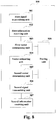
- FIG. 5 is a flowchart of the beam information acquisition method of the embodiment of this disclosure. As shown in FIG. 5 , the method includes:
- the M may be divisible by the K.
- the base station may use orthogonal resources to transmit one or more first reference signals (RSs) in the K antenna elements, and the K antenna elements may be K antenna elements continuously placed in the vertical direction, or may be K antenna elements in the vertical direction having fixed intervals.
- RSs first reference signals
- the base station may receive one or more beam indices (which may also be referred to as beam numbers, etc.) fed back by the user equipment based on the first reference signals.
- the transmission antenna port refers to a virtualization port formed by the planar antenna array at the base station side, and the base station may decide on its own the number of antenna ports to be used.
- the maximum number of antenna ports is the total number of TXRUs, that is, M TXRU ⁇ N ⁇ P; for example, the base station may use M ports, and may also use ports of another number; however, this disclosure is not limited thereto.
- each transmission antenna port may use one or more time-frequency resources to transmit the reference signals.
- the number of the ports and the number of the time-frequency resources are not limited in this disclosure, which may be any number of ports and any number of time-frequency resources.
- identical first codebooks consisting of beamforming weighting values of antennal elements of a length K are stored at both the base station side and the user equipment side. And in block 503, the base station may determine the vector having a length K according to the received beam index n and the first codebooks.
- the base station side may further store multiple second codebooks.
- the lengths and/or numbers of the DFT vectors may be partially or completely different.
- the base station may estimate a vector b L having a length L according to the vector b K having a length K; where, K ⁇ L ⁇ M.
- an n 1 -th codeword i.e., a vector
- an n 1 -th codeword is: 1 e j 2 ⁇ n 1 d N 1 ⁇ e j 2 ⁇ K ⁇ 1 n 1 d N 1 T
- an n 1 -th codeword is: 1 e j 2 ⁇ n 1 d N 1 ⁇ e j 2 ⁇ M ⁇ 1 n 1 d N 1 T .
- former K elements of the two codewords are identical, with an exception that beam widths formed by them are different, and a main lobe of a beam formed by the DFT vector of the length K is wider than that of a beam formed by the DFT vector of the length M.
- the vector b L of the length L may be estimated according to the vector b K of the length K.
- the base station may select multiple weighting vectors for each second codebook according to b L and the multiple second codebooks.
- M TXRU vectors containing b L and/or neighboring b L may be selected and taken as the weighting vectors;
- M TXRU is the number of transceiver units to which each column of the M antenna elements in the same polarization direction in the vertical direction are connected.
- N*M TXRU vectors containing b L and/or neighboring b L may be selected and taken as the weighting vectors;
- N is the number of columns of antenna elements in a two-dimensional planar array.
- the vectors neighboring b L refer to DFT vectors of indices neighboring b L in the same codebook (such as C L ). for example, if an index of b L is 7, when M TXRU is 4, M TXRU weighting vectors neighboring b L may be DFT vectors of indices 5, 6, 8, 9, in the codebook C L .
- the lengths of the selected weighting vectors may be M, and may also be less than M.
- the base station may use the multiple weighting vectors to perform weighting on the second reference signal based on the virtualization model 2 of TXRUs; in the virtualization model 2 of TXRUs, each transceiver unit is connected to a column of M antenna elements in the vertical direction.
- the lengths of the weighting vectors may be the DFT vectors of a length M, and when the lengths are less than M (such as a length L 1 ), the weighting may be achieved by setting M-L 1 weighting values to be zero.
- the base station may also use S time-frequency resource (where, 1 ⁇ S ⁇ N * M TXRU ) to transmit the second reference signal;
- the M TXRU is the number of transceiver units to which M antenna elements in the same polarization direction in each column in the vertical direction are connected.
- the feedback information may be denoted by a bitmap.
- the bitmap may include S bits (where, 1 ⁇ S ⁇ N*M TXRU ) corresponding respectively to S time-frequency resources; for values of the bits, 1 denotes that power of a signal transmitted by the base station and received by the user equipment at a corresponding port is greater than or equal to a predefined threshold value, and 0 denotes that power of a signal transmitted by the base station and received by the user equipment at a corresponding port is less than the predefined threshold value.
- the base station may determine a direction of signal transmission according to the feedback information. For example, if signals received by a certain user equipment at some ports are relatively intensive, beam weighting matrices may be appropriately adjusted, i.e., determining beam weighting information.
- the base station first transmits a reference signal at relative few ports, and calculates a vector of a relatively small length according to one or more beam indices that are fed back and estimates a vector of a relatively large length, then transmits a reference signal again according to vectors of relatively large lengths, so as to obtain power information on multiple transmission antenna ports fed back by the user equipment.
- the base station may relatively accurately obtain the beam weighting information, and the beam weighting information may be better applied to a massive MIMO system.
- the embodiment of this disclosure provides a beam information acquisition method, applicable to a user equipment.
- the embodiment of this disclosure shall be described from a user equipment side, with contents identical to those in Embodiment 1 being not going to be described any further.
- FIG. 6 is a flowchart of the beam information acquisition method of the embodiment of this disclosure. As shown in FIG. 6 , the method includes:
- the user equipment side may further store a first codebook; and in block 603, the user equipment may calculate the beam index n based on the first codebook according to the result of the channel estimation.
- the user equipment may further receive the second reference signal in S (where, 1 ⁇ S ⁇ N*M TXRU ) time-frequency resources; where, M TXRU is the number of transceiver units to which M antenna elements in the same polarization direction in each column in the vertical direction in the base station are connected.
- M TXRU is the number of transceiver units to which M antenna elements in the same polarization direction in each column in the vertical direction in the base station are connected.
- the user equipment may calculate receiving power of each port in the multiple transmission antenna ports.
- the user equipment sets corresponding information on the bitmap to be 1 when the receiving power is greater than or equal to the predefined threshold value, and sets corresponding information on the bitmap to be 0 when the receiving power is less than the predefined threshold value.
- the user equipment receives a reference signal transmitted by the base station at relative few ports and feeds back one or more beam indices, then receives a reference signal weighted by using weighting vectors and transmitted by the base station, generates power information on multiple transmission antenna ports according to the reference signal and feeds back the information to the base station.
- the base station may relatively accurately obtain the beam weighting information, and the beam weighting information may be better applied to a massive MIMO system.
- the embodiment of this disclosure provides a beam information acquisition method, which shall be described from a base station side and a user equipment side on a basis of embodiments 1 and 2, with contents identical to those in embodiments 1 and 2 being not going to be described any further.
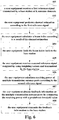
- FIG. 7 is a flowchart of the beam information acquisition method of the embodiment of this disclosure.
- the method may include two stages: a first stage is used for selection of initial beam information, and a second stage is used for selection of secondary beam information.
- the method includes:
- the first stage by using K ports of lengths less than M by the reference signal, resources occupied in transmitting the reference signal may be reduced, and a precise beam direction may be contained within a coverage range of a fed back DFT vector of a length K.
- the second stage is the first stage
- the base station estimates the vector of a relatively large length according to the vector of a relatively small length, and then transmits a reference signal again according to the vector of a relatively large length, so as to obtain the power information on the multiple transmission antenna ports fed back by the user equipment.
- the base station may relatively accurately obtain the beam weighting information.
- the base station first transmits a reference signal at relative few ports, and calculates a vector of a relatively small length according to one or more beam indices that are fed back and estimates a vector of a relatively large length, then transmits a reference signal again according to vectors of relatively large lengths, so as to obtain power information on multiple transmission antenna ports fed back by the user equipment.
- the base station may relatively accurately obtain the beam weighting information, and the beam weighting information may be better applied to a massive MIMO system.
- the embodiment of this disclosure provides a beam information acquisition apparatus, configured in a base station having a planar antenna array, the planar antenna array including multiple antenna elements, the multiple antenna elements forming multiple columns in a vertical direction and multiple rows in a horizontal direction.
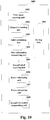
- FIG. 8 is a schematic diagram of the beam information acquisition apparatus of the embodiment of this disclosure. As shown in FIG. 8 , the beam information acquisition apparatus 800 includes:
- the M may be divisible by the K.
- the beam information acquisition apparatus 800 may further include:
- the first vector determining unit 803 is configured to determine the vector having a length K according to the received beam index n fed back by the user equipment and the first codebook; and the second vector determining unit 805 is configured to select multiple weighting vectors respectively for each of the second codebooks according to the vector having a length L and the multiple second codebooks.
- the second vector determining unit 805 may be configured to select N*M TXRU vectors and takes them as the weighting vectors; the weighting vectors contain the vector having a length L, and/or, the weighting vectors are adjacent to the vector having a length L; where, N is a positive integer, and the M TXRU is the number of transceiver units to which M antenna elements in the same polarization direction in each column in the vertical direction are connected.
- the second signal transmitting unit 806 may be configured to perform weighting on the second reference signal by using the multiple weighting vectors and based on a second TXRU virtualization model; in the second TXRU virtualization model, each of the transceiver units is connected to M antenna elements.
- the second signal transmitting unit 805 may be configured to use S time-frequency resources to transmit the second reference signal (where, 1 ⁇ S ⁇ N * M TXRU ); where, N is a positive integer, and the M TXRU is the number of transceiver units to which M antenna elements in the same polarization direction in each column in the vertical direction are connected.
- the feedback information received by the second information receiving unit 807 may be denoted by a bitmap; the bitmap may include S bits corresponding respectively to S time-frequency resources.
- 1 denotes that power of a signal transmitted by the base station and received by the user equipment at a corresponding port is greater than or equal to a predefined threshold value
- 0 denotes that power of a signal transmitted by the base station and received by the user equipment at a corresponding port is less than the predefined threshold value
- the embodiment of this disclosure further provides a base station, configured with the beam information acquisition apparatus 800 described above.
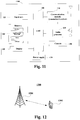
- FIG. 9 is a schematic diagram of a structure of the base station of the embodiment of this disclosure.
- the base station 900 may include a central processing unit (CPU) 200 and a memory 210, the memory 210 being coupled to the central processing unit 200.
- the memory 210 may store various data, and furthermore, it may store a program for information processing, and execute the program under control of the central processing unit 200.
- the base station 900 may carry out the beam information acquisition method described in Embodiment 1.
- the central processing unit 200 may be configured to carry out the functions of the beam information acquisition apparatus 800, that is, the central processing unit 200 may be configured to perform the following control: transmitting a first reference signal to user equipment by using K antenna elements; receiving a beam index fed back by the user equipment; determining a vector having a length K according to the beam index; estimating a vector having a length L according to the vector having a length K; determining multiple weighting vectors based on the vector having a length L; performing weighting on a second reference signal by using the multiple weighting vectors, and transmitting the weighted second reference signal to the user equipment; and receiving feedback information on multiple transmission antenna ports fed back by the user equipment, and acquiring beam weighting information according to the feedback information.
- the base station 900 may include a transceiver 220, and an antenna 230, etc. Functions of the above components are similar to those in the relevant art, and shall not be described herein any further. It should be appreciated that the base station 900 does not necessarily include all the parts shown in FIG. 9 , and furthermore, the base station 900 may include parts not shown in FIG. 9 , and the relevant art may be referred to.
- the base station first transmits a reference signal at relative few ports, and calculates a vector of a relatively small length according to one or more beam indices that are fed back and estimates a vector of a relatively large length, then transmits a reference signal again according to vectors of relatively large lengths, so as to obtain power information on multiple transmission antenna ports fed back by the user equipment.
- the base station may relatively accurately obtain the beam weighting information, and the beam weighting information may be better applied to a massive MIMO system.
- the embodiment of this disclosure provides a beam information acquisition apparatus, configured in a user equipment.
- FIG. 10 is a schematic diagram of the beam information acquisition apparatus of the embodiment of this disclosure. As shown in FIG. 10 , the beam information acquisition apparatus 1000 includes:
- the beam information acquisition apparatus 1000 may further include:
- the second signal receiving unit 1005 is further configured to receive the second reference signal in S time-frequency resources; where, 1 ⁇ S ⁇ N * M TXRU , N being a positive integer, and the M TXRU is the number of transceiver units to which M antenna elements in the same polarization direction in each column in the vertical direction in the base station are connected.
- the power calculating unit 1006 is further configured to, for each resource u, calculate receiving power of each of the multiple transmission antenna ports.
- the feedback information may be denoted by a bitmap, the bitmap including S bits corresponding respectively to S time-frequency resources.
- the power comparing unit 1007 is further configured to, for each of the time-frequency resources, set corresponding information of the bitmap as 1 when the receiving power is greater than or equal to the predefined threshold value, and set corresponding information of the bitmap as 0 when the receiving power is less than the predefined threshold value.
- the embodiment of this disclosure further provides a user equipment, configured with the above-described beam information acquisition apparatus 1000.
- FIG. 11 is a schematic diagram of a systematic structure of the user equipment of the embodiment of this disclosure.
- the user equipment 1100 may include a central processing unit 100 and a memory 140, the memory 140 being coupled to the central processing unit 100.
- this figure is illustrative only, and other types of structures may also be used, so as to supplement or replace this structure and achieve a telecommunications function or other functions.
- the functions of the beam information acquisition apparatus 1000 may be integrated into the central processing unit 100.
- the central processing unit 100 may be configured to perform the following control: receiving a first reference signal transmitted by a base station at K antenna elements; performing channel estimation according to the first reference signal; calculating a beam index according to a result of the channel estimation; feeding the beam index back to the base station; receiving a second reference signal weighted by using a weighting vector and transmitted by the base station; calculating receiving power of multiple transmission antenna ports according to the second reference signal; obtaining feedback information on the multiple transmission antenna ports by comparing the receiving power with a predefined threshold value; and transmitting the feedback information to the base station.
- the beam information acquisition apparatus 1000 and the central processing unit 100 may be configured separately.
- the beam information acquisition apparatus 1000 may be configured as a chip connected to the central processing unit 100, with its functions being realized under control of the central processing unit 100.
- the user equipment 1100 may further include a communication module 110, an input unit 120, an audio processor 130, a memory 140, a camera 150, a display 160 and a power supply 170. It should be appreciated that the user equipment 1100 does not necessarily include all the parts shown in FIG. 11 , and furthermore, the user equipment 1100 may include parts not shown in FIG. 11 , and the relevant art may be referred to.
- the user equipment receives a reference signals transmitted by the base station at relative few ports and feeds back one or more beam indices, then receives a reference signal weighted by using weighting vectors and transmitted by the base station, generates power information on multiple transmission antenna ports according to the reference signal and feeds back the information to the base station.
- the base station may relatively accurately obtain the beam weighting information, and the beam weighting information may be better applied to a massive MIMO system.
- FIG. 12 is a schematic diagram of the communications system of the embodiment of this disclosure.
- the communications system 1200 includes a base station 1201 and a user equipment 1202.
- the base station 1201 has a planar antenna array, the planar antenna array including multiple antenna elements, the multiple antenna elements forming multiple columns in a vertical direction and multiple rows in a horizontal direction.
- the base station 1201 is configured to transmit a first reference signal to user equipment by using K antenna elements, receive a beam index fed back by the user equipment, determine a vector having a length K according to the beam index, estimate a vector having a length L according to the vector having a length K, determine multiple weighting vectors based on the vector having a length L, perform weighting on a second reference signal by using the multiple weighting vectors, transmit the weighted second reference signal to the user equipment, receive feedback information on multiple transmission antenna ports fed back by the user equipment, and acquire beam weighting information according to the feedback information.
- the and user equipment 1202 is configured to receive a first reference signal transmitted by the base station at K antenna elements, perform channel estimation according to the first reference signal, calculate a beam index according to a result of the channel estimation, feed the beam index back to the base station, receive a second reference signal weighted by using weighting vectors and transmitted by the base station, calculate receiving power of multiple transmission antenna ports according to the second reference signal, obtain feedback information on the multiple transmission antenna ports by comparing the receiving power with a predefined threshold value, and transmit the feedback information to the base station.
- An embodiment of the present disclosure provides a computer readable program code, which, when executed in a base station, will cause a computer unit to carry out the beam information acquisition method described in Embodiment 1 in the base station.
- An embodiment of the present disclosure provides a computer readable medium, including a computer readable program code, which will cause a computer unit to carry out the beam information acquisition method described in Embodiment 1 in a base station.
- An embodiment of the present disclosure provides a computer readable program code, which, when executed in a user equipment, will cause a computer unit to carry out the beam information acquisition method described in Embodiment 2 in the user equipment.
- An embodiment of the present disclosure provides a computer readable medium, including a computer readable program code, which will cause a computer unit to carry out the beam information acquisition method described in Embodiment 2 in a user equipment.
- the above apparatuses and methods of the present disclosure may be implemented by hardware, or by hardware in combination with software.
- the present disclosure relates to such a computer-readable program that when the program is executed by a logic device, the logic device is enabled to carry out the apparatus or components as described above, or to carry out the methods or steps as described above.
- the present disclosure also relates to a storage medium for storing the above program, such as a hard disk, a floppy disk, a CD, a DVD, and a flash memory, etc.
- One or more functional blocks and/or one or more combinations of the functional blocks in the drawings may be realized as a universal processor, a digital signal processor (DSP), an application-specific integrated circuit (ASIC), a field programmable gate array (FPGA) or other programmable logic devices, discrete gate or transistor logic devices, discrete hardware component or any appropriate combinations thereof. And they may also be realized as a combination of computing equipment, such as a combination of a DSP and a microprocessor, multiple processors, one or more microprocessors in communication combination with a DSP, or any other such configuration.
- DSP digital signal processor
- ASIC application-specific integrated circuit
- FPGA field programmable gate array
Landscapes
- Engineering & Computer Science (AREA)
- Computer Networks & Wireless Communication (AREA)
- Signal Processing (AREA)
- Mobile Radio Communication Systems (AREA)
- Radio Transmission System (AREA)
- Physics & Mathematics (AREA)
- Mathematical Physics (AREA)
Applications Claiming Priority (1)
| Application Number | Priority Date | Filing Date | Title |
|---|---|---|---|
| PCT/CN2015/075590 WO2016154923A1 (zh) | 2015-03-31 | 2015-03-31 | 波束信息获取方法、装置以及通信系统 |
Publications (1)
| Publication Number | Publication Date |
|---|---|
| EP3280168A1 true EP3280168A1 (en) | 2018-02-07 |
Family
ID=57006449
Family Applications (1)
| Application Number | Title | Priority Date | Filing Date |
|---|---|---|---|
| EP15886909.9A Withdrawn EP3280168A1 (en) | 2015-03-31 | 2015-03-31 | Method, device and communication system for obtaining beam information |
Country Status (6)
| Country | Link |
|---|---|
| US (1) | US20180006697A1 (ko) |
| EP (1) | EP3280168A1 (ko) |
| JP (1) | JP2018514994A (ko) |
| KR (1) | KR20170128452A (ko) |
| CN (1) | CN107409318A (ko) |
| WO (1) | WO2016154923A1 (ko) |
Families Citing this family (6)
| Publication number | Priority date | Publication date | Assignee | Title |
|---|---|---|---|---|
| CN106470096B (zh) * | 2015-08-14 | 2021-03-23 | 索尼公司 | 用于无线通信的基站侧和用户设备侧的装置及方法 |
| CN108632836B (zh) | 2017-03-17 | 2019-12-03 | 维沃移动通信有限公司 | 波束信息获取方法和上报方法、网络侧设备及终端 |
| EP3783806B1 (en) * | 2018-04-18 | 2024-08-21 | Nokia Shanghai Bell Co., Ltd. | Method and device for virtual port mapping for massive mimo |
| CN113328769B (zh) * | 2020-02-28 | 2022-09-02 | 上海华为技术有限公司 | 数据处理方法及其设备 |
| CN114520678B (zh) * | 2020-11-19 | 2023-08-01 | 中国移动通信集团设计院有限公司 | 广播波束的发送方法和装置、电子设备以及存储介质 |
| KR102756947B1 (ko) * | 2021-09-16 | 2025-01-21 | 한국전력공사 | 전송효율 달성을 위한 수신전력 기반 빔 스캐닝 알고리즘을 갖는 무선 전력 전송 시스템 및 방법 |
Family Cites Families (15)
| Publication number | Priority date | Publication date | Assignee | Title |
|---|---|---|---|---|
| KR101921669B1 (ko) * | 2011-12-27 | 2018-11-27 | 삼성전자주식회사 | FDD 모드로 동작하는 Massive MIMO를 사용하는 무선통신 시스템에서 제한된 정보량을 이용하여 채널 상태 정보를 피드백 하기 위한 장치 및 방법 |
| KR101922597B1 (ko) * | 2011-12-27 | 2019-02-21 | 삼성전자주식회사 | Fdd 모드로 동작하는 거대 mimo 시스템에서 채널상태정보 기준신호를 전송하고 수신하기 위한 송수신 장치 및 방법 |
| US9397738B2 (en) * | 2012-05-17 | 2016-07-19 | Qualcomm Incorporated | Codebook and feedback design for high order MIMO |
| KR102105338B1 (ko) * | 2013-03-08 | 2020-04-28 | 삼성전자 주식회사 | 다중 안테나 시스템의 송수신 장치 및 방법 |
| WO2014142504A1 (ko) * | 2013-03-11 | 2014-09-18 | 엘지전자 주식회사 | 무선 통신 시스템에서 채널 상태 정보 보고 방법 및 장치 |
| JP6396422B2 (ja) * | 2013-04-08 | 2018-09-26 | エルジー エレクトロニクス インコーポレイティド | 無線通信システムにおいて分割ビームフォーミングのための制御情報提供方法及びそのための装置 |
| CN110212958B (zh) * | 2013-05-21 | 2021-03-26 | 上海朗帛通信技术有限公司 | 一种移动通信系统中的信道信息反馈方法和装置 |
| CN104348763B (zh) * | 2013-07-23 | 2018-06-05 | 华为技术有限公司 | 一种用于大规模天线的信道测量方法和用户终端 |
| CN103475401B (zh) * | 2013-09-18 | 2017-02-01 | 北京北方烽火科技有限公司 | 一种下行波束赋形方法与装置 |
| JP6416869B2 (ja) * | 2014-02-21 | 2018-10-31 | 株式会社Nttドコモ | 無線通信制御方法および無線通信システム |
| CN104202073A (zh) * | 2014-03-04 | 2014-12-10 | 中兴通讯股份有限公司 | 信道信息的反馈方法、导频及波束发送方法、系统及装置 |
| JP2015185953A (ja) * | 2014-03-20 | 2015-10-22 | 株式会社Nttドコモ | ビーム選択方法、基地局、およびユーザ装置 |
| US9893789B2 (en) * | 2014-04-10 | 2018-02-13 | Lg Electronics Inc. | Method of transmitting a reference signal in a wireless communication system and apparatus therefor |
| EP3140922B1 (en) * | 2014-05-08 | 2019-03-27 | Telefonaktiebolaget LM Ericsson (publ) | Beam forming using a dual polarized antenna arrangement |
| EP3350940B1 (en) * | 2015-09-16 | 2020-11-04 | Telefonaktiebolaget LM Ericsson (PUBL) | Precoding over a beam subset |
-
2015
- 2015-03-31 KR KR1020177029117A patent/KR20170128452A/ko not_active Ceased
- 2015-03-31 WO PCT/CN2015/075590 patent/WO2016154923A1/zh not_active Ceased
- 2015-03-31 CN CN201580077236.8A patent/CN107409318A/zh active Pending
- 2015-03-31 JP JP2017550715A patent/JP2018514994A/ja not_active Withdrawn
- 2015-03-31 EP EP15886909.9A patent/EP3280168A1/en not_active Withdrawn
-
2017
- 2017-09-13 US US15/703,563 patent/US20180006697A1/en not_active Abandoned
Also Published As
| Publication number | Publication date |
|---|---|
| US20180006697A1 (en) | 2018-01-04 |
| WO2016154923A1 (zh) | 2016-10-06 |
| JP2018514994A (ja) | 2018-06-07 |
| CN107409318A (zh) | 2017-11-28 |
| KR20170128452A (ko) | 2017-11-22 |
Similar Documents
| Publication | Publication Date | Title |
|---|---|---|
| US10819406B2 (en) | Codebook-based channel state information feedback method and device | |
| US20180006697A1 (en) | Beam Information Acquisition Method and Apparatus and Communications System | |
| US20220224391A1 (en) | Methods and Apparatuses for CSI Reporting in a Wirless CFCommunication System | |
| EP3993281A1 (en) | Precoding processing method and device | |
| EP3116258B1 (en) | Method for reporting channel state information, user equipment, and base station | |
| EP3565133B1 (en) | Method for feeding back channel state information, terminal device, and network device | |
| EP3522677A1 (en) | Method and device for transmitting channel state information | |
| US20170250745A1 (en) | Beam Forming Using a Two-Dimensional Antenna Arrangement | |
| EP3444960B1 (en) | Two-stage precoding method and device | |
| EP2950458A1 (en) | Feedback method for channel state information, transmission method for channel state information reference signal, user equipment and base station | |
| EP3648364B1 (en) | Beamforming method and device | |
| US20130223487A1 (en) | Wireless apparatus and wireless communication system | |
| CN107852209B (zh) | 训练波束传输方法、装置及系统 | |
| EP2913950A1 (en) | Method, system, and device for transmitting coding instruction information and for determining pre-coding matrix | |
| US10615855B2 (en) | Method and device for determining codebook | |
| CN106105065A (zh) | 无线电频率波束成形基函数反馈 | |
| EP3185454A1 (en) | Precoded information acquisition device, method and system | |
| US10601559B2 (en) | Methods and devices for transmitting and receiving pilot signal | |
| US10541839B2 (en) | System and method for angular-domain channel estimation of massive MIMO system with low-resolution ADC with time-varying thresholds | |
| US20170230091A1 (en) | Method and apparatus for determining codebook and communication system | |
| WO2016183803A1 (zh) | 天线阵列的信道信息反馈方法与装置 | |
| US9762307B2 (en) | Communication system and communication control method using interference channel matrix | |
| CN108123745B (zh) | 一种数据传输方法、接收机及发射机 | |
| WO2017008307A1 (en) | Method and apparatus for performing beamforming | |
| EP3910807B1 (en) | Communication method and device |
Legal Events
| Date | Code | Title | Description |
|---|---|---|---|
| STAA | Information on the status of an ep patent application or granted ep patent |
Free format text: STATUS: THE INTERNATIONAL PUBLICATION HAS BEEN MADE |
|
| PUAI | Public reference made under article 153(3) epc to a published international application that has entered the european phase |
Free format text: ORIGINAL CODE: 0009012 |
|
| STAA | Information on the status of an ep patent application or granted ep patent |
Free format text: STATUS: REQUEST FOR EXAMINATION WAS MADE |
|
| 17P | Request for examination filed |
Effective date: 20170831 |
|
| AK | Designated contracting states |
Kind code of ref document: A1 Designated state(s): AL AT BE BG CH CY CZ DE DK EE ES FI FR GB GR HR HU IE IS IT LI LT LU LV MC MK MT NL NO PL PT RO RS SE SI SK SM TR |
|
| AX | Request for extension of the european patent |
Extension state: BA ME |
|
| STAA | Information on the status of an ep patent application or granted ep patent |
Free format text: STATUS: THE APPLICATION HAS BEEN WITHDRAWN |
|
| DAV | Request for validation of the european patent (deleted) | ||
| DAX | Request for extension of the european patent (deleted) | ||
| 18W | Application withdrawn |
Effective date: 20180612 |