EP3281296B1 - Frequenzsprungverfahren für maschinenkommunikation - Google Patents
Frequenzsprungverfahren für maschinenkommunikation Download PDFInfo
- Publication number
- EP3281296B1 EP3281296B1 EP15888676.2A EP15888676A EP3281296B1 EP 3281296 B1 EP3281296 B1 EP 3281296B1 EP 15888676 A EP15888676 A EP 15888676A EP 3281296 B1 EP3281296 B1 EP 3281296B1
- Authority
- EP
- European Patent Office
- Prior art keywords
- frequency hopping
- corresponds
- parameters
- physical
- shared channel
- Prior art date
- Legal status (The legal status is an assumption and is not a legal conclusion. Google has not performed a legal analysis and makes no representation as to the accuracy of the status listed.)
- Active
Links
Images




Classifications
-
- H—ELECTRICITY
- H04—ELECTRIC COMMUNICATION TECHNIQUE
- H04B—TRANSMISSION
- H04B1/00—Details of transmission systems, not covered by a single one of groups H04B3/00 - H04B13/00; Details of transmission systems not characterised by the medium used for transmission
- H04B1/69—Spread spectrum techniques
- H04B1/713—Spread spectrum techniques using frequency hopping
- H04B1/7143—Arrangements for generation of hop patterns
-
- H—ELECTRICITY
- H04—ELECTRIC COMMUNICATION TECHNIQUE
- H04W—WIRELESS COMMUNICATION NETWORKS
- H04W4/00—Services specially adapted for wireless communication networks; Facilities therefor
- H04W4/70—Services for machine-to-machine communication [M2M] or machine type communication [MTC]
-
- H—ELECTRICITY
- H04—ELECTRIC COMMUNICATION TECHNIQUE
- H04B—TRANSMISSION
- H04B1/00—Details of transmission systems, not covered by a single one of groups H04B3/00 - H04B13/00; Details of transmission systems not characterised by the medium used for transmission
- H04B1/69—Spread spectrum techniques
- H04B1/713—Spread spectrum techniques using frequency hopping
- H04B1/715—Interference-related aspects
- H04B2001/7154—Interference-related aspects with means for preventing interference
-
- H—ELECTRICITY
- H04—ELECTRIC COMMUNICATION TECHNIQUE
- H04L—TRANSMISSION OF DIGITAL INFORMATION, e.g. TELEGRAPHIC COMMUNICATION
- H04L69/00—Network arrangements, protocols or services independent of the application payload and not provided for in the other groups of this subclass
- H04L69/30—Definitions, standards or architectural aspects of layered protocol stacks
- H04L69/32—Architecture of open systems interconnection [OSI] 7-layer type protocol stacks, e.g. the interfaces between the data link level and the physical level
- H04L69/322—Intralayer communication protocols among peer entities or protocol data unit [PDU] definitions
- H04L69/323—Intralayer communication protocols among peer entities or protocol data unit [PDU] definitions in the physical layer [OSI layer 1]
-
- H—ELECTRICITY
- H04—ELECTRIC COMMUNICATION TECHNIQUE
- H04W—WIRELESS COMMUNICATION NETWORKS
- H04W72/00—Local resource management
- H04W72/20—Control channels or signalling for resource management
- H04W72/23—Control channels or signalling for resource management in the downlink direction of a wireless link, i.e. towards a terminal
Definitions
- Embodiments of the present invention relate to a frequency hopping method for machine type communication.
- Machine type communication is wireless communication that seeks to communicate with devices by using new modulation/signal processing techniques.
- MTC has been described by the 3 rd Generation Partnership Project (3GPP), and is based upon previous network technologies. Since its inception, MTC has seen extensive deployment in a wide variety of contexts involving the communication of data.
- 3GPP 3 rd Generation Partnership Project
- WF on PDSCH for Rel-13 Low Complexity UE NTT DOCOMO et al.
- 3GPP draft; R1-150871 describes frequency hopping for Rel-13 low complexity UEs.
- International patent publication no. WO 2014/048261 relates to MTC UEs and receive the downlink information under a downlink narrowband condition.
- Frequency hopping schemes for LTE Rel-13 MTC relates to design of frequency hopping schemes tailored for uplink transmission (e.g. PUSCH, PUCCH) as well as downlink transmission (e.g. PDSCH, EPDCCH) for LTE Rel-13 MTC.
- uplink transmission e.g. PUSCH, PUCCH
- downlink transmission e.g. PDSCH, EPDCCH
- a method may include receiving, by a machine type communication user equipment, parameters for frequency hopping in downlink or uplink.
- the parameters may include "X,” “Y,” and “Z” parameters.
- "X” corresponds to a duration for which the same physical resource blocks are used for transmission.
- "Y” corresponds to a frequency hopping period.
- “Z” corresponds to a frequency hopping pattern indication.
- "Y” corresponds to ceiling (K/n)
- K corresponds to a number of repetitions
- n is an integer greater than or equal to 2
- n is the number of hops in one data transmission configured by an evolved Node B
- the method may also include performing frequency hopping in accordance with the parameters.
- the one or more parameters for frequency hopping are broadcast, configured via radio resource control signalling or configured via Layer 1 (L1) signalling.
- "X" and “Y” are based on physical downlink shared channel or machine type communication downlink control channel or physical uplink shared channel or physical random access channel repetition levels.
- "X" is based on a channel estimation filter length.
- Z is based on an offset or a predefined pattern for physical downlink shared channel or machine type communication downlink control channel or physical uplink shared channel or physical random access channel frequency hopping.
- the predefined pattern includes half-bandwidth frequency hopping or one-fourth-bandwidth frequency hopping.
- Z is the index of a pattern of pre-defined PRB blocks, where 6 PRBs constitute a PRB block, for physical downlink shared channel or physical uplink shared channel frequency hopping.
- Z is the index of any consecutive 6 PRBs, for physical downlink shared channel or physical uplink shared channel frequency hopping.
- the position of frequency hopping is indicated by DCI, where additional bits provide the information of the position of the 6 PRBs for each hop.
- "Z" is indicated by higher layer signaling, more specifically, "Z” is indicated for the physical downlink shared channel and physical uplink shared channel by the frequency hopping configuration for the respective channel, and indicated by the frequency hopping configuration in the random access response for the machine type communication downlink control channel.
- an apparatus may include at least one processor.
- the apparatus may also include at least one memory including computer program code.
- the at least one memory and the computer program code may be configured, with the at least one processor, to cause the apparatus at least to receive parameters for frequency hopping in downlink or uplink.
- the parameters comprise "X,” "Y,” and "Z” parameters.
- "X” corresponds to a duration for which the same physical resource blocks are used for transmission.
- "Y” corresponds to a frequency hopping period.
- “Z” corresponds to a frequency hopping pattern indication.
- Y corresponds to ceiling (K/n)
- K corresponds to a number of repetitions
- n is an integer greater than or equal to 2
- n is the number of hops in one data transmission configured by an evolved Node B.
- the apparatus may also be caused to perform frequency hopping in accordance with the parameters.
- the one or more parameters for frequency hopping are broadcast, configured via radio resource control signalling or configured via Layer 1 (L1) signalling.
- "X" and “Y” are based on physical downlink shared channel or machine type communication downlink control channel or physical uplink shared channel or physical random access channel repetition levels.
- "X" is based on a channel estimation filter length.
- Z is based on an offset or a predefined pattern for physical downlink shared channel or machine type communication downlink control channel or physical uplink shared channel or physical random access channel frequency hopping.
- the predefined pattern includes half-bandwidth frequency hopping or one-fourth-bandwidth frequency hopping.
- Z is the index of a pattern of pre-defined PRB blocks, where 6 PRBs constitute a PRB block, for physical downlink shared channel or physical uplink shared channel frequency hopping.
- Z is the index of any consecutive 6 PRBs, for physical downlink shared channel or physical uplink shared channel frequency hopping.
- the position of frequency hopping is indicated by DCI, where additional bits provide the information of the position of the 6 PRBs for each hop.
- "Z” is indicated by higher layer signaling, more specifically, "Z” is indicated for the physical downlink shared channel and physical uplink shared channel by the frequency hopping configuration for the respective channel, and indicated by the frequency hopping configuration in the random access response for the MTC downlink control channel.
- a computer program product may be embodied on a non-transitory computer readable medium.
- the computer program product may be configured to control a processor to perform a process, including receiving, by a machine type communication user equipment, parameters for frequency hopping in downlink and uplink.
- the parameters may include "X,” “Y,” and “Z” parameters.
- "X” corresponds to a duration for which the same physical resource blocks are used for transmission.
- "Y” corresponds to a frequency hopping period.
- “Z” corresponds to a frequency hopping pattern indication.
- Y corresponds to ceiling (K/n)
- K corresponds to a number of repetitions
- n is an integer greater than or equal to 2
- n is the number of hops in one data transmission configured by an evolved Node B.
- the process may also include performing frequency hopping in accordance with the parameters.
- the one or more parameters for frequency hopping are broadcast, configured via radio resource control signalling or configured via Layer 1 (L1) signalling.
- "X" and “Y” are based on physical downlink shared channel or machine type communication downlink control channel or physical uplink shared channel or physical random access channel repetition levels.
- "X" is based on a channel estimation filter length.
- Z is based on an offset or a predefined pattern for physical downlink shared channel or machine type communication downlink control channel or physical uplink shared channel or physical random access channel frequency hopping.
- the predefined pattern includes half-bandwidth frequency hopping or one-fourth-bandwidth frequency hopping.
- Z is the index of a pattern of pre-defined PRB blocks, where 6 PRBs constitute a PRB block, for physical downlink shared channel or physical uplink shared channel frequency hopping.
- Z is the index of any consecutive 6 PRBs, for physical downlink shared channel or physical uplink shared channel frequency hopping.
- the position of frequency hopping is indicated by DCI, where additional bits provide the information of the position of the 6 PRBs for each hop.
- "Z" is indicated by higher layer signaling, more specifically, "Z” is indicated for the physical downlink shared channel and physical uplink shared channel by the frequency hopping configuration for the respective channel, and indicated by the frequency hopping configuration in the random access response for the MTC downlink control channel.
- Certain embodiments of the present invention relate to a frequency hopping method for machine type communication. Certain embodiments of the present invention relate to the 3GPP Release 13 Work Item entitled "Further LTE Physical Layer Enhancements for MTC.” One of the objectives of certain embodiments is to improve coverage enhancement. Another objective may be to implement related techniques such as frequency hopping, for example.
- MTC machine type communications
- UE user equipment
- PRBs physical resource blocks
- frequency hopping may be a promising technique for further consideration.
- R1-150254 For improvement of physical uplink shared channel coverage, R1-150254 has provided a similar observation. R1-150254 has described the following: "Observation 2: For PUSCH, cross-subframe channel estimation reduces the number of required repetitions significantly. At high coverage enhancement level, increased DMRS density and PSD boosting below 1 PRB can also reduce the number of required repetitions significantly. Frequency hopping is also promising techniques but requires further study.” As such, frequency hopping may be a promising technique for enhancing coverage for physical uplink shared channel (PUSCH) and for physical downlink shared channel (PDSCH).
- PUSCH physical uplink shared channel
- PDSCH physical downlink shared channel
- the scheduled PRB is in the same (frequency domain) position during at least X subframes. Assuming that the channel does not vary significantly during those X subframes, the channel for that PRB can be estimated by using reference symbols in all X subframes with the help of an appropriate filter. The value of "X" and the configuration are intended to be studied further. Having the PRB position as the same for X subframes does not preclude discontinuous transmission for unicast PDSCH.
- Frequency hopping is supported over the system bandwidth (BW). If/when frequency hopping is applied, a frequency location should be switched after every Y consecutive subframes, where Y is equal to or larger than X, assuming that a re-tuning time is included in Y. Configurability is intended to be studied further.
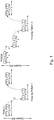
- Fig. 1 illustrates a frequency hopping frequency and configuration.
- X may correspond to a duration of same PRB position (to enable cross-subframe channel estimation), and the unit of measurement may be a subframe.
- Y may correspond to a frequency hopping period (equal to or greater than X, including a re-tuning time), and the unit of measurement may be a subframe.
- Z may correspond to a frequency hopping pattern indication.
- Certain embodiments of the present invention may be directed to the configuration of (X, Y, Z) parameters for frequency hopping in DL and UL.
- X and Y are based on the Enhanced-Physical-Downlink-Control-Channel / Physical-Downlink-Shared-Channel or Physical-Uplink-Shared-Channel/Physical-Random-Access-Channel repetition level, or based on a coverage enhancement level in UL and DL.
- the repetition level is configured by the eNB and each transmission is repeated a pre-defined number of times for each repetition level.
- the maximum values of X and Y should be less than the number of repetitions configured for the UE.
- Y depends on a channel estimation filter length to allow UE to start cross-subframe channel estimation prior to PDSCH/PUSCH transmission by the eNB.
- Cross-subframe channel estimation also depends on the phase continuity at the eNB/UE. So, in one embodiment, Y can depend on the assumed phase continuity at the eNB/UE.
- K number of repetition
- n is an integer greater than or equal to 2.
- "n” is a parameter configured by the eNB. There may be one parameter "n” that can be used to calculate X and Y, regardless of the repetition level. In other words, if MTC knows the repetition numbers of all repetition levels, the X and Y will update automatically if a repetition level is adjusted. This is more suitable for the case that frequency hopping pattern is indicated by DCI.
- the values of X and Y are the same for all repetition levels and, with the information of configured maximum repetition number for the repetition level, an MTC UE can derive the number of frequency hops via dividing the repetition number by Y. If repetition level adaptation is allowed, the eNB needs to inform the UE the repetition numbers corresponding to all repetition levels; therefore, UE could simply adjust the number of frequency hops when the repetition level is updated, in case the half-system-bandwidth frequency hopping pattern is applied
- the value of X may correspond to Y-1, for example, when the re-tuning time does not exceed a subframe duration.
- the initial X and Y are based on a preamble repetition level that is used in a random access procedure. During an initial system access, the preamble repetition level is used as a starting point for a UE coverage enhancement level.
- the UE when an eNB schedules a coverage enhancement MTC UE, the UE can be scheduled in any continuous 6 PRBs.
- frequency hopping of enhanced physical downlink control channel (EPDCCH) and PDSCH is implemented by switching a fixed frequency position, for example, switching by half of the system bandwidth or one-fourth of the system bandwidth. More specifically, for half-bandwidth frequency hopping, the PRB position after frequency hopping is determined by adding a half-system-bandwidth with the PRB position prior to the hopping and wrapping around to remain inside the system bandwidth.
- N RB DL is a system bandwidth, expressed in multiple ofPRB.
- n first PRB is the first PRB index of a continuous 6 PRBs before the frequency hopping.
- n PRB hopping is the first PRB index of a continuous 6 PRBs after the frequency hopping.
- the PUSCH or physical random access channel (PRACH) frequency hopping is similar to PDSCH frequency hopping, and only the PRBs allocated to PUCCH are precluded from system bandwidth to avoid collision with PUCCH PRBs.
- PRACH physical random access channel
- the frequency hopping pattern can be determined as N RB PUCCH are the PRB numbers allocated for PUCCH transmission in half of the system bandwidth.
- Frequency hopping of EPDCCH, PDSCH, and PUSCH can be configured separately by higher layer signalling.
- the frequency location of physical channels can be switched several times according to the configured repetition level.
- Enabling of frequency hopping can be indicated by higher layer signalling, such as by Random Access Response (RAR) or by physical layer signalling.
- RAR Random Access Response
- enabling of frequency hopping can be signalled by, for example, 1 bit in downlink control information (DCI).
- DCI downlink control information
- frequency-hopping-related information is embedded in the PRACH configuration, including whether frequency hopping is enabled or not, X or Y value indication, and frequency hopping pattern indication such as half-system bandwidth frequency hopping or one-fourth bandwidth frequency hopping.
- the PUCCH PRBs are excluded from the system bandwidth.
- the pattern may also include an offset that depends on a physical cell ID (PCI) to randomize inter-cell interference.
- PCI physical cell ID
- a MTC UE can only be scheduled within predefined 6-PRB regions, according to the system bandwidth.
- the UL or DL PRB(s) position (after each frequency hopping) is signalled in DCI carried by EPDCCH (when scheduling PDSCH or PUSCH).
- the frequency hopping information can be carried by higher layer signalling with PDSCH or PUSCH configuration.
- the frequency hopping information may include the initial 6 PRBs position and duration, the 6 PRBs position in a first frequency hopping and duration, and so on.
- the PRB(s) position indication can be configured for the UE, in terms of the operating 6-PRB allocation, by higher layer signalling, such as RAR signalling.
- MTC UE can be scheduled in any continuous 6 PRBs in the system bandwidth.
- the UL or DL PRB(s) position after frequency hopping is signaled in DCI carried by EPDCCH (scheduling PDSCH or PUSCH).
- the frequency hopping information can be carried by higher layer signalling with PDSCH or PUSCH configuration, such as the initial 6 PRBs position and duration, 6 PRBs position in first frequency hopping and duration, and so on.
- the PRB position indication can be configured for the UE, in terms of the operating 6-PRB allocation, by higher layer signalling such as RAR signalling.
- certain embodiments of the present invention when hopping is applied on one link (DL or UL), the same pattern is also simultaneously applied on the other link. In case UE needs to maintain the same Tx-Rx separation, certain embodiments may synchronize hopping.
- Certain embodiments of the present invention implement UL and DL frequency hopping for low cost MTC in coverage mode.
- X and Y may be based on a EPDCCH/PDSCH repetition level, a PUSCH/PRACH repetition level, or based on a configured coverage enhancement level in UL and DL. In another embodiment, X and Y are separately configured for EPDCCH, PDSCH, PUSCH, and PRACH.
- X and Y can either be semi-statically configured, dynamically assigned, and/or derived from another transmission.
- X & Y for Msg3 transmission can be derived from the number of PRACH repetitions.
- X and Y are dependent on the type of transmission.
- X & Y could be different for a RAR, Paging, unicast, System Information Block (SIB), or broadcast channel.
- SIB System Information Block
- One parameter "n" can be specified that can be used to calculate X and Y, regardless of the repetition level. In other words, the X and Y values may update automatically if the repetition level is adjusted.
- frequency hopping is based on an offset or a predefined pattern.
- the offset is based on the system bandwidth, is provided in the DCI, is based on a physical cell ID, and/or is configured via higher layer signalling.
- the predefined pattern may be based on a system bandwidth or a physical cell ID, and the hopping information may be configured via higher layer signalling.
- the same pattern is also simultaneously applied on the other link.
- the MTC UE can be scheduled in any 6 continuous PRBs by eNB, if frequency hopping is enabled. After repeated transmission with a predefined number of repetitions in the same 6 PRBs, the MTC UE may transmit or receive in another 6 PRBs. The frequency location may be shifted by half the system bandwidth. For instance, if the system bandwidth is 100 PRBs and the PDSCH is initially transmitted in PRB #5-12, then after the frequency hopping, the PDSCH will be transmitted in PRB #55-62. Also, frequency hopping can be performed several times according to a repetition level. Then, after another frequency hopping, the PDSCH will be transmitted again in PRB #5-12.
- Fig. 2 illustrates frequency hopping with a half-system-bandwidth. As illustrated by Fig. 2 , with repetition level 2, frequency hopping is performed twice. Also according to these embodiments, the frequency hopping configuration can be different for different MTC UEs.
- the available 6 PRBs for MTC UE is determined according to the center 6 PRBs.
- the central 6 PRBs may be used for PBCH/SIB/Paging reception, and the 6 PRBs allocated to MTC UE are not overlapped with the center 6 PRBs. If the system bandwidth is 20 MHz (corresponding to 100 PRBs, for example), each half of the bandwidth could have 47 PRBs available for MTC usage. 7 x 6 PRBs can be allocated to MTC UEs, and 5 PRBs may not be used within the half-bandwidth. So, there are a total of 15 (7+1+7) PRB blocks for MTC usage.
- the 4x m bits of hopping information can be included in DCI (carried by EPDCCH), where m is the number of hops for one data transmission. If frequency hopping information is accompanying an indication of MTC operating PRBs, the hopping information could comprise ⁇ initial 6 PRBs position, 6 PRBs position in first hopping, 6 PRBs position in second hopping... ⁇ . In another way, the 6-PRB allocation does not depend on isolating the central 6 PRBs; for example, if 6 PRBs constitute a PRB block, there are at most 16 PRB blocks available for MTC usage, and again 4 bits are needed in DCI for each frequency hopping.
- the frequency position for each hopping in one data transmission can be flexibly determined by the eNB.
- the available PRBs for MTC usage are less than the first embodiment and more DCI bits are required for frequency hopping.
- the illustration of a second embodiment is illustrated by Fig. 3.
- Fig. 3 illustrates frequency hopping with a PRBs pattern.
- the first PRB index of the allocated PRB block can be flexibly configured by the eNB.
- more bits in DCI are required to indicate the PRB position after the hopping.
- the eNB has more flexibility to scheduling MTC UE and hopping. But, with an increase in MTC devices, the eNB scheduling could get more complex and the frequency diversity gain will decrease.
- certain embodiments of the present invention may be robust and automatically adapted to implicitly update a repetition level, and additional Radio Resource Control (RRC) signaling may not be required.
- RRC Radio Resource Control
- the first embodiment has little impact on standards, while most of frequency diversity gains can be achieved.
- the second embodiment may allow the eNB to have more flexibility to configure the frequency position location.
- the cost could be an increase in DCI size, and the EPDCCH transmission may need more repetition.
- the third embodiment may be more flexible than the second embodiment, but the third embodiment may need to add more bits in DCI.
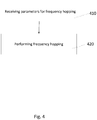
- Fig. 4 illustrates a flowchart of a method in accordance with certain embodiments of the invention.
- the method illustrated in Fig. 4 includes, at 410, receiving, by a machine type communication user equipment, parameters for frequency hopping in downlink or uplink.
- the parameters comprise an "X,” “Y,” and “Z” parameters.
- "X” corresponds to a duration for which the same physical resource blocks are used for transmission.
- "Y” corresponds to a frequency hopping period
- “Z” corresponds to a frequency hopping pattern indication.
- the method may also include, at 420, performing frequency hopping in accordance with the parameters.
- Fig. 5 illustrates an apparatus in accordance with certain embodiments of the invention.
- the apparatus can be a user equipment, a base station, and/or a MTC device, for example.
- the apparatus can be a network node.
- Apparatus 10 can include a processor 22 for processing information and executing instructions or operations.
- Processor 22 can be any type of general or specific purpose processor. While a single processor 22 is shown in Fig. 5 , multiple processors can be utilized according to other embodiments.
- Processor 22 can also include one or more of general-purpose computers, special purpose computers, microprocessors, digital signal processors (DSPs), field-programmable gate arrays (FPGAs), application-specific integrated circuits (ASICs), and processors based on a multi-core processor architecture, as examples.
- DSPs digital signal processors
- FPGAs field-programmable gate arrays
- ASICs application-specific integrated circuits
- Apparatus 10 can further include a memory 14, coupled to processor 22, for storing information and instructions that can be executed by processor 22.
- Memory 14 can be one or more memories and of any type suitable to the local application environment, and can be implemented using any suitable volatile or nonvolatile data storage technology such as a semiconductor-based memory device, a magnetic memory device and system, an optical memory device and system, fixed memory, and removable memory.
- memory 14 include any combination of random access memory (RAM), read only memory (ROM), static storage such as a magnetic or optical disk, or any other type of non-transitory machine or computer readable media.
- the instructions stored in memory 14 can include program instructions or computer program code that, when executed by processor 22, enable the apparatus 10 to perform tasks as described herein.
- Apparatus 10 can also include one or more antennas (not shown) for transmitting and receiving signals and/or data to and from apparatus 10.
- Apparatus 10 can further include a transceiver 28 that modulates information on to a carrier waveform for transmission by the antenna(s) and demodulates information received via the antenna(s) for further processing by other elements of apparatus 10.
- transceiver 28 can be capable of transmitting and receiving signals or data directly.
- Processor 22 can perform functions associated with the operation of apparatus 10 including, without limitation, precoding of antenna gain/phase parameters, encoding and decoding of individual bits forming a communication message, formatting of information, and overall control of the apparatus 10, including processes related to management of communication resources.
- apparatus 10 may receive parameters for frequency hopping in downlink or uplink.
- the parameters may include an "X,” “Y,” and “Z” parameters.
- "X” may correspond to a duration for which the same physical resource blocks are used for transmission.
- "Y” may correspond to a frequency hopping period.
- "Z” may correspond to a frequency hopping pattern indication.
- Apparatus 10 may also perform frequency hopping in accordance with the parameters.
- memory 14 can store software modules that provide functionality when executed by processor 22.
- the modules can include an operating system 15 that provides operating system functionality for apparatus 10.
- the memory can also store one or more functional modules 18, such as an application or program, to provide additional functionality for apparatus 10.
- the components of apparatus 10 can be implemented in hardware, or as any suitable combination of hardware and software.
- Apparatus 600 can be a network element/entity such as a user equipment, for example.
- Apparatus 600 can include a receiving unit 610 that receives, by a machine type communication user equipment, parameters for frequency hopping in downlink or uplink, wherein the parameters comprise an "X,” "Y,” and “Z” parameters, "X” corresponds to a duration for which the same physical resource blocks are used for transmission.
- "Y" corresponds to a frequency hopping period
- “Z” corresponds to a frequency hopping pattern indication.
- Apparatus 600 can also include a performing unit 620 that performs frequency hopping in accordance with the parameters.
Landscapes
- Engineering & Computer Science (AREA)
- Computer Networks & Wireless Communication (AREA)
- Signal Processing (AREA)
- Mobile Radio Communication Systems (AREA)
Claims (13)
- Verfahren, das Folgendes umfasst:Empfangen (410) durch ein Anwendergerät für Kommunikationen des Maschinentyps von Parametern zum Frequenzspringen in einer Abwärtsstrecke oder einer Aufwärtsstrecke, wobei die Parameter "X"-, "Y"- und "Z"-Parameter umfassen, "X" einer Dauer entspricht, für die dieselben physikalischen Betriebsmittelblöcke zur Übertragung verwendet werden, "Y" einem Frequenzsprungzeitraum entspricht und "Z" einer Frequenzsprungmusterangabe entspricht, wobei "Y" ceiling (K/n) entspricht, "K" einer Anzahl von Wiederholungen entspricht, "n" eine ganze Zahl größer oder gleich 2 ist und "n" die Anzahl von Sprüngen in einer Datenübertragung, die durch einen entwickelten Knoten B konfiguriert ist, ist; undDurchführen (420) eines Frequenzspringens gemäß den Parametern.
- Verfahren nach Anspruch 1, wobei der eine oder die mehreren Parameter zum Frequenzspringen ausgestrahlt, mittels einer Funkbetriebsmittelsteuersignalisierung konfiguriert oder mittels einer Signalisierung der Schicht 1 (L1-Signalisierung) konfiguriert werden.
- Verfahren nach Anspruch 1 oder 2, wobei "X" und "Y" Wiederholungsniveaus eines gemeinsam verwendeten physikalischen Abwärtsstreckenkanals oder eines Abwärtsstreckensteuerkanals für Kommunikationen des Maschinentyps oder eines gemeinsam verwendeten physikalischen Aufwärtsstreckenkanals oder eines physikalischen Schreib-/Lese-Kanals als Grundlage verwenden.
- Verfahren nach einem der Ansprüche 1-3, wobei "X" eine Kanalschätzungsfilterlänge als Grundlage verwendet.
- Verfahren nach einem der Ansprüche 1-4, wobei "X" Y-1 entspricht.
- Verfahren nach einem der Ansprüche 1-5, wobei "Z" einen Versatz oder ein im Voraus definiertes Muster für ein Frequenzspringen eines gemeinsam verwendeten physikalischen Abwärtsstreckenkanals oder eines Abwärtsstreckensteuerkanals für Kommunikationen des Maschinentyps oder eines gemeinsam verwendeten physikalischen Aufwärtsstreckenkanals oder eines physikalischen Schreib-/Lese-Kanals als Grundlage verwendet.
- Verfahren nach Anspruch 6, wobei das im Voraus definierte Muster ein Frequenzspringen mit halber Bandbreite oder ein Frequenzspringen mit viertelter Bandbreite enthält.
- Verfahren nach Anspruch 1, wobei "Z" der Index eines Musters im Voraus definierter PRB-Blöcke, wobei 6 PRBs einen PRB-Block bilden, für Frequenzspringen eines gemeinsam verwendeten physikalischen Abwärtsstreckenkanals oder eines gemeinsam verwendeten physikalischen Aufwärtsstreckenkanals ist.
- Verfahren nach Anspruch 1, wobei "Z" der Index beliebiger fortlaufender 6 PRBs für Frequenzspringen eines gemeinsam verwendeten physikalischen Abwärtsstreckenkanals oder eines gemeinsam verwendeten physikalischen Aufwärtsstreckenkanals ist.
- Verfahren nach Anspruch 8 oder Anspruch 9, wobei die Position des Frequenzspringens durch DCI angegeben wird, wobei zusätzliche Bits die Informationen der Positionen der 6 PRBs für jeden Sprung liefern.
- Verfahren nach Anspruch 1, wobei "Z" durch eine Signalisierung einer höheren Ebene angegeben wird und "Z" für den gemeinsam verwendeten physikalischen Abwärtsstreckenkanal und den gemeinsam verwendeten physikalischen Aufwärtsstreckenkanal durch die Frequenzsprungkonfiguration für den entsprechenden Kanal angegeben wird und durch die Frequenzsprungkonfiguration in der Schreib-/Lese-Antwort für den Abwärtsstreckensteuerkanal für Kommunikationen des Maschinentyps angegeben wird.
- Vorrichtung (10), die Folgendes umfasst:mindestens einen Prozessor (22) undmindestens einen Speicher (14), der Computerprogrammcode enthält, wobeider mindestens eine Speicher und der Computerprogrammcode konfiguriert sind, mit dem mindestens einen Prozessor die Vorrichtung zu veranlassen mindestens zumEmpfangen von Parametern zum Frequenzspringen in einer Abwärtsstrecke oder einer Aufwärtsstrecke, wobei die Parameter "X"-, "Y"- und "Z"-Parameter umfassen, "X" einer Dauer entspricht, für die dieselben physikalischen Betriebsmittelblöcke zur Übertragung verwendet werden, "Y" einem Frequenzsprungzeitraum entspricht und "Z" einer Frequenzsprungmusterangabe entspricht, wobei "Y" ceiling (K/n) entspricht, "K" einer Anzahl von Wiederholungen entspricht, "n" eine ganze Zahl größer oder gleich 2 ist und "n" die Anzahl von Sprüngen in einer Datenübertragung, die durch einen entwickelten Knoten B konfiguriert ist, ist; undDurchführen eines Frequenzspringens gemäß den Parametern.
- Computerprogrammprodukt, das in einem nichttransitorischen computerlesbaren Medium verkörpert ist, wobei das Computerprogrammprodukt konfiguriert ist, einen Prozessor zu steuern, einen Prozess durchzuführen, der Folgendes umfasst:Empfangen durch ein Anwendergerät für Kommunikationen des Maschinentyps von Parametern zum Frequenzspringen in einer Abwärtsstrecke oder einer Aufwärtsstrecke, wobei die Parameter "X"-, "Y"- und "Z"-Parameter umfassen, "X" einer Dauer entspricht, für die dieselben physikalischen Betriebsmittelblöcke zur Übertragung verwendet werden, "Y" einem Frequenzsprungzeitraum entspricht und "Z" einer Frequenzsprungmusterangabe entspricht, wobei "Y" ceiling (K/n) entspricht, "K" einer Anzahl von Wiederholungen entspricht, "n" eine ganze Zahl größer oder gleich 2 ist und "n" die Anzahl von Sprüngen in einer Datenübertragung, die durch einen entwickelten Knoten B konfiguriert ist, ist; undDurchführen eines Frequenzspringens gemäß den Parametern.
Applications Claiming Priority (1)
| Application Number | Priority Date | Filing Date | Title |
|---|---|---|---|
| PCT/US2015/025138 WO2016164028A1 (en) | 2015-04-09 | 2015-04-09 | Frequency hopping method for machine type communication |
Publications (3)
| Publication Number | Publication Date |
|---|---|
| EP3281296A1 EP3281296A1 (de) | 2018-02-14 |
| EP3281296A4 EP3281296A4 (de) | 2019-01-23 |
| EP3281296B1 true EP3281296B1 (de) | 2020-05-27 |
Family
ID=57073268
Family Applications (1)
| Application Number | Title | Priority Date | Filing Date |
|---|---|---|---|
| EP15888676.2A Active EP3281296B1 (de) | 2015-04-09 | 2015-04-09 | Frequenzsprungverfahren für maschinenkommunikation |
Country Status (3)
| Country | Link |
|---|---|
| US (2) | US20180109286A1 (de) |
| EP (1) | EP3281296B1 (de) |
| WO (1) | WO2016164028A1 (de) |
Families Citing this family (24)
| Publication number | Priority date | Publication date | Assignee | Title |
|---|---|---|---|---|
| US11202183B2 (en) * | 2015-06-25 | 2021-12-14 | Qualcomm Incorporated | Retuning for enhanced machine type communication |
| CN107006001B (zh) | 2015-07-28 | 2022-03-08 | 松下电器(美国)知识产权公司 | 终端、基站、发送方法及接收方法 |
| EP3917231A1 (de) | 2015-08-14 | 2021-12-01 | HFI Innovation Inc. | Funkrufplanung und dci-format |
| EP3860298B1 (de) * | 2015-08-14 | 2023-10-04 | Huawei Technologies Co., Ltd. | Informationsübertragungsverfahren, basisstation und benutzergerät |
| CN108631976B (zh) * | 2017-03-23 | 2021-07-16 | 华为技术有限公司 | 一种通信方法及装置 |
| CN109511171B (zh) * | 2017-09-15 | 2022-04-12 | 华为技术有限公司 | 一种通信方法及设备 |
| EP3531566A1 (de) | 2018-02-23 | 2019-08-28 | Panasonic Intellectual Property Corporation of America | Bandbreitenteilspringen zur verbesserung der zuverlässigkeit in neuem funk |
| EP3788738B1 (de) * | 2018-05-04 | 2025-04-09 | Lenovo (Singapore) Pte. Ltd. | Pusch-übertragung unter verwendung eines aggregationsfaktors |
| US11166267B2 (en) * | 2018-08-17 | 2021-11-02 | Qualcomm Incorporated | DCI triggered SRS enhancements |
| JP6926043B2 (ja) * | 2018-09-20 | 2021-08-25 | シャープ株式会社 | 端末装置、基地局装置およびその通信方法 |
| CN112449419B (zh) * | 2019-08-15 | 2023-12-29 | 大唐移动通信设备有限公司 | 一种跳频方法、装置及设备 |
| US11553474B2 (en) * | 2019-08-16 | 2023-01-10 | Qualcomm Incorporated | Communicating repetitions of multiple transport blocks scheduled by single downlink control information |
| WO2021034052A1 (en) * | 2019-08-16 | 2021-02-25 | Samsung Electronics Co., Ltd. | Apparatus and method for transmission of uplink control information in network cooperative communication |
| EP4055980A4 (de) * | 2019-11-07 | 2023-11-08 | Telefonaktiebolaget LM Ericsson (publ) | Verfahren und vorrichtung für direktzugriff |
| CN110855319A (zh) * | 2020-01-16 | 2020-02-28 | 四川大学 | 一种生成低碰撞区跳频序列集的方法 |
| EP4118767A4 (de) * | 2020-03-11 | 2024-03-13 | Qualcomm Incorporated | Verbesserung der abdeckung eines downlink-rundfunkkanals |
| CN116420376A (zh) * | 2020-10-12 | 2023-07-11 | 华为技术有限公司 | 一种部分带宽的切换方法和装置 |
| WO2022151293A1 (zh) * | 2021-01-14 | 2022-07-21 | 华为技术有限公司 | 通信方法及装置 |
| CN118232955A (zh) * | 2021-01-15 | 2024-06-21 | 北京小米移动软件有限公司 | 一种跳频的控制方法及装置 |
| EP4482076A3 (de) * | 2021-01-16 | 2025-03-12 | Beijing Xiaomi Mobile Software Co., Ltd. | Frequenzsprungsteuerungsverfahren und -vorrichtung |
| WO2022178690A1 (zh) * | 2021-02-23 | 2022-09-01 | 北京小米移动软件有限公司 | 一种射频重调方法及装置 |
| CN115941132B (zh) * | 2021-08-05 | 2025-05-16 | 大唐移动通信设备有限公司 | 跳频指示方法及装置 |
| CN115767676A (zh) * | 2021-09-01 | 2023-03-07 | 华为技术有限公司 | 一种通信方法及装置 |
| US12615671B2 (en) * | 2021-10-15 | 2026-04-28 | Qualcomm Incorporated | Support for demodulation reference signal bundling by a base station |
Family Cites Families (12)
| Publication number | Priority date | Publication date | Assignee | Title |
|---|---|---|---|---|
| US4956644A (en) * | 1989-10-04 | 1990-09-11 | Unisys Corporation | Channelized binary-level radiometer |
| MX2009001886A (es) * | 2006-08-21 | 2009-03-31 | Interdigital Tech Corp | Asignacion, programacion y señalizacion dinamicas de recurso para servicio de datos de velocidad variable en lte. |
| US8570977B2 (en) * | 2008-03-24 | 2013-10-29 | Qualcomm Incorporated | Method and apparatus for handover in a wireless communication system |
| CN103238363B (zh) * | 2010-12-02 | 2017-03-22 | Lg电子株式会社 | 在无线通信系统中发送下行链路控制信号的方法 |
| US9408014B2 (en) * | 2012-04-24 | 2016-08-02 | Electronics And Telecommunications Research Institute | Data transmission method for machine type communication (MTC) and MTC apparatus |
| JP2013236289A (ja) * | 2012-05-10 | 2013-11-21 | Sharp Corp | 端末、基地局、通信方法および集積回路 |
| KR101669710B1 (ko) * | 2012-07-05 | 2016-10-26 | 주식회사 케이티 | 이동통신망에서의 상향링크 전송 제어 방법과 그 장치 |
| CN103716841A (zh) | 2012-09-29 | 2014-04-09 | 中兴通讯股份有限公司 | 信息传输方法及装置 |
| US9603163B2 (en) * | 2012-11-01 | 2017-03-21 | Lg Electronics Inc. | Method and apparatus for supporting scheduling groups of devices characteristics in a wireless communication system |
| KR20170084026A (ko) * | 2014-11-06 | 2017-07-19 | 가부시키가이샤 엔티티 도코모 | 유저단말, 무선기지국 및 무선통신방법 |
| US20160218788A1 (en) * | 2015-01-28 | 2016-07-28 | Lg Electronics Inc. | Method and apparatus for transmitting channel state information |
| WO2016154875A1 (en) * | 2015-03-31 | 2016-10-06 | Nec Corporation | Method and apparatus for data transmission in a wireless communication system |
-
2015
- 2015-04-09 EP EP15888676.2A patent/EP3281296B1/de active Active
- 2015-04-09 WO PCT/US2015/025138 patent/WO2016164028A1/en not_active Ceased
- 2015-04-09 US US15/564,872 patent/US20180109286A1/en not_active Abandoned
-
2020
- 2020-06-16 US US16/903,139 patent/US11139855B2/en active Active
Non-Patent Citations (1)
| Title |
|---|
| None * |
Also Published As
| Publication number | Publication date |
|---|---|
| US11139855B2 (en) | 2021-10-05 |
| US20180109286A1 (en) | 2018-04-19 |
| US20200350950A1 (en) | 2020-11-05 |
| WO2016164028A1 (en) | 2016-10-13 |
| EP3281296A4 (de) | 2019-01-23 |
| EP3281296A1 (de) | 2018-02-14 |
Similar Documents
| Publication | Publication Date | Title |
|---|---|---|
| US11139855B2 (en) | Frequency hopping method for machine type communication | |
| CN115664612B (zh) | 传输方法、装置、第一通信节点、第二通信节点及介质 | |
| KR102689169B1 (ko) | 자원 제어를 위한 장치, 방법, 및 컴퓨터 판독 가능 저장 매체 | |
| RU2735548C1 (ru) | Способ передачи сигналов, терминал и сетевое устройство | |
| US10440714B2 (en) | Frequency domain resource configuration method and apparatus | |
| US11889475B2 (en) | Method for allocating and reserving resource for sidelink communication, and apparatus therefor | |
| US9125101B2 (en) | Distributed power control for D2D communications | |
| US20200045722A1 (en) | Method and device for transmitting/receiving signal associated with grant-free resource in wireless communication system | |
| EP3565162B1 (de) | Srs-übertragungsverfahren zur uplink-strahlkorrektur und endgerät dafür | |
| KR102399015B1 (ko) | 무선 통신 방법 및 기기 | |
| CA3157086A1 (en) | Transmission channel configuration method and apparatus, transmission channel sending method and apparatus, device and storage medium | |
| US12166717B2 (en) | Method of sound reference signal time bundling | |
| KR102740953B1 (ko) | 통신 시스템에서 상향링크 전송을 위한 방법 및 장치 | |
| CN107734686B (zh) | 下行控制信令的发送及接收方法、装置、基站、终端 | |
| EP2524563A1 (de) | Verfahren und vorrichtung zur konfliktbasierten bereitstellung in einem drahtlosen kommunikationsnetzwerk | |
| JP2018508159A (ja) | 無線通信システムにおけるデータ伝送のための方法及び装置 | |
| CN113163441B (zh) | 通信方法、终端设备和网络设备 | |
| CN109565343B (zh) | 信息指示装置、方法以及通信系统 | |
| CN110535581B (zh) | 上行信号的资源确定方法、设备和计算机可读存储介质 | |
| EP3373688B1 (de) | Verfahren und vorrichtung zur übertragung von daten | |
| CN116250184B (zh) | 用于波束切换和上行链路控制信息传输的方法 | |
| EP3051728A1 (de) | Verfahren zur bereitstellung einer wiederholungsrate | |
| CN103379645B (zh) | 干扰管理方法及基站 | |
| EP3051738A1 (de) | Verfahren zur überwachung eines benutzerendgerätespezifischen suchraums, benutzergerät, knoten und computerprogrammprodukt |
Legal Events
| Date | Code | Title | Description |
|---|---|---|---|
| STAA | Information on the status of an ep patent application or granted ep patent |
Free format text: STATUS: THE INTERNATIONAL PUBLICATION HAS BEEN MADE |
|
| PUAI | Public reference made under article 153(3) epc to a published international application that has entered the european phase |
Free format text: ORIGINAL CODE: 0009012 |
|
| STAA | Information on the status of an ep patent application or granted ep patent |
Free format text: STATUS: REQUEST FOR EXAMINATION WAS MADE |
|
| 17P | Request for examination filed |
Effective date: 20171030 |
|
| AK | Designated contracting states |
Kind code of ref document: A1 Designated state(s): AL AT BE BG CH CY CZ DE DK EE ES FI FR GB GR HR HU IE IS IT LI LT LU LV MC MK MT NL NO PL PT RO RS SE SI SK SM TR |
|
| AX | Request for extension of the european patent |
Extension state: BA ME |
|
| DAV | Request for validation of the european patent (deleted) | ||
| DAX | Request for extension of the european patent (deleted) | ||
| A4 | Supplementary search report drawn up and despatched |
Effective date: 20181220 |
|
| RIC1 | Information provided on ipc code assigned before grant |
Ipc: H04B 1/7143 20110101AFI20181214BHEP |
|
| RAP1 | Party data changed (applicant data changed or rights of an application transferred) |
Owner name: NOKIA SOLUTIONS AND NETWORKS OY |
|
| REG | Reference to a national code |
Ref country code: DE Ref legal event code: R079 Ref document number: 602015053596 Country of ref document: DE Free format text: PREVIOUS MAIN CLASS: H04B0001000000 Ipc: H04B0001714300 |
|
| GRAP | Despatch of communication of intention to grant a patent |
Free format text: ORIGINAL CODE: EPIDOSNIGR1 |
|
| STAA | Information on the status of an ep patent application or granted ep patent |
Free format text: STATUS: GRANT OF PATENT IS INTENDED |
|
| RIC1 | Information provided on ipc code assigned before grant |
Ipc: H04B 1/7143 20110101AFI20191115BHEP |
|
| INTG | Intention to grant announced |
Effective date: 20191220 |
|
| GRAS | Grant fee paid |
Free format text: ORIGINAL CODE: EPIDOSNIGR3 |
|
| GRAA | (expected) grant |
Free format text: ORIGINAL CODE: 0009210 |
|
| STAA | Information on the status of an ep patent application or granted ep patent |
Free format text: STATUS: THE PATENT HAS BEEN GRANTED |
|
| AK | Designated contracting states |
Kind code of ref document: B1 Designated state(s): AL AT BE BG CH CY CZ DE DK EE ES FI FR GB GR HR HU IE IS IT LI LT LU LV MC MK MT NL NO PL PT RO RS SE SI SK SM TR |
|
| REG | Reference to a national code |
Ref country code: GB Ref legal event code: FG4D |
|
| REG | Reference to a national code |
Ref country code: CH Ref legal event code: EP |
|
| REG | Reference to a national code |
Ref country code: DE Ref legal event code: R096 Ref document number: 602015053596 Country of ref document: DE |
|
| REG | Reference to a national code |
Ref country code: AT Ref legal event code: REF Ref document number: 1275633 Country of ref document: AT Kind code of ref document: T Effective date: 20200615 |
|
| REG | Reference to a national code |
Ref country code: NL Ref legal event code: FP |
|
| REG | Reference to a national code |
Ref country code: LT Ref legal event code: MG4D |
|
| PG25 | Lapsed in a contracting state [announced via postgrant information from national office to epo] |
Ref country code: PT Free format text: LAPSE BECAUSE OF FAILURE TO SUBMIT A TRANSLATION OF THE DESCRIPTION OR TO PAY THE FEE WITHIN THE PRESCRIBED TIME-LIMIT Effective date: 20200928 Ref country code: FI Free format text: LAPSE BECAUSE OF FAILURE TO SUBMIT A TRANSLATION OF THE DESCRIPTION OR TO PAY THE FEE WITHIN THE PRESCRIBED TIME-LIMIT Effective date: 20200527 Ref country code: IS Free format text: LAPSE BECAUSE OF FAILURE TO SUBMIT A TRANSLATION OF THE DESCRIPTION OR TO PAY THE FEE WITHIN THE PRESCRIBED TIME-LIMIT Effective date: 20200927 Ref country code: NO Free format text: LAPSE BECAUSE OF FAILURE TO SUBMIT A TRANSLATION OF THE DESCRIPTION OR TO PAY THE FEE WITHIN THE PRESCRIBED TIME-LIMIT Effective date: 20200827 Ref country code: GR Free format text: LAPSE BECAUSE OF FAILURE TO SUBMIT A TRANSLATION OF THE DESCRIPTION OR TO PAY THE FEE WITHIN THE PRESCRIBED TIME-LIMIT Effective date: 20200828 Ref country code: SE Free format text: LAPSE BECAUSE OF FAILURE TO SUBMIT A TRANSLATION OF THE DESCRIPTION OR TO PAY THE FEE WITHIN THE PRESCRIBED TIME-LIMIT Effective date: 20200527 Ref country code: LT Free format text: LAPSE BECAUSE OF FAILURE TO SUBMIT A TRANSLATION OF THE DESCRIPTION OR TO PAY THE FEE WITHIN THE PRESCRIBED TIME-LIMIT Effective date: 20200527 |
|
| PG25 | Lapsed in a contracting state [announced via postgrant information from national office to epo] |
Ref country code: BG Free format text: LAPSE BECAUSE OF FAILURE TO SUBMIT A TRANSLATION OF THE DESCRIPTION OR TO PAY THE FEE WITHIN THE PRESCRIBED TIME-LIMIT Effective date: 20200827 Ref country code: RS Free format text: LAPSE BECAUSE OF FAILURE TO SUBMIT A TRANSLATION OF THE DESCRIPTION OR TO PAY THE FEE WITHIN THE PRESCRIBED TIME-LIMIT Effective date: 20200527 Ref country code: HR Free format text: LAPSE BECAUSE OF FAILURE TO SUBMIT A TRANSLATION OF THE DESCRIPTION OR TO PAY THE FEE WITHIN THE PRESCRIBED TIME-LIMIT Effective date: 20200527 Ref country code: LV Free format text: LAPSE BECAUSE OF FAILURE TO SUBMIT A TRANSLATION OF THE DESCRIPTION OR TO PAY THE FEE WITHIN THE PRESCRIBED TIME-LIMIT Effective date: 20200527 |
|
| REG | Reference to a national code |
Ref country code: AT Ref legal event code: MK05 Ref document number: 1275633 Country of ref document: AT Kind code of ref document: T Effective date: 20200527 |
|
| PG25 | Lapsed in a contracting state [announced via postgrant information from national office to epo] |
Ref country code: AL Free format text: LAPSE BECAUSE OF FAILURE TO SUBMIT A TRANSLATION OF THE DESCRIPTION OR TO PAY THE FEE WITHIN THE PRESCRIBED TIME-LIMIT Effective date: 20200527 |
|
| PG25 | Lapsed in a contracting state [announced via postgrant information from national office to epo] |
Ref country code: ES Free format text: LAPSE BECAUSE OF FAILURE TO SUBMIT A TRANSLATION OF THE DESCRIPTION OR TO PAY THE FEE WITHIN THE PRESCRIBED TIME-LIMIT Effective date: 20200527 Ref country code: AT Free format text: LAPSE BECAUSE OF FAILURE TO SUBMIT A TRANSLATION OF THE DESCRIPTION OR TO PAY THE FEE WITHIN THE PRESCRIBED TIME-LIMIT Effective date: 20200527 Ref country code: DK Free format text: LAPSE BECAUSE OF FAILURE TO SUBMIT A TRANSLATION OF THE DESCRIPTION OR TO PAY THE FEE WITHIN THE PRESCRIBED TIME-LIMIT Effective date: 20200527 Ref country code: IT Free format text: LAPSE BECAUSE OF FAILURE TO SUBMIT A TRANSLATION OF THE DESCRIPTION OR TO PAY THE FEE WITHIN THE PRESCRIBED TIME-LIMIT Effective date: 20200527 Ref country code: EE Free format text: LAPSE BECAUSE OF FAILURE TO SUBMIT A TRANSLATION OF THE DESCRIPTION OR TO PAY THE FEE WITHIN THE PRESCRIBED TIME-LIMIT Effective date: 20200527 Ref country code: SM Free format text: LAPSE BECAUSE OF FAILURE TO SUBMIT A TRANSLATION OF THE DESCRIPTION OR TO PAY THE FEE WITHIN THE PRESCRIBED TIME-LIMIT Effective date: 20200527 Ref country code: CZ Free format text: LAPSE BECAUSE OF FAILURE TO SUBMIT A TRANSLATION OF THE DESCRIPTION OR TO PAY THE FEE WITHIN THE PRESCRIBED TIME-LIMIT Effective date: 20200527 Ref country code: RO Free format text: LAPSE BECAUSE OF FAILURE TO SUBMIT A TRANSLATION OF THE DESCRIPTION OR TO PAY THE FEE WITHIN THE PRESCRIBED TIME-LIMIT Effective date: 20200527 |
|
| PG25 | Lapsed in a contracting state [announced via postgrant information from national office to epo] |
Ref country code: SK Free format text: LAPSE BECAUSE OF FAILURE TO SUBMIT A TRANSLATION OF THE DESCRIPTION OR TO PAY THE FEE WITHIN THE PRESCRIBED TIME-LIMIT Effective date: 20200527 Ref country code: PL Free format text: LAPSE BECAUSE OF FAILURE TO SUBMIT A TRANSLATION OF THE DESCRIPTION OR TO PAY THE FEE WITHIN THE PRESCRIBED TIME-LIMIT Effective date: 20200527 |
|
| REG | Reference to a national code |
Ref country code: DE Ref legal event code: R097 Ref document number: 602015053596 Country of ref document: DE |
|
| PLBE | No opposition filed within time limit |
Free format text: ORIGINAL CODE: 0009261 |
|
| STAA | Information on the status of an ep patent application or granted ep patent |
Free format text: STATUS: NO OPPOSITION FILED WITHIN TIME LIMIT |
|
| 26N | No opposition filed |
Effective date: 20210302 |
|
| PG25 | Lapsed in a contracting state [announced via postgrant information from national office to epo] |
Ref country code: SI Free format text: LAPSE BECAUSE OF FAILURE TO SUBMIT A TRANSLATION OF THE DESCRIPTION OR TO PAY THE FEE WITHIN THE PRESCRIBED TIME-LIMIT Effective date: 20200527 |
|
| PG25 | Lapsed in a contracting state [announced via postgrant information from national office to epo] |
Ref country code: MC Free format text: LAPSE BECAUSE OF FAILURE TO SUBMIT A TRANSLATION OF THE DESCRIPTION OR TO PAY THE FEE WITHIN THE PRESCRIBED TIME-LIMIT Effective date: 20200527 |
|
| PG25 | Lapsed in a contracting state [announced via postgrant information from national office to epo] |
Ref country code: LU Free format text: LAPSE BECAUSE OF NON-PAYMENT OF DUE FEES Effective date: 20210409 |
|
| REG | Reference to a national code |
Ref country code: BE Ref legal event code: MM Effective date: 20210430 |
|
| PG25 | Lapsed in a contracting state [announced via postgrant information from national office to epo] |
Ref country code: LI Free format text: LAPSE BECAUSE OF NON-PAYMENT OF DUE FEES Effective date: 20210430 Ref country code: CH Free format text: LAPSE BECAUSE OF NON-PAYMENT OF DUE FEES Effective date: 20210430 |
|
| PG25 | Lapsed in a contracting state [announced via postgrant information from national office to epo] |
Ref country code: IE Free format text: LAPSE BECAUSE OF NON-PAYMENT OF DUE FEES Effective date: 20210409 |
|
| PG25 | Lapsed in a contracting state [announced via postgrant information from national office to epo] |
Ref country code: BE Free format text: LAPSE BECAUSE OF NON-PAYMENT OF DUE FEES Effective date: 20210430 |
|
| PG25 | Lapsed in a contracting state [announced via postgrant information from national office to epo] |
Ref country code: HU Free format text: LAPSE BECAUSE OF FAILURE TO SUBMIT A TRANSLATION OF THE DESCRIPTION OR TO PAY THE FEE WITHIN THE PRESCRIBED TIME-LIMIT; INVALID AB INITIO Effective date: 20150409 |
|
| PG25 | Lapsed in a contracting state [announced via postgrant information from national office to epo] |
Ref country code: CY Free format text: LAPSE BECAUSE OF FAILURE TO SUBMIT A TRANSLATION OF THE DESCRIPTION OR TO PAY THE FEE WITHIN THE PRESCRIBED TIME-LIMIT Effective date: 20200527 |
|
| P01 | Opt-out of the competence of the unified patent court (upc) registered |
Effective date: 20230527 |
|
| PG25 | Lapsed in a contracting state [announced via postgrant information from national office to epo] |
Ref country code: MK Free format text: LAPSE BECAUSE OF FAILURE TO SUBMIT A TRANSLATION OF THE DESCRIPTION OR TO PAY THE FEE WITHIN THE PRESCRIBED TIME-LIMIT Effective date: 20200527 |
|
| PG25 | Lapsed in a contracting state [announced via postgrant information from national office to epo] |
Ref country code: TR Free format text: LAPSE BECAUSE OF FAILURE TO SUBMIT A TRANSLATION OF THE DESCRIPTION OR TO PAY THE FEE WITHIN THE PRESCRIBED TIME-LIMIT Effective date: 20200527 |
|
| PG25 | Lapsed in a contracting state [announced via postgrant information from national office to epo] |
Ref country code: MT Free format text: LAPSE BECAUSE OF FAILURE TO SUBMIT A TRANSLATION OF THE DESCRIPTION OR TO PAY THE FEE WITHIN THE PRESCRIBED TIME-LIMIT Effective date: 20200527 |
|
| PGFP | Annual fee paid to national office [announced via postgrant information from national office to epo] |
Ref country code: GB Payment date: 20260312 Year of fee payment: 12 |
|
| PGFP | Annual fee paid to national office [announced via postgrant information from national office to epo] |
Ref country code: NL Payment date: 20260317 Year of fee payment: 12 |
|
| PGFP | Annual fee paid to national office [announced via postgrant information from national office to epo] |
Ref country code: FR Payment date: 20260309 Year of fee payment: 12 |
|
| PGFP | Annual fee paid to national office [announced via postgrant information from national office to epo] |
Ref country code: DE Payment date: 20260305 Year of fee payment: 12 |