EP3281445B1 - Verfahren zum betreiben einer neuen einheit für lte-wlan-aggregationssystem und vorrichtung dafür - Google Patents
Verfahren zum betreiben einer neuen einheit für lte-wlan-aggregationssystem und vorrichtung dafür Download PDFInfo
- Publication number
- EP3281445B1 EP3281445B1 EP16776799.5A EP16776799A EP3281445B1 EP 3281445 B1 EP3281445 B1 EP 3281445B1 EP 16776799 A EP16776799 A EP 16776799A EP 3281445 B1 EP3281445 B1 EP 3281445B1
- Authority
- EP
- European Patent Office
- Prior art keywords
- entity
- wlan
- lwaap
- pdu
- lte
- Prior art date
- Legal status (The legal status is an assumption and is not a legal conclusion. Google has not performed a legal analysis and makes no representation as to the accuracy of the status listed.)
- Active
Links
Images


Classifications
-
- H—ELECTRICITY
- H04—ELECTRIC COMMUNICATION TECHNIQUE
- H04W—WIRELESS COMMUNICATION NETWORKS
- H04W76/00—Connection management
- H04W76/10—Connection setup
- H04W76/15—Setup of multiple wireless link connections
-
- H—ELECTRICITY
- H04—ELECTRIC COMMUNICATION TECHNIQUE
- H04W—WIRELESS COMMUNICATION NETWORKS
- H04W72/00—Local resource management
- H04W72/12—Wireless traffic scheduling
- H04W72/1215—Wireless traffic scheduling for collaboration of different radio technologies
-
- H—ELECTRICITY
- H04—ELECTRIC COMMUNICATION TECHNIQUE
- H04W—WIRELESS COMMUNICATION NETWORKS
- H04W76/00—Connection management
- H04W76/10—Connection setup
- H04W76/11—Allocation or use of connection identifiers
-
- H—ELECTRICITY
- H04—ELECTRIC COMMUNICATION TECHNIQUE
- H04W—WIRELESS COMMUNICATION NETWORKS
- H04W80/00—Wireless network protocols or protocol adaptations to wireless operation
- H04W80/02—Data link layer protocols
-
- H—ELECTRICITY
- H04—ELECTRIC COMMUNICATION TECHNIQUE
- H04W—WIRELESS COMMUNICATION NETWORKS
- H04W84/00—Network topologies
- H04W84/02—Hierarchically pre-organised networks, e.g. paging networks, cellular networks, WLAN [Wireless Local Area Network] or WLL [Wireless Local Loop]
- H04W84/04—Large scale networks; Deep hierarchical networks
- H04W84/042—Public Land Mobile systems, e.g. cellular systems
-
- H—ELECTRICITY
- H04—ELECTRIC COMMUNICATION TECHNIQUE
- H04W—WIRELESS COMMUNICATION NETWORKS
- H04W84/00—Network topologies
- H04W84/02—Hierarchically pre-organised networks, e.g. paging networks, cellular networks, WLAN [Wireless Local Area Network] or WLL [Wireless Local Loop]
- H04W84/10—Small scale networks; Flat hierarchical networks
- H04W84/12—WLAN [Wireless Local Area Networks]
-
- H—ELECTRICITY
- H04—ELECTRIC COMMUNICATION TECHNIQUE
- H04W—WIRELESS COMMUNICATION NETWORKS
- H04W88/00—Devices specially adapted for wireless communication networks, e.g. terminals, base stations or access point devices
- H04W88/02—Terminal devices
- H04W88/06—Terminal devices adapted for operation in multiple networks or having at least two operational modes, e.g. multi-mode terminals
-
- H—ELECTRICITY
- H04—ELECTRIC COMMUNICATION TECHNIQUE
- H04W—WIRELESS COMMUNICATION NETWORKS
- H04W88/00—Devices specially adapted for wireless communication networks, e.g. terminals, base stations or access point devices
- H04W88/08—Access point devices
- H04W88/10—Access point devices adapted for operation in multiple networks, e.g. multi-mode access points
Definitions
- the present invention relates to a communication apparatus configured to operate in a wireless communication system and a method therefor.
- LTE 3rd Generation Partnership Project Long Term Evolution
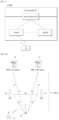
- FIG. 1 is a view schematically illustrating a network structure of an E-UMTS as an exemplary radio communication system.
- An Evolved Universal Mobile Telecommunications System (E-UMTS) is an advanced version of a conventional Universal Mobile Telecommunications System (UMTS) and basic standardization thereof is currently underway in the 3GPP.
- E-UMTS may be generally referred to as a Long Term Evolution (LTE) system.
- LTE Long Term Evolution
- the E-UMTS includes a User Equipment (UE), eNode Bs (eNBs), and an Access Gateway (AG) which is located at an end of the network (E-UTRAN) and connected to an external network.
- the eNBs may simultaneously transmit multiple data streams for a broadcast service, a multicast service, and/or a unicast service.
- One or more cells may exist per eNB.
- the cell is set to operate in one of bandwidths such as 1.25, 2.5, 5, 10, 15, and 20 MHz and provides a downlink (DL) or uplink (UL) transmission service to a plurality of UEs in the bandwidth. Different cells may be set to provide different bandwidths.
- the eNB controls data transmission or reception to and from a plurality of UEs.
- the eNB transmits DL scheduling information of DL data to a corresponding UE so as to inform the UE of a time/frequency domain in which the DL data is supposed to be transmitted, coding, a data size, and hybrid automatic repeat and request (HARQ)-related information.
- HARQ hybrid automatic repeat and request
- the eNB transmits UL scheduling information of UL data to a corresponding UE so as to inform the UE of a time/frequency domain which may be used by the UE, coding, a data size, and HARQ-related information.
- An interface for transmitting user traffic or control traffic may be used between eNBs.
- a core network (CN) may include the AG and a network node or the like for user registration of UEs.
- the AG manages the mobility of a UE on a tracking area (TA) basis.
- One TA includes a plurality of cells.
- WLAN technology from among wireless communication technologies allows wireless Internet access at home or in enterprises or at a specific service provision region using mobile terminals, such as a Personal Digital Assistant (PDA), a laptop computer, a Portable Multimedia Player (PMP), etc. on the basis of Radio Frequency (RF) technology.
- PDA Personal Digital Assistant
- PMP Portable Multimedia Player
- RF Radio Frequency
- IEEE 802.11ax which is appearing after IEEE 802.11ac standard supporting maximum 1 Gbps by using maximum 160 MHz channel bandwidth and supporting 8 spatial streams, is under discussion.
- a mobile phone wireless internet technology has been developed from HSPA to LTE and LTE to LTE-A.
- the mobile phone wireless internet technology becomes fast as fast as maximum 225 Mbps and a Wi-Fi technology becomes fast as fast as maximum 6.7 Gbps in case of IEEE 802.11 ad.
- speed can be increased using a scheme of aggregating a plurality of radio channels with each other.
- LTE-A which supports carrier aggregation corresponding to a technology of binding frequency bands using an identical radio technology into one.
- necessity for a technology of aggregating heterogeneous wireless internet is emerging. It is necessary to develop a scheme of transmitting data by biding radio technologies (e.g., LTE and wireless-LAN) including characteristics different from each other.
- EP 3 070 975 A1 prior art according to Article 54(3) EPC, discloses a method of radio bearer transmission in dual connectivity for a network in a long term evolution (LTE) system.
- the method is described to comprise generating at least a packet data convergence protocol protocol data unit (PDCP PDU) by a PDCP entity of the network corresponding to a radio bearer (RB), and assigning each PDCP PDU with an identity, wherein the identity indicates which PDCP entity the PDCP PDU belongs to.
- PDCP PDU packet data convergence protocol protocol data unit
- RB radio bearer
- WO 2016/124152 A1 prior art according to Article 54(3) EPC, discloses apparatus and methods for LWA PDU routing.
- LTE PDU packets are routed through a WLAN AP to a UE by encapsulation of the data packets, an adaption layer encapsulates the whole packet as an Ethernet frame by appending the Ethernet MAC header to the payload.
- US 2014/0321376 A1 discloses techniques for managing downlink transmissions from a base station to multiple UEs over aggregated LTE and WLAN links.
- the base station is described to jointly assign resources for transmitting downlink data during a scheduling instance.
- US 2014/204927 A1 discloses a method for confirming identity of a user equipment (UE) registered in both a wireless local area network (WLAN) and WWAN.
- the method is described to include establishing communications with a first UE, wherein the UE is identified by a first set of one or more identifiers in a wide area wireless network (WWAN) and by a second set of one or more identifiers in a wide local area network (WLAN), and determining, based on the first and second set of identifiers, a UE connected to the WWAN and WLAN is the first UE.
- WWAN wide area wireless network
- WLAN wide local area network
- US 2014/0177507 A1 discloses a method of bandwidth aggregation for radio accessing on multi-networks, a UE on a first network and a network device supporting the first network and a second network exchange or set one second network information of each other.
- Universal mobile telecommunications system is a 3rd Generation (3G) asynchronous mobile communication system operating in wideband code division multiple access (WCDMA) based on European systems, global system for mobile communications (GSM) and general packet radio services (GPRS).
- 3G 3rd Generation
- WCDMA wideband code division multiple access
- GSM global system for mobile communications
- GPRS general packet radio services
- LTE long-term evolution
- 3GPP 3rd generation partnership project
- the 3GPP LTE is a technology for enabling high-speed packet communications. Many schemes have been proposed for the LTE objective including those that aim to reduce user and provider costs, improve service quality, and expand and improve coverage and system capacity.
- the 3G LTE requires reduced cost per bit, increased service availability, flexible use of a frequency band, a simple structure, an open interface, and adequate power consumption of a terminal as an upper-level requirement.
- FIG. 2A is a block diagram illustrating network structure of an evolved universal mobile telecommunication system (E-UMTS).
- E-UMTS may be also referred to as an LTE system.
- the communication network is widely deployed to provide a variety of communication services such as voice (VoIP) through IMS and packet data.
- VoIP voice
- IMS packet data
- the E-UMTS network includes an evolved UMTS terrestrial radio access network (E-UTRAN), an Evolved Packet Core (EPC) and one or more user equipment.
- the E-UTRAN may include one or more evolved NodeB (eNodeB) 20, and a plurality of user equipment (UE) 10 may be located in one cell.
- eNodeB evolved NodeB
- UE user equipment
- MME mobility management entity
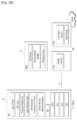
- FIG. 2B is a block diagram depicting architecture of a typical E-UTRAN and a typical EPC.
- an eNodeB 20 provides end points of a user plane and a control plane to the UE 10.
- MME/SAE gateway 30 provides an end point of a session and mobility management function for UE 10.
- the eNodeB and MME/SAE gateway may be connected via an S1 interface.
- the eNodeB 20 is generally a fixed station that communicates with a UE 10, and may also be referred to as a base station (BS) or an access point.
- BS base station
- One eNodeB 20 may be deployed per cell.
- An interface for transmitting user traffic or control traffic may be used between eNodeBs 20.
- the MME provides various functions including NAS signaling to eNodeBs 20, NAS signaling security, AS Security control, Inter CN node signaling for mobility between 3GPP access networks, Idle mode UE Reachability (including control and execution of paging retransmission), Tracking Area list management (for UE in idle and active mode), PDN GW and Serving GW selection, MME selection for handovers with MME change, SGSN selection for handovers to 2G or 3G 3GPP access networks, Roaming, Authentication, Bearer management functions including dedicated bearer establishment, Support for PWS (which includes ETWS and CMAS) message transmission.
- the SAE gateway host provides assorted functions including Per-user based packet filtering (by e.g.
- MME/SAE gateway 30 will be referred to herein simply as a "gateway,” but it is understood that this entity includes both an MME and an SAE gateway.
- a plurality of nodes may be connected between eNodeB 20 and gateway 30 via the S1 interface.
- the eNodeBs 20 may be connected to each other via an X2 interface and neighboring eNodeBs may have a meshed network structure that has the X2 interface.
- eNodeB 20 may perform functions of selection for gateway 30, routing toward the gateway during a Radio Resource Control (RRC) activation, scheduling and transmitting of paging messages, scheduling and transmitting of Broadcast Channel (BCCH) information, dynamic allocation of resources to UEs 10 in both uplink and downlink, configuration and provisioning of eNodeB measurements, radio bearer control, radio admission control (RAC), and connection mobility control in LTE_ACTIVE state.
- gateway 30 may perform functions of paging origination, LTE-IDLE state management, ciphering of the user plane, System Architecture Evolution (SAE) bearer control, and ciphering and integrity protection of Non-Access Stratum (NAS) signaling.
- SAE System Architecture Evolution
- NAS Non-Access Stratum
- the EPC includes a mobility management entity (MME), a serving-gateway (S-GW), and a packet data network-gateway (PDN-GW).
- MME mobility management entity
- S-GW serving-gateway
- PDN-GW packet data network-gateway
- FIG. 3 is a diagram showing a control plane and a user plane of a radio interface protocol between a UE and an E-UTRAN based on a 3GPP radio access network standard.
- the control plane refers to a path used for transmitting control messages used for managing a call between the UE and the E-UTRAN.
- the user plane refers to a path used for transmitting data generated in an application layer, e.g., voice data or Internet packet data.
- a physical (PHY) layer of a first layer provides an information transfer service to a higher layer using a physical channel.
- the PHY layer is connected to a medium access control (MAC) layer located on the higher layer via a transport channel.
- Data is transported between the MAC layer and the PHY layer via the transport channel.
- Data is transported between a physical layer of a transmitting side and a physical layer of a receiving side via physical channels.
- the physical channels use time and frequency as radio resources.
- the physical channel is modulated using an orthogonal frequency division multiple access (OFDMA) scheme in downlink and is modulated using a single carrier frequency division multiple access (SC-FDMA) scheme in uplink.
- OFDMA orthogonal frequency division multiple access
- SC-FDMA single carrier frequency division multiple access
- the MAC layer of a second layer provides a service to a radio link control (RLC) layer of a higher layer via a logical channel.
- the RLC layer of the second layer supports reliable data transmission.
- a function of the RLC layer may be implemented by a functional block of the MAC layer.
- a packet data convergence protocol (PDCP) layer of the second layer performs a header compression function to reduce unnecessary control information for efficient transmission of an Internet protocol (IP) packet such as an IP version 4 (IPv4) packet or an IP version 6 (IPv6) packet in a radio interface having a relatively small bandwidth.
- IP Internet protocol
- IPv4 IP version 4
- IPv6 IP version 6
- a radio resource control (RRC) layer located at the bottom of a third layer is defined only in the control plane.
- the RRC layer controls logical channels, transport channels, and physical channels in relation to configuration, re-configuration, and release of radio bearers (RBs).
- An RB refers to a service that the second layer provides for data transmission between the UE and the E-UTRAN.
- the RRC layer of the UE and the RRC layer of the E-UTRAN exchange RRC messages with each other.
- One cell of the eNB is set to operate in one of bandwidths such as 1.25, 2.5, 5, 10, 15, and 20 MHz and provides a downlink or uplink transmission service to a plurality of UEs in the bandwidth. Different cells may be set to provide different bandwidths.
- Downlink transport channels for transmission of data from the E-UTRAN to the UE include a broadcast channel (BCH) for transmission of system information, a paging channel (PCH) for transmission of paging messages, and a downlink shared channel (SCH) for transmission of user traffic or control messages.
- BCH broadcast channel
- PCH paging channel
- SCH downlink shared channel
- Traffic or control messages of a downlink multicast or broadcast service may be transmitted through the downlink SCH and may also be transmitted through a separate downlink multicast channel (MCH).
- MCH downlink multicast channel
- Uplink transport channels for transmission of data from the UE to the E-UTRAN include a random access channel (RACH) for transmission of initial control messages and an uplink SCH for transmission of user traffic or control messages.
- Logical channels that are defined above the transport channels and mapped to the transport channels include a broadcast control channel (BCCH), a paging control channel (PCCH), a common control channel (CCCH), a multicast control channel (MCCH), and a multicast traffic channel (MTCH).
- BCCH broadcast control channel
- PCCH paging control channel
- CCCH common control channel
- MCCH multicast control channel
- MTCH multicast traffic channel
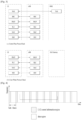
- FIG. 4 is a view showing an example of a physical channel structure used in an E-UMTS system.
- a physical channel includes several subframes on a time axis and several subcarriers on a frequency axis.
- one subframe includes a plurality of symbols on the time axis.
- One subframe includes a plurality of resource blocks and one resource block includes a plurality of symbols and a plurality of subcarriers.
- each subframe may use certain subcarriers of certain symbols (e.g., a first symbol) of a subframe for a physical downlink control channel (PDCCH), that is, an L1/L2 control channel.
- PDCCH physical downlink control channel
- an L1/L2 control information transmission area (PDCCH) and a data area (PDSCH) are shown.
- a radio frame of 10 ms is used and one radio frame includes 10 subframes.
- one subframe includes two consecutive slots. The length of one slot may be 0.5 ms.
- one subframe includes a plurality of OFDM symbols and a portion (e.g., a first symbol) of the plurality of OFDM symbols may be used for transmitting the L1/L2 control information.
- a transmission time interval (TTI) which is a unit time for transmitting data is 1ms.
- a base station and a UE mostly transmit/receive data via a PDSCH, which is a physical channel, using a DL-SCH which is a transmission channel, except a certain control signal or certain service data.
- a certain PDCCH is CRC-masked with a radio network temporary identity (RNTI) "A" and information about data is transmitted using a radio resource "B" (e.g., a frequency location) and transmission format information "C" (e.g., a transmission block size, modulation, coding information or the like) via a certain subframe.
- RNTI radio network temporary identity
- B e.g., a frequency location
- C transmission format information
- one or more UEs located in a cell monitor the PDCCH using its RNTI information.
- a specific UE with RNTI "A” reads the PDCCH and then receive the PDSCH indicated by B and C in the PDCCH information.
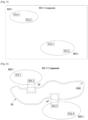
- FIG. 5 illustrates an exemplary configuration of an IEEE 802.11 system to which the present disclosure is applicable.
- the IEEE 802.11 architecture may include a plurality of components.
- a WLAN that supports Station (STA) mobility transparent to upper layers may be provided through interaction between the components.
- a Basic Service Set (BSS) is a basic building block of an IEEE 802.11 LAN.
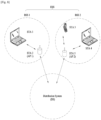
- FIG. 5 illustrates two BSSs, BSS1 and BSS2, each with two STAs that are members of the BSS (STA1 and STA2 are included in BSS1 and STA3 and STA4 are included in BSS2).
- Each of the BSSs covers an area in which the STAs of the BSS maintain communication, as indicated by an oval. This area may be referred to as a Basic Service Area (BSA).
- BSA Basic Service Area
- IBSS Independent Basic Service Set
- a minimum IBSS includes only two STAs.
- a BSS, BSS1 or BSS2 which is the most basic type without other components in FIG. 1 may be taken as a major example of the IBSS.
- This configuration may be realized when STAs communicate directly. Because this type of LAN is often formed without pre-planning for only as long as the LAN is needed, it is often referred to as an ad hoc network.
- the membership of an STA in a BSS may be dynamically changed when the STA is powered on or off or the STA moves into or out of the coverage area of the BSS.
- an STA may join the BSS by synchronization.
- the STA should be associated with the BSS. This association may be dynamically performed and may involve use of a Distributed System Service (DSS).
- DSS Distributed System Service
- FIG. 6 illustrates another exemplary configuration of the IEEE 802.11 system to which the present invention is applicable.
- components such as a Distribution System (DS), a Distribution System Medium (DSM), and an Access Point (AP) are added to the architecture illustrated in FIG. 5 .
- DS Distribution System
- DSM Distribution System Medium
- AP Access Point
- Physical (PHY) performance may limit direct STA-to-STA distances. While this distance limitation is sufficient in some cases, communication between STAs apart from each other by a long distance may be required. To support extended coverage, a DS may be deployed.
- the DS is a logical concept and may be specified by the characteristics of a DSM.
- the IEEE 802.11 standard logically distinguishes a Wireless Medium (WM) from a DSM.
- Each logical medium is used for a different purpose by a different component.
- the IEEE 802.11 standard does not define that these media should be the same or different.
- the flexibility of the IEEE 802.11 LAN architecture (DS structure or other network structures) may be explained in the sense that a plurality of media are logically different. That is, the IEEE 802.11 LAN architecture may be built in various manners and may be specified independently of the physical characteristics of each implementation example.
- the radio protocol architecture that a particular bearer uses depends on the LWA backhaul scenario and how the bearer is set up.
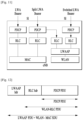
- Split LWA bearer is depicted on FIG. 10
- the WLAN-RLC entity performs segmentation/concatenation of RLC SDUs (i.e. PDCP PDUs) to generate fixed size of RLC PDUs.
- the fixed size is configured when the WLAN RLC entity is established.
- the WLAN-RLC entity supports AM RLC functions, i.e. retransmission, status reporting, polling, segmentation/concatenation and reassembly, resegmentation, etc.
- the WLAN-RLC entity is used if error-free transmission needs to be guaranteed in WLAN side. If error is allowed, WLAN-RLC entity is not used, and PDCP entity and LWAAP entity is directly linked.
- a function of the LWAAP entity can be included in the WLAN-RLC entity. In this case, separate LWAAP entity is not needed.
- the modified WLAN-RLC entity performs RLC functions as well as LWAAP's attach/detach functions.
- the LWAAP entity uniquely identifies an WLAN-RLC entity.
- the length of the identifier is 1 byte.
- the identifier is included in the LWAAP header.
- the LWAAP PDU is a LWAAP data PDU.
- a specific operation described as performed by the BS may be performed by an upper node of the BS. Namely, it is apparent that, in a network comprised of a plurality of network nodes including a BS, various operations performed for communication with an MS may be performed by the BS, or network nodes other than the BS.
- the term 'eNB' may be replaced with the term 'fixed station', 'Node B', 'Base Station (BS)', 'access point', etc.
- the method according to the examples not directly falling within the scope of claimed invention of the present disclosure may be implemented by one or more Application Specific Integrated Circuits (ASICs), Digital Signal Processors (DSPs), Digital Signal Processing Devices (DSPDs), Programmable Logic Devices (PLDs), Field Programmable Gate Arrays (FPGAs), processors, controllers, microcontrollers, or microprocessors.
- ASICs Application Specific Integrated Circuits
- DSPs Digital Signal Processors
- DSPDs Digital Signal Processing Devices
- PLDs Programmable Logic Devices
- FPGAs Field Programmable Gate Arrays
- processors controllers, microcontrollers, or microprocessors.
- the method according to the examples not directly falling within the scope of claimed invention of the present disclosure may be implemented in the form of modules, procedures, functions, etc. performing the above-described functions or operations.
- Software code may be stored in a memory unit and executed by a processor.
- the memory unit may be located at the interior or exterior of the processor and may transmit and receive data to and from the processor via various known means.
Landscapes
- Engineering & Computer Science (AREA)
- Computer Networks & Wireless Communication (AREA)
- Signal Processing (AREA)
- Mobile Radio Communication Systems (AREA)
Claims (2)
- Verfahren für eine Kommunikationsvorrichtung, umfassend:einen LTE-eNodeB,eine Wireless Local Area Network-, kurz WLAN-, Entität, die eine WLAN Medium Access Control-, kurz WLAN-MAC-, Entität umfasst, undeine Vielzahl von Packet Data Convergence Protocol-, kurz PDCP-, Entitäten;wobei die Kommunikationsvorrichtung kein Benutzergerät, kurz UE, umfasst und in einem drahtlosen Kommunikationssystem arbeitet,wobei das Verfahren umfasst:Empfangen, durch eine L2- Identifikations-, kurz L2-ID-, Entität der Kommunikationsvorrichtung von der WLAN-MAC-Entität der Kommunikationsvorrichtung, einer L2-ID-Protokolldateneinheit, kurz PDU, die einen L2-ID-Header beinhaltet,wobei die WLAN-MAC-Entität eine unmittelbar niedrigere Entität der L2-ID-Entität ist;Identifizieren, durch die L2-ID-Entität, einer PDCP-Entität, die der L2-ID-PDU zugeordnet ist, basierend auf dem L2-ID-Header;Ablösen einer Kennung der PDCP-Entität von den Daten, die in der L2-ID-PDU beinhaltet sind; undLiefern der Daten, die in der L2-ID-PDU beinhaltet sind, an die identifizierte PDCP-Entität.
- Kommunikationsvorrichtung, die konfiguriert ist, um in einem drahtlosen Kommunikationssystem zu arbeiten, und Mittel umfasst, die konfiguriert sind, um das Verfahren nach Anspruch 1 auszuführen.
Applications Claiming Priority (2)
| Application Number | Priority Date | Filing Date | Title |
|---|---|---|---|
| US201562144349P | 2015-04-08 | 2015-04-08 | |
| PCT/KR2016/003457 WO2016163696A1 (en) | 2015-04-08 | 2016-04-04 | Method for operating a new entity for lte-wlan aggregation system and a device therefor |
Publications (3)
| Publication Number | Publication Date |
|---|---|
| EP3281445A1 EP3281445A1 (de) | 2018-02-14 |
| EP3281445A4 EP3281445A4 (de) | 2018-11-21 |
| EP3281445B1 true EP3281445B1 (de) | 2025-07-09 |
Family
ID=57072409
Family Applications (1)
| Application Number | Title | Priority Date | Filing Date |
|---|---|---|---|
| EP16776799.5A Active EP3281445B1 (de) | 2015-04-08 | 2016-04-04 | Verfahren zum betreiben einer neuen einheit für lte-wlan-aggregationssystem und vorrichtung dafür |
Country Status (3)
| Country | Link |
|---|---|
| US (2) | US10051679B2 (de) |
| EP (1) | EP3281445B1 (de) |
| WO (1) | WO2016163696A1 (de) |
Families Citing this family (12)
| Publication number | Priority date | Publication date | Assignee | Title |
|---|---|---|---|---|
| CN106031277B (zh) * | 2015-01-29 | 2018-11-30 | 华为技术有限公司 | 无线承载重配置方法、建立方法、用户设备和基站 |
| EP3281445B1 (de) | 2015-04-08 | 2025-07-09 | Taissa Research LLC | Verfahren zum betreiben einer neuen einheit für lte-wlan-aggregationssystem und vorrichtung dafür |
| WO2016163032A1 (ja) * | 2015-04-10 | 2016-10-13 | 富士通株式会社 | 無線通信システム、基地局、移動局および処理方法 |
| US10412652B2 (en) * | 2015-04-10 | 2019-09-10 | Samsung Electronics Co., Ltd. | Apparatus and method for routing data packet to user equipment in LTE-WLAN aggregation system |
| US11006467B2 (en) * | 2015-09-24 | 2021-05-11 | Kt Corporation | Method and apparatus for transmitting and receiving data using WLAN radio resources |
| US10855658B2 (en) * | 2015-09-24 | 2020-12-01 | Kt Corporation | Method for transmitting and receiving data using WLAN carriers and apparatus thereof |
| US11122643B2 (en) * | 2016-04-27 | 2021-09-14 | Apple Inc. | LWIP enhancements for reliable DRB switching |
| CN108282320B (zh) * | 2017-01-06 | 2022-07-26 | 华为技术有限公司 | 一种系统间信息交互方法,无线通信系统和用户设备 |
| WO2018140608A1 (en) * | 2017-01-27 | 2018-08-02 | Intel IP Corporation | eLWA/LWIP ACTIONS UPON WLAN DISCONNECT |
| RU2751096C1 (ru) | 2017-09-21 | 2021-07-08 | Гуандун Оппо Мобайл Телекоммьюникейшнс Корп., Лтд. | Способ и устройство для распределения данных, а также носитель для хранения и соответствующая система |
| CN109842884B (zh) * | 2017-11-28 | 2022-04-01 | 中国移动通信集团上海有限公司 | 一种lwa部署方法及系统 |
| CN110166978B (zh) * | 2018-02-13 | 2020-12-22 | 华为技术有限公司 | 通信方法、第一终端设备和第二终端设备 |
Family Cites Families (9)
| Publication number | Priority date | Publication date | Assignee | Title |
|---|---|---|---|---|
| WO2012159344A1 (zh) * | 2011-07-26 | 2012-11-29 | 华为技术有限公司 | 一种无线局域网协作的数据传输方法及设备、系统 |
| JP5944004B2 (ja) * | 2011-10-03 | 2016-07-05 | インテル・コーポレーション | デバイスツーデバイス通信(d2d通信)メカニズム |
| TWI491228B (zh) * | 2012-12-26 | 2015-07-01 | Ind Tech Res Inst | 多網路上無線存取之頻寬整合方法與裝置 |
| US10104540B2 (en) * | 2013-01-23 | 2018-10-16 | Qualcomm Incorporated | Determining to use multi-RAN interworking by correlating different RAN identifiers |
| US20140321376A1 (en) * | 2013-04-29 | 2014-10-30 | Qualcomm Incorporated | Lte-wlan centralized downlink scheduler |
| US9674733B2 (en) * | 2014-05-27 | 2017-06-06 | QUALCMM Incorporated | Interworking link layer traffic aggregation with system level mobility |
| US9781652B2 (en) * | 2015-02-05 | 2017-10-03 | Mediatek Inc. | Method and apparatus of LWA PDU routing |
| US10869344B2 (en) | 2015-03-19 | 2020-12-15 | Acer Incorporated | Method of radio bearer transmission in dual connectivity |
| EP3281445B1 (de) | 2015-04-08 | 2025-07-09 | Taissa Research LLC | Verfahren zum betreiben einer neuen einheit für lte-wlan-aggregationssystem und vorrichtung dafür |
-
2016
- 2016-04-04 EP EP16776799.5A patent/EP3281445B1/de active Active
- 2016-04-04 WO PCT/KR2016/003457 patent/WO2016163696A1/en not_active Ceased
- 2016-04-05 US US15/091,498 patent/US10051679B2/en active Active
-
2018
- 2018-07-18 US US16/039,232 patent/US10638531B2/en active Active
Also Published As
| Publication number | Publication date |
|---|---|
| WO2016163696A1 (en) | 2016-10-13 |
| US20160302077A1 (en) | 2016-10-13 |
| US20180343695A1 (en) | 2018-11-29 |
| EP3281445A4 (de) | 2018-11-21 |
| EP3281445A1 (de) | 2018-02-14 |
| US10638531B2 (en) | 2020-04-28 |
| US10051679B2 (en) | 2018-08-14 |
Similar Documents
| Publication | Publication Date | Title |
|---|---|---|
| EP3281445B1 (de) | Verfahren zum betreiben einer neuen einheit für lte-wlan-aggregationssystem und vorrichtung dafür | |
| US10667165B2 (en) | Method and device for transmitting data unit | |
| US10784994B2 (en) | Method for transmitting information for LTE-WLAN aggregation system and a device therefor | |
| JP6604955B2 (ja) | 二重接続性における上りリンクデータ送信方法及びそのための装置 | |
| EP4199639B1 (de) | Verfahren zur inaktivitätsunterbrechung bei wiederaufnahme und wiederaufnahme inaktivität während der unterbrechung | |
| EP3245753B1 (de) | Verfahren zur übertragung von multiplexierten harq-rückkopplungen in einem trägeraggregationssystem und vorrichtung dafür | |
| US10159076B2 (en) | Method for de-configuring a cell from PUCCH resource in a carrier aggregation system and a device therefor | |
| US11101940B2 (en) | Method and device for transmitting data unit | |
| CN116058002A (zh) | 组切换消息的发送 | |
| US20180199208A1 (en) | Method for receiving a signal in wireless communication system and a device therefor | |
| EP4205449A1 (de) | Verzögerungsgrenzen zur planung von priorität und paketablösung in einem integrierten zugangs- und backhaul-netzwerk | |
| CN106688298A (zh) | 无线通信系统中配置用于双连接的用户设备发起消息的方法和装置 | |
| EP3286959B1 (de) | Verfahren zur zuweisung eines zellenindex für ein wlan-netzwerk für ein lte-wlan-aggregationssystem und vorrichtung dafür | |
| US10785162B2 (en) | Method for transmitting information for LTE-WLAN aggregation system and a device therefor | |
| US20190132766A1 (en) | Method and user equipment device for transmitting buffer status report | |
| CN116326169A (zh) | 用于rsu辅助uu连接的协议栈和承载建模 | |
| US20230140587A1 (en) | Extension of uplink mapping in integrated access and backhaul for consumer premises equipment | |
| CN115943602A (zh) | 多时隙盲检测限制 |
Legal Events
| Date | Code | Title | Description |
|---|---|---|---|
| STAA | Information on the status of an ep patent application or granted ep patent |
Free format text: STATUS: THE INTERNATIONAL PUBLICATION HAS BEEN MADE |
|
| PUAI | Public reference made under article 153(3) epc to a published international application that has entered the european phase |
Free format text: ORIGINAL CODE: 0009012 |
|
| STAA | Information on the status of an ep patent application or granted ep patent |
Free format text: STATUS: REQUEST FOR EXAMINATION WAS MADE |
|
| 17P | Request for examination filed |
Effective date: 20170926 |
|
| AK | Designated contracting states |
Kind code of ref document: A1 Designated state(s): AL AT BE BG CH CY CZ DE DK EE ES FI FR GB GR HR HU IE IS IT LI LT LU LV MC MK MT NL NO PL PT RO RS SE SI SK SM TR |
|
| AX | Request for extension of the european patent |
Extension state: BA ME |
|
| DAV | Request for validation of the european patent (deleted) | ||
| DAX | Request for extension of the european patent (deleted) | ||
| A4 | Supplementary search report drawn up and despatched |
Effective date: 20181024 |
|
| RIC1 | Information provided on ipc code assigned before grant |
Ipc: H04W 88/10 20090101ALN20181018BHEP Ipc: H04W 80/02 20090101ALN20181018BHEP Ipc: H04W 76/15 20180101AFI20181018BHEP Ipc: H04W 88/06 20090101ALN20181018BHEP |
|
| STAA | Information on the status of an ep patent application or granted ep patent |
Free format text: STATUS: EXAMINATION IS IN PROGRESS |
|
| 17Q | First examination report despatched |
Effective date: 20200907 |
|
| RAP1 | Party data changed (applicant data changed or rights of an application transferred) |
Owner name: TAISSA RESEARCH LLC |
|
| REG | Reference to a national code |
Ref country code: DE Ref legal event code: R079 Free format text: PREVIOUS MAIN CLASS: H04W0028020000 Ipc: H04W0076150000 Ref country code: DE Ref legal event code: R079 Ref document number: 602016092842 Country of ref document: DE Free format text: PREVIOUS MAIN CLASS: H04W0028020000 Ipc: H04W0076150000 |
|
| GRAP | Despatch of communication of intention to grant a patent |
Free format text: ORIGINAL CODE: EPIDOSNIGR1 |
|
| STAA | Information on the status of an ep patent application or granted ep patent |
Free format text: STATUS: GRANT OF PATENT IS INTENDED |
|
| RIC1 | Information provided on ipc code assigned before grant |
Ipc: H04W 88/10 20090101ALN20250128BHEP Ipc: H04W 88/06 20090101ALN20250128BHEP Ipc: H04W 84/12 20090101ALN20250128BHEP Ipc: H04W 84/04 20090101ALN20250128BHEP Ipc: H04W 80/02 20090101ALN20250128BHEP Ipc: H04W 76/11 20180101ALN20250128BHEP Ipc: H04W 76/15 20180101AFI20250128BHEP |
|
| RIC1 | Information provided on ipc code assigned before grant |
Ipc: H04W 88/10 20090101ALN20250210BHEP Ipc: H04W 88/06 20090101ALN20250210BHEP Ipc: H04W 84/12 20090101ALN20250210BHEP Ipc: H04W 84/04 20090101ALN20250210BHEP Ipc: H04W 80/02 20090101ALN20250210BHEP Ipc: H04W 76/11 20180101ALN20250210BHEP Ipc: H04W 76/15 20180101AFI20250210BHEP |
|
| INTG | Intention to grant announced |
Effective date: 20250219 |
|
| GRAS | Grant fee paid |
Free format text: ORIGINAL CODE: EPIDOSNIGR3 |
|
| GRAA | (expected) grant |
Free format text: ORIGINAL CODE: 0009210 |
|
| STAA | Information on the status of an ep patent application or granted ep patent |
Free format text: STATUS: THE PATENT HAS BEEN GRANTED |
|
| AK | Designated contracting states |
Kind code of ref document: B1 Designated state(s): AL AT BE BG CH CY CZ DE DK EE ES FI FR GB GR HR HU IE IS IT LI LT LU LV MC MK MT NL NO PL PT RO RS SE SI SK SM TR |
|
| REG | Reference to a national code |
Ref country code: GB Ref legal event code: FG4D |
|
| REG | Reference to a national code |
Ref country code: CH Ref legal event code: EP |
|
| P01 | Opt-out of the competence of the unified patent court (upc) registered |
Free format text: CASE NUMBER: APP_28112/2025 Effective date: 20250612 |
|
| REG | Reference to a national code |
Ref country code: IE Ref legal event code: FG4D |
|
| REG | Reference to a national code |
Ref country code: DE Ref legal event code: R096 Ref document number: 602016092842 Country of ref document: DE |
|
| REG | Reference to a national code |
Ref country code: NL Ref legal event code: MP Effective date: 20250709 |
|
| PG25 | Lapsed in a contracting state [announced via postgrant information from national office to epo] |
Ref country code: PT Free format text: LAPSE BECAUSE OF FAILURE TO SUBMIT A TRANSLATION OF THE DESCRIPTION OR TO PAY THE FEE WITHIN THE PRESCRIBED TIME-LIMIT Effective date: 20251110 |
|
| PG25 | Lapsed in a contracting state [announced via postgrant information from national office to epo] |
Ref country code: NL Free format text: LAPSE BECAUSE OF FAILURE TO SUBMIT A TRANSLATION OF THE DESCRIPTION OR TO PAY THE FEE WITHIN THE PRESCRIBED TIME-LIMIT Effective date: 20250709 |
|
| REG | Reference to a national code |
Ref country code: AT Ref legal event code: MK05 Ref document number: 1813089 Country of ref document: AT Kind code of ref document: T Effective date: 20250709 |
|
| PG25 | Lapsed in a contracting state [announced via postgrant information from national office to epo] |
Ref country code: IS Free format text: LAPSE BECAUSE OF FAILURE TO SUBMIT A TRANSLATION OF THE DESCRIPTION OR TO PAY THE FEE WITHIN THE PRESCRIBED TIME-LIMIT Effective date: 20251109 |
|
| PG25 | Lapsed in a contracting state [announced via postgrant information from national office to epo] |
Ref country code: NO Free format text: LAPSE BECAUSE OF FAILURE TO SUBMIT A TRANSLATION OF THE DESCRIPTION OR TO PAY THE FEE WITHIN THE PRESCRIBED TIME-LIMIT Effective date: 20251009 |
|
| REG | Reference to a national code |
Ref country code: LT Ref legal event code: MG9D |
|
| PG25 | Lapsed in a contracting state [announced via postgrant information from national office to epo] |
Ref country code: AT Free format text: LAPSE BECAUSE OF FAILURE TO SUBMIT A TRANSLATION OF THE DESCRIPTION OR TO PAY THE FEE WITHIN THE PRESCRIBED TIME-LIMIT Effective date: 20250709 |
|
| PG25 | Lapsed in a contracting state [announced via postgrant information from national office to epo] |
Ref country code: FI Free format text: LAPSE BECAUSE OF FAILURE TO SUBMIT A TRANSLATION OF THE DESCRIPTION OR TO PAY THE FEE WITHIN THE PRESCRIBED TIME-LIMIT Effective date: 20250709 |
|
| PG25 | Lapsed in a contracting state [announced via postgrant information from national office to epo] |
Ref country code: HR Free format text: LAPSE BECAUSE OF FAILURE TO SUBMIT A TRANSLATION OF THE DESCRIPTION OR TO PAY THE FEE WITHIN THE PRESCRIBED TIME-LIMIT Effective date: 20250709 |
|
| PG25 | Lapsed in a contracting state [announced via postgrant information from national office to epo] |
Ref country code: GR Free format text: LAPSE BECAUSE OF FAILURE TO SUBMIT A TRANSLATION OF THE DESCRIPTION OR TO PAY THE FEE WITHIN THE PRESCRIBED TIME-LIMIT Effective date: 20251010 |
|
| PG25 | Lapsed in a contracting state [announced via postgrant information from national office to epo] |
Ref country code: SE Free format text: LAPSE BECAUSE OF FAILURE TO SUBMIT A TRANSLATION OF THE DESCRIPTION OR TO PAY THE FEE WITHIN THE PRESCRIBED TIME-LIMIT Effective date: 20250709 |
|
| PG25 | Lapsed in a contracting state [announced via postgrant information from national office to epo] |
Ref country code: LV Free format text: LAPSE BECAUSE OF FAILURE TO SUBMIT A TRANSLATION OF THE DESCRIPTION OR TO PAY THE FEE WITHIN THE PRESCRIBED TIME-LIMIT Effective date: 20250709 |
|
| PG25 | Lapsed in a contracting state [announced via postgrant information from national office to epo] |
Ref country code: BG Free format text: LAPSE BECAUSE OF FAILURE TO SUBMIT A TRANSLATION OF THE DESCRIPTION OR TO PAY THE FEE WITHIN THE PRESCRIBED TIME-LIMIT Effective date: 20250709 Ref country code: PL Free format text: LAPSE BECAUSE OF FAILURE TO SUBMIT A TRANSLATION OF THE DESCRIPTION OR TO PAY THE FEE WITHIN THE PRESCRIBED TIME-LIMIT Effective date: 20250709 |
|
| PG25 | Lapsed in a contracting state [announced via postgrant information from national office to epo] |
Ref country code: RS Free format text: LAPSE BECAUSE OF FAILURE TO SUBMIT A TRANSLATION OF THE DESCRIPTION OR TO PAY THE FEE WITHIN THE PRESCRIBED TIME-LIMIT Effective date: 20251009 |
|
| PG25 | Lapsed in a contracting state [announced via postgrant information from national office to epo] |
Ref country code: ES Free format text: LAPSE BECAUSE OF FAILURE TO SUBMIT A TRANSLATION OF THE DESCRIPTION OR TO PAY THE FEE WITHIN THE PRESCRIBED TIME-LIMIT Effective date: 20250709 |
|
| PG25 | Lapsed in a contracting state [announced via postgrant information from national office to epo] |
Ref country code: SM Free format text: LAPSE BECAUSE OF FAILURE TO SUBMIT A TRANSLATION OF THE DESCRIPTION OR TO PAY THE FEE WITHIN THE PRESCRIBED TIME-LIMIT Effective date: 20250709 |
|
| PGFP | Annual fee paid to national office [announced via postgrant information from national office to epo] |
Ref country code: GB Payment date: 20260317 Year of fee payment: 11 |
|
| PG25 | Lapsed in a contracting state [announced via postgrant information from national office to epo] |
Ref country code: DK Free format text: LAPSE BECAUSE OF FAILURE TO SUBMIT A TRANSLATION OF THE DESCRIPTION OR TO PAY THE FEE WITHIN THE PRESCRIBED TIME-LIMIT Effective date: 20250709 |
|
| PG25 | Lapsed in a contracting state [announced via postgrant information from national office to epo] |
Ref country code: IT Free format text: LAPSE BECAUSE OF FAILURE TO SUBMIT A TRANSLATION OF THE DESCRIPTION OR TO PAY THE FEE WITHIN THE PRESCRIBED TIME-LIMIT Effective date: 20250709 |
|
| PG25 | Lapsed in a contracting state [announced via postgrant information from national office to epo] |
Ref country code: CZ Free format text: LAPSE BECAUSE OF FAILURE TO SUBMIT A TRANSLATION OF THE DESCRIPTION OR TO PAY THE FEE WITHIN THE PRESCRIBED TIME-LIMIT Effective date: 20250709 |
|
| PG25 | Lapsed in a contracting state [announced via postgrant information from national office to epo] |
Ref country code: EE Free format text: LAPSE BECAUSE OF FAILURE TO SUBMIT A TRANSLATION OF THE DESCRIPTION OR TO PAY THE FEE WITHIN THE PRESCRIBED TIME-LIMIT Effective date: 20250709 Ref country code: SK Free format text: LAPSE BECAUSE OF FAILURE TO SUBMIT A TRANSLATION OF THE DESCRIPTION OR TO PAY THE FEE WITHIN THE PRESCRIBED TIME-LIMIT Effective date: 20250709 |