EP3282765A1 - Procédé, dispositif et système de sélection de voie - Google Patents
Procédé, dispositif et système de sélection de voie Download PDFInfo
- Publication number
- EP3282765A1 EP3282765A1 EP15890363.3A EP15890363A EP3282765A1 EP 3282765 A1 EP3282765 A1 EP 3282765A1 EP 15890363 A EP15890363 A EP 15890363A EP 3282765 A1 EP3282765 A1 EP 3282765A1
- Authority
- EP
- European Patent Office
- Prior art keywords
- information
- path
- discovery
- discovery information
- data
- Prior art date
- Legal status (The legal status is an assumption and is not a legal conclusion. Google has not performed a legal analysis and makes no representation as to the accuracy of the status listed.)
- Granted
Links
Images



Classifications
-
- H—ELECTRICITY
- H04—ELECTRIC COMMUNICATION TECHNIQUE
- H04W—WIRELESS COMMUNICATION NETWORKS
- H04W40/00—Communication routing or communication path finding
- H04W40/34—Modification of an existing route
- H04W40/36—Modification of an existing route due to handover
-
- H—ELECTRICITY
- H04—ELECTRIC COMMUNICATION TECHNIQUE
- H04W—WIRELESS COMMUNICATION NETWORKS
- H04W40/00—Communication routing or communication path finding
- H04W40/02—Communication route or path selection, e.g. power-based or shortest path routing
-
- H—ELECTRICITY
- H04—ELECTRIC COMMUNICATION TECHNIQUE
- H04W—WIRELESS COMMUNICATION NETWORKS
- H04W40/00—Communication routing or communication path finding
- H04W40/02—Communication route or path selection, e.g. power-based or shortest path routing
- H04W40/12—Communication route or path selection, e.g. power-based or shortest path routing based on transmission quality or channel quality
-
- H—ELECTRICITY
- H04—ELECTRIC COMMUNICATION TECHNIQUE
- H04W—WIRELESS COMMUNICATION NETWORKS
- H04W40/00—Communication routing or communication path finding
- H04W40/24—Connectivity information management, e.g. connectivity discovery or connectivity update
-
- H—ELECTRICITY
- H04—ELECTRIC COMMUNICATION TECHNIQUE
- H04W—WIRELESS COMMUNICATION NETWORKS
- H04W76/00—Connection management
- H04W76/10—Connection setup
- H04W76/12—Setup of transport tunnels
-
- H—ELECTRICITY
- H04—ELECTRIC COMMUNICATION TECHNIQUE
- H04W—WIRELESS COMMUNICATION NETWORKS
- H04W76/00—Connection management
- H04W76/10—Connection setup
- H04W76/14—Direct-mode setup
-
- H—ELECTRICITY
- H04—ELECTRIC COMMUNICATION TECHNIQUE
- H04W—WIRELESS COMMUNICATION NETWORKS
- H04W8/00—Network data management
- H04W8/005—Discovery of network devices, e.g. terminals
-
- H—ELECTRICITY
- H04—ELECTRIC COMMUNICATION TECHNIQUE
- H04W—WIRELESS COMMUNICATION NETWORKS
- H04W88/00—Devices specially adapted for wireless communication networks, e.g. terminals, base stations or access point devices
- H04W88/02—Terminal devices
-
- H—ELECTRICITY
- H04—ELECTRIC COMMUNICATION TECHNIQUE
- H04W—WIRELESS COMMUNICATION NETWORKS
- H04W88/00—Devices specially adapted for wireless communication networks, e.g. terminals, base stations or access point devices
- H04W88/02—Terminal devices
- H04W88/04—Terminal devices adapted for relaying to or from another terminal or user
Definitions
- the present invention relates to the communications field, and in particular, to a path selection method, a device, and a system.
- terminal devices such as mobile phones and tablet computers perform direct communication in a D2D system. Therefore, the devices have relatively great mobility, and channel states change relatively quickly. If a distance between the two terminal devices performing direct communication is relatively long or channel quality changes relatively greatly, the two terminal devices cannot perform D2D communication.
- LTE Long Term Evolution, Long Term Evolution
- Embodiments of the present invention provide a path selection method, a device, and a system, to resolve a problem in the prior art that if a distance between two terminal devices performing direct communication is relatively long or channel quality changes relatively greatly, the two terminal devices cannot perform D2D communication.
- the first path information is sent to the first device by a base station, or is sent to the first device by a preceding-hop device that is of the first device and that is indicated by the first path information;
- the first path information includes duration information of the first path information, and the duration information of the first path information is used to indicate validity duration of the first path information;
- the first discovery information includes duration information of the first discovery information, and the duration information of the first discovery information is used to indicate validity duration of the first discovery information;
- an embodiment of the present invention provides a third device, including: a processor, a memory, a bus, a transmitter, and a receiver, where the processor, the memory, the transmitter, and the receiver are connected to each other by using the bus;
- an embodiment of the present invention provides a first device, including:
- the first path information is sent to the first device by a base station, or is sent to the first device by a preceding-hop device that is of the first device and that is indicated by the first path information;
- the first path information includes duration information of the first path information, and the duration information of the first path information is used to indicate validity duration of the first path information;
- the first discovery information includes duration information of the first discovery information, and the duration information of the first discovery information is used to indicate validity duration of the first discovery information;
- an embodiment of the present invention provides a third device, including:
- an embodiment of the present invention provides a path selection method, including:
- the method further includes:
- the first path information is sent to the first device by a base station, or is sent to the first device by a preceding-hop device that is of the first device and that is indicated by the first path information;
- the first path information includes duration information of the first path information, and the duration information of the first path information is used to indicate validity duration of the first path information;
- the method further includes:
- the method further includes:
- the method further includes:
- the method further includes:
- the method further includes:
- the adding, by the first device, an ID of the first device to the first discovery information includes:
- the adding, by the first device, an ID of the first device to the first discovery information includes:
- the first discovery information includes duration information of the first discovery information, and the duration information of the first discovery information is used to indicate validity duration of the first discovery information;
- an embodiment of the present invention provides a path selection method, including:
- the determining, by the third device, one piece of discovery information of the M pieces of discovery information as first discovery information includes:
- the sending, by the third device, the first path information includes:
- an embodiment of the present invention provides a wireless network system, including a first device, a second device, and a third device, where
- Embodiments of the present invention provide a path selection method, a device, and a system.
- a first device receives first discovery information sent by a second device, adds an ID of the first device to the first discovery information, and sends the first discovery information to which the ID of the first device is added, so that a destination device can determine a transmission path after receiving the first discovery information.
- a problem in the prior art that if a distance between two terminal devices performing direct communication is relatively long or channel quality changes relatively greatly, the two terminal devices cannot perform D2D communication is resolved.
- a Global System for Mobile Communications Global System of Mobile communication, GSM
- GSM Global System of Mobile communication
- CDMA Code Division Multiple Access
- WCDMA Wideband Code Division Multiple Access
- GPRS General Packet Radio Service
- LTE Long Term Evolution
- FDD Frequency Division Duplex
- TDD Time Division Duplex
- UMTS Universal Mobile Telecommunications System
- WiMAX Worldwide Interoperability for Microwave Access
- a first device, a second device, or a third device is user equipment (English full name: User Equipment, UE for short).
- the user equipment may be a mobile phone (or referred to as a "cellular" phone), or a computer having a wireless communication function.
- the user equipment may be a portable, pocket-sized, handheld, computer built-in, or in-vehicle mobile apparatus.
- an embodiment of the present invention provides a wireless network system 10.
- the wireless network system 10 includes: a first device 101, a second device 102, a third device 103, a fourth device 104, a fifth device 105, and a base station 106.
- the wireless network system 10 is preferably applied to a D2D (Device to Device, device to device) scenario.
- the first device 101, the second device 102, the third device 103, the fourth device 104, and the fifth device 105 are all user equipments.
- the first device 101, the fourth device 104, and the fifth device 105 may be relay devices and may perform a same method, for example, a path selection method and an information transmission method described in embodiments that correspond to FIG.
- the second device 102 may be a source device for information transmission
- the third device 103 may be a destination device for information transmission.
- the third device 103 may transmit information to the second device 102 by using the first device 101.
- the description is provided herein by way of example only.
- the first device 101, the second device 102, the third device 103, the fourth device 104, and the fifth device 105 may have same functions, and the five devices may all be used as destination devices, relay devices, or source devices.
- the wireless network system may include more user equipments and other equipments. This is not limited in the present invention.
- An embodiment of the present invention provides a path selection method, which is preferably applied to a D2D scenario.
- the path selection method provided in this embodiment of the present invention may be implemented based on the wireless network system shown in FIG. 1 .
- the description is provided herein by way of example only, and does not indicate that the present invention is limited thereto.
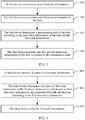
- the method includes the following steps.
- a first device receives first discovery information sent by a second device.
- the first discovery information includes an identifier ID of the second device.
- the first discovery information includes the ID of the second device and an ID of a third device.
- the first discovery information is sent in a broadcast manner.
- the first device may be the first device 101 in the wireless network system shown in FIG. 1 .
- the second device may be the second device 102 in the wireless network system shown in FIG. 1 , and is a source device sending the first discovery information.
- the third device may be the third device 103 in the wireless network system shown in FIG. 1 , and is a destination device of the first discovery information.
- the first device may be a relay device.
- the second device when sending information to the third device in a unicast manner, the second device may send the first discovery information that carries the ID of the second device and the ID of the third device.
- the second device may send the first discovery information that carries only the ID of the second device.
- the second device may repeatedly send the first discovery information.
- the first device adds an ID of the first device to the first discovery information and sends the first discovery information to which the ID of the first device is added.
- the first device when the first discovery information does not include the ID of the first device, the first device adds the ID of the first device to the first discovery information, and sends the first discovery information to which the ID of the first device is added. If the first discovery information includes the ID of the first device, it indicates that the first device has forwarded the first discovery information and does not need to forward the first discovery information again. Alternatively, for another discovery information, if an ID of a destination device carried in the discovery information is the ID of the first device, the first device does not need to forward the discovery information.
- the second device 102 when the second device 102 needs to transmit data with the third device 103 in a unicast manner, the second device 102 sends one or more pieces of discovery information in a broadcast manner.
- the discovery information carries the ID of the second device 102 and the ID of the third device 103.
- the second device may send one or more pieces of first discovery information that carries only the ID of the second device.
- the first device 101, the fourth device 104, and the fifth device 105 may directly receive the discovery information sent by the second device 102, or may receive the discovery information sent by the second device 102 and forwarded by another device.
- the discovery information is sequentially received by the three devices. For example, after receiving the discovery information and determining that the discovery information does not include an ID of the fourth device 104, the fourth device 104 adds the ID of the fourth device 104 to the discovery information, and then broadcasts the discovery information. After receiving the discovery information broadcasted by the fourth device 104 and determining that the discovery information does not include the ID of the first device 101, the first device 101 adds the ID of the first device 101 to the discovery information, and broadcasts the discovery information. The fifth device 105 performs the same steps, until the third device 103 receives the broadcasted information. In this way, a transmission path may be determined according to the IDs of the devices included in the discovery information.
- the first discovery information includes duration information of the first discovery information.
- the duration information of the first discovery information is used to indicate validity duration of the first discovery information.
- the first device adds the ID of the first device to the first discovery information, and sends the first discovery information.
- the duration information of the first discovery information is used to avoid excessively long duration in which the discovery information is forwarded in the wireless network system, and avoid waste of resources and unnecessary network congestion.
- the first device may further add signal quality information of the first device to the first discovery information.
- the signal quality information of the first device is used to indicate signal quality that exists when the first device receives the first discovery information.
- the signal quality information of the first device includes at least one of signal strength information that exists when the first device receives the first discovery information, signal-to-noise ratio information that exists when the first device receives the first discovery information, or MCS (Modulation and Coding Scheme, modulation and coding scheme) information when the first device receives the first discovery information.
- the MCS information may be an MCS level.
- the ID of the first device, the ID of the second device, and the ID of the third device may all be assigned by a base station or configured by the devices.
- the ID of the first device includes at least one of a proximity service ProSe (Proximity Service, proximity service) ID of the first device or a C-RNTI (Cell Radio Network Temporary Identifier, cell radio network temporary identifier) of the first device.
- the ID of the second device includes at least one of a ProSe ID of the second device or a C-RNTI of the second device.
- the ID of the third device includes at least one of a ProSe ID of the third device or a C-RNTI of the third device.
- an embodiment provides an information transmission method.
- the method is based on the path selection method shown in FIG. 2 and is performed after the path selection method shown in FIG. 1 is performed. Referring to FIG. 3 , the method includes the following steps.
- a first device receives and stores first path information.
- the first path information is used to indicate a data transmission path between a second device and a third device.
- the first path information includes an ID of the first device and an ID of the second device.
- the first path information includes the ID of the first device, the ID of the second device, and an ID of the third device.
- the first path information may include the ID of the first device, the ID of the second device, and the ID of the third device.
- the first path information may include only the ID of the first device and the ID of the second device.
- the first path information is sent to the first device by a base station or is sent to the first device by a preceding-hop device that is of the first device and that is indicated by the first path information.
- the first device may send, according to the first path information, the first path information to a next-hop device that is of the first device and that is indicated by the first path information.
- the third device 103 may send the first path information to the base station 106.
- the base station 106 sends the first path information to the second device 102, the fourth device 104, the first device 101, and the fifth device 105.
- the third device 103 may sequentially transmit the first path information according to a sequence opposite to the foregoing sequence of receiving the first discovery information.
- the third device 103 transmits the first path information to the fifth device 105.
- the fifth device 105 stores the first path information and forwards the first path information to the first device 101.
- the first device 101 stores the first path information and forwards the first path information to the fourth device 104.
- the fourth device 104 stores the first path information and forwards the first path information to the second device 102.
- IDs of relay devices in the first path information are sequentially arranged according to a sequence in a transmission path that is from the second device to the third device, or are sequentially arranged according to a sequence in a transmission path from the third device to the second device.
- the first path information may sequentially include an ID of the second device 102, an ID of the fourth device 104, an ID of the first device 101, an ID of the fifth device 105, and an ID of the third device 103.
- a frequency domain may be used to distinguish a sequence of the IDs of the relay devices.
- a time domain may be used to distinguish the sequence of the IDs of the relay devices.
- a logical domain may be used to distinguish the sequence of the IDs of the relay devices. This is not specifically limited in the present invention.
- the first path information includes duration information of the first path information.
- the duration information of the first path information is used to indicate validity duration of the first path information.
- the first device may delete the first path information.
- a deletion instruction may be sent to the relay devices, to instruct to delete the first path information.
- the first device may delete the first path information according to the received deletion instruction.
- the first device receives data and indication information of the data.
- the indication information of the data includes an ID of the source device and an ID of the destination device. Alternatively, the indication information of the data includes only the ID of the source device.
- the source device is the third device and the destination device is the second device. Alternatively, the source device is the second device and the destination device is the third device. It should be noted herein that, if the data is transmitted in a broadcast manner, the indication information of the data may not include the ID of the destination device, but include only the ID of the source device.
- the first device determines a transmission path of the data according to the indication information of the data and the first path information.
- the transmission path may be determined according to only the first path information. If the data is transmitted in a bidirectional manner, only a transmission path of the data can be determined according to the first path information, while a transmission direction cannot be determined. In this case, the transmission path of the data needs to be determined according to the indication information of the data and the first path information. However, multiple pieces of path information may be stored in the first device, and in this case, the first path information needs to be determined according to the indication information of the data.
- the first device 101 needs to search at least one piece of path information for the first path information according to the ID of the second device included in the indication information of the data, and transmit the data according to the first path information.
- the first device 101 needs to search at least one piece of path information for the first path information according to the ID of the second device or the ID of the third device included in the indication information of the data, and determine a transmission direction of the data according to an ID of a destination device and the first path information. If the destination device is the third device 103, the transmission path is the first device 101 - the fifth device 105 - the third device 103. If the destination device is the second device 102, the transmission path is the first device 101 - the fourth device 104 - the second device 102.
- the first device transmits the data and the indication information of the data according to the transmission path of the data.
- the first device generates a first scrambling code sequence according to a first scrambling code seed.
- the first scrambling code seed is generated according to an ID of the next-hop device that is of the first device and that is on the transmission path of the data.
- the first device scrambles at least one of the data or the indication information of the data according to the first scrambling code sequence.
- the indication information of the data may further include a path information identifier.
- the path information identifier is used to indicate that the data includes path information. If the indication information of the data includes a path information identifier, it indicates that the data includes path information, so that the first device decodes the data and stores the path information included in the data. If the indication information of the data does not include a path information identifier, the first device does not need to decode the data, and directly forwards the data.
- the path information identifier may be 1 bit in the indication information of the data.
- a first device receives first discovery information sent by a second device, adds an ID of the first device to the first discovery information, and sends the first discovery information to which the ID of the first device is added, so that a destination device can determine a transmission path after receiving the first discovery information.
- an embodiment of the present invention provides another path selection method, which corresponds to the destination device in the path selection method described in the embodiment that corresponds to FIG. 2 , and is preferably applied to a D2D scenario.
- the path selection method provided in this embodiment of the present invention may be implemented based on the wireless network system shown in FIG. 1 . Certainly, the description is provided herein by way of example only, and does not indicate that the present invention is limited thereto. Referring to FIG. 4 , the method includes the following steps.
- a third device receives M pieces of discovery information.
- An m th discovery information of the M pieces of discovery information includes an ID of the third device, an ID of a second device, and IDs of N m relay devices.
- the m th discovery information of the M pieces of discovery information includes the ID of the second device and the IDs of the N m relay devices.
- the second device may be a source device of information transmission.
- the second device may send first discovery information that carries the ID of the second device and the ID of the third device.
- the discovery information received by the third device carries the ID of the second device, the ID of the third device, and an ID of at least one relay device.
- the second device may send the first discovery information that carries only the ID of the second device.
- the discovery information received by the third device carries the ID of the second device and the ID of at least one relay device.
- the second device 102 when the second device 102 needs to transmit data with the third device 103, the second device 102 sends one or more pieces of discovery information in a broadcast manner.
- the first device 101, the fourth device 104, and the fifth device 105 may directly receive the discovery information sent by the second device 102, or may receive discovery information forwarded by another device.
- the discovery information is transmitted to the third device 103 after being forwarded by the fourth device 104 and the first device 101, and the discovery information is transmitted to the third device 103 after being forwarded by the fifth device 105.
- the third device 103 receives two pieces of discovery information that is from a same source and destination devices of both are the third device, and two paths are generated between the third device 103 and the second device 102. The two paths are respectively:
- the third device 103 may select one path from the two paths to transmit data.
- the third device determines one piece of discovery information of the M pieces of discovery information as first discovery information, and generates first path information according to the first discovery information.
- the first path information includes an ID of a relay device, the ID of the third device, and the ID of the second device in the first discovery information.
- the first path information includes the IDs the relay devices and the ID of the second device in the first discovery information.
- the first path information may include the IDs of the relay devices, the ID of the third device, and the ID of the second device in the first discovery information.
- the first path information may include only the IDs of the relay devices and the ID of the second device in the first discovery information.
- the third device may use discovery information that is of the M pieces of discovery information and that includes a minimum quantity of relay devices as the first discovery information.
- the third device may use discovery information that is of the M pieces of discovery information and that indicates that a path between relay devices is the shortest.
- the m th discovery information of the M pieces of discovery information further includes signal quality information of each of the N m relay devices.
- Signal quality information of an i th relay device of the N m relay devices is used to indicate signal quality when the i th relay device receives the first discovery information.
- the third device may use discovery information that includes best signal quality of a relay device as the first discovery information.
- the signal quality information of the i th relay device includes at least one of signal strength information that exists when the i th relay device receives the first discovery information, signal-to-noise ratio information that exists when the i th relay device receives the first discovery information, or MCS information that exists when the i th relay device receives the first discovery information.
- the MCS information may be an MCS level.
- the first path information includes duration information of the first path information.
- the duration information of the first path information is used to indicate validity duration of the first path information.
- the third device sends the first path information.
- the first path information may be sent to a base station or a next-hop device that is of the third device and that is indicated by the first path information.
- the ID of the first device, the ID of the second device, and the ID of the third device may all be assigned by the base station or configured by the devices.
- the ID of the first device includes at least one of a proximity service ProSe ID of the first device or a C-RNTI of the first device.
- the ID of the second device includes at least one of a ProSe ID of the second device or a C-RNTI of the second device.
- the ID of the third device includes at least one of a ProSe ID of the third device or a C-RNTI of the third device.
- a third device receives M pieces of discovery information, determines one piece of discovery information of the M pieces of discovery information as first discovery information, generates first path information according to the first discovery information, and sends the first path information. Because the received discovery information includes an ID of each relay device, a transmission path may be determined by the third device. In this way, a problem in the prior art that if a distance between two terminal devices performing direct communication is relatively long or channel quality changes relatively greatly, the two terminal devices cannot perform D2D communication is resolved.
- an embodiment of the present invention provides a first device, configured to perform the path selection method described in the embodiment that corresponds to FIG. 2 .
- the first device 50 includes: a receiving unit 501, a path discovery unit 502, and a sending unit 503.
- the receiving unit 501 is configured to receive first discovery information sent by a second device.
- the first discovery information includes an identifier ID of the second device.
- the first discovery information includes the ID of the second device and an ID of a third device.
- the path discovery unit 502 is configured to add an ID of the first device to the first discovery information received by the receiving unit 501.
- the sending unit 503 is configured to send the first discovery information to which the ID of the first device is added by the path discovery unit 502.
- the path discovery unit 502 is further configured to add signal quality information of the first device to the first discovery information.
- the signal quality information of the first device is used to indicate signal quality that exists when the first device receives the first discovery information.
- the signal quality information of the first device includes at least one of signal strength information that exists when the first device receives the first discovery information, signal-to-noise ratio information that exists when the first device receives the first discovery information, or modulation and coding scheme MCS information that exists when the first device receives the first discovery information.
- the path discovery unit 502 is further configured to add the ID of the first device to the first discovery information when the first discovery information does not include the ID of the first device.
- the first discovery information includes duration information of the first discovery information.
- the duration information of the first discovery information is used to indicate validity duration of the first discovery information.
- the path discovery unit 502 is further configured to add the ID of the first device to the first discovery information when a time point at which the first device receives the first discovery information is within the validity duration of the first discovery information.
- the ID of the first device is assigned by a base station or configured by the first device.
- the ID of the first device may include at least one of a proximity service ProSe ID of the first device or a cell radio network temporary identifier C-RNTI of the first device.
- the first device 50 provided in this embodiment may further be configured to perform the information transmission method described in the embodiment that corresponds to FIG. 3 .
- the first device 50 may further include a path selection unit 504 and a scrambling unit 505.
- the receiving unit 501 is further configured to receive first path information.
- the first path information is used to indicate a data transmission path between the second device and the third device.
- the first path information includes the ID of the first device and the ID of the second device.
- the first path information includes the ID of the first device, the ID of the second device, and the ID of the third device.
- the path selection unit 504 is configured to store the first path information received by the receiving unit 501.
- the first path information is sent to the first device by the base station or is sent to the first device by a preceding-hop device that is of the first device and that is indicated by the first path information.
- the sending unit 503 is further configured to: when the first path information is sent to the first device by the preceding-hop device that is of the first device and that is indicated by the first path information, send, according to the first path information, the first path information to a next-hop device that is of the first device and that is indicated by the first path information.
- the first path information includes duration information of the first path information.
- the duration information of the first path information is used to indicate validity duration of the first path information.
- the path selection unit 504 is further configured to delete the first path information when duration in which the first path information is stored exceeds the validity duration indicated by the duration information.
- the receiving unit 501 is further configured to receive a deletion instruction.
- the deletion instruction is used to instruct to delete the first path information.
- the path selection unit 504 is further configured to delete the first path information according to the deletion instruction received by the receiving unit 501.
- the receiving unit 501 is further configured to receive data and indication information of the data.
- the indication information of the data includes an ID of a source device and an ID of a destination device.
- the indication information of the data includes only the ID of the source device.
- the source device is the third device and the destination device is the second device.
- the source device is the second device and the destination device is the third device.
- the path selection unit 504 is further configured to determine a transmission path of the data according to the indication information of the data and the first path information received by the receiving unit 501.
- the sending unit 503 is further configured to transmit the data and the indication information of the data according to the transmission path of the data that is determined by the path selection unit 504. Further, optionally, the path selection unit 504 is further configured to add an ID of the next-hop device of the first device to the indication information of the data according to the transmission path of the data.
- the scrambling unit 505 is configured to: generate a first scrambling code sequence according to a first scrambling code seed, and scramble at least one of the data or the indication information of the data according to the first scrambling code sequence.
- the first scrambling code seed is generated according to the ID of the next-hop device that is of the first device and that is in the transmission path of the data.
- the path selection unit 504 is further configured to: when the indication information of the data further includes a path information identifier, decode the data and store path information included in the data.
- the path information identifier is used to indicate that the data includes the path information.
- the first device receives first discovery information sent by a second device, adds an ID of the first device to the first discovery information, and sends the first discovery information to which the ID of the first device is added, so that a destination device can determine a transmission path after receiving the first discovery information.
- a problem in the prior art that if a distance between two terminal devices performing direct communication is relatively long or channel quality changes relatively greatly, the two terminal devices cannot perform D2D communication is resolved.
- an embodiment of the present invention provides a third device, configured to perform the path selection method described in the embodiment that corresponds to FIG. 4 .
- the third device 60 includes: a receiving unit 601, a path selection unit 602, and a sending unit 603.
- the receiver 601 is configured to receive M pieces of discovery information.
- An m th discovery information of the M pieces of discovery information includes an ID of the third device, an ID of a second device, and IDs of N m relay devices.
- the m th discovery information of the M pieces of discovery information includes the ID of the second device and the IDs of the N m relay devices.
- M and N m are positive integers, and m is an integer within [1, M].
- the path selection unit 602 is configured to: determine one piece of discovery information of the M pieces of discovery information received by the receiving unit 601 as the first discovery information, and generate first path information according to the first discovery information.
- the first path information includes an ID of a relay device, the ID of the third device, and the ID of the second device in the first discovery information.
- the first path information includes the IDs of the relay devices and the ID of the second device in the first discovery information.
- the sending unit 603 is configured to send the first path information generated by the path selection unit 602.
- the path selection unit 602 is further configured to use discovery information that is of the M pieces of discovery information and that includes a minimum quantity of relay devices as the first discovery information.
- the m th discovery information of the M pieces of discovery information further includes signal quality information of each of the N m relay devices.
- Signal quality information of an i th relay device of the N m relay devices is used to indicate signal quality when the i th relay device receives the first discovery information, where i is an integer within [1, Nm].
- the path selection unit 602 is further configured to use discovery information that includes best signal quality of a relay device as the first discovery information.
- the signal quality information of the i th relay device includes at least one of signal strength information that exists when the i th relay device receives the first discovery information, signal-to-noise ratio information that exists when the i th relay device receives the first discovery information, or modulation and coding scheme MCS information that exists when the i th relay device receives the first discovery information.
- the sending unit 603 is further configured to send the first path information to a base station, or to a next-hop device that is of the third device and that is indicated by the first path information.
- the first path information includes duration information of the first path information.
- the duration information of the first path information is used to indicate validity duration of the first path information.
- the ID of the third device is assigned by the base station or configured by the third device.
- the ID of the third device may include at least one of a proximity service ProSe ID of the third device or a cell radio network temporary identifier C-RNTI of the third device.
- the third device receives M pieces of discovery information, determines one piece of discovery information of the M pieces of discovery information as first discovery information, generates first path information according to the first discovery information, and sends the first path information. Because the received discovery information includes an ID of each relay device, a transmission path may be determined by the third device. In this way, a problem in the prior art that if a distance between two terminal devices performing direct communication is relatively long or channel quality changes relatively greatly, the two terminal devices cannot perform D2D communication is resolved.
- the first device 70 includes: at least one processor 701, a memory 702, a bus 703, a transmitter 704, and a receiver 705.
- the at least one processor 701, the memory 702, the transmitter 704, and the receiver 705 are connected and communicate with each other by using the bus 703.
- the bus 703 may be an ISA (Industry Standard Architecture, industry standard architecture) bus, a PCI (Peripheral Component, peripheral component interconnect) bus, an EISA (Extended Industry Standard Architecture, extended industry standard architecture) bus, or the like.
- the bus 703 may be classified into an address bus, a data bus, a control bus, and the like. For convenience of illustration, only one bold line is used for illustration in FIG. 7 , but it does not indicate that there is only one bus or one type of bus.
- the memory 702 is configured to execute application program code in the solution of the present invention.
- the application program code for executing the solution of the present invention is stored in the memory, and is controlled and executed by the processor 701.
- the memory may be a read-only memory ROM or a static storage device of another type that can store static information and an instruction; a random access memory RAM or a dynamic storage device of another type that can store static information and an instruction; or an electrically erasable programmable read-only memory EEPROM, a compact disc read-only memory CD-ROM or other optical disk storages, an optical disc (including a compressed disc, a laser disk, an optical disc, a digital versatile disc, a Blu-ray disc, or the like) storage, a disk storage medium or other disk storages, or any other medium that can be used to carry or store expected program code in a command or data structure form and can be accessed by a computer, but is not limited thereto.
- These memories are connected to the processor by using the bus.
- the processor 701 may be a central processing unit 701 (Central Processing Unit, CPU for short), an application-specific integrated circuit (Application Specific Integrated Circuit, ASIC for short), or one or more integrated circuits configured to implement this embodiment of the present invention.
- CPU Central Processing Unit
- ASIC Application Specific Integrated Circuit
- the receiver 705 is configured to receive first discovery information sent by a second device.
- the first discovery information includes an identifier ID of the second device.
- the first discovery information includes the ID of the second device and an ID of a third device.
- the processor 701 is configured to add an ID of the first device to the first discovery information received by the receiver 705.
- the transmitter 704 is configured to send first discovery information to which the ID of the first device is added by the processor 701.
- the processor 701 is further configured to add signal quality information of the first device to the first discovery information.
- the signal quality information of the first device is used to indicate signal quality that exists when the first device receives the first discovery information.
- the signal quality information of the first device includes at least one of signal strength information that exists when the first device receives the first discovery information, signal-to-noise ratio information that exists when the first device receives the first discovery information, or modulation and coding scheme MCS information that exists when the first device receives the first discovery information.
- the processor 701 is further configured to add the ID of the first device to the first discovery information when the first discovery information does not include the ID of the first device.
- the first discovery information includes duration information of the first discovery information.
- the duration information of the first discovery information is used to indicate validity duration of the first discovery information.
- the processor 701 is further configured to add the ID of the first device to the first discovery information when a time point at which the first device receives the first discovery information is within the validity duration of the first discovery information.
- the ID of the first device is assigned by a base station or configured by the first device.
- the ID of the first device may include at least one of a proximity service ProSe ID of the first device or a cell radio network temporary identifier C-RNTI of the first device.
- the first device 70 provided in this embodiment may further be configured to perform the information transmission method described in the embodiment that corresponds to FIG. 3 .
- the receiver 705 is further configured to receive and store first path information.
- the first path information is used to indicate a data transmission path between the second device and the third device.
- the first path information includes the ID of the first device and the ID of the second device.
- the first path information includes the ID of the first device, the ID of the second device, and the ID of the third device.
- the processor 701 is further configured to store the first path information received by the receiver 705.
- the first path information is sent to the first device by the base station or is sent to the first device by a preceding-hop device that is of the first device and that is indicated by the first path information.
- the transmitter 704 is further configured to: when the first path information is sent to the first device by the preceding-hop device that is of the first device and that is indicated by the first path information, send, according to the first path information, the first path information to a next-hop device that is of the first device and that is indicated by the first path information.
- the first path information includes duration information of the first path information.
- the duration information of the first path information is used to indicate validity duration of the first path information.
- the processor 701 is further configured to delete the first path information when duration in which the first path information is stored exceeds the validity duration indicated by the duration information.
- the receiver 705 is further configured to receive a deletion instruction.
- the deletion instruction is used to instruct to delete the first path information.
- the processor 701 is further configured to delete the first path information according to the first path information received by the receiver 705.
- the receiver 705 is further configured to receive data and indication information of the data.
- the indication information of the data includes an ID of a source device and an ID of a destination device.
- the indication information of the data includes only the ID of the source device.
- the source device is the third device and the destination device is the second device.
- the source device is the second device and the destination device is the third device.
- the processor 701 is further configured to determine a transmission path of the data according to the indication information of the data and the first path information received by the receiver 705.
- the transmitter 704 is further configured to transmit the data and the indication information of the data according to the transmission path of the data that is determined by the processor 701.
- the processor 701 is further configured to add an ID of the next-hop device of the first device to the indication information of the data according to the transmission path of the data.
- the processor 701 is further configured to: generate a first scrambling code sequence according to a first scrambling code seed, and scramble at least one of the data or the indication information of the data according to the first scrambling code sequence.
- the first scrambling code seed is generated according to the ID of the next-hop device that is of the first device and that is in the transmission path of the data.
- the processor 701 is further configured to: when the indication information of the data further includes a path information identifier, decode the data and store path information included in the data.
- the path information identifier is used to indicate that the data includes the path information.
- the first device provided in this embodiment of the present invention receives first discovery information sent by a second device, adds an ID of the first device to the first discovery information, and sends the first discovery information to which the ID of the first device is added, so that a destination device can determine a transmission path after receiving the first discovery information.
- the third device 80 includes: at least one processor 801, a memory 802, a bus 803, a transmitter 804, and a receiver 805.
- the at least one processor 801, the memory 802, the transmitter 804, and the receiver 805 are connected and communicate with each other by using the bus 803.
- the bus 803 may be an ISA (Industry Standard Architecture, industry standard architecture) bus, a PCI (Peripheral Component, peripheral component interconnect) bus, an EISA (Extended Industry Standard Architecture, extended industry standard architecture) bus, or the like.
- the bus 803 may be classified into an address bus, a data bus, a control bus, and the like. For convenience of illustration, only one bold line is used for illustration in FIG. 8 , but it does not indicate that there is only one bus or one type of bus.
- the memory 802 is configured to execute application program code in the solution of the present invention.
- the application program code for executing the solution of the present invention is stored in the memory, and is controlled and executed by the processor 801.
- the memory may be a read-only memory ROM or a static storage device of another type that can store static information and an instruction; a random access memory RAM or a dynamic storage device of another type that can store static information and an instruction; or an electrically erasable programmable read-only memory EEPROM, a compact disc read-only memory CD-ROM or other optical disk storages, an optical disc (including a compressed disc, a laser disk, an optical disc, a digital versatile disc, a Blu-ray disc, or the like) storage, a disk storage medium or other disk storages, or any other medium that can be used to carry or store expected program code in a command or data structure form and can be accessed by a computer, but is not limited thereto.
- These memories are connected to the processor by using the bus.
- the processor 801 may be a central processing unit 801 (Central Processing Unit, CPU for short), an application-specific integrated circuit (Application Specific Integrated Circuit, ASIC for short), or one or more integrated circuits configured to implement this embodiment of the present invention.
- CPU Central Processing Unit
- ASIC Application Specific Integrated Circuit
- the receiver 805 is configured to receive M pieces of discovery information.
- An m th discovery information of the M pieces of discovery information includes an ID of the third device, an ID of a second device, and IDs of N m relay devices.
- the m th discovery information of the M pieces of discovery information includes the ID of the second device and the IDs of the N m relay devices.
- M and N m are positive integers, and m is an integer within [1, M].
- the processor 801 is configured to: determine one piece of discovery information of the M pieces of discovery information received by the receiver 805 as first discovery information, and generate first path information according to the first discovery information.
- the first path information includes an ID of a relay device, the ID of the third device, and the ID of the second device in the first discovery information.
- the first path information includes the IDs of the relay devices and the ID of the second device in the first discovery information.
- the transmitter 804 is configured to send the first path information generate by the processor 801.
- the processor 801 is further configured to use discovery information that is of the M pieces of discovery information and that includes a minimum quantity of relay devices as the first discovery information.
- the m th discovery information of the M pieces of discovery information further includes signal quality information of each of the N m relay devices.
- Signal quality information of an i th relay device of the N m relay devices is used to indicate signal quality when the i th relay device receives the first discovery information, where i is an integer within [1, N m ].
- the processor 801 is further configured to use discovery information that includes best signal quality of a relay device as the first discovery information.
- the signal quality information of the i th relay device includes at least one of signal strength information that exists when the i th relay device receives the first discovery information, signal-to-noise ratio information that exists when the i th relay device receives the first discovery information, or modulation and coding scheme MCS information that exists when the i th relay device receives the first discovery information.
- the transmitter 804 is further configured to send the first path information to a base station, or to a next-hop device that is of the third device and that is indicated by the first path information.
- the first path information includes duration information of the first path information.
- the duration information of the first path information is used to indicate validity duration of the first path information.
- the ID of the third device is assigned by the base station or configured by the third device.
- the ID of the third device may include at least one of a proximity service ProSe ID of the third device or a cell radio network temporary identifier C-RNTI of the third device.
- the third device receives M pieces of discovery information, determines one piece of discovery information of the M pieces of discovery information as first discovery information, generates first path information according to the first discovery information, and sends the first path information. Because the received discovery information includes an ID of each relay device, a transmission path may be determined by the third device. In this way, a problem in the prior art that if a distance between two terminal devices performing direct communication is relatively long or channel quality changes relatively greatly, the two terminal devices cannot perform D2D communication is resolved.
- the wireless network system 90 includes: a first device 901, a second device 902, and a third device 903.
- the first device 901 may be the first device 101 in the wireless network system shown in FIG. 1 .
- the second device 902 may be the second device 102 in the wireless network system shown in FIG. 1 .
- the third device 903 may be the third device 103 in the wireless network system shown in FIG. 1 .
- the description is provided herein by way of example only, and does not indicate that the present invention is limited thereto.
- the first device 901 is the first device described in the embodiment that corresponds to FIG. 5
- the third device 903 is the third device described in the embodiment that corresponds to FIG. 6 .
- the first device 901 is the first device described in the embodiment that corresponds to FIG. 7
- the third device 903 is the third device described in the embodiment that corresponds to FIG. 8 .
- a first device receives first discovery information sent by a second device, adds an ID of the first device to the first discovery information, and sends the first discovery information to which the ID of the first device is added, so that a destination device can determine a transmission path after receiving the first discovery information.
- the disclosed system, apparatus, and method may be implemented in other manners.
- the described apparatus embodiment is merely an example.
- the unit division is merely logical function division and may be other division during actual implementation.
- a plurality of units or components may be combined or integrated into another system, or some features may be ignored or not performed.
- the displayed or discussed mutual couplings or direct couplings or communication connections may be implemented by using some interfaces.
- the indirect couplings or communication connections between the apparatuses or units may be implemented in electronic, mechanical, or other forms.
- the units described as separate parts may or may not be physically separate, and parts displayed as units may or may not be physical units, may be located in one position, or may be distributed on a plurality of network units. Some or all of the units may be selected according to actual requirements to achieve the objectives of the solutions of the embodiments.
- functional units in the embodiments of the present invention may be integrated into one processing unit, or each of the units may exist alone physically, or two or more units are integrated into one unit.
- the functions When the functions are implemented in the form of a software functional unit and sold or used as an independent product, the functions may be stored in a computer-readable storage medium. Based on such an understanding, the technical solutions of the present invention essentially, or the part contributing to the prior art, or some of the technical solutions may be implemented in a form of a software product.
- the software product is stored in a storage medium, and includes several instructions for instructing a computer device (which may be a personal computer, a server, a network device, and the like) to perform all or some of the steps of the methods described in the embodiments of the present invention.
- the storage medium may be any available medium accessible to a computer.
- the computer readable medium may include a RAM (Random Access Memory, random access memory), a ROM (Read-Only Memory, read-only memory), an EEPROM (Electrically Erasable Programmable Read-Only Memory, electrically erasable programmable read-only memory), a CD-ROM (Compact Disc Read Only Memory, compact disc read-only memory) or other optical disk storage, a disk storage medium or other disk storage, or any other medium that can be used to carry or store expected program code having an instruction or data structural form and can be accessed by a computer.
- any connection may be appropriately defined as a computer-readable medium.
- the coaxial cable, optical fiber/cable, twisted pair, DSL or wireless technologies such as infrared ray, radio and microwave are included in fixation of a medium to which they belong.
- a disk and a disc used by the present invention includes a CD (Compact Disc, compact disc), a laser disc, an optical disc, a DVD disc (Digital Versatile Disc, digital versatile disc), a floppy disk and a Blu-ray disc, where the disk generally copies data by a magnetic means, and the disc copies data optically by a laser means.
- CD Compact Disc, compact disc
- laser disc an optical disc
- DVD disc Digital Versatile Disc, digital versatile disc
- floppy disk Digital Versatile Disc, digital versatile disc
- Blu-ray disc where the disk generally copies data by a magnetic means, and the disc copies data optically by a laser means.
Landscapes
- Engineering & Computer Science (AREA)
- Computer Networks & Wireless Communication (AREA)
- Signal Processing (AREA)
- Databases & Information Systems (AREA)
- Mobile Radio Communication Systems (AREA)
Applications Claiming Priority (1)
| Application Number | Priority Date | Filing Date | Title |
|---|---|---|---|
| PCT/CN2015/078142 WO2016172983A1 (fr) | 2015-04-30 | 2015-04-30 | Procédé, dispositif et système de sélection de voie |
Publications (3)
| Publication Number | Publication Date |
|---|---|
| EP3282765A1 true EP3282765A1 (fr) | 2018-02-14 |
| EP3282765A4 EP3282765A4 (fr) | 2018-09-05 |
| EP3282765B1 EP3282765B1 (fr) | 2020-12-02 |
Family
ID=57199002
Family Applications (1)
| Application Number | Title | Priority Date | Filing Date |
|---|---|---|---|
| EP15890363.3A Active EP3282765B1 (fr) | 2015-04-30 | 2015-04-30 | Procédé, dispositif et système de sélection de voie |
Country Status (5)
| Country | Link |
|---|---|
| US (1) | US10477453B2 (fr) |
| EP (1) | EP3282765B1 (fr) |
| JP (1) | JP6619448B2 (fr) |
| CN (1) | CN106797601A (fr) |
| WO (1) | WO2016172983A1 (fr) |
Families Citing this family (3)
| Publication number | Priority date | Publication date | Assignee | Title |
|---|---|---|---|---|
| CN107104901A (zh) * | 2017-06-12 | 2017-08-29 | 杭州快越科技有限公司 | 跨媒介专网接入路由器 |
| TWI890803B (zh) | 2020-06-08 | 2025-07-21 | 日商日產化學股份有限公司 | 上層膜形成組成物及相分離圖型製造方法 |
| CN114741443A (zh) * | 2022-04-24 | 2022-07-12 | 吉林大学 | 一种海底大陆架范围内实时海底数据采集分析方法 |
Family Cites Families (18)
| Publication number | Priority date | Publication date | Assignee | Title |
|---|---|---|---|---|
| JP3597511B2 (ja) | 2002-02-22 | 2004-12-08 | エヌ・ティ・ティ・コムウェア株式会社 | 無線装置およびその通信経路制御方法、コンピュータプログラム |
| US7027426B2 (en) | 2002-08-05 | 2006-04-11 | Harris Corporation | Multi-channel mobile ad hoc network |
| JP2004282255A (ja) | 2003-03-13 | 2004-10-07 | Matsushita Electric Ind Co Ltd | 通信システム |
| TWI234970B (en) * | 2003-12-05 | 2005-06-21 | Inst Information Industry | Method and system for route selection and method for route reconstruction |
| JP5103892B2 (ja) * | 2006-05-26 | 2012-12-19 | 富士通株式会社 | 先着学習方法、中継装置および中継装置用プログラム |
| CN101286930B (zh) | 2008-05-30 | 2010-12-08 | 华南理工大学 | 一种多跳无线自组织网络的拥塞自适应路由方法 |
| CN101662811B (zh) | 2009-08-17 | 2011-08-17 | 北京航空航天大学 | 基于可靠路径的分布式路由协议 |
| CN101877900B (zh) | 2009-11-06 | 2013-03-20 | 湖北汽车工业学院 | 一种车辆间数据路由方法 |
| CN102387559B (zh) * | 2010-09-03 | 2015-06-03 | 中兴通讯股份有限公司 | 无线Mesh网络的跨层路由优化的方法及装置 |
| US9341386B2 (en) * | 2012-10-23 | 2016-05-17 | GM Global Technology Operations LLC | Vehicular airflow outlet |
| EP3709730A1 (fr) * | 2013-01-16 | 2020-09-16 | Interdigital Patent Holdings, Inc. | Génération et réception de signaux de découverte |
| US20140211705A1 (en) * | 2013-01-28 | 2014-07-31 | Electronics & Telecommunications Research Institute | Method for device-to-device communication based on wireless local area network and apparatus for the same |
| CN104105155B (zh) | 2013-04-01 | 2019-07-16 | 中兴通讯股份有限公司 | 接收设备发现信息、发送设备发现信息的方法和用户设备 |
| EP2833694A3 (fr) | 2013-07-29 | 2015-04-01 | HTC Corporation | Procédé de découverte de relais et communication dans un système de communication sans fil |
| EP3031286B1 (fr) | 2013-08-07 | 2019-10-02 | LG Electronics Inc. | Procédé et appareil de réalisation d'une découverte entre dispositifs dans un système de communication sans fil |
| US9591430B2 (en) | 2013-09-16 | 2017-03-07 | Blackberry Limited | Temporary identifiers and expiration values for discoverable user equipments (UEs) |
| TWI654863B (zh) * | 2013-10-18 | 2019-03-21 | 新力股份有限公司 | 通訊控制裝置、通訊控制方法及終端裝置 |
| CN104581613B (zh) | 2013-10-29 | 2019-07-30 | 索尼公司 | 增强用户装置之间的邻近服务发现的方法及设备 |
-
2015
- 2015-04-30 EP EP15890363.3A patent/EP3282765B1/fr active Active
- 2015-04-30 CN CN201580054429.1A patent/CN106797601A/zh active Pending
- 2015-04-30 JP JP2017556648A patent/JP6619448B2/ja active Active
- 2015-04-30 US US15/570,583 patent/US10477453B2/en active Active
- 2015-04-30 WO PCT/CN2015/078142 patent/WO2016172983A1/fr not_active Ceased
Also Published As
| Publication number | Publication date |
|---|---|
| WO2016172983A1 (fr) | 2016-11-03 |
| US10477453B2 (en) | 2019-11-12 |
| CN106797601A (zh) | 2017-05-31 |
| EP3282765A4 (fr) | 2018-09-05 |
| EP3282765B1 (fr) | 2020-12-02 |
| JP2018519707A (ja) | 2018-07-19 |
| US20180132162A1 (en) | 2018-05-10 |
| JP6619448B2 (ja) | 2019-12-11 |
Similar Documents
| Publication | Publication Date | Title |
|---|---|---|
| RU2731766C1 (ru) | Способ беспроводной связи и устройство | |
| JP2022519158A (ja) | サイド通信方法及び端末デバイス | |
| US10791500B2 (en) | Information transmission method, base station, and user equipment | |
| CN110635867B (zh) | 通信方法、网络设备和终端 | |
| KR101720600B1 (ko) | 정보 송신 방법, 기지국, 및 사용자 장비 | |
| US10477453B2 (en) | Path selection method, device, and system | |
| JP5914750B2 (ja) | パケット交換ネットワークへのアクセス方法、wlanアクセスシステム及びユーザ装置 | |
| CN107005953B (zh) | 一种数据传输方法、设备及系统 | |
| US10608804B2 (en) | Data transmission method, device, and system | |
| US10237102B2 (en) | Information transmission method, device, and system | |
| CN106664685B (zh) | Lte-u载波信息的传输方法、基站和用户设备 | |
| KR20140102435A (ko) | 무선 통신 시스템에서 접속 순위 리스트를 이용한 와이파이 네트워크 접속 방법 및 이를 위한 장치 | |
| US10237038B2 (en) | Information transmission method, device, and system | |
| US10284330B2 (en) | Data transmission method, device, and system | |
| CN114765902A (zh) | 一种信息处理方法、装置和可读存储介质 | |
| EP3282807A1 (fr) | Procédé, dispositif et système de transmission d'informations | |
| JP2019521572A (ja) | 信号伝送方法、ネットワーク装置および端末装置 |
Legal Events
| Date | Code | Title | Description |
|---|---|---|---|
| STAA | Information on the status of an ep patent application or granted ep patent |
Free format text: STATUS: THE INTERNATIONAL PUBLICATION HAS BEEN MADE |
|
| PUAI | Public reference made under article 153(3) epc to a published international application that has entered the european phase |
Free format text: ORIGINAL CODE: 0009012 |
|
| STAA | Information on the status of an ep patent application or granted ep patent |
Free format text: STATUS: REQUEST FOR EXAMINATION WAS MADE |
|
| 17P | Request for examination filed |
Effective date: 20171109 |
|
| AK | Designated contracting states |
Kind code of ref document: A1 Designated state(s): AL AT BE BG CH CY CZ DE DK EE ES FI FR GB GR HR HU IE IS IT LI LT LU LV MC MK MT NL NO PL PT RO RS SE SI SK SM TR |
|
| AX | Request for extension of the european patent |
Extension state: BA ME |
|
| RIC1 | Information provided on ipc code assigned before grant |
Ipc: H04W 40/24 20090101ALI20180425BHEP Ipc: H04W 40/02 20090101ALI20180425BHEP Ipc: H04W 40/00 20090101AFI20180425BHEP Ipc: H04W 88/04 20090101ALI20180425BHEP Ipc: H04W 88/02 20090101ALI20180425BHEP |
|
| DAV | Request for validation of the european patent (deleted) | ||
| DAX | Request for extension of the european patent (deleted) | ||
| A4 | Supplementary search report drawn up and despatched |
Effective date: 20180806 |
|
| RIC1 | Information provided on ipc code assigned before grant |
Ipc: H04W 40/02 20090101ALI20180731BHEP Ipc: H04W 40/00 20090101AFI20180731BHEP Ipc: H04W 88/04 20090101ALI20180731BHEP Ipc: H04W 88/02 20090101ALI20180731BHEP Ipc: H04W 40/24 20090101ALI20180731BHEP |
|
| R17P | Request for examination filed (corrected) |
Effective date: 20171109 |
|
| STAA | Information on the status of an ep patent application or granted ep patent |
Free format text: STATUS: EXAMINATION IS IN PROGRESS |
|
| 17Q | First examination report despatched |
Effective date: 20200206 |
|
| REG | Reference to a national code |
Ref country code: DE Ref legal event code: R079 Ref document number: 602015063089 Country of ref document: DE Free format text: PREVIOUS MAIN CLASS: H04W0040000000 Ipc: H04W0040240000 |
|
| RIC1 | Information provided on ipc code assigned before grant |
Ipc: H04W 40/36 20090101ALI20200416BHEP Ipc: H04W 40/24 20090101AFI20200416BHEP Ipc: H04W 40/12 20090101ALI20200416BHEP Ipc: H04W 40/02 20090101ALI20200416BHEP |
|
| GRAP | Despatch of communication of intention to grant a patent |
Free format text: ORIGINAL CODE: EPIDOSNIGR1 |
|
| STAA | Information on the status of an ep patent application or granted ep patent |
Free format text: STATUS: GRANT OF PATENT IS INTENDED |
|
| INTG | Intention to grant announced |
Effective date: 20200615 |
|
| GRAS | Grant fee paid |
Free format text: ORIGINAL CODE: EPIDOSNIGR3 |
|
| GRAA | (expected) grant |
Free format text: ORIGINAL CODE: 0009210 |
|
| STAA | Information on the status of an ep patent application or granted ep patent |
Free format text: STATUS: THE PATENT HAS BEEN GRANTED |
|
| AK | Designated contracting states |
Kind code of ref document: B1 Designated state(s): AL AT BE BG CH CY CZ DE DK EE ES FI FR GB GR HR HU IE IS IT LI LT LU LV MC MK MT NL NO PL PT RO RS SE SI SK SM TR |
|
| REG | Reference to a national code |
Ref country code: GB Ref legal event code: FG4D |
|
| REG | Reference to a national code |
Ref country code: AT Ref legal event code: REF Ref document number: 1342325 Country of ref document: AT Kind code of ref document: T Effective date: 20201215 Ref country code: CH Ref legal event code: EP |
|
| REG | Reference to a national code |
Ref country code: IE Ref legal event code: FG4D |
|
| REG | Reference to a national code |
Ref country code: DE Ref legal event code: R096 Ref document number: 602015063089 Country of ref document: DE |
|
| PG25 | Lapsed in a contracting state [announced via postgrant information from national office to epo] |
Ref country code: RS Free format text: LAPSE BECAUSE OF FAILURE TO SUBMIT A TRANSLATION OF THE DESCRIPTION OR TO PAY THE FEE WITHIN THE PRESCRIBED TIME-LIMIT Effective date: 20201202 Ref country code: FI Free format text: LAPSE BECAUSE OF FAILURE TO SUBMIT A TRANSLATION OF THE DESCRIPTION OR TO PAY THE FEE WITHIN THE PRESCRIBED TIME-LIMIT Effective date: 20201202 Ref country code: NO Free format text: LAPSE BECAUSE OF FAILURE TO SUBMIT A TRANSLATION OF THE DESCRIPTION OR TO PAY THE FEE WITHIN THE PRESCRIBED TIME-LIMIT Effective date: 20210302 Ref country code: GR Free format text: LAPSE BECAUSE OF FAILURE TO SUBMIT A TRANSLATION OF THE DESCRIPTION OR TO PAY THE FEE WITHIN THE PRESCRIBED TIME-LIMIT Effective date: 20210303 |
|
| REG | Reference to a national code |
Ref country code: NL Ref legal event code: MP Effective date: 20201202 |
|
| REG | Reference to a national code |
Ref country code: AT Ref legal event code: MK05 Ref document number: 1342325 Country of ref document: AT Kind code of ref document: T Effective date: 20201202 |
|
| PG25 | Lapsed in a contracting state [announced via postgrant information from national office to epo] |
Ref country code: BG Free format text: LAPSE BECAUSE OF FAILURE TO SUBMIT A TRANSLATION OF THE DESCRIPTION OR TO PAY THE FEE WITHIN THE PRESCRIBED TIME-LIMIT Effective date: 20210302 Ref country code: SE Free format text: LAPSE BECAUSE OF FAILURE TO SUBMIT A TRANSLATION OF THE DESCRIPTION OR TO PAY THE FEE WITHIN THE PRESCRIBED TIME-LIMIT Effective date: 20201202 Ref country code: PL Free format text: LAPSE BECAUSE OF FAILURE TO SUBMIT A TRANSLATION OF THE DESCRIPTION OR TO PAY THE FEE WITHIN THE PRESCRIBED TIME-LIMIT Effective date: 20201202 Ref country code: LV Free format text: LAPSE BECAUSE OF FAILURE TO SUBMIT A TRANSLATION OF THE DESCRIPTION OR TO PAY THE FEE WITHIN THE PRESCRIBED TIME-LIMIT Effective date: 20201202 |
|
| PG25 | Lapsed in a contracting state [announced via postgrant information from national office to epo] |
Ref country code: NL Free format text: LAPSE BECAUSE OF FAILURE TO SUBMIT A TRANSLATION OF THE DESCRIPTION OR TO PAY THE FEE WITHIN THE PRESCRIBED TIME-LIMIT Effective date: 20201202 Ref country code: HR Free format text: LAPSE BECAUSE OF FAILURE TO SUBMIT A TRANSLATION OF THE DESCRIPTION OR TO PAY THE FEE WITHIN THE PRESCRIBED TIME-LIMIT Effective date: 20201202 |
|
| REG | Reference to a national code |
Ref country code: LT Ref legal event code: MG9D |
|
| PG25 | Lapsed in a contracting state [announced via postgrant information from national office to epo] |
Ref country code: EE Free format text: LAPSE BECAUSE OF FAILURE TO SUBMIT A TRANSLATION OF THE DESCRIPTION OR TO PAY THE FEE WITHIN THE PRESCRIBED TIME-LIMIT Effective date: 20201202 Ref country code: CZ Free format text: LAPSE BECAUSE OF FAILURE TO SUBMIT A TRANSLATION OF THE DESCRIPTION OR TO PAY THE FEE WITHIN THE PRESCRIBED TIME-LIMIT Effective date: 20201202 Ref country code: SM Free format text: LAPSE BECAUSE OF FAILURE TO SUBMIT A TRANSLATION OF THE DESCRIPTION OR TO PAY THE FEE WITHIN THE PRESCRIBED TIME-LIMIT Effective date: 20201202 Ref country code: LT Free format text: LAPSE BECAUSE OF FAILURE TO SUBMIT A TRANSLATION OF THE DESCRIPTION OR TO PAY THE FEE WITHIN THE PRESCRIBED TIME-LIMIT Effective date: 20201202 Ref country code: PT Free format text: LAPSE BECAUSE OF FAILURE TO SUBMIT A TRANSLATION OF THE DESCRIPTION OR TO PAY THE FEE WITHIN THE PRESCRIBED TIME-LIMIT Effective date: 20210405 Ref country code: SK Free format text: LAPSE BECAUSE OF FAILURE TO SUBMIT A TRANSLATION OF THE DESCRIPTION OR TO PAY THE FEE WITHIN THE PRESCRIBED TIME-LIMIT Effective date: 20201202 Ref country code: RO Free format text: LAPSE BECAUSE OF FAILURE TO SUBMIT A TRANSLATION OF THE DESCRIPTION OR TO PAY THE FEE WITHIN THE PRESCRIBED TIME-LIMIT Effective date: 20201202 |
|
| PG25 | Lapsed in a contracting state [announced via postgrant information from national office to epo] |
Ref country code: AT Free format text: LAPSE BECAUSE OF FAILURE TO SUBMIT A TRANSLATION OF THE DESCRIPTION OR TO PAY THE FEE WITHIN THE PRESCRIBED TIME-LIMIT Effective date: 20201202 |
|
| REG | Reference to a national code |
Ref country code: DE Ref legal event code: R097 Ref document number: 602015063089 Country of ref document: DE |
|
| PG25 | Lapsed in a contracting state [announced via postgrant information from national office to epo] |
Ref country code: IS Free format text: LAPSE BECAUSE OF FAILURE TO SUBMIT A TRANSLATION OF THE DESCRIPTION OR TO PAY THE FEE WITHIN THE PRESCRIBED TIME-LIMIT Effective date: 20210402 |
|
| PLBE | No opposition filed within time limit |
Free format text: ORIGINAL CODE: 0009261 |
|
| STAA | Information on the status of an ep patent application or granted ep patent |
Free format text: STATUS: NO OPPOSITION FILED WITHIN TIME LIMIT |
|
| PG25 | Lapsed in a contracting state [announced via postgrant information from national office to epo] |
Ref country code: AL Free format text: LAPSE BECAUSE OF FAILURE TO SUBMIT A TRANSLATION OF THE DESCRIPTION OR TO PAY THE FEE WITHIN THE PRESCRIBED TIME-LIMIT Effective date: 20201202 Ref country code: IT Free format text: LAPSE BECAUSE OF FAILURE TO SUBMIT A TRANSLATION OF THE DESCRIPTION OR TO PAY THE FEE WITHIN THE PRESCRIBED TIME-LIMIT Effective date: 20201202 |
|
| 26N | No opposition filed |
Effective date: 20210903 |
|
| PG25 | Lapsed in a contracting state [announced via postgrant information from national office to epo] |
Ref country code: DK Free format text: LAPSE BECAUSE OF FAILURE TO SUBMIT A TRANSLATION OF THE DESCRIPTION OR TO PAY THE FEE WITHIN THE PRESCRIBED TIME-LIMIT Effective date: 20201202 Ref country code: MC Free format text: LAPSE BECAUSE OF FAILURE TO SUBMIT A TRANSLATION OF THE DESCRIPTION OR TO PAY THE FEE WITHIN THE PRESCRIBED TIME-LIMIT Effective date: 20201202 Ref country code: SI Free format text: LAPSE BECAUSE OF FAILURE TO SUBMIT A TRANSLATION OF THE DESCRIPTION OR TO PAY THE FEE WITHIN THE PRESCRIBED TIME-LIMIT Effective date: 20201202 |
|
| PG25 | Lapsed in a contracting state [announced via postgrant information from national office to epo] |
Ref country code: LU Free format text: LAPSE BECAUSE OF NON-PAYMENT OF DUE FEES Effective date: 20210430 |
|
| REG | Reference to a national code |
Ref country code: BE Ref legal event code: MM Effective date: 20210430 |
|
| PG25 | Lapsed in a contracting state [announced via postgrant information from national office to epo] |
Ref country code: LI Free format text: LAPSE BECAUSE OF NON-PAYMENT OF DUE FEES Effective date: 20210430 Ref country code: CH Free format text: LAPSE BECAUSE OF NON-PAYMENT OF DUE FEES Effective date: 20210430 Ref country code: ES Free format text: LAPSE BECAUSE OF FAILURE TO SUBMIT A TRANSLATION OF THE DESCRIPTION OR TO PAY THE FEE WITHIN THE PRESCRIBED TIME-LIMIT Effective date: 20201202 |
|
| PG25 | Lapsed in a contracting state [announced via postgrant information from national office to epo] |
Ref country code: IE Free format text: LAPSE BECAUSE OF NON-PAYMENT OF DUE FEES Effective date: 20210430 |
|
| PG25 | Lapsed in a contracting state [announced via postgrant information from national office to epo] |
Ref country code: IS Free format text: LAPSE BECAUSE OF FAILURE TO SUBMIT A TRANSLATION OF THE DESCRIPTION OR TO PAY THE FEE WITHIN THE PRESCRIBED TIME-LIMIT Effective date: 20210402 |
|
| PG25 | Lapsed in a contracting state [announced via postgrant information from national office to epo] |
Ref country code: BE Free format text: LAPSE BECAUSE OF NON-PAYMENT OF DUE FEES Effective date: 20210430 |
|
| PG25 | Lapsed in a contracting state [announced via postgrant information from national office to epo] |
Ref country code: HU Free format text: LAPSE BECAUSE OF FAILURE TO SUBMIT A TRANSLATION OF THE DESCRIPTION OR TO PAY THE FEE WITHIN THE PRESCRIBED TIME-LIMIT; INVALID AB INITIO Effective date: 20150430 |
|
| PG25 | Lapsed in a contracting state [announced via postgrant information from national office to epo] |
Ref country code: CY Free format text: LAPSE BECAUSE OF FAILURE TO SUBMIT A TRANSLATION OF THE DESCRIPTION OR TO PAY THE FEE WITHIN THE PRESCRIBED TIME-LIMIT Effective date: 20201202 |
|
| PG25 | Lapsed in a contracting state [announced via postgrant information from national office to epo] |
Ref country code: MK Free format text: LAPSE BECAUSE OF FAILURE TO SUBMIT A TRANSLATION OF THE DESCRIPTION OR TO PAY THE FEE WITHIN THE PRESCRIBED TIME-LIMIT Effective date: 20201202 |
|
| PG25 | Lapsed in a contracting state [announced via postgrant information from national office to epo] |
Ref country code: TR Free format text: LAPSE BECAUSE OF FAILURE TO SUBMIT A TRANSLATION OF THE DESCRIPTION OR TO PAY THE FEE WITHIN THE PRESCRIBED TIME-LIMIT Effective date: 20201202 |
|
| PG25 | Lapsed in a contracting state [announced via postgrant information from national office to epo] |
Ref country code: MT Free format text: LAPSE BECAUSE OF FAILURE TO SUBMIT A TRANSLATION OF THE DESCRIPTION OR TO PAY THE FEE WITHIN THE PRESCRIBED TIME-LIMIT Effective date: 20201202 |
|
| PGFP | Annual fee paid to national office [announced via postgrant information from national office to epo] |
Ref country code: DE Payment date: 20250305 Year of fee payment: 11 |
|
| PGFP | Annual fee paid to national office [announced via postgrant information from national office to epo] |
Ref country code: GB Payment date: 20260312 Year of fee payment: 12 |
|
| PGFP | Annual fee paid to national office [announced via postgrant information from national office to epo] |
Ref country code: FR Payment date: 20260309 Year of fee payment: 12 |