EP3285143B1 - Virtualisation de dispositif ar/vr - Google Patents
Virtualisation de dispositif ar/vr Download PDFInfo
- Publication number
- EP3285143B1 EP3285143B1 EP17184698.3A EP17184698A EP3285143B1 EP 3285143 B1 EP3285143 B1 EP 3285143B1 EP 17184698 A EP17184698 A EP 17184698A EP 3285143 B1 EP3285143 B1 EP 3285143B1
- Authority
- EP
- European Patent Office
- Prior art keywords
- physical device
- user interaction
- data
- physical
- representation
- Prior art date
- Legal status (The legal status is an assumption and is not a legal conclusion. Google has not performed a legal analysis and makes no representation as to the accuracy of the status listed.)
- Active
Links
Images

Classifications
-
- G—PHYSICS
- G06—COMPUTING OR CALCULATING; COUNTING
- G06T—IMAGE DATA PROCESSING OR GENERATION, IN GENERAL
- G06T19/00—Manipulating three-dimensional [3D] models or images for computer graphics
- G06T19/006—Mixed reality
-
- G—PHYSICS
- G02—OPTICS
- G02B—OPTICAL ELEMENTS, SYSTEMS OR APPARATUS
- G02B27/00—Optical systems or apparatus not provided for by any of the groups G02B1/00 - G02B26/00, G02B30/00
- G02B27/01—Head-up displays
- G02B27/017—Head mounted
-
- G—PHYSICS
- G06—COMPUTING OR CALCULATING; COUNTING
- G06F—ELECTRIC DIGITAL DATA PROCESSING
- G06F3/00—Input arrangements for transferring data to be processed into a form capable of being handled by the computer; Output arrangements for transferring data from processing unit to output unit, e.g. interface arrangements
- G06F3/01—Input arrangements or combined input and output arrangements for interaction between user and computer
- G06F3/011—Arrangements for interaction with the human body, e.g. for user immersion in virtual reality
-
- G—PHYSICS
- G06—COMPUTING OR CALCULATING; COUNTING
- G06F—ELECTRIC DIGITAL DATA PROCESSING
- G06F3/00—Input arrangements for transferring data to be processed into a form capable of being handled by the computer; Output arrangements for transferring data from processing unit to output unit, e.g. interface arrangements
- G06F3/01—Input arrangements or combined input and output arrangements for interaction between user and computer
- G06F3/016—Input arrangements with force or tactile feedback as computer generated output to the user
-
- G—PHYSICS
- G06—COMPUTING OR CALCULATING; COUNTING
- G06F—ELECTRIC DIGITAL DATA PROCESSING
- G06F3/00—Input arrangements for transferring data to be processed into a form capable of being handled by the computer; Output arrangements for transferring data from processing unit to output unit, e.g. interface arrangements
- G06F3/01—Input arrangements or combined input and output arrangements for interaction between user and computer
- G06F3/048—Interaction techniques based on graphical user interfaces [GUI]
-
- G—PHYSICS
- G06—COMPUTING OR CALCULATING; COUNTING
- G06F—ELECTRIC DIGITAL DATA PROCESSING
- G06F3/00—Input arrangements for transferring data to be processed into a form capable of being handled by the computer; Output arrangements for transferring data from processing unit to output unit, e.g. interface arrangements
- G06F3/01—Input arrangements or combined input and output arrangements for interaction between user and computer
- G06F3/048—Interaction techniques based on graphical user interfaces [GUI]
- G06F3/0481—Interaction techniques based on graphical user interfaces [GUI] based on specific properties of the displayed interaction object or a metaphor-based environment, e.g. interaction with desktop elements like windows or icons, or assisted by a cursor's changing behaviour or appearance
-
- G—PHYSICS
- G06—COMPUTING OR CALCULATING; COUNTING
- G06F—ELECTRIC DIGITAL DATA PROCESSING
- G06F9/00—Arrangements for program control, e.g. control units
- G06F9/06—Arrangements for program control, e.g. control units using stored programs, i.e. using an internal store of processing equipment to receive or retain programs
- G06F9/44—Arrangements for executing specific programs
- G06F9/451—Execution arrangements for user interfaces
Definitions
- This disclosure relates to virtualizing devices via an augmented reality (AR) or virtual reality (VR) virtualized or partially virtualized devices (referred to as "an AR/VR device”).
- AR augmented reality
- VR virtual reality
- Augmented reality is a live view of a physical, real-world environment whose elements are augmented or supplemented by computer-generated sensory input such as sound, video, graphics or Global Positioning System (GPS) data to enhance a viewer's perception of reality.
- Virtual reality (VR) is a computer technology that simulates a user's physical presence and environment and replaces the real world with a simulated one. AR and VR technologies make the information about the surrounding real world of the user interactive and digitally manipulable.
- a method and apparatus for generating a virtual environment for controlling electronic devices is described in US 2013/0207963 in which user interactions with virtual representations of electronic devices in a virtual environment cause controlling of one or more electronic devices in the real world.
- US 2015/0185825 describes a system and method for assigning a virtual user interface to a physical object in which a virtual user interface for a physical object is created and is associated with identifiers of the physical object and tracking data related to the physical object.
- EP2980675 describes glasses which can be paired with electronic devices.
- the glasses comprise: an image obtaining unit which obtains an image of an electronic device; an identification unit for extracting identification information of the electronic device from the image; a pairing target selecting unit for selecting from stored identification information an electronic device corresponding to the extracted identification information; and a wireless communications unit for pairing the glasses with the selected electronic device.
- WO 2018/005067 A1 is cited under Art. 54(3) EPC and describes methods and systems for virtualizing electronic devices for utilization in virtual environments. An electronic device is identified and a corresponding virtual object obtained for rendering within an immersive virtual environment.
- the virtual object can include an interactive portion bound to a corresponding interactive portion of the identified electronic device, such that virtual interactions therewith facilitate real interactions with the identified electronic device.
- US 2016/0093105 Al describes a method for presenting text information on a head-mounted display, comprising: rendering a view of a virtual environment to the head-mounted display; tracking an orientation of the head-mounted display; tracking a gaze of a user of the head-mounted display; processing the gaze of the user and the orientation of the head-mounted display, to identify a gaze target in the virtual environment towards which the gaze of the user is directed; receiving text information for rendering on the head-mounted display; presenting the text information in the virtual environment in a vicinity of the gaze target.
- US 2005/0085298 Al describes an electro-mechanical device for providing an input to a computer program and said computer program providing a tactile output through said electro-mechanical device to a user.
- An electro-mechanical virtual sword game apparatus receives positional information from sensors on the sword apparatus and the sword apparatus contains a propulsion gyrostat that under the control of a computer process may be topple to provide a torque on the housing of the sword apparatus that may be used to simulate the impact of sword blows.
- US 2010/0265249 Al describes calculating a moving direction of an input device based on motion information obtained from predetermined detection means for detecting attitude or motion of the input device operated by a user.
- the object in a virtual three-dimensional space is caused to move to a position which is obtained by hypothetically moving a position of the object based on the direction in which the input device has been moved and then by correcting the position of the object hypothetically moved, only in a direction perpendicular or substantially perpendicular to the direction in which the input device has been moved.
- the present disclosure is directed to methods, apparatuses and computer-readable media for virtualizing one or more devices via an augmented reality (AR) or virtual reality (VR) virtualized or partially virtualized device (referred to as "an AR/VR device").
- AR augmented reality
- VR virtual reality
- the techniques described in this disclosure can provide virtualisation of a real-word device (referred to as a virtual or virtualized device) using, in part, a model that describes the device's material composition and how it can interact with in an AR/VR platform.
- the model defines a mapping from user input detected by the AR/VR platform to the input expected by the core functionality of the virtual device, for example, based on computer vision or other techniques.
- the present disclosure introduces the concept of a "devicelet” as a successor to or further development of the ubiquitous smartphone "app.”
- the devicelet can provide a user a virtualized device that includes a virtual representation of a real-world, physical device.
- the physical device being virtualized can include any physical objects suitable for representation, such as computers, smartphones, tablets, TVs, and projectors, among others.
- the device being virtualized can include or be associated with a dummy device such as, a keyboard, mouse, touch pad, track pad, and touch screen. Using the dummy device, users can be provided a physical or tactile connection to the virtualized device.
- the devicelet includes core functionality that is accessed by a user via the AR/VR device.
- the user can interact with the virtualized device via the AR/VR device (e.g., a wearable AR headset or a non-wearable VR device).
- user actions can be detected and interpreted by the hardware of the AR/VR device.
- the devicelet can convert user actions made or indicated with respect to the virtual representation of the virtualized device into user actions corresponding to the underlying core functionality of the devicelet.
- a devicelet can include three components: (i) core functionality; (ii) a virtual model for AR/VR representation; (iii) an emulation component.
- Core functionality includes the code that allows a devicelet to perform its main functionality.
- the core functionality may, for example, relate to a whiteboard, a watch, an advertising board, a picture frame, a musical instrument, a notebook, a newspaper, a book or other visualized devices.
- this core functionality may encompass processing user touch input as a series of vectors which are then visualized for the user as virtual pen marks, erasing pen marks with a particular gesture or input, and also the saving or restoring of whiteboard sessions for the user.
- the core functionality would be the phone's Operating System (OS).
- OS Operating System
- the code for a devicelet's core functionality could be taken directly from the devicelet's equivalent real-world counterpart (where available), having been re-compiled for the architecture of the hosting AR/VR device, or could be written from scratch to exist solely as a virtual device.
- the virtual model may include, for example, a virtual screen, frame, or window with optional additional visual embellishments creating the virtual facia of the device.
- the virtual model can include the visual or other sensual representation of the virtual device.
- the emulation component or layer can map user interactions with respect to the virtual representation to inputs expected by the core functionality.
- the emulation layer can map the interactions by means of gestures, virtualized menus, keypads, keyboards, or control panels to the core functionality.
- a devicelet may be implemented, for example, by taking an existing core functionality (e.g., a smartphone app) and applying a wrapping process to embed the emulation component and the associated virtual model.
- an existing core functionality e.g., a smartphone app
- a devicelet can be realized in an AR/VR platform using a placeholder.
- a placeholder is the physical "canvas" on which the AR/VR platform can realize or represent the virtual model of the devicelet.
- the placeholder may provide a physical surface, context and tactile feedback for interaction with the end user, and may also provide input and sensor feedback to the AR/VR platform.
- the placeholder can be dumb (i.e., containing no electronics or sensors) or partially intelligent, achieving some limited functionality, typically for interfacing with the AR/VR platform.
- a devicelet can be secured using security technologies, such as app wrapping or an extension of a software development kit (SDK) with mobile app security, to provide mobile security in AR/VR platforms.
- security technologies such as app wrapping or an extension of a software development kit (SDK) with mobile app security, to provide mobile security in AR/VR platforms.
- SDK software development kit
- the devicelet can be platform-agnostic.
- the devicelet can be implemented on various AR/VR devices.
- the devicelet can be transferrable among different operating systems.
- a single AR/VR device may be able to support multiple devicelets that provide visualizations of multiple devices simultaneously.
- interactions between two or more virtualized devices can be implemented.
- the devicelet can be implemented in various forms, such as, a hosted (thick client) devicelet, a remote (thin client) devicelet, and a hybrid devicelet.
- the hosted (thick client) devicelet includes an architecture to host a virtual device on a physical AR/VR device that leverages computer vision to simulate virtualized components.
- the remote (thin client) devicelet has an architecture that includes a client virtual device residing on a physical AR/VR device and a remote server that performs substantial computations.
- a hybrid devicelet can have a combination of the hosted and remote architectures.
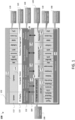
- FIG. 1 is a schematic representation of an example hosted devicelet architecture 100.
- the hosted devicelet architecture 100 includes an AR headset 102 and a hosted devicelet 104.
- the AR/VR device can include other types of fully or partially visualized devices, such as handheld AR/VR devices and wearable or non-wearable AR/VR devices.
- the headset core functionality 120 includes, for example, providing AR or VR representations by an AR display module 122, processing and analyzing images, videos, or other media by a computer vision module 124, and managing hardware included or otherwise associated with the AR headset device 102 by a hardware management module 126.
- the hardware management module 126 can perform a number of tasks for the hosting AR/VR device 102 as well as the hosted devicelet 104.
- the hardware management module 126 facilitates access to the physical resources of the hosting hardware by its own underlying Operating System (OS) and also manages the access of devicelets (e.g., via the device connectivity emulation 138) and device resource emulation 139.
- OS Operating System
- the headset device emulation layer 130 includes a software layer that enables devicelets to interpret the world around their virtual projections and how users interact with those virtualized projections.
- the headset device emulation layer 130 can additionally maintain devicelets' access to the physical resources found on the hosting hardware.
- the headset device emulation layer 130 includes, for example, device display emulation module 132, device user interaction emulation module 134, device location and environment emulation module 136, device connectivity emulation module 138, and device resource emulation module 139.
- the device display emulation module 132 can illustrate the device and its virtual display (e.g., the AR display 122).
- the device display emulation module 132 can interpret the look and feel of the virtualized device and pass it to the hosting hardware to be drawn to screen.
- the user interaction emulation module 134 can identify, process, and respond to inputs to device based on user actions (e.g., changing the location, orientation or other features of the virtualized device based on the user inputs). For example, the user interaction emulation 134 can interpret the user's touches, gestures and other physical interactions with the virtualized device that are received, for example, from the hosting hardware's computer vision module 124 and pass the interaction data to the devicelet via the input/output (I/O) application program interface (API) 142.
- I/O input/output
- API application program interface
- the device location and environment emulation module 136 can simulate the location and environment of the device.
- the device location and environment emulation module 136 can interpret the resultant movement of the virtualized device that are received, for example, from the hosting hardware's computer vision module 124, and passes the motion, orientation and acceleration data to the devicelet via the movement API 144.
- the device connectivity emulation module 138 can provide connectivity capabilities that include connectivity capabilities physically-enabled by the device being virtualized and may also include virtual connectivity capabilities, for example, enabled by the AR headset device 102.
- the device connectivity emulation module 138 manages access of the connectivity technologies of the hosting hardware by devicelets via the connectivity API 146.
- the device resource emulation module 139 can provide and simulate resources available or accessible by the device. For example, the device resource emulation module 139 manages access of the storage resources of the hosting hardware by devicelets via the resource API 148.
- the devicelet 104 can include, for example, hardware emulation APIs 140, device hardware glue logic 150, virtual model of device 180, and device core functionality 190.
- the hardware emulation APIs 140 includes, for example, I/O API 142, movement API 144, connectivity API 146, and resource API 148. These API s can provide input to and from the emulation and hardware logic.
- the I/O API 142 can connect virtualized components presented in the 3D model to the device core and activate their various characteristics. For example, if a virtual LED is instructed to turn on, the I/O API 142 can connect the request with the correct virtualized LED on the virtualized model and make it appear illuminated. As another example, if a touch is made on a devicelet's virtualized touch-sensitive display, the I/O API 142 can receive the interaction from the emulation layer and then convert the interactions to location / pressure data for the device core.
- the I/O API 142 can receive new display data from the device core, and then convert the new display data into a format that the emulation layer can utilize, which is then passed to the emulation layer for displaying on the virtualized device's surface.
- a virtual device contains a virtualized electromagnet, rumble motor or exterior motors, then those interactions with the user may need further interpretation within the emulation layer 130. For example, other virtualized objects could be attracted to a visualized electromagnet. Virtual rumble motors may need some on-screen visual indication to the user when enabled. Virtual motors on the exterior of the virtualized device may cause the virtual device to move location without interaction by the user.
- the movement API 144 can receive motion, orientation and acceleration data from the emulation layer 130 and presents the data to the device core 192, for example, in terms of the various forces the virtualized motion technologies can understand.
- the movement API 144 can send data to the device core 192 that relates to the movement and forces acting upon the virtualized device. For example, in the case of a compass, the data would be the new direction that the virtual device is facing.
- the data can include changes in velocity of the virtual device.
- the data can also include data associated with altimeters.
- the connectivity API 146 can serve as a bridge between the specific connectivity technologies (e.g., Bluetooth, near filed communications (NFC), GPS, WiFi, cellular communications, and cellular communications) the device core 192 is expecting to have access to and the actual physical components that the hosing hardware has available.
- specific connectivity technologies e.g., Bluetooth, near filed communications (NFC), GPS, WiFi, cellular communications, and cellular communications
- the resource API 148 can form a bridge between the format of the storage of the device core 192 is expecting and the actual format the hosting hardware utilizes.
- the device hardware glue logic 150 can include logic that handles interactions associated with hardware such as, touch surfaces, physical buttons, LEDs, screens, vibration generators, proximity sensors, motion detectors, compass, gyroscope, microphone, speaker, connectivity or communication (e.g., GPS, Bluetooth, WiFi, or cellular) interfaces, storage modules (e.g., a RAM and file/data store) and processors (e.g., CPUs).
- hardware such as, touch surfaces, physical buttons, LEDs, screens, vibration generators, proximity sensors, motion detectors, compass, gyroscope, microphone, speaker, connectivity or communication (e.g., GPS, Bluetooth, WiFi, or cellular) interfaces, storage modules (e.g., a RAM and file/data store) and processors (e.g., CPUs).
- the device core functionality 190 can include the main logic to perform specialized functionality at the device core 192.
- the device core 192 can be running and managing applications of the smartphone or tablet.
- the device core 192 can be ported directly from existing real-world devices (e.g., the smartphone or tablet) or created especially for use in a virtual environment.
- Some devices need particular hardware elements emulated for them.
- An example of this would be a virtual device which includes a gyroscope, whereby the gyroscope component does not actually exist.
- the AR headset 102 would instead compute the movements and interactions of the virtual device and emulate the output of a gyroscope that would have been present within the virtual device based on the orientation of the virtual device in the AR space.
- the main component of this logic can be carried out within the headset device emulation layer 130.
- the emulated output can be subsequently passed to a target devicelet 104 via a defined movement API 144.
- the devicelet 104 can bridge this data via the device hardware glue logic 150 to the device core 192.
- dummy devices may have some functionality available to provide feedback, such as a gyroscope.
- the AR headset 102 can make its own connectivity hardware available via the headset device emulation layer 130 and a connectivity API 146.
- the devicelet 104 is a virtualized mobile telephone, the devicelet 104 would use the AR headset's connectivity hardware as its own.
- the AR headset 102 requires a three-dimensional (3D) model or wireframe (e.g., virtual model of device 180) to virtualize a device and display it for the user.
- This 3D model 180 can outline surfaces for particular user interactions that can, then, be monitored for gestures made by the user.
- the 3D model 180 can include information about, for example, how the devicelet 104 tracks relatively to a real-world object, placeholder device or set of markers, details of materials used for each surface, and how the surfaces respond to touch, physical items such as buttons, switches LEDs and surface sensors.
- details about virtual menus available to the devicelet can be contained within a separate settings XML file.
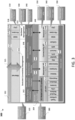
- FIG. 2 is a schematic representation of an example client-side architecture 200 of a remote devicelet.
- a remote devicelet includes a thin client 240 (e.g., a client-side devicelet 204) that offloads the majority of its work to a remote server (e.g., a server 302 in FIG. 3 ).
- the client-side devicelet 204 can redirect user interactions and local headset hardware connectivity to the remote server which hosts the devicelet's core functionality.
- this remote type of devicelet suits more traditionally virtualized devices, such as Remote Desktop Protocol (RDP) personal computers (PCs) and Macs (e.g., remotely accessible machines over technologies such as Microsoft Remote Desktop Connection, Apple's Screen Share, Team Viewer or 'Go To My PC').
- RDP Remote Desktop Protocol
- PCs personal computers
- Macs e.g., remotely accessible machines over technologies such as Microsoft Remote Desktop Connection, Apple's Screen Share, Team Viewer or 'Go To My PC').
- RDP devices can be hosted in a server rack and accessed by another client machine over software based on the RDP protocol.
- This remote type of devicelet can be used for virtualized devices that require minimal or basic user interactions, such as mouse movement or keyboard entry and in return update a well-defined screen or region.
- the example client-side architecture 200 of the remote devicelet includes an AR headset 202 and a client-side remote devicelet 204.
- the AR headset 202 can be similar to, or different from, the AR headset device 102 in the hosted devicelet architecture 100 as shown in FIG. 1 .
- the AR headset 202 can include, for example, headset hardware 210, headset core functionality 220, and devicelet stream management 230.
- the headset hardware 210 includes, for example, one or more of a screen 212, a camera 214, a microphone, a speaker, and a connectivity or communication (e.g., GPS, Bluetooth, WiFi, or cellular) interface.
- the headset core functionality 220 includes, for example, AR display 222, computer vision 224, and hardware management 226, and client-side connectivity management 228.
- the devicelet stream management 230 includes, for example, client-side connectivity management 228 that can provide remote connectivity 305 to a remote server which hosts the devicelet's core functionality.
- the client-side remote devicelet 204 can include, for example, a remote devicelet data interchange API 250 and remote server and devicelet connectivity details 260.
- the connectivity details 260 can include, for example, the location of the server (IP Address / URL) and the services that need to be consumed.
- the client-side remote devicelet is light in regards to the core computational burden put on the AR headset 102.
- the client-side remote devicelet 204 redirects user interactions and related hardware responses to a server component (e.g., a server 302 in FIG. 3 ) and relays the response to the screen and other local hardware of the AR headset 202.
- the client-side connectivity management 228 redirects requests, made by one or more local devicelets (e.g., the devicelet 204), to their server side counterparts and returns any relevant responses via the data interchange API 250.
- the remote server can perform, for example, data processing similar to that of a hosted devicelet (e.g., the devicelet 104 in FIG. 1 ), and return the streamed visual response to the client headset's AR display (e.g., the AR display 222).
- FIG. 3 is a schematic representation of an example server-side architecture 300 of a remote devicelet.
- the example server-side architecture 300 includes a server 302 and a server-side remote devicelet 304.
- the server 302 can include, for example, server hardware 310, devicelet stream management 320, server core functionality 330, and server device emulation layer 340.
- the server hardware 310 can include one or more of, for example, a connectivity or communication (e.g., Ethernet, GPS, Bluetooth, WiFi, or cellular) interface 312, storage modules (e.g., a RAM 314 and file/data store 318) and a processor (e.g., a CPU 318).
- the devicelet stream management 320 includes, for example, devicelet connectivity management 332.
- the devicelet connectivity management 332 can provide server-side remote connectivity 315 to the client-side remote devicelet (e.g., the client-side remote devicelet 204 in FIG. 2 ).
- the devicelet connectivity management 322 receives requests made by client-side devicelet 204 and redirects those requests to the appropriate emulation component.
- the server device emulation layer 340 makes sense of the data provided, communicates with the target server-side devicelet component via an appropriate API and returns corresponding responses.
- the server-side devicelet 304 can effectively send an audio and video stream response to the client-side devicelet 204 via the connectivity management 322, so that the computational load is light on the client-side devicelet 204.
- the server core functionality 330 includes, for example, hardware management 332.
- the server device emulation layer 340 includes, for example, device display emulation module 342, device user interaction emulation module 344, device location and environment emulation module 346, device connectivity emulation module 348, and device resource emulation module 349.
- the server device emulation layer 340 and its components can be implemented in a similar manner as their thick-client counterparts as described with respect to FIG. 1 .
- the server-side remote devicelet 304 can include, for example, hardware emulation APIs 350, device hardware glue logic 360, virtual model of device 380, and device core functionality 390.
- the hardware emulation APIs 350 includes, for example, I/O API 352, movement API 354, connectivity API 356, and resource API 358.
- the device hardware glue logic 360 includes logic handling interactions associated with hardware such as touch surfaces, physical buttons, LEDs, screens, vibration generators, proximity sensors, motion detectors, compass, gyroscope, microphone, speaker, connectivity or communication (e.g., GPS, Bluetooth, WiFi, or cellular) interfaces, storage modules (e.g., RAM and file/data store) and processors (e.g., CPUs).
- the device core functionality 390 includes the main logic to perform specialised functionalities at the device core 392.
- the device core 392 can reside on the server-side remote devicelet 304.
- a devicelet can have a hybrid architecture where varying degrees of functionality are carried out locally (such as the IO and display emulation functions that need minimal latency), while other functionalities are performed remotely by the server.
- One advantage of such systems may be to use currently existing hardware capable of some, but not all, functionality in a devicelet implementation. By using existing capabilities for devices, costs can be reduced with a potentially faster response time by executing at least some device functionality locally.
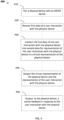
- FIG. 4 is a flow chart of an example illustrating an example method 400 for virtualizing a physical device.
- the example method 400 can be performed, for example, by an AR/VR device (e.g., the AR headsets 102 and 202 in FIGS. 1 and 2 ), a devicelet (e.g., the devicelet 104 or 204) fully or partially residing on the AR/VR device, or other data processing apparatus associated with the AR/VR device.
- some or all operations of the example method 400 can be implemented by a hosted devicelet (e.g., the devicelet 104) or a remote devicelet (e.g., the client-side remote devicelet 204), or a hybrid devicelet.
- a physical device is paired with the AR/VR device.
- the physical device can be a different, separate device from the AR/VR device.
- the physical device can be paired with the AR/VR device via wired or wireless technology to establish a communication channel between the physical device and the AR/VR device.
- the physical device can be paired with the AR/VR device via Universal Serial Bus (USB) or Bluetooth connection.
- USB Universal Serial Bus
- the AR/VR device can include any AR or VR virtualized or partially virtualized devices.
- the AR/VR device can wearable or non-wearable devices, such as, an AR headset, an AR/VR glasses/goggles/lens, or AR/VR enabled handheld devices.
- the physical device can include dummy or intelligent devices.
- the physical device can include one or more of a keyboard, a mouse, a touch pad, a track pad, a touch screen, a camera, a sensor, a computer, a smartphone, a tablet, or an Internet of Things (IoT) device.
- IoT Internet of Things
- the physical device can be virtualized by the AR/VR device, for example, by providing a virtual representation of the physical device to a user.
- the physical device can be virtualized by the AR/VR device before the AR/VR device receives a user interaction with the physical device.
- a user's interaction with the physical device can be in response to the virtual representation of the physical device to the user.
- the first data of the user interaction with the physical device is converted into second data for representation of the user interaction with the physical device in a virtual representation of the physical device.
- converting the first data of the user interaction with the physical device into the second data further includes parsing the first data of the user interaction with the physical device, and determining from which physical device the user interaction is received.
- the hardware management module 126 of the AR headset 102 may parse the first data and identify which physical device, among multiple devices that the AR headset 102 is connected to, the first data came from, for example, based on an identifier of the physical device included in the first data or certain specific format or feature of the first data.
- converting the first data of the user interaction with the physical device into the second data can be performed, for example, by an emulation module (e.g., the device user interaction emulation 134 or 344).
- the emulation module can receive the first data and translate the first data of the user interaction into the second data that is suitable for representation of the user interaction with the physical device in the virtual representation of the physical device.
- the second data can be further input into, or processed by, one or more of an I/O API (e.g., the I/O API 142 or 352), a virtual model of the physical device (e.g., the virtual model 180 or 380), device hardware glue logic (e.g., the device hardware glue logic 150 or 360) and the device core (e.g., the device core 192 or 392) to provide the representation of the user interaction with the physical device in the virtual representation of the physical device.
- an I/O API e.g., the I/O API 142 or 352
- a virtual model of the physical device e.g., the virtual model 180 or 380
- device hardware glue logic e.g., the device hardware glue logic 150 or 360
- the device core e.g., the device core 192 or 392
- the AR/VR device can provide the user with a virtual representation, such as, an AR/VR projection of the smartphone on a wall, a desk, or any other surface or in a 3-dimensinoal space.
- the user interaction may include typing a text message using the physical keyboard or touch screen of the smartphone.
- the first data of the user interaction with the physical device can include the corresponding key entries that the user pressed on the smartphone.
- the AR/VR device can receive the first data from the smartphone and parse the first data.
- An emulation module can map the first data into second data suitable for a virtual representation of the user's interaction with the smartphone.
- the virtual representation of the user interaction can include displaying, in the AR/VR projection of the smartphone, a virtual hand typing the text message in the same manner as the user typing the text message using the physical keyboard or touch screen of the smartphone in real time.
- converting the first data of the user interaction with the physical device into the second data can be performed, for example, by a hosted, remote, or hybrid devicelet.
- the conversion can be at least partially performed by a remote server (e.g., the remote server 302).
- the conversion of the first data of the user interaction with the physical device into the second data for representation of the user interaction with the physical device can include redirecting, to a remote server, the first data of the user interaction with the physical device; and receiving, from the remote server, the second data for representation of the user interaction with the physical device in the virtual representation of the physical device.
- the virtual representation of the physical device and the representation of the user interaction with the physical device are output by the AR/VR device.
- the virtual representation of the physical device and the representation of the user interaction with the physical device are rendered by an AR/VR display (e.g., the AR display 122 or 222) of the AR/VR device.
- the representation of the user interaction with the physical device can be embedded or otherwise integrated in the virtual representation of the physical device.
- a tactile feedback in response to the user interaction with the physical device is output to the physical device.
- the tactile feedback can be provided in addition to the representation of the user interaction with the physical device in the virtual representation of the physical device. The additional tactile feedback allows the user to have more tangible and precise control of the physical device and, thus, enhance user experience.
- the user can interact with the virtual representation of the physical device (e.g., the AR/VR projection of the smartphone). For example, instead of pressing the buttons on the physical keyboard or touchscreen of the smartphone, the user may touch, point, or otherwise interact with the virtual keyboard or touchscreen of the AR/VR projection of the smartphone.
- the AR/VR device can detect such a second user interaction with the virtual representation of the physical device (e.g., from a camera, a motion sensor, or other hardware component of the AR/VR device).
- the AR/VR device can receive and parse third data of the second user interaction with the virtual representation of the physical device, for example, by the hardware management module 126 or 332.
- the third data of the second user interaction with the virtual representation of the physical device can be converted into fourth data for a second representation of the second user interaction with the virtual representation of the physical device in the virtual representation of the physical device, for example, by one or more of an emulation component (e.g., the device user interaction emulation 134 or 344), API (e.g., the movement API 144 or 354), virtual model (e.g., the virtual model 180 or 380), device hardware glue logic (e.g., the device hardware glue logic 150 or 360) and the device core (e.g., the device core 192 or 392).
- the second representation of the second user interaction with the virtual representation of the physical device can be output, for example, by the AR/VR display (e.g., the AR display 122 or 222) of the AR/VR device, in the virtual representation of the physical device.
- the AR/VR device includes a physical component (e.g., a gyroscope or compass) that does not exist in the physical device.
- the AR/VR device provides an emulation of the physical component of the AR/VR device in the virtual representation of the physical device so as to enhance the functionality of the virtual representation of the physical device.
- the user can interact with the emulation of the physical component of the AR/VR device in the virtual representation of the physical device and achieve the functionality that cannot be realized by the physical device itself.
- the user may move, rotate, or perform other actions with the AR/VR projection of the smartphone that may trigger an emulated gyroscope.
- the AR/VR device detects such a third user interaction with the emulation of the physical component of the AR/VR device in the virtual representation of the physical device (e.g., from a camera, a motion sensor, or other hardware component of the AR/VR device).
- a third user interaction with the emulation of the physical component of the AR/VR device may be represented as fifth data that includes the movements, rotations, and other interactions of the virtual representation of the physical device.
- the AR/VR device can receive and parse fifth data of the third user interaction with the virtual representation of the physical device, for example, by the hardware management module 126 or 332.
- the fifth data of the third user interaction with the emulation of the physical component of the AR/VR device can be converted into sixth data for a third representation of the third user interaction in the virtual representation of the physical device, for example, by one or more of an emulation component (e.g., the device user interaction emulation 134 or 344), API (e.g., the movement API 144 or 354), virtual model (e.g., the virtual model 180 or 380), device hardware glue logic (e.g., the device hardware glue logic 150 or 360) and the device core (e.g., the device core 192 or 392).
- an emulation component e.g., the device user interaction emulation 134 or 34
- API e.g., the movement API 144 or 35
- virtual model e.g., the virtual model 180 or 380
- device hardware glue logic e.g., the device hardware glue logic 150 or 360
- the device core e.g., the device core 192 or 392
- the third representation of the third user interaction with the emulation of the physical component of the AR/VR device in the virtual representation of the physical device can be output, for example, by the AR/VR display (e.g., the AR display 122 or 222) of the AR/VR device, in the virtual representation of the physical device.
- the AR/VR display e.g., the AR display 122 or 222
- Some implementations of subject matter and operations described in this specification can be implemented in digital electronic circuitry, or in computer software, firmware, or hardware, including the structures disclosed in this specification and their structural equivalents, or in combinations of one or more of them.
- Some implementations of subject matter described in this specification can be implemented as one or more computer programs, i.e., one or more modules of computer program instructions, encoded on computer storage mediums for execution by, or to control the operation of, data processing apparatus.
- a computer storage medium can be, or can be included in, a computer-readable storage device, a computer-readable storage substrate, a random or serial access memory array or device, or a combination of one or more of them.
- a computer storage medium is not a propagated signal
- a computer storage medium can be a source or destination of computer program instructions encoded in an artificially generated propagated signal.
- the computer storage medium can also be, or be included in, one or more separate physical components or media (e.g., multiple CDs, disks, or other storage devices).
- the term "data processing apparatus” encompasses all kinds of apparatus, devices, and machines for processing data, including by way of example a programmable processor, a computer, a system on a chip, or multiple ones, or combinations, of the foregoing.
- the apparatus can include special purpose logic circuitry, e.g., an FPGA (field programmable gate array) or an ASIC (application specific integrated circuit).
- the apparatus can also include, in addition to hardware, code that creates an execution environment for the computer program in question, e.g., code that constitutes processor firmware, a protocol stack, a database management system, an operating system, a cross-platform runtime environment, a virtual machine, or a combination of one or more of them.
- the apparatus and execution environment can realize various, different, computing model infrastructures, such as web services, distributed computing, and grid computing infrastructures.
- a computer program (also known as a program, software, software application, script, or code) can be written in any form of programming language, including compiled or interpreted languages, as well as declarative or procedural languages.
- a computer program may, but need not, correspond to a file in a file system.
- a program can be stored in a portion of a file that holds other programs or data (e.g., one or more scripts stored in a markup language document), in a single file dedicated to the program in question, or in multiple coordinated files (e.g., files that store one or more modules, sub programs, or portions of code).
- a computer program can be deployed to be executed on one computer or on multiple computers that are located at one site or distributed across multiple sites and are interconnected by a communication network.
- Some of the processes and logic flows described in this specification can be performed by one or more programmable processors executing one or more computer programs to perform actions by operating on input data and generating output.
- the processes and logic flows can also be performed by, and apparatus can also be implemented as, special purpose logic circuitry, e.g., an FPGA (field programmable gate array) or an ASIC (application specific integrated circuit).
- processors suitable for the execution of a computer program include, by way of example, both general and special purpose microprocessors, and processors of any kind of digital computer.
- a processor will receive instructions and data from a read only memory or a random access memory, or both.
- a computer includes a processor for performing actions in accordance with instructions and one or more memory devices for storing instructions and data.
- a computer may also include, or be operatively coupled to receive data from or transfer data to, or both, one or more mass storage devices for storing data, e.g., magnetic, magneto optical disks, or optical disks.
- mass storage devices for storing data, e.g., magnetic, magneto optical disks, or optical disks.
- a computer need not have such devices.
- Devices suitable for storing computer program instructions and data include all forms of non-volatile memory, media and memory devices, including by way of example semiconductor memory devices (e.g., EPROM, EEPROM, flash memory devices, and others), magnetic disks (e.g., internal hard disks, removable disks, and others), magneto optical disks , and CD ROM and DVD-ROM disks.
- semiconductor memory devices e.g., EPROM, EEPROM, flash memory devices, and others
- magnetic disks e.g., internal hard disks, removable disks, and others
- magneto optical disks e.g., CD ROM and DVD-ROM disks.
- the processor and the memory can be supplemented by, or incorporated in, special purpose logic circuitry.
- a computer having a display device (e.g., a monitor, or another type of display device) for displaying information to the user and a keyboard and a pointing device (e.g., a mouse, a trackball, a tablet, a touch sensitive screen, or another type of pointing device) by which the user can provide input to the computer.
- a display device e.g., a monitor, or another type of display device
- a keyboard and a pointing device e.g., a mouse, a trackball, a tablet, a touch sensitive screen, or another type of pointing device
- Other kinds of devices can be used to provide for interaction with a user as well; for example, feedback provided to the user can be any form of sensory feedback, e.g., visual feedback, auditory feedback, or tactile feedback; and input from the user can be received in any form, including acoustic, speech, or tactile input.
- a computer can interact with a user by sending documents to and receiving documents from a device that is used
- a client and server are generally remote from each other and typically interact through a communication network.
- Examples of communication networks include a local area network ("LAN”) and a wide area network (“WAN”), an inter-network (e.g., the Internet), a network comprising a satellite link, and peer-to-peer networks (e.g., ad hoc peer-to-peer networks).
- LAN local area network
- WAN wide area network
- inter-network e.g., the Internet
- peer-to-peer networks e.g., ad hoc peer-to-peer networks.
Landscapes
- Engineering & Computer Science (AREA)
- Theoretical Computer Science (AREA)
- General Engineering & Computer Science (AREA)
- Physics & Mathematics (AREA)
- General Physics & Mathematics (AREA)
- Human Computer Interaction (AREA)
- Software Systems (AREA)
- Computer Graphics (AREA)
- Computer Hardware Design (AREA)
- Optics & Photonics (AREA)
- User Interface Of Digital Computer (AREA)
Claims (14)
- Un procédé (400) pour virtualiser un dispositif physique en utilisant un dispositif de réalité augmentée, RA, ou de réalité virtuelle, RV, dispositif RA/RV, le procédé comprenant :le fait de recevoir (420), par le dispositif RA/RV en provenance du dispositif physique, des premières données d'une interaction utilisateur avec le dispositif physique ;le fait de convertir (430) les premières données de l'interaction utilisateur avec le dispositif physique en deuxièmes données pour la représentation de l'interaction utilisateur avec le dispositif physique dans une représentation virtuelle du dispositif physique ;le fait d'afficher (440), par le dispositif RA/RV, la représentation virtuelle du dispositif physique et la représentation de l'interaction utilisateur avec le dispositif physique ;le procédé comprenant en outre :le fait de recevoir, par le dispositif RA/RV, un code de fonctionnalités centrales (190) du dispositif physique, où les fonctionnalités centrales (190) comprennent une fonctionnalité ayant trait à un composant matériel qui n'existe pas physiquement sur le dispositif physique ; etle fait d'émuler, par le dispositif RA/RV, la fonctionnalité ayant trait au composant matériel qui n'existe pas physiquement sur le dispositif physique, où l'émulation comprend :le fait de recevoir, par le dispositif RA/RV, des cinquièmes données d'une interaction utilisateur avec la représentation virtuelle du dispositif physique, les cinquièmes données comprenant une sortie émulée du composant matériel qui n'existe pas physiquement sur le dispositif physique en réponse à l'interaction utilisateur avec la représentation virtuelle du dispositif physique ;le fait de faire passer, via une interface de programme d'application, API,d'émulation de matériel correspondant à la fonctionnalité ayant trait au composant matériel qui n'existe pas physiquement sur le dispositif physique, la sortie émulée à un circuit logique de liaison de matériel correspondant au composant matériel qui n'existe pas physiquement sur le dispositif physique ; etle fait de convertir, par le circuit logique de liaison de matériel, la sortie émulée en fonctionnalité ayant trait au composant matériel qui n'existe pas physiquement sur le dispositif physique.
- Le procédé de la revendication 1, où la conversion (430) des premières données de l'interaction utilisateur avec le dispositif physique en deuxièmes données pour la représentation de l'interaction utilisateur avec le dispositif physique dans la représentation virtuelle du dispositif physique comprend en outre :le fait d'analyser syntaxiquement les premières données de l'interaction utilisateur avec le dispositif physique ; etle fait de déterminer en provenance de quel dispositif physique l'interaction utilisateur est reçue.
- Le procédé de la revendication 1 ou de la revendication 2, où la conversion (430) des premières données de l'interaction utilisateur avec le dispositif physique en deuxièmes données pour la représentation de l'interaction utilisateur avec le dispositif physique dans la représentation virtuelle du dispositif physique comprend :le fait de rediriger, jusqu'à un serveur distant, les premières données de l'interaction utilisateur avec le dispositif physique ; etle fait de recevoir, en provenance du serveur distant, les deuxièmes données pour la représentation de l'interaction utilisateur avec le dispositif physique dans la représentation virtuelle du dispositif physique.
- Le procédé de n'importe laquelle des revendications 1 à 3, où le dispositif physique comprend un ou plusieurs éléments parmi un clavier, une souris, un pavé tactile, un pavé à effleurement, un écran tactile, un écran tactile, une caméra, un capteur, un ordinateur, un smartphone, une tablette, ou un dispositif d'Internet des Objets, IdO.
- Le procédé de n'importe laquelle des revendications 1 à 4, comprenant en outre le fait de sortir, jusqu'au dispositif physique, un retour d'informations tactile en réponse à l'interaction utilisateur avec le dispositif physique.
- Le procédé de n'importe laquelle de la revendication 1 à la revendication 5, comprenant en outre :le fait de recevoir, par le dispositif RA/RV, des troisièmes données d'une interaction utilisateur avec la représentation virtuelle du dispositif physique ;le fait de convertir les troisièmes données de l'interaction utilisateur avec la représentation virtuelle du dispositif physique en quatrièmes données pour une deuxième représentation de l'interaction utilisateur avec la représentation virtuelle du dispositif physique dans la représentation virtuelle du dispositif physique ; etle fait de sortir, par le dispositif RA/RV, la deuxième représentation de l'interaction utilisateur avec la représentation virtuelle du dispositif physique dans la représentation virtuelle du dispositif physique.
- Un dispositif de réalité augmentée, RA, ou de réalité virtuelle, RV, dispositif RA/RV, (102), le dispositif RA/RV pouvant fonctionner pour :recevoir, en provenance d'un dispositif physique, des premières données d'une interaction utilisateur avec le dispositif physique ;convertir les premières données de l'interaction utilisateur avec le dispositif physique en deuxièmes données pour la représentation de l'interaction utilisateur avec le dispositif physique dans une représentation virtuelle du dispositif physique ; etafficher la représentation virtuelle du dispositif physique et la représentation de l'interaction utilisateur avec le dispositif physique ;le dispositif RA/RV comprenant :une unité d'affichage de RA/RV (122, 222) ;un ou plusieurs composants matériel physiques (110) pour présenter une représentation virtuelle d'un dispositif physique par l'unité d'affichage de RA/RV (122, 222) ;au moins un processeur ; etun support de stockage non transitoire lisible par ordinateur couplé à l'au moins un processeur et stockant des instructions de programmation pour exécution par l'au moins un processeur, les instructions de programmation comprenant :une couche d'émulation (130, 132) ;une ou plusieurs interfaces de programme d'application, API, d'émulation de matériel (140, 142, 144, 146, 148) ; etun ou plusieurs circuits logiques de liaison de matériel (150) ;les instructions de programmation étant destinées à donner l'instruction à l'au moins un processeur:de recevoir un code de fonctionnalités centrales (190) du dispositif physique, où les fonctionnalités centrales (190) comprennent une fonctionnalité ayant trait à un composant matériel qui n'existe pas physiquement sur le dispositif physique ; etd'émuler, par le dispositif RA/RV, la fonctionnalité ayant trait au composant matériel qui n'existe pas physiquement sur le dispositif physique, où l'émulation comprend :le fait de recevoir, par la couche d'émulation, des cinquièmes données d'une interaction utilisateur avec la représentation virtuelle du dispositif physique, les cinquièmes données comprenant une sortie émulée du composant matériel qui n'existe pas physiquement sur le dispositif physique en réponse à l'interaction utilisateur avec la représentation virtuelle du dispositif physique ;le fait de faire passer, via une API d'émulation de matériel correspondant à la fonctionnalité ayant trait au composant matériel qui n'existe pas physiquement sur le dispositif physique, la sortie émulée à un circuit logique de liaison de matériel correspondant au composant matériel qui n'existe pas physiquement sur le dispositif physique ; etle fait de convertir, par le circuit logique de liaison de matériel correspondant au composant matériel qui n'existe pas physiquement sur le dispositif physique, la sortie émulée en fonctionnalité ayant trait au composant matériel qui n'existe pas physiquement sur le dispositif physique.
- Le dispositif RA/RV de la revendication 7, pouvant en outre fonctionner pour :analyser syntaxiquement les premières données de l'interaction utilisateur avec le dispositif physique ; etdéterminer en provenance de quel dispositif physique l'interaction utilisateur est reçue.
- Le dispositif RA/RV de n'importe laquelle des revendications 7 à 8, où la conversion (430) des premières données de l'interaction utilisateur avec le dispositif physique en deuxièmes données pour la représentation de l'interaction utilisateur avec le dispositif physique dans la représentation virtuelle du dispositif physique comprend :le fait de rediriger, jusqu'à un serveur distant, les premières données de l'interaction utilisateur avec le dispositif physique ; etle fait de recevoir, en provenance du serveur distant, les deuxièmes données pour la représentation de l'interaction utilisateur avec le dispositif physique dans la représentation virtuelle du dispositif physique.
- Le dispositif RA/RV de n'importe laquelle des revendications 7 à 9, pouvant en outre fonctionner pour sortir, jusqu'au dispositif physique, un retour d'informations tactile en réponse à l'interaction utilisateur avec le dispositif physique.
- Le dispositif RA/RV de n'importe laquelle des revendications 7 à 10, pouvant en outre fonctionner pour :recevoir des troisièmes données d'une interaction utilisateur avec la représentation virtuelle du dispositif physique ;convertir les troisièmes données de l'interaction utilisateur avec la représentation virtuelle du dispositif physique en quatrièmes données pour une deuxième représentation de l'interaction utilisateur avec la représentation virtuelle du dispositif physique dans la représentation virtuelle du dispositif physique ; etsortir la deuxième représentation de l'interaction utilisateur avec la représentation virtuelle du dispositif physique dans la représentation virtuelle du dispositif physique.
- Le dispositif RA/RV de n'importe laquelle des revendications 7 à 11, où :le composant matériel qui n'existe pas physiquement sur le dispositif physique comprend un ou plusieurs éléments parmi : un gyroscope, un compas, un électroaimant virtualisé, un moteur vibrateur, ou un moteur extérieur ; etl'API d'émulation matériel correspondant à la fonctionnalité ayant trait au composant matériel qui n'existe pas physiquement sur le dispositif physique comprend une API de déplacement.
- Le dispositif RA/RV de n'importe laquelle des revendications 7 à 12, où :le composant matériel qui n'existe pas physiquement sur le dispositif physique comprend un ou plusieurs éléments parmi : un composant matériel Bluetooth, Wi-Fi, cellulaire, de communication en champ proche, NFC, de bus sériel universel, USB, ou de système de positionnement mondial, GPS ; etl'API d'émulation matériel correspondant à la fonctionnalité ayant trait au composant matériel qui n'existe pas physiquement sur le dispositif physique comprend une API de connectivité.
- Un support non transitoire lisible par ordinateur stocké dans un dispositif de réalité augmentée, RA, ou de réalité virtuelle, RV, (dispositif RA/RV), le support lisible par ordinateur stockant des instructions qui, lorsqu'elles sont exécutées par un appareil de traitement des données, amènent le dispositif RA/RV à effectuer les opérations de n'importe laquelle des revendications 1 à 6.
Applications Claiming Priority (1)
| Application Number | Priority Date | Filing Date | Title |
|---|---|---|---|
| US15/239,346 US10290151B2 (en) | 2016-08-17 | 2016-08-17 | AR/VR device virtualisation |
Publications (3)
| Publication Number | Publication Date |
|---|---|
| EP3285143A1 EP3285143A1 (fr) | 2018-02-21 |
| EP3285143B1 true EP3285143B1 (fr) | 2025-02-19 |
| EP3285143C0 EP3285143C0 (fr) | 2025-02-19 |
Family
ID=59558239
Family Applications (1)
| Application Number | Title | Priority Date | Filing Date |
|---|---|---|---|
| EP17184698.3A Active EP3285143B1 (fr) | 2016-08-17 | 2017-08-03 | Virtualisation de dispositif ar/vr |
Country Status (2)
| Country | Link |
|---|---|
| US (1) | US10290151B2 (fr) |
| EP (1) | EP3285143B1 (fr) |
Families Citing this family (3)
| Publication number | Priority date | Publication date | Assignee | Title |
|---|---|---|---|---|
| US10832481B2 (en) * | 2018-08-21 | 2020-11-10 | Disney Enterprises, Inc. | Multi-screen interactions in virtual and augmented reality |
| TWI707251B (zh) | 2019-01-03 | 2020-10-11 | 晶翔機電股份有限公司 | 用於依靠一穿戴裝置而與一虛擬實境互動的操作方法及其操作裝置 |
| KR20250111381A (ko) * | 2020-12-27 | 2025-07-22 | 스냅 인코포레이티드 | 광학 도파관 및 프로젝터를 갖는 디스플레이 디바이스 |
Citations (4)
| Publication number | Priority date | Publication date | Assignee | Title |
|---|---|---|---|---|
| US20050085298A1 (en) * | 1997-11-25 | 2005-04-21 | Woolston Thomas G. | Electronic sword game with input and feedback |
| US20100265249A1 (en) * | 2009-04-16 | 2010-10-21 | Kenta Sato | Computer-readable storage medium storing information processing program and information processing apparatus |
| US20160093105A1 (en) * | 2014-09-30 | 2016-03-31 | Sony Computer Entertainment Inc. | Display of text information on a head-mounted display |
| WO2018005067A1 (fr) * | 2016-06-30 | 2018-01-04 | Microsoft Technology Licensing, Llc | Portail de réalité à réalité virtuelle pour double présence de dispositifs |
Family Cites Families (13)
| Publication number | Priority date | Publication date | Assignee | Title |
|---|---|---|---|---|
| US6636929B1 (en) * | 2000-04-06 | 2003-10-21 | Hewlett-Packard Development Company, L.P. | USB virtual devices |
| US20040243385A1 (en) * | 2003-05-29 | 2004-12-02 | Rothman Michael A. | Emulation of hardware devices in a pre-boot environment |
| US9430074B2 (en) * | 2008-01-04 | 2016-08-30 | Tactus Technology, Inc. | Dynamic tactile interface |
| US7904914B2 (en) * | 2008-09-30 | 2011-03-08 | Microsoft Corporation | On-the-fly replacement of physical hardware with emulation |
| US20100169069A1 (en) * | 2008-12-29 | 2010-07-01 | Nimrod Diamant | Composite device emulation |
| US8359605B2 (en) * | 2009-01-13 | 2013-01-22 | Disney Enterprises, Inc. | System and method for integrated hardware platform for flash applications with distributed objects |
| RU2017115669A (ru) * | 2011-10-28 | 2019-01-28 | Мэджик Лип, Инк. | Система и способ для дополненной и виртуальной реальности |
| US9773345B2 (en) | 2012-02-15 | 2017-09-26 | Nokia Technologies Oy | Method and apparatus for generating a virtual environment for controlling one or more electronic devices |
| US9378038B2 (en) * | 2013-06-07 | 2016-06-28 | American Megatrends, Inc. | Methods, devices and computer readable storage devices for emulating a gyroscope in a guest operating system from a host operating system |
| US20150185825A1 (en) | 2013-12-30 | 2015-07-02 | Daqri, Llc | Assigning a virtual user interface to a physical object |
| US20150227231A1 (en) * | 2014-02-12 | 2015-08-13 | Microsoft Corporation | Virtual Transparent Display |
| WO2016017945A1 (fr) | 2014-07-29 | 2016-02-04 | Samsung Electronics Co., Ltd. | Dispositif mobile et son procédé d'appariement à un dispositif électronique |
| US10334076B2 (en) | 2016-02-22 | 2019-06-25 | Google Llc | Device pairing in augmented/virtual reality environment |
-
2016
- 2016-08-17 US US15/239,346 patent/US10290151B2/en active Active
-
2017
- 2017-08-03 EP EP17184698.3A patent/EP3285143B1/fr active Active
Patent Citations (5)
| Publication number | Priority date | Publication date | Assignee | Title |
|---|---|---|---|---|
| US20050085298A1 (en) * | 1997-11-25 | 2005-04-21 | Woolston Thomas G. | Electronic sword game with input and feedback |
| US20100265249A1 (en) * | 2009-04-16 | 2010-10-21 | Kenta Sato | Computer-readable storage medium storing information processing program and information processing apparatus |
| US20160093105A1 (en) * | 2014-09-30 | 2016-03-31 | Sony Computer Entertainment Inc. | Display of text information on a head-mounted display |
| WO2018005067A1 (fr) * | 2016-06-30 | 2018-01-04 | Microsoft Technology Licensing, Llc | Portail de réalité à réalité virtuelle pour double présence de dispositifs |
| EP3479338A1 (fr) * | 2016-06-30 | 2019-05-08 | Microsoft Technology Licensing, LLC | Portail de réalité à réalité virtuelle pour double présence de dispositifs |
Also Published As
| Publication number | Publication date |
|---|---|
| EP3285143A1 (fr) | 2018-02-21 |
| EP3285143C0 (fr) | 2025-02-19 |
| US20180053350A1 (en) | 2018-02-22 |
| US10290151B2 (en) | 2019-05-14 |
Similar Documents
| Publication | Publication Date | Title |
|---|---|---|
| US11550399B2 (en) | Sharing across environments | |
| US10891793B2 (en) | Reality to virtual reality portal for dual presence of devices | |
| US11451619B2 (en) | App remote control method and related devices | |
| KR101356453B1 (ko) | 편재형 컴퓨팅 시스템 및 방법 | |
| CN103631768B (zh) | 协作数据编辑和处理系统 | |
| US12314476B2 (en) | Multi-user collaborative interfaces for streaming video | |
| US9197697B2 (en) | Cloud computing system and method | |
| KR102389185B1 (ko) | 컨텐츠의 적어도 일부를 통해 표시된 입력 인터페이스를 이용하여 기능을 실행하기 위한 전자 장치 및 방법 | |
| RU2013154098A (ru) | Мир массового одновременного удаленного цифрового присутствия | |
| US20160080451A1 (en) | Real-time dynamic hyperlinking system and method | |
| CN114450967A (zh) | 用于由图像识别触发的增强现实内容的回放的系统和方法 | |
| CN115061679B (zh) | 离线rpa元素拾取方法及系统 | |
| KR102762438B1 (ko) | 제스처를 이용하여 대화 메시지에 감정을 표현하는 방법, 시스템, 및 컴퓨터 프로그램 | |
| CN110658971A (zh) | 一种截屏方法及终端设备 | |
| US20220308669A1 (en) | Haptic emulation of input device | |
| Medeiros et al. | A tablet-based 3d interaction tool for virtual engineering environments | |
| EP3285143B1 (fr) | Virtualisation de dispositif ar/vr | |
| US10691880B2 (en) | Ink in an electronic document | |
| JP2018032440A (ja) | 制御可能なヘッドセットコンピュータディスプレイ | |
| Zhang et al. | Operating virtual panels with hand gestures in immersive VR games: Experiences with the leap motion controller | |
| CN104834410A (zh) | 输入装置以及输入方法 | |
| KR20170022860A (ko) | 실제 사물의 사용성을 증강하는 가상 콘텐츠 제공 장치 및 방법 | |
| CN109144234B (zh) | 具有外置追踪及内置追踪的虚拟现实系统及其控制方法 | |
| CN118022304B (zh) | 一种数据处理方法及相关装置 | |
| US20260099208A1 (en) | Method and system for providing a platform agnostic mixed reality experience to users |
Legal Events
| Date | Code | Title | Description |
|---|---|---|---|
| PUAI | Public reference made under article 153(3) epc to a published international application that has entered the european phase |
Free format text: ORIGINAL CODE: 0009012 |
|
| STAA | Information on the status of an ep patent application or granted ep patent |
Free format text: STATUS: THE APPLICATION HAS BEEN PUBLISHED |
|
| AK | Designated contracting states |
Kind code of ref document: A1 Designated state(s): AL AT BE BG CH CY CZ DE DK EE ES FI FR GB GR HR HU IE IS IT LI LT LU LV MC MK MT NL NO PL PT RO RS SE SI SK SM TR |
|
| AX | Request for extension of the european patent |
Extension state: BA ME |
|
| STAA | Information on the status of an ep patent application or granted ep patent |
Free format text: STATUS: REQUEST FOR EXAMINATION WAS MADE |
|
| 17P | Request for examination filed |
Effective date: 20180625 |
|
| RBV | Designated contracting states (corrected) |
Designated state(s): AL AT BE BG CH CY CZ DE DK EE ES FI FR GB GR HR HU IE IS IT LI LT LU LV MC MK MT NL NO PL PT RO RS SE SI SK SM TR |
|
| STAA | Information on the status of an ep patent application or granted ep patent |
Free format text: STATUS: EXAMINATION IS IN PROGRESS |
|
| 17Q | First examination report despatched |
Effective date: 20200214 |
|
| REG | Reference to a national code |
Ref country code: DE Ref legal event code: R079 Ref document number: 602017087823 Country of ref document: DE Free format text: PREVIOUS MAIN CLASS: G06F0003010000 Ipc: A63F0013000000 |
|
| GRAP | Despatch of communication of intention to grant a patent |
Free format text: ORIGINAL CODE: EPIDOSNIGR1 |
|
| STAA | Information on the status of an ep patent application or granted ep patent |
Free format text: STATUS: GRANT OF PATENT IS INTENDED |
|
| RIC1 | Information provided on ipc code assigned before grant |
Ipc: G06F 9/451 20180101ALI20240625BHEP Ipc: G06F 9/44 20180101ALI20240625BHEP Ipc: G06F 3/048 20130101ALI20240625BHEP Ipc: G06F 3/0481 20130101ALI20240625BHEP Ipc: G06T 19/00 20110101ALI20240625BHEP Ipc: G02B 27/01 20060101ALI20240625BHEP Ipc: G06F 3/01 20060101ALI20240625BHEP Ipc: A63F 13/00 20140101AFI20240625BHEP |
|
| INTG | Intention to grant announced |
Effective date: 20240705 |
|
| RAP1 | Party data changed (applicant data changed or rights of an application transferred) |
Owner name: MALIKIE INNOVATIONS LIMITED |
|
| GRAJ | Information related to disapproval of communication of intention to grant by the applicant or resumption of examination proceedings by the epo deleted |
Free format text: ORIGINAL CODE: EPIDOSDIGR1 |
|
| STAA | Information on the status of an ep patent application or granted ep patent |
Free format text: STATUS: EXAMINATION IS IN PROGRESS |
|
| GRAP | Despatch of communication of intention to grant a patent |
Free format text: ORIGINAL CODE: EPIDOSNIGR1 |
|
| STAA | Information on the status of an ep patent application or granted ep patent |
Free format text: STATUS: GRANT OF PATENT IS INTENDED |
|
| INTC | Intention to grant announced (deleted) | ||
| INTG | Intention to grant announced |
Effective date: 20241031 |
|
| GRAS | Grant fee paid |
Free format text: ORIGINAL CODE: EPIDOSNIGR3 |
|
| GRAA | (expected) grant |
Free format text: ORIGINAL CODE: 0009210 |
|
| STAA | Information on the status of an ep patent application or granted ep patent |
Free format text: STATUS: THE PATENT HAS BEEN GRANTED |
|
| AK | Designated contracting states |
Kind code of ref document: B1 Designated state(s): AL AT BE BG CH CY CZ DE DK EE ES FI FR GB GR HR HU IE IS IT LI LT LU LV MC MK MT NL NO PL PT RO RS SE SI SK SM TR |
|
| REG | Reference to a national code |
Ref country code: GB Ref legal event code: FG4D |
|
| REG | Reference to a national code |
Ref country code: CH Ref legal event code: EP |
|
| REG | Reference to a national code |
Ref country code: DE Ref legal event code: R096 Ref document number: 602017087823 Country of ref document: DE |
|
| REG | Reference to a national code |
Ref country code: IE Ref legal event code: FG4D |
|
| U01 | Request for unitary effect filed |
Effective date: 20250319 |
|
| U07 | Unitary effect registered |
Designated state(s): AT BE BG DE DK EE FI FR IT LT LU LV MT NL PT RO SE SI Effective date: 20250325 |
|
| PG25 | Lapsed in a contracting state [announced via postgrant information from national office to epo] |
Ref country code: RS Free format text: LAPSE BECAUSE OF FAILURE TO SUBMIT A TRANSLATION OF THE DESCRIPTION OR TO PAY THE FEE WITHIN THE PRESCRIBED TIME-LIMIT Effective date: 20250519 |
|
| PG25 | Lapsed in a contracting state [announced via postgrant information from national office to epo] |
Ref country code: PL Free format text: LAPSE BECAUSE OF FAILURE TO SUBMIT A TRANSLATION OF THE DESCRIPTION OR TO PAY THE FEE WITHIN THE PRESCRIBED TIME-LIMIT Effective date: 20250219 |
|
| PG25 | Lapsed in a contracting state [announced via postgrant information from national office to epo] |
Ref country code: ES Free format text: LAPSE BECAUSE OF FAILURE TO SUBMIT A TRANSLATION OF THE DESCRIPTION OR TO PAY THE FEE WITHIN THE PRESCRIBED TIME-LIMIT Effective date: 20250219 |
|
| PG25 | Lapsed in a contracting state [announced via postgrant information from national office to epo] |
Ref country code: IS Free format text: LAPSE BECAUSE OF FAILURE TO SUBMIT A TRANSLATION OF THE DESCRIPTION OR TO PAY THE FEE WITHIN THE PRESCRIBED TIME-LIMIT Effective date: 20250619 Ref country code: NO Free format text: LAPSE BECAUSE OF FAILURE TO SUBMIT A TRANSLATION OF THE DESCRIPTION OR TO PAY THE FEE WITHIN THE PRESCRIBED TIME-LIMIT Effective date: 20250519 |
|
| PG25 | Lapsed in a contracting state [announced via postgrant information from national office to epo] |
Ref country code: HR Free format text: LAPSE BECAUSE OF FAILURE TO SUBMIT A TRANSLATION OF THE DESCRIPTION OR TO PAY THE FEE WITHIN THE PRESCRIBED TIME-LIMIT Effective date: 20250219 |
|
| PG25 | Lapsed in a contracting state [announced via postgrant information from national office to epo] |
Ref country code: GR Free format text: LAPSE BECAUSE OF FAILURE TO SUBMIT A TRANSLATION OF THE DESCRIPTION OR TO PAY THE FEE WITHIN THE PRESCRIBED TIME-LIMIT Effective date: 20250520 |
|
| U20 | Renewal fee for the european patent with unitary effect paid |
Year of fee payment: 9 Effective date: 20250825 |
|
| PG25 | Lapsed in a contracting state [announced via postgrant information from national office to epo] |
Ref country code: SM Free format text: LAPSE BECAUSE OF FAILURE TO SUBMIT A TRANSLATION OF THE DESCRIPTION OR TO PAY THE FEE WITHIN THE PRESCRIBED TIME-LIMIT Effective date: 20250219 |
|
| PGFP | Annual fee paid to national office [announced via postgrant information from national office to epo] |
Ref country code: GB Payment date: 20250826 Year of fee payment: 9 |
|
| PG25 | Lapsed in a contracting state [announced via postgrant information from national office to epo] |
Ref country code: CZ Free format text: LAPSE BECAUSE OF FAILURE TO SUBMIT A TRANSLATION OF THE DESCRIPTION OR TO PAY THE FEE WITHIN THE PRESCRIBED TIME-LIMIT Effective date: 20250219 |
|
| PG25 | Lapsed in a contracting state [announced via postgrant information from national office to epo] |
Ref country code: SK Free format text: LAPSE BECAUSE OF FAILURE TO SUBMIT A TRANSLATION OF THE DESCRIPTION OR TO PAY THE FEE WITHIN THE PRESCRIBED TIME-LIMIT Effective date: 20250219 |
|
| PLBE | No opposition filed within time limit |
Free format text: ORIGINAL CODE: 0009261 |
|
| STAA | Information on the status of an ep patent application or granted ep patent |
Free format text: STATUS: NO OPPOSITION FILED WITHIN TIME LIMIT |
|
| REG | Reference to a national code |
Ref country code: CH Ref legal event code: L10 Free format text: ST27 STATUS EVENT CODE: U-0-0-L10-L00 (AS PROVIDED BY THE NATIONAL OFFICE) Effective date: 20251231 |
|
| 26N | No opposition filed |
Effective date: 20251120 |
|
| REG | Reference to a national code |
Ref country code: CH Ref legal event code: H13 Free format text: ST27 STATUS EVENT CODE: U-0-0-H10-H13 (AS PROVIDED BY THE NATIONAL OFFICE) Effective date: 20260324 |
|
| PG25 | Lapsed in a contracting state [announced via postgrant information from national office to epo] |
Ref country code: MC Free format text: LAPSE BECAUSE OF FAILURE TO SUBMIT A TRANSLATION OF THE DESCRIPTION OR TO PAY THE FEE WITHIN THE PRESCRIBED TIME-LIMIT Effective date: 20250219 |
|
| PG25 | Lapsed in a contracting state [announced via postgrant information from national office to epo] |
Ref country code: CH Free format text: LAPSE BECAUSE OF NON-PAYMENT OF DUE FEES Effective date: 20250831 |