EP3287929A1 - Virusabtastverfahren und virusabtastvorrichtung - Google Patents
Virusabtastverfahren und virusabtastvorrichtung Download PDFInfo
- Publication number
- EP3287929A1 EP3287929A1 EP15889676.1A EP15889676A EP3287929A1 EP 3287929 A1 EP3287929 A1 EP 3287929A1 EP 15889676 A EP15889676 A EP 15889676A EP 3287929 A1 EP3287929 A1 EP 3287929A1
- Authority
- EP
- European Patent Office
- Prior art keywords
- scanning
- items
- client
- virus
- scan
- Prior art date
- Legal status (The legal status is an assumption and is not a legal conclusion. Google has not performed a legal analysis and makes no representation as to the accuracy of the status listed.)
- Granted
Links
Images


Classifications
-
- G—PHYSICS
- G06—COMPUTING OR CALCULATING; COUNTING
- G06F—ELECTRIC DIGITAL DATA PROCESSING
- G06F21/00—Security arrangements for protecting computers, components thereof, programs or data against unauthorised activity
- G06F21/50—Monitoring users, programs or devices to maintain the integrity of platforms, e.g. of processors, firmware or operating systems
- G06F21/55—Detecting local intrusion or implementing counter-measures
- G06F21/56—Computer malware detection or handling, e.g. anti-virus arrangements
- G06F21/562—Static detection
- G06F21/565—Static detection by checking file integrity
-
- G—PHYSICS
- G06—COMPUTING OR CALCULATING; COUNTING
- G06F—ELECTRIC DIGITAL DATA PROCESSING
- G06F21/00—Security arrangements for protecting computers, components thereof, programs or data against unauthorised activity
- G06F21/50—Monitoring users, programs or devices to maintain the integrity of platforms, e.g. of processors, firmware or operating systems
- G06F21/55—Detecting local intrusion or implementing counter-measures
- G06F21/56—Computer malware detection or handling, e.g. anti-virus arrangements
-
- G—PHYSICS
- G06—COMPUTING OR CALCULATING; COUNTING
- G06F—ELECTRIC DIGITAL DATA PROCESSING
- G06F21/00—Security arrangements for protecting computers, components thereof, programs or data against unauthorised activity
- G06F21/50—Monitoring users, programs or devices to maintain the integrity of platforms, e.g. of processors, firmware or operating systems
- G06F21/55—Detecting local intrusion or implementing counter-measures
- G06F21/56—Computer malware detection or handling, e.g. anti-virus arrangements
- G06F21/562—Static detection
-
- G—PHYSICS
- G06—COMPUTING OR CALCULATING; COUNTING
- G06F—ELECTRIC DIGITAL DATA PROCESSING
- G06F21/00—Security arrangements for protecting computers, components thereof, programs or data against unauthorised activity
- G06F21/50—Monitoring users, programs or devices to maintain the integrity of platforms, e.g. of processors, firmware or operating systems
- G06F21/55—Detecting local intrusion or implementing counter-measures
- G06F21/552—Detecting local intrusion or implementing counter-measures involving long-term monitoring or reporting
-
- G—PHYSICS
- G06—COMPUTING OR CALCULATING; COUNTING
- G06F—ELECTRIC DIGITAL DATA PROCESSING
- G06F21/00—Security arrangements for protecting computers, components thereof, programs or data against unauthorised activity
- G06F21/50—Monitoring users, programs or devices to maintain the integrity of platforms, e.g. of processors, firmware or operating systems
- G06F21/55—Detecting local intrusion or implementing counter-measures
- G06F21/56—Computer malware detection or handling, e.g. anti-virus arrangements
- G06F21/566—Dynamic detection, i.e. detection performed at run-time, e.g. emulation, suspicious activities
-
- G—PHYSICS
- G06—COMPUTING OR CALCULATING; COUNTING
- G06F—ELECTRIC DIGITAL DATA PROCESSING
- G06F2221/00—Indexing scheme relating to security arrangements for protecting computers, components thereof, programs or data against unauthorised activity
- G06F2221/03—Indexing scheme relating to G06F21/50, monitoring users, programs or devices to maintain the integrity of platforms
- G06F2221/033—Test or assess software
Definitions
- the present invention generally relates to the computer technology, particularly to virus scanning technology, and more particularly to a method and device for scanning virus.
- Computer virus scanning techniques generally include a full scan which scans all items in a computer. During the full scan, in order to achieve the goal of completing the scan as soon as possible, a large portion of the computer hardware resource will typically be occupied.
- the conventional art discloses a scan acceleration method and device, whereby only modified files in the computer are scanned through an enumeration approach, enabling an accurate determination of the modified files. Not only can a scan operation on safe files be skipped, but also the possibility of missing viruses and Trojan horses through a lightweight check is avoided.
- the above mentioned scan acceleration technique can only scan the modified files by enumeration.
- computer viruses are not only present in the modified files, but may also be widely present in other parts of the computer.
- the enumeration approach causes relatively low efficiency and fails to rapidly obtain the content which needs to be scanned in the computer.
- one embodiment of the present application provides a method for scanning virus, which comprises: ascertaining first scanning items in a client based on a determination to perform an intelligent scan; scanning the first scanning items at a first scanning speed; and scanning second scanning items at a second scanning speed based on the client satisfying a first switching condition, the second scanning items are all remaining items except the first scanning items in the client.
- another embodiment of the present application further provides a method for scanning virus, which comprises: configuring scanning items in the client, wherein the scanning items include first scanning items and second scanning items; initiating a first scan on the first scanning items in the client, the first scan has a first scanning speed; wherein the configuring the scanning items in the client comprises: counting a ratio of items infected by a virus in a plurality of clients, wherein the plurality of clients are clients connected to a given server via a network; and assigning the items having the ratio higher than a predetermined ratio as the first scanning items, and remaining items as the second scanning items.
- one embodiment of the present application further provides a device for scanning virus, which comprises: an ascertaining module configured to ascertain first scanning items in a client based on a determination to perform an intelligent scan; a first scanning module configured to scan the first scanning items at a first scanning speed; and a second scanning module configured to scan second scanning items in the client at a second scanning speed based on the client satisfying a first switching condition, the second scanning items are all remaining items except the first scanning items in the client.
- another embodiment of the present application further provides a device for scanning virus, which comprises: a configuration module configured to configure scanning items in the client, wherein the scanning items include first scanning items and second scanning items; a first scanning module configured to initiate a first scan on the first scanning items in the client, the first scan has a first scanning speed; wherein the configuration module is specifically used to: count a ratio of items infected by a virus in a plurality of clients, wherein the plurality of clients are clients connected to a given server via a network; assign the items having the ratio higher than a predetermined ratio as the first scanning items, and items having the ratio being not higher than the predetermined ratio as the second scanning items.
- the second scanning speed is lower than the first scanning speed
- adverse affects of virus scanning on a user's normal operation on and use of the client can be reduced.
- the items having high probabilities of containing viruses are considered as the first scanning items, and the first scanning items are preferentially and fast scanned, therefore the possibility that viruses are detected fast is increased.
- Fig. 1 illustrates an exemplary system architecture 100 in which one embodiment of this application may be applied.
- the system architecture 100 may include terminal devices 101 and 102 , a network 103 and a server 104.
- the network 103 serves as a medium providing a communication link between the terminal devices 101 amd 102and the server 104.
- the network 103 may include various types of connections, such as wired or wireless transmission links, or optical fibers.
- the user 110 may use the terminal devices 101 and 102 to interact with the server 104 through the network 103, in order to transmit or receive messages, etc.
- Various communication client applications such as instant messaging tools, mailbox clients, social platform software, antivirus application etc. may be installed on the terminal devices 101 and 102.
- the terminal devices 101 and 102 may be various electronic devicesincluding but not limited to, personal computer, smart phones, smart watch, tablet computers and personal digital assistant.
- the server 104 may be a server that provides various services.
- the server 104 may be used for processing (such as storing and analyzing) received data and feeding back the processing result to the terminal devices.
- the server 104 may be, for example, a virus detecting and removing server and used for launching virus scanning on terminal devices 101 and 102.
- terminal devices, networks and servers in Fig. 1 are merely illustrative. Any number of terminal devices, networks and servers may be provided according to the actual requirements.
- Fig. 2 illustrates a schematic flowchart of a virus scanning method 200 according to an embodiment of the present application.
- first scanning items in a client are determined based on a determination to perform an intelligent scan.
- whether to execute the intelligent scan may be determined based on a user's selection, or may also be determined based on a historical result of virus scanning in the client.
- the first scanning items may be items being subjected to scanning preferentially in the client.
- the first scanning items may include file items (for example, various documents) and non-file items (for example, registry, process, etc.).
- the first scanning items may be designated by a user, and it may be also decided whether each item in a computer belongs to the first scanning items based on a preset rule.
- currently operating items in a client may be considered as the first scanning items.
- items each of which a historical number of times of virus infection is higher than a predetermined number of times of infection may also be considered as the first scanning items by counting the historical number of times of virus infection of all items in a client.
- the predetermined number of times of infection may be any preset natural number.
- the items each of which the historical number of times of virus infection is higher than the predetermined number of times of infection are considered as the first scanning items, and in order to find out the items infected by viruses in the client as soon as possible, this part of items may also be preferentially scanned.
- the first scanning items are scanned at a first scanning speed.
- the first scanning speed may be, for example, determined in advance based on at least one of the followings: hardware configuration (for instance, the memory size of a computer) in the client; an expected ratio of client resources occupied by virus scanning; and an expected time required for completing a first scan. For example, if it is expected to complete the first scan of the first scanning items within two minutes, the specific value of the first scanning speed may be set on this basis.
- steps 220 and 222 scanning second scanning items at a second scanning speed based on the client satisfying a first switching condition, the second scanning items being all remaining items except the first scanning items in the client.
- the first scanning speed is higher than the second scanning speed.
- the second scanning speed may be, for example, pre-determined based on at least one of the followings: hardware configuration (for instance, the memory size of a computer) in the client; an expected ratio of the client resources occupied by virus scanning; and an expected time required for completing a second scan. For example, if it is expected to complete the second scan of the second scanning items within five minutes, a specific value of the second scanning speed may be set on this basis.
- the ratio of occupied resources in the client correspondingly decreases.
- adverse effects for instance, the operating speed of operating programs designated by a user in the client and/or the speed of responding to a certain input instruction of a user
- the second scanning items are scanned at the second scanning speed, in comparison to the case where the first scanning items are scanned at the first scanning speed.
- the first scanning items include items having a relatively high virus-infecting probability in the client
- the probability of finding a virus is also higher than that of a virus scanning technology in the prior art, and meanwhile, the probability of detecting a virus fast is also increased.
- the scan on the second scanning items at the second scanning speed may be executed in a manner invisible to a user, such as background scan, so as to relieve a user's concern about the virus scanning process.
- all items in the client are scanned at a same speed (for example, at the first scanning speed, respectively), in a manner similar to the existing virus scanning techniques.
- the first switching condition may be , for example: no virus found in the first scanning items; a frequency for scanning virus not exceeding a first predetermined value, and a historical infection rate of the second scanning items being lower than a second predetermined value.
- the first predetermined value and the second predetermined value may be preset, and have no specific relationship in size. That is, the first predetermined value may be lower than, higher than or equal to the second predetermined value.
- the virus scanning method may further comprise: outputting information that no virus is found in the client based on the client satisfying the first switching condition (steps 220 and 221).
- step 222 if a virus is found at step 222 where the second scanning items in the client are scanned at the second scanning speed, outputting information that a virus is found upon monitoring (steps 250 and 251).
- the second scanning items in the client are scanned at the second scanning speed, a user's normal operation on the client may not be affected basically.
- the information that a virus is found upon monitoring is sent timely so as to warn a user.
- the information that a virus is found upon monitoring may be, for example, displayed on the client in a popup form such that a user notices the information timely.
- the virus scanning method of this embodiment may further comprise: stopping scanning and outputting information that no virus is found in the client based on the second switching condition being satisfied (steps 230 and 231).
- the second scanning items may not be scanned to further save computer resources.
- the second switching condition may, for example include: no virus found in the first scanning items; and a historical infection rate of the second scanning items being lower than a third predetermined value.
- a third predetermined value it can be considered that, if the second scanning items are subjected to virus scanning, the probability that a virus may be found is extremely low, and therefore, in such a case, the second scanning items may not be scanned.
- the virus scanning method of this embodiment may further comprise: scanning the second scanning items in the client at the first scanning speed based on a third switching condition is satisfied (steps 240 and 241).
- this purpose may be achieved by scanning the second scanning items at a scanning speed which is the same as the scanning speed at which the first scanning items are scanned.
- the third switching condition may include at least one of the followings: a virus found in the first scanning items; and the frequency for scanning virus being higher than a first predetermined value.
- the first scanning items when the first scanning items are scanned at the first scanning speed, it may be considered that the client is infected by viruses if a virus is found in one or more first scanning items, and all the viruses need to be detected as soon as possible. Therefore, the case in which a virus is found in the first scanning items may be considered as one item of the third switching condition. When this condition is satisfied, the second scanning items are scanned at the first scanning speed.
- the frequency for scanning virus is higher than the first predetermined value may be considered as one item of the third switching condition, and when this condition is satisfied, the second scanning items are scanned at the first scanning speed.
- the virus scanning method of this embodiment may further comprise: scanning all items in the client at the first scanning speed on the basis that a virus is found upon monitoring (steps 260 and 213).
- a virus If a virus is found in the monitoring process, it may be considered that all items need to be scanned as soon as possible to obtain all viruses, and therefore, all items are scanned at a faster first scanning speed.
- step 261 if no virus is found upon monitoring, continuing to keep virus monitoring with respect to the client (step 261).
- Fig. 3 illustrates a schematic flowchart of a virus scanning method 300 according to another embodiment of this application.
- scanning items in the client are configured, wherein the scanning items include the first scanning items and the second scanning items.
- a first scan is initiated on the first scanning items in the client, wherein the first scan has a first scanning speed.
- the first scan may be, for instance, initiated on the first scanning items in the client based on a user's input, or the first scan may also be initiated on the first scanning items in the client at a predetermined time interval.
- step 310 of configuring the scanning items in the client may, for instance, comprise: counting a ratio of items infected by a virus in a plurality of clients; assigning the items having the ratio higher than a predetermined ratio as the first scanning items, and remaining items as the second scanning items.
- the plurality of clients are clients connected to a given server via a network.
- the method for scanning virus of this embodiment may further comprise: determining whether to perform virus scanning on the second scanning items in the client according to specific conditions of the client.
- a scanning result of the first scan is acquired.
- the scanning result may, for example, comprise at least one of the followings: whether the first scanning items contain viruses; which one or which ones of first scanning items contain viruses; the probability that viruses are found in the first scanning items in the virus scanning history; and the probability that viruses are found in a certain specific item in the virus scanning history.
- a second scan is initiated on the second scanning items in the client on the basis that the client satisfies a preset condition, wherein the first scanning speed is larger than the second scanning speed.
- the second scan has a second scanning speed. The first scanning speed is higher than the second scanning speed.
- the scan on the second scanning items at the second scanning speed may be executed in a manner invisible to a user, such as background scan, so as to relieve a user's concern about the virus scanning process.
- the preset condition may be, for example, no virus found in the first scanning items, a frequency for scanning virus at which the first scan is initiated not exceeding a predetermined frequency and a historical infection rate of the second scanning items being lower than a predetermined infection rate.
- the virus scanning method provided by embodiments of the present application may be executed by terminal devices 101 and 102 or by a server 104; and the virus scanning device may be provided in the terminal devices 101 and 102, or in the server 104.
- a number of steps of the virus scanning method may be executed in the server 104, or may be executed in the terminal devices 101 and 102. For instance, when the first scanning items are scanned at the first scanning speed, if the terminal devices do not possess processing capacity, the first scanning items in the terminal devices may be scanned by the server 104; and if the terminal devices 101 and 102 have the processing capacity, the first scanning items may be scanned by the terminal devices 101 and 102 directly.
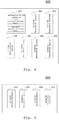
- Fig. 4 illustrates a schematic structural drawing of a virus scanning device 400 according to embodiments of this application.
- the virus scanning device 400 comprises a ascertaining module 410, a first scanning module 420 and a second scanning module 430.
- the ascertaining module 410 is configured to ascertain the first scanning items in the client based on a determination to perform an intelligent scan.
- the first scanning module 420 is configured to scan the first scanning items at a first scanning speed.
- the second scanning module 430 is configured to scan the second scanning items at the second scanning speed on the basis that the client satisfies a first switching condition, the second scanning items are all remaining items except the first scanning items in the client.
- the first scanning speed is higher than the second scanning speed.
- the ascertaining module 410 comprises at least one of the following units:
- the first switching condition may be, for example: no virus found in the first scanning items; a frequency for scanning virus not exceeding a first predetermined value; and a historical infection rate of the second scanning items being lower than a second predetermined value.
- the virus scanning device 400 of this embodiment may further comprise a first outputting module 440 configured to, after the first scanning module scans the first scanning items at the first scanning speed, output information that no virus is found in the client on the basis that the client satisfies the first switching condition.
- a first outputting module 440 configured to, after the first scanning module scans the first scanning items at the first scanning speed, output information that no virus is found in the client on the basis that the client satisfies the first switching condition.
- the second scanning module 430 may also be configured to, if a virus is found, output information that a virus is found upon monitoring based on the client satisfying the first switching condition.
- the virus scanning device 400 of this embodiment may further comprise a fourth scanning module 450 configured to scan the second scanning items in the client at the first scanning speed based on the client satisfying a third switching condition.
- a fourth scanning module 450 configured to scan the second scanning items in the client at the first scanning speed based on the client satisfying a third switching condition.
- the third switching condition may for example include at least one of the followings: a virus is found in the first scanning items; and a frequency for scanning virus is higher than a first predetermined value.
- the virus scanning device 400 of this embodiment may further comprise a third scanning module 460 configured to stop scanning and output information that no virus is found in the client based on a second switching condition being satisfied.
- a third scanning module 460 configured to stop scanning and output information that no virus is found in the client based on a second switching condition being satisfied.
- the second switching condition may be: no virus found in the first scanning items; and a historical infection rate of the second scanning items being lower than a third predetermined value.
- the virus scanning device 400 of this embodiment may further comprise a fifth scanning module 470 configured to scan all items in the client at the first scanning speed based on a virus being found upon monitoring.
- a fifth scanning module 470 configured to scan all items in the client at the first scanning speed based on a virus being found upon monitoring.
- Fig. 5 illustrates a schematic structural drawing of a virus scanning device 500 according to another embodiment of the present application.
- the virus scanning device 500 comprises a configuration module 510 and a first scanning module 520.
- the configuration module 510 is configured to configure scanning items in the client.
- the scanning items include first scanning items and second scanning items.
- the first scanning items may be interpreted as items being subjected to virus scanning preferentially in the client.
- the first scanning module 520 is configured to initiate a first scan on the first scanning items in the client, the first scanning has a first scanning speed.
- the configuration module 510 is configured to configure the scanning items in the client by the following manners.
- the configuration module 510 may be configured to count a ratio of items infected by a virus in a plurality of clients.
- the plurality of clients are clients connected with the same server via a network.
- the virus scanning device 500 of the present embodiment may further comprise an acquisition module 530 and a second scanning module 540.
- the acquisition module 530 is configured to acquire a scanning result of the first scan.
- the second scanning module 540 is configured to initiate a second scan on the second scanning items in the client on the basis that the client satisfies a preset condition.
- the second scan has a second scanning speed, and the first scanning speed is higher than the second scanning speed.
- the preset condition may be: no virus found in the first scanning items, a frequency for scanning virus at which the first scan is initiated not exceeding a predetermined frequency and a historical infection rate of the second scanning items being lower than a predetermined infection rate.
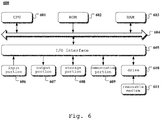
- FIG. 6 a schematic structural diagram of a computer system 600 adapted to implement a terminal apparatus or a server of the embodiments of the present application is shown.
- the computer system 600 includes a central processing unit (CPU) 601, which may execute various appropriate actions and processes in accordance with a program stored in a read-only memory (ROM) 602 or a program loaded into a random access memory (RAM) 603 from a storage portion 608.
- the RAM 603 also stores various programs and data required by operations of the system 600.
- the CPU 601, the ROM 602 and the RAM 603 are connected to each other through a bus 604.
- An input/output (I/O) interface 605 is also connected to the bus 604.
- the following components are connected to the I/O interface 605: an input portion 606 including a keyboard, a mouse etc.; an output portion 607 comprising a cathode ray tube (CRT), a liquid crystal display device (LCD), a speaker etc.; a storage portion 608 including a hard disk and the like; and a communication portion 609 comprising a network interface card, such as a LAN card and a modem.
- the communication portion 609 performs communication processes via a network, such as the Internet.
- a driver 610 is also connected to the I/O interface 605 as required.
- a removable medium 611 such as a magnetic disk, an optical disk, a magneto-optical disk, and a semiconductor memory, may be installed on the driver 610, to facilitate the retrieval of a computer program from the removable medium 611, and the installation thereof on the storage portion 608 as needed.
- an embodiment of the present disclosure includes a computer program product, which comprises a computer program that is tangibly embedded in a machine-readable medium.
- the computer program comprises program codes for executing the method as illustrated in the flow chart.
- the computer program may be downloaded and installed from a network via the communication portion 609, and/or may be installed from the removable media 611.
- each block in the flow charts and block diagrams may represent a module, a program segment, or a code portion.
- the module, the program segment, or the code portion comprises one or more executable instructions for implementing the specified logical function.
- the functions denoted by the blocks may occur in a sequence different from the sequences shown in the figures. For example, in practice, two blocks in succession may be executed, depending on the involved functionalities, substantially in parallel, or in a reverse sequence.
- each block in the block diagrams and/or the flow charts and/or a combination of the blocks may be implemented by a dedicated hardware-based system executing specific functions or operations, or by a combination of a dedicated hardware and computer instructions.
- the units or modules involved in the embodiments of the present application may be implemented by way of software or hardware.
- the described units or modules may also be provided in a processor, for example, described as: a processor, comprising a detection unit, an ascertaining module, a first scanning module, a second scanning module, where the names of these units or modules are not considered as a limitation to the units or modules.
- the ascertaining module may also be described as "a module for ascertaining first scanning items in a client.”
- the present application further provides a computer readable storage medium.
- the computer readable storage medium may be the computer readable storage medium included in the apparatus in the above embodiments, or a stand-alone computer readable storage medium which has not been assembled into the terminal.
- the computer readable storage medium stores one or more programs. The programs are used by one or more processors to execute the method for inputting formula described in the present application.
- inventive scope of the present application is not limited to the technical solutions formed by the particular combinations of the above technical features.
- inventive scope should also cover other technical solutions formed by any combinations of the above technical features or equivalent features thereof without departing from the concept of the disclosure, such as, technical solutions formed by replacing the features as disclosed in the present application with (but not limited to), technical features with similar functions.
Landscapes
- Engineering & Computer Science (AREA)
- Computer Security & Cryptography (AREA)
- Software Systems (AREA)
- Theoretical Computer Science (AREA)
- Computer Hardware Design (AREA)
- General Engineering & Computer Science (AREA)
- General Physics & Mathematics (AREA)
- Physics & Mathematics (AREA)
- Virology (AREA)
- Health & Medical Sciences (AREA)
- General Health & Medical Sciences (AREA)
- Information Transfer Between Computers (AREA)
- Telephonic Communication Services (AREA)
- Management, Administration, Business Operations System, And Electronic Commerce (AREA)
Applications Claiming Priority (2)
| Application Number | Priority Date | Filing Date | Title |
|---|---|---|---|
| CN201510192621.9A CN104778411B (zh) | 2015-04-22 | 2015-04-22 | 病毒扫描方法和病毒扫描装置 |
| PCT/CN2015/089517 WO2016169189A1 (zh) | 2015-04-22 | 2015-09-14 | 病毒扫描方法和病毒扫描装置 |
Publications (3)
| Publication Number | Publication Date |
|---|---|
| EP3287929A1 true EP3287929A1 (de) | 2018-02-28 |
| EP3287929A4 EP3287929A4 (de) | 2018-11-14 |
| EP3287929B1 EP3287929B1 (de) | 2020-10-28 |
Family
ID=53619866
Family Applications (1)
| Application Number | Title | Priority Date | Filing Date |
|---|---|---|---|
| EP15889676.1A Active EP3287929B1 (de) | 2015-04-22 | 2015-09-14 | Virusabtastverfahren und virusabtastvorrichtung |
Country Status (6)
| Country | Link |
|---|---|
| US (1) | US10762207B2 (de) |
| EP (1) | EP3287929B1 (de) |
| JP (1) | JP6351827B2 (de) |
| KR (1) | KR101928775B1 (de) |
| CN (1) | CN104778411B (de) |
| WO (1) | WO2016169189A1 (de) |
Families Citing this family (6)
| Publication number | Priority date | Publication date | Assignee | Title |
|---|---|---|---|---|
| JP2865233B2 (ja) | 1992-06-19 | 1999-03-08 | 新東工業株式会社 | ショットブラスト装置 |
| CN104778411B (zh) | 2015-04-22 | 2017-10-27 | 百度在线网络技术(北京)有限公司 | 病毒扫描方法和病毒扫描装置 |
| CN106095587B (zh) | 2016-06-24 | 2019-12-24 | 北京金山安全软件有限公司 | 应用程序的缓存扫描方法、装置及电子设备 |
| JP7117917B2 (ja) * | 2018-07-02 | 2022-08-15 | エイチ・シー・ネットワークス株式会社 | 検疫サーバおよび検疫方法 |
| JP7155973B2 (ja) * | 2018-12-06 | 2022-10-19 | コニカミノルタ株式会社 | 画像処理装置、ウイルスチェック方法およびウイルスチェックプログラム |
| US20260105150A1 (en) * | 2024-10-11 | 2026-04-16 | Dell Products L.P. | Selectively Scanning a File Before Access |
Family Cites Families (20)
| Publication number | Priority date | Publication date | Assignee | Title |
|---|---|---|---|---|
| US7085934B1 (en) * | 2000-07-27 | 2006-08-01 | Mcafee, Inc. | Method and system for limiting processor utilization by a virus scanner |
| JP2004178033A (ja) * | 2002-11-25 | 2004-06-24 | Hitachi Ltd | 分散システムにおけるセキュリティ管理支援方法およびプログラム |
| JP3979285B2 (ja) * | 2002-12-17 | 2007-09-19 | 株式会社日立製作所 | 情報処理システム |
| US9235703B2 (en) * | 2005-09-30 | 2016-01-12 | Lenovo Enterprise Solutions (Singapore) Pte. Ltd. | Virus scanning in a computer system |
| US8087084B1 (en) * | 2006-06-28 | 2011-12-27 | Emc Corporation | Security for scanning objects |
| US8392988B2 (en) * | 2007-02-09 | 2013-03-05 | Ntt Docomo, Inc. | Terminal device and method for checking a software program |
| US7774451B1 (en) * | 2008-06-30 | 2010-08-10 | Symantec Corporation | Method and apparatus for classifying reputation of files on a computer network |
| US9141794B1 (en) * | 2009-03-10 | 2015-09-22 | Trend Micro Incorporated | Preemptive and/or reduced-intrusion malware scanning |
| JP2011108201A (ja) * | 2009-11-20 | 2011-06-02 | Fujitsu Ltd | 情報処理装置、診断方法および診断プログラム |
| US8590046B2 (en) * | 2010-07-28 | 2013-11-19 | Bank Of America Corporation | Login initiated scanning of computing devices |
| US8533834B1 (en) * | 2011-04-22 | 2013-09-10 | Juniper Networks, Inc. | Antivirus intelligent flow framework |
| CN102905269B (zh) | 2011-07-26 | 2017-06-13 | 西门子公司 | 一种手机病毒的检测方法和装置 |
| US20150020203A1 (en) * | 2011-09-19 | 2015-01-15 | Beijing Qihoo Technology Company Limited | Method and device for processing computer viruses |
| CN104063662B (zh) * | 2011-09-19 | 2017-05-03 | 北京奇虎科技有限公司 | 处理计算机病毒的方法及装置 |
| US9015841B2 (en) | 2012-09-20 | 2015-04-21 | Tencent Technology (Shenzhen) Company Limited | Method and apparatus for virus scanning |
| CN103679022B (zh) * | 2012-09-20 | 2016-04-20 | 腾讯科技(深圳)有限公司 | 病毒扫描方法和装置 |
| CN103699837B (zh) | 2012-09-27 | 2016-12-21 | 腾讯科技(深圳)有限公司 | 一种扫描文件的方法和终端设备 |
| CN103207970B (zh) * | 2013-04-28 | 2016-06-08 | 北京奇虎科技有限公司 | 病毒文件扫描方法及装置 |
| CN103336925B (zh) * | 2013-07-29 | 2016-10-05 | 腾讯科技(深圳)有限公司 | 一种扫描加速的方法和装置 |
| CN104778411B (zh) | 2015-04-22 | 2017-10-27 | 百度在线网络技术(北京)有限公司 | 病毒扫描方法和病毒扫描装置 |
-
2015
- 2015-04-22 CN CN201510192621.9A patent/CN104778411B/zh active Active
- 2015-09-14 US US15/504,297 patent/US10762207B2/en active Active
- 2015-09-14 WO PCT/CN2015/089517 patent/WO2016169189A1/zh not_active Ceased
- 2015-09-14 JP JP2017508080A patent/JP6351827B2/ja active Active
- 2015-09-14 EP EP15889676.1A patent/EP3287929B1/de active Active
- 2015-09-14 KR KR1020177003944A patent/KR101928775B1/ko active Active
Also Published As
| Publication number | Publication date |
|---|---|
| US10762207B2 (en) | 2020-09-01 |
| KR101928775B1 (ko) | 2019-03-12 |
| KR20170030623A (ko) | 2017-03-17 |
| WO2016169189A1 (zh) | 2016-10-27 |
| JP2017526067A (ja) | 2017-09-07 |
| CN104778411A (zh) | 2015-07-15 |
| EP3287929B1 (de) | 2020-10-28 |
| EP3287929A4 (de) | 2018-11-14 |
| CN104778411B (zh) | 2017-10-27 |
| US20180039778A1 (en) | 2018-02-08 |
| JP6351827B2 (ja) | 2018-07-04 |
Similar Documents
| Publication | Publication Date | Title |
|---|---|---|
| US10762207B2 (en) | Method and device for scanning virus | |
| US10511617B2 (en) | Method and system for detecting malicious code | |
| US9710455B2 (en) | Feature text string-based sensitive text detecting method and apparatus | |
| EP3295647B1 (de) | Warnung vor schadprogrammen | |
| CN105787077B (zh) | 数据同步方法和装置 | |
| US10547618B2 (en) | Method and apparatus for setting access privilege, server and storage medium | |
| EP2763069A1 (de) | Verfahren und vorrichtung zur ausschaltung mehrerer computerviren | |
| US10623426B1 (en) | Building a ground truth dataset for a machine learning-based security application | |
| EP2998902B1 (de) | Verfahren und vorrichtung zur verarbeitung einer datei | |
| US9894183B2 (en) | Device and method for controlling remote procedure call | |
| US10250515B2 (en) | Method and device for forwarding data messages | |
| CN102982278A (zh) | 一种扫描文件的方法、装置和系统 | |
| CN116775201A (zh) | 容器的异常检测方法及装置 | |
| JP7140268B2 (ja) | 警告装置、制御方法、及びプログラム | |
| CN114912111B (zh) | 一种云主机病毒检测方法、装置和系统 | |
| CN102970283B (zh) | 文件扫描系统 | |
| CN113420170B (zh) | 大数据图像的多线程存储方法、装置、设备和介质 | |
| CN113568775B (zh) | 程序异常捕获方法、装置、设备及可读存储介质 | |
| CN110704629B (zh) | 一种确定字符集的方法和装置 | |
| CN115543416A (zh) | 一种配置更新方法、装置、电子设备及存储介质 | |
| CN107608858A (zh) | 信息处理系统、方法和装置 | |
| US20150215264A1 (en) | Common message sending method, electronic device, and storage medium | |
| CN116012298B (zh) | 一种病灶识别方法和装置 | |
| CN117596047B (zh) | 请求处理方法、装置、电子设备及存储介质 | |
| CN113132324B (zh) | 样本鉴定方法及系统 |
Legal Events
| Date | Code | Title | Description |
|---|---|---|---|
| STAA | Information on the status of an ep patent application or granted ep patent |
Free format text: STATUS: THE INTERNATIONAL PUBLICATION HAS BEEN MADE |
|
| PUAI | Public reference made under article 153(3) epc to a published international application that has entered the european phase |
Free format text: ORIGINAL CODE: 0009012 |
|
| STAA | Information on the status of an ep patent application or granted ep patent |
Free format text: STATUS: REQUEST FOR EXAMINATION WAS MADE |
|
| 17P | Request for examination filed |
Effective date: 20170215 |
|
| AK | Designated contracting states |
Kind code of ref document: A1 Designated state(s): AL AT BE BG CH CY CZ DE DK EE ES FI FR GB GR HR HU IE IS IT LI LT LU LV MC MK MT NL NO PL PT RO RS SE SI SK SM TR |
|
| AX | Request for extension of the european patent |
Extension state: BA ME |
|
| DAV | Request for validation of the european patent (deleted) | ||
| DAX | Request for extension of the european patent (deleted) | ||
| A4 | Supplementary search report drawn up and despatched |
Effective date: 20181016 |
|
| RIC1 | Information provided on ipc code assigned before grant |
Ipc: G06F 21/56 20130101AFI20181010BHEP |
|
| GRAP | Despatch of communication of intention to grant a patent |
Free format text: ORIGINAL CODE: EPIDOSNIGR1 |
|
| STAA | Information on the status of an ep patent application or granted ep patent |
Free format text: STATUS: GRANT OF PATENT IS INTENDED |
|
| INTG | Intention to grant announced |
Effective date: 20200624 |
|
| GRAS | Grant fee paid |
Free format text: ORIGINAL CODE: EPIDOSNIGR3 |
|
| GRAA | (expected) grant |
Free format text: ORIGINAL CODE: 0009210 |
|
| STAA | Information on the status of an ep patent application or granted ep patent |
Free format text: STATUS: THE PATENT HAS BEEN GRANTED |
|
| AK | Designated contracting states |
Kind code of ref document: B1 Designated state(s): AL AT BE BG CH CY CZ DE DK EE ES FI FR GB GR HR HU IE IS IT LI LT LU LV MC MK MT NL NO PL PT RO RS SE SI SK SM TR |
|
| REG | Reference to a national code |
Ref country code: GB Ref legal event code: FG4D |
|
| REG | Reference to a national code |
Ref country code: CH Ref legal event code: EP |
|
| REG | Reference to a national code |
Ref country code: AT Ref legal event code: REF Ref document number: 1328934 Country of ref document: AT Kind code of ref document: T Effective date: 20201115 |
|
| REG | Reference to a national code |
Ref country code: DE Ref legal event code: R096 Ref document number: 602015061322 Country of ref document: DE |
|
| REG | Reference to a national code |
Ref country code: IE Ref legal event code: FG4D |
|
| REG | Reference to a national code |
Ref country code: AT Ref legal event code: MK05 Ref document number: 1328934 Country of ref document: AT Kind code of ref document: T Effective date: 20201028 |
|
| REG | Reference to a national code |
Ref country code: NL Ref legal event code: MP Effective date: 20201028 |
|
| PG25 | Lapsed in a contracting state [announced via postgrant information from national office to epo] |
Ref country code: GR Free format text: LAPSE BECAUSE OF FAILURE TO SUBMIT A TRANSLATION OF THE DESCRIPTION OR TO PAY THE FEE WITHIN THE PRESCRIBED TIME-LIMIT Effective date: 20210129 Ref country code: NL Free format text: LAPSE BECAUSE OF FAILURE TO SUBMIT A TRANSLATION OF THE DESCRIPTION OR TO PAY THE FEE WITHIN THE PRESCRIBED TIME-LIMIT Effective date: 20201028 Ref country code: NO Free format text: LAPSE BECAUSE OF FAILURE TO SUBMIT A TRANSLATION OF THE DESCRIPTION OR TO PAY THE FEE WITHIN THE PRESCRIBED TIME-LIMIT Effective date: 20210128 Ref country code: FI Free format text: LAPSE BECAUSE OF FAILURE TO SUBMIT A TRANSLATION OF THE DESCRIPTION OR TO PAY THE FEE WITHIN THE PRESCRIBED TIME-LIMIT Effective date: 20201028 Ref country code: PT Free format text: LAPSE BECAUSE OF FAILURE TO SUBMIT A TRANSLATION OF THE DESCRIPTION OR TO PAY THE FEE WITHIN THE PRESCRIBED TIME-LIMIT Effective date: 20210301 Ref country code: RS Free format text: LAPSE BECAUSE OF FAILURE TO SUBMIT A TRANSLATION OF THE DESCRIPTION OR TO PAY THE FEE WITHIN THE PRESCRIBED TIME-LIMIT Effective date: 20201028 |
|
| REG | Reference to a national code |
Ref country code: LT Ref legal event code: MG4D |
|
| PG25 | Lapsed in a contracting state [announced via postgrant information from national office to epo] |
Ref country code: AT Free format text: LAPSE BECAUSE OF FAILURE TO SUBMIT A TRANSLATION OF THE DESCRIPTION OR TO PAY THE FEE WITHIN THE PRESCRIBED TIME-LIMIT Effective date: 20201028 Ref country code: ES Free format text: LAPSE BECAUSE OF FAILURE TO SUBMIT A TRANSLATION OF THE DESCRIPTION OR TO PAY THE FEE WITHIN THE PRESCRIBED TIME-LIMIT Effective date: 20201028 Ref country code: BG Free format text: LAPSE BECAUSE OF FAILURE TO SUBMIT A TRANSLATION OF THE DESCRIPTION OR TO PAY THE FEE WITHIN THE PRESCRIBED TIME-LIMIT Effective date: 20210128 Ref country code: PL Free format text: LAPSE BECAUSE OF FAILURE TO SUBMIT A TRANSLATION OF THE DESCRIPTION OR TO PAY THE FEE WITHIN THE PRESCRIBED TIME-LIMIT Effective date: 20201028 Ref country code: SE Free format text: LAPSE BECAUSE OF FAILURE TO SUBMIT A TRANSLATION OF THE DESCRIPTION OR TO PAY THE FEE WITHIN THE PRESCRIBED TIME-LIMIT Effective date: 20201028 Ref country code: LV Free format text: LAPSE BECAUSE OF FAILURE TO SUBMIT A TRANSLATION OF THE DESCRIPTION OR TO PAY THE FEE WITHIN THE PRESCRIBED TIME-LIMIT Effective date: 20201028 Ref country code: IS Free format text: LAPSE BECAUSE OF FAILURE TO SUBMIT A TRANSLATION OF THE DESCRIPTION OR TO PAY THE FEE WITHIN THE PRESCRIBED TIME-LIMIT Effective date: 20210228 |
|
| PG25 | Lapsed in a contracting state [announced via postgrant information from national office to epo] |
Ref country code: HR Free format text: LAPSE BECAUSE OF FAILURE TO SUBMIT A TRANSLATION OF THE DESCRIPTION OR TO PAY THE FEE WITHIN THE PRESCRIBED TIME-LIMIT Effective date: 20201028 |
|
| REG | Reference to a national code |
Ref country code: DE Ref legal event code: R097 Ref document number: 602015061322 Country of ref document: DE |
|
| PG25 | Lapsed in a contracting state [announced via postgrant information from national office to epo] |
Ref country code: RO Free format text: LAPSE BECAUSE OF FAILURE TO SUBMIT A TRANSLATION OF THE DESCRIPTION OR TO PAY THE FEE WITHIN THE PRESCRIBED TIME-LIMIT Effective date: 20201028 Ref country code: SK Free format text: LAPSE BECAUSE OF FAILURE TO SUBMIT A TRANSLATION OF THE DESCRIPTION OR TO PAY THE FEE WITHIN THE PRESCRIBED TIME-LIMIT Effective date: 20201028 Ref country code: SM Free format text: LAPSE BECAUSE OF FAILURE TO SUBMIT A TRANSLATION OF THE DESCRIPTION OR TO PAY THE FEE WITHIN THE PRESCRIBED TIME-LIMIT Effective date: 20201028 Ref country code: LT Free format text: LAPSE BECAUSE OF FAILURE TO SUBMIT A TRANSLATION OF THE DESCRIPTION OR TO PAY THE FEE WITHIN THE PRESCRIBED TIME-LIMIT Effective date: 20201028 Ref country code: EE Free format text: LAPSE BECAUSE OF FAILURE TO SUBMIT A TRANSLATION OF THE DESCRIPTION OR TO PAY THE FEE WITHIN THE PRESCRIBED TIME-LIMIT Effective date: 20201028 Ref country code: CZ Free format text: LAPSE BECAUSE OF FAILURE TO SUBMIT A TRANSLATION OF THE DESCRIPTION OR TO PAY THE FEE WITHIN THE PRESCRIBED TIME-LIMIT Effective date: 20201028 |
|
| PG25 | Lapsed in a contracting state [announced via postgrant information from national office to epo] |
Ref country code: DK Free format text: LAPSE BECAUSE OF FAILURE TO SUBMIT A TRANSLATION OF THE DESCRIPTION OR TO PAY THE FEE WITHIN THE PRESCRIBED TIME-LIMIT Effective date: 20201028 |
|
| PLBE | No opposition filed within time limit |
Free format text: ORIGINAL CODE: 0009261 |
|
| STAA | Information on the status of an ep patent application or granted ep patent |
Free format text: STATUS: NO OPPOSITION FILED WITHIN TIME LIMIT |
|
| 26N | No opposition filed |
Effective date: 20210729 |
|
| PG25 | Lapsed in a contracting state [announced via postgrant information from national office to epo] |
Ref country code: IT Free format text: LAPSE BECAUSE OF FAILURE TO SUBMIT A TRANSLATION OF THE DESCRIPTION OR TO PAY THE FEE WITHIN THE PRESCRIBED TIME-LIMIT Effective date: 20201028 Ref country code: AL Free format text: LAPSE BECAUSE OF FAILURE TO SUBMIT A TRANSLATION OF THE DESCRIPTION OR TO PAY THE FEE WITHIN THE PRESCRIBED TIME-LIMIT Effective date: 20201028 |
|
| PG25 | Lapsed in a contracting state [announced via postgrant information from national office to epo] |
Ref country code: SI Free format text: LAPSE BECAUSE OF FAILURE TO SUBMIT A TRANSLATION OF THE DESCRIPTION OR TO PAY THE FEE WITHIN THE PRESCRIBED TIME-LIMIT Effective date: 20201028 |
|
| REG | Reference to a national code |
Ref country code: CH Ref legal event code: PL |
|
| REG | Reference to a national code |
Ref country code: BE Ref legal event code: MM Effective date: 20210930 |
|
| PG25 | Lapsed in a contracting state [announced via postgrant information from national office to epo] |
Ref country code: IS Free format text: LAPSE BECAUSE OF FAILURE TO SUBMIT A TRANSLATION OF THE DESCRIPTION OR TO PAY THE FEE WITHIN THE PRESCRIBED TIME-LIMIT Effective date: 20210228 Ref country code: MC Free format text: LAPSE BECAUSE OF FAILURE TO SUBMIT A TRANSLATION OF THE DESCRIPTION OR TO PAY THE FEE WITHIN THE PRESCRIBED TIME-LIMIT Effective date: 20201028 |
|
| PG25 | Lapsed in a contracting state [announced via postgrant information from national office to epo] |
Ref country code: LU Free format text: LAPSE BECAUSE OF NON-PAYMENT OF DUE FEES Effective date: 20210914 Ref country code: IE Free format text: LAPSE BECAUSE OF NON-PAYMENT OF DUE FEES Effective date: 20210914 Ref country code: BE Free format text: LAPSE BECAUSE OF NON-PAYMENT OF DUE FEES Effective date: 20210930 |
|
| PG25 | Lapsed in a contracting state [announced via postgrant information from national office to epo] |
Ref country code: LI Free format text: LAPSE BECAUSE OF NON-PAYMENT OF DUE FEES Effective date: 20210930 Ref country code: CH Free format text: LAPSE BECAUSE OF NON-PAYMENT OF DUE FEES Effective date: 20210930 |
|
| PG25 | Lapsed in a contracting state [announced via postgrant information from national office to epo] |
Ref country code: HU Free format text: LAPSE BECAUSE OF FAILURE TO SUBMIT A TRANSLATION OF THE DESCRIPTION OR TO PAY THE FEE WITHIN THE PRESCRIBED TIME-LIMIT; INVALID AB INITIO Effective date: 20150914 |
|
| PG25 | Lapsed in a contracting state [announced via postgrant information from national office to epo] |
Ref country code: CY Free format text: LAPSE BECAUSE OF FAILURE TO SUBMIT A TRANSLATION OF THE DESCRIPTION OR TO PAY THE FEE WITHIN THE PRESCRIBED TIME-LIMIT Effective date: 20201028 |
|
| P01 | Opt-out of the competence of the unified patent court (upc) registered |
Effective date: 20230526 |
|
| PG25 | Lapsed in a contracting state [announced via postgrant information from national office to epo] |
Ref country code: MK Free format text: LAPSE BECAUSE OF FAILURE TO SUBMIT A TRANSLATION OF THE DESCRIPTION OR TO PAY THE FEE WITHIN THE PRESCRIBED TIME-LIMIT Effective date: 20201028 |
|
| PG25 | Lapsed in a contracting state [announced via postgrant information from national office to epo] |
Ref country code: TR Free format text: LAPSE BECAUSE OF FAILURE TO SUBMIT A TRANSLATION OF THE DESCRIPTION OR TO PAY THE FEE WITHIN THE PRESCRIBED TIME-LIMIT Effective date: 20201028 |
|
| PG25 | Lapsed in a contracting state [announced via postgrant information from national office to epo] |
Ref country code: MT Free format text: LAPSE BECAUSE OF FAILURE TO SUBMIT A TRANSLATION OF THE DESCRIPTION OR TO PAY THE FEE WITHIN THE PRESCRIBED TIME-LIMIT Effective date: 20201028 |
|
| PGFP | Annual fee paid to national office [announced via postgrant information from national office to epo] |
Ref country code: DE Payment date: 20250919 Year of fee payment: 11 |
|
| PGFP | Annual fee paid to national office [announced via postgrant information from national office to epo] |
Ref country code: GB Payment date: 20250804 Year of fee payment: 11 |
|
| PGFP | Annual fee paid to national office [announced via postgrant information from national office to epo] |
Ref country code: FR Payment date: 20250728 Year of fee payment: 11 |