EP3288096A1 - Abdeckfenster für eine anzeigevorrichtung und anzeigevorrichtung damit - Google Patents
Abdeckfenster für eine anzeigevorrichtung und anzeigevorrichtung damit Download PDFInfo
- Publication number
- EP3288096A1 EP3288096A1 EP17169387.2A EP17169387A EP3288096A1 EP 3288096 A1 EP3288096 A1 EP 3288096A1 EP 17169387 A EP17169387 A EP 17169387A EP 3288096 A1 EP3288096 A1 EP 3288096A1
- Authority
- EP
- European Patent Office
- Prior art keywords
- film
- cover window
- display device
- thickness
- range
- Prior art date
- Legal status (The legal status is an assumption and is not a legal conclusion. Google has not performed a legal analysis and makes no representation as to the accuracy of the status listed.)
- Ceased
Links
Images

Classifications
-
- G—PHYSICS
- G06—COMPUTING OR CALCULATING; COUNTING
- G06F—ELECTRIC DIGITAL DATA PROCESSING
- G06F1/00—Details not covered by groups G06F3/00 - G06F13/00 and G06F21/00
- G06F1/16—Constructional details or arrangements
- G06F1/1613—Constructional details or arrangements for portable computers
- G06F1/1633—Constructional details or arrangements of portable computers not specific to the type of enclosures covered by groups G06F1/1615 - G06F1/1626
- G06F1/1637—Details related to the display arrangement, including those related to the mounting of the display in the housing
- G06F1/1652—Details related to the display arrangement, including those related to the mounting of the display in the housing the display being flexible, e.g. mimicking a sheet of paper, or rollable
-
- B—PERFORMING OPERATIONS; TRANSPORTING
- B32—LAYERED PRODUCTS
- B32B—LAYERED PRODUCTS, i.e. PRODUCTS BUILT-UP OF STRATA OF FLAT OR NON-FLAT, e.g. CELLULAR OR HONEYCOMB, FORM
- B32B27/00—Layered products comprising a layer of synthetic resin
- B32B27/06—Layered products comprising a layer of synthetic resin as the main or only constituent of a layer, which is next to another layer of the same or of a different material
- B32B27/08—Layered products comprising a layer of synthetic resin as the main or only constituent of a layer, which is next to another layer of the same or of a different material of synthetic resin
-
- B—PERFORMING OPERATIONS; TRANSPORTING
- B32—LAYERED PRODUCTS
- B32B—LAYERED PRODUCTS, i.e. PRODUCTS BUILT-UP OF STRATA OF FLAT OR NON-FLAT, e.g. CELLULAR OR HONEYCOMB, FORM
- B32B27/00—Layered products comprising a layer of synthetic resin
- B32B27/28—Layered products comprising a layer of synthetic resin comprising synthetic resins not wholly covered by any one of the sub-groups B32B27/30 - B32B27/42
- B32B27/281—Layered products comprising a layer of synthetic resin comprising synthetic resins not wholly covered by any one of the sub-groups B32B27/30 - B32B27/42 comprising polyimides
-
- B—PERFORMING OPERATIONS; TRANSPORTING
- B32—LAYERED PRODUCTS
- B32B—LAYERED PRODUCTS, i.e. PRODUCTS BUILT-UP OF STRATA OF FLAT OR NON-FLAT, e.g. CELLULAR OR HONEYCOMB, FORM
- B32B27/00—Layered products comprising a layer of synthetic resin
- B32B27/28—Layered products comprising a layer of synthetic resin comprising synthetic resins not wholly covered by any one of the sub-groups B32B27/30 - B32B27/42
- B32B27/283—Layered products comprising a layer of synthetic resin comprising synthetic resins not wholly covered by any one of the sub-groups B32B27/30 - B32B27/42 comprising polysiloxanes
-
- B—PERFORMING OPERATIONS; TRANSPORTING
- B32—LAYERED PRODUCTS
- B32B—LAYERED PRODUCTS, i.e. PRODUCTS BUILT-UP OF STRATA OF FLAT OR NON-FLAT, e.g. CELLULAR OR HONEYCOMB, FORM
- B32B27/00—Layered products comprising a layer of synthetic resin
- B32B27/28—Layered products comprising a layer of synthetic resin comprising synthetic resins not wholly covered by any one of the sub-groups B32B27/30 - B32B27/42
- B32B27/285—Layered products comprising a layer of synthetic resin comprising synthetic resins not wholly covered by any one of the sub-groups B32B27/30 - B32B27/42 comprising polyethers
-
- B—PERFORMING OPERATIONS; TRANSPORTING
- B32—LAYERED PRODUCTS
- B32B—LAYERED PRODUCTS, i.e. PRODUCTS BUILT-UP OF STRATA OF FLAT OR NON-FLAT, e.g. CELLULAR OR HONEYCOMB, FORM
- B32B27/00—Layered products comprising a layer of synthetic resin
- B32B27/28—Layered products comprising a layer of synthetic resin comprising synthetic resins not wholly covered by any one of the sub-groups B32B27/30 - B32B27/42
- B32B27/288—Layered products comprising a layer of synthetic resin comprising synthetic resins not wholly covered by any one of the sub-groups B32B27/30 - B32B27/42 comprising polyketones
-
- B—PERFORMING OPERATIONS; TRANSPORTING
- B32—LAYERED PRODUCTS
- B32B—LAYERED PRODUCTS, i.e. PRODUCTS BUILT-UP OF STRATA OF FLAT OR NON-FLAT, e.g. CELLULAR OR HONEYCOMB, FORM
- B32B27/00—Layered products comprising a layer of synthetic resin
- B32B27/30—Layered products comprising a layer of synthetic resin comprising vinyl (co)polymers; comprising acrylic (co)polymers
- B32B27/306—Layered products comprising a layer of synthetic resin comprising vinyl (co)polymers; comprising acrylic (co)polymers comprising vinyl acetate or vinyl alcohol (co)polymers
-
- B—PERFORMING OPERATIONS; TRANSPORTING
- B32—LAYERED PRODUCTS
- B32B—LAYERED PRODUCTS, i.e. PRODUCTS BUILT-UP OF STRATA OF FLAT OR NON-FLAT, e.g. CELLULAR OR HONEYCOMB, FORM
- B32B27/00—Layered products comprising a layer of synthetic resin
- B32B27/34—Layered products comprising a layer of synthetic resin comprising polyamides
-
- B—PERFORMING OPERATIONS; TRANSPORTING
- B32—LAYERED PRODUCTS
- B32B—LAYERED PRODUCTS, i.e. PRODUCTS BUILT-UP OF STRATA OF FLAT OR NON-FLAT, e.g. CELLULAR OR HONEYCOMB, FORM
- B32B27/00—Layered products comprising a layer of synthetic resin
- B32B27/40—Layered products comprising a layer of synthetic resin comprising polyurethanes
-
- B—PERFORMING OPERATIONS; TRANSPORTING
- B32—LAYERED PRODUCTS
- B32B—LAYERED PRODUCTS, i.e. PRODUCTS BUILT-UP OF STRATA OF FLAT OR NON-FLAT, e.g. CELLULAR OR HONEYCOMB, FORM
- B32B33/00—Layered products characterised by particular properties or particular surface features, e.g. particular surface coatings; Layered products designed for particular purposes not covered by another single class
-
- B—PERFORMING OPERATIONS; TRANSPORTING
- B32—LAYERED PRODUCTS
- B32B—LAYERED PRODUCTS, i.e. PRODUCTS BUILT-UP OF STRATA OF FLAT OR NON-FLAT, e.g. CELLULAR OR HONEYCOMB, FORM
- B32B7/00—Layered products characterised by the relation between layers; Layered products characterised by the relative orientation of features between layers, or by the relative values of a measurable parameter between layers, i.e. products comprising layers having different physical, chemical or physicochemical properties; Layered products characterised by the interconnection of layers
- B32B7/02—Physical, chemical or physicochemical properties
- B32B7/022—Mechanical properties
-
- B—PERFORMING OPERATIONS; TRANSPORTING
- B32—LAYERED PRODUCTS
- B32B—LAYERED PRODUCTS, i.e. PRODUCTS BUILT-UP OF STRATA OF FLAT OR NON-FLAT, e.g. CELLULAR OR HONEYCOMB, FORM
- B32B7/00—Layered products characterised by the relation between layers; Layered products characterised by the relative orientation of features between layers, or by the relative values of a measurable parameter between layers, i.e. products comprising layers having different physical, chemical or physicochemical properties; Layered products characterised by the interconnection of layers
- B32B7/04—Interconnection of layers
- B32B7/10—Interconnection of layers at least one layer having inter-reactive properties
-
- B—PERFORMING OPERATIONS; TRANSPORTING
- B32—LAYERED PRODUCTS
- B32B—LAYERED PRODUCTS, i.e. PRODUCTS BUILT-UP OF STRATA OF FLAT OR NON-FLAT, e.g. CELLULAR OR HONEYCOMB, FORM
- B32B7/00—Layered products characterised by the relation between layers; Layered products characterised by the relative orientation of features between layers, or by the relative values of a measurable parameter between layers, i.e. products comprising layers having different physical, chemical or physicochemical properties; Layered products characterised by the interconnection of layers
- B32B7/04—Interconnection of layers
- B32B7/12—Interconnection of layers using interposed adhesives or interposed materials with bonding properties
-
- C—CHEMISTRY; METALLURGY
- C09—DYES; PAINTS; POLISHES; NATURAL RESINS; ADHESIVES; COMPOSITIONS NOT OTHERWISE PROVIDED FOR; APPLICATIONS OF MATERIALS NOT OTHERWISE PROVIDED FOR
- C09J—ADHESIVES; NON-MECHANICAL ASPECTS OF ADHESIVE PROCESSES IN GENERAL; ADHESIVE PROCESSES NOT PROVIDED FOR ELSEWHERE; USE OF MATERIALS AS ADHESIVES
- C09J123/00—Adhesives based on homopolymers or copolymers of unsaturated aliphatic hydrocarbons having only one carbon-to-carbon double bond; Adhesives based on derivatives of such polymers
- C09J123/02—Adhesives based on homopolymers or copolymers of unsaturated aliphatic hydrocarbons having only one carbon-to-carbon double bond; Adhesives based on derivatives of such polymers not modified by chemical after-treatment
- C09J123/04—Homopolymers or copolymers of ethene
- C09J123/08—Copolymers of ethene
- C09J123/0846—Copolymers of ethene with unsaturated hydrocarbons containing other atoms than carbon or hydrogen atoms
- C09J123/0853—Vinylacetate
-
- C—CHEMISTRY; METALLURGY
- C09—DYES; PAINTS; POLISHES; NATURAL RESINS; ADHESIVES; COMPOSITIONS NOT OTHERWISE PROVIDED FOR; APPLICATIONS OF MATERIALS NOT OTHERWISE PROVIDED FOR
- C09J—ADHESIVES; NON-MECHANICAL ASPECTS OF ADHESIVE PROCESSES IN GENERAL; ADHESIVE PROCESSES NOT PROVIDED FOR ELSEWHERE; USE OF MATERIALS AS ADHESIVES
- C09J175/00—Adhesives based on polyureas or polyurethanes; Adhesives based on derivatives of such polymers
- C09J175/04—Polyurethanes
-
- C—CHEMISTRY; METALLURGY
- C09—DYES; PAINTS; POLISHES; NATURAL RESINS; ADHESIVES; COMPOSITIONS NOT OTHERWISE PROVIDED FOR; APPLICATIONS OF MATERIALS NOT OTHERWISE PROVIDED FOR
- C09J—ADHESIVES; NON-MECHANICAL ASPECTS OF ADHESIVE PROCESSES IN GENERAL; ADHESIVE PROCESSES NOT PROVIDED FOR ELSEWHERE; USE OF MATERIALS AS ADHESIVES
- C09J183/00—Adhesives based on macromolecular compounds obtained by reactions forming in the main chain of the macromolecule a linkage containing silicon, with or without sulfur, nitrogen, oxygen, or carbon only; Adhesives based on derivatives of such polymers
- C09J183/04—Polysiloxanes
-
- G—PHYSICS
- G09—EDUCATION; CRYPTOGRAPHY; DISPLAY; ADVERTISING; SEALS
- G09F—DISPLAYING; ADVERTISING; SIGNS; LABELS OR NAME-PLATES; SEALS
- G09F9/00—Indicating arrangements for variable information in which the information is built-up on a support by selection or combination of individual elements
-
- G—PHYSICS
- G09—EDUCATION; CRYPTOGRAPHY; DISPLAY; ADVERTISING; SEALS
- G09F—DISPLAYING; ADVERTISING; SIGNS; LABELS OR NAME-PLATES; SEALS
- G09F9/00—Indicating arrangements for variable information in which the information is built-up on a support by selection or combination of individual elements
- G09F9/30—Indicating arrangements for variable information in which the information is built-up on a support by selection or combination of individual elements in which the desired character or characters are formed by combining individual elements
- G09F9/301—Indicating arrangements for variable information in which the information is built-up on a support by selection or combination of individual elements in which the desired character or characters are formed by combining individual elements flexible foldable or roll-able electronic displays, e.g. thin LCD, OLED
-
- H—ELECTRICITY
- H05—ELECTRIC TECHNIQUES NOT OTHERWISE PROVIDED FOR
- H05K—PRINTED CIRCUITS; CASINGS OR CONSTRUCTIONAL DETAILS OF ELECTRIC APPARATUS; MANUFACTURE OF ASSEMBLAGES OF ELECTRICAL COMPONENTS
- H05K5/00—Casings, cabinets or drawers for electric apparatus
- H05K5/02—Details
- H05K5/03—Covers
-
- H—ELECTRICITY
- H10—SEMICONDUCTOR DEVICES; ELECTRIC SOLID-STATE DEVICES NOT OTHERWISE PROVIDED FOR
- H10K—ORGANIC ELECTRIC SOLID-STATE DEVICES
- H10K50/00—Organic light-emitting devices
- H10K50/80—Constructional details
- H10K50/84—Passivation; Containers; Encapsulations
- H10K50/844—Encapsulations
- H10K50/8445—Encapsulations multilayered coatings having a repetitive structure, e.g. having multiple organic-inorganic bilayers
-
- B—PERFORMING OPERATIONS; TRANSPORTING
- B32—LAYERED PRODUCTS
- B32B—LAYERED PRODUCTS, i.e. PRODUCTS BUILT-UP OF STRATA OF FLAT OR NON-FLAT, e.g. CELLULAR OR HONEYCOMB, FORM
- B32B2250/00—Layers arrangement
- B32B2250/24—All layers being polymeric
-
- B—PERFORMING OPERATIONS; TRANSPORTING
- B32—LAYERED PRODUCTS
- B32B—LAYERED PRODUCTS, i.e. PRODUCTS BUILT-UP OF STRATA OF FLAT OR NON-FLAT, e.g. CELLULAR OR HONEYCOMB, FORM
- B32B2255/00—Coating on the layer surface
- B32B2255/10—Coating on the layer surface on synthetic resin layer or on natural or synthetic rubber layer
-
- B—PERFORMING OPERATIONS; TRANSPORTING
- B32—LAYERED PRODUCTS
- B32B—LAYERED PRODUCTS, i.e. PRODUCTS BUILT-UP OF STRATA OF FLAT OR NON-FLAT, e.g. CELLULAR OR HONEYCOMB, FORM
- B32B2307/00—Properties of the layers or laminate
- B32B2307/40—Properties of the layers or laminate having particular optical properties
- B32B2307/412—Transparent
-
- B—PERFORMING OPERATIONS; TRANSPORTING
- B32—LAYERED PRODUCTS
- B32B—LAYERED PRODUCTS, i.e. PRODUCTS BUILT-UP OF STRATA OF FLAT OR NON-FLAT, e.g. CELLULAR OR HONEYCOMB, FORM
- B32B2307/00—Properties of the layers or laminate
- B32B2307/50—Properties of the layers or laminate having particular mechanical properties
- B32B2307/51—Elastic
-
- B—PERFORMING OPERATIONS; TRANSPORTING
- B32—LAYERED PRODUCTS
- B32B—LAYERED PRODUCTS, i.e. PRODUCTS BUILT-UP OF STRATA OF FLAT OR NON-FLAT, e.g. CELLULAR OR HONEYCOMB, FORM
- B32B2307/00—Properties of the layers or laminate
- B32B2307/50—Properties of the layers or laminate having particular mechanical properties
- B32B2307/536—Hardness
-
- B—PERFORMING OPERATIONS; TRANSPORTING
- B32—LAYERED PRODUCTS
- B32B—LAYERED PRODUCTS, i.e. PRODUCTS BUILT-UP OF STRATA OF FLAT OR NON-FLAT, e.g. CELLULAR OR HONEYCOMB, FORM
- B32B2307/00—Properties of the layers or laminate
- B32B2307/50—Properties of the layers or laminate having particular mechanical properties
- B32B2307/546—Flexural strength; Flexion stiffness
-
- B—PERFORMING OPERATIONS; TRANSPORTING
- B32—LAYERED PRODUCTS
- B32B—LAYERED PRODUCTS, i.e. PRODUCTS BUILT-UP OF STRATA OF FLAT OR NON-FLAT, e.g. CELLULAR OR HONEYCOMB, FORM
- B32B2307/00—Properties of the layers or laminate
- B32B2307/50—Properties of the layers or laminate having particular mechanical properties
- B32B2307/558—Impact strength, toughness
-
- B—PERFORMING OPERATIONS; TRANSPORTING
- B32—LAYERED PRODUCTS
- B32B—LAYERED PRODUCTS, i.e. PRODUCTS BUILT-UP OF STRATA OF FLAT OR NON-FLAT, e.g. CELLULAR OR HONEYCOMB, FORM
- B32B2307/00—Properties of the layers or laminate
- B32B2307/70—Other properties
- B32B2307/732—Dimensional properties
-
- B—PERFORMING OPERATIONS; TRANSPORTING
- B32—LAYERED PRODUCTS
- B32B—LAYERED PRODUCTS, i.e. PRODUCTS BUILT-UP OF STRATA OF FLAT OR NON-FLAT, e.g. CELLULAR OR HONEYCOMB, FORM
- B32B2457/00—Electrical equipment
- B32B2457/20—Displays, e.g. liquid crystal displays, plasma displays
-
- B—PERFORMING OPERATIONS; TRANSPORTING
- B32—LAYERED PRODUCTS
- B32B—LAYERED PRODUCTS, i.e. PRODUCTS BUILT-UP OF STRATA OF FLAT OR NON-FLAT, e.g. CELLULAR OR HONEYCOMB, FORM
- B32B2457/00—Electrical equipment
- B32B2457/20—Displays, e.g. liquid crystal displays, plasma displays
- B32B2457/208—Touch screens
-
- G—PHYSICS
- G02—OPTICS
- G02F—OPTICAL DEVICES OR ARRANGEMENTS FOR THE CONTROL OF LIGHT BY MODIFICATION OF THE OPTICAL PROPERTIES OF THE MEDIA OF THE ELEMENTS INVOLVED THEREIN; NON-LINEAR OPTICS; FREQUENCY-CHANGING OF LIGHT; OPTICAL LOGIC ELEMENTS; OPTICAL ANALOGUE/DIGITAL CONVERTERS
- G02F1/00—Devices or arrangements for the control of the intensity, colour, phase, polarisation or direction of light arriving from an independent light source, e.g. switching, gating or modulating; Non-linear optics
- G02F1/01—Devices or arrangements for the control of the intensity, colour, phase, polarisation or direction of light arriving from an independent light source, e.g. switching, gating or modulating; Non-linear optics for the control of the intensity, phase, polarisation or colour
- G02F1/13—Devices or arrangements for the control of the intensity, colour, phase, polarisation or direction of light arriving from an independent light source, e.g. switching, gating or modulating; Non-linear optics for the control of the intensity, phase, polarisation or colour based on liquid crystals, e.g. single liquid crystal display cells
- G02F1/133—Constructional arrangements; Operation of liquid crystal cells; Circuit arrangements
- G02F1/1333—Constructional arrangements; Manufacturing methods
- G02F1/133305—Flexible substrates, e.g. plastics, organic film
-
- G—PHYSICS
- G02—OPTICS
- G02F—OPTICAL DEVICES OR ARRANGEMENTS FOR THE CONTROL OF LIGHT BY MODIFICATION OF THE OPTICAL PROPERTIES OF THE MEDIA OF THE ELEMENTS INVOLVED THEREIN; NON-LINEAR OPTICS; FREQUENCY-CHANGING OF LIGHT; OPTICAL LOGIC ELEMENTS; OPTICAL ANALOGUE/DIGITAL CONVERTERS
- G02F2201/00—Constructional arrangements not provided for in groups G02F1/00 - G02F7/00
- G02F2201/50—Protective arrangements
-
- G—PHYSICS
- G02—OPTICS
- G02F—OPTICAL DEVICES OR ARRANGEMENTS FOR THE CONTROL OF LIGHT BY MODIFICATION OF THE OPTICAL PROPERTIES OF THE MEDIA OF THE ELEMENTS INVOLVED THEREIN; NON-LINEAR OPTICS; FREQUENCY-CHANGING OF LIGHT; OPTICAL LOGIC ELEMENTS; OPTICAL ANALOGUE/DIGITAL CONVERTERS
- G02F2202/00—Materials and properties
- G02F2202/28—Adhesive materials or arrangements
-
- G—PHYSICS
- G06—COMPUTING OR CALCULATING; COUNTING
- G06F—ELECTRIC DIGITAL DATA PROCESSING
- G06F2203/00—Indexing scheme relating to G06F3/00 - G06F3/048
- G06F2203/041—Indexing scheme relating to G06F3/041 - G06F3/045
- G06F2203/04102—Flexible digitiser, i.e. constructional details for allowing the whole digitising part of a device to be flexed or rolled like a sheet of paper
-
- H—ELECTRICITY
- H10—SEMICONDUCTOR DEVICES; ELECTRIC SOLID-STATE DEVICES NOT OTHERWISE PROVIDED FOR
- H10K—ORGANIC ELECTRIC SOLID-STATE DEVICES
- H10K2102/00—Constructional details relating to the organic devices covered by this subclass
- H10K2102/301—Details of OLEDs
- H10K2102/311—Flexible OLED
-
- H—ELECTRICITY
- H10—SEMICONDUCTOR DEVICES; ELECTRIC SOLID-STATE DEVICES NOT OTHERWISE PROVIDED FOR
- H10K—ORGANIC ELECTRIC SOLID-STATE DEVICES
- H10K2102/00—Constructional details relating to the organic devices covered by this subclass
- H10K2102/301—Details of OLEDs
- H10K2102/351—Thickness
Definitions
- Exemplary embodiments relate to a cover window for a display device and a display device including the same.
- a display device for a mobile electronic apparatus has a cover window to protect the display panel of the display device from external impact.
- Exemplary embodiments provide a cover window for a display device, and a display device including the same, having advantages of being foldable and having surface hardness that is equal to or greater than a threshold level.
- An exemplary embodiment provides a cover window for a display device, including a first film, a second film disposed on the first film, and an adhesive layer disposed between the first film and the second film.
- the adhesive layer includes an elastic polymer, and a ratio of a thickness of the second film to a thickness of the first film is in a range of 0.2 to 5.
- An exemplary embodiment provides a cover window for a display device, including: a first film; a second film disposed on the first film; and an adhesive layer disposed between the first film and the second film to include an elastic polymer, wherein at least one of the first film and the second film includes a material having a ratio of modulus to yield stress that is in a range of 30 to 70, resilience that is in a range of 50 newton millimeter (Nmm) to 150 Nmm and toughness that is in a range of 200 Nmm to 1500 Nmm.
- Nmm newton millimeter
- An exemplary embodiment provides a display device including a display panel, a cover window disposed on the display panel, and a coating layer disposed on the cover window, wherein the cover window includes a first film adjacent to the display panel, a second film adjacent to the coating layer, and an adhesive layer disposed between the first film and the second film, wherein the adhesive layer includes an elastic polymer, and wherein a ratio of a thickness of the second film to a thickness of the first film is in a range of 0.2 to 5.
- An exemplary embodiment provides a display device including a display panel, a cover window disposed on the display panel, and a coating layer disposed on the cover window, wherein the cover window includes a first film configured to be adjacent to the display panel, a second film configured to be adjacent to the coating layer, and an adhesive layer disposed between the first film and the second film to include an elastic polymer, and at least one of the first film and the second film includes a material having a ratio of modulus to yield stress that is in a range of 30 to 70, resilience that is in a range of 50 Nmm to 150 Nmm and toughness that is in a range of 200 Nmm to 1500 Nmm.
- an element or layer When an element or layer is referred to as being “on,” “connected to,” or “coupled to” another element or layer, it may be directly on, connected to, or coupled to the other element or layer or intervening elements or layers may be present. When, however, an element or layer is referred to as being “directly on,” “directly connected to,” or “directly coupled to” another element or layer, there are no intervening elements or layers present.
- X, Y, and Z and "at least one selected from the group consisting of X, Y, and Z” may be construed as X only, Y only, Z only, or any combination of two or more of X, Y, and Z, such as, for instance, XYZ, XYY, YZ, and ZZ.
- XYZ XYY
- YZ YZ
- ZZ ZZ
- first the terms “first,” “second,” etc. may be used herein to describe various elements, components, regions, layers, and/or sections, these elements, components, regions, layers, and/or sections should not be limited by these terms. These terms are used to distinguish one element, component, region, layer, and/or section from another element, component, region, layer, and/or section. Thus, a first element, component, region, layer, and/or section discussed below could be termed a second element, component, region, layer, and/or section without departing from the teachings of the present disclosure.
- Spatially relative terms such as “beneath,” “below,” “lower,” “above,” “upper,” and the like, may be used herein for descriptive purposes, and, thereby, to describe one element or feature's relationship to another element(s) or feature(s) as illustrated in the drawings.
- Spatially relative terms are intended to encompass different orientations of an apparatus in use, operation, and/or manufacture in addition to the orientation depicted in the drawings. For example, if the apparatus in the drawings is turned over, elements described as “below” or “beneath” other elements or features would then be oriented “above” the other elements or features.
- the exemplary term “below” can encompass both an orientation of above and below.
- the apparatus may be otherwise oriented (e.g., rotated 90 degrees or at other orientations), and, as such, the spatially relative descriptors used herein interpreted accordingly.
- exemplary embodiments are described herein with reference to sectional illustrations that are schematic illustrations of idealized exemplary embodiments and/or intermediate structures. As such, variations from the shapes of the illustrations as a result, for example, of manufacturing techniques and/or tolerances, are to be expected. Thus, exemplary embodiments disclosed herein should not be construed as limited to the particular illustrated shapes of regions, but are to include deviations in shapes that result from, for instance, manufacturing. Thus, the regions illustrated in the drawings are schematic in nature and their shapes are not intended to illustrate the actual shape of a region of a device and are not intended to be limiting.
- a transparent cover window is disposed on a front side of a display panel so that a user can see a display. Since the cover window is formed at an outermost side of the device, the cover window should be resistant to external impact in order to protect the display panel and the apparatus internals.
- a touch panel with a display panel to be used as an input device for various mobile electronic apparatuses.
- Using a touch panel typically means that a surface of the cover window for the display device often comes into contact with a finger or stylus of a user. The repeated contact and impact of a finger or stylus requires a cover window with higher strength.
- a cover window for a display device and a display device including the same may be foldable and have surface hardness that is equal to or greater than a threshold level.
- FIG. 1 is a cross-sectional view illustrating a display device according to an exemplary embodiment.
- FIG. 2 is a cross-sectional view illustrating a display device according to an exemplary embodiment.
- the display device 1000 includes a display panel 100, a cover window 300 disposed on the display panel 100, an adhesive layer 200 disposed between the display panel 100 and the cover window 300, and a coating layer 400 disposed on the cover window 300.
- the display panel 100 may be flexible, stretchable, foldable, bendable, or rollable.
- the display panel 100 may be formed as an organic light emitting diode display panel.
- the display panel 100 may include a substrate, a plurality of thin film transistors, and a plurality of electrodes disposed on the substrate, and the like. Since the substrate may be flexible, stretchable, foldable, bendable, or rollable, the display panel 100 may be flexible, stretchable, foldable, bendable, or rollable.
- the display panel 100 has been described above to be formed as an organic light emitting diode display panel, the present invention is not limited thereto. According to another exemplary embodiment, the display panel 100 may be formed as a liquid crystal panel, an electrophoretic display panel, an electrowetting display panel, or the like.
- An optical layer may be disposed on the display panel 100. Further, the optical layer may be mounted within the display panel 100.
- the optical layer may include a phase delay layer, a polarization layer, and the like.
- the adhesive layer 200 may include an optical clear adhesive (OCA), an optical clear resin (OCR), a pressure sensitive adhesive (PSA), or the like.
- OCA optical clear adhesive
- OCR optical clear resin
- PSA pressure sensitive adhesive
- the adhesive layer 200 disposed between the display panel 100 and the cover window 300 may serve to adhere the display panel 100 and the cover window 300 to each other.
- the cover window 300 disposed on the display panel 100 to be adhered to the display panel 100 by the adhesive layer 200 may serve to protect the display panel 100 against external interference.
- the cover window 300 may include a first film 310, a second film 330, and an adhesive layer 320 disposed between the first film 310 and the second film 330.
- the first film 310 may be disposed on the display panel 100 close to the display panel 100. In other words, a distance between the second film 330 and the display panel 100 may be smaller than a distance between the first film 310 and the display panel 100.
- the second film 330 may be disposed on the first film 310 close to the coating layer 400.
- a distance between the first film 310 and the coating layer 400 may be smaller than a distance between the second film 330 and the coating layer 400.
- a thickness of the first film 310 is in a range of about 5 ⁇ m to about 60 ⁇ m
- a thickness of the second film 330 is in a range of about 5 ⁇ m to about 60 ⁇ m.
- a sum of the thicknesses of the first film 310 and the second film 330 may be in a range of about 30 ⁇ m to about 100 ⁇ m.
- the thickness of the first film 310 may be greater than that of the second film 330.
- the first film 310 and the second film 330 may be formed of a same material or different materials.
- Each of the first film 310 and the second film 330 may include at least one of polyimide (PI), polyamide-imide (PAI), polyetheretherketone (PEEK), and polyetherimide (PEI).
- PI polyimide
- PAI polyamide-imide
- PEEK polyetheretherketone
- PEI polyetherimide
- the adhesive layer 320 disposed between the first film 310 and the second film 330 may serve to adhere the first film 310 and the second film 330 to each other.
- the adhesive layer 320 may be made of an elastic polymer having a modulus that is lower than those of the first film 310 and the second film 330.
- the term "elastic" means being capable of returning to its original length, shape, etc., after being stretched, deformed, compressed, or expanded as normally defined in English dictionaries. A stress generated when the display device 1000 is bent or folded may be reduced by the action of the adhesive layer 320, thereby improving a folding characteristic of the display device 1000. Further, since the adhesive layer 320 has high resilience, the hardness may be improved through a repulsion and restoration characteristic thereof.
- the adhesive layer 320 may be formed in a film-like shape that may be adhered using a thermal or compressing process using ethylene vinyl acetate (EVA), polydimethylsiloxane (PDMS), polyurethane (PU), or the like.
- EVA ethylene vinyl acetate
- PDMS polydimethylsiloxane
- PU polyurethane
- the adhesive layer 320 is not limited thereto.
- the adhesive layer 320 may be made of an optical clear resin or an optical clear adhesive such as urethane, acryl, and a silicon-based material.
- the adhesive layer 320 may be formed of a single material or two or more kinds of materials.
- the adhesive layer 320 may have a thickness that is in a range of about 5 ⁇ m to about 50 ⁇ m.
- the coating layer 400 may be coated on a surface of the second film 330, and may be formed as a functional coating layer.
- the coating layer 400 may serve as at least one of a hard coating layer, an anti-fingerprint coating (AF) layer, an anti-reflection coating (AR) layer, and an anti-glare coating (AG) layer.
- AF anti-fingerprint coating
- AR anti-reflection coating
- AG anti-glare coating
- the cover window 300 is also bent along a bent shape of the display panel 100.
- the cover window 300 When the cover window 300 is formed of a single film, the cover window 300 that is thinly formed may lead to a reduction in the hardness, while the cover window 300 that is thickly formed may lead to deterioration of a folding characteristic thereof.
- the cover window 300 includes the first film 310 and the second film 330, and the adhesive layer 320 formed of an elastic polymer is disposed between the first film 310 and the second film 330. Accordingly, it is possible to simultaneously improve not only the hardness but also the folding characteristic.
- the adhesive layer 320 formed of the elastic polymer may reduce the stress generated when the cover window 300 is bent, thereby improving the folding characteristic. Further, when a high load is applied, the hardness may be improved by the repulsive and restoring characteristic of the adhesive layer 320.
- the display device according to the exemplary embodiment of FIG. 3 is substantially the same as that of FIG. 1 and FIG. 2 , redundant description will be omitted.
- the present exemplary embodiment may be different from the exemplary embodiment of FIGS. 1 and 2 in the thicknesses of the first film and the second film.
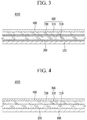
- FIG. 3 is a cross-sectional view illustrating a display device according to an exemplary embodiment.
- the display device 1000 includes a display panel 100, a cover window 300, and a coating layer 400.
- the cover window 300 may include a first film 310, a second film 330, and an adhesive layer 320 disposed between the first film 310 and the second film 330.
- a thickness of the first film 310 is greater than that of the second film 330.
- the first film 310 and the second film 330 may have the same thickness. In this case, this means that the thickness of the first film 310 is substantially the same as that of the second film 330, and the thicknesses of the first film 310 and the second film 330 may be slightly different from each other within an error range.
- the first film 310 and the second film 330 may be formed of a same material or different materials.
- the display device according to the exemplary embodiment of FIG. 4 is substantially the same as that of FIG. 1 and FIG. 2 , redundant description will be omitted.
- the present exemplary embodiment may be different from the exemplary embodiment of FIGS. 1 and 2 in the thicknesses of the first film and the second film.
- FIG. 4 is a cross-sectional view illustrating a display device according to an exemplary embodiment.
- the display device 1000 includes a display panel 100, a cover window 300, and a coating layer 400.
- the cover window 300 includes a first film 310, a second film 330, and an adhesive layer 320 disposed between the first film 310 and the second film 330.
- a thickness of the first film 310 is greater than that of the second film 330.
- the thickness of the second film 330 may be greater than that of the first film 310.
- the thickness of the first film 310 which is adjacent to the display panel 100 is relatively thicker, while in the present exemplary embodiment, the thickness of the second film 330 which is adjacent to the coating layer 400 is relatively thicker.
- the first film 310 and the second film 330 may be formed of a same material or different materials.
- the thicknesses of the first film 310 and the second film 330 constituting the cover window 300 may be substantially the same or different from each other.
- the first film 310 may be relatively thicker, or the second film 330 may be relatively thicker.
- a folding characteristic and hardness depending on a thickness ratio between the first film 310 and the second film 330 will be described with reference Table 1.
- Example A in which the thickness ratio between the first film 310 and the second film 330 was set to about 1:5, although a bending test of the display device was performed about 300,000 or more times to check the folding characteristic, no damage was generated in the cover window. The test was not continued since the folding characteristic was considered to be sufficient in the case of 300,000 or more folds. In this case, Example A may have hardness close to pencil hardness H for the display device. When the hardness of the cover window was separately measured, Example A had hardness close to pencil hardness 9H or more. Table 1 indicates hardness of the entire display device.
- Example B in which the thickness ratio between the first film 310 and the second film 330 was set to about 2:3, i.e., about 1:1.5, the folding number was set to 300,000 or more, similar to Example A. As a result, Example B has hardness close to pencil hardness H.
- Example C in which the thickness ratio between the first film 310 and the second film 330 was set to about 1:1, i.e., in which the thicknesses of the two films are substantially the same, the folding number was set to 300,000 or more, similar to Example A.
- Example C may have hardness close to pencil hardness 2H. In other words, Example C may have hardness that is higher than those of Example A and Example B.
- Example D in which the thickness ratio between the first film 310 and the second film 330 was set to about 3:2, i.e., about 1:0.67, the folding number was set to 300,000 or more, similar to Example A.
- Example B has hardness close to pencil hardness 3H.
- Example D may have hardness that is higher than those of Example A, Example B, and Example C.
- Example E in which the thickness ratio between the first film 310 and the second film 330 was set to about 5:1, i.e., 1:0.2, the folding number was about 220,000. As a result, Example E has hardness close to pencil hardness 3H or more, similar to Example D.
- Comparative Example F in which the thickness ratio between the first film 310 and the second film 330 was set to about 1:8, the folding number was about 140,000. As a result, Comparative Example F has hardness close to pencil hardness 3B.
- Comparative Example G in which the thickness ratio between the first film 310 and the second film 330 was set to about 10:1, i.e., 1: 0.1, the folding number was about 25,000. As a result, Comparative Example G has hardness close to pencil hardness 5H.
- Example A, Example B, Example C, Example D, and Example E have strong folding characteristics and high hardness as compared with Comparative Example F and Comparative Example G. From the tests, it is shown that the folding characteristic and the hardness are affected by the ratio of the thickness of the second film 330 to the thickness of the first film 310.
- the display device in which the ratio of the thickness of the second film 330 to the thickness of the first film 310 is in a range of about 0.2 to about 5 has a folding number of about 220,000 or more. Accordingly, it is shown that the folding characteristic may be improved compared to the comparative examples.
- the display device in which the ratio of the thickness of the second film 330 to the thickness of the first film 310 is in a range of about 0.2 to about 5 has high hardness of pencil hardness H or higher. It is seen that Comparative Example F has a low folding characteristic and low hardness as compared with the examples. It is also seen that Comparative Example G has a low folding characteristic as compared with the examples.
- the ratio of the thickness of the second film 330 to the thickness of the first film 310 may be set in a range of about 0.2 to about 5 (e.g., 0.2, 0.3, 0.4, 0.5, 0.6, 0.7, 0.8, 0.9, 1.0, 1.1, 1.2, 1.3, 1.4, 1.5, 1.6, 1.7, 1.8, 1.9, 2.0, 2.1, 2.2, 2.3, 2.4, 2.5, 2.6, 2.7, 2.8, 2.9, 3.0, 3.1, 3.2, 3.3, 3.4, 3.5, 3.6, 3.7, 3.8, 3.9, 4.0, 4.1,4.2, 4.3, 4.4, 4.5, 4.6, 4.7, 4.8, 4.9, or 5.0) in order to simultaneously improve the folding characteristic and the hardness.
- the thickness ratio between the first film 310 and the second film 330 may be set as in Example A, Example B, Example C, and Example D, indicating the folding number of about 300,000 or more.
- the ratio of the thickness of the second film 330 to the thickness of the first film 310 is set in a range of about 0.67 to about 5, a stronger folding characteristic may be obtained.
- the thickness ratio of the first film 310 and the second film 330 may be set as in Example C, Example D, and Example E, indicating the pencil hardness of 2H or more.
- the ratio of the thickness of the second film 330 to the thickness of the first film 310 is set in a range of about 0.2 to about 1, a higher hardness may be obtained.
- the thickness ratio of the first film 310 and the second film 330 may be set as in Example C and Example D, indicating the folding number of about 300,000 or more and a hardness of 2H or more.
- the ratio of the thickness of the second film 330 to the thickness of the first film 310 is set in a range of about 0.67 to about 1 (e.g., 0.67, 0.68, 0.69, 0.70, 0.71, 0.72, 0.73, 0.74, 0.75, 0.76, 0.77, 0.78, 0.79, 0.80, 0.81, 0.82, 0.83, 0.84, 0.85, 0.86, 0.87, 0.88, 0.89, 0.90, 0.91, 0.92, 0.93, 0.94, 0.95, 0.96, 0.97, 0.98, 0.99, or 1.0), stronger folding characteristic and higher hardness may be obtained.
- 0.67 to about 1 e.g., 0.67, 0.68, 0.69, 0.70, 0.71, 0.72, 0.73, 0.74, 0.75, 0.76, 0.77, 0.78, 0.79, 0.80, 0.81, 0.82, 0.83, 0.84, 0.85, 0.86, 0.87, 0.88, 0.89, 0.90, 0.91, 0.92, 0.93, 0.94, 0.95, 0.
- the folding characteristic and the hardness of the display device depending on the thickness ratio between the first film 310 and the second film 330 have been described.
- the folding characteristic and the hardness of the display device may be further affected by the material characteristics of the first film 310 and the second film 330. Folding characteristic and hardness depending on a ratio of yield stress of materials of the first film 310 and the second film 330, and modulus, resilience, and toughness, will be described with reference to Table 2.
- the object When a small stress is applied to an object, the object may be deformed (elastically deformed) in proportion to the stress. When the stress is removed, the object may return to its original state. However, when the stress exceeds a critical level, the deformation may be increased. This is referred to as yielding, and the critical stress is referred to as a yield stress of the material.
- the modulus indicates a deformation level generated when an elastic material is stressed.
- the resilience is an amount of elastic energy that is accumulated as elastic energy, which disappears when an external force is removed.
- the toughness is a measure of how tough a material is, including a degree of how non-fragile it is, a degree of how strong it is, and a degree of how difficult it is to cause breakage.
- Table 2 Ratio between yield stress and modulus Resilience (Nmm) Toughness (Nmm) Folding number (Times) Pencil hardness
- Example H in which the ratio between yield stress and modulus of the first film 310 and the second film 330 was set to 1:56, and a material having resilience of about 84 Nmm and toughness of 602 Nmm was used, the folding number was about 240,000 or more, and hardness of about pencil hardness H was obtained.
- Example I in which the ratio between yield stress and modulus of the first film 310 and the second film 330 was set to 1:54, and a material having resilience of about 108 Nmm and toughness of 1197 Nmm was used, the folding number was about 200,000 or more, and hardness of about pencil hardness F was obtained.
- Comparative Example J in which the ratio between yield stress and modulus of the first film 310 and the second film 330 was set to 1:51, and a material having resilience of about 43 Nmm and toughness of 1238 Nmm was used, the folding number was about 130,000 or more, and hardness of about pencil hardness 4B was obtained. Comparative Example J is similar to Example H and Example I in the ratio between yield stress and modulus, and is different therefrom in the resilience and the toughness. In this case, the folding characteristic and the hardness of Comparative Example J is deteriorated as compared with Example H and Example I.
- Comparative Example K in which the ratio between yield stress and modulus of the first film 310 and the second film 330 was set to 1:172, and a material having a resilience of about 12 Nmm and a toughness of 17 Nmm was used, the folding number was about 18,000 or more, and hardness of about pencil hardness 6B was obtained.
- the ratio of modulus to yield stress is increased, but the resilience and the toughness are reduced as compared with Example H and Example I.
- the folding characteristic and the hardness of Comparative Example K are deteriorated as compared with Example H and Example I.
- Comparative Example L in which the ratio between yield stress and modulus of the first film 310 and the second film 330 was set to 1:43, a material having resilience of about 176 Nmm and toughness of 7710 Nmm was used, the folding number was set to about 150,000 or more, and hardness of about pencil hardness 6B or less was obtained. Comparative Example L is similar to Example H and Example I in the ratio between yield stress and modulus, and is different therefrom in the resilience and the toughness. In this case, the folding characteristic and the hardness of Comparative Example L are deteriorated as compared with Example H and Example I.
- the ratio between yield stress and modulus, the resilience, and the toughness have complex effects on the folding characteristic and the hardness of the display device.
- the ratio between yield stress and modulus, the resilience, and the toughness is not in an appropriate range, the folding characteristic and the hardness may deteriorate. Accordingly, appropriate ranges of the ratio between yield stress and modulus, the resilience, and the toughness are described as follows.
- the first film 310 and the second film 330 has a ratio of modulus to yield stress that is in a range of about 30 to about 70 (e.g., 30, 31, 32, 33, 34, 35, 36, 37, 38, 39, 40, 41, 42, 43, 44, 45, 46, 47, 48, 49, 50, 51, 52, 53, 54, 55, 56, 57, 58, 59, 60, 61, 62, 63, 64, 65, 66, 67, 68, 69, or 70) and includes a material having resilience that is in a range of about 50 Nmm to about 150 Nmm (e.g., 50, 52, 54, 56, 58, 60, 62, 64, 66, 68, 70, 72, 74, 76, 78, 80, 82, 84, 86, 88, 90, 92, 94, 96, 98, 100, 102, 104, 106, 108, 110, 112, 114, 116, 118
- the display device according to the exemplary embodiment of FIG. 5 is substantially the same as that of FIG. 1 and FIG. 2 , redundant description will be omitted.
- the present exemplary embodiment is different from the exemplary embodiment of FIGS. 1 and 2 in that the cover window may include 5 films.
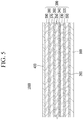
- FIG. 5 is a cross-sectional view illustrating a display device according to an exemplary embodiment.
- the display device 1000 includes a display panel 100, a cover window 300, and a coating layer 400.
- the cover window 300 may include a first film 310, a second film 330, a third film 350, a fourth film 370, and a fifth film 390.
- the cover window 300 includes two films, while in the present exemplary embodiment of FIG. 5 , the cover window 300 includes five films.
- the present exemplary embodiment is not limited thereto.
- the cover window 300 may include three or four films, or six or more films.
- An adhesive layer 320 may be disposed between the first film 310 and the second film 330, an adhesive layer 340 may be disposed between the second film 330 and the third film 350, an adhesive layer 360 may be disposed between the third film 350 and the fourth film 370, and an adhesive layer 380 may be disposed between the fourth film 370 and the fifth film 390.
- Each of the adhesive layers 320, 340, 360, and 380 may be formed of an elastic polymer.
- the first film 310 may have a highest modulus
- a modulus of the second film 330 may be lower than that of the first film 310
- a modulus of the third film 350 may be lower than that of the second film 330
- a modulus of the fourth film 370 may be lower than that of the third film 350
- a modulus of the fifth film 390 may be lower than that of the fourth film 370.
- the first film 310 may have a lowest modulus
- a modulus of the second film 330 may be higher than that of the first film 310
- a modulus of the third film 350 may be higher than that of the second film 330
- a modulus of the fourth film 370 may be higher than that of the third film 350
- a modulus of the fifth film 390 may be higher than that of the fourth film 370.
- the moduli of the first film 310, the second film 330, the third film 350, the fourth film 370, and the fifth film 390 may be variously adjusted.
- Each thickness of the first film 310, the second film 330, the third film 350, the fourth film 370, and the fifth film 390 may be in a range of about 5 ⁇ m to about 60 ⁇ m, and the first film 310, the second film 330, the third film 350, the fourth film 370, and the fifth film 390 may be formed to have a same thickness or different thicknesses.
- the first film 310 and the second film 330 may be formed of a same material or different materials.
- Each of the first film 310, the second film 330, the third film 350, the fourth film 370, and the fifth film 390 may include at least one of polyimide (PI), polyamide-imide (PAI), polyetheretherketone (PEEK), and polyetherimide (PEI).
- PI polyimide
- PAI polyamide-imide
- PEEK polyetheretherketone
- PEI polyetherimide
Landscapes
- Engineering & Computer Science (AREA)
- Theoretical Computer Science (AREA)
- Chemical & Material Sciences (AREA)
- Physics & Mathematics (AREA)
- Computer Hardware Design (AREA)
- General Physics & Mathematics (AREA)
- Mechanical Engineering (AREA)
- Organic Chemistry (AREA)
- Human Computer Interaction (AREA)
- General Engineering & Computer Science (AREA)
- Microelectronics & Electronic Packaging (AREA)
- Chemical Kinetics & Catalysis (AREA)
- Inorganic Chemistry (AREA)
- Optics & Photonics (AREA)
- Devices For Indicating Variable Information By Combining Individual Elements (AREA)
Priority Applications (1)
| Application Number | Priority Date | Filing Date | Title |
|---|---|---|---|
| EP22193591.9A EP4137309B1 (de) | 2016-08-26 | 2017-05-04 | Abdeckfenster für eine anzeigevorrichtung und anzeigevorrichtung dieses enthaltend |
Applications Claiming Priority (1)
| Application Number | Priority Date | Filing Date | Title |
|---|---|---|---|
| KR1020160109218A KR102610854B1 (ko) | 2016-08-26 | 2016-08-26 | 표시 장치용 커버 윈도우 및 이를 포함하는 표시 장치 |
Related Child Applications (1)
| Application Number | Title | Priority Date | Filing Date |
|---|---|---|---|
| EP22193591.9A Division EP4137309B1 (de) | 2016-08-26 | 2017-05-04 | Abdeckfenster für eine anzeigevorrichtung und anzeigevorrichtung dieses enthaltend |
Publications (1)
| Publication Number | Publication Date |
|---|---|
| EP3288096A1 true EP3288096A1 (de) | 2018-02-28 |
Family
ID=59053867
Family Applications (2)
| Application Number | Title | Priority Date | Filing Date |
|---|---|---|---|
| EP17169387.2A Ceased EP3288096A1 (de) | 2016-08-26 | 2017-05-04 | Abdeckfenster für eine anzeigevorrichtung und anzeigevorrichtung damit |
| EP22193591.9A Active EP4137309B1 (de) | 2016-08-26 | 2017-05-04 | Abdeckfenster für eine anzeigevorrichtung und anzeigevorrichtung dieses enthaltend |
Family Applications After (1)
| Application Number | Title | Priority Date | Filing Date |
|---|---|---|---|
| EP22193591.9A Active EP4137309B1 (de) | 2016-08-26 | 2017-05-04 | Abdeckfenster für eine anzeigevorrichtung und anzeigevorrichtung dieses enthaltend |
Country Status (4)
| Country | Link |
|---|---|
| US (1) | US11064620B2 (de) |
| EP (2) | EP3288096A1 (de) |
| KR (1) | KR102610854B1 (de) |
| CN (1) | CN107776148B (de) |
Cited By (1)
| Publication number | Priority date | Publication date | Assignee | Title |
|---|---|---|---|---|
| WO2021108174A1 (en) * | 2019-11-30 | 2021-06-03 | Dupont Electronics, Inc. | Cover window assembly, related articles and methods |
Families Citing this family (23)
| Publication number | Priority date | Publication date | Assignee | Title |
|---|---|---|---|---|
| KR102653753B1 (ko) * | 2016-11-16 | 2024-04-02 | 삼성디스플레이 주식회사 | 플렉서블 표시 장치용 윈도우 및 이를 포함하는 플렉서블 표시 장치 |
| EP3617777B1 (de) | 2017-04-25 | 2021-12-29 | LG Chem, Ltd. | Optische vorrichtung |
| KR102686356B1 (ko) * | 2018-05-25 | 2024-07-18 | 삼성디스플레이 주식회사 | 표시 장치 및 그 제조방법 |
| KR102715075B1 (ko) * | 2018-10-12 | 2024-10-10 | 삼성디스플레이 주식회사 | 표시 장치 |
| KR102555986B1 (ko) * | 2018-10-29 | 2023-07-14 | 삼성디스플레이 주식회사 | 윈도우 기판 및 이를 포함하는 플렉서블 표시 장치 |
| KR102076281B1 (ko) * | 2018-11-09 | 2020-02-11 | 단국대학교 천안캠퍼스 산학협력단 | 뉴트럴 포인트 영역에 내부 긴장력 감쇄를 위한 중간층을 구비한 폴더블 디스플레이용 폴더블 기판 |
| JP6739601B1 (ja) * | 2019-02-05 | 2020-08-12 | 住友化学株式会社 | 光学積層体及び表示装置 |
| WO2020179643A1 (ja) * | 2019-03-01 | 2020-09-10 | 大日本印刷株式会社 | 樹脂層、光学フィルムおよび画像表示装置 |
| KR102068685B1 (ko) * | 2019-03-11 | 2020-01-21 | (주)유티아이 | 플렉시블 커버 윈도우 |
| KR102068729B1 (ko) * | 2019-04-26 | 2020-01-28 | (주)유티아이 | 플렉시블 커버 윈도우 |
| TWI724807B (zh) * | 2019-07-24 | 2021-04-11 | 友達光電股份有限公司 | 可撓式裝置 |
| CN114187841B (zh) * | 2019-07-24 | 2023-06-27 | 友达光电股份有限公司 | 可挠式显示装置 |
| US11969978B2 (en) | 2020-01-30 | 2024-04-30 | Sk Microworks Co., Ltd. | Film, film manufacturing method, cover film, and multilayer electronic equipment |
| US11937493B2 (en) * | 2020-02-07 | 2024-03-19 | Samsung Display Co., Ltd. | Display device |
| US12332693B2 (en) * | 2020-02-14 | 2025-06-17 | Samsung Display Co., Ltd. | Display device |
| CN113539072B (zh) * | 2020-04-16 | 2022-10-18 | 华为技术有限公司 | 柔性屏、柔性显示面板、柔性盖板和可折叠电子设备 |
| KR102902139B1 (ko) * | 2020-07-29 | 2025-12-18 | 엘지디스플레이 주식회사 | 플렉서블 표시 장치 |
| KR102874057B1 (ko) * | 2020-11-27 | 2025-10-22 | 후아웨이 테크놀러지 컴퍼니 리미티드 | 스크린 커버, 디스플레이 장치, 및 전자 디바이스 |
| US12615728B2 (en) * | 2020-12-02 | 2026-04-28 | Boe Technology Group Co., Ltd. | Cover for display panel, and display apparatus |
| KR102395757B1 (ko) * | 2021-01-28 | 2022-05-10 | (주)유티아이 | 플렉시블 커버 윈도우 |
| KR102493648B1 (ko) * | 2021-03-04 | 2023-01-31 | 주식회사 두산 | 우수한 복원 특성을 갖는 폴리이미드 필름 |
| KR102803255B1 (ko) * | 2021-04-06 | 2025-05-02 | 삼성디스플레이 주식회사 | 커버 윈도우, 커버 윈도우의 제조 방법 및 커버 윈도우를 포함하는 표시 장치 |
| KR20220166922A (ko) * | 2021-06-11 | 2022-12-20 | 에스케이이노베이션 주식회사 | 커버윈도우용 폴리이미드 필름 형성 조성물, 이의 제조방법 및 이의 용도 |
Citations (3)
| Publication number | Priority date | Publication date | Assignee | Title |
|---|---|---|---|---|
| WO2014168423A1 (en) * | 2013-04-10 | 2014-10-16 | Kolon Industries, Inc. | Polyimide cover substrate |
| US20150268697A1 (en) * | 2014-03-18 | 2015-09-24 | Samsung Display Co., Ltd. | Flexible display device including multi-layer window member |
| US20150301248A1 (en) * | 2012-10-02 | 2015-10-22 | Nitto Denko Corporation | Protection film and polarization plate provided with protection film |
Family Cites Families (29)
| Publication number | Priority date | Publication date | Assignee | Title |
|---|---|---|---|---|
| TW200424B (de) | 1991-09-09 | 1993-02-21 | Avery Dennison Corp | |
| DE4444868A1 (de) | 1994-12-16 | 1996-06-20 | Bayer Ag | UV-geschützte, mehrschichtige Polycarbonatplatten |
| JP3676474B2 (ja) | 1996-01-09 | 2005-07-27 | 日東電工株式会社 | 光学フィルム及び液晶表示装置 |
| JP4111666B2 (ja) | 2000-09-21 | 2008-07-02 | 富士フイルム株式会社 | 光情報記録媒体の製造方法 |
| DE112005002886T5 (de) * | 2004-11-26 | 2007-10-11 | Mitsui Chemicals, Inc. | Fenstermaterial für Display |
| US7521119B2 (en) | 2005-07-07 | 2009-04-21 | Sabic Innovative Plastics Ip B.V. | Windows and other articles made from DMBPC polycarbonate homopolymer and copolymer |
| JP2008027312A (ja) | 2006-07-24 | 2008-02-07 | Hitachi Ltd | ストレージ装置及び変換ボード |
| KR20090088511A (ko) | 2008-02-15 | 2009-08-20 | 김지미 | 투명 박막 시트 및 그의 제조 방법 |
| KR100994102B1 (ko) | 2008-11-28 | 2010-11-15 | (주) 태양기전 | 노트북용 디스플레이 보호 윈도우 |
| EP2379666B1 (de) | 2008-12-31 | 2016-03-23 | 3M Innovative Properties Company | Klebeband und artikeln die durch dehnung lösbare haftkleber enthalten |
| KR101719156B1 (ko) | 2009-12-01 | 2017-03-23 | 엘지디스플레이 주식회사 | 액정표시장치 |
| KR20130015230A (ko) | 2011-08-02 | 2013-02-13 | 삼성디스플레이 주식회사 | 표시 장치 및 그 제조 방법 |
| US8921438B2 (en) * | 2012-03-28 | 2014-12-30 | Sabic Innovative Plastics Ip B.V. | Polyetherimide polycarbonate blends |
| KR101990537B1 (ko) | 2012-07-27 | 2019-06-19 | 삼성디스플레이 주식회사 | 디스플레이 패널 보호용 윈도우 구조물, 이를 포함하는 디스플레이 패널 어셈블리, 디스플레이 패널 보호용 윈도우 구조물의 제조 방법 및 이를 이용한 디스플레이 패널 어셈블리의 제조 방법 |
| KR101949561B1 (ko) * | 2012-10-12 | 2019-02-18 | 코닝 인코포레이티드 | 잔류 강도를 갖는 제품 |
| KR20140139299A (ko) | 2013-05-27 | 2014-12-05 | 삼성디스플레이 주식회사 | 디스플레이 장치용 윈도우 구조체 및 이를 구비한 디스플레이 장치 |
| KR20150004496A (ko) | 2013-07-02 | 2015-01-13 | 삼성디스플레이 주식회사 | 표시장치용 윈도우 및 이를 포함하는 표시 장치 |
| KR20150012877A (ko) | 2013-07-26 | 2015-02-04 | 삼성디스플레이 주식회사 | 윈도우 패널, 그 제조 방법, 및 이를 구비한 표시장치 |
| KR102206376B1 (ko) * | 2013-09-24 | 2021-01-22 | 삼성디스플레이 주식회사 | 표시 장치용 커버 윈도우 및 이를 포함하는 표시 장치 |
| KR20150054291A (ko) | 2013-11-11 | 2015-05-20 | 삼성디스플레이 주식회사 | 윈도우 패널, 그 제조 방법, 및 이를 구비한 표시장치 |
| KR101686644B1 (ko) * | 2013-11-19 | 2016-12-14 | 주식회사 엘지화학 | 플라스틱 필름 적층체 |
| KR101671431B1 (ko) * | 2013-11-19 | 2016-11-01 | 주식회사 엘지화학 | 플라스틱 필름 |
| KR102132235B1 (ko) * | 2013-11-28 | 2020-07-10 | 삼성디스플레이 주식회사 | 플렉서블 표시장치 |
| JP6488125B2 (ja) * | 2013-12-26 | 2019-03-20 | 日東電工株式会社 | 積層偏光フィルム、その製造方法、積層光学フィルムおよび画像表示装置 |
| KR102218649B1 (ko) * | 2014-09-16 | 2021-02-23 | 삼성디스플레이 주식회사 | 롤러블 디스플레이 장치 |
| KR102334807B1 (ko) | 2014-10-08 | 2021-12-03 | 삼성디스플레이 주식회사 | 플렉서블 윈도우 및 플렉서블 표시 장치 |
| KR101579710B1 (ko) * | 2015-11-12 | 2015-12-22 | 동우 화인켐 주식회사 | 광학적층체 및 이를 포함하는 화상표시장치 |
| CN107123370B (zh) * | 2016-02-25 | 2019-10-18 | 三星Sdi株式会社 | 柔性显示装置 |
| KR102752071B1 (ko) * | 2016-11-10 | 2025-01-10 | 삼성디스플레이 주식회사 | 표시 장치용 커버 윈도우 및 이를 포함하는 표시 장치 |
-
2016
- 2016-08-26 KR KR1020160109218A patent/KR102610854B1/ko active Active
-
2017
- 2017-02-13 US US15/431,205 patent/US11064620B2/en active Active
- 2017-05-04 EP EP17169387.2A patent/EP3288096A1/de not_active Ceased
- 2017-05-04 EP EP22193591.9A patent/EP4137309B1/de active Active
- 2017-06-26 CN CN201710492699.1A patent/CN107776148B/zh active Active
Patent Citations (3)
| Publication number | Priority date | Publication date | Assignee | Title |
|---|---|---|---|---|
| US20150301248A1 (en) * | 2012-10-02 | 2015-10-22 | Nitto Denko Corporation | Protection film and polarization plate provided with protection film |
| WO2014168423A1 (en) * | 2013-04-10 | 2014-10-16 | Kolon Industries, Inc. | Polyimide cover substrate |
| US20150268697A1 (en) * | 2014-03-18 | 2015-09-24 | Samsung Display Co., Ltd. | Flexible display device including multi-layer window member |
Non-Patent Citations (2)
| Title |
|---|
| 2003 EDITION: "Materials Data Book", 1 January 2003 (2003-01-01), pages 1 - 41, XP055420121, Retrieved from the Internet <URL:http://www-mdp.eng.cam.ac.uk/web/library/enginfo/cueddatabooks/materials.pdf> [retrieved on 20171030] * |
| VERKER R ET AL: "Erosion of POSS-polyimide films under hypervelocity impact and atomic oxygen: The role of mechanical properties at elevated temperatures", ACTA MATERIALIA, ELSEVIER, OXFORD, GB, vol. 57, no. 4, 1 February 2009 (2009-02-01), pages 1112 - 1119, XP025915640, ISSN: 1359-6454, [retrieved on 20081127], DOI: 10.1016/J.ACTAMAT.2008.10.054 * |
Cited By (3)
| Publication number | Priority date | Publication date | Assignee | Title |
|---|---|---|---|---|
| WO2021108174A1 (en) * | 2019-11-30 | 2021-06-03 | Dupont Electronics, Inc. | Cover window assembly, related articles and methods |
| US20220388288A1 (en) * | 2019-11-30 | 2022-12-08 | Dupont Electronics, Inc. | Cover window assembly, related articles and methods |
| US12083772B2 (en) * | 2019-11-30 | 2024-09-10 | Dupont Electronics, Inc. | Cover window assembly, related articles and methods |
Also Published As
| Publication number | Publication date |
|---|---|
| US20180063980A1 (en) | 2018-03-01 |
| EP4137309A1 (de) | 2023-02-22 |
| KR20180024100A (ko) | 2018-03-08 |
| CN107776148B (zh) | 2022-01-14 |
| CN107776148A (zh) | 2018-03-09 |
| EP4137309B1 (de) | 2025-07-02 |
| KR102610854B1 (ko) | 2023-12-06 |
| US11064620B2 (en) | 2021-07-13 |
Similar Documents
| Publication | Publication Date | Title |
|---|---|---|
| EP4137309B1 (de) | Abdeckfenster für eine anzeigevorrichtung und anzeigevorrichtung dieses enthaltend | |
| US12594746B2 (en) | Cover window for display device and display device including the same | |
| CN111696439B (zh) | 柔性覆盖窗 | |
| EP3582063B1 (de) | Fenster und anzeigevorrichtung damit | |
| US10401906B2 (en) | Cover window for display device and display device including the same | |
| US10466819B2 (en) | Flexible display device | |
| US12600113B2 (en) | Flexible cover window with improved strength | |
| CN114822241B (zh) | 柔性覆盖窗 | |
| US20160282661A1 (en) | Display device | |
| US20260043942A1 (en) | Window and electronic device including the same | |
| US12265420B2 (en) | Display device | |
| US20230044519A1 (en) | Flexible cover window with improved strength | |
| CN218497723U (zh) | 显示装置 | |
| KR20220164830A (ko) | 윈도우 및 그 윈도우를 포함하는 표시 장치 |
Legal Events
| Date | Code | Title | Description |
|---|---|---|---|
| PUAI | Public reference made under article 153(3) epc to a published international application that has entered the european phase |
Free format text: ORIGINAL CODE: 0009012 |
|
| STAA | Information on the status of an ep patent application or granted ep patent |
Free format text: STATUS: THE APPLICATION HAS BEEN PUBLISHED |
|
| AK | Designated contracting states |
Kind code of ref document: A1 Designated state(s): AL AT BE BG CH CY CZ DE DK EE ES FI FR GB GR HR HU IE IS IT LI LT LU LV MC MK MT NL NO PL PT RO RS SE SI SK SM TR |
|
| AX | Request for extension of the european patent |
Extension state: BA ME |
|
| STAA | Information on the status of an ep patent application or granted ep patent |
Free format text: STATUS: REQUEST FOR EXAMINATION WAS MADE |
|
| 17P | Request for examination filed |
Effective date: 20180719 |
|
| RBV | Designated contracting states (corrected) |
Designated state(s): AL AT BE BG CH CY CZ DE DK EE ES FI FR GB GR HR HU IE IS IT LI LT LU LV MC MK MT NL NO PL PT RO RS SE SI SK SM TR |
|
| STAA | Information on the status of an ep patent application or granted ep patent |
Free format text: STATUS: EXAMINATION IS IN PROGRESS |
|
| 17Q | First examination report despatched |
Effective date: 20200625 |
|
| STAA | Information on the status of an ep patent application or granted ep patent |
Free format text: STATUS: THE APPLICATION HAS BEEN REFUSED |
|
| 18R | Application refused |
Effective date: 20220912 |