EP3289876A1 - Composés destinés à traiter le cancer - Google Patents
Composés destinés à traiter le cancer Download PDFInfo
- Publication number
- EP3289876A1 EP3289876A1 EP17196904.1A EP17196904A EP3289876A1 EP 3289876 A1 EP3289876 A1 EP 3289876A1 EP 17196904 A EP17196904 A EP 17196904A EP 3289876 A1 EP3289876 A1 EP 3289876A1
- Authority
- EP
- European Patent Office
- Prior art keywords
- methanone
- trimethoxyphenyl
- compound
- cancer
- indol
- Prior art date
- Legal status (The legal status is an assumption and is not a legal conclusion. Google has not performed a legal analysis and makes no representation as to the accuracy of the status listed.)
- Granted
Links
- 0 *C(IC1)=NC1C=O Chemical compound *C(IC1)=NC1C=O 0.000 description 1
Images


Classifications
-
- C—CHEMISTRY; METALLURGY
- C07—ORGANIC CHEMISTRY
- C07D—HETEROCYCLIC COMPOUNDS
- C07D403/00—Heterocyclic compounds containing two or more hetero rings, having nitrogen atoms as the only ring hetero atoms, not provided for by group C07D401/00
- C07D403/02—Heterocyclic compounds containing two or more hetero rings, having nitrogen atoms as the only ring hetero atoms, not provided for by group C07D401/00 containing two hetero rings
- C07D403/04—Heterocyclic compounds containing two or more hetero rings, having nitrogen atoms as the only ring hetero atoms, not provided for by group C07D401/00 containing two hetero rings directly linked by a ring-member-to-ring-member bond
-
- C—CHEMISTRY; METALLURGY
- C07—ORGANIC CHEMISTRY
- C07D—HETEROCYCLIC COMPOUNDS
- C07D277/00—Heterocyclic compounds containing 1,3-thiazole or hydrogenated 1,3-thiazole rings
- C07D277/02—Heterocyclic compounds containing 1,3-thiazole or hydrogenated 1,3-thiazole rings not condensed with other rings
- C07D277/04—Heterocyclic compounds containing 1,3-thiazole or hydrogenated 1,3-thiazole rings not condensed with other rings having no double bonds between ring members or between ring members and non-ring members
- C07D277/06—Heterocyclic compounds containing 1,3-thiazole or hydrogenated 1,3-thiazole rings not condensed with other rings having no double bonds between ring members or between ring members and non-ring members with carbon atoms having three bonds to hetero atoms with at the most one bond to halogen, e.g. ester or nitrile radicals, directly attached to ring carbon atoms
-
- A—HUMAN NECESSITIES
- A61—MEDICAL OR VETERINARY SCIENCE; HYGIENE
- A61K—PREPARATIONS FOR MEDICAL, DENTAL OR TOILETRY PURPOSES
- A61K31/00—Medicinal preparations containing organic active ingredients
- A61K31/33—Heterocyclic compounds
- A61K31/395—Heterocyclic compounds having nitrogen as a ring hetero atom, e.g. guanethidine or rifamycins
- A61K31/41—Heterocyclic compounds having nitrogen as a ring hetero atom, e.g. guanethidine or rifamycins having five-membered rings with two or more ring hetero atoms, at least one of which being nitrogen, e.g. tetrazole
- A61K31/4164—1,3-Diazoles
-
- A—HUMAN NECESSITIES
- A61—MEDICAL OR VETERINARY SCIENCE; HYGIENE
- A61K—PREPARATIONS FOR MEDICAL, DENTAL OR TOILETRY PURPOSES
- A61K31/00—Medicinal preparations containing organic active ingredients
- A61K31/33—Heterocyclic compounds
- A61K31/395—Heterocyclic compounds having nitrogen as a ring hetero atom, e.g. guanethidine or rifamycins
- A61K31/41—Heterocyclic compounds having nitrogen as a ring hetero atom, e.g. guanethidine or rifamycins having five-membered rings with two or more ring hetero atoms, at least one of which being nitrogen, e.g. tetrazole
- A61K31/4164—1,3-Diazoles
- A61K31/4178—1,3-Diazoles not condensed 1,3-diazoles and containing further heterocyclic rings, e.g. pilocarpine, nitrofurantoin
-
- A—HUMAN NECESSITIES
- A61—MEDICAL OR VETERINARY SCIENCE; HYGIENE
- A61K—PREPARATIONS FOR MEDICAL, DENTAL OR TOILETRY PURPOSES
- A61K31/00—Medicinal preparations containing organic active ingredients
- A61K31/33—Heterocyclic compounds
- A61K31/395—Heterocyclic compounds having nitrogen as a ring hetero atom, e.g. guanethidine or rifamycins
- A61K31/41—Heterocyclic compounds having nitrogen as a ring hetero atom, e.g. guanethidine or rifamycins having five-membered rings with two or more ring hetero atoms, at least one of which being nitrogen, e.g. tetrazole
- A61K31/42—Oxazoles
- A61K31/421—1,3-Oxazoles, e.g. pemoline, trimethadione
-
- A—HUMAN NECESSITIES
- A61—MEDICAL OR VETERINARY SCIENCE; HYGIENE
- A61K—PREPARATIONS FOR MEDICAL, DENTAL OR TOILETRY PURPOSES
- A61K31/00—Medicinal preparations containing organic active ingredients
- A61K31/33—Heterocyclic compounds
- A61K31/395—Heterocyclic compounds having nitrogen as a ring hetero atom, e.g. guanethidine or rifamycins
- A61K31/41—Heterocyclic compounds having nitrogen as a ring hetero atom, e.g. guanethidine or rifamycins having five-membered rings with two or more ring hetero atoms, at least one of which being nitrogen, e.g. tetrazole
- A61K31/425—Thiazoles
- A61K31/426—1,3-Thiazoles
-
- A—HUMAN NECESSITIES
- A61—MEDICAL OR VETERINARY SCIENCE; HYGIENE
- A61K—PREPARATIONS FOR MEDICAL, DENTAL OR TOILETRY PURPOSES
- A61K45/00—Medicinal preparations containing active ingredients not provided for in groups A61K31/00 - A61K41/00
- A61K45/06—Mixtures of active ingredients without chemical characterisation, e.g. antiphlogistics and cardiaca
-
- A—HUMAN NECESSITIES
- A61—MEDICAL OR VETERINARY SCIENCE; HYGIENE
- A61P—SPECIFIC THERAPEUTIC ACTIVITY OF CHEMICAL COMPOUNDS OR MEDICINAL PREPARATIONS
- A61P35/00—Antineoplastic agents
-
- A—HUMAN NECESSITIES
- A61—MEDICAL OR VETERINARY SCIENCE; HYGIENE
- A61P—SPECIFIC THERAPEUTIC ACTIVITY OF CHEMICAL COMPOUNDS OR MEDICINAL PREPARATIONS
- A61P35/00—Antineoplastic agents
- A61P35/02—Antineoplastic agents specific for leukemia
-
- A—HUMAN NECESSITIES
- A61—MEDICAL OR VETERINARY SCIENCE; HYGIENE
- A61P—SPECIFIC THERAPEUTIC ACTIVITY OF CHEMICAL COMPOUNDS OR MEDICINAL PREPARATIONS
- A61P43/00—Drugs for specific purposes, not provided for in groups A61P1/00-A61P41/00
-
- C—CHEMISTRY; METALLURGY
- C07—ORGANIC CHEMISTRY
- C07D—HETEROCYCLIC COMPOUNDS
- C07D233/00—Heterocyclic compounds containing 1,3-diazole or hydrogenated 1,3-diazole rings, not condensed with other rings
- C07D233/02—Heterocyclic compounds containing 1,3-diazole or hydrogenated 1,3-diazole rings, not condensed with other rings having no double bonds between ring members or between ring members and non-ring members
-
- C—CHEMISTRY; METALLURGY
- C07—ORGANIC CHEMISTRY
- C07D—HETEROCYCLIC COMPOUNDS
- C07D233/00—Heterocyclic compounds containing 1,3-diazole or hydrogenated 1,3-diazole rings, not condensed with other rings
- C07D233/04—Heterocyclic compounds containing 1,3-diazole or hydrogenated 1,3-diazole rings, not condensed with other rings having one double bond between ring members or between a ring member and a non-ring member
- C07D233/20—Heterocyclic compounds containing 1,3-diazole or hydrogenated 1,3-diazole rings, not condensed with other rings having one double bond between ring members or between a ring member and a non-ring member with substituted hydrocarbon radicals, directly attached to ring carbon atoms
- C07D233/22—Radicals substituted by oxygen atoms
-
- C—CHEMISTRY; METALLURGY
- C07—ORGANIC CHEMISTRY
- C07D—HETEROCYCLIC COMPOUNDS
- C07D233/00—Heterocyclic compounds containing 1,3-diazole or hydrogenated 1,3-diazole rings, not condensed with other rings
- C07D233/54—Heterocyclic compounds containing 1,3-diazole or hydrogenated 1,3-diazole rings, not condensed with other rings having two double bonds between ring members or between ring members and non-ring members
-
- C—CHEMISTRY; METALLURGY
- C07—ORGANIC CHEMISTRY
- C07D—HETEROCYCLIC COMPOUNDS
- C07D263/00—Heterocyclic compounds containing 1,3-oxazole or hydrogenated 1,3-oxazole rings
- C07D263/02—Heterocyclic compounds containing 1,3-oxazole or hydrogenated 1,3-oxazole rings not condensed with other rings
- C07D263/04—Heterocyclic compounds containing 1,3-oxazole or hydrogenated 1,3-oxazole rings not condensed with other rings having no double bonds between ring members or between ring members and non-ring members
- C07D263/06—Heterocyclic compounds containing 1,3-oxazole or hydrogenated 1,3-oxazole rings not condensed with other rings having no double bonds between ring members or between ring members and non-ring members with hydrocarbon radicals, substituted by oxygen atoms, attached to ring carbon atoms
-
- C—CHEMISTRY; METALLURGY
- C07—ORGANIC CHEMISTRY
- C07D—HETEROCYCLIC COMPOUNDS
- C07D263/00—Heterocyclic compounds containing 1,3-oxazole or hydrogenated 1,3-oxazole rings
- C07D263/02—Heterocyclic compounds containing 1,3-oxazole or hydrogenated 1,3-oxazole rings not condensed with other rings
- C07D263/08—Heterocyclic compounds containing 1,3-oxazole or hydrogenated 1,3-oxazole rings not condensed with other rings having one double bond between ring members or between a ring member and a non-ring member
- C07D263/10—Heterocyclic compounds containing 1,3-oxazole or hydrogenated 1,3-oxazole rings not condensed with other rings having one double bond between ring members or between a ring member and a non-ring member with only hydrogen atoms, hydrocarbon or substituted hydrocarbon radicals, directly attached to ring carbon atoms
- C07D263/14—Heterocyclic compounds containing 1,3-oxazole or hydrogenated 1,3-oxazole rings not condensed with other rings having one double bond between ring members or between a ring member and a non-ring member with only hydrogen atoms, hydrocarbon or substituted hydrocarbon radicals, directly attached to ring carbon atoms with radicals substituted by oxygen atoms
-
- C—CHEMISTRY; METALLURGY
- C07—ORGANIC CHEMISTRY
- C07D—HETEROCYCLIC COMPOUNDS
- C07D263/00—Heterocyclic compounds containing 1,3-oxazole or hydrogenated 1,3-oxazole rings
- C07D263/02—Heterocyclic compounds containing 1,3-oxazole or hydrogenated 1,3-oxazole rings not condensed with other rings
- C07D263/30—Heterocyclic compounds containing 1,3-oxazole or hydrogenated 1,3-oxazole rings not condensed with other rings having two or three double bonds between ring members or between ring members and non-ring members
- C07D263/32—Heterocyclic compounds containing 1,3-oxazole or hydrogenated 1,3-oxazole rings not condensed with other rings having two or three double bonds between ring members or between ring members and non-ring members with only hydrogen atoms, hydrocarbon or substituted hydrocarbon radicals, directly attached to ring carbon atoms
-
- C—CHEMISTRY; METALLURGY
- C07—ORGANIC CHEMISTRY
- C07D—HETEROCYCLIC COMPOUNDS
- C07D263/00—Heterocyclic compounds containing 1,3-oxazole or hydrogenated 1,3-oxazole rings
- C07D263/02—Heterocyclic compounds containing 1,3-oxazole or hydrogenated 1,3-oxazole rings not condensed with other rings
- C07D263/30—Heterocyclic compounds containing 1,3-oxazole or hydrogenated 1,3-oxazole rings not condensed with other rings having two or three double bonds between ring members or between ring members and non-ring members
- C07D263/34—Heterocyclic compounds containing 1,3-oxazole or hydrogenated 1,3-oxazole rings not condensed with other rings having two or three double bonds between ring members or between ring members and non-ring members with hetero atoms or with carbon atoms having three bonds to hetero atoms with at the most one bond to halogen, e.g. ester or nitrile radicals, directly attached to ring carbon atoms
-
- C—CHEMISTRY; METALLURGY
- C07—ORGANIC CHEMISTRY
- C07D—HETEROCYCLIC COMPOUNDS
- C07D277/00—Heterocyclic compounds containing 1,3-thiazole or hydrogenated 1,3-thiazole rings
- C07D277/02—Heterocyclic compounds containing 1,3-thiazole or hydrogenated 1,3-thiazole rings not condensed with other rings
- C07D277/04—Heterocyclic compounds containing 1,3-thiazole or hydrogenated 1,3-thiazole rings not condensed with other rings having no double bonds between ring members or between ring members and non-ring members
-
- C—CHEMISTRY; METALLURGY
- C07—ORGANIC CHEMISTRY
- C07D—HETEROCYCLIC COMPOUNDS
- C07D277/00—Heterocyclic compounds containing 1,3-thiazole or hydrogenated 1,3-thiazole rings
- C07D277/02—Heterocyclic compounds containing 1,3-thiazole or hydrogenated 1,3-thiazole rings not condensed with other rings
- C07D277/20—Heterocyclic compounds containing 1,3-thiazole or hydrogenated 1,3-thiazole rings not condensed with other rings having two or three double bonds between ring members or between ring members and non-ring members
- C07D277/22—Heterocyclic compounds containing 1,3-thiazole or hydrogenated 1,3-thiazole rings not condensed with other rings having two or three double bonds between ring members or between ring members and non-ring members with only hydrogen atoms, hydrocarbon or substituted hydrocarbon radicals, directly attached to ring carbon atoms
- C07D277/24—Radicals substituted by oxygen atoms
-
- C—CHEMISTRY; METALLURGY
- C07—ORGANIC CHEMISTRY
- C07D—HETEROCYCLIC COMPOUNDS
- C07D277/00—Heterocyclic compounds containing 1,3-thiazole or hydrogenated 1,3-thiazole rings
- C07D277/02—Heterocyclic compounds containing 1,3-thiazole or hydrogenated 1,3-thiazole rings not condensed with other rings
- C07D277/20—Heterocyclic compounds containing 1,3-thiazole or hydrogenated 1,3-thiazole rings not condensed with other rings having two or three double bonds between ring members or between ring members and non-ring members
- C07D277/22—Heterocyclic compounds containing 1,3-thiazole or hydrogenated 1,3-thiazole rings not condensed with other rings having two or three double bonds between ring members or between ring members and non-ring members with only hydrogen atoms, hydrocarbon or substituted hydrocarbon radicals, directly attached to ring carbon atoms
- C07D277/28—Radicals substituted by nitrogen atoms
-
- C—CHEMISTRY; METALLURGY
- C07—ORGANIC CHEMISTRY
- C07D—HETEROCYCLIC COMPOUNDS
- C07D277/00—Heterocyclic compounds containing 1,3-thiazole or hydrogenated 1,3-thiazole rings
- C07D277/02—Heterocyclic compounds containing 1,3-thiazole or hydrogenated 1,3-thiazole rings not condensed with other rings
- C07D277/20—Heterocyclic compounds containing 1,3-thiazole or hydrogenated 1,3-thiazole rings not condensed with other rings having two or three double bonds between ring members or between ring members and non-ring members
- C07D277/32—Heterocyclic compounds containing 1,3-thiazole or hydrogenated 1,3-thiazole rings not condensed with other rings having two or three double bonds between ring members or between ring members and non-ring members with hetero atoms or with carbon atoms having three bonds to hetero atoms with at the most one bond to halogen, e.g. ester or nitrile radicals, directly attached to ring carbon atoms
- C07D277/56—Carbon atoms having three bonds to hetero atoms with at the most one bond to halogen
-
- C—CHEMISTRY; METALLURGY
- C07—ORGANIC CHEMISTRY
- C07D—HETEROCYCLIC COMPOUNDS
- C07D401/00—Heterocyclic compounds containing two or more hetero rings, having nitrogen atoms as the only ring hetero atoms, at least one ring being a six-membered ring with only one nitrogen atom
- C07D401/02—Heterocyclic compounds containing two or more hetero rings, having nitrogen atoms as the only ring hetero atoms, at least one ring being a six-membered ring with only one nitrogen atom containing two hetero rings
- C07D401/04—Heterocyclic compounds containing two or more hetero rings, having nitrogen atoms as the only ring hetero atoms, at least one ring being a six-membered ring with only one nitrogen atom containing two hetero rings directly linked by a ring-member-to-ring-member bond
-
- C—CHEMISTRY; METALLURGY
- C07—ORGANIC CHEMISTRY
- C07D—HETEROCYCLIC COMPOUNDS
- C07D401/00—Heterocyclic compounds containing two or more hetero rings, having nitrogen atoms as the only ring hetero atoms, at least one ring being a six-membered ring with only one nitrogen atom
- C07D401/02—Heterocyclic compounds containing two or more hetero rings, having nitrogen atoms as the only ring hetero atoms, at least one ring being a six-membered ring with only one nitrogen atom containing two hetero rings
- C07D401/06—Heterocyclic compounds containing two or more hetero rings, having nitrogen atoms as the only ring hetero atoms, at least one ring being a six-membered ring with only one nitrogen atom containing two hetero rings linked by a carbon chain containing only aliphatic carbon atoms
-
- C—CHEMISTRY; METALLURGY
- C07—ORGANIC CHEMISTRY
- C07D—HETEROCYCLIC COMPOUNDS
- C07D413/00—Heterocyclic compounds containing two or more hetero rings, at least one ring having nitrogen and oxygen atoms as the only ring hetero atoms
- C07D413/02—Heterocyclic compounds containing two or more hetero rings, at least one ring having nitrogen and oxygen atoms as the only ring hetero atoms containing two hetero rings
- C07D413/04—Heterocyclic compounds containing two or more hetero rings, at least one ring having nitrogen and oxygen atoms as the only ring hetero atoms containing two hetero rings directly linked by a ring-member-to-ring-member bond
-
- C—CHEMISTRY; METALLURGY
- C07—ORGANIC CHEMISTRY
- C07D—HETEROCYCLIC COMPOUNDS
- C07D413/00—Heterocyclic compounds containing two or more hetero rings, at least one ring having nitrogen and oxygen atoms as the only ring hetero atoms
- C07D413/02—Heterocyclic compounds containing two or more hetero rings, at least one ring having nitrogen and oxygen atoms as the only ring hetero atoms containing two hetero rings
- C07D413/06—Heterocyclic compounds containing two or more hetero rings, at least one ring having nitrogen and oxygen atoms as the only ring hetero atoms containing two hetero rings linked by a carbon chain containing only aliphatic carbon atoms
-
- C—CHEMISTRY; METALLURGY
- C07—ORGANIC CHEMISTRY
- C07D—HETEROCYCLIC COMPOUNDS
- C07D417/00—Heterocyclic compounds containing two or more hetero rings, at least one ring having nitrogen and sulfur atoms as the only ring hetero atoms, not provided for by group C07D415/00
- C07D417/02—Heterocyclic compounds containing two or more hetero rings, at least one ring having nitrogen and sulfur atoms as the only ring hetero atoms, not provided for by group C07D415/00 containing two hetero rings
- C07D417/04—Heterocyclic compounds containing two or more hetero rings, at least one ring having nitrogen and sulfur atoms as the only ring hetero atoms, not provided for by group C07D415/00 containing two hetero rings directly linked by a ring-member-to-ring-member bond
-
- C—CHEMISTRY; METALLURGY
- C07—ORGANIC CHEMISTRY
- C07D—HETEROCYCLIC COMPOUNDS
- C07D417/00—Heterocyclic compounds containing two or more hetero rings, at least one ring having nitrogen and sulfur atoms as the only ring hetero atoms, not provided for by group C07D415/00
- C07D417/02—Heterocyclic compounds containing two or more hetero rings, at least one ring having nitrogen and sulfur atoms as the only ring hetero atoms, not provided for by group C07D415/00 containing two hetero rings
- C07D417/06—Heterocyclic compounds containing two or more hetero rings, at least one ring having nitrogen and sulfur atoms as the only ring hetero atoms, not provided for by group C07D415/00 containing two hetero rings linked by a carbon chain containing only aliphatic carbon atoms
Definitions
- the present invention relates to novel compounds having anti-cancer activity, methods of making these compounds, and their use for treating various forms of cancer.
- Cancer is the second most common cause of death in the United States, exceeded only by heart disease. In the United States, cancer accounts for 1 of every 4 deaths. The 5-year relative survival rate for all cancers patients diagnosed in 1996-2003 is 66%, up from 50% in 1975-1977 ( Cancer Facts & Figures American Cancer Society: Atlanta, GA (2008 )). This improvement in survival reflects progress in diagnosing at an earlier stage and improvements in treatment. Discovering highly effective anticancer agents with low toxicity is a primary goal of cancer research.
- 2-aryl-thiazolidine-4-carboxylic acid amides have been described as potent cytotoxic agents for both prostate cancer and melanoma ( Li et al., "Synthesis and Antiproliferative Activity of Thiazolidine Analogs for Melanoma,” Bioorg. Med. Chem. Lett. 17:4113-7 (2007 ); Li et al., "Structure-Activity Relationship Studies of Arylthiazolidine Amides as Selective Cytotoxic Agents for Melanoma," Anticancer Res.
- the most potent of the 2-aryl-thiazolidine-4-carboxylic acid amides could inhibit prostate cancer cells with an average IC 50 in the range from 0.7 to 1.0 ⁇ M and average IC 50 values against melanoma cells were 1.8 ⁇ 2.6 ⁇ M ( Li et al., "Synthesis and Antiproliferative Activity of Thiazolidine Analogs for Melanoma," Bioorg. Med. Chem. Lett. 17:4113-7 (2007 )).
- One preferred compound, ( 2RS , 4R )-2-phenyl-thiazolidine-4-carboxylic acid hexadecylamide was sent to the United States National Cancer Institute 60 human tumor cell line anticancer drug screen (NCI-60).
- Results from NCI-60 assay showed that this compound could inhibit growth of all nine types of cancer cells with IC 50 values in the range from 0.124 ⁇ M (Leukemia, CCRF-CEM) to 3.81 ⁇ M (Non-Small Cell Lung Cancer, NCI-H522). Further improvement in anti-cancer activity of these compounds, in terms of their IC 50 values, would be desirable.
- the present invention is directed to overcoming these and other deficiencies in the prior art.
- a first aspect of the present invention relates to compounds according to formula (I) wherein
- a second aspect of the present invention relates to a pharmaceutical composition including a pharmaceutically acceptable carrier and a compound according to the first aspect of the present invention.
- a third aspect of the present invention relates to a method of treating cancer that includes selecting a subject in need of treatment for cancer, and administering to the subject a pharmaceutical composition comprising a compound according to the first aspect of the present invention under conditions effective to treat cancer.
- a fourth aspect of the present invention relates to a method of destroying a cancerous cell that includes: providing a compound of the present invention and then contacting a cancerous cell with the compound under conditions effective to destroy the contacted cancerous cell.
- a fifth aspect of the present invention relates to methods of making a compound according to formula (I).
- the method includes the step of reacting intermediate with either a Grignard reagent containing R 2 or Br-R 2 under conditions effective to form a compound according to formula (I) having a methanone linker group, where R 1 and R 2 are defined as for formula (I) and Q' is the same as Q except that Q' includes a protecting group when Q is N, and optionally deprotecting the compound when Q is N. Conversion of the methanone linker group into a hydrazono linker group, methanone oxime linker group, and a methylene linker are also encompassed by the present invention.
- the method includes the step of reacting intermediate with a Grignard reagent containing R 2 under conditions effective to form a compound according to formula (I) having a -CH(OH)- linker group, where R 1 and R 2 are defined as in formula (I) and Q' is the same as Q except that Q' includes a protecting group when Q is N, and optionally deprotecting the compound when Q is N. Dehydrogenation to form a thiazole, oxazole, or imidazole central ring is also contemplated.
- the method includes reacting an intermediate with Br-R 2 under conditions effective to form a compound according to formula (I) having an ester or amide linker group, where R 1 and R 2 are defined as in formula (I) and Q' is the same as Q except that Q' includes a protecting group when Q is N, and optionally deprotecting the compound when Q is N. Dehydrogenation to form a thiazole, oxazole, or imidazole central ring is also contemplated.
- the present invention affords a new class of compounds that possess improved potency and selectivity (as compared to prior fatty acid thiazolidine carboxamides) during in vitro studies against several different cancer cells lines, including prostate and melanoma cancer cells.
- these compounds are inhibitors of tubulin polymerization.
- One of these compounds is demonstrated to possess significant anti-cancer activity during in vivo xenograft studies of melanoma in mice. Based on these data, and the demonstration of their mode of action, it is believed that the compounds of the present invention have significant activity against a number of forms of cancer.
- One aspect of the present invention relates to compounds according to formula (I) wherein
- saturated or unsaturated cyclic hydrocarbons can be any such cyclic hydrocarbon, including but not limited to phenyl, biphenyl, triphenyl, naphthyl, cycloalkyl, cycloalkenyl, cyclodienyl, fluorene, adamantane, etc.;
- saturated or unsaturated N-heterocycles can be any such N-containing heterocycle, including but not limited to aza- and diaza-cycloalkyls such as aziridinyl, azetidinyl, diazatidinyl, pyrrolidinyl, piperidinyl, piperazinyl, and azocanyl, pyrrolyl, pyrazolyl, imidazolyl, pyridinyl, pyrimidinyl, pyrazinyl, pyridazinyl, triazinyl, tetrazinyl, pyrrol
- R 1 and R 2 groups can be substituted or unsubstituted.
- the exemplary groups recited in the preceding paragraph are unsubstituted, it should be appreciated by those of skill in the art that these groups can be substituted by one or more, two or more, three or more, and even up to five substituents (other than hydrogen).
- Preferred R 1 and R 2 groups can be generically represented by the following structures: where Z 1 and Z 2 represent the one or more S-, N-, or O-heteroatoms present in the cyclic structure, and the rings are five- or six-member rings.
- the R 1 and R 2 groups can have the structure:
- the substituents of these cyclic members are independently selected from the group of hydrogen (e.g., no substitution at a particular position), hydroxyl, an aliphatic straight- or branched-chain C 1 to C 10 hydrocarbon, alkoxy, aryloxy, nitro, cyano, halo (e.g., chloro, fluoro, bromo, or iodo), haloalkyl, dihaloalkyl, trihaloalkyl, amino, alkylamino, mesylamino, dialkylamino, arylamino, amido, urea, alkylurea, alkylamido (e.g., acetamide), haloalkylamido, arylamido, aryl, and C 5 to C 7 cycloalkyl, arylalkyl, and combinations thereof.
- Single substituents can be present at the group of hydrogen (e.g., no substitution at a particular position), hydroxyl, an
- aliphatic straight- or branched-chain hydrocarbon refers to both alkylene groups that contain a single carbon and up to a defined upper limit, as well as alkenyl groups and alkynyl groups that contain two carbons up to the upper limit, whether the carbons are present in a single chain or a branched chain.
- a hydrocarbon can include up to about 30 carbons, or up to about 20 hydrocarbons, or up to about 10 hydrocarbons.
- Alkenyl and alkynyl groups can be mono-unsaturated or polyunsaturated.
- alkyl can be any straight- or branched-chain alkyl group containing up to about 30 carbons unless otherwise specified.
- the alkyl group can be a sole substituent or it can be a component of a larger substituent, such as in an alkoxy, haloalkyl, arylalkyl, alkylamino, dialkylamino, alkylamido, alkylurea, etc.
- Preferred alkyl groups are methyl, ethyl, and propyl, and thus halomethyl, dihalomethyl, trihalomethyl, haloethyl, dihaloethyl, trihaloethyl, halopropyl, dihalopropyl, trihalopropyl, methoxy, ethoxy, propoxy, arylmethyl, arylethyl, arylpropyl, methylamino, ethylamino, propylamino, dimethylamino, diethylamino, methylamido, acetamido, propylamido, halomethylamido, haloethylamido, halopropylamido, methyl-urea, ethyl-urea, propyl-urea, etc.
- aryl refers to any aromatic ring substituent that is directly bonded to the R 1 or R 2 ring member(s).
- the aryl group can be a sole substituent, or the aryl group can be a component of a larger substituent, such as in an arylalkyl, arylamino, arylamido, etc.
- Exemplary aryl groups include, without limitation, phenyl, tolyl, xylyl, furanyl, naphthyl, pyridinyl, pyrimidinyl, pyridazinyl, pyrazinyl, triazinyl, thiazolyl, oxazolyl, isooxazolyl, pyrazolyl, imidazolyl, thiophene-yl, pyrrolyl, phenylmethyl, phenylethyl, phenylamino, phenylamido, etc.
- R 1 and R 2 groups include substituted (with R 3 -R 7 as defined above) and unsubstituted furanyl, indolyl, pyridinyl, phenyl, biphenyl, triphenyl, diphenylmethane, adamantane-yl, fluorene-yl, and other heterocyclic analogs such as those identified above (e.g., pyrrolyl, pyrazolyl, imidazolyl, pyridinyl, pyrimidinyl, pyrazinyl, pyridazinyl, triazinyl, tetrazinyl, pyrrolizinyl, indolyl, quinolinyl, isoquinolinyl, benzimidazolyl, indazolyl, quinolizinyl, cinnolinyl, quinalolinyl, phthalazinyl, naphthyridinyl, quinoxalinyl,
- the most preferred R 2 group is 3,4,5-trimethoxyphenyl
- the most preferred R 1 groups include substituted and unsubstituted phenyl, substituted and unsubstituted thiophene-yl, and substituted and unsubstituted indolyl groups.
- the preferred substituents of these preferred R 1 groups are methyl, ethyl, fluoro, bromo, cyano, nitro, trifluoro, and amino.
- the compound of formula (I) is Depending on the definition of Q, therefore, the compounds of the present invention include thiazoles, dihydro-thiazoles, thiazolidines, oxazoles, dihydro-oxazoles, oxazolidines, imidazoles, dihydro-imidazoles, and imidazolidines.
- Exemplary compounds of formula (II) include, without limitation: phenyl(2-phenylthiazol-4-yl)methanone (compound 8a); phenyl(2-phenylthiazolidin-4-yl)methanone; phenyl(2-phenyloxazolidin-4-yl)methanone; (4,5-dihydro-2-phenyloxazol-4-yl)(phenyl)methanone; phenyl(2-phenyloxazol-4-yl)methanone; (4-methoxyphenyl)(2-phenylthiazol-4-yl)methanone (compound 8b); (4-methoxyphenyl)(2-phenylthiazolidin-4-yl)methanone; (4,5-dihydro-2-phenylthiazol-4-yl)(4-methoxyphenyl)methanone; (4-methoxyphenyl)(2-phenyloxazol-4-yl)methanone; (4-methoxyphen
- the R 1 group is substituted or unsubstituted phenyl, substituted or unsubstituted thiophene-yl, or substituted or unsubstituted indolyl; and the R 2 group is 3,4,5-trimethoxyphenyl.
- Exemplary compounds of formula (III) include, without limitation: 3,4,5-trimethoxyphenyl 4,5-dihydro-2-phenylthiazole-4-carboxylate; 3,4,5-trimethoxyphenyl 2-phenylthiazole-4-carboxylate; 3,4,5-trimethoxyphenyl 2-phenylthiazolidine-4-carboxylate; 3,4,5-trimethoxyphenyl 2-phenyloxazolidine-4-carboxylate; 3,4,5-trimethoxyphenyl 4,5-dihydro-2-phenyloxazole-4-carboxylate; 3,4,5-trimethoxyphenyl 2-phenyloxazole-4-carboxylate; 3,4,5-trimethoxyphenyl2-phenylimidazolidine-4-carboxylate; 3,4,5-trimethoxyphenyl 4,5-dihydro-2-phenyl-1 H -imidazole-4-carboxylate; and 3,4,5-trimethoxyphenyl 2-phenyl-1 H -
- Exemplary compounds of formula (IV) include, without limitation: N-(3,4,5-trimethoxyphenyl)-2-phenyloxazolidine-4-carboxamide; 4,5-dihydro- N -(3,4,5-trimethoxyphenyl)-2-phenyloxazole-4-carboxamide; N-(3,4,5-trimethoxyphenyl)-2-phenyloxazole-4-carboxyamide; N -(3,4,5-trimethoxyphenyl)-2-phenyl-1 H -imidazole-4-carboxamide; 4,5-dihydro-N-(3,4,5-trimethoxyphenyl)-2-phenyl-1 H -imidazole-4-carboxamide; N -(3,4,5-trimethoxyphenyl)-2-phenylimidazolidine-4-carboxamide; 4,5-dihydro- N -(3,4,5-trimethoxyphenyl)-2-phenylthiazole-4-carboxamide; N-(3,4,5-
- the class of compounds has a structure according to formula (V): where X and Y are omitted, and Q and R 1 -R 5 are defined as above for formula (I).
- Exemplary compounds of formula (V) include, without limitation: 4-(3,4,5-trimethoxybenzyl)-2-phenylthiazolidine; 4-(3,4,5-trimethoxybenzyl)-4,5-dihydro-2-phenylthiazole; 4-(3,4,5-trimethoxybenzyl)-2-phenylthiazole; 4-(3,4,5-trimethoxybenzyl)-2-phenyloxazole; 4-(3,4,5-trimethoxybenzyl)-4,5-dihydro-2-phenyloxazole; 4-(3,4,5-trimethoxybenzyl)-2-phenyloxazolidine; 4-(3,4,5-trimethoxybenzyl)-2-phenylimidazolidine; 4-(3,4,5-trimethoxybenzyl)-4,5-dihydro-2-phenyl- 1H -imidazole; and 4-(3,4,5-trimethoxybenzyl)-2-phenyl- 1H -imidazole.
- Exemplary compounds of formula (VI) include, without limitation: phenyl(2-phenylthiazolidin-4-yl)methanethione; phenyl(2-phenyloxazolidin-4-yl)methanethione; (4,5-dihydro-2-phenyloxazol-4-yl)(phenyl)methanethione; phenyl(2-phenyloxazol-4-yl)methanethione; (3,4,5-trimethoxyphenyl)(2-phenylthiazol-4-yl)methanethione; (3,4,5-trimethoxyphenyl)(2-phenylthiazolidin-4-yl)methanethione; (3,4,5-trimethoxyphenyl)(2-phenyloxazolidin-4-yl)methanethione; (4,5-dihydro-2-phenyloxazol-4-yl)(3,4,5-trimethoxyphenyl)methanethione; (3,4,5-trimethoxyphenyl
- Exemplary compounds according to formula (VII) include, without limitation, (Z)-1-((3,4,5-trimethoxyphenyl)(2-phenylthiazol-4-yl)methylene)hydrazine (compound 33); (E)-1-((3,4,5-trimethoxyphenyl)(2-phenylthiazol-4-yl)methylene)hydrazine (compound 34); (24Z)-1-((4,5-dihydro-2-phenylthiazol-4-yl)(3,4,5-trimethoxyphenyl)methylene)hydrazine; (24E)-1-((4,5-dihydro-2-phenylthiazol-4-yl)(3,4,5-trimethoxyphenyl)methylene)hydrazine; (Z)-1-((3,4,5-trimethoxyphenyl)(2-phenylthiazolidin-4-yl)methylene)hydrazine; (E)-1-((3,4,5-trimethoxyphenyl)(
- Exemplary compounds according to formula (VIII) include, without limitation, (Z)-(2-phenylthiazol-4-yl)(3,4,5-trimethoxyphenyl)methanone oxime (compound 35); (E)-(2-phenylthiazol-4-yl)(3,4,5-trimethoxyphenyl)methanone oxime (compound 36); (24Z)-1-(4,5-dihydro-2-phenylthiazol-4-yl)(3,4,5-trimethoxyphenyl)methanone oxime; (24E)-1-(4,5-dihydro-2-phenylthiazol-4-yl)(3,4,5-trimethoxyphenyl)methanone oxime; (Z)-1-(3,4,5-trimethoxyphenyl)(2-phenylthiazolidin-4-yl)methanone oxime; (E)-1-(3,4,5-trimethoxyphenyl)(2-phenylthiazolidin-4-yl)
- Certain compounds, particularly those possessing acid or basic groups, can also be in the form of a salt, preferably a pharmaceutically acceptable salt.
- pharmaceutically acceptable salt refers to those salts that retain the biological effectiveness and properties of the free bases or free acids, which are not biologically or otherwise undesirable.
- the salts are formed with inorganic acids such as hydrochloric acid, hydrobromic acid, sulfuric acid, nitric acid, phosphoric acid and the like, and organic acids such as acetic acid, propionic acid, glycolic acid, pyruvic acid, oxylic acid, maleic acid, malonic acid, succinic acid, fumaric acid, tartaric acid, citric acid, benzoic acid, cinnamic acid, mandelic acid, methanesulfonic acid, ethanesulfonic acid, p-toluenesulfonic acid, salicylic acid, N-acetylcysteine and the like.
- Other salts are known to those of skill in the art and can readily be adapted for use in accordance with the present invention.
- the compounds of the present invention may also be administered as prodrugs.
- certain derivatives which may have little or no pharmacological activity themselves can, when administered into or onto the body, be converted into compounds of the present invention having the desired activity, for example, by hydrolytic cleavage.
- Further information on the use of prodrugs may be found in Pro-drugs as Novel Delivery Systems, Vol. 14, ACS Symposium Series (Higuchi and Stella ); and Bioreversible Carriers in Drug Design, Pergamon Press (ed. E B Roche, American Pharmaceutical Association) (1987 ), each of which is hereby incorporated by reference in its entirety.
- Prodrugs can, for example, be produced by replacing appropriate functionalities present in the compounds of the present invention with certain moieties known to those skilled in the art as pro-moieties.
- Examples of such prodrugs include, without limitation, replacement of hydrogen in an alcohol functionality (-OH) by a C1 to C6 alkyl to form an ether; and (ii) replacement of hydrogen in a secondary amino functionality with a C1 to C10 alkanoyl to form an amide.
- Compounds of the present invention can also be in the form of a hydrate, which means that the compound further includes a stoichiometric or non-stoichiometric amount of water bound by non-covalent intermolecular forces.
- the compounds of the present invention can also be present in the form of a racemic mixture, containing substantially equivalent amounts of stereoisomers.
- the compounds of the present invention can be prepared or otherwise isolated, using known procedures, to obtain a stereoisomer substantially free of its corresponding stereoisomer (i.e., substantially pure).
- substantially pure it is intended that a stereoisomer is at least about 95% pure, more preferably at least about 98% pure, most preferably at least about 99% pure.
- a further aspect of the present invention relates to a method of making the compounds according to formula (I). Furthermore, the present invention discloses synthetic methodologies for the preparation of amide, alkoxyamides, ketone, hydrazine, and oxime derivatives of thiazolidines, thiazolines, thiazoles, imidazolines, imidazoles, oxazolidines, oxazolines, and oxazoles.
- L- or D-cysteine can be reacted with substituted or unsubstituted benzonitrile in methanol and pH 6.4 phosphate buffer solution at ambient temperature for several days ( Bergeron et al., "Evaluation of Desferrithiocin and its Synthetic Analogs as Orally Effective Iron Chelators," J. Med. Chem. 34:2072-8 (1991 ); Bergeron et al., "Desazadesmethyldesferrithiocin Analogues as Orally Effective Iron Chelators," J. Med. Chem.
- Thiazole intermediates can be obtained from BrCCl 3 /DBU dehydrogenation of the Weinreb amides.
- the thiazole intermediates can be reacted with appropriate lithium reagents or Grignard reagents (i.e., bearing the corresponding "C” ring, see Scheme 3 infra ) in anhydrous THF to give the final thiazoles ( Nahm et al., "N-Methoxy-N-methylamides as Effective Acylating Agents," Tetrahedron Lett. 22:3815-18 (1981 ), which is hereby incorporated by reference in its entirety).
- the thiazoline Weinreb amides can be reacted directly with appropriate lithium reagents or Grignard reagents, after quenching with saturated NH 4 Cl solution, which affords mixtures of thiazoline compounds and the corresponding thiazole compounds.
- Oxazoline derivatives (carboxylic acids, carboxamides, methanones) according to the present invention are prepared via condensation of imine derivatives (benzonitrile and 1-phenyl-2-methoxy-ethanimine) with enantioneric (L or D) or racemic cysteine or serine ester while using triethylamine as a base ( Meyer et al., Tetrahedron: Asymmetry 14:2229-2238 (2003 ), which is hereby incorporated by reference in its entirety)
- Imidazoline derivatives are prepared using L-tartaric acid in a condensation reaction with substituted or unsubstituted arylaldehyde to form the imidazoline ring system ( Anderson et al., J. Med. Chem. 32(1),119-127 (1989 ), which is hereby incorporated by reference in its entirety).
- Syntheses of thiazole, oxazole, and imidazole can be carried out by dehydrogenation of corresponding thiazoline, oxazoline, and imidazoline.
- Dehydrogenation according to the present invention can be achieved by initial halogenation of these core ring systems (thiazoline, imidazoline, and oxazoline) followed by elimination to yield the desired thiazole, oxazole, and imidazole derivatives.
- thiocarbonyl linker group from carbonyl
- Lawesson's reagent Jesberger et al., Synthesis 1929-1958 (2003 ), which is hereby incorporated by reference in its entirety.
- the thioketone structure with conjugated aromatic rings is stable relative to unhindered thioketones.
- the carbonyl linker group can also be reduced to an alcohol using Grignard reaction of an intermediate aldehyde with according Grignard reagents.
- the carbonyl group can be completely removed with Clemmensen reduction to form the corresponding hydrocarbon (e.g., methylene group).
- the ester and carboxamide linkages can be prepare from the same intermediate acids used to form the ketone linkage, except that the reactants (acid and "C" ring precursor) are exposed to suitable conditions for formation of the respective ester (DCC, NMM) or amide (EDCl, HOBt, Et 3 N) linkages.
- Carboxamide linkages are also taught in U.S. Patent No. 7,307,093 to Miller et al. and U.S. Patent Application Publ. No. 2007/0155807 to Miller et al. , each of which is hereby incorporated by reference in its entirety.
- the compounds and synthetic intermediates of the present invention can be prepared by synthetic processes known to those skilled in the art.
- Functional groups of intermediates and compounds of the present invention may need to be protected by suitable protecting groups.
- Such functional groups include hydroxy, amino, mercapto and carboxylic acid.
- Suitable protecting groups for hydroxy include trialkylsilyl or diarylalkylsilyl ( e.g ., t -butyldimethylsilyl, t -butyldiphenylsilyl or trimethylsilyl), tetrahydropyranyl, benzyl, and the like.
- Suitable protecting groups for amino, amidino and guanidino include t -butoxycarbonyl (t-Boc or Boc), benzyloxycarbonyl, and the like.
- Suitable protecting groups for mercapto include -C(O)-R (where R is alkyl, aryl or aralkyl), p -methoxybenzyl, trityl and the like.
- Suitable protecting groups for carboxylic acid include alkyl, aryl or aralkyl esters.
- Protecting groups may be added or removed in accordance with standard techniques, which are well-known to those skilled in the art and as described herein. The use of protecting groups is described in detail in Green et al., Protective Groups in Organic Synthesis, 2nd Ed., Wiley-Interscience (1991 ), which is hereby incorporated by reference in its entirety.
- compositions including a pharmaceutically acceptable carrier and a compound according to the aspects of the present invention.
- the pharmaceutical composition can contain one or more of the above-identified compounds of the present invention.
- the pharmaceutical composition of the present invention will include a compound of the present invention or its pharmaceutically acceptable salt, as well as a pharmaceutically acceptable carrier.
- pharmaceutically acceptable carrier refers to any suitable adjuvants, carriers, excipients, or stabilizers, and can be in solid or liquid form such as, tablets, capsules, powders, solutions, suspensions, or emulsions.
- the composition will contain from about 0.01 to 99 percent, preferably from about 20 to 75 percent of active compound(s), together with the adjuvants, carriers and/or excipients. While individual needs may vary, determination of optimal ranges of effective amounts of each component is within the skill of the art.
- Typical dosages comprise about 0.01 to about 100 mg/kg ⁇ body wt.
- the preferred dosages comprise about 0.1 to about 100 mg/kg ⁇ body wt.
- the most preferred dosages comprise about 1 to about 100 mg/kg ⁇ body wt.
- Treatment regimen for the administration of the compounds of the present invention can also be determined readily by those with ordinary skill in art. That is, the frequency of administration and size of the dose can be established by routine optimization, preferably while minimizing any side effects.
- the solid unit dosage forms can be of the conventional type.
- the solid form can be a capsule and the like, such as an ordinary gelatin type containing the compounds of the present invention and a carrier, for example, lubricants and inert fillers such as, lactose, sucrose, or cornstarch.
- these compounds are tableted with conventional tablet bases such as lactose, sucrose, or cornstarch in combination with binders like acacia, cornstarch, or gelatin, disintegrating agents, such as cornstarch, potato starch, or alginic acid, and a lubricant, like stearic acid or magnesium stearate.
- the tablets, capsules, and the like can also contain a binder such as gum tragacanth, acacia, corn starch, or gelatin; excipients such as dicalcium phosphate; a disintegrating agent such as corn starch, potato starch, alginic acid; a lubricant such as magnesium stearate; and a sweetening agent such as sucrose, lactose, or saccharin.
- a binder such as gum tragacanth, acacia, corn starch, or gelatin
- excipients such as dicalcium phosphate
- a disintegrating agent such as corn starch, potato starch, alginic acid
- a lubricant such as magnesium stearate
- a sweetening agent such as sucrose, lactose, or saccharin.
- a liquid carrier such as a fatty oil.
- tablets can be coated with shellac, sugar, or both.
- a syrup can contain, in addition to active ingredient, sucrose as a sweetening agent, methyl and propylparabens as preservatives, a dye, and flavoring such as cherry or orange flavor.
- these active compounds can be incorporated with excipients and used in the form of tablets, capsules, elixirs, suspensions, syrups, and the like.
- Such compositions and preparations should contain at least 0.1% of active compound.
- the percentage of the compound in these compositions can, of course, be varied and can conveniently be between about 2% to about 60% of the weight of the unit.
- the amount of active compound in such therapeutically useful compositions is such that a suitable dosage will be obtained.
- Preferred compositions according to the present invention are prepared so that an oral dosage unit contains between about 1 mg and 800 mg of active compound.
- the active compounds of the present invention may be orally administered, for example, with an inert diluent, or with an assimilable edible carrier, or they can be enclosed in hard or soft shell capsules, or they can be compressed into tablets, or they can be incorporated directly with the food of the diet.
- the pharmaceutical forms suitable for injectable use include sterile aqueous solutions or dispersions and sterile powders for the extemporaneous preparation of sterile injectable solutions or dispersions.
- the form should be sterile and should be fluid to the extent that easy syringability exists. It should be stable under the conditions of manufacture and storage and should be preserved against the contaminating action of microorganisms, such as bacteria and fungi.
- the carrier can be a solvent or dispersion medium containing, for example, water, ethanol, polyol (e.g., glycerol, propylene glycol, and liquid polyethylene glycol), suitable mixtures thereof, and vegetable oils.
- the compounds or pharmaceutical compositions of the present invention may also be administered in injectable dosages by solution or suspension of these materials in a physiologically acceptable diluent with a pharmaceutical adjuvant, carrier or excipient.
- a pharmaceutical adjuvant, carrier or excipient include, but are not limited to, sterile liquids, such as water and oils, with or without the addition of a surfactant and other pharmaceutically and physiologically acceptable components.
- Illustrative oils are those of petroleum, animal, vegetable, or synthetic origin, for example, peanut oil, soybean oil, or mineral oil.
- water, saline, aqueous dextrose and related sugar solution, and glycols, such as propylene glycol or polyethylene glycol, are preferred liquid carriers, particularly for injectable solutions.
- active compounds may also be administered parenterally.
- Solutions or suspensions of these active compounds can be prepared in water suitably mixed with a surfactant such as hydroxypropylcellulose.
- Dispersions can also be prepared in glycerol, liquid polyethylene glycols, and mixtures thereof in oils.
- Illustrative oils are those of petroleum, animal, vegetable, or synthetic origin, for example, peanut oil, soybean oil, or mineral oil.
- water, saline, aqueous dextrose and related sugar solution, and glycols such as, propylene glycol or polyethylene glycol, are preferred liquid carriers, particularly for injectable solutions. Under ordinary conditions of storage and use, these preparations contain a preservative to prevent the growth of microorganisms.
- the compounds of the present invention in solution or suspension may be packaged in a pressurized aerosol container together with suitable propellants, for example, hydrocarbon propellants like propane, butane, or isobutane with conventional adjuvants.
- suitable propellants for example, hydrocarbon propellants like propane, butane, or isobutane with conventional adjuvants.
- the materials of the present invention also may be administered in a non-pressurized form such as in a nebulizer or atomizer.
- Yet another aspect of the present invention relates to a method of treating cancer that includes selecting a subject in need of treatment for cancer, and administering to the subject a pharmaceutical composition comprising a compound according to the first aspect of the present invention and a pharmaceutically acceptable carrier under conditions effective to treat cancer.
- administering can be accomplished in any manner effective for delivering the compounds or the pharmaceutical compositions to the cancer cells or precancerous cells.
- exemplary modes of administration include, without limitation, administering the compounds or compositions orally, topically, transdermally, parenterally, subcutaneously, intravenously, intramuscularly, intraperitoneally, by intranasal instillation, by intracavitary or intravesical instillation, intraocularly, intraarterially, intralesionally, or by application to mucous membranes, such as, that of the nose, throat, and bronchial tubes.
- the compounds of the present invention are useful in the treatment or prevention of various forms of cancer, particularly prostate cancer, breast cancer, ovarian, skin cancer (e.g., melanoma), lung cancer, colon cancer, leukemia, renal cancer, CNS cancer (e.g., glioma, glioblastoma). Treatment of these different cancers is supported by the Examples herein. Moreover, based upon their believed mode of action as tubulin inhibitors, it is believed that other forms of cancer will likewise be treatable or preventable upon administration of the compounds or compositions of the present invention to a patient. Preferred compounds of the present invention are selectively disruptive to cancer cells, causing ablation of cancer cells but preferably not normal cells. Significantly, harm to normal cells is minimized because the cancer cells are susceptible to disruption at much lower concentrations of the compounds of the present invention.
- a further aspect of the present invention relates to a method of destroying a cancerous cell that includes: providing a compound of the present invention and then contacting a cancerous cell with the compound under conditions effective to destroy the contacted cancerous cell.
- the cells to be destroyed can be located either in vivo or ex vivo (i.e., in culture).
- a still further aspect of the present invention relates to a method of treating or preventing a cancerous condition that includes: providing a compound of the present invention and then administering an effective amount of the compound to a patient in a manner effective to treat or prevent a cancerous condition.
- the patient to be treated is characterized by the presence of a precancerous condition, and the administering of the compound is effective to prevent development of the precancerous condition into the cancerous condition. This can occur by destroying the precancerous cell prior to or concurrent with its further development into a cancerous state.
- the patient to be treated is characterized by the presence of a cancerous condition, and the administering of the compound is effective either to cause regression of the cancerous condition or to inhibit growth of the cancerous condition, i.e., stopping its growth altogether or reducing its rate of growth.
- This preferably occurs by destroying cancer cells, regardless of their location in the patient body. That is, whether the cancer cells are located at a primary tumor site or whether the cancer cells have metastasized and created secondary tumors within the patient body.
- subject or patient refers to any mammalian patient, including without limitation, humans and other primates, dogs, cats, horses, cows, sheep, pigs, rats, mice, and other rodents.
- the pharmaceutical composition can also contain, or can be administered in conjunction with, other therapeutic agents or treatment regimen presently known or hereafter developed for the treatment of various types of cancer.
- other therapeutic agents or treatment regimen include, without limitation, radiation therapy, immunotherapy, chemotherapy, surgical intervention, and combinations thereof.
- Reagents and conditions (a) C 2 H 5 OH, H 2 O, r.t.; (b) Boc 2 O, 1 N NaOH, 1, 4-dioxane, H 2 O; (c) EDCI, HOBt, TEA, 3,4,5-trimethoxyaniline; (d) TFA, CH 2 Cl 2 .
- 2-(substituted-phenyl)-4, 5-dihydrothiazole-4-carboxylic acid methoxymethylamide intermediates As shown in Scheme 3 below, 2-(substituted-phenyl)- and unsubstituted 2-phenyl-4, 5-dihydrothiazole-4-carboxylic acids 3 were prepared from appropriate nitriles (e.g., benzonitrile, pyridinyl-nitrile, pyrimidinyl-nitrile, thiophene-yl-nitrile) and L-Cysteine as described above. The obtained carboxylic acids were then used for the synthesis of the methoxymethylamide intermediates.
- nitriles e.g., benzonitrile, pyridinyl-nitrile, pyrimidinyl-nitrile, thiophene-yl-nitrile
- L-Cysteine L-Cysteine
- Hydrochloride salts of compounds 8i, 8x, and 8w were also prepared. At 0 °C, to a solution of 10 mL HCl in ethyl ether (2 M) solution was added 8i, 8x or 8w (100 mg) in 5 mL CH 2 Cl 2 (5 mL) and stirred overnight. The hydrochloride precipitate was filtered and washed with ethyl ether. Dying under high vacuum yielded the corresponding salts.
- Compound 8f was recrystallized from hexane and ethyl acetate, and single colorless crystals suitable for X-ray diffraction were obtained.
- anisotropic ADPs were refined for all heavy atoms, and isotropic ADPs for chemically-similar hydrogens (e.g. methyl H) were constrained to be identical.
- FIG. 1 An ORTEP drawing of 8f with the atom labeling scheme is shown in Figure 1 .
- In vitro assays were tested against both melanoma cell lines and prostate cancer cells lines. In each case, standard sulforhodamine B assay was used. Cells were seeded into 96-well plates at 1000 to 5000 cells/well depending on growth rates. After 12 hours, media were changed and serial dilutions of compounds were added. Cells were incubated with each compound for 48 hours. Fresh media containing the test compound were changed ever 24 hours.
- melanoma assays For melanoma assays, one human melanoma cell line (A375) and one mouse melanoma cell line (B16-F1) were used. A375 cells and B16-F1 cells were purchased from ATCC (American Type Culture Collection, Manassas, VA, USA). Fibroblast cells were used as a control to determine the selectivity of these compounds against melanoma. Human dermal fibroblast cells were purchased from Cascade Biologics, Inc., Portland, OR, USA. All cell lines were cultured in DMEM (Cellgro Mediatech, Inc., Herndon, VA, USA), supplemented with 5% FBS (Cellgro Mediatech), 1% antibiotic/antimycotic mixture (Sigma-Aldrich, Inc., St.
- DMEM Cellgro Mediatech, Inc., Herndon, VA, USA
- FBS Cellgro Mediatech
- antibiotic/antimycotic mixture Sigma-Aldrich, Inc., St.
- IC 50 i.e., concentration which inhibited cell growth by 50% of no treatment controls
- LNCaP human prostate cancer cell lines
- PC-3 human prostate cancer cell lines
- DU 145 human prostate cancer cell lines
- PC-3 human prostate cancer cell lines
- DU 145 cells were purchased from ATCC (American Type Culture Collection, Manassas,VA, USA).
- Dr. Mitchell Steiner at University of Tennessee Health Science Center kindly provided PPC-1cells.
- All prostate cancer cell lines were cultured in RPMI 1640 (Cellgro Mediatech, Inc., Herndon, VA, USA), supplemented with 10% FBS (Cellgro Mediatech). Cultures were maintained at 37°C in a humidified atmosphere containing 5% CO 2 .
- the ATCAA-1 fatty amide derivative that was most effective against melanoma and prostate cancer cell lines were examined and shown to have an IC 50 0.4-2.2 ⁇ M ( see Table 2).
- the fluorene group in 4-carboxylic amide position was also replaced by 3,4,5-trimethoxylphenyl group ( 2a and 2b ), but the potency against both cancer cell lines was lost.
- a fluoro atom was introduced to different positions of "A" phenyl ring ( 81 , 8m, and 8n ).
- the various o -, m-, p- substituents did not exhibit equal activities.
- p -Fluoro substituted 8n has the best activity for examined prostate cancer cells (6-13 nM) while o -fluoro substituted 81 showed the lowest IC 50 values (27 - 30 nM) against melanoma cells.
- 8n has similar average IC 50 values (33 - 43 nM) against melanoma compared with 81.
- o -fluoro substituted 81 has lowest potency (IC 50 values: 52-114 nM) among the three substituted compounds on prostate cancer cells.
- Meta -substituted compound 8m showed lowest activity on melanoma cells (IC 50 values: 287-304 nM) but showed moderate inhibition on prostate cancer cells (IC 50 values: 23-46 nM).
- compound 8f was also subjected to in vitro testing in an NCI-60 screening assay, which measures the ability of the compound to act against six leukemia cell lines, eight non-small cell lung cancer cell lines, seven colon cancer cell lines, six CNS cancer (e.g., glioma/glioblastoma) cell lines, eight melanoma cell lines, six ovarian cancer cell lines, seven renal cancer cell lines, two prostate cancer cell lines, and eight breast cancer cell lines.
- the results of the NCI-60 assay showed broad activity against all of these cancers, with GI 50 values in the nanomolar range ( ⁇ 1.0 x 10 -8 ) against most cell lines and TGI values in the micromolar range against most cell lines.
- TGI values in the nanomolar range were obtained against several leukemia cell lines, one lung cancer cell line, several colon cancer cell lines, several ovarian cancer cell lines, and several breast cancer cell lines.
- Table 2 In Vitro Inhibitory Effects of Modificated ATCAA Compounds against the Proliferation of Melanoma (A375, B16-F1) and Prostate Cancer Cells (DU145, PC-3, LNCaP, PPC-1) A ring B ring a C ring b X IC 50 ⁇ SEM ( ⁇ M) B16-F1 A375 DU 145 PC-3 LNCaP PPC-1 ATCAA-1 p -NHAc-Ph TZD C 16 H 33 CONH 2.2 ⁇ 0.3 2.1 ⁇ 0.2 1.7 ⁇ 0.1 1.2 ⁇ 0.1 1.0 ⁇ 0.1 0.4 ⁇ 0.1 ATCAA-2 p -NHAc-Ph TZD 9H-fluoren-1-yl CONH 3.9 ⁇ 0.3 2.1 ⁇ 0.1 1.9 ⁇ 0.3
- ATCAA-1 "C" position contains a lipid chain.
- ATCAA-1 and ATCAA-2 were prepared using appropriate starting materials according to Scheme 1 of Example 1 ( see also Li et al., “Synthesis and Antiproliferative Activity of Thiazolidine Analogs for Melanoma,” Bioorg. Med. Chem. Lett. 17:4113-7 (2007 ); Gududuru et al., "Discovery of 2-Arylthiazolidine-4-Carboxylic Acid Amides as a New Class of Cytotoxic Agents for Prostate Cancer," J. Med. Chem.
- a ring indole of compounds 31 and 32 was synthesized using the same approach as 8f described in Scheme 3 above from 1H-indole-5-carbonitrile or 1H-indole-2-carbonitrile as starting material. Crude product was purified by column chromatography.
- LNCaP cells were treated with compound 8f (10 to 500 nM) for 24 h prior to staining with propidium iodide and performing cell cycle analysis.
- compound 8f had no effect on cell cycle distribution at a 10 nM (below the IC 50 ), the proportion of cells in G2/M phase increased in proportion to the concentration of compound 8f at higher concentrations.
- Bovine brain tubulin (0.4 mg) (Cytoskeleton, Denver, CO) was mixed with various concentrations(0.625-20 ⁇ M) of compound 8f and incubated in 120 ⁇ l of general tubulin buffer (80 mM PIPES, 2.0 mM MgCl 2 , 0.5 mM EGTA, pH 6.9 and 1 mM GTP).
- the absorbance of wavelength at 340 nm was monitored every 60s for 20 min by the SYNERGY 4 Microplate Reader (Bio-Tek Instruments, Winooski, VT).
- the spectrophotometer was set at 37 °C for tubulin polymerization.
- the IC 50 value was defined as the concentration which can inhibit 50% of microtubule polymerization.
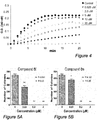
- the results are shown in Figure 4 .
- compound 8f inhibits tubulin polymerization.
- the effect of 8f on tubulin assembly was examined at concentrations from 0.625 ⁇ M to 20 ⁇ M. The observed results demonstrate that compound 8f inhibited tubulin polymerization in a dose-dependent manner with an IC 50 value of 4.23 ⁇ M.
- Human A375 malignant melanoma cells were plated at a colony-forming density (200 cells per well on six well plates).
- Cells were grown in DMEM medium (GIBCO, Invitrogen Corp., Carlsbad, CA) supplemented with charcoal-stripped fetal bovine serum (HyClone, Logan, UT) and an antibiotic-antimycotic solution (Sigma, St. Louis, MO) at 37°C in an atmosphere of 95% air and 5% CO 2 .
- Cells were treated with compounds 8f and 8n at different concentrations (0, 0.03, 0.3, and 3 ⁇ M). Cells were grown for 10 days and colonies were fixed with 4% paraformaldehyde in PBS at 4°C.
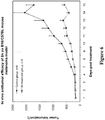
- B16-F1 mouse melanoma cells injected in C57 black mice.
- B16 tumors will grow in a fully immunocompetent host, in which case the tumor progression may more accurately replicate melanoma growth.
- Tumor volume was measured once daily with a Traceable® electronic digital caliper and calculated by using the formula a ⁇ b 2 ⁇ 0.5, where a and b represented the larger and smaller diameters, respectively. Body weights were also recorded. Tumor volume was expressed as cubic millimeters. Data were expressed as Mean ⁇ SE for each group and plotted as a function of time. At the end of treatment, all mice were euthanized by CO 2 inhalation followed by cervical dislocation. Compound 8n showed significant tumor growth inhibition at this relatively low dose (6 mg/kg) as shown in Figure 6 . There was no significant body weight loss ( ⁇ 5%), and all mice had normal activities during the experiments.
- Compound 8f will be further modified to thioketone analogs 41 and 42 (Scheme 5 below). Compounds 8a-z will be similarly modified.
- the carbonyl group can be converted into a thiocarbonyl group by the action of Lawesson's reagent ( Jesberger et al., Synthesis 1929-1958 (2003 ), which is hereby incorporated by reference in its entirety).
- the thioketone structure with conjugated aromatic rings is stable relative to unhindered thioketones.
- the thiazole compound can be obtained after dehydronation. ( Riedrich et al., Angewandte Chemie, International Edition, 46(15):2701-2703 (2007 ), which is hereby incorporated by reference in its entirety). This conversion will decrease the hydrogen bond acceptor ability from 0 ⁇ H in ketone to S ⁇ H in thione. It will be helpful to examine the importance of hydrogen acceptor position in these molecules.
- Oxazolines can be prepared according to the classical condensation of phenyl imino ether with serine ester using triethylamine as a base ( see Scheme 8B below) ( Meyer et al., Tetrahedron: Asymmetry 14:2229-2238 (2003 ), which is hereby incorporated by reference in its entirety). Dehydrogenation of oxazolines will give the desired oxazole compounds.
- Optically pure isomers of compounds 8a-8z will also be prepared to investigate the importance of chirality at 4-position of thiazoline. This will be carried out using D- or L-Cysteine to synthesize the chiral intermediate ketones from protected D- or L-Cysteine. Condensation of the intermediate ketones with benzonitrile will afford R- or S-thiazoline isomers. Thiazoles can be prepared by dehydrogenation.
Landscapes
- Chemical & Material Sciences (AREA)
- Organic Chemistry (AREA)
- Health & Medical Sciences (AREA)
- Veterinary Medicine (AREA)
- Medicinal Chemistry (AREA)
- Pharmacology & Pharmacy (AREA)
- Life Sciences & Earth Sciences (AREA)
- Animal Behavior & Ethology (AREA)
- General Health & Medical Sciences (AREA)
- Public Health (AREA)
- Epidemiology (AREA)
- Chemical Kinetics & Catalysis (AREA)
- General Chemical & Material Sciences (AREA)
- Nuclear Medicine, Radiotherapy & Molecular Imaging (AREA)
- Hematology (AREA)
- Oncology (AREA)
- Engineering & Computer Science (AREA)
- Bioinformatics & Cheminformatics (AREA)
- Pharmaceuticals Containing Other Organic And Inorganic Compounds (AREA)
- Plural Heterocyclic Compounds (AREA)
- Thiazole And Isothizaole Compounds (AREA)
- Heterocyclic Carbon Compounds Containing A Hetero Ring Having Nitrogen And Oxygen As The Only Ring Hetero Atoms (AREA)
Priority Applications (2)
| Application Number | Priority Date | Filing Date | Title |
|---|---|---|---|
| SI200932173T SI3289876T1 (sl) | 2008-06-16 | 2009-06-16 | Spojine za zdravljenje raka |
| HRP20221086TT HRP20221086T1 (hr) | 2008-06-16 | 2009-06-16 | Spojevi za liječenje karcinoma |
Applications Claiming Priority (3)
| Application Number | Priority Date | Filing Date | Title |
|---|---|---|---|
| US6187508P | 2008-06-16 | 2008-06-16 | |
| PCT/US2009/047572 WO2010074776A2 (fr) | 2008-06-16 | 2009-06-16 | Composés destinés à traiter le cancer |
| EP09835407.9A EP2303021B1 (fr) | 2008-06-16 | 2009-06-16 | Composés destinés à traiter le cancer |
Related Parent Applications (2)
| Application Number | Title | Priority Date | Filing Date |
|---|---|---|---|
| EP09835407.9A Division EP2303021B1 (fr) | 2008-06-16 | 2009-06-16 | Composés destinés à traiter le cancer |
| EP09835407.9A Division-Into EP2303021B1 (fr) | 2008-06-16 | 2009-06-16 | Composés destinés à traiter le cancer |
Publications (2)
| Publication Number | Publication Date |
|---|---|
| EP3289876A1 true EP3289876A1 (fr) | 2018-03-07 |
| EP3289876B1 EP3289876B1 (fr) | 2022-07-20 |
Family
ID=41448223
Family Applications (3)
| Application Number | Title | Priority Date | Filing Date |
|---|---|---|---|
| EP15168526.0A Active EP2959900B1 (fr) | 2008-06-16 | 2009-06-16 | Composé pour le traitement du cancer |
| EP17196904.1A Active EP3289876B1 (fr) | 2008-06-16 | 2009-06-16 | Composés destinés à traiter le cancer |
| EP09835407.9A Not-in-force EP2303021B1 (fr) | 2008-06-16 | 2009-06-16 | Composés destinés à traiter le cancer |
Family Applications Before (1)
| Application Number | Title | Priority Date | Filing Date |
|---|---|---|---|
| EP15168526.0A Active EP2959900B1 (fr) | 2008-06-16 | 2009-06-16 | Composé pour le traitement du cancer |
Family Applications After (1)
| Application Number | Title | Priority Date | Filing Date |
|---|---|---|---|
| EP09835407.9A Not-in-force EP2303021B1 (fr) | 2008-06-16 | 2009-06-16 | Composés destinés à traiter le cancer |
Country Status (22)
| Country | Link |
|---|---|
| US (2) | US8592465B2 (fr) |
| EP (3) | EP2959900B1 (fr) |
| JP (2) | JP5507552B2 (fr) |
| KR (4) | KR20170128623A (fr) |
| CN (2) | CN102137592B (fr) |
| AU (1) | AU2009330686B2 (fr) |
| CA (2) | CA2962524C (fr) |
| CY (2) | CY1119217T1 (fr) |
| DK (3) | DK2303021T3 (fr) |
| ES (3) | ES2715926T3 (fr) |
| HR (1) | HRP20221086T1 (fr) |
| HU (3) | HUE034598T2 (fr) |
| IL (2) | IL209995A (fr) |
| LT (3) | LT3289876T (fr) |
| MX (1) | MX2010014066A (fr) |
| PL (3) | PL2303021T3 (fr) |
| PT (3) | PT2303021T (fr) |
| RU (1) | RU2514427C2 (fr) |
| SI (1) | SI3289876T1 (fr) |
| TR (1) | TR201903981T4 (fr) |
| UA (1) | UA105005C2 (fr) |
| WO (1) | WO2010074776A2 (fr) |
Families Citing this family (41)
| Publication number | Priority date | Publication date | Assignee | Title |
|---|---|---|---|---|
| US9029408B2 (en) | 2008-06-16 | 2015-05-12 | Gtx, Inc. | Compounds for treatment of cancer |
| US9447049B2 (en) | 2010-03-01 | 2016-09-20 | University Of Tennessee Research Foundation | Compounds for treatment of cancer |
| DK2303021T3 (en) | 2008-06-16 | 2019-04-08 | Univ Tennessee Res Found | RELATIONSHIPS FOR TREATING CANCER |
| US8822513B2 (en) | 2010-03-01 | 2014-09-02 | Gtx, Inc. | Compounds for treatment of cancer |
| AU2015227531B2 (en) * | 2010-03-01 | 2017-03-02 | Oncternal Therapeutics, Inc. | Compounds for treatment of cancer |
| KR101939704B1 (ko) * | 2010-03-01 | 2019-01-17 | 지티엑스, 인코포레이티드 | 암 치료용 화합물 |
| US11084811B2 (en) | 2010-03-01 | 2021-08-10 | Oncternal Therapeutics, Inc. | Compounds for treatment of cancer |
| CA3030689C (fr) * | 2010-08-24 | 2021-03-02 | Gtx, Inc. | Composes utilises dans le traitement du cancer |
| TW201341367A (zh) | 2012-03-16 | 2013-10-16 | Axikin Pharmaceuticals Inc | 3,5-二胺基吡唑激酶抑制劑 |
| CN105163584B (zh) | 2013-03-05 | 2019-06-04 | 田纳西大学研究基金会 | 用于治疗癌症的化合物 |
| NZ631142A (en) | 2013-09-18 | 2016-03-31 | Axikin Pharmaceuticals Inc | Pharmaceutically acceptable salts of 3,5-diaminopyrazole kinase inhibitors |
| US9663486B2 (en) | 2013-10-14 | 2017-05-30 | Eisai R&D Management Co., Ltd. | Selectively substituted quinoline compounds |
| TWI624467B (zh) | 2013-10-14 | 2018-05-21 | 衛材R&D企管股份有限公司 | 選擇性經取代之喹啉化合物 |
| JP6643763B2 (ja) * | 2014-02-03 | 2020-02-12 | 国立大学法人 東京大学 | アゾール誘導体骨格を有するペプチドの製造方法 |
| RU2733393C9 (ru) | 2014-05-06 | 2021-09-09 | Джи Ти Икс, ИНК. | Соединения для лечения рака |
| MX391865B (es) | 2014-07-03 | 2025-03-21 | Celgene Quanticel Res Inc | Inhibidores de demetilasa-1 especifica de lisina. |
| HUE049801T2 (hu) | 2014-12-23 | 2020-10-28 | Sma Therapeutics Inc | 3,5-diaminopirazol kináz inhibitorok |
| MY188957A (en) | 2015-03-30 | 2022-01-14 | Mission Therapeutics Ltd | 1-cyano-pyrrolidine compounds as usp30 inhibitors |
| CN107840842A (zh) | 2016-09-19 | 2018-03-27 | 北京天诚医药科技有限公司 | 炔代杂环化合物、其制备方法及其在医药学上的应用 |
| CA3069720A1 (fr) | 2017-07-11 | 2019-01-17 | Vertex Pharmaceuticals Incorporated | Carboxamides utilises en tant qu'inhibiteurs des canaux sodiques |
| WO2019055877A1 (fr) | 2017-09-15 | 2019-03-21 | Forma Therapeutics, Inc. | Compositions de tétrahydroimidazo quinoléine utilisées en tant qu'inhibiteurs de cbp/p300 |
| CN108586443B (zh) * | 2018-01-31 | 2019-11-26 | 佳木斯大学附属第一医院 | 一种防治支气管肺癌的药物及其制备方法 |
| JPWO2019188456A1 (ja) * | 2018-03-26 | 2021-03-18 | 学校法人 川崎学園 | 新規抗腫瘍剤 |
| AU2019270089B2 (en) | 2018-05-15 | 2022-11-10 | University Of Tennessee Research Foundation | Compounds for treatment of triple negative breast cancer and ovarian cancer |
| CN112437664A (zh) * | 2018-05-15 | 2021-03-02 | 田纳西大学研究基金会 | 用于治疗胰腺癌的化合物 |
| KR20250067962A (ko) | 2018-06-29 | 2025-05-15 | 포르마 세라퓨틱스 인크. | Creb 결합 단백질(cbp)의 저해 |
| WO2020146612A1 (fr) | 2019-01-10 | 2020-07-16 | Vertex Pharmaceuticals Incorporated | Esters et carbamates utilisés en tant que modulateurs de canaux sodiques |
| WO2020146682A1 (fr) | 2019-01-10 | 2020-07-16 | Vertex Pharmaceuticals Incorporated | Carboxamides utilisés en tant que modulateurs de canaux sodiques |
| US12351577B2 (en) | 2019-03-15 | 2025-07-08 | Forma Therapeutics, Inc. | Inhibiting cyclic AMP-responsive element-binding protein (CREB) |
| MX2022006865A (es) | 2019-12-06 | 2022-07-11 | Vertex Pharma | Tetrahidrofuranos sustituidos como moduladores de canales de sodio. |
| US11795168B2 (en) | 2020-09-23 | 2023-10-24 | Forma Therapeutics, Inc. | Inhibiting cyclic amp-responsive element-binding protein (CREB) binding protein (CBP) |
| US11801243B2 (en) | 2020-09-23 | 2023-10-31 | Forma Therapeutics, Inc. | Bromodomain inhibitors for androgen receptor-driven cancers |
| EP4269409A4 (fr) * | 2020-12-25 | 2024-12-11 | Medshine Discovery Inc. | Composé amide d'oxazole |
| CN117794920A (zh) | 2021-06-04 | 2024-03-29 | 沃泰克斯药物股份有限公司 | N-(羟烷基(杂)芳基)四氢呋喃甲酰胺作为钠通道调节剂 |
| CN113999149B (zh) * | 2021-11-15 | 2024-04-02 | 沈阳药科大学 | 一种基于l-半胱氨酸合成二芳基硫醚类化合物的制备方法 |
| JP2025512970A (ja) * | 2022-04-07 | 2025-04-22 | ヴェル インコーポレイテッド | インフルエンザ及びポックスウイルス科ウイルス感染症の治療方法 |
| JP2025513455A (ja) | 2022-04-22 | 2025-04-24 | バーテックス ファーマシューティカルズ インコーポレイテッド | 疼痛の治療のためのヘテロアリール化合物 |
| CA3256303A1 (fr) * | 2022-04-28 | 2023-11-02 | Veru Inc. | Polymorphes de [2-(1h-indol-3-yl)-1h-imidazol-4-yl](3,4,5- triméthoxy)méthanone et de ses sels |
| WO2024229440A2 (fr) * | 2023-05-03 | 2024-11-07 | Emory University | Procédés de traitement du cancer à l'aide d'inhibiteurs de mdm2 et compositions associées |
| WO2025212948A1 (fr) * | 2024-04-04 | 2025-10-09 | University Of Iowa Research Foundation | Composés thérapeutiques et procédés |
| CN119409641A (zh) * | 2024-11-05 | 2025-02-11 | 杭州电子科技大学 | 一种磺酰基衍生物和用途 |
Citations (4)
| Publication number | Priority date | Publication date | Assignee | Title |
|---|---|---|---|---|
| WO2005086902A2 (fr) * | 2004-03-08 | 2005-09-22 | Wyeth | Modulateurs de canal ionique |
| US20070155807A1 (en) | 2003-11-18 | 2007-07-05 | University Of Tennessee Research Foundation | Thiazolidinone amides, thiazolidine carboxylic acid amides, and serine amides, including polyamine conjugates thereof, as selective anti-cancer agents |
| WO2008038955A1 (fr) * | 2006-09-27 | 2008-04-03 | Chong Kun Dang Pharmaceutical Corp. | Dérivé de benzophénone convenant pour inhiber la formation de microtubule |
| WO2010074776A2 (fr) | 2008-06-16 | 2010-07-01 | The University Of Tennessee Research Foundation | Composés destinés à traiter le cancer |
Family Cites Families (86)
| Publication number | Priority date | Publication date | Assignee | Title |
|---|---|---|---|---|
| CH528514A (de) | 1969-05-22 | 1972-09-30 | Bayer Ag | Verfahren zur Herstellung von Acylimidazolen |
| US4721712A (en) | 1984-06-12 | 1988-01-26 | Pfizer Inc. | 1,3-disubstituted 2-oxindoles as analgesic and anti-inflammatory agents |
| CN1030415A (zh) * | 1987-02-20 | 1989-01-18 | 山之内制药株式会社 | 饱和的杂环碳酰胺衍生物和它的制备方法 |
| CA2074933C (fr) * | 1990-11-30 | 2002-12-03 | Masatoshi Chihiro | Derives du thiazole comme inhibiteur actif du radical superoxyde |
| US5120749A (en) * | 1991-02-20 | 1992-06-09 | Abbott Laboratories | Platelet activating antagonists |
| GB2287196B (en) | 1991-09-30 | 1995-11-15 | Philip Richardson | A surgical incision member for use in suturing |
| NO924963L (no) | 1991-12-27 | 1993-06-28 | Sankyo Co | Pyridyltiazolidinkarboksylsyreamid-derivater og fremgangsmaate til fremstilling derav |
| JP3393891B2 (ja) | 1992-08-18 | 2003-04-07 | 塩野義製薬株式会社 | イミダゾール類の製造方法 |
| US5514690A (en) | 1992-11-17 | 1996-05-07 | E. R. Squibb & Sons, Inc. | Aminocarbonyl (thiocarbonyl) and cyanoguanidine derivatives of quinoline and indoline |
| JP2550915B2 (ja) | 1994-06-21 | 1996-11-06 | 日本電気株式会社 | 印刷配線板の表面保護剤および表面保護膜の形成方法 |
| CA2207794A1 (fr) | 1994-12-15 | 1996-06-20 | Sankyo Company, Limited | Composes thiazolidinone ou medicament pour prevenir ou guerir l'angine de poitrine contenant ces composes en tant qu'ingredient actif |
| CZ290989B6 (cs) | 1995-03-02 | 2002-11-13 | Sankyo Company, Limited | Opticky aktivní thiazolidinonový derivát, prostředek jej obsahující, pouľití tohoto derivátu a způsob jeho přípravy |
| US6121260A (en) | 1997-07-03 | 2000-09-19 | Neurogen Corporation | Method of treating conditions susceptible to modulation of NPY receptors with diarylimidazole derivatives |
| JP2004067510A (ja) | 1997-12-26 | 2004-03-04 | Mitsubishi Pharma Corp | 新規イミダゾール誘導体 |
| US6828344B1 (en) | 1998-02-25 | 2004-12-07 | Genetics Institute, Llc | Inhibitors of phospholipase enzymes |
| AU7354900A (en) * | 1999-09-09 | 2001-04-10 | Merck & Co., Inc. | Inhibitors of prenyl-protein transferase |
| JP2001240593A (ja) * | 1999-10-12 | 2001-09-04 | Japan Tobacco Inc | 高トリグリセリド血症治療薬及び抗肥満薬 |
| WO2001047875A1 (fr) | 1999-12-27 | 2001-07-05 | Ortho-Mcneil Pharmaceutical, Inc. | Derives d'aminoalkylamide substitues utilises en tant qu'antagonistes de l'hormone folliculostimulante |
| CA2408747C (fr) * | 2000-05-11 | 2011-04-05 | Consejo Superior Investigaciones Cientificas | Inhibiteurs heterocycliques de la glycogene synthase kinase gsk-3 |
| AU3113902A (en) | 2000-12-21 | 2002-07-01 | Bristol Myers Squibb Co | Thiazolyl inhibitors of tec family tyrosine kinases |
| EP1381602A1 (fr) * | 2001-04-19 | 2004-01-21 | Vertex Pharmaceuticals Incorporated | Heterocyclyl-dicarbamides en tant qu'inhibiteurs de caspase |
| WO2003016338A1 (fr) | 2001-08-15 | 2003-02-27 | Parker Hughes Institute | Structure cristalline du domaine kinase de btk |
| TWI231757B (en) | 2001-09-21 | 2005-05-01 | Solvay Pharm Bv | 1H-Imidazole derivatives having CB1 agonistic, CB1 partial agonistic or CB1-antagonistic activity |
| GT200200188A (es) * | 2001-09-24 | 2003-06-25 | Preparacion y uso de derivados de imidazol para el tratamiento de la obesidad | |
| WO2003027094A2 (fr) | 2001-09-26 | 2003-04-03 | Bayer Pharmaceuticals Corporation | 3-pyridyl indoles et indazoles substitues servant d'inhibiteurs de c17,20 lyase |
| US20040267017A1 (en) * | 2001-09-26 | 2004-12-30 | Bierer Donald E | 3-pyridyl or 4-isoquinolinyl thiazoles as c17, 20 lyase inhibitors |
| US20050014805A1 (en) * | 2001-10-12 | 2005-01-20 | Chenzhi Zhang | Phenyl substituted 5-membered nitrogen containing heterocycles for the treatment of obesity |
| FR2831536A1 (fr) | 2001-10-26 | 2003-05-02 | Aventis Pharma Sa | Nouveaux derives de benzimidazoles, leur procede de preparation, leur application a titre de medicament, compositions pharmaceutiques et nouvelle utilisation notamment comme inhibiteurs de kdr |
| EP1456187A4 (fr) * | 2001-11-15 | 2005-02-09 | Incyte San Diego Inc | Heterocycles n-substitues pour le traitement de l'hypercholesterolemie, de la dyslipidemie et autres troubles du metabolisme, du cancer et de pathologies diverses |
| KR20040105853A (ko) * | 2002-04-08 | 2004-12-16 | 토렌트 파마슈티칼스 리미티드 | 티아졸리딘-4-카르보니트릴 및 유사체와디펩티딜-펩티다아제 억제제로서의 용도 |
| AU2003223708A1 (en) * | 2002-04-23 | 2003-11-10 | Axys Pharmaceuticals, Inc. | Novel phenyl derivatives as inducers of apoptosis |
| TW200404796A (en) * | 2002-08-19 | 2004-04-01 | Ono Pharmaceutical Co | Nitrogen-containing compound |
| WO2004052280A2 (fr) | 2002-12-10 | 2004-06-24 | Imclone Systems Incorporated | Composes anti-angiogenique et utilisations de ceux-ci dans le traitement du cancer |
| AU2004212490B2 (en) | 2003-02-10 | 2008-05-15 | Amgen Inc. | Vanilloid receptor ligands and their use in treatments |
| JP2006518738A (ja) | 2003-02-12 | 2006-08-17 | トランス テック ファーマ,インコーポレイテッド | 治療薬としての置換アゾール誘導体 |
| MXJL05000041A (es) | 2003-04-10 | 2005-12-22 | Avanir Pharmaceuticals | Compuestos de imidazol para el tratamiento de padecimientos alergicos e hiperproliferativos. |
| DE602004006852D1 (de) | 2003-04-17 | 2007-07-19 | Janssen Pharmaceutica Nv | 2-phenyl-benzimidazol und 2-phenyl-imidazo-4,5ü-pyridin-derivate als checkpoint-kinase-cds1 (chk2)-hemmer zur behandlung von krebs |
| WO2004110998A1 (fr) | 2003-05-16 | 2004-12-23 | Ambit Biosciences Corporation | Composes pyrroliques et leurs utilisations |
| US6787245B1 (en) | 2003-06-11 | 2004-09-07 | E. I. Du Pont De Nemours And Company | Sulfonated aliphatic-aromatic copolyesters and shaped articles produced therefrom |
| US7977387B2 (en) | 2003-07-24 | 2011-07-12 | Leo Pharma A/S | Aminobenzophenone compounds |
| US7501538B2 (en) | 2003-08-08 | 2009-03-10 | Transtech Pharma, Inc. | Aryl and heteroaryl compounds, compositions and methods of use |
| US20060014740A1 (en) * | 2003-11-18 | 2006-01-19 | Miller Duane D | Analogs exhibiting inhibition of cell proliferation, methods of making, and uses thereof |
| PE20050676A1 (es) * | 2003-12-12 | 2005-11-02 | Wyeth Corp | Quinolinas referidas a enfermedades cardiovasculares |
| EP1723132A1 (fr) * | 2004-02-12 | 2006-11-22 | Asterand Uk Limited | Agonistes des recepteurs ep sb 2 /sb |
| JP2008503446A (ja) * | 2004-05-06 | 2008-02-07 | プレキシコン,インコーポレーテッド | Pde4b阻害剤及びその使用 |
| EP2298292A3 (fr) | 2004-06-18 | 2011-08-10 | Agennix USA Inc. | Inhibiteurs de la kinase pour le traitement de cancers |
| BRPI0514515A (pt) * | 2004-08-17 | 2008-06-10 | Hoffmann La Roche | hidantoìnas substituìdas |
| US20060211603A1 (en) * | 2004-08-18 | 2006-09-21 | Vicuron Pharmaceuticals Inc. | Ramoplanin derivatives possessing antibacterial activity |
| EP1627876A1 (fr) | 2004-08-20 | 2006-02-22 | Ferring B.V. | Composés hétérocycliques condensés et leur usage et leur utilisation comme anti-diurétiques |
| EP1637529A1 (fr) | 2004-09-20 | 2006-03-22 | 4Sc Ag | Nouveaux analogues de piperidin-4-yl-thiazole-carboxamide en tant qu'inhibiteurs de proliferation de lymphocytes T er leurs utilisations |
| CN101115728B (zh) * | 2004-12-13 | 2012-12-19 | 利奥制药有限公司 | 三唑取代的氨基二苯甲酮化合物 |
| JP5236293B2 (ja) | 2005-01-13 | 2013-07-17 | ブリストル−マイヤーズ スクイブ カンパニー | Xia因子阻害剤としての置換ビアリール化合物 |
| EP1856053A1 (fr) * | 2005-01-14 | 2007-11-21 | Millennium Pharmaceuticals, Inc. | Derives de cinnamide et d'hydrocinnamide presentant une activite inhibitrice de raf-kinase |
| US7538113B2 (en) | 2005-02-18 | 2009-05-26 | Wyeth | 4-substituted imidazo[4,5-c]pyridine antagonists of gonadotropin releasing hormone receptor |
| KR20080016659A (ko) | 2005-05-20 | 2008-02-21 | 버텍스 파마슈티칼스 인코포레이티드 | 단백질 키나제의 억제제로서 유용한 피롤로피리딘 |
| WO2008036067A2 (fr) | 2005-07-19 | 2008-03-27 | The University Of Tennessee Research Foundation | Amides de thiazolidinone, amides d'acide carboxylique de thiazolidine et amides de sérine, y compris leurs conjugués de polyamines, en tant qu'agents anti-cancéreux sélectifs |
| WO2007016979A2 (fr) * | 2005-07-29 | 2007-02-15 | 4Sc Ag | Nouveaux inhibiteurs heterocycliques de nf-kb |
| US8030339B2 (en) * | 2005-10-14 | 2011-10-04 | Neurosearch A/S | Imidazole derivatives for the treatment of anxiety and related diseases |
| AU2006316079B2 (en) * | 2005-11-15 | 2012-03-29 | Otsuka Pharmaceutical Co., Ltd. | Oxazole compound and pharmaceutical composition |
| AU2007207055B2 (en) | 2006-01-18 | 2011-06-02 | F. Hoffmann-La Roche Ag | Thiazoles as 11 beta-HSD1 inhibitors |
| US7612212B2 (en) | 2006-02-22 | 2009-11-03 | Hoffmann-La Roche Inc. | Substituted hydantoins |
| EP1832585A1 (fr) | 2006-03-10 | 2007-09-12 | ORIDIS BIOMED Forschungs- und Entwicklungs GmbH | Dérives de thiazole- pipéridine pour le traitement des maladies hyperproliferatives |
| EP1834954A1 (fr) | 2006-03-15 | 2007-09-19 | 4Sc Ag | Thiazoles comme inhibiteurs de NF-kB (inhibiteurs de proteasome) |
| WO2007115805A2 (fr) | 2006-04-05 | 2007-10-18 | European Molecular Biology Laboratory (Embl) | Inhibiteurs de la kinase aurora |
| WO2007146230A2 (fr) | 2006-06-14 | 2007-12-21 | Merck & Co., Inc. | Inhibiteurs de transcriptase inverse non nucléosidiques |
| CA2653589A1 (fr) * | 2006-07-13 | 2008-01-17 | Bayer Cropscience Sa | Derives hydroximoyl-tetrazole fongicides |
| PE20080948A1 (es) | 2006-07-25 | 2008-09-10 | Irm Llc | Derivados de imidazol como moduladores de la senda de hedgehog |
| EP2049520A4 (fr) * | 2006-08-07 | 2011-01-05 | Ironwood Pharmaceuticals Inc | Composés d'indole |
| US8022205B2 (en) * | 2006-08-08 | 2011-09-20 | Chugai Seiyaku Kabushiki Kaisha | Pyrimidine derivatives as PI3K inhibitor and use thereof |
| WO2008023720A1 (fr) * | 2006-08-23 | 2008-02-28 | Astellas Pharma Inc. | COMPOSÉ D'URÉE OU SEL DUDIT COMPOSé |
| US20080064729A1 (en) * | 2006-09-07 | 2008-03-13 | Millennium Pharmaceuticals, Inc. | Phenethylamide derivatives with kinase inhibitory activity |
| WO2008079277A1 (fr) * | 2006-12-22 | 2008-07-03 | Millennium Pharmaceuticals, Inc. | Certains dérivés de pyrazoline avec une activité inhibitrice de kinase |
| WO2008128179A1 (fr) | 2007-04-14 | 2008-10-23 | The University Of Tennessee Research Foundation | Amides de thiazolidinone, amides d'acide carboxylique de thiazolidine et amides de sérine, y compris leurs conjugués avec la polyamine, utilisables en tant qu'agents anticancéreux sélectifs |
| US20090142832A1 (en) | 2007-11-29 | 2009-06-04 | James Dalton | Indoles, Derivatives, and Analogs Thereof and Uses Therefor |
| US8389567B2 (en) | 2007-12-12 | 2013-03-05 | Calcimedica, Inc. | Compounds that modulate intracellular calcium |
| US9029408B2 (en) * | 2008-06-16 | 2015-05-12 | Gtx, Inc. | Compounds for treatment of cancer |
| US8822513B2 (en) | 2010-03-01 | 2014-09-02 | Gtx, Inc. | Compounds for treatment of cancer |
| US9447049B2 (en) | 2010-03-01 | 2016-09-20 | University Of Tennessee Research Foundation | Compounds for treatment of cancer |
| DK4397376T3 (da) | 2009-10-16 | 2026-02-23 | Novartis Ag | Kombination der omfatter en mek-hæmmer og en b-raf-hæmmer |
| KR101134194B1 (ko) | 2009-12-03 | 2012-04-09 | 서울대학교산학협력단 | 헤테로바이아릴피리딘 유도체 화합물의 제조방법 및 이러한 방법에 의해 제조된 헤테로바이아릴피리딘 유도체 화합물 |
| KR101939704B1 (ko) | 2010-03-01 | 2019-01-17 | 지티엑스, 인코포레이티드 | 암 치료용 화합물 |
| WO2012027716A1 (fr) | 2010-08-27 | 2012-03-01 | Collabrx, Inc. | Procédé pour traiter un mélanome chez des sujets résistants à un inhibiteur de braf |
| CN103443725B (zh) | 2011-03-29 | 2015-07-29 | 三菱电机株式会社 | 伺服控制装置的异常诊断装置及异常诊断系统 |
| ES2620644T3 (es) | 2011-04-01 | 2017-06-29 | Genentech, Inc. | Combinaciones de compuestos inhibidores de AKT y agentes quimioterapéuticos, y métodos de uso |
| EA024890B1 (ru) | 2011-04-07 | 2016-10-31 | Байер Интеллектчуал Проперти Гмбх | Имидазопиридазины в качестве ингибиторов akt киназы |
| CN105163584B (zh) * | 2013-03-05 | 2019-06-04 | 田纳西大学研究基金会 | 用于治疗癌症的化合物 |
-
2009
- 2009-06-16 DK DK09835407.9T patent/DK2303021T3/en active
- 2009-06-16 HR HRP20221086TT patent/HRP20221086T1/hr unknown
- 2009-06-16 US US12/485,881 patent/US8592465B2/en active Active
- 2009-06-16 LT LTEP17196904.1T patent/LT3289876T/lt unknown
- 2009-06-16 JP JP2011514764A patent/JP5507552B2/ja active Active
- 2009-06-16 DK DK17196904.1T patent/DK3289876T3/da active
- 2009-06-16 KR KR1020177032778A patent/KR20170128623A/ko not_active Ceased
- 2009-06-16 SI SI200932173T patent/SI3289876T1/sl unknown
- 2009-06-16 WO PCT/US2009/047572 patent/WO2010074776A2/fr not_active Ceased
- 2009-06-16 DK DK15168526.0T patent/DK2959900T3/en active
- 2009-06-16 KR KR1020167017425A patent/KR20160079934A/ko not_active Abandoned
- 2009-06-16 PT PT09835407T patent/PT2303021T/pt unknown
- 2009-06-16 PL PL09835407T patent/PL2303021T3/pl unknown
- 2009-06-16 EP EP15168526.0A patent/EP2959900B1/fr active Active
- 2009-06-16 HU HUE15168526A patent/HUE034598T2/en unknown
- 2009-06-16 LT LTEP15168526.0T patent/LT2959900T/lt unknown
- 2009-06-16 KR KR1020177006276A patent/KR102025213B1/ko active Active
- 2009-06-16 EP EP17196904.1A patent/EP3289876B1/fr active Active
- 2009-06-16 PT PT171969041T patent/PT3289876T/pt unknown
- 2009-06-16 CA CA2962524A patent/CA2962524C/fr active Active
- 2009-06-16 KR KR1020117001037A patent/KR20110022672A/ko not_active Ceased
- 2009-06-16 PL PL15168526T patent/PL2959900T3/pl unknown
- 2009-06-16 UA UAA201015111A patent/UA105005C2/uk unknown
- 2009-06-16 HU HUE17196904A patent/HUE060249T2/hu unknown
- 2009-06-16 PT PT151685260T patent/PT2959900T/pt unknown
- 2009-06-16 CN CN200980131946.9A patent/CN102137592B/zh not_active Expired - Fee Related
- 2009-06-16 AU AU2009330686A patent/AU2009330686B2/en active Active
- 2009-06-16 CA CA2728118A patent/CA2728118C/fr not_active Expired - Fee Related
- 2009-06-16 EP EP09835407.9A patent/EP2303021B1/fr not_active Not-in-force
- 2009-06-16 TR TR2019/03981T patent/TR201903981T4/tr unknown
- 2009-06-16 RU RU2010154172/04A patent/RU2514427C2/ru active
- 2009-06-16 ES ES09835407T patent/ES2715926T3/es active Active
- 2009-06-16 MX MX2010014066A patent/MX2010014066A/es active IP Right Grant
- 2009-06-16 ES ES15168526.0T patent/ES2629927T3/es active Active
- 2009-06-16 LT LTEP09835407.9T patent/LT2303021T/lt unknown
- 2009-06-16 ES ES17196904T patent/ES2927660T3/es active Active
- 2009-06-16 CN CN201410828197.8A patent/CN104610230A/zh active Pending
- 2009-06-16 HU HUE09835407A patent/HUE043569T2/hu unknown
- 2009-06-16 PL PL17196904.1T patent/PL3289876T3/pl unknown
-
2010
- 2010-12-14 IL IL209995A patent/IL209995A/en active IP Right Grant
-
2012
- 2012-03-28 JP JP2012072925A patent/JP2012162541A/ja active Pending
-
2013
- 2013-12-09 IL IL229878A patent/IL229878A/en active IP Right Grant
-
2017
- 2017-06-08 CY CY20171100601T patent/CY1119217T1/el unknown
-
2018
- 2018-01-16 US US15/872,199 patent/US10865196B2/en active Active
-
2019
- 2019-03-18 CY CY20191100320T patent/CY1121724T1/el unknown
Patent Citations (5)
| Publication number | Priority date | Publication date | Assignee | Title |
|---|---|---|---|---|
| US20070155807A1 (en) | 2003-11-18 | 2007-07-05 | University Of Tennessee Research Foundation | Thiazolidinone amides, thiazolidine carboxylic acid amides, and serine amides, including polyamine conjugates thereof, as selective anti-cancer agents |
| US7307093B2 (en) | 2003-11-18 | 2007-12-11 | The University Of Tennessee Research Foundation | Thiazolidinone amides, thiazolidine carboxylic acid amides, methods of making, and uses thereof |
| WO2005086902A2 (fr) * | 2004-03-08 | 2005-09-22 | Wyeth | Modulateurs de canal ionique |
| WO2008038955A1 (fr) * | 2006-09-27 | 2008-04-03 | Chong Kun Dang Pharmaceutical Corp. | Dérivé de benzophénone convenant pour inhiber la formation de microtubule |
| WO2010074776A2 (fr) | 2008-06-16 | 2010-07-01 | The University Of Tennessee Research Foundation | Composés destinés à traiter le cancer |
Non-Patent Citations (28)
| Title |
|---|
| ANDERSON ET AL., J. MED. CHEM., vol. 32, no. 1, 1989, pages 119 - 127 |
| BERGERON ET AL., J. MED. CHEM., vol. 48, 2005, pages 821 - 831 |
| BERGERON ET AL.: "Desazadesmethyldesferrithiocin Analogues as Orally Effective Iron Chelators", J. MED. CHEM., vol. 42, 1999, pages 95 - 108, XP001174119, DOI: doi:10.1021/jm980340j |
| BERGERON ET AL.: "Evaluation of Desferrithiocin and its Synthetic Analogs as Orally Effective Iron Chelators", J. MED. CHEM., vol. 34, 1991, pages 2072 - 8, XP002182655, DOI: doi:10.1021/jm00111a023 |
| DOTHAGER ET AL.: "Synthesis and Identification of Small Molecules that Potently Induce Apoptosis in Melanoma Cells Through G1 Cell Cycle Arrest", J. AM. CHEM. SOC., vol. 127, 2005, pages 8686 - 8696, XP055014477, DOI: doi:10.1021/ja042913p |
| E B ROCHE: "Bioreversible Carriers in Drug Design", 1987, PERGAMON PRESS |
| GREEN ET AL.: "Protective Groups in Organic Synthesis, 2nd Ed.,", 1991, WILEY-INTERSCIENCE |
| GUDUDURU ET AL.: "Discovery of 2-Arylthiazolidine-4-Carboxylic Acid Amides as a New Class of Cytotoxic Agents for Prostate Cancer", J. MED. CHEM., vol. 48, 2005, pages 2584 - 2588 |
| GUDUDURU ET AL.: "SAR Studies of 2-Arylthiazolidine-4-Carboxylic Acid Amides: A Novel Class of Cytotoxic Agents for Prostate Cancer", BIOORG. MED. CHEM. LETT., vol. 15, 2005, pages 4010 - 4013, XP025314062, DOI: doi:10.1016/j.bmcl.2005.06.032 |
| GUO ET AL.: "Expression and Function of Lysophosphatidic Acid LPA1 Receptor in Prostate Cancer Cells", ENDOCRINOLOGY, vol. 147, 2006, pages 4883 - 4892 |
| HIGUCHI AND STELLA: "Pro-drugs as Novel Delivery Systems, ACS Symposium Series", vol. 14 |
| HSU ET AL., J. MED. CHEM., vol. 23, no. 11, 1980, pages 1232 - 1235 |
| JESBERGER ET AL., SYNTHESIS, 2003, pages 1929 - 1958 |
| KUE ET AL.: "Essential Role for G Proteins in Prostate Cancer Cell Growth and Signaling", J. UROL., vol. 164, 2000, pages 2162 - 7, XP005554243, DOI: doi:10.1016/S0022-5347(05)66990-X |
| LI ET AL.: "Structure-Activity Relationship Studies of Arylthiazolidine Amides as Selective Cytotoxic Agents for Melanoma", ANTICANCER RES., vol. 27, 2007, pages 883 - 888 |
| LI ET AL.: "Synthesis and Antiproliferative Activity of Thiazolidine Analogs for Melanoma", BIOORG. MED. CHEM. LETT., vol. 17, 2007, pages 4113 - 7, XP022144655, DOI: doi:10.1016/j.bmcl.2007.05.059 |
| LI ET AL.: "Synthesis and Antiproliferative Activity of Thiazolidine Analogs for Melanoma", BIOORG. MED. CHEM., vol. 17, 2007, pages 4113 - 7, XP022144655, DOI: doi:10.1016/j.bmcl.2007.05.059 |
| LU ET AL.: "Synthesis and Biological Evaluation of 2-Arylthiazolidine-4-Caboxylic Acid Amides for Melanoma and Prostate Cancer", ABSTRACTS OF PAPERS, 234TH ACS NATIONAL MEETING, 19 August 2007 (2007-08-19) |
| MARGOLIS ET AL.: "Addition of Colchicine--Tubulin Complex to Microtubule Ends: The Mechanism of Substoichiometric Colchicine Poisoning", PROC. NAT'L ACAD. SCI. USA, vol. 74, 1977, pages 3466 - 70 |
| MEYER ET AL., TETRAHEDRON: ASYMMETRY, vol. 14, 2003, pages 2229 - 2238 |
| NAHM ET AL.: "N-Methoxy-N-methylamides as Effective Acylating Agents", TETRAHEDRON LETT., vol. 22, 1981, pages 3815 - 18, XP055320656, DOI: doi:10.1016/S0040-4039(01)91316-4 |
| QI ET AL.: "Lysophosphatidic Acid Stimulates Phospholipase D Activity and Cell Proliferation in PC-3 Human Prostate Cancer Cells", J. CELL. PHYSIOL., vol. 174, 1998, pages 261 - 272, XP002076182, DOI: doi:10.1002/(SICI)1097-4652(199802)174:2<261::AID-JCP13>3.0.CO;2-F |
| RAJ ET AL.: "Guanosine Phosphate Binding Protein Coupled Receptors in Prostate Cancer: A Review", J. UROL., vol. 167, 2002, pages 1458 - 1463, XP005539922, DOI: doi:10.1016/S0022-5347(05)65345-1 |
| RIEDRICH ET AL., ANGEWANDTE CHEMIE, INTERNATIONAL EDITION, vol. 46, no. 15, 2007, pages 2701 - 2703 |
| RUBINSTEIN ET AL.: "Comparison of in vitro Anticancer Drug-screening Data Generated with a Tetrazolium Assay Versus a Protein Assay Against a Diverse Panel of Human Tumor Cell Lines", J. NATL. CANCER INST., vol. 82, 1990, pages 1113 - 1118 |
| TUCKER, J. A. ET AL: "Structure-activity relationships of acyloxyamidine cytomegalovirus DNA polymerase inhibitors", BIOORGANIC & MEDICINAL CHEMISTRY, vol. 8, no. 3, 2000, pages 601 - 615, XP002668129 * |
| WILLIAMS ET AL.: "Studies of Mild Dehydrogenations in Heterocyclic Systems", TETRAHEDRON LETT., vol. 38, 1997, pages 331 - 334, XP004015000, DOI: doi:10.1016/S0040-4039(96)02344-1 |
| ZAMRI ET AL.: "An Improved Stereocontrolled Synthesis of Pyochelin, Siderophore of Pseudomonas aeruginosa and Burkholderia cepacia", TETRAHEDRON, vol. 56, 2000, pages 249 - 256, XP002252917, DOI: doi:10.1016/S0040-4020(99)00946-1 |
Also Published As
Similar Documents
| Publication | Publication Date | Title |
|---|---|---|
| EP2303021B1 (fr) | Composés destinés à traiter le cancer | |
| US9029408B2 (en) | Compounds for treatment of cancer | |
| US20090143446A1 (en) | Thiazolidinone amides, thiazolidine carboxylic acid amides, methods of making, and uses thereof | |
| US20080255213A1 (en) | Thiazolidinone amides, thiazolidine carboxylic acid amides, and serine amides, including polyamine conjugates thereof, as selective anti-cancer agents | |
| US20060014740A1 (en) | Analogs exhibiting inhibition of cell proliferation, methods of making, and uses thereof | |
| HK1156189A (en) | Compounds for the treatment of cancer | |
| HK1156189B (en) | Compounds for the treatment of cancer | |
| WO2005086638A2 (fr) | Analogues inhibiteurs de la proliferation cellulaire, leurs procedes de fabrication, et leurs utilisations | |
| TH41253A (th) | ตัวยับยั้งแองจิโอเจเนซิสซึ่งเป็นอนุพันธ์ 1,2,4,-ไธอาไดอาโซลิสซึ่ง ถูกแทนที่ในตำแหน่งที่ 5 |
Legal Events
| Date | Code | Title | Description |
|---|---|---|---|
| PUAI | Public reference made under article 153(3) epc to a published international application that has entered the european phase |
Free format text: ORIGINAL CODE: 0009012 |
|
| STAA | Information on the status of an ep patent application or granted ep patent |
Free format text: STATUS: THE APPLICATION HAS BEEN PUBLISHED |
|
| AC | Divisional application: reference to earlier application |
Ref document number: 2303021 Country of ref document: EP Kind code of ref document: P |
|
| AK | Designated contracting states |
Kind code of ref document: A1 Designated state(s): AT BE BG CH CY CZ DE DK EE ES FI FR GB GR HR HU IE IS IT LI LT LU LV MC MK MT NL NO PL PT RO SE SI SK TR |
|
| RIN1 | Information on inventor provided before grant (corrected) |
Inventor name: LI, CHIEN-MING Inventor name: WANG, ZHAO Inventor name: LI, WEI Inventor name: CHEN, JIANJUN Inventor name: MILLER, DUANE, D. Inventor name: LU, YAN Inventor name: DALTON, JAMES, T. |
|
| STAA | Information on the status of an ep patent application or granted ep patent |
Free format text: STATUS: REQUEST FOR EXAMINATION WAS MADE |
|
| 17P | Request for examination filed |
Effective date: 20180906 |
|
| RBV | Designated contracting states (corrected) |
Designated state(s): AT BE BG CH CY CZ DE DK EE ES FI FR GB GR HR HU IE IS IT LI LT LU LV MC MK MT NL NO PL PT RO SE SI SK TR |
|
| STAA | Information on the status of an ep patent application or granted ep patent |
Free format text: STATUS: EXAMINATION IS IN PROGRESS |
|
| 17Q | First examination report despatched |
Effective date: 20200929 |
|
| GRAP | Despatch of communication of intention to grant a patent |
Free format text: ORIGINAL CODE: EPIDOSNIGR1 |
|
| STAA | Information on the status of an ep patent application or granted ep patent |
Free format text: STATUS: GRANT OF PATENT IS INTENDED |
|
| INTG | Intention to grant announced |
Effective date: 20220204 |
|
| RIN1 | Information on inventor provided before grant (corrected) |
Inventor name: LI, CHIEN-MING Inventor name: DALTON, JAMES, T. Inventor name: CHEN, JIANJUN Inventor name: LU, YAN Inventor name: WANG, ZHAO Inventor name: LI, WEI Inventor name: MILLER, DUANE, D. |
|
| GRAS | Grant fee paid |
Free format text: ORIGINAL CODE: EPIDOSNIGR3 |
|
| GRAA | (expected) grant |
Free format text: ORIGINAL CODE: 0009210 |
|
| STAA | Information on the status of an ep patent application or granted ep patent |
Free format text: STATUS: THE PATENT HAS BEEN GRANTED |
|
| AC | Divisional application: reference to earlier application |
Ref document number: 2303021 Country of ref document: EP Kind code of ref document: P |
|
| AK | Designated contracting states |
Kind code of ref document: B1 Designated state(s): AT BE BG CH CY CZ DE DK EE ES FI FR GB GR HR HU IE IS IT LI LT LU LV MC MK MT NL NO PL PT RO SE SI SK TR |
|
| RIN1 | Information on inventor provided before grant (corrected) |
Inventor name: LI, CHIEN-MING Inventor name: DALTON, JAMES, T. Inventor name: CHEN, JIANJUN Inventor name: LU, YAN Inventor name: WANG, ZHAO Inventor name: LI, WEI Inventor name: MILLER, DUANE, D. |
|
| REG | Reference to a national code |
Ref country code: CH Ref legal event code: EP |
|
| REG | Reference to a national code |
Ref country code: DE Ref legal event code: R096 Ref document number: 602009064527 Country of ref document: DE |
|
| REG | Reference to a national code |
Ref country code: AT Ref legal event code: REF Ref document number: 1504967 Country of ref document: AT Kind code of ref document: T Effective date: 20220815 |
|
| REG | Reference to a national code |
Ref country code: IE Ref legal event code: FG4D |
|
| REG | Reference to a national code |
Ref country code: RO Ref legal event code: EPE Ref country code: SE Ref legal event code: TRGR |
|
| REG | Reference to a national code |
Ref country code: DK Ref legal event code: T3 Effective date: 20221007 |
|
| REG | Reference to a national code |
Ref country code: FI Ref legal event code: FGE |
|
| REG | Reference to a national code |
Ref country code: PT Ref legal event code: SC4A Ref document number: 3289876 Country of ref document: PT Date of ref document: 20221028 Kind code of ref document: T Free format text: AVAILABILITY OF NATIONAL TRANSLATION Effective date: 20221020 |
|
| REG | Reference to a national code |
Ref country code: NO Ref legal event code: T2 Effective date: 20220720 |
|
| REG | Reference to a national code |
Ref country code: LU Ref legal event code: PD Owner name: OHIO STATE INNOVATION FOUNDATION; US Free format text: FORMER OWNER: UNIVERSITY OF TENNESSEE RESEARCH FOUNDATION Effective date: 20221019 |
|
| RAP2 | Party data changed (patent owner data changed or rights of a patent transferred) |
Owner name: OHIO STATE INNOVATION FOUNDATION Owner name: UNIVERSITY OF TENNESSEE RESEARCH FOUNDATION |
|
| REG | Reference to a national code |
Ref country code: NL Ref legal event code: FP |
|
| REG | Reference to a national code |
Ref country code: DE Ref legal event code: R081 Ref document number: 602009064527 Country of ref document: DE Owner name: UNIVERSITY OF TENNESSEE RESEARCH FOUNDATION, K, US Free format text: FORMER OWNERS: THE OHIO STATE UNIVERSITY RESEARCH FOUNDATION, COLUMBUS, OH, US; UNIVERSITY OF TENNESSEE RESEARCH FOUNDATION, KNOXVILLE, TN, US Ref country code: DE Ref legal event code: R081 Ref document number: 602009064527 Country of ref document: DE Owner name: OHIO STATE INNOVATION FOUNDATION, COLUMBUS, US Free format text: FORMER OWNERS: THE OHIO STATE UNIVERSITY RESEARCH FOUNDATION, COLUMBUS, OH, US; UNIVERSITY OF TENNESSEE RESEARCH FOUNDATION, KNOXVILLE, TN, US |
|
| REG | Reference to a national code |
Ref country code: GR Ref legal event code: EP Ref document number: 20220402086 Country of ref document: GR Effective date: 20221109 |
|
| REG | Reference to a national code |
Ref country code: HR Ref legal event code: T1PR Ref document number: P20221086 Country of ref document: HR |
|
| REG | Reference to a national code |
Ref country code: BE Ref legal event code: PD Owner name: UNIVERSITY OF TENNESSEE RESEARCH FOUNDATION; US Free format text: DETAILS ASSIGNMENT: CHANGE OF OWNER(S), ASSIGNMENT; FORMER OWNER NAME: THE OHIO STATE UNIVERSITY RESEARCH FOUNDATION Effective date: 20221019 Ref country code: SK Ref legal event code: T3 Ref document number: E 40585 Country of ref document: SK |
|
| REG | Reference to a national code |
Ref country code: EE Ref legal event code: FG4A Ref document number: E022737 Country of ref document: EE Effective date: 20221017 |
|
| REG | Reference to a national code |
Ref country code: HR Ref legal event code: PPPP Ref document number: P20221086 Country of ref document: HR Owner name: OHIO STATE INNOVATION FOUNDATION, US |
|
| REG | Reference to a national code |
Ref country code: GB Ref legal event code: 732E Free format text: REGISTERED BETWEEN 20221229 AND 20230104 |
|
| REG | Reference to a national code |
Ref country code: HU Ref legal event code: AG4A Ref document number: E060249 Country of ref document: HU |
|
| REG | Reference to a national code |
Ref country code: NL Ref legal event code: PD Owner name: OHIO STATE INNOVATION FOUNDATION; US Free format text: DETAILS ASSIGNMENT: CHANGE OF OWNER(S), ASSIGNMENT; FORMER OWNER NAME: UNIVERSITY OF TENNESSEE RESEARCH FOUNDATION Effective date: 20230306 |
|
| REG | Reference to a national code |
Ref country code: FR Ref legal event code: PLFP Year of fee payment: 15 |
|
| REG | Reference to a national code |
Ref country code: DE Ref legal event code: R097 Ref document number: 602009064527 Country of ref document: DE |
|
| PLBE | No opposition filed within time limit |
Free format text: ORIGINAL CODE: 0009261 |
|
| STAA | Information on the status of an ep patent application or granted ep patent |
Free format text: STATUS: NO OPPOSITION FILED WITHIN TIME LIMIT |
|
| REG | Reference to a national code |
Ref country code: HR Ref legal event code: ODRP Ref document number: P20221086 Country of ref document: HR Payment date: 20230614 Year of fee payment: 15 |
|
| 26N | No opposition filed |
Effective date: 20230421 |
|
| P01 | Opt-out of the competence of the unified patent court (upc) registered |
Effective date: 20230525 |
|
| REG | Reference to a national code |
Ref country code: AT Ref legal event code: PC Ref document number: 1504967 Country of ref document: AT Kind code of ref document: T Owner name: OHIO STATE INNOVATION FOUNDATION, US Effective date: 20230605 Ref country code: AT Ref legal event code: PC Ref document number: 1504967 Country of ref document: AT Kind code of ref document: T Owner name: UNIVERSITY OF TENNESSEE RESEARCH FOUNDATION, US Effective date: 20230605 |
|
| REG | Reference to a national code |
Ref country code: HR Ref legal event code: ODRP Ref document number: P20221086 Country of ref document: HR Payment date: 20240429 Year of fee payment: 16 |
|
| PGFP | Annual fee paid to national office [announced via postgrant information from national office to epo] |
Ref country code: SE Payment date: 20250310 Year of fee payment: 17 |
|
| PGFP | Annual fee paid to national office [announced via postgrant information from national office to epo] |
Ref country code: NL Payment date: 20250409 Year of fee payment: 17 |
|
| REG | Reference to a national code |
Ref country code: HR Ref legal event code: ODRP Ref document number: P20221086 Country of ref document: HR Payment date: 20250428 Year of fee payment: 17 |
|
| PGFP | Annual fee paid to national office [announced via postgrant information from national office to epo] |
Ref country code: FI Payment date: 20250620 Year of fee payment: 17 |
|
| PGFP | Annual fee paid to national office [announced via postgrant information from national office to epo] |
Ref country code: PL Payment date: 20250407 Year of fee payment: 17 Ref country code: DE Payment date: 20250402 Year of fee payment: 17 |
|
| PGFP | Annual fee paid to national office [announced via postgrant information from national office to epo] |
Ref country code: GB Payment date: 20250401 Year of fee payment: 17 Ref country code: DK Payment date: 20250618 Year of fee payment: 17 |
|
| PGFP | Annual fee paid to national office [announced via postgrant information from national office to epo] |
Ref country code: LT Payment date: 20250424 Year of fee payment: 17 |
|
| PGFP | Annual fee paid to national office [announced via postgrant information from national office to epo] |
Ref country code: IS Payment date: 20250602 Year of fee payment: 17 Ref country code: NO Payment date: 20250610 Year of fee payment: 17 |
|
| PGFP | Annual fee paid to national office [announced via postgrant information from national office to epo] |
Ref country code: LU Payment date: 20250611 Year of fee payment: 17 Ref country code: IT Payment date: 20250522 Year of fee payment: 17 Ref country code: BE Payment date: 20250410 Year of fee payment: 17 |
|
| PGFP | Annual fee paid to national office [announced via postgrant information from national office to epo] |
Ref country code: HR Payment date: 20250428 Year of fee payment: 17 |
|
| PGFP | Annual fee paid to national office [announced via postgrant information from national office to epo] |
Ref country code: LV Payment date: 20250423 Year of fee payment: 17 Ref country code: PT Payment date: 20250616 Year of fee payment: 17 |
|
| PGFP | Annual fee paid to national office [announced via postgrant information from national office to epo] |
Ref country code: FR Payment date: 20250409 Year of fee payment: 17 Ref country code: EE Payment date: 20250526 Year of fee payment: 17 Ref country code: HU Payment date: 20250513 Year of fee payment: 17 |
|
| PGFP | Annual fee paid to national office [announced via postgrant information from national office to epo] |
Ref country code: MT Payment date: 20250619 Year of fee payment: 17 Ref country code: GR Payment date: 20250516 Year of fee payment: 17 Ref country code: BG Payment date: 20250415 Year of fee payment: 17 |
|
| PGFP | Annual fee paid to national office [announced via postgrant information from national office to epo] |
Ref country code: AT Payment date: 20250528 Year of fee payment: 17 Ref country code: RO Payment date: 20250508 Year of fee payment: 17 |
|
| PGFP | Annual fee paid to national office [announced via postgrant information from national office to epo] |
Ref country code: TR Payment date: 20250613 Year of fee payment: 17 Ref country code: SK Payment date: 20250513 Year of fee payment: 17 |
|
| PGFP | Annual fee paid to national office [announced via postgrant information from national office to epo] |
Ref country code: CZ Payment date: 20250530 Year of fee payment: 17 |
|
| PGFP | Annual fee paid to national office [announced via postgrant information from national office to epo] |
Ref country code: IE Payment date: 20250402 Year of fee payment: 17 |
|
| PGFP | Annual fee paid to national office [announced via postgrant information from national office to epo] |
Ref country code: SI Payment date: 20250424 Year of fee payment: 17 |
|
| PGFP | Annual fee paid to national office [announced via postgrant information from national office to epo] |
Ref country code: ES Payment date: 20250704 Year of fee payment: 17 |
|
| PGFP | Annual fee paid to national office [announced via postgrant information from national office to epo] |
Ref country code: CH Payment date: 20250701 Year of fee payment: 17 |
|
| PGFP | Annual fee paid to national office [announced via postgrant information from national office to epo] |
Ref country code: MK Payment date: 20250428 Year of fee payment: 17 |
|
| REG | Reference to a national code |
Ref country code: AT Ref legal event code: UEP Ref document number: 1504967 Country of ref document: AT Kind code of ref document: T Effective date: 20220720 |
|
| PGFP | Annual fee paid to national office [announced via postgrant information from national office to epo] |
Ref country code: CY Payment date: 20250507 Year of fee payment: 17 |
|
| PGFP | Annual fee paid to national office [announced via postgrant information from national office to epo] |
Ref country code: MC Payment date: 20260325 Year of fee payment: 18 |