EP3291088A1 - Speicherkapazitätsoptimierung für java-card-anwendung - Google Patents
Speicherkapazitätsoptimierung für java-card-anwendung Download PDFInfo
- Publication number
- EP3291088A1 EP3291088A1 EP16306105.4A EP16306105A EP3291088A1 EP 3291088 A1 EP3291088 A1 EP 3291088A1 EP 16306105 A EP16306105 A EP 16306105A EP 3291088 A1 EP3291088 A1 EP 3291088A1
- Authority
- EP
- European Patent Office
- Prior art keywords
- cps
- package
- main
- applet
- ownership
- Prior art date
- Legal status (The legal status is an assumption and is not a legal conclusion. Google has not performed a legal analysis and makes no representation as to the accuracy of the status listed.)
- Withdrawn
Links
Images

Classifications
-
- G—PHYSICS
- G06—COMPUTING OR CALCULATING; COUNTING
- G06Q—INFORMATION AND COMMUNICATION TECHNOLOGY [ICT] SPECIALLY ADAPTED FOR ADMINISTRATIVE, COMMERCIAL, FINANCIAL, MANAGERIAL OR SUPERVISORY PURPOSES; SYSTEMS OR METHODS SPECIALLY ADAPTED FOR ADMINISTRATIVE, COMMERCIAL, FINANCIAL, MANAGERIAL OR SUPERVISORY PURPOSES, NOT OTHERWISE PROVIDED FOR
- G06Q20/00—Payment architectures, schemes or protocols
- G06Q20/30—Payment architectures, schemes or protocols characterised by the use of specific devices or networks
- G06Q20/32—Payment architectures, schemes or protocols characterised by the use of specific devices or networks using wireless devices
- G06Q20/326—Payment applications installed on the mobile devices
- G06Q20/3265—Payment applications installed on the mobile devices characterised by personalisation for use
-
- G—PHYSICS
- G06—COMPUTING OR CALCULATING; COUNTING
- G06F—ELECTRIC DIGITAL DATA PROCESSING
- G06F21/00—Security arrangements for protecting computers, components thereof, programs or data against unauthorised activity
- G06F21/30—Authentication, i.e. establishing the identity or authorisation of security principals
- G06F21/31—User authentication
- G06F21/34—User authentication involving the use of external additional devices, e.g. dongles or smart cards
-
- G—PHYSICS
- G06—COMPUTING OR CALCULATING; COUNTING
- G06F—ELECTRIC DIGITAL DATA PROCESSING
- G06F21/00—Security arrangements for protecting computers, components thereof, programs or data against unauthorised activity
- G06F21/70—Protecting specific internal or peripheral components, in which the protection of a component leads to protection of the entire computer
- G06F21/71—Protecting specific internal or peripheral components, in which the protection of a component leads to protection of the entire computer to assure secure computing or processing of information
- G06F21/77—Protecting specific internal or peripheral components, in which the protection of a component leads to protection of the entire computer to assure secure computing or processing of information in smart cards
-
- G—PHYSICS
- G06—COMPUTING OR CALCULATING; COUNTING
- G06F—ELECTRIC DIGITAL DATA PROCESSING
- G06F9/00—Arrangements for program control, e.g. control units
- G06F9/06—Arrangements for program control, e.g. control units using stored programs, i.e. using an internal store of processing equipment to receive or retain programs
- G06F9/44—Arrangements for executing specific programs
- G06F9/445—Program loading or initiating
- G06F9/44505—Configuring for program initiating, e.g. using registry, configuration files
-
- G—PHYSICS
- G06—COMPUTING OR CALCULATING; COUNTING
- G06F—ELECTRIC DIGITAL DATA PROCESSING
- G06F9/00—Arrangements for program control, e.g. control units
- G06F9/06—Arrangements for program control, e.g. control units using stored programs, i.e. using an internal store of processing equipment to receive or retain programs
- G06F9/46—Multiprogramming arrangements
- G06F9/468—Specific access rights for resources, e.g. using capability register
-
- G—PHYSICS
- G06—COMPUTING OR CALCULATING; COUNTING
- G06F—ELECTRIC DIGITAL DATA PROCESSING
- G06F9/00—Arrangements for program control, e.g. control units
- G06F9/06—Arrangements for program control, e.g. control units using stored programs, i.e. using an internal store of processing equipment to receive or retain programs
- G06F9/46—Multiprogramming arrangements
- G06F9/50—Allocation of resources, e.g. of the central processing unit [CPU]
- G06F9/5005—Allocation of resources, e.g. of the central processing unit [CPU] to service a request
- G06F9/5011—Allocation of resources, e.g. of the central processing unit [CPU] to service a request the resources being hardware resources other than CPUs, Servers and Terminals
- G06F9/5016—Allocation of resources, e.g. of the central processing unit [CPU] to service a request the resources being hardware resources other than CPUs, Servers and Terminals the resource being the memory
-
- G—PHYSICS
- G06—COMPUTING OR CALCULATING; COUNTING
- G06Q—INFORMATION AND COMMUNICATION TECHNOLOGY [ICT] SPECIALLY ADAPTED FOR ADMINISTRATIVE, COMMERCIAL, FINANCIAL, MANAGERIAL OR SUPERVISORY PURPOSES; SYSTEMS OR METHODS SPECIALLY ADAPTED FOR ADMINISTRATIVE, COMMERCIAL, FINANCIAL, MANAGERIAL OR SUPERVISORY PURPOSES, NOT OTHERWISE PROVIDED FOR
- G06Q20/00—Payment architectures, schemes or protocols
- G06Q20/30—Payment architectures, schemes or protocols characterised by the use of specific devices or networks
- G06Q20/34—Payment architectures, schemes or protocols characterised by the use of specific devices or networks using cards, e.g. integrated circuit [IC] cards or magnetic cards
-
- G—PHYSICS
- G06—COMPUTING OR CALCULATING; COUNTING
- G06Q—INFORMATION AND COMMUNICATION TECHNOLOGY [ICT] SPECIALLY ADAPTED FOR ADMINISTRATIVE, COMMERCIAL, FINANCIAL, MANAGERIAL OR SUPERVISORY PURPOSES; SYSTEMS OR METHODS SPECIALLY ADAPTED FOR ADMINISTRATIVE, COMMERCIAL, FINANCIAL, MANAGERIAL OR SUPERVISORY PURPOSES, NOT OTHERWISE PROVIDED FOR
- G06Q20/00—Payment architectures, schemes or protocols
- G06Q20/30—Payment architectures, schemes or protocols characterised by the use of specific devices or networks
- G06Q20/34—Payment architectures, schemes or protocols characterised by the use of specific devices or networks using cards, e.g. integrated circuit [IC] cards or magnetic cards
- G06Q20/355—Personalisation of cards for use
-
- G—PHYSICS
- G06—COMPUTING OR CALCULATING; COUNTING
- G06Q—INFORMATION AND COMMUNICATION TECHNOLOGY [ICT] SPECIALLY ADAPTED FOR ADMINISTRATIVE, COMMERCIAL, FINANCIAL, MANAGERIAL OR SUPERVISORY PURPOSES; SYSTEMS OR METHODS SPECIALLY ADAPTED FOR ADMINISTRATIVE, COMMERCIAL, FINANCIAL, MANAGERIAL OR SUPERVISORY PURPOSES, NOT OTHERWISE PROVIDED FOR
- G06Q20/00—Payment architectures, schemes or protocols
- G06Q20/30—Payment architectures, schemes or protocols characterised by the use of specific devices or networks
- G06Q20/34—Payment architectures, schemes or protocols characterised by the use of specific devices or networks using cards, e.g. integrated circuit [IC] cards or magnetic cards
- G06Q20/356—Aspects of software for card payments
- G06Q20/3563—Software being resident on card
-
- G—PHYSICS
- G06—COMPUTING OR CALCULATING; COUNTING
- G06Q—INFORMATION AND COMMUNICATION TECHNOLOGY [ICT] SPECIALLY ADAPTED FOR ADMINISTRATIVE, COMMERCIAL, FINANCIAL, MANAGERIAL OR SUPERVISORY PURPOSES; SYSTEMS OR METHODS SPECIALLY ADAPTED FOR ADMINISTRATIVE, COMMERCIAL, FINANCIAL, MANAGERIAL OR SUPERVISORY PURPOSES, NOT OTHERWISE PROVIDED FOR
- G06Q20/00—Payment architectures, schemes or protocols
- G06Q20/30—Payment architectures, schemes or protocols characterised by the use of specific devices or networks
- G06Q20/36—Payment architectures, schemes or protocols characterised by the use of specific devices or networks using electronic wallets or electronic money safes
- G06Q20/367—Payment architectures, schemes or protocols characterised by the use of specific devices or networks using electronic wallets or electronic money safes involving electronic purses or money safes
- G06Q20/3672—Payment architectures, schemes or protocols characterised by the use of specific devices or networks using electronic wallets or electronic money safes involving electronic purses or money safes initialising or reloading thereof
-
- G—PHYSICS
- G07—CHECKING-DEVICES
- G07F—COIN-FREED OR LIKE APPARATUS
- G07F7/00—Mechanisms actuated by objects other than coins to free or to actuate vending, hiring, coin or paper currency dispensing or refunding apparatus
- G07F7/08—Mechanisms actuated by objects other than coins to free or to actuate vending, hiring, coin or paper currency dispensing or refunding apparatus by coded identity card or credit card or other personal identification means
- G07F7/10—Mechanisms actuated by objects other than coins to free or to actuate vending, hiring, coin or paper currency dispensing or refunding apparatus by coded identity card or credit card or other personal identification means together with a coded signal, e.g. in the form of personal identification information, like personal identification number [PIN] or biometric data
- G07F7/1008—Active credit-cards provided with means to personalise their use, e.g. with PIN-introduction/comparison system
Definitions
- the present invention relates to a method for Java Card application memory footprint optimization.
- Java Card technology was introduced in 1996 and is now widely used in the smart card domain (notably for SIM cards or ATM cards). It allows java-based applications (applets) to run on smart cards and other similar devices which have limited memory resources. These applications usually do not have large memory footprint when taken individually. However, since the market tends to demand storing more and more of these applications on single java cards, it urges researchers to seek after solutions for reducing the memory space consumed by each application.
- An alternative approach can be based, according to embodiments of the present invention, on the observation that once an application has been configured, the binary code implementing the personalization of this application becomes useless and yet is still using some memory space on the card. The idea behind the invention is then to eventually remove at least part of the binary code associated with the personalization of a Java Card applet to free memory space.
- the present invention proposes a method for the optimization of the memory footprint of a Java Card application which allows to reduce an applet memory footprint by removing some or all of the code associated to its personalization once said personalization is complete.
- a method of reducing the memory footprint of a Java Card Application comprising loading (31 a,31 b) two distinct packages into the memory of a Java Card, namely a first, main package (11) containing a main application and dedicated to the installation and transaction phase of said main application in the Java Card, and a second package, capable of sharing resources with the main package and intended to be used during execution of the personalization phase of the main application and to be deleted after said execution of said main application.
- the above method ultimately allows removing the binary code associated with the personalization of a Java Card applet once all the steps associated to its personalization have been completed. Consequently, it allows reducing the memory footprint associated to this application on the card.
- the proposed method thus relies on the separation in advance of the code related to the personalization from the rest of the code. It allows this code to perform the personalization of an application installed from a main package while being itself included and installed from a separated package dedicated to the personalization, namely the Card Personalization Specifications (CPS) package, for instance.
- CPS Card Personalization Specifications
- embodiments of the method of the present invention can comprise modifying the firewall context of an object created by an instance, namely the CPS applet, contained in the CPS package.
- the CPS object By assigning to the object created from the CPS applet (called the CPS object in the following) the same firewall context as the main applet, embodiments of the method can allow the personalization code contained in the CPS object to access the main applet and to execute the code required by the personalization of the application without being blocked by the firewall.
- embodiments of the method can further comprise making the objects created during the personalization process belong to the main applet. These objects would otherwise belong to the CPS applet since they have been created from it. In such configuration they would then be removed along with said CPS package if this package were to be removed.
- embodiments of the method overcome this limitation.
- the ownership of the CPS object can be changed back and forth from CPS applet to main applet and reciprocally so that once the personalization is complete, the CPS object belongs to the CPS applet instance and can be removed along with said CPS package whereas all objects personalized within the main applet still belong to the main applet.
- a second aspect of the invention relates to a computer program product comprising one or more stored sequences of instructions that are accessible to a processor and which, when executed by the processor, cause the processor to perform the steps of a method according to the first aspect.
- a third aspect of the invention proposes a device for reducing the memory footprint of a Java Card Application, comprising means for carrying out all the steps of the method according to the first aspect or any one of the above embodiments of said method.
- FIG. 1 there is shown therein a schematic description of a basic configuration for the installation of a Java Card applet structure according to the prior art.
- a single package which shall be referred to as the main package 11 in what follows, contains all the elements required for the installation and the functionalities of an application, hereinafter referred to as the main applet 12.
- This main applet 12 can be, for instance, a Europay Mastercard Visa (EMV) application.
- EMV Europay Mastercard Visa
- such an application is intended to be created/installed on the Java Card.
- the main package 11 is loaded onto the Java Card and is executed therein.
- Some code 13 contained in the main applet 12 is dedicated to the personalization of said main applet 12. This personalization code 13 is then also contained in the main package. Said code 13 is adapted to create the main applet data objects (such as instances of classes or array types) and it is further adapted to initialize the values of each field of each data object during the personalization process of the main applet. This is referred to as the "personalization phase" in what follows.
- FIG. 2 there is shown therein a schematic description of a configuration according to embodiments, wherein the package for the installation of the Java Card applet is split into two distinct applet packages: a main package 11 and a Card Personalization Specification (CPS) package 21.
- CPS Card Personalization Specification
- Embodiments can, for instance, rely on the implementation of a multi-package design with different packages able to share and link their resources.
- a way to achieve this functional association between the main package 11 containing the main applet 12 and the CPS package 21 containing a CPS applet 25 so as to allow the above resource sharing, can be to use Java Card Shareable Interface.
- This way, Shareable Interface Objects (SIO) of an applet instance in a package can be accessed from another applet instance in another package.
- a CPS object instance 32 created by the CPS applet 25 and containing the personalization code 13 can be requested by the main applet instance 12 once said main applet instance 12 has been created.
- the arrow 22 which is to be seen in Figure 2 illustrates that last fact.
- the main applet instance 12 created from the main package calls for the personalization code 13 included in the CPS object 32 in the CPS package.
- the arrow 23 and the cross 24 illustrate that the personalization code cannot access the main applet instance 12 due to a Java Card firewall.
- the Java Card firewall prohibits objects created in one applet package to access objects created in another applet package. Therefore, it prohibits any object created in the CPS package to access any object of the main package. It will be appreciated by the one with ordinary skills in the art that, the personalization code cannot be executed and the personalization phase cannot be achieved properly.
- the object instances created from one applet instance belong to this applet instance, meaning that the ownership of these objects is the one of the applet instance.
- the objects personalized by executing the personalization code included in the CPS object created from the CPS applet have the same ownership as the one of the CPS applet. Since the CPS applet is in the CPS package, it follows that, if the CPS package would be removed, all the personalized objects that were created from the CPS object instance would be removed altogether. This effect is cumulated with the fact that, in that case, the main applet is not able to access objects owned by the CPS applet due to the firewall.
- the method proposes a solution to overcome these limitations by changing not only the firewall context, but also the ownership of the CPS object created by the CPS applet contained in the CPS package.
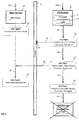
- FIG. 3 there is shown therein a composite block diagram and flow chart illustrating different tasks performed according to embodiments of the proposed method for Java Card application memory footprint optimization.
- the method basically relies on a pre-separation of the Java Card applet into a main package and a CPS package.
- the method comprises the following.
- a Card Personalization Specification (CPS) package 21, containing the CPS applet 25 within which the personalization code 13 required by the personalization of said main application is included is further loaded into the memory of the same Java Card.
- these steps of loading are illustrated by arrows 31 a and 31 b, respectively.
- the main package 11 can be loaded into the Read-Only Memory (ROM) of the Java Card and the CPS package can be loaded into the Non Volatile Memory (NVM) of said Java Card.
- ROM Read-Only Memory
- NVM Non Volatile Memory
- the creation of the CPS object 32 by the CPS applet 25 in the CPS package 21 loaded on the memory of the card is illustrated by the arrow 33 in Figure 3 .
- the CPS object 32 has the ownership of the CPS applet 25 and the firewall context of the CPS package 21. This is so because the CPS object 32 has been created from the CPS applet instance 25 which, itself, was created from the CPS package 21.
- the main applet 12 calls the CPS object to handle its personalization. This is possible since, as previously mentioned, the main package 11 and the CPS package 21 are associated (for instance through the appropriate use of Java Card Shareable Interface), and can thus share resources.
- the personalization code 13 within the CPS object 32 cannot access the main applet 12. Indeed, as previously described with reference to Figure 2 , should the CPS object 32 try to access the main applet 12 as illustrated by the arrow 37, then it would be blocked by the firewall 41 as illustrated by the cross 24.
- the method then continues with the changing of the firewall context and of the ownership of the CPS object 32 as illustrated by the arrow 34.
- the ownership change can be for instance performed in the CPS applet before the CPS object is obtained by the main applet or in the main applet once the CPS object is obtained by said main applet. In both cases this change occurs before the execution of the personalization code hereafter mentioned.
- the CPS object with changed firewall context and ownership is represented by block 32'.
- This change can be achieved, for instance, by executing one or more Application Programming Interface (API) that is/are dedicated to changing the firewall context and/or the ownership of an object within the Java Card.
- API Application Programming Interface
- the firewall context can be changed by a first API, and the ownership can be changed by this first API, or by a second API distinct from said first API.
- this(these) API(s) can be provided, for instance, by the Java Card platform or can be created specifically.
- the process then goes on with executing the personalization code, from the CPS object 32', to personalize the data objects of the main application 12 as illustrated by the arrow 35. It shall be noted that the CPS object 32' can access the main applet 12 for that purpose, because the firewall context change illustrated by the arrow 34 has occurred.
- main application 12 with personalized data objects is represented by block 12'.
- the CPS package 21 can be deleted as illustrated by the arrow 40.
- the personalization code is also deleted, since it is a part of CPS package code.
- embodiments of the method as described above allow to personalize a Java Card application while eventually removing all the code elements related to its personalization. Consequently, this advantageously provides memory footprint reduction for the main applet.
- the method thus allows the personalization of an application created/installed from a package to be performed from the object created/installed from a different package. Further, the later package can be removed after the completion of the personalization process without removing any of the elements required by the main applet for its functioning.
- the present invention can also be embedded in a computer program product, which comprises all the features enabling the implementation of the methods described herein, and which - when loaded in an information processing system - is able to carry out these methods.
- Computer program means or computer program in the present context mean any expression, in any language, code or notation, of a set of instructions intended to cause a system having an information processing capability to perform a particular function either directly or after conversion to another language.
- Such a computer program can be stored on a computer or machine readable medium allowing data, instructions, messages or message packets, and other machine readable information to be read from the medium.
- the computer or machine readable medium may include non-volatile memory, such as ROM, Flash memory, Disk drive memory, CD-ROM, and other permanent storage.
- a computer or machine readable medium may include, for example, volatile storage such as RAM, buffers, cache memory, and network circuits.
- the computer or machine readable medium may comprise computer or machine readable information in a transitory state medium such as a network link and/or a network interface, including a wired network or a wireless network, that allow a device to read such computer or machine readable information.
Landscapes
- Engineering & Computer Science (AREA)
- Theoretical Computer Science (AREA)
- Software Systems (AREA)
- Business, Economics & Management (AREA)
- Physics & Mathematics (AREA)
- General Physics & Mathematics (AREA)
- Accounting & Taxation (AREA)
- General Engineering & Computer Science (AREA)
- Computer Networks & Wireless Communication (AREA)
- General Business, Economics & Management (AREA)
- Strategic Management (AREA)
- Microelectronics & Electronic Packaging (AREA)
- Computer Hardware Design (AREA)
- Computer Security & Cryptography (AREA)
- Finance (AREA)
- Mathematical Physics (AREA)
- Stored Programmes (AREA)
- Devices For Executing Special Programs (AREA)
- Management, Administration, Business Operations System, And Electronic Commerce (AREA)
Priority Applications (10)
| Application Number | Priority Date | Filing Date | Title |
|---|---|---|---|
| EP16306105.4A EP3291088A1 (de) | 2016-09-02 | 2016-09-02 | Speicherkapazitätsoptimierung für java-card-anwendung |
| PT177585676T PT3507690T (pt) | 2016-09-02 | 2017-09-04 | Otimização da pegada de memória de aplicação de cartão java card |
| CN201780053746.0A CN109643239B (zh) | 2016-09-02 | 2017-09-04 | Java卡应用存储器占用空间优化 |
| PL17758567.6T PL3507690T3 (pl) | 2016-09-02 | 2017-09-04 | Optymalizacja wykorzystania pamięci aplikacji java card |
| DK17758567.6T DK3507690T3 (da) | 2016-09-02 | 2017-09-04 | Optimering af en java card-applikations hukommelsespladsbehov |
| US16/327,271 US10922682B2 (en) | 2016-09-02 | 2017-09-04 | Java card application memory footprint optimization |
| SG11201901361TA SG11201901361TA (en) | 2016-09-02 | 2017-09-04 | Java card application memory footprint optimization |
| ES17758567T ES2927748T3 (es) | 2016-09-02 | 2017-09-04 | Optimización de huella de memoria de aplicación de tarjeta java |
| EP17758567.6A EP3507690B1 (de) | 2016-09-02 | 2017-09-04 | Speicherkapazitätsoptimierung für java-card-anwendung |
| PCT/EP2017/072068 WO2018042029A1 (en) | 2016-09-02 | 2017-09-04 | Java card application memory footprint optimization |
Applications Claiming Priority (1)
| Application Number | Priority Date | Filing Date | Title |
|---|---|---|---|
| EP16306105.4A EP3291088A1 (de) | 2016-09-02 | 2016-09-02 | Speicherkapazitätsoptimierung für java-card-anwendung |
Publications (1)
| Publication Number | Publication Date |
|---|---|
| EP3291088A1 true EP3291088A1 (de) | 2018-03-07 |
Family
ID=57068019
Family Applications (2)
| Application Number | Title | Priority Date | Filing Date |
|---|---|---|---|
| EP16306105.4A Withdrawn EP3291088A1 (de) | 2016-09-02 | 2016-09-02 | Speicherkapazitätsoptimierung für java-card-anwendung |
| EP17758567.6A Active EP3507690B1 (de) | 2016-09-02 | 2017-09-04 | Speicherkapazitätsoptimierung für java-card-anwendung |
Family Applications After (1)
| Application Number | Title | Priority Date | Filing Date |
|---|---|---|---|
| EP17758567.6A Active EP3507690B1 (de) | 2016-09-02 | 2017-09-04 | Speicherkapazitätsoptimierung für java-card-anwendung |
Country Status (9)
| Country | Link |
|---|---|
| US (1) | US10922682B2 (de) |
| EP (2) | EP3291088A1 (de) |
| CN (1) | CN109643239B (de) |
| DK (1) | DK3507690T3 (de) |
| ES (1) | ES2927748T3 (de) |
| PL (1) | PL3507690T3 (de) |
| PT (1) | PT3507690T (de) |
| SG (1) | SG11201901361TA (de) |
| WO (1) | WO2018042029A1 (de) |
Cited By (2)
| Publication number | Priority date | Publication date | Assignee | Title |
|---|---|---|---|---|
| CN110119346A (zh) * | 2019-04-30 | 2019-08-13 | 维沃移动通信有限公司 | 终端运行状态的判断方法及终端 |
| EP3825881A1 (de) * | 2019-11-21 | 2021-05-26 | IDEMIA France | Verwaltung der personalisierung in einer vorrichtung |
Families Citing this family (2)
| Publication number | Priority date | Publication date | Assignee | Title |
|---|---|---|---|---|
| CN114489593A (zh) * | 2021-12-27 | 2022-05-13 | 无锡融卡科技有限公司 | 便于应用升级的Java卡和Java卡应用升级方法 |
| CN115599409B (zh) * | 2022-11-30 | 2023-03-21 | 紫光同芯微电子有限公司 | 一种Java卡的应用程序安装方法及装置 |
Citations (2)
| Publication number | Priority date | Publication date | Assignee | Title |
|---|---|---|---|---|
| EP1936574A1 (de) * | 2006-12-01 | 2008-06-25 | Cassis International PTE Ltd. | CAP-Datei zur Personalisierung von Java-Anwendungen |
| US20110126183A1 (en) * | 2008-07-21 | 2011-05-26 | Eddy Bernard | Loading and updating an application requiring personalization |
Family Cites Families (15)
| Publication number | Priority date | Publication date | Assignee | Title |
|---|---|---|---|---|
| WO1998043212A1 (en) | 1997-03-24 | 1998-10-01 | Visa International Service Association | A system and method for a multi-application smart card which can facilitate a post-issuance download of an application onto the smart card |
| US7374099B2 (en) * | 2004-02-24 | 2008-05-20 | Sun Microsystems, Inc. | Method and apparatus for processing an application identifier from a smart card |
| US7278582B1 (en) * | 2004-12-03 | 2007-10-09 | Sun Microsystems, Inc. | Hardware security module (HSM) chip card |
| EP1873728B1 (de) | 2006-06-29 | 2013-11-27 | Incard SA | Verfahren zur Konfigurierung einer IC-Karte für den Empfang von Personalisierungsbefehlen |
| EP1962204A1 (de) * | 2007-02-21 | 2008-08-27 | Axalto SA | Persönlicher Token mit erweiterten Fähigkeiten zur Lieferung von HTML-Daten |
| US8620260B2 (en) * | 2007-04-27 | 2013-12-31 | American Express Travel Related Services Company, Inc. | Payment application download to mobile phone and phone personalization |
| EP2001202A1 (de) * | 2007-06-06 | 2008-12-10 | Axalto SA | Verfahren zur Verwaltung der Kommunikation zwischen einem elektronischen Token und einem entfernten Webserver |
| CN101266636A (zh) * | 2008-03-07 | 2008-09-17 | 韩青林 | 计算机安全存储卡及存储方法 |
| CN101739280A (zh) * | 2008-11-11 | 2010-06-16 | 爱思开电讯投资(中国)有限公司 | 用于java卡的字节码优化系统和方法 |
| CA2807972A1 (en) * | 2010-08-11 | 2012-02-16 | Security First Corp. | Systems and methods for secure multi-tenant data storage |
| EP2461613A1 (de) * | 2010-12-06 | 2012-06-06 | Gemalto SA | Verfahren und System zur Handhabung von UICC-Daten |
| US8646059B1 (en) * | 2010-12-17 | 2014-02-04 | Google Inc. | Wallet application for interacting with a secure element application without a trusted server for authentication |
| CN103778067A (zh) * | 2014-02-11 | 2014-05-07 | 珠海市金邦达保密卡有限公司 | Java卡的对象处理方法、装置和Java卡 |
| CN105843807B (zh) * | 2015-01-12 | 2019-07-05 | 中国移动通信集团公司 | 一种数据删除方法、设备及平台 |
| CN105307152B (zh) * | 2015-11-17 | 2018-12-28 | 成都工百利自动化设备有限公司 | 一种多任务sim/usim管理方法及系统 |
-
2016
- 2016-09-02 EP EP16306105.4A patent/EP3291088A1/de not_active Withdrawn
-
2017
- 2017-09-04 US US16/327,271 patent/US10922682B2/en active Active
- 2017-09-04 CN CN201780053746.0A patent/CN109643239B/zh active Active
- 2017-09-04 WO PCT/EP2017/072068 patent/WO2018042029A1/en not_active Ceased
- 2017-09-04 PL PL17758567.6T patent/PL3507690T3/pl unknown
- 2017-09-04 EP EP17758567.6A patent/EP3507690B1/de active Active
- 2017-09-04 PT PT177585676T patent/PT3507690T/pt unknown
- 2017-09-04 ES ES17758567T patent/ES2927748T3/es active Active
- 2017-09-04 SG SG11201901361TA patent/SG11201901361TA/en unknown
- 2017-09-04 DK DK17758567.6T patent/DK3507690T3/da active
Patent Citations (2)
| Publication number | Priority date | Publication date | Assignee | Title |
|---|---|---|---|---|
| EP1936574A1 (de) * | 2006-12-01 | 2008-06-25 | Cassis International PTE Ltd. | CAP-Datei zur Personalisierung von Java-Anwendungen |
| US20110126183A1 (en) * | 2008-07-21 | 2011-05-26 | Eddy Bernard | Loading and updating an application requiring personalization |
Cited By (3)
| Publication number | Priority date | Publication date | Assignee | Title |
|---|---|---|---|---|
| CN110119346A (zh) * | 2019-04-30 | 2019-08-13 | 维沃移动通信有限公司 | 终端运行状态的判断方法及终端 |
| CN110119346B (zh) * | 2019-04-30 | 2023-02-24 | 维沃移动通信有限公司 | 终端运行状态的判断方法及终端 |
| EP3825881A1 (de) * | 2019-11-21 | 2021-05-26 | IDEMIA France | Verwaltung der personalisierung in einer vorrichtung |
Also Published As
| Publication number | Publication date |
|---|---|
| ES2927748T3 (es) | 2022-11-10 |
| US20190213042A1 (en) | 2019-07-11 |
| PL3507690T3 (pl) | 2022-10-31 |
| EP3507690B1 (de) | 2022-08-31 |
| EP3507690A1 (de) | 2019-07-10 |
| DK3507690T3 (da) | 2022-09-12 |
| CN109643239B (zh) | 2023-09-05 |
| US10922682B2 (en) | 2021-02-16 |
| CN109643239A (zh) | 2019-04-16 |
| WO2018042029A1 (en) | 2018-03-08 |
| SG11201901361TA (en) | 2019-03-28 |
| PT3507690T (pt) | 2022-10-06 |
Similar Documents
| Publication | Publication Date | Title |
|---|---|---|
| EP3507689B1 (de) | Java-card-anwendungspaket zur verwendung als ein bibliothekspaket | |
| US10922682B2 (en) | Java card application memory footprint optimization | |
| JP5457496B2 (ja) | 携帯型データ記憶媒体のメモリ管理 | |
| US20210200862A1 (en) | Systems and methods for reliably injecting control flow integrity into binaries by tokenizing return addresses | |
| CN110119601B (zh) | 基于应用程序安装包的程序加固方法及装置 | |
| CN116661910B (zh) | 一种应用调用的方法及装置 | |
| CN103761118B (zh) | 一种智能卡及智能卡内部署应用的方法 | |
| CN1260644C (zh) | 可携式数据载体之微处理器电路 | |
| EP4020297B1 (de) | Verfahren zur verwaltung eines flüchtigen speichers und java-kartenvorrichtung | |
| EP2898413B1 (de) | Ein sicherheitsmodul und ein verfahren zur optimalen speicherausnutzung | |
| FR2864650A1 (fr) | Procede de mise a jour d'applications pour carte a puce | |
| CN115291918A (zh) | 用于智能卡的代码升级方法及装置、电子设备、存储介质 | |
| US20190188689A1 (en) | Loading a java card memory with a java card package through a card personalization specification flow | |
| CN110110506B (zh) | 基于应用程序安装包的程序加固方法及装置 | |
| CN103455342B (zh) | 一种主题调用的方法及装置 | |
| CN110297666B (zh) | 热修复方法、装置、系统及存储介质 | |
| AU775313B2 (en) | Moving set data communications | |
| US20150261663A1 (en) | Method for managing the memory resources of a security device, such as a chip card, and security device implementing said method | |
| EP3513286B1 (de) | Statisches bestimmen einer programm-speicheranforderungen | |
| KR102758329B1 (ko) | 자바 카드, 이를 포함하는 자바 카드 애플릿 업데이트 시스템, 및 자바 카드 애플릿 업데이트 방법 | |
| KR20250065405A (ko) | 별도의 메모리 관리 유닛 없이 마이크로 컨트롤러의 메인 메모리의 메모리 내용을 변경하는 방법, 그의 사용, 마이크로 컨트롤러 및 차량 | |
| US10789075B2 (en) | Method and apparatus for security certified smart card OS diversification system | |
| WO2026044982A1 (zh) | 内存管理方法、装置、受限设备、终端、存储介质及程序 | |
| JP2005301403A (ja) | プログラム実行装置およびプログラム実行方法 |
Legal Events
| Date | Code | Title | Description |
|---|---|---|---|
| PUAI | Public reference made under article 153(3) epc to a published international application that has entered the european phase |
Free format text: ORIGINAL CODE: 0009012 |
|
| STAA | Information on the status of an ep patent application or granted ep patent |
Free format text: STATUS: THE APPLICATION HAS BEEN PUBLISHED |
|
| AK | Designated contracting states |
Kind code of ref document: A1 Designated state(s): AL AT BE BG CH CY CZ DE DK EE ES FI FR GB GR HR HU IE IS IT LI LT LU LV MC MK MT NL NO PL PT RO RS SE SI SK SM TR |
|
| AX | Request for extension of the european patent |
Extension state: BA ME |
|
| STAA | Information on the status of an ep patent application or granted ep patent |
Free format text: STATUS: THE APPLICATION IS DEEMED TO BE WITHDRAWN |
|
| 18D | Application deemed to be withdrawn |
Effective date: 20180908 |