EP3291108A1 - System und verfahren zur ermöglichung der präsentation und/oder überprüfung von kundenbezogenen informationen - Google Patents
System und verfahren zur ermöglichung der präsentation und/oder überprüfung von kundenbezogenen informationen Download PDFInfo
- Publication number
- EP3291108A1 EP3291108A1 EP17001469.0A EP17001469A EP3291108A1 EP 3291108 A1 EP3291108 A1 EP 3291108A1 EP 17001469 A EP17001469 A EP 17001469A EP 3291108 A1 EP3291108 A1 EP 3291108A1
- Authority
- EP
- European Patent Office
- Prior art keywords
- risk profile
- view
- profile value
- user interface
- client
- Prior art date
- Legal status (The legal status is an assumption and is not a legal conclusion. Google has not performed a legal analysis and makes no representation as to the accuracy of the status listed.)
- Withdrawn
Links
Images



Classifications
-
- G—PHYSICS
- G06—COMPUTING OR CALCULATING; COUNTING
- G06Q—INFORMATION AND COMMUNICATION TECHNOLOGY [ICT] SPECIALLY ADAPTED FOR ADMINISTRATIVE, COMMERCIAL, FINANCIAL, MANAGERIAL OR SUPERVISORY PURPOSES; SYSTEMS OR METHODS SPECIALLY ADAPTED FOR ADMINISTRATIVE, COMMERCIAL, FINANCIAL, MANAGERIAL OR SUPERVISORY PURPOSES, NOT OTHERWISE PROVIDED FOR
- G06Q40/00—Finance; Insurance; Tax strategies; Processing of corporate or income taxes
- G06Q40/04—Trading; Exchange, e.g. stocks, commodities, derivatives or currency exchange
-
- G—PHYSICS
- G06—COMPUTING OR CALCULATING; COUNTING
- G06F—ELECTRIC DIGITAL DATA PROCESSING
- G06F16/00—Information retrieval; Database structures therefor; File system structures therefor
- G06F16/90—Details of database functions independent of the retrieved data types
- G06F16/95—Retrieval from the web
- G06F16/957—Browsing optimisation, e.g. caching or content distillation
- G06F16/9574—Browsing optimisation, e.g. caching or content distillation of access to content, e.g. by caching
-
- G—PHYSICS
- G06—COMPUTING OR CALCULATING; COUNTING
- G06F—ELECTRIC DIGITAL DATA PROCESSING
- G06F3/00—Input arrangements for transferring data to be processed into a form capable of being handled by the computer; Output arrangements for transferring data from processing unit to output unit, e.g. interface arrangements
- G06F3/01—Input arrangements or combined input and output arrangements for interaction between user and computer
- G06F3/048—Interaction techniques based on graphical user interfaces [GUI]
- G06F3/0484—Interaction techniques based on graphical user interfaces [GUI] for the control of specific functions or operations, e.g. selecting or manipulating an object, an image or a displayed text element, setting a parameter value or selecting a range
Definitions
- the invention relates to presentation and/or review of client-related information, including, for example, cache-based presentation and/or review of client-related information, real-time determination of client-related information, etc.
- client-related information presentation/review systems generally rely on information available at one or more databases (e.g., databases internal or external to such systems) to present relevant information to a user, and users of typical presentation/review systems may suffer from delays resulting from the systems having to retrieve all information relevant to a user request from those databases if, for instance, none of the relevant information has been recently accessed by the user. Such delays are further increased when, for example, the requested information must be calculated from the retrieved relevant information.
- typical presentation/review systems may lack one or more features described herein.
- risk profile values may be determined based on account risk profile information associated with individual accounts. Responsive to the determination of the profile values, at least one subset of the risk profile values may be caused to be presented on a first view of a user interface (that is provided on the user interface prior to a second view of the user interface), and at least one other subset of the risk profile values may be caused to be stored in cache memory while the first view is provided on the user interface and prior to the second view being provided on the user interface.
- the other subset of the risk profile values may be obtained from the cache memory and caused to be presented on the second view of the user interface.
- the other subset of the risk profile values may be stored in the cache memory, for example, to significantly decrease request-to-presentation delays.
- a computer system may be programmed to: obtain, via a user interface, a request for client information, the client information comprising risk profile information; determine a first risk profile value based on first account risk profile information associated with first individual accounts and a second risk profile value based on second account risk profile information associated with second individual accounts; responsive to the client information request, cause the first risk profile value to be presented on a first view of the user interface; responsive to the client information request, cause the second risk profile value to be stored in cache memory while the first view is provided on the user interface and prior to a second view being provided on the user interface; and responsive to an indication to provide the second view on the user interface, obtain the second risk profile value from the cache memory and cause the second risk profile value to be presented on the second view of the user interface.
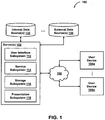
- FIG. 1 shows a system 100 for facilitating presentation and/or review of client-related information, in accordance with one or more embodiments.
- system 100 may comprise server 102 (or multiple servers 102).
- Server 102 may comprise user interface subsystem 112, service subsystem 114, storage subsystem 116, presentation subsystem 118, or other components.
- System 100 may further comprise user device 104 (or multiple user devices 104a-104n) that communicates over network 150 with server 102, e.g., to access information from a database that may include internal data source(s) 132 and/or external data source(s) 134.
- User device 104 may include any type of mobile terminal, fixed terminal, or other device.
- a user device may include a desktop computer, a laptop computer, a tablet computer, a smartphone, a mobile telephone, a personal digital assistant (PDA), a game console, a vehicle-mounted computer, a wearable device, or other user device.
- PDA personal digital assistant
- Users may, for instance, utilize one or more user devices to interact with one another, one or more servers, or other components of system 100. Users may, for instance, utilize one or more user devices 104 to interact with server 102 or other components of system 100. It should be noted that, while one or more operations are described herein as being performed by components of server 102, those operations may, in some embodiments, be performed by components of user device 104 or other components of system 100 (or vice versa).
- a client-related information presentation and/or review system may be provided to facilitate access or review of client-related information by financial advisors, supervisors, or other users.
- the system may enable a user to access one or more tasks related to review of one or more client accounts and group the tasks based on review due dates or other predetermined criteria (e.g., to provide a user-friendly interface).
- the system may provide a user with (1) asset values (e.g., account asset values, client asset values, household asset values, etc.), (2) asset allocation by account, by client, or by household, (3) risk profiles (e.g., account risk profiles, client risk profiles, household risk profiles, etc.), (4) account, client, or household review histories, or (5) other client information.
- one or more tasks may comprise review of items, such as infrequent trading, accounts outside risk tolerance, concentrated holdings, accounts where an initial profiling of the account risk profile deviates from the risk limits assigned based on predetermined market assumptions, or other items for attention.
- items such as infrequent trading, accounts outside risk tolerance, concentrated holdings, accounts where an initial profiling of the account risk profile deviates from the risk limits assigned based on predetermined market assumptions, or other items for attention.
- the system may escalate those tasks to a supervisor or other user for review and/or further documentation.
- certain information may be stored in cache memory prior to an indication to present the information to a user, and the information may be obtained from the cache memory responsive to the indication to present the information (or an indication to provide a view that is to include the information).
- certain information may be calculated on-the-fly responsive to a client information request.
- the information (calculated on-the-fly) may be calculated and stored in cache memory prior to an indication to present the information to a user, and the information may be obtained from the cache memory responsive to the indication to present the information (or an indication to provide a view that is to include the information).
- risk profile values may be determined based on account risk profile information associated with individual accounts. Responsive to the determination of the profile values, at least one subset of the risk profile values may be caused to be presented on a first view of a user interface (that is provided on the user interface prior to a second view of the user interface), and at least one other subset of the risk profile values may be caused to be stored in cache memory while the first view is provided on the user interface and prior to the second view being provided on the user interface. Responsive to an indication to provide the second view on the user interface, the other subset of the risk profile values (stored in the cache memory) may be obtained from the cache memory and caused to be presented on the second view of the user interface. In this way, prior to the indication to provide the second view on the user interface, the other subset of the risk profile values may be stored in the cache memory, for example, to significantly decrease request-to-presentation delays.
- risk profile values may be calculated on-the-fly using account risk profile information associated with individual accounts responsive to a client information request.
- a first subset of the risk profile values (to be presented on the first view of the user interface) and a second subset of risk profile values (to be presented on the second view of the user interface) may be calculated on-the-fly responsive to the client information request.
- the first subset of the risk profile values may be caused to be presented on the first view
- the second subset of the risk profile values may be caused to be stored in cache memory prior to the indication to provide the second view on the user interface.
- a request for the most up-to-date account risk profile information may be initiated responsive to obtaining the client information request so that, when the risk profile values are calculated on-the-fly, the resulting risk profile values reflect the most up-to-date values.
- other information may be determined (e.g., on-the-fly responsive to a client information request or other request), and, responsive to such determination, at least one subset of the determined information may be caused to be presented on a first view of a user interface (that is provided on the user interface prior to a second view of the user interface), and at least one other subset of the determined information may be caused to be stored in cache memory while the first view is provided on the user interface and prior to the second view being provided on the user interface. Responsive to an indication to provide the second view on the user interface, the other subset of the determined information (stored in the cache memory) may be obtained from the cache memory and caused to be presented on the second view of the user interface.
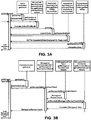
- storage subsystem 116 may store in cache (or other memory space) and subsequently load from the cache (or the other memory space) at least some information displayed on a dashboard (or other view) of an application with lower latency access times.
- one or more dashboard labels may be stored in cache and loaded from the cache to quickly display the dashboard labels to the user.
- Other content not stored in cache may also be obtained from one or more other sources and displayed to the user (with the dashboard labels) on the dashboard.
- information indicating due and/or overdue reviews for a given period (e.g., for a given month or year) may be obtained from the other sources and displayed on the dashboard.
- FIG. 3B shows a similar sequence flow to the flow in FIG. 3A for loading dashboard data related to features available to a supervisor.
- cache memory may comprise a hardware cache, a software cache, or other cache memory.
- a hardware cache may comprise a CPU cache, translation lookaside buffer (TLB), or other hardware cache.
- a software cache may comprise a disk cache, a web cache, or other software cache.
- the layered architecture shown in FIG. 2 may be utilized for facilitating presentation and/or review of client-related information.
- the architecture may include a presentation layer, a service interface layer, a business layer, and a resource access layer, each of which may support one or more technologies or features described herein.
- the presentation layer may support one or more web component technologies for displaying views to a user and for receiving user interactions at a user interface.
- one or more other architectures may be utilized for facilitating presentation and/or review of client-related information.
- user interface subsystem 112 may obtain a request for client information via a user interface (e.g., via a user input provided at the user interface, from a user device at which a user interface is presented, etc.).
- the request for client information may comprise a request for risk profile information associated with one or more clients, trading information associated with the clients, client identifying information associated with the clients, task information associated with the clients, or other client information.
- Risk profile information may comprise account risk values of individual accounts, risk values of individual assets or groups of assets of the individual accounts, or other risk profile information.
- Trading information may comprise information regarding executed trades associated with one or more clients, cancelled trades associated with the clients, trade bids or request for trade bids associated with the clients, or other trading information.
- Task information may comprise information regarding tasks to be completed with respect to an account, client, or household, due or overdue tasks of such tasks (to be completed), completed tasks, or other task information.
- tasks assigned to users may comprise review of items, such as infrequent trading, accounts outside risk tolerance, concentrated holdings, accounts where an initial profiling of the account risk profile deviates from the risk limits assigned based on predetermined market assumptions, or other items for attention.
- other tasks may be assigned.
- service subsystem 114 may obtain client information to be used to determine one or more values that are to be presented on one or more views of a user interface.
- the client information may be obtained from one or more databases internal to system 100 (e.g., internal data sources 132), one or more databases external to system 100 (e.g., external data sources 134, third party databases, etc.), or other data sources.
- service subsystem 114 may obtain (i) a first set of client information to be used to determine risk profile values that is to be presented on a first view of a user interface (e.g., from which the client information request was received), (ii) a second set of client information to be used to determine risk profile values that is to be presented on a second view of the user interface, or (ii) other information.
- the first set of client information may comprise first account risk profile information associated with first individual accounts
- the second set of client information may comprise second account risk profile information associated with second individual accounts.
- the first individual accounts may be associated with a first client or household
- the second individual accounts may be associated with a second client or household.
- the first individual accounts and the second individual accounts may be associated with the same client or household.
- service subsystem 114 may determine one or more risk profile values based on client information (e.g., account risk profile information or other client information). In some embodiments, service subsystem 114 may determine a first risk profile value based on first account risk profile information associated with first individual accounts, a second risk profile value based on the second account risk profile information associated with second individual accounts, or other values based on other information (e.g., on-the-fly calculation responsive to a client information request or other indication). As an example, a risk profile value may be calculated to be an average of individual account risk values (e.g., non-weighted averaging, a weighted average where each individual account risk value is assigned a weight corresponding to the account's cash value or worth, or other average).
- client information e.g., account risk profile information or other client information.
- service subsystem 114 may determine a first risk profile value based on first account risk profile information associated with first individual accounts, a second risk profile value based on the second account risk profile information associated with second individual
- the first risk profile value may be a first client risk profile value
- the second risk profile value may be a second client risk profile value.
- Service subsystem 114 may use first account risk values of the first individual accounts associated with a first client to determine the first client risk profile value, and use second account risk values of the second individual accounts associated with a second client to determine the second client risk profile value.
- the first risk profile value may be a first household risk profile value
- the second risk profile value may be a second household risk profile value.
- Service subsystem 114 may use first account risk values of the first individual accounts of individuals associated with a first household to determine the first household risk profile value, and use second account risk values of the second individual accounts of individuals associated with a second household to determine the second household risk profile value.
- one of the first risk profile value or the second risk profile value is a client risk profile value
- the other one of the first risk profile value or the second risk profile value is a household risk profile value.
- service subsystem 114 may use first account risk values of the first individual accounts associated with a first client to determine the first client risk profile value, and use second account risk values of the second individual accounts of individuals associated with a second household to determine the second household risk profile value.
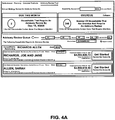
- a request for client information may be initiated when the "Advisory Review Tool" is selected.
- account risk profile information (associated with individual accounts of clients or households) or other client information may be obtained.
- the obtained account risk profile information may comprise account risk profile information associated with individual accounts of Joe and Jane Richards, account risk profile information associated with individual accounts of Sarah Allen, and account risk profile information associated with individual accounts of one or more other clients or households.
- the obtained account risk profile information may be utilized to determine respective risk profile values for the clients or households.
- presentation subsystem 118 may cause one or more risk profile values or other information to be presented on one or more views of a user interface.
- presentation subsystem 118 may provide a first view on the user interface prior to providing a second view on the user interface, and cause the first risk profile value to be presented on the first view of the user interface.
- Storage subsystem 116 may cause a second risk profile value to be stored in cache memory prior to the second view being provided on the user interface (and before, while, or after the first view is provided on the user interface).
- presentation subsystem 118 may obtain the second risk profile value from the cache memory and cause the second risk profile value to be presented on the second view of the user interface.
- the second view may replace the first view on the user interface such that the second view is viewable on the user interface in lieu of the first view.
- the second view may supplement the first view of the user interface such that at least a portion of the first view and the second view may be provided on the user interface at a given time.
- the indication to provide the second view on the user interface may comprise a user input indicating a request for the second view
- the second risk profile value may be obtained from the cache memory and caused to be presented on the second view of the user interface responsive to the user input indicating the second view request.
- at least one subset of the determined risk profile values may be presented on the view shown in FIG. 4A
- another subset of the determined risk profile values may be stored in cache memory.
- house risk profile values for Joe and Jane Richards e.g., "Moderately Conservative”
- Sarah Allen e.g., "Moderately Conservative
- account risk profile values, client risk profile values, or other risk profile values for Joe and Jane Richards and Sarah Allen may be stored in the cache memory.
- house risk profile values for other clients or households may be stored in the cache memory. Responsive to the user scrolling down (or providing another user input indicating a desire for an additional view), at least some of the house risk profile values for the other clients or households may be obtained from the cache memory and presented on the subsequent view that is loaded on the user interface.
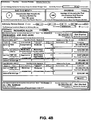
- at least some of the account risk profile values and client risk profile values for Joe and Jane Richards may be obtained from the cache memory and presented on the view shown in FIG. 4B (e.g., "Moderate” as a client risk profile value for Joe Richard, "Aggressive” as a client risk profile value for Jane Richards, and various account risk profile values for the individual accounts of Joe and Jane Richards).
- the indication to provide the second view on the user interface may comprise an automated script indicating a request for the second view, and the second risk profile value may be obtained from the cache memory and caused to be presented on the second view of the user interface responsive to the automated script indicating the second view request.
- an automated script or other component of the "Advisory Review Tool” may be configured to obtain at least some of the not-yet-presented values from cache memory and load those values on a periodic basis or in accordance with a predetermined schedule.
- the bottom portion of the user interface shown in FIG. 4A may be replaced with a new view every minute or other time period such that client information (e.g., risk profile values or other client information) may be obtained from the cache memory and presented on the new view in accordance with the automated script.
- service subsystem 114 may determine a trade count associated with a client based on trading information or other client information (e.g., account cash values, billing events, or other information). Presentation subsystem 118 may cause the trade count to be presented on a user interface.
- the trading information comprise information regarding executed trades associated with the client, cancelled trades associated with the client, trade bids or requests for trade bids associated with the client, or other trading information.
- service subsystem 114 may determine the trade count based on the trading information such that one or more executed trades are excluded from the trade count based on one or more predetermined criteria. Presentation subsystem 118 may cause the trade count to be presented on a user interface.
- the predetermined criteria may comprise (1) a criterion related to whether a trade was executed within a predetermined time period associated with a predetermined event (e.g., exclude trade if executed a certain number of days before and after an initial billing event, a contribution billing event, quarterly billing event, etc., or other predetermined event), (2) a criterion related to whether a trade was executed to cover a service fee (e.g., exclude trade if sales total is equal to or greater than associated service fee by no more than 10% or other percentage or amount), (3) a criterion related to whether an account (with which an executed trade is associated) holds at least a predetermined threshold amount in cash (e.g., do not exclude if the account holds at least 5% or other percentage or amount in cash), or (4) other predetermined criteria.
- a criterion related to whether a trade was executed within a predetermined time period associated with a predetermined event e.g., exclude trade if executed a certain number of days before and after an initial billing event,
- a trade count associated with a client may be obtained (e.g., calculated or retrieved from one or more sources), and storage subsystem 116 may be caused to be stored in cache memory prior to an indication to provide a view, of a user interface, on which the trade count is to be presented.
- the trade count may be stored in the cache memory while another view is provided on the user interface (e.g., where the other view includes another trade account for another client or other information).
- at least one subset of determined risk profile values is presented on a first view of the user interface
- at least one other subset of the determined risk profile values and the trade count for the client (and other information) may be stored in the cache memory.
- both the other subset of the determined risk profile values and the trade count for the client may be obtained from the cache memory and presented on the second view of the user interface.
- other information may be obtained (e.g., calculated or retrieved from one or more sources) and caused to be presented on a user interface responsive to one or more requests.
- task information may be obtained, and at least some of the task information may be caused to be stored in cache memory prior to an indication to provide a view on which the stored task information is to be presented. Responsive to an indication to provide the view, presentation subsystem 118 may obtain the stored task information from the cache memory and cause the stored task information to be presented on the view of the user interface. As an example, with respect to FIGS.
- task information indicating (1) tasks (e.g., tasks related to items for attention for Sarah Allen) for a user to complete, (2) one or more potential responses for completing the tasks, or (3) other information may be obtained from one or more sources.
- tasks e.g., tasks related to items for attention for Sarah Allen
- potential responses for completing the tasks are not presented on the first view of the user interface.
- the potential responses may be stored in cache memory when the potential responses were obtained (along with the indicated task list) responsive to a request for the task information.
- the potential responses for that task item may be obtained from the cache memory and presented on a second view of the user interface (e.g., the "Explanation/Action" view shown in FIG. 5B ).
- a second view of the user interface e.g., the "Explanation/Action” view shown in FIG. 5B
- different potential responses for that other task item may be obtained from the cached memory and presented on a third view of the user interface (e.g., the "Explanation/Action" view shown in FIG. 5C ).
- FIGS. 6 and 7 are example flowcharts of processing operations of methods that enable the various features and functionality of the system as described in detail above.
- the processing operations of each method presented below are intended to be illustrative and non-limiting. In some embodiments, for example, the methods may be accomplished with one or more additional operations not described, and/or without one or more of the operations discussed. Additionally, the order in which the processing operations of the methods are illustrated (and described below) is not intended to be limiting.
- the methods may be implemented in one or more processing devices (e.g., a digital processor, an analog processor, a digital circuit designed to process information, an analog circuit designed to process information, a state machine, and/or other mechanisms for electronically processing information).
- the processing devices may include one or more devices executing some or all of the operations of the methods in response to instructions stored electronically on an electronic storage medium.
- the processing devices may include one or more devices configured through hardware, firmware, and/or software to be specifically designed for execution of one or more of the operations of the methods.
- FIG. 6 shows a flowchart of a method 600 of facilitating cache-based presentation and/or review of client-related information, in accordance with one or more embodiments.
- a request for client information may be obtained (e.g., via a user input provided at a user interface, from a user device at which the user interface is presented, etc.).
- the request for client information may comprise a request for risk profile information or other client information.
- Operation 602 may be performed by a user interface subsystem that is the same as or similar to user interface subsystem 112, in accordance with one or more embodiments.
- a first risk value may be determined based on first account risk profile information, and a second risk value may be determined based on second account risk profile information.
- the first account risk profile information may be associated with first individual accounts
- the second account risk profile information may be associated with second individual accounts.
- the first individual accounts may be associated with a first client
- the second individual accounts may be associated with a second client.
- Operation 604 may be performed by a service subsystem that is the same as or similar to service subsystem 114, in accordance with one or more embodiments.
- the first risk profile value may be a first client risk profile value
- the first risk profile value may be a first household risk profile value
- the first risk profile value may be caused to be presented on a first view of a user interface responsive to the client information request.
- the first view may be provided on the user interface prior to a second view (e.g., on which the second risk profile value or other information may be caused to be presented).
- Operation 606 may be performed by a presentation subsystem that is the same as or similar to presentation subsystem 118, in accordance with one or more embodiments.
- the second risk profile value may be caused to be stored in cache memory responsive to the client information request.
- the second risk profile value may be caused to be stored while the first view is provided on the user interface and prior to the second view being provided on the user interface.
- Operation 608 may be performed by a storage subsystem that is the same as or similar to storage subsystem 116, in accordance with one or more embodiments.
- the second risk profile value may be obtained from the cache memory and caused to be presented on the second view of the user interface.
- the second risk profile value may be obtained and caused to be presented on the second view responsive to an indication to provide the second view on the user interface.
- Operation 610 may be performed by a presentation subsystem that is the same as or similar to presentation subsystem 118, in accordance with one or more embodiments.
- the indication to provide the second view on the user interface may comprise a user input indicating a request for the second view, and the second risk profile value may be obtained from the cache memory and caused to be presented on the second view of the user interface responsive to the user input indicating the second view request.
- the indication to provide the second view on the user interface may comprise an automated script indicating a request for the second view, and the second risk profile value may be obtained from the cache memory and caused to be presented on the second view of the user interface responsive to the automated script indicating the second view request.
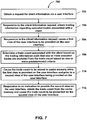
- FIG. 7 shows a flowchart of a method 700 of facilitating cache-based presentation and/or review of client-related information, in accordance with one or more embodiments.
- a request for client information may be obtained via a user interface from a user device at which the user interface is presented.
- the request for client information may comprise a request for trading information or other client information.
- Operation 702 may be performed by a user interface subsystem that is the same as or similar to user interface subsystem 112, in accordance with one or more embodiments.
- Operation 704 trading information regarding executed trades associated with a client may be obtained responsive to the client information request.
- Operation 704 may be performed by a service subsystem that is the same as or similar to service subsystem 114, in accordance with one or more embodiments.
- a first view of the user interface may be caused to be provided on the user interface.
- Operation 706 may be performed by a presentation subsystem that is the same as or similar to presentation subsystem 118, in accordance with one or more embodiments.
- a trade count associated with the client may be determined based on the trading information.
- the trade count may be determined such that one or more executed trades are excluded from the trade count based on one or more predetermined criteria.
- Operation 708 may be performed by a service subsystem that is the same as or similar to service subsystem 114, in accordance with one or more embodiments.
- the trade count may be caused to be stored in cache memory while the first view is provided on the user interface and prior to a second view being provided on the user interface.
- Operation 710 may be performed by a storage subsystem that is the same as or similar to storage subsystem 116, in accordance with one or more embodiments.
- the trade count may be obtained from the cache memory and caused to be presented on the second view of the user interface.
- the trade count may be obtained and caused to be presented on the second view of the user interface responsive to an indication to provide the second view on the user interface.
- Operation 712 may be performed by a presentation subsystem that is the same as or similar to presentation subsystem 118, in accordance with one or more embodiments.
- the indication to provide the second view on the user interface may comprise a user input indicating a request for the second view, and the trade count may be obtained from the cache memory and caused to be presented on the second view of the user interface responsive to the user input indicating the second view request.
- the indication to provide the second view on the user interface may comprise an automated script indicating a request for the second view, and the trade count may be obtained from the cache memory and caused to be presented on the second view of the user interface responsive to the automated script indicating the second view request.
- the various computers and subsystems illustrated in FIG. 1 may include one or more computing devices that are programmed to perform the functions described herein.
- the computing devices may include one or more electronic storages (e.g., internal data source(s) 132 or other electric storages), one or more physical processors programmed with one or more computer program instructions, and/or other components.
- the computing devices may include communication lines or ports to enable the exchange of information with a network (e.g., network 150) or other computing platforms via wired or wireless techniques (e.g., Ethernet, fiber optics, coaxial cable, WiFi, Bluetooth, near field communication, or other technologies).
- the computing devices may include a plurality of hardware, software, and/or firmware components operating together.
- the computing devices may be implemented by a cloud of computing platforms operating together as the computing devices.
- the electronic storages may include non-transitory storage media that electronically stores information.
- the electronic storage media of the electronic storages may include one or both of system storage that is provided integrally (e.g., substantially non-removable) with servers or client computing platforms or removable storage that is removably connectable to the servers or client computing platforms via, for example, a port (e.g., a USB port, a firewire port, etc.) or a drive (e.g., a disk drive, etc.).
- a port e.g., a USB port, a firewire port, etc.
- a drive e.g., a disk drive, etc.
- the electronic storages may include one or more of optically readable storage media (e.g., optical disks, etc.), magnetically readable storage media (e.g., magnetic tape, magnetic hard drive, floppy drive, etc.), electrical charge-based storage media (e.g., EEPROM, RAM, etc.), solid-state storage media (e.g., flash drive, etc.), and/or other electronically readable storage media.
- the electronic storages may include one or more virtual storage resources (e.g., cloud storage, a virtual private network, and/or other virtual storage resources).
- the electronic storage may store software algorithms, information determined by the processors, information received from servers, information received from client computing platforms, or other information that enables the functionality as described herein.
- the processors may be programmed to provide information processing capabilities in the computing devices.
- the processors may include one or more of a digital processor, an analog processor, a digital circuit designed to process information, an analog circuit designed to process information, a state machine, and/or other mechanisms for electronically processing information.
- the processors may include a plurality of processing units. These processing units may be physically located within the same device, or the processors may represent processing functionality of a plurality of devices operating in coordination.
- the processors may be programmed to execute computer program instructions to perform functions described herein of subsystems 112-118 or other subsystems.
- the processors may be programmed to execute computer program instructions by software; hardware; firmware; some combination of software, hardware, or firmware; and/or other mechanisms for configuring processing capabilities on the processors.
- subsystems 112-118 may provide more or less functionality than is described.
- one or more of subsystems 112-118 may be eliminated, and some or all of its functionality may be provided by other ones of subsystems 112-118.
- additional subsystems may be programmed to perform some or all of the functionality attributed herein to one of subsystems 112-118.
Landscapes
- Engineering & Computer Science (AREA)
- Theoretical Computer Science (AREA)
- Business, Economics & Management (AREA)
- Physics & Mathematics (AREA)
- General Physics & Mathematics (AREA)
- General Engineering & Computer Science (AREA)
- Accounting & Taxation (AREA)
- Finance (AREA)
- Databases & Information Systems (AREA)
- Development Economics (AREA)
- General Business, Economics & Management (AREA)
- Technology Law (AREA)
- Strategic Management (AREA)
- Marketing (AREA)
- Economics (AREA)
- Data Mining & Analysis (AREA)
- Human Computer Interaction (AREA)
- Information Transfer Between Computers (AREA)
Applications Claiming Priority (1)
| Application Number | Priority Date | Filing Date | Title |
|---|---|---|---|
| US15/254,584 US20180060956A1 (en) | 2016-09-01 | 2016-09-01 | System and method for facilitating presentation and/or review of client-related information |
Publications (1)
| Publication Number | Publication Date |
|---|---|
| EP3291108A1 true EP3291108A1 (de) | 2018-03-07 |
Family
ID=59772334
Family Applications (1)
| Application Number | Title | Priority Date | Filing Date |
|---|---|---|---|
| EP17001469.0A Withdrawn EP3291108A1 (de) | 2016-09-01 | 2017-08-31 | System und verfahren zur ermöglichung der präsentation und/oder überprüfung von kundenbezogenen informationen |
Country Status (2)
| Country | Link |
|---|---|
| US (1) | US20180060956A1 (de) |
| EP (1) | EP3291108A1 (de) |
Families Citing this family (2)
| Publication number | Priority date | Publication date | Assignee | Title |
|---|---|---|---|---|
| US10915960B1 (en) * | 2017-04-11 | 2021-02-09 | Wells Fargo Bank, N.A. | User interface for qualitative risk profile determination |
| US11182056B2 (en) * | 2018-01-31 | 2021-11-23 | Salesforce.Com, Inc. | Application navigation |
Citations (1)
| Publication number | Priority date | Publication date | Assignee | Title |
|---|---|---|---|---|
| US20130191713A1 (en) * | 2012-01-25 | 2013-07-25 | Microsoft Corporation | Presenting data driven forms |
-
2016
- 2016-09-01 US US15/254,584 patent/US20180060956A1/en not_active Abandoned
-
2017
- 2017-08-31 EP EP17001469.0A patent/EP3291108A1/de not_active Withdrawn
Patent Citations (1)
| Publication number | Priority date | Publication date | Assignee | Title |
|---|---|---|---|---|
| US20130191713A1 (en) * | 2012-01-25 | 2013-07-25 | Microsoft Corporation | Presenting data driven forms |
Also Published As
| Publication number | Publication date |
|---|---|
| US20180060956A1 (en) | 2018-03-01 |
Similar Documents
| Publication | Publication Date | Title |
|---|---|---|
| KR102947281B1 (ko) | 단일 측정 유닛으로 이종의 컴퓨팅 자원들의 사용량을 정량화하는 방법 | |
| US20230018850A1 (en) | Systems and methods for determining a significance index | |
| US10956455B2 (en) | Method for classifying and grouping users based on user activities | |
| JP2017536610A5 (de) | ||
| US20090037236A1 (en) | Analytical reporting and data mart architecture for public organizations | |
| Naraidoo et al. | Debt sustainability and financial crises in South Africa | |
| US20150154706A1 (en) | Systems and methods for financial asset analysis | |
| US20150081398A1 (en) | Determining a performance target setting | |
| Hermes et al. | The determinants of trade credit use: The case of the Tanzanian rice market | |
| US20180300796A1 (en) | Cognitive order processing by predicting resalable returns | |
| US20120316924A1 (en) | Dynamic Ticket Pricing | |
| EP3291108A1 (de) | System und verfahren zur ermöglichung der präsentation und/oder überprüfung von kundenbezogenen informationen | |
| CN115393095B (zh) | 基于云计算的页面数据的显示方法及装置、设备 | |
| US20160171608A1 (en) | Methods and systems for finding similar funds | |
| CN110574065A (zh) | 预测管理系统及方法 | |
| US20200104912A1 (en) | Systems and methods for real-time allocation of resources | |
| US20160210688A1 (en) | Enterprise resource management | |
| US11373237B2 (en) | Investment system interface with dedicated buffers | |
| WO2014020299A1 (en) | Location evaluation | |
| US10853432B2 (en) | Methods and systems for generating search results and recommendations based on multi-sourced two-way correspondence and relative entity prominence | |
| CA2842307A1 (en) | Systems and methods for client development | |
| US20220394006A1 (en) | Electronic Message Reply Criteria Tracking and Compensation Initiation System | |
| CN111125514A (zh) | 用户行为分析的方法、装置、电子设备和存储介质 | |
| US20160379304A1 (en) | Asset Selection and Monitoring Tool | |
| US20150193796A1 (en) | Dynamic property pricing system, software with dynamic pricing and method of performing same |
Legal Events
| Date | Code | Title | Description |
|---|---|---|---|
| PUAI | Public reference made under article 153(3) epc to a published international application that has entered the european phase |
Free format text: ORIGINAL CODE: 0009012 |
|
| AK | Designated contracting states |
Kind code of ref document: A1 Designated state(s): AL AT BE BG CH CY CZ DE DK EE ES FI FR GB GR HR HU IE IS IT LI LT LU LV MC MK MT NL NO PL PT RO RS SE SI SK SM TR |
|
| AX | Request for extension of the european patent |
Extension state: BA ME |
|
| 17P | Request for examination filed |
Effective date: 20180906 |
|
| RBV | Designated contracting states (corrected) |
Designated state(s): AL AT BE BG CH CY CZ DE DK EE ES FI FR GB GR HR HU IE IS IT LI LT LU LV MC MK MT NL NO PL PT RO RS SE SI SK SM TR |
|
| 17Q | First examination report despatched |
Effective date: 20191024 |
|
| STAA | Information on the status of an ep patent application or granted ep patent |
Free format text: STATUS: THE APPLICATION IS DEEMED TO BE WITHDRAWN |
|
| 18D | Application deemed to be withdrawn |
Effective date: 20200603 |