EP3291460B1 - Verfahren zum synchronisieren von phasen und vorrichtung damit - Google Patents
Verfahren zum synchronisieren von phasen und vorrichtung damit Download PDFInfo
- Publication number
- EP3291460B1 EP3291460B1 EP15895953.6A EP15895953A EP3291460B1 EP 3291460 B1 EP3291460 B1 EP 3291460B1 EP 15895953 A EP15895953 A EP 15895953A EP 3291460 B1 EP3291460 B1 EP 3291460B1
- Authority
- EP
- European Patent Office
- Prior art keywords
- phase
- value
- difference
- amplitude
- code word
- Prior art date
- Legal status (The legal status is an assumption and is not a legal conclusion. Google has not performed a legal analysis and makes no representation as to the accuracy of the status listed.)
- Active
Links
Images




Classifications
-
- H—ELECTRICITY
- H04—ELECTRIC COMMUNICATION TECHNIQUE
- H04B—TRANSMISSION
- H04B1/00—Details of transmission systems, not covered by a single one of groups H04B3/00 - H04B13/00; Details of transmission systems not characterised by the medium used for transmission
- H04B1/69—Spread spectrum techniques
- H04B1/707—Spread spectrum techniques using direct sequence modulation
- H04B1/7073—Synchronisation aspects
- H04B1/7075—Synchronisation aspects with code phase acquisition
-
- H—ELECTRICITY
- H04—ELECTRIC COMMUNICATION TECHNIQUE
- H04B—TRANSMISSION
- H04B7/00—Radio transmission systems, i.e. using radiation field
- H04B7/24—Radio transmission systems, i.e. using radiation field for communication between two or more posts
- H04B7/26—Radio transmission systems, i.e. using radiation field for communication between two or more posts at least one of which is mobile
Definitions
- the present invention relates to the field of communications technologies, and in particular, to a method and an apparatus for phase synchronization.
- a transmitting device obtains a spread spectrum signal by performing spread spectrum modulation on a transmit signal by using a code word, and then transmits the spread spectrum signal to a receiving device through a channel.
- the receiving device despreads the received spread spectrum signal by using the code word.
- the code word is a bit sequence, and each bit in the code word is a chip. Different code words are orthogonal to each other.
- the CDMA system To optimize a signal-to-noise ratio of the signal despread by the receiving device, the CDMA system not only requires that the code word used by the receiving device should be the same as and synchronized with the code word used by the transmitting device, but also requires that a phase of the code word used by the receiving device should be synchronized with that of the received spread spectrum signal. If the phase of the code word used by the receiving device is not synchronized with that of the received spread spectrum signal, crosstalk is generated on the channel between the transmitting device and the receiving device, and therefore the signal-to-noise ratio of the signal despread by the receiving device is reduced.
- EP 1075089 A discloses that the received signal 21 after the initial acquisition is multiplied by spreading codes 51 and 52 by the multipliers 47 and 48, the spreading codes being generated by the spreading code replica generator 30, and having phases shifted forward and backward in time by an amount T (less than one chip interval).
- the two products are passed through bandpass filters (BPF) 53 and 54, and are square-law detected by square-law detectors 55 and 56, in which correlation values are detected.
- the correlation values are summed in the opposite phase by an adder 57.
- the sum is passed through a loop filter 58, and becomes a control voltage of the VCCG 29.
- the clock signal generated by the VCCG 29 regulates the phase of the spreading code replica generator 30, tracks the synchronous point, and maintains the synchronization.
- US 2014/0086282 A discloses a method including correlating a code having a first offset with a signal to produce a first correlation result; correlating the code having a second offset with the signal to produce a second correlation result; determining a cost function using the first correlation result and the second correlation result; and adjusting the first offset and the second offset in dependence upon the cost function.
- Embodiments of the present invention provide a method for phase synchronization, so as to implement phase synchronization between a code word used by a receiving device and a received spread spectrum signal, avoid channel crosstalk, and increase a signal-to-noise ratio of a signal despread by the receiving device.
- the embodiments of the present invention utilize a feature of a specific code word, namely, a linear relationship between a phase value of the specific code word and an amplitude value of a despread signal obtained by using the specific code word. Therefore, a difference between two phase values of the specific code word may be determined according to a difference between amplitude values of two despread signals.
- two despread signals with different amplitude values are obtained first; a difference between two phase values of the specific code word is determined according to a difference between the amplitude values of the two despread signals; further, a difference between a phase value of the specific code word and a phase value of a received spread spectrum signal is determined; and finally, synchronization processing is performed by using the difference between the phase value of the specific code word and the phase value of the received spread spectrum signal.
- phase synchronization is implemented between a code word used by a receiving device and a received spread spectrum signal, channel crosstalk is avoided, and a signal-to-noise ratio of a signal despread by the receiving device is increased.
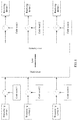
- FIG. 1 is a schematic structural diagram of a wired CDMA system.
- the wired CDMA system includes multiple transmitting devices, multiple receiving devices, and cables for connecting multiple transmitting devices to multiple receiving devices.
- the transmitting devices generally correspond to the receiving devices on a one-to-one basis.
- the cables shown in FIG. 1 include n channels: a channel 1 to a channel n.
- a transmitting device 1 corresponds to a receiving device 1.
- the transmitting device 1 performs spread spectrum modulation on a transmit signal by using a code word 1, to obtain a spread spectrum signal, and then transmits the spread spectrum signal to the receiving device 1 through the channel 1.
- the receiving device 1 despreads the received spread spectrum signal by using the code word 1, to obtain a despread signal.
- a transmitting device n corresponds to a receiving device n.
- a code word used by a transmitting device is the same as and synchronized with a code word used by a receiving device, so that a phase of a despread signal obtained by the receiving device is the same as that of a transmit signal of the transmitting device.
- both the transmitting device 1 and the receiving device 1 use the code word 1, and the code word 1 used by the transmitting device is synchronized with the code word 1 used by the receiving device.
- a phase of a spread spectrum signal received by the receiving device is not synchronized with that of the code word used by the receiving device. Consequently, crosstalk is generated on a channel between the transmitting device and the receiving device.
- the method for phase synchronization and the method for crosstalk cancellation according to the embodiments of the present invention are intended to resolve a technical problem that the spread spectrum signal received by the receiving device is not synchronized with the code word used by the receiving device.
- the specific code word has the following feature: A linear relationship exists between a phase value of the specific code word and an amplitude value of a despread signal obtained by using the specific code word.
- the linear relationship is specifically as follows: If the phase value of the specific code word is synchronized with a phase value of a received spread spectrum signal, the amplitude value of the despread signal obtained by using the specific code word is maximal. If the phase value of the specific code word has a forward or backward offset relative to the phase value of the received spread spectrum signal, the amplitude value of the despread signal obtained by using the specific code word decreases linearly as the offset increases.
- FIG. 2 is a schematic diagram of a relationship between the amplitude value of the despread signal obtained by using the specific code word and the offset of the phase value of the specific code word relative to the phase value of the received spread spectrum signal.
- the offset of the phase value of the specific code word relative to the phase value of the received spread spectrum signal can be determined according to a difference between amplitudes of despread signals obtained by using the specific code word.
- coordinates of point C are ( P t , A max ), indicating that the offset of the phase value of the specific code word relative to the phase value of the received spread spectrum signal is 0, that is, the phase value of the specific code word is synchronized with the phase value of the received spread spectrum signal, the amplitude value of the despread signal obtained by using the specific code word is maximal, and the maximum amplitude value is A max .
- point A and point B there are also point A and point B.
- Coordinates of point A are ( P 0 , A 0 ), indicating that a percentage of the offset of the phase value of the specific code word relative to the phase value of the received spread spectrum signal is P 0 , and that the amplitude value of the despread signal obtained by using the specific code word is A 0 .
- Coordinates of point B are ( P 1 , A 1 ), indicating that a percentage of the offset of the phase value of the specific code word relative to the phase value of the received spread spectrum signal is P 1 , and that the amplitude value of the despread signal obtained by using the specific code word is A 1 .
- an absolute difference between the phase value of the specific code word and the phase value of the received spread spectrum signal may be determined as: (Phase value of the specific code word corresponding to P 0 + Phase value of the specific code word corresponding to P 1 )/2, where a phase value of the specific code word corresponding to P 0 is a phase value of the specific code word when the percentage of the offset of the phase value of the specific code word relative to the phase value of the received spread spectrum signal is P 0 , and a phase value of the specific code word corresponding to P 1 is a phase value of the specific code word when the percentage of the offset of the phase value of the specific code word relative to the phase value of the received spread spectrum signal is P 1 .
- a max p ⁇ ⁇ A ⁇ ⁇ p .
- the maximum amplitude value A max of the despread signal obtained by using the specific code word can be further determined, and the difference between the phase value of the specific code word and the phase value of the received spread spectrum signal is further determined.
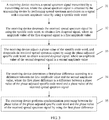
- FIG. 3 is a flowchart of a method for phase synchronization according to an embodiment of the present invention. The method shown in FIG. 3 includes the following steps.
- Step 31 A receiving device receives a spread spectrum signal transmitted by a transmitting device, where the spread spectrum signal is obtained by the transmitting device by performing spread spectrum modulation on a signal with a constant amplitude value by using a specific code word.
- Step 32 The receiving device despreads the received spread spectrum signal by using the specific code word, to obtain a first despread signal, where an amplitude value of the first despread signal is a first amplitude value.
- Step 33 The receiving device adjusts a phase value of the specific code word, and despreads the received spread spectrum signal by using the phase-adjusted specific code word, to obtain a second despread signal, where an amplitude value of the second despread signal is a second amplitude value.
- Step 34 The receiving device determines a first phase difference according to a difference between the first amplitude value and the second amplitude value, where the first phase difference is a difference between a phase value of the phase-adjusted specific code word and a phase value of the received spread spectrum signal.
- Step 35 The receiving device performs synchronization processing between the phase value of the phase-adjusted specific code word and the phase value of the received spread spectrum signal by using the first phase difference.
- Step 33 may also be replaced as follows:
- the receiving device receives the spread spectrum signal that is phase-adjusted and transmitted by the transmitting device, where the phase-adjusted spread spectrum signal is obtained by the transmitting device by adjusting a phase value of the transmitted spread spectrum signal; and the receiving device despreads the received phase-adjusted spread spectrum signal by using the specific code word, to obtain a second despread signal, where an amplitude value of the second despread signal is a second amplitude value.
- a CDMA system performs step 31 to step 33 to obtain the first despread signal and the second despread signal.
- the amplitude value of the first despread signal is the first amplitude value
- the amplitude value of the second despread signal is the second amplitude value.
- a 0 is used to indicate the first amplitude value
- a 1 is used to indicate the second amplitude value.
- the receiving device only needs to despread the received spread spectrum signal. Specifically, the transmitting device performs spread spectrum modulation on the signal with the constant amplitude value by using the specific code word, and transmits the obtained spread spectrum signal to the receiving device. The receiving device despreads the received spread spectrum signal by using the specific code word, to obtain the first despread signal, and determines that the amplitude value of the first despread signal is the first amplitude value.
- the first method is performed by the receiving device. Specifically, the receiving device adjusts the phase of the specific code word, and then despreads the received spread spectrum signal by using the phase-adjusted specific code word, to obtain the despread signal with the second amplitude value. Before and after the phase adjustment of the specific code word, the spread spectrum signal received by the receiving device is the same signal and is unchanged.
- the receiving device needs to receive only one spread spectrum signal, and then despread the received spread spectrum signal with the same phase separately by using two specific code words with different phase values, to obtain the first despread signal and the second despread signal.
- the second method is performed by the transmitting device and the receiving device. Specifically, after the transmitting device transmits the spread spectrum signal, the transmitting device adjusts the phase of the spread spectrum signal, where an adjustment value is a specific phase value, that is, adds the specific phase value to the phase value of the spread spectrum signal, and then transmits the phase-adjusted spread spectrum signal to the receiving device.
- the receiving device despreads the phase-adjusted spread spectrum signal to obtain the despread signal with the second amplitude value. Before and after the phase adjustment of the spread spectrum signal, the phase of the specific code word is unchanged.
- the receiving device needs to receive two spread spectrum signals with different phase values separately, and then despread the two received spread spectrum signals separately by using the specific code word with the same phase value, to obtain the first despread signal and the second despread signal.
- an adjustment value of the phase adjustment performed by the receiving device on the specific code word is the same as an adjustment value of the phase adjustment performed by the transmitting device on the transmitted spread spectrum signal.
- the adjustment value is a specific phase value. That is, the specific phase value is added to the phase value of the specific code word, or the specific phase value is added to the phase value of the transmitted spread spectrum signal.
- ⁇ p indicates the specific phase value.
- a value of ⁇ p is fixed in a CDMA system, and is far less than a chip width. In different CDMA system designs, values of ⁇ p are different.
- step 34 is performed.
- the receiving device determines the first phase difference.
- the first phase difference is the difference between the phase value of the phase-adjusted specific code word and the phase value of the received spread spectrum signal. Specifically, there are the following two cases: In the first case, if the difference between the first amplitude value and the second amplitude value is 0, the receiving device determines that the first phase difference complies with the following formula: ⁇ abs ⁇ p 2 , where abs ( ⁇ p ) indicates an absolute value of the phase adjustment.
- the CDMA system further needs to obtain a third despread signal, where an amplitude value of the third despread signal is a third amplitude value.
- a 2 is used to indicate the third amplitude value. That is, before the receiving device determines the first phase difference, the method further includes:
- a method for obtaining the third despread signal is similar to a method for obtaining the second despread signal. It should be noted that, the third despread signal is obtained after the second despread signal is obtained. That is, if the receiving device adjusts the phase value of the specific code word to obtain the second despread signal, the third despread signal is obtained by readjusting the phase of the phase-adjusted specific code word.
- the receiving device adjusts the phase of the specific code word by the specific phase value; in this case, to obtain the third despread signal, the receiving device readjusts, by the specific phase value, the specific code word whose phase is already adjusted by the specific phase value, and then despreads the received spread spectrum signal by using the phase-readjusted specific code word.
- the receiving device needs to receive only one spread spectrum signal, and then despread the received spread spectrum signal with the same phase separately by using three specific code words with different phase values, to obtain the first despread signal, the second despread signal, and the third despread signal.
- the transmitting device adjusts the phase value of the transmitted spread spectrum signal to obtain the second despread signal
- the third despread signal is obtained by readjusting the phase-adjusted spread spectrum signal.
- the transmitting device adjusts the phase of the transmitted spread spectrum signal by the specific phase value; in this case, to obtain the third despread signal, the transmitting device readjusts, by the specific phase value, the spread spectrum signal whose phase is already adjusted by the specific phase value, and then the receiving device despreads the received phase-readjusted spread spectrum signal by using the specific code word.
- the receiving device needs to separately receive three spread spectrum signals with different phase values, and then despread the three received spread spectrum signals by using the specific code word with the same phase, to obtain the first despread signal, the second despread signal, and the third despread signal.
- an adjustment value in each phase adjustment should be the same.
- the phase value of the specific code word is first adjusted by the specific phase value, and then the phase value of the phase-adjusted specific code word is readjusted by the specific phase value.
- the second case includes: the receiving device uses the difference between the first amplitude value and the second amplitude value as a first amplitude difference, and uses a difference between the third amplitude value and the second amplitude value as a second amplitude difference; and the receiving device determines the first phase difference according to the first amplitude difference and the second amplitude difference.
- the first amplitude difference ⁇ A 1 is not equal to 0, it indicates that point A and point B are not mutually symmetric points. In this case, coordinates of point C cannot be determined directly. In this case, it is necessary to first determine that the amplitude variation corresponding to ⁇ p is ⁇ A . Specifically, the absolute value of the second amplitude difference ⁇ A 2 needs to be compared with the absolute value of the first amplitude difference ⁇ A 1 , and a larger one of the absolute value of the second amplitude difference ⁇ A 2 and the absolute value of the first amplitude difference ⁇ A 1 is used as ⁇ A .
- the third amplitude value A 2 is obtained by the receiving device by adjusting the phase of the specific code word by ⁇ p twice or by the transmitting device by adjusting the phase of the transmitted spread spectrum signal by ⁇ p twice. Therefore, the following two cases may occur:
- ⁇ A 2 is not equal to ⁇ A 1 , namely, A 2 - A 1 ⁇ A 1 - A 0 , or if ⁇ A 2 is equal to ⁇ A 1 and ⁇ A 1 is less than 0, the receiving device determines that a phase difference between a current phase and a synchronous phase is 1 ⁇ A 2 A max ⁇ p ; or if ⁇ A 2 is equal to ⁇ A 1 and ⁇ A 1 is greater than 0, the receiving device determines that a phase difference between a current phase and a synchronous phase is A 2 A max ⁇ 1 ⁇ p .
- step 35 is performed. Specifically, step 35 may be performed by using the following two methods:
- Step 34 in the foregoing embodiment may also be replaced as follows:
- the receiving device determines a second phase difference according to a difference between the first amplitude value and the second amplitude value, where the second phase difference is a difference between the phase value of the phase-unadjusted specific code word and a phase value of the received spread spectrum signal.
- step 35 may be replaced as follows:
- the receiving device performs synchronization processing between the phase value of the phase-unadjusted specific code word and the phase value of the received spread spectrum signal by using the second phase difference. This includes: the receiving device adds the second phase difference to the phase value of the phase-unadjusted specific code word; or the receiving device transmits the second phase difference to the transmitting device, and instructs the transmitting device to add the second phase difference to the phase value of the transmitted spread spectrum signal.
- the receiving device determines the second phase difference.
- the second phase difference is the difference between the phase value of the phase-unadjusted specific code word and the phase value of the received spread spectrum signal.
- the receiving device determines that the second phase difference complies with the following formula: abs ⁇ p 2 , where abs ( ⁇ p ) indicates an absolute value of the phase adjustment.
- the CDMA system further needs to obtain a third despread signal, where an amplitude value of the third despread signal is a third amplitude value.
- a 2 is used to indicate the third amplitude value. That is, before the receiving device determines the second phase difference, the method further includes:
- the second case includes: the receiving device uses the difference between the first amplitude value and the second amplitude value as a first amplitude difference, and uses a difference between the third amplitude value and the second amplitude value as a second amplitude difference; and the receiving device determines the second phase difference according to the first amplitude difference and the second amplitude difference.
- the substitute step for step 35 is performed.
- the substitute step for step 35 may be performed by using the following two methods:
- step 35 requires the receiving device to add the second phase difference to the phase value of the phase-unadjusted specific code word, but after step 33 is performed, the phase value of the specific code word is already changed to the adjusted phase value, in the process of performing step 35, the phase value of the specific code word first needs to be restored to the unadjusted phase value, and then the second phase difference is added to the phase value of the phase-unadjusted specific code word.
- an embodiment of the present invention further provides a method for eliminating a phase jitter.
- the method for phase synchronization is mainly used to eliminate a phase jitter after a phase value of a specific code word is synchronized with a phase value of a received spread spectrum signal.
- the phase value of the specific code word may be synchronized with the phase value of the received spread spectrum signal by using the method shown in FIG. 3 , or by using another method. This is not limited in the present invention.
- the specific code word needs to be used for performing spread spectrum modulation and demodulation, because a principle of eliminating a phase jitter in this embodiment of the present invention still depends on a feature of the specific code word.
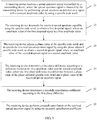
- step 35 is performed, referring to FIG. 4 , the method further includes the following steps.
- Step 41 The receiving device receives a spread spectrum signal transmitted by the transmitting device, where the spread spectrum signal is obtained by the transmitting device by performing spread spectrum modulation on a signal with a constant amplitude value by using a specific code word.
- Step 42 The receiving device despreads the received spread spectrum signal by using the specific code word whose phase value is synchronized with the phase value of the received spread spectrum signal, and determines an amplitude difference between an amplitude value of a despread signal and the maximum amplitude value corresponding to the specific code word.
- Step 43 The receiving device determines a phase jitter value by using the amplitude difference.
- Step 44 The receiving device eliminates the phase jitter value.
- the receiving device performs step 41 and step 42 to determine whether a phase jitter occurs. After implementing synchronization between the phase value of the specific code word and the phase value of the received spread spectrum signal by using the specific code word, the receiving device determines the amplitude difference between the amplitude value of the despread signal that is obtained by using the specific code word and the maximum amplitude value corresponding to the specific code word, and if the amplitude value is greater than a predetermined threshold, determines that a phase jitter occurs, and therefore needs to eliminate the phase jitter.
- the receiving device performs step 43 to determine the phase jitter value.
- An amplitude variation, namely, the amplitude difference in step 42, is obtained after step 41 and step 42 are performed.
- phase jitter value namely, the phase difference between the phase value of the specific code word and the phase value of the received spread spectrum signal.
- step 44 is performed to eliminate the phase jitter value. Specifically, there are the following two methods:
- An embodiment of the present invention further provides a method for determining a crosstalk cancellation coefficient, and then using the crosstalk cancellation coefficient to implement synchronization between a phase value of a specific code word and a phase value of a received spread spectrum signal.
- FIG. 5 is another flowchart of a method for phase synchronization according to an embodiment of the present invention. The method includes step 31 to step 34 and the following steps:
- the crosstalk cancellation coefficient is generated by the receiving device or the transmitting device according to the phase difference between the phase value of the specific code word and the phase value of the received spread spectrum signal.
- the first phase difference indicates the difference between the phase value of the specific code word and the phase value of the received spread spectrum signal.
- the method shown in FIG. 3 may be used, or another method may be used, as long as the phase difference between the phase value of the specific code word and the phase value of the received spread spectrum signal can be obtained. This is not limited in this embodiment of the present invention.
- the first phase difference may also be replaced with a second phase difference in this document.
- a crosstalk channel between other code words is related only to an offset of the phase value of the specific code word relative to the phase value of the received spread spectrum signal, and a linear relationship exists between the crosstalk channel and the offset of the phase value of the specific code word relative to the phase value of the received spread spectrum signal, that is, if the offset of the phase value of the specific code word relative to the phase value of the received spread spectrum signal is (x*n), the corresponding crosstalk channel is (H*n). Therefore, the crosstalk cancellation coefficient may be determined directly according to the offset of the phase value of the specific code word relative to the phase value of the received spread spectrum signal, a complex crosstalk cancellation coefficient training process is avoided, and real-time crosstalk cancellation is implemented.
- an embodiment of the present invention provides two methods for determining a crosstalk cancellation coefficient.
- the first method is as follows: Because a crosstalk channel between CDMA code words (except the foregoing specific code word) is related only to an offset of a phase value of a specific code word relative to a phase value of a received spread spectrum signal, a crosstalk cancellation coefficient table corresponding to the offset of the phase value of the specific code word relative to the phase value of the received spread spectrum signal may be computed in advance, and online computation is not required; and when a crosstalk cancellation coefficient needs to be used, the table may be directly searched.
- the method occupies a lot of space and requires little computation. The method may be performed by a transmitting device, or may be performed by a receiving device.
- the receiving device obtains a crosstalk cancellation coefficient table, where the crosstalk cancellation coefficient table includes crosstalk cancellation coefficients respectively corresponding to multiple phase differences; and the receiving device finds, from the crosstalk cancellation coefficient table, a crosstalk cancellation coefficient that matches a phase difference.
- the second method is as follows: A crosstalk channel variation corresponding to a unit phase offset is stored; a corresponding crosstalk channel is computed directly according to an offset of a phase value of a specific code word relative to a phase value of a received spread spectrum signal; and then inversion is performed on the corresponding crosstalk channel to obtain a corresponding crosstalk cancellation coefficient.
- the method occupies little space and requires a lot of computation.
- the method may be performed by a transmitting device, or may be performed by a receiving device. That is,
- the receiving device obtains a crosstalk channel variation corresponding to a unit phase difference; the receiving device determines a crosstalk channel according to the phase difference and the crosstalk channel variation; and the receiving device performs processing on the crosstalk channel to obtain a crosstalk cancellation coefficient.
- FIG. 6 is a schematic diagram of functional modules of an apparatus for phase synchronization according to an embodiment of the present invention.
- FIG. 6 For meanings and specific implementations of terms used in the apparatus for phase synchronization shown in FIG. 6 , refer to the descriptions about the foregoing embodiments in FIG. 1 to FIG. 5 .
- the bus 700 may include any quantity of interconnecting buses and bridges, and the bus 700 interconnects various circuits of one or more processors represented by the processor 72 and a memory represented by a memory 74.
- the bus 700 may further interconnect various other circuits such as a peripheral device, a voltage regulator, and a power management circuit. These are all well known in the art, and therefore are not described in the document.
- a bus interface 75 provides an interface between the bus 700 and the receiver 71 and the transmitter 73.
- the receiver 71 and the transmitter 73 may be a same component, namely, a transceiver, providing units for communicating with various other apparatuses over a transmission medium.
- a user interface 76 may be further provided, and configured to connect to a small keyboard, a display, a speaker, a microphone, or a joystick, or the like.
- the processor 72 is responsible for managing the bus 700 and general processing.
- the memory 74 may be configured to store data used when the processor 72 performs an operation.
- the embodiments of the present invention utilize a feature of a specific code word, namely, a relationship between a phase difference of the specific code word and an amplitude difference of a despread signal. Therefore, a phase difference between a current phase of a receiving device and a synchronous phase may be determined according to the amplitude difference of the despread signal, and further, the determined phase difference is added to the current phase of the receiving device, so that the current phase of the receiving device is a synchronous phase. In this way, the phase of the receiving device is synchronized with that of a received spread spectrum signal. Therefore, channel crosstalk is avoided, and a signal-to-noise ratio of the signal despread by the receiving device is increased.
- the embodiments of the present invention may be provided as a method, a system, or a computer program product. Therefore, the present invention may use a form of hardware only embodiments, software only embodiments, or embodiments with a combination of software and hardware. Moreover, the present invention may use a form of a computer program product that is implemented on one or more computer-usable storage media (including but not limited to a disk memory, a CD-ROM, an optical memory, and the like) that include computer-usable program code.
- computer-usable storage media including but not limited to a disk memory, a CD-ROM, an optical memory, and the like
- These computer program instructions may be provided for a general-purpose computer, a dedicated computer, an embedded processor, or a processor of any other programmable data processing device to generate a machine, so that the instructions executed by a computer or a processor of any other programmable data processing device generate an apparatus for implementing a specific function in one or more processes in the flowcharts and/or in one or more blocks in the block diagrams.
- These computer program instructions may be stored in a computer readable memory that can instruct the computer or any other programmable data processing device to work in a specific manner, so that the instructions stored in the computer readable memory generate an artifact that includes an instruction apparatus.
- the instruction apparatus implements a specific function in one or more processes in the flowcharts and/or in one or more blocks in the block diagrams.
Landscapes
- Engineering & Computer Science (AREA)
- Computer Networks & Wireless Communication (AREA)
- Signal Processing (AREA)
- Synchronisation In Digital Transmission Systems (AREA)
Claims (13)
- Verfahren zur Phasensynchronisation, wobei das Verfahren aufweist:Empfangen (31), durch eine Empfangseinrichtung, eines Spreizspektrumsignals, das durch eine Übertragungseinrichtung übertragen wird, wobei das Spreizspektrumsignal durch die Übertragungseinrichtung erhalten wird, indem eine Spreizspektrummodulation an einem Signal mit einem konstanten Amplitudenwert unter Verwendung eines spezifischen Codeworts durchgeführt wird;Entspreizen (32), durch die Empfangseinrichtung, des empfangenen Spreizspektrumsignals unter Verwendung des spezifischen Codeworts, um ein erstes entspreiztes Signal zu erhalten, wobei ein Amplitudenwert des ersten entspreizten Signals ein erster Amplitudenwert ist;Anpassen (33), durch die Empfangseinrichtung, eines Phasenwerts des spezifischen Codeworts durch und Entspreizen des empfangenen Spreizspektrumsignals unter Verwendung des phasenangepassten spezifischen Codeworts, um ein zweites entspreiztes Signal zu erhalten, wobei ein Amplitudenwert des zweiten entspreizten Signals ein zweiter Amplitudenwert ist;Bestimmen (34), durch die Empfangseinrichtung, einer ersten Phasendifferenz gemäß einer Differenz zwischen dem ersten Amplitudenwert und dem zweiten Amplitudenwert, wobei die erste Phasendifferenz eine Differenz zwischen einem Phasenwert des phasenangepassten spezifischen Codeworts und einem Phasenwert des empfangenen Spreizspektrumsignals ist; undDurchführen (35), durch die Empfangseinrichtung, einer Synchronisationsverarbeitung zwischen dem Phasenwert des phasenangepassten spezifischen Codeworts und dem Phasenwert des empfangen Spreizspektrumsignals unter Verwendung der ersten Phasendifferenz;dadurch gekennzeichnet, dassdas Durchführen, durch die Empfangseinrichtung, der Synchronisationsverarbeitung zwischen dem Phasenwert des phasenangepassten spezifischen Codeworts und dem Phasenwert des empfangen Spreizspektrumsignals unter Verwendung der ersten Phasendifferenz aufweist:
Übertragen, durch die Empfangseinrichtung, der ersten Phasendifferenz an die Übertragungseinrichtung und Anweisen der Übertragungseinrichtung, die erste Phasendifferenz zu dem Phasenwert des übertragenen Spreizspektrumsignals zu addieren. - Verfahren nach Anspruch 1, wobei das Bestimmen, durch die Empfangseinrichtung, einer ersten Phasendifferenz gemäß einer Differenz zwischen dem ersten Amplitudenwert und dem zweiten Amplitudenwert aufweist:
wenn die Differenz zwischen dem ersten Amplitudenwert und dem zweiten Amplitudenwert 0 ist, Bestimmen, durch die Empfangseinrichtung, dass die erste Phasendifferenz gleich 0 ist. - Verfahren nach Anspruch 1, wobei die Differenz zwischen dem ersten Amplitudenwert und dem zweiten Amplitudenwert nicht 0 ist;
wobei das Verfahren ferner aufweist:Neuanpassen, durch die Empfangseinrichtung, des Phasenwerts des spezifischen Codeworts und Entspreizen des empfangenen Spreizspektrumsignals unter Verwendung des neu phasenangepassten spezifischen Codeworts, um ein drittes entspreiztes Signal zu erhalten, wobei ein Amplitudenwert des dritten entspreizten Signals ein dritter Amplitudenwert ist; undwobei das Bestimmen, durch die Empfangseinrichtung, einer ersten Phasendifferenz gemäß einer Differenz zwischen dem ersten Amplitudenwert und dem zweiten Amplitudenwert aufweist:Verwenden, durch die Empfangseinrichtung, der Differenz zwischen dem ersten Amplitudenwert und dem zweiten Amplitudenwert als eine erste Amplitudendifferenz, und Verwenden einer Differenz zwischen dem dritten Amplitudenwert und dem zweiten Amplitudenwert als eine zweite Amplitudendifferenz, undBestimmen, durch die Empfangseinrichtung, der ersten Phasendifferenz gemäß der ersten Amplitudendifferenz und der zweiten Amplitudendifferenz. - Verfahren nach Anspruch 3, wobei das Bestimmen, durch die Empfangseinrichtung, der ersten Phasendifferenz gemäß der ersten Amplitudendifferenz und der zweiten Amplitudendifferenz aufweist:wenn die erste Amplitudendifferenz nicht gleich der zweiten Amplitudendifferenz ist oder die erste Amplitudendifferenz gleich der zweiten Amplitudendifferenz ist und die zweite Amplitudendifferenz kleiner als 0 ist, Bestimmen, durch die Empfangseinrichtung, dass die erste Phasendifferenz der folgenden Formel entspricht:
 wenn die erste Amplitudendifferenz gleich der zweiten Amplitudendifferenz ist und die zweite Amplitudendifferenz größer als 0 ist, Bestimmen, durch die Empfangseinrichtung, dass die erste Phasendifferenz der folgenden Formel entspricht:
- Verfahren nach Anspruch 4, wobei der maximale Amplitudenwert Amax , der dem spezifischen Codewort entspricht, der folgenden Formel entspricht:

- Verfahren nach einem der Ansprüche 1 bis 5, wobei nach dem Durchführen, durch die Empfangseinrichtung, der Synchronisationsverarbeitung zwischen dem Phasenwert des phasenangepassten spezifischen Codeworts und dem Phasenwert des empfangenen Spreizspektrumsignals das Verfahren ferner aufweist:Empfangen, durch eine Empfangseinrichtung, eines Spreizspektrumsignals, das durch die Übertragungseinrichtung übertragen wird, wobei das Spreizspektrumsignal durch die Übertragungseinrichtung erhalten wird, indem eine Spreizspektrummodulation an einem Signal mit einem konstanten Amplitudenwert unter Verwendung eines spezifischen Codeworts durchgeführt wird;Entspreizen, durch die Empfangseinrichtung, des empfangenen Spreizspektrumsignals unter Verwendung des spezifischen Codeworts, dessen Phasenwert mit dem Phasenwert des empfangenen Spreizspektrumsignals synchronisiert ist, und Bestimmen einer Amplitudendifferenz zwischen einem Amplitudenwert eines entspreizten Signals und dem maximalen Amplitudenwert, der dem spezifischen Codewort entspricht;Bestimmen, durch die Empfangseinrichtung, eines Phasenjitterwerts unter Verwendung der Amplitudendifferenz; undEliminieren, durch die Empfangseinrichtung, des Phasenjitterwerts.
- Verfahren nach einem der Ansprüche 1 bis 6, wobei das Durchführen, durch die Empfangseinrichtung, der Synchronisationsverarbeitung zwischen dem Phasenwert des phasenangepassten spezifischen Codeworts und dem Phasenwert des empfangenen Spreizspektrumsignals unter Verwendung der ersten Phasendifferenz aufweist:Bestimmen, durch die Empfangseinrichtung, eines Übersprechen-Löschungskoeffizienten gemäß der ersten Phasendifferenz; undDurchführen, durch die Empfangseinrichtung, einer Übersprechlöschung an dem empfangenen Spreizspektrumsignal unter Verwendung des Übersprechen-Löschungskoeffizienten.
- Vorrichtung zur Phasensynchronisation, wobei die Vorrichtung aufweist:eine Empfangseinheit (61), die ausgestaltet ist, um ein Spreizspektrumsignal, das durch eine Übertragungseinrichtung übertragen wird, zu empfangen, wobei das Spreizspektrumsignal durch die Übertragungseinrichtung erhalten wird, indem eine Spreizspektrummodulation an einem Signal mit einem konstanten Amplitudenwert unter Verwendung eines spezifischen Codeworts durchgeführt wird;eine Entspreizeinheit (62), die ausgestaltet ist, um das empfangene Spreizspektrumsignal unter Verwendung des spezifischen Codeworts zu entspreizen, um ein erstes entspreiztes Signal zu erhalten, wobei ein Amplitudenwert des ersten entspreizten Signals ein erster Amplitudenwert ist;eine Anpasseinheit (63), die ausgestaltet ist, um einen Phasenwert des spezifischen Codeworts anzupassen und das empfangene Spreizspektrumsignal unter Verwendung des phasenangepassten spezifischen Codeworts zu entspreizen, um ein zweites entspreiztes Signal zu erhalten, wobei ein Amplitudenwert des zweiten entspreizten Signals ein zweiter Amplitudenwert ist;eine Bestimmungseinheit (64), die ausgestaltet ist, um eine erste Phasendifferenz gemäß einer Differenz zwischen dem ersten Amplitudenwert und dem zweiten Amplitudenwert zu bestimmen, wobei die erste Phasendifferenz eine Differenz zwischen einem Phasenwert des phasenangepassten spezifischen Codeworts und einem Phasenwert des empfangenen Spreizspektrumsignals ist; undeine Synchronisationseinheit (65), die ausgestaltet ist, um eine Synchronisationsverarbeitung zwischen dem Phasenwert des phasenangepassten spezifischen Codeworts und dem Phasenwert des empfangenen Spreizspektrumsignals unter Verwendung der ersten Phasendifferenz durchzuführen;dadurch gekennzeichnet, dass die Synchronisationseinheit ausgestaltet ist, um:
die erste Phasendifferenz an die Übertragungseinrichtung zu übertragen, und die Übertragungseinrichtung anzuweisen, die erste Phasendifferenz zu dem Phasenwert des übertragenen Spreizspektrumsignals zu addieren. - Vorrichtung nach Anspruch 8, wobei die Bestimmungseinheit ausgestaltet ist, um: wenn die Differenz zwischen dem ersten Amplitudenwert und dem zweiten Amplitudenwert 0 ist, zu bestimmen, dass die erste Phasendifferenz gleich 0 ist.
- Vorrichtung nach Anspruch 8, wobei die Differenz zwischen dem ersten Amplitudenwert und dem zweiten Amplitudenwert nicht 0 ist;
wobei die Anpasseinheit ferner ausgestaltet ist, um:
den Phasenwert des phasenangepassten spezifischen Codeworts neu anzupassen, und das empfangene Spreizspektrumsignal unter Verwendung des neu phasenangepassten spezifischen Codeworts zu entspreizen, wobei ein Amplitudenwert des dritten entspreizten Signals ein dritter Amplitudenwert ist; und wobei die Bestimmungseinheit ausgestaltet ist, um:
die Differenz zwischen dem ersten Amplitudenwert und dem zweiten Amplitudenwert als eine erste Amplitudendifferenz zu verwenden, eine Differenz zwischen dem dritten Amplitudenwert und dem zweiten Amplitudenwert als eine zweite Amplitudendifferenz zu verwenden, und die erste Phasendifferenz gemäß der ersten Amplitudendifferenz und der zweiten Amplitudendifferenz zu bestimmen. - Vorrichtung nach Anspruch 10, wobei die Bestimmungseinheit ausgestaltet ist, um:wenn die erste Amplitudendifferenz nicht gleich der zweiten Amplitudendifferenz ist, oder die erste Amplitudendifferenz gleich der zweiten Amplitudendifferenz ist und die zweite Amplitudendifferenz kleiner als 0 ist, zu bestimmen, dass die erste Phasendifferenz der folgenden Formel entspricht:
 wenn die erste Amplitudendifferenz gleich der zweiten Amplitudendifferenz ist und die zweite Amplitudendifferenz größer als 0 ist, zu bestimmen, dass die erste Phasendifferenz der folgenden Formel entspricht:
- Vorrichtung nach Anspruch 11, wobei der maximale Amplitudenwert Amax , der dem spezifischen Codewort entspricht, der folgenden Formel entspricht:

- Vorrichtung nach einem der Ansprüche 8 bis 12, wobei die Empfangseinheit ferner ausgestaltet ist, um ein Spreizspektrumsignal, das durch die Übertragungseinrichtung übertragen wird, zu empfangen, wobei das Spreizspektrumsignal durch die Übertragungseinrichtung erhalten wird, indem eine Spreizspektrummodulation an einem Signal mit einem konstanten Amplitudenwert unter Verwendung eines spezifischen Codeworts durchgeführt wird;
wobei die Entspreizeinheit ausgestaltet ist, um das empfangene Spreizspektrumsignal unter Verwendung des spezifischen Codeworts, dessen Phasenwert mit dem Phasenwert des empfangenen Spreizspektrumsignals synchronisiert ist, zu entspreizen, und eine Amplitudendifferenz zwischen einem Amplitudenwert eines entspreizten Signals und dem maximalen Amplitudenwert, der dem spezifischen Codewort entspricht, zu bestimmen;
wobei die Bestimmungseinheit ausgestaltet ist, um einen Phasenjitterwert unter Verwendung der Amplitudendifferenz zu bestimmen; und
wobei die Synchronisationseinheit ausgestaltet ist, um den Phasenjitterwert zu eliminieren.
Applications Claiming Priority (1)
| Application Number | Priority Date | Filing Date | Title |
|---|---|---|---|
| PCT/CN2015/082364 WO2016206053A1 (zh) | 2015-06-25 | 2015-06-25 | 一种相位同步的方法及装置 |
Publications (3)
| Publication Number | Publication Date |
|---|---|
| EP3291460A1 EP3291460A1 (de) | 2018-03-07 |
| EP3291460A4 EP3291460A4 (de) | 2018-06-20 |
| EP3291460B1 true EP3291460B1 (de) | 2019-08-14 |
Family
ID=57584580
Family Applications (1)
| Application Number | Title | Priority Date | Filing Date |
|---|---|---|---|
| EP15895953.6A Active EP3291460B1 (de) | 2015-06-25 | 2015-06-25 | Verfahren zum synchronisieren von phasen und vorrichtung damit |
Country Status (3)
| Country | Link |
|---|---|
| EP (1) | EP3291460B1 (de) |
| CN (1) | CN107615682B (de) |
| WO (1) | WO2016206053A1 (de) |
Family Cites Families (15)
| Publication number | Priority date | Publication date | Assignee | Title |
|---|---|---|---|---|
| US5638362A (en) * | 1993-10-14 | 1997-06-10 | Ntt Mobile Communications Network, Inc. | Correlation detector and communication apparatus |
| WO1996021294A1 (en) * | 1995-01-05 | 1996-07-11 | Ntt Mobile Communications Network Inc. | Device and method for coherent-tracking of cdma receiver |
| TW347626B (en) * | 1995-03-27 | 1998-12-11 | Sanyo Electric Co | Spectrum diffusion signal receiver |
| US5805584A (en) * | 1996-02-23 | 1998-09-08 | L-3 Communications Corporation | Multi-user acquisition procedure for point-to-multipoint synchronous CDMA systems |
| JPH09307951A (ja) * | 1996-03-15 | 1997-11-28 | Matsushita Electric Ind Co Ltd | スペクトル拡散通信装置 |
| JP3369069B2 (ja) * | 1996-12-25 | 2003-01-20 | 松下電器産業株式会社 | 送信装置および受信装置 |
| US7936728B2 (en) * | 1997-12-17 | 2011-05-03 | Tantivy Communications, Inc. | System and method for maintaining timing of synchronization messages over a reverse link of a CDMA wireless communication system |
| JP3825179B2 (ja) * | 1998-07-17 | 2006-09-20 | 富士通株式会社 | 相関器 |
| DE19839018C2 (de) * | 1998-08-27 | 2002-04-04 | Infineon Technologies Ag | Tracking-Verfahren und Anordnung zur Durchführung des Verfahrens |
| US6882631B1 (en) * | 1999-09-13 | 2005-04-19 | Qualcomm Incorporated | Method and apparatus for overlaying two CDMA systems on the same frequency bandwidth |
| CN1110162C (zh) * | 1999-11-10 | 2003-05-28 | 深圳市中兴通讯股份有限公司 | 一种宽带码分多址系统的pn码精确同步的方法及装置 |
| US6970499B2 (en) * | 2001-05-30 | 2005-11-29 | Koninklijke Philips Electronics N.V. | Varying early-late spacing in a delay locked loop |
| CN101127555B (zh) * | 2006-08-18 | 2011-12-07 | 北京华信泰科技有限公司 | 地面增补转发器及无线数字广播同步的系统和方法 |
| EP2809012A1 (de) * | 2007-04-02 | 2014-12-03 | Core Wireless Licensing S.a.r.l. | Verfahren, Vorrichtungen und Computerprogrammprodukte zur Korrelation von Mehrwegspreizspektrumsignalen |
| CN104393892B (zh) * | 2014-11-20 | 2016-11-30 | 福建省物联网科学研究院 | 一种新型扩频微波接收机数字化伪码同步的方法 |
-
2015
- 2015-06-25 EP EP15895953.6A patent/EP3291460B1/de active Active
- 2015-06-25 CN CN201580080709.XA patent/CN107615682B/zh active Active
- 2015-06-25 WO PCT/CN2015/082364 patent/WO2016206053A1/zh not_active Ceased
Non-Patent Citations (1)
| Title |
|---|
| None * |
Also Published As
| Publication number | Publication date |
|---|---|
| CN107615682A (zh) | 2018-01-19 |
| WO2016206053A1 (zh) | 2016-12-29 |
| CN107615682B (zh) | 2020-02-14 |
| EP3291460A4 (de) | 2018-06-20 |
| EP3291460A1 (de) | 2018-03-07 |
Similar Documents
| Publication | Publication Date | Title |
|---|---|---|
| EP0820156B1 (de) | Empfangszeiterkennungsschaltung eines CDMA-Empfängers und Verfahren dazu | |
| US10910711B2 (en) | Beamforming calibration | |
| WO1996021294A1 (en) | Device and method for coherent-tracking of cdma receiver | |
| EP1057295B1 (de) | Einrichtung und verfahren zur übertragung von rückwärtspilotsignalen in einem mobilen kommunikationssystem | |
| EP1953924A1 (de) | Spreizspektrummodulations- und demodulationsverfahren und einrichtung dafür | |
| EP1033038A1 (de) | Kanalkommunikationsvorrichtung und verfahren in einem cdma kommunikationssystem | |
| WO2019201285A1 (en) | Apparatus and receiver for performing synchronization in analog spread spectrum systems | |
| US10305608B1 (en) | Beamforming calibration | |
| JP2000049662A (ja) | Cdma受信装置における復調回路 | |
| WO2001089109A2 (en) | Radio reciever and channel estimator | |
| US10305564B1 (en) | Beamforming calibration | |
| US10305609B1 (en) | Beamforming calibration | |
| US10623172B2 (en) | Control signal transmission and reception system and control signal transmission and reception method | |
| KR20040022971A (ko) | 이동단말에서 파일롯 신호의 의사잡음 시퀀스 위상을추적하기 위한 장치 및 방법 | |
| US8031797B2 (en) | Interference power estimating device and interference power estimating method | |
| EP3291460A1 (de) | Verfahren zum synchronisieren von phasen und vorrichtung damit | |
| CA3087814C (en) | Beamforming calibration | |
| EP2140562B1 (de) | Verfahren, vorrichtungen und computerprogrammprodukte zur codekorrelation von mehrwege- spreizspektrumsignalen | |
| JP6008942B2 (ja) | ワイヤレス通信システムにおいてアップリンク雑音電力を決定するための方法および装置 | |
| CN103516409B (zh) | 检测多通道设备性能的方法和装置 | |
| KR100445496B1 (ko) | 수신 장치, 기지국 장치, 통신 단말 장치 및 수신 방법 | |
| KR20000074532A (ko) | 코드분할다중처리 이동통신시스템의 수신기의 채널 추정 보상장치 | |
| KR102273529B1 (ko) | 이동 통신 시스템에서 수신 장치의 신호 조정 방법 및 장치 | |
| KR0168708B1 (ko) | 부호분할 다중신호의 수신방법 및 그 수신장치 | |
| JP2005318316A (ja) | アレイアンテナ通信装置及び制御方法 |
Legal Events
| Date | Code | Title | Description |
|---|---|---|---|
| STAA | Information on the status of an ep patent application or granted ep patent |
Free format text: STATUS: THE INTERNATIONAL PUBLICATION HAS BEEN MADE |
|
| PUAI | Public reference made under article 153(3) epc to a published international application that has entered the european phase |
Free format text: ORIGINAL CODE: 0009012 |
|
| STAA | Information on the status of an ep patent application or granted ep patent |
Free format text: STATUS: REQUEST FOR EXAMINATION WAS MADE |
|
| 17P | Request for examination filed |
Effective date: 20171201 |
|
| AK | Designated contracting states |
Kind code of ref document: A1 Designated state(s): AL AT BE BG CH CY CZ DE DK EE ES FI FR GB GR HR HU IE IS IT LI LT LU LV MC MK MT NL NO PL PT RO RS SE SI SK SM TR |
|
| AX | Request for extension of the european patent |
Extension state: BA ME |
|
| RIC1 | Information provided on ipc code assigned before grant |
Ipc: H04J 13/00 20110101ALI20180427BHEP Ipc: H04B 7/26 20060101AFI20180427BHEP Ipc: H04B 1/7075 20110101ALI20180427BHEP |
|
| RIC1 | Information provided on ipc code assigned before grant |
Ipc: H04J 13/00 20110101ALI20180508BHEP Ipc: H04B 7/26 20060101AFI20180508BHEP Ipc: H04B 1/7075 20110101ALI20180508BHEP |
|
| A4 | Supplementary search report drawn up and despatched |
Effective date: 20180522 |
|
| RIC1 | Information provided on ipc code assigned before grant |
Ipc: H04B 1/7075 20110101ALI20180515BHEP Ipc: H04J 13/00 20110101ALI20180515BHEP Ipc: H04B 7/26 20060101AFI20180515BHEP |
|
| DAV | Request for validation of the european patent (deleted) | ||
| DAX | Request for extension of the european patent (deleted) | ||
| GRAP | Despatch of communication of intention to grant a patent |
Free format text: ORIGINAL CODE: EPIDOSNIGR1 |
|
| STAA | Information on the status of an ep patent application or granted ep patent |
Free format text: STATUS: GRANT OF PATENT IS INTENDED |
|
| INTG | Intention to grant announced |
Effective date: 20190307 |
|
| GRAS | Grant fee paid |
Free format text: ORIGINAL CODE: EPIDOSNIGR3 |
|
| GRAA | (expected) grant |
Free format text: ORIGINAL CODE: 0009210 |
|
| STAA | Information on the status of an ep patent application or granted ep patent |
Free format text: STATUS: THE PATENT HAS BEEN GRANTED |
|
| AK | Designated contracting states |
Kind code of ref document: B1 Designated state(s): AL AT BE BG CH CY CZ DE DK EE ES FI FR GB GR HR HU IE IS IT LI LT LU LV MC MK MT NL NO PL PT RO RS SE SI SK SM TR |
|
| REG | Reference to a national code |
Ref country code: GB Ref legal event code: FG4D |
|
| REG | Reference to a national code |
Ref country code: CH Ref legal event code: EP Ref country code: AT Ref legal event code: REF Ref document number: 1168253 Country of ref document: AT Kind code of ref document: T Effective date: 20190815 |
|
| REG | Reference to a national code |
Ref country code: DE Ref legal event code: R096 Ref document number: 602015036097 Country of ref document: DE |
|
| REG | Reference to a national code |
Ref country code: IE Ref legal event code: FG4D |
|
| REG | Reference to a national code |
Ref country code: NL Ref legal event code: MP Effective date: 20190814 |
|
| REG | Reference to a national code |
Ref country code: LT Ref legal event code: MG4D |
|
| PG25 | Lapsed in a contracting state [announced via postgrant information from national office to epo] |
Ref country code: HR Free format text: LAPSE BECAUSE OF FAILURE TO SUBMIT A TRANSLATION OF THE DESCRIPTION OR TO PAY THE FEE WITHIN THE PRESCRIBED TIME-LIMIT Effective date: 20190814 Ref country code: NL Free format text: LAPSE BECAUSE OF FAILURE TO SUBMIT A TRANSLATION OF THE DESCRIPTION OR TO PAY THE FEE WITHIN THE PRESCRIBED TIME-LIMIT Effective date: 20190814 Ref country code: BG Free format text: LAPSE BECAUSE OF FAILURE TO SUBMIT A TRANSLATION OF THE DESCRIPTION OR TO PAY THE FEE WITHIN THE PRESCRIBED TIME-LIMIT Effective date: 20191114 Ref country code: LT Free format text: LAPSE BECAUSE OF FAILURE TO SUBMIT A TRANSLATION OF THE DESCRIPTION OR TO PAY THE FEE WITHIN THE PRESCRIBED TIME-LIMIT Effective date: 20190814 Ref country code: PT Free format text: LAPSE BECAUSE OF FAILURE TO SUBMIT A TRANSLATION OF THE DESCRIPTION OR TO PAY THE FEE WITHIN THE PRESCRIBED TIME-LIMIT Effective date: 20191216 Ref country code: SE Free format text: LAPSE BECAUSE OF FAILURE TO SUBMIT A TRANSLATION OF THE DESCRIPTION OR TO PAY THE FEE WITHIN THE PRESCRIBED TIME-LIMIT Effective date: 20190814 Ref country code: NO Free format text: LAPSE BECAUSE OF FAILURE TO SUBMIT A TRANSLATION OF THE DESCRIPTION OR TO PAY THE FEE WITHIN THE PRESCRIBED TIME-LIMIT Effective date: 20191114 Ref country code: FI Free format text: LAPSE BECAUSE OF FAILURE TO SUBMIT A TRANSLATION OF THE DESCRIPTION OR TO PAY THE FEE WITHIN THE PRESCRIBED TIME-LIMIT Effective date: 20190814 |
|
| REG | Reference to a national code |
Ref country code: AT Ref legal event code: MK05 Ref document number: 1168253 Country of ref document: AT Kind code of ref document: T Effective date: 20190814 |
|
| PG25 | Lapsed in a contracting state [announced via postgrant information from national office to epo] |
Ref country code: IS Free format text: LAPSE BECAUSE OF FAILURE TO SUBMIT A TRANSLATION OF THE DESCRIPTION OR TO PAY THE FEE WITHIN THE PRESCRIBED TIME-LIMIT Effective date: 20191214 Ref country code: RS Free format text: LAPSE BECAUSE OF FAILURE TO SUBMIT A TRANSLATION OF THE DESCRIPTION OR TO PAY THE FEE WITHIN THE PRESCRIBED TIME-LIMIT Effective date: 20190814 Ref country code: AL Free format text: LAPSE BECAUSE OF FAILURE TO SUBMIT A TRANSLATION OF THE DESCRIPTION OR TO PAY THE FEE WITHIN THE PRESCRIBED TIME-LIMIT Effective date: 20190814 Ref country code: ES Free format text: LAPSE BECAUSE OF FAILURE TO SUBMIT A TRANSLATION OF THE DESCRIPTION OR TO PAY THE FEE WITHIN THE PRESCRIBED TIME-LIMIT Effective date: 20190814 Ref country code: GR Free format text: LAPSE BECAUSE OF FAILURE TO SUBMIT A TRANSLATION OF THE DESCRIPTION OR TO PAY THE FEE WITHIN THE PRESCRIBED TIME-LIMIT Effective date: 20191115 Ref country code: LV Free format text: LAPSE BECAUSE OF FAILURE TO SUBMIT A TRANSLATION OF THE DESCRIPTION OR TO PAY THE FEE WITHIN THE PRESCRIBED TIME-LIMIT Effective date: 20190814 |
|
| PG25 | Lapsed in a contracting state [announced via postgrant information from national office to epo] |
Ref country code: TR Free format text: LAPSE BECAUSE OF FAILURE TO SUBMIT A TRANSLATION OF THE DESCRIPTION OR TO PAY THE FEE WITHIN THE PRESCRIBED TIME-LIMIT Effective date: 20190814 |
|
| PG25 | Lapsed in a contracting state [announced via postgrant information from national office to epo] |
Ref country code: DK Free format text: LAPSE BECAUSE OF FAILURE TO SUBMIT A TRANSLATION OF THE DESCRIPTION OR TO PAY THE FEE WITHIN THE PRESCRIBED TIME-LIMIT Effective date: 20190814 Ref country code: IT Free format text: LAPSE BECAUSE OF FAILURE TO SUBMIT A TRANSLATION OF THE DESCRIPTION OR TO PAY THE FEE WITHIN THE PRESCRIBED TIME-LIMIT Effective date: 20190814 Ref country code: EE Free format text: LAPSE BECAUSE OF FAILURE TO SUBMIT A TRANSLATION OF THE DESCRIPTION OR TO PAY THE FEE WITHIN THE PRESCRIBED TIME-LIMIT Effective date: 20190814 Ref country code: AT Free format text: LAPSE BECAUSE OF FAILURE TO SUBMIT A TRANSLATION OF THE DESCRIPTION OR TO PAY THE FEE WITHIN THE PRESCRIBED TIME-LIMIT Effective date: 20190814 Ref country code: RO Free format text: LAPSE BECAUSE OF FAILURE TO SUBMIT A TRANSLATION OF THE DESCRIPTION OR TO PAY THE FEE WITHIN THE PRESCRIBED TIME-LIMIT Effective date: 20190814 Ref country code: PL Free format text: LAPSE BECAUSE OF FAILURE TO SUBMIT A TRANSLATION OF THE DESCRIPTION OR TO PAY THE FEE WITHIN THE PRESCRIBED TIME-LIMIT Effective date: 20190814 |
|
| PG25 | Lapsed in a contracting state [announced via postgrant information from national office to epo] |
Ref country code: SM Free format text: LAPSE BECAUSE OF FAILURE TO SUBMIT A TRANSLATION OF THE DESCRIPTION OR TO PAY THE FEE WITHIN THE PRESCRIBED TIME-LIMIT Effective date: 20190814 Ref country code: IS Free format text: LAPSE BECAUSE OF FAILURE TO SUBMIT A TRANSLATION OF THE DESCRIPTION OR TO PAY THE FEE WITHIN THE PRESCRIBED TIME-LIMIT Effective date: 20200224 Ref country code: SK Free format text: LAPSE BECAUSE OF FAILURE TO SUBMIT A TRANSLATION OF THE DESCRIPTION OR TO PAY THE FEE WITHIN THE PRESCRIBED TIME-LIMIT Effective date: 20190814 Ref country code: CZ Free format text: LAPSE BECAUSE OF FAILURE TO SUBMIT A TRANSLATION OF THE DESCRIPTION OR TO PAY THE FEE WITHIN THE PRESCRIBED TIME-LIMIT Effective date: 20190814 |
|
| REG | Reference to a national code |
Ref country code: DE Ref legal event code: R097 Ref document number: 602015036097 Country of ref document: DE |
|
| PLBE | No opposition filed within time limit |
Free format text: ORIGINAL CODE: 0009261 |
|
| STAA | Information on the status of an ep patent application or granted ep patent |
Free format text: STATUS: NO OPPOSITION FILED WITHIN TIME LIMIT |
|
| PG2D | Information on lapse in contracting state deleted |
Ref country code: IS |
|
| 26N | No opposition filed |
Effective date: 20200603 |
|
| PG25 | Lapsed in a contracting state [announced via postgrant information from national office to epo] |
Ref country code: SI Free format text: LAPSE BECAUSE OF FAILURE TO SUBMIT A TRANSLATION OF THE DESCRIPTION OR TO PAY THE FEE WITHIN THE PRESCRIBED TIME-LIMIT Effective date: 20190814 |
|
| PGFP | Annual fee paid to national office [announced via postgrant information from national office to epo] |
Ref country code: BE Payment date: 20200515 Year of fee payment: 6 |
|
| REG | Reference to a national code |
Ref country code: DE Ref legal event code: R119 Ref document number: 602015036097 Country of ref document: DE |
|
| PG25 | Lapsed in a contracting state [announced via postgrant information from national office to epo] |
Ref country code: MC Free format text: LAPSE BECAUSE OF FAILURE TO SUBMIT A TRANSLATION OF THE DESCRIPTION OR TO PAY THE FEE WITHIN THE PRESCRIBED TIME-LIMIT Effective date: 20190814 |
|
| REG | Reference to a national code |
Ref country code: CH Ref legal event code: PL |
|
| GBPC | Gb: european patent ceased through non-payment of renewal fee |
Effective date: 20200625 |
|
| PG25 | Lapsed in a contracting state [announced via postgrant information from national office to epo] |
Ref country code: LU Free format text: LAPSE BECAUSE OF NON-PAYMENT OF DUE FEES Effective date: 20200625 |
|
| PG25 | Lapsed in a contracting state [announced via postgrant information from national office to epo] |
Ref country code: CH Free format text: LAPSE BECAUSE OF NON-PAYMENT OF DUE FEES Effective date: 20200630 Ref country code: IE Free format text: LAPSE BECAUSE OF NON-PAYMENT OF DUE FEES Effective date: 20200625 Ref country code: GB Free format text: LAPSE BECAUSE OF NON-PAYMENT OF DUE FEES Effective date: 20200625 Ref country code: LI Free format text: LAPSE BECAUSE OF NON-PAYMENT OF DUE FEES Effective date: 20200630 Ref country code: FR Free format text: LAPSE BECAUSE OF NON-PAYMENT OF DUE FEES Effective date: 20200630 |
|
| PG25 | Lapsed in a contracting state [announced via postgrant information from national office to epo] |
Ref country code: DE Free format text: LAPSE BECAUSE OF NON-PAYMENT OF DUE FEES Effective date: 20210101 |
|
| REG | Reference to a national code |
Ref country code: BE Ref legal event code: MM Effective date: 20210630 |
|
| PG25 | Lapsed in a contracting state [announced via postgrant information from national office to epo] |
Ref country code: MT Free format text: LAPSE BECAUSE OF FAILURE TO SUBMIT A TRANSLATION OF THE DESCRIPTION OR TO PAY THE FEE WITHIN THE PRESCRIBED TIME-LIMIT Effective date: 20190814 Ref country code: CY Free format text: LAPSE BECAUSE OF FAILURE TO SUBMIT A TRANSLATION OF THE DESCRIPTION OR TO PAY THE FEE WITHIN THE PRESCRIBED TIME-LIMIT Effective date: 20190814 |
|
| PG25 | Lapsed in a contracting state [announced via postgrant information from national office to epo] |
Ref country code: MK Free format text: LAPSE BECAUSE OF FAILURE TO SUBMIT A TRANSLATION OF THE DESCRIPTION OR TO PAY THE FEE WITHIN THE PRESCRIBED TIME-LIMIT Effective date: 20190814 |
|
| PG25 | Lapsed in a contracting state [announced via postgrant information from national office to epo] |
Ref country code: BE Free format text: LAPSE BECAUSE OF NON-PAYMENT OF DUE FEES Effective date: 20210630 |