EP3291504B1 - Authentification et transmission sécurisée des données entre dispositifs de signature et ordinateurs host à l'aide de la sécurité des couches de transport - Google Patents
Authentification et transmission sécurisée des données entre dispositifs de signature et ordinateurs host à l'aide de la sécurité des couches de transport Download PDFInfo
- Publication number
- EP3291504B1 EP3291504B1 EP17187244.3A EP17187244A EP3291504B1 EP 3291504 B1 EP3291504 B1 EP 3291504B1 EP 17187244 A EP17187244 A EP 17187244A EP 3291504 B1 EP3291504 B1 EP 3291504B1
- Authority
- EP
- European Patent Office
- Prior art keywords
- certificate
- signature
- host computer
- signature device
- public key
- Prior art date
- Legal status (The legal status is an assumption and is not a legal conclusion. Google has not performed a legal analysis and makes no representation as to the accuracy of the status listed.)
- Active
Links
Images




Classifications
-
- H—ELECTRICITY
- H04—ELECTRIC COMMUNICATION TECHNIQUE
- H04L—TRANSMISSION OF DIGITAL INFORMATION, e.g. TELEGRAPHIC COMMUNICATION
- H04L63/00—Network architectures or network communication protocols for network security
- H04L63/16—Implementing security features at a particular protocol layer
- H04L63/166—Implementing security features at a particular protocol layer at the transport layer
-
- G—PHYSICS
- G06—COMPUTING OR CALCULATING; COUNTING
- G06Q—INFORMATION AND COMMUNICATION TECHNOLOGY [ICT] SPECIALLY ADAPTED FOR ADMINISTRATIVE, COMMERCIAL, FINANCIAL, MANAGERIAL OR SUPERVISORY PURPOSES; SYSTEMS OR METHODS SPECIALLY ADAPTED FOR ADMINISTRATIVE, COMMERCIAL, FINANCIAL, MANAGERIAL OR SUPERVISORY PURPOSES, NOT OTHERWISE PROVIDED FOR
- G06Q20/00—Payment architectures, schemes or protocols
- G06Q20/38—Payment protocols; Details thereof
- G06Q20/382—Payment protocols; Details thereof insuring higher security of transaction
- G06Q20/3821—Electronic credentials
- G06Q20/38215—Use of certificates or encrypted proofs of transaction rights
-
- G—PHYSICS
- G06—COMPUTING OR CALCULATING; COUNTING
- G06F—ELECTRIC DIGITAL DATA PROCESSING
- G06F21/00—Security arrangements for protecting computers, components thereof, programs or data against unauthorised activity
- G06F21/60—Protecting data
- G06F21/64—Protecting data integrity, e.g. using checksums, certificates or signatures
-
- G—PHYSICS
- G06—COMPUTING OR CALCULATING; COUNTING
- G06F—ELECTRIC DIGITAL DATA PROCESSING
- G06F21/00—Security arrangements for protecting computers, components thereof, programs or data against unauthorised activity
- G06F21/70—Protecting specific internal or peripheral components, in which the protection of a component leads to protection of the entire computer
- G06F21/82—Protecting input, output or interconnection devices
- G06F21/83—Protecting input, output or interconnection devices input devices, e.g. keyboards, mice or controllers thereof
-
- G—PHYSICS
- G07—CHECKING-DEVICES
- G07F—COIN-FREED OR LIKE APPARATUS
- G07F7/00—Mechanisms actuated by objects other than coins to free or to actuate vending, hiring, coin or paper currency dispensing or refunding apparatus
- G07F7/08—Mechanisms actuated by objects other than coins to free or to actuate vending, hiring, coin or paper currency dispensing or refunding apparatus by coded identity card or credit card or other personal identification means
- G07F7/10—Mechanisms actuated by objects other than coins to free or to actuate vending, hiring, coin or paper currency dispensing or refunding apparatus by coded identity card or credit card or other personal identification means together with a coded signal, e.g. in the form of personal identification information, like personal identification number [PIN] or biometric data
- G07F7/1016—Devices or methods for securing the PIN and other transaction-data, e.g. by encryption
-
- G—PHYSICS
- G07—CHECKING-DEVICES
- G07F—COIN-FREED OR LIKE APPARATUS
- G07F7/00—Mechanisms actuated by objects other than coins to free or to actuate vending, hiring, coin or paper currency dispensing or refunding apparatus
- G07F7/08—Mechanisms actuated by objects other than coins to free or to actuate vending, hiring, coin or paper currency dispensing or refunding apparatus by coded identity card or credit card or other personal identification means
- G07F7/10—Mechanisms actuated by objects other than coins to free or to actuate vending, hiring, coin or paper currency dispensing or refunding apparatus by coded identity card or credit card or other personal identification means together with a coded signal, e.g. in the form of personal identification information, like personal identification number [PIN] or biometric data
- G07F7/1025—Identification of user by a PIN code
- G07F7/1033—Details of the PIN pad
- G07F7/1041—PIN input keyboard gets new key allocation at each use
-
- H—ELECTRICITY
- H04—ELECTRIC COMMUNICATION TECHNIQUE
- H04L—TRANSMISSION OF DIGITAL INFORMATION, e.g. TELEGRAPHIC COMMUNICATION
- H04L63/00—Network architectures or network communication protocols for network security
- H04L63/06—Network architectures or network communication protocols for network security for supporting key management in a packet data network
- H04L63/061—Network architectures or network communication protocols for network security for supporting key management in a packet data network for key exchange, e.g. in peer-to-peer networks
-
- H—ELECTRICITY
- H04—ELECTRIC COMMUNICATION TECHNIQUE
- H04L—TRANSMISSION OF DIGITAL INFORMATION, e.g. TELEGRAPHIC COMMUNICATION
- H04L63/00—Network architectures or network communication protocols for network security
- H04L63/08—Network architectures or network communication protocols for network security for authentication of entities
-
- H—ELECTRICITY
- H04—ELECTRIC COMMUNICATION TECHNIQUE
- H04L—TRANSMISSION OF DIGITAL INFORMATION, e.g. TELEGRAPHIC COMMUNICATION
- H04L63/00—Network architectures or network communication protocols for network security
- H04L63/08—Network architectures or network communication protocols for network security for authentication of entities
- H04L63/0823—Network architectures or network communication protocols for network security for authentication of entities using certificates
-
- H—ELECTRICITY
- H04—ELECTRIC COMMUNICATION TECHNIQUE
- H04L—TRANSMISSION OF DIGITAL INFORMATION, e.g. TELEGRAPHIC COMMUNICATION
- H04L63/00—Network architectures or network communication protocols for network security
- H04L63/20—Network architectures or network communication protocols for network security for managing network security; network security policies in general
-
- H—ELECTRICITY
- H04—ELECTRIC COMMUNICATION TECHNIQUE
- H04L—TRANSMISSION OF DIGITAL INFORMATION, e.g. TELEGRAPHIC COMMUNICATION
- H04L9/00—Cryptographic mechanisms or cryptographic arrangements for secret or secure communications; Network security protocols
- H04L9/08—Key distribution or management, e.g. generation, sharing or updating, of cryptographic keys or passwords
- H04L9/0816—Key establishment, i.e. cryptographic processes or cryptographic protocols whereby a shared secret becomes available to two or more parties, for subsequent use
- H04L9/0838—Key agreement, i.e. key establishment technique in which a shared key is derived by parties as a function of information contributed by, or associated with, each of these
-
- H—ELECTRICITY
- H04—ELECTRIC COMMUNICATION TECHNIQUE
- H04L—TRANSMISSION OF DIGITAL INFORMATION, e.g. TELEGRAPHIC COMMUNICATION
- H04L9/00—Cryptographic mechanisms or cryptographic arrangements for secret or secure communications; Network security protocols
- H04L9/08—Key distribution or management, e.g. generation, sharing or updating, of cryptographic keys or passwords
- H04L9/0861—Generation of secret information including derivation or calculation of cryptographic keys or passwords
- H04L9/0866—Generation of secret information including derivation or calculation of cryptographic keys or passwords involving user or device identifiers, e.g. serial number, physical or biometrical information, DNA, hand-signature or measurable physical characteristics
-
- H—ELECTRICITY
- H04—ELECTRIC COMMUNICATION TECHNIQUE
- H04L—TRANSMISSION OF DIGITAL INFORMATION, e.g. TELEGRAPHIC COMMUNICATION
- H04L9/00—Cryptographic mechanisms or cryptographic arrangements for secret or secure communications; Network security protocols
- H04L9/32—Cryptographic mechanisms or cryptographic arrangements for secret or secure communications; Network security protocols including means for verifying the identity or authority of a user of the system or for message authentication, e.g. authorization, entity authentication, data integrity or data verification, non-repudiation, key authentication or verification of credentials
- H04L9/3247—Cryptographic mechanisms or cryptographic arrangements for secret or secure communications; Network security protocols including means for verifying the identity or authority of a user of the system or for message authentication, e.g. authorization, entity authentication, data integrity or data verification, non-repudiation, key authentication or verification of credentials involving digital signatures
-
- H—ELECTRICITY
- H04—ELECTRIC COMMUNICATION TECHNIQUE
- H04L—TRANSMISSION OF DIGITAL INFORMATION, e.g. TELEGRAPHIC COMMUNICATION
- H04L9/00—Cryptographic mechanisms or cryptographic arrangements for secret or secure communications; Network security protocols
- H04L9/32—Cryptographic mechanisms or cryptographic arrangements for secret or secure communications; Network security protocols including means for verifying the identity or authority of a user of the system or for message authentication, e.g. authorization, entity authentication, data integrity or data verification, non-repudiation, key authentication or verification of credentials
- H04L9/3263—Cryptographic mechanisms or cryptographic arrangements for secret or secure communications; Network security protocols including means for verifying the identity or authority of a user of the system or for message authentication, e.g. authorization, entity authentication, data integrity or data verification, non-repudiation, key authentication or verification of credentials involving certificates, e.g. public key certificate [PKC] or attribute certificate [AC]; Public key infrastructure [PKI] arrangements
- H04L9/3268—Cryptographic mechanisms or cryptographic arrangements for secret or secure communications; Network security protocols including means for verifying the identity or authority of a user of the system or for message authentication, e.g. authorization, entity authentication, data integrity or data verification, non-repudiation, key authentication or verification of credentials involving certificates, e.g. public key certificate [PKC] or attribute certificate [AC]; Public key infrastructure [PKI] arrangements using certificate validation, registration, distribution or revocation, e.g. certificate revocation list [CRL]
-
- H—ELECTRICITY
- H04—ELECTRIC COMMUNICATION TECHNIQUE
- H04W—WIRELESS COMMUNICATION NETWORKS
- H04W12/00—Security arrangements; Authentication; Protecting privacy or anonymity
- H04W12/06—Authentication
- H04W12/069—Authentication using certificates or pre-shared keys
-
- G—PHYSICS
- G06—COMPUTING OR CALCULATING; COUNTING
- G06F—ELECTRIC DIGITAL DATA PROCESSING
- G06F21/00—Security arrangements for protecting computers, components thereof, programs or data against unauthorised activity
- G06F21/70—Protecting specific internal or peripheral components, in which the protection of a component leads to protection of the entire computer
- G06F21/82—Protecting input, output or interconnection devices
Definitions
- Electronic handwriting is increasingly important in a variety of contexts. For example, electronic handwriting is now commonly used in place of pen and paper to obtain a credit card holder's affirmation of a credit card transaction.
- signature pads and tablets are used in banks, retail stores, and other locations to obtain signatures on legally binding documents. Given the sensitive nature of such applications, authentication of signature devices and security of data being transferred between signature devices and other computers has become a critical issue for suppliers and users of such devices. Proprietary security and encryption schemes are possible, but they require significant effort and expense, as well as a high level of trust between designers of such schemes and their customers.
- U.S. Patent No. 8,700,905 discloses, for example, a signature capture apparatus that captures a handwritten signature and encrypts the signature data.
- U.S. Patent No. 7,933,840 discloses, for example, a signature device which encrypts signature data with transaction data provided by a host computer.
- CN 103 888 422 A discloses a method comprising steps: after a client establishes a connection with a server, the client receives a certificate updating notification sent by the server when a certificate needs updating; after receiving the certificate updating notification, the client sends identity identification information to the server; the client receives a certificate updating command which is sent when the server determines the client is qualified for carrying out certificate updating, and generates a certificate signature request comprising a security certificate preparation file after receiving the certificate updating command; the client sends the certificate signature request to the server; and the client receives the security certificate file sent by the server.
- CN 204 442 397 U discloses an electronic signature encryption device comprising a handwriting pen and an electronic signature encryption screen.
- the electronic signature encryption screen comprises an interface module for connecting with an external computer so as to enable USB signals output by the computer to be accessed, a control panel connected with the interface module and used for converting the USB signals into LVDS signals, a touch screen connected with the control panel and used for displaying the LVDS signals and receiving handwriting information input by the handwriting pen under a screen display interface, and an encryption module connected with the touch screen and used for encrypting the handwriting information and converting the encrypted handwriting information into the USB signals, wherein the output end of the encryption module is connected with the interface module.
- US 2015/154414 A1 discloses a computer-implemented authentication method comprising the step of enabling a user to input an identifier into an electronic device having a screen and a keypad operable within a keypad zone of the screen; by operating at least one key of the keypad via an image of at least part of a scrambled keypad which is displayed at least partially within the keypad zone.
- US 2006/037067 A1 discloses a system in which, in an exchange of data between a client terminal and a secure database server, the data is encoded using positional information generated by a combination generator in a separate security server.
- a connection is established between a signature device and a host computer via an interface (e.g., a universal serial bus (USB) interface), and a transport layer security (TLS) connection is established between the signature device and the host computer via the interface.
- the host computer sends a command via the interface to the signature device to generate a new key pair, receives a certificate signing request (CSR) from the signature device via the interface, sends the CSR to a user certificate authority (CA), receives a public key certificate from the user CA, and sends the public key certificate to the signature device via the interface.
- CSR certificate signing request
- CA user certificate authority
- the invention in another aspect, relates to a computer-implemented method, wherein a connection is established between a signature device and a host computer via a USB interface, and a TLS connection is established between the signature device and the host computer via the USB interface.
- the signature device acts as a TLS server
- the host computer acts as a TLS client.
- data is received from or transmitted to the signature device via a USB bulk transfer.
- a TLS connection is established (e.g., via a USB interface) between a signature device and a host computer running an application.
- the host computer selects an image file from a set of image files (e.g., representing different layouts of characters for entering a PIN) stored in the host computer, wherein each image file in the set of image files has a different mapping between image regions and a character alphabet,
- the host computer encrypts the selected image, sends the selected image to the signature device over the TLS connection, receives encrypted pen data (e.g., representing user selection of characters in a PIN) from the signature device over the TLS connection, decrypts the encrypted pen data, and identifies at least one character based on the decrypted pen data and the mapping between image regions and the character alphabet associated with the selected image file.
- encrypted pen data e.g., representing user selection of characters in a PIN
- the signature device receives an encrypted image selected from a set of images stored in the host computer over the TLS connection, decrypts the encrypted image, and sends encrypted pen data to the host computer over the TLS connection.
- Each image in the set of images has a different mapping between image regions and a character alphabet, and the encrypted pen data represents user selection of characters in a PIN.
- a signature tablet for use with an external computer comprises a sensor section configured to obtain a series of pen data and a controller configured to generate a public key and a private key, obtain a third party certificate for the public key, establish a secure connection with the external computer by using the public key signed by the third party, and send the series of pen data over the secure connection as the series of pen data is obtained.
- data such as pen data, control data, or image data may be received or transmitted via a USB bulk transfer mechanism.
- a signature tablet communicates with an external computer.
- the signature tablet comprises an input sensor (e.g., an electromagnetic resonance (EMR) sensor), an input sensor controller (e.g., an EMR controller), and a main controller.
- the main controller comprises a peripheral device interface (e.g., a USB interface) and memory.
- the signature tablet also may include a display (e.g., an LCD display).
- the input sensor controller is configured to detect a series of positions of a pen and generate a series of pen data.
- the memory stores a key pair of a public key and a private key, a server certificate for the public key, and firmware.
- the firmware is configured to cause the main controller to establish a connection with the external computer over the peripheral device interface when the peripheral device interface is detected to be connected with the external computer, provide the server certificate including the public key to the external computer over the connection, and, in case a response indicating the server certificate is trusted by the external computer is received, send the series of pen data to the external computer.
- the external computer may be programmed to receive the server certificate including the public key over the connection, determine whether the server certificate is trusted or not, send the response indicating the server certificate is trusted to the signature tablet in a case where the server certificate is trusted, and receive the series of pen data.
- the firmware may be further configured to cause the main controller to receive an encrypted shared secret key generated by the external computer over the connection (e.g., via a secure TLS or SSL (Secure Sockets Layer) session established directly via the connection over the USB peripheral device interface) as the response indicating the server certificate is trusted by the external computer; and send the series of pen data by encrypting the series of pen data with the shared secret key.
- the firmware may be further configured to cause the main controller to establish a default pipe for exchanging USB device properties and two pipes for USB bulk transfer for two-way communication with the external computer over the peripheral device interface. The series of pen data may be sent over the TLS session established via the two pipes for USB bulk transfer.
- the signature tablet may issue a CSR.
- the firmware may be further configured to cause the main controller to generate a first key pair in response to a command, send a CSR for the public key in order to obtain the server certificate signed by a CA, and store the server certificate including the public key in the memory.
- the firmware may be further configured to cause the main controller to generate a new key pair of a new public key and a new private key in response to another command, send a CSR for the new public key in order to obtain the public key signed by a second CA, and update the memory to store the new key pair and a server certificate for the new public key signed by the second CA.
- the firmware may be further configured to cause the main controller to retrieve a client certificate including a public key of the external computer from the external computer, determine whether the client certificate is trusted or not, and, in case the client certificate is trusted and the response indicating that the server certificate is trusted by the external computer is received, send the series of pen data to the external computer.
- the firmware may be further configured to cause the signature tablet to decrypt encrypted image data sent from the external computer over the connection to obtain image data, and display a path of the positions of the pen in a manner such that the path is overlaid with the image data when displayed on the display.
- the image data may represent either a first image for entering a handwriting signature or a second image showing a layout of characters for entering a PIN.
- the firmware may be further configured to cause the signature tablet to display the path of the positions of the pen in a manner such that the path is overlaid with the first image, and display a character selected by the positions in a highlighted manner.
- U.S. Patent No. 8,700,905 discloses, for example, a signature capture apparatus that captures a handwritten signature and encrypts the signature data
- U.S. Patent No. 7,933,840 discloses, for example, a signature device which encrypts signature data with transaction data provided by a host computer.
- no practical solutions have been provided for a mechanism for authentication, either one (one-way or both way) mechanism between signature tablet and host computer.
- Using a pre-shared key or temporary shared transaction data as an encryption key is not enough to protect against man-in-the-middle attacks, or to account for situations in which a signature tablet has been replaced by third party before the tablet has been newly installed (e.g., in a bank or user site) after the signature tablet had shipped.
- data can be transmitted via USB from a signature device to a host PC using different USB transfer mechanisms, to protect the transmission it has previously been necessary to use a complex approach of providing different encryption schemes for encrypting and transmitting various types of data (e.g., configuration or control data, pen data, image data, or other data) between the signature device and the host PC using various USB transfer mechanisms (e.g., control transfers, interrupt transfers).
- various USB transfer mechanisms e.g., control transfers, interrupt transfers.
- TLS Transport Layer Security
- SSL Secure Sockets Layer
- TLS is often used in web browsers and web servers to protect TCP/IP links as secure HTTPS connections.
- TLS may be implemented using open-source libraries and toolkits, such as OpenSSL, provided by the OpenSSL Software Foundation, or wolfSSL (formerly CyaSSL), provided by wolfSSL Inc.
- OpenSSL OpenSSL
- wolfSSL formerly CyaSSL
- TLS 1.2 A current version of the TLS standard, TLS 1.2, is defined in RFC 5246, which is a document available from the Internet Engineering Task Force (IETF).
- TLS uses public key cryptography, which requires assurance that the party encrypting the message is using the encryption algorithm of the correct party, Otherwise, the message may be vulnerable to man-in-the-middle attacks in which an unauthorized party impersonates the actual parties to the transaction, allowing the unauthorized party to view an unencrypted message.
- PKI public key infrastructure
- the CA provides a public key certificate for the message.
- the public key certificate includes the CA's digital signature along with a party's public key and a text string identifier of the party.
- the public key certificate assures the encrypting party that the public key belongs to the intended recipient.
- a TLS protocol is used for authentication and to protect links between signature devices and the computers they communicate with.
- TLS for these purposes has several advantages. For example, data can be protected in both directions between the signature device the computer it is communicating with.
- TLS is an industry standard that is well supported and understood, and it may be implemented using open-source libraries and toolkits, such as OpenSSL or wolfSSL.
- TLS Universal Serial Bus
- Described embodiments also allow mutual authentication between signature devices and other computers over USB channels.
- Described embodiments can be used to provide mutual authentication of signature devices and the computers they communicate with, and as a defense against security breaches such as attempted connection of unauthorized computers to signature devices, and malicious hijacking of USB connections.
- a signature device can provide security with public key certificates signed by a private key held by the manufacturer of the signature device, and a public verification key, which may be distributed with host computer software.
- the manufacturer is the CA for original certificates on the signature device.
- a user certificate and private key pair is provided as an enhancement to the default level.
- the default-level key pair provided by the manufacturer may be replaced by a second-level key pair that is generated in the signature device.
- private key parts of the key pairs may be generated and stored in the signature device, which can help to ensure that the key pairs are properly generated and remain secure.
- a device designated as a client typically authenticates a device designated as a server.
- a signature device acts as a TLS server and a host computer acts as a TLS client. If authentication of the signature device is desired, the host computer may accept a certificate from the signature device only if it has been signed by a CA. Similarly, if authentication of the host computer by the signature device is desired, the signature device may accept a certificate from a host computer only if it has been signed by a CA. Mutual authentication may include both of these forms of authentication.
- Client-side certificates also can be provided.
- a command e.g., a command to generate a key pair
- the signature device can store the root certificate in a certification key chain, which can be used as a verification key to check authenticity of TLS clients that may connect to the signature device.
- a certificate revocation list can be used to specify certificates that are no longer authorized. This can provide protection against unauthorized computers connecting to the signature device.
- signature device refers to a device that captures handwriting input for signatures.
- Signature devices may be implemented as dedicated signature collection devices, such as signature pad devices, or as general purpose devices, such as suitably configured smart phones or tablet computers.
- Signature devices are not necessarily strictly input devices, and may include other functionality (e.g., display functionality, data transmission functionality, etc.). Further details on illustrative signature devices are provided below.
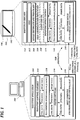
- FIGURE 1 is a block diagram of an illustrative system in which described embodiments may be implemented.
- signature device 100 communicates with a host computer 200 via a bi-directional, TLS-protected USB channel.
- the host computer 200 includes a signature application 205, a signature control instance 210 and related libraries (e.g., signature SDK libraries), and a TLS communication handler 220 that allows the host computer to communicate with the signature device 100 over a TLS channel.
- the TLS channel is provided over a USB connection via USB ports of the host computer 200 and the signature device 100.
- FIGURE 1 shows a single host computer and signature device for ease of illustration, it should be understood, in the context of this example and other examples described herein, that one or more additional signature devices and host computers may be present, that a host computer may communicate with more than one signature device, and that a signature device may communicate with more than one host computer.
- the signature control instance 210 may include a control module (not shown) that controls the signature device 100 and a data module (not shown) that receives signature data from the signature device and may also send image data to signature device for display.
- the content of the data handled by the control instance 210 may depend, for example, on the configuration or capabilities of the signature application 205 or the signature device 100.
- Signature data received from the signature device 100 typically includes pen event data (e.g., coordinate data and pressure data) and may also include other data, such as an image of a signature, biometric data, etc.
- the signature device includes an LCD screen 101 that may display, for example, an electronic document with a signature area in which a signature can be made with a pen device 102.
- the signature device 100 includes a system control module 110 for general operation of the signature device and a TLS communication handler 120 that allows the signature device to communicate with the host computer 200 over the TLS channel.
- the system control module 110 controls the signature device 100 and receives sensor data from one or more sensor modules (not shown), which may be included in the signature device 100 or, in some cases, in other devices, such as the pen 102.
- the sensor data can be translated into pen event data, such as coordinate data and pressure data.
- signature devices may use electromagnetic resonance (EMR) technology, in which a digitizer incorporates a sensor board that detects the pen's movement, and energy is induced in the pen's resonant circuit by a magnetic field generated by the sensor board surface. The pen's resonant circuit then makes use of this energy to return a magnetic signal to the sensor board surface.
- the board detects the pen's coordinate position at regular time intervals even if the electronic pen does not touch the sensor board surface, so long as the pen remains within close enough proximity to the sensor board, such that signals can still be received from the pen. (The effective signal range can vary depending on the particular technology being used, but is generally on the order of several millimeters.)
- an electronic pen may use other wireless technology or may be connected by a wire to a digitizer.
- an electronic pen may or may not be detectable away from the surface of a digitizer.
- an electronic pen may be powered or unpowered. Powered pens may receive power via a wire connected to an external power source or via an on-board battery.
- it is possible to input handwriting data without an electronic pen e.g., via a stylus on a pressure sensitive digital writing pad, a touchscreen, or some other input device that does not require an electronic pen).
- handwriting data provided by signature devices may include pen event information, device information, and/or contextual information about the context in which the handwriting was made.
- Pen event information may include the x/y position of the pen-tip on or above the digitizer surface and the time since the start of the handwriting.
- pen event information may optionally include additional information subject to the capabilities of the signature device, such as pressure (pen force), angles (azimuth, altitude, and/or rotation) and pen-down status.
- Pen event information is typically collected at regular intervals during a signing process. The sampling rates at which pen event information may be collected may vary depending on system design and configuration.
- the signature device 100 has a bootstrap certificate and key 160 that are hard-coded and contained within a firmware image, and are only used in an initial device setup to set a device certificate and private key 164 and a unique serial number 162 (labeled UID2 in FIGURE 1 ) of the device.
- the device certificate is installed (e.g., at a factory) before the signature device 100 is put into use.
- the signature device 100 also may store a user certificate and private key 166 - a key pair that is created on the signature device and signed by the end user's CA.
- the signature device 100 also may store a client-side CRL (certificate revocation list) 168 to specify certificates that are no longer authorized. This can provide protection against unauthorized computers connecting to the signature device 100.
- the signature device 100 may include more than one certificate, only one can be used at a time. If present, the user certificate 166 will be used. Otherwise, the device certificate 164 will be used.
- the bootstrap certificate 160 is only used in an initial device setup to set the device certificate 164 and ID 162.
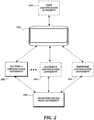
- FIGURE 2 is a block diagram of an illustrative hierarchy of CAs.
- the illustrative CAs shown in FIGURE 2 may be used to provide the device certificate 164 and user certificate 166 shown in FIGURE 1 , as well as a firmware certificate (not shown in FIGURE 1 ), which can be useful in scenarios where firmware must be digitally signed in order for a signature device to accept a firmware update.
- a signature device root authority 280 facilitates provision of one or more factory CAs 282, 284 for one or more individual factories and a firmware CA 286. Providing separate CAs for individual factories helps to isolate the potential risk of a third-party factory causing a security issue. Signature devices that have been initialized by that factory can then also be isolated.
- FIGURE 2 also shows a user CA 290.
- a user certificate and private key pair may be provided as an enhancement to a default level of security, in which a default-level key pair provided by the manufacturer may be replaced by a user certificate and private key pair.
- the term "user” or "end user” of a signature device may refer to any owner of the device (e.g., a bank or other business or organization), or any authorized person or entity that selects a CA for the user certificate, and need not refer to a person that only uses the device to make a signature, such as a customer in a bank.
- a device certificate (a public key certificate signed by a private key held by, e.g., the manufacturer of the signature device) is installed in a signature device before the signature device is put into use.
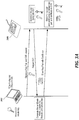
- FIGURE 3A is a flow diagram of an illustrative process for installation of a device certificate in a signature device, such as a signature tablet 300 (abbreviated as "STU" in FIGURE 3A ).
- the tablet 300 communicates with a host computer 302 at a factory.
- the host computer 302 requests the tablet 300 to generate a new device key pair and a certificate signing request (CSR).
- CSR certificate signing request
- the tablet 300 generates the new key pair and the CSR, and sends the CSR to the host computer 300.
- the host computer 302 generates a certificate signed by the CA's private key, and returns the certificate to the tablet 300.
- the tablet 300 stores the device certificate and the device key pair.
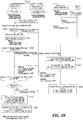
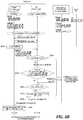
- FIGURE 3B is a flow diagram of another illustrative process for installation of a device certificate in a signature device, such as the signature tablet 100 shown in FIGURE 1 .
- the tablet communicates with a host computer at Factory A.
- a bootstrap certificate and key contained within a firmware image of the tablet are used to obtain an encrypted unique serial number (UID2) of the device from the factory host computer, acting as a TLS client.
- the factory host computer also sends an encrypted "new key" command to generate a new key pair.
- the tablet decrypts the device serial number using its bootstrap private key (F_PR) and stores the device serial number in the tablet (step 311).
- the tablet also decrypts the new key command and generates a new key pair (step 313) consisting of a device public key (D_PU) and a device private key (D_PR).
- the tablet issues a certificate signing request (CSR) for the device public key and sends this CSR to the factory host computer, which forwards it to the factory CA.
- CSR certificate signing request
- the factory CA has previously generated its own public key (W_PU) and private key (W_PR), with the public key signed by a root authority.
- the CSR includes the device public key and the device serial number.
- the factory CA encrypts the device public key with the CA private key (W_PR) and provides the CA's digital signature for the device public key.
- the factory CA encrypts the device serial number with the CA private key (W_PR) and provides the CA's digital signature for the device serial number.
- the factory CA then returns a certificate with the signed device public key (D_PU) and device serial number (UID2) to the tablet, along with a certificate with the CA's signed public key (W_PU).
- the tablet decrypts the signed device public key (D_PU) with the CA's signed public key (W_PU). If the decrypted device public key matches the version that was already on the tablet, the tablet returns a success notification to the factory host computer, which sends a command to store the device key pair with a device certificate indicating the appropriate signatures of the device public key, the device serial number, and the factory public key.
- the tablet stores the device certificate and at step 321, the tablet stores the device key pair, while the two certificates for the device are recorded by the CA at step 322.
- the tablet can operate as a TLS server when communicating with a user's host computer (e.g., a bank's host computer) acting as a TLS client.
- a user's host computer e.g., a bank's host computer
- a signature device establishes TLS communication with a user's host computer (e.g., a bank's host computer) via a USB connection.
- a user's host computer e.g., a bank's host computer
- FIGURE 4A is a flow diagram of an illustrative process in which a signature device, such as a signature tablet 300 (abbreviated as "STU" in FIGURE 4A ) establishes communication with a user's host computer 304 (e.g., a bank's host computer).
- a signature device such as a signature tablet 300 (abbreviated as "STU” in FIGURE 4A ) establishes communication with a user's host computer 304 (e.g., a bank's host computer).
- the tablet 300 is connected to the user's host computer 304, and the host computer requests the tablet 300 to generate a new device key pair and a certificate signing request (CSR).
- CSR certificate signing request
- the tablet 300 generates the new key pair and the CSR, and sends a certificate to the host computer 304.
- the host computer 304 verifies the certificate, generates a random number, generates a session key from the random number, encrypts the random number with the tablet's public key, and sends the encrypted random number to the tablet 300.
- the tablet 300 decrypts the random number and generates a session key from the random number.
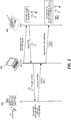
- FIGURE 4B is a flow diagram of another illustrative process in which a signature device (e.g., the signature tablet 100 shown in FIGURE 1 ) establishes communication with a user's host computer (e.g., a bank's host computer).
- a tablet stores a device key pair consisting of a device public key (D_PU) and a device private key (D_PR) with a device certificate indicating the appropriate signatures of the device public key (D_PU), a device serial number (UID2), and a factory CA public key (W_PU).
- D_PU device public key
- D_PR device private key
- W_PU factory CA public key
- the tablet is connected to the user's host computer, and the host computer requests TLS communication. Responsive to this request, parameters for the TLS communication may be negotiated.
- the tablet provides the device certificate.
- the host computer then runs several checks to confirm that it is communicating with an authorized tablet.
- the host computer determines whether the certificate is valid. If it is valid, at step 414 the host computer decrypts information in the device certificate and determines whether the device public key (D_PU) and the device serial number (UID2) have been signed by the factory CA's private key (W_PR). If so, at step 415 the host computer confirms that the device certificate has not been revoked by the factory CA.
- a certificate revocation list can be used to specify certificates that are no longer authorized.
- the host computer requests an updated CRL from the factory CA and checks that the device certificate is still authorized.
- the host computer confirms that the device certificate has not been revoked by the factory CA, the host computer generates a shared secret key (KEY-USB) at step 417 and encrypts it using the device public key (D_PU) at step 419.
- the host computer then sends the encrypted shared secret key (KEY-USB) to the tablet, which decrypts it using the device private key (D PR) at step 421.
- the shared secret key can then be used for secure TLS communication.
- a signature device transmits pen event data using TLS communication to a user's host computer (e.g., a bank's host computer) via a USB connection.
- a user's host computer e.g., a bank's host computer
- FIGURE 4C is a flow diagram of an illustrative process in which a signature device (e.g., the signature tablet 100 shown in FIGURE 1 ) acting as a TLS server transmits pen event data to a user's host computer (e.g., a bank's host computer) acting as a TLS client, using the shared secret key described with reference to FIGURE 4B .
- the USB bulk transfer mechanism is used for the purpose of transmitting pen event data.
- the tablet and the host computer each store the shared secret key (KEY-USB) for secure TLS communication.
- the tablet encrypts pen data with the shared secret key (KEY-USB).
- the tablet sends the encrypted pen data via a USB bulk OUT endpoint.
- the host computer can return an acknowledgement via a USB bulk transfer mechanism, as well.
- the host computer receives the encrypted pen data via a USB bulk IN endpoint and decrypts the encrypted pen data using the shared secret key (KEY-USB). These steps can be repeated until pen data transmissions are completed.
- a user certificate and key pair may be provided as an enhancement to a default level of security (e.g., device certificates, as described above), in which a default-level key pair provided by the manufacturer may be replaced by a user certificate and key pair. This replacement can be carried out by connecting the signature device to a host computer using default-level protection, and then generating a new key pair and requesting a corresponding certificate.
- a default level of security e.g., device certificates, as described above
- This replacement can be carried out by connecting the signature device to a host computer using default-level protection, and then generating a new key pair and requesting a corresponding certificate.
- the term "user” or “end user” may refer to any owner of the signature device (e.g., a bank or other business or organization), or any authorized person or entity that selects a CA for the user certificate, and need not refer to a person that only uses the device to make a signature, such as a customer in a bank.
- a fourth illustrative embodiment in which a user certificate is installed in a signature device to replace the device certificate.
- the user's host computer sends a command to the signature device to generate a user key pair.
- the signature device generates the user key pair and returns a CSR for the new public key to the host computer.
- the host computer may then send the CSR to a second CA (the user CA) selected by the end user.
- the host computer obtains a certificate for the new public key from the user CA and forwards the certificate to the signature device.
- the signature device stores the new certificate with the user key pair.
- the device key pair is made unavailable, although it may be reinstated in some situations, such as a factory reset to restore original device configurations.
- FIGURE 5 is a flow diagram of an illustrative process in which a signature device (e.g., the signature tablet 300, abbreviated as "STU" in FIGURE 5 ) communicates with a user's host computer 304 (e.g., a bank's host computer) and creates a custom user key pair.
- a signature device e.g., the signature tablet 300, abbreviated as "STU” in FIGURE 5
- the tablet 300 is connected to the user's host computer 304, and the host computer requests the tablet 300 to generate a new device key pair and a certificate signing request (CSR).
- CSR certificate signing request
- the tablet 300 generates the new key pair and the CSR, and sends the CSR to the host computer 304, which forwards the CSR to a CA 306.
- the CA 306 generates a certificate signed by the CA's private key, and returns the certificate to the host computer 304, which forwards the certificate to the tablet 300.
- the tablet 300 stores the certificate
- a user certificate also may be obtained in a process that is similar to the more detailed process shown in FIGURE 3B for obtaining the device certificate.
- the tablet issues a certificate signing request (CSR) for the user public key and sends this CSR to the user's host computer, which forwards it to the user's CA.
- CSR certificate signing request
- the CA encrypts the user public key with the CA's private key and provides the CA's digital signature for the user public key.
- the CA then returns a certificate with the signed user public key to the tablet, along with a certificate with the CA's signed public key.
- the tablet decrypts the signed user public key with the CA's signed public key.
- the tablet If the decrypted user public key matches the version that was already on the tablet, the tablet returns a success notification to the user's host computer, which sends a command to store the user key pair with a user certificate having the appropriate signatures. The tablet then stores the user certificate and the user key pair for future use, and the device key pair and certificate are made unavailable.
- a shared secret key for TLS communication may be obtained in a process similar to the process shown in FIGURE 4B .
- the tablet can provide the user certificate to the host computer, and the host computer can determine whether the user certificate is valid, check for appropriate digital signatures by the CA, and confirm that the user certificate has not been revoked by the CA. Once that is confirmed, the host computer can generate a shared secret key and encrypt it using the user public key. The host computer can then send the encrypted shared secret key to the tablet, which can decrypt it using the user private key. The shared secret key can then be used for secure TLS communication. Once TLS communication is established between the signature device and the host computer, the signature device can then securely transmit data to the host computer via a USB connection, using a process similar to the process shown in FIGURE 4C .
- FIGURE 6 is a flow chart of an illustrative process 600 that may be performed according to the fourth illustrative embodiment.
- a connection is established between a signature device and a host computer via an interface, such as a USB interface.
- a TLS connection is established between the signature device and the host computer via the interface. This is facilitated by a device certificate and key pair on the signature device that allows the TLS connection to be established for temporary communication, before a user certificate and key pair are obtained.
- the host computer sends a command to the signature device via the interface to generate a new key pair.
- the host computer receives a CSR from the signature device via the interface.
- the CSR includes the new public key.
- the host computer sends the CSR to a third-party CA selected by the user.
- the host computer receives a new public key certificate from the CA.
- the host computer sends the new public key certificate to the signature device via the interface.
- new TLS connections can be established between the signature device and the host computer (or other host computers) using the user certificate and key pair. These new TLS connections can be used to send encrypted pen data, or other data, over connections that have an additional level of trust, provided by the user's CA.
- a signature device transmits data using TLS communication to a user's host computer (e.g., a bank's host computer) via a USB connection.
- a user's host computer e.g., a bank's host computer
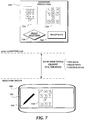
- FIGURE 7 is a block diagram of an illustrative system in which the fifth illustrative embodiment may be implemented.
- a signature device 100 communicates with a host computer 200 via a bi-directional, TLS-protected USB channel.
- the signature device 100 and the host computer 200 include components similar to those shown in FIGURE 1 , but many of these components are not shown in FIGURE 7 for ease of illustration.
- the host computer 200 includes a signature application 205 with multiple images 710, 720 of a PIN pad, image selection functionality 730, and image maps 740 that map particular characters in the PIN pad with particular regions of each image 710, 720.
- Image 710 represents a first configuration of a PIN pad
- image 720 represents a scrambled configuration of the PIN pad.
- the possibility of multiple PIN pad configurations means that if pen position data is intercepted during transmission, the pen position data cannot be easily mapped to a particular character on the PIN pad, without knowing which image was used. Although only two images are shown for ease of illustration, it should be understood and more images can be easily accommodated, and that additional scrambled PIN pad layouts may be preferable to provide additional security.
- the image selection functionality 730 selects image 720 for display on the signature device 100.
- the host computer 200 then encrypts and sends the selected image 720 to the signature device 100 for display.
- the signature device decrypts and displays the image 720.
- a user e.g., a bank customer
- This pen data can then be encrypted and sent back to the signature device, for decryption and mapping to particular characters of the PIN based on the image maps 740.
- Other software on the host computer (perhaps in combination with other computers, such as banking information servers) can then be used determine whether the PIN entered by the user is valid or not.
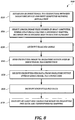
- FIGURE 8 is a flow chart of an illustrative process 800 that may be performed according to the fifth illustrative embodiment.
- a TLS connection is established between a signature device and a host computer running an application.
- the host computer selects an image file from among a set of image files stored in the host computer. Each image file has a different mapping between image regions and a character alphabet.
- each image file in the set of image files represents a different layout of characters for entering a PIN (e.g., for accessing a bank account.)
- the host computer encrypts the selected image.
- the host computer sends the encrypted image to the signature device over the TLS connection.
- the host computer receives encrypted pen data from the signature device over the TLS connection.
- the host computer decrypts the encrypted pen data.
- the host computer identifies at least one character based on the decrypted pen data and the mapping between image regions and the character alphabet associated with the select image file.
- a signature tablet is used in combination with an external computer (e.g., a bank's host computer).
- the signature tablet may act as a TLS server having a server certificate.
- FIGURE 9 is a block diagram of an illustrative system 900 according to the sixth embodiment.
- a signature tablet 910 communicates with an external computer 920.
- the signature tablet comprises an input sensor 912 (e.g., an EMR sensor), an input sensor controller 914 (e.g., an EMR controller), and a main controller 916.
- the main controller comprises a peripheral device interface 917 (e.g., a USB interface) and memory 918.
- the signature tablet also may include a display 919 (e.g., an LCD display).
- the input sensor controller is configured to detect a series of positions of a pen and generate a series of pen data.
- the memory 918 stores a key pair of a public key and a private key, a server certificate for the public key, and firmware.
- the firmware is configured to cause the main controller 916 to establish a connection with the external computer 920 over the peripheral device interface 917 when the peripheral device interface is detected to be connected with the external computer 920; provide the server certificate including the public key to the external computer 920 over the connection; and, in a case where a response indicating the server certificate is trusted by the external computer is received, send the series of pen data to the external computer 920.
- the external computer 920 may be programmed to receive the server certificate including the public key over the connection, determine whether the server certificate is trusted or not, send the response indicating the server certificate is trusted to the signature tablet 910 in a case where the server certificate is trusted, and receive the series of pen data.
- the firmware may be further configured to cause the main controller 916 to receive an encrypted shared secret key generated by the external computer 920 over the connection (e.g., via a secure TLS or SSL session established directly via the connection over the USB peripheral device interface) as the response indicating the server certificate is trusted by the external computer; and send the series of pen data by encrypting the series of pen data with the shared secret key.
- the firmware may be further configured to cause the main controller 916 to establish a default pipe for exchanging USB device properties and two pipes for USB bulk transfer for two-way communication with the external computer 920 over the peripheral device interface 917. The series of pen data may be sent over the TLS session established via the two pipes for USB bulk transfer.
- the signature tablet 910 may issue a certificate signing request (CSR).
- CSR certificate signing request
- the firmware may be further configured to cause the main controller 916 to generate a first key pair in response to a command, send a CSR for the public key in order to obtain the server certificate signed by a certificate authority (CA), and store the server certificate including the public key in the memory 918.
- the firmware may be further configured to cause the main controller 916 to generate a new key pair of a new public key and a new private key in response to another command, send a CSR for the new public key in order to obtain the public key signed by a second CA, and update the memory 918 to store the new key pair and a server certificate for the new public key signed by the second CA.
- the firmware may be further configured to cause the main controller 916 to retrieve a client certificate including a public key of the external computer 920 from the external computer 920, determine whether the client certificate is trusted or not, and, in case the client certificate is trusted and the response indicating that the server certificate is trusted by the external computer 920 is received, send the series of pen data to the external computer 920.
- the firmware may be further configured to cause the signature tablet 910 to decrypt encrypted image data sent from the external computer 920 over the connection to obtain image data, and display a path of the positions of the pen in a manner such that the path is overlaid with the image data when displayed on the display 919.
- the image data may represent either a first image for entering a handwriting signature or a second image showing a layout of characters for entering a PIN.
- the firmware may be further configured to cause the signature tablet to display the path of the positions of the pen in a manner such that the path is overlaid with the first image, and display a character selected by the positions in a highlighted manner.
- the embodiments described herein, or other embodiments may be implemented by any suitable computing devices, including, but not limited to, laptop computers, desktop computers, smart phones, tablet computers, dedicated signature tablets, or combinations of such devices.
- FIGURE 10 is a block diagram that illustrates aspects of an illustrative computing device 1000 appropriate for use in accordance with embodiments of the present disclosure.
- the description below is applicable to servers, personal computers, mobile phones, smart phones, tablet computers, embedded computing devices, and other currently available or yet to be developed devices that may be used in accordance with embodiments of the present disclosure.
- the computing device 1000 includes at least one processor 1002 and a system memory 1004 connected by a communication bus 1006.
- the system memory 1004 may be volatile or nonvolatile memory, such as read only memory (“ROM”), random access memory (“RAM”), EEPROM, flash memory, or other memory technology.
- ROM read only memory
- RAM random access memory
- EEPROM electrically erasable programmable read-only memory
- flash memory or other memory technology.
- system memory 1004 typically stores data and/or program modules that are immediately accessible to and/or currently being operated on by the processor 1002.
- the processor 1002 may serve as a computational center of the computing device 1000 by supporting the execution of instructions.
- the computing device 1000 may include a network interface 1010 comprising one or more components for communicating with other devices over a network.
- Embodiments of the present disclosure may access basic services that utilize the network interface 1010 to perform communications using common network protocols.
- the network interface 1010 may also include a wireless network interface configured to communicate via one or more wireless communication protocols, such as WiFi, 2G, 3G, 4G, LTE, WiMAX, Bluetooth, and/or the like.
- the computing device 1000 also includes a storage medium 1008.
- services may be accessed using a computing device that does not include means for persisting data to a local storage medium. Therefore, the storage medium 1008 depicted in FIGURE 10 is optional.
- the storage medium 1008 may be volatile or nonvolatile, removable or non-removable, implemented using any technology capable of storing information such as, but not limited to, a hard drive, solid state drive, CD-ROM, DVD, or other disk storage, magnetic tape, magnetic disk storage, and/or the like.
- computer readable medium includes volatile and nonvolatile and removable and non-removable media implemented in any method or technology capable of storing information, such as computer readable instructions, data structures, program modules, or other data.
- system memory 1004 and storage medium 1008 depicted in FIGURE 10 are examples of computer readable media.
- FIGURE 10 does not show some of the typical components of many computing devices.
- the computing device 1000 may include input devices, such as a keyboard, keypad, mouse, trackball, microphone, video camera, touchpad, touchscreen, stylus, and/or the like.
- Such input devices may be coupled to the computing device 1000 by wired or wireless connections including RF, infrared, serial, parallel, Bluetooth, USB, or other suitable connection protocols using wireless or physical connections.
- data can be captured by input devices (e.g., signature devices) and transmitted or stored for future processing.
- the processing may include encoding data, which can be subsequently decoded for presentation by output devices.
- Input devices can be separate from and communicatively coupled to computing device 1000, or can be integral components of the computing device 1000.
- the computing device 1000 may also include output devices such as a display or touchscreen.
- the output devices can be separate from and communicatively coupled to the computing device 1000, or can be integral components of the computing device 1000.
- Input functionality and output functionality may be integrated into the same input/output device (e.g., a touchscreen). Any suitable input device, output device, or combined input/output device either currently known or developed in the future may be used with described systems.
- functionality of computing devices described herein may be implemented in computing logic embodied in hardware or software instructions, which can be written in a programming language, such as C, C++, COBOL, JAVATM, PHP, Perl, Python, Ruby, HTML, CSS, JavaScript, VBScript, ASPX, Microsoft .NETTM languages such as C#, and/or the like.
- Computing logic may be compiled into executable programs or written in interpreted programming languages.
- functionality described herein can be implemented as logic modules that can be duplicated to provide greater processing capability, merged with other modules, or divided into sub modules.
- the computing logic can be stored in any type of computer readable medium (e.g., a non-transitory medium such as a memory or storage medium) or computer storage device and be stored on and executed by one or more general purpose or special purpose processors, thus creating a special purpose computing device configured to provide functionality described herein.
- a computer readable medium e.g., a non-transitory medium such as a memory or storage medium
- computer storage device e.g., a non-transitory medium such as a memory or storage medium
- embodiments described herein can be adapted to mechanisms, algorithms and encryption techniques that are incorporated into current or subsequent iterations of the TLS specification.
- PFS Perfect Forward Secrecy
- Embodiments described herein can be easily adapted to take advantage of this additional security, which is contained completely within the TLS framework.
- modules or subsystems can be separated into additional modules or subsystems or combined into fewer modules or subsystems.
- modules or subsystems can be omitted or supplemented with other modules or subsystems.
- functions that are indicated as being performed by a particular device, module, or subsystem may instead be performed by one or more other devices, modules, or subsystems.
- processing stages in the various techniques can be separated into additional stages or combined into fewer stages.
- processing stages in the various techniques can be omitted or supplemented with other techniques or processing stages.
- processing stages that are described as occurring in a particular order can instead occur in a different order.
- processing stages that are described as being performed in a series of steps may instead be handled in a parallel fashion, with multiple modules or software processes concurrently handling one or more of the illustrated processing stages.
- processing stages that are indicated as being performed by a particular device or module may instead be performed by one or more other devices or modules.
Landscapes
- Engineering & Computer Science (AREA)
- Computer Security & Cryptography (AREA)
- Signal Processing (AREA)
- Computer Networks & Wireless Communication (AREA)
- Computer Hardware Design (AREA)
- General Engineering & Computer Science (AREA)
- General Physics & Mathematics (AREA)
- Physics & Mathematics (AREA)
- Computing Systems (AREA)
- Theoretical Computer Science (AREA)
- Business, Economics & Management (AREA)
- Accounting & Taxation (AREA)
- Software Systems (AREA)
- Finance (AREA)
- Strategic Management (AREA)
- General Business, Economics & Management (AREA)
- Health & Medical Sciences (AREA)
- Bioethics (AREA)
- General Health & Medical Sciences (AREA)
- Storage Device Security (AREA)
- User Interface Of Digital Computer (AREA)
- Management, Administration, Business Operations System, And Electronic Commerce (AREA)
Claims (15)
- Procédé mis en œuvre par ordinateur comprenant les étapes ci-dessous consistant à :établir une connexion entre un dispositif de signature (100, 300) et un ordinateur hôte (200, 302) par l'intermédiaire d'une interface ;établir une connexion de sécurité de couche de transport, TLS, entre le dispositif de signature (100, 300) et l'ordinateur hôte (200, 302) par l'intermédiaire de l'interface ;par le biais de l'ordinateur hôte (200, 302), envoyer une instruction, par l'intermédiaire de l'interface, au dispositif de signature (100, 300), en vue de générer (313) une nouvelle paire de clés constituée d'une clé publique (D_PU) et d'une clé privée (D_PR) du dispositif de signature (100, 300) ;par le biais de l'ordinateur hôte (200, 302), recevoir une demande de signature de certificat, CSR, incluant la clé publique générée du dispositif de signature (D_PU) et un numéro de série de dispositif du dispositif de signature (100, 300), en provenance du dispositif de signature (100, 300), par l'intermédiaire de l'interface ;par le biais de l'ordinateur hôte (200, 302), envoyer la demande CSR à une autorité de certification d'utilisateur ;par le biais de l'autorité de certification d'utilisateur, chiffrer (315, 316) la clé publique (D_PU) et le numéro de série de dispositif du dispositif de signature avec une clé privée d'autorité de certification (W_PR), afin d'obtenir un premier certificat avec la clé publique (D_PU) du dispositif de signature et le numéro de série de dispositif signé par l'autorité de certification ;par le biais de l'autorité de certification d'utilisateur, renvoyer le premier certificat et un second certificat avec la clé publique (W_PU) de l'autorité de certification signée par une autorité de certification racine ;par le biais de l'ordinateur hôte (200, 302), recevoir le premier certificat et le second certificat en provenance de l'autorité de certification d'utilisateur ;par le biais de l'ordinateur hôte (200, 302), envoyer le premier certificat et le second certificat au dispositif de signature (100, 300) par l'intermédiaire de l'interface ;par le biais du dispositif de signature (100, 300), déchiffrer la clé publique (D_PU) signée par l'autorité de certification avec la clé publique d'autorité de certification (W_PU) signée par l'autorité de certification racine ; etpar le biais du dispositif de signature (100, 300), lorsque la clé publique déchiffrée (D_PU) signée par l'autorité de certification correspond à la clé publique (D_PU) sur le dispositif de signature (100, 300), stocker le premier certificat, le second certificat et la nouvelle paire de clés.
- Procédé selon la revendication 1, comprenant en outre les étapes ci-dessous consistant à :par le biais de l'ordinateur hôte (200, 302), chiffrer le numéro de série de dispositif en utilisant une clé publique d'amorçage (F_PU) d'une paire de clés d'amorçage du dispositif de signature (100, 300) constituée de la clé publique d'amorçage (F_PU) et d'une clé privée d'amorçage (F_PR) ;par le biais du dispositif de signature (100, 300), obtenir le numéro de série de dispositif chiffré par le dispositif de signature (100, 300) à partir de l'ordinateur hôte (200, 302) par l'intermédiaire de l'interface ;par le biais du dispositif de signature (100, 300), déchiffrer le numéro de série de dispositif chiffré, en utilisant la clé privée d'amorçage (160, F_PR) du dispositif de signature (100, 300), et stocker (311) le numéro de série de dispositif déchiffré du dispositif de signature (100, 300).
- Procédé selon la revendication 2, dans lequel la clé privée d'amorçage (160, F_PR) du dispositif de signature (100, 300) comprend l'image de micrologiciel stockée par le dispositif de signature (100, 300).
- Procédé selon l'une quelconque des revendications 1 à 3, comprenant en outre les étapes ci-dessous consistant à :demander une communication de sécurité TLS, par le biais de l'ordinateur hôte (200, 302), au dispositif de signature (100, 300) ;fournir le premier certificat et le second certificat, par le biais du dispositif de signature (100, 300), à l'ordinateur hôte (200, 302) ;déterminer, par le biais de l'ordinateur hôte (200, 302), si le premier certificat est valide ;si le premier certificat est valide, générer, par le biais de l'ordinateur hôte (200, 302), une clé secrète partagée (KEY-USB), et chiffrer la clé secrète partagée en utilisant la clé publique (D_PU) du dispositif de signature (100, 300) comprise dans le premier certificat ;envoyer la clé secrète partagée de l'ordinateur hôte (200, 302) au dispositif de signature (100, 300) ;déchiffrer la clé secrète partagée chiffrée (KEY-USB), par le biais du dispositif de signature (100, 300), en utilisant la clé privée (D_PR) du dispositif de signature (100, 300).
- Procédé selon la revendication 1, comprenant en outre les étapes consistant à, par le biais de l'ordinateur hôte (200, 302), recevoir des données de stylo chiffrées par l'intermédiaire de l'interface, et/ou transmettre des données de commande chiffrées au dispositif de signature (100, 300), par l'intermédiaire de l'interface, et/ou transmettre des données d'image chiffrées au dispositif de signature (100, 300), par l'intermédiaire de l'interface.
- Procédé selon l'une quelconque des revendications précédentes, dans lequel la connexion est établie entre le dispositif de signature (100, 300) et l'ordinateur hôte (200, 302) par l'intermédiaire d'une interface USB.
- Procédé selon la revendication 4, dans lequel des données sont reçues en provenance du dispositif de signature (100, 300) et/ou sont transmises à celui-ci, par l'intermédiaire d'un transfert de masse USB.
- Système comprenant :un dispositif de signature (100, 300), un ordinateur hôte (200, 302) et une autorité de certification d'utilisateur ;dans lequel le dispositif de signature (100, 300) est configuré de manière à :établir une connexion entre le dispositif de signature (100, 300) et l'ordinateur hôte (200, 302) par l'intermédiaire d'une interface ; etétablir une connexion de sécurité de couche de transport, TLS, entre le dispositif de signature (100, 300) et l'ordinateur hôte (200, 302) par l'intermédiaire de l'interface ;dans lequel l'ordinateur hôte (200, 302) est configuré de manière à :envoyer une instruction, par l'intermédiaire de l'interface, au dispositif de signature (100, 300), en vue de générer (313) une nouvelle paire de clés constituée d'une clé publique (D_PU) et d'une clé privée (D_PR) du dispositif de signature (100, 300) ;recevoir une demande de signature de certificat, CSR, incluant la clé publique générée du dispositif de signature (D_PU) et un numéro de série de dispositif du dispositif de signature (100, 300), en provenance du dispositif de signature (100, 300), par l'intermédiaire de l'interface ; etenvoyer la demande CSR à une autorité de certification d'utilisateur ;dans lequel l'autorité de certification d'utilisateur est configurée de manière à :chiffrer (315, 316) la clé publique (D_PU) et le numéro de série de dispositif du dispositif de signature avec une clé privée d'autorité de certification (W_PR), afin d'obtenir un premier certificat avec la clé publique (D_PU) du dispositif de signature et le numéro de série signé par l'autorité de certification ; etrenvoyer le premier certificat et un second certificat avec la clé publique (W_PU) de l'autorité de certification signée par une autorité de certification racine ;dans lequel l'ordinateur hôte (200, 302) est en outre configuré de manière à :recevoir le premier certificat et le second certificat en provenance de l'autorité de certification d'utilisateur ; etenvoyer le premier certificat et le second certificat au dispositif de signature (100, 300) par l'intermédiaire de l'interface ; etdans lequel le dispositif de signature (100, 300) est en outre configuré de manière à :déchiffrer la clé publique (D_PU) signée par l'autorité de certification avec la clé publique d'autorité de certification (W_PU) signée par l'autorité de certification racine ; etlorsque la clé publique déchiffrée (D_PU) signée par l'autorité de certification correspond à la clé publique (D_PU) sur le dispositif de signature (100, 300), stocker le premier certificat, le second certificat et la nouvelle paire de clés.
- Système selon la revendication 8, dans lequel la tablette de signature (100, 300) est en outre configurée de manière à :recevoir une clé secrète partagée chiffrée générée par l'ordinateur hôte (200, 302) dans le cadre d'une session sécurisée, en tant que la réponse indiquant que le certificat de serveur a la confiance de l'ordinateur hôte (200, 302) ; etenvoyer la série de données de stylo en chiffrant la série de données de stylo avec la clé secrète partagée.
- Système selon la revendication 9, dans lequel la série de données de stylo est envoyée dans le cadre d'une session de sécurité TLS ou de couche SSL établie directement par l'intermédiaire de la connexion sur l'interface de dispositif périphérique USB.
- Système selon l'une quelconque des revendications 8 à 10, dans lequel la tablette de signature (100, 300) est en outre configurée de manière à :établir un tuyau par défaut pour échanger des propriétés de dispositif USB et deux tuyaux pour un transfert de masse USB, en vue d'une communication bidirectionnelle avec l'ordinateur hôte (200, 302) par l'intermédiaire de l'interface de dispositif périphérique USB de la tablette de signature (100, 300) ;dans lequel la série de données de stylo est envoyée dans le cadre de la session de sécurité TLS établie par l'intermédiaire des deux tuyaux pour le transfert de masse USB.
- Système selon l'une quelconque des revendications 8 à 11, dans lequel la tablette de signature (100, 300) est en outre configurée de manière à :générer la paire de clés constituée de la clé publique (D_PU) et de la clé privée (D_PR), en réponse à l'instruction reçue en provenance de l'ordinateur hôte (200, 302) ;envoyer ladite demande CSR pour la clé publique (D_PU) à l'ordinateur hôte (200, 302), afin d'obtenir le certificat de serveur signé par l'autorité de certification ; et stocker le certificat de serveur incluant la clé publique (D_PU) dans une mémoire de la tablette de signature (100, 300).
- Système selon l'une quelconque des revendications 8 à 12, dans lequel la tablette de signature (100, 300) est en outre configurée de manière à :récupérer un certificat de dispositif client incluant une clé publique de l'ordinateur hôte (200, 302), à partir de l'ordinateur hôte (200, 302) ;déterminer si le certificat de dispositif client est digne de confiance ou non ; etdans le cas où le certificat de dispositif client est digne de confiance, et où la réponse indiquant que le certificat de serveur a la confiance de l'ordinateur hôte (200, 302) est reçue, envoyer la série de données de stylo à l'ordinateur hôte (200, 302).
- Système selon l'une quelconque des revendications 8 à 13, dans lequel la tablette de signature (100, 300) comprend un écran d'affichage et est en outre configurée de manière à :déchiffrer des données d'image chiffrées envoyées à partir de l'ordinateur hôte (200, 302) sur la connexion, en vue d'obtenir des données d'image ; etafficher un chemin des positions du stylo de sorte que le chemin est superposé aux données d'image lorsqu'il est affiché à l'écran.
- Système selon la revendication 14, dans lequel les données d'image représentent soit une première image pour saisir une signature manuscrite, soit une seconde image montrant une disposition de caractères pour saisir un code PIN, et dans lequel le micrologiciel est en outre configuré de manière à amener la tablette de signature à :afficher le chemin des positions du stylo de manière de sorte que le chemin est superposé à la première image ; etafficher en surbrillance un caractère sélectionné par les positions.
Applications Claiming Priority (1)
| Application Number | Priority Date | Filing Date | Title |
|---|---|---|---|
| US201662381430P | 2016-08-30 | 2016-08-30 |
Publications (3)
| Publication Number | Publication Date |
|---|---|
| EP3291504A2 EP3291504A2 (fr) | 2018-03-07 |
| EP3291504A3 EP3291504A3 (fr) | 2018-03-14 |
| EP3291504B1 true EP3291504B1 (fr) | 2020-03-11 |
Family
ID=59699521
Family Applications (1)
| Application Number | Title | Priority Date | Filing Date |
|---|---|---|---|
| EP17187244.3A Active EP3291504B1 (fr) | 2016-08-30 | 2017-08-22 | Authentification et transmission sécurisée des données entre dispositifs de signature et ordinateurs host à l'aide de la sécurité des couches de transport |
Country Status (4)
| Country | Link |
|---|---|
| US (1) | US10839382B2 (fr) |
| EP (1) | EP3291504B1 (fr) |
| JP (2) | JP2018038036A (fr) |
| CN (1) | CN107800682B (fr) |
Families Citing this family (34)
| Publication number | Priority date | Publication date | Assignee | Title |
|---|---|---|---|---|
| CN105790927B (zh) * | 2016-02-26 | 2019-02-01 | 华为技术有限公司 | 一种总线分级加密系统 |
| DE102016216115A1 (de) * | 2016-08-26 | 2018-03-01 | Siemens Aktiengesellschaft | Computervorrichtung zum Übertragen eines Zertifikats auf ein Gerät in einer Anlage |
| US9992029B1 (en) * | 2017-04-05 | 2018-06-05 | Stripe, Inc. | Systems and methods for providing authentication to a plurality of devices |
| US11194562B2 (en) * | 2017-05-19 | 2021-12-07 | Blackberry Limited | Method and system for hardware identification and software update control |
| JP6463877B1 (ja) * | 2017-08-01 | 2019-02-06 | 株式会社ワコム | ペンが送信したペン信号を検出するためのセンサ |
| US10972445B2 (en) * | 2017-11-01 | 2021-04-06 | Citrix Systems, Inc. | Dynamic crypto key management for mobility in a cloud environment |
| US11418352B2 (en) * | 2018-02-21 | 2022-08-16 | Akamai Technologies, Inc. | Certificate authority (CA) security model in an overlay network supporting a branch appliance |
| CN108600240B (zh) * | 2018-05-02 | 2020-11-10 | 浪潮集团有限公司 | 一种通信系统及其通信方法 |
| CN108494565A (zh) * | 2018-05-24 | 2018-09-04 | 北京深思数盾科技股份有限公司 | 数字签名系统及方法 |
| US11552803B1 (en) * | 2018-09-19 | 2023-01-10 | Amazon Technologies, Inc. | Systems for provisioning devices |
| WO2020101567A1 (fr) * | 2018-11-16 | 2020-05-22 | Microsec Pte Ltd | Procédé et architecture de sécurisation et de gestion de réseaux de systèmes intégrés à infrastructure à clé publique optimisée |
| WO2020136729A1 (fr) | 2018-12-25 | 2020-07-02 | 株式会社ワコム | Système d'entrée |
| CN109861813B (zh) * | 2019-01-11 | 2021-08-10 | 如般量子科技有限公司 | 基于非对称密钥池的抗量子计算https通信方法和系统 |
| CN109600226B (zh) * | 2019-01-25 | 2020-05-05 | 中国人民解放军国防科技大学 | 基于随机数隐式协商的tls协议会话密钥还原方法 |
| US11283629B2 (en) | 2019-10-10 | 2022-03-22 | Red Hat, Inc. | Automated replacement of renewable server certificates |
| CN112994873B (zh) * | 2019-12-18 | 2023-03-24 | 华为技术有限公司 | 一种证书申请方法及设备 |
| CN111193748B (zh) * | 2020-01-06 | 2021-12-03 | 惠州市德赛西威汽车电子股份有限公司 | 一种交互式密钥安全认证方法及系统 |
| US11153102B2 (en) * | 2020-03-16 | 2021-10-19 | Dell Products L.P. | Systems and methods to identify a certificate authority within an offline manufacturing facility |
| US11822664B2 (en) * | 2020-06-22 | 2023-11-21 | Apple Inc. | Securely signing configuration settings |
| US11489828B2 (en) * | 2020-12-04 | 2022-11-01 | Salesforce, Inc. | Tenant aware mutual TLS authentication |
| EP4009602B1 (fr) | 2020-12-07 | 2022-11-09 | Siemens Healthcare GmbH | Fourniture d'un premier certificat numérique et d'une réponse dns |
| US11575679B2 (en) | 2021-02-16 | 2023-02-07 | Bank Of America Corporation | Agentless access control system for dynamic calibration of software permissions |
| US11388057B1 (en) | 2021-02-16 | 2022-07-12 | Bank Of America Corporation | Agentless control system for lifecycle event management |
| US11093437B1 (en) | 2021-02-16 | 2021-08-17 | Bank Of America Corporation | Agentless network access reconciliation |
| CN113873027B (zh) * | 2021-09-24 | 2024-02-27 | 深信服科技股份有限公司 | 一种通信方法及相关装置 |
| US20230177489A1 (en) * | 2021-12-08 | 2023-06-08 | Paypal, Inc. | Utilization of biometrics in creation of secure key or digital signature |
| CN117413557A (zh) * | 2022-05-13 | 2024-01-16 | 北京小米移动软件有限公司 | 认证方法、装置、通信设备及存储介质 |
| US20240031353A1 (en) * | 2022-07-22 | 2024-01-25 | Rubrik, Inc. | Techniques for secure host connectivity in disaster recovery scenarios |
| CN115344893B (zh) * | 2022-08-30 | 2023-03-28 | 深圳市创富金科技有限公司 | 基于文字特征识别的交易方法、装置及设备 |
| US12513006B1 (en) * | 2022-09-30 | 2025-12-30 | Amazon Technologies, Inc. | Secure provisioning and rotation of certificates for edge devices |
| US11968302B1 (en) | 2023-03-24 | 2024-04-23 | Srinivas Kumar | Method and system for pre-shared key (PSK) based secure communications with domain name system (DNS) authenticator |
| US12476793B2 (en) | 2023-03-24 | 2025-11-18 | Symmera Inc. | System and method to securely distribute authenticated and trusted data streams to AI systems |
| WO2025159775A2 (fr) * | 2023-03-24 | 2025-07-31 | Srinivas Kumar | Système et procédé pour distribuer de manière sécurisée des flux de données authentifiés et de confiance à des systèmes ia |
| US12549338B2 (en) * | 2024-05-10 | 2026-02-10 | Infineon Technologies Ag | Asymmetrical multi-channel communication security |
Family Cites Families (39)
| Publication number | Priority date | Publication date | Assignee | Title |
|---|---|---|---|---|
| AU4210800A (en) * | 1999-04-09 | 2000-11-14 | Liquid Audio, Inc. | Secure online music distribution system |
| US7106888B1 (en) * | 1999-05-25 | 2006-09-12 | Silverbrook Research Pty Ltd | Signature capture via interface surface |
| US7953671B2 (en) * | 1999-08-31 | 2011-05-31 | American Express Travel Related Services Company, Inc. | Methods and apparatus for conducting electronic transactions |
| US8285991B2 (en) * | 2000-10-25 | 2012-10-09 | Tecsec Inc. | Electronically signing a document |
| JP2003134108A (ja) * | 2001-10-30 | 2003-05-09 | Ricoh Co Ltd | 電子署名システム、電子署名検証装置、電子署名検証方法、プログラム、及び記録媒体 |
| GB0504545D0 (en) * | 2005-03-07 | 2005-04-13 | Tricerion Ltd | A method of secure data communication |
| EP1615181B1 (fr) * | 2004-07-09 | 2012-10-17 | Tricerion Ltd | Procédé de communication de données sécurisé |
| US7933840B2 (en) | 2004-12-30 | 2011-04-26 | Topaz Systems, Inc. | Electronic signature security system |
| JP2008158756A (ja) * | 2006-12-22 | 2008-07-10 | Fuji Xerox Co Ltd | 筆記具、筆記情報処理装置、および筆記情報処理プログラム |
| JP2008219787A (ja) * | 2007-03-07 | 2008-09-18 | Toshiba Corp | 鍵管理システム、鍵管理プログラムおよびicカード |
| WO2009014734A2 (fr) * | 2007-07-23 | 2009-01-29 | Intertrust Technologies Corporation | Systèmes et procédés de dispositifs rattachés |
| WO2009046400A1 (fr) * | 2007-10-05 | 2009-04-09 | Interdigital Technology Corporation | Technique de découpage en canaux sécurisé entre une uicc et un terminal |
| US20090240936A1 (en) * | 2008-03-20 | 2009-09-24 | Mark Lambiase | System and method for storing client-side certificate credentials |
| US8862874B2 (en) * | 2008-05-09 | 2014-10-14 | International Business Machines Corporation | Certificate distribution using secure handshake |
| EP2340504A1 (fr) * | 2008-09-04 | 2011-07-06 | Walletex Microelectronics Ltd. | Procédé et appareil pour réaliser une communication électronique sécurisée |
| WO2010037407A1 (fr) | 2008-09-30 | 2010-04-08 | Stepover Gmbh | Procédé et dispositif de capture électronique d'une signature manuscrite et de sauvegarde de données biométriques |
| EP2359526B1 (fr) * | 2008-11-04 | 2017-08-02 | SecureKey Technologies Inc. | Système et procédés pour une authentification en ligne |
| US20110161659A1 (en) * | 2009-12-28 | 2011-06-30 | Motorola, Inc. | Method to enable secure self-provisioning of subscriber units in a communication system |
| US8381119B2 (en) * | 2010-01-11 | 2013-02-19 | Ideographix, Inc. | Input device for pictographic languages |
| US10042993B2 (en) * | 2010-11-02 | 2018-08-07 | Homayoon Beigi | Access control through multifactor authentication with multimodal biometrics |
| US8479008B2 (en) * | 2010-12-15 | 2013-07-02 | Microsoft Corporation | Providing security services on the cloud |
| US9959576B2 (en) * | 2011-12-07 | 2018-05-01 | Visa International Service Association | Multi-purpose device having multiple certificates including member certificate |
| US9026789B2 (en) * | 2011-12-23 | 2015-05-05 | Blackberry Limited | Trusted certificate authority to create certificates based on capabilities of processes |
| EP2608477B1 (fr) * | 2011-12-23 | 2014-03-19 | BlackBerry Limited | Autorité de certificat sécurisée pour créer des certificats d'après des capacités de procédés |
| US20130301830A1 (en) * | 2012-05-08 | 2013-11-14 | Hagai Bar-El | Device, system, and method of secure entry and handling of passwords |
| GB201212878D0 (en) * | 2012-07-20 | 2012-09-05 | Pike Justin | Authentication method and system |
| EP2907287B1 (fr) * | 2012-10-15 | 2016-06-29 | Nokia Solutions and Networks Oy | Authentification de réseau |
| CN103888422B (zh) * | 2012-12-21 | 2017-10-24 | 华为技术有限公司 | 安全证书更新方法、客户端、服务器 |
| US9118467B2 (en) * | 2013-03-13 | 2015-08-25 | Atmel Corporation | Generating keys using secure hardware |
| JP2015039141A (ja) * | 2013-08-19 | 2015-02-26 | 富士通株式会社 | 証明書発行要求生成プログラム、証明書発行要求生成装置、証明書発行要求生成システム、証明書発行要求生成方法、証明書発行装置および認証方法 |
| US9819661B2 (en) * | 2013-09-12 | 2017-11-14 | The Boeing Company | Method of authorizing an operation to be performed on a targeted computing device |
| CN103888260B (zh) * | 2014-03-13 | 2017-11-14 | 北京数字认证股份有限公司 | 一种能与手写签字建立可靠对应的数字签名装置 |
| EP2942725B1 (fr) * | 2014-05-05 | 2017-01-04 | TP Vision Holding B.V. | Hôte d'interface commune et module d'accès conditionnel d'interface commune |
| US9491161B2 (en) * | 2014-09-30 | 2016-11-08 | Citrix Systems, Inc. | Systems and methods for performing single sign-on by an intermediary device for a remote desktop session of a client |
| US20160219079A1 (en) * | 2014-10-24 | 2016-07-28 | Temporal Defense Systems, Llc | Autonomous control systems and methods for protecting infrastructure |
| US10074224B2 (en) * | 2015-04-20 | 2018-09-11 | Gate Labs Inc. | Access management system |
| CN204442397U (zh) * | 2015-02-03 | 2015-07-01 | 深圳市优笔触控科技有限公司 | 一种加密电子签名装置 |
| US9898100B2 (en) * | 2015-06-04 | 2018-02-20 | Microsoft Technology Licensing, Llc | Authenticating stylus device |
| US10419421B2 (en) * | 2016-08-11 | 2019-09-17 | Big Switch Networks, Inc. | Systems and methods to securely construct a network fabric |
-
2017
- 2017-08-22 EP EP17187244.3A patent/EP3291504B1/fr active Active
- 2017-08-24 JP JP2017161001A patent/JP2018038036A/ja active Pending
- 2017-08-28 CN CN201710751115.8A patent/CN107800682B/zh active Active
- 2017-08-29 US US15/690,133 patent/US10839382B2/en active Active
-
2022
- 2022-01-31 JP JP2022013161A patent/JP7257561B2/ja active Active
Non-Patent Citations (1)
| Title |
|---|
| POLYCOM: "Device Certificates on Polycom Phones Feature Profile 37148", 31 July 2012 (2012-07-31), pages 1 - 19, XP055591290, Retrieved from the Internet <URL:https://support.polycom.com/content/dam/polycom-support/products/voice/polycom-uc/other-documents/en/device-certificates-on-phones-tb37148.pdf> [retrieved on 20190523] * |
Also Published As
| Publication number | Publication date |
|---|---|
| US10839382B2 (en) | 2020-11-17 |
| CN107800682A (zh) | 2018-03-13 |
| US20180060608A1 (en) | 2018-03-01 |
| EP3291504A2 (fr) | 2018-03-07 |
| CN107800682B (zh) | 2022-04-05 |
| JP7257561B2 (ja) | 2023-04-13 |
| JP2018038036A (ja) | 2018-03-08 |
| JP2022058803A (ja) | 2022-04-12 |
| EP3291504A3 (fr) | 2018-03-14 |
Similar Documents
| Publication | Publication Date | Title |
|---|---|---|
| JP7257561B2 (ja) | コンピュータに実装される方法、ホストコンピュータ、コンピュータ読み取り可能な媒体 | |
| US11683187B2 (en) | User authentication with self-signed certificate and identity verification and migration | |
| EP3997597B1 (fr) | Systeme et procede d'identification d'une instance de navigateur dans une session de navigateur avec un serveur | |
| KR101878149B1 (ko) | 패스워드의 보안 입력 및 처리 장치, 시스템 및 방법 | |
| JP5852265B2 (ja) | 計算装置、コンピュータプログラム及びアクセス許否判定方法 | |
| EP2961094A1 (fr) | Système et procédé pour générer un nombre aléatoire | |
| US11329824B2 (en) | System and method for authenticating a transaction | |
| CN103873241B (zh) | 安全盾、数字证书管理系统和方法 | |
| JP6756056B2 (ja) | 身元検証による暗号チップ | |
| EP2824603A2 (fr) | Système et procédé pour l'authentification de clés publiques | |
| JP6378424B1 (ja) | 無欠性及び保安性が強化された使用者認証方法 | |
| CN117201124A (zh) | 一种数据加密方法、装置、计算机设备及存储介质 | |
| JP2010225007A (ja) | 情報処理方法、情報処理システムおよびリーダライタ | |
| JP2009122921A (ja) | 認証情報送信システム、リモートアクセス管理装置、認証情報中継方法、および認証情報中継プログラム | |
| KR101495034B1 (ko) | 보안 토큰을 이용한 원격 인증 처리 방법 및 원격 인증 시스템 | |
| WO2011060738A1 (fr) | Procédé de confirmation de données dans une carte cpu | |
| KR101810946B1 (ko) | 트러스트 존 기반의 공인인증서를 이용한 전자서명 방법 | |
| KR101634785B1 (ko) | Mitm 공격 방지 장치 및 방법 | |
| KR101813069B1 (ko) | 키락 장치를 이용한 금융 서비스 제공 방법 | |
| KR20190020542A (ko) | 장치 내 브라우저의 스크립트 엔진과 외부 이동 단말기를 이용한 전자 서명 메시지 생성 | |
| HK40030413B (zh) | 具有身份验证的加密芯片 | |
| KR20170118532A (ko) | 외부 장치를 이용한 암호화 기능 수행 | |
| JP2015045970A (ja) | 計算機システム、シンクライアントの接続方法、シンクライアントシステム |
Legal Events
| Date | Code | Title | Description |
|---|---|---|---|
| PUAI | Public reference made under article 153(3) epc to a published international application that has entered the european phase |
Free format text: ORIGINAL CODE: 0009012 |
|
| STAA | Information on the status of an ep patent application or granted ep patent |
Free format text: STATUS: THE APPLICATION HAS BEEN PUBLISHED |
|
| PUAL | Search report despatched |
Free format text: ORIGINAL CODE: 0009013 |
|
| AK | Designated contracting states |
Kind code of ref document: A2 Designated state(s): AL AT BE BG CH CY CZ DE DK EE ES FI FR GB GR HR HU IE IS IT LI LT LU LV MC MK MT NL NO PL PT RO RS SE SI SK SM TR |
|
| AX | Request for extension of the european patent |
Extension state: BA ME |
|
| AK | Designated contracting states |
Kind code of ref document: A3 Designated state(s): AL AT BE BG CH CY CZ DE DK EE ES FI FR GB GR HR HU IE IS IT LI LT LU LV MC MK MT NL NO PL PT RO RS SE SI SK SM TR |
|
| AX | Request for extension of the european patent |
Extension state: BA ME |
|
| RIC1 | Information provided on ipc code assigned before grant |
Ipc: G07F 7/10 20060101ALI20180207BHEP Ipc: G06F 21/82 20130101ALI20180207BHEP Ipc: H04W 12/06 20090101ALI20180207BHEP Ipc: H04L 29/06 20060101AFI20180207BHEP Ipc: H04L 9/08 20060101ALI20180207BHEP |
|
| STAA | Information on the status of an ep patent application or granted ep patent |
Free format text: STATUS: REQUEST FOR EXAMINATION WAS MADE |
|
| 17P | Request for examination filed |
Effective date: 20180912 |
|
| RBV | Designated contracting states (corrected) |
Designated state(s): AL AT BE BG CH CY CZ DE DK EE ES FI FR GB GR HR HU IE IS IT LI LT LU LV MC MK MT NL NO PL PT RO RS SE SI SK SM TR |
|
| STAA | Information on the status of an ep patent application or granted ep patent |
Free format text: STATUS: EXAMINATION IS IN PROGRESS |
|
| 17Q | First examination report despatched |
Effective date: 20190104 |
|
| REG | Reference to a national code |
Ref country code: DE Ref legal event code: R079 Ref document number: 602017012829 Country of ref document: DE Free format text: PREVIOUS MAIN CLASS: H04L0029060000 Ipc: G06F0021640000 |
|
| GRAP | Despatch of communication of intention to grant a patent |
Free format text: ORIGINAL CODE: EPIDOSNIGR1 |
|
| STAA | Information on the status of an ep patent application or granted ep patent |
Free format text: STATUS: GRANT OF PATENT IS INTENDED |
|
| RIC1 | Information provided on ipc code assigned before grant |
Ipc: H04L 29/06 20060101ALI20191017BHEP Ipc: G06F 21/64 20130101AFI20191017BHEP Ipc: G06Q 20/38 20120101ALI20191017BHEP Ipc: G06F 21/83 20130101ALI20191017BHEP Ipc: H04L 9/32 20060101ALI20191017BHEP Ipc: H04L 9/08 20060101ALI20191017BHEP Ipc: G06F 21/82 20130101ALI20191017BHEP Ipc: G07F 7/10 20060101ALI20191017BHEP Ipc: H04W 12/06 20090101ALI20191017BHEP |
|
| INTG | Intention to grant announced |
Effective date: 20191107 |
|
| GRAS | Grant fee paid |
Free format text: ORIGINAL CODE: EPIDOSNIGR3 |
|
| GRAA | (expected) grant |
Free format text: ORIGINAL CODE: 0009210 |
|
| STAA | Information on the status of an ep patent application or granted ep patent |
Free format text: STATUS: THE PATENT HAS BEEN GRANTED |
|
| AK | Designated contracting states |
Kind code of ref document: B1 Designated state(s): AL AT BE BG CH CY CZ DE DK EE ES FI FR GB GR HR HU IE IS IT LI LT LU LV MC MK MT NL NO PL PT RO RS SE SI SK SM TR |
|
| REG | Reference to a national code |
Ref country code: GB Ref legal event code: FG4D |
|
| REG | Reference to a national code |
Ref country code: CH Ref legal event code: EP |
|
| REG | Reference to a national code |
Ref country code: AT Ref legal event code: REF Ref document number: 1244054 Country of ref document: AT Kind code of ref document: T Effective date: 20200315 |
|
| REG | Reference to a national code |
Ref country code: IE Ref legal event code: FG4D |
|
| REG | Reference to a national code |
Ref country code: DE Ref legal event code: R096 Ref document number: 602017012829 Country of ref document: DE |
|
| PG25 | Lapsed in a contracting state [announced via postgrant information from national office to epo] |
Ref country code: RS Free format text: LAPSE BECAUSE OF FAILURE TO SUBMIT A TRANSLATION OF THE DESCRIPTION OR TO PAY THE FEE WITHIN THE PRESCRIBED TIME-LIMIT Effective date: 20200311 Ref country code: FI Free format text: LAPSE BECAUSE OF FAILURE TO SUBMIT A TRANSLATION OF THE DESCRIPTION OR TO PAY THE FEE WITHIN THE PRESCRIBED TIME-LIMIT Effective date: 20200311 Ref country code: NO Free format text: LAPSE BECAUSE OF FAILURE TO SUBMIT A TRANSLATION OF THE DESCRIPTION OR TO PAY THE FEE WITHIN THE PRESCRIBED TIME-LIMIT Effective date: 20200611 |
|
| REG | Reference to a national code |
Ref country code: NL Ref legal event code: MP Effective date: 20200311 |
|
| PG25 | Lapsed in a contracting state [announced via postgrant information from national office to epo] |
Ref country code: HR Free format text: LAPSE BECAUSE OF FAILURE TO SUBMIT A TRANSLATION OF THE DESCRIPTION OR TO PAY THE FEE WITHIN THE PRESCRIBED TIME-LIMIT Effective date: 20200311 Ref country code: LV Free format text: LAPSE BECAUSE OF FAILURE TO SUBMIT A TRANSLATION OF THE DESCRIPTION OR TO PAY THE FEE WITHIN THE PRESCRIBED TIME-LIMIT Effective date: 20200311 Ref country code: SE Free format text: LAPSE BECAUSE OF FAILURE TO SUBMIT A TRANSLATION OF THE DESCRIPTION OR TO PAY THE FEE WITHIN THE PRESCRIBED TIME-LIMIT Effective date: 20200311 Ref country code: GR Free format text: LAPSE BECAUSE OF FAILURE TO SUBMIT A TRANSLATION OF THE DESCRIPTION OR TO PAY THE FEE WITHIN THE PRESCRIBED TIME-LIMIT Effective date: 20200612 Ref country code: BG Free format text: LAPSE BECAUSE OF FAILURE TO SUBMIT A TRANSLATION OF THE DESCRIPTION OR TO PAY THE FEE WITHIN THE PRESCRIBED TIME-LIMIT Effective date: 20200611 |
|
| REG | Reference to a national code |
Ref country code: LT Ref legal event code: MG4D |
|
| PG25 | Lapsed in a contracting state [announced via postgrant information from national office to epo] |
Ref country code: NL Free format text: LAPSE BECAUSE OF FAILURE TO SUBMIT A TRANSLATION OF THE DESCRIPTION OR TO PAY THE FEE WITHIN THE PRESCRIBED TIME-LIMIT Effective date: 20200311 |
|
| PG25 | Lapsed in a contracting state [announced via postgrant information from national office to epo] |
Ref country code: CZ Free format text: LAPSE BECAUSE OF FAILURE TO SUBMIT A TRANSLATION OF THE DESCRIPTION OR TO PAY THE FEE WITHIN THE PRESCRIBED TIME-LIMIT Effective date: 20200311 Ref country code: RO Free format text: LAPSE BECAUSE OF FAILURE TO SUBMIT A TRANSLATION OF THE DESCRIPTION OR TO PAY THE FEE WITHIN THE PRESCRIBED TIME-LIMIT Effective date: 20200311 Ref country code: IS Free format text: LAPSE BECAUSE OF FAILURE TO SUBMIT A TRANSLATION OF THE DESCRIPTION OR TO PAY THE FEE WITHIN THE PRESCRIBED TIME-LIMIT Effective date: 20200711 Ref country code: SK Free format text: LAPSE BECAUSE OF FAILURE TO SUBMIT A TRANSLATION OF THE DESCRIPTION OR TO PAY THE FEE WITHIN THE PRESCRIBED TIME-LIMIT Effective date: 20200311 Ref country code: PT Free format text: LAPSE BECAUSE OF FAILURE TO SUBMIT A TRANSLATION OF THE DESCRIPTION OR TO PAY THE FEE WITHIN THE PRESCRIBED TIME-LIMIT Effective date: 20200805 Ref country code: LT Free format text: LAPSE BECAUSE OF FAILURE TO SUBMIT A TRANSLATION OF THE DESCRIPTION OR TO PAY THE FEE WITHIN THE PRESCRIBED TIME-LIMIT Effective date: 20200311 Ref country code: EE Free format text: LAPSE BECAUSE OF FAILURE TO SUBMIT A TRANSLATION OF THE DESCRIPTION OR TO PAY THE FEE WITHIN THE PRESCRIBED TIME-LIMIT Effective date: 20200311 Ref country code: SM Free format text: LAPSE BECAUSE OF FAILURE TO SUBMIT A TRANSLATION OF THE DESCRIPTION OR TO PAY THE FEE WITHIN THE PRESCRIBED TIME-LIMIT Effective date: 20200311 |
|
| REG | Reference to a national code |
Ref country code: AT Ref legal event code: MK05 Ref document number: 1244054 Country of ref document: AT Kind code of ref document: T Effective date: 20200311 |
|
| REG | Reference to a national code |
Ref country code: DE Ref legal event code: R097 Ref document number: 602017012829 Country of ref document: DE |
|
| PLBE | No opposition filed within time limit |
Free format text: ORIGINAL CODE: 0009261 |
|
| STAA | Information on the status of an ep patent application or granted ep patent |
Free format text: STATUS: NO OPPOSITION FILED WITHIN TIME LIMIT |
|
| PG25 | Lapsed in a contracting state [announced via postgrant information from national office to epo] |
Ref country code: AT Free format text: LAPSE BECAUSE OF FAILURE TO SUBMIT A TRANSLATION OF THE DESCRIPTION OR TO PAY THE FEE WITHIN THE PRESCRIBED TIME-LIMIT Effective date: 20200311 Ref country code: DK Free format text: LAPSE BECAUSE OF FAILURE TO SUBMIT A TRANSLATION OF THE DESCRIPTION OR TO PAY THE FEE WITHIN THE PRESCRIBED TIME-LIMIT Effective date: 20200311 Ref country code: ES Free format text: LAPSE BECAUSE OF FAILURE TO SUBMIT A TRANSLATION OF THE DESCRIPTION OR TO PAY THE FEE WITHIN THE PRESCRIBED TIME-LIMIT Effective date: 20200311 Ref country code: IT Free format text: LAPSE BECAUSE OF FAILURE TO SUBMIT A TRANSLATION OF THE DESCRIPTION OR TO PAY THE FEE WITHIN THE PRESCRIBED TIME-LIMIT Effective date: 20200311 |
|
| 26N | No opposition filed |
Effective date: 20201214 |
|
| PG25 | Lapsed in a contracting state [announced via postgrant information from national office to epo] |
Ref country code: SI Free format text: LAPSE BECAUSE OF FAILURE TO SUBMIT A TRANSLATION OF THE DESCRIPTION OR TO PAY THE FEE WITHIN THE PRESCRIBED TIME-LIMIT Effective date: 20200311 Ref country code: PL Free format text: LAPSE BECAUSE OF FAILURE TO SUBMIT A TRANSLATION OF THE DESCRIPTION OR TO PAY THE FEE WITHIN THE PRESCRIBED TIME-LIMIT Effective date: 20200311 |
|
| PG25 | Lapsed in a contracting state [announced via postgrant information from national office to epo] |
Ref country code: MC Free format text: LAPSE BECAUSE OF FAILURE TO SUBMIT A TRANSLATION OF THE DESCRIPTION OR TO PAY THE FEE WITHIN THE PRESCRIBED TIME-LIMIT Effective date: 20200311 |
|
| REG | Reference to a national code |
Ref country code: CH Ref legal event code: PL |
|
| PG25 | Lapsed in a contracting state [announced via postgrant information from national office to epo] |
Ref country code: LI Free format text: LAPSE BECAUSE OF NON-PAYMENT OF DUE FEES Effective date: 20200831 Ref country code: LU Free format text: LAPSE BECAUSE OF NON-PAYMENT OF DUE FEES Effective date: 20200822 Ref country code: CH Free format text: LAPSE BECAUSE OF NON-PAYMENT OF DUE FEES Effective date: 20200831 |
|
| REG | Reference to a national code |
Ref country code: BE Ref legal event code: MM Effective date: 20200831 |
|
| PG25 | Lapsed in a contracting state [announced via postgrant information from national office to epo] |
Ref country code: FR Free format text: LAPSE BECAUSE OF NON-PAYMENT OF DUE FEES Effective date: 20200831 |
|
| PG25 | Lapsed in a contracting state [announced via postgrant information from national office to epo] |
Ref country code: BE Free format text: LAPSE BECAUSE OF NON-PAYMENT OF DUE FEES Effective date: 20200831 Ref country code: IE Free format text: LAPSE BECAUSE OF NON-PAYMENT OF DUE FEES Effective date: 20200822 |
|
| PG25 | Lapsed in a contracting state [announced via postgrant information from national office to epo] |
Ref country code: TR Free format text: LAPSE BECAUSE OF FAILURE TO SUBMIT A TRANSLATION OF THE DESCRIPTION OR TO PAY THE FEE WITHIN THE PRESCRIBED TIME-LIMIT Effective date: 20200311 Ref country code: MT Free format text: LAPSE BECAUSE OF FAILURE TO SUBMIT A TRANSLATION OF THE DESCRIPTION OR TO PAY THE FEE WITHIN THE PRESCRIBED TIME-LIMIT Effective date: 20200311 Ref country code: CY Free format text: LAPSE BECAUSE OF FAILURE TO SUBMIT A TRANSLATION OF THE DESCRIPTION OR TO PAY THE FEE WITHIN THE PRESCRIBED TIME-LIMIT Effective date: 20200311 |
|
| PG25 | Lapsed in a contracting state [announced via postgrant information from national office to epo] |
Ref country code: MK Free format text: LAPSE BECAUSE OF FAILURE TO SUBMIT A TRANSLATION OF THE DESCRIPTION OR TO PAY THE FEE WITHIN THE PRESCRIBED TIME-LIMIT Effective date: 20200311 Ref country code: AL Free format text: LAPSE BECAUSE OF FAILURE TO SUBMIT A TRANSLATION OF THE DESCRIPTION OR TO PAY THE FEE WITHIN THE PRESCRIBED TIME-LIMIT Effective date: 20200311 |
|
| P01 | Opt-out of the competence of the unified patent court (upc) registered |
Effective date: 20230907 |
|
| PGFP | Annual fee paid to national office [announced via postgrant information from national office to epo] |
Ref country code: DE Payment date: 20240821 Year of fee payment: 8 |
|
| PGFP | Annual fee paid to national office [announced via postgrant information from national office to epo] |
Ref country code: GB Payment date: 20240826 Year of fee payment: 8 |
|
| REG | Reference to a national code |
Ref country code: DE Ref legal event code: R119 Ref document number: 602017012829 Country of ref document: DE |