EP3293594A1 - Utilisation d'intelligence artificielle globale dans des installations de l'industrie de base - Google Patents
Utilisation d'intelligence artificielle globale dans des installations de l'industrie de base Download PDFInfo
- Publication number
- EP3293594A1 EP3293594A1 EP16188584.3A EP16188584A EP3293594A1 EP 3293594 A1 EP3293594 A1 EP 3293594A1 EP 16188584 A EP16188584 A EP 16188584A EP 3293594 A1 EP3293594 A1 EP 3293594A1
- Authority
- EP
- European Patent Office
- Prior art keywords
- data
- artificial intelligence
- automation system
- rolling
- anl
- Prior art date
- Legal status (The legal status is an assumption and is not a legal conclusion. Google has not performed a legal analysis and makes no representation as to the accuracy of the status listed.)
- Withdrawn
Links
Images


Classifications
-
- G—PHYSICS
- G05—CONTROLLING; REGULATING
- G05B—CONTROL OR REGULATING SYSTEMS IN GENERAL; FUNCTIONAL ELEMENTS OF SUCH SYSTEMS; MONITORING OR TESTING ARRANGEMENTS FOR SUCH SYSTEMS OR ELEMENTS
- G05B23/00—Testing or monitoring of control systems or parts thereof
- G05B23/02—Electric testing or monitoring
- G05B23/0205—Electric testing or monitoring by means of a monitoring system capable of detecting and responding to faults
- G05B23/0218—Electric testing or monitoring by means of a monitoring system capable of detecting and responding to faults characterised by the fault detection method dealing with either existing or incipient faults
- G05B23/0243—Electric testing or monitoring by means of a monitoring system capable of detecting and responding to faults characterised by the fault detection method dealing with either existing or incipient faults model based detection method, e.g. first-principles knowledge model
- G05B23/0254—Electric testing or monitoring by means of a monitoring system capable of detecting and responding to faults characterised by the fault detection method dealing with either existing or incipient faults model based detection method, e.g. first-principles knowledge model based on a quantitative model, e.g. mathematical relationships between inputs and outputs; functions: observer, Kalman filter, residual calculation, Neural Networks
-
- G—PHYSICS
- G05—CONTROLLING; REGULATING
- G05B—CONTROL OR REGULATING SYSTEMS IN GENERAL; FUNCTIONAL ELEMENTS OF SUCH SYSTEMS; MONITORING OR TESTING ARRANGEMENTS FOR SUCH SYSTEMS OR ELEMENTS
- G05B13/00—Adaptive control systems, i.e. systems automatically adjusting themselves to have a performance which is optimum according to some preassigned criterion
- G05B13/02—Adaptive control systems, i.e. systems automatically adjusting themselves to have a performance which is optimum according to some preassigned criterion electric
- G05B13/0265—Adaptive control systems, i.e. systems automatically adjusting themselves to have a performance which is optimum according to some preassigned criterion electric the criterion being a learning criterion
-
- B—PERFORMING OPERATIONS; TRANSPORTING
- B21—MECHANICAL METAL-WORKING WITHOUT ESSENTIALLY REMOVING MATERIAL; PUNCHING METAL
- B21B—ROLLING OF METAL
- B21B37/00—Control devices or methods specially adapted for metal-rolling mills or the work produced thereby
-
- G—PHYSICS
- G05—CONTROLLING; REGULATING
- G05B—CONTROL OR REGULATING SYSTEMS IN GENERAL; FUNCTIONAL ELEMENTS OF SUCH SYSTEMS; MONITORING OR TESTING ARRANGEMENTS FOR SUCH SYSTEMS OR ELEMENTS
- G05B19/00—Program-control systems
- G05B19/02—Program-control systems electric
- G05B19/418—Total factory control, i.e. centrally controlling a plurality of machines, e.g. direct or distributed numerical control [DNC], flexible manufacturing systems [FMS], integrated manufacturing systems [IMS] or computer integrated manufacturing [CIM]
- G05B19/4184—Total factory control, i.e. centrally controlling a plurality of machines, e.g. direct or distributed numerical control [DNC], flexible manufacturing systems [FMS], integrated manufacturing systems [IMS] or computer integrated manufacturing [CIM] characterised by fault tolerance, reliability of production system
-
- G—PHYSICS
- G05—CONTROLLING; REGULATING
- G05B—CONTROL OR REGULATING SYSTEMS IN GENERAL; FUNCTIONAL ELEMENTS OF SUCH SYSTEMS; MONITORING OR TESTING ARRANGEMENTS FOR SUCH SYSTEMS OR ELEMENTS
- G05B23/00—Testing or monitoring of control systems or parts thereof
- G05B23/02—Electric testing or monitoring
- G05B23/0205—Electric testing or monitoring by means of a monitoring system capable of detecting and responding to faults
- G05B23/0259—Electric testing or monitoring by means of a monitoring system capable of detecting and responding to faults characterized by the response to fault detection
- G05B23/0286—Modifications to the monitored process, e.g. stopping operation or adapting control
- G05B23/0289—Reconfiguration to prevent failure, e.g. usually as a reaction to incipient failure detection
-
- G—PHYSICS
- G05—CONTROLLING; REGULATING
- G05B—CONTROL OR REGULATING SYSTEMS IN GENERAL; FUNCTIONAL ELEMENTS OF SUCH SYSTEMS; MONITORING OR TESTING ARRANGEMENTS FOR SUCH SYSTEMS OR ELEMENTS
- G05B2219/00—Program-control systems
- G05B2219/30—Nc systems
- G05B2219/31—From computer integrated manufacturing till monitoring
- G05B2219/31368—MAP manufacturing automation protocol
-
- G—PHYSICS
- G05—CONTROLLING; REGULATING
- G05B—CONTROL OR REGULATING SYSTEMS IN GENERAL; FUNCTIONAL ELEMENTS OF SUCH SYSTEMS; MONITORING OR TESTING ARRANGEMENTS FOR SUCH SYSTEMS OR ELEMENTS
- G05B2219/00—Program-control systems
- G05B2219/30—Nc systems
- G05B2219/32—Operator till task planning
- G05B2219/32128—Gui graphical user interface
-
- G—PHYSICS
- G05—CONTROLLING; REGULATING
- G05B—CONTROL OR REGULATING SYSTEMS IN GENERAL; FUNCTIONAL ELEMENTS OF SUCH SYSTEMS; MONITORING OR TESTING ARRANGEMENTS FOR SUCH SYSTEMS OR ELEMENTS
- G05B2219/00—Program-control systems
- G05B2219/30—Nc systems
- G05B2219/33—Director till display
- G05B2219/33002—Artificial intelligence AI, expert, knowledge, rule based system KBS
Definitions
- the present invention is furthermore based on a computing device, wherein the computing device is programmed with such a computer program and for the transmission of information at least with an automation system, Sensor devices and a man-machine interface of a plant of the basic industry is connected.
- the primary industry may be an installation of the steel industry or a plant of the metal-producing industry.
- plants are an ironmaking plant such as a blast furnace or a direct reduction plant, such as a Finex, Corex or Midrex type direct rotary kiln or rotary hearth with or without Submerged Arc Furnace.
- Further plants are, for example, downstream facilities in which steel is produced from pig iron. Examples of such systems are an electric arc furnace, a converter and plants in which Pfannenvone done such as a vacuum treatment plant.
- Other plants are steelmaking subordinate institutions in which a primary shaping of the metal and a transformation of the urgeformten metal take place.
- the rolling mills may, for example, be a rolling mill for rolling a flat rolled stock such as a roughing train, a finishing train, a Steckel mill and others. Furthermore, the rolling mills may be a rolling mill for rolling a different cross section, for example a billet cross section.
- the rolling mill may alternatively be a metal rolling mill, a cold rolling mill, or a combined rolling mill where the metal is first hot and then cold rolled. Even a cooling section - possibly in combination with a rolling mill - can be regarded as an investment in steelmaking.
- Other plants upstream or downstream of a rolling mill are also suitable, for example a glow or a pickle.
- Process automation usually involves several levels. Level 0 is formed by the sensors and the actuators. Level 1 is the so-called basic automation, which implements the control loops. Level 2 contains the technological automation, which includes the process models and determines the setpoints for the control loops. There are also other levels known, for example, concern the production planning.
- Artificial intelligence for example in the form of a neural network in the process automation.
- Artificial intelligence also includes the knowledge of the person's situation-dependent manual intervention.
- the automated control of the plant of basic industries can be improved.
- this improvement does not yet lead to fully automatic operation. Even today, therefore, control intervention of the operating personnel are required.
- the object of the present invention is to provide opportunities to automate the operation of the basic industry plant not only in normal operating conditions, but also in exceptional operating conditions. Ideally, any control intervention should be avoided. At least the number of control interventions should be reduced.
- an operating method of the type mentioned at the outset is configured in that the data received from the artificial intelligence are at least partially dimensional data.
- Dimensional data in the sense of the present invention are similar data which follow one another sequentially in at least one dimension.
- the dimension can be a local dimension.
- the dimensional data form, for example, a local distribution, for example a temperature distribution.
- the distribution can be one-dimensional, two-dimensional or three-dimensional.
- a Fourier transform of the place is to be understood as a dimension.
- the dimension may be a temporal dimension.
- the dimensional data form, for example, a time course, for example a temperature profile.
- Even a Fourier transform of time is to be understood as a dimension.
- An example is a frequency spectrum.
- a combination (at least) of a local dimension with a time dimension is possible, so for example, the time course of a local distribution.
- the temperature is only an example. Instead of the temperature also other sizes can be utilized, for example, a pressure or train course and / or a corresponding distribution. Also, a crowning over the bandwidth or the length of the roll bale of a roll of a rolling stand - possibly in addition as a time course - is possible. Likewise, other sizes can be used.
- the dimensional data extend in at least two dimensions-in particular in at least two local dimensions-and that the artificial intelligence determines curves of the same value and / or gradient for the determination of the evaluation results for the dimensional data Fall of temperatures, for example, isotherms or temperature gradients.
- the dimensional data may include an image output to the person via the human-machine interface, a temporal sequence of such images, a portion of such an image, or a temporal sequence of such portion.
- the image may be an optical or an infrared image.
- the images may be in the form of pixel arrays, 2D surfaces, or 3D volumes. Also, a specification of local or temporal curves is possible.
- the dimensional data may include an acoustic vibration or a spectrum of such vibration.
- the dimensional data from the automation system may include computed data based on a model. Examples of such data are a calculated temperature profile or a calculated temperature distribution of a metal strip in a finishing train or in a cooling section.
- the consideration of the phase of the metal strip can take place.
- Other calculated data can be used, for example, not directly measurable, but calculated by means of a so-called soft sensor data.
- Machine learning is an Artificial Intelligence that can learn from a variety of situations or processes, along with the associated assessment (or assessment criterion), how to behave in order to get the highest possible score.
- the evaluation can either be given to Artificial Intelligence or independently determined by Artificial Intelligence on the basis of a valuation criterion known to Artificial Intelligence.
- the Artificial Intelligence accumulates and thus contains the knowledge about an optimal operation of the plant of the basic industry adapted to the respective situation.
- Machine vision and recognition of objects is in particular the extraction of objects in images and their assignment to a general category. Objects in this context are two-dimensional elements that can be moved without influencing other elements.
- Speech processing in particular includes the independent recognition of words and in the context of the present invention also generally the analysis of acoustic vibrations.
- the present invention shows its full strength in the case where the artificial intelligence, in parallel with the determination of the evaluation results, determines an evaluation of the evaluation results and retrains itself based on the evaluation. As a result, an increasingly better evaluation of the data and commands received by artificial intelligence takes place.
- Data sources for learning may be, in particular, the automation system, the sensor devices and the man-machine interface.
- the data includes - at least the dimensional data - both for learning and in later operation.
- singular data - that is, individual values (as opposed to sequential values) - can also be exploited.
- the artificial intelligence used can be determined as needed and according to the application.
- the nature of artificial intelligence can be different.
- artificial intelligence may be referred to as an artificial neural network, a support vector machine, a decision tree, Bayesian belief network, as so-called k-nearest neighbors, as a self-organizing map, casebased reasoning, case-based learning, or a so-called hidden Markov model. Combinations of such embodiments are possible.
- CNN deepening neural network
- the artificial intelligence in particular, dimensional data such as image data or acoustic vibrations can be well processed.
- the artificial intelligence with several neural networks using different network types, for example at least one normal neural network with only one or two hidden layers of neurons and additionally at least one neural network of the type DNN or CNN.
- the latter neural networks are also suitable for trajectory control.
- the neurons are arranged in layers.
- a neural network comprises an input layer, an output layer and at least one hidden layer of neurons. Via the input layer, data can be transferred to the neural network; the output layer can be used to retrieve the answers and results of the neural network.
- Knowledge storage takes place in the hidden layers. Learning takes place through changes in the weights with which the neurons interact. Such learning is often referred to as training.
- a deep neural network is a neural network in which there are at least three hidden layers of neurons. This is in contrast to a normal or flat neural network with a maximum of two hidden layers. Often, even a single hidden layer is present in a normal neural network.
- a deep neural network allows the storage of complex relationships and thus the analysis of complex tasks.
- a folding neural network is another very common form of neural network. It is particularly suitable for processing dimensional data.
- Such a neural network consists of an input layer, several alternating convolutional and subsampling layers (hidden layers) and an output layer.
- the network is divided into the areas Input, Feature Extraction and Classification.
- the input data is convolved by means of a convolutional layer.
- the information from neighboring data points is bundled and passed on to the next layer.
- the corresponding data points of the input matrix are compared with the coefficients of a convolution kernel multiplied. From the sum of a new data point formed in the next layer. This results in several parallel convolutions that cause generalization. This results in several independent feature maps.
- a subsequent subsampling layer can further compress the feature maps, for example halve them.
- Each subsequent convolutional layer can then contain further feature maps.
- the last convolution or subsampling layer is fully connected to the neurons of a classification layer, ie each neuron is connected to each feature map.
- the output layer provides the result of the analysis.
- a folding neural network in contrast to a normal neural network, instead of the weights of the connections between the neurons, the coefficients of the convolution kernels are determined.
- a known backpropagation learning algorithm can be used.
- a folding neural network is a special case of a deep neural network. In particular, it makes use of the circumstance that relevant relationships and thus connections often only exist between locally and / or temporally closely adjacent quantities. Such structures are particularly advantageous for constructing increasingly abstract, localized representations of an image. In particular for the processing of dimensional input data - as explained above - such neural networks are advantageous.
- a description of a folding neural network can be found, for example, in the technical paper " Deep learning "by Yann LeCun et al., Published in Nature, Vol. 521, 28.05.2015, pages 436 to 444 ,
- neural networks are the reduced time required for the learning process.
- very large neural networks which have, for example, 5, 8 or 10 hidden layers (or even more hidden layers) and have a total of 10 4 or 10 5 neurons, with a reasonable time in practice (usually only a few hours) trainable.
- GPU graphical processing unit
- Another neural network well suited to the implementation of the present invention is a so-called recurrent neural network (RNN).
- RNN recurrent neural network
- Such a neural network is particularly suitable for data that is available as a time sequence.
- the data received by the artificial intelligence and / or its reference in the dimension are unitless or are converted by the artificial intelligence into such data.
- dimensions in the strip width direction of a metal strip-preferably starting from the middle of the metal strip-can be normalized to the width of the metal strip. Similar approaches are possible for other dimensions of the metal strip.
- the respective location-preferably starting from the center of the bale-can be normalized to the bale length of the respective roll.
- locations within an image may be normalized to the overall dimensions of the particular image.
- the reference reference is preferably the center of the image.
- a gray level of a pixel value may be normalized to a value between 0 and 1 (or alternatively between -0.5 and +0.5).
- a setting range of an actuator can also be normalized.
- Other standards are possible. It is also possible to combine different sizes to determine unitless sizes. Examples are a standardization of chemical analyzes, temperatures, heat transfer and flows.
- This configuration makes it possible in a simple manner to transfer the knowledge stored in the artificial intelligence for a particular plant of the basic industry to another, similar plant of the basic industry.
- the data received from the artificial intelligence to comprise at least one image by means of which the lateral position of a metal strip between two rolling stands of a multi-stand rolling train can be determined and a difference manipulated variable of the upstream of the two rolling stands and that of the artificial rolling mill Intelligence evaluated results include a strategy for controlling the tape run.
- the control of the lateral position is often difficult in the prior art and is often still done manually.
- the present invention remedy can be created by the present invention remedy.
- the data received from artificial intelligence may include dimensional data describing wear of a component of the plant of the basic industry and for the evaluation results determined by the artificial intelligence to include a prediction of a remaining lifetime of the component of the plant of the basic industry.
- the component may be, for example, a work roll of a rolling stand.
- the data taken by the artificial intelligence include a roll bale contour as a function of the roll travel of the work roll and the Track plan data of the mill stand. Based on these data, artificial intelligence can predict when to change the respective work roll (usually together with the other work roll of the respective stand, ie as a set of work rolls). For example, this prediction can be used to customize and optimize production planning.
- a computer program of the type mentioned at the outset is configured in that the data received from the artificial intelligence are at least partially dimensional data.
- the processing of the machine code by the computing device causes the artificial intelligence implemented by the computing device to implement the above-explained advantageous embodiments of the operating method.
- a computing device having the features of claim 18.
- a computing device of the type mentioned above is programmed with a computer program according to the invention.
- the computing device may alternatively be a single Calculator or act around a group of computers.
- FPGAs field programmable gate array
- computing device will be located in the area of the plant of the primary industry and be permanently assigned to the plant. However, it is also conceivable to arrange the computing device completely or partially at a remote location, for example at a manufacturer of the basic industry plant or "somewhere" in a cloud.
- the object is further achieved by a plant of the basic industry with the features of claim 19.
- the system has a computing device according to the invention.
- FIG. 1 has a - in principle any - plant ANL the basic industry, an automation system 1, sensor devices 2 and a man-machine interface 3.
- PDA Process Data Acquisition
- a PDA system saves recorded process data in the sense of a history, so that later on even earlier incurred process data can be accessed. As a result, in particular, for example, in the context of troubleshooting, a determination of the underlying cause can be made. Furthermore, all the process variables as well as the previous time histories are available.
- the sensor devices 2 acquire measured data M of the system ANL.
- the measurement data M may be individual values such as a singular temperature or a singular velocity or a singular force. Alternatively, it may be dimensional data such as a temporal temperature profile or a local temperature distribution. Other sizes are also possible.
- the measured data M acquired by means of the sensor devices 2 are at least partially supplied to the automation system 1, which receives the measured data M supplied to it.
- the measured data M acquired by means of the sensor devices 2 are furthermore transmitted at least partially to the human-machine interface 3.
- the human-machine interface 3 outputs the measured data M transmitted to it to a person 4.
- the person may, for example, be an operator of the plant ANL of the basic industry, a fitter, a commissioning person or another person or belong to the maintenance personnel.
- the human-machine interface 3 furthermore receives data D from the automation system 1 and outputs it to the person 4. Furthermore, the human-machine interface 3 receives control commands S from the person 4. The received control commands S forwards the human-machine interface 3 to the automation system 1.
- the automation system 1 determines based on the information available to him control data S '.
- the control data S ' outputs the automation system 1 to controlled elements 5 of the system ANL.
- the system ANL is controlled and / or monitored by the automation system 1.
- the automation system 1 takes into account both the received measurement data M and the control commands S forwarded by the human-machine interface 3.
- the automation system 1 often takes into account internal data I as part of the determination of the control data S'. ie data that is present only within the automation system 1.
- These internal data I are (as part of the control process as such) received by the automation system 1 neither from the outside nor delivered to the outside. It may be, for example, data that is model-based determined by the automation system 1.
- control data S ' may include, for example, planning data P, which are transmitted to the automation system by a production planning system 11.
- the system ANL furthermore has a computing device 6.
- the computing device 6 is connected to the transmission of information to the automation system 1, the sensor devices 2 and the man-machine interface 3.
- the computing device 6 is programmed with a computer program 7.
- the computer program 7 comprises machine code 8, which can be processed by the computer 6.
- the processing of the machine code 8 by the computing device 6 causes the computing device 6 to implement an artificial intelligence 9.
- Artificial Intelligence 9 is designed as a neural network.
- Artificial Intelligence could also be designed as a support vector machine, as a decision tree, as a Bayesian reliability network, as a self-organizing map, as a case-oriented consideration, as case-oriented learning, as a so-called hidden Markov model, or as a so-called k-nearest neighbor.
- the Artificial Intelligence 9 works as follows:
- the artificial intelligence 9 continues to receive from the man-machine interface 3 or the automation system 1, the control commands S.
- the artificial intelligence 9 determines evaluation results A.
- the evaluation results A output the artificial intelligence 9.
- the artificial intelligence 9 can provide the evaluation results A via the human-machine interface 3 and / or an independent output device 10 of the person 4.
- the independent output device 10 may be formed, for example, as a smartphone or the like.
- the artificial intelligence 9 can provide the evaluation results A to the production planning system 11.
- the evaluation results A of the artificial intelligence 9 can be the reproduction of digitally stored knowledge. Digitally stored knowledge is taken to mean specialist knowledge that operators 4 have built up over many years, but which has not been previously documented, ie is (so far) only in the minds of operators 4.
- the artificial intelligence 9 can predefine the evaluation results A in the form of control commands S "to the automation system 1. It is possible that the specification of the control commands S" takes place directly. Alternatively, the specification of the control commands S "can take place via the man-machine interface 3. In the latter case, it is possible, in particular, for the control commands S" to be first offered to the person 4 and then to be validly connected or fed to the automation system 1 become, when the person 4 activates the control commands S "by a confirmation command C.
- the artificial intelligence 9 outputs the evaluation results A only on specific request by the person 4.
- the artificial intelligence 9 does not normally output evaluation results A, but continuously and automatically checks whether it recognizes or predicts a suboptimal or even critical state of the plant based on the data supplied to it.
- the artificial intelligence 9 can output the evaluation results A together with an alarm or notification message to the person 4 in the event of detection of such a plant condition.
- the evaluation results A may also include a suggestion as to how the detected sub-optimal or even critical state of the system can be counteracted.
- Artificial Intelligence 9 can thus - depending on its interpretation and integration - implement an "artificial helmsman".
- the "artificial helmsman” can act on the automation system 1 directly or indirectly via the human-machine interface 3.
- Artificial Intelligence 9 can act as a "digital assistant" to the (human) helmsman who points the helmsman to suboptimal / critical equipment conditions and / or makes suggestions to the helmsman for control commands that the helmsman can only implement, or possibly even only Artificial Intelligence 9 can also act as the "digital expert" of the (human) helmsman, who provides the helmsman with his knowledge on request.
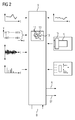
- the data M, I received by the artificial intelligence 9 are at least partially dimensional data. This will be described below in connection with FIG. 2 explained in more detail with reference to several examples.
- the dimensional data may include a time history of a measured value or an internal value.
- the corresponding data is one-dimensional and the dimension is time.
- An example is a temperature profile.
- the temperature profile can be measured or calculated.
- Artificial Intelligence 9 the appropriate time course as a pure sequence of values.
- Artificial Intelligence 9 needs to know the time base.
- predefine the corresponding temporal course of the artificial intelligence 9 as a sequence of pairs of values, wherein for each value pair of one of the two values the respective time and the other value is the respective measured value M. It is even possible to specify the corresponding time course of the artificial intelligence 9 as an image, on the basis of which the artificial intelligence 9 determines the time course. This will become apparent from the following explanations.
- the dimensional data may also extend in at least two dimensions.
- this is shown in the illustration for a data field that extends in two local dimensions.
- An example of such a data field is the surface temperature of a metal strip, spatially resolved in the bandwidth direction and band length direction.
- the artificial intelligence 9 in the context of determining the evaluation results A for such data in particular curves equal value 12 (in the case of a temperature field so isotherms) or gradient 13 determine. It's like from the illustration in FIG. 2 within the artificial intelligence 9, it is also possible to determine both the curves of the same value 12 and the gradients 13.
- the dimensional data of an acoustic vibration include.
- the dimensional data, as in FIG. 2 including a spectrum of such an acoustic vibration.
- the dimensional data may also include a local history of a measured value or an internal value.
- the corresponding data is one-dimensional, but the dimension is the location.
- An example is a contour of a roll gap. The contour curve will usually be determined by calculation.
- the dimensional data may include, for example, an image captured by a sensor device 2 (or a portion of such an image). As can be seen from the multiple representation of the image, the dimensional data may also comprise a temporal sequence of such an image or such a part of an image.
- An example of such an image is an image showing a metal strip between two stands of a multi-stand rolling mill.
- an infrared image is advantageous here. It can also be an image in the visible spectrum.
- the dimensional data may comprise, for example, an image (or part of such image) output to the person 4 via the man-machine interface 3. Again, the evaluation of a sequence of such image or such a part of an image is possible again.
- artificial intelligence 9 can also be supplied with further data, for example data from a chemical analysis.
- the chemical analysis can, for example, on starting materials (What chemical composition, for example, the steel supplied to a converter?), Production results (which chemical composition, for example, the steel after a pan process?) or by-products (which chemical composition has, for example, a resulting exhaust gas?
- the dimensional data may include not only measurement data M but also data calculated by the automation system 1 on the basis of a model.
- An example of such data is a temperature profile across the thickness inside a metal strip.
- artificial intelligence 9 are fed exclusively such dimensional data.
- artificial intelligence 9 is also supplied with other, non-dimensional data.
- this data will also be evaluated by Artificial Intelligence 9.
- the following statements always relate to situations which either relate exclusively to the dimensional data or, in addition to non-dimensional data, also relate to the dimensional data.
- the artificial intelligence 9 is preferably capable of performing a machine learning.
- the artificial intelligence 9 is thus preferably a (suitably programmed) computing device 6, which only sufficiently often a respective fact and a rating B of the respective facts must be specified and can independently determine rules from the large number of predetermined circumstances together with the associated rating B, such the best possible rating can be achieved.
- Machine learning is thus a method to learn from sample data. This approach is often referred to in professional circles as "programming by input output examples rather than by coding".
- Such artificial intelligences 9 are well known to those skilled in the art.
- the artificial intelligence 9 can train itself on the basis of the evaluation B determined by it. In principle, however, the artificial intelligence 9 can also be designed differently.
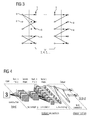
- the artificial intelligence 9 As shown in the 3 and 4 preferred to form the artificial intelligence 9 as an artificial neural network.
- the artificial neural network in particular according to the illustration in FIG FIG. 3 around a deep neural network or as shown in FIG. 4 even act around a folding neural network.
- a neural network as shown in FIG 3 and 4 a number of input neurons e and a number of output neurons a. Between the input neurons e and the output neurons a there is at least one layer s of hidden neurons n.
- the neurons e, n, a are linked together in a manner known per se. Of the neurons e, n, a are in the 3 and 4 only a few provided with their reference numerals.
- a deep neural network is as shown in FIG. 3 a neural network having a plurality of layers s (layers) of hidden neurons n.
- the number of layers s with hidden neurons n is at least three. It can also be larger, for example 5, 8 or 10. As a rule, 15 layers are completely sufficient.
- a folding neural network is according to the presentation in FIG. 4 a deep neural network, which has an input layer (input), several alternating convolutional and subsampling layers (hidden layers) and an output layer (output or classification).
- the convolutional and subsampling layers represent the actual intelligence in the narrower sense, which extracts the relevant facts from the information provided via the input layer.
- the output layer provides the result of the analysis.
- the complexity of the neural network compared to a deep neural network can be significantly reduced without reducing the performance of the neural network related to the respective application.
- the concrete representation in FIG. 4 The purpose of this is to use a picture to recognize which digit is shown in the picture.
- the principle of FIG. 4 However, with appropriate design of the folding neural network also applicable to other circumstances.
- Unit-sized quantities are quantities associated with a physical unit, such as one meter, one meter per second, Newton, Newton / mm 2 and others.
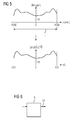
- the data received by the artificial intelligence 9 and / or its reference in the dimension are unitless or are converted by the artificial intelligence 9 into such data. This process is based on FIG. 5 explained in more detail.
- FIG. 5 shows as an example of a dimensional size of a locally one-dimensional size, namely a contour of a work roll of a roll stand over the bale length.
- bale length L is - in principle arbitrary - assumed that this is exactly 2.00 m.
- To the right is in the upper part of FIG. 5 the location on the roll bale applied, up the crown, ie the deviation ⁇ R of a base radius R. This type of representation is not uniform.
- the rolling stock may alternatively be a heavy plate or a strip.
- the number of rolling passes is usually between 3 and 20, for example between 4 and 7, in particular 5, 6 or 7.
- the stitches are carried out in a multi-stand finishing train.
- the rule - each rolling pass is executed by its own rolling stand.
- the Reversiergerüst leads (or in some cases a pair of Reversiergerüsten) the stitches. In this case, therefore, several rolling passes are carried out by a rolling stand
- the artificial intelligence 9 is given the contour of the roll gap and / or the roll bales of the work rolls of the roll stand carrying out the respective roll pass in a spatially resolved manner over the rolling stock width.
- the spatial resolution is such that viewed over the Walzgutbreite the roll gap or the respective radius (or diameter) of the two work rolls over the Walzgutbreite for at least 5 places is specified.
- a default is made for at least 10 digits. In the simplest case, the default is static. However, it can be defined as a function of time. In the last-mentioned case, it is possible, in particular, to associate the respective contour or the respective roll bales via a path tracking of the rolling stock to specific points of the finished rolled rolled stock.
- the stitch plan data in particular comprise the respective nominal roll gap, the respective rolling force, possibly the respective return bending force, possibly a respective wedge setting and a respective work roll displacement.
- the stitch plan data include the static and dynamic data of the rolling stock.
- the static data of the rolling stock comprise at least its chemical composition, possibly also its width.
- the dynamic data comprise (in up to 3 dimensions spatially resolved and / or temporally resolved) the temperature of the rolling stock during the execution of the respective rolling pass as well as the thickness of the rolling stock before and after the respective rolling pass and possibly additionally the width of the rolling stock before and after the respective rolling pass rolling pass.
- the artificial intelligence 9, the initial profile of the rolling stock - ie before the execution of rolling passes - specified.
- the initial profile is at least about the Wide spatially resolved. It may additionally be spatially resolved over the length of the rolling stock.
- the resolution over the width of the rolling stock is such that, viewed over the rolling stock width, the respective thickness of the rolling stock is predetermined for at least 5 places. Preferably, a default is made for at least 10 digits.
- Viewed over the length of the rolling stock there is either no spatial resolution or at least a spatial resolution for the head, the center piece and the foot of the rolling stock.
- a spatial resolution over the length of the rolling stock over many (often more than 100) sections. The individual sections may in this case be determined, for example, by a uniform length, a uniform mass or a working cycle.
- the flatness and / or the profile of the finished rolled rolled stock are given to the artificial intelligence 9 with spatial resolution at least over the width of the rolling stock, preferably also over the length of the rolled stock.
- the above statements on the initial profile of the rolling stock are valid analogously.
- the evaluation results A determined by the artificial intelligence 9 in this case can include, for example, a strategy S1 for displacing the work rolls and / or intermediate rolls of the rolling stands executing the respective rolling passes for a subsequent rolling operation of a further flat rolled stock.
- the determined displacements can then be used for the next rolling process - possibly for the next similar rolling process.
- the determination of the displacement takes place separately for each rolling pass.
- the data received by the artificial intelligence 9 for a plurality of rolling stands, by means of which a flat rolling stock is rolled in succession, comprise the respective stitching plan data.
- the rolling stock is usually a band.
- the rolling of the strip is usually done in a tandem mill in which the strip is cold rolled.
- the number of rolling passes is usually between 3 and 8, for example between 4 and 7, in particular at 5 or 6.
- the stitch plan data include in particular for each rolling pass the respective nominal roll gap, the respective rolling force, possibly a respective return force, possibly a wedge and possibly a stripper shift. They also include static and dynamic data of the rolling stock for each rolling pass.
- the static data of the rolling stock may comprise, for example, its chemical composition and possibly also its width.
- the dynamic data include the thickness of the rolling stock before and after the respective rolling pass and possibly also the width of the rolling stock before and after the respective rolling pass.
- the artificial intelligence 9 is given the contour of the roll gap and / or the roll bales of the work rolls of the roll stand carrying out the respective roll pass in a spatially resolved manner over the rolling stock width.
- the spatial resolution is such that viewed over the Walzgutbreite the roll gap or the respective radius (or diameter) of the two work rolls over the Walzgutbreite for at least 5 places is specified.
- a default is made for at least 10 digits.
- the artificial intelligence 9 is supplied with the profile and / or flatness of the flat rolling stock after passing through the rolling stands.
- the artificial intelligence 9 determines during operation - ie during rolling of the rolling stock - a control for a segmented work roll cooling at least one of the rolling stands, a set shift of the work rolls at least one of the rolling stands and / or a set deflection of the work rolls at least one of rolling mills.
- the Artificial Intelligence 9 thus implements a strategy S2 for segmented cooling of rolls of at least one of the rolling mills and / or a work roll shifting strategy S3 and / or a work roll bending strategy S4.
- the strategies S2, S3 and / or S4 thus represent an intelligent controller.
- the data received from the artificial intelligence 9 comprises at least one image.
- the picture shows the area between two successive stands 15 of a multi-stand rolling train.
- the image (visible spectrum or, preferably, infrared) need not necessarily include the rolling stands 15. It is only necessary to be able to determine the lateral position of the metal strip 14 from the image.
- the artificial intelligence 9 is supplied with a difference manipulated variable of the upstream of the two rolling stands 15.
- the differential control variable may be, for example, a differential rolling force or a differential rolling gap.
- the evaluation results A determined by the artificial intelligence 9 may include a strategy S5 for controlling the tape when threading the metal strip 14.
- the strategy S5 can be determined in such a way that the metal strip 14 enters the downstream rolling stand 15 in the center and possibly without any transverse component of the speed. By doing so, high-altitude walkers in particular can be better avoided.
- the evaluation results A determined by the artificial intelligence 9 may include a strategy S6 for controlling the meandering during the "normal" rolling of the metal strip 14.
- the Artificial Intelligence 9 if possible, continues to be fed a difference train, which prevails in the metal strip 14 between the two rolling stands 15.
- the differential train can be detected, for example, by means of a loop lifter, which is arranged between the two rolling stands 15. By doing so, it is possible in particular to achieve as central a band as possible.
- the corresponding procedure can also be carried out simultaneously for several such rolling stands simultaneously.
- the artificial intelligence 9 for each rolling stand in which the appropriate procedure is carried out, the corresponding data (image, difference control variable and possibly Differenzzug) supplied.
- the artificial intelligence 9 can in particular perform a rolling stand-spanning determination of the difference manipulated variable.
- Artificial Intelligence 9 determines the differential rolling force or difference-generally the difference-manipulated variable-of the upstream rolling stand 15. The objective of the determination is to achieve optimum belt centering and planarity.
- the data received from the artificial intelligence 9 includes, inter alia, dimensional data describing wear of a component of the basic equipment industry ANL.
- the evaluation results A determined by the artificial intelligence 9 can include a prediction V1 of a remaining lifetime of the component of the plant ANL of the basic industry.
- the component may be a work roll of a rolling stand.
- the data received from the artificial intelligence 9 comprises a roll bale contour as a function of the roll travel of the work roll as well as the stitch plan data of the roll stand.
- the term "roll travel" has a fixed importance for the skilled person. It is the total since the installation of the roll in the rolling stand on the rolling stock (or other rolling stock) covered distance.
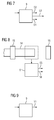
- the roll bale contour is, as already above in connection with the FIG. 6 and 7 explained, spatially resolved over the length of the roll bale.
- the roll bale contour is preferably broken down into a basic contour, supplemented by a contour change by back bending and a contour change by temperature effects and wear. Schedule data is also already explained.
- On the basis of the data supplied to it can be predicted by the artificial intelligence 9, when the respective work roll (or the corresponding set of rolls) must be changed. For example, this prediction can be used to adjust and optimize production planning be used, especially in continuous rolling and semi-endless rolling.
- artificial intelligence 9 is supplied with several of the above-mentioned data. However, not all data have to be supplied to Artificial Intelligence 9. Furthermore, the artificial intelligence 9 are often also supplied with other, non-dimensional data such as the so-called scrap rate, the type of scrap, the amount of scrap and the chemical analysis of the scrap, comparable information including the temperature of the pig iron, data on a subjective assessment of expected and / or or already made by the operator 4 ejection behavior or other boundary conditions such as humidity, ambient temperature and more. Which data is actually supplied to Artificial Intelligence 9 can vary from case to case.
- the evaluation results A determined by the artificial intelligence 9 in this case may include a prediction V2 to V4 about a probability, a time and / or an extent of an expected ejection from the converter vessel.
- a prediction V2 to V4 about a probability, a time and / or an extent of an expected ejection from the converter vessel.
- an expected final content of oxygen and / or carbon of the metal located in the converter vessel a predicted for a Abstichzeittician temperature of the located in the converter vessel Metal to determine a result of taking place in the converter vessel Entphosphorungsreaes and / or metallurgical variables during a blowing process within the converter vessel.
- the artificial intelligence 9 can, for example, evaluate the quantities supplied to it in such a way that it proposes control and regulating commands or possibly even implements them directly in order to avoid, for example, converter ejection.
- the control and regulation commands may include, for example, an adjustment of the lance position, a volume or mass flow of oxygen, timing and amount of addition of solid additives and the like.
- the addition of solid additives such as lime or dolomite and the like, which are used for Entphosphorung, only in the lower temperature range of the process profile of the converter (up to about 1600 ° C).
- the task for artificial intelligence 9 may be to determine the correct time for the addition of the correct amount of additive based on (among other things) the dimensional data and to specify the operator 4. The determination can be made, for example, based on the time profile of the measured or model-based determined mass flow of carbon in the exhaust gas, the temperature profile as a function of time (calculated or measured) and / or the time course of at least one vibration spectrum.
- the artificial intelligence 9 can also determine other variables, such as a specification for the lance position or the supply of oxygen.
- Known time profiles for the melt of similar boundary conditions can be used in addition to increasing the probability of the statement made by the artificial intelligence 9 statement.
- Artificial Intelligence 9 can be used to make targets in temperature and chemical composition of the molten metal more reproducible at the time of tapping, to avoid post blow rates, and the like more.
- a target window for the temperature and carbon content at the time of tapping can be better achieved.
- the time course of the mass flow of oxygen, the time course of the position of the lance in conjunction with a measurement of the oxygen content and the temperature measurement can be utilized.
- a reclassification of a melt (due to a non-achieved chemical composition) or a return to the pig iron mixer or the converter (with less deviation of the actual chemical composition of the desired) can be avoided.
- artificial intelligence 9 is supplied with several of the above-mentioned data. However, not all data have to be supplied to Artificial Intelligence 9. Furthermore, the artificial intelligence 9 are often also supplied with other, non-dimensional data such as the so-called scrap rate, the type of scrap, the amount of scrap and the chemical analysis of the scrap, comparable information including the temperature of the pig iron, data on a subjective assessment of expected and / or or already occurred foaming behavior of the slag in the arc furnace by the operator 4 or other boundary conditions such as humidity, ambient temperature and more. Which data is actually supplied to Artificial Intelligence 9 can vary from case to case.
- the artificial intelligence 9 proposes control and regulation commands or possibly even directly implemented, for example, a minimal electrode burn, minimal energy consumption, the lowest possible network reaction, avoiding dangerous conditions (for example, water ingress into the electric arc furnace) and more to achieve.
- the control and regulation commands may include, for example, an adjustment of the electrode position, a switching stage of the furnace transformer, an operating voltage or an operating current and the like. Also, a supply of a fuel gas (for example, natural gas) and / or oxygen is possible.
- THD Total Harmonic Distortion
- artificial intelligence 9 it is also possible for artificial intelligence 9 to supply dimensional data (and, in addition, often non-dimensional data) across systems, for example data from a blast furnace or an electric arc furnace as well as data from a ladle furnace as well as data from a continuous casting plant as well as data from one rolling mill. As a result, artificial intelligence 9 can even be used to optimize plant operation across plants. It is also possible for Artificial Intelligence 9 in addition to the dimensional data (and possibly also non-dimensional data) of the respective plant of the primary industry to supply comparable data to another plant of the basic industry and additionally to have these evaluated by Artificial Intelligence 9.
- a total intelligence 16 can be a single Artificial Intelligence 9 or, as in FIG. 11 shown to include multiple Artificial Intelligence 9.
- the individual artificial intelligences 9 can be designed as explained above. In principle, any desired combinations of different embodiments of artificial intelligence 9 are possible. In the FIG. 11 shown training of Artificial Intelligence 9 as neural networks is therefore only exemplary.
- the artificial intelligences 9 can according to the representation FIG. 11 be parallel to each other. Additionally, within the overall intelligence 16, there may be 16 other components 17, such as a model or rule-based system. It is possible to pre-process the data (this not only, but also for the dimensional data) before feeding it to the total intelligence 16 in a preprocessing device 18.
- the preprocessing can be, for example, a filtering or a static or dynamic averaging.
- the total intelligence 16 can be arranged downstream of an evaluation device 19. In this case, based on the results determined by means of the total intelligence 16, a further evaluation is carried out. As such, this evaluation does not have to meet the requirements placed on Artificial Intelligence.
- the overall intelligence 16-in addition to or alternatively to the evaluation device 19- can be arranged according to an optimization device 20. By means of the optimization device 20, for example, a plurality of similar results of the total intelligence 16 can be compared with one another and further evaluated in the sense of an optimization. The control of the overall arrangement of FIG. 11 is performed by a data flow control device 21.
- the present invention thus relates to the following facts:
- An automation system 1 determines control data S ', outputs these to controlled elements 5 of the system ANL and thereby controls the system ANL.
- Sensor devices 2 acquire measurement data M of the system ANL, which they supply at least partially to the automation system 1 and to a human-machine interface 3.
- the man-machine interface 3 furthermore receives planning data (P) from a production planning system (11) and / or from the automation system 1 receives control data S 'and / or internal data I. It outputs the data M, S ', I to a person 4. Furthermore, it receives control commands S from the person 4 and forwards them to the automation system 1.
- the automation system 1 processes the measurement data M and the control commands S as part of the determination of the control data S '.
- An artificial intelligence 9 at least partially accepts the measurement data M, the control data S 'and / or the internal data I and the data output to the person 4. It also accepts the control commands S.
- the artificial intelligence 9, utilizing the data M, S ', I and commands S received by it, determines evaluation results A and makes them available to the person 4 and / or the production planning system 11 and / or outputs directly or via the man-machine interface 3 the evaluation results A are present in the form of control commands S "to the automation system 1.
- the data M, S ', I received by the artificial intelligence 9 are at least partially dimensional data.
- the present invention has many advantages. In particular, the robustness of the plant operation is increased. Productivity and product quality are guaranteed at a high level.
- the manual control actions of person 4 required in the prior art are reduced. Ideally, they can even be completely eliminated.
- the procedure according to the invention additionally reduces the psychological burden on the person 4. It therefore exists a lower risk of incorrect operation by the person 4.
- the invention is not only feasible for new systems ANL, but can also be retrofitted to existing systems ANL. It can no longer happen that knowledge about the operation and operation of the plant ANL of the basic industry is lost through a generational change of the operating personnel. This also applies to knowledge that is accumulated in the prior art in a few experienced operators 4, but otherwise is not documented. For example, commissioning a new ANL system is often faster. Furthermore, employees with less knowledge of the ANL system can also be used. Furthermore, employees can also be trained faster. The time within which it responds to changing operating conditions is often shortened. Finally, personnel expenses are significantly reduced overall.
Landscapes
- Engineering & Computer Science (AREA)
- Physics & Mathematics (AREA)
- Automation & Control Theory (AREA)
- Artificial Intelligence (AREA)
- General Physics & Mathematics (AREA)
- Evolutionary Computation (AREA)
- Health & Medical Sciences (AREA)
- Computer Vision & Pattern Recognition (AREA)
- Medical Informatics (AREA)
- Software Systems (AREA)
- Quality & Reliability (AREA)
- Manufacturing & Machinery (AREA)
- General Engineering & Computer Science (AREA)
- Mathematical Physics (AREA)
- Chemical & Material Sciences (AREA)
- Chemical Kinetics & Catalysis (AREA)
- Mechanical Engineering (AREA)
- Management, Administration, Business Operations System, And Electronic Commerce (AREA)
- Testing And Monitoring For Control Systems (AREA)
Priority Applications (5)
| Application Number | Priority Date | Filing Date | Title |
|---|---|---|---|
| EP16188584.3A EP3293594A1 (fr) | 2016-09-13 | 2016-09-13 | Utilisation d'intelligence artificielle globale dans des installations de l'industrie de base |
| PCT/EP2017/071827 WO2018050438A2 (fr) | 2016-09-13 | 2017-08-31 | Application de l'intelligence artificielle à des installations de l'industrie de base |
| CN201780056211.9A CN109874338A (zh) | 2016-09-13 | 2017-08-31 | 在原材料工业的设备情况下使用综合人工智能 |
| EP17762085.3A EP3513263A2 (fr) | 2016-09-13 | 2017-08-31 | Application de l'intelligence artificielle à des installations de l'industrie de base |
| US16/332,873 US11294338B2 (en) | 2016-09-13 | 2017-08-31 | Use of comprehensive artificial intelligence in primary industry plants |
Applications Claiming Priority (1)
| Application Number | Priority Date | Filing Date | Title |
|---|---|---|---|
| EP16188584.3A EP3293594A1 (fr) | 2016-09-13 | 2016-09-13 | Utilisation d'intelligence artificielle globale dans des installations de l'industrie de base |
Publications (1)
| Publication Number | Publication Date |
|---|---|
| EP3293594A1 true EP3293594A1 (fr) | 2018-03-14 |
Family
ID=57144731
Family Applications (2)
| Application Number | Title | Priority Date | Filing Date |
|---|---|---|---|
| EP16188584.3A Withdrawn EP3293594A1 (fr) | 2016-09-13 | 2016-09-13 | Utilisation d'intelligence artificielle globale dans des installations de l'industrie de base |
| EP17762085.3A Ceased EP3513263A2 (fr) | 2016-09-13 | 2017-08-31 | Application de l'intelligence artificielle à des installations de l'industrie de base |
Family Applications After (1)
| Application Number | Title | Priority Date | Filing Date |
|---|---|---|---|
| EP17762085.3A Ceased EP3513263A2 (fr) | 2016-09-13 | 2017-08-31 | Application de l'intelligence artificielle à des installations de l'industrie de base |
Country Status (4)
| Country | Link |
|---|---|
| US (1) | US11294338B2 (fr) |
| EP (2) | EP3293594A1 (fr) |
| CN (1) | CN109874338A (fr) |
| WO (1) | WO2018050438A2 (fr) |
Cited By (7)
| Publication number | Priority date | Publication date | Assignee | Title |
|---|---|---|---|---|
| WO2020160898A1 (fr) * | 2019-02-07 | 2020-08-13 | thyssenkrupp Hohenlimburg GmbH | Procédé de production d'une pièce à usiner en métal |
| KR20210046738A (ko) * | 2019-09-12 | 2021-04-28 | 도시바 미쓰비시덴키 산교시스템 가부시키가이샤 | 조임 발생 예측 시스템 |
| EP3862104A1 (fr) | 2020-02-06 | 2021-08-11 | Primetals Technologies Germany GmbH | Dispositif de commande et/ou de surveillance d'une installation technique |
| CN113380334A (zh) * | 2021-07-03 | 2021-09-10 | 内蒙古高等级公路建设开发有限责任公司 | 一种钢渣游离氧化钙的快速消解方法及系统 |
| WO2021180719A1 (fr) * | 2020-03-09 | 2021-09-16 | Sms Group Gmbh | Procédé de réduction de perturbations de processus dans la production d'un produit laminé |
| US20220410235A1 (en) * | 2019-11-20 | 2022-12-29 | Primetals Technologies Germany Gmbh | Remote control of a plant for producing and/or treating a rolled product made of metal |
| WO2023041308A1 (fr) * | 2021-09-15 | 2023-03-23 | Sms Group Gmbh | Système, procédé et programme informatique pour optimiser un processus de fabrication dans une installation de production industrielle, en particulier une installation de l'industrie de production de métal, de l'industrie non ferreuse ou de l'acier ou de la fabrication d'un alliage mère |
Families Citing this family (17)
| Publication number | Priority date | Publication date | Assignee | Title |
|---|---|---|---|---|
| EP3575890B1 (fr) * | 2018-05-28 | 2022-03-30 | Siemens Aktiengesellschaft | Système d'aide à l'appui de la planification de systèmes d'automatisation |
| JP2020131248A (ja) * | 2019-02-21 | 2020-08-31 | Jfeスチール株式会社 | 圧延荷重予測方法、圧延荷重予測装置、及び圧延制御方法 |
| EP3705965A1 (fr) * | 2019-03-04 | 2020-09-09 | Siemens Aktiengesellschaft | Surveillance de système à base d'images |
| DE102019209110A1 (de) * | 2019-06-24 | 2020-12-24 | Sms Group Gmbh | Industrielle Anlage, insbesondere Anlage der metallerzeugenden Industrie oder der Aluminium- oder Stahlindustrie und Verfahren zum Betreiben einer industriellen Anlage, insbesondere einer Anlage der metallerzeugenden Industrie oder der Aluminium- oder Stahlindustrie |
| CN110909508B (zh) * | 2019-10-29 | 2024-11-26 | 中国石油化工股份有限公司 | 基于卷积长短期记忆网络的加热炉温度场实时预测方法 |
| JP2021089526A (ja) * | 2019-12-03 | 2021-06-10 | 株式会社Preferred Networks | 推定装置、訓練装置、推定方法、訓練方法、プログラム及び非一時的コンピュータ可読媒体 |
| DE102020102863A1 (de) * | 2020-02-05 | 2021-08-05 | Festo Se & Co. Kg | Parametrierung einer Komponente in der Automatisierungsanlage |
| CN111651931B (zh) * | 2020-05-19 | 2022-05-17 | 浙江大学 | 基于深度神经网络的高炉故障诊断规则导出方法 |
| DE102020207247A1 (de) | 2020-06-10 | 2021-12-16 | Sms Group Gmbh | System, Verfahren und Computerprogramm zur Steuerung einer aus mehreren Anlagenteilen bestehenden Produktionsanlage, insbesondere einer metallurgischen Produktionsanlage zur Erzeugung von Industriegütern wie metallischem Halbzeug und/oder metallischen Endprodukten |
| US20220405638A1 (en) * | 2021-06-11 | 2022-12-22 | Tata Consultancy Services Limited | Method and system for adaptive learning of models in manufacturing systems |
| EP4124398B1 (fr) * | 2021-07-27 | 2024-04-10 | Primetals Technologies Austria GmbH | Procédé de détermination des propriétés mécaniques d'un produit laminé a l'aide d'un modèle hybride |
| TWI824834B (zh) * | 2022-11-22 | 2023-12-01 | 國立高雄科技大學 | 連續輥軋製程檢測方法 |
| MX2025011832A (es) * | 2023-04-06 | 2025-11-03 | Jfe Steel Corp | Metodo de ajuste de la condicion de laminacion en frio, metodo de laminacion en frio, metodo de produccion de lamina de acero laminada en frio, dispositivo de calculo de la condicion de laminacion en frio, y laminadora en frio |
| DE102023124815B3 (de) | 2023-09-14 | 2025-02-27 | Röwaplan Ag | System zur fortlaufenden akustischen Überwachung von wenigstens einer technischen Anlage |
| CN117312388B (zh) * | 2023-10-08 | 2024-03-19 | 江苏泰赋星信息技术有限公司 | 一种人工智能模型控制系统 |
| CN117406668B (zh) * | 2023-12-14 | 2024-02-23 | 邢台金昆冶金机械有限公司 | 基于数值分析的轧辊质量控制数据模型及其应用 |
| WO2025137778A1 (fr) * | 2023-12-29 | 2025-07-03 | Stas Inc. | Procédé de fabrication d'aluminium avec boucle de rétroaction |
Citations (5)
| Publication number | Priority date | Publication date | Assignee | Title |
|---|---|---|---|---|
| DE19731980A1 (de) * | 1997-07-24 | 1999-01-28 | Siemens Ag | Verfahren zur Steuerung und Voreinstellung eines Walzgerüstes oder einer Walzstraße zum Walzen eines Walzbandes |
| US5930136A (en) * | 1990-06-04 | 1999-07-27 | Hitachi, Ltd. | Control device for controlling a controlled apparatus, and a control method therefor |
| DE102007035283A1 (de) * | 2007-07-27 | 2009-01-29 | Siemens Ag | Verfahren zur Einstellung eines Zustands eines Walzguts, insbesondere eines Vorbands |
| DE102008028777A1 (de) * | 2008-06-17 | 2009-12-24 | Siemens Aktiengesellschaft | Leitsystem einer Anlage mit mehrstufiger Modelloptimierung |
| US20150241873A1 (en) * | 2012-08-22 | 2015-08-27 | Siemens Aktiengesellschaft | Monitoring a first system of a technical plant for producing a product |
Family Cites Families (9)
| Publication number | Priority date | Publication date | Assignee | Title |
|---|---|---|---|---|
| JPH04231106A (ja) | 1990-12-28 | 1992-08-20 | Nippon Steel Corp | 帯鋼形状自動認識制御装置 |
| JPH05318222A (ja) | 1992-05-15 | 1993-12-03 | Toshiba Corp | 圧延材端部切断制御装置 |
| US5566092A (en) | 1993-12-30 | 1996-10-15 | Caterpillar Inc. | Machine fault diagnostics system and method |
| DE19547010C2 (de) | 1994-12-19 | 2001-05-31 | Siemens Ag | Verfahren und Vorrichtung zur Überwachung des Prozeßablaufs bei der Strahlerzeugung nach dem Sauerstoffaufblasverfahren |
| DE19508476A1 (de) * | 1995-03-09 | 1996-09-12 | Siemens Ag | Leitsystem für eine Anlage der Grundstoff- oder der verarbeitenden Industrie o. ä. |
| DE19508474A1 (de) | 1995-03-09 | 1996-09-19 | Siemens Ag | Intelligentes Rechner-Leitsystem |
| US7526463B2 (en) | 2005-05-13 | 2009-04-28 | Rockwell Automation Technologies, Inc. | Neural network using spatially dependent data for controlling a web-based process |
| JP4427074B2 (ja) * | 2007-06-07 | 2010-03-03 | 株式会社日立製作所 | プラントの制御装置 |
| EP2527053A1 (fr) | 2011-05-24 | 2012-11-28 | Siemens Aktiengesellschaft | Procédé de commande pour une voie de laminage |
-
2016
- 2016-09-13 EP EP16188584.3A patent/EP3293594A1/fr not_active Withdrawn
-
2017
- 2017-08-31 US US16/332,873 patent/US11294338B2/en active Active
- 2017-08-31 CN CN201780056211.9A patent/CN109874338A/zh active Pending
- 2017-08-31 WO PCT/EP2017/071827 patent/WO2018050438A2/fr not_active Ceased
- 2017-08-31 EP EP17762085.3A patent/EP3513263A2/fr not_active Ceased
Patent Citations (5)
| Publication number | Priority date | Publication date | Assignee | Title |
|---|---|---|---|---|
| US5930136A (en) * | 1990-06-04 | 1999-07-27 | Hitachi, Ltd. | Control device for controlling a controlled apparatus, and a control method therefor |
| DE19731980A1 (de) * | 1997-07-24 | 1999-01-28 | Siemens Ag | Verfahren zur Steuerung und Voreinstellung eines Walzgerüstes oder einer Walzstraße zum Walzen eines Walzbandes |
| DE102007035283A1 (de) * | 2007-07-27 | 2009-01-29 | Siemens Ag | Verfahren zur Einstellung eines Zustands eines Walzguts, insbesondere eines Vorbands |
| DE102008028777A1 (de) * | 2008-06-17 | 2009-12-24 | Siemens Aktiengesellschaft | Leitsystem einer Anlage mit mehrstufiger Modelloptimierung |
| US20150241873A1 (en) * | 2012-08-22 | 2015-08-27 | Siemens Aktiengesellschaft | Monitoring a first system of a technical plant for producing a product |
Non-Patent Citations (1)
| Title |
|---|
| VON YANN LECUN ET AL.: "Deep learning", NATURE, vol. 521, 28 May 2015 (2015-05-28), pages 436 - 444 |
Cited By (14)
| Publication number | Priority date | Publication date | Assignee | Title |
|---|---|---|---|---|
| WO2020160898A1 (fr) * | 2019-02-07 | 2020-08-13 | thyssenkrupp Hohenlimburg GmbH | Procédé de production d'une pièce à usiner en métal |
| US12275048B2 (en) | 2019-02-07 | 2025-04-15 | thyssenkrupp Hohenlimburg GmbH | Method for producing a metal workpiece |
| KR20210046738A (ko) * | 2019-09-12 | 2021-04-28 | 도시바 미쓰비시덴키 산교시스템 가부시키가이샤 | 조임 발생 예측 시스템 |
| US12145185B2 (en) * | 2019-09-12 | 2024-11-19 | Tmeic Corporation | Prediction system of strip chew in hot rolling mill |
| EP3838432A4 (fr) * | 2019-09-12 | 2021-10-06 | Toshiba Mitsubishi-Electric Industrial Systems Corporation | Système de prédiction de contraction |
| US20220410235A1 (en) * | 2019-11-20 | 2022-12-29 | Primetals Technologies Germany Gmbh | Remote control of a plant for producing and/or treating a rolled product made of metal |
| US12370589B2 (en) * | 2019-11-20 | 2025-07-29 | Primetals Technologies Germany Gmbh | Remote control of a plant for producing and/or treating a rolled product made of metal |
| WO2021156241A1 (fr) | 2020-02-06 | 2021-08-12 | Primetals Technologies Germany Gmbh | Appareil pour réguler et/ou surveiller une installation technique |
| EP3862104A1 (fr) | 2020-02-06 | 2021-08-11 | Primetals Technologies Germany GmbH | Dispositif de commande et/ou de surveillance d'une installation technique |
| US12436517B2 (en) | 2020-02-06 | 2025-10-07 | Primetals Technologies Germany Gmbh | Apparatus for controlling and/or monitoring a technical installation |
| WO2021180719A1 (fr) * | 2020-03-09 | 2021-09-16 | Sms Group Gmbh | Procédé de réduction de perturbations de processus dans la production d'un produit laminé |
| CN113380334B (zh) * | 2021-07-03 | 2024-01-12 | 河津市康庄新材料有限公司 | 一种钢渣游离氧化钙的快速消解方法及系统 |
| CN113380334A (zh) * | 2021-07-03 | 2021-09-10 | 内蒙古高等级公路建设开发有限责任公司 | 一种钢渣游离氧化钙的快速消解方法及系统 |
| WO2023041308A1 (fr) * | 2021-09-15 | 2023-03-23 | Sms Group Gmbh | Système, procédé et programme informatique pour optimiser un processus de fabrication dans une installation de production industrielle, en particulier une installation de l'industrie de production de métal, de l'industrie non ferreuse ou de l'acier ou de la fabrication d'un alliage mère |
Also Published As
| Publication number | Publication date |
|---|---|
| US20190361409A1 (en) | 2019-11-28 |
| CN109874338A (zh) | 2019-06-11 |
| US11294338B2 (en) | 2022-04-05 |
| WO2018050438A3 (fr) | 2018-05-31 |
| WO2018050438A2 (fr) | 2018-03-22 |
| EP3513263A2 (fr) | 2019-07-24 |
Similar Documents
| Publication | Publication Date | Title |
|---|---|---|
| EP3513263A2 (fr) | Application de l'intelligence artificielle à des installations de l'industrie de base | |
| DE4008510C2 (de) | Regeleinrichtung mit Optimal-Entscheidungseinheit | |
| EP0813701B1 (fr) | Systeme de gestion pour installations de l'industrie primaire ou de l'industrie manufacturiere | |
| AT414316B (de) | Verfahren und einrichtung zur steuerung einer hüttentechnischen anlage | |
| EP4150419B1 (fr) | Système et procédé de commande d'une usine de production constituée d'une pluralité de parties d'usine, en particulier d'une usine de production pour la production de marchandises industrielles telles que des produits semi-finis métalliques | |
| EP1624982B1 (fr) | Procede de regulation de la temperature d'une bande metallique, en particulier dans un train finisseur pour le laminage a chaud de bandes metalliques | |
| EP0813700A1 (fr) | Systeme de gestion integre intelligent | |
| EP2697001A1 (fr) | Procédé de commande pour train de laminage | |
| EP2603333A1 (fr) | Procédé de détermination en temps réel de la température et de la géométrie d'un feuillard métallique laminé à chaud dans un train finisseur | |
| EP1596999B1 (fr) | Procede de regulation de la temperature d'une bande metallique, en particulier dans un parcours de refroidissement | |
| EP0662869B1 (fr) | Laminoir avec un dispositif de regulation de la vitesse de rotation des cylindres | |
| WO2022106707A1 (fr) | Procédé de correction des propriétés d'une bande laminée à chaud ayant une composition chimique spécifique dans un laminoir à chaud | |
| EP1014239B1 (fr) | Procédé de calcul d' un patron de réduction | |
| WO2024121271A1 (fr) | Procédé et système pour la conception et/ou le développement (perfectionnement) et/ou la configuration mis en oeuvre par ordinateur et/ou l'optimisation de la durée de vie utile d'éléments de machine d'une installation métallurgique | |
| EP4107594B1 (fr) | Procédé d'automatisation d'une installation métallurgique, en particulier une installation de laminage de bandes métalliques | |
| EP4130895A1 (fr) | Procédé de détermination d'un paramètre de commande permettant de commander un laminoir | |
| EP1481742A2 (fr) | Ordinateur de commande et procédé de détermination assistée par ordinateur pour le control de la planéité et du profile pour une cage de laminoir | |
| EP4320489B1 (fr) | Procédé d'optimisation pour le fonctionnement des installations de l'industrie de base | |
| EP1030747B1 (fr) | Procede et installation de laminage a chaud de minces bandes d'acier | |
| EP1448321B1 (fr) | Reglage de position inclinee | |
| EP4117836A1 (fr) | Procédé de réduction de perturbations de processus dans la production d'un produit laminé | |
| DE102023208923A1 (de) | Verfahren und System zur computerimplementierten Auslegung und/oder Lebensdaueroptimierung von Maschinenelementen einer hüttentechnischen Anlage | |
| DE102022212627A1 (de) | Verfahren zum Herstellen eines Stahlbandes aus einem Vorprodukt, bei dem die Sollwerte über die Länge eines einzelnen Stahlbandes und / oder zeitlich in Bezug auf eine einzelne Produktionsanlage einer Walzstraße variabel vorgegeben werden | |
| EP4311606A1 (fr) | Procédé de régulation d'un train de laminage ainsi que train de laminage | |
| WO2025045601A1 (fr) | Procédé de fonctionnement d'au moins un élément chauffant dans un dispositif de traitement thermique |
Legal Events
| Date | Code | Title | Description |
|---|---|---|---|
| PUAI | Public reference made under article 153(3) epc to a published international application that has entered the european phase |
Free format text: ORIGINAL CODE: 0009012 |
|
| STAA | Information on the status of an ep patent application or granted ep patent |
Free format text: STATUS: THE APPLICATION HAS BEEN WITHDRAWN |
|
| AK | Designated contracting states |
Kind code of ref document: A1 Designated state(s): AL AT BE BG CH CY CZ DE DK EE ES FI FR GB GR HR HU IE IS IT LI LT LU LV MC MK MT NL NO PL PT RO RS SE SI SK SM TR |
|
| AX | Request for extension of the european patent |
Extension state: BA ME |
|
| 18W | Application withdrawn |
Effective date: 20180215 |