EP3294029B1 - Procédé et dispositif de traitement de données de contrôle de liaison montante dans un réseau sans fil - Google Patents
Procédé et dispositif de traitement de données de contrôle de liaison montante dans un réseau sans fil Download PDFInfo
- Publication number
- EP3294029B1 EP3294029B1 EP17193954.9A EP17193954A EP3294029B1 EP 3294029 B1 EP3294029 B1 EP 3294029B1 EP 17193954 A EP17193954 A EP 17193954A EP 3294029 B1 EP3294029 B1 EP 3294029B1
- Authority
- EP
- European Patent Office
- Prior art keywords
- control channel
- uplink control
- channel resource
- resource pool
- cell
- Prior art date
- Legal status (The legal status is an assumption and is not a legal conclusion. Google has not performed a legal analysis and makes no representation as to the accuracy of the status listed.)
- Active
Links
Images


Classifications
-
- H—ELECTRICITY
- H04—ELECTRIC COMMUNICATION TECHNIQUE
- H04W—WIRELESS COMMUNICATION NETWORKS
- H04W72/00—Local resource management
-
- H—ELECTRICITY
- H04—ELECTRIC COMMUNICATION TECHNIQUE
- H04W—WIRELESS COMMUNICATION NETWORKS
- H04W72/00—Local resource management
- H04W72/20—Control channels or signalling for resource management
- H04W72/21—Control channels or signalling for resource management in the uplink direction of a wireless link, i.e. towards the network
-
- H—ELECTRICITY
- H04—ELECTRIC COMMUNICATION TECHNIQUE
- H04L—TRANSMISSION OF DIGITAL INFORMATION, e.g. TELEGRAPHIC COMMUNICATION
- H04L5/00—Arrangements affording multiple use of the transmission path
- H04L5/003—Arrangements for allocating sub-channels of the transmission path
- H04L5/0032—Distributed allocation, i.e. involving a plurality of allocating devices, each making partial allocation
- H04L5/0035—Resource allocation in a cooperative multipoint environment
-
- H—ELECTRICITY
- H04—ELECTRIC COMMUNICATION TECHNIQUE
- H04W—WIRELESS COMMUNICATION NETWORKS
- H04W72/00—Local resource management
- H04W72/04—Wireless resource allocation
-
- H—ELECTRICITY
- H04—ELECTRIC COMMUNICATION TECHNIQUE
- H04W—WIRELESS COMMUNICATION NETWORKS
- H04W72/00—Local resource management
- H04W72/20—Control channels or signalling for resource management
-
- H—ELECTRICITY
- H04—ELECTRIC COMMUNICATION TECHNIQUE
- H04B—TRANSMISSION
- H04B7/00—Radio transmission systems, i.e. using radiation field
- H04B7/02—Diversity systems; Multi-antenna system, i.e. transmission or reception using multiple antennas
- H04B7/022—Site diversity; Macro-diversity
- H04B7/024—Co-operative use of antennas of several sites, e.g. in co-ordinated multipoint or co-operative multiple-input multiple-output [MIMO] systems
-
- H—ELECTRICITY
- H04—ELECTRIC COMMUNICATION TECHNIQUE
- H04W—WIRELESS COMMUNICATION NETWORKS
- H04W28/00—Network traffic management; Network resource management
- H04W28/02—Traffic management, e.g. flow control or congestion control
- H04W28/06—Optimizing the usage of the radio link, e.g. header compression, information sizing, discarding information
-
- H—ELECTRICITY
- H04—ELECTRIC COMMUNICATION TECHNIQUE
- H04W—WIRELESS COMMUNICATION NETWORKS
- H04W88/00—Devices specially adapted for wireless communication networks, e.g. terminals, base stations or access point devices
- H04W88/02—Terminal devices
-
- H—ELECTRICITY
- H04—ELECTRIC COMMUNICATION TECHNIQUE
- H04W—WIRELESS COMMUNICATION NETWORKS
- H04W88/00—Devices specially adapted for wireless communication networks, e.g. terminals, base stations or access point devices
- H04W88/08—Access point devices
Definitions
- the invention relates to methods and to corresponding devices for processing data in a wireless network.
- PUCCH Physical Uplink Control Channel
- LTE Long Term Evolution
- PUCCH Physical Uplink Control Channel
- multiple mobile terminals also referred to as user equipments (UEs) within each cell may be sharing the narrowband frequency and time resources of the PUCCH.
- UEs user equipments
- a physical uplink control channel (PUCCH) setup (from UE to base station) is used also in a Cooperative Multi-Point (CoMP) environment.
- a cell has its own PUCCH resource pool comprising a PUCCH sequence group, a physical cell identification and related PUCCH configuration parameters.
- PUCCH resource pool comprising a PUCCH sequence group, a physical cell identification and related PUCCH configuration parameters.
- the CoMP environment significantly increases the amount of feedback data (since multi-cell feedback is needed), inter-cell interference increases, which has a negative effect on the PUCCH as the resources within each pool are limited.
- WO 2010/067598 relates to CoMP communications that can be performed without increasing the overhead of an uplink control channel.
- a signal spreading method is disclosed so that a response signal is spread first using a ZAC sequence followed by secondarily spreading using a block-wise spread code sequence.
- the circular shift amount of the ZAC sequence and the block-wise spread code sequence are controlled in accordance with sequence numbers and a hopping pattern that is common to a plurality of base stations that CoMP-receive the response signal.
- US 2010/142467A1 relates to a resource allocation technique for PUCCH blanking.
- the resource allocation for PUCCH is made by considering the resource mapping of the PUCCH as well as the implications on the resource allocation of the PUSCH so as to maintain high peak data rates with PUCCH blanking.
- 3GPP R1-091165 relates to PUCCH coordination for UL CoMP.
- Cell specific and CoMP group specific PUCCH transmissions are evaluated for CoMP.
- all the PUCCHs are transmitted using exactly the same rules.
- PUCCH is transmitted using CoMP specific rules.
- 3GPP R1-093460 is directed to orthogonal and non-orthogonal transmissions for PUCCH when CoMP is utilized.
- the network In the cell-specific PUCCH transmission scheme, the network only has the choice to maintain the orthogonality on the PUCCH PRB resource level. Orthogonality of the resources is one of the bottlenecks which affect the gain of CoMP.
- a CoMP group specific PUCCH transmission scheme can achieve the orthogonal PUCCH transmission of the UEs in code (cyclic shift) domain.
- the problem to be solved is to provide an efficient solution as how to utilize the limited resources of an uplink control channel (in particular a PUCCH) in a mobile communication environment.
- an uplink control channel in particular a PUCCH
- An aspect relates to a method for processing data in a wireless communication network
- the mobile terminal may obtain two configurations, one based on a system information and another via higher layer signaling.
- the higher layer signaling may comprise a PUCCH resource pool.
- the mobile terminal may be configured to use only one resource pool, e.g., the higher layer signaled resource pool. Also, the mobile terminal may use several resource pools.
- Each resource pool comprises, e.g., logical channels and/or physical resource blocks. It is an option that each of the uplink control channel resource pools is backwards compatible (i.e., it can support legacy UEs).
- the solution presented is in particular applicable for a physical uplink control channel (PUCCH) arrangement in case of CoMP (cooperative or coordinated multi-point) transmission and/or reception.
- PUCCH physical uplink control channel
- the approach presented in particular relates to an LTE-Advanced and could become part of LTE Release 11 or later releases.
- the proposed solution allows utilizing orthogonal and non-orthogonal resources in an optimized manner.
- PUCCH coverage can be maintained when significantly increasing a CSI payload (which may be a requirement for CoMP) .
- the size of CoMP-area specific PUCCH can be minimized thereby also reducing the PUCCH overhead.
- the approach can be flexibly used in various CoMP deployment scenarios.
- the geographical area is determined by a cell or by a group of cells. It is noted that a cell can be associated or determined by a base station, also referred to as an eNB.
- the base station can also comprise several cells.
- the at least two resource pools comprise a cooperative multipoint-specific resource pool.
- At least one of the two resource pools corresponds to a cell-specific uplink control channel that is derived from system information.
- the resource pool for the uplink control channel comprises
- resources for cells may be spatially separated so as not to (substantially) interfere with each other.
- a mobile station can be configured with multiple PUCCH configurations for different setups (e.g., cell-specific PUCCH / CoMP (area)-specific PUCCH).
- the cooperative multi-point-specific uplink control channel is determined for a geographical area.
- uplink control channel blanking is used to free resources for the cooperative multipoint-specific uplink control channel.
- a resource pool corresponding to the cooperative multipoint-specific uplink control channel is shared with at least one of the cell-specific uplink control channels.
- the mobile terminal is configured with one of the following settings:
- the resource pool for the uplink control channel is identified via at least one of the following attributes:
- a modifier index is conveyed in a downlink resource allocation message enabling
- the cell-specific resource may be a cell-specific resource pool and the cooperative multipoint-specific resource may be a cooperative multipoint-specific resource pool.
- an A/N resource allocation on the CoMP-specific PUCCH resource pool may be required, because the same A/N resource may be used in adjacent cells as well.
- This can be achieved by means of a dynamic A/N modifier index (DAMI) included in DL resource allocation grants.
- DAMI dynamic A/N modifier index
- the DAMI is capable of modifying the implicit A/N resource given by the DL resource allocation grant within the CoMP-specific A/N resource pool.
- it can be used as a switch between cell-specific and CoMP-specific resources pools.
- the uplink control channel is a PUCCH.
- Another aspect relates to a device for processing data in a wireless network, comprising a processing unit that is arranged
- the device can in particular be a base station of the wireless network.
- processing unit can comprise at least one, in particular several means that are arranged to execute the steps of the method described herein.
- the means may be logically or physically separated; in particular several logically separate means could be combined in at least one physical unit.
- Said processing unit may comprise at least one of the following: a processor, a microcontroller, a hard-wired circuit, an ASIC, an FPGA, a logic device.
- the solution provided herein further comprises a computer program product directly loadable into a memory of a digital computer, comprising software code portions for performing the steps of the method as described herein.
- an aspect relates to a computer-readable medium, e.g., storage of any kind, having computer-executable instructions adapted to cause a computer system to perform the method as described herein.
- an aspect relates to a communication system comprising at least one device as described herein.
- an aspect relates to a system for processing data in a wireless network, comprising at least one processing unit or device that is arranged
- a mobile terminal comprising at least one processing unit or device that is arranged
- At least one of the two resource pools corresponds to a cell-specific uplink control channel that is derived from system information.
- a modifier index is conveyed in a downlink resource allocation message enabling
- a Cooperative MultiPoint (CoMP) communication scheme in particular refers to downlink transmission and/or uplink reception at multiple transmission and/or reception points being cooperative, where the level of cooperation may range from loose scheduling coordination to joint transmission and/or reception over multiple transmission and/or reception points.
- a cooperating transmission and/or reception points may be geographically separated. The geographical area corresponding to the set of cooperating transmission and/or reception points is called as CoMP coordination area.
- CoMP schemes can be categorized as follows:
- each of the transmission/reception points forms an independent cell.
- interference averaging i.e. fractional load
- CCE Control Channel Element
- interference may affect a transmission of Channel Quality Indicator (CQI) reports as well as acknowledgment/non-acknowledgement messages (also referred to as A/N-messages) .
- CQI Channel Quality Indicator
- A/N-messages acknowledgment/non-acknowledgement messages
- the transmission points may be operated in a carrier aggregation fashion in spite of having the same carrier frequency.
- carrier aggregation signaling for CoMP as a form of single-frequency multi-site carrier aggregation, the situation is slightly different: Even though the different transmission points each has a unique cell identification (ID), there is only a single PUCCH used for several aggregated cells, which leads to capacity restraints or high PUCCH overhead.
- ID unique cell identification
- Fig.1 shows a schematic diagram depicting a PUCCH allocation scheme according to LTE Release-8 to 10 for two cells 101, 102.
- Each cell 101, 102 has a PUCCH resource pool of its own characterized by a PUCCH sequence group, physical cell identification and related PUCCH configuration parameters.
- the cell 101 and the cell 102 have several different PUCCH resource pools, wherein the cell 101 has a number of persistent PUCCHs 103 and a number of dynamic PUCCHs 104.
- the persistent PUCCH may be further divided into persistent PUCCH Format 2/2a/2b used for channel state information reporting and persistent PUCCH Format 1/1a/1b used for a persistent ACK/NACK and scheduling request indicator (not shown in Fig.1 ).
- the cell 102 has a number of persistent PUCCHs 105 and a number of dynamic PUCCHs 106.
- a problem of the existing solution is that the PUCCH is subject to inter-cell interference, which may deteriorate the coverage of Channel State Indicator (CSI) feedback related to DL CoMP UEs. It is noted that the amount of CSI feedback (including CSI feedback size) increases based on the introduction of DL CoMP (since multi-cell feedback is required).
- CSI Channel State Indicator
- the solution presented provides, for a certain geographical area (i.e. a cell or a group of cells depending, e.g., on UE activity), multiple (in particular at least two) PUCCH resource pools applicable for the UEs in that geographical area.
- the PUCCH resource pool can be identified by at least one of the following attributes:
- the available PUCCH resource pools can be configured using higher layer signaling.
- Higher layer signaling can be UE-specific and may contain PUCCH sequence group and/or PUCCH physical layer cell identity.
- PUCCH physical layer cell identity may be different than the cell identity contained on the system information. Nevertheless, one of the resource pools may correspond to a cell-specific PUCCH derived from system information.
- each of the PUCCH resource pools is backwards compatible (i.e., it can support legacy UEs).
- Fig.2 shows a schematic diagram comprising different PUCCH resource pools for different cells 201 to 204 and for a CoMP-specific resource pool 205.
- the PUCCH resource pools for cells 201 to 204 each comprise cell-specific persistent PUCCHs 206 and cell-specific dynamic PUCCHs 208.
- the CoMP-specific resource pool 205 comprises persistent PUCCHs 207 and dynamic PUCCHs 209.
- the PUCCH is divided into two parts, i.e.
- the cell-specific PUCCH, resources may be spatially separated between cells so as not to interfere with each other. Then UEs can be configured with multiple PUCCH configurations for different setups (e.g., cell-specific PUCCH / CoMP (area)-specific PUCCH).
- PUCCH Physical resource block reserved for PUCCH
- PUCCH blanking (i.e., over dimensioning of the cell-specific persistent PUCCH region) is configured in a proper manner in each of the cells to make room for CoMP specific persistent PUCCH; it is noted that PUCCH blanking can be used also for CoMP-specific PUCCHs to make room for cell-specific persistent PUCCHs as well as cell-specific dynamic PUCCHs.
- PUCCH blanking The basic idea of PUCCH blanking is to over-dimension a PUCCH region, i.e., allocate more resources/PRBs to PUCCH usage than strictly required, and to leave the outermost PRBs unused. In this manner the UL bandwidth can be reduced symmetrically with respect to the center frequency to meet, for example, requirements of a certain operator.
- PUCCH blanking For further details on PUCCH blanking, reference is made to US 2010/0142467 A1 .
- PUCCH blanking is applied by leaving the innermost PRBs unused on cell-specific persistent PUCCHs to make room for CoMP-specific persistent PUCCH.
- outermost PRBs are left unused on CoMP-specific persistent PUCCH to make room for cell-specific persistent PUCCHs.
- the innermost PRBs of CoMP-specific persistent PUCCH are left unused to make room for cell-specific dynamic PUCCHs. It is noted that the blanking of the innermost persistent PUCCH PRBs affects resource allocation of persistent PUCCH format 1/1a/1b resources, whereas blanking of the outermost persistent PUCCH PRBs, considered in the aforementioned reference, affects resource allocation of persistent PUCCH format 2/2a/2b resources.
- separate PUCCH configuration parameters such as "delta_shift” and a starting position of dynamic PUCCH can be used for cell-specific PUCCH and CoMP-specific PUCCH.
- a resource pool is in particular defined by a PUCCH sequence group and/or a PUCCH physical layer cell identity.
- a set of PUCCH resources is referred to when also PRB allocation is combined with the resource pool configuration.
- the resource pool (i.e., PUCCH sequence group and PUCCH physical layer cell identity) corresponding to CoMP-specific PUCCH can be shared with one of the cell-specific resource pools in the CoMP area. This could be applicable in particular for a macro-cell or a macro-node, since the coverage area of the macro-cell is expected to overlap with (and potentially include) a coverage area of RRHs.
- the UE can be configured with multiple PUCCH configurations:
- the UE may utilize dynamic PUCCHs corresponding to both cell-specific and CoMP-specific resource pools.
- the cell specific PUCCH may utilize the spatial separation between UEs.
- the same PUCCH resources can be re-used in certain different geographical areas.
- the mechanisms may combine a randomization capability with spatial reuse.
- Current existing spatial re-use mechanisms may be used to provide the necessary randomness between non-orthogonal PUCCH resources in different cell specific PUCCHs.
- an additional flexibility may be required for an A/N resource allocation on the CoMP-specific PUCCH resource pool due to the fact that the same A/N resource pool may be used in adjacent cells as well.
- This additional flexibility can be achieved by means of a dynamic A/N modifier index (DAMI) included in DL resource allocation grants.
- the DAMI is capable of modifying the implicit A/N resource given by the DL resource allocation grant within the CoMP-specific A/N resource. Furthermore, it can be used as a switch between cell-specific and CoMP-specific resources.
- the DAMI may indicate which resource and which resource pool the UE should utilize.
- the applied PUCCH strategy can be configured via higher layers or via dynamic layer-1 signaling and in a UE-specific manner. It is possible to have CoMP/coordination area-specific PUCCH parameters included in the cell-specific system information.
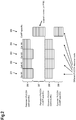
- Fig.3 shows a schematic diagram illustrating the principle of DAMI operation applied for dynamically scheduled PDSCH in which the dynamic A/N space is shared by two cells #1 and #2.
- DAMI consists of two bits with values [-1, 0, 1, 2].
- DCI Downlink Control Information
- control channel element 22 in Fig.3 it is indicated that a UE#5 and a UE#11 both require A/N resources, which would - without using DAMI - lead to a conflict. This conflict is solved
- Another realization of the DAMI is such that at least certain entries act as a switch within the CoMP-specific PUCCH resource pool and one of the entries indicates that cell-specific resources are used instead. This enables dynamic adaptation of the applied PUCCH resource allocation strategy.
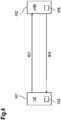
- Fig.4 shows a schematic block diagram comprising a base station 402 (eNB) with a processing unit 406 and a mobile station 401 (UE) with a processing unit 405.
- the communication from the UE 401 to the eNB 402 is referred to as uplink communication 403 and the opposite direction is referred to as downlink communication 404.
- Each of the communications 403, 404 may comprise payload data, signaling information and/or control information. It is noted that several UEs may be present within a coverage area of the eNB 402. It is also noted that several base stations may provide several coverage areas.
- a device may provide a combined or distributed functionality.
- the base station or the mobile station, in particular the processing units, could be realized each as at least one logical entity that may be deployed as hardware, program code, e.g., software and/or firmware, running on a processor, e.g., a computer, microcontroller, ASIC, FPGA and/or any other logic device.
- a processor e.g., a computer, microcontroller, ASIC, FPGA and/or any other logic device.
- the functionality described herein may be based on an existing component of a (wireless) network, which is extended by means of software and/or hardware.
- the eNB mentioned herein could also be referred to as any base station pursuant to any communication standard.
- the mobile station or UE could be any mobile station, terminal, device or the like with an interface to a mobile communication system, in particular a radio network or wireless communication network.
- the proposed solution is compatible with legacy UEs. It allows utilizing orthogonal and non-orthogonal resources in an optimized manner. PUCCH coverage can be maintained when significantly increasing the CSI payload (which may be a requirement for CoMP). Also, the size of CoMP-area specific PUCCH can be minimized thereby also reducing the PUCCH overhead.
- the approach can be flexibly used in various CoMP deployment scenarios.
Landscapes
- Engineering & Computer Science (AREA)
- Signal Processing (AREA)
- Computer Networks & Wireless Communication (AREA)
- Mobile Radio Communication Systems (AREA)
Claims (22)
- Terminal mobile (401) destiné à traiter des données dans un réseau de communication sans fil, ledit terminal mobile comprenant une unité de traitement qui est agencée pour :obtenir depuis le réseau de communication sans fil, une configuration pour au moins deux ensembles de ressources de canal de commande de liaison montante qui sont fournis par le réseau de communication sans fil pour la transmission d'un canal de commande de liaison montante depuis le terminal mobile (401), les au moins deux ensembles de ressources de canal de commande de liaison montante comprenant- un ensemble de ressources de canal de commande de liaison montante spécifiques à une cellule avec des ressources de canal de commande de liaison montante spécifiques à une cellule ; et- un ensemble de ressources de canal de commande de liaison montante spécifiques à un multipoint coopératif présentant des ressources de canal de commande de liaison montante communes associées à des cellules multiples, etcommuter entre l'utilisation de l'ensemble de ressources de canal de commande de liaison montante spécifiques à une cellule et l'utilisation de l'ensemble de ressources de canal de commande de liaison montante spécifiques à un multipoint coopératif en réponse à un indice de modificateur acheminé dans un message d'attribution de ressources de liaison descendante depuis ledit réseau de communication sans fil.
- Terminal mobile (401) selon la revendication 1, dans lequel l'unité de traitement est agencée pour déduire l'ensemble de ressources de canal de commande de liaison montante spécifiques à une cellule via une information de système.
- Terminal mobile (401) selon l'une quelconque des revendications précédentes, dans lequel l'unité de traitement est en outre agencée pour utiliser un blocage de canal de commande de liaison montante pour libérer des blocs de ressources physiques pour l'ensemble de ressources de canal de commande de liaison montante spécifiques à un multipoint coopératif.
- Terminal mobile (401) selon l'une quelconque des revendications précédentes, dans lequel une ressource de canal de commande de liaison montante correspondant à l'ensemble de ressources de canal de commande de liaison montante spécifiques à un multipoint coopératif est partagée avec l'ensemble de ressources de canal de commande de liaison montante spécifiques à une cellule.
- Terminal mobile (401) selon l'une quelconque des revendications précédentes, dans lequel- l'ensemble de ressources de canal de commande de liaison montante spécifiques à une cellule comprend un ensemble persistent de ressources de canal de commande de liaison montante et un ensemble dynamique de ressources de canal de commande de liaison montante, et- l'ensemble de ressources de canal de commande de liaison montante spécifiques à un multipoint coopératif comprend un ensemble persistent de ressources de canal de commande de liaison montante et un ensemble dynamique de ressources de canal de commande de liaison montante.
- Terminal mobile (401) selon la revendication 5, dans lequel le terminal mobile (401) est configuré avec l'un des paramétrages suivants :- le terminal mobile (401) est configuré pour utiliser les ensembles persistent et dynamique de ressources de canal de commande de liaison montante spécifiques à une cellule ;- le terminal mobile (401) est configuré pour utiliser l'ensemble persistent de ressources de canal de commande de liaison montante spécifiques à une cellule et l'ensemble dynamique de ressources de canal de commande de liaison montante spécifiques à un multipoint coopératif ;- le terminal mobile (401) est configuré pour utiliser l'ensemble persistent et l'ensemble dynamique de ressources de canal de commande de liaison montante spécifiques à un multipoint coopératif.
- Terminal mobile (401) selon l'une quelconque des revendications précédentes, dans lequel chaque ensemble de ressources de canal de commande de liaison montante est identifié via au moins l'un des attributs suivants :- un groupe de séquences ou un schéma de saut de groupe de séquences ;- une identité de cellule de couche physique.
- Terminal mobile (401) selon l'une quelconque des revendications précédentes, dans lequel l'unité de traitement est en outre agencée pour utiliser l'indice de modificateur afin d'activer une modification ou un déplacement d'un bloc de ressources physiques de liaison montante attribué.
- Terminal mobile (401) selon l'une quelconque des revendications précédentes, dans lequel le canal de commande de liaison montante est un canal de commande de liaison montante physique, PUCCH (Physical Uplink Control Channel).
- Dispositif de réseau (402) destiné à traiter des données dans un réseau de communication sans fil, ledit dispositif de réseau comprenant une unité de traitement qui est agencée pour :configurer un terminal mobile (401) dans le réseau de communication sans fil avec au moins deux ensembles de ressources de canal de commande de liaison montante qui sont fournis par le dispositif de réseau pour la transmission d'un canal de commande de liaison montante depuis le terminal mobile (401), les au moins deux ensembles de ressources de canal de commande de liaison montante comprenant- un ensemble de ressources de canal de commande de liaison montante spécifiques à une cellule avec des ressources de canal de commande de liaison montante spécifiques à une cellule ; et- un ensemble de ressources de canal de commande de liaison montante spécifiques à un multipoint coopératif présentant des ressources de canal de commande de liaison montante communes associées à des cellules multiples, etacheminer un indice de modificateur dans un message d'attribution de ressources de liaison descendante, ledit indice de modificateur activant le terminal mobile (401) pour réaliser un commutation entre l'utilisation de l'ensemble de ressources de canal de commande de liaison montante spécifiques à une cellule et l'utilisation de l'ensemble de ressources de canal de commande de liaison montante spécifiques à un multipoint coopératif.
- Dispositif de réseau (402) selon la revendication 10, dans lequel le canal de commande de liaison montante est un canal de commande de liaison montante physique, PUCCH.
- Dispositif de réseau (402) selon la revendication 10, dans lequel l'unité de traitement est agencée pour configurer le terminal mobile (401) avec l'ensemble de ressources de canal de commande de liaison montante spécifiques à une cellule via une information de système.
- Dispositif de réseau (402) selon l'une quelconque des revendications 10 à 12, dans lequel- l'ensemble de ressources de canal de commande de liaison montante spécifiques à une cellule comprend un ensemble persistent de ressources de canal de commande de liaison montante et un ensemble dynamique de ressources de canal de commande de liaison montante, et- l'ensemble de ressources de canal de commande de liaison montante spécifiques à un multipoint coopératif comprend un ensemble persistent de ressources de canal de commande de liaison montante et un ensemble dynamique de ressources de canal de commande de liaison montante.
- Dispositif de réseau (402) selon la revendication 13, dans lequel l'unité de traitement est agencée pour configurer le terminal mobile (401) avec l'un des paramétrages suivants :- le terminal mobile (401) est configuré pour utiliser les ensembles persistent et dynamique de ressources de canal de commande de liaison montante spécifiques à une cellule ;- le terminal mobile (401) est configuré pour utiliser l'ensemble persistent de ressources de canal de commande de liaison montante spécifiques à une cellule et l'ensemble dynamique de ressources de canal de commande de liaison montante spécifiques à un multipoint coopératif ;- le terminal mobile (401) est configuré pour utiliser l'ensemble persistent et l'ensemble dynamique de ressources de canal de commande de liaison montante spécifiques à un multipoint coopératif.
- Dispositif de réseau (402) selon l'une quelconque des revendications 10 à 14, dans lequel chaque ensemble de ressources de canal de commande de liaison montante est identifié via au moins l'un des attributs suivants :- un groupe de séquences ou un schéma de saut de groupe de séquences ;- une identité de cellule de couche physique.
- Dispositif de réseau (402) selon l'une quelconque des revendications 10 à 15, dans lequel l'unité de traitement est en outre agencée pour utiliser l'indice de modificateur afin d'activer une modification ou un déplacement d'un bloc de ressources physiques de liaison montante attribué.
- Procédé par un terminal mobile (401) pour traiter des données dans un réseau de communication sans fil, ledit procédé comprenant :l'obtention depuis le réseau de communication sans fil, d'une configuration pour au moins deux ensembles de ressources de canal de commande de liaison montante qui sont fournis par le réseau de communication sans fil pour la transmission d'un canal de commande de liaison montante depuis le terminal mobile (401), les au moins deux ensembles de ressources de canal de commande de liaison montante comprenant- un ensemble de ressources de canal de commande de liaison montante spécifiques à une cellule avec des ressources de canal de commande de liaison montante spécifiques à une cellule ; et- un ensemble de ressources de canal de commande de liaison montante spécifiques à un multipoint coopératif présentant des ressources de canal de commande de liaison montante communes associées à des cellules multiples, etla commutation entre l'utilisation de l'ensemble de ressources de canal de commande de liaison montante spécifiques à une cellule et l'utilisation de l'ensemble de ressources de canal de commande de liaison montante spécifiques à un multipoint coopératif en réponse à un indice de modificateur acheminé dans un message d'attribution de ressources de liaison descendante depuis ledit réseau de communication sans fil.
- Procédé selon la revendication 17, dans lequel chaque ensemble de ressources de canal de commande de liaison montante est identifié via au moins l'un des attributs suivants :- un groupe de séquences ou un schéma de saut de groupe de séquences ;- une identité de cellule de couche physique.
- Procédé selon l'une quelconque des revendications 17 ou 18, dans lequel- l'ensemble de ressources de canal de commande de liaison montante spécifiques à une cellule comprend un ensemble persistent de ressources de canal de commande de liaison montante et un ensemble dynamique de ressources de canal de commande de liaison montante, et- l'ensemble de ressources de canal de commande de liaison montante spécifiques à un multipoint coopératif comprend un ensemble persistent de ressources de canal de commande de liaison montante et un ensemble dynamique de ressources de canal de commande de liaison montante.
- Procédé par un dispositif de réseau (402) destiné à traiter des données dans un réseau de communication sans fil, ledit procédé comprenant :la configuration d'un terminal mobile (401) avec au moins deux ensembles de ressources de canal de commande de liaison montante pour la transmission d'un canal de commande de liaison montante depuis le terminal mobile (401), les au moins deux ensembles de ressources de canal de commande de liaison montante comprenant- un ensemble de ressources de canal de commande de liaison montante spécifiques à une cellule avec des ressources de canal de commande de liaison montante spécifiques à une cellule ; et- un ensemble de ressources de canal de commande de liaison montante spécifiques à un multipoint coopératif présentant des ressources de canal de commande de liaison montante communes associées à des cellules multiples, etl'acheminement d'un indice de modificateur dans un message d'attribution de ressources de liaison descendante, ledit indice de modificateur activant le terminal mobile (401) pour réaliser un commutation entre l'utilisation de l'ensemble de ressources de canal de commande de liaison montante spécifiques à une cellule et l'utilisation de l'ensemble de ressources de canal de commande de liaison montante spécifiques à un multipoint coopératif.
- Procédé selon la revendication 20, dans lequel chaque ensemble de ressources de canal de commande de liaison montante est identifié via au moins l'un des attributs suivants :- un groupe de séquences ou un schéma de saut de groupe de séquences ;- une identité de cellule de couche physique.
- Procédé selon l'une quelconque des revendications 20 ou 21, dans lequel- l'ensemble de ressources de canal de commande de liaison montante spécifiques à une cellule comprend un ensemble persistent de ressources de canal de commande de liaison montante et un ensemble dynamique de ressources de canal de commande de liaison montante, et- l'ensemble de ressources de canal de commande de liaison montante spécifiques à un multipoint coopératif comprend un ensemble persistent de ressources de canal de commande de liaison montante et un ensemble dynamique de ressources de canal de commande de liaison montante.
Priority Applications (2)
| Application Number | Priority Date | Filing Date | Title |
|---|---|---|---|
| ES17193954T ES2879878T3 (es) | 2011-04-29 | 2011-04-29 | Método y dispositivo para procesar datos de control de enlace ascendente en una red inalámbrica |
| EP17193954.9A EP3294029B1 (fr) | 2011-04-29 | 2011-04-29 | Procédé et dispositif de traitement de données de contrôle de liaison montante dans un réseau sans fil |
Applications Claiming Priority (3)
| Application Number | Priority Date | Filing Date | Title |
|---|---|---|---|
| EP11716572.0A EP2702816B1 (fr) | 2011-04-29 | 2011-04-29 | Procédé et dispositif de traitement de données de contrôle de liaison montante dans un réseau sans fil |
| PCT/EP2011/056867 WO2012146307A1 (fr) | 2011-04-29 | 2011-04-29 | Procédé et dispositif de traitement de données de contrôle de liaison montante dans un réseau sans fil |
| EP17193954.9A EP3294029B1 (fr) | 2011-04-29 | 2011-04-29 | Procédé et dispositif de traitement de données de contrôle de liaison montante dans un réseau sans fil |
Related Parent Applications (2)
| Application Number | Title | Priority Date | Filing Date |
|---|---|---|---|
| PCT/EP2011/056867 Previously-Filed-Application WO2012146307A1 (fr) | 2011-04-29 | 2011-04-29 | Procédé et dispositif de traitement de données de contrôle de liaison montante dans un réseau sans fil |
| EP11716572.0A Division EP2702816B1 (fr) | 2011-04-29 | 2011-04-29 | Procédé et dispositif de traitement de données de contrôle de liaison montante dans un réseau sans fil |
Publications (2)
| Publication Number | Publication Date |
|---|---|
| EP3294029A1 EP3294029A1 (fr) | 2018-03-14 |
| EP3294029B1 true EP3294029B1 (fr) | 2021-06-09 |
Family
ID=44626046
Family Applications (2)
| Application Number | Title | Priority Date | Filing Date |
|---|---|---|---|
| EP17193954.9A Active EP3294029B1 (fr) | 2011-04-29 | 2011-04-29 | Procédé et dispositif de traitement de données de contrôle de liaison montante dans un réseau sans fil |
| EP11716572.0A Active EP2702816B1 (fr) | 2011-04-29 | 2011-04-29 | Procédé et dispositif de traitement de données de contrôle de liaison montante dans un réseau sans fil |
Family Applications After (1)
| Application Number | Title | Priority Date | Filing Date |
|---|---|---|---|
| EP11716572.0A Active EP2702816B1 (fr) | 2011-04-29 | 2011-04-29 | Procédé et dispositif de traitement de données de contrôle de liaison montante dans un réseau sans fil |
Country Status (9)
| Country | Link |
|---|---|
| US (2) | US9668245B2 (fr) |
| EP (2) | EP3294029B1 (fr) |
| JP (1) | JP2014517572A (fr) |
| KR (3) | KR20160023910A (fr) |
| CN (1) | CN103503536B (fr) |
| BR (1) | BR112013027607B1 (fr) |
| ES (2) | ES2879878T3 (fr) |
| PL (1) | PL2702816T3 (fr) |
| WO (1) | WO2012146307A1 (fr) |
Families Citing this family (21)
| Publication number | Priority date | Publication date | Assignee | Title |
|---|---|---|---|---|
| US8792924B2 (en) * | 2011-05-06 | 2014-07-29 | Futurewei Technologies, Inc. | System and method for multi-cell access |
| EP3094140A1 (fr) | 2011-05-17 | 2016-11-16 | Interdigital Patent Holdings, Inc. | Adaptation de puissance nodeb pour réduire des références |
| US9480027B2 (en) | 2011-11-07 | 2016-10-25 | Nokia Solutions And Networks Oy | Uplink power control for wireless communications |
| WO2014114001A1 (fr) * | 2013-01-28 | 2014-07-31 | Telefonaktiebolaget L M Ericsson (Publ) | Procédé et appareil pour l'allocation de ressources en liaison montante |
| US9692495B2 (en) | 2013-04-05 | 2017-06-27 | Qualcomm Incorporated | Control channel overhead assumptions for deriving CSI feedback |
| WO2015046972A1 (fr) * | 2013-09-26 | 2015-04-02 | 엘지전자 주식회사 | Procédé grâce auquel des terminaux transmettent des signaux dispositif à dispositif (d2d) dans un système de communication sans fil |
| US10660146B2 (en) * | 2014-03-21 | 2020-05-19 | Samsung Electronics Co., Ltd. | Methods and apparatus for device to device synchronization priority |
| WO2016065622A1 (fr) * | 2014-10-31 | 2016-05-06 | 华为技术有限公司 | Appareil et procédé d'attribution de ressources |
| US20160157254A1 (en) * | 2014-11-26 | 2016-06-02 | Samsung Electronics Co., Ltd. | Methods and apparatus for control information resource allocation for d2d communications |
| US20170006586A1 (en) * | 2015-07-02 | 2017-01-05 | Qualcomm Incorporated | Techniques for managing a resource pool in wireless communications |
| CN113556818B (zh) * | 2015-08-12 | 2024-02-20 | Lg电子株式会社 | 用于执行通信的方法和基站 |
| US20180242321A1 (en) * | 2015-08-13 | 2018-08-23 | Ntt Docomo, Inc. | User terminal, radio base station, radio communication method and radio communication system |
| CN107889267B (zh) | 2016-11-30 | 2019-08-23 | 电信科学技术研究院有限公司 | 上行基于非正交免调度的方法和装置 |
| US10673652B2 (en) * | 2017-03-02 | 2020-06-02 | Futurewei Technologies, Inc. | System and method for providing explicit feedback in the uplink |
| US11272546B2 (en) | 2017-08-08 | 2022-03-08 | Samsung Electronics Co., Ltd. | Methods and apparatus for transmitting and receiving uplink control information and for requesting random access in wireless communication system |
| US11368179B2 (en) | 2017-10-17 | 2022-06-21 | Skyworks Solutions, Inc. | Modulation partitioning and transmission via multiple antennas for enhanced transmit power capability |
| WO2019099257A1 (fr) * | 2017-11-17 | 2019-05-23 | Skyworks Solutions, Inc. | Commande dynamique de liaison montante commutée unique par rapport à une liaison montante multiple |
| CN108112085A (zh) * | 2017-12-18 | 2018-06-01 | 海能达通信股份有限公司 | 一种信道资源的选择方法及装置 |
| CN116321512A (zh) * | 2018-03-22 | 2023-06-23 | 上海朗帛通信技术有限公司 | 一种被用于无线通信的用户设备、基站中的方法和装置 |
| WO2023033487A1 (fr) * | 2021-08-30 | 2023-03-09 | Samsung Electronics Co., Ltd. | Procédé et système pour attribuer des ressources de pucch à des équipements utilisateurs dans un réseau de communication |
| EP4360244A4 (fr) | 2021-08-30 | 2024-10-09 | Samsung Electronics Co., Ltd. | Procédé et système pour attribuer des ressources de pucch à des équipements utilisateurs dans un réseau de communication |
Family Cites Families (35)
| Publication number | Priority date | Publication date | Assignee | Title |
|---|---|---|---|---|
| KR101203841B1 (ko) * | 2006-01-05 | 2012-11-21 | 엘지전자 주식회사 | 무선 통신 시스템에서의 페이징 메시지 전송 및 수신 방법 |
| KR101035083B1 (ko) * | 2006-04-26 | 2011-05-19 | 재단법인서울대학교산학협력재단 | 다중 셀 통신 시스템에서 자원 이용 방법 및 시스템 |
| US20080233966A1 (en) * | 2007-03-22 | 2008-09-25 | Comsys Communication & Signal Processing Ltd. | Resource allocation apparatus and method in an orthogonal frequency division multiple access communication system |
| US8150399B2 (en) * | 2007-12-21 | 2012-04-03 | Intel Corporation | Techniques for wireless communications networks employing beamforming |
| US8837421B2 (en) * | 2008-03-26 | 2014-09-16 | Nokia Siemens Neworks Oy | Channelization procedure for implementing persistent ACK/NACK and scheduling request |
| JP5283423B2 (ja) | 2008-05-02 | 2013-09-04 | 株式会社エヌ・ティ・ティ・ドコモ | 移動通信システムにおける基地局装置、ユーザ装置及び方法 |
| US9974065B2 (en) * | 2008-06-25 | 2018-05-15 | Qualcomm Incorporated | Dynamic control blanking in heterogeneous networks |
| US20100061360A1 (en) * | 2008-09-10 | 2010-03-11 | Texas Instruments Incorporated | Dedicated reference signal structures for spatial multiplexing beamforming |
| US8417252B2 (en) * | 2008-10-24 | 2013-04-09 | Qualcomm Incorporated | Method and apparatus for interference reporting in a N-MIMO communication system |
| US8483149B2 (en) * | 2008-12-05 | 2013-07-09 | Nokia Siemens Networks Oy | Resource allocation technique for physical uplink control channel blanking |
| JP5350395B2 (ja) * | 2008-12-10 | 2013-11-27 | パナソニック株式会社 | 端末装置、信号拡散方法および集積回路 |
| CN101777940B (zh) * | 2009-01-12 | 2013-08-14 | 华为技术有限公司 | 上行信息的传输方法、装置及系统 |
| CN104184567B (zh) * | 2009-01-24 | 2019-11-22 | 华为技术有限公司 | Ack/nack信道资源分配及确认信息处理的方法及装置 |
| EP3678391B1 (fr) | 2009-03-16 | 2021-05-05 | Sun Patent Trust | Dispositif de terminal de communication sans fil, dispositif de station de base de communication sans fil et procédé de réglage de région ressource |
| CN101867938B (zh) * | 2009-04-20 | 2013-01-02 | 电信科学技术研究院 | 一种用于多点协同传输的上行参考信号的配置方法和装置 |
| CN101932005B (zh) * | 2009-06-26 | 2015-06-03 | 中兴通讯股份有限公司 | 动态物理上行控制信道资源预留与索引映射的方法及装置 |
| CN102036418A (zh) * | 2009-10-07 | 2011-04-27 | 创新音速股份有限公司 | 无线通讯系统处理无线链接失效的方法与通讯装置 |
| SI2496005T1 (sl) * | 2009-10-30 | 2018-10-30 | Sun Patent Trust | Naprava za brezžično komunikacijo in postopek za generiranje referenčnega signala |
| US9531514B2 (en) * | 2009-12-03 | 2016-12-27 | Qualcomm Incorporated | Sounding reference signal enhancements for wireless communication |
| KR101657125B1 (ko) * | 2009-12-10 | 2016-09-13 | 엘지전자 주식회사 | 무선 통신 시스템에서 셀간 간섭을 저감하는 방법 및 장치 |
| US9136997B2 (en) * | 2010-05-04 | 2015-09-15 | Qualcomm Incorporated | Methods and apparatuses for using channel state information reference signals |
| US20130201946A1 (en) * | 2010-06-21 | 2013-08-08 | Nokia Siemens Networks Oy | Transmission of Reference Signals |
| US20140044085A1 (en) * | 2011-05-02 | 2014-02-13 | Pantech Co., Ltd | Apparatus and method for transmitting resource allocation information |
| CN102891710B (zh) * | 2011-07-20 | 2015-12-02 | 华为技术有限公司 | 一种获取信道状态信息的方法及装置 |
| JP5927661B2 (ja) * | 2011-08-12 | 2016-06-01 | シャープ株式会社 | 端末装置、基地局装置、集積回路および通信方法 |
| WO2013051206A1 (fr) * | 2011-10-03 | 2013-04-11 | パナソニック株式会社 | Terminal, station de base et procédé de communication |
| WO2013127089A1 (fr) * | 2012-03-02 | 2013-09-06 | Nokia (China) Investment Co., Ltd. | Mécanisme de gestion des ressources pucch pour le fonctionnement multipoint coordonné |
| US9526091B2 (en) * | 2012-03-16 | 2016-12-20 | Intel Corporation | Method and apparatus for coordination of self-optimization functions in a wireless network |
| JP5923786B2 (ja) * | 2012-03-16 | 2016-05-25 | シャープ株式会社 | 基地局装置及び通信方法 |
| EP2661138A1 (fr) * | 2012-05-04 | 2013-11-06 | Panasonic Corporation | Procédure de demande de programmation à seuil et à faible consommation d'énergie |
| KR101970279B1 (ko) * | 2012-07-09 | 2019-04-18 | 삼성전자주식회사 | 무선 통신 시스템에서 상향 링크 전력 제어장치 및 방법 |
| US9794014B2 (en) * | 2012-09-12 | 2017-10-17 | Lg Electronics Inc. | Method for receiving signal using interference removal scheme and apparatus for same in wireless communication system |
| WO2014126445A1 (fr) * | 2013-02-18 | 2014-08-21 | Lg Electronics Inc. | Procédé et appareil de mise en oeuvre d'une transmission de données dans un système de communication sans fil |
| KR102127320B1 (ko) * | 2013-09-27 | 2020-06-26 | 주식회사 아이티엘 | 상향링크 스케줄링 및 harq 타이밍 방법 및 장치 |
| US10791476B2 (en) * | 2013-12-12 | 2020-09-29 | Lg Electronics Inc. | Method and device for performing measurement in wireless communication system |
-
2011
- 2011-04-29 EP EP17193954.9A patent/EP3294029B1/fr active Active
- 2011-04-29 PL PL11716572T patent/PL2702816T3/pl unknown
- 2011-04-29 JP JP2014506772A patent/JP2014517572A/ja active Pending
- 2011-04-29 ES ES17193954T patent/ES2879878T3/es active Active
- 2011-04-29 KR KR1020167003536A patent/KR20160023910A/ko not_active Ceased
- 2011-04-29 KR KR1020137031378A patent/KR20140018356A/ko not_active Ceased
- 2011-04-29 CN CN201180070461.0A patent/CN103503536B/zh active Active
- 2011-04-29 EP EP11716572.0A patent/EP2702816B1/fr active Active
- 2011-04-29 BR BR112013027607-0A patent/BR112013027607B1/pt active IP Right Grant
- 2011-04-29 KR KR1020177019397A patent/KR101945950B1/ko active Active
- 2011-04-29 WO PCT/EP2011/056867 patent/WO2012146307A1/fr not_active Ceased
- 2011-04-29 ES ES11716572.0T patent/ES2659451T3/es active Active
- 2011-04-29 US US14/113,601 patent/US9668245B2/en active Active
-
2017
- 2017-04-28 US US15/581,666 patent/US10477525B2/en active Active
Non-Patent Citations (1)
| Title |
|---|
| None * |
Also Published As
| Publication number | Publication date |
|---|---|
| JP2014517572A (ja) | 2014-07-17 |
| BR112013027607B1 (pt) | 2021-11-09 |
| CN103503536B (zh) | 2017-10-10 |
| US20140050181A1 (en) | 2014-02-20 |
| PL2702816T3 (pl) | 2018-04-30 |
| WO2012146307A1 (fr) | 2012-11-01 |
| KR20140018356A (ko) | 2014-02-12 |
| ES2659451T3 (es) | 2018-03-15 |
| US9668245B2 (en) | 2017-05-30 |
| EP2702816A1 (fr) | 2014-03-05 |
| ES2879878T3 (es) | 2021-11-23 |
| CN103503536A (zh) | 2014-01-08 |
| EP3294029A1 (fr) | 2018-03-14 |
| KR101945950B1 (ko) | 2019-02-11 |
| KR20170085147A (ko) | 2017-07-21 |
| US20170238308A1 (en) | 2017-08-17 |
| EP2702816B1 (fr) | 2017-10-11 |
| US10477525B2 (en) | 2019-11-12 |
| KR20160023910A (ko) | 2016-03-03 |
| BR112013027607A2 (pt) | 2017-02-14 |
Similar Documents
| Publication | Publication Date | Title |
|---|---|---|
| EP3294029B1 (fr) | Procédé et dispositif de traitement de données de contrôle de liaison montante dans un réseau sans fil | |
| US10375678B2 (en) | Communication system, base station apparatus, mobile station apparatus, and communication method | |
| EP2730041B1 (fr) | Système et procédé de signalisation et de transmission de signaux de référence de liaison montante | |
| JP6085351B2 (ja) | 制御チャネルリソースを決定するための方法及びユーザ装置 | |
| US10912063B2 (en) | Radio node, wireless device and methods for carrier aggregation control information | |
| EP2385651A2 (fr) | Procédé de gestion de canal de contrôle de liaison montante et dispositif de communication associé | |
| JP2020523943A (ja) | 無線通信システムにおける端末のダウンリンク信号受信方法及び前記方法を利用する端末 | |
| CN103095395A (zh) | Pucch的资源配置方法、传输方法、装置和系统 | |
| CN104823395A (zh) | 在无线通信系统中用于接收或者发送下行链路控制信号的方法及其装置 | |
| EP3499773A1 (fr) | Procédé et appareil de transmision de canal de liaison montante | |
| CN106358296A (zh) | 在上行控制信道上发送信号的方法和装置 | |
| CN102215577A (zh) | 回程链路上行控制信道的资源分配方法和系统 | |
| JP6170112B2 (ja) | 無線ネットワークにおけるアップリンク制御データの処理方法及び装置 | |
| US20200077375A1 (en) | Non-orthogonal signaling for radio access networks | |
| WO2013117003A1 (fr) | Définition d'un élément de canal de commande | |
| JP6431958B2 (ja) | 無線ネットワークにおけるアップリンク制御データの処理方法及び装置 |
Legal Events
| Date | Code | Title | Description |
|---|---|---|---|
| PUAI | Public reference made under article 153(3) epc to a published international application that has entered the european phase |
Free format text: ORIGINAL CODE: 0009012 |
|
| STAA | Information on the status of an ep patent application or granted ep patent |
Free format text: STATUS: THE APPLICATION HAS BEEN PUBLISHED |
|
| AC | Divisional application: reference to earlier application |
Ref document number: 2702816 Country of ref document: EP Kind code of ref document: P |
|
| AK | Designated contracting states |
Kind code of ref document: A1 Designated state(s): AL AT BE BG CH CY CZ DE DK EE ES FI FR GB GR HR HU IE IS IT LI LT LU LV MC MK MT NL NO PL PT RO RS SE SI SK SM TR |
|
| STAA | Information on the status of an ep patent application or granted ep patent |
Free format text: STATUS: REQUEST FOR EXAMINATION WAS MADE |
|
| 17P | Request for examination filed |
Effective date: 20180914 |
|
| RBV | Designated contracting states (corrected) |
Designated state(s): AL AT BE BG CH CY CZ DE DK EE ES FI FR GB GR HR HU IE IS IT LI LT LU LV MC MK MT NL NO PL PT RO RS SE SI SK SM TR |
|
| STAA | Information on the status of an ep patent application or granted ep patent |
Free format text: STATUS: EXAMINATION IS IN PROGRESS |
|
| 17Q | First examination report despatched |
Effective date: 20190528 |
|
| RAP1 | Party data changed (applicant data changed or rights of an application transferred) |
Owner name: NOKIA SOLUTIONS AND NETWORKS OY |
|
| GRAP | Despatch of communication of intention to grant a patent |
Free format text: ORIGINAL CODE: EPIDOSNIGR1 |
|
| STAA | Information on the status of an ep patent application or granted ep patent |
Free format text: STATUS: GRANT OF PATENT IS INTENDED |
|
| RIC1 | Information provided on ipc code assigned before grant |
Ipc: H04W 72/04 20090101AFI20210222BHEP Ipc: H04B 7/024 20170101ALN20210222BHEP Ipc: H04W 28/06 20090101ALN20210222BHEP |
|
| INTG | Intention to grant announced |
Effective date: 20210309 |
|
| GRAS | Grant fee paid |
Free format text: ORIGINAL CODE: EPIDOSNIGR3 |
|
| GRAA | (expected) grant |
Free format text: ORIGINAL CODE: 0009210 |
|
| STAA | Information on the status of an ep patent application or granted ep patent |
Free format text: STATUS: THE PATENT HAS BEEN GRANTED |
|
| AC | Divisional application: reference to earlier application |
Ref document number: 2702816 Country of ref document: EP Kind code of ref document: P |
|
| AK | Designated contracting states |
Kind code of ref document: B1 Designated state(s): AL AT BE BG CH CY CZ DE DK EE ES FI FR GB GR HR HU IE IS IT LI LT LU LV MC MK MT NL NO PL PT RO RS SE SI SK SM TR |
|
| REG | Reference to a national code |
Ref country code: GB Ref legal event code: FG4D |
|
| REG | Reference to a national code |
Ref country code: CH Ref legal event code: EP Ref country code: AT Ref legal event code: REF Ref document number: 1401489 Country of ref document: AT Kind code of ref document: T Effective date: 20210615 |
|
| REG | Reference to a national code |
Ref country code: DE Ref legal event code: R096 Ref document number: 602011071152 Country of ref document: DE |
|
| REG | Reference to a national code |
Ref country code: IE Ref legal event code: FG4D |
|
| REG | Reference to a national code |
Ref country code: NL Ref legal event code: FP |
|
| REG | Reference to a national code |
Ref country code: SE Ref legal event code: TRGR |
|
| REG | Reference to a national code |
Ref country code: LT Ref legal event code: MG9D |
|
| PG25 | Lapsed in a contracting state [announced via postgrant information from national office to epo] |
Ref country code: HR Free format text: LAPSE BECAUSE OF FAILURE TO SUBMIT A TRANSLATION OF THE DESCRIPTION OR TO PAY THE FEE WITHIN THE PRESCRIBED TIME-LIMIT Effective date: 20210609 Ref country code: BG Free format text: LAPSE BECAUSE OF FAILURE TO SUBMIT A TRANSLATION OF THE DESCRIPTION OR TO PAY THE FEE WITHIN THE PRESCRIBED TIME-LIMIT Effective date: 20210909 Ref country code: FI Free format text: LAPSE BECAUSE OF FAILURE TO SUBMIT A TRANSLATION OF THE DESCRIPTION OR TO PAY THE FEE WITHIN THE PRESCRIBED TIME-LIMIT Effective date: 20210609 Ref country code: LT Free format text: LAPSE BECAUSE OF FAILURE TO SUBMIT A TRANSLATION OF THE DESCRIPTION OR TO PAY THE FEE WITHIN THE PRESCRIBED TIME-LIMIT Effective date: 20210609 |
|
| REG | Reference to a national code |
Ref country code: AT Ref legal event code: MK05 Ref document number: 1401489 Country of ref document: AT Kind code of ref document: T Effective date: 20210609 |
|
| REG | Reference to a national code |
Ref country code: ES Ref legal event code: FG2A Ref document number: 2879878 Country of ref document: ES Kind code of ref document: T3 Effective date: 20211123 |
|
| PG25 | Lapsed in a contracting state [announced via postgrant information from national office to epo] |
Ref country code: NO Free format text: LAPSE BECAUSE OF FAILURE TO SUBMIT A TRANSLATION OF THE DESCRIPTION OR TO PAY THE FEE WITHIN THE PRESCRIBED TIME-LIMIT Effective date: 20210909 Ref country code: RS Free format text: LAPSE BECAUSE OF FAILURE TO SUBMIT A TRANSLATION OF THE DESCRIPTION OR TO PAY THE FEE WITHIN THE PRESCRIBED TIME-LIMIT Effective date: 20210609 Ref country code: LV Free format text: LAPSE BECAUSE OF FAILURE TO SUBMIT A TRANSLATION OF THE DESCRIPTION OR TO PAY THE FEE WITHIN THE PRESCRIBED TIME-LIMIT Effective date: 20210609 Ref country code: GR Free format text: LAPSE BECAUSE OF FAILURE TO SUBMIT A TRANSLATION OF THE DESCRIPTION OR TO PAY THE FEE WITHIN THE PRESCRIBED TIME-LIMIT Effective date: 20210910 |
|
| PG25 | Lapsed in a contracting state [announced via postgrant information from national office to epo] |
Ref country code: SK Free format text: LAPSE BECAUSE OF FAILURE TO SUBMIT A TRANSLATION OF THE DESCRIPTION OR TO PAY THE FEE WITHIN THE PRESCRIBED TIME-LIMIT Effective date: 20210609 Ref country code: SM Free format text: LAPSE BECAUSE OF FAILURE TO SUBMIT A TRANSLATION OF THE DESCRIPTION OR TO PAY THE FEE WITHIN THE PRESCRIBED TIME-LIMIT Effective date: 20210609 Ref country code: CZ Free format text: LAPSE BECAUSE OF FAILURE TO SUBMIT A TRANSLATION OF THE DESCRIPTION OR TO PAY THE FEE WITHIN THE PRESCRIBED TIME-LIMIT Effective date: 20210609 Ref country code: EE Free format text: LAPSE BECAUSE OF FAILURE TO SUBMIT A TRANSLATION OF THE DESCRIPTION OR TO PAY THE FEE WITHIN THE PRESCRIBED TIME-LIMIT Effective date: 20210609 Ref country code: AT Free format text: LAPSE BECAUSE OF FAILURE TO SUBMIT A TRANSLATION OF THE DESCRIPTION OR TO PAY THE FEE WITHIN THE PRESCRIBED TIME-LIMIT Effective date: 20210609 Ref country code: PT Free format text: LAPSE BECAUSE OF FAILURE TO SUBMIT A TRANSLATION OF THE DESCRIPTION OR TO PAY THE FEE WITHIN THE PRESCRIBED TIME-LIMIT Effective date: 20211011 Ref country code: RO Free format text: LAPSE BECAUSE OF FAILURE TO SUBMIT A TRANSLATION OF THE DESCRIPTION OR TO PAY THE FEE WITHIN THE PRESCRIBED TIME-LIMIT Effective date: 20210609 |
|
| PG25 | Lapsed in a contracting state [announced via postgrant information from national office to epo] |
Ref country code: PL Free format text: LAPSE BECAUSE OF FAILURE TO SUBMIT A TRANSLATION OF THE DESCRIPTION OR TO PAY THE FEE WITHIN THE PRESCRIBED TIME-LIMIT Effective date: 20210609 |
|
| REG | Reference to a national code |
Ref country code: DE Ref legal event code: R097 Ref document number: 602011071152 Country of ref document: DE |
|
| PLBE | No opposition filed within time limit |
Free format text: ORIGINAL CODE: 0009261 |
|
| STAA | Information on the status of an ep patent application or granted ep patent |
Free format text: STATUS: NO OPPOSITION FILED WITHIN TIME LIMIT |
|
| PG25 | Lapsed in a contracting state [announced via postgrant information from national office to epo] |
Ref country code: DK Free format text: LAPSE BECAUSE OF FAILURE TO SUBMIT A TRANSLATION OF THE DESCRIPTION OR TO PAY THE FEE WITHIN THE PRESCRIBED TIME-LIMIT Effective date: 20210609 |
|
| 26N | No opposition filed |
Effective date: 20220310 |
|
| PG25 | Lapsed in a contracting state [announced via postgrant information from national office to epo] |
Ref country code: AL Free format text: LAPSE BECAUSE OF FAILURE TO SUBMIT A TRANSLATION OF THE DESCRIPTION OR TO PAY THE FEE WITHIN THE PRESCRIBED TIME-LIMIT Effective date: 20210609 |
|
| REG | Reference to a national code |
Ref country code: CH Ref legal event code: PL |
|
| REG | Reference to a national code |
Ref country code: BE Ref legal event code: MM Effective date: 20220430 |
|
| PG25 | Lapsed in a contracting state [announced via postgrant information from national office to epo] |
Ref country code: MC Free format text: LAPSE BECAUSE OF FAILURE TO SUBMIT A TRANSLATION OF THE DESCRIPTION OR TO PAY THE FEE WITHIN THE PRESCRIBED TIME-LIMIT Effective date: 20210609 Ref country code: LU Free format text: LAPSE BECAUSE OF NON-PAYMENT OF DUE FEES Effective date: 20220429 Ref country code: LI Free format text: LAPSE BECAUSE OF NON-PAYMENT OF DUE FEES Effective date: 20220430 Ref country code: CH Free format text: LAPSE BECAUSE OF NON-PAYMENT OF DUE FEES Effective date: 20220430 |
|
| PG25 | Lapsed in a contracting state [announced via postgrant information from national office to epo] |
Ref country code: BE Free format text: LAPSE BECAUSE OF NON-PAYMENT OF DUE FEES Effective date: 20220430 |
|
| PG25 | Lapsed in a contracting state [announced via postgrant information from national office to epo] |
Ref country code: IE Free format text: LAPSE BECAUSE OF NON-PAYMENT OF DUE FEES Effective date: 20220429 |
|
| PG25 | Lapsed in a contracting state [announced via postgrant information from national office to epo] |
Ref country code: HU Free format text: LAPSE BECAUSE OF FAILURE TO SUBMIT A TRANSLATION OF THE DESCRIPTION OR TO PAY THE FEE WITHIN THE PRESCRIBED TIME-LIMIT; INVALID AB INITIO Effective date: 20110429 |
|
| PG25 | Lapsed in a contracting state [announced via postgrant information from national office to epo] |
Ref country code: MK Free format text: LAPSE BECAUSE OF FAILURE TO SUBMIT A TRANSLATION OF THE DESCRIPTION OR TO PAY THE FEE WITHIN THE PRESCRIBED TIME-LIMIT Effective date: 20210609 Ref country code: CY Free format text: LAPSE BECAUSE OF FAILURE TO SUBMIT A TRANSLATION OF THE DESCRIPTION OR TO PAY THE FEE WITHIN THE PRESCRIBED TIME-LIMIT Effective date: 20210609 |
|
| PG25 | Lapsed in a contracting state [announced via postgrant information from national office to epo] |
Ref country code: MT Free format text: LAPSE BECAUSE OF FAILURE TO SUBMIT A TRANSLATION OF THE DESCRIPTION OR TO PAY THE FEE WITHIN THE PRESCRIBED TIME-LIMIT Effective date: 20210609 |
|
| PGFP | Annual fee paid to national office [announced via postgrant information from national office to epo] |
Ref country code: DE Payment date: 20250305 Year of fee payment: 15 |
|
| PGFP | Annual fee paid to national office [announced via postgrant information from national office to epo] |
Ref country code: ES Payment date: 20250508 Year of fee payment: 15 |
|
| PG25 | Lapsed in a contracting state [announced via postgrant information from national office to epo] |
Ref country code: TR Free format text: LAPSE BECAUSE OF FAILURE TO SUBMIT A TRANSLATION OF THE DESCRIPTION OR TO PAY THE FEE WITHIN THE PRESCRIBED TIME-LIMIT Effective date: 20210609 |
|
| PGFP | Annual fee paid to national office [announced via postgrant information from national office to epo] |
Ref country code: SE Payment date: 20260312 Year of fee payment: 16 |
|
| PGFP | Annual fee paid to national office [announced via postgrant information from national office to epo] |
Ref country code: GB Payment date: 20260312 Year of fee payment: 16 |
|
| PGFP | Annual fee paid to national office [announced via postgrant information from national office to epo] |
Ref country code: IT Payment date: 20260320 Year of fee payment: 16 |
|
| PGFP | Annual fee paid to national office [announced via postgrant information from national office to epo] |
Ref country code: NL Payment date: 20260317 Year of fee payment: 16 |
|
| PGFP | Annual fee paid to national office [announced via postgrant information from national office to epo] |
Ref country code: FR Payment date: 20260309 Year of fee payment: 16 |