EP3294071B1 - Procédé d'encapsulation d'additifs dans des graines, des fèves, des noix, des céréales et des pseudo-céréales - Google Patents
Procédé d'encapsulation d'additifs dans des graines, des fèves, des noix, des céréales et des pseudo-céréales Download PDFInfo
- Publication number
- EP3294071B1 EP3294071B1 EP16715574.6A EP16715574A EP3294071B1 EP 3294071 B1 EP3294071 B1 EP 3294071B1 EP 16715574 A EP16715574 A EP 16715574A EP 3294071 B1 EP3294071 B1 EP 3294071B1
- Authority
- EP
- European Patent Office
- Prior art keywords
- cereals
- seeds
- impregnation
- beans
- nuts
- Prior art date
- Legal status (The legal status is an assumption and is not a legal conclusion. Google has not performed a legal analysis and makes no representation as to the accuracy of the status listed.)
- Active
Links
Images




Classifications
-
- A—HUMAN NECESSITIES
- A23—FOODS OR FOODSTUFFS; TREATMENT THEREOF, NOT COVERED BY OTHER CLASSES
- A23P—SHAPING OR WORKING OF FOODSTUFFS, NOT FULLY COVERED BY A SINGLE OTHER SUBCLASS
- A23P10/00—Shaping or working of foodstuffs characterised by the products
- A23P10/30—Encapsulation of particles, e.g. foodstuff additives
-
- A—HUMAN NECESSITIES
- A23—FOODS OR FOODSTUFFS; TREATMENT THEREOF, NOT COVERED BY OTHER CLASSES
- A23L—FOODS, FOODSTUFFS OR NON-ALCOHOLIC BEVERAGES, NOT OTHERWISE PROVIDED FOR; PREPARATION OR TREATMENT THEREOF
- A23L11/00—Pulses, i.e. fruits of leguminous plants, for production of food; Products from legumes; Preparation or treatment thereof
- A23L11/01—Pulses or legumes in the form of whole pieces or fragments thereof, without mashing or comminuting
-
- A—HUMAN NECESSITIES
- A23—FOODS OR FOODSTUFFS; TREATMENT THEREOF, NOT COVERED BY OTHER CLASSES
- A23L—FOODS, FOODSTUFFS OR NON-ALCOHOLIC BEVERAGES, NOT OTHERWISE PROVIDED FOR; PREPARATION OR TREATMENT THEREOF
- A23L2/00—Non-alcoholic beverages; Dry compositions or concentrates therefor; Preparation or treatment thereof
- A23L2/52—Adding ingredients
-
- A—HUMAN NECESSITIES
- A23—FOODS OR FOODSTUFFS; TREATMENT THEREOF, NOT COVERED BY OTHER CLASSES
- A23L—FOODS, FOODSTUFFS OR NON-ALCOHOLIC BEVERAGES, NOT OTHERWISE PROVIDED FOR; PREPARATION OR TREATMENT THEREOF
- A23L25/00—Food consisting mainly of nutmeat or seeds; Preparation or treatment thereof
- A23L25/20—Food consisting mainly of nutmeat or seeds; Preparation or treatment thereof consisting of whole seeds or seed fragments
-
- A—HUMAN NECESSITIES
- A23—FOODS OR FOODSTUFFS; TREATMENT THEREOF, NOT COVERED BY OTHER CLASSES
- A23L—FOODS, FOODSTUFFS OR NON-ALCOHOLIC BEVERAGES, NOT OTHERWISE PROVIDED FOR; PREPARATION OR TREATMENT THEREOF
- A23L27/00—Spices; Flavouring agents or condiments; Artificial sweetening agents; Table salts; Dietetic salt substitutes; Preparation or treatment thereof
- A23L27/70—Fixation, conservation, or encapsulation of flavouring agents
-
- A—HUMAN NECESSITIES
- A23—FOODS OR FOODSTUFFS; TREATMENT THEREOF, NOT COVERED BY OTHER CLASSES
- A23L—FOODS, FOODSTUFFS OR NON-ALCOHOLIC BEVERAGES, NOT OTHERWISE PROVIDED FOR; PREPARATION OR TREATMENT THEREOF
- A23L5/00—Preparation or treatment of foods or foodstuffs, in general; Food or foodstuffs obtained thereby; Materials therefor
- A23L5/40—Colouring or decolouring of foods
-
- A—HUMAN NECESSITIES
- A23—FOODS OR FOODSTUFFS; TREATMENT THEREOF, NOT COVERED BY OTHER CLASSES
- A23L—FOODS, FOODSTUFFS OR NON-ALCOHOLIC BEVERAGES, NOT OTHERWISE PROVIDED FOR; PREPARATION OR TREATMENT THEREOF
- A23L7/00—Cereal-derived products; Malt products; Preparation or treatment thereof
- A23L7/10—Cereal-derived products
- A23L7/117—Flakes or other shapes of ready-to-eat type; Semi-finished or partly-finished products therefor
- A23L7/126—Snacks or the like obtained by binding, shaping or compacting together cereal grains or cereal pieces, e.g. cereal bars
-
- A—HUMAN NECESSITIES
- A23—FOODS OR FOODSTUFFS; TREATMENT THEREOF, NOT COVERED BY OTHER CLASSES
- A23L—FOODS, FOODSTUFFS OR NON-ALCOHOLIC BEVERAGES, NOT OTHERWISE PROVIDED FOR; PREPARATION OR TREATMENT THEREOF
- A23L7/00—Cereal-derived products; Malt products; Preparation or treatment thereof
- A23L7/10—Cereal-derived products
- A23L7/161—Puffed cereals, e.g. popcorn or puffed rice
-
- A—HUMAN NECESSITIES
- A23—FOODS OR FOODSTUFFS; TREATMENT THEREOF, NOT COVERED BY OTHER CLASSES
- A23L—FOODS, FOODSTUFFS OR NON-ALCOHOLIC BEVERAGES, NOT OTHERWISE PROVIDED FOR; PREPARATION OR TREATMENT THEREOF
- A23L7/00—Cereal-derived products; Malt products; Preparation or treatment thereof
- A23L7/10—Cereal-derived products
- A23L7/197—Treatment of whole grains not provided for in groups A23L7/117 - A23L7/196
-
- A—HUMAN NECESSITIES
- A23—FOODS OR FOODSTUFFS; TREATMENT THEREOF, NOT COVERED BY OTHER CLASSES
- A23V—INDEXING SCHEME RELATING TO FOODS, FOODSTUFFS OR NON-ALCOHOLIC BEVERAGES AND LACTIC OR PROPIONIC ACID BACTERIA USED IN FOODSTUFFS OR FOOD PREPARATION
- A23V2002/00—Food compositions, function of food ingredients or processes for food or foodstuffs
Definitions
- the present invention discloses the use of subcritical or supercritical carbon dioxide for injecting additives into seeds, beans, nuts, cereals and pseudo-cereals.
- flavoured seeds, beans, nuts, cereals and pseudo-cereals for use in food and beverage applications.
- heat-stable flavouring systems for food products that are prepared using high temperature cooking methods including baking, grilling and frying.
- flavoured and/or coloured popcorn An example of this requirement is flavoured and/or coloured popcorn.
- the traditional way to prepare flavoured popcorn was to add the flavouring after popping the kernels. It was a necessary requirement as the kernels must be covered with, or cooked in, vegetable oil prior to cooking and that said oil reaches temperature of between 200 and 320 °C that would burn or damage flavours and other ingredients added prior to the cooking step.
- Seasoning systems for flavouring popcorn contain materials to add base notes and mouth-feel to the whole product.
- such materials are heat-labile and often cannot withstand the heating temperature and time for cooking the kernels typically ranging between 200 and 320 °C during a period of time of 1 to 3 min.
- They include, but are not limited to vegetable powders that can be selected from onion, garlic and chili peppers, or milk solids, or protein powders or carbohydrates such as sugars.
- They can also include encapsulated flavours that have been spray-dried or encapsulated onto carrier agents such as maltodextrins, modified starches, emulsifying gums, proteins, alginates and other materials known in the art, that are used in the manufacturing of powdered flavours.
- Such products suffer from the high temperatures reached during cooking without protecting the liquid flavour inside the matrix.
- the exposure of such products to the high temperatures of 200 to 320 °C encountered in microwave cooking process leads to scorching and burning and the consequent generation of highly undesirable burnt odours and tastes.
- flavouring popcorn by the topical application of a seasoning powder or coating, suffers from the disadvantage that the flavour is only present on the surface of the popcorn. This leads to a rapid loss of flavour impact as the popcorn is masticated in the mouth, leading to consumer dissatisfaction
- flavours or flavouring ingredients that can be added to the cooking oil, e.g. butter flavour
- the materials had to be largely limited to those that were resistant to the high thermal stress encountered during the cooking process. More subtle and delicate flavourings or flavouring ingredients, that were most likely to suffer loss through evaporation, thermal degradation or thermally-catalysed reactions, could therefore not be used to flavour popcorn.
- Popcorn is typically eaten by hand.
- flavouring materials coating popcorn were invariably and undesirably transferred to the hands and fingers rather than to the mouth with the drawback of loss of popcorn flavouring and unpleasantly smelling hands and fingers.
- coloured flavourings and coatings lead to undesirable staining of the hands and fingers.
- flavoured popcorns may comprise mixed flavours such as for example the 'Chicago mix'.
- Such mix comprises a mixture of cheese and toffee flavoured popcorn. It is desirable that individual popcorn retain the original flavouring but that the whole bulk pack contain a mixture of these flavoured popcorn. It is however undesirable that individual popcorn become contaminated with opposing flavourings or colourings.
- the 'Chicago mix' it is impossible to prevent toffee-flavoured popcorn becoming cross-contaminated with cheese flavour from the cheese-flavoured popcorn and vice versa.
- Such a drawback can only be prevented by manufacturing individual flavoured batches and by creating the mixed flavour batch at the point of consumption thereby requiring a large and complex serving arrangement.
- DE4202320 discloses a method for impregnating substrates such as leather, or paper or seeds wherein the impregnant is contacted with the substrate, then brought into contact with a supercritical fluid for a period of time and then converted stepwise to the non-critical state.
- the infused seed products suffer from the disadvantage of having very little flavour and of being difficult to dry and to handle.
- US2007/054032 discloses a method for impregnating a support matrix with a solid or liquid compound using a compressed gas or mixtures of gases with at least two unsymmetrical pressure changes.
- the impregnating substance can be selected from biologically active compounds or technical material or metal-organic compounds.
- the support matrix can be of biological origin, organic or inorganic substance with large inner surfaces or inner surfaces that are difficult to access.
- US2010/221397 discloses a method for reducing the content of undesired species, such as fat, from prepared food, without losing the mechanical integrity of those products.
- the method involves post-processing of prepared food by at least one treatment with a supercritical fluid. That extraction can be followed by injection of additives, such as flavor or colour, into the treated food product. Said injection can be carried out by any method known in the art. It is disclosed as a possibility and the only method for injecting additives explicitly disclosed is by spraying.
- flavours only coat the surface of the seeds, beans, nuts, cereals and pseudo-cereals, thereby providing a very weak and transient flavouring. It is thus desirable to provide seeds, beans, nuts, cereals and pseudo-cereals offering an intense and long-lasting flavour.
- the present invention discloses a method for injecting additives to seeds, beans, nuts, cereals and pseudo-cereals that comprises the steps of:
- step c) the impregnation fluid is injected into the impregnation chamber under supercritical conditions at a temperature of at least 31 °C and a pressure of at least 72.8 bars.
- the contact time preferably ranges between 15 minutes and 5 hours, more preferably between 30 minutes and 3 hours.
- step e) the impregnation chamber is preferably depressurised at a rate ranging between 1 and 60 seconds per bar, more preferably between 3 and 20 seconds per bar.
- the carbon dioxide is evaporated and is optionally but preferably recycled.
- the seeds, beans, nuts, cereals and pseudo-cereals are preferably selected from corn kernels, sunflower seeds and pumpkin seeds but may also be of any edible seeds including chia, flax, hemp, poppy, sesame, safflower, raspberry, or may be dry edible beans, including for example, adzuki, broad beans, kidney beans and lentils, or edible nuts including as examples almond, cashew, hazelnuts, macadamia, pine, pistachio, and walnuts, or green and roasted coffee beans, or whole grain cereals such as barley, buckwheat, corn, millet, oats, rice, sorghum, quinoa, wheat.
- Impregnation of simple open structures such as polymers, finely divided powders or wood using supercritical carbon dioxide is known in the art and has been described for example in J. of Supercritical Fluids, 57 (2011) 73-79 describing the supercritical carbon dioxide impregnation of lactulose on chitosan, or in J. of Supercritical Fluids, 58 (2011) 313-319 describing the supercritical impregnation of lavandin essential oil in modified starch, or in J. Agric. Food Chem 49 (2001) 270-275 describing the infusion of volatile flavour compounds into low-density polyethylene or in J. of Supercritical Fluids, 61 (2012) 221-228 describing the impregnation of flax oil in pregelatinised corn starch.
- Impregnation method using supercritical carbon dioxide has however never been used to infuse complex structures of natural material having an external barrier layer, such as pericarp, present in the seeds, beans, nuts, cereals and pseudo-cereals of this invention.
- the prior art methods have been used to infuse additives into simple open structures, said additives being retained in the final products.
- the additivated food products are designed to release the flavour with strong and long lasting effects. Contrary to prior art food products, such as those of J.
- the present invention aims at injecting the flavour beneath the surface of the seeds, beans, nuts, cereals and pseudo-cereals as can be seen in Figure 1 .
- Figure 1 This figure clearly shows that the carotenoid pigments can fully impregnate the rice grains all the way to the core, even though carotine is hydrophobic and starch is hydrophyllic.
- the present method creates interactions between the matrix and the various components present in flavour products. It has been observed that such interactions depend upon the nature of the components present in the flavour product thereby producing distortion of the encapsulated flavour, some components being infused faster than others. Producing the desired final flavour is therefore not obvious.
- the method of the present invention encapsulates the additives within the seeds, beans, nuts, cereals and seeds, beans, nuts, cereals and -cereals. They can therefore offer an intense and long-lasting flavour.
- the encapsulation of additives inside the seeds, beans, nuts, cereals and pseudo-cereals increases the stability of the encapsulated material resulting in a longer shelf life.
- the solvents of step b), if present, are selected depending upon the application. In the case of food applications, they are selected from food grade solvents comprising for example ethanol, middle chain triglyceride (MCT), triacetin, vegetal oil, water or a combination thereof.
- the nature of the solvent or combination thereof plays an important role in the resulting flavoured product. It can play a role in the selectivity and/or the solubility of the additives, and/or in the flavour release and the stability of the final product.
- the impregnating flavour can be extracted in situ from another food product with carbon dioxide under supercritical conditions and be transported with the flow of carbon dioxide to the impregnating chamber.
- the food applications may also include animal food such as for example dog or cat food, fish foods (as palatants). Also obtained could be non-food applications such as for example lawn seeds containing germination factors, or poisoned grains for vermin.
- the additives can preferably be selected for example from flavouring ingredients, sweeteners, taste potentiators such as capsaicin, colours, anti-oxidants, vitamins or a combination thereof. More preferably, they include one or more of flavouring ingredients, sweeteners, taste enhancers and colours.
- the temperature in the impregnation chambers is above 31 °C, and more preferably ranges between 31 and 75 °C.
- the pressure is any pressure higher than 72.8 bars, more preferably between 100 and 400 bars, most preferably higher than 200 bars. It is speculated that the higher the pressure, the shorter the time required for efficient impregnation. The use of much higher pressures is possible but may not be desirable economically due to the extended depressurisation times that may be required.
- depressurisation step e) is carried out at a rate ranging between 1 and 60 seconds per bar, more preferably between 3 and 20 seconds per bar.
- the optional solvent(s), if needed to solubilise the additives used, is/are preferably selected from food-grade polar solvents such as ethanol, and/or water, and food-grade apolar solvents such as triacetin, vegetable oil or medium chain triglyceride (MCT) oil.
- food-grade polar solvents such as ethanol, and/or water
- food-grade apolar solvents such as triacetin, vegetable oil or medium chain triglyceride (MCT) oil.
- MCT medium chain triglyceride
- Another embodiment according to the present invention provides the use of supercritical carbon dioxide infusion of seeds, beans, nuts, cereals and pseudo-cereals to provide a one-step process for encapsulating and sterilising.
- the present invention also discloses the use of subcritical or supercritical carbon dioxide to infuse additives into seeds, beans, nuts, cereals and pseudo-cereals beneath the external barrier layer.
- corn kernels were then popped as follows: 50 ml of sunflower oil were placed in a vessel and heated in a 1000 watts microwave for a period of time of 3 minutes. About 20 to 30 of the infused corn kernels were placed in the vessel with the heated oil. The vessel was covered and placed in the microwave oven at full power for 30 to 60 seconds. The popped kernels were then removed and dabbed to remove excess oil.
- the infused popcorn showed no signs of charring or burning and did not exhibit a strong odour.
- a strong, sweet mint flavour developed in the mouth that grew in intensity as the popcorn mass was masticated.
- the eating experience demonstrated that the flavour and sweetener were evenly distributed throughout the puffed popcorn mass and both flavour and sweetness remained in the mouth for several minutes after swallowing.
- Example 1 The experimental procedure of Example 1 was repeated with an impregnation solution of jalape ⁇ o-cheese flavour.
- the flavouring solution was prepared from 45 vol% of aroma chemicals diluted in 45 vol% triacetin and 10 vol% MCT oil.
- the infused popcorn showed no signs of charring or burning and did not exhibit a strong odour.
- a strong jalapeno-cheese flavour developed in the mouth that grew in intensity as the popcorn mass was masticated and became spicier over time as the encapsulated capsaicin was released into the mouth.
- the eating experience demonstrated that the flavour and capsaicin were evenly distributed throughout the puffed popcorn mass and both flavour and spiciness remained in the mouth for several minutes after swallowing.
- Example 2 The experimental procedure of Example 1 was repeated with an impregnation solution of 0.4% ethanolic sucralose solution (w/w) on quinoa.
- An impregnation solution was prepared by mixing 0.4 g of sucralose in 96% ethanol.
- the impregnation solution was injected at a temperature of 40°C, under a pressure of 300 bar at a CO 2 flow rate of 10 g/min and a flow rate of impregnation solution of 1 g/min with a mass ratio CO 2 /impregnating solution of 10:1.
- 200 ppm of sucralose was found in the quinoa.
- the level of sucralose found in quinoa increased to 250 ppm when the impregnation time was increased to 1 hour.
- sucralose from quinoa was carried out by grinding 10 g of seeds in 80 mL of 96% ethanol using an ultra turrax at 15000 rpm for a period of time of 4 minutes. The solution was filtered using filter paper number 4 to give a clear solution for analysis using a Dionex ion chromatograph with a PA1 column.
- Example 1 The experimental procedure of Example 1 was repeated with an impregnation solution of 50% of (0.3% beta-carotene in sunflower oil) in ethyl acetate on Italian round rice.
- the impregnation solution used was 1500 ppm of beta-carotene in solution.
- the impregnation solution was injected at a temperature of 40°C, under a pressure of 300 bar at a flow rate of CO 2 of 10 g/min and a flow rate of impregnation solution of 1 g/min with a mass ratio CO 2 /impregnating solution of 10:1 for a period of time of 1 hour giving a final concentration of 150 ppm of beta- carotene in the CO 2 solution.
- Example 3 The extraction was carried out as in Example 3 but the ethanol was substituted with iso-propanol in order to increase the solubility of beta- carotene in solution.
- the sample was analysed using HPLC -DAD with 5 ⁇ C18 - MS-II 4.6 x 150 mm Waters Cosmosil column.
- Figure 1 represents a photo-micrograph of the longitudinal cross- section of Italian round rice using light microscope.
- the micrograph shows the impregnation of beta-carotene into the rice. It can be seen that the impregnation depth varies from full impregnation all the way to the core to impregnation of the outer layers: it depends, among other factors, upon surface topology.
- Example 1 The experimental procedure of Example 1 was repeated with an impregnation solution of 0.5% flavour mix in 96% ethanol (w/w) on quinoa.
- the flavour mix solution consisted of butyric acid, ethyl caproate, furaneol, menthol and vanillin.
- the impregnation solution was injected at a temperature of 40°C, under a pressure of 300 bar at a flow rate of CO 2 of 10 g/min and a flow rate of impregnation solution of 1 g/min with a mass ratio CO 2 /impregnating solution of 10:1 for a period of time of 1 hour.
- the flavour flow was stopped after 1 hour and the CO 2 flow of 10 g/min was left running to flush the quinoa for a period of time of 25 minutes.
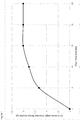
- Figure 3 shows the concentration of each flavour molecule in the seed after different CO 2 flush times. After 15 minutes, the level of flavour stabilised thereby suggesting that the impregnation was inside the seeds.
- Figure 4 shows the weight of excess flavour solution as a function of CO 2 flush time. It can be seen that after 15 minutes of CO 2 flushing, the excess flavour solution in the impregnation chamber was completely removed.
- Example 1 The experimental procedure of Example 1 was repeated with a selection of cinnamon oil in different solvents on blue poppy seeds. Four different cinnamon solutions were used:
- the impregnation solution was injected at a temperature of 35°C, under a pressure of 100 bar.
- the flow rate of the CO 2 varied depending on the flow rate of the impregnation solution. All the trials carried out used an overall 2% oil concentration in CO 2 (w/w).
- the neat cinnamon oil was injected directly at 0.2 g/min at a CO 2 flow rate of 9.8 g/min.
- these impregnation solutions were injected at 1 g/min at a flow rate of 9 g/min of CO 2 .
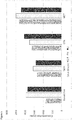
- Figure 5 shows the cinnamon oil concentration in blue poppy seeds using different solvents and various infusion times.
- the cinnamon oil concentration was calculated based on the cinnamaldehyde level at 75% in cinnamon oil (w/w). This experiment highlights the role played by solvent during the infusion process.
- the highest level of cinnamon oil infused into blue poppy seed is under MCT conditions: a very high level of up to 2500 ppm cinnamon oil was observed after an infusion time of 1 hour.
- Example 1 The experimental procedure of Example 1 was repeated with a neat cinnamon oil on blue poppy seeds using both liquid and supercritical CO 2 conditions.
- the impregnation solution was injected at a temperature of 20°C, under a pressure of 70 bar.
- the impregnation solution was injected at a temperature of 35°C, under a pressure of 100 bar.
- Figure 6 represents the cinnamon oil concentration in blue poppy seeds using respectively liquid and supercritical CO 2 conditions.
- the cinnamon oil concentration was calculated based on the cinnamaldehyde level at 75% in cinnamon oil (w/w). It can be seen that infusion occurs in both liquid and supercritical CO 2 conditions but that that it depends upon the CO 2 condition, the supercritical CO 2 condition being more efficient than the liquid CO 2 condition.
- the ginger root consisted of approximately 1.8% ginger oil.
- the ginger oil concentration was calculated based on the zingiberene level at 40% in ginger oil (w/w) in ginger root.
- the quinoa sample showed about 135 ppm of ginger oil infused into the seeds after the CO 2 process.
- Blue poppy seeds were placed in the extractor and were extracted using CO 2 for a period of time of 2 hours under a pressure of 300 bar at a temperature of 40°C and at a CO 2 flow rate of 10 g/min. 0.9% (w/w) of surface lipids was removed from the poppy seeds.
- the extracted poppy seeds were then infused using the experimental procedure of example 6.
- the impregnation solution of 1 % (w/w) cinnamon oil in MCT was injected at a temperature of 40°C, under a pressure of 300 bar for a period of time of 1 hour at a flow rate of 0.5 g/min.
- An infusion trial of non-extracted poppy seeds was carried out using identical conditions.
- Figure 7 shows the level of cinnamon oil infused into poppy seeds using pre-extracted seeds and non-extracted poppy seeds. It can be observed that the level of cinnamon oil infused in extracted seeds is approximately 1.5 times higher than that of non-extracted seeds.
- the pre-extracted seeds exhibited a cinnamon oil concentration of almost 1800 ppm as compared to 1200 ppm for the non-extracted seeds.
- the cinnamon oil concentration was calculated based on the cinnamaldehyde level at 75% in cinnamon oil (w/w). This result shows that the impregnation result was influenced by the surface chemistry of the poppy seeds.
- the quinoa was then transferred to a vessel and into a pressurised chamber where the seeds were flushed with CO 2 under a pressure of 300 bar and a temperature of 40°C using a CO 2 flow of 10 g/min and for periods of time of respectively 15 and 30 minutes.
- the flushing step was incorporated into the process in order to remove any excess flavour on the surface of the seeds.
- Figure 8 shows the flavour molecules concentration in the seeds directly after the CO 2 spray process and after flushing times of 15 and 30 minutes. A significant level of flavour molecules was removed during the flushing process indicating that most of the flavour was located on the surface of the seeds. Comparing the results of Figure 8 , after a 15 minutes flush, with those of Figure 6 , also carried out after a 15 minutes flush, but on seeds impregnated with supercritical carbon dioxide, clearly demonstrates the superior efficiency of the present method.
- Example 1 The experimental procedure of Example 1 was repeated with an impregnation solution of 0.5% ethanolic ⁇ -tocopherol (w/w) on golden flax seed.
- the impregnation solution was injected at a temperature of 40°C, under a pressure of 300 bar at a flow rate of CO 2 of 10 g/min and a flow rate of impregnation solution of 1 g/min with a mass ratio CO 2 to impregnating solution of 10:1.
- the infusion time was 1 hour followed by an additional 15 minutes of CO 2 flush at 10g/min in order to remove the excess anti-oxidant on the surfaces of the seeds.
- golden flax seed is high in lipids content, there was a 1% lipids loss during the process.
- This example compares the flavour released respectively by supercritical CO 2 infused seeds, liquid flavouring and spray-dried flavouring.
- Example 1 For the supercritical impregnation, the experimental procedure of Example 1 was repeated with an impregnation solution consisting of 20% cinnamon oil in 96% ethanol (w/w), using blue poppy seeds.
- the impregnation solution was injected at a temperature of 40°C, under a pressure of 300 bar at a flow rate of 10 g/min simultaneously with CO 2 at a flow rate of 10 g/min.
- the seeds were left to dry in air overnight.
- Example 3 The extraction and filtration steps were carried out as in Example 3 and analysed using GC-FID with a DB-5 capillary column. Tetradecane was used as an internal standard. The cinnamon oil concentration was calculated based on the cinnamaldehyde level at 75% in cinnamon oil (w/w). The analytical data showed that approximately 2.3% cinnamon oil was impregnated into the poppy seeds.
- the cinnamon liquid flavour used was a solution of 20% cinnamon oil in 96% ethanol (w/w).
- the spray-dried cinnamon flavour used was generated using 20% cinnamon oil, 64% maltodextrine and 16% acacia gum (w/w).
- the flavour powder was obtained by preparing an emulsion of maltodextrine, acacia gum and water. The emulsion was then fed into a spray-drier.
- the 3 different types of flavour delivery systems were applied to cereal bars and they were calibrated in order to obtain iso-flavour in all 3 samples.
- the 2.33% of total cinnamon oil in the supercritical CO 2 seeds was used as a reference to determine the dosage in the cereal bars.
- Liquid flavour and spray-dried flavour were both dosed in at 0.022 wt% in cereal bars with the assumption that the resulting delivery systems had the same finished level of cinnamaldehyde.
- the supercritical CO 2 infused seeds were dosed in at 0.8 wt% into the cereal bar recipe. All three delivery systems contain about 14 ppm of cinnamaldehyde and about 19 ppm of cinnamon oil in the application.
- the cereal bars were manufactured using glucose syrup, jumbo large oats, rice crispies, white granulated sugar, vegetable oil, small oats, honey and water. Hot sugar syrup was prepared and added to oats, puffed rice and flavouring materials. For the spray-dried and liquid flavour, unflavoured poppy seeds were added into the formula at the same dosage as the flavoured seeds. The flavoured cereal bars were allowed to form and cool.
- the flavour release was measured using MS-Nose with a ZebronTM Z-GuardTM column.
- the Micromass MS-Nose is an interface adapted to the mass spectrometer and designed to analyse volatile compounds. It is based on Atmospheric Pressure lonisation Mass Spectrometry (API-MS) and it can measure odours at concentrations typically around 10 parts per billion in the gas phase at a frequency of 5 to 10Hz.
- API-MS Atmospheric Pressure lonisation Mass Spectrometry
- Low dead volume, inert sample introduction system delivers volatile compounds into the source where they are ionised, at atmospheric pressure, by a high voltage corona discharge.
- a sampling oriface extracts the ions from the atmospheric pressure region into an intermediate vacuum region, from where they are transported into the analyser region of the mass spectrometer, which separates them based on the mass to charge ratio.
- Real time monitoring helps understand the delivery of aroma and taste to the receptors during eating and therefore provides information to improve or change the process of flavour perception. It is ideally suited for the analysis, in real time, of volatile compounds in human breath.
- a tube was inserted in the nostril of two tasters while they were chewing 7 g of cereal bar samples for a period of time of 30 seconds.
- Single ion monitoring (SIM) of cinnamaldehyde was used as a marker for identifying responses on cinnamon flavour.
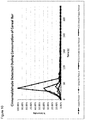
- Figure 9 compares flavour release during the consumption of cereal bars using MS-Nose.
- the Intensity maximum (I max ) of the supercritical CO 2 (ScCO 2 ) infused flavoured cereal bar is 3 times stronger than that of spray-dried flavour and 8 times stronger than that of liquid flavour. It also shows a longer delay in flavour release and thus longer lasting eating experience in CO 2 infused seeds
- the flavour release was also measured by time-intensity sensory analysis using method ASTM E1909-13- Standard Guide for Time-Intensity Evaluation of Sensory Attributes using twelve trained panellists. The assessment was carried out under white light in sensory booths and each panellist was required to chew 7g of cereal bar samples. Six variants were evaluated in a randomised order over several sessions. The panellists were asked to assess the overall intensity of the cinnamon flavour over an eight minutes duration whilst chewing for a period of time of 30 seconds. The sensory data was captured and analysed using Compusense v5.6.
- Figure 10 compares the flavour release detected by panellists.
- the super critical CO 2 (ScCO 2 ) infused flavour reached both a higher maximum intensity (I max ) and a longer time to maximum intensity (T max ) as compared to spray-dried (SD) and liquid flavour impregnation.
- This sensory data validates what was already observed in MS-Nose. It also highlights the long lasting flavour release of CO 2 infused flavour as compared to the other two delivery flavour systems. It shows the time elapsed to lose flavour intensity after reaching maximum flavour intensity I max .
- Example 12 The procedure of Example 12 was repeated to prepare supercritical CO2 infused cinnamon poppy seeds.
- the analytical method of Example 12 was used to identify the level of cinnamon oil in the seeds.
- the analytical data showed that approximately 2.3% cinnamon oil was impregnated into the poppy seeds.
- the seeds were stored respectively at -18°C, 25°C and 40°C for a stability test. Three different triangle tests were carried out following the ISO 4120:2007 (Sensory Analysis- Methodology-Triangle test).
- the first triangle test compared seeds stored respectively at -18°C and at 25°C during 4 weeks. A total of 22 Sensient internal trained panellists completed the assessment: 14 incorrect and 8 correct identifications were recorded, based on sensory characteristics.
- the second triangle test compared seeds stored respectively at -18°C and at 40°C during 4 weeks. A total of 21 Sensient internal trained panellists completed the assessment: 12 incorrect and 9 correct identifications were recorded based on sensory characteristics.
- the third triangle test compared seeds stored respectively at 25°C and at 40°C during 4 weeks.
- a total of 23 Sensient internal trained panellists completed the assessment: 15 incorrect and 8 correct identifications were recorded based on sensory characteristics.
Landscapes
- Life Sciences & Earth Sciences (AREA)
- Chemical & Material Sciences (AREA)
- Engineering & Computer Science (AREA)
- Food Science & Technology (AREA)
- Polymers & Plastics (AREA)
- Health & Medical Sciences (AREA)
- Nutrition Science (AREA)
- Agronomy & Crop Science (AREA)
- Botany (AREA)
- Coloring Foods And Improving Nutritive Qualities (AREA)
- Confectionery (AREA)
Claims (8)
- Procédé d'injection d'additifs dans des graines, des haricots, des noix, des céréales et des pseudo-céréales, comprenant les étapes consistant à :a) charger une chambre d'imprégnation avec les graines, les haricots, les noix, les céréales et les pseudo-céréales ;b) préparer un fluide d'imprégnation par le mélange des additifs désirés, éventuellement avec un solvant et selon un rapport de volume des additifs au solvant compris entre 1:0 et 1:200 ;c) injecter le fluide d'imprégnation de l'étape b) dans la chambre d'imprégnation dans des conditions de CO2 sous-critique ou supercritique, et mettre en contact avec les graines, les haricots, les noix, les céréales et les pseudo-céréales de l'étape a) pendant une période de temps d'au moins 15 minutes ;d) éventuellement balayer les graines, les haricots, les noix, les céréales et les pseudo-céréales imprégnés de l'étape c) par du CO2 sous-critique ou supercritique, afin d'éliminer les traces de fluide d'imprégnation ;e) dépressuriser la chambre d'imprégnation ;f) récupérer les graines, les haricots, les noix, les céréales et les pseudo-céréales prêts à l'emploi contenant les additifs désirés.
- Procédé selon la revendication 1, dans lequel les solvants de l'étape b), s'ils sont présents, sont choisis parmi l'éthanol, l'eau ou le propylène glycol, la triacétine, une huile végétale ou une huile de triglycérides à chaînes moyennes (MCT).
- Procédé selon la revendication 1 ou la revendication 2, dans laquelle, dans l'étape c), le fluide d'imprégnation est injecté dans la chambre d'imprégnation dans des conditions supercritiques à une température d'au moins 31°C et une pression d'au moins 72,8 bars.
- Procédé selon l'une quelconque des revendications 1 à 3, dans laquelle, dans l'étape c), le temps de contact est compris entre 15 minutes et 5 heures.
- Procédé selon l'une quelconque des revendications précédentes, dans laquelle, dans l'étape e), la chambre d'imprégnation est dépressurisée à une vitesse comprise entre 1 et 60 secondes par bar.
- Procédé selon l'une quelconque des revendications précédentes, dans laquelle, dans l'étape e), le dioxyde de carbone évaporé lors de la dépressurisation est recyclé.
- Procédé selon l'une quelconque des revendications précédentes, dans laquelle les additifs sont choisis parmi les arômes, les matériaux aromatiques, les colorants, les antioxydants, les vitamines, les édulcorants, les modulateurs du goût ou une combinaison de ceux-ci.
- Procédé selon la revendication 7, dans laquelle les additifs sont constitués par les arômes, et/ou les colorants, et/ou les édulcorants.
Applications Claiming Priority (3)
| Application Number | Priority Date | Filing Date | Title |
|---|---|---|---|
| EP2015164240 | 2015-04-20 | ||
| EP2015200257 | 2015-12-15 | ||
| PCT/EP2016/058026 WO2016169815A1 (fr) | 2015-04-20 | 2016-04-12 | Procédé d'encapsulation d'additifs dans des graines, des fèves, des noix, des céréales et des pseudo-céréales |
Publications (2)
| Publication Number | Publication Date |
|---|---|
| EP3294071A1 EP3294071A1 (fr) | 2018-03-21 |
| EP3294071B1 true EP3294071B1 (fr) | 2020-01-29 |
Family
ID=61186148
Family Applications (1)
| Application Number | Title | Priority Date | Filing Date |
|---|---|---|---|
| EP16715574.6A Active EP3294071B1 (fr) | 2015-04-20 | 2016-04-12 | Procédé d'encapsulation d'additifs dans des graines, des fèves, des noix, des céréales et des pseudo-céréales |
Country Status (1)
| Country | Link |
|---|---|
| EP (1) | EP3294071B1 (fr) |
-
2016
- 2016-04-12 EP EP16715574.6A patent/EP3294071B1/fr active Active
Non-Patent Citations (1)
| Title |
|---|
| None * |
Also Published As
| Publication number | Publication date |
|---|---|
| EP3294071A1 (fr) | 2018-03-21 |
Similar Documents
| Publication | Publication Date | Title |
|---|---|---|
| AU2016253530B2 (en) | A method for encapsulating additives into seeds, beans, nuts, cereals and pseudo-cereals | |
| CN113873889B (zh) | 包含固体植物基脂肪的粉末状组合物 | |
| US4640842A (en) | Internally flavored hulled cereal grain and process for preparation | |
| JP3213319B2 (ja) | 水性液体香料油カプセル、その製造方法、及び食品への使用方法 | |
| SK116794A3 (en) | Method of preparing of heat-stable, fracturable capsules | |
| US20150351436A1 (en) | Affecting enjoyment of food | |
| Modupalli et al. | Plant extracts as flavoring agents | |
| EP2255676A1 (fr) | Revêtement aromatisé pour aliment | |
| RU2213489C2 (ru) | Сухая смесь пищевой основы и способ ее получения | |
| EP3247403A1 (fr) | Cellobiose contenue dans des compositions à consommer ou à prendre par voie orale | |
| CA2660774C (fr) | Produits alimentaires fortifies avec des acides gras omega-3 et leurs procedes de fabrication | |
| EP3294071B1 (fr) | Procédé d'encapsulation d'additifs dans des graines, des fèves, des noix, des céréales et des pseudo-céréales | |
| JP2009022225A (ja) | キャラメル風味の食品素材の製造方法およびその用途 | |
| CN111712138A (zh) | 调味组合物 | |
| KR20190013217A (ko) | 어육 과립이 코팅된 조미맛김 및 그 제조방법 | |
| JP2002209530A (ja) | 遠心力による食品の含浸処理方法 | |
| Cerqueira et al. | Flavouring and coating technologies for preservation and processing of foods | |
| Espinosa-Ramírez | Seasonings for snack foods | |
| JP7085903B2 (ja) | 酸性液状調味料 | |
| EP3085246A1 (fr) | Procédé permettant d'encapsuler des additifs dans des semences, des haricots, des céréales et des cerneaux de noix | |
| KR102023242B1 (ko) | 믹스 스낵의 제조방법 | |
| US2282784A (en) | Exploded antioxygenic food composition | |
| Risch | Flavors and colors for microwave foods | |
| BR112020015988B1 (pt) | Métodos para preparação de uma composição flavorizante, e para fabricação de um produto alimentício flavorizado | |
| Manley | Flavours, spices and flavour enhancers as biscuit ingredients |
Legal Events
| Date | Code | Title | Description |
|---|---|---|---|
| STAA | Information on the status of an ep patent application or granted ep patent |
Free format text: STATUS: THE INTERNATIONAL PUBLICATION HAS BEEN MADE |
|
| PUAI | Public reference made under article 153(3) epc to a published international application that has entered the european phase |
Free format text: ORIGINAL CODE: 0009012 |
|
| STAA | Information on the status of an ep patent application or granted ep patent |
Free format text: STATUS: REQUEST FOR EXAMINATION WAS MADE |
|
| 17P | Request for examination filed |
Effective date: 20170810 |
|
| AK | Designated contracting states |
Kind code of ref document: A1 Designated state(s): AL AT BE BG CH CY CZ DE DK EE ES FI FR GB GR HR HU IE IS IT LI LT LU LV MC MK MT NL NO PL PT RO RS SE SI SK SM TR |
|
| AX | Request for extension of the european patent |
Extension state: BA ME |
|
| DAV | Request for validation of the european patent (deleted) | ||
| DAX | Request for extension of the european patent (deleted) | ||
| STAA | Information on the status of an ep patent application or granted ep patent |
Free format text: STATUS: EXAMINATION IS IN PROGRESS |
|
| 17Q | First examination report despatched |
Effective date: 20190502 |
|
| REG | Reference to a national code |
Ref country code: DE Ref legal event code: R079 Ref document number: 602016028674 Country of ref document: DE Free format text: PREVIOUS MAIN CLASS: A23L0005400000 Ipc: A23L0002520000 |
|
| RIC1 | Information provided on ipc code assigned before grant |
Ipc: A23L 2/52 20060101AFI20190821BHEP Ipc: A23L 27/00 20160101ALI20190821BHEP Ipc: A23L 5/40 20160101ALI20190821BHEP Ipc: A23L 7/10 20160101ALI20190821BHEP Ipc: A23L 7/126 20160101ALI20190821BHEP Ipc: A23P 10/30 20160101ALI20190821BHEP Ipc: A23L 11/00 20160101ALI20190821BHEP Ipc: A23L 7/161 20160101ALI20190821BHEP Ipc: A23L 25/00 20160101ALI20190821BHEP |
|
| GRAP | Despatch of communication of intention to grant a patent |
Free format text: ORIGINAL CODE: EPIDOSNIGR1 |
|
| STAA | Information on the status of an ep patent application or granted ep patent |
Free format text: STATUS: GRANT OF PATENT IS INTENDED |
|
| INTG | Intention to grant announced |
Effective date: 20190930 |
|
| GRAS | Grant fee paid |
Free format text: ORIGINAL CODE: EPIDOSNIGR3 |
|
| GRAA | (expected) grant |
Free format text: ORIGINAL CODE: 0009210 |
|
| STAA | Information on the status of an ep patent application or granted ep patent |
Free format text: STATUS: THE PATENT HAS BEEN GRANTED |
|
| AK | Designated contracting states |
Kind code of ref document: B1 Designated state(s): AL AT BE BG CH CY CZ DE DK EE ES FI FR GB GR HR HU IE IS IT LI LT LU LV MC MK MT NL NO PL PT RO RS SE SI SK SM TR |
|
| REG | Reference to a national code |
Ref country code: GB Ref legal event code: FG4D |
|
| REG | Reference to a national code |
Ref country code: CH Ref legal event code: EP |
|
| REG | Reference to a national code |
Ref country code: AT Ref legal event code: REF Ref document number: 1227844 Country of ref document: AT Kind code of ref document: T Effective date: 20200215 |
|
| REG | Reference to a national code |
Ref country code: IE Ref legal event code: FG4D |
|
| REG | Reference to a national code |
Ref country code: DE Ref legal event code: R096 Ref document number: 602016028674 Country of ref document: DE |
|
| REG | Reference to a national code |
Ref country code: NL Ref legal event code: MP Effective date: 20200129 |
|
| REG | Reference to a national code |
Ref country code: DE Ref legal event code: R082 Ref document number: 602016028674 Country of ref document: DE Representative=s name: MUELLER, THOMAS, DIPL.-ING., DE |
|
| PG25 | Lapsed in a contracting state [announced via postgrant information from national office to epo] |
Ref country code: RS Free format text: LAPSE BECAUSE OF FAILURE TO SUBMIT A TRANSLATION OF THE DESCRIPTION OR TO PAY THE FEE WITHIN THE PRESCRIBED TIME-LIMIT Effective date: 20200129 Ref country code: FI Free format text: LAPSE BECAUSE OF FAILURE TO SUBMIT A TRANSLATION OF THE DESCRIPTION OR TO PAY THE FEE WITHIN THE PRESCRIBED TIME-LIMIT Effective date: 20200129 Ref country code: NO Free format text: LAPSE BECAUSE OF FAILURE TO SUBMIT A TRANSLATION OF THE DESCRIPTION OR TO PAY THE FEE WITHIN THE PRESCRIBED TIME-LIMIT Effective date: 20200429 Ref country code: PT Free format text: LAPSE BECAUSE OF FAILURE TO SUBMIT A TRANSLATION OF THE DESCRIPTION OR TO PAY THE FEE WITHIN THE PRESCRIBED TIME-LIMIT Effective date: 20200621 |
|
| REG | Reference to a national code |
Ref country code: LT Ref legal event code: MG4D |
|
| PG25 | Lapsed in a contracting state [announced via postgrant information from national office to epo] |
Ref country code: GR Free format text: LAPSE BECAUSE OF FAILURE TO SUBMIT A TRANSLATION OF THE DESCRIPTION OR TO PAY THE FEE WITHIN THE PRESCRIBED TIME-LIMIT Effective date: 20200430 Ref country code: LV Free format text: LAPSE BECAUSE OF FAILURE TO SUBMIT A TRANSLATION OF THE DESCRIPTION OR TO PAY THE FEE WITHIN THE PRESCRIBED TIME-LIMIT Effective date: 20200129 Ref country code: SE Free format text: LAPSE BECAUSE OF FAILURE TO SUBMIT A TRANSLATION OF THE DESCRIPTION OR TO PAY THE FEE WITHIN THE PRESCRIBED TIME-LIMIT Effective date: 20200129 Ref country code: BG Free format text: LAPSE BECAUSE OF FAILURE TO SUBMIT A TRANSLATION OF THE DESCRIPTION OR TO PAY THE FEE WITHIN THE PRESCRIBED TIME-LIMIT Effective date: 20200429 Ref country code: IS Free format text: LAPSE BECAUSE OF FAILURE TO SUBMIT A TRANSLATION OF THE DESCRIPTION OR TO PAY THE FEE WITHIN THE PRESCRIBED TIME-LIMIT Effective date: 20200529 Ref country code: HR Free format text: LAPSE BECAUSE OF FAILURE TO SUBMIT A TRANSLATION OF THE DESCRIPTION OR TO PAY THE FEE WITHIN THE PRESCRIBED TIME-LIMIT Effective date: 20200129 |
|
| PG25 | Lapsed in a contracting state [announced via postgrant information from national office to epo] |
Ref country code: NL Free format text: LAPSE BECAUSE OF FAILURE TO SUBMIT A TRANSLATION OF THE DESCRIPTION OR TO PAY THE FEE WITHIN THE PRESCRIBED TIME-LIMIT Effective date: 20200129 |
|
| PG25 | Lapsed in a contracting state [announced via postgrant information from national office to epo] |
Ref country code: SM Free format text: LAPSE BECAUSE OF FAILURE TO SUBMIT A TRANSLATION OF THE DESCRIPTION OR TO PAY THE FEE WITHIN THE PRESCRIBED TIME-LIMIT Effective date: 20200129 Ref country code: LT Free format text: LAPSE BECAUSE OF FAILURE TO SUBMIT A TRANSLATION OF THE DESCRIPTION OR TO PAY THE FEE WITHIN THE PRESCRIBED TIME-LIMIT Effective date: 20200129 Ref country code: SK Free format text: LAPSE BECAUSE OF FAILURE TO SUBMIT A TRANSLATION OF THE DESCRIPTION OR TO PAY THE FEE WITHIN THE PRESCRIBED TIME-LIMIT Effective date: 20200129 Ref country code: ES Free format text: LAPSE BECAUSE OF FAILURE TO SUBMIT A TRANSLATION OF THE DESCRIPTION OR TO PAY THE FEE WITHIN THE PRESCRIBED TIME-LIMIT Effective date: 20200129 Ref country code: DK Free format text: LAPSE BECAUSE OF FAILURE TO SUBMIT A TRANSLATION OF THE DESCRIPTION OR TO PAY THE FEE WITHIN THE PRESCRIBED TIME-LIMIT Effective date: 20200129 Ref country code: CZ Free format text: LAPSE BECAUSE OF FAILURE TO SUBMIT A TRANSLATION OF THE DESCRIPTION OR TO PAY THE FEE WITHIN THE PRESCRIBED TIME-LIMIT Effective date: 20200129 Ref country code: EE Free format text: LAPSE BECAUSE OF FAILURE TO SUBMIT A TRANSLATION OF THE DESCRIPTION OR TO PAY THE FEE WITHIN THE PRESCRIBED TIME-LIMIT Effective date: 20200129 Ref country code: RO Free format text: LAPSE BECAUSE OF FAILURE TO SUBMIT A TRANSLATION OF THE DESCRIPTION OR TO PAY THE FEE WITHIN THE PRESCRIBED TIME-LIMIT Effective date: 20200129 |
|
| REG | Reference to a national code |
Ref country code: DE Ref legal event code: R097 Ref document number: 602016028674 Country of ref document: DE |
|
| REG | Reference to a national code |
Ref country code: AT Ref legal event code: MK05 Ref document number: 1227844 Country of ref document: AT Kind code of ref document: T Effective date: 20200129 |
|
| PG25 | Lapsed in a contracting state [announced via postgrant information from national office to epo] |
Ref country code: MC Free format text: LAPSE BECAUSE OF FAILURE TO SUBMIT A TRANSLATION OF THE DESCRIPTION OR TO PAY THE FEE WITHIN THE PRESCRIBED TIME-LIMIT Effective date: 20200129 |
|
| REG | Reference to a national code |
Ref country code: CH Ref legal event code: PL |
|
| PLBE | No opposition filed within time limit |
Free format text: ORIGINAL CODE: 0009261 |
|
| STAA | Information on the status of an ep patent application or granted ep patent |
Free format text: STATUS: NO OPPOSITION FILED WITHIN TIME LIMIT |
|
| 26N | No opposition filed |
Effective date: 20201030 |
|
| PG25 | Lapsed in a contracting state [announced via postgrant information from national office to epo] |
Ref country code: LU Free format text: LAPSE BECAUSE OF NON-PAYMENT OF DUE FEES Effective date: 20200412 Ref country code: CH Free format text: LAPSE BECAUSE OF NON-PAYMENT OF DUE FEES Effective date: 20200430 Ref country code: IT Free format text: LAPSE BECAUSE OF FAILURE TO SUBMIT A TRANSLATION OF THE DESCRIPTION OR TO PAY THE FEE WITHIN THE PRESCRIBED TIME-LIMIT Effective date: 20200129 Ref country code: AT Free format text: LAPSE BECAUSE OF FAILURE TO SUBMIT A TRANSLATION OF THE DESCRIPTION OR TO PAY THE FEE WITHIN THE PRESCRIBED TIME-LIMIT Effective date: 20200129 Ref country code: LI Free format text: LAPSE BECAUSE OF NON-PAYMENT OF DUE FEES Effective date: 20200430 |
|
| REG | Reference to a national code |
Ref country code: BE Ref legal event code: MM Effective date: 20200430 |
|
| PG25 | Lapsed in a contracting state [announced via postgrant information from national office to epo] |
Ref country code: SI Free format text: LAPSE BECAUSE OF FAILURE TO SUBMIT A TRANSLATION OF THE DESCRIPTION OR TO PAY THE FEE WITHIN THE PRESCRIBED TIME-LIMIT Effective date: 20200129 Ref country code: PL Free format text: LAPSE BECAUSE OF FAILURE TO SUBMIT A TRANSLATION OF THE DESCRIPTION OR TO PAY THE FEE WITHIN THE PRESCRIBED TIME-LIMIT Effective date: 20200129 Ref country code: BE Free format text: LAPSE BECAUSE OF NON-PAYMENT OF DUE FEES Effective date: 20200430 |
|
| PG25 | Lapsed in a contracting state [announced via postgrant information from national office to epo] |
Ref country code: IE Free format text: LAPSE BECAUSE OF NON-PAYMENT OF DUE FEES Effective date: 20200412 |
|
| PG25 | Lapsed in a contracting state [announced via postgrant information from national office to epo] |
Ref country code: TR Free format text: LAPSE BECAUSE OF FAILURE TO SUBMIT A TRANSLATION OF THE DESCRIPTION OR TO PAY THE FEE WITHIN THE PRESCRIBED TIME-LIMIT Effective date: 20200129 Ref country code: MT Free format text: LAPSE BECAUSE OF FAILURE TO SUBMIT A TRANSLATION OF THE DESCRIPTION OR TO PAY THE FEE WITHIN THE PRESCRIBED TIME-LIMIT Effective date: 20200129 Ref country code: CY Free format text: LAPSE BECAUSE OF FAILURE TO SUBMIT A TRANSLATION OF THE DESCRIPTION OR TO PAY THE FEE WITHIN THE PRESCRIBED TIME-LIMIT Effective date: 20200129 |
|
| PG25 | Lapsed in a contracting state [announced via postgrant information from national office to epo] |
Ref country code: MK Free format text: LAPSE BECAUSE OF FAILURE TO SUBMIT A TRANSLATION OF THE DESCRIPTION OR TO PAY THE FEE WITHIN THE PRESCRIBED TIME-LIMIT Effective date: 20200129 Ref country code: AL Free format text: LAPSE BECAUSE OF FAILURE TO SUBMIT A TRANSLATION OF THE DESCRIPTION OR TO PAY THE FEE WITHIN THE PRESCRIBED TIME-LIMIT Effective date: 20200129 |
|
| PGFP | Annual fee paid to national office [announced via postgrant information from national office to epo] |
Ref country code: GB Payment date: 20240429 Year of fee payment: 9 |
|
| PGFP | Annual fee paid to national office [announced via postgrant information from national office to epo] |
Ref country code: DE Payment date: 20240429 Year of fee payment: 9 |
|
| PGFP | Annual fee paid to national office [announced via postgrant information from national office to epo] |
Ref country code: FR Payment date: 20240425 Year of fee payment: 9 |
|
| REG | Reference to a national code |
Ref country code: DE Ref legal event code: R119 Ref document number: 602016028674 Country of ref document: DE |
|
| GBPC | Gb: european patent ceased through non-payment of renewal fee |
Effective date: 20250412 |
|
| PG25 | Lapsed in a contracting state [announced via postgrant information from national office to epo] |
Ref country code: DE Free format text: LAPSE BECAUSE OF NON-PAYMENT OF DUE FEES Effective date: 20251104 |
|
| PG25 | Lapsed in a contracting state [announced via postgrant information from national office to epo] |
Ref country code: GB Free format text: LAPSE BECAUSE OF NON-PAYMENT OF DUE FEES Effective date: 20250412 |
|
| PG25 | Lapsed in a contracting state [announced via postgrant information from national office to epo] |
Ref country code: FR Free format text: LAPSE BECAUSE OF NON-PAYMENT OF DUE FEES Effective date: 20250430 |