EP3294897B1 - Verfahren zur gewinnung von resveratrol - Google Patents
Verfahren zur gewinnung von resveratrol Download PDFInfo
- Publication number
- EP3294897B1 EP3294897B1 EP16728840.6A EP16728840A EP3294897B1 EP 3294897 B1 EP3294897 B1 EP 3294897B1 EP 16728840 A EP16728840 A EP 16728840A EP 3294897 B1 EP3294897 B1 EP 3294897B1
- Authority
- EP
- European Patent Office
- Prior art keywords
- polypeptide
- resveratrol
- gene encoding
- aro4
- gene
- Prior art date
- Legal status (The legal status is an assumption and is not a legal conclusion. Google has not performed a legal analysis and makes no representation as to the accuracy of the status listed.)
- Active
Links
Images








Classifications
-
- C—CHEMISTRY; METALLURGY
- C12—BIOCHEMISTRY; BEER; SPIRITS; WINE; VINEGAR; MICROBIOLOGY; ENZYMOLOGY; MUTATION OR GENETIC ENGINEERING
- C12N—MICROORGANISMS OR ENZYMES; COMPOSITIONS THEREOF; PROPAGATING, PRESERVING, OR MAINTAINING MICROORGANISMS; MUTATION OR GENETIC ENGINEERING; CULTURE MEDIA
- C12N15/00—Mutation or genetic engineering; DNA or RNA concerning genetic engineering, vectors, e.g. plasmids, or their isolation, preparation or purification; Use of hosts therefor
- C12N15/09—Recombinant DNA-technology
- C12N15/63—Introduction of foreign genetic material using vectors; Vectors; Use of hosts therefor; Regulation of expression
- C12N15/79—Vectors or expression systems specially adapted for eukaryotic hosts
- C12N15/80—Vectors or expression systems specially adapted for eukaryotic hosts for fungi
- C12N15/81—Vectors or expression systems specially adapted for eukaryotic hosts for fungi for yeasts
-
- C—CHEMISTRY; METALLURGY
- C12—BIOCHEMISTRY; BEER; SPIRITS; WINE; VINEGAR; MICROBIOLOGY; ENZYMOLOGY; MUTATION OR GENETIC ENGINEERING
- C12P—FERMENTATION OR ENZYME-USING PROCESSES TO SYNTHESISE A DESIRED CHEMICAL COMPOUND OR COMPOSITION OR TO SEPARATE OPTICAL ISOMERS FROM A RACEMIC MIXTURE
- C12P7/00—Preparation of oxygen-containing organic compounds
- C12P7/02—Preparation of oxygen-containing organic compounds containing a hydroxy group
- C12P7/22—Preparation of oxygen-containing organic compounds containing a hydroxy group aromatic
-
- C—CHEMISTRY; METALLURGY
- C12—BIOCHEMISTRY; BEER; SPIRITS; WINE; VINEGAR; MICROBIOLOGY; ENZYMOLOGY; MUTATION OR GENETIC ENGINEERING
- C12Y—ENZYMES
- C12Y205/00—Transferases transferring alkyl or aryl groups, other than methyl groups (2.5)
- C12Y205/01—Transferases transferring alkyl or aryl groups, other than methyl groups (2.5) transferring alkyl or aryl groups, other than methyl groups (2.5.1)
- C12Y205/01054—3-Deoxy-7-phosphoheptulonate synthase (2.5.1.54)
-
- C—CHEMISTRY; METALLURGY
- C12—BIOCHEMISTRY; BEER; SPIRITS; WINE; VINEGAR; MICROBIOLOGY; ENZYMOLOGY; MUTATION OR GENETIC ENGINEERING
- C12Y—ENZYMES
- C12Y207/00—Transferases transferring phosphorus-containing groups (2.7)
- C12Y207/11—Protein-serine/threonine kinases (2.7.11)
- C12Y207/11027—[Acetyl-CoA carboxylase] kinase (2.7.11.27)
-
- C—CHEMISTRY; METALLURGY
- C12—BIOCHEMISTRY; BEER; SPIRITS; WINE; VINEGAR; MICROBIOLOGY; ENZYMOLOGY; MUTATION OR GENETIC ENGINEERING
- C12Y—ENZYMES
- C12Y504/00—Intramolecular transferases (5.4)
- C12Y504/99—Intramolecular transferases (5.4) transferring other groups (5.4.99)
- C12Y504/99005—Chorismate mutase (5.4.99.5)
Definitions
- the invention disclosed herein relates generally to the fields of genetic engineering. Particularly, the invention disclosed herein provides methods for producing increased yields of stilbenes and flavonoids in a genetically modified cell and to recombinant host microorganism cells capable of producing a stilbene.
- Flavonoids and stilbenes are two groups of secondary plant metabolites derived from the phenylpropanoid pathway by different routes. Both flavonoids and stilbenes are recognized as having antifungal and antibacterial properties in plants. Flavonoids have also been investigated for application to several human pathological conditions, including cancer, diabetes, obesity and Parkinson's disease (see e.g., Koopman et al., 2012, Microbial Cell Factories 11:155 ; Wang & Zhang, 2012, Scanning 34: 1-5 ; Zava & Duwe, 1997, Nutr.
- Flavonoids have been shown to act as scavengers of oxygen radicals, and may possess anti-inflammatory, antiviral and anti-tumor activities (see e.g. , Koopman et al., 2012, Microbial Cell Factories 11:155 ; Nijveldt et al., 2001, Am J Clin Nutr 74: 418-425 ; Limem et al., 2008, Process Biochem 43:463-479 ).
- flavonoid production is mainly achieved by isolation from plants. Production of flavonoids is inefficient, however, due primarily to low growth rate of producing plants coupled with complex extraction and separation of flavonoids from related structures.
- Resveratrol (3,5,4'-trihydroxy-stilbene) is a phytophenol belonging to the group of stilbene phytoalexins, which are low-molecular-mass secondary metabolites that constitute the active defense mechanism in plants in response to fungal and other infections or other stress-related events ( see , e.g. , WO2006089898 (A1 )).
- resveratrol has been recognized for its cardioprotective and cancer chemopreventive activities in humans; it acts as a phytoestrogen, an inhibitor of platelet aggregation ( Kopp et al., 1998, European J Endocrinol.
- resveratrol Plants, the skin of red grapes, and other fruits produce resveratrol naturally.
- Present production processes rely mostly upon extraction of resveratrol, either from the skin of grape berries or from the plant Fallopia japonica or Polygonum cuspidatum , known as "Japanese knotweed.”
- Current extraction and purification methods use organic solvents to extract resveratrol and separate it from the biomass and/or cell debris. Examples of these solvents include, among others, ethanol, methanol, ethyl acetate, and petroleum ether. This is a labor-intensive process and generates low yields.
- resveratrol has low water-solubility ( see , e.g.
- stilbenes including resveratrol, and flavonoids are produced in plants and yeast through the phenylpropanoid pathway as illustrated by the reactions shown in Figures 1 and 2 and as described in WO2006089898 (A1 ).
- yeast the starting metabolites are malonyl-CoA and phenylalanine or tyrosine.
- the amino acid L-phenylalanine is converted into trans-cinnamic acid through non-oxidative deamination by L-phenylalanine ammonia lyase (PAL).
- trans-cinnamic acid is hydroxylated at the para-position to 4-coumaric acid (4-hydroxycinnamic acid) by cinnamate-4-hydroxylase (C4H), a cytochrome P450 monooxygenase enzyme, in conjunction with NADPH:cytochrome P450 reductase (CPR).
- C4H cinnamate-4-hydroxylase
- CPR cytochrome P450 reductase
- the amino acid L-tyrosine is converted into 4-coumaric acid by tyrosine ammonia lyase (TAL).
- TAL tyrosine ammonia lyase
- the 4-coumaric acid from either alternative pathway is subsequently activated to 4-coumaroyl-CoA by the action of 4-coumarate-CoA ligase (4CL).
- 4-coumaroyl-CoA represents the key branching point from which flavonoids and stilbenes are derived.
- Stilbenes are synthesized via stilbene synthase (STS), also known as resveratrol synthase (RS), catalyzing condensation of a phenylpropane unit of 4-coumaroyl-CoA with malonyl-CoA, resulting in formation of resveratrol.
- STS stilbene synthase
- RS resveratrol synthase
- the first step in flavonoid synthesis is condensation of a phenylpropane unit of 4-coumaroyl-CoA with malonyl-CoA and chalcone synthase (CHS), resulting in the formation of tetrahydroxychalcone.
- CHS chalcone synthase
- yeast strain Another substrate for resveratrol synthase, malonyl-CoA, is endogenously produced in yeast. Becker et al. , 2003, ld., indicated that S . cerevisiae cells produced minute amounts of resveratrol in the piceid form when cultured in synthetic media supplemented with 4-coumaric acid.
- said yeast strain would not be suitable for commercial application because it results in low resveratrol yields and requires the addition of 4-coumaric acid, which is expensive and not often present in industrial media. Therefore, there remains a need for an in vivo expression system that produces high yields of resveratrol more economically.
- the invention further provides a method of producing a stilbene, comprising:
- the chorismate mutase polypeptide comprises a chorismate mutase (ARO7) polypeptide having at least 50% identity to the amino acid sequence set forth in SEQ ID NO: 4.
- ARO7 chorismate mutase
- the chorismate mutase polypeptide comprises an ARO7 polypeptide having a mutation at T226.
- the chorismate mutase polypeptide comprises an ARO7 polypeptide having a mutation that is T226I or T226N.
- the chorismate mutase polypeptide is not feedback inhibited.
- the acetyl-CoA carboxylase polypeptide comprises an acetyl-CoA carboxylase alpha (ACC1) polypeptide having at least 70% identity to the amino acid sequence set forth in SEQ ID NO: 6.
- the acetyl-CoA carboxylase polypeptide comprises an ACC1 polypeptide having at least one mutation at S659 or S1157.
- the acetyl-CoA carboxylase polypeptide comprises an ACC1 polypeptide having at least one mutation at S659 or S1157, wherein the replacement amino acid is non-phosphorylable.
- the acetyl-CoA carboxylase polypeptide comprises an ACC1 polypeptide having at least one mutation that is S659A, S659V, S1157A, or S1157V.
- the acetyl-CoA carboxylase polypeptide is not feedback inhibited.
- the recombinant host further comprises one or more of:
- the stilbene produced by the recombinant host is resveratrol or a resveratrol derivative.
- the recombinant host comprises a microorganism that is a yeast cell, a plant cell, a mammalian cell, an insect cell, a fungal cell, or a bacterial cell.
- the bacterial cell comprises Escherichia bacteria cells, Lactobacillus bacteria cells, Lactococcus bacteria cells, Cornebacterium bacteria cells, Acetobacter bacteria cells, Acinetobacter bacteria cells, or Pseudomonas bacterial cells.
- the yeast cell is a cell from Saccharomyces cerevisiae , Schizosaccharomyces pombe , Yarrowia lipolytica , Candida glabrata, Ashbya gossypii , Cyberlindnera jadinii, Pichia pastoris, Kluyveromyces lactis, Hansenula polymorpha, Candida boidinii, Arxula adeninivorans , Xanthophyllomyces dendrorhous, or Candida albicans species.
- the yeast cell is a Saccharomycete.
- the yeast cell is a cell from the Saccharomyces cerevisiae species.
- the methods disclosed herein further comprise the step of detecting the recovered stilbene by thin layer chromatography (TLC), high-performance liquid chromatography (HPLC), ultraviolet-visible spectroscopy/spectrophotometry (UV-Vis), liquid chromatography-mass spectrometry (LC-MS), or nuclear magnetic resonance (NMR).
- TLC thin layer chromatography
- HPLC high-performance liquid chromatography
- UV-Vis ultraviolet-visible spectroscopy/spectrophotometry
- LC-MS liquid chromatography-mass spectrometry
- NMR nuclear magnetic resonance
- a recombinant host comprising one or more of:
- the recombinant host further comprises one or more of:
- Methods well known to those skilled in the art can be used to construct genetic expression constructs and recombinant cells according to this invention. These methods include in vitro recombinant DNA techniques, synthetic techniques, in vivo recombination techniques, and PCR techniques. See, for example , techniques as described in Maniatis et al., 1989, MOLECULAR CLONING: A LABORATORY MANUAL, Cold Spring Harbor Laboratory, New York ; Ausubel et al., 1989, CURRENT PROTOCOLS IN MOLECULAR BIOLOGY, Greene Publishing Associates and Wiley Interscience, New York , and PCR Protocols: A Guide to Methods and Applications (Innis et al., 1990, Academic Press, San Diego, CA ).
- nucleic acid means one or more nucleic acids.
- the term “substantially” is utilized herein to represent the inherent degree of uncertainty that can be attributed to any quantitative comparison, value, measurement, or other representation.
- the term “substantially” is also utilized herein to represent the degree by which a quantitative representation can vary from a stated reference without resulting in a change in the basic function of the subject matter at issue.
- nucleic acid can be used interchangeably to refer to nucleic acid comprising DNA, RNA, derivatives thereof, or combinations thereof.
- feedback-inhibited and “feedback inhibited” are used interchangeably to refer to deactivation of a stated enzyme by a product of the reaction catalyzed by the same enzyme once the product reaches a threshold level.
- tyrosine-sensitive refers to an enzyme which can be feedback-inhibited by tyrosine.
- Resveratrol can be synthesized in vitro, by bioconversion, or in a recombinant host.
- the term "recombinant host” is intended to refer to a host cell, the genome of which has been augmented by at least one incorporated DNA sequence.
- DNA sequences include, but are not limited to, genes that are not naturally present, DNA sequences that are not normally transcribed into RNA or translated into a protein ("expressed"), and other genes or DNA sequences that are desired to be introduced into the cell to produce the recombinant host. It will be appreciated that the genome of a recombinant host described herein is typically augmented through stable introduction of one or more recombinant genes.
- the introduced DNA is not originally resident in the host that is the recipient of the DNA, but it is within the scope of the invention to isolate a DNA segment from a given host, and to subsequently introduce one or more additional copies of that DNA into the same host, e . g ., to enhance production of the product of a gene or alter the expression pattern of a gene.
- the introduced DNA will modify or replace an endogenous gene or DNA sequence by, e . g ., homologous recombination or site-directed mutagenesis.
- Suitable recombinant hosts include microorganisms, plant cells, and plants.
- recombinant gene refers to a gene or DNA sequence that is introduced into a recipient host, regardless of whether the same or a similar gene or DNA sequence may already be present in such a host. "Introduced” or “augmented” in this context is known in the art to mean introduced or augmented by the hand of man. Thus, a recombinant gene may be a DNA sequence from another species, or may be a DNA sequence that originated from or is present in the same species, but has been incorporated into a host by recombinant methods to form a recombinant host.
- a recombinant gene that is introduced into a host can be identical to a DNA sequence that is normally present in the host being transformed and is introduced to provide one or more additional copies of the DNA to thereby permit overexpression or modified expression of the gene product of that DNA.
- the DNA is a cDNA copy of an mRNA transcript of a gene produced in a cell.
- codon optimization and "codon optimized” refers to a technique to maximize protein expression in fast-growing microorganisms such as Escherichia coli or Saccharomyces cerevisiae by increasing the translation efficiency of a particular gene.
- Codon optimization can be achieved, for example , by transforming nucleotide sequences of one species into the genetic sequence of a different species. Optimal codons help to achieve faster translation rates and high accuracy. As a result of these factors, translational selection is expected to be stronger in highly expressed genes.
- reduced expression refers to expression of a gene or protein at a level lower than the native expression of the gene or protein.
- the activity of a reductase is reduced by decreasing the amount of protein product, or expression, of a gene encoding the reductase.
- Reduction or elimination (i . e ., disruption) of expression of a gene can be accomplished by any known method, including insertions, missense mutations, frame shift mutations, deletion, substitutions, or replacement of a DNA sequence, or any combinations thereof. Insertions include the insertion of the entire genes, which may be of any origin. Reduction or elimination of gene expression can, for example, comprise altering or replacing a promoter, an enhancer, or splice site of a gene, leading to inhibition of production of the normal gene product partially or completely. In some embodiments, reduction or elimination of gene expression comprises altering the total level of the protein product expressed in the cell or organism. In other embodiments, disruption of a gene comprises reducing or eliminating the activity of the protein product of the gene in a cell or organism.
- the disruption is a null disruption, wherein there is no significant expression of the gene.
- the disruption of a gene in a host cell or organism occurs on both chromosomes, in which case it is a homozygous disruption.
- the disruption of a gene in a host cell or organism occurs on only one chromosome, leaving the other chromosomal copy intact, in which case it is a heterozygous gene disruption.
- each copy of a gene in a host cell or organism is disrupted differently.
- Reduction or elimination of gene expression may also comprise gene knock-out or knock-down.
- a “gene knock-out” refers to a cell or organism in which the expression of one or more genes is eliminated, and therefore the cell or organism does not express the one or more genes knocked-out.
- a “gene knock-down” refers to a cell or organism in which the level of one or more genes is reduced, but not completely eliminated.
- resveratrol-producing strain As used herein, the terms “resveratrol-producing strain,” “resveratrol-producing cells,” “resveratrol-producing host,” and “resveratrol-producing microorganism” can be used interchangeably to refer to cells that express genes encoding proteins involved in resveratrol production ( see , e.g. , Figures 1 , 2 ).
- a resveratrol-producing strain can express genes encoding one or more of an L-phenylalanine ammonia lyase (PAL) polypeptide, a cinnamate-4-hydroxylase (C4H) polypeptide, a cytochrome P450 monooxygenase polypeptide, an NADPH:cytochrome P450 reductase polypeptide, a 4-coumarate-CoA ligase (4CL) polypeptide, and a stilbene synthase (STS) polypeptide.
- PAL L-phenylalanine ammonia lyase
- C4H cinnamate-4-hydroxylase
- cytochrome P450 monooxygenase polypeptide an NADPH:cytochrome P450 reductase polypeptide
- 4CL 4-coumarate-CoA ligase
- STS stilbene synthase
- a resveratrol-producing strain can express genes encoding one or more of a tyrosine ammonia lyase (TAL), a 4-coumarate-CoA ligase (4CL) polypeptide, and a stilbene synthase (STS) polypeptide.
- TAL tyrosine ammonia lyase
- 4CL 4-coumarate-CoA ligase
- STS stilbene synthase
- One or more of the genes encoding proteins involved in resveratrol production can be recombinant. See , e.g. , WO2006/089898 , WO2008/009728 , WO2009/016108 , WO2009/124879 , WO2009/124967 , WO2011/147818 ,
- a stilbene-producing host comprises a gene encoding a4-coumarate-CoA ligase (4CL) polypeptide and a gene encoding stilbene synthase (STS) polypeptide, wherein the host is capable of producing the stilbene from a carbon source when the host is fed, for example , but not limited to, coumaric acid. See , e.g. , Wang et al., Annals of Microbiology, 2014, tSSN 1590-4261 .
- a L-phenylalanine ammonia lyase (PAL) polypeptide can be expressed, overexpressed, or recombinantly expressed in said microorganism.
- Said PAL may optionally be a PAL (EC 4.3.1.5) from a plant belonging to the genus of Arabidopsis, Brassica, Citrus, Phaseolus, Pinus, Populus , Solanum, Prunus, Vitis , Zea, Agastache, Ananas, Asparagus, Bromheadia, Bambusa, Beta, Betula, Cucumis , Camellia, Capsicum, Cassia, Catharanthus , Cicer , Citrultus, Coffea, Cucurbita , Cynodon, Daucus, Dendrobium , Dianthus, Digitalis, Dioscorea, Eucalyptus, Gallus, Ginkgo, Glycine, Hordeum, Helianthus, Ipomoea, Lact
- a tyrosine ammonia lyase (TAL) polypeptide can be expressed, overexpressed, or recombinantly expressed in said microorganism.
- said TAL is a TAL (EC 4.3.1.5) from yeast belonging to the genus Rhodotorula or a bacterium belonging to the genus Rhodobacter. See , e.g. , WO 2006/089898 .
- the TAL is a Rhodobacter capsulatus TAL, e.g. , R. capsulatus TAL (SEQ ID NO:17).
- a cinnamate 4-hydroxylase (C4H) polypeptide can be expressed, overexpressed, or recombinantly expressed in said microorganism.
- said C4H is a C4H (EC 1.14.13.11) from a plant belonging to the genus of Arabidopsis , Citrus, Phaseolus , Pinus , Populus, Solanum, Vitis, Zea, Ammi, Avicennia, Camellia, Camptotheca , Catharanthus, Glycine, Helianthus, Lotus, Mesembryanthemum, Physcomitrella , Ruta , Saccharum , or Vigna or from a microorganism belonging to the genus Aspergillus. See , e.g. , WO 2006/089898 .
- the C4H is Arabidopsis thaliana C4H (SEQ ID NO:19).
- a 4-coumarate-CoA ligase (4CL) polypeptide can be expressed, overexpressed, or recombinantly expressed in said microorganism.
- said 4CL can be a 4CL (EC 6.2.1.12) from a plant belonging to the genus of Abies , Arabidopsis, Brassica, Citrus, Larix, Phaseolus, Pinus, Populus , Solanum, Vitis, Zea, e.g.,Z.
- a stilbene synthase (STS) polypeptide can be expressed, overexpressed, or recombinantly expressed in said microorganism.
- said STS is an STS (EC 2.3.1.95) from a plant belonging to the genus of Arachis , Rheum , Vitis, Pinus, Pirent, Lilium, Eucalyptus, Parthenocissus , Cissus , Calochortus, Polygonum, Gnetum , Artocarous , Nothofagus , Phoenix, Festuca, Carex, Veratrum, Bauhinia, or Pterolobium. See , e.g. , WO 2006/089898 .
- the STS is Vitus pseudoreticulata STS (SEQ ID NO:21).
- an NADPH:cytochrome P450 reductase (CPR) polypeptide can be expressed, overexpressed, or recombinantly expressed in said microorganism.
- said CPR is a CPR (EC 1.6.2.4) from a plant belonging to genus Arabidopsis , e.g. , A. thaliana , a plant belonging to genus Citrus , e.g. , Citrus x sinensis , or Citrus x paradisi , a plant belonging to genus Phaseolus , e.g. , P . vulgaris , a plant belonging to genus Pinus , e.g. , P .
- taeda a plant belonging to genus Populus , e.g. , P . deltoides , R. tremuloides , or R. trichocarpa , a plant belonging to genus Solanum , e.g. , S. tuberosum , a plant belonging to genus Vitis , e.g. , Vitis vinifera , a plant belonging to genus Zea, e.g. , Z. mays , or other plant genera, e.g.
- the CPR is an Arabidopsis thaliana CPR, e.g. , A thaliana ATR2 (SEQ ID NO:22).
- a DAHP synthase polypeptide refers to an enzyme capable of catalyzing the conversion of phosphoenolpyruvate and D-erythrose 4-phosphate to DAHP and phosphate, the first step in aromatic amino acid biosynthesis by the shikimate pathway.
- the DAHP synthase is a S.cenevisiae DAHP synthase, e.g. , S . cerevisiae ARO4 (SEQ ID NO:1).
- a recombinant host capable of producing resveratrol overexpresses a gene encoding a DAHP synthase polypeptide.
- the overexpressed DAHP synthase gene encodes an ARO4 (SEQ ID NO:1) polypeptide.
- the recombinant host capable of producing resveratrol overexpresses a DAHP synthase polypeptide that is not feedback-inhibited by aromatic amino acids.
- an ARO4 K229 mutant polypeptide is not feedback-inhibited by phenylalanine, tyrosine, and/or tryptophan.
- the ARO4 mutant polypeptide is a K229L mutant (SEQ ID NO:2).
- a recombinant host overexpressing a gene encoding an ARO4 or ARO4 K229L polypeptide produces resveratrol in greater quantities than a recombinant host not overexpressing an ARO4 or an ARO4 K229L polypeptide.
- the ARO4 mutant polypeptide is a K229P mutant (SEQ ID NO:23).
- a recombinant host overexpressing a gene encoding an ARO4 K229P polypeptide produces resveratrol in greater quantities than a recombinant host not overexpressing an ARO4 K229P polypeptide.
- a recombinant host capable of producing resveratrol does not express an S . cerevisiae ARO3 polypeptide (SEQ ID NO:3).
- SEQ ID NO:3 SEQ ID NO:3 polypeptide
- the endogenous S . cerevisiae ARO3 polypeptide is deleted (knocked out).
- a non-limiting example of a method for knocking out ARO3 is through homologous recombination. See, e.g., Hegemann & Heick, Methods Mol Biol. 765:189-206 (2011 ).
- a recombinant host capable of producing resveratrol further expresses a gene encoding a chorismate mutase [EC 5.4.99.5] polypeptide.
- a chorismate mutase polypeptide refers to an enzyme capable of catalyzing the conversion of chorismate to prephenate, a step in the synthesis of phenylalanine and tyrosine.
- the chorismate mutase is an S . cerevisiae chorismate mutase, e.g. , S. cerevisiae ARO7 (SEQ ID NO:4).
- a recombinant host capable of producing resveratrol overexpresses a gene encoding a chorismate mutase polypeptide.
- the overexpressed chorismate mutase gene encodes an ARO7 (SEQ ID NO:4) polypeptide.
- the recombinant host capable of producing resveratrol overexpresses a chorismate mutase polypeptide that is not feedback-inhibited by phenylalanine or tyrosine.
- an ARO7 T226 mutant polypeptide is not feedback-inhibited.
- the ARO7 mutant polypeptide is a T226I (SEQ ID NO:5) or T226N polypeptide (SEQ ID NO:15).
- a recombinant host overexpressing a gene encoding an ARO7, ARO7 T226I, or ARO7 T226N polypeptide produces resveratrol in greater quantities than a recombinant host not overexpressing an ARO7, ARO7 T226I, or ARO7 T226N polypeptide.
- a recombinant host capable of producing resveratrol further expresses a gene encoding an acetyl-CoA carboxylase [EC 6.4.1.2] or [EC 6.3.4.14] polypeptide.
- an acetyl-CoA carboxylase polypeptide refers to a biotin-dependent enzyme capable of catalyzing the carboxylation of acetyl-CoA to produce malonyl-CoA.
- the chorismate mutase is an S . cerevisiae acetyl-CoA carboxylase, e.g. , S. cerevisiae ACC1 (SEQ ID NO:6).
- a recombinant host capable of producing resveratrol overexpresses a gene encoding an acetyl-CoA carboxylase polypeptide.
- the overexpressed chorismate mutase gene encodes an ACC1 (SEQ ID NO:6) polypeptide.
- the recombinant host capable of producing resveratrol overexpresses an acetyl-CoA carboxylase with de-regulated activity.
- one or more of the phosphorylation sites of ACC1 are mutated by replacing a phosphorylable Serine residue with a non-phosphorylable amino acid.
- Non-limiting examples of de-regulated ACC1 polypeptides are mutated at Ser659 and/or Ser1157.
- ACC1 polypeptides can comprise a Ser659A or Ser659V mutation and/or a Ser1157A or Ser1157V mutation. See SEQ ID NOs:7-14.
- ACC1 polypeptides can comprise a Ser659P mutation and/or a Ser1157P mutation. See SEQ ID NOs:23-25.
- a recombinant host overexpressing a gene encoding a de-regulated ACC1 polypeptide produces resveratrol in greater quantities than a recombinant host not overexpressing a de-regulated ACC1 polypeptide.
- Resveratrol produced according to the methods disclosed herein can be cis- resveratrol or trans-resveratrol, wherein the trans-resveratrol is a predominant species.
- Resveratrol and resveratrol derivatives formed and/or recovered according to the invention can be analyzed by techniques generally available to one skilled in the art, for example, but not limited to, thin layer chromatography (TLC), high-performance liquid chromatography (HPLC), ultraviolet-visible spectroscopy/spectrophotometry (UV-Vis), liquid chromatography-mass spectrometry (LC-MS), and nuclear magnetic resonance (NMR).
- TLC thin layer chromatography
- HPLC high-performance liquid chromatography
- UV-Vis ultraviolet-visible spectroscopy/spectrophotometry
- LC-MS liquid chromatography-mass spectrometry
- NMR nuclear magnetic resonance
- Resveratrol production may be able to be increased by transforming a yeast strain with a plasmid containing a mutated version of the S . cerevisiae gene ARO4.
- This plasmid allows the integration of the mutated gene in a position of the yeast genome (such as, for example but not limited to, an intergenic region), which is under the control of a strong promoter (i.e. a promoter that expresses the gene above native levels, such as, for example but not limited to, pTEF1) causing overexpression of the gene.
- the ARO4 gene may contain mutations causing a change in the amino acid 229 from lysine to leucine.
- Transformants are optionally grown for 72 hours in Delft medium at 30°C and shaken at 400 rpm.
- the extraction of compounds of interest is performed by mixing ethanol with a culture sample to a final concentration of 50%, followed by centrifugation for 5 min at 3222 xg.
- the supernatant is analyzed by HPLC detecting, among others, resveratrol, phloretic acid and coumaric acid. As shown in Figure 5 , overexpression of this mutated version of ARO4 increases resveratrol production from approximately 200 mg/L in the control strain transformed with an empty plasmid to approximately 325 mg/L.
- overexpression of ARO4 also increases production of secondary metabolites in the pathway (i.e . the pathway intermediate coumaric acid and the side product phloretic acid are represented as secondary metabolites) as compared to the control strain transformed with empty plasmid.
- Resveratrol production may be able to be increased by transforming a yeast strain with a plasmid containing mutated versions of the S . cerevisiae genes ARO4 and ARO7.
- the ARO4 gene may contains mutations causing a change in the amino acid 229 from lysine to leucine.
- the AR07 gene may contain mutations causing a change in the amino acid 226 from threonine to isoleucine.
- the mutated ARO4 and ARO7 genes on the plasmid are inserted in a position of the yeast genome (such as, for example but not limited to, an intergenic region) and are under the control of strong promoters ( i.e.
- Transformants may be grown for 72 hours in Delft medium at 30°C and shaken at 400 rpm.
- the extraction of compounds of interest may be performed by mixing ethanol with a culture sample to a final concentration of 50%, followed by centrifugation for 5 min at 3222 ⁇ g.
- the supernatant may be analyzed by HPLC detecting, among others, resveratrol, phloretic acid and coumaric acid.
- overexpression of mutated ARO4 and ARO7 genes increases production of resveratrol from approximately 200 mg/L in the control strain transformed with an empty plasmid to approximately 375 mg/L.
- Overexpression of mutated ARO4 and ARO7 genes may also increase production of secondary metabolites in the ( i.e. the pathway intermediate coumaric acid and the side product phloretic acid are represented as secondary metabolites) as compared to the control strain transformed with empty plasmid.
- Resveratrol production can be increased by transforming a yeast strain with a plasmid containing mutated versions of the S. cerevisiae gene ARO4.
- This plasmid may allow the integration of the mutated gene at the ARO3 gene causing its disruption.
- the mutated ARO4 gene may also be under the control of a strong promoter ( i . e . a promoter that expresses the gene above native levels, such as, for example but not limited to, pTEF1) causing overexpression of the gene.
- the ARO4 gene may contain mutations causing a change in the amino acid 229 from lysine to leucine.
- the same mutated ARO4 gene may also be inserted in a different position of the yeast genome not affecting the ARO3 gene, as a control to study the effect of the ARO3 deletion.
- the transformants may be grown for 72 hours in Delft medium at 30°C and shaken at 400 rpm. Extraction of the compounds of interest may be performed by mixing ethanol with a culture sample to a final concentration of 50%, followed by centrifugation for 5 min at 3222 ⁇ g. As shown in Figure 5 , the supernatant is analyzed by HPLC detecting, among others, resveratrol, phloretic acid and coumaric acid.
- Overexpression of the mutated version of ARO4 combined with the deletion of ARO3 may increase the production of resveratrol from approximately 200 mg/L in the control strain transformed with an empty plasmid to approximately 275 mg/L.
- the production of secondary metabolites in the pathway i.e . the pathway intermediate coumaric acid and the side product phloretic acid are represented as secondary metabolites
- the production of secondary metabolites in the pathway are also increased for the strain overexpressing the mutated version of ARO4 combined with the ARO3 deletion (aro3::ARO4*) over the control strain transformed with an empty plasmid.
- Resveratrol production can be increased by transforming a yeast strain with a plasmid containing mutated versions of the S . cerevisiae genes ARO4 and ARO7 .
- This plasmid may allow the integration of the mutated genes at the ARO3 gene causing its disruption.
- the mutated ARO4 and ARO7 genes may be under the control of strong promoters ( i . e . a promoter that expresses the gene above native levels, such as, for example but not limited to, pTEF1 or pPGK1) causing overexpression of the genes.
- the ARO4 gene may contain mutations causing a change in the amino acid 229 from lysine to leucine.
- the AR07 gene may contain mutations causing a change in the amino acid 226 from threonine to isoleucine.
- the same mutated ARO4 and ARO 7 genes may also be inserted in a different position of the yeast genome as a control to study the effect of the ARO3 deletion.
- Transformants may be grown for 72 hours in Delft medium at 30°C and shaken at 400 rpm. Extraction of compounds of interest may be performed by mixing ethanol with a culture sample to a final concentration of 50%, followed by centrifugation for 5 min at 3222 xg. The supernatant may be analyzed by HPLC detecting, among others, resveratrol, phloretic acid and coumaric acid.
- overexpression of the mutated versions of ARO4 and ARO7 combined with the deletion of ARO3 increases production of resveratrol, doubling production from the control strain from approximately 200 mg/L to approximately 400 mg/L, and resulting in increased resveratrol production over the mutated ARO4 and ARO7 genes without the ARO3 deletion, from approximately 375 mg/L to approximately 400 mg/L.
- overexpression of the mutated ARO4 and ARO7 genes combined with deletion of ARO3 can result in increased production of secondary metabolites in the pathway ( i.e .
- the pathway intermediate coumaric acid and the side product phloretic acid are represented as secondary metabolites) over either the control strain transformed with empty plasmid or overexpression of mutated ARO4 and ARO7 genes without deletion of ARO3 (ARO4*-ARO7*).
- Resveratrol production can be increased by transforming a yeast strain with a plasmid containing mutated versions of the S . cerevisiae genes ARO4 and ARO7 .
- This plasmid may allow the integration of the mutated genes at the ARO3 gene causing its disruption.
- the mutated ARO4 and ARO7 genes may be under the control of strong promoters (i.e . a promoter that expresses the gene above native levels, such as, for example but not limited to, pTEF1 or pPGK1) causing overexpression of the genes.
- the ARO4 gene may contain mutations causing a change in the amino acid 229 from lysine to leucine.
- the ARO7 gene may contain mutations causing a change in the amino acid 226 from threonine to isoleucine.
- the resulting strain may be later transformed with a DNA fragment comprising the URA3 selection marker and flanking regions, facilitating deletion of the introduced ARO4* and ARO7*.
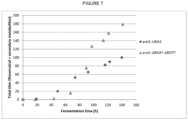
- Cultivation of the two strains may be performed in bioreactors via fed-batch culture. Extraction of compounds of interest may be performed by mixing ethanol with a culture sample to a final concentration of 50%, followed by centrifugation for 5 min at 3222 xg. The supernatant may be analyzed by HPLC detecting, among others, resveratrol, phloretic acid and coumaric acid.
- the results show that the strain overexpressing ARO4 and ARO7 combined with deletion of ARO3 (aro3::ARO4*-ARO7*)may result in increased resveratrol titers by 20% over the strain with deletion of ARO3, ARO4* and ARO7* (aro3::URA3).
- the strain overexpressing the mutated ARO4 and ARO7 genes combined with deletion of ARO3 may result in approximately a 100% increase in total titer of resveratrol and secondary metabolites in the pathway ( i . e . pathway intermediate coumaric acid and the side product phloretic acid are represented as secondary metabolites) over the strain with deletion of ARO3, ARO4* and ARO7 * (aro3::URA3).
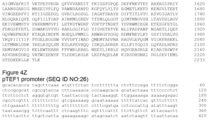
- Resveratrol production can be increased by transforming a yeast strain with a plasmid containing a mutated ACC1 or an additional resveratrol synthase under the control of a constitutive promoter (pTEF1; SEQ ID NO:26).
- the mutated ACC1 may carry mutations conferring the residue changes S659A and S1157A; this mutant (SEQ ID NO:11) will be referred to as ACC1**.
- Another resveratrol producing yeast strain, a mutated ACC1 may be introduced in the same locus carrying mutations conferring the residue changes S659V and S1157V, this mutant (SEQ ID NO:14) will be referred to as ACC1**(S->V).
- the plasmid provided for integration of a single copy into the yeast genome, thereby only integrating the promoters, terminators, and genes included in the cassette in an intergenic region, without integration of the plasmid backbone itself.
- Another round of integrations may be carried out to introduce a second copy of the genes mentioned above.
- the endogenous ACC1 gene may be overexpressed by promoter replacement in a resveratrol-producing yeast strain without any additional integrated copies of mutated ACC1 (ACC1::pTEF1-ACC1).
- the promoter replacement may be done by introduction of a pTEF1 promoter sequence in between the 5' UTR of ACC1 and its start codon.
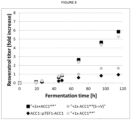
- Cultivation of the transformant strains may be performed in bioreactors via fed-batch culture. Exraction of compounds may be carried out by mixing ethanol with a culture sample to a final concentration of 50%, and centrifugation for 5 minutes at 3222 x g. As shown in Figure 8 , the results obtained show: 1) that introduction of a mutated ACC1 ** resulted in elevated levels of Resveratrol final titer; 2) that both ACC1 mutant versions ( ACC1** and ACC1 ** (S->V)) resulted in an increased Resveratrol final titer; and 3) that overexpression of a wild-type ACC1 alone did not demonstrate this improvement.
- a stilbene or a modified stilbene may be produced by bioconversion or in a cell.
- the stilbene is resveratrol or a resveratrol derivative.
- modified resveratrol can be used interchangeably to refer to a compound that can be derived from resveratrol or a compound with a similar structure to resveratrol.
- resveratrol derivative or “resveratrol analog” can be used interchangeably to refer to resveratrol-like molecules.
- Resveratrol derivatives may be salts and esters of resveratrol or analogs or derivatives thereof.
- resveratrol analogs or derivatives thereof include hydroxylated resveratrol analogs or derivatives such as hydroxystilbene, dihydroxystilbene, 3,5-dihydroxypterostilbene, tetrahydroxystilbene, pentahydroxystilbene, or hexahydroxystilbene, fluorinated stilbenes, bridged stilbenes, digalloylresveratrol (ester of gallic acid and resveratrol), or resveratrol triacetate.
- the resveratrol preparations of the invention have a purity defined herein as a lack or absence of chemical, biochemical or biologic contaminants present in resveratrol preparations prepared from natural sources.
- Potentially resveratrol preparations provided by the invention do not contain emodin, a plant contaminant present in resveratrol extracted from knotweed having laxative properties not desired for many applications of resveratrol.
- a composition containing resveratrol or an analog or derivative thereof can be formulated into a composition and administered to a subject by any suitable route of administration, including oral or parenteral routes of administration.
- Specific administration modalities include subcutaneous, intravenous, intramuscular, intraperitoneal, transdermal, intrathecal, oral, rectal, buccal, topical, nasal, ophthalmic, intra articular, intra-arterial, sub arachnoid, bronchial, lymphatic, vaginal, and intra uterine administration.
- the composition can be in the form of a capsule, liquid ( e.g ., a beverage), tablet, pill, gel, pellet, foodstuff, dry or wet animal feed, or formulated for prolonged release.
- a resveratrol composition can be a solution. Any of the compositions described herein can be included in a container, pack, or dispenser together with instructions for administration.
- the composition is packaged as a single use vial.
- a functional homolog is a polypeptide that has sequence similarity to a reference polypeptide, and that carries out one or more of the biochemical or physiological function(s) of the reference polypeptide.
- a functional homolog and the reference polypeptide can be natural occurring polypeptides, and the sequence similarity can be due to convergent or divergent evolutionary events. As such, functional homologs are sometimes designated in the literature as homologs, or orthologs, or paralogs. Variants of a naturally occurring functional homolog, such as polypeptides encoded by mutants of a wild type coding sequence, can themselves be functional homologs.
- Functional homologs can also be created via site-directed mutagenesis of the coding sequence for a polypeptide, or by combining domains from the coding sequences for different naturally-occurring polypeptides ("domain swapping").
- Techniques for modifying genes encoding functional polypeptides described herein are known and include, inter alia , directed evolution techniques, site-directed mutagenesis techniques and random mutagenesis techniques, and can be useful to increase specific activity of a polypeptide, alter substrate specificity, alter expression levels, alter subcellular location, or modify polypeptide-polypeptide interactions in a desired manner. Such modified polypeptides are considered functional homologs.
- the term "functional homolog” is sometimes applied to the nucleic acid that encodes a functionally homologous polypeptide.
- Functional homologs can be identified by analysis of nucleotide and polypeptide sequence alignments. For example, performing a query on a database of nucleotide or polypeptide sequences can identify homologs of polypeptides described herein. Sequence analysis can involve BLAST, Reciprocal BLAST, or PSI-BLAST analysis of nonredundant databases using the amino acid sequence of interest as the reference sequence. Amino acid sequence is, in some instances, deduced from the nucleotide sequence. Those polypeptides in the database that have greater than 40% sequence identity are candidates for further evaluation for suitability as polypeptide useful in the synthesis of resveratrol and resveratrol derivatives.
- Amino acid sequence similarity allows for conservative amino acid substitutions, such as substitution of one hydrophobic residue for another or substitution of one polar residue for another.
- manual inspection of such candidates can be carried out in order to narrow the number of candidates to be further evaluated. Manual inspection can be performed by selecting those candidates that appear to have conserved functional domains.
- conserveed regions can be identified by locating a region within the primary amino acid sequence of a polypeptide described herein that is a repeated sequence, forms some secondary structure (e . g ., helices and beta sheets), establishes positively or negatively charged domains, or represents a protein motif or domain. See, e.g., the Pfam web site describing consensus sequences for a variety of protein motifs and domains on the World Wide Web at sanger.ac.uk/Software/Pfam/ and pfam.janelia.org/. The information included at the Pfam database is described in Sonnhammer et al., 1998, Nucl.
- conserved regions also can be determined by aligning sequences of the same or related polypeptides from closely related species. Closely related species preferably are from the same family. It may be that alignment of sequences from two different species can be adequate.
- polypeptides that exhibit at least about 40% amino acid sequence identity are useful to identify conserved regions.
- conserved regions of related polypeptides exhibit at least 45% amino acid sequence identity (e.g ., at least 50%, at least 60%, at least 70%, at least 80%, or at least 90% amino acid sequence identity).
- a conserved region exhibits at least 92%, 94%, 96%, 98%, or 99% amino acid sequence identity.
- a percent identity for any candidate nucleic acid or polypeptide relative to a reference nucleic acid or polypeptide can be determined as follows.
- a reference sequence e.g ., a nucleic acid sequence or an amino acid sequence
- ClustalW version 1.83, default parameters
- ClustalW can be run, for example, at the Baylor College of Medicine Search Launcher site on the World Wide Web (searchlauncher.bcm.tmc.edu/multi-align/multi-align.html) and at the European Bioinformatics Institute site on the World Wide Web (ebi.ac.uk/clustalw).
- the sequences are aligned using ClustalW, the number of identical matches in the alignment is divided by the length of the reference sequence, and the result is multiplied by 100.
- polypeptides described herein can include additional amino acids that are not involved in enzymatic activities carried out by the enzyme, and thus such a polypeptide can be longer than would otherwise be the case.
- a polypeptide can include a purification tag (e.g ., HIS tag or GST tag), a chloroplast transit peptide, a mitochondrial transit peptide, an amyloplast peptide, signal peptide, or a secretion tag added to the amino or carboxy terminus.
- a polypeptide includes an amino acid sequence that functions as a reporter, e.g., a green fluorescent protein or yellow fluorescent protein.
- a number of prokaryotes and eukaryotes are suitable for use in constructing the recombinant microorganisms described herein, e . g ., bacteria, yeast and fungi.
- a species and strain selected for use as a strain for production of resveratrol or resveratrol derivatives first analyzed to determine which production genes are endogenous to the strain and which genes are not present ( e . g ., resveratrol production genes). Genes for which an endogenous counterpart is not present in the strain are assembled in one or more recombinant constructs, which are then transformed into the strain in order to supply the missing function(s).
- microorganism and “microorganism host” and “recombinant host” can be used interchangeably to refer to microscopic organisms, including bacteria or microscopic fungi, including yeast.
- the microorganism can be a eukaryotic cell or immortalized cell.
- prokaryotic and eukaryotic species are described in more detail below. However, it will be appreciated that other species can be suitable.
- suitable species can be in a genus including Agaricus , Aspergillus , Bacillus , Candida , Corynebacterium, Escherichia , Fusarium / Gibberella, Kluyveromyces , Laetiporus , Lentinus , Phaffia , Phanerochaete, Pichia, Physcomitrella , Rhodoturula , Saccharomyces, Schizosaccharomyces , Sphaceloma , Xanthophyllomyces and Yarrowia.
- Exemplary species from such genera include Lentinus tigrinus , Laetiporus sulphureus , Phanerochaete chrysosporium , Pichia pastoris , Physcomitrella patens , Rhodoturula glutinis 32, Rhodoturula mucilaginosa , Phaffia rhodozyma UBV-AX, Xanthophyllomyces dendrorhous , Fusarium fujikuroi / Gibberella fujikuroi , Candida utilis and Yarrowia lipolytica.
- a microorganism can be an Ascomycete such as Gibberella fujikuroi , Kluyveromyces lactis , Schizosaccharomyces pombe , Aspergillus niger , or Saccharomyces cerevisiae.
- a microorganism can be a prokaryote such as Escherichia coli , Rhodobacter sphaeroides , or Rhodobacter capsulatus.
- microorganisms can be used to screen and test genes of interest in a high throughput manner, while other microorganisms with desired productivity or growth characteristics can be used for large-scale production of resveratrol or resveratrol derivatives or analogs.
- Suitable microorganisms include, but are not limited to, S . cerevisiae , A. niger , A. oryzae , E. coli , L. lactis and B. subtilis.
- the constructed and genetically engineered microorganisms provided by the invention can be cultivated using conventional fermentation processes, including, inter alia , chemostat, batch, fed-batch cultivations, continuous perfusion fermentation, and continuous perfusion cell culture.
- Exemplary embodiments comprising bacterial cells include, but are not limited to, cells of species, belonging to the genus Bacillus , the genus Escherichia, the genus Lactobacillus, the genus Lactobacillus, the genus Corynebacterium , the genus Acetobacler , the genus Acinetobacler , or the genus Pseudomonas.
- the microorganism can be a fungus, and more specifically, a filamentous fungus belonging to the genus of Aspergillus , e.g. , A. niger , A. awamori , A. oryzae , or A. nidulans , a yeast belonging to the genus of Saccharomyces , e.g., S. cerevisiae , S. kluyveri , S. bayanus , S. exiguus , S. sevazzi , or S . uvarum , a yeast belonging to the genus Kluyveromyces , e.g. , K. laclis , K. marxianus var.
- a filamentous fungus belonging to the genus of Aspergillus e.g. , A. niger , A. awamori , A. oryzae , or A. nidulans
- marxianus or K. thermololerans
- a yeast belonging to the genus Candida e.g. , C. ulilis , C. Iropicalis , C. albicans , C. lipolylica , or C . versalilis
- a yeast belonging to the genus Pichia e.g. , R. slipidis , R. pasloris , or P . sorbilophila
- other yeast genera e.g. , Cryptococcus , Debaromyces , Hansenula , Pichia , Yarrowia , Zygosaccharomyces , or Schizosaccharomyces.
- filamentous fungi a species belonging to the genus Penicillium , Rhizopus , Fusarium , Fusidium , Gibberella , Mucor , Morlierella , and Trichoderma.
- Saccharomyces cerevisiae is a widely used chassis organism in synthetic biology, and can be used as the recombinant microorganism platform. There are libraries of mutants, plasmids, detailed computer models of metabolism and other information available for S . cerevisiae, allowing for rational design of various modules to enhance product yield. Methods are known for making recombinant microorganisms.
- genes described herein can be expressed in yeast using any of a number of known promoters. Strains that overproduce phenylpropanoids are known and can be used as acceptor molecules in the production of resveratrol or resveratrol derivatives.
- Aspergillus species such as A . oryzae , A. niger and A . sojae are widely used microorganisms in food production, and can also be used as the recombinant microorganism platform.
- Nucleotide sequences are available for genomes of A . nidulans , A. fumigatus , A. oryzae , A. clavatus , A. flavus , A. niger , and A . terreus , allowing rational design and modification of endogenous pathways to enhance flux and increase product yield.
- Metabolic models have been developed for Aspergillus , as well as transcriptomic studies and proteomics studies.
- A. niger is cultured for the industrial production of a number of food ingredients such as citric acid and gluconic acid, and thus species such as A. niger are generally suitable for the production of resveratrol and resveratrol derivatives.
- Escherichia coli another widely used platform organism in synthetic biology, can also be used as the recombinant microorganism platform. Similar to Saccharomyces , there are libraries of mutants, plasmids, detailed computer models of metabolism and other information available for E . coli , allowing for rational design of various modules to enhance product yield. Methods similar to those described above for Saccharomyces can be used to make recombinant E . coli microorganisms.
- Agaricus, Gibberella, and Phanerochaete spp. can be useful because they are known to produce large amounts of gibberellin in culture.
- the precursors of terpenes used as acceptor molecules in the production of resveratrol or resveratrol derivatives are already produced by endogenous genes.
- modules containing recombinant genes for biosynthesis of terpenes can be introduced into species from such genera without the necessity of introducing other compounds or pathway genes.
- Rhodobacter can be used as the recombinant microorganism platform. Similar to E . coli, there are libraries of mutants available as well as suitable plasmid vectors, allowing for rational design of various modules to enhance product yield. Isoprenoid pathways have been engineered in membraneous bacterial species of Rhodobacter for increased production of carotenoid and CoQ10. See, U.S. Patent Publication Nos. 20050003474 and 20040078846 . Methods similar to those described above for E . coli can be used to make recombinant Rhodobacter microorganisms.
- Physcomitrella mosses when grown in suspension culture, have characteristics similar to yeast or other fungal cultures. This genera is becoming an important type of cell for production of plant secondary metabolites, which can be difficult to produce in other types of cells.
- the particulars of the selection process for specific resveratrol derivatives depend on the identities of the selectable markers. Selection in all cases promotes or permits proliferation of cells comprising the marker while inhibiting or preventing proliferation of cells lacking the marker. If a selectable marker is an antibiotic resistance gene, the transfected host cell population can be cultured in the presence of an antibiotic to which resistance is conferred by the selectable marker. If a selectable marker is a gene that complements an auxotrophy of the host cells, the transfected host cell population can be cultivated in the absence of the compound for which the host cells are auxotrophic.
- recombinant host cells can be cloned according to any appropriate method known in the art.
- recombinant microbial host cells can be plated on solid media under selection conditions, after which single clones can be selected for further selection, characterization, or use. This process can be repeated one or more times to enhance stability of the expression construct within the host cell.
- recombinant host cells comprising one or more expression vectors can be cultured to expand cell numbers in any appropriate culturing apparatus known in the art, such as a shaken culture flask or a fermenter.
- Culture media used for various recombinant host cells are well known in the art. Culture media used to culture recombinant bacterial cells will depend on the identity of the bacteria. Culture media used to culture recombinant yeast cells will depend on the identity of the yeast. Culture media generally comprise inorganic salts and compounds, amino acids, carbohydrates, vitamins and other compounds that are either necessary for the growth of the host cells or improve health or growth or both of the host cells.
- fed-batch culture or “semi-batch culture” are used interchangeably to refer to as an operational technique in biotechnological processes where one or more nutrients (substrates) are fed (supplied) to the bioreactor during cultivation and in which the product(s) remain in the bioreactor until the end of the run. In some embodiments, all the nutrients are fed into the bioreactor.
- Example 1 Resveratrol production in a resveratrol-producing strain overexpressing mutated ARO4
- a resveratrol-producing yeast strain comprising wild-type ARO3, ARO4 and ARO7 was transformed with a plasmid containing a mutated version of the S . cerevisiae gene ARO4.
- This plasmid allowed integration of the mutated gene into the yeast genome, under the control of a strong promoter (pTEF1) causing overexpression of the gene. The integration occurred either in an intergenic region or at the ARO3 locus, deleting that ORF at the same time.
- pTEF1 strong promoter
- no traces of the plasmids are inserted in the genome of the host strain.
- This version of the ARO4 gene contained mutations causing a change in the amino acid 229 from lysine to leucine.
- Transformants were grown for 72 hours in Delft medium at 30°C and shaken at 400 rpm. Extraction of compounds of interest was performed by mixing ethanol with a culture sample to a final concentration of 50%, followed by centrifugation for 5 min at 3222 ⁇ g. The supernatant was analyzed by HPLC detecting, among others, resveratrol, phloretic acid and coumaric acid. The results obtained show that overexpression of the mutated version of ARO4 increased resveratrol production from approximately 200 mg/L in the control strain transformed with an empty plasmid to approximately 325 mg/L. ( Figure 5 ). Overexpression of the mutated ARO4 gene also increased production of secondary metabolites in the pathway ( i . e . the pathway intermediate coumaric acid and the side product phloretic acid are represented as secondary metabolites) as compared to the control strain transformed with empty plasmid. ( Figure 5 ).
- Example 2 Resveratrol production in a resveratrol-producing strain overexpressing mutated ARO4 and mutated ARO7
- a resveratrol-producing yeast strain comprising wild-type ARO3, ARO4 and ARO7 was transformed with a plasmid containing mutated versions of the S . cerevisiae genes ARO4 and ARO7 .
- This version of the ARO4 gene contained mutations causing a change in the amino acid 229 from lysine to leucine.
- This version of the ARO7 gene contained mutations causing a change in the amino acid 226 from threonine to isoleucine.
- the mutated ARO4 and ARO7 genes on the plasmid were inserted in an intergenic region of the yeast genome and were under the control of strong promoters (pTEF1 and pPGK1, respectively) causing overexpression of the genes.
- Transformants were grown for 72 hours in Delft medium at 30°C and shaken at 400 rpm. Extraction of compounds of interest was performed by mixing ethanol with a culture sample to a final concentration of 50%, followed by centrifugation for 5 min at 3222 ⁇ g. The supernatant was analyzed by HPLC detecting, among others, resveratrol, phloretic acid and coumaric acid. The results obtained show that overexpression of mutated ARO4 and ARO7 genes (ARO4*-ARO7*) increased the production of resveratrol from approximately 200 mg/L in the control strain transformed with an empty plasmid to approximately 375 mg/L. ( Figure 5 ).
- Example 3 Resveratrol production in a resveratrol-producing ARO3 knockout strain overexpressing mutated ARO4
- a resveratrol-producing yeast strain comprising wild-type ARO3, ARO4 and ARO7 was transformed with a plasmid containing a mutated version of the S. cerevisiae gene ARO4.
- This plasmid allowed integration of the mutated gene at the ARO3 locus, causing disruption of ARO3.
- the mutated ARO4 gene was also under the control of a strong promoter (pTEF1) causing overexpression of the gene.
- This version of the ARO4 gene contained mutations causing a change in the amino acid 229 from lysine to leucine.
- Example 1 the same mutated ARO4 gene was also inserted in an intergenic region of the yeast genome, which did not affect the ARO3 gene, as a control to study the effect of the ARO3 deletion.
- Transformants were grown for 72 hours in Delft medium at 30°C and shaken at 400 rpm. Extraction of compounds of interest was performed by mixing ethanol with a culture sample to a final concentration of 50%, followed by centrifugation for 5 min at 3222 ⁇ g. The supernatant was analyzed by HPLC detecting, among others, resveratrol, phloretic acid and coumaric acid.
- pathway intermediate coumaric acid and the side product phloretic acid are represented as secondary metabolites) also increased in the strain overexpressing the mutated version of ARO4 combined with the ARO3 deletion (aro3::ARO4*) over the control strain transformed with an empty plasmid. ( Figure 5 ).
- Example 4 Resveratrol production in a resveratrol-producing ARO3 knockout strain overexpressing mutated ARO4 and mutated ARO7
- a resveratrol-producing yeast strain comprising wild-type ARO3, ARO4 and ARO7 was transformed with a plasmid containing mutated versions of the S. cerevisiae genes ARO4 and ARO7 .
- This plasmid allowed integration of the mutated genes at the ARO3 locus causing its disruption.
- the mutated ARO4 and ARO7 genes were under the control of strong promoters (pTEF1 and pPGK1, respectively) causing overexpression of the genes.
- This version of the ARO4 gene contained mutations causing a change in the amino acid 229 from lysine to leucine.
- This version of the ARO7 gene contained mutations causing a change in the amino acid 226 from threonine to isoleucine.
- the same mutated ARO4 and ARO7 genes were also inserted in an intergenic region of the yeast genome as a control to study the effect of the ARO3 deletion. ( See Example 2).
- Transformants were grown for 72 hours in Delft medium at 30°C and shaken at 400 rpm. Extraction of compounds of interest was performed by mixing ethanol with a culture sample to a final concentration of 50%, followed by centrifugation for 5 min at 3222 ⁇ g. The supernatant was analyzed by HPLC detecting, among others, resveratrol, phloretic acid and coumaric acid.
- pathway intermediate coumaric acid and the side product phloretic acid are represented as secondary metabolites) over either the control strain transformed with empty plasmid or overexpression of mutated ARO4 and ARO7 genes without deletion of ARO3 (ARO4*-ARO7*).
- Figure 5 Figure 5 ).
- Example 5 Resveratrol production in a resveratrol-producing ARO3 knockout strain overexpressing mutated ARO4 and mutated ARO7
- a resveratrol-producing yeast strain comprising wild-type ARO3, ARO4 and ARO7 was transformed with a plasmid containing mutated versions of the S . cerevisiae genes ARO4 and ARO7 .
- This plasmid allowed integration of the mutated genes at the ARO3 locus causing its disruption.
- the mutated ARO4 and ARO7 genes were under the control of strong promoters (pTEF1 and pPGK1, respectively) causing overexpression of the genes.
- This version of the ARO4 gene contained mutations causing a change in the amino acid 229 from lysine to leucine.
- This version of the ARO7 gene contained mutations causing a change in the amino acid 226 from threonine to isoleucine.
- the resulting strain was later transformed with a DNA fragment comprising the URA3 selection marker and flanking regions, facilitating deletion of the introduced ARO4* and ARO7*.
- Cultivation of the two strains was performed in bioreactors via fed-batch culture. Extraction of compounds of interest was performed by mixing ethanol with a culture sample to a final concentration of 50%, followed by centrifugation for 5 min at 3222 ⁇ g. The supernatant was analyzed by HPLC detecting, among others, resveratrol, phloretic acid and coumaric acid.
- Example 6 Resveratrol production in a resveratrol-producing strain overexpressing a mutated ACC1
- a resveratrol-producing yeast strain was transformed with a plasmid containing a mutated ACC1 or an additional resveratrol synthase under the control of a constitutive promoter (pTEF1; SEQ ID NO:26).
- the mutated ACC1 carried mutations conferring the residue changes S659A and S1157A; this mutant (SEQ ID NO:11) will be referred to as ACC1**.
- a mutated ACC1 was introduced in the same locus carrying mutations conferring the residue changes S659V and S1157V, this mutant (SEQ ID NO:14) will be referred to as ACC1**(S->V).
- the plasmid provided for integration of a single copy into the yeast genome, thereby only integrating the promoters, terminators, and genes included in the cassette in an intergenic region, without integration of the plasmid backbone itself. Another round of integrations was carried out to introduce a second copy of the genes mentioned above.
- the endogenous ACC1 gene was overexpressed by promoter replacement in a resveratrol-producing yeast strain without any additional integrated copies of mutated ACC1 (ACC1::pTEF1-ACC1).
- the promoter replacement was done by introduction of a pTEF1 promoter sequence in between the 5' UTR of ACC1 and its start codon.
Landscapes
- Chemical & Material Sciences (AREA)
- Organic Chemistry (AREA)
- Life Sciences & Earth Sciences (AREA)
- Engineering & Computer Science (AREA)
- Health & Medical Sciences (AREA)
- Genetics & Genomics (AREA)
- Wood Science & Technology (AREA)
- Zoology (AREA)
- Bioinformatics & Cheminformatics (AREA)
- General Engineering & Computer Science (AREA)
- Biochemistry (AREA)
- General Health & Medical Sciences (AREA)
- Biotechnology (AREA)
- Microbiology (AREA)
- Mycology (AREA)
- Biomedical Technology (AREA)
- Chemical Kinetics & Catalysis (AREA)
- General Chemical & Material Sciences (AREA)
- Physics & Mathematics (AREA)
- Biophysics (AREA)
- Molecular Biology (AREA)
- Plant Pathology (AREA)
- Micro-Organisms Or Cultivation Processes Thereof (AREA)
- Preparation Of Compounds By Using Micro-Organisms (AREA)
Claims (16)
- Rekombinante Wirtsmikroorganismuszelle, die Folgendes umfasst:(a) ein Gen, das ein Polypeptid der Tyrosin-sensitiven 3-Deoxy-D-arabinoheptulosonat-7-phosphat-Synthase (AR04) kodiert, das mindestens 65 % Identität mit der Aminosäuresequenz aufweist, die in SEQ.-ID Nr. 1 dargelegt ist, wobei das AR04-Polypeptid eine Mutation umfasst, die K229L ist, und keiner Feedback-Inhibition unterliegt;(b) ein Gen, das ein Chorismat-Mutase-Polypeptid kodiert;(c) ein Gen, das ein Acetyl-CoA-Carboxylase-Polypeptid kodiert; und(d) Störung eines Gens, das ein Polypeptid der Phenylalanin-inhibierten 3-Deoxy-D-arabinoheptulosonat-7-phosphat-Synthase (AR03) kodiert, das mindestens 75 % Identität mit der Aminosäuresequenz aufweist, die in SEQ.-ID Nr. 3 dargelegt ist, wodurch der Wirt keine AR03 exprimiert;wobei mindestens eines der Gene ein rekombinantes Gen ist,wobei der Wirt ein Stilben produzieren kann.
- Wirt nach Anspruch 1, wobei das Chorismat-Mutase-Polypeptid ein Chorismat-Mutase (AR07)-Polypeptid umfasst, das mindestens 50 % Identität mit der Aminosäuresequenz aufweist, die in SEQ.-ID Nr. 4 dargelegt ist, wobei das Chorismat-Mutase-Polypeptid ein AR07-Polypeptid umfasst, das eine Mutation aufweist, die T2261 oder T226N ist, und wobei das Chorismat-Mutase-Polypeptid keiner Feedback-Inhibition unterliegt.
- Wirt nach Anspruch 1 oder 2, wobei das Acetyl-CoA-Carboxylase-Polypeptid ein Acetyl-CoA-Carboxylase-alpha (ACC1)-Polypeptid umfasst, das mindestens 70 % Identität mit der Aminosäuresequenz aufweist, die in SEQ.-ID Nr. 6 dargelegt ist, das eine Mutation an S659 oder S1157 aufweist, wobei die ausgetauschte Aminosäure nicht phosphorylierbar ist und das ACC1-Polypeptid keiner Feedback-Inhibition unterliegt.
- Wirt nach Anspruch 3, wobei das Acetyl-CoA-Carboxylase-Polypeptid ein ACC1-Polypeptid umfasst, das mindestens eine Mutation aufweist, die S659A, S659V, S1157A oder S1 157V ist.
- Wirt nach einem vorstehenden Anspruch, der weiter eines oder mehrere von Folgenden umfasst:(a) ein Gen, das ein L-Phenylalanin-Ammoniak-Lyase (PAL)-Polypeptid kodiert;(b) ein Gen, das ein Cinnamat-4-Hydroxylase (C4H)-Polypeptid kodiert;(c) ein Gen, das ein NADPH:Cytochrom-P450-Reduktase-Polypeptid kodiert;(d) ein Gen, das ein Tyrosin-Ammoniak-Lyase (TAL)-Polypeptid kodiert;(e) ein Gen, das ein 4-Cumarat-CoA-Ligase (4CL)-Polypeptid kodiert; oder(f) ein Gen, das ein Stilben-Synthase (STS)-Polypeptid kodiert;wobei mindestens eines der Gene ein rekombinantes Gen ist.
- Wirt nach einem der Ansprüche 1-5, wobei das Stilben Resveratrol oder ein Resveratrolderivat ist.
- Wirt nach Anspruch 6, wobei die rekombinante Wirtsmikroorganismuszelle Folgende umfasst: Escherichia-Bakterienzellen, Lactobacillus-Bakterienzellen, Lactococcus-Bakterienzellen, Corynebacterium-Bakterienzellen, Acetobacter-Bakterienzellen, Acinetobacter-Bakterienzellen oder Pseudomonas-Bakterienzellen.
- Wirt nach Anspruch 6, wobei die rekombinante Wirtsmikroorganismuszelle eine Zelle aus folgenden Spezies ist: Saccharomyces cerevisiae, Schizosaccharomyces pombe, Yarrowia lipolytica, Candida glabrata, Ashbya gossypii, Cyberlindnera jadinii, Pichia pastoris, Kluyveromyces lactis, Hansenula polymorpha, Candida boidinii, Arxula adeninivorans, Xanthophyllomyces dendrorhous oder Candida albicans.
- Verfahren zur Produktion eines Stilbens, das Folgendes umfasst:(a) Züchten eines rekombinanten Wirtsmikroorganismus in einem Kulturmedium unter Bedingungen, unter denen die Gene exprimiert werden,wobei der Wirt Folgendes umfasst:(i) ein Gen, das ein Polypeptid der Tyrosin-sensitiven 3-Deoxy-D-arabinoheptulosonat-7-phosphat-Synthase (AR04) kodiert, das mindestens 65 % Identität mit der Aminosäuresequenz aufweist, die in SEQ.-ID Nr. 1 dargelegt ist, wobei das AR04-Polypeptid eine Mutation umfasst, die K229L ist, und keiner Feedback-Inhibition unterliegt;(ii) ein Gen, das ein Chorismat-Mutase-Polypeptid kodiert;(iii) ein Gen, das ein Acetyl-CoA-Carboxylase-Polypeptid kodiert; und(iv) Störung eines Gens, das ein Polypeptid der Phenylalanin-inhibierten 3-Deoxy-D-arabinoheptulosonat-7-phosphat-Synthase (AR03) kodiert, das mindestens 75 % Identität mit der Aminosäuresequenz aufweist, die in SEQ.-ID Nr. 3 dargelegt ist, wodurch der Wirt keine AR03 exprimiert;wobei mindestens eines der Gene ein rekombinantes Gen ist,und optional(b) Gewinnen des Stilbens aus dem Kulturmedium.
- Verfahren nach Anspruch 9, wobei das Chorismat-Mutase-Polypeptid ein AR07-Polypeptid umfasst, das mindestens 50 % Identität mit der Aminosäuresequenz aufweist, die in SEQ.-ID Nr. 4 dargelegt ist, eine Mutation aufweist, die T2261 oder T226N ist, und wobei das Chorismat-Mutase-Polypeptid keiner Feedback-Inhibition unterliegt.
- Verfahren nach Anspruch 9 oder 10, wobei das Acetyl-CoA-Carboxylase-Polypeptid ein ACC1-Polypeptid umfasst, das mindestens 70 % Identität mit der Aminosäuresequenz aufweist, die in SEQ.-ID Nr. 6 dargelegt ist, das eine Mutation an S659 oder S1157 aufweist, wobei die ausgetauschte Aminosäure nicht phosphorylierbar ist und das Acetyl-CoA-Carboxylase-Polypeptid keiner Feedback-Inhibition unterliegt.
- Verfahren nach Anspruch 11, wobei das Acetyl-CoA-Carboxylase-Polypeptid ein ACC1-Polypeptid umfasst, das mindestens eine Mutation aufweist, die S659A, S659V, S1157A oder S1157V ist.
- Verfahren nach einem der Ansprüche 9 bis 12, wobei der Wirt weiter eines oder mehrere von Folgenden umfasst:(a) ein Gen, das ein L-Phenylalanin-Ammoniak-Lyase (PAL)-Polypeptid kodiert;(b) ein Gen, das ein Cinnamat-4-Hydroxylase (C4H)-Polypeptid kodiert;(c) ein Gen, das ein NADPH:Cytochrom-P450-Reduktase-Polypeptid kodiert;(d) ein Gen, das ein Tyrosin-Ammoniak-Lyase (TAL)-Polypeptid kodiert;(e) ein Gen, das ein 4-Cumarat-CoA-Ligase (4CL)-Polypeptid kodiert; oder(f) ein Gen, das ein Stilben-Synthase (STS)-Polypeptid kodiert;wobei mindestens eines der Gene ein rekombinantes Gen ist.
- Verfahren nach einem der Ansprüche 9 bis 13, wobei das Stilben Resveratrol oder ein Resveratrolderivat ist.
- Verfahren nach einem der Ansprüche 9 bis 14, wobei der rekombinante Wirtsmikroorganismus Folgende umfasst: Escherichia-Bakterienzellen, Lactobacillus-Bakterienzellen, Lactococcus-Bakterienzellen, Corynebacterium-Bakterienzellen, Acetobacter-Bakterienzellen, Acinetobacter-Bakterienzellen oder Pseudomonas-Bakterienzellen.
- Verfahren nach einem der Ansprüche 9 bis 14, wobei der rekombinante Wirtsmikroorganismus eine Zelle aus folgenden Spezies ist: Saccharomyces cerevisiae, Schizosaccharomyces pombe, Yarrowia lipolytica, Candida glabrata, Ashbya gossypii, Cyberlindnera jadinii, Pichia pastoris, Kluyveromyces lactis, Hansenula polymorpha, Candida boidinii, Arxula adeninivorans, Xanthophyllomyces dendrorhous oder Candida albicans.
Applications Claiming Priority (2)
| Application Number | Priority Date | Filing Date | Title |
|---|---|---|---|
| US201562160505P | 2015-05-12 | 2015-05-12 | |
| PCT/EP2016/060798 WO2016180956A1 (en) | 2015-05-12 | 2016-05-12 | A method for producing resveratrol |
Publications (3)
| Publication Number | Publication Date |
|---|---|
| EP3294897A1 EP3294897A1 (de) | 2018-03-21 |
| EP3294897C0 EP3294897C0 (de) | 2024-09-04 |
| EP3294897B1 true EP3294897B1 (de) | 2024-09-04 |
Family
ID=56121021
Family Applications (1)
| Application Number | Title | Priority Date | Filing Date |
|---|---|---|---|
| EP16728840.6A Active EP3294897B1 (de) | 2015-05-12 | 2016-05-12 | Verfahren zur gewinnung von resveratrol |
Country Status (4)
| Country | Link |
|---|---|
| US (1) | US20180155733A1 (de) |
| EP (1) | EP3294897B1 (de) |
| ES (1) | ES2993917T3 (de) |
| WO (1) | WO2016180956A1 (de) |
Families Citing this family (13)
| Publication number | Priority date | Publication date | Assignee | Title |
|---|---|---|---|---|
| WO2018210872A1 (en) | 2017-05-15 | 2018-11-22 | Evolva Sa | Stilbenes for post-harvest treatment and food preservation and/or shelf life extension |
| WO2018210880A1 (en) | 2017-05-15 | 2018-11-22 | Evolva Sa | Stilbenes for pre-harvest treatment and crop protection |
| WO2018210432A1 (de) * | 2017-05-19 | 2018-11-22 | Wacker Chemie Ag | Mikroorganismen-stamm und verfahren zur fermentativen herstellung von himbeerketon |
| CN112063646B (zh) * | 2018-01-19 | 2022-05-03 | 中国科学院微生物研究所 | 目的基因多拷贝整合的方法、重组菌以及重组人血清白蛋白的制备方法 |
| CN108315290A (zh) * | 2018-03-05 | 2018-07-24 | 深圳市启未生物科技有限公司 | 一种高产白藜芦醇大肠杆菌工程菌的构建方法及其应用 |
| CN110628657B (zh) * | 2019-09-19 | 2022-09-13 | 广州蓝星生物工程有限公司 | 一种用于合成白藜芦醇的酿酒酵母工程菌及其制备方法与应用 |
| CN111733179A (zh) * | 2020-06-19 | 2020-10-02 | 山东理工大学 | 产油微生物耶氏解脂酵母合成白藜芦醇的方法 |
| CN112410356B (zh) * | 2020-11-10 | 2023-07-18 | 杭州鑫旺途科技有限公司 | 来源于三叶青的白藜芦醇合酶基因rs及其应用 |
| CN112899314B (zh) * | 2021-02-04 | 2022-06-17 | 陕西师范大学 | 一种促进重组解脂亚罗酵母菌合成根皮素的方法 |
| CN113174375B (zh) * | 2021-04-23 | 2022-11-04 | 天津大学 | Aro3蛋白突变体及其应用 |
| KR20240069742A (ko) | 2021-09-20 | 2024-05-20 | 단스타 퍼멘트 에이쥐 | 레스베라트롤의 제형 및 용도 |
| US20220243230A1 (en) * | 2022-04-21 | 2022-08-04 | Conagen Inc. | Bioconversion of 4-coumaric acid to resveratrol |
| CN116064265B (zh) * | 2022-09-29 | 2025-04-29 | 广西科学院 | 一种生产白藜芦醇的酵母基因工程菌及其构建方法和应用 |
Family Cites Families (8)
| Publication number | Priority date | Publication date | Assignee | Title |
|---|---|---|---|---|
| US20050003474A1 (en) | 2001-01-26 | 2005-01-06 | Desouza Mervyn L. | Carotenoid biosynthesis |
| US20040078846A1 (en) | 2002-01-25 | 2004-04-22 | Desouza Mervyn L. | Carotenoid biosynthesis |
| GB0503657D0 (en) | 2005-02-22 | 2005-03-30 | Fluxome Sciences As | Metabolically engineered cells for the production of resveratrol or an oligomeric or glycosidically-bound derivative thereof |
| GB0614442D0 (en) | 2006-07-20 | 2006-08-30 | Fluxome Sciences As | Metabolically engineered cells for the production of pinosylvin |
| GB0714671D0 (en) | 2007-07-27 | 2007-09-05 | Fluxome Sciences As | Microbial bioreaction process |
| GB0806256D0 (en) | 2008-04-07 | 2008-05-14 | Fluxome Sciences As | Production of stilbenoids |
| GB0806595D0 (en) | 2008-04-11 | 2008-05-14 | Fluxome Sciences As | Recovery of stilbenoids |
| GB201008826D0 (en) | 2010-05-26 | 2010-07-14 | Fluxome Sciences As | Production of metabolites |
-
2016
- 2016-05-12 WO PCT/EP2016/060798 patent/WO2016180956A1/en not_active Ceased
- 2016-05-12 EP EP16728840.6A patent/EP3294897B1/de active Active
- 2016-05-12 US US15/572,937 patent/US20180155733A1/en not_active Abandoned
- 2016-05-12 ES ES16728840T patent/ES2993917T3/es active Active
Also Published As
| Publication number | Publication date |
|---|---|
| ES2993917T3 (en) | 2025-01-13 |
| US20180155733A1 (en) | 2018-06-07 |
| EP3294897C0 (de) | 2024-09-04 |
| EP3294897A1 (de) | 2018-03-21 |
| WO2016180956A1 (en) | 2016-11-17 |
Similar Documents
| Publication | Publication Date | Title |
|---|---|---|
| EP3294897B1 (de) | Verfahren zur gewinnung von resveratrol | |
| US12371677B2 (en) | UDP-dependent glycosyltransferase for high efficiency production of rebaudiosides | |
| EP3303601B1 (de) | Biosynthese von phenylpropanoiden und phenylpropanoidderivaten | |
| US20250327107A1 (en) | Pisum sativum kaurene oxidase for high efficiency production of rebaudiosides | |
| US20260062683A1 (en) | Kaurenoic acid 13-hydroxylase (kah) variants and uses thereof | |
| JP2022502068A (ja) | レバウジオシドの高効率産生のためのStevia rebaudianaのカウレン酸ヒドロキシラーゼバリアント | |
| RU2795550C2 (ru) | Применение кауреноксидазы pisum sativum для высокоэффективного производства ребаудиозидов |
Legal Events
| Date | Code | Title | Description |
|---|---|---|---|
| STAA | Information on the status of an ep patent application or granted ep patent |
Free format text: STATUS: THE INTERNATIONAL PUBLICATION HAS BEEN MADE |
|
| PUAI | Public reference made under article 153(3) epc to a published international application that has entered the european phase |
Free format text: ORIGINAL CODE: 0009012 |
|
| STAA | Information on the status of an ep patent application or granted ep patent |
Free format text: STATUS: REQUEST FOR EXAMINATION WAS MADE |
|
| 17P | Request for examination filed |
Effective date: 20171031 |
|
| AK | Designated contracting states |
Kind code of ref document: A1 Designated state(s): AL AT BE BG CH CY CZ DE DK EE ES FI FR GB GR HR HU IE IS IT LI LT LU LV MC MK MT NL NO PL PT RO RS SE SI SK SM TR |
|
| AX | Request for extension of the european patent |
Extension state: BA ME |
|
| DAV | Request for validation of the european patent (deleted) | ||
| DAX | Request for extension of the european patent (deleted) | ||
| STAA | Information on the status of an ep patent application or granted ep patent |
Free format text: STATUS: EXAMINATION IS IN PROGRESS |
|
| 17Q | First examination report despatched |
Effective date: 20220624 |
|
| GRAP | Despatch of communication of intention to grant a patent |
Free format text: ORIGINAL CODE: EPIDOSNIGR1 |
|
| STAA | Information on the status of an ep patent application or granted ep patent |
Free format text: STATUS: GRANT OF PATENT IS INTENDED |
|
| RIN1 | Information on inventor provided before grant (corrected) |
Inventor name: JENSEN, NIELS, BJERG Inventor name: VAZQUEZ, CARLOS, CASADO Inventor name: SIMON VECILLA, ERNESTO |
|
| INTG | Intention to grant announced |
Effective date: 20230316 |
|
| GRAJ | Information related to disapproval of communication of intention to grant by the applicant or resumption of examination proceedings by the epo deleted |
Free format text: ORIGINAL CODE: EPIDOSDIGR1 |
|
| STAA | Information on the status of an ep patent application or granted ep patent |
Free format text: STATUS: EXAMINATION IS IN PROGRESS |
|
| INTC | Intention to grant announced (deleted) | ||
| GRAP | Despatch of communication of intention to grant a patent |
Free format text: ORIGINAL CODE: EPIDOSNIGR1 |
|
| STAA | Information on the status of an ep patent application or granted ep patent |
Free format text: STATUS: GRANT OF PATENT IS INTENDED |
|
| INTG | Intention to grant announced |
Effective date: 20231031 |
|
| GRAJ | Information related to disapproval of communication of intention to grant by the applicant or resumption of examination proceedings by the epo deleted |
Free format text: ORIGINAL CODE: EPIDOSDIGR1 |
|
| STAA | Information on the status of an ep patent application or granted ep patent |
Free format text: STATUS: EXAMINATION IS IN PROGRESS |
|
| GRAP | Despatch of communication of intention to grant a patent |
Free format text: ORIGINAL CODE: EPIDOSNIGR1 |
|
| STAA | Information on the status of an ep patent application or granted ep patent |
Free format text: STATUS: GRANT OF PATENT IS INTENDED |
|
| INTC | Intention to grant announced (deleted) | ||
| INTG | Intention to grant announced |
Effective date: 20240404 |
|
| GRAS | Grant fee paid |
Free format text: ORIGINAL CODE: EPIDOSNIGR3 |
|
| GRAA | (expected) grant |
Free format text: ORIGINAL CODE: 0009210 |
|
| STAA | Information on the status of an ep patent application or granted ep patent |
Free format text: STATUS: THE PATENT HAS BEEN GRANTED |
|
| AK | Designated contracting states |
Kind code of ref document: B1 Designated state(s): AL AT BE BG CH CY CZ DE DK EE ES FI FR GB GR HR HU IE IS IT LI LT LU LV MC MK MT NL NO PL PT RO RS SE SI SK SM TR |
|
| RAP1 | Party data changed (applicant data changed or rights of an application transferred) |
Owner name: DANSTAR FERMENT AG |
|
| REG | Reference to a national code |
Ref country code: GB Ref legal event code: FG4D |
|
| REG | Reference to a national code |
Ref country code: CH Ref legal event code: EP |
|
| REG | Reference to a national code |
Ref country code: IE Ref legal event code: FG4D |
|
| REG | Reference to a national code |
Ref country code: DE Ref legal event code: R096 Ref document number: 602016089222 Country of ref document: DE |
|
| U01 | Request for unitary effect filed |
Effective date: 20241001 |
|
| U07 | Unitary effect registered |
Designated state(s): AT BE BG DE DK EE FI FR IT LT LU LV MT NL PT RO SE SI Effective date: 20241028 |
|
| REG | Reference to a national code |
Ref country code: ES Ref legal event code: FG2A Ref document number: 2993917 Country of ref document: ES Kind code of ref document: T3 Effective date: 20250113 |
|
| PG25 | Lapsed in a contracting state [announced via postgrant information from national office to epo] |
Ref country code: NO Free format text: LAPSE BECAUSE OF FAILURE TO SUBMIT A TRANSLATION OF THE DESCRIPTION OR TO PAY THE FEE WITHIN THE PRESCRIBED TIME-LIMIT Effective date: 20241204 |
|
| PG25 | Lapsed in a contracting state [announced via postgrant information from national office to epo] |
Ref country code: PL Free format text: LAPSE BECAUSE OF FAILURE TO SUBMIT A TRANSLATION OF THE DESCRIPTION OR TO PAY THE FEE WITHIN THE PRESCRIBED TIME-LIMIT Effective date: 20240904 Ref country code: GR Free format text: LAPSE BECAUSE OF FAILURE TO SUBMIT A TRANSLATION OF THE DESCRIPTION OR TO PAY THE FEE WITHIN THE PRESCRIBED TIME-LIMIT Effective date: 20241205 |
|
| PG25 | Lapsed in a contracting state [announced via postgrant information from national office to epo] |
Ref country code: HR Free format text: LAPSE BECAUSE OF FAILURE TO SUBMIT A TRANSLATION OF THE DESCRIPTION OR TO PAY THE FEE WITHIN THE PRESCRIBED TIME-LIMIT Effective date: 20240904 |
|
| PG25 | Lapsed in a contracting state [announced via postgrant information from national office to epo] |
Ref country code: RS Free format text: LAPSE BECAUSE OF FAILURE TO SUBMIT A TRANSLATION OF THE DESCRIPTION OR TO PAY THE FEE WITHIN THE PRESCRIBED TIME-LIMIT Effective date: 20241204 |
|
| PG25 | Lapsed in a contracting state [announced via postgrant information from national office to epo] |
Ref country code: RS Free format text: LAPSE BECAUSE OF FAILURE TO SUBMIT A TRANSLATION OF THE DESCRIPTION OR TO PAY THE FEE WITHIN THE PRESCRIBED TIME-LIMIT Effective date: 20241204 Ref country code: PL Free format text: LAPSE BECAUSE OF FAILURE TO SUBMIT A TRANSLATION OF THE DESCRIPTION OR TO PAY THE FEE WITHIN THE PRESCRIBED TIME-LIMIT Effective date: 20240904 Ref country code: NO Free format text: LAPSE BECAUSE OF FAILURE TO SUBMIT A TRANSLATION OF THE DESCRIPTION OR TO PAY THE FEE WITHIN THE PRESCRIBED TIME-LIMIT Effective date: 20241204 Ref country code: HR Free format text: LAPSE BECAUSE OF FAILURE TO SUBMIT A TRANSLATION OF THE DESCRIPTION OR TO PAY THE FEE WITHIN THE PRESCRIBED TIME-LIMIT Effective date: 20240904 Ref country code: GR Free format text: LAPSE BECAUSE OF FAILURE TO SUBMIT A TRANSLATION OF THE DESCRIPTION OR TO PAY THE FEE WITHIN THE PRESCRIBED TIME-LIMIT Effective date: 20241205 |
|
| U1N | Appointed representative for the unitary patent procedure changed after the registration of the unitary effect |
Representative=s name: MULLHOLLAND, LEWIS PAUL; GB |
|
| PG25 | Lapsed in a contracting state [announced via postgrant information from national office to epo] |
Ref country code: IS Free format text: LAPSE BECAUSE OF FAILURE TO SUBMIT A TRANSLATION OF THE DESCRIPTION OR TO PAY THE FEE WITHIN THE PRESCRIBED TIME-LIMIT Effective date: 20250104 |
|
| PG25 | Lapsed in a contracting state [announced via postgrant information from national office to epo] |
Ref country code: SM Free format text: LAPSE BECAUSE OF FAILURE TO SUBMIT A TRANSLATION OF THE DESCRIPTION OR TO PAY THE FEE WITHIN THE PRESCRIBED TIME-LIMIT Effective date: 20240904 |
|
| PG25 | Lapsed in a contracting state [announced via postgrant information from national office to epo] |
Ref country code: CZ Free format text: LAPSE BECAUSE OF FAILURE TO SUBMIT A TRANSLATION OF THE DESCRIPTION OR TO PAY THE FEE WITHIN THE PRESCRIBED TIME-LIMIT Effective date: 20240904 |
|
| PG25 | Lapsed in a contracting state [announced via postgrant information from national office to epo] |
Ref country code: SK Free format text: LAPSE BECAUSE OF FAILURE TO SUBMIT A TRANSLATION OF THE DESCRIPTION OR TO PAY THE FEE WITHIN THE PRESCRIBED TIME-LIMIT Effective date: 20240904 |
|
| U20 | Renewal fee for the european patent with unitary effect paid |
Year of fee payment: 10 Effective date: 20250407 |
|
| PGFP | Annual fee paid to national office [announced via postgrant information from national office to epo] |
Ref country code: ES Payment date: 20250605 Year of fee payment: 10 |
|
| PLBE | No opposition filed within time limit |
Free format text: ORIGINAL CODE: 0009261 |
|
| STAA | Information on the status of an ep patent application or granted ep patent |
Free format text: STATUS: NO OPPOSITION FILED WITHIN TIME LIMIT |
|
| 26N | No opposition filed |
Effective date: 20250605 |
|
| REG | Reference to a national code |
Ref country code: CH Ref legal event code: H13 Free format text: ST27 STATUS EVENT CODE: U-0-0-H10-H13 (AS PROVIDED BY THE NATIONAL OFFICE) Effective date: 20251223 |
|
| PG25 | Lapsed in a contracting state [announced via postgrant information from national office to epo] |
Ref country code: CH Free format text: LAPSE BECAUSE OF NON-PAYMENT OF DUE FEES Effective date: 20250531 |
|
| PG25 | Lapsed in a contracting state [announced via postgrant information from national office to epo] |
Ref country code: MC Free format text: LAPSE BECAUSE OF FAILURE TO SUBMIT A TRANSLATION OF THE DESCRIPTION OR TO PAY THE FEE WITHIN THE PRESCRIBED TIME-LIMIT Effective date: 20240904 |
|
| PGFP | Annual fee paid to national office [announced via postgrant information from national office to epo] |
Ref country code: GB Payment date: 20260312 Year of fee payment: 11 |
|
| PG25 | Lapsed in a contracting state [announced via postgrant information from national office to epo] |
Ref country code: IE Free format text: LAPSE BECAUSE OF NON-PAYMENT OF DUE FEES Effective date: 20250512 |