EP3295200B1 - Systèmes et procédés d'imagerie par résonance magnétique multi-spectrale de diffusion pondérée - Google Patents
Systèmes et procédés d'imagerie par résonance magnétique multi-spectrale de diffusion pondérée Download PDFInfo
- Publication number
- EP3295200B1 EP3295200B1 EP16797011.0A EP16797011A EP3295200B1 EP 3295200 B1 EP3295200 B1 EP 3295200B1 EP 16797011 A EP16797011 A EP 16797011A EP 3295200 B1 EP3295200 B1 EP 3295200B1
- Authority
- EP
- European Patent Office
- Prior art keywords
- diffusion
- weighted
- recited
- data
- echoes
- Prior art date
- Legal status (The legal status is an assumption and is not a legal conclusion. Google has not performed a legal analysis and makes no representation as to the accuracy of the status listed.)
- Active
Links
Images


Classifications
-
- G—PHYSICS
- G01—MEASURING; TESTING
- G01R—MEASURING ELECTRIC VARIABLES; MEASURING MAGNETIC VARIABLES
- G01R33/00—Arrangements or instruments for measuring magnetic variables
- G01R33/20—Arrangements or instruments for measuring magnetic variables involving magnetic resonance
- G01R33/44—Arrangements or instruments for measuring magnetic variables involving magnetic resonance using nuclear magnetic resonance [NMR]
- G01R33/48—NMR imaging systems
- G01R33/54—Signal processing systems, e.g. using pulse sequences ; Generation or control of pulse sequences; Operator console
- G01R33/56—Image enhancement or correction, e.g. subtraction or averaging techniques, e.g. improvement of signal-to-noise ratio and resolution
- G01R33/563—Image enhancement or correction, e.g. subtraction or averaging techniques, e.g. improvement of signal-to-noise ratio and resolution of moving material, e.g. flow contrast angiography
- G01R33/56341—Diffusion imaging
-
- G—PHYSICS
- G01—MEASURING; TESTING
- G01R—MEASURING ELECTRIC VARIABLES; MEASURING MAGNETIC VARIABLES
- G01R33/00—Arrangements or instruments for measuring magnetic variables
- G01R33/20—Arrangements or instruments for measuring magnetic variables involving magnetic resonance
- G01R33/44—Arrangements or instruments for measuring magnetic variables involving magnetic resonance using nuclear magnetic resonance [NMR]
- G01R33/48—NMR imaging systems
- G01R33/4818—MR characterised by data acquisition along a specific k-space trajectory or by the temporal order of k-space coverage, e.g. centric or segmented coverage of k-space
- G01R33/4824—MR characterised by data acquisition along a specific k-space trajectory or by the temporal order of k-space coverage, e.g. centric or segmented coverage of k-space using a non-Cartesian trajectory
-
- G—PHYSICS
- G01—MEASURING; TESTING
- G01R—MEASURING ELECTRIC VARIABLES; MEASURING MAGNETIC VARIABLES
- G01R33/00—Arrangements or instruments for measuring magnetic variables
- G01R33/20—Arrangements or instruments for measuring magnetic variables involving magnetic resonance
- G01R33/44—Arrangements or instruments for measuring magnetic variables involving magnetic resonance using nuclear magnetic resonance [NMR]
- G01R33/48—NMR imaging systems
- G01R33/54—Signal processing systems, e.g. using pulse sequences ; Generation or control of pulse sequences; Operator console
- G01R33/56—Image enhancement or correction, e.g. subtraction or averaging techniques, e.g. improvement of signal-to-noise ratio and resolution
- G01R33/565—Correction of image distortions, e.g. due to magnetic field inhomogeneities
- G01R33/56536—Correction of image distortions, e.g. due to magnetic field inhomogeneities due to magnetic susceptibility variations
-
- G—PHYSICS
- G01—MEASURING; TESTING
- G01V—GEOPHYSICS; GRAVITATIONAL MEASUREMENTS; DETECTING MASSES OR OBJECTS; TAGS
- G01V3/00—Electric or magnetic prospecting or detecting; Measuring magnetic field characteristics of the earth, e.g. declination, deviation
- G01V3/14—Electric or magnetic prospecting or detecting; Measuring magnetic field characteristics of the earth, e.g. declination, deviation operating with electron or nuclear magnetic resonance
-
- G—PHYSICS
- G01—MEASURING; TESTING
- G01R—MEASURING ELECTRIC VARIABLES; MEASURING MAGNETIC VARIABLES
- G01R33/00—Arrangements or instruments for measuring magnetic variables
- G01R33/20—Arrangements or instruments for measuring magnetic variables involving magnetic resonance
- G01R33/44—Arrangements or instruments for measuring magnetic variables involving magnetic resonance using nuclear magnetic resonance [NMR]
- G01R33/48—NMR imaging systems
- G01R33/483—NMR imaging systems with selection of signals or spectra from particular regions of the volume, e.g. in vivo spectroscopy
- G01R33/4833—NMR imaging systems with selection of signals or spectra from particular regions of the volume, e.g. in vivo spectroscopy using spatially selective excitation of the volume of interest, e.g. selecting non-orthogonal or inclined slices
- G01R33/4835—NMR imaging systems with selection of signals or spectra from particular regions of the volume, e.g. in vivo spectroscopy using spatially selective excitation of the volume of interest, e.g. selecting non-orthogonal or inclined slices of multiple slices
-
- G—PHYSICS
- G01—MEASURING; TESTING
- G01R—MEASURING ELECTRIC VARIABLES; MEASURING MAGNETIC VARIABLES
- G01R33/00—Arrangements or instruments for measuring magnetic variables
- G01R33/20—Arrangements or instruments for measuring magnetic variables involving magnetic resonance
- G01R33/44—Arrangements or instruments for measuring magnetic variables involving magnetic resonance using nuclear magnetic resonance [NMR]
- G01R33/48—NMR imaging systems
- G01R33/54—Signal processing systems, e.g. using pulse sequences ; Generation or control of pulse sequences; Operator console
- G01R33/56—Image enhancement or correction, e.g. subtraction or averaging techniques, e.g. improvement of signal-to-noise ratio and resolution
- G01R33/561—Image enhancement or correction, e.g. subtraction or averaging techniques, e.g. improvement of signal-to-noise ratio and resolution by reduction of the scanning time, i.e. fast acquiring systems, e.g. using echo-planar pulse sequences
- G01R33/5615—Echo train techniques involving acquiring plural, differently encoded, echo signals after one RF excitation, e.g. using gradient refocusing in echo planar imaging [EPI], RF refocusing in rapid acquisition with relaxation enhancement [RARE] or using both RF and gradient refocusing in gradient and spin echo imaging [GRASE]
- G01R33/5617—Echo train techniques involving acquiring plural, differently encoded, echo signals after one RF excitation, e.g. using gradient refocusing in echo planar imaging [EPI], RF refocusing in rapid acquisition with relaxation enhancement [RARE] or using both RF and gradient refocusing in gradient and spin echo imaging [GRASE] using RF refocusing, e.g. RARE
-
- G—PHYSICS
- G01—MEASURING; TESTING
- G01R—MEASURING ELECTRIC VARIABLES; MEASURING MAGNETIC VARIABLES
- G01R33/00—Arrangements or instruments for measuring magnetic variables
- G01R33/20—Arrangements or instruments for measuring magnetic variables involving magnetic resonance
- G01R33/44—Arrangements or instruments for measuring magnetic variables involving magnetic resonance using nuclear magnetic resonance [NMR]
- G01R33/48—NMR imaging systems
- G01R33/54—Signal processing systems, e.g. using pulse sequences ; Generation or control of pulse sequences; Operator console
- G01R33/56—Image enhancement or correction, e.g. subtraction or averaging techniques, e.g. improvement of signal-to-noise ratio and resolution
- G01R33/565—Correction of image distortions, e.g. due to magnetic field inhomogeneities
- G01R33/56509—Correction of image distortions, e.g. due to magnetic field inhomogeneities due to motion, displacement or flow, e.g. gradient moment nulling
-
- G—PHYSICS
- G01—MEASURING; TESTING
- G01R—MEASURING ELECTRIC VARIABLES; MEASURING MAGNETIC VARIABLES
- G01R33/00—Arrangements or instruments for measuring magnetic variables
- G01R33/20—Arrangements or instruments for measuring magnetic variables involving magnetic resonance
- G01R33/44—Arrangements or instruments for measuring magnetic variables involving magnetic resonance using nuclear magnetic resonance [NMR]
- G01R33/48—NMR imaging systems
- G01R33/54—Signal processing systems, e.g. using pulse sequences ; Generation or control of pulse sequences; Operator console
- G01R33/56—Image enhancement or correction, e.g. subtraction or averaging techniques, e.g. improvement of signal-to-noise ratio and resolution
- G01R33/565—Correction of image distortions, e.g. due to magnetic field inhomogeneities
- G01R33/56545—Correction of image distortions, e.g. due to magnetic field inhomogeneities caused by finite or discrete sampling, e.g. Gibbs ringing, truncation artefacts, phase aliasing artefacts
Definitions
- the field of the invention is systems and methods for magnetic resonance imaging ("MRI"), More particularly, the invention relates to systems and methods for diffusion-weighted MRI near metallic implants or devices,
- Diffusion-weighted imaging is an MRI method for imaging certain brain and spinal cord pathologies, such as infarction (e.g., brain cell death) caused by ischemic stroke; nerve demyelination; and cytotoxic edema.
- DWI MRI relies on echo planar imaging (“EPI") pulse sequences to induce proton magnetization in tissue water molecules as part of the imaging process.
- EPI pulse sequence is highly susceptible to the effects of metallic implants or devices in the subject. As a result, the acquired images are often unrecognizable due to image distortions caused by metallic object-induced magnetic field perturbations.
- MSI multi-spectral imaging
- FSE fast spin echo
- the present invention overcomes the aforementioned drawbacks by providing a method for using a magnetic resonance imaging ("MRI") system to produce a diffusion-weighted image of a subject in which a metallic object is present.
- Diffusion-weighted data are acquired from the subject using the MRI system to sample k-space at a number of different k-space blades for each of a number of different spectral bins.
- data are acquired in this manner over a number of different slice locations.
- Combined data are produced for each spectral bin by combining the diffusion-weighted data acquired for each of the number of different k-space blades for each spectral bin. In two-dimensional implementations, this process is repeated for each slice location.
- An image is then reconstructed for each spectral bin from the combined data produced for the associated spectral bin. In two-dimensional implementations, this process is done for each slice location. A diffusion-weighted composite image is then produced by combining these reconstructed spectral bin images. For two-dimensional implementations, the combination is done for spectral bin images reconstructed for the same slice location.
- Described here are systems and methods for performing diffusion-weighted multi-spectral imaging (“MSI”) with a magnetic resonance imaging (“MRI”) system. These systems and methods thus allow for diffusion-weighted images to be acquired from a subject in which a metallic object, such as an implant or other device, is present.
- MSI diffusion-weighted multi-spectral imaging
- MRI magnetic resonance imaging
- systems and methods described here can be implemented for many different clinical applications.
- the systems and methods can provide quantitative diffusion-weighted assessment of spinal cord health in the immediate vicinity of spinal fusion devices or disc replacements.
- diffusion weighting is added through the use of non-CPMG phase-modulated compensation and split-blade PROPELLER approaches, combined with PROPELLER MSI metal artifact mitigation principles, In some other examples, diffusion weighting is added through the use of an appropriate diffusion preparation module, such as those described by L.
- the non-CPMG artifacts caused by adding diffusion lobes to a fast spin-echo (“FSE") train can also be mitigated by splitting the contributions made by the spin echoes and the stimulated echoes (e.g., by using a so-called DUO acquisition scheme).
- FSE fast spin-echo
- a 2D-MSI sequence can be adapted to implement a PROPELLER-DUO sequence to obtain clinically-feasible, artifact-minimized, diffusion-weighted images in regions-of-interest that are in close proximity to metallic implants or devices in a subject
- Diffusion-weighted MRI has been shown to be a potential biomarker of spinal cord health, Assessing spinal cord health after surgical implantation of devices is an Important clinical task.
- post-surgical assessments of the spinal cord near indwelling metallic objects it is contemplated that the systems and methods described here will provide significant benefit to clinicians by allowing reliable post-surgical assessments to be made.
- FIG. 1 a flowchart is illustrated as setting forth the steps of an example method for performing a two-dimensional diffusion-weighted MSI acquisition and image reconstruction
- scan parameters are determined, as indicated at step 102.
- the scan parameters can include the number of 2D PROPELLER blades, the number of spectral bins, and the number of slices to be imaged.
- data are acquired for all PROPELLER blades and for all slices, as indicated at step 104.
- the slices may be acquired in an interleaved fashion.
- the spectral bins can be sampled in an interleaved fashion.
- parallel imaging, multi-band imaging, or both can be integrated into the 2D PROPELLER MSI acquisition and reconstruction schemes to increase the achievable volume coverage of the imaging technique while keeping the overall scan time practical for clinical applications.
- a 2D-MSI slice-selective polarity reversal technique can be used during the data acquisition step.
- the bandwidths and selective-gradient amplitudes of the excitation and refocusing pulses can be matched and the sign of the excitation selection gradient inverted to allow "inner-volume" excitation of spatially and spectrally limited regions with high receiver bandwidth.
- Images are then reconstructed from the acquired data, as generally indicated at process block 106,
- data from the blades are first combined, as indicated at step 108.
- phase correction and motion correction techniques can be applied, independently, for each slice and each spectral bin. Images are then reconstructed for each spectral bin and combined for each slice to form composite images, as indicated at step 110.
- diffusion-weighted images are next acquired, as indicated at step 112, These diffusion-weighted images are acquired using the same technique described in steps 104-110; however, diffusion-preparation pulses are applied during the data acquisition step.
- the diffusion-preparation pulses can be applied between the first 90 and 180 pulses and the first 180 pulse and the first echo readout.
- a phase modulation scheme can be used to stabilize even and odd echoes.
- a non-CPMG echo stabilization can be performed through alternating X-Y RF refocusing pulse phase modulation across the PROPELLER echo trains.
- Even and odd echoes can also be placed into orthogonal bins in a "split-blade" formation, which allows the inherent phase-correction steps in PROPELLER processing (e.g., those performed in step 108 above) to correct for any residual phase variations between the odd and even echoes.
- the echo train stability can also be stabilized by separating spin echoes and stimulated echoes.
- the spin echoes and stimulated echoes can be separated using a PROPELLER-DUO acquisition scheme, such as the one illustrated in the pulse sequence shown in FIG. 2 , Image reconstruction is then performed as outlined above to create diffusion-weighted images,
- the PROPELLER-DUO sequence shown in FIG. 2 performs MSI metal artifact imaging by dynamically changing the transmit and receive frequencies of the RF pulses 202, 204, 206 to sample multiple spectral-bins,
- the amplitude of the slice-select gradient 208 is flipped relative to the refocusing gradients 210 to excite spatially and spectrally selective bins.
- an echo train is formed as containing alternating spin echoes 212 and stimulated echoes 214. Diffusion weighting is achieved using diffusion-weighting gradients 216 around the first refocusing pulse 204.
- alternating echoes can be split into orthogonal blades.
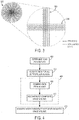
- a set of k-space blades 302 acquired using the pulse sequence described above includes pairs of orthogonal blades 304, 306 that are rotated through different angles about the center of k-space. Odd echoes are sampled in the blade 304 and even echoes are sampled in blade 306. As shown, each blade 304, 306 samples both spin echoes (solid lines) and stimulated echoes (dashed lines).
- FIG. 4 a flowchart is illustrated as setting forth the steps of an example method for performing a three-dimensional diffusion-weighted MSI acquisition and image reconstruction.
- the 3D PROPELLER MSI acquisition and image reconstruction is similar to the 2D PROPELLER MSI scheme described above.
- scan parameters are determined, as indicated at step 402
- the scan parameters can include the number of 3D PROPELLER blades and the number of spectral bins.
- data are acquired for all PROPELLER blades and spectral bins, as indicated at step 404.
- the spectral bins are sampled in an interleaved fashion.
- Images are then reconstructed from the acquired data, as generally indicated at process block 406.
- data from the blades are first combined, as indicated at step 408.
- phase correction and motion correction techniques can be applied, independently, for each spectral bin. Images are then reconstructed for each spectral bin and combined to form a composite image volume, as indicated at step 410.
- diffusion-weighted images are next acquired, as indicated at step 412, These diffusion-weighted images are acquired using the same technique described in steps 404-410; however, diffusion-preparation pulses are applied during the data acquisition step.
- a diffusion preparation module can be implemented to achieve the desired diffusion weighting.
- the diffusion-preparation pulses can be applied between the first 90 and 180 pulses and the first 180 pulse and the first echo readout.
- a phase modulation scheme can also be used to stabilize even and odd echoes.
- a non-CPMG echo stabilization can be performed through alternating X-Y RF refocusing pulse phase modulation across the PROPELLER echo trains.
- Even and odd echoes can also be placed into orthogonal bins in a "split-blade" formation, which allows the inherent phase-correction steps in PROPELLER processing (e.g., those performed in step 408 above) to correct for any residual phase variations between the odd and even echoes.
- the echo train stability can also be improved using a split-echo acquisition to separate spin echoes and stimulated echoes, as described above.
- the split-echo acquisition can include a PROPELLER-DUO acquisition. Image reconstruction is then performed as outlined above to create diffusion-weighted images.
- the systems and methods described here provide diffusion-weighting imaging near metal implants through the combination of non-CMPG FSE methods, PROPELLER imaging, and MSI artifact reduction principles.
- the systems and methods described here combine elements of 2D-MSI and 3D-MSI techniques for metal artifact reduction, PROPELLER acquisition schemes for non-Cartesian fast-spin-echo MRI, diffusion-encoding, and techniques for improving the stability of the echo train formed in the data acquisition.
- the echo train stability can be improved using non-CPMG fast-spin-echo correction technologies.
- the echo train stability can be improved using a split-echo acquisition, such as a PROPELLER-DUO acquisition, in which spin echoes and stimulated echoes are separated.
- the resulting acquisition techniques can produce high quality, diffusion-weighted images in the near vicinity of metallic objects.
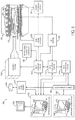
- the MRI system 500 includes an operator workstation 502 that may include a display 504, one or more input devices 506 (e.g., a keyboard, a mouse), and a processor 508.
- the processor 508 may include a commercially available programmable machine running a commercially available operating system.
- the operator workstation 502 provides an operator interface that facilitates entering scan parameters into the MRI system 500.
- the operator workstation 502 may be coupled to different servers, including, for example, a pulse sequence server 510, a data acquisition server 512, a data processing server 514, and a data store server 516,
- the operator workstation 502 and the servers 510, 512, 514, and 516 may be connected via a communication system 540, which may include wired or wireless network connections.
- the pulse sequence server 510 functions in response to instructions provided by the operator workstation 502 to operate a gradient system 518 and a radiofrequency ("RF") system 520.
- Gradient waveforms for performing a prescribed scan are produced and applied to the gradient system 518, which then excites gradient coils in a gradient coil assembly 522 to produce the magnetic field gradients G x , G y , and G z that are used for spatially encoding magnetic resonance signals.
- the gradient coil assembly 522 forms part of a magnet assembly 524 that includes a polarizing magnet 526 and a whole-body RF coil 528.
- RF waveforms are applied by the RF system 520 to the RF coil 528, or a separate local coil to perform the prescribed magnetic resonance pulse sequence
- Responsive magnetic resonance signals detected by the RF coil 528, or a separate local coil are received by the RF system 520.
- the responsive magnetic resonance signals may be amplified, demodulated, filtered, and digitized under direction of commands produced by the pulse sequence server 510.
- the RF system 520 includes an RF transmitter for producing a wide variety of RF pulses used in MRI pulse sequences.
- the RF transmitter is responsive to the prescribed scan and direction from the pulse sequence server 510 to produce RF pulses of the desired frequency, phase, and pulse amplitude waveform.
- the generated RF pulses may be applied to the whole-body RF coil 528 or to one or more local coils or coil arrays.
- the RF system 520 also includes one or more RF receiver channels.
- the pulse sequence server 510 may receive patient data from a physiological acquisition controller 530.
- the physiological acquisition controller 530 may receive signals from a number of different sensors connected to the patient, including electrocardiograph ("ECG”) signals from electrodes, or respiratory signals from a respiratory bellows or other respiratory monitoring devices. These signals may be used by the pulse sequence server 510 to synchronize, or "gate,” the performance of the scan with the subject's heart beat or respiration.
- ECG electrocardiograph
- the pulse sequence server 510 may also connect to a scan room interface circuit 532 that receives signals from various sensors associated with the condition of the patient and the magnet system. Through the scan room interface circuit 532, a patient positioning system 534 can receive commands to move the patient to desired positions during the scan,
- the digitized magnetic resonance signal samples produced by the RF system 520 are received by the data acquisition server 512.
- the data acquisition server 512 operates in response to instructions downloaded from the operator workstation 502 to receive the real-time magnetic resonance data and provide buffer storage, so that data is not lost by data overrun. In some scans, the data acquisition server 512 passes the acquired magnetic resonance data to the data processing server 514, In scans that require information derived from acquired magnetic resonance data to control the further performance of the scan, the data acquisition server 512 may be programmed to produce such information and convey it to the pulse sequence server 510. For example, during prescans, magnetic resonance data may be acquired and used to calibrate the pulse sequence performed by the pulse sequence server 510.
- navigator signals may be acquired and used to adjust the operating parameters of the RF system 520 or the gradient system 518, or to control the view order in which k-space is sampled.
- the data acquisition server 512 may also process magnetic resonance signals used to detect the arrival of a contrast agent in a magnetic resonance angiography ("MRA") scan.
- MRA magnetic resonance angiography
- the data acquisition server 512 may acquire magnetic resonance data and processes it in real-time to produce information that is used to control the scan.
- the data processing server 514 receives magnetic resonance data from the data acquisition server 512 and processes the magnetic resonance data in accordance with instructions provided by the operator workstation 502. Such processing may include, for example, reconstructing two-dimensional or three-dimensional images by performing a Fourier transformation of raw k-space data, performing other image reconstruction algorithms (e.g., iterative or backprojection reconstruction algorithms), applying filters to raw k-space data or to reconstructed images, generating functional magnetic resonance images, or calculating motion or flow images.
- image reconstruction algorithms e.g., iterative or backprojection reconstruction algorithms
- Images reconstructed by the data processing server 514 are conveyed back to the operator workstation 502 for storage.
- Real-time images may be stored in a data base memory cache, from which they may be output to operator display 502 or a display 536.
- Batch mode images or selected real time images may be stored in a host database on disc storage 538.
- the data processing server 514 may notify the data store server 516 on the operator workstation 502.
- the operator workstation 502 may be used by an operator to archive the images, produce films, or send the images via a network to other facilities.
- the MRI system 500 may also include one or more networked workstations 542.
- a networked workstation 542 may include a display 544, one or more input devices 546 (e.g., a keyboard, a mouse), and a processor 548.
- the networked workstation 542 may be located within the same facility as the operator workstation 502, or in a different facility, such as a different healthcare institution or clinic.
- the networked workstation 542 may gain remote access to the data processing server 514 or data store server 516 via the communication system 540. Accordingly, multiple networked workstations 542 may have access to the data processing server 514 and the data store server 516. In this manner, magnetic resonance data, reconstructed images, or other data may be exchanged between the data processing server 514 or the data store server 516 and the networked workstations 542, such that the data or images may be remotely processed by a networked workstation 542,
Landscapes
- Physics & Mathematics (AREA)
- General Physics & Mathematics (AREA)
- High Energy & Nuclear Physics (AREA)
- Nuclear Medicine, Radiotherapy & Molecular Imaging (AREA)
- Health & Medical Sciences (AREA)
- Engineering & Computer Science (AREA)
- Condensed Matter Physics & Semiconductors (AREA)
- General Health & Medical Sciences (AREA)
- Radiology & Medical Imaging (AREA)
- Signal Processing (AREA)
- Life Sciences & Earth Sciences (AREA)
- Vascular Medicine (AREA)
- General Life Sciences & Earth Sciences (AREA)
- Geophysics (AREA)
- Remote Sensing (AREA)
- Geology (AREA)
- Environmental & Geological Engineering (AREA)
- Magnetic Resonance Imaging Apparatus (AREA)
Claims (13)
- Procédé d'utilisation d'un système d'imagerie par résonance magnétique (IRM) afin de produire une image pondérée par diffusion d'un sujet au sein duquel un objet métallique est présent, les étapes du procédé comprenant :(a) l'acquisition de données pondérées en diffusion à partir du sujet à l'aide du système d'IRM afin d'échantillonner un espace k au niveau d'un certain nombre de lames d'espace k différentes pour chacun d'un nombre d'emplacements spectraux différents ;(b) la production de données combinées pour chaque emplacement spectral avec un système informatique en combinant les données pondérées en diffusion acquises pour chacun du nombre de lames d'espace k différentes pour chaque emplacement spectral ;(c) la reconstruction, avec le système informatique, d'une image pour chaque emplacement spectral à partir des données combinées produites pour chaque emplacement spectral associé ; et(d) la production d'une image composite pondérée en diffusion avec le système informatique en combinant les images reconstruites à l'étape (c).
- Procédé selon la revendication 1, dans lequel les données pondérées en diffusion sont acquises en échantillonnant un espace k au niveau du nombre de différentes lames d'espace k pour chacun d'un nombre de différents emplacements de tranches.
- Procédé selon la revendication 2, dans lequel les étapes (b) à (d) sont répétées pour chaque emplacement de tranche afin de produire une image composite pondérée en diffusion pour chaque emplacement de tranche.
- Procédé selon la revendication 2, dans lequel l'étape (a) comprend l'acquisition des données pondérées en diffusion à l'aide d'une séquence d'impulsions au cours de laquelle les largeurs de bande et les amplitudes de gradient par tranche des impulsions radiofréquence (RF) d'excitation et de recentrage sont associées, et au cours de laquelle une polarité d'un gradient d'excitation RF par tranche est inversée.
- Procédé selon la revendication 1, dans lequel l'étape (b) comprend l'application, avec le système informatique, de corrections de phase et de corrections de mouvement aux données pondérées en diffusion pendant que les données pondérées en diffusion acquises pour chacun du nombre de différentes lames d'espace k pour chaque emplacement spectral sont combinées.
- Procédé selon la revendication 1, dans lequel l'étape (a) comprend l'acquisition des données pondérées en diffusion à l'aide d'une écho-stabilisation non-CMPG en alternant une modulation de phase d'impulsion de recentrage radiofréquence (RF) au sein d'un train d'écho échantillonné pendant l'acquisition des données pour chaque lame d'espace k.
- Procédé selon la revendication 1, dans lequel l'étape (a) comprend l'acquisition des données pondérées en diffusion de sorte que les données issues des échos pairs et des échos impairs soient placées dans des emplacements orthogonaux sous forme de lame séparée.
- Procédé selon la revendication 1, dans lequel les images reconstruites à l'étape (c) sont des volumes d'images en trois dimensions et l'image composite pondérée en diffusion produite à l'étape (d) est un volume d'image composite pondérée en diffusion en trois dimensions.
- Procédé selon la revendication 1, dans lequel l'étape (a) comprend l'application d'une première impulsion de préparation de diffusion après une impulsion d'excitation radiofréquence (RF) et avant une première impulsion de recentrage RF, et l'application d'une seconde impulsion de préparation de diffusion après la première impulsion de recentrage RF et avant une première lecture d'écho.
- Procédé selon la revendication 1, dans lequel l'étape (a) comprend l'application d'un module de préparation de diffusion avant une première impulsion d'excitation radiofréquence (RF).
- Procédé selon la revendication 10, dans lequel l'étape (a) comprend l'acquisition des données pondérées en diffusion à l'aide d'un groupe d'acquisitions de train d'écho à spin rapide.
- Procédé selon la revendication 1, dans lequel l'étape (a) comprend l'acquisition des données pondérées en diffusion à l'aide d'une acquisition d'écho séparé qui génère un train d'écho au sein duquel les échos à spin et les échos stimulés sont séparés.
- Procédé selon la revendication 12, dans lequel les échos alternés au sein du train d'écho sont séparés en lames d'espace k orthogonales.
Applications Claiming Priority (2)
| Application Number | Priority Date | Filing Date | Title |
|---|---|---|---|
| US201562162003P | 2015-05-15 | 2015-05-15 | |
| PCT/US2016/032389 WO2016187015A1 (fr) | 2015-05-15 | 2016-05-13 | Systèmes et procédés d'imagerie par résonance magnétique multi-spectrale de diffusion pondérée |
Publications (3)
| Publication Number | Publication Date |
|---|---|
| EP3295200A1 EP3295200A1 (fr) | 2018-03-21 |
| EP3295200A4 EP3295200A4 (fr) | 2018-12-26 |
| EP3295200B1 true EP3295200B1 (fr) | 2020-07-08 |
Family
ID=57320329
Family Applications (1)
| Application Number | Title | Priority Date | Filing Date |
|---|---|---|---|
| EP16797011.0A Active EP3295200B1 (fr) | 2015-05-15 | 2016-05-13 | Systèmes et procédés d'imagerie par résonance magnétique multi-spectrale de diffusion pondérée |
Country Status (3)
| Country | Link |
|---|---|
| US (1) | US10712418B2 (fr) |
| EP (1) | EP3295200B1 (fr) |
| WO (1) | WO2016187015A1 (fr) |
Families Citing this family (10)
| Publication number | Priority date | Publication date | Assignee | Title |
|---|---|---|---|---|
| US10261153B2 (en) * | 2015-10-15 | 2019-04-16 | Siemens Healthcare Gmbh | Magnetic resonance apparatus and method for simultaneous multi-contrast acquisition with simultaneous multislice imaging |
| WO2017192952A1 (fr) * | 2016-05-05 | 2017-11-09 | The Medical College Of Wisconsin, Inc. | Modélisation de profil spectral par voxellation destinée à être utilisée dans l'imagerie par résonance magnétique multispectrale |
| US10768261B2 (en) * | 2017-03-15 | 2020-09-08 | The Board Of Trustees Of The Leland Stanford Junior University | Alternating gradients for metal-induced artifacts correction in magnetic resonance imaging |
| US11436732B2 (en) * | 2019-03-12 | 2022-09-06 | The General Hospital Corporation | Automatic segmentation of acute ischemic stroke lesions in computed tomography data |
| US11119175B2 (en) * | 2020-01-03 | 2021-09-14 | Ge Precision Healthcare | Systems and methods for suppressing Nyquist ghost for diffusion weighted magnetic resonance imaging |
| CN111239658B (zh) * | 2020-02-19 | 2022-07-19 | 上海康达卡勒幅医疗科技有限公司 | 一种减小propeller序列伪影的方法 |
| WO2022020614A1 (fr) * | 2020-07-22 | 2022-01-27 | Dignity Health | Acquisition de lame entière et correction de phase améliorées dans une imagerie par résonance magnétique |
| US20240201302A1 (en) * | 2021-04-16 | 2024-06-20 | Beth Israel Deaconess Medical Center, Inc. | Systems and methods for non-selective stimulated echo multislice diffusion imaging |
| US11980457B2 (en) | 2021-04-30 | 2024-05-14 | Shanghai United Imaging Healthcare Co., Ltd. | Systems and methods for simultaneous multi-slice multitasking imaging |
| CN117368818B (zh) * | 2023-09-14 | 2026-01-23 | 浙江大学 | 一种扩散加权磁共振波谱并行采集和重建方法 |
Family Cites Families (17)
| Publication number | Priority date | Publication date | Assignee | Title |
|---|---|---|---|---|
| US6265873B1 (en) | 1999-03-17 | 2001-07-24 | Ge Medical Systems Global Technology Company, Llc | Non-CPMG fast spin echo MRI method |
| US6806705B2 (en) * | 2002-05-15 | 2004-10-19 | Koninklijke Philips Electronics N.V. | Diffusion tensor magnetic resonance imaging including local weighted interpolation |
| US6882148B2 (en) * | 2003-07-09 | 2005-04-19 | Catholic Healthcare West | Split-blade data collection for propeller MRI |
| US7239140B1 (en) * | 2005-12-21 | 2007-07-03 | General Electric Company | Method and apparatus for vibration-related artifact reduction |
| US7538548B2 (en) * | 2006-05-25 | 2009-05-26 | Toshiba Medical Systems Corp. | Fast spin echo MRI method compatible with CPMG violation |
| US8274286B2 (en) * | 2008-01-18 | 2012-09-25 | General Electric Company | System and method for multi-spectral MR imaging near metal |
| US7821264B2 (en) | 2008-01-18 | 2010-10-26 | General Electric Company | System and method for MR imaging in inhomogeneous magnetic fields |
| US7928729B2 (en) | 2008-08-07 | 2011-04-19 | The Board Of Trustees Of The Leland Stanford Junior University | Distortion-free magnetic resonance imaging near metallic implants |
| US8154293B2 (en) | 2009-07-31 | 2012-04-10 | General Electric Company | Apparatus and method for acquisition and reconstruction of non-CPMG propeller sequences |
| US8482279B2 (en) | 2010-03-31 | 2013-07-09 | General Electric Company | System and method of parallel imaging for magnetic resonance imaging near metallic implants |
| US8384384B2 (en) * | 2010-04-01 | 2013-02-26 | General Electric Company | System and method for split-echo split-blade data collection for propeller magnetic resonance imaging |
| EP2500742A1 (fr) | 2011-03-17 | 2012-09-19 | Koninklijke Philips Electronics N.V. | Restriction de la région d'imagerie pour l'IRM dans un champ magnétique inhomogène |
| DE102011083395B4 (de) | 2011-09-26 | 2013-06-13 | Siemens Aktiengesellschaft | Korrektur von Verzerrungen in MR-Bildern aufgrund von Inhomogenitäten des Grundmagnetfeldes |
| CN104603629B (zh) * | 2012-09-04 | 2017-06-13 | 皇家飞利浦有限公司 | 具有狄克逊水脂分离的propeller |
| CN105143906B (zh) | 2013-01-25 | 2017-10-24 | 皇家飞利浦有限公司 | 金属抗mr成像 |
| US10114099B2 (en) * | 2015-02-11 | 2018-10-30 | The Board Of Trustees Of The Leland Stanford Junior University | High resolution magnetic resonance imaging with reduced distortion based on reduced-field-of-view and generalized parallel imaging |
| US10120049B2 (en) * | 2015-05-18 | 2018-11-06 | The Johns Hopkins University | System and method of obtaining spatially-encoded NMR parameters from arbitrarily-shaped compartments and linear algebraic modeling |
-
2016
- 2016-05-13 WO PCT/US2016/032389 patent/WO2016187015A1/fr not_active Ceased
- 2016-05-13 US US15/574,287 patent/US10712418B2/en active Active
- 2016-05-13 EP EP16797011.0A patent/EP3295200B1/fr active Active
Non-Patent Citations (1)
| Title |
|---|
| None * |
Also Published As
| Publication number | Publication date |
|---|---|
| US10712418B2 (en) | 2020-07-14 |
| EP3295200A1 (fr) | 2018-03-21 |
| EP3295200A4 (fr) | 2018-12-26 |
| WO2016187015A1 (fr) | 2016-11-24 |
| US20180136297A1 (en) | 2018-05-17 |
Similar Documents
| Publication | Publication Date | Title |
|---|---|---|
| EP3295200B1 (fr) | Systèmes et procédés d'imagerie par résonance magnétique multi-spectrale de diffusion pondérée | |
| CN106232005B (zh) | 用于减小的视场磁共振成像的系统及方法 | |
| CN104685368B (zh) | 用于耐金属mr成像的方法和设备 | |
| US9612300B2 (en) | System and method for object-based initialization of magnetic field inhomogeneity in magnetic resonance imaging | |
| US10712420B2 (en) | Systems and methods for concomitant field correction in magnetic resonance imaging with asymmetric gradients | |
| EP3100067B1 (fr) | Irm à tranches multiples simultanées à codage de gradient aléatoire | |
| US10459058B2 (en) | System and method for magnetic resonance imaging with prospective motion control | |
| US9594134B2 (en) | System and method for fully phase-encoded magnetic resonance imaging using multiband radio frequency excitation | |
| US10739420B2 (en) | Motion-robust transmit radio frequency field mapping in magnetic resonance imaging using interleaved bloch-siegert shifting | |
| US10175328B2 (en) | System and method for reconstructing ghost-free images from data acquired using simultaneous multislice magnetic resonance imaging | |
| US10718838B2 (en) | Systems and methods for calibrated multi-spectral magnetic resonance imaging | |
| US10908248B2 (en) | Systems and methods for slice dithered enhanced resolution simultaneous multislice magnetic resonance imaging | |
| US10884091B2 (en) | Voxelwise spectral profile modeling for use in multispectral magnetic resonance imaging | |
| US9316711B2 (en) | System and method for accelerated magnetic resonance imaging using spectral sensitivity | |
| US11266324B2 (en) | System and methods for fast multi-contrast magnetic resonance imaging | |
| US11009576B2 (en) | Method for magnetic resonance imaging using slice quadratic phase for spatiotemporal encoding | |
| US10180475B2 (en) | Systems and methods for multiband sweep imaging with fourier transformation | |
| US10690741B2 (en) | Method and systems for reducing artifacts in magnetic resonance imaging | |
| US20160146916A1 (en) | Magnetic resonance imaging method, magnetic resonance imaging apparatus and magnetic resonance imaging system | |
| US10401459B2 (en) | Systems and methods for imaging vascular calcifications with magnetic resonance imaging | |
| US10228434B2 (en) | Multi-shot echo planar imaging using reordered segments and RF excitation pulse phase and slice profiles matched across interleaves | |
| US10175326B2 (en) | Systems and methods for gradient-modulated pointwise encoding time reduction with radial acquisition magnetic resonance imaging | |
| WO2015152957A1 (fr) | Imagerie inverse avec imagerie par résonance magnétique utilisant un codage par gradient à échos | |
| WO2020223567A1 (fr) | Isrm multi-tranche simultanée utilisant une acquisition en anneaux concentriques pondérée en densité | |
| US20250341600A1 (en) | Multispectral magnetic resonance imaging enhancement using spectral acquisition redundancy |
Legal Events
| Date | Code | Title | Description |
|---|---|---|---|
| STAA | Information on the status of an ep patent application or granted ep patent |
Free format text: STATUS: THE INTERNATIONAL PUBLICATION HAS BEEN MADE |
|
| PUAI | Public reference made under article 153(3) epc to a published international application that has entered the european phase |
Free format text: ORIGINAL CODE: 0009012 |
|
| STAA | Information on the status of an ep patent application or granted ep patent |
Free format text: STATUS: REQUEST FOR EXAMINATION WAS MADE |
|
| 17P | Request for examination filed |
Effective date: 20171129 |
|
| AK | Designated contracting states |
Kind code of ref document: A1 Designated state(s): AL AT BE BG CH CY CZ DE DK EE ES FI FR GB GR HR HU IE IS IT LI LT LU LV MC MK MT NL NO PL PT RO RS SE SI SK SM TR |
|
| AX | Request for extension of the european patent |
Extension state: BA ME |
|
| DAV | Request for validation of the european patent (deleted) | ||
| DAX | Request for extension of the european patent (deleted) | ||
| A4 | Supplementary search report drawn up and despatched |
Effective date: 20181127 |
|
| RIC1 | Information provided on ipc code assigned before grant |
Ipc: G01R 33/563 20060101AFI20181121BHEP Ipc: G01R 33/48 20060101ALI20181121BHEP Ipc: G01R 33/483 20060101ALN20181121BHEP Ipc: G01R 33/565 20060101ALN20181121BHEP Ipc: G01R 33/561 20060101ALN20181121BHEP |
|
| REG | Reference to a national code |
Ref country code: DE Ref legal event code: R079 Ref document number: 602016039639 Country of ref document: DE Free format text: PREVIOUS MAIN CLASS: G01R0033480000 Ipc: G01R0033563000 |
|
| GRAP | Despatch of communication of intention to grant a patent |
Free format text: ORIGINAL CODE: EPIDOSNIGR1 |
|
| STAA | Information on the status of an ep patent application or granted ep patent |
Free format text: STATUS: GRANT OF PATENT IS INTENDED |
|
| RIC1 | Information provided on ipc code assigned before grant |
Ipc: G01R 33/48 20060101ALI20191112BHEP Ipc: G01R 33/561 20060101ALN20191112BHEP Ipc: G01R 33/563 20060101AFI20191112BHEP Ipc: G01R 33/483 20060101ALN20191112BHEP Ipc: G01R 33/565 20060101ALN20191112BHEP |
|
| INTG | Intention to grant announced |
Effective date: 20191128 |
|
| GRAS | Grant fee paid |
Free format text: ORIGINAL CODE: EPIDOSNIGR3 |
|
| GRAA | (expected) grant |
Free format text: ORIGINAL CODE: 0009210 |
|
| STAA | Information on the status of an ep patent application or granted ep patent |
Free format text: STATUS: THE PATENT HAS BEEN GRANTED |
|
| AK | Designated contracting states |
Kind code of ref document: B1 Designated state(s): AL AT BE BG CH CY CZ DE DK EE ES FI FR GB GR HR HU IE IS IT LI LT LU LV MC MK MT NL NO PL PT RO RS SE SI SK SM TR |
|
| REG | Reference to a national code |
Ref country code: CH Ref legal event code: EP Ref country code: AT Ref legal event code: REF Ref document number: 1289044 Country of ref document: AT Kind code of ref document: T Effective date: 20200715 |
|
| REG | Reference to a national code |
Ref country code: DE Ref legal event code: R096 Ref document number: 602016039639 Country of ref document: DE |
|
| REG | Reference to a national code |
Ref country code: IE Ref legal event code: FG4D |
|
| REG | Reference to a national code |
Ref country code: LT Ref legal event code: MG4D |
|
| REG | Reference to a national code |
Ref country code: AT Ref legal event code: MK05 Ref document number: 1289044 Country of ref document: AT Kind code of ref document: T Effective date: 20200708 |
|
| REG | Reference to a national code |
Ref country code: NL Ref legal event code: MP Effective date: 20200708 |
|
| PG25 | Lapsed in a contracting state [announced via postgrant information from national office to epo] |
Ref country code: LT Free format text: LAPSE BECAUSE OF FAILURE TO SUBMIT A TRANSLATION OF THE DESCRIPTION OR TO PAY THE FEE WITHIN THE PRESCRIBED TIME-LIMIT Effective date: 20200708 Ref country code: FI Free format text: LAPSE BECAUSE OF FAILURE TO SUBMIT A TRANSLATION OF THE DESCRIPTION OR TO PAY THE FEE WITHIN THE PRESCRIBED TIME-LIMIT Effective date: 20200708 Ref country code: PT Free format text: LAPSE BECAUSE OF FAILURE TO SUBMIT A TRANSLATION OF THE DESCRIPTION OR TO PAY THE FEE WITHIN THE PRESCRIBED TIME-LIMIT Effective date: 20201109 Ref country code: SE Free format text: LAPSE BECAUSE OF FAILURE TO SUBMIT A TRANSLATION OF THE DESCRIPTION OR TO PAY THE FEE WITHIN THE PRESCRIBED TIME-LIMIT Effective date: 20200708 Ref country code: AT Free format text: LAPSE BECAUSE OF FAILURE TO SUBMIT A TRANSLATION OF THE DESCRIPTION OR TO PAY THE FEE WITHIN THE PRESCRIBED TIME-LIMIT Effective date: 20200708 Ref country code: GR Free format text: LAPSE BECAUSE OF FAILURE TO SUBMIT A TRANSLATION OF THE DESCRIPTION OR TO PAY THE FEE WITHIN THE PRESCRIBED TIME-LIMIT Effective date: 20201009 Ref country code: NO Free format text: LAPSE BECAUSE OF FAILURE TO SUBMIT A TRANSLATION OF THE DESCRIPTION OR TO PAY THE FEE WITHIN THE PRESCRIBED TIME-LIMIT Effective date: 20201008 Ref country code: BG Free format text: LAPSE BECAUSE OF FAILURE TO SUBMIT A TRANSLATION OF THE DESCRIPTION OR TO PAY THE FEE WITHIN THE PRESCRIBED TIME-LIMIT Effective date: 20201008 Ref country code: HR Free format text: LAPSE BECAUSE OF FAILURE TO SUBMIT A TRANSLATION OF THE DESCRIPTION OR TO PAY THE FEE WITHIN THE PRESCRIBED TIME-LIMIT Effective date: 20200708 Ref country code: ES Free format text: LAPSE BECAUSE OF FAILURE TO SUBMIT A TRANSLATION OF THE DESCRIPTION OR TO PAY THE FEE WITHIN THE PRESCRIBED TIME-LIMIT Effective date: 20200708 |
|
| PG25 | Lapsed in a contracting state [announced via postgrant information from national office to epo] |
Ref country code: PL Free format text: LAPSE BECAUSE OF FAILURE TO SUBMIT A TRANSLATION OF THE DESCRIPTION OR TO PAY THE FEE WITHIN THE PRESCRIBED TIME-LIMIT Effective date: 20200708 Ref country code: RS Free format text: LAPSE BECAUSE OF FAILURE TO SUBMIT A TRANSLATION OF THE DESCRIPTION OR TO PAY THE FEE WITHIN THE PRESCRIBED TIME-LIMIT Effective date: 20200708 Ref country code: LV Free format text: LAPSE BECAUSE OF FAILURE TO SUBMIT A TRANSLATION OF THE DESCRIPTION OR TO PAY THE FEE WITHIN THE PRESCRIBED TIME-LIMIT Effective date: 20200708 Ref country code: IS Free format text: LAPSE BECAUSE OF FAILURE TO SUBMIT A TRANSLATION OF THE DESCRIPTION OR TO PAY THE FEE WITHIN THE PRESCRIBED TIME-LIMIT Effective date: 20201108 |
|
| PG25 | Lapsed in a contracting state [announced via postgrant information from national office to epo] |
Ref country code: NL Free format text: LAPSE BECAUSE OF FAILURE TO SUBMIT A TRANSLATION OF THE DESCRIPTION OR TO PAY THE FEE WITHIN THE PRESCRIBED TIME-LIMIT Effective date: 20200708 |
|
| REG | Reference to a national code |
Ref country code: DE Ref legal event code: R097 Ref document number: 602016039639 Country of ref document: DE |
|
| PG25 | Lapsed in a contracting state [announced via postgrant information from national office to epo] |
Ref country code: RO Free format text: LAPSE BECAUSE OF FAILURE TO SUBMIT A TRANSLATION OF THE DESCRIPTION OR TO PAY THE FEE WITHIN THE PRESCRIBED TIME-LIMIT Effective date: 20200708 Ref country code: DK Free format text: LAPSE BECAUSE OF FAILURE TO SUBMIT A TRANSLATION OF THE DESCRIPTION OR TO PAY THE FEE WITHIN THE PRESCRIBED TIME-LIMIT Effective date: 20200708 Ref country code: CZ Free format text: LAPSE BECAUSE OF FAILURE TO SUBMIT A TRANSLATION OF THE DESCRIPTION OR TO PAY THE FEE WITHIN THE PRESCRIBED TIME-LIMIT Effective date: 20200708 Ref country code: EE Free format text: LAPSE BECAUSE OF FAILURE TO SUBMIT A TRANSLATION OF THE DESCRIPTION OR TO PAY THE FEE WITHIN THE PRESCRIBED TIME-LIMIT Effective date: 20200708 Ref country code: IT Free format text: LAPSE BECAUSE OF FAILURE TO SUBMIT A TRANSLATION OF THE DESCRIPTION OR TO PAY THE FEE WITHIN THE PRESCRIBED TIME-LIMIT Effective date: 20200708 Ref country code: SM Free format text: LAPSE BECAUSE OF FAILURE TO SUBMIT A TRANSLATION OF THE DESCRIPTION OR TO PAY THE FEE WITHIN THE PRESCRIBED TIME-LIMIT Effective date: 20200708 |
|
| PLBE | No opposition filed within time limit |
Free format text: ORIGINAL CODE: 0009261 |
|
| STAA | Information on the status of an ep patent application or granted ep patent |
Free format text: STATUS: NO OPPOSITION FILED WITHIN TIME LIMIT |
|
| PG25 | Lapsed in a contracting state [announced via postgrant information from national office to epo] |
Ref country code: AL Free format text: LAPSE BECAUSE OF FAILURE TO SUBMIT A TRANSLATION OF THE DESCRIPTION OR TO PAY THE FEE WITHIN THE PRESCRIBED TIME-LIMIT Effective date: 20200708 |
|
| 26N | No opposition filed |
Effective date: 20210409 |
|
| PG25 | Lapsed in a contracting state [announced via postgrant information from national office to epo] |
Ref country code: SK Free format text: LAPSE BECAUSE OF FAILURE TO SUBMIT A TRANSLATION OF THE DESCRIPTION OR TO PAY THE FEE WITHIN THE PRESCRIBED TIME-LIMIT Effective date: 20200708 |
|
| PG25 | Lapsed in a contracting state [announced via postgrant information from national office to epo] |
Ref country code: SI Free format text: LAPSE BECAUSE OF FAILURE TO SUBMIT A TRANSLATION OF THE DESCRIPTION OR TO PAY THE FEE WITHIN THE PRESCRIBED TIME-LIMIT Effective date: 20200708 |
|
| REG | Reference to a national code |
Ref country code: CH Ref legal event code: PL |
|
| PG25 | Lapsed in a contracting state [announced via postgrant information from national office to epo] |
Ref country code: CH Free format text: LAPSE BECAUSE OF NON-PAYMENT OF DUE FEES Effective date: 20210531 Ref country code: LU Free format text: LAPSE BECAUSE OF NON-PAYMENT OF DUE FEES Effective date: 20210513 Ref country code: MC Free format text: LAPSE BECAUSE OF FAILURE TO SUBMIT A TRANSLATION OF THE DESCRIPTION OR TO PAY THE FEE WITHIN THE PRESCRIBED TIME-LIMIT Effective date: 20200708 Ref country code: LI Free format text: LAPSE BECAUSE OF NON-PAYMENT OF DUE FEES Effective date: 20210531 |
|
| PGFP | Annual fee paid to national office [announced via postgrant information from national office to epo] |
Ref country code: GB Payment date: 20211029 Year of fee payment: 6 |
|
| REG | Reference to a national code |
Ref country code: BE Ref legal event code: MM Effective date: 20210531 |
|
| PG25 | Lapsed in a contracting state [announced via postgrant information from national office to epo] |
Ref country code: IE Free format text: LAPSE BECAUSE OF NON-PAYMENT OF DUE FEES Effective date: 20210513 |
|
| PG25 | Lapsed in a contracting state [announced via postgrant information from national office to epo] |
Ref country code: BE Free format text: LAPSE BECAUSE OF NON-PAYMENT OF DUE FEES Effective date: 20210531 |
|
| GBPC | Gb: european patent ceased through non-payment of renewal fee |
Effective date: 20220513 |
|
| PG25 | Lapsed in a contracting state [announced via postgrant information from national office to epo] |
Ref country code: HU Free format text: LAPSE BECAUSE OF FAILURE TO SUBMIT A TRANSLATION OF THE DESCRIPTION OR TO PAY THE FEE WITHIN THE PRESCRIBED TIME-LIMIT; INVALID AB INITIO Effective date: 20160513 Ref country code: GB Free format text: LAPSE BECAUSE OF NON-PAYMENT OF DUE FEES Effective date: 20220513 |
|
| PG25 | Lapsed in a contracting state [announced via postgrant information from national office to epo] |
Ref country code: CY Free format text: LAPSE BECAUSE OF FAILURE TO SUBMIT A TRANSLATION OF THE DESCRIPTION OR TO PAY THE FEE WITHIN THE PRESCRIBED TIME-LIMIT Effective date: 20200708 |
|
| P01 | Opt-out of the competence of the unified patent court (upc) registered |
Effective date: 20230528 |
|
| PG25 | Lapsed in a contracting state [announced via postgrant information from national office to epo] |
Ref country code: MK Free format text: LAPSE BECAUSE OF FAILURE TO SUBMIT A TRANSLATION OF THE DESCRIPTION OR TO PAY THE FEE WITHIN THE PRESCRIBED TIME-LIMIT Effective date: 20200708 |
|
| PG25 | Lapsed in a contracting state [announced via postgrant information from national office to epo] |
Ref country code: MT Free format text: LAPSE BECAUSE OF FAILURE TO SUBMIT A TRANSLATION OF THE DESCRIPTION OR TO PAY THE FEE WITHIN THE PRESCRIBED TIME-LIMIT Effective date: 20200708 |
|
| PGFP | Annual fee paid to national office [announced via postgrant information from national office to epo] |
Ref country code: DE Payment date: 20250408 Year of fee payment: 10 |
|
| PGFP | Annual fee paid to national office [announced via postgrant information from national office to epo] |
Ref country code: FR Payment date: 20250409 Year of fee payment: 10 |
|
| PG25 | Lapsed in a contracting state [announced via postgrant information from national office to epo] |
Ref country code: TR Free format text: LAPSE BECAUSE OF FAILURE TO SUBMIT A TRANSLATION OF THE DESCRIPTION OR TO PAY THE FEE WITHIN THE PRESCRIBED TIME-LIMIT Effective date: 20200708 |