EP3295261B1 - Energieeffiziente integrierte beleuchtung, tageslichtbeleuchtung und hlk mit elektrochromem glas - Google Patents
Energieeffiziente integrierte beleuchtung, tageslichtbeleuchtung und hlk mit elektrochromem glas Download PDFInfo
- Publication number
- EP3295261B1 EP3295261B1 EP15777781.4A EP15777781A EP3295261B1 EP 3295261 B1 EP3295261 B1 EP 3295261B1 EP 15777781 A EP15777781 A EP 15777781A EP 3295261 B1 EP3295261 B1 EP 3295261B1
- Authority
- EP
- European Patent Office
- Prior art keywords
- room
- ecg
- energy
- tint level
- time intervals
- Prior art date
- Legal status (The legal status is an assumption and is not a legal conclusion. Google has not performed a legal analysis and makes no representation as to the accuracy of the status listed.)
- Active
Links
Images



Classifications
-
- F—MECHANICAL ENGINEERING; LIGHTING; HEATING; WEAPONS; BLASTING
- F24—HEATING; RANGES; VENTILATING
- F24S—SOLAR HEAT COLLECTORS; SOLAR HEAT SYSTEMS
- F24S50/00—Arrangements for controlling solar heat collectors
- F24S50/40—Arrangements for controlling solar heat collectors responsive to temperature
-
- G—PHYSICS
- G05—CONTROLLING; REGULATING
- G05B—CONTROL OR REGULATING SYSTEMS IN GENERAL; FUNCTIONAL ELEMENTS OF SUCH SYSTEMS; MONITORING OR TESTING ARRANGEMENTS FOR SUCH SYSTEMS OR ELEMENTS
- G05B15/00—Systems controlled by a computer
- G05B15/02—Systems controlled by a computer electric
-
- G—PHYSICS
- G02—OPTICS
- G02F—OPTICAL DEVICES OR ARRANGEMENTS FOR THE CONTROL OF LIGHT BY MODIFICATION OF THE OPTICAL PROPERTIES OF THE MEDIA OF THE ELEMENTS INVOLVED THEREIN; NON-LINEAR OPTICS; FREQUENCY-CHANGING OF LIGHT; OPTICAL LOGIC ELEMENTS; OPTICAL ANALOGUE/DIGITAL CONVERTERS
- G02F1/00—Devices or arrangements for the control of the intensity, colour, phase, polarisation or direction of light arriving from an independent light source, e.g. switching, gating or modulating; Non-linear optics
- G02F1/01—Devices or arrangements for the control of the intensity, colour, phase, polarisation or direction of light arriving from an independent light source, e.g. switching, gating or modulating; Non-linear optics for the control of the intensity, phase, polarisation or colour
- G02F1/15—Devices or arrangements for the control of the intensity, colour, phase, polarisation or direction of light arriving from an independent light source, e.g. switching, gating or modulating; Non-linear optics for the control of the intensity, phase, polarisation or colour based on an electrochromic effect
- G02F1/153—Constructional details
-
- G—PHYSICS
- G02—OPTICS
- G02F—OPTICAL DEVICES OR ARRANGEMENTS FOR THE CONTROL OF LIGHT BY MODIFICATION OF THE OPTICAL PROPERTIES OF THE MEDIA OF THE ELEMENTS INVOLVED THEREIN; NON-LINEAR OPTICS; FREQUENCY-CHANGING OF LIGHT; OPTICAL LOGIC ELEMENTS; OPTICAL ANALOGUE/DIGITAL CONVERTERS
- G02F1/00—Devices or arrangements for the control of the intensity, colour, phase, polarisation or direction of light arriving from an independent light source, e.g. switching, gating or modulating; Non-linear optics
- G02F1/01—Devices or arrangements for the control of the intensity, colour, phase, polarisation or direction of light arriving from an independent light source, e.g. switching, gating or modulating; Non-linear optics for the control of the intensity, phase, polarisation or colour
- G02F1/15—Devices or arrangements for the control of the intensity, colour, phase, polarisation or direction of light arriving from an independent light source, e.g. switching, gating or modulating; Non-linear optics for the control of the intensity, phase, polarisation or colour based on an electrochromic effect
- G02F1/153—Constructional details
- G02F1/1533—Constructional details structural features not otherwise provided for
-
- G—PHYSICS
- G02—OPTICS
- G02F—OPTICAL DEVICES OR ARRANGEMENTS FOR THE CONTROL OF LIGHT BY MODIFICATION OF THE OPTICAL PROPERTIES OF THE MEDIA OF THE ELEMENTS INVOLVED THEREIN; NON-LINEAR OPTICS; FREQUENCY-CHANGING OF LIGHT; OPTICAL LOGIC ELEMENTS; OPTICAL ANALOGUE/DIGITAL CONVERTERS
- G02F1/00—Devices or arrangements for the control of the intensity, colour, phase, polarisation or direction of light arriving from an independent light source, e.g. switching, gating or modulating; Non-linear optics
- G02F1/01—Devices or arrangements for the control of the intensity, colour, phase, polarisation or direction of light arriving from an independent light source, e.g. switching, gating or modulating; Non-linear optics for the control of the intensity, phase, polarisation or colour
- G02F1/15—Devices or arrangements for the control of the intensity, colour, phase, polarisation or direction of light arriving from an independent light source, e.g. switching, gating or modulating; Non-linear optics for the control of the intensity, phase, polarisation or colour based on an electrochromic effect
- G02F1/163—Operation of electrochromic cells, e.g. electrodeposition cells; Circuit arrangements therefor
-
- G—PHYSICS
- G05—CONTROLLING; REGULATING
- G05B—CONTROL OR REGULATING SYSTEMS IN GENERAL; FUNCTIONAL ELEMENTS OF SUCH SYSTEMS; MONITORING OR TESTING ARRANGEMENTS FOR SUCH SYSTEMS OR ELEMENTS
- G05B2219/00—Program-control systems
- G05B2219/20—Pc systems
- G05B2219/26—Pc applications
- G05B2219/2642—Domotique, domestic, home control, automation, smart house
-
- Y—GENERAL TAGGING OF NEW TECHNOLOGICAL DEVELOPMENTS; GENERAL TAGGING OF CROSS-SECTIONAL TECHNOLOGIES SPANNING OVER SEVERAL SECTIONS OF THE IPC; TECHNICAL SUBJECTS COVERED BY FORMER USPC CROSS-REFERENCE ART COLLECTIONS [XRACs] AND DIGESTS
- Y02—TECHNOLOGIES OR APPLICATIONS FOR MITIGATION OR ADAPTATION AGAINST CLIMATE CHANGE
- Y02E—REDUCTION OF GREENHOUSE GAS [GHG] EMISSIONS, RELATED TO ENERGY GENERATION, TRANSMISSION OR DISTRIBUTION
- Y02E10/00—Energy generation through renewable energy sources
- Y02E10/40—Solar thermal energy, e.g. solar towers
Definitions
- the present disclosure is directed, in general, to building-control systems, and in particular to control of automated lighting, heating, cooling, and electrochromic glass systems.
- Building automation systems encompass a wide variety of systems that aid in the monitoring and control of various aspects of building operation.
- Building automation systems include security systems, fire safety systems, lighting systems, and HVAC systems.
- the elements of a building automation system are widely dispersed throughout a facility.
- an HVAC system may include temperature sensors and ventilation damper controls, as well as other elements, that are located in virtually every area of a facility.
- These building automation systems typically have one or more centralized control stations from which system data may be monitored and various aspects of system operation may be controlled and/or monitored.
- building automation systems often employ multi-level communication networks to communicate operational and/or alarm information between operating elements, such as sensors and actuators, and the centralized control station.
- operating elements such as sensors and actuators
- a building automation system is the Site Controls Controller, available from Siemens Industry, Inc. Building Technologies Division of Buffalo Grove, Illinois. ("Siemens").
- Siemens Industry, Inc. Building Technologies Division of Buffalo Grove, Illinois.
- Several control stations connected via an Ethernet, MSTP or another type of network may be distributed throughout one or more building locations, each having the ability to monitor and control system operation.
- document D1 ( US 2013/0057937 ) describes an automated shade control in connection with electrochromic glass in which proactive and reactive control algorithms are used based on knowledge of how a building's occupants use window coverings and/or variable characteristics of a glass.
- the control algorithms include information about continuously varying solar angles established between the sun and the window opening over each day of the solar day.
- any inclination or declination angles of the window opening i.e., window, sloped window, and/or skylight
- any scheduled positioning of the window covering throughout the day/year information about the British Thermal Unit (BTU) load impacting the window at anytime throughout the day/year; the glass characteristics which affect transmission of light and heat through the glass, and/or any other historical knowledge about performance of the window covering in that position from previous days/years
- BTU British Thermal Unit
- D1 also describes proactive and/or reactive control algorithms in order to generate estimated and/or measured foot-candles on the glazing, foot-candles inside the glass and the like.
- Document D2 ( US 2014/06 77 33 A1 ) describes an expert system which includes a model of the thermal performance of a building in response to various equipment loads.
- the expert system is implemented as a learning system to develop and improve prediction and forecasting.
- D2 also describes an electrochromic window which is controlled in response to a command change.
- an information system collects and transmits measured/calculated data. The transmission of the measured/calculated data in real-time enables "superior energy management".
- the object of the present invention is to provide methods for integrated room management in a building management system and corresponding systems and computer-readable mediums. This object is solved by a method of claim 1 and by a building management system of claim 6 and a non-transitory computer readable medium of claim 12. Further advantageous embodiments and improvements of the invention are listed in the dependent claims.
- aspects of the invention which contribute to the understanding of the invention are discussed before coming to a detailed description of the embodiments of the invention with reference to the attached drawings.
- the invention is defined by the attached claims and embodiments not covered by the scope of the claims are also to be understood as examples and aspects contributing to the understanding of the invention.
- a method includes determining a solar heat gain coefficient (SHGC) for a room in a building, based on the geographic location of the room and orientation of the exterior window(s), at a plurality of time intervals.
- SHGC solar heat gain coefficient
- the method includes determining predicted open-loop room temperatures ("open-loop" means with the terminal cooling or heating equipment turned off) for the room at the plurality of time intervals based on the SHGC and a plurality of window glass tint levels.
- the method includes determining illumination in the room and the thermal energy of the terminal heating or cooling equipment required to condition the room, at each window glass tint level and at each time interval, based on the measured exterior illumination level of the sun for each window glass tint level, measured artificial lighting energy consumed, and measured artificial lighting heat produced to bring the room to a predetermined illumination level.
- the method includes determining room climate energy, at each of the time intervals, required to maintain the room at a predetermined temperature based on the predicted open-loop room temperature response and the calculated thermal energy of the terminal heating or cooling equipment and illumination heat at each of the time intervals.
- the method includes adding the calculated thermal energy of the terminal heating or cooling equipment to the electrical lighting thermal energy to determine a total room energy at each of the time intervals as a function of the window glass tint levels based on the room climate energy and illumination energy required to condition and illuminate the room.
- the method includes determining, from the total room energy, an optimal glass tint level at each of the time intervals, wherein the optimal glass tint level minimizes the total room energy at each of the time intervals.
- the method includes controlling the glass tint levels in the room at each of the time intervals according to the optimal glass tint levels, unless there is an override condition.
- the system can enter an override condition in response to detecting beam solar radiation in the room.
- the system can enter an override condition in response to a manual user control of the electrochromic glass (ECG) tint level, and thereafter controls the glass tint levels according to the manually set tint level.
- ECG electrochromic glass
- Another method includes determining a solar heat gain coefficient (SHGC) for a room in a building at a plurality of time intervals.
- SHGC solar heat gain coefficient
- the method includes determining predicted open-loop room temperatures for the room at the plurality of time intervals based on the SHGC and a plurality of electrochromic glass (ECG) tint levels.
- ECG electrochromic glass
- the method includes determining illumination heat and illumination energy for the room, at each ECG tint level and at each time interval, based on a measured solar illumination level for each ECG tint level, artificial lighting energy consumed, and artificial lighting heat produced to bring the room to a predetermined illumination level.
- the method includes determining climate energy, at each of the time intervals, required to maintain the room at a predetermined temperature based on the predicted open-loop room temperatures and the illumination heat at each of the time intervals.
- the method includes determining a total room energy at each of the time intervals as a function of the ECG tint levels based on the climate energy, illumination energy, and predicted room temperatures.
- the method includes determining, from the total room energy, an optimal ECG tint level at each of the time intervals, wherein the optimal ECG tint level minimizes the total room energy at each of the time intervals.
- the method includes controlling the ECG tint levels in the room at each of the time intervals according to the optimal ECG tint level, unless there is an override condition.
- FIGURES 1 through 7 discussed below, and the various embodiments used to describe the principles of the present disclosure in this patent document are by way of illustration only and should not be construed in any way to limit the scope of the disclosure. Those skilled in the art will understand that the principles of the present disclosure may be implemented in any suitably arranged device. The numerous innovative teachings of the present application will be described with reference to exemplary non-limiting embodiments.
- Disclosed embodiments include systems and methods for optimization of room control for the perimeter building zones that have facades with windows with ECG.
- Optimization control refers to minimization of energy and maintenance of acceptable lighting and thermal comfort conditions for room occupants. Occupant comfort in a building environment includes both thermal comfort (temperature and relative humidity in the right range) and good lighting conditions (which includes absence or minimization of glare). Daylighting, the control of illumination from daylight, will be adjusted by means of controlling the ECG tint level.
- ECG an ECG that can be used in some implementations is the SageGlass electrochromic glass manufactured by SAGE Electrochromics, Inc.
- Disclosed embodiments can be used with many different building types, and are particularly advantageous for use in office buildings since office buildings generally require a given illumination level (e.g. in footcandles or lux) on workplane surfaces to provide adequate lighting for its workers.
- a given illumination level e.g. in footcandles or lux
- a candela (cd) is a measure of intensity of light source in a given direction.
- Energy (heat) flux refers to energy flow per unit area (BTU/hr-ft 2 ).
- Fenestration is an architectural term that refers to the arrangement, proportion, and design of window, skylight, and door systems in a building. Fenestration can serve as a physical and/or visual connection to the outdoors, as well as a means to admit solar radiation for daylighting, and for heat gain to a space.
- Footcandles indicates the density of light landing on a surface, and is generally measured in lumens per sq.ft. Glare refers to luminances within the field of vision that are too great for the eye to adapt to.
- the indoor solar attenuation coefficient represents the fraction of heat flow that enters the room, some energy having been excluded by the shading. Depending on the type of shade, it may vary angularly and with shade type and geometry.
- Illuminance is a measure of light incident on a surface, generally measured in lumens per sq.ft.
- Luminance measures the brightness of a surface when viewed from a particular direction and is generally expressed in candelas per square meter.
- Lumen refers to the total amount of light emanating from a light source.
- daylighting in building designs is increasingly being recognized as a primary way to not only reduce electrical lighting energy consumption in buildings but to enhance indoor environmental quality (IEQ) for the people (workers) present in the building.
- IEQ indoor environmental quality
- designers must evaluate and balance a number of environmental factors, such as heat gain and loss, glare control, visual quality, and variations in daylight availability.
- Daylighting can enhance IEQ in several ways: by providing a natural view to the outdoors, providing natural daylight to work surfaces, and reducing glare from electrical lighting. Studies have shown that when IEQ is enhanced, worker productivity increases, student test scores increase, and absenteeism is reduced.
- Daylighting reduces the need for electrical lighting of building interiors, which, if integrated into the overall approach to lighting, can result in a significant decrease in electrical lighting requirements.
- a well-designed daylit building is estimated to reduce lighting energy use by 50% to 80%.
- the energy used in U.S. office buildings consumed by HVAC systems accounts for 51% of the total energy required and 25% of the lighting energy required. Therefore, a primary target for reducing energy consumption in office buildings is to minimize HVAC and lighting energy.
- Electrochromic glass is glass or glazing whose light transmission properties are altered when voltage is applied across the thickness of the glass. Generally, the opacity of the glass changes from translucent to transparent, changing from blocking some (or all) wavelengths of light to letting light pass through. ECG can be used to control daylight into a perimeter space by light transmission through the window glass. In general, maximizing daylighting will minimize the need for electric lighting, and while the maximizing of daylighting will reduce heating loads in winter (the heating season), the solar heat gain through windows will also increase cooling loads in summer (the cooling season). In addition, in an office environment, direct daylighting into a space can also cause glare, and minimization of glare must be included along with thermal comfort as the top priority to provide a comfortable environment for employees.
- one objective is to provide maximum daylighting for the dynamic shading systems while minimizing glare, and then once glare has been minimized (such as on a cloudy day, or when the sun is not directly striking the window surfaces) to maximize daylighting, up to the point where the cooling load from the added solar heat gain becomes excessive.
- the general control objectives of the dynamic shading systems can be summed up as balancing the need to block direct sunlight, thereby reducing glare and solar heat gains during the cooling season, the need to allow the maximum possible amount of daylight (and solar heat gain) during the heating season, the need to control direct sunlight by diffusing it into the space without causing glare on sunny days, the need to transmit all available daylight on overcast days, and in general the need to eliminate glare and create a pleasant luminous environment.
- maximizing daylighting in a perimeter zone during the cooling season will minimize the need for electric lighting, but may increase cooling loads in the zone to maintain the required space temperature conditions, and may cause glare.
- maximizing daylighting in a perimeter zone during the heating season will minimize the need for electric lighting and reduce heating loads, but may cause occupant discomfort from direct sunlight penetrating deep into the space due to the relatively low position of the sun in wintertime as it arches across the sky.
- Perimeter zones gain heat and light by the influx of solar radiation through the windows, which must be removed by cooling (or less heating) energy supplied to the space. Cooling and heating the space can be supplied by a variety of methods, depending on the type of HVAC supply air distribution system and terminal heating/cooling equipment.
- maximizing daylighting in a perimeter zone during the cooling season will minimize the need for electric lighting, but may increase cooling loads in the zone to maintain the required space temperature conditions, and may cause glare.
- maximizing daylighting in a perimeter zone during the heating season will minimize the need for electric lighting and reduce heating loads, but may cause occupant discomfort from direct sunlight penetrating deep into the space due to the relatively low position of the sun in wintertime as it arches across the sky. Therefore, there are both energy and comfort trade-offs that should be made in the development of the system model.
- the general problem of optimizing the ECG tint level to minimize energy consumption for a zone can be complex.
- the amount of daylighting available is highly variable, and depends not only on outside sun conditions, passing clouds, time of day, and season of year, but also on the design of the ECG itself.
- the "optimal" ECG tint level that may result in minimal total energy consumption may also produce glare conditions within the space and should not be chosen as the optimal tint level for the occupants of the space. Therefore, disclosed embodiments include an advanced analytical approach that can determine the overall ECG tint level that will minimize energy, with the constraint of minimizing glare.
- the invention is defined by the appended claims. Therefore, hereinafter, the embodiments and/or clauses and/or examples of the description which are not covered by the appended claims are considered as not being part of the present invention and merely serve further explanations contributing to the understanding of the invention.
- FIGURE 1 illustrates a block diagram of a building automation system 100 in which disclosed embodiments can be implemented.
- the building automation system 100 is an environmental control system configured to control at least one of a plurality of environmental parameters within a building, such as temperature, humidity, lighting and/or the like.
- the building automation system 100 may comprise the Site Controls Controller building automation system that allows the setting and/or changing of various controls of the system. While a brief description of the building automation system 100 is provided below, it will be understood that the building automation system 100 described herein is only one example of a particular form or configuration for a building automation system and that the system 100 may be implemented in any other suitable manner without departing from the scope of this disclosure.
- the building automation system 100 comprises a site controller 102, a report server 104, a plurality of client stations 106a-c, a plurality of field panels 108a-b, a plurality of field controllers 110a-e and a plurality of field devices 112a-d.
- a site controller 102 a report server 104
- client stations 106a-c a plurality of client stations 106a-c
- field panels 108a-b a plurality of field controllers 110a-e
- a plurality of field devices 112a-d a plurality of field devices 112a-d.
- the system 100 may comprise any suitable number of any of these components 106, 108, 110 and 112 based on the particular configuration for a particular building.
- the site controller 102 which may comprise a computer or a general-purpose processor, is configured to provide overall control and monitoring of the building automation system 100.
- the site controller 102 may operate as a data server that is capable of exchanging data with various elements of the system 100. As such, the site controller 102 may allow access to system data by various applications that may be executed on the site controller 102 or other supervisory computers (not shown in FIGURE 1 ).
- the site controller 102 may be capable of communicating with other supervisory computers, Internet gateways, or other gateways to other external devices, as well as to additional network managers (which in turn may connect to more subsystems via additional low-level data networks) by way of a management level network (MLN) 120.
- the site controller 102 may use the MLN 120 to exchange system data with other elements on the MLN 120, such as the report server 104 and one or more client stations 106.
- the report server 104 may be configured to generate reports regarding various aspects of the system 100.
- Each client station 106 may be configured to communicate with the system 100 to receive information from and/or provide modifications to the system 100 in any suitable manner.
- the MLN 120 may comprise an Ethernet or similar wired network and may employ TCP/IP, BACnet, and/or other protocols that support high-speed data communications.
- the site controller 102 may also be configured to accept modifications and/or other input from a user. This may be accomplished via a user interface of the site controller 102 or any other user interface that may be configured to communicate with the site controller 102 through any suitable network or connection.
- the user interface may include a keyboard, touchscreen, mouse, or other interface components.
- the site controller 102 is configured to, among other things, affect or change operational data of the field panels 108, as well as other components of the system 100.
- the site controller 102 may use a building level network (BLN) 122 to exchange system data with other elements on the BLN 122, such as the field panels 108.
- BBN building level network
- Each field panel 108 may comprise a general-purpose processor and is configured to use the data and/or instructions from the site controller 102 to provide control of its one or more corresponding field controllers 110. While the site controller 102 is generally used to make modifications to one or more of the various components of the building automation system 100, a field panel 108 may also be able to provide certain modifications to one or more parameters of the system 100. Each field panel 108 may use a field level network (FLN) 124 to exchange system data with other elements on the FLN 124, such as a subset of the field controllers 110 coupled to the field panel 108.
- FLN field level network
- Each field controller 110 may comprise a general-purpose processor and may correspond to one of a plurality of localized, standard building automation subsystems, such as building space temperature control subsystems, lighting control subsystems, or the like.
- the field controllers 110 may comprise the model TEC (Terminal Equipment Controller) available from Siemens.
- TEC Terminal Equipment Controller
- the field controllers 110 may comprise any other suitable type of controllers without departing from the scope of the present invention.
- each field controller 110 may be coupled to one or more field devices 112.
- Each field controller 110 is configured to use the data and/or instructions from its corresponding field panel 108 to provide control of its one or more corresponding field devices 112.
- some of the field controllers 110 may control their subsystems based on sensed conditions and desired set point conditions.
- these field controllers 110 may be configured to control the operation of one or more field devices 112 to attempt to bring the sensed condition to the desired set point condition. It is noted that in the system 100, information from the field devices 112 may be shared between the field controllers 110, the field panels 108, the site controller 102 and/or any other elements on or connected to the system 100.
- field devices 112 can include ECG controllers that control ECG tint levels (the opacity of the glass and how much light is passed through the glass), temperature sensors, lighting/illumination controls or sensors, beam detectors that detect direct sunlight, and others.
- ECG tint levels the opacity of the glass and how much light is passed through the glass
- temperature sensors the opacity of the glass and how much light is passed through the glass
- beam detectors that detect direct sunlight, and others.
- the thermal environment of a room can be measured by dry bulb temperature and relative humidity sensors that functions the field devices 112.
- groups of subsystems may be organized into an FLN 124.
- the subsystems corresponding to the field controllers 110a and 110b may be coupled to the field panel 108a to form the FLN 124a.
- the FLNs 124 may each comprise a low-level data network that may employ any suitable proprietary or open protocol.
- Each field device 112 may be configured to measure, monitor and/or control various parameters of the building automation system 100.
- Examples of field devices 112 include lights, thermostats, temperature sensors, fans, damper actuators, heaters, chillers, alarms, HVAC devices, and numerous other types of field devices.
- the field devices 112 may be capable of receiving control signals from and/or sending signals to the field controllers 110, the field panels 108 and/or the site controller 102 of the building automation system 100. Accordingly, the building automation system 100 is able to control various aspects of building operation by controlling and monitoring the field devices 112.
- any of the field panels 108 may be directly coupled to one or more field devices 112, such as the field devices 112c and 112d.
- the field panel 108a may be configured to provide direct control of the field devices 112c and 112d instead of control via one of the field controllers 110a or 110b. Therefore, for this embodiment, the functions of a field controller 110 for one or more particular subsystems may be provided by a field panel 108 without the need for a field controller 110.
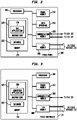
- FIGURE 2 illustrates details of one of the field panels 108 in accordance with the present disclosure.
- the field panel 108 comprises a processor 202, a memory 204, an input/output (I/O) module 206, a communication module 208, a user interface 210 and a power module 212.
- the memory 204 comprises any suitable data store capable of storing data, such as instructions 220 and a database 222. It will be understood that the field panel 108 may be implemented in any other suitable manner without departing from the scope of this disclosure.
- the processor 202 is configured to operate the field panel 108.
- the processor 202 may be coupled to the other components 204, 206, 208, 210 and 212 of the field panel 108.
- the processor 202 may be configured to execute program instructions or programming software or firmware stored in the instructions 220 of the memory 204, such as building automation system (BAS) application software 230.
- BAS building automation system
- the memory 204 may also store other data for use by the system 100 in the database 222, such as various records and configuration files, graphical views and/or other information.
- Execution of the BAS application 230 by the processor 202 may result in control signals being sent to any field devices 112 that may be coupled to the field panel 108 via the I/O module 206 of the field panel 108. Execution of the BAS application 230 may also result in the processor 202 receiving status signals and/or other data signals from field devices 112 coupled to the field panel 108 and storage of associated data in the memory 204.
- the BAS application 230 may be provided by the Site Controls Controller software commercially available from Siemens Industry, Inc. However, it will be understood that the BAS application 230 may comprise any other suitable BAS control software.
- the I/O module 206 may comprise one or more input/output circuits that are configured to communicate directly with field devices 112. Thus, for some embodiments, the I/O module 206 comprises analog input circuitry for receiving analog signals and analog output circuitry for providing analog signals.
- the communication module 208 is configured to provide communication with the site controller 102, other field panels 108 and other components on the BLN 122.
- the communication module 208 is also configured to provide communication to the field controllers 110, as well as other components on the FLN 124 that is associated with the field panel 108.
- the communication module 208 may comprise a first port that may be coupled to the BLN 122 and a second port that may be coupled to the FLN 124.
- Each of the ports may include an RS-485 standard port circuit or other suitable port circuitry.
- the field panel 108 may be capable of being accessed locally via the interactive user interface 210.
- a user may control the collection of data from field devices 112 through the user interface 210.
- the user interface 210 of the field panel 108 may include devices that display data and receive input data. These devices may be permanently affixed to the field panel 108 or portable and moveable.
- the user interface 210 may comprise an LCD-type screen or the like and a keypad.
- the user interface 210 may be configured to both alter and show information regarding the field panel 108, such as status information and/or other data pertaining to the operation of, function of and/or modifications to the field panel 108.
- the power module 212 may be configured to supply power to the components of the field panel 108.
- the power module 212 may operate on standard 120 volt AC electricity, other AC voltages or DC power supplied by a battery or batteries.
- FIGURE 3 illustrates details of one of the field controllers 110 in accordance with the present disclosure.
- the field controller 110 comprises a processor 302, a memory 304, an input/output (I/O) module 306, a communication module 308 and a power module 312.
- the field controller 110 may also comprise a user interface (not shown in FIGURE 3 ) that is configured to alter and/or show information regarding the field controller 110.
- the memory 304 comprises any suitable data store capable of storing data, such as instructions 320 and a database 322. It will be understood that the field controller 110 may be implemented in any other suitable manner without departing from the scope of this disclosure.
- the field controller 110 may be positioned in, or in close proximity to, a room of the building where temperature or another environmental parameter associated with the subsystem may be controlled with the field controller 110.
- the processor 302 is configured to operate the field controller 110.
- the processor 302 may be coupled to the other components 304, 306, 308 and 312 of the field controller 110.
- the processor 302 may be configured to execute program instructions or programming software or firmware stored in the instructions 320 of the memory 304, such as subsystem application software 330.
- the subsystem application 330 may comprise a temperature control application that is configured to control and process data from all components of a temperature control subsystem, such as a temperature sensor, a damper actuator, fans, and various other field devices.
- the memory 304 may also store other data for use by the subsystem in the database 322, such as various configuration files and/or other information.
- Execution of the subsystem application 330 by the processor 302 may result in control signals being sent to any field devices 112 that may be coupled to the field controller 110 via the I/O module 306 of the field controller 110. Execution of the subsystem application 330 may also result in the processor 302 receiving status signals and/or other data signals from field devices 112 coupled to the field controller 110 and storage of associated data in the memory 304.
- the I/O module 306 may comprise one or more input/output circuits that are configured to communicate directly with field devices 112.
- the I/O module 306 comprises analog input circuitry for receiving analog signals and analog output circuitry for providing analog signals.
- the communication module 308 is configured to provide communication with the field panel 108 corresponding to the field controller 110 and other components on the FLN 124, such as other field controllers 110.
- the communication module 308 may comprise a port that may be coupled to the FLN 124.
- the port may include an RS-485 standard port circuit or other suitable port circuitry.
- the power module 312 may be configured to supply power to the components of the field controller 110.
- the power module 312 may operate on standard 120 volt AC electricity, other AC voltages, or DC power supplied by a battery or batteries.
- the heating and cooling energy being supplied to a zone can be explicitly defined and quantified by heat transfer equations, but the amount of daylighting available from ECG adjustment is highly variable, depending on outside sun conditions, time of day, season of year, and glare considerations.
- Other objectives include blocking direct sunlight, thereby reducing glare and solar heat gains during the cooling season, allowing the maximum possible amount of daylight (and solar heat gain) during the heating season, controlling direct sunlight by diffusing it into the space without causing glare on sunny days, transmitting all available daylight on overcast days, and eliminating glare and creating a pleasant luminous environment.
- Glare can be very difficult to measure and extremely complicated to calculate analytically.
- the perception of glare by the occupants of a perimeter building space depends on their viewing directions (e.g. the orientation of their locations) with respect to the source of glare.
- glare from windows can be controlled by controlling the ECG tint level.
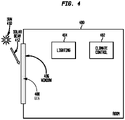
- FIGURE 4 illustrates a block diagram of a room 400 that can be managed using disclosed techniques.
- Room 400 includes climate control 402, which can include heating, cooling, and ventilation systems, all of which consume energy, and which can regulate the temperature and humidity of room 400.
- Room 400 also includes lighting 404, which consumes energy, and which can be varied in illumination depending on the natural light in the room.
- Room 400 has a window 406 with ECG 408.
- the sun 410 can illuminate room 400 through window 406, and the amount of illumination can be adjusted using ECG 408.
- Room 400 can lose heat or gain heat through window 406, depending on weather conditions, the sun 410, the ECG 408, and other factors.
- glare in room 400 can be a significant problem, but disclosed embodiments can adjust the tint level of ECG 408 to control glare.
- Glare control can be used to override the calculated optimum ECG tint level described below (to minimize total energy consumption) whenever solar beam radiation is detected during occupied hours.
- the climate control 402 is implemented as radiant heating and cooling ceiling panels.
- Disclosed embodiments can use an analytical process for managing energy consumption based on finding the room temperature response to solar radiation from various ECG tint levels, for any time of day or season of year. This can include solving two coupled first-order differential equations.
- a differential equation can be used to properly model the room temperature response to incoming solar radiation through ECG system since, in the real world, room temperature does not respond instantly to incoming solar radiation through ECG, but lags in time response due to the thermal capacitance of the room and heat flows into and out of the room.
- FIGURE 5 illustrates an example of a system model that can be analyzed in accordance with disclosed embodiments.
- This example illustrates a system with a radiant ceiling panel system used for terminal heating and cooling, but those of skill in the art will recognize that with only minor changes to the mathematics, this basic solution approach can be applied to a wide variety of terminal heating or cooling devices.
- FIGURE 5 illustrates a number of system elements that represent energy and heat transferred into and out of a room 502 having electrical lighting 504 and radiant ceiling panels 506.
- Fig. 5 also illustrates a window 508 with ECG 510. In this figure or as described herein,
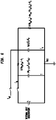
- FIGURE 6 illustrates an equivalent thermal network for lumped heat capacities of room air and outside walls with room thermal masses in corresponding to the system illustrated in Fig. 5 .
- R I represents the area transmittance between room air and walls and is equal to the thermal resistance R-value divided by the area of heat transfer surface
- R O represents the area transmittance between center of wall and ambient surroundings and is equal to the thermal resistance R-value divided by the area of heat transfer surface
- C air represents the thermal capacitance of the room air
- C W represents the thermal capacitance of the surrounding walls
- h iw represents the convection heat transfer coefficient at inner wall(s) surface
- a iw represents the area of inner wall(s) surface
- h ow represents the convection heat transfer coefficient at outside wall(s) surface
- a ow represents the area of outside wall(s) surface
- k ow represents the thermal conductivity of outside wall(s)
- ⁇ x ow represents the thickness of outside wall(s).
- FIGURE 7 illustrates a flowchart of a process in accordance with disclosed embodiments for integrated room management in a building management system. Such a process can be performed by a data processing system such as building automation system 100, and is referred to generically as the "system" below.
- the system can determine a solar heat gain coefficient (SHGC) for a room in a building, such as based on the geographic location of the room and orientation of the outside window(s), at a plurality of time intervals (702).
- the time intervals can be, for example every fifteen minutes during business hours of a given day, or can be other appropriate intervals on a time and date that the room is expected to be occupied.
- the SHGC may be given by the manufacturer as a function of the incoming solar radiation flux.
- the SHGC can be calculated using the equation: C air ⁇ T t ⁇ ⁇ t
- t i ⁇ q ⁇ g ⁇ q ⁇ elect light t i ⁇ i SHGC t i ⁇ i ⁇ UA pf T out ⁇ T
- t i R I E ti A pf cos ⁇ i cos ⁇ i where sin ⁇ i cosL ⁇ cos ⁇ ⁇ cos 15 t i + E 60 ⁇ LSM ⁇ LON 15 ⁇ 12 + sinL ⁇ sin ⁇
- a subscript i for a variable indicates that it represents that variable's value at the time interval i.
- the system determines predicted room temperatures for the room at the plurality of time intervals based on the SHGC and a plurality of ECG tint levels (704).
- T(t) ⁇ in ⁇ ⁇ in T in ⁇ T ⁇ V air
- q ⁇ g C air q ⁇ elect light t C air + UA pf T out ⁇ T + E ti A pf SHGC t i VLT C air + T w ⁇ T R I C air
- dT w dt
- the system can calculate the predicted room temperature for the each time interval for each ECG tint level.
- the system determines illumination heat and illumination energy for the room, at each ECG tint level and at each time interval, based on an exterior illumination level for each ECG tint level, artificial lighting energy consumed, and artificial lighting heat produced to bring the room to a predetermined illumination level (706).
- This step can include calculating the predicted workplane surface light illumination level for each projected ECG tint level, and the heat output of the lights at the corresponding dimming level.
- the artificial lighting energy consumed and artificial lighting heat produced to bring the room to the predetermined illumination level are measured for the installed lighting 404 based on the energy and heat produced by the lighting used to raise I room to the predetermined illumination level.
- the energy and heat required will be less when natural lighting I daylight is high, and higher when I daylight is low. These measurements need only be performed once, at various lighting/dimming levels, for the installed lighting 404 in any given room.
- the system determines room climate energy, at each of the time intervals, required to maintain the room at a predetermined temperature based on the predicted open-loop room temperatures and the illumination heat at each of the time intervals (708). For any given climate control 402, the system can determine energy required to heat or cool the room to the predetermined temperature from the predicted temperatures and the heat produced from the installed lighting 404 (in the amount needed for to ensure the illumination level as described above).
- the system determines a total room energy at each of the time intervals as a function of the ECG tint levels based on the climate energy, illumination energy, and predicted open-loop room temperatures (710).
- the system can add the energy required to heat or cool the room to the predetermined temperature, by climate control 402 from the predicted temperatures and for each ECG tint level, to the illumination energy required to ensure the predetermined illumination to get a projected total room energy curve as a function of the ECG tint levels.
- the system determines, from the total room energy, an optimal ECG tint level at each of the time intervals.
- the optimal ECG tint level is the level that minimizes the total room energy at each of the time intervals (712).
- the electrochromic glass manufacturer offers continuously variable tint levels for their ECG, this can be performed by taking the first derivative (or minimum) of this projected total room energy curve with respect to the ECG tint level, setting it equal to zero, and solving for the ECG tint level.
- This will be the optimal ECG tint level that minimizes the total room energy, while maintaining occupant comfort for illumination and temperature.
- the optimal ECG tint level provides external illumination to the room while preventing glare.
- the system can control the ECG tint levels in the room at each of the time intervals according to the optimal ECG tint level (714). Once the optimal ECG tint levels for each time interval are known, the system can adjust ECG 408 so that they are tinted at the optimal ECG tint level. This can be performed at all times, at each time interval, only when the room is occupied, or unless there is an override condition as described below.
- the system can enter an override condition in response to detecting beam solar radiation in the room, which can produce unpleasant glare, and in this override condition, control the ECG tint level in the room (716). Such a case may require additional lighting or room climate energy since some of the radiant energy from the sun will be blocked.
- the system can enter an override condition in response to a manual user-desired tint level of the ECG in the room, and in this override condition, controls the ECG tint levels according to the manual user control (718).
- Such a case may require additional or even less lighting or climate energy since the amount of radiant energy from the sun will be changed.
- the system can enter an override condition in response to a room condition (720). For example, the system can determine that the room is empty, so no lighting is required, that it is night, so there is no external lighting and the ECG tint level can be completely opaque, substantially transparent, or otherwise.
- machine usable/readable or computer usable/readable mediums include: nonvolatile, hard-coded type mediums such as read only memories (ROMs) or erasable, electrically programmable read only memories (EEPROMs), and user-recordable type mediums such as floppy disks, hard disk drives and compact disk read only memories (CD-ROMs) or digital versatile disks (DVDs).
- ROMs read only memories
- EEPROMs electrically programmable read only memories
- user-recordable type mediums such as floppy disks, hard disk drives and compact disk read only memories (CD-ROMs) or digital versatile disks (DVDs).
Landscapes
- Physics & Mathematics (AREA)
- Nonlinear Science (AREA)
- Engineering & Computer Science (AREA)
- General Physics & Mathematics (AREA)
- Optics & Photonics (AREA)
- General Engineering & Computer Science (AREA)
- Automation & Control Theory (AREA)
- Sustainable Development (AREA)
- Life Sciences & Earth Sciences (AREA)
- Sustainable Energy (AREA)
- Thermal Sciences (AREA)
- Chemical & Material Sciences (AREA)
- Combustion & Propulsion (AREA)
- Mechanical Engineering (AREA)
- Air Conditioning Control Device (AREA)
- Electrochromic Elements, Electrophoresis, Or Variable Reflection Or Absorption Elements (AREA)
- Circuit Arrangement For Electric Light Sources In General (AREA)
Claims (12)
- Verfahren zur integrierten Raumverwaltung in einem Gebäudeverwaltungssystem (100), wobei das Verfahren von einem Datenverarbeitungssystem durchgeführt wird und umfasst:a1) Bestimmen (702) eines solaren Wärmegewinnkoeffizienten, SHGC, für einen Raum in einem Gebäude in einer Mehrzahl von Zeitintervallen basierend auf einer geografischen Lage des Raums, einer Orientierung mindestens eines Außenfensters und einer Wärmekapazität (Cair) von Luft des Raums;a2) Bestimmen eines vorhergesagten Raumtemperaturverhaltens bei offenem Kreis in jedem Zeitintervall zum Bestimmen (704) einer vorhergesagten Raumtemperatur für den Raum (400) in der Mehrzahl von Zeitintervallen basierend auf dem SHGC und einer Mehrzahl von Tönungsgraden von elektrochromem Glas, ECG, (408) für das mindestens eine Außenfenster, wobei offener Kreis bei ausgeschalteter Kühl- oder Heizeinrichtung bedeutet;a3) Bestimmen (706) von Beleuchtungswärme und Beleuchtungsenergie für den Raum (400) bei jedem ECG-Tönungsgrad und in jedem Zeitintervall basierend auf einer gemessenen Solarbeleuchtungsstärke für jeden Tönungsgrad von ECG (408), verbrauchter Energie künstlicher Beleuchtung und erzeugter Wärme künstlicher Beleuchtung, um den Raum auf eine vorbestimmte Beleuchtungsstärke zu bringen;a4) Bestimmen (708) von Klimaenergie in jedem der Zeitintervalle, die benötigt wird, um den Raum (400) auf einer vorbestimmten Temperatur zu halten, basierend auf den vorhergesagten Temperaturen bei offenem Kreis und der Beleuchtungswärme in jedem der Zeitintervalle;a5) Bestimmen (710) einer Gesamtraumenergie in jedem der Zeitintervalle als eine Funktion der Tönungsgrade von ECG (408) basierend auf der Klimaenergie, der Beleuchtungsenergie und den vorhergesagten Raumtemperarturen bei offenem Kreis;b) Bestimmen (712) eines optimalen Tönungsgrades von ECG (408) in jedem der Zeitintervalle, wobei der optimale Tönungsgrad von ECG (408) die Gesamtraumenergie in jedem der Zeitintervalle minimiert, wobei der optimale ECG-Tönungsgrad, der die Gesamtraumenergie in jedem der Zeitintervalle minimiert, bestimmt wird (712) durch Nehmen der ersten Ableitung einer projizierten Gesamtraumenergiekurve in Bezug auf den ECG-Tönungsgrad, Setzen der Ableitungsgleichung gleich null und Auflösen derselben nach dem ECG-Tönungsgrad, der der optimale ECG-Tönungsgrad ist, wobei die Gesamtraumenergie die Wärmeenergie einer Heiz- oder Kühleinrichtung ist, die zur elektrischen Beleuchtungswärmeenergie hinzugefügt wird; undc) Steuern (714) der Tönungsgrade von ECG (408) im Raum (400) in jedem der Zeitintervalle gemäß dem optimalen Tönungsgrad von ECG (408), es sei denn es liegt ein Außerkraftsetzungszustand vor.
- Verfahren nach Anspruch 1, wobei das Gebäudeverwaltungssystem (100) in Reaktion auf ein Erfassen von gebündelter Sonnenstrahlung im Raum (400) in einen Außerkraftsetzungszustand eintritt und danach den Tönungsgrad von ECG (408) im Raum steuert.
- Verfahren nach Anspruch 1, wobei das Gebäudeverwaltungssystem (100) in Reaktion auf eine manuelle Benutzersteuerung des Tönungsgrades von ECG (408) im Raum (400) in einen Außerkraftsetzungszustand eintritt und danach den Tönungsgrad von ECG (408) gemäß der manuellen Benutzersteuerung steuert.
- Verfahren nach Anspruch 4, wobei der SHGC wenigstens zum Teil auf einem örtlichen Breitengrad des Raums (400), einem örtlichen Standardmeridian des Raums (400), einer Orientierung eines Fensters des Raums (400) und einer Position der Sonne in jedem Zeitintervall basiert.
- Verfahren nach Anspruch 1, wobei der SHGC auf mindestens einem von gemessenen Innen- und Außentemperaturen, einem Befensterungsbereich des Raums (400), einer geografischen Lage des Raums (400) oder einer Orientierung von Außenfenster(n) basiert.
- Gebäudeverwaltungssystem, umfassend:(i) einen Prozessor (102);ii) einen zugänglichen Speicher (204);iii) eine Klimaregelung (402) für einen Raum (400) in einem Gebäude;
Beleuchtung (404) für den Raum (400); undiv) elektrochromes Glas (ECG) (408) für Fenster des Raums, wobei das Gebäudeverwaltungssystem insbesondere konfiguriert ist zum:a) Bestimmen (702) eines solaren Wärmegewinnkoeffizienten, SHGC, für den Raum (400) in einer Mehrzahl von Zeitintervallen basierend auf einer geografischen Lage des Raums, einer Orientierung mindestens eines Außenfensters und einer Wärmekapazität (Cair) von Luft des Raums;b) Bestimmen eines vorhergesagten Raumtemperaturverhaltens bei offenem Kreis in jedem Zeitintervall zum Bestimmen (704) einer vorhergesagten Raumtemperatur für den Raum (400) in der Mehrzahl von Zeitintervallen basierend auf dem SHGC und einer Mehrzahl von ECG-Tönungsgraden für das mindestens eine Außenfenster, wobei offener Kreis bei ausgeschalteter Kühl- oder Heizeinrichtung bedeutet;c) Bestimmen (706) von Beleuchtungswärme und Beleuchtungsenergie für den Raum (400) bei jedem ECG-Tönungsgrad und in jedem Zeitintervall basierend auf einer Außenbeleuchtungsstärke für jeden ECG-Tönungsgrad, Energie künstlicher Beleuchtung, die durch die Beleuchtung verbraucht wird, und Wärme künstlicher Beleuchtung, die durch die Beleuchtung erzeugt wird, um den Raum (400) auf eine vorbestimmte Beleuchtungsstärke zu bringen;d) Bestimmen (708) von Klimaenergie in jedem der Zeitintervalle, die benötigt wird, um den Raum (400) durch die Klimaregelung auf einer vorbestimmten Temperatur zu halten, basierend auf den vorhergesagten Temperaturen und der Beleuchtungswärme in jedem der Zeitintervalle;e) Bestimmen (710) einer Gesamtraumenergie in jedem der Zeitintervalle als eine Funktion der ECG-Tönungsgrade basierend auf der Klimaenergie, der Beleuchtungsenergie und den vorhergesagten Raumtemperaturen bei offenem Kreis;f) Bestimmen (712) eines optimalen Tönungsgrades von ECG (408) in jedem der Zeitintervalle aus der Gesamtraumenergie, wobei der optimale ECG-Tönungsgrad die Gesamtraumenergie in jedem der Zeitintervalle minimiert, wobei der optimale ECG-Tönungsgrad, der die Gesamtraumenergie in jedem der Zeitintervalle minimiert, bestimmt wird (712) durch Nehmen der ersten Ableitung einer projizierten Gesamtraumenergiekurve in Bezug auf den ECG-Tönungsgrad, Setzen der Ableitungsgleichung gleich null und Auflösen derselben nach dem ECG-Tönungsgrad, der der optimale ECG-Tönungsgrad ist, wobei die Gesamtraumenergie die Wärmeenergie einer Heiz- oder Kühleinrichtung ist, die zur elektrischen Beleuchtungswärmeenergie hinzugefügt wird; undg) Steuern (714) des ECG-Tönungsgrades im Raum (400) in jedem der Zeitintervalle gemäß dem optimalen ECG-Tönungsgrad, es sei denn es liegt ein Außerkraftsetzungszustand vor. - Gebäudeverwaltungssystem nach Anspruch 6, wobei das Gebäudeverwaltungssystem (100) in Reaktion auf ein Erfassen von gebündelter Sonnenstrahlung im Raum (400) in einen Außerkraftsetzungszustand eintritt und danach den Tönungsgrad von ECG (408) im Raum steuert.
- Gebäudeverwaltungssystem nach Anspruch 6, wobei das Gebäudeverwaltungssystem (100) in Reaktion auf eine manuelle Benutzersteuerung des Tönungsgrades von ECG (408) im Raum (400) in einen Außerkraftsetzungszustand eintritt und danach den Tönungsgrad von ECG (408) gemäß der manuellen Benutzersteuerung steuert.
- Gebäudeverwaltungssystem nach Anspruch 6, wobei der SHGC wenigstens zum Teil auf einem örtlichen Breitengrad des Raums (400), einem örtlichen Standardmeridian des Raums (400), einer Orientierung eines Fensters des Raums (400) und einer Position der Sonne in jedem Zeitintervall basiert.
- Gebäudeverwaltungssystem nach Anspruch 6, wobei der SHGC auf mindestens einem von gemessenen Innen- und Außentemperaturen, einem Befensterungsbereich des Raums (400), einer geografischen Lage des Raums (400) oder einer Orientierung von Außenfenster(n) basiert.
- Gebäudeverwaltungssystem nach Anspruch 6, wobei die Klimaenergie durch eine Klimaregelung (402) verbraucht wird, die Wärmestrahlungsplatten umfasst.
- Nicht-transitorisches computerlesbares Medium (204), das mit ausführbaren Anweisungen codiert ist, die bei Ausführung mindestens ein Gebäudeverwaltungssystem (100) zum Durchführen eines Verfahrens nach einem der Ansprüche 1 bis 5 veranlassen.
Applications Claiming Priority (2)
| Application Number | Priority Date | Filing Date | Title |
|---|---|---|---|
| US201562159745P | 2015-05-11 | 2015-05-11 | |
| PCT/US2015/051577 WO2016182592A1 (en) | 2015-05-11 | 2015-09-23 | Energy-efficient integrated lighting, daylighting, and hvac with electrochromic glass |
Publications (2)
| Publication Number | Publication Date |
|---|---|
| EP3295261A1 EP3295261A1 (de) | 2018-03-21 |
| EP3295261B1 true EP3295261B1 (de) | 2022-12-14 |
Family
ID=54266635
Family Applications (1)
| Application Number | Title | Priority Date | Filing Date |
|---|---|---|---|
| EP15777781.4A Active EP3295261B1 (de) | 2015-05-11 | 2015-09-23 | Energieeffiziente integrierte beleuchtung, tageslichtbeleuchtung und hlk mit elektrochromem glas |
Country Status (6)
| Country | Link |
|---|---|
| US (1) | US10288321B2 (de) |
| EP (1) | EP3295261B1 (de) |
| CN (1) | CN107592918B (de) |
| CA (1) | CA2985603C (de) |
| MX (1) | MX372761B (de) |
| WO (1) | WO2016182592A1 (de) |
Families Citing this family (9)
| Publication number | Priority date | Publication date | Assignee | Title |
|---|---|---|---|---|
| US11560754B1 (en) * | 2018-03-22 | 2023-01-24 | AI Incorporated | Artificial neural network based controlling of window shading system and method |
| CN109162619B (zh) * | 2018-08-31 | 2020-06-16 | 北京工业大学 | 一种基于节能的智能外窗优化调控方法 |
| US10830474B2 (en) * | 2018-11-06 | 2020-11-10 | Lennox Industries Inc. | Systems and methods of predicting energy usage |
| EP3922806B1 (de) * | 2019-02-08 | 2024-06-12 | Nitto Denko Corporation | Vorrichtung zur steuerung eines intelligenten fensters, verfahren zur steuerung eines intelligenten fensters und programm zur steuerung eines intelligenten fensters |
| JP6893262B2 (ja) * | 2019-02-08 | 2021-06-23 | 日東電工株式会社 | スマートウィンドウ制御装置、スマートウィンドウ制御方法及びスマートウィンドウ制御プログラム |
| CN111194126A (zh) * | 2020-02-24 | 2020-05-22 | 北方工业大学 | 基于人员定位的交互式遮阳系统及方法 |
| CN112996202A (zh) * | 2021-03-05 | 2021-06-18 | 浙江理工大学 | 基于节能的室内照度控制系统及调控方法 |
| US20230417101A1 (en) * | 2022-06-28 | 2023-12-28 | Greg Eguaoje | Transition glass |
| WO2025071552A1 (en) * | 2023-09-26 | 2025-04-03 | Siemens Schweiz Ag | Controller and method for proactively controlling indoor temperature of a facility |
Family Cites Families (13)
| Publication number | Priority date | Publication date | Assignee | Title |
|---|---|---|---|---|
| DE19622253A1 (de) * | 1996-02-29 | 1997-09-04 | Zumtobel Licht | Verfahren und Vorrichtung zur Steuerung einer Abblendeinrichtung |
| SE0003112D0 (sv) | 2000-09-04 | 2000-09-04 | Granqvist Claes Goeran | Climate control system and method for controlling such |
| US8836263B2 (en) * | 2004-05-06 | 2014-09-16 | Mechoshade Systems, Inc. | Automated shade control in connection with electrochromic glass |
| US7904209B2 (en) * | 2007-03-01 | 2011-03-08 | Syracuse University | Open web services-based indoor climate control system |
| US8144275B2 (en) * | 2009-10-22 | 2012-03-27 | LXD Research & Display, LLC | Thermal tuning glazing structures comprising a cholesteric liquid crystal |
| US8768655B2 (en) * | 2010-09-29 | 2014-07-01 | Sefaira, Inc. | System and method for analyzing and designing an architectural structure using bundles of design strategies applied according to a priority |
| IN2014CN02771A (de) * | 2011-10-25 | 2015-07-03 | Koninkl Philips Nv | |
| US9261863B2 (en) * | 2012-01-23 | 2016-02-16 | Earth Networks, Inc. | Optimizing and controlling the energy consumption of a building |
| US9638978B2 (en) * | 2013-02-21 | 2017-05-02 | View, Inc. | Control method for tintable windows |
| CN104335595B (zh) * | 2012-04-13 | 2018-09-18 | 唯景公司 | 用于控制可光学切换的装置的应用 |
| WO2014024146A1 (en) * | 2012-08-07 | 2014-02-13 | Ecole Polytechnique Federale De Lausanne (Epfl) | Glazing with embedded microstructures for daylighting and seasonal thermal control |
| US9406028B2 (en) * | 2012-08-31 | 2016-08-02 | Christian Humann | Expert system for prediction of changes to local environment |
| JP2015536016A (ja) * | 2012-09-21 | 2015-12-17 | コーニンクレッカ フィリップス エヌ ヴェKoninklijke Philips N.V. | 統合された、照明、遮光及びサーモスタットの制御のための統合コントローラ |
-
2015
- 2015-09-23 CA CA2985603A patent/CA2985603C/en active Active
- 2015-09-23 WO PCT/US2015/051577 patent/WO2016182592A1/en not_active Ceased
- 2015-09-23 CN CN201580079881.3A patent/CN107592918B/zh active Active
- 2015-09-23 EP EP15777781.4A patent/EP3295261B1/de active Active
- 2015-09-23 US US15/561,650 patent/US10288321B2/en active Active
- 2015-09-23 MX MX2017014341A patent/MX372761B/es active IP Right Grant
Also Published As
| Publication number | Publication date |
|---|---|
| US20180073775A1 (en) | 2018-03-15 |
| CA2985603C (en) | 2020-05-12 |
| CN107592918B (zh) | 2020-10-16 |
| MX372761B (es) | 2020-06-29 |
| WO2016182592A1 (en) | 2016-11-17 |
| US10288321B2 (en) | 2019-05-14 |
| MX2017014341A (es) | 2018-03-23 |
| CN107592918A (zh) | 2018-01-16 |
| CA2985603A1 (en) | 2016-11-17 |
| EP3295261A1 (de) | 2018-03-21 |
Similar Documents
| Publication | Publication Date | Title |
|---|---|---|
| EP3295262B1 (de) | Energieeffiziente integrierte beleuchtung, tageslicht und hlk mit gesteuerten fensterjalousien | |
| EP3295261B1 (de) | Energieeffiziente integrierte beleuchtung, tageslichtbeleuchtung und hlk mit elektrochromem glas | |
| US12104436B2 (en) | Multi-stop brake for window shades | |
| Lee et al. | End user impacts of automated electrochromic windows in a pilot retrofit application | |
| Shen et al. | Energy and visual comfort analysis of lighting and daylight control strategies | |
| US8890456B2 (en) | Automated shade control system utilizing brightness modeling | |
| CA2889978C (en) | Automated shade control system utilizing brightness modeling | |
| WO2013112255A1 (en) | Automated shade control in connection with electrochromic glass | |
| JP4784259B2 (ja) | 日射遮蔽制御装置 | |
| US20190384238A1 (en) | Building management system and method using learned environmental parameters for proactive control | |
| Ramessur et al. | Automated passive measures: the next step in reducing the carbon footprint of our buildings | |
| Kunwar et al. | Best Practices for Full-Scale Testing and Energy Savings, Daylighting and Visual Comfort Evaluation of Dynamic Shading. | |
| Alzoubi et al. | Performance study of a multi-objective mathematical programming modeling approach for energy optimization in building envelopes | |
| O'Neill | Model-based control of venetian blinds | |
| Lee et al. | Innovative Façade Systems for Low-energy Commercial Buildings | |
| McConahey | Active load management with advanced window wall systems: Research and Industry Perspectives | |
| Osterberg | Quantifying Energy Savings of an Active, Smart Window | |
| Lee et al. | Active load management with advanced window wall systems: Research and industry | |
| Course | u�� CIBSE | |
| HK1210286B (en) | Automated shade control system utilizing brightness modeling | |
| Lee et al. | HPCBS |
Legal Events
| Date | Code | Title | Description |
|---|---|---|---|
| STAA | Information on the status of an ep patent application or granted ep patent |
Free format text: STATUS: THE INTERNATIONAL PUBLICATION HAS BEEN MADE |
|
| PUAI | Public reference made under article 153(3) epc to a published international application that has entered the european phase |
Free format text: ORIGINAL CODE: 0009012 |
|
| STAA | Information on the status of an ep patent application or granted ep patent |
Free format text: STATUS: REQUEST FOR EXAMINATION WAS MADE |
|
| 17P | Request for examination filed |
Effective date: 20170929 |
|
| AK | Designated contracting states |
Kind code of ref document: A1 Designated state(s): AL AT BE BG CH CY CZ DE DK EE ES FI FR GB GR HR HU IE IS IT LI LT LU LV MC MK MT NL NO PL PT RO RS SE SI SK SM TR |
|
| AX | Request for extension of the european patent |
Extension state: BA ME |
|
| DAV | Request for validation of the european patent (deleted) | ||
| DAX | Request for extension of the european patent (deleted) | ||
| STAA | Information on the status of an ep patent application or granted ep patent |
Free format text: STATUS: EXAMINATION IS IN PROGRESS |
|
| 17Q | First examination report despatched |
Effective date: 20190816 |
|
| RIC1 | Information provided on ipc code assigned before grant |
Ipc: F24S 50/40 20180101ALI20220715BHEP Ipc: G02F 1/163 20060101ALI20220715BHEP Ipc: G02F 1/153 20060101ALI20220715BHEP Ipc: G02F 1/15 20060101ALI20220715BHEP Ipc: G05B 15/02 20060101AFI20220715BHEP |
|
| GRAP | Despatch of communication of intention to grant a patent |
Free format text: ORIGINAL CODE: EPIDOSNIGR1 |
|
| STAA | Information on the status of an ep patent application or granted ep patent |
Free format text: STATUS: GRANT OF PATENT IS INTENDED |
|
| INTG | Intention to grant announced |
Effective date: 20220922 |
|
| GRAS | Grant fee paid |
Free format text: ORIGINAL CODE: EPIDOSNIGR3 |
|
| GRAA | (expected) grant |
Free format text: ORIGINAL CODE: 0009210 |
|
| STAA | Information on the status of an ep patent application or granted ep patent |
Free format text: STATUS: THE PATENT HAS BEEN GRANTED |
|
| AK | Designated contracting states |
Kind code of ref document: B1 Designated state(s): AL AT BE BG CH CY CZ DE DK EE ES FI FR GB GR HR HU IE IS IT LI LT LU LV MC MK MT NL NO PL PT RO RS SE SI SK SM TR |
|
| REG | Reference to a national code |
Ref country code: GB Ref legal event code: FG4D |
|
| REG | Reference to a national code |
Ref country code: CH Ref legal event code: EP |
|
| REG | Reference to a national code |
Ref country code: DE Ref legal event code: R096 Ref document number: 602015081960 Country of ref document: DE |
|
| REG | Reference to a national code |
Ref country code: IE Ref legal event code: FG4D |
|
| REG | Reference to a national code |
Ref country code: AT Ref legal event code: REF Ref document number: 1538059 Country of ref document: AT Kind code of ref document: T Effective date: 20230115 |
|
| REG | Reference to a national code |
Ref country code: LT Ref legal event code: MG9D |
|
| REG | Reference to a national code |
Ref country code: NL Ref legal event code: MP Effective date: 20221214 |
|
| PG25 | Lapsed in a contracting state [announced via postgrant information from national office to epo] |
Ref country code: SE Free format text: LAPSE BECAUSE OF FAILURE TO SUBMIT A TRANSLATION OF THE DESCRIPTION OR TO PAY THE FEE WITHIN THE PRESCRIBED TIME-LIMIT Effective date: 20221214 Ref country code: NO Free format text: LAPSE BECAUSE OF FAILURE TO SUBMIT A TRANSLATION OF THE DESCRIPTION OR TO PAY THE FEE WITHIN THE PRESCRIBED TIME-LIMIT Effective date: 20230314 Ref country code: LT Free format text: LAPSE BECAUSE OF FAILURE TO SUBMIT A TRANSLATION OF THE DESCRIPTION OR TO PAY THE FEE WITHIN THE PRESCRIBED TIME-LIMIT Effective date: 20221214 Ref country code: FI Free format text: LAPSE BECAUSE OF FAILURE TO SUBMIT A TRANSLATION OF THE DESCRIPTION OR TO PAY THE FEE WITHIN THE PRESCRIBED TIME-LIMIT Effective date: 20221214 |
|
| REG | Reference to a national code |
Ref country code: AT Ref legal event code: MK05 Ref document number: 1538059 Country of ref document: AT Kind code of ref document: T Effective date: 20221214 |
|
| PG25 | Lapsed in a contracting state [announced via postgrant information from national office to epo] |
Ref country code: RS Free format text: LAPSE BECAUSE OF FAILURE TO SUBMIT A TRANSLATION OF THE DESCRIPTION OR TO PAY THE FEE WITHIN THE PRESCRIBED TIME-LIMIT Effective date: 20221214 Ref country code: LV Free format text: LAPSE BECAUSE OF FAILURE TO SUBMIT A TRANSLATION OF THE DESCRIPTION OR TO PAY THE FEE WITHIN THE PRESCRIBED TIME-LIMIT Effective date: 20221214 Ref country code: HR Free format text: LAPSE BECAUSE OF FAILURE TO SUBMIT A TRANSLATION OF THE DESCRIPTION OR TO PAY THE FEE WITHIN THE PRESCRIBED TIME-LIMIT Effective date: 20221214 Ref country code: GR Free format text: LAPSE BECAUSE OF FAILURE TO SUBMIT A TRANSLATION OF THE DESCRIPTION OR TO PAY THE FEE WITHIN THE PRESCRIBED TIME-LIMIT Effective date: 20230315 |
|
| PG25 | Lapsed in a contracting state [announced via postgrant information from national office to epo] |
Ref country code: NL Free format text: LAPSE BECAUSE OF FAILURE TO SUBMIT A TRANSLATION OF THE DESCRIPTION OR TO PAY THE FEE WITHIN THE PRESCRIBED TIME-LIMIT Effective date: 20221214 |
|
| PG25 | Lapsed in a contracting state [announced via postgrant information from national office to epo] |
Ref country code: SM Free format text: LAPSE BECAUSE OF FAILURE TO SUBMIT A TRANSLATION OF THE DESCRIPTION OR TO PAY THE FEE WITHIN THE PRESCRIBED TIME-LIMIT Effective date: 20221214 Ref country code: RO Free format text: LAPSE BECAUSE OF FAILURE TO SUBMIT A TRANSLATION OF THE DESCRIPTION OR TO PAY THE FEE WITHIN THE PRESCRIBED TIME-LIMIT Effective date: 20221214 Ref country code: PT Free format text: LAPSE BECAUSE OF FAILURE TO SUBMIT A TRANSLATION OF THE DESCRIPTION OR TO PAY THE FEE WITHIN THE PRESCRIBED TIME-LIMIT Effective date: 20230414 Ref country code: ES Free format text: LAPSE BECAUSE OF FAILURE TO SUBMIT A TRANSLATION OF THE DESCRIPTION OR TO PAY THE FEE WITHIN THE PRESCRIBED TIME-LIMIT Effective date: 20221214 Ref country code: EE Free format text: LAPSE BECAUSE OF FAILURE TO SUBMIT A TRANSLATION OF THE DESCRIPTION OR TO PAY THE FEE WITHIN THE PRESCRIBED TIME-LIMIT Effective date: 20221214 Ref country code: CZ Free format text: LAPSE BECAUSE OF FAILURE TO SUBMIT A TRANSLATION OF THE DESCRIPTION OR TO PAY THE FEE WITHIN THE PRESCRIBED TIME-LIMIT Effective date: 20221214 Ref country code: AT Free format text: LAPSE BECAUSE OF FAILURE TO SUBMIT A TRANSLATION OF THE DESCRIPTION OR TO PAY THE FEE WITHIN THE PRESCRIBED TIME-LIMIT Effective date: 20221214 |
|
| PG25 | Lapsed in a contracting state [announced via postgrant information from national office to epo] |
Ref country code: SK Free format text: LAPSE BECAUSE OF FAILURE TO SUBMIT A TRANSLATION OF THE DESCRIPTION OR TO PAY THE FEE WITHIN THE PRESCRIBED TIME-LIMIT Effective date: 20221214 Ref country code: PL Free format text: LAPSE BECAUSE OF FAILURE TO SUBMIT A TRANSLATION OF THE DESCRIPTION OR TO PAY THE FEE WITHIN THE PRESCRIBED TIME-LIMIT Effective date: 20221214 Ref country code: IS Free format text: LAPSE BECAUSE OF FAILURE TO SUBMIT A TRANSLATION OF THE DESCRIPTION OR TO PAY THE FEE WITHIN THE PRESCRIBED TIME-LIMIT Effective date: 20230414 Ref country code: AL Free format text: LAPSE BECAUSE OF FAILURE TO SUBMIT A TRANSLATION OF THE DESCRIPTION OR TO PAY THE FEE WITHIN THE PRESCRIBED TIME-LIMIT Effective date: 20221214 |
|
| REG | Reference to a national code |
Ref country code: DE Ref legal event code: R097 Ref document number: 602015081960 Country of ref document: DE |
|
| PLBE | No opposition filed within time limit |
Free format text: ORIGINAL CODE: 0009261 |
|
| STAA | Information on the status of an ep patent application or granted ep patent |
Free format text: STATUS: NO OPPOSITION FILED WITHIN TIME LIMIT |
|
| PG25 | Lapsed in a contracting state [announced via postgrant information from national office to epo] |
Ref country code: DK Free format text: LAPSE BECAUSE OF FAILURE TO SUBMIT A TRANSLATION OF THE DESCRIPTION OR TO PAY THE FEE WITHIN THE PRESCRIBED TIME-LIMIT Effective date: 20221214 |
|
| 26N | No opposition filed |
Effective date: 20230915 |
|
| PG25 | Lapsed in a contracting state [announced via postgrant information from national office to epo] |
Ref country code: SI Free format text: LAPSE BECAUSE OF FAILURE TO SUBMIT A TRANSLATION OF THE DESCRIPTION OR TO PAY THE FEE WITHIN THE PRESCRIBED TIME-LIMIT Effective date: 20221214 |
|
| PG25 | Lapsed in a contracting state [announced via postgrant information from national office to epo] |
Ref country code: LU Free format text: LAPSE BECAUSE OF NON-PAYMENT OF DUE FEES Effective date: 20230923 |
|
| REG | Reference to a national code |
Ref country code: BE Ref legal event code: MM Effective date: 20230930 |
|
| PG25 | Lapsed in a contracting state [announced via postgrant information from national office to epo] |
Ref country code: LU Free format text: LAPSE BECAUSE OF NON-PAYMENT OF DUE FEES Effective date: 20230923 Ref country code: MC Free format text: LAPSE BECAUSE OF FAILURE TO SUBMIT A TRANSLATION OF THE DESCRIPTION OR TO PAY THE FEE WITHIN THE PRESCRIBED TIME-LIMIT Effective date: 20221214 |
|
| REG | Reference to a national code |
Ref country code: IE Ref legal event code: MM4A |
|
| PG25 | Lapsed in a contracting state [announced via postgrant information from national office to epo] |
Ref country code: IE Free format text: LAPSE BECAUSE OF NON-PAYMENT OF DUE FEES Effective date: 20230923 |
|
| PG25 | Lapsed in a contracting state [announced via postgrant information from national office to epo] |
Ref country code: IE Free format text: LAPSE BECAUSE OF NON-PAYMENT OF DUE FEES Effective date: 20230923 |
|
| PG25 | Lapsed in a contracting state [announced via postgrant information from national office to epo] |
Ref country code: BE Free format text: LAPSE BECAUSE OF NON-PAYMENT OF DUE FEES Effective date: 20230930 |
|
| PG25 | Lapsed in a contracting state [announced via postgrant information from national office to epo] |
Ref country code: BG Free format text: LAPSE BECAUSE OF FAILURE TO SUBMIT A TRANSLATION OF THE DESCRIPTION OR TO PAY THE FEE WITHIN THE PRESCRIBED TIME-LIMIT Effective date: 20221214 |
|
| PG25 | Lapsed in a contracting state [announced via postgrant information from national office to epo] |
Ref country code: BG Free format text: LAPSE BECAUSE OF FAILURE TO SUBMIT A TRANSLATION OF THE DESCRIPTION OR TO PAY THE FEE WITHIN THE PRESCRIBED TIME-LIMIT Effective date: 20221214 |
|
| PG25 | Lapsed in a contracting state [announced via postgrant information from national office to epo] |
Ref country code: CY Free format text: LAPSE BECAUSE OF FAILURE TO SUBMIT A TRANSLATION OF THE DESCRIPTION OR TO PAY THE FEE WITHIN THE PRESCRIBED TIME-LIMIT; INVALID AB INITIO Effective date: 20150923 |
|
| PG25 | Lapsed in a contracting state [announced via postgrant information from national office to epo] |
Ref country code: HU Free format text: LAPSE BECAUSE OF FAILURE TO SUBMIT A TRANSLATION OF THE DESCRIPTION OR TO PAY THE FEE WITHIN THE PRESCRIBED TIME-LIMIT; INVALID AB INITIO Effective date: 20150923 |
|
| PGFP | Annual fee paid to national office [announced via postgrant information from national office to epo] |
Ref country code: IT Payment date: 20250924 Year of fee payment: 11 |
|
| PGFP | Annual fee paid to national office [announced via postgrant information from national office to epo] |
Ref country code: FR Payment date: 20250915 Year of fee payment: 11 |
|
| REG | Reference to a national code |
Ref country code: CH Ref legal event code: U11 Free format text: ST27 STATUS EVENT CODE: U-0-0-U10-U11 (AS PROVIDED BY THE NATIONAL OFFICE) Effective date: 20251210 |
|
| PG25 | Lapsed in a contracting state [announced via postgrant information from national office to epo] |
Ref country code: TR Free format text: LAPSE BECAUSE OF FAILURE TO SUBMIT A TRANSLATION OF THE DESCRIPTION OR TO PAY THE FEE WITHIN THE PRESCRIBED TIME-LIMIT Effective date: 20221214 |
|
| PGFP | Annual fee paid to national office [announced via postgrant information from national office to epo] |
Ref country code: DE Payment date: 20251120 Year of fee payment: 11 |
|
| PGFP | Annual fee paid to national office [announced via postgrant information from national office to epo] |
Ref country code: GB Payment date: 20251002 Year of fee payment: 11 |
|
| PGFP | Annual fee paid to national office [announced via postgrant information from national office to epo] |
Ref country code: CH Payment date: 20251210 Year of fee payment: 11 |